
Dates: July 20-27, 2026
Place: Belgrade, Serbia
Every long journey needs a final chapter, and we made ours take place in Belgrade: eight days in the Serbian capital, our last city, our last country, the last stop before three flights carry us home to Reno. We chose it knowing full well we would never leave the city limits, and that was the point. After a year of glaciers and border crossings and 4×4 tracks and multi-day treks, what we wanted from the end was not one more crescendo. It was a landing approach. Belgrade gave us exactly that, and in its unhurried way it turned out to be exactly what we needed.
But first, Romania had to give us a proper send-off, and it did. Our last morning in Timișoara ran exactly like the ones before it: a family walk at the park that had become our favorite with the girls plugged into their audiobook and a podcast for us. We briskly walked 8km and then headed back to the apartment for a stretching session and a breakfast of granola, yogurt, and a magical yellow watermelon. And for the actual main event of the day—the closing of a thread that had been running through this whole final stretch of the trip—we sat down and watched the World Cup final.
What a match to go out on. Spain dominated from the opening whistle and still could not beat Argentina’s goalkeeper, Emiliano Martínez, who made eleven saves, the most anyone has ever managed in a World Cup final. It stayed scoreless through ninety minutes before Argentina went down to ten men, and in extra time La Roja finally broke through in the 106th minute. Spain 1, Argentina 0, their second World Cup sixteen years after the first, and almost certainly the last World Cup match of Messi’s career. Shaina, whose allegiance to Spain goes back to the year she spent living there in college, was ecstatic. The rest of us had no dog in the fight, but we are reliably World Cup people once every four years, and this tournament had hooked us harder than any before it. A classic was exactly the send-off it deserved.
Then came a late checkout, a lunch of surprisingly excellent vegetarian food while we waited on our driver, and the last border crossing of the entire year. Which brings us to the drone.
Serbia, it turns out, takes a dim view of drones. They aren’t just against flying them, which is firmly off the table for visitors, but allegedly are opposed to even having one in your luggage. Max had been warned about this repeatedly, and having spent a year shepherding his little camera drone through some of the most surveillance-happy countries on the planet, he was not about to get tripped up at the finish line. So he did the full homework: he contacted the Serbian ministry that handles internal and foreign trade and secured an official email confirming he was permitted to bring the drone into the country. He carried that email across the border like a talisman. And then the actual crossing was so easy that it bordered on comedy. Leaving Romania required stepping out of the van long enough to smile at a camera. Entering Serbia did not require getting out at all. We smiled through the window at a border officer—she waved, and we simply kept driving. All that preparation for a crossing that demanded nothing but flashing our pearly whites. He is very glad he had the email and didn’t need it, rather than the reverse, but still.
The drive itself came with its own small kindness, a fitting way to enter our last country. The only other passenger in the van was a young Serbian woman named Anna, from the city of Niš. She patiently listened to Arya recount our entire trip, and at the single gas stop of the three-hour drive she quietly bought us a handful of snacks—Serbian favorites she thought a visiting family ought to try. We had known her for roughly ninety minutes. The entire year has been like this: strangers deciding to be generous just because, and we were so grateful that Serbia opened the same way.
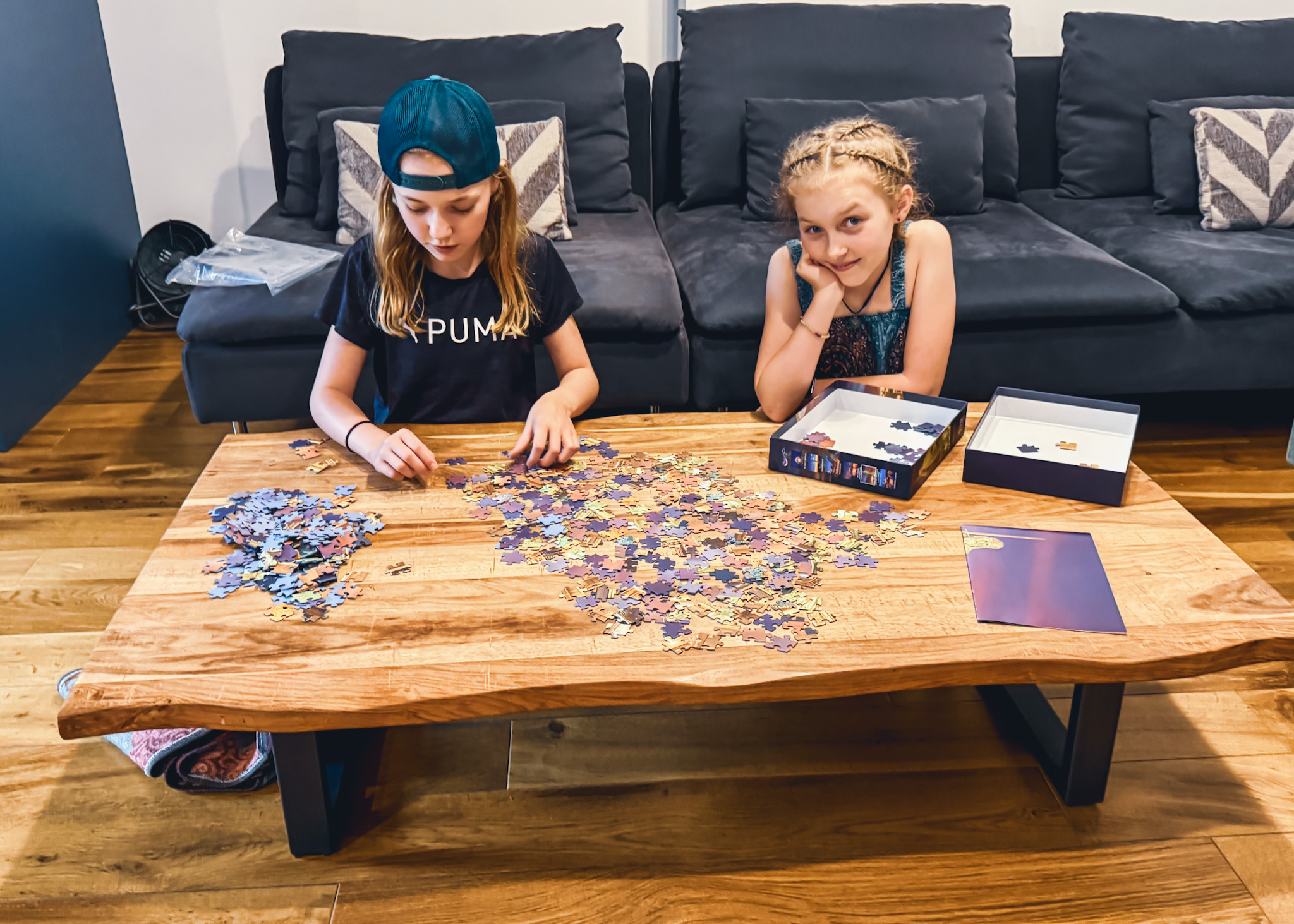
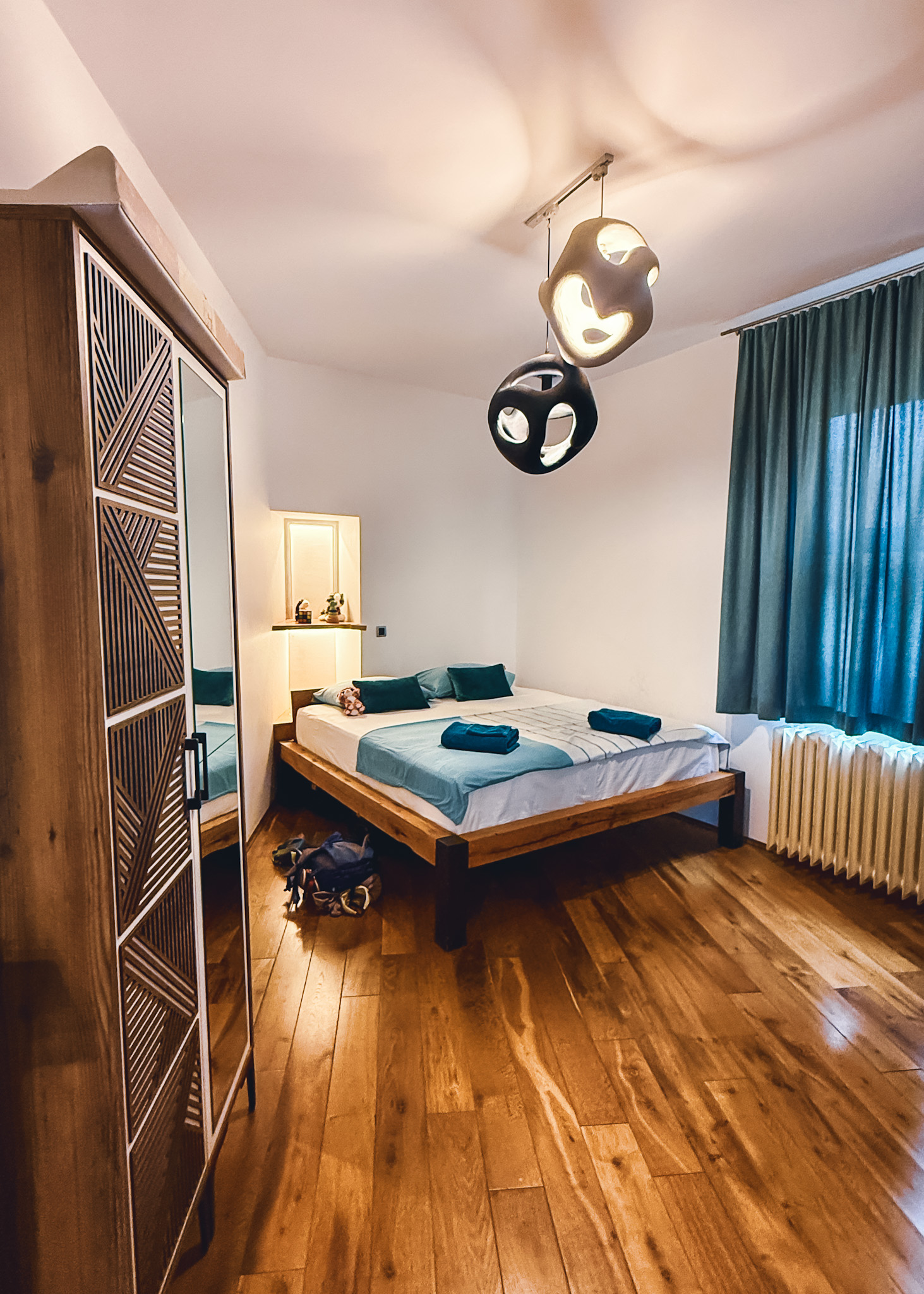
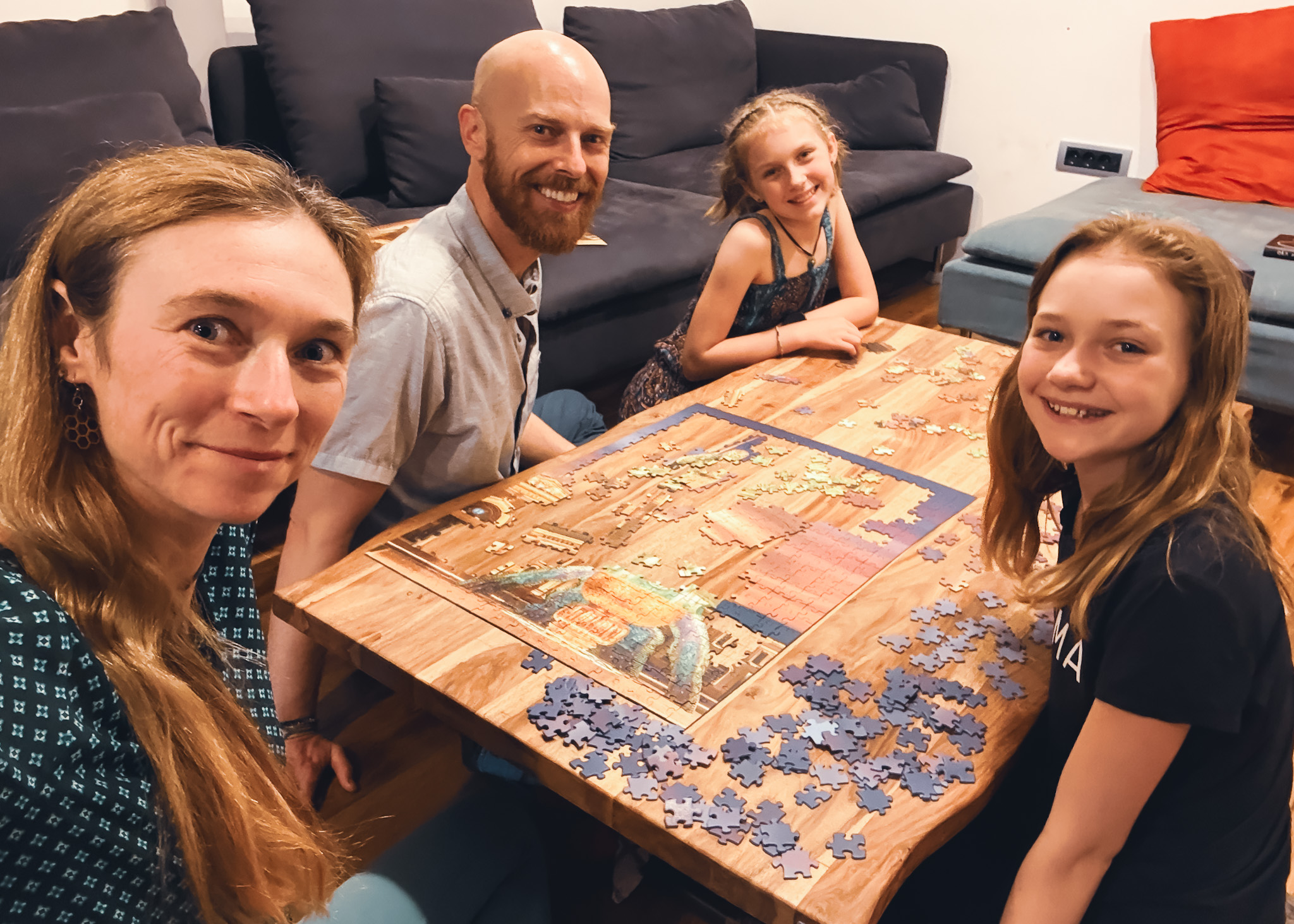
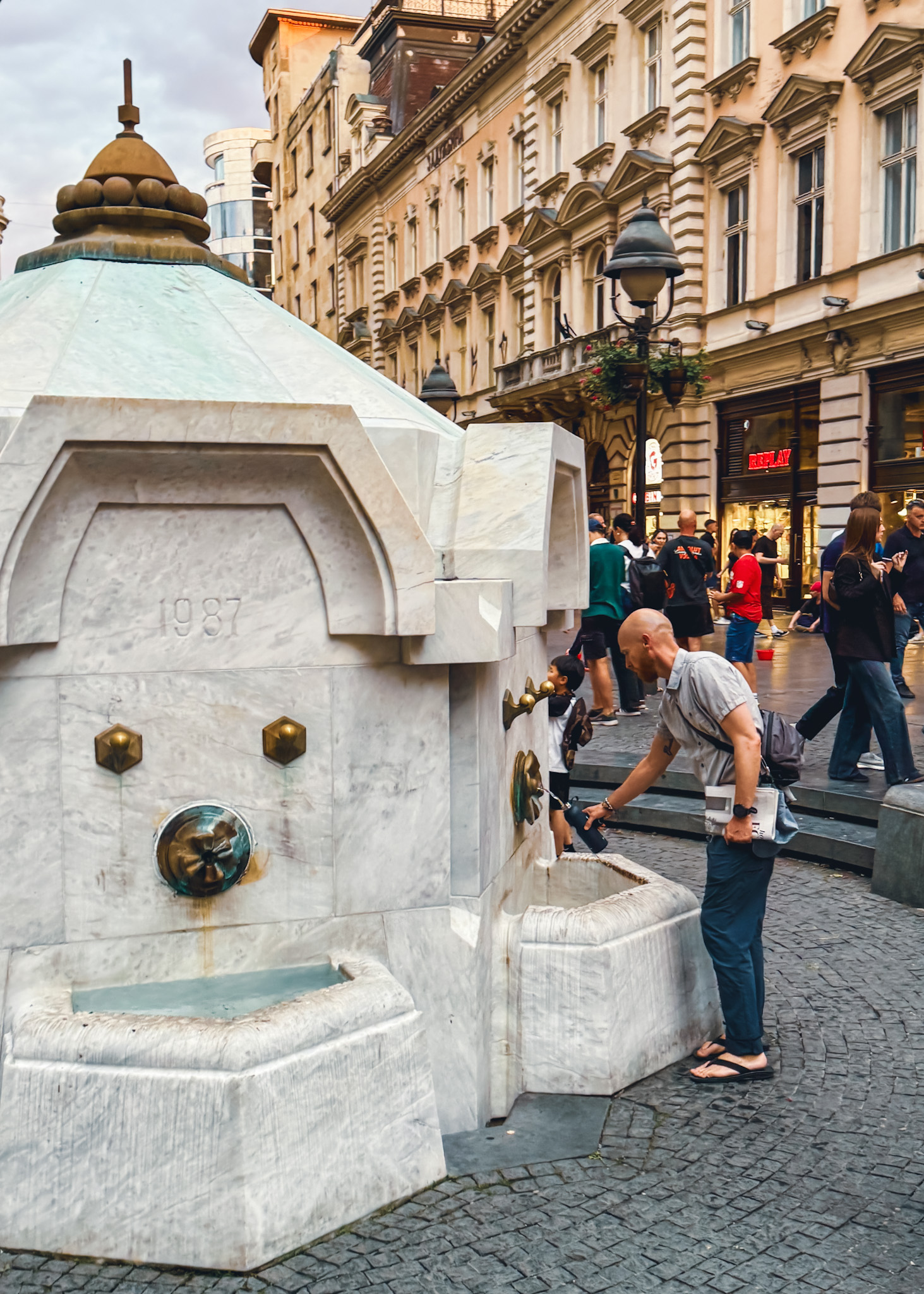
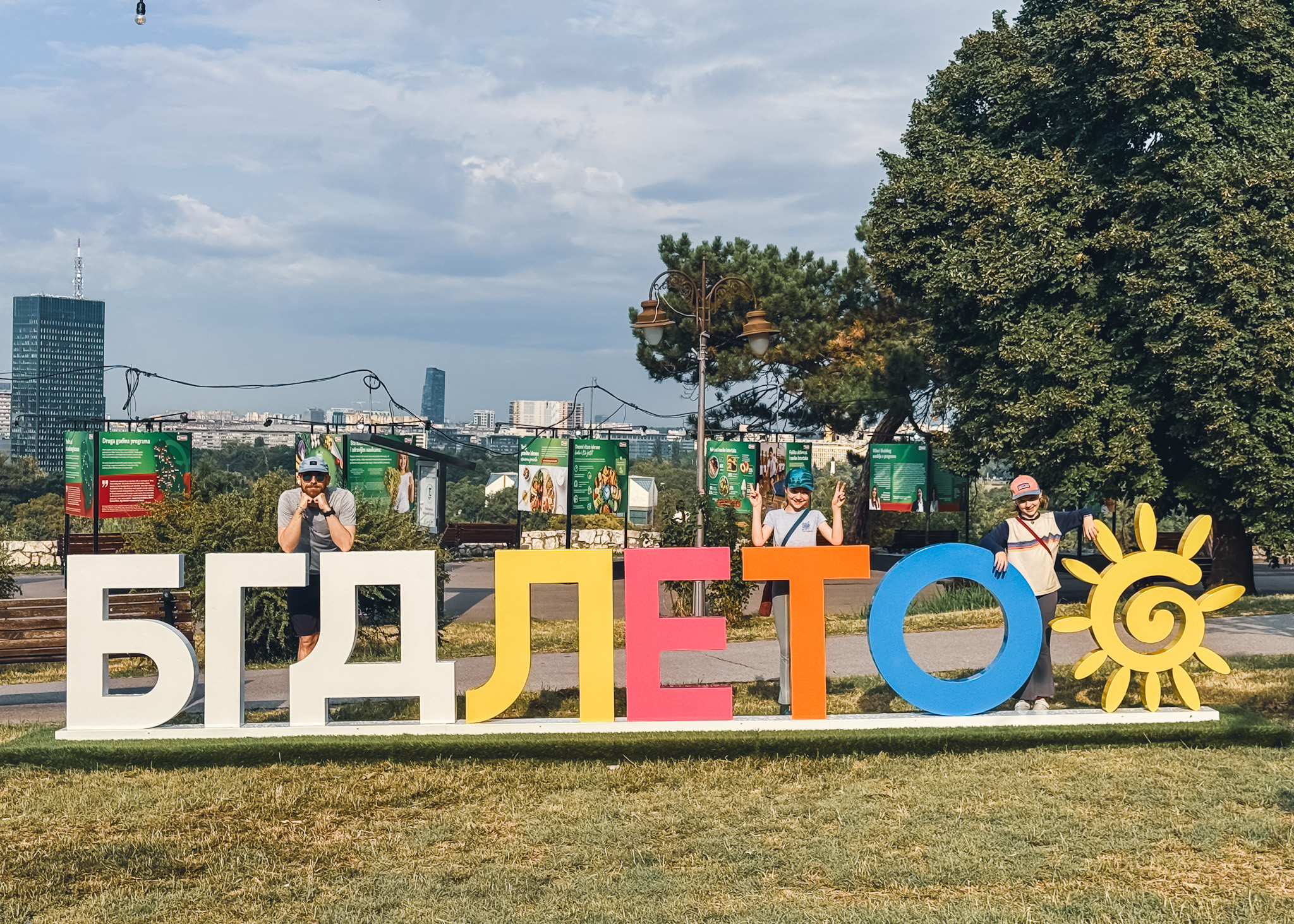
Our apartment sat directly in the center of Belgrade, a web of walking streets, which made us wish that every downtown area could be only for pedestrians—how magical would that world be? We dropped our bags, hunted down an excellent chicken shawarma for our first Serbian meal, then hauled home two enormous bags of groceries for the week. At our final “home” of the trip, we found a 500-piece puzzle that the girls immediately started and we grownups got sucked into and we finished as a family.
Then the days settled into the rhythm that became the real story of Belgrade. Every morning started the same way: coffee and dried apricots, granola and yogurt and berries, and then the whole family out the door to Student Park. The leafy square in the university quarter was just around the corner and has lived several lives: Ottoman cemetery, then the city’s Great Market, then, since 1889, an elegant statue-dotted park. There we would split into our now-perfected formation. The girls walked clockwise, plugged into The Mystwick School of Musicraft, their audiobook about a school where musicians spin music into literal magic. Shaina and Max walked counterclockwise, plugged into a podcast, passing the girls twice a lap and trading waves and high-fives. Nine kilometers most mornings, then home for a strength workout that the girls often joined, then an substantial second breakfast that vanished so fast it was unclear whether anyone tasted it.
Threaded through those laps was a quiet project of Arya’s. She wants to join the cross-country team when school starts, so she and Max began running together, a mile the first time, at a pace that gently re-introduced her to running, and a mile and a half a few days later. That second run began with a hard lesson: she took off cold, and within minutes a side ache folded her up. So they walked a lap while Max explained what a side ache actually is—a diaphragm that hasn’t gotten its blood supply up to speed yet, firing off a pain signal your brain interprets as an emergency. He reassured her that she was not, in fact, dying. Properly warmed up, they started again, and she cruised the rest of the way feeling strong. Watching her build toward a goal that lives entirely on the other side of this trip has been one of the sweeter parts of the wind-down.
The podcasts on those walks fed us too, one episode in particular. A Hidden Brain two-parter about “mental maps”, the internal models we all use to navigate life, got us talking for days. The gist: mental maps make the routine parts of life effortless, but they become a liability the moment reality contradicts them. The skill that matters most is noticing that moment, dropping the map, and being fully present with what is actually in front of you. That is where the podcast argued that happiness lives—in creatively meeting the obstacles you never saw coming. It rhymed almost perfectly with the lessons this family spent the year learning the hard way, and it distilled into one small practice the we agreed to adopt: when friction hits, take a single breath before reacting. The knee-jerk response is almost never the best one, and the cost of one breath is almost nothing. Practice makes progress.
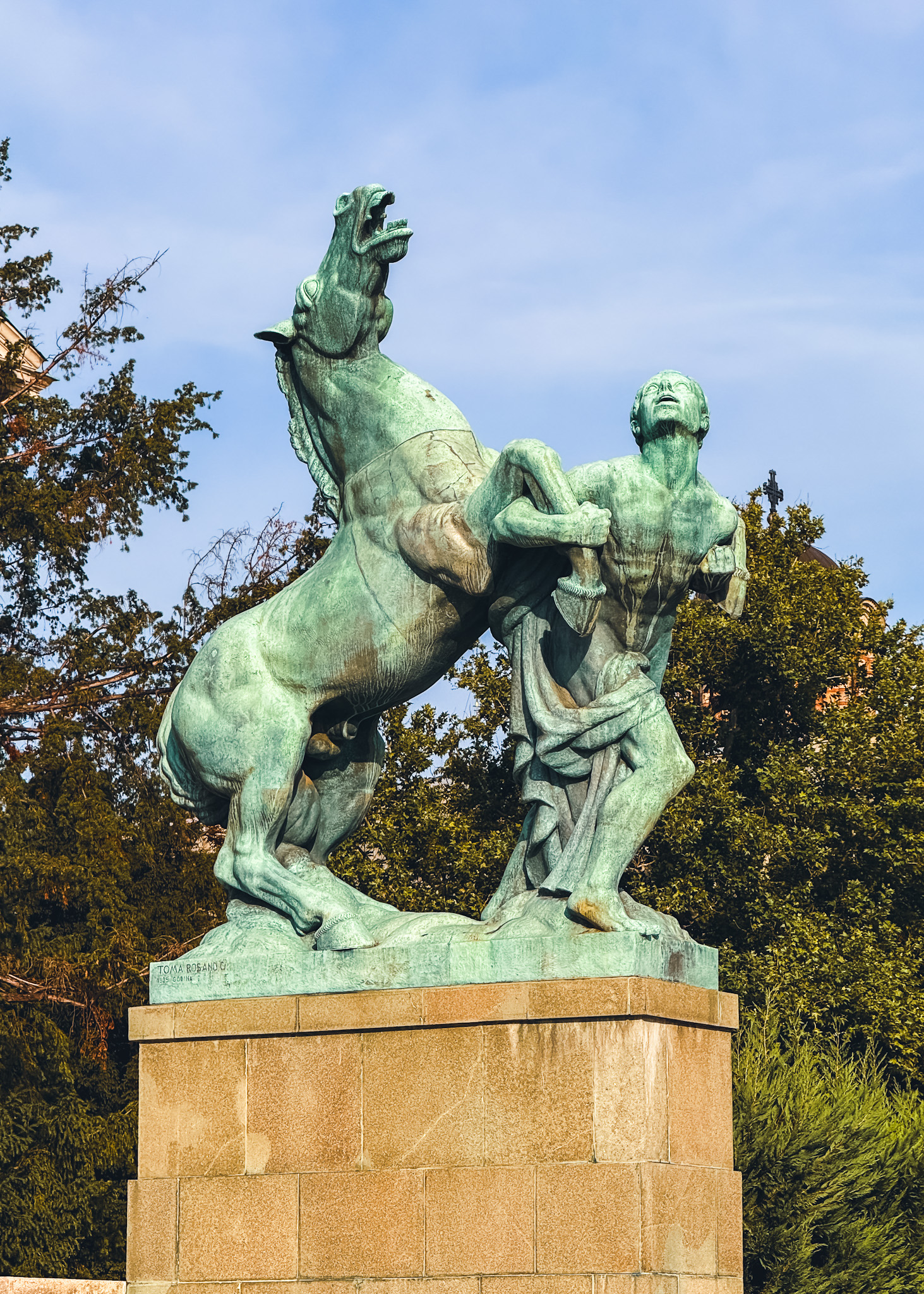
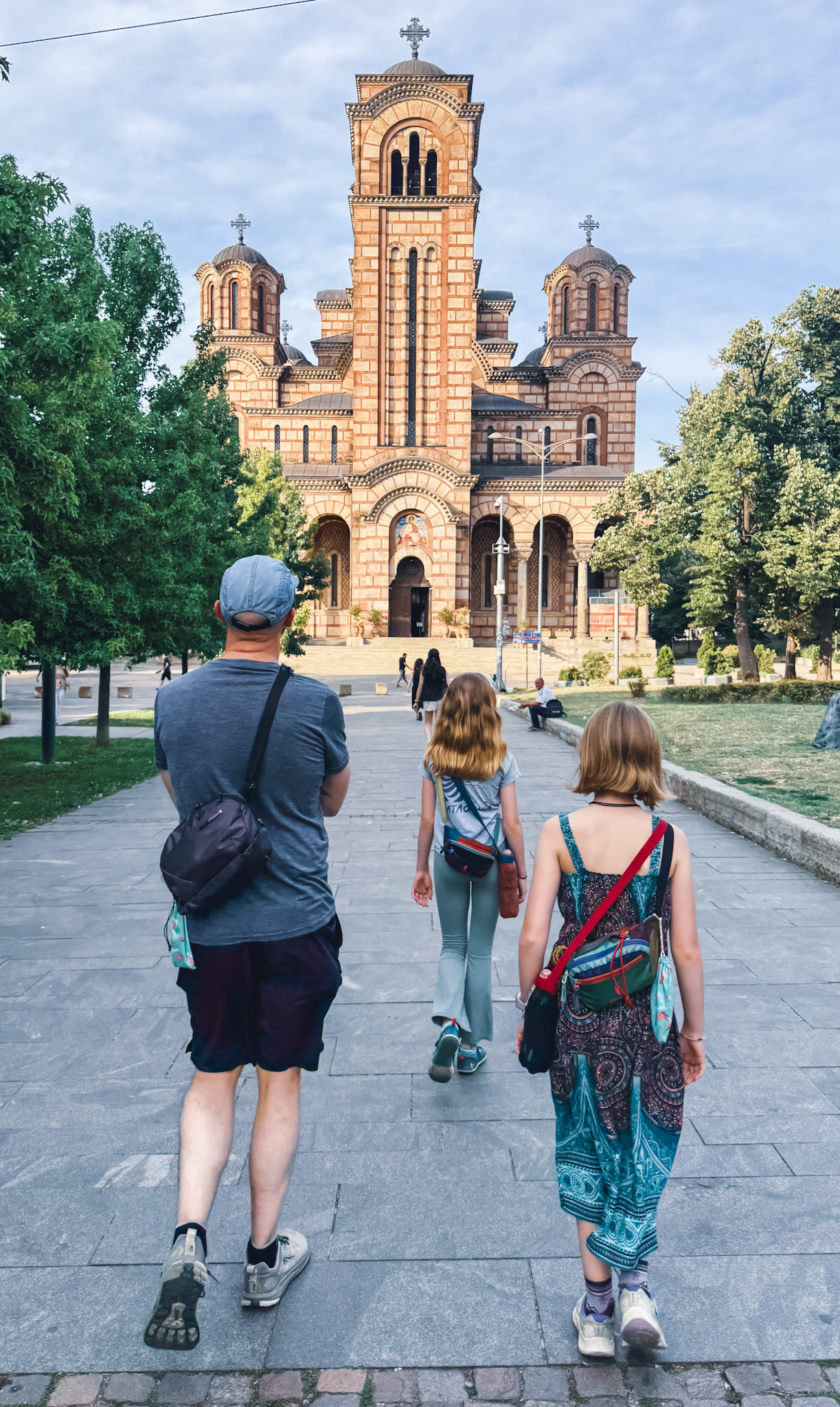
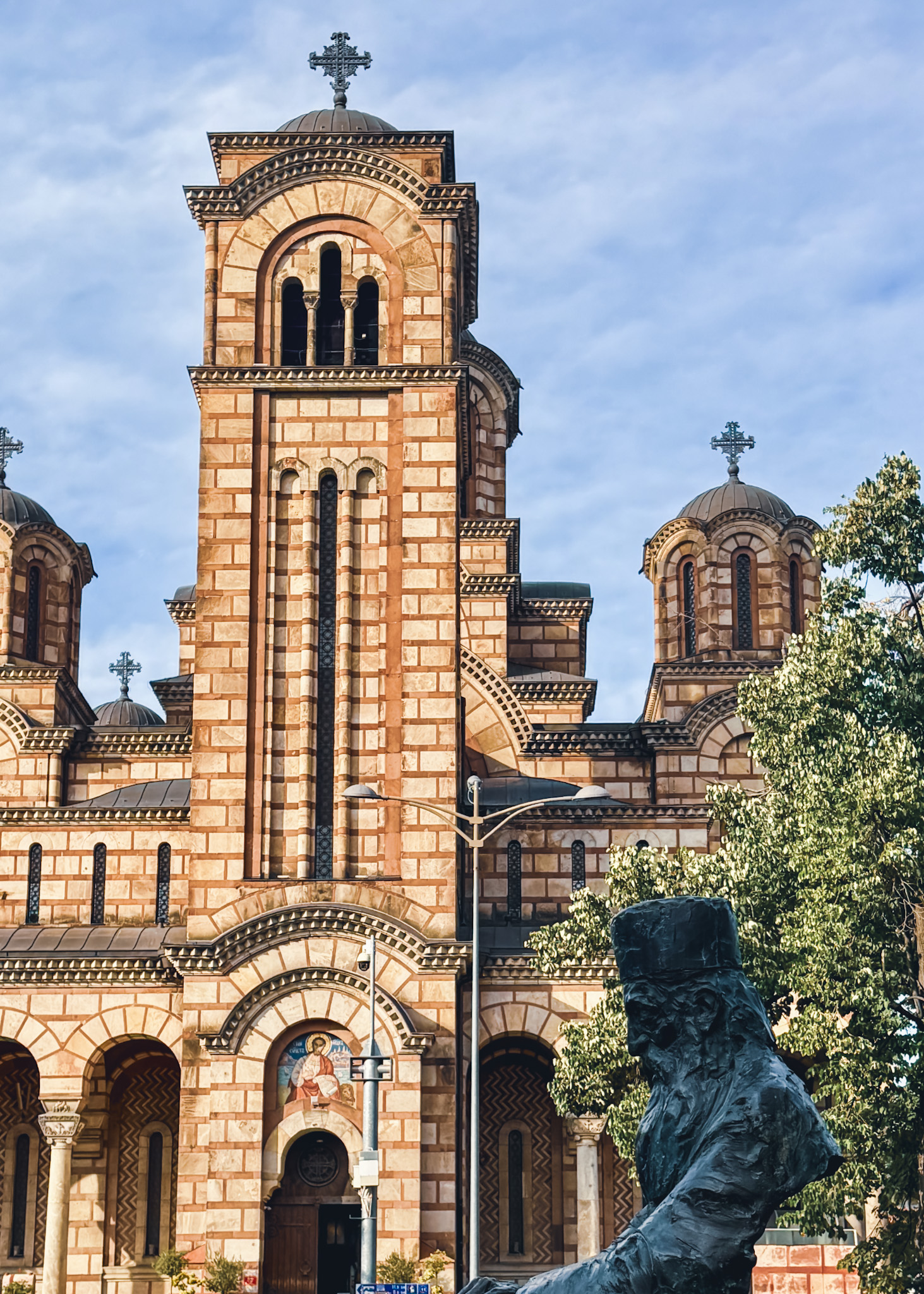
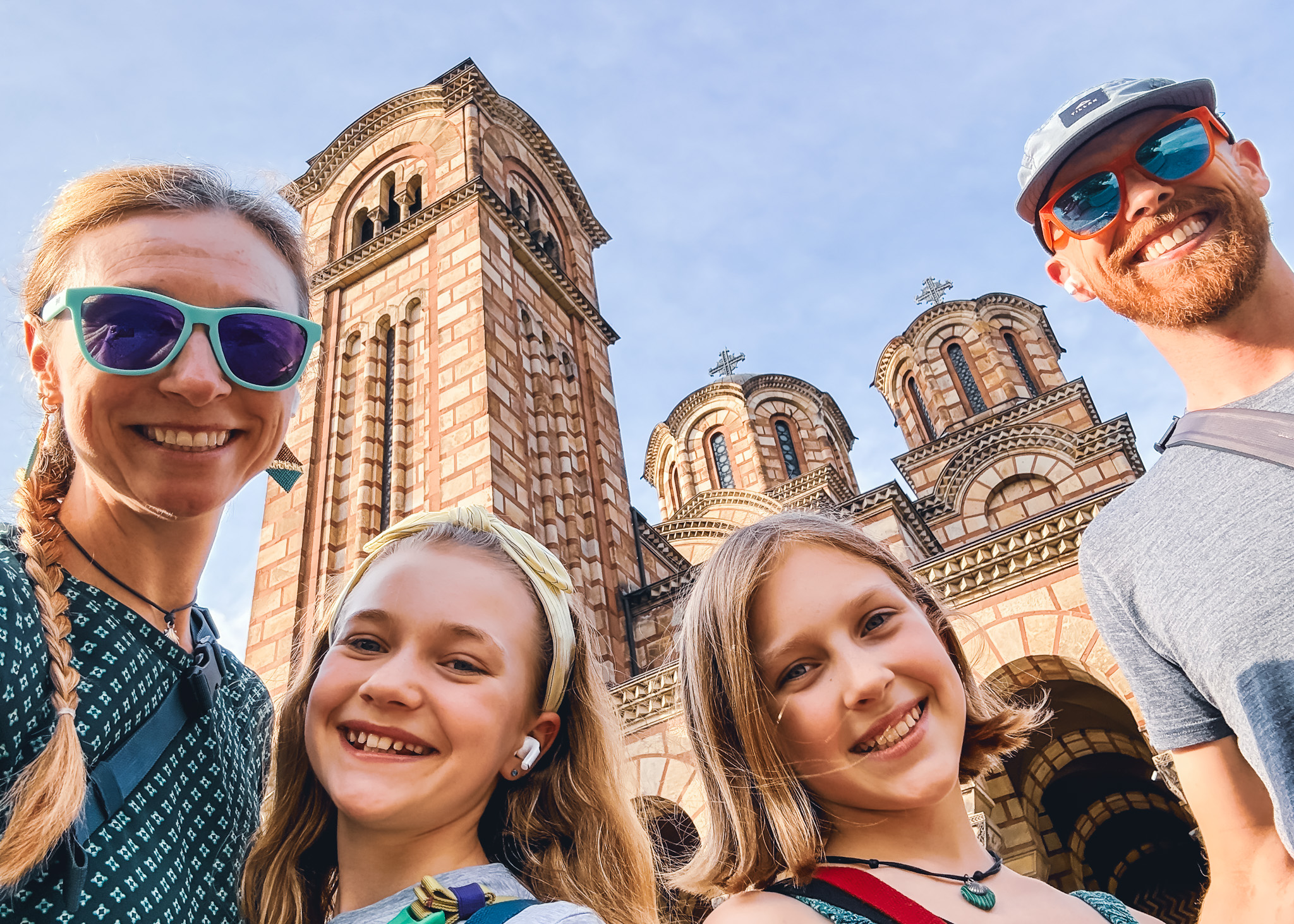
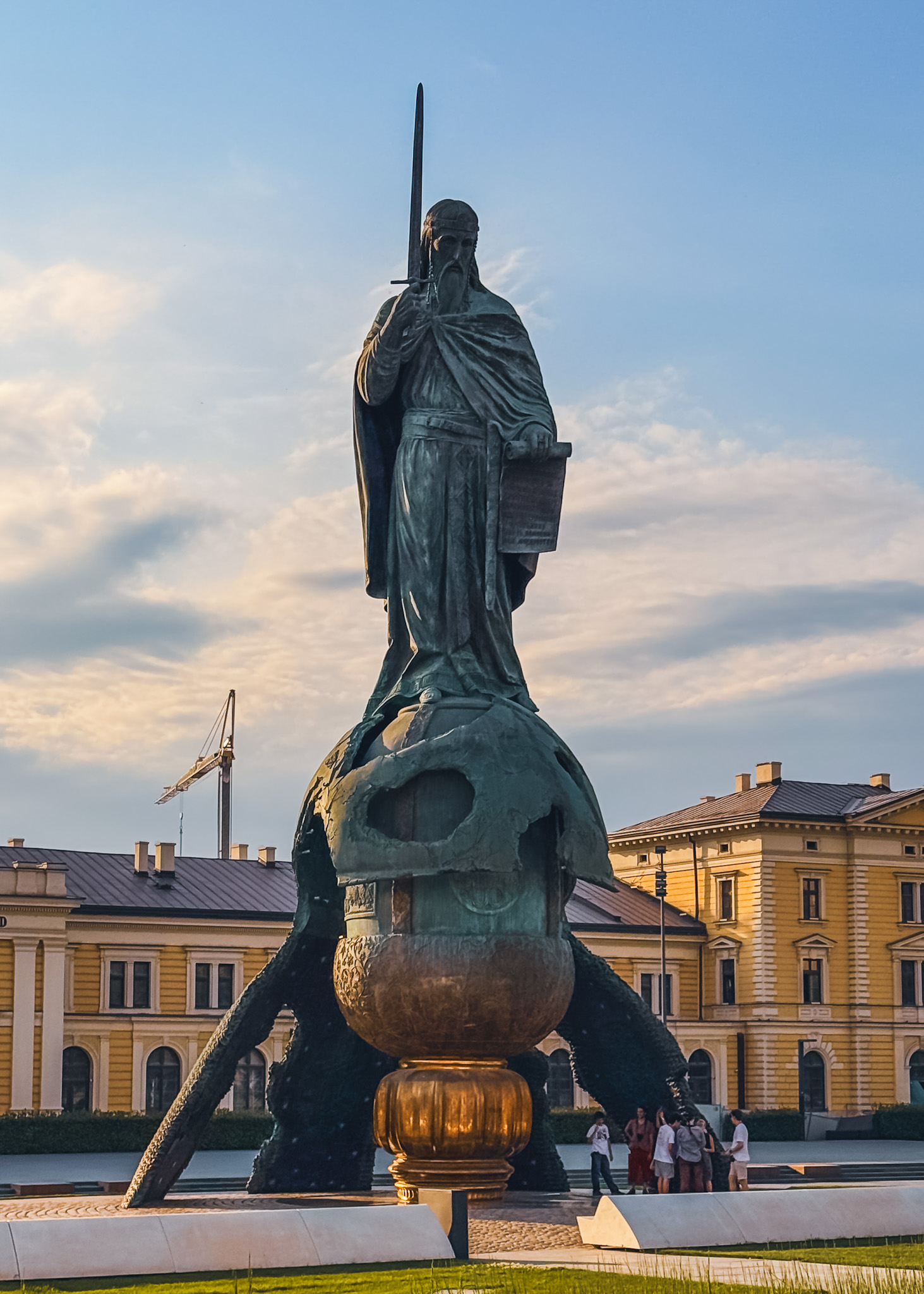
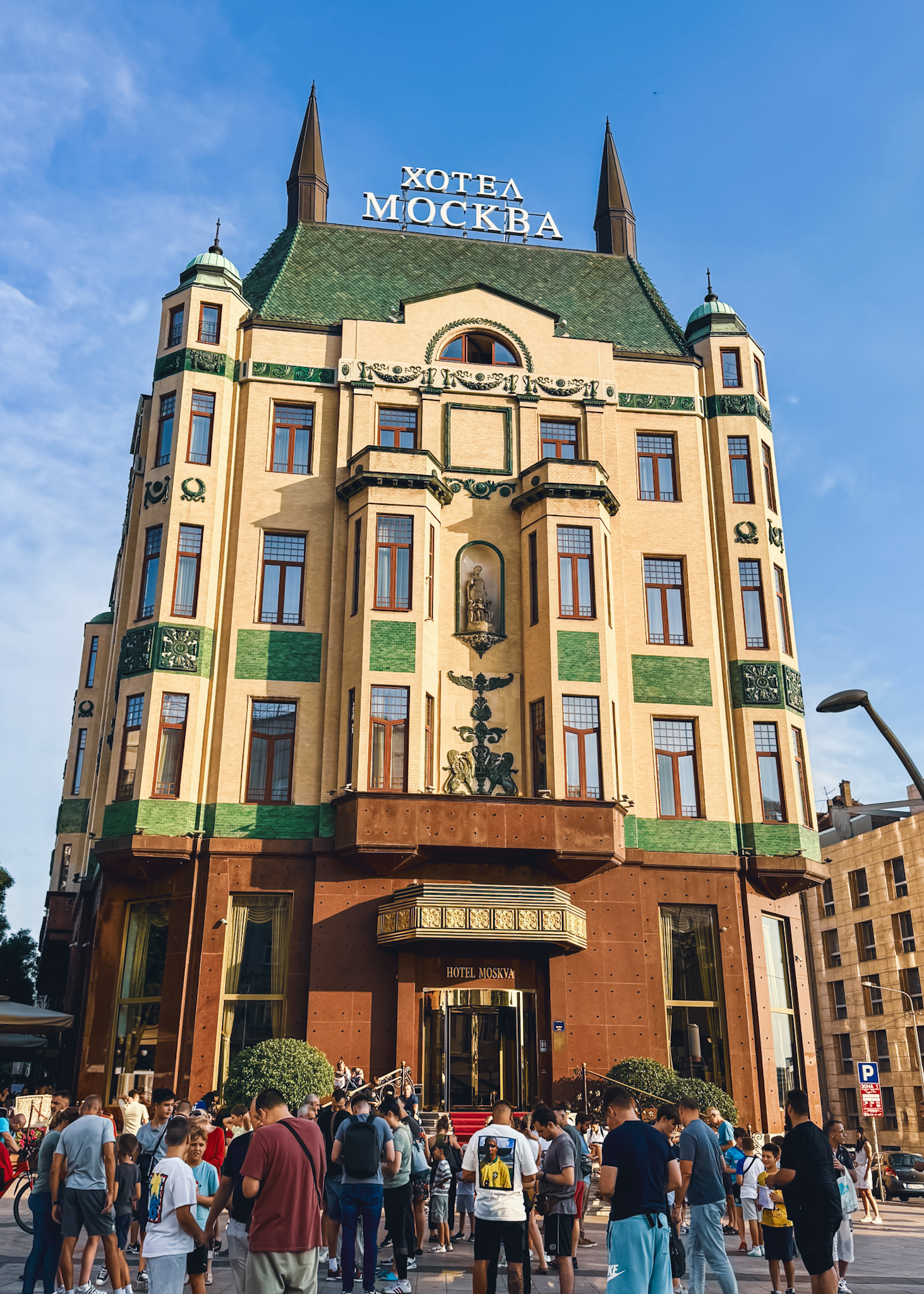
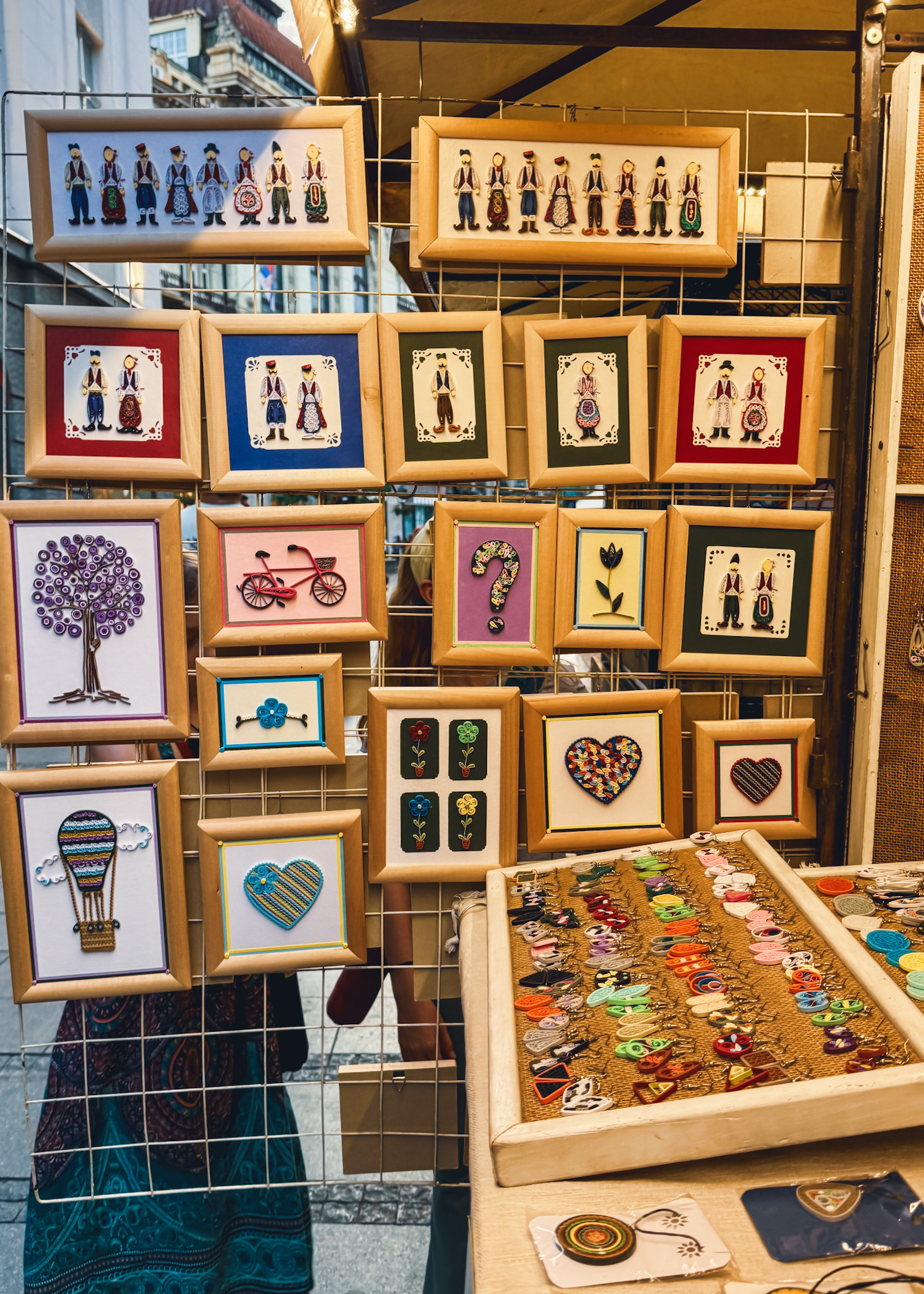
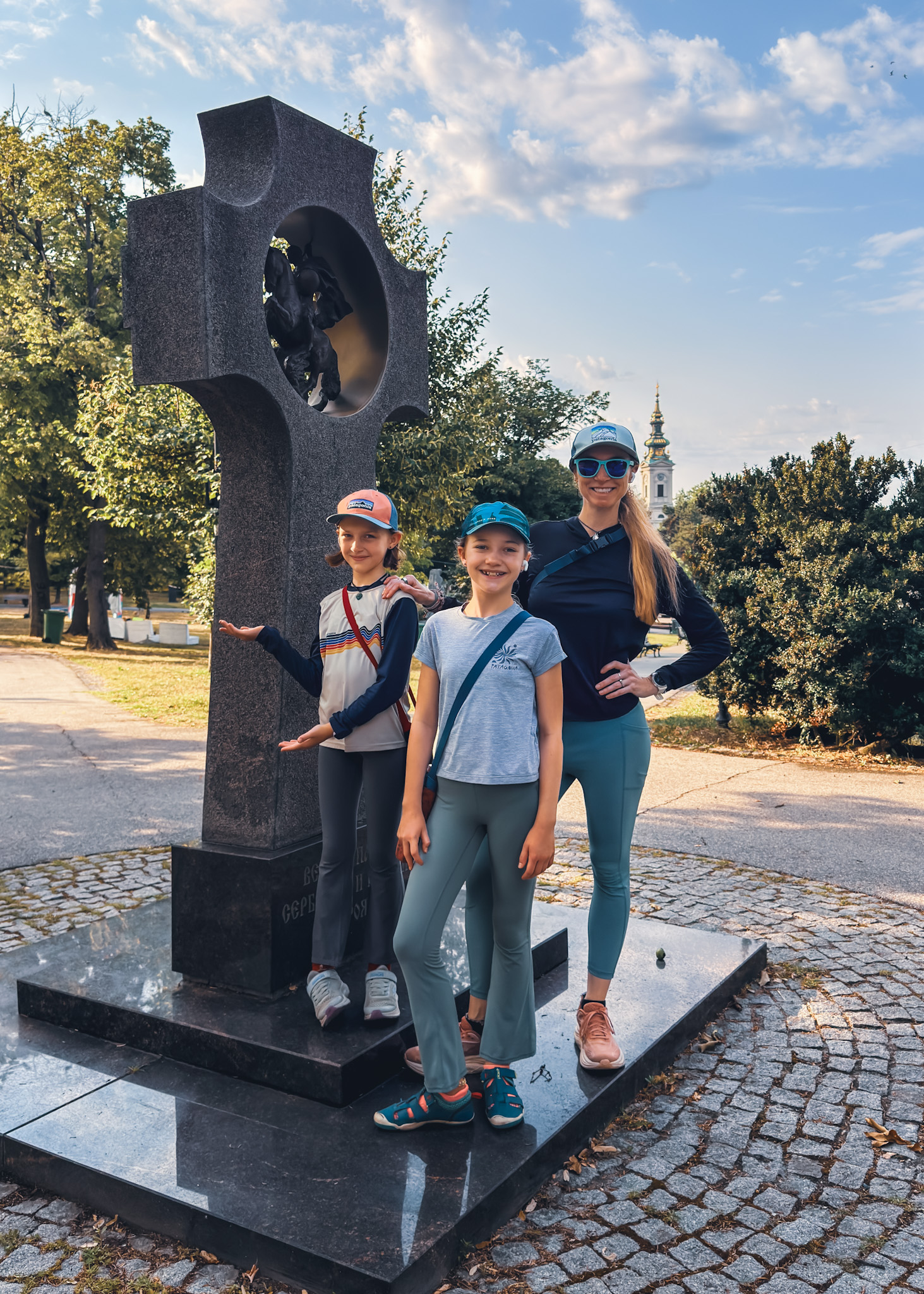
Belgrade the city, meanwhile, got the benefit of a lesson learned in Timișoara. Max built one more self-guided walking tour, but this time he rebuilt the formula around fun. The girls are, by their own entirely reasonable admission, approaching their saturation point for absorbing detailed world history. So the dense lessons gave way to a scavenger game (hunting for Serbian crosses on buildings and monuments), and easy trivia at each stop that rewarded attention rather than memorization. It worked beautifully, and it carried us through the city’s heavyweights.
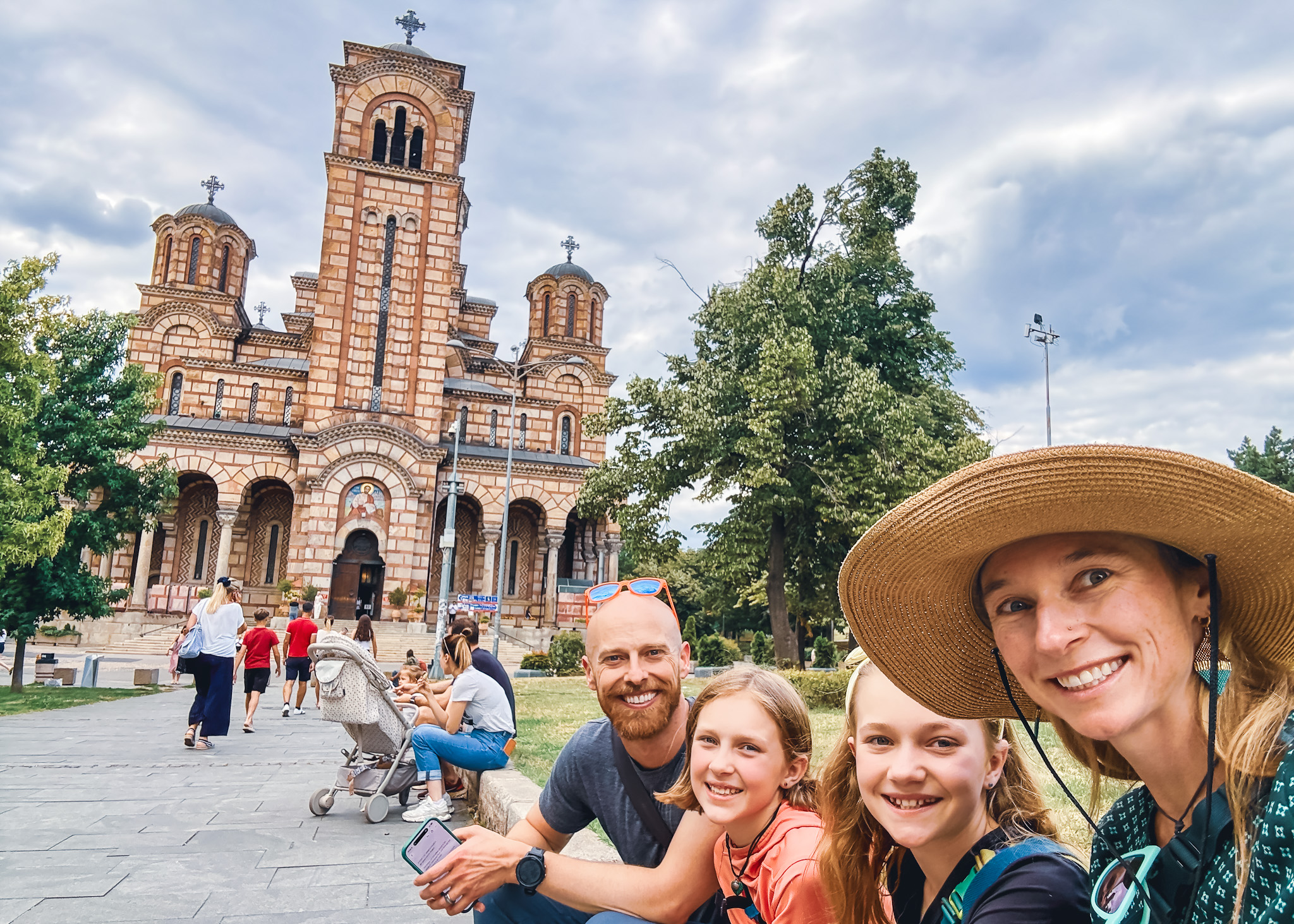
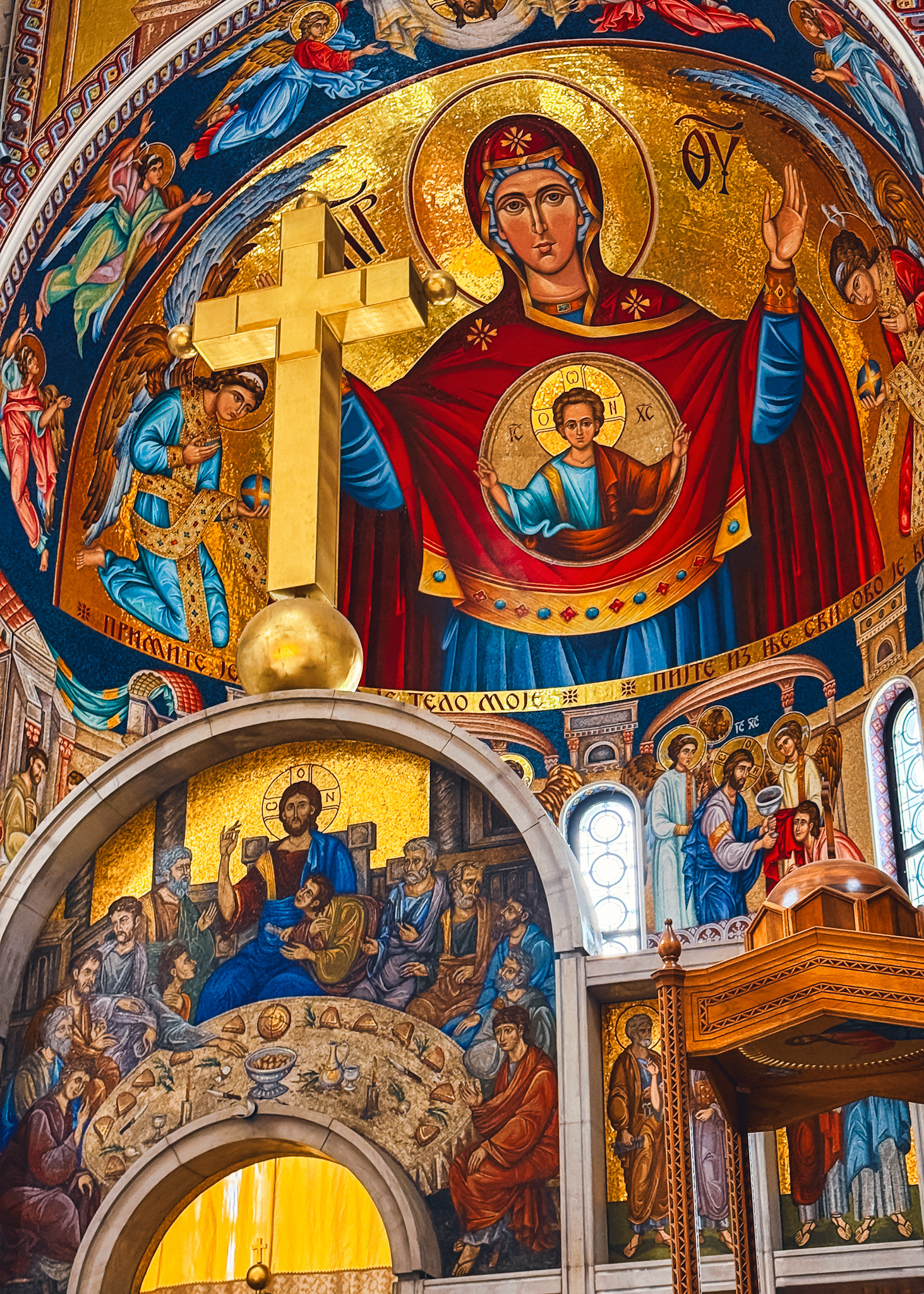
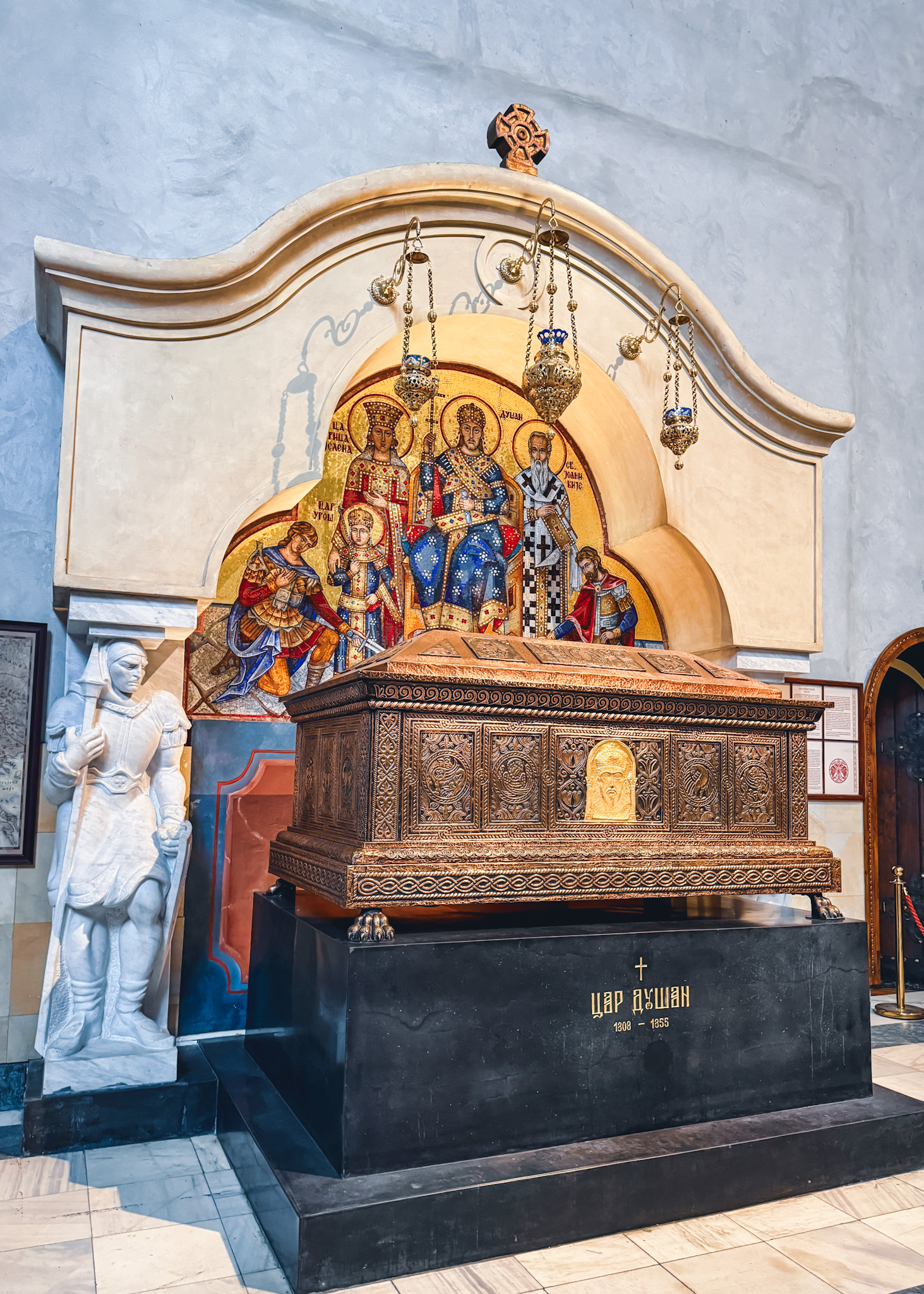
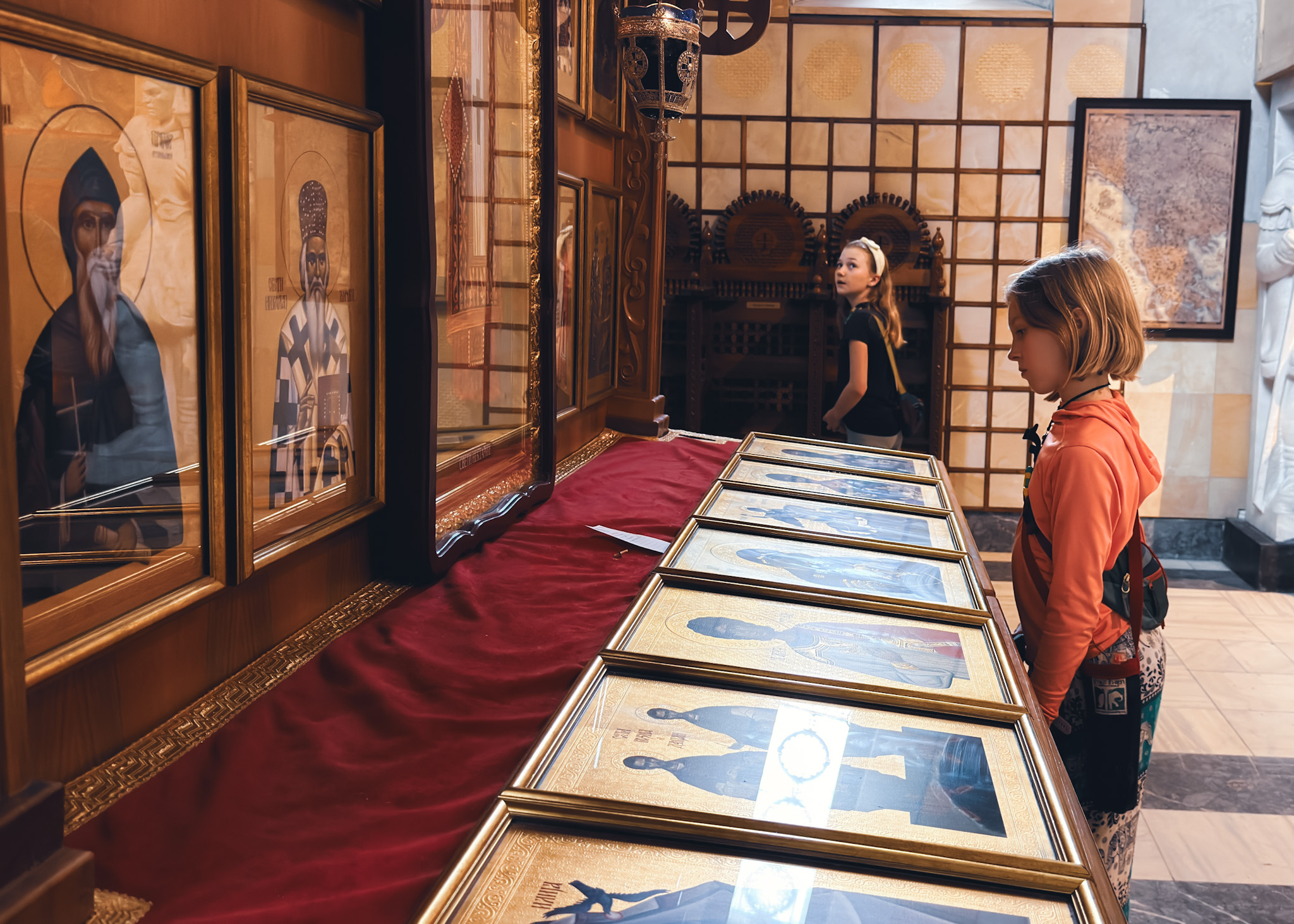
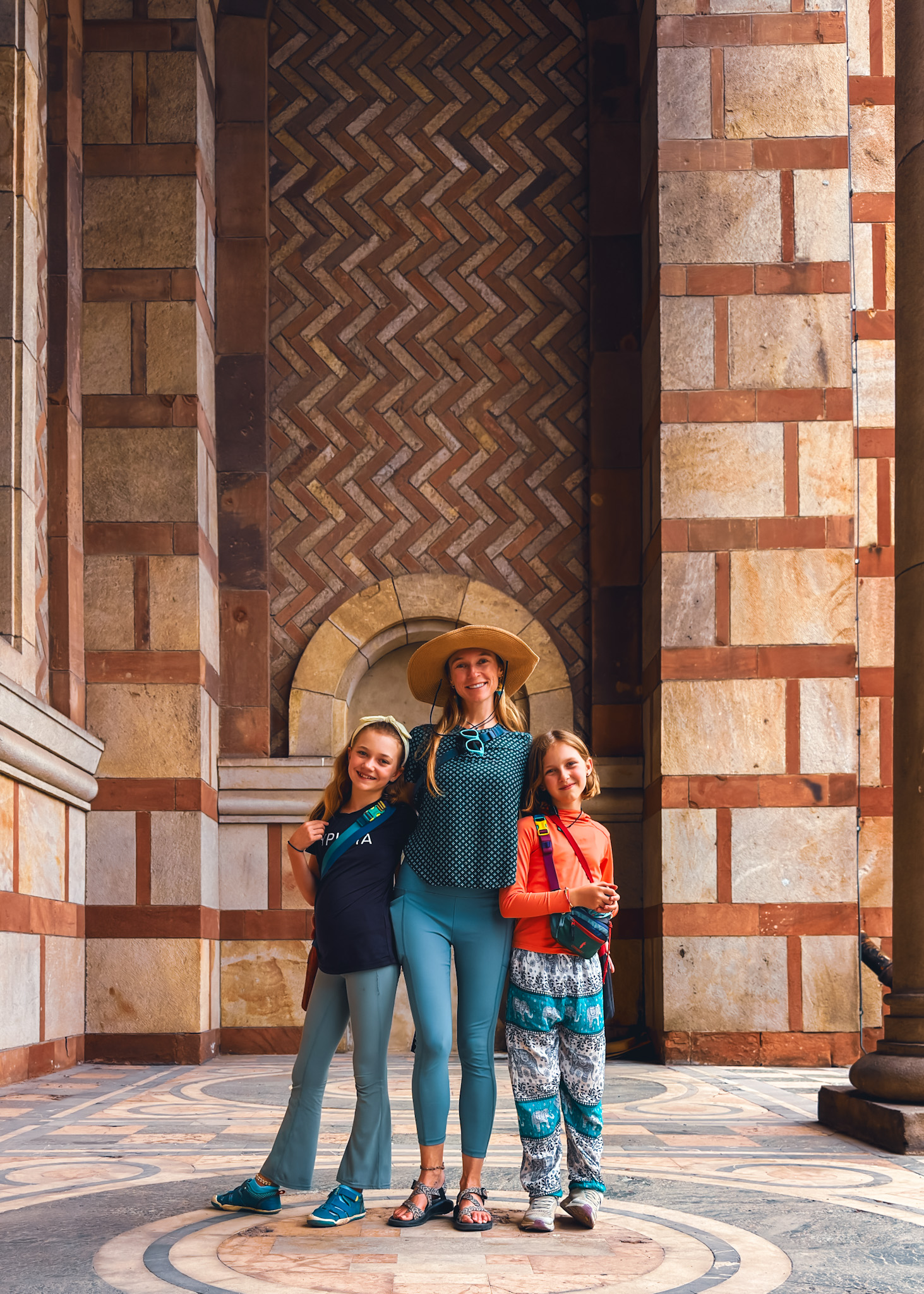
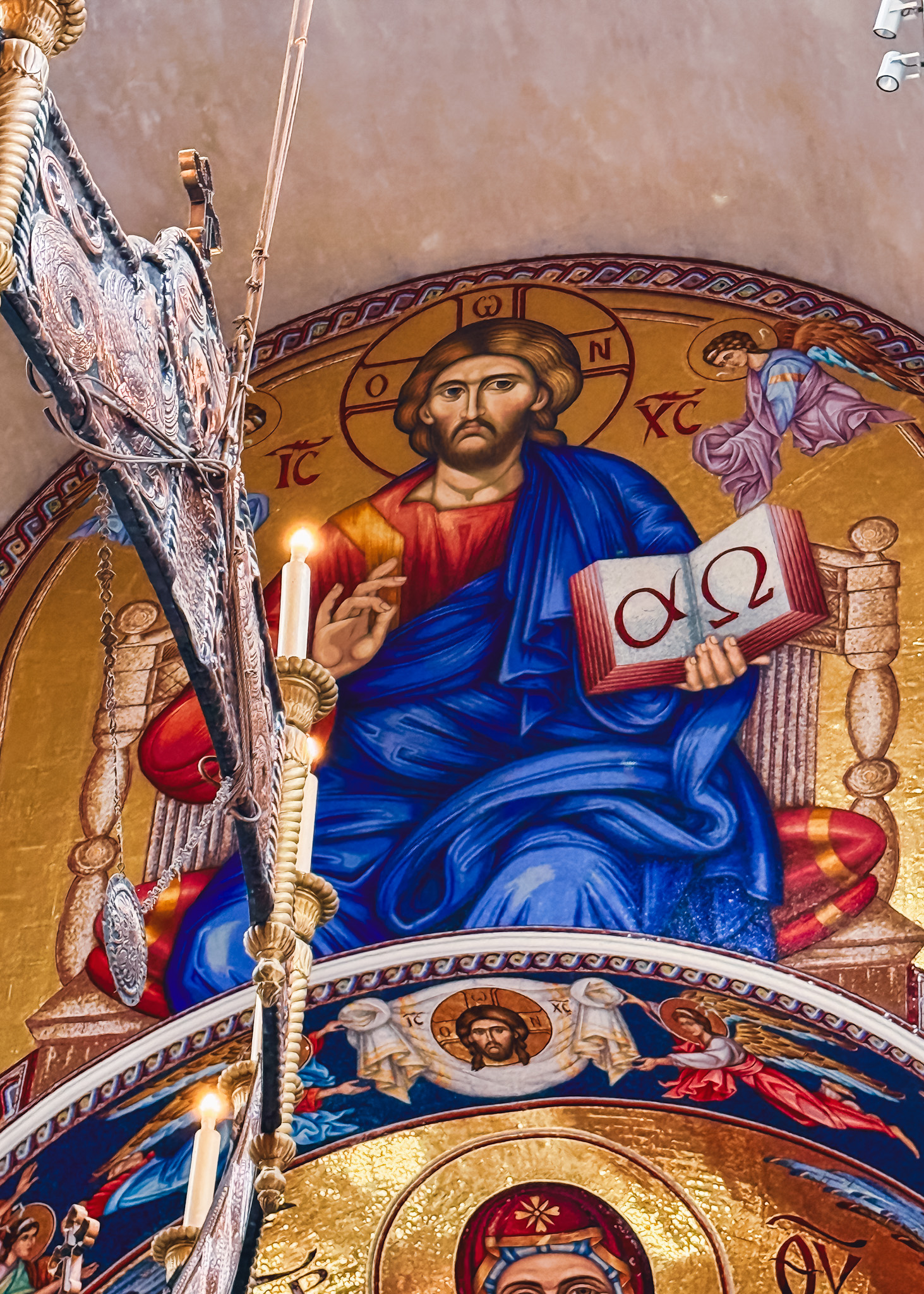
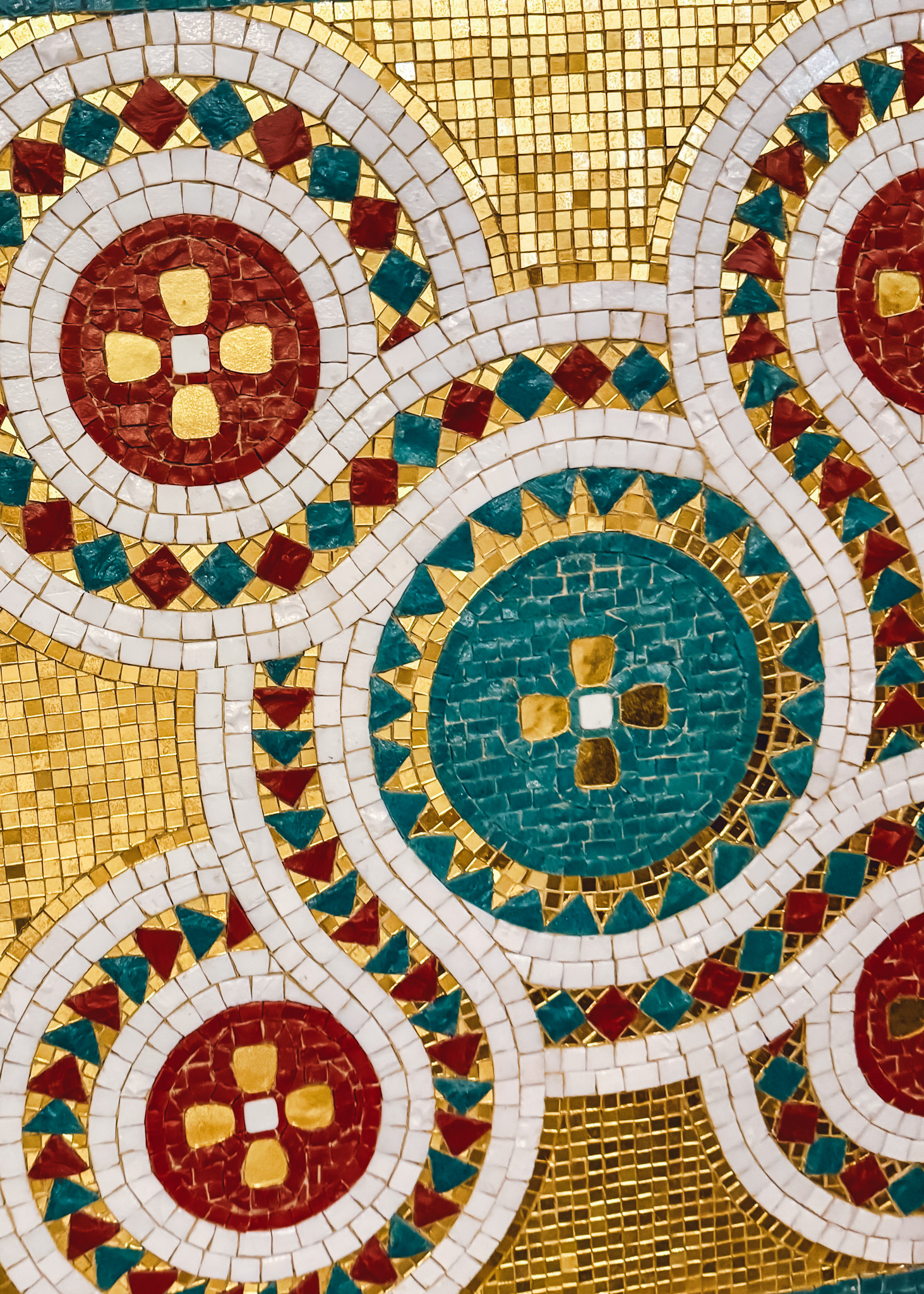
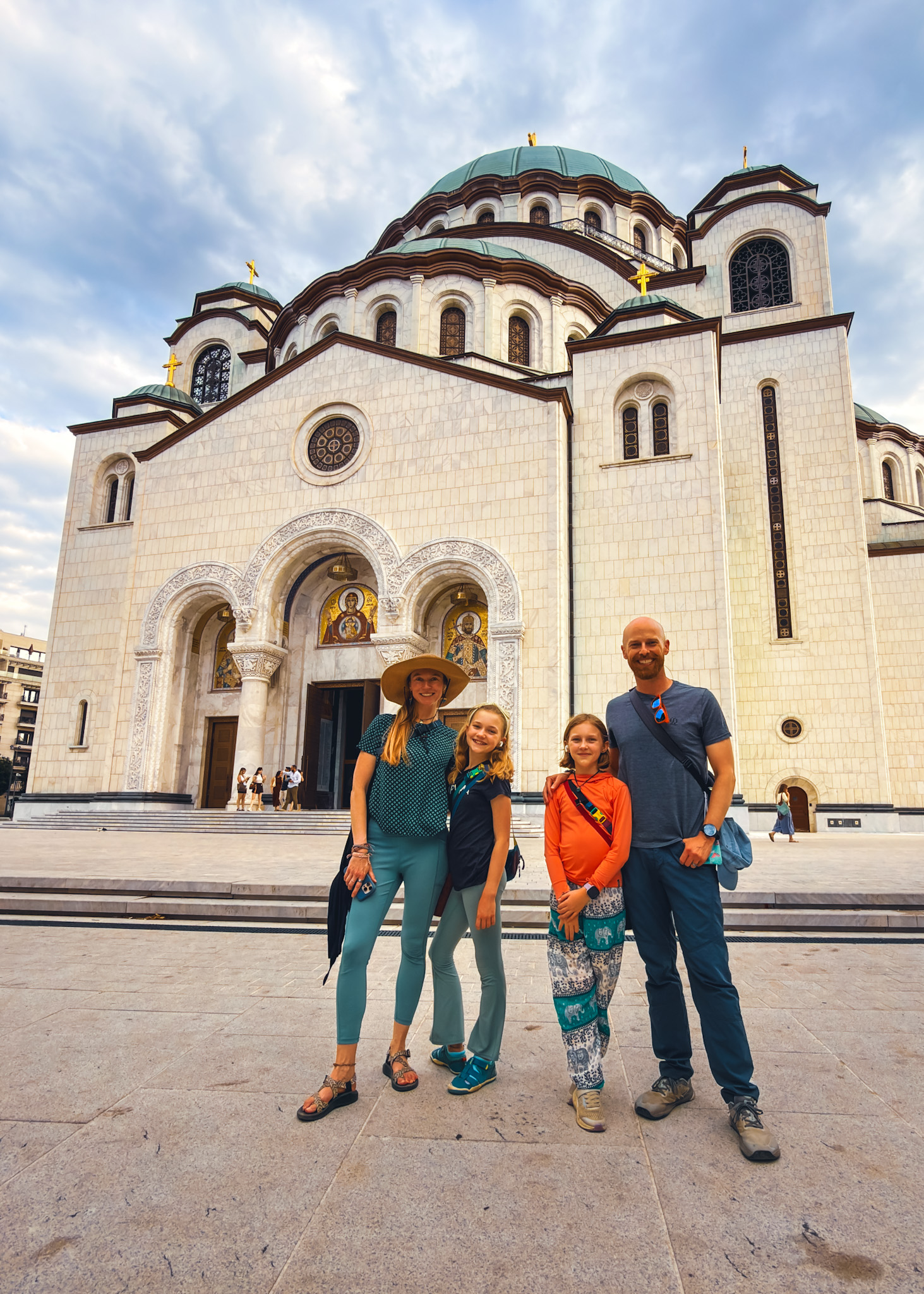
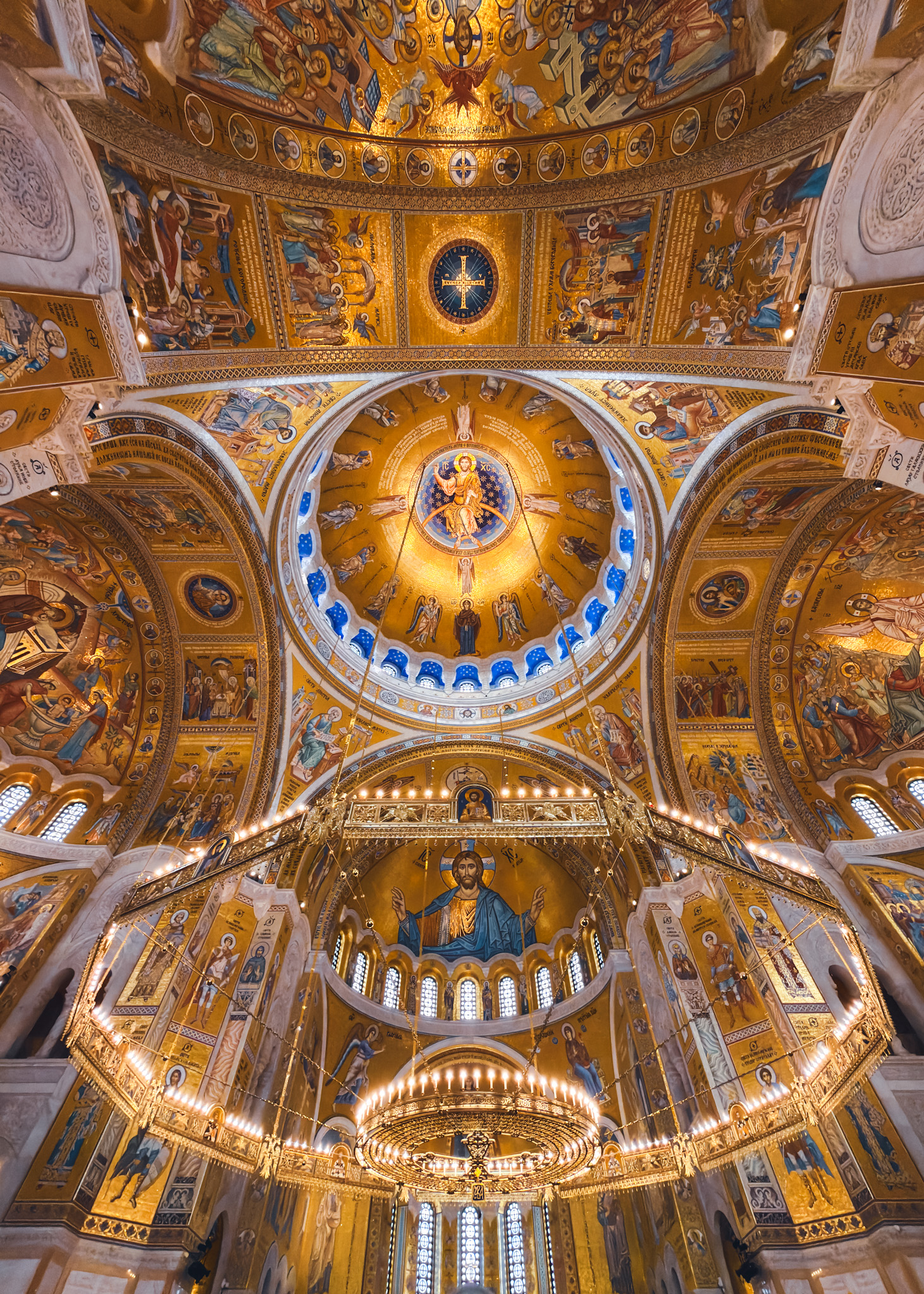
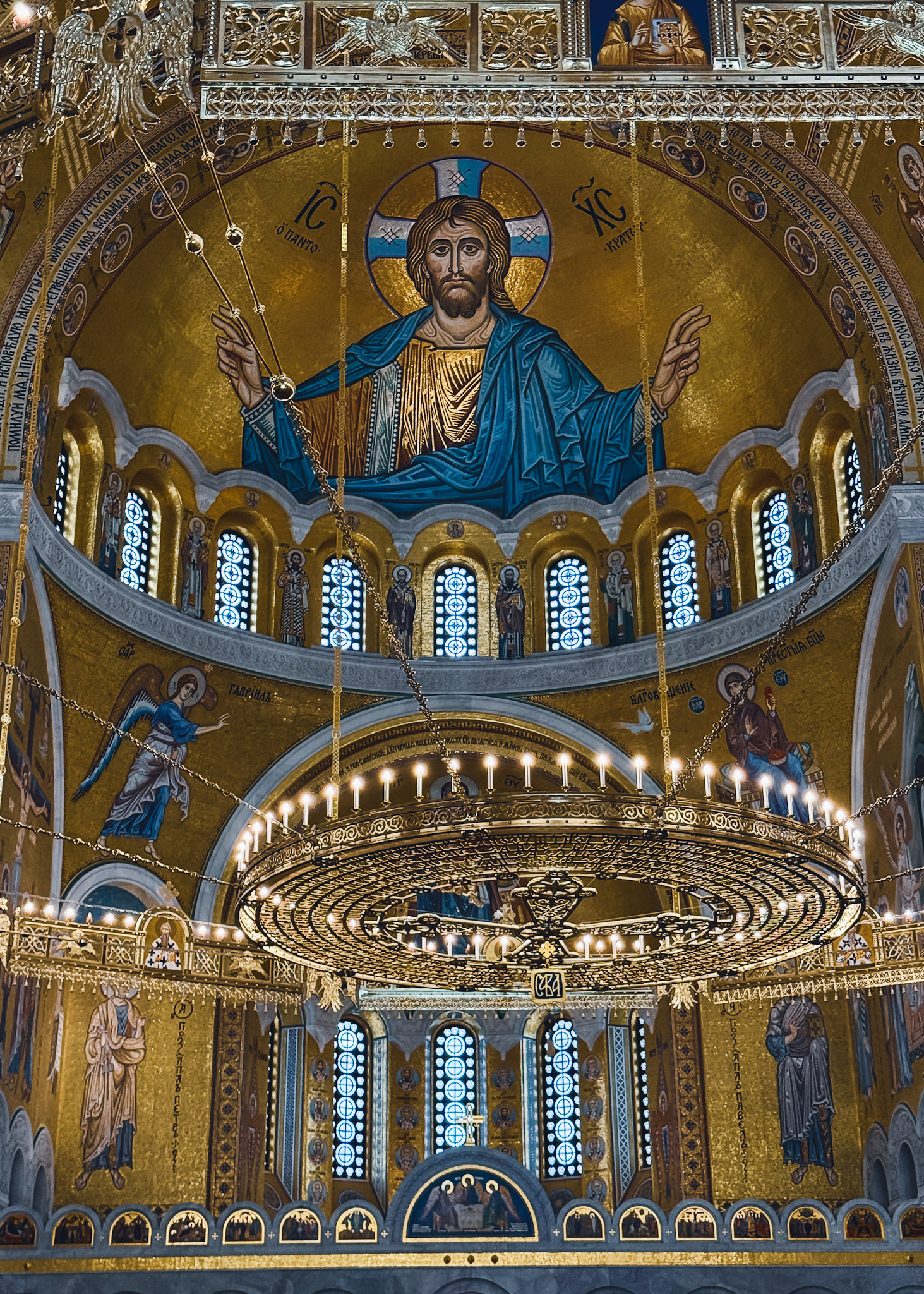
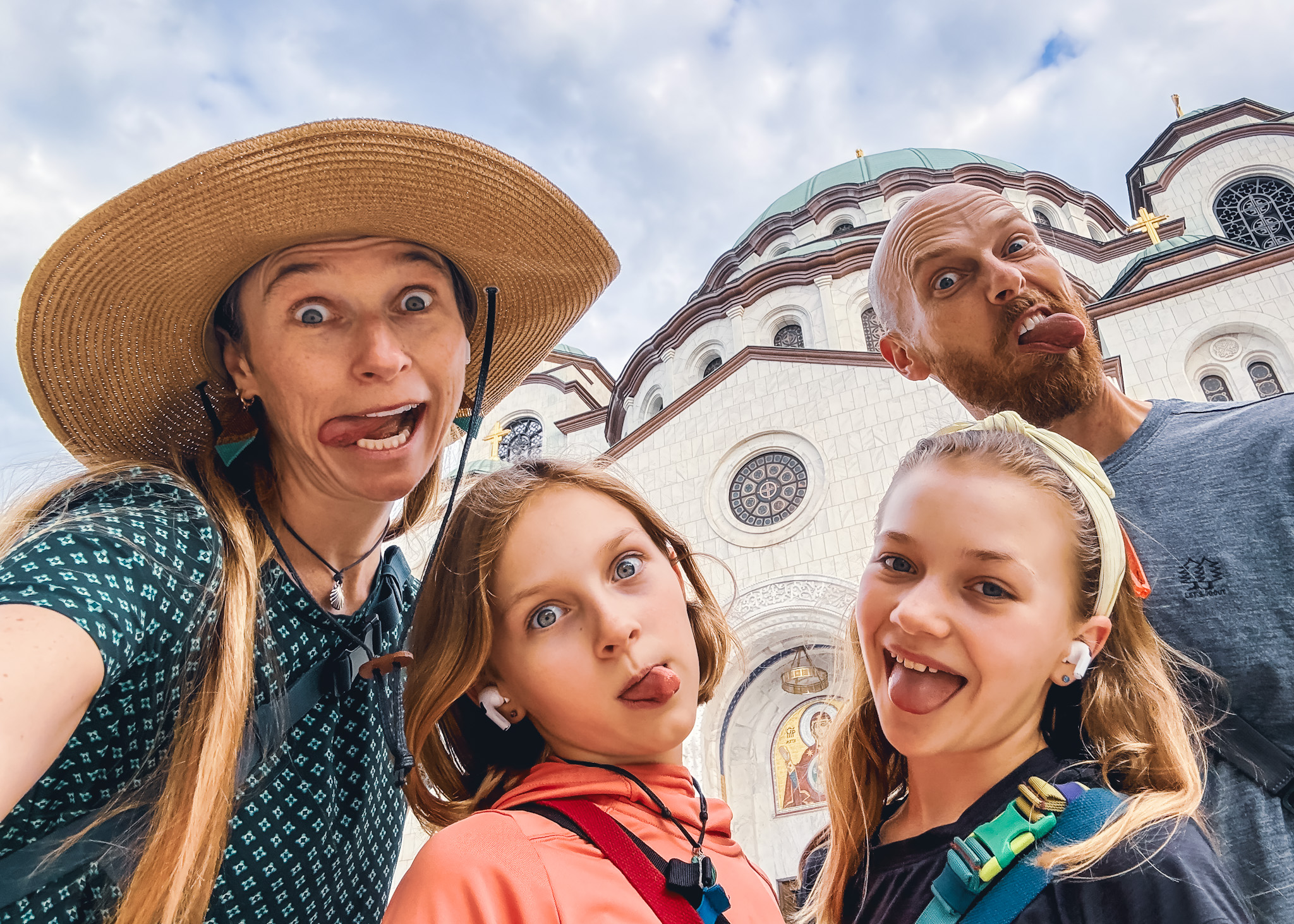
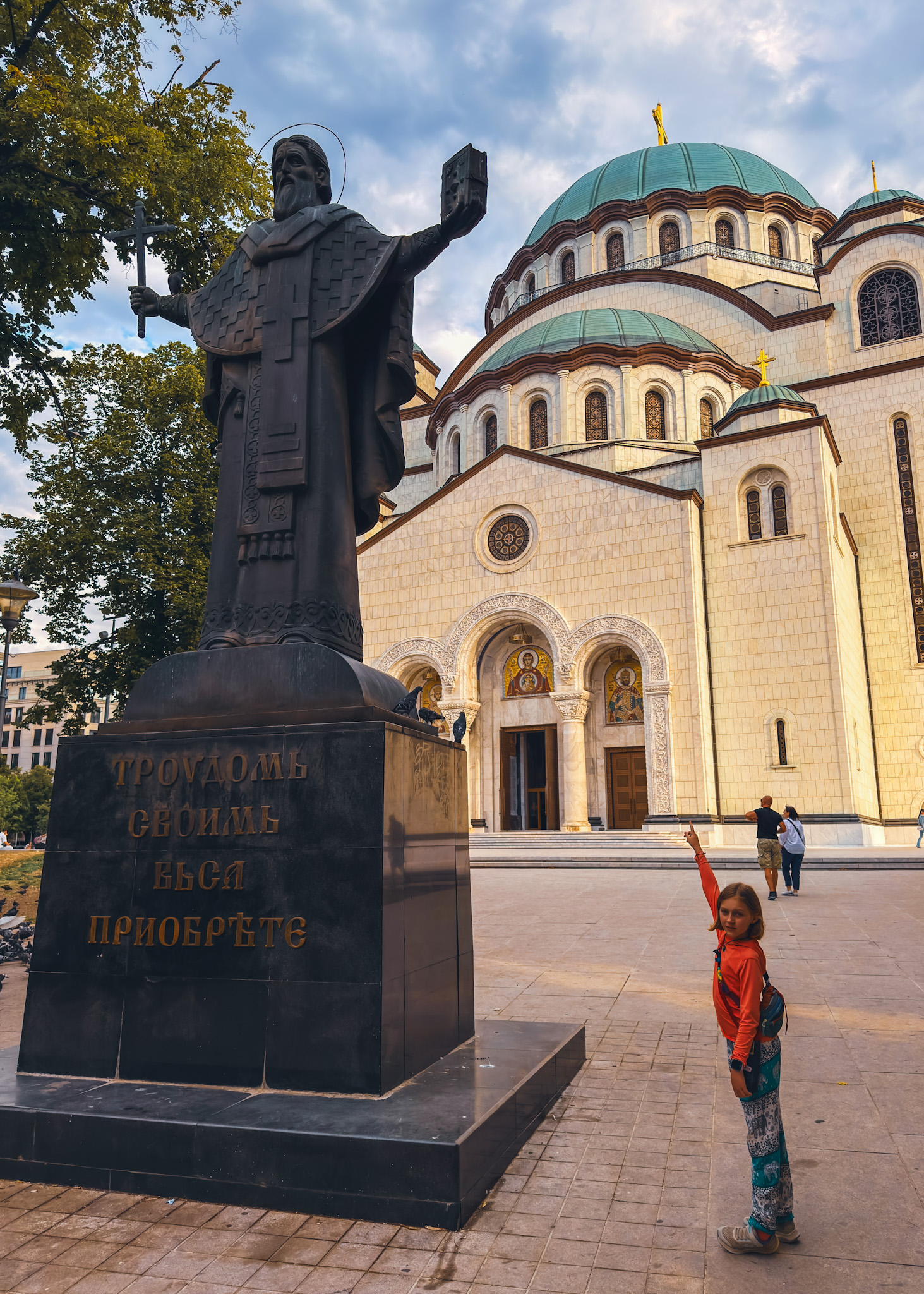
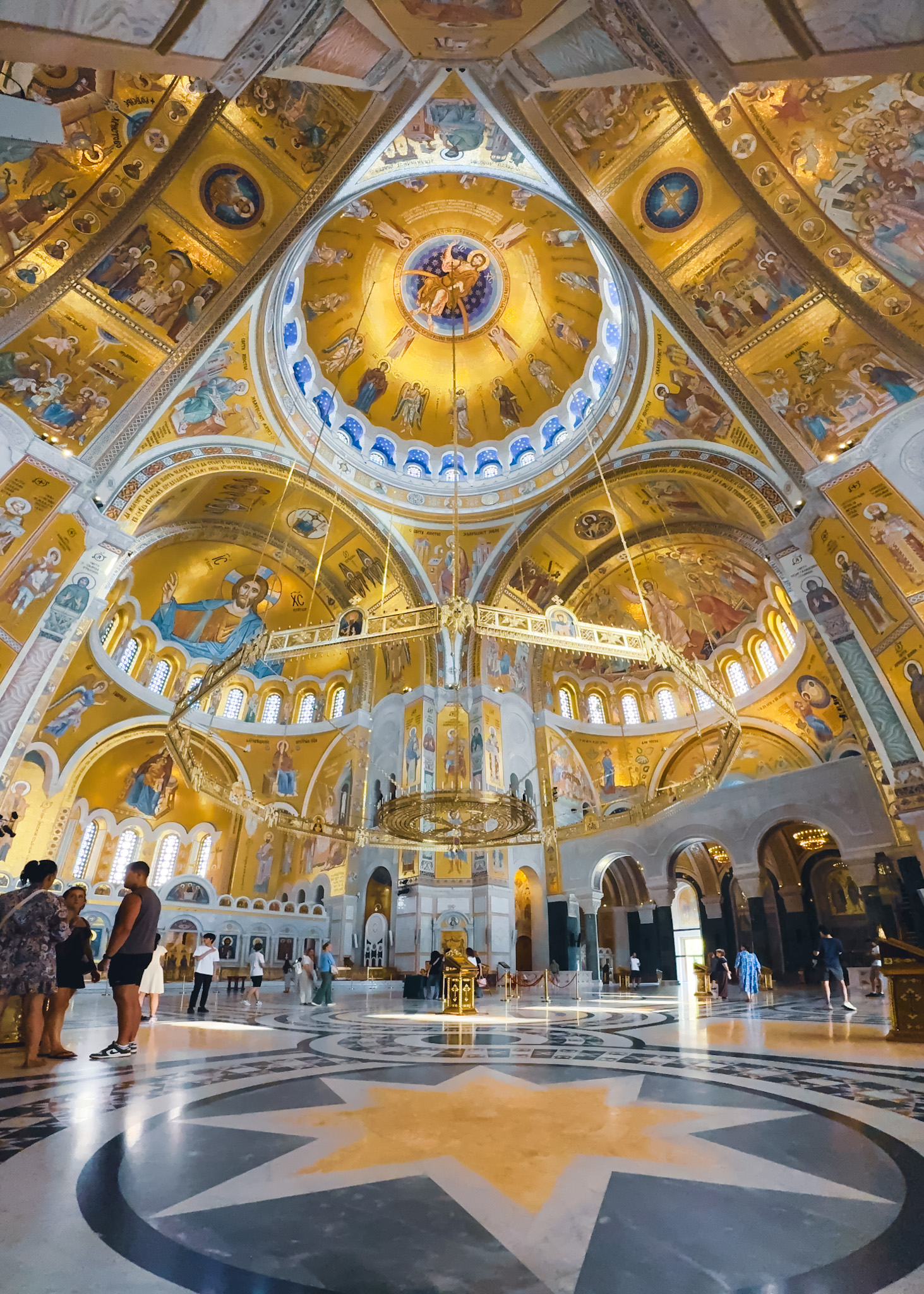
St. Mark’s Church came first, the striped-brick Serbian-Byzantine church rising out of Tašmajdan Park, its interior painted and mosaicked on every surface and its main dome held up by four columns so massive that pure structural necessity gets elevated into aesthetic statement. Then the Church of Saint Sava, which is on another level entirely. One of the largest Orthodox churches in the world, it stands on the plateau where, in 1594, the Ottomans burned the relics of Saint Sava himself in an attempt to break the Serbian spirit, which tells you everything about why the site was chosen. Its central dome, a 4,000-ton structure, was famously assembled on the ground and then jacked into place over forty days. The interior glitters with more than fifty million individual shiny golden mosaic tiles. As we walked in, two men were singing hymns, their voices flowing through all that gold in a way that stopped the whole family mid-stride. We stood transfixed for a long while. We don’t share the faith, as regular readers know by now, but this year has taught us again and again that belief’s power to produce art and music this beautiful is its own kind of wonder. We came back days later to see the famous crypt, waited out a private event to get in, and found it, honestly, fine. Lower ceilings, lovely frescoes, no mosaics. The internet had waxed poetic about it; the internet was a bit off the mark. The gem of Saint Sava is the soaring hall above, and Max hereby ranks it his second-favorite church anywhere in the world, behind only the small, dark, ancient St. Nino’s in Tbilisi, which the girls maintain is creepy and he asserts is perfect.
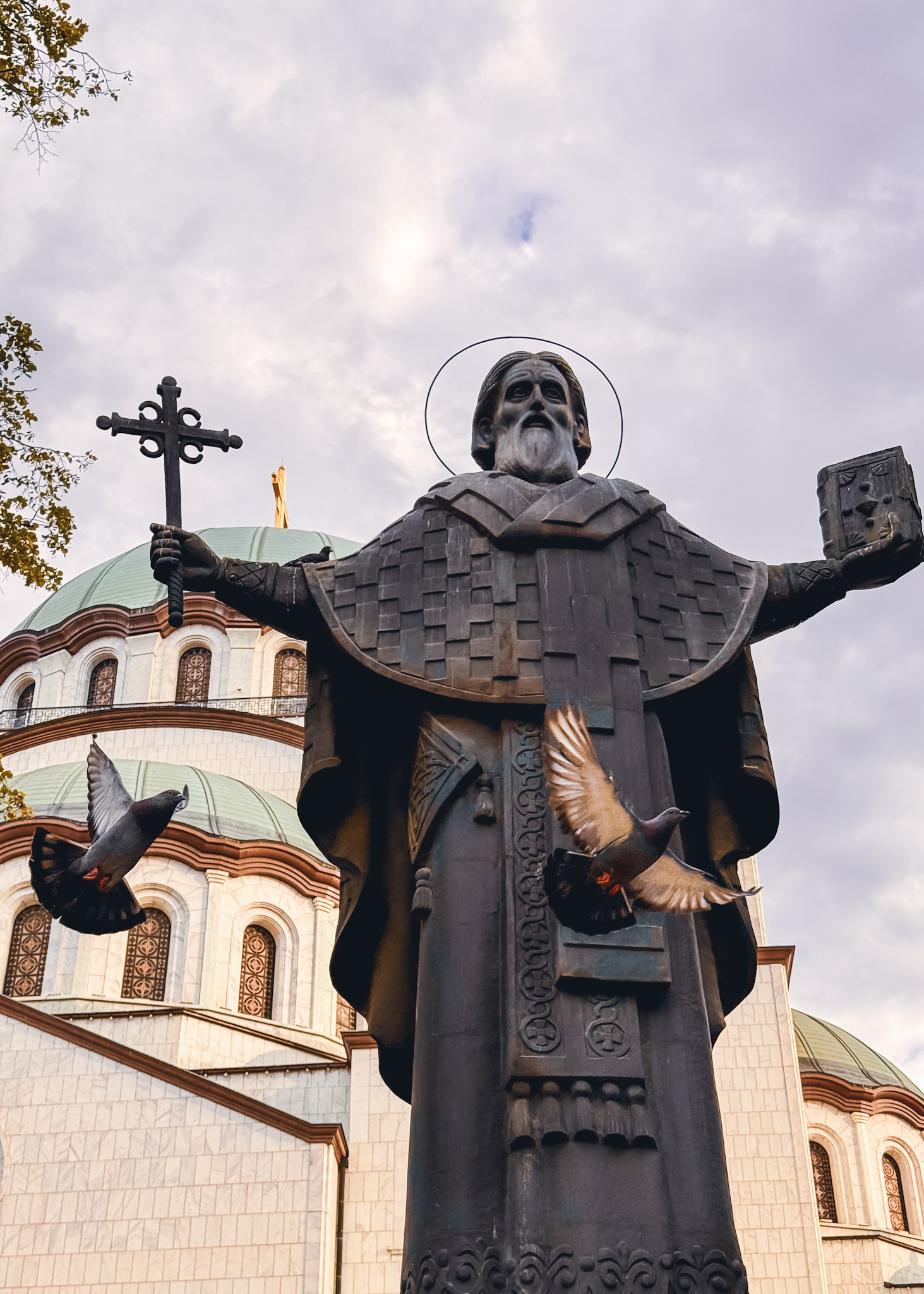
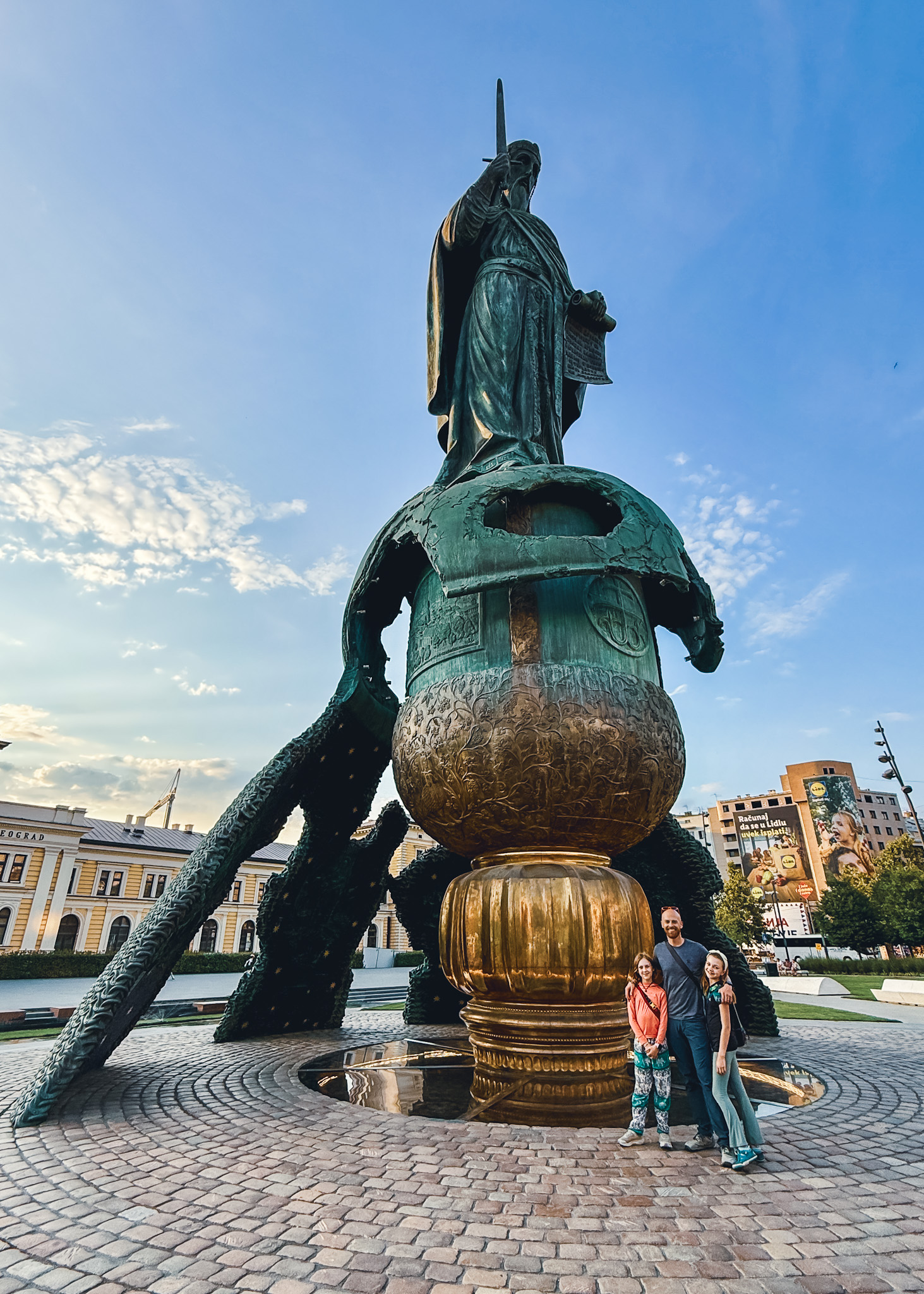
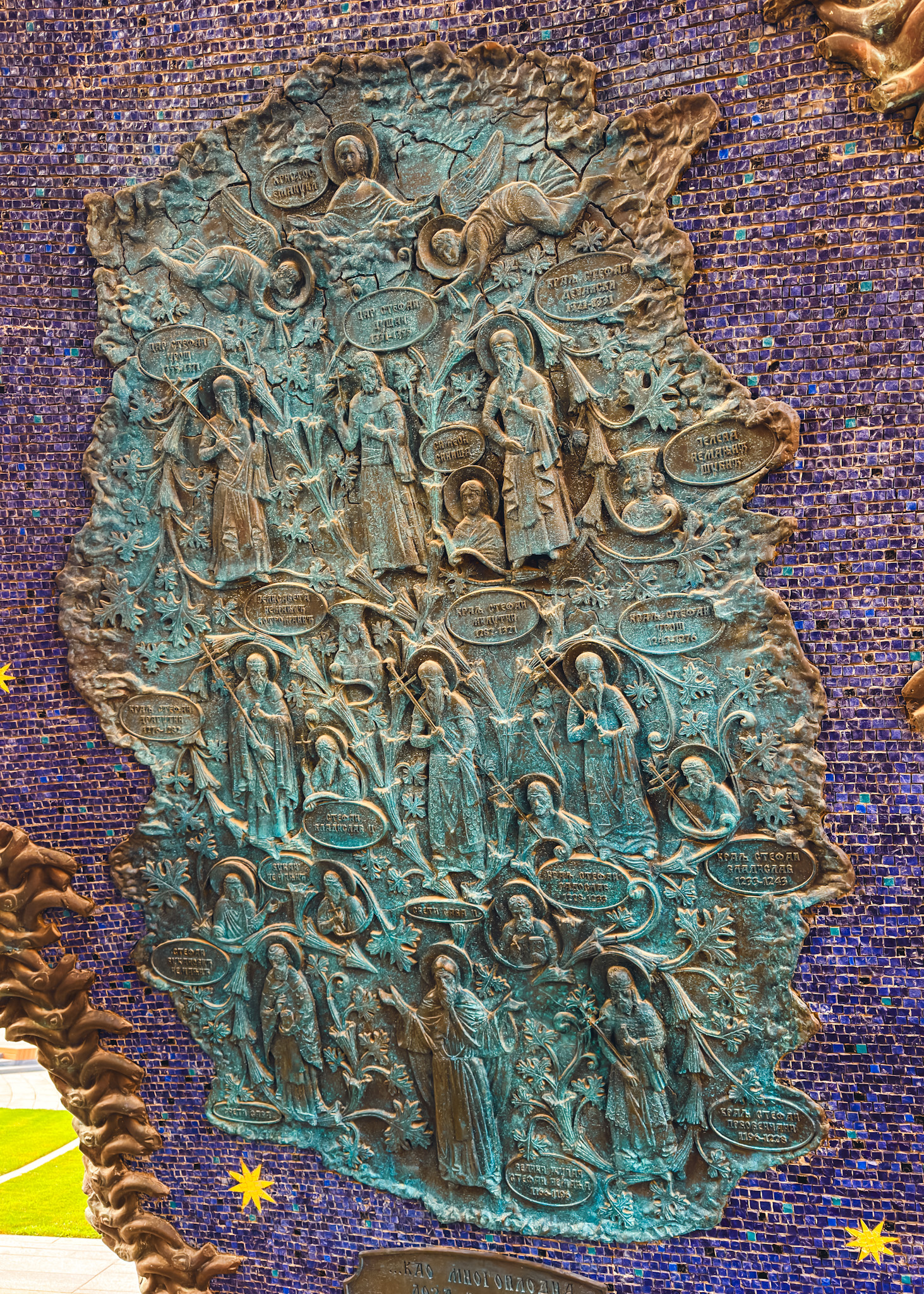
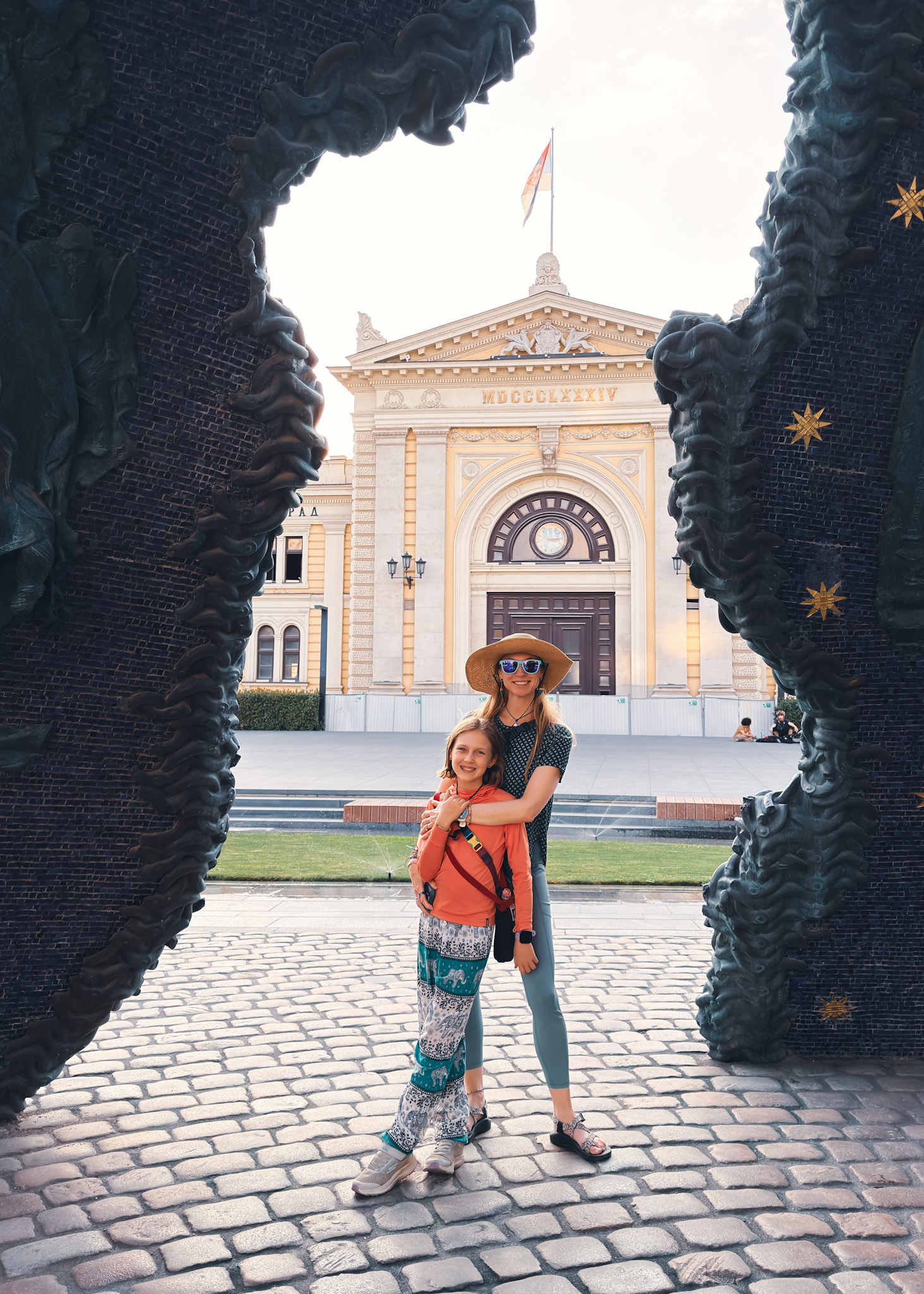
The tour also took us to the Monument of Stefan Nemanja, the colossal 2021 statue of the 12th-century founder of the medieval Serbian state, standing 23 meters tall atop a fractured helmet outside the old railway station. It is genuinely divisive here in Belgrade, and the controversy is layered: some object to the late swap of a sword into hands that were meant to hold a cross, some to the smashed Byzantine helmet he stands on, and many to the fact that the sculptor is Russian and the thing went up in 2021, just as Russia’s war on Ukraine was breaking open. Even our own family split on it. Max thinks it is a pretty cool statue whose scale earns respect even where its politics wobble; others in the family were less charmed. Healthy disagreement, freely aired, is very much a family value.
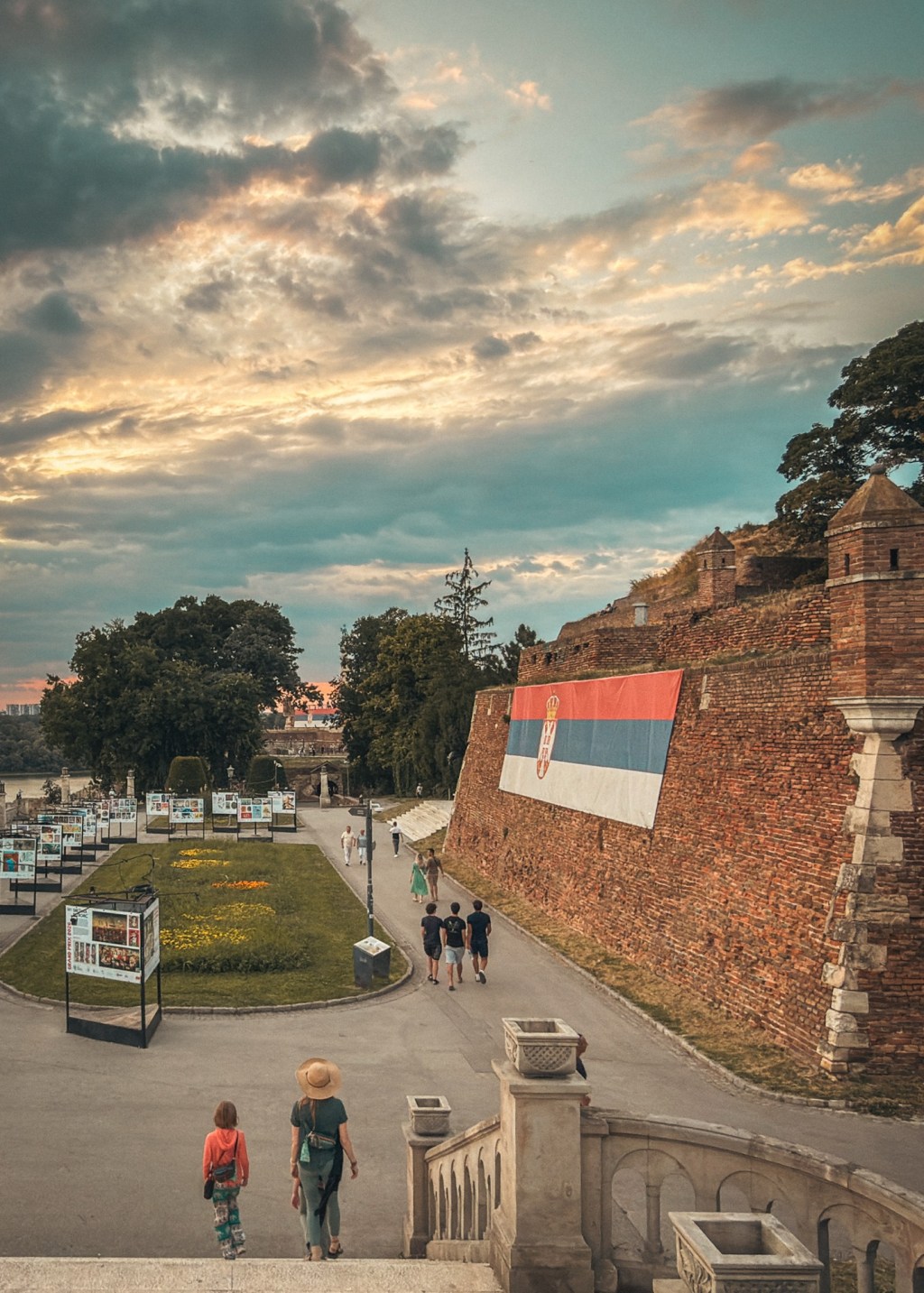
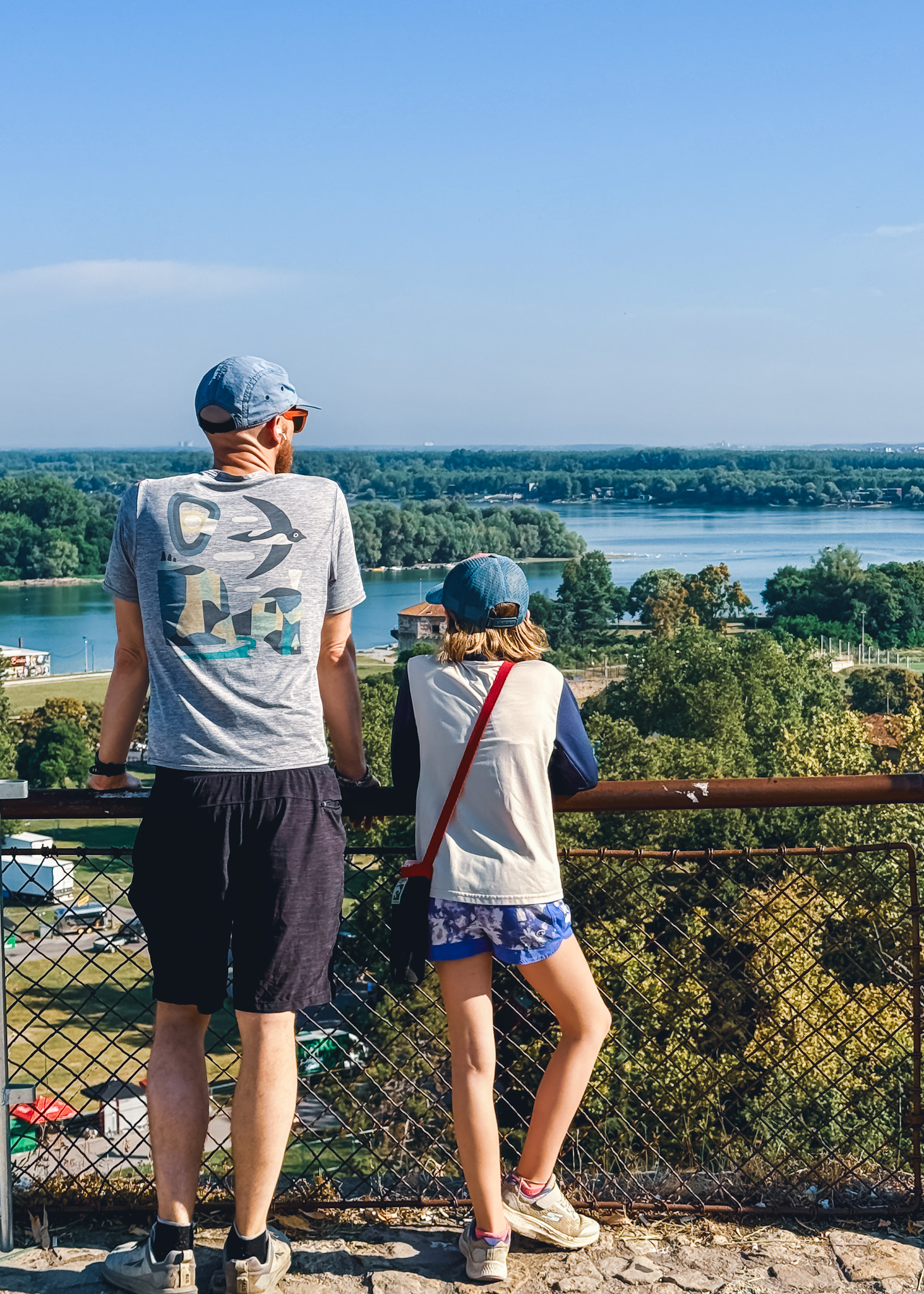
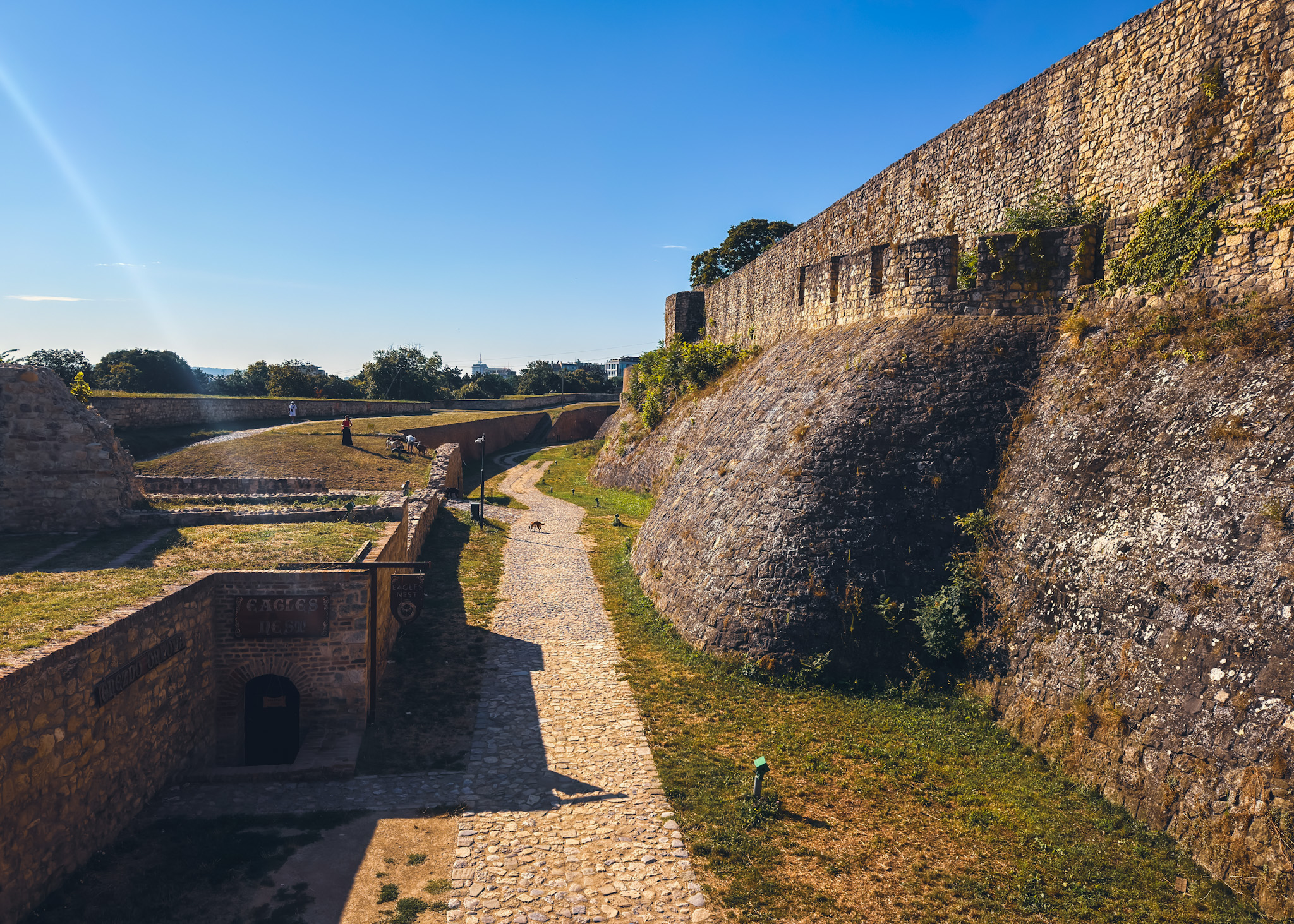
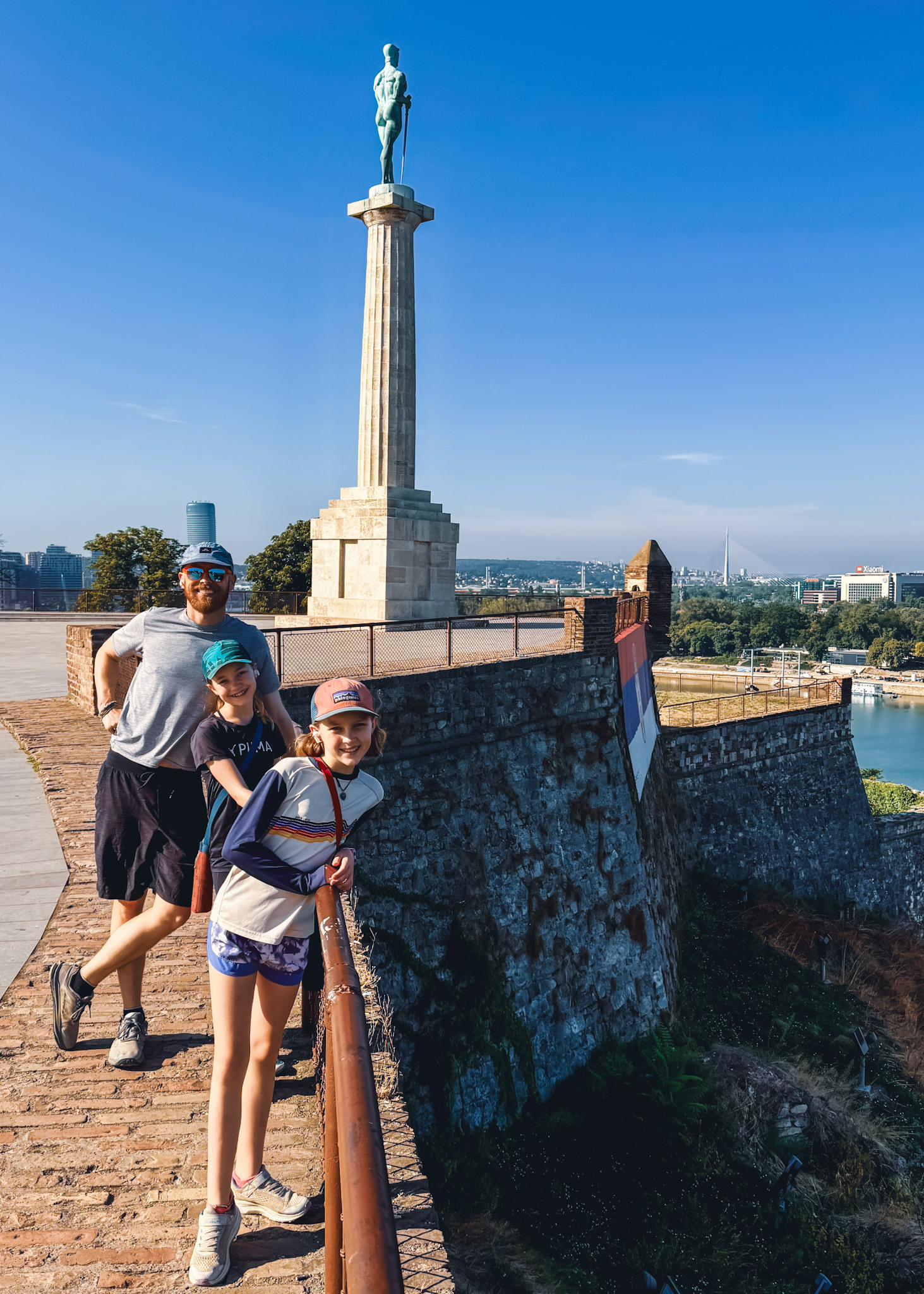
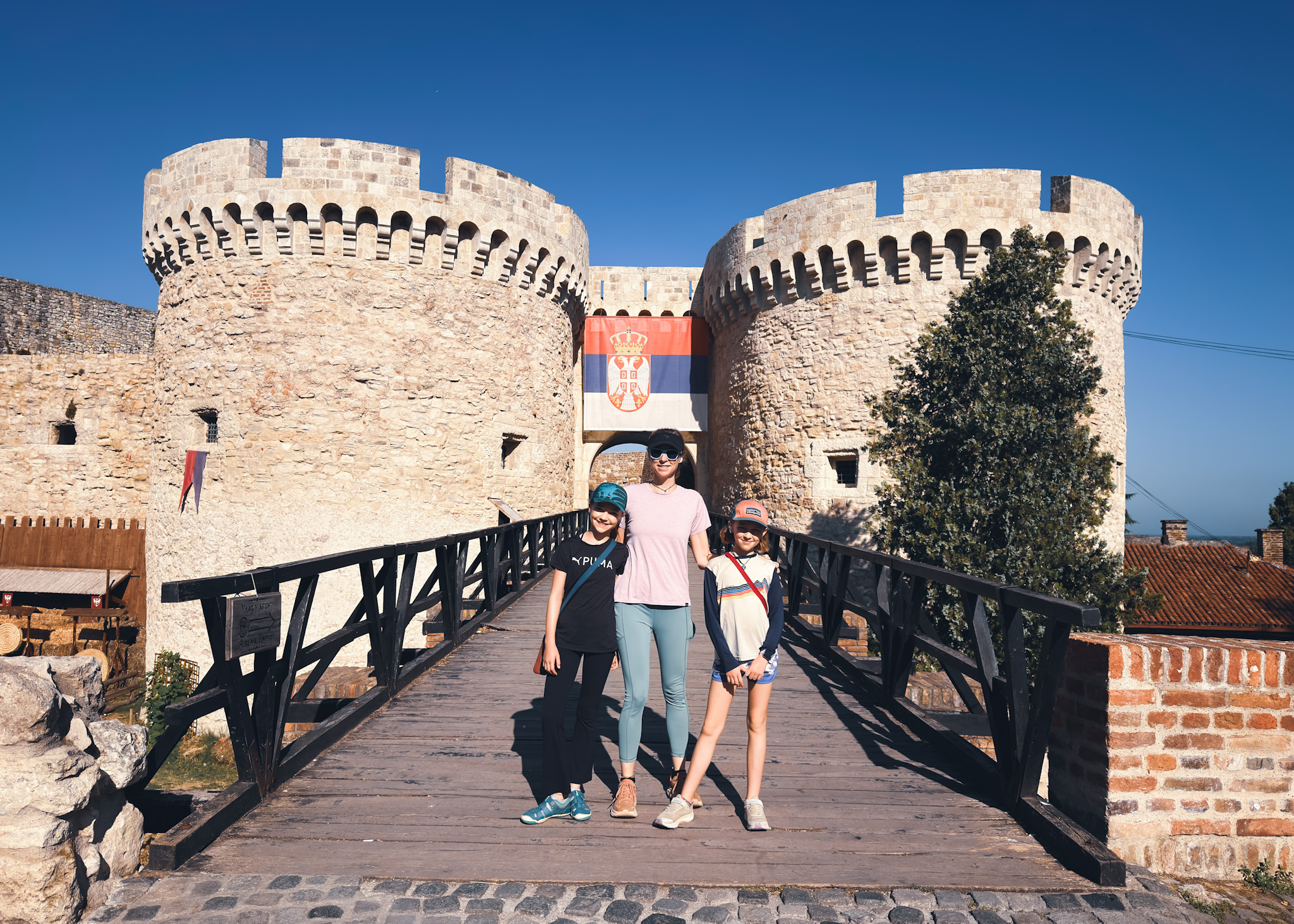
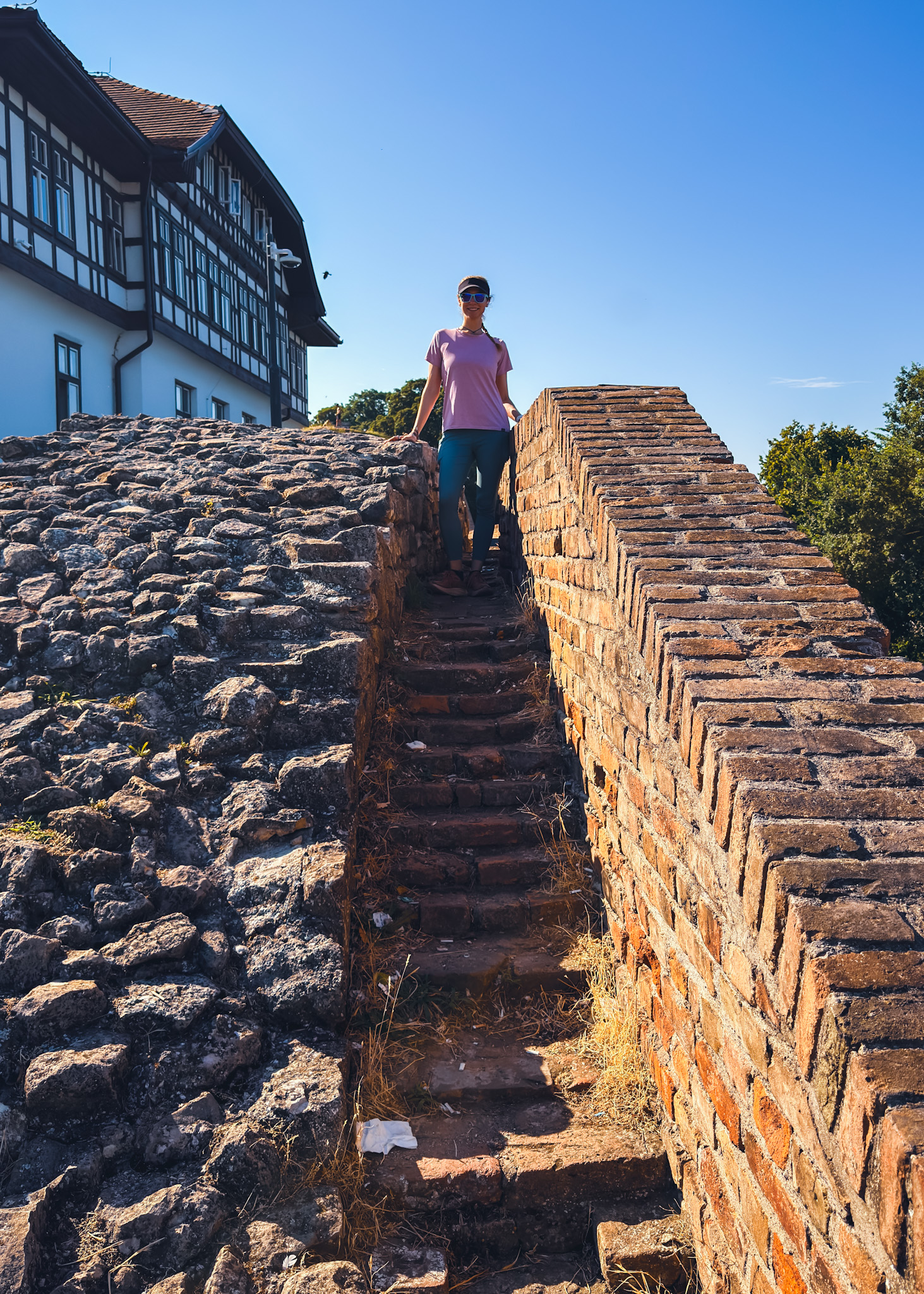
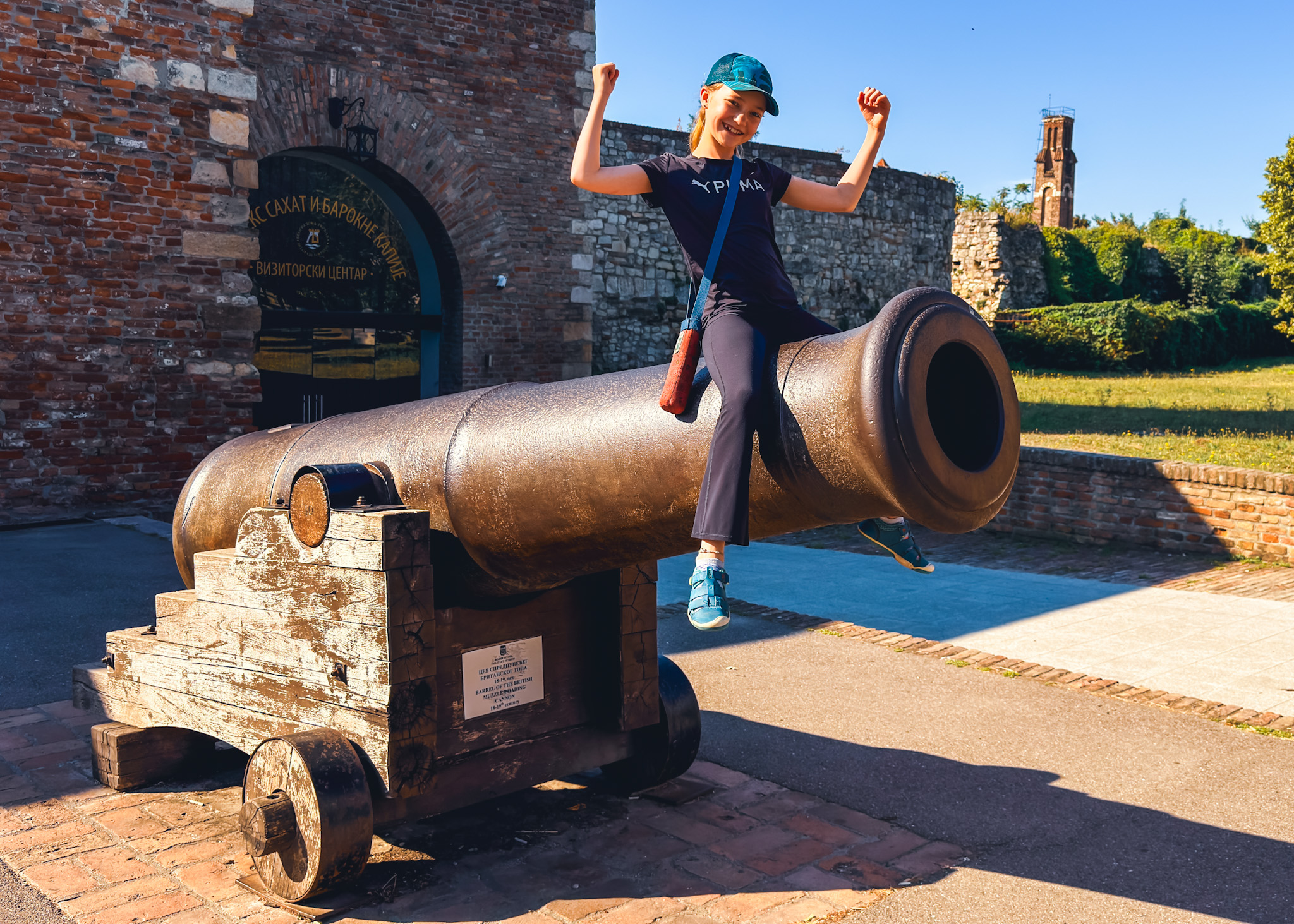
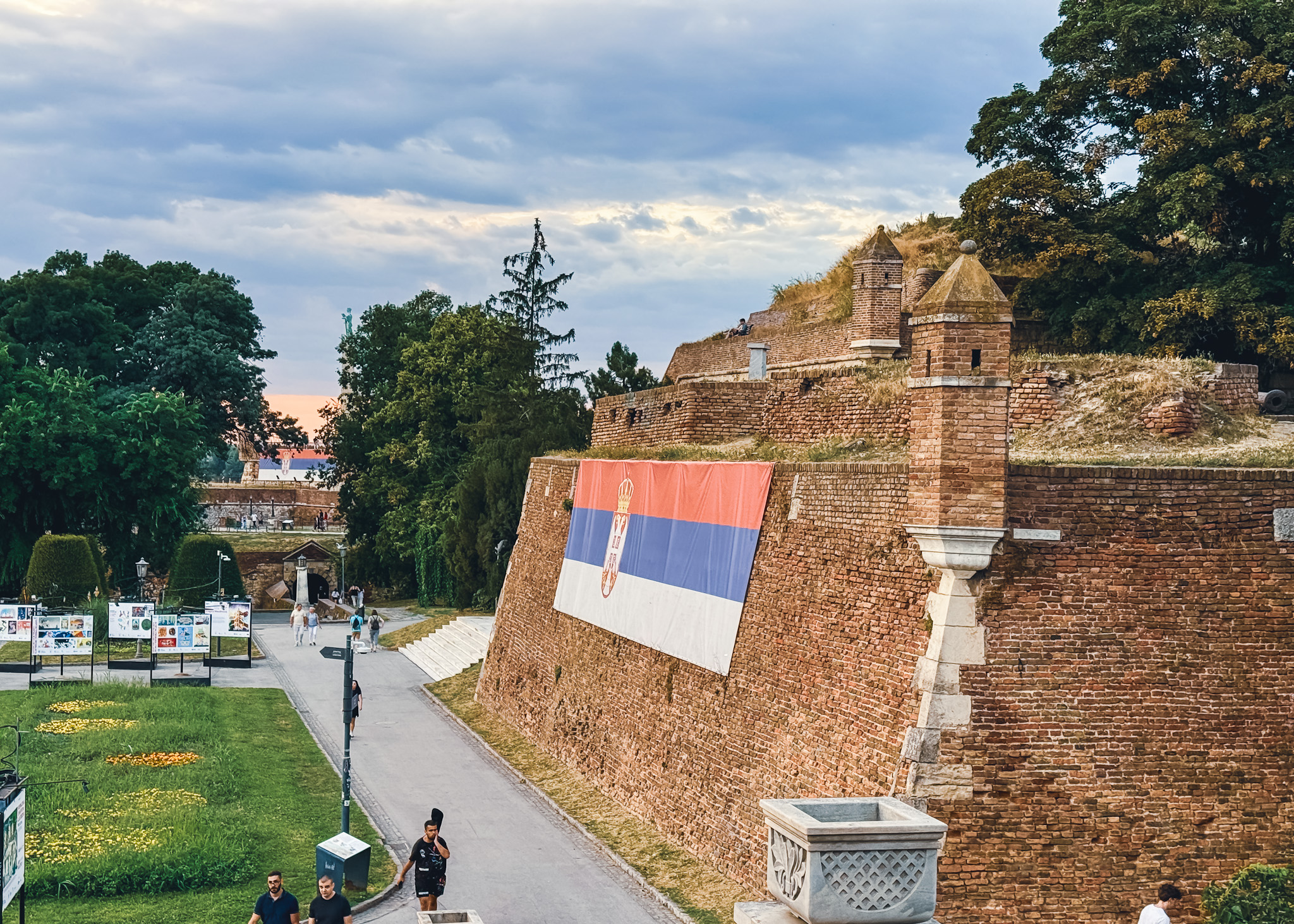
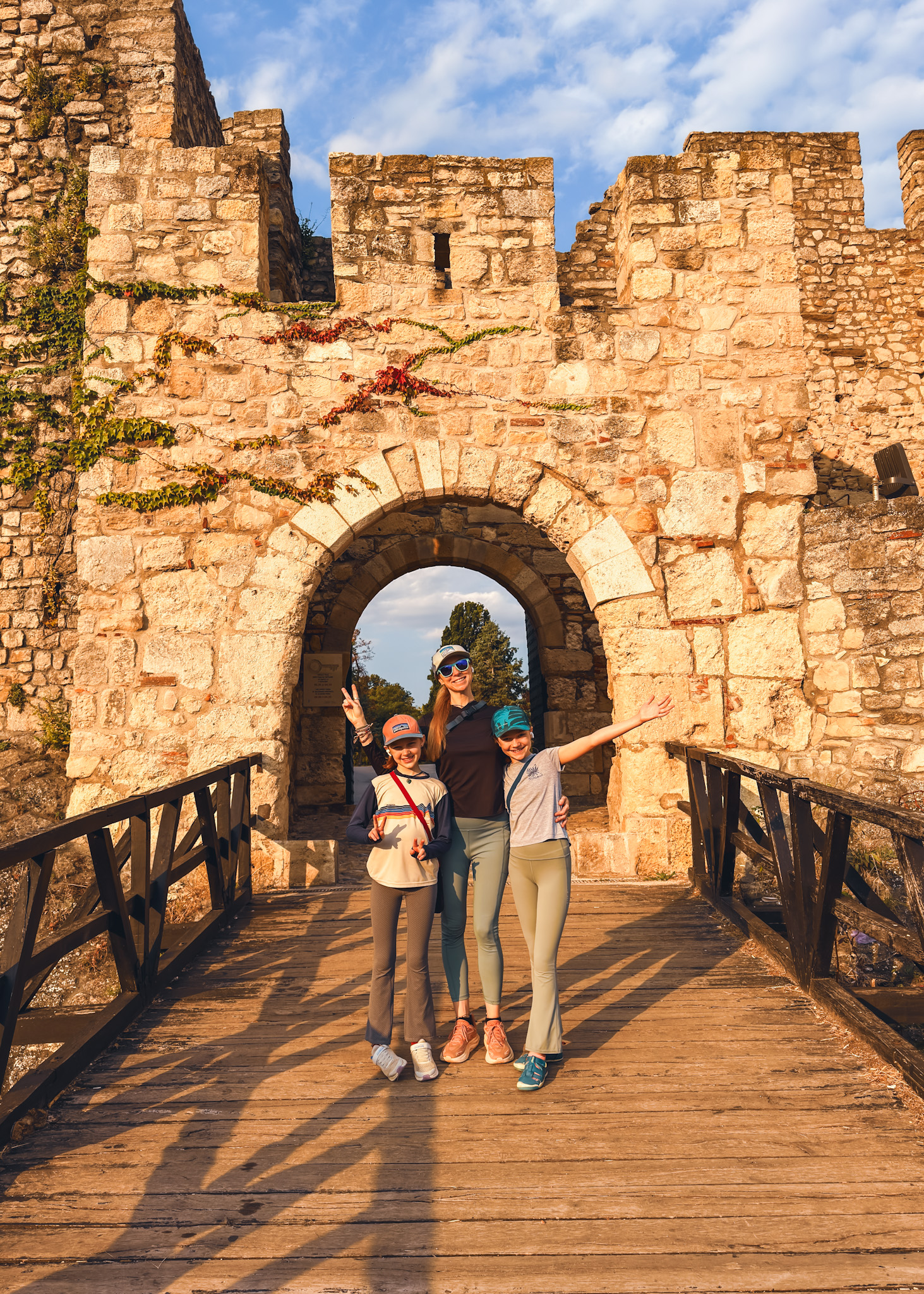
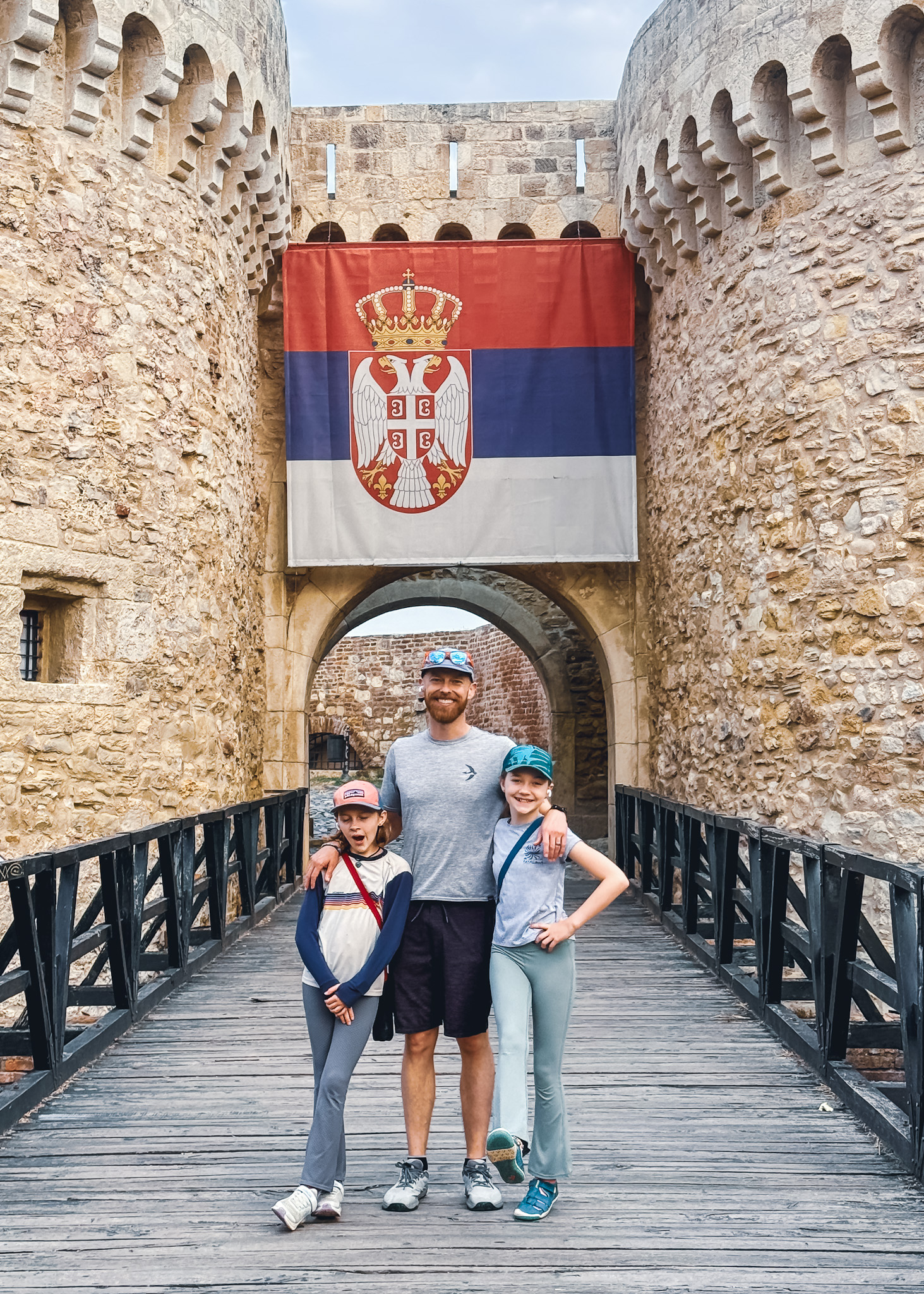
And the tour ended at the place Belgrade itself began: the Belgrade Fortress, called Kalemegdan, sprawled across a high white ridge above the exact point where the Sava River pours into the Danube. The Romans planted a legion camp here in the 1st century, and Byzantines, medieval Serbian kings, Hungarians, and Ottomans each took, destroyed, and rebuilt it across the following two millennia. The white limestone it was built from is where the city’s name comes from, Beograd, the white city. Today it is a vast park where locals drift up every evening to watch the rivers merge at sunset, the whole complex washed in gold and purple. We walked amongst them, working through trivia questions on marble steps until the mosquitoes organized a counteroffensive and drove us home. On the walk back we stumbled onto a street artist spray-painting luminous fantasy landscapes, planets and light-shot skies, not just onto paper but onto whatever people handed him—phone cases, luggage, anything—and the girls stood mesmerized long enough that we nearly lost the evening to him.
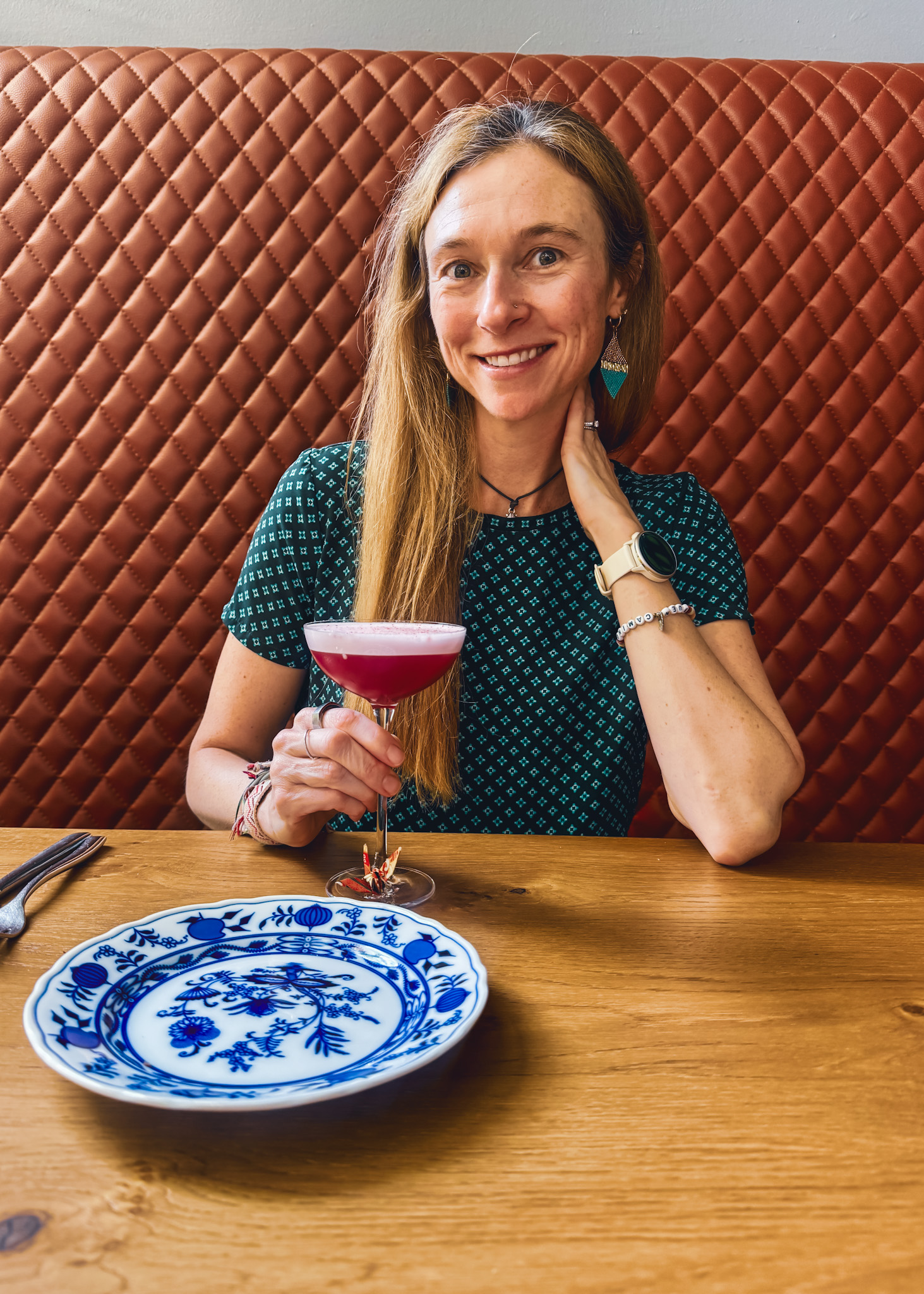
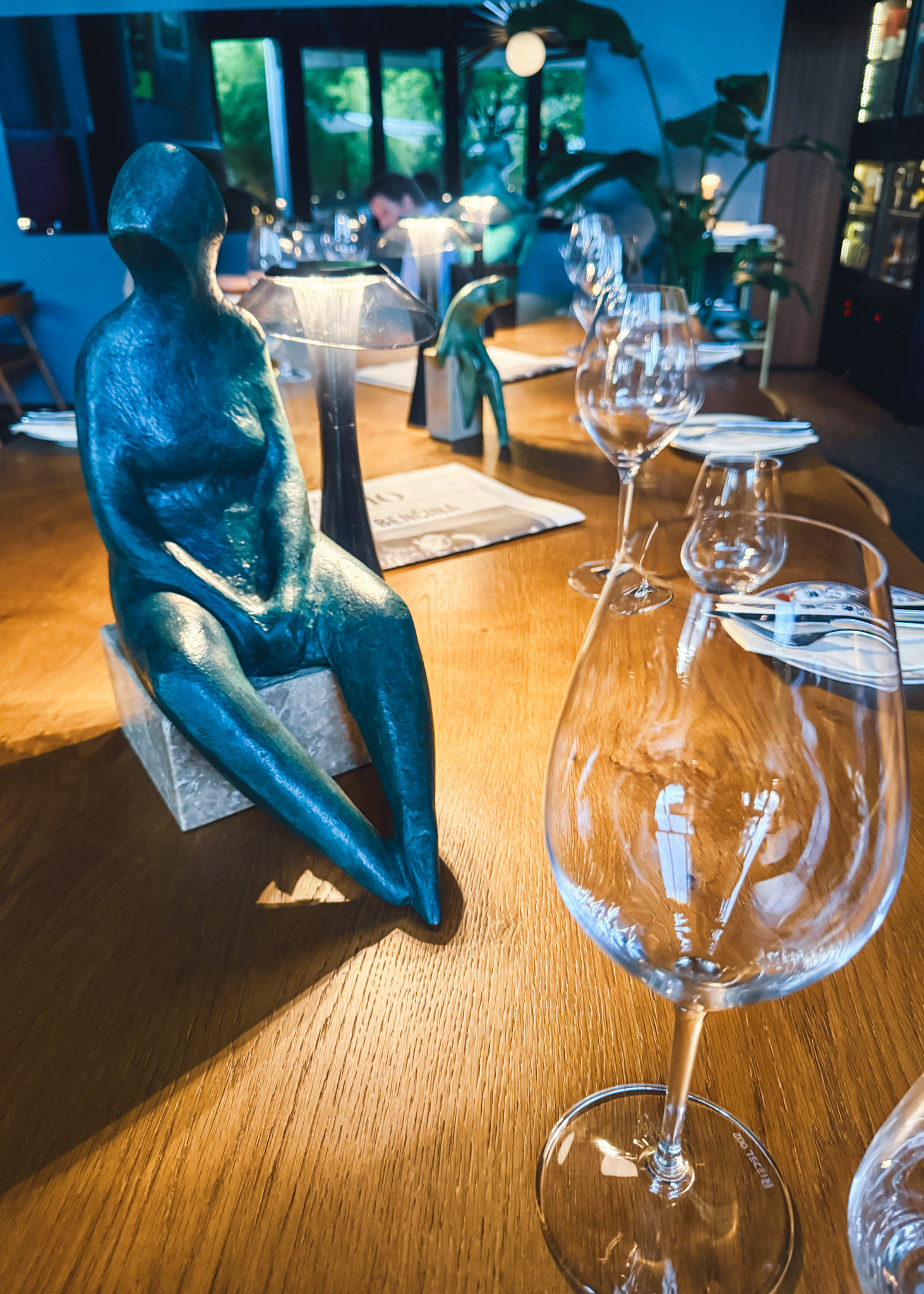
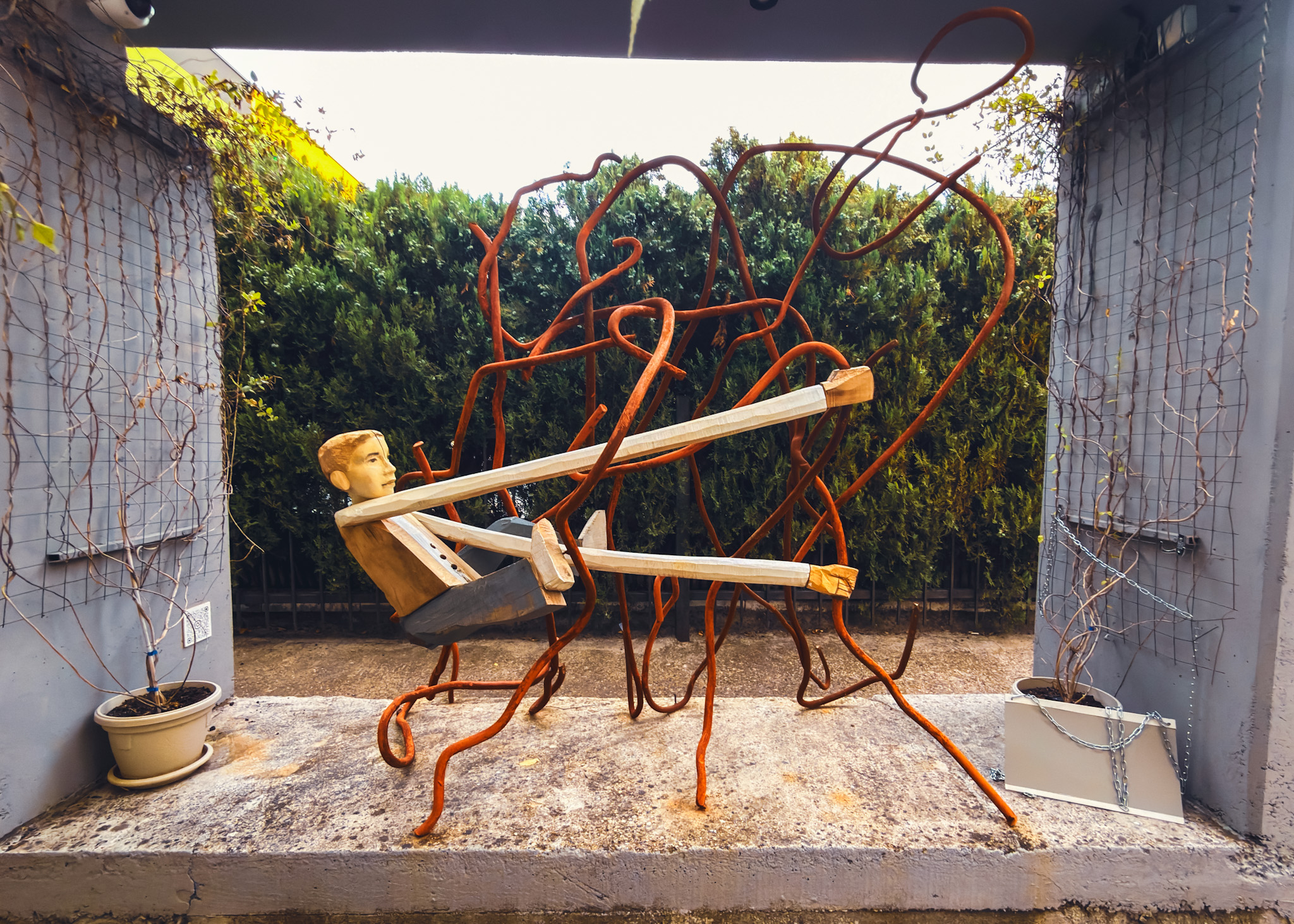
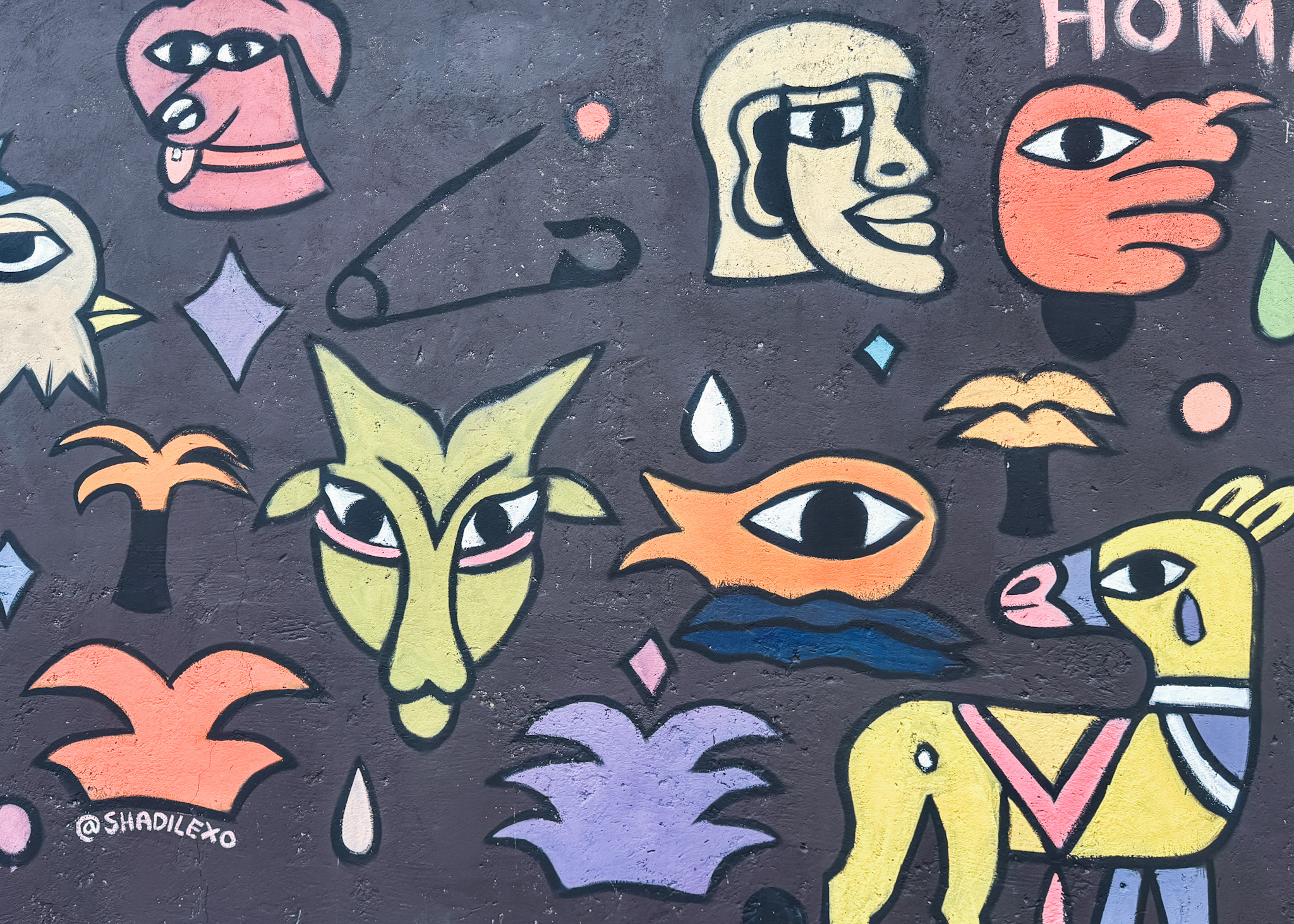
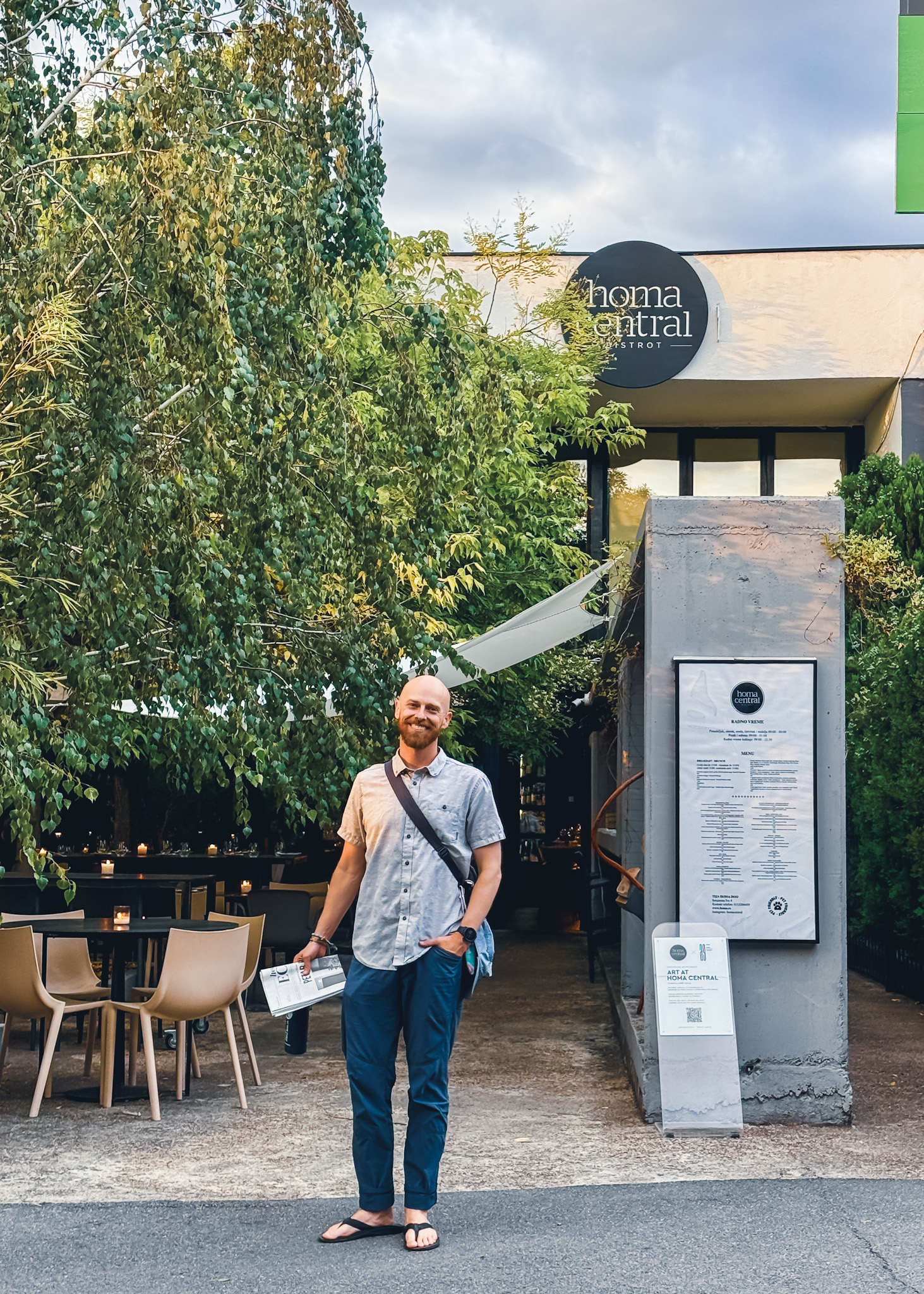
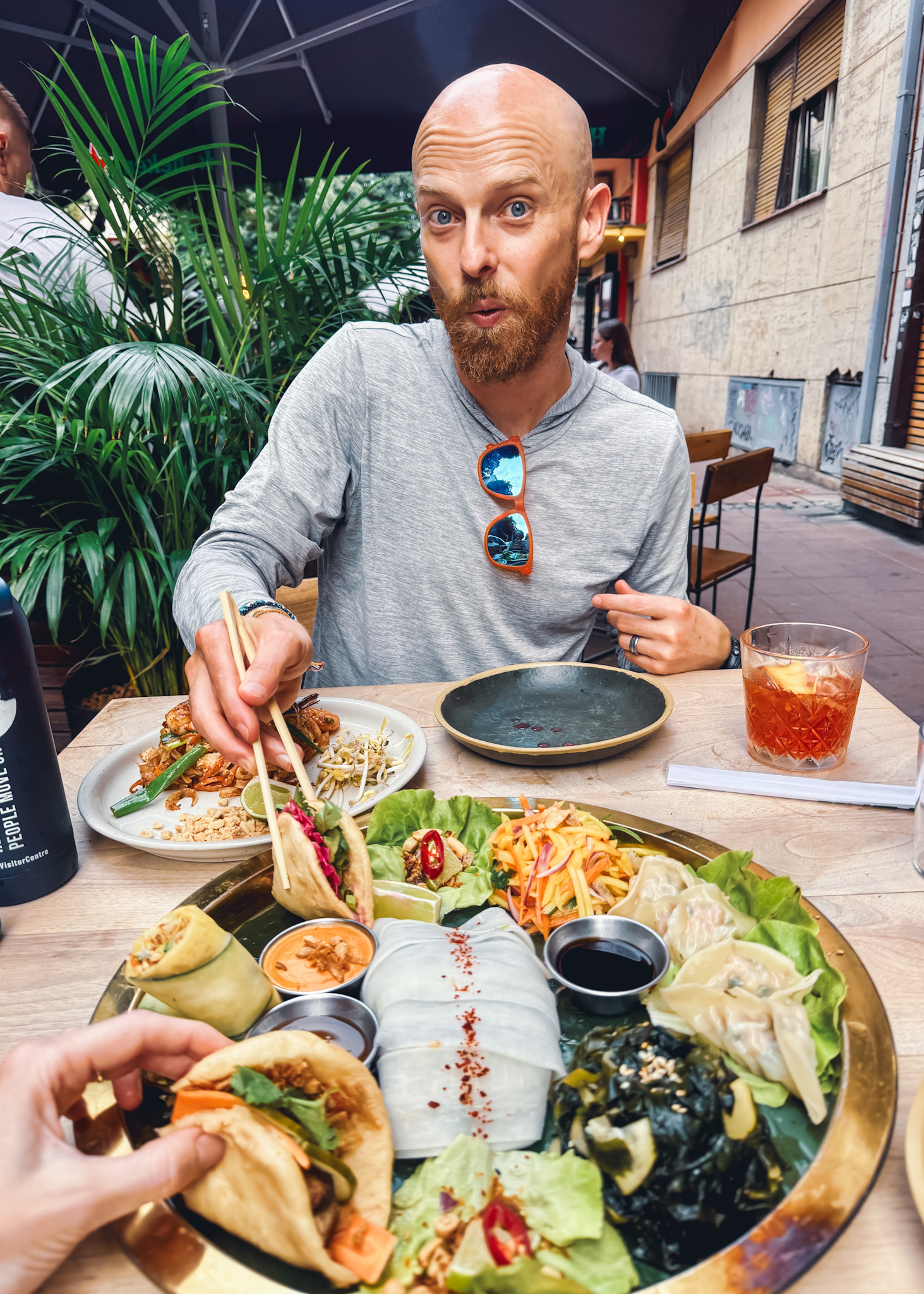
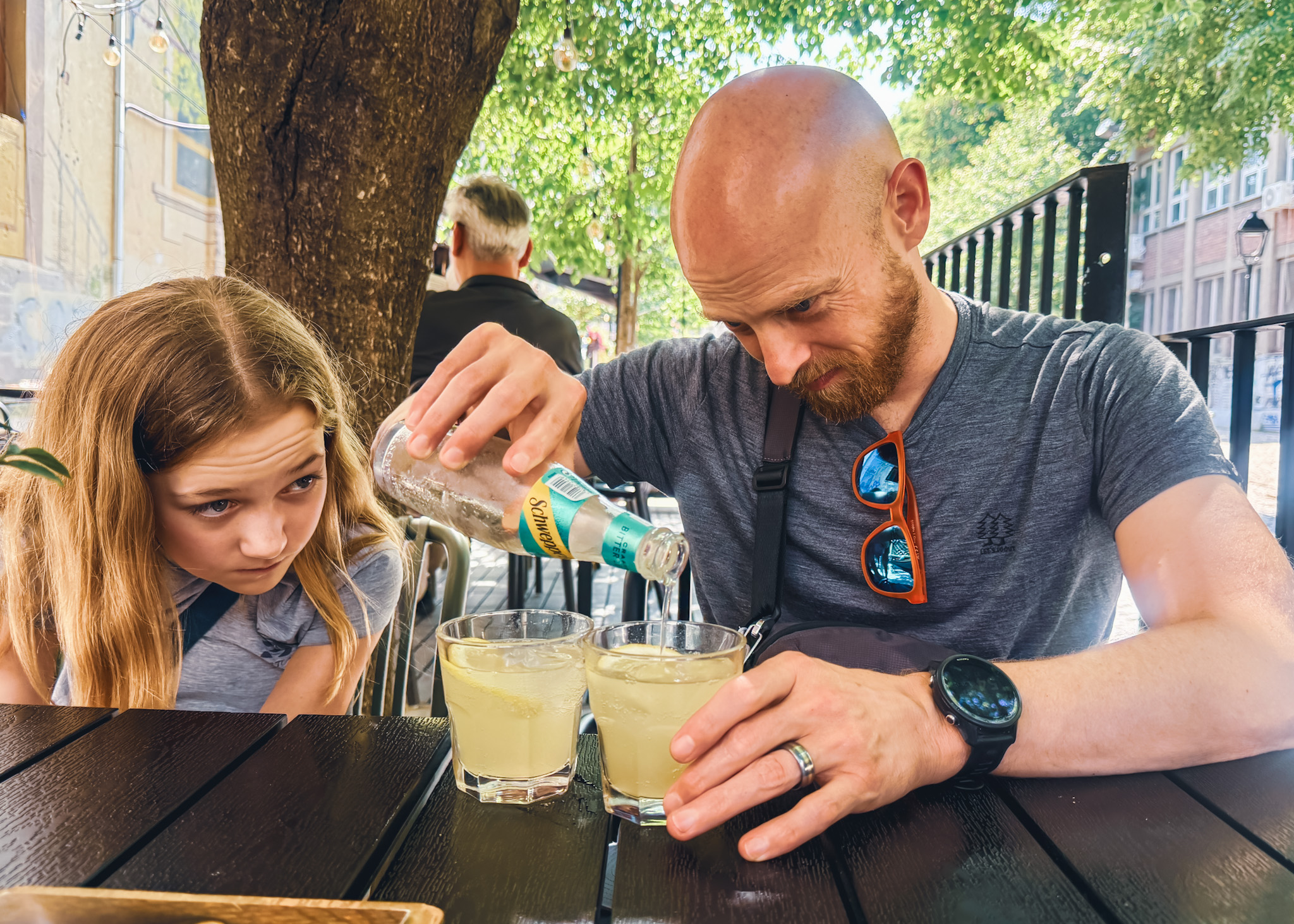
The wind-down also gave Shaina and Max something they had barely had all year: date nights, plural. The girls are at the age now where an evening alone with a movie and takeout is not a risk but a treat, for everyone involved. Both times we came home to find them peacefully reading, ready for bed, the apartment fully intact. Our little babies are growing up. The first night out was at Homa, a Michelin-selected bistro in the old Dorćol quarter. The meal was lovely—the pork cheeks were phenomenal, the patatas bravas were as good if not better than any we had in Spain, and Shaina’s mezcal cocktail was the star of the table. The second night was Istok, a trendy spot serving Vietnamese, Thai, and elevated Korean comfort food, and it delivered nearly start to finish. We shared a tasting menu at a sidewalk table in crisp post-rainstorm air, marred only by an invisible mosquito that raised six or seven welts on Max’s ankles while never once being seen. Shaina, always prepared for everything, produced anti-itch cream from her bag on the spot.
It was after Istok, at a cocktail bar, that the trip handed us its final chance encounter. Over a basil and gin smash for Max and a passionfruit sour for Shaina we fell into ninety minutes of conversation with a young French couple and their newfound Serbian friend. They are also on a year-long travel adventure, but they don’t have kids, and they were openly fascinated, bordering on disbelieving, that a family of four had spent twelve months criss-crossing the planet together and still genuinely liked each other. We told them our stories. They asked their questions. And walking home, we allowed ourselves the small hope that somewhere down the line, a future version of that couple packs up their own kids and goes adventuring, and that some tiny part of the decision traces back to a bar in Dorćol. The whole year has run on encounters exactly like that one, borrowed inspiration passing in both directions, and it felt right to close on one.
That walk home was also where the week’s deepest current finally surfaced. The evening was perfect, the streets soft and warm, and the conversation turned melancholy in the way we had both felt coming. This trip is a goal we worked toward for almost fifteen years. Fifteen years of daydreaming, planning, saving, arranging careers and finances and courage around one enormous idea, and now it is accomplished, all but over. And the strange thing about achieving a goal that size is the question that rushes into the vacuum behind it: what next? We genuinely do not know. There are plans, of course, projects and work and the sensible machinery of the coming years, but that is not the same thing. What we want is another big, joyful, slightly unreasonable life goal, a new “why” underneath everything else, and we have not found it yet. We walked and talked and did not solve it, and that is fine. Some questions you are supposed to carry for a while. We came home to find Finlee fully dressed and fast asleep on the couch, book open beside her, and gently zombied her into bed.
Our last full day was the wind-down in miniature, and it began before 6 am. Shaina, possessed of more discipline than the rest of us combined, answered the 5 a.m. alarm by opening every blind and putting on music, and by six we were walking through a sleepy Sunday morning Belgrade, eventually making our way up to the fortress. “Mark of the Fool” played in everyone’s ears as our shared audiobook, as we wandered Kalemegdan’s winding paths at sunrise. The light was extraordinary. The temperature was perfect. The two rivers merged silver below us while our audiobook hero wrestled his cursed magical Mark, and everyone simply got along, easy and happy, the whole machine of this family running smooth after a year of tuning. A last morning of a trip well spent.
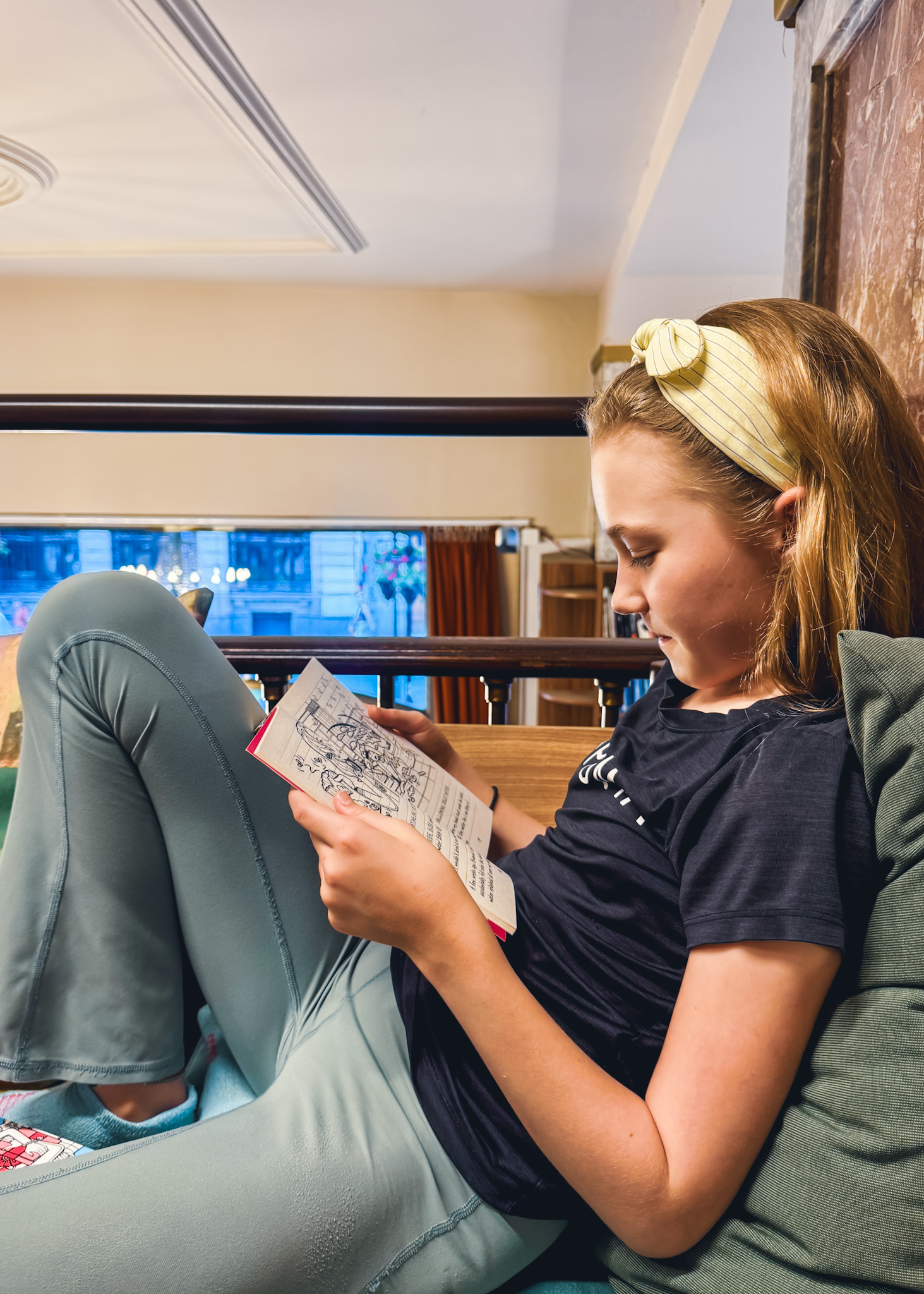
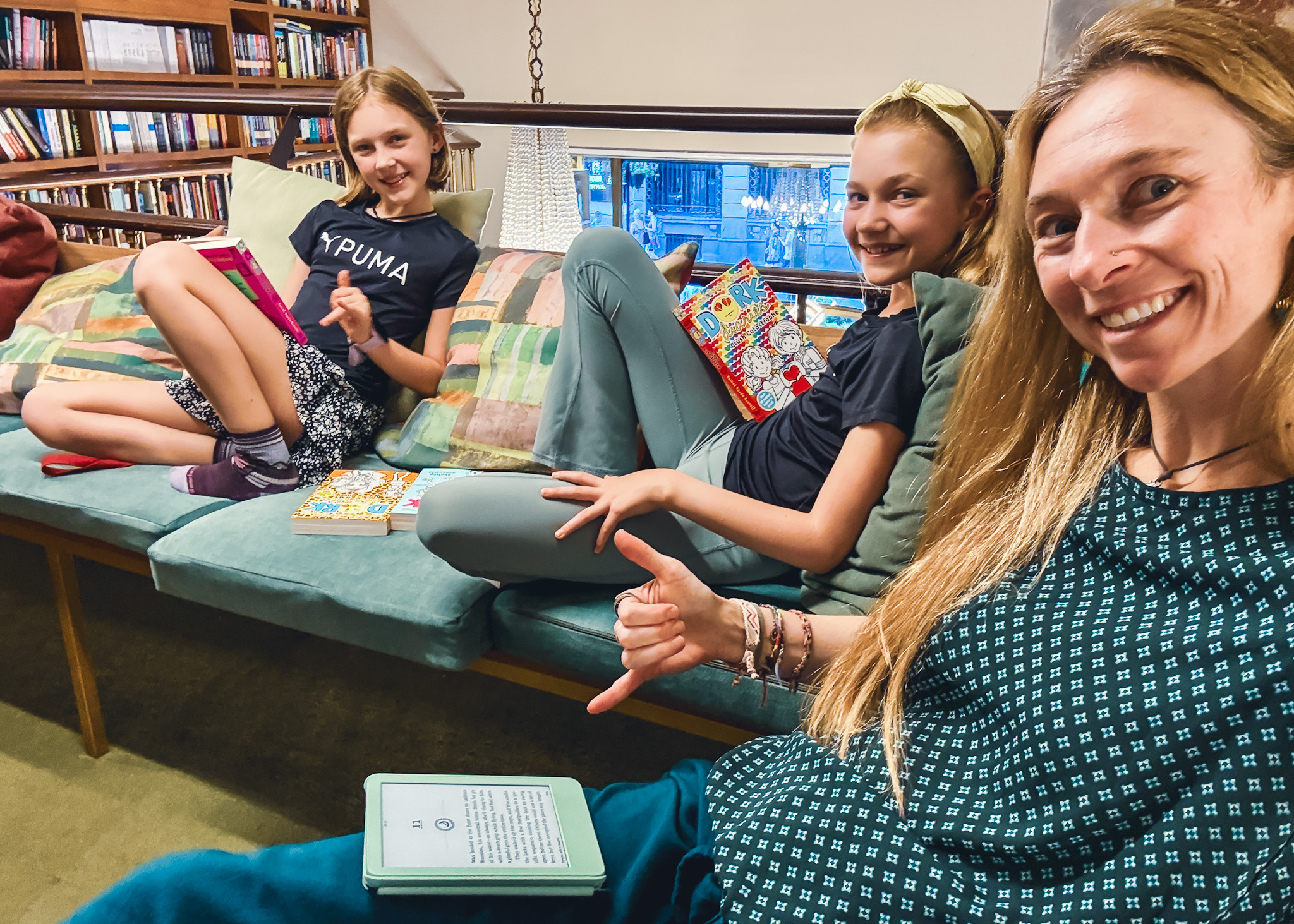
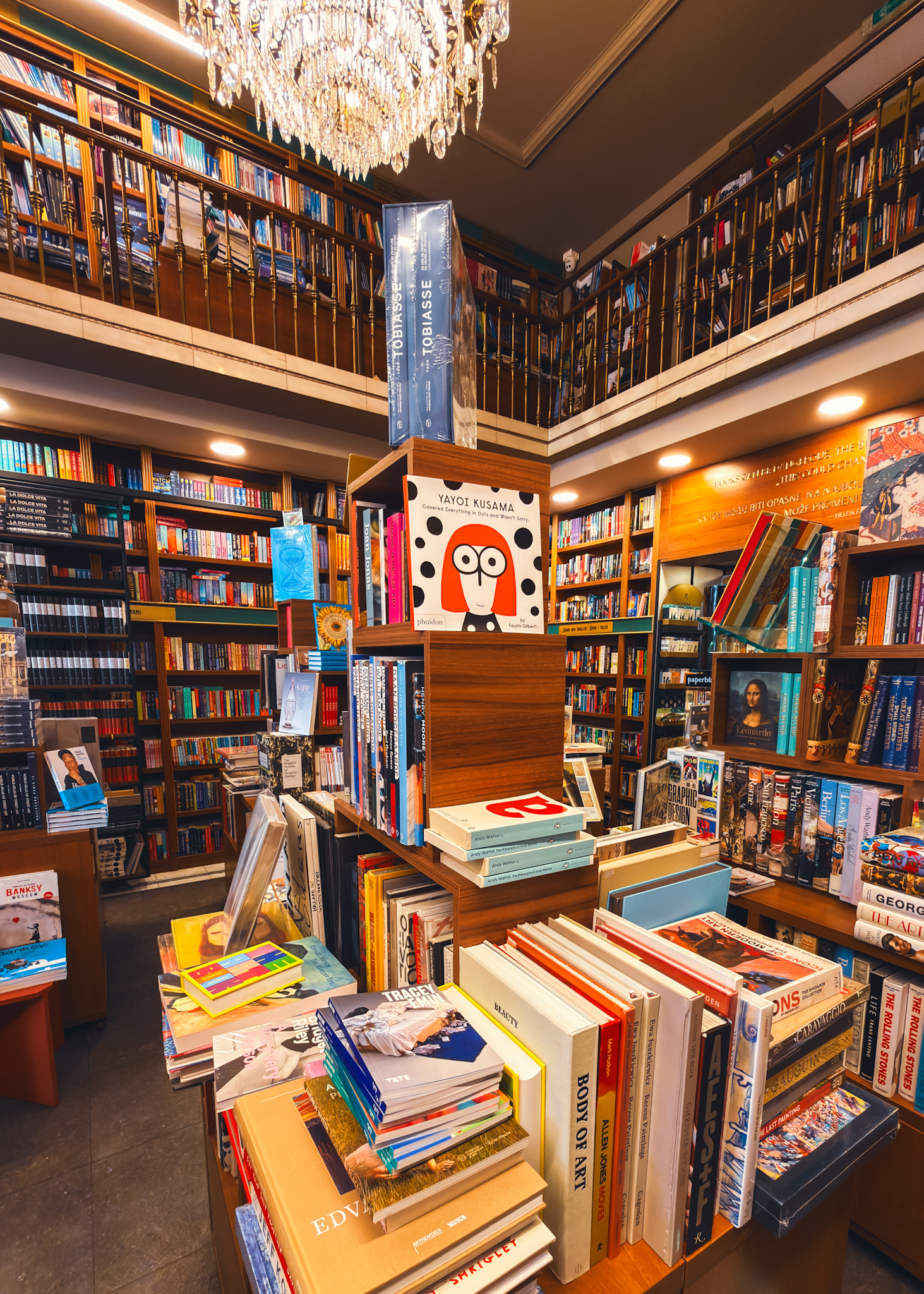
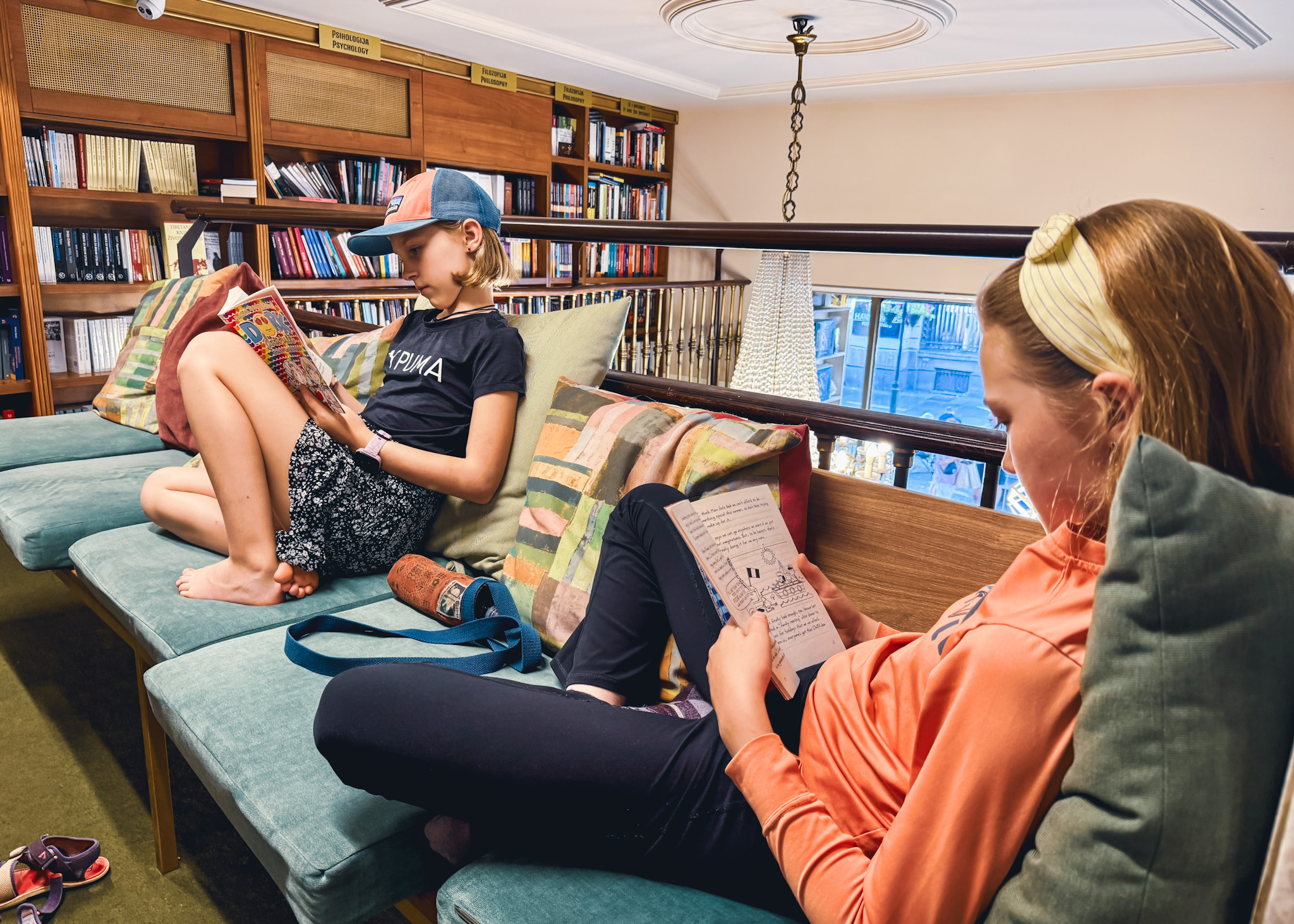
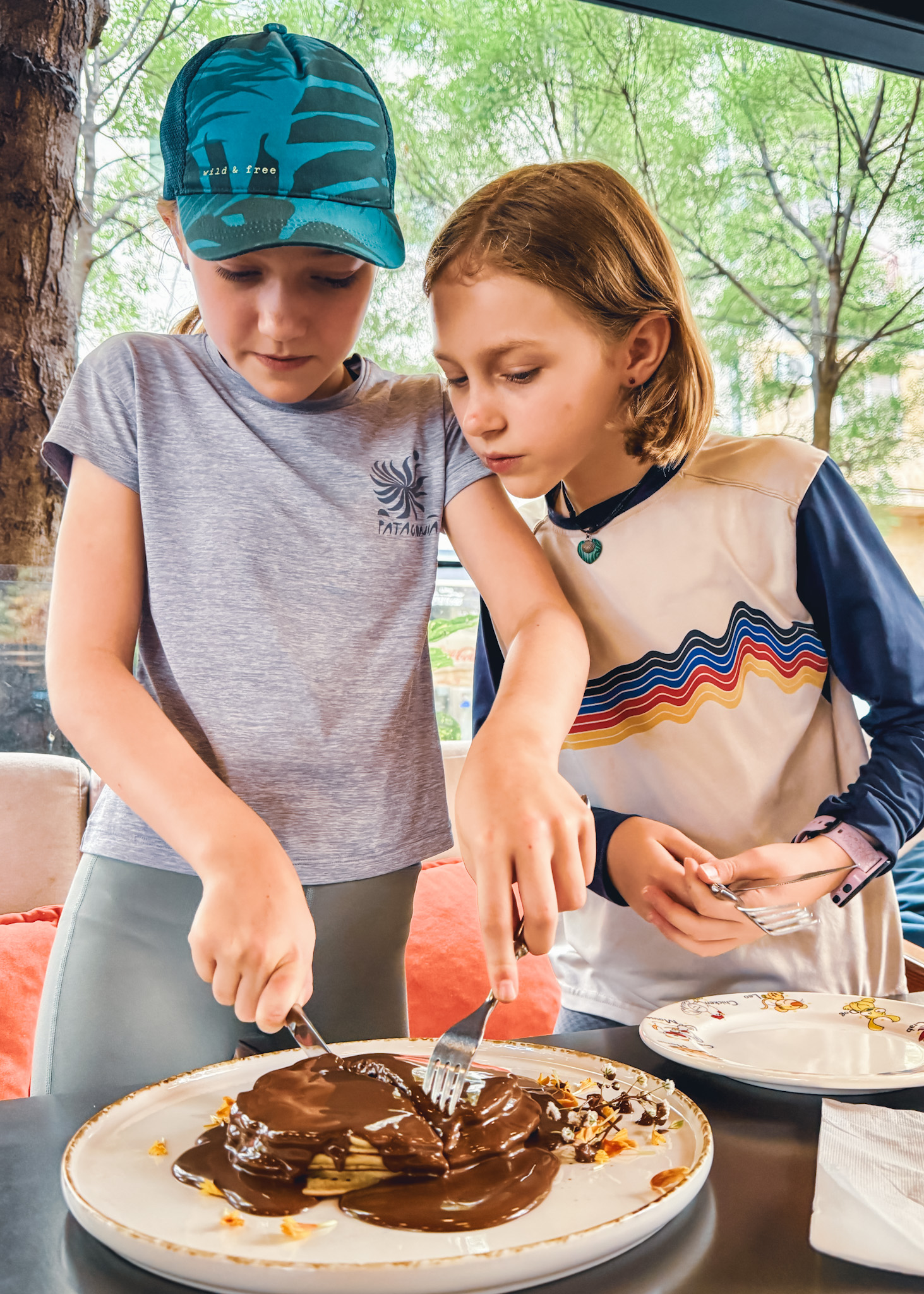
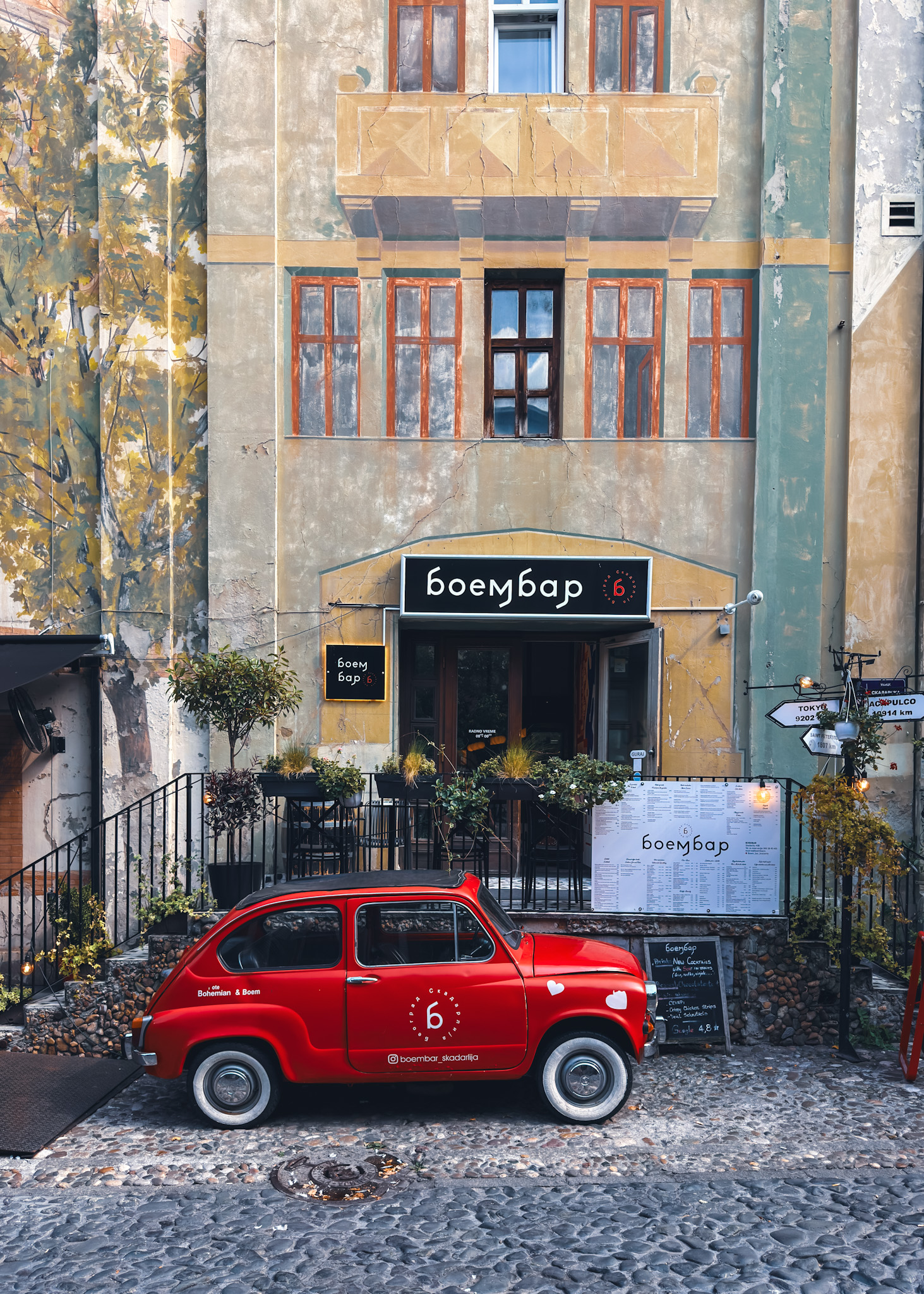
The rest of the day was a series of small farewells. A ridiculous breakfast at a crêpe house where the girls’ pancakes arrived crowned with a bottomless ring of molten chocolate that the waiter lifted with a slow theatrical swirl, releasing a chocolate flood that made them squeal. Shaina and Max split a savory crêpe containing approximately a pound of slow-cooked pork and cheese. Then we underwent a practice run at the final packing, all souvenirs and gifts successfully stowed, before our early dinner at Boem Bar, our first properly traditional Serbian meal of the whole stay. We shared a mixed meat platter that was delicious in a meat-forward, no-frills way, eaten under a shade tree on their patio, watching people walk by on the cobblestone pedestrian street. Our last afternoon ended with one final bookstore session for the girls, who have fallen for a multi-story Belgrade bookshop the way other kids fall for candy stores. Shaina joined them, reading from her Kindle, which surely irked the paperback loyalists around her. Max sat on a bench outside, people-watching and inventing elaborate life stories for strangers, which Belgrade’s pedestrian streets make dangerously easy.
The final day of our trip was nearly finished. One final round of ice cream. One last family movie. And then bed, with the alarm set for 02:57 in the morning, and three flights standing between us and Reno.
So that was Belgrade, and honestly, that was the point of Belgrade. We saw one city and none of the rest of Serbia, which means we owe this country a proper return someday. But we did not come here to conquer another country. We came here to land, gently, to let a year this size begin settling into us while we still had cobblestones underfoot. It has not fully hit yet, and we suspect it won’t until sometime after the jet lag clears. We are eager to be home, and yet we are not. We are eager to be done traveling, and yet we are not. We are eager to see our dogs, and, no, actually, that one is unqualified. We cannot wait to see our dogs.
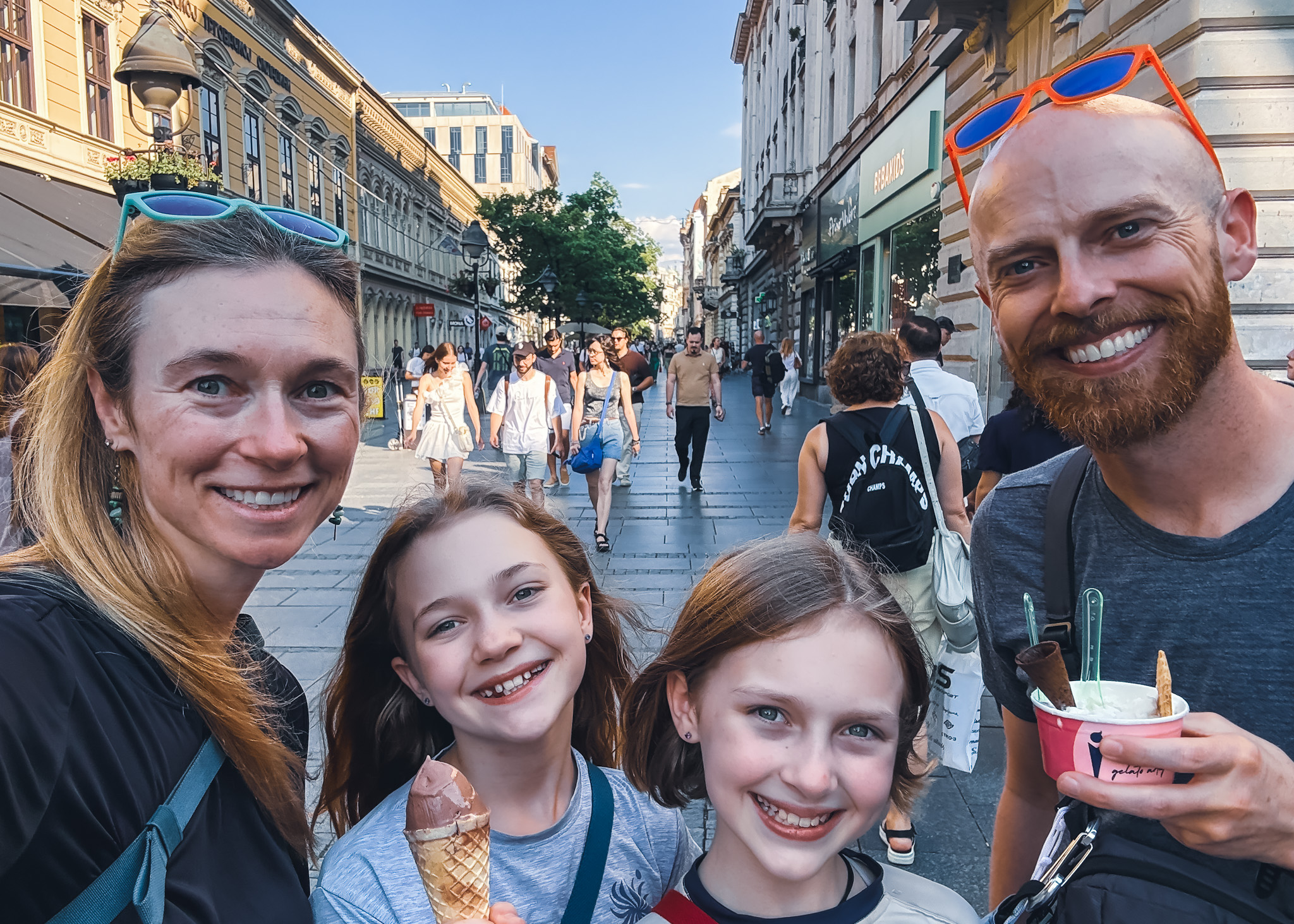
One year. Seventeen countries. Four people who like each other more now than when they left.
Home, here we come.
 Pause and Wander
Leave a comment