
Dates: July 3-11, 2026
Places: Criț, Saschiz, Șapartoc, Stejărenii, Mălâncrav, Biertan, Nemşa, Mediaș: Terra Saxonum, Romania
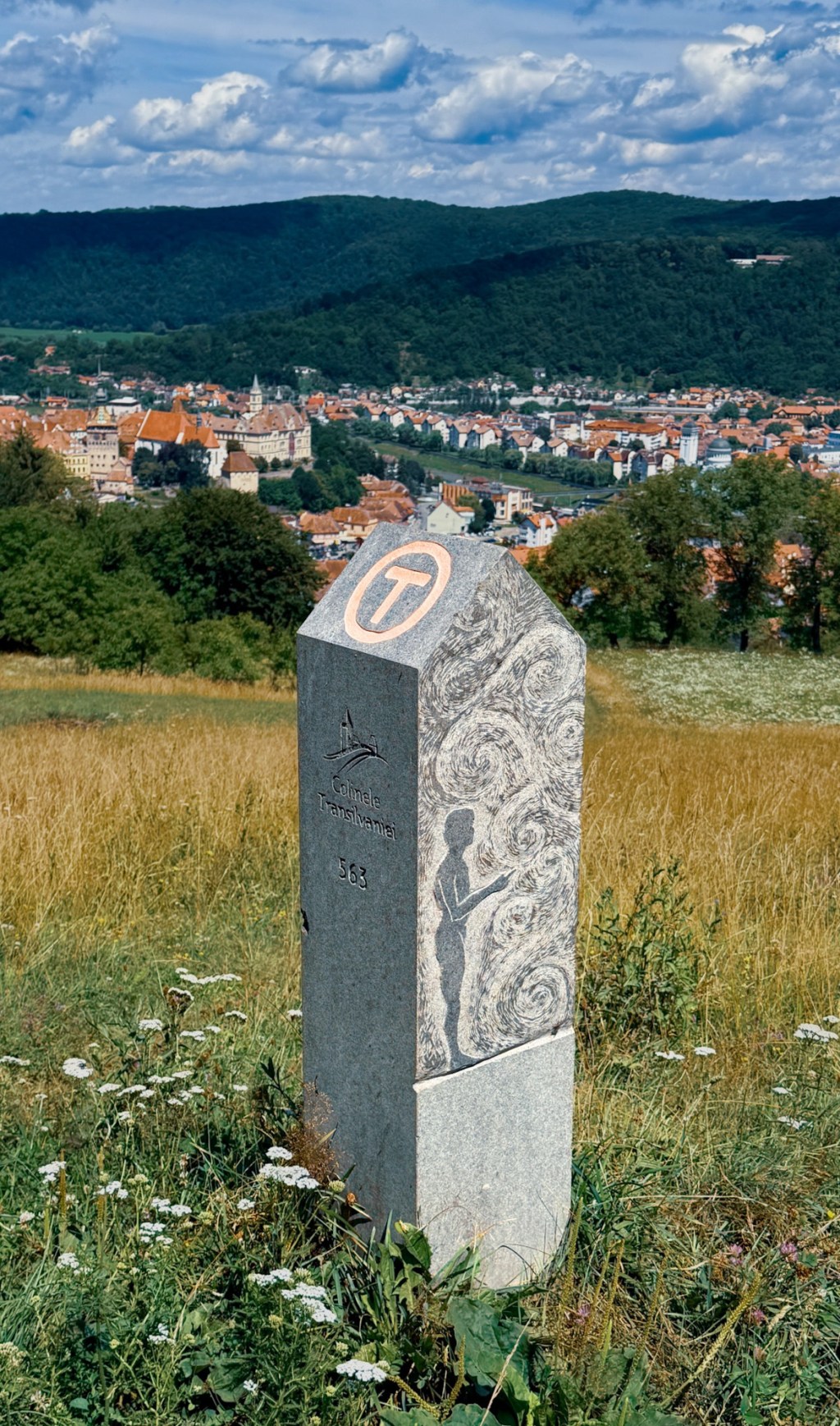
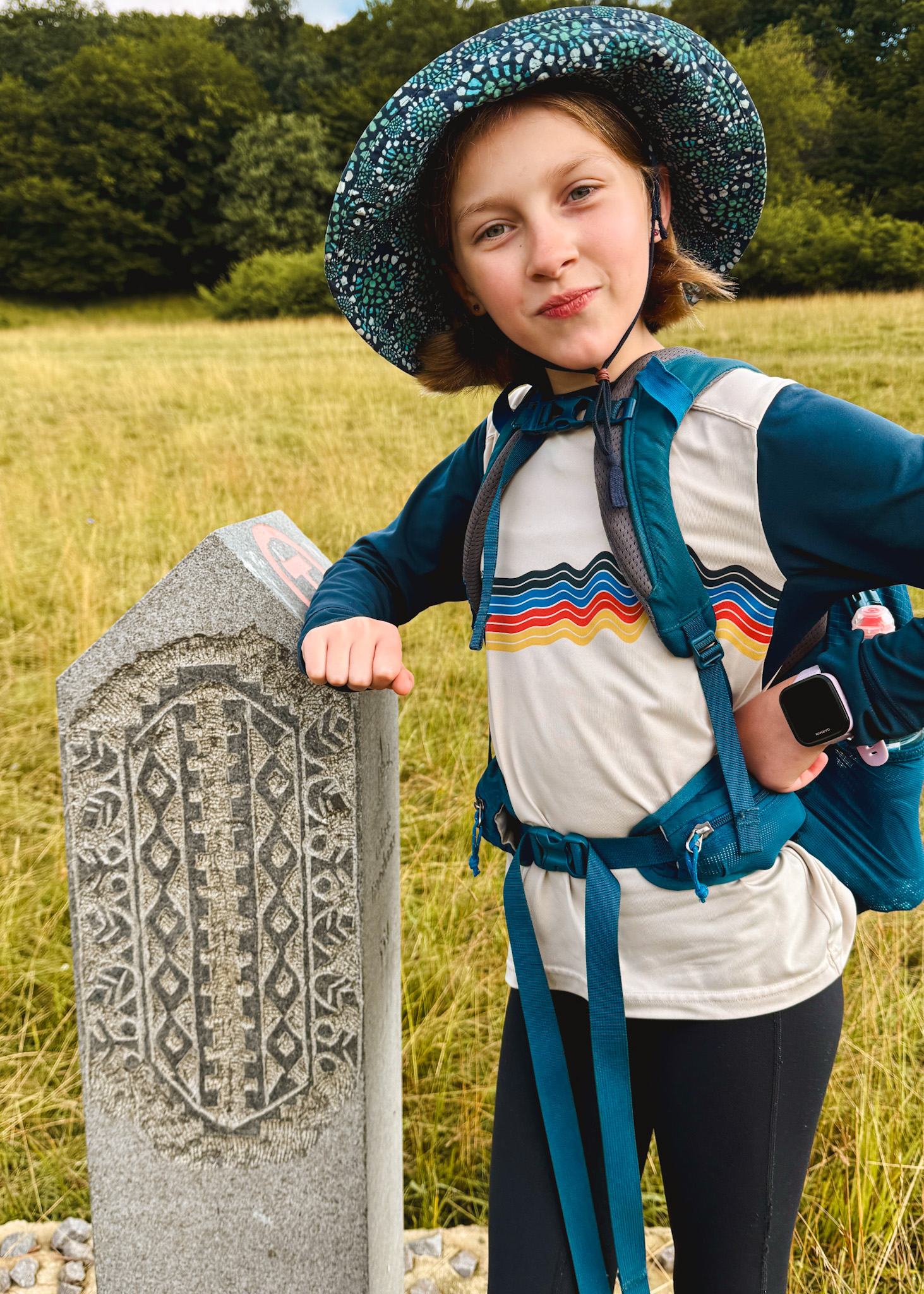
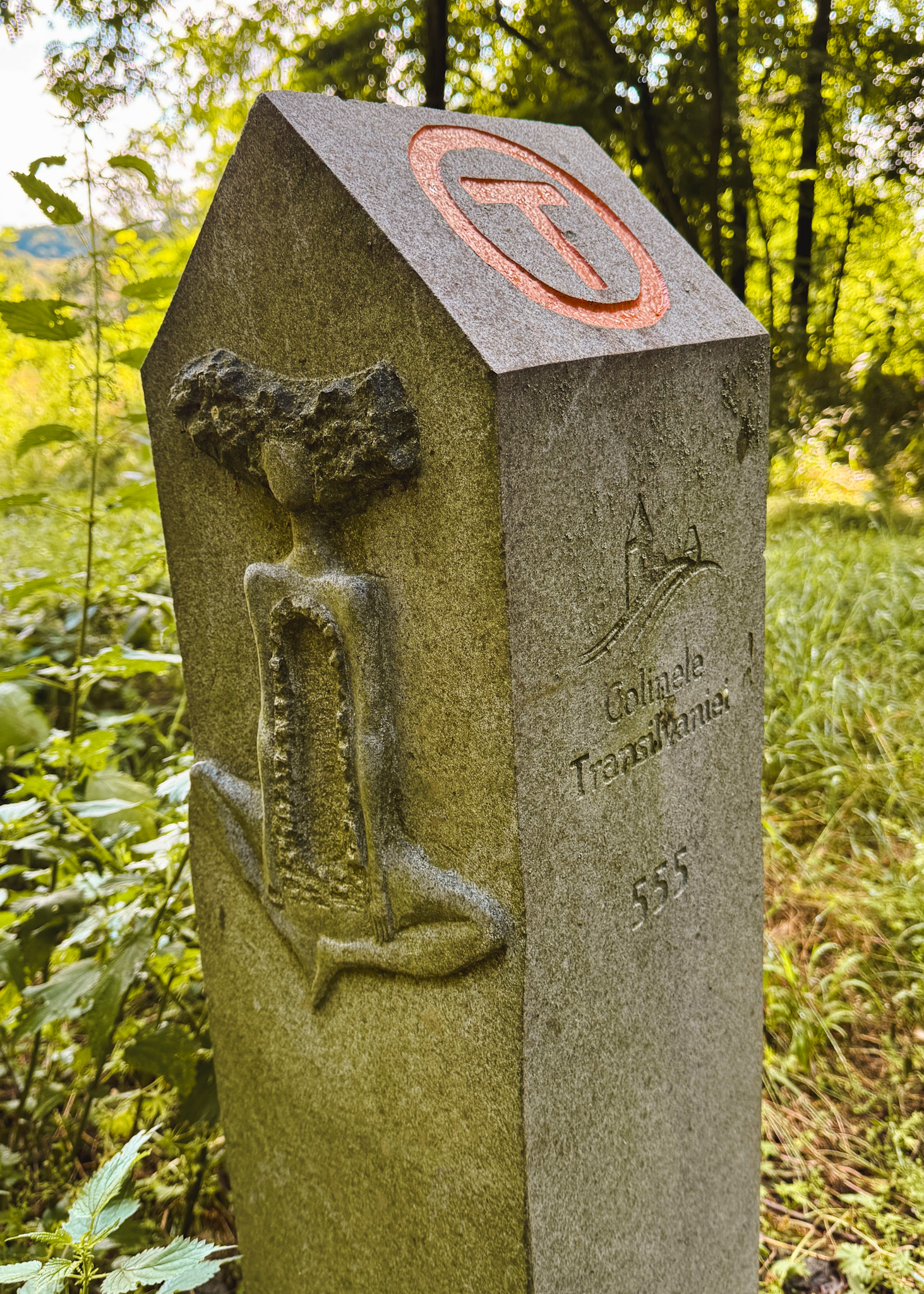
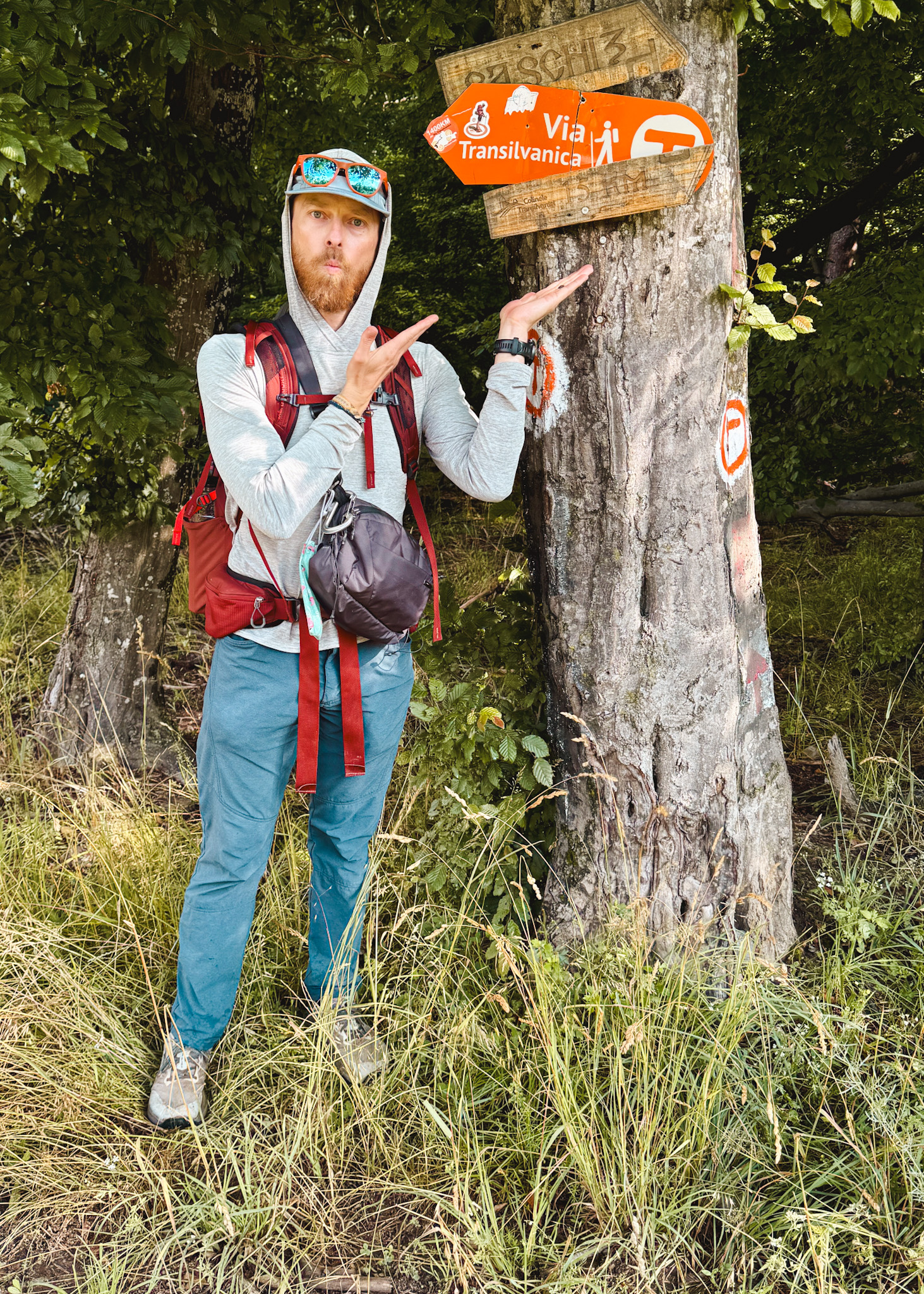
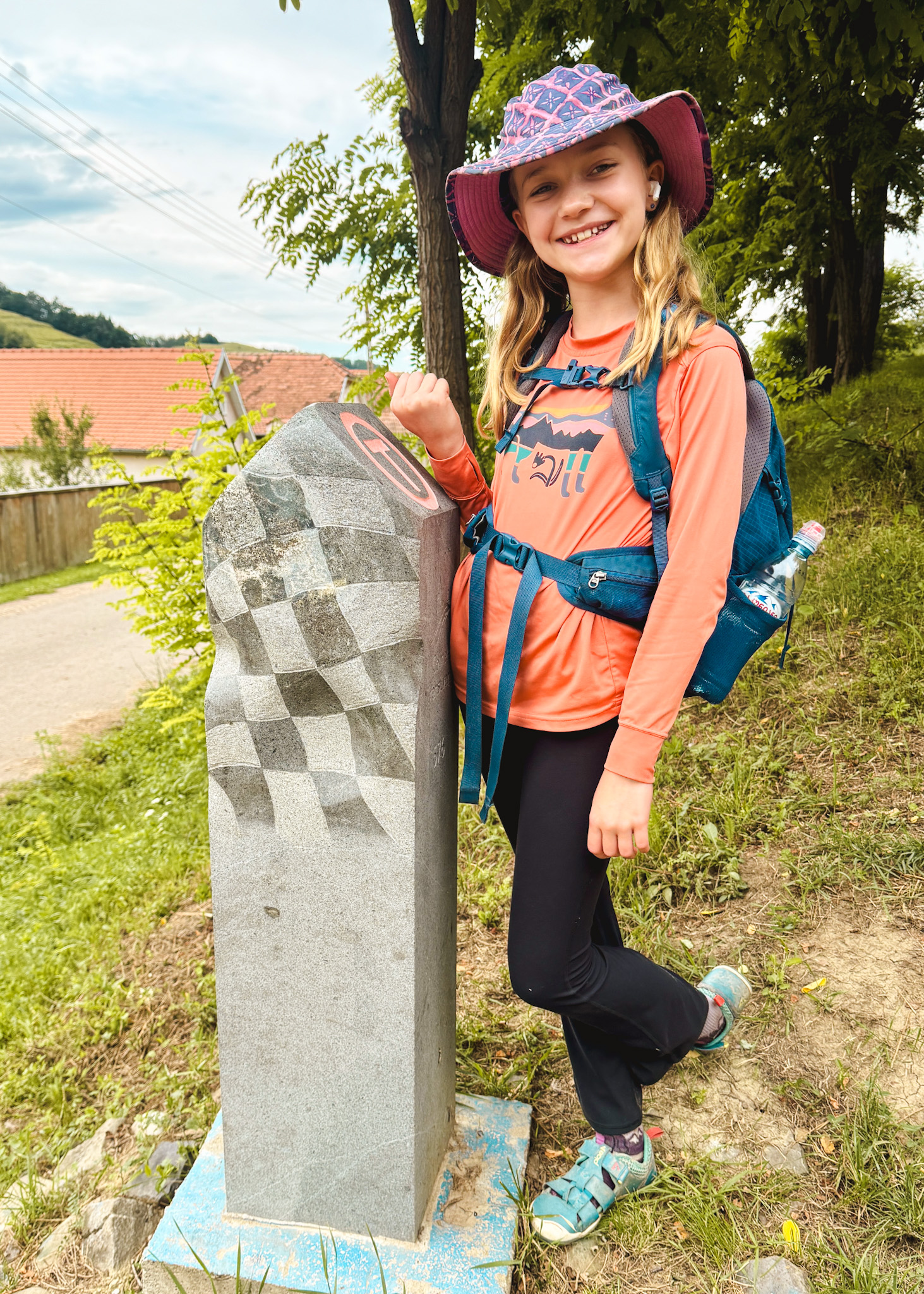
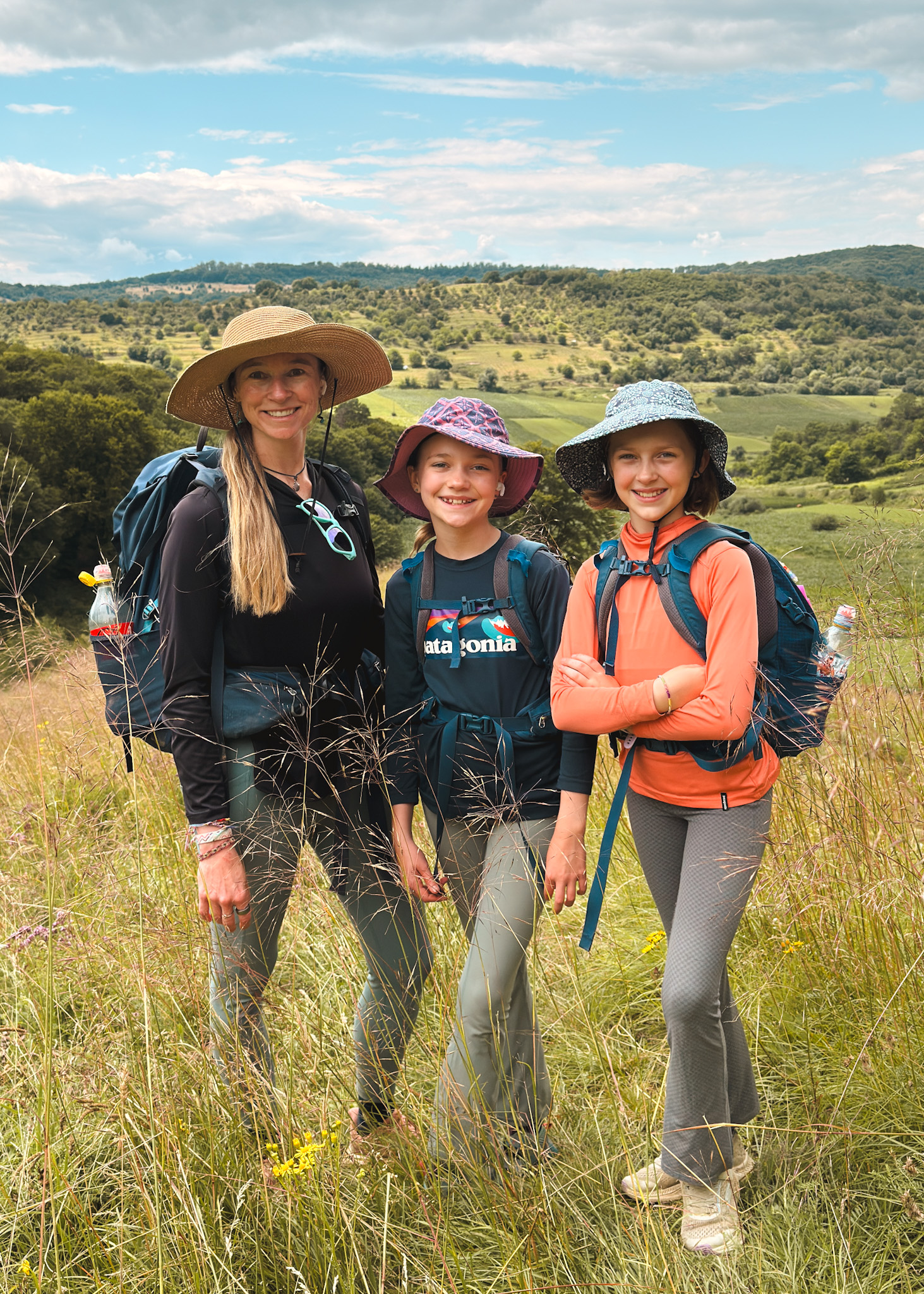
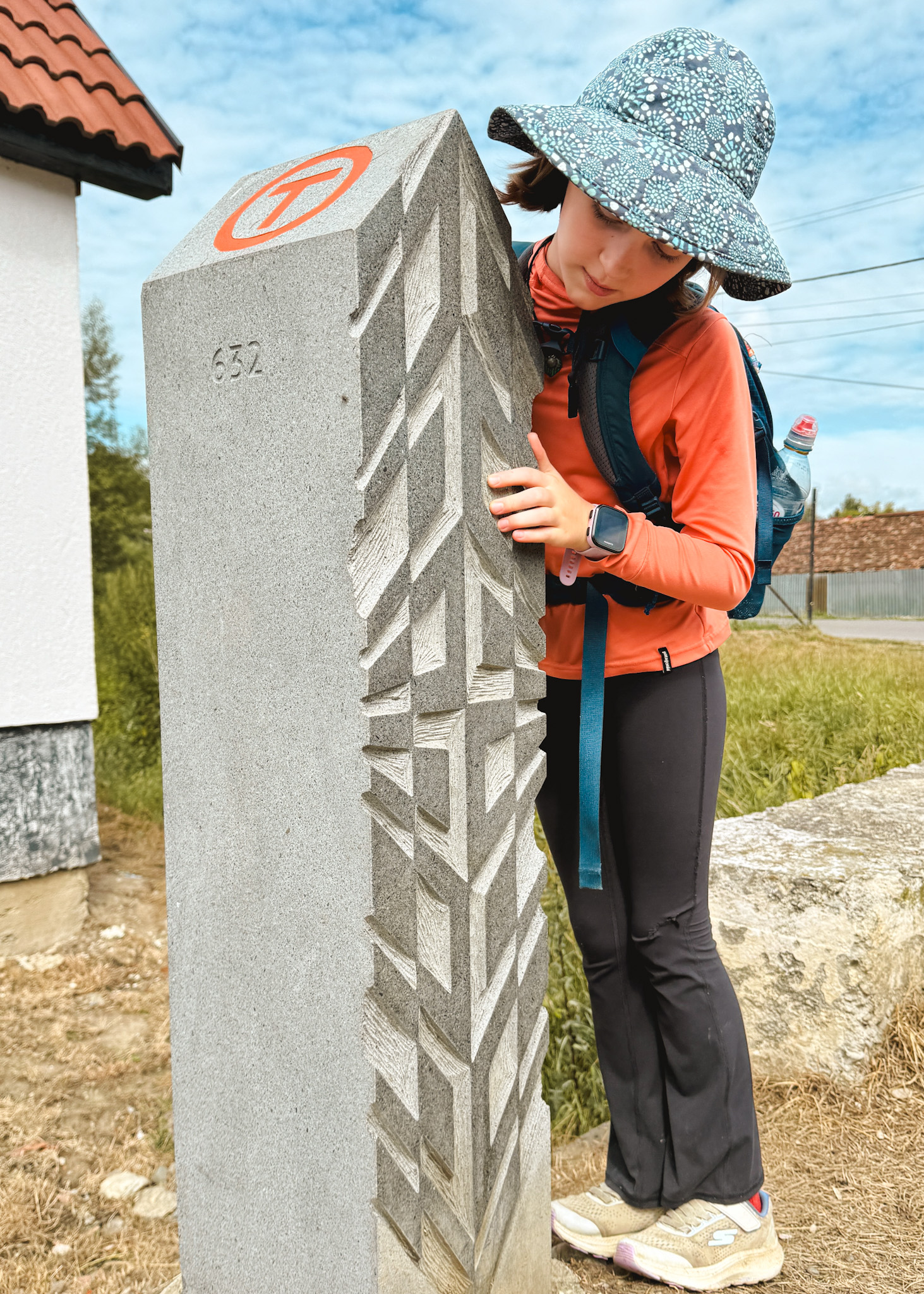
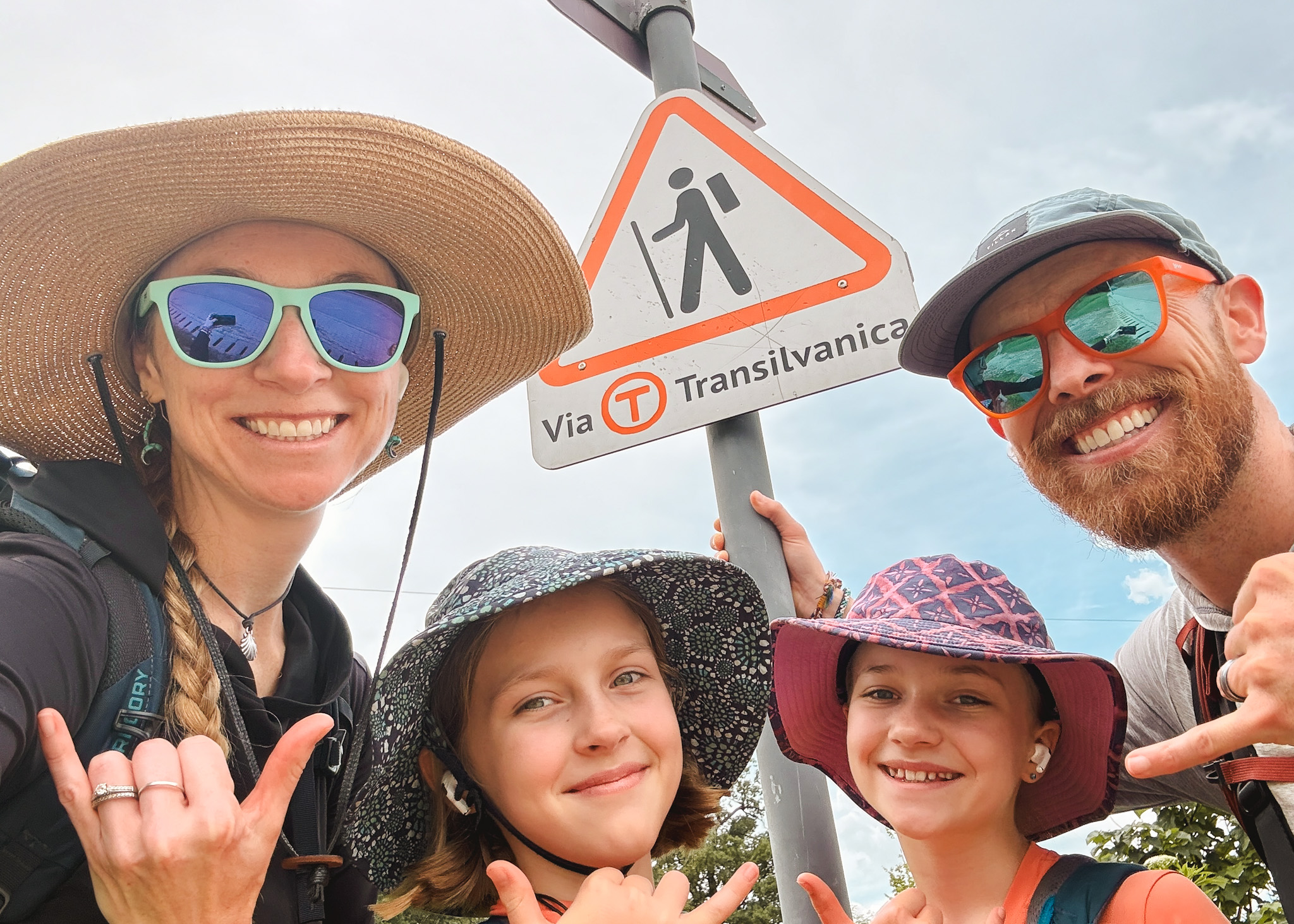
We started this gap year, almost twelve months ago, with a long walk: the Camino de Santiago, 800 kilometers across Spain that taught us what our family is made of. So it feels exactly right that we’re closing it with another one. For seven days we walked 125 kilometers of the Via Transilvanica, the Camino-inspired trail with the motto “the road that unites,” that cuts straight through Terra Saxonum, the old Saxon heartland of Romania where a fortified church crowns nearly every village.
When we began, we did not yet fully appreciate that the trail is not just a route through pretty countryside. It is a lifeline, deliberately laid through tiny, emptying-out villages to bring travelers (and the money and attention that travelers carry) back to places that have been slowly fading for decades. That idea—a footpath as an act of rural renewal—quietly became the throughline of our whole week.
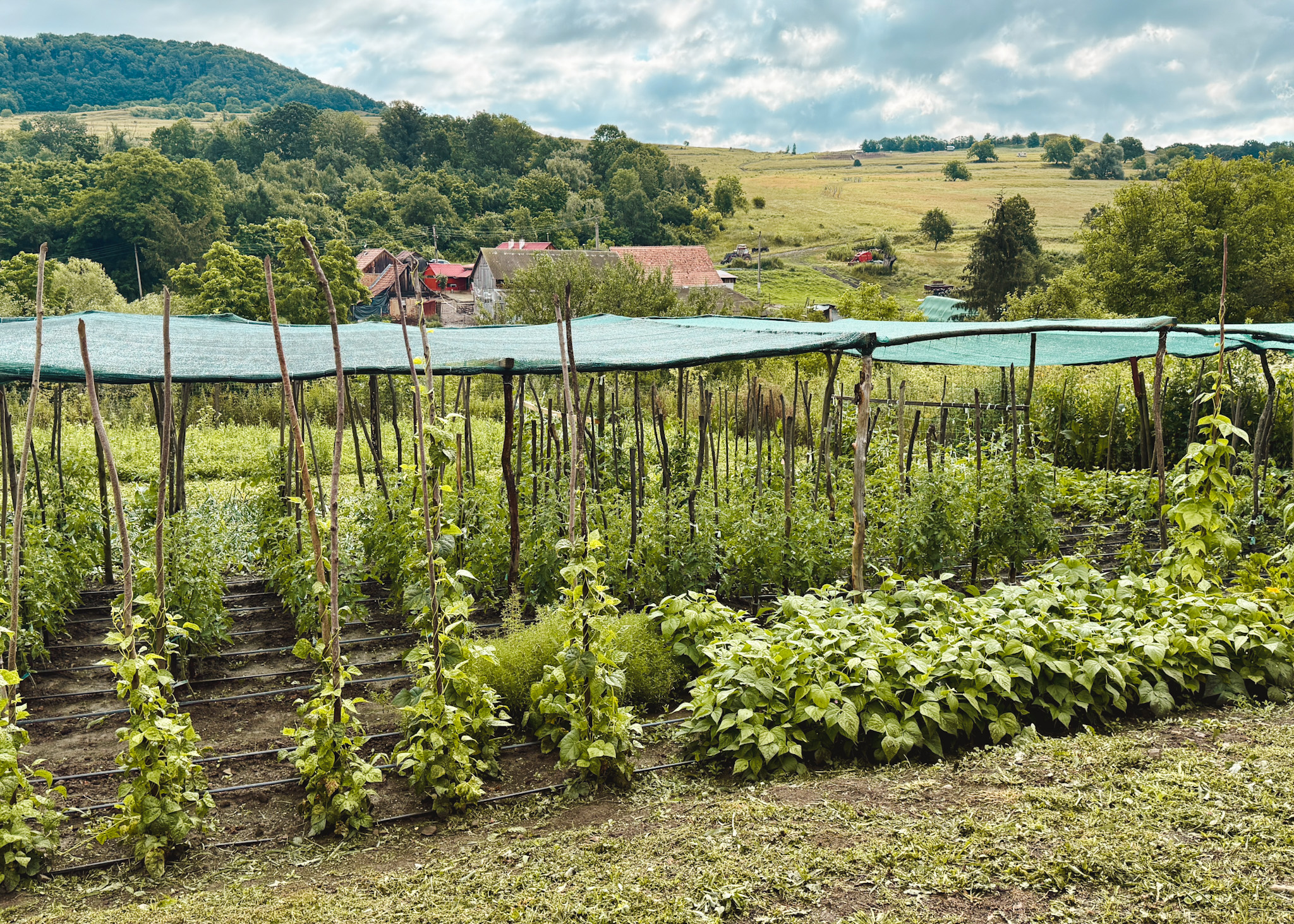
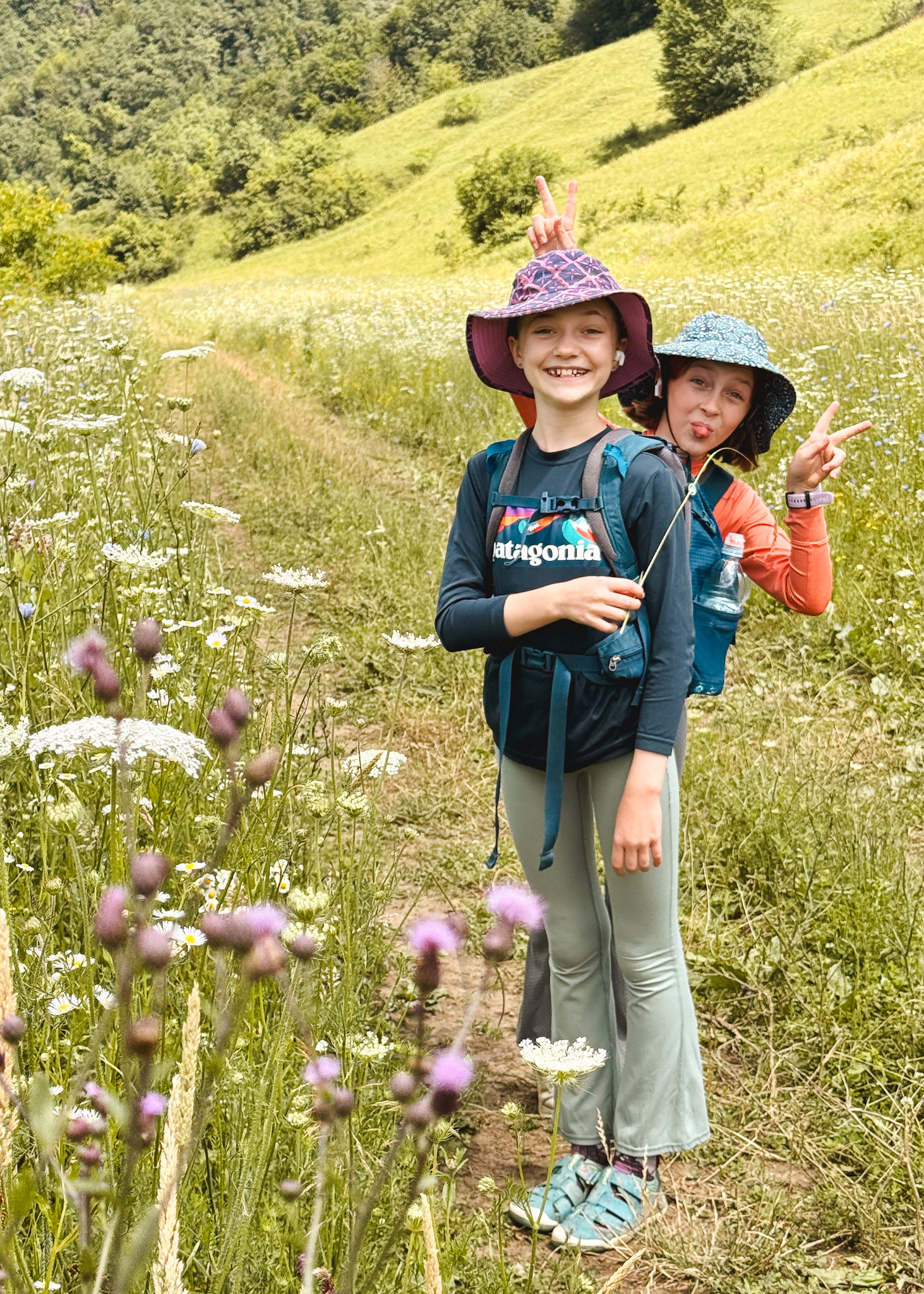
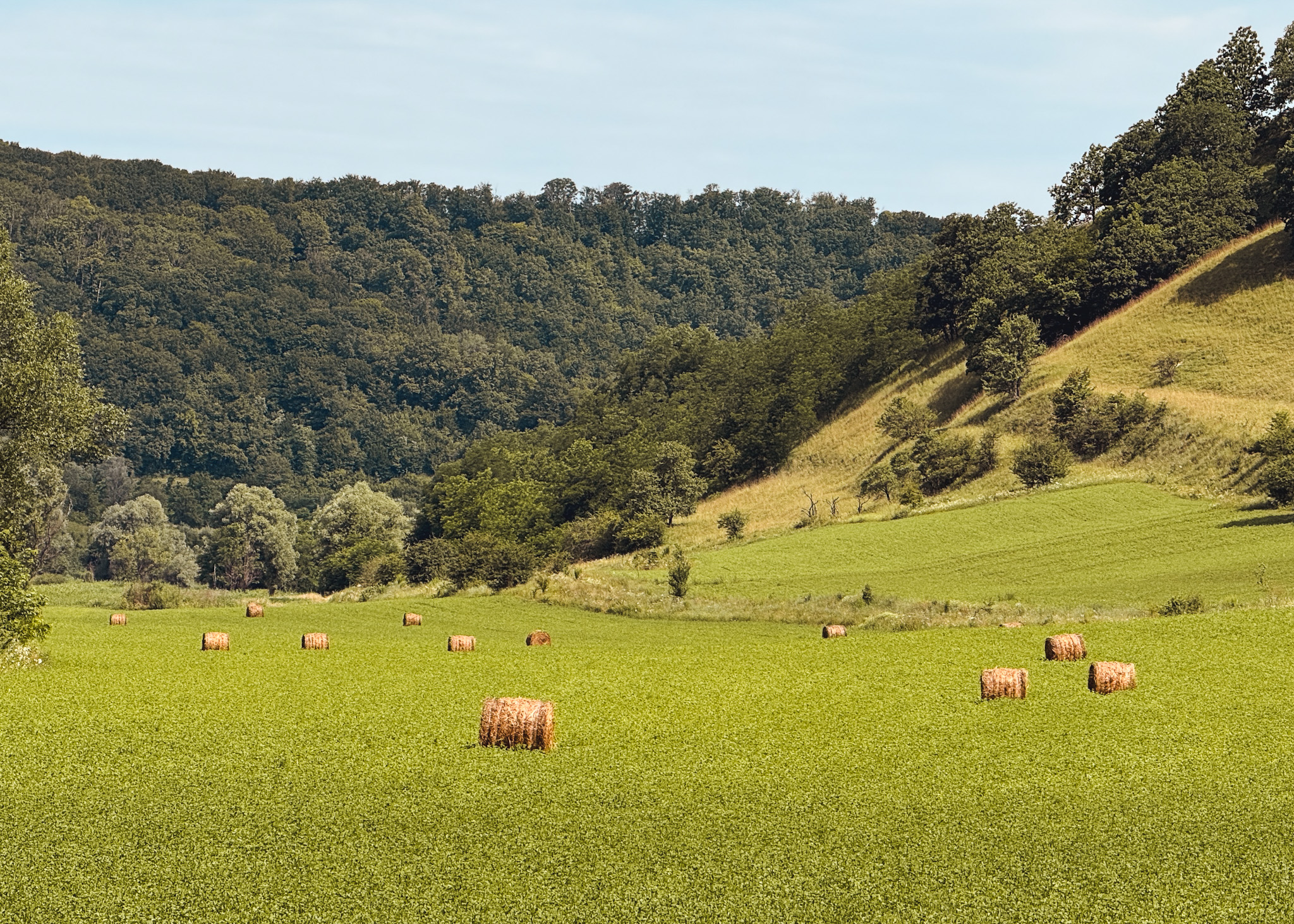
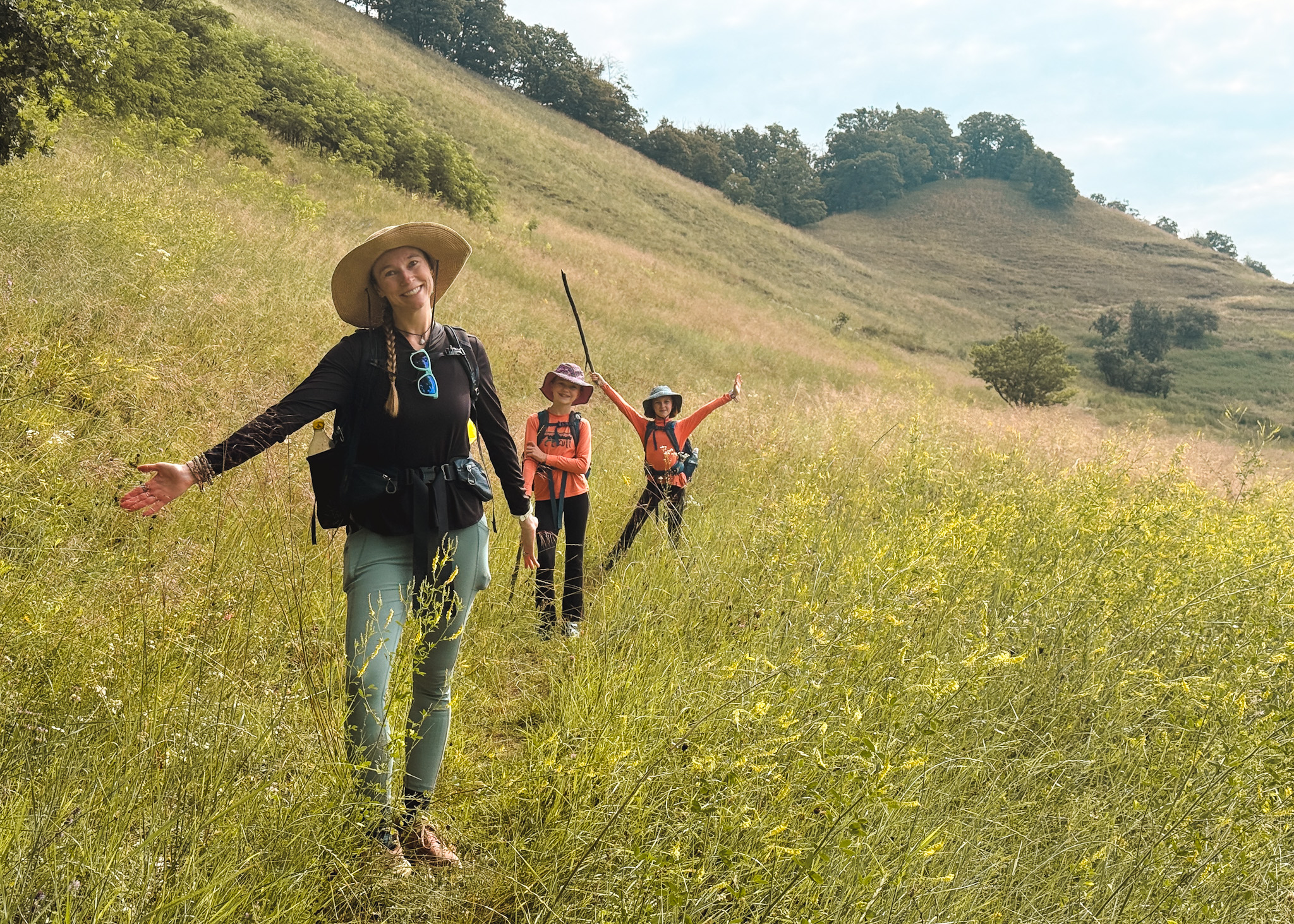
Day one, admittedly, did not begin on a note of soaring purpose. It began with a pre-dawn wake up in Criț to watch the United States lose 4-1 to Belgium in the World Cup, a performance so limp that a team we’d watched fire on all cylinders all tournament looked like it had forgotten to start the engine. It dropped the whole family into a sour mood—not how you want to launch a 14-kilometer hike. Compounding it was a mildly irritating discovery at breakfast: our guesthouse had quietly line-itemed our meals, so that to every “would you like this too?” the night before turned up as an extra charge, running the bill about 50% over what we’d expected. Petty grievances, and both evaporated the moment we actually started walking. The trail out of Criț was beautiful and the weather was lovely, winding through rolling hills of grass and wheat and along a forested ridge that spilled out onto back roads through farmland of every description: sunflowers, orchards, vineyards, alfalfa, and a few crops we couldn’t name.
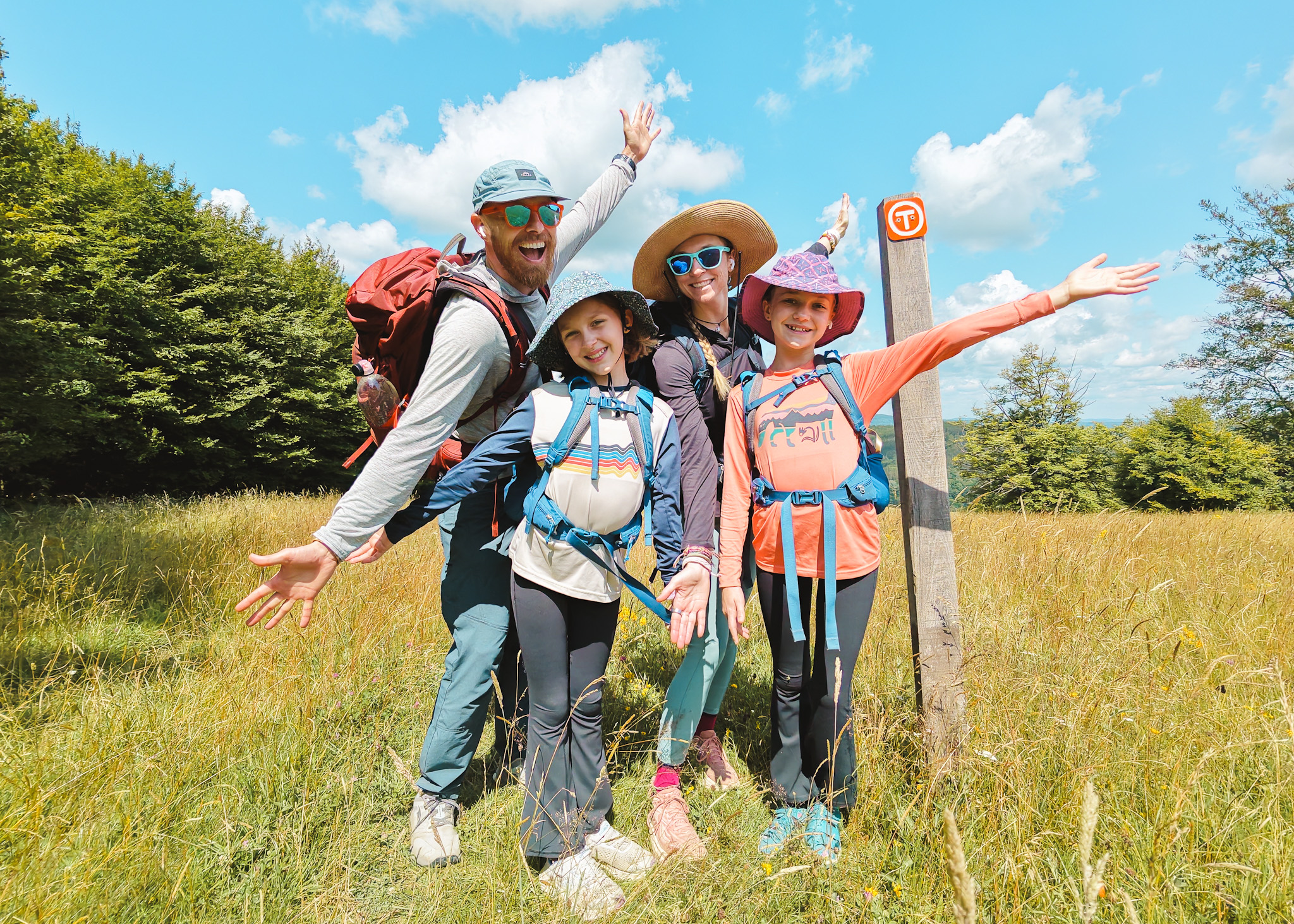
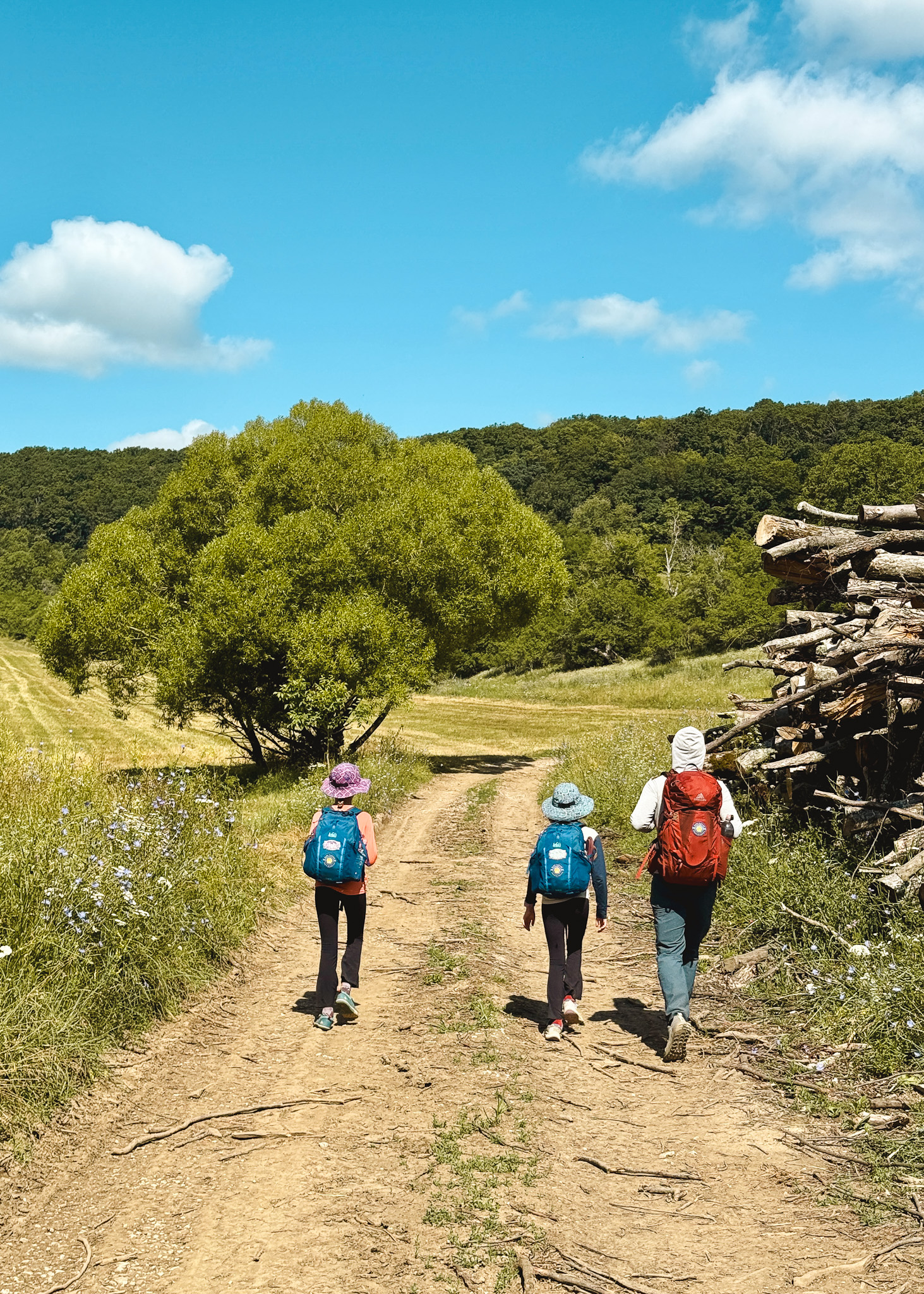
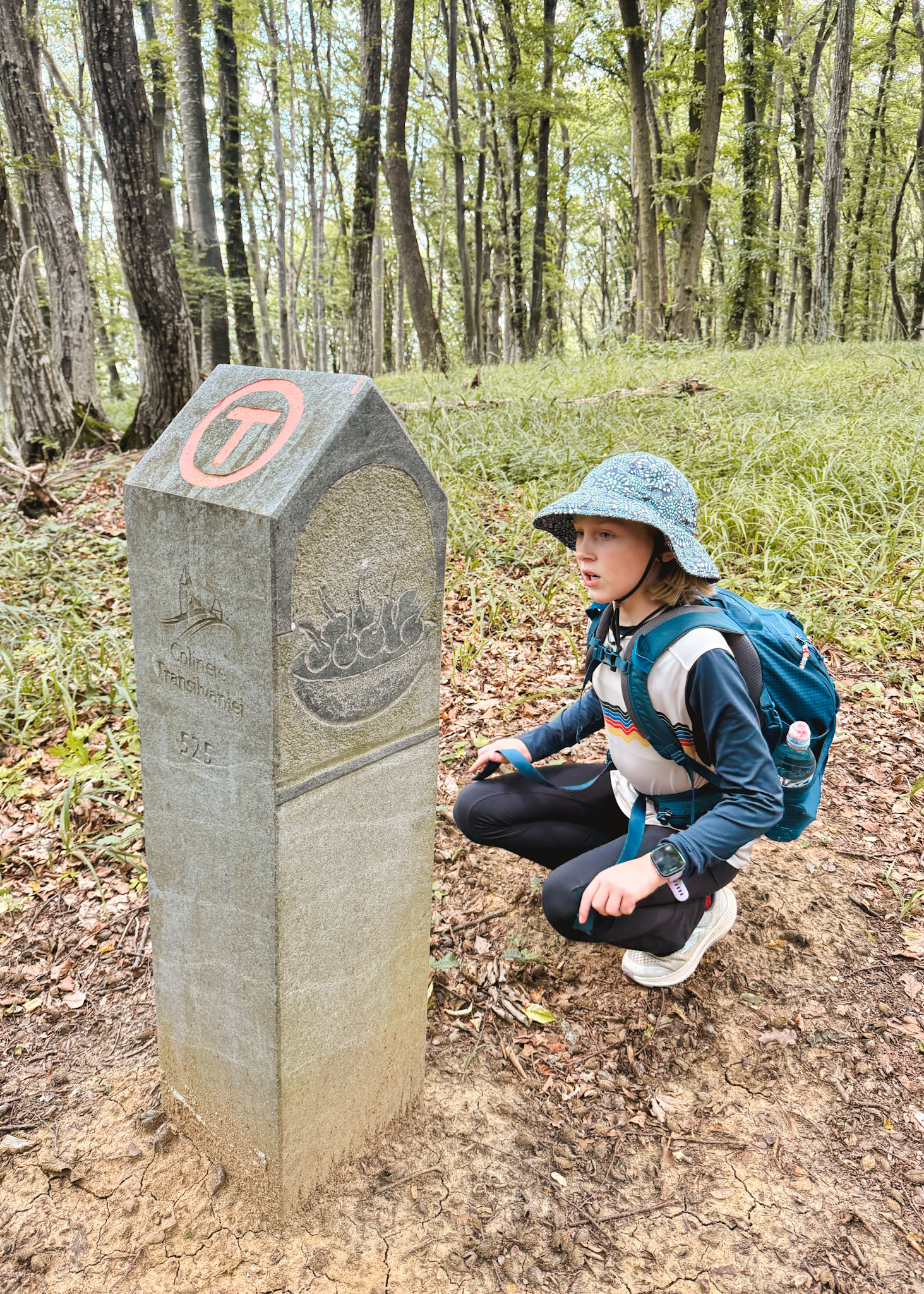
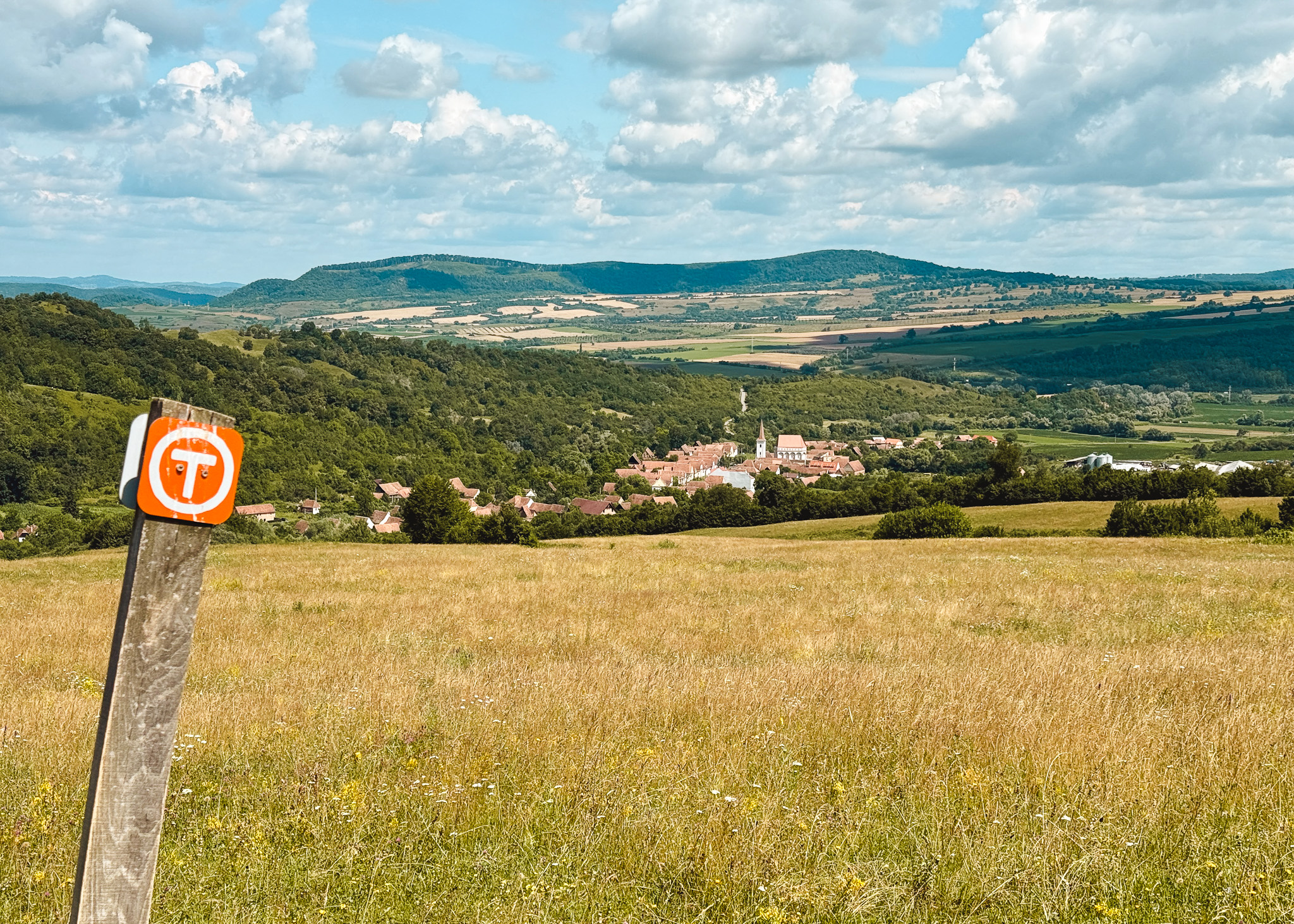
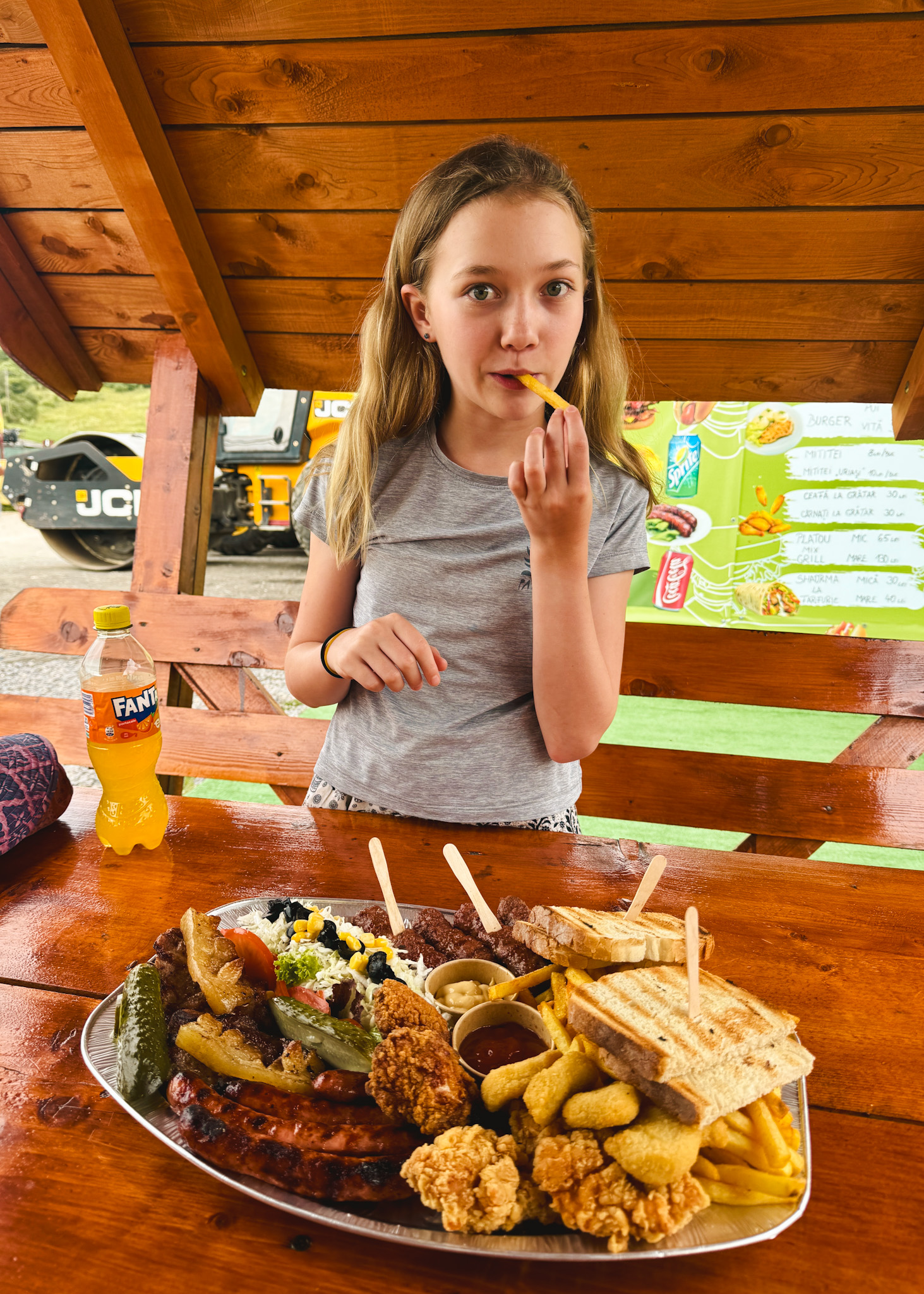
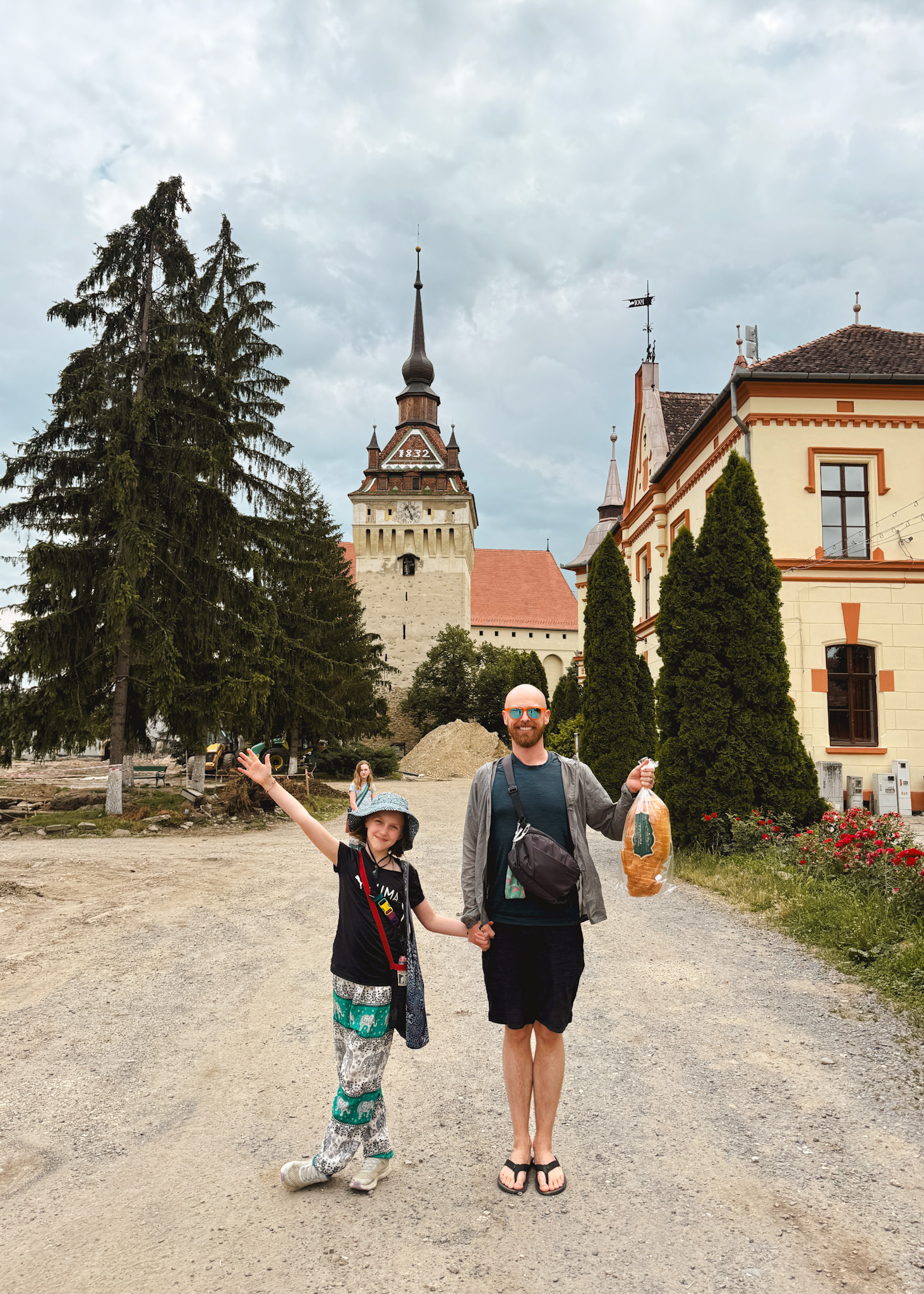
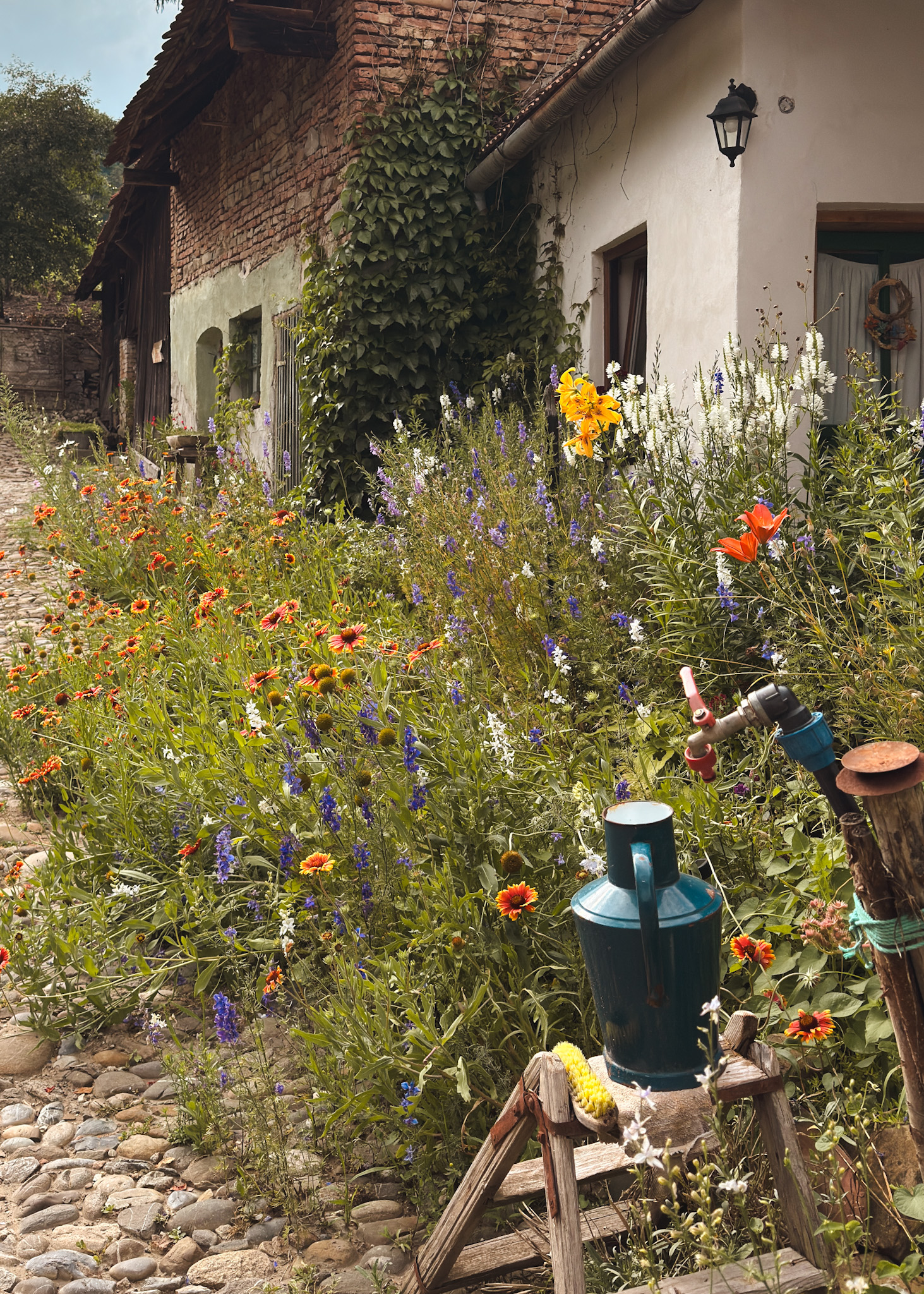
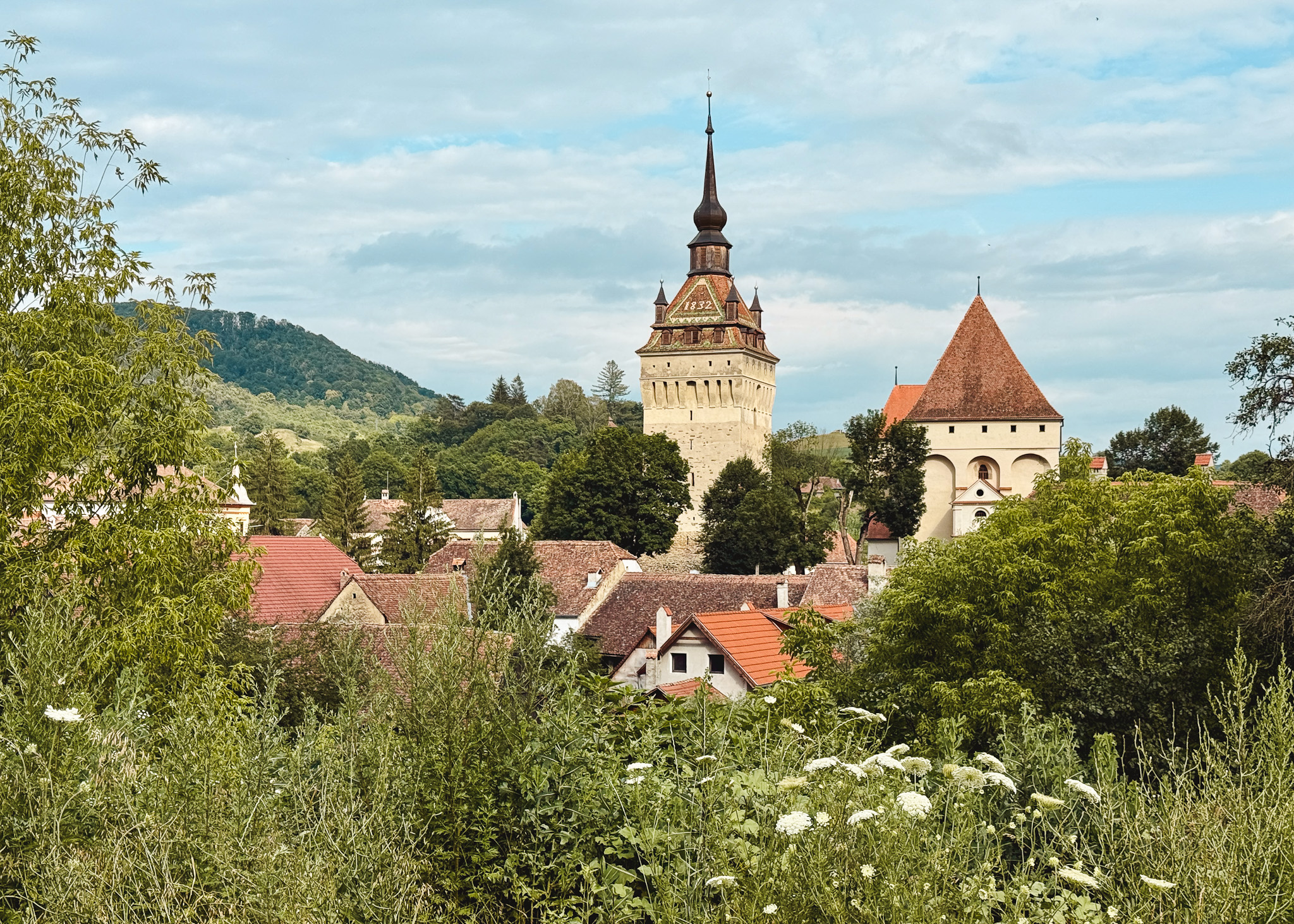
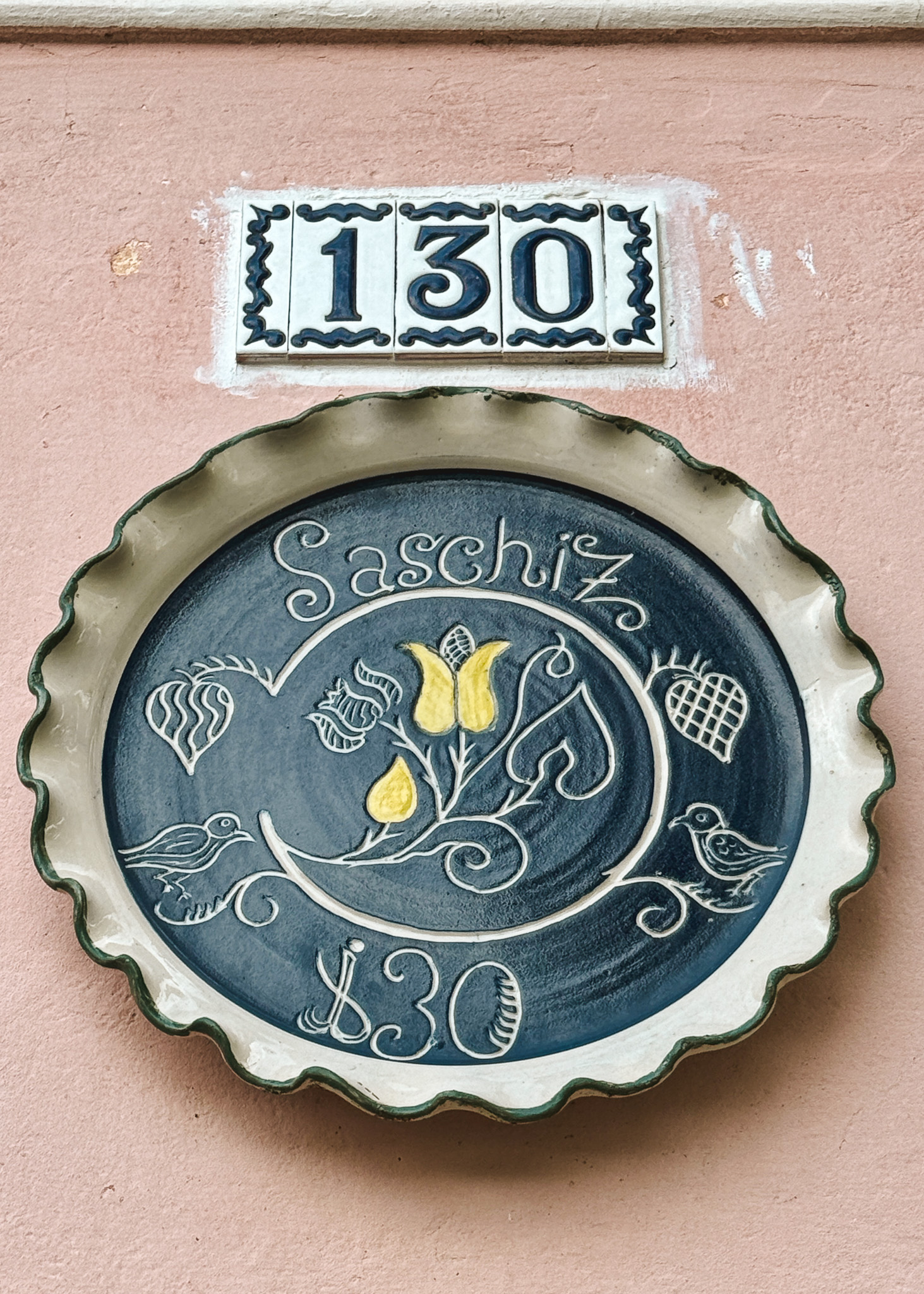
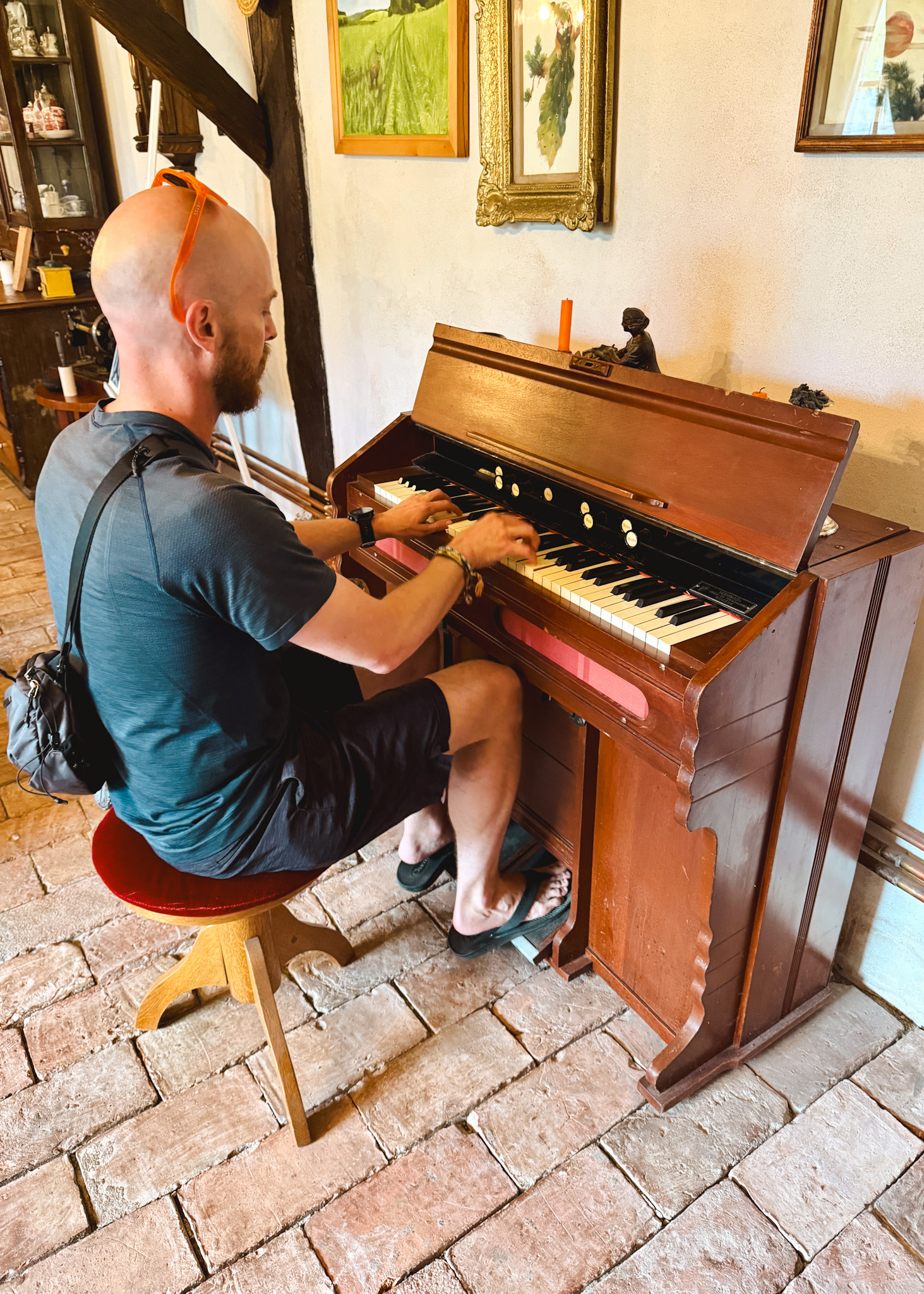
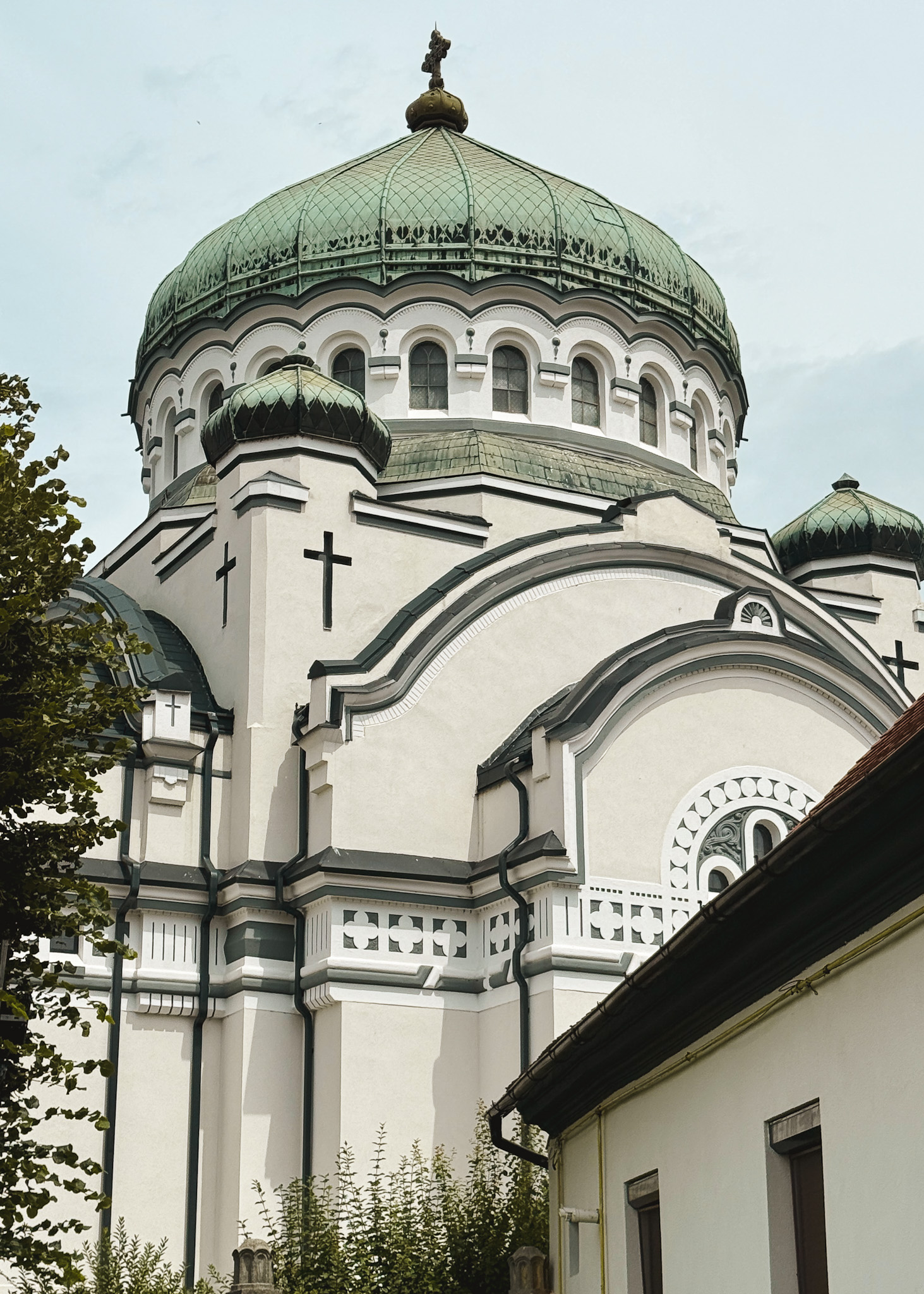
That first day delivered us to Saschiz and our introduction to the fortified churches that would define the week. The Biserica Fortificată of Saschiz is a UNESCO-listed Saxon church built between 1493 and 1496, and it was such an influential design, a Gothic hall church topped with a defensive rampart-and-arch attic instead of a bell tower, that it got copied across dozens of other Saxon churches around 1500. When Ottoman and Tatar raids came, the entire village would fall back behind its walls. We picked up our VT passports at a little café called the Green Room, ate a vegetable-free but deeply filling shawarma dinner, and settled into a guesthouse whose hosts had been called away on an emergency, leaving us alone in a beautiful ghost town of grapevines and empty fire pits. That night the card gods handed Max an almost embarrassing run of luck at Kings and Cabbages, and we went to bed early, because rain was coming, and if we started early enough we might just dodge it.
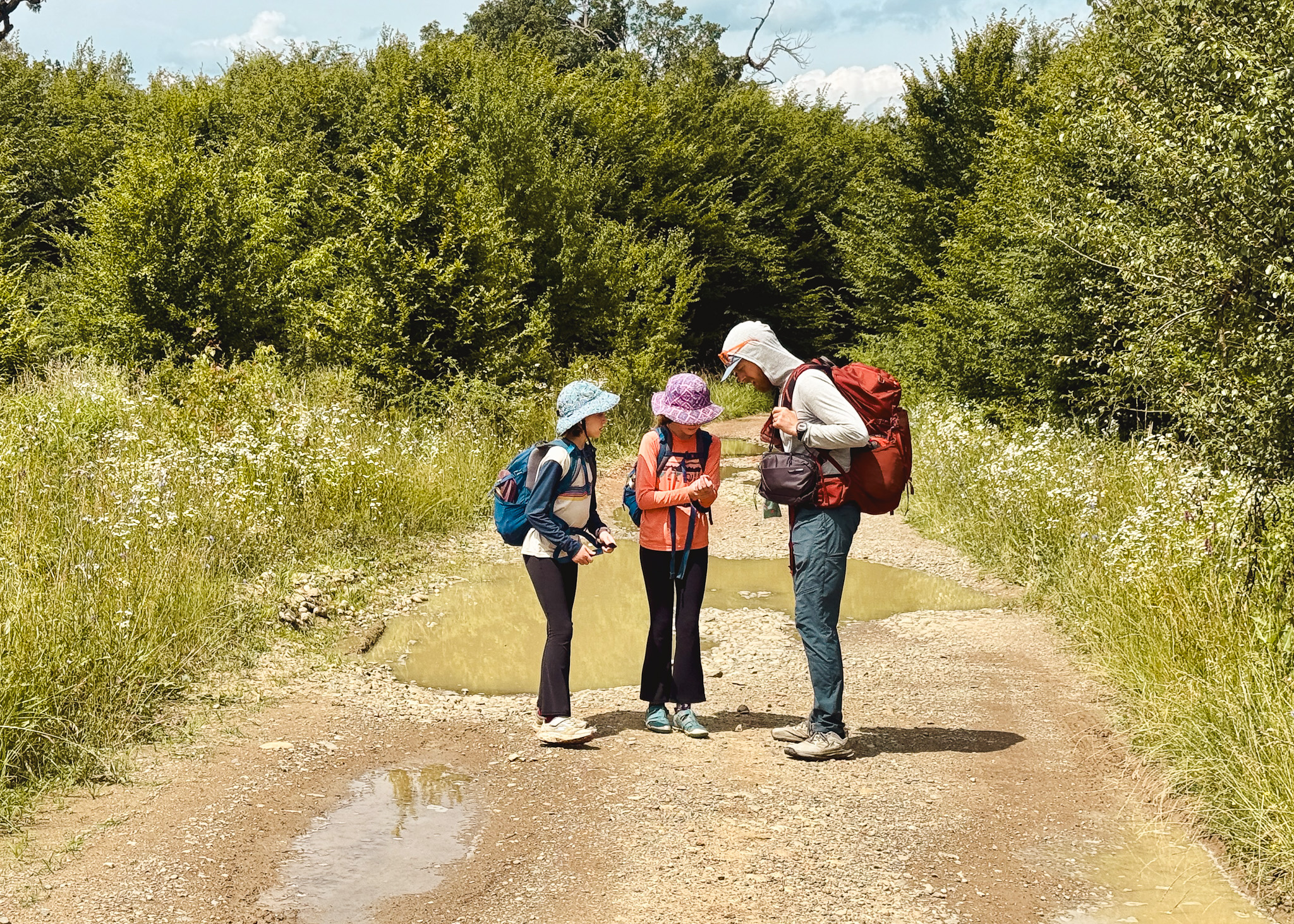
We did not dodge it. Day two is the one we will be laughing about for years, which is the funny thing about what our family has taken to calling “type-two fun”: miserable while it’s happening, hilarious the moment it’s over. We were up at 5:30 and on the trail an hour later to beat the weather, and we beat it by about thirty minutes before the rain caught us and simply never let go. All day, every hour, rain. After 48 days on the Camino without a single drop, our very first rainy hike of the entire year arrived on day two of the Via Transilvanica and made up for lost time. We had the cheap plastic rain jackets Max had bought back in Georgia, which are functionally glorified colorful garbage bags, and which keep the rain off at the exact cost of sealing your own sweat in, so you end up roughly as wet either way, just more uncomfortable about it.
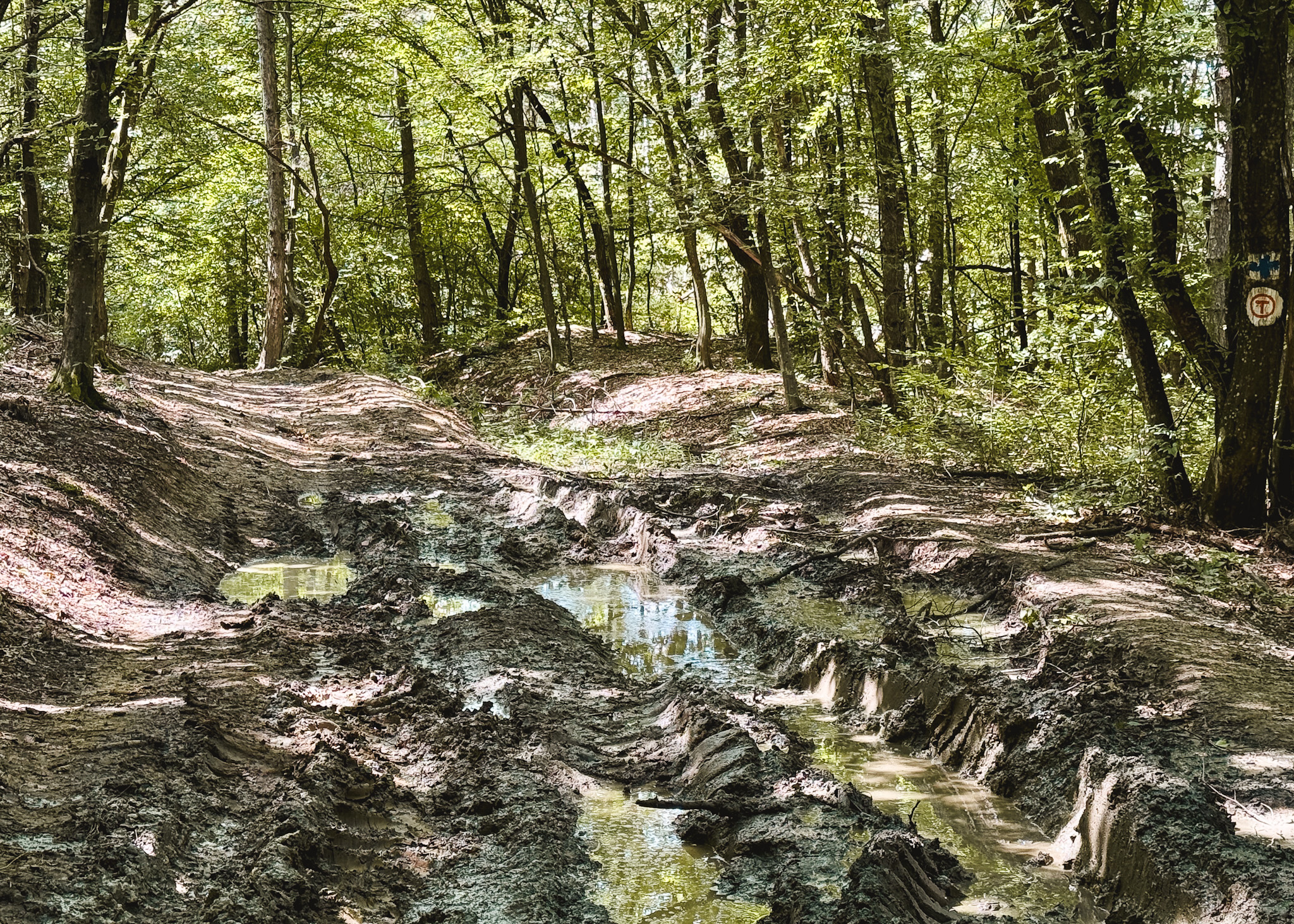
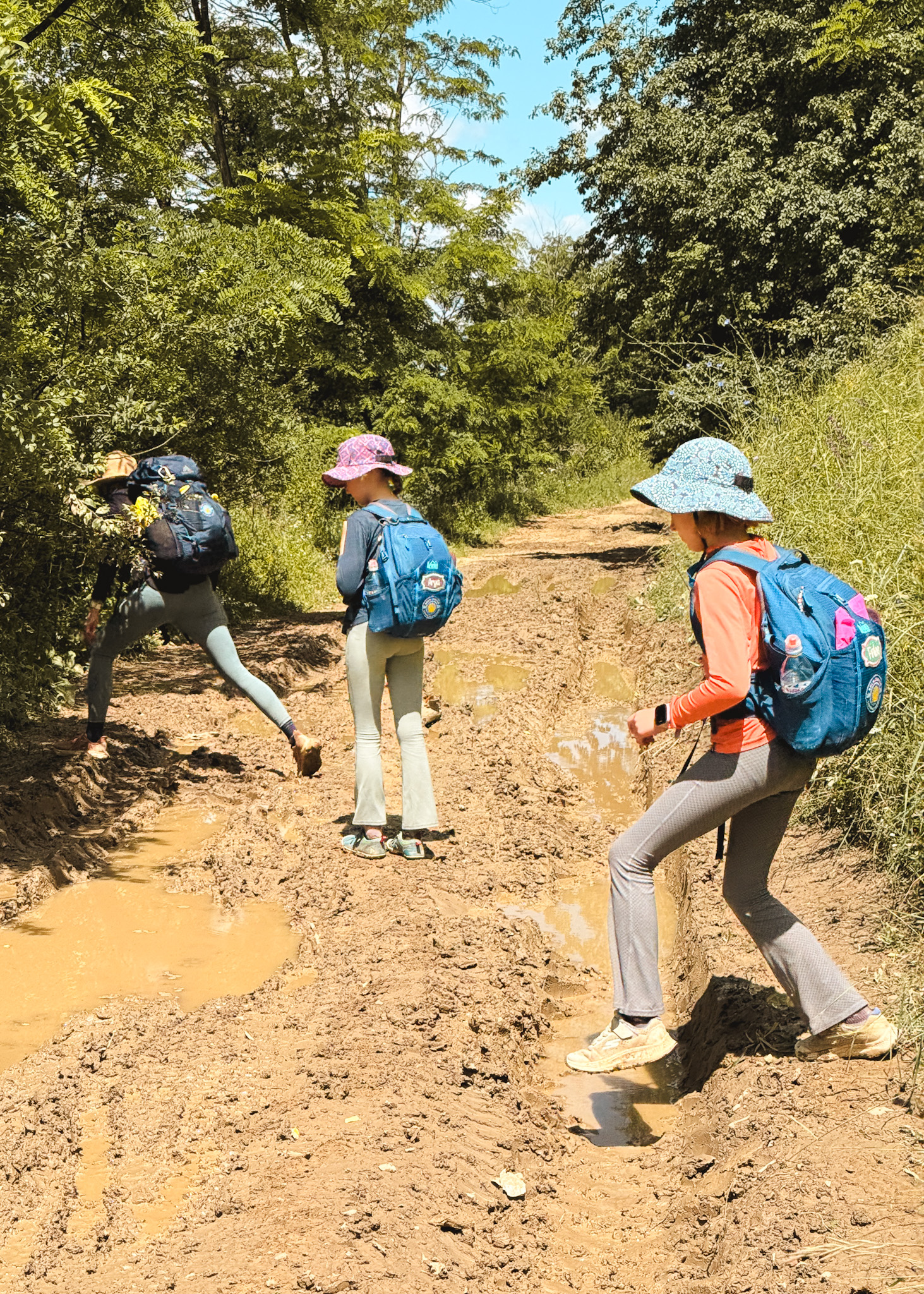
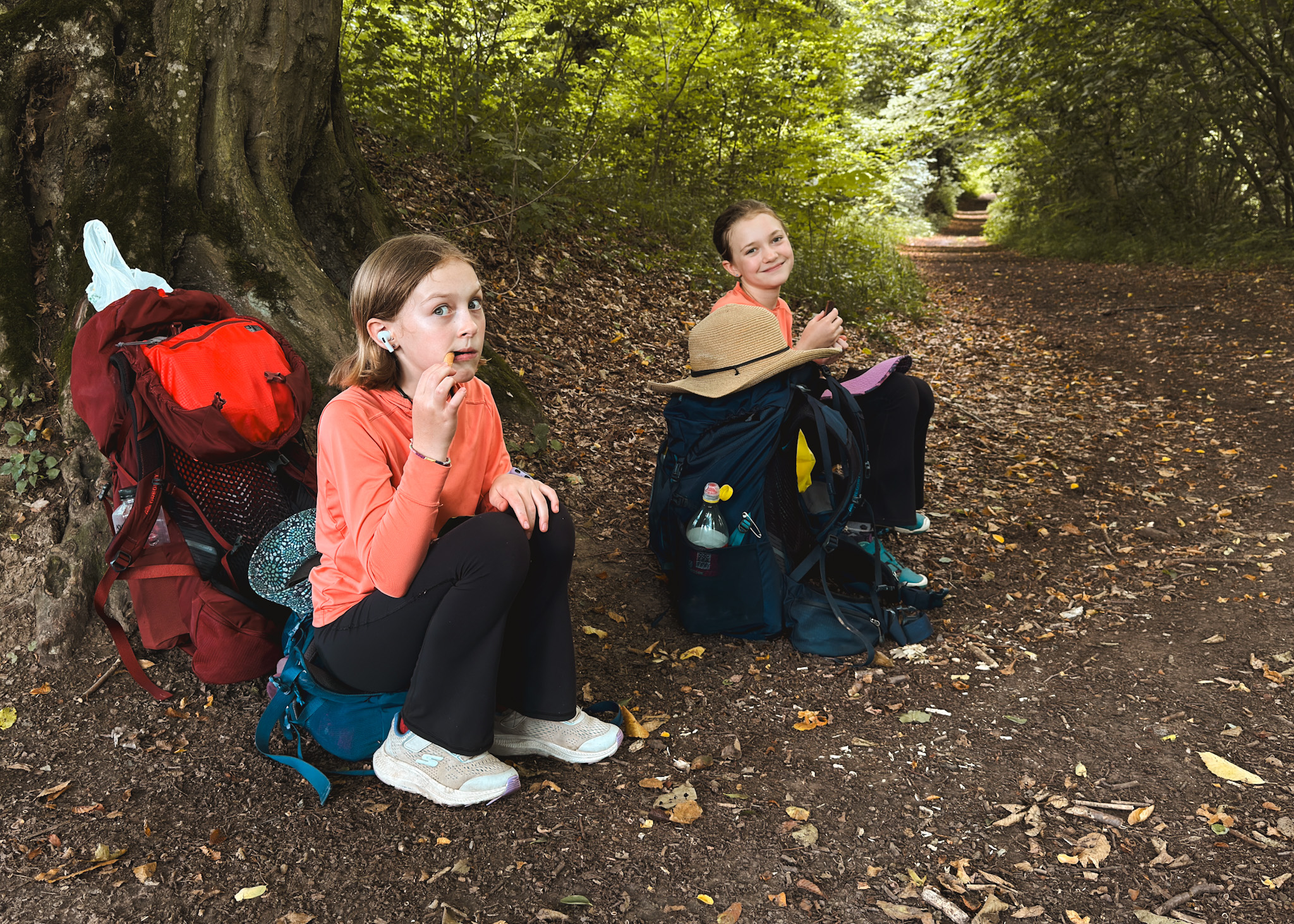
And then there was the mud. Rich, sticky, clay-heavy mud that clung to our shoes and built up layer by layer with every step until we were all walking around on little accumulated platforms of the stuff, stopping periodically to scrape our feet back down to a normal height (and weight). By midday, cold and soaked and gloomy, the entire family had constructed an elaborate shared fantasy about the hot pizza pie we were going to eat in the next village, Daia, where Google promised a bakery that advertised pizza. There was, of course, no bakery in Daia. There was no pizza or restaurant or cafe at all in Daia. There was a small shop with snacks, from which we bought a barely cold beer for Shaina and Max to split, a Fanta Limon for the girls, and a bag of sriracha potato chips. Lunch of champions. By every reasonable measure this should have been the low point of the day—four drenched people eating chips under an awning. Instead, sitting on a few dry chairs out of the rain with a little treat and each other, it somehow became one of the best moments of the week. That is the whole secret of type-two fun. The adversity is the thing that pulls you together.
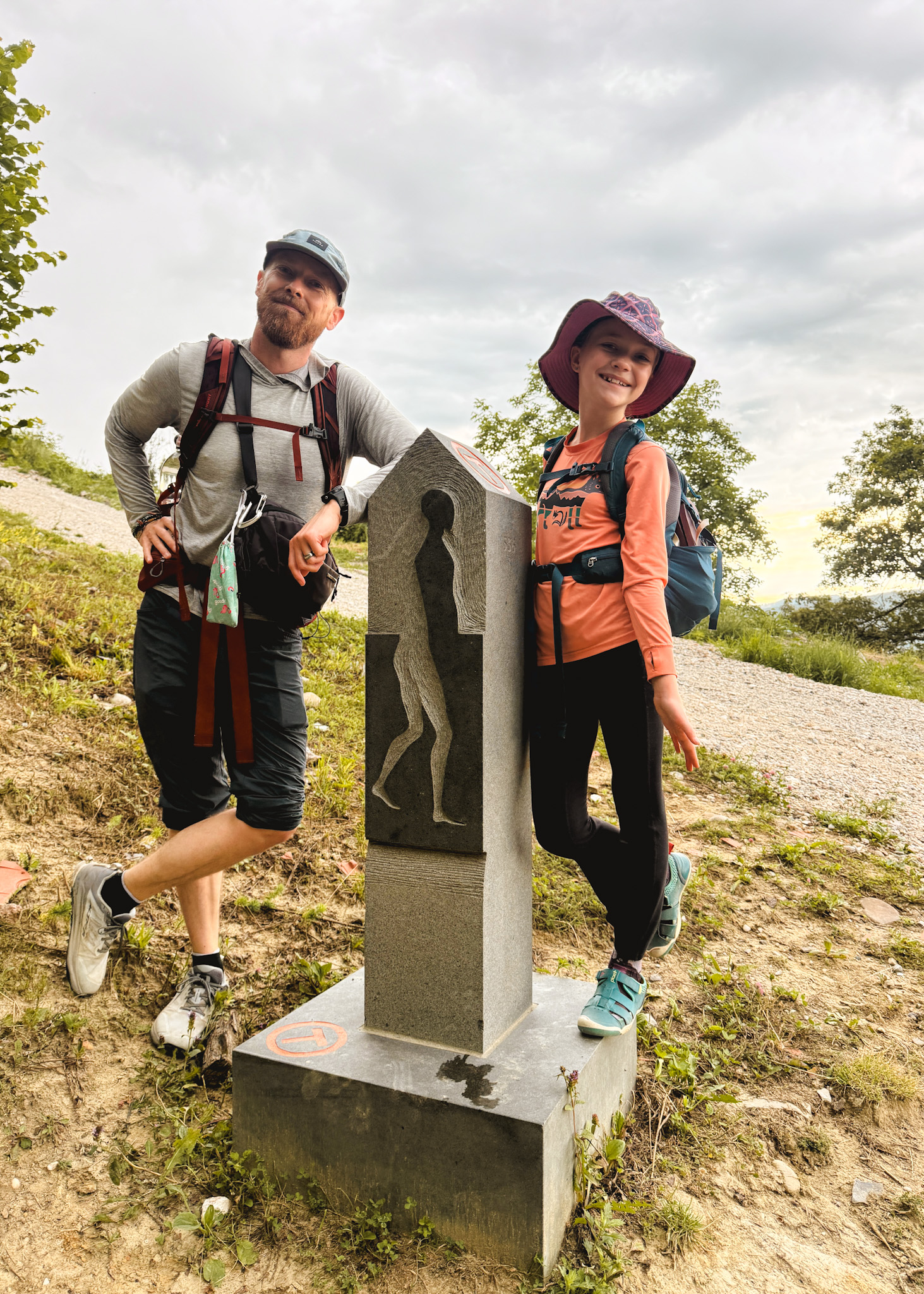
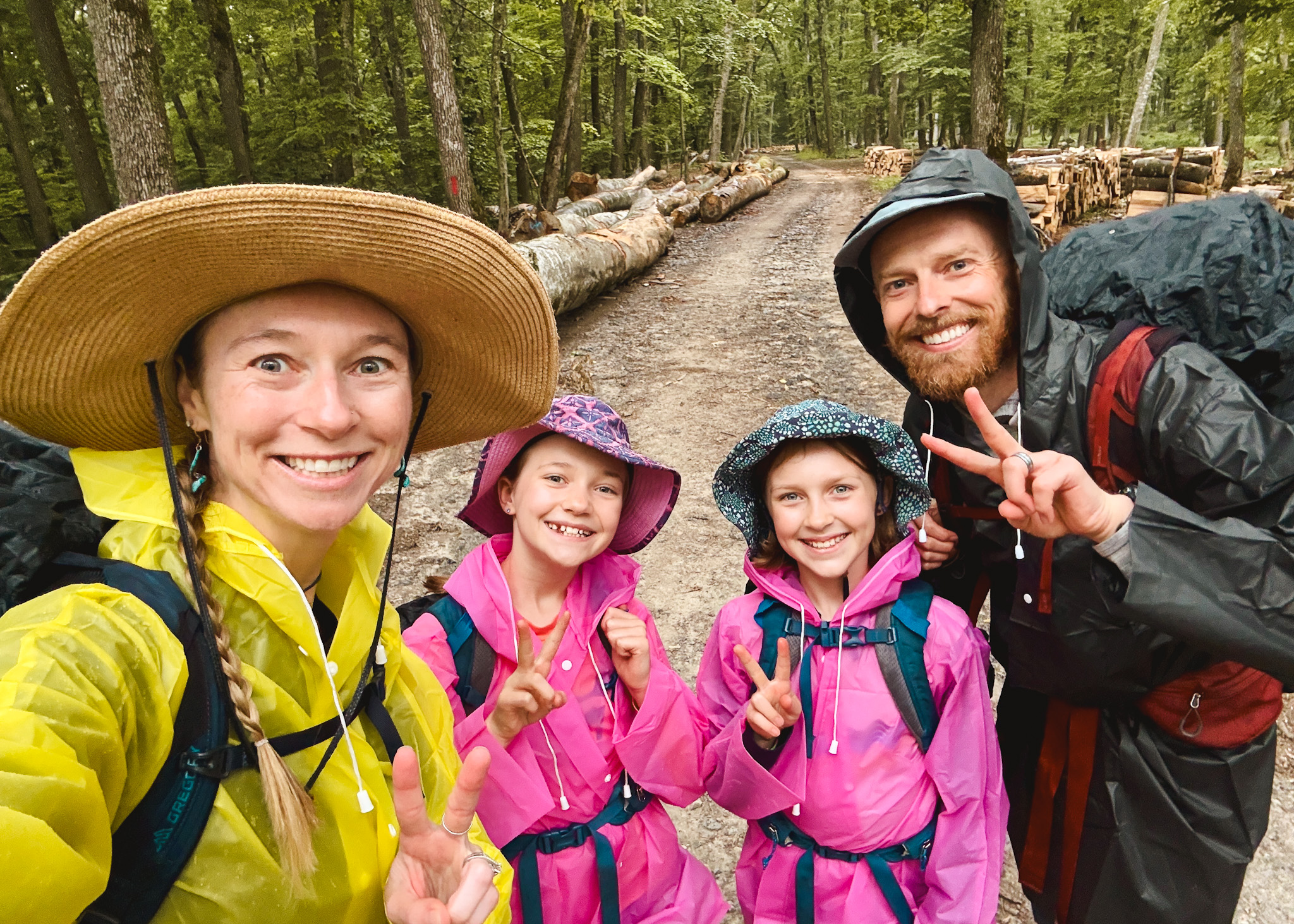
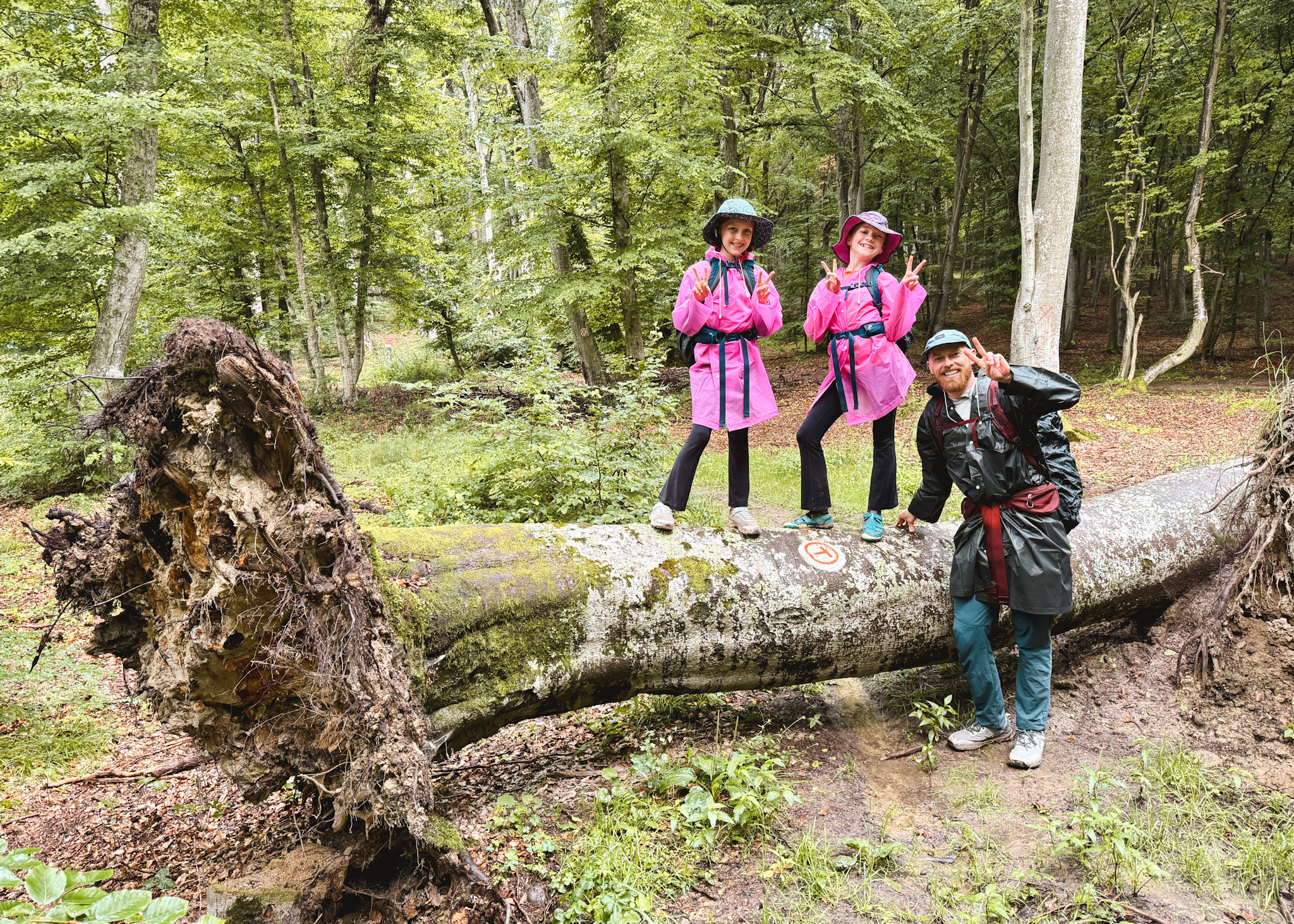
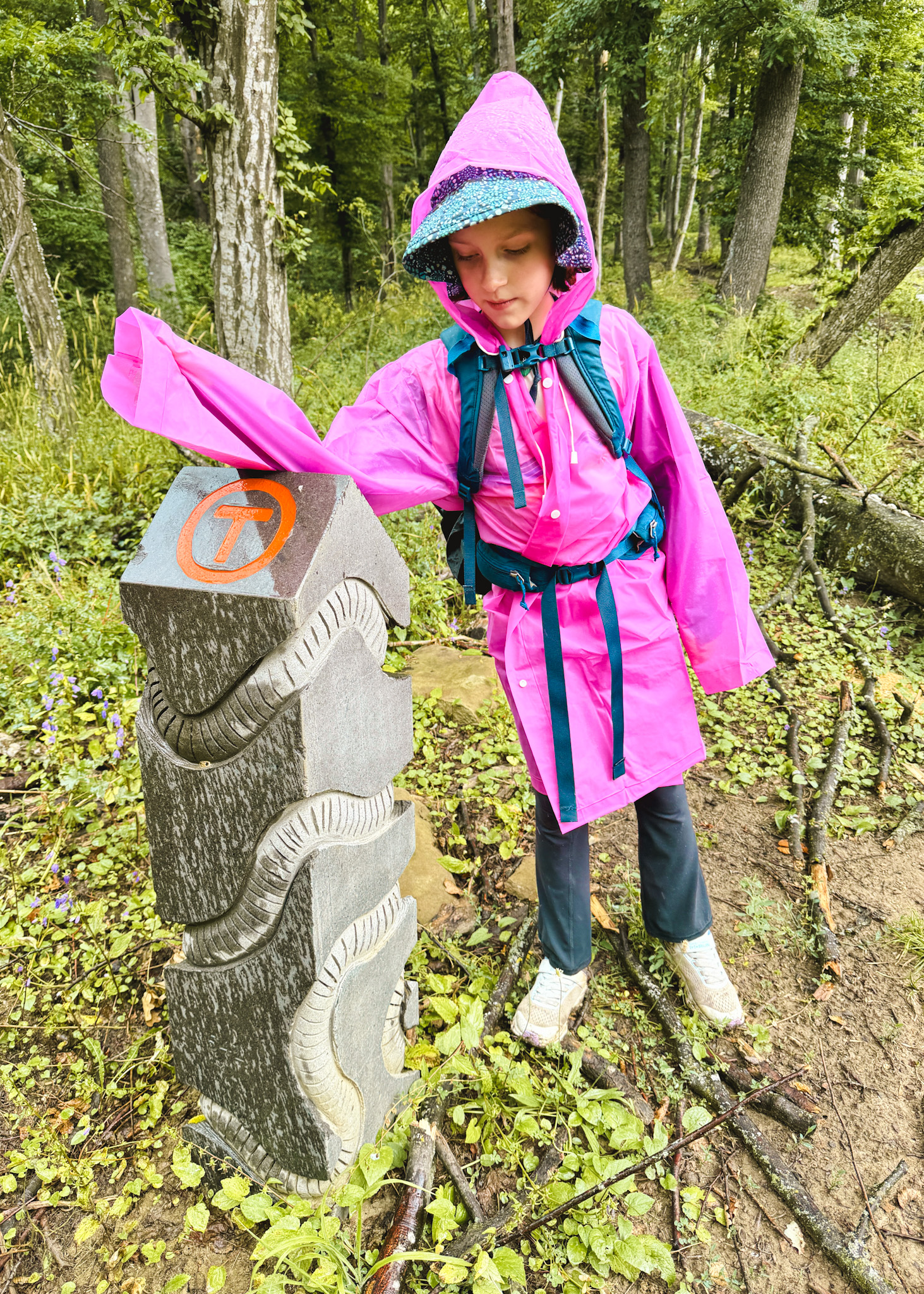
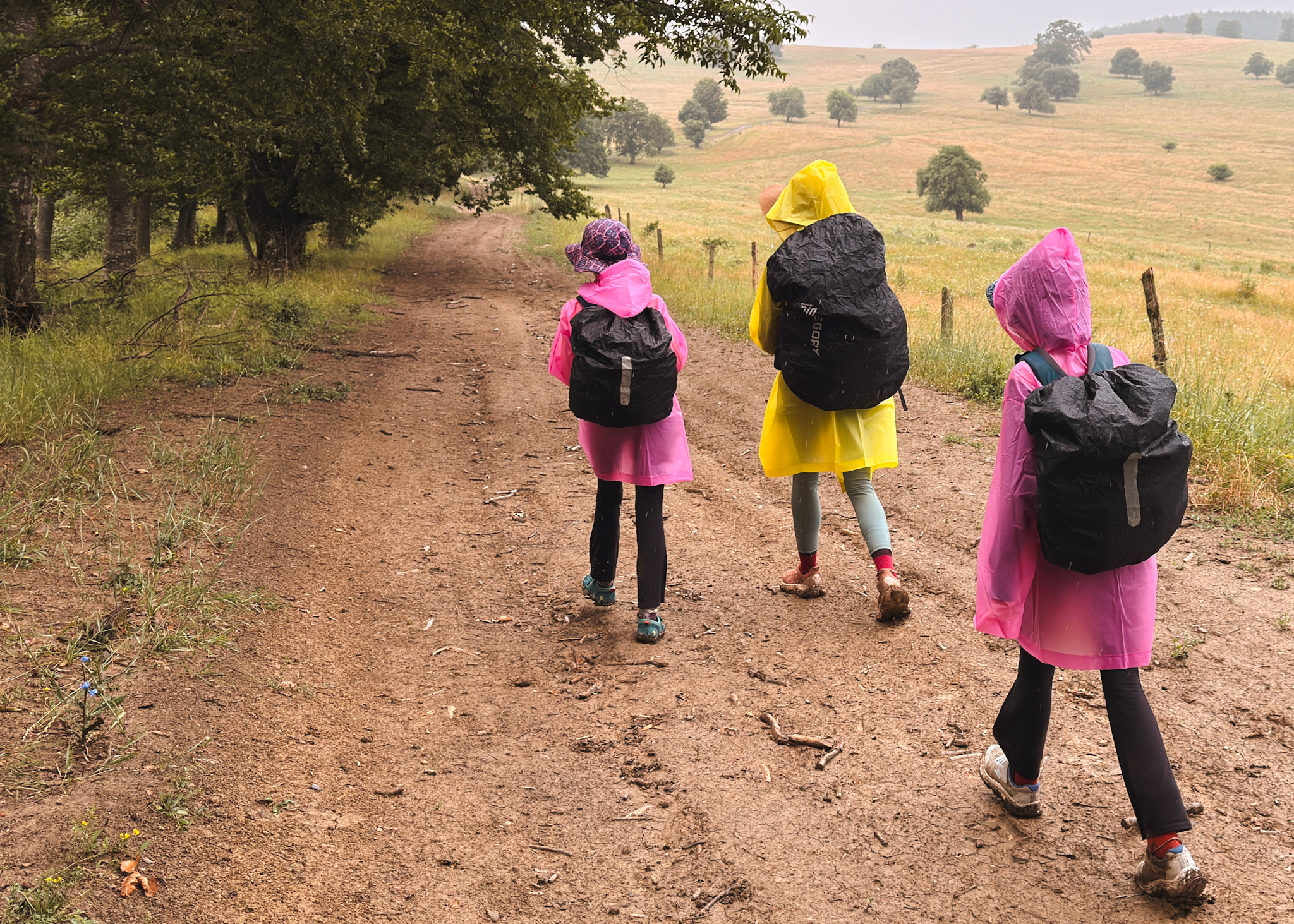
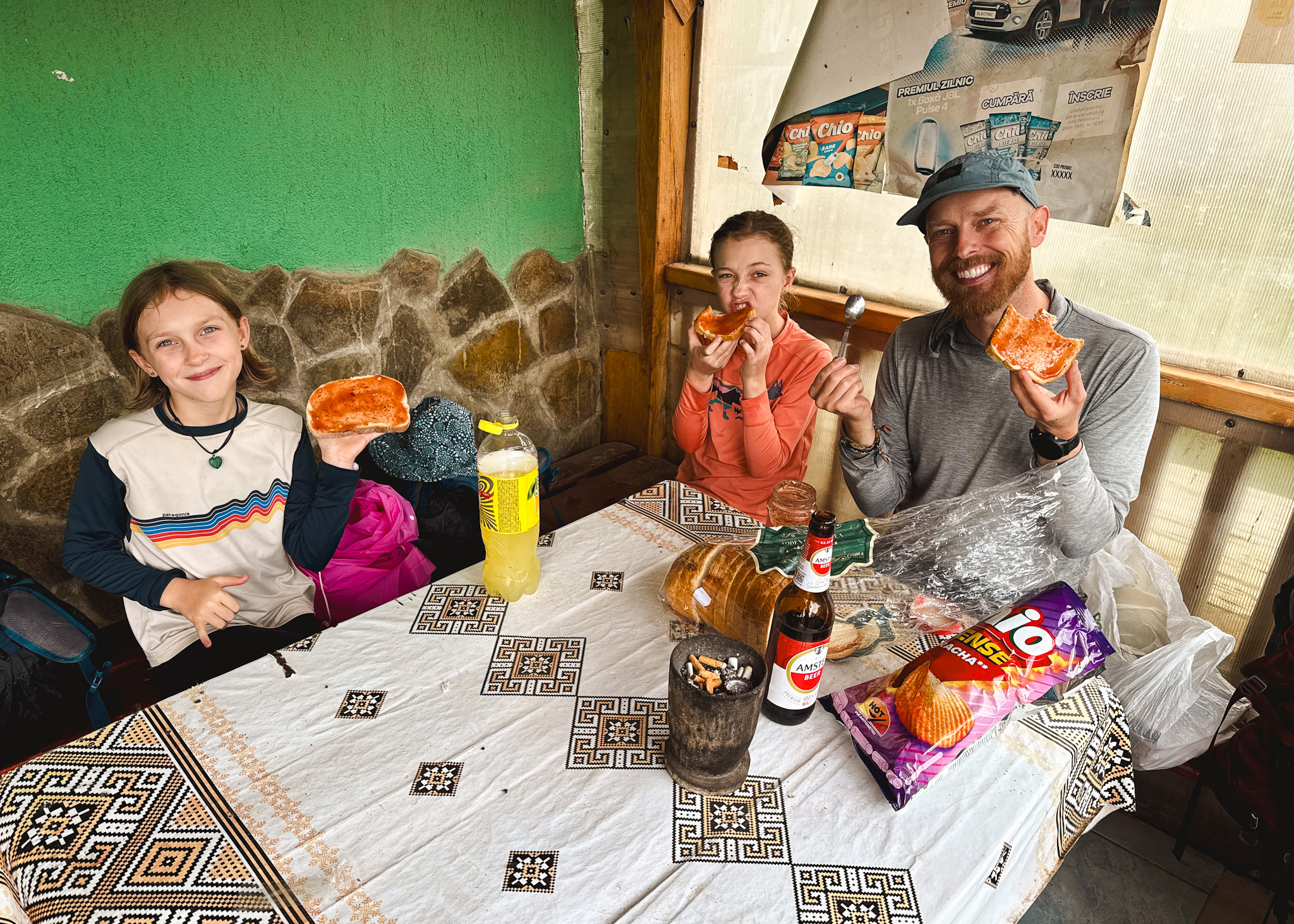
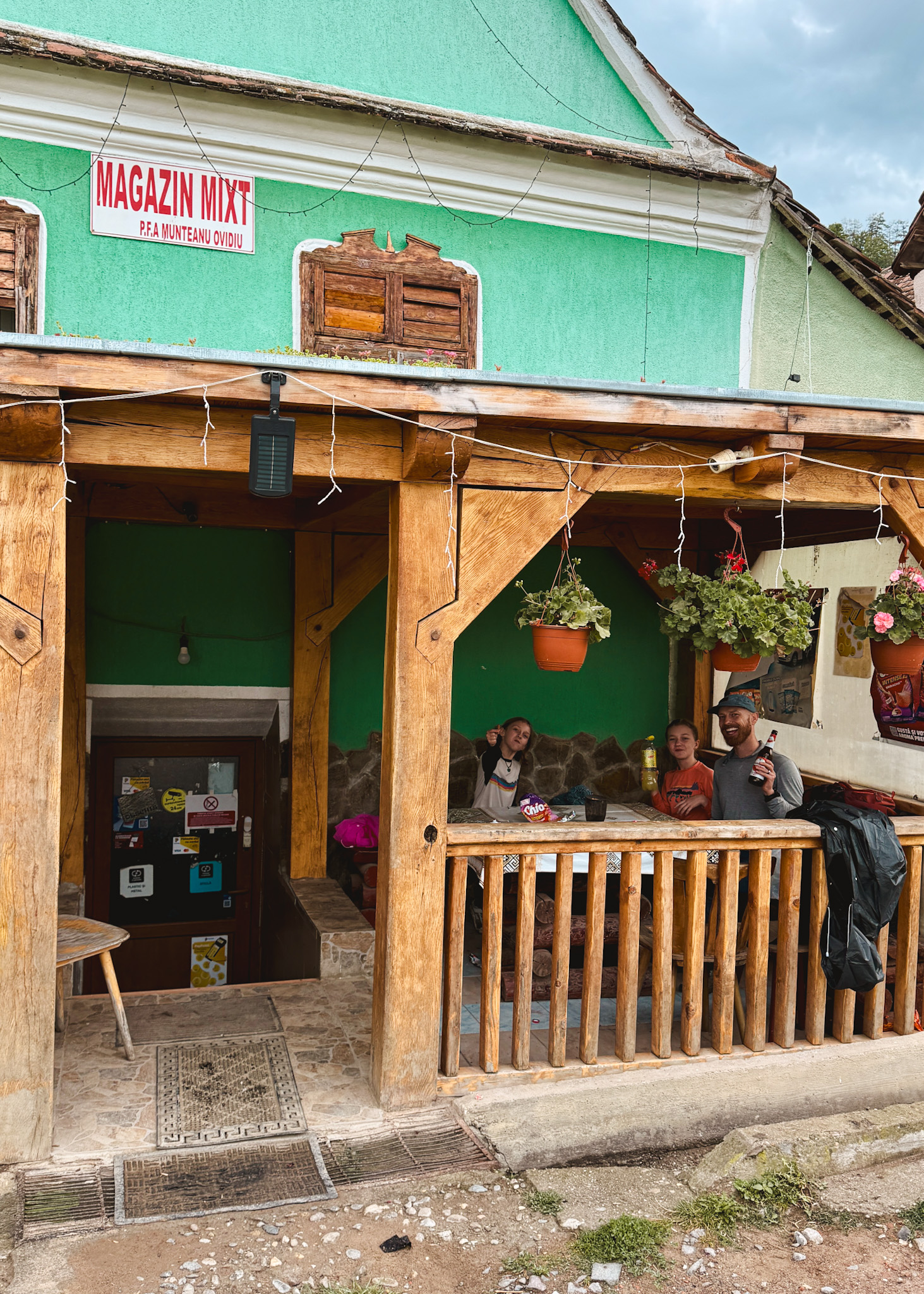
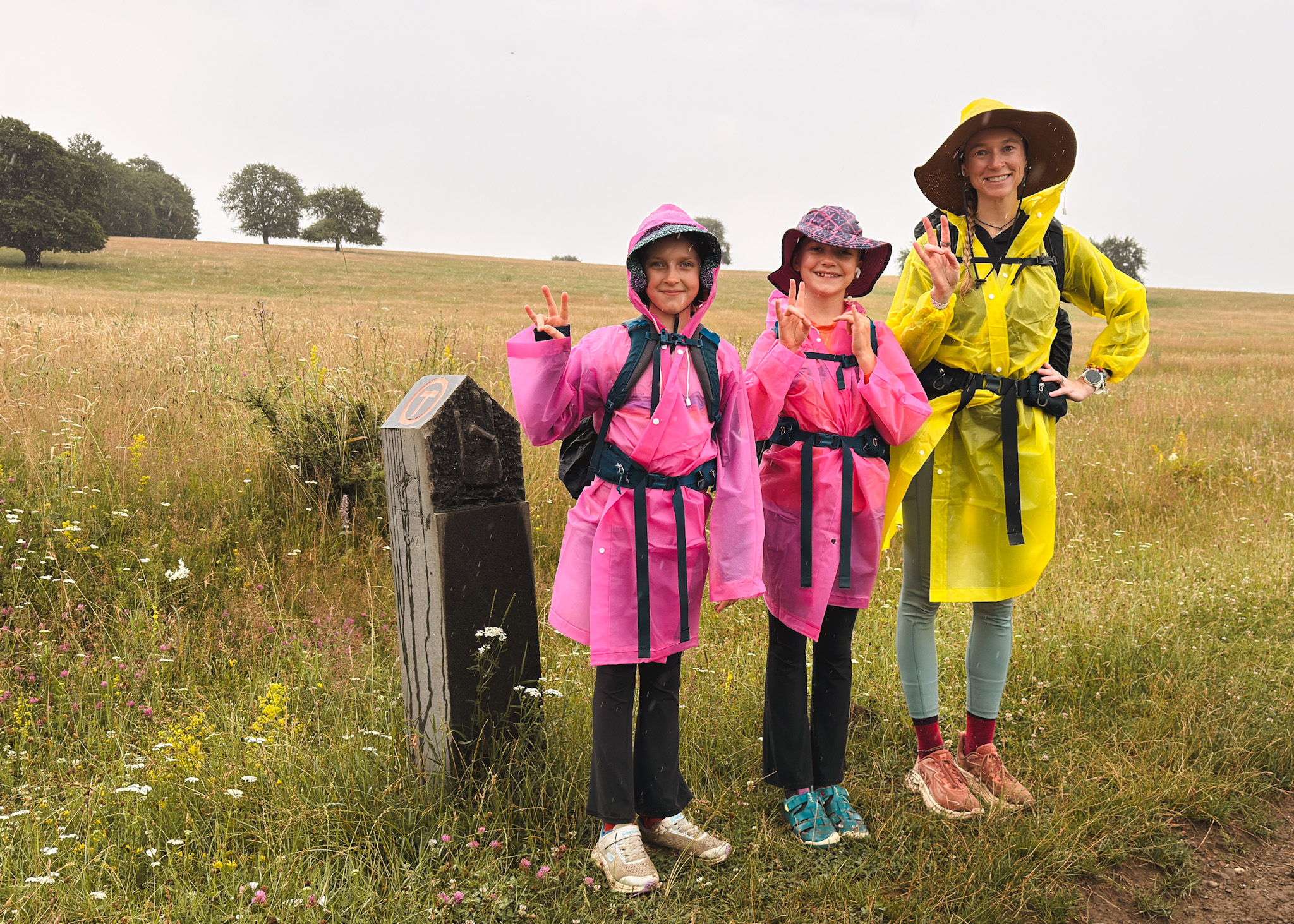
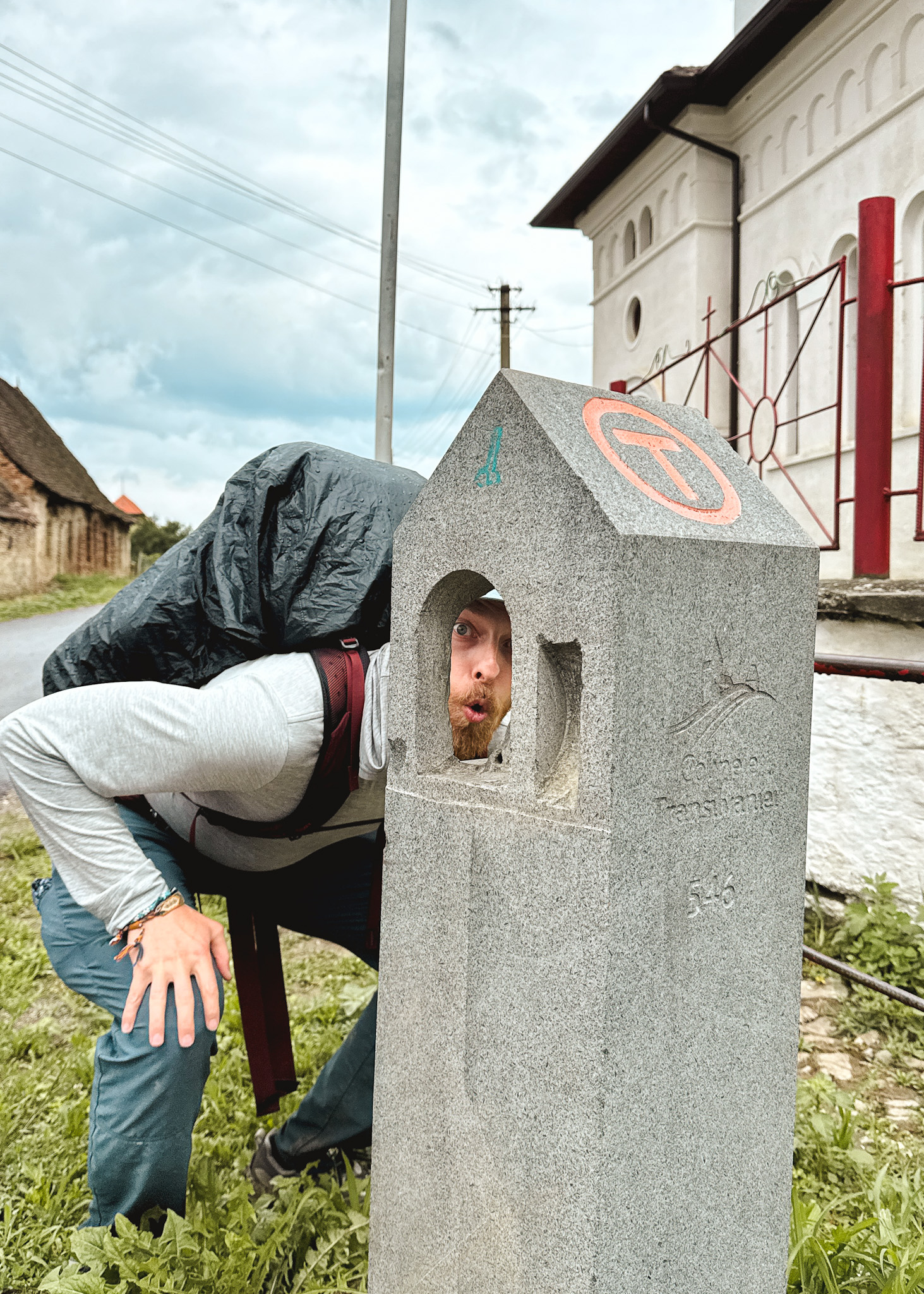
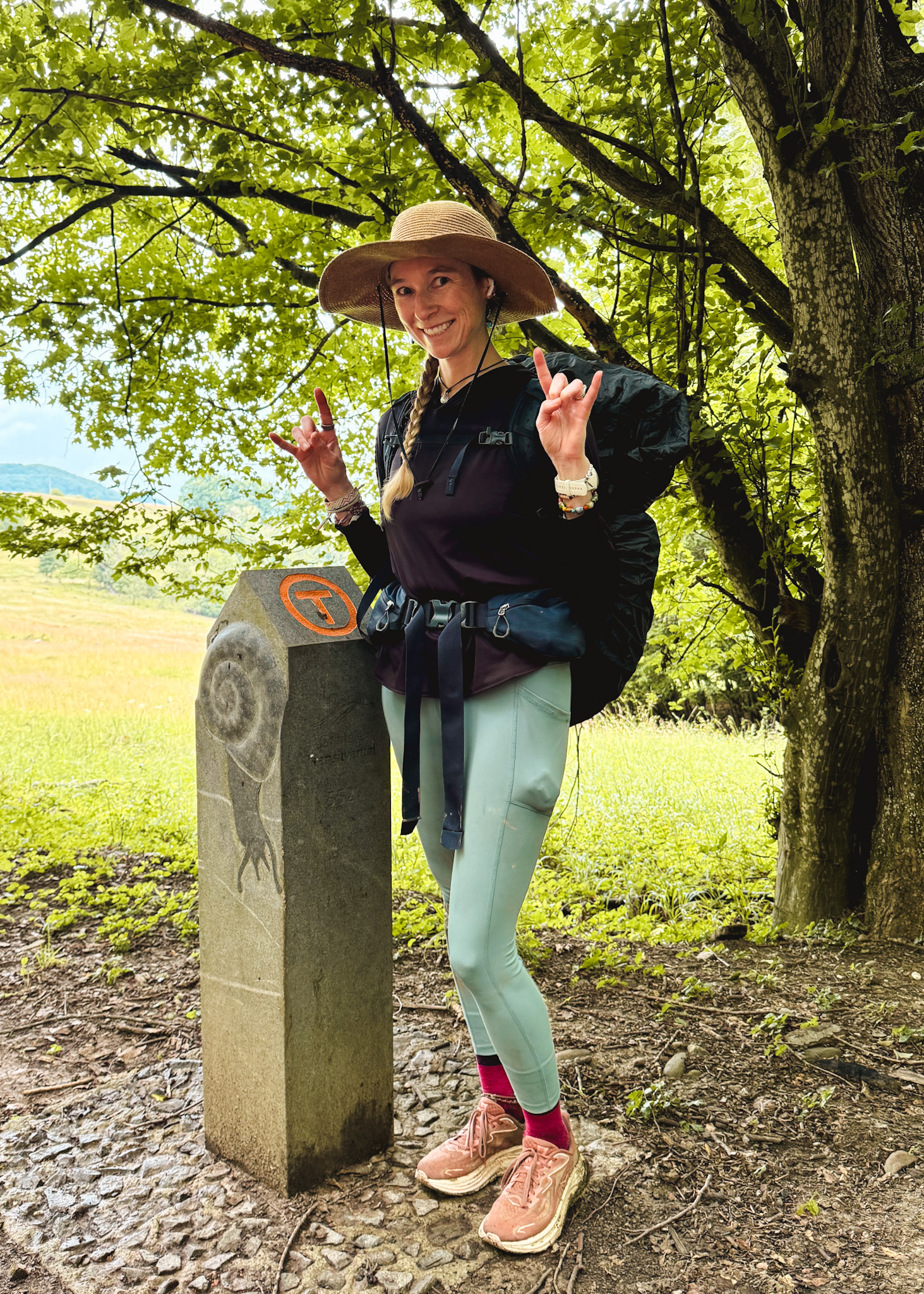

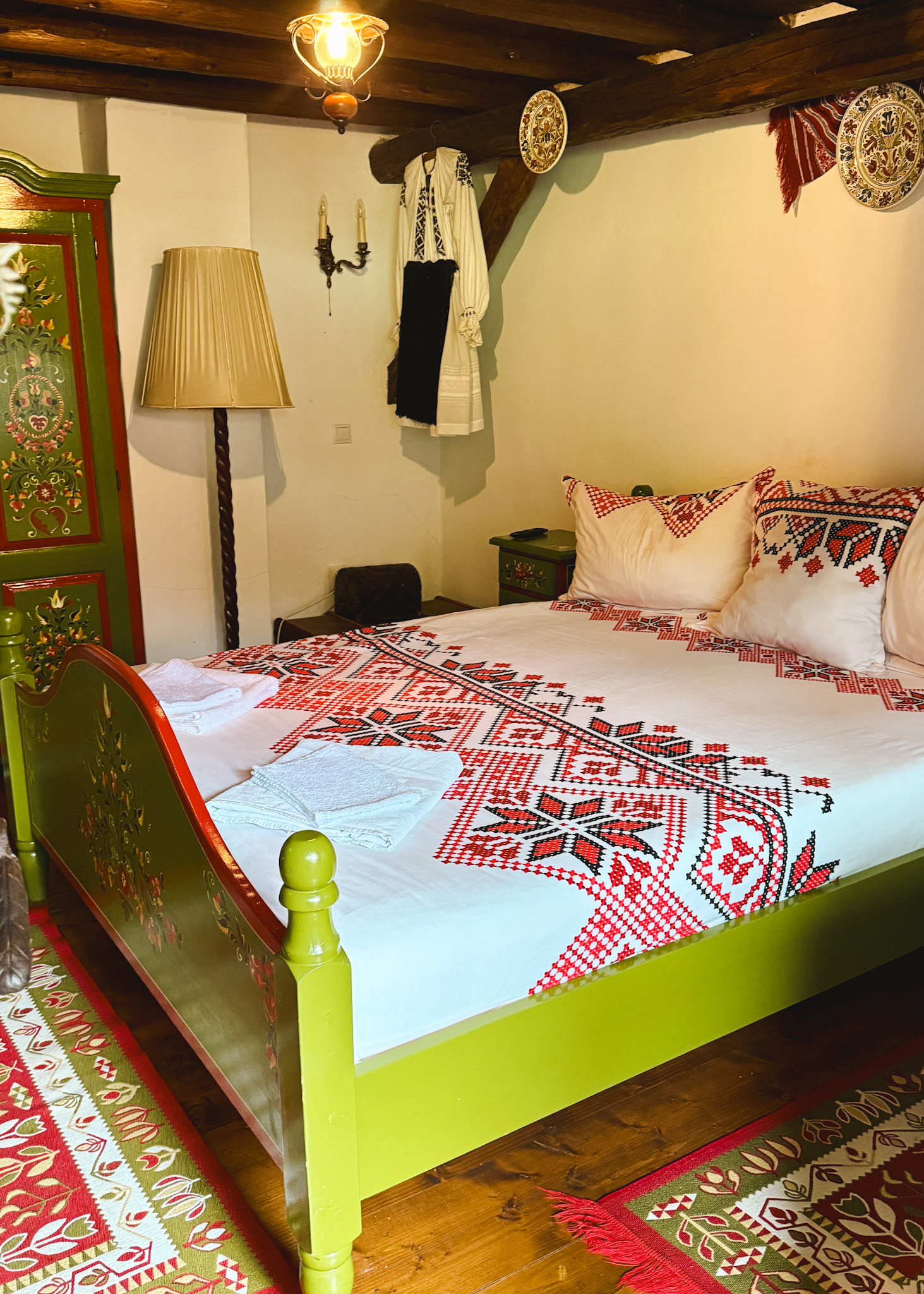
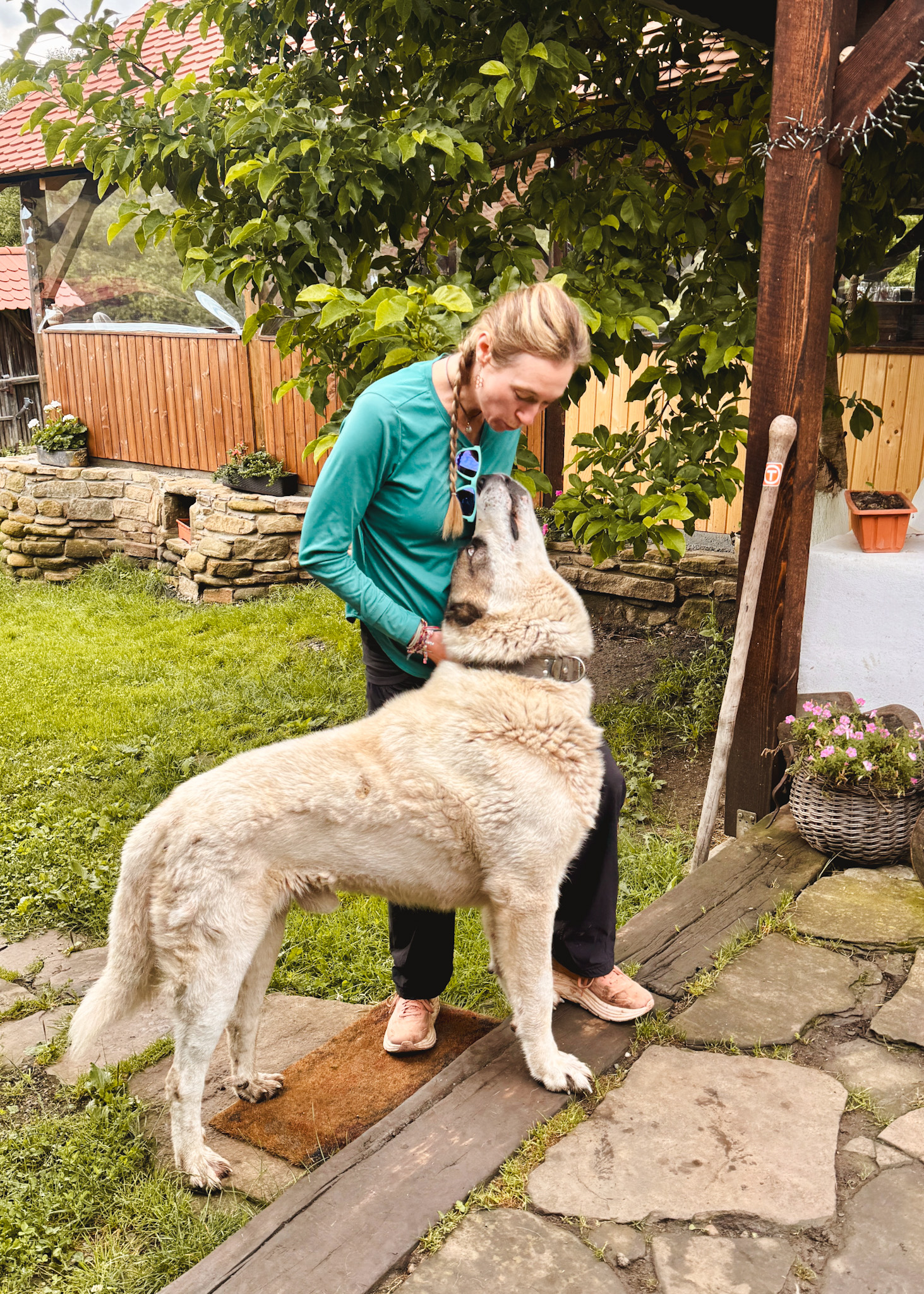
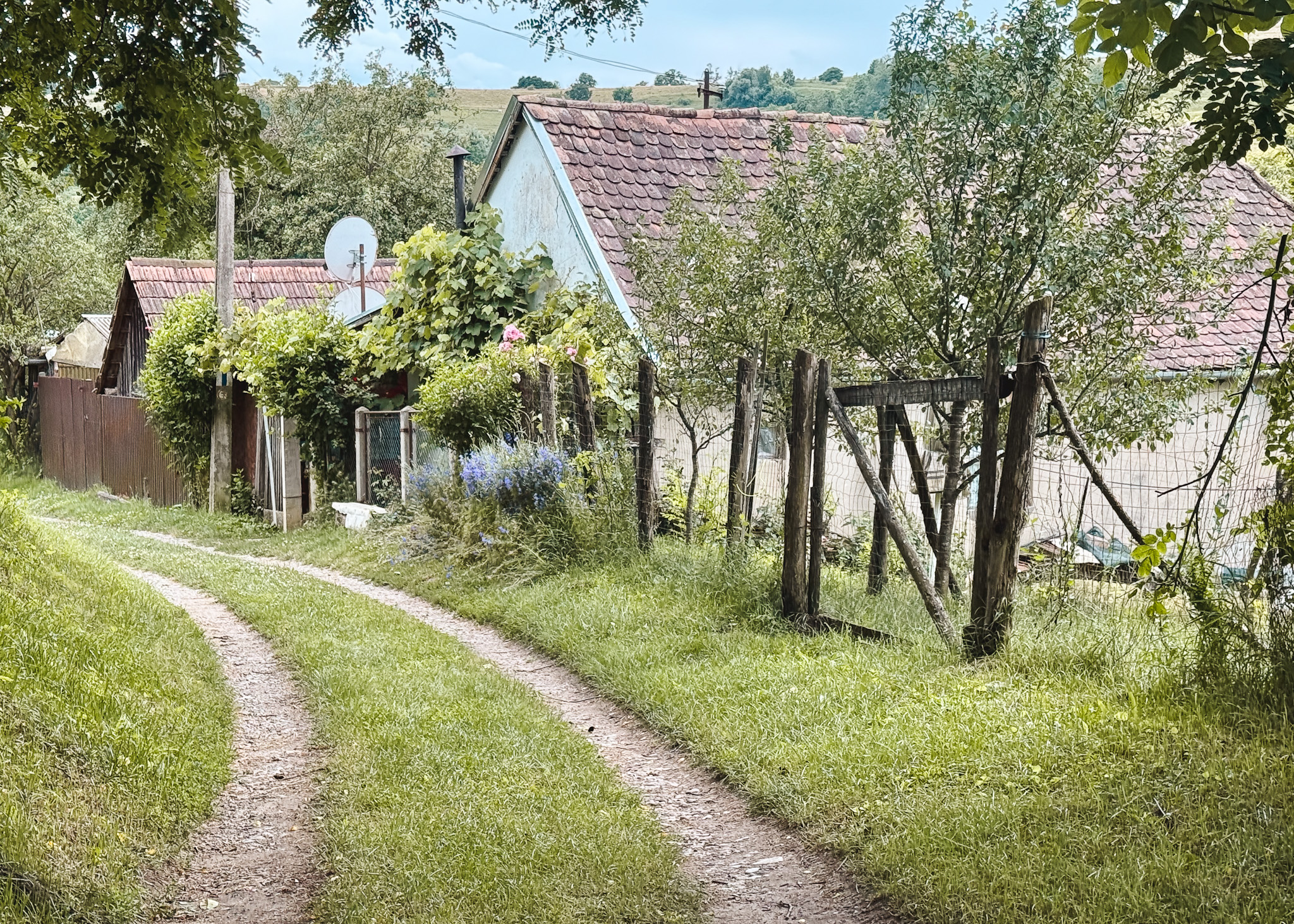
Six soggy hours after we started, we squelched into Șapartoc, a village so small you could blink and miss it—maybe fifteen habitable houses and twenty-five residents—so few that even our guesthouse hosts don’t live there anymore, commuting in from Sighișoara when guests come. A note on the gate told us to let ourselves in and, by the way, not to worry about the three dogs on the other side, who were totally, completely, 100% friendly. This reassurance would have landed better had two of the three dogs not weighed something like 150 pounds each and looked, in all seriousness, like small polar bears. We studied them through the gate. They studied us back with profound indifference. So we let ourselves in, at which point one of the polar bears rolled over and went to sleep, and the only dog who cared at all was a brindled shepherd named Daisy, whose entire agenda was convincing us to play fetch with her and her favorite pet rock.
Our host Andreea arrived with dinner supplies, and in keeping with what we now understood to be ironclad Romanian guesthouse law, cooked enough food for a family of eight when we’d asked for two portions to split between the four of us. Over that feast she told us the story that reframed the whole trail for us. She and her husband had bought this property some 13 years ago, well before the Via Transilvanica existed, dreaming of a countryside hospitality business where Romanians and foreigners could sample the rustic rural life. It was a very slow-going process for nearly a decade. Then the trail came through, entirely by chance, right past their door, and they seized the opportunity. Her husband now works for the non-profit organization that runs the VT itself in some fluid combination of guide, trail builder, fundraiser, and organizer. And their compound has grown to include a 24-bed bunkhouse and a modular sleeping pod donated by the trail’s founders. It was, we thought, a genuinely hopeful thing to witness: a footpath breathing income and life and purpose back into a village that had been quietly emptying out for a generation. This was the throughline arriving in person.
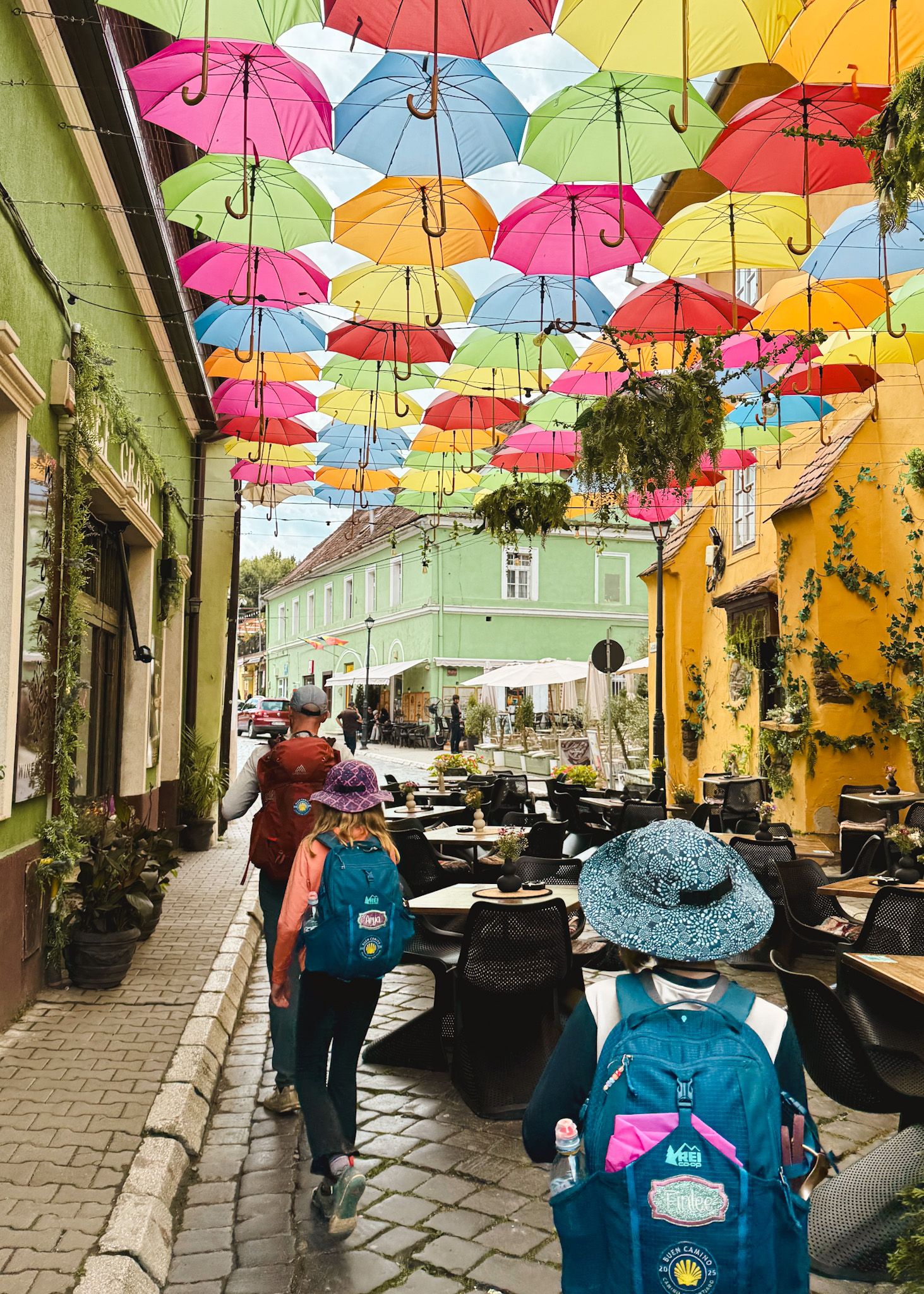
Day three was our longest, and it started with a small mystery. The first four kilometers ran along a gravel road inexplicably surfaced with crushed brick and ceramic, which sparked Max’s working theory that somewhere in the Soviet era a central planner bellowed “make a bazillion bricks.” The bricks were duly made, and then, with nothing left to build, someone crushed them all up and scattered them across a country road. Plausible. The stage climbed past abandoned churches and a sheepfold, ducked into a cool forest thick with post-rain mosquitoes, and delivered a stunning overlook of the medieval citadel of Sighișoara, a picturesque town and popular overnight stop for most along the VT. But we’d instead used it as a pit-stop: recharging our batteries with a pizza (finally!) and beer and froyo, before continuing on the trail for the second half of the day’s hike. The trail climbed out of the small city, along a beautiful ridge line, then deposited us, exhausted, at a guesthouse in Stejărenii run by another lovely woman, also named Andreea. This was the longest day, so we arrived right at dinnertime, which meant the welcome was essentially “sit down, don’t worry about showering, just eat.” We obliged.

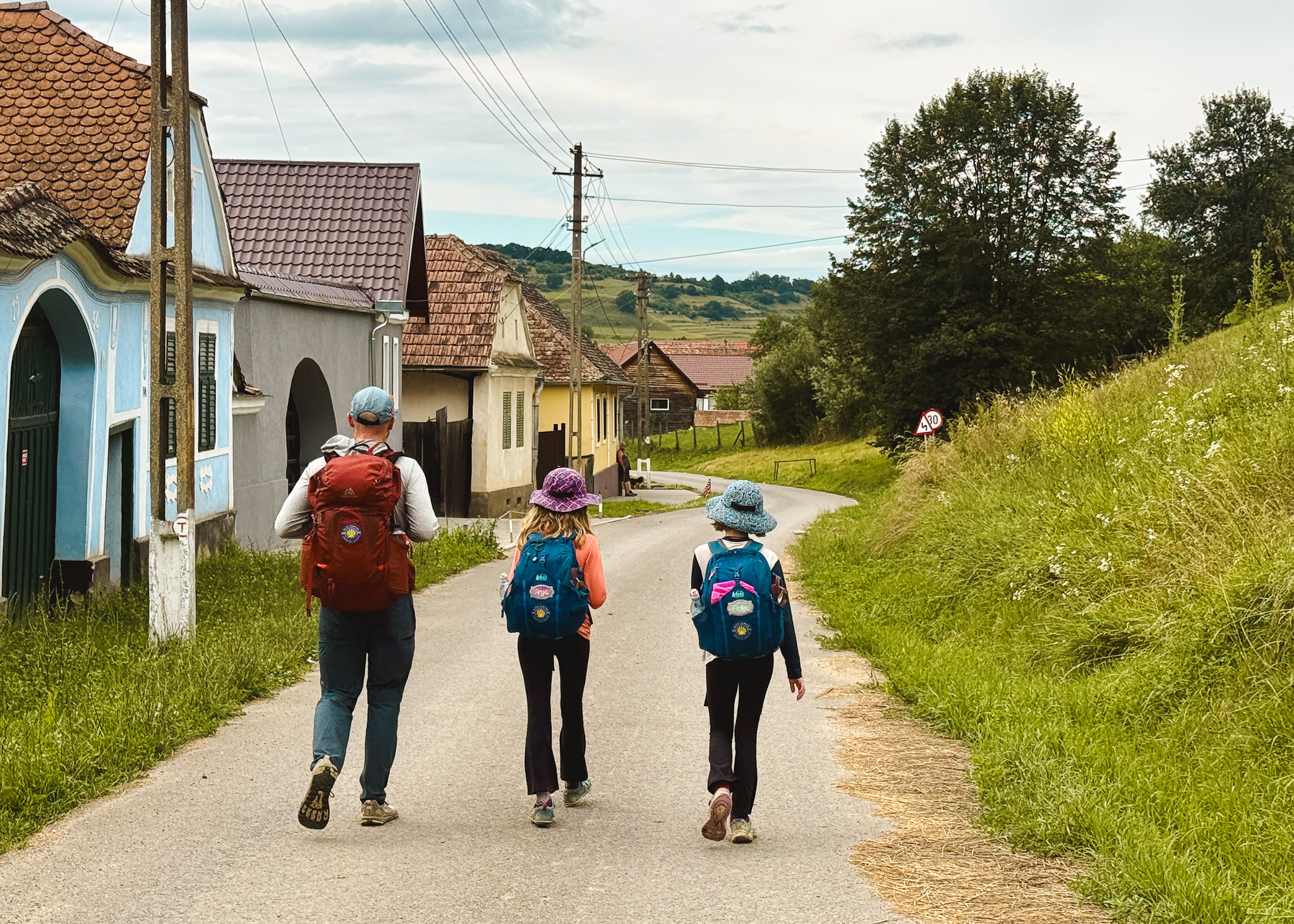
This second Andreea does something remarkable. Alongside running her guesthouse, she works as a community outreach worker with the local Roma, one of Europe’s most marginalized peoples, and specifically with Roma children. She works with an NGO trying to break down the barriers that keep many of them from education, healthcare, and even basic hygiene resources. We had only first brushed up against Roma history a few days earlier, with a guide at the Black Church in Brașov, and knew embarrassingly little going in. Hearing about it now from someone doing the hands-on work of it, in the village where she does it, gave the whole subject a dimension no history lecture could. We talked with her late into the evening, grateful, and learned more than any LLM could teach us.
If day three belonged to Andreea, day four belonged entirely to strangers, and it was one of the most memorable days of the walk precisely because almost none of it was about the walking. It carried us out of Mureș County into Sibiu County, and the encounters started early, when we crossed paths with a Romanian couple hiking a three-day section of the VT with their one-year-old baby along for the ride. A passing hello turned into a fifteen-minute trailside conversation. They’d honeymooned in the United States, of all places, road-tripping a camper down the East Coast from New York to Key West. We traded numbers and told them that if they ever came back for the West Coast version, they had a place to stay in Reno. The offer stands.
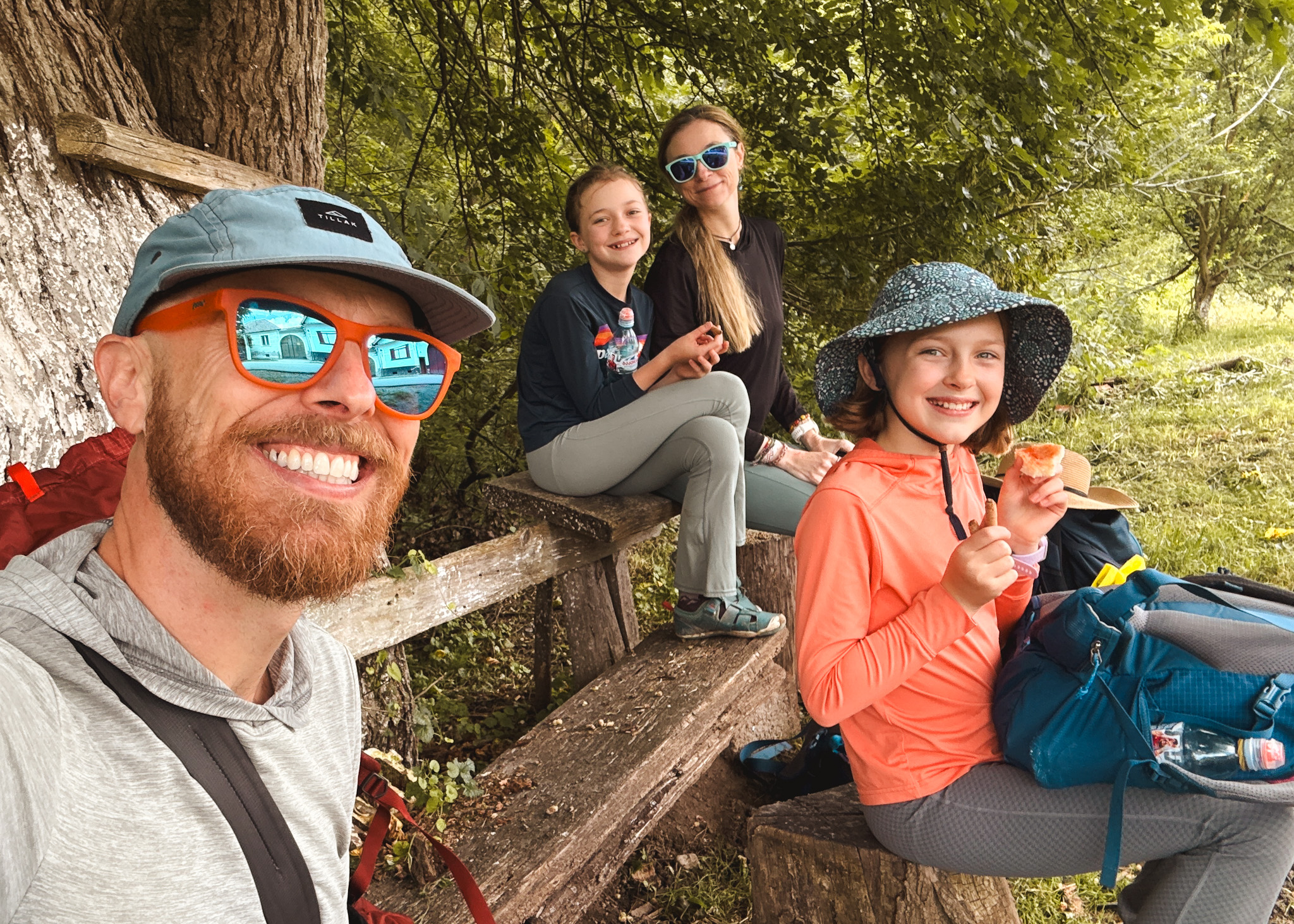
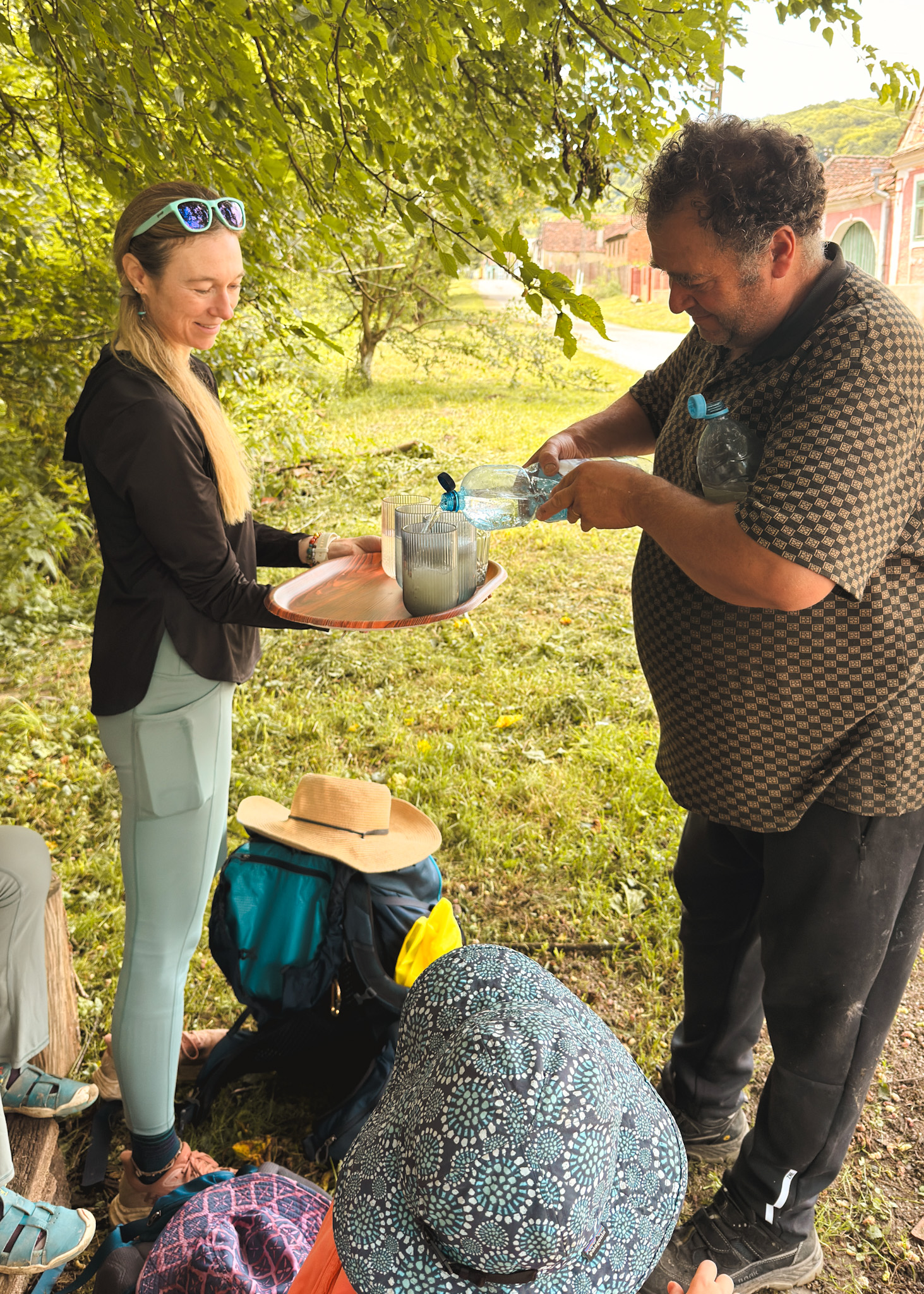
But the moment that made us fall a little in love with this country happened in the small, colorful village of Florești. We had flopped onto an old bench under an enormous weeping willow for a short break sans backpacks, and to make a snack of crackers and jam and salty meat sticks. A couple of locals passed and we exchanged waves. Then, a minute or two later, one of them came back, ducked into the house directly in front of our bench, waved again, and asked us something we pieced together as “are you walking the Via Transilvanica”, and “where are you from?” Yes, we said. America. She looked pleased on both counts and vanished inside. And a few minutes after that, her husband emerged carrying a tray: glasses, a bottle of sparkling water, and a bottle of homemade elderflower syrup. Sirop de soc is a beloved Romanian summer staple, the fragrant white blossoms steeped with sugar and lemon into a delicate floral cordial you cut with water, and nearly every rural household makes its own. These people shared no common language with us. They simply saw four tired hikers on a bench and decided to bring them the taste of a Romanian summer. Completely unsolicited, expecting nothing. It was the single kindest small gesture the trail gave us, and it was the “road that unites” made real in a bottle of flower syrup.
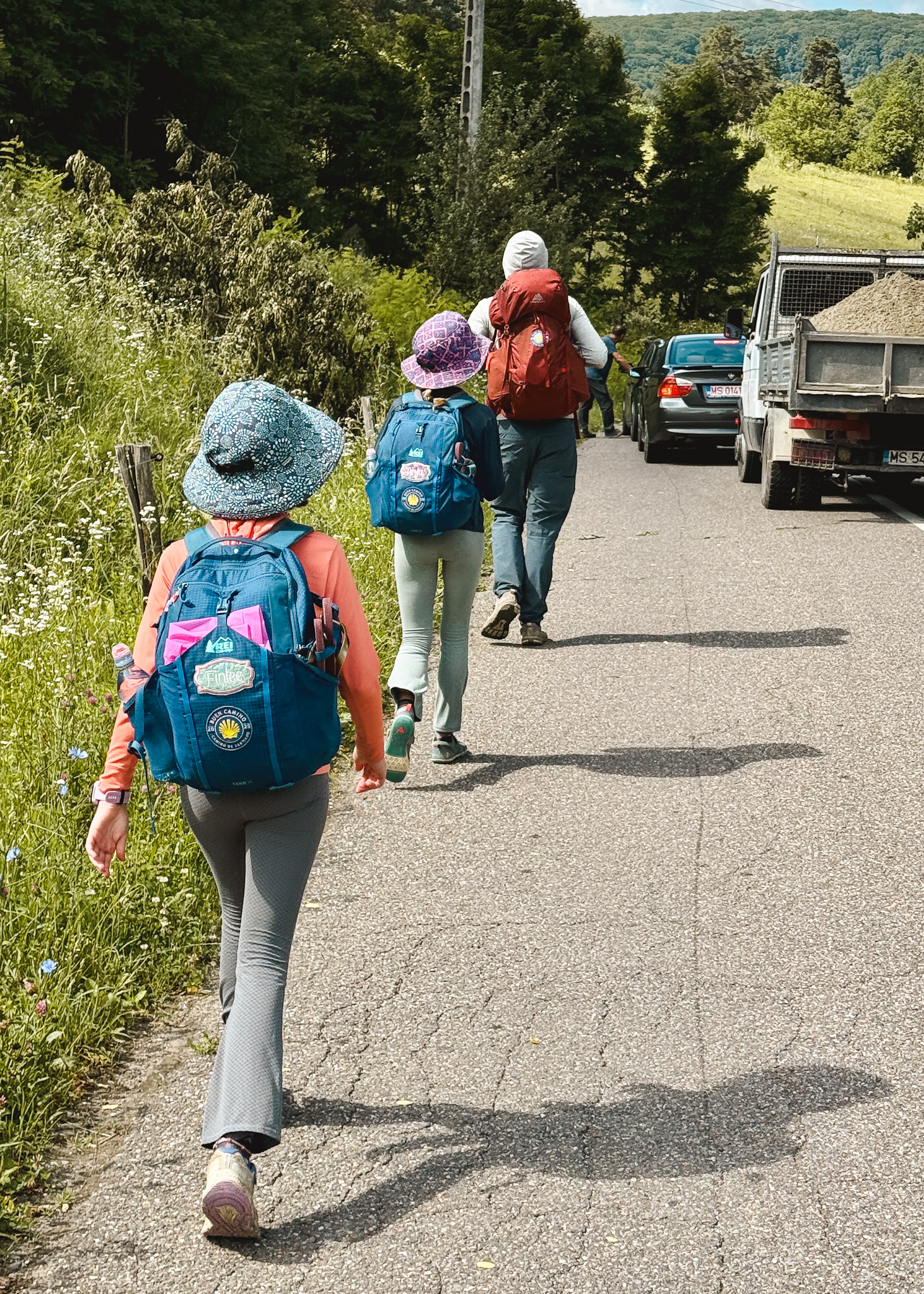
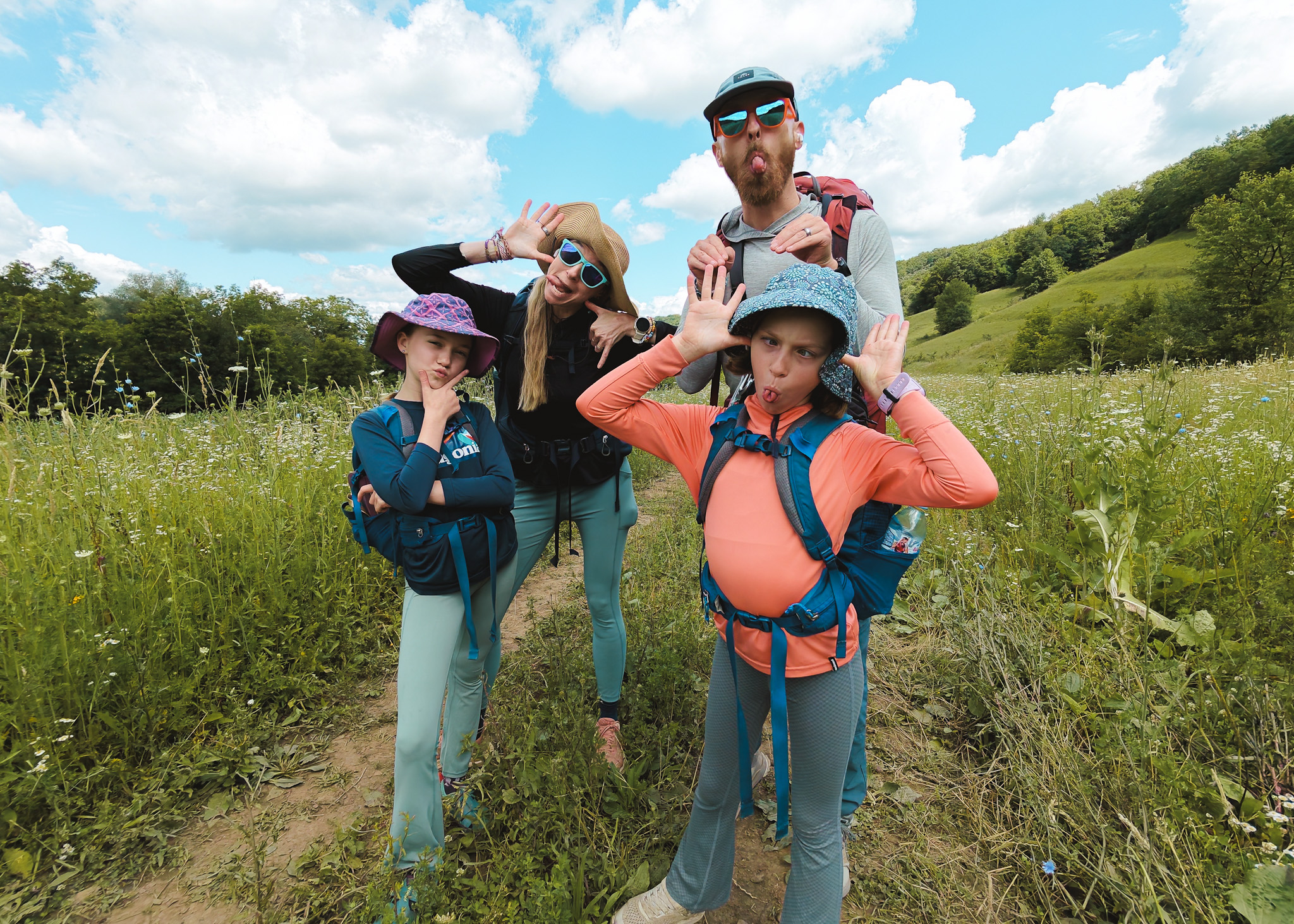
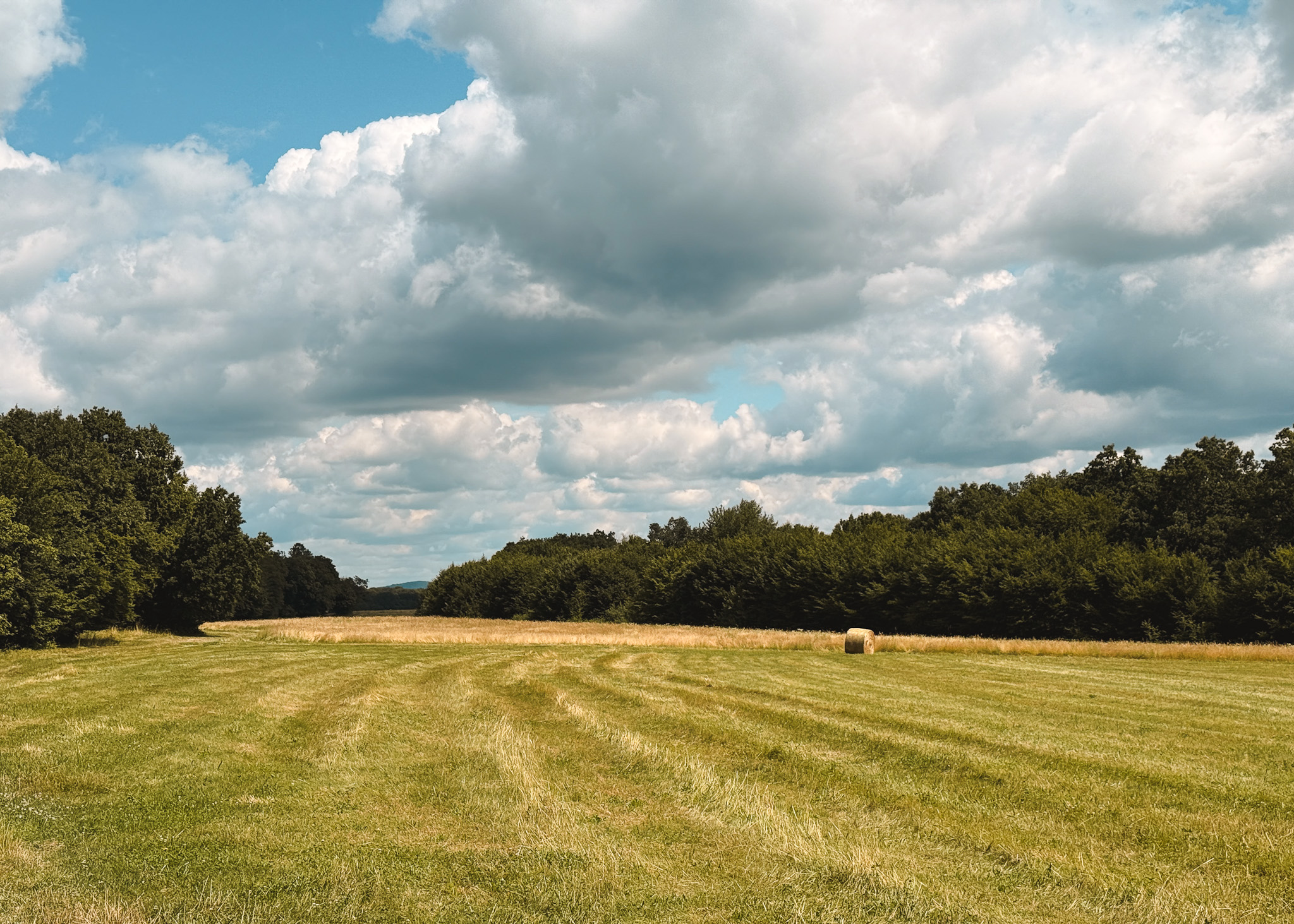
Florești led on to Mălâncrav, where the day handed us one last gift over dinner: two Scottish teachers doing three days of the VT—a music teacher and, wonderfully, a woodworker who teaches shop class—both of them a delight, comparing notes on big journeys squeezed in around raising five kids. It was, top to bottom, the kind of day where the chance meetings, not the mileage, are what make the whole thing matter.
Day five brought our audiobook hiking thread to back to the front. Somewhere on the pretty, unhurried climb out of Mălâncrav we finished the audiobook that had been pulling us up hills all week, Cece Rios and the Desert of Souls, a magical-realist adventure steeped in Mexican folklore that all four of us had fallen hard for. There is something perfect about a great story resolving mid-stride, just as the trail crests a hill. We immediately started another, The Baker Street Four, following the ragtag London street kids who did the legwork Sherlock Holmes couldn’t, gaslight and fog and scrappy child detectives, which turned out to be exactly the right fuel to carry us toward Biertan.
And Biertan, when it finally appeared below us, stopped us in our tracks. The sun had dropped low, the clouds were throwing a soft gold light across the whole valley, and dead center stood the Biertan fortified church, glowing up on the small hill in the center of terracotta-tiled roofs. It is one of the grandest of all the Saxon fortified churches, wrapped in three concentric rings of defensive walls linked by towers, and a UNESCO site built between roughly 1490 and 1524 that served for nearly three centuries as the seat of the Saxon Lutheran bishops of Transylvania. It hides two wonderful quirks: a sacristy door with a fiendishly complex 19-bolt lock that turned heads at the 1900 World’s Fair in Paris, and a tiny “marriage prison” where couples seeking a divorce were once locked in together with a single bed, one plate, and one spoon until they either reconciled or gave up on the idea, which, the story goes, they almost always did. Seeing that church glowing gold at the heart of the valley was one of those views that makes every muddy kilometer worth it. Dinner at a little hidden outdoor spot tucked inside the walls behind the church was, for once, exactly the right amount of food—we left the table for the first time in a while without feeling like we needed to be rolled home. That night we finished The Giver, whose famously ambiguous ending briefly disappointed the girls until we reframed it as an invitation to imagine how it all plays out, at which point they threw themselves into it completely. It’s exactly the kind of book that sparks the conversations we love having with Arya and Finlee.
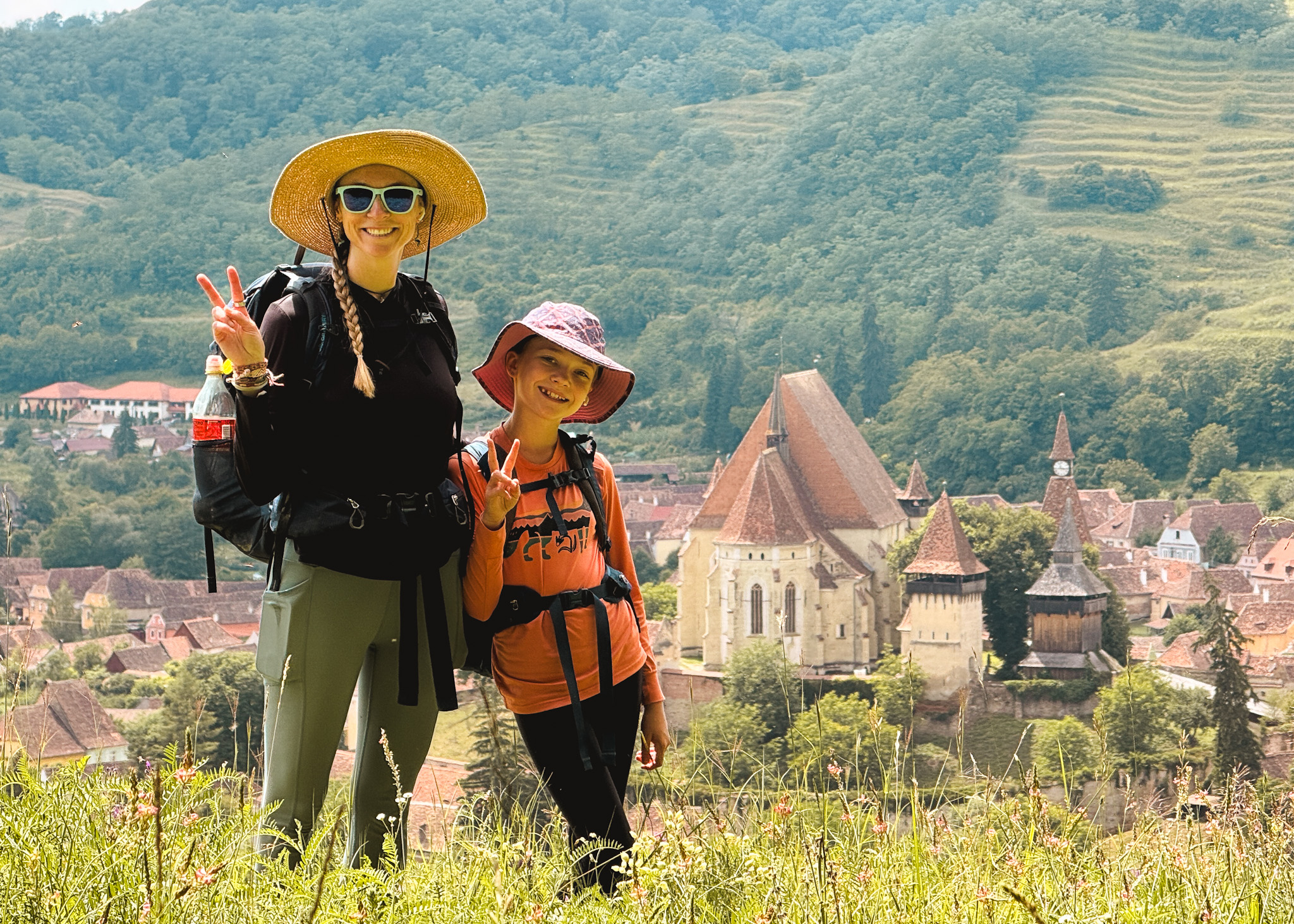
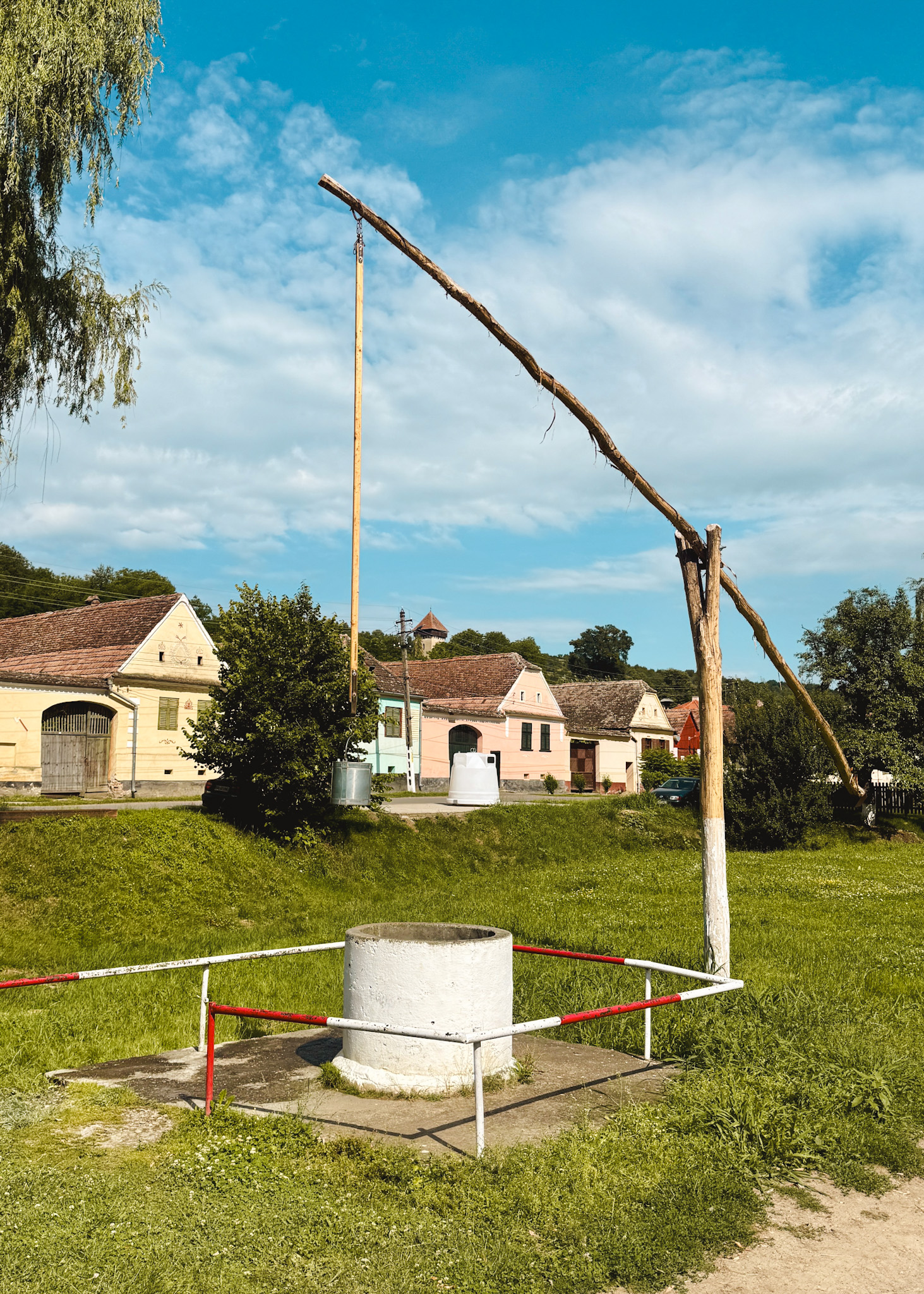
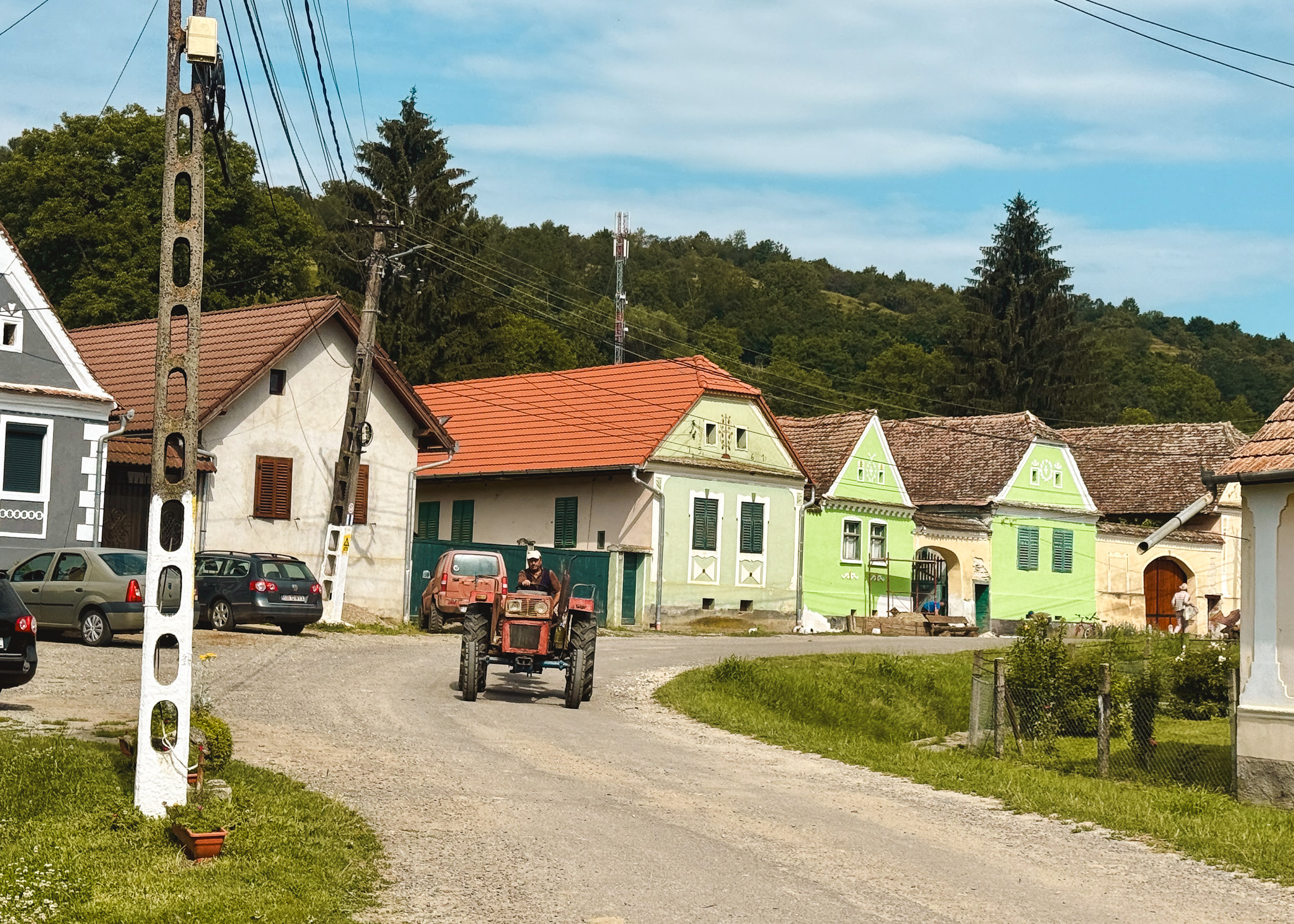
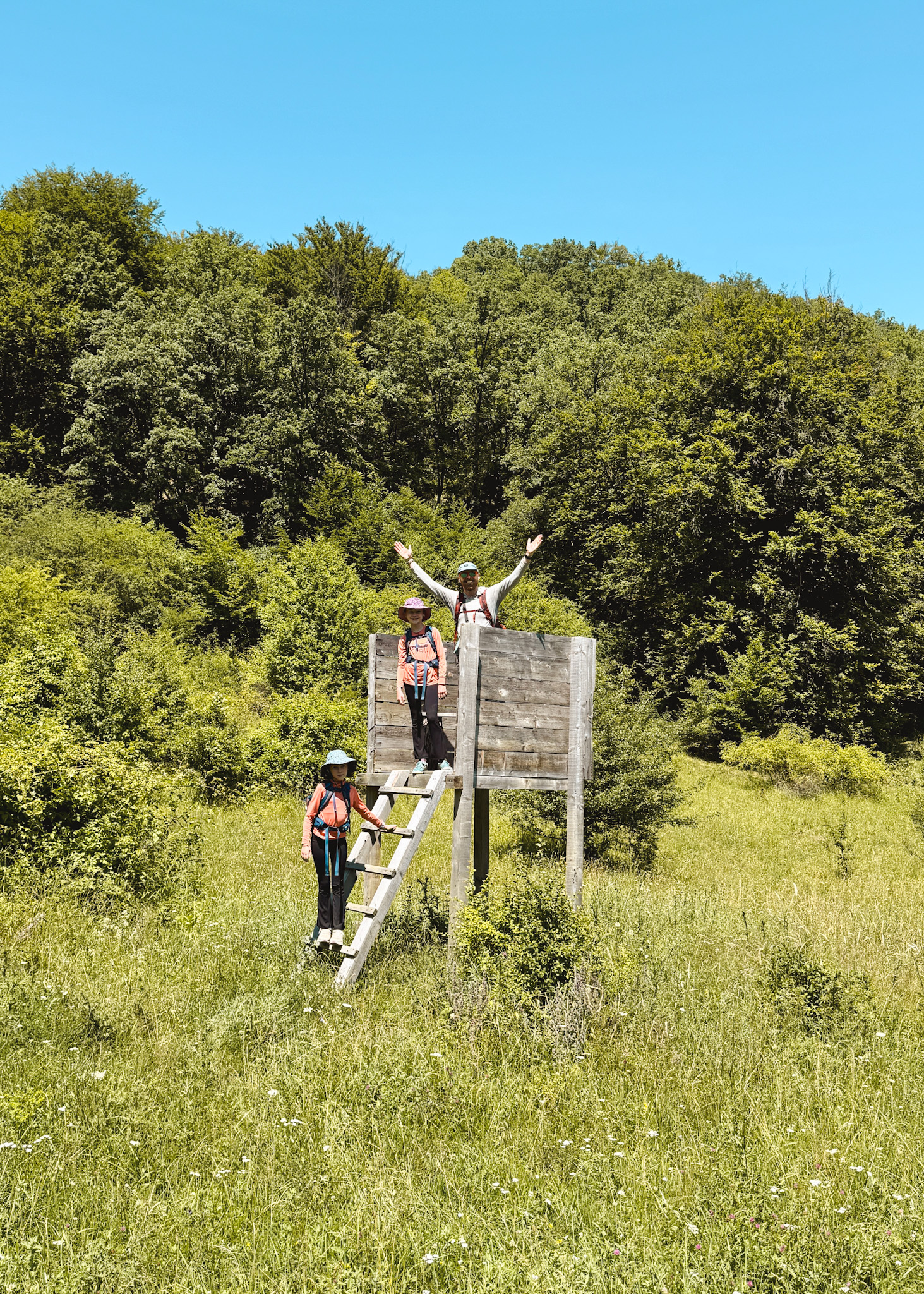
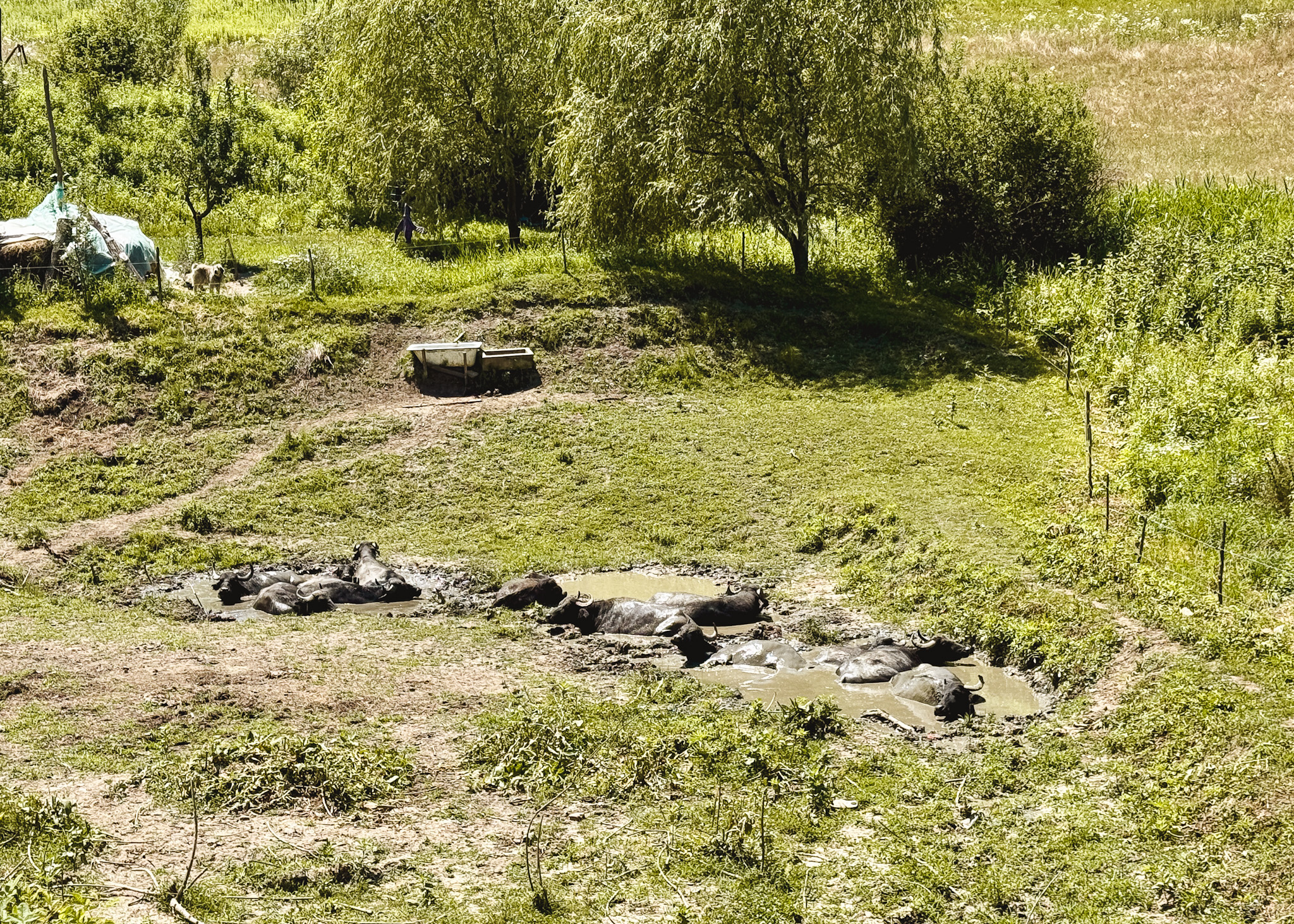
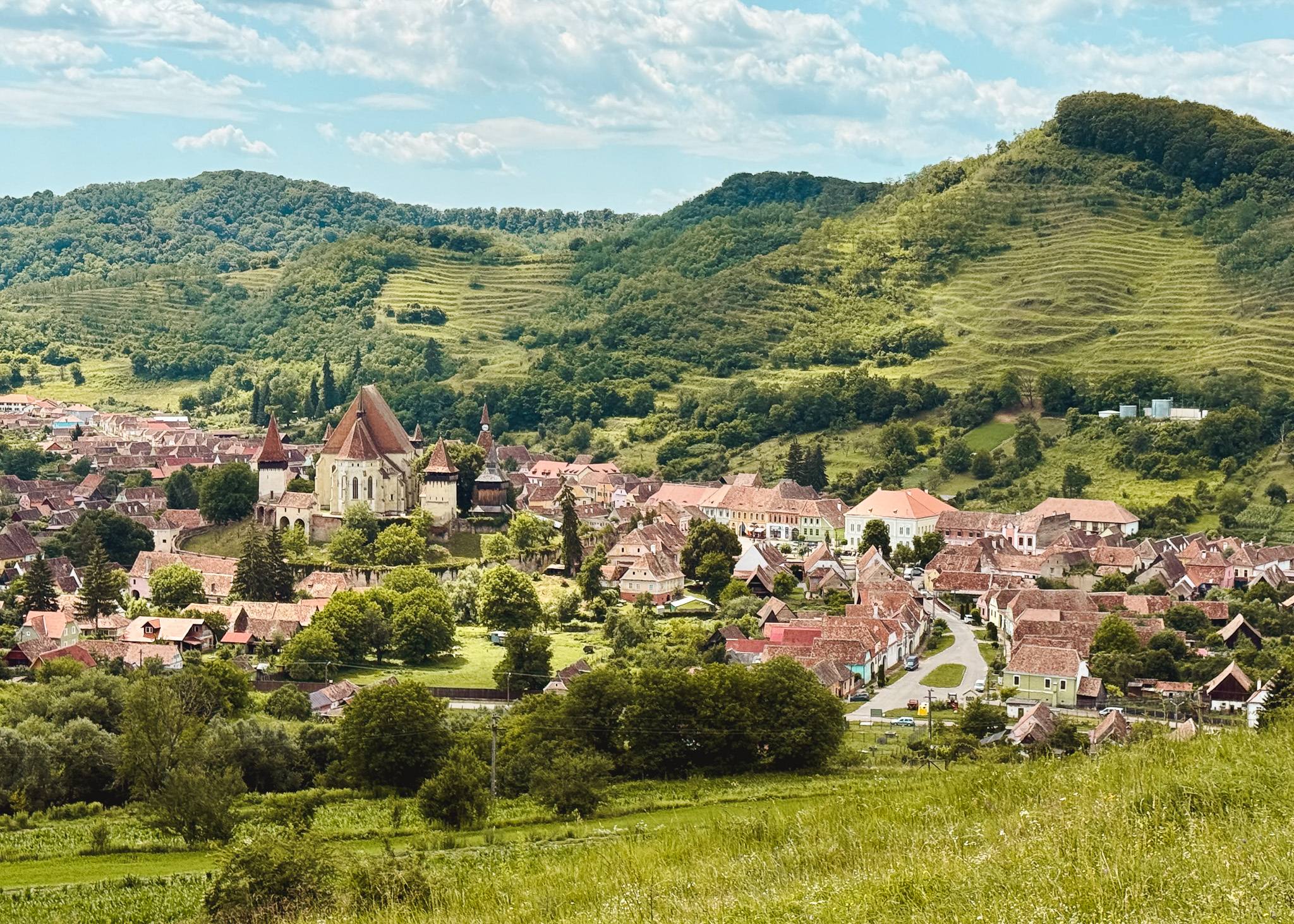
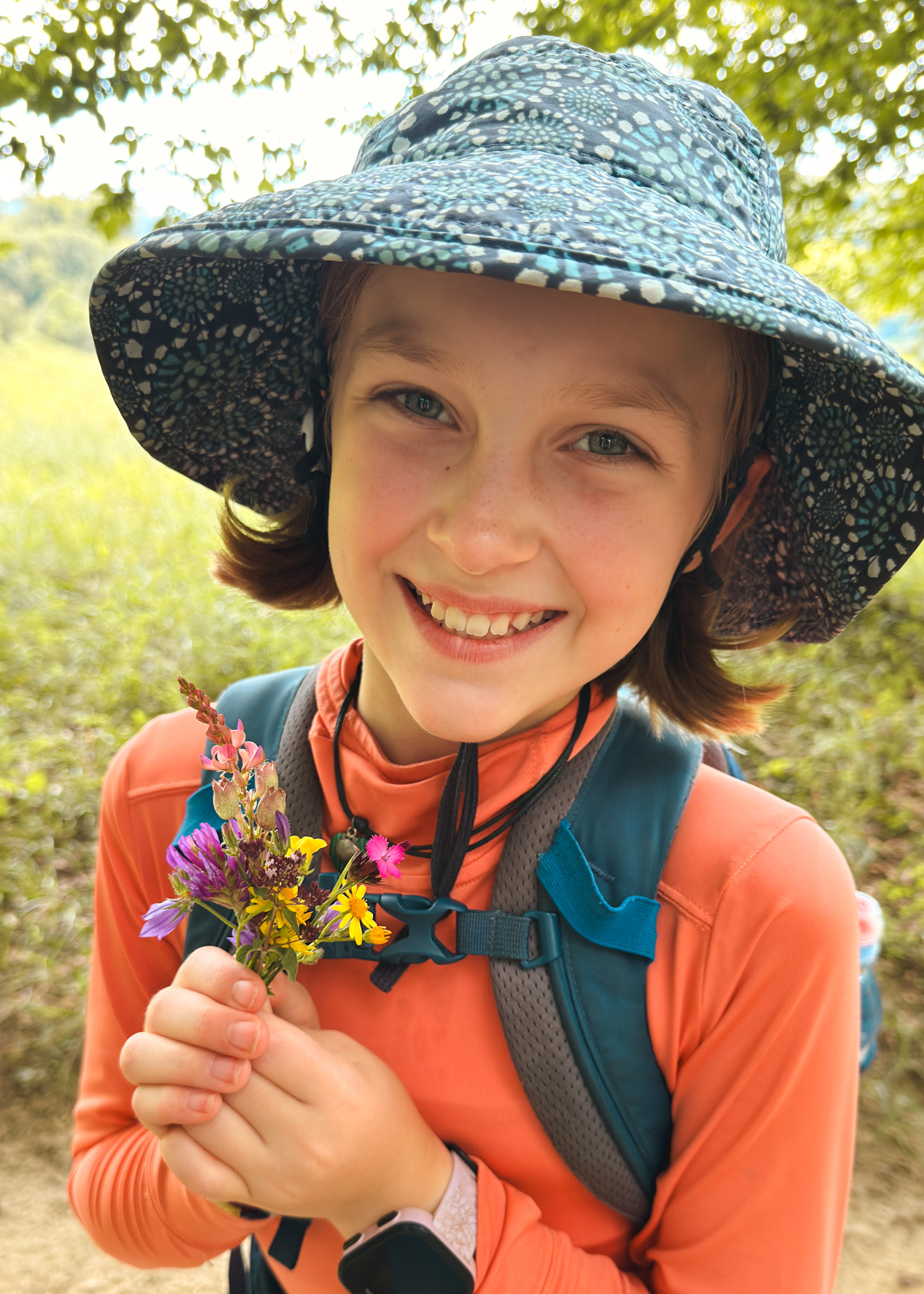
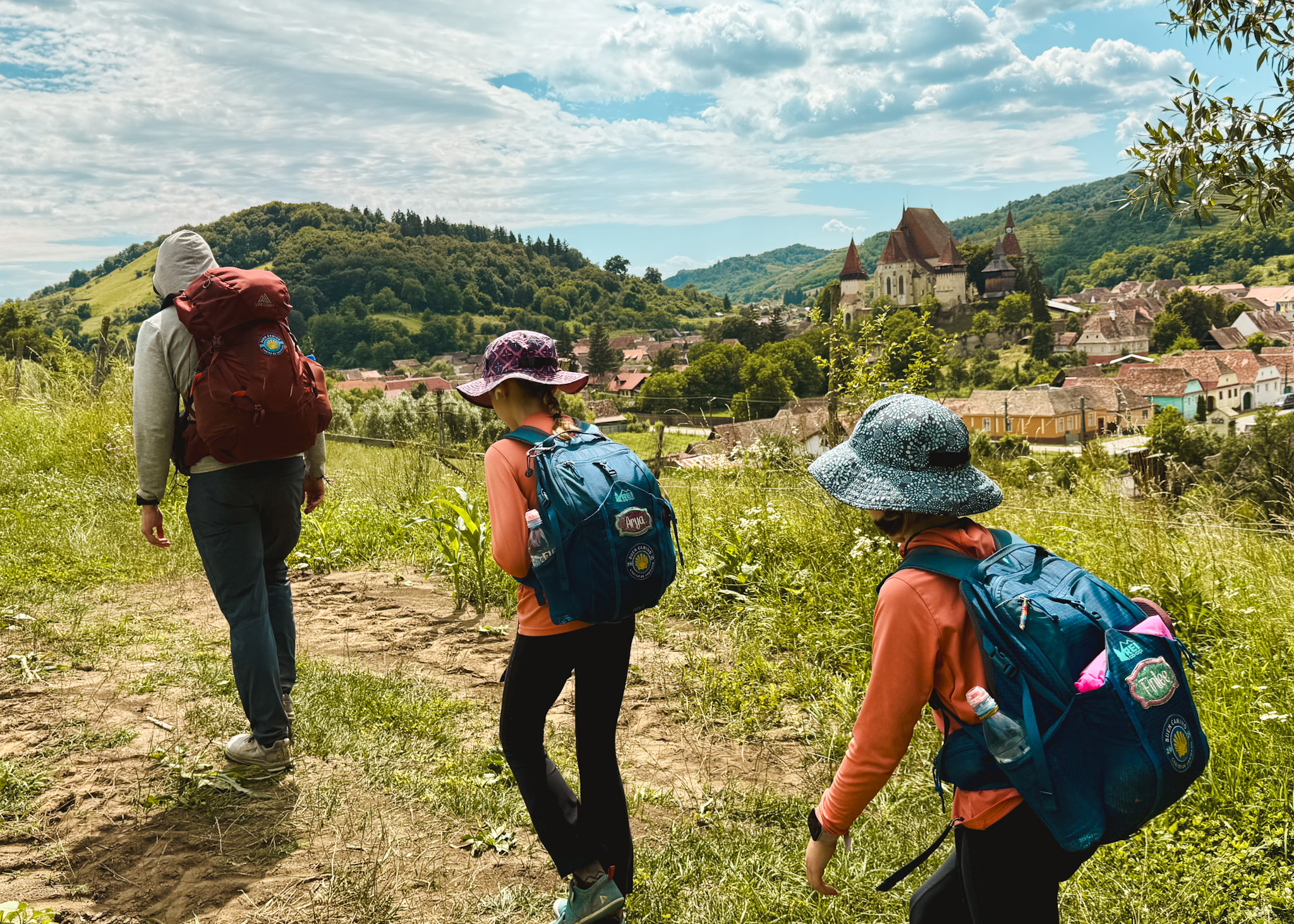
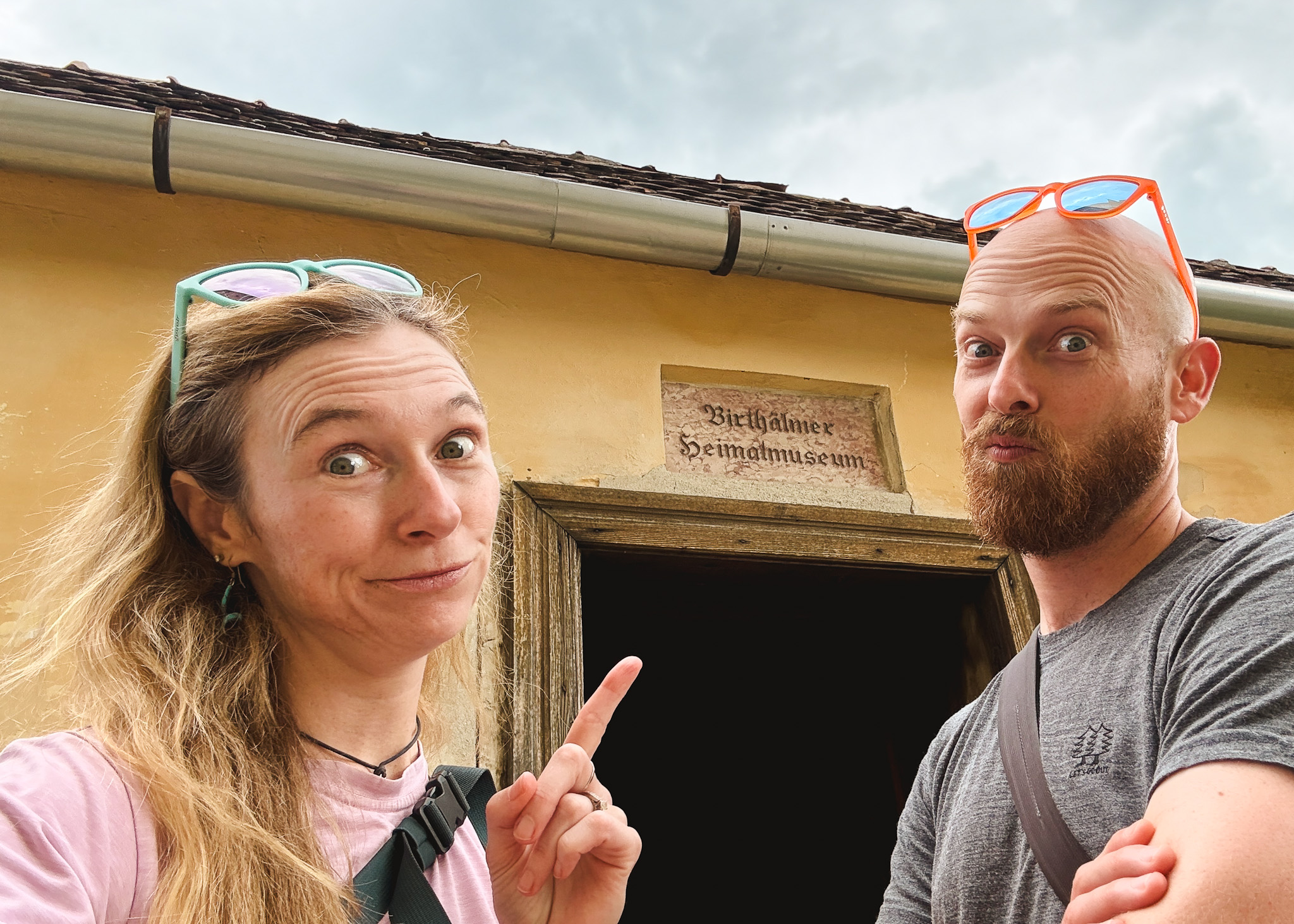
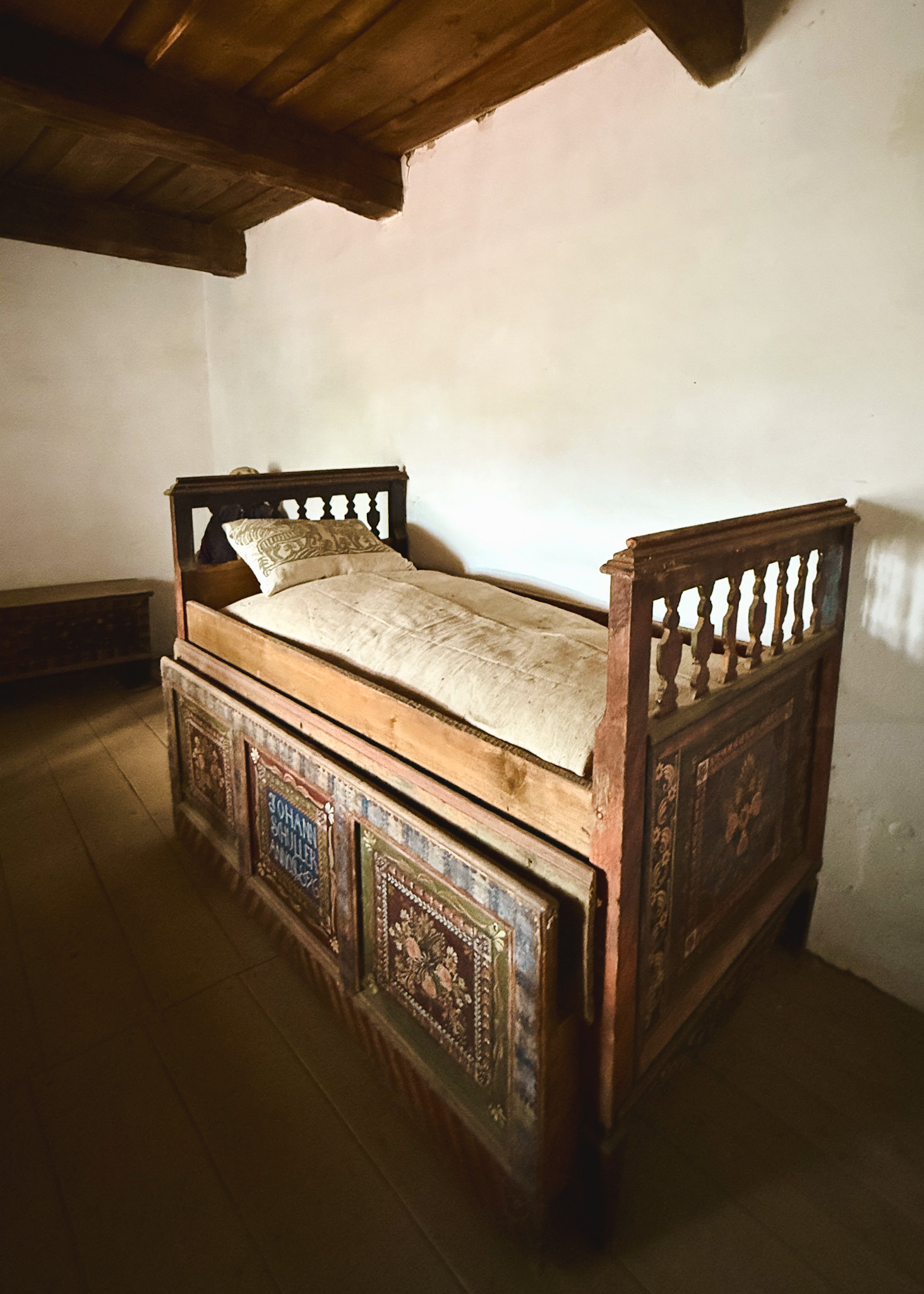
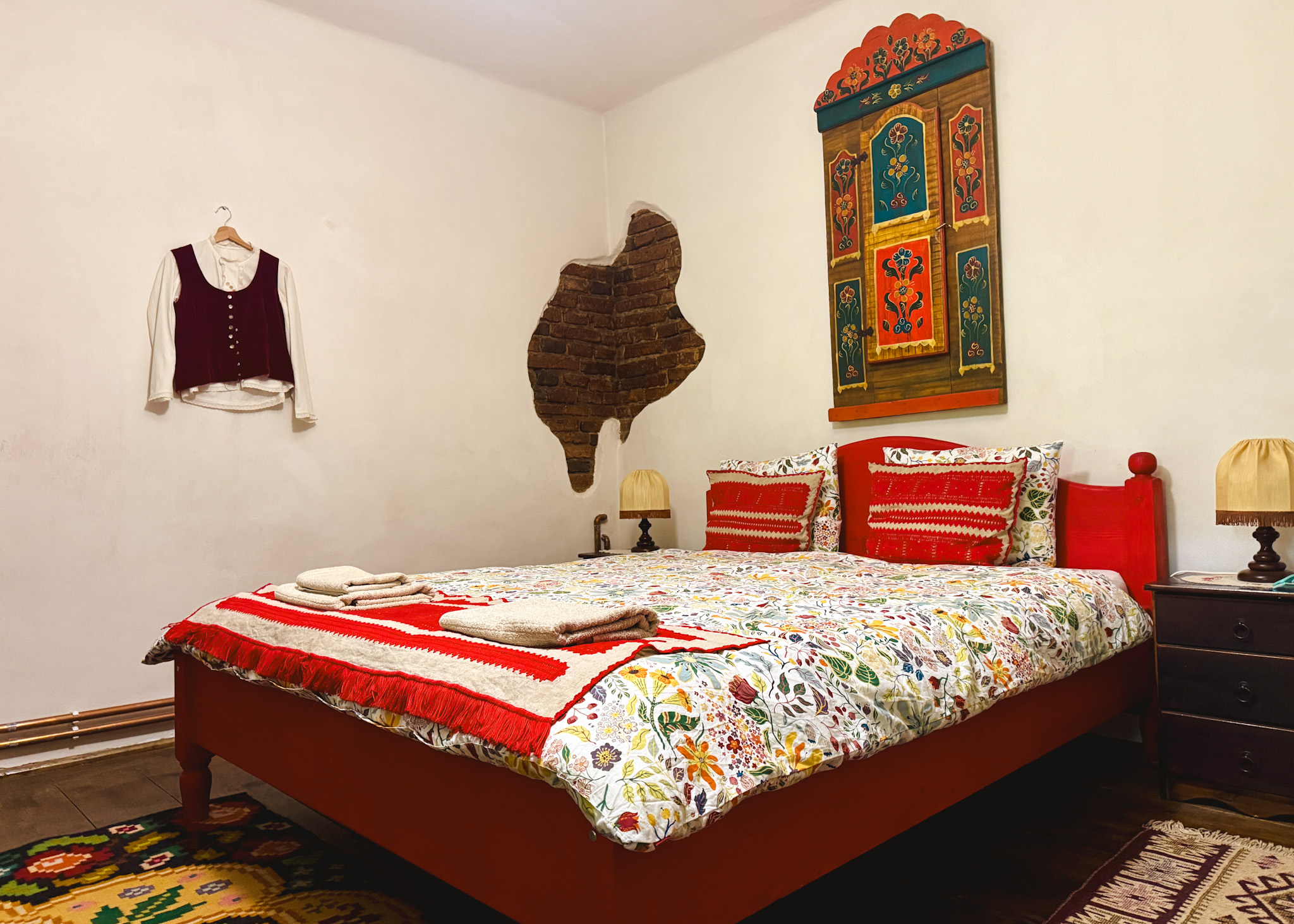
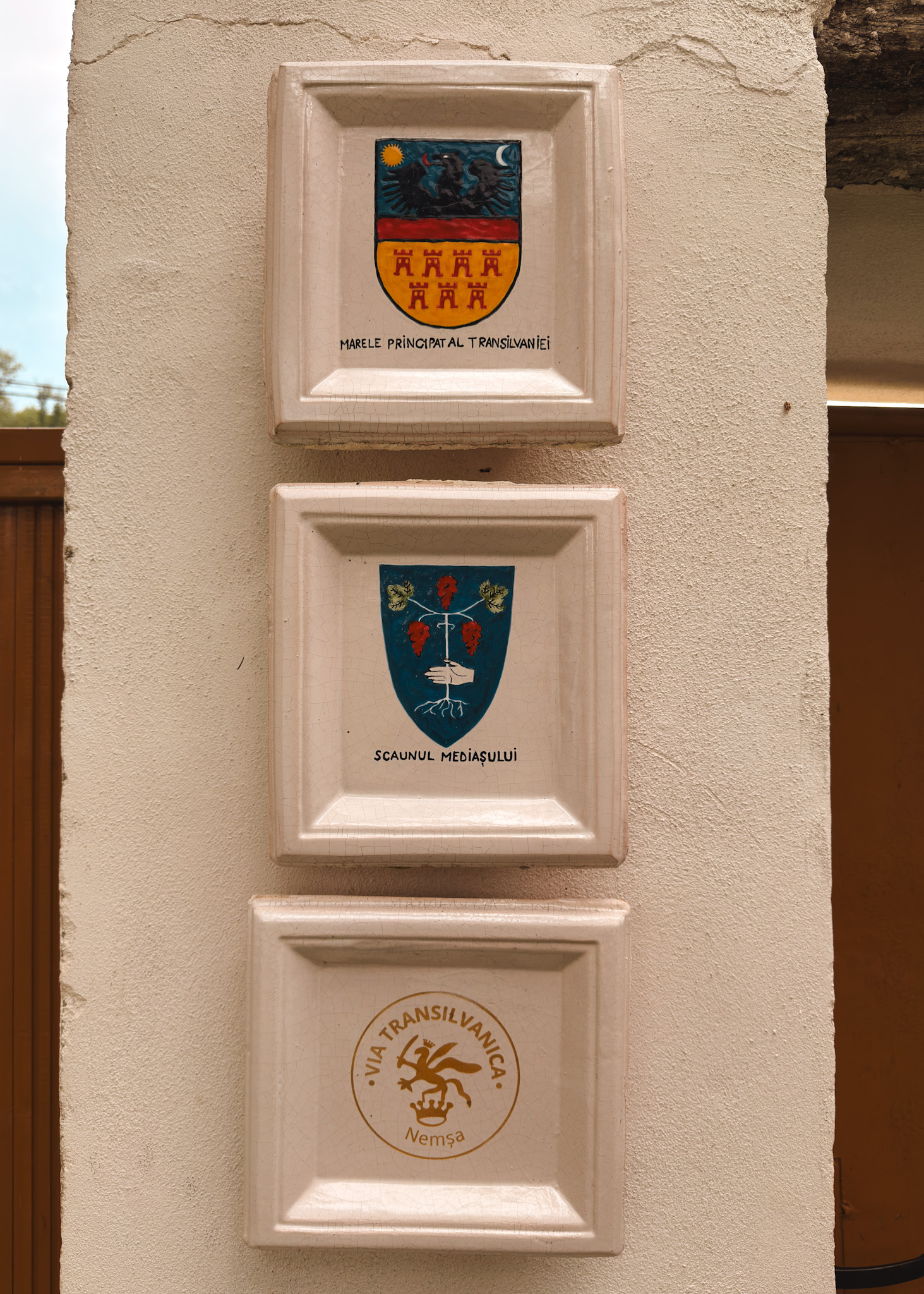
Day six was harder than its numbers suggested. On paper the distance and climbing looked modest; in practice the trail was a relentless series of punchy little ascents chained to steep descents, over and over, dynamic and interesting and quietly exhausting. It rewarded us, though, with one last ridgeline view back over Biertan and its church, a fitting bookend to have seen that place glowing both arriving and departing. And it ended at what became one of our favorite guesthouses of the entire year, in the village of Nemșa—Bed & Wine Transylvania—cozy and bespoke and genuinely authentic, each room stocked with a record player and a stack of LPs. Each room had its own wood stove, unlit in July but its handmade ceramic tiles radiating a kind of magic all the same. It was the sort of place that made us ache to return in winter and curl up by the fire with a record on while the weather howled outside.
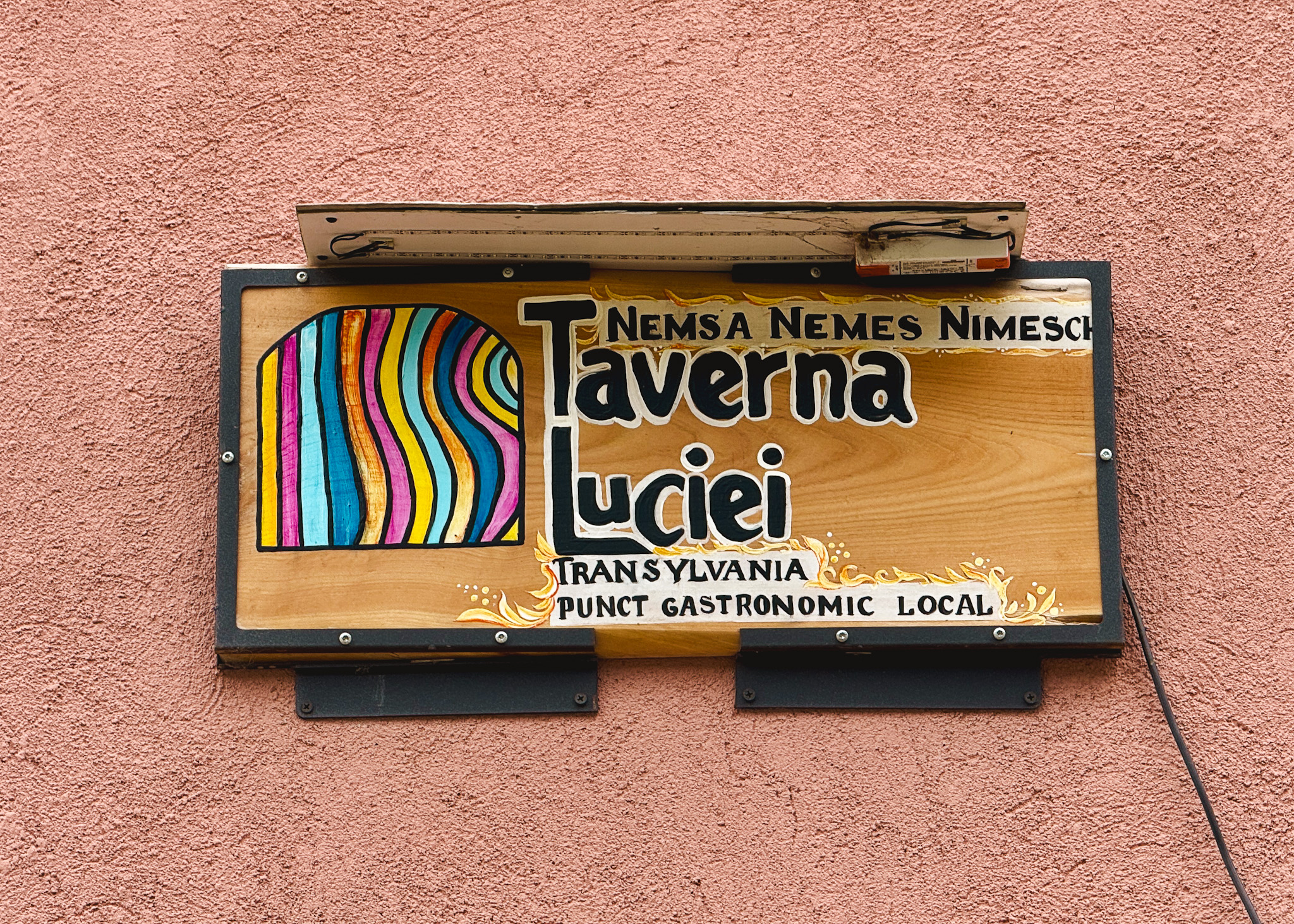
Dinner in Nemșa gave us the week’s most unexpectedly moving conversation. Down the street at Taverna Luciei, we met Lucia and her son Ovidiu, who along with his friend Andrei spoke excellent English and had just graduated with degrees in industrial engineering and were out hunting for their first jobs. They were hungry to talk about Romania, past, present, and future, and we got into the real stuff: how, with so much uncertainty in the world, you can either fixate on everything going wrong and conclude the whole place is broken, or you can choose to notice what’s good and work to grow it, not by ignoring what genuinely needs fixing but by refusing to drown in it. It was a proper conversation, the kind you never expect to stumble into over dinner in a village of a few hundred people, and it left us feeling genuinely hopeful. Back at the guesthouse, we sunk into big leather chairs and started a new read-aloud bedtime book, Shadow Jumper, about a boy allergic to sunlight who leaps rooftop to rooftop through the dusk, and the girls were hooked inside two chapters.
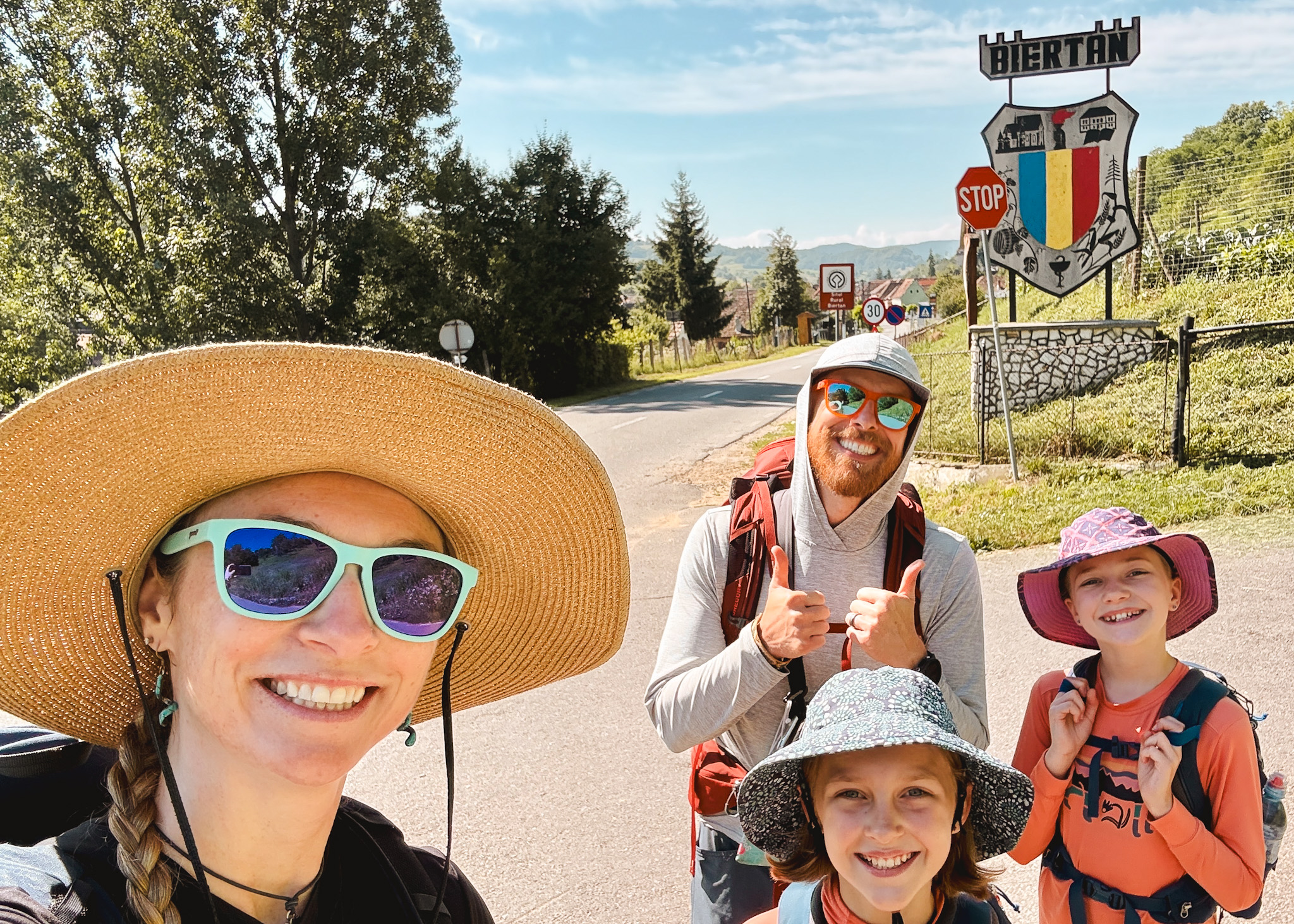
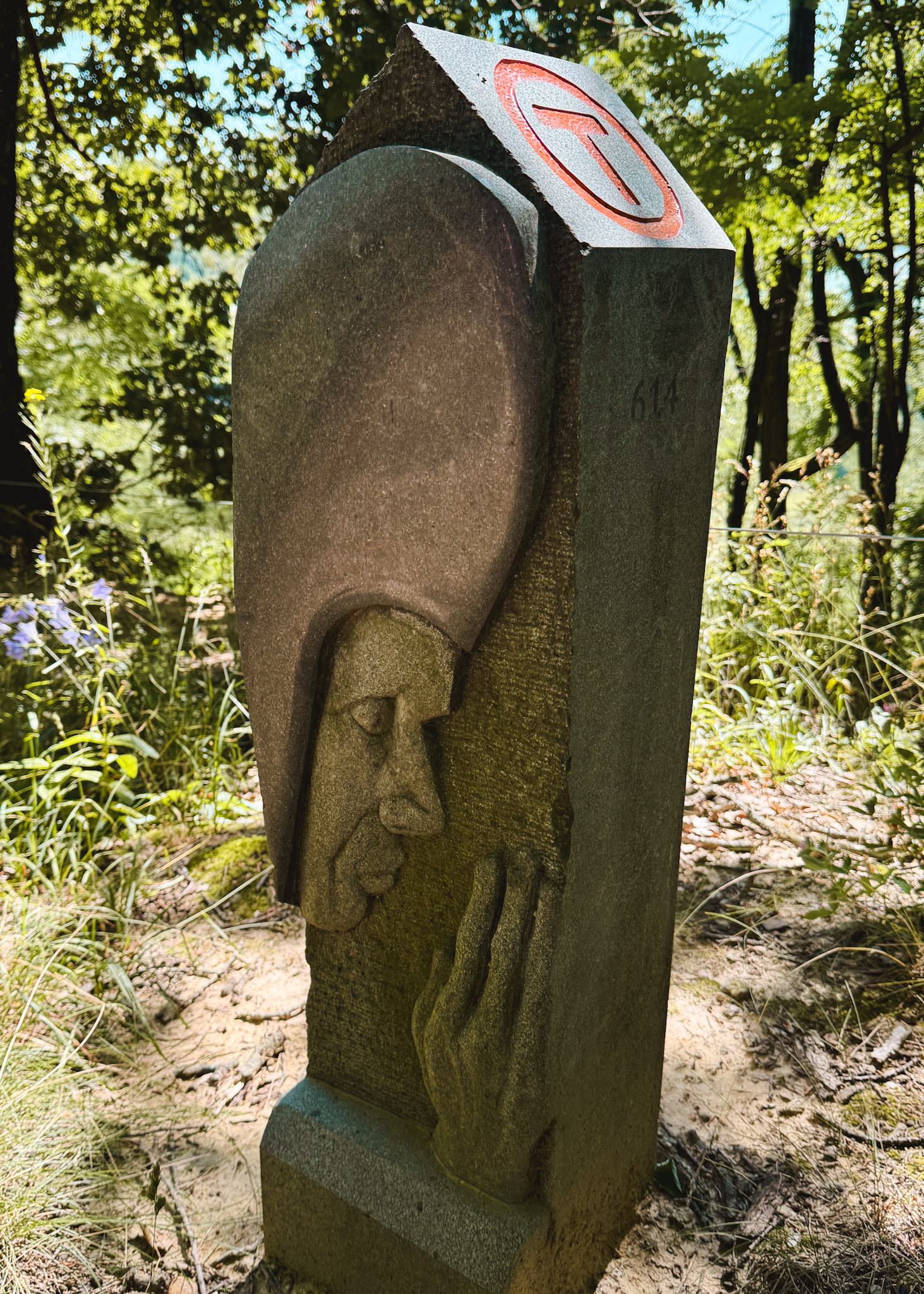
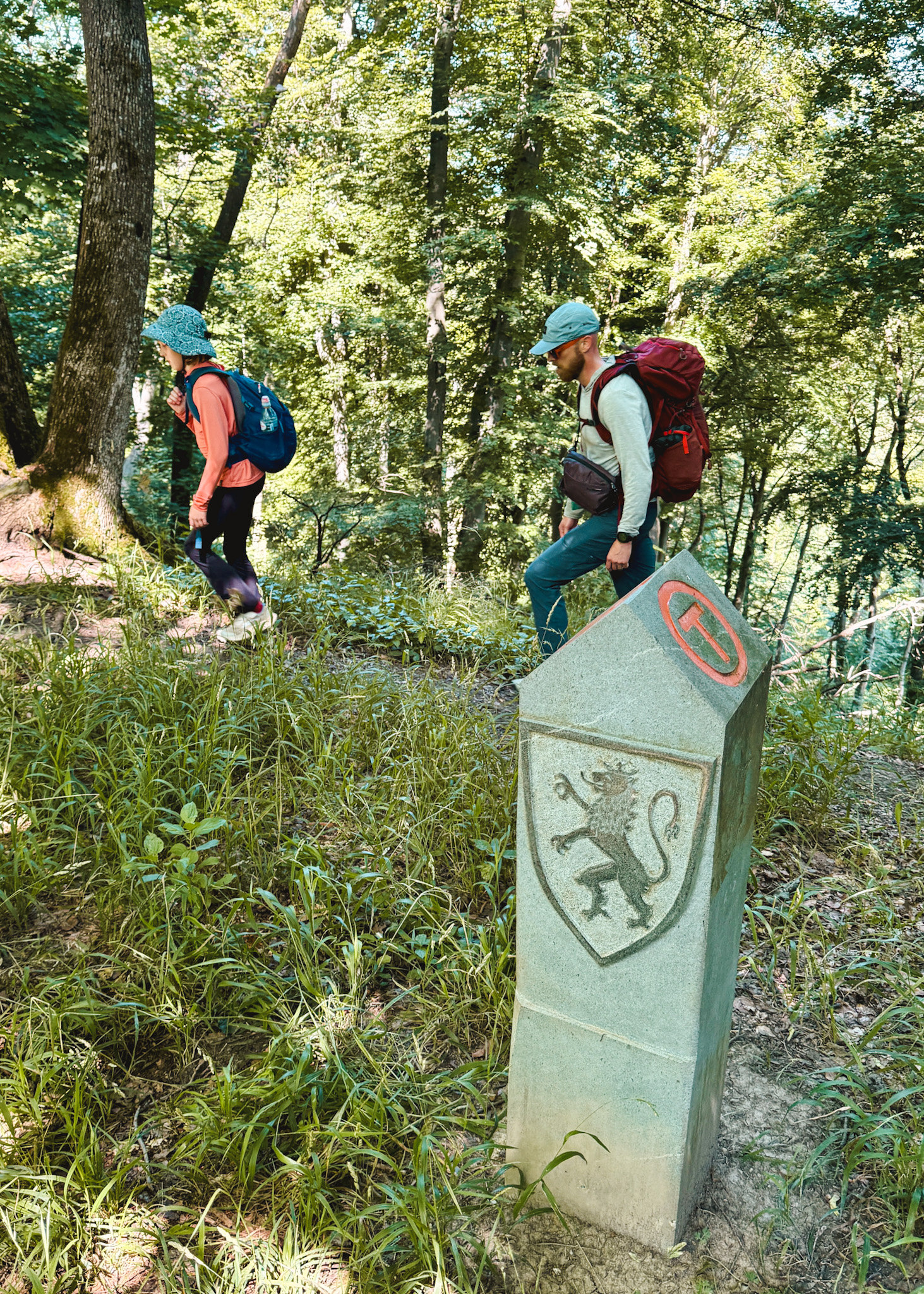
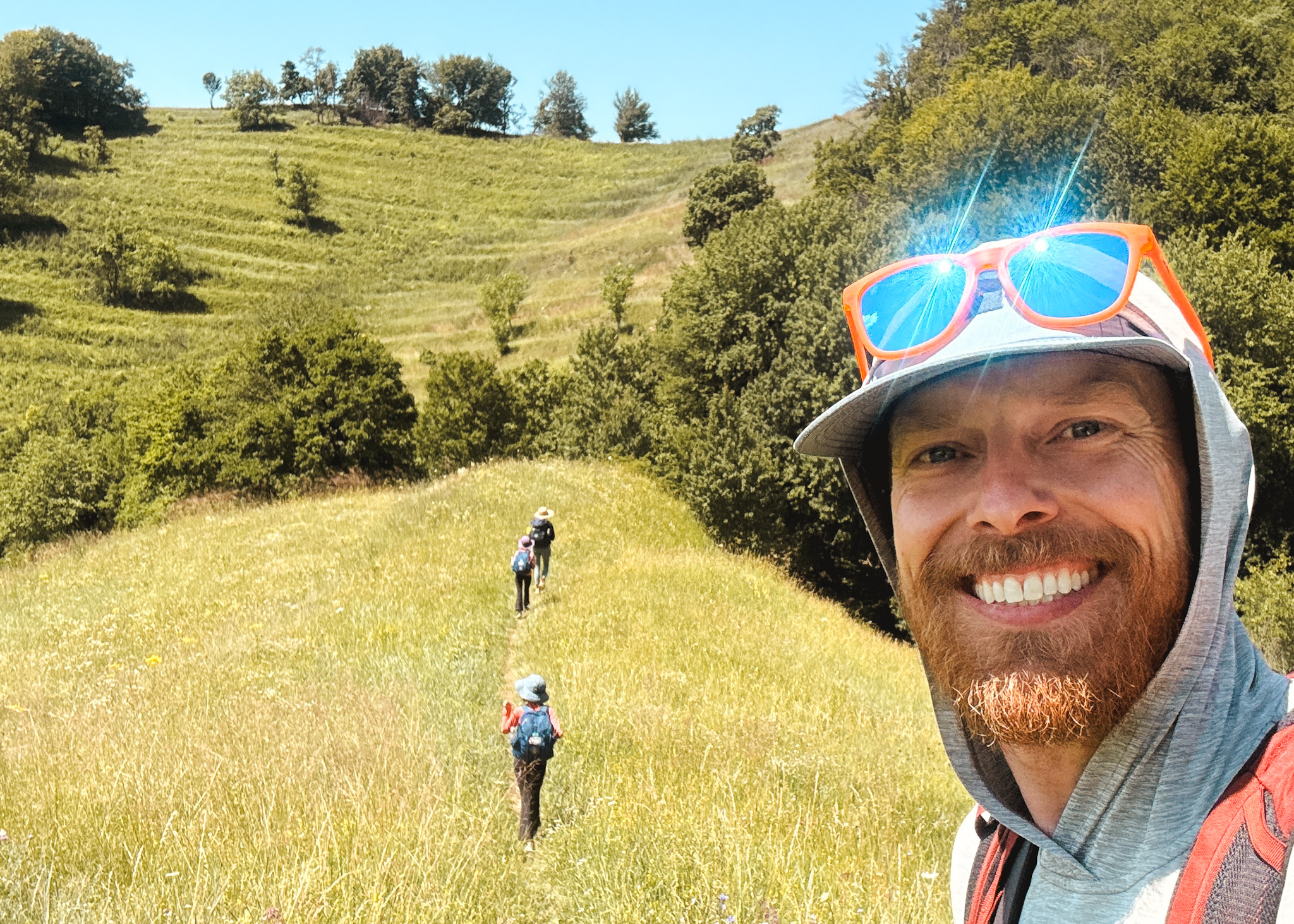
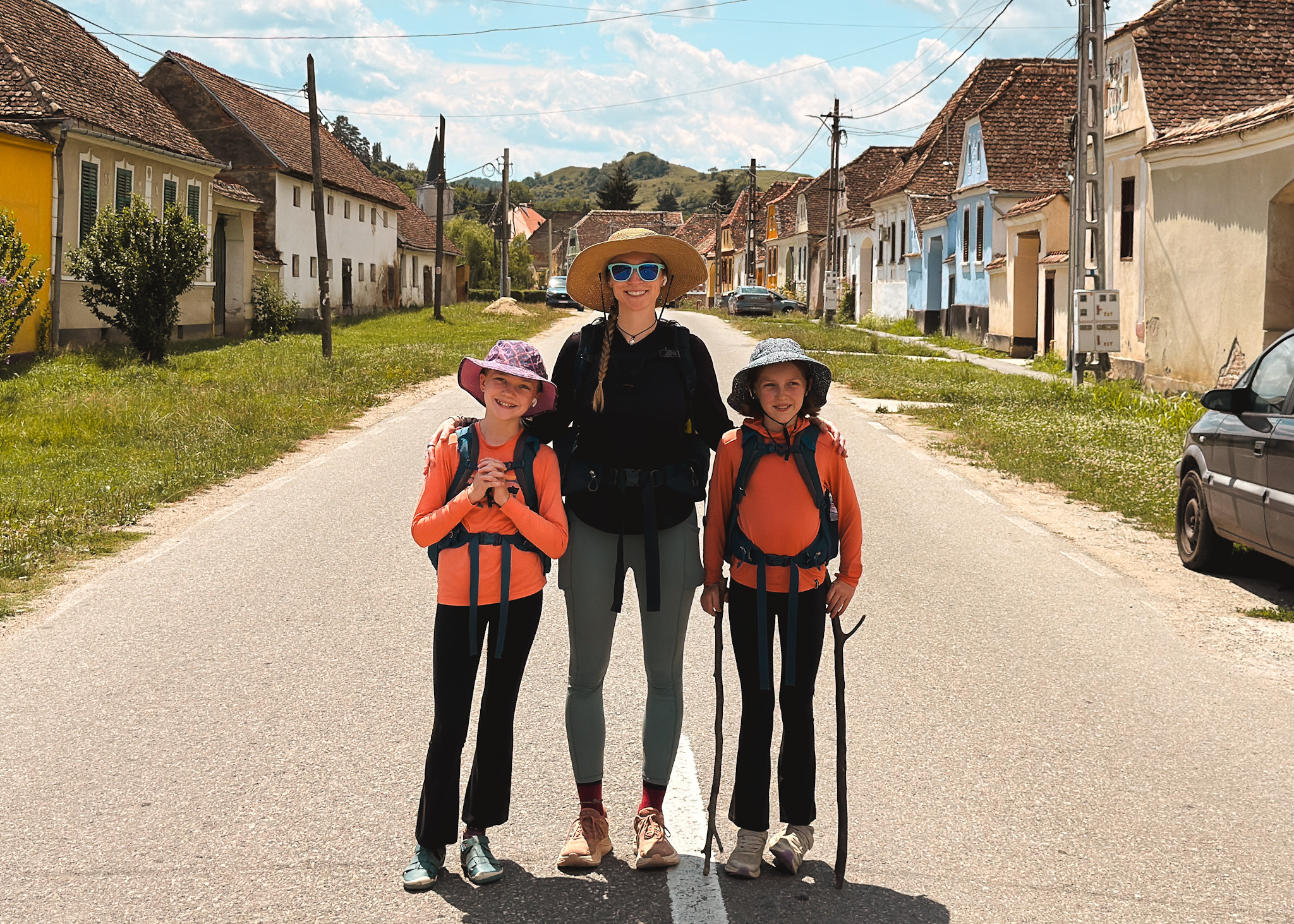
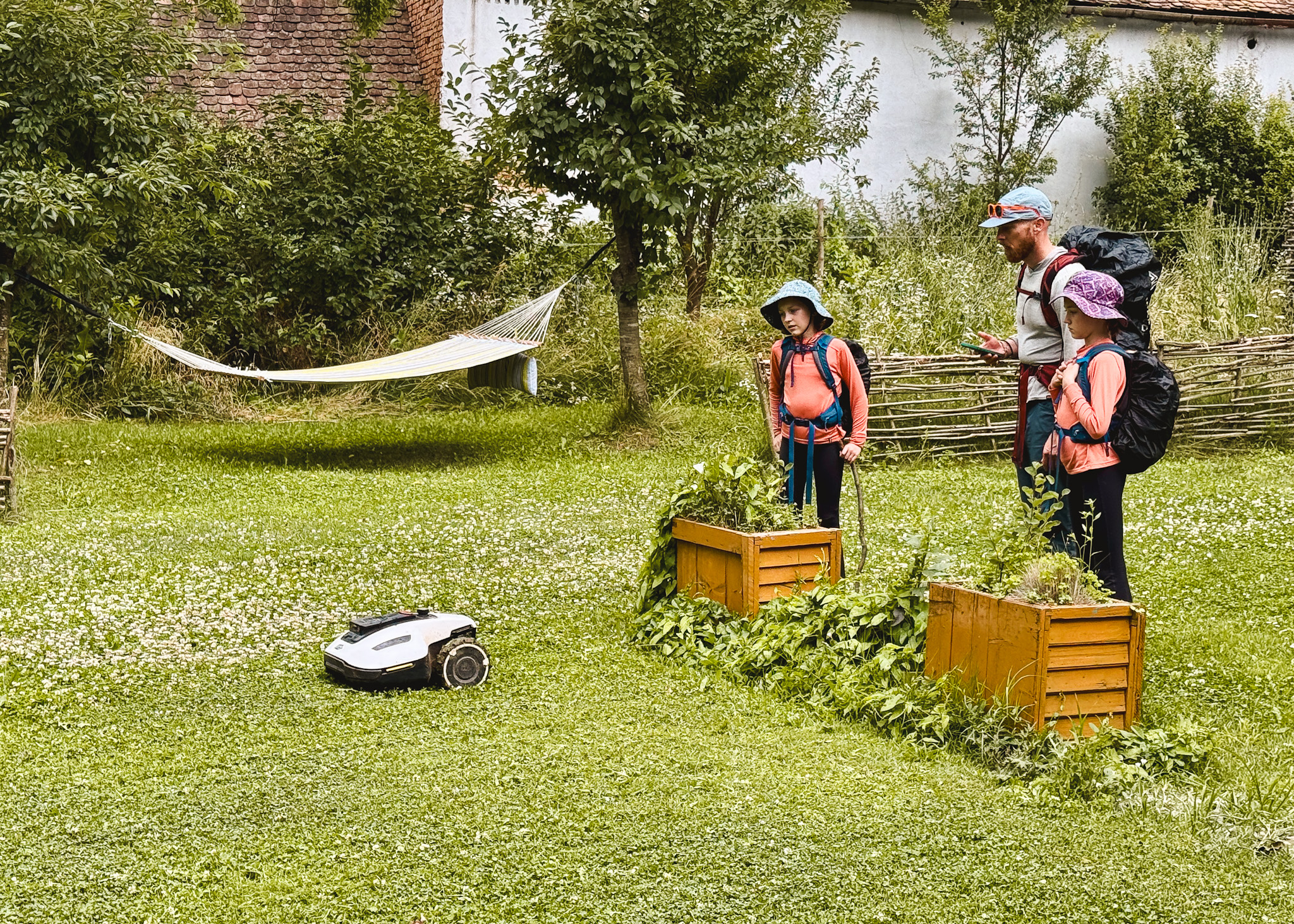
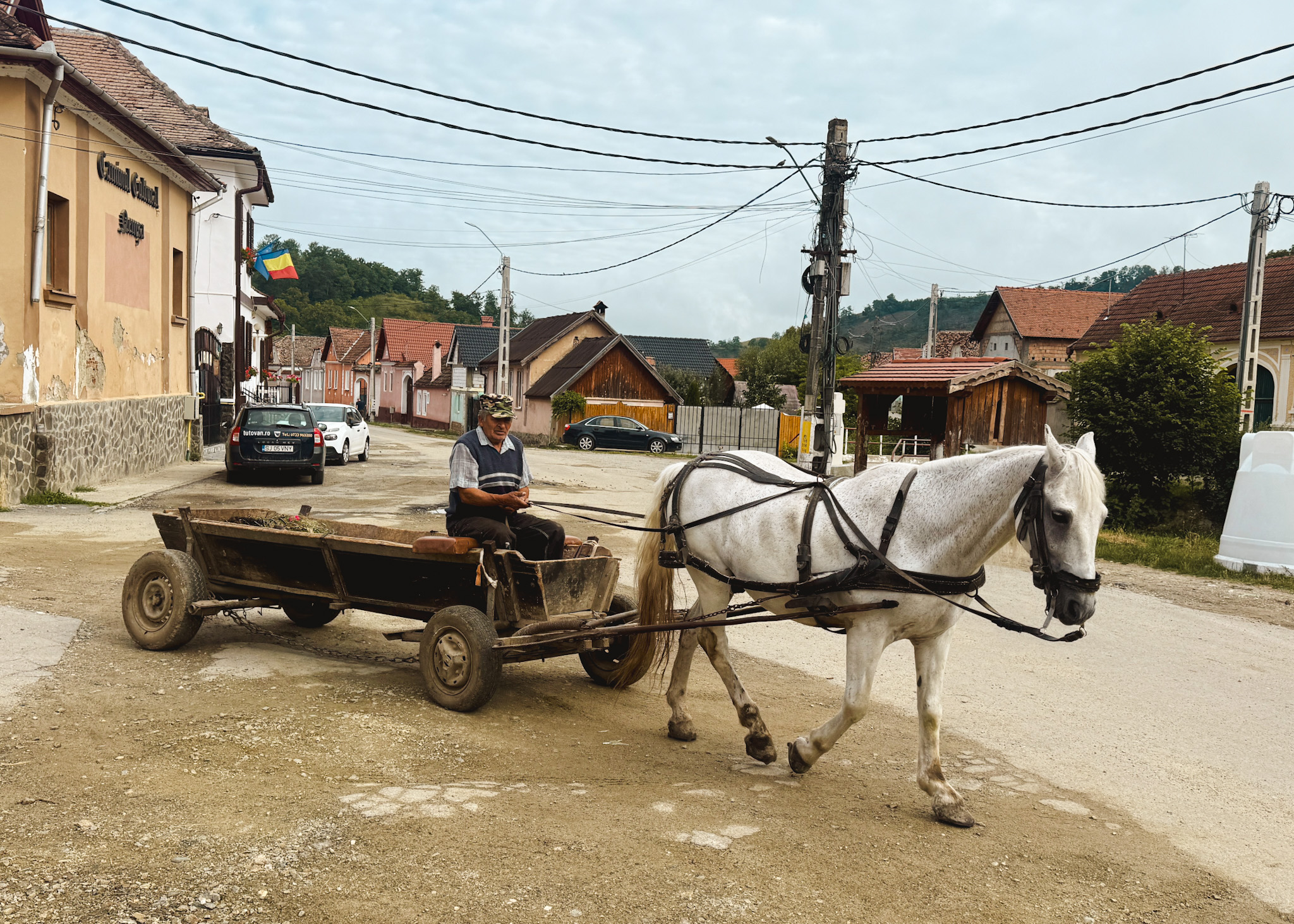
And then, day seven. The final day. The weather gods sent us off gently, overcast with a soft breeze, and Max fried up a proper trail breakfast of leftovers from Luciei’s—chicken and potatoes seasoned with a magic herb-and-salt blend he’d found in the kitchen. The route out of Nemșa began on a crumbling road that gave way to the quiet dirt track that has defined this whole week, right up until the three-kilometer mark, when the trail simply vanished. First time all week. The GPS insisted we were exactly on course; there was just no course to be on. The sensible move would have been to drop down to the gravel country road visible just below us, but sunk costs and pure stubbornness kept us bushwhacking forward through overgrown, soaking-wet grass, on the theory that we’d rejoin the path any second now. We did emerge , eventually, with our pants and shoes completely soaked through on an entirely rain-free day. We were, to put it mildly, disgruntled. But an adventure without a little trial and tribulation isn’t much of an adventure.
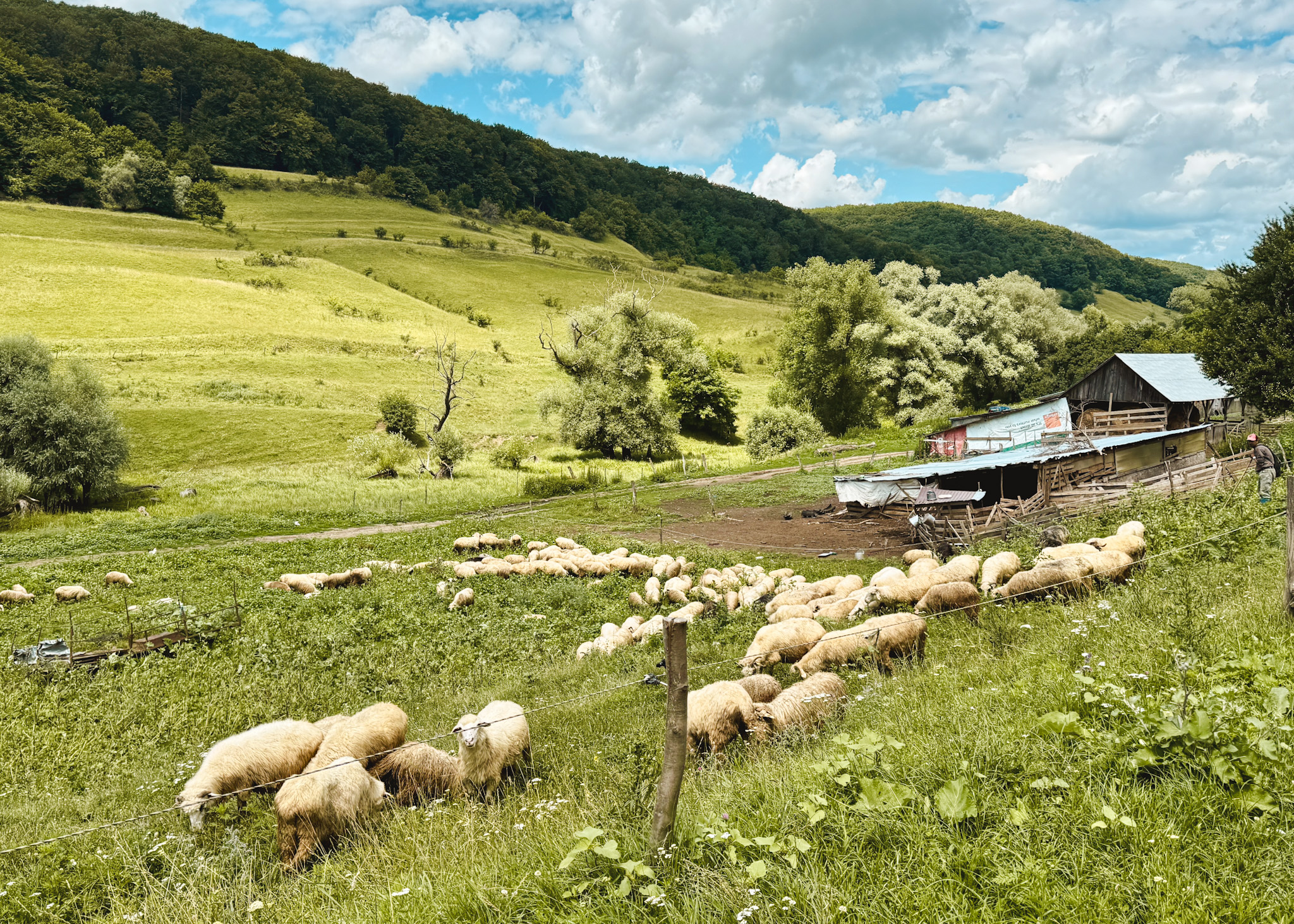
The trail found itself again at Moșna and rolled on through the kind of pastoral, painterly countryside that has made this entire week feel like walking through another century. At one point the route took us straight through a large herd of sheep, shepherd and dogs included. The drone Max had following us in autonomous mode clearly spooked them with its high whine, the footage showing the whole flock scurrying out of our path with rather more urgency than four humans on foot would normally inspire. We got a good laugh, and the shepherd barely looked up and surely filed us away as the strangest crew to pass through in ages. We started yet another audiobook, Mark of the Fool, that would take us to the end of the VT and beyond. It’s about an orphan branded with the worst possible magical mark, one that sabotages his spellcasting while supercharging his ability to learn everything else, and the girls became instantly,l and thoroughly obsessed, spending kilometers debating exactly how they’d exploit such a curse/gift.
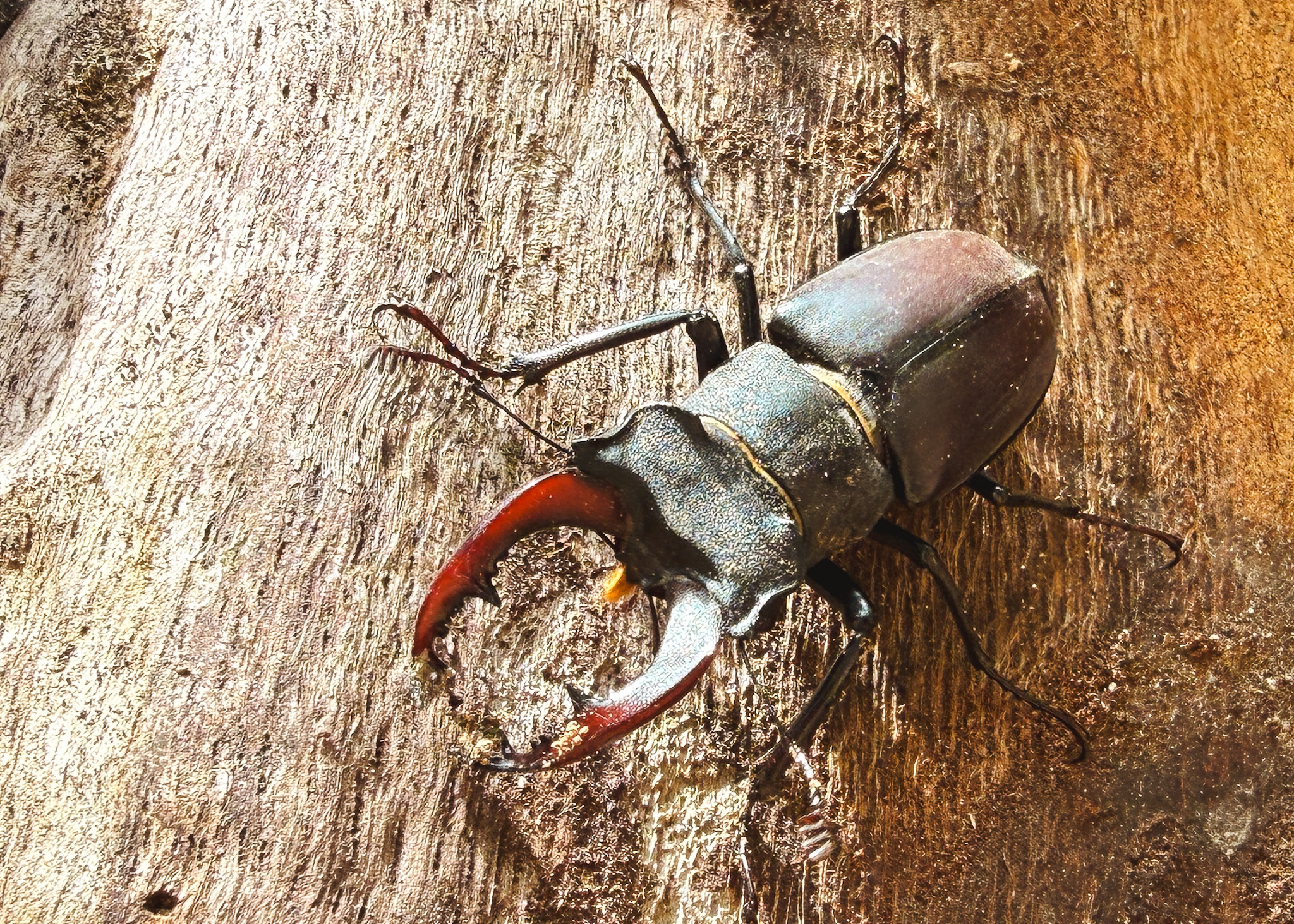
Just before the final descent, the trail handed Max a purely personal gift: a giant stag beetle, ambling along the side of a Transylvanian oak tree. He had wanted to see one in the flesh since he was a little boy, ever since a childhood science book walked him through the life cycle of these creatures, which can live up to five years and wield enormous antler-like pincers that look ready to remove a finger. A childhood dream, casually fulfilled on the shoulder of a country road, on the last day of the walk.
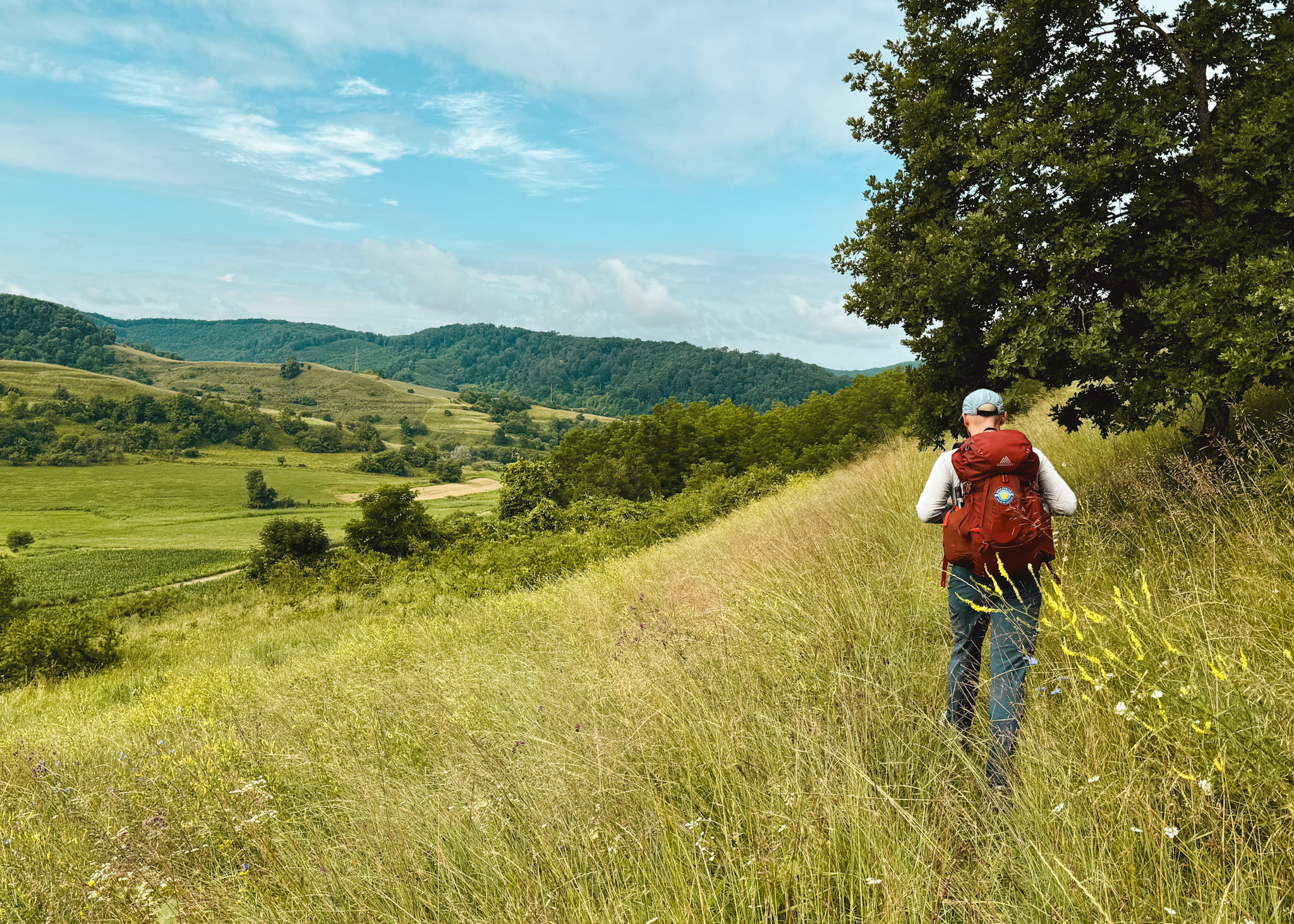
Then the viewpoint over Mediaș, the descent through forest, the asphalt into the city, and, with it, the biggest thing of all: we finished. Seven days and 125 kilometers along the Via Transilvanica, complete. It was, genuinely, a wonderful experience—a beautiful potpourri of nature through every single step. The route threads village to village, yes, but this geographical heart of Romania (or “flyover country” if you will) is so remote and so quiet that most of the time you feel like you’re wandering through a pastoral painting or a forest out of a bygone age. Truly romantic. And we were all truly glad to be done. And Max was, frankly, really glad to be done, because his left Achilles, which he’d angered on a run back in Bucharest before the trek even started, picked the finish line to announce it had officially had enough. So the very first order of business in Mediaș was a bag of frozen peas from a shop, pressed against the offending tendon with his foot up.

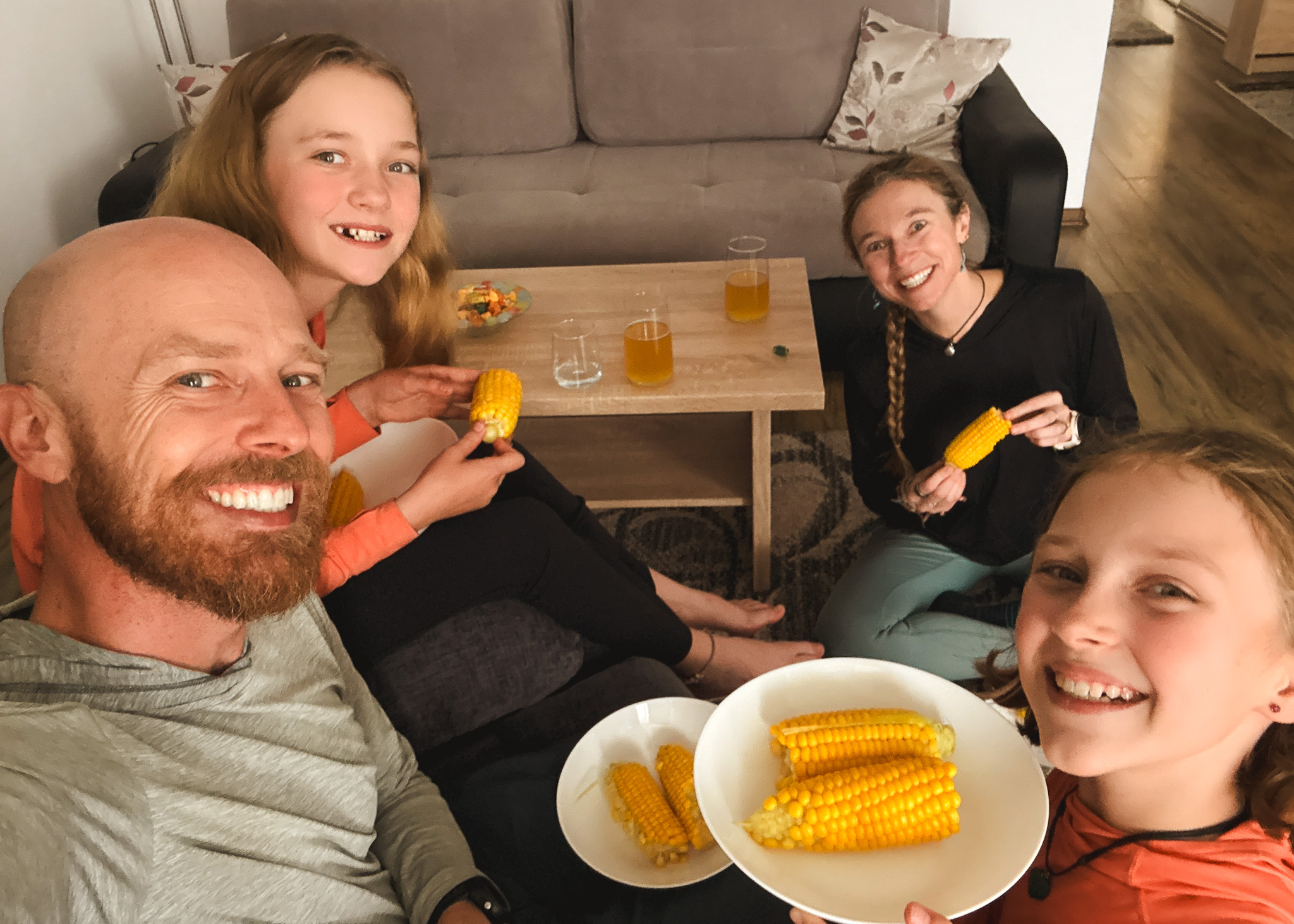

Well, that was the second order of business. The first was corn. Walking into the city we’d passed a little farmers market and, on Shaina’s prompting, grabbed blueberries, raspberries, and four ears of fresh local corn. Through the door, a pot of water went on, the corn boiled for four and a half minutes, a little salt went on top, and we sat down to what was, hands down, the greatest post-hike snack in the history of post-hike snacks.
Seven days earlier we’d walked out of Criț grumbling about a soccer match and an inflated dinner bill. In between came the rain and the mud and the pizza that never was, the polar-bear dogs and the crushed-brick road, Andreea’s hopeful guesthouse and the other Andreea’s outreach work, the honeymooners and the Scottish teachers and a tray of elderflower syrup carried out to strangers on a bench, Biertan glowing gold, a hopeful dinner with two young engineers, and a stag beetle waiting on the road like a childhood promise kept.
The year opened with one long walk and is closing with another, this one along a trail whose whole reason for being is to knit fading villages back into the world, one traveler at a time.
“The road that unites.” It absolutely does.
 Pause and Wander
Leave a comment