
Dates: July 4-6, 2026
Places: Brașov and Criț, Romania
Sixteen years ago, on the Fourth of July, Max and Shaina got married. This year the anniversary found us on a delayed train between Bucharest and the Carpathian Mountains, celebrating with dumpling socks, and it turned out to be exactly right.
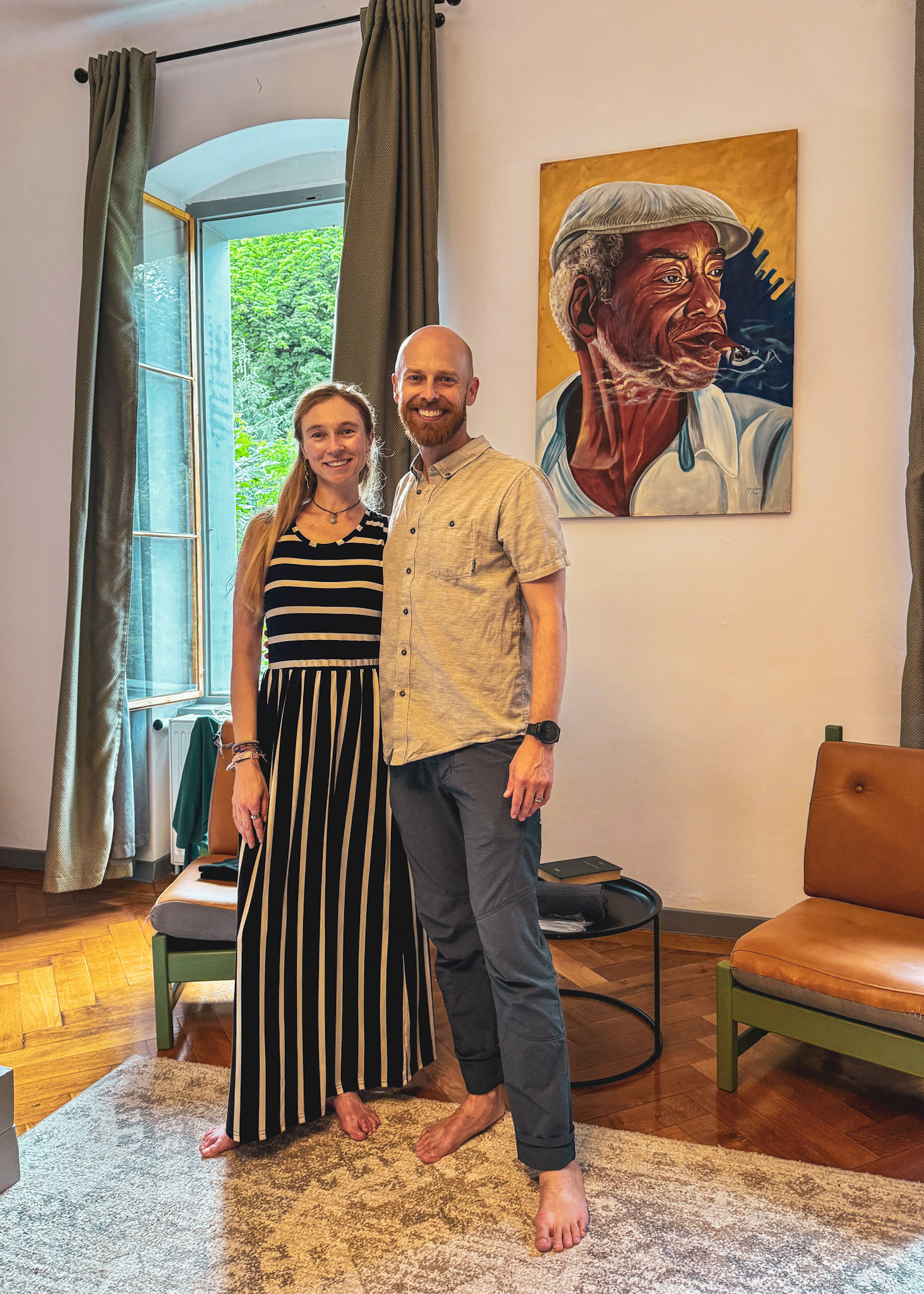
The gift exchange happened over morning coffee, before we’d even left Bucharest, and it revealed the extent to which the khinkali, the soup dumpling of Georgia that fed us for six straight weeks, has become the official mascot of this leg of the trip. Shaina gave Max a khinkali-shaped toothpick holder, khinkali socks, and a bespoke enamel coffee cup with a bicycle design. Max gave Shaina khinkali socks as well, which means this marriage now features his-and-hers dumpling socks, but he had also picked up the real gift back in Tbilisi: a silver necklace with green and blue cloisonné, the ancient Georgian enamel-work he and Arya had gone hunting for on their secret shopping mission. She loved it. Sixteen years in, we know each other’s registers pretty well: one part silly, one part sincere.
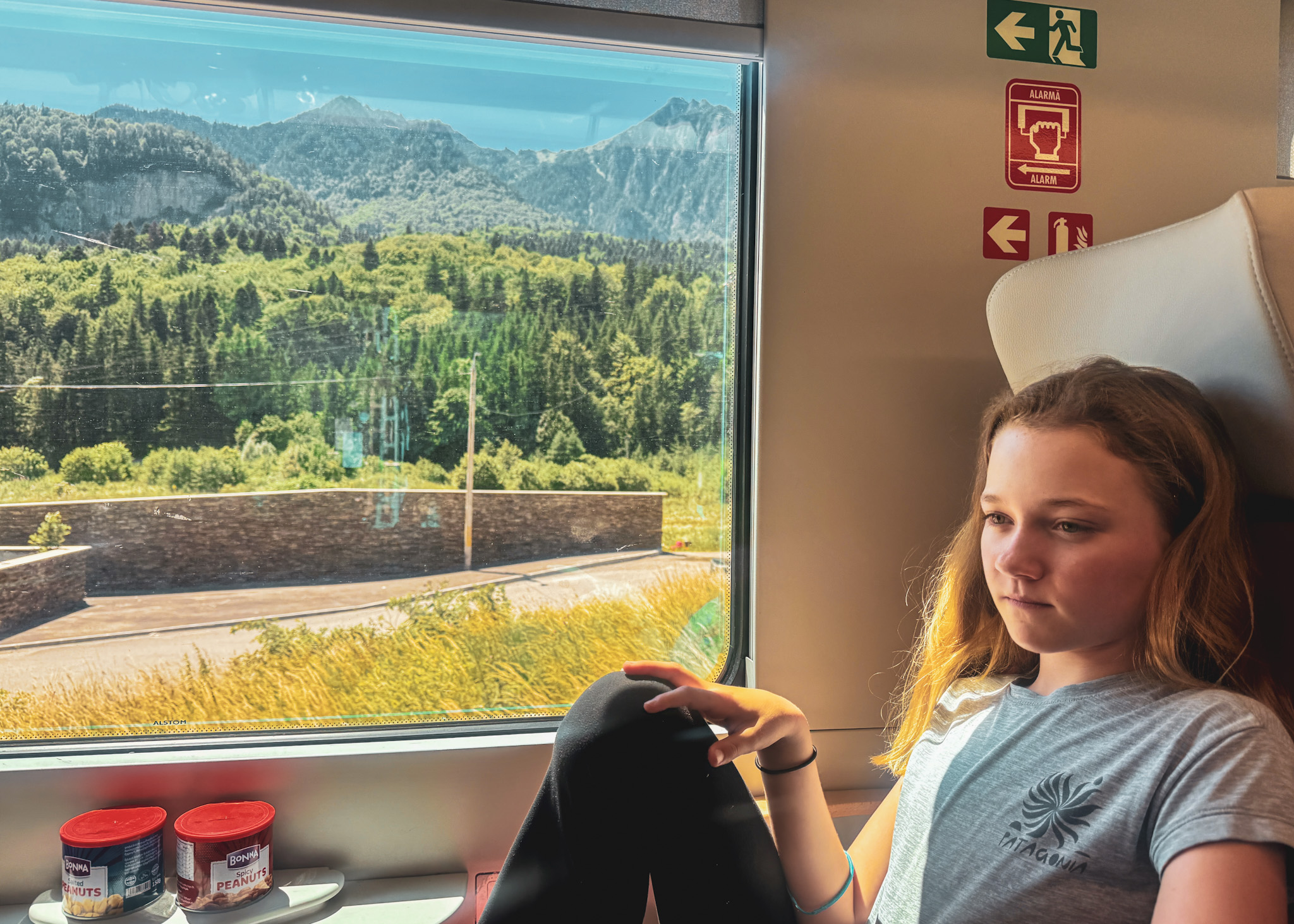
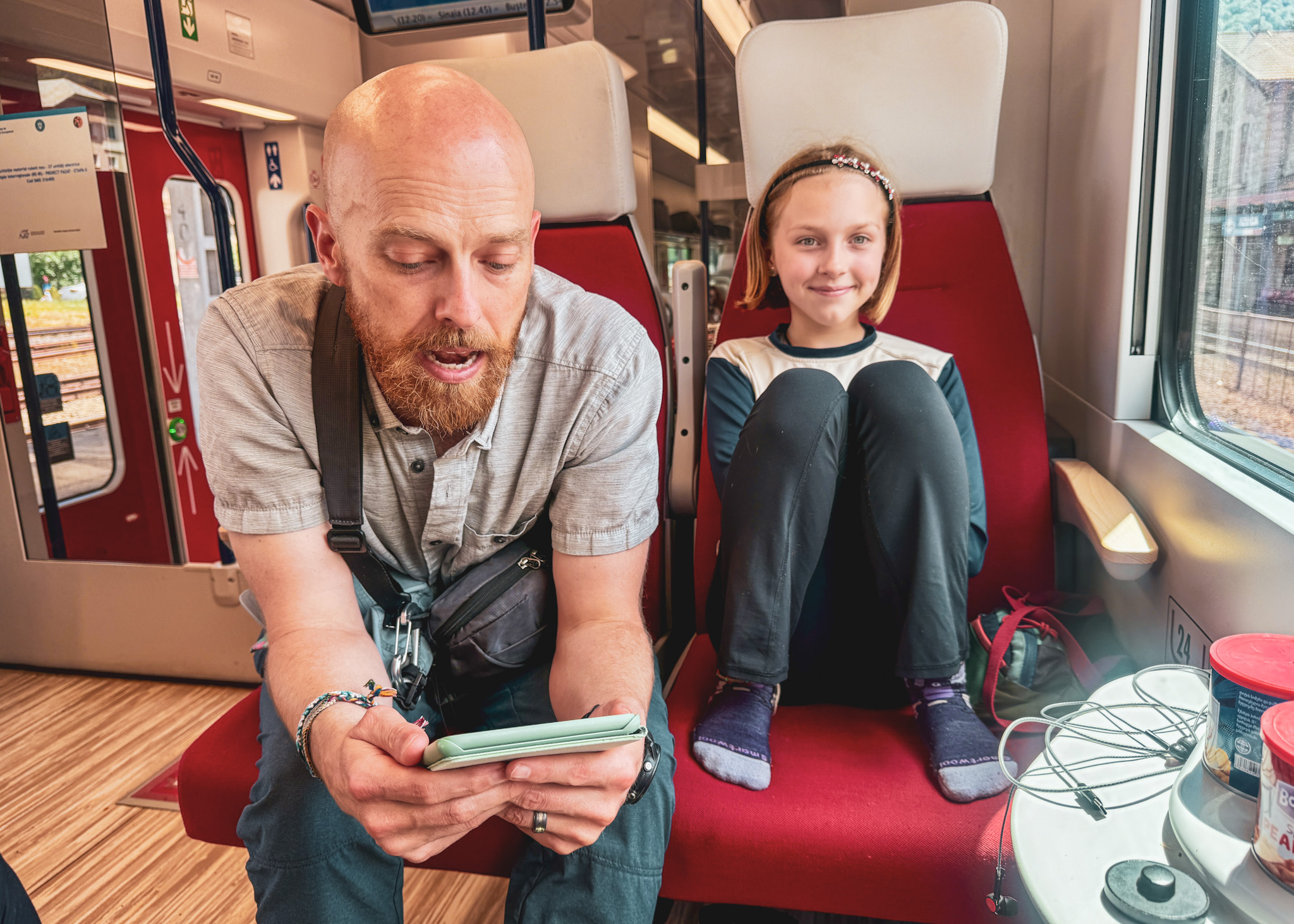
The travel day itself tested the anniversary spirit. Our train north was delayed in 15 minute increments, eventually to a full two hours, which we passed on a train station bench. Max noted at the time, there are worse fates than being stuck on a bench next to your favorite person with a book in hand. The best moments arrived after a kind older woman sat across from us, peppering us with questions in Romanian with a big smile on her face. Our go-to for communication, Google Translate, was useless because she couldn’t see our phone screen. So we chatted the old fashioned way—through charades and pointing. She regularly brought out snacks to share, including fresh nectarines and randomly some very soft ice cream bars. The girls didn’t mind and gobbled them down eagerly. We bade our new friend farewell as the train appeared, and hurried to the far end of the platform where our seats were in the very last car, of course. The train was clean and comfortable, and we split the ride between our own books and two read-aloud chapters of The Giver, in which Jonas has just discovered the color red, an idea that thoroughly blew our daughters’ minds.
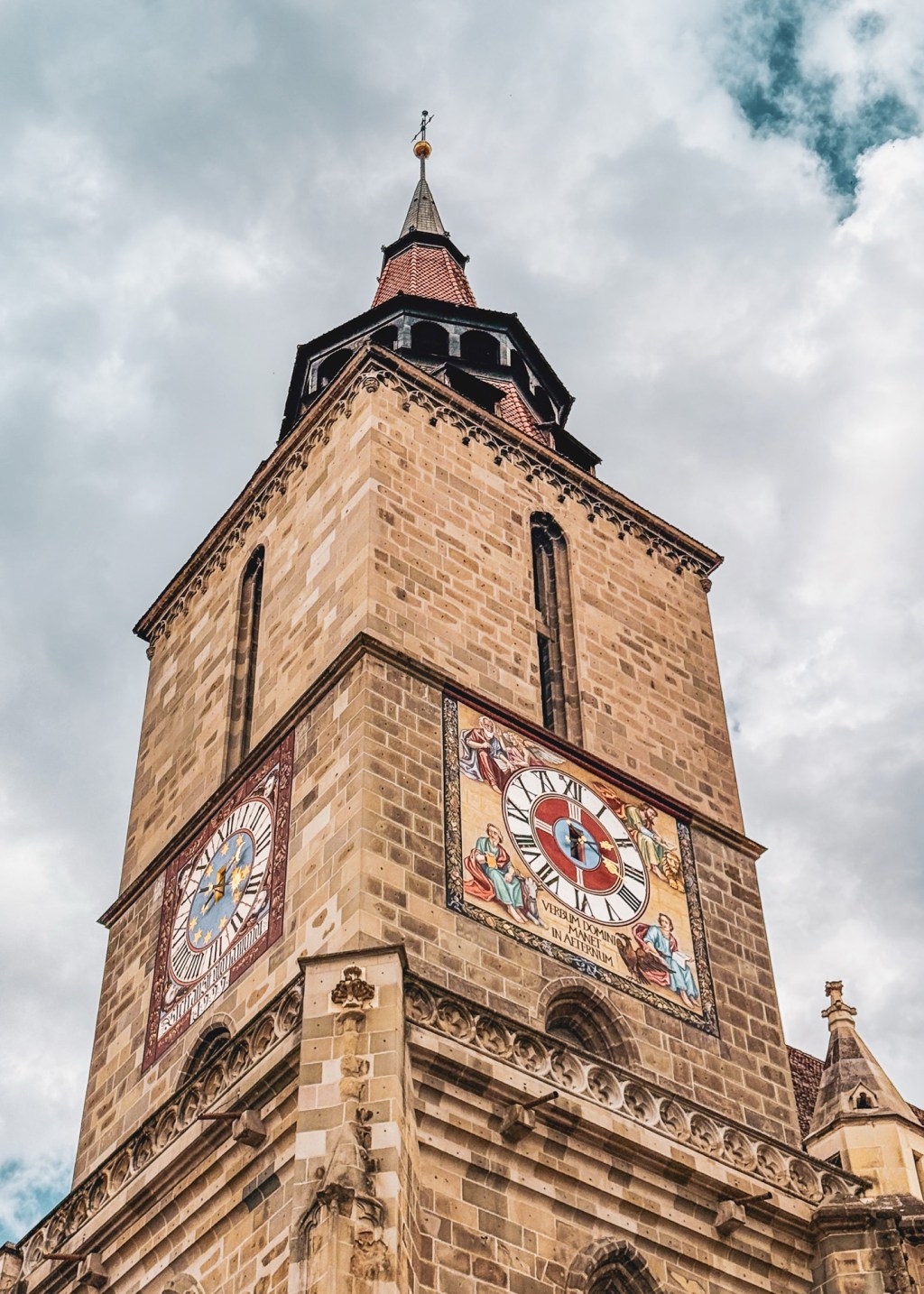
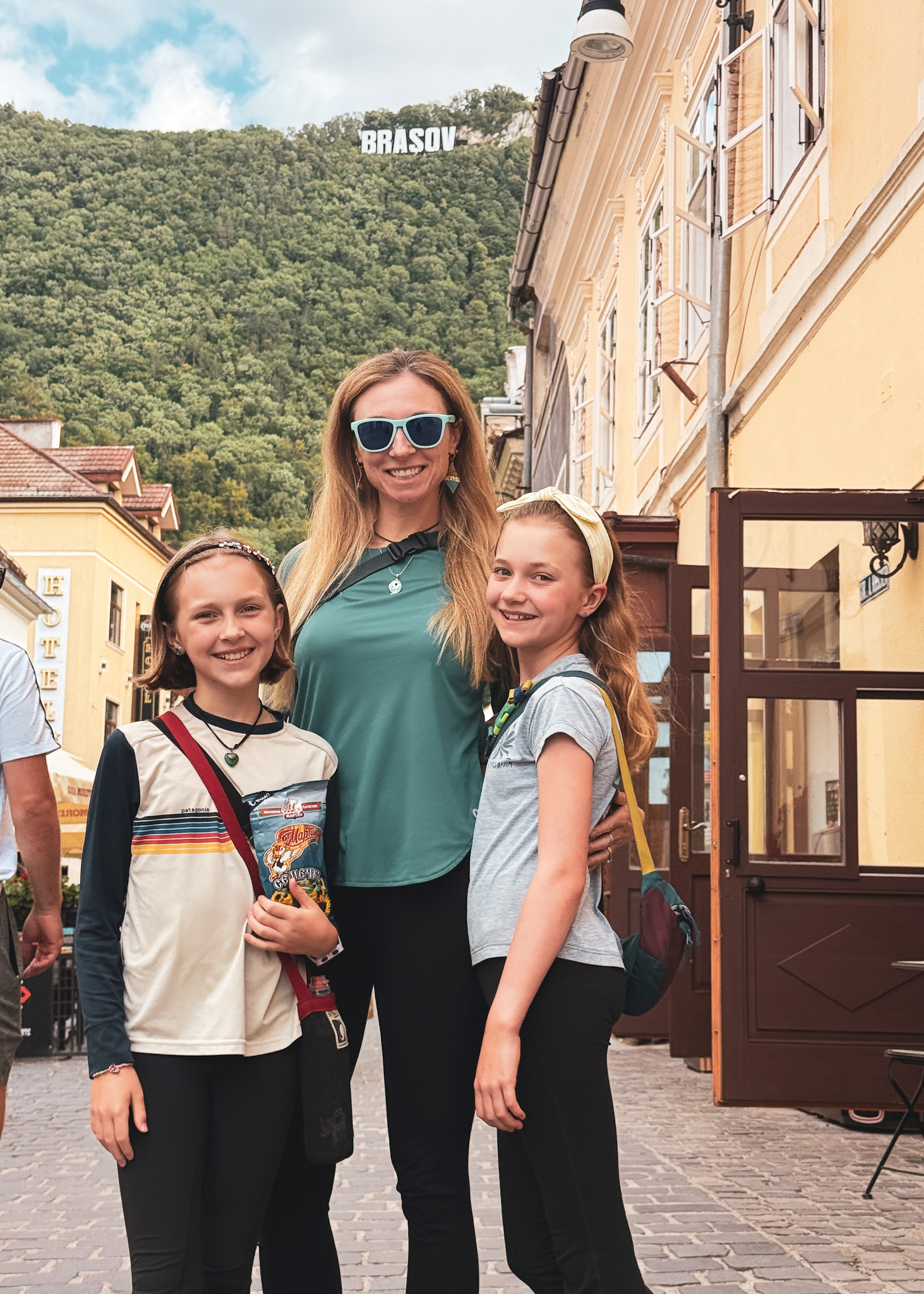
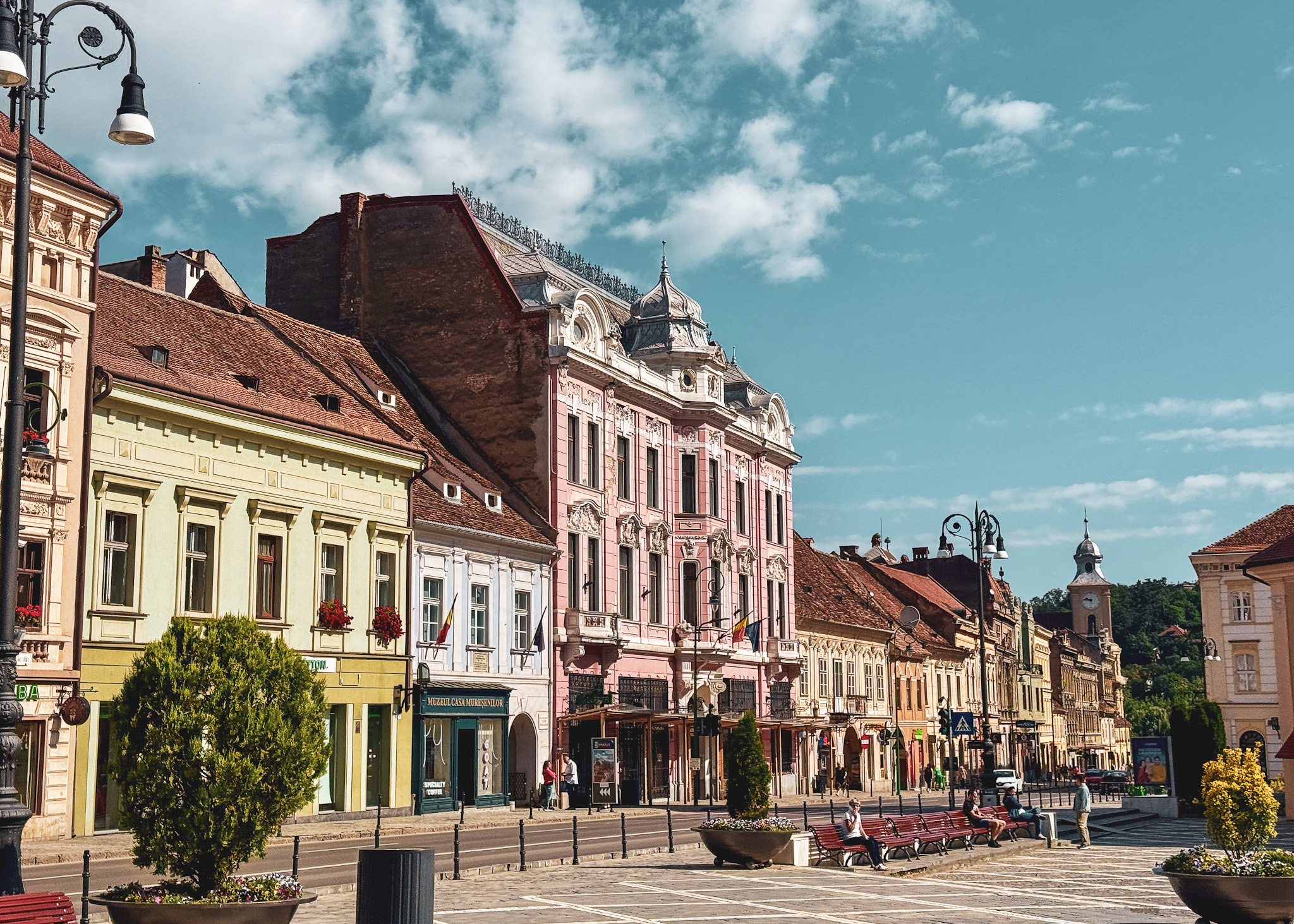
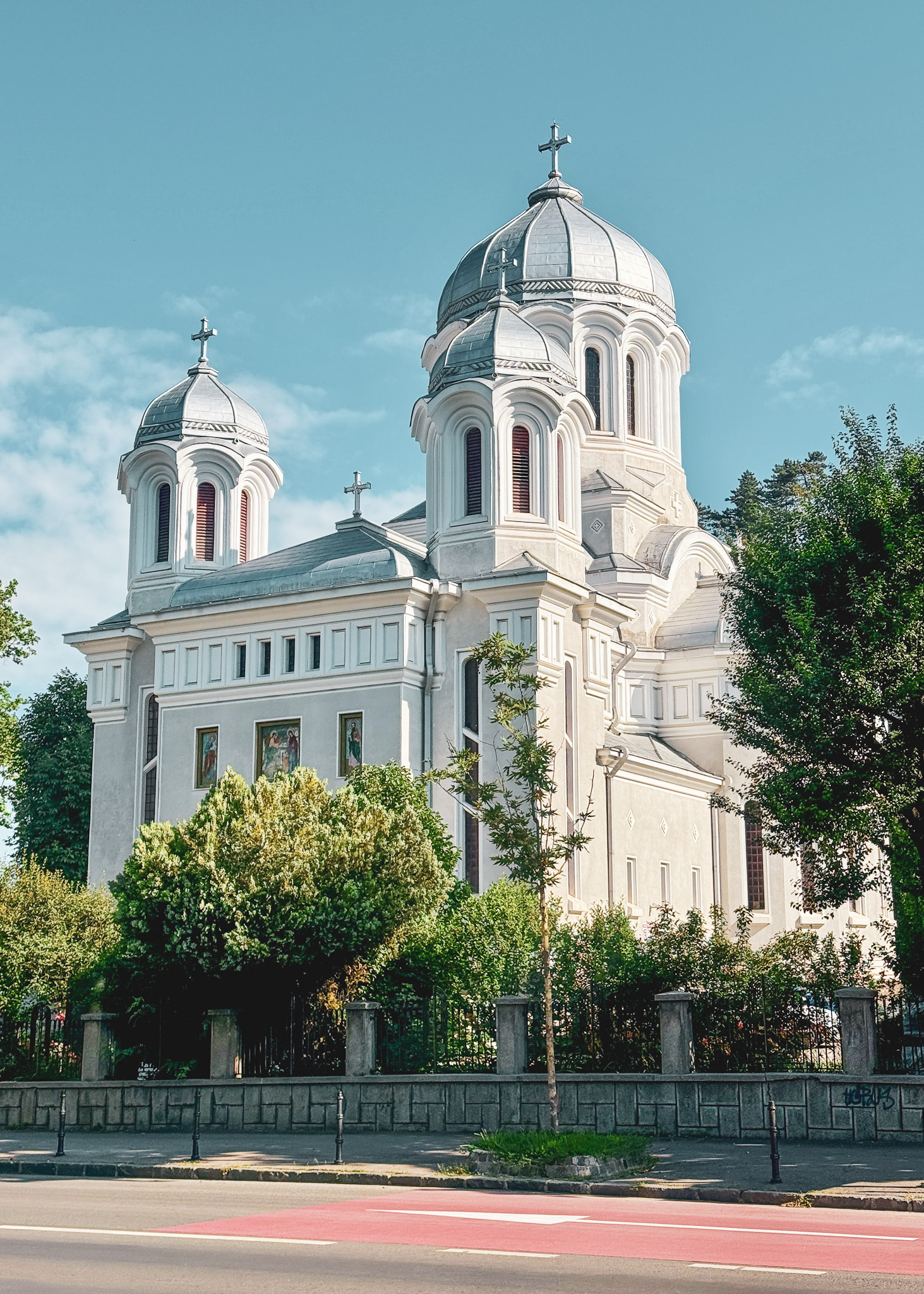
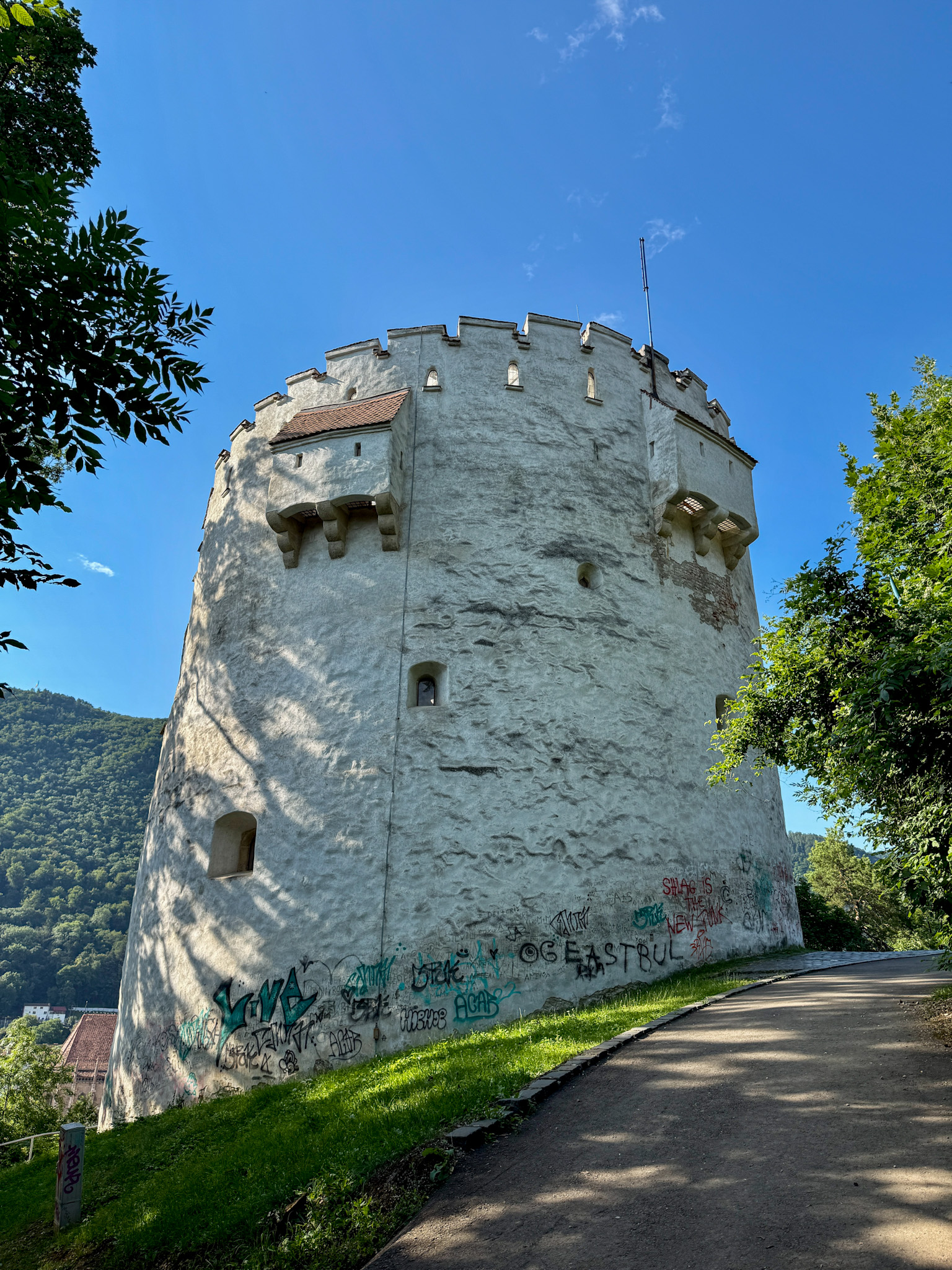
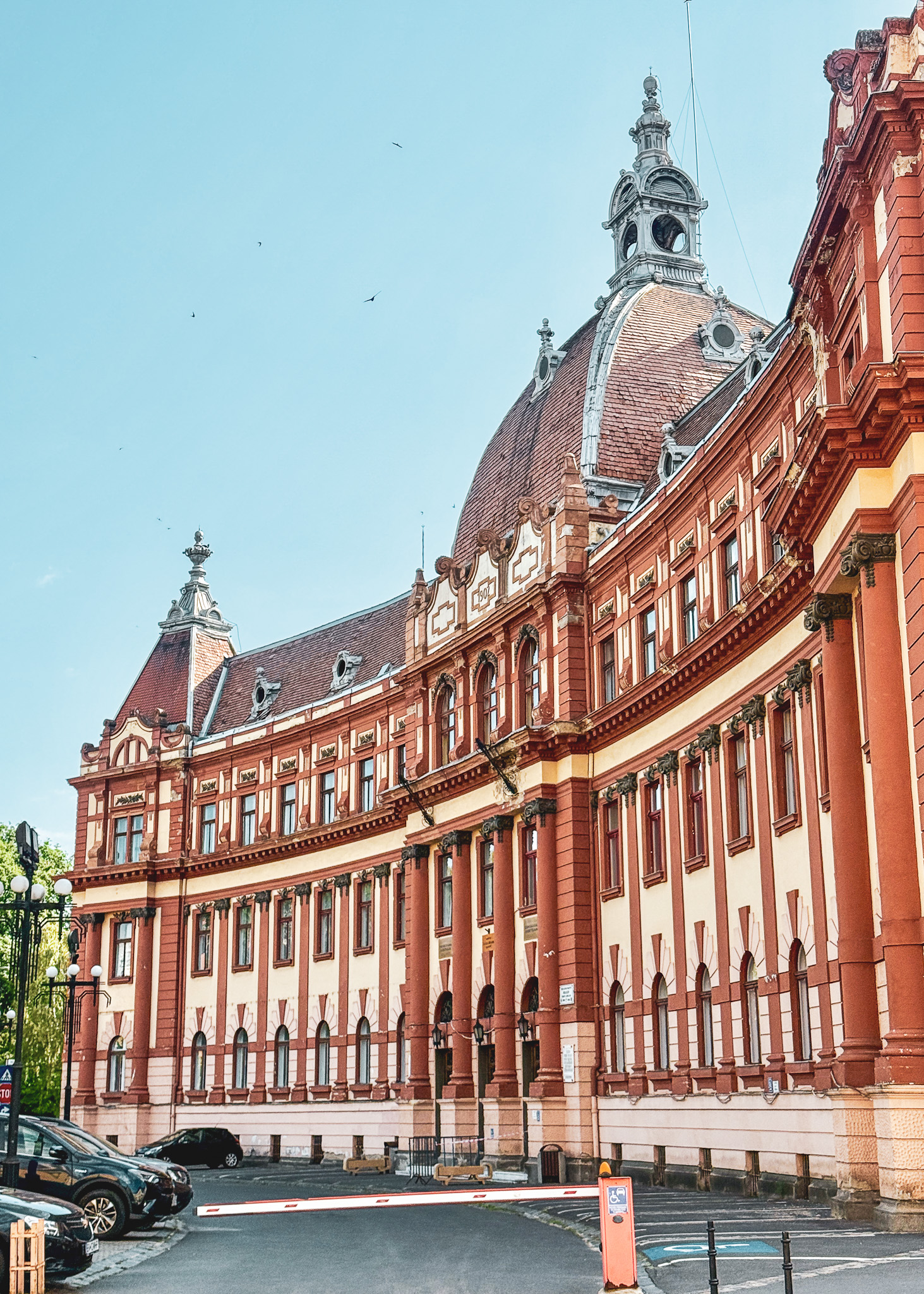
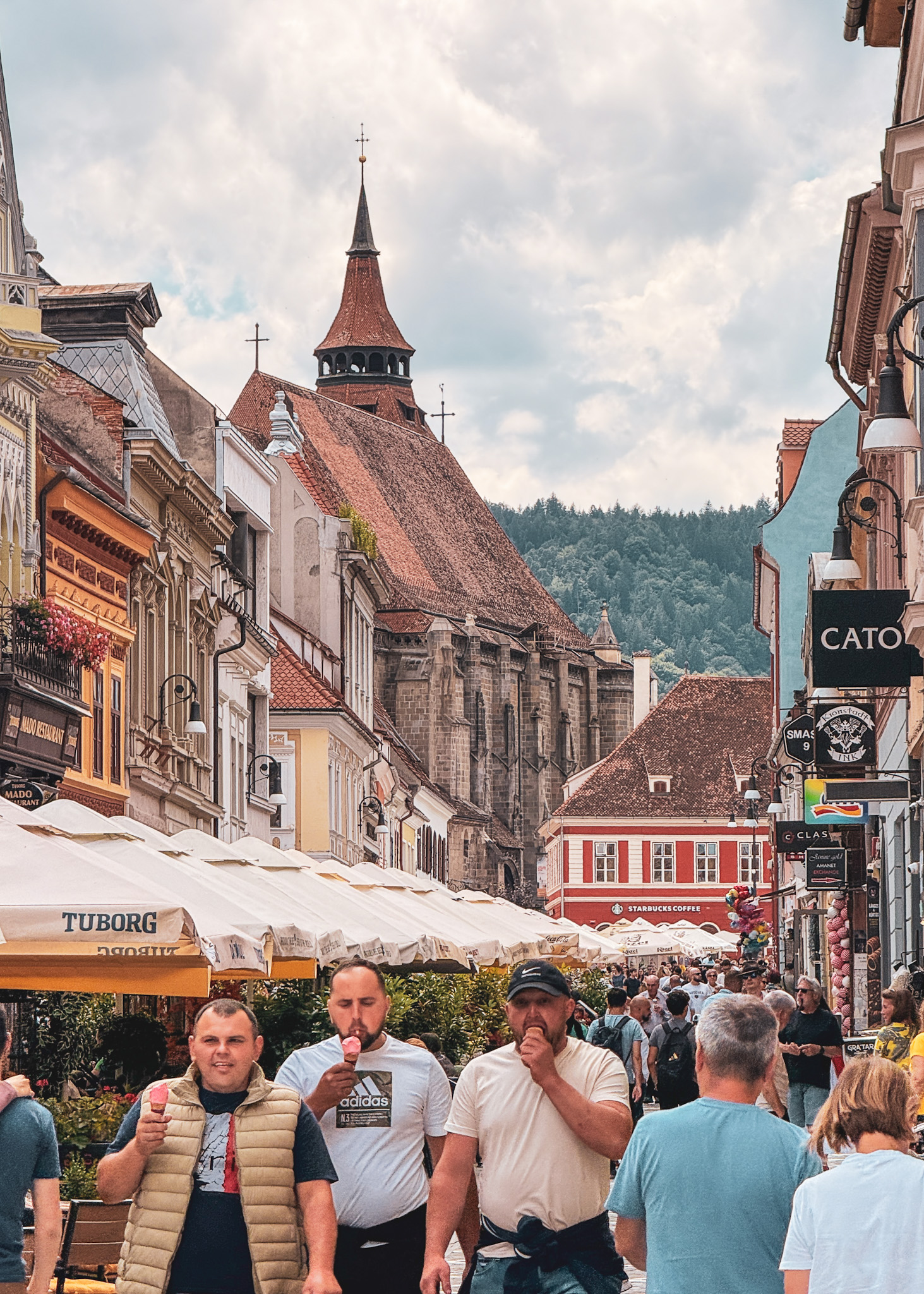
And then we arrived in Brașov, and we fell for a town harder than we have fallen for anywhere in a while. Brașov sits in a bowl of forested Carpathian slopes in the heart of Transylvania, and its historic center is a storybook spread of pastel Saxon merchant houses with the steep red-tiled roofs. Gothic spires poked above the rooflines, and cobblestone lanes spilled into wide medieval squares, the whole thing ringed by old defensive towers with green mountains rising directly behind. We did not know that this was precisely what we wanted from a Romanian mountain town until we were standing in one. It has everything a town needs and nothing it doesn’t, wrapped in about as much old European charm as a place can legally carry.
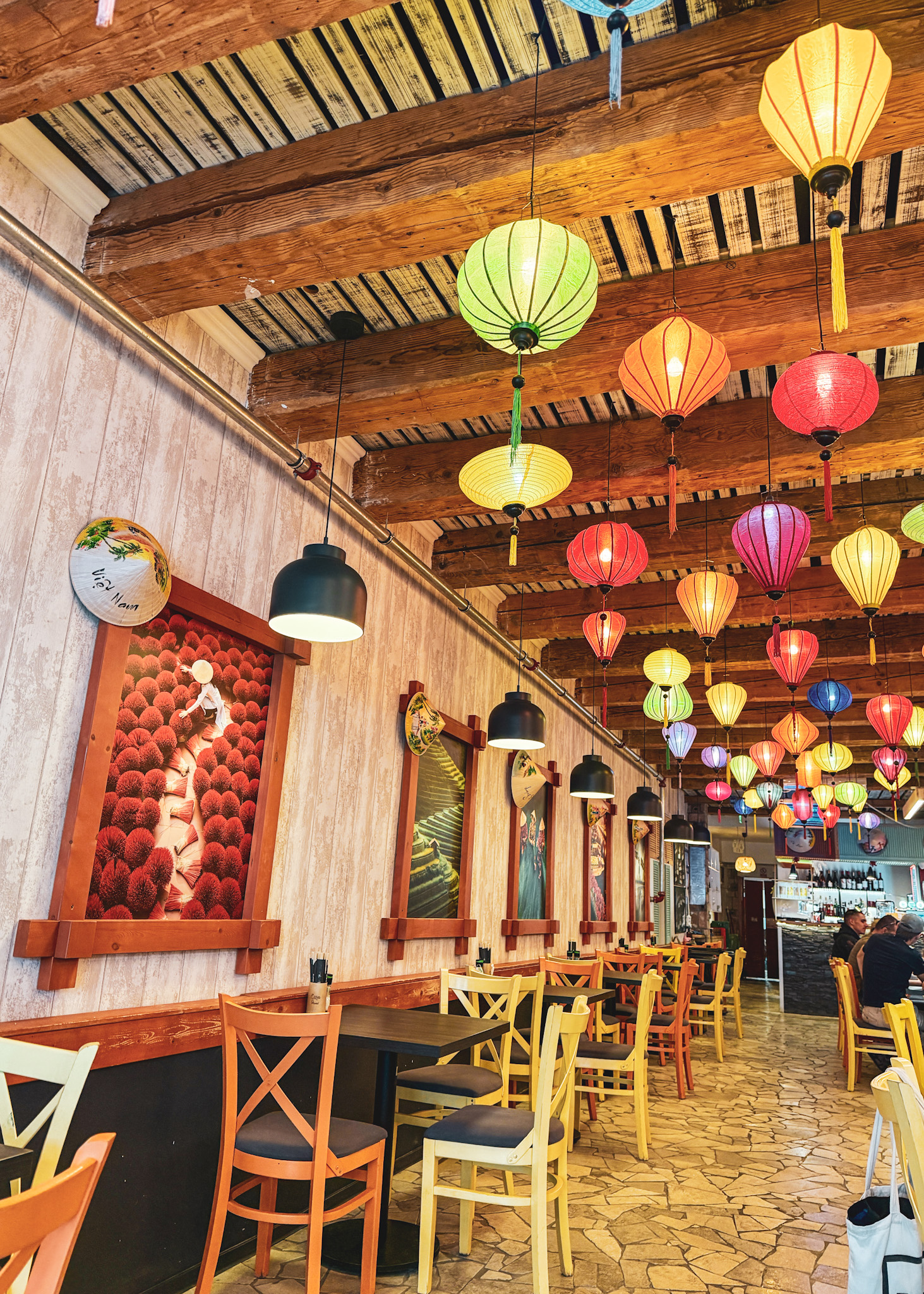
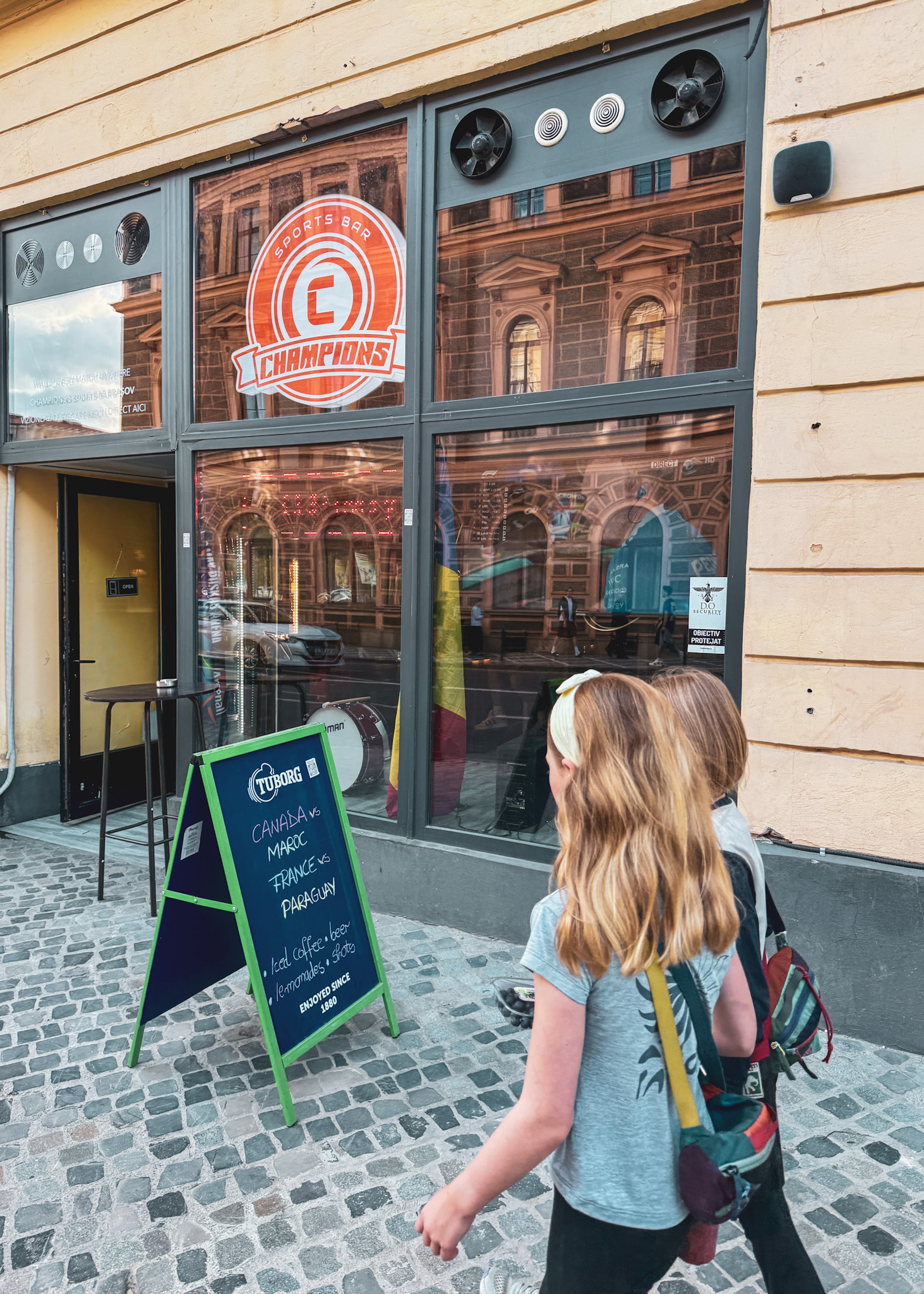
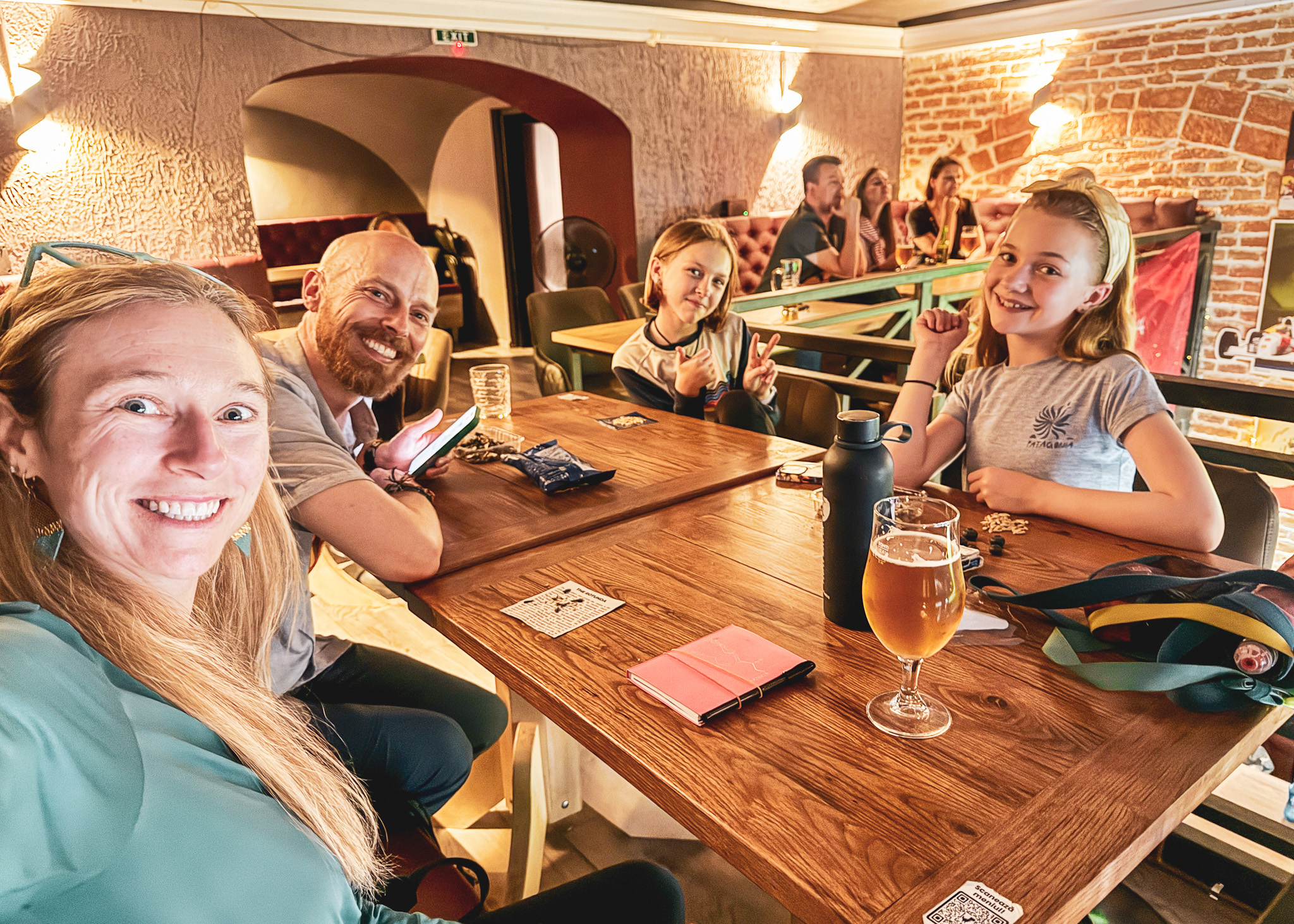
We marked the anniversary evening in a thoroughly unromantic and equally enjoyable fashion: Pad Thai at a Vietnamese restaurant on a Brașov side street, a meal culturally divorced from Vietnam, Thailand, and Romania all at once—it was delicious anyway. We topped off our first night with a live World Cup match at a sports bar called Champions, where we watched Morocco absorb a dangerous-looking Canadian team in the first half and then dismantle them completely in the second, winning 3-0 to reach the quarterfinals. Not a candlelit evening. But we had reservations for the real celebration the following night, and anticipation is its own gift.
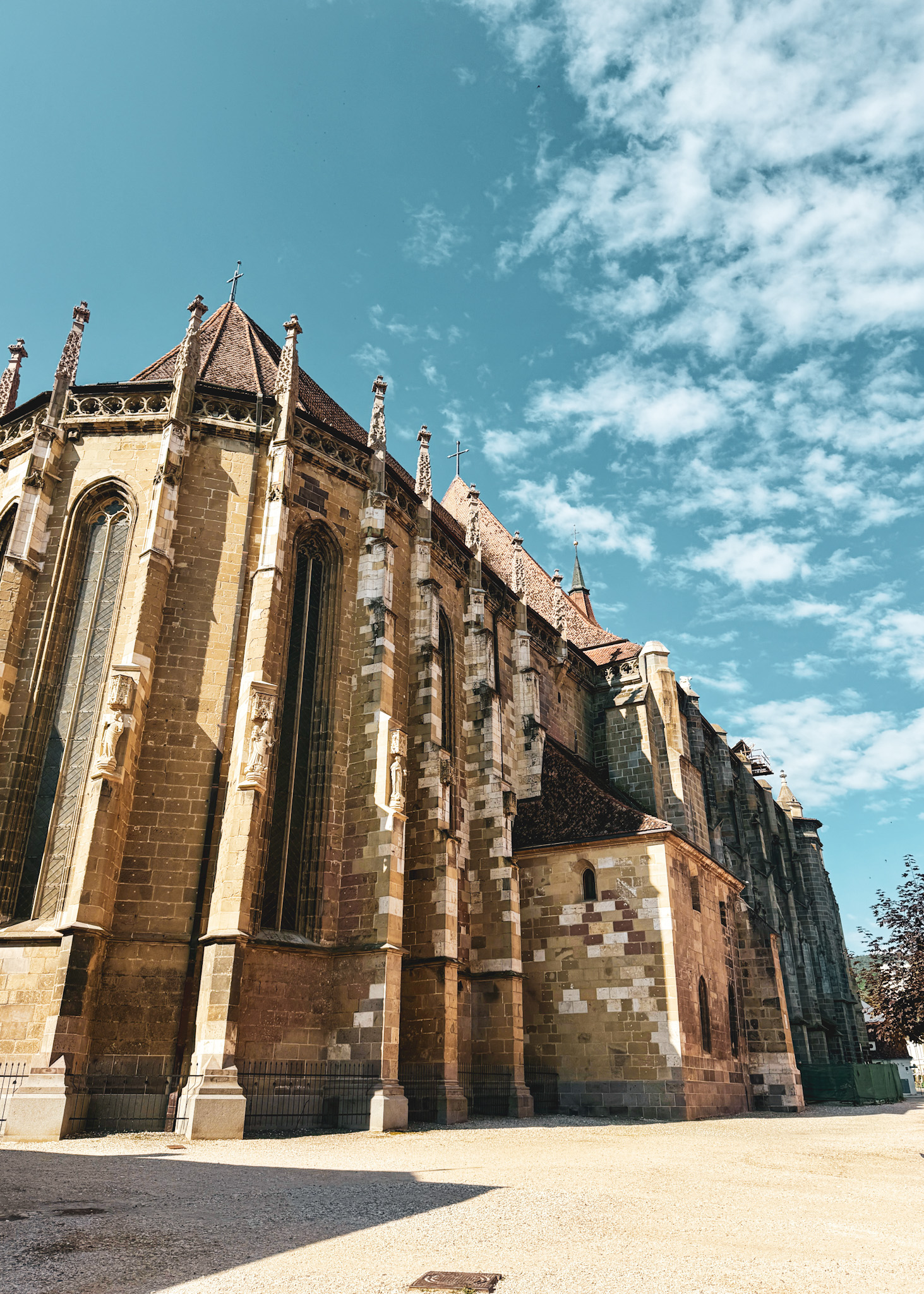
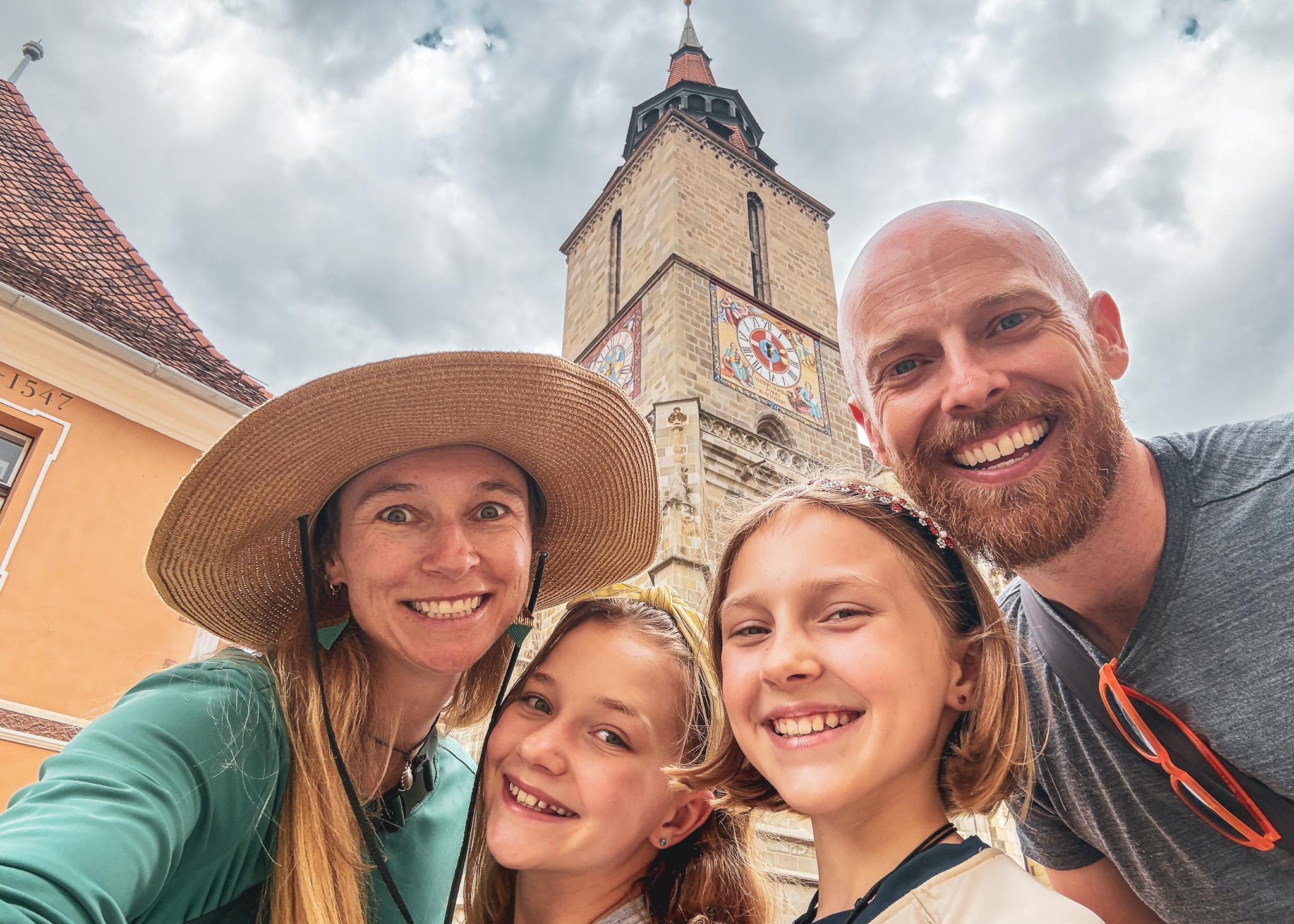
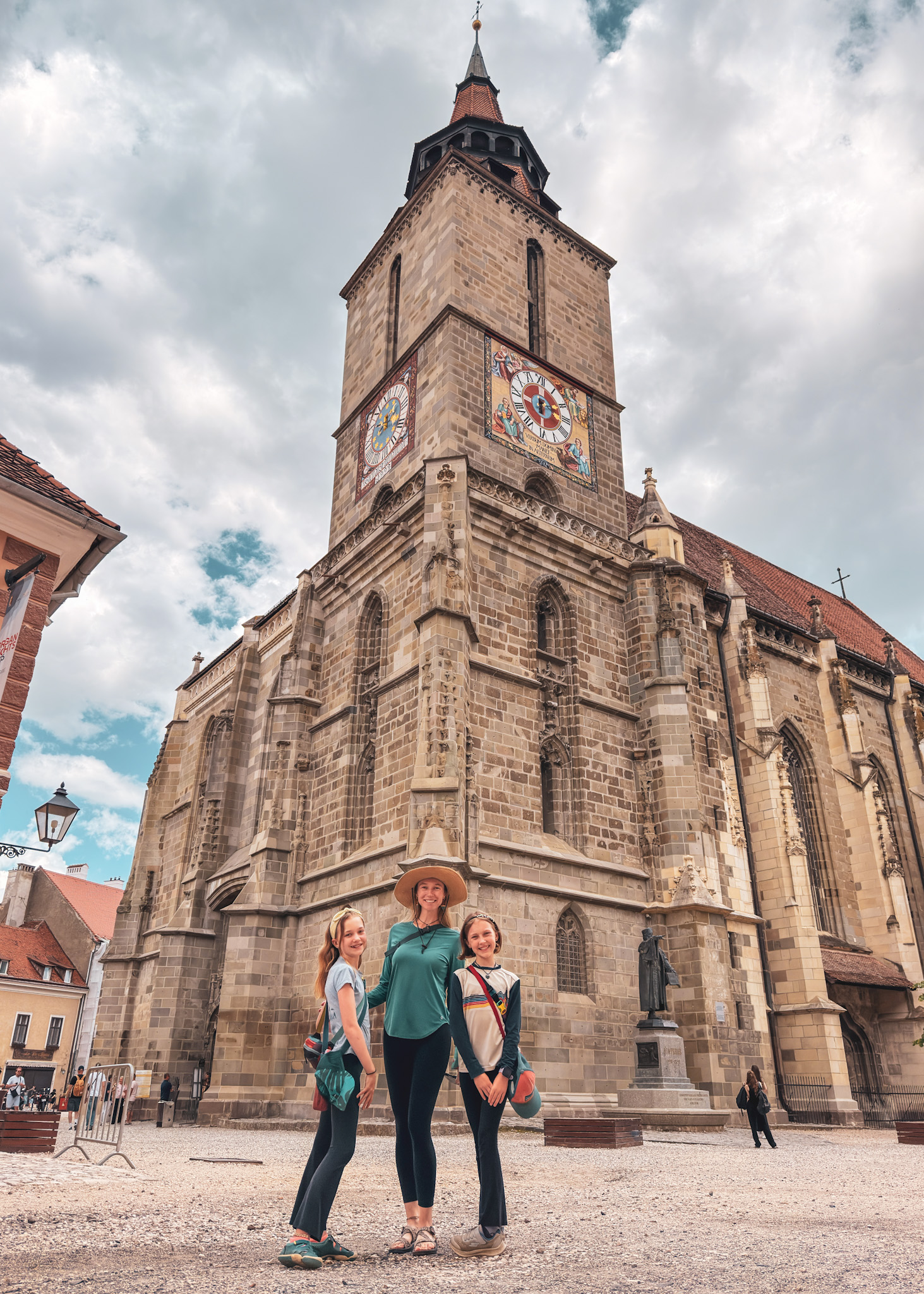
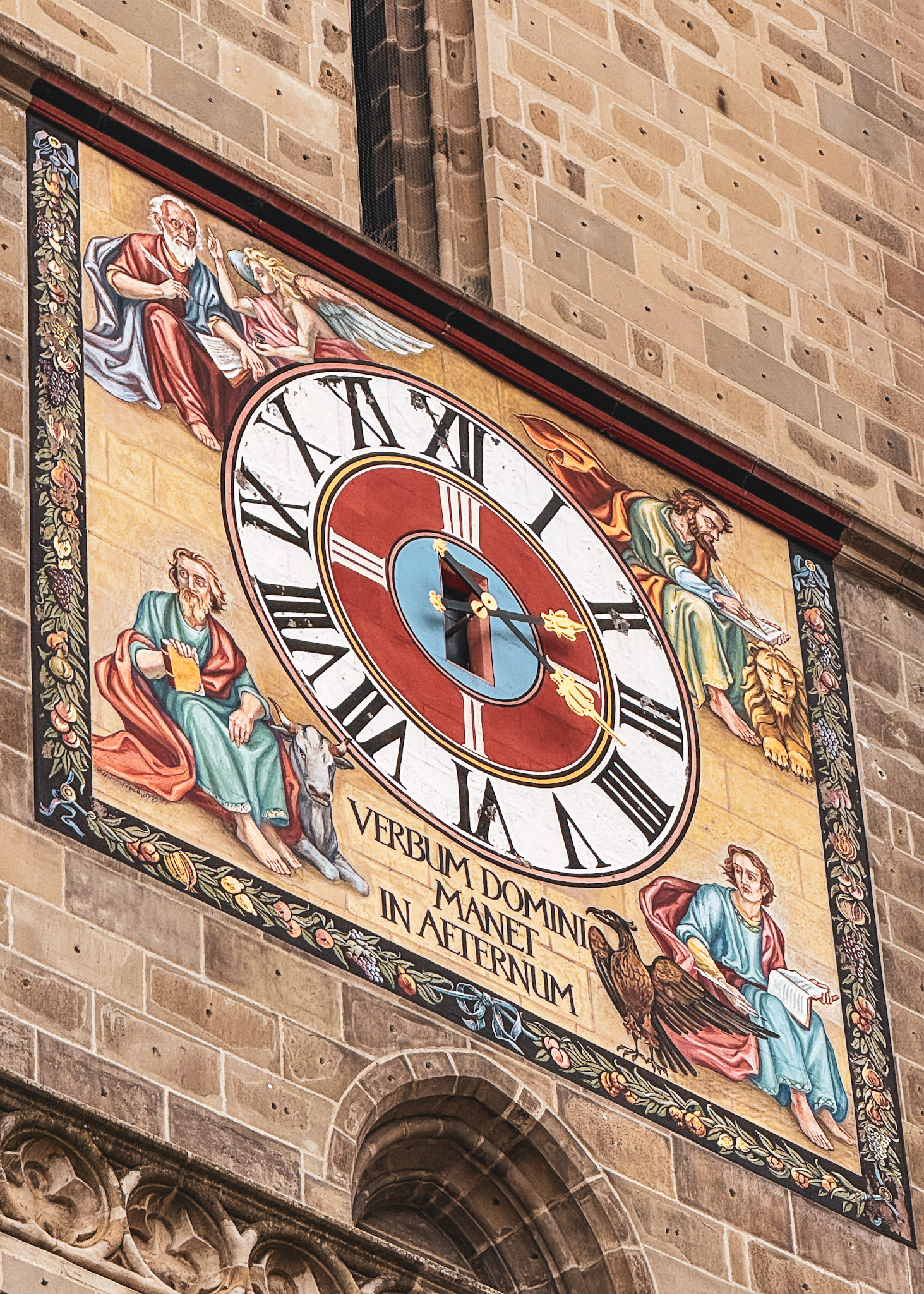
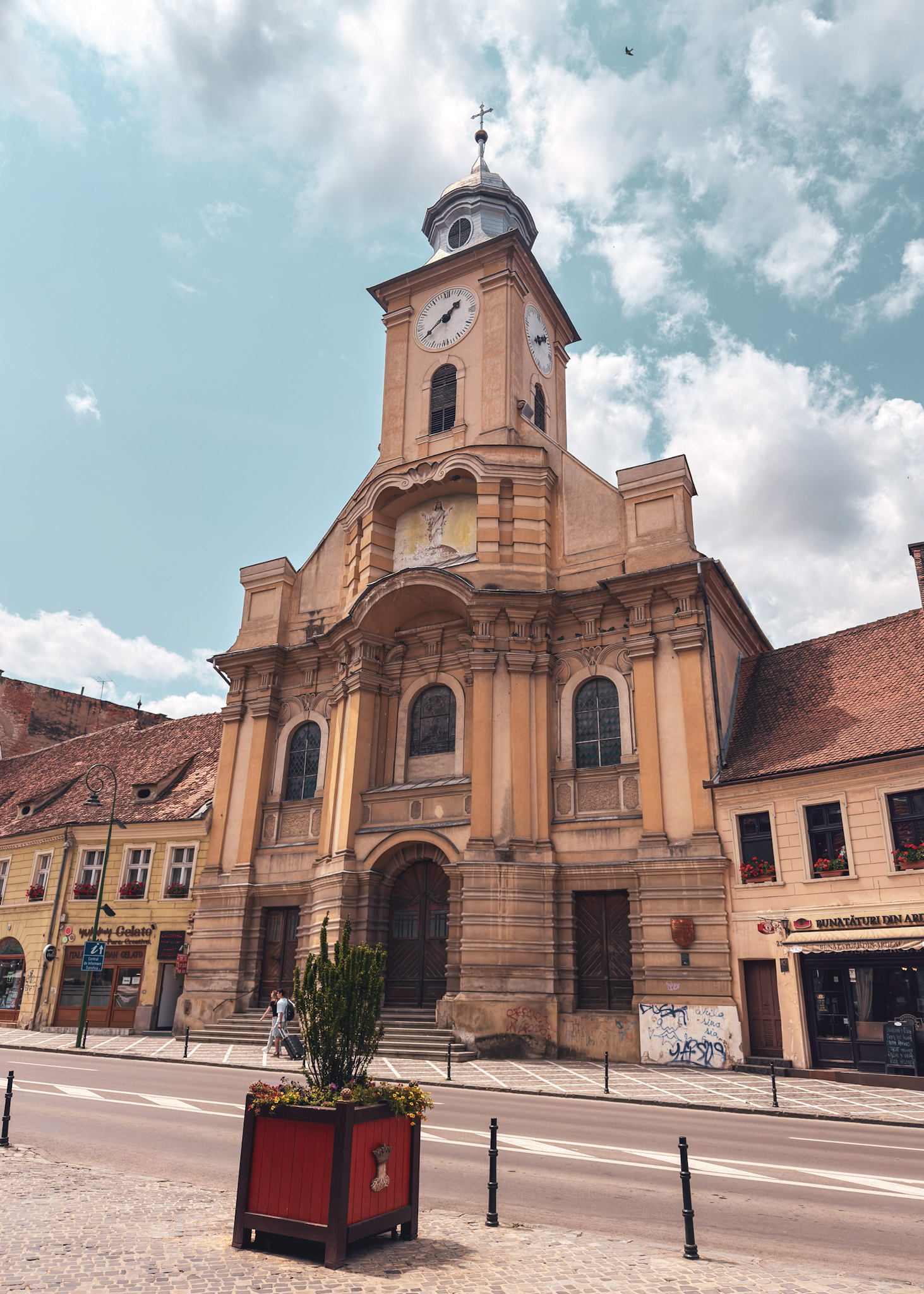
The next day belonged to Brașov, and to its magnificent centerpiece. The “Black Church” is the largest Gothic church in Romania and one of the largest in all of southeastern Europe, built by the town’s Saxon community between roughly 1385 and 1477. It earned its name in 1689, when a catastrophic fire during the Great Turkish War tore through Brașov and blackened the church’s pale stone with soot. Centuries of weather and restoration have lightened the walls considerably, but the name stuck. Max had a little historical blurb queued up to share with the girls, but just as he began, a young local guide appeared and offered a proper tour, and saying yes turned out to be the best decision of the day. He knew everything, not just about the building, with its 4,000-pipe organ, the largest in Romania, and the impressive collection of Turkish carpets it housed, but about the whole sweeping story of peoples moving through this corner of Europe.
The part of the tour that stayed with us longest came at the end, when the conversation turned to the Roma. We knew embarrassingly little about the Roma people going in, and we suspect we are not alone in that. The Roma are an ethnic group whose ancestors migrated out of northern India roughly a thousand years ago, moving gradually through the Middle East and into Europe, where they have now lived for centuries, and where they have been, and remain, one of the continent’s most marginalized peoples. They are often called by another name that is now widely considered a slur, so we will leave it aside. Romania has one of the largest Roma populations of any country on earth, and their history here is long and painful—it includes centuries of outright enslavement that did not fully end until the mid-1800s, followed by persecution that ran through the 20th century and, in meaningful ways, persists today. Our guide walked us through all of it with genuine nuance and care, and we left the church with a whole chapter of European history newly opened that we had somehow never been taught.
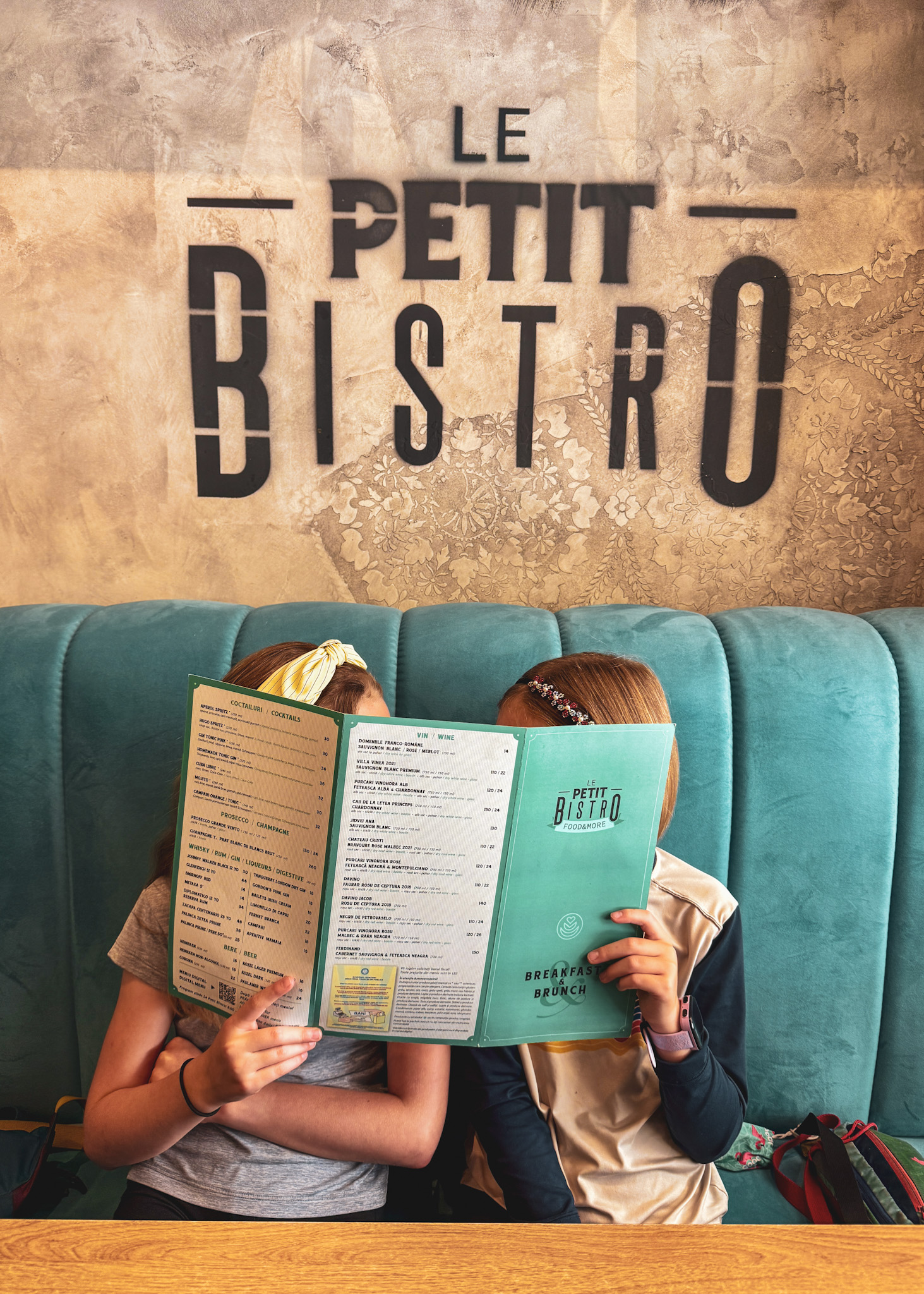
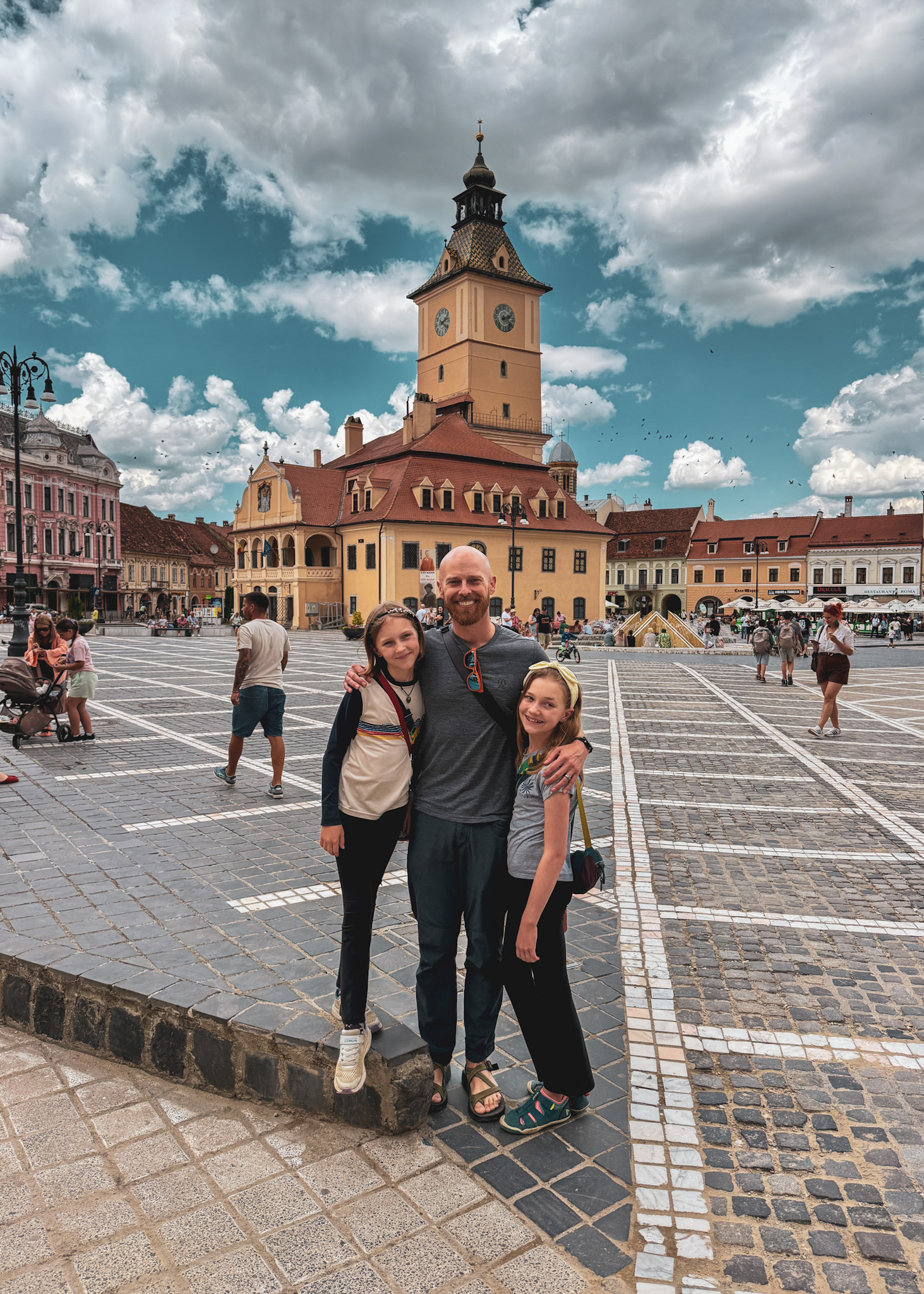
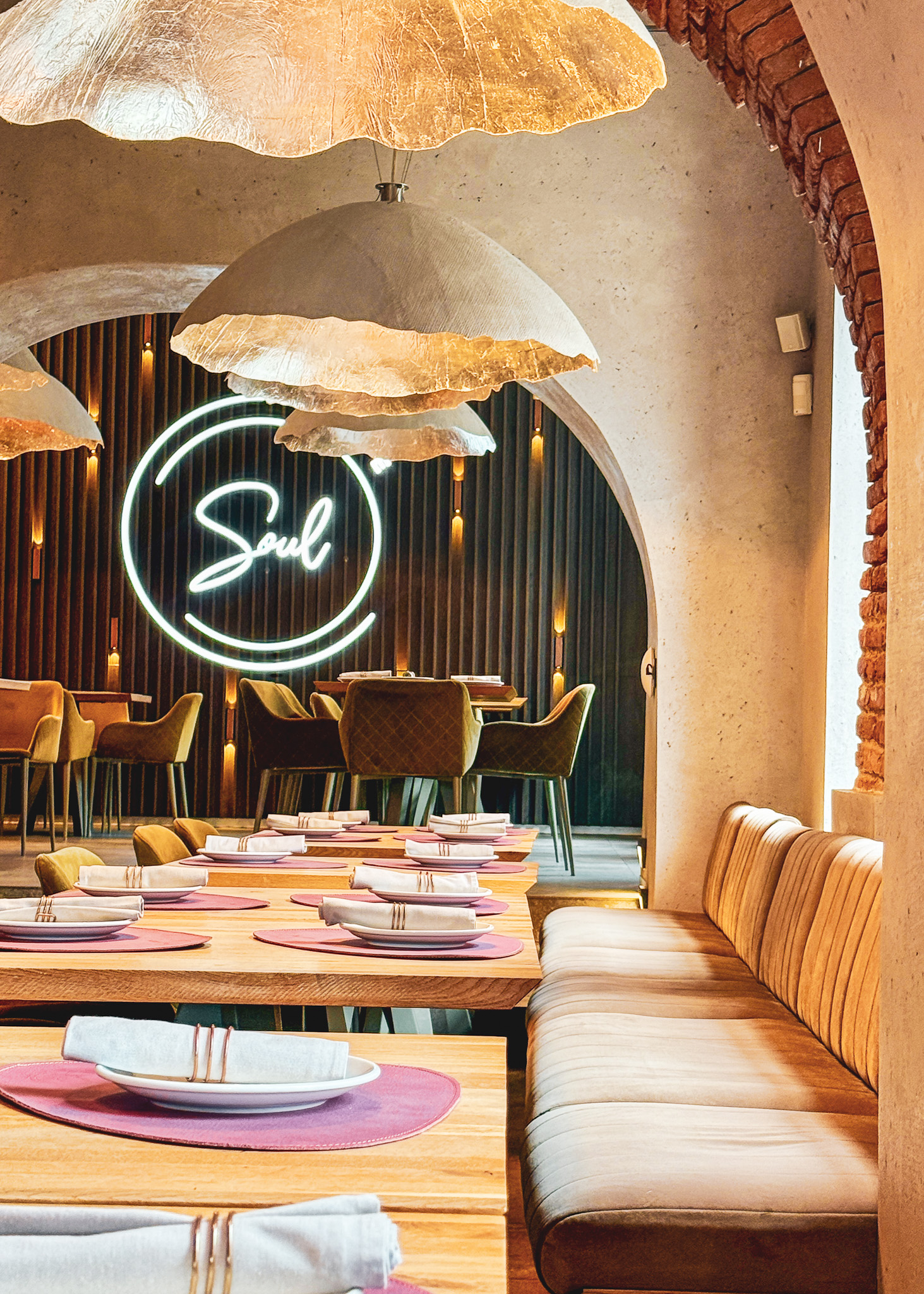
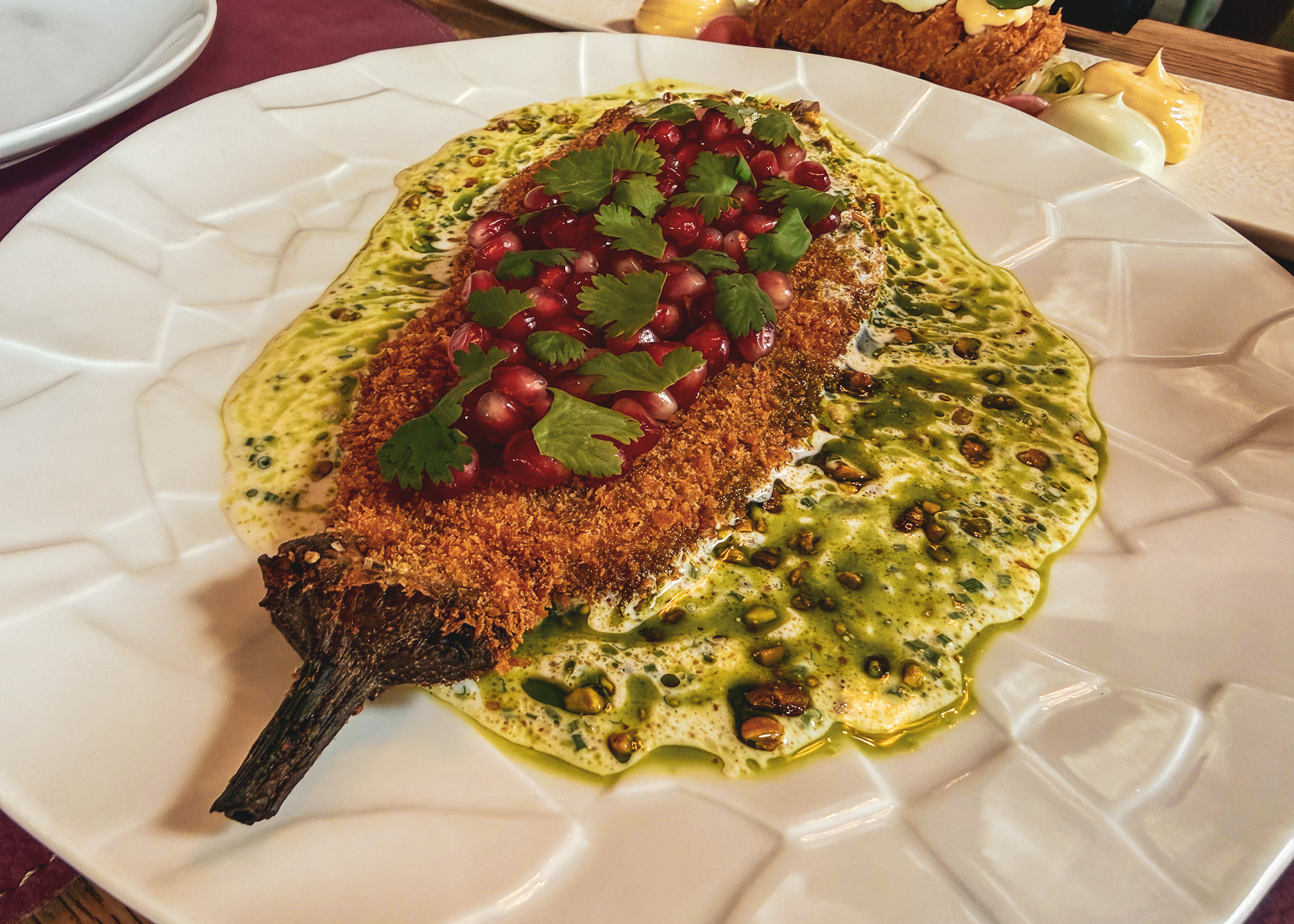
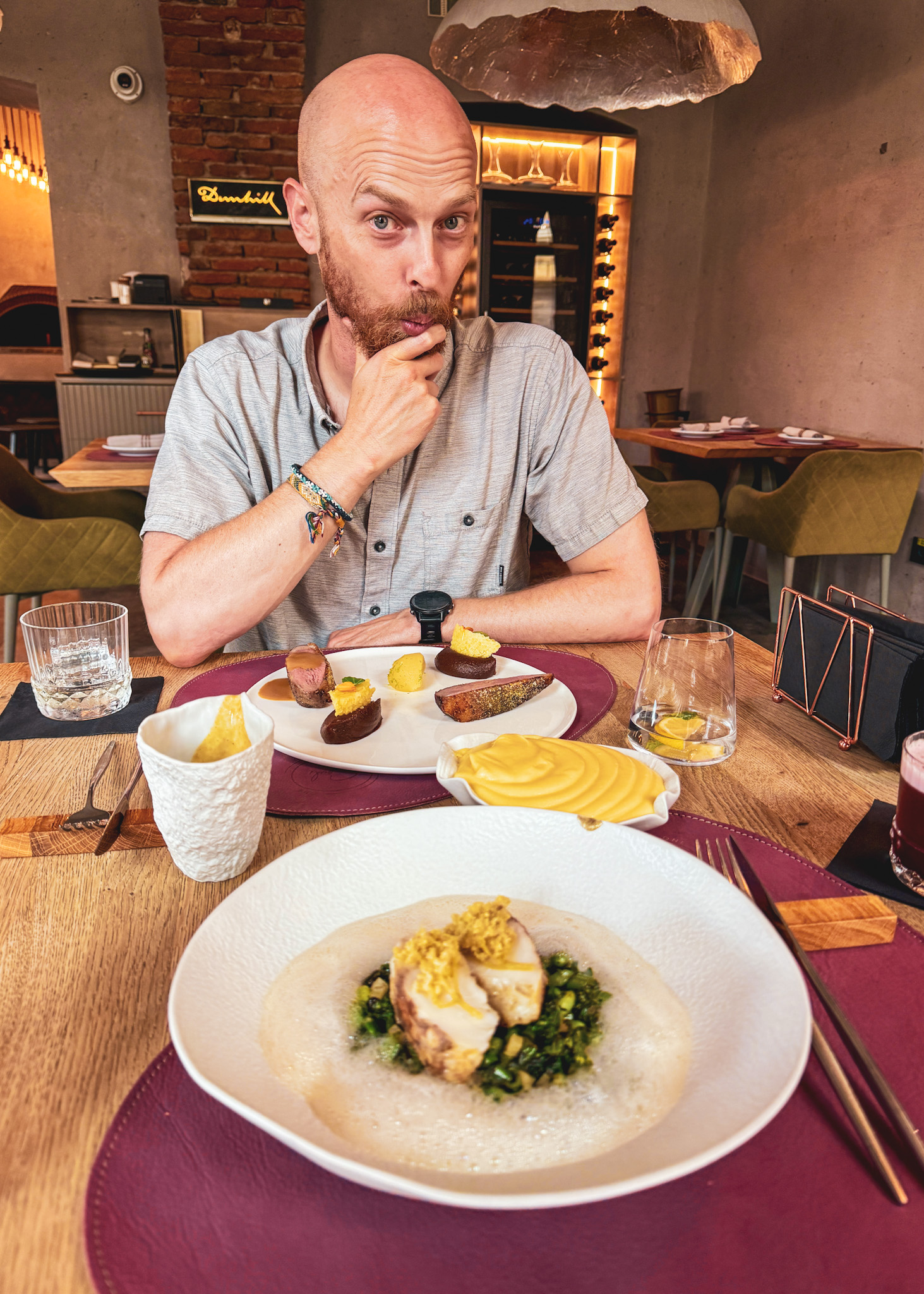
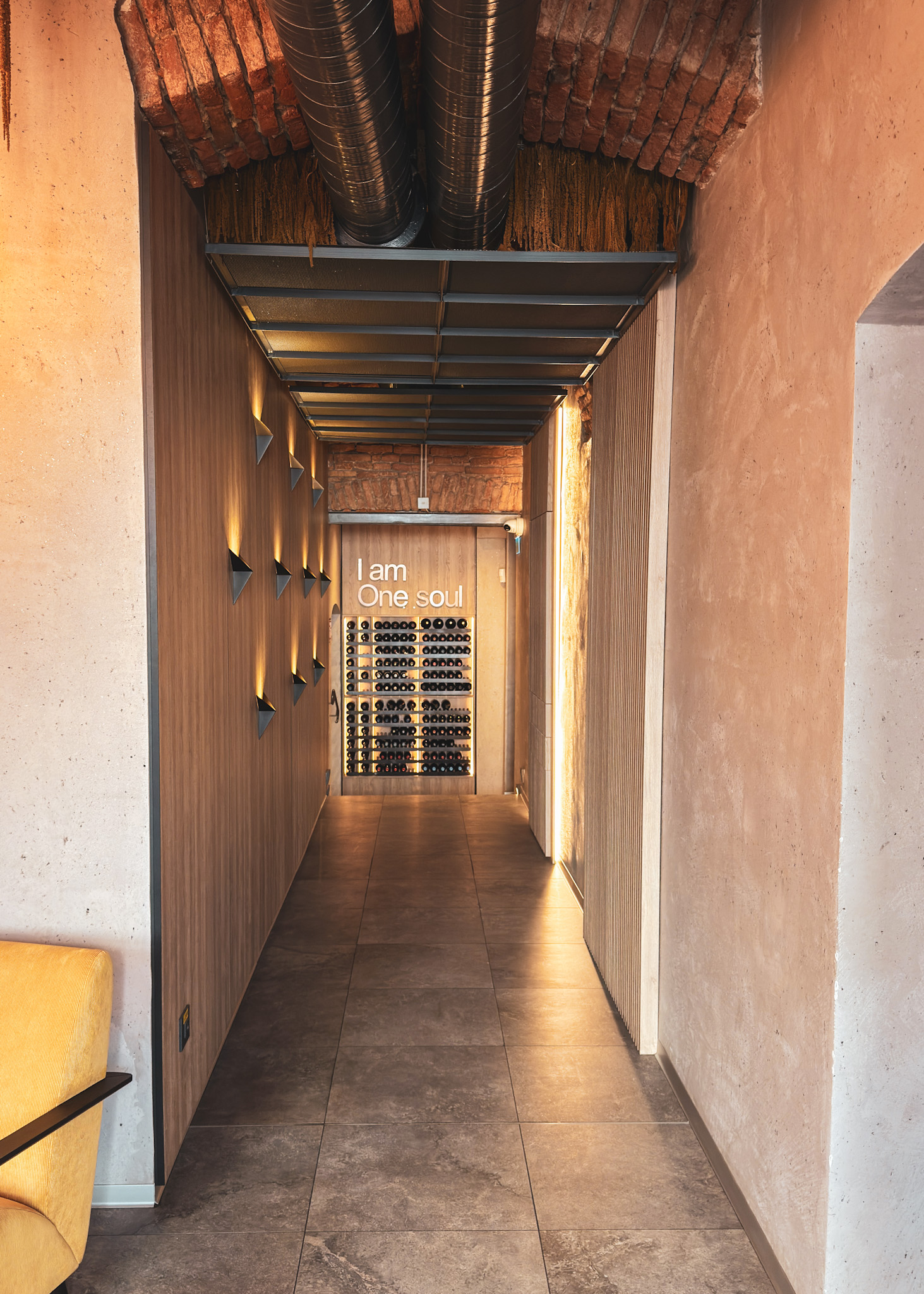
That evening brought the anniversary, take two. The girls had spent the day finishing every last assignment of their school week, and their reward was waiting: burgers to-go and a movie night at the apartment, on their own, in charge of themselves. Shaina and Max, meanwhile, walked out into the perfect Brașov evening for dinner at a restaurant called One Soul, and it was exactly what we’d hoped for. Fancy but not fussy, with portions scaled for humans rather than the heroic excess this part of the world usually insists upon: a tartine, a panko-crusted eggplant, a duck dish, and a branzino perched on elderflower foam beside a succotash of edamame, green beans, and asparagus. All of it was delicious, and we were too full for dessert, which may have been a mistake we’ll simply never be able to evaluate.
And then came the best part of the whole anniversary, which cost nothing. We walked the old town for an hour and a half as sunset approached, holding hands, and talking. About the trip and the strange fact of its approaching end. About what life looks like when we get home. About how much we loved this little town and wished we’d given it more days. No grand gesture, no party, just the two of us sixteen years in, wandering a postcard-picturesque town with no agenda. Exactly what we wanted. We returned to find the girls playing together nicely and the apartment un-burned-down, which counts as a flawless evening on every front.
Our last Brașov morning was consumed by a logistics caper that deserves telling in full. In two days we would begin walking 125 kilometers across Transylvania, and one does not haul two roller bags’ worth of extra luggage down a rural walking trail. The bags needed to get to Sibiu, the city near the far end of our route, on their own. Sunday had defeated us entirely, every tourist shop and travel agency closed. So on Monday at 09:00 sharp Max presented himself at a travel agency, which could not help him but pointed him to a second agency, which could not help him either but produced the contact information of a man named Marco. Marco, it appears, is the fixer you call when something or someone needs moving across Romania. One WhatsApp message later, Marco declared the problem solved, for a hundred euros. More than we’d hoped. Precisely as much as a same-day miracle costs. Accepted.
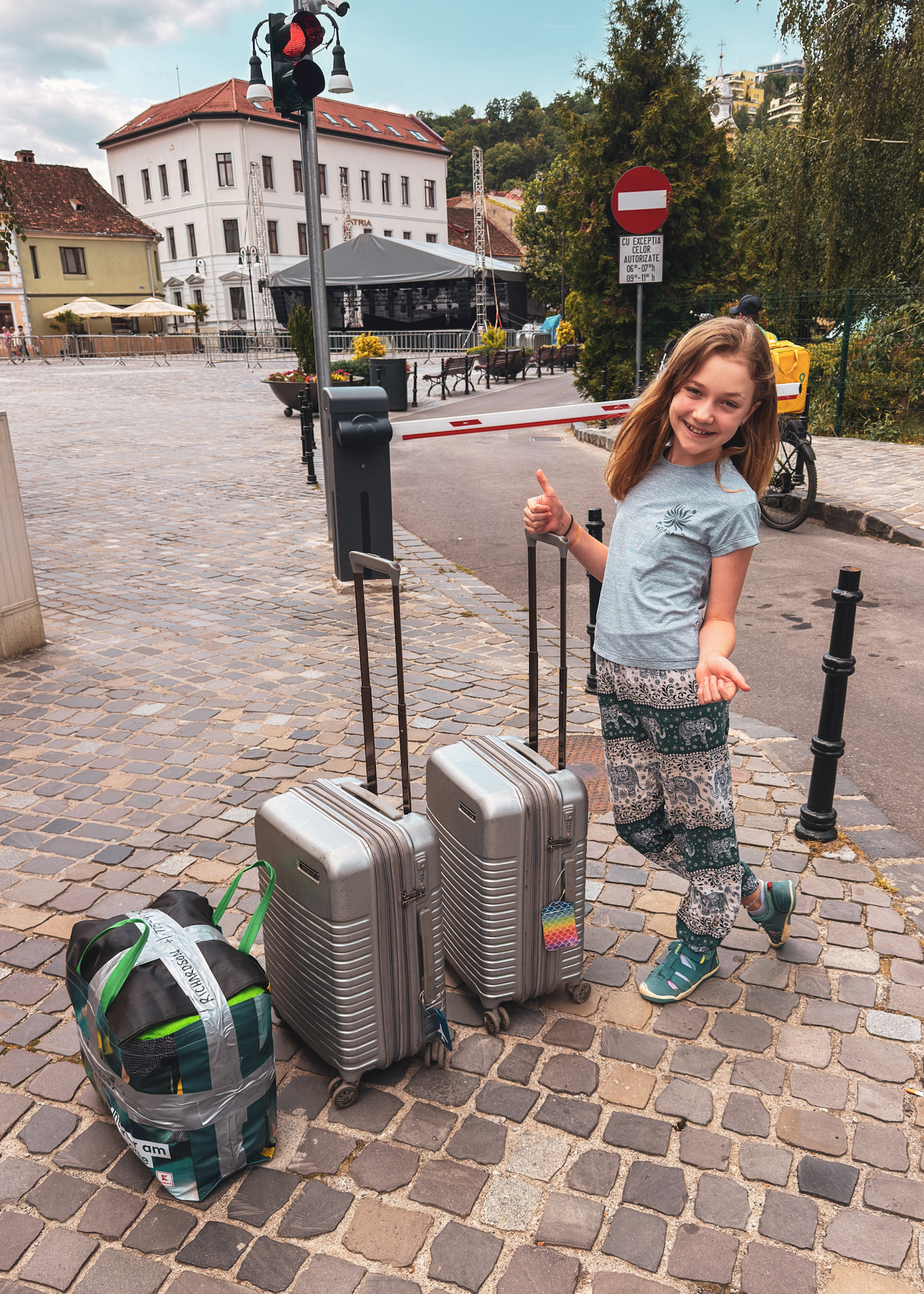
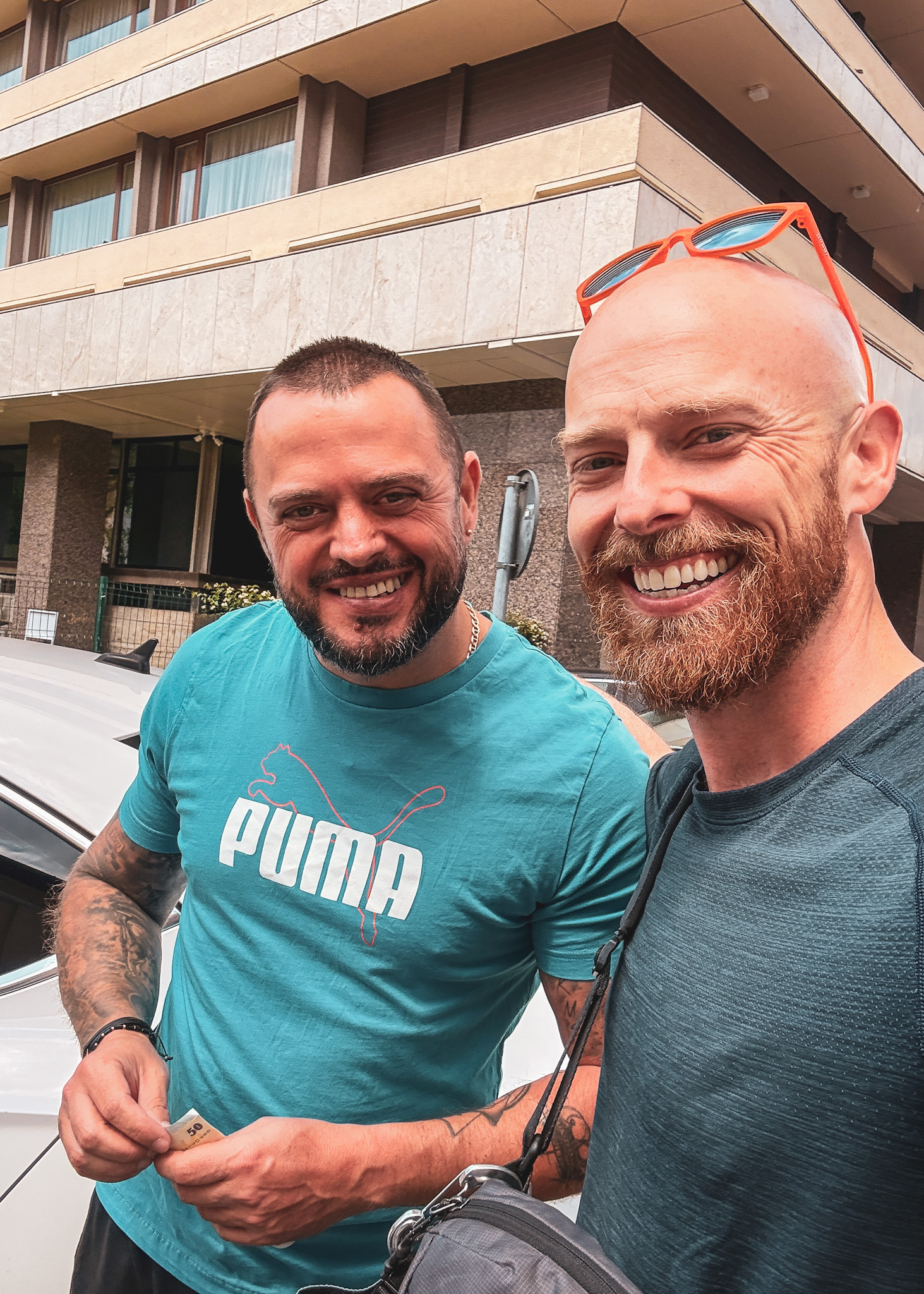
There remained the matter of the excess clothing that didn’t fit in the suitcases. Max went shopping for one of those zippered plastic storage totes and found instead an open-top plastic grocery bag and a roll of duct tape, from which he engineered a masterpiece of improvised luggage: four packing cubes in the tote, a plastic bag stretched over the top, and the whole assembly mummified in duct tape. At the appointed hour he met Marco on a street corner, handed over the two roller bags, an oddly duct-taped grocery bag, and the cash, and documented the transaction with a photo of everyone’s smiling faces, cash in frame, as evidence for a dispute we hoped would never occur. Then we crossed our fingers that our worldly goods would rematerialize in Sibiu, climbed into an Uber, and drove ninety minutes west into the Transylvanian countryside, to a village called Criț, where the last big adventure of this entire year begins.
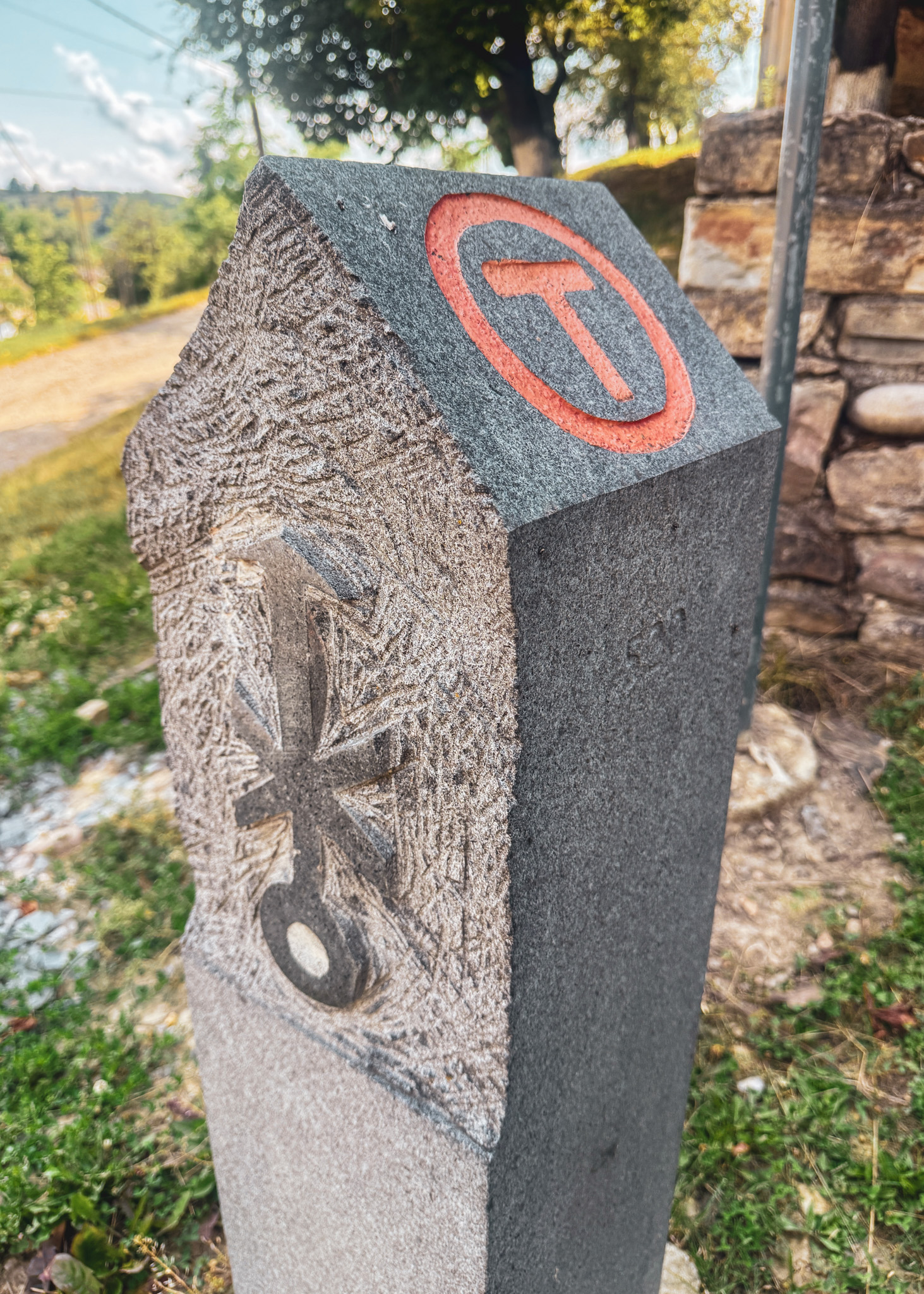
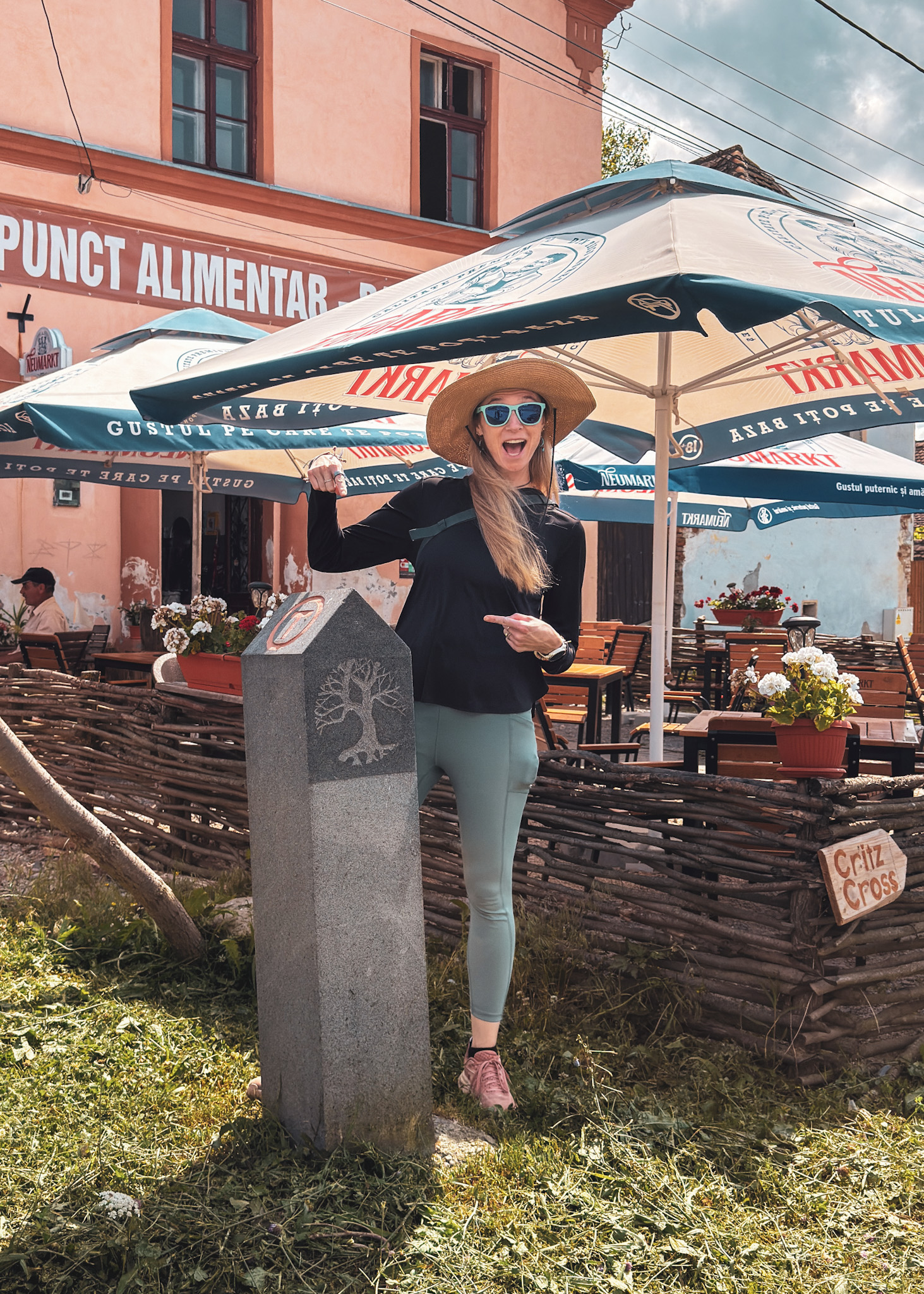
Here is what we are about to do. The Via Transilvanica is Romania’s first great long-distance trail, a roughly 1,400-kilometer route running diagonally across the whole country, from the Putna Monastery in the northeast to Drobeta-Turnu Severin on the Danube in the southwest. It was built between 2018 and 2022 by an NGO called Tășuleasa Social, modeled explicitly on the Camino de Santiago and the Appalachian Trail. Every single kilometer of it is marked by a unique hand-carved andesite stone, more than 1,400 of them, each designed by an artist to reflect the community it stands in, which together officially make up the largest outdoor sculpture art exhibition in the world. Its motto is “the road that unites.” We obviously cannot walk 1,400 kilometers with only three weeks left in our year, but we have carved out the piece we can: 125 kilometers over seven days, from Criț to Mediaș, straight through Terra Saxonum, the old Saxon lands studded with fortified churches.
There is a symmetry here that we did not fully plan and cannot stop smiling about. This entire year began last August in France, and all across Spain, with the Camino de Santiago—800 kilometers of walking that taught us what our family is capable of. And now the year will close with a walk built in the Camino’s image, a final week of moving through a country on foot, village to village, stone marker to stone marker. The road that unites, indeed.
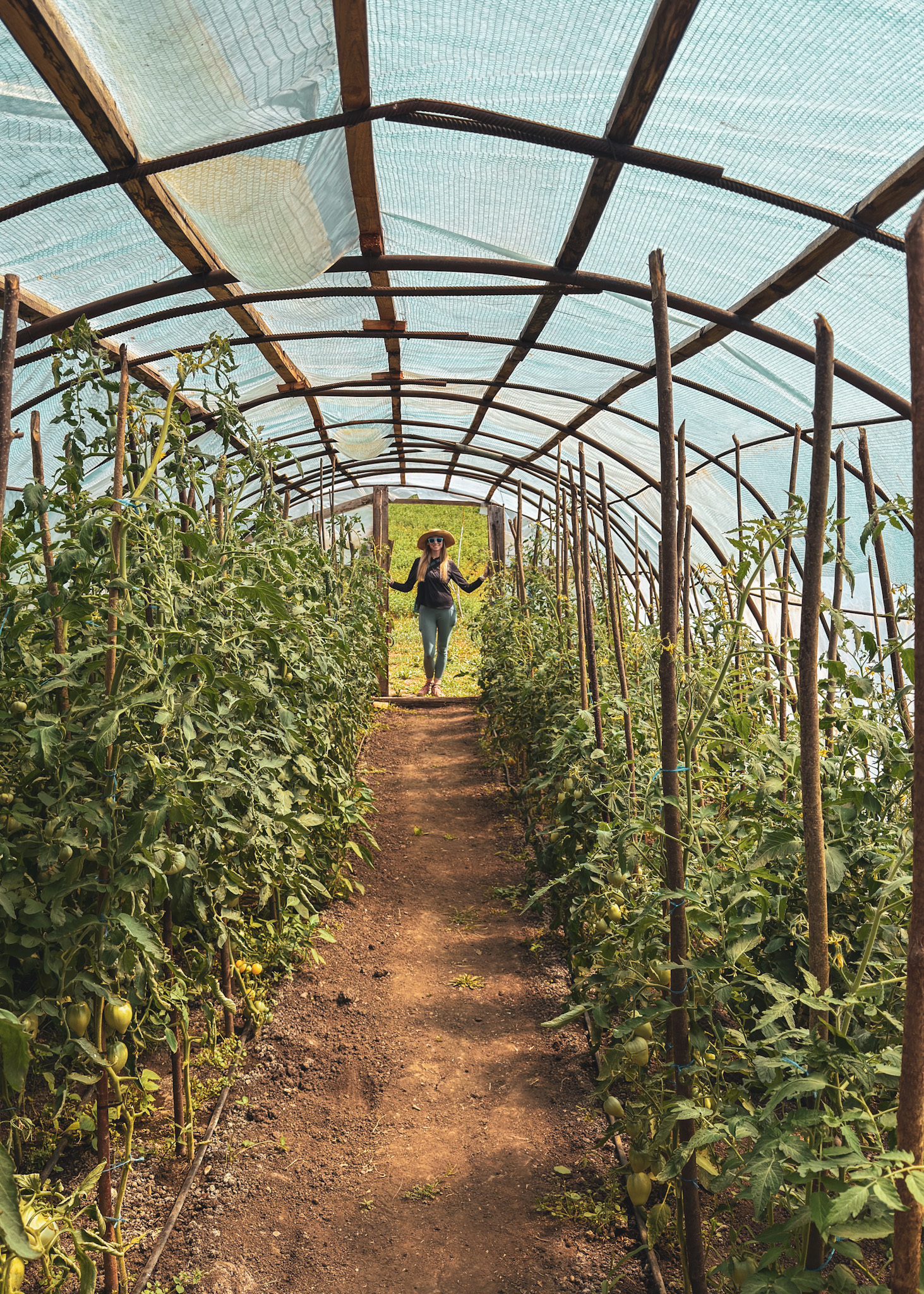
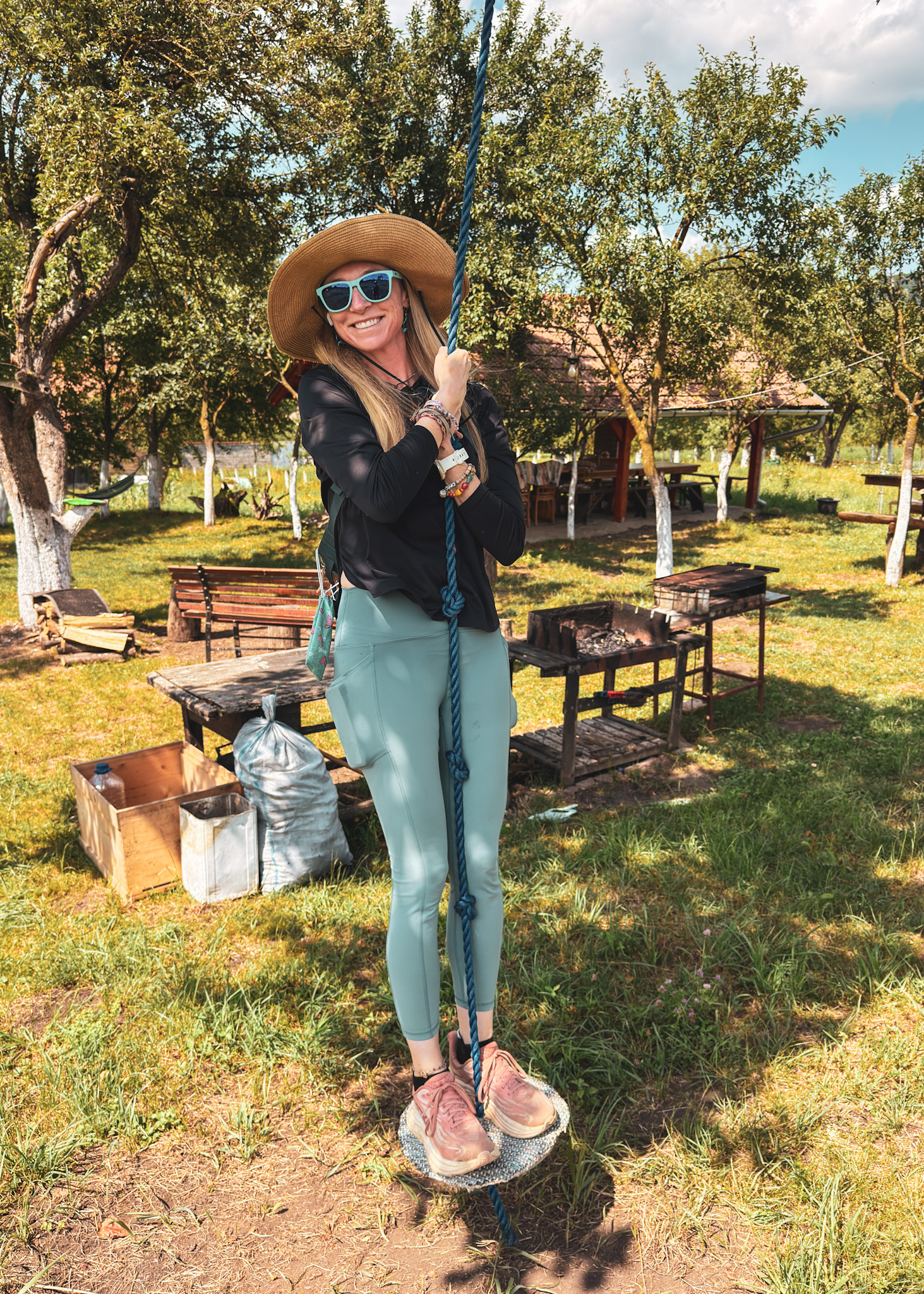
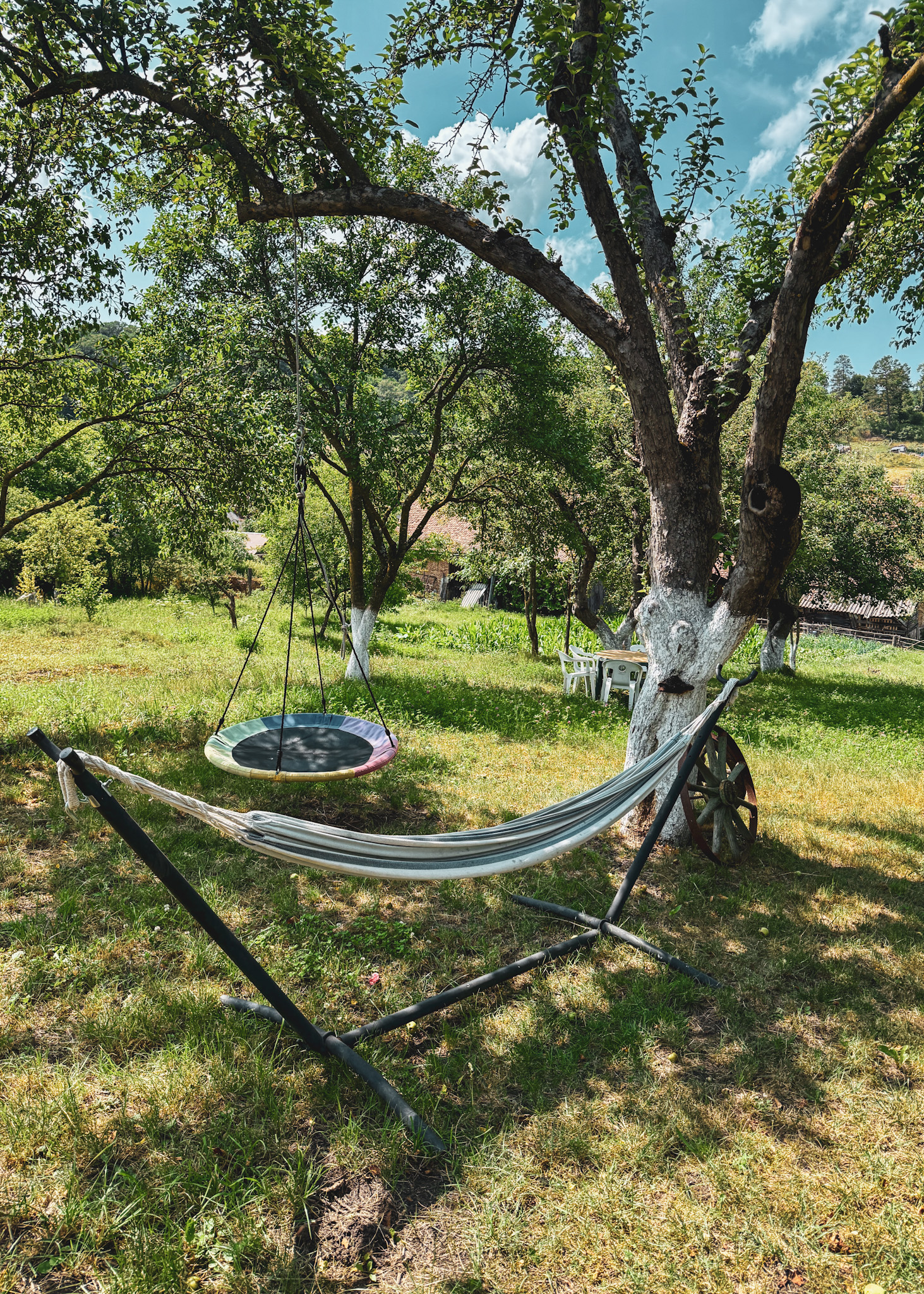
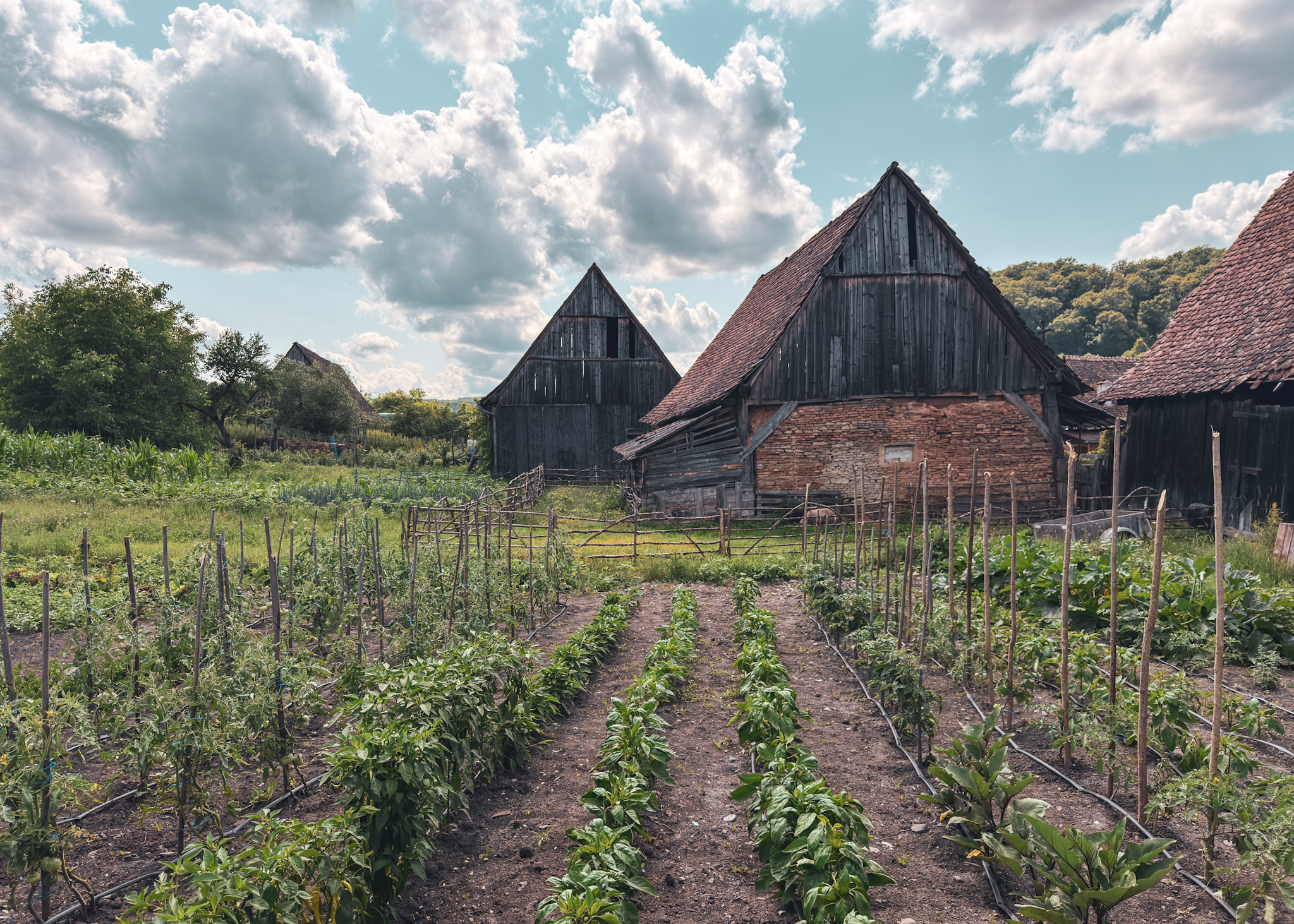
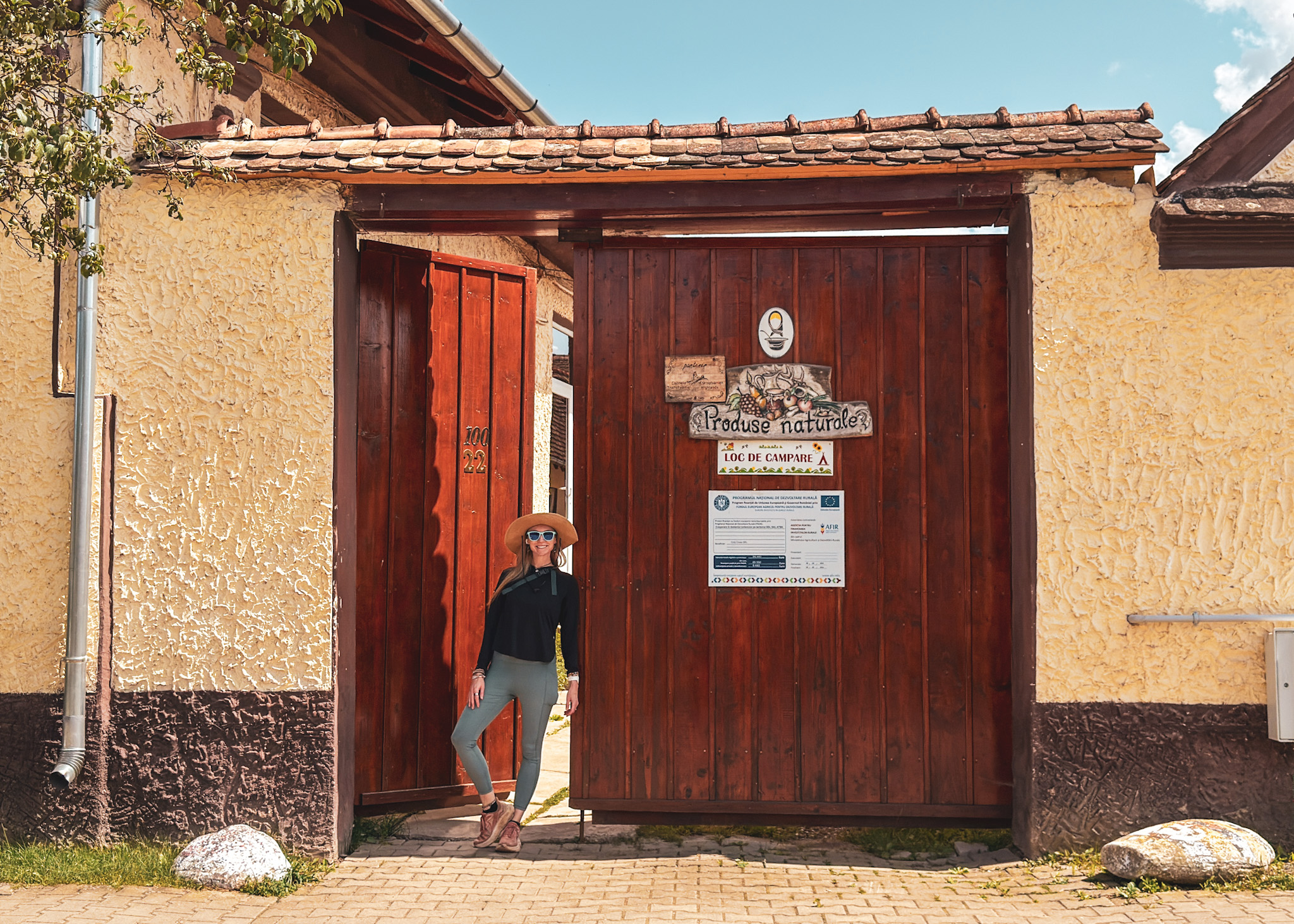
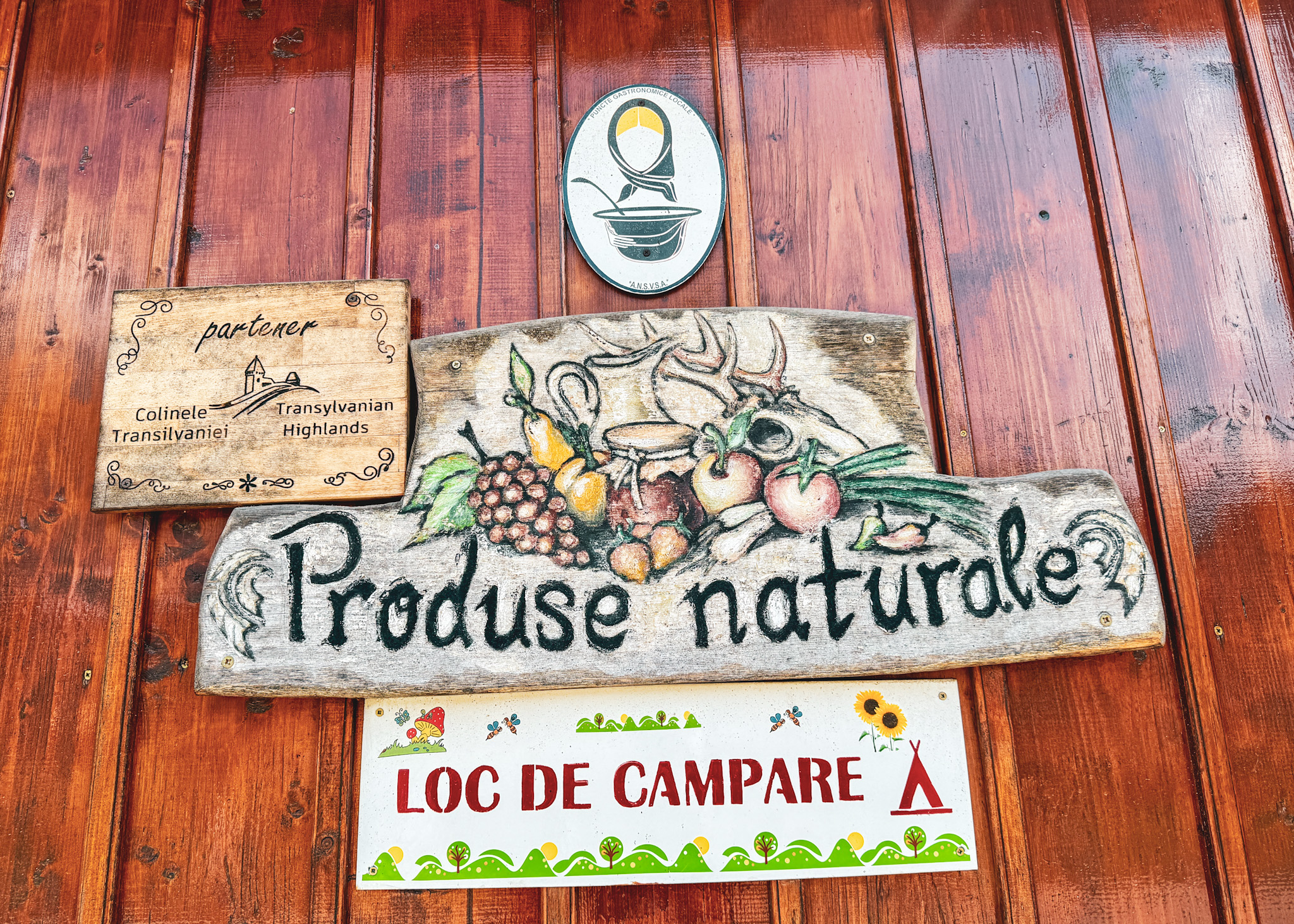
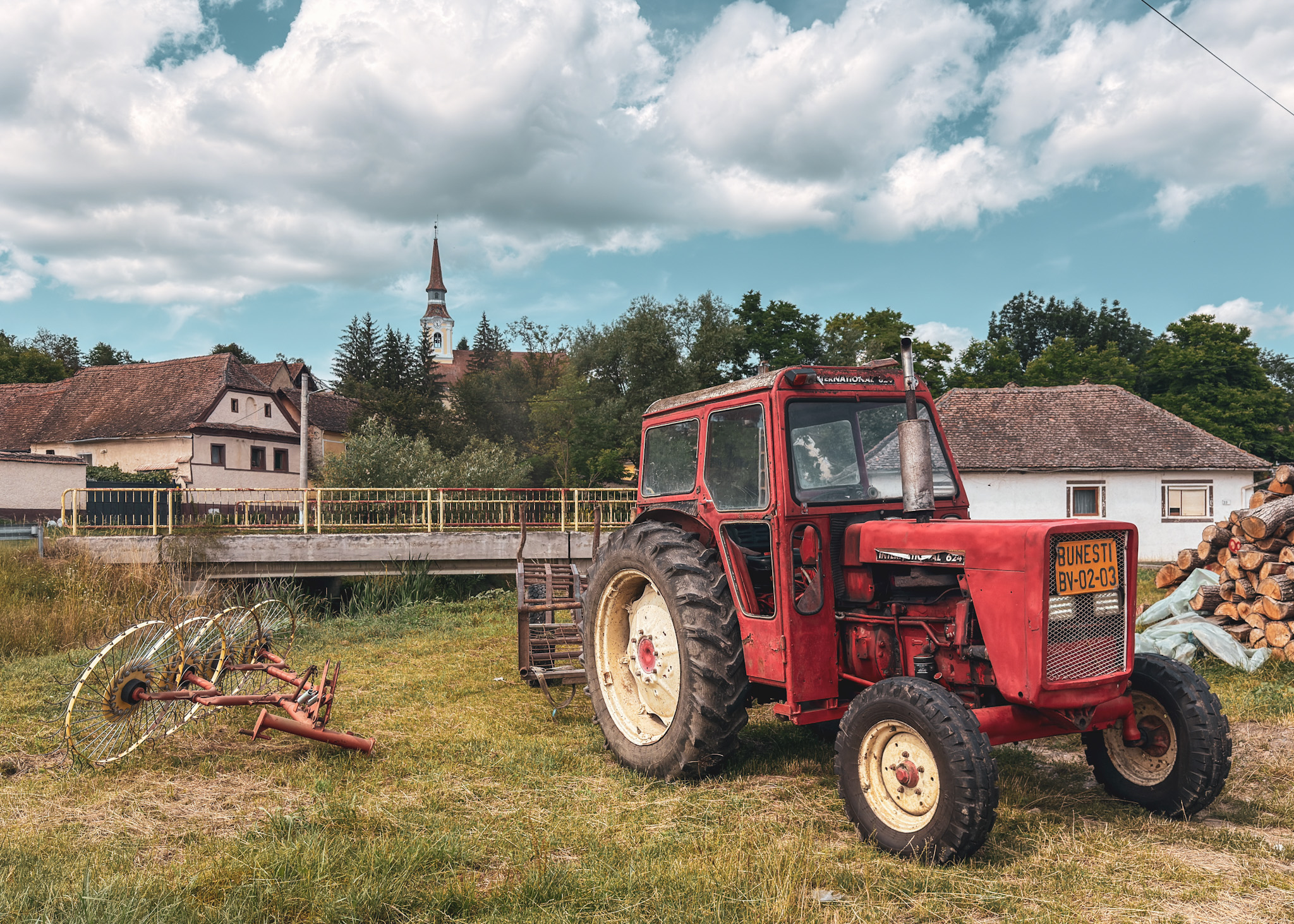
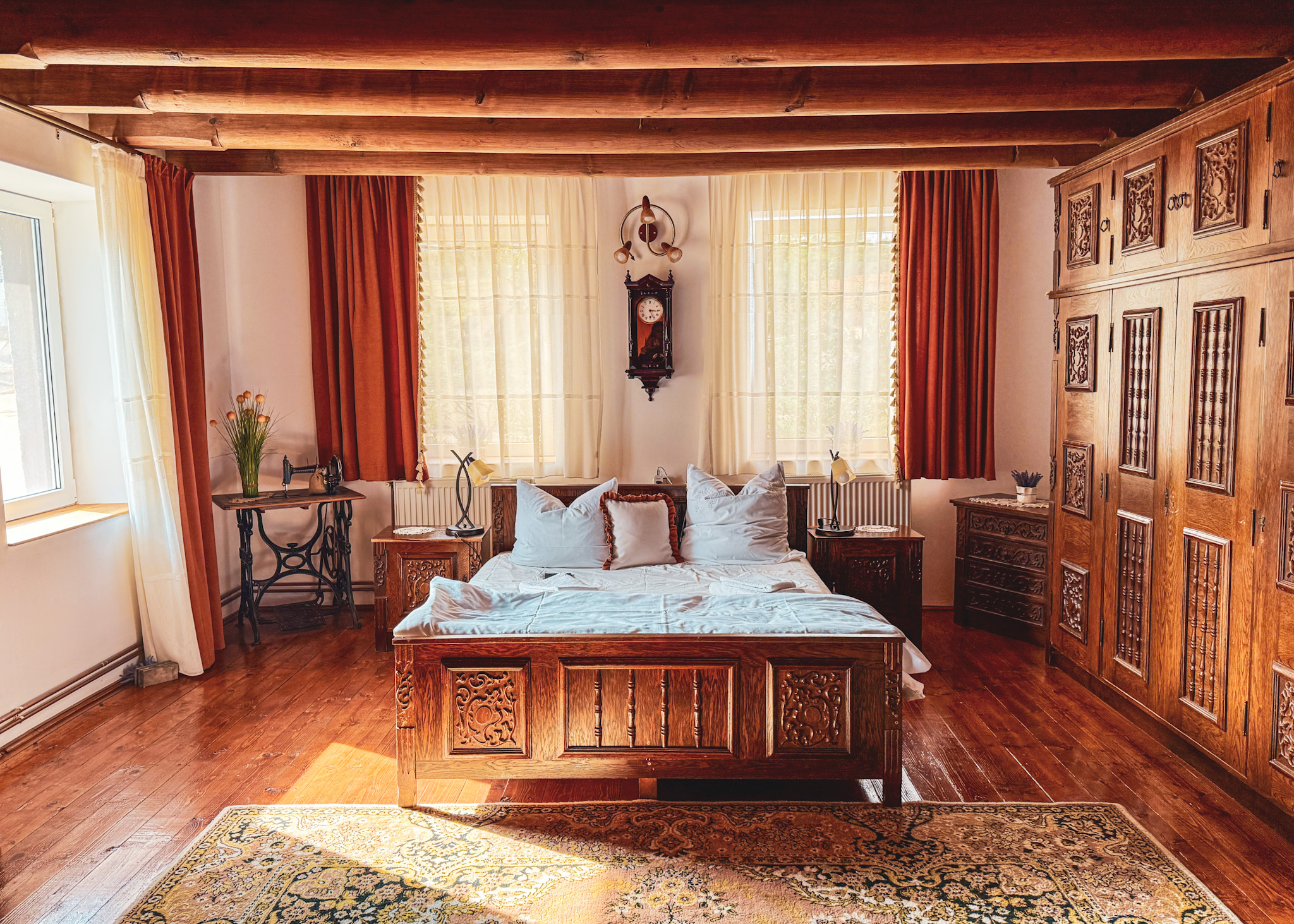
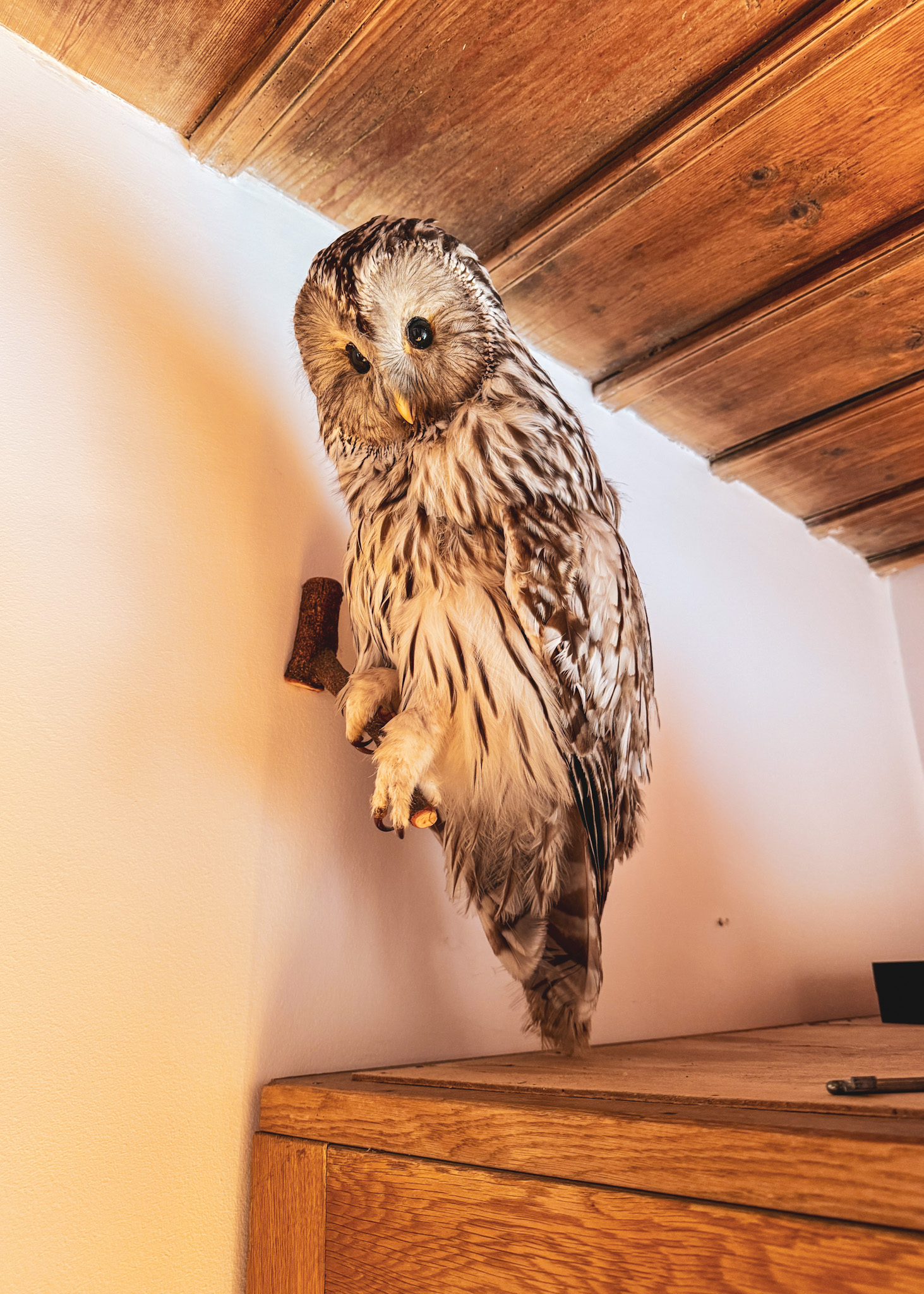
Criț gave us a gentle first evening. Our guesthouse, Pensiunea Rozalia, is traditional Romanian to the core, wooden floors and rugs and dark furniture and, yes, taxidermy on the walls. It wasn’t how we would decorate our own home, but it gave us a genuine experience of the region, with a garden and greenhouse out back full of fruit and vegetables and hammocks strung in the shade. We wandered up to the village’s fortified church, a legacy of the Transylvanian Saxons, the German colonists invited here by Hungarian kings in the 12th century to settle and defend this frontier. When Ottoman and Tatar raids came, whole villages would retreat behind these walls, which is why the church stands inside a full ring of fortifications with towers and storerooms built into the defenses. The church itself was locked, but the walls and courtyard told the story well enough on their own. We capped the evening with drinks on the patio of the village’s one small bar, a home-cooked dinner of cabbage-and-pork soup, a dynamite veal-and-pea casserole, and blueberry cake, and a cherry brandy from our host that drank like port.
The girls spent an hour on the phone with their grandparents, and you could hear the excitement running in both directions, because today marked exactly three weeks until we fly home. Three weeks. It is wild to hold that number. We are definitely excited about it. We are definitely bummed about it. And we have concluded that feeling both at full strength is exactly the right way to feel.
Tomorrow, we walk.

 Pause and Wander
Leave a comment