

Dates: June 26-29, 2026
Places: Gori and Tbilisi, Georgia
Our last four days in Georgia had no mountain passes, no multi-day treks, no dramatic set pieces at all. What they had instead was the quiet, satisfying shape of a farewell lap, a route that kept curving back through places and promises from the beginning of our time here, closing loops we didn’t even realize we’d left open. It was the right way to say goodbye to a country we have come to genuinely love.
The lap began the morning we left our A-frame in the lowlands, with a 6 a.m. World Cup kickoff. The United States lost to Turkey 3-2, but a high-scoring, hard-fought loss is about the most honorable way to go down, and it made for good breakfast entertainment as we ate our way through every remaining scrap of food in the house: watermelon, apples with Nutella, honey peanuts, bread, coffee. Waste not.
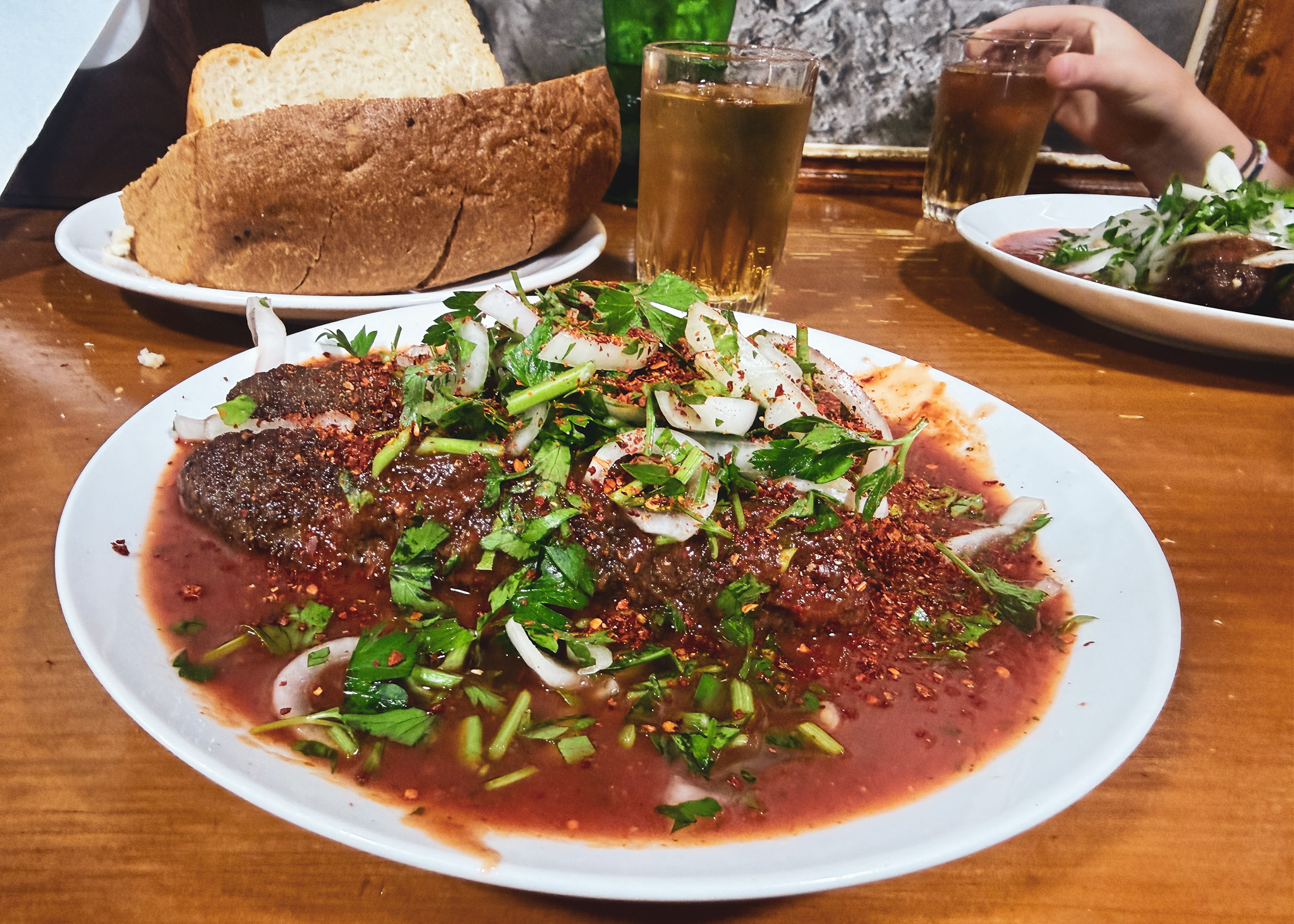
The drive east took us back through Kutaisi, which meant one thing: a final pilgrimage to Bikentia’s Kebabery, the two-item, stand-and-eat, Soup-Nazi-energy institution we fell for earlier this month. And it was here, on our farewell visit, that Max committed what turned out to be a grave cultural offense. The kebabs were mildly spicy. His nose ran slightly, as noses do. So he blew it, right there at our little stand-up table, and then, compounding the crime in ways he could not yet fathom, set the used tissues down beside his plate. What Max did not know is that in Georgia, blowing your nose at the table is considered deeply, seriously rude, and placing the snotty evidence on the table ranks somewhere below that. The formidable woman who clears the tables, the same one who famously herds you out the door the instant you finish chewing, descended upon him, gestured at his sad little pile of tissues, and delivered a substantial speech in Georgian. He understood not one word of it. He did understand, with absolute clarity, every ounce of the contempt it carried. Shaina noted the sideways glances from the other patrons, and the sympathetic looks towards Max as he suffered a public chastisement as if he’d greatly angered Miss Trunchbowl. We finished quickly and scurried out in ignominious disgrace, laughing so hard we could barely walk. Somehow being personally shamed by the matriarch felt like the only proper way to conclude our relationship with that magnificent, merciless establishment. We regret nothing, except the tissues.
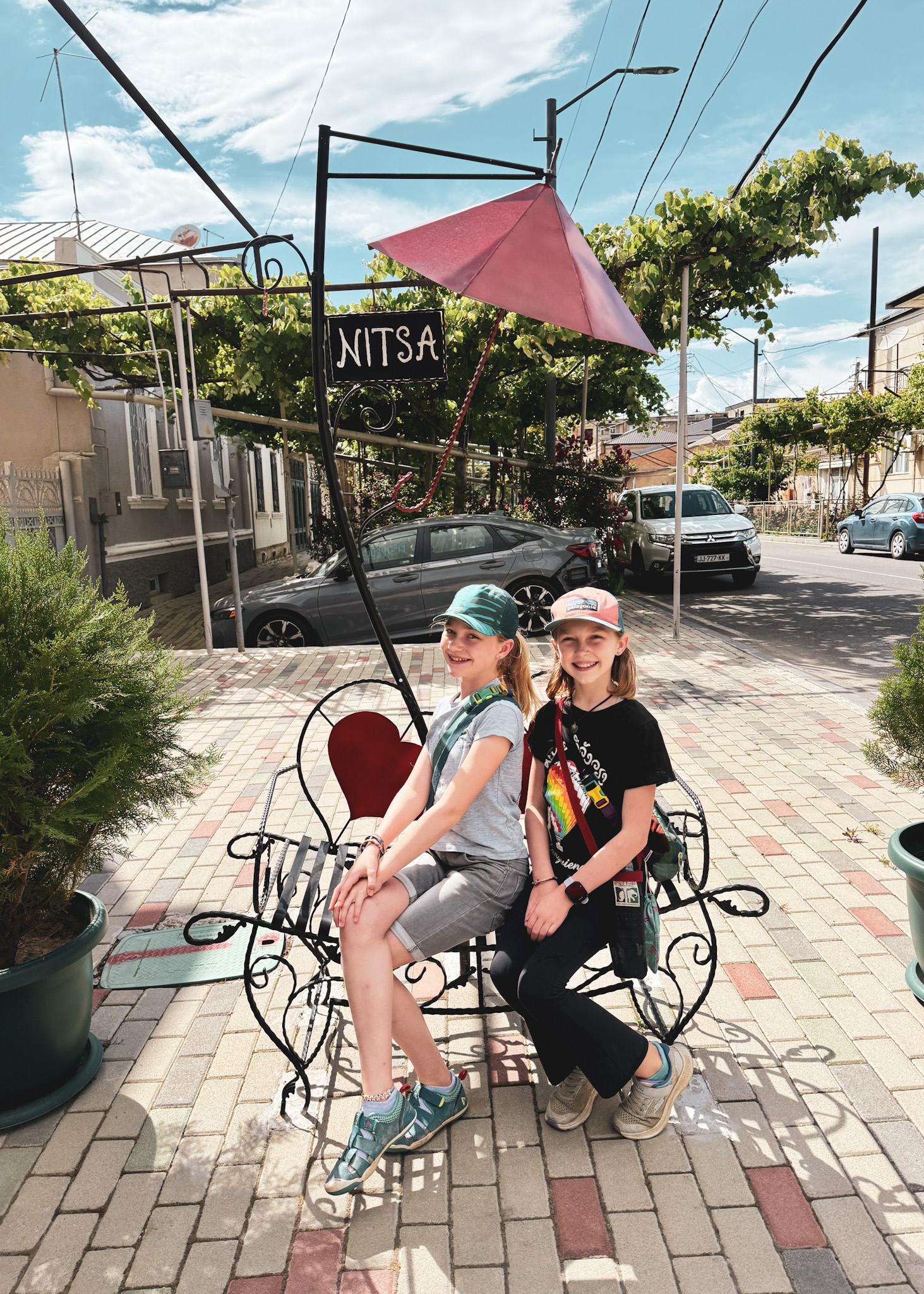
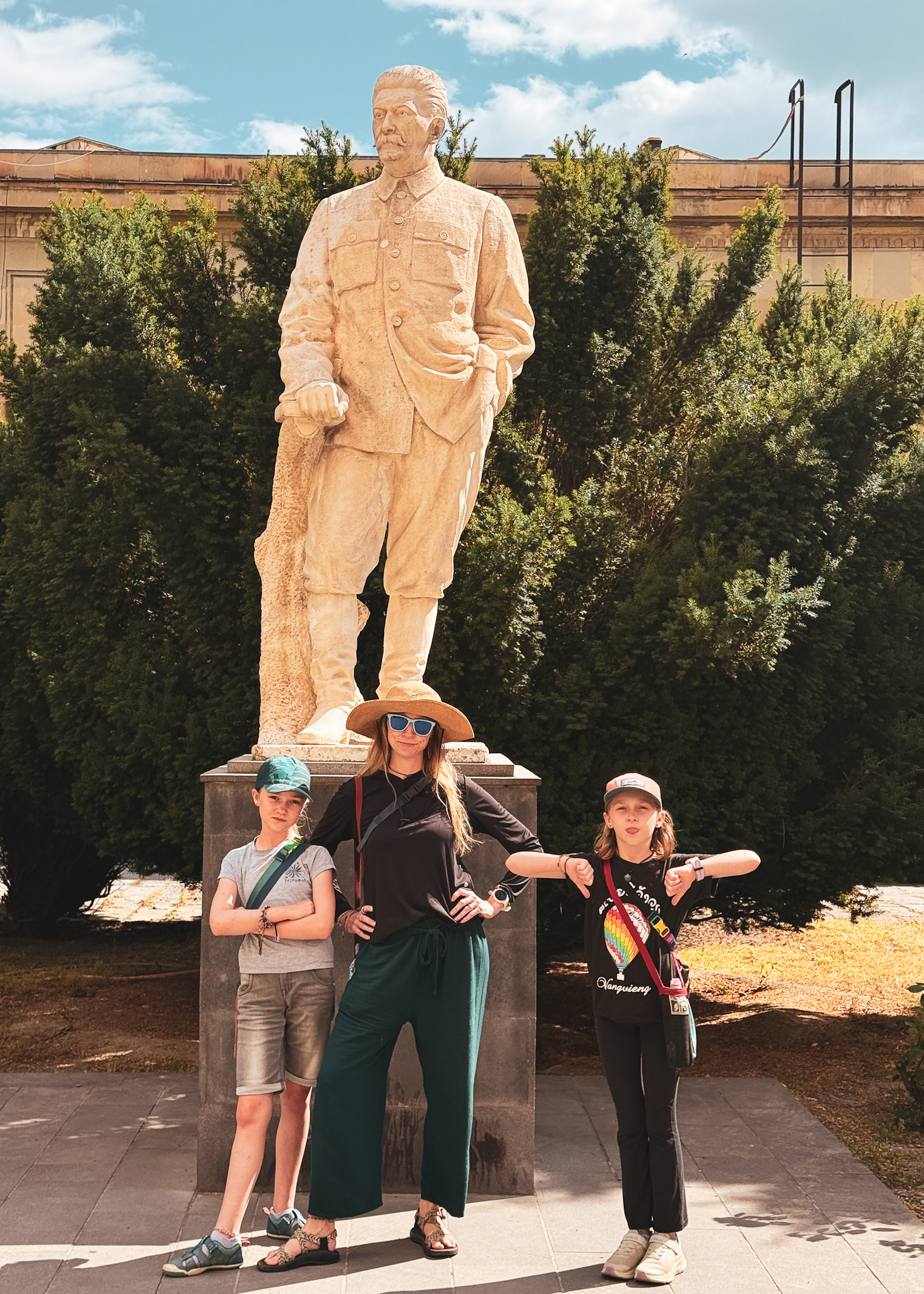
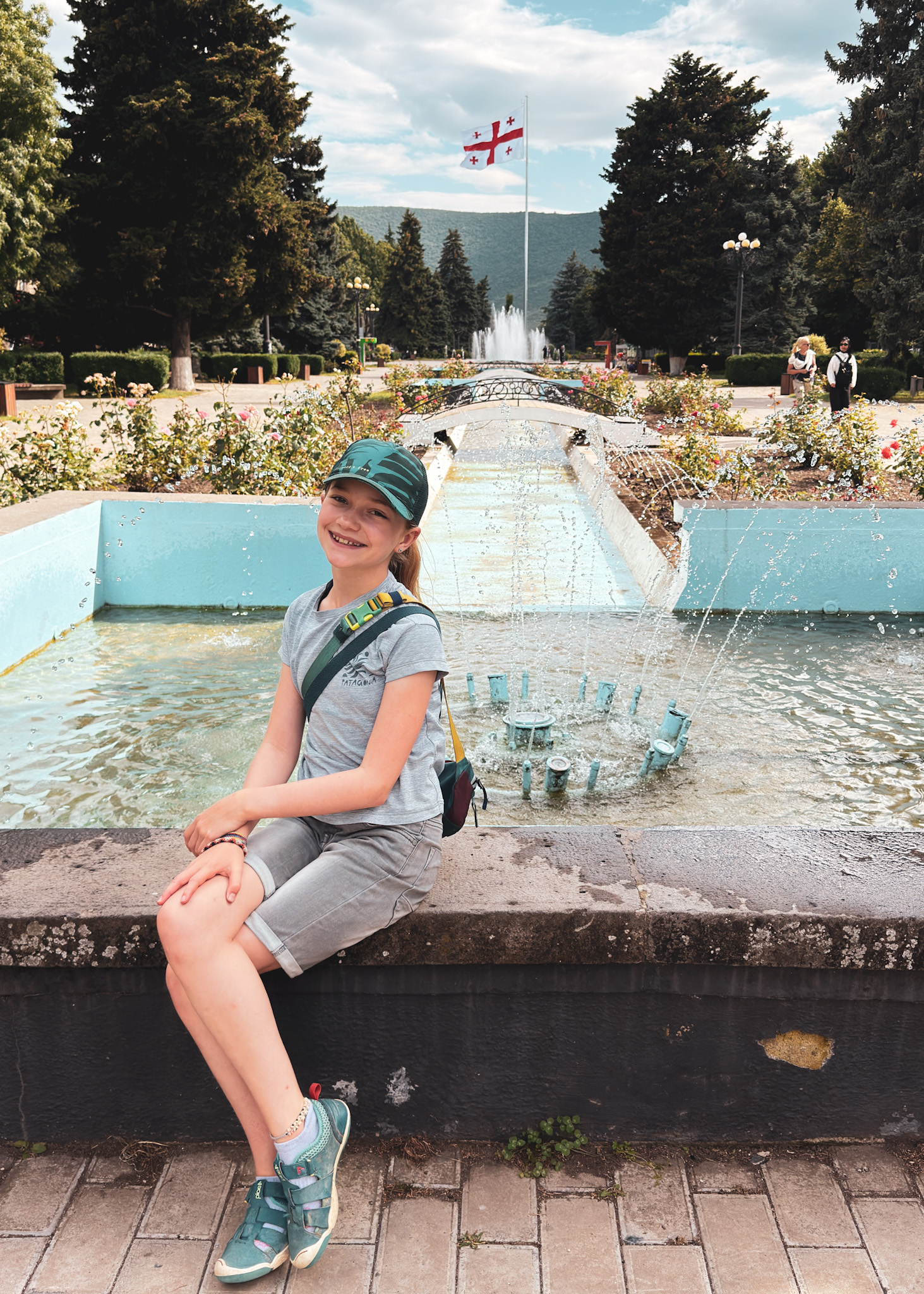
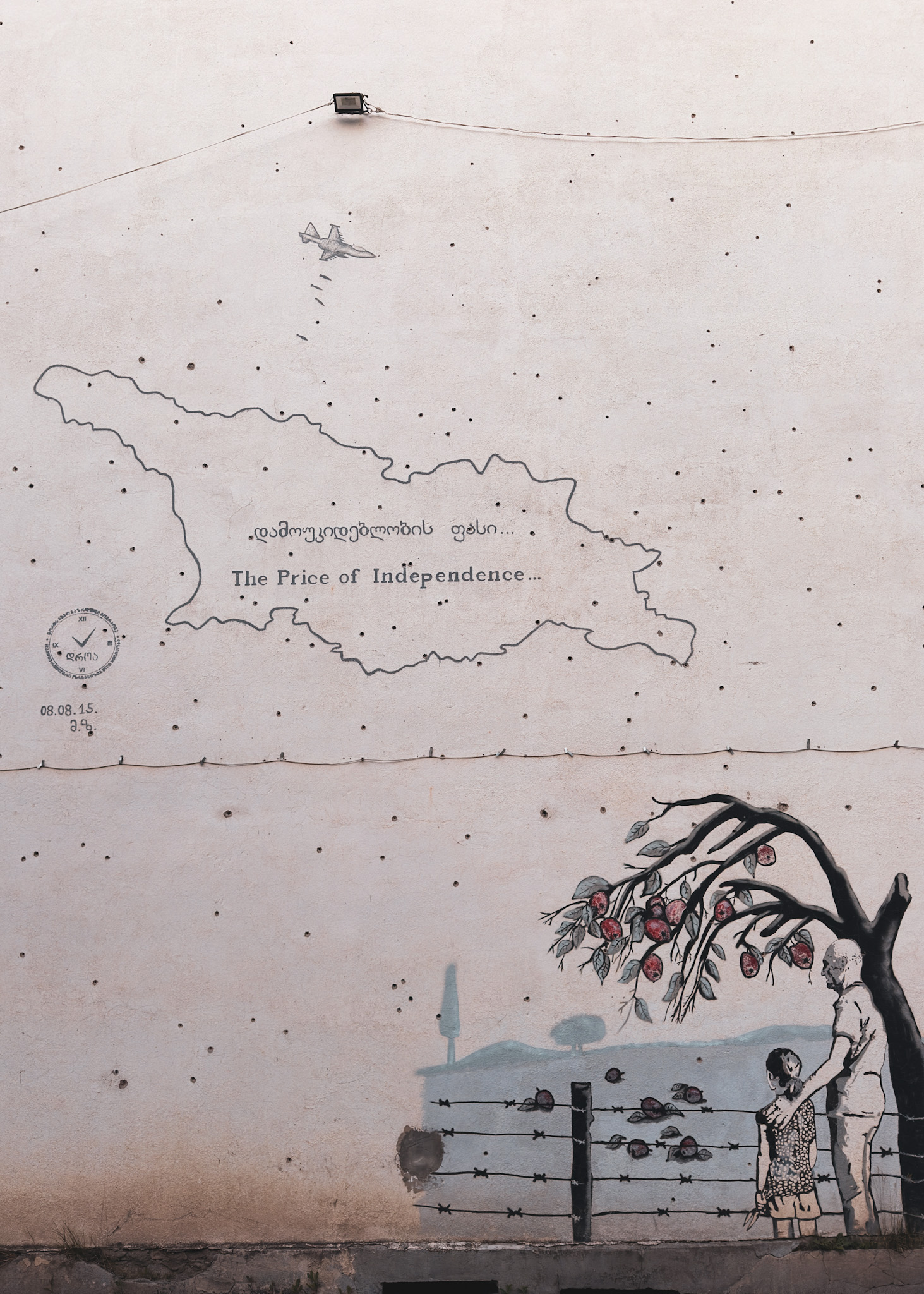
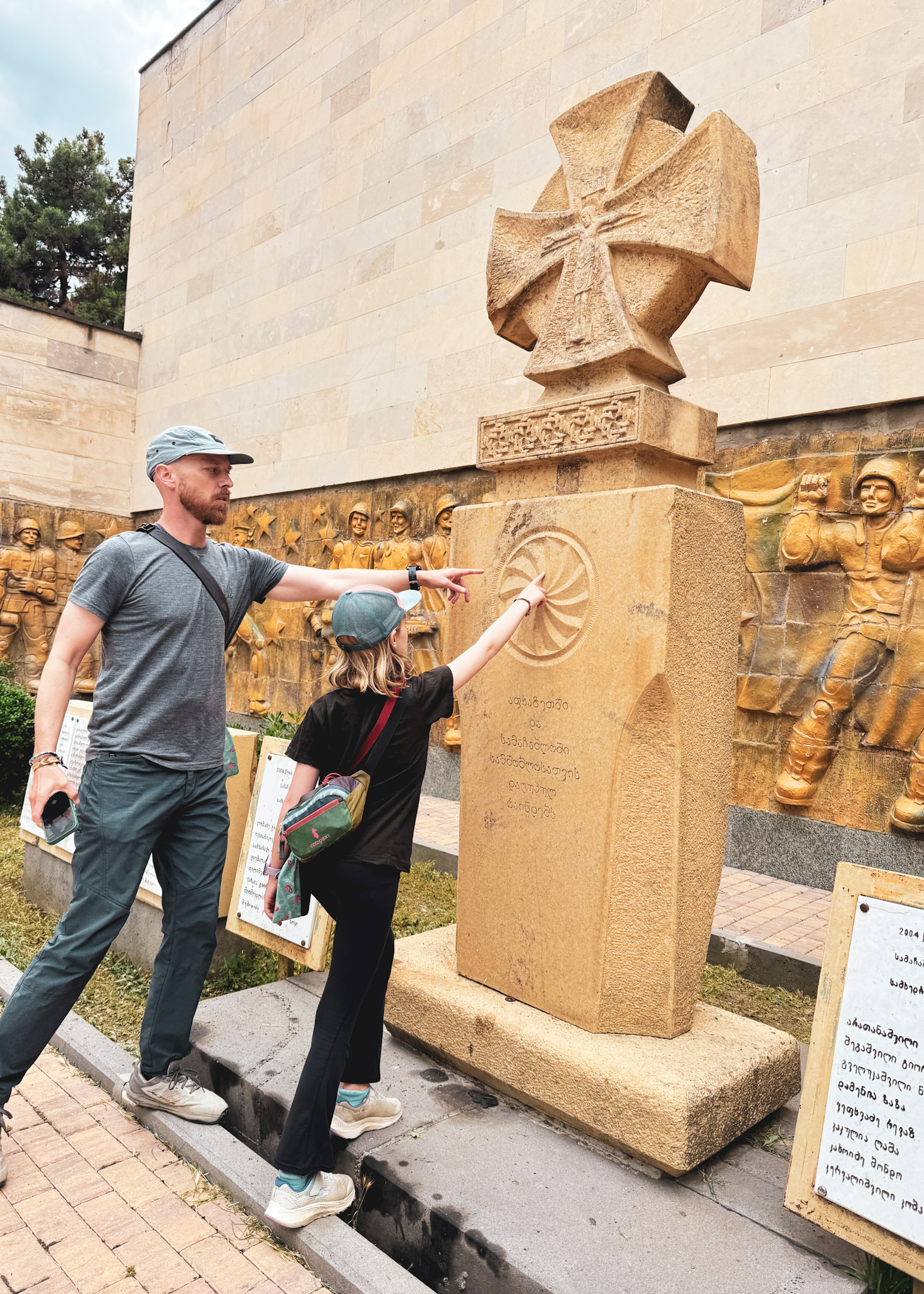
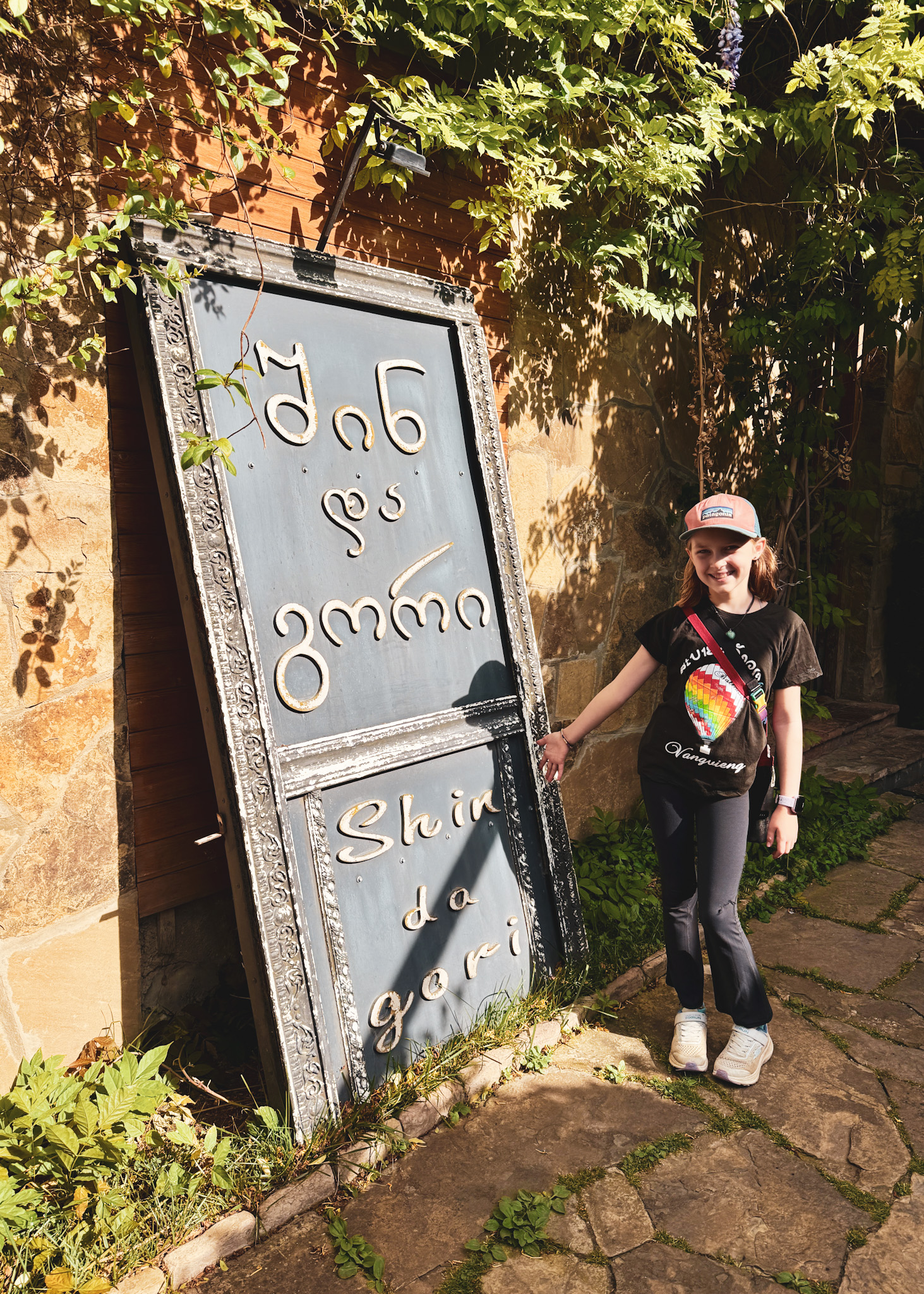
That night’s stop was Gori, a town whose principal claim to fame is being the birthplace of Joseph Stalin, and this presented a choice. Gori’s main attraction is the Stalin Museum, a grand institution built in 1957 that still presents the man in a largely reverential light, heavy on his childhood home and personal railway carriage, and notably light on the millions of deaths. We decided we had no interest in spending an afternoon inside a monument to selective memory. But we did want the history, the real history, so we pulled together an honest account for the family to read on our evening walk to dinner. It proved far more valuable than the museum could ever have been. The short version: a poor, scarred boy nicknamed “Soso” grew up in a one-room house right here in this town, was bound for the priesthood, talked himself into revolution instead, and climbed to absolute power over the Soviet Union largely by being the man nobody thought worth watching. And with that power came the engineered famines, the night arrests, the labor camps, the purges, the many millions dead. The most haunting thing about Stalin is not that he was born a monster. It is that he was not. He was made, choice by choice, and the town he came from would rather celebrate the local boy than reckon with what he became. Reading that history in the very streets he grew up walking was worth more than any curated exhibit.
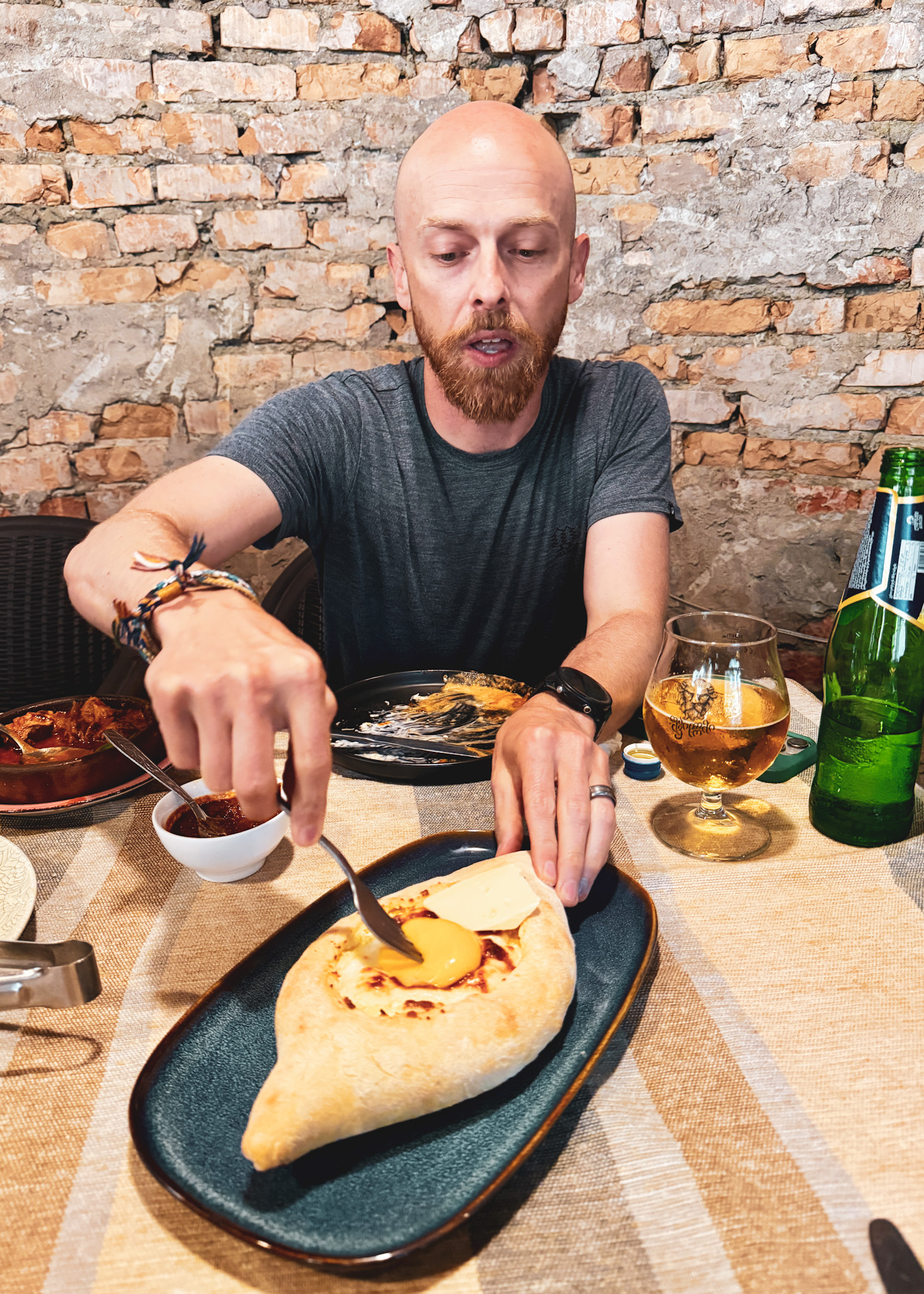
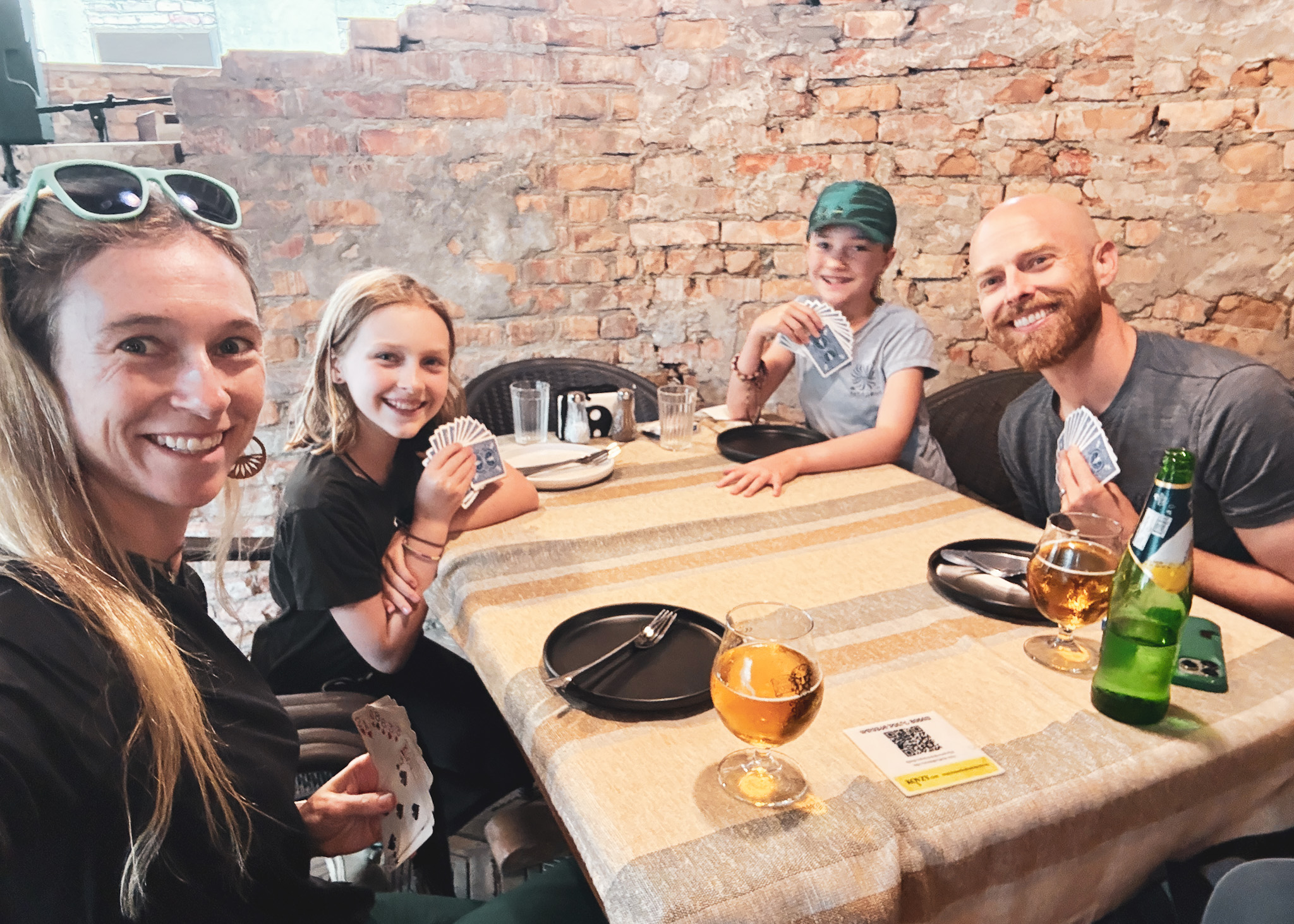
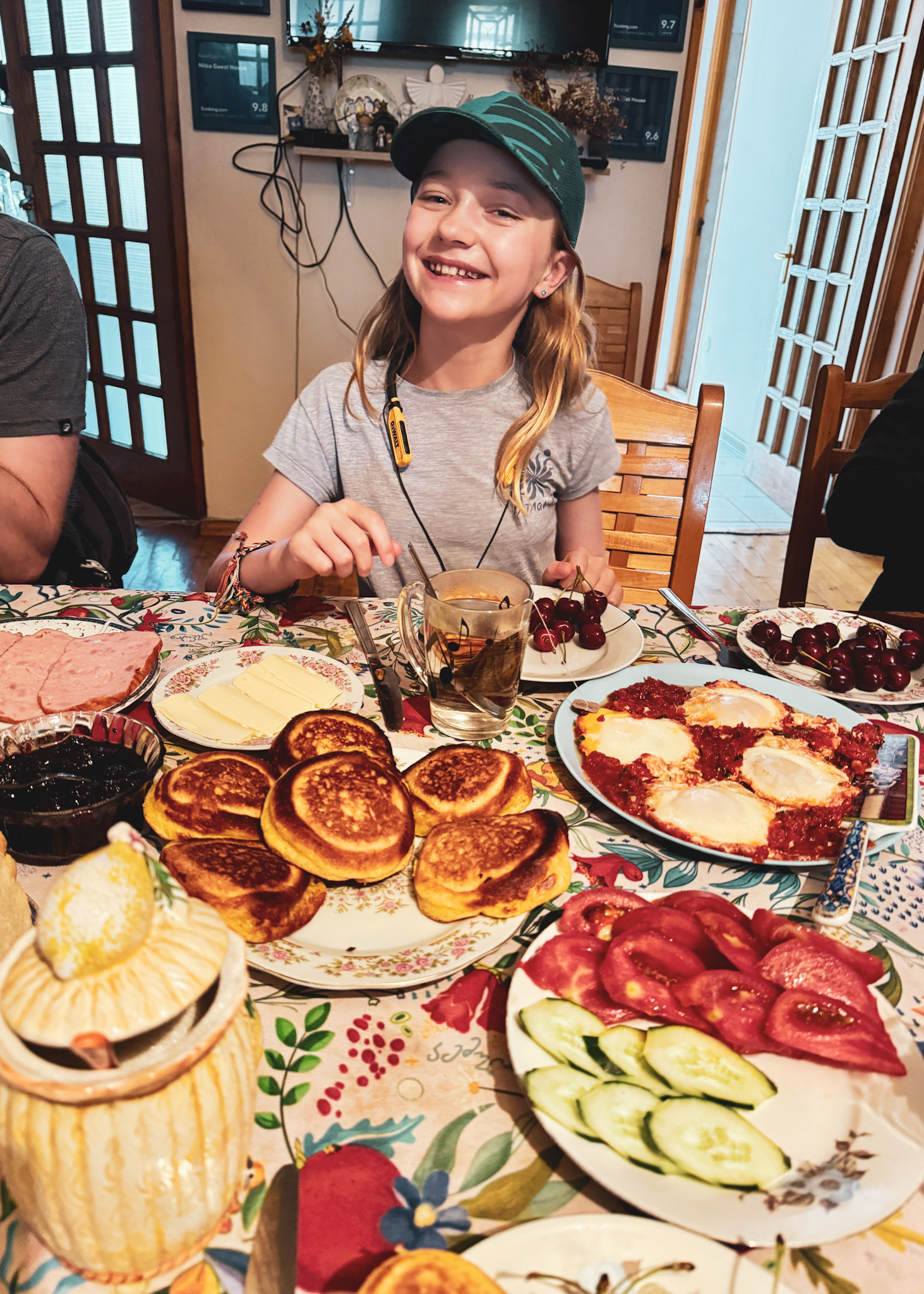
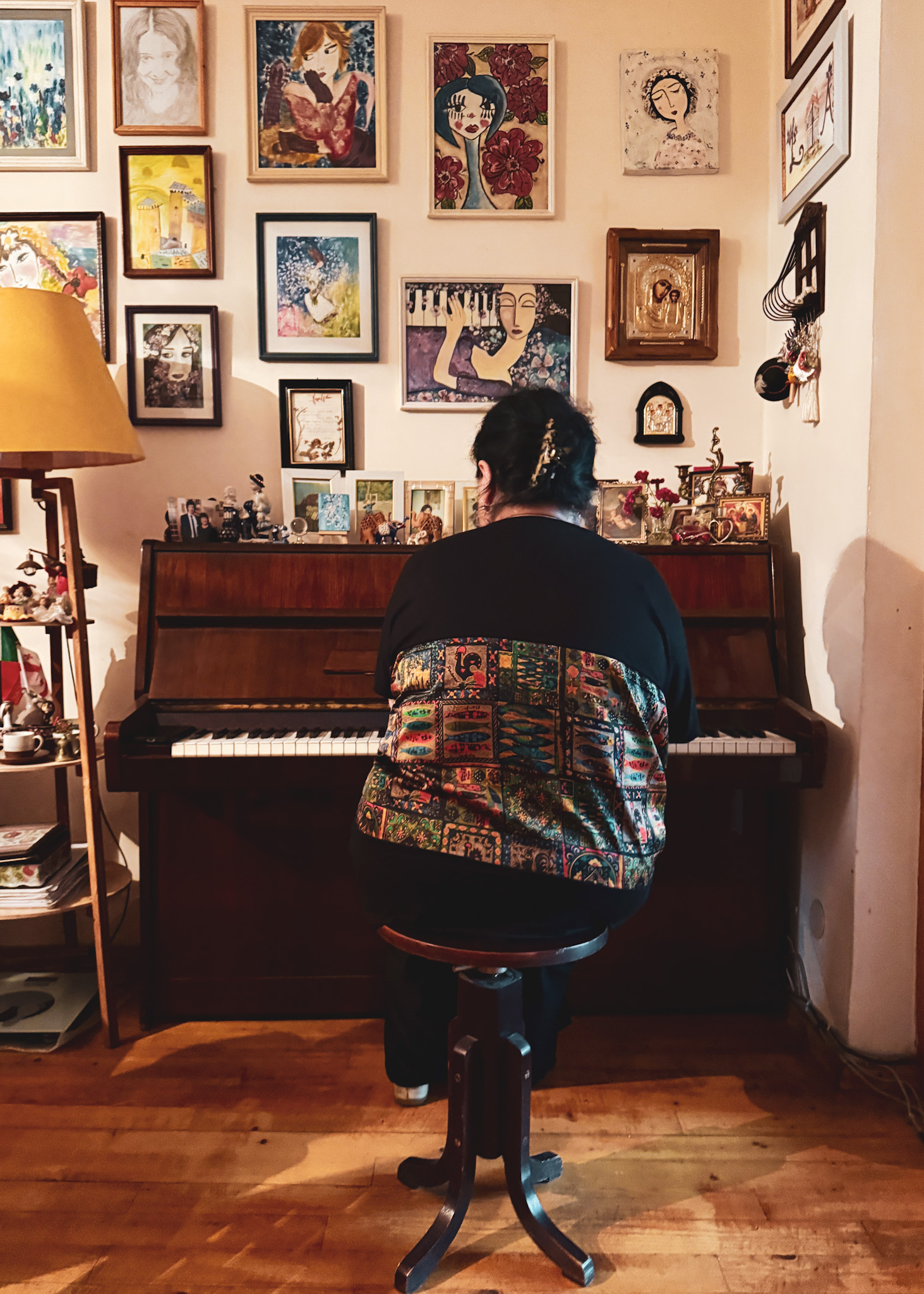
Gori itself treated us well. Our guesthouse was run by a sweet, endlessly helpful woman named Lia. Unfortunately she wasn’t able to cook for us that evening, so she sent us to a popular local restaurant. At dinner we endured the single worst service of our entire six weeks in Georgia—a waiter with resting-jerk-face, and so profoundly indifferent that he forgot dishes outright and answered our request for house wine by bringing a bottle “similar” to it, not revealing that it was four times the price. The food was fortunately quite good, and the table comfortable enough for several rounds of cards, that we let it all slide. Back at the guesthouse we met Michael and Allison, a lovely French couple on a two-week tour of Georgia that their children had gifted them, and made plans to continue the conversation over Lia’s famous breakfast. The next morning proved to be exactly as advertised: shakshuka, Georgian breakfast burritos, fluffy pancakes, homemade jams, the works. And to top it off, we enjoyed good conversation with our new French friends, a detailed tour of artwork that Lia’s now-grown children had gifted her throughout their childhood (and which now decorated every available wall space in the house), and finally a private impromptu piano concert à la Lia. In the end, Gori was not defined by Ioseb Jughashvili, aka Joseph Stalin, but rather by an incredibly kind woman who warmly welcomed us into her small family-run guesthouse, showing off her kids’ truly impressive art skills, and treating us to a tasty meal and heartfelt musical performance.
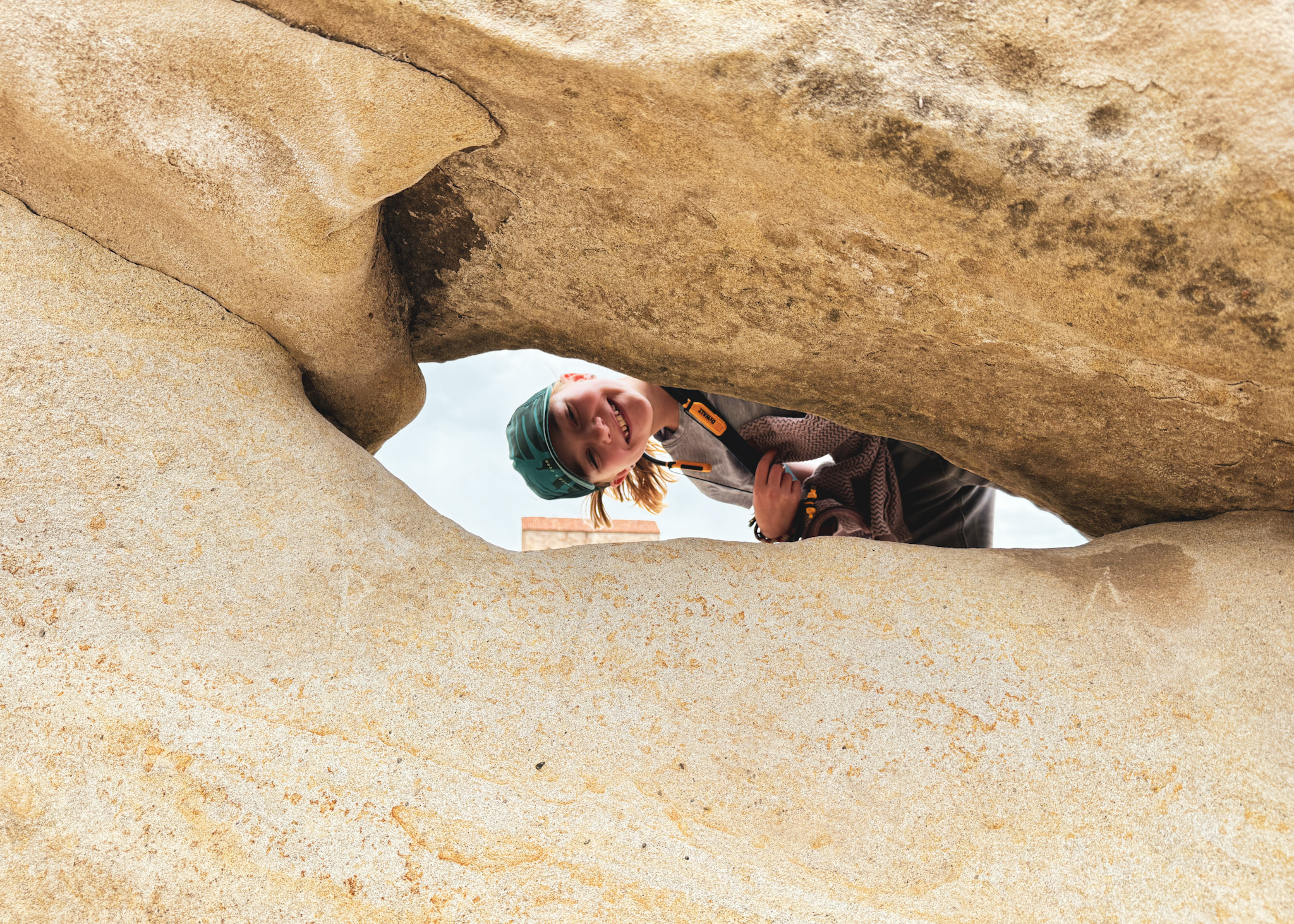
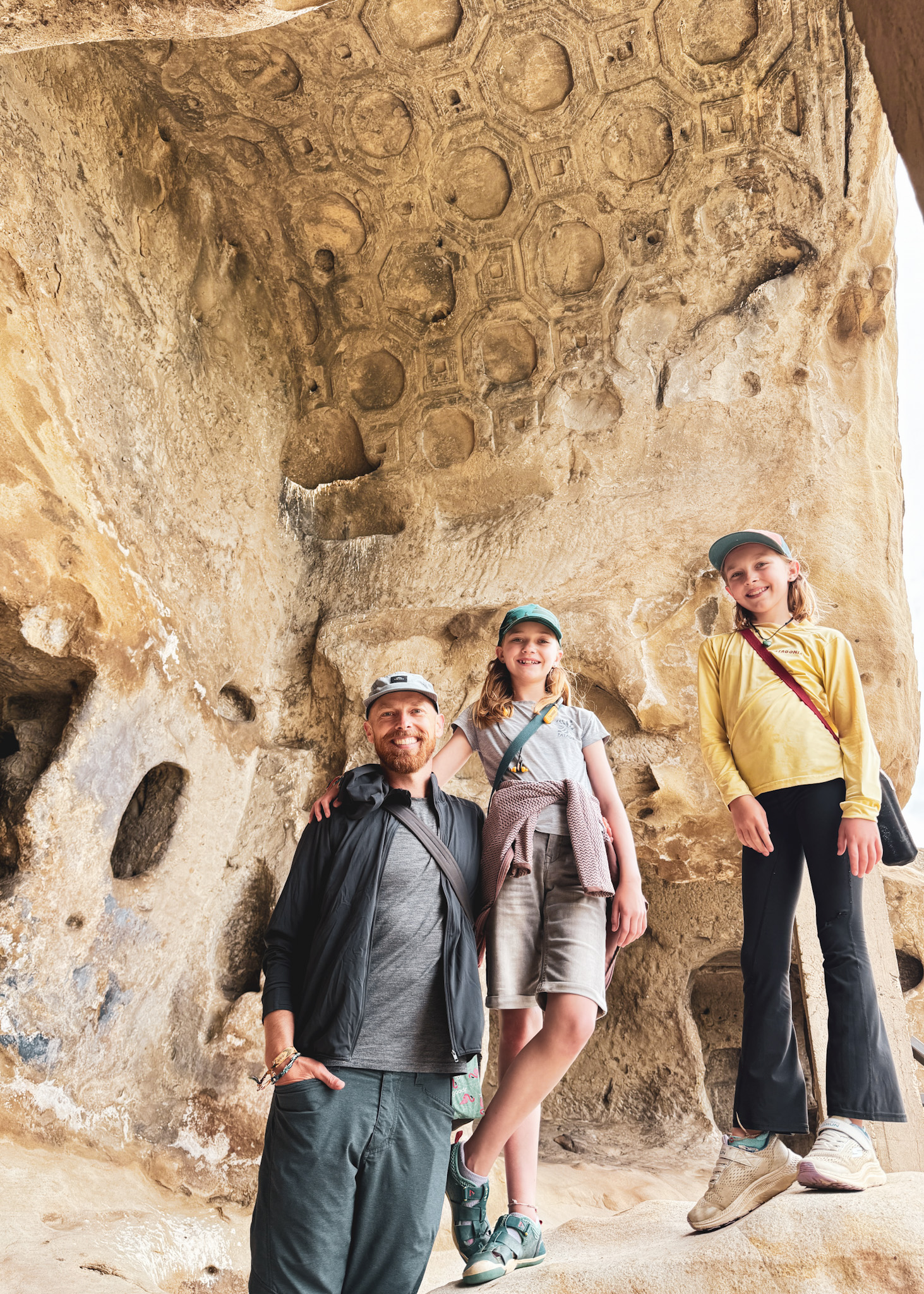
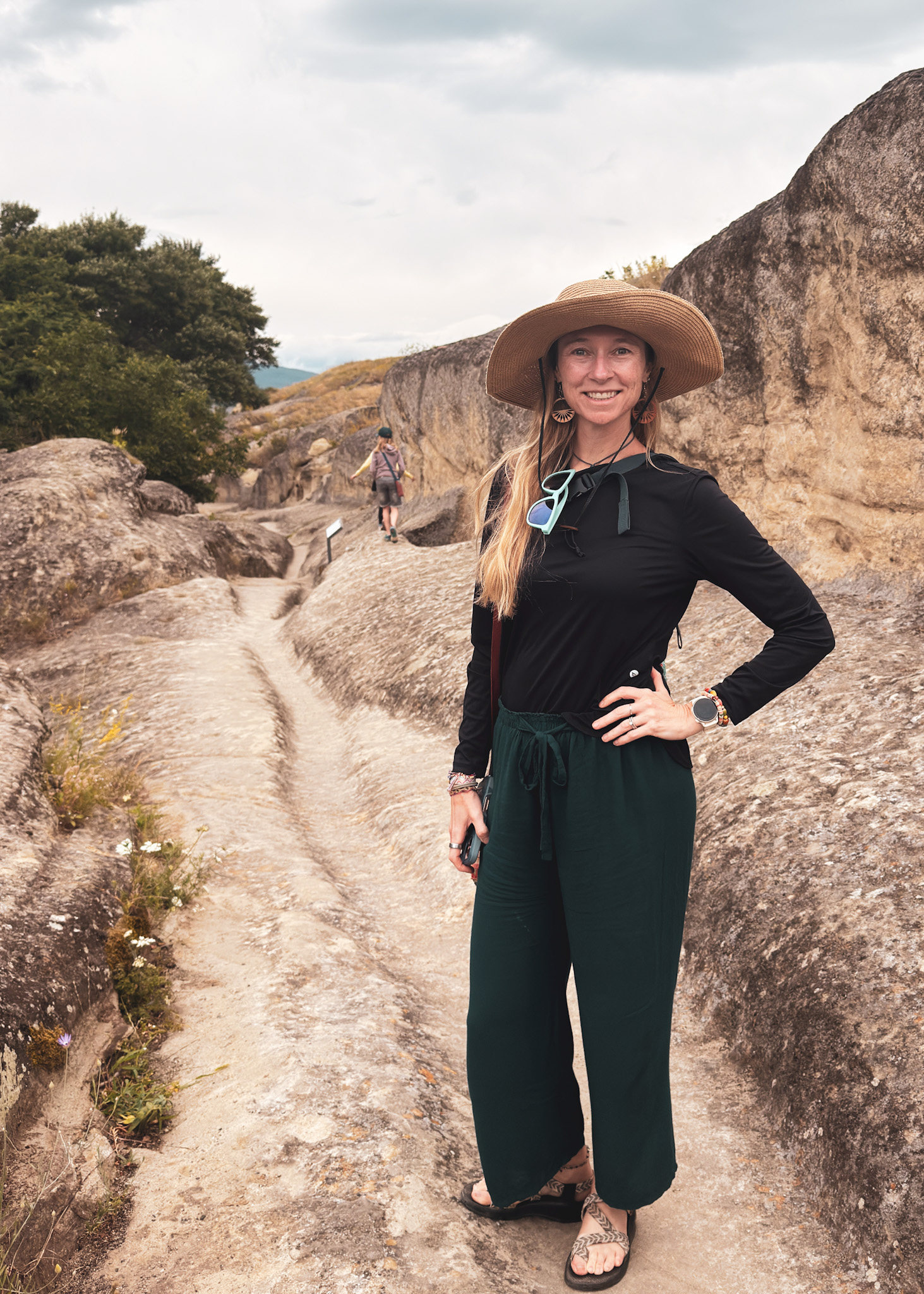
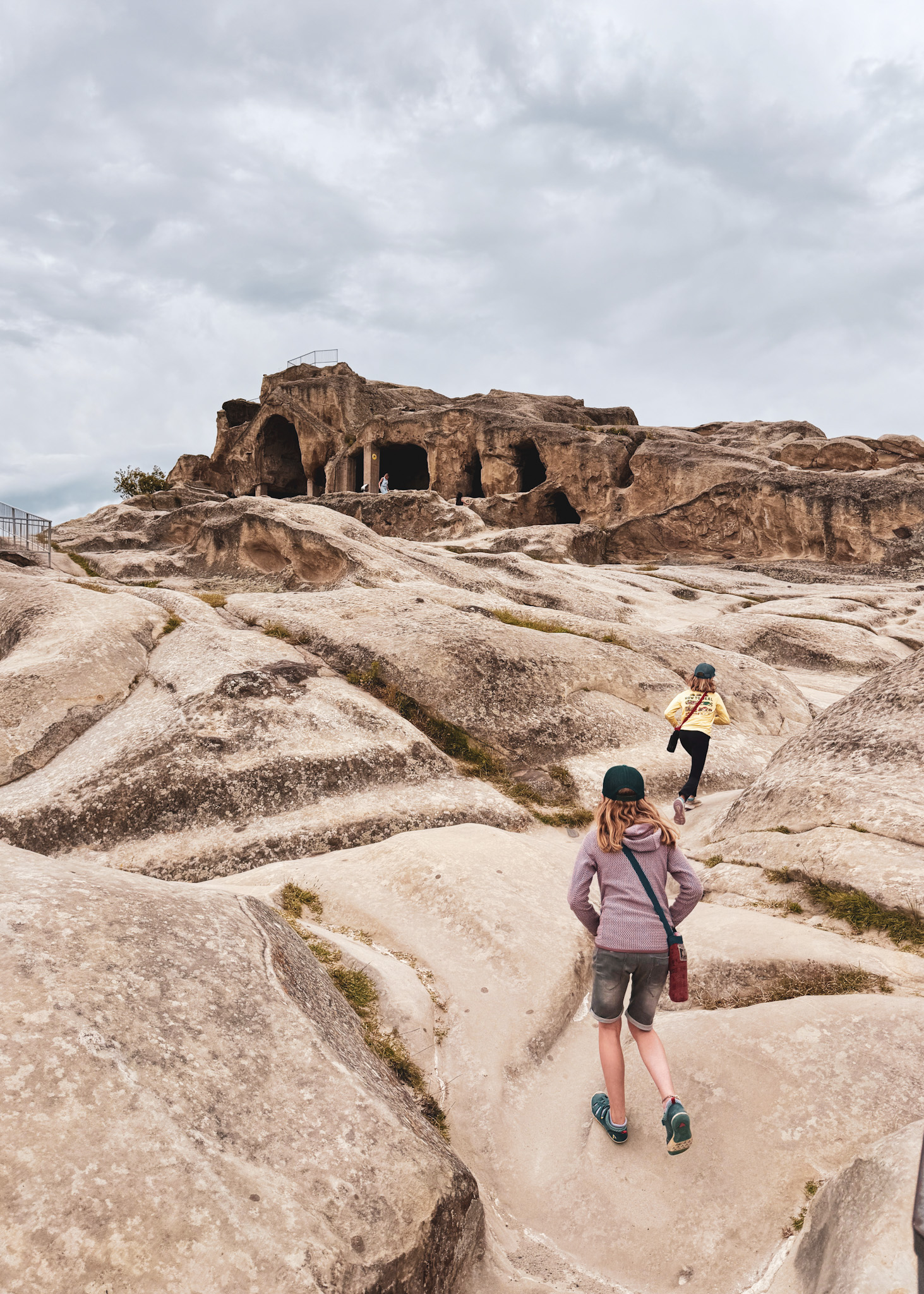
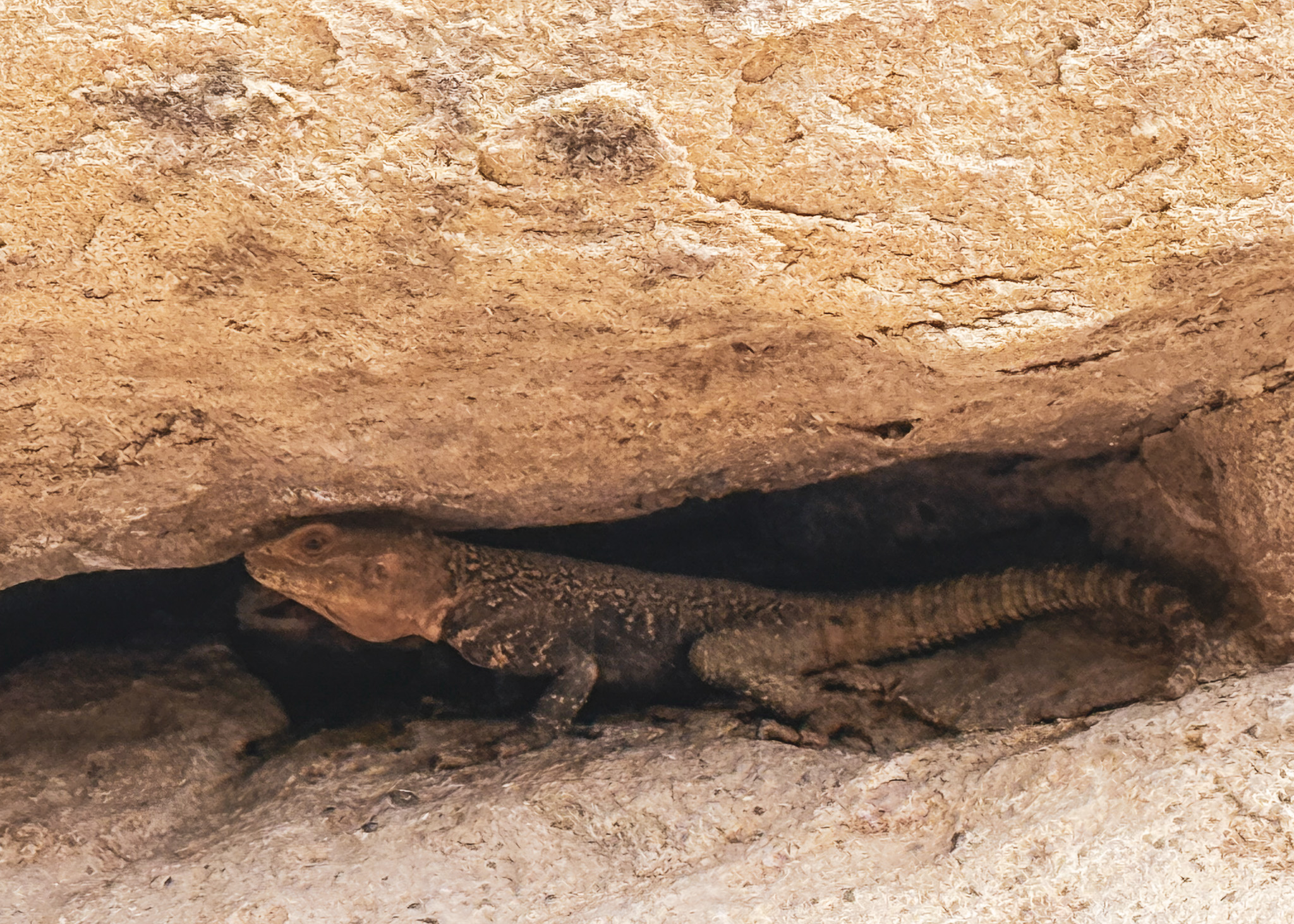
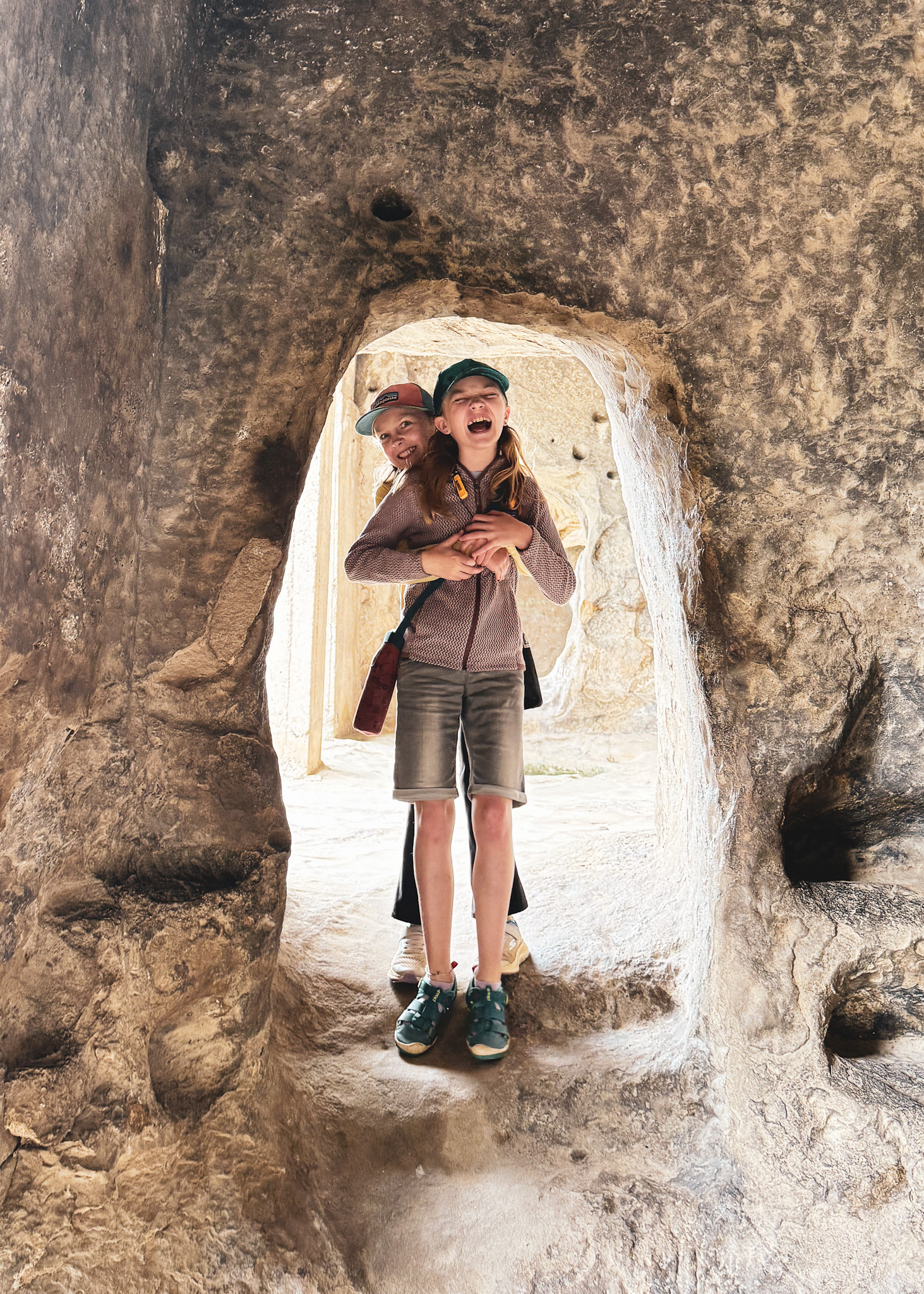
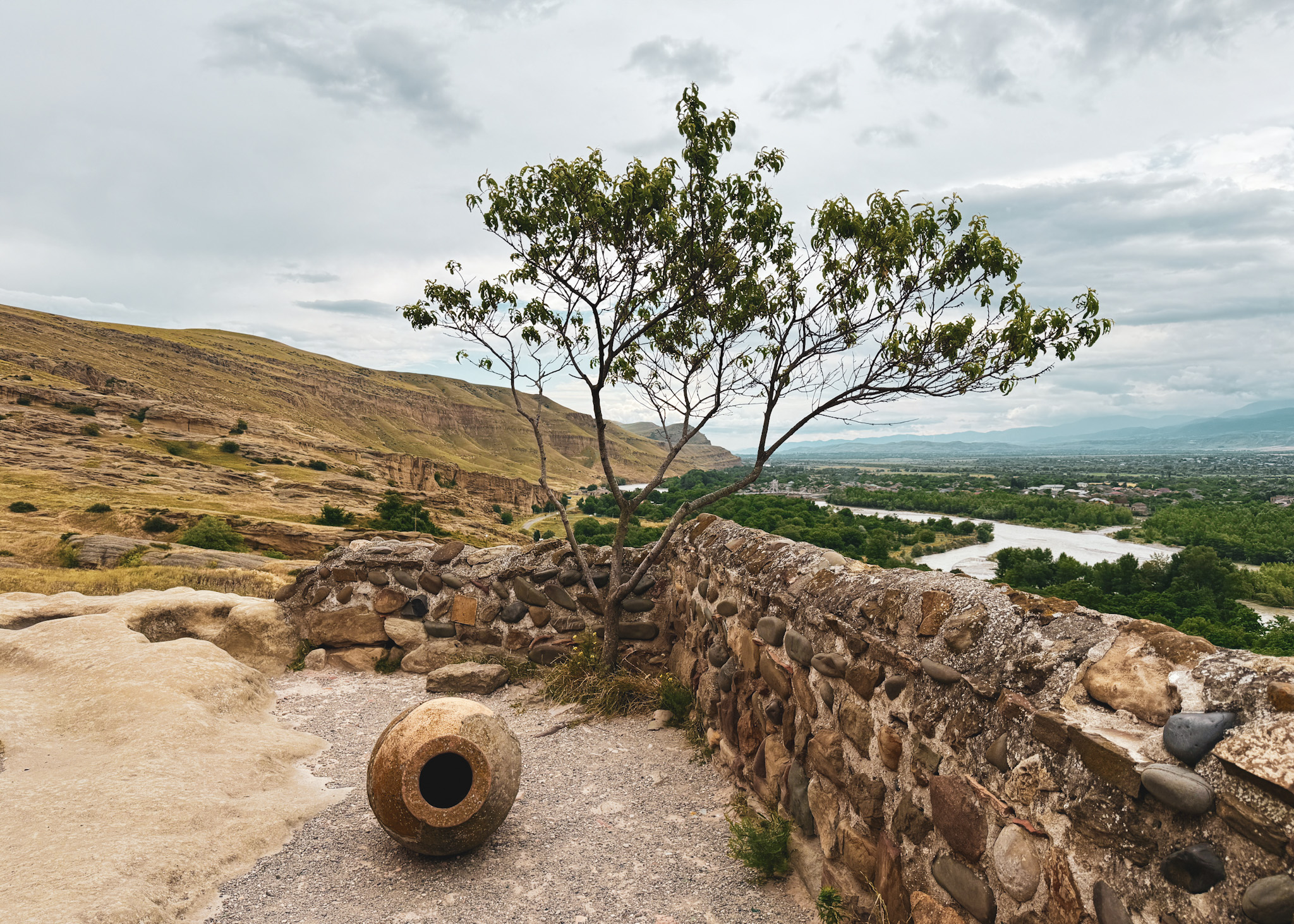
On the drive back to Tbilisi we made one final sightseeing stop, and it confirmed that our family has developed a genuine thing for ancient civilizations who carved their homes into rock. After the cave monastery of Vardzia earlier this month, we now visited Uplistsikhe, one of the oldest urban settlements in all of Georgia, a whole town hewn directly out of a rocky hillside above the Mtkvari River. People lived here from roughly the Bronze Age onward, and at its peak as a political and religious center on the Silk Road it held some 20,000 residents. It contained dwellings, wine cellars, a pharmacy, a theater, and a great hall attributed to a pagan sun goddess, all chiseled into the living stone, before the Mongols sacked it in the 13th century and it emptied out. We spent 45 happy minutes scrambling up and down paths worn smooth into the rock by three thousand years of footfalls, poking into caves and imagining the lives lived inside them, and emerged having reaffirmed, once again, our deep collective gratitude at not being troglodytes ourselves.
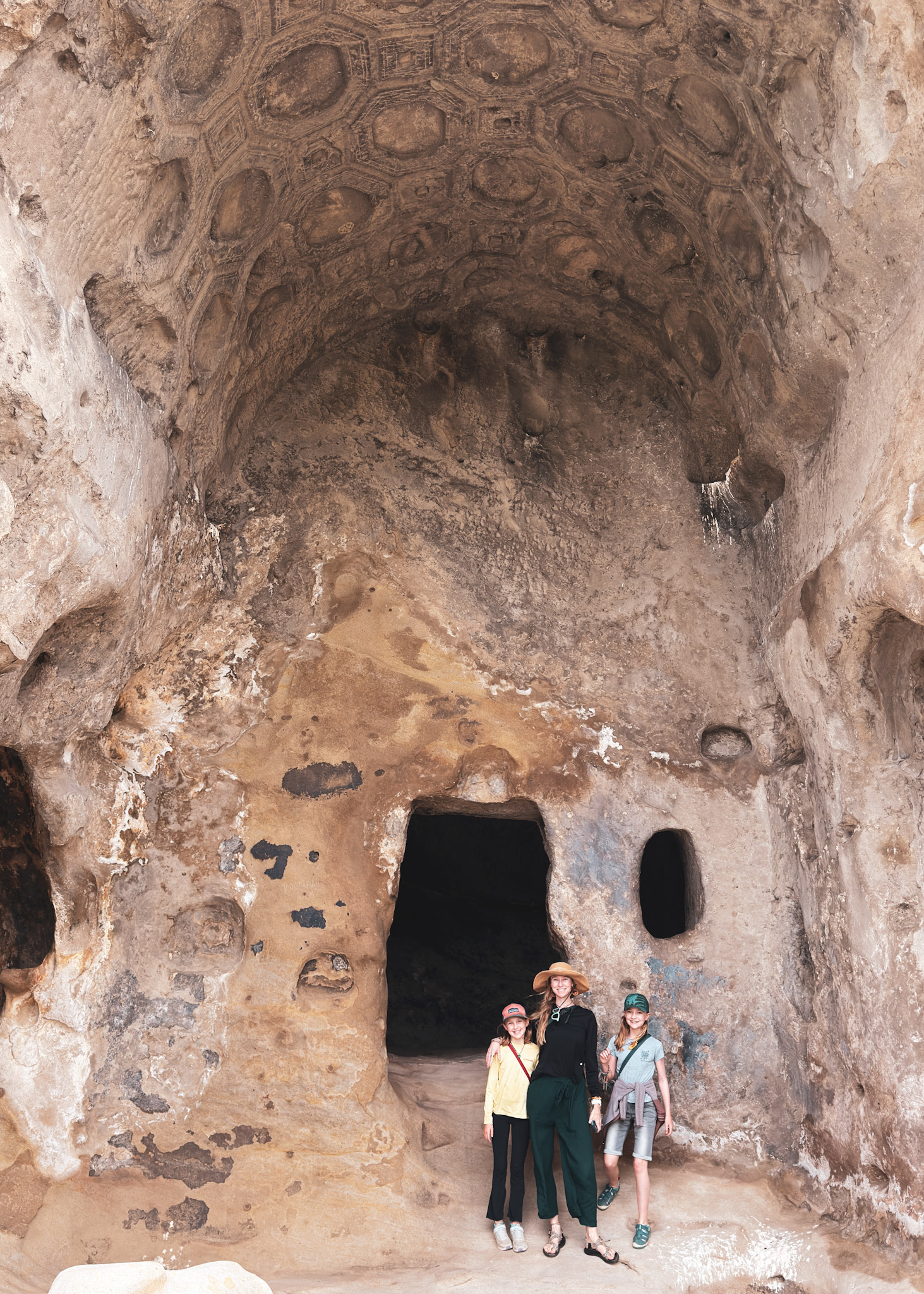
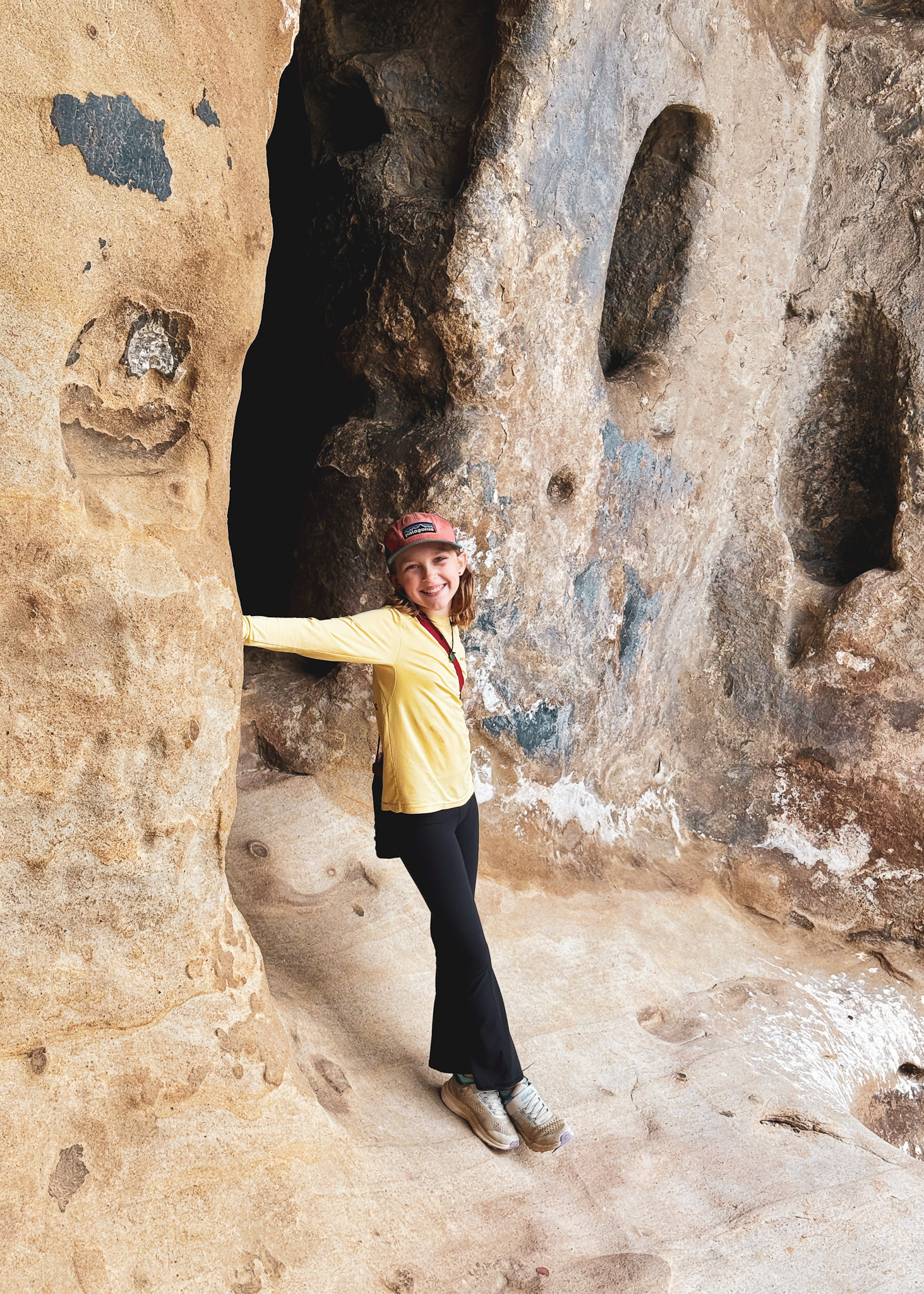
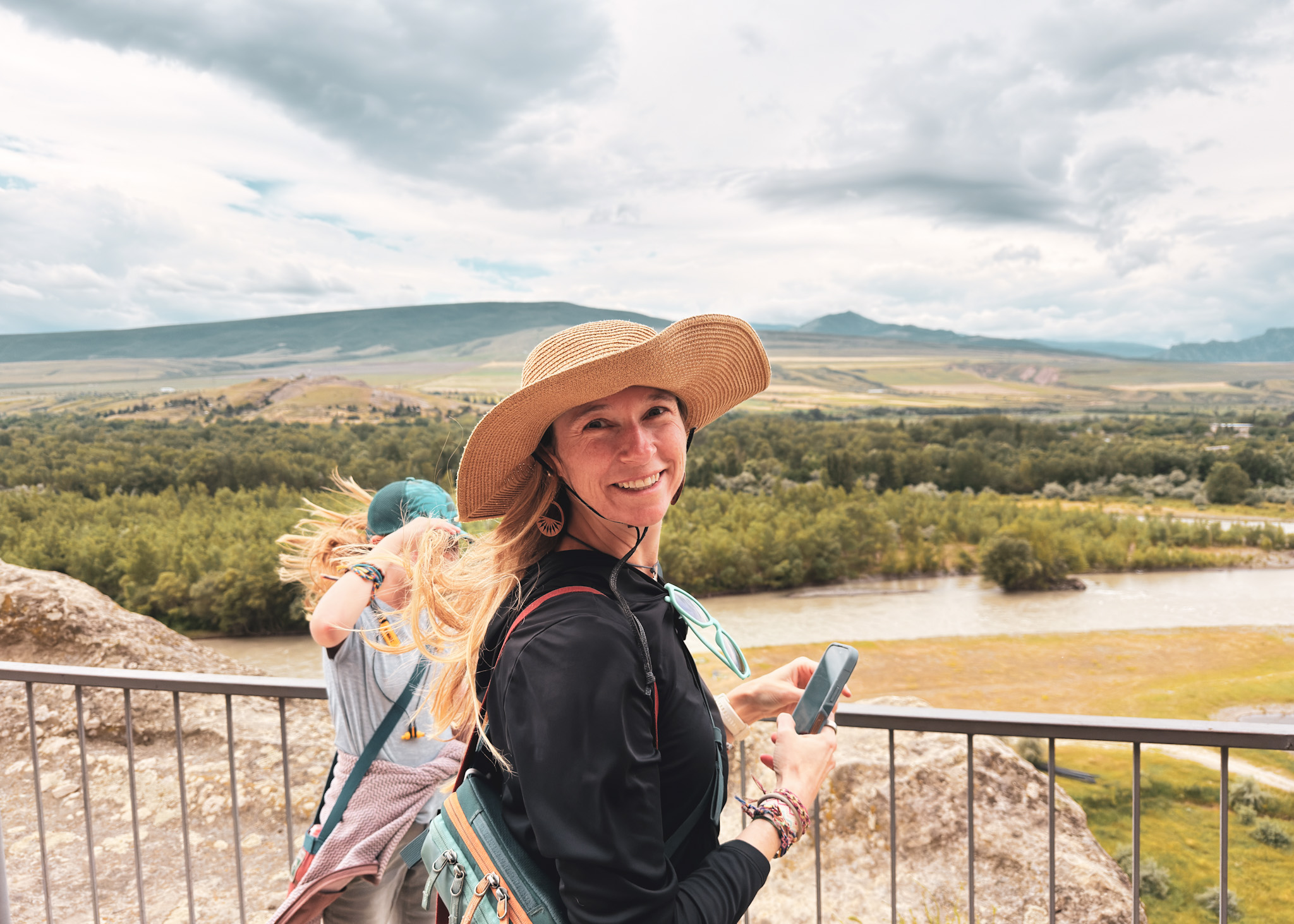
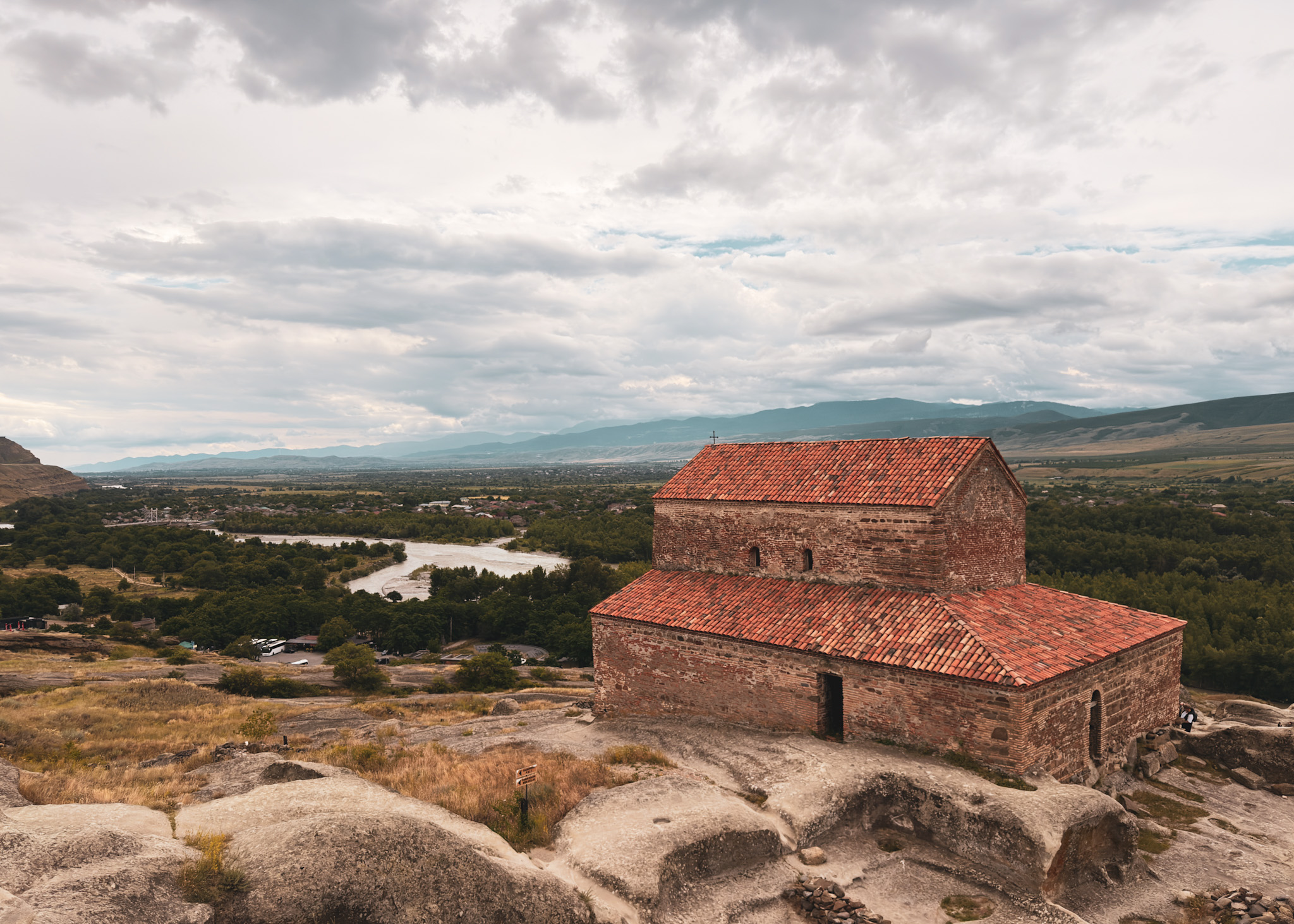
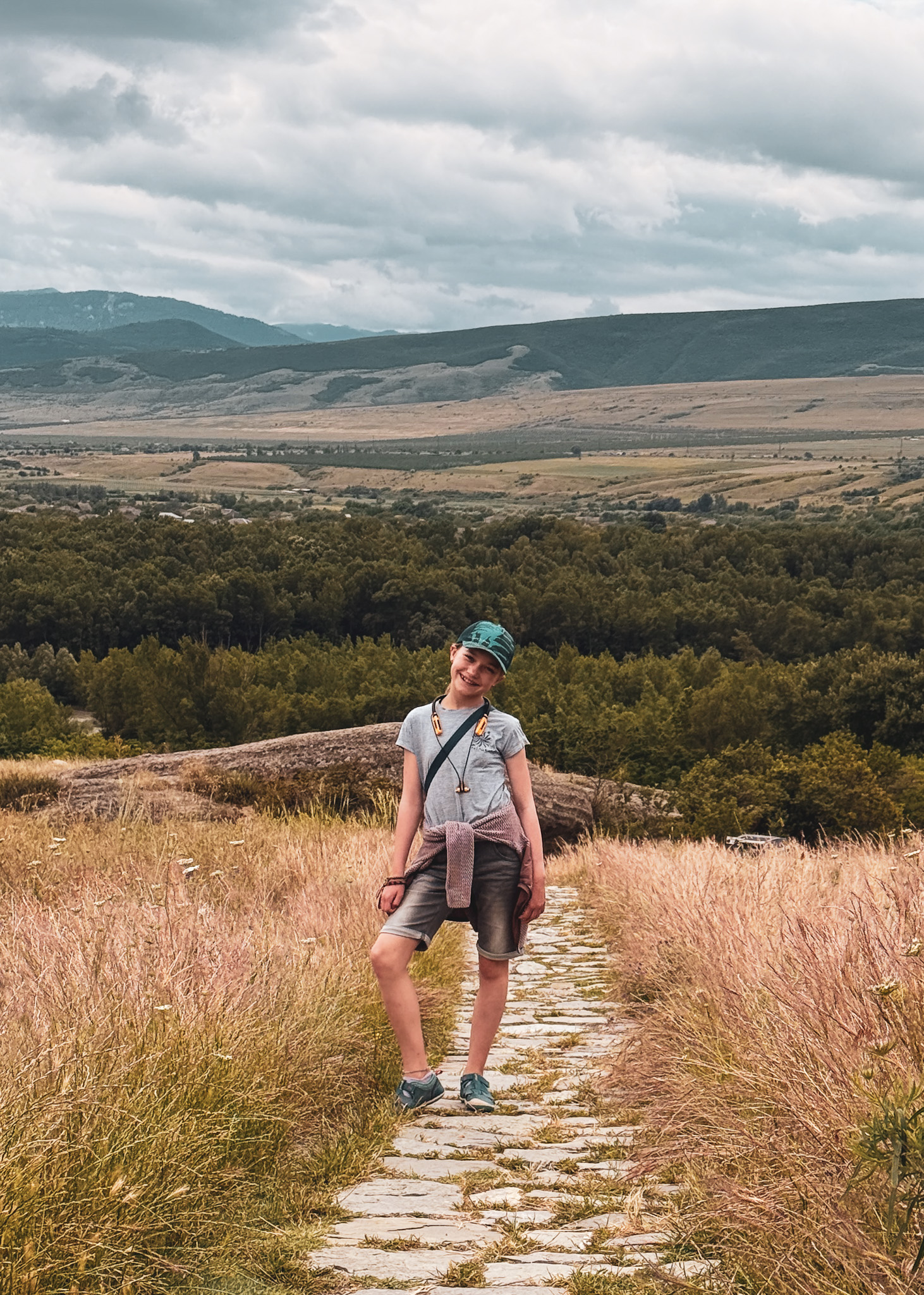
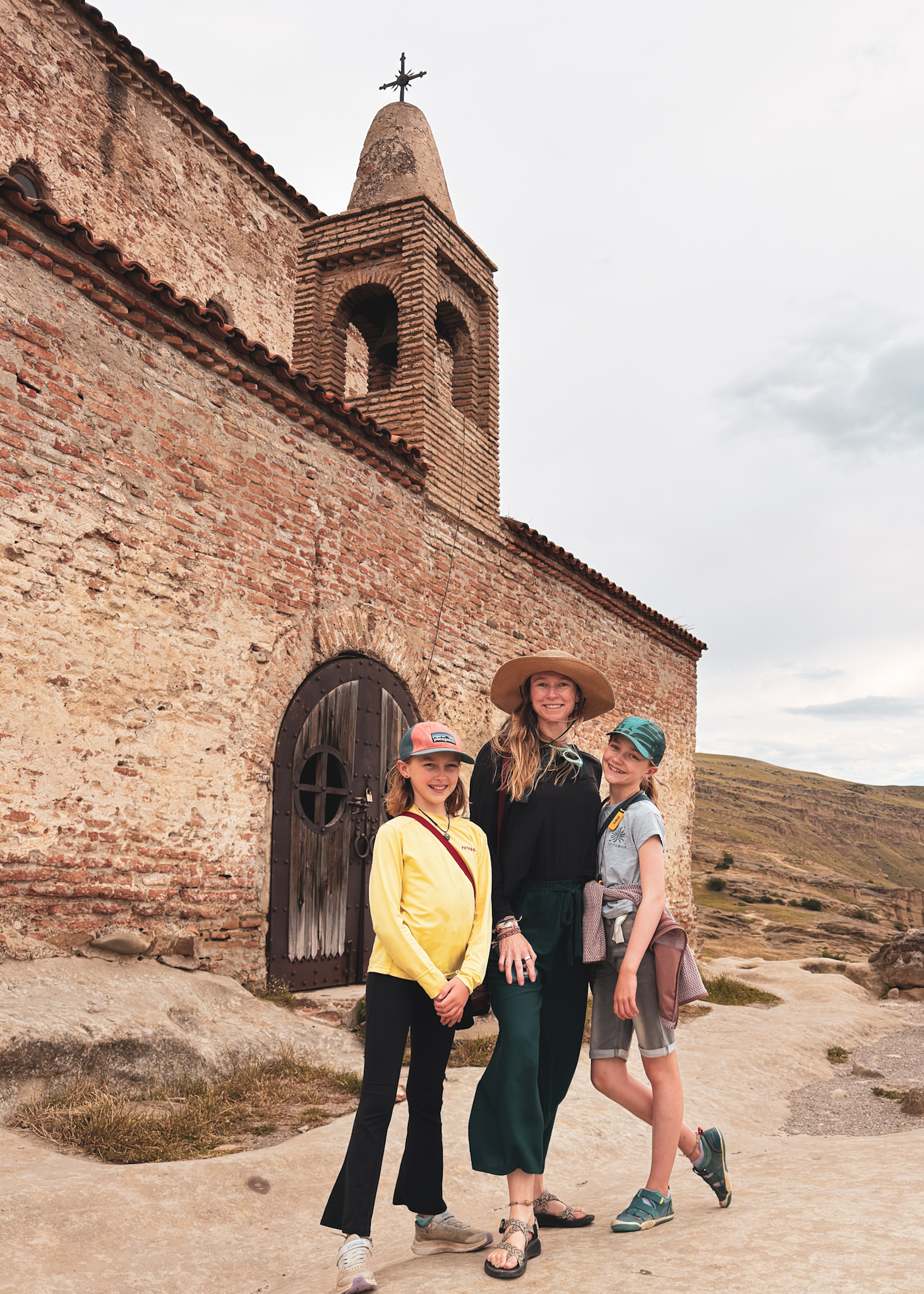
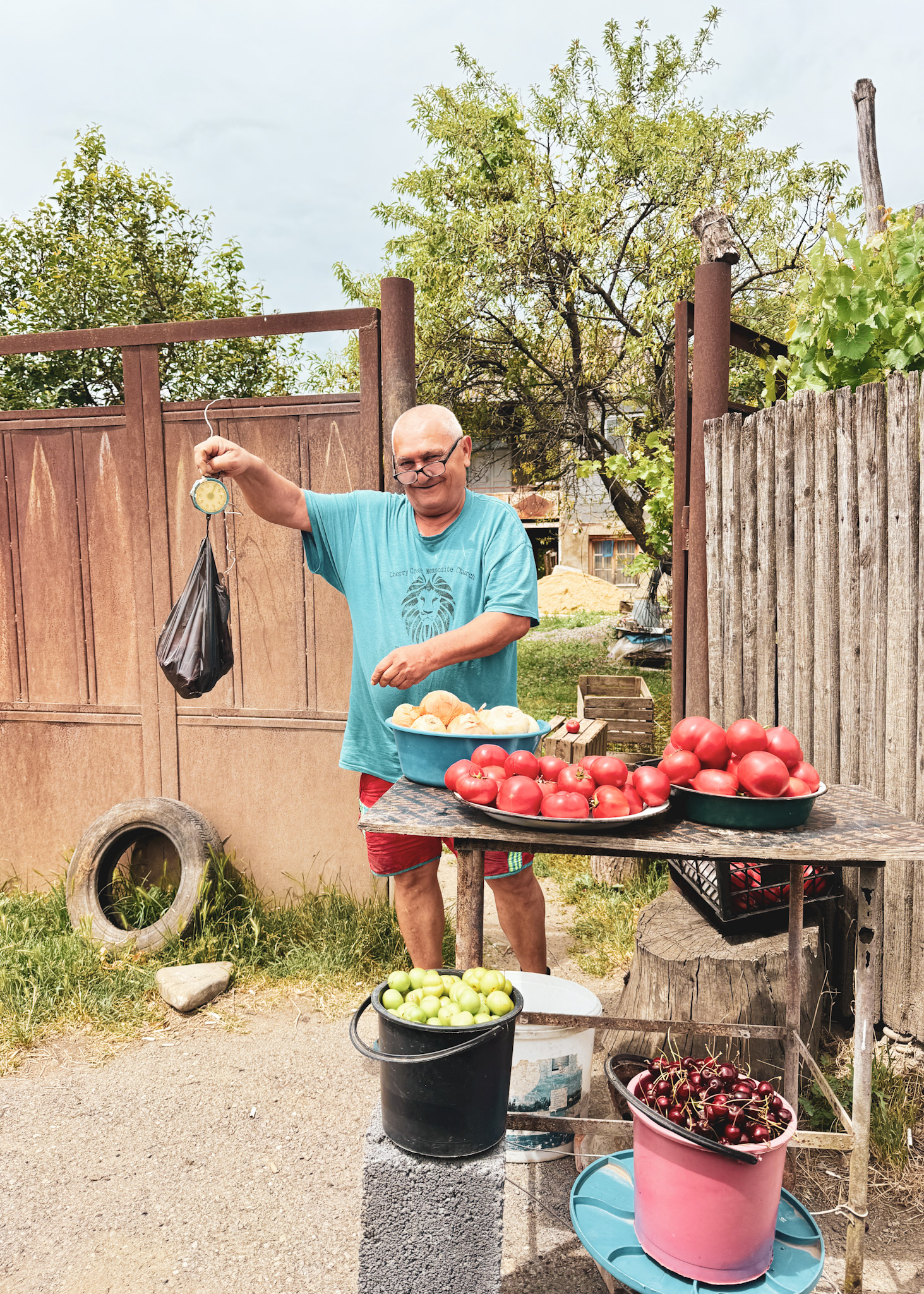
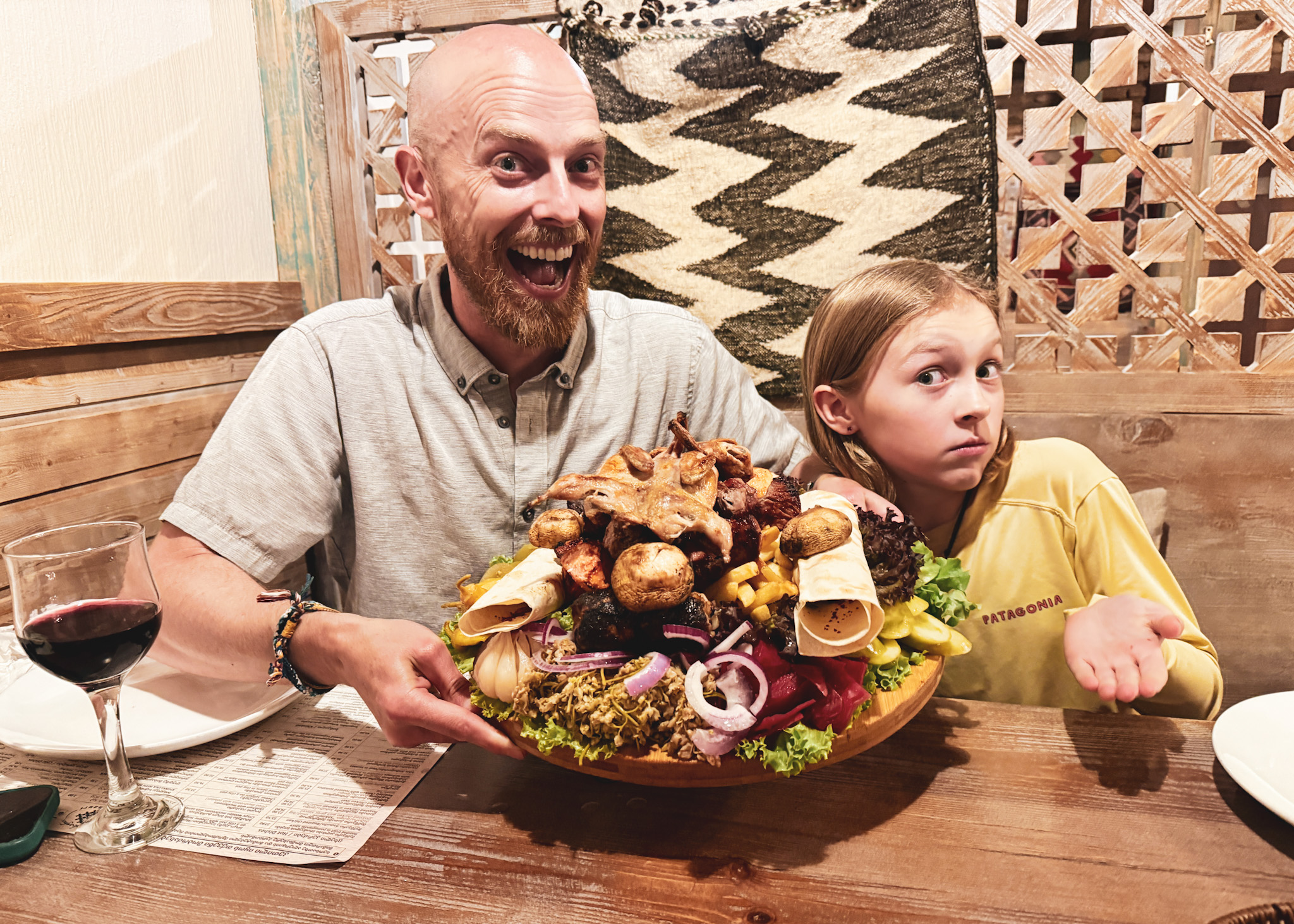
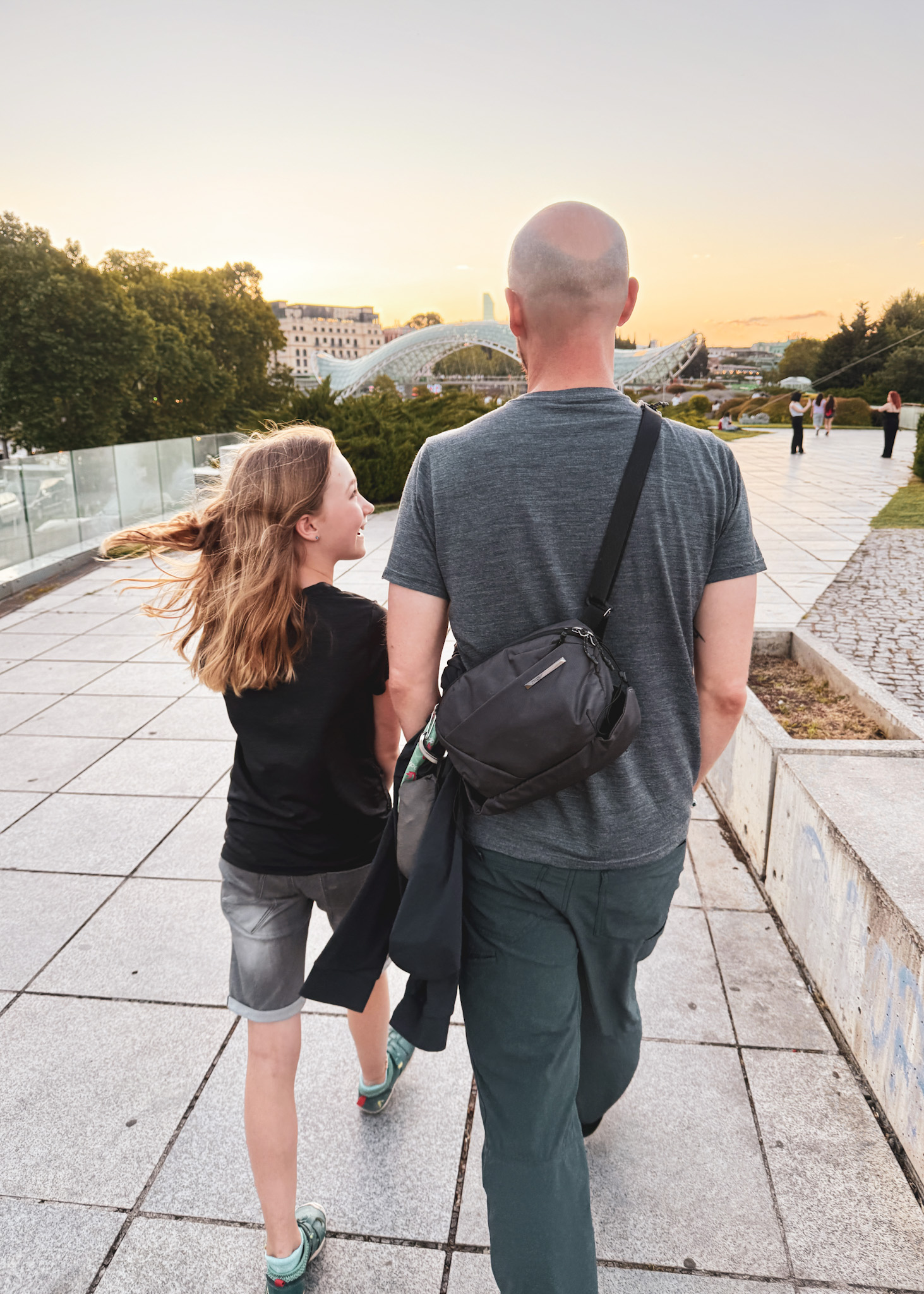
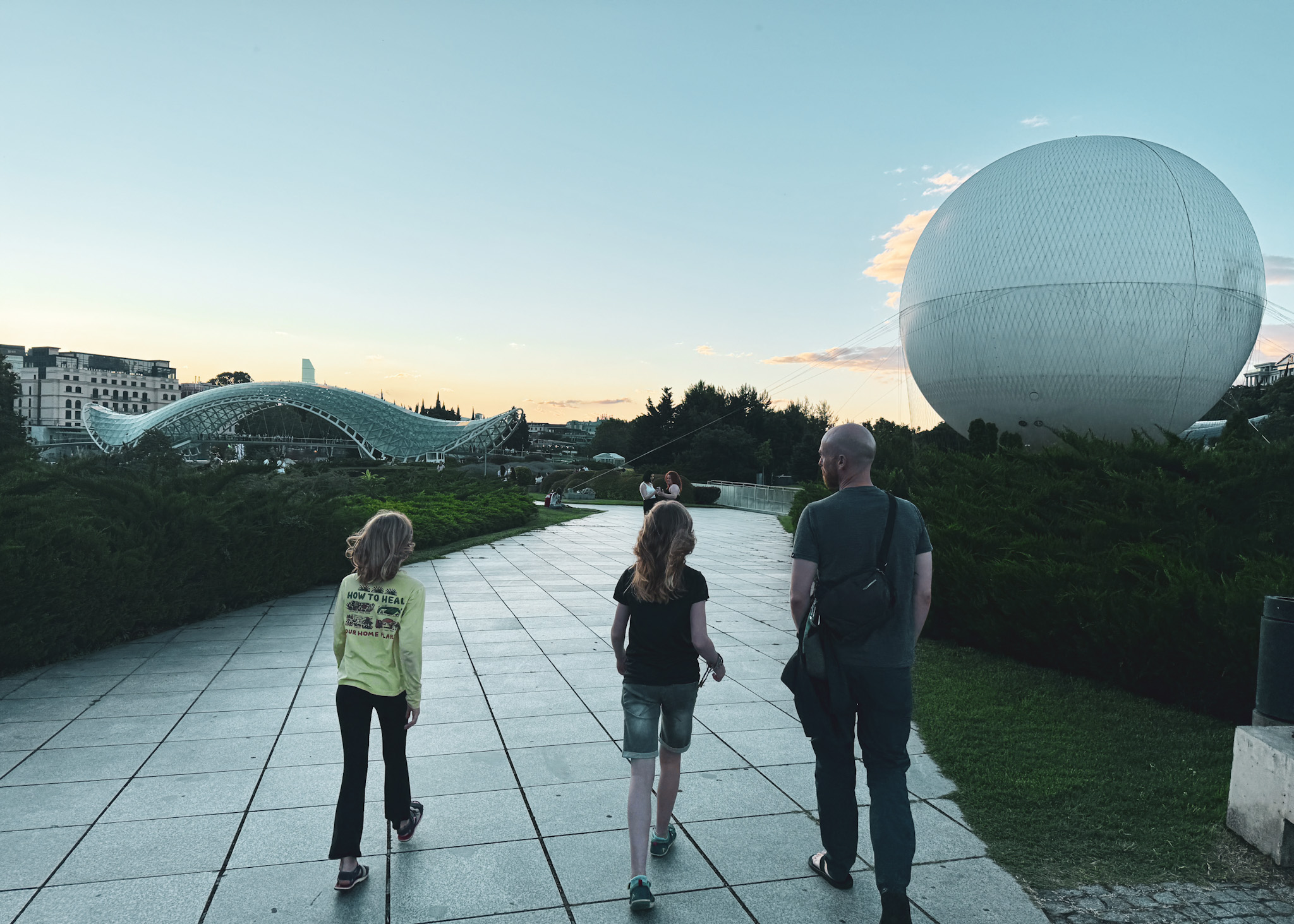
Then Tbilisi, and the full-circle feeling began in earnest. We returned the rental car without a scratch of dispute, closing out a month of Georgian roads, potholes, cows, and one muddy shortcut with a clean handshake. We moved back into the very same apartment we’d stayed in on our first pass through the city a month ago, beside the same landmarks, and it felt less like checking in and more like coming back. Dinner that night was at Pasanauri, a beloved restaurant in Tbilisi’s Old Town named for the mountain village considered the birthplace of khinkali, on the theory that a place named for a dumpling ought to do the dumpling right. The theory held: quite possibly the best khinkali of our whole trip, followed by a four-person meat platter of such absurd scale that we managed to consume roughly half and carried the rest home, where the leftovers were destined for one final pot of Max’s improvised Bolognese.
The next day made the full-circle theme almost literal. A month ago, on our first stint in Tbilisi, Max had built a running loop around the old town. Now he ran the identical route again and beat his previous time by over a minute at a lower perceived effort, which is fancy runner talk for a simple, satisfying fact: a month of near-daily runs, walks, hikes, and strength workouts with Shaina, together as accountability partners, has made him measurably fitter. The two of them celebrated in the traditional manner, by immediately doing a leg workout.
The rest of that day was Tbilisi at its most pleasant. We discovered chimney cakes, a treat none of us had encountered before: dough coiled around a spool and baked in a little oven into the shape of a waffle cone, doused in cinnamon sugar until it tastes like a churro’s bready cousin, then finished with a scoop of gelato dropped straight into the hollow center. Strange and wonderful.
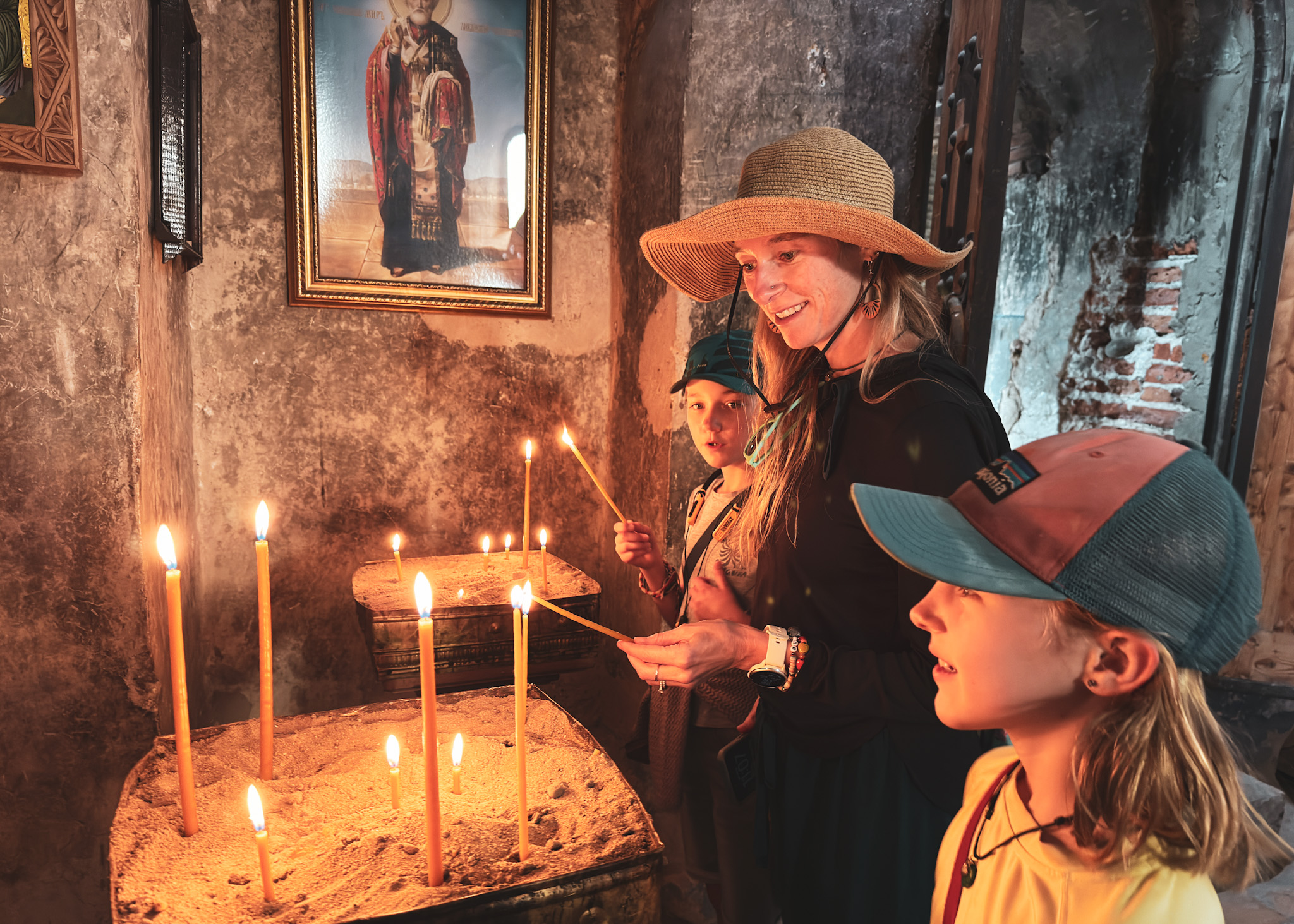
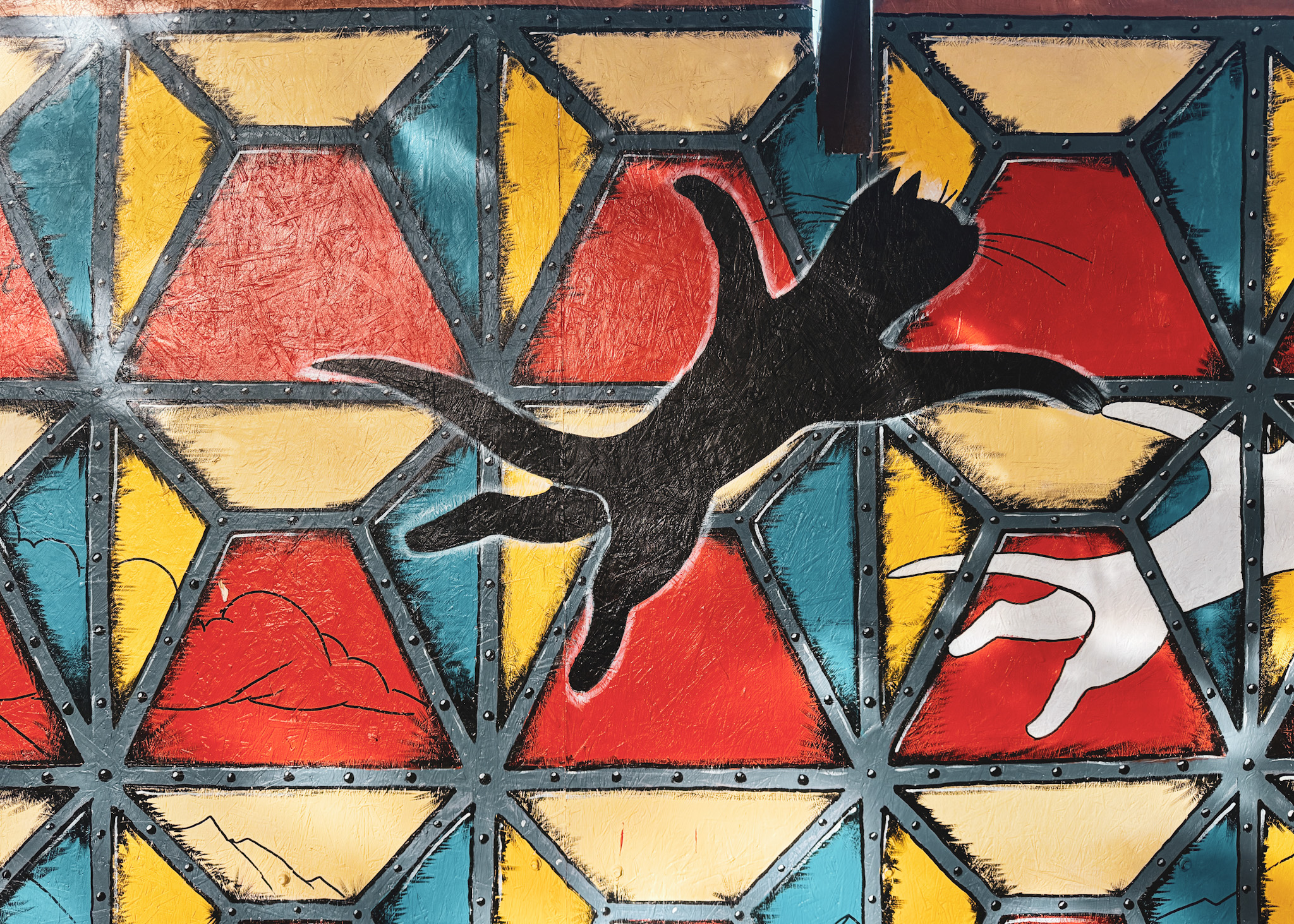
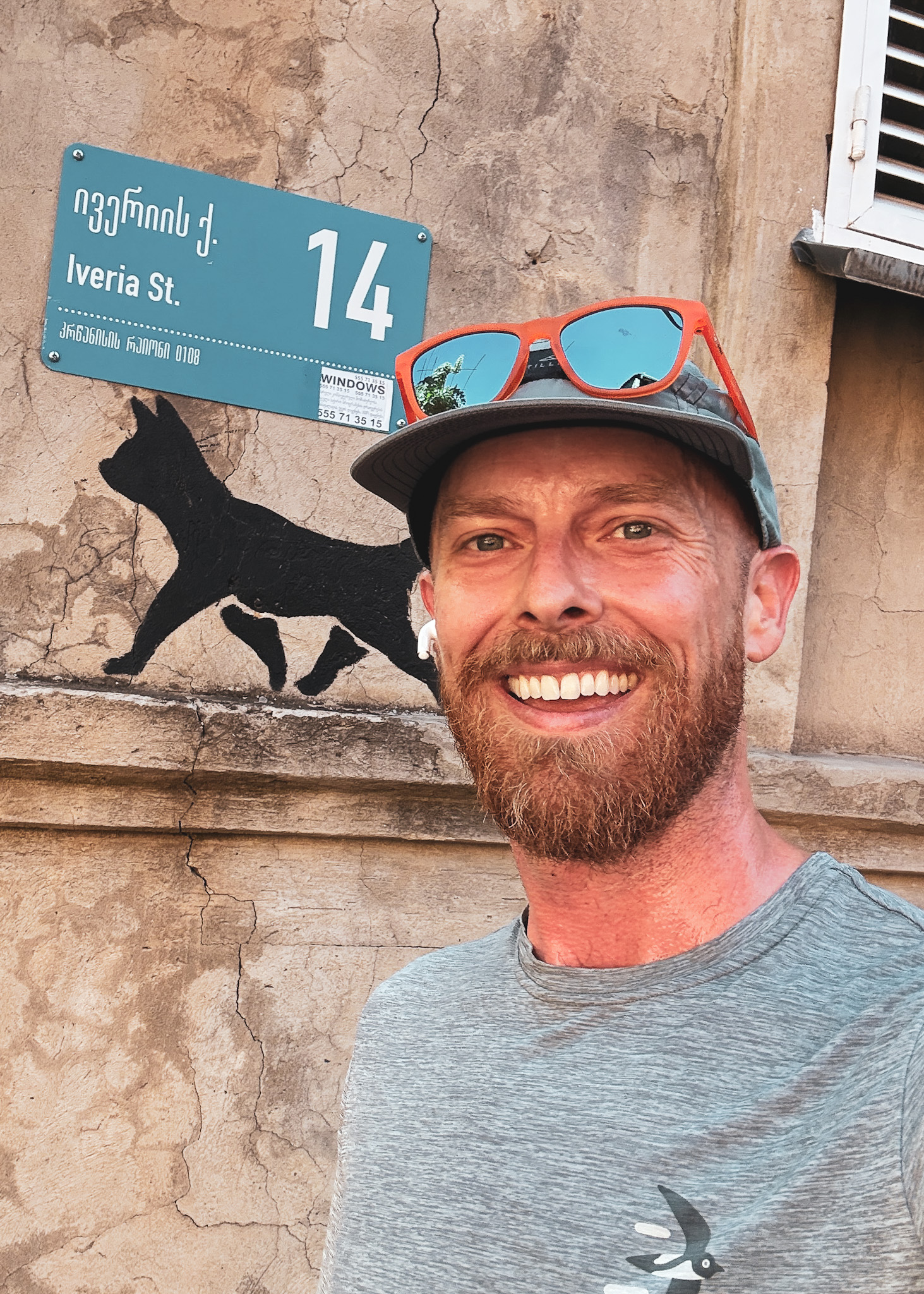
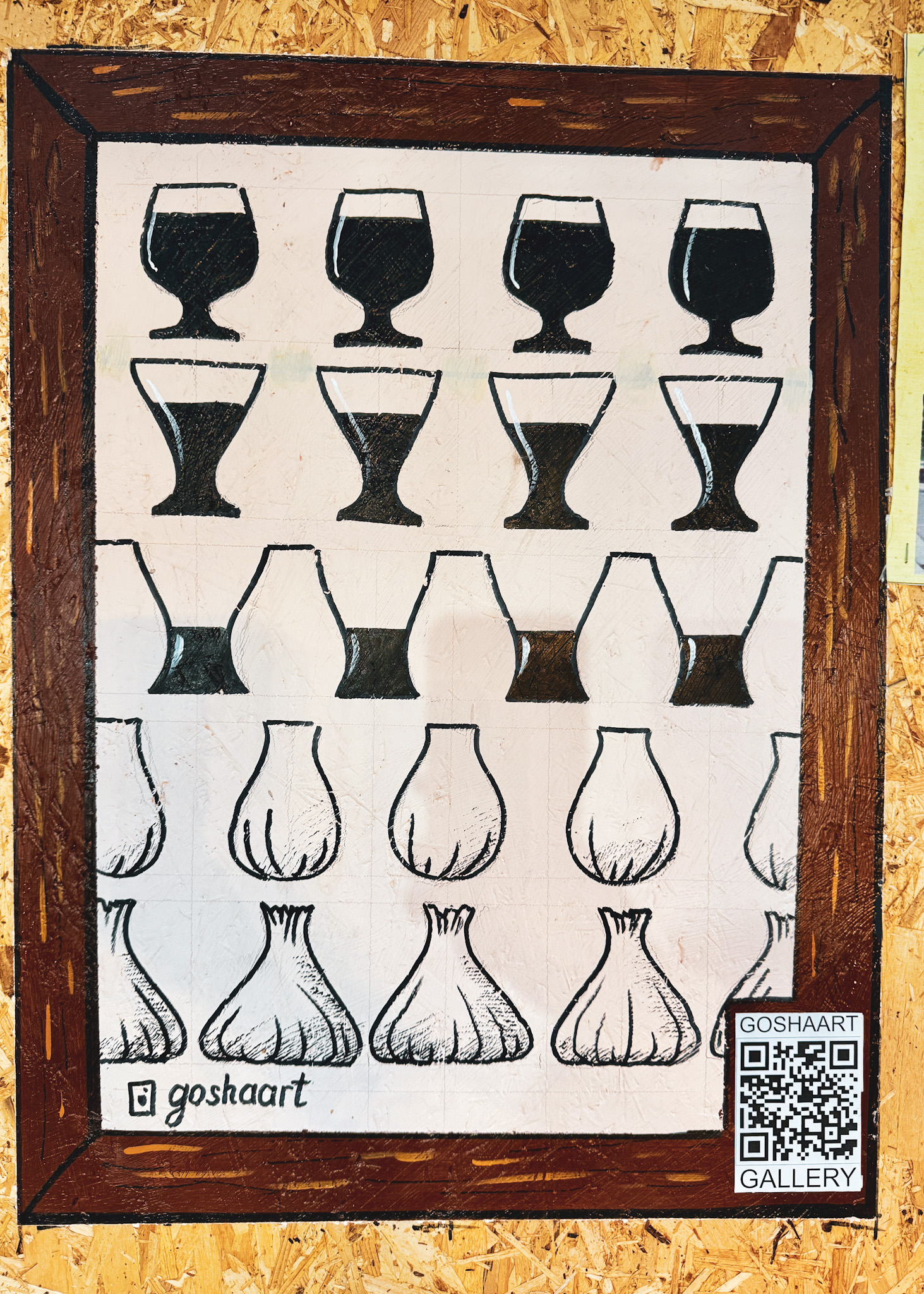
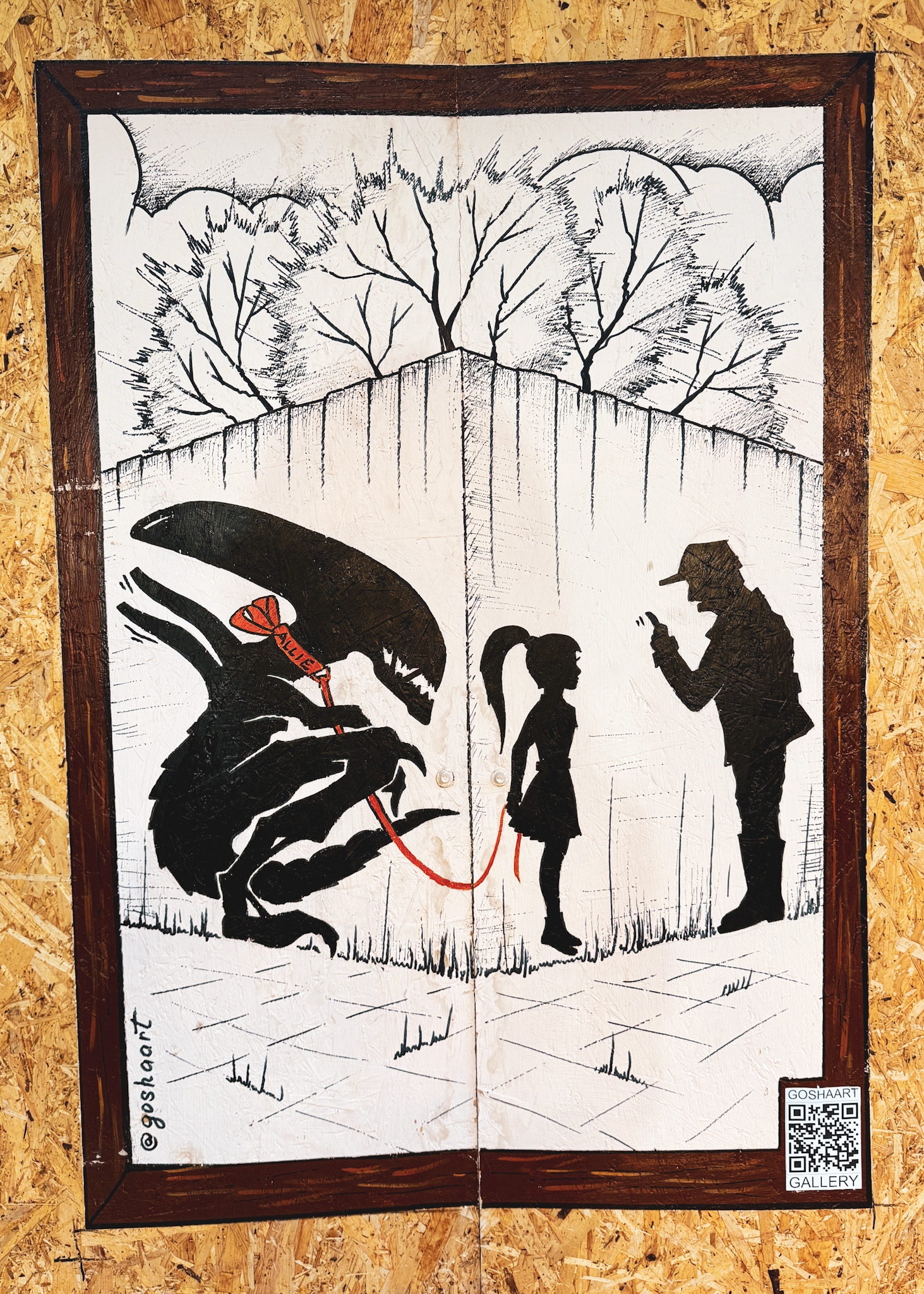
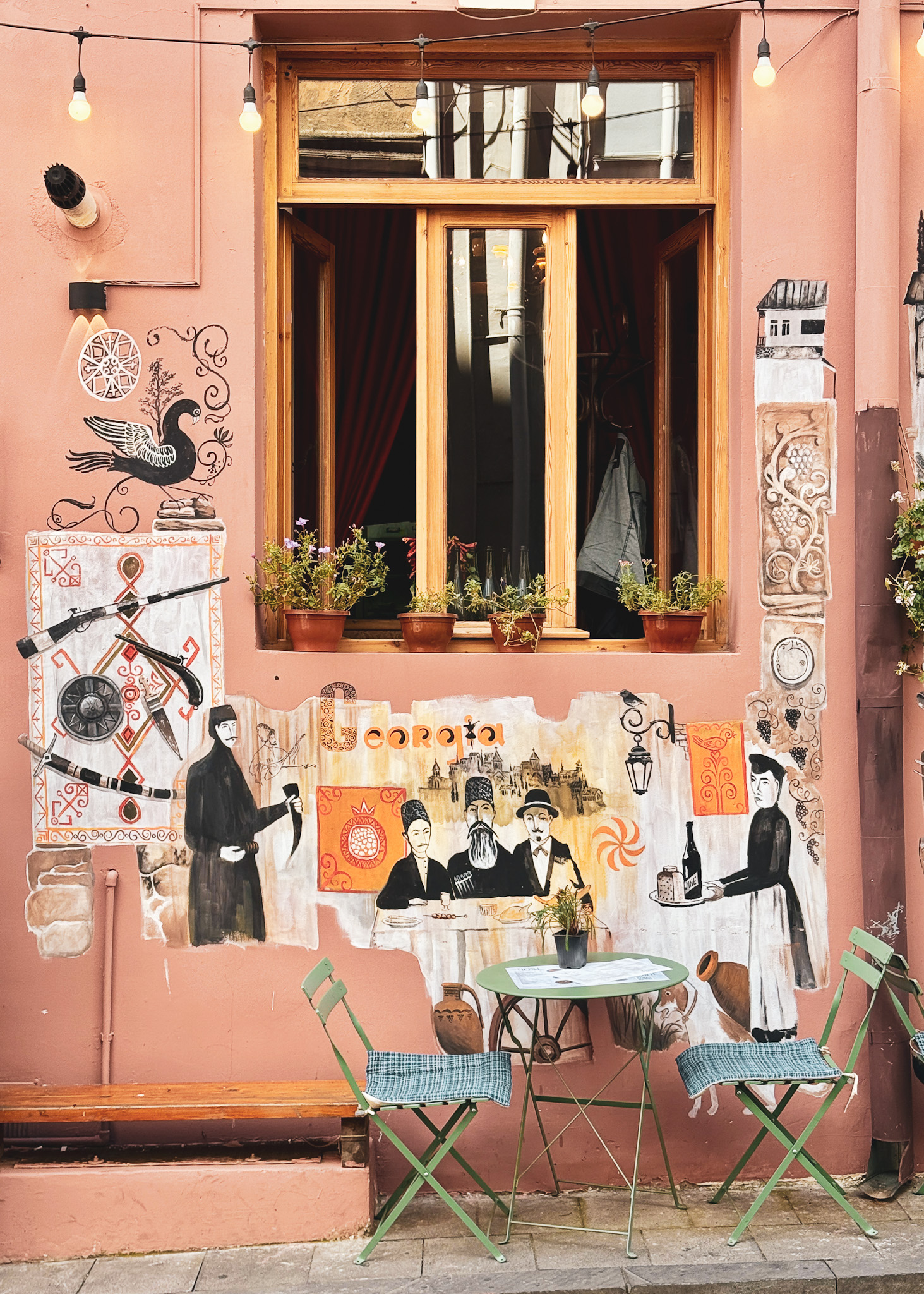
We wandered the old town admiring the street art, having become devoted fans of a local artist called Goshaart, whose recurring character is a sneaky black cat stealing khinkali in various elaborate scenarios. The masterpiece of the series shows the cat plucking a khinkali off a clothesline, leaving just the little dough topknot still pinched in the clothespin as it escapes with the prize. We paused at the small church that houses St. Nino’s grapevine cross, the drooping-armed symbol of Georgian Christianity said to have been formed from two vine branches bound with the saint’s own hair when she brought the faith here in the 4th century. It remains Max’s favorite church anywhere, small and dark and somehow alive in a way he cannot fully explain. His daughters do not share this affection: Arya refused to enter at all, and Finlee came in only long enough to attempt to extricate him. She succeeded and we moved along.
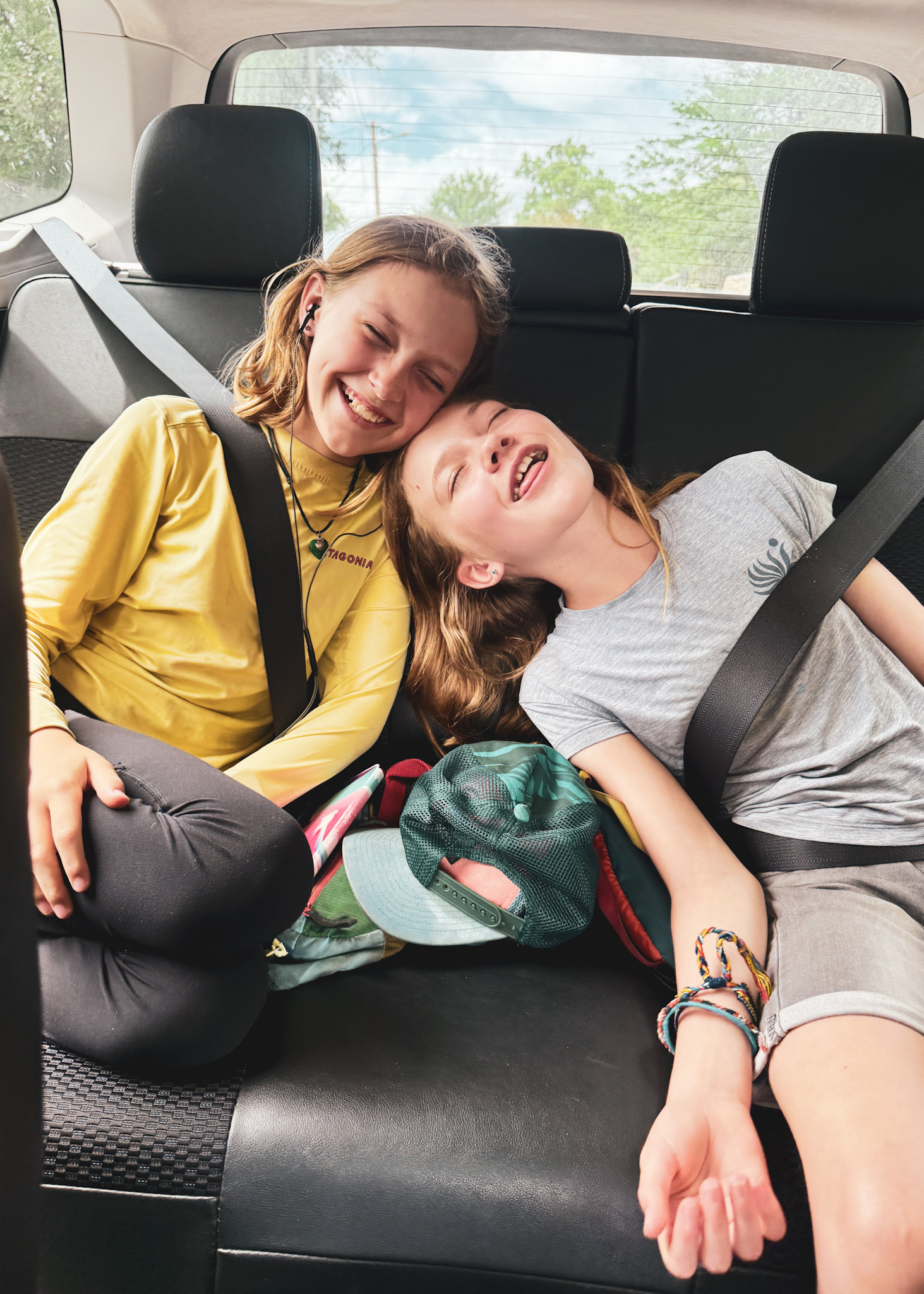
It was standing outside that church that home reached out and tapped us on the shoulder. Shaina’s phone buzzed with news from Reno: our friends Mike and Heron had just had their baby. We stood on a Tbilisi street grinning at a photo of a brand-new human seven thousand miles away, and felt the pull of home tighten by a notch. Life is carrying on back there, in all the ways that matter, and we are getting genuinely excited to rejoin it.
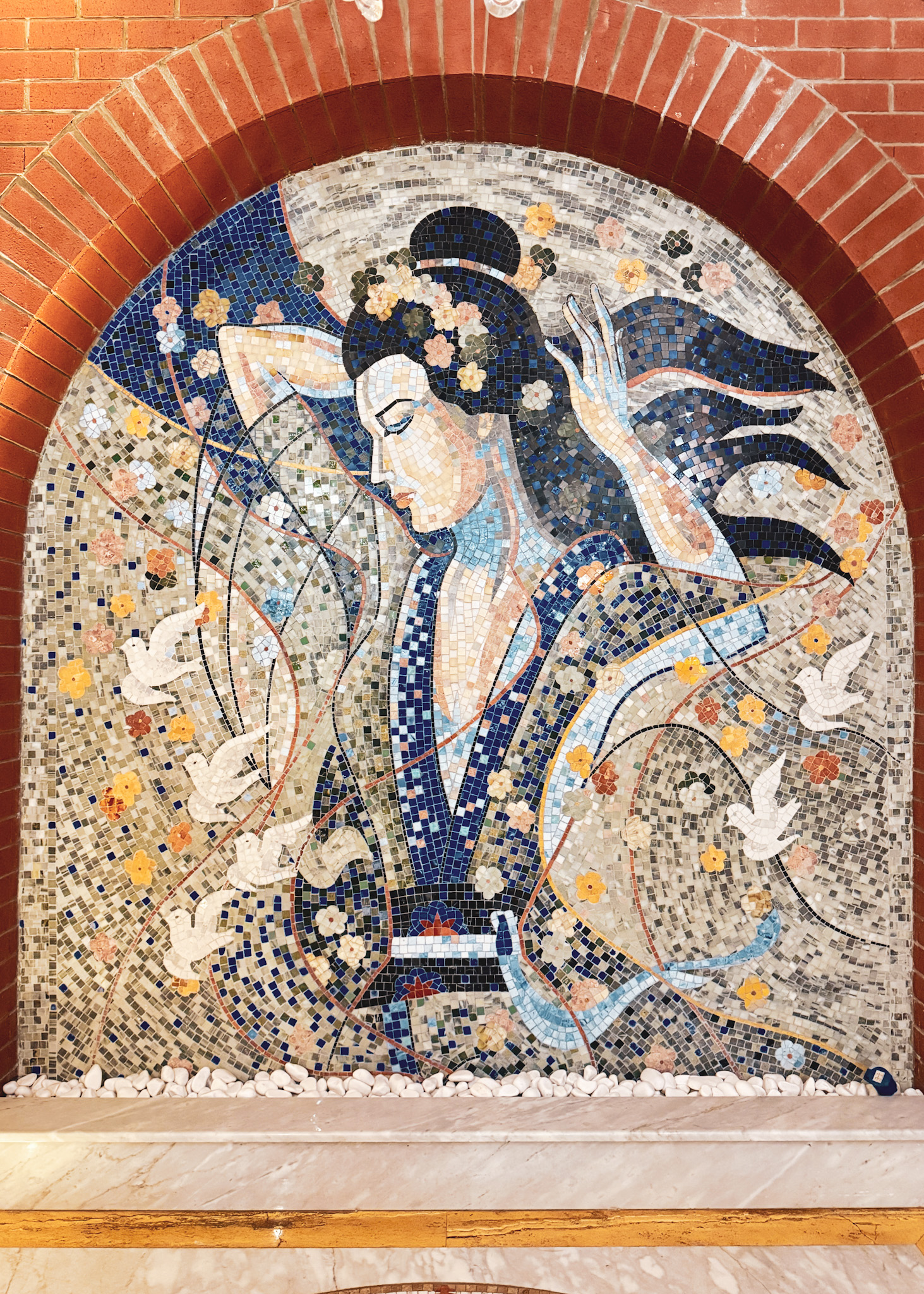
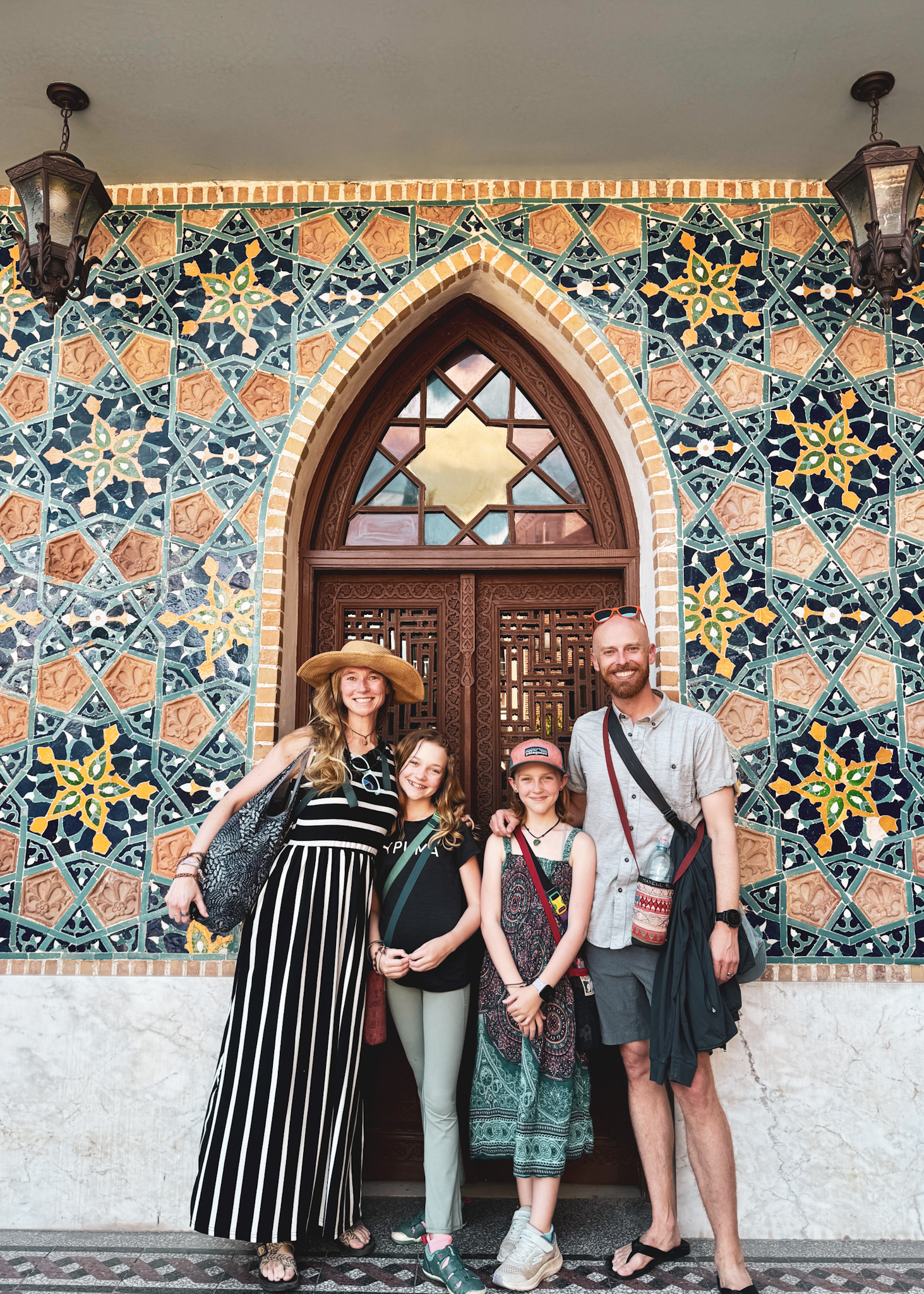
Our final full day closed the last and oldest loop of all. On our very first day in Tbilisi, back in mid-May, we had walked through Abanotubani, the historic bath district, and promised ourselves we would come back and actually get in the water. The baths are, quite literally, the reason this city exists. Legend holds that the 5th-century king Vakhtang Gorgasali was out hunting when his falcon fell into a natural hot spring, and he was so taken with the warm water that he founded his capital on the spot. Tbilisi means, roughly, “warm place.” The sulfur-rich water still rises from geothermal springs directly beneath the brick bathhouse domes that poke out of the ground like chimneys. We booked a private room at Chreli Abano, the famous bathhouse whose blue-and-turquoise Persian-tiled facade looks airlifted straight out of Samarkand, which after our months in Central Asia felt like a fitting little echo. Inside: a hot sulfur pool, a cold plunge, and a Finnish sauna, and we loved every minute. Yes, it smells slightly like eggs. Given the choice, we would take eucalyptus over sulfur every single time. But the smell is honest. This heat comes free out of the earth—no gas burned, no pretense. If you find yourself in Tbilisi wondering whether it is worth sitting in hot mineral water with the faint stench of rotten egg, we can now say with full authority: it absolutely is.
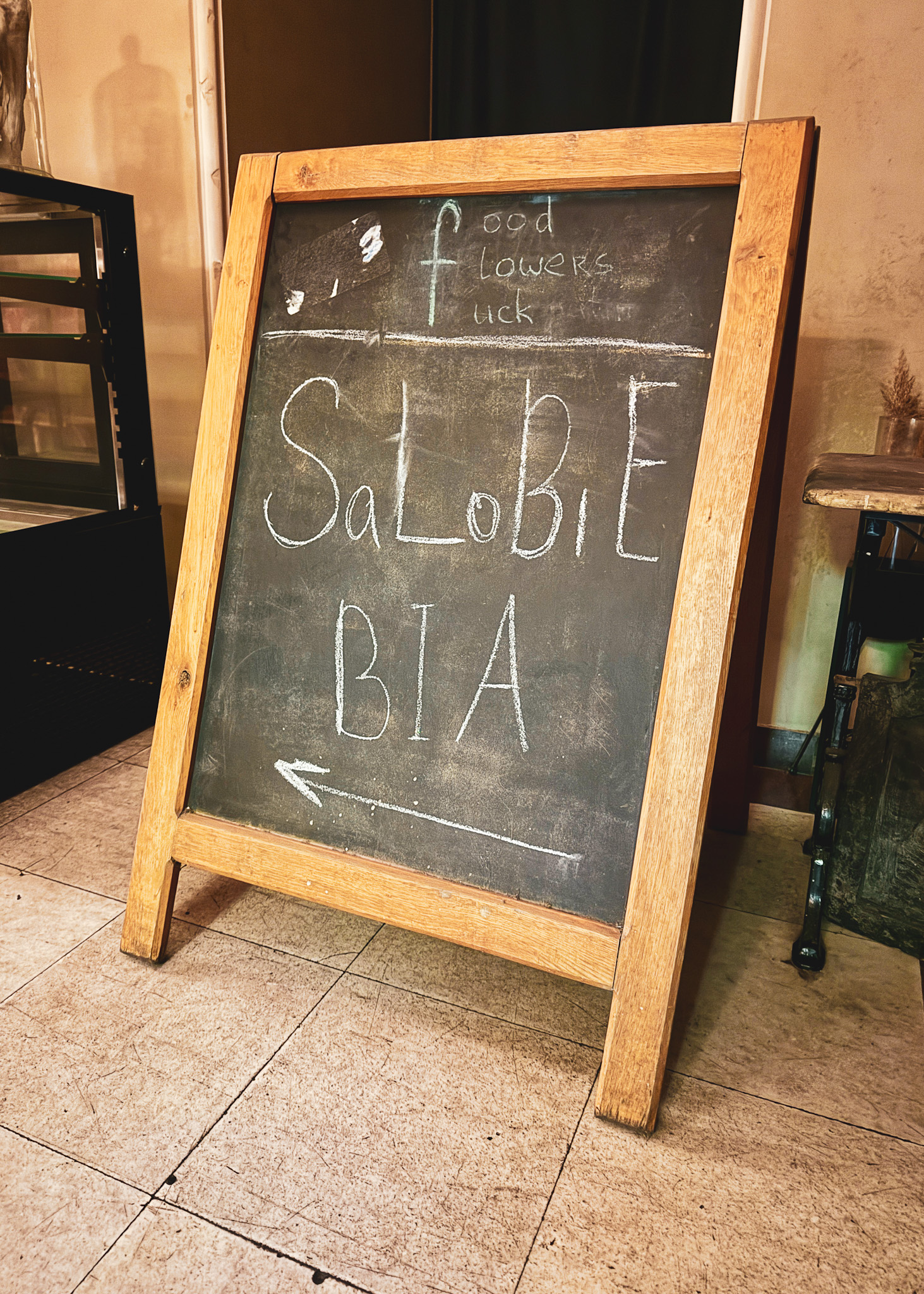
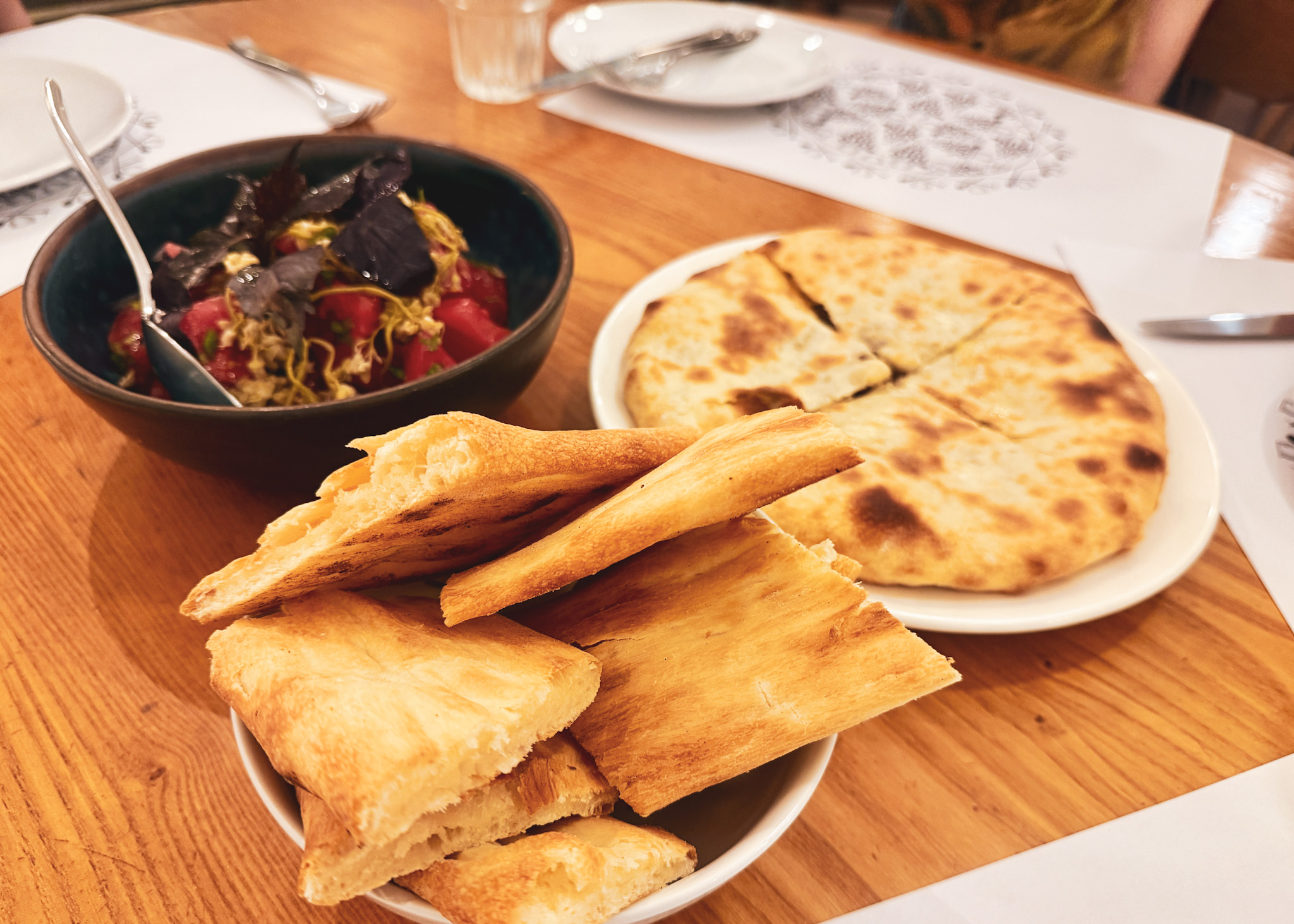
Even our last meal was a callback. Way back on our first day in Armenia, nearly two months ago, a young New Zealander named Siena had told us that if we ever made it back to Tbilisi, we had to eat at a place called Salobie Bia. We finally did. The restaurant hides in the deep basement of a theater building, down an entrance so dark and unpromising that three of the four of us concluded it was closed, abandoned, and possibly haunted. Only Shaina had the faith—she pressed on and found the entrance deep in the cavernous underground. Inside, it splits the difference between restaurant and art gallery, and the kitchen took dishes we now know intimately—the chicken shkmeruli, the kubdari, and even the standard carafe of homemade lemonade—and made them new again. Those dishes, plus khinkali, are what we will taste in our memories whenever Georgia comes up. Getting a fresh, distinctive version of them on our very last day, on a tip carried all the way from neighboring Armenia, was the perfect close.
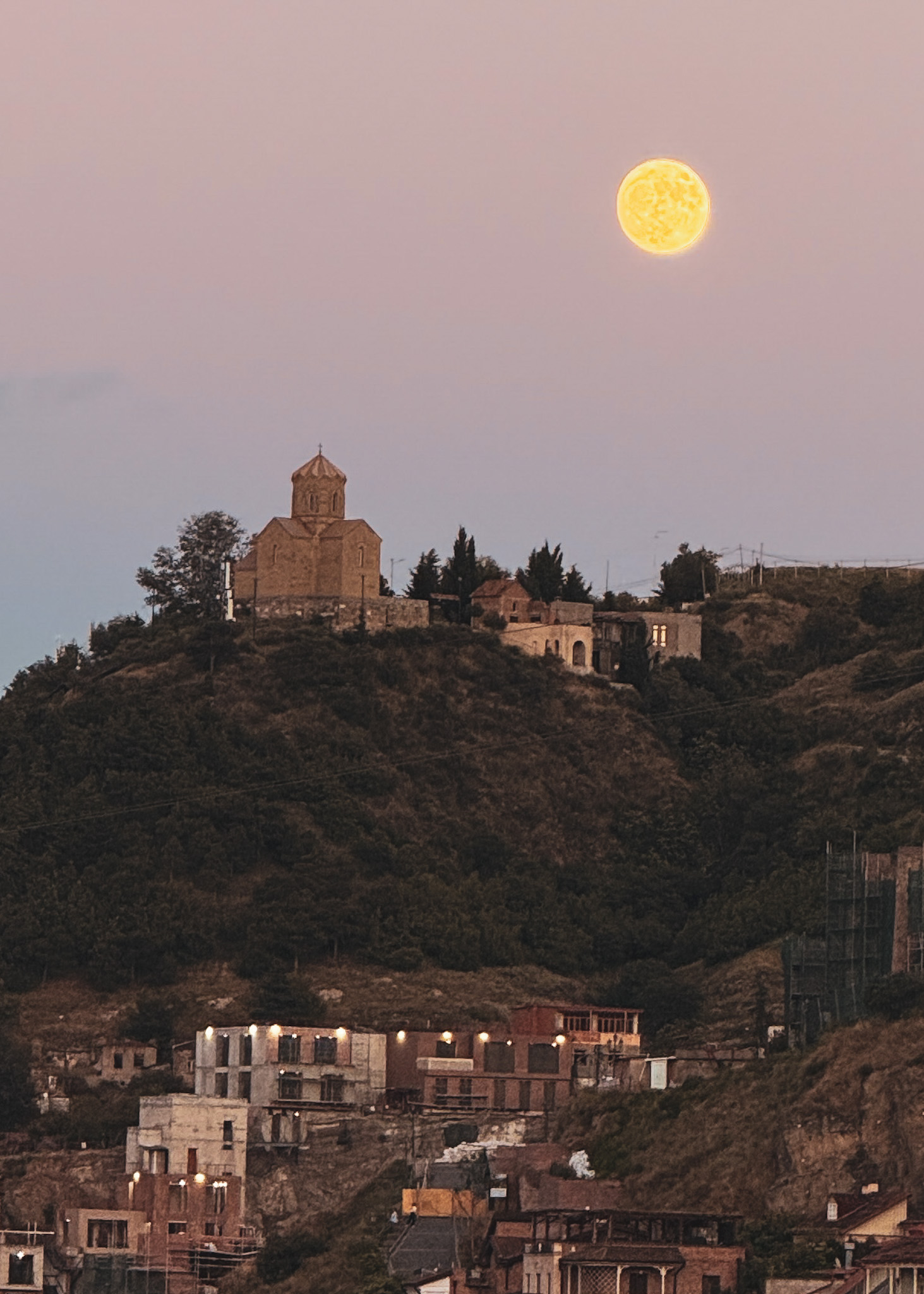
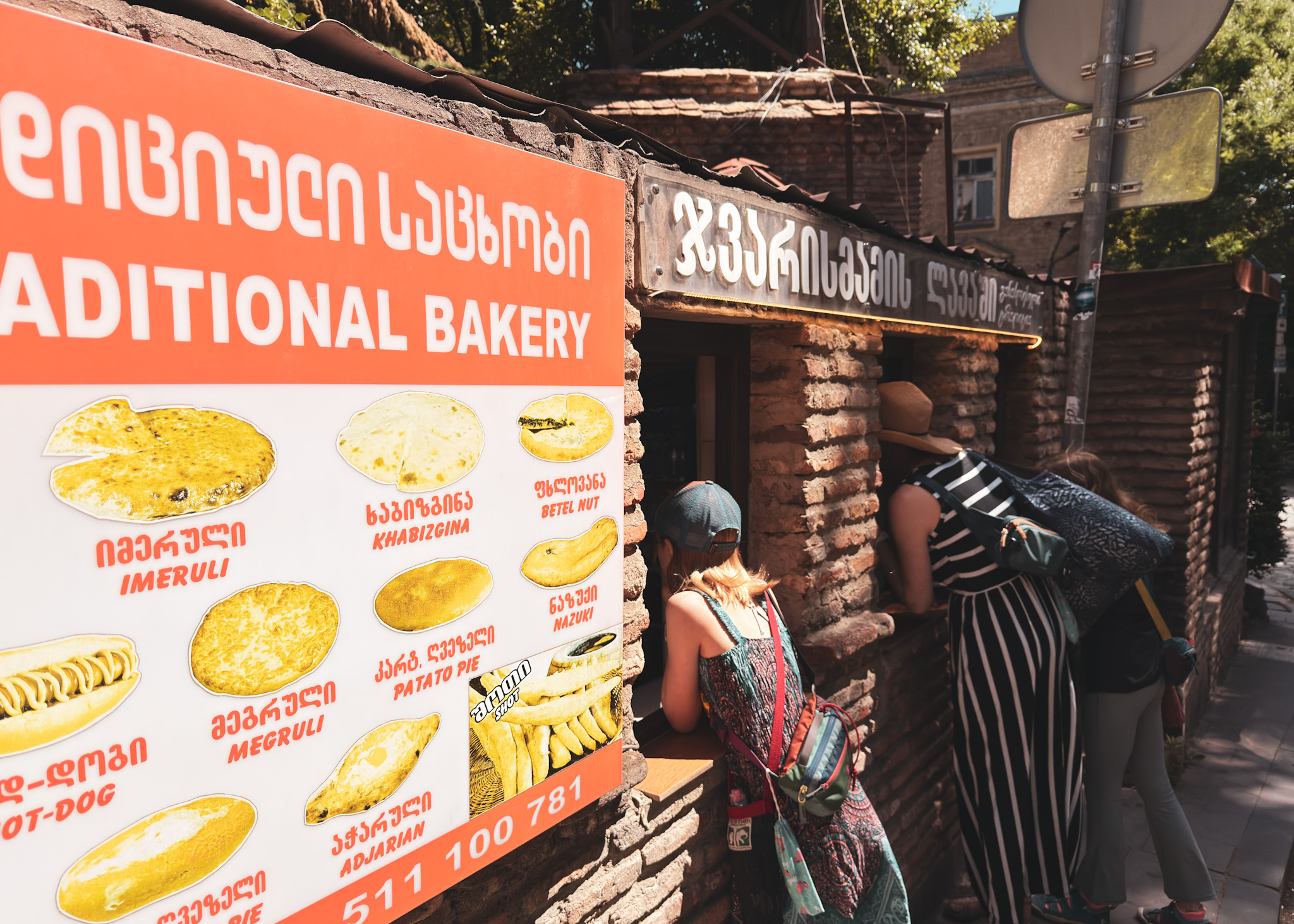
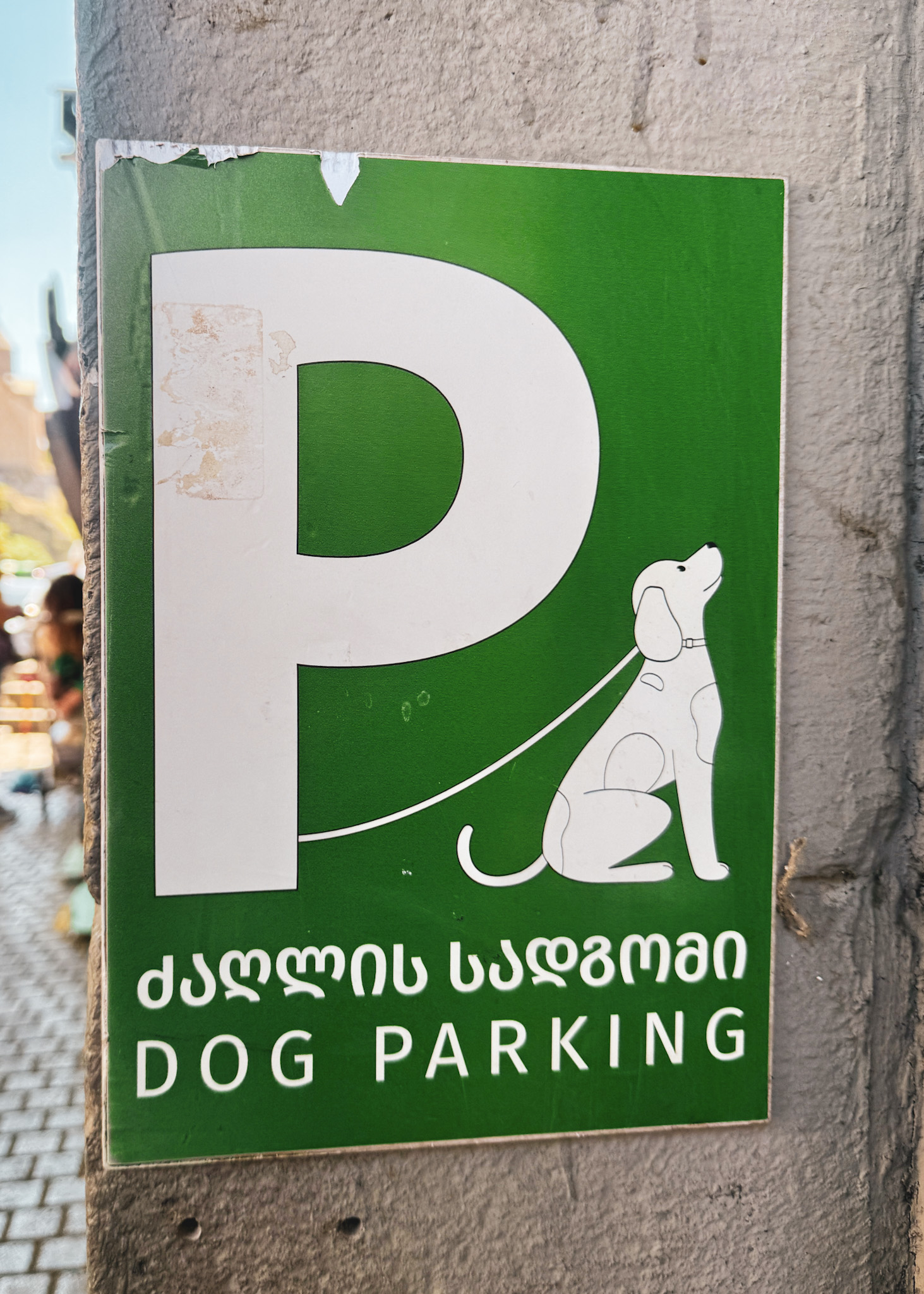
We spent the last evening on errands wrapped in small celebrations. Finlee turns ten on July 1, and Shaina and Max’s sixteenth wedding anniversary lands on July 4, so the family split up for secret shopping missions through the old town. Max and Arya hunted down a piece of Georgian cloisonné for Shaina, the ancient technique in which thin silver wires are soldered into little compartments and filled with vivid fired enamel. Georgia has practiced this craft beautifully for centuries, and it made for exactly the kind of keepsake that will carry this country home with us. Shaina, meanwhile, told Finlee they could do whatever she wanted on their mommy-daughter day. Of course, she wanted to go clothes shopping, specifically at the second-hand store where Arya had gotten a few items the previous month. We were successful and she came away with two skirts, together costing us less than $3. She was ecstatic, and now proudly a fan of buying used clothing. All four of us reunited at the cinema for Toy Story 5, having triple-checked, in light of certain historical events at this very theater chain, that the showing was in English. It was. The movie was sweet. Redemption was ours.
And then it was time to go. Bags packed for a 6:45 a.m. flight, we naturally did the responsible thing and stayed up until 11 watching Japan lose to Brazil in stoppage time.
Six weeks in Georgia, and here is what we will say about it. This country gave us exactly the mixture a long stay should have: real adventure and real rest, novel experiences and utterly mundane domestic days, in proportions that felt just right. It gave us glaciers and cave cities, khinkali and kubdari, hosts who welcomed us like family and one immortal woman who shamed us out of a kebab shop. And it gave us its people, who are warm and generous and proud, and who live with a fifth of their country occupied by a neighbor that has shown them violence and intimidation rather than respect. We want to be precise about that: the problem is the Russian government, not the Russian people, several of whom we met along the way and found perfectly kind. It is governments that fail at being good neighbors, far more often than the individual humans who live under them. Georgia deserves better from its north, and we hope with all sincerity that it finds its way to the peace and prosperity it has more than earned.
Thank you, Georgia. You were wonderful to us.
Now, onward to Romania.


Leave a Reply