
Dates: June 20-25, 2026
Places: Jvari and Didvela, Georgia
After the trek, and after everything the trek had surfaced, we came down out of the mountains with a quiet piece of homework: to actually practice the things we had promised ourselves in Mestia. More together time with clear edges around the alone time. More patience. More saying yes. It turns out that kind of homework does not get done in one grand gesture. It gets done in six unglamorous days of card games, bedtime stories, family walks, and home-cooked pasta, which is exactly what this next stretch of Georgia gave us.
The descent itself came first. We left Mestia at noon and pointed the Forester back down the same wild mountain road we had climbed a week earlier, which had not improved in our absence. If anything it was worse, now studded with active construction sites where traffic sat waiting to be shuttled through one direction at a time. The delays made the already aggressive Georgian drivers even more determined to claw their time back on the narrow stretches. Max let everyone pass who wanted to pass and kept his eyes glued to the road. That had one unfortunate side effect: he has almost no memory of the scenery from that entire drive. Nor do the girls, who read their books with laser focus the entire way. At least Shaina got to appreciate it, and would ooh and ahh at the views that somehow were just as beautiful the second time around, but from another angle. Three and a half hours of white-knuckle focus later, Maxell drove us into Jvari and back to Katie’s guesthouse on the hill, where we had stayed before the mountains and where the welcome felt like returning to a friend’s house. She asked about our hike, we told her our stories, and we settled in for two nights knowing full well how good the cooking was going to be. That night’s fried chicken in a marinara-like red sauce disappeared faster than any plate of meat we have ever seen.
And then came the evening that set the tone for the whole week. Rain moved in after dinner and settled over the hills, and we all gathered in the covered open-air common space upstairs, watching the green countryside get greener. Finlee suggested Charades. Our honest first instinct was to say no. We did not have a charades game, we were behind on journaling, and there is always some perfectly reasonable adult excuse available. But then we remembered the talk we’d had with ourselves in Mestia about interactive family time. There was clearly no better way to honor it than saying yes to a game that one of our daughters had proposed—one that required all four of us to play. So Max asked our new friend Claude whether it could make a Charades prompt generator. Ninety seconds later it had built an entire working game, including timers, scorekeeping, and categories, all organized into a snazzy interface—the kind of thing that would cost five bucks in the App Store. We know this is low-hanging fruit as far as what AI can do these days. We were impressed anyway, mostly by the speed of the trip from “I wish we had a game” to actually playing one.
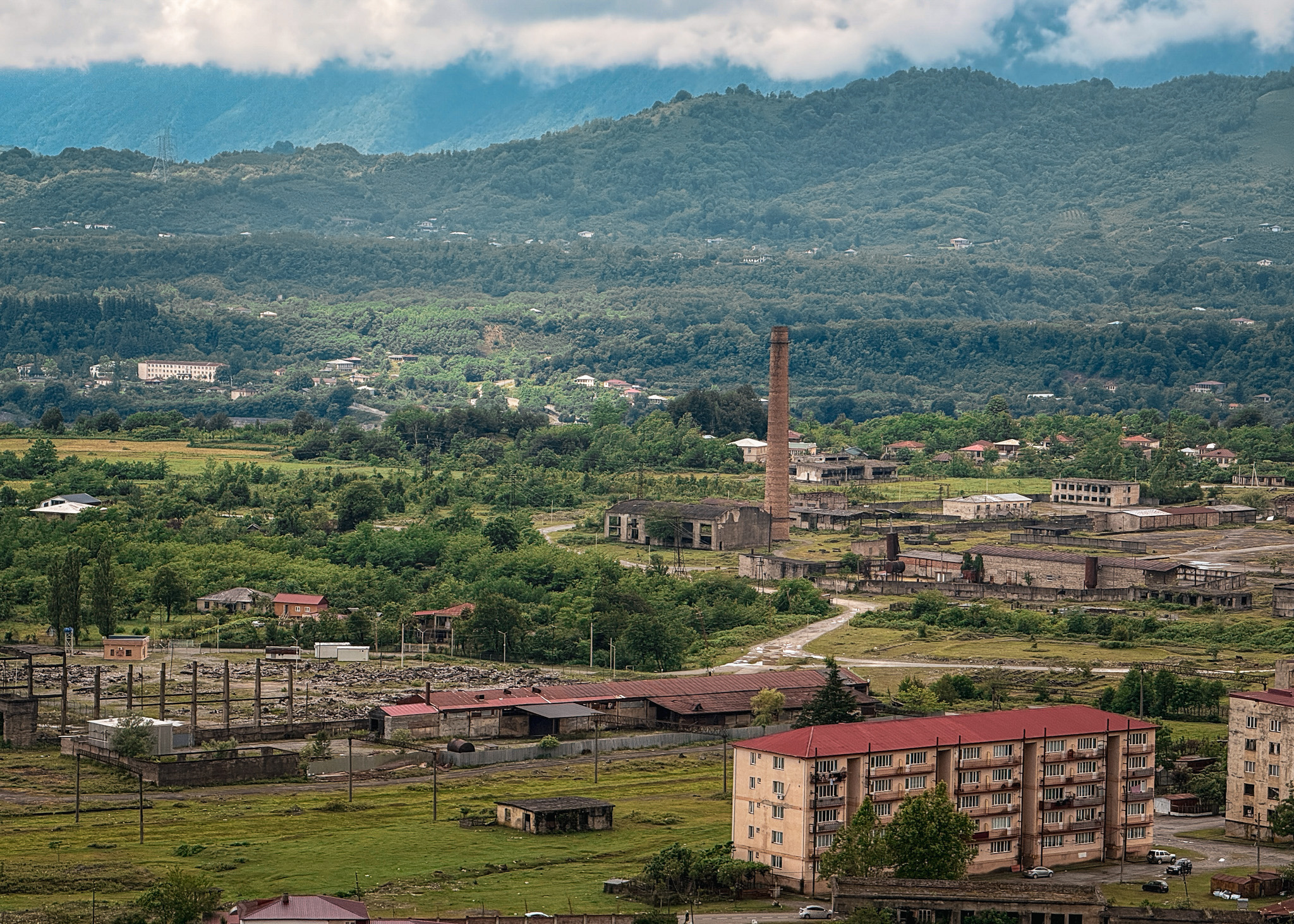
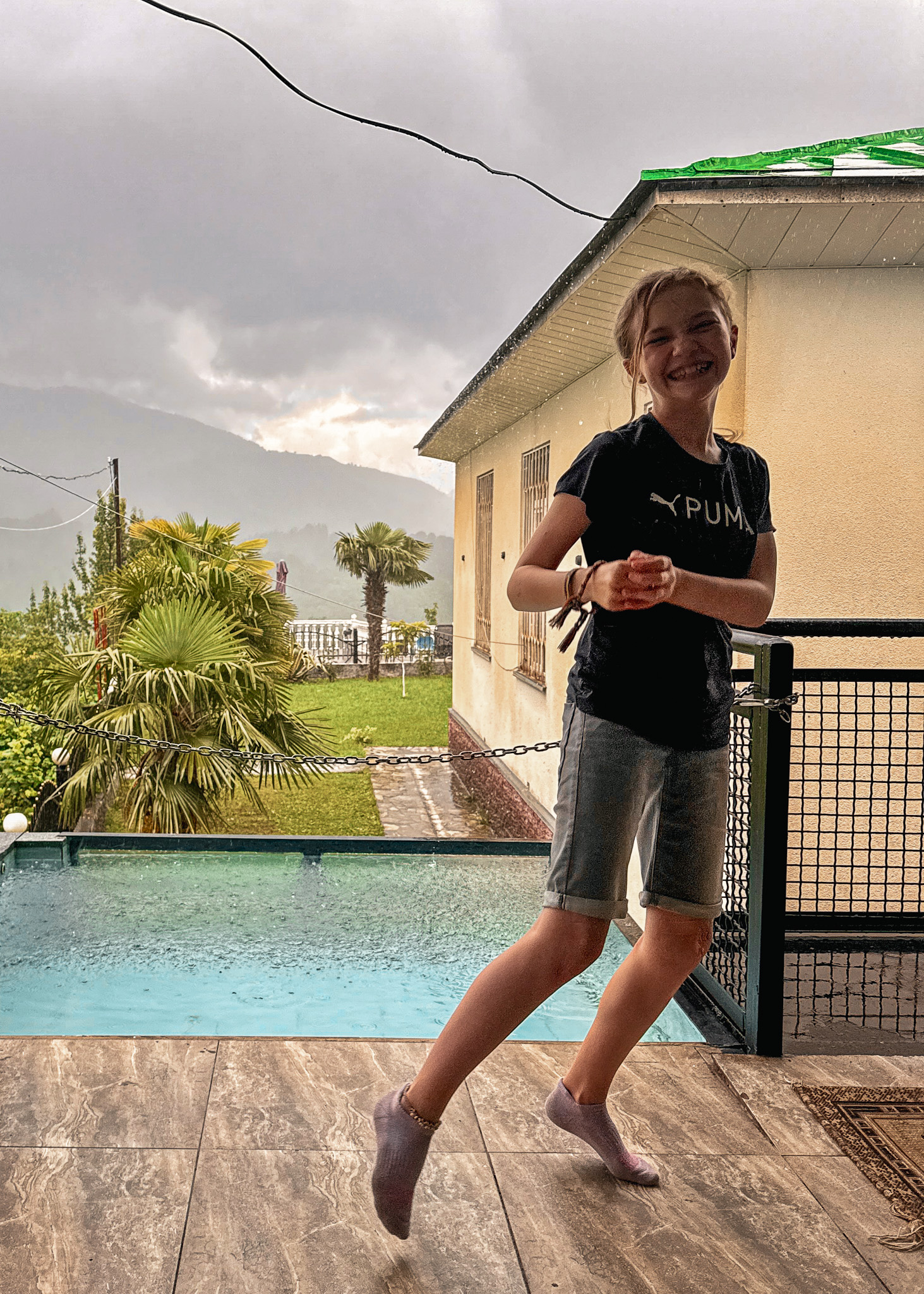
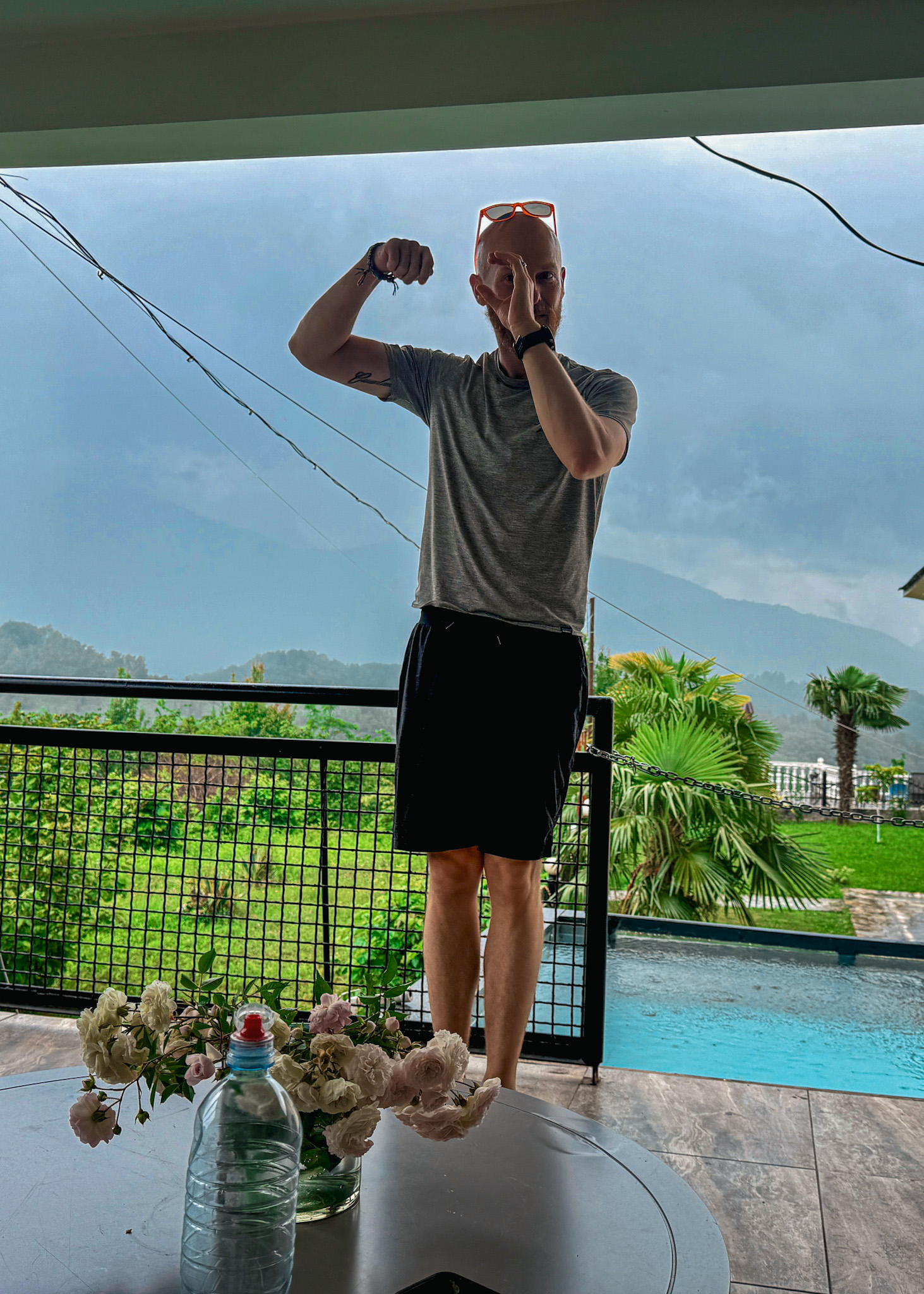
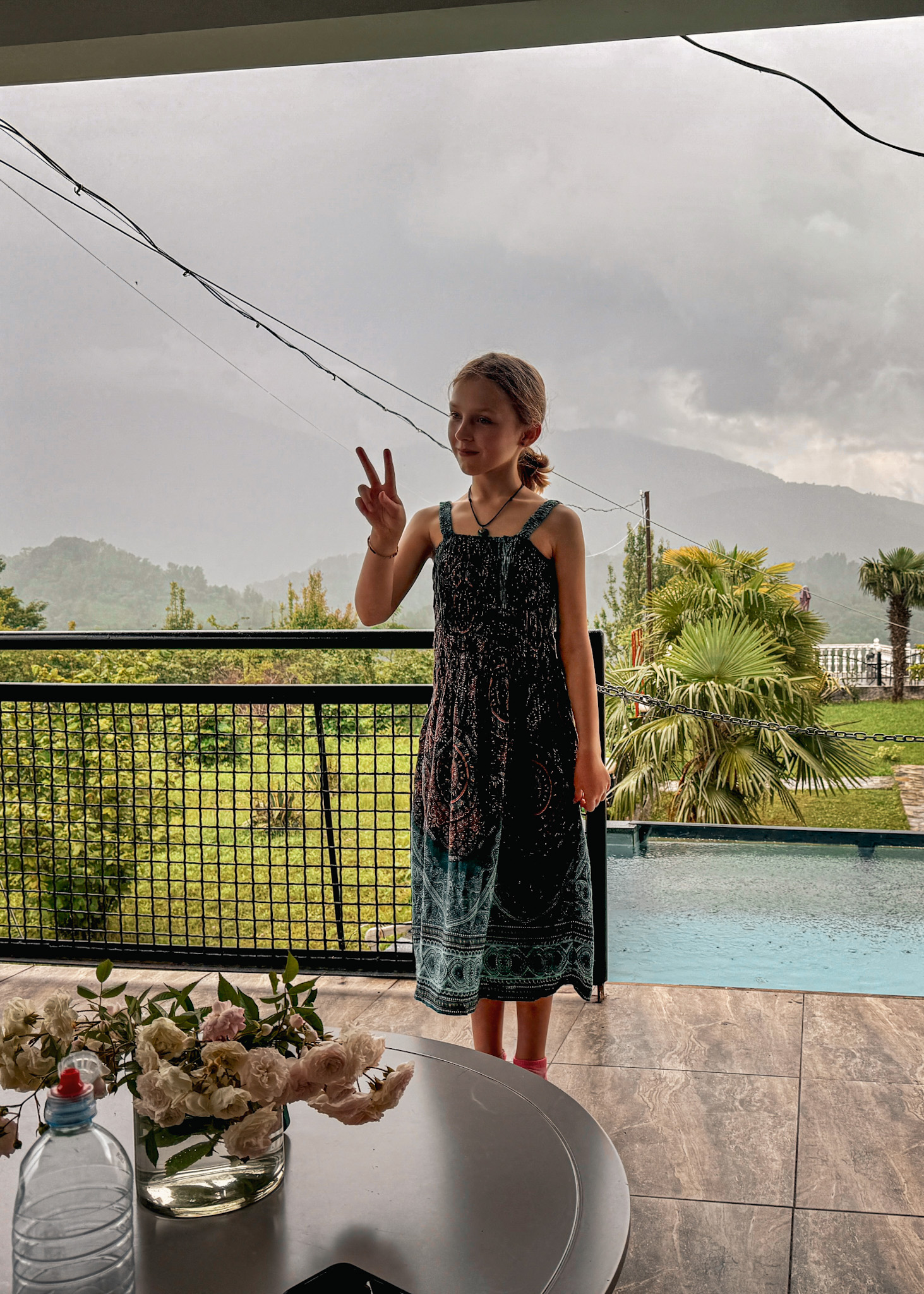
And play we did. Over one hundred rounds of Charades, the four of us laughing, teasing, encouraging, and hamming it up shamelessly while the rain hammered the roof. After the rough patch of the previous days, it was exactly the right medicine, and it proved something worth writing down: a day does not need a spectacle to lay down a strong, happy memory. Sometimes it just needs a yes, and a little effort to make the yes come together.
The next day turned out to be Father’s Day, which began with the hardest rainstorm we’d ever heard. Around 3:45 in the morning the noise yanked us from a dead sleep, so loud that for a confused moment we were certain someone had built a train line over the house. Out the window, literal rivers of water were shooting off the corner of the roof while the trees whipped in the wind. Once we were satisfied that the roof wasn’t going to crash down on our heads, it was back to bed until a decent hour. At breakfast, Max opened cards from Arya and Finlee full of love and encouragement. It was a great way to start the day. We had planned to hike to a nearby waterfall that day, but with every trail review warning that the route felt dangerous when wet, we scrapped it without much debate and stayed close to home.
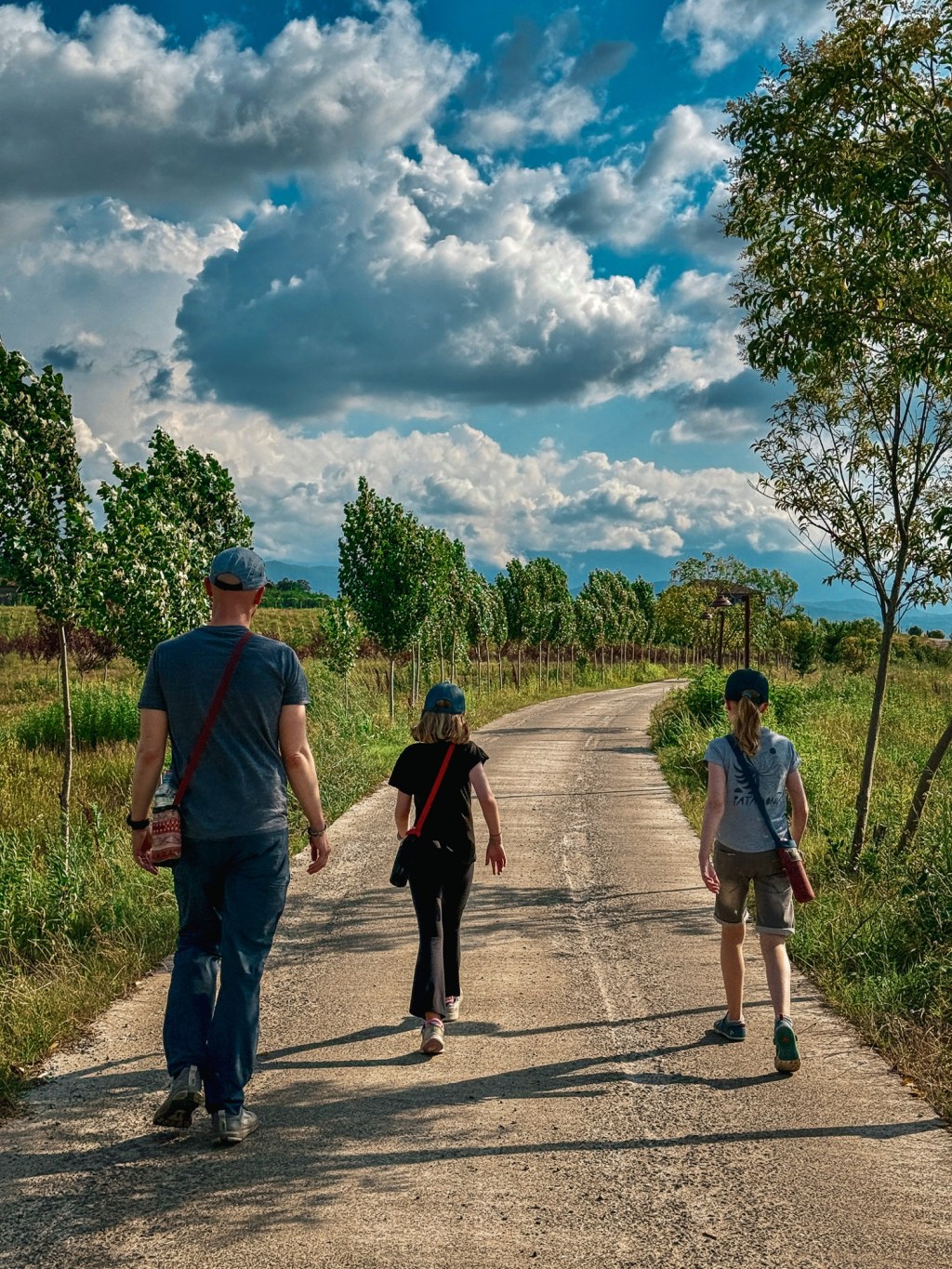
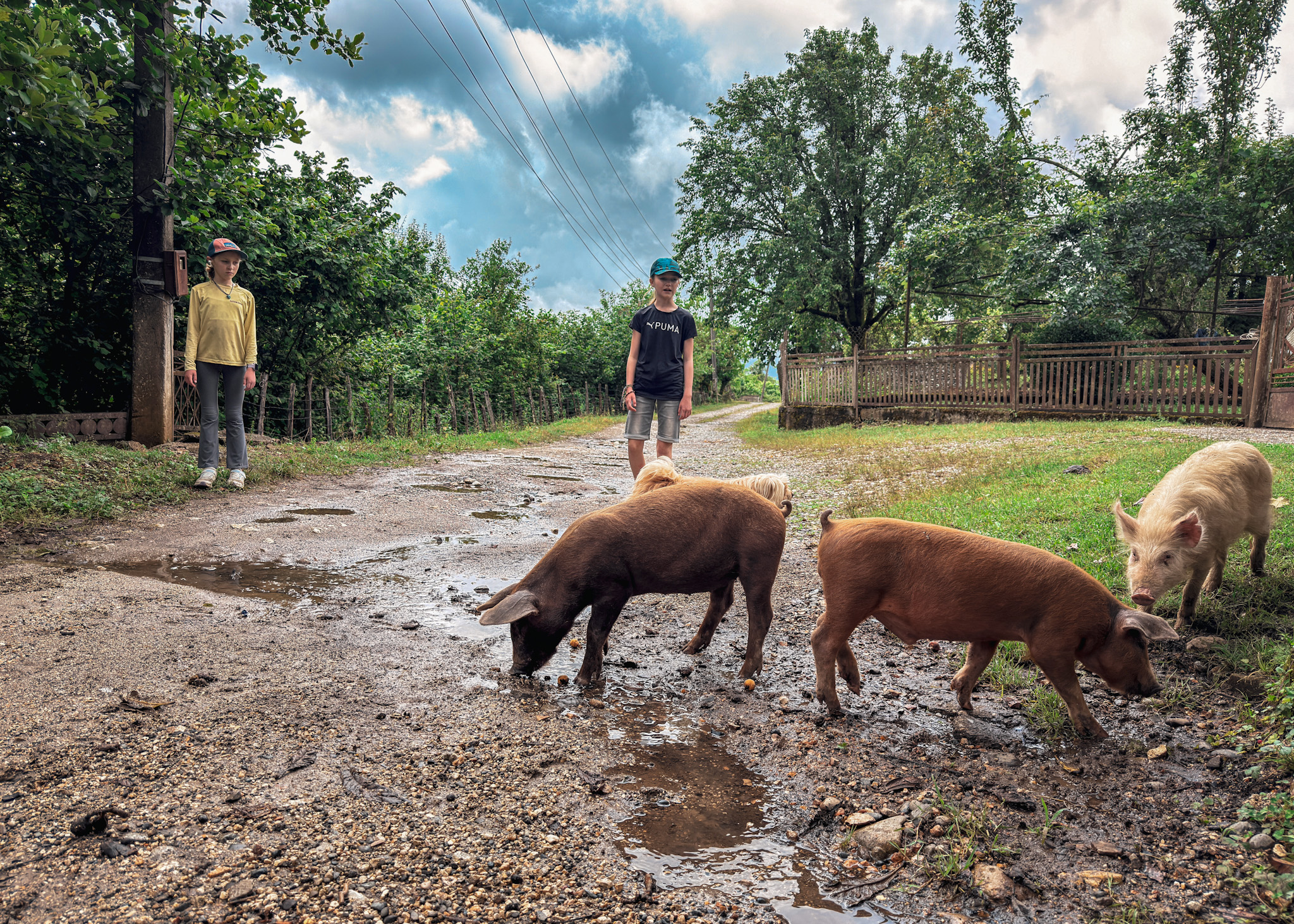
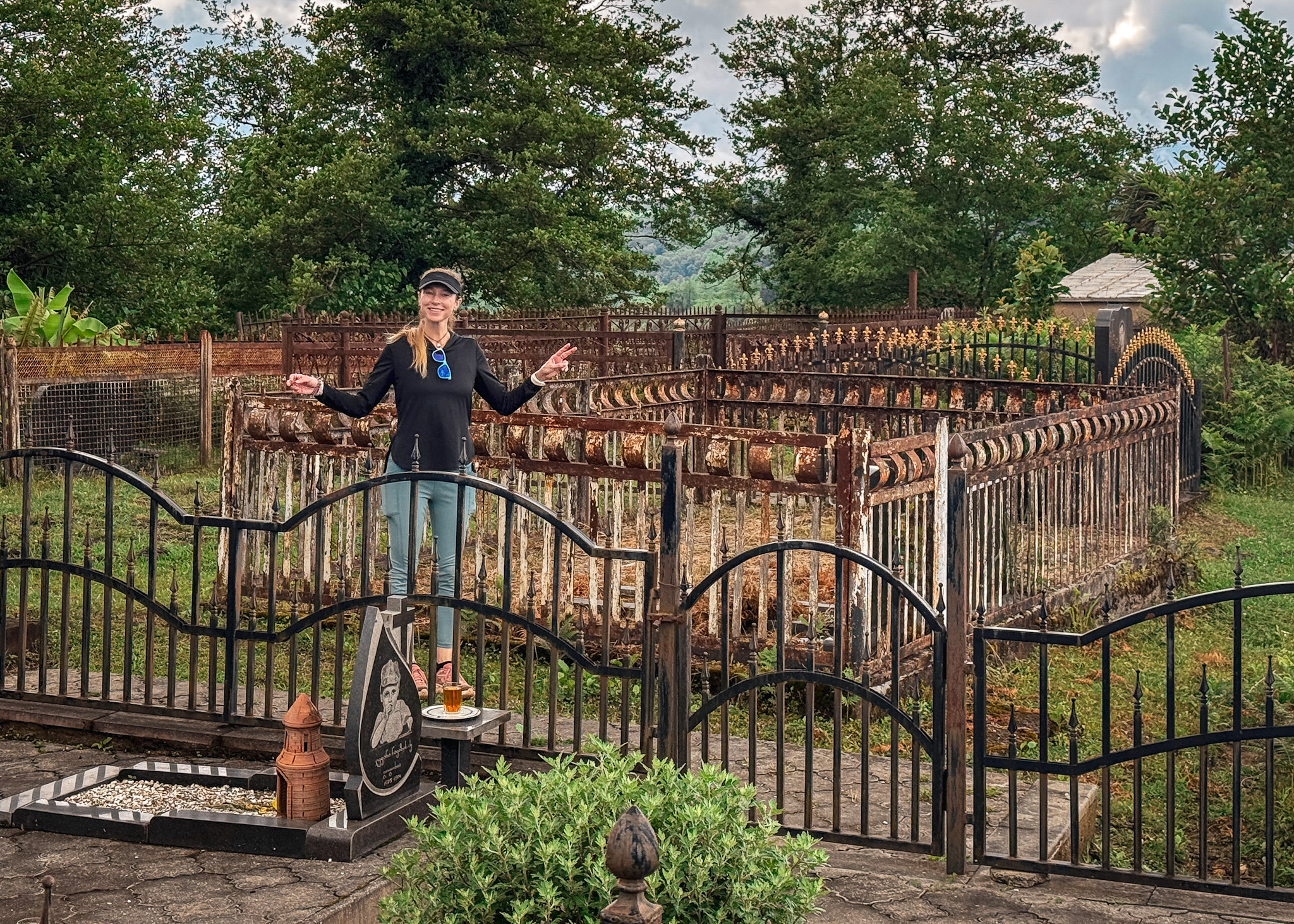
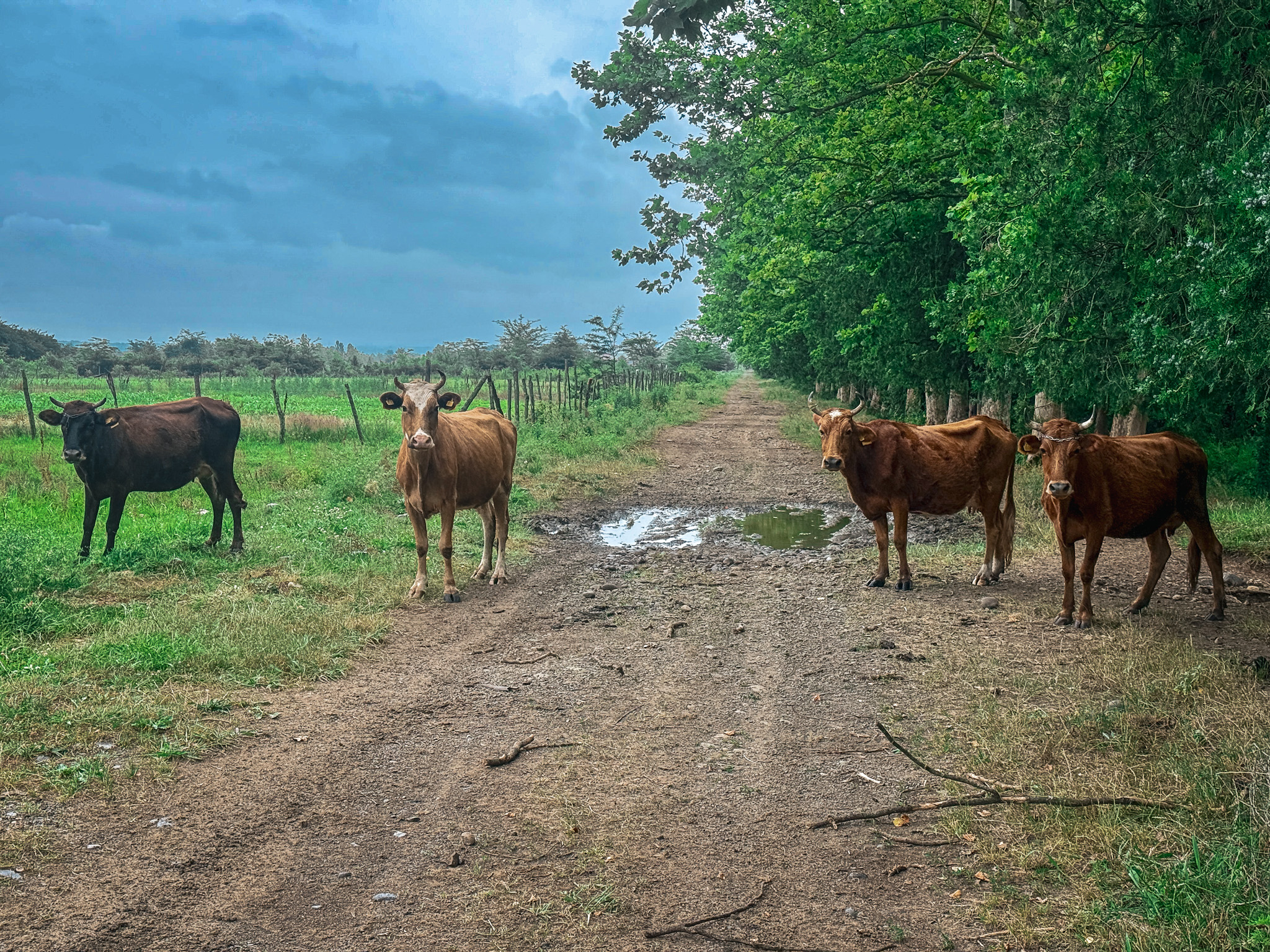
Close to home turned out to be plenty. On our morning walk along the ridgeline, Katie’s dog, whom we called Mop because that is precisely what he looks like, snuck off the property and appointed himself our guide, escorting us along four kilometers of rocky country roads past cows, cemeteries, and a small family of pigs out for their own family jaunt. The weather spent the afternoon swinging wildly between downpour and brilliant sunshine, sometimes inside the same half hour, turning the covered patio into front-row seating for the best show in town. We ran our new system: a 90-minute timer on journaling and reading so the quiet solo time had a defined start and finish, and everyone came out of it feeling good about what they’d gotten done.
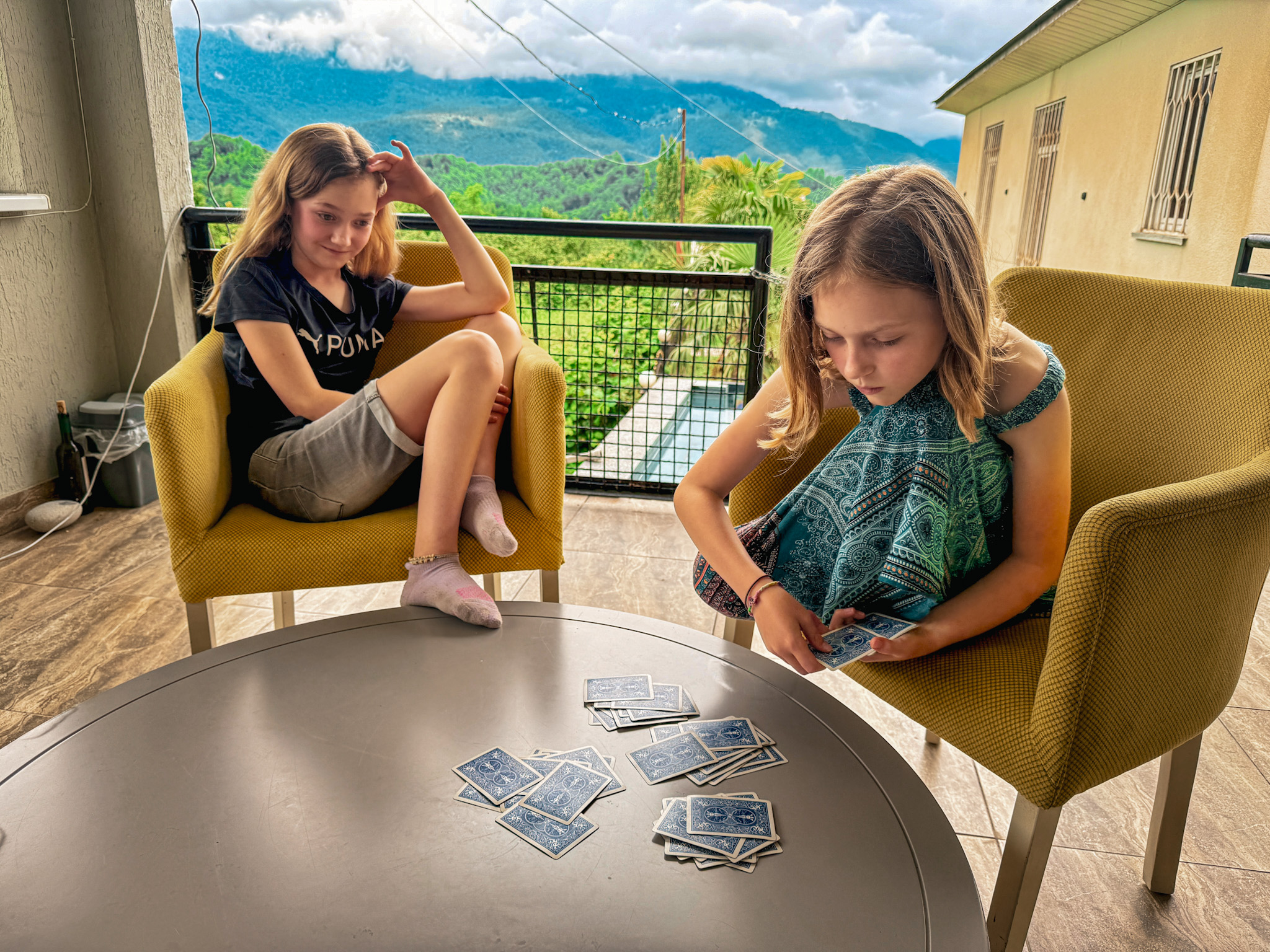
Then we played Spades, and the new system met its first real test. Partway through the game, Max tried to coach Finlee on a couple of tactics, and it landed all wrong. What was meant as teaching reached her as criticism; embarrassment boiled over, and she slammed her chair and headed for her room in tears. We asked her, gently, to come back, to take a breath, to not let the door close on the evening. And then came a pause where you could see the wheels turning behind her eyes—all that frustration and embarrassment swirling—she took the breath and came back and sat down. We were proud of her for that. We shelved the tactics talk, let the game go, and had a calm conversation instead about big feelings and the good and bad ways to handle them. There was a lesson in it for Max too, one he is still learning: being logical and reasonable is not the same thing as making the right call. Instead, the moment you see that your teaching is embarrassing someone you love, the right call is to stop teaching and just play. Also, in fairness to everyone involved, dinner was late and we were all probably a little hangry, a diagnosis that has explained a remarkable share of this family’s rough patches lately.
Katie called us down to a Father’s Day feast of khinkali, Georgian ratatouille, and more of that fried chicken. As we finished, one more surprise arrived: Shaina had secretly arranged for Katie to slip out to a local bakery and fetch a giant chocolate cake. Little gestures like that mean everything, because they say the quiet thing out loud: your family sees you and loves you. We demolished a third of it and left the rest for Katie and her incoming guests.
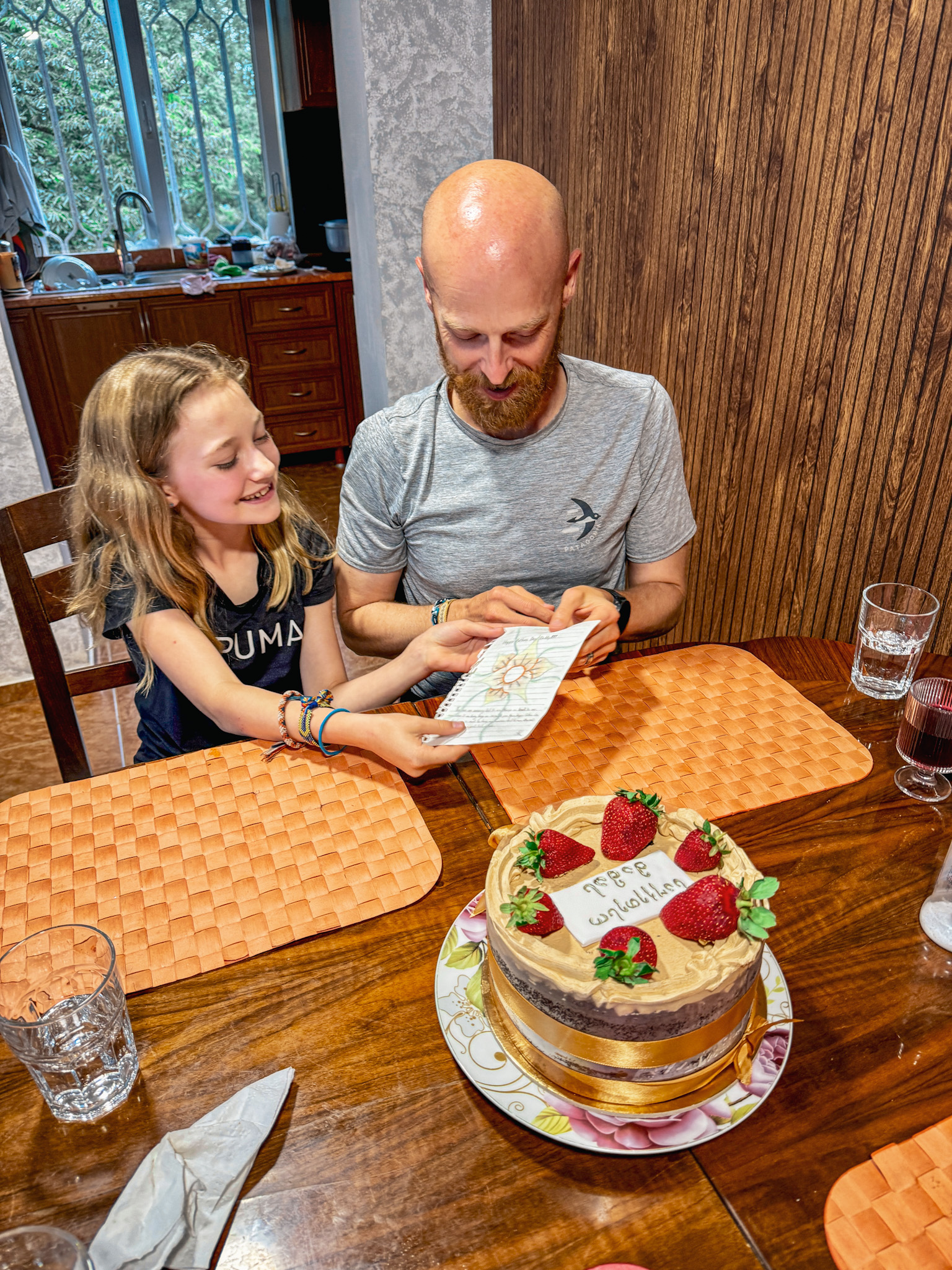
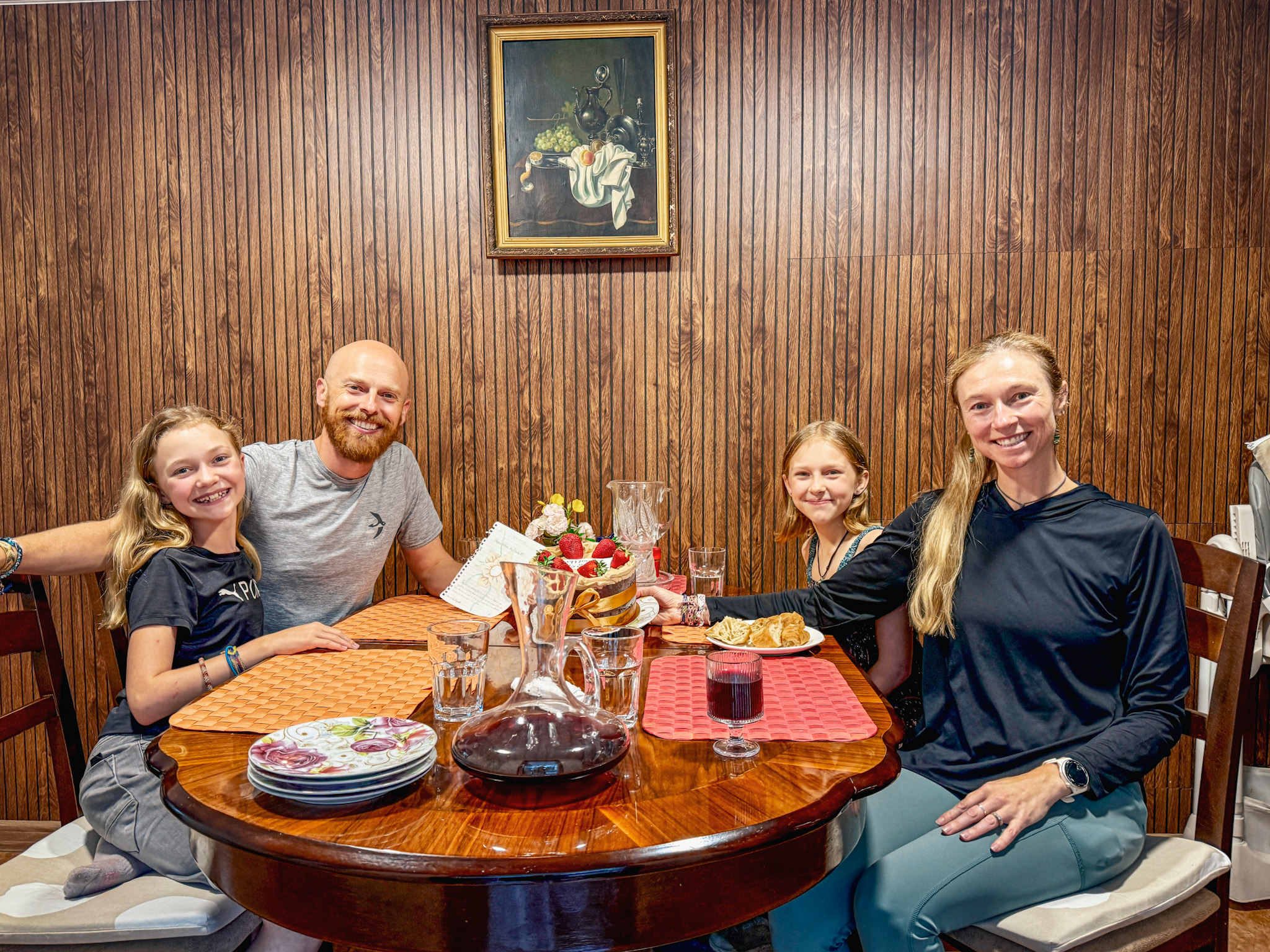
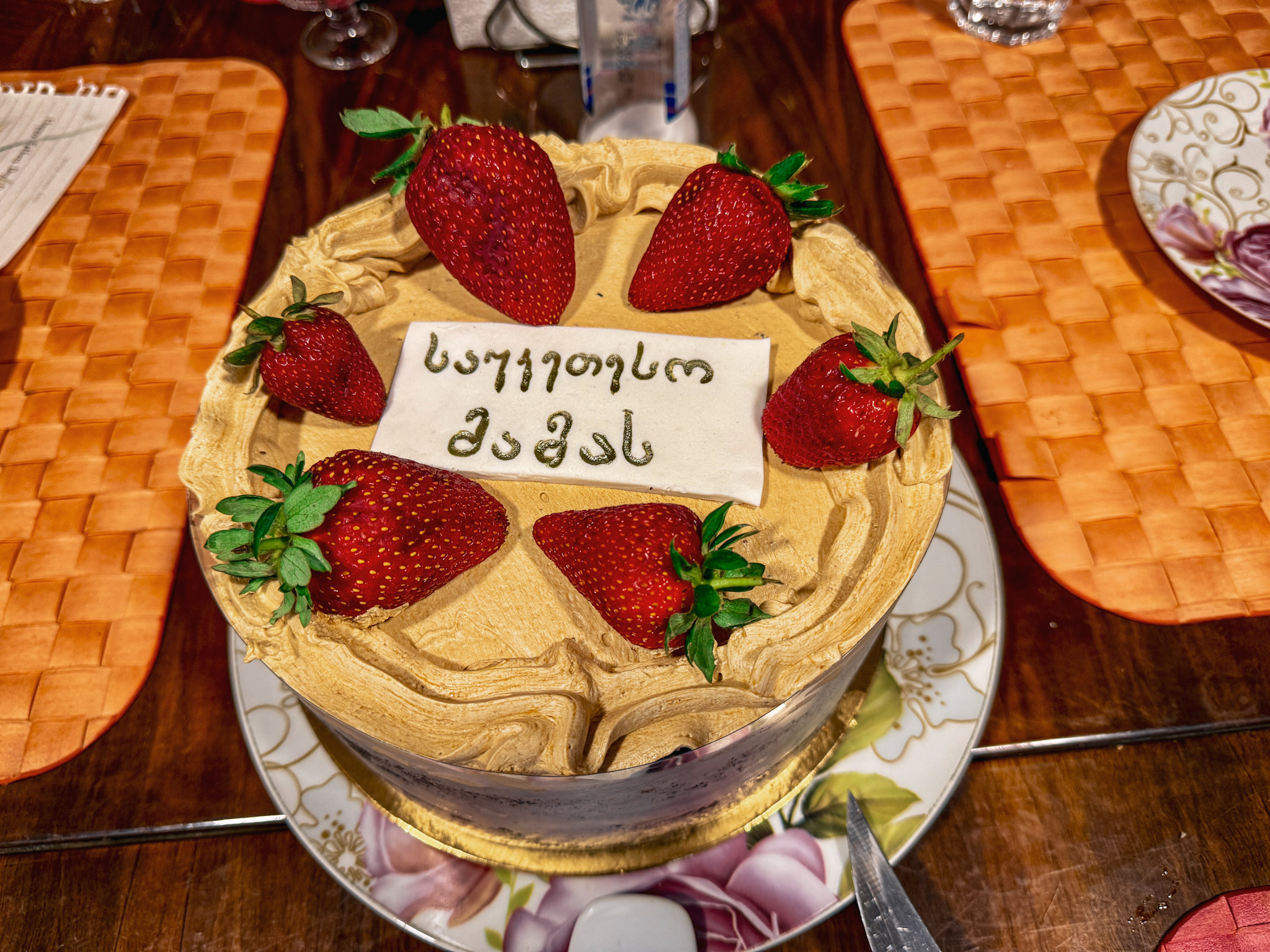
The next morning we said our final goodbyes, wished Katie luck, and descended out of the foothills for good. We set our sights on the lowlands and a big A-frame cabin near the village of Didvela, in the rolling wine country of western Georgia, where we would park ourselves for four days of deliberately unambitious living. The drive was easy—the girls read, we parents shared the small joy of listening to a podcast together (normally a solo activity), and at the halfway gas stop an ice cream round refreshed the whole expedition. The A-frame, when we reached it, was perfect: twice the size of the one in Mestia, sporting a big kitchen island, a wide living area with a rug that would be repurposed as a dance floor within hours, and a lofted sleeping area for Shaina and Max reached by a spiral staircase sketchy enough that it would be continuous adventure for us especially at night.
That first evening we revived an old family tradition that had quietly lapsed somewhere over the past months: the bedtime story. Shaina picked the book, and she picked well. The Giver, Lois Lowry’s 1993 Newbery winner, is set in a seemingly perfect community with no pain, no war, and no conflict, until a twelve-year-old boy named Jonas is assigned his role in life and begins to discover what all that engineered sameness actually costs. It is one of the most beloved and most banned books in American schools, and it introduces enormous ideas—freedom, memory, individuality—at exactly the level that a kid can grab them. We read the first chapter aloud and the girls were hooked on the spot. Over the following nights the book became the anchor of every evening, three chapters or so at a time, the girls getting progressively and deliciously wigged out as the wrongness seeped into the edges of Jonas’s tidy world. Watching a book that shaped our own youth land on our daughters in exactly the same way has been one of the quiet joys of the entire trip.
The A-frame itself, meanwhile, provided its own entertainment, chiefly by trying to convince us every morning that it was haunted. We woke our first day to a baffling symphony of creaks, ticks, pops, and groans, as though gremlins were sprinting up one side of the roof and down the other. A little coffee-fueled research established the explanation: in a normal house, the roof absorbs the morning sun’s thermal expansion up in a dead attic you never hear. In an A-frame, the walls are the roof and you are living inside the attic, so every creak of warming wood happens directly over your head. Structurally fine. Acoustically theatrical. By day three the morning gremlin chorus had become almost endearing, less a defect than the house’s way of saying good morning.
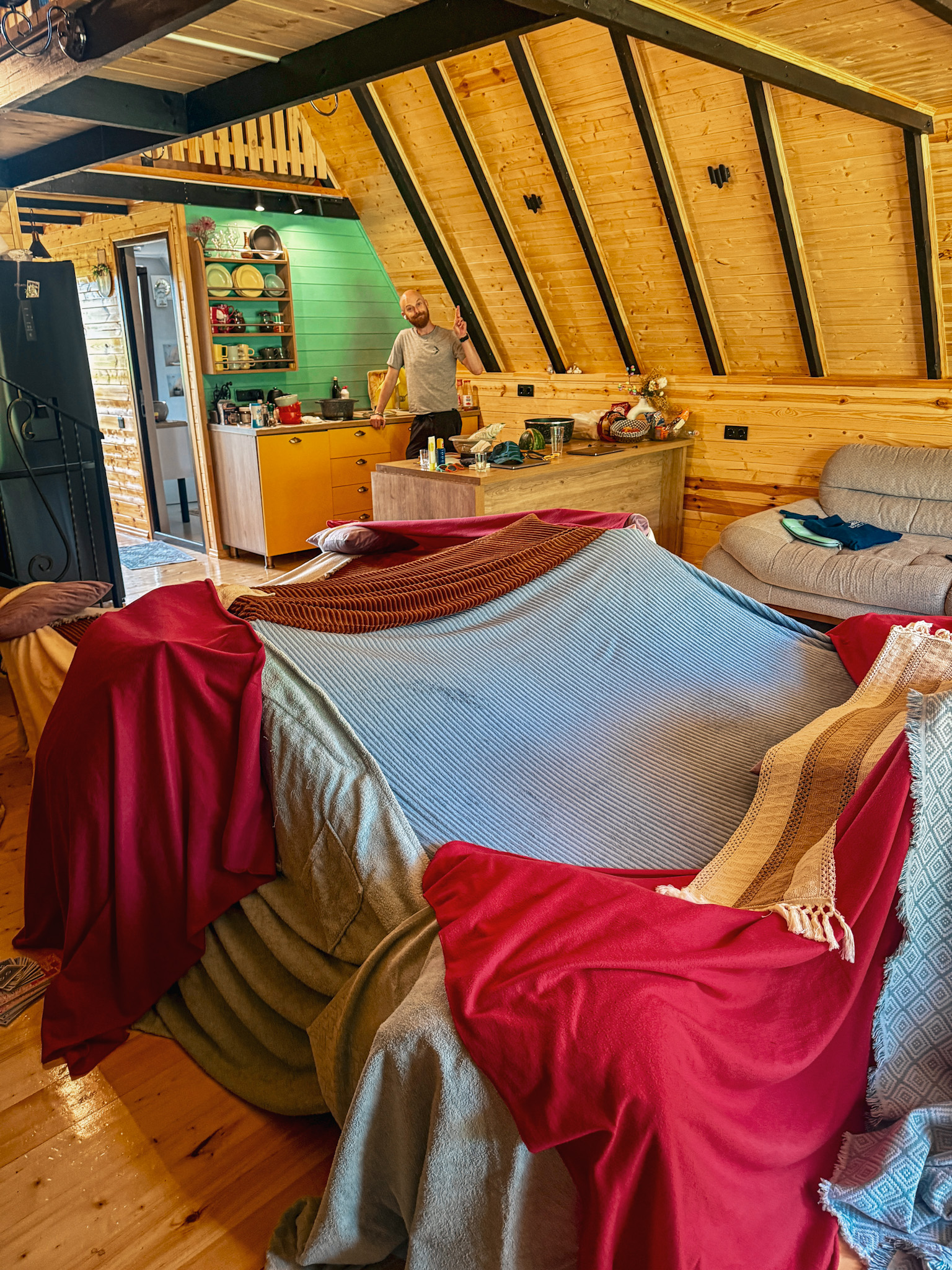
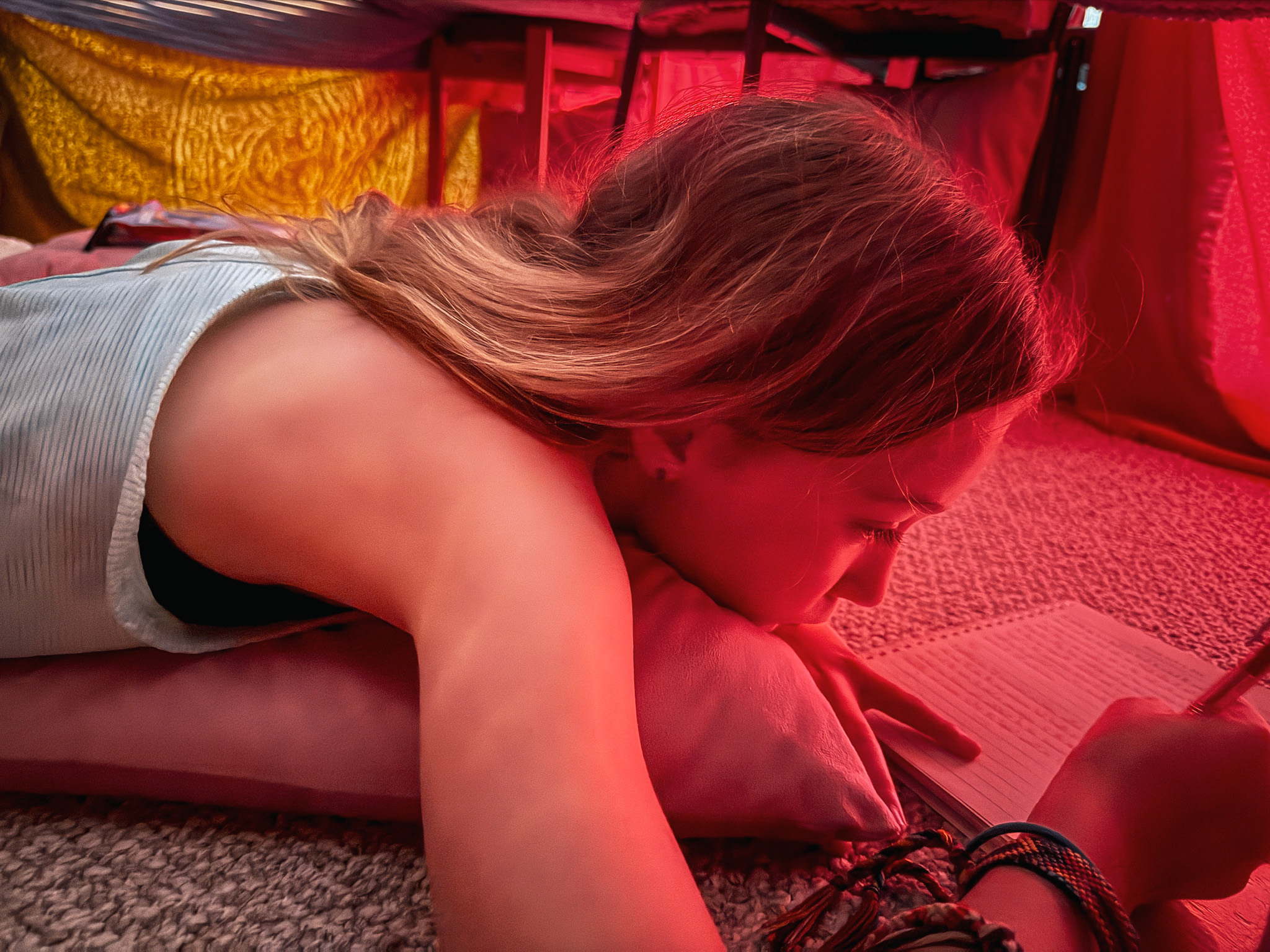
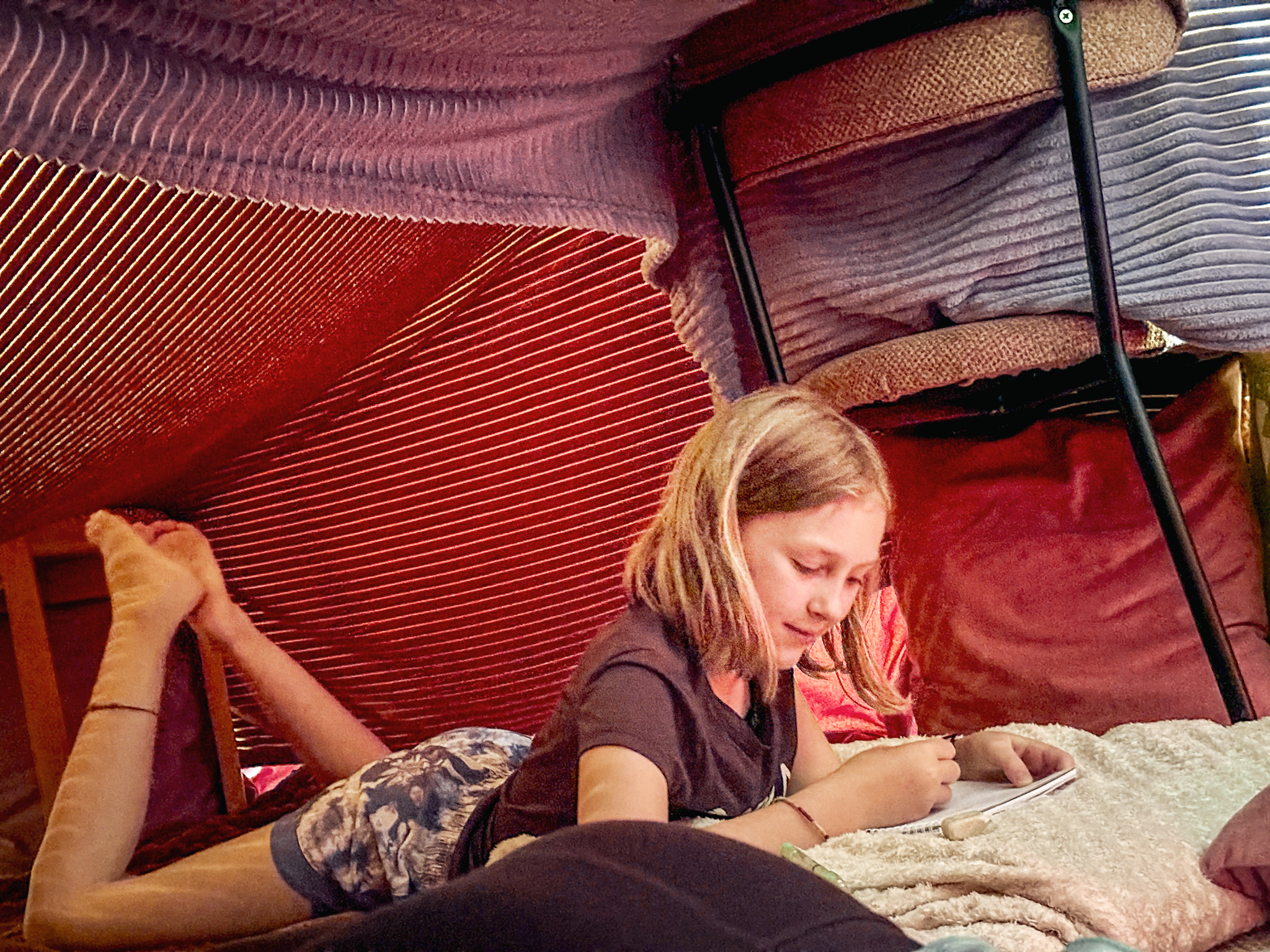
The days themselves settled into the rhythm we had been trying to build since Mestia, and it felt good to watch it actually work. Mornings began with granola, yogurt, and fresh blueberries, and with Shaina and Max trading accountability on the workout streak—bodyweight circuits together at home following solo runs and long walks. Each one of us alternates nudging the other on the low-motivation days, which is the entire secret of consistency as far as we can tell. Homework and journaling got their bounded time slots. The girls spent one whole afternoon engineering a pillow-blanket-and-chair fortress of genuinely epic proportions across the living room, an inconvenience for through-traffic and a triumph for the creative spirit, and we let it stand until bedtime.
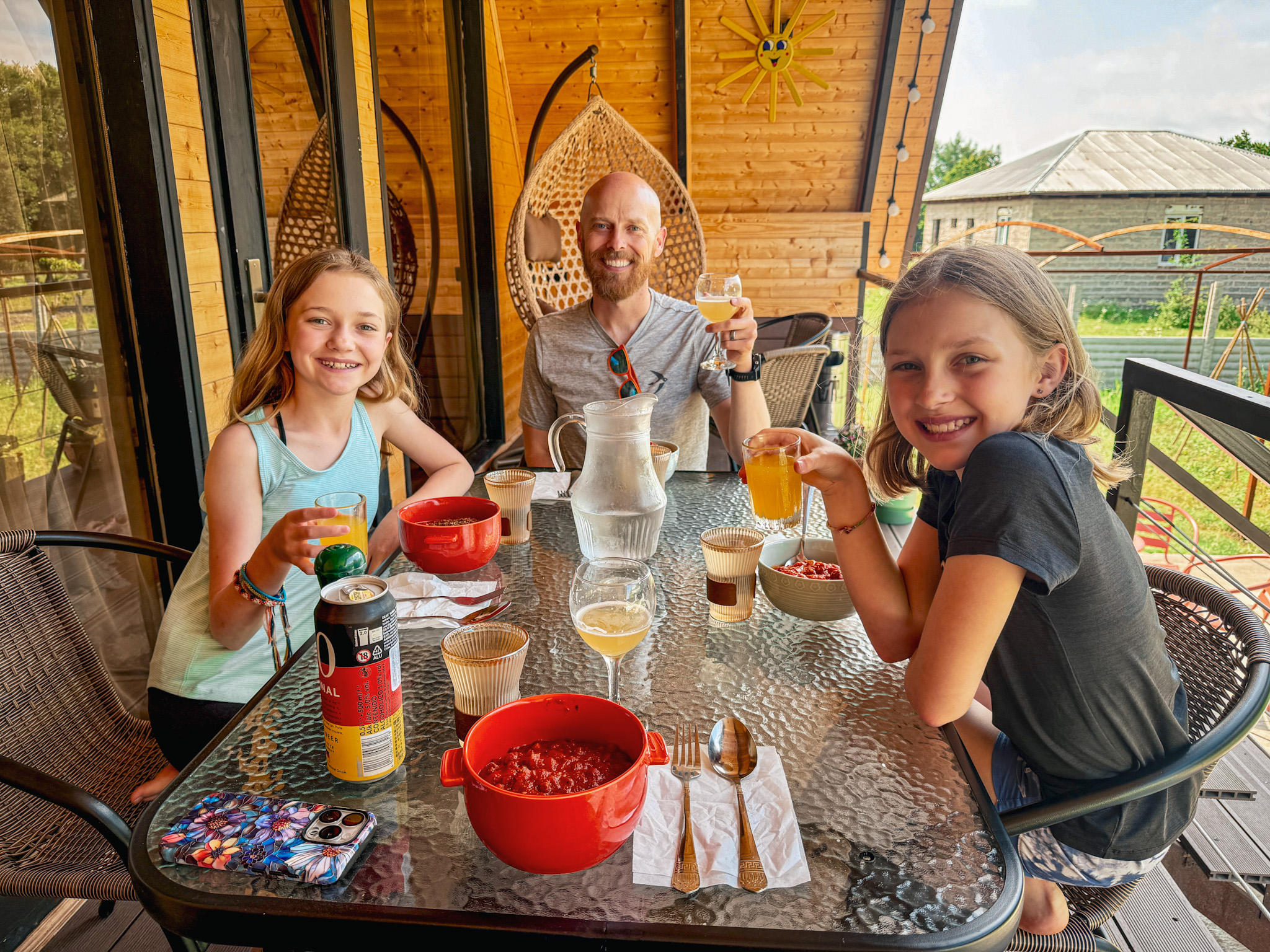
Max got back into the kitchen, too, which after the Yerevan cooking renaissance felt like reclaiming ground. The A-frame’s cooktop presented a worthy adversary, two electric burners so tiny and so close together that only one pot could operate at a time. He built a proper Bolognese anyway, onions and carrots and garlic and the chopped-up leftover kebab from a nearby restaurant, simmered down for an hour and served over spiral pasta on the front patio in perfect 72-degree evening air. The next night the same sauce, reinforced with leftovers, went over a bag of frozen pierogies that turned out to be the culinary discovery of the week. They are essentially ravioli containing no cheese, no spinach, nothing remotely virtuous—just seasoned minced beef—which means we have now fully cracked the code of our children’s ideal palate. Pasta, meat, red sauce, and the total absence of vegetables. Check, check, check.
Max had one long run through the surrounding farmland , and deserves its own small entry in the family annals. The 8-kilometer loop began peacefully enough along the main road before turning onto a dirt lane through a residential stretch, which Max had assumed would be the relaxing half. It was not. Every single house had a large, angry dog, and while most were fenced or chained, a meaningful minority were neither. By the time the fifth dog had escaped its yard to give chase, he was ready to declare war on the entire canine species. The “big scary monster voice,” as the girls call it, plus a menacing pointed finger (and a rock in hand as a backup) stopped each pursuer cold, but the moment he resumed running they were right back on his heels. He survived the gauntlet, returned to the main road unbitten, and has amended his mental map of the area accordingly. Funnily enough, Shaina did nearly the exact same route, just trailing behind a bit as she was speed walking rather than running, and not one an angry dog came across her path. Either they like her bright colored shirt and slower-moving-thus-disarming pace more, or they liked Maxell’s mirrored glasses and bald head streaking past them less.
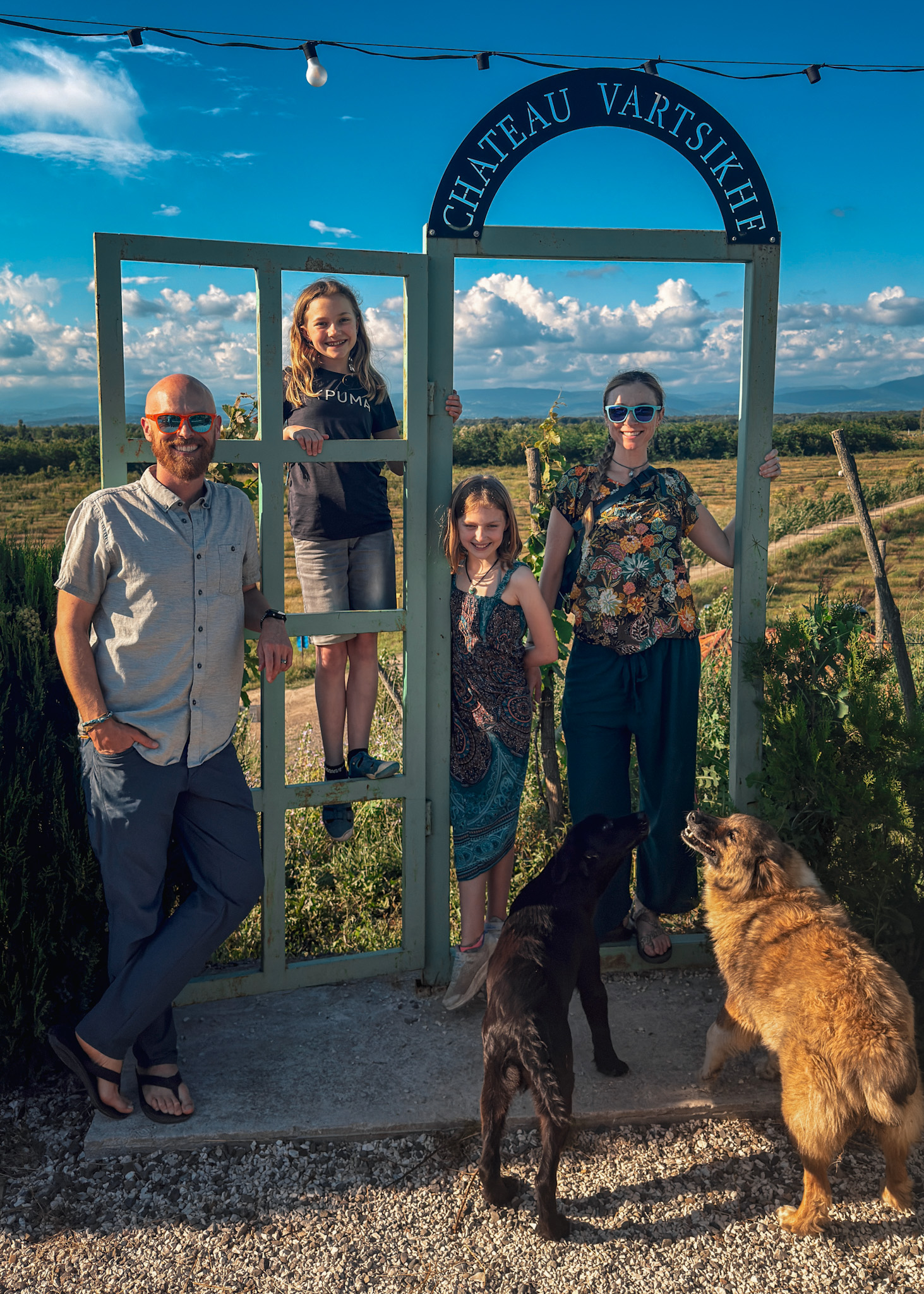
Our last full day in the A-frame was the whole new rhythm in miniature. The four of us walked the full 8-kilometer loop together in the morning, dogs mercifully quiet, while we finished one audiobook and started another—Cece Rios and the Desert of Souls—a tale steeped in Mexican folklore about a twelve-year-old girl who tames a wild soul-creature and enters a deadly tournament to rescue her kidnapped sister. It grabbed all four of us immediately and after the 8-km loop was done, the girls asked if we could go around again just to keep listening. But this was the grownup’s rest day, so instead we headed inside to stretch and then for the couch. In the afternoon we caught up on the blog and our journals inside their allotted window, and in the evening we decided to revisit the only restaurant in the area. Chateau Vartsikhe, a hotel surrounded by vineyards, looks alarmingly like a 200-person wedding venue but hides a small, excellent restaurant within. It was just two and a half kilometers away, a quick drive in our Forester, but the girls suggested we walk. (Maybe our kids are losing some of their American tendencies and’s becoming part European.. 😉 Having over-ordered on our first visit earlier in the week, we calibrated perfectly this time, and the stars were a dense whole-grain loaf studded with seeds and nuts, and chicken shkmeruli, the famous Georgian dish of chicken drowned in cream, butter, and garlic, which is not health food by any definition and is utterly magnificent by every other one. We strolled home in perfect temperatures, the girls rebuilt their fort, and we turned the screens off early for an extended session of The Giver—three more chapters, the creep factor climbing, the questions multiplying.
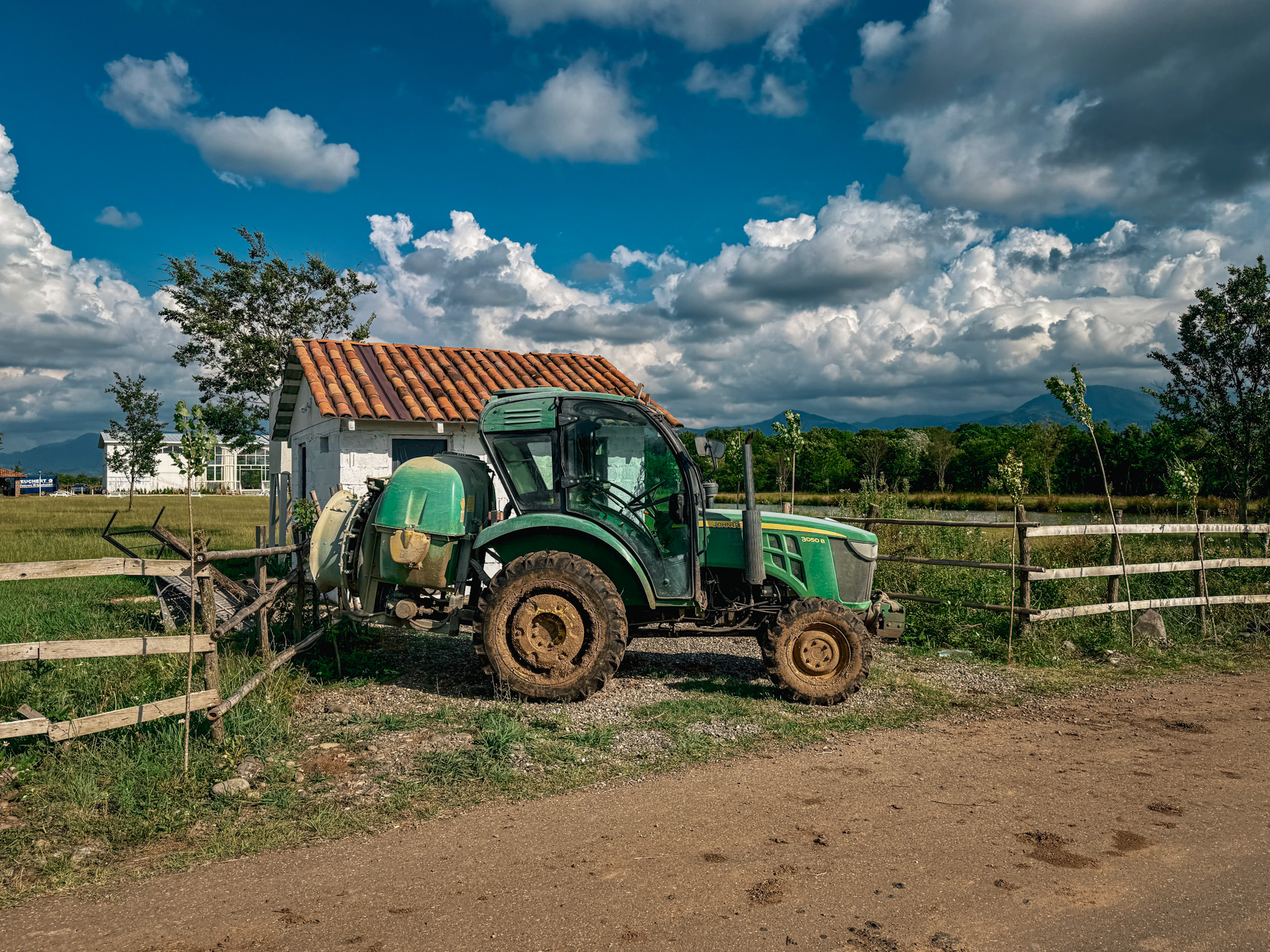
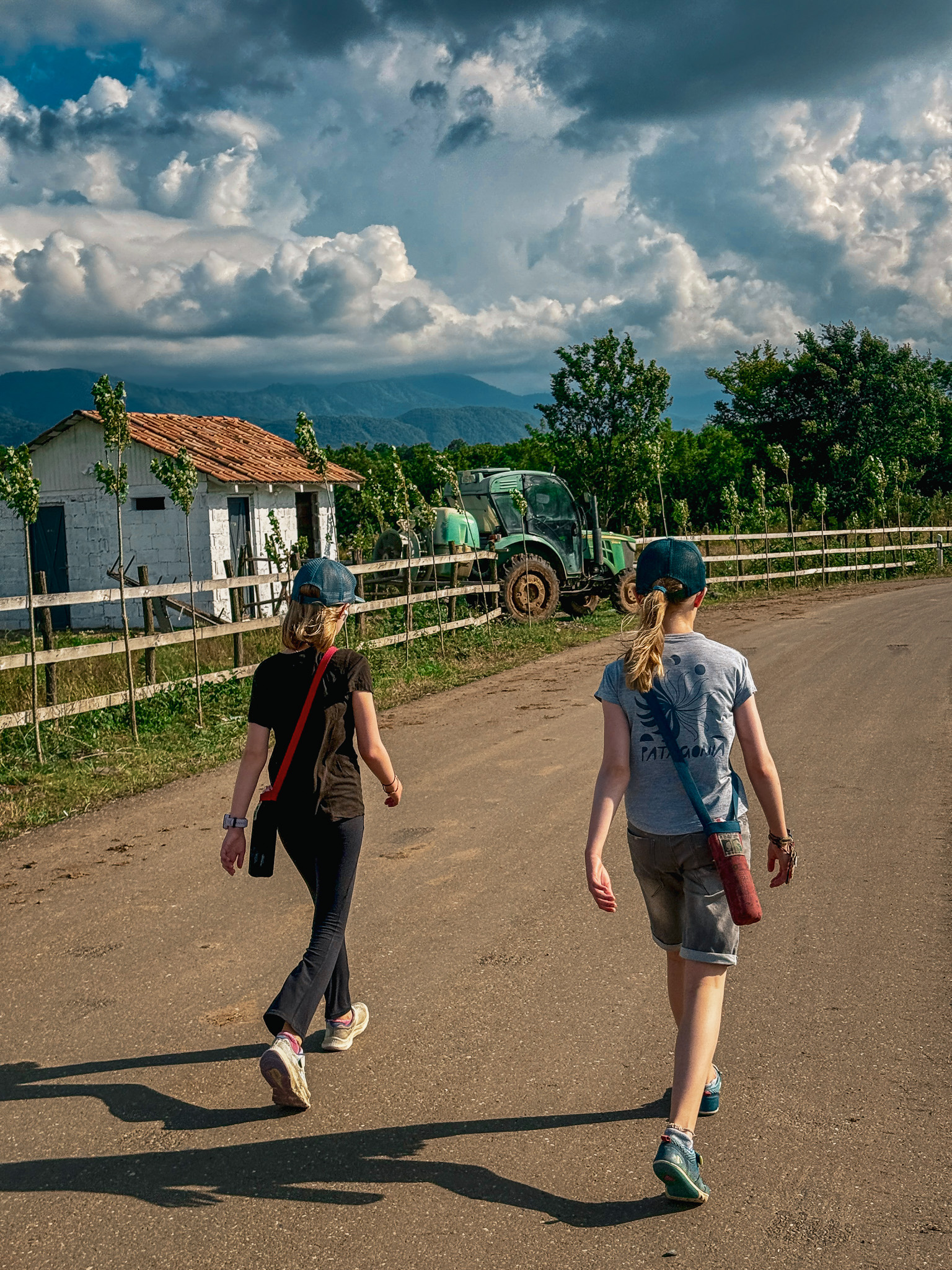
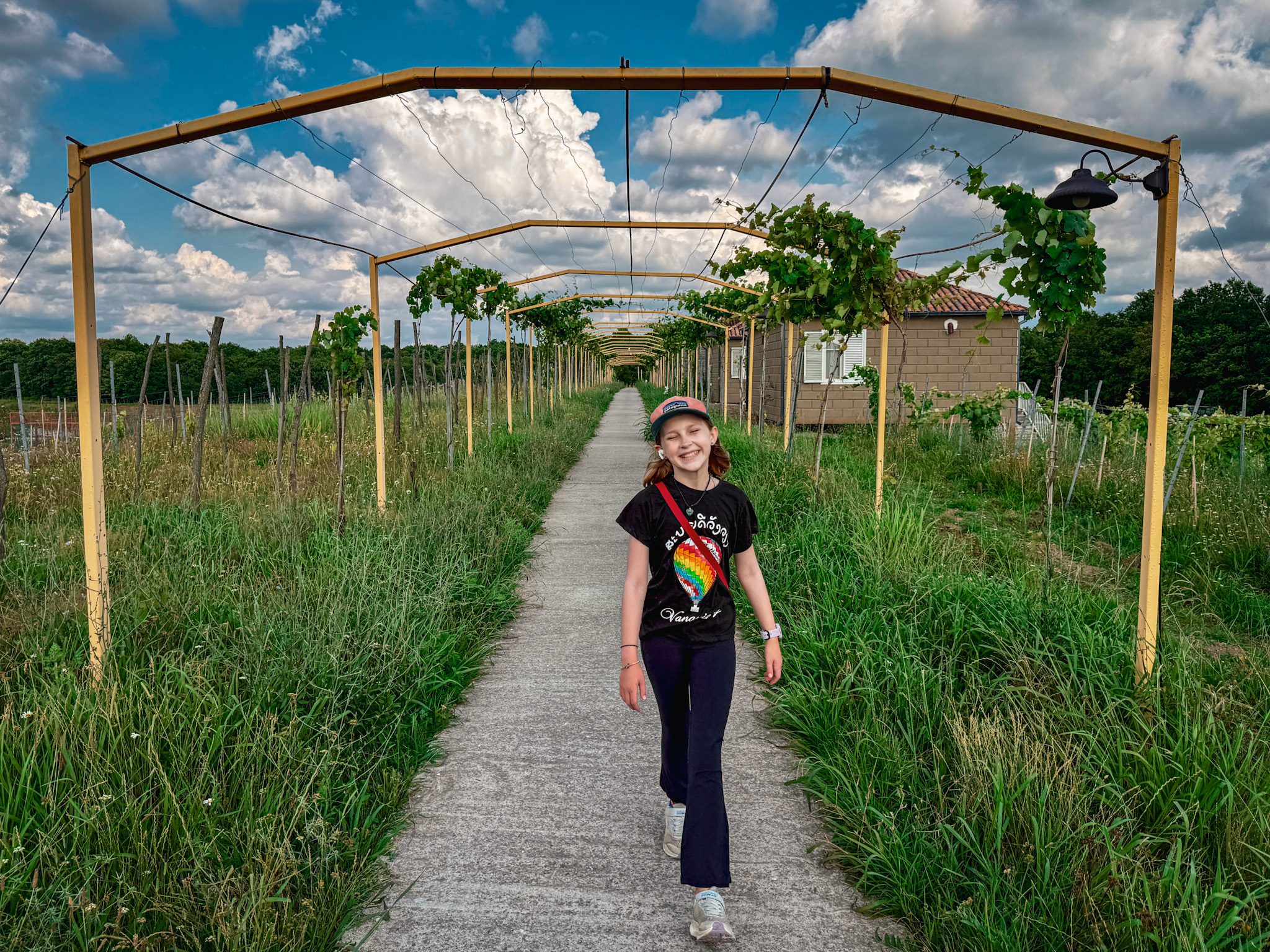

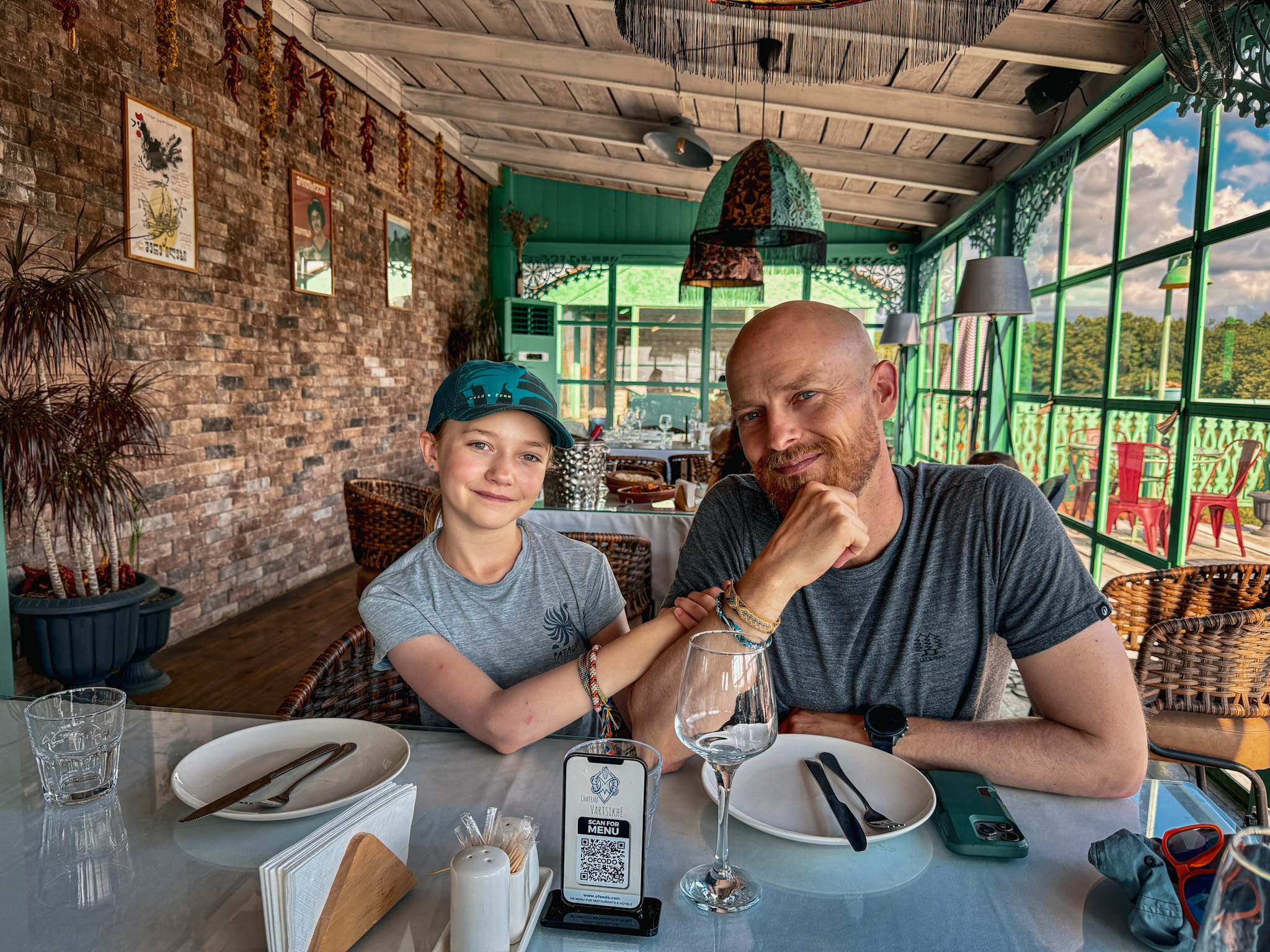
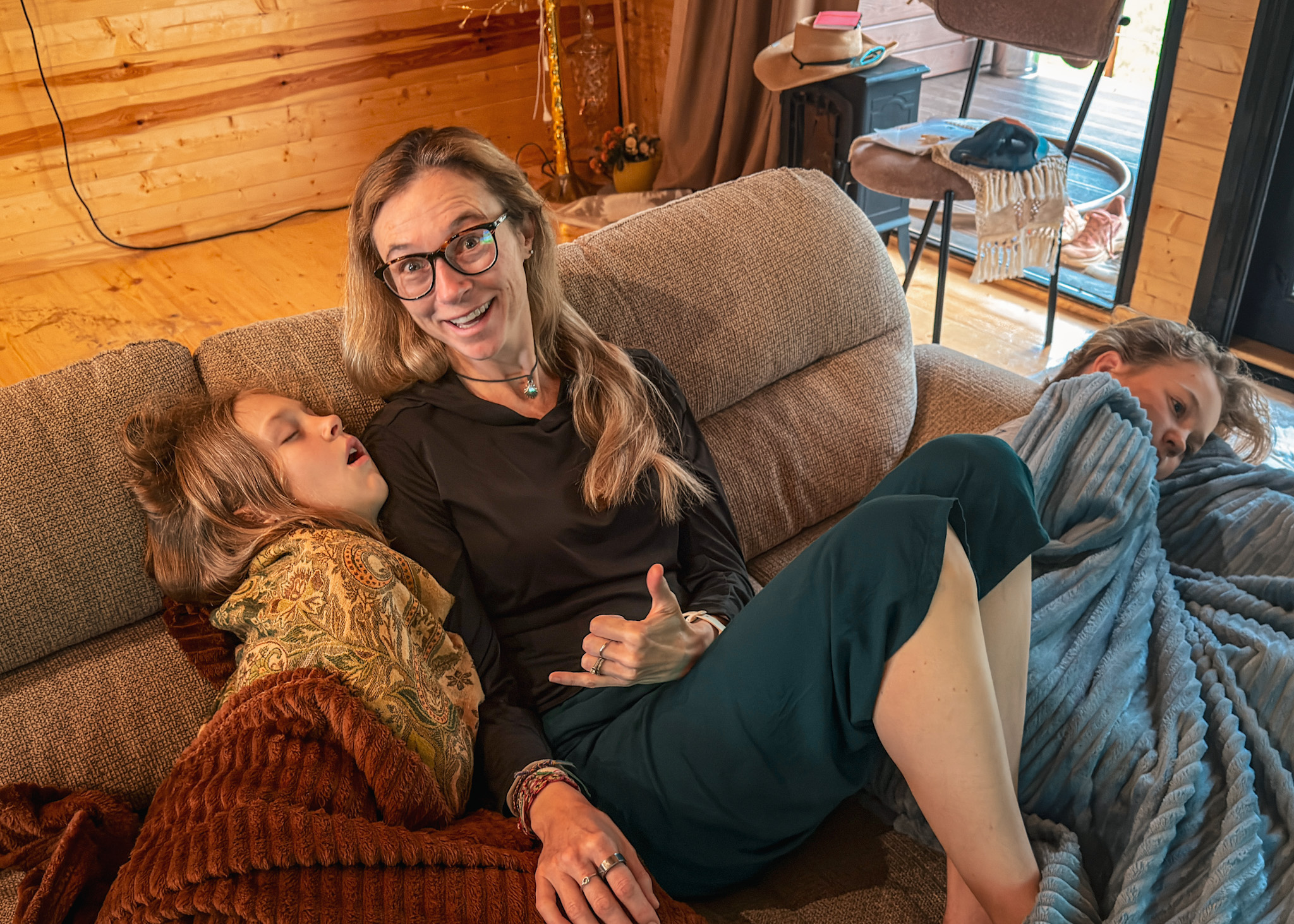
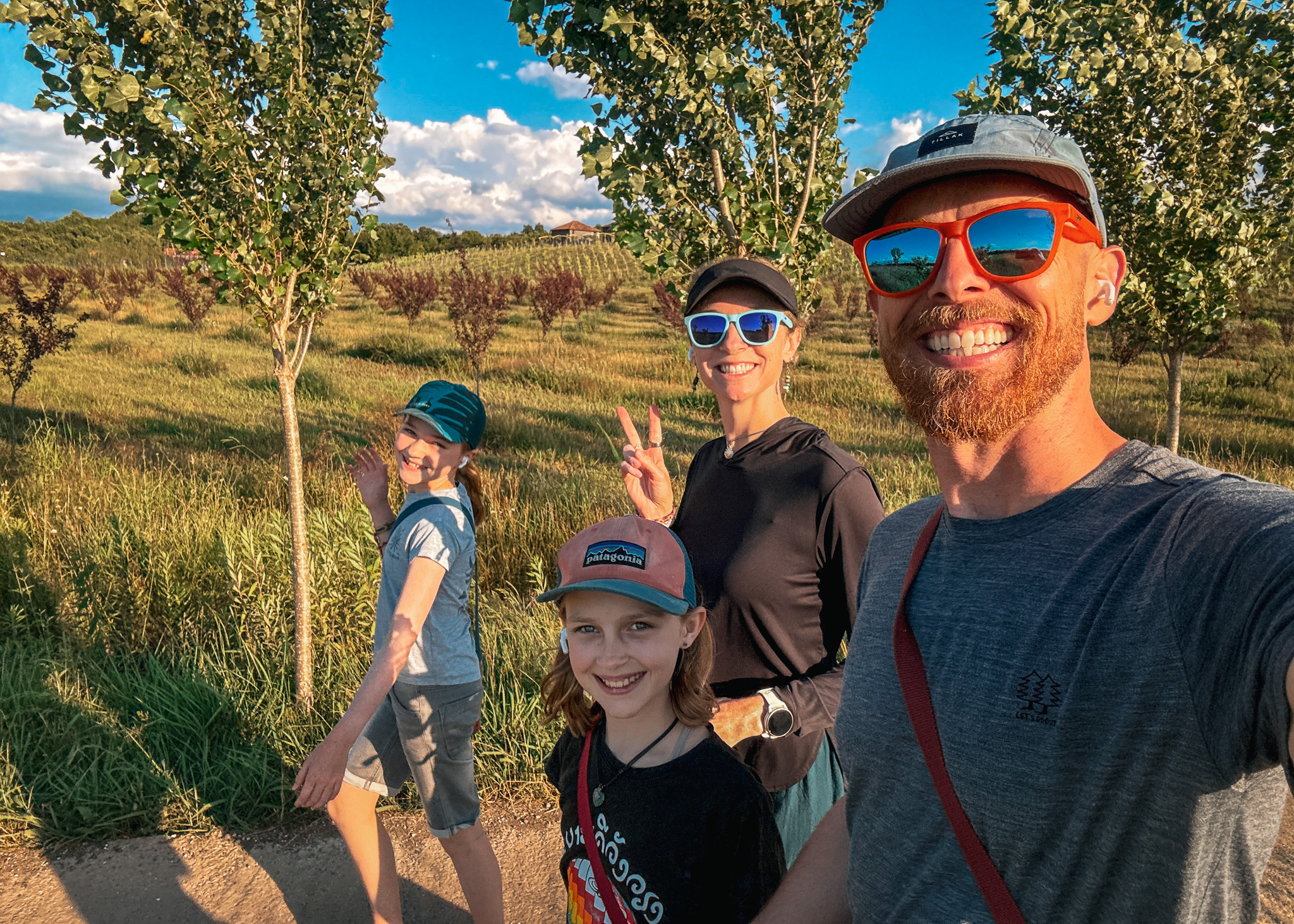
Six days, no monuments, no mountain passes, not a single UNESCO site. And yet this stretch might end up mattering as much as any of the spectacular ones, because it is where the promises from Mestia started turning into habits. Bounded quiet time. Shared walks. A standing bedtime story. Games said yes to, even imperfectly, even when a hand of Spades goes sideways. None of it is finished, because none of this is ever finished. But sitting on a patio in the Georgian wine country, full of shkmeruli, listening to two girls giggle inside a blanket fort, it was hard not to feel like the team was finding its way back.
Ultrea. Et Suseia.


Leave a Reply