
Dates: June 15-19, 2026
Places: Mestia to Ushguli Trek, Georgia
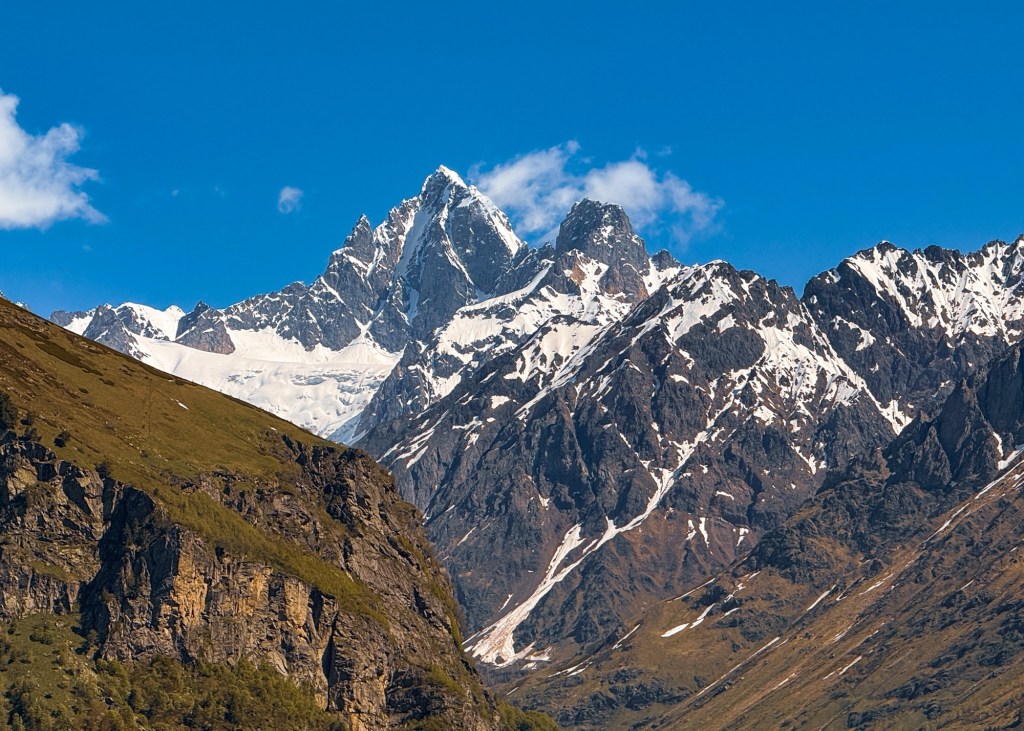
There is a version of this post that is only about the hiking, and it would be a good one. The Mestia-to-Ushguli trek runs about 60 kilometers through the high heart of the Georgian Caucasus, past glaciers and medieval stone towers and some of the most beautiful alpine country we have seen anywhere this year, and over four days we walked most of it. But that is not the real story—the real story is that we were reminded, not for the first time, that we are not on vacation. We are living abroad, which is a different thing entirely. The ordinary weight of being a family—the sickness and the fatigue and the short tempers and the small failures of patience—does not wait politely at the trailhead while you go enjoy the views. It comes with you. Even here. Especially here.
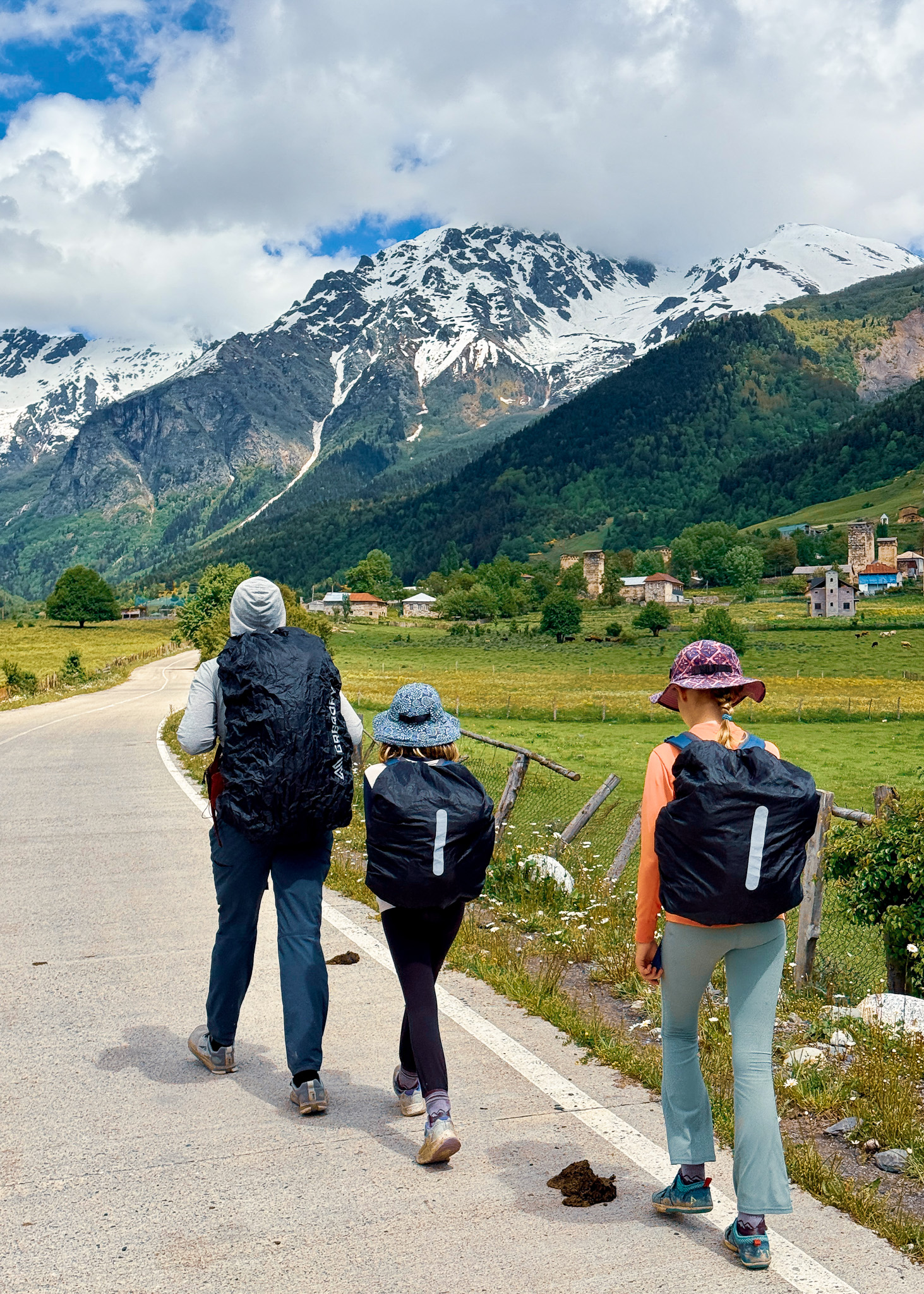
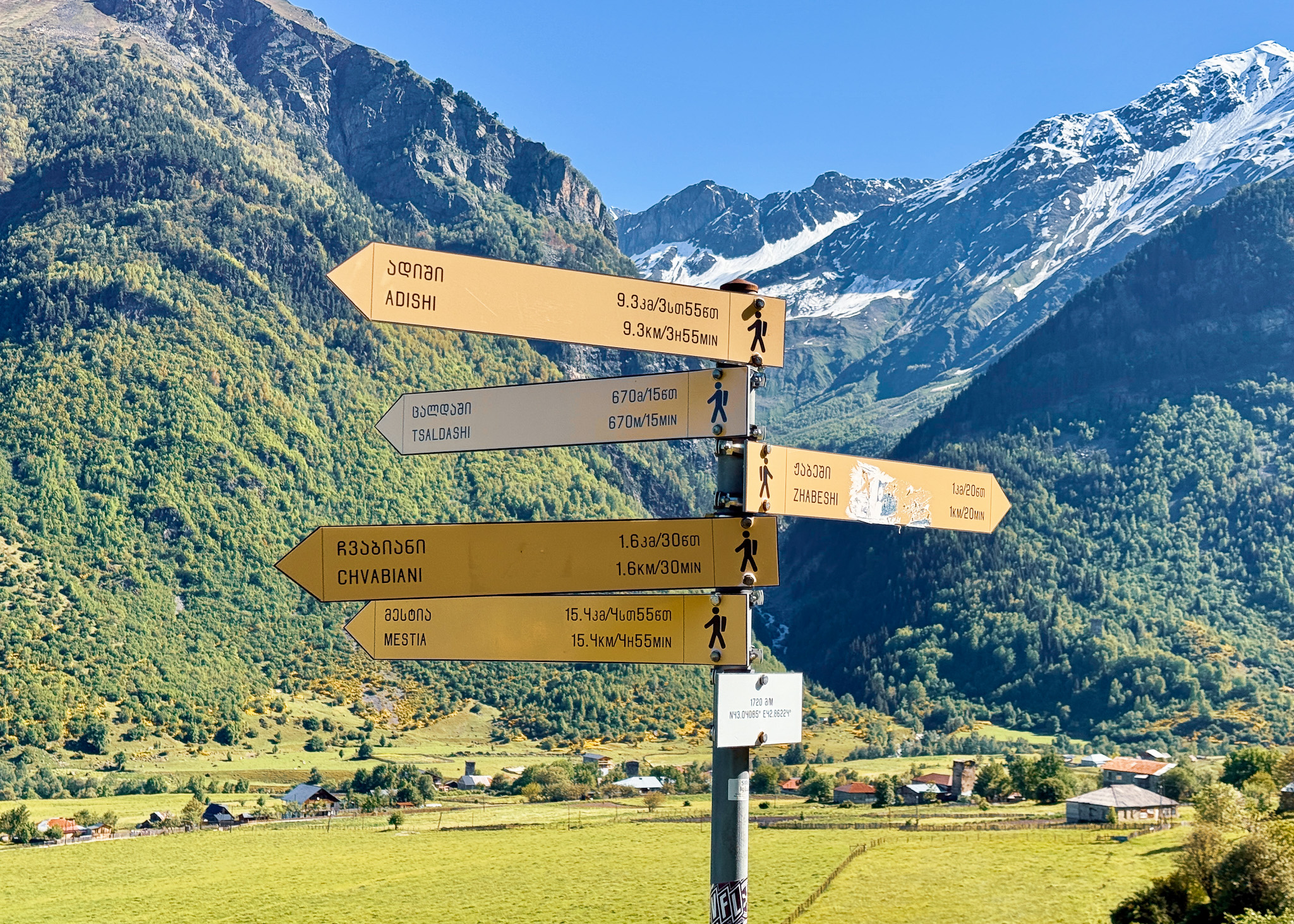
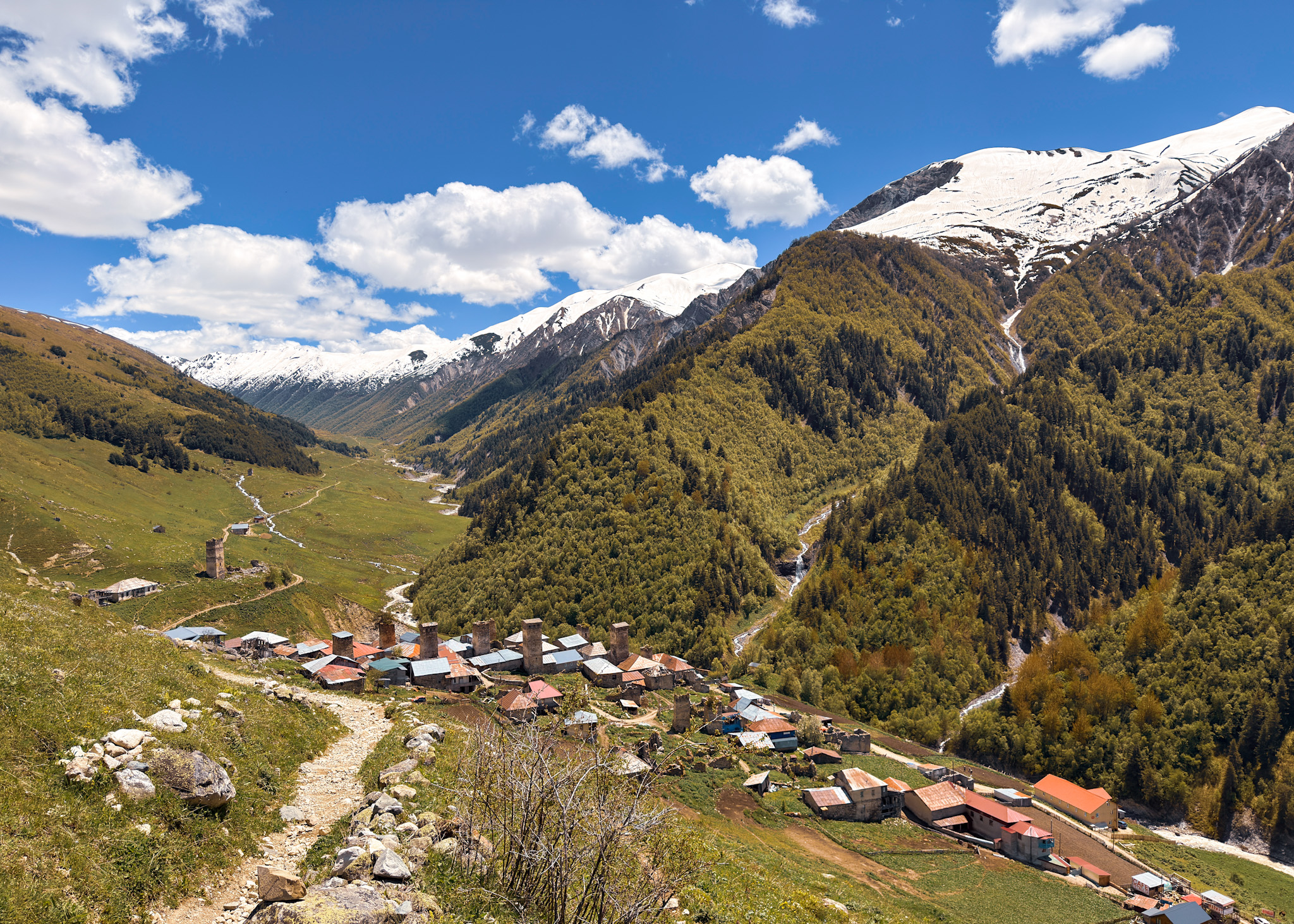
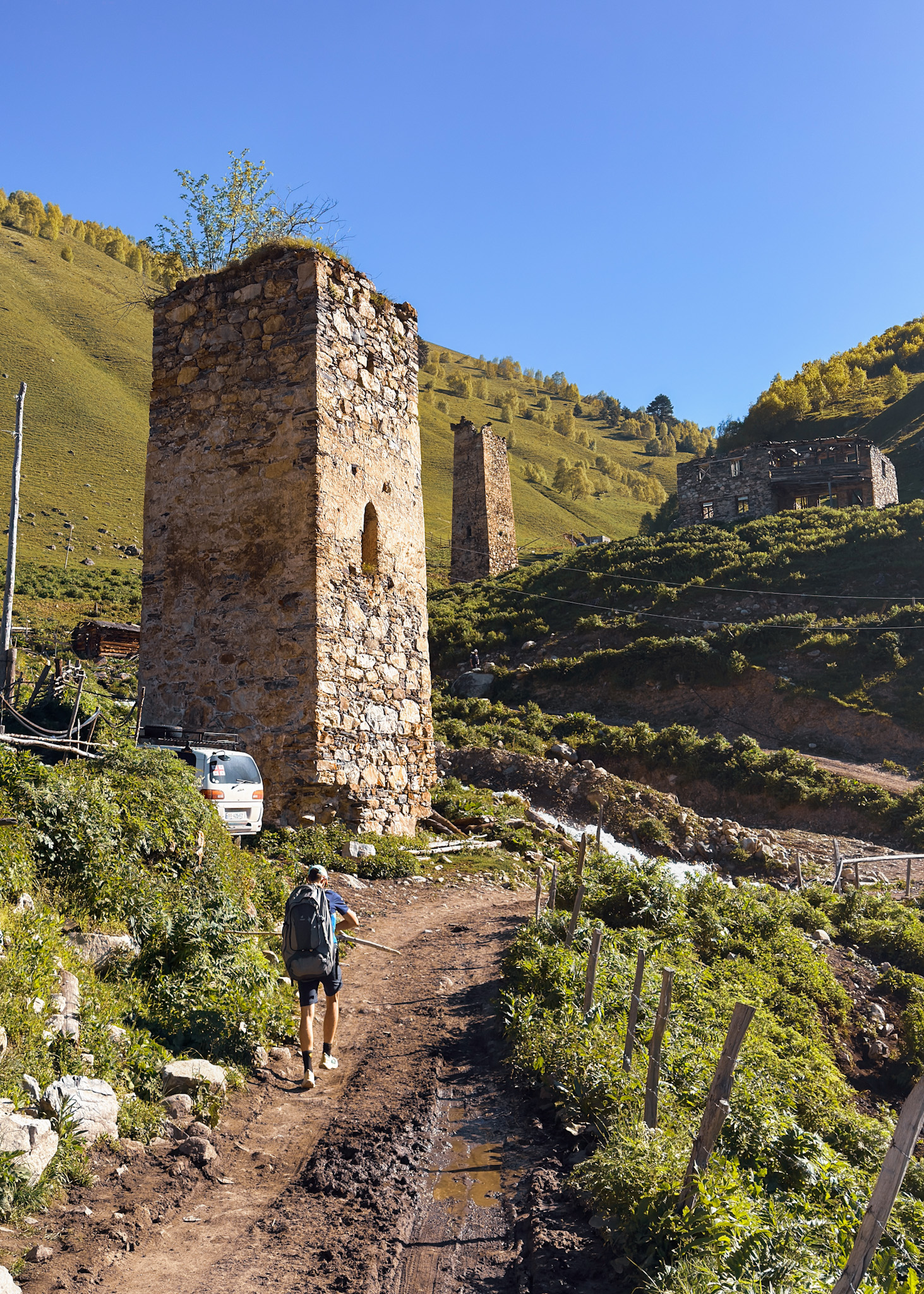
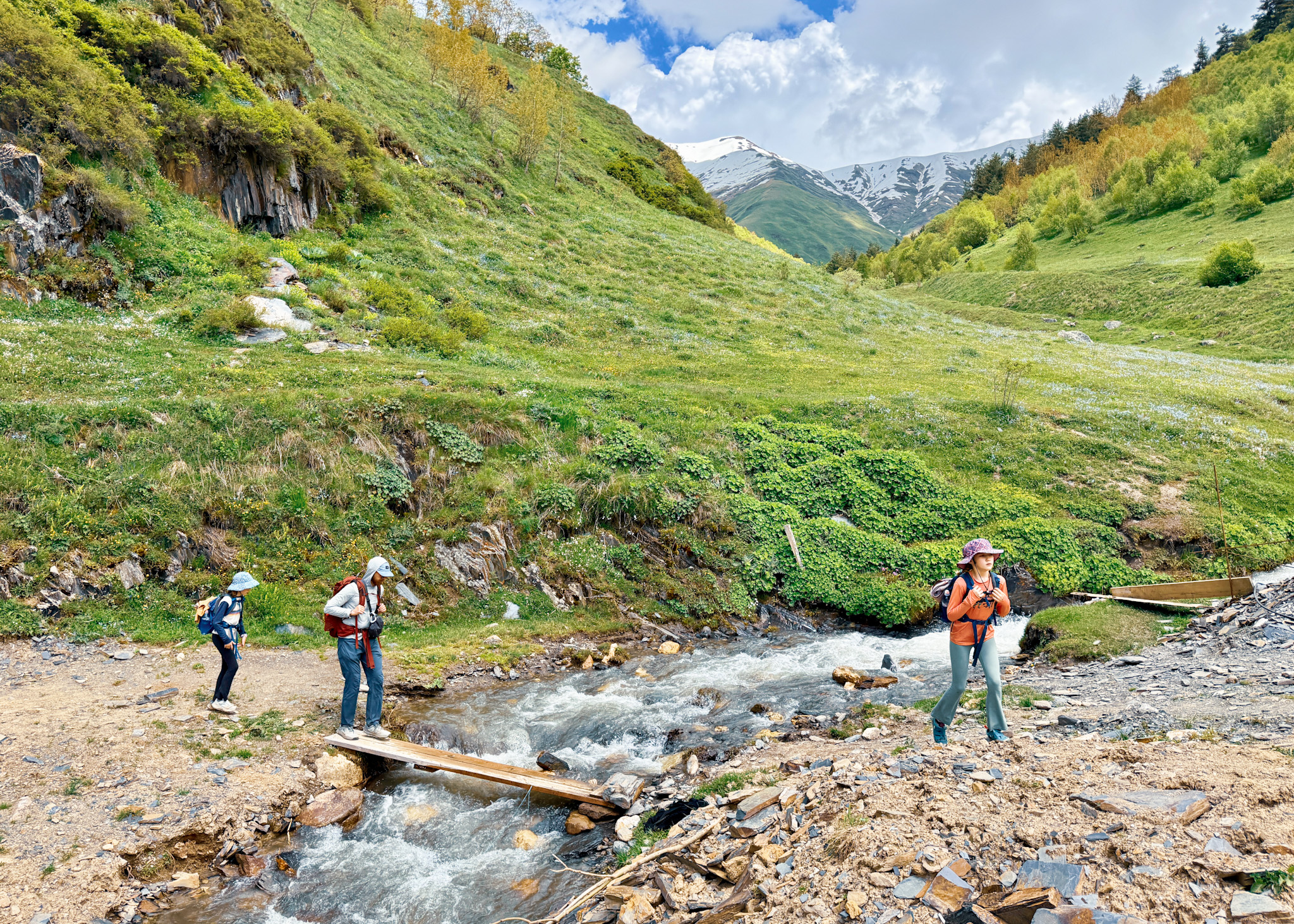
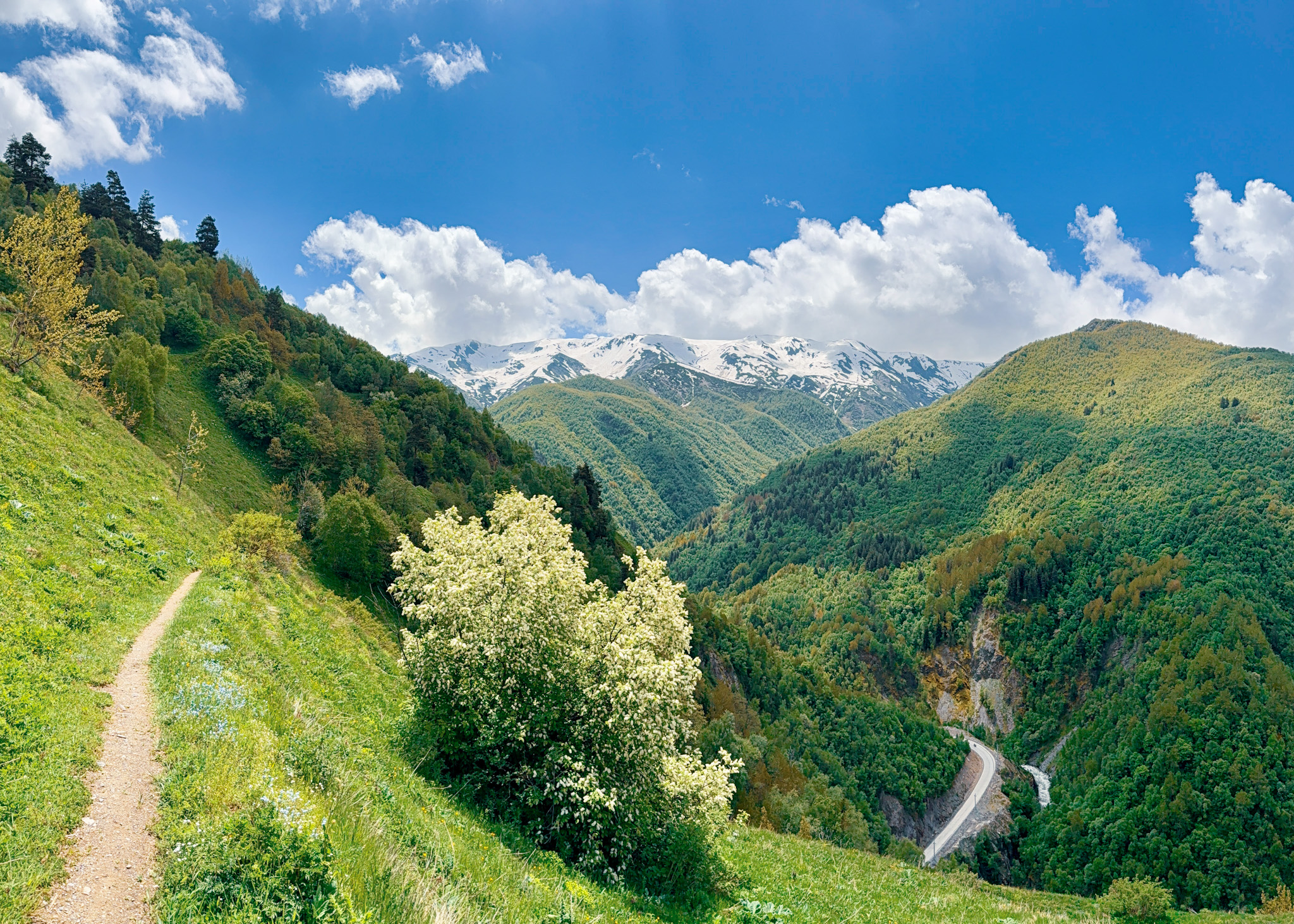
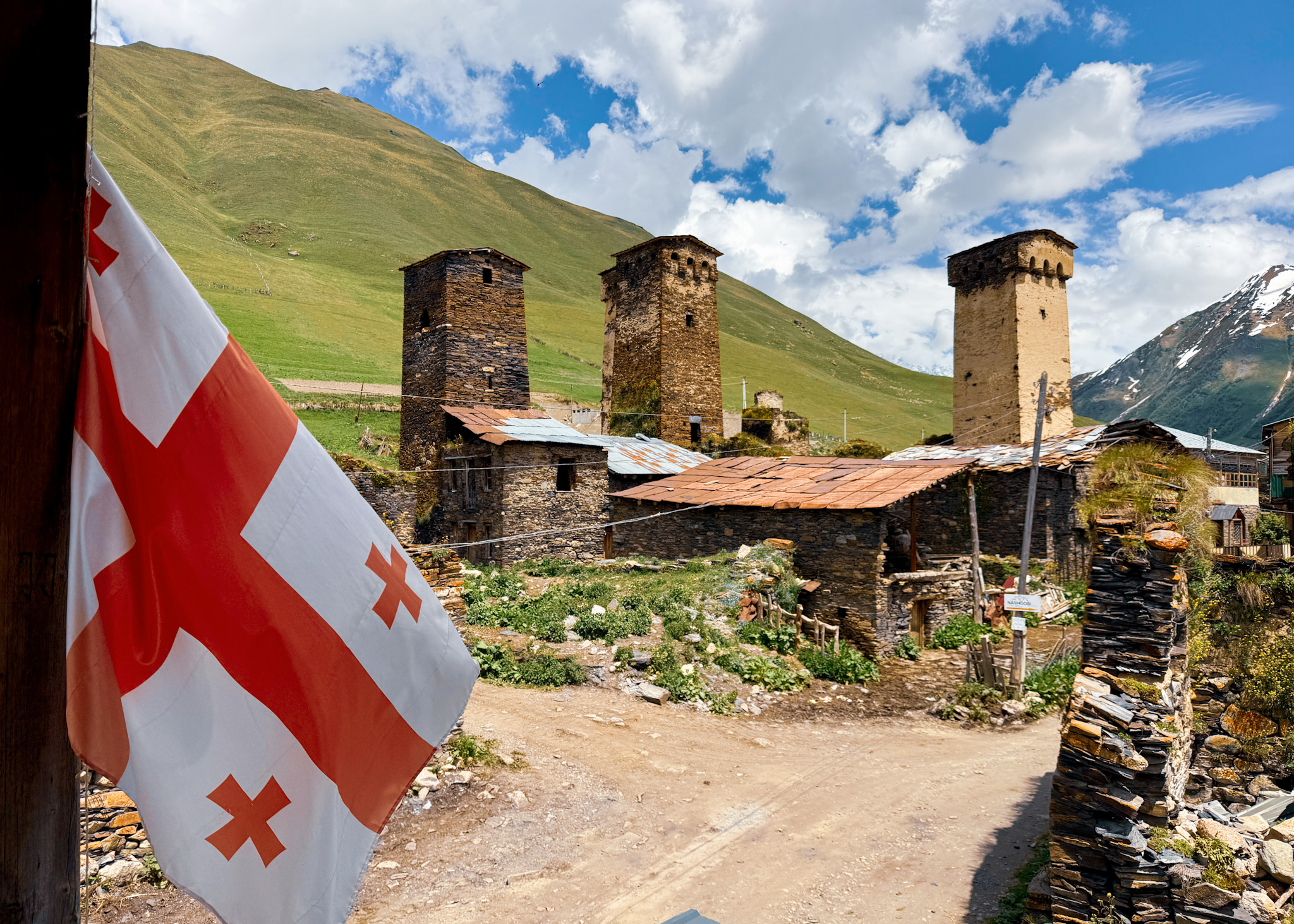
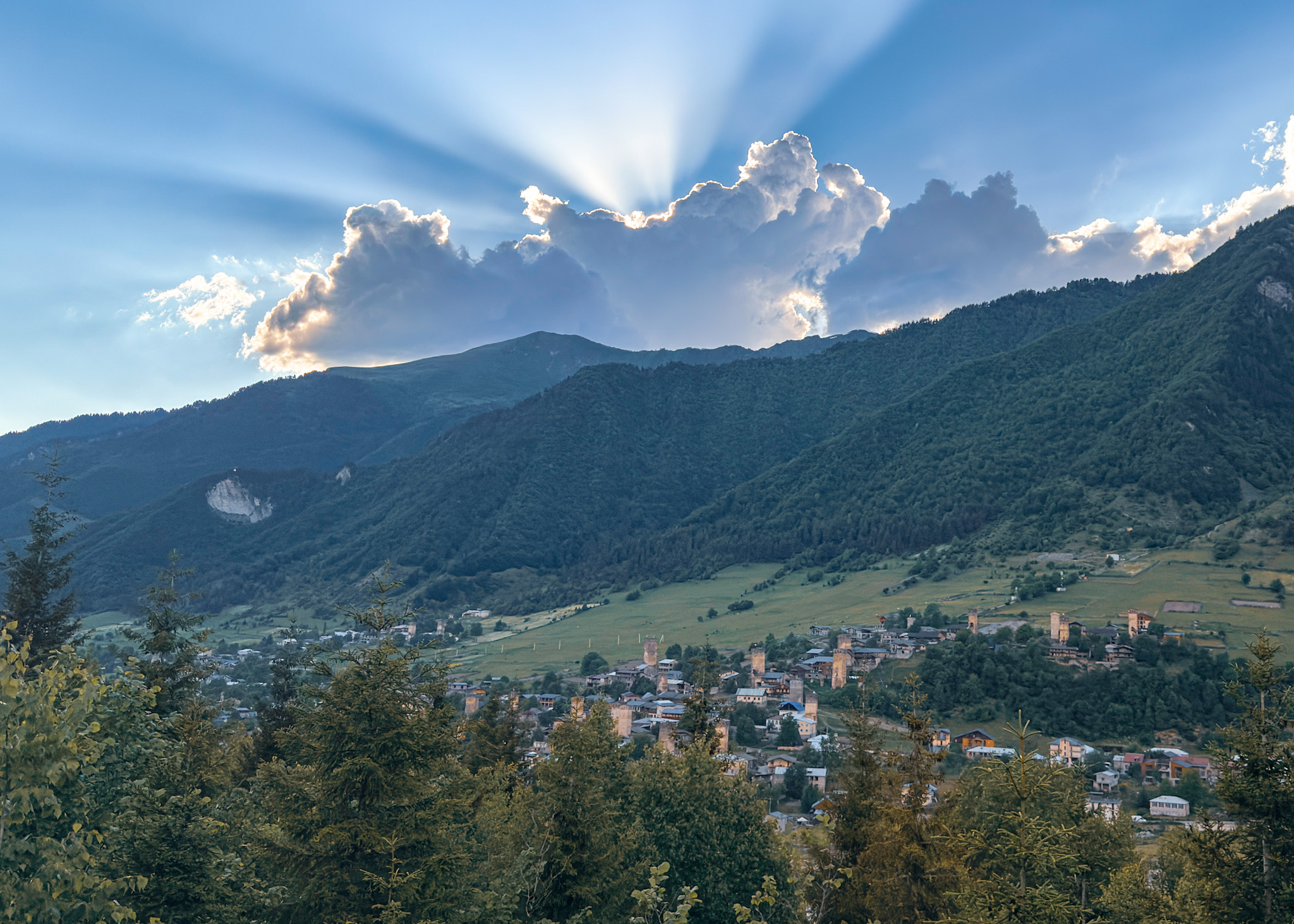
The first day, at least, was simple. We started slowly, in no rush because it was raining and forecast to keep raining all morning, and drove the car over to the guesthouse where we would stay after the trek so we could leave it parked there for four days. That errand trimmed a kilometer and a half off the day’s walking, which nobody complained about. By eleven we were on the trail toward the village of Zhabeshi, and the weather turned out lovely for hiking, windless and mid-60s and overcast, poor for photos but perfect for effort. The route climbed gently, and then not gently at all—a sustained steep push of about four kilometers up to the day’s high point at 1,911 meters. It then dropped into the Mulkhura River Valley in a sweep of green pastoral land dotted with cows and horses and pigs, below rocky snow-capped peaks, each village a heart-achingly pretty cluster of stone houses and Svan towers.
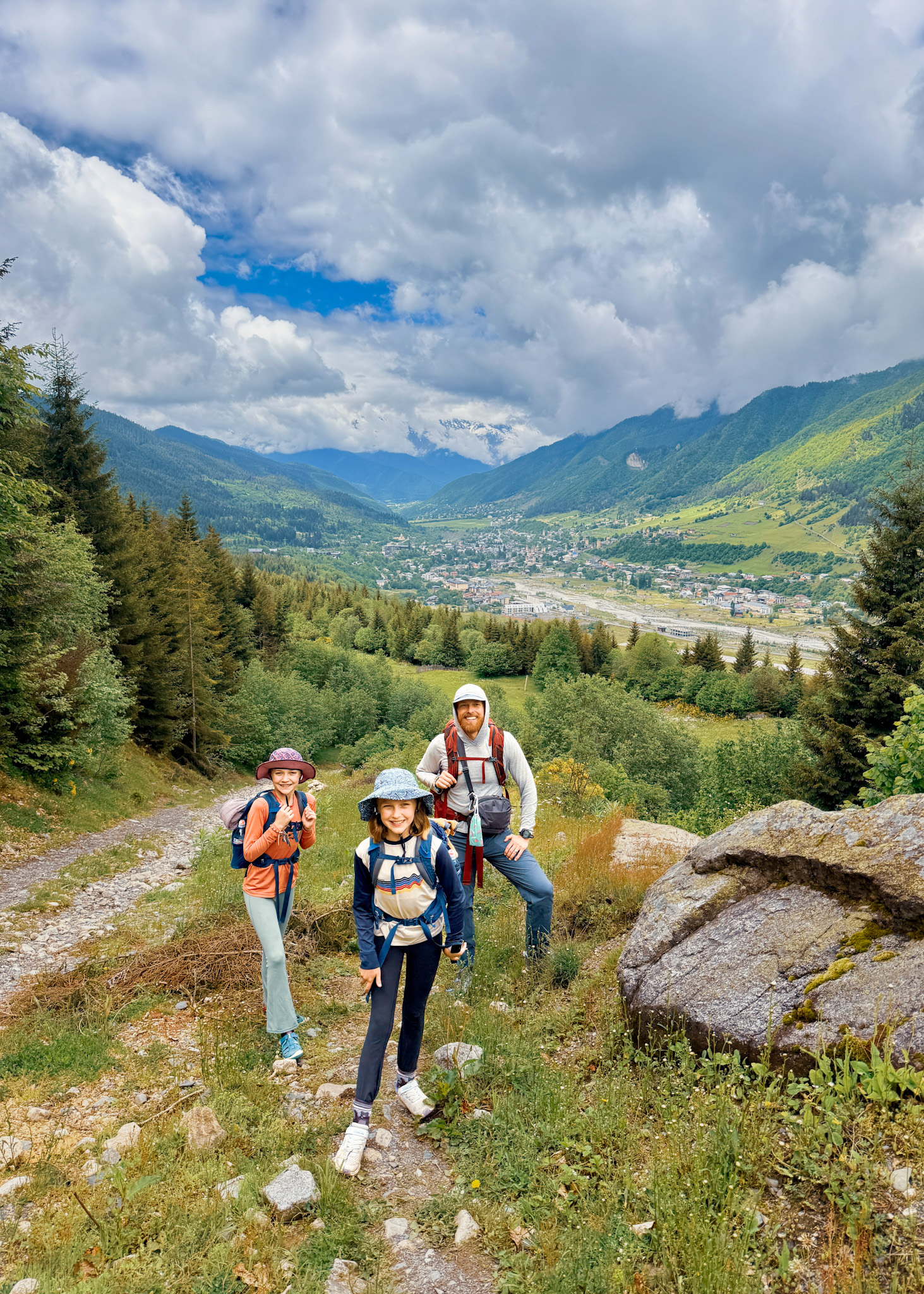
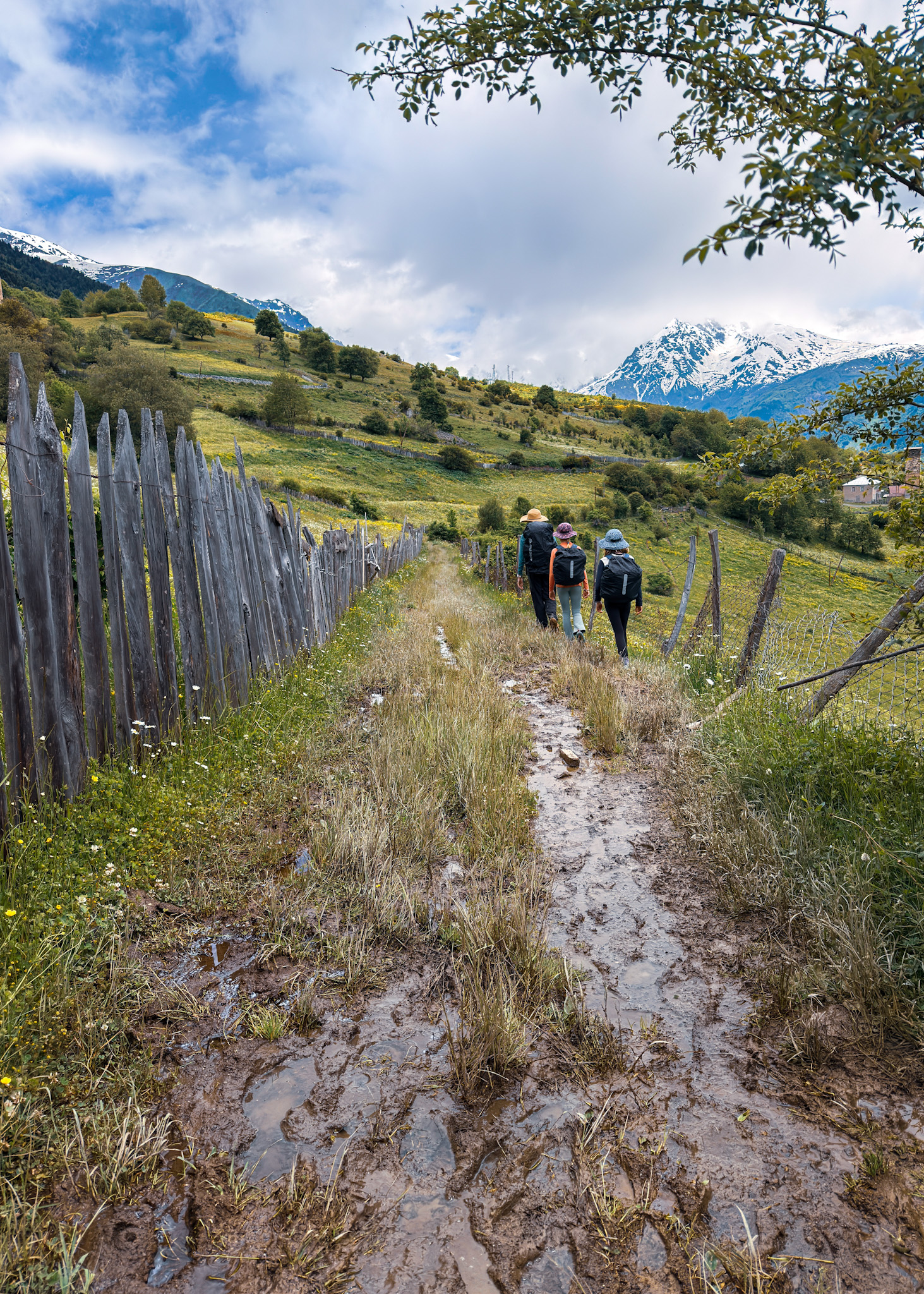
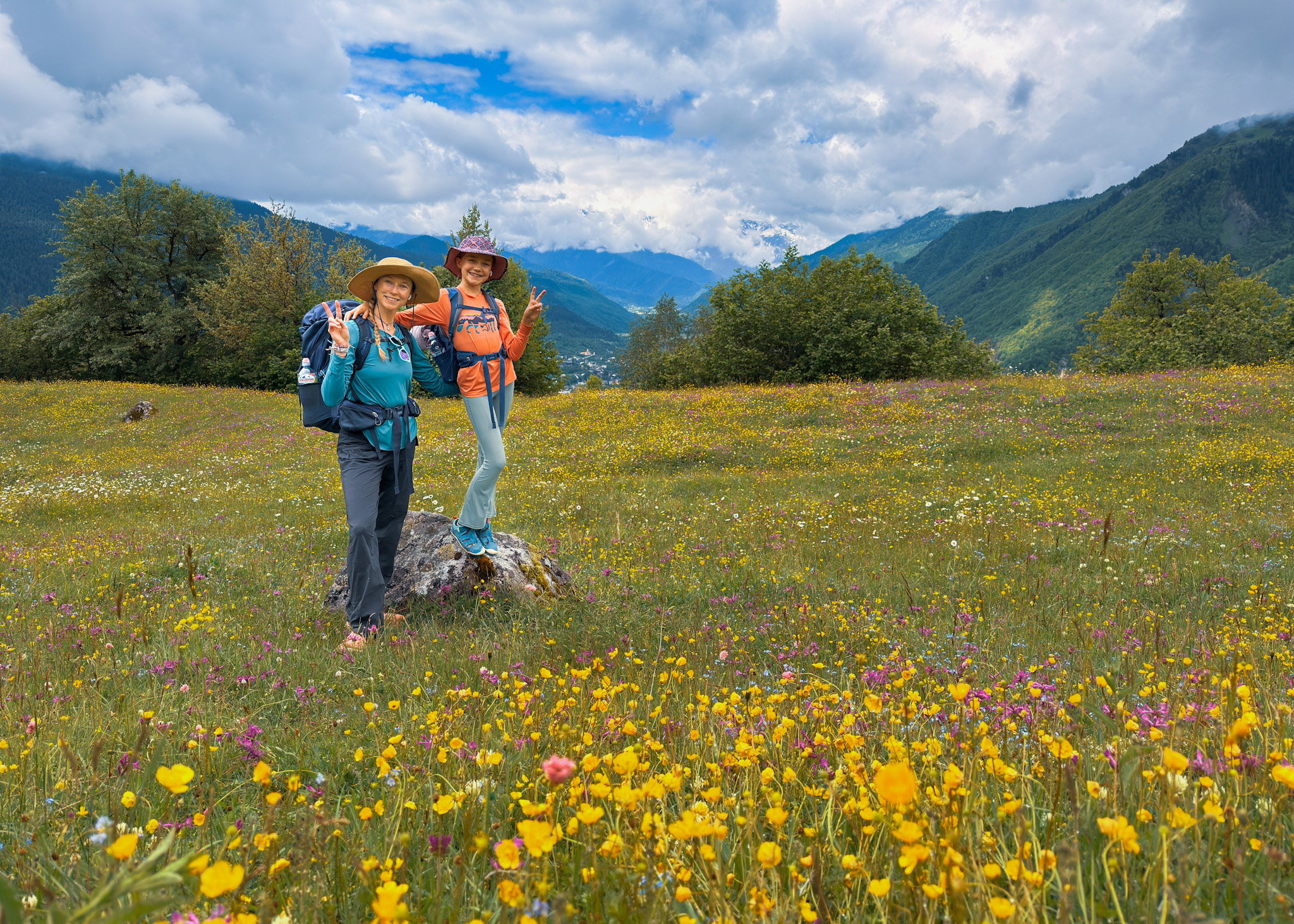
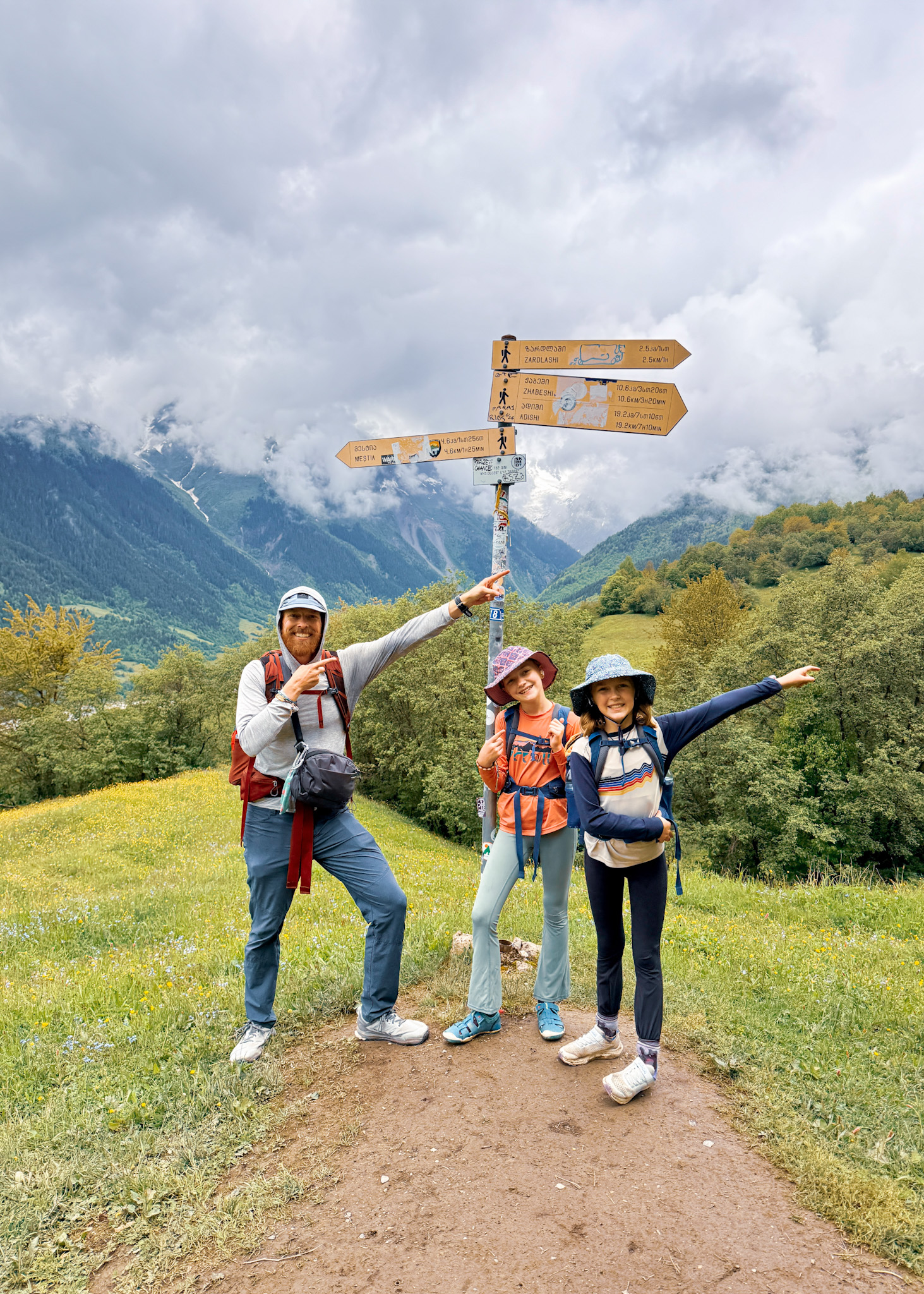
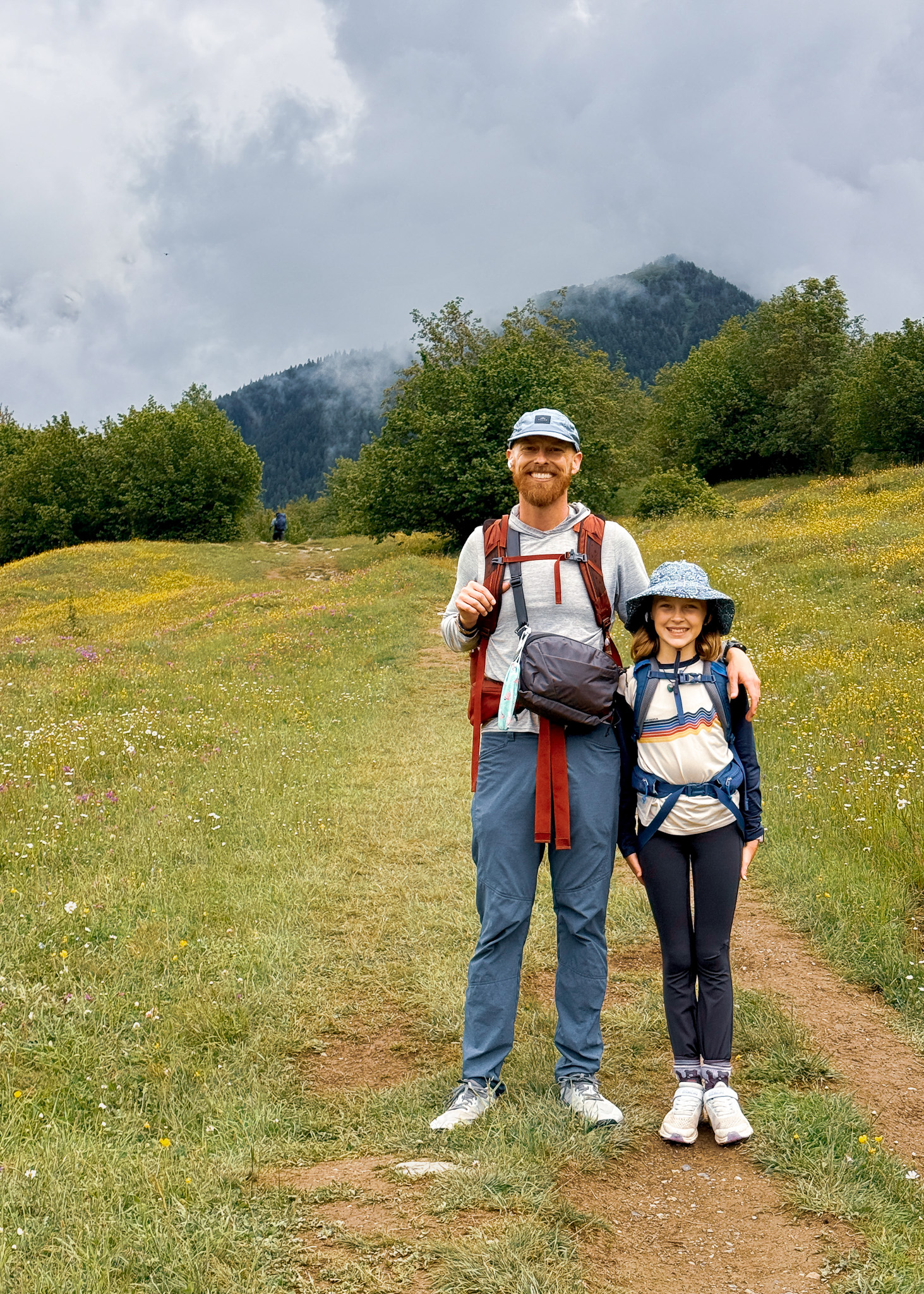
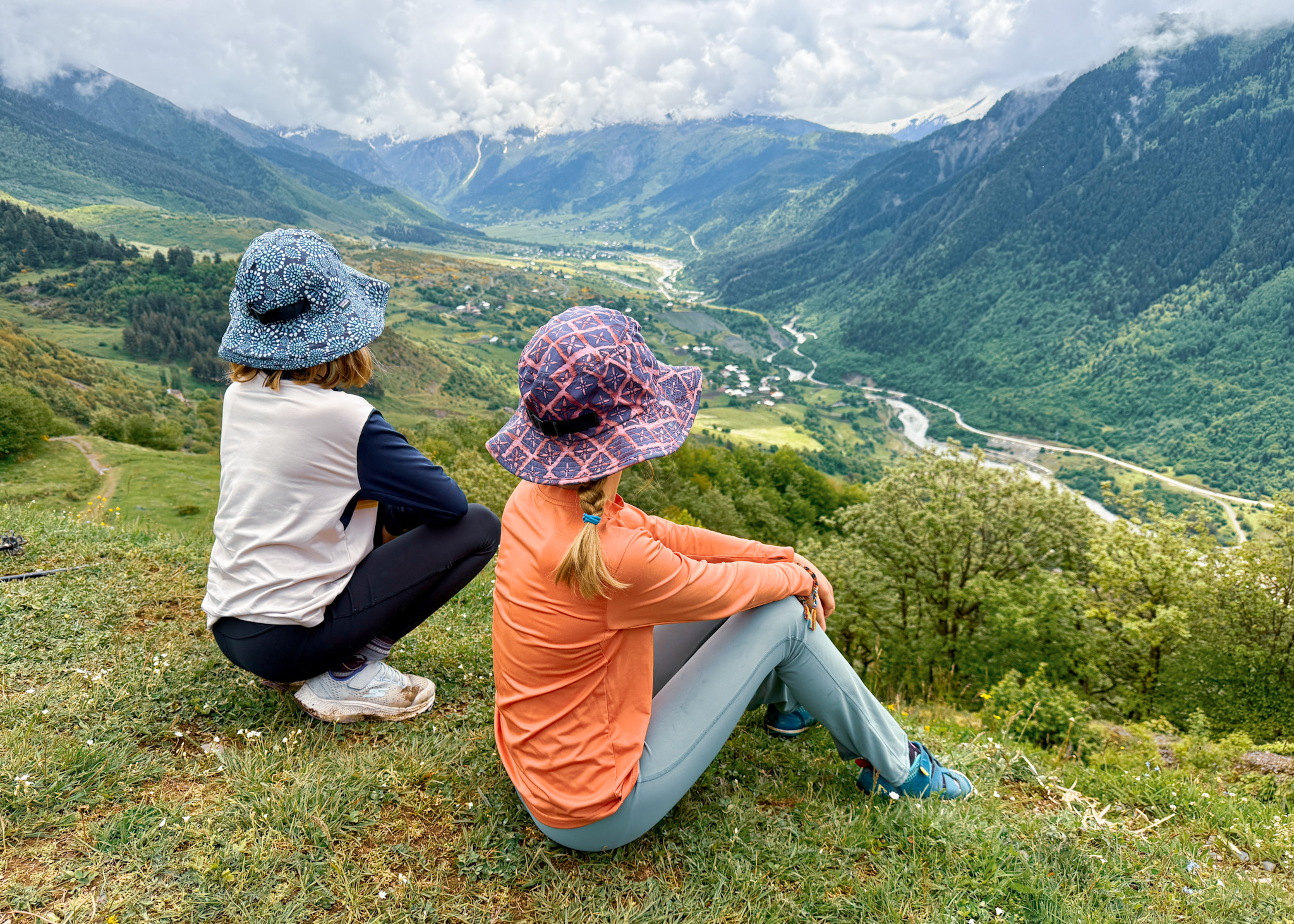
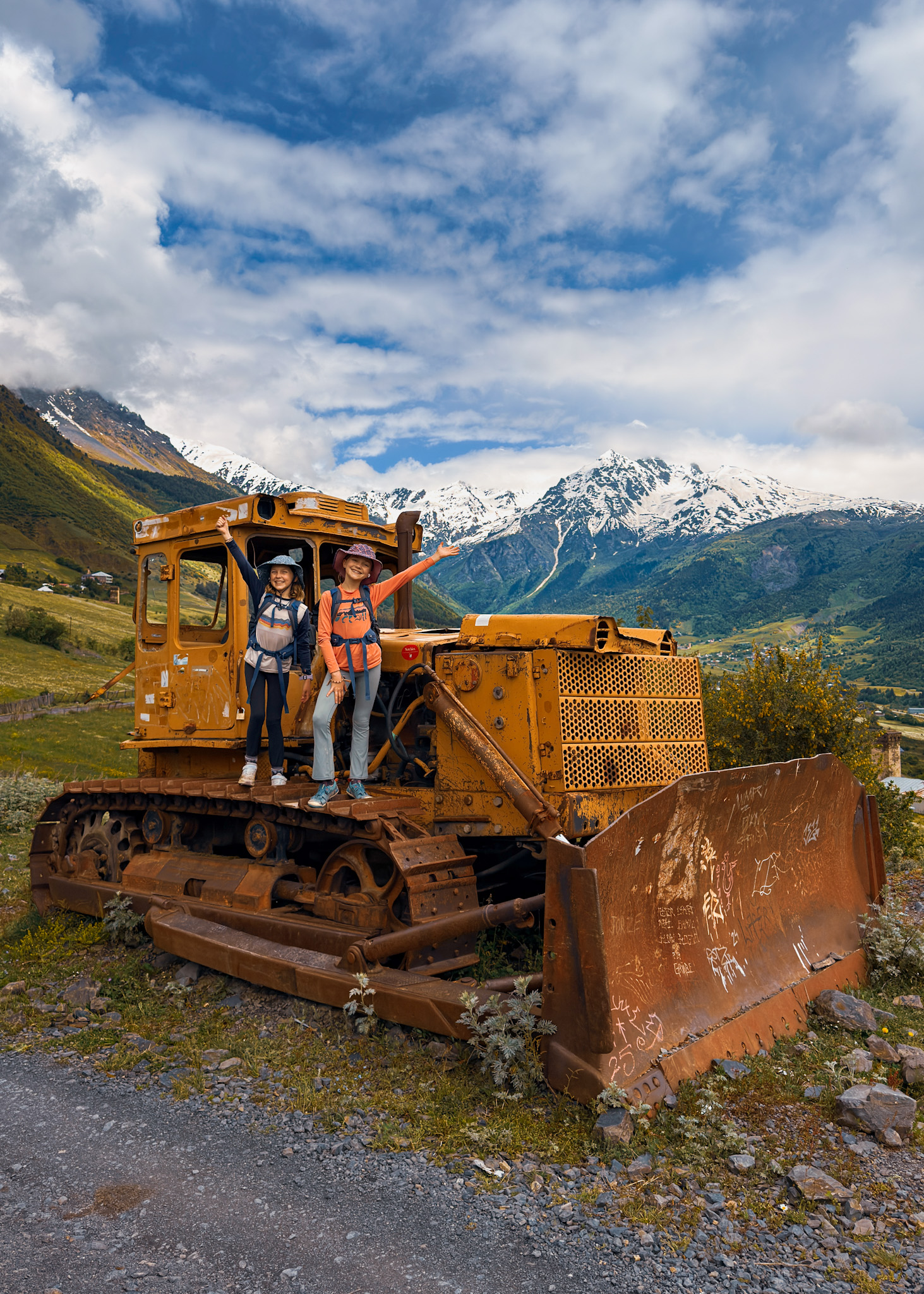
And then the mud. These trails are mostly ancient herding paths, worn in over hundreds of years by animals and shepherds taking the path of least resistance, which means they were never engineered for drainage or maintenance. In a few spots the trail had simply been swept off the mountain where a seasonal creek had flooded and taken it. We picked our way through, kept our spirits up with an audiobook about a girl solving a treasure mystery in New Orleans, and finished the last three kilometers on a cement road into Zhabeshi. Not surprisingly, we were reminded that cement is a hard, unforgiving surface at the end of a difficult fifteen-kilometer day. Our feet were genuinely sore by the time we reached Guest House Gogia after nearly five hours of hiking, a deep ache in the arches and joints that trails don’t usually produce.
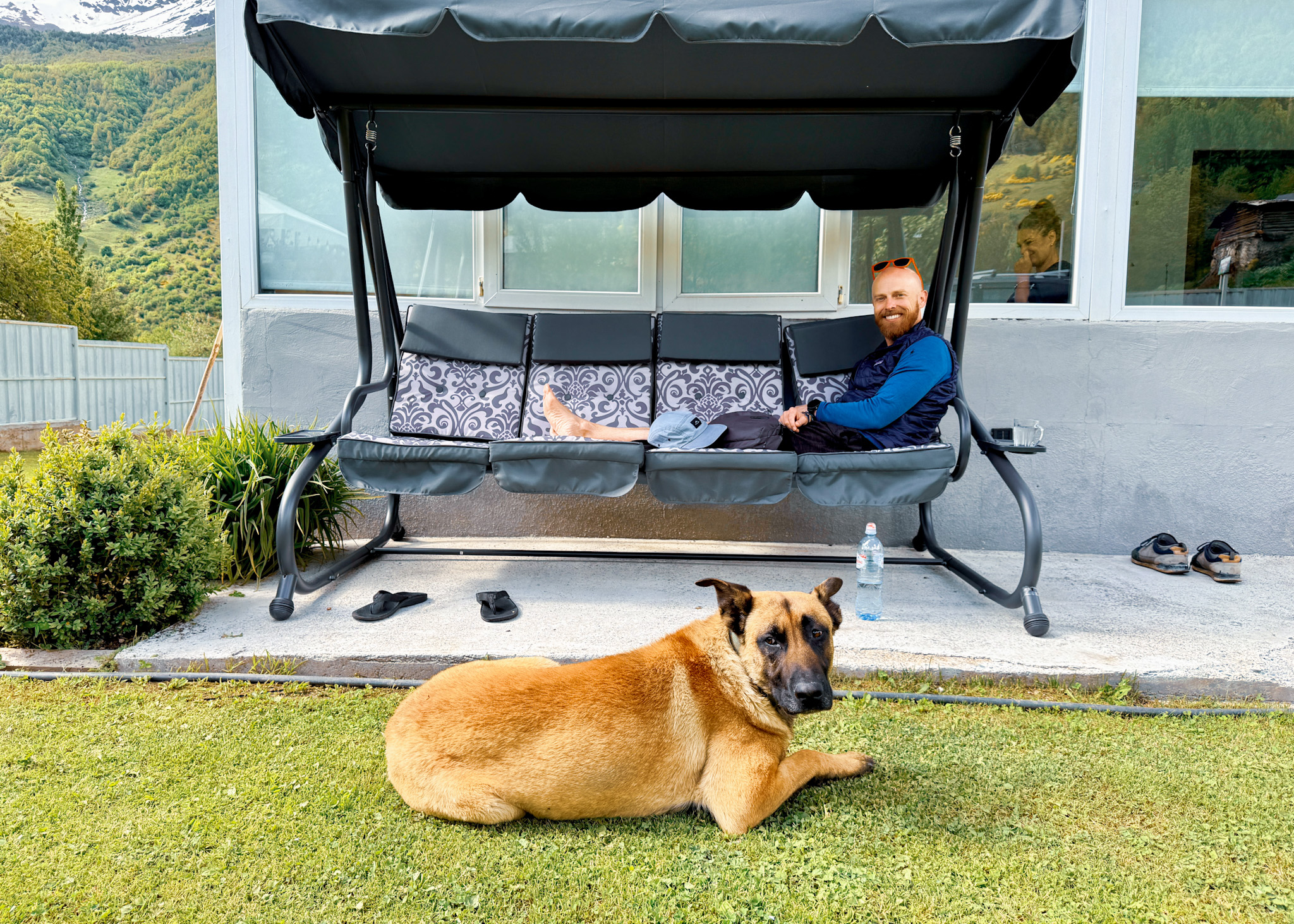
The guesthouse was a single big block of a building with six bedrooms upstairs and one shared bathroom at the end of the hall for what turned out to be thirteen people—an arrangement we were sure would be a problem and which turned out to be no problem at all. Dinner was rustic, traditional, a little bland, and completely welcome. The evening rewarded us by turning cloudless and golden, so we sat out in the garden on a padded swing reading and journaling. At eight we talked the hosts into finding us the Spain versus Cape Verde World Cup match, which came through in crisp high definition on an Azerbaijani channel with commentary none of us understood and none of us needed. The game itself was an unremarkable slog, Spain firing something like 27 shots and failing to score a single one, but it gave us a hero anyway: the Cape Verde goalkeeper, Vozinha. He’s a 40-year-old ancient by soccer standards, who sprinted and dove and swatted everything away to preserve a scoreless draw. We went to bed happy, which is worth noting, because it would be the last uncomplicated night for a while.
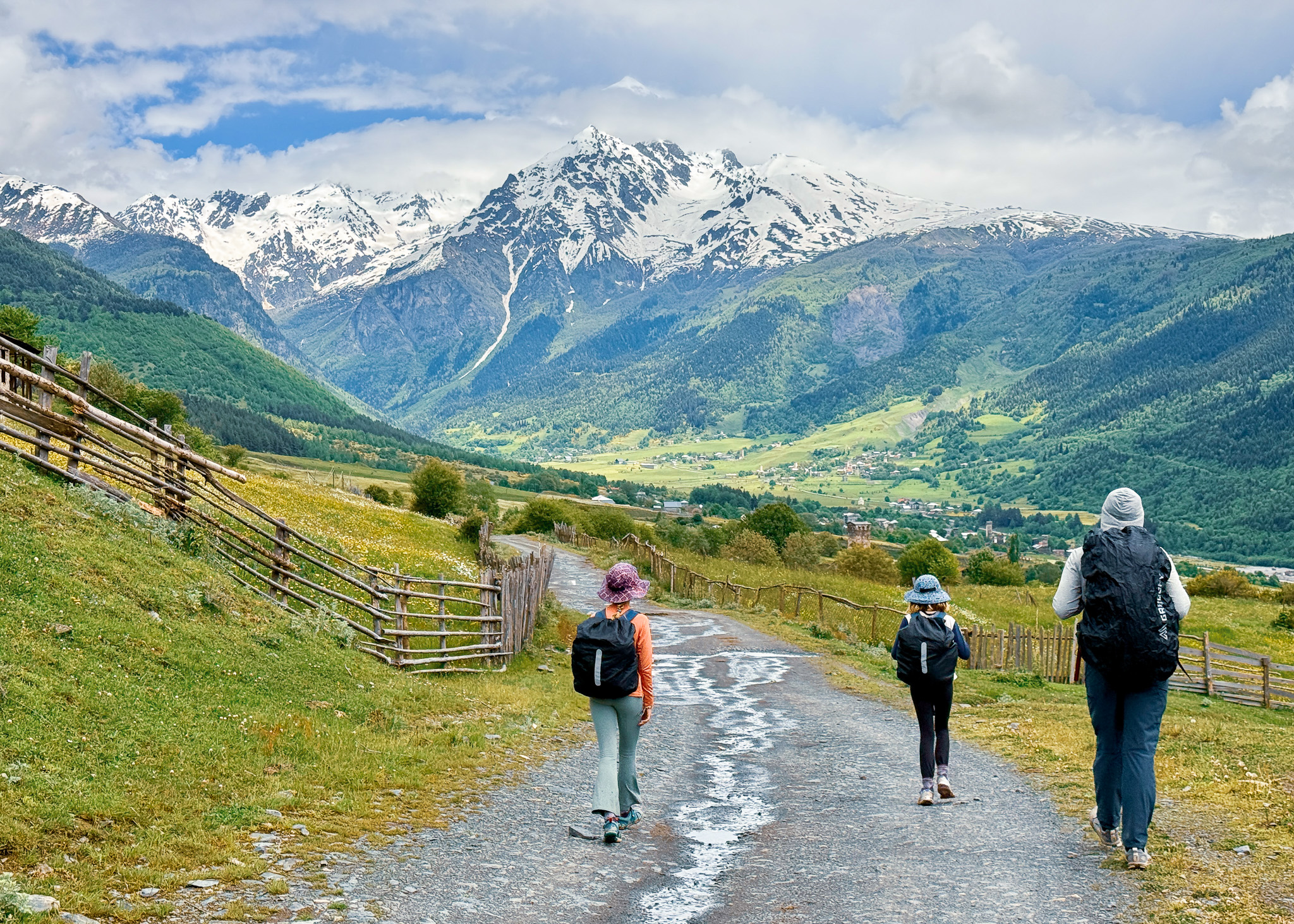
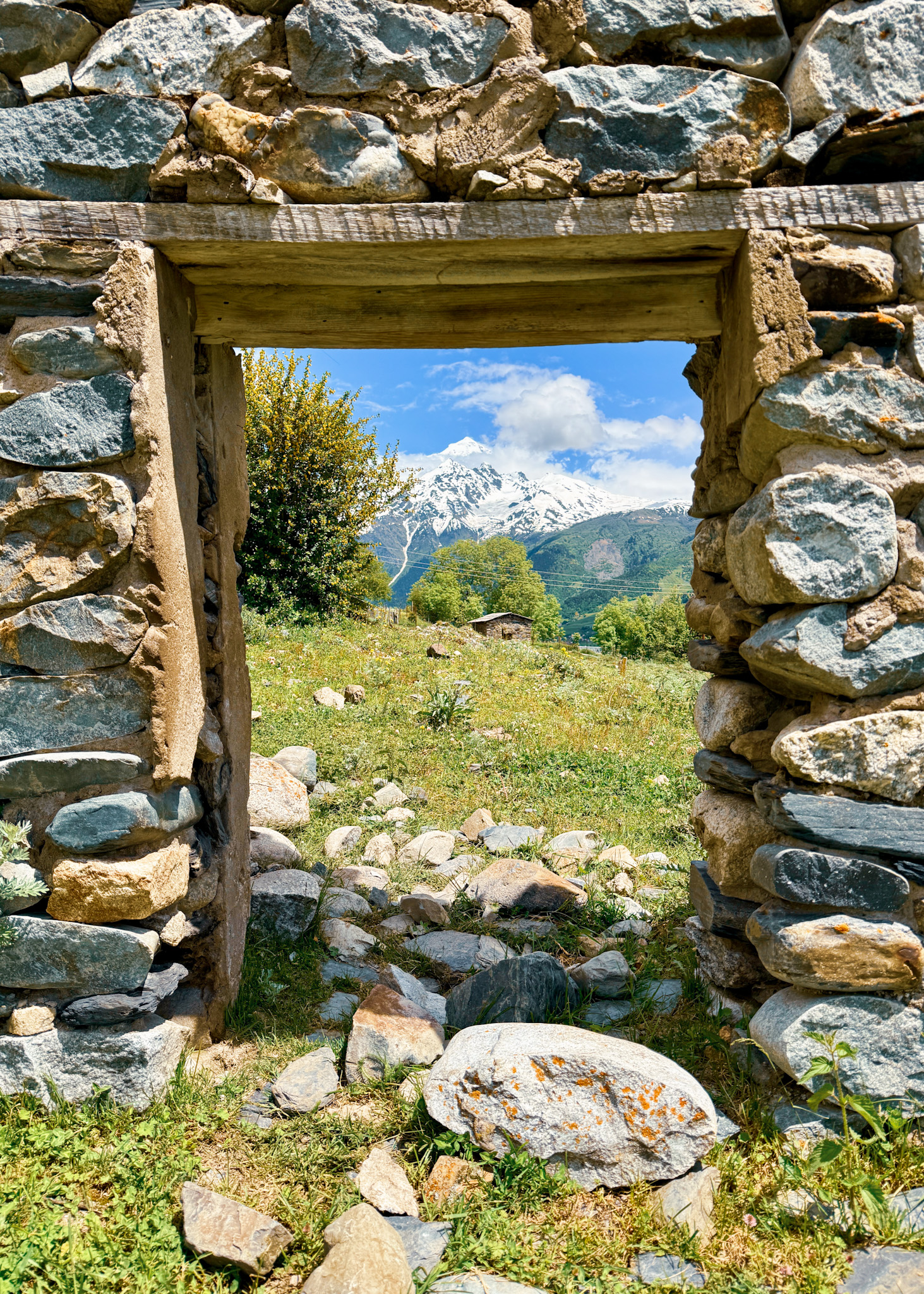
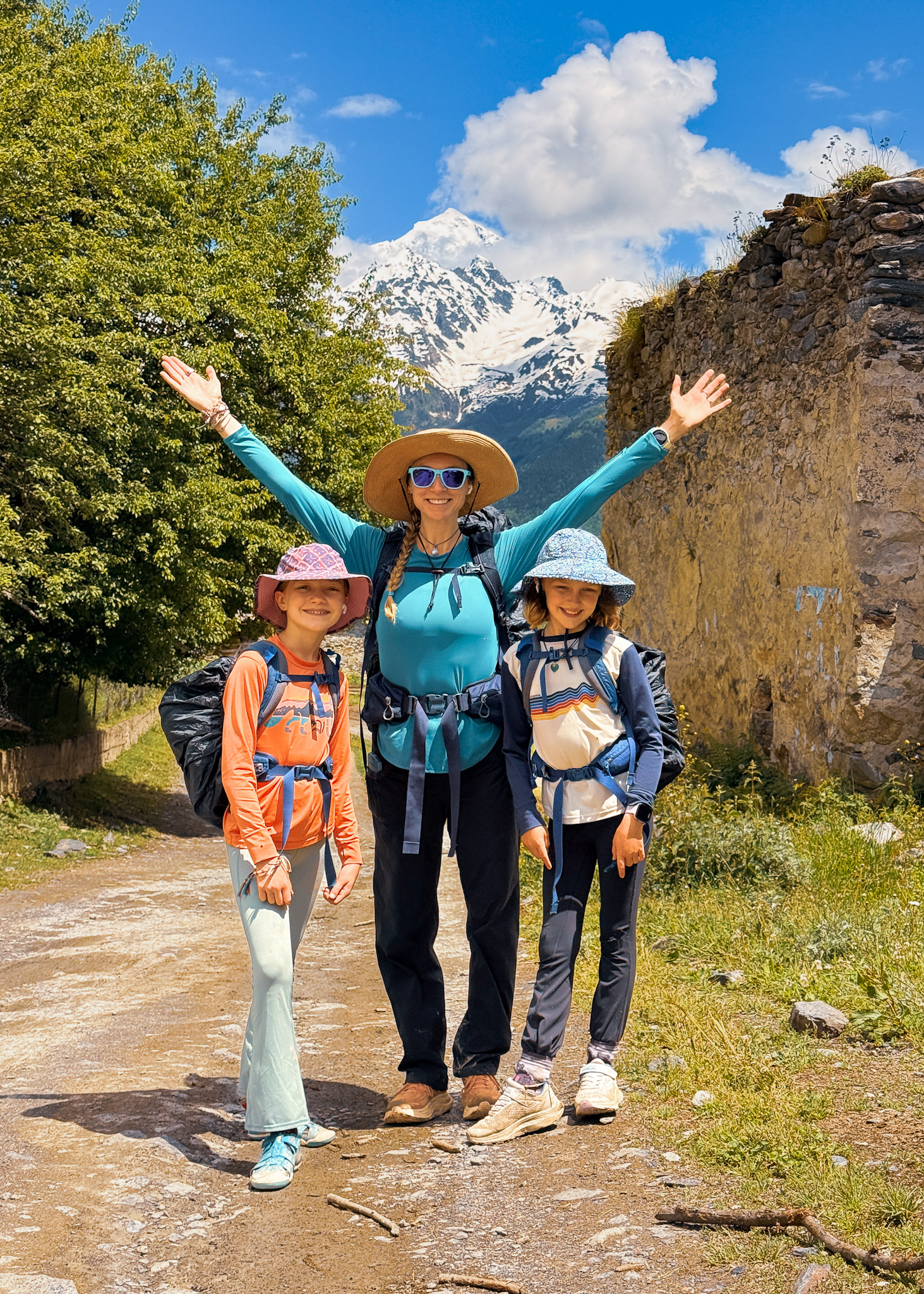
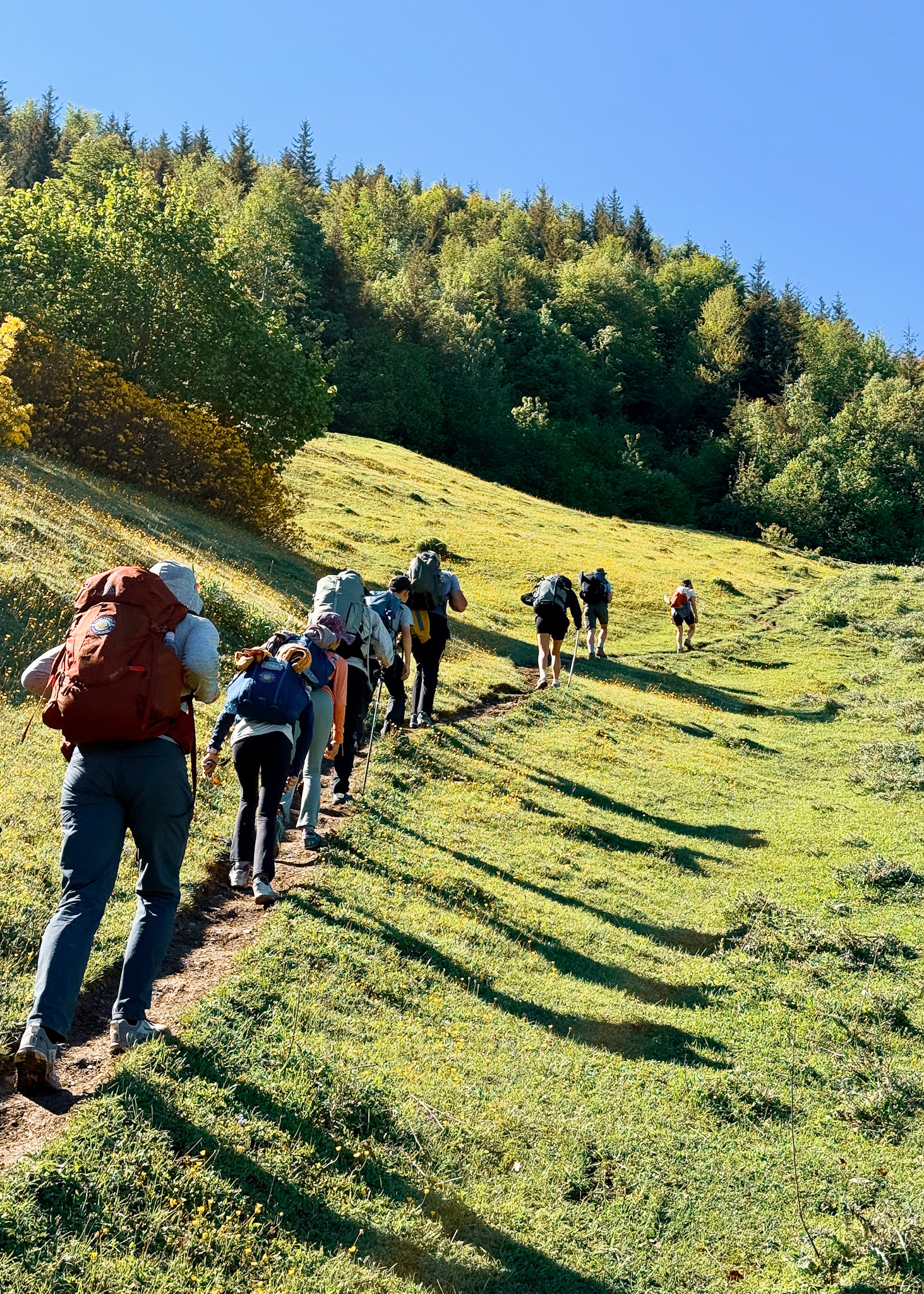
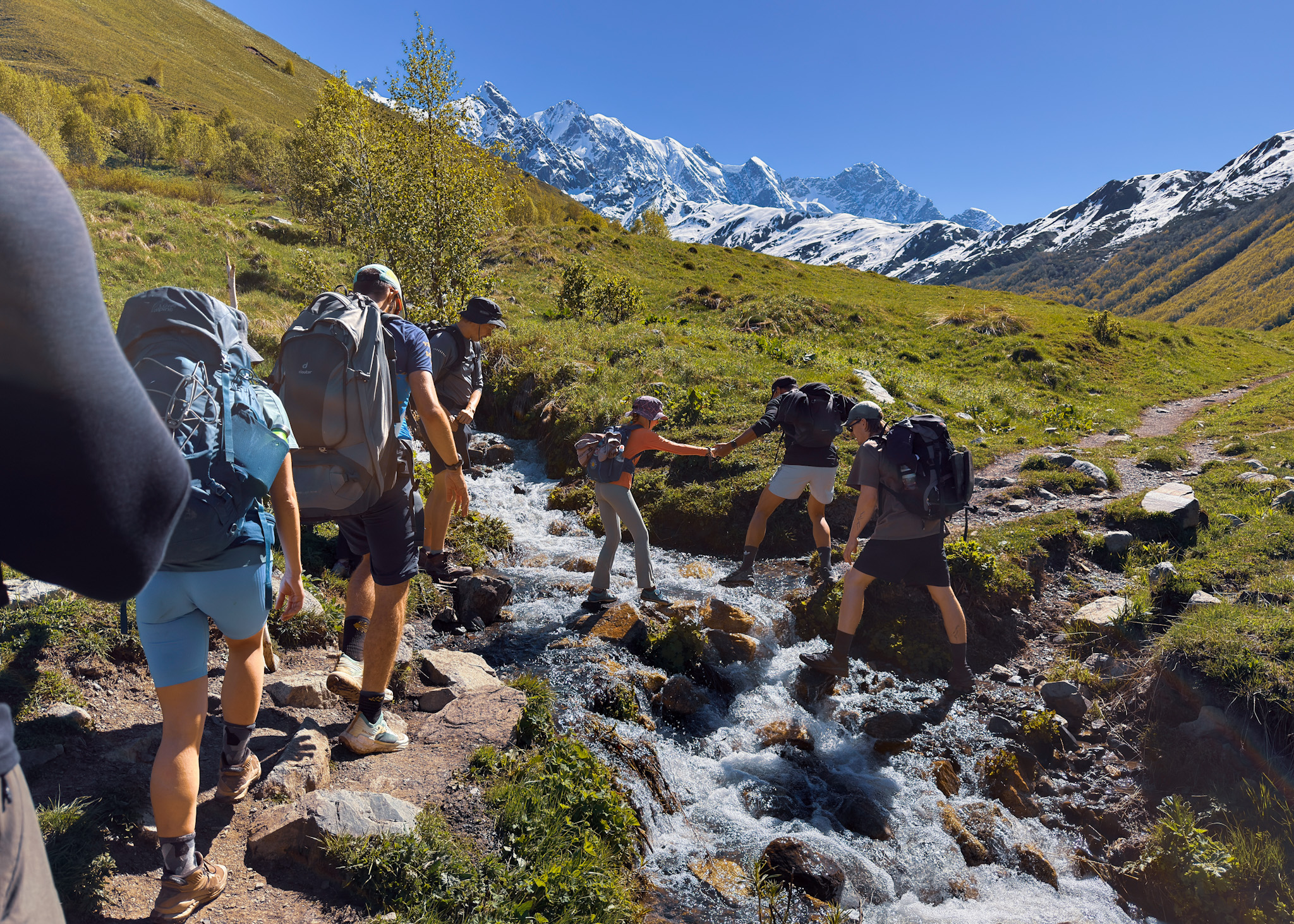
Day two began as a good day. It began, as all Georgian mornings do, with an absurd quantity of food, because Georgians are constitutionally incapable of making a small meal—a fact we would have proven to us again and again over the coming days. We rolled out just after nine and immediately discovered that nine is precisely when everyone else starts hiking, landing us in a conga line of trekkers grinding up a muddy single-track behind a large guided group. The girls solved this. At a clearing where the crowd looked ready to break, Arya and Finlee put their heads down and simply powered up the mountain. Although we adults could have happily enjoyed a break, we followed dutifully as they set a pace aggressive enough that we spent the rest of the day almost entirely alone on the trail.
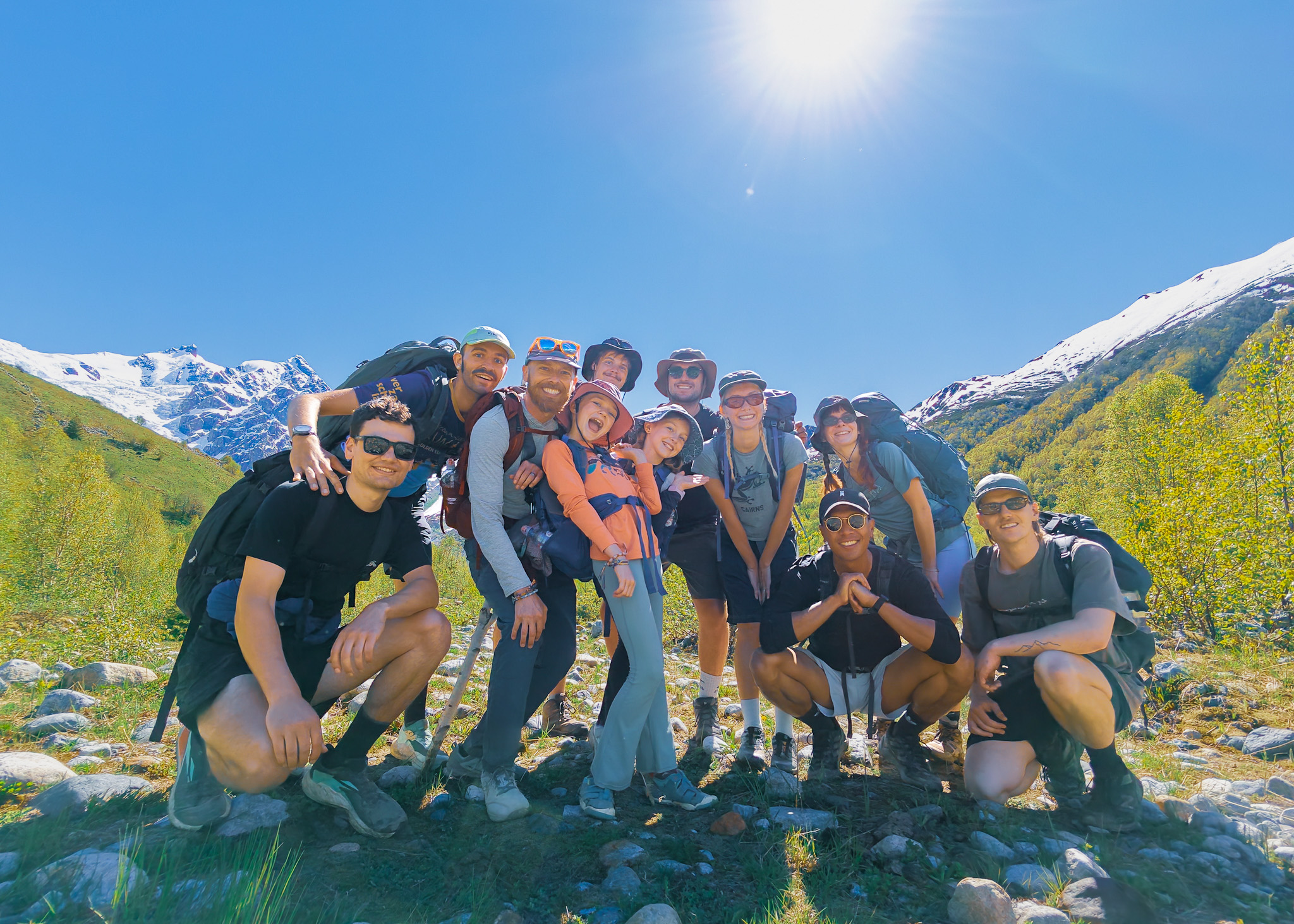
Almost. Near the apex, where we stopped for a picnic at some wooden tables, we then fell in with a group of solo travelers who would make the next two days genuinely wonderful. First a Swiss social worker named Zeno, then his friend Ty, a German of Filipino descent and so fluently American-sounding that we assumed he was from the States. Ty works for the German railway and has masterfully engineered a life where he banks overtime into paid leave and travels three to six months a year, which may be the finest arrangement any of us has ever heard of. Then the rest of their loose band arrived: Victor, a Spanish tech consultant fielding a job offer from Google; Connor, a young American who has found his country falling short of the ideal in his head and wants to see how the rest of the world does things; Tina, a Croatian on the shortest trip of the bunch; and an Australian urban planner from Melbourne whose name, despite two full days of trying, we were never once able to retain.
We hiked the last two-thirds of the day with this crew, and it was a joy. The girls adored them, Connor especially, a guy in his mid-20s who does not eat cheese or seafood but loves spicy food and was promptly declared the coolest hiker of the group. The conversation ranged across everything, the kilometers dissolving under it, until we spilled out at a little trailside bar above Adishi that announced it was open by cranking up Georgian pop music. We shared a round of drinks there, looking out over the quaint mountain village below, before heading down to Vista Guesthouse to settle into our rooms. The place was crisp and new, though the walls were thin enough that a person climbing the stairs sounded like an elephant. Once we’d unpacked, we met back up with our new friends for another drink and a small bite. The girls never quite managed to teach them a new card game—nine people was too many—but it was a fine excuse to get to know the group a little better before we all went our separate ways for the night. We headed back to our own guesthouse for a forgettable dinner, and then the evening quietly came apart. Around ten, Shaina’s stomach began to turn. By ten-thirty it was clear she had picked up a GI bug, and she spent the rest of the night making urgent trips to the bathroom.
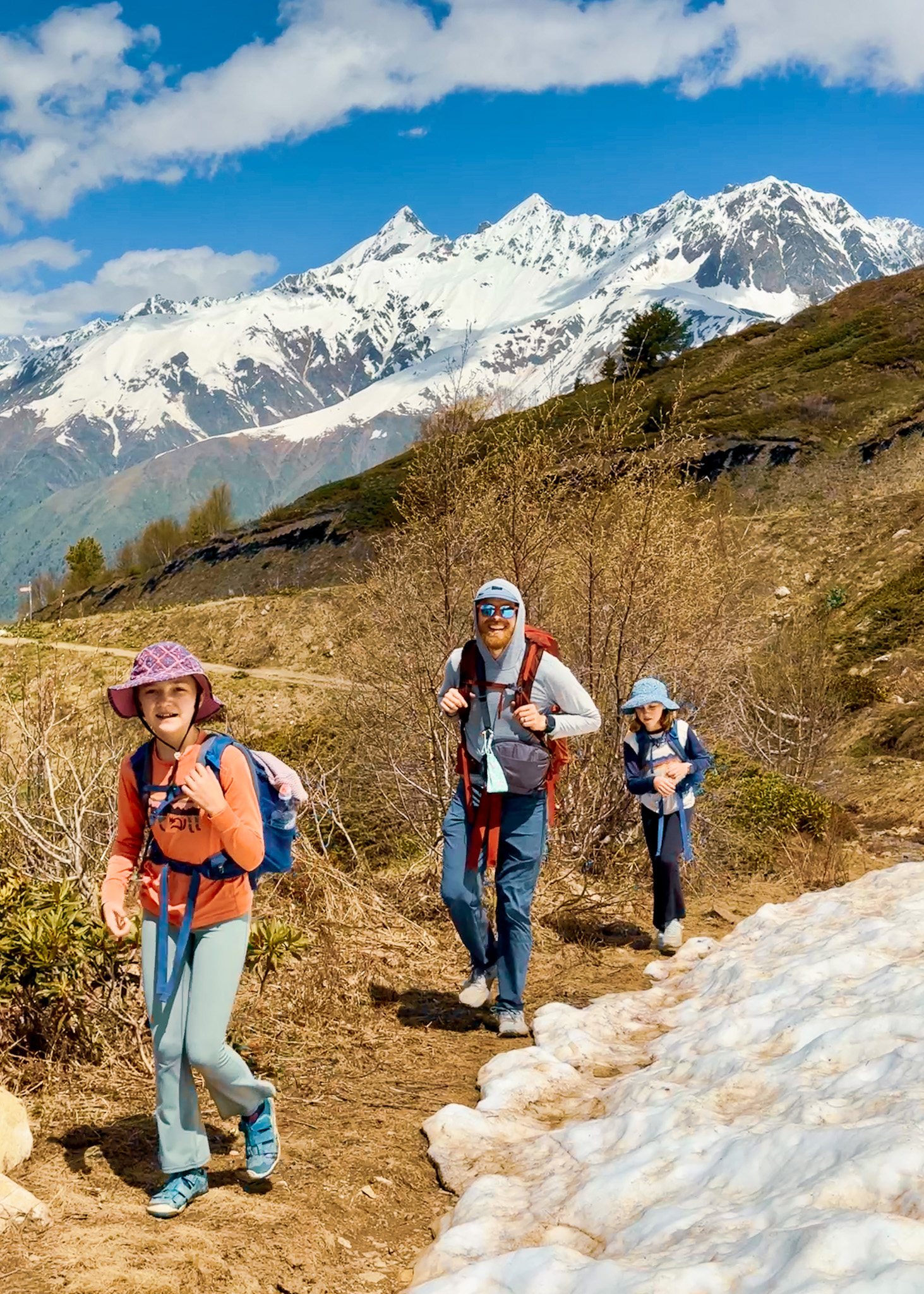
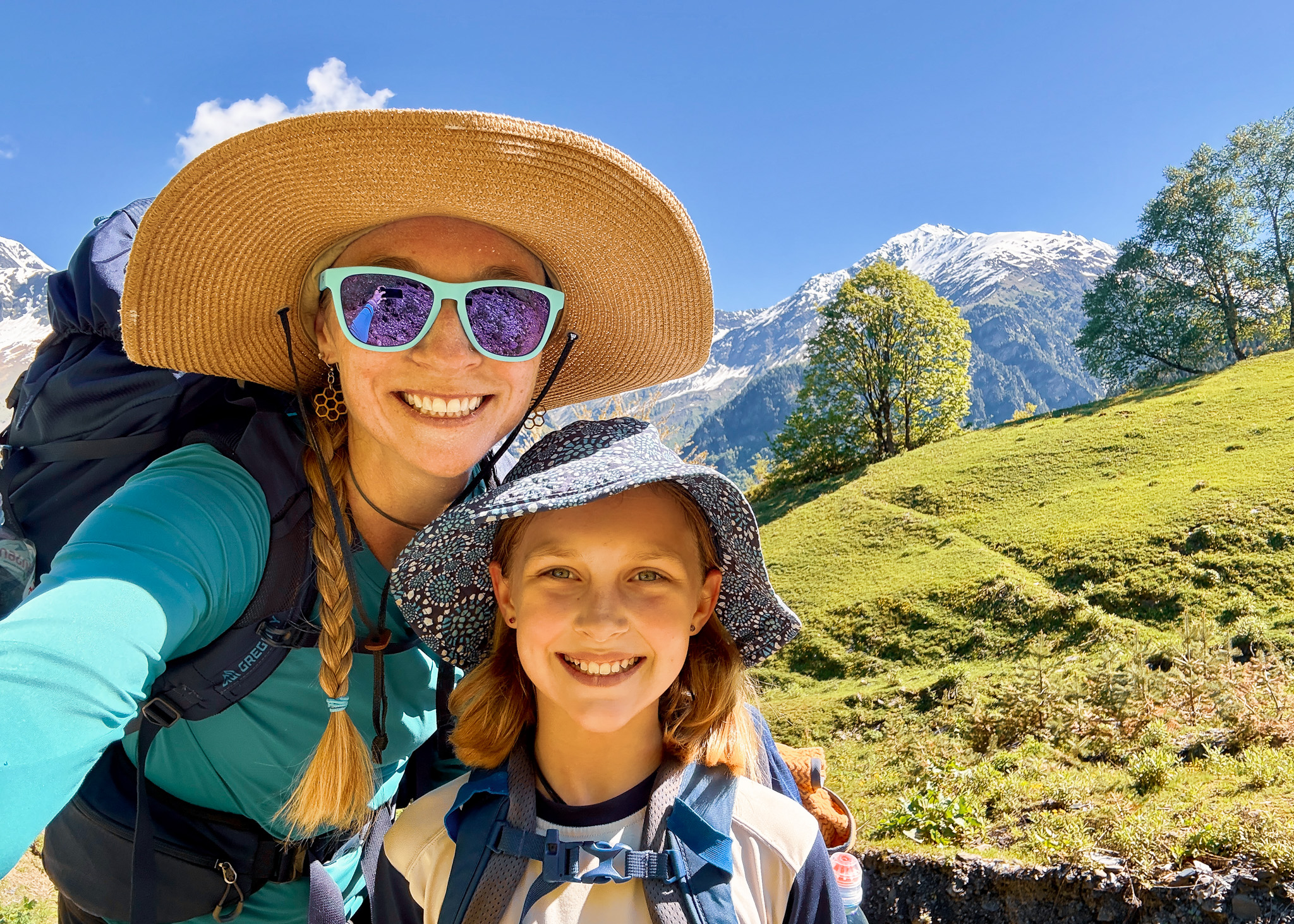
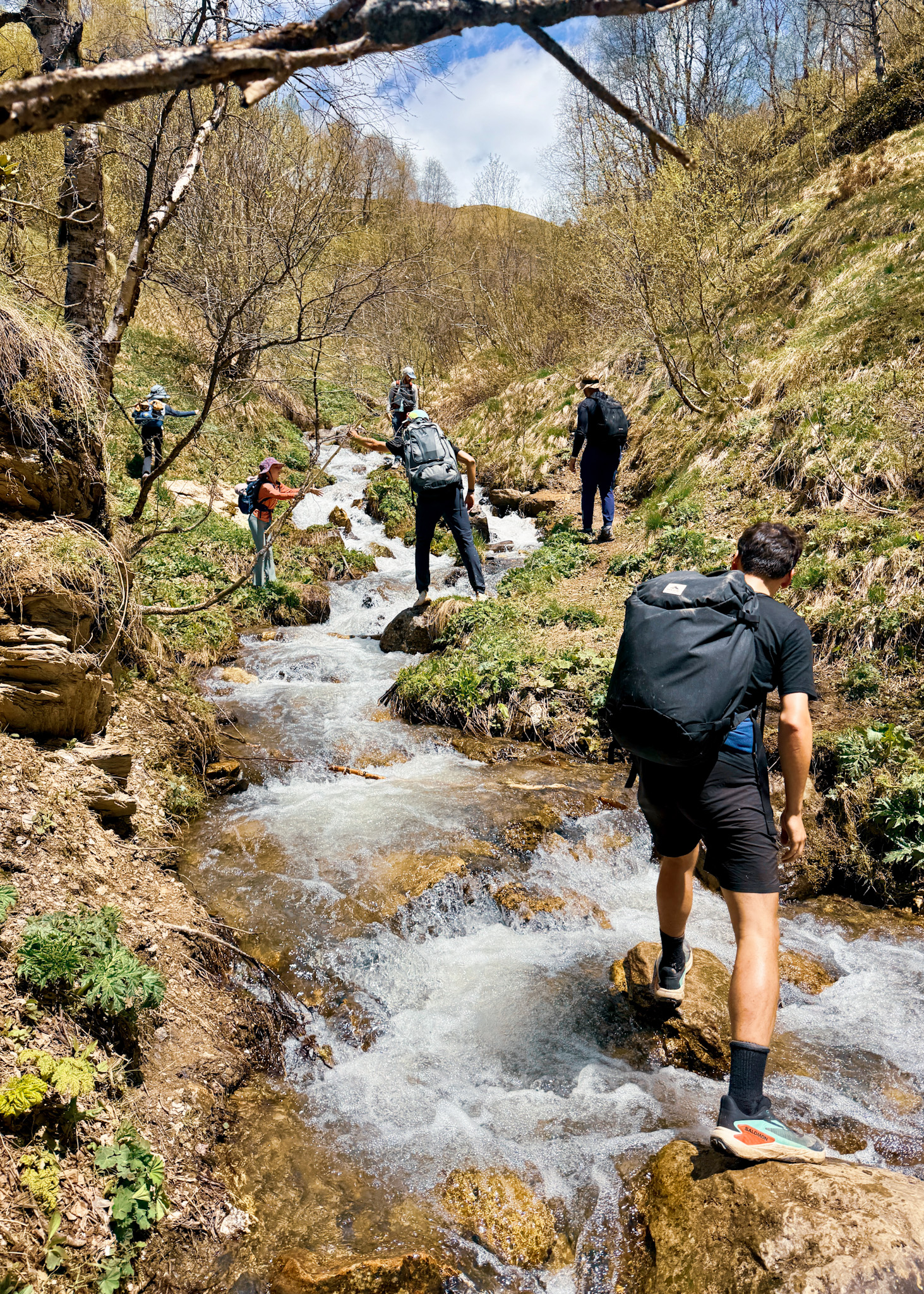
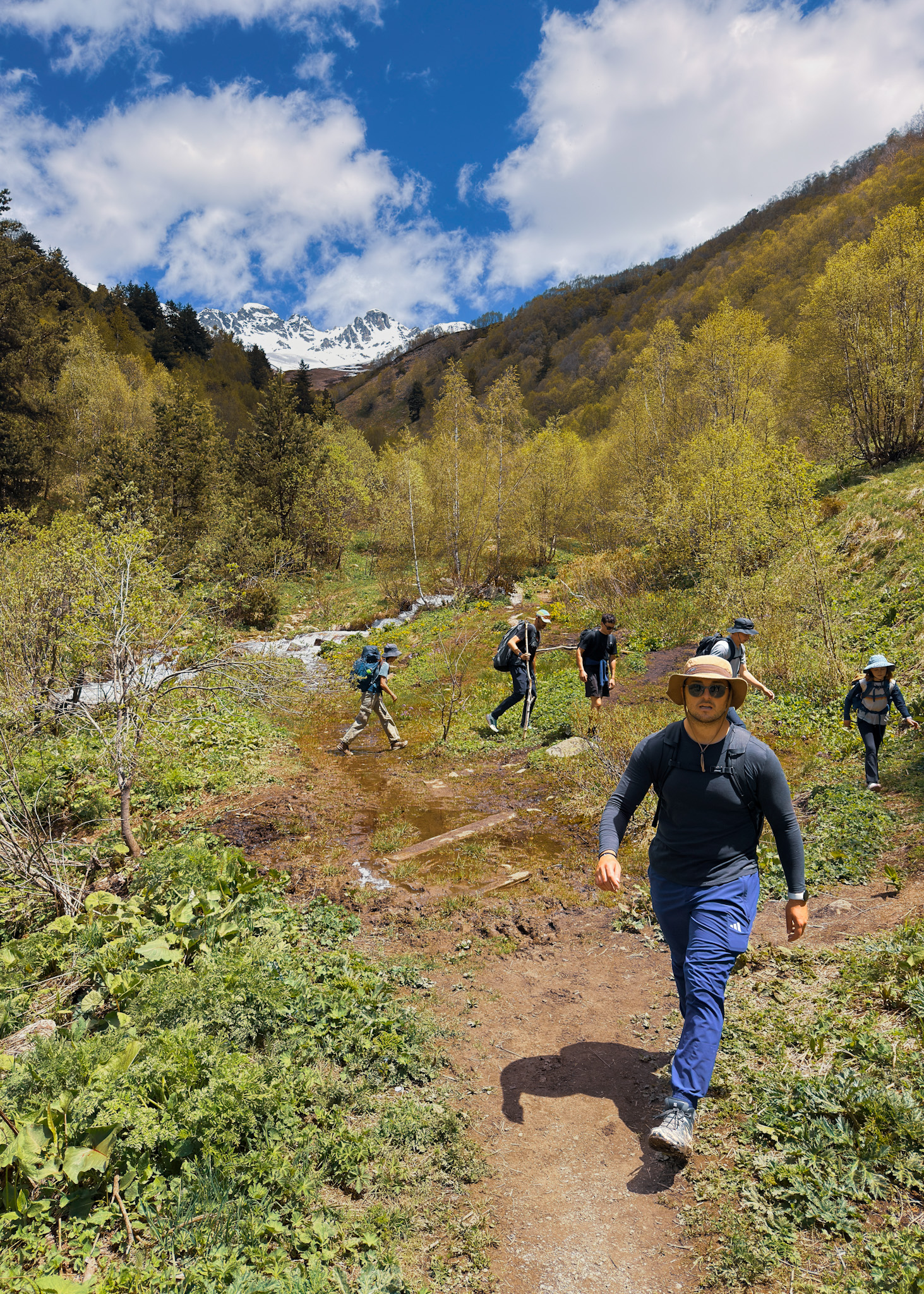
Here I need to jump ahead and explain something about day three, because it did not go the way the standard trek does, and the reason was not Shaina’s illness. The classic third stage runs from Adishi over the Chkhutnieri Pass to Iprali, and for days we had been watching the reports on that pass with real concern. A late snowfall in May had left it still snowbound, and review after review from other hikers, backed up by the locals we asked, said you needed boots and trekking poles at a bare minimum, with many insisting on crampons. We were hiking in sneakers. No poles. Certainly no crampons. Not to mention the children we were ostensibly responsible for keeping from sliding down a steep snow-covered mountainside. So well before anyone got sick, we had already decided that crossing that pass was not a risk worth taking. Instead we would do a 14-kilometer out-and-back day hike from Adishi up to the Adishi Glacier, to get a proper day of hiking in, then taxi ahead to the next town. Shaina’s bug simply turned an already-modified plan into a solo mission for the other three of us, because there was no version of that morning where she was walking anywhere.
That was a genuine shame on more than one level. We wanted to hike with her, and she had loved the company of the solo travelers, so missing the goodbye hike with them stung. But the group was heading over the pass and we were not, so our paths were splitting regardless. Max and the girls shared about five kilometers of trail with them that morning—the girls talking off Conner’s ear as he listened with rapt attention, a genuinely kind response from a young guy without kids. Max hiked while deep in conversation with the Melbourne urban planner about how a country changes underneath you between visits, about infrastructure and growth and the universally broken state of tax systems. You know, the usual light chit chat one has on a hike… We reached the fork where we would part, and Max got the drone up for some group photos and video, everyone traded tentative hopes of meeting again down the line, and then they crossed the river to the north and we stayed south, climbing the face of the mountain toward the glacier.
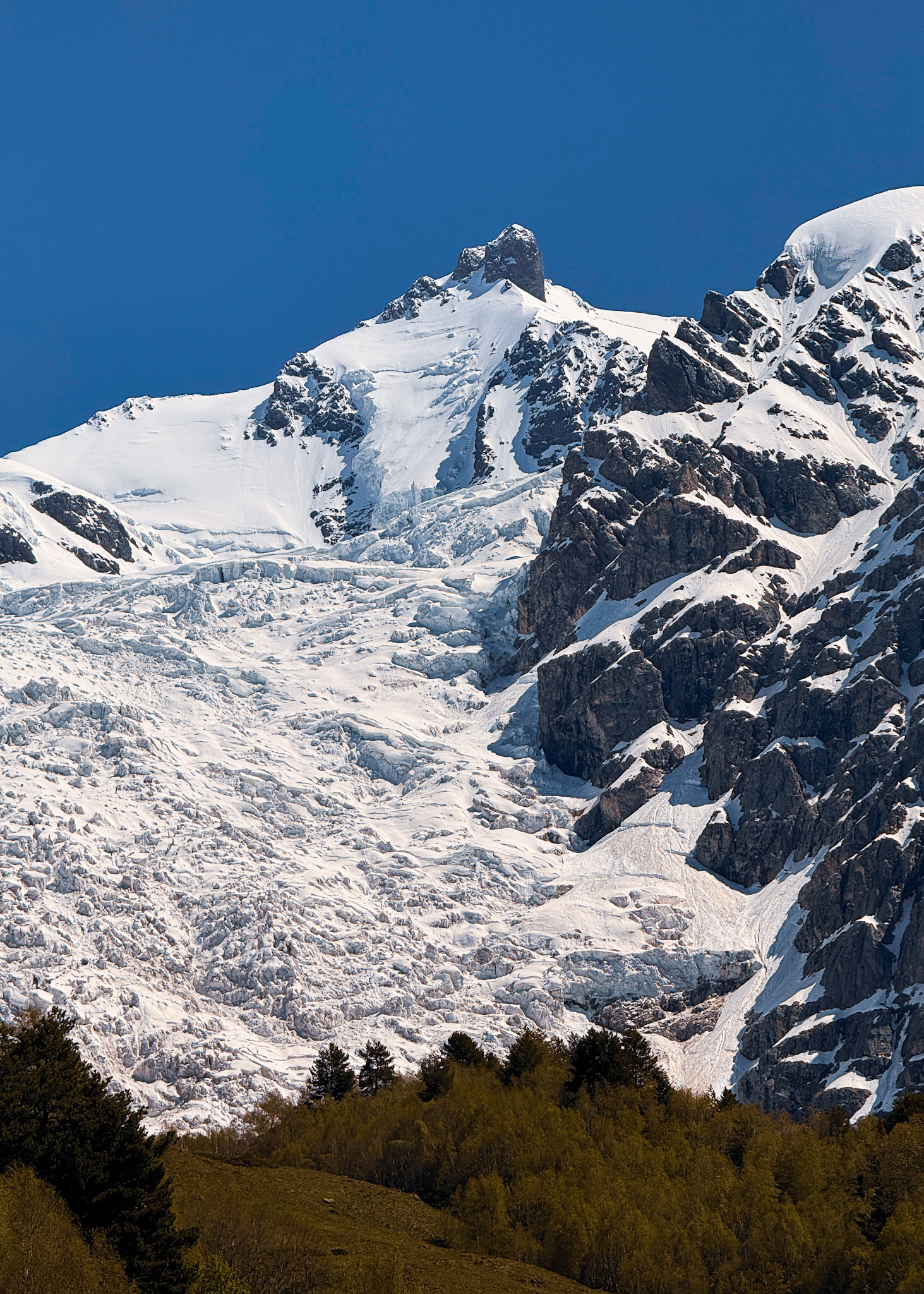
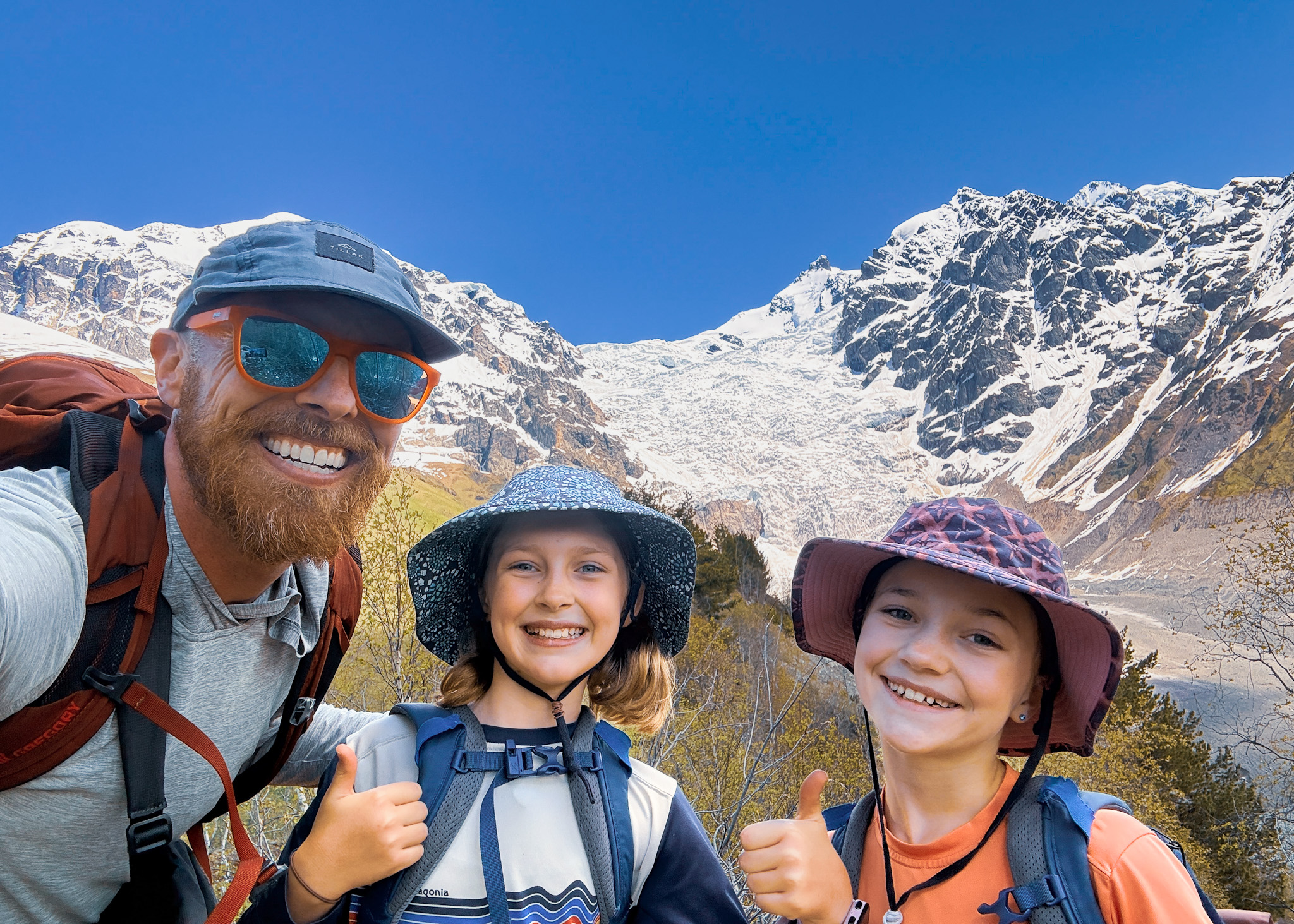
The path up to the glacier viewpoint was barely a path at all. It looked, Max joked, like five or six cows had walked it once, about two and a half years ago, and then never again. The trail was faint and unmaintained, and we found our way with Arya scouting ahead and the Garmin keeping us honest. It was worth every step. The Adishi Glacier is a nine-kilometer river of ice descending the southern slopes of the Greater Caucasus, its tongue still reaching down to nearly 2,300 meters, and standing at the viewpoint looking at it was awesome. It was also, like every glacier here, quietly shrinking a little more each year. It was up there, reaching into his bag, that Max confirmed the day’s great parenting failure: in his rush out the door he had forgotten to pack sufficient snacks to comfortably feed both girls and himself. Shaina always made sure to bring snacks, a perfect reward when reaching the hardest park of a hike, but unfortunately she was back at the guesthouse sleeping. Max retrieved one lonely strip of beef jerky from the depths of his pack, split it between the girls, and resolved to run himself on whatever reserves he was carrying around his own midsection. The 14.6-kilometer round trip took about four hours, and he was deeply proud of Arya and Finlee. They had climbed to a glacier, hiked all the way back, and said goodbye to new friends they already loved—all with better attitudes than the situation strictly required. They earned an ice cream, to be delivered at the next opportunity.
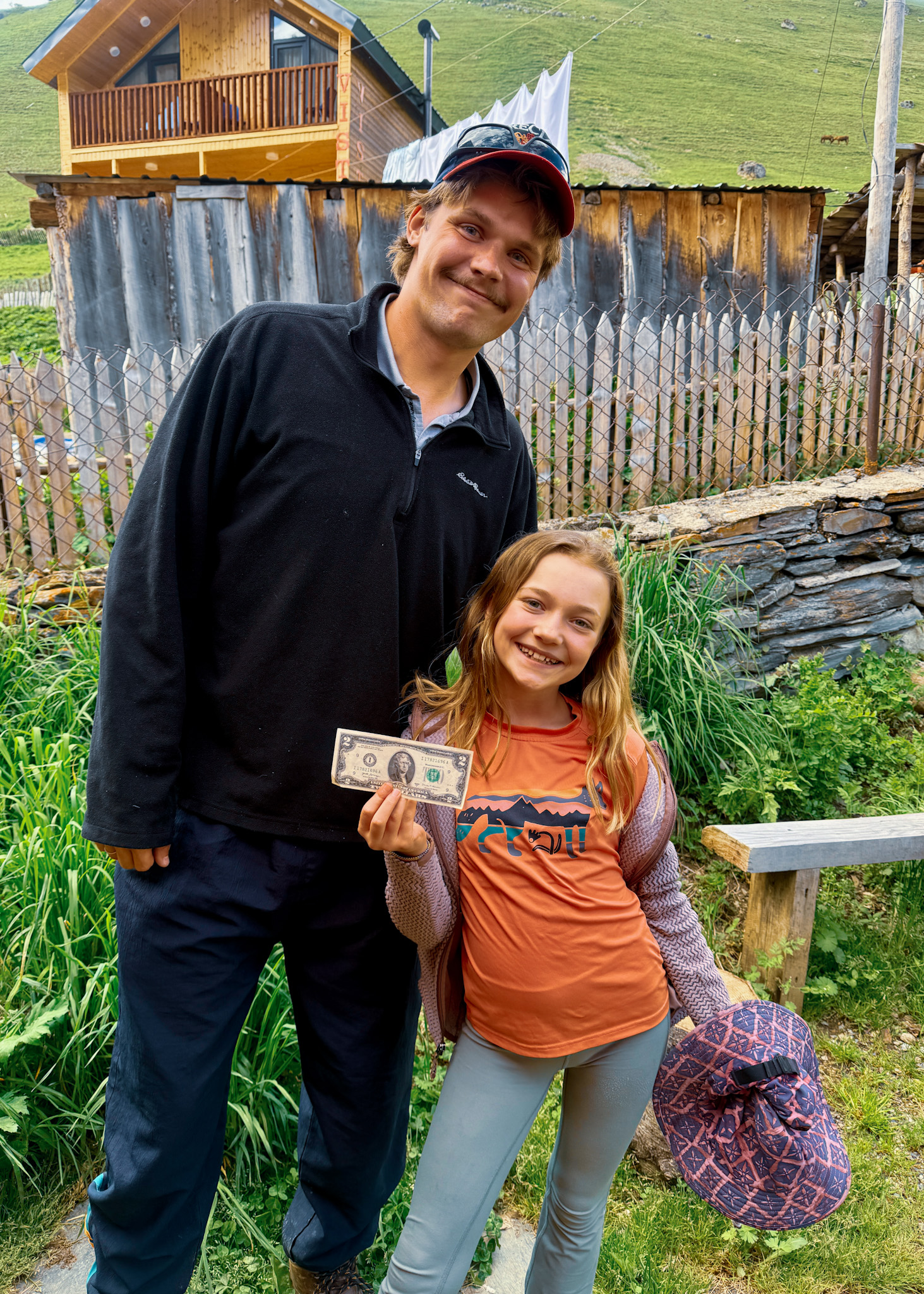
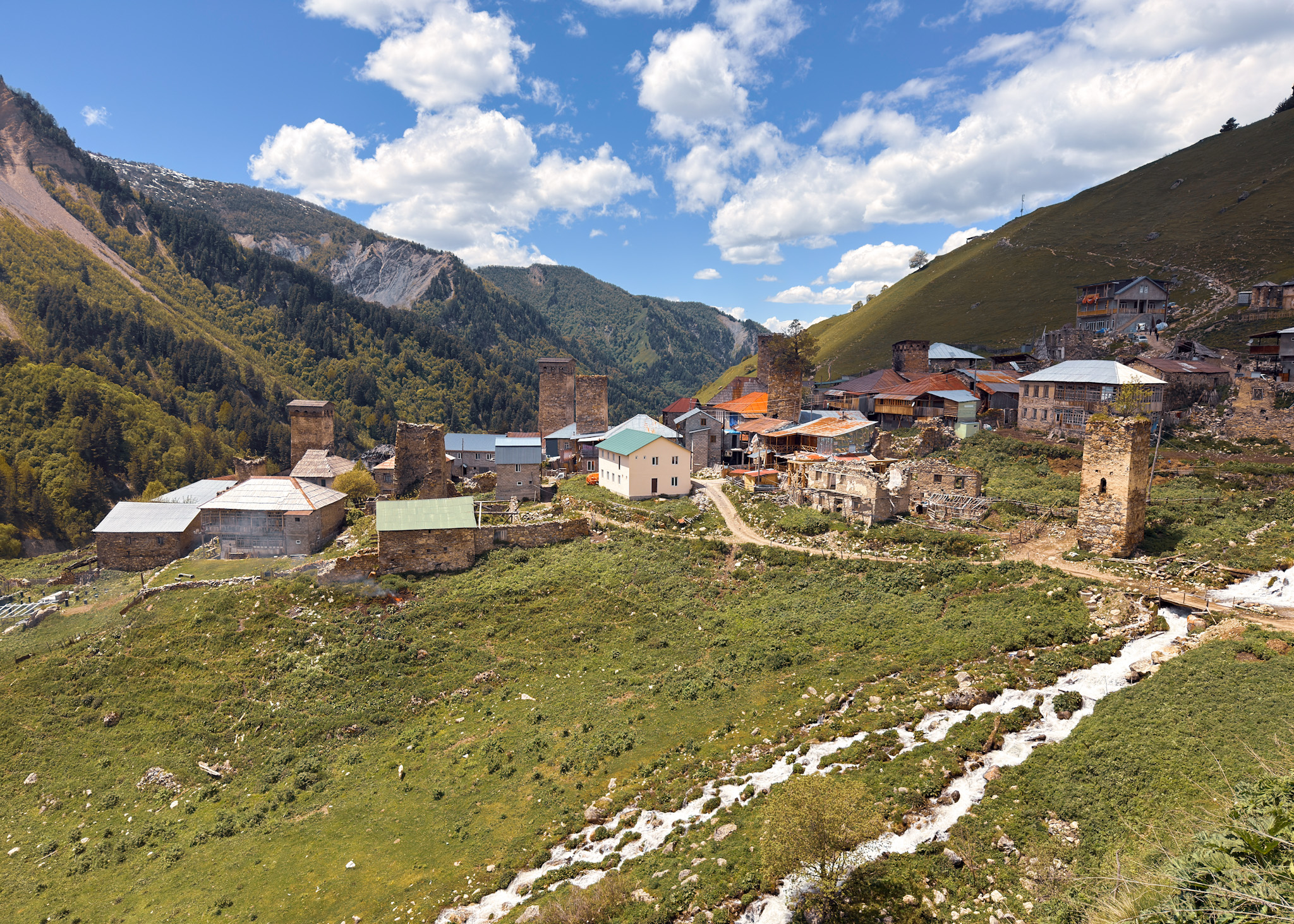
Back at the guesthouse we found Shaina in the common room, having been gently evicted from our bedroom at checkout, looking marginally better, if you defined it generously—tired-eyed and off-color but able to muster a smile and hugs. We hired a taxi to carry us on to the next village, Kala, driven by a gruff, chain-smoking man who handled the dirt roads calmly and then drove like the tarmac had personally insulted him. Our host in Kala, a woman named Maria, took one look at Shaina, understood everything, and slipped into full caretaker mode with medicine and tea and quiet attention. Then she produced an enormous dinner despite our request for a small one, because of course she did. The meatballs in a spicy reddish sauce were superb. Shaina was only able to stomach a bit of bread and bite of potato. We went to bed hoping Shaina could rally enough to walk the final day into Ushguli on her own two feet, because we knew it would mean a lot to her to finish that way.
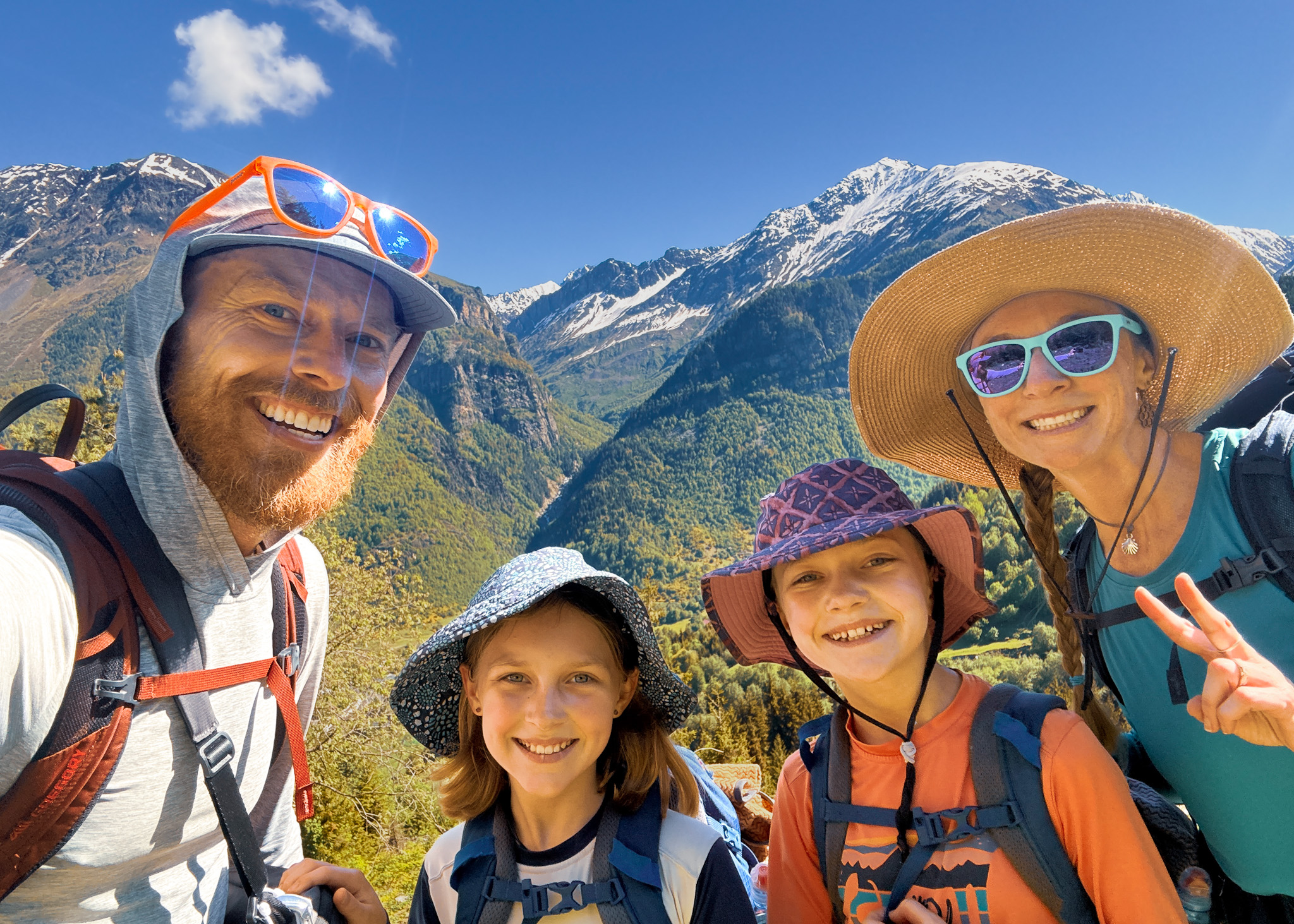
She’d slept through the whole night and looked dramatically better in the morning, but there was still a queasy fatigue underneath, so we fed her one of Maria’s typically colossal breakfasts, watched a little color return to her face, and made the call to try. Maria shuttled us to the trailhead, where we discovered we’d unfortunately missed the solo travelers’ departure. The final day opens with a 430-meter climb over about five and a half kilometers, not the hardest thing we’ve done, but no gentle stroll either, and within fifteen minutes Shaina was ghost white, her heart rate over 190, sweating and looking like she might return that breakfast to the mountain. It did not bode well.
And this was where the accumulated pressure of the whole stretch finally cracked open. Finlee had convinced herself we would catch the solo travelers and that she’d get to hike with Connor, and when it became clear that her sick mother simply could not move fast enough to close that gap, she asked when we’d see them again. We told her, as gently as we could, that we probably never would, that everyone was on their own journey and our paths had diverged, which is the honest and unavoidable arithmetic of this kind of travel. It sent her into a deep, sad funk. Arya was low too. Shaina was quietly furious at her own body for refusing to climb the way it normally does. Max, trying to be the steady one holding it all together, found his own fuse burning short more than once. To get Shaina up the mountain at all, he took her heavy pack and wore it on his front, which made it nearly impossible to see his own feet, a sensation he imagines is a little like being nine months pregnant, and matched her slow pace step for step up the climb. When they finally crested the last rise, we knew we would make it. Shaina stubbornly insisted she take her pack back for the flatter second half of the hike, which helped Max watch his footing better. But the tension had been humming through all four of us for hours, and it was not a pleasant way to walk into one of the most storied villages in the Caucasus.
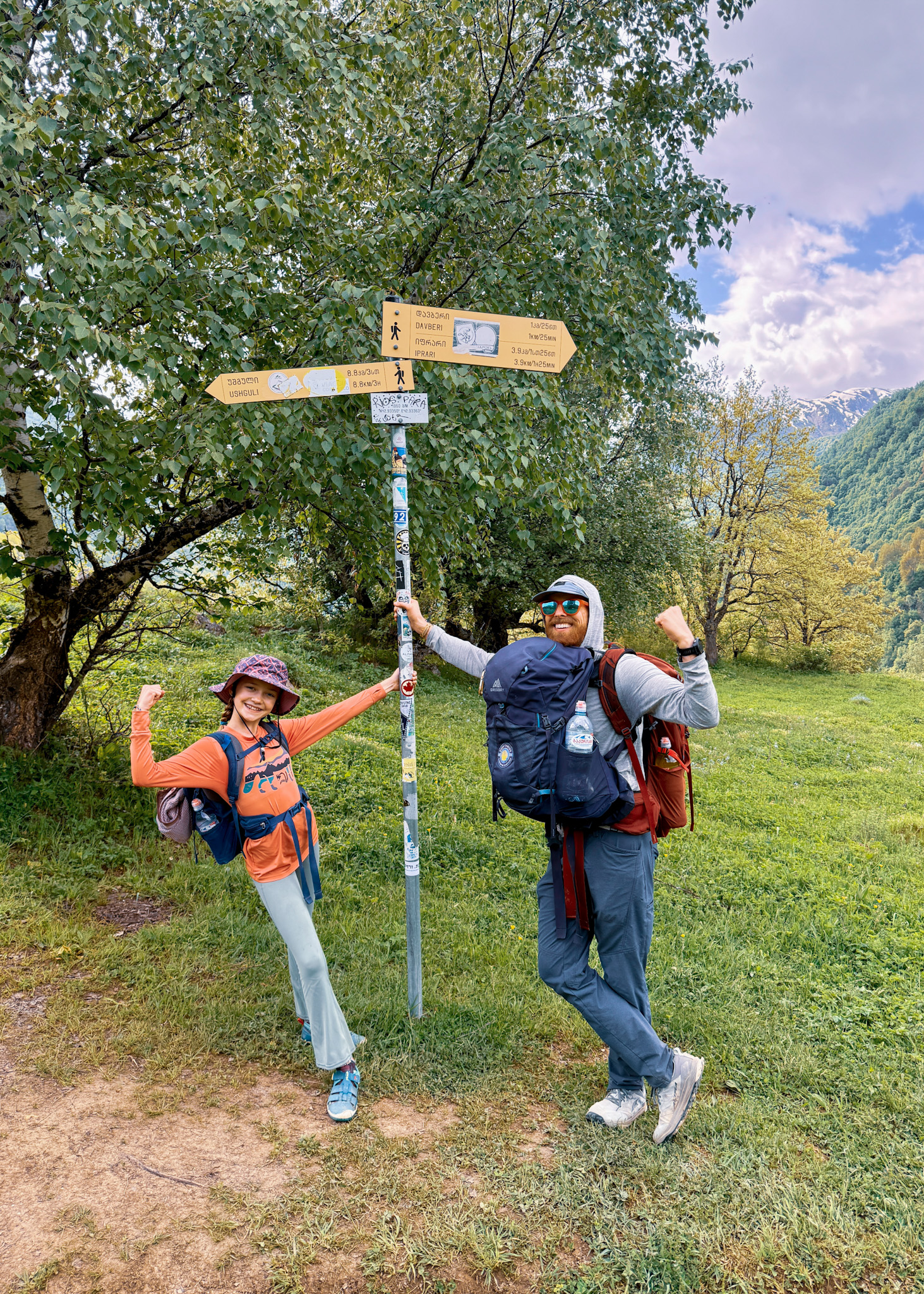
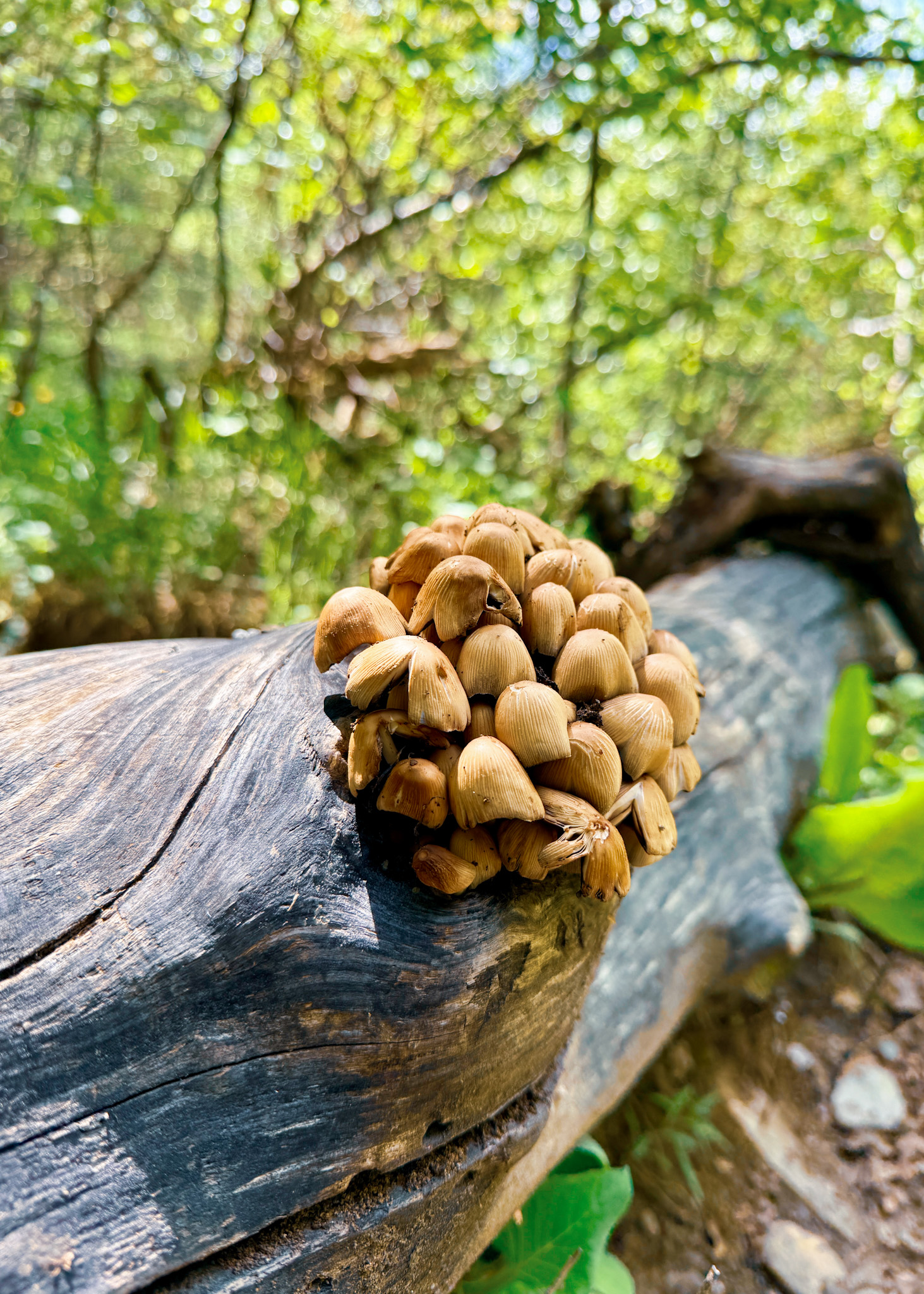
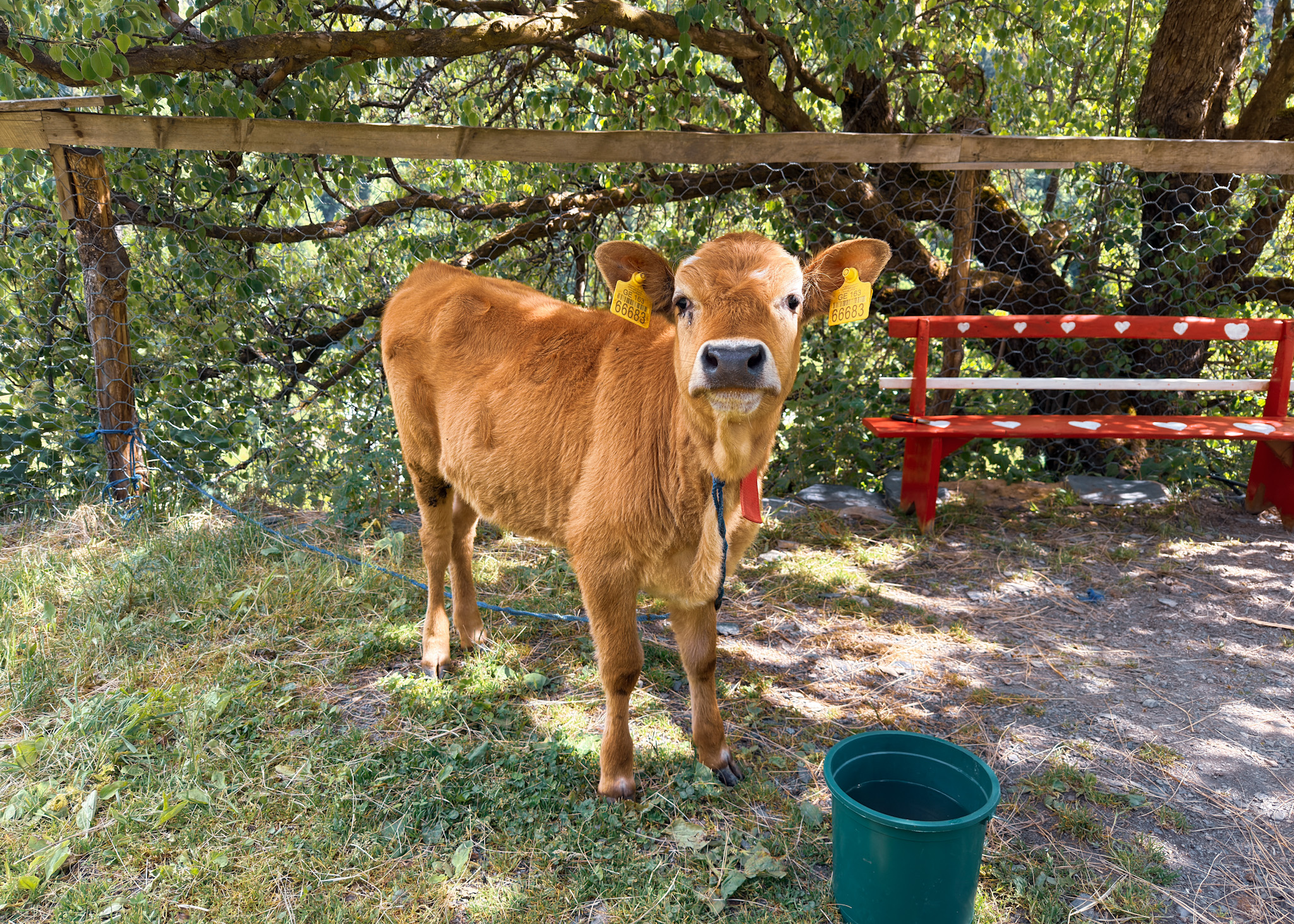
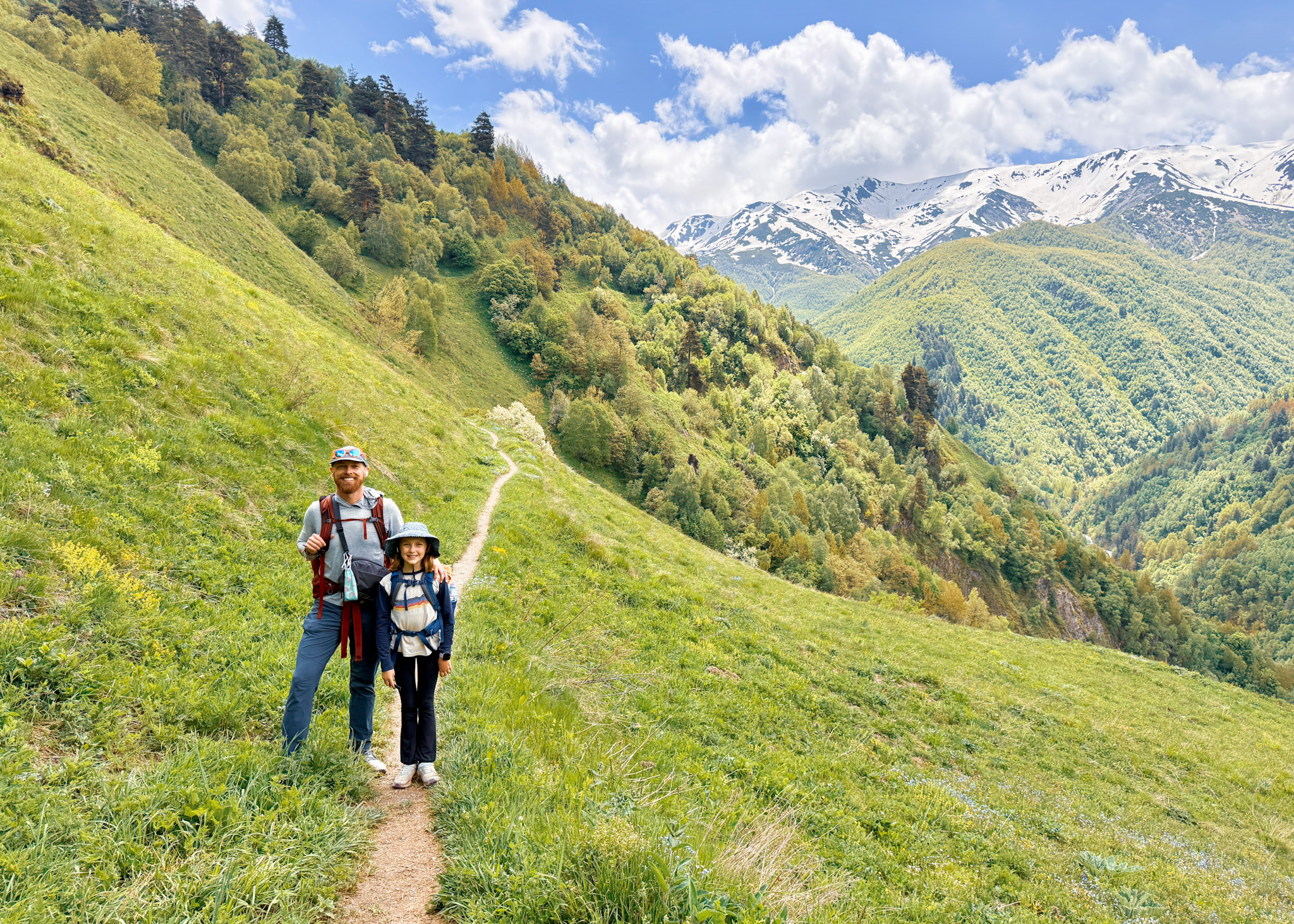
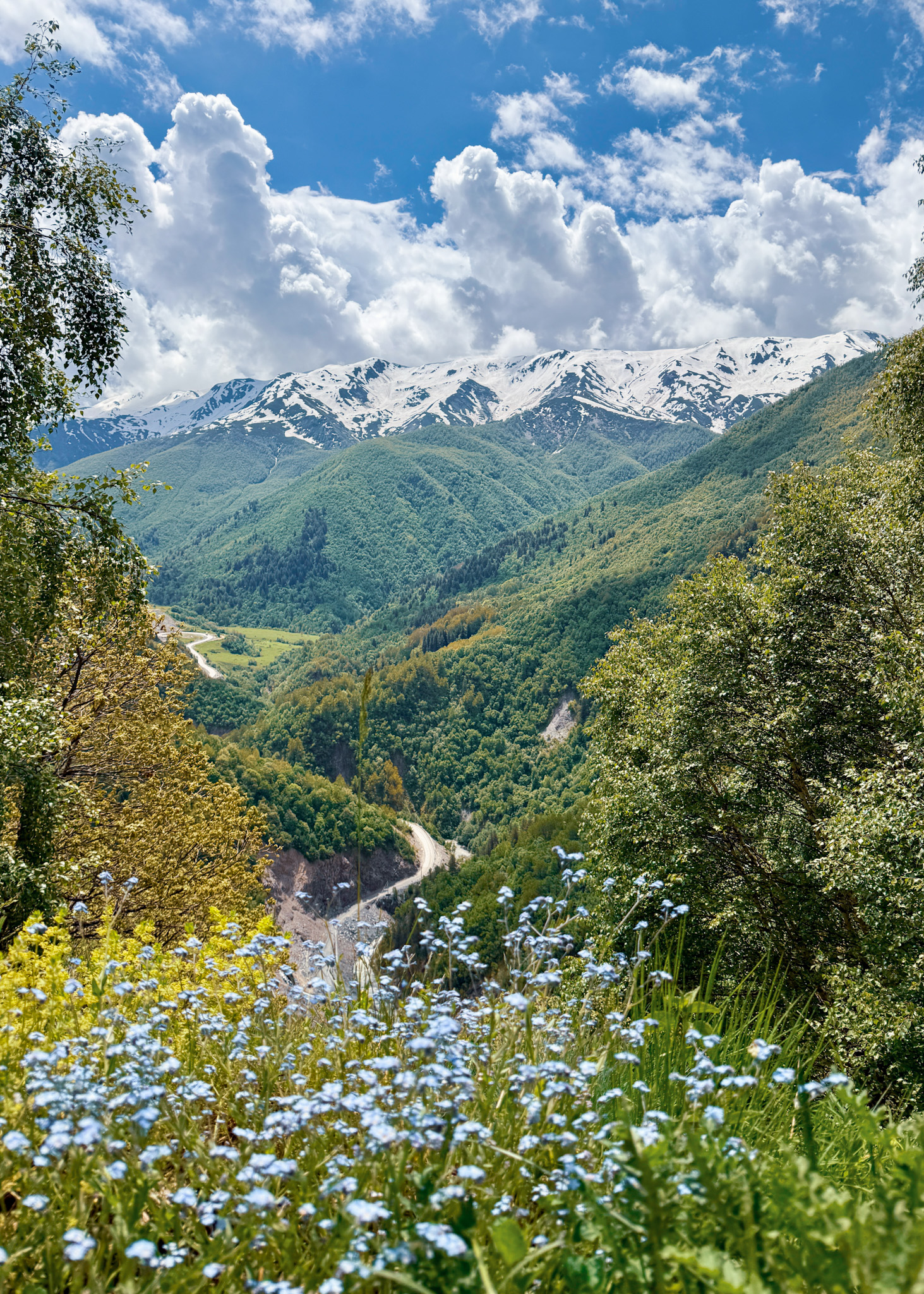
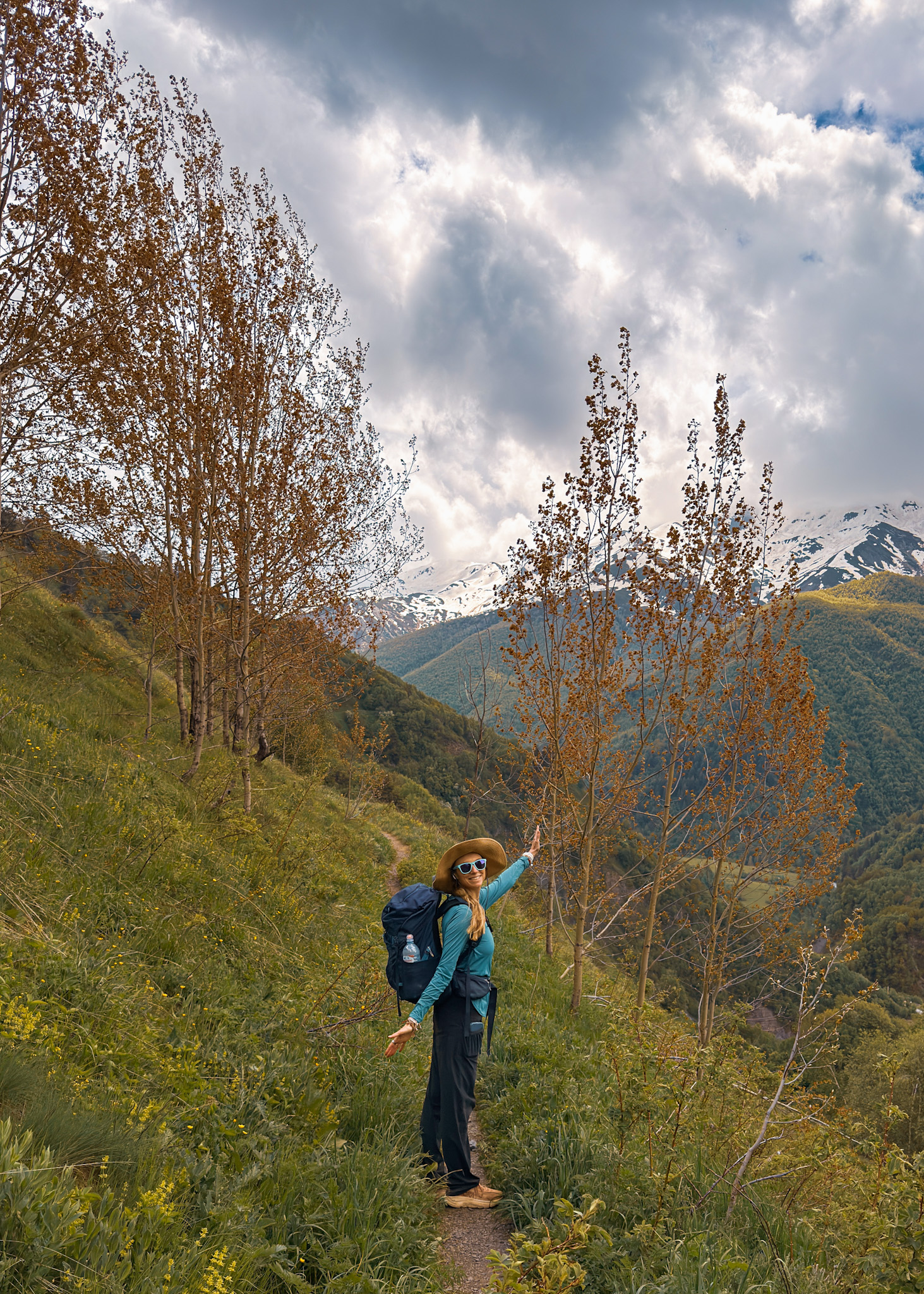
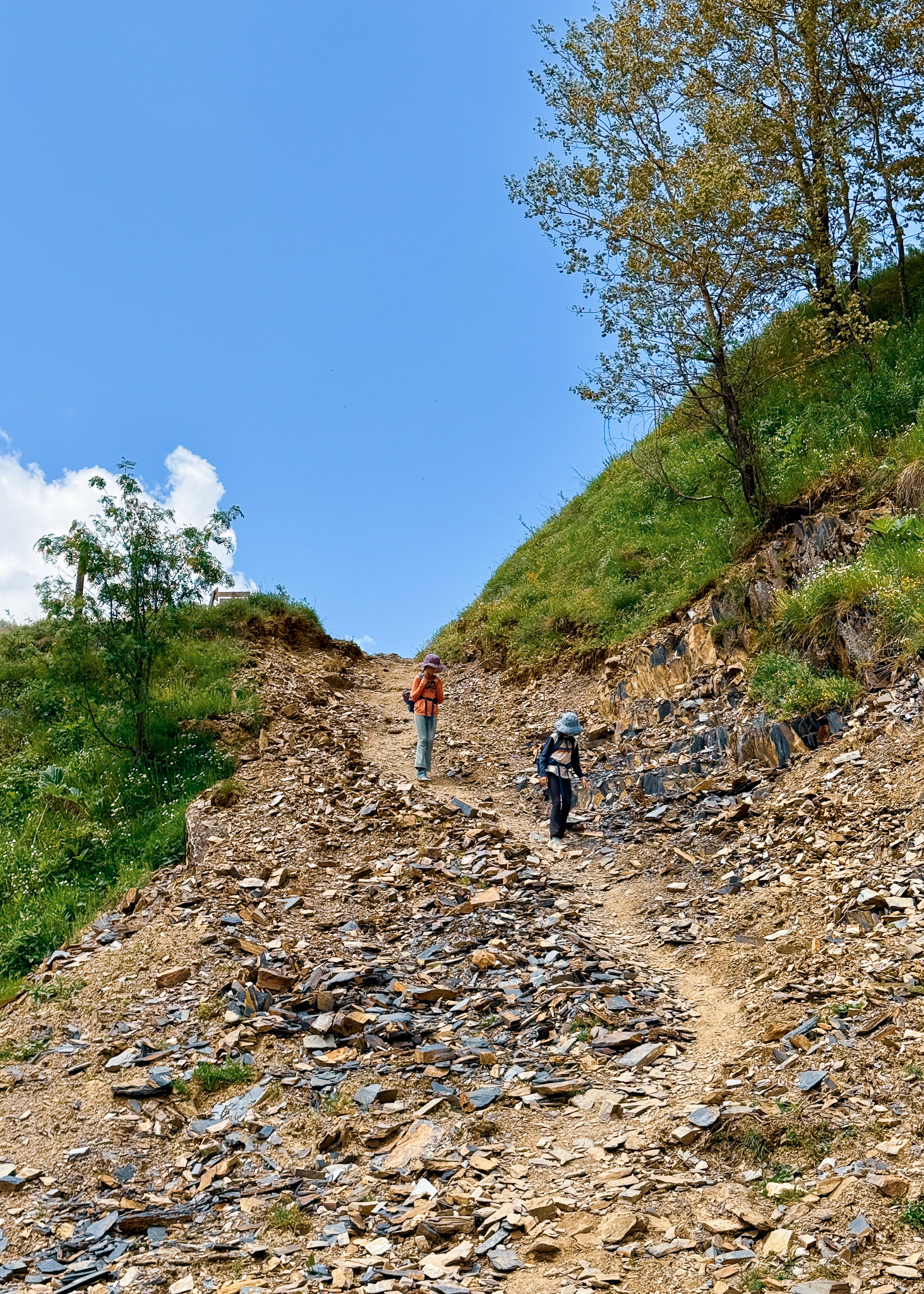
We reached our guesthouse in Ushguli three hours and forty-five minutes after starting, a genuinely good time given everything, and the sour mood came right in the door with us. So once everyone had showered and settled, Max set the girls up with their books to keep them out of Shaina’s hair, and then did something he has almost never needed to do this entire trip: he went for a walk alone, on purpose, because he needed his own air.
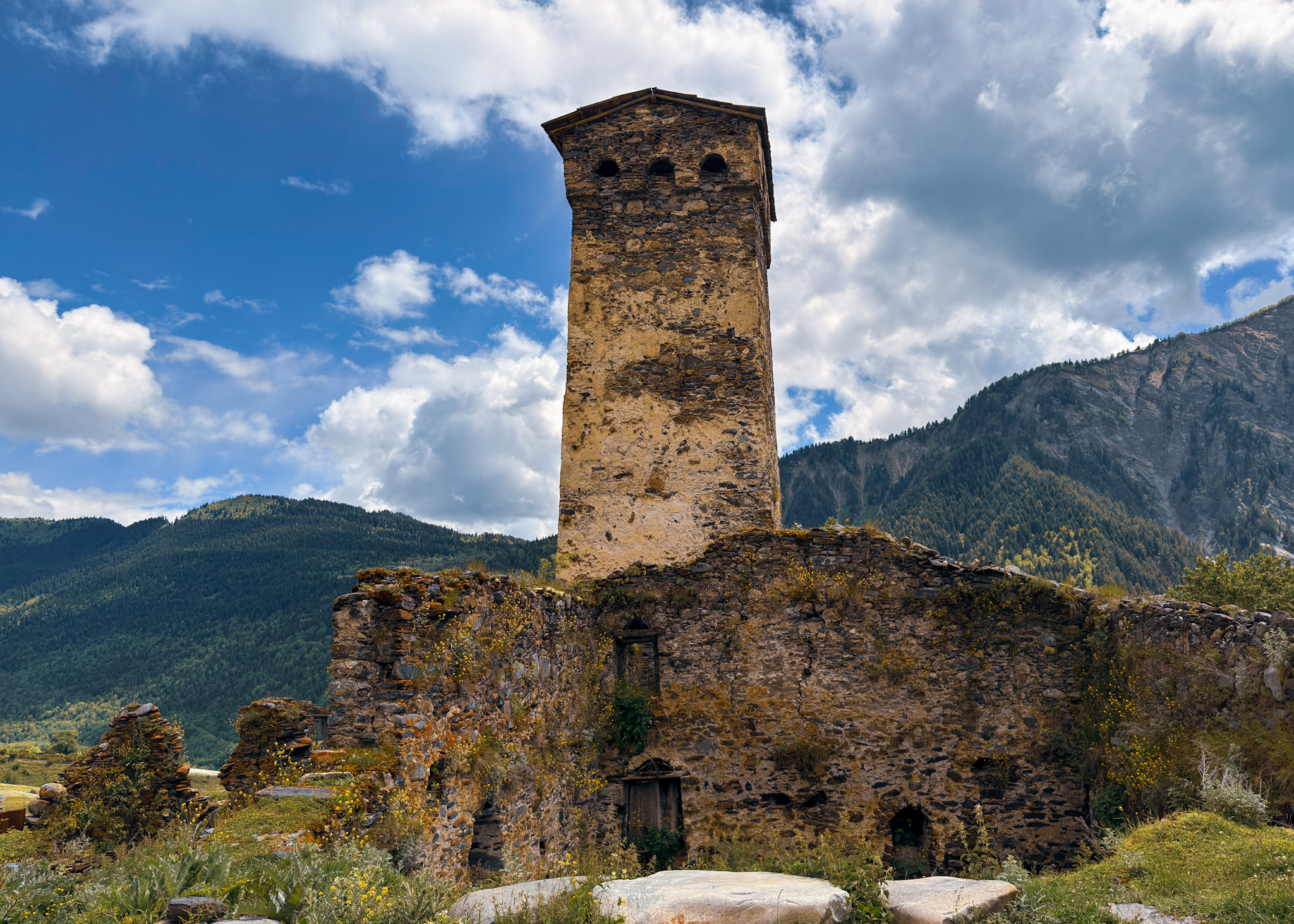
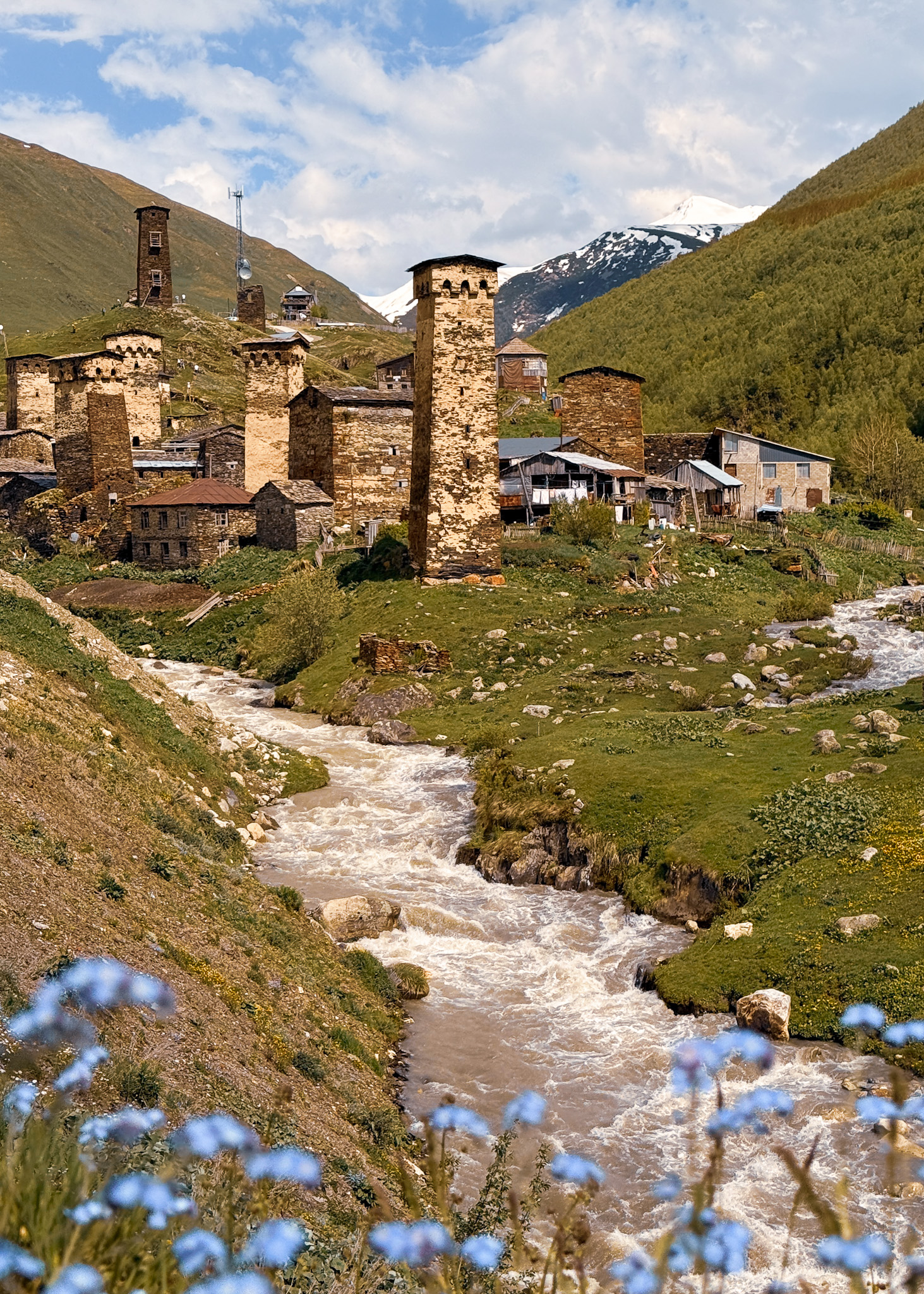
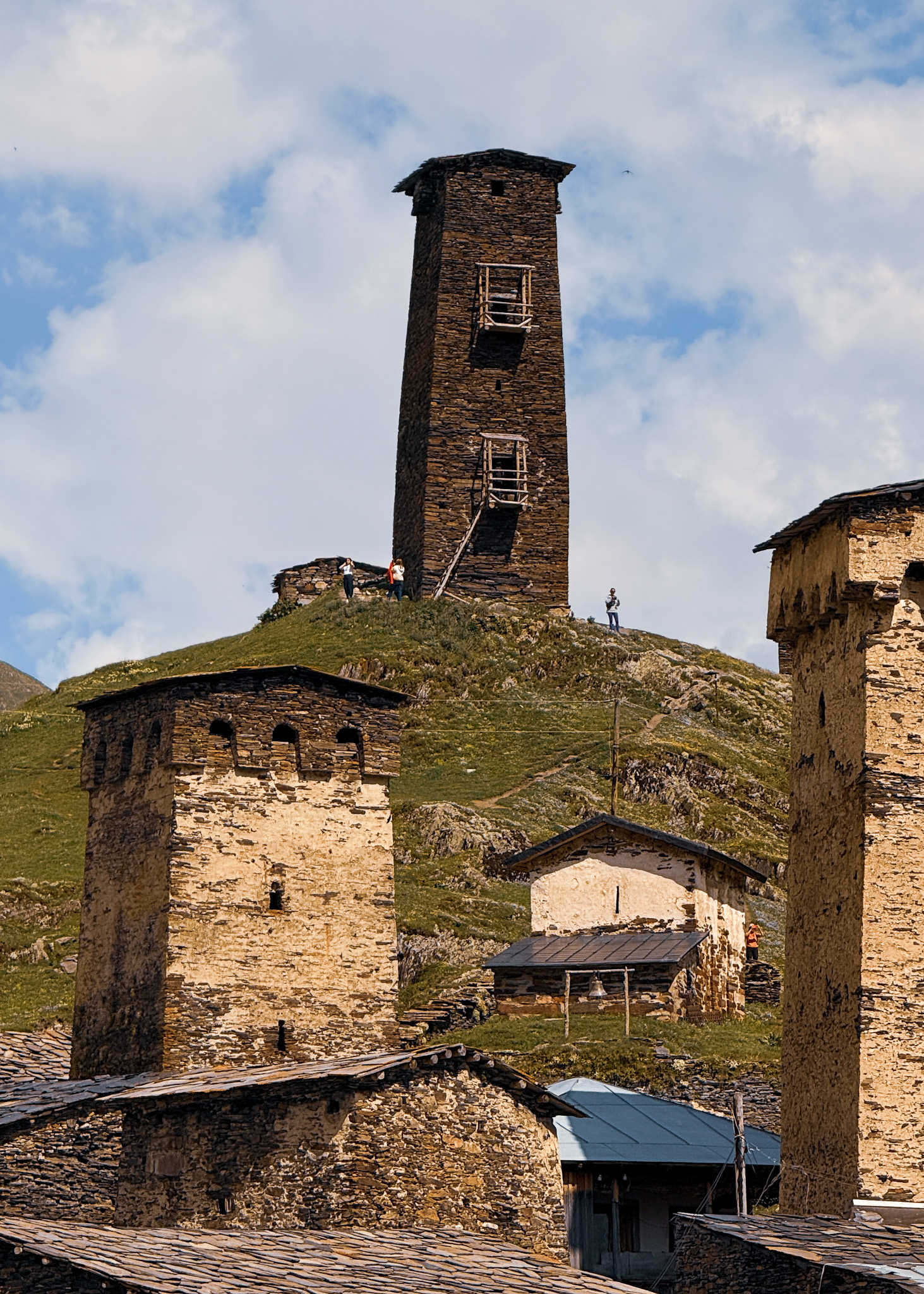
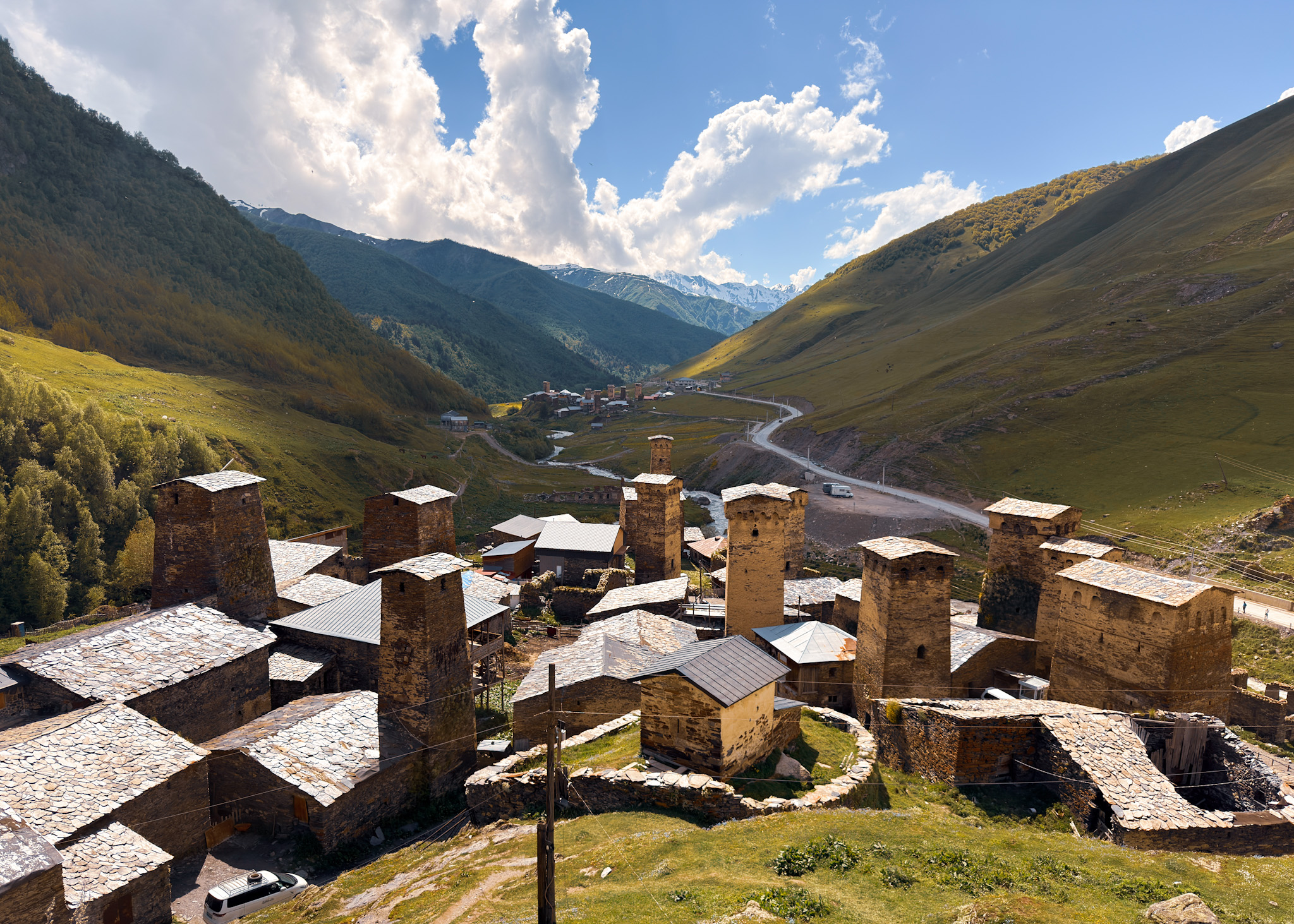
Ushguli is a remarkable place to need your own air in. It sits at around 2,100 meters at the head of the Enguri Gorge, in the shadow of Mount Shkhara, Georgia’s highest peak at over 5,200 meters, and it is one of the highest continuously inhabited settlements in all of Europe. It is really a cluster of four small villages studded with more than 200 medieval stone tower-houses, some dating to the 9th century, all of it part of the Upper Svaneti World Heritage Site. Its name is said to derive from words meaning “fearless at heart,” which feels exactly right for anyone who ever chose to build a life this high and this remote. Max wandered into the center, climbed up inside one of the towers on the highest point in the village, and then found a quiet, shaded, breezy spot to just sit and look out over the valley—the ruined towers and the walls of rock and ice hemming the whole place in.
Sitting there, he tried to imagine the people who had built this town by hand a thousand years ago, hauling those stones up into this thin cold air, surviving winters and avalanches and blood feuds, and it put his own day into some perspective. He had, in the grand scheme, a marginally annoying day. A sick wife, some cranky kids, a hard climb. And the right response to a teammate getting knocked down is not to get short with everyone, but to expand the patience and the helping hands you offer, and do what you can to make a bad stretch better. He walked back to the guesthouse resolved to make friends with his family again. By the time he got there, everyone had had enough space to soften. The girls were reading, Shaina was resting with her feet up and a podcast on, and the whole room had gone quiet in the good way.
Dinner that night was tasty and reconciliatory, the standout a plate of fried potatoes dusted with Svanuri marili, the famous aromatic Svan salt of garlic and blue fenugreek and coriander and marigold that we had first met on our very first night in Georgia back in Tbilisi. This voodoo magic concoction turns a simple plate of potatoes into something transcendent. We played Kings and Cabbages afterward, Max holding the top seat for a good while before Arya engineered his downfall with some excellent play, and the mood was lighter than it had been all day. But Max and Shaina lay in bed that night, knowing something real had surfaced. The pressures of travel build up differently than the pressures of home, because on the road you lose the pressure-relief valves you take for granted—the ability to slip away for an hour and come back having realized the thing wasn’t a big deal. Without those valves, the small stuff accumulates. We’ve been watching it show up in the girls, quicker to take offense, pushing each other’s buttons, and we knew that we adults weren’t immune to it either. We definitely did not want that to be how this family finished its year. Something needed to change.
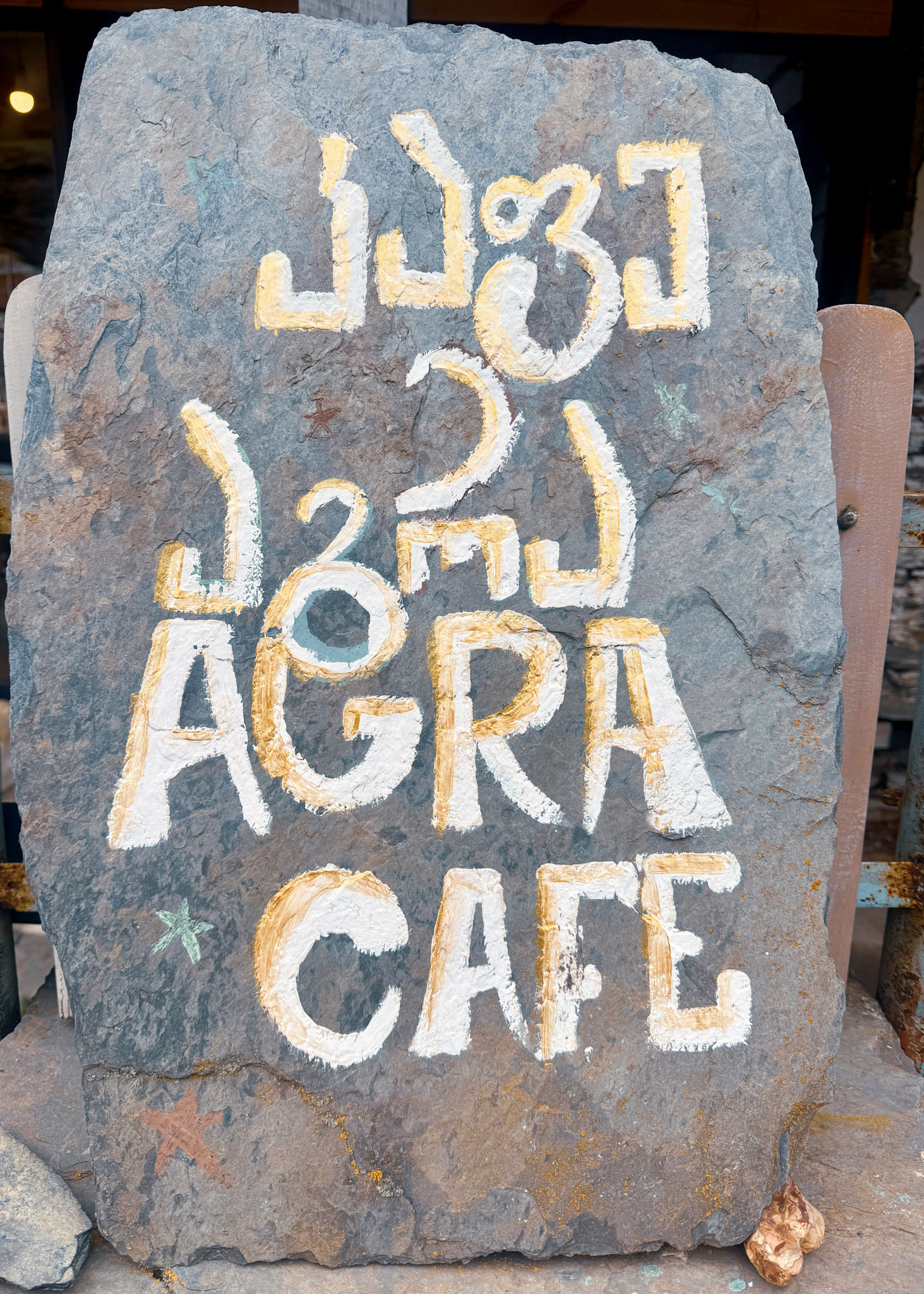
And then breakfast, improbably, started to fix things. The menu at the only restaurant in that part of town looked outrageously overpriced, twelve to fifteen dollars a plate in a country whose breakfasts are generally basic and underwhelming, but we had no other option, so we surrendered to it. The food arrived and it was spectacular. Granola and fruit and yogurt, avocado toast with a tomato salad seasoned with what could only be described as magic, a full platter of eggs and vegetables and ham, and, the shocking standout, two thick plain griddle pancakes with no syrup or fruit that turned out to be the single best pancakes we had ever eaten, clearly built on a heroic quantity of sugar. The moment everyone was fed, the fog lifted. We had, it turned out, been at least half hangry the whole time. This was progress. On the way out, Max told the chef how we loved the pancakes so much that she offered to share the recipe, and he photographed it on the spot, all in Georgian, with her walking him through the measurements. He cannot wait to make them at home.
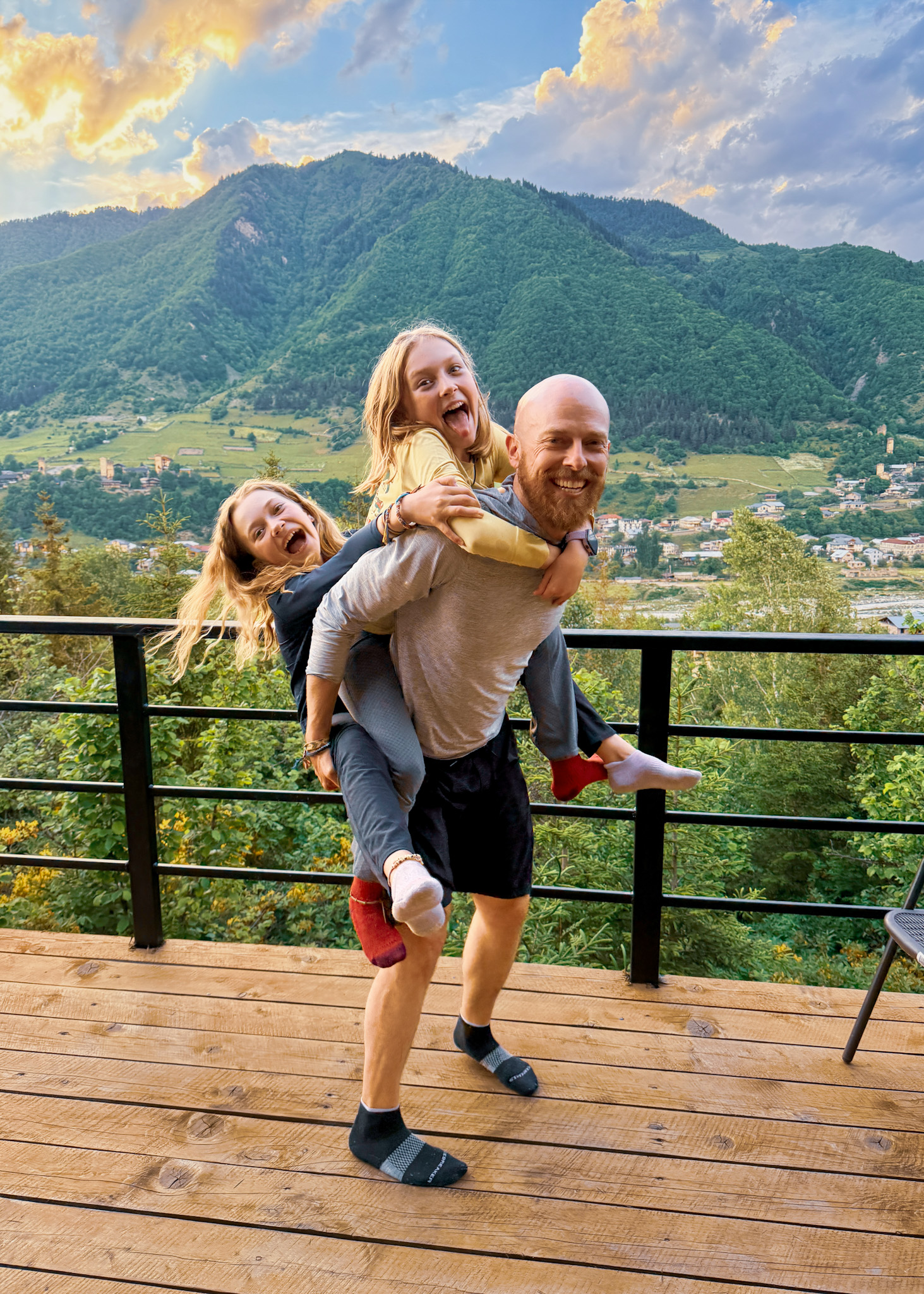
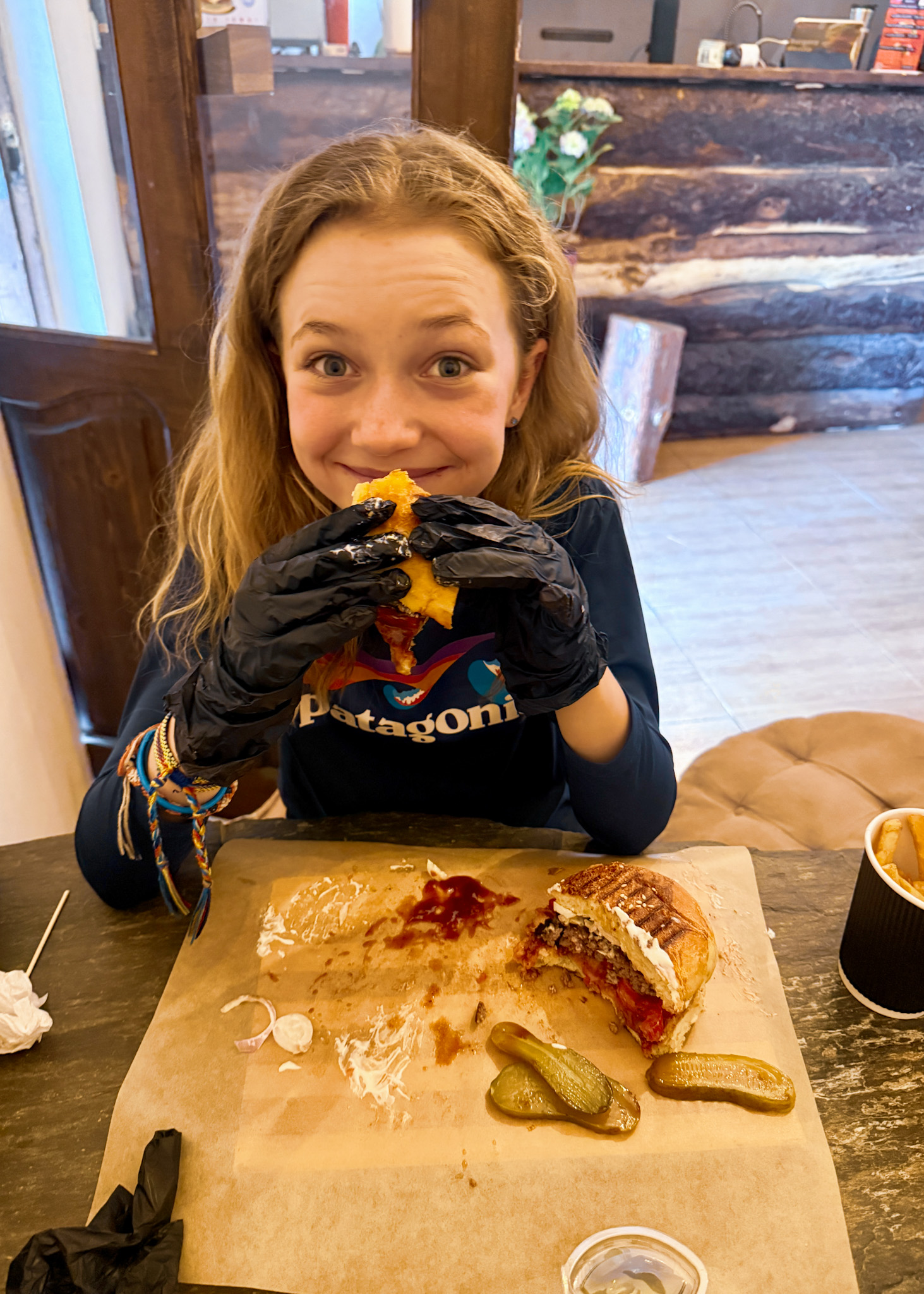
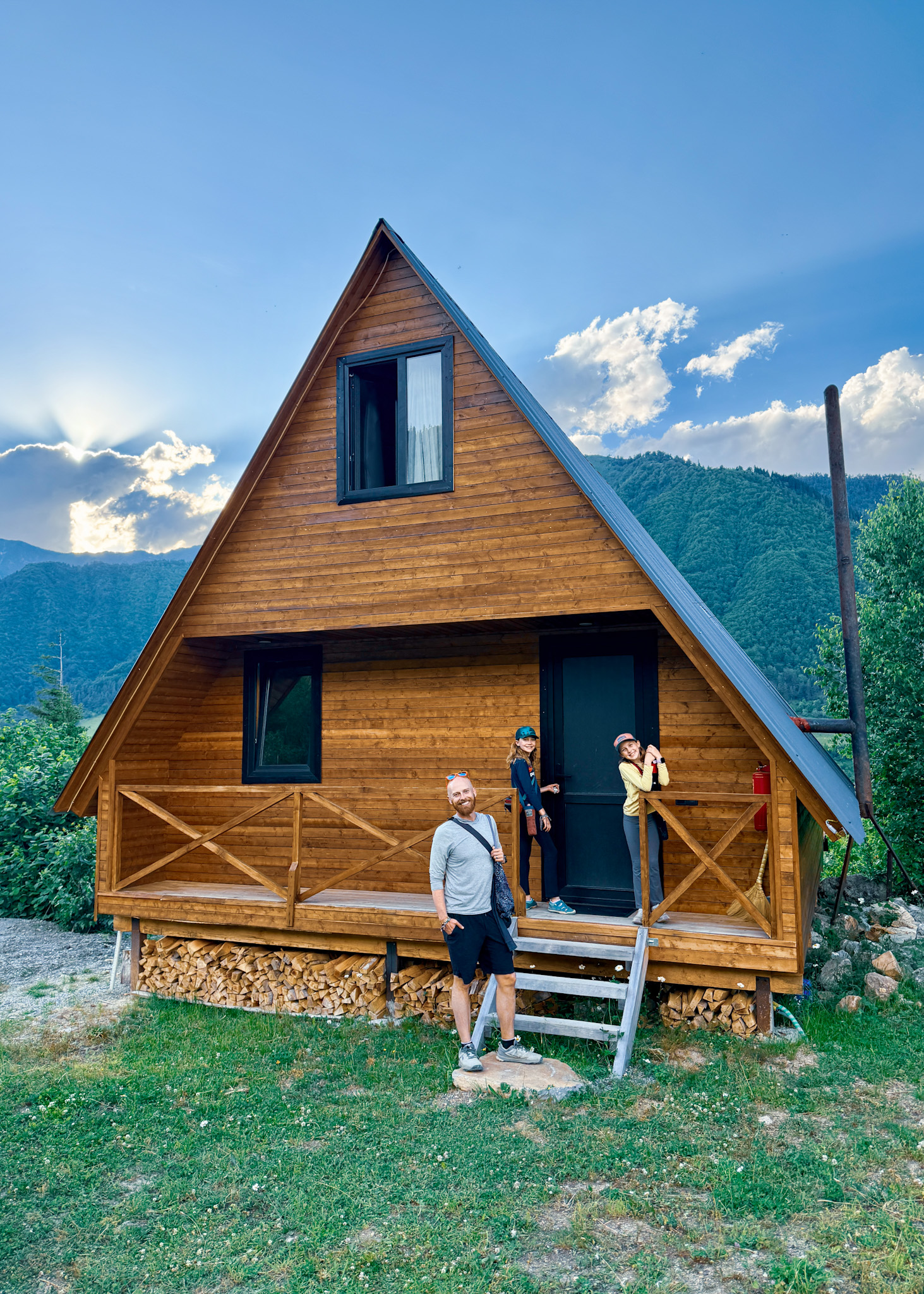
The drive back down to Mestia returned us to a comfortable new A-frame cottage with the best bed of the trip, and after two loads of long-overdue laundry and a genuinely excellent dinner at a tiny burger joint, we finally started to hypothesize on the deeper mechanics of what had been going wrong with the family dynamics. We had drifted into a rhythm dominated by solo activities, journaling and blogging and reading, all of which quietly seal each person inside their own bubble, and once you are deep in your own bubble, any interruption from someone you love starts to feel like an intrusion even when it is nothing of the kind. There had also been no structure to any of it, no clear beginning or end. So we decided on a small fix: personal time would still exist, but now with defined edges, a stated start and finish, so everyone knew when it was “this is my own quiet thing” and when it was time to come back together. And then, deliberately, proper together-together time—games, movies, hikes. A clear line between the two.
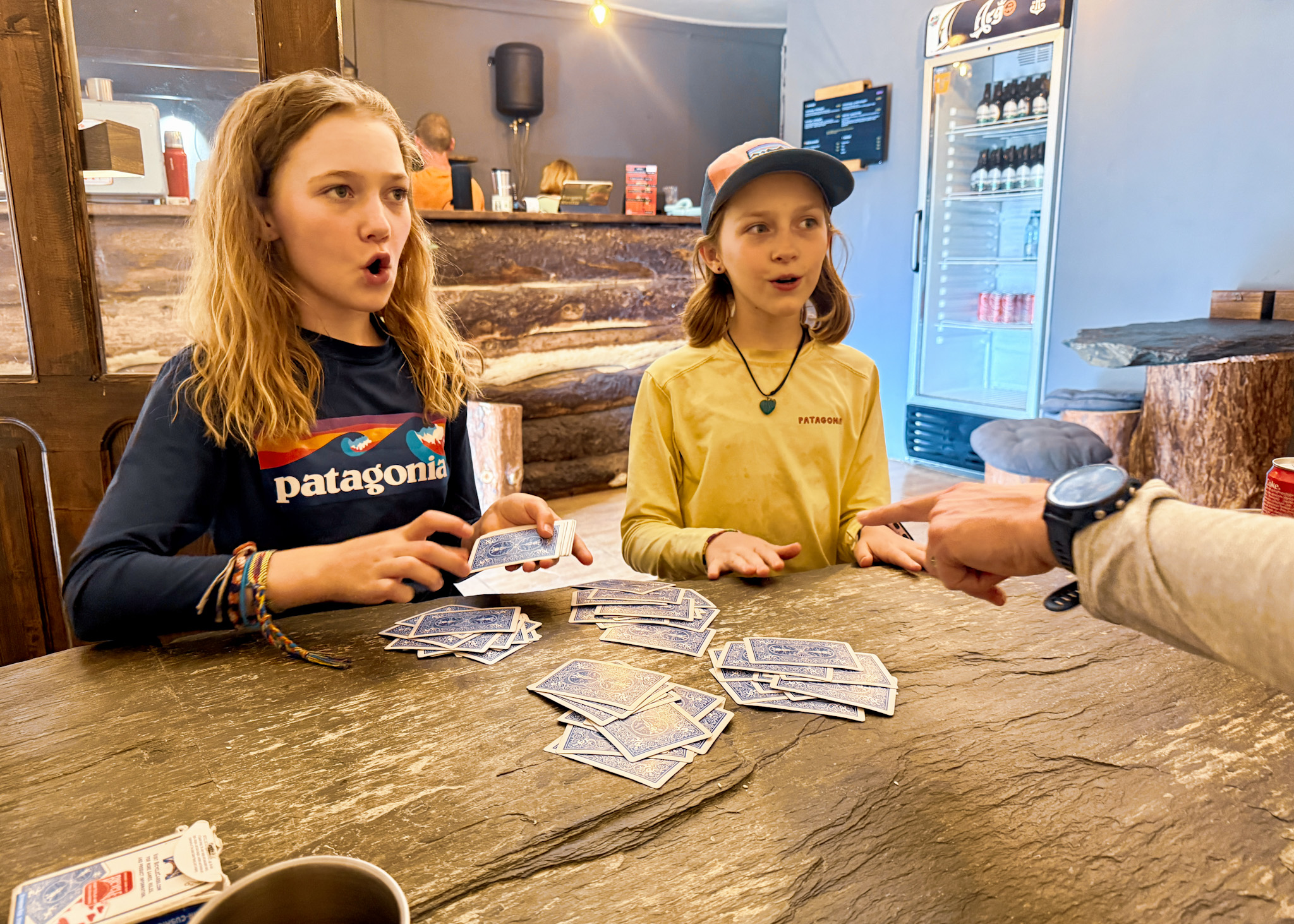
We kicked it off by all sitting down to learn Spades, and that game surfaced the last and most uncomfortable insight of the whole stretch. It got off to a rocky, brain-regearing start, and in the friction of teaching the game to the girls we caught ourselves being sharp and controlling, and realized we’d probably had the causality backwards for a while. We’d been getting stricter because the girls had been acting out, but it seemed increasingly likely the girls had been acting out because we parents had gotten stricter, a nasty little loop feeding itself. At one point we had to say out loud that we were literally learning a game, and games are supposed to be fun. If we were going to do this we had to actually enjoy it—the teaching and the learning and the playing. It sounds almost too obvious when you actually put it into words. But blinders creep in over time, and sometimes the fix really is that simple: lighten up, be kind, be patient, let everyone contribute. So we did. We sat around the little kitchen table and played Spades, slow at first and then not slow at all, the girls quickly picking up the bidding and the strategy and having a blast. Arya and Max took the win while Shaina helped Finlee to get better every hand. Spades is officially now in the rotation.
We finished just in time for the next World cup match of the trip: United States versus Australia with a brutal start time of 23:00, and we all piled onto the couch in our pajamas. America scored inside ten minutes off an Australian own goal, added another later, and played a tidy defensive match the rest of the way, both goalies earning their keep. Arya made it to about the 65th minute before falling asleep on Max’s chest. Finlee held out until the 92nd before going down against Shaina’s side. The United States won 2-0 and, whatever it did to the group standings, we were through to the next round.
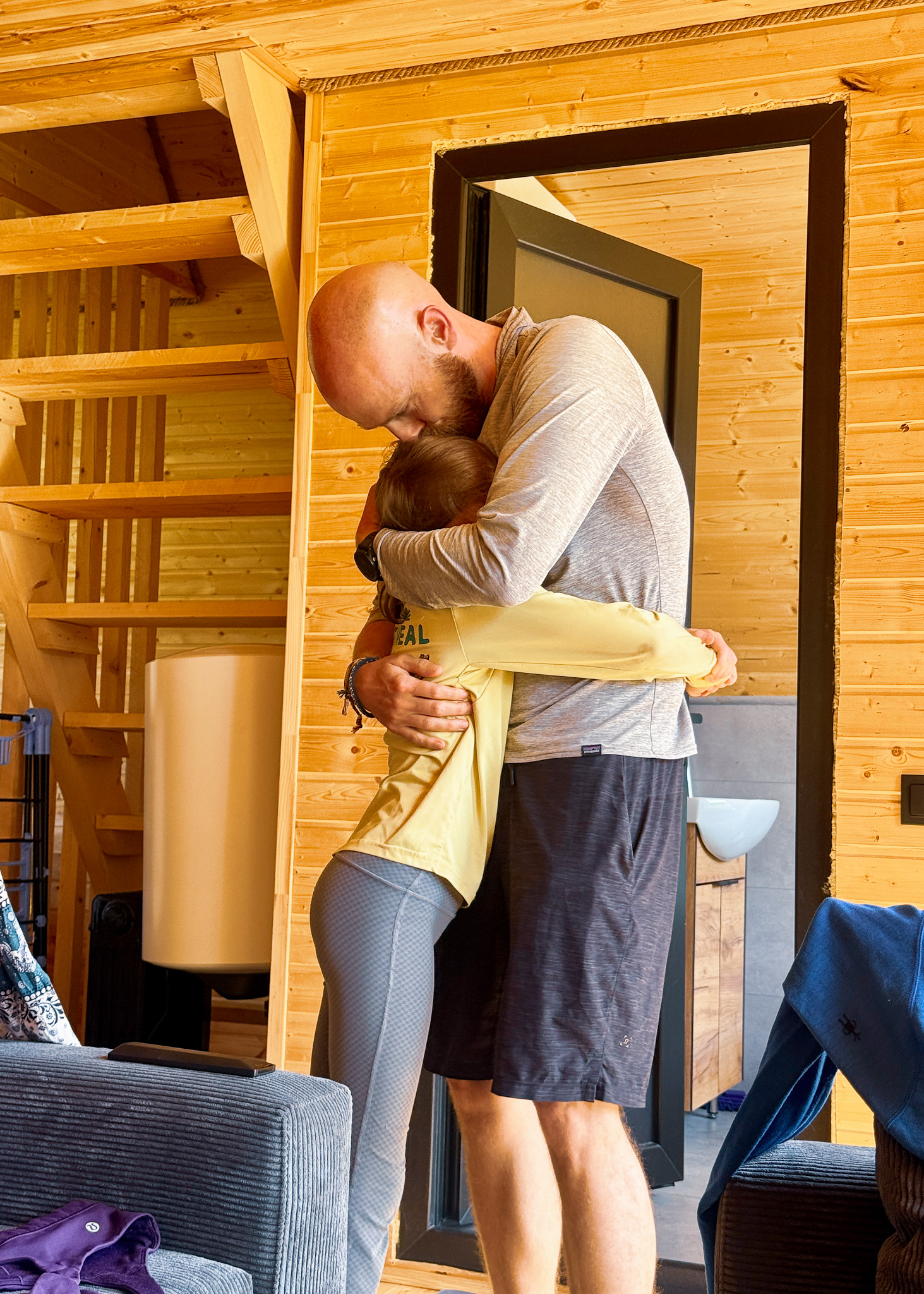
It was past 1am when the final whistle blew. The day had started frayed and unpleasant and ended with all four of us around a kitchen table, laughing over a card game and a soccer match, two kids asleep on their parents. That arc, from bad to better, honestly feels like the whole point of it. We did not solve anything permanently. Life, and family, and a year of living out of backpacks on the far side of the world, are all works in progress. We also know that there will be more hard mornings before this trip is done. But we found our way back to each other around that table, and that is the version of this family we want to carry into the last stretch of the journey.
The mountains, in the end, were the easy part.


Leave a Reply