
Dates: June 11-14, 2026
Place: Mestia, Georgia
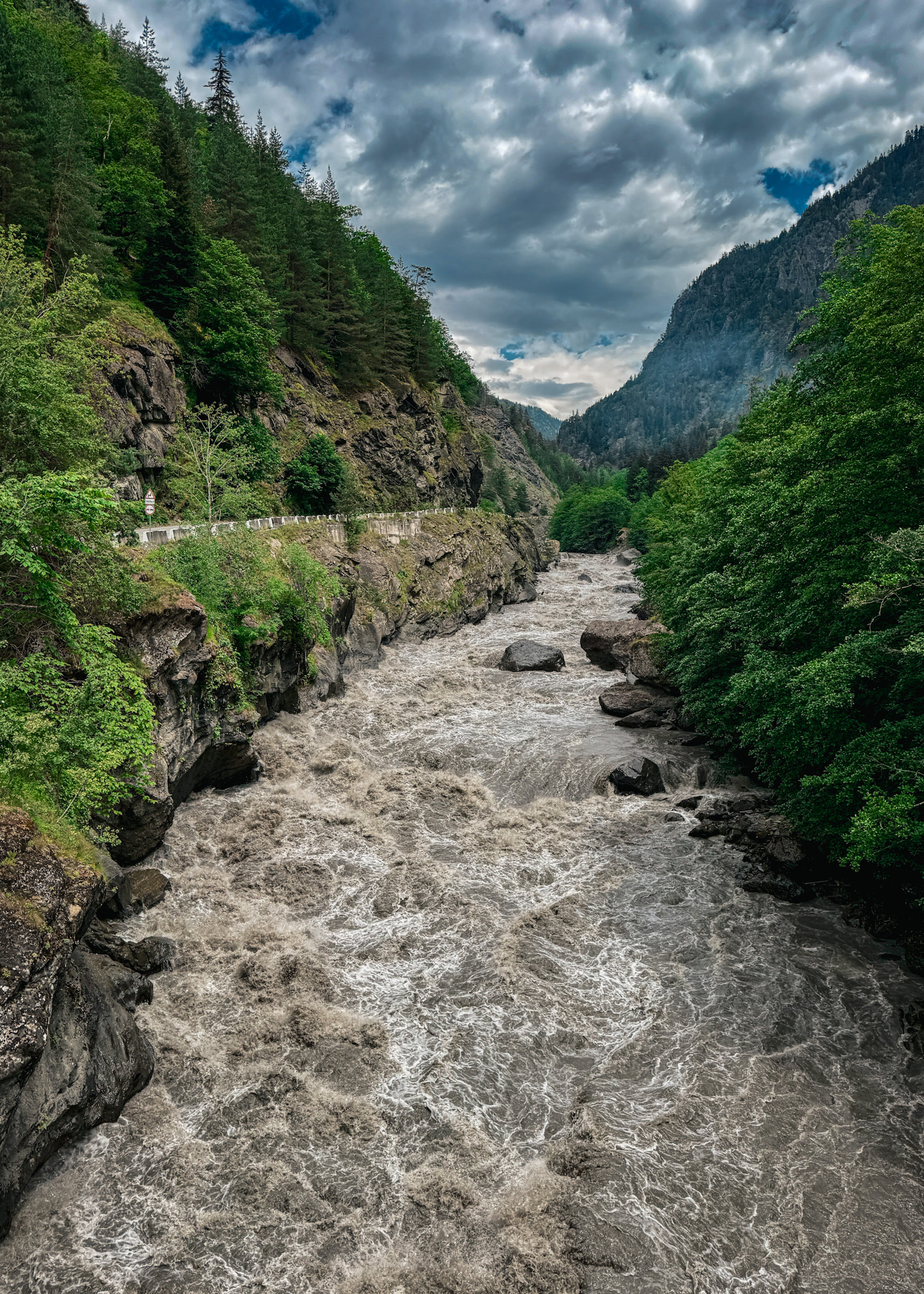
The road into Mestia is the kind that makes you understand why people respect mountains. We drove it from Jvari on a Wednesday, three hours that flew by because there was always something out the window, the route snaking up the gorge of the Patara Enguri River, lifting us from around 365 meters to roughly 1,500, curling through tiny mountain villages and past abandoned Soviet hydroelectric infrastructure beneath sheer walls of rock. But the thing that held our attention was the river itself. None of us had ever seen water move like that. It looked less like a river and more like the opening minutes of a disaster, as if a dam had burst somewhere upstream, the water the gray-white color of glacial milk, roaring and throwing spray, and visibly chewing into its own banks as it tore downhill. It is a useful thing to see on the way in, because it tells you exactly what these mountains are doing this time of year. All that snow on the high peaks is melting at once, and the rivers that carry it down are absolutely not to be trifled with.
We had come to Mestia, the main hub of the Upper Svaneti region high in the Greater Caucasus, for four days before the start of a big multi-day trek. Officially the time was about acclimatizing to the altitude. Unofficially, it was about lazy mornings, a couple of genuinely punishing day hikes, a steady supply of in-season cherries, and, as it turned out, an unreasonable amount of World Cup soccer. We are not soccer people. We become soccer people, reliably and inexplicably, once every four years, and the 2026 FIFA World Cup tournament had started the very night we arrived.
That first night set the tone. Our Airbnb was cute but had been flattered considerably by its listing photos, the kind of place too cramped to spend more time in than necessary. So after a simple, satisfying dinner in town at a local hidden gem called Vichnashi, we stayed up until eleven for the opening match, Mexico against South Africa. Shaina wanted to find a bar and watch it among locals, which sounds fine until you try to square that with the reality of staying up until 1:30 am with a 9 & 11 year old in tow. Max wanted nothing to do with that idea, not least for a sport he only cares about for roughly 4 weeks per presidential term. Mexico won handily, the game produced a surprising flurry of red cards that looked more like sloppiness than malice, and we were all unconscious within minutes of the final whistle.
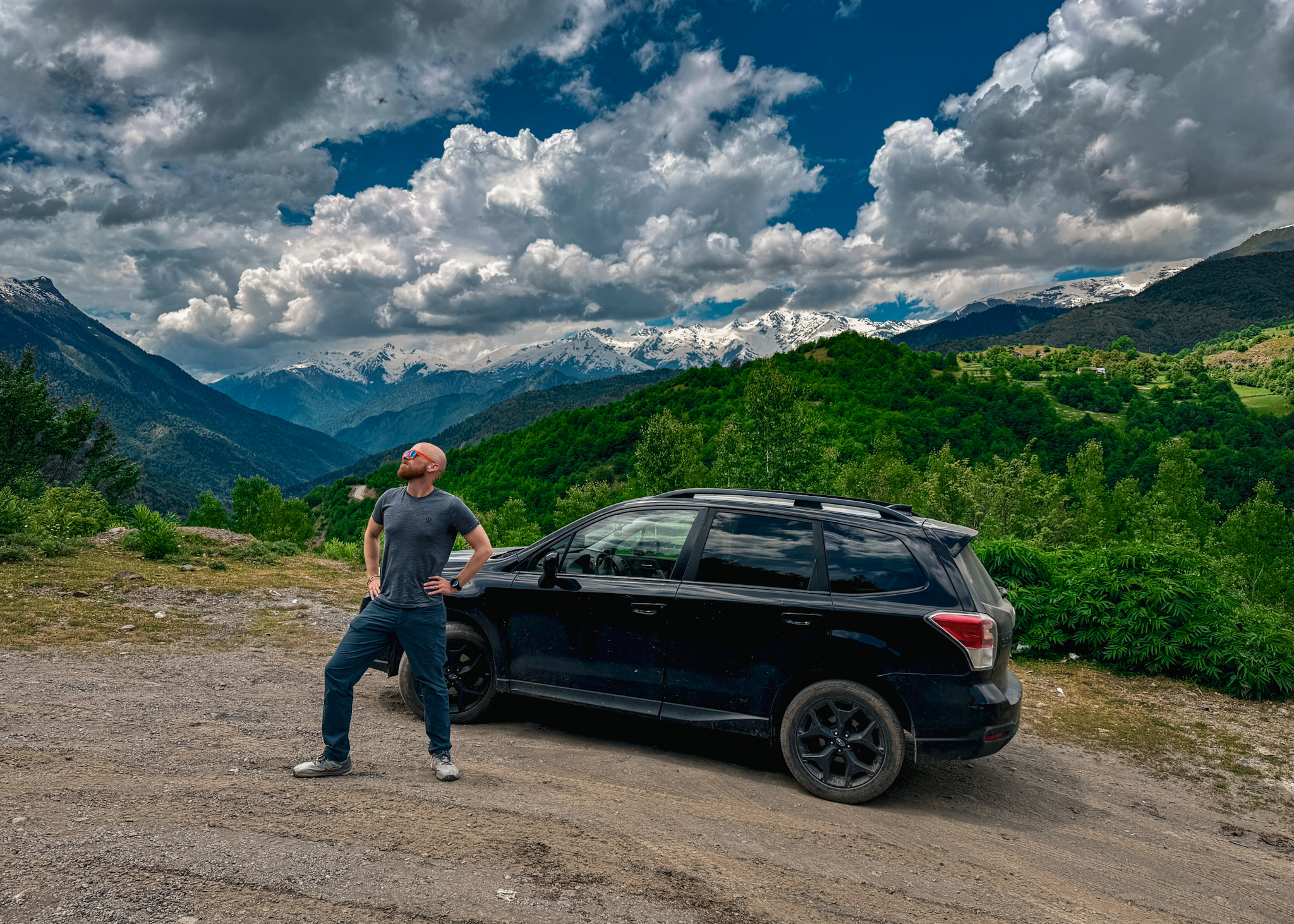
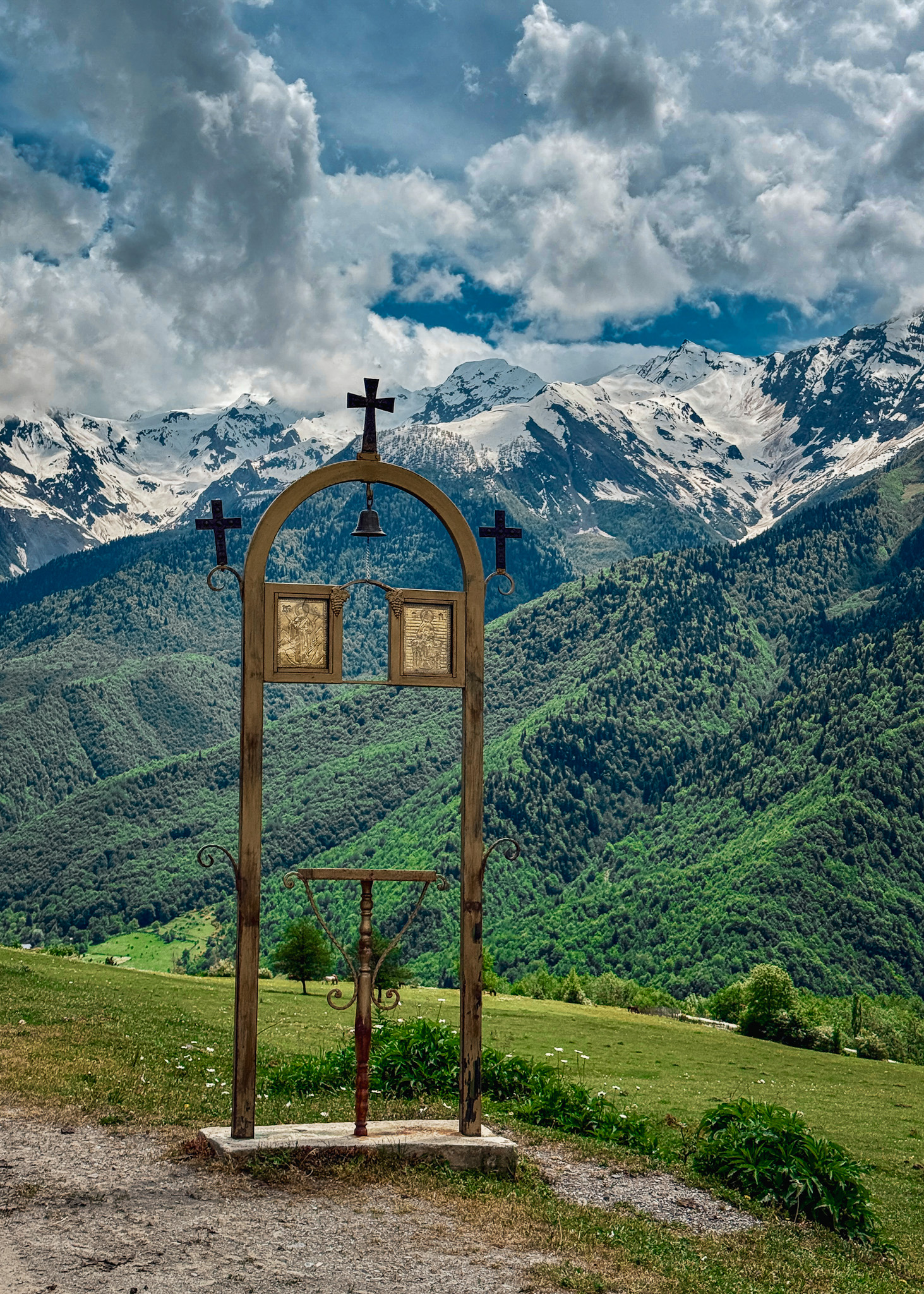
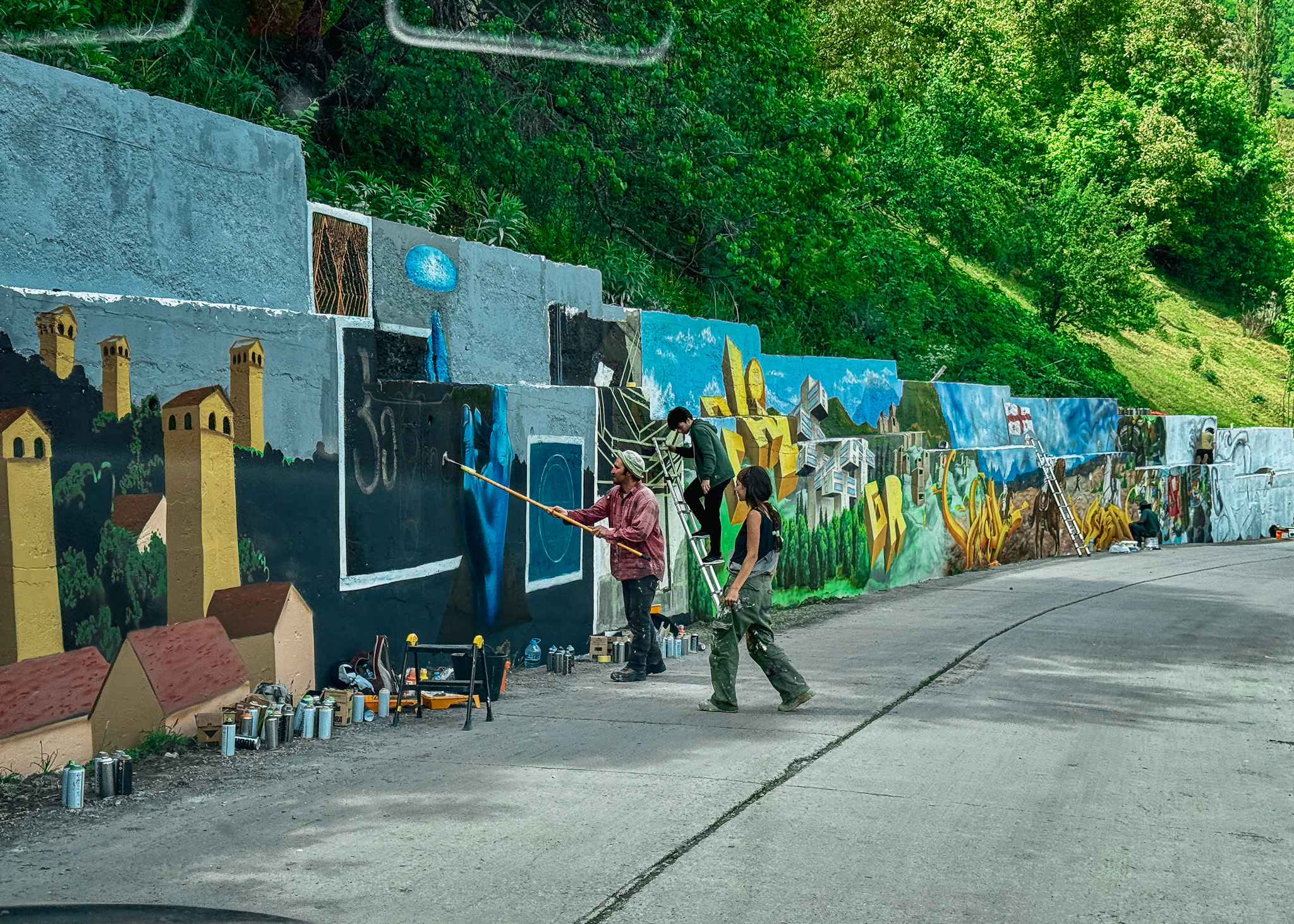
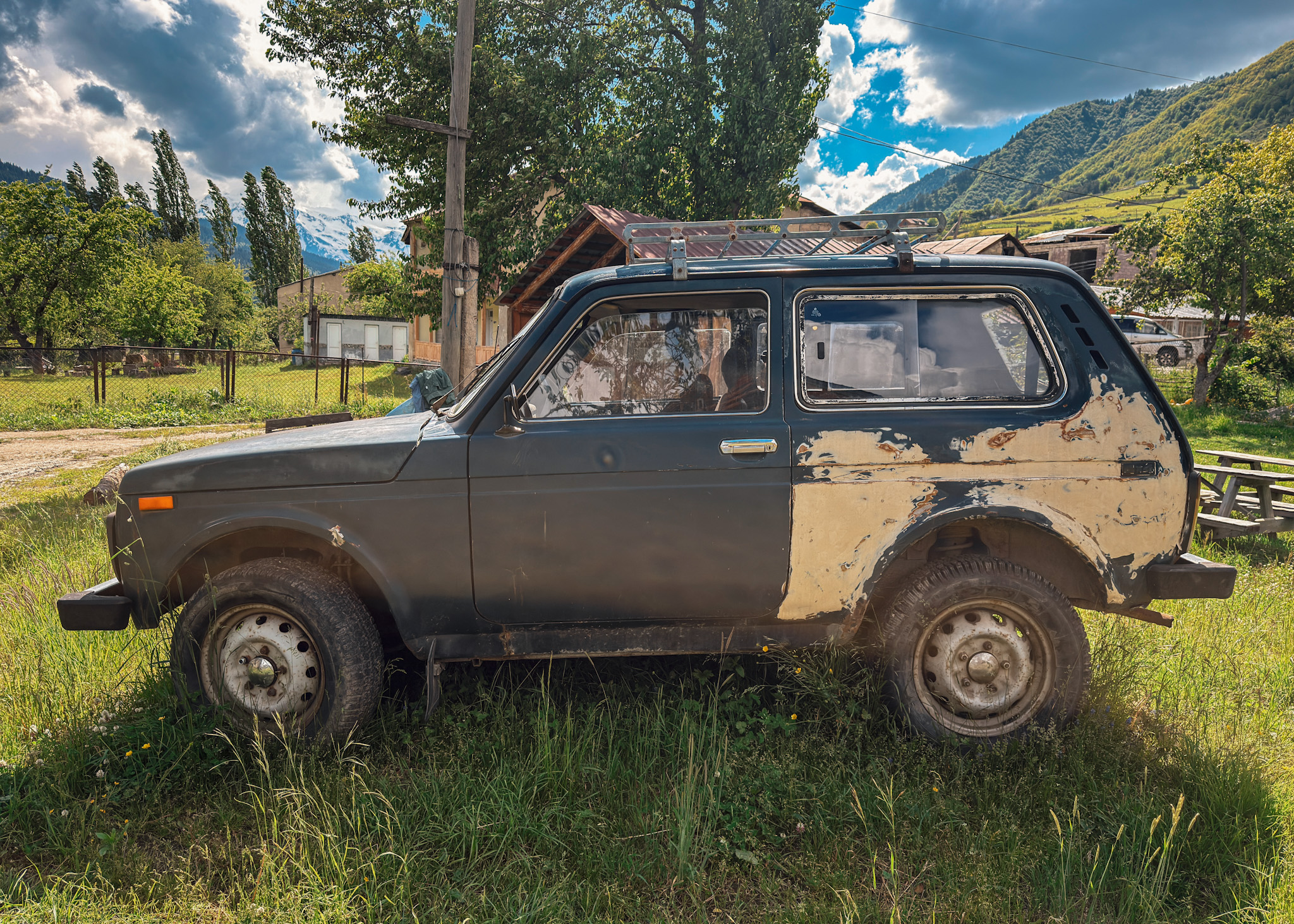
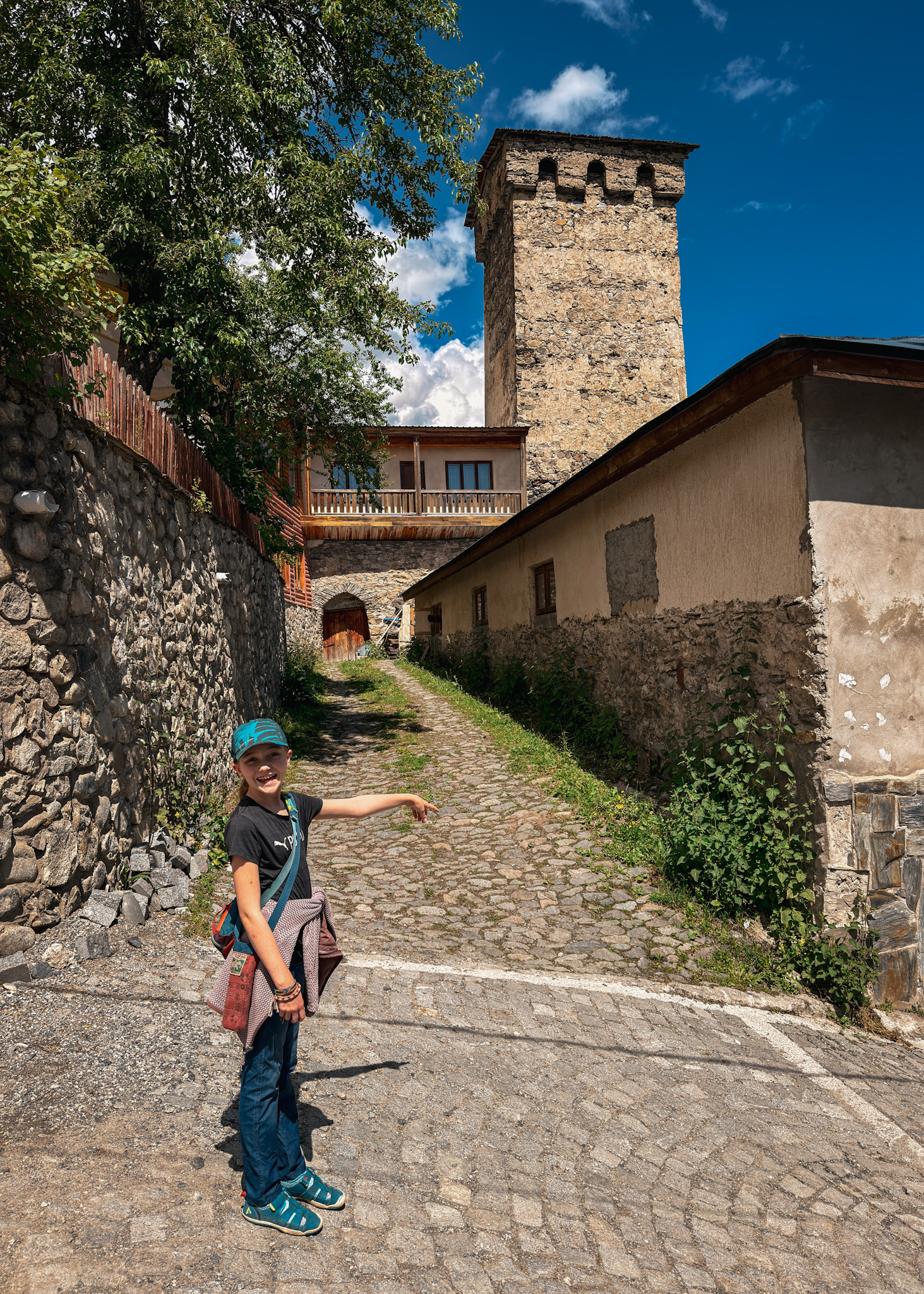
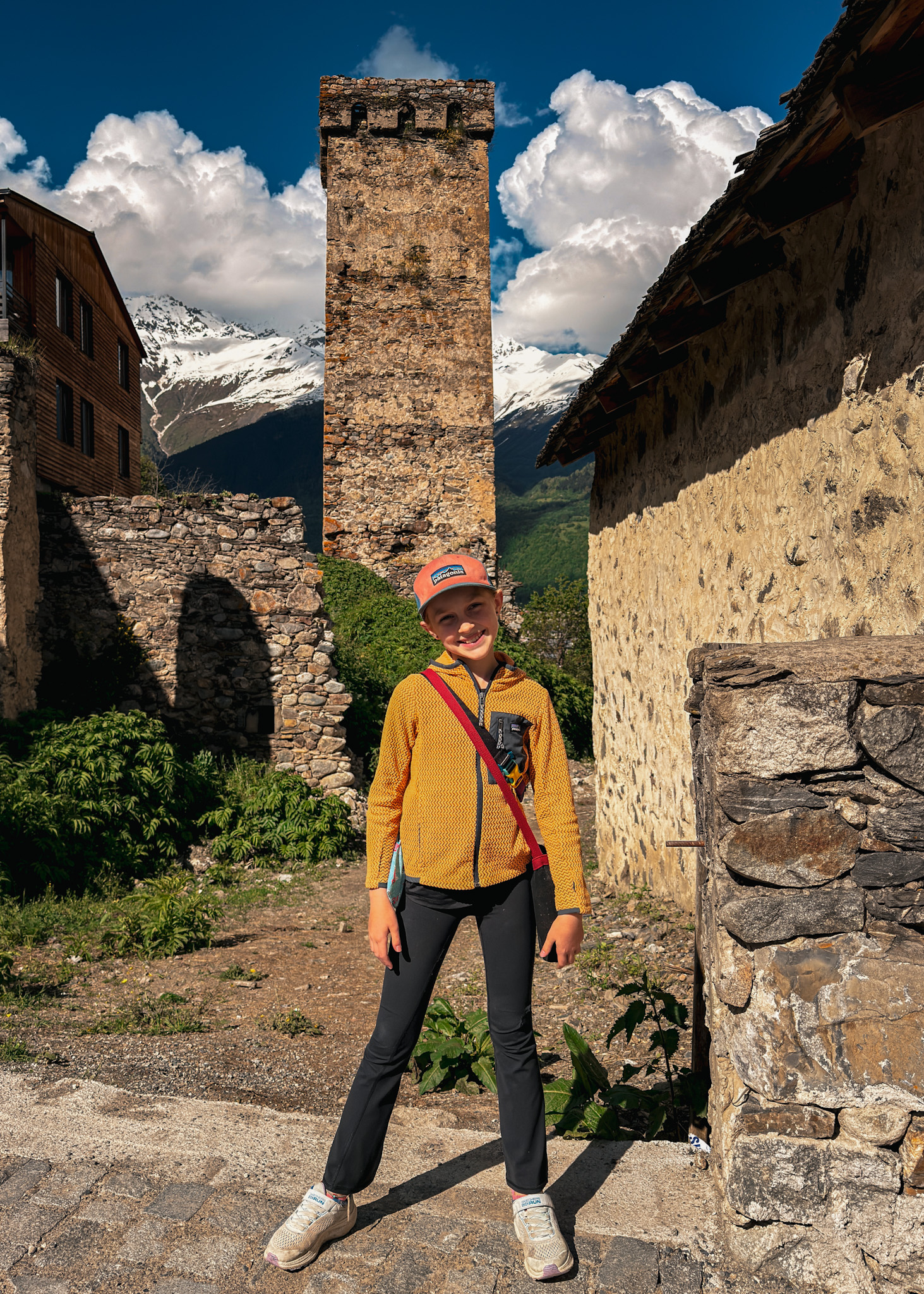
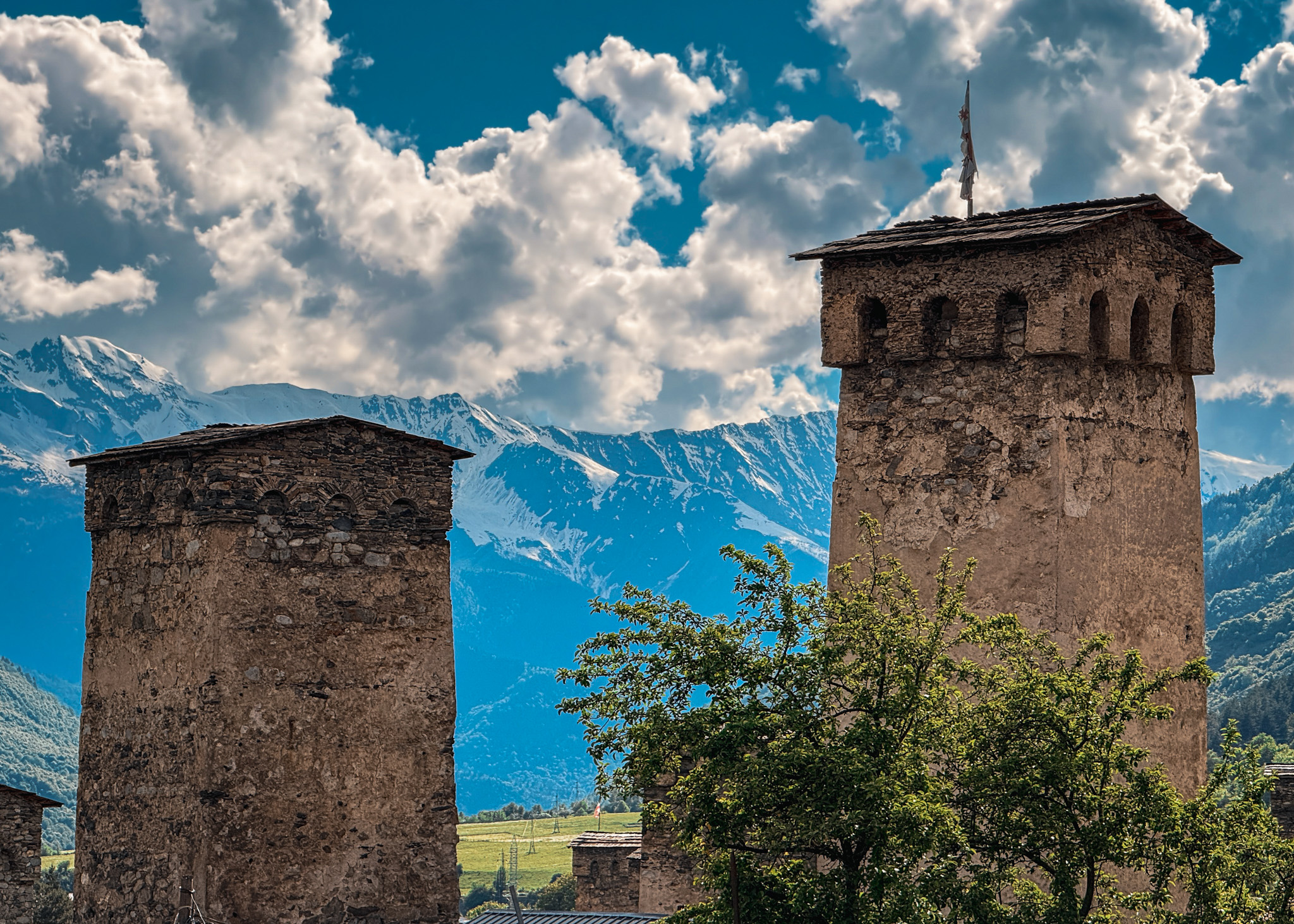
The next day was our designated lazy day, and the weather seemed determined to enforce it. We slept late, did a strength workout while rain hammered down outside, and watched the forecast be confidently, comprehensively wrong. The app had promised a sunny morning and delivered a downpour, then promised a torrent of rain throughout the afternoon and instead the clouds split wide open into a flawless bluebird day. We stood there genuinely torn between trusting the app and trusting our own eyeballs. The eyeballs won, and rather than risk a long outing in case the weather flipped again, we wandered old Mestia town to look at the Svan towers.
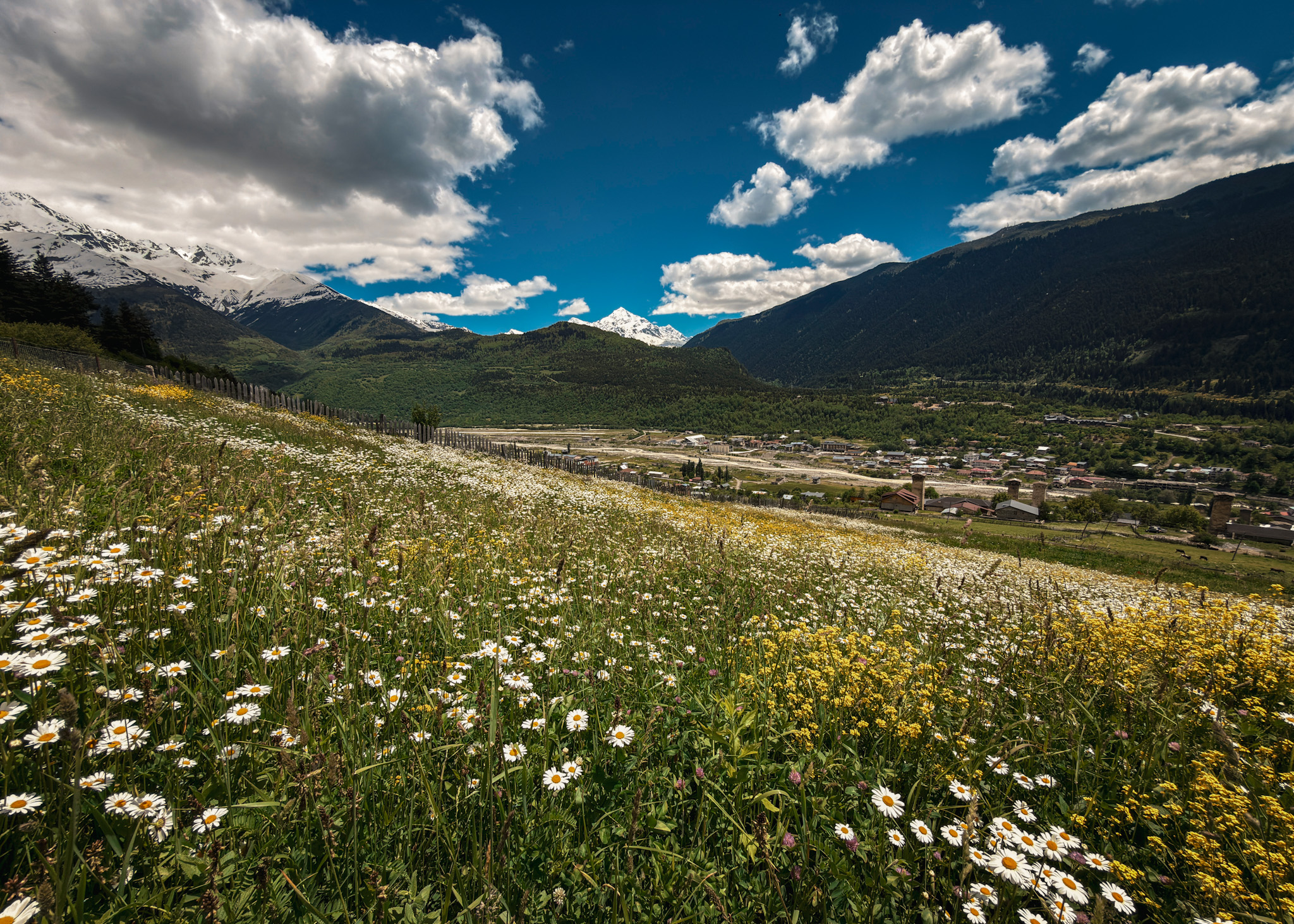
These towers are the signature feature of the entire landscape up here in Svaneti, and once you notice them you cannot stop seeing them—tall stone fingers rising out of nearly every village against a backdrop of snow-capped peaks. Somewhere between 200 and 300 of them still stand across Upper Svaneti, most built between the 9th and 12th centuries during the Georgian Golden Age. They served the obvious defensive purposes—refuge from invaders and from avalanches—but the most striking reason for them is the one that says the most about life up here: the centuries-long blood feuds that ran between Svan clans. A grave insult would be answered by killing the offender or one of his male relatives, which triggered the next round of revenge, and the next, generation after generation, until essentially every family needed its own fortress to survive its neighbors. The towers run three to five stories and up to 25 meters tall, with tapering walls, narrow defensive slits, and an entrance set several meters off the ground reachable only by a ladder that could be pulled up behind you. The whole region is a UNESCO World Heritage Site, and standing among them with the mountains behind, it is not hard to understand why.
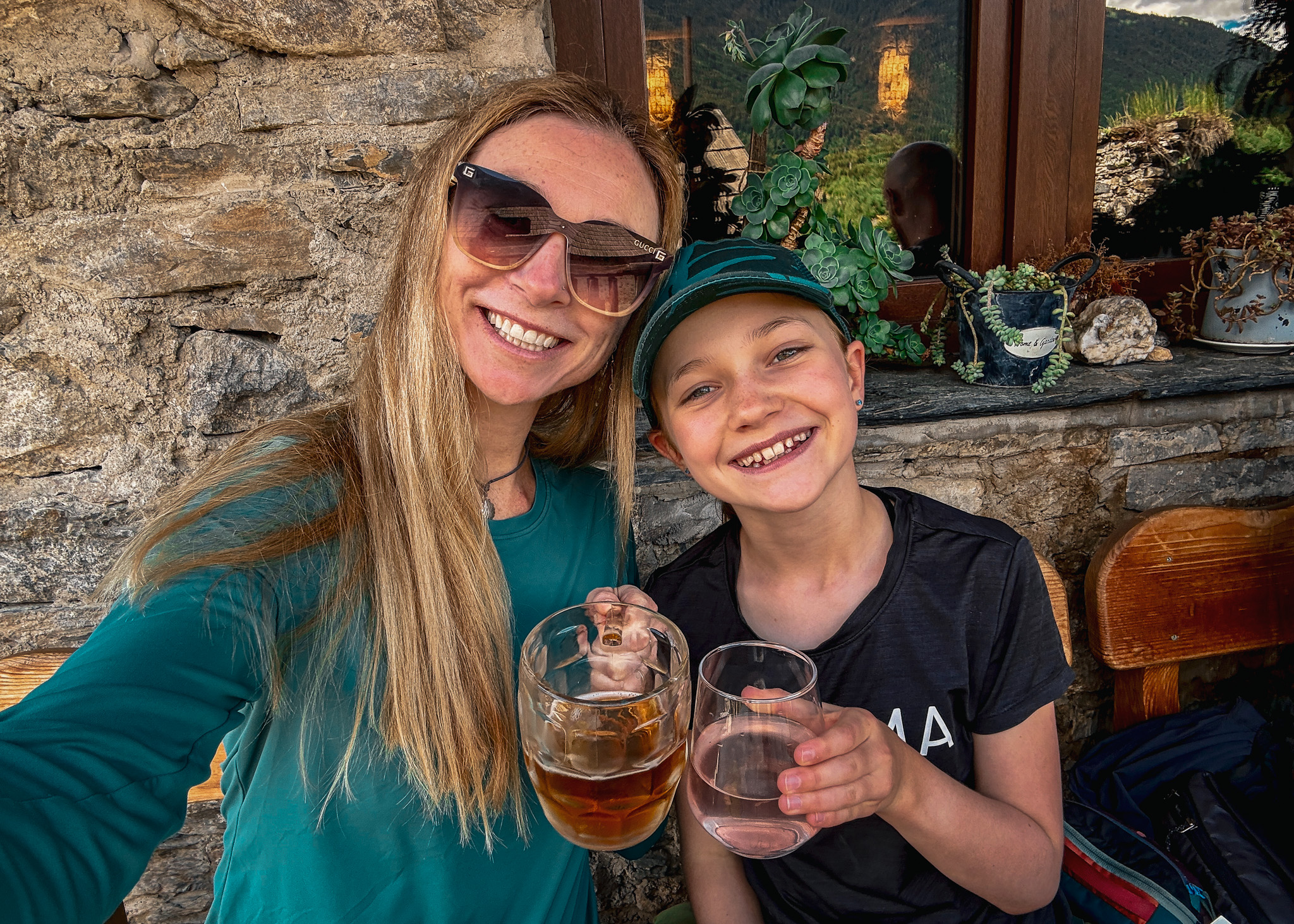
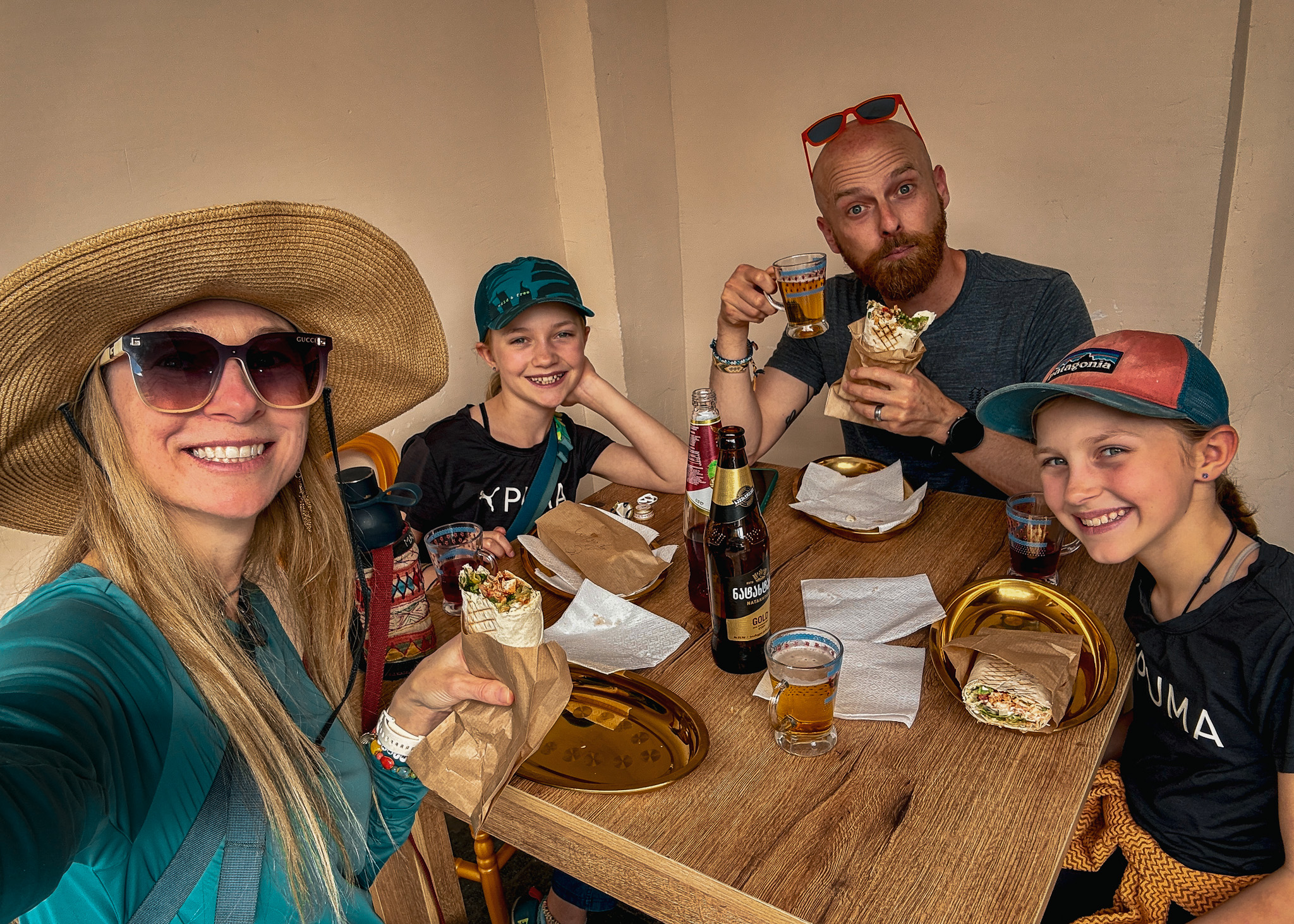
We spent the rest of that day gently, with a liter of fruity compote on a restaurant balcony, a head-sweating order of extra-spicy shawarma that proved Georgia can bring the heat when properly motivated, and an evening fire in the communal courtyard of our family guesthouse. The girls disappeared into a litter of two- or three-week-old kittens, while Shaina caught up with her parents on the phone, and Max settled into his favorite activity, which is poking a fire with a stick and pretending it requires constant expert attention. He got the logs arranged just right roughly 172 times. A few feather-light showers drifted through at sunset and threw up a rainbow or two, and then we went to bed early, because the alarms were set for 4:45 in the morning.
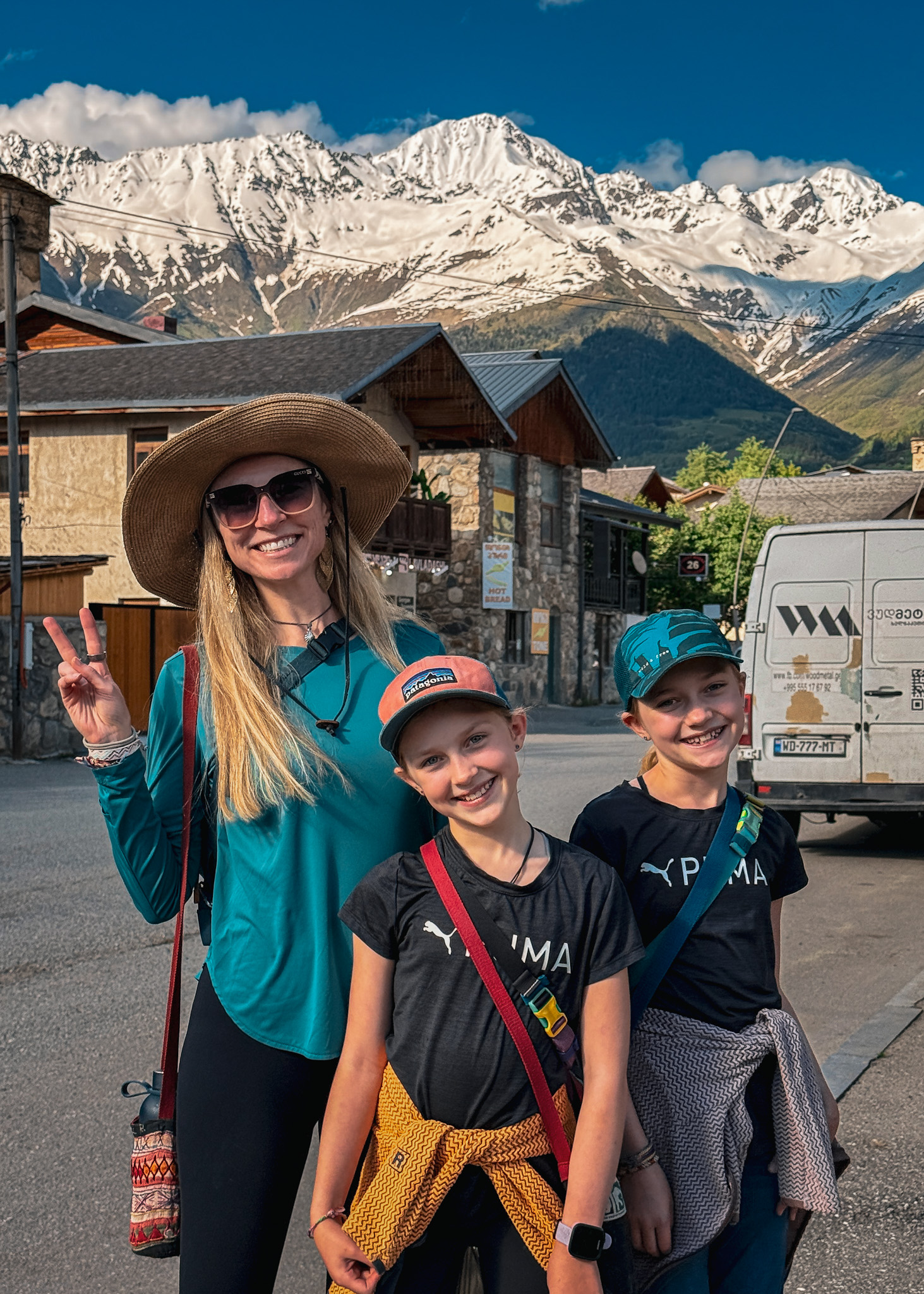
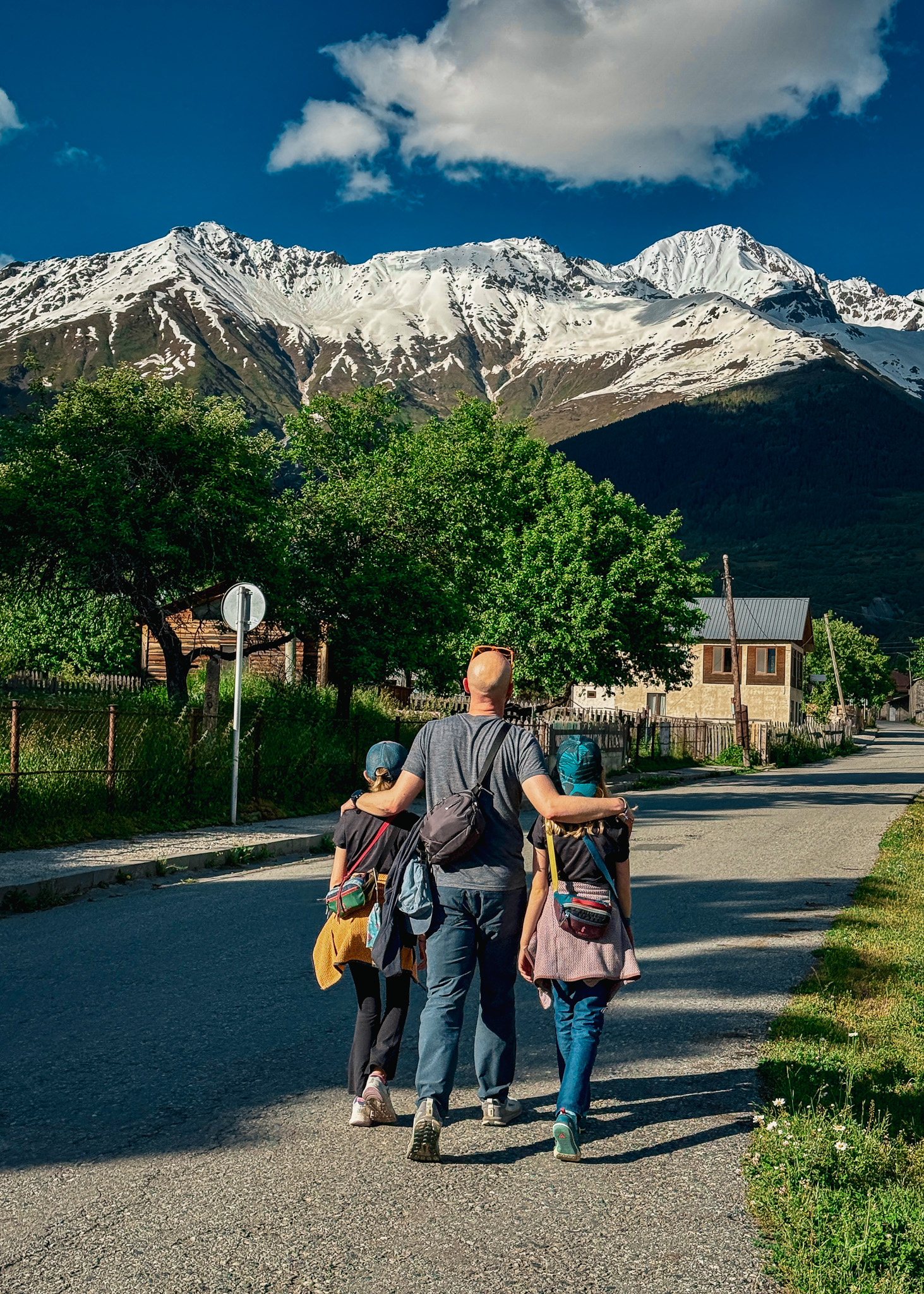
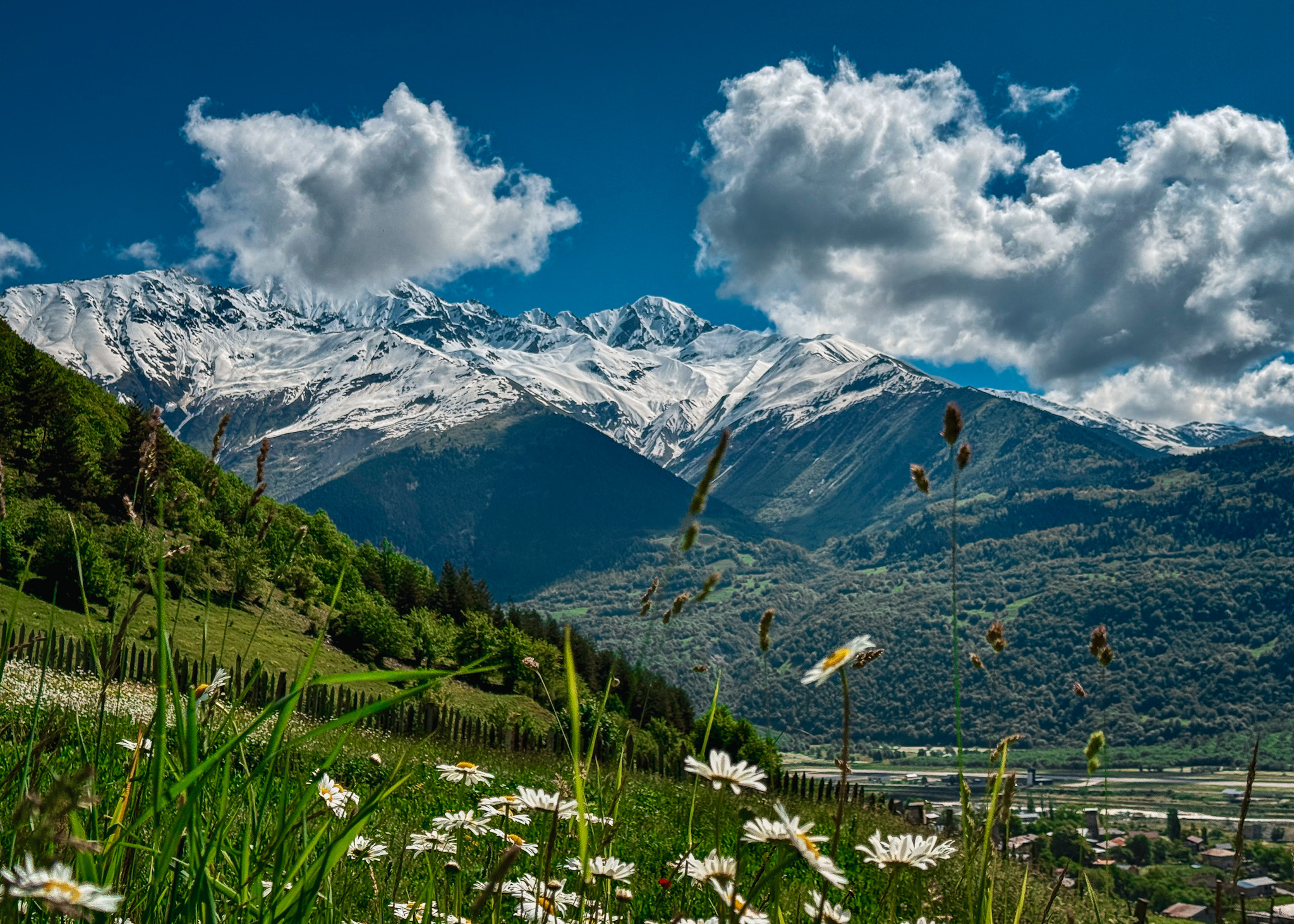
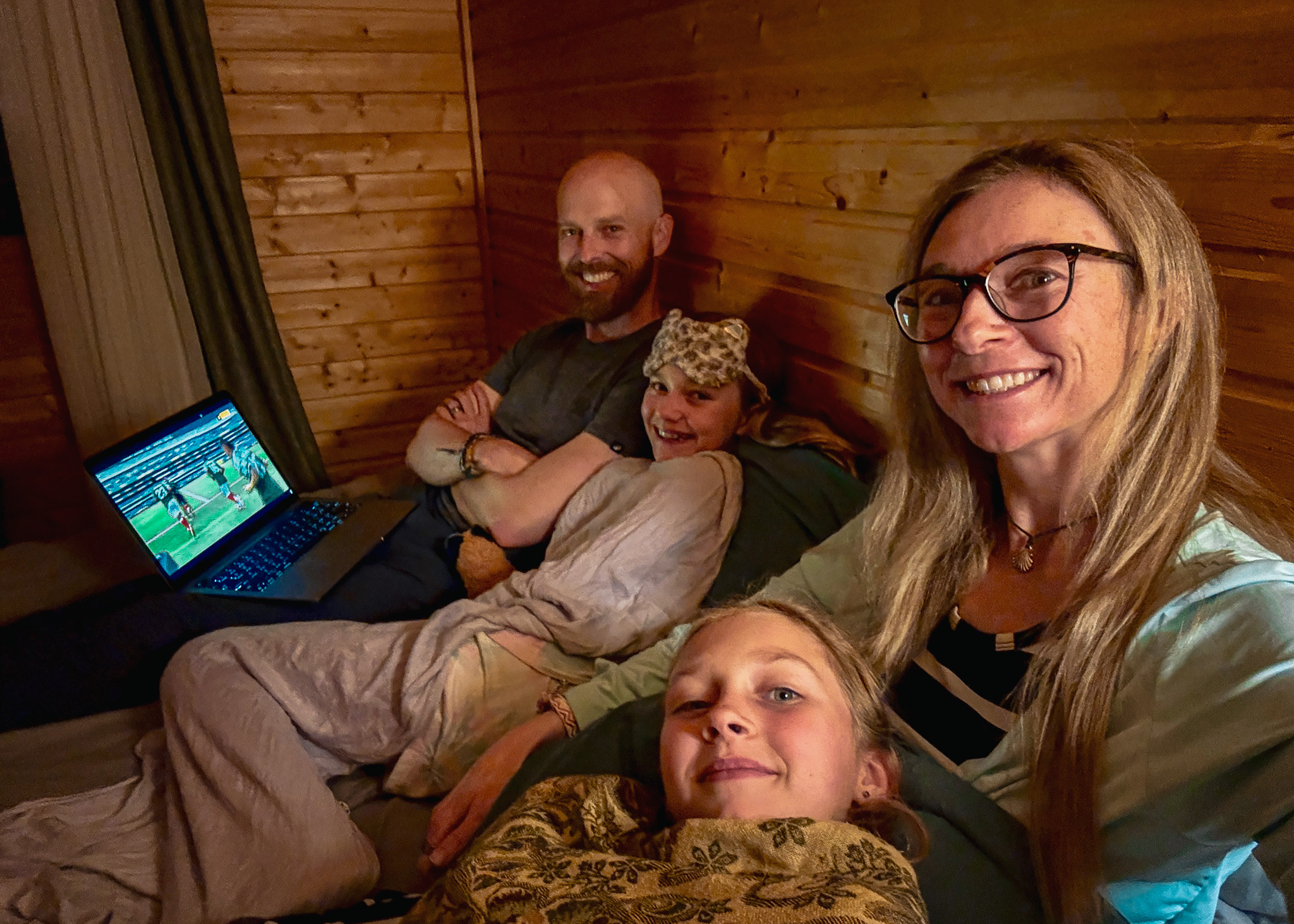
They were set that early because the United States was playing its opening match at five. Arya bounced out of bed the instant we woke her. Finlee declined to participate in anything happening at that hour and was permitted to keep sleeping. The internet fought us, we missed the first goal (an own goal, so no great loss), and then we watched the Americans put together a genuinely fun 4-1 win while watching on our laptop. High scoring and a victory: that is about as much as we could ask of a soccer match.
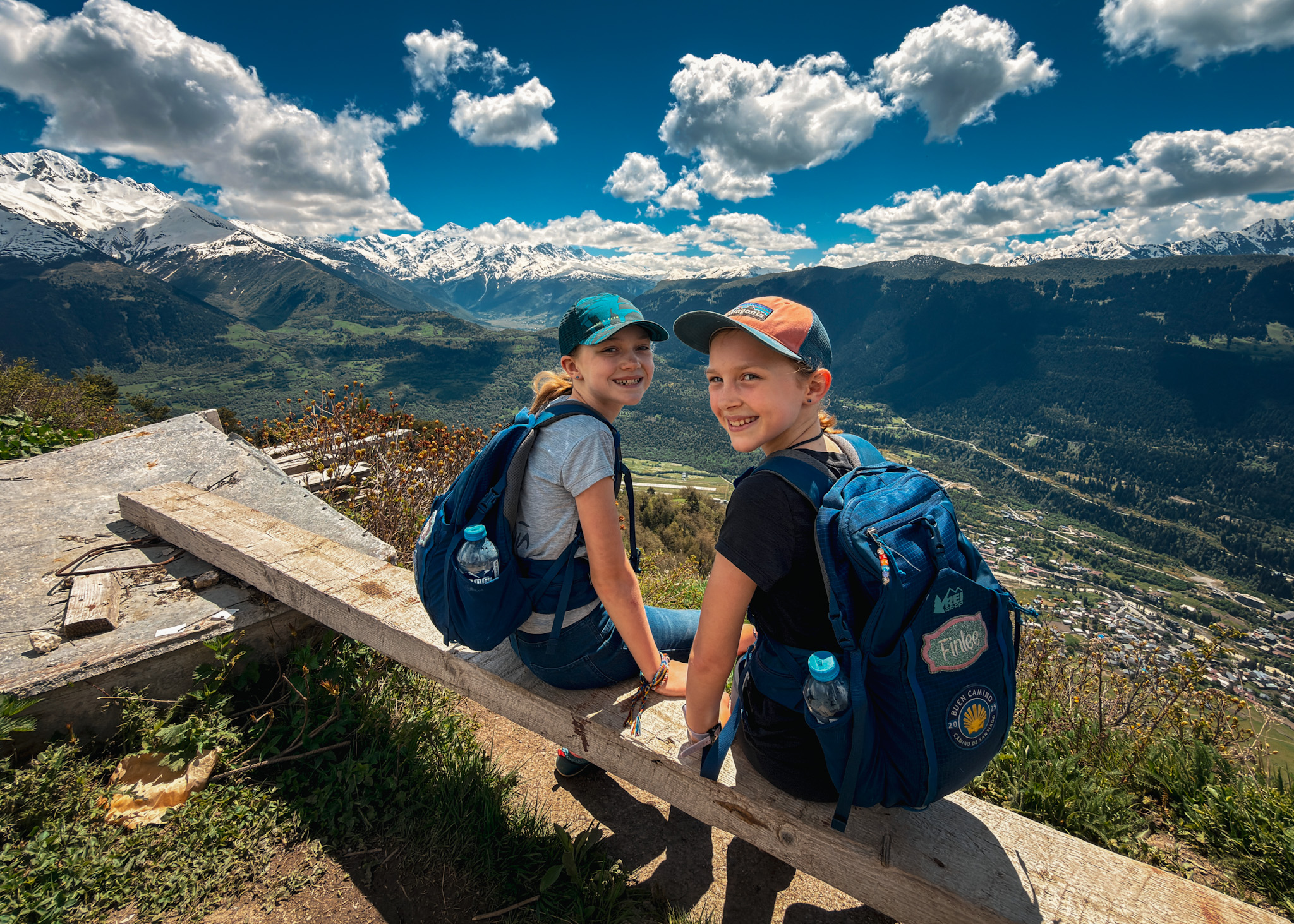
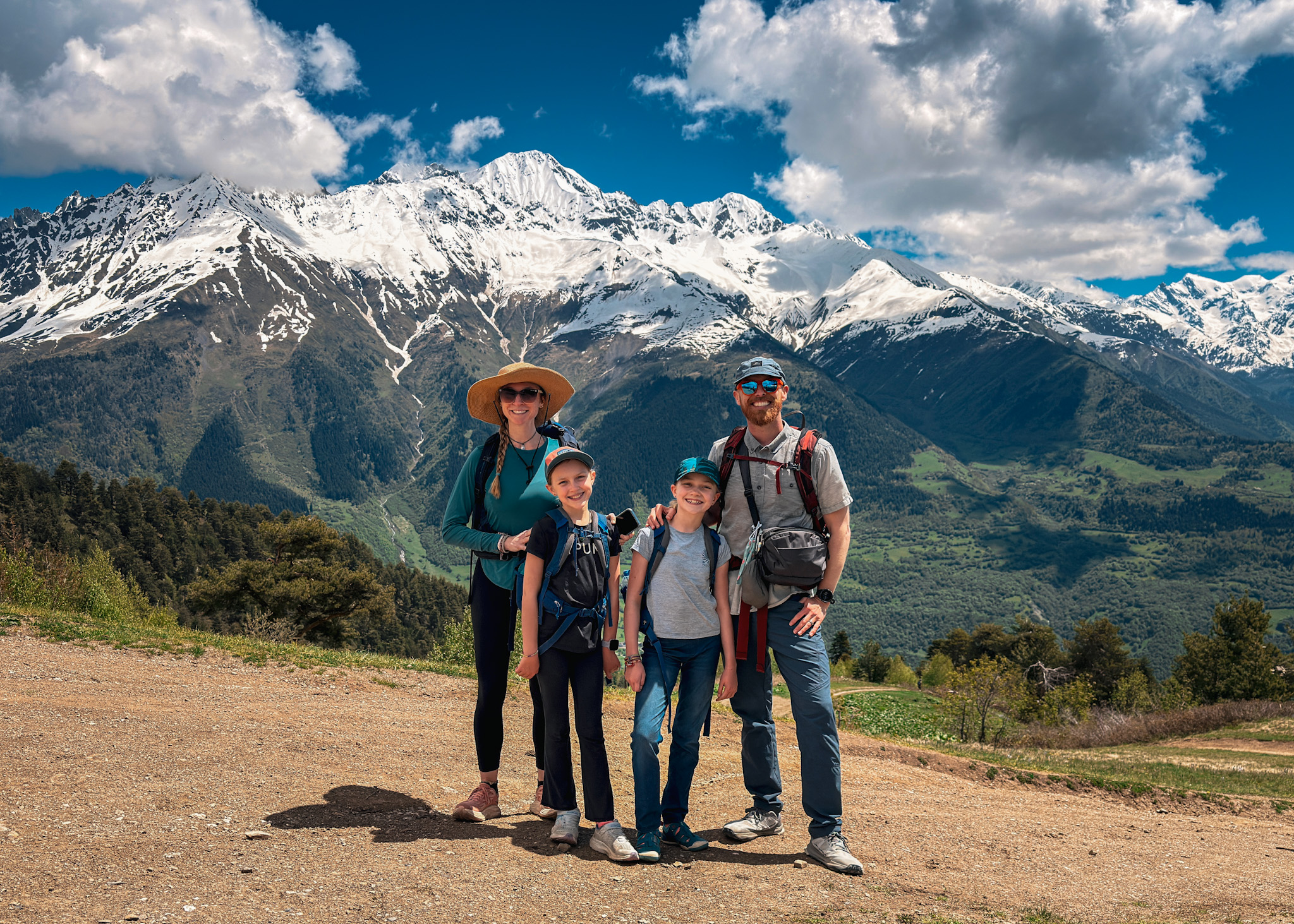
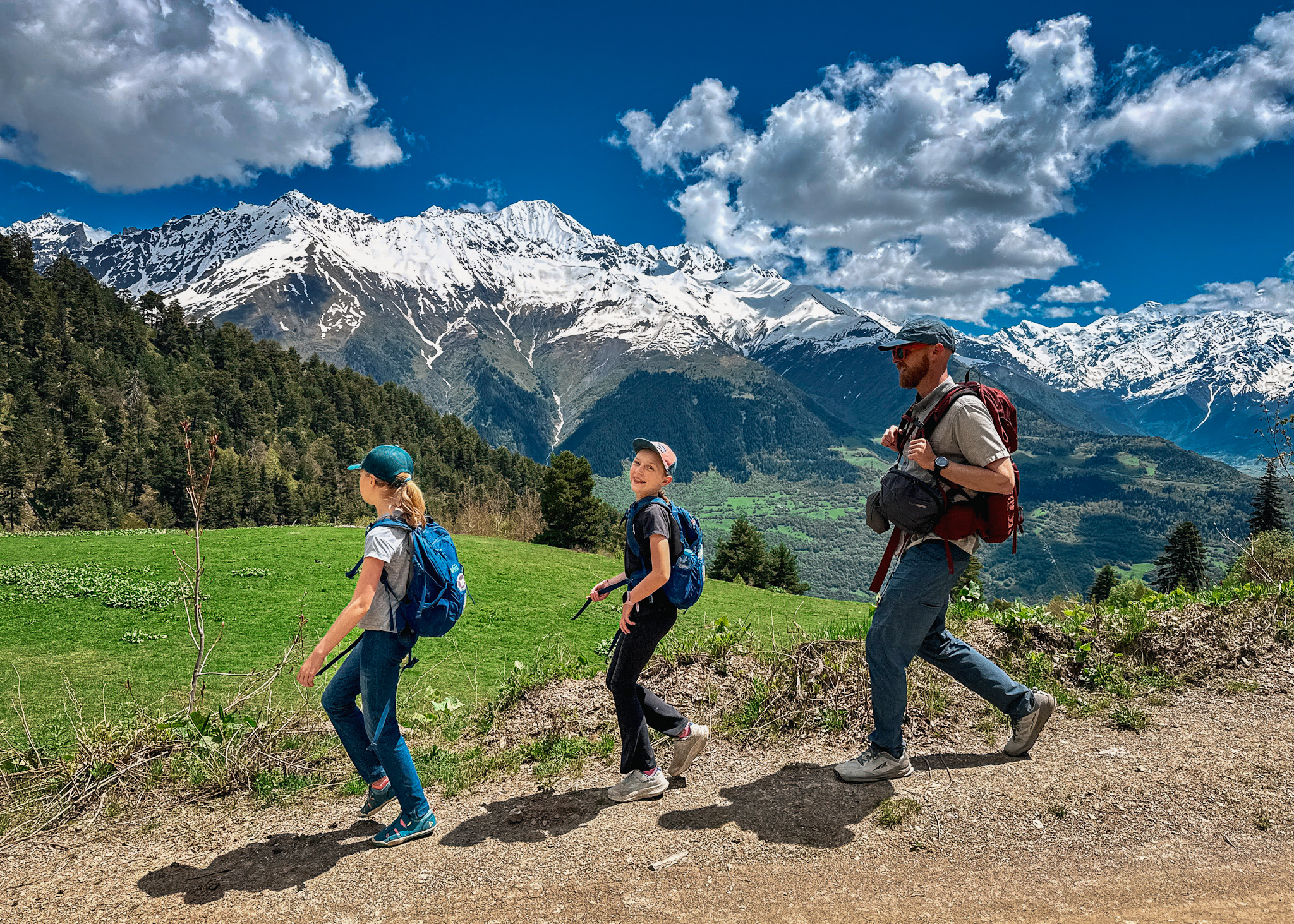
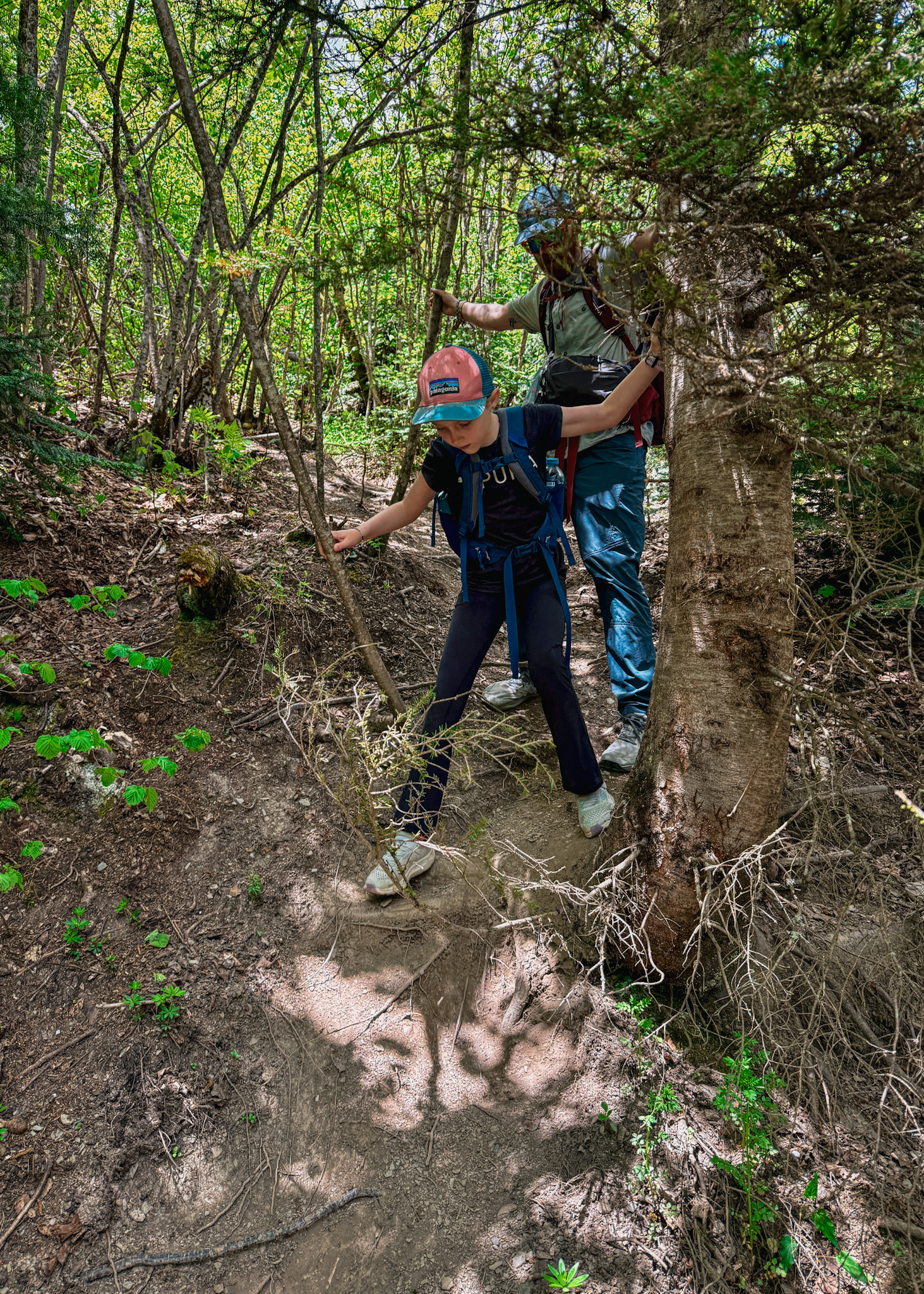
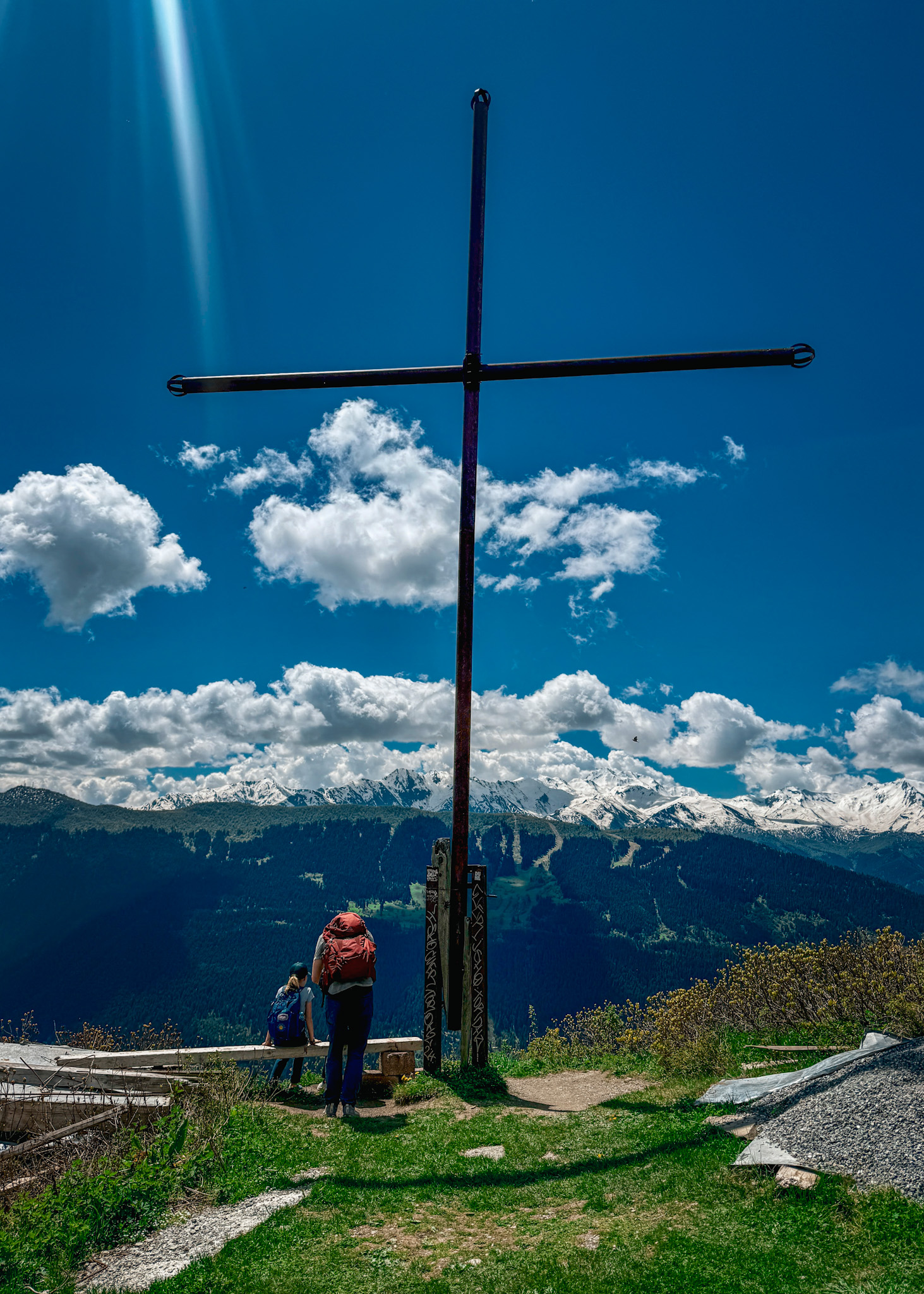
The win bought us exactly the right mood for the day’s main event, which was a hike straight up the mountain to a cross overlooking town. We also used the opportunity to get reacquainted with hiking with our backpacks, loaded up with weight to approximate what we would carry on the coming trek. Now, we have hiked a lot of trails, and we are prepared to call this one the worst-designed we have ever set foot on. There is no switchbacking, no easing of the grade, no concession to the human body whatsoever. Someone evidently decided to put a cross on top of a mountain and then drew a straight line to it. The route is short, only four kilometers, but at a grueling 25% average grade while achieving its 800 meters of vertical gain. Add that to the many creek crossings and loose washed-out sections thrown in to keep you humble. Trekking poles would have helped enormously.
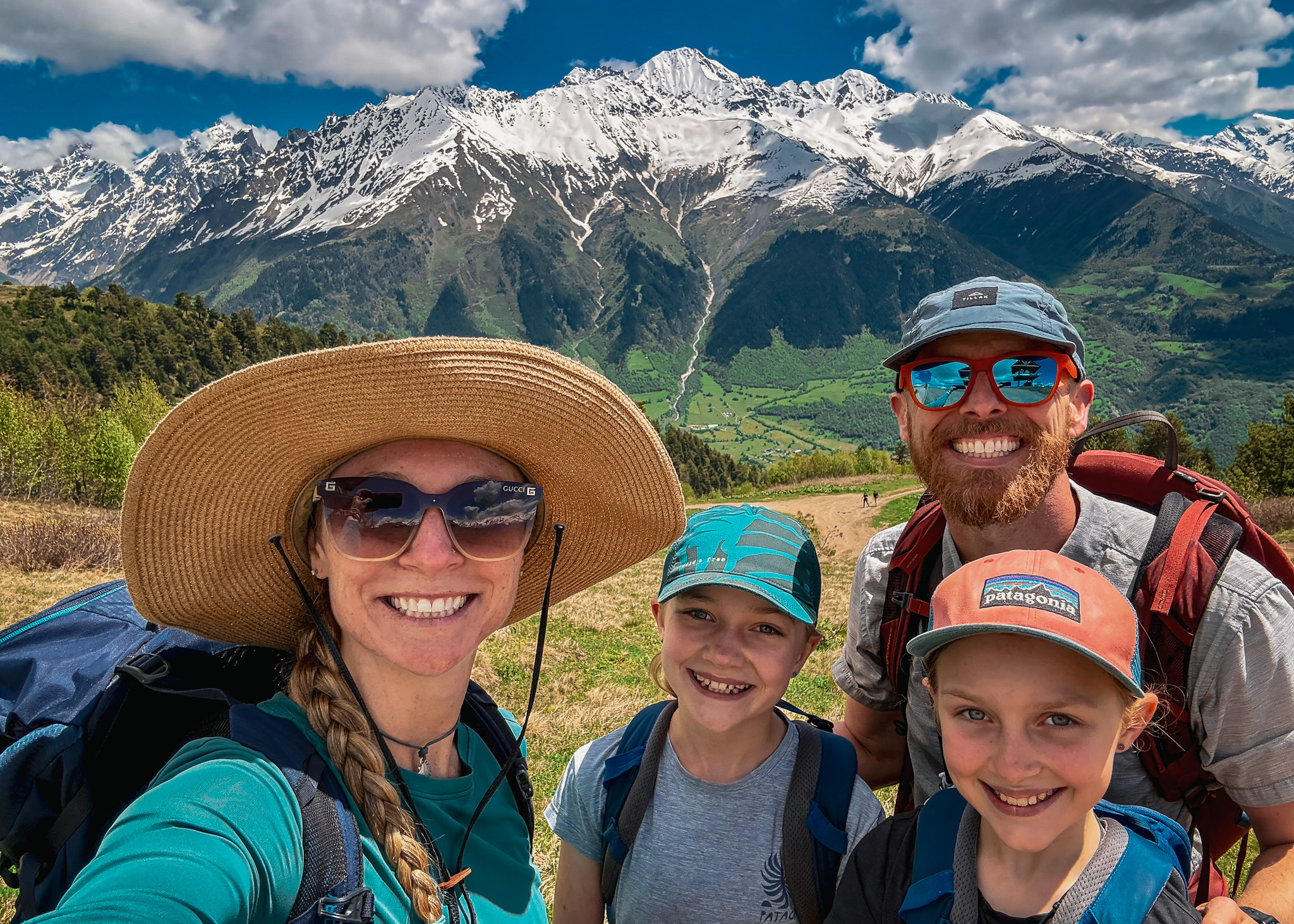
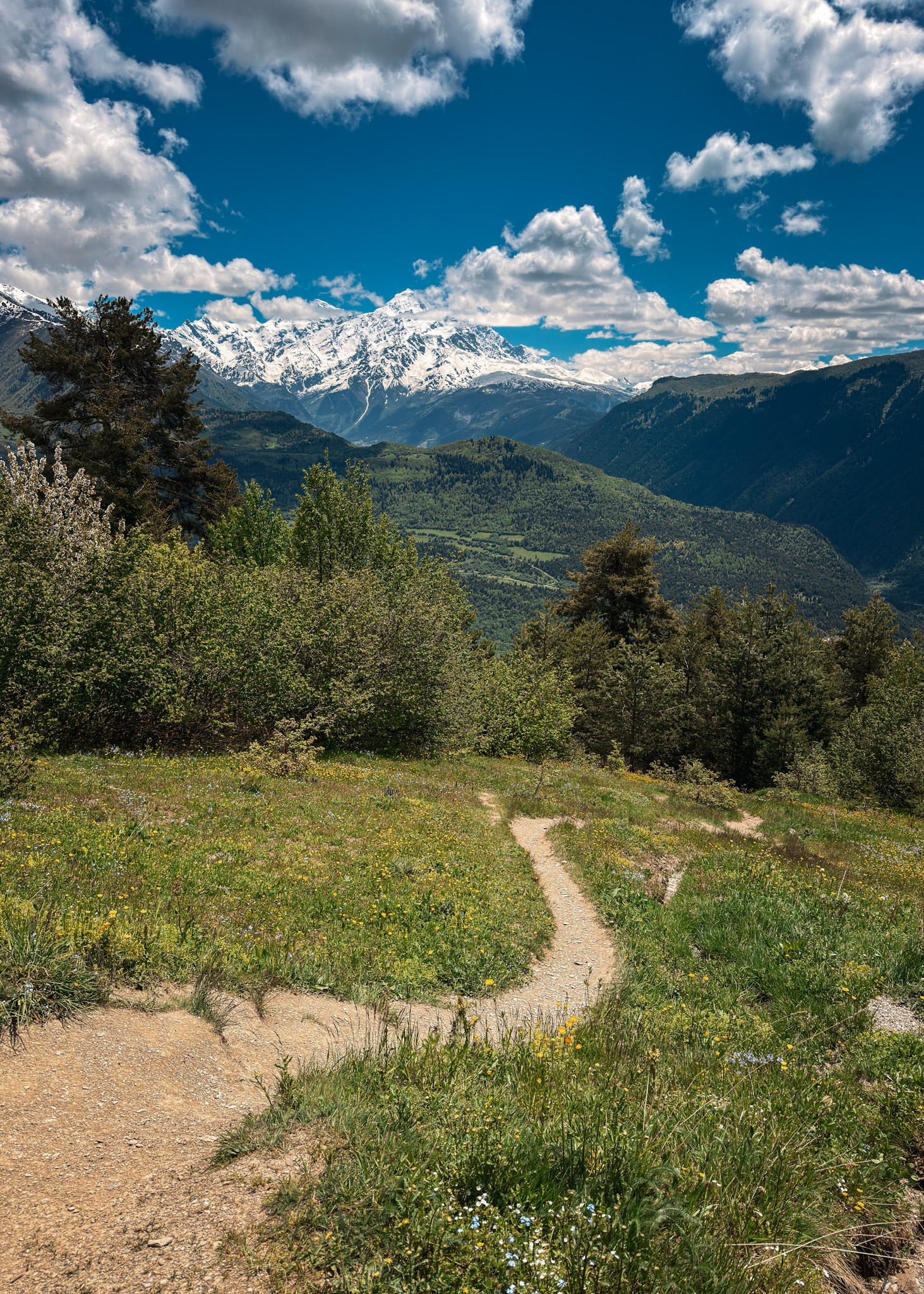
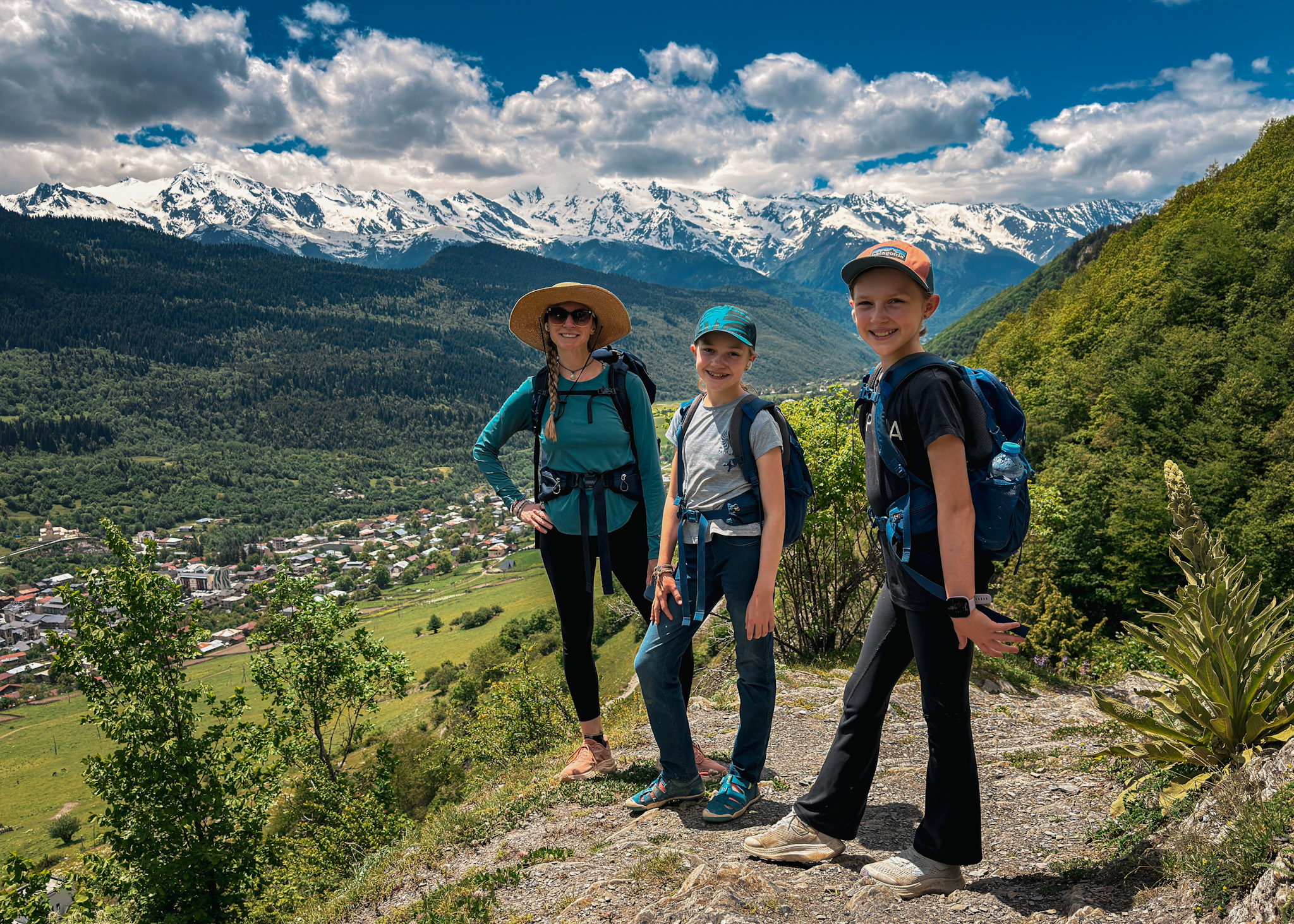
The reward, as it so often is, was the view. Snow-covered peaks stood on every side, the whole valley spread out below with its farms and grazing land and clusters of Svan towers. From the top you could see for miles back down the valley in one direction and straight into a wall of rock, snow, and ice in the other. The cross itself was a spindly, rusted, unremarkable thing, easily the least impressive object up there. We had all sweated through our shirts on the climb, the breeze chilled us quickly, and we did not linger. And if the way up was hard, the way down was worse—loose steep gravel turned every step into a small negotiation, until just about every one of us had gone down at least once. No injuries, just a thorough collection of sore knees, ankles, and toes by the time we reached town.
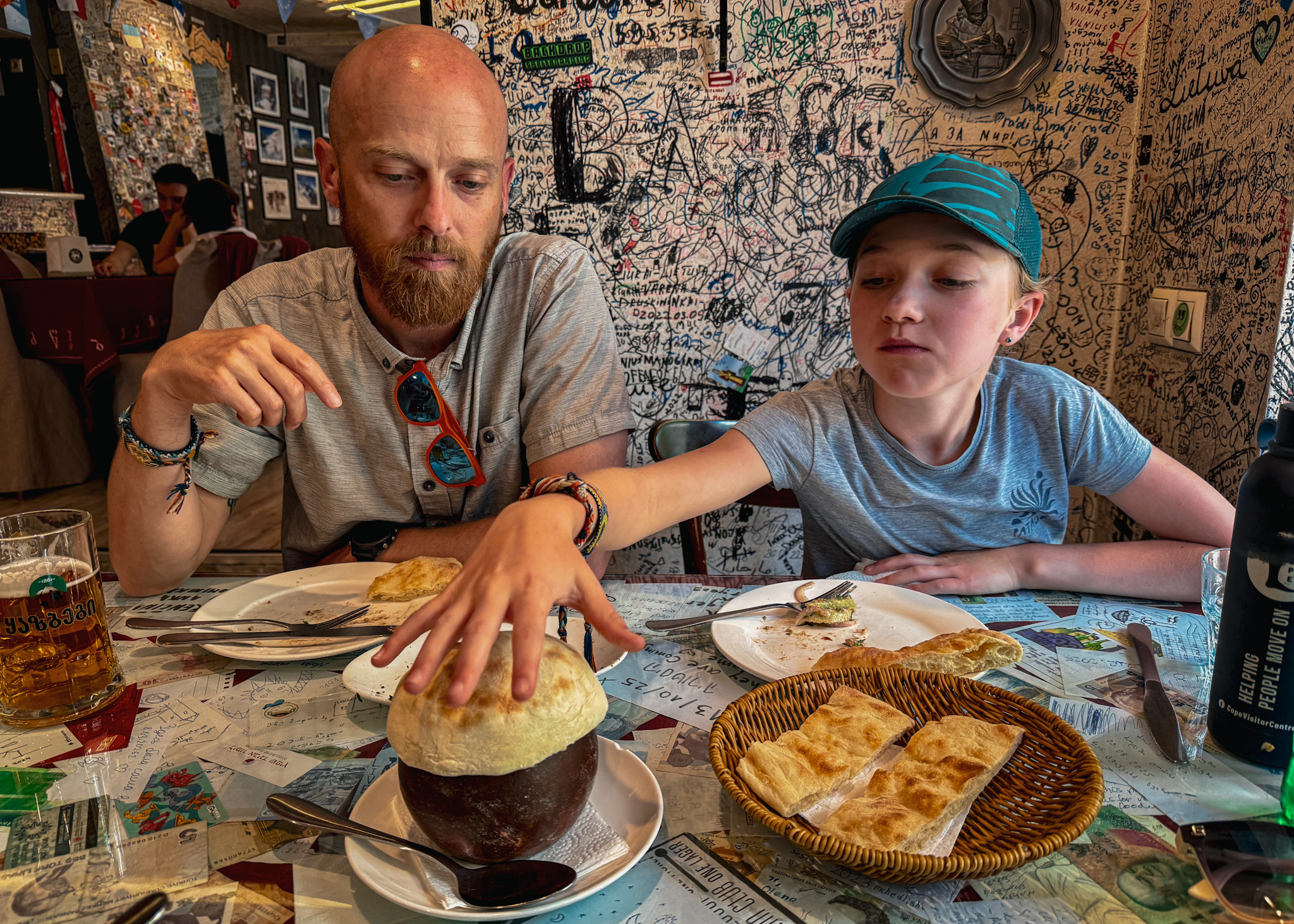
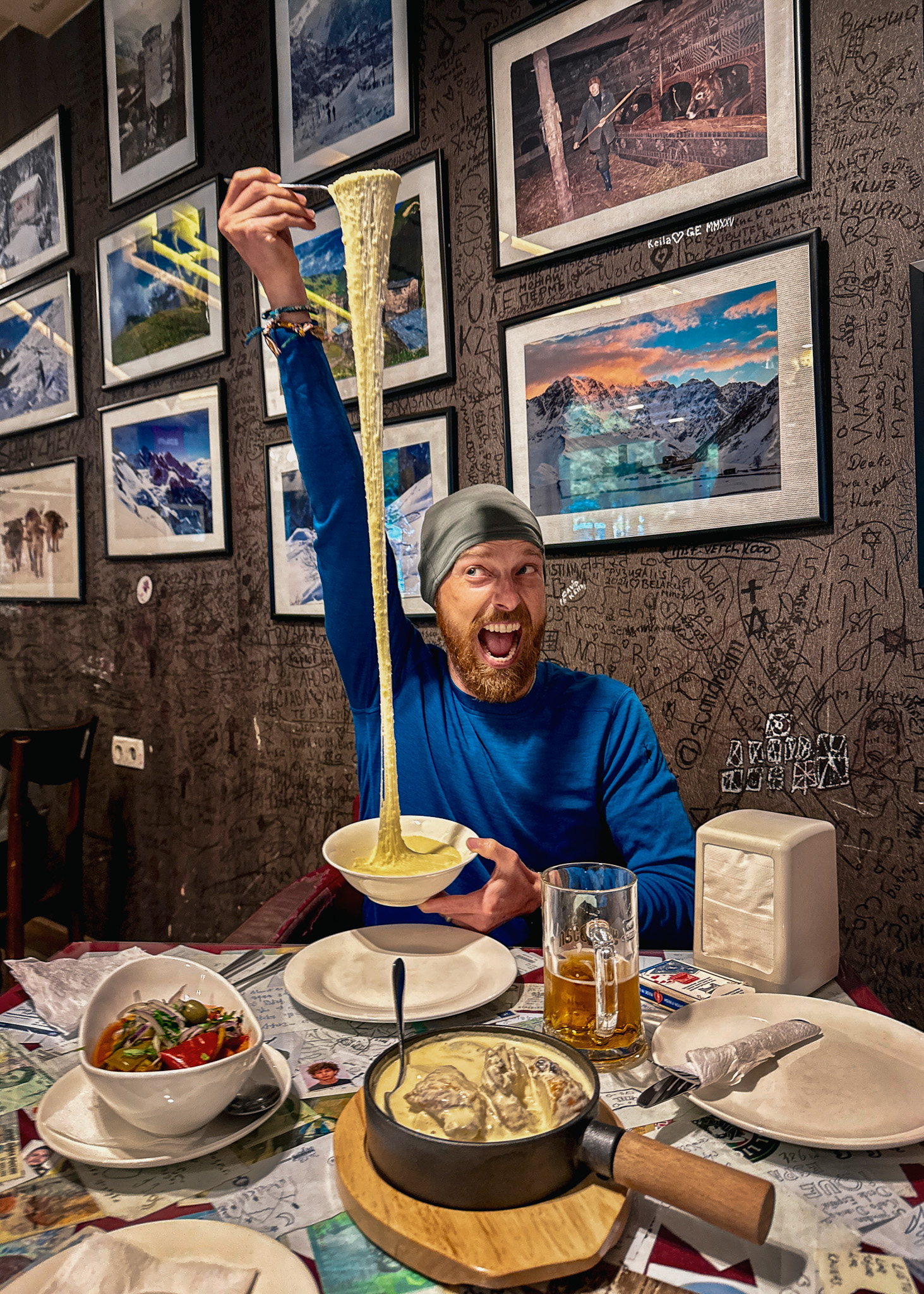
Dinner that night was at Mestia’s famous Café Laila, a funky restaurant draped in Georgian pride. Its walls were lined with signs decrying the Russian occupation of Abkhazia and South Ossetia, the two regions amounting to roughly a fifth of Georgia’s territory that Russia has held since the 2008 war. We had absorbed plenty of this history already during our road trip through the country, so here we mostly let the signage speak for itself. Instead we turned our attention to the food, which was excellent, especially a dish billed simply as a “dumpling.” It arrived as a clay pot capped with a dome of bread, hiding ravioli-sized meat dumplings under a blanket of creamy garlic sauce. We over-ordered and finished everything anyway, now beginning to understand where the characteristic Georgian waistlines come from.
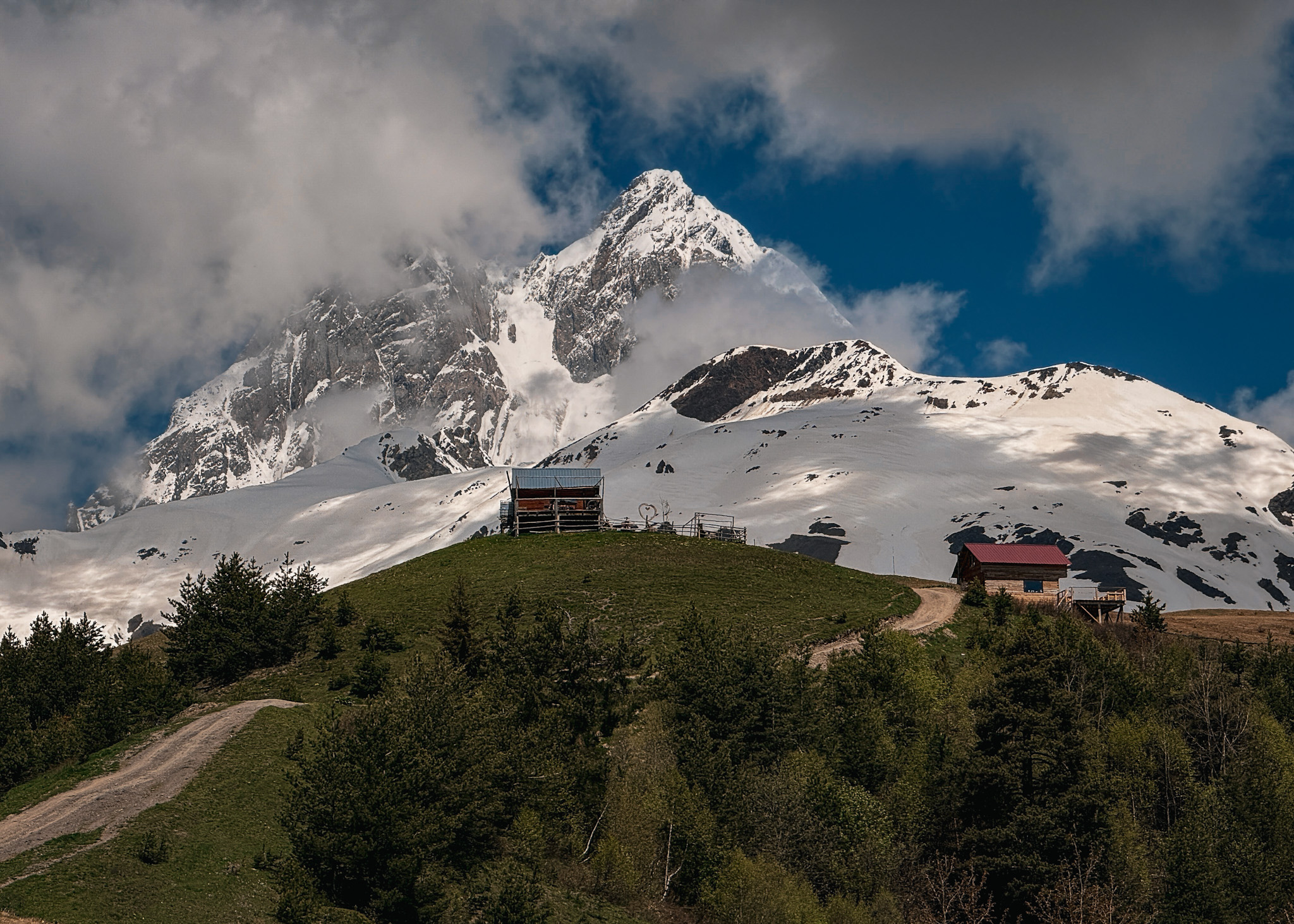
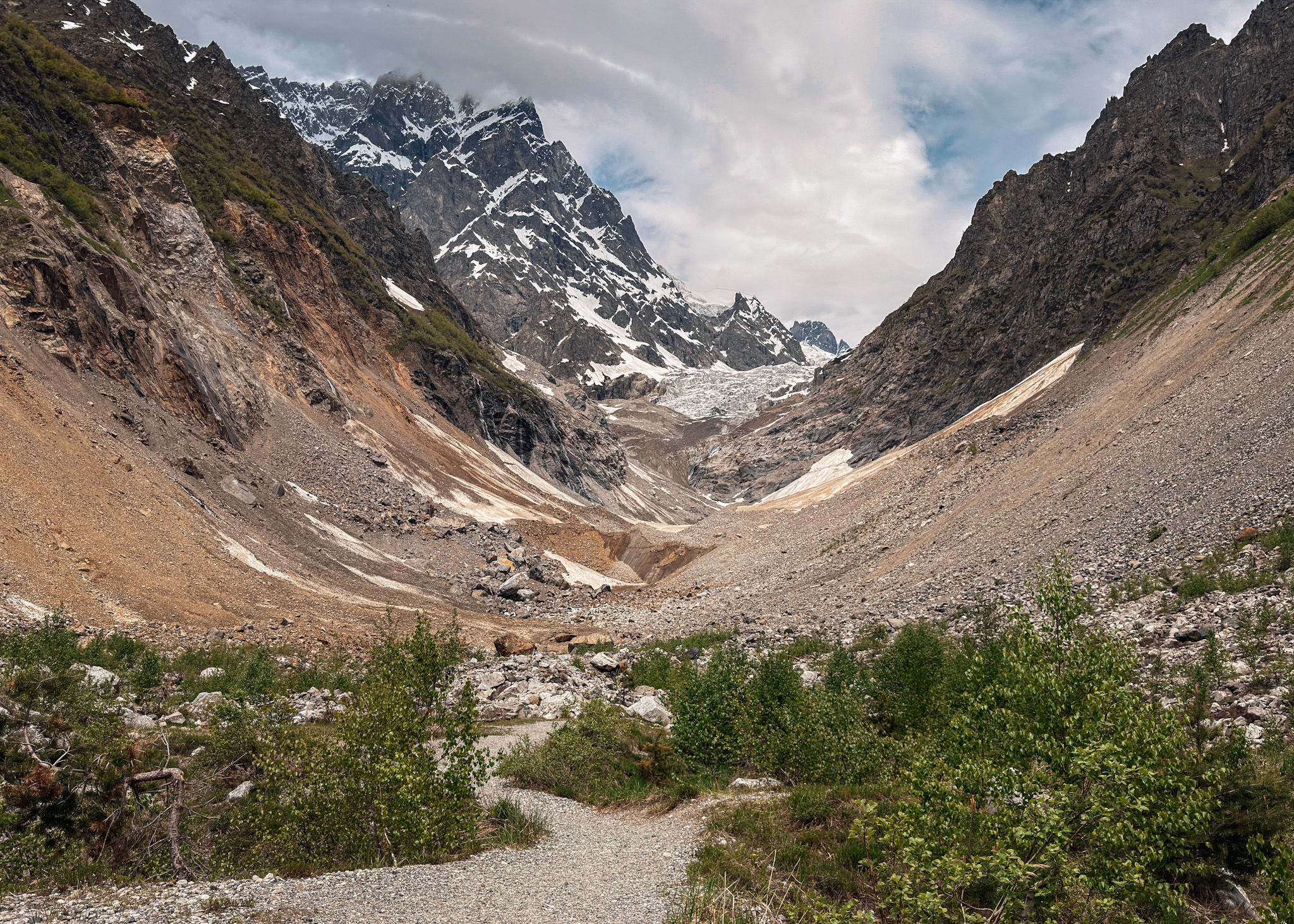
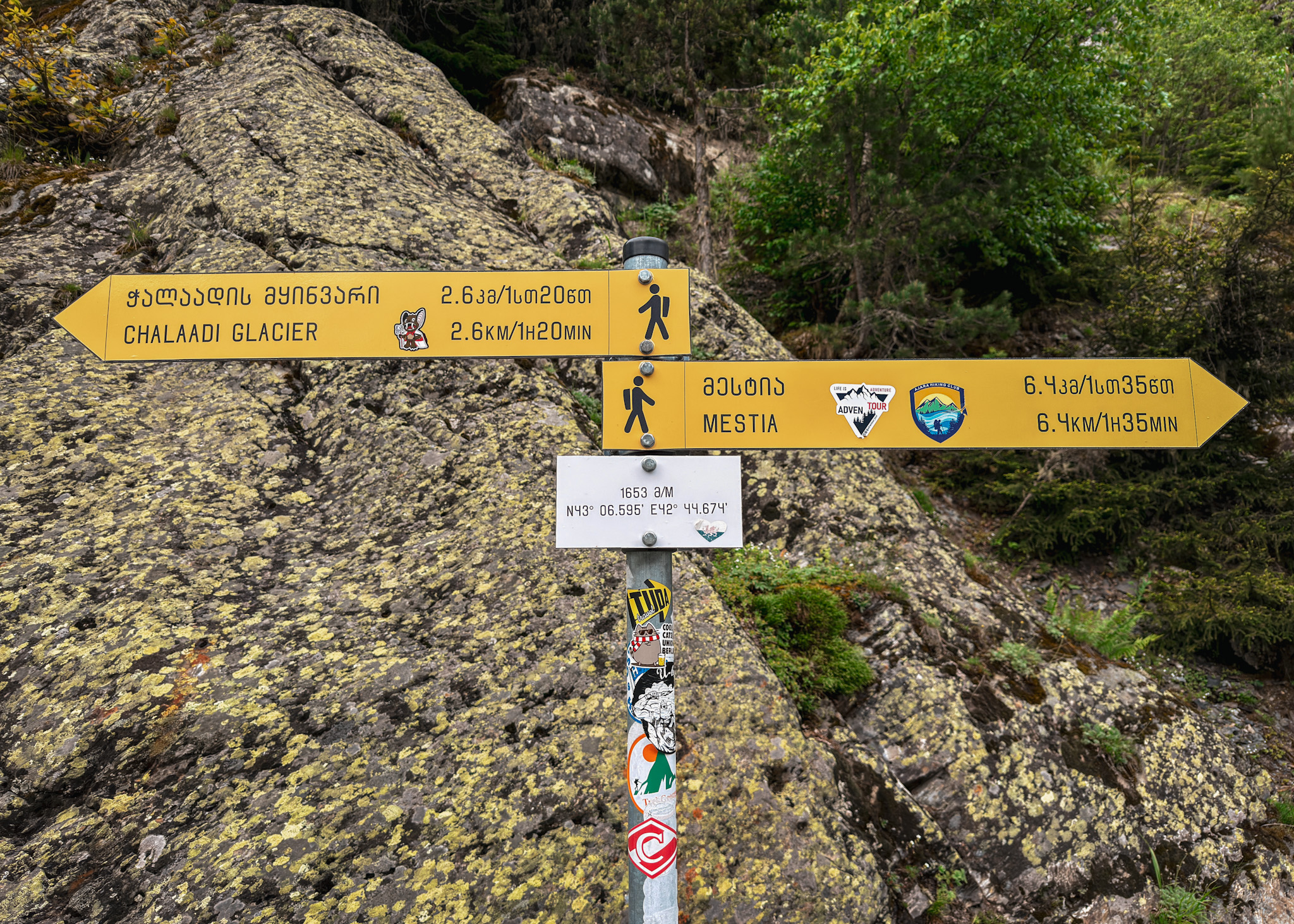
Our last full day in Mestia opened, naturally, with another soccer match, Australia against Turkey, both of them in the United States’ group, which made us briefly invested in an 8 a.m. game between two countries we have no stake in. Australia, the underdog, won 2-0, and we cheered for the Socceroos while messaging with several new Aussie friends we’ve met on this trip. Then we got to the real business of the day—we drove about nine kilometers out of town on a road that degraded from potholes to dirt and reached the trailhead for the Chalaadi Glacier.
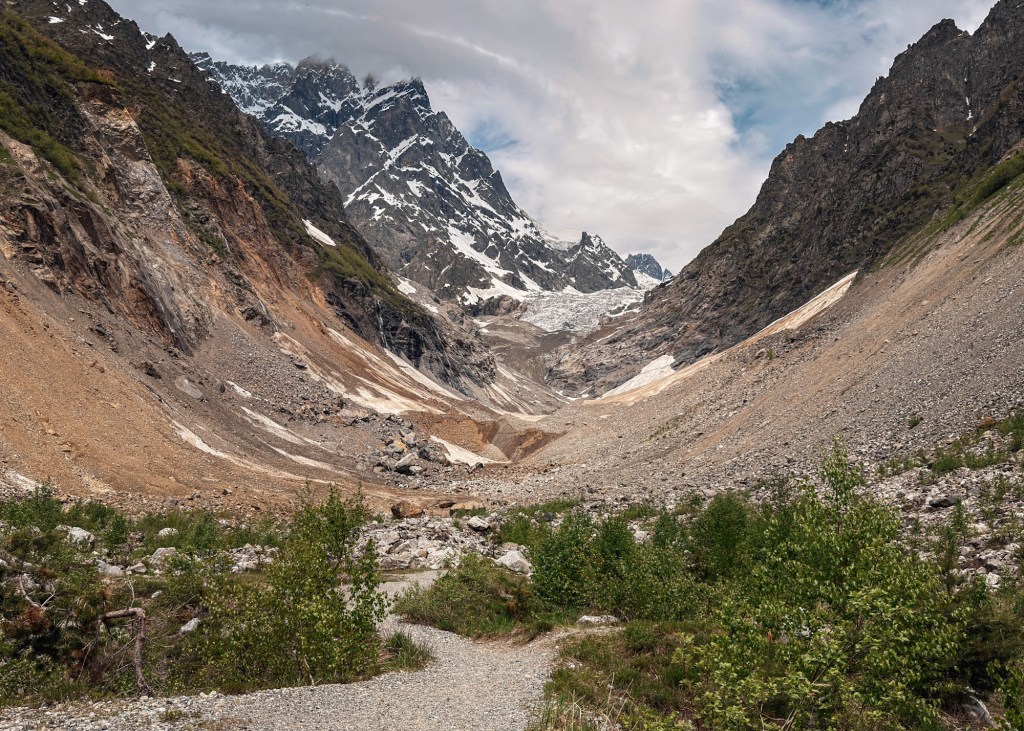
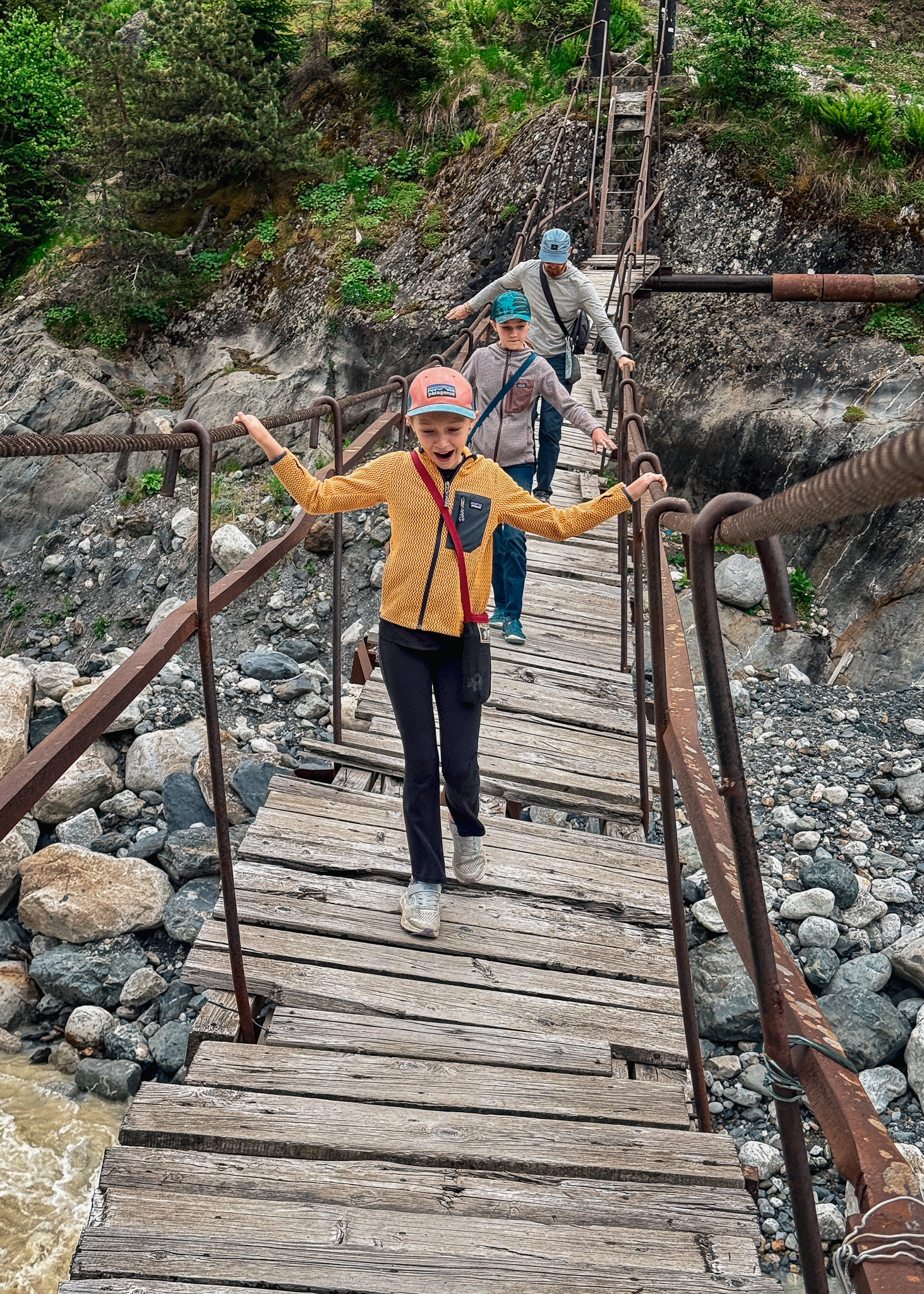
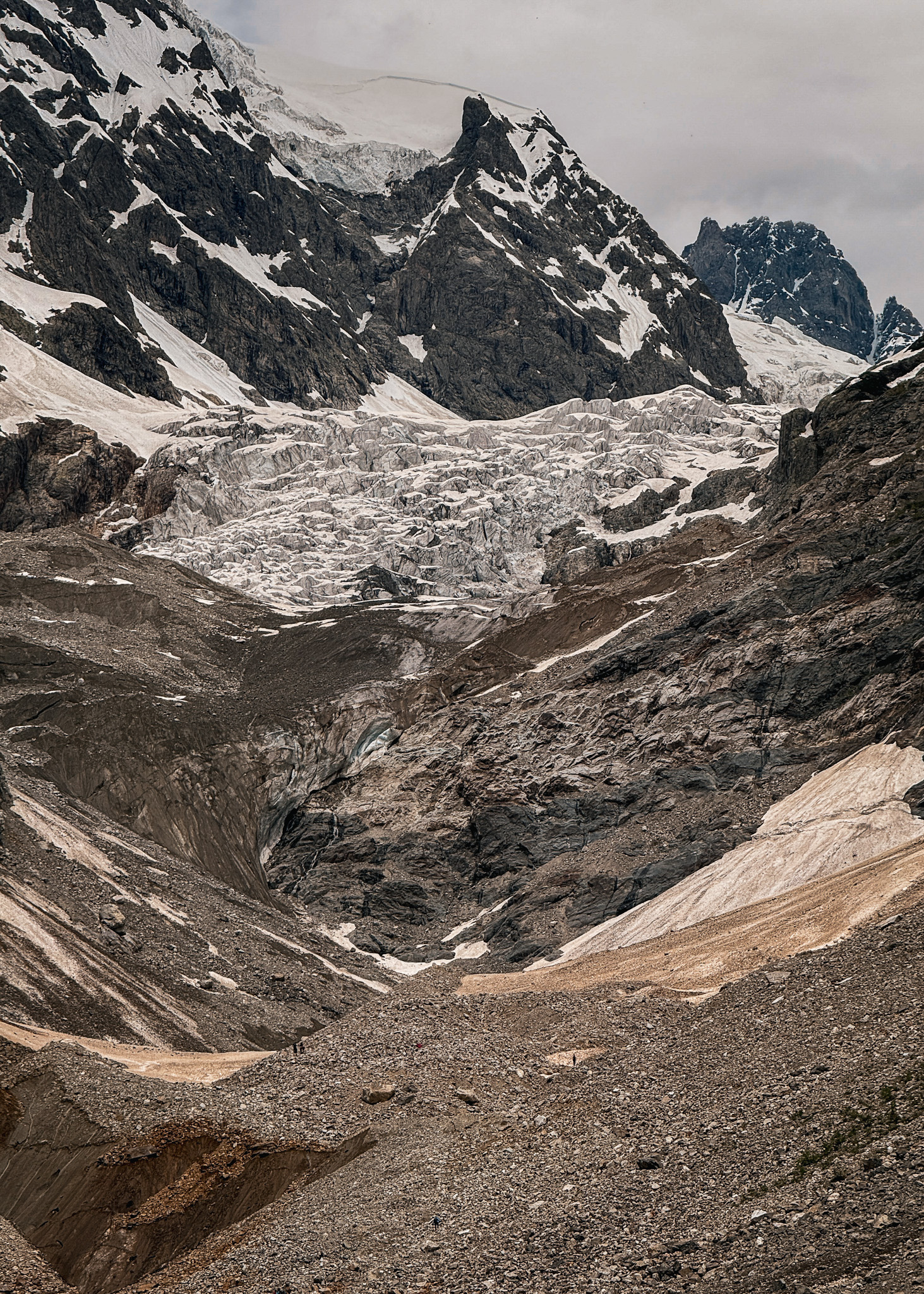
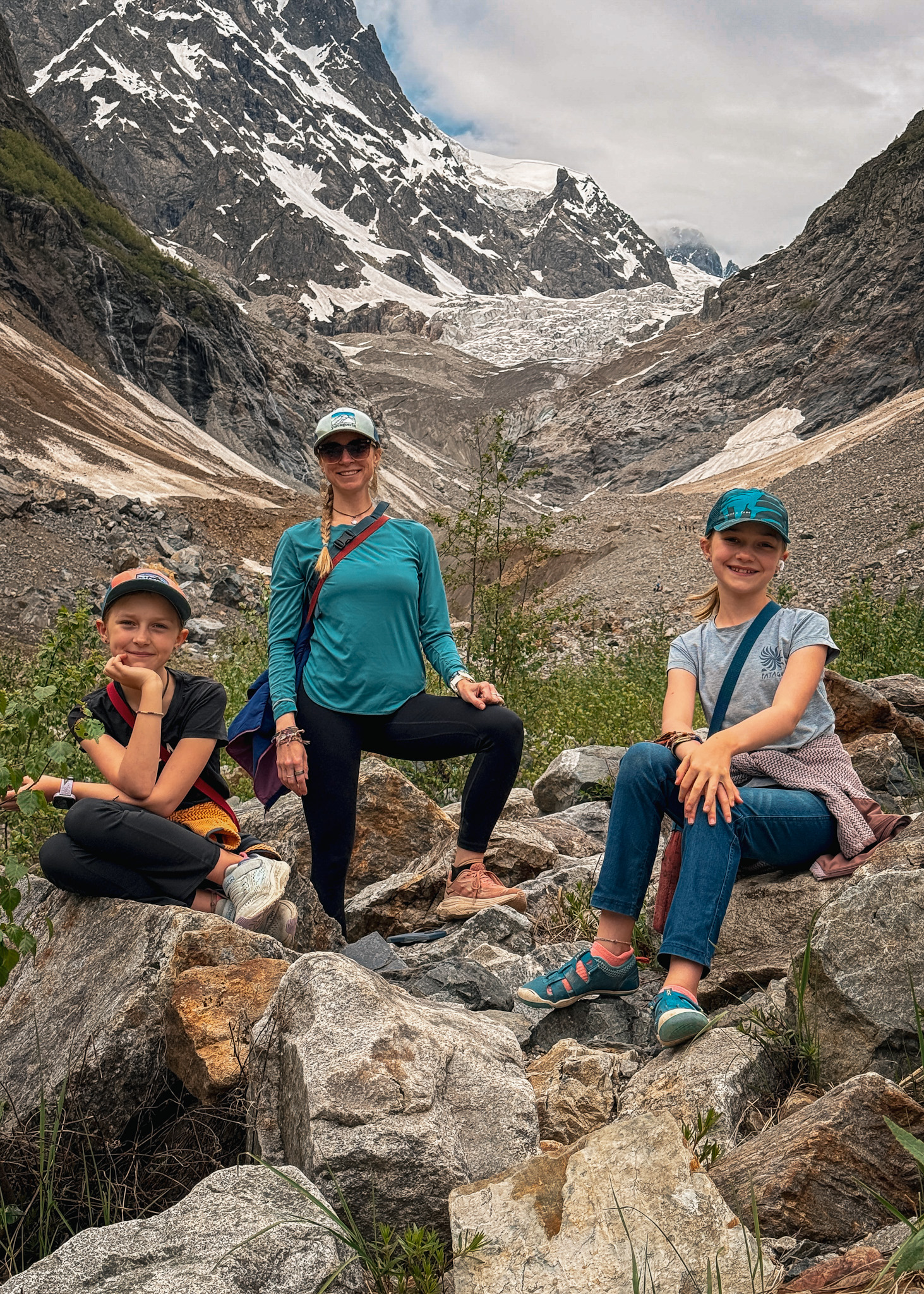
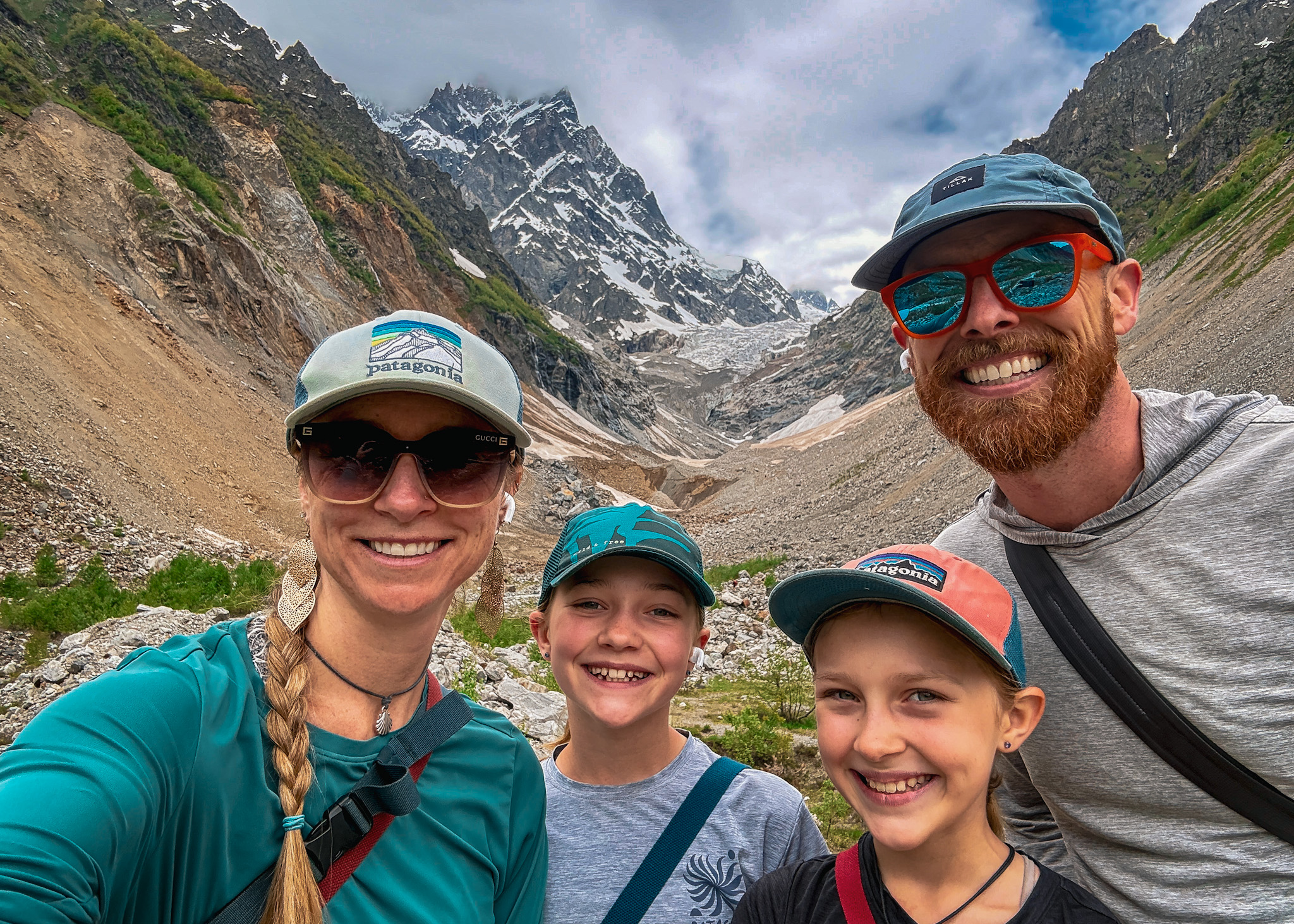
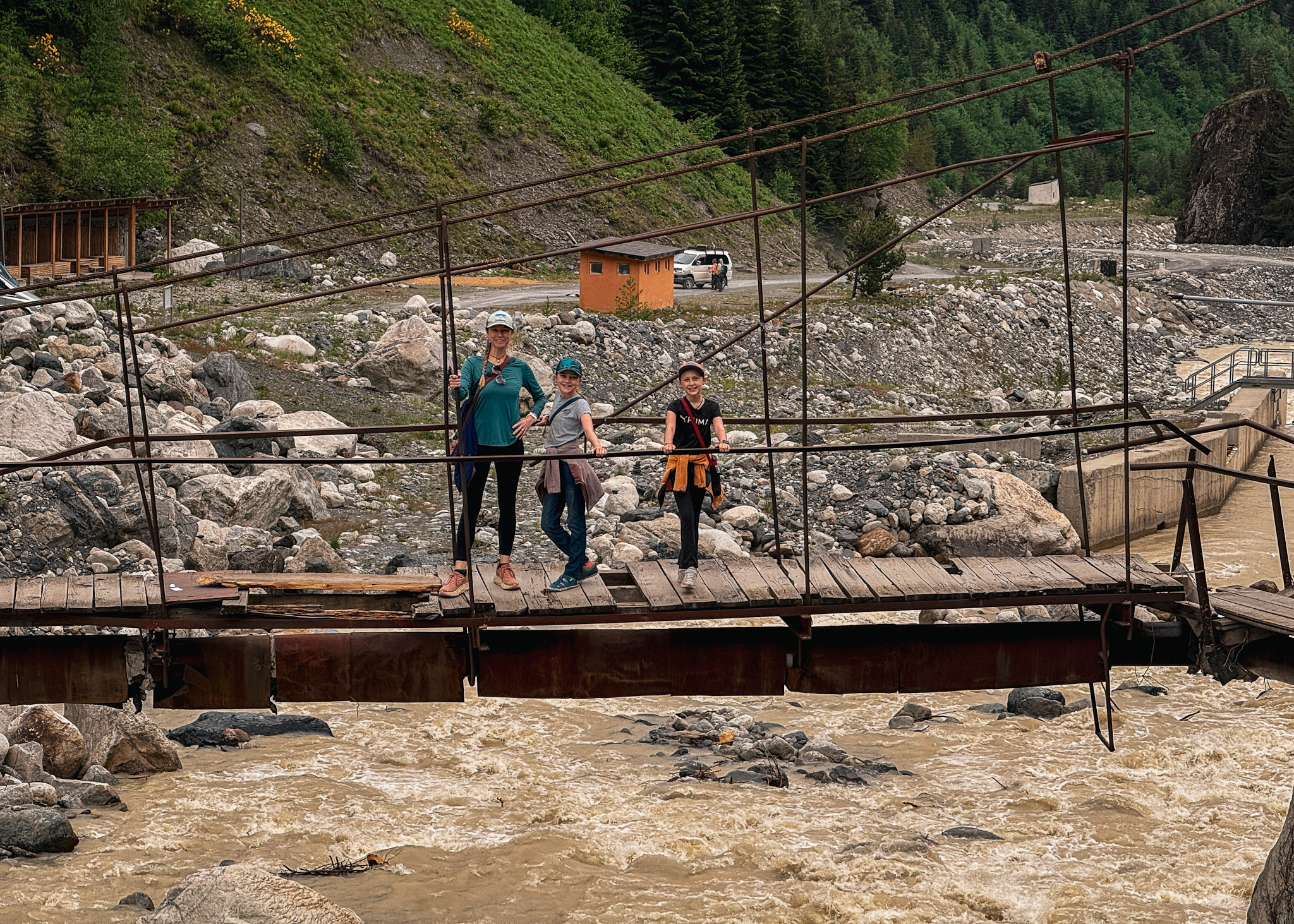
The hike begins by crossing the Mestiachala River, itself roaring with the same glacial fury we’d seen on the drive in, by way of a suspension bridge that appeared to have been built sometime in the Soviet era and then forgotten for sixty years. Roughly 80 percent of the wooden planks were still present, and 100 percent of them had clearly seen better days. Max sent Shaina across first to test it—a decision he stands by—and once she made it the rest of us followed. After the previous day’s brutality, this hike was a gentle pleasure: only 215 meters of gain through gorgeous terrain, ending at the glacier the valley is named for. The Chalaadi descends from the slopes of Mount Ushba, a 4,710-meter giant, and is one of the most accessible glaciers in the entire Caucasus.
It is also disappearing. As recently as the late 20th century the glacier reached much farther down the valley, close enough that you could walk to its tongue within twenty minutes of the bridge. It is now retreating by several meters a year, and the bare moraine in front of it grows a little wider each season, marking the ground the ice used to cover. This is not a mystery or a matter of opinion. A warming climate is melting these glaciers, here and everywhere, and the Chalaadi is simply one you can walk up to and see it happening. There is a real melancholy in standing at the foot of something that magnificent and knowing it is on borrowed time. We climbed onto the terminal moraine, flew the drone, took our photos knowing full well no photo captures the scale of it, and headed back down.
We returned to Café Laila for a second, less memorable dinner, beating a serious rainstorm back to the car and giving thanks we hadn’t walked, then made a final grocery run for trek supplies. And then the real work of the evening began: packing for the four-day trek from Mestia to Ushguli, one of the most famous trekking routes in the entire Caucasus. The trail runs about 60 kilometers through Upper Svaneti, broken into four stages with overnight stays in guesthouses in the small mountain villages along the way: Mestia to Zhabeshi, Zhabeshi to Adishi, Adishi to Iprali, and Iprali to Ushguli. Each day covers somewhere between 14 and 18 kilometers with serious elevation gain and loss, winding through alpine meadows, dense forest, and glacial valleys, and crossing a high pass at Chkhutnieri around 2,700 meters. The infamous moment comes on day three, when the trail meets the icy meltwater river pouring out from beneath the Adishi Glacier. There, we will have a choice: wade barefoot through hip-deep glacial runoff, or pay a local man to ferry you across on the back of his horse. Most people choose the horse. We hoped that would be the most eventful part of the hike.
By ten o’clock the bags were packed and there was nothing left to prepare. Four days of lazy mornings and hard climbs and soccer at strange hours had gotten our legs and our lungs ready, or as ready as they were going to be. Outside, the rain that has shadowed this whole stretch of Georgia kept falling, and the forecast for the days ahead remained stubbornly, ominously wet. We turned off the lights not entirely sure what the mountains had in store for us. Only that, in the morning, we would walk out to meet them.


Leave a Reply