

Dates: June 8th-10th, 2026
Places: Shemokmedi, Zugdidi, and Jvari: Georgia
Some stretches of a long trip are about a single place. This one was about the space between places. For three days we did the same thing each morning: woke up, packed up, and moved on to the next spot, climbing slowly out of the gentle lowlands of western Georgia toward the high mountains we would soon be walking into. None of these days was a destination in itself. Together they were the approach, the slow geographic creep from wine country and beach sand up toward the walls of the Greater Caucasus, and each one nudged the mountains a little closer and a little larger on the horizon.
It began in the soft green hills of Guria, the southwestern wine region known for rare indigenous grapes you have probably never heard of, like chkhaveri and mtsvivani. But before we left Kutaisi we had one piece of business: lunch at Lilestan, a modern Georgian cafe doing elevated takes on regional classics, where we got our first taste of kubdari. Kubdari is the iconic meat-filled bread of Svaneti, the high mountain region we would be hiking through within the week, and it is worth understanding because it would become a kind of edible mile marker for us over the coming days. Hand-pounded chunks of seasoned beef and pork, always chopped and never ground, get layered with onions, garlic, and the traditional Svan spice blend of blue fenugreek, cumin, coriander, and red pepper, all sealed inside a soft, buttery dough and baked golden. It earned a spot on Georgia’s Intangible Cultural Heritage list in 2015. This first version was very good, and we would discover that it kept getting better the closer we got to its mountain homeland.
From Kutaisi it was a couple of hours of winding road, the kind regularly interrupted by cows and the occasional maddeningly slow truck, to Menabde Winery, a small family-run vineyard and guesthouse tucked into rolling farmland near Ozurgeti. We settled in, and Max, whose legs were screaming from a bodyweight workout the day before, decided the cure for soreness was to go make it worse, heading out for a run. It stretched from a planned 5K to nearly 6K after a missed turn, and included a brief confrontation with a territorial dog that came charging out at him. Max growled back, yelled a few choice words, and pointed a menacing finger, at which point the dog reconsidered its life choices and faffed right off.


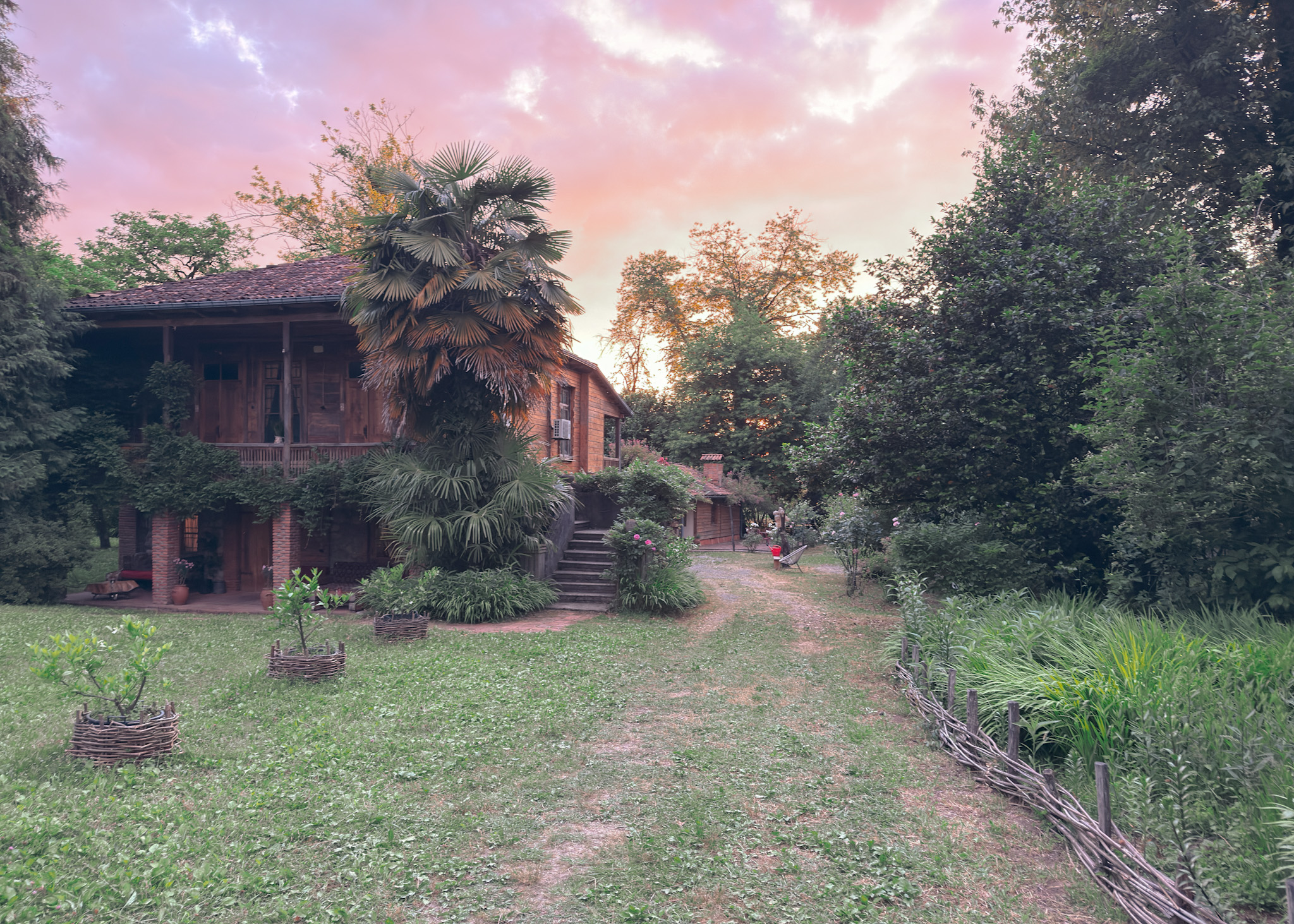


The winery turned out to be a charmer, boasting picnic tables tucked in between trees and a fire pit ringed with tree-trunk rounds for chairs, with neat vineyard rows running off into the rear of the property. While Shaina hit the country roads for her own walk/run and much-needed “solo time”, Max stayed back and fed the tiny humans at the small guesthouse eatery. Dinner was cold chicken in walnut sauce, which briefly baffled the girls until they made peace with the idea that the chicken dish was meant to be eaten cold, and then they demolished it. As the light dropped, the whole property lit up with fireflies, more than any of us had ever seen at once, the air flashing in every direction. It was genuinely magical.
It did not stay magical. We headed upstairs to find Arya and Finlee in their pajamas, shrieking, having discovered that their room had been colonized by dozens of flying beetles, which they labeled “stink bugs”. It was a comically full-blown infestation. Max, armed with nothing but a roll of toilet paper, went to war, hunting the little invaders down one by one, squashing each in a wad of tissue and depositing the corpses in the bin, emerging as the undisputed hero of the evening. He then returned to the parents’ room to find six or seven more of the stinky buggars waiting there too, dispatched them with cold efficiency, climbed into bed, and fell asleep quietly repeating the only mantra that helps in such moments: there are no bugs, there are no bugs, there are no bugs.
The next morning the songbirds went off like an alarm with no snooze button, so at least the grownups were up early. The girls can sleep through a hurricane, so sweet little bird chirps were nothing—we let them sleep in. Instead, we walked up to the Shemokmedi Monastery, a small weathered stone-and-tile complex on a wooded hill dating back to at least the 15th century, when it was one of the most important religious centers in Guria. The path up wound through orchards and up an impossibly steep finale, all of which made the walk feel like part of the point. Breakfast back at the winery was prepared by apparently the only cranky lady on site. But we took it in stride since she delivered a delicious stack of perfect mini pancakes with cherries in syrup alongside a huge spread featuring a surprise ratatouille casserole—soft tomatoes and eggplant and peppers all baked into one melted, delicious whole.
The day’s one real stop was Shekvetili Beach, a long, quiet stretch of the Black Sea coast famous for its dark, almost charcoal-colored magnetic sand, which is said to carry natural therapeutic properties. Locals come to bury themselves in, up to the neck, for hours at a time. We did not bury ourselves, nor did we swim. We dipped our feet and then got down to the far more important work of hunting for good rocks. What makes a rock a “good rock” is not a question that admits a clear answer. You simply know it when you see it, or perhaps when you pick it up. Both girls came away with fresh collections weighing down their day packs, and Max has a strong suspicion the Forester left several pounds heavier than it arrived.


From the coast we drove to Zugdidi, the largest city in the Samegrelo region and the official gateway to Svaneti. The scenery was green and pretty and otherwise unremarkable, save for the single feature that kept Max fully alert while driving: a nonstop parade of cows, pigs, and dogs wandering into the highway with absolutely zero regard for their own continued existence. Two hours of defensive driving later, he had managed to avoid turning any livestock into a hood ornament, which felt like an accomplishment. We checked into Casa de Khasia, a lovely little guesthouse set in a backyard garden, where our host Rusadan welcomed us like old friends she had been expecting all day. On her recommendation, we walked over to a restaurant called The Host. Nothing about the place was remarkable except the kubdari, which was markedly better than the Kutaisi version: baked longer for a proper crust, the meat in real chopped chunks rather than anything ground, much closer to what a true Svanetian kubdari should be. Which makes sense, since with every passing day we were getting closer to Svaneti itself.
Our last transitional day was a short one, just a 39-minute drive north to the village of Jvari, but it was the day the landscape finally announced what was coming. The road bent straight toward the Greater Caucasus, the immense range that arcs across the entire northern edge of Georgia and forms the country’s border with Russia. The region around Jvari is where the foothills abruptly stop being foothills and start being walls. They call it “the gateway into Svaneti”, the glacially-carved high heart of the range. We got our first proper look at the mountains we were about to spend a week hiking in, and there is no use pretending otherwise: they look intimidating. Big, steep, serious. And the forecast we keep nervously refreshing is calling for rain across the next ten days, during which we planned to do several long altitude-acclimatizing day hikes, and a four-day backpacking trek from Mestia to Ushguli. What that will mean for the hiking, we genuinely do not know yet.
Just before Jvari we turned off onto a dirt track that climbed to Kokhta Guest House on the Mountain, which delivers exactly what the name promises: four rooms, three dogs, two pools, and a mountain setting so lovely we are already considering booking another couple of nights here after the trek. Max went out for an eight-kilometer run-hike on terrain that offered a choice between steeply up and steeply down with essentially no flat ground in between, and came back to a less idyllic scene. Arya and Finlee had gotten into a real blow-up fight at the pool while he was gone. Shaina had pulled them out of the water to sort it out, they had, and then within five minutes of getting back in they were at it again, worse than before. Apparently sisters are still sisters, regardless of the magical mountain scenery and rare luxury of a pool with a stellar view. The two girls stayed in a thoroughly foul mood, sour enough that they wouldn’t even come swim with the grown-ups in what was, objectively, a sublime pool. We enjoyed the crisp dip alone, a little deflated, and left them to cool off.


Things improved over dinner, as things tend to. Our host Katie laid out an enormous home-cooked spread—beef khinkali, Sulguni cheese dumplings, chicken in a walnut and garlic sauce, and a huge plate of what she called Georgian ratatouille, the familiar vegetables in a heartier casserole form with beans folded in for good measure. Afterward, with the girls back on homework, Shaina and Max carried a carafe of wine out to the patio by the pool and talked through the kind of work-life balance they want to build once they are home, a conversation with a lot of moving pieces but, by the end of it, a clear enough shape.
And that was the approach. Three days of packing and unpacking, of wine-country fireflies and beach pebbles and suicidal livestock and one heroic stand against a stink bug infestation, all of it quietly climbing toward something much bigger. The mountains are right there now, filling the windshield, no longer scenery but a destination. In a couple of days we walk into them. We are excited. We are also, if we’re honest, a little nervous, and watching the sky.


Leave a Reply