
Dates: June 6th-7th, 2026
Place: Kutaisi, Georgia
We were not ready to leave Oni. The family at the guesthouse had been so warm, the town so gentle, the surrounding mountains so genuinely breathtaking, that we had barely scratched the surface of this corner of Georgia. After a final breakfast that included pkhlovani, the savory Georgian flatbread stuffed with greens and herbs and a little cheese, a last walkabout so the girls could ooh and aah over the baby bunnies, and one more game of fetch with Bambora, we said our goodbyes and pointed the Forester toward Kutaisi.
As we drove away we found ourselves sincerely wishing Nika and his family well, and likewise for the whole country. Once you have a few faces to attach to it, we found that we wanted Georgia to thrive, and for its powerful neighbors to simply let it be. That is a strange thing for an American to sit with. We have oceans on two sides and friendly neighbors to the north and south. Georgia has none of that cushion. It is a beautiful country with an ancient culture, wedged among neighbors who have been markedly less than enthusiastic about respecting its sovereignty, Russia in particular. We would come back to that thought, in a wine cellar, two days later.
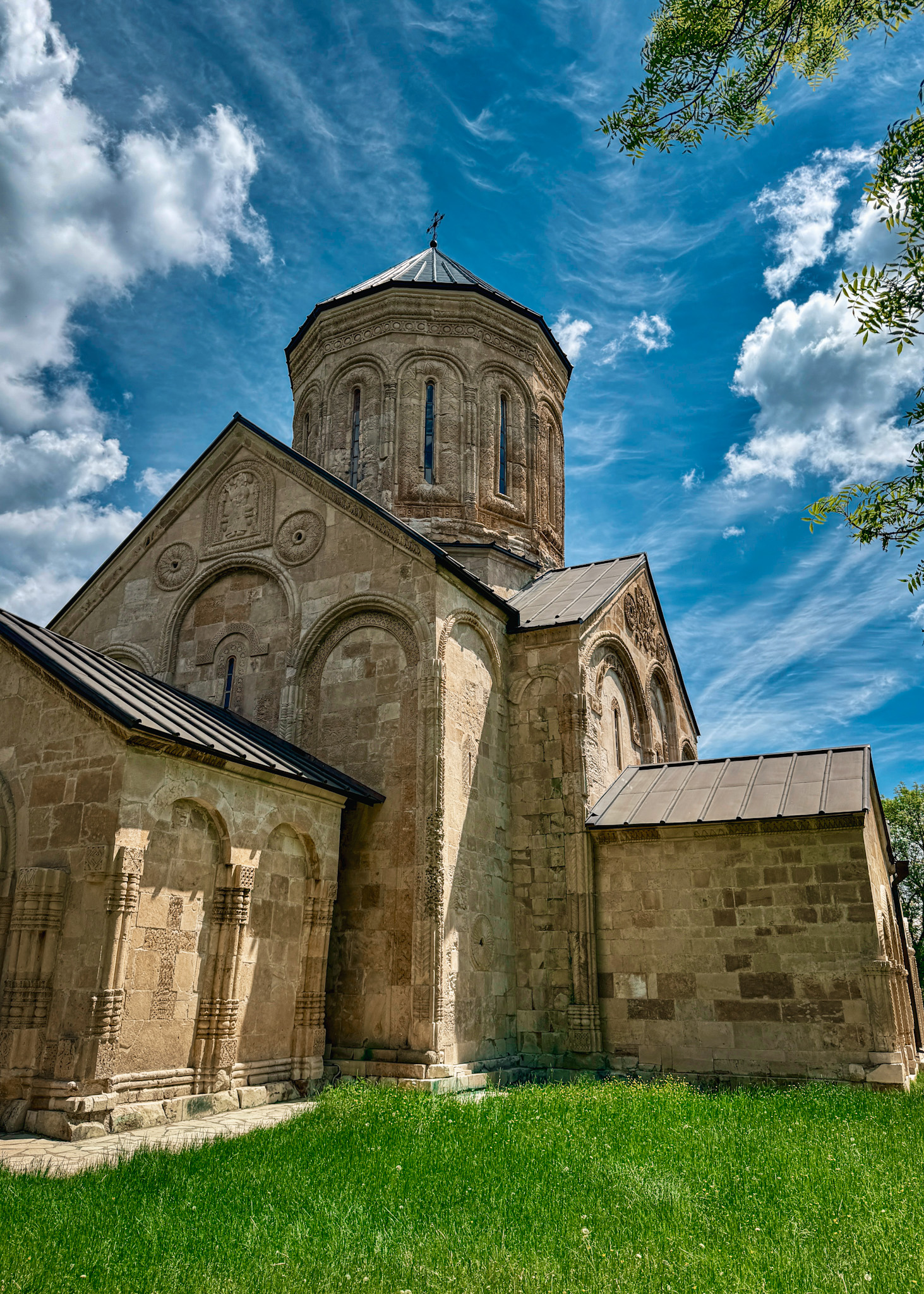
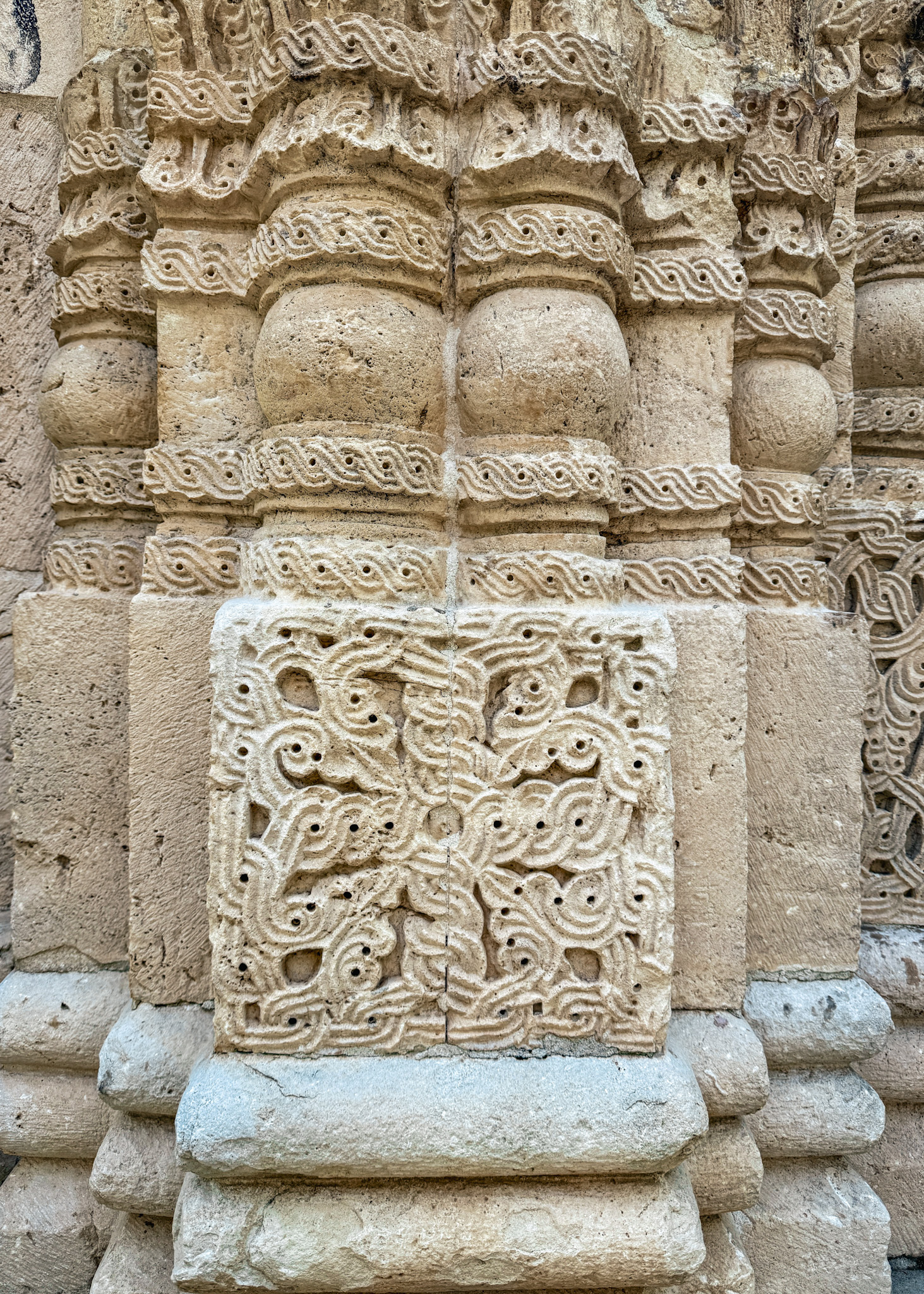
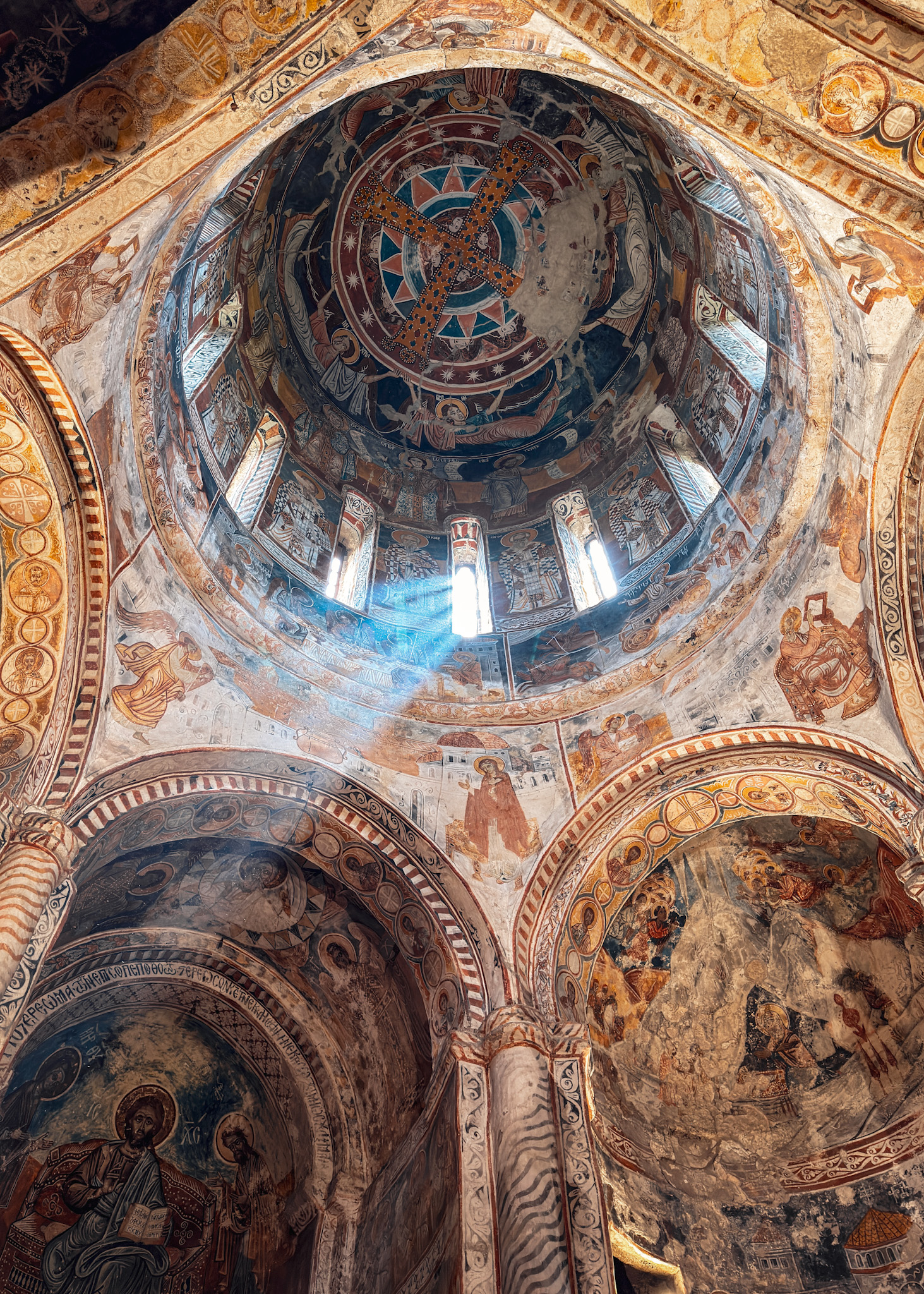
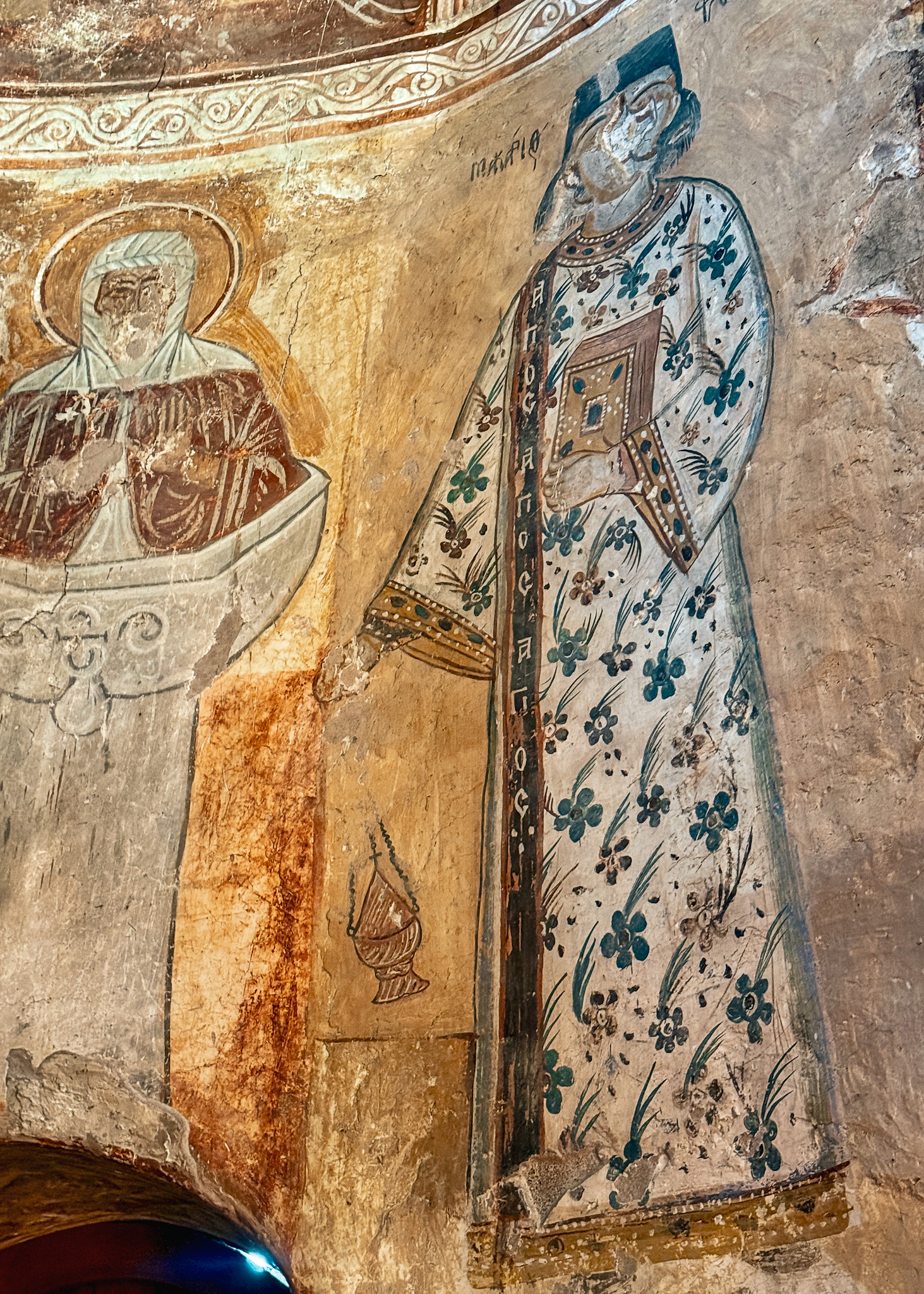
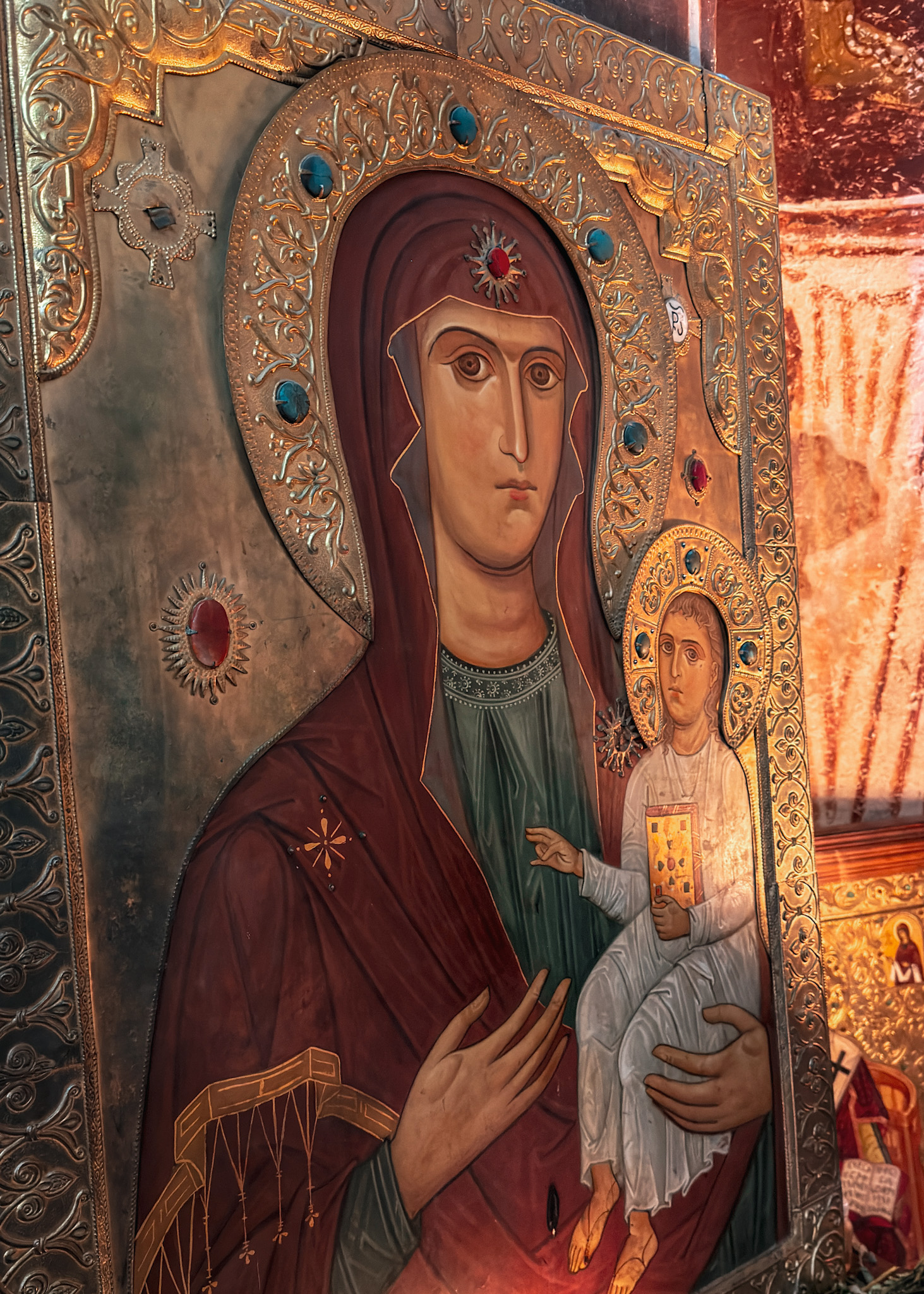
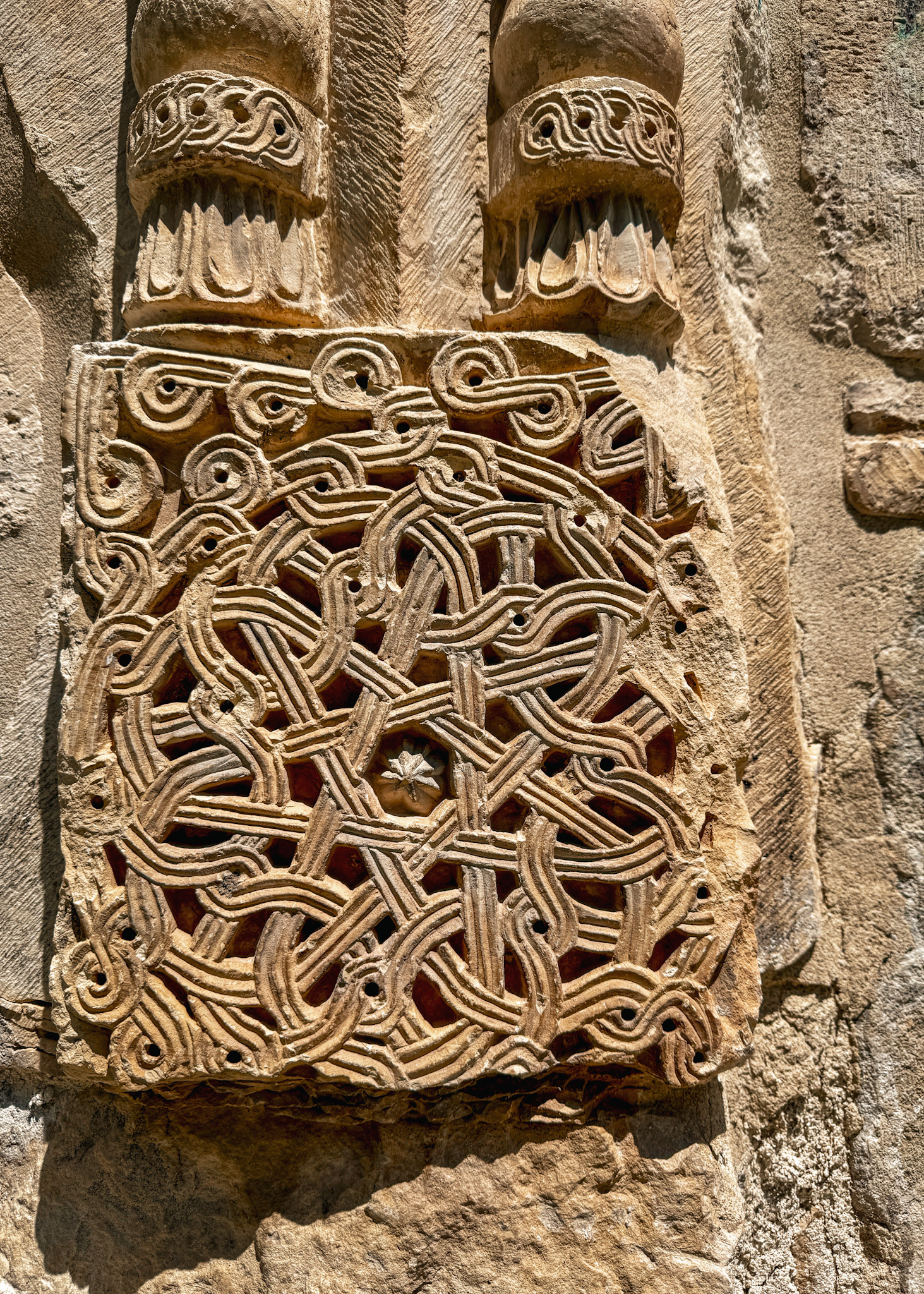
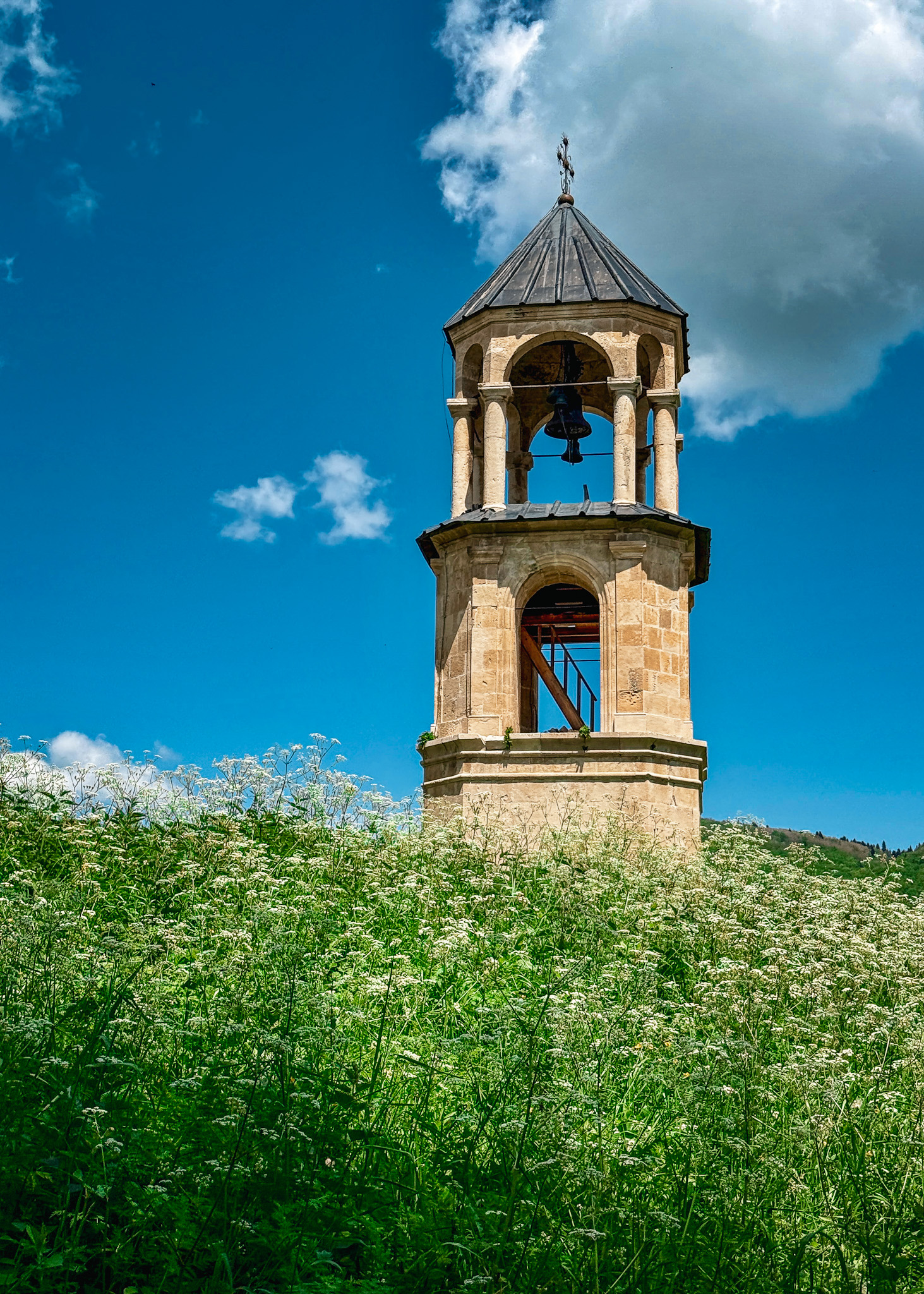
The drive delivered a string of discoveries that kept us engaged and entertained as we moved out of the mountains in the Racha region and towards Kutaisi. Our first stop was Nikortsminda Cathedral, which Claude had billed as a back-roads church that hardly anyone visits. It is certainly back-roads, judging by the steep and twisting access road. But word has clearly gotten out, because we rounded the final bend to find no fewer than twenty Sprinter vans parked along the road and their occupants already swarming the grounds. Built between 1010 and 1014 during the reign of King Bagrat III, Nikortsminda is considered one of the finest examples of medieval Georgian stone carving anywhere. From a distance it looks ordinary enough, and then you get closer and notice that every roofline, corner, and doorway is worked in relief so intricate it amounts to lace in stone. Inside is better still. Frescoes cover every surface, painted over bright white backgrounds that throw light around a space that would otherwise be dim and heavy. The religious specifics were somewhat lost on us, but the sheer artistry made it a genuinely fun building to wander.
From there we passed Shaori Reservoir, the result of a 1950s hydroelectric project that gives off the unmistakable feel of a beloved hometown lake, the kind built for summer barbecues and lake-trout fishing rather than jaw-dropping alpine drama. The wind was picking up and there was nowhere obvious to linger without our own picnic, so we admired it from the car and drove on.
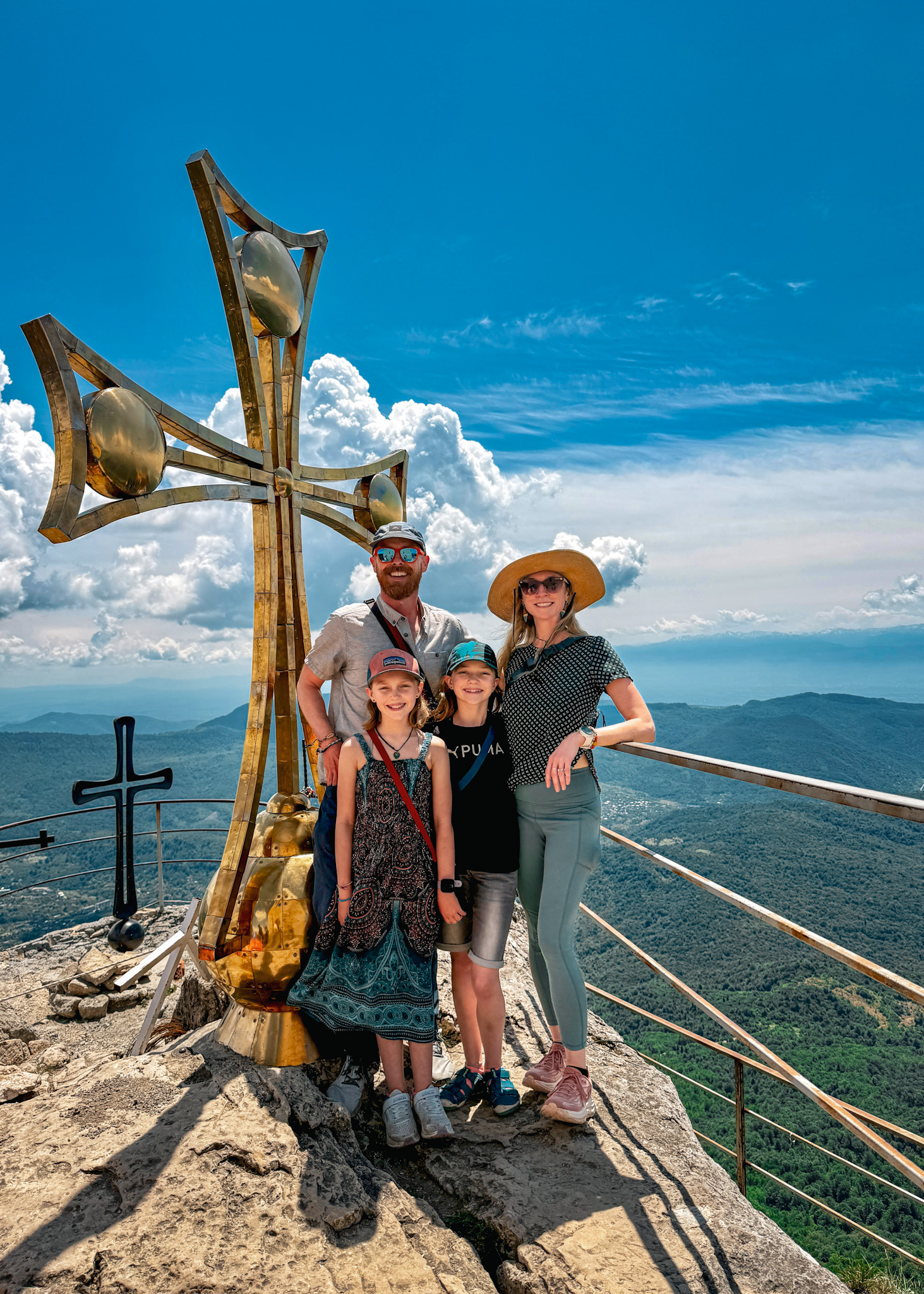
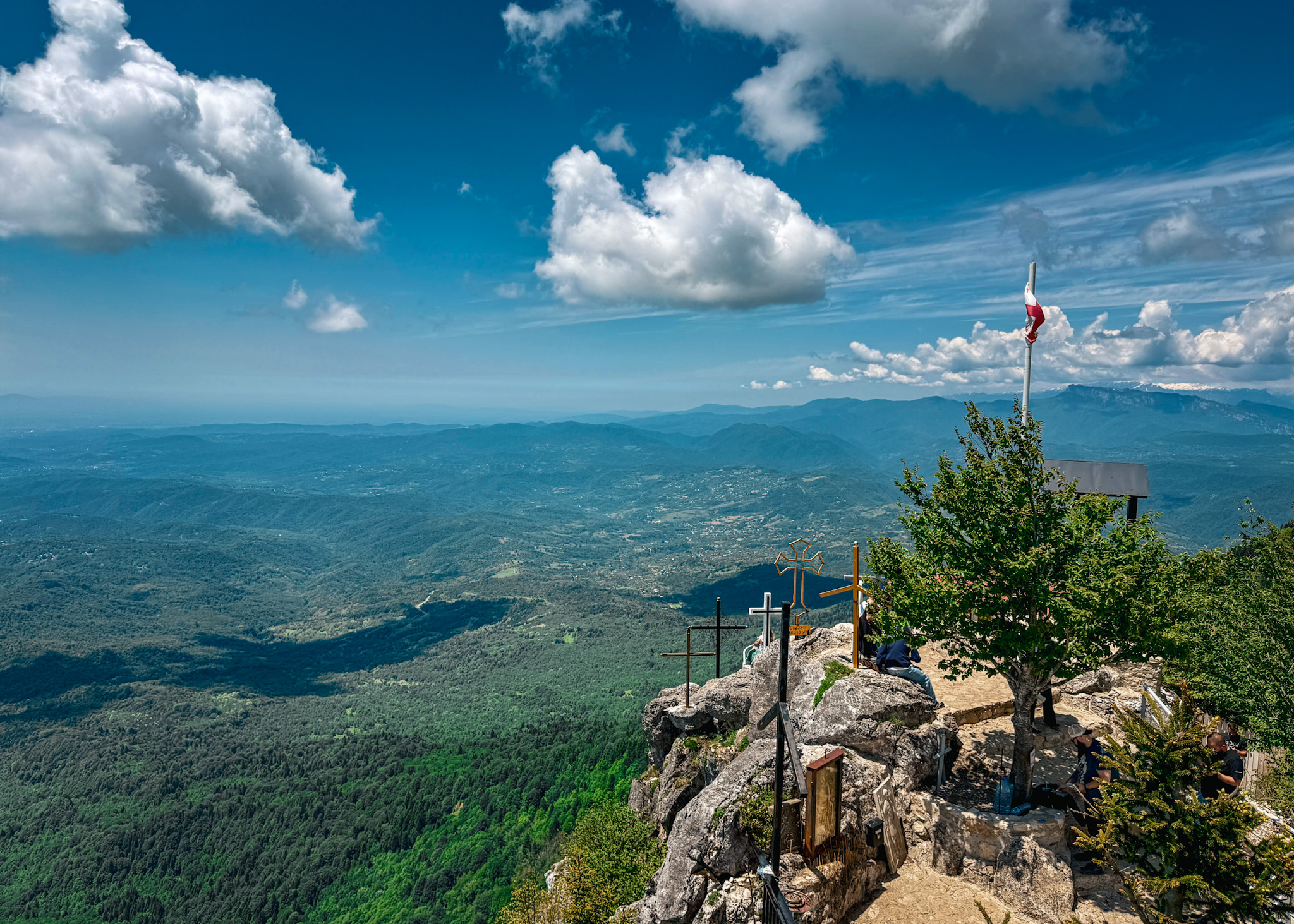
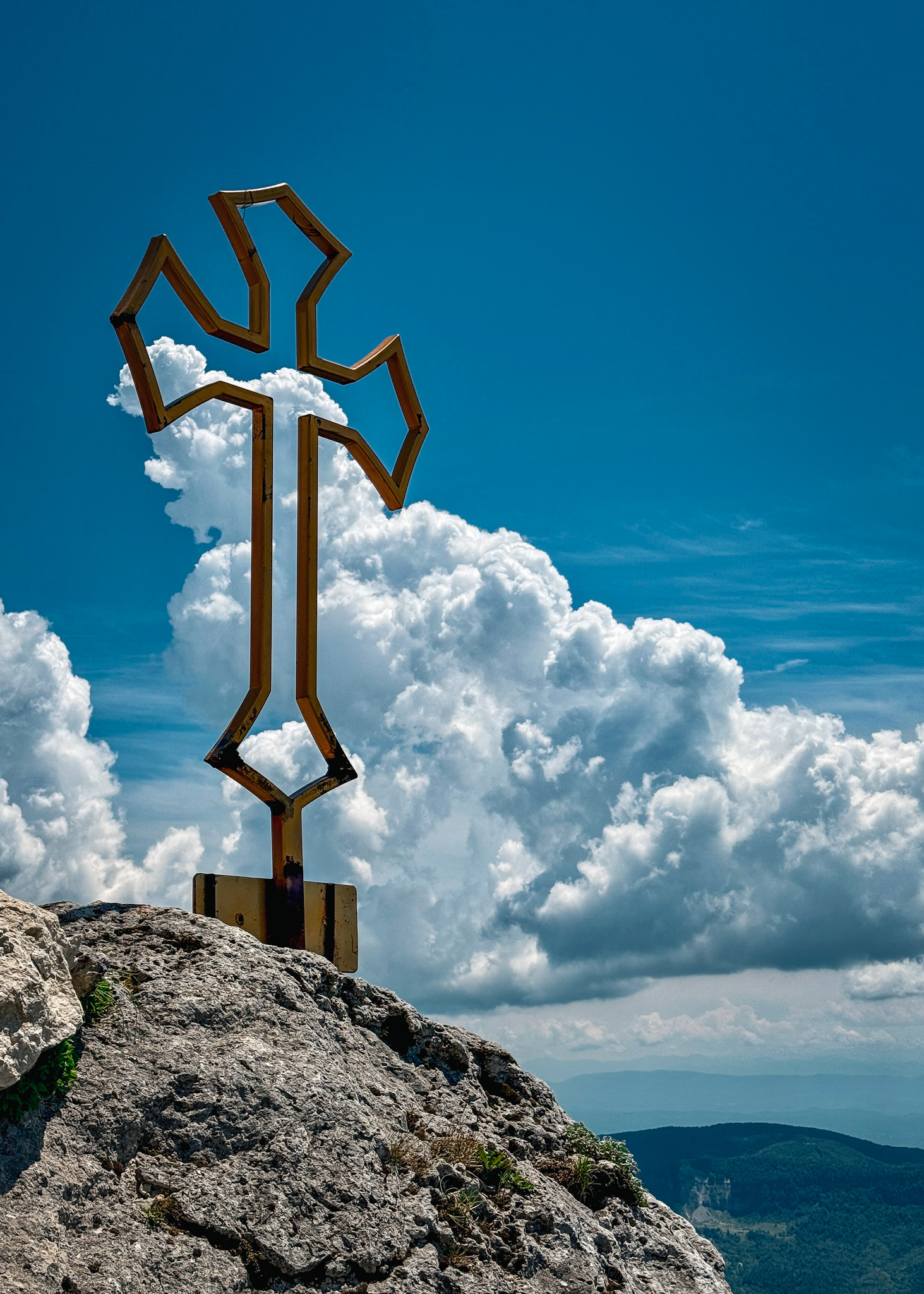
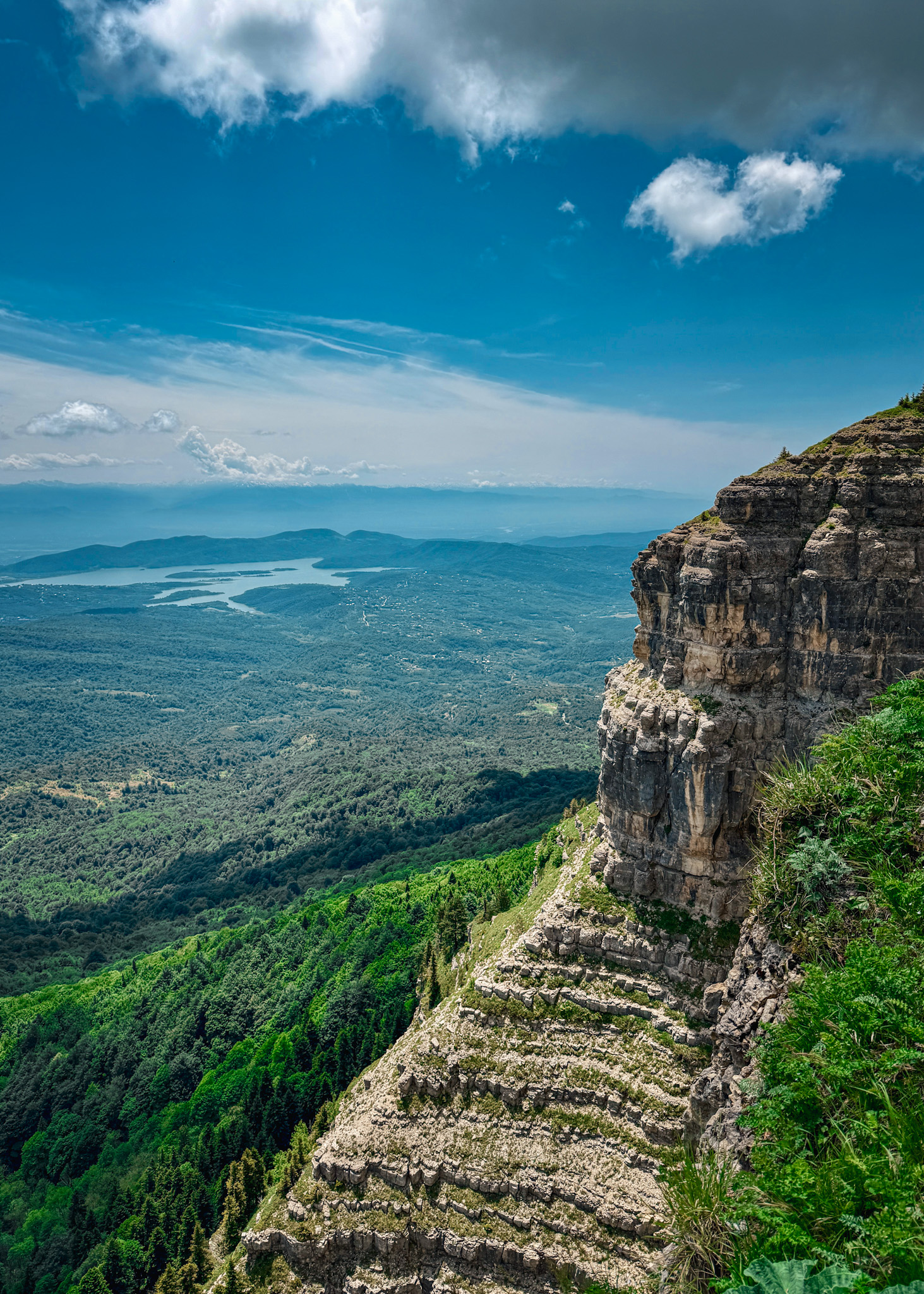
The day’s most eventful stop was Tskhradjvari, which translates roughly to “Nine Crosses”, a small chapel perched on a tall bluff with 360-degree views. The hike up began deceptively easy, then got steep, then got steeper, then turned into a staircase that was functionally a ladder, gaining more than 150 meters in under a kilometer, while we shuffled along as one knot in a long conga line of (mostly Georgian) tourists. At the top, Max discovered he had left his drone remote back in the car, which limited him to the autonomous helix shot the drone can fly on its own. At Shaina’s urging, he launched it, and a huge gust of wind immediately came up. For a moment he was certain the thing was about to be shoved out of sight and lost for good, until a second gust spun it back around. It reacquired us, and little Neo clawed its way home against the wind. In the process of catching it, Max jammed his finger straight through the propeller guard, which stung for the better part of an hour and served as a fitting reward for forgetting the remote.
We wound back down the conga line, got on the road, and finished the final chapters of an audiobook called Interview with the Robot as we drove, a surprise and thoroughly satisfying ending that left the girls outraged at the villain and elated by the hero. The road from Tskhradjvari toward Kutaisi was a quintessential Georgian countryside drive, all rolling green hills and tiny villages where the sheer density of cows, dogs, and grandmothers in the road keeps you at a leisurely pace whether you like it or not. We liked it.
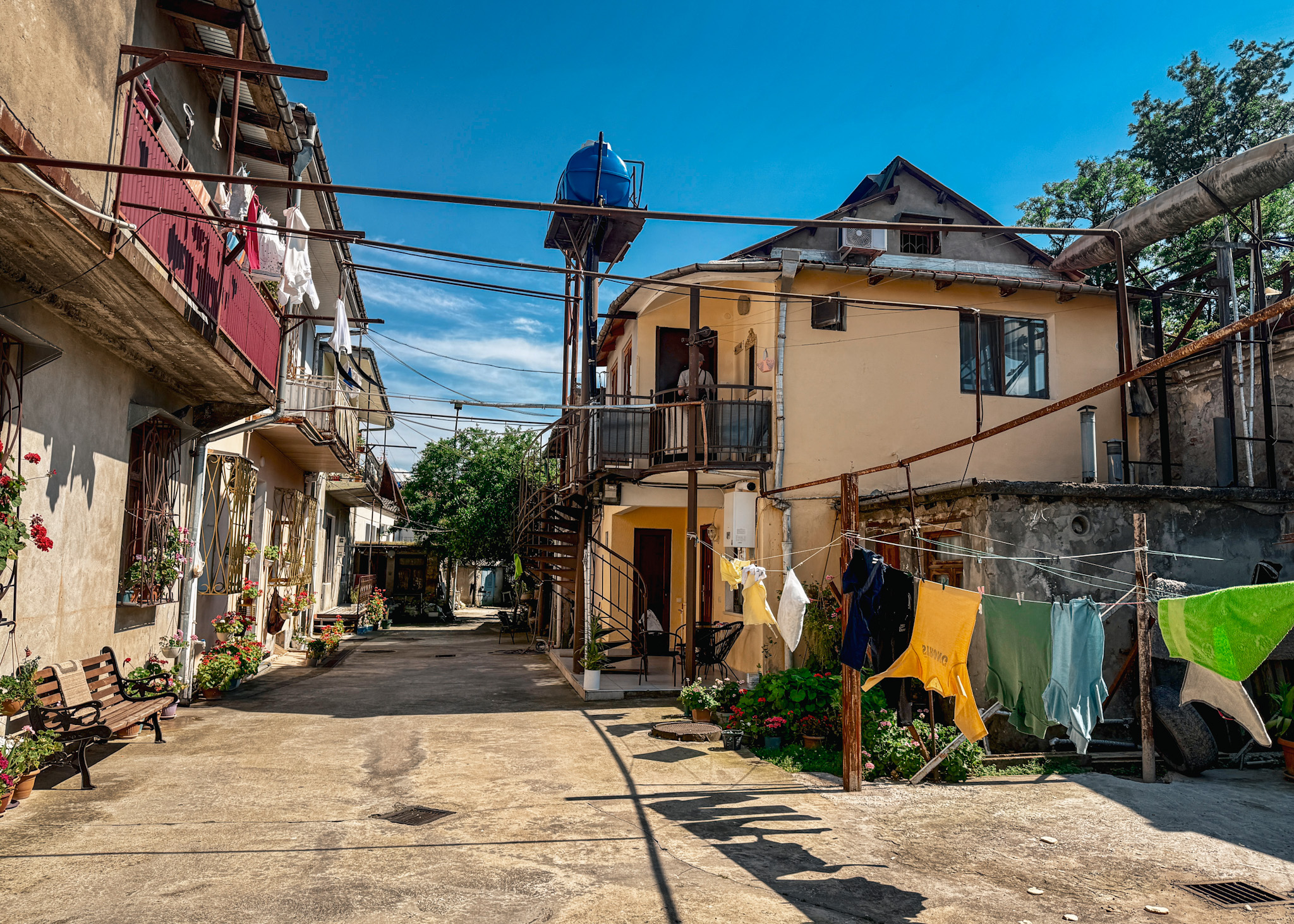
We rolled into Kutaisi around four and found our Airbnb, where our host, Marina, a wonderful woman in her late fifties or sixties who speaks not a word of English, welcomed us in entirely on the strength of her smile and got us settled. We use the word “compound” deliberately for this place, although Marina called it an “Italian courtyard.” It amounts to roughly eight houses sharing a single communal interior courtyard. Marina’s family owns four of the units, and the rest belong to neighbors who over the years have become close enough to qualify as family. They share food. They make wine and chacha together. The whole place hums with a communal warmth that was a privilege to drop into, and it would become the heart of our days here.
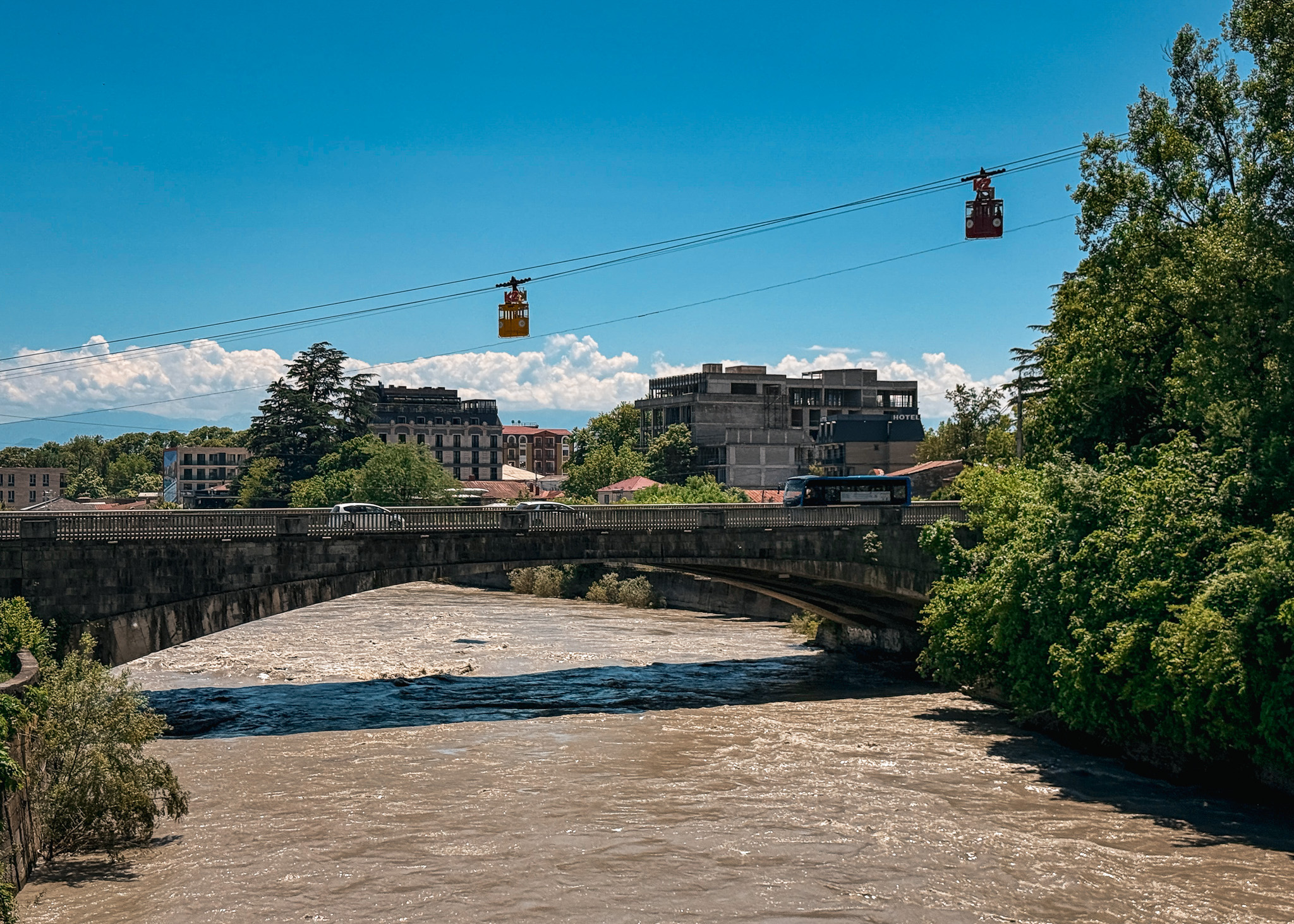
Once settled, we set out hungry and crossed the river at the White Bridge on our way to a meal that turned out to be one of our best experiences of Georgia. We had high expectations, as we’d been recommended to eat here by fellow travelers we met in Uzbekistan and even by a guesthouse owner in Kyrgyzstan. Bikentia’s Kebabery is a Kutaisi institution that has been doing exactly one thing for decades with absolute, militant focus. Walking in felt like being an extra in the Soup Nazi episode of Seinfeld. Behind the counter stood a surly, actively smoking, heavyset Georgian man who did not greet us so much as regard us with an expression that said, plainly, “get on with it.” The menu offered two options, and only two: kebab with bread and beer, or kebab with bread and lemonade. Choose one of those configurations and you were welcome here. The price either way was twelve lari, about four dollars and fifty cents.
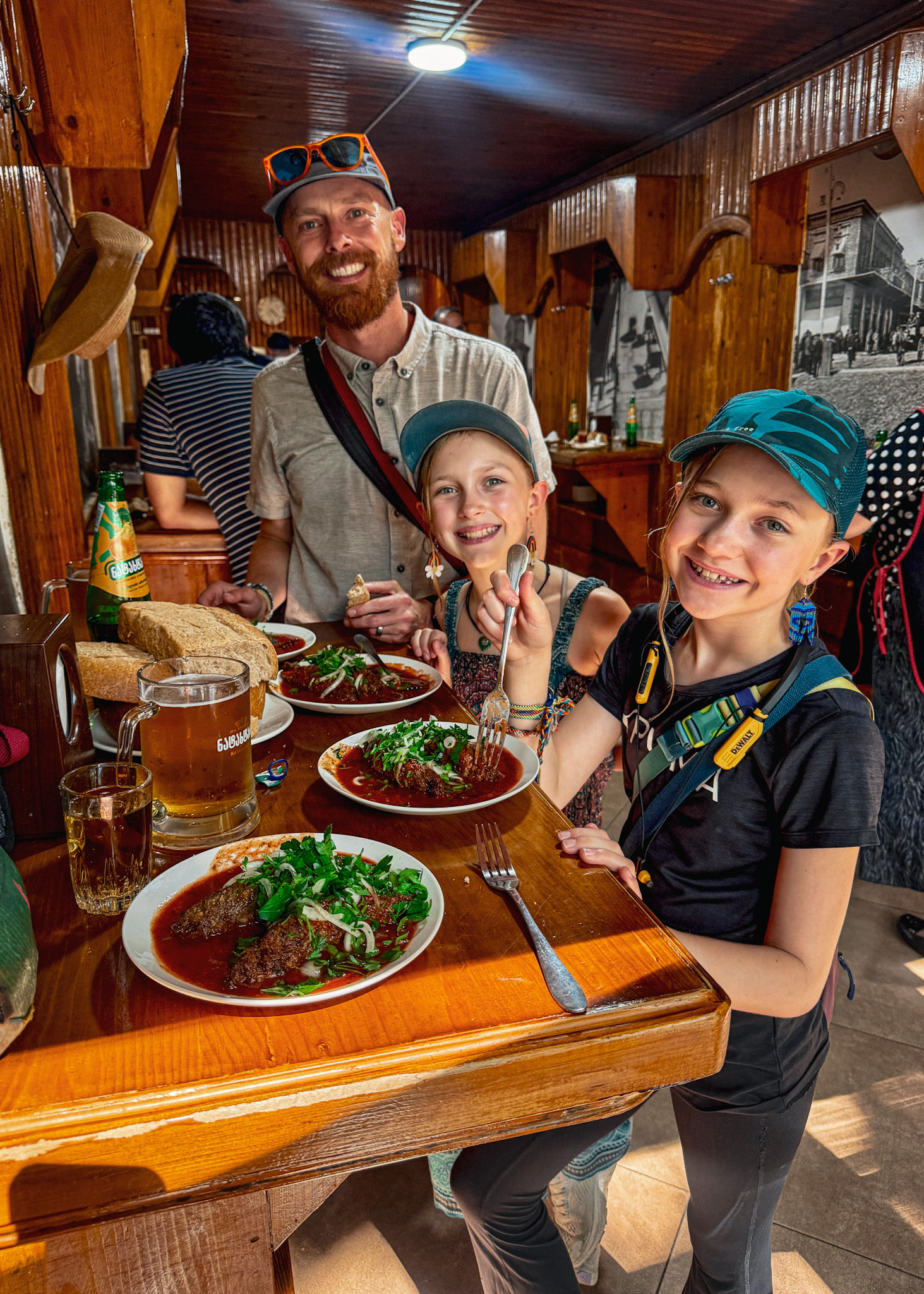
The kebabs arrived drowned in a spicy tomato-based sauce and buried under heaps of raw onion, cilantro, and parsley, with half a loaf of hearty wheat bread alongside and a half-liter of beer to wash it down. The only condiments on offer were more of that red spice and a bowl of salt. It was spectacular. Even Arya and Finlee, who do not hand out culinary approval lightly, pronounced it delicious and inhaled theirs. This is not a sit-down restaurant, by the way—it is a narrow room with small counters built into the walls where you stand to eat. Then the instant you set down your last bit of bread, a formidable older woman swoops in to seize your plate and empty glass and politely but unmistakably herd you out the front door to make room for the next person. There was always a next person. The place was packed when we arrived, packed when we left, and has almost certainly been packed all day, every day, for years. They found their niche and never looked back, and we loved every second of it.
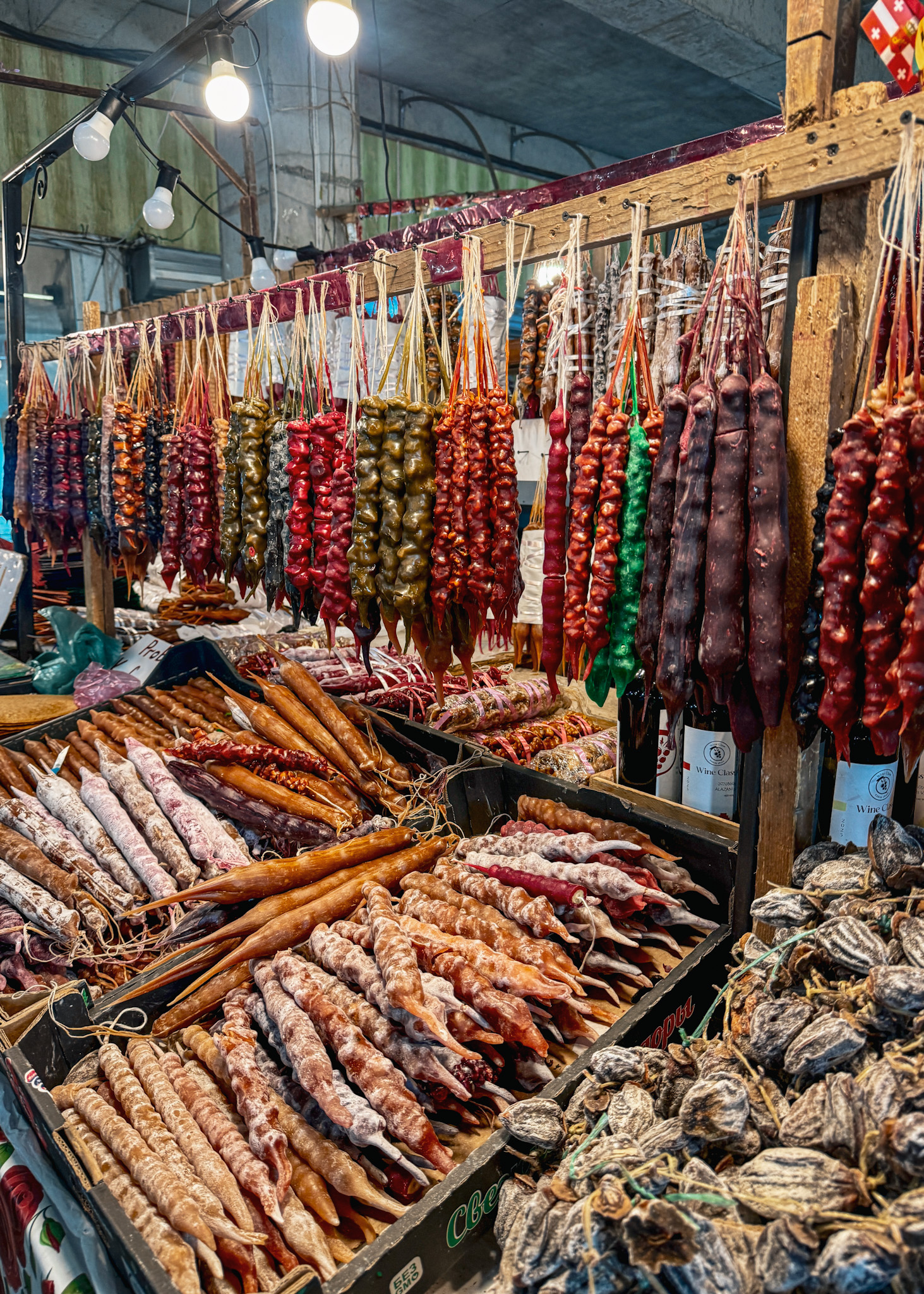
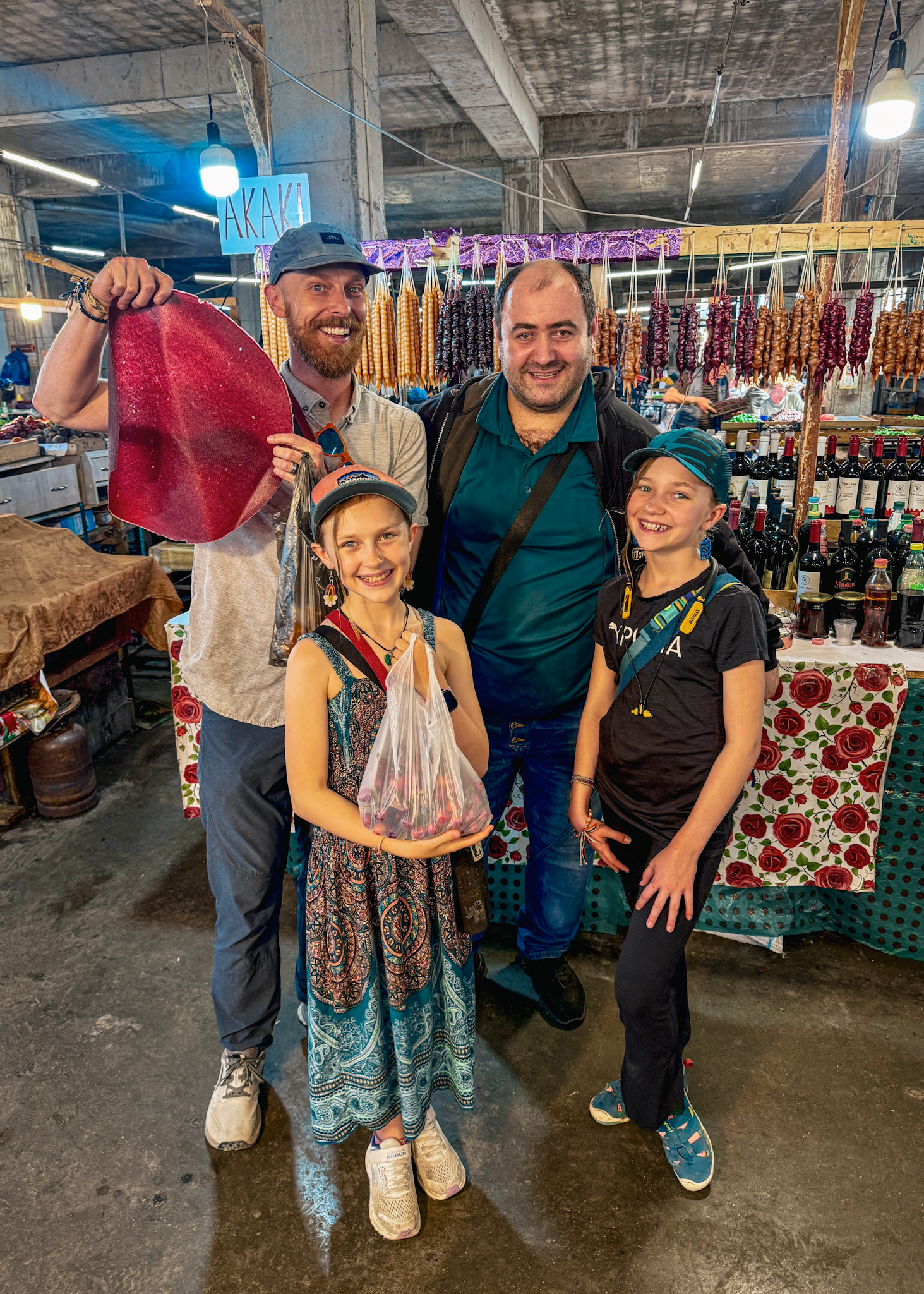
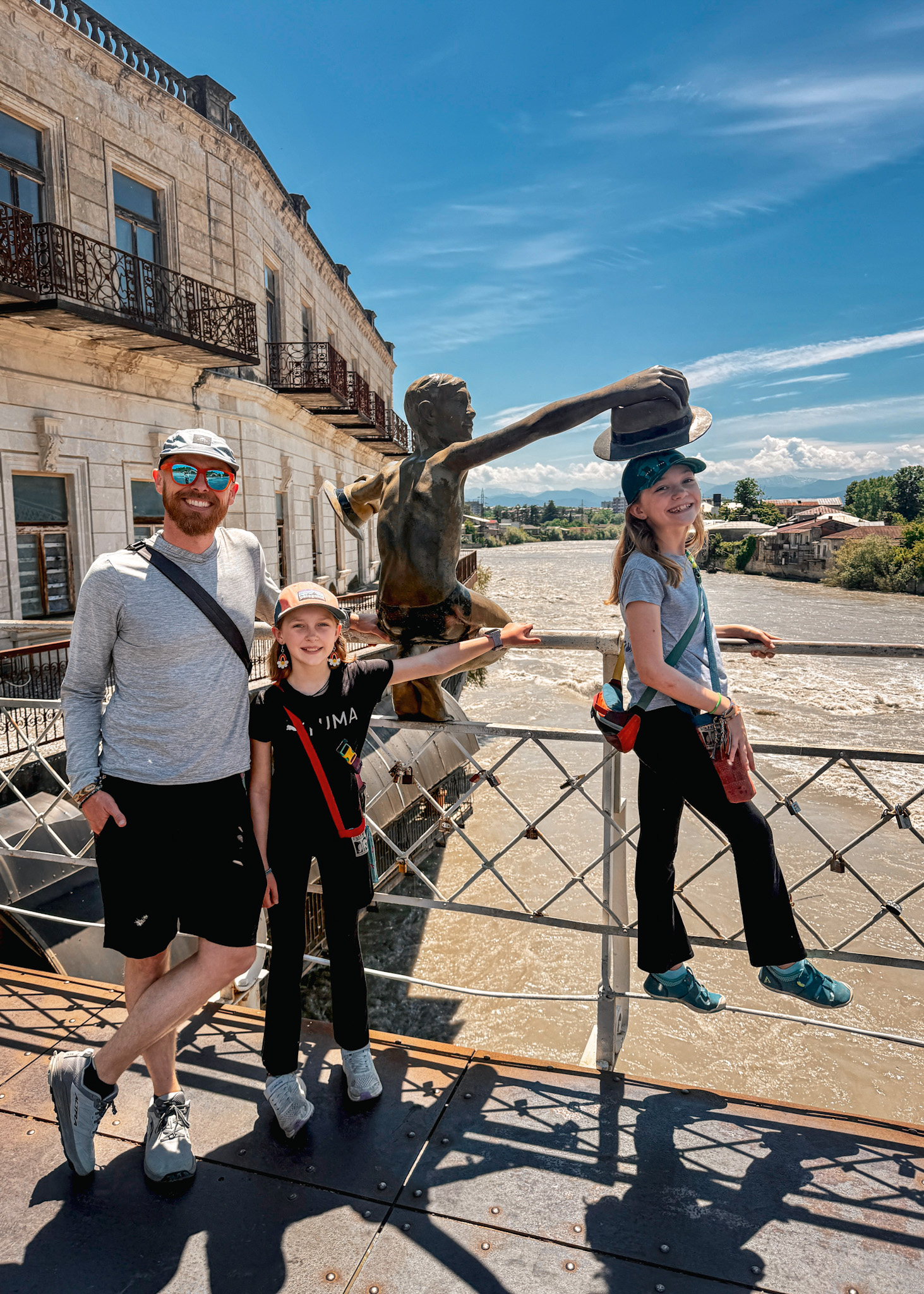
With dinner sorted, we wandered. The Green Bazaar, Kutaisi’s sprawling produce market, filled the air with fresh herbs and fermenting cheese and dried spice, and we came away with churchkhela, the local candle-shaped specialty of nuts strung on a thread and dipped repeatedly in thickened fruit juice, plus dried apricots and cherries for the road. We opted for hazelnuts in pomegranate juice alongside walnuts in grape juice and honey. We crossed the so called Chain Bridge over the Rioni River and climbed a long, steep set of stairs that opened onto a view of Bagrati Cathedral.
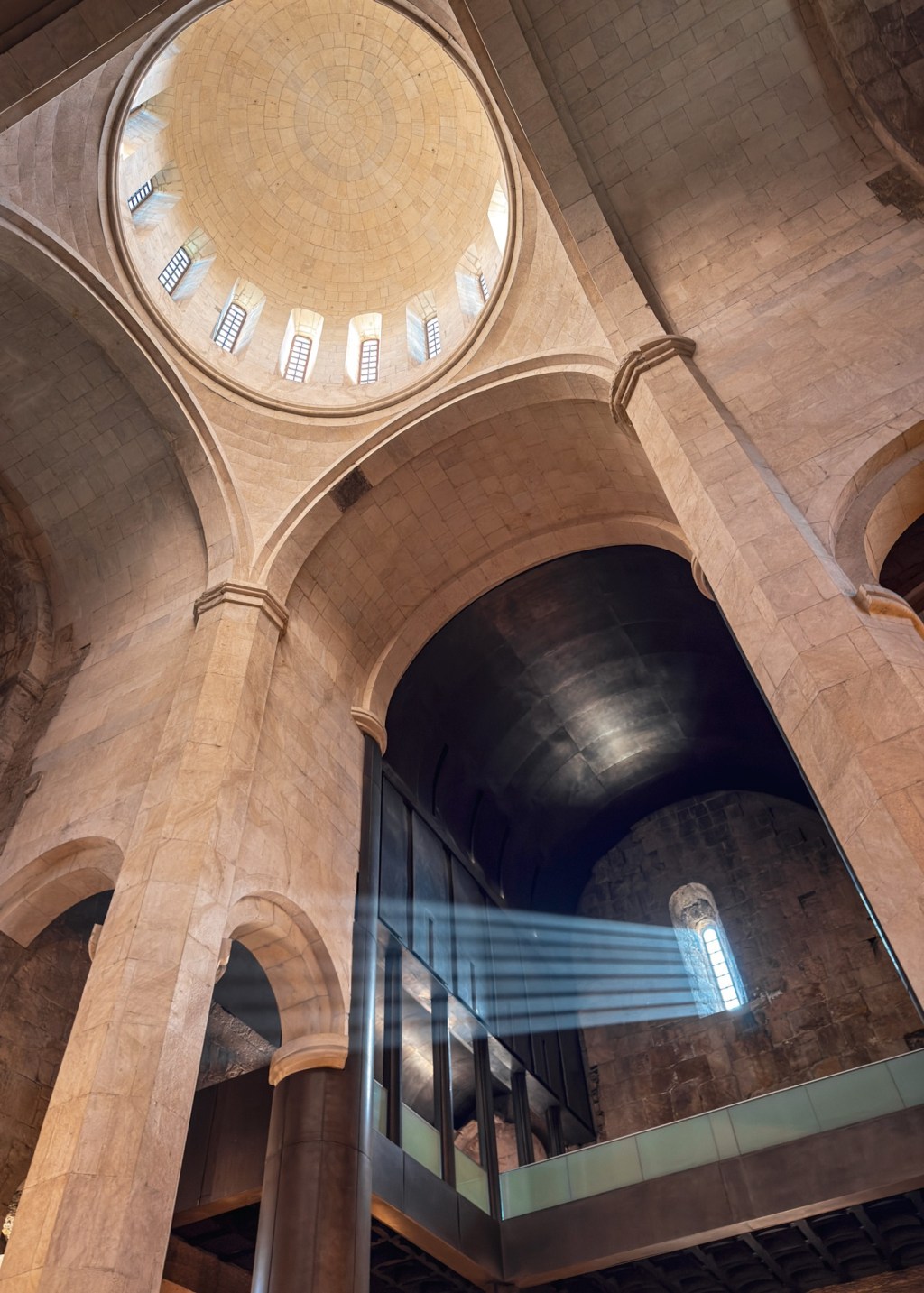
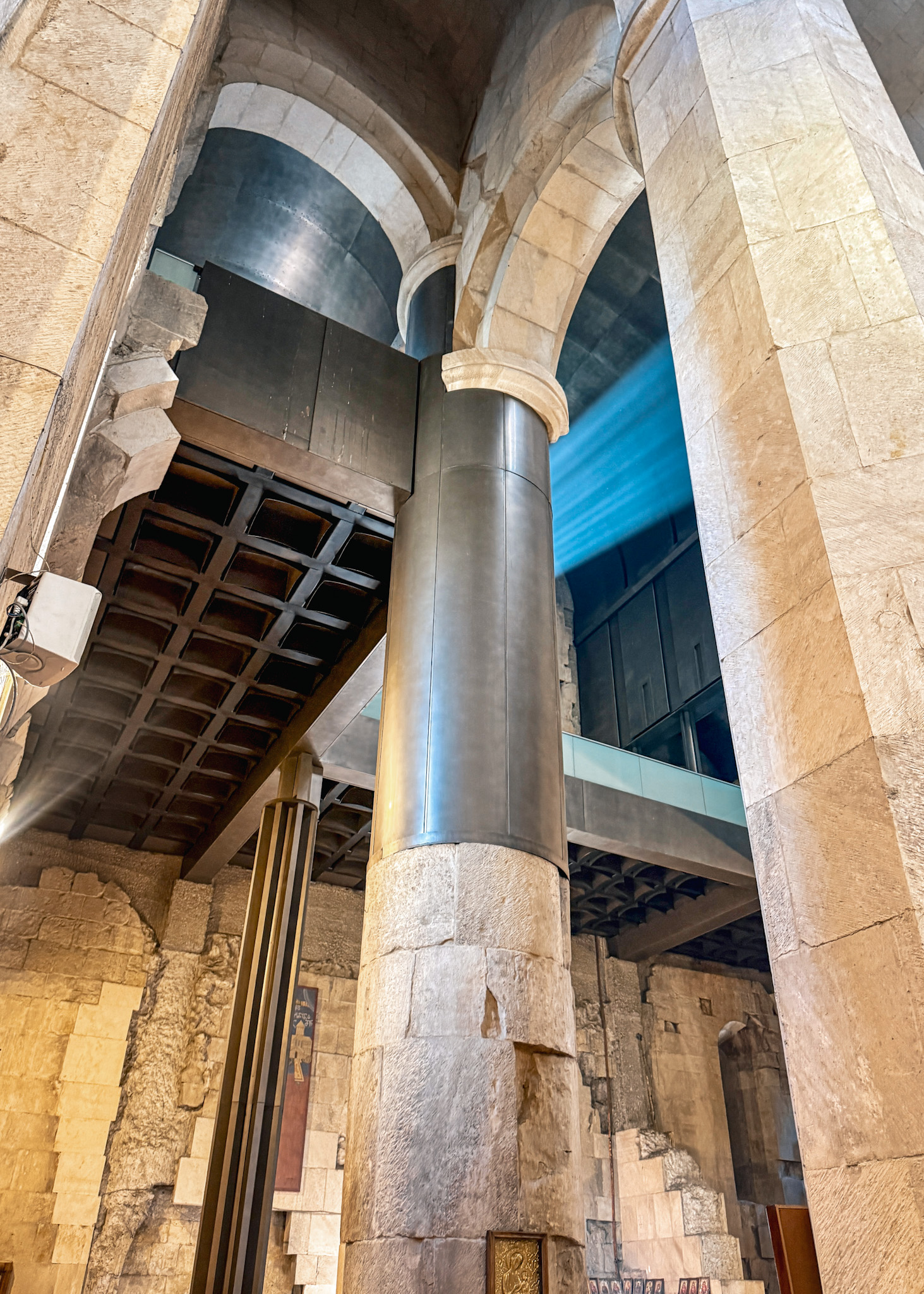
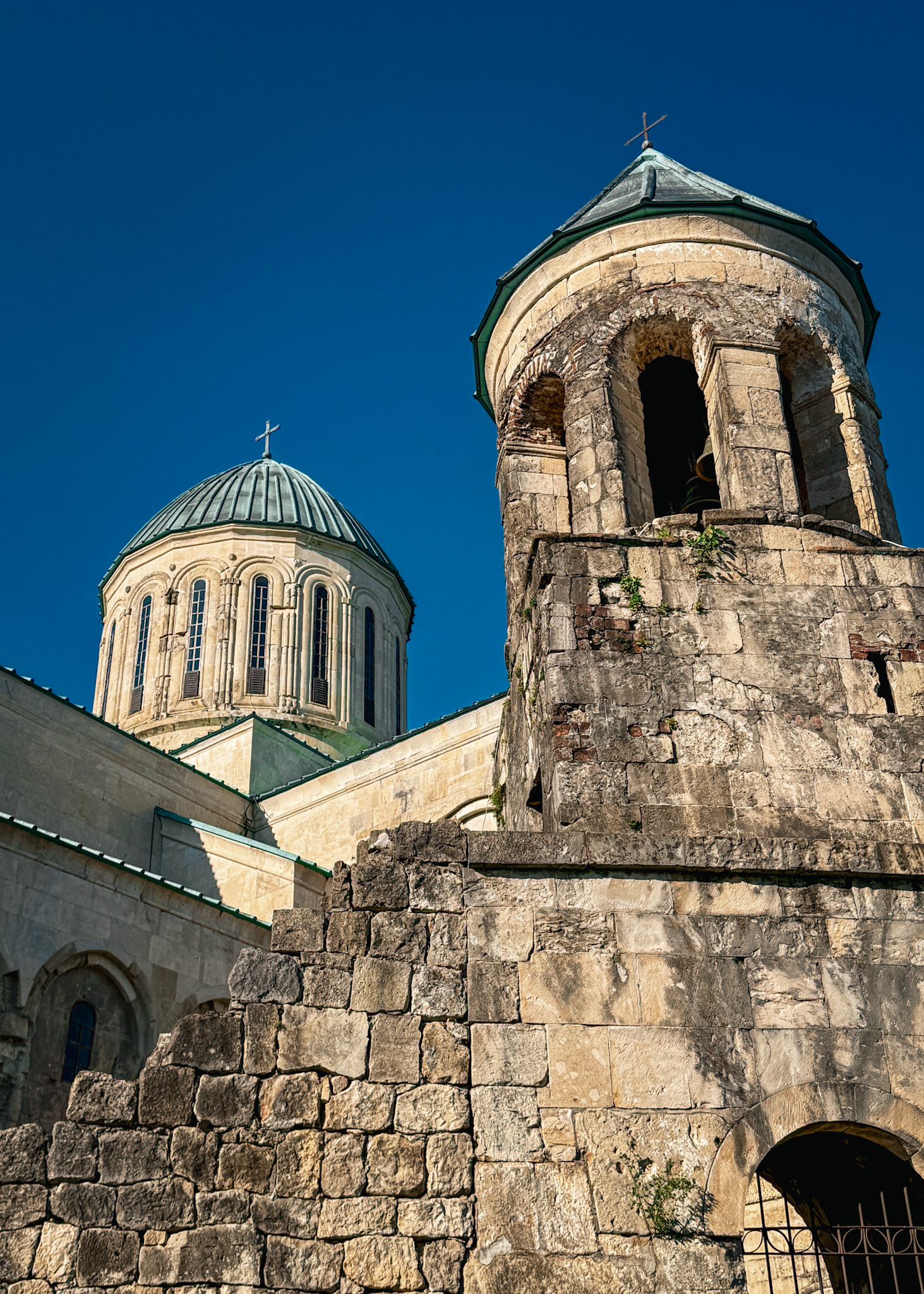
Bagrati has one of the more dramatic biographies of any building in Georgia. Completed in 1003 under King Bagrat III to mark the unification of the country, it was the centerpiece of the new unified kingdom and the spot where King David the Builder was crowned a century later. Then in 1692 the Ottomans secretly packed gunpowder beneath the foundation and blew the dome apart, and the cathedral stood in ruins for the next three hundred years. Eventually a controversial full reconstruction was completed in 2012—so controversial that UNESCO stripped it from the World Heritage List for departing so aggressively from preservation orthodoxy. You can see the argument from both sides standing in front of it. The rebuilders deliberately refused to fake the old stonework, reusing original blocks where they could and marking every new section in a way that makes no pretense of age. They added a large annex of Cor-ten steel and glass jutting off the eastern side, a material no medieval Georgian mason ever dreamed of. The juxtaposition of millennium-old stone blocks supporting smooth steel columns is jarring and, we thought, kind of amazing.
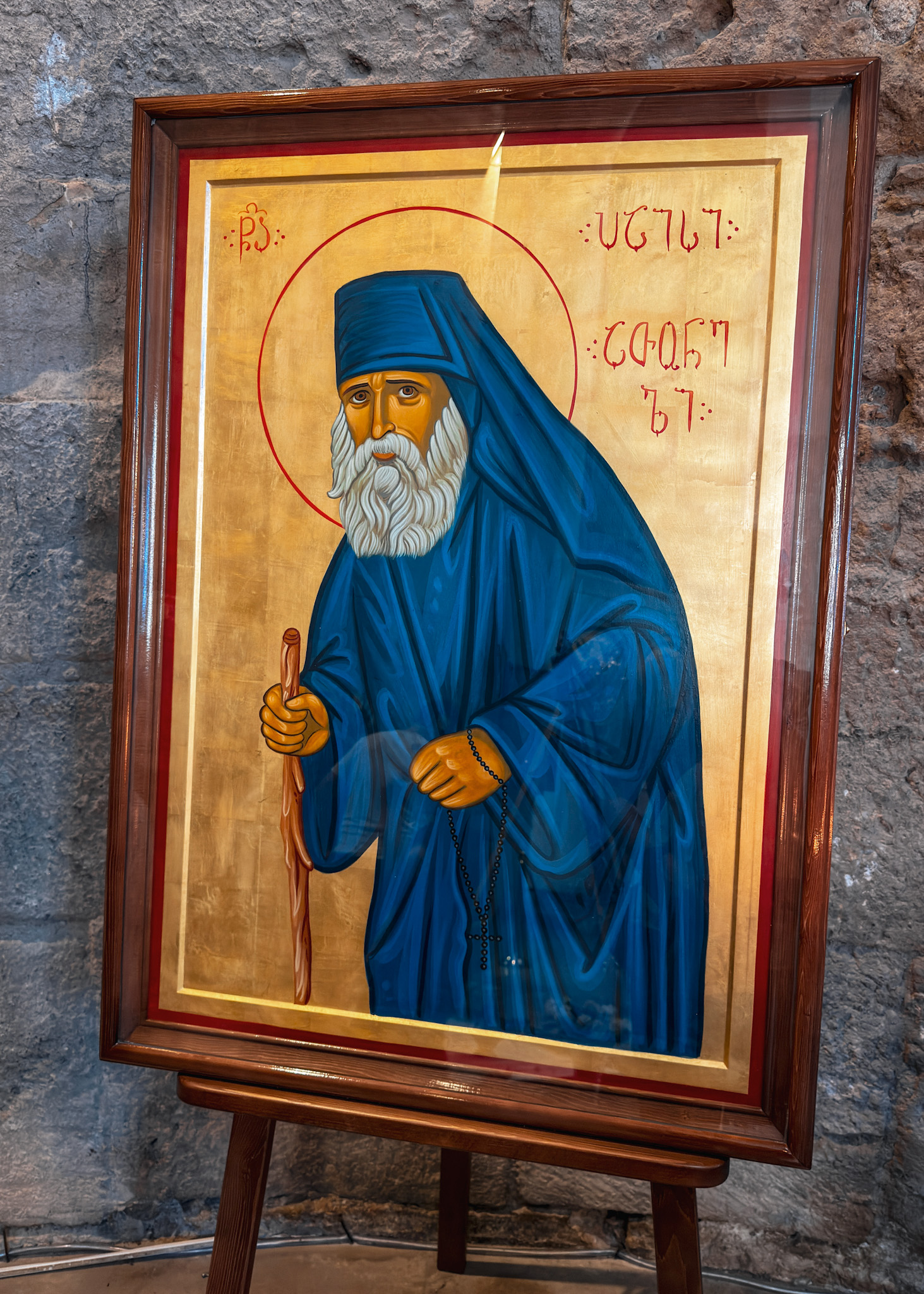
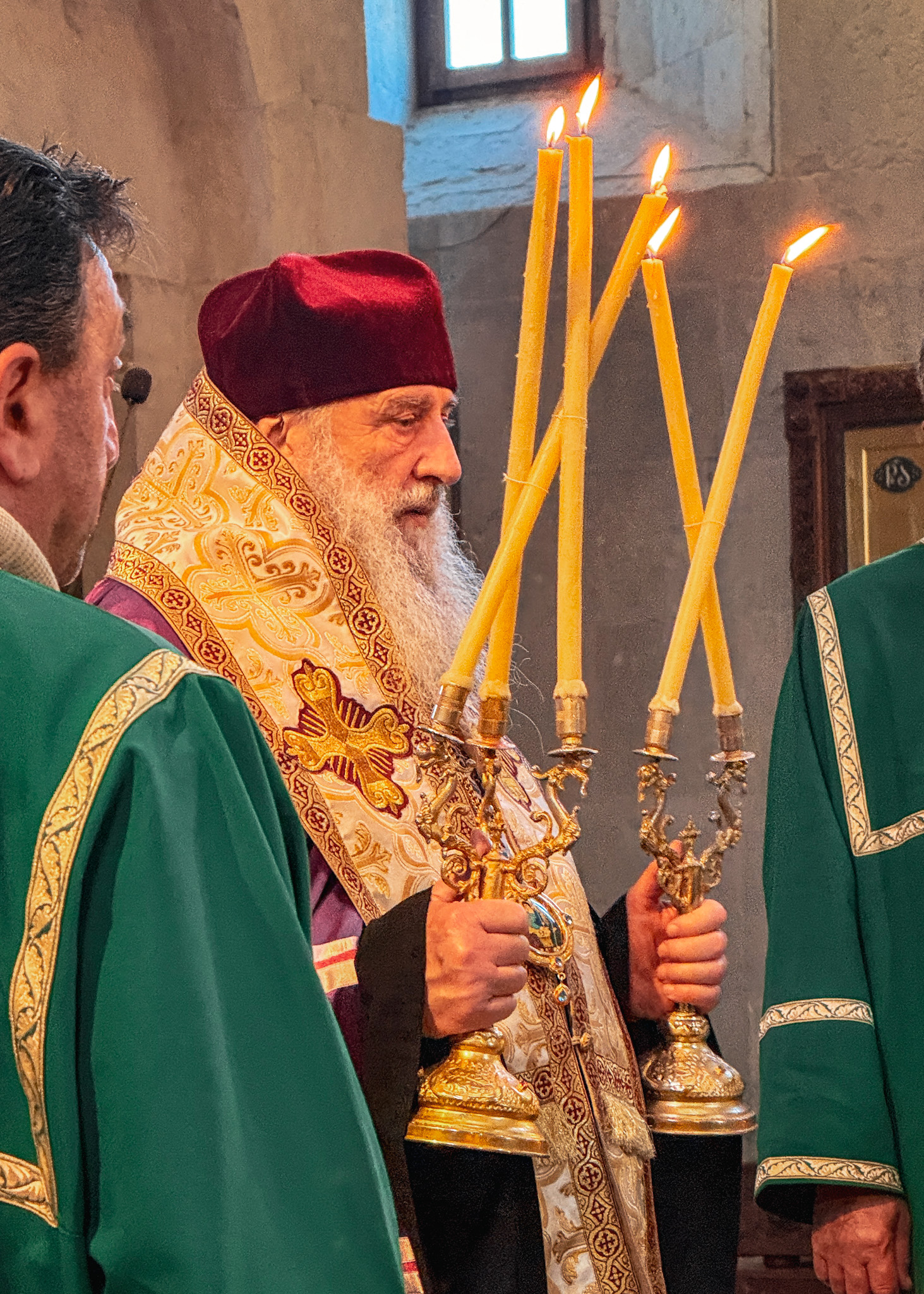
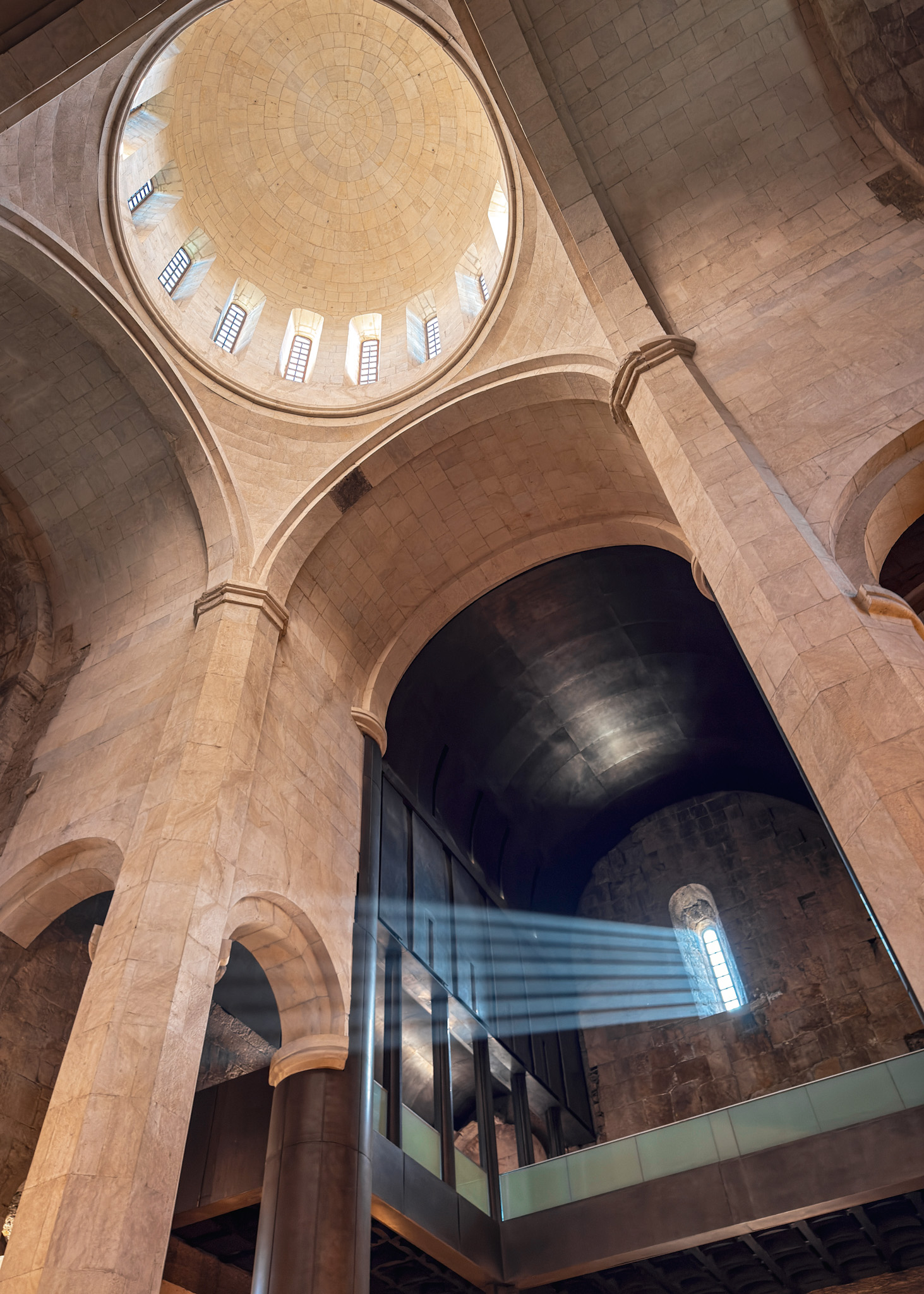
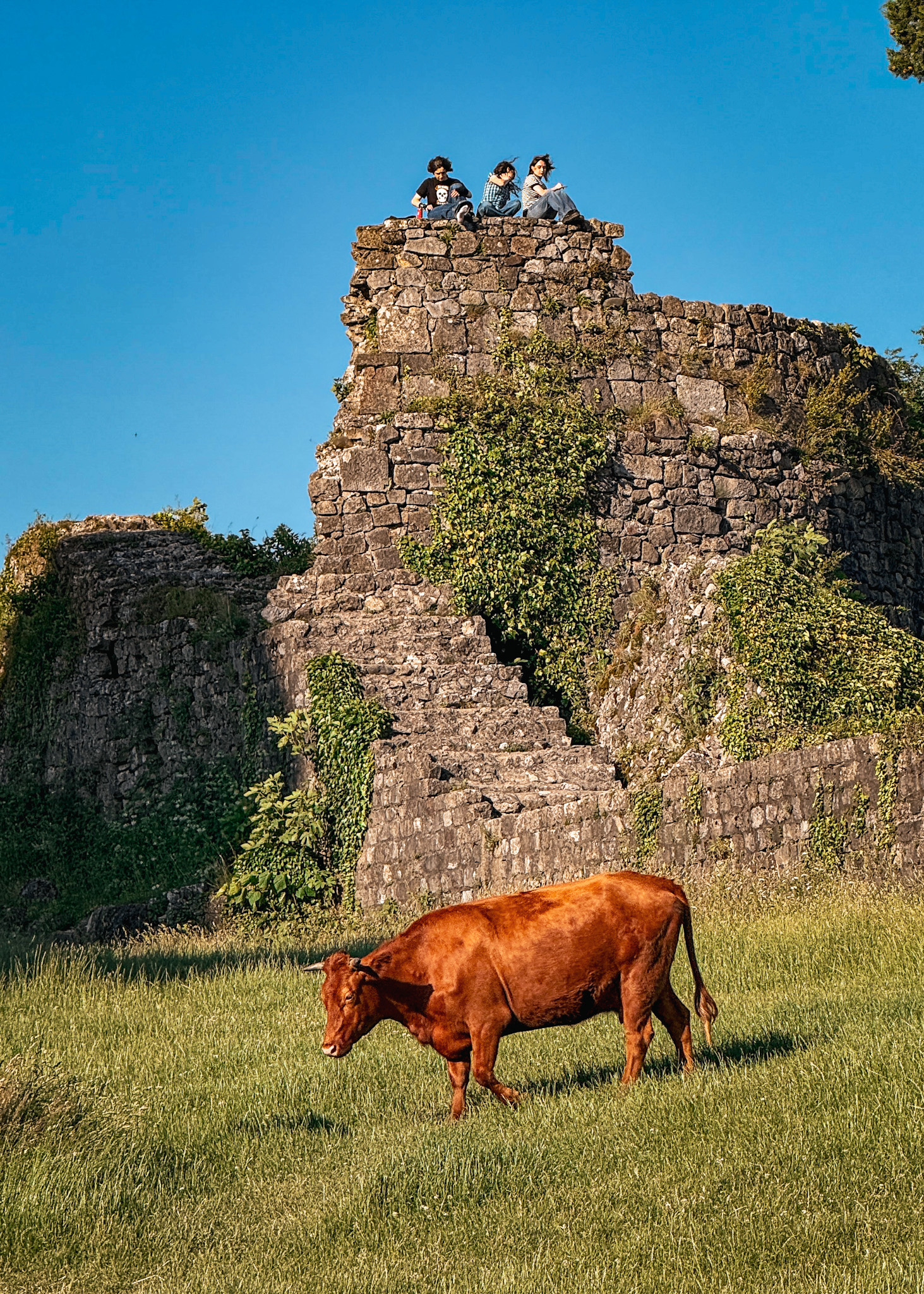
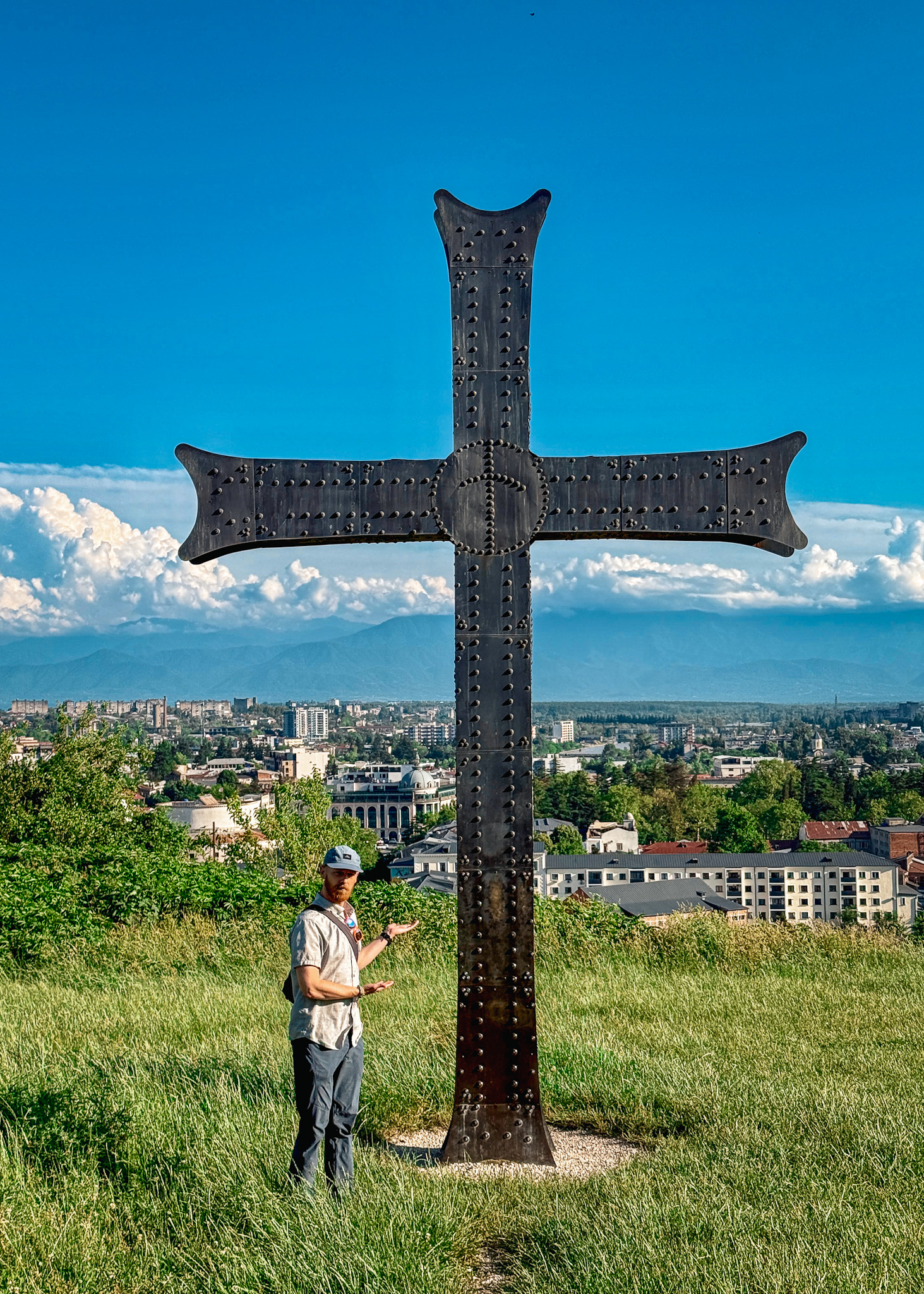
We stepped inside and immediately fell silent, because a service was underway. At the center stood a very old man with a long white beard and wearing purple robes, attended by a dozen men in vestments of green and white and black, all of them bearded in the long Orthodox tradition. One of them swung a censer through the air on a long chain, dispersing a fragrant smoke throughout the chamber. The purple-robed fellow, we learned later, was almost certainly the Metropolitan of Kutaisi himself, the senior bishop for whom Bagrati is the cathedral seat. The low evening sun came through the apertures of the dome and poured down through the incense-thick air in beams that felt almost staged. Off to one side a group of women sang galoba, the ancient three-voice Georgian polyphony that now sits on the UNESCO list of intangible cultural heritage. The very old man was helped up, gently, to the altar, turned to the congregation, spoke a few words in Georgian, and everyone bowed and crossed themselves before he was helped back through the doors that close off the holiest part of the church. The curtains drew shut, and the whole gathering quietly dispersed as though something unremarkable had just happened. We had witnessed a similar liturgy back in Armenia, and yet this one landed entirely on its own, helped along by the light and the singing. When we stepped back outside to photograph the great cross in the south field, as two cows placidly grazed at its base, it felt like just another Sunday evening.
We capped the night with herbal tea and an obligatory brownie under a scoop of ice cream at a cozy spot called Tea House Foe Foe, then headed back to the courtyard, where the girls met Marina’s grandson Shete, who goes by Bubbles, and his friend Alexi. Whatever hesitation the girls had about playing with a seven-year-old boy evaporated almost instantly under the stronger pull of having other kids around. They spent the evening tearing back and forth across the courtyard on a single shared scooter approximately one and a half million times, breaking only for hide-and-seek and some collaborative artwork.
The next day we let ourselves go slow, and it started the way every Kutaisi day should, with kebabs. We were back at Bikentia’s for an early lunch: same surly man, same two-option menu, same plate-snatching enforcer, same packed standing room, same four-fifty a head—same magic. We would happily have made it a daily ritual if kebabs and beer could somehow be considered health food.
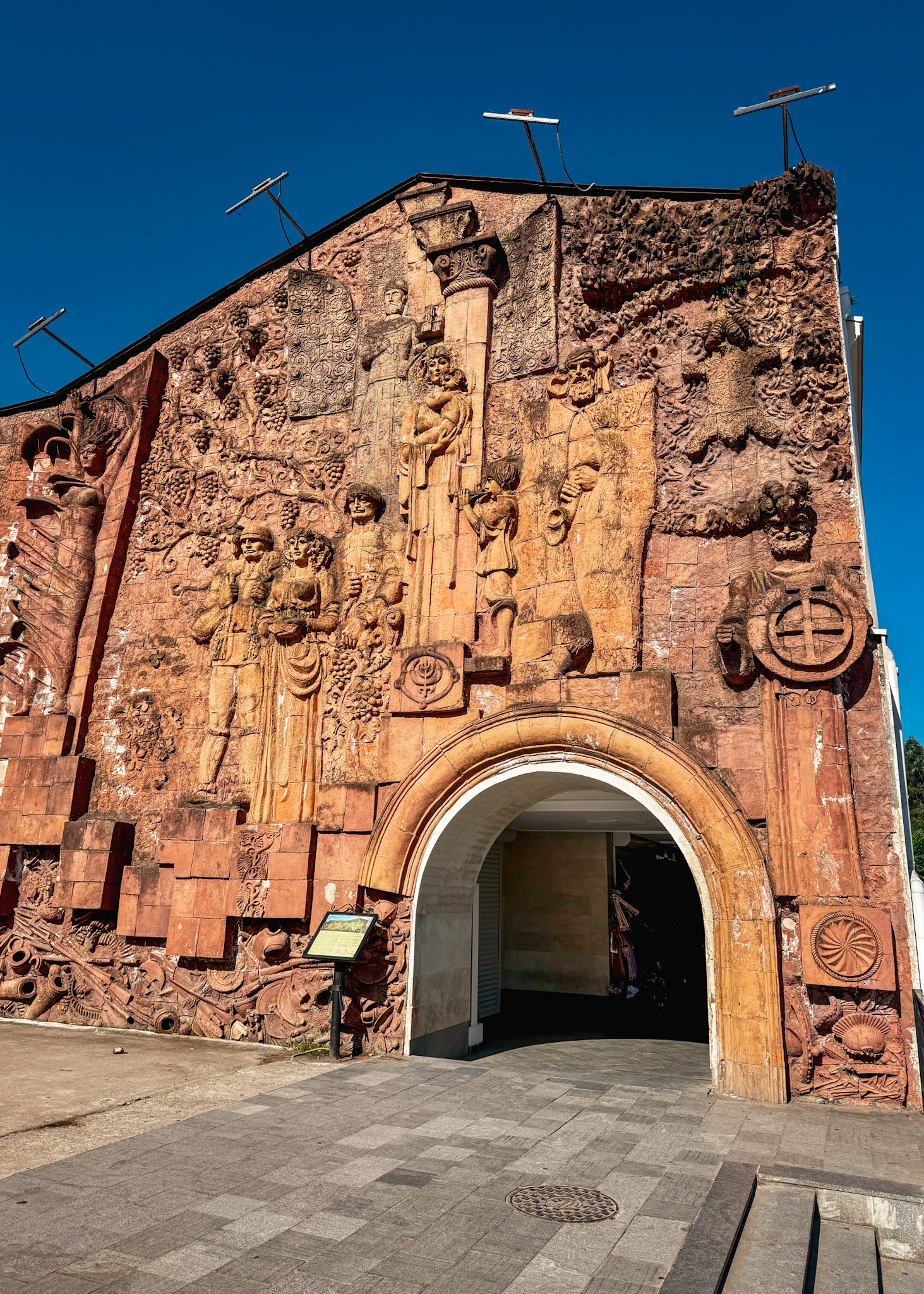
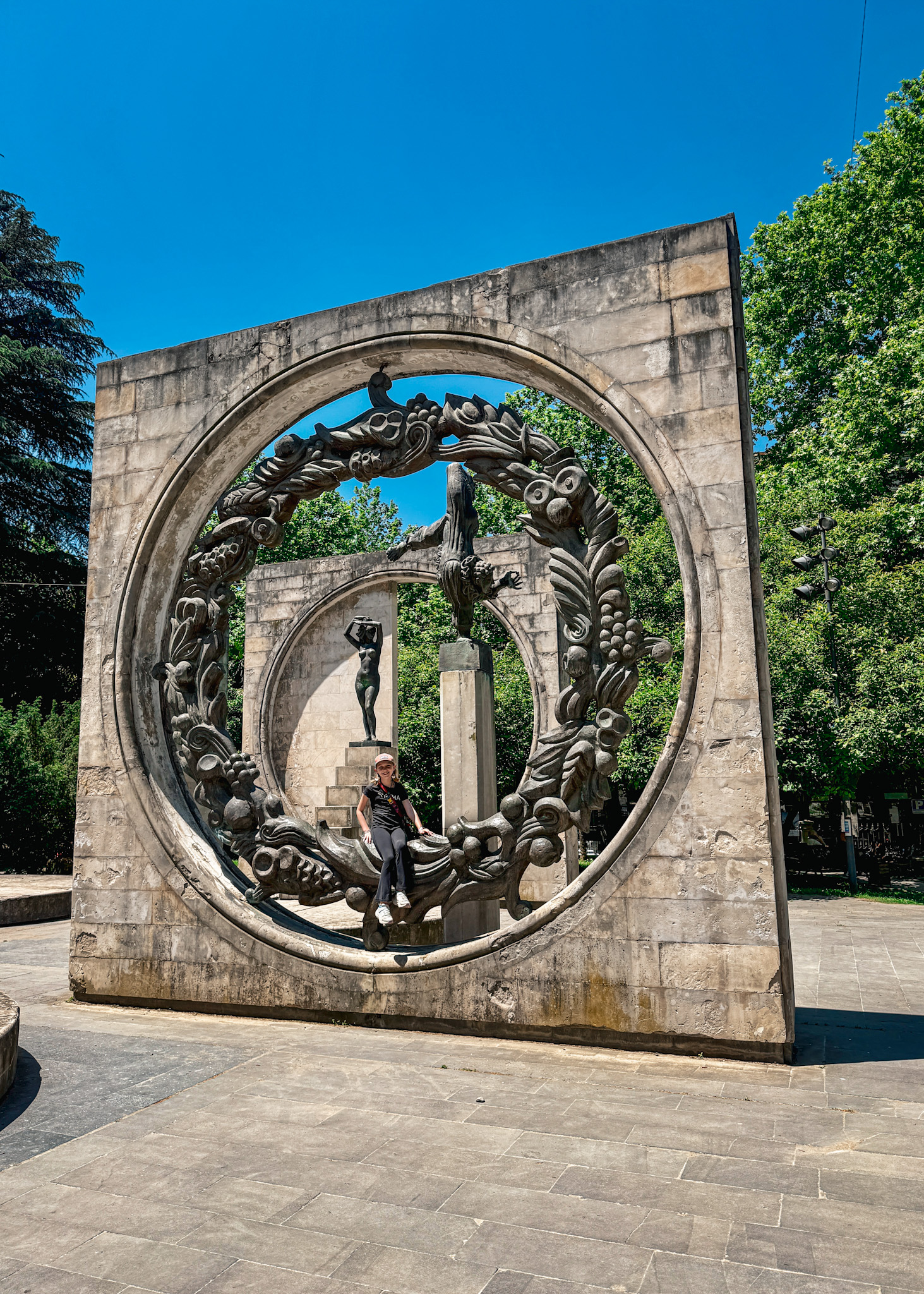
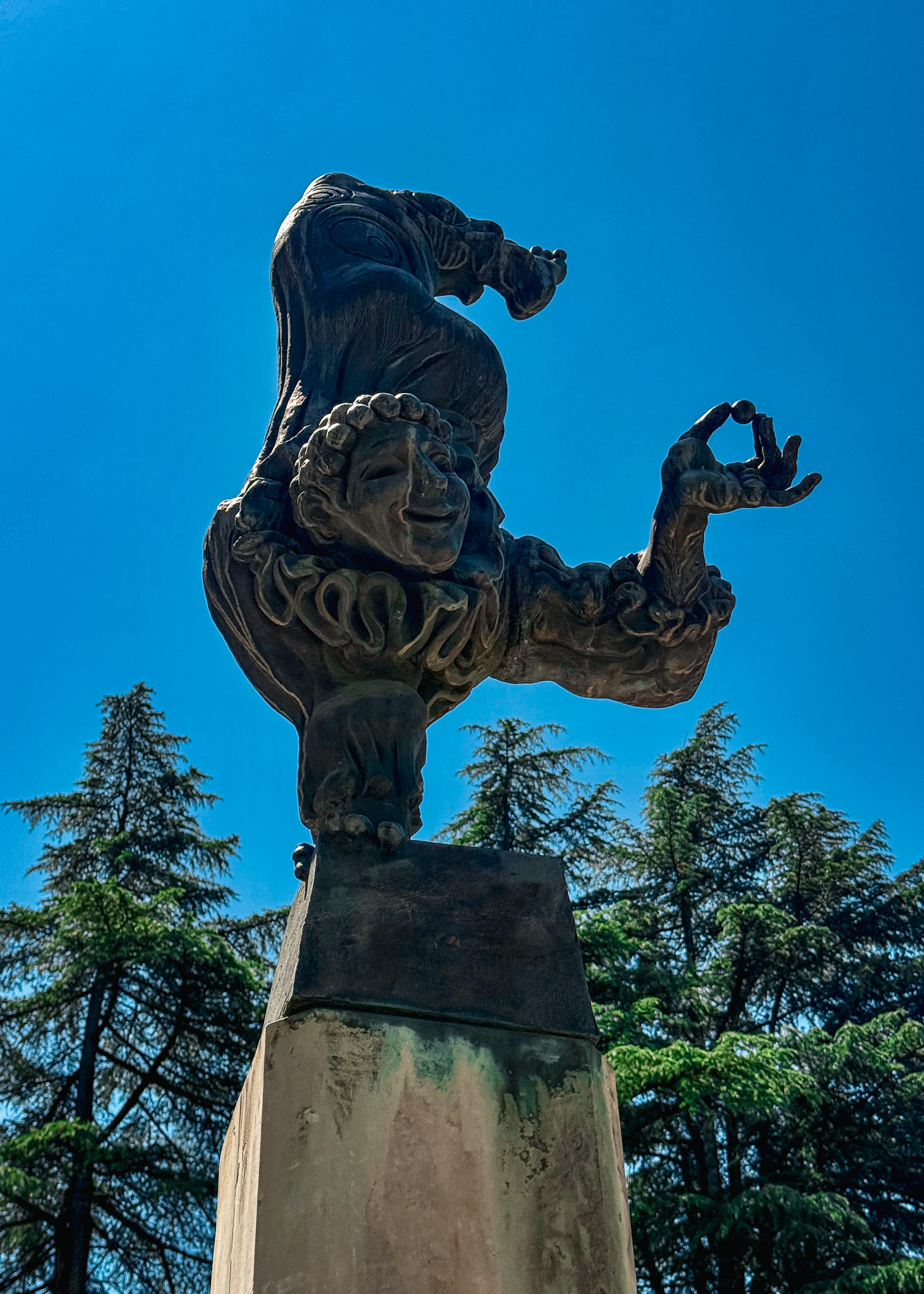
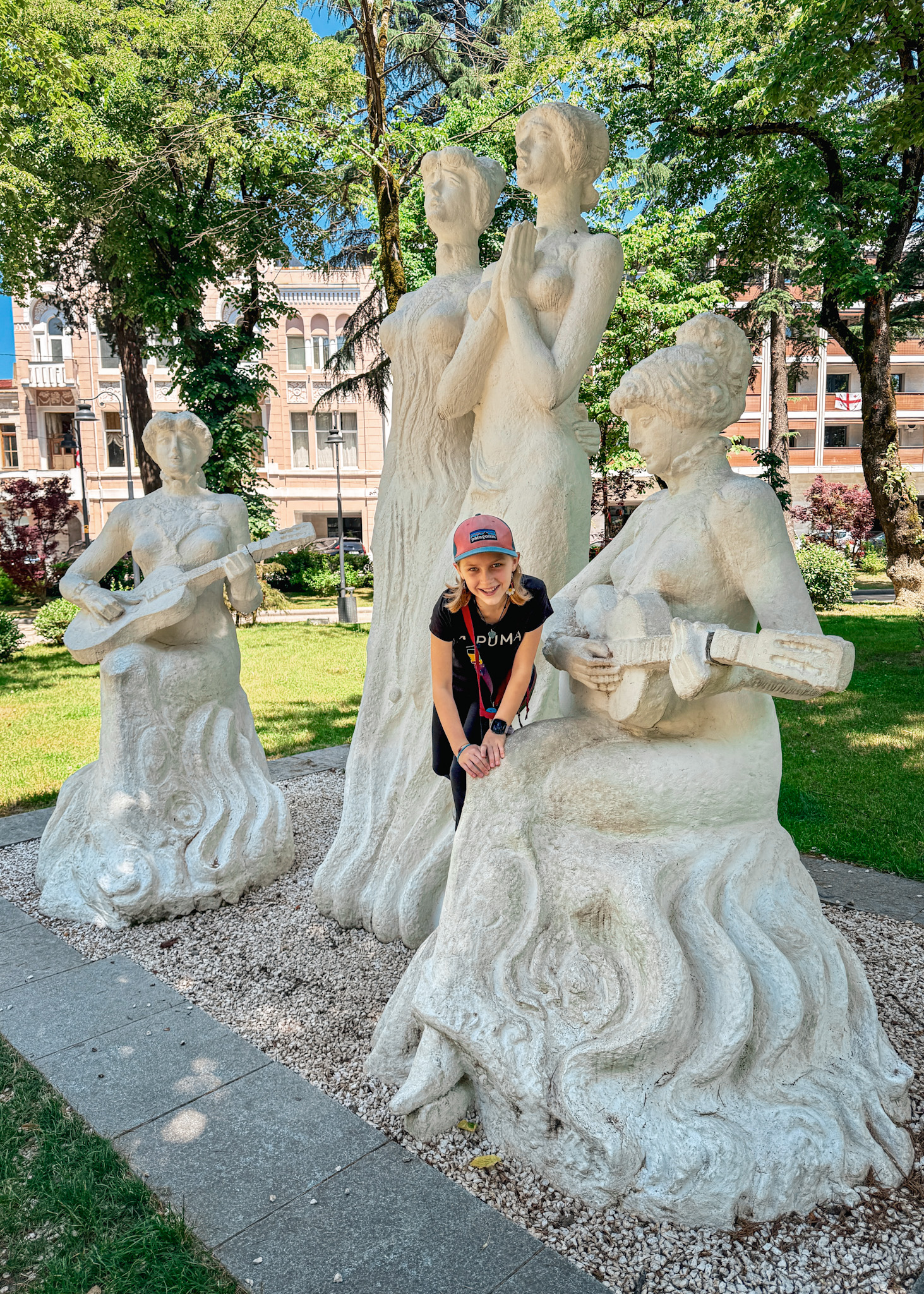
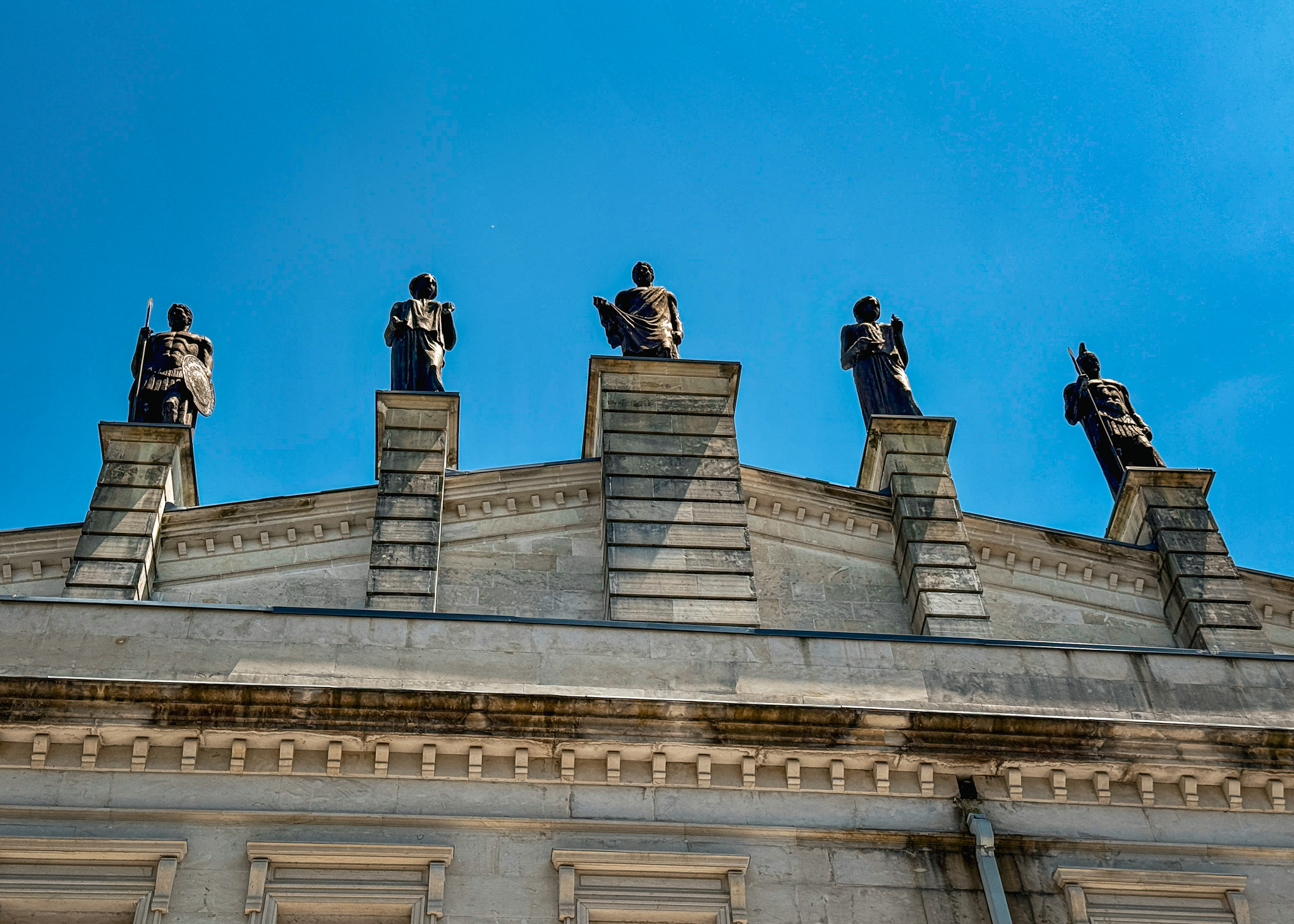
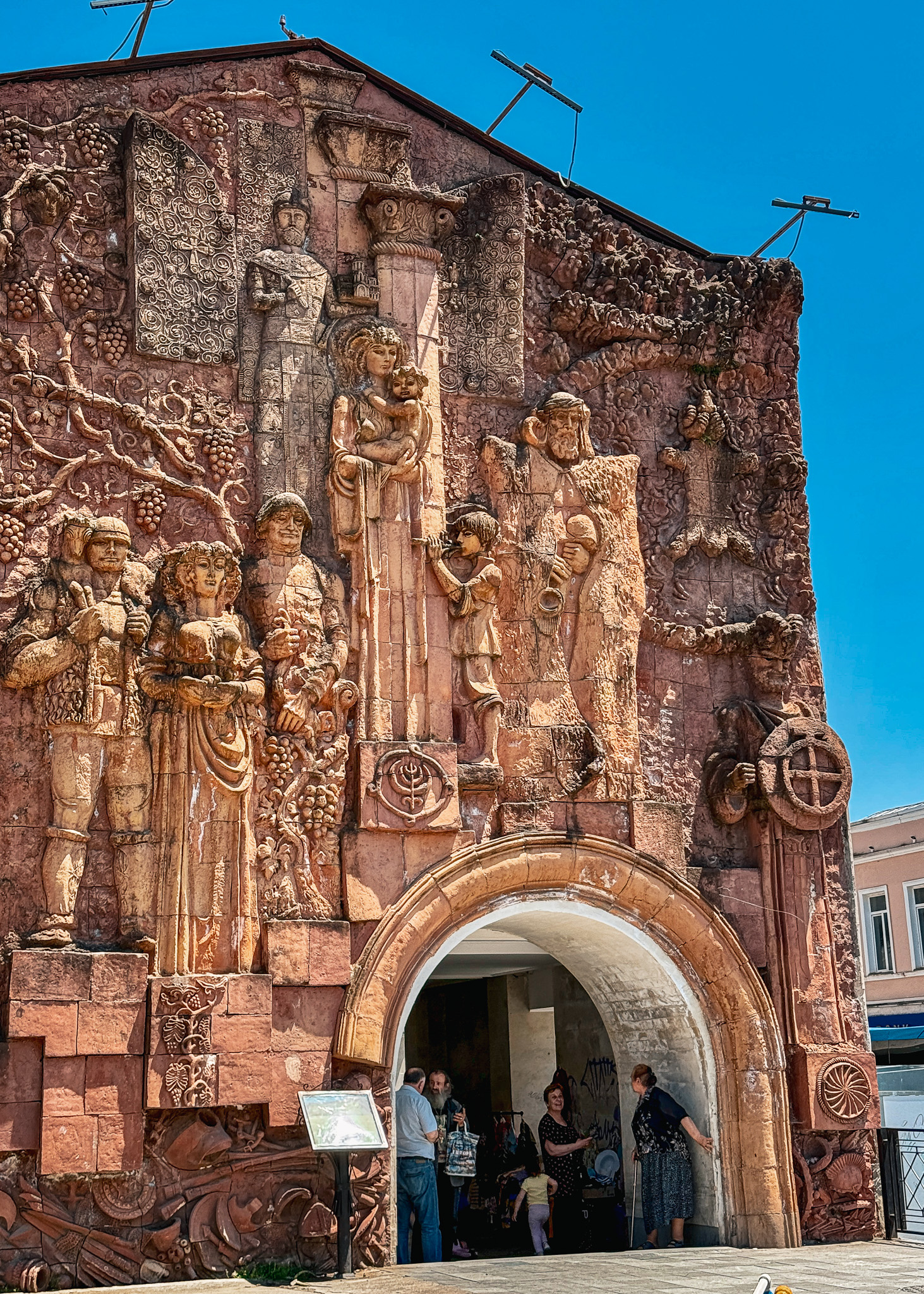
Bellies full, we did a loop of the city’s quirkier sights, with Max reading aloud a short history of each as we arrived. Two stood out, both relics of the Soviet era and both feeding a quiet thread we kept noticing in Georgia about how a country chooses to hold onto its past. The first was the Monument to Labor, a 1980 ensemble of monumental sculptures in the blocky, idealized language of Soviet modernism. It was the kind of art that turned farmers and construction workers into demigods, now weathering at the edges with flaking paint and weeds in the joints, which somehow made it more compelling rather than less. The second was the Pano Kolkheti, an enormous Soviet-era mosaic on the side of a building just outside the Green Bazaar. It depicts the legendary kingdom of Colchis, the mythological land of the Golden Fleece that Jason and the Argonauts sailed to claim, and which once stood on this very ground of modern-day Kutaisi. There is something wonderful about the late Soviet state pouring resources into a giant public artwork celebrating pre-Soviet, pre-Christian Georgian mythology. We rounded it out with a stroll through Kutaisi’s leafy central park, packed with locals on benches, and then ducked out of the climbing heat into Brauhaus Victoria, a German-style beer garden of long communal tables, cold local lager, and deep, welcome shade.
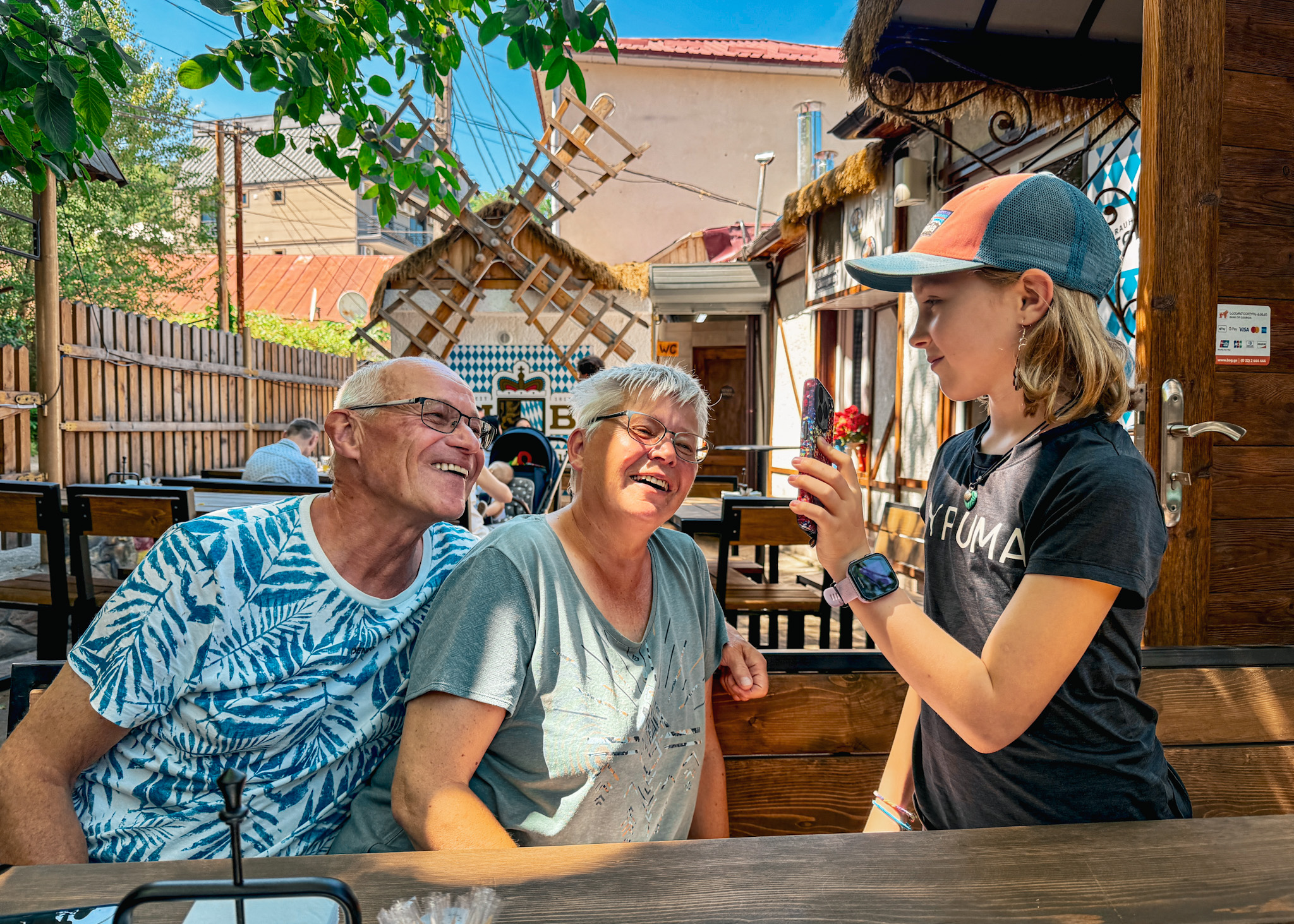
It was there we met Uta and Gerhardt, a retired German couple traveling in a Fiat diesel camper who have been on the road for ten of the past twelve months and intend to keep doing exactly this for as long as their bodies allow. We fell into a long, easy conversation that wandered across Caucasus routes, what they expect when they cross back into Turkey, and the slow art of aging well into a life of movement. Uta and Gerhardt are doing it right. We then had an early dinner at Doli, a polished contemporary Georgian restaurant named for the double-headed folk drum. After Bikentia’s stripped-down kebab assembly line, sitting down to cloth napkins and a wine list felt like the other half of a single conversation about how Georgians eat—from the four-dollar standing counter to the candlelit table. Both are delicious, but one just costs a lot more and doesn’t have a grumpy lady scolding you to hurry up and finish your beer! We loved every bit of both.
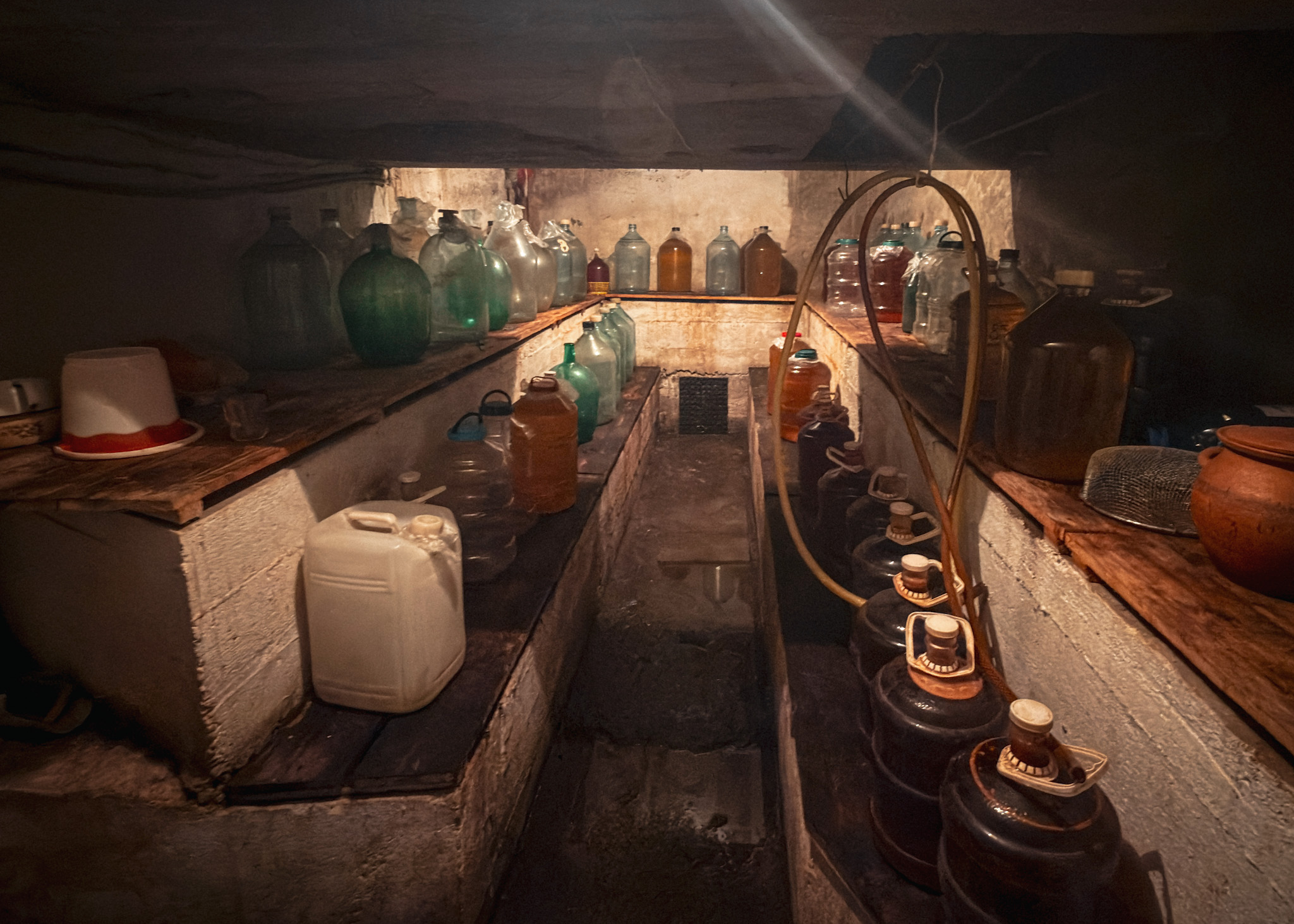
The day’s real gift came late. Back at the apartment, while the girls disappeared into the courtyard with Bubbles and his family, Marina and her son Davit invited us to tour the family’s wine cellar and chacha store, and we could not possibly say no. Davit, who had pretty good English, walked us through the whole operation: the rows of glass jugs where the wine ferments in a modern spin on the centuries-old Georgian style, the casks holding the chacha, and the full annual cycle of making and distilling that the family runs every fall. Then, just before ten at night, we tried to bid them good night, eager to hit the hay after a long day of city-tiring. Instead, they sat us down to drink that wine, eat a giant bowl of fresh cherries with chocolate on the side, and talk.
The conversation went everywhere, in the way the best ones do, somebody refilling a glass and pulling a new thread every time it seemed about to wind down. Through deep language barriers, we managed a broad range of topics. The benefits of raising kids who travel. What it actually feels like to be Georgian right now, in a country that remains roughly twenty percent occupied, with the regions of South Ossetia and Abkhazia carved out of Georgian territory and held by their grumpy Russian neighbor to the north, whose intentions are anyone’s guess. There is no softening it: Russia is the aggressor in that story, and sitting in a Georgian family’s Italian courtyard drinking wine they made with their neighbors, the occupation stops being an abstraction on a map and becomes a thing pressing on real people’s lives. We talked about the strange luxury of being from a country whose nearest geographic threat is an ill-tempered Canadian goose, and about the small, daily acts of resilience this family folds into ordinary life without ever calling them that. We did not get to bed until well after midnight. Not ideal, and entirely worth it.
That is what Kutaisi gave us. Not just the kebabs and the cathedrals and the Soviet mosaics, though those were all wonderful, but a courtyard where neighbors are family. A family who shares no language with us still managed, over homemade wine and a bowl of cherries, to tell us almost everything about what it means to love a small country with a difficult neighbor.
We came for two days of sightseeing. We left having been, however briefly, folded in. The hugs from Marina when we left were the cherry on top.


Leave a Reply