
Dates: June 4-5th, 2026
Places: Borjomi to Oni, Georgia
Some road trip days are about the destination. This one was about the journey, right up until the destination turned out to be the best part of all.
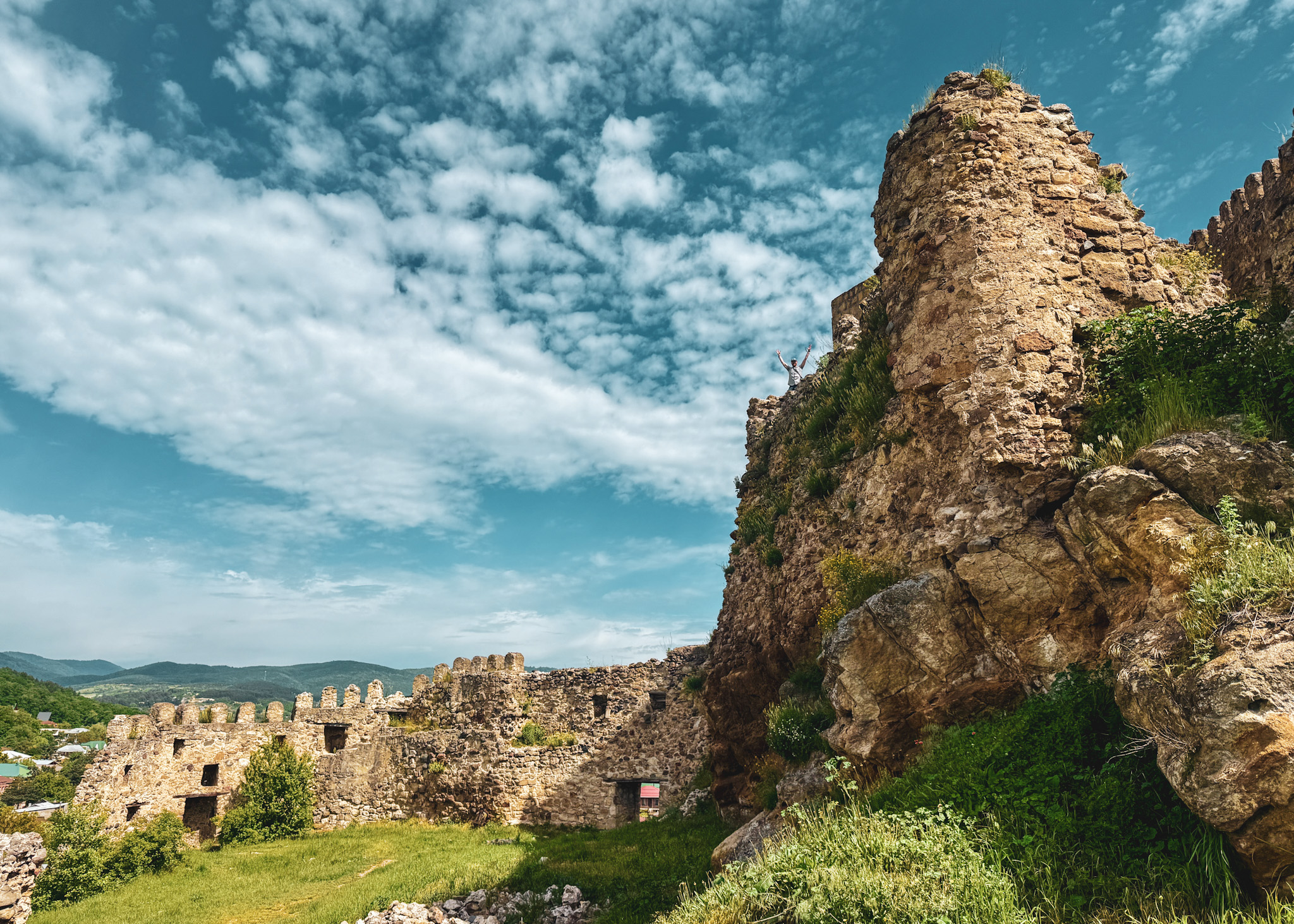
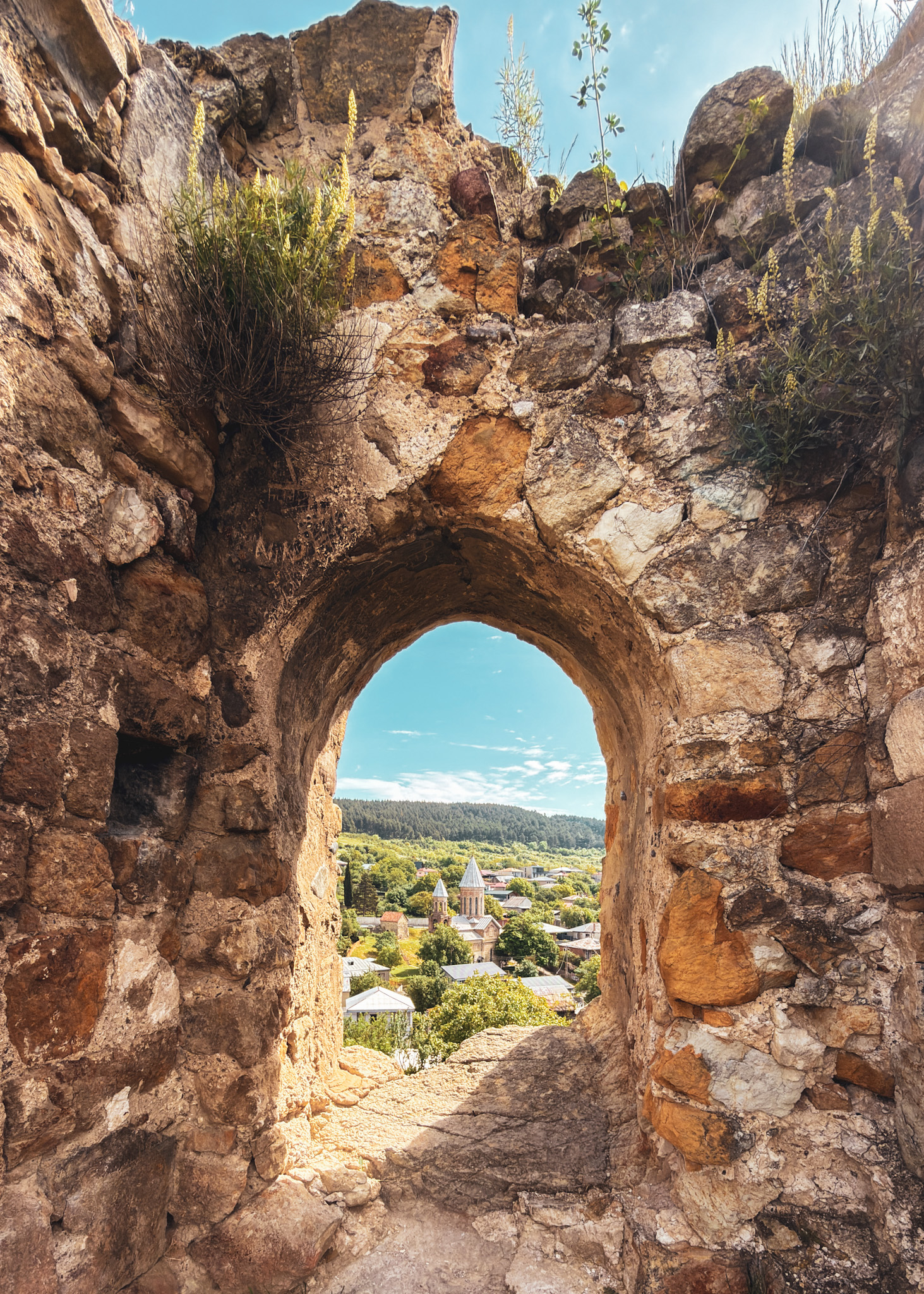
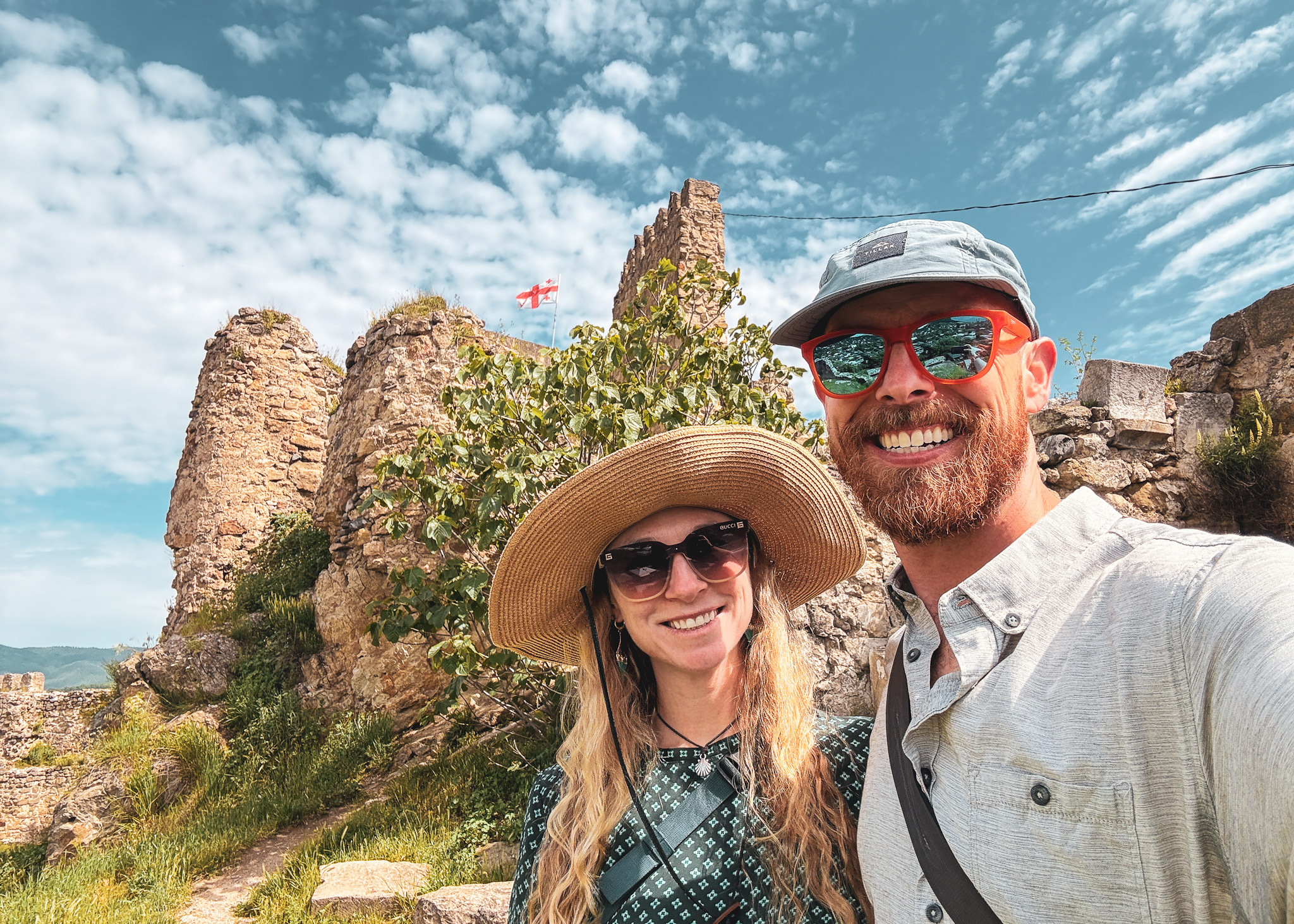
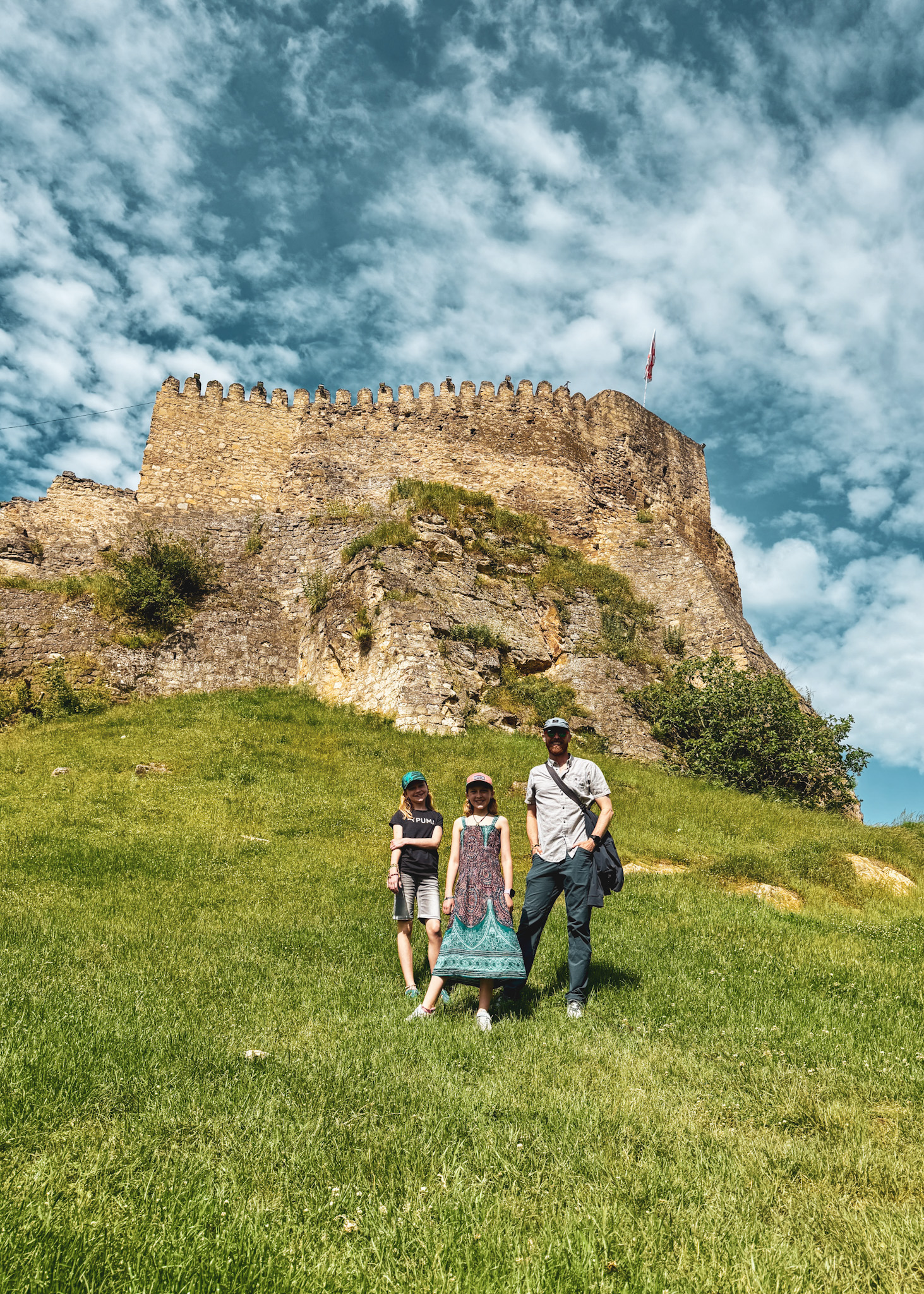
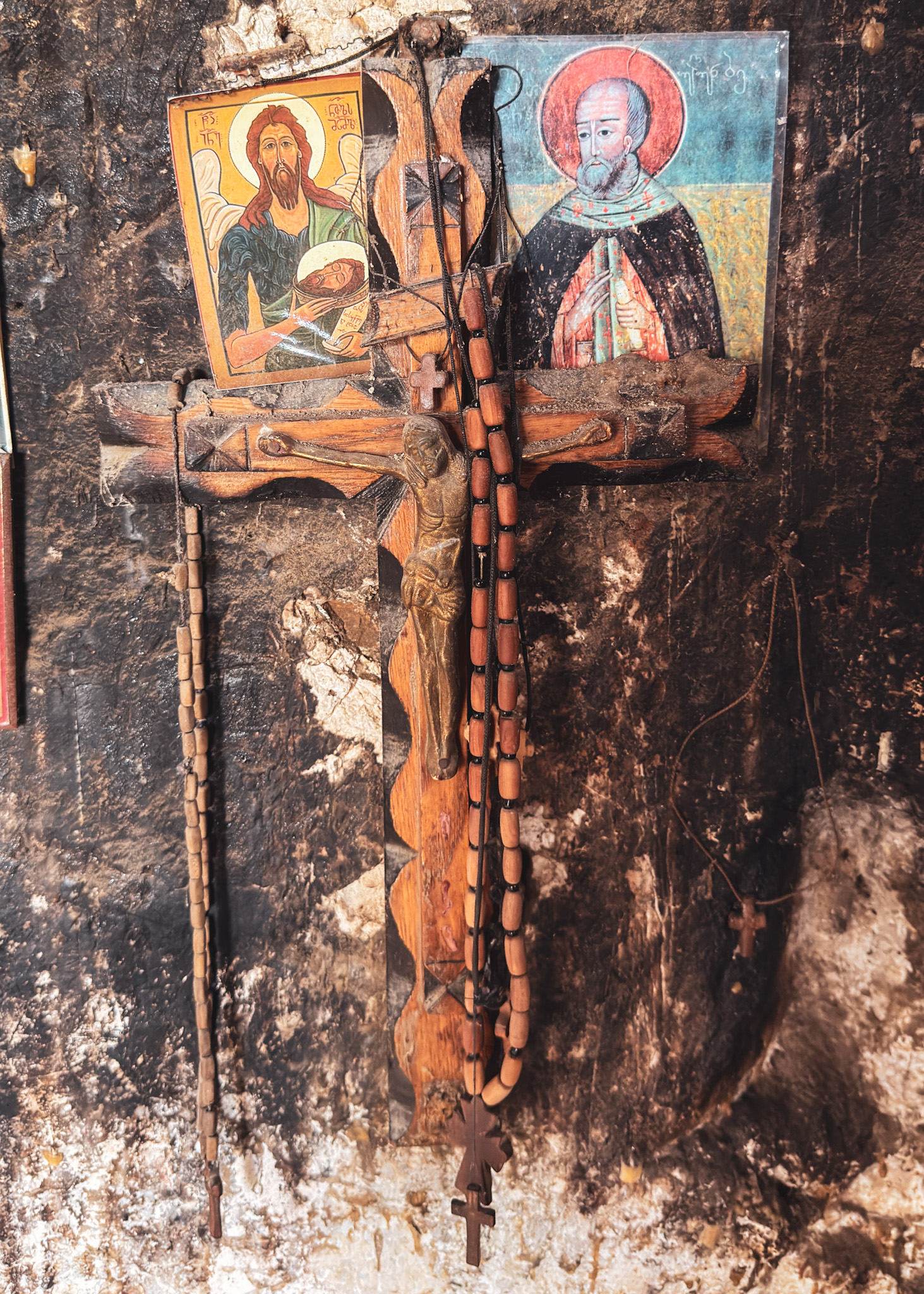
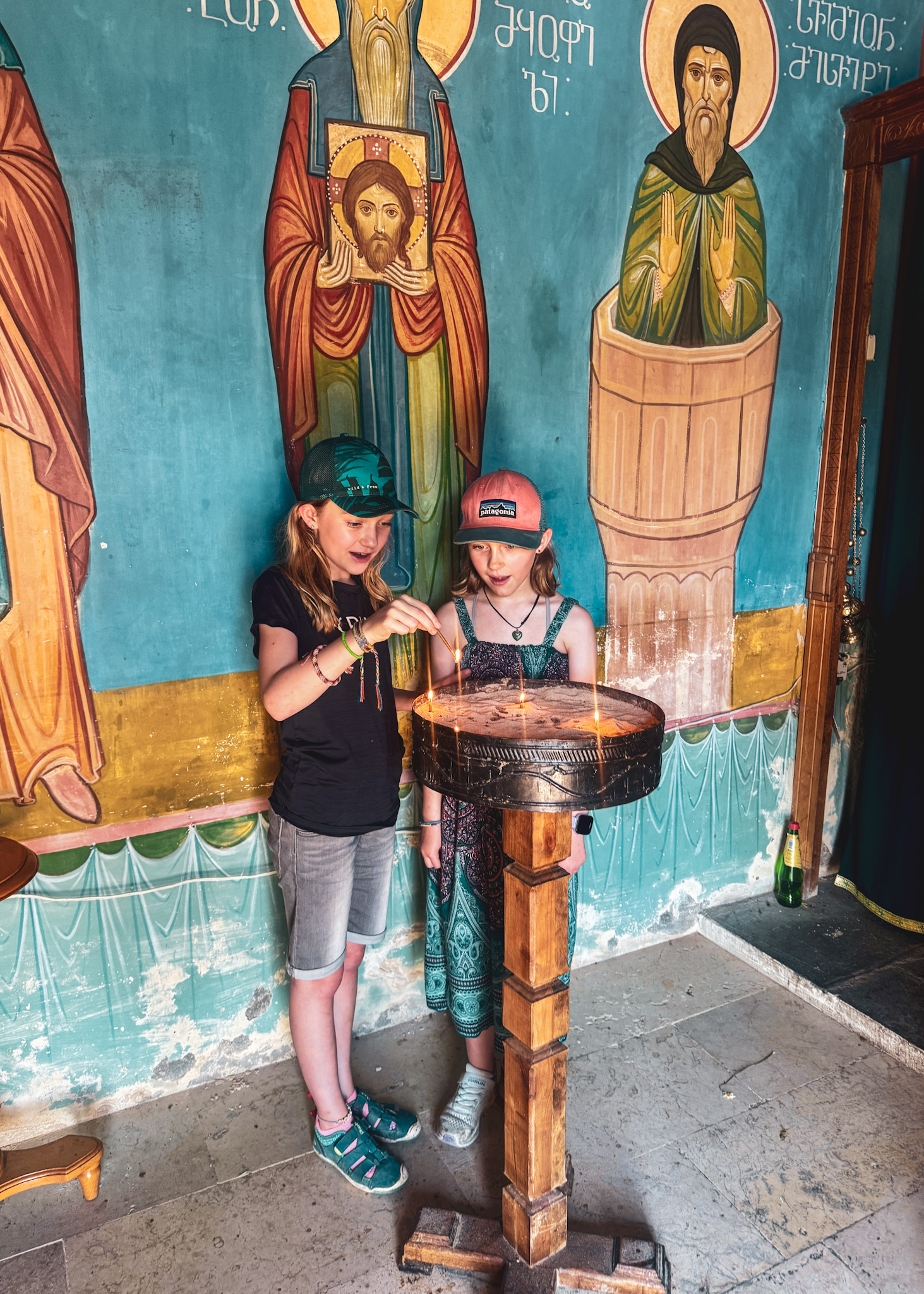
We rolled out of Borjomi following the Kura River and made our first stop at Surami Fortress, a 12th-century stronghold perched on a steep rocky hill above the town of the same name. Surami once guarded the strategic mountain pass between western and eastern Georgia, and it comes wrapped in one of the more famous legends in Georgian folklore. When the walls kept collapsing during construction, the king was told the only way to make them stand was to wall a young man named Zurab up inside them, a grim story that has been retold ever since in poems, songs, and films. The walls are mostly ruins now, but you can still climb up through what is left and look out over the valley the fortress was built to control.
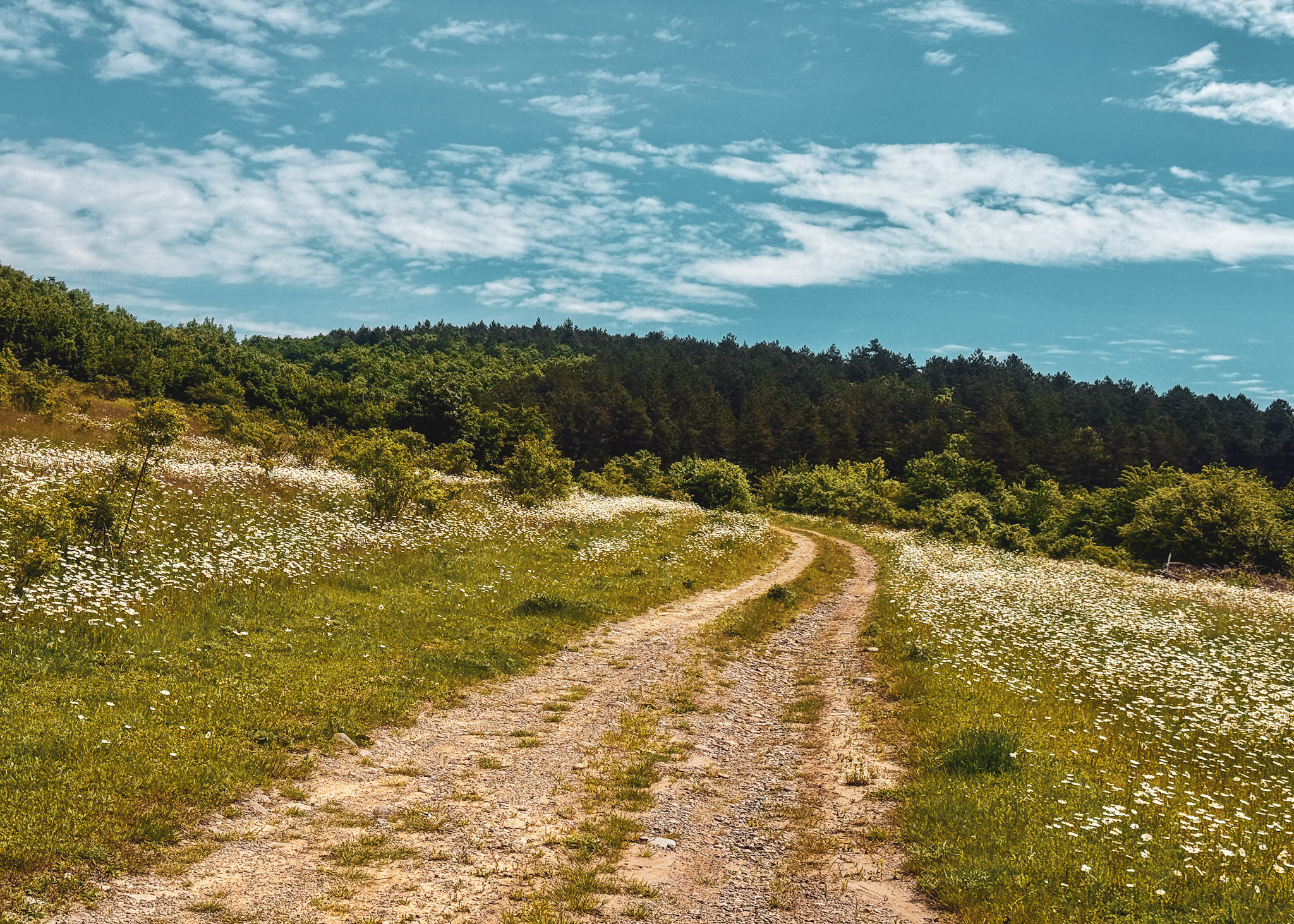
From the fortress we attempted a clever shortcut, hoping to find a road that would connect us onward without backtracking to the highway. The rocky dirt road ran through a beautiful field of wild white daisies—it was glorious for about three minutes before it deposited us onto soggy ground that had the Forester slipping and sliding through mud. The car was mostly happy in those conditions, but our rental insurance very specifically does not cover off-road adventuring, so we executed a slightly humbling three-point turn and slogged back out to the pavement. The proper road, once we found it, wound through the green forested ridges of the Dzirula River valley past small villages where every other house seemed to have a grapevine on the porch and a cow in the driveway. We drove on without stopping until lunch.
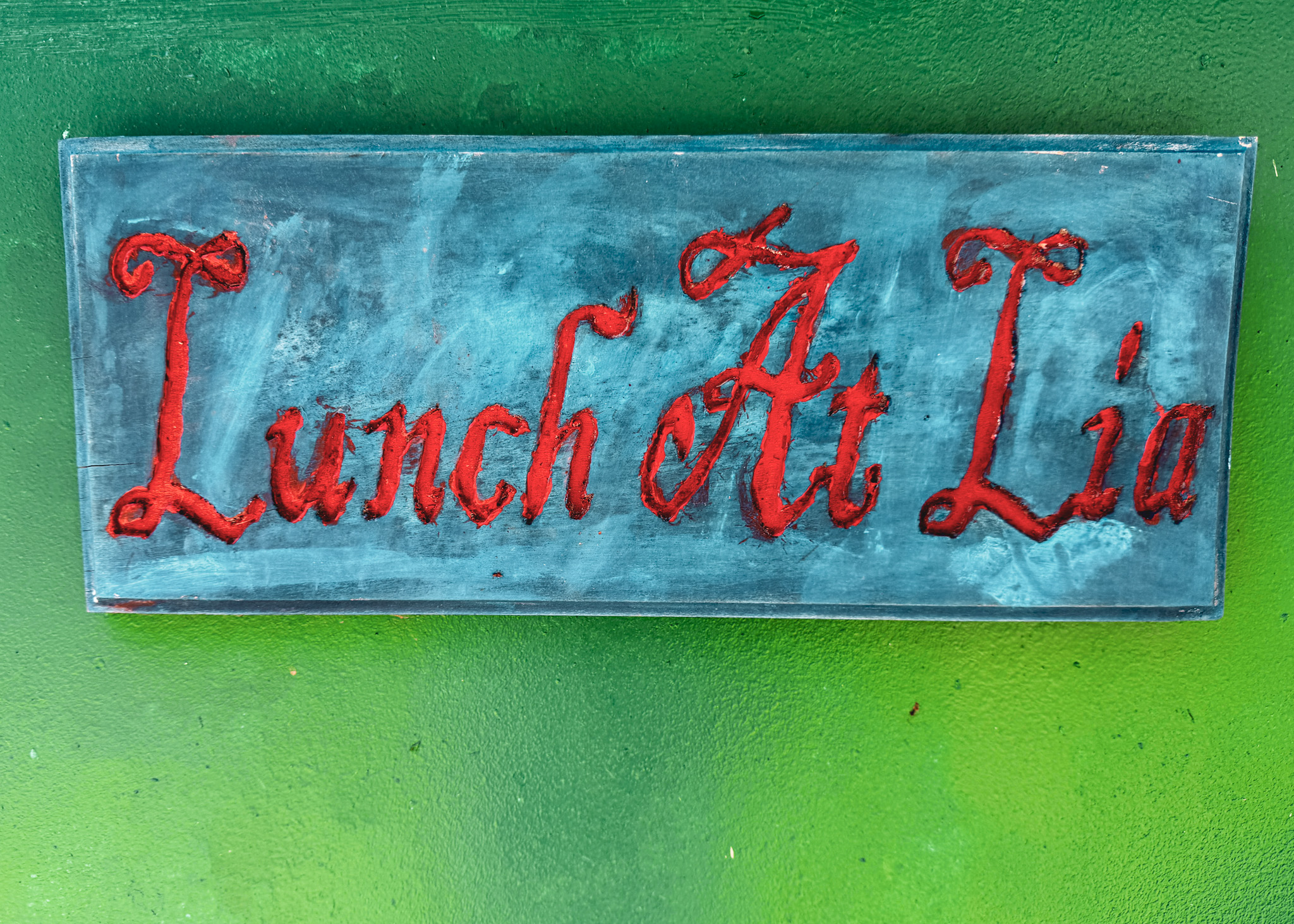
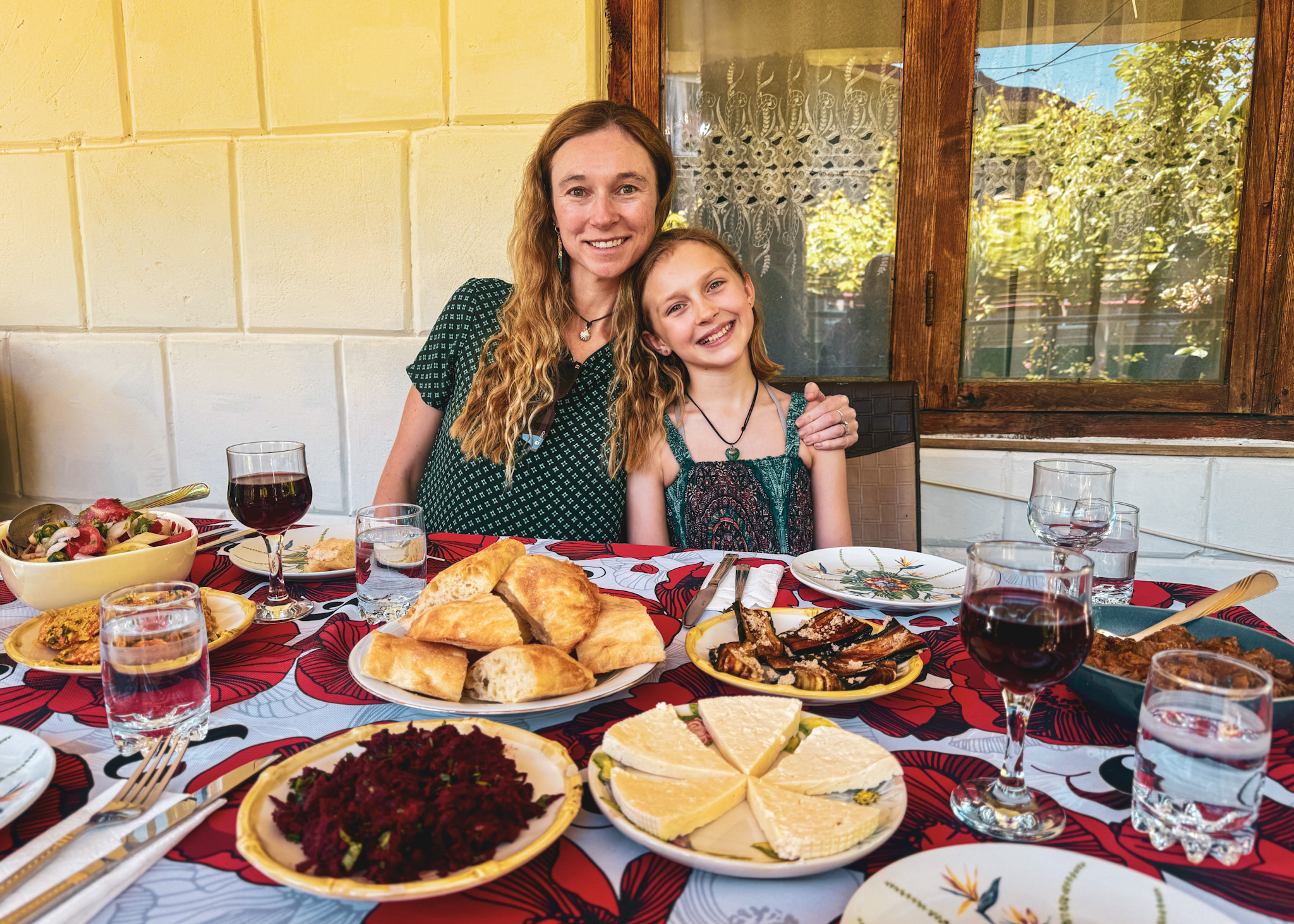
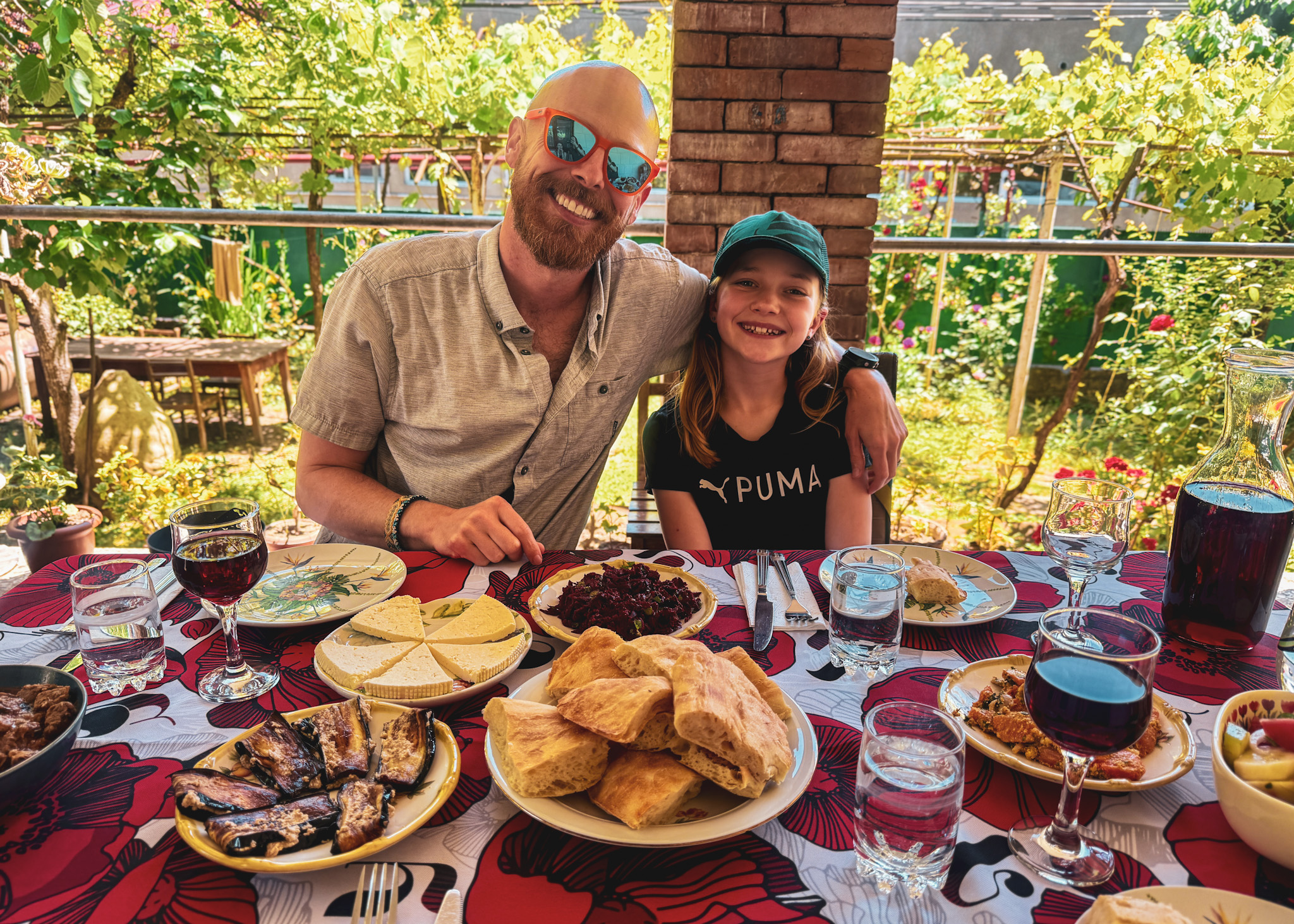
Our lunch “restaurant” only deserves the word loosely, because it was effectively a random home in the village of Sairkhe, where a woman named Lia cooks for travelers passing through. There is nothing quite like walking into a stranger’s house and having them feed you. Everything was delicious, but the standout was badrijani nigvzit, one of the most beloved cold appetizers in Georgian cuisine—thin slices of grilled eggplant served cold and rolled around a paste of ground walnuts, garlic, herbs, and pomegranate seeds. We kept wanting to call the walnut paste a pesto, since it has the same loose, herbaceous, oily texture, except there is no basil anywhere in it. The walnut is the entire engine of the dish. Regardless, it was delicious and a new favorite.
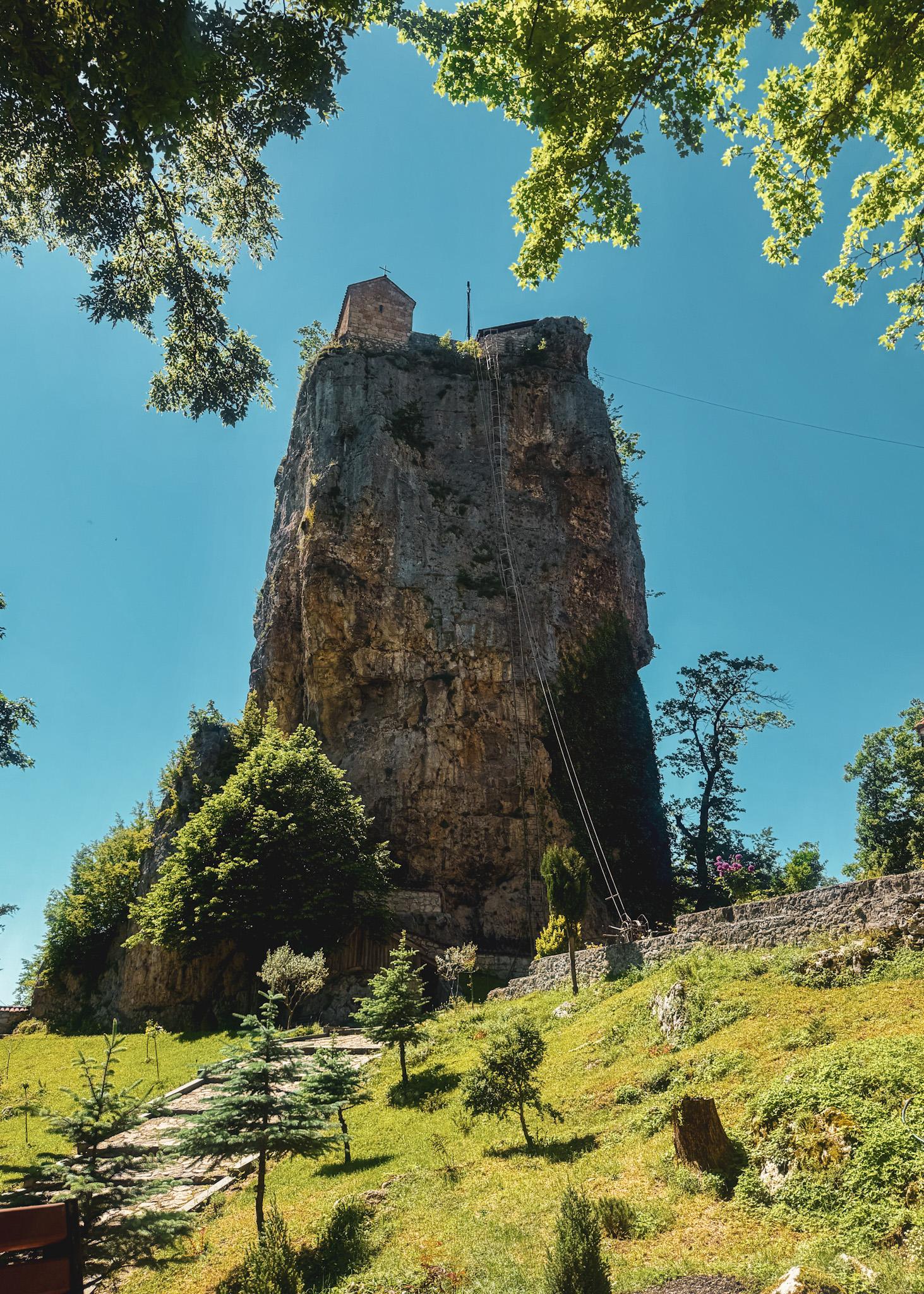
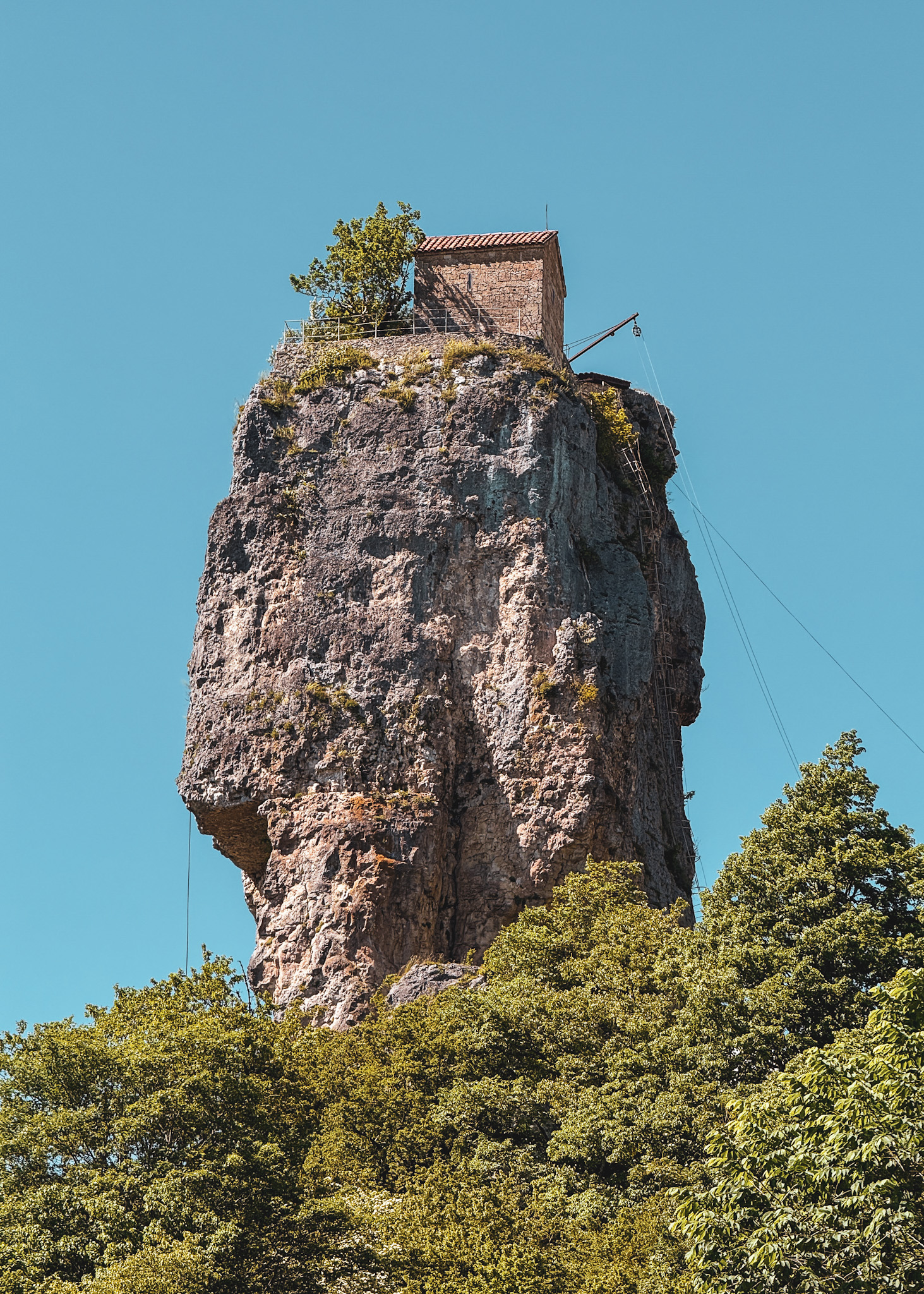
From Lia’s we drove on to Katskhi Pillar, which has to rank among the most improbable religious sites on earth. A natural limestone monolith rises 40 meters straight out of the Imereti countryside, and perched on top of it, looking as though a giant set it there while tidying up, sits a small medieval church, a hermit’s cell, a wine cellar, and a tiny enclosure of garden plots. The pillar was used as a stylite monastery, the ancient practice of monks living atop pillars in isolation, from at least the 9th century until the Ottoman invasions of the 15th, after which it was abandoned for 500 years. Local climbers finally went up in 1944 and found the bones of the last monk still up there. Then the site sat quiet again until 1993, when a former prisoner turned monk named Maxime Qavtaradze took monastic vows, climbed the pillar, and decided to revive the tradition. He has lived up there for most of the three decades since.
The road that climbs the final stretch to the pillar’s parking area was, hands down, the steepest we have ever driven. Had there been a drop of moisture on it, no vehicle on earth would have made it up. At the base, one of the monks working in the gift shop walked Max around to show him photographs of what the complex looked like when researchers rediscovered it in the 1970s, completely in ruins. Through a conservation effort pushed by local community leaders, the national heritage agency, and Father Maxime himself, the whole thing was painstakingly rebuilt, and by 2009 it looked essentially complete, a tidy little monastery floating impossibly on its needle of stone.
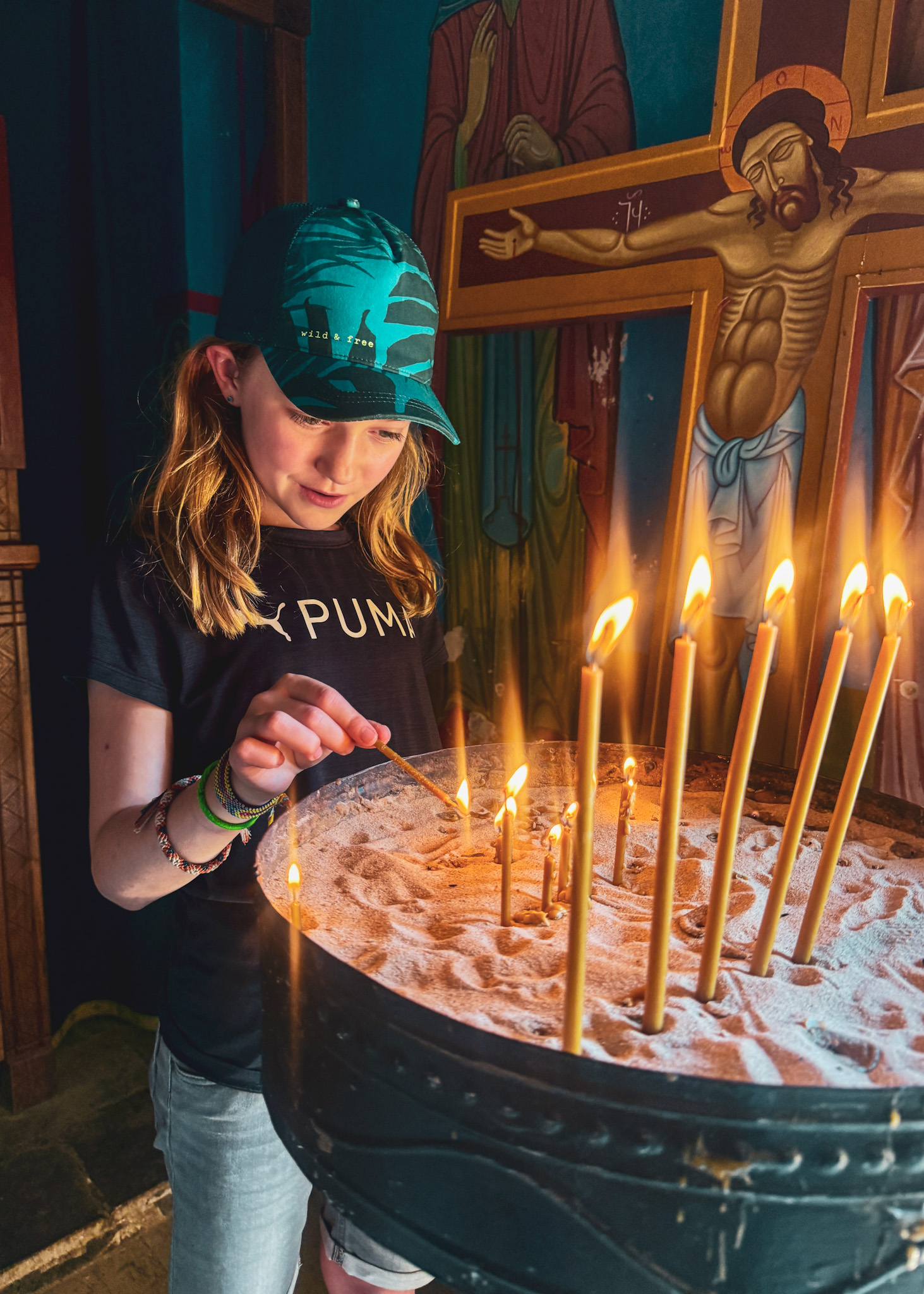
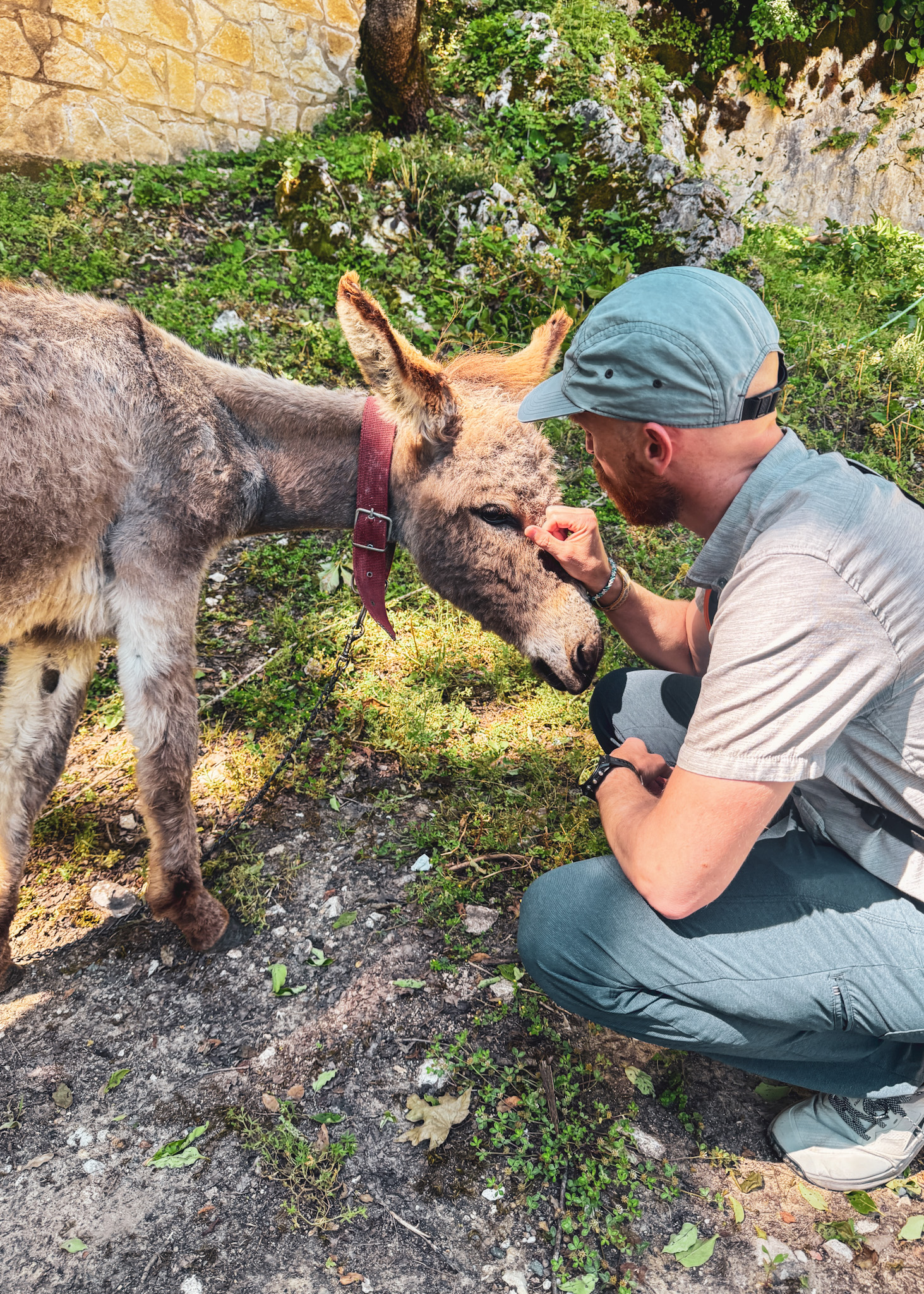
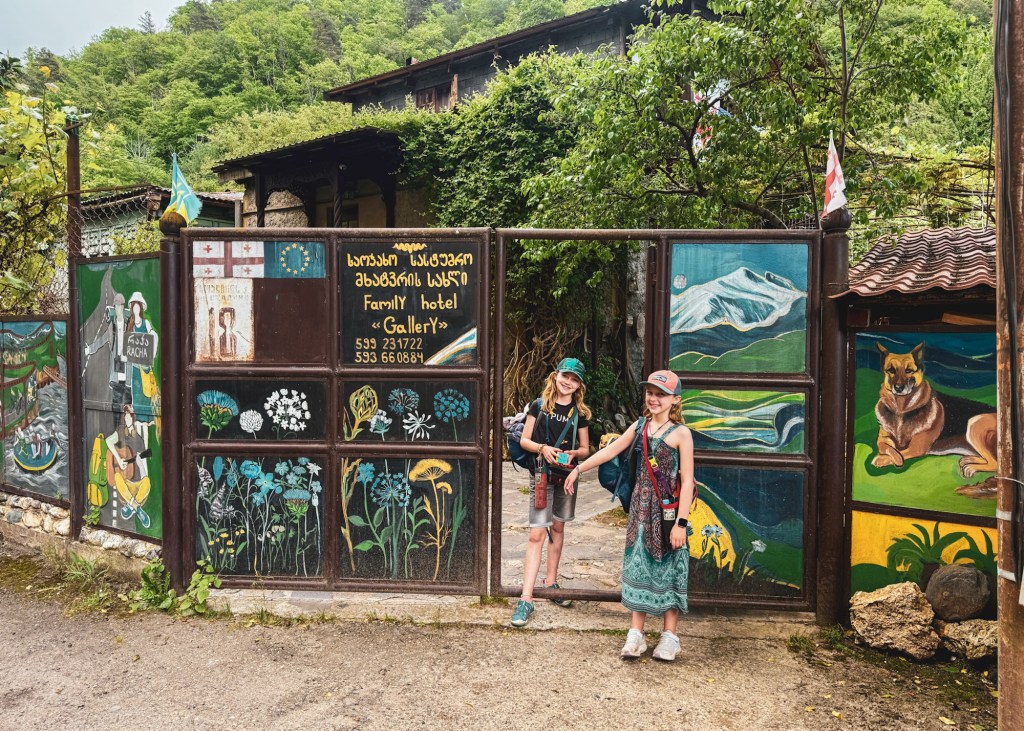
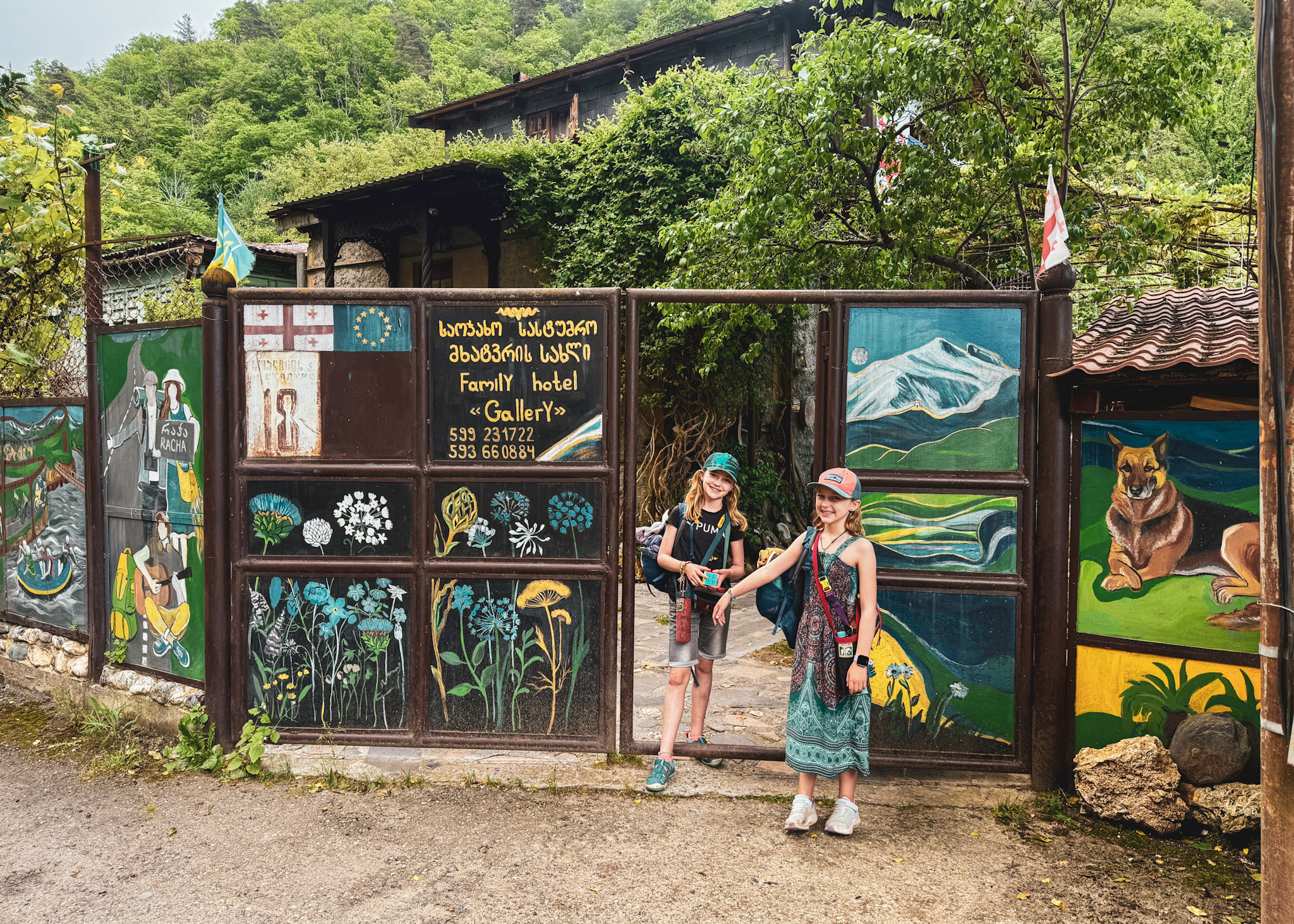
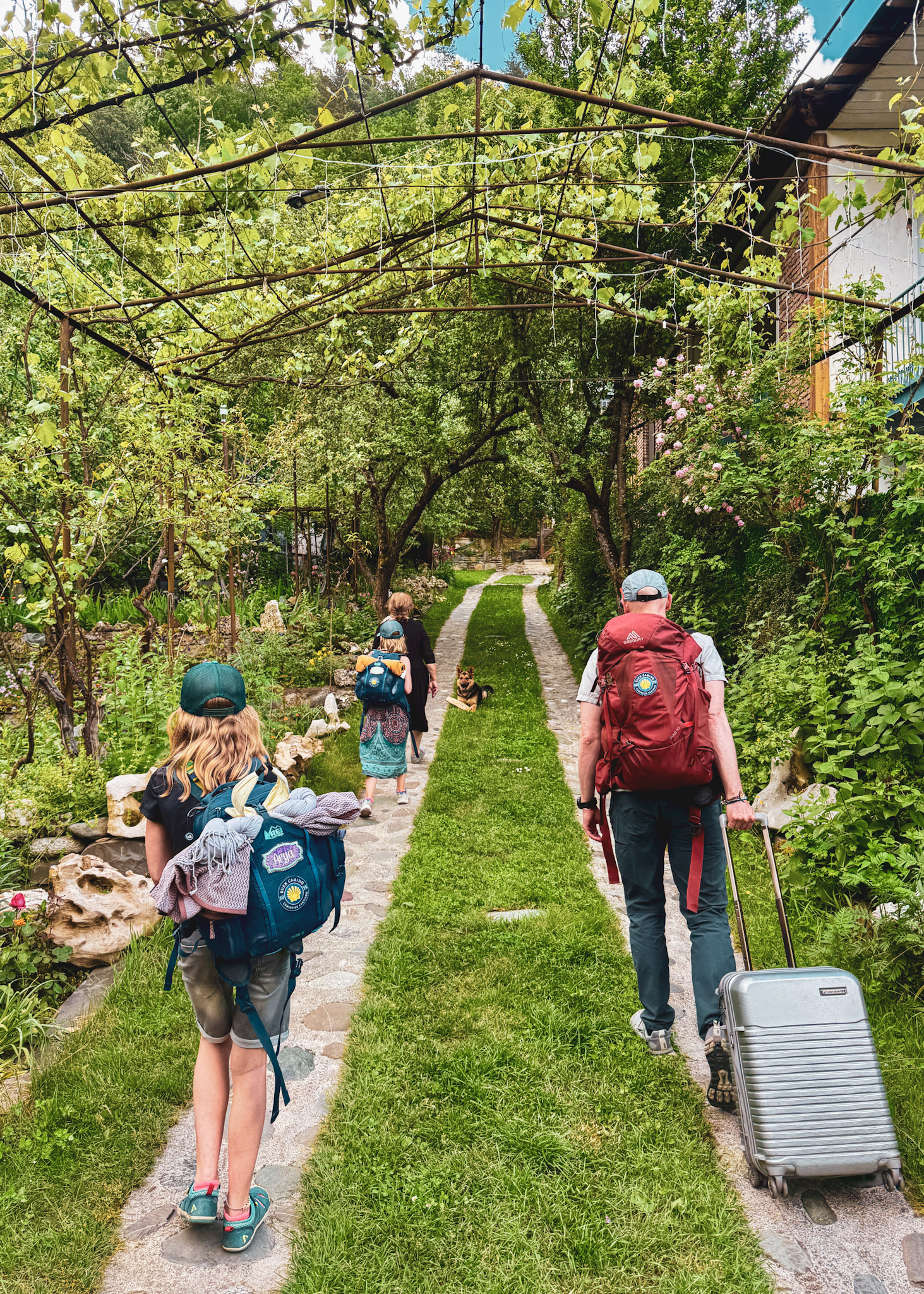
From Katskhi we drove straight to Oni over the Khikhata Pass, one of the wilder mountain crossings in this part of Georgia, climbing high into the Lesser Caucasus before dropping steeply into the upper Racha region on the far side. The road went straight up and then straight down in a series of tight twists, the views enormous in every direction—massive snow-covered rocky peaks looming over dense green forests. We had cued up an audiobook called Interview with the Robot that held the entire family rapt the whole way, especially the girls, who normally treat long drives as protected reading time. About ninety minutes into the beautiful drive, we pulled into Oni and our home for the next two nights—a family-run guesthouse whose Georgian name translates to the “Artist’s House.”
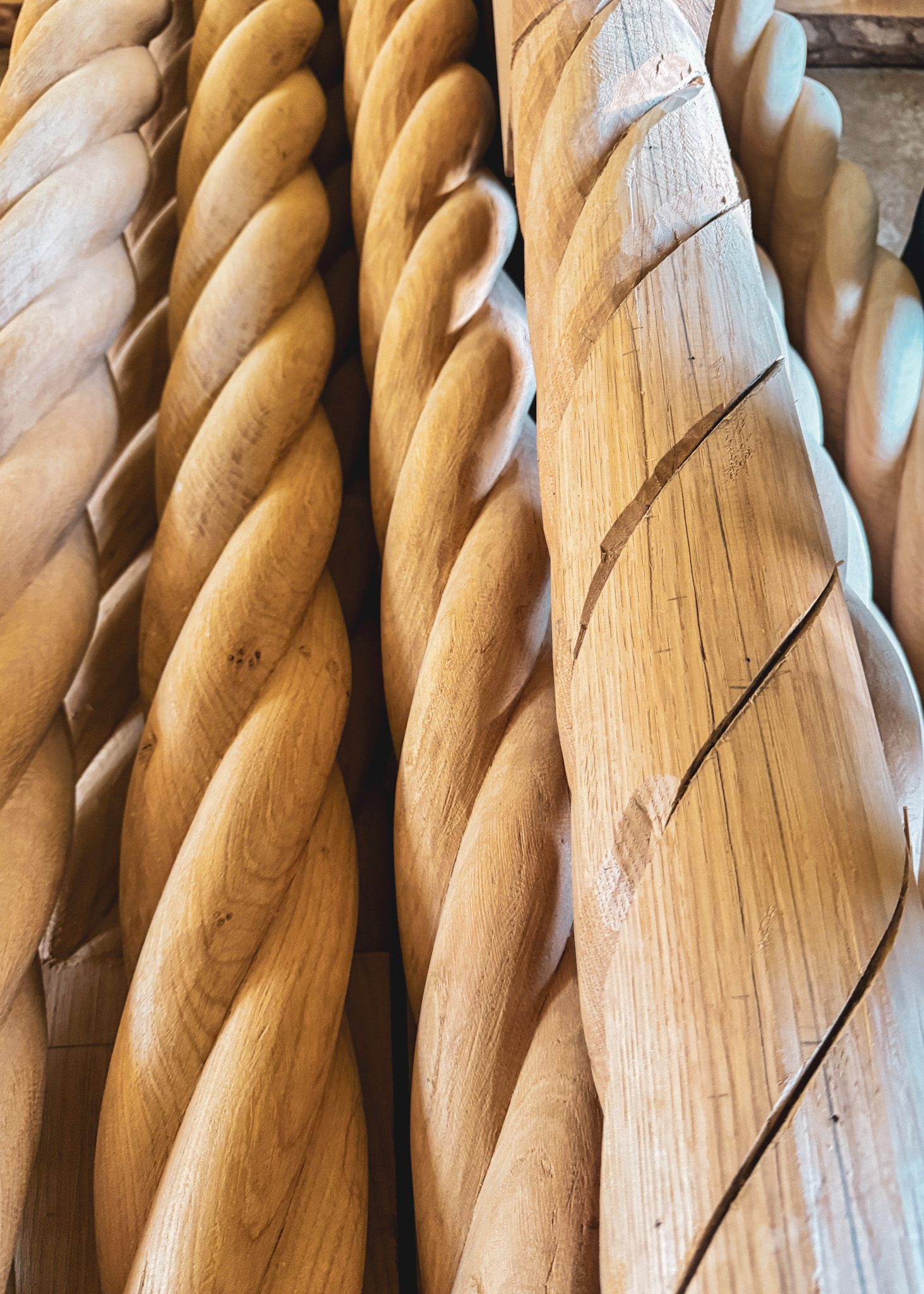
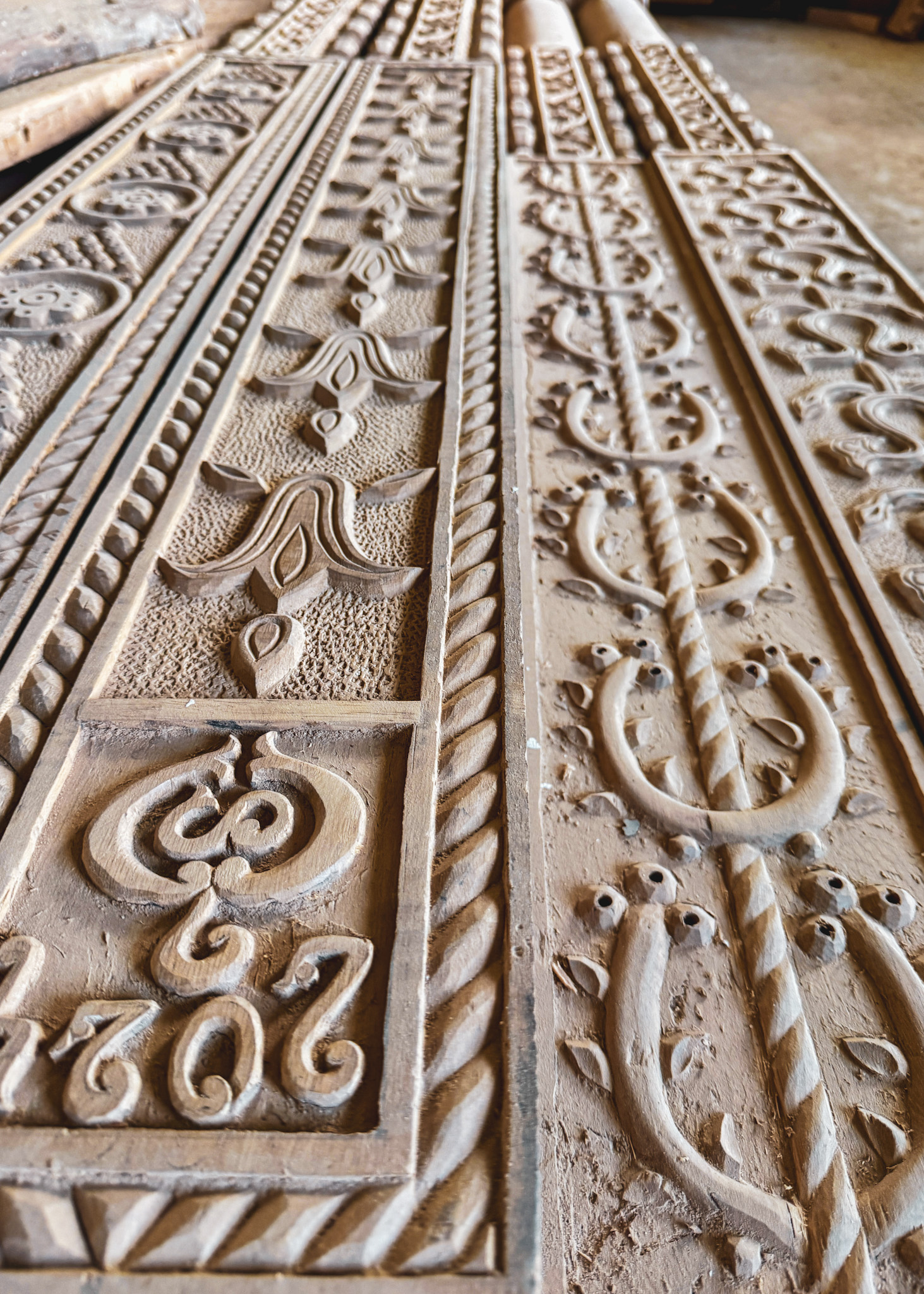
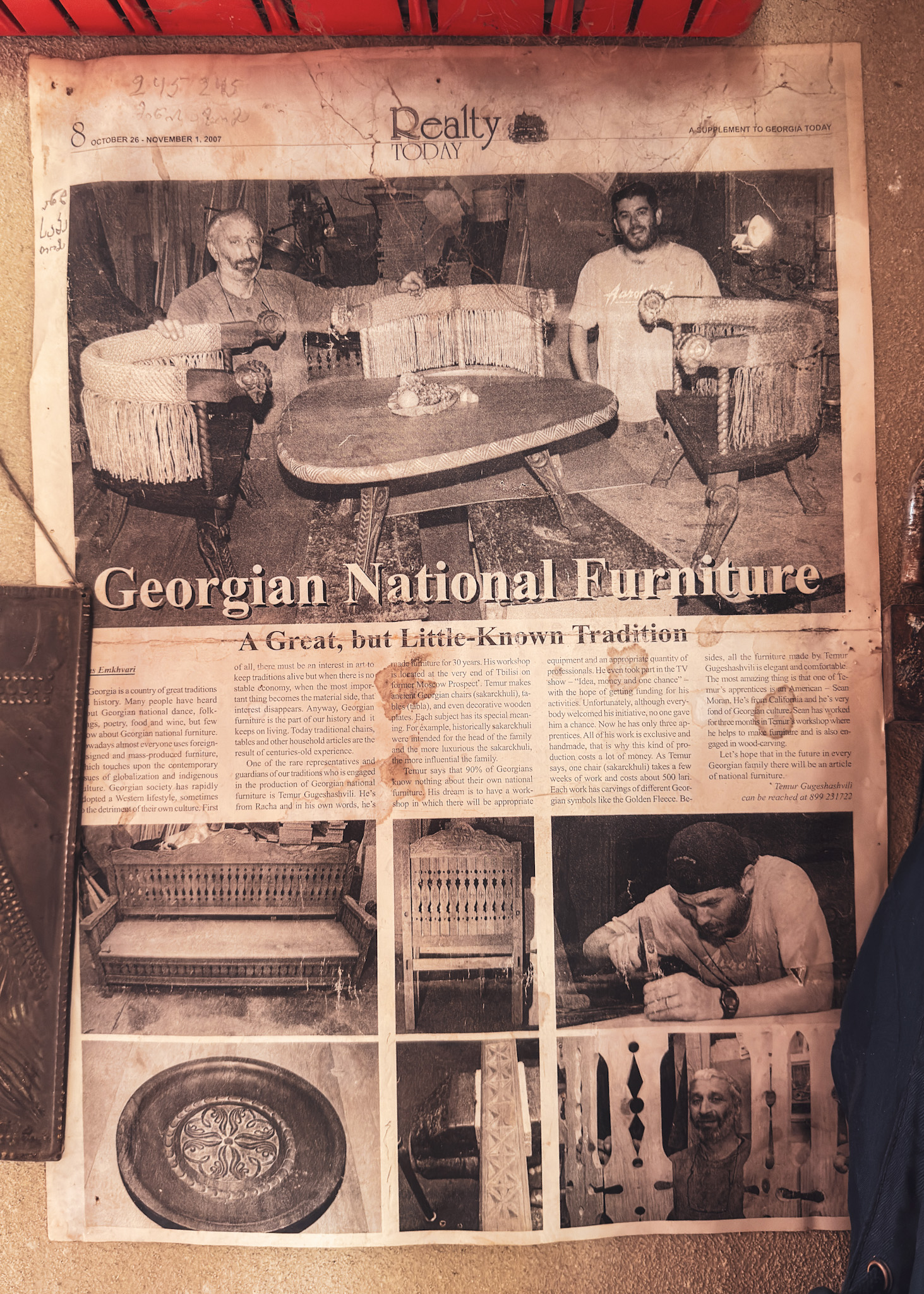
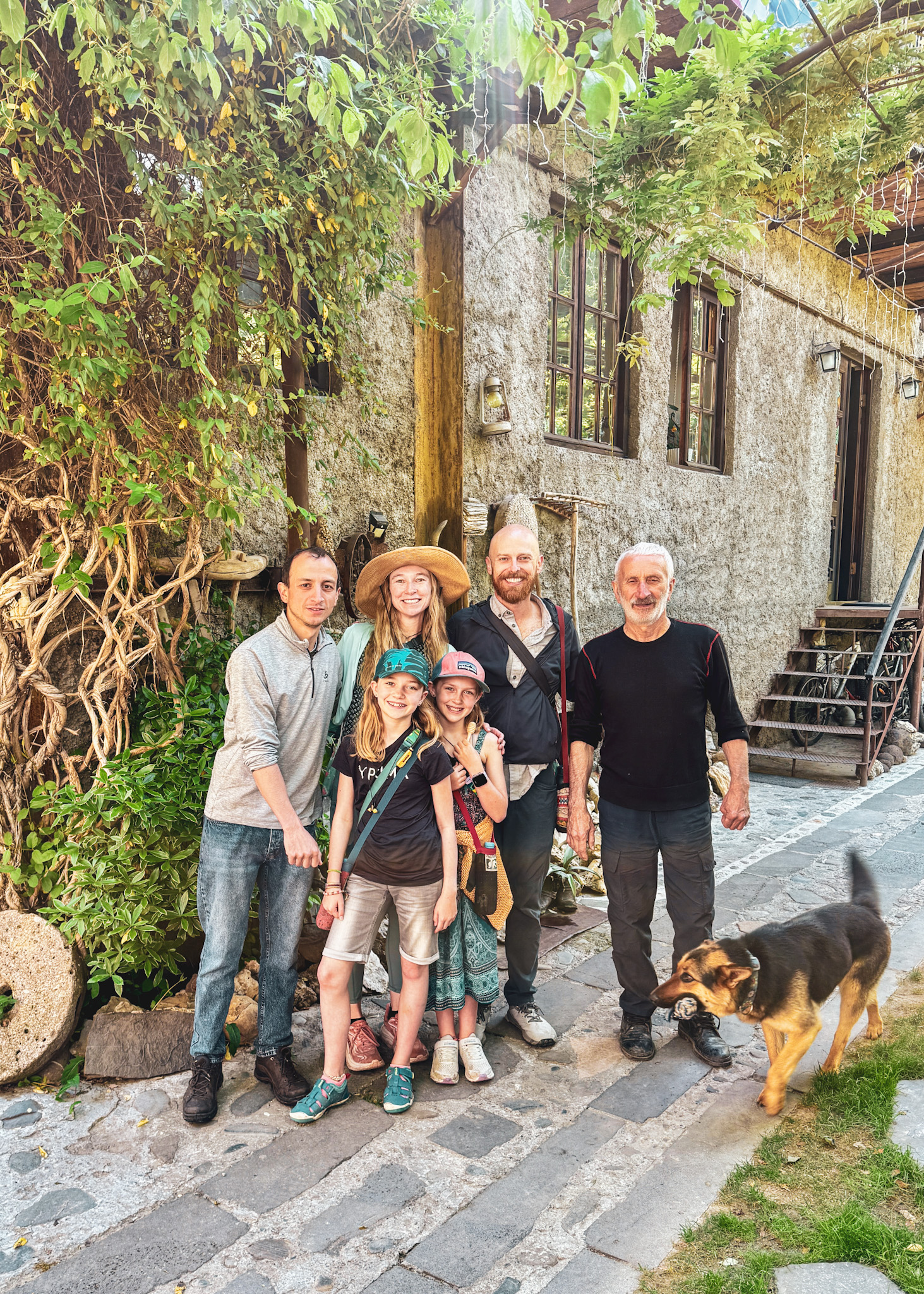
The name is exactly right, because this place is run by a family of makers and creatives. A husband and wife operate it with their son Nika handling much of the guest experience. In addition to running the hotel, the mother Elen is an art teacher, painter, and ceramicist, and a genuinely lovely woman. Her husband Tamuri is a master craftsman who has dedicated himself to reviving the lost Georgian art of carving the elaborate wooden columns that once stood in traditional Georgian houses, intricately worked with both Christian and older pagan motifs. Nika is a lawyer who speaks near perfect English and turned out to be a bottomless well of information on anything Georgian we could think to ask about: the state of the government, the country’s relationship with Russia, the natural history of the region, where to find the best fossils, how to train a dog to fetch firewood, and on and on. He was a delightful conversationalist.
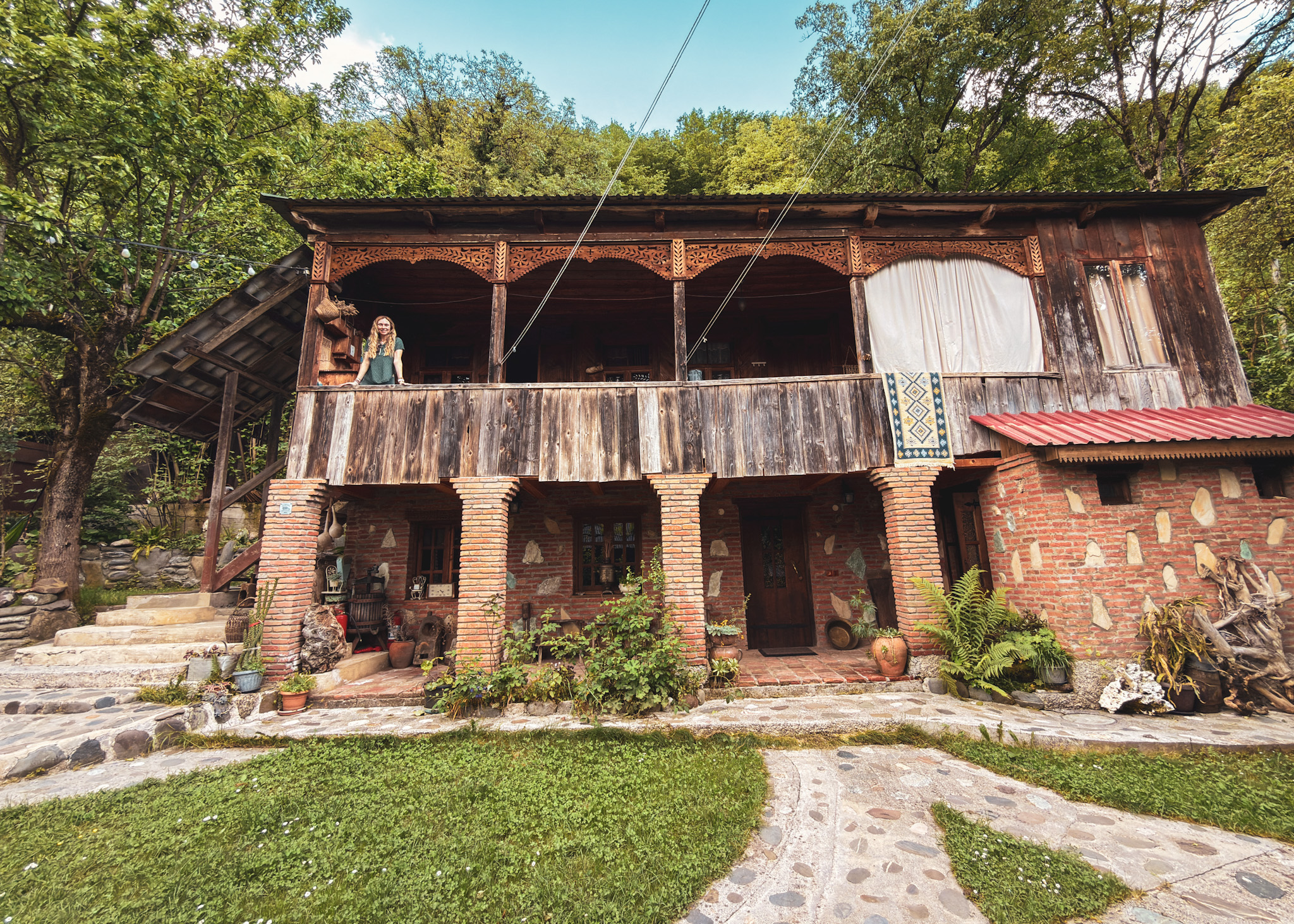
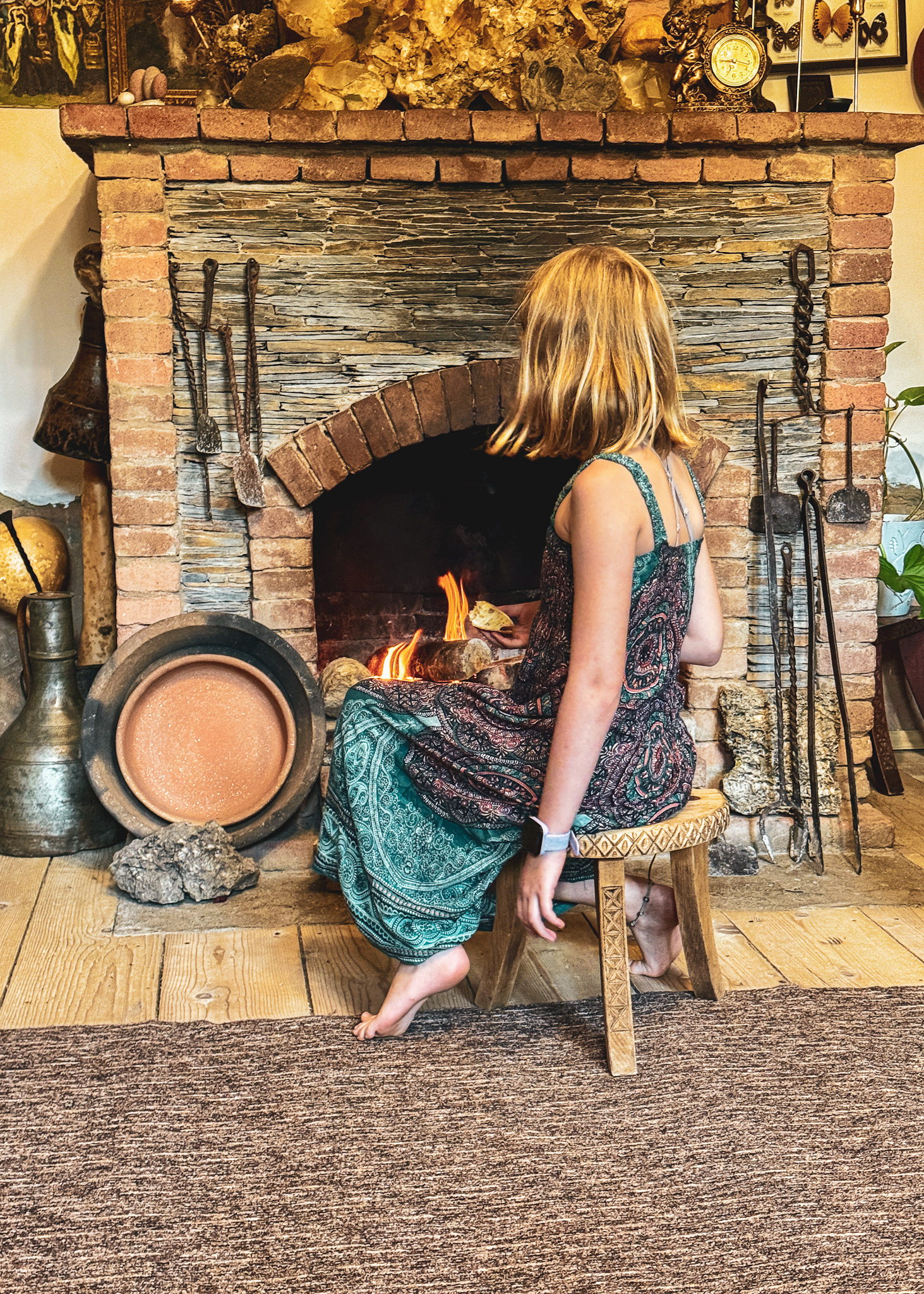
The house itself has a story as good as the family. Nika told us the structure is around 200 years old, but it has only stood on this particular spot for the last fifty or so. It originally belonged to his grandmother, in another part of Georgia entirely. Through a government land program she inherited this parcel in Oni but lacked the funds to build on it, so she came up with a beautifully practical solution. She paid someone to dismantle her grandfather’s old house piece by piece, label every single component like a giant numbered jigsaw puzzle, transport the whole thing across the country to Oni, and reassemble it. The foundation is new and the family has expanded it considerably, adding a full ground floor that now holds the kitchen and dining hall, anchored by a big fireplace that always seems to have a fire going. The original 200-year-old structure of the house sits atop, and was where we slept in our guest rooms.
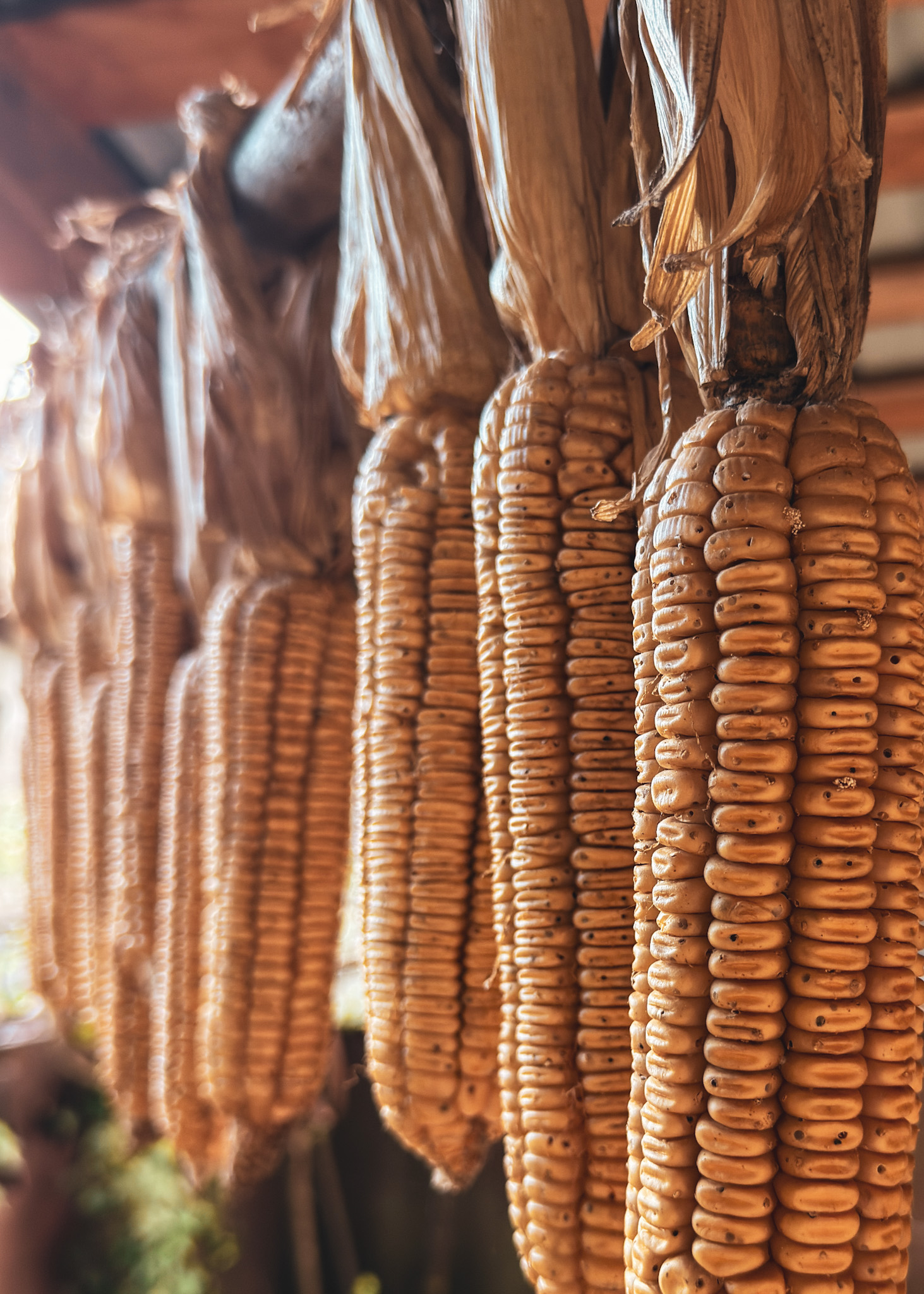
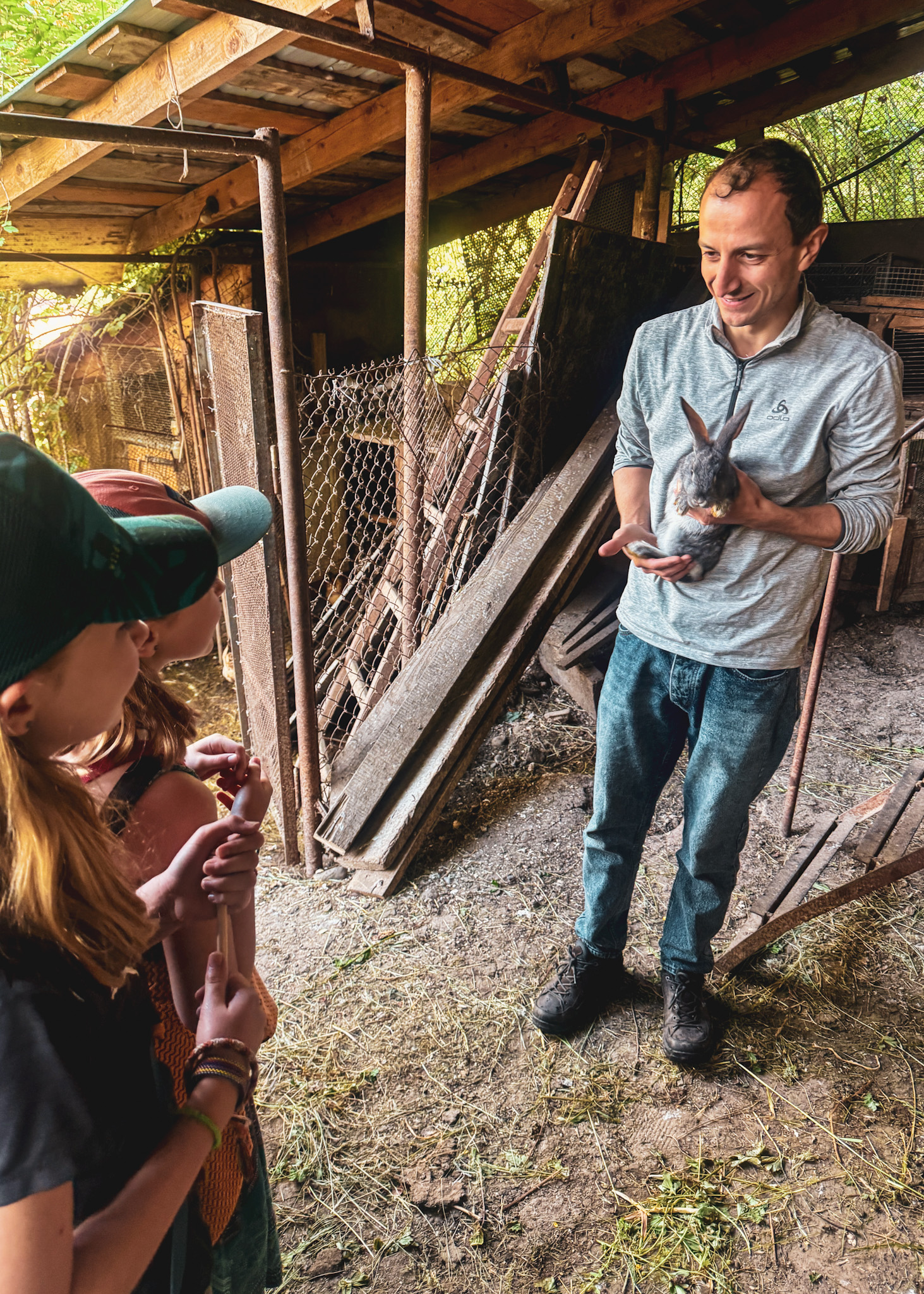
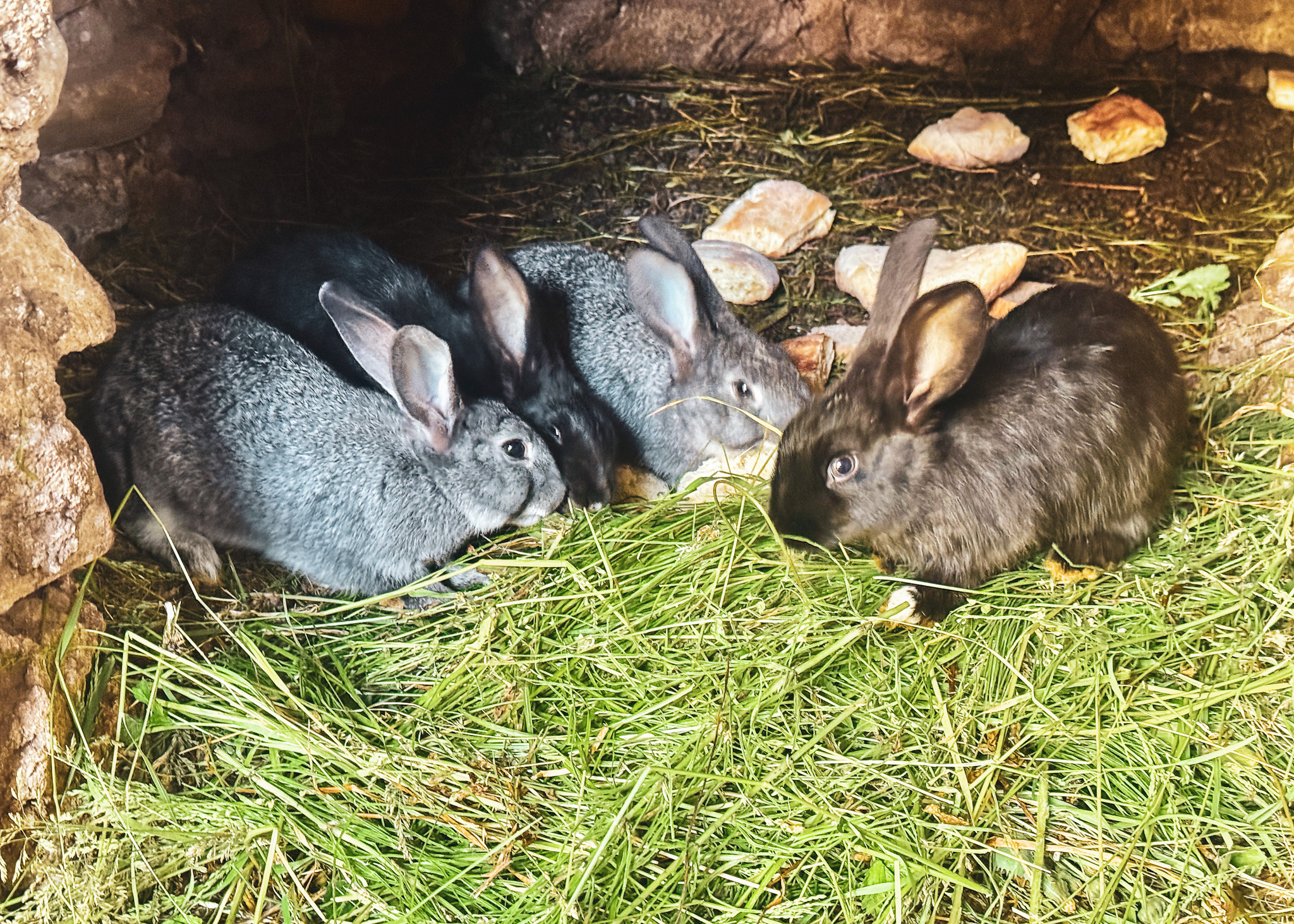
The whole compound reminded us of the Paradise Inn in Unionville, Nevada, or any small western homestead that has decided to also cater to the Airbnb crowd. Rustic, simple, and utterly charming, with antique radios, scales, and tools tucked into little nooks everywhere. The father and son are both serious rock hounds who have combed the surrounding Caucasus for fossils, crystals, and geodes, and those too are wedged into every spare corner. Nika gave us a full tour. They keep ducks, chickens, and rabbits, tend garden beds, run a smokehouse for curing local pork, and operate a small distillery and a wine cellar where they make their own wine and chacha liquor from regionally bought grapes. They are not fully self-sufficient, but the sheer number of useful skills and tasty products living under one roof here—wine and chacha, cured meats and vegetables, painting and woodworking—is genuinely impressive.
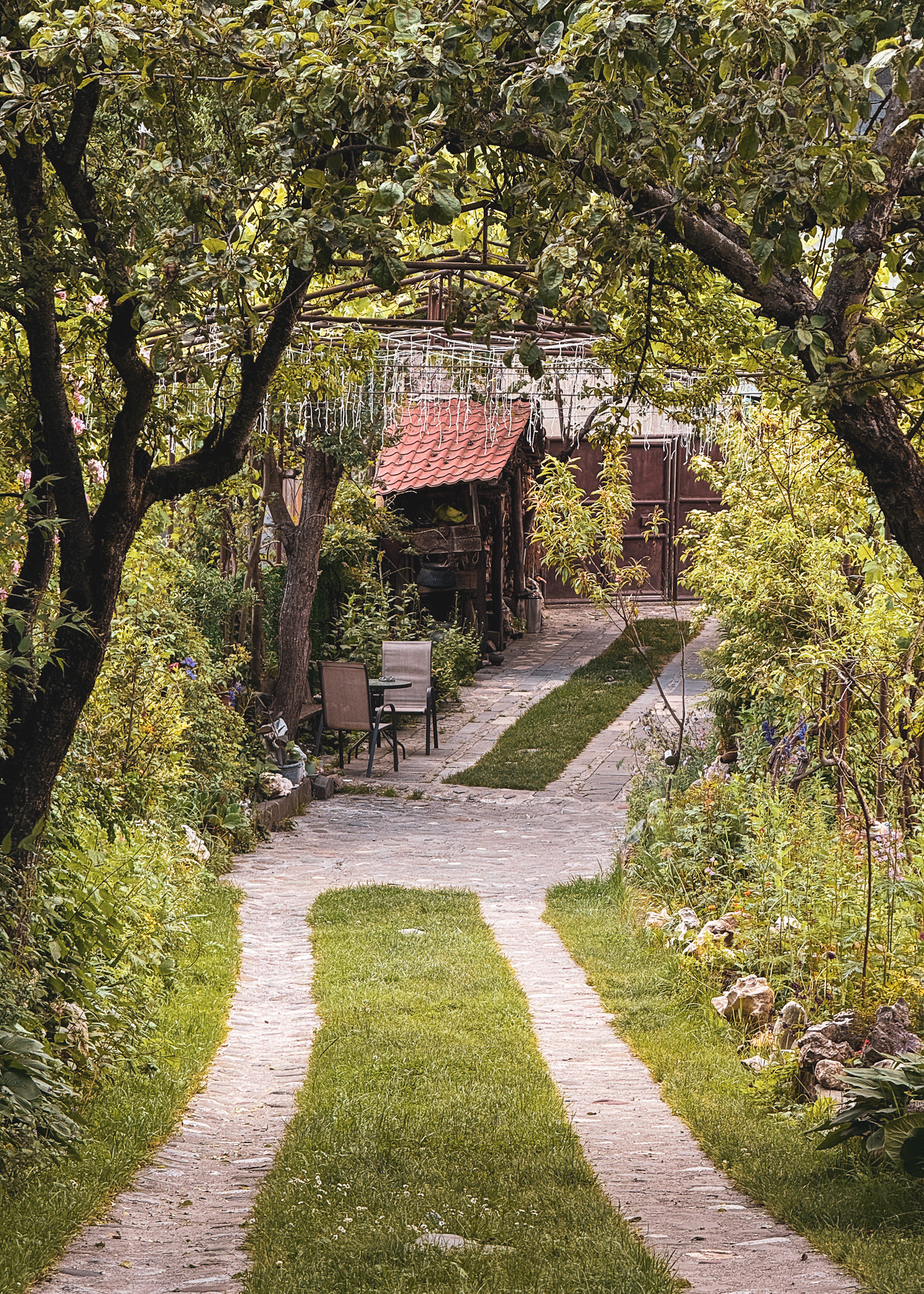
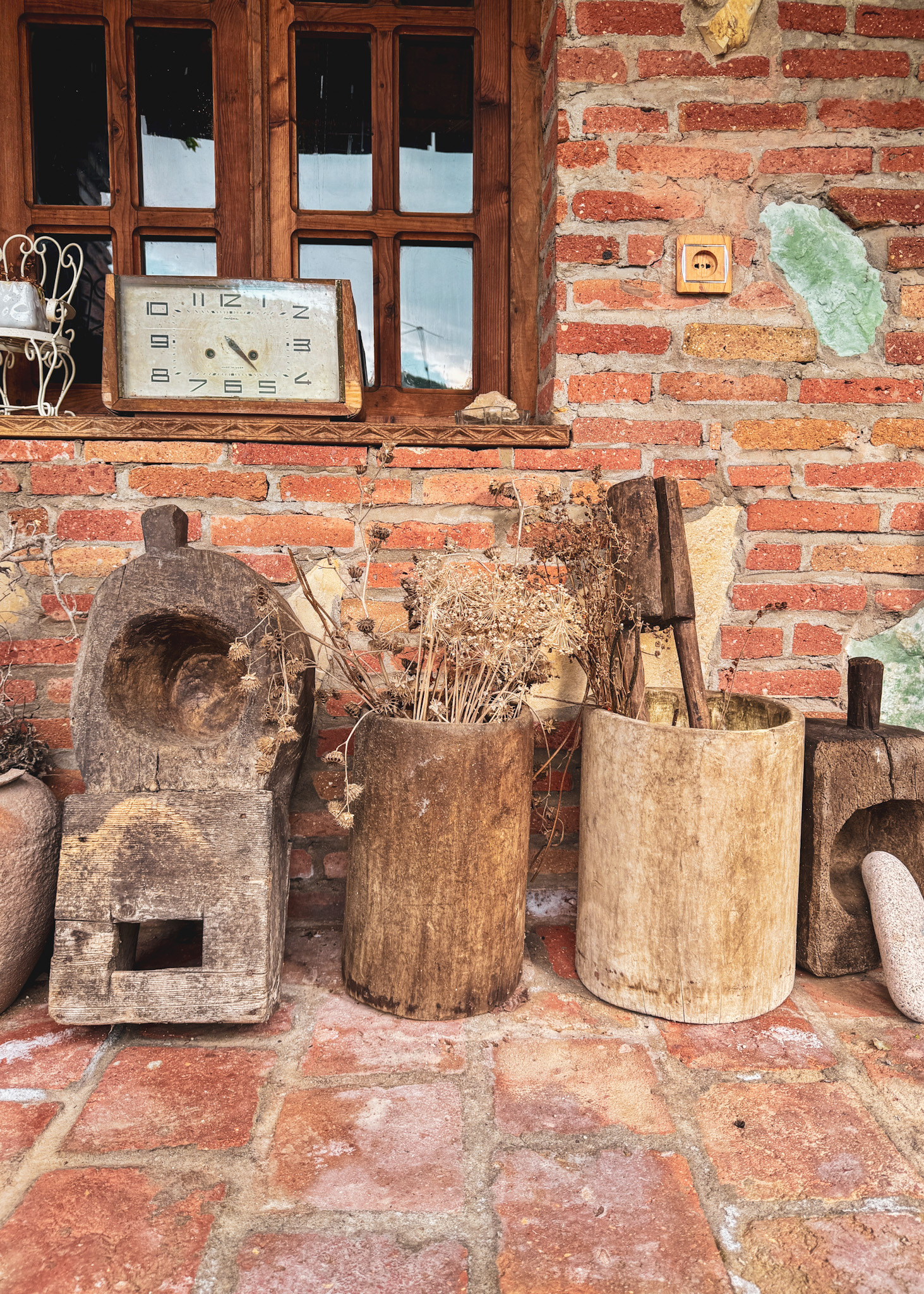
All our meals were included, and dinner that first night was fantastic, cabbage-wrapped dolmas roughly the size of a clenched fist, enormous and so good that everyone devoured them anyway. We washed them down with the homemade wine, both the amber and the dark red, which we loved, and we then sampled the chacha, the Georgian grape-skin moonshine, which proved a little too potent for us. Afterward we stayed in the dining hall by the fire until about ten, journaling and reading, a quiet treat we had not enjoyed since a fireplace back in Pontevedra, Spain.
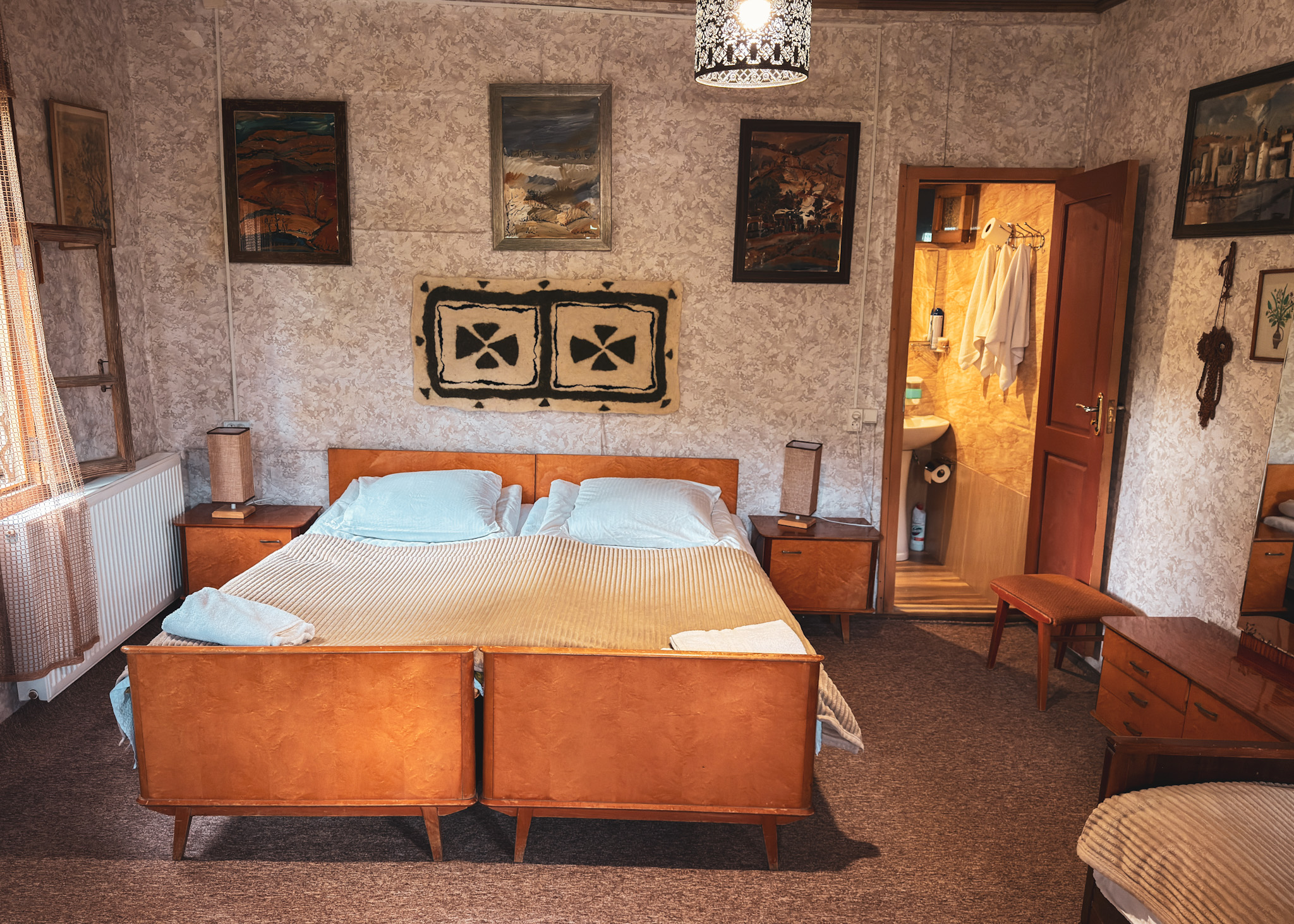
The one knock on the place was the bed, and specifically the pillow, which was once again the size of Texas and dense as a sandbag, completely unusable for actual sleeping. Knowing this is Max’s particular Achilles heel for a good night’s rest, he dug out the inflatable travel pillow he had bought back in Taiwan and eventually found his way to sleep.
We had grand plans for the next day. A workout, a hike, a tour of the town. None of it happened. A combination of poor sleep, a tweaked ankle of Arya’s, and the very specific gravitational pull of a place like this conspired against all of it, and the hammocks won. We are completely grateful for how the day turned out.
We slept until almost nine, roused only when Finlee poked her head in to ask why we were still in bed when breakfast was about to be served. She had missed the memo that breakfast had been pushed to 9:30, but her point stood. We headed down to a roaring fire and enough food to feed a small army—simple fare done well, with a plum jam that was an outright revelation. We were easing into our books when Arya mentioned something was wrong with her ankle, every step sending a painful spasm up her calf, and it became clear pretty quickly that a multi-kilometer hike at altitude was off the table. The girls had homework to fill the gap, so they got to work, while we asked Nika about his mother’s art school and his father’s woodworking shop. He stopped what he was doing to take us there to see for ourselves—he seemed happy to play tour guide.
The art school sits about ten minutes away in a government building constructed, in true Soviet style, with no apparent concern for how it looked from the outside. Inside, though, the students and teachers more than compensate—every wall was alive with paintings, charcoal sketches, ceramics, and felt work, a local tradition they’re working hard to keep alive. Shaina enjoyably perused the studio, examining projects by kids aged 6 all the way through high school, and she was genuinely impressed with the high quality. It was no wonder how several of their students get accepted into well-respected art schools around Europe each year.
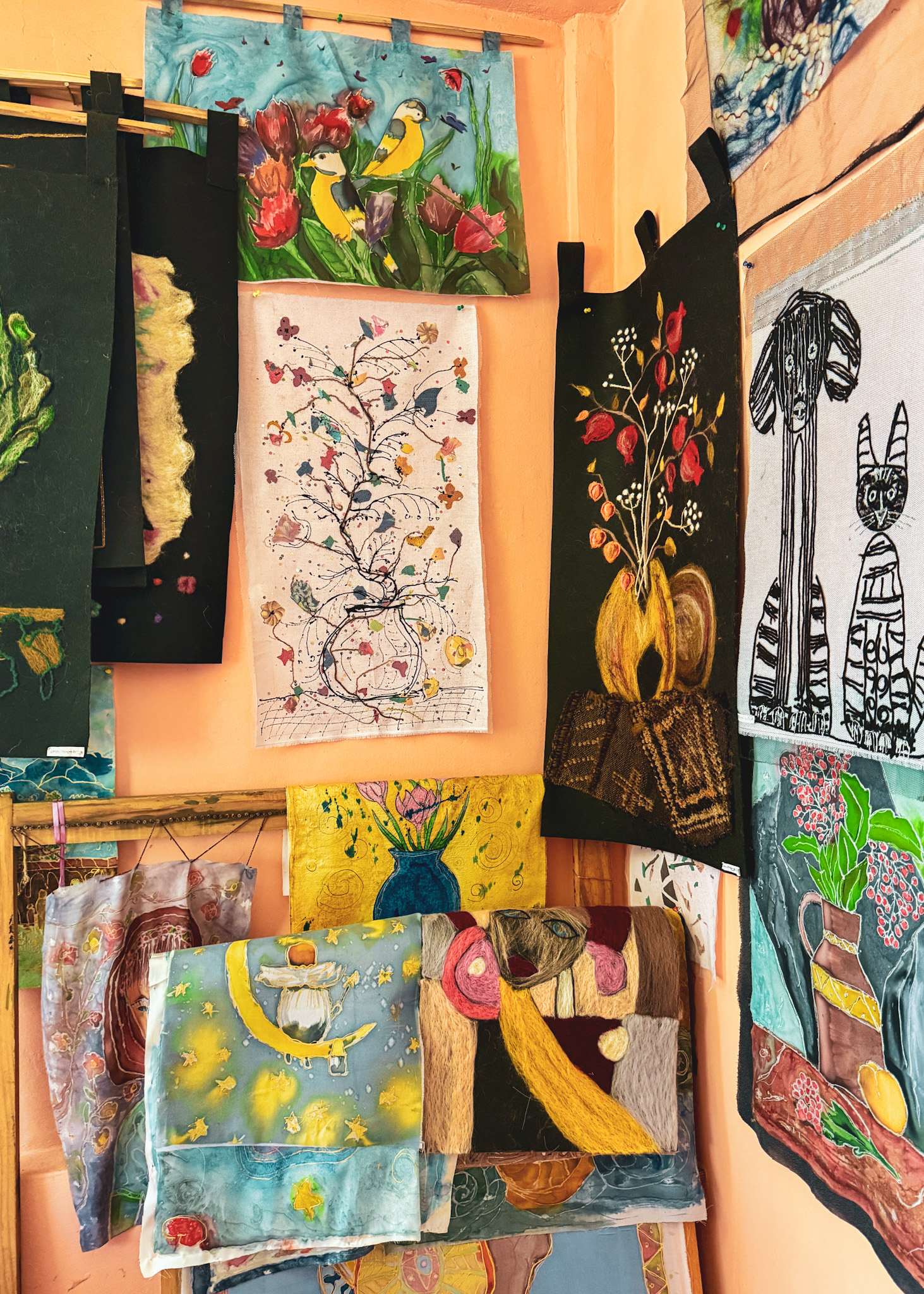
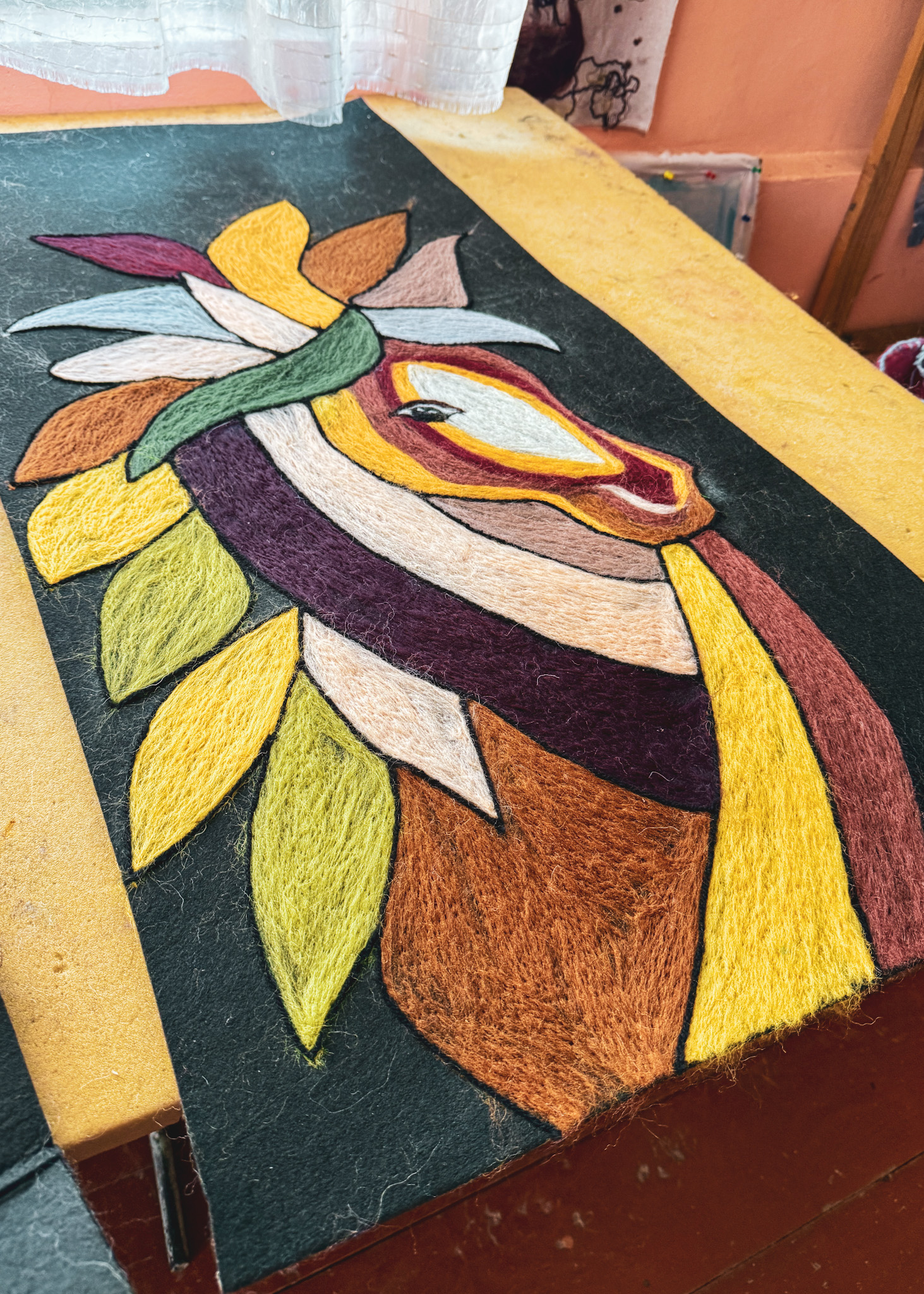
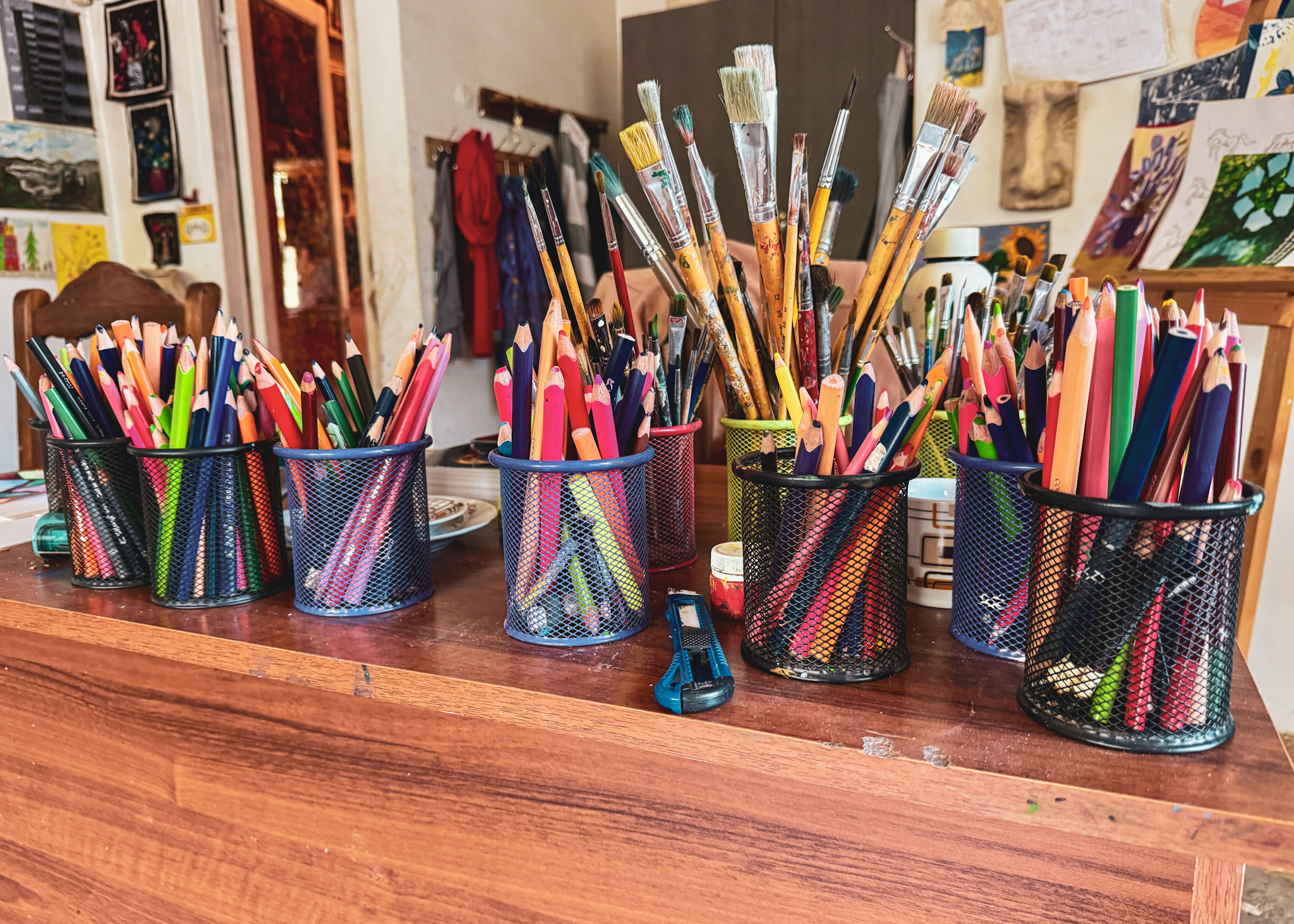
Not surprisingly, the detail that delighted Max most was the heating. In the corner of the main classroom stood a small wood-burning stove that looked like someone had taken a 55-gallon drum, welded legs onto it, bolted a door to the front, and cut a hole through the concrete wall for a chimney, because that is more or less precisely what they had done. Every other room had its own. When Max asked about it, Nika and one of the teachers looked at him as though he were being a bit dense. Of course there is a stove in the classroom. How else would you heat it, when you live on the snowy northern border of Georgia, on hillsides covered in a renewable supply of firewood? The school runs on government subsidy for Nika’s mother and two other teachers, so that each student only pays the grand sum of around $3 per month for access to the unlimited after-school art programs across every medium. Three dollars. This is amazing, and proof that governments can work sometimes.
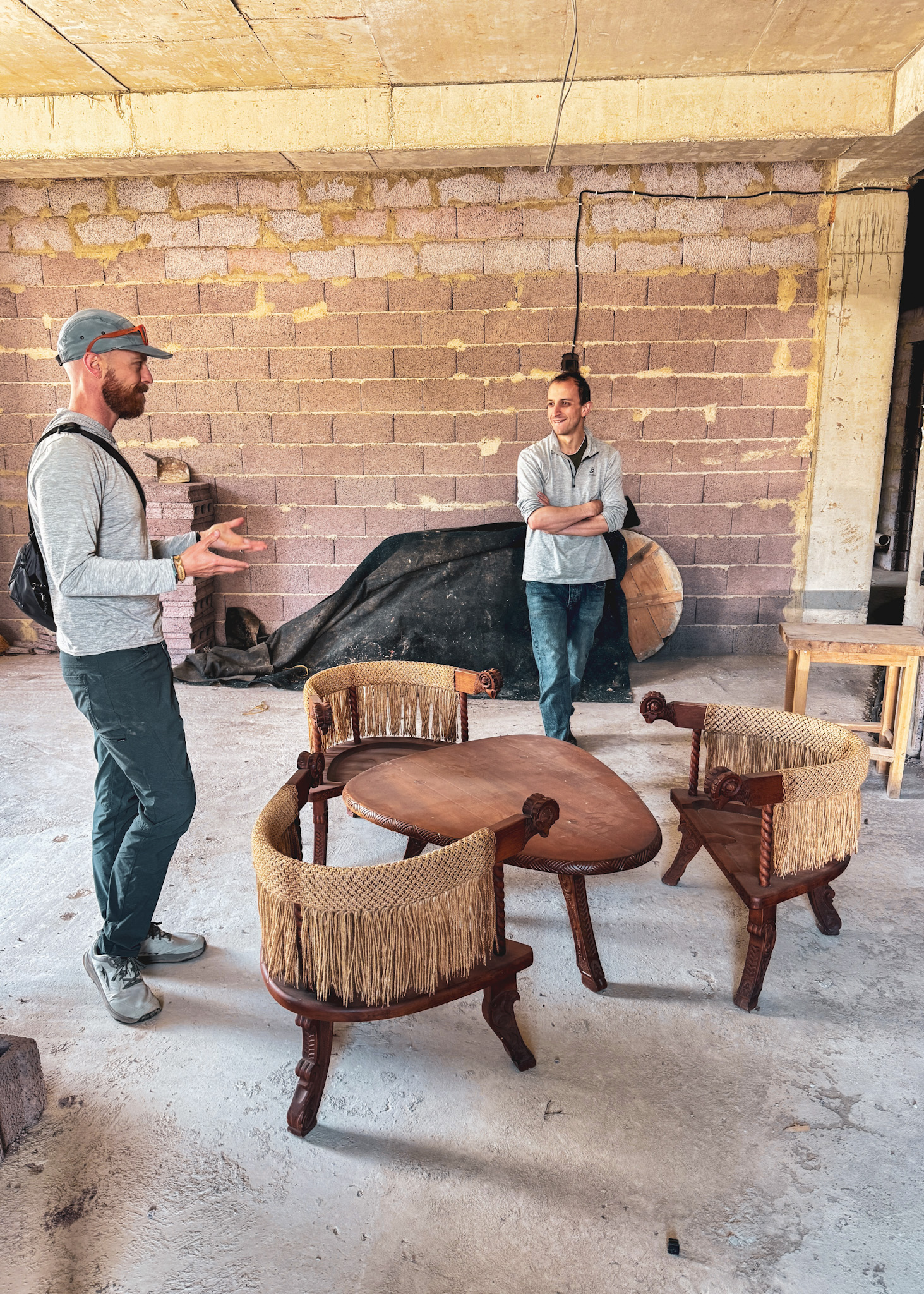
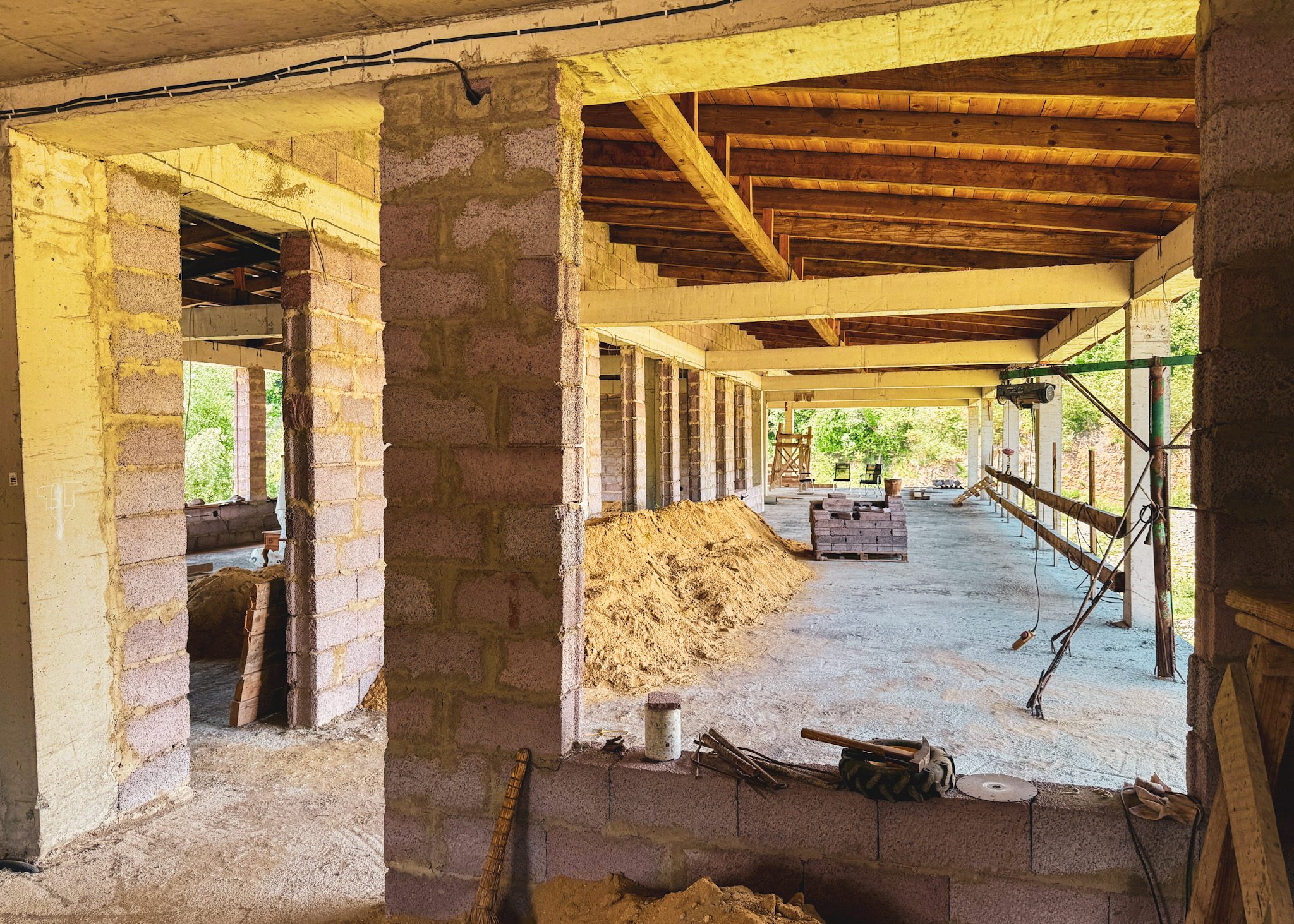
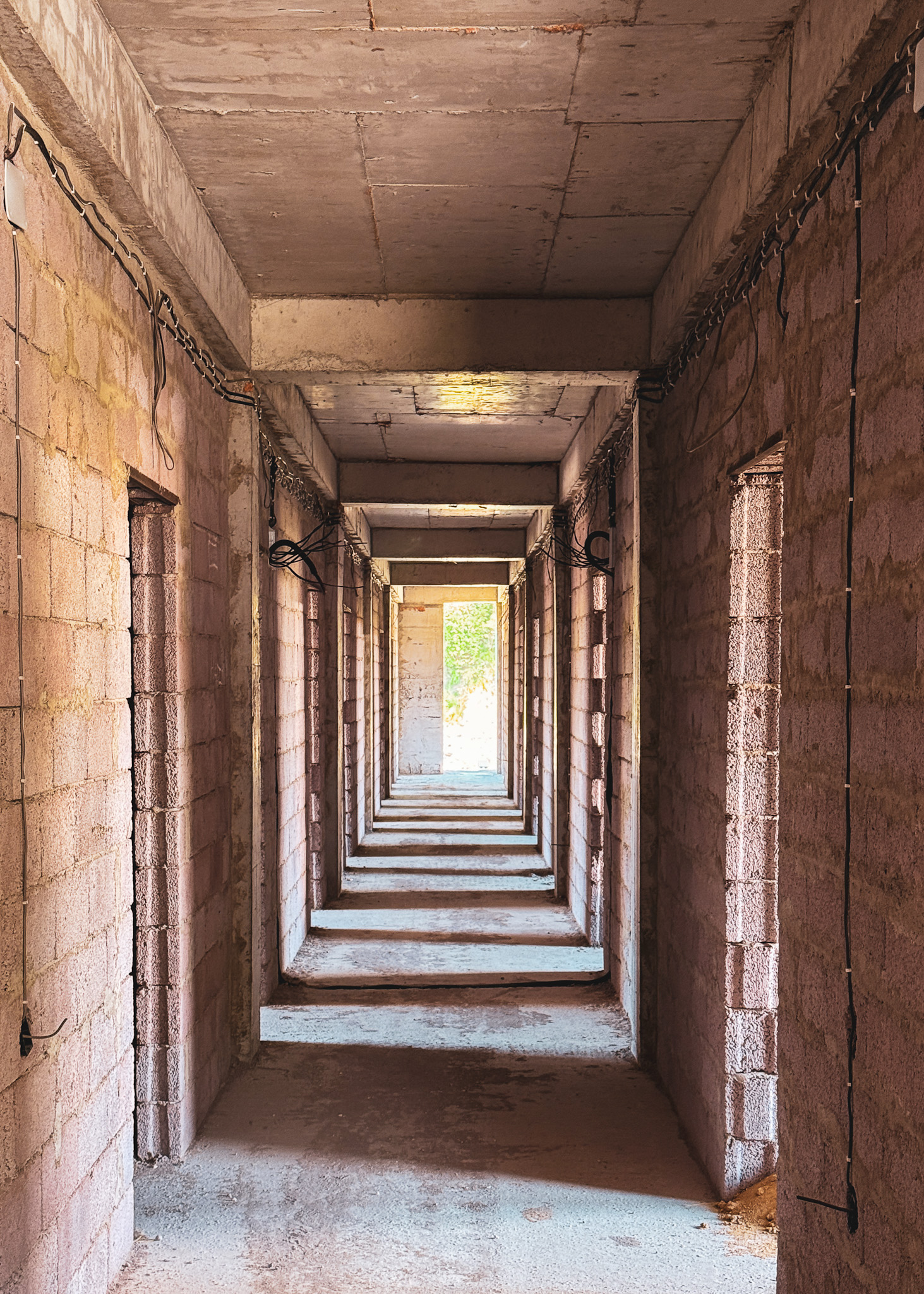
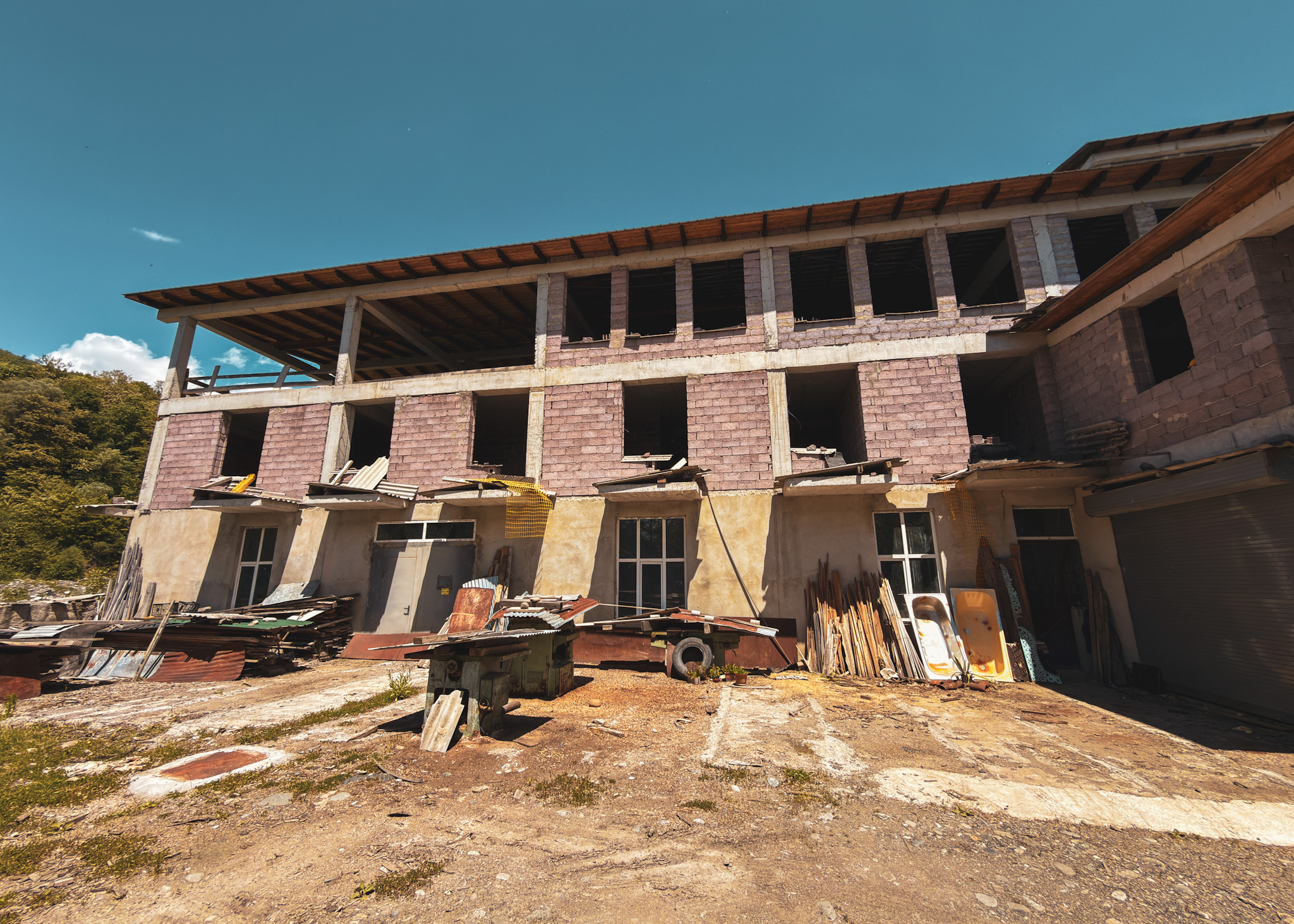
From the school we walked around the block to an enormous construction site, a four-story concrete-and-block building roughly the footprint of a small hotel, and we asked what it was. Nika said it was his father’s woodworking shop, which made no sense until a missing piece of the puzzle clicked into place. The family had begun bringing students over from Denmark to learn the traditional Georgian woodworking that his father is working to revive, and the program had grown enough that they decided to expand. This building is that expansion. The ground floor holds about 3,000 square feet of shop space plus an entry hall, dining hall, and kitchen, while the two floors above contain twenty rooms each, designed to house whole groups of students who would come live and learn the craft for a semester at a time. The shop space looked nearly finished, but everything else was bare concrete—no plumbing, open holes where windows will be, and only roughed-in electrical. When Max asked about the timeline to complete it, Nika said he had no idea, which for a project this size was not the answer we expected. A tangle of regional land-use changes, Covid-disrupted supply chains, and certain unapproved alterations to the build had left the family in a holding pattern, with the local authorities currently blocking any further progress. A bureaucratic nightmare, and yet the family seemed to take it in stride, simply carrying on with whatever had not been blocked. We of course wanted more of the story, and we got an ear-full—an explanation that wove in what they saw as regulatory overreach by the Russian-backed/funded government in power, alongside general government incompetence and the legal quagmire that results when trying to navigate the tangled web. Apparently governments are the same everywhere.
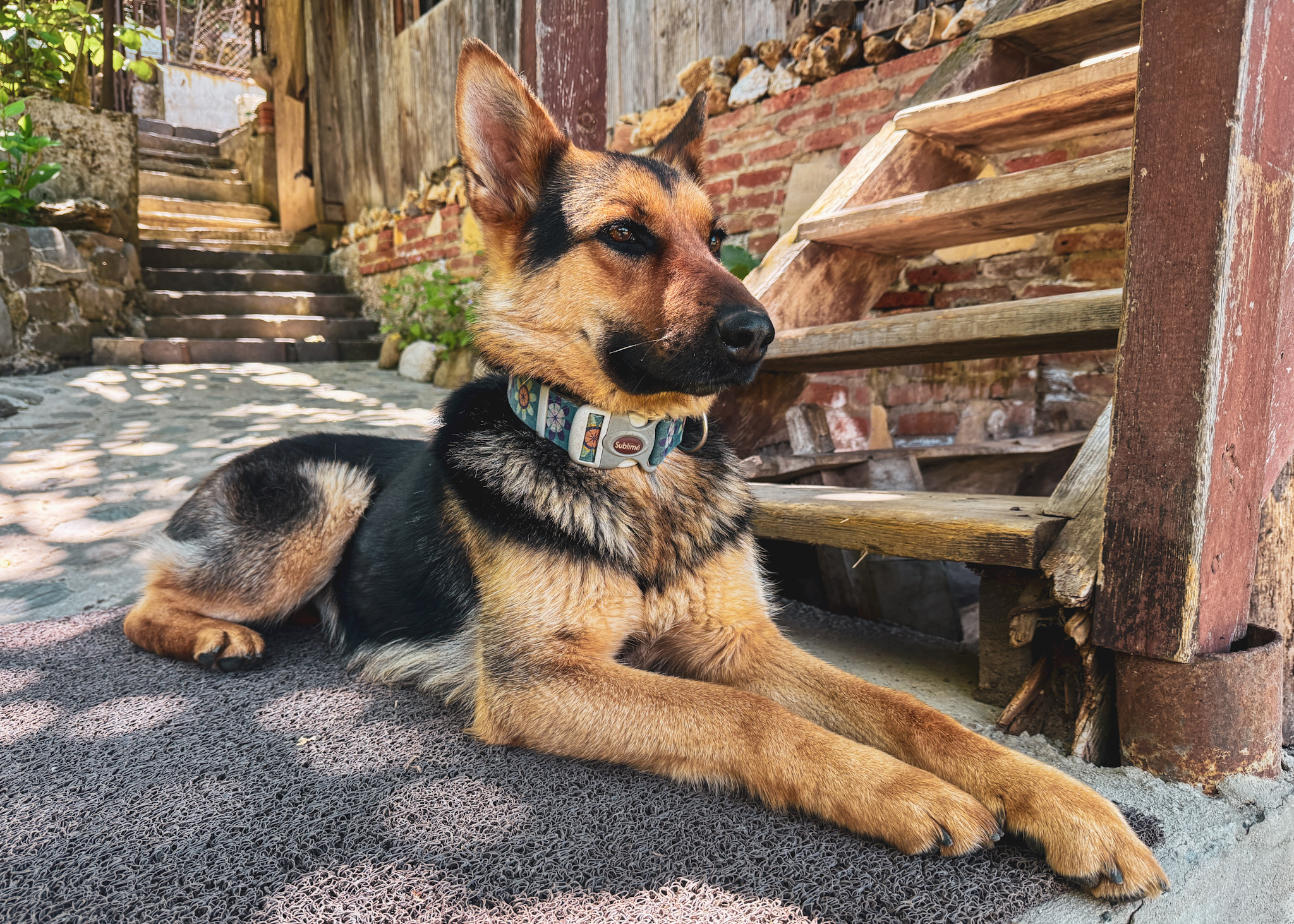
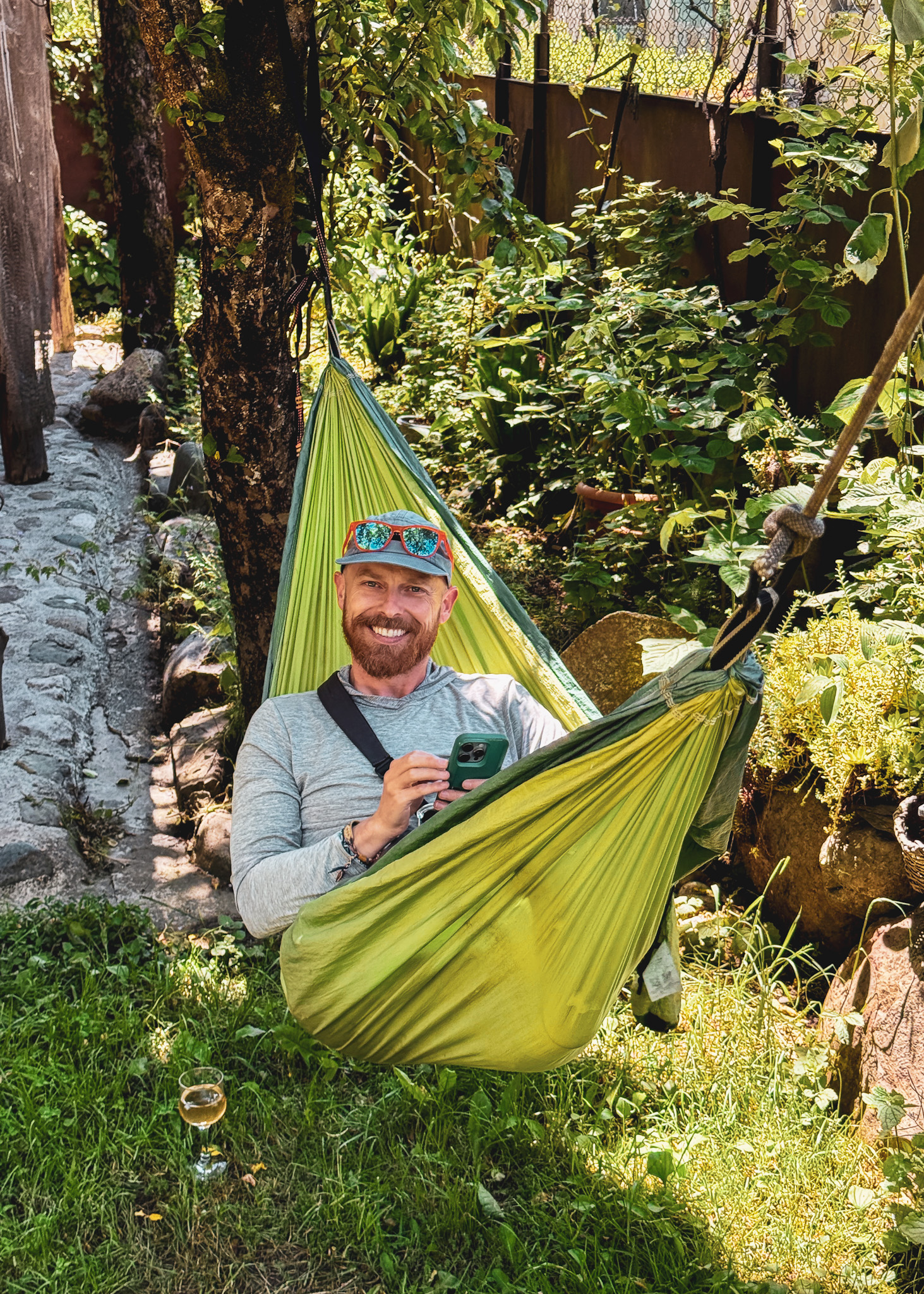
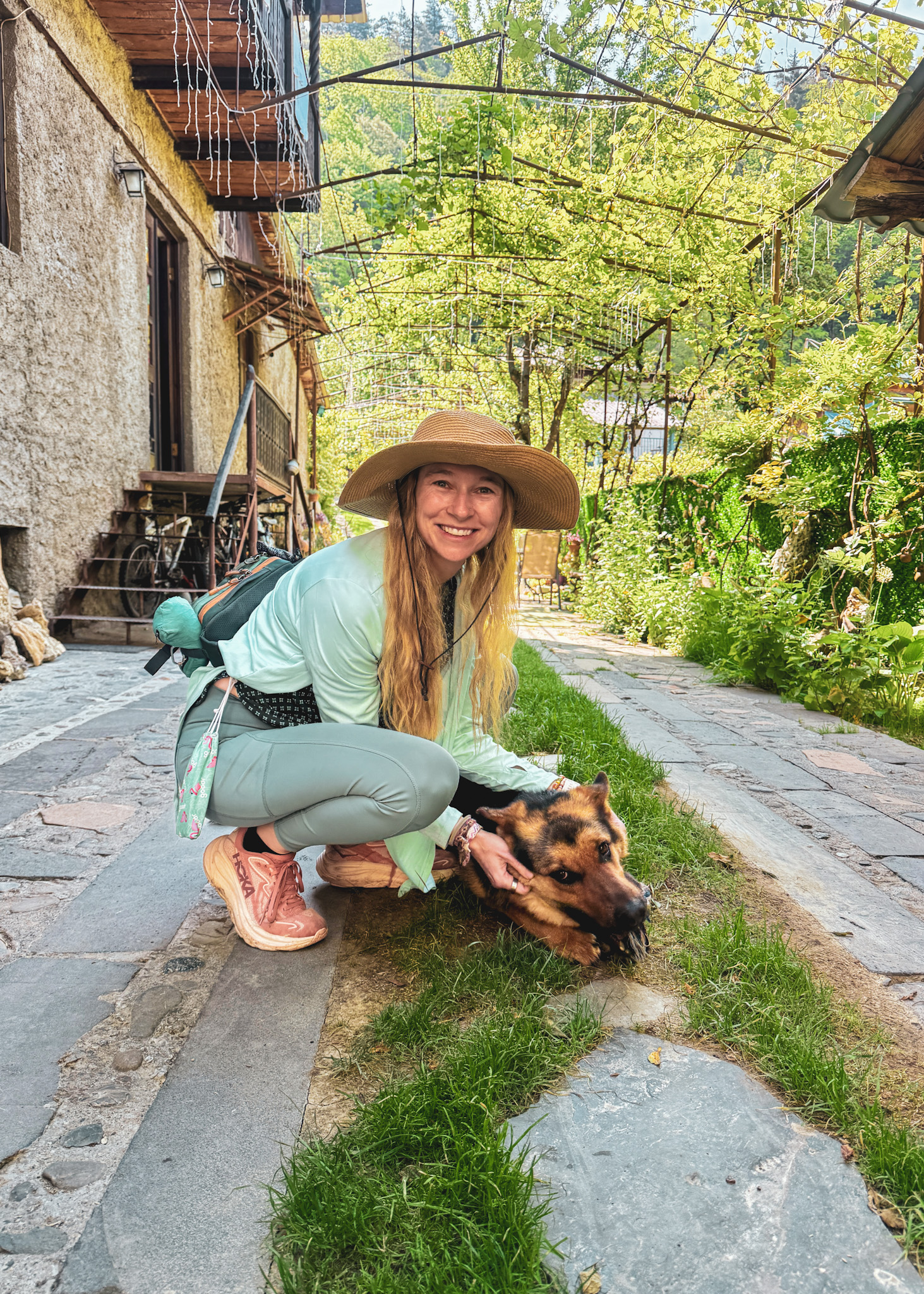
Back at the guesthouse, we spent the rest of the afternoon out in the garden, lying in hammocks, writing, reading, drinking their homemade wine and listening to the constant low murmur of birds and the soft clucking of free-range chickens hunting bugs in the dirt. Our favorite resident, though, was Bombora, a feisty two-year-old German Shepherd mix who reminded us so strongly of Atlas, our dog back home, with her perky ears and intense gaze, that we half adopted her on the spot. She loves fetch and play tug-of-war, and though she is a touch mouthier than Atlas, given to small nibbles with a surprisingly serious set of teeth, she is a sweet little monster.
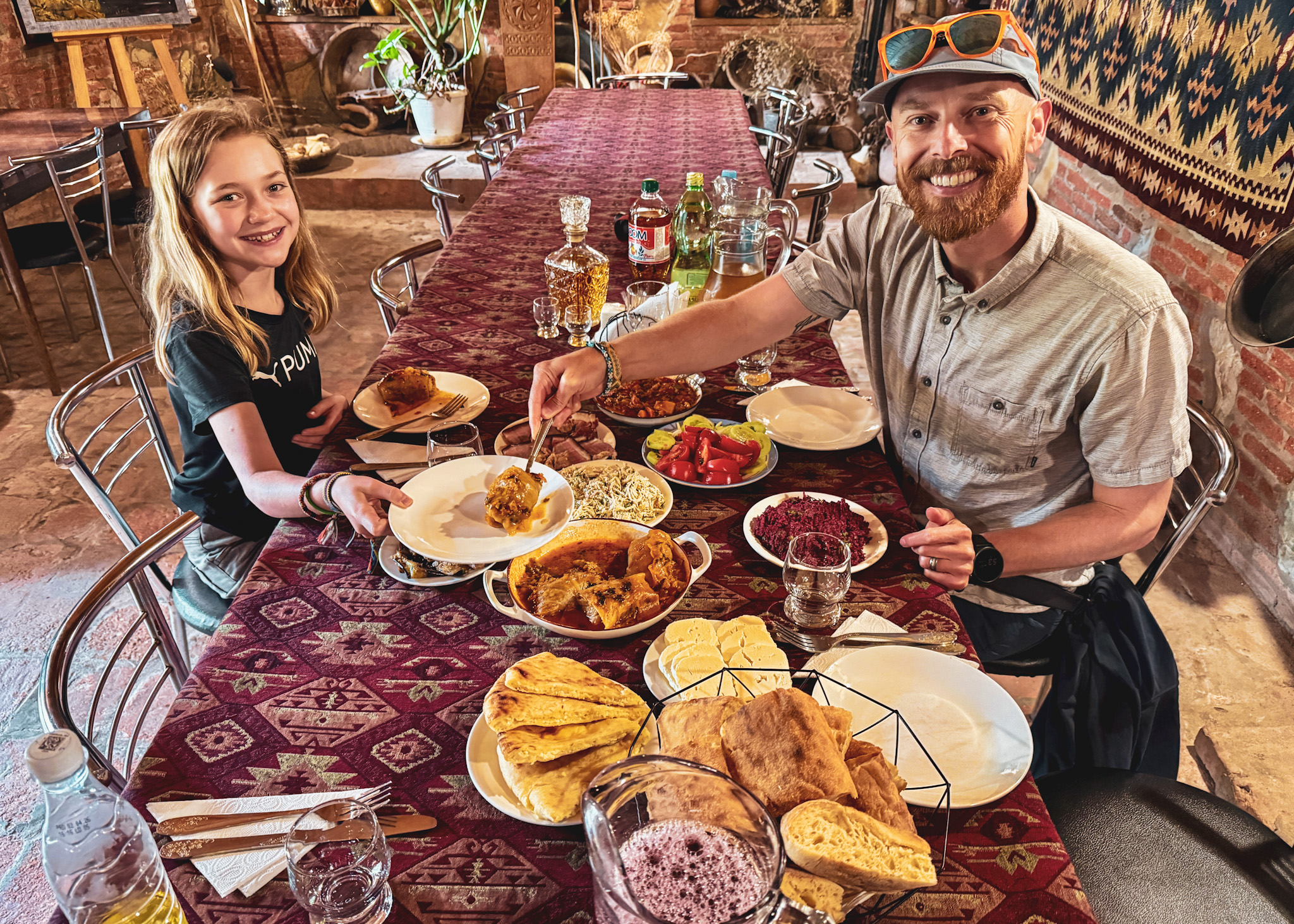
Dinner that evening was another triumph: shkmeruli, Shaina’s favorite Georgian dish, consisting of chicken baked in a clay pot with thick garlic sauce, a tomato and cucumber salad, and lobio, one of Max’s favorite dishes since arriving in Georgia, a thick smashed-bean dish somewhere in the neighborhood of refried beans but looser and chunkier, shot through with roasted garlic and parsley. We ate it in the living room of the main house rather than the usual dining hall, because a group of Georgians had taken the dining hall over to celebrate the opening of their new art museum in Kutaisi. We tried to chat with a few of them, but the conversation ran aground on the language barrier, and they carried their celebration deep into the night, going strong until well after eleven, by which point we had long since retreated upstairs and surrendered to sleep.
That is the strange magic of a place like the Artist’s House. We came to Oni planning to hike and explore, and instead the place quietly insisted we slow down and pay attention to it, to a family keeping old crafts and old ways alive in a forgotten mountain town, dismantling and rebuilding houses, carving columns the old way, teaching children to paint for three dollars a month, and feeding passing strangers as if they were family. We never did get our hike. We did not miss it for a second.


Leave a Reply