
Dates: June 1st-3rd, 2026
Place: Borjomi, Georgia
The drive from Gyumri to Borjomi was a travel day of the very best kind, the kind where you happen to cross an international border somewhere in the middle but the day really belongs to the things you see along the way. We had hired a private driver rather than taking a bus or a shared transfer, which nudged the cost up a little but flipped the whole character of the day from transportation-first to adventure-first. It is, we are now convinced, the way to do it.
Our driver, Avto, collected us at nine sharp, and we climbed out of Gyumri into green hills that just kept rising, all the way up toward 2,200 meters, where the road began flirting with the snow line. The wildflowers were in full force, the slopes painted in bands of red and yellow and blue, as if Armenia had decided to send us off with one last small ceremony. The border crossing, when we reached it, was the easiest one we have ever done. We were the only people there, which surely helped. Out of Armenia, into Georgia, back into the car—done.
The one genuine flaw in the whole day was the vehicle. Avto’s car was a Ford Fusion, and while we hold nothing against Ford Fusions as a category, Armenia and Georgia ask for slightly more ground clearance than a Fusion is willing to surrender. Avto jerked to avoid potholes, or went through them at a snail’s pace, and speed bumps became a genuine strategic problem, the underside of the car scraping the top of a bump if we took it any faster than a slow walk. At one point we had to pull over for poor Finlee who was terribly car sick. At others we still managed to scrape while moving at one mile per hour, the slow drag of plastic across asphalt providing the soundtrack. Maybe it was the driver. Maybe it was the car. Maybe it was that we have been eating far too many of those delicious meat and soup filled khinkali dumplings? All explanations felt equally plausible.
Low-slung car aside, the day delivered three extraordinary places, each one a different answer to the same question of what a region does with its very old bones.
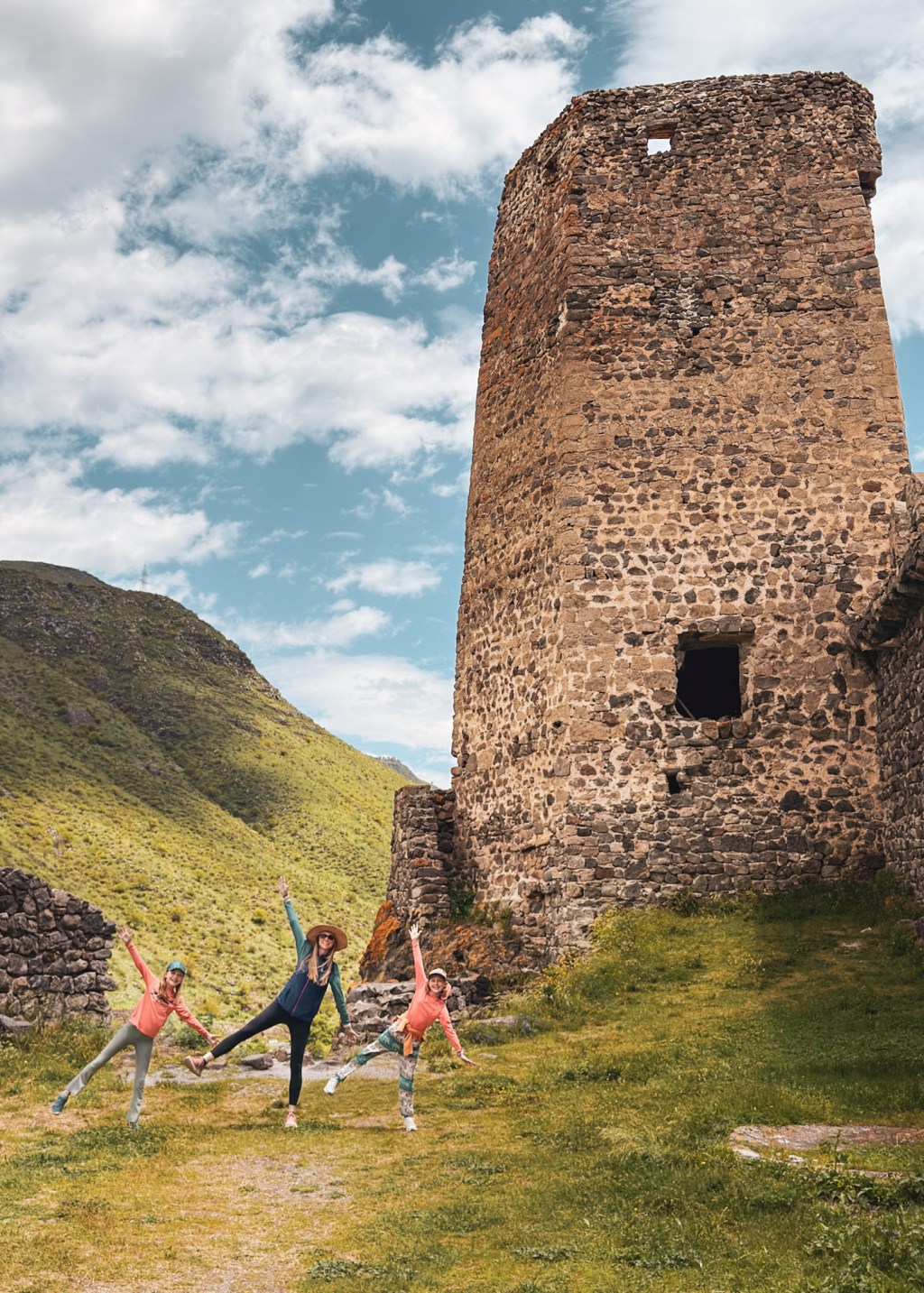
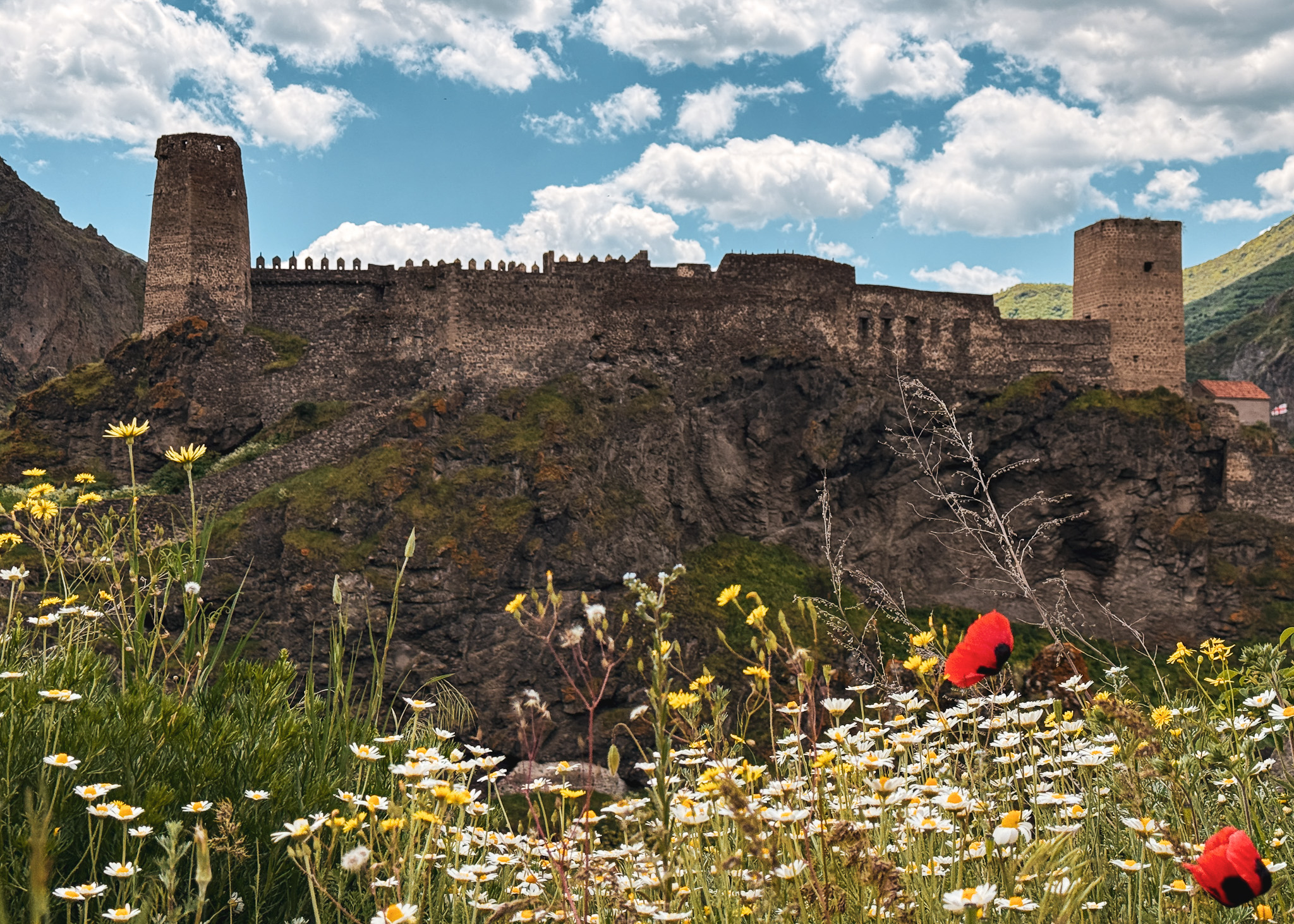
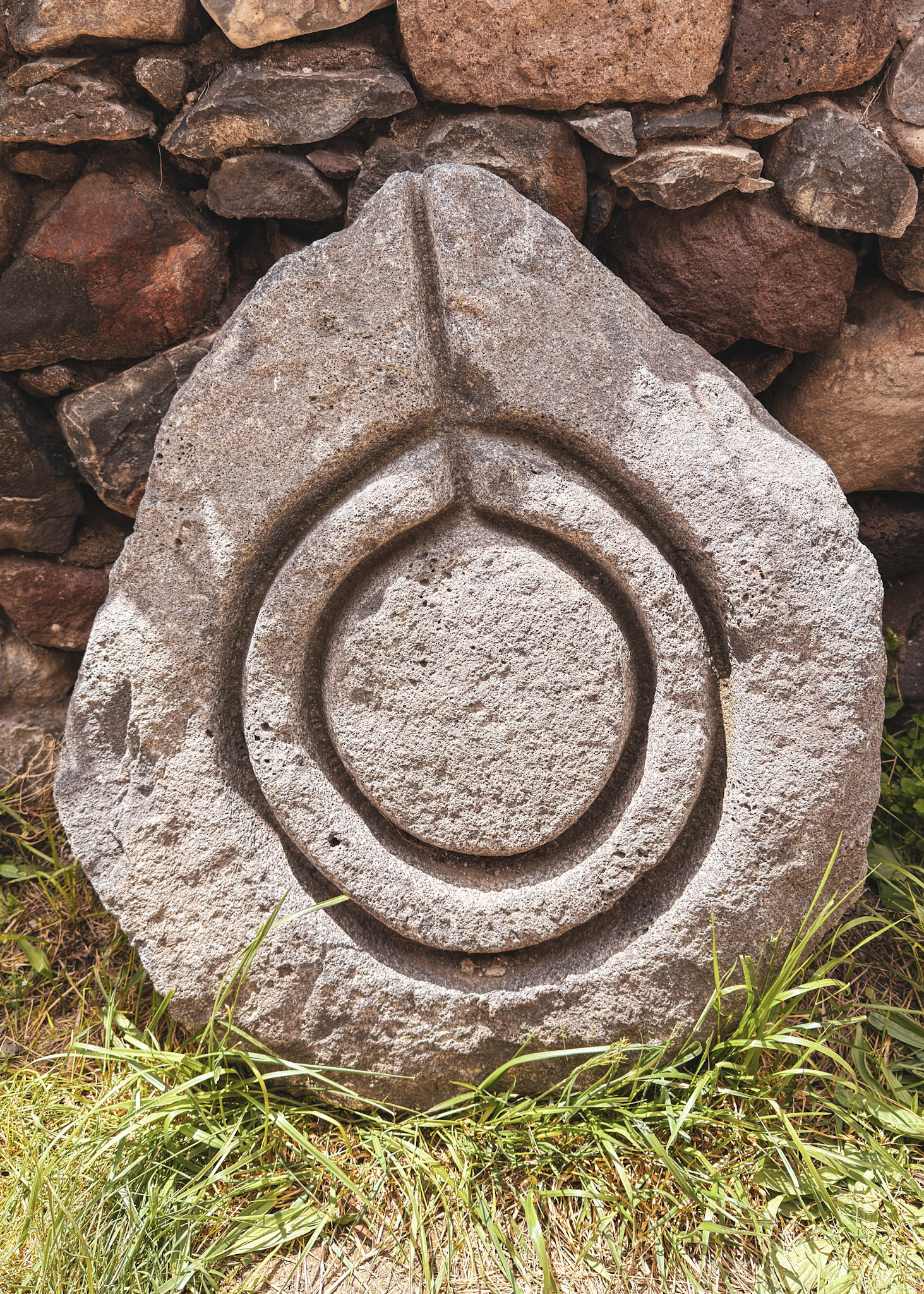
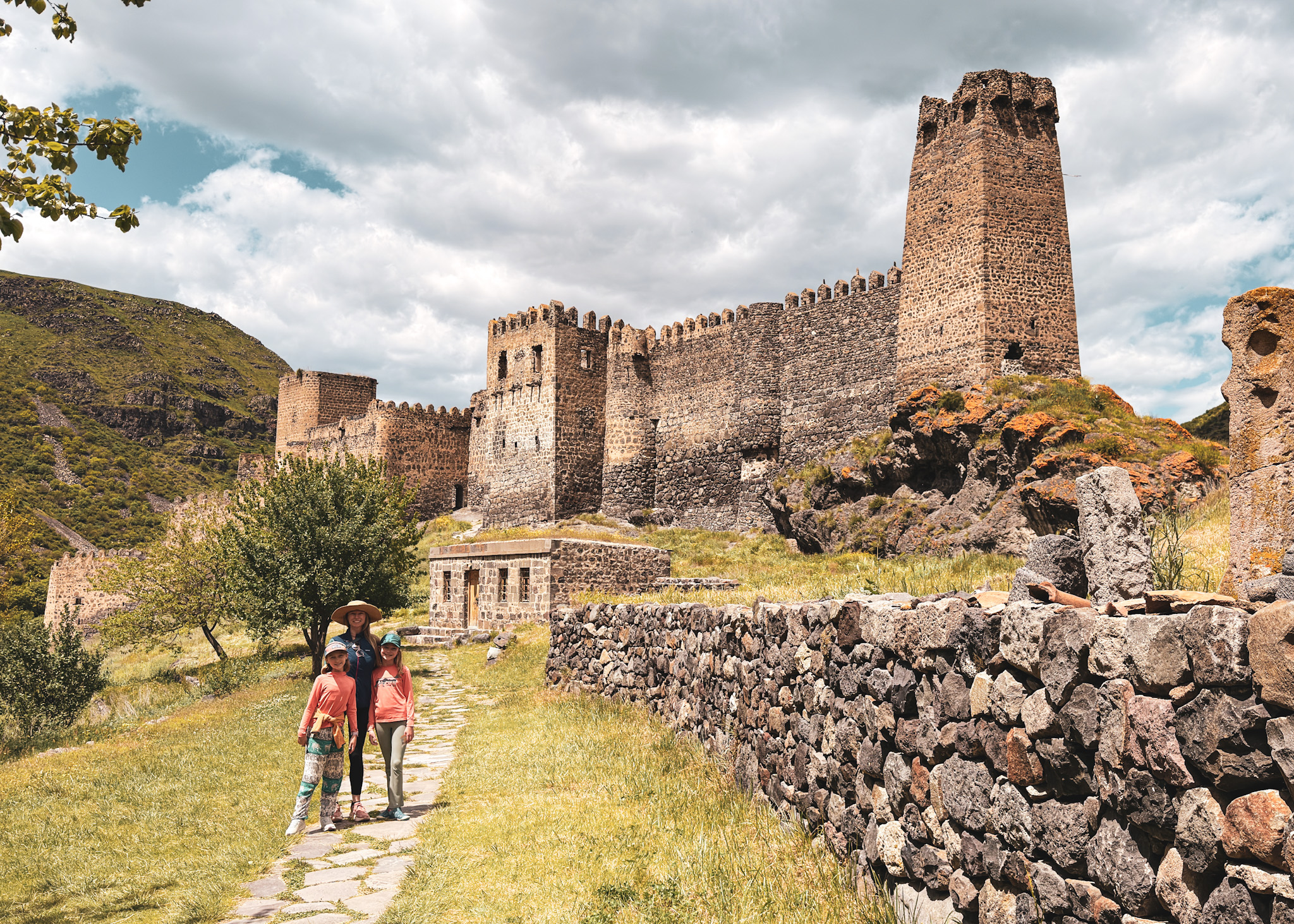
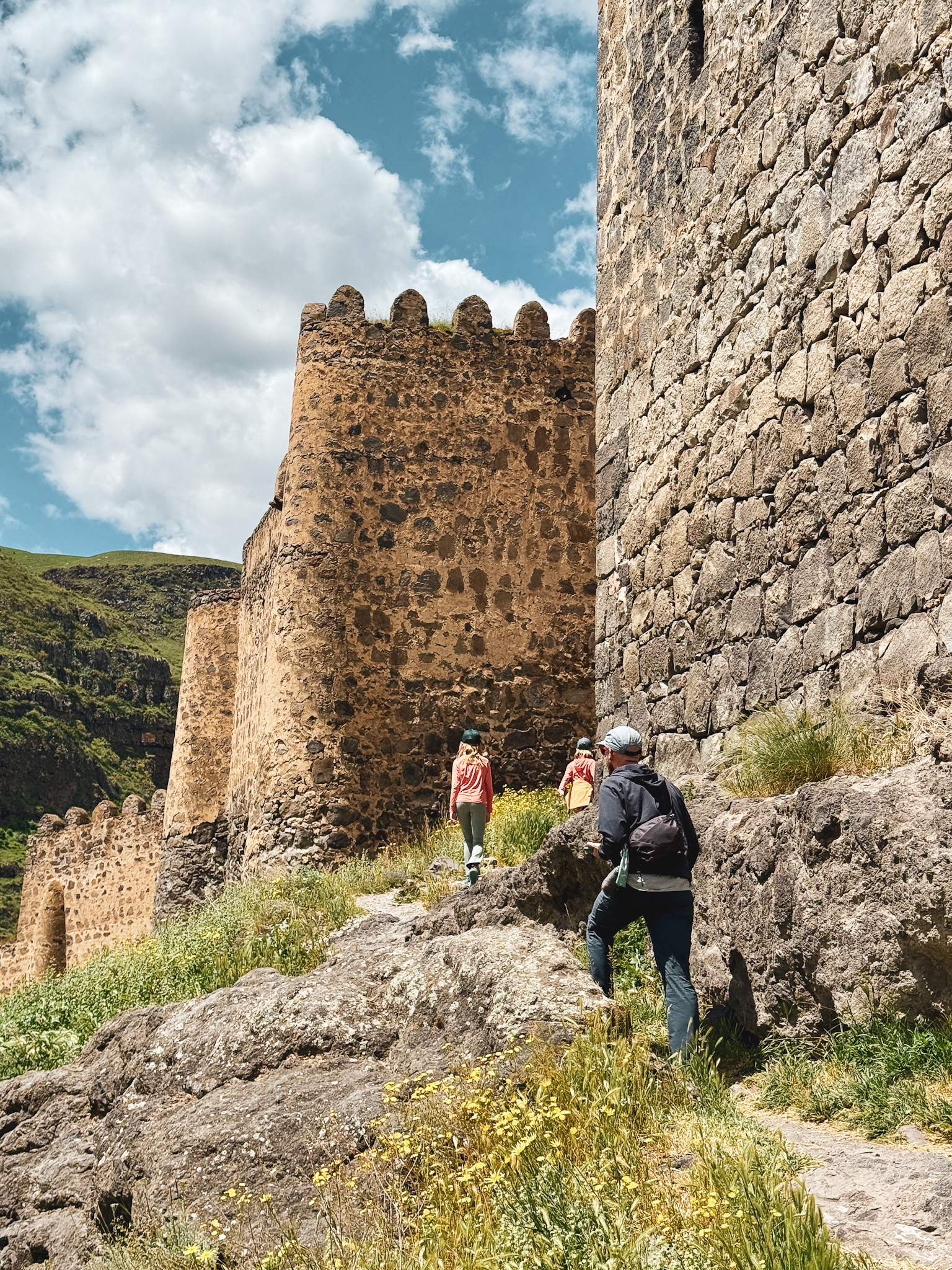
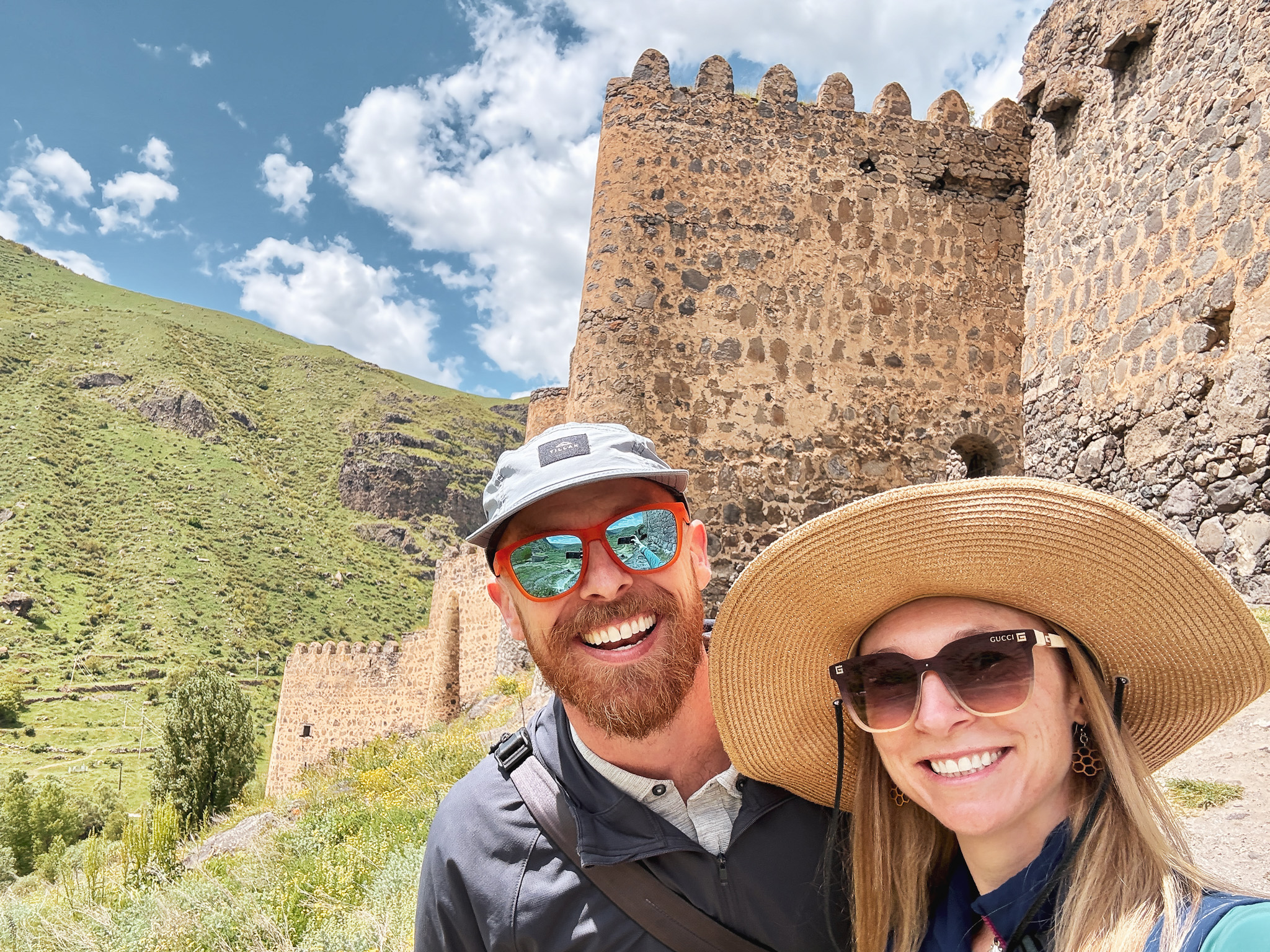
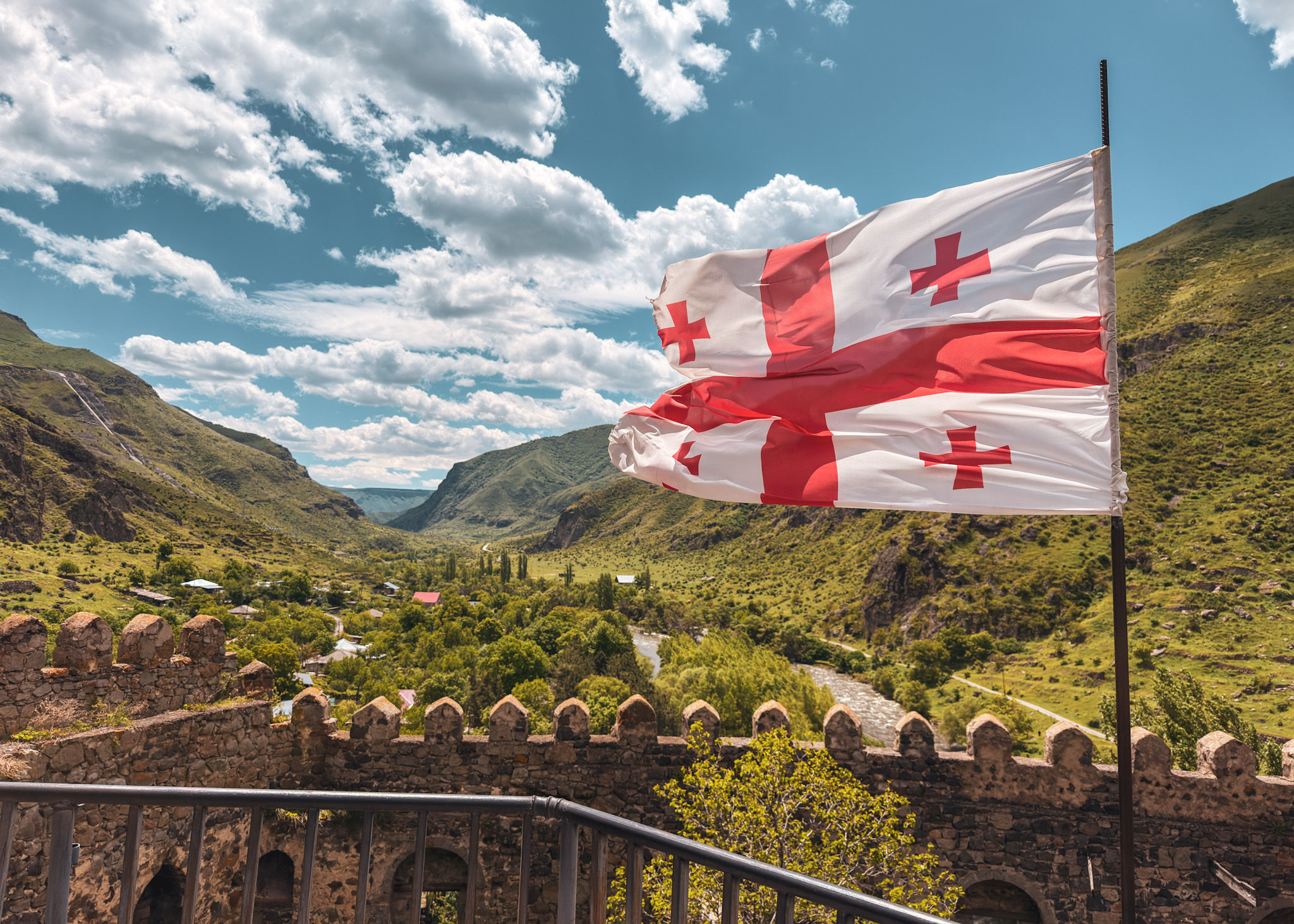
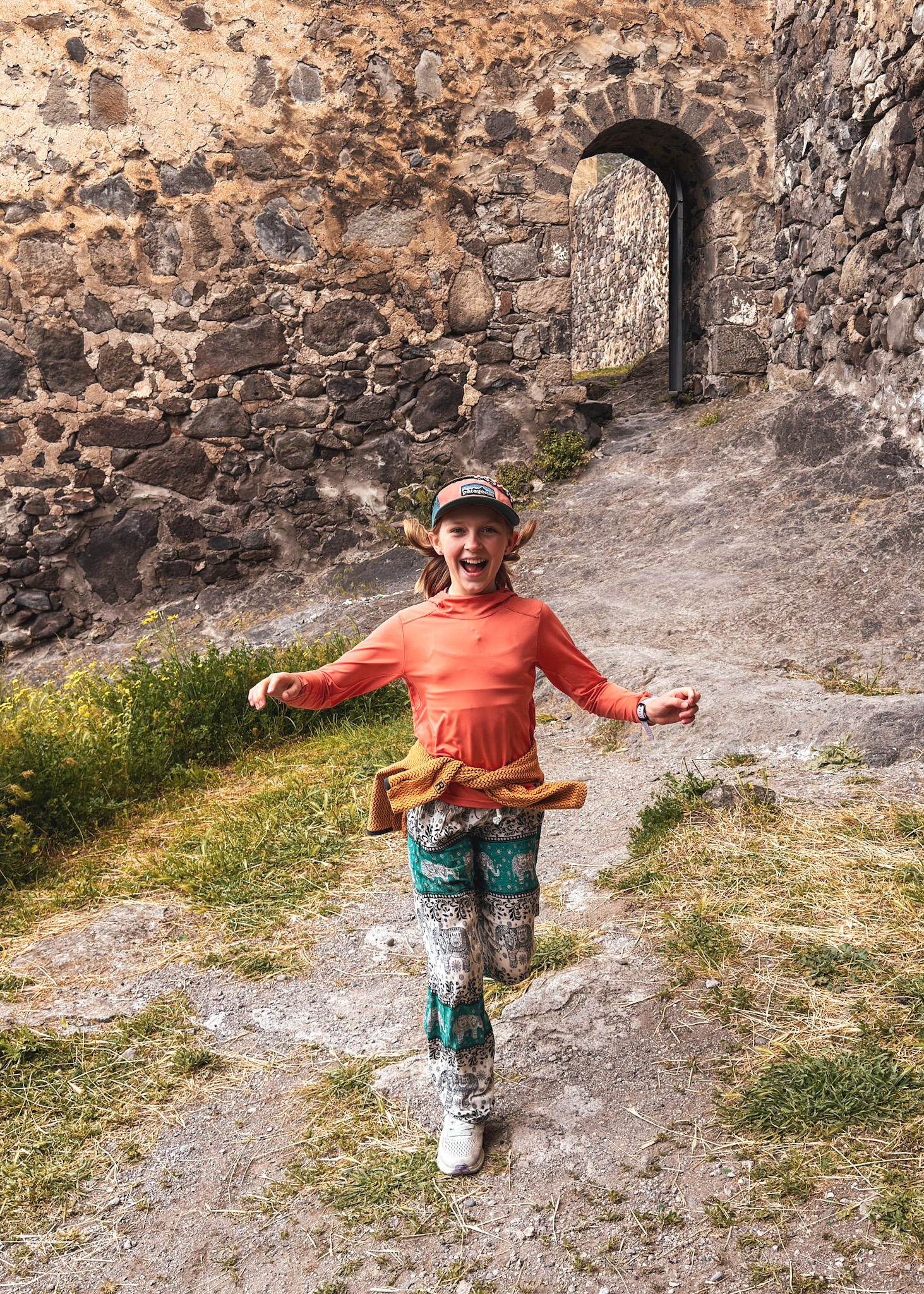
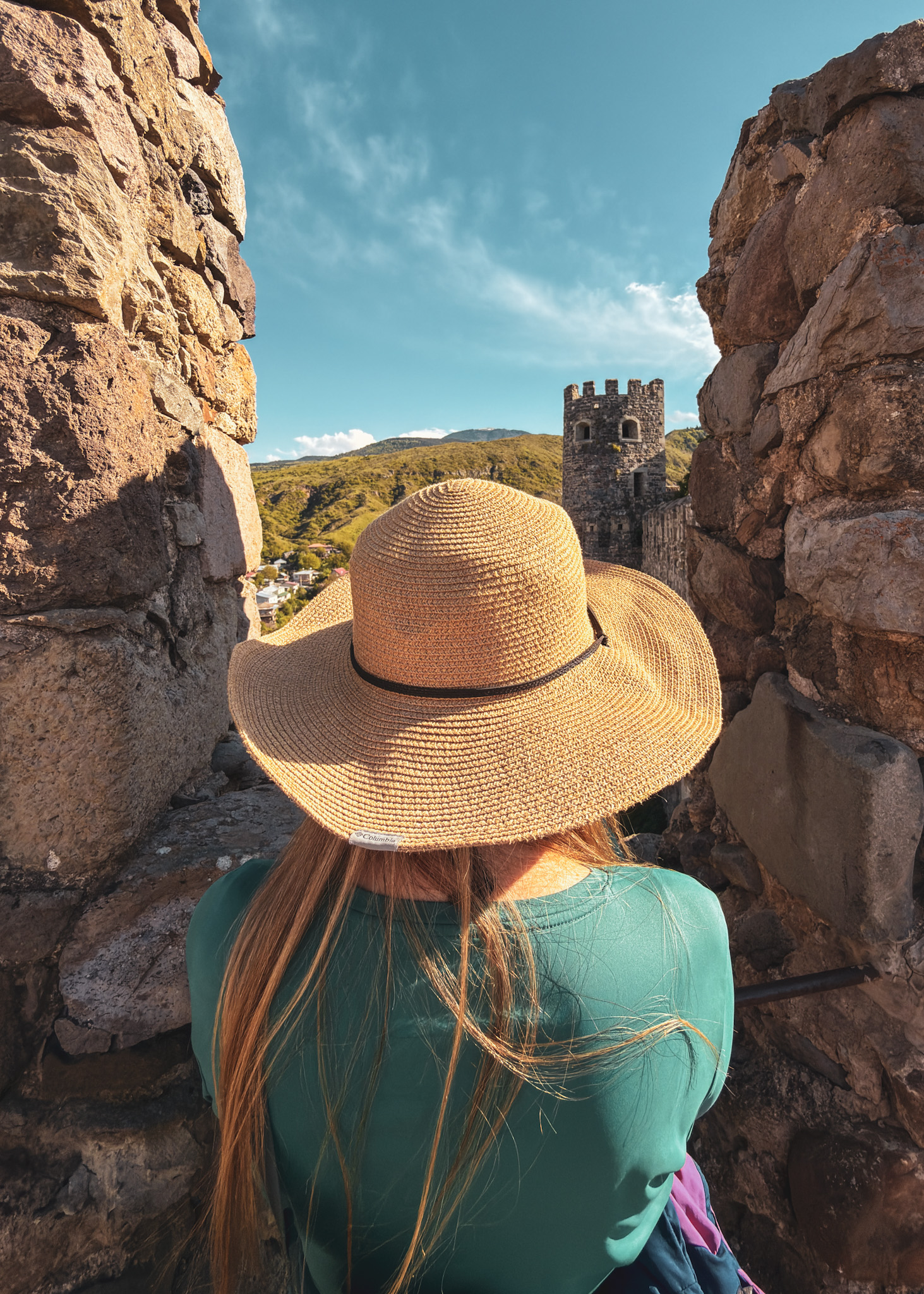
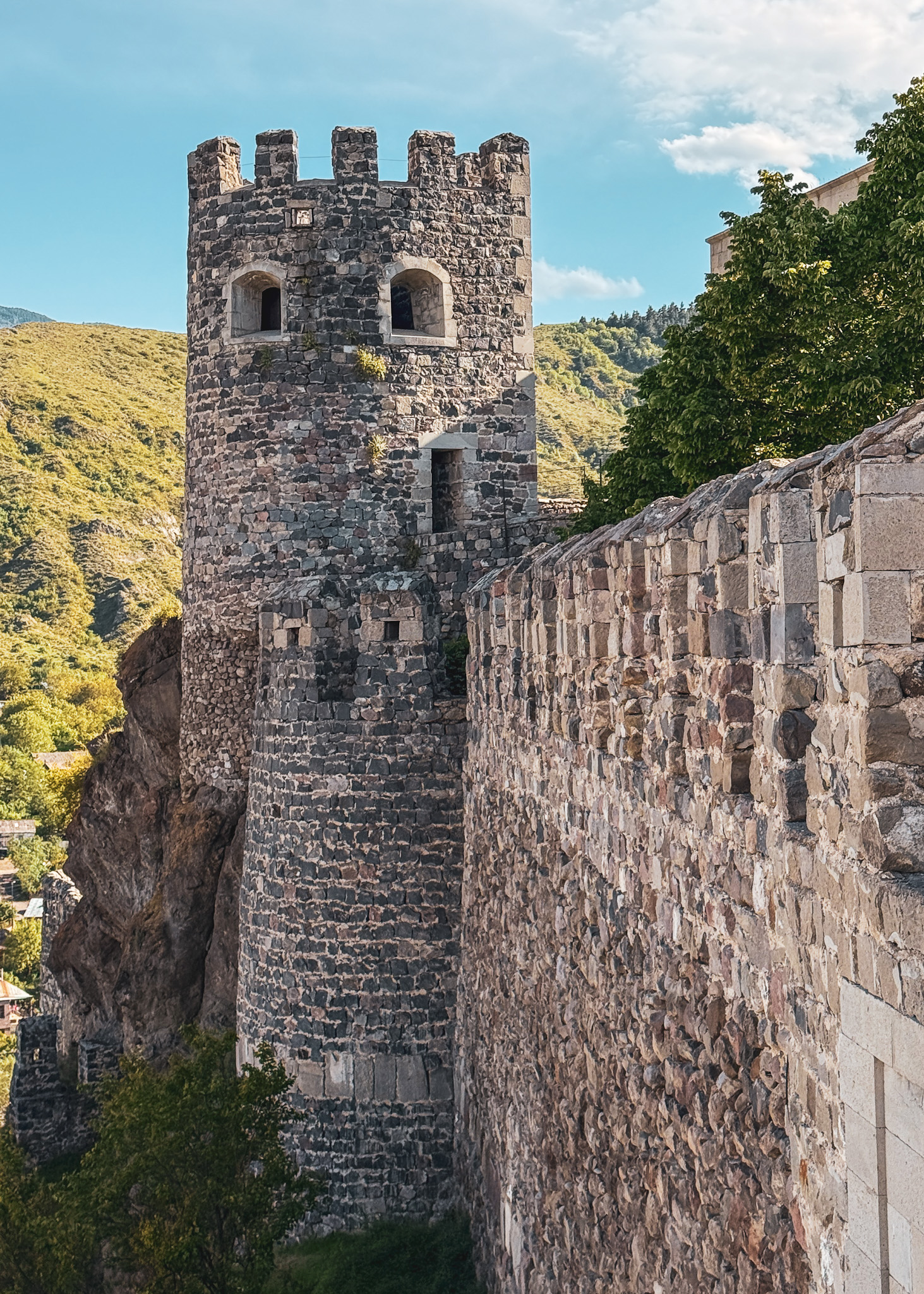
The first was Khertvisi Fortress, a medieval Georgian stronghold perched on a high ridge at the confluence of two rivers, with parts of it dating back to before the 10th century and successive layers of later walls stacked on top of the earlier ones. It manages the line between restored and preserved beautifully. Everything felt stable and safe underfoot, but the place also held a deep authenticity, the old bones still present inside the stone—the history almost a physical presence. We climbed to the top of the central tower, taking the mandatory selfies in front of the Georgian flag snapping in the wind. The girls then went on a playful role-playing exploration of the rest of the castle, faux-attacking anyone who dared enter their beloved keep. We were acutely aware of the adorable youthfulness of their imaginative games with the backdrop of such an old place—imagining children from a millennium ago doing precisely the same thing. Grinning broadly, we clambered back down to the car.
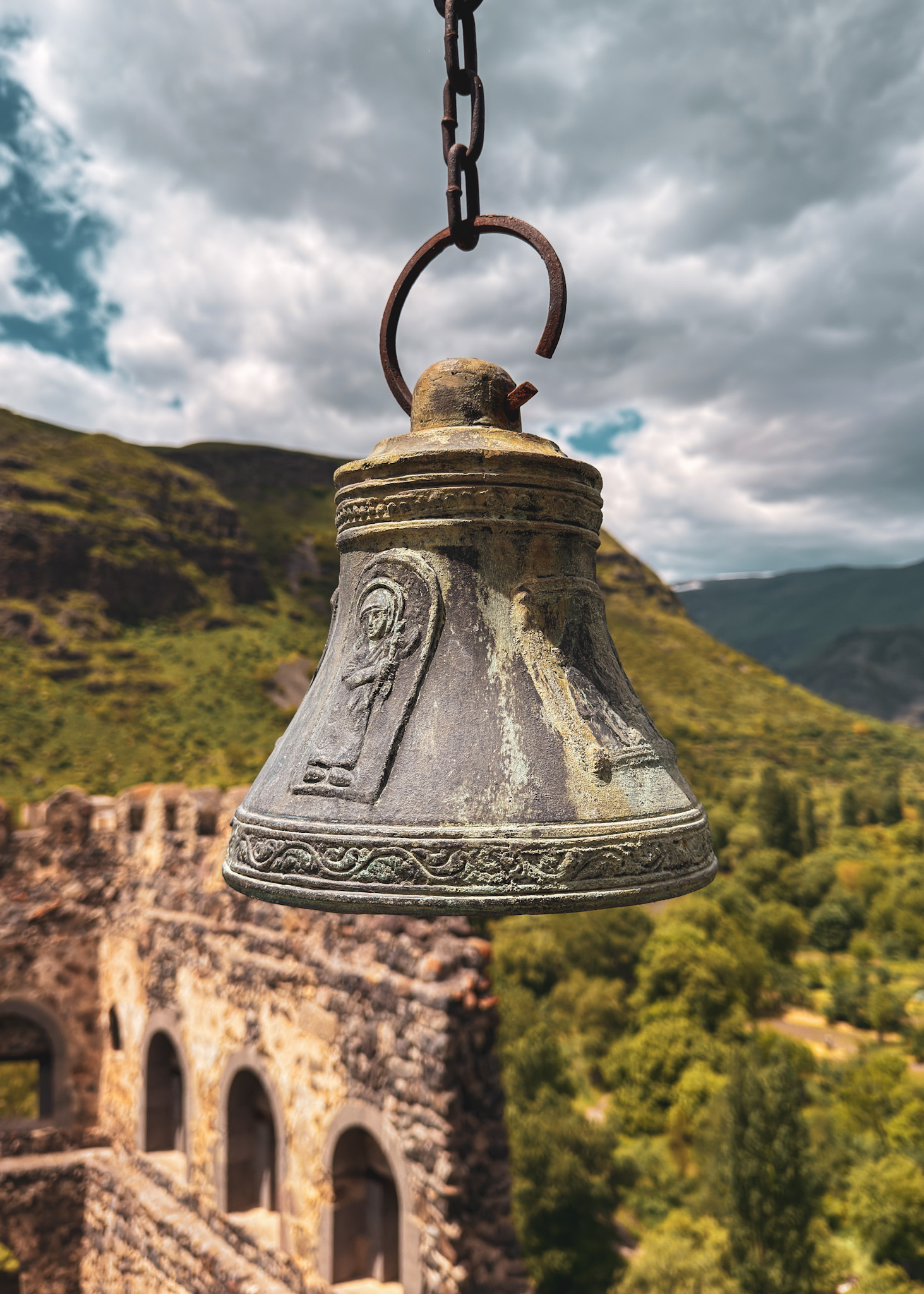
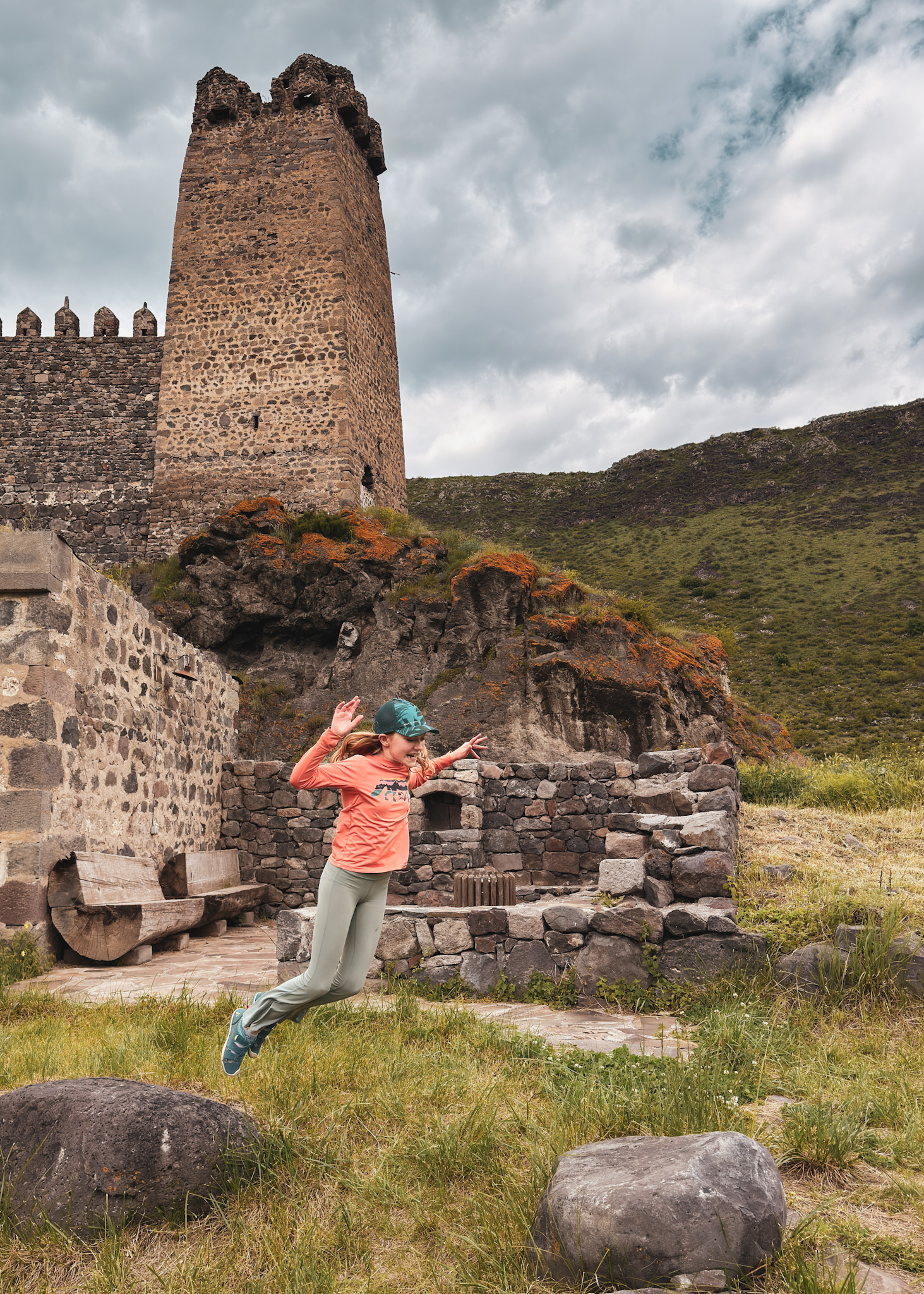
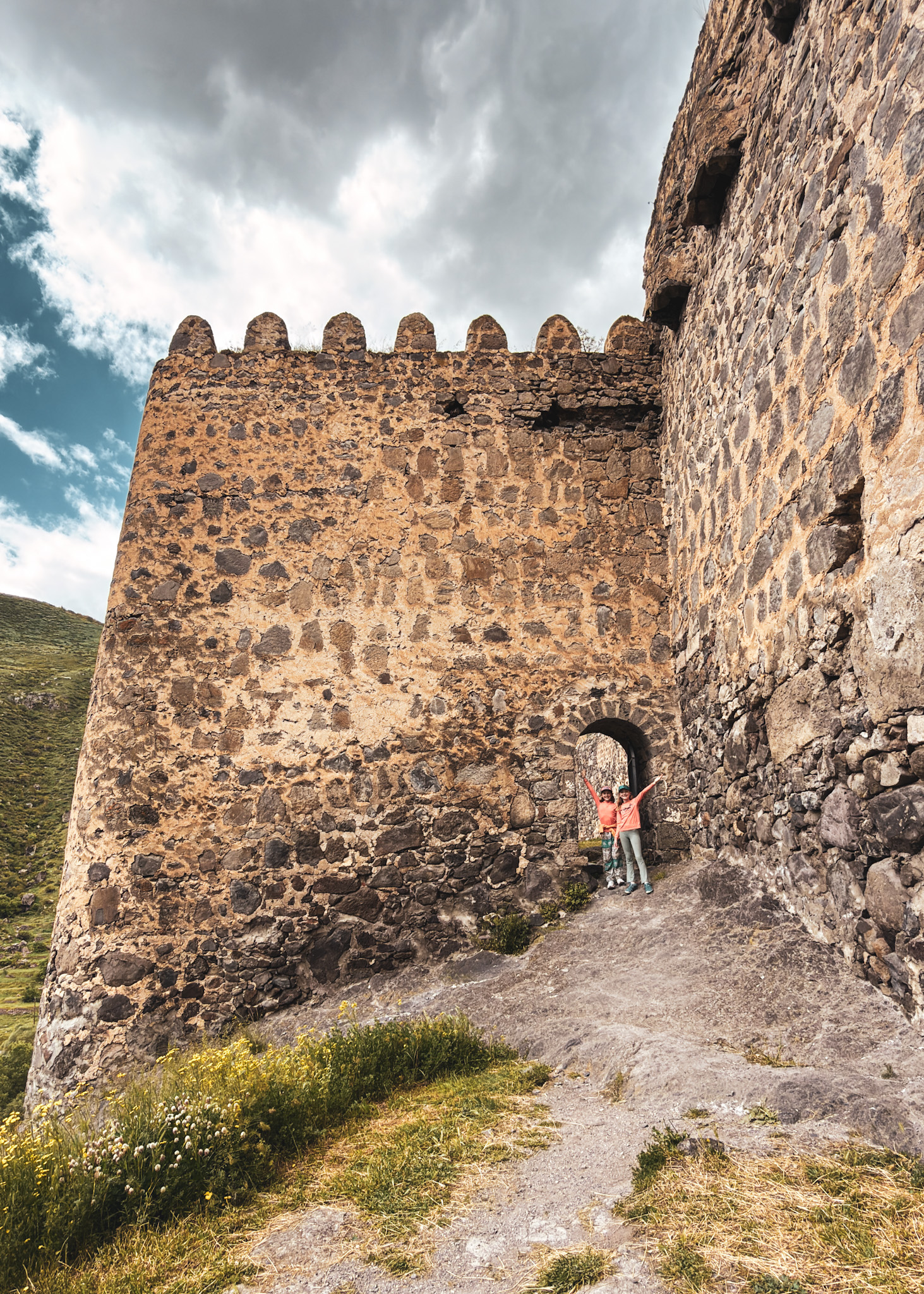
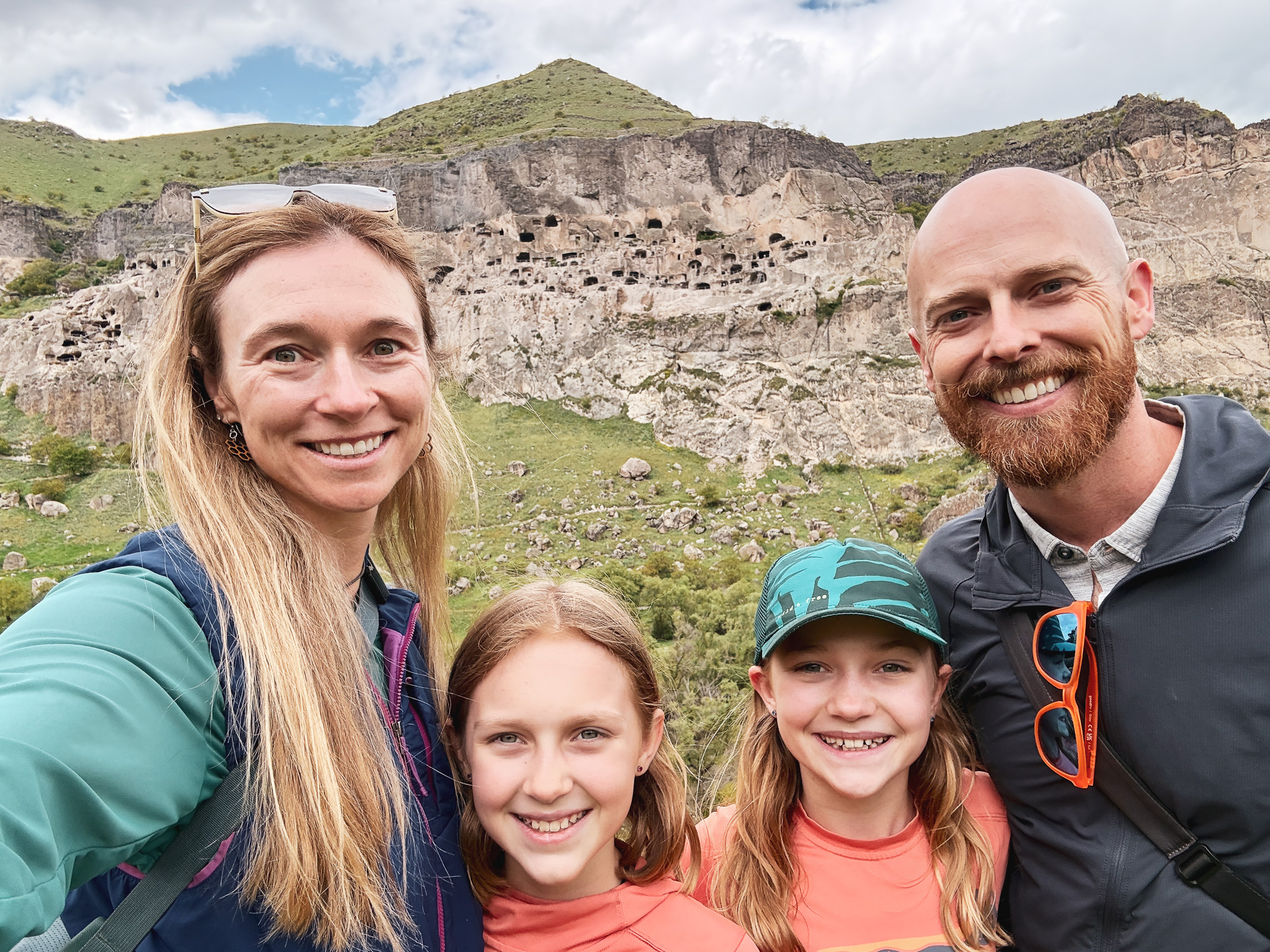
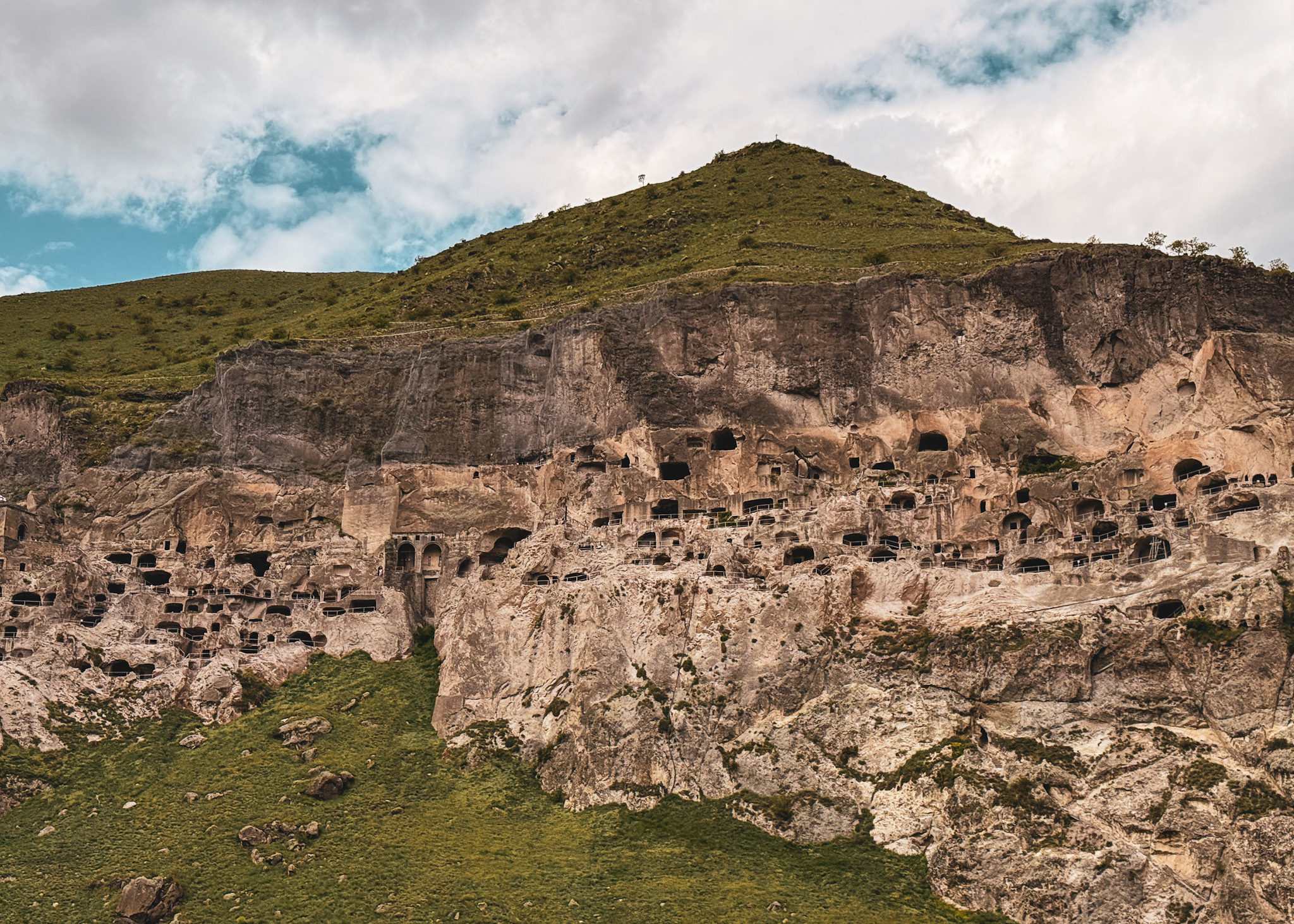
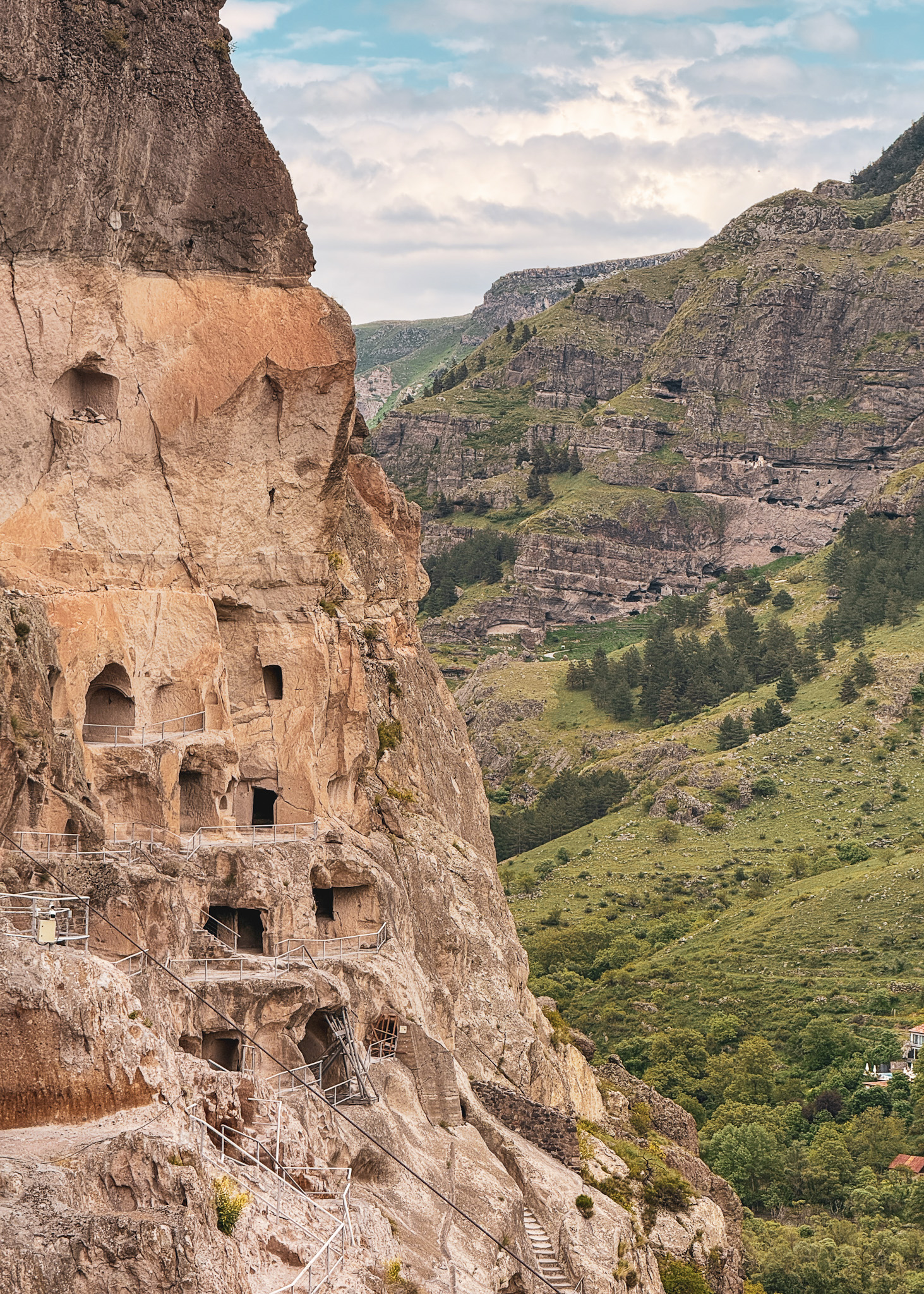
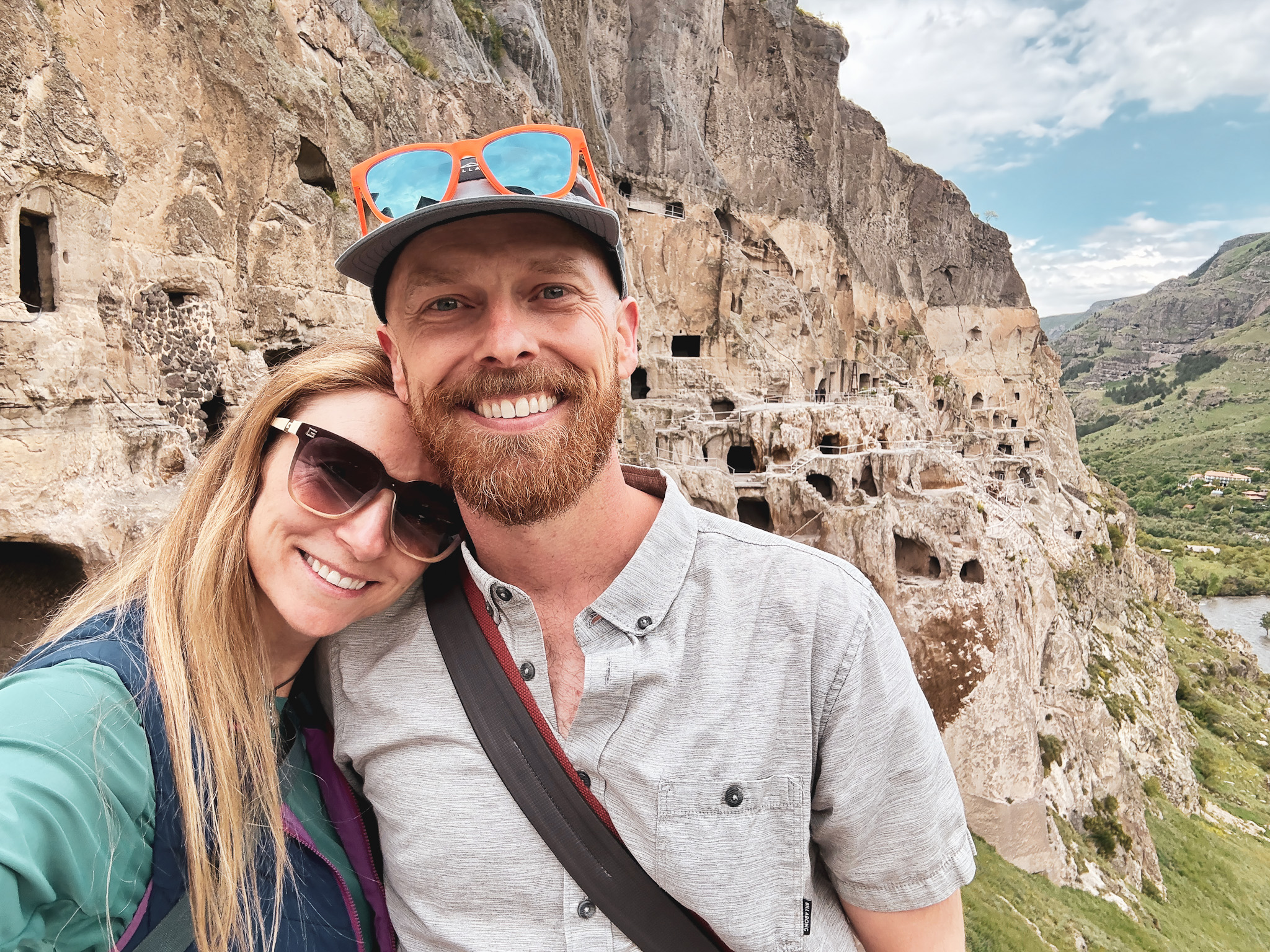
The second place broke our brains a little. Vardzia announces itself first through its setting, one of the most beautiful valleys you could hope to drive into, steep green hills studded with boulders, sheer cliffs above, fresh spring leaves and blossoms bursting from every tree, and a river threading the bottom. Then one entire side of the valley resolves into a sheer rock face honeycombed with hundreds, maybe thousands, of small caves. Vardzia is a 12th-century cave monastery carved directly into that cliff during the reign of Queen Tamar, built originally as a fortified spiritual refuge, and at its height it held as many as 6,000 rooms tunneled into the rock across nineteen levels. The entire complex had been hidden behind the cliff face until a massive earthquake in 1283 sheared away the outer wall and exposed the whole warren to the open air. What you walk through today is the leftover half of an underground city.
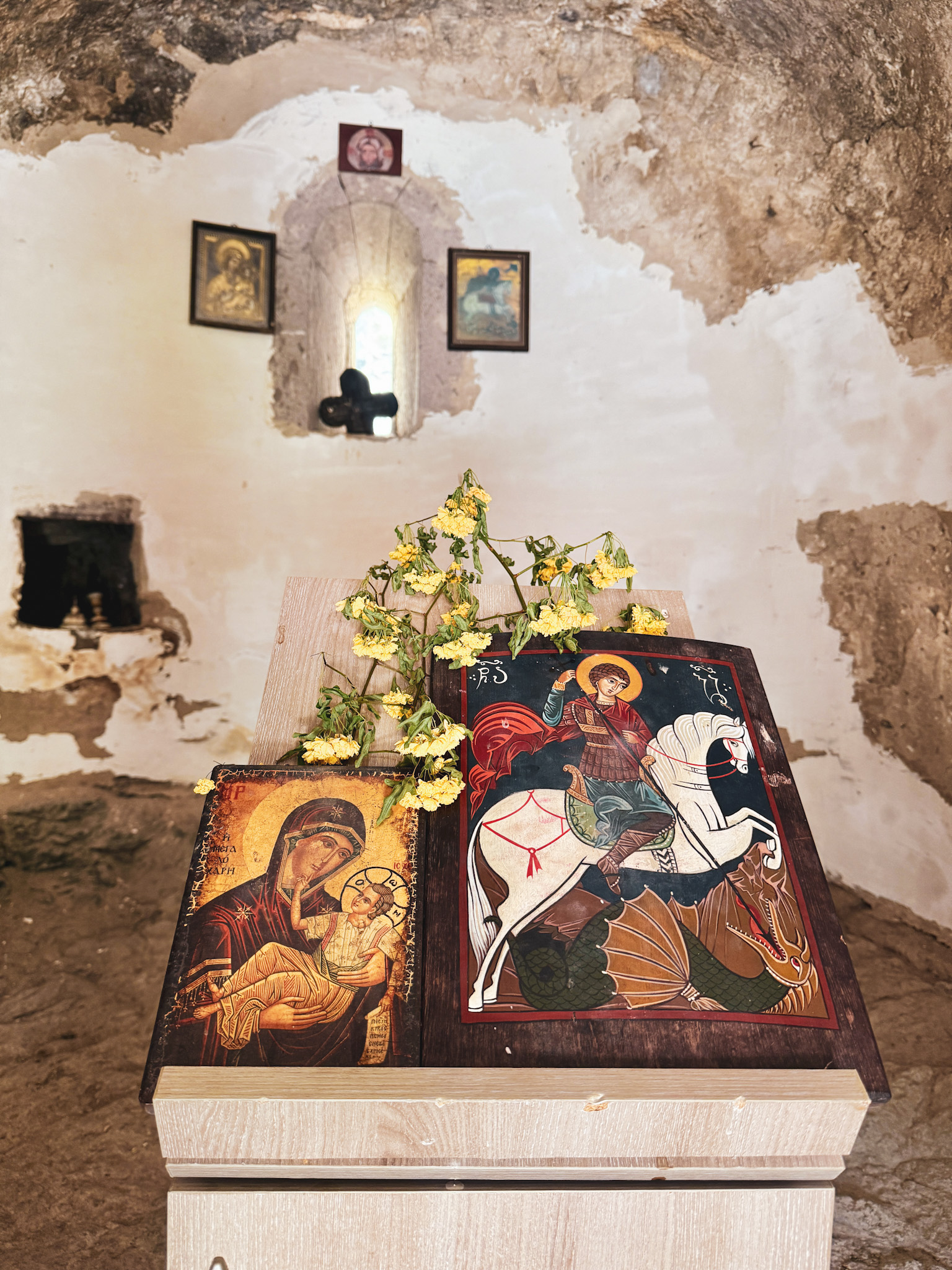
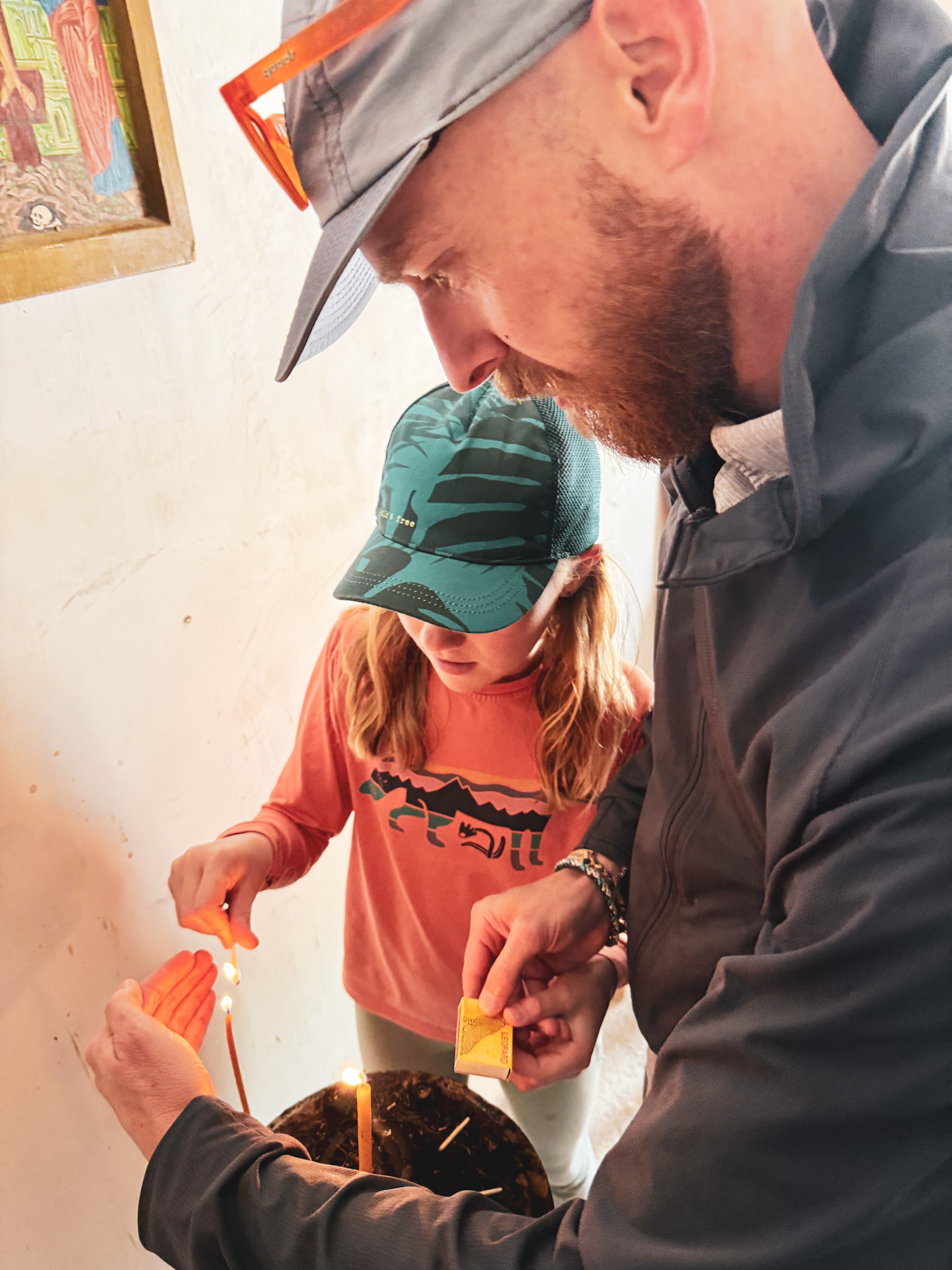
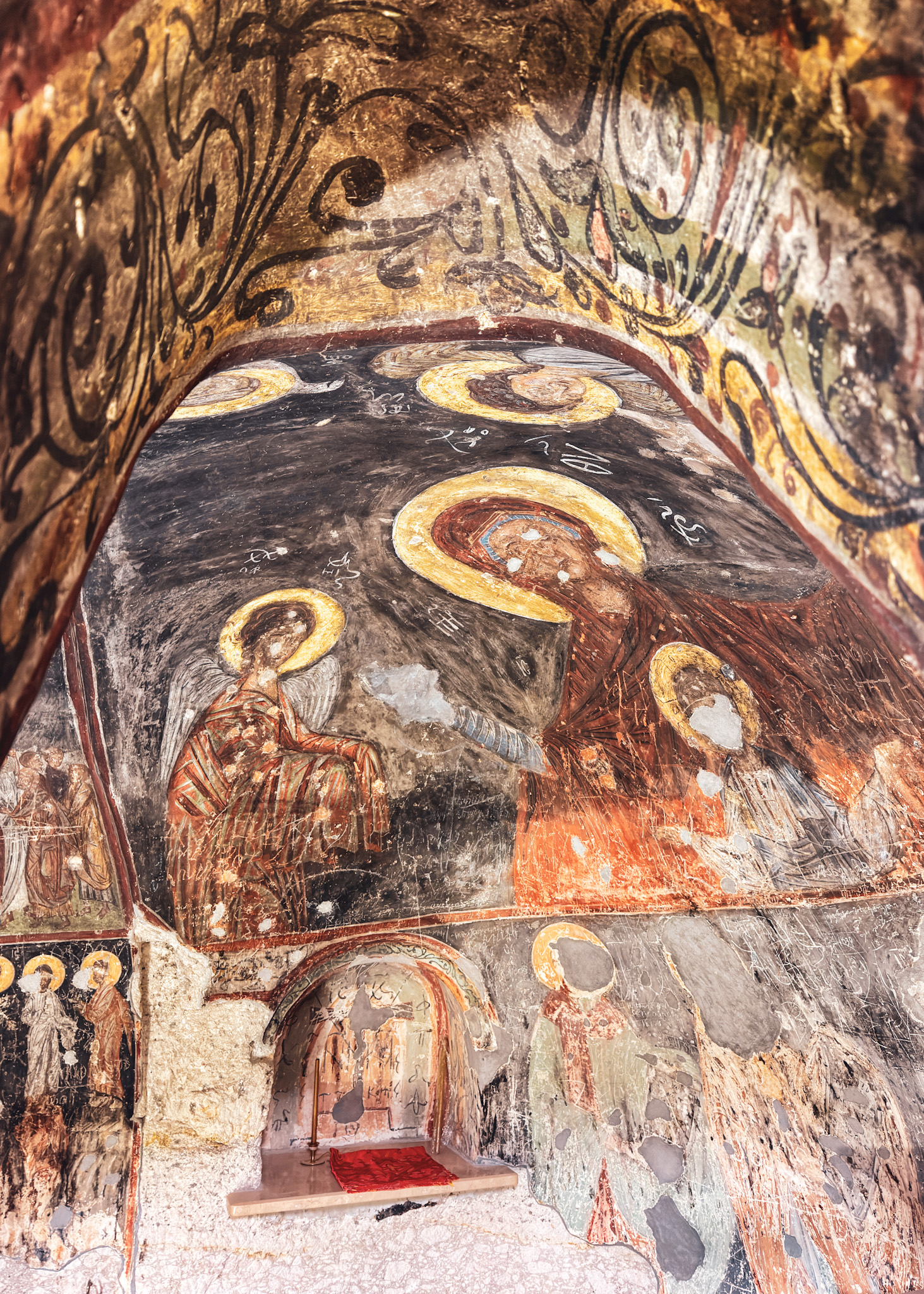
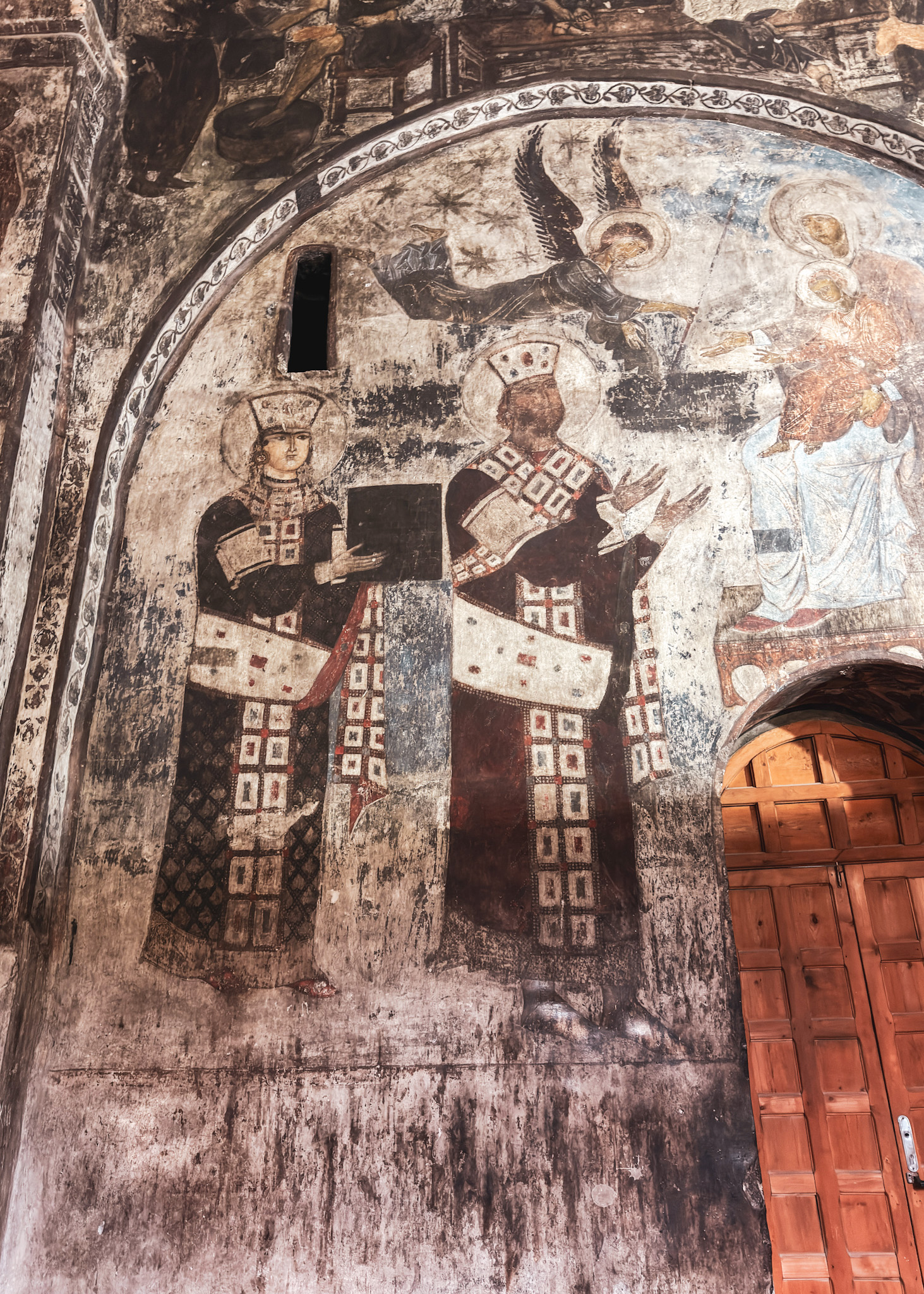
We grabbed a quick bite at the restaurant by the river below, bought our tickets, and started up. Our girls led the way as we followed what felt like little goat tracks from cave to cave, ducking into most of them for a look, and imagining monks living in these glorified holes, mostly shrouded in the dark. While the whole thing was deeply impressive, we came away certain of one thing: we have no desire whatsoever to live in a cave. The troglodyte life is not for Team SharXee. Eventually we found the chapel carved into the heart of the cliff, the Church of the Dormition, which still holds its famously well-preserved 12th-century frescoes. Among them was a celebrated portrait of Queen Tamar—allegedly the only one painted of her during her lifetime—and therefore the only known record what she actually looked like. She gazes calmly out from the wall, holding a model of the very church she built. We lingered a while longer, marveling at the sheer ambition of a civilization that decided to build a city sideways into a mountain, and then made our way back down.
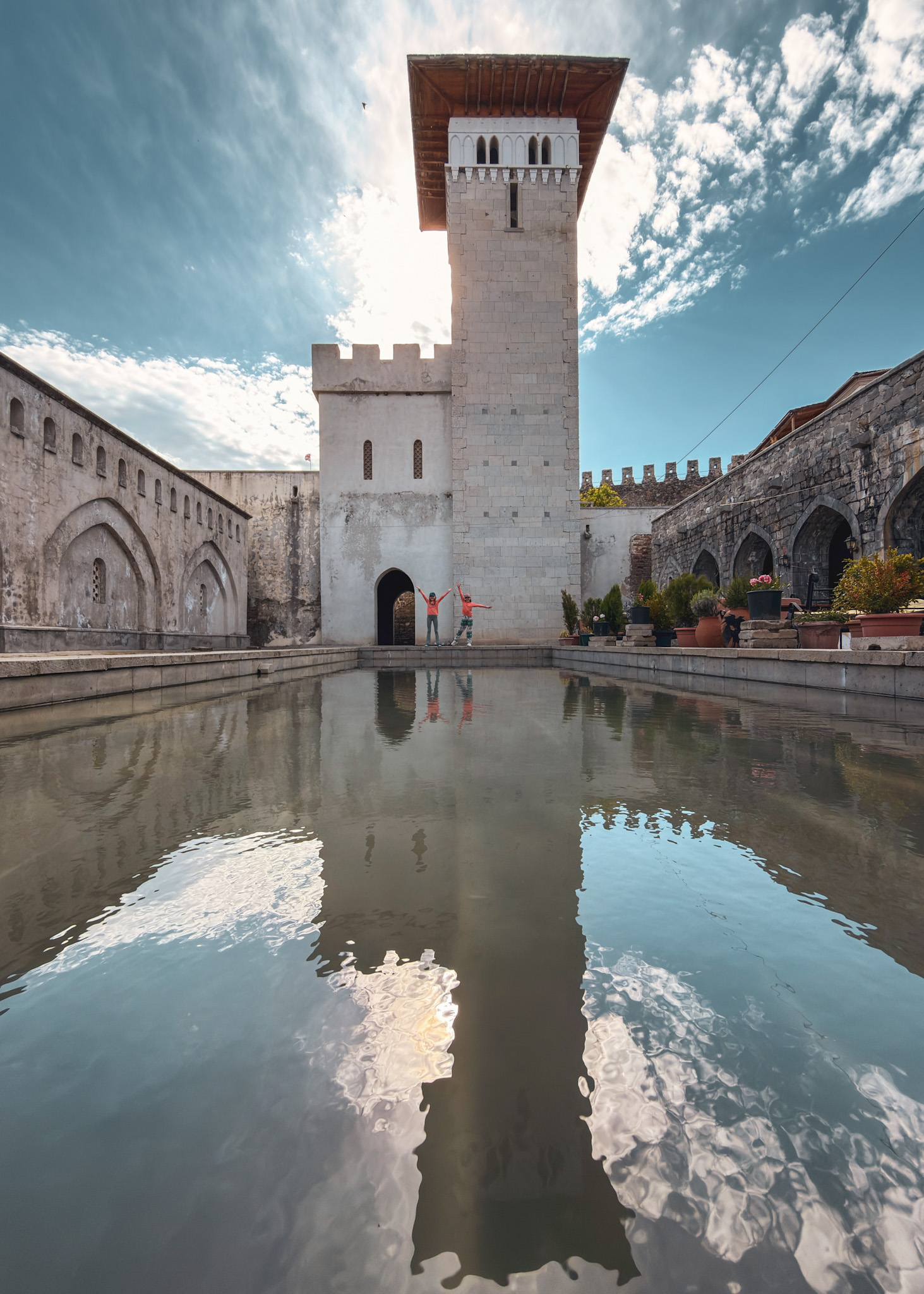
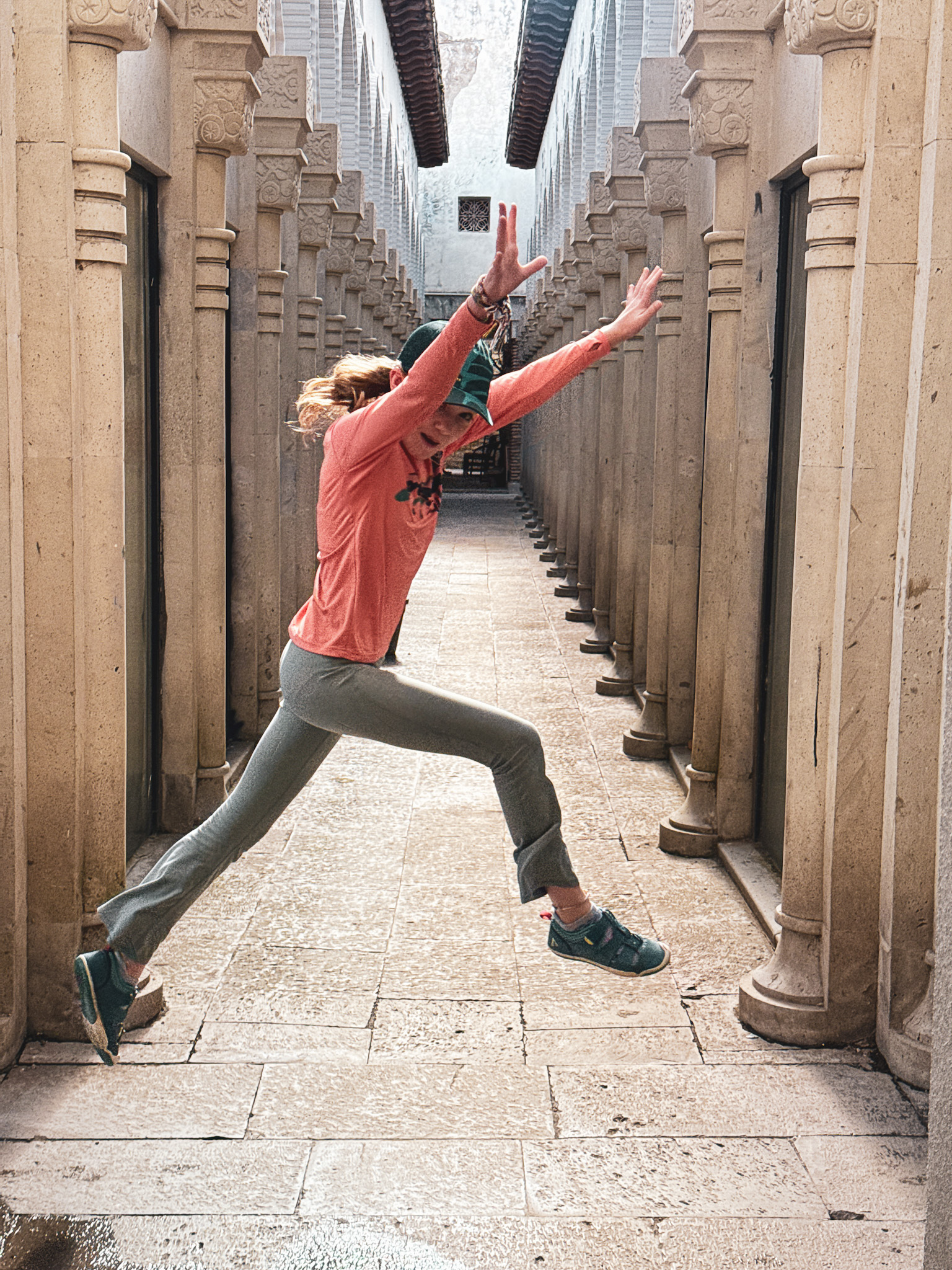
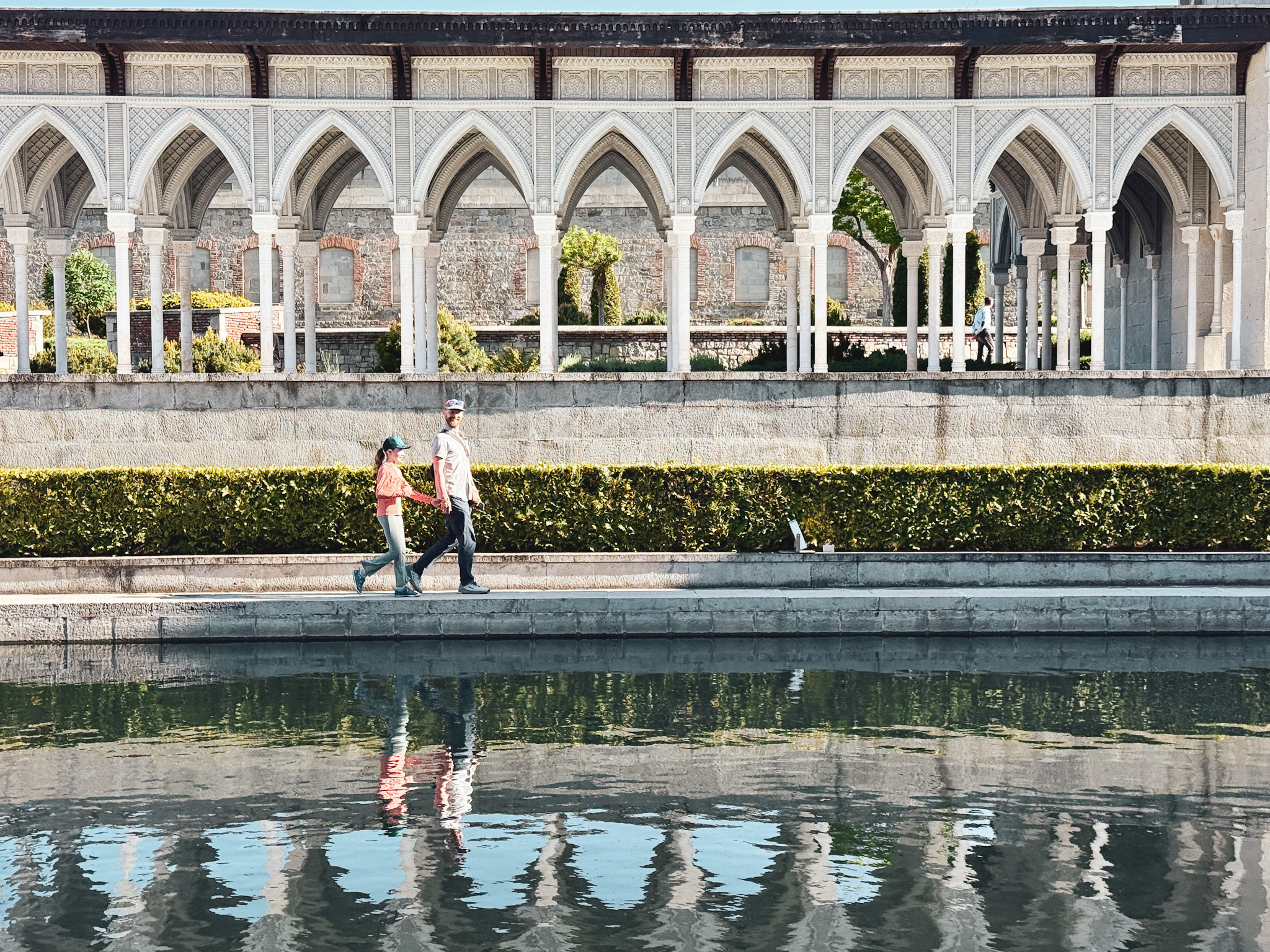
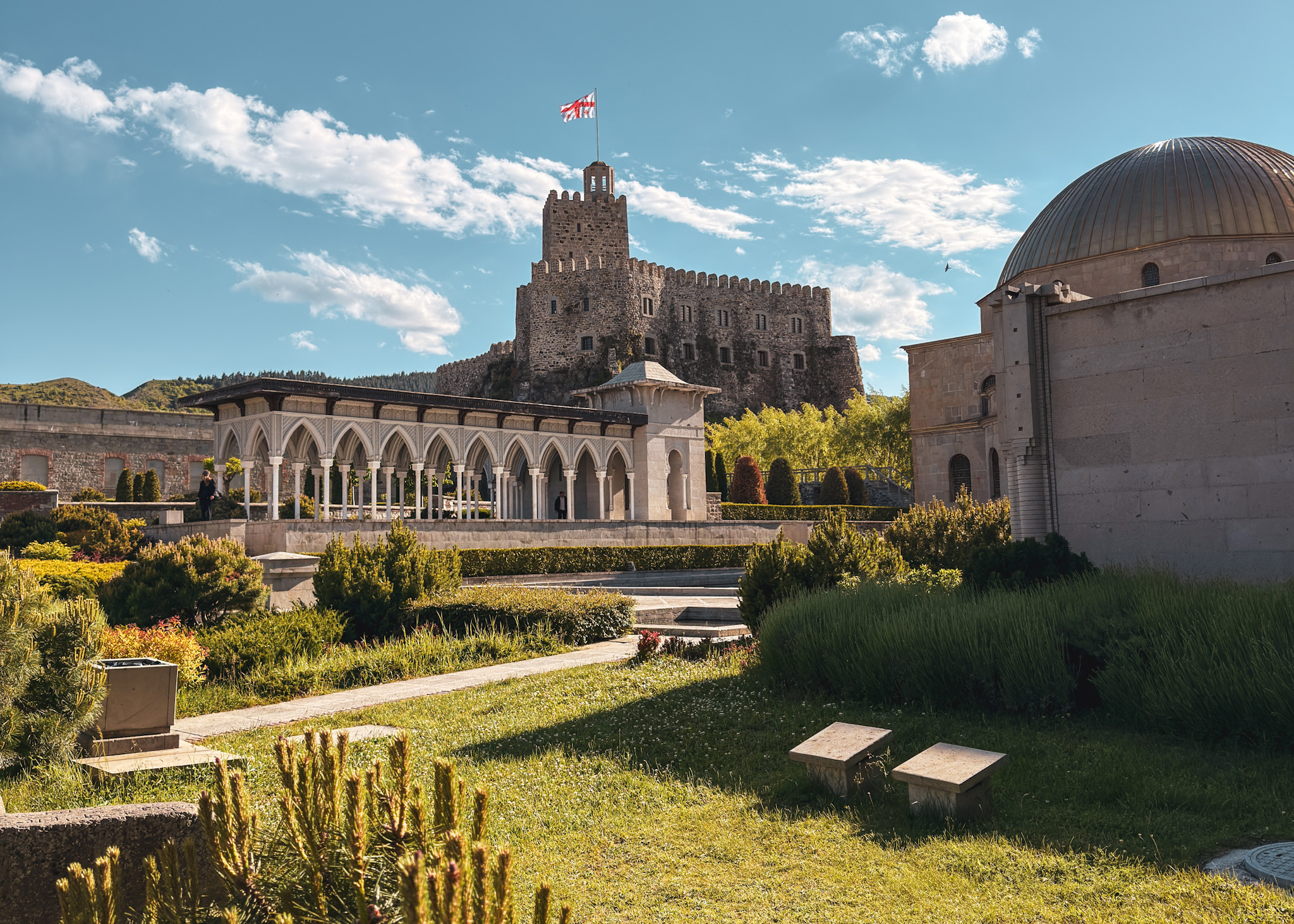
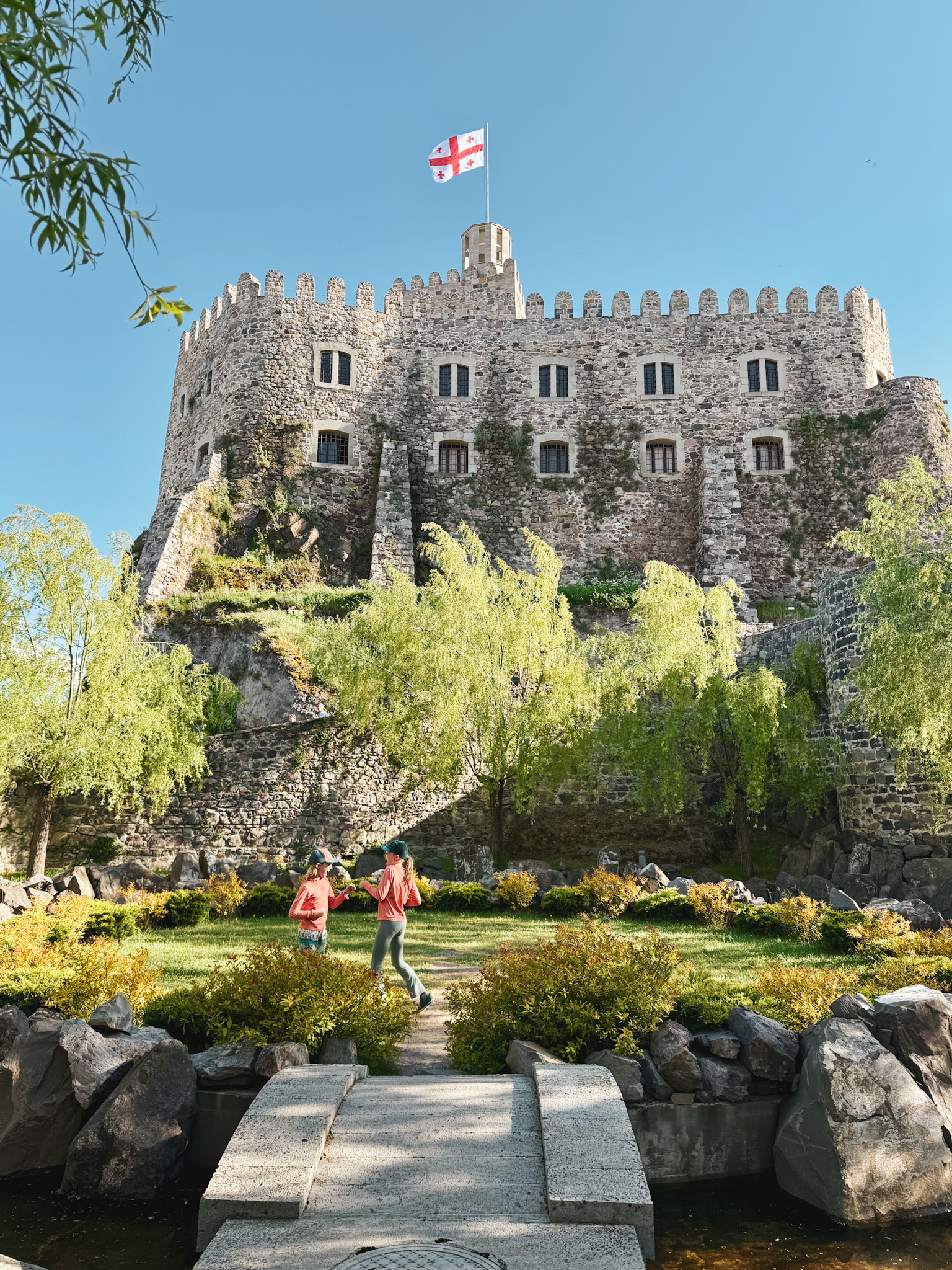
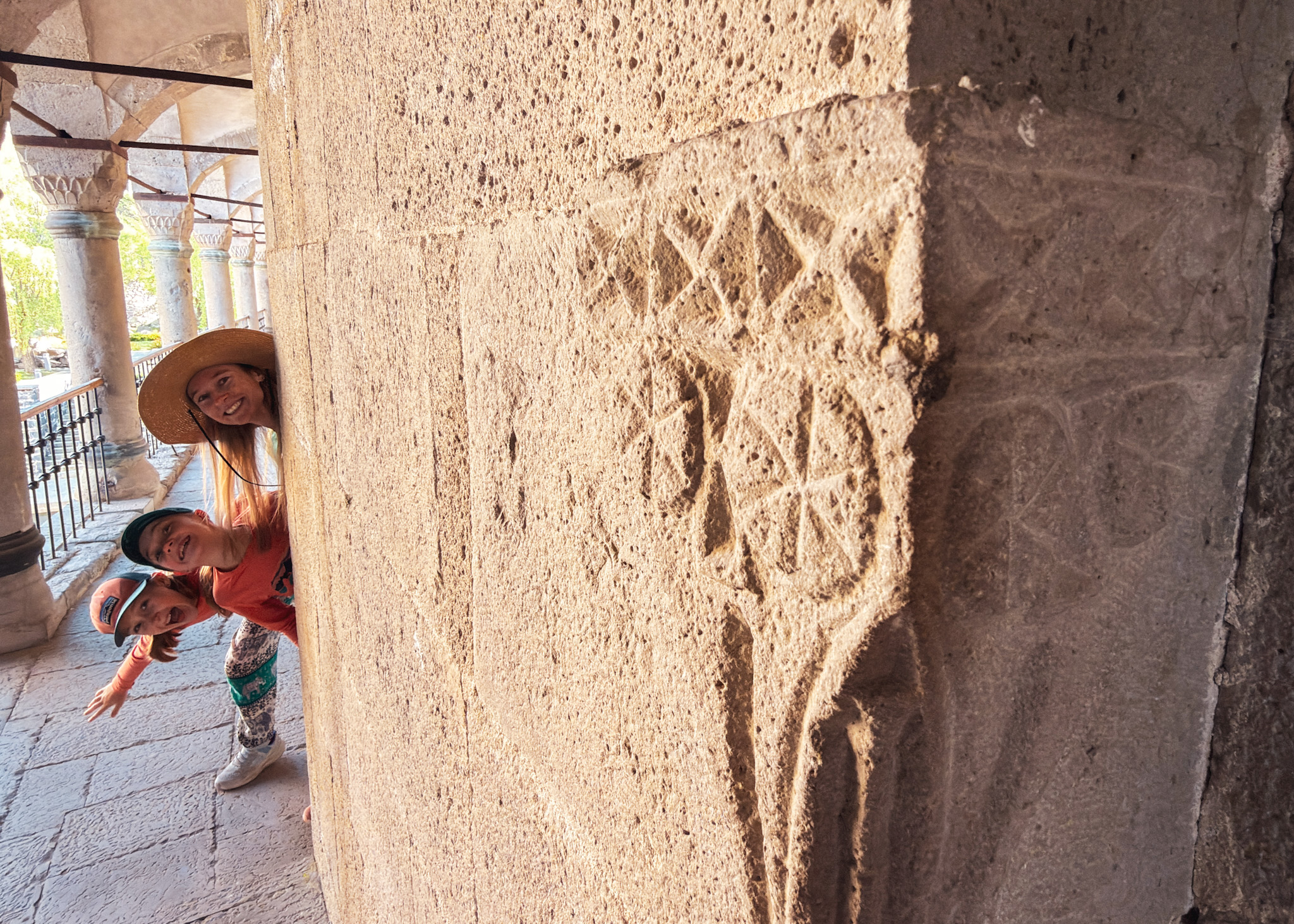
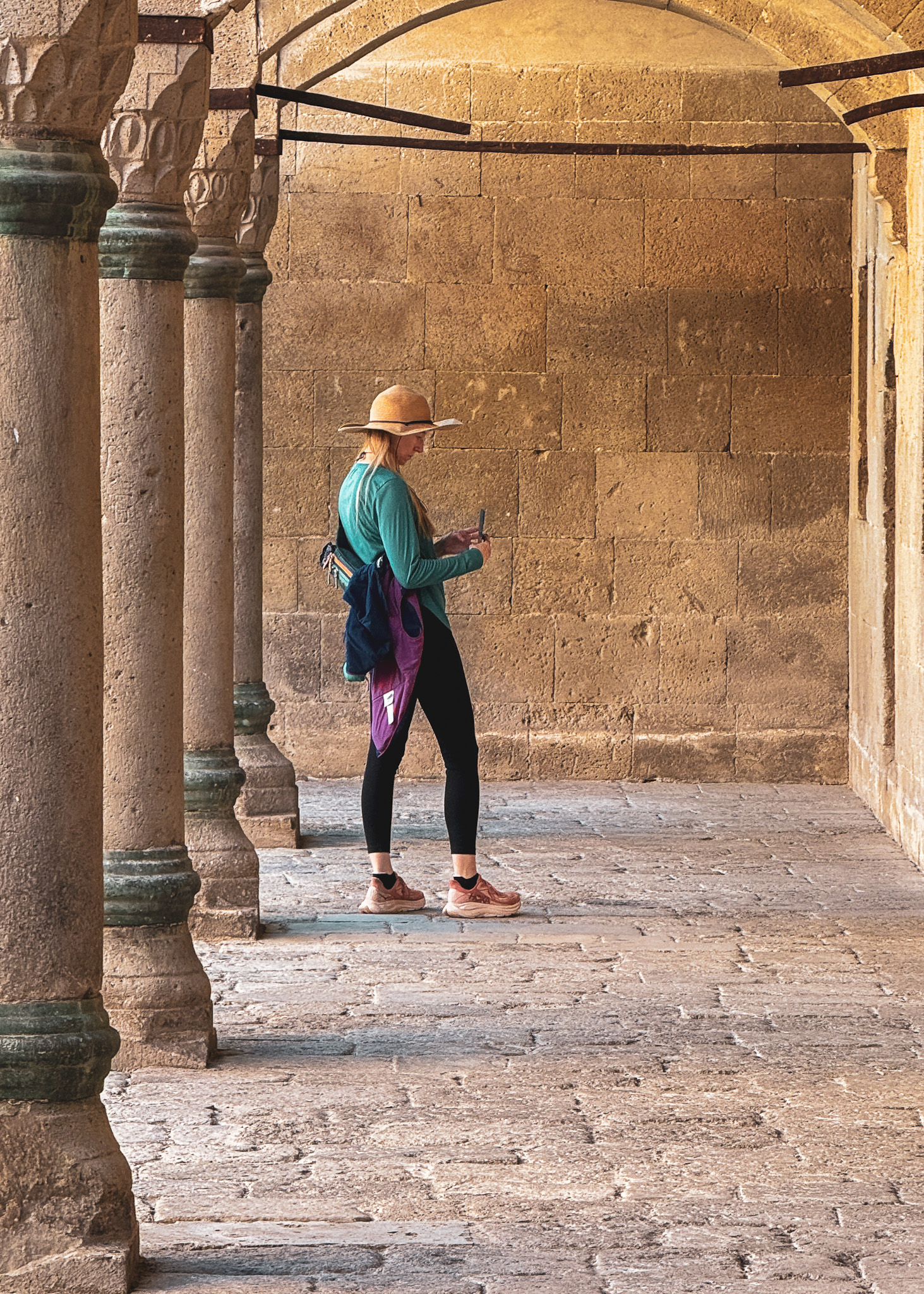
The third stop, Akhaltsikhe Castle, known as Rabati, was far bigger than any of us expected. The complex packs a fortress, a mosque, a church, and a whole village of restaurants, hotels, and shops inside its old walls. It is, apparently, a controversial place among the people who care about such things. If you sit on a historical preservation board, you are probably appalled by Rabati, because the restoration went well beyond what the historical evidence actually supported. If you own a business inside it, you are probably thrilled. The result is a kind of mashup, a refurbished ancient fortress with new modern buildings tucked seamlessly into it. For what it is worth, we think it works. Sometimes the right move is to preserve a place exactly as it was, to honor the depth of its history. But life is dynamic, and getting people to care about old architecture sometimes means giving an old building new things to do, making it a living structure rather than a museum piece sealed behind glass. We explored for about an hour before everyone started flagging, then made the call to skip our last planned stop, “just another 1000-year-old monastery”, in favor of getting our feet up and a real meal in our stomachs. Onward we sped in our mighty Ford Fusion.
Borjomi greeted us with apartment blocks. The town is famous the world over for its mineral water, the salty sparkling stuff that has been pumped and bottled here since the 19th century, when Imperial Russia turned Borjomi into a fashionable spa resort for its aristocracy. The setting is genuinely lovely, a long narrow river valley wedged between forested mountains with a steep gorge running down the middle of town. But the first thing you actually see, descending into it, is the enormous Soviet-era housing flanking the approach. Saying “Soviet-style” about any building is basically shorthand for brutalist, rundown, and ready to be slotted into central casting for a post-apocalyptic film, which is a bit unfair and mostly untrue, but the apartment blocks we drove past were definitely not our cup of tea.
Avto found our Airbnb without trouble, got us unloaded without anyone leaving anything behind, and we said our goodbyes at the curb before trundling into our ground-floor two-bedroom apartment. Nothing fancy, but it had everything we needed plus, crucially, a washing machine, which is not a guaranteed amenity on the road. We even had decent views of the surrounding hills and of a Ferris wheel perched on the plateau across the river. For dinner we made a quick grocery run and came away with a stack of lobiani, kidney beans mashed with onions and spices and folded into a soft baked dough. This traditional Georgian bean-stuffed flatbread fills roughly the same beloved niche here that pizza or empanadas fill elsewhere. As we ate it, there was a brief moment of panic since we thought we had bought something stuffed with ground beef. The texture of mashed kidney beans is all wrong when you are expecting ground beef. But we did some quick research to confirm we were not about to eat something profoundly expired. Once we understood it was beans, it was excellent, though being the savages we are, we doused ours in Sriracha all the same.
Our first full day in Borjomi had no agenda whatsoever, which suited us fine. The main piece of business was acquiring a car, and that came with its own small saga. Max walked over to the rental pickup point, where a man named Giorgi was waiting with a black 2018 Subaru Forester wearing 116,000 miles on the odometer. The Forester was a completely intentional choice and a direct response to the Ford Fusion. Reasonable fuel economy, but, far more importantly, real ground clearance, because the roads in Georgia are mostly fine right up until they aren’t. Those moments when you take a wrong turn into deep ruts and mud, that extra clearance stops being optional. The booking had come with some anxiety attached, because the listing on the rental site had clearly advertised credit card payment, and then the manager messaged to say he would not be bringing a card reader to the handoff. Max went back and forth with the manager, but the equation in the end was simple. If we wanted the car, we had to bring cash. We wanted the car—we brought cash. Max and Giorgi then walked around the Forester bumper to bumper while Max filmed every scratch and ding the thing had collected over its 116,000 miles, and with that documented, he handed over a stack of cash and we had our transportation for the next month. From there, we managed a long, lazy lunch at a spot called Iggy that afternoon, the kind of meal that quietly absorbs an entire afternoon over a deck of cards, but the real exploring came after.
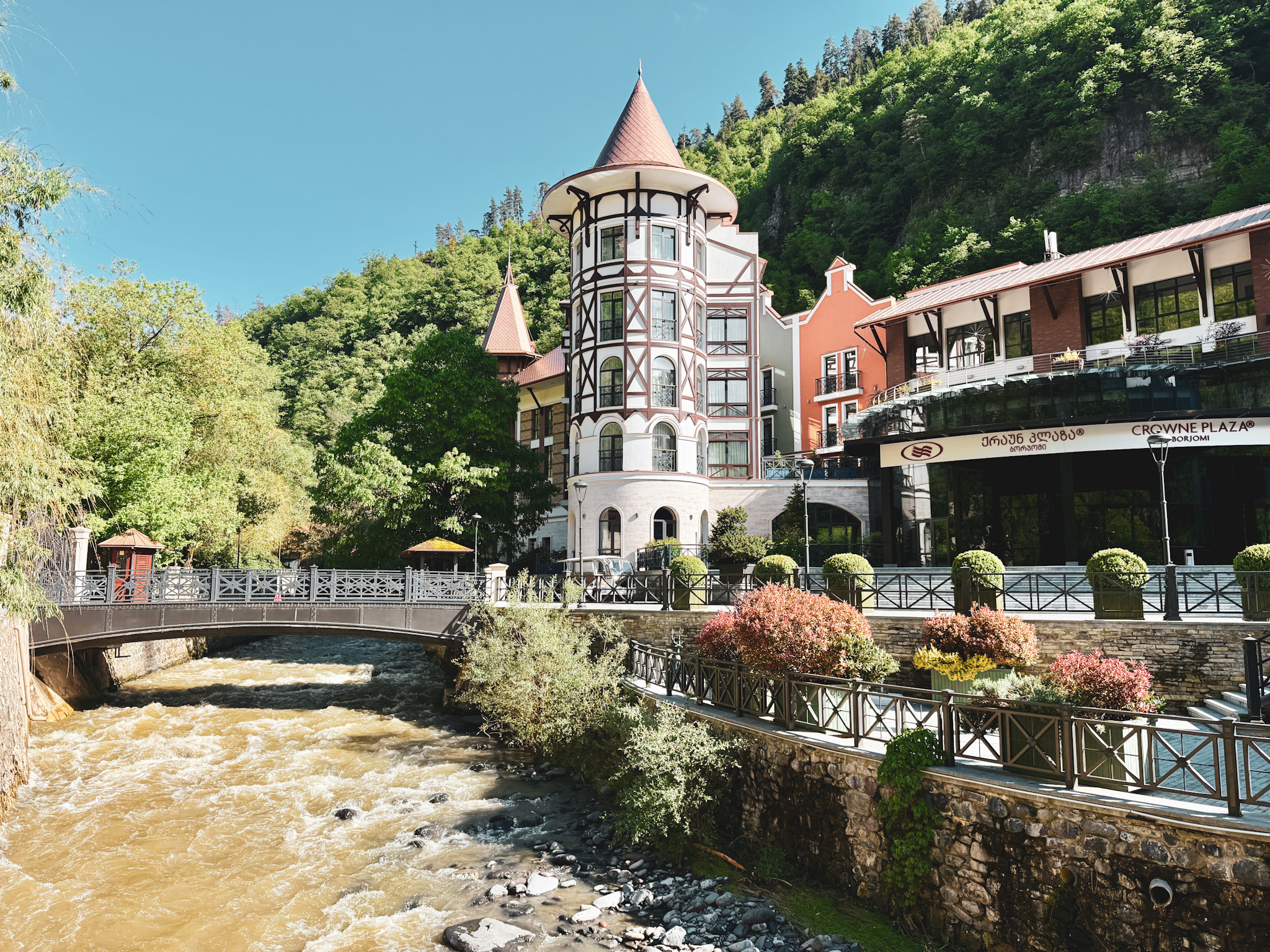
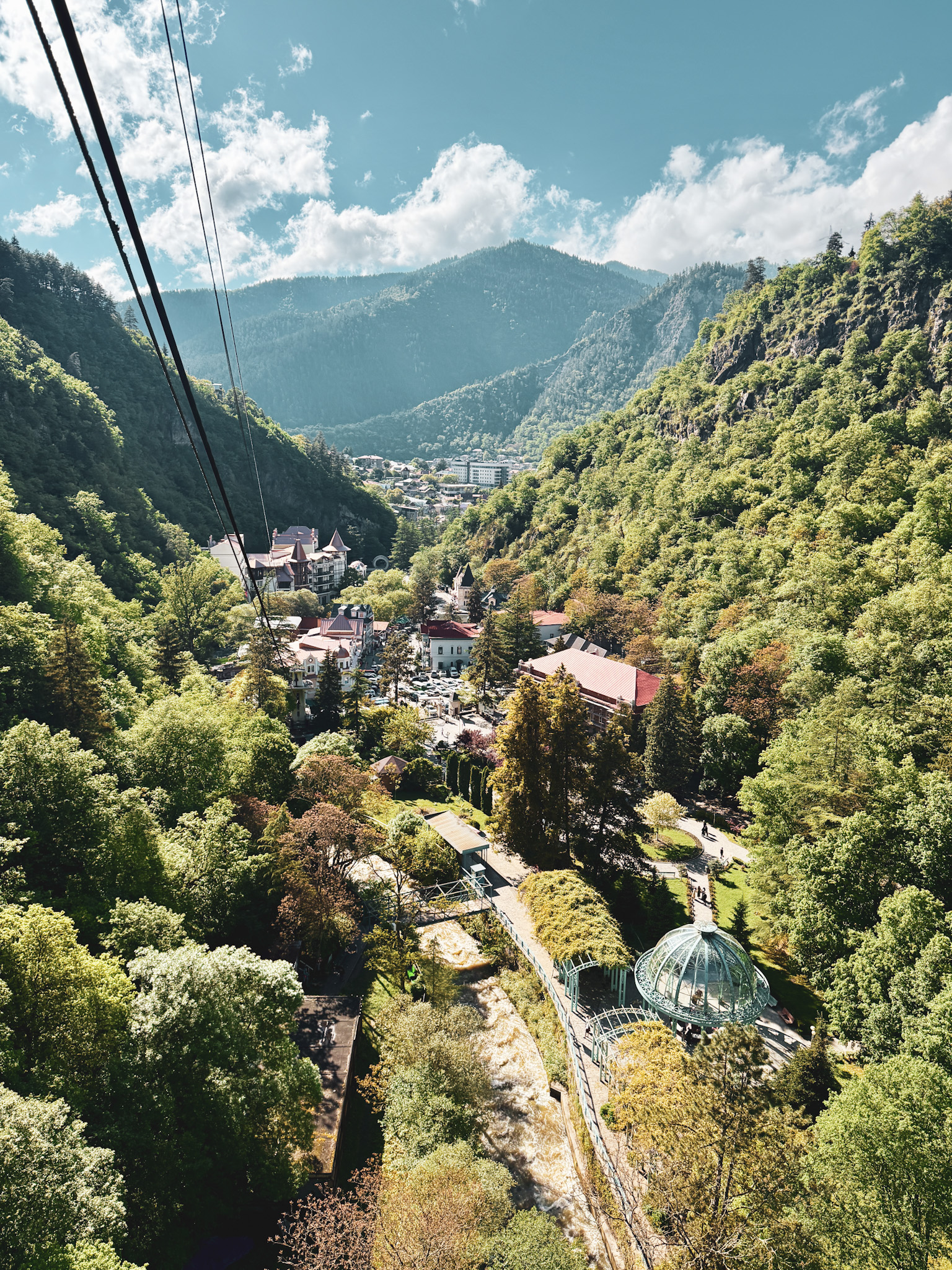
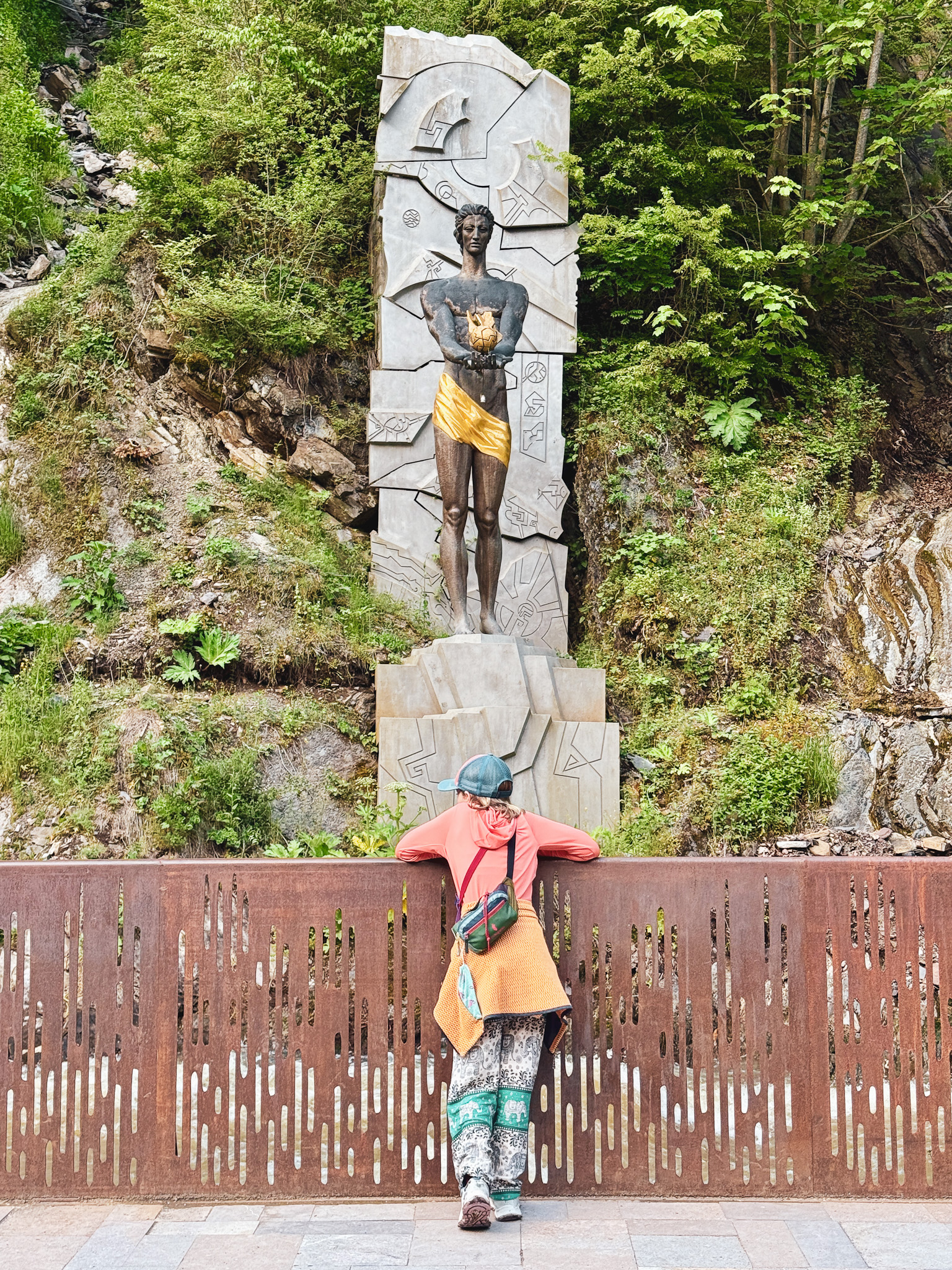
We started in Borjomi Central Park, the long narrow green space that snakes up the gorge along the river. It was established in 1850 by the Russian governor of the Caucasus, who turned the original mineral spring into a mountain retreat for bougie Russians. The first thing we noticed was that the park had probably once been a well-maintained place, where people walked the tree-covered paths along the river, and children laughed and played on the carnival equipment. However, it currently sits in various states of disrepair, containing something like five separate renovation projects, all completely disconnected from one another, and all looking suspiciously as though they got about three-quarters finished before someone, somewhere, quietly pulled the funding. This appears to be standard operating procedure across the post-Soviet world, the lingering habits of centralized planning leaving a mark on how public works do, or mostly do not, get completed.
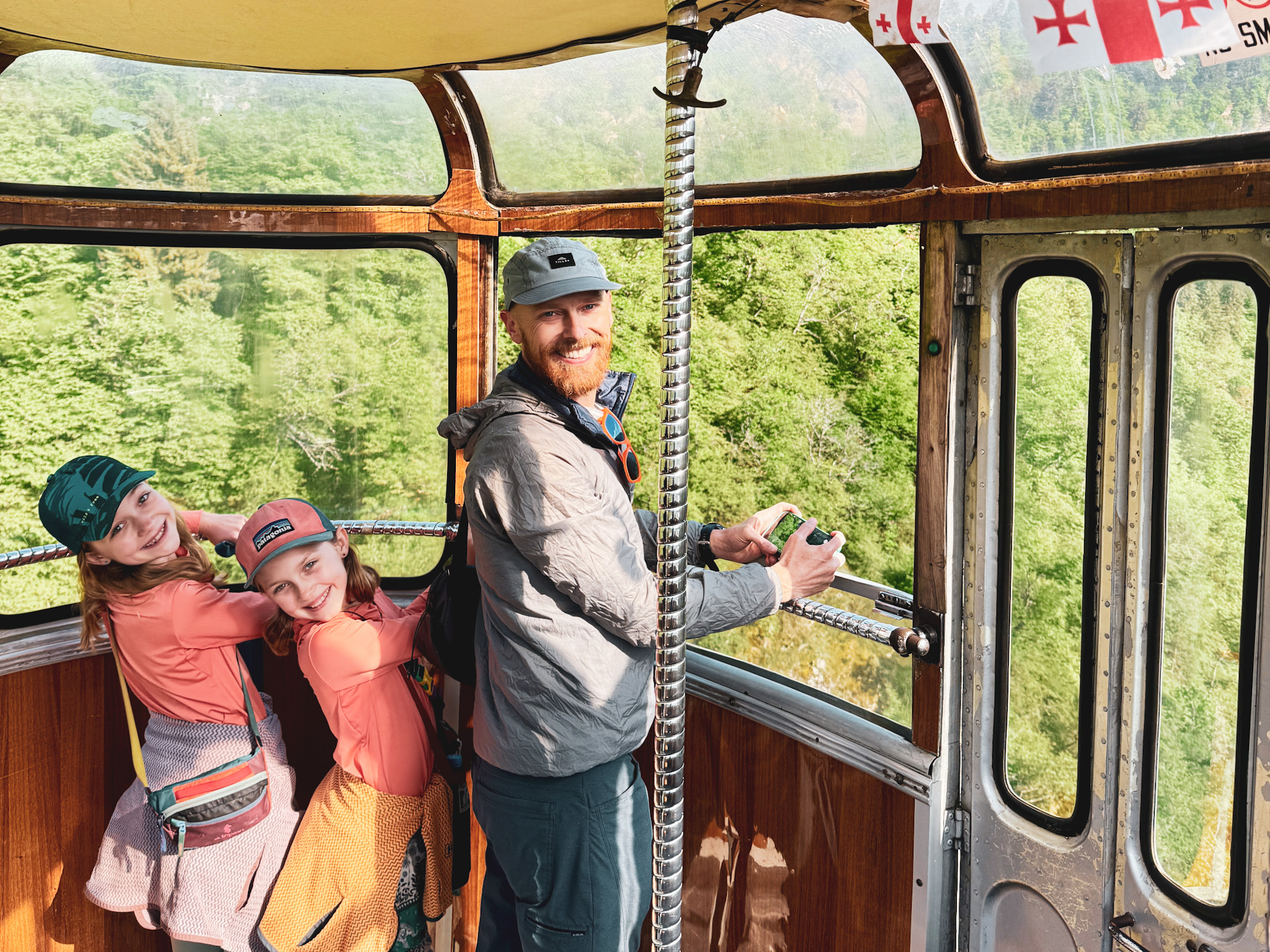
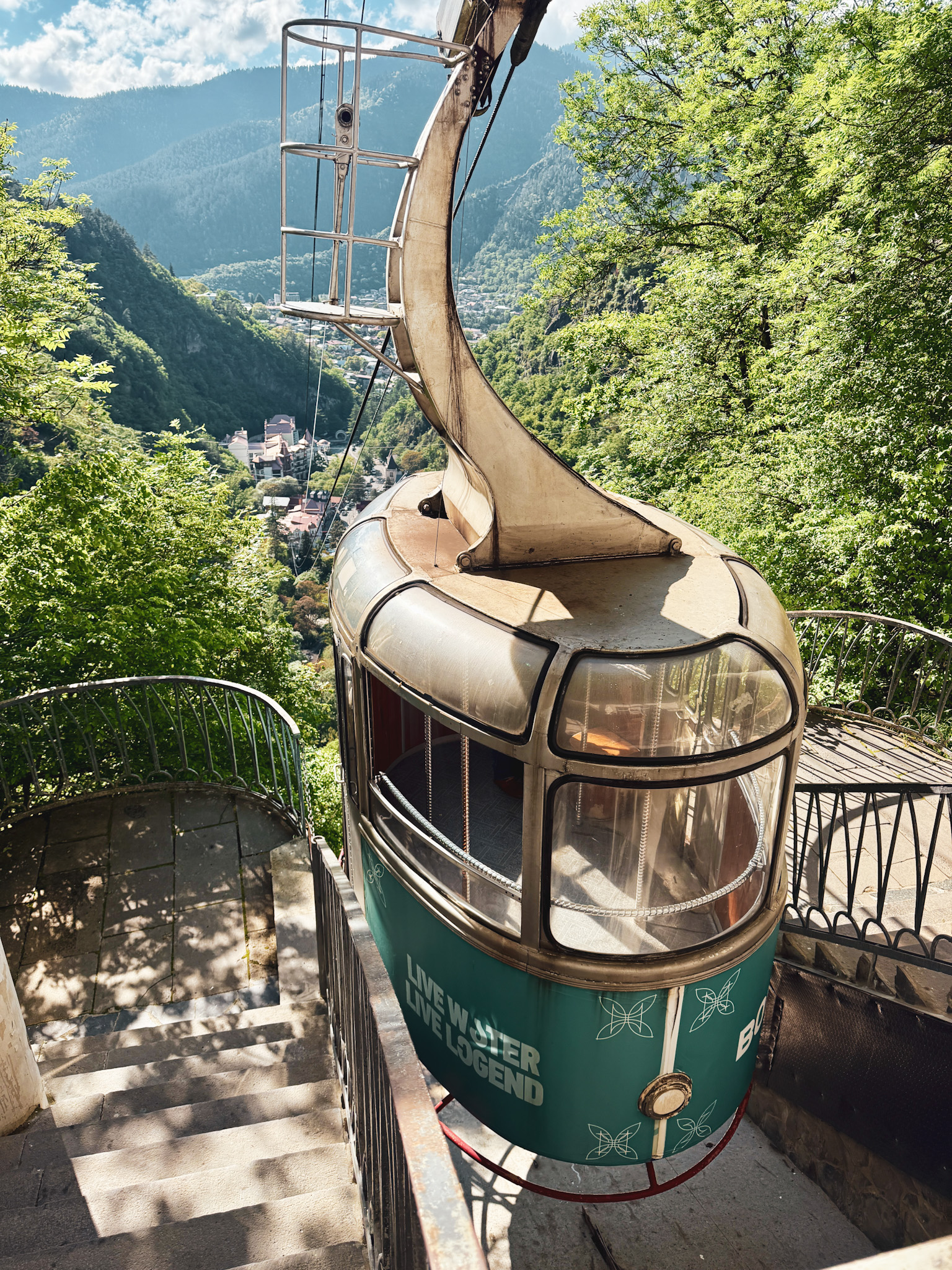
Near the park entrance sits the lower station of the Borjomi cable car, an iconic Soviet-era ropeway built in 1962 that hauls you 376 meters up to the plateau above town on a cable with a single, ancient gondola, depositing you beside that Ferris wheel and a small medieval church tucked into the pine forest. We bought one-way tickets up, having been told the walk down took only fifteen minutes. We like walks, and we saw no reason to pay twice. The “cable car” was more like a metal bucket, open on all sides, like standing in a waist-high tin can—definitely sketchy. It was also, somehow, romantic in its sketchiness, old and rickety and charming, the kind of contraption that has clearly outlived whatever its intended design lifespan was supposed to be and now runs on pure inertia and habit. It was not exactly terrifying. But if there had been so much as a single breath of wind during our two minutes dangling inside it, we were fully convinced that the car would have come unmoored from the cable entirely. Thankfully, we survived. The top delivered the promised pine forest, the Ferris wheel, and a sweeping view back over town, and then we set off on foot down the hill.
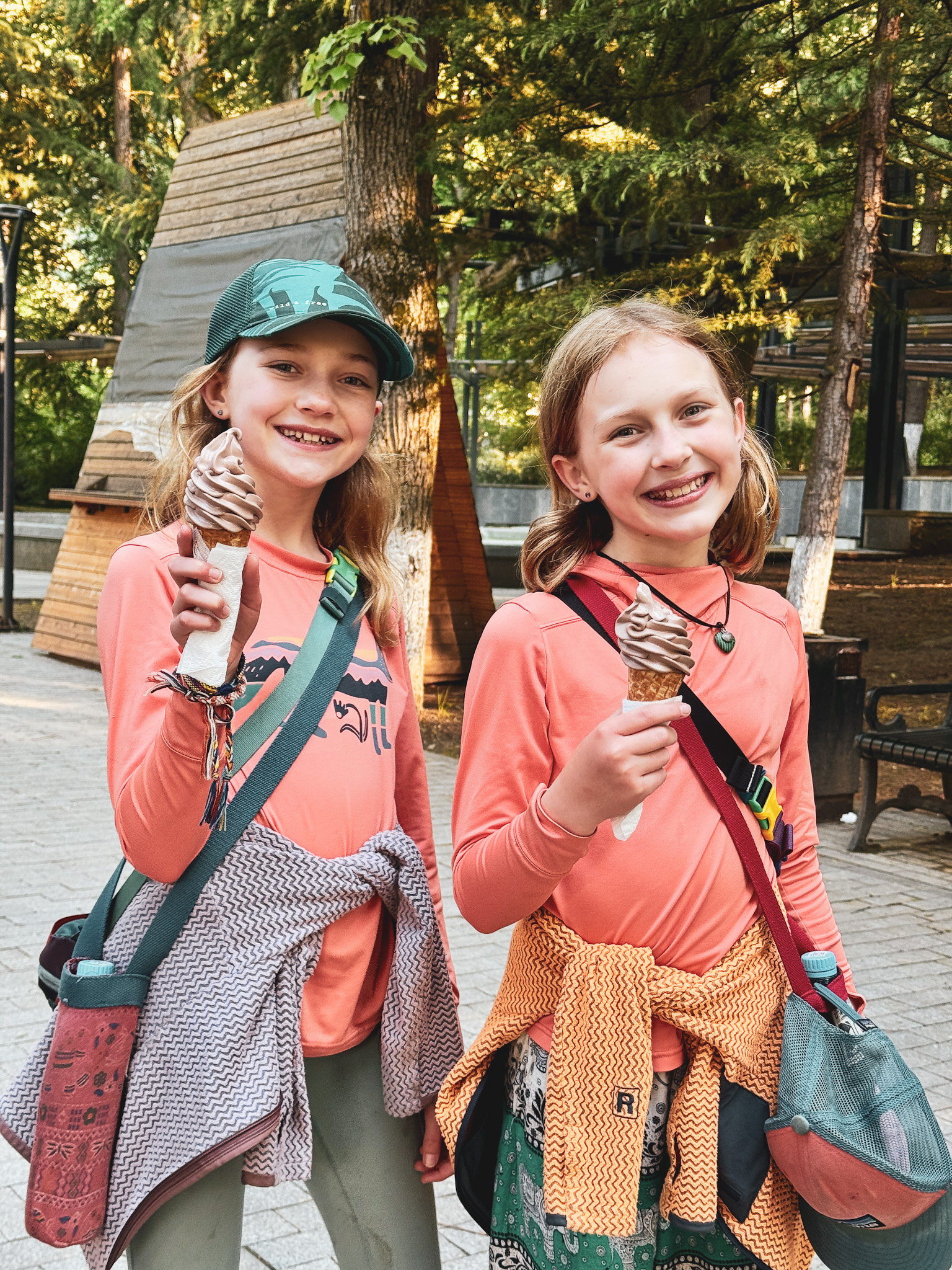
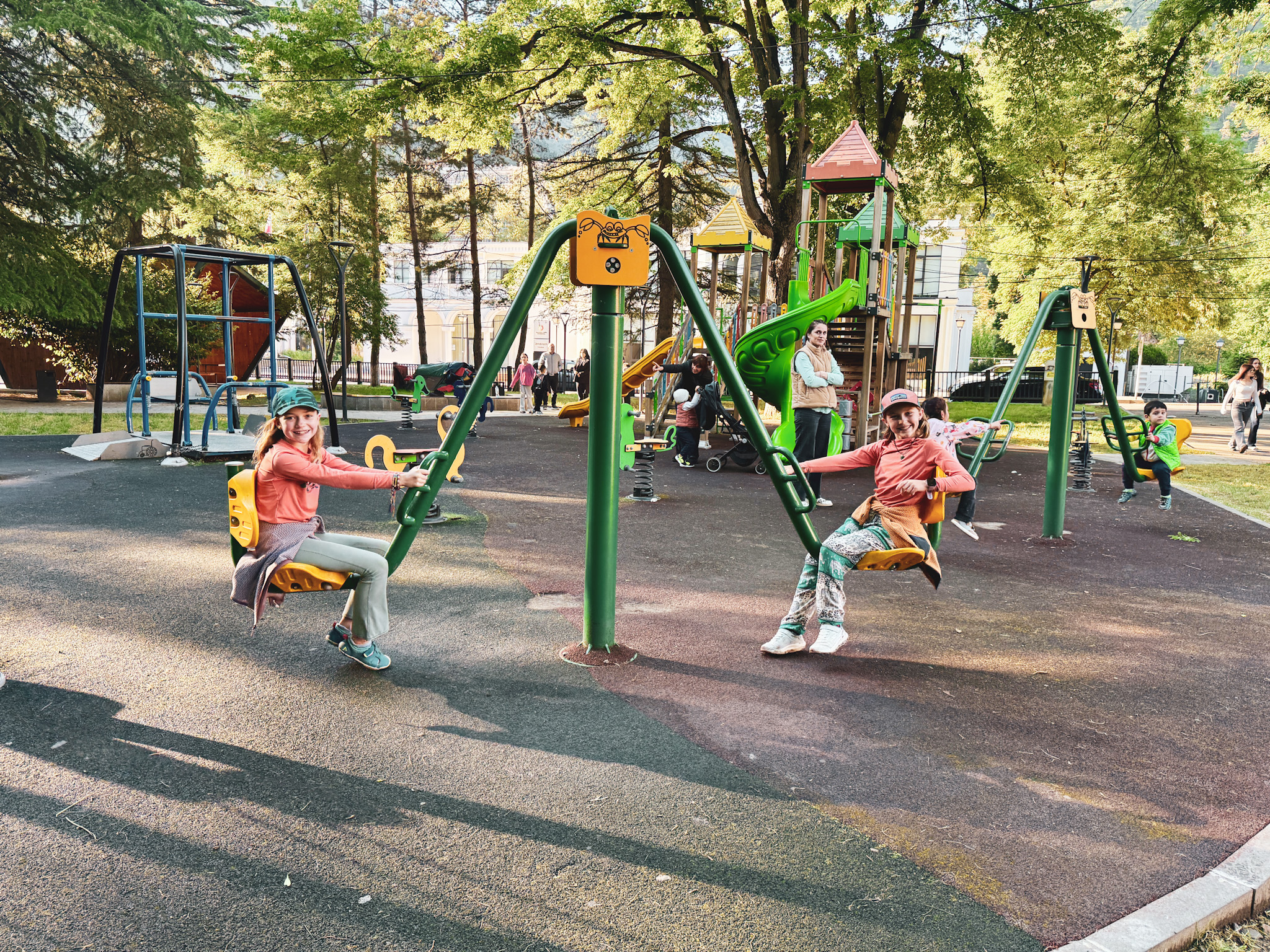
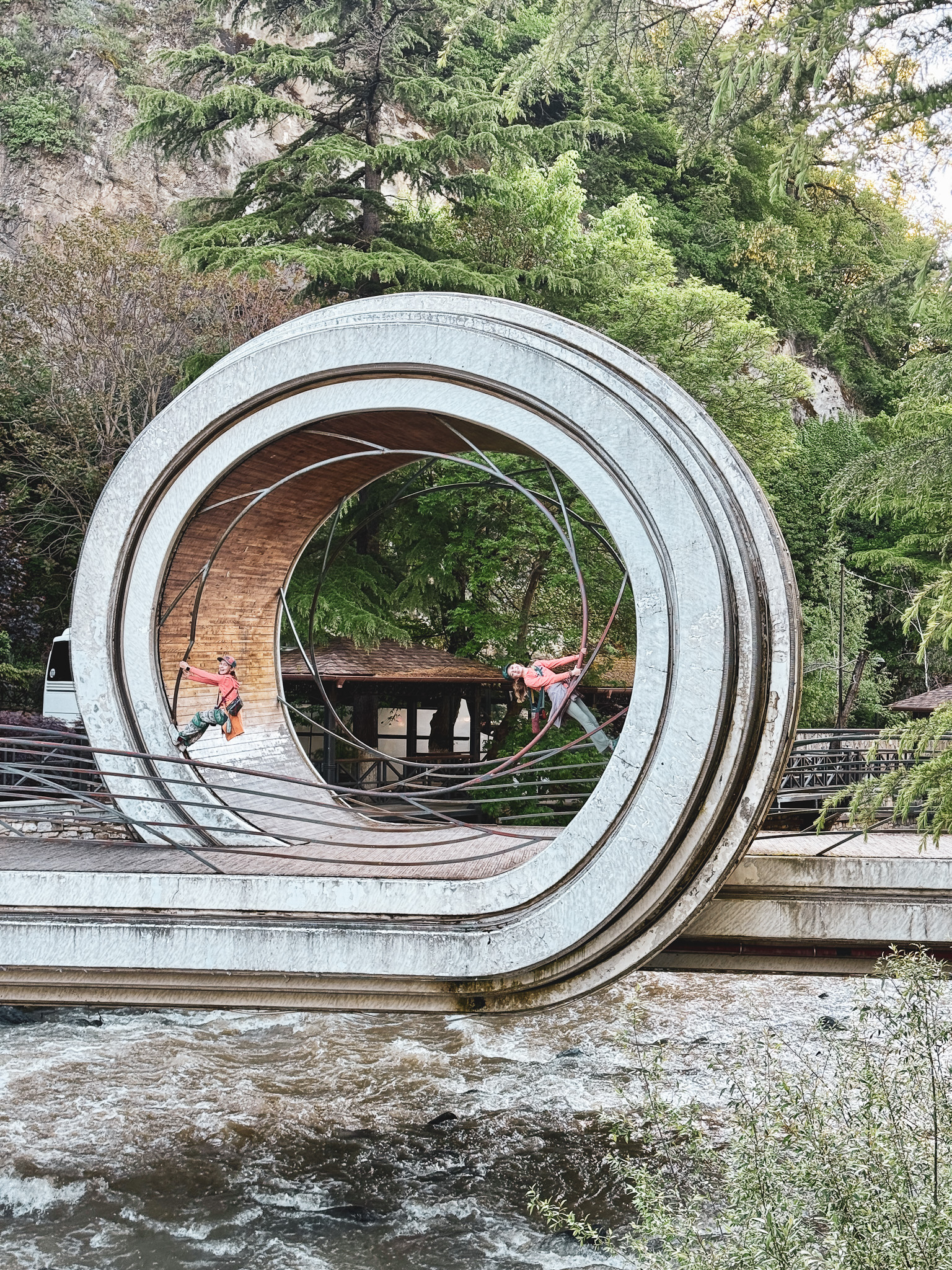
Once down, a trail forks off toward the Borjomi sulfur pools, and we started in that direction before doing some quick math. The sun was already dropping, and we did not want to be walking back in the dark along the path of nightmarish abandoned carnival equipment. Furthermore, a closer read of the pools revealed they are not actually hot springs at all, but tepid sulfur pools, sitting somewhere between 27 and 38 degrees Celsius. We would happily sit in a properly hot, rotten-egg-smelling spring for an hour. Lukewarm water that smells like rotten eggs holds precisely zero appeal. We enjoyed the nature walk for what it was, turned around without a flicker of regret. On the way back through the park we let the girls loose on a playground, where they spent a happy stretch flinging each other around on a giant 360-degree teeter-totter until Arya took a spill and got mud all down her pants, an indignity she felt acutely at this age. We brushed off both the mud and the moment as best we could and headed home. A fro-yo in hand didn’t hurt.
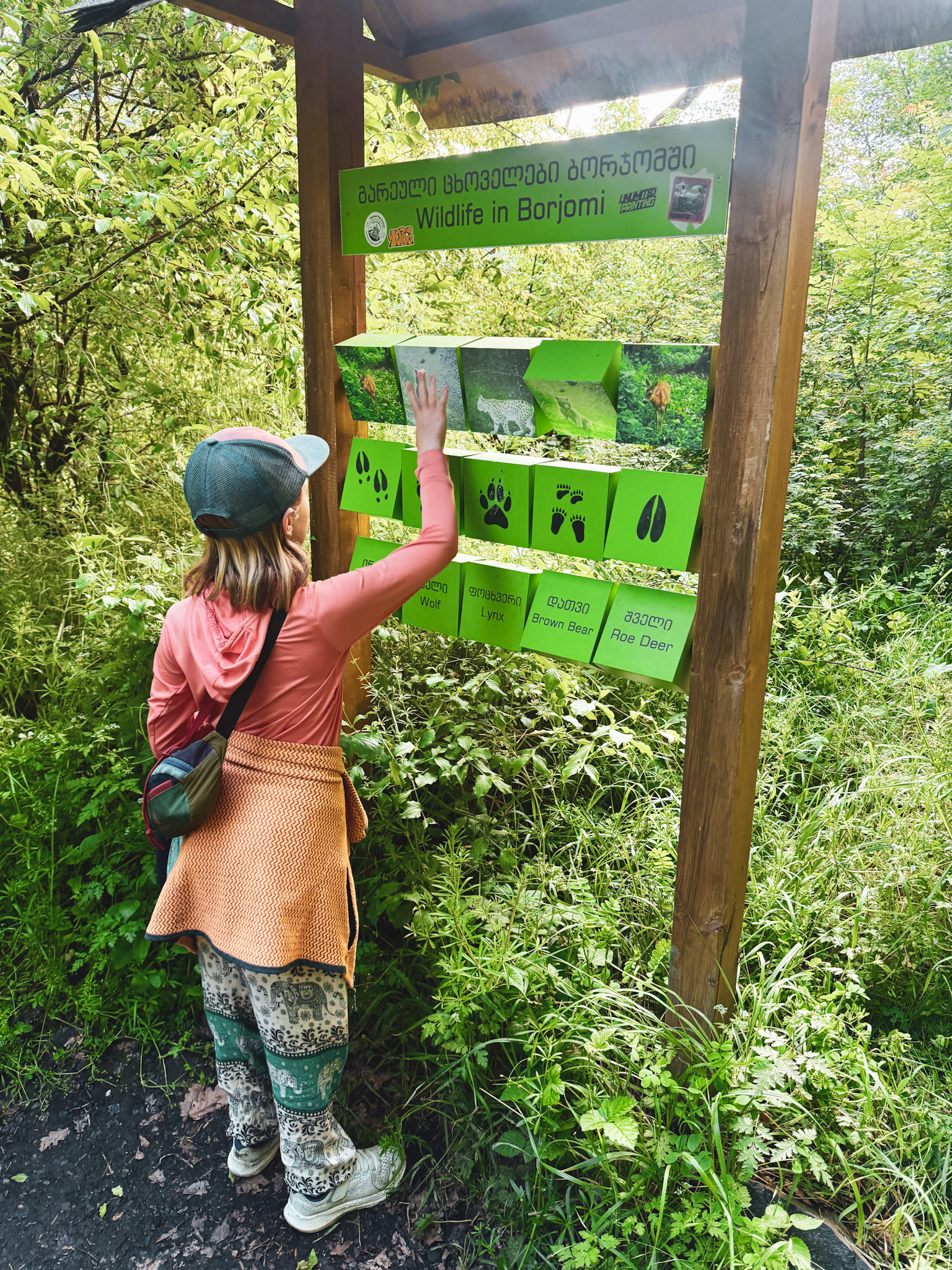
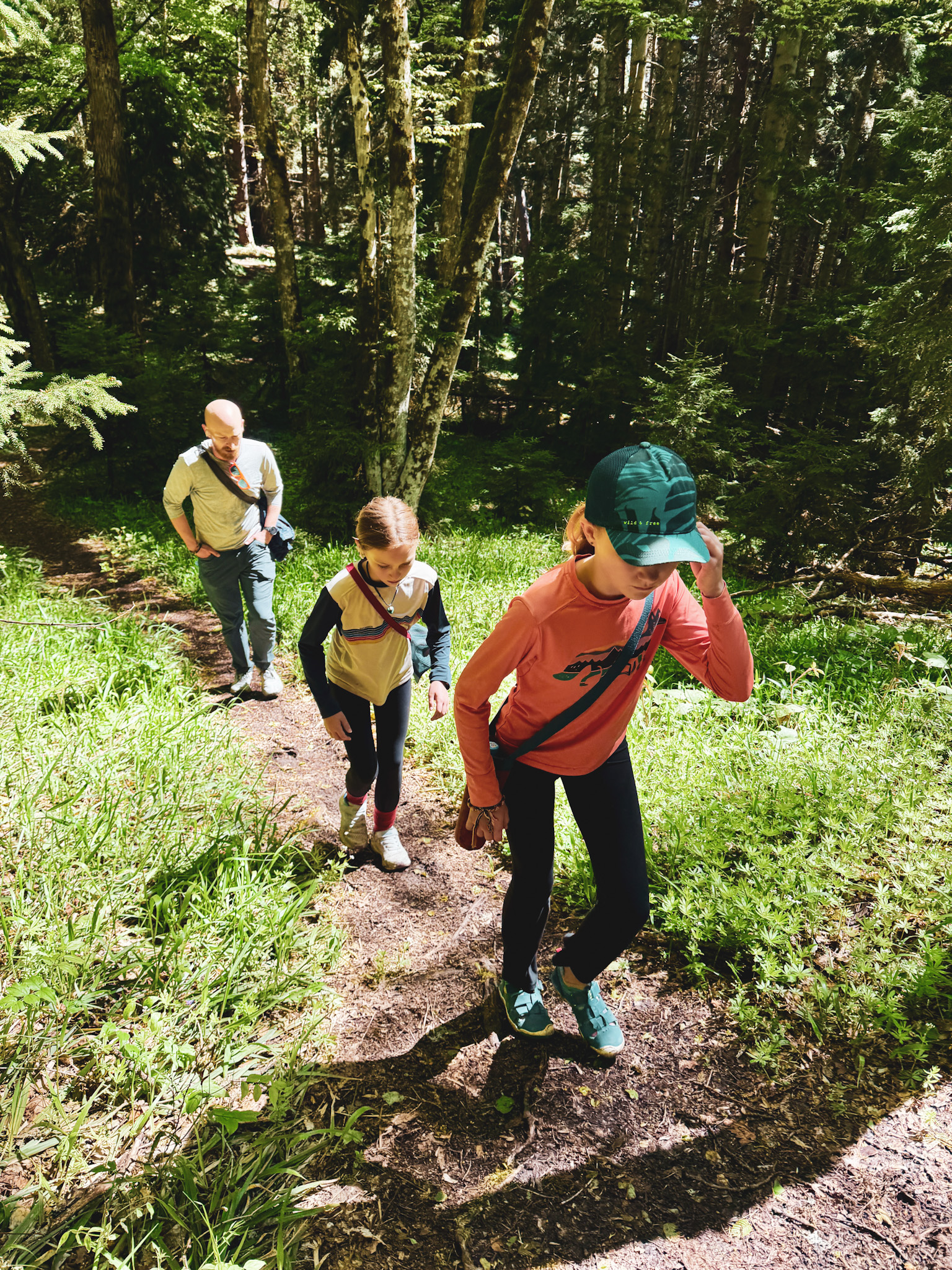
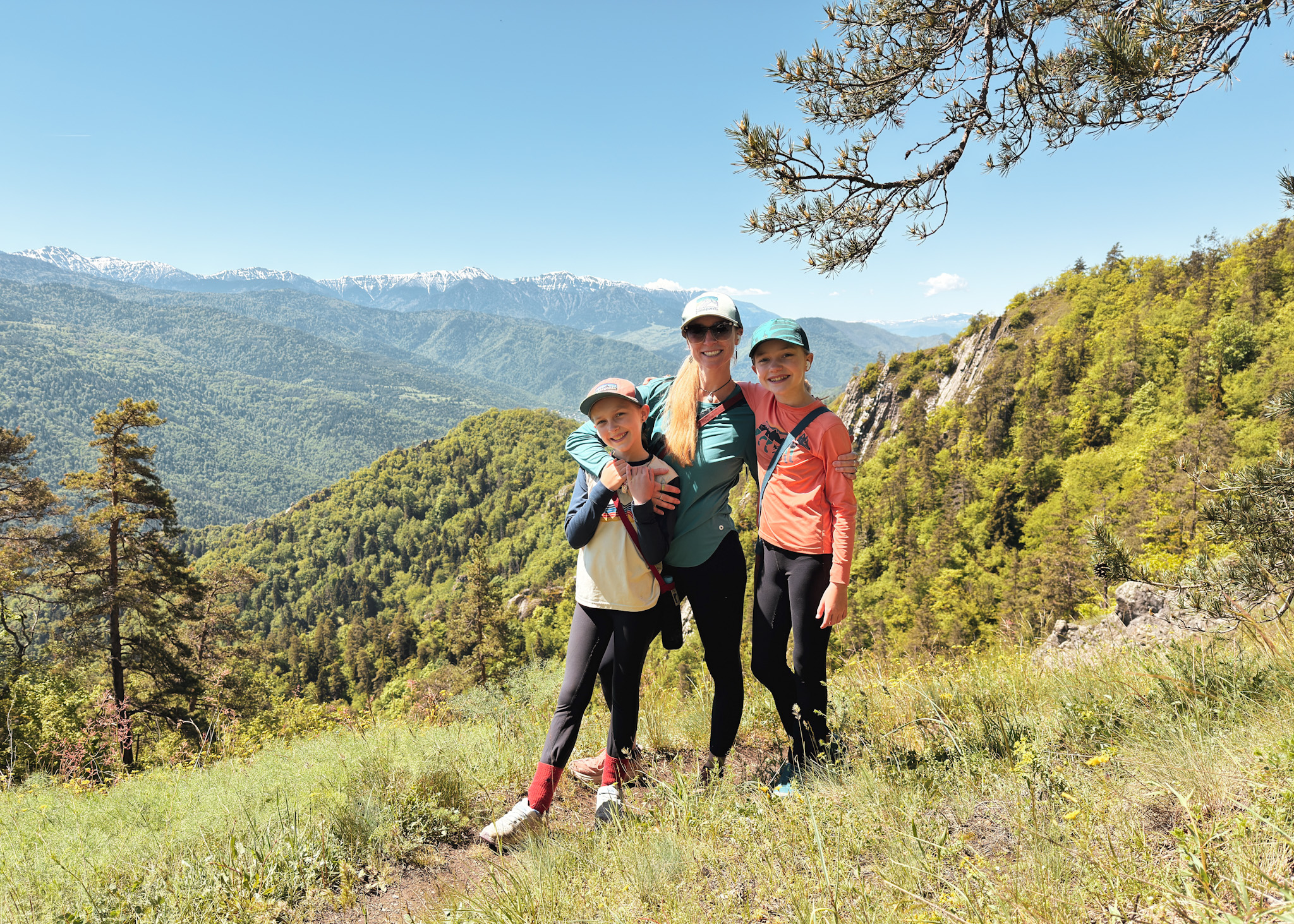
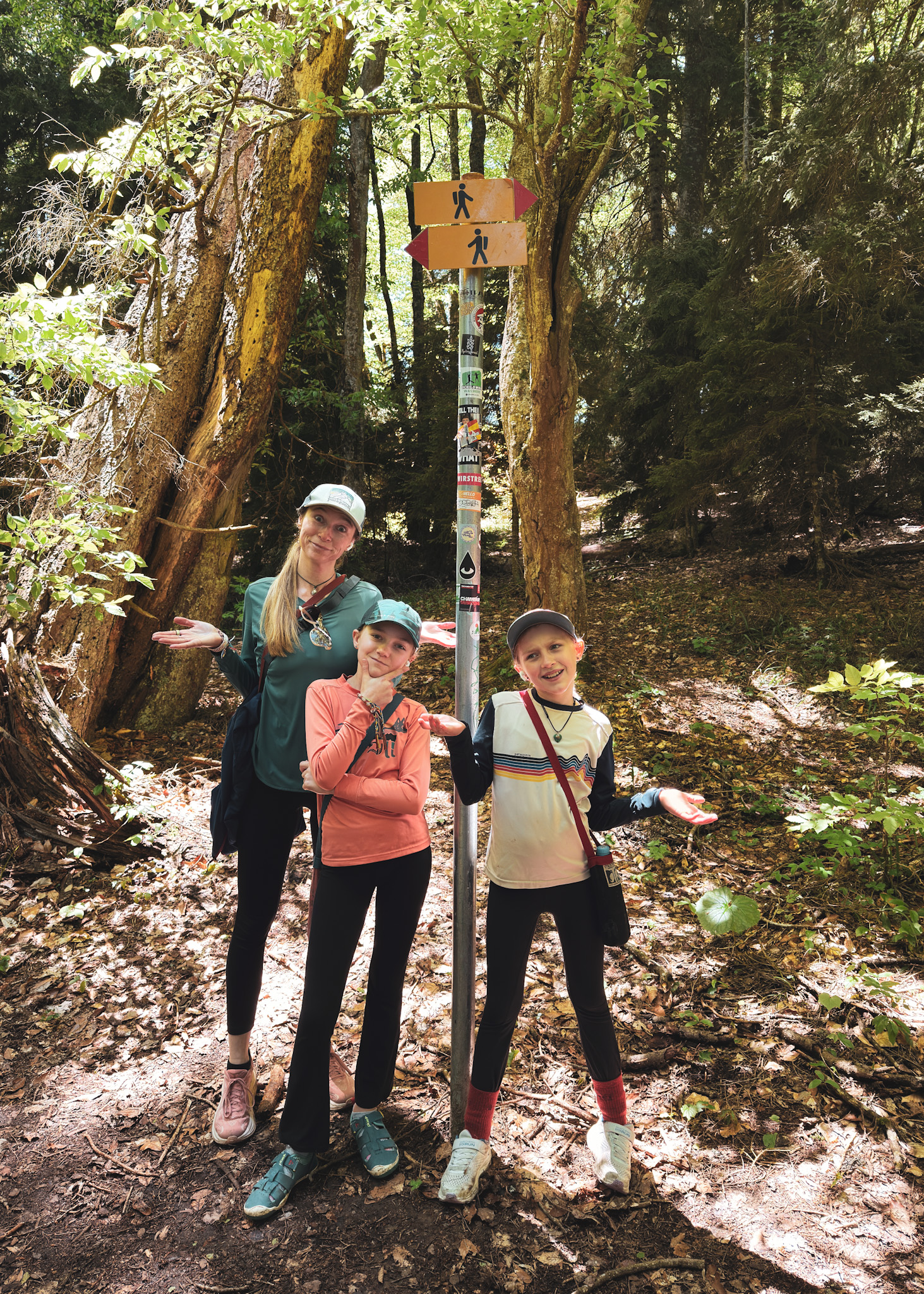
If the first Borjomi day was about errands and rickety gondolas, the second was about getting out into the mountains properly, and the bluebird day was custom-built for it. We drove to the Likani Valley Black Trail in Borjomi-Kharagauli National Park, one of the largest national parks in Europe at around 850 square kilometers of heavily forested central Georgian ridgeline. The Black Trail is a nine-kilometer loop with 621 meters of climbing, and we deliberately tackled it clockwise so we would be ascending the steep section rather than picking our way down it. That turned out to be the right call. The first two kilometers were genuinely steep—averaging a 22% grade—the kind of grade that would have required trekking poles to go downhill. Our lack thereof sounded like a recipe for a broken leg. Going up was hard work and got the heart pounding, but it was very doable, and we were lucky the rain had stopped the previous afternoon so the trail had dried just enough that nobody was sliding around.
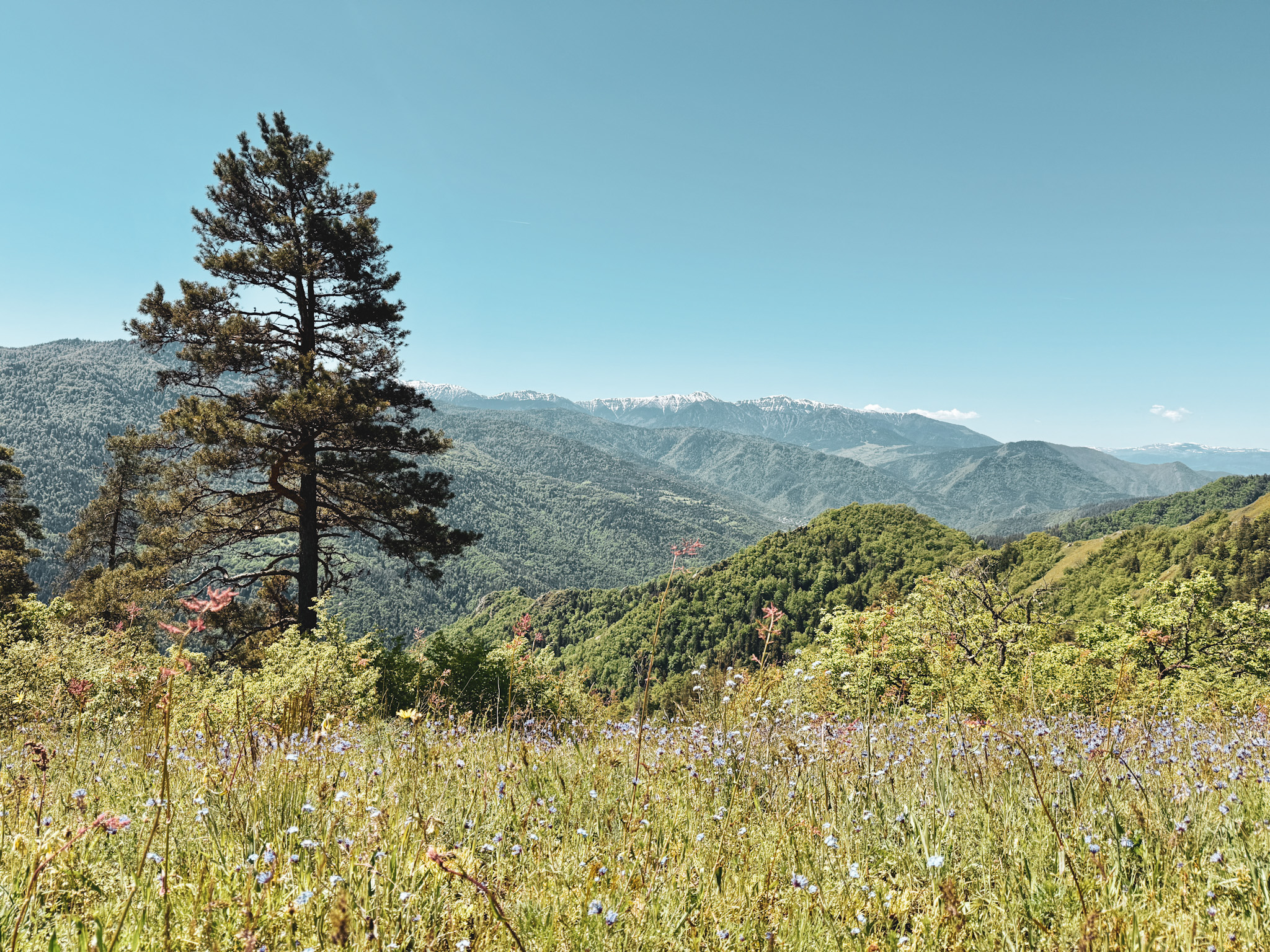
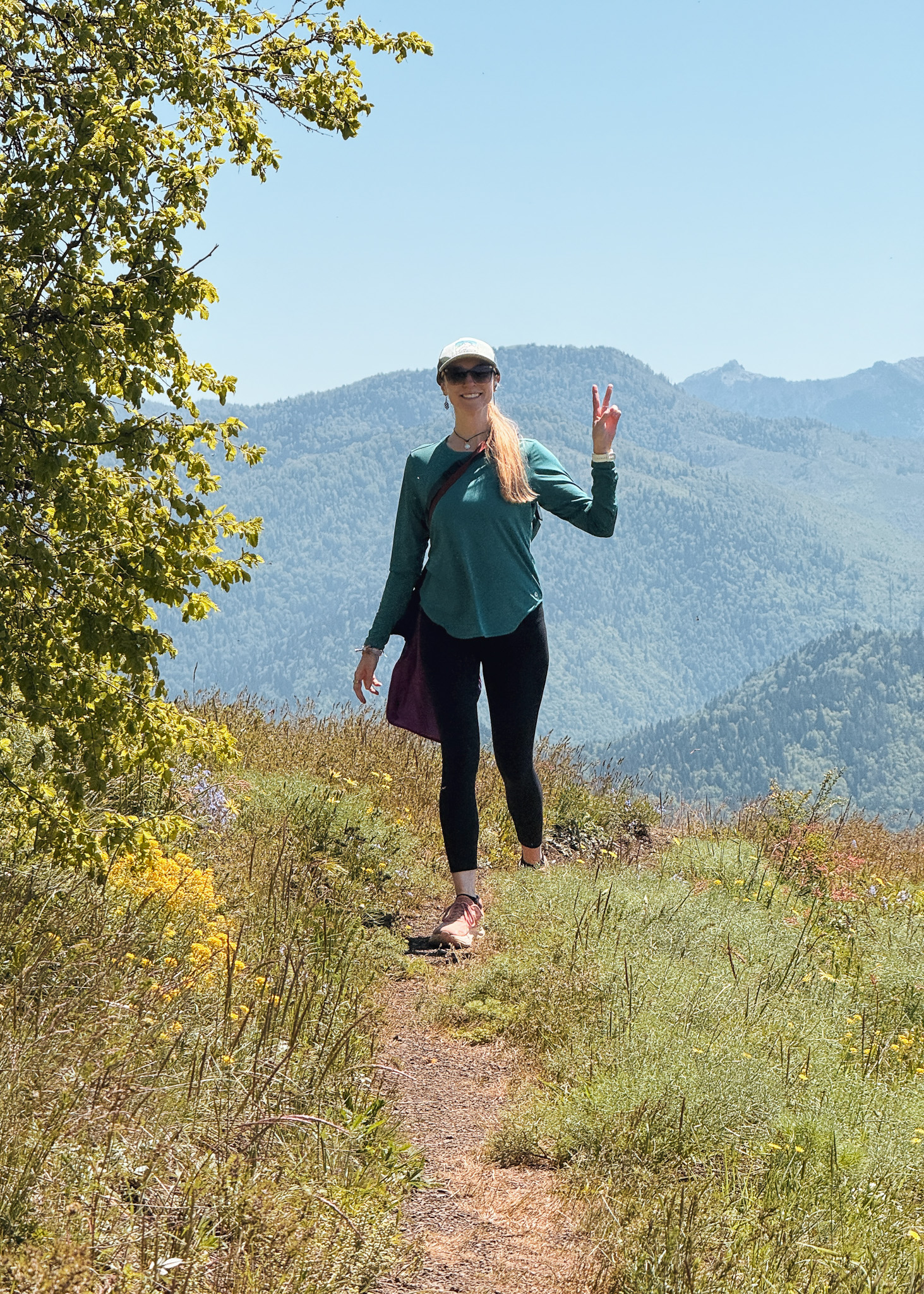
The conditions for the rest of the day were almost absurd. Mid-70s, not a cloud anywhere, not a breath of wind. You simply cannot ask more of a hiking day than that. For about ninety percent of the route we were deep inside a dense beech forest, a cool green corridor winding upward through the trees, and then, right at the high point, the trail broke through the canopy and opened onto sweeping views of the valley and the snow-covered high peaks beyond, with a meadow of Shaina’s beloved mountain wildflowers spilling across the ground at our feet. We were all about ready to break into song, full Sound of Music. The back half dropped us straight back into the forest, this side of the mountain visibly wetter, the greens deeper, ferns and moss everywhere, with better trail maintenance that let us skirt the worst of the mud. Team SharXee crushed the whole thing. Aside from some predictable grumbling on the brutal opening climb, everyone was fantastic, the rare day when perfect weather, gorgeous scenery, a fun family audiobook, and four good moods all showed up at the same time. A genuinely good day.
The combination of a morning of hiking, a big lunch back at Iggy, and a cold beer dropped Max into a textbook food coma, so he spent the late afternoon flat on his back reading while Shaina, saint that she is, ran the laundry and steered the girls through their homework. The rest of the day was pure road-trip preparation: a run to the bank for more cash, now that we are fully committed to the cash economy, a fill-up at the gas station, a tire-pressure check, and a few minutes getting acquainted with the Forester’s cruise control and radio. Shaina locked in accommodation for our next two nights in the small village of Oni, high up in the Racha mountains, our first real Georgia Road Trip destination.
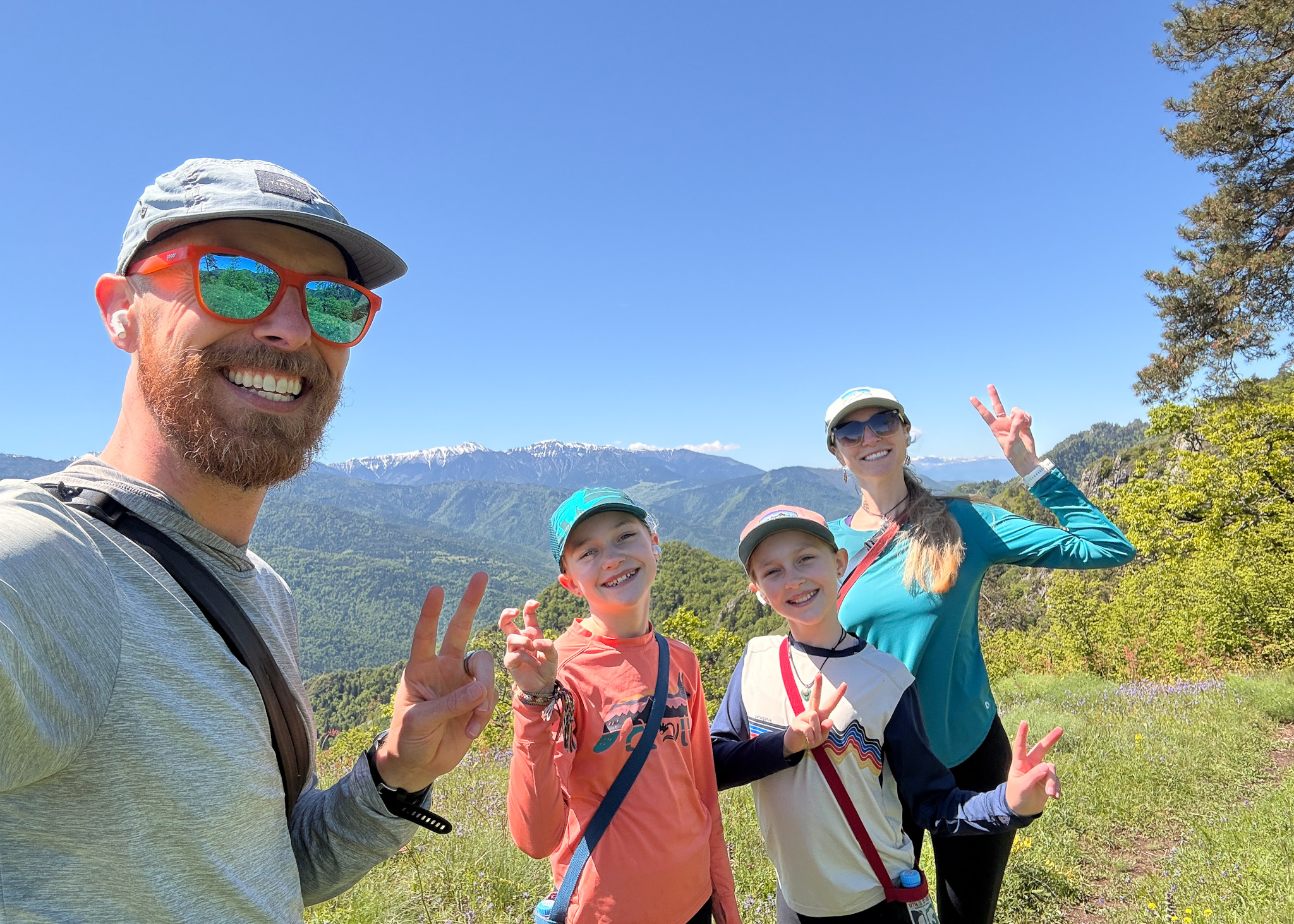
Which is, in the end, exactly what Borjomi was for us. A faded old spa town of mineral water and aristocratic ghosts, half-finished renovations and rickety Soviet gondolas. Here we caught our breath, sorted out a car with enough clearance to handle whatever comes next, and pointed ourselves towards the mountains. The town itself may be perpetually three-quarters finished. We, on the other hand, were over three-quarters through our Family Gap Year and 100% ready to explore this mountainous mecca of a country.
Georgia 🇬🇪 Road trip, coming up!


Leave a Reply