
Dates: May 23-27, 2026
Place: Yerevan, Armenia
We left the village of Gosh on a Friday morning, saying our goodbyes to our guesthouse host, Zerosh, over a final breakfast of shakshuka before climbing into a hired car for the three-hour drive south to Yerevan, Armenia’s capital and our home for the next five days. We were carrying a small lesson out of Gosh, picked up over all those nights around the fire pit: that you can build something genuinely warm out of almost nothing, if you do it with enough small and deliberate kindnesses. We tucked that thought away somewhere into our collective memory where we hope to carry it forward with us, and then we turned our attention to the road.
The plan for the drive had included one stop on our way to Yerevan, at Sevanavank, a pair of ninth-century black-stone churches that sit on a peninsula jutting into the enormous blue mirror of Lake Sevan. We made it to the parking area and got as far as opening the car doors. Then the sky detonated. Rain and hail came down together, the harshest weather we’d seen in ages, and we scrambled back inside the car like soldiers diving into a foxhole, watching the windshield disappear entirely under the assault. The clouds had the settled-in look of weather with no intention of leaving any time soon, so we cut our losses, abandoned the monastery to the storm, and told our driver to just take us the rest of the way to the city.
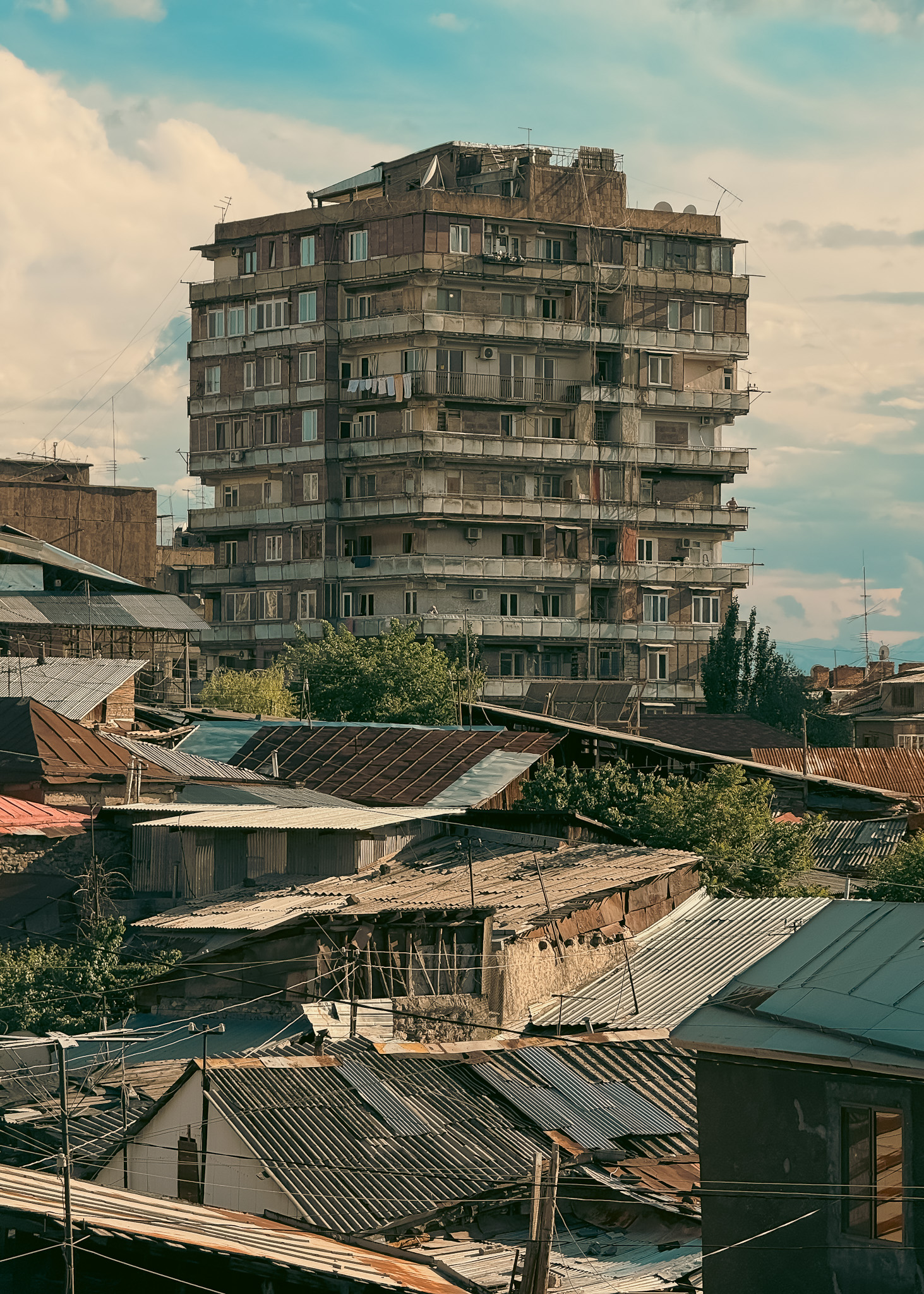
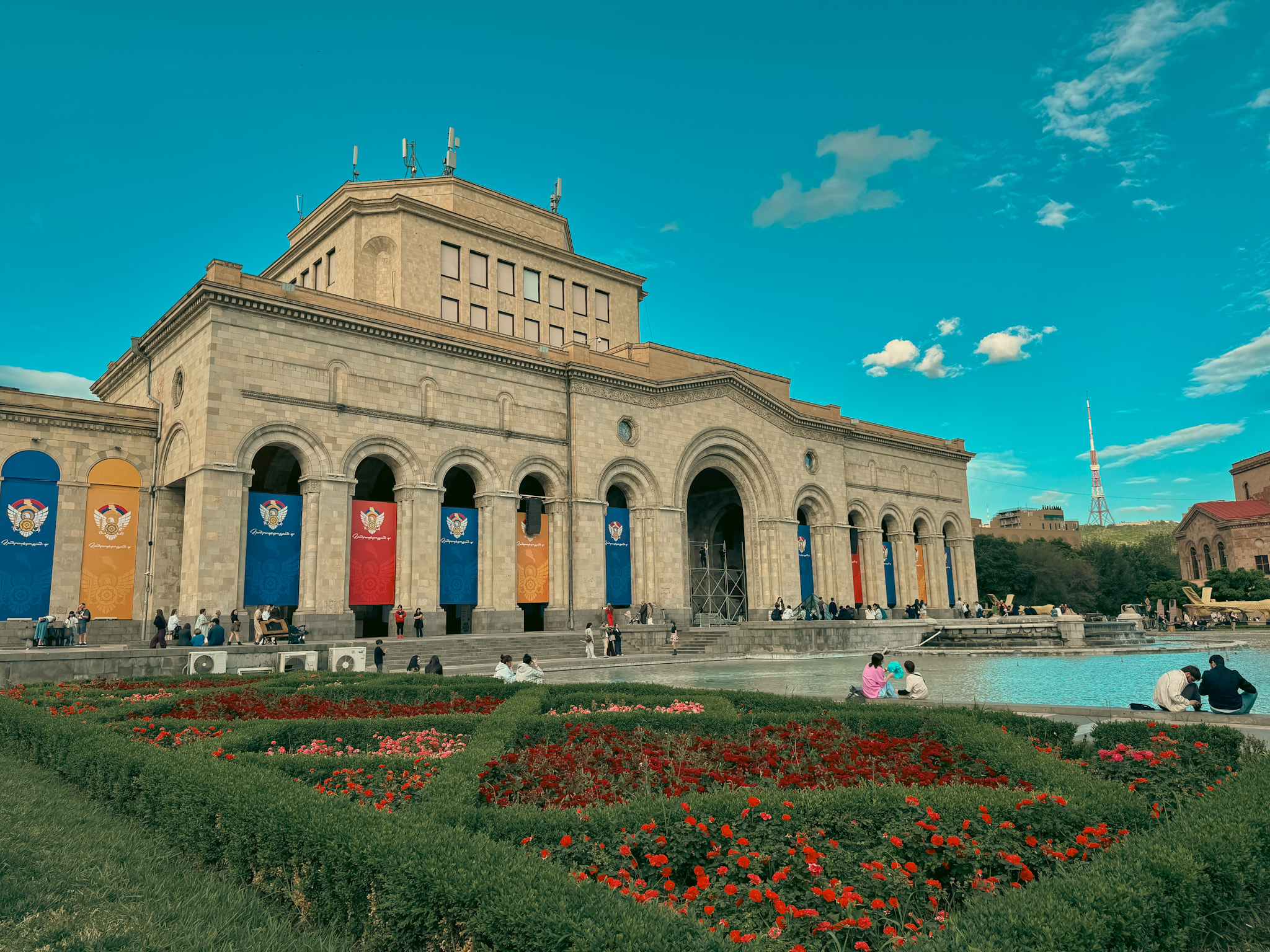
What followed was two hours of staring out the window at the beautiful scenery of green hills and snow-capped dormant volcanoes, tinged with soul-flattening Soviet architecture—gray concrete boxes stacked under an equally gray sky, the kind of landscape that slowly drains the color out of your mood. Which is exactly why the arrival into Yerevan landed the way it did. The road tipped downhill, the city opened up below us, and within about ten minutes everything the drive had done to us was undone. Yerevan arrives like a rebuttal to its own approach. Tree-lined boulevards, cafes spilling out onto the sidewalks, green parks tucked between the buildings, the whole place reading far more modern and European than anything we’d just driven through.
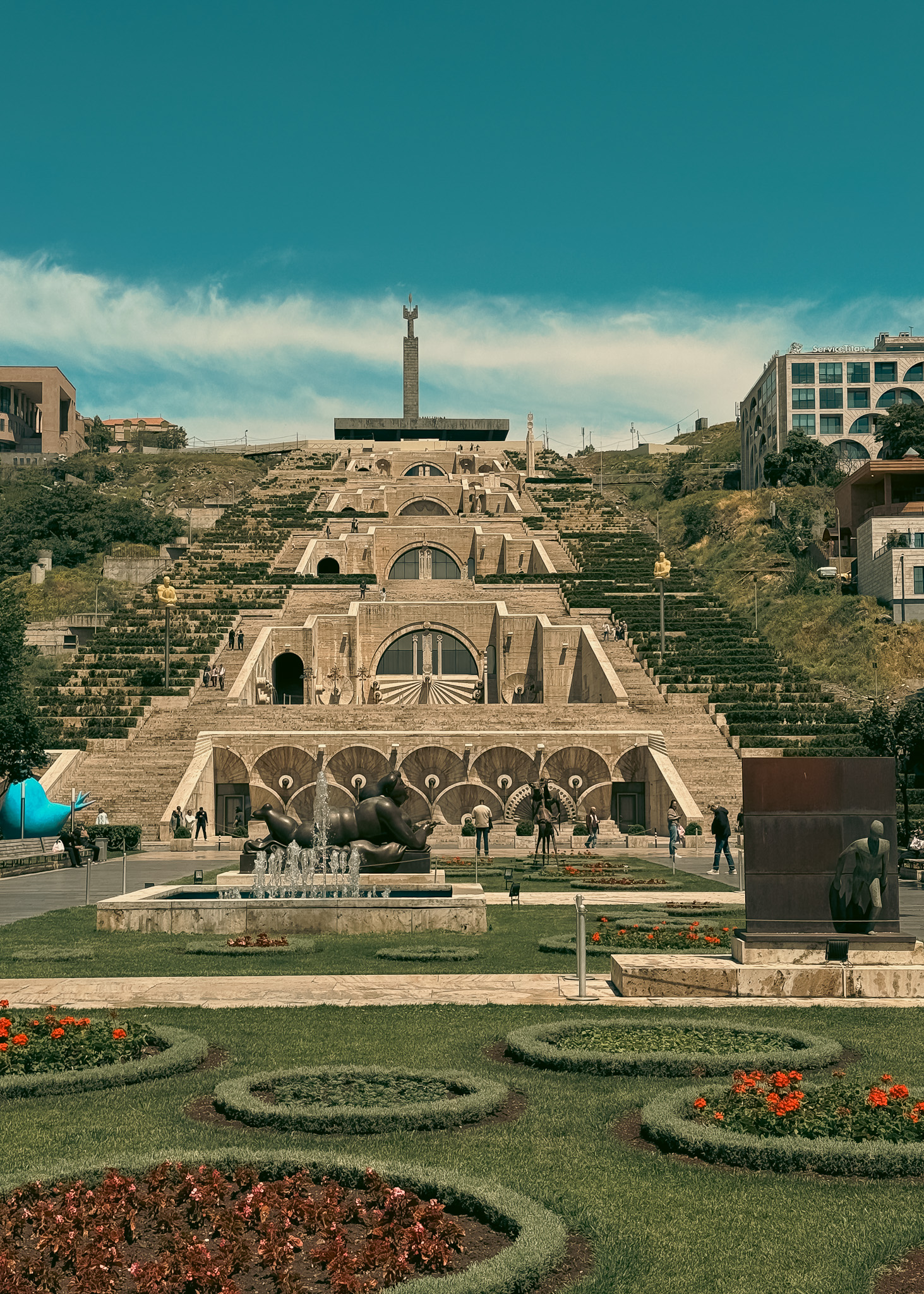
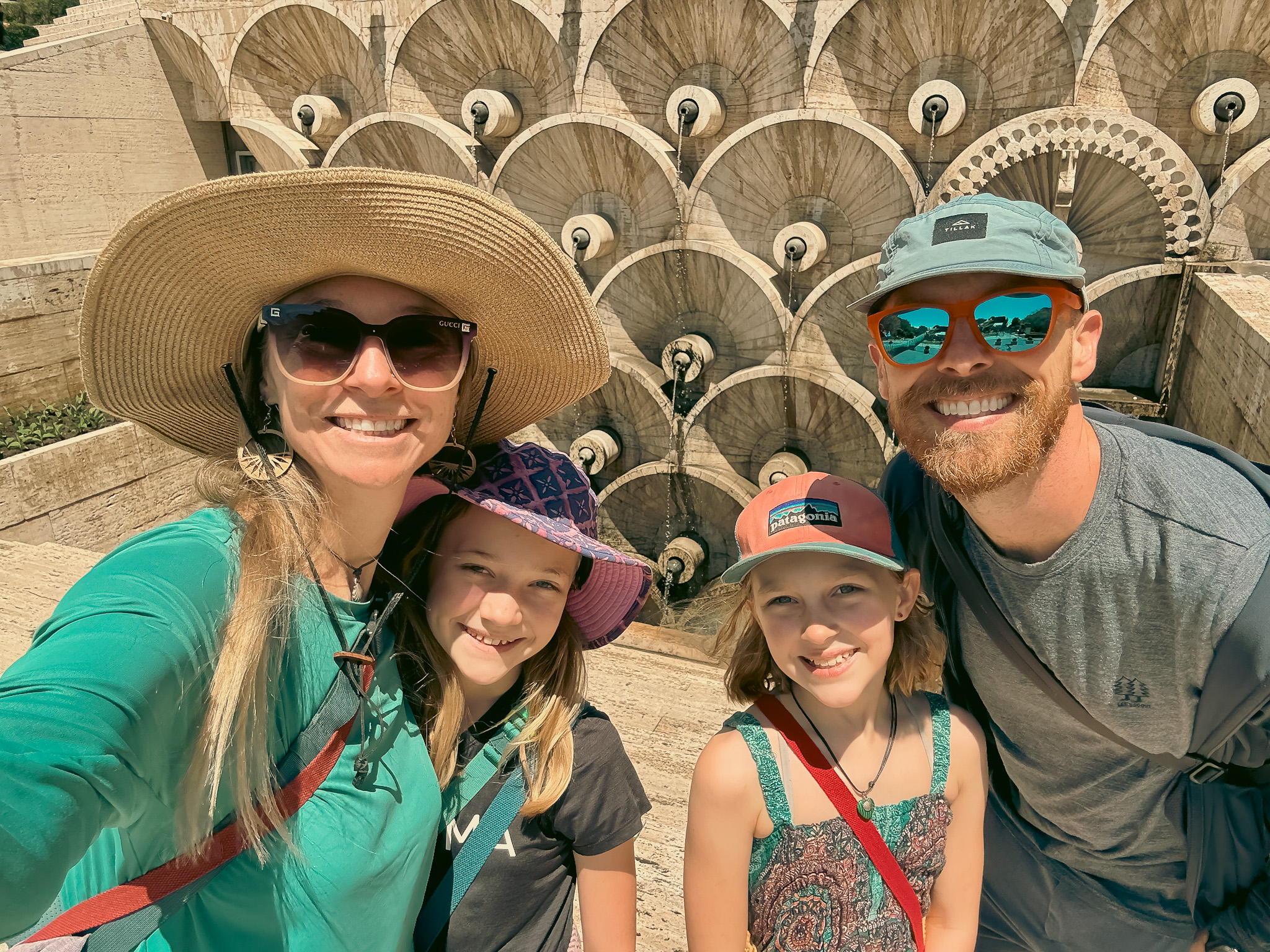
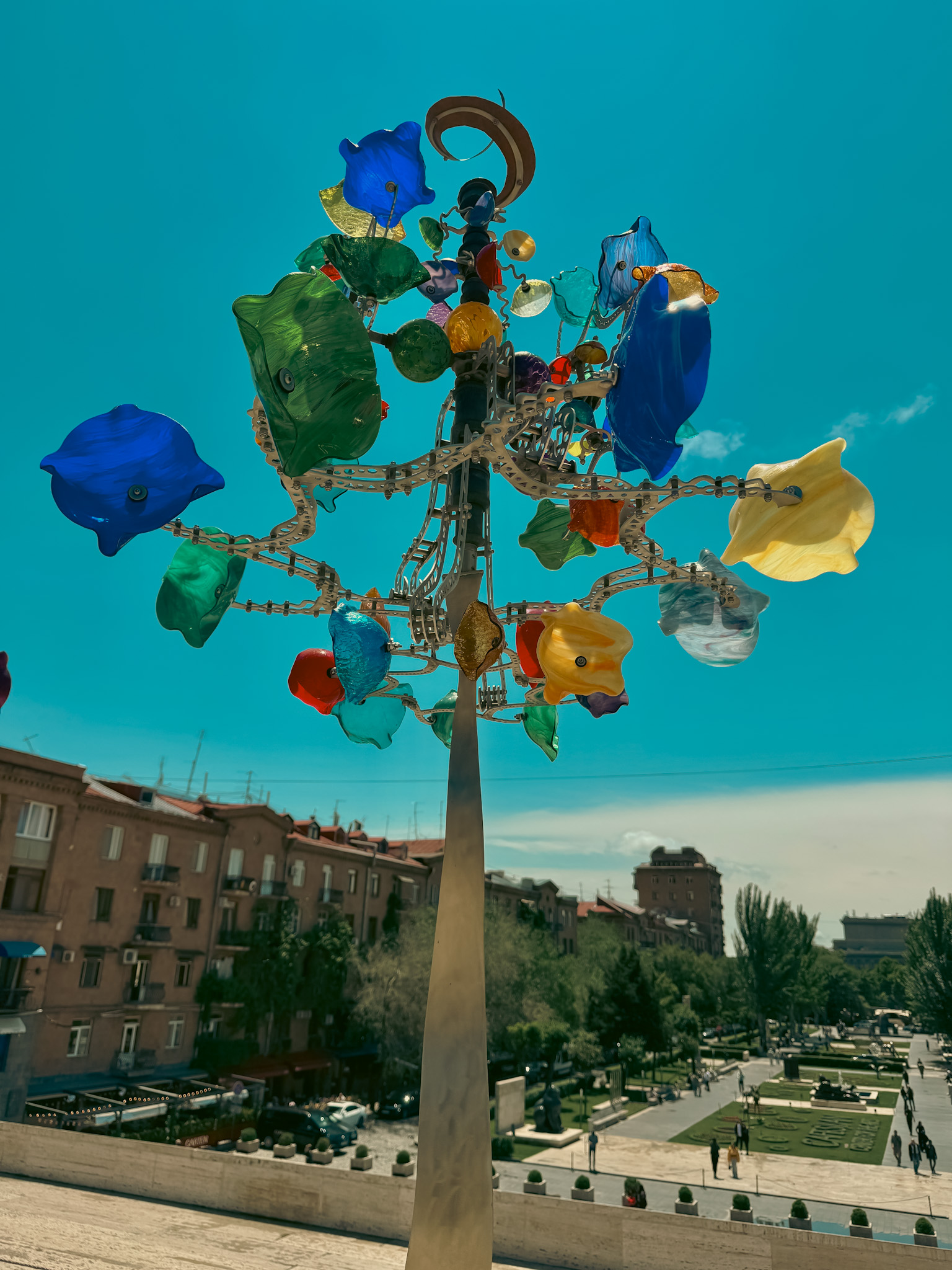
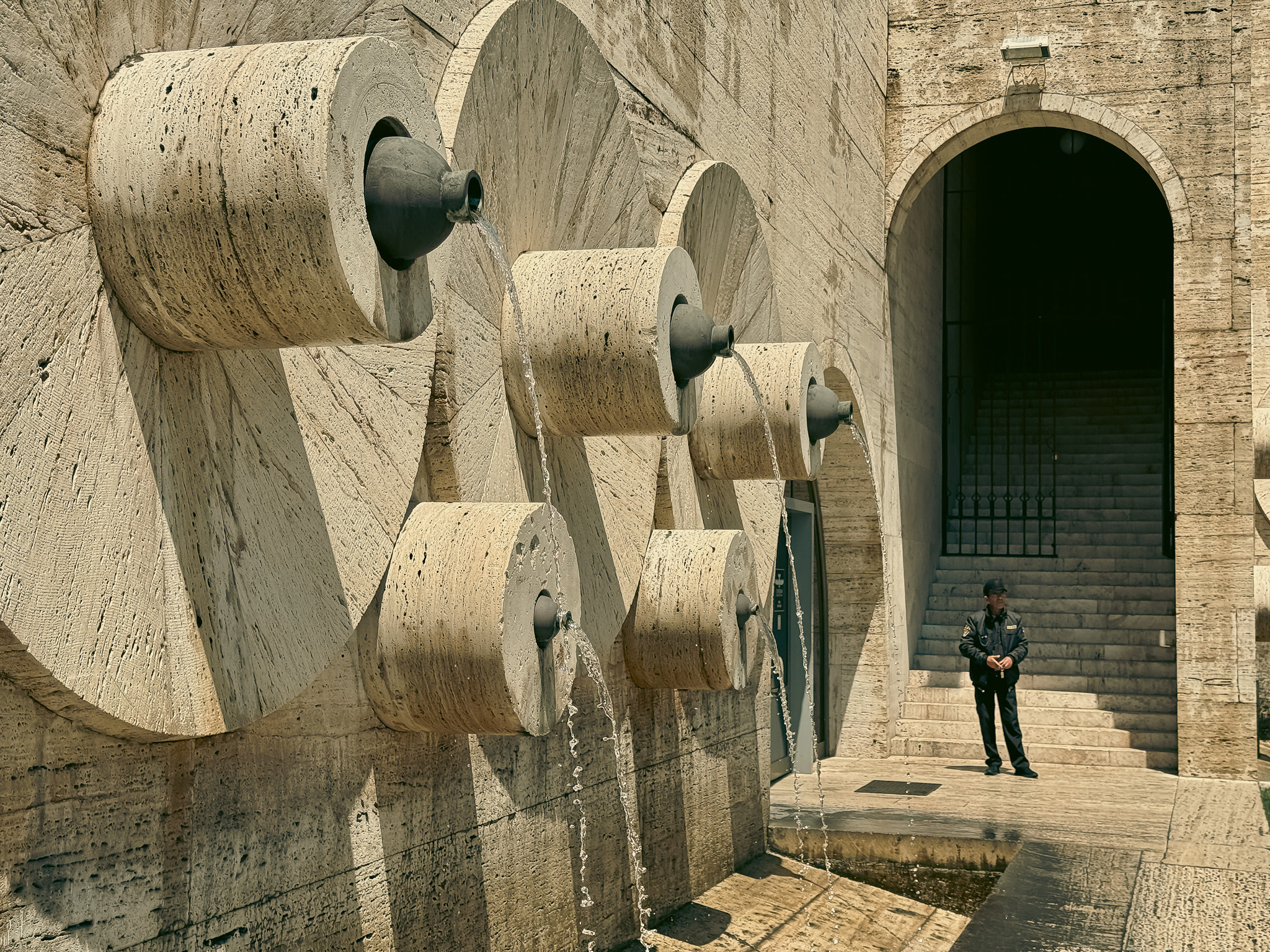
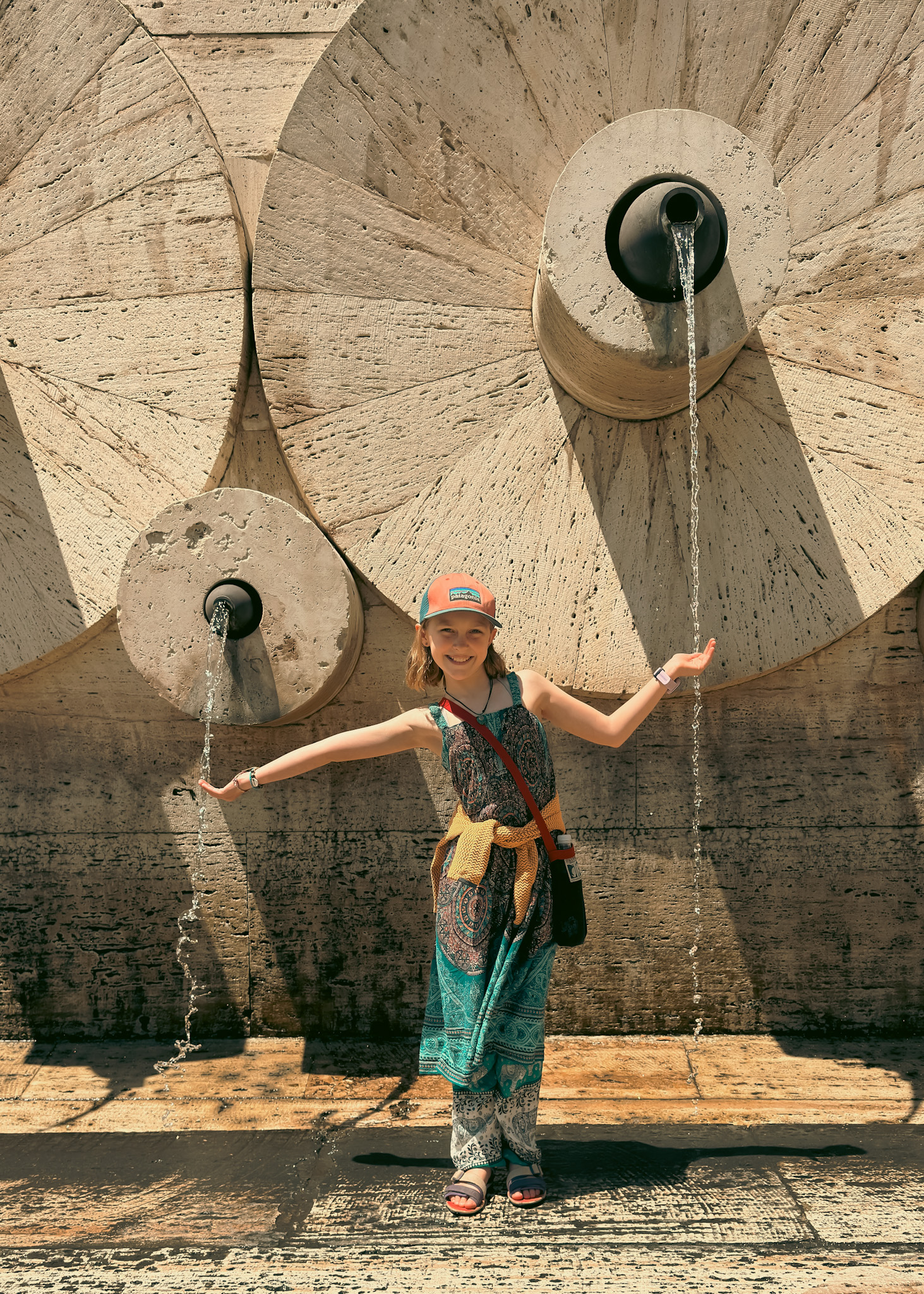
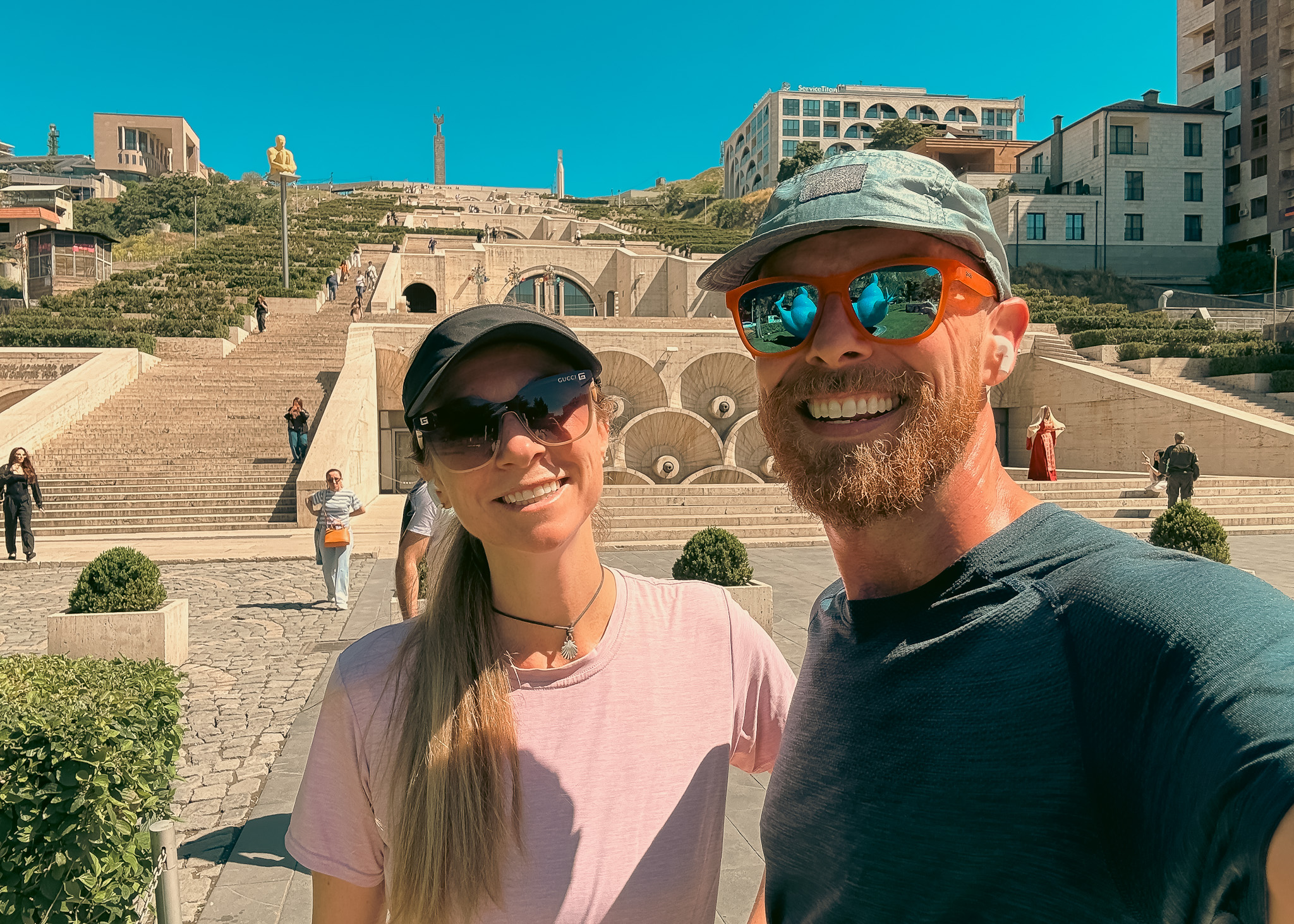
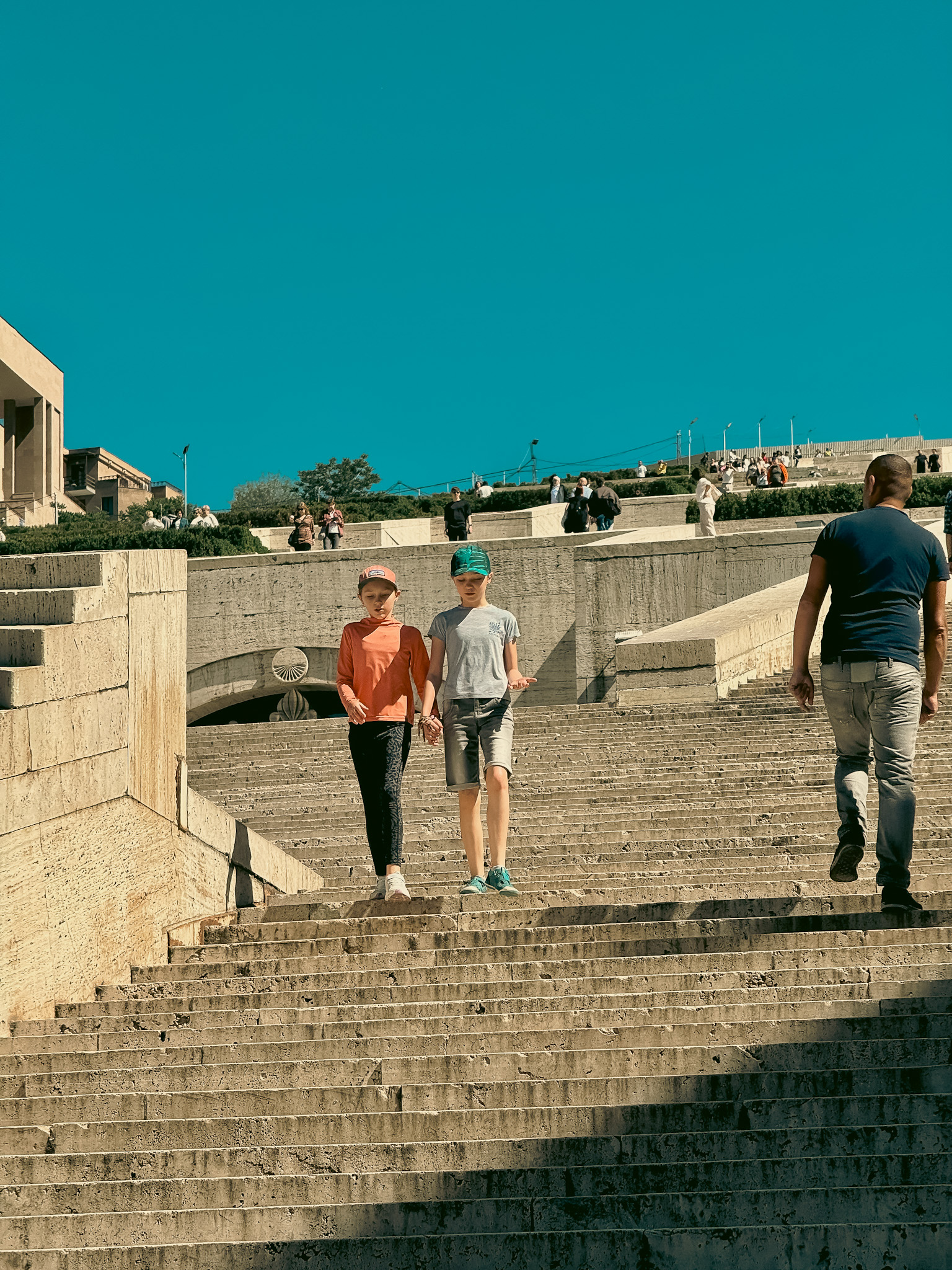
Shaina had booked us an apartment right at the base of the Cascade, which would become the geographic center of our entire stay, so it is worth explaining what it is. The Cascade is a giant limestone stairway that climbs the hillside above central Yerevan in a series of broad terraced platforms, fountains, and gardens, and it functions as a free open-air sculpture museum. Our apartment sat at the very bottom of it, and our balcony looked straight down onto the lowest steps, where sculptures by artists from all over the world stood keeping watch. Over the coming days we would climb those stairs again and again, for sightseeing and eventually for exercise, until the Cascade started to feel like our own backyard.
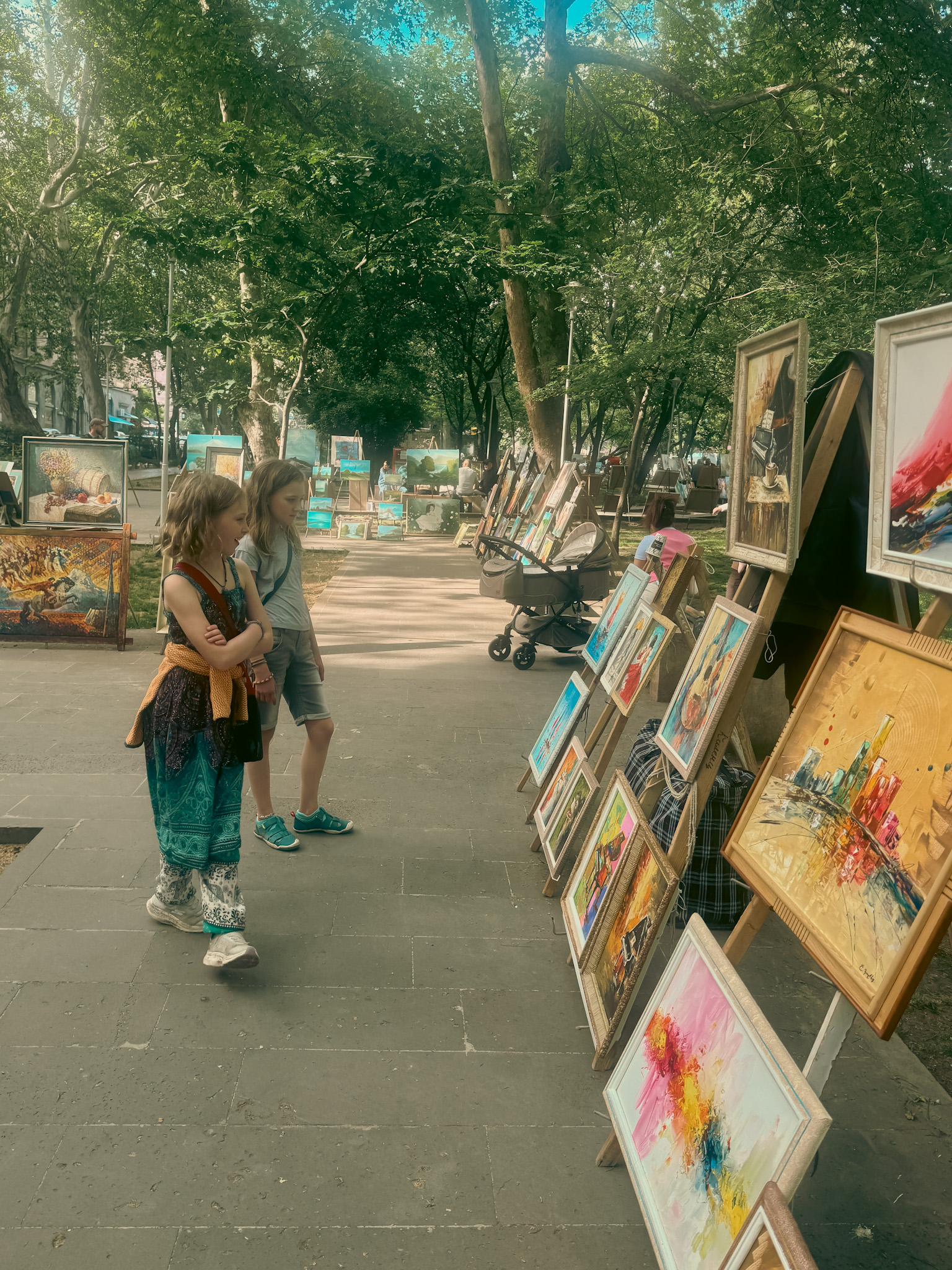
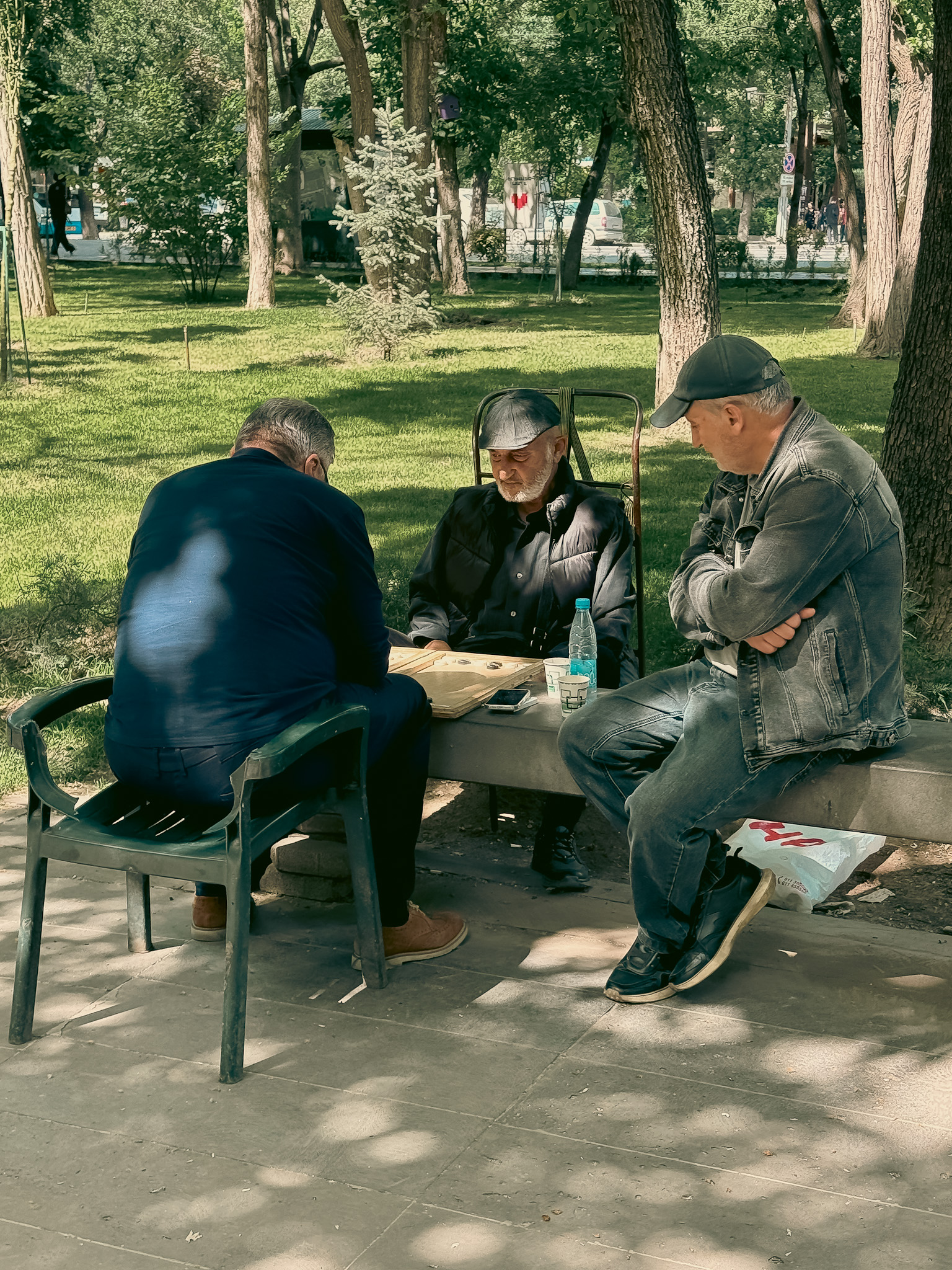
That first night we went out, found a thoroughly forgettable shawarma for dinner, and wandered briefly through a nearby park where dozens of local artists displayed their paintings for sale, and elderly local gentlemen gathered at small tables playing backgammon and smoking skinny cigarettes. But the more important stop was the grocery store, and to explain why that felt like such an event, we have to back up. We had been on the road for months, living out of guesthouses and hotel rooms and eating whatever was cooked for us or sold to us. For the first time in several months, we had a real apartment with a real kitchen, albeit minimally stocked, for five whole days, and Max was going to cook. He had not made a proper meal (the kind where you stand at a counter and chop and simmer and taste as you go) since Spain, which was several countries and more than six months ago. On the walk back, Arya delivered a complete, unabridged, breathless plot summary of the novel she was currently devouring, which is its own small joy to witness. She has fallen so hard into reading lately that prying a book out of her hands now takes roughly the same technique and force as removing a barnacle from a rock.
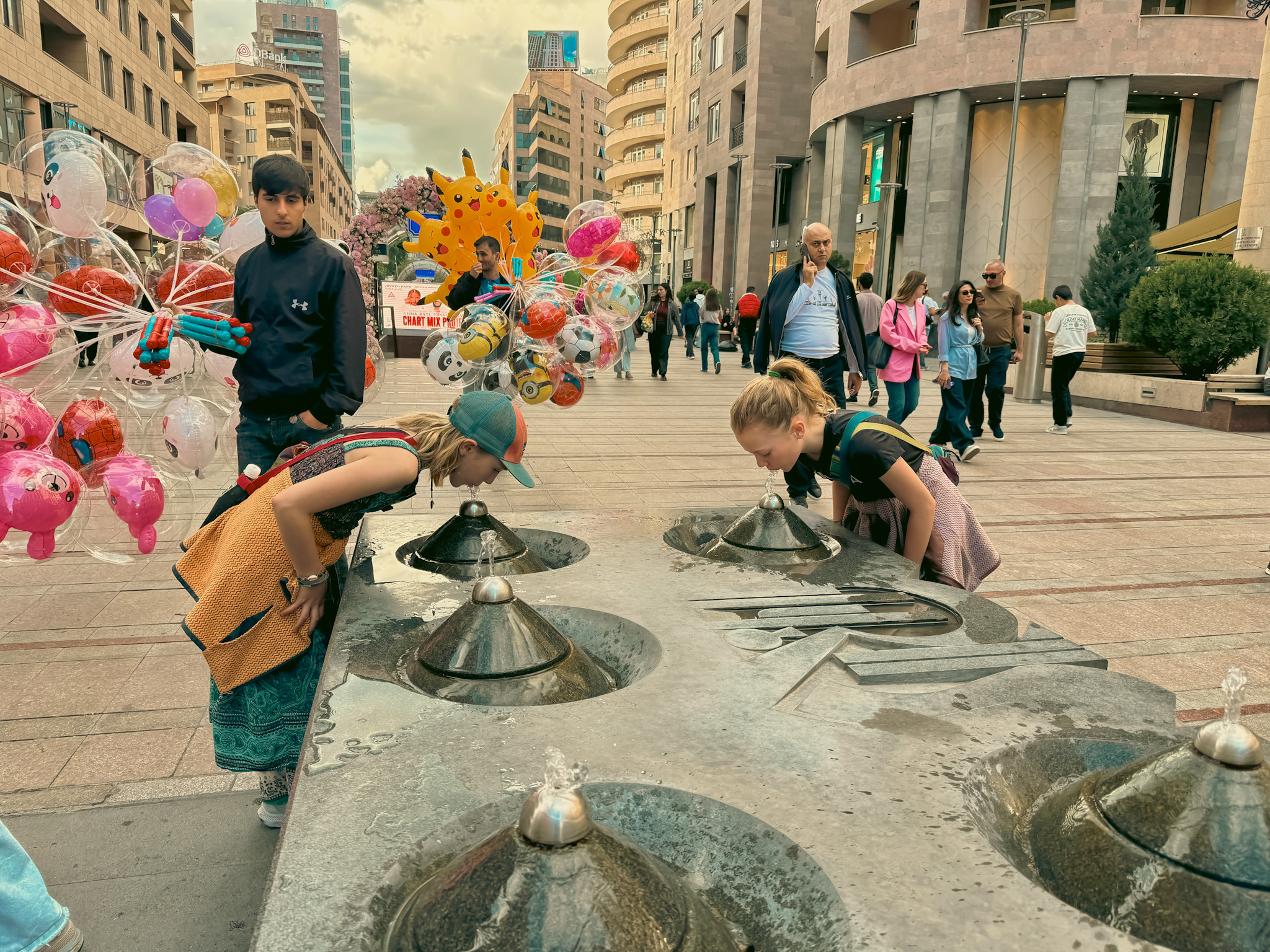
Yerevan also turned out to be the easiest city in the world to stay hydrated in, thanks to the pulpulaks. These are small public drinking fountains, usually a stout little pillar of stone about a meter tall with water burbling continuously out of a spout, and they are absolutely everywhere, on street corners, in parks, outside churches. They first appeared in Yerevan in the 1920s and became such a fixture that Armenians have historically found the very idea of buying bottled water faintly absurd, since clean, cold mountain water is simply running, for free, on half the blocks in the city. Some are plain and purely practical, others are ornate or built as memorials to someone who has passed, and the girls quickly made a game of hunting for the next one.
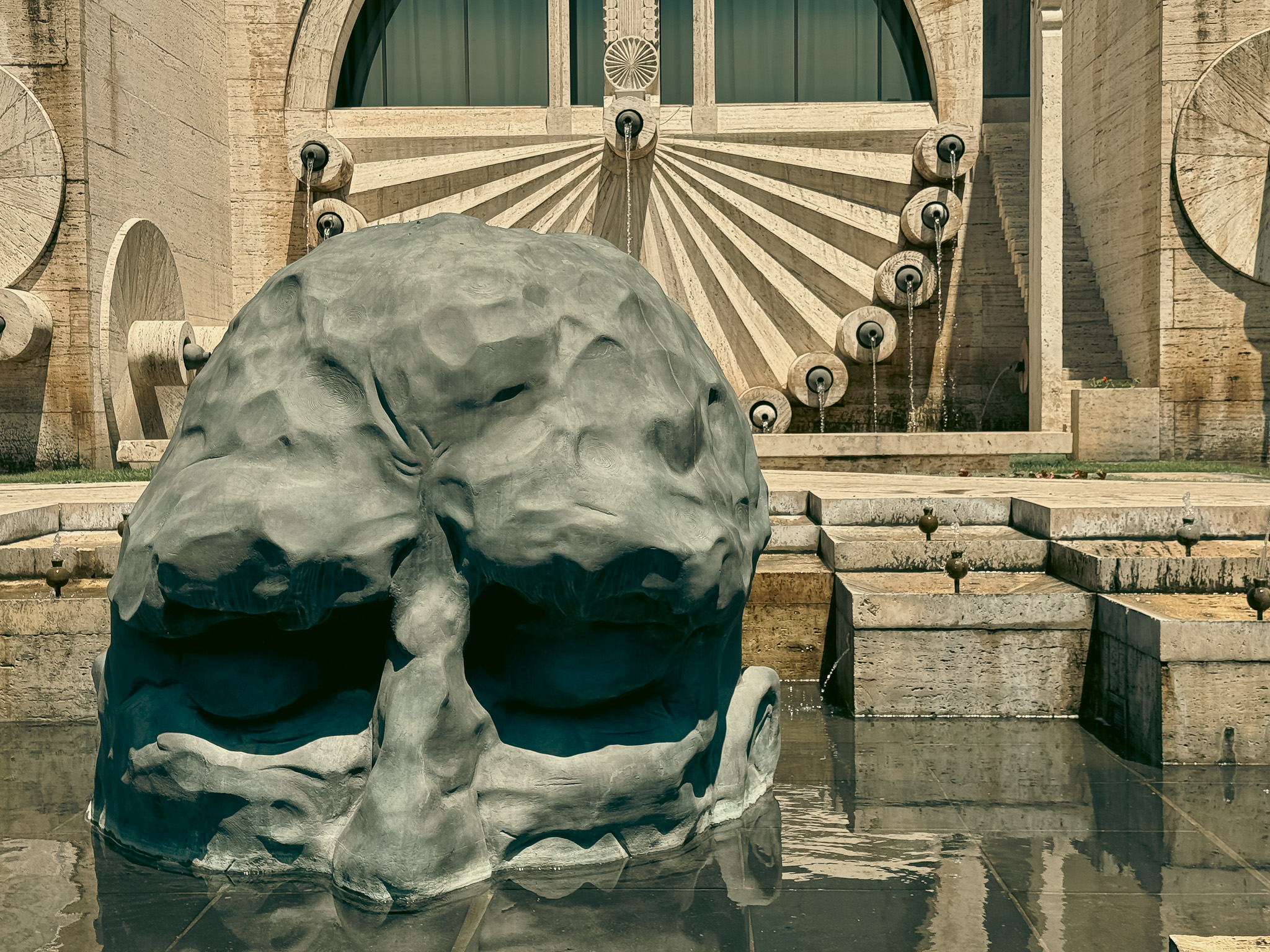
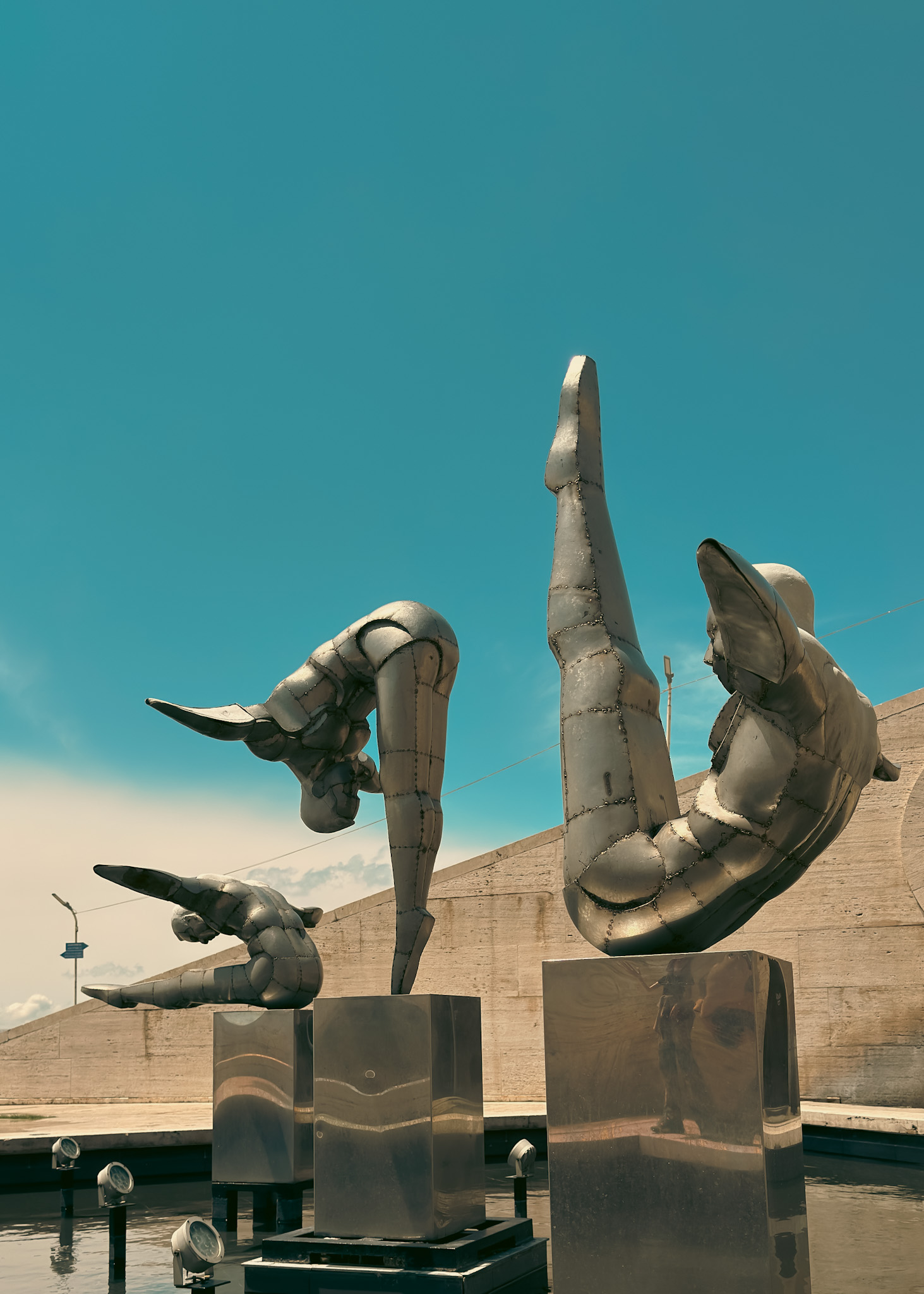
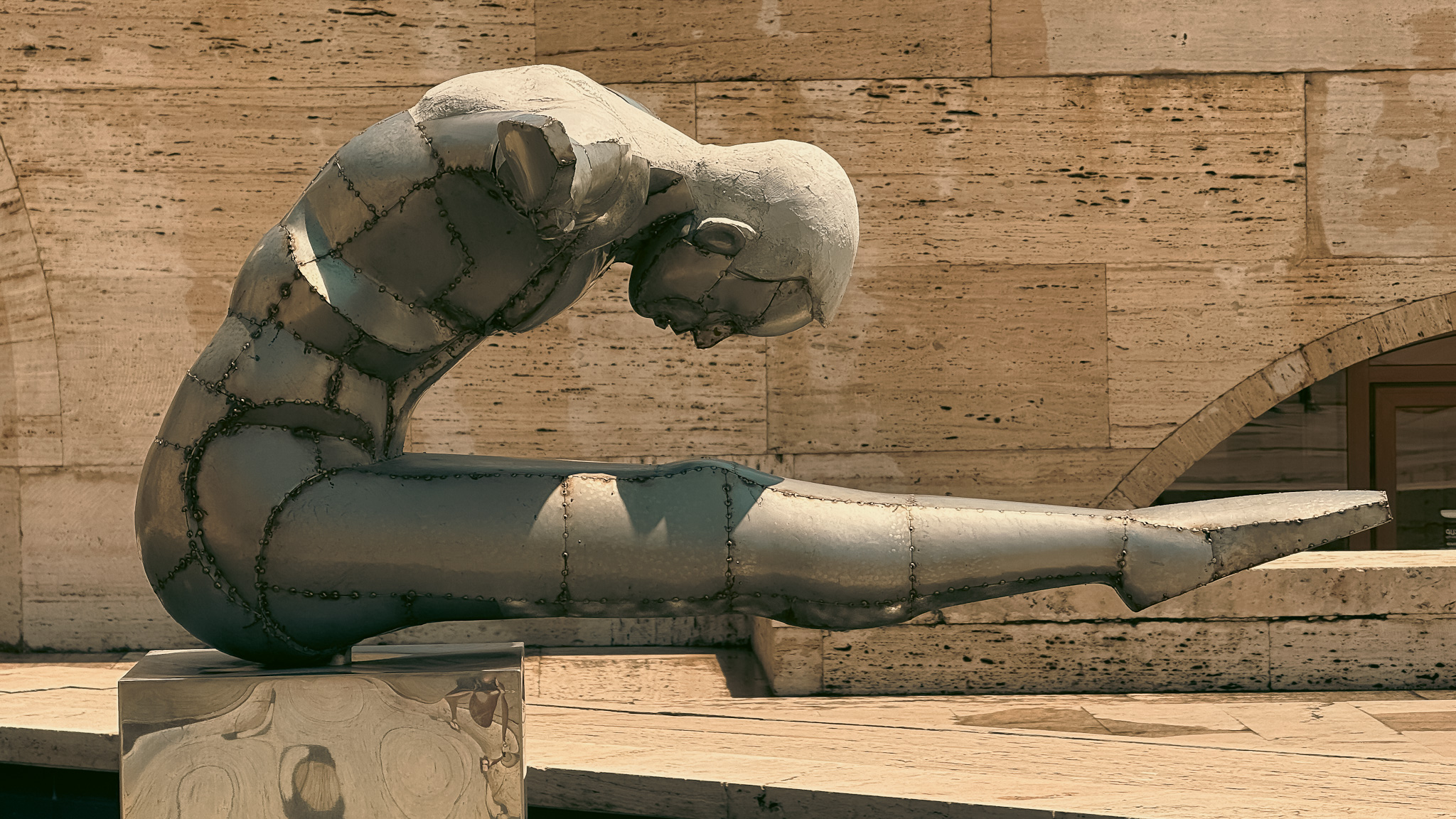
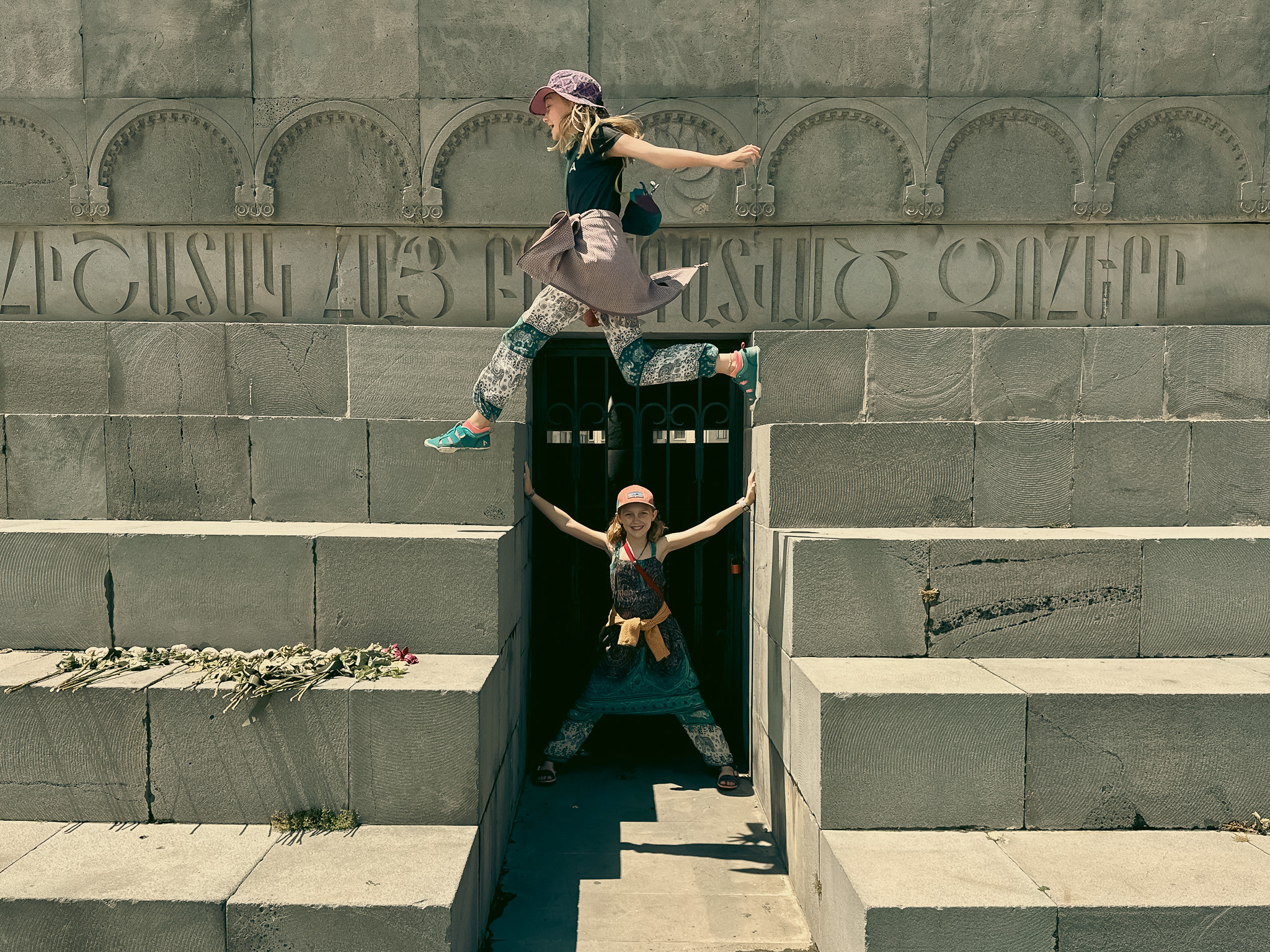
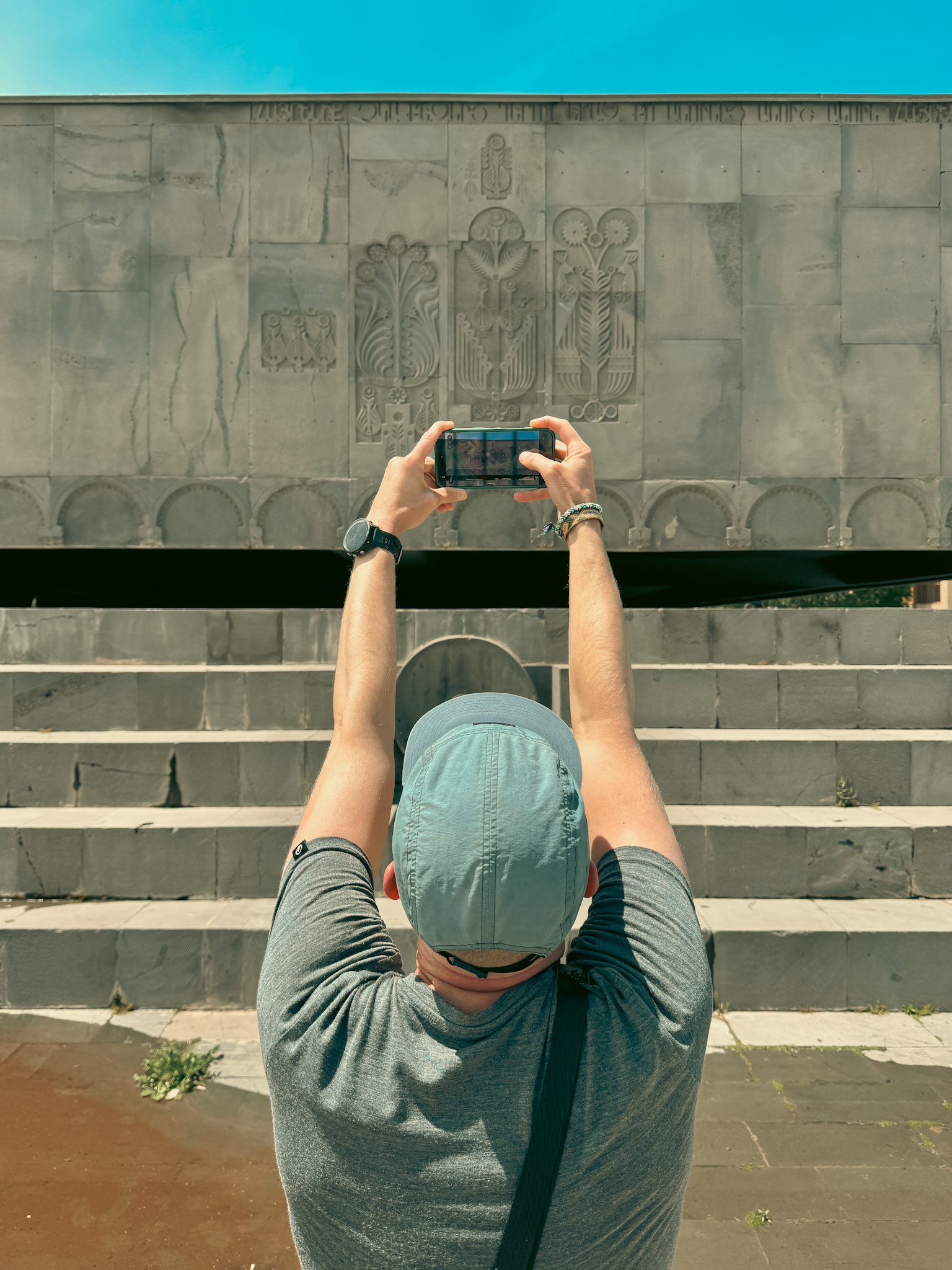
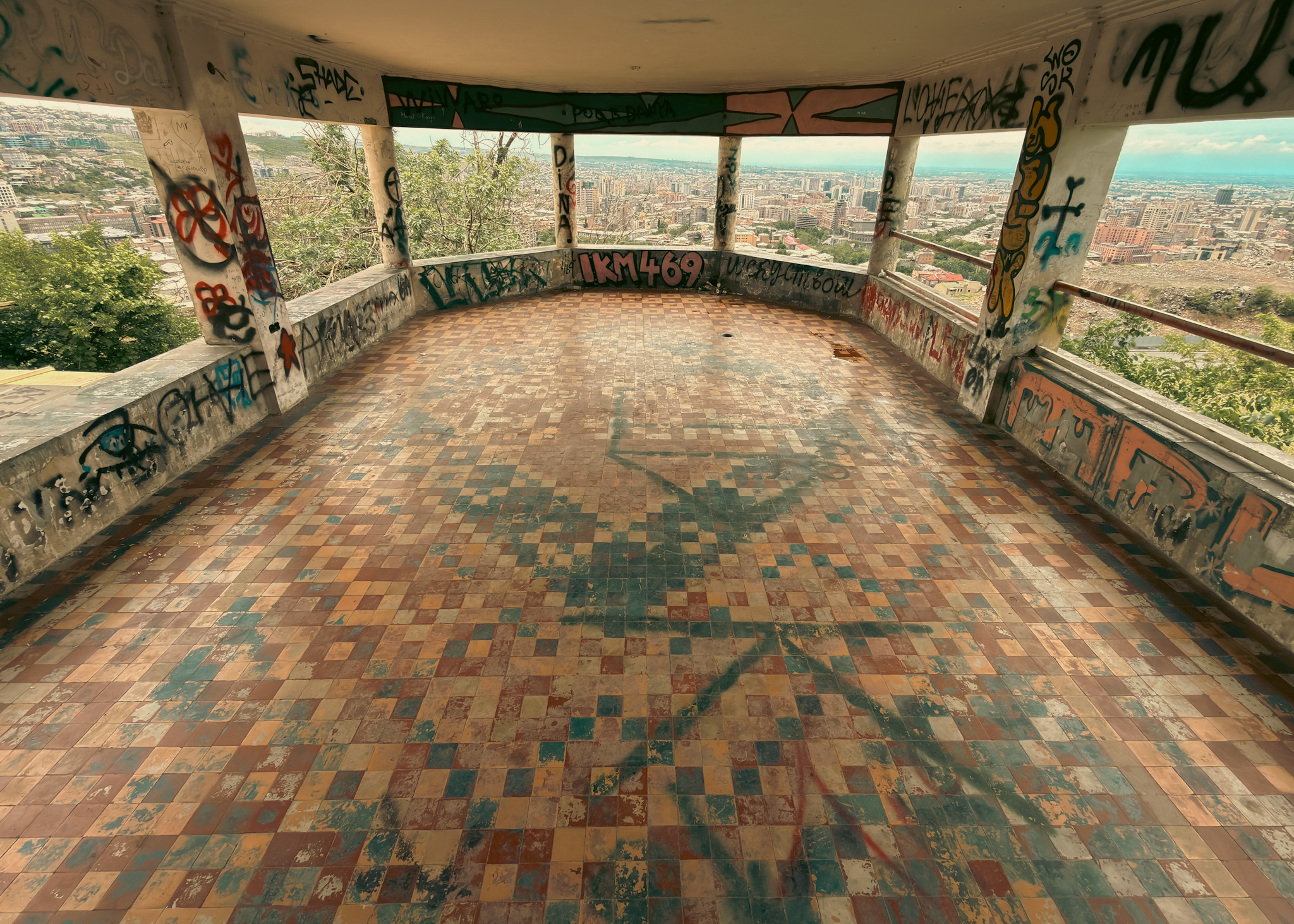
Our first full day in Yerevan introduced us to the city’s defining habit, which is that it cannot make up its mind about the weather. The morning opened with a torrential downpour, so we leaned into it and had a slow indoor start: tea, Shaina journaling, the girls doing homework, and Max making scrambled eggs in the kitchen, savoring the simple domestic ordinariness of it. Then, right around noon, the city abruptly changed its mind. The clouds peeled back, the sun came out, and we were suddenly looking at a flawless blue afternoon. We learned quickly that when Yerevan offers you a window like that, you take it, because it will not last. So we headed out to climb the Cascade.
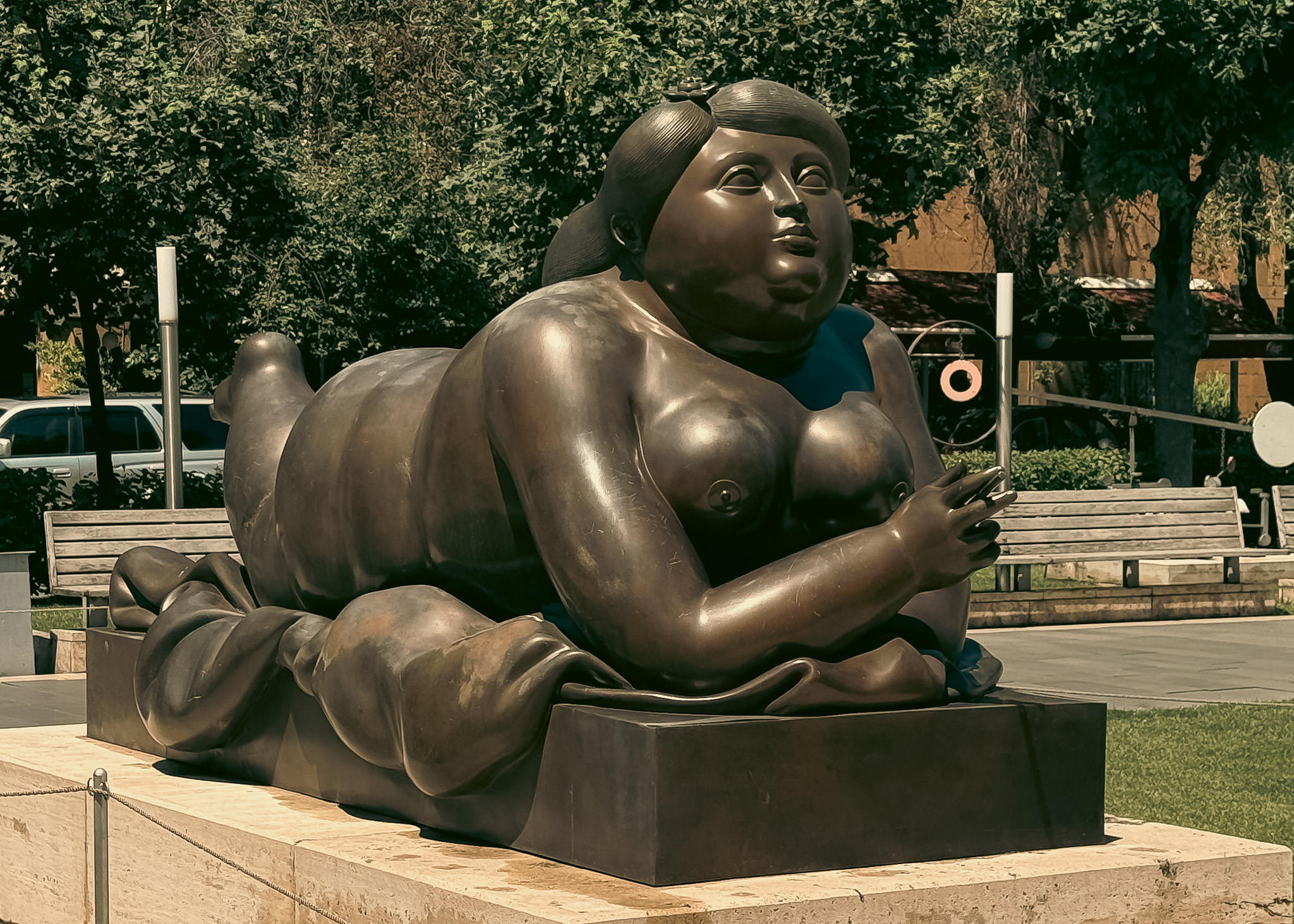
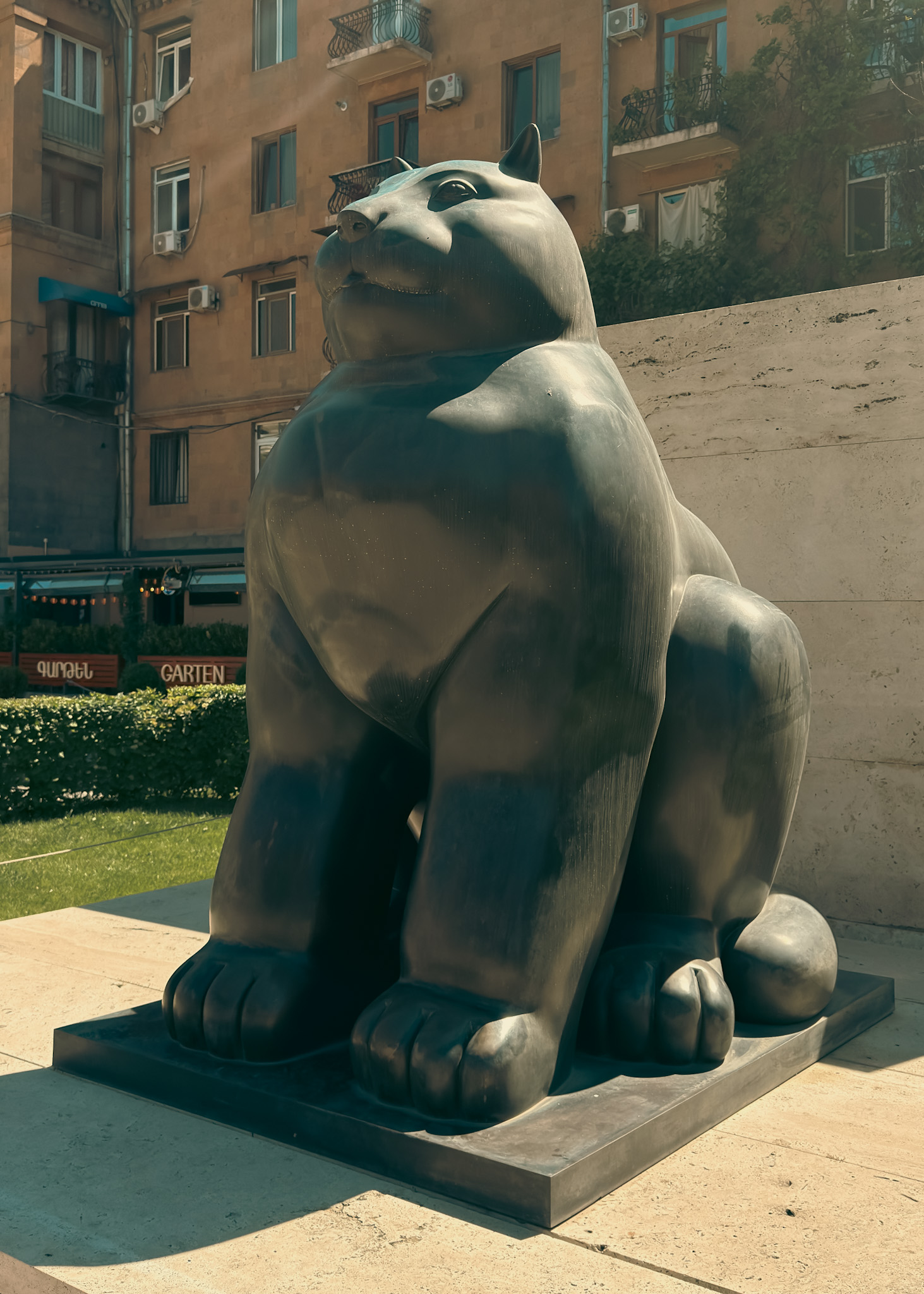
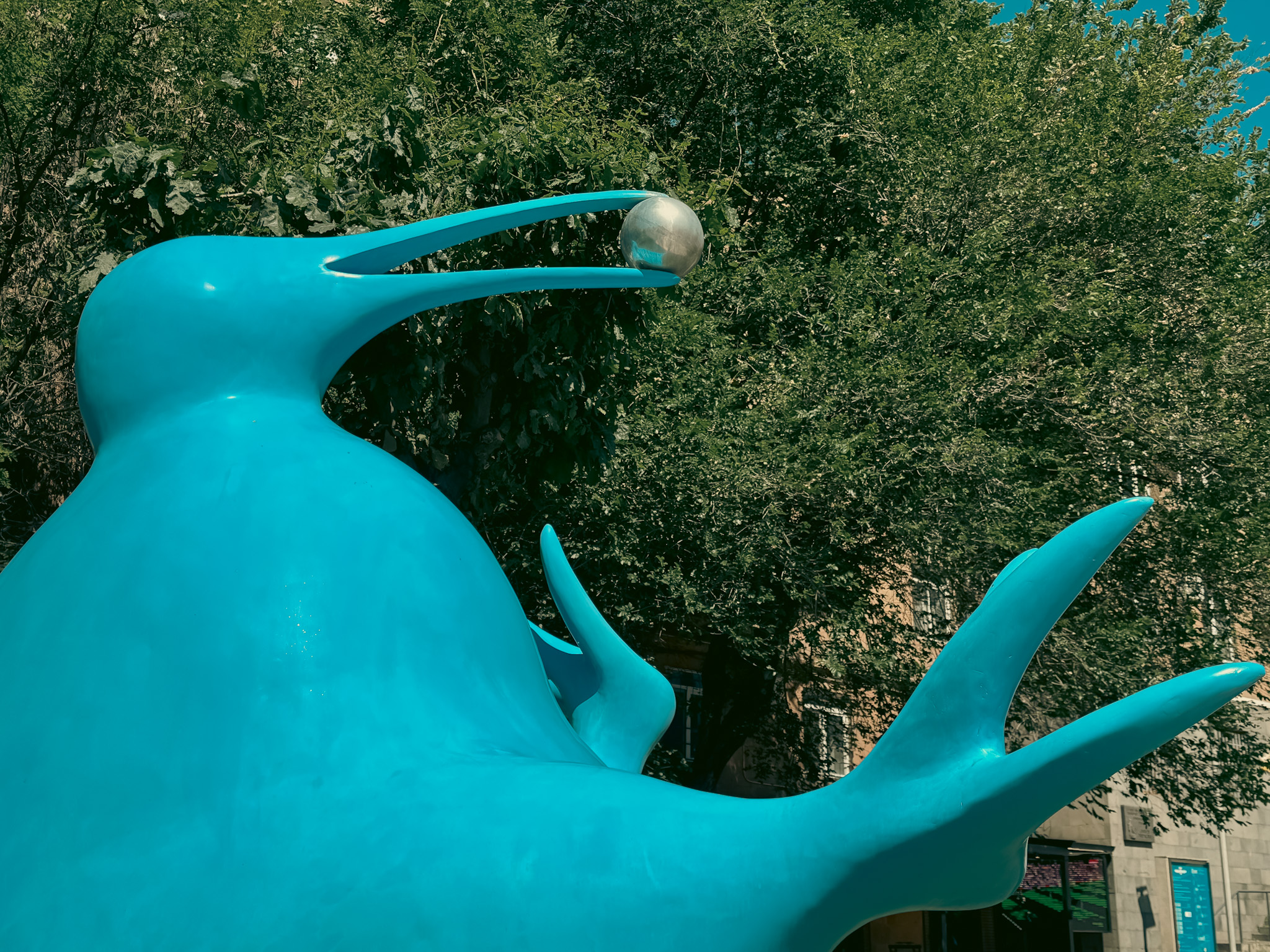
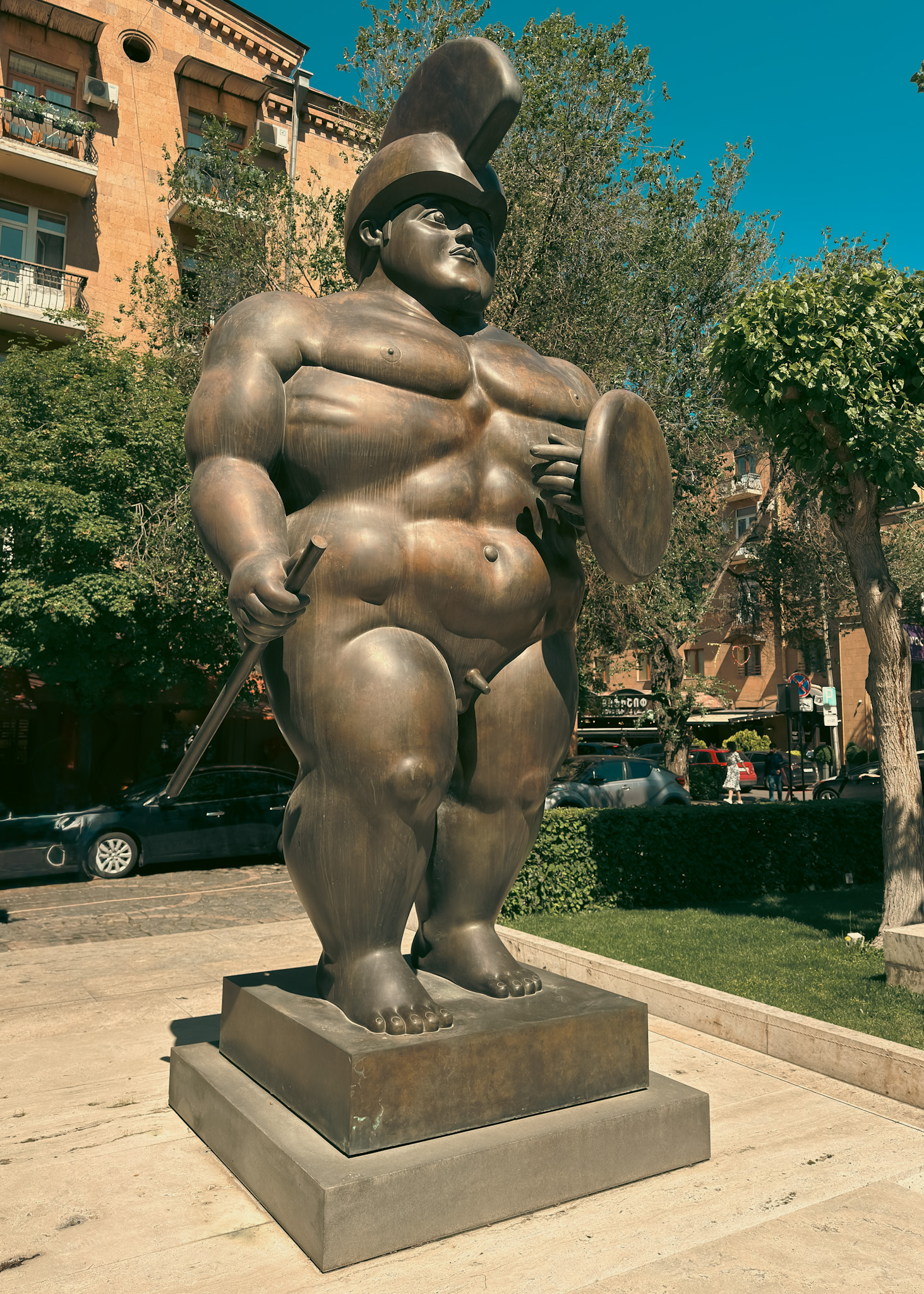
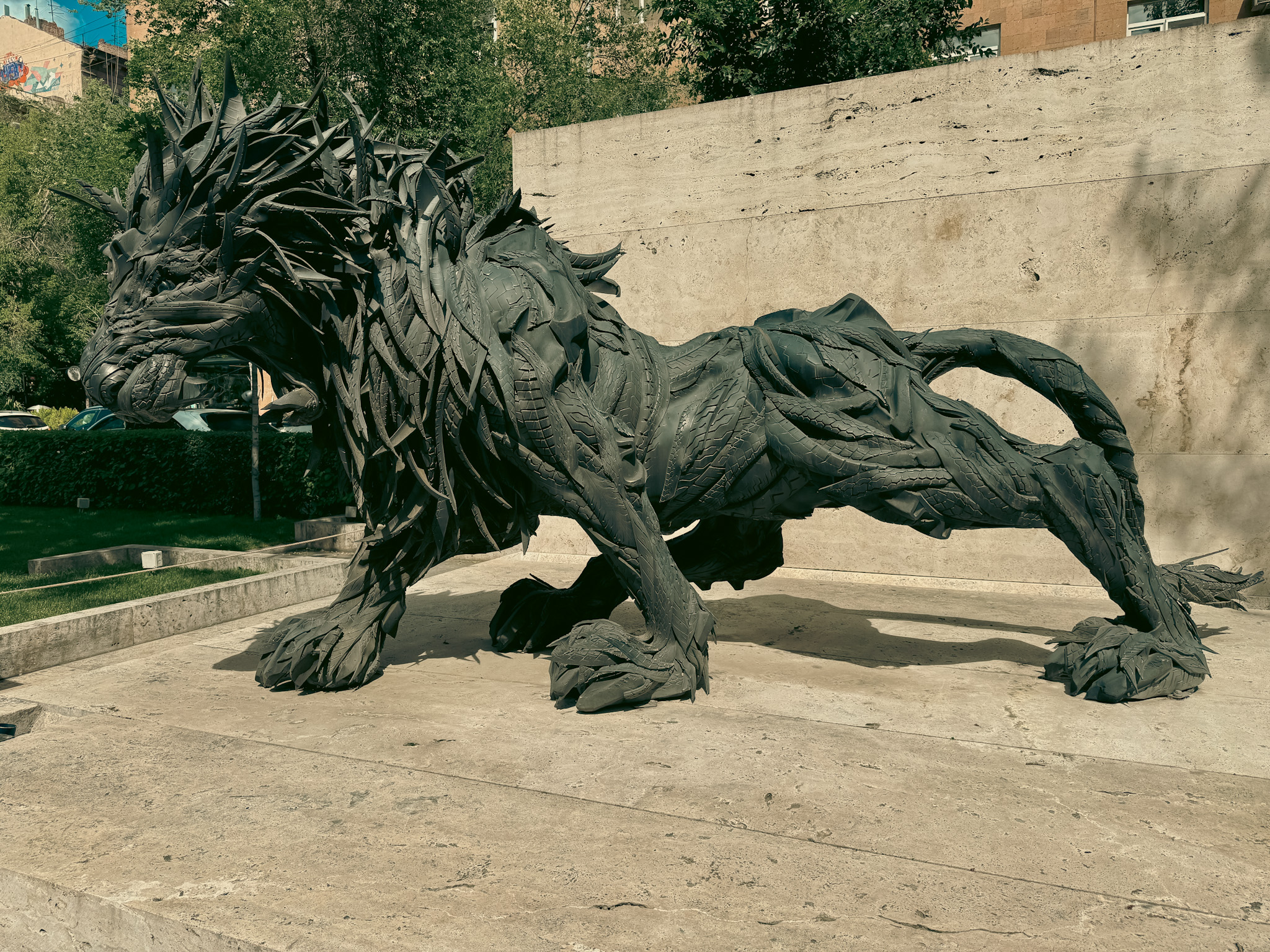
The Cascade has a history worth knowing as you climb it. It began in the 1970s as a grand Soviet civic project, then stalled for decades, first after the catastrophic 1988 Armenian earthquake and then after the 1991 collapse of the Soviet Union, sitting half-finished and crumbling for years until an Armenian-American philanthropist named Gerard Cafesjian funded its rescue and transformed it into the sculpture park it is today. Every terraced level is planted with gardens and threaded with fountains, but the real reason to climb it slowly is the art. And here our family had a personal connection. We are Botero people. We saw our very first Fernando Botero sculptures back in Colombia in 2018, on Arya and Finlee’s first-ever international trip. So finding a handful of his unmistakable fat bronzes, every figure inflated into round and joyful abundance and scattered up through these gardens, felt like bumping into old friends in a foreign city. Other statues included a jolly blue kiwi bird, a lion made of bike tires, and giant bronze head half-submerged in a fountain, as if some colossal figure were slowly surfacing from underwater. Another favorite was a trio of sculptures of a man frozen mid-dive, body folded sharply at the waist and arms flung wide, caught forever in a motion he will never complete.
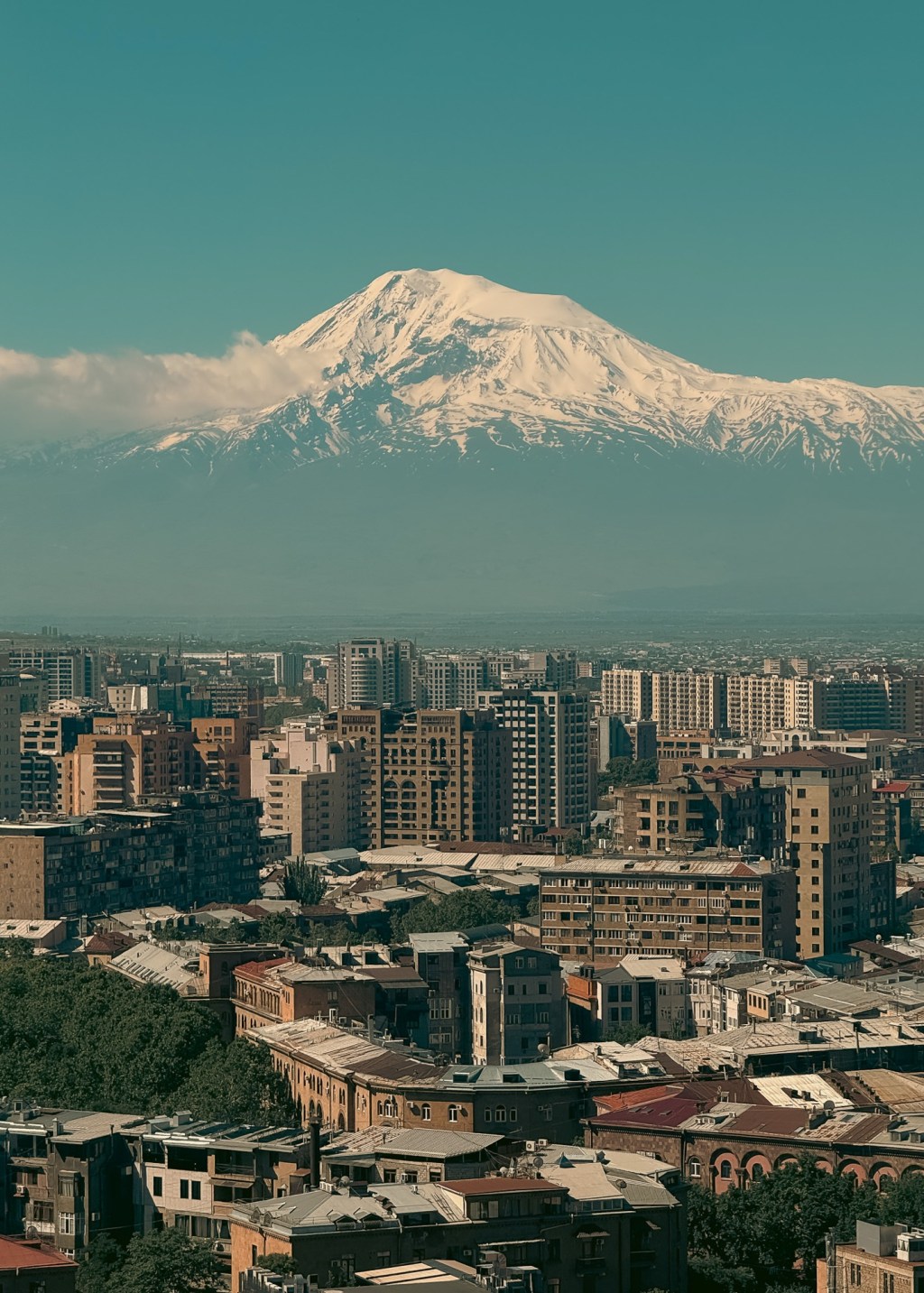
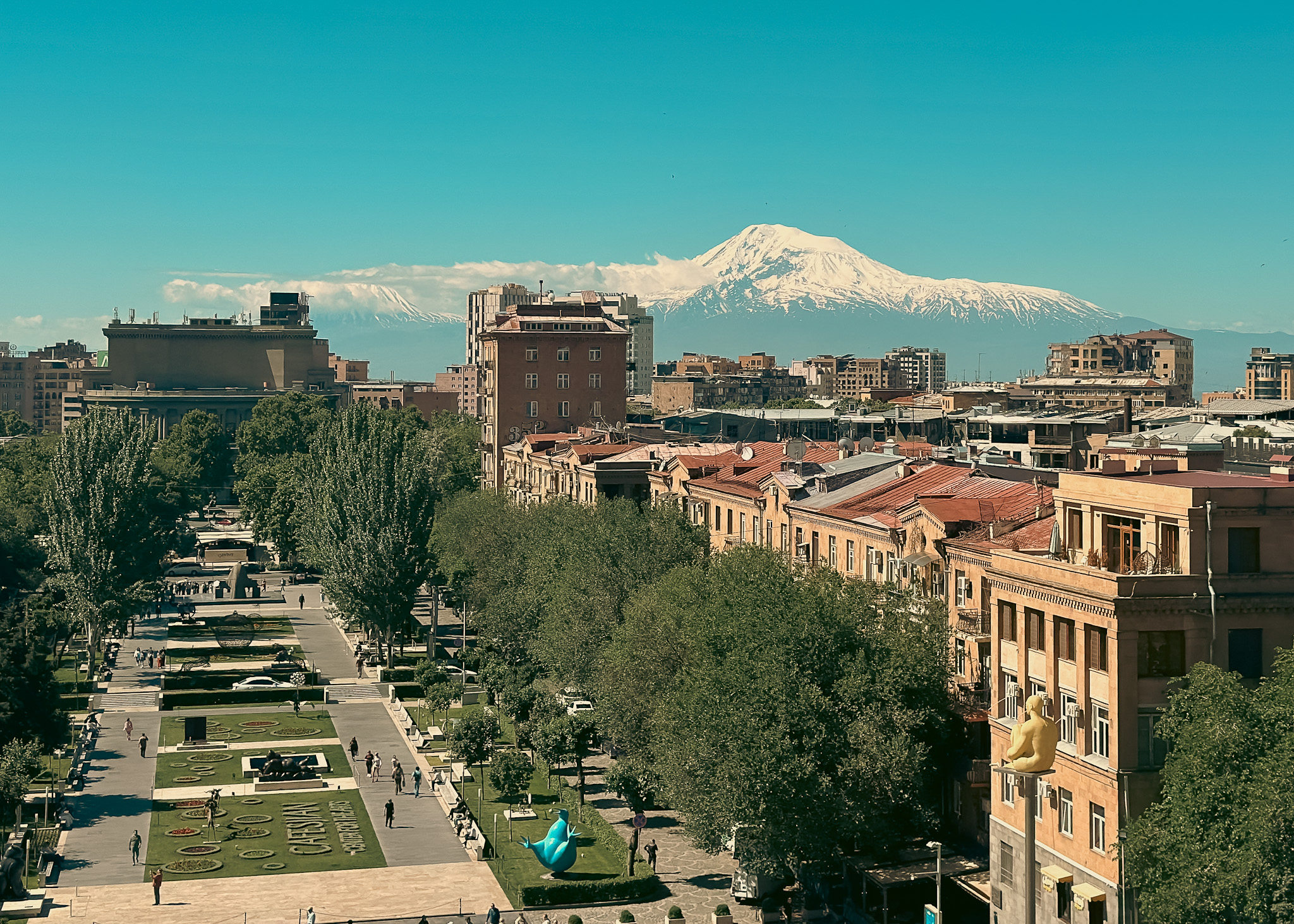
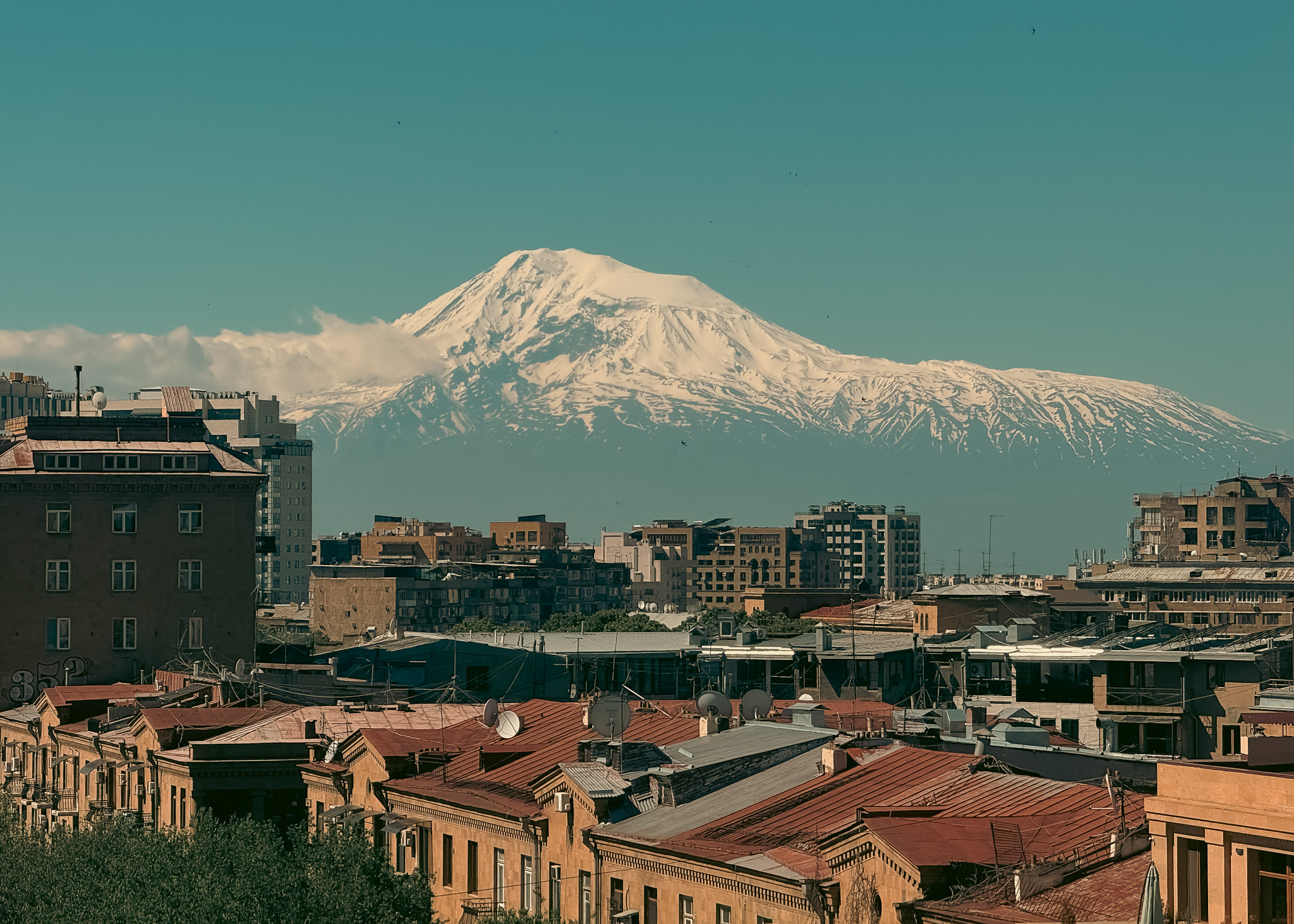
At the very top of the Cascade, the city of Yerevan unrolls beneath you in every direction, and it was from up there that we spotted Mount Ararat for the first time. We should explain what Ararat means here, because you cannot understand Yerevan without it. Ararat is the great twin-peaked, snow-capped massif that hovers on the horizon to the southwest of the city. It is the mountain where, in biblical tradition, Noah’s Ark came to rest. It sits at the dead center of Armenia’s national coat of arms. It is visible from half the windows in the capital. It is, put simply, the single most important symbol in the entire Armenian imagination. That first afternoon we could barely make it out. A thick band of low cloud hid its base, and then, slowly, the face of the mountain emerged above the murk while a separate, higher layer of cloud sheared off its summit, so that what hung there on the horizon looked less like a mountain and more like the dwelling place of gods. Its sheer scale scrambles the brain. It stands miles and miles away with nothing nearby to compete with it, and that isolation makes it loom even larger, the same trick that Fuji or Kilimanjaro plays, where prominence does the work that proximity usually does. We did not yet know it, but we would spend the rest of our days in Yerevan catching glimpses of Ararat through shifting clouds, waiting for it to fully show itself.
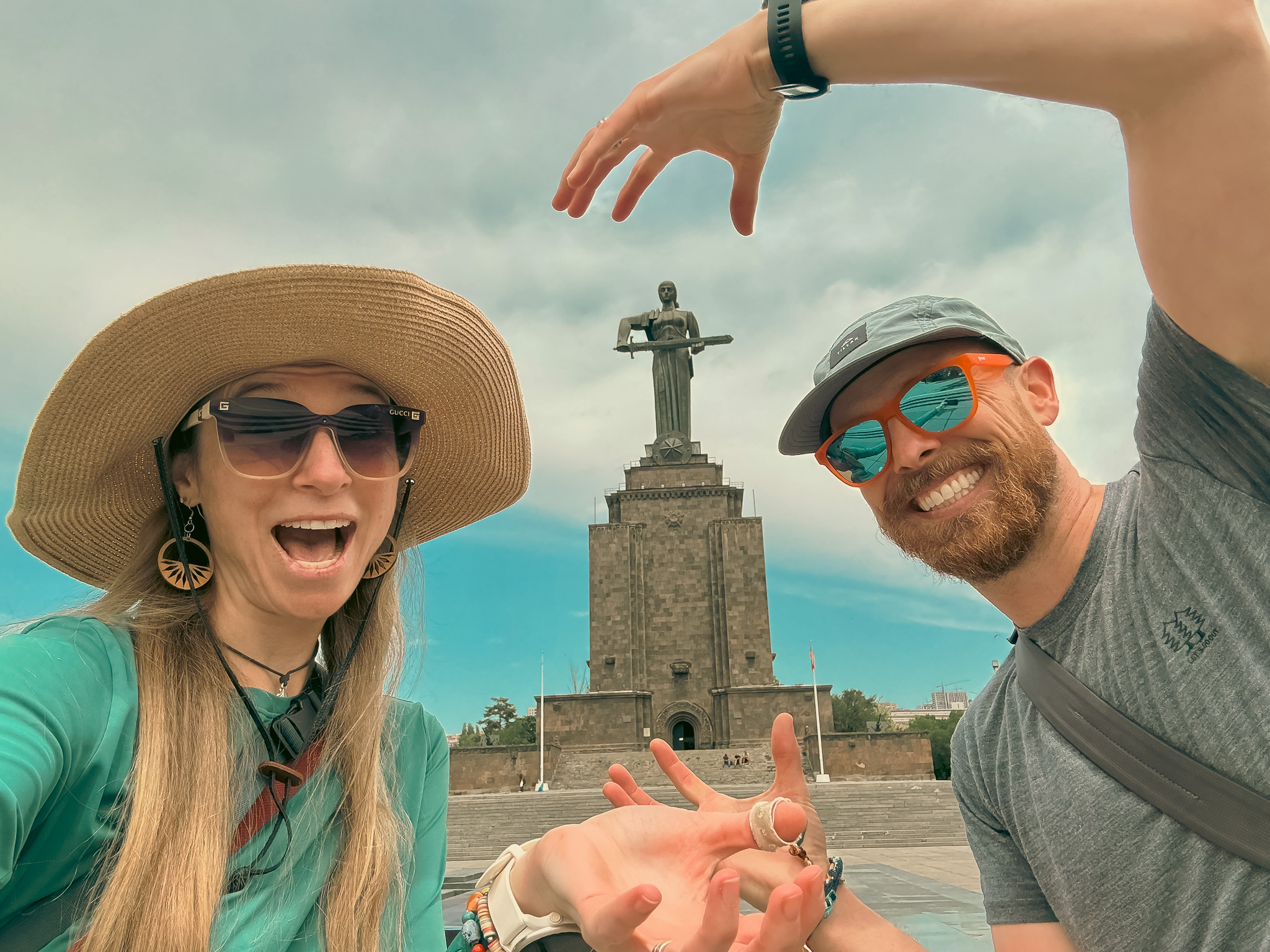
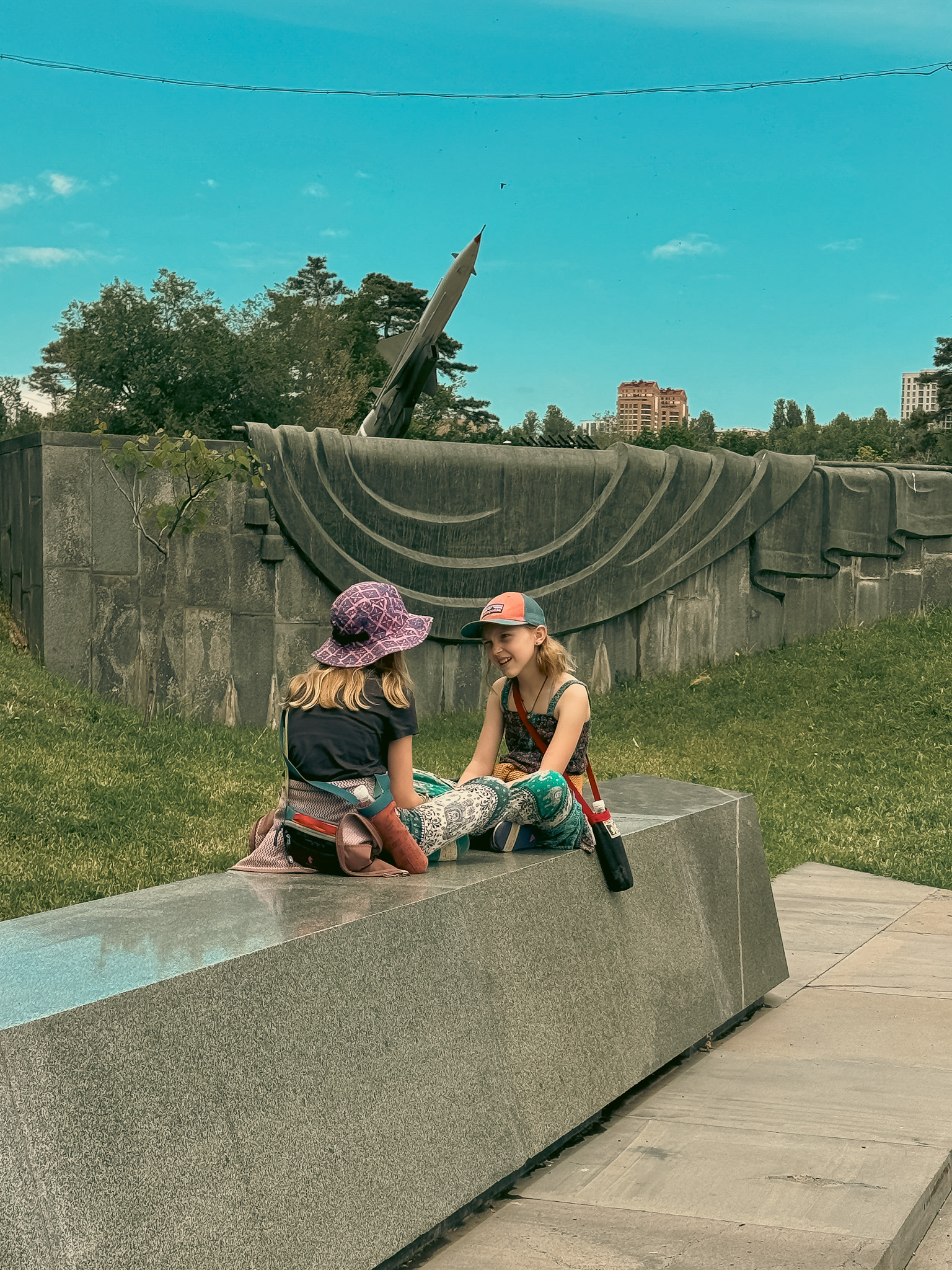
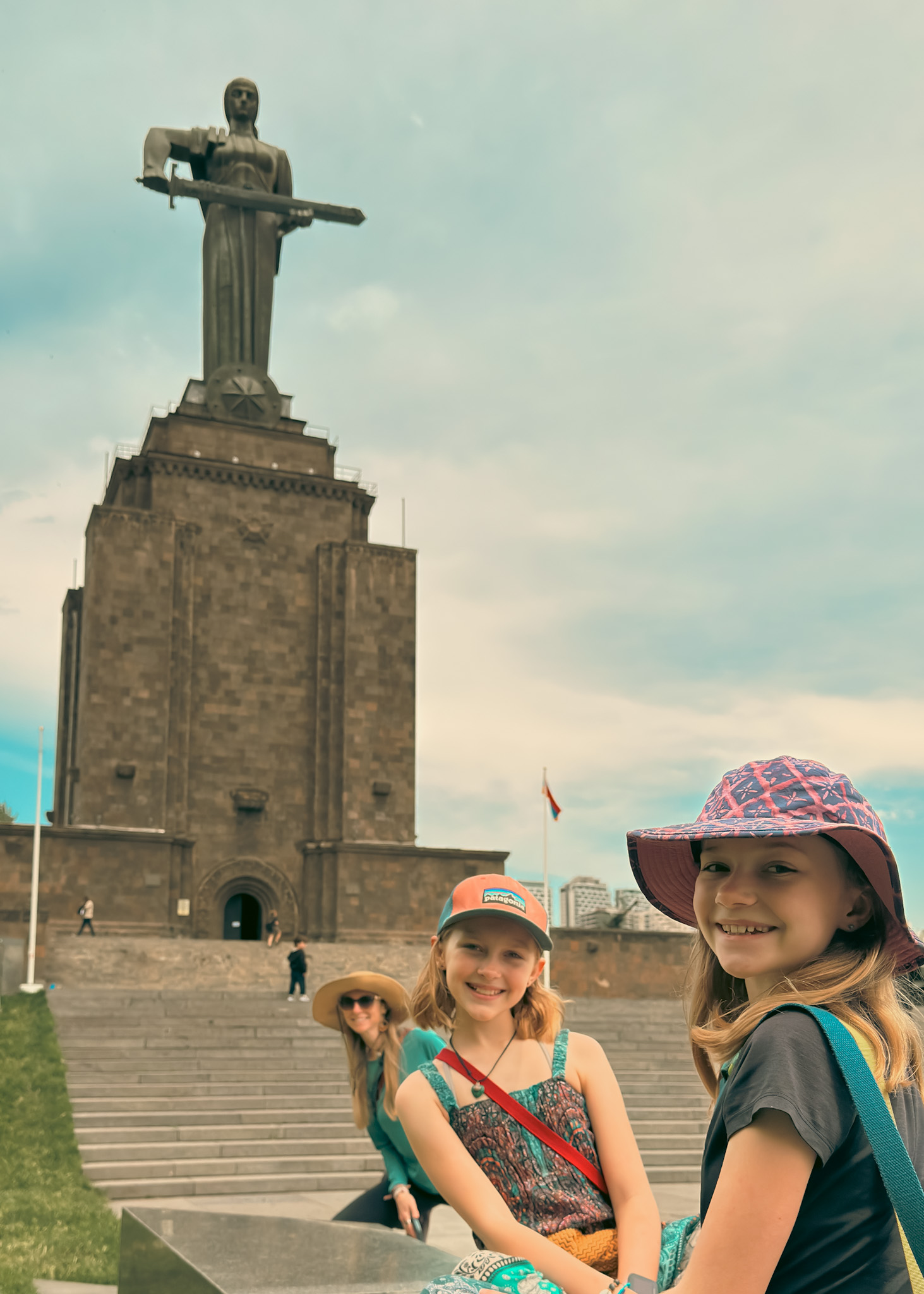
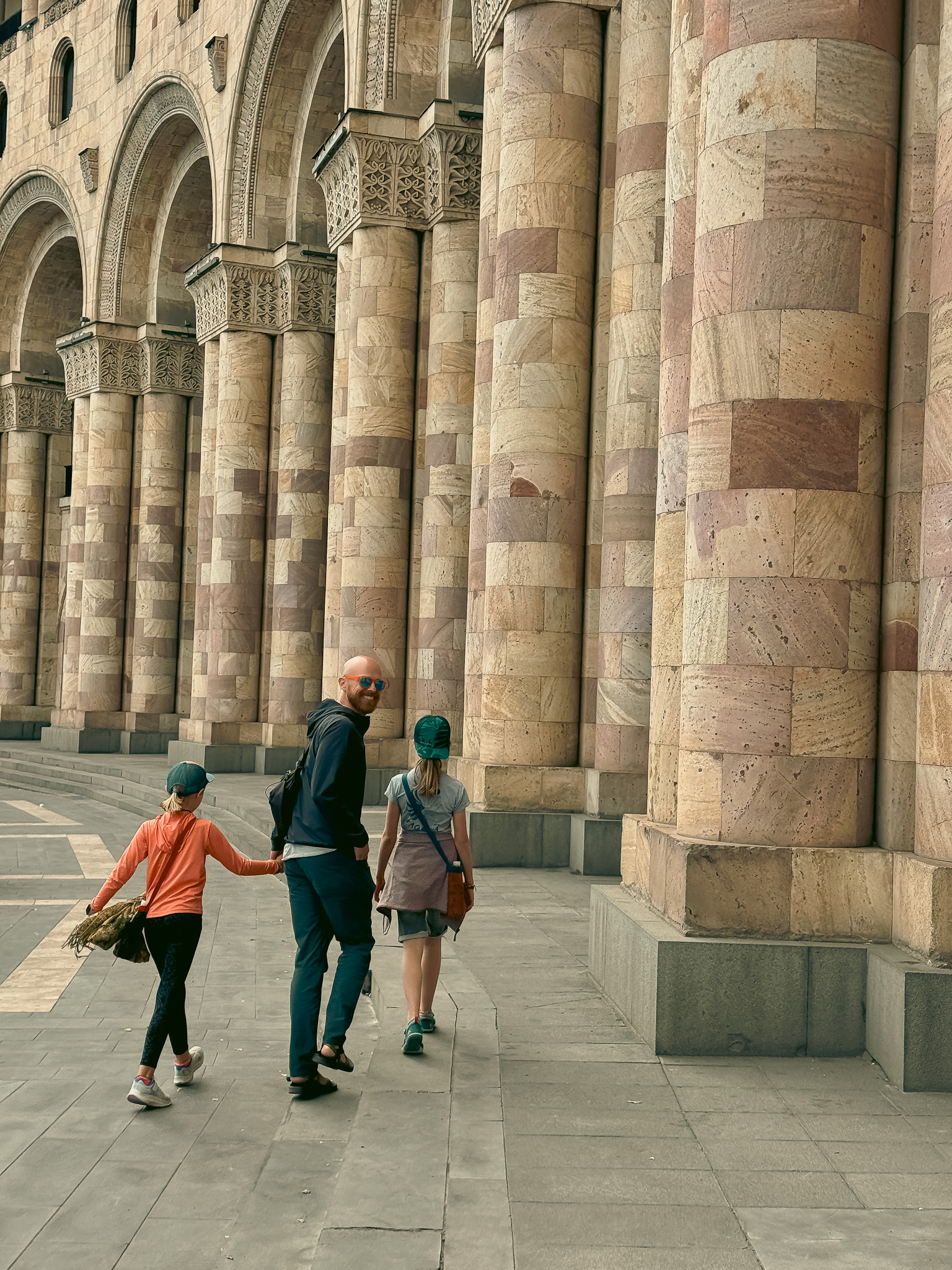
From the top of the Cascade, the path continues up to a hilltop monument and, nearby, to Mother Armenia, a towering statue of a stern, sword-bearing woman who stands guard over the city as a personification of the nation. There is a telling detail here: she went up in the 1960s on the very same pedestal that had previously held a giant statue of Stalin—one regime’s symbol swapped out for another’s. In the base of the monument is a small military museum, and walking through it accomplished one thing above all else. It made painfully clear to us how little we actually knew about Armenian history. So much has happened to this country, across both the ancient centuries and the last few decades, that we resolved that evening to sit down and get ourselves properly oriented.
What we found went deep, and parts of it went dark very quickly. Armenia was the first nation on earth to adopt Christianity as its state religion, all the way back in 301 AD. It practices a distinct and ancient form of the faith, one of only a small handful of Oriental Orthodox churches worldwide, which split from the rest of Christianity after rejecting the Council of Chalcedon in 451, a fifth-century theological disagreement that, remarkably, still shapes Armenian identity to this day. The Armenian alphabet was invented specifically to translate scripture and has anchored the culture ever since. And crucially, Armenia spent vast stretches of its history stateless and without defensible borders, a vulnerability that culminated, under the late Ottoman Empire, in the systematic targeting and killing of Armenians in what is now widely recognized as a genocide, a wound that remains very present here today. We are not Armenian, and we are not a religious family, and there is an obvious limit to how much outsiders reading a few histories can really claim to grasp. But you do not need to be either of those things to feel the shape of what this place has carried. And what struck us most was that running directly through all that darkness are these bright, stubborn threads of art, food, language, architecture, and the genuine warmth of nearly every local we met, all of it adding up to a resilience that is difficult not to admire.
That deeper awareness colored everything that came after, but it never crowded out the simple daily pleasures of the trip, the biggest of which kept happening right at our own kitchen table. That very evening, in fact, we set out to find a restaurant for dinner and were comprehensively defeated. A combination of indecision, intimidating menu prices, outdoor-only seating alongside a smoking-heavy populace, and yet another rainstorm rolling in meant that in a city with thousands of restaurants, we somehow found zero acceptable options. So we surrendered, walked into a grocery store, and bought pasta, ground beef, sauce and salad fixings—leaning into the fact that we had a kitchen. We made it back to the apartment just as the sky truly opened, tumbling through our front door giddy and breathless at having beaten the rain by a matter of seconds.
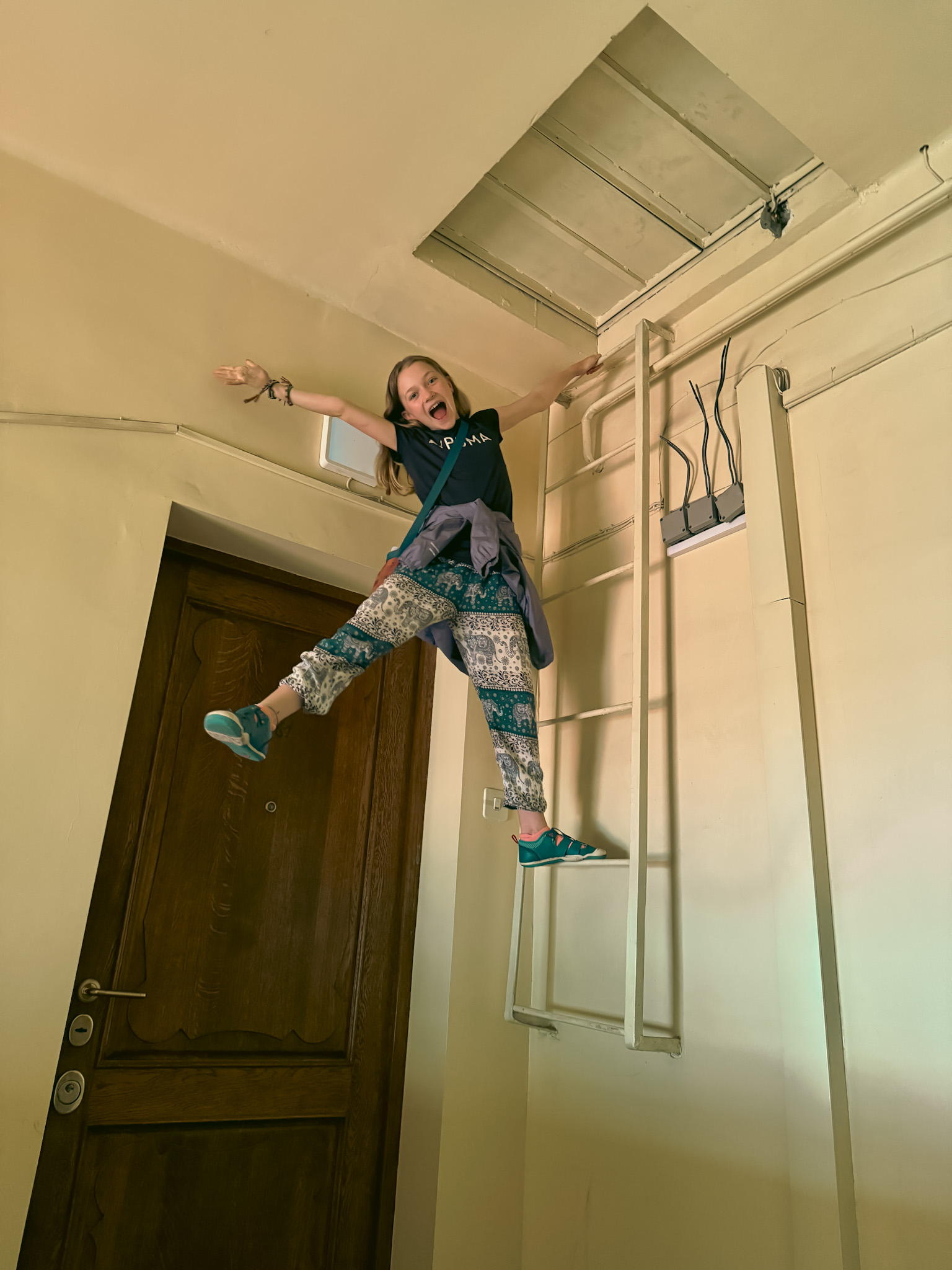
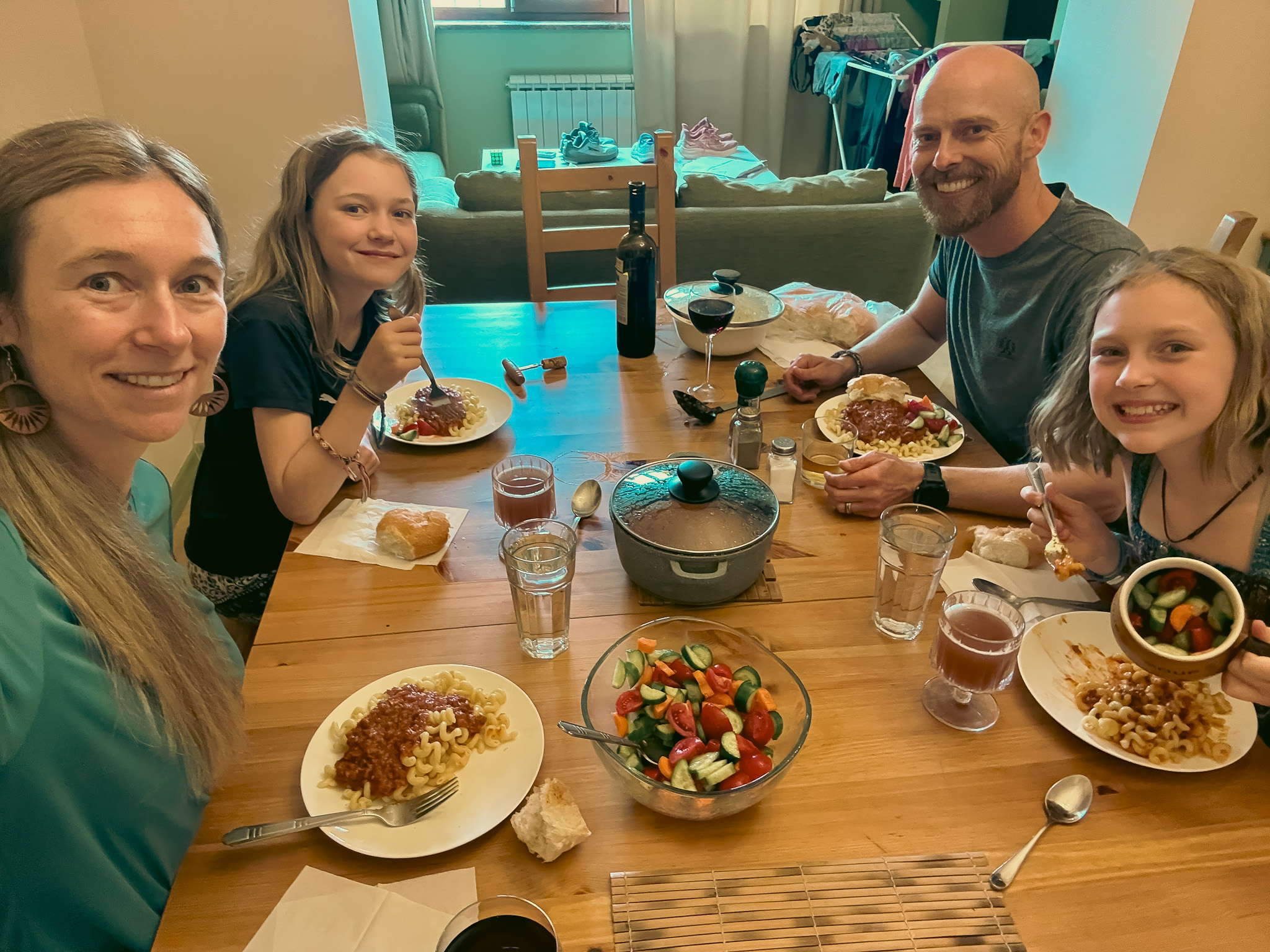
Then Max cooked. He cooked and seasoned a package of ground meat and doctored a jar of red sauce into a genuinely respectable Bolognese, with Finlee on knife duty chopping vegetables for the salad, while Shaina and Arya played out a close game on our little travel chessboard that Shaina won with a few sharp moves at the end. Arya, it is worth noting, has gotten much better at chess since her loss in Bukhara—she is going to be a real contender across the board before long. Less than forty-five minutes later the four of us sat down to pasta, salad, bread, and wine, for a fraction of what those sidewalk menus had been asking, and nobody left the table hungry. To cap the night, we continued the culinary theme with homemade popcorn and Julie & Julia, the gentle film braiding together the life of chef Julia Child and a blogger cooking her way through Julia’s cookbook. The girls, somewhat to our surprise, adored it—a movie about the pure joy of cooking, watched on the very night Max finally got to cook again. The symmetry was not lost on us.
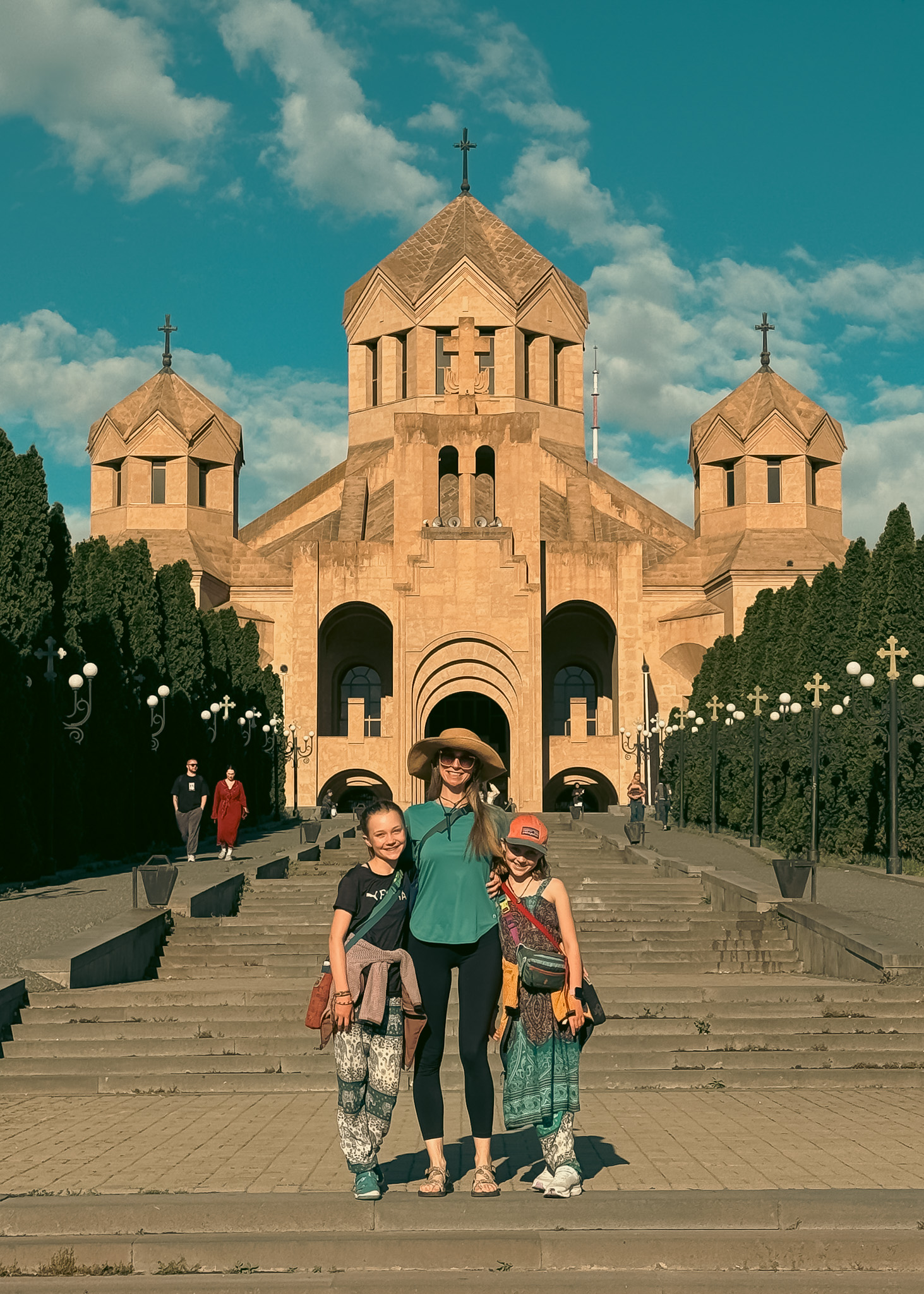
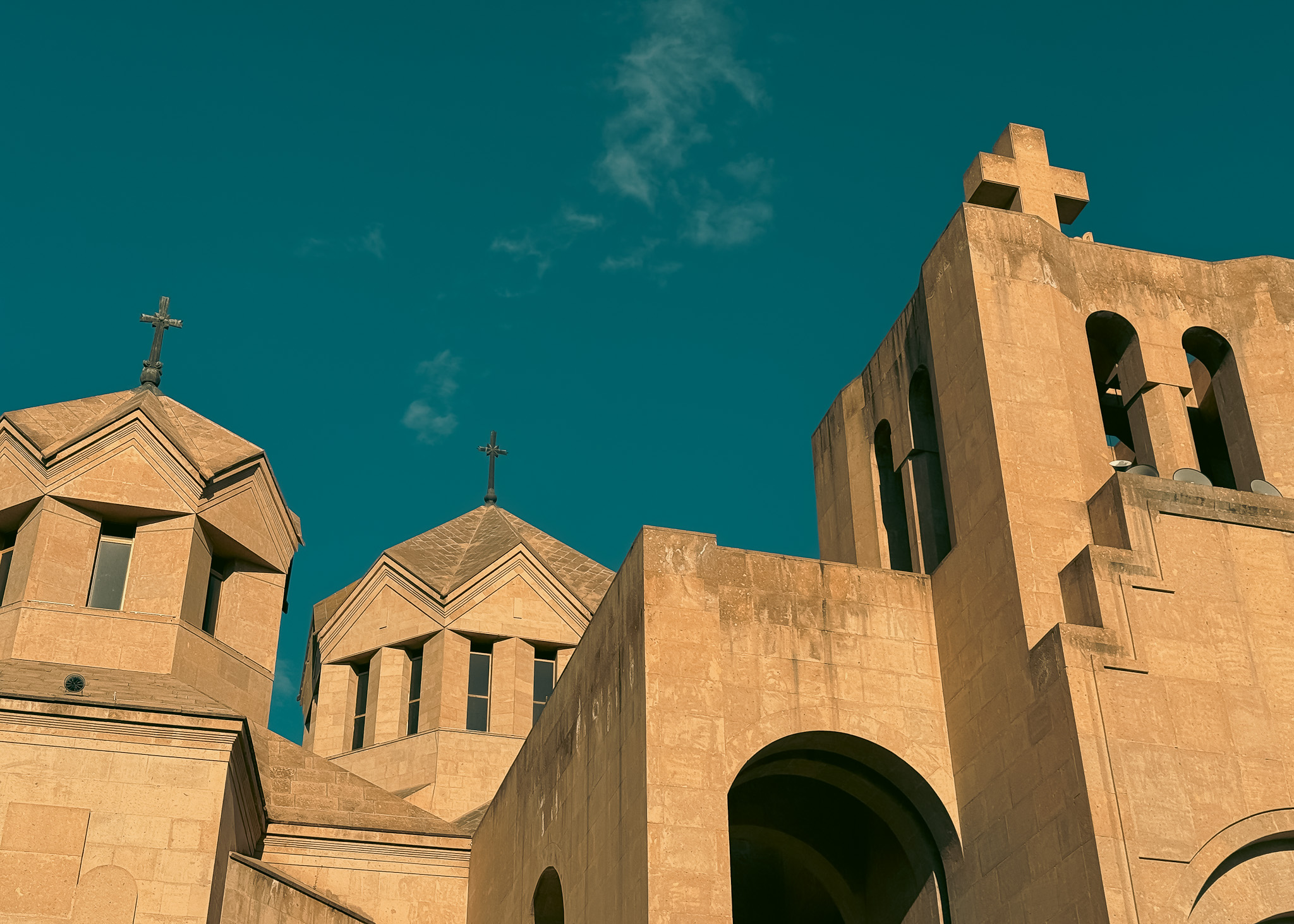
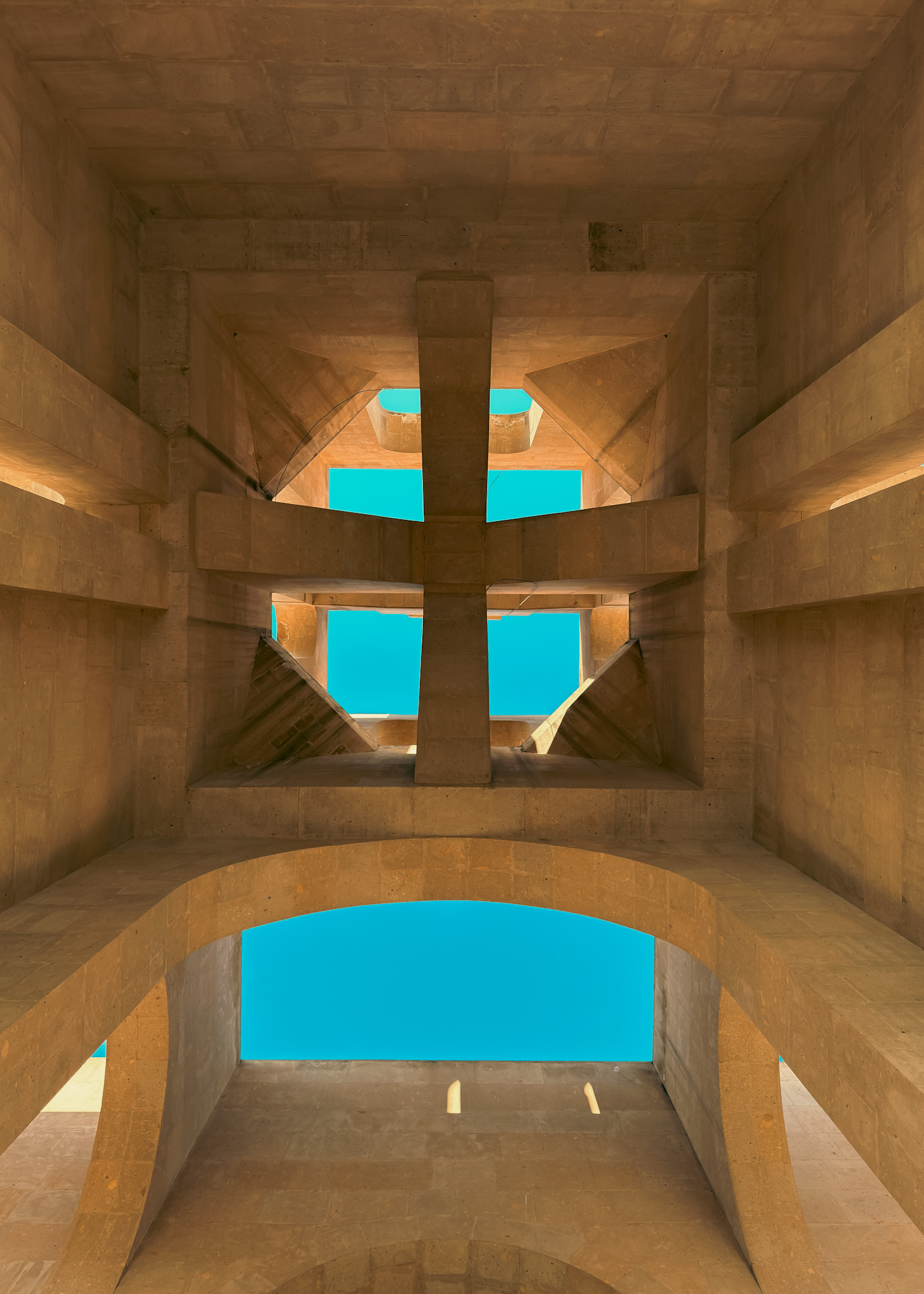
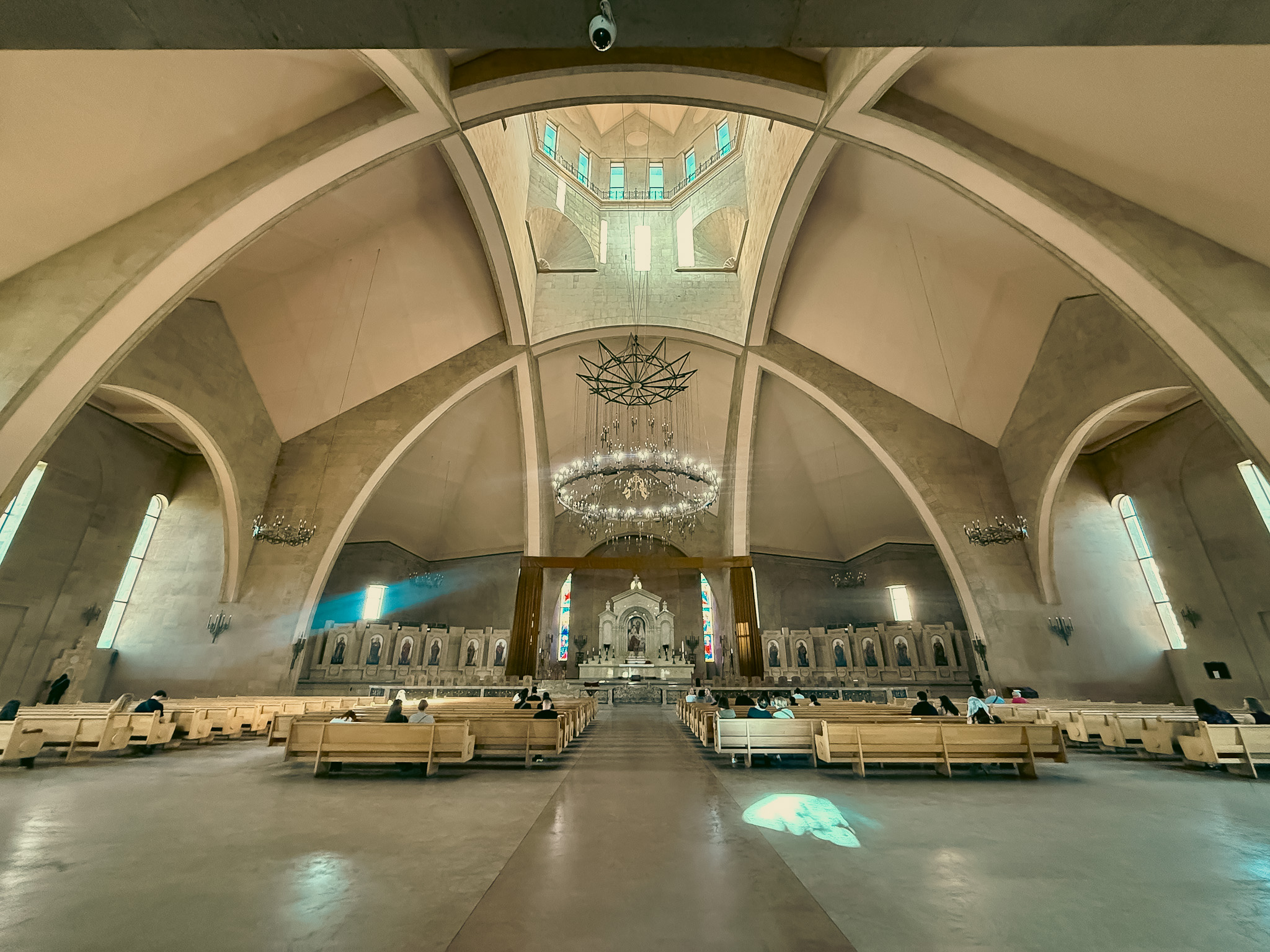
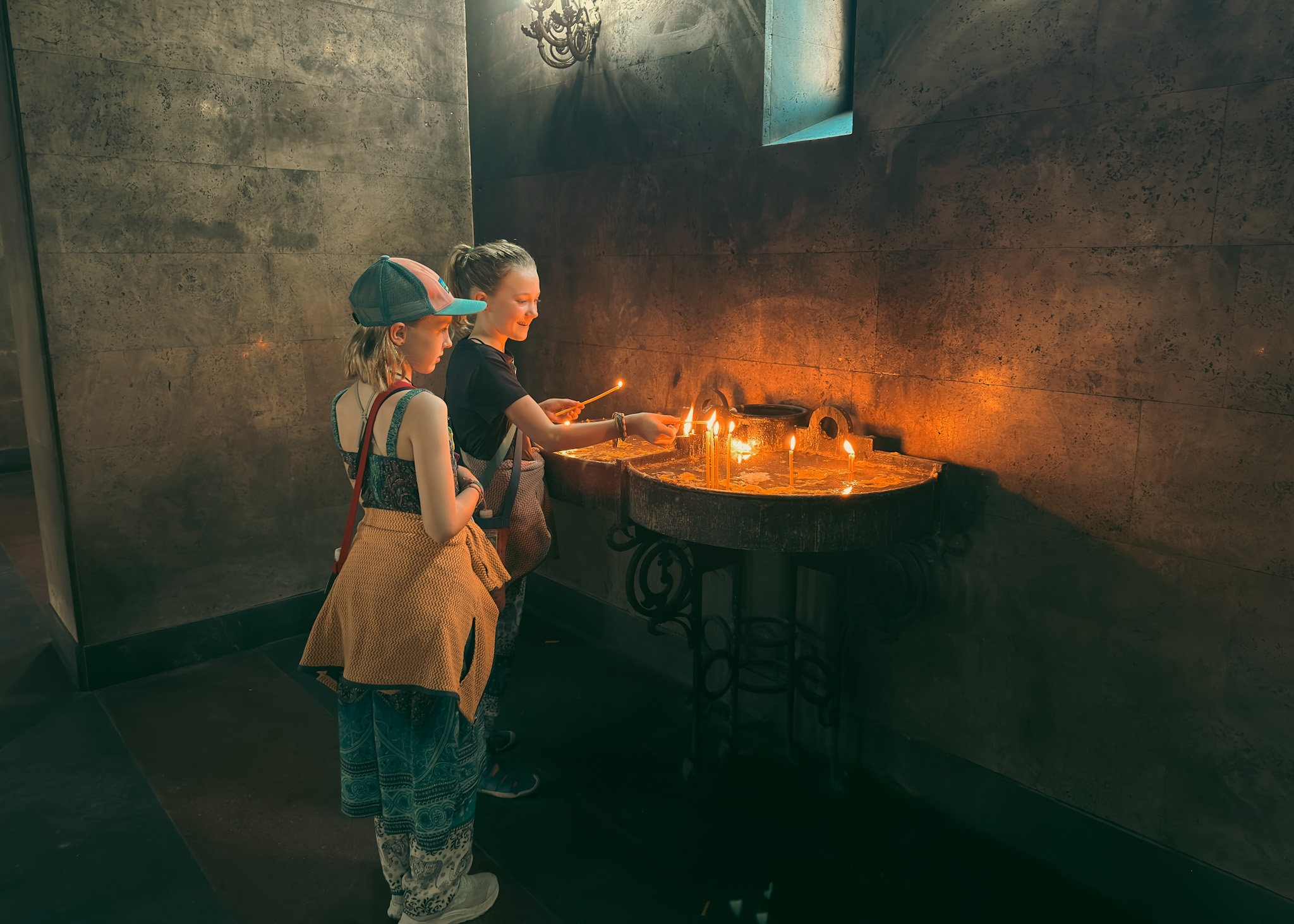
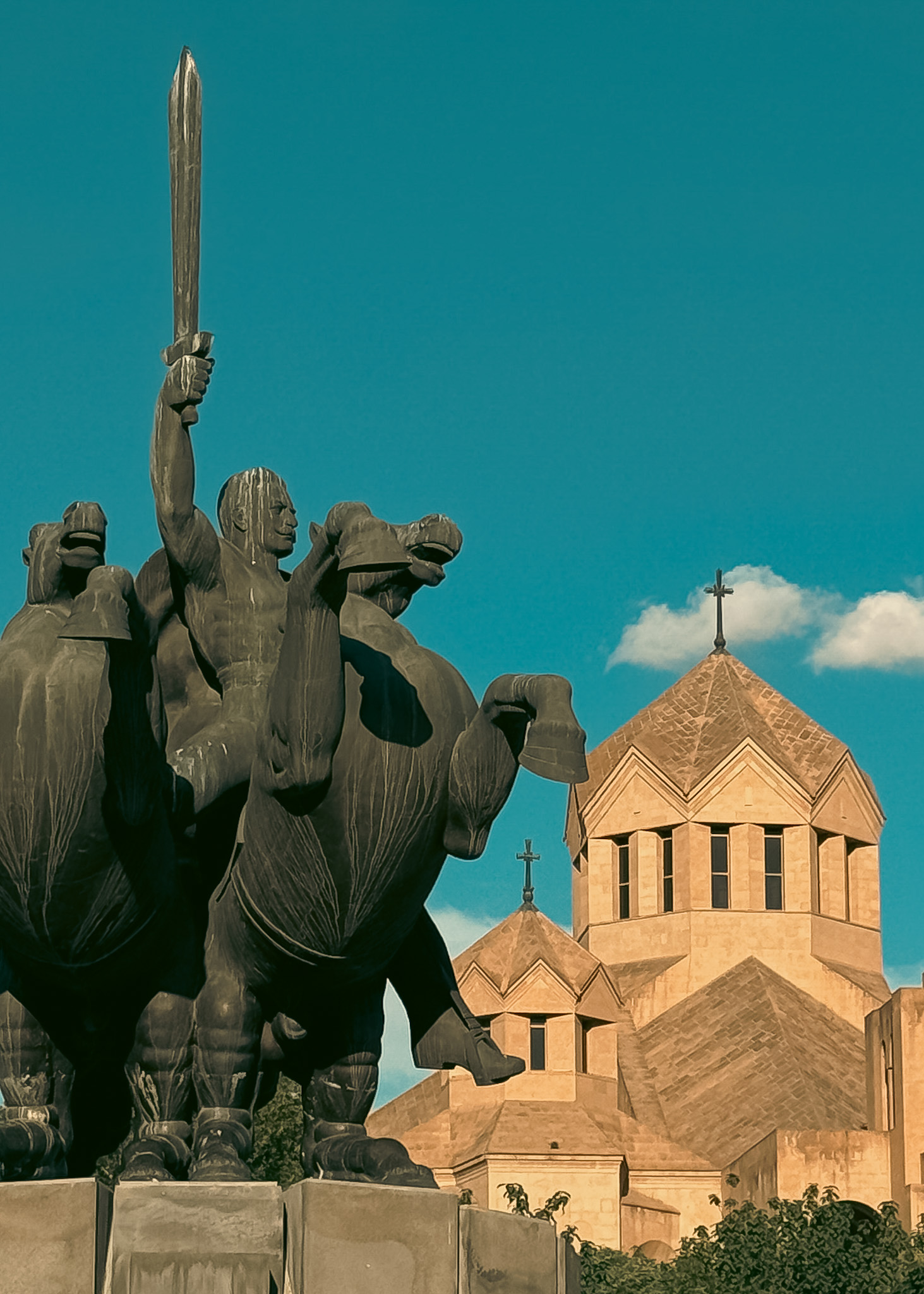
The next day we devoted to seeing more of the city on foot, with the genocide and Armenian identity fresh in mind. Our main destination was the Saint Gregory the Illuminator Cathedral, the largest in Armenia. Despite most Armenian churches looking like they have stood for a thousand years, this one looked nearly new. It was only consecrated in 2001, built to mark the 1,700th anniversary of Armenia adopting Christianity, with a main hall designed to seat exactly 1,700 worshippers in tribute to those seventeen centuries. We bought candles and sat in the pews for a while, listening to organ music roll through a space shaped by four massive arches overhead, the kind of acoustics that quietly settle your whole nervous system. Afterward, we stepped out to a smaller shrine area to light our candles and set them into shallow basins of water, a feature we’d now seen in several Armenian churches. The water is a simple, practical bit of wisdom, catching the dripping wax and safely snuffing the flames, but there is something genuinely lovely about watching your own small flame join dozens of others flickering above a mirror of water.
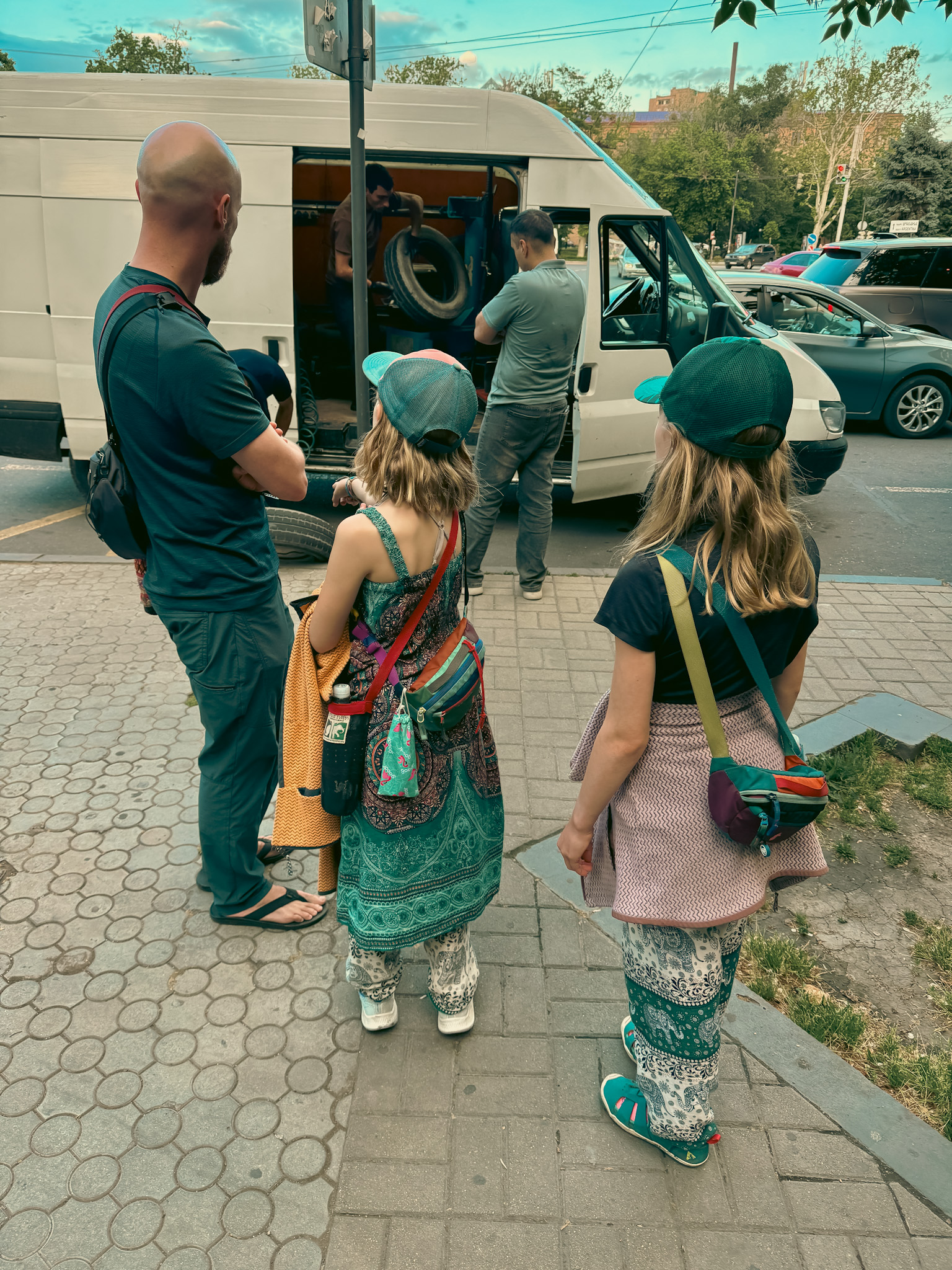
From the cathedral we walked toward the center of the city, and somewhere along the way the day delivered its most unexpected highlight, which was not a monument at all but a delivery truck getting a flat tire changed in a park. We are not exaggerating when we say that Arya was transfixed. She flatly refused to leave until she had watched three men complete the entire job from start to finish: breaking the lug nuts loose, jacking up the truck, pulling the wheel, stripping the old tire off the rim, mounting the new one, and reassembling the whole thing. For something Max has seen dozens times and entirely takes for granted, to her it was the coolest thing imaginable. At the end she delivered her considered verdict: “I’m really glad we watched that, but I don’t think I want to do that kind of work myself. It would get my hands way too dirty.” There is our bougie baby. Though we only half believe her, because she genuinely loves getting her hands dirty when it counts.
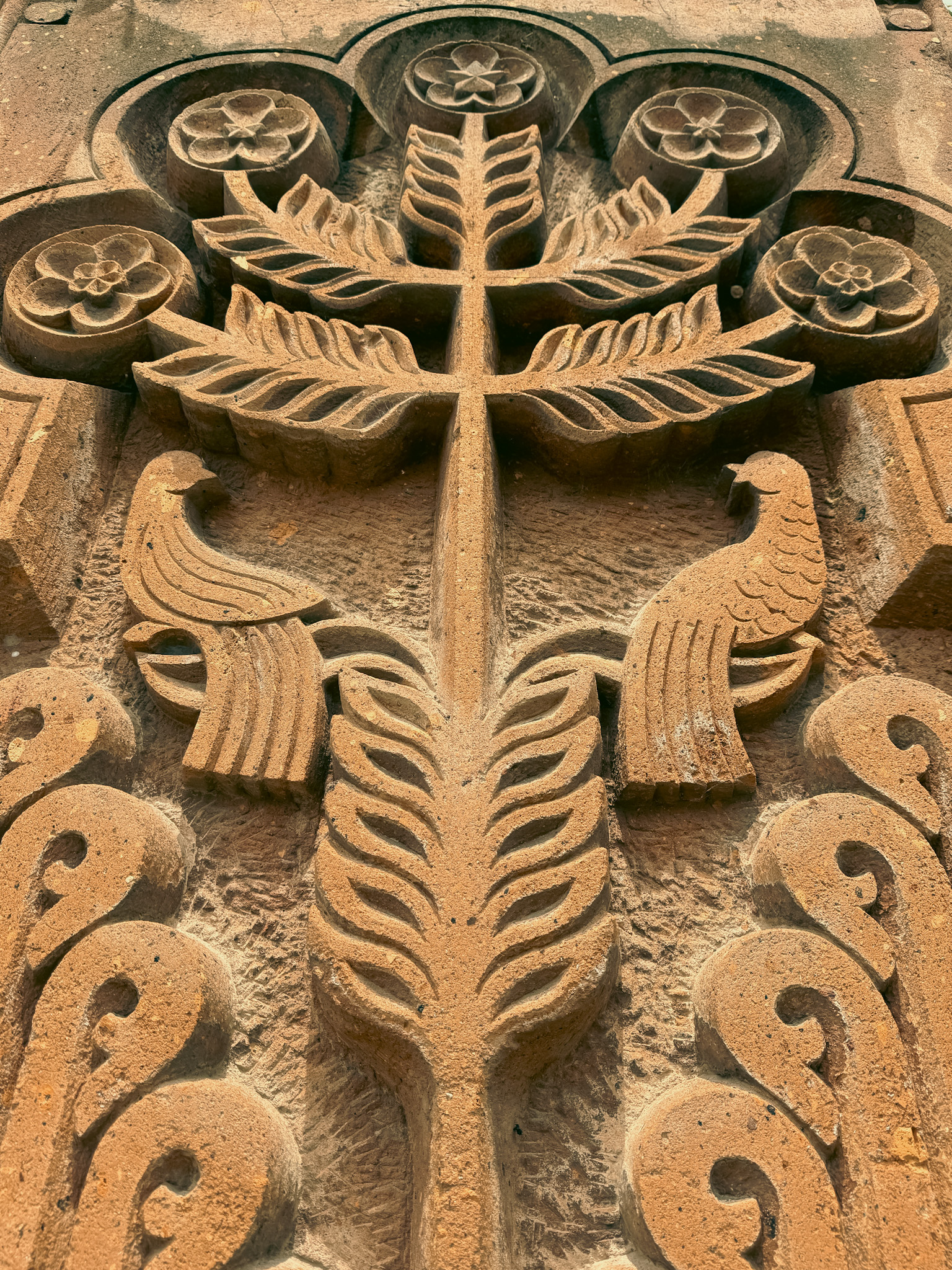
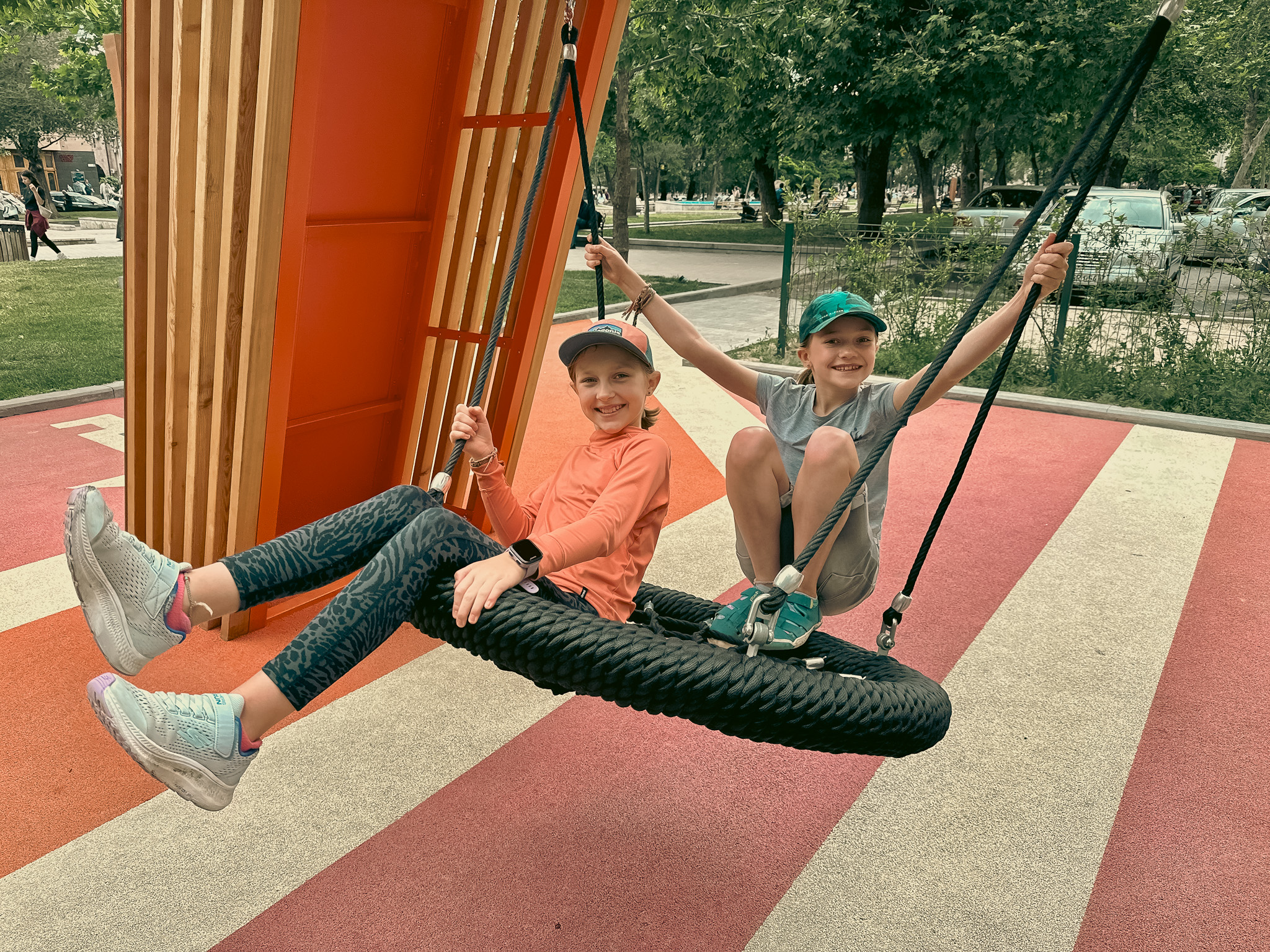
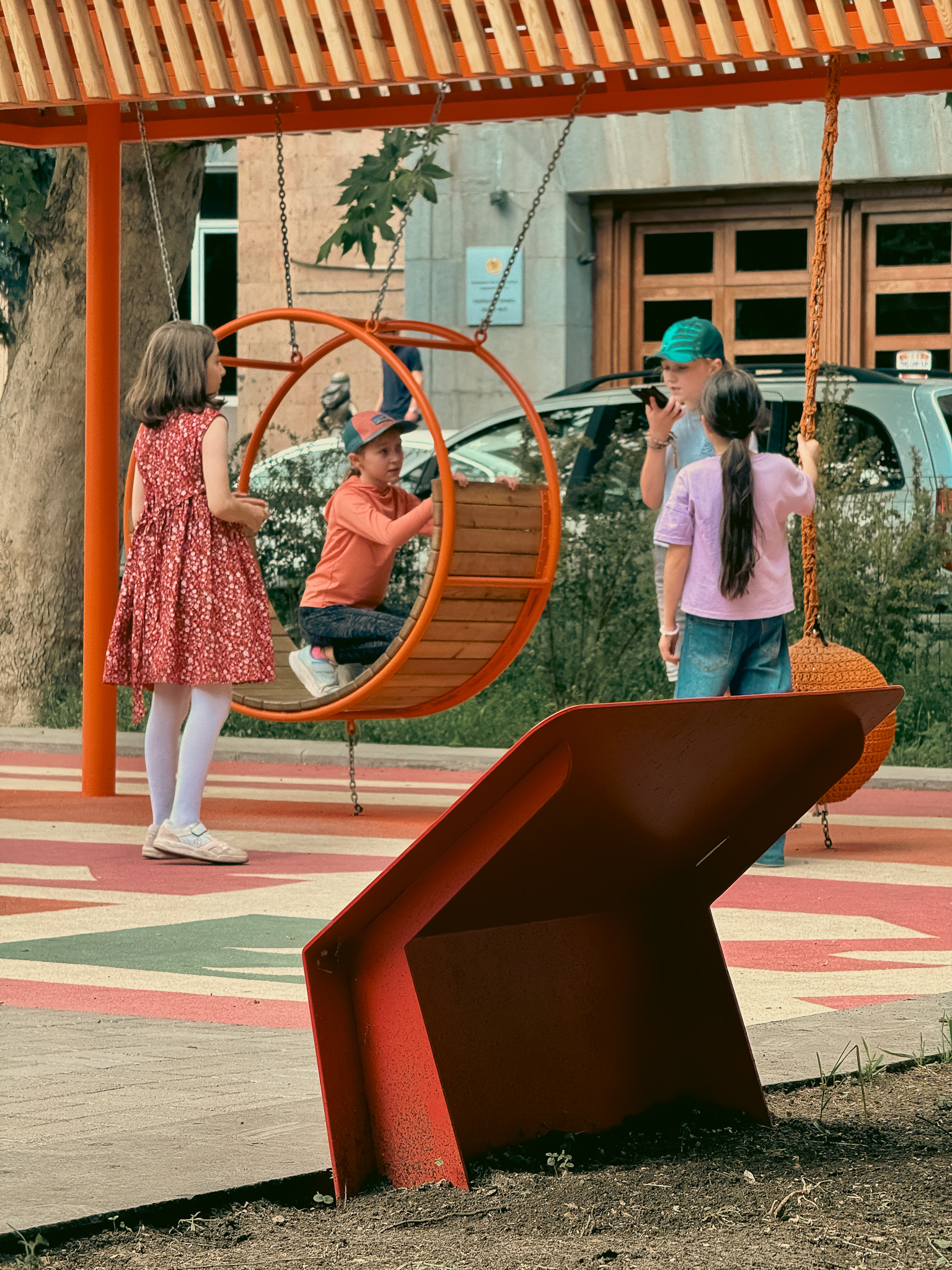
The following day brought the single best afternoon of our entire time in Yerevan, and it happened at a playground. The girls had been craving a proper play space, specifically one where there was a real chance of running into other kids their age. So we hunted around and ended up at a playground at Khachkar Park, named for the khachkars, the intricately carved cross-stones that are Armenia’s signature art form, no two ever alike. The park sported a play area of sculptural climbing pieces that looked like modern museum installations that kids were nonetheless invited to swarm all over. But the real prize was the other children: two girls right around Arya and Finlee’s age, one Armenian and one Iranian, with the Iranian girl speaking nearly perfect English. The four of them clicked instantly and dissolved into a long afternoon of hide-and-seek, chase, and taking turns flinging one another skyward on a big swing.
This is one of the things we love most about traveling, and it is worth stating plainly. The United States and Iran are, functionally, adversaries, with a relationship between our governments that ranges somewhere between frozen and open war. For an American family to simply cross paths with an Iranian one is, in itself, a small improbability. And yet here were our daughters and this Iranian girl, on a flawless afternoon in a park in a neutral third country, playing together without a flicker of the weight their two nations have spent decades piling up, because none of that weight is theirs, and they have not yet been taught to carry it. They were quietly demonstrating how the world could work, how it should work, if the adults would just step out of the way for an afternoon and let it. We had planned to stay an hour. We stayed more than two, until grumbling stomachs finally forced the issue.
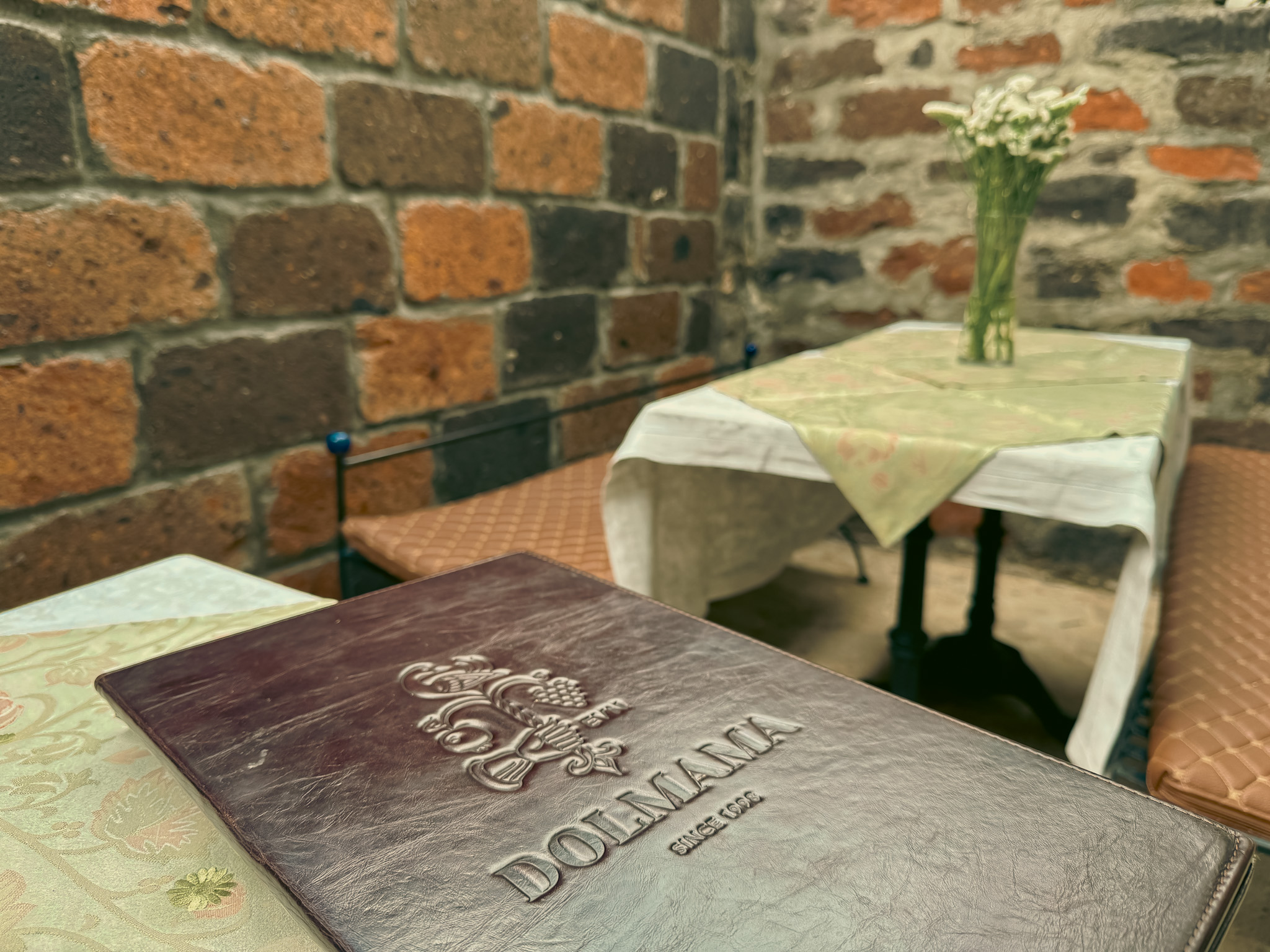
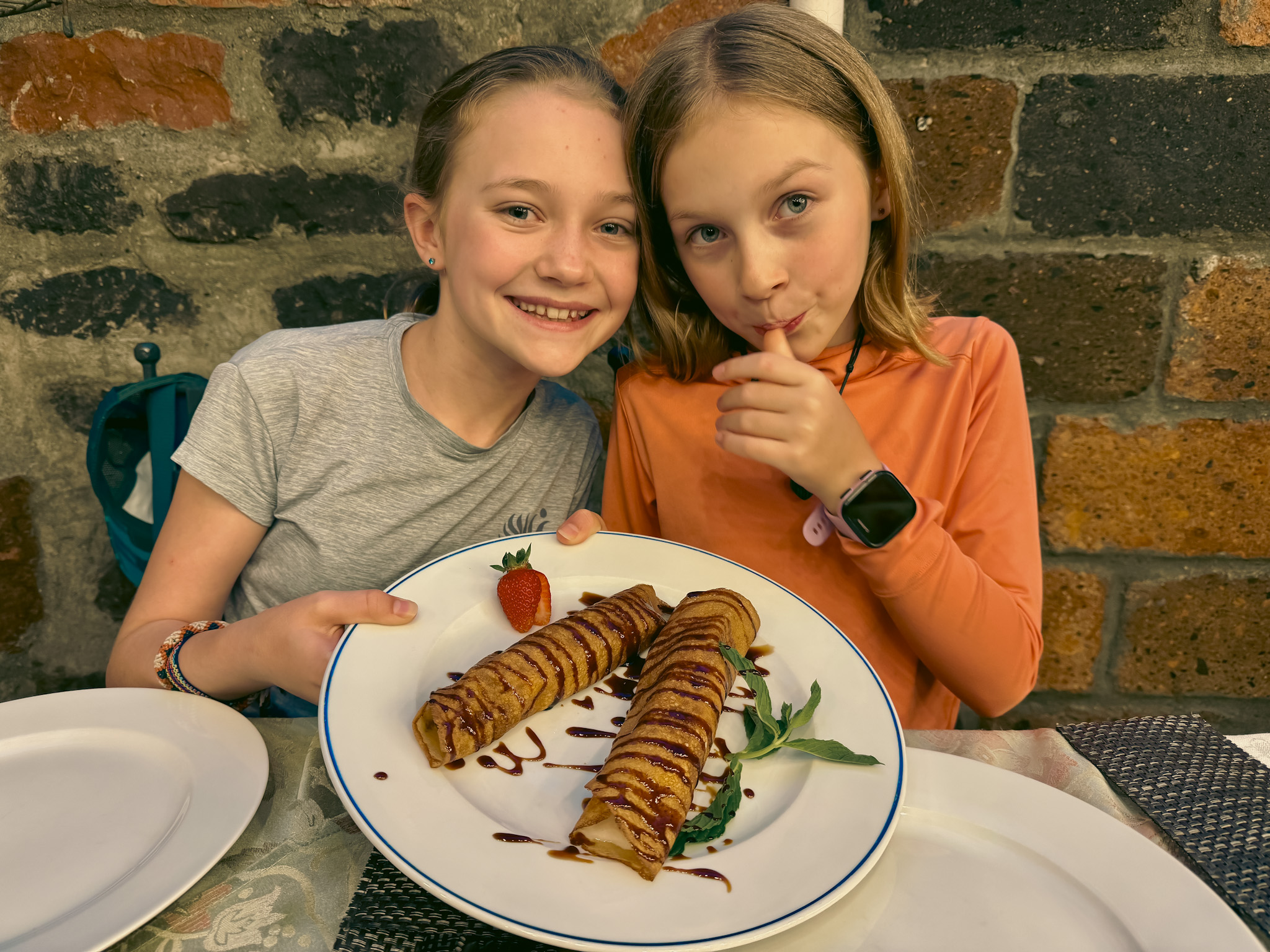
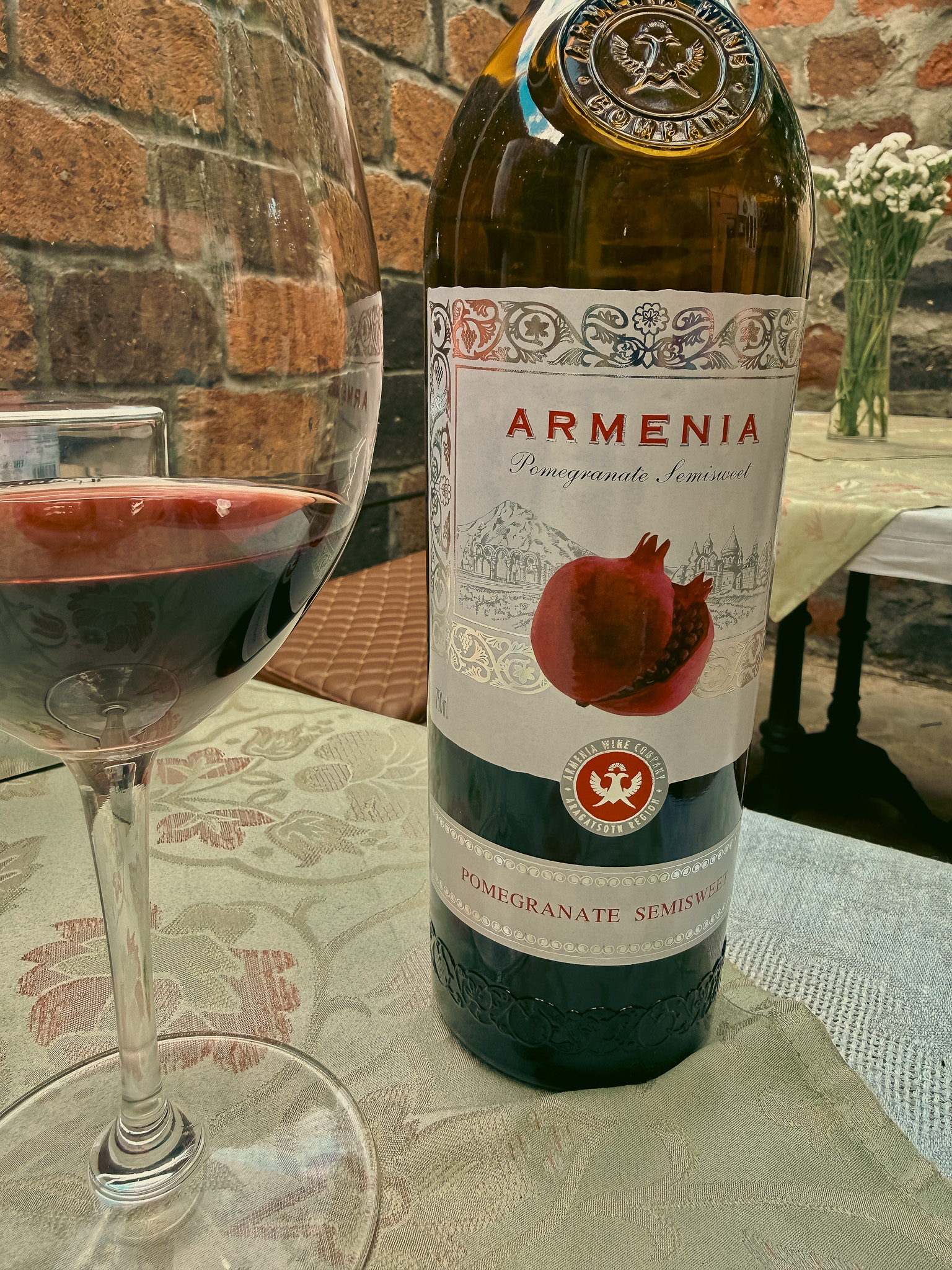
That evening we went looking for dinner and, once again, the city’s restaurants conspired against us. It was a Tuesday, we had no reservation, and the first two places we tried turned us away despite seas of visibly empty tables. As it happened, this was a blessing in disguise, because it pushed us towards a Yerevan culinary institution: Dolmama. Tucked into a historic stone house on Pushkin Street, Dolmama opened in the 1990s. In the aftermath of the Fall, and has spent decades on a quiet mission to revive and reinvent the indigenous Armenian cuisine that the Soviet years had flattened. Over time it has become something close to a national institution. We cheerfully over-ordered and then cleaned every plate anyway. The standout was a trout carpaccio that tasted like gravlax, wrapped around plums that had been cooked down in a pomegranate reduction and laid over pickles and capers, a combination that has no business working and somehow locks together perfectly. While we ate, a woman came and sat down next to us, with a cigarette in a long holder Cruella DeVil-style. Her name was Aida and she turned out to be the owner—she had started the restaurant twenty-seven years ago with her late husband. She had the gravelly voice of a lifetime of cigarettes and was one of the more charismatic people we’d met anywhere on this trip, with family in New York and a real fondness for California and Tahoe, and she was as curious about our journey as we were about her life. We could have happily talked with her for an hour. Unfortunately, two of her friends joined the table, and all three of them lit up—the chain-smoking that followed eventually drove us out, which points to the single biggest downside we’ve found in Armenia. Nearly everyone smokes, indoors and out, so that finding an open-air spot to eat without a steady drift of cigarette smoke is close to impossible. On our way out, we passed a wall covered in photos of Aida posing with past guests, among them Kim Kardashian, George Clooney, and Prince Charles, now King Charles. The institution, it turned out, was even more of one than we’d realized.
Threaded through these last couple of days was a new project. All the recent hiking had left us feeling strong, and with two big hikes still ahead of us, we decided to start a workout routine and act as each other’s accountability partners. The Cascade, right outside our door, was the obvious gym, and running its stairs became a recurring and self-inflicted punishment, brutal on the way up but surprisingly gentle on the joints. On our final morning in Yerevan we even conscripted the girls into it, partly to get them moving and partly to make them appreciate the flawless weather alongside us. They declared the entire enterprise ridiculous and begged to be released after just two climbs.
But that final morning gave us something far more important than a workout, and it was the thing the whole stay had quietly been building toward. We climbed the Cascade together as a family, and at the top we were stopped cold. Mount Ararat, almost completely unobscured for the first time since we’d arrived. The snow still crowning its twin summit, the dormant volcano stood clean and enormous against a flawless blue sky. We had been catching it in fragments all week, a shoulder here, a glimpse of summit there, always half-swallowed by clouds. Now it simply stood there, fully revealed, and it was genuinely moving in a way that took a moment to fully understand.
Because there is a cruelty stitched into that view, and it is what really brought the week’s reading to life. Ararat is the beating heart of the Armenian identity, the mountain of the Ark, the centerpiece of the national coat of arms, visible from half the windows in the city. And it is not in Armenia. It lies just across the (currently closed) border with Turkey, lost in the lines that were drawn after the Genocide and the Soviet settlement that followed. So Armenians look out their windows at their most sacred mountain every single day, framed perfectly in their own skyline, and they cannot set foot on it. It is there and it is unreachable, present and amputated, all at the same time. Standing at the top of what had become our own backyard staircase, we stared at “Armenia’s mountain”, and the weight of everything we’d learned this week finally took on a physical shape.
And then we walked back down the Cascade to our apartment, and Max made dinner. That night it was meatballs and a beef ragu over leftover fettuccine, with a cucumber salad and, the surprise star of the meal, butter-drenched crostinis, grilled until perfect. Cheap ingredients, a barely-functional kitchen, a bottle of white wine Shaina had produced from somewhere, and the whole thing landed somewhere close to fine dining.
That, in the end, is what Yerevan was for us. A city where we cooked real meals and played chess and watched movies and ran stairs and let our daughters simply be children alongside other children. Ordinary domestic life resumed after months of going without it—all of it unfolding in the constant presence of a mountain on the horizon that carries more sorrow and more longing than any mountain should have to bear.
A kitchen and a mountain.
We needed both, and Yerevan, somehow, gave us both at once.


Leave a Reply