
Dates: May 17th-22nd, 2026
Place: Alaverdi and Gosh, Armenia
We crossed into Armenia on foot, the way we have handled most of the borders that make you leave the car behind. The line to exit Georgia was long and briefly enlivened by a group of women who tried to cut to the front on the grounds that they were “part of a group,” which is genuinely the most ridiculous justification for skipping a queue any of us had ever heard. Everyone in line closed ranks, and the women took their place at the back like the rest of us. The whole crossing took about thirty minutes, and the girls, who not so long ago found border days stressful, breezed through and remarked on how much easier this one was than, say, the white-knuckle entry into Tajikistan. They have become old hands at this.
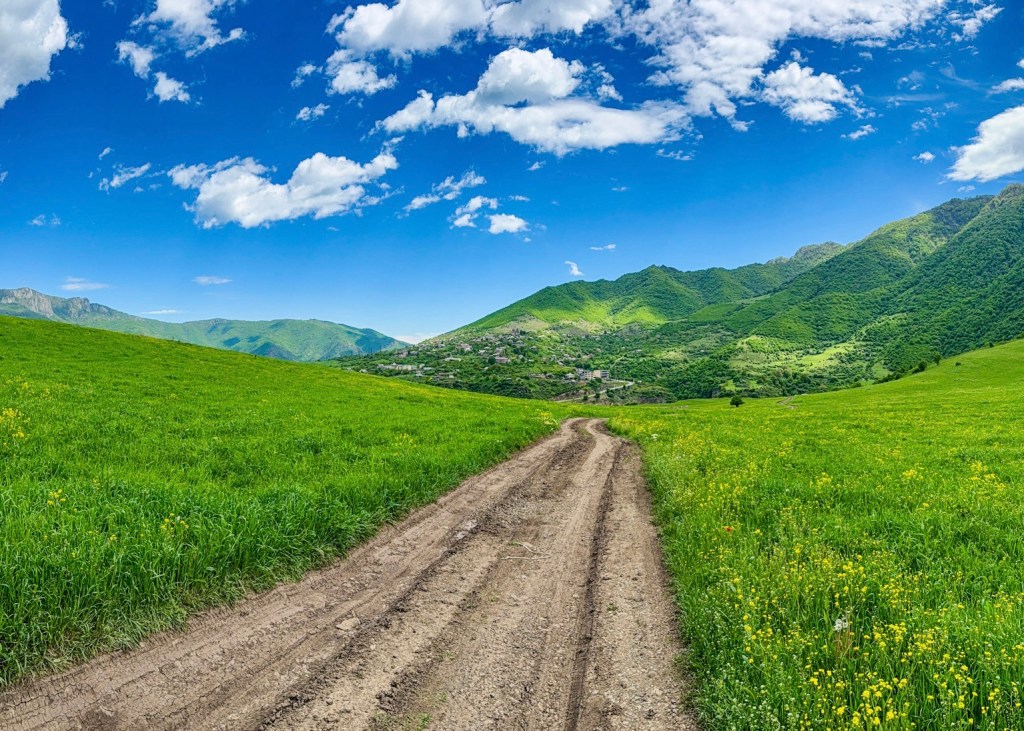
It is a strange thing to move into a new country after barely scratching the surface of the last one. We’d had only a few days in Georgia, not nearly enough to take its measure, so crossing into Armenia felt less like a hard break than a continuation: the same impossibly green spring hills, so vivid this time of year they look almost fake. Much of the drive followed the Debed River, which forms part of the border before carving south through a deep canyon lined with cliffs, forest, and the occasional ancient monastery perched on a hillside. Our driver talked the whole way, walking us through twenty years of Georgian politics and the live question of EU membership, until the conversation outran his English and our comprehension, at which point we all retreated to the safer ground of beautiful places we ought to visit. It was one of the prettier stretches of road we’ve driven, and it turned out to be only a warm-up.
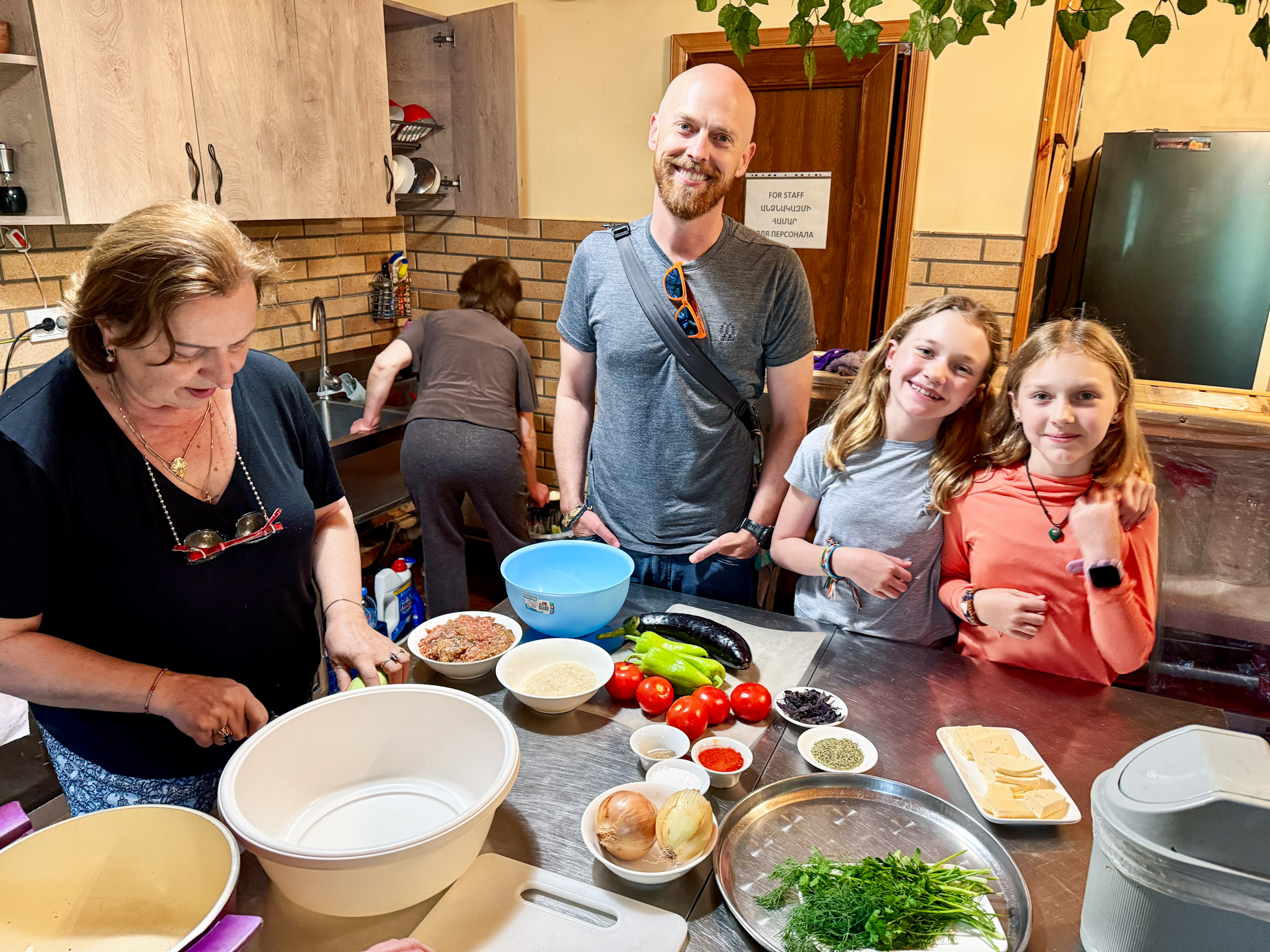
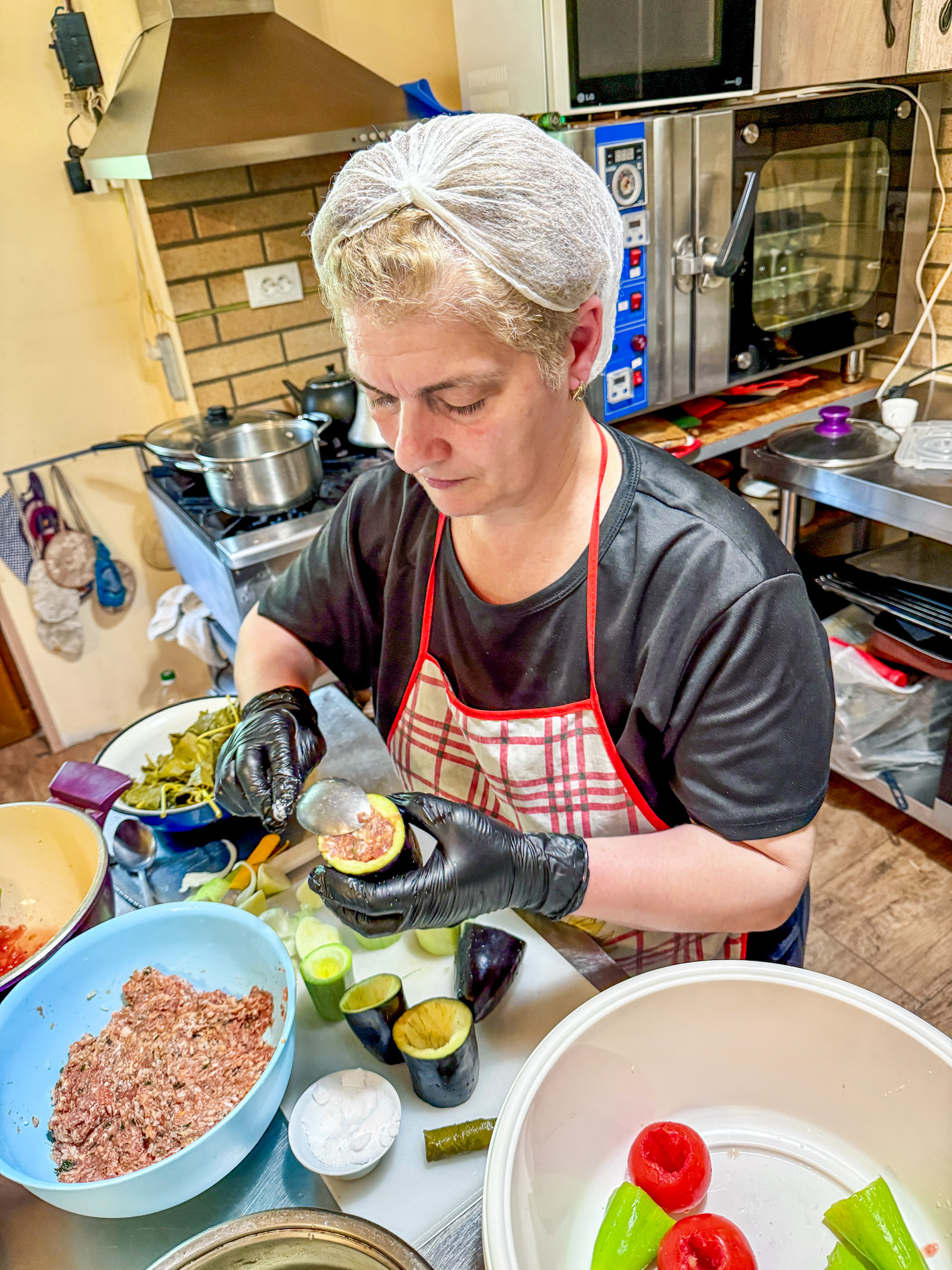
We landed at Iris B&B in Alaverdi, where the homeowner first showed Shaina the room we had actually booked, which felt more suited to a troglodyte than to a family of four. She then offered us two ensuite rooms for a small bump in price, and we agreed before she’d finished the sentence. The place was nothing fancy, but being welcomed into someone’s home felt special, which would turn out to be the defining sensation of our entire time in Armenia. While Max took a much-needed nap, fighting off some combination of poor sleep and a cold he could feel coming on, the girls got pulled into dinner prep. The owner, Irina, and her helper, Marina, set them to work cutting vegetables and stuffing grape leaves, cabbage leaves, and hollowed-out zucchini, eggplant, and tomatoes with a mixture of rice and beef. Irina called all of them dolmas. We had only ever heard that word applied to the grape-leaf version, but it turns out the name covers the whole family, the same filling tucked into whatever vessel is on hand. It was the girls’ favorite part of the day.
The other guest at Iris was a German solo traveler named Felix. Forty-two, with a grown daughter and a toddler son back home, Felix was on an eight-day Armenian adventure while his wife, who prefers to vacation by relaxing rather than charging up mountains, stayed home with the baby. He and Max had a lot in common, both being men of many trades and no single fixed career. Felix does handyman work, gardening, all the cooking for his family, and has recently started ghostwriting biographies for wealthy older people who want their life stories preserved, especially their memories of childhood during the Second World War. We talked late into the evening and made a plan to hike together the next day.
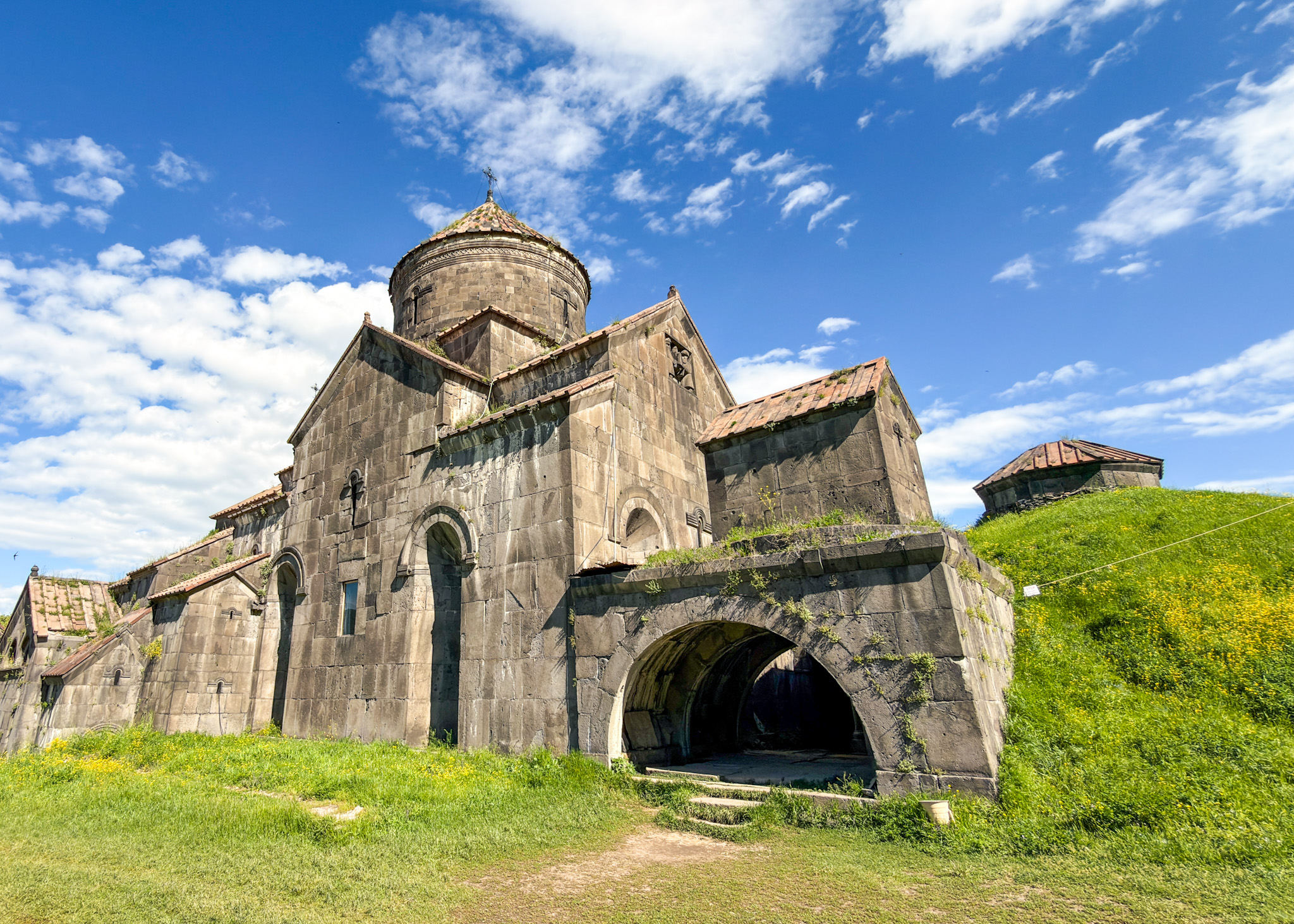
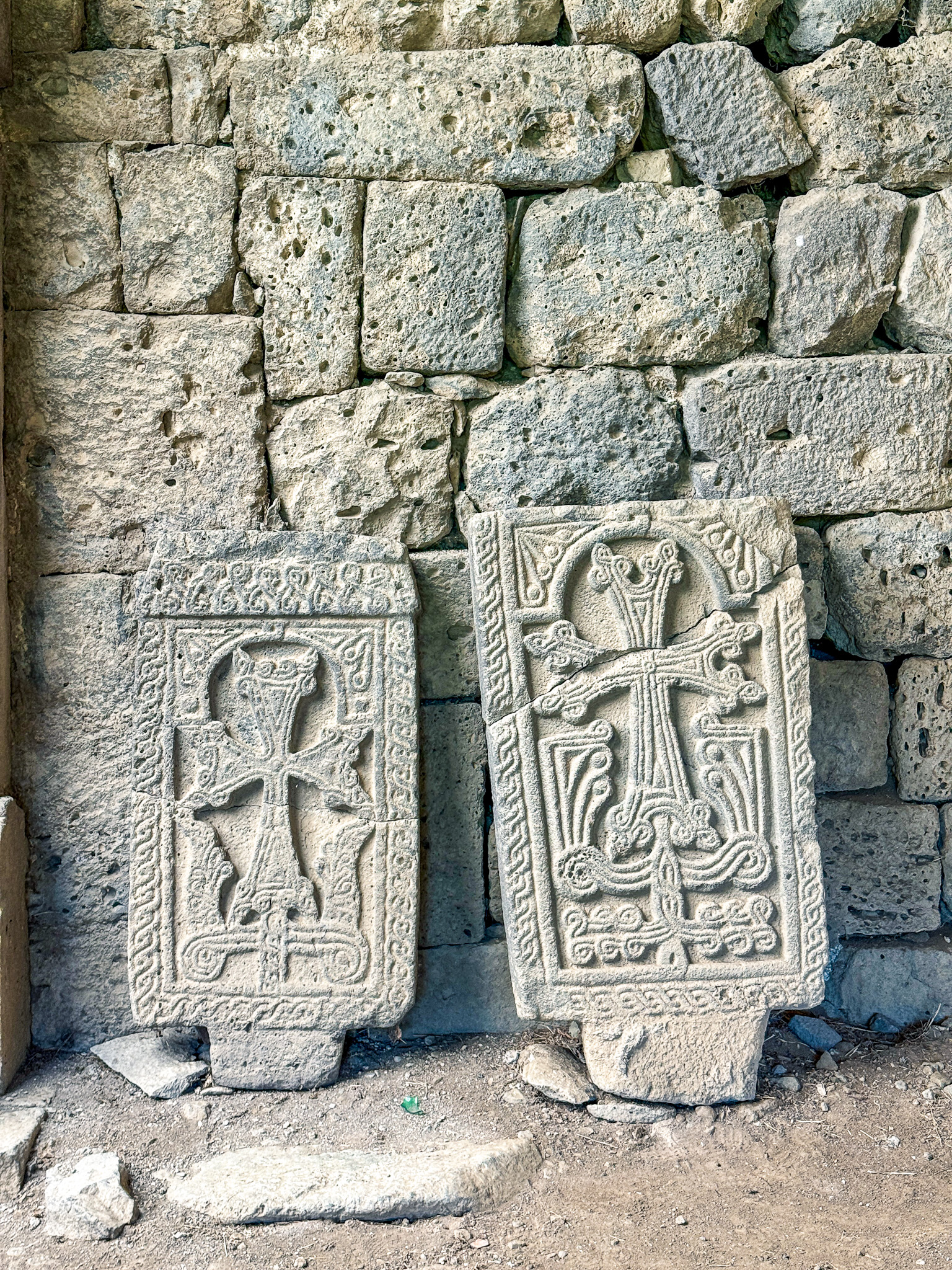
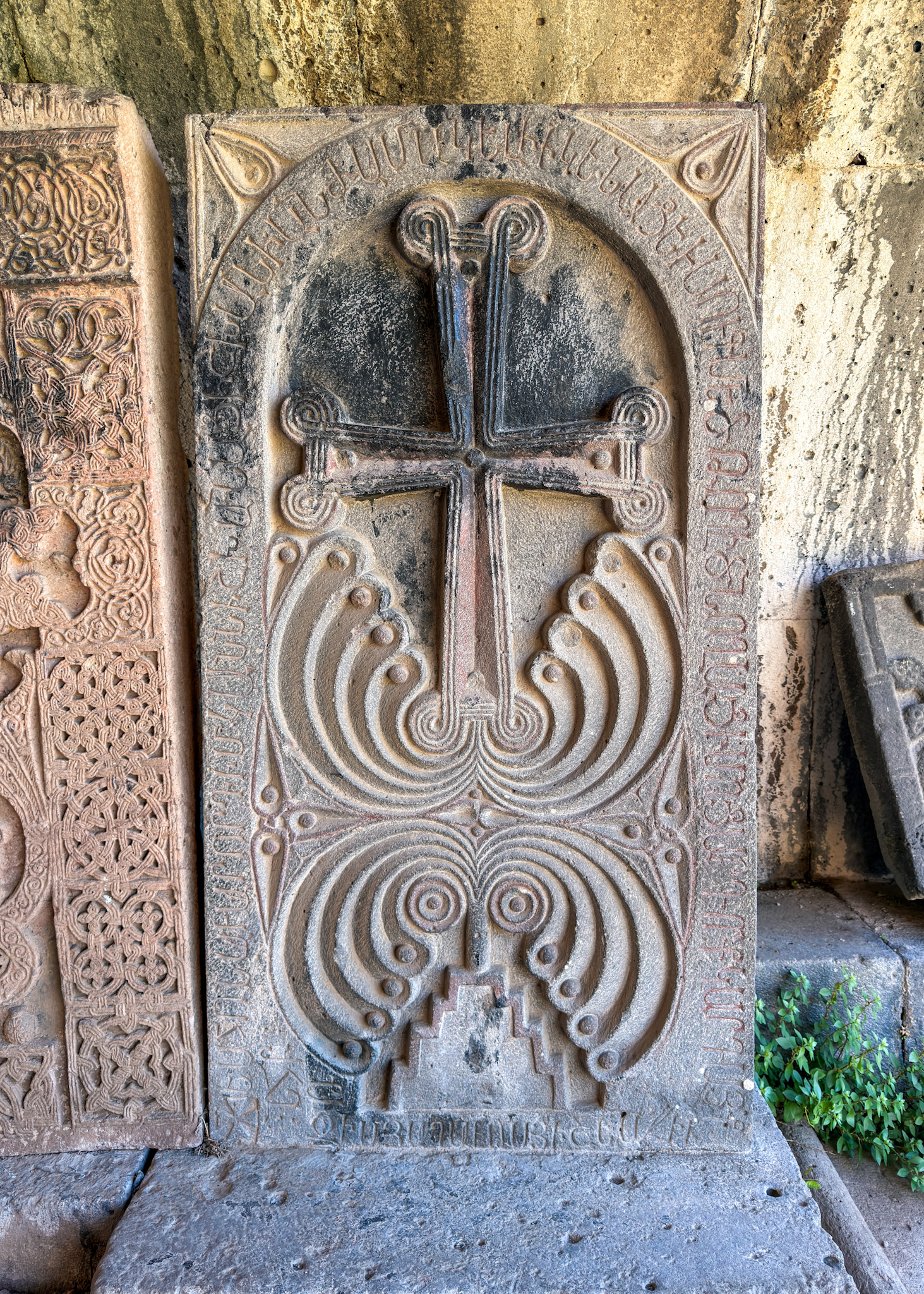
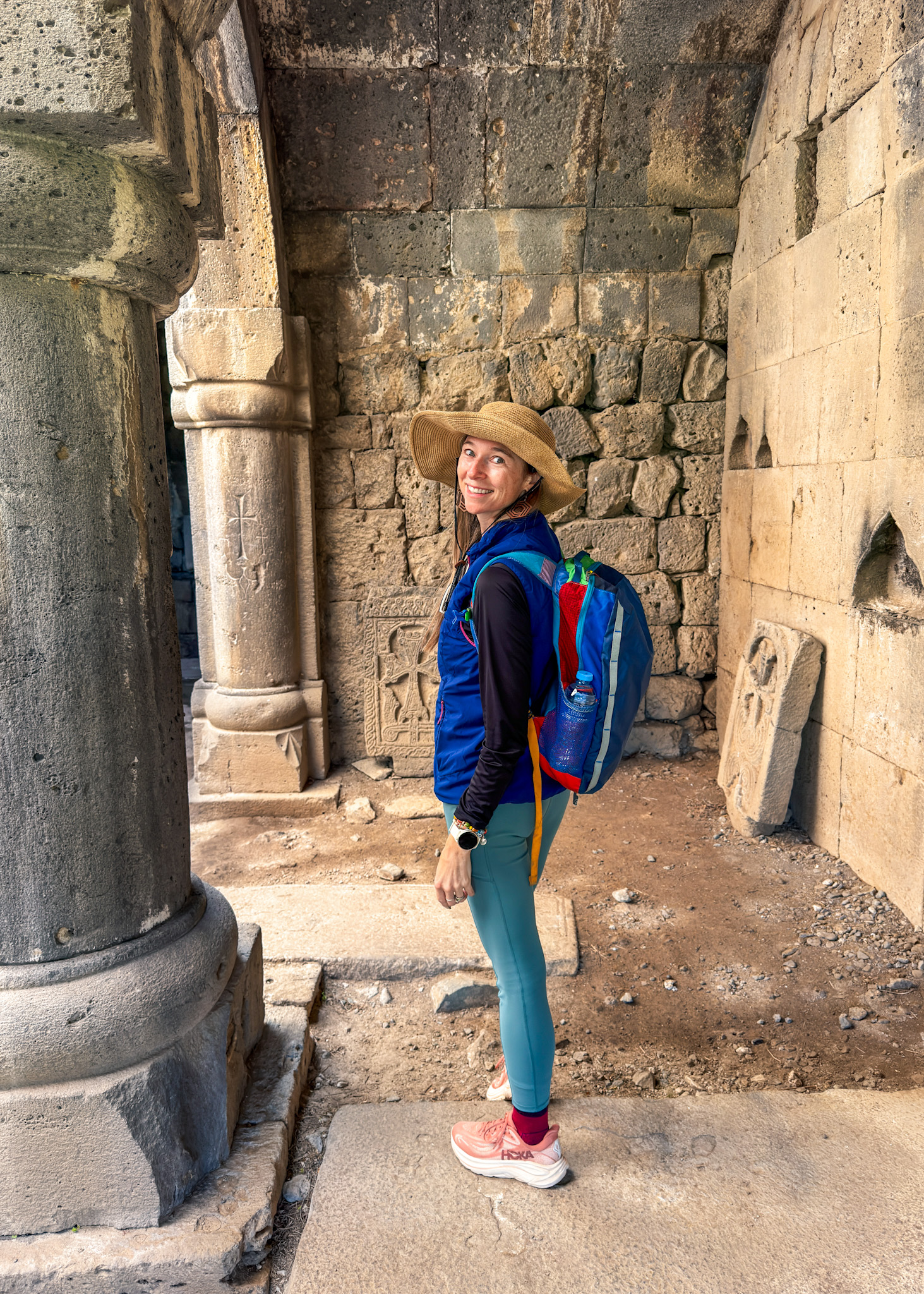
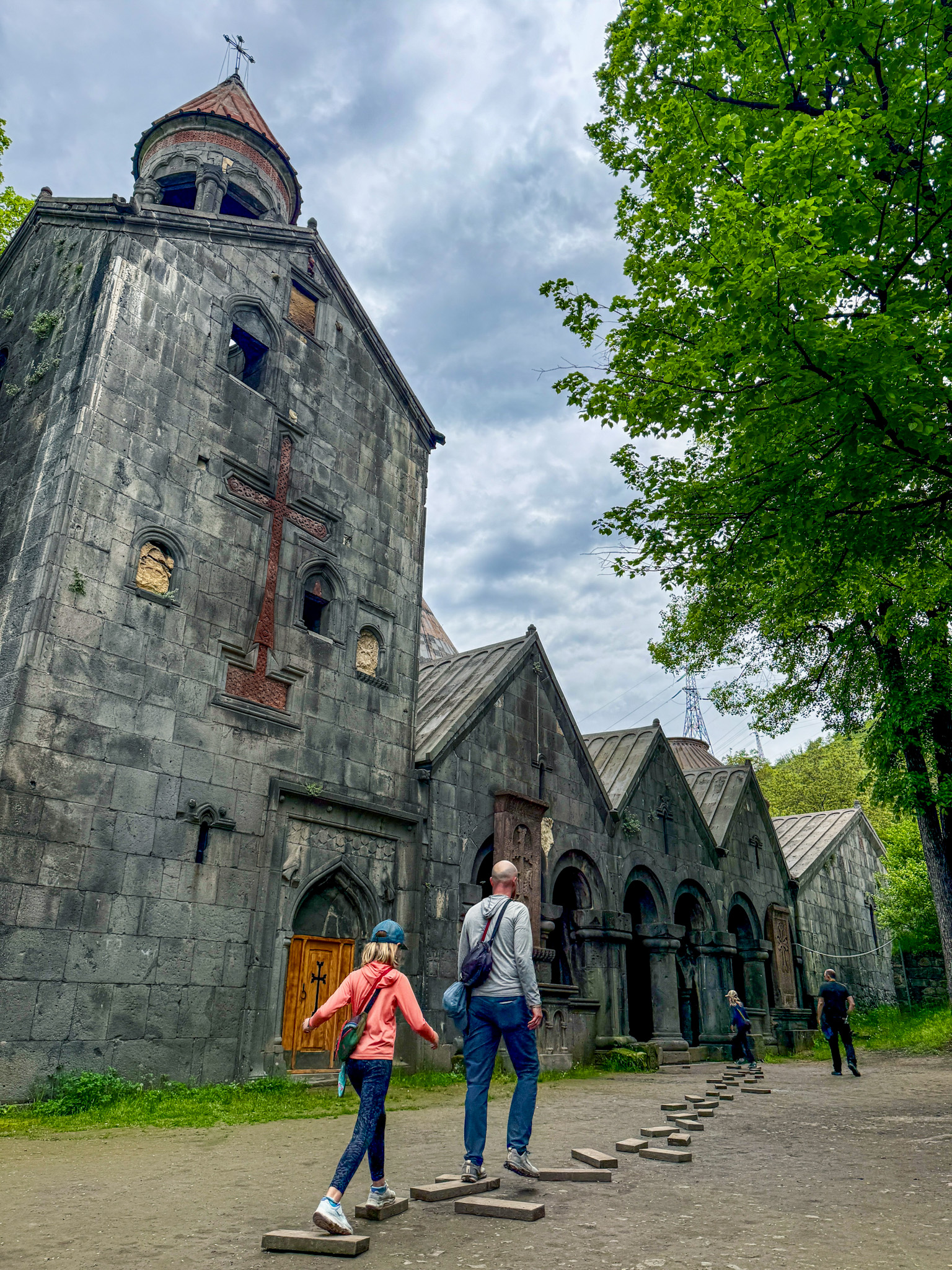
That hike was the reason we’d come to Alaverdi: a thirteen-kilometer walk between two of Armenia’s UNESCO-listed monasteries, Haghpat and Sanahin. We started at Haghpat, founded in 976 by Queen Khosrovanush, wife of King Ashot III the Merciful, which grew over the following centuries into one of the great spiritual and intellectual centers of medieval Armenia, a place where monks studied philosophy, rhetoric, music, and the painstaking art of manuscript illumination. It sits on a plateau above the Debed Canyon, built of dark basalt and clustered so tightly that it feels less like a monastery than a small fortified village. We are not religious people, but you do not need to be a believer to feel the weight of a place that has been standing, and working, for over a thousand years. We wandered the churches, the refectory, the scriptorium, and a courtyard full of khachkars, the intricately carved cross-stones that are Armenia’s signature art form, and then we set off on foot.
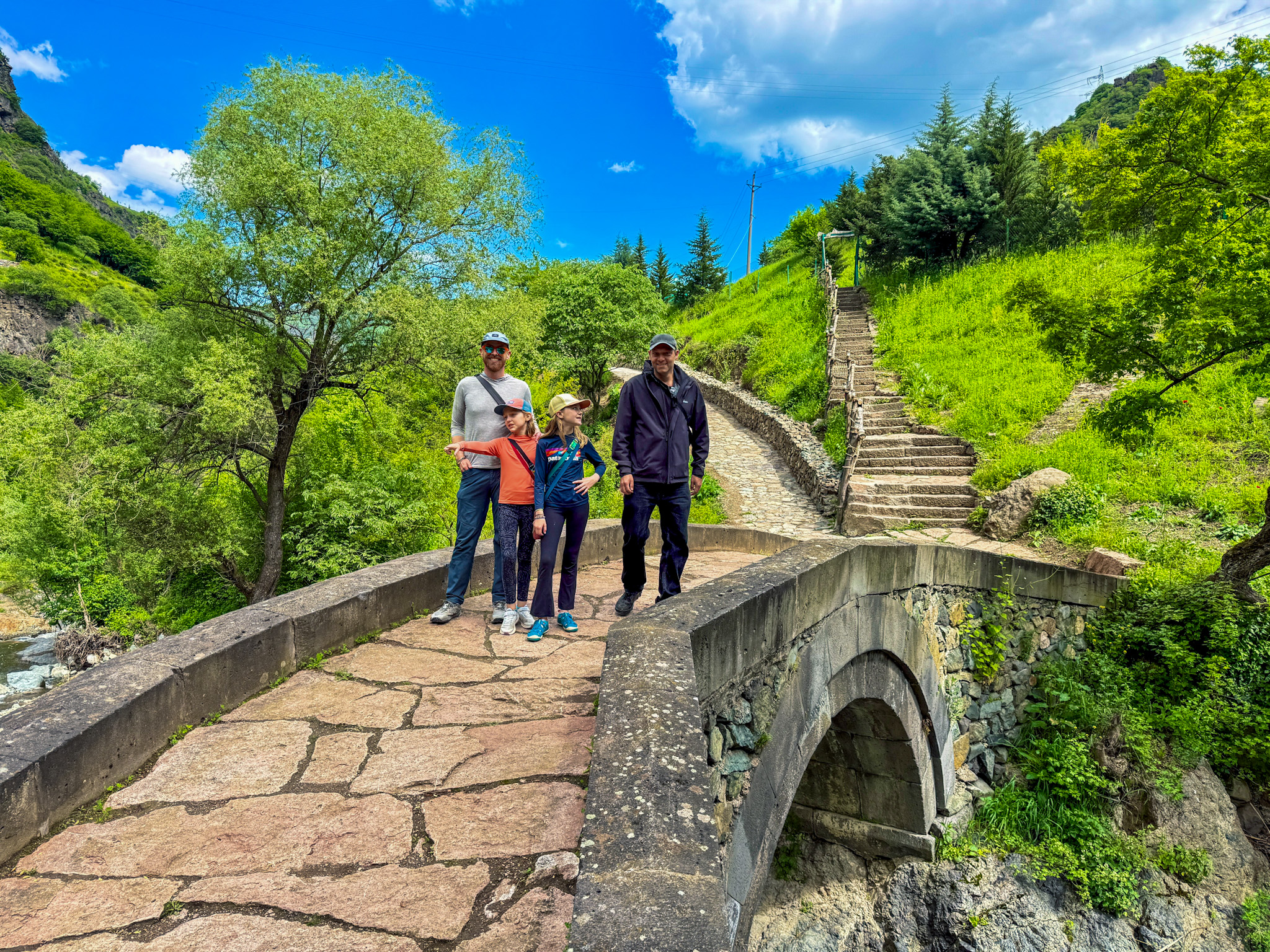
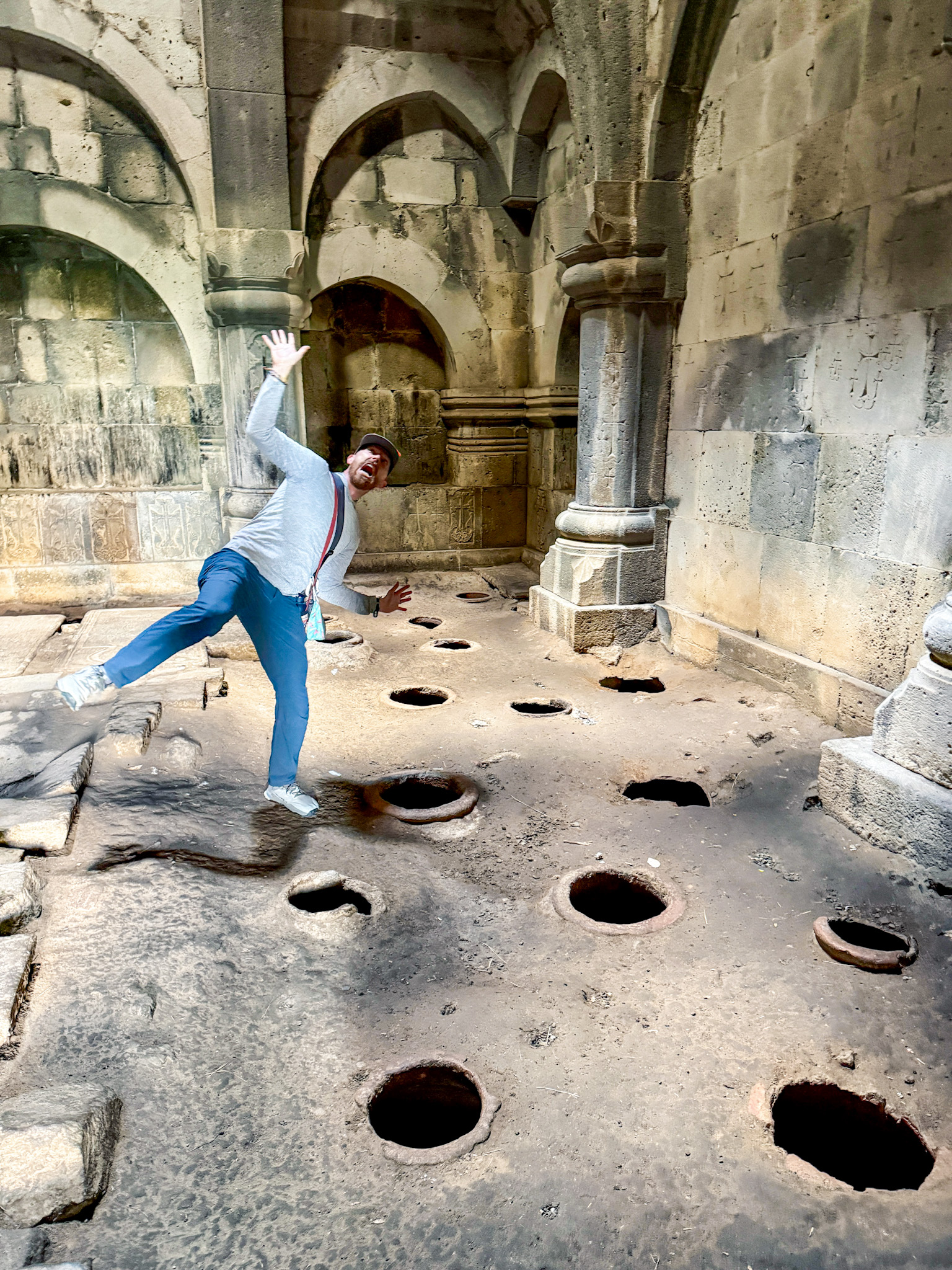
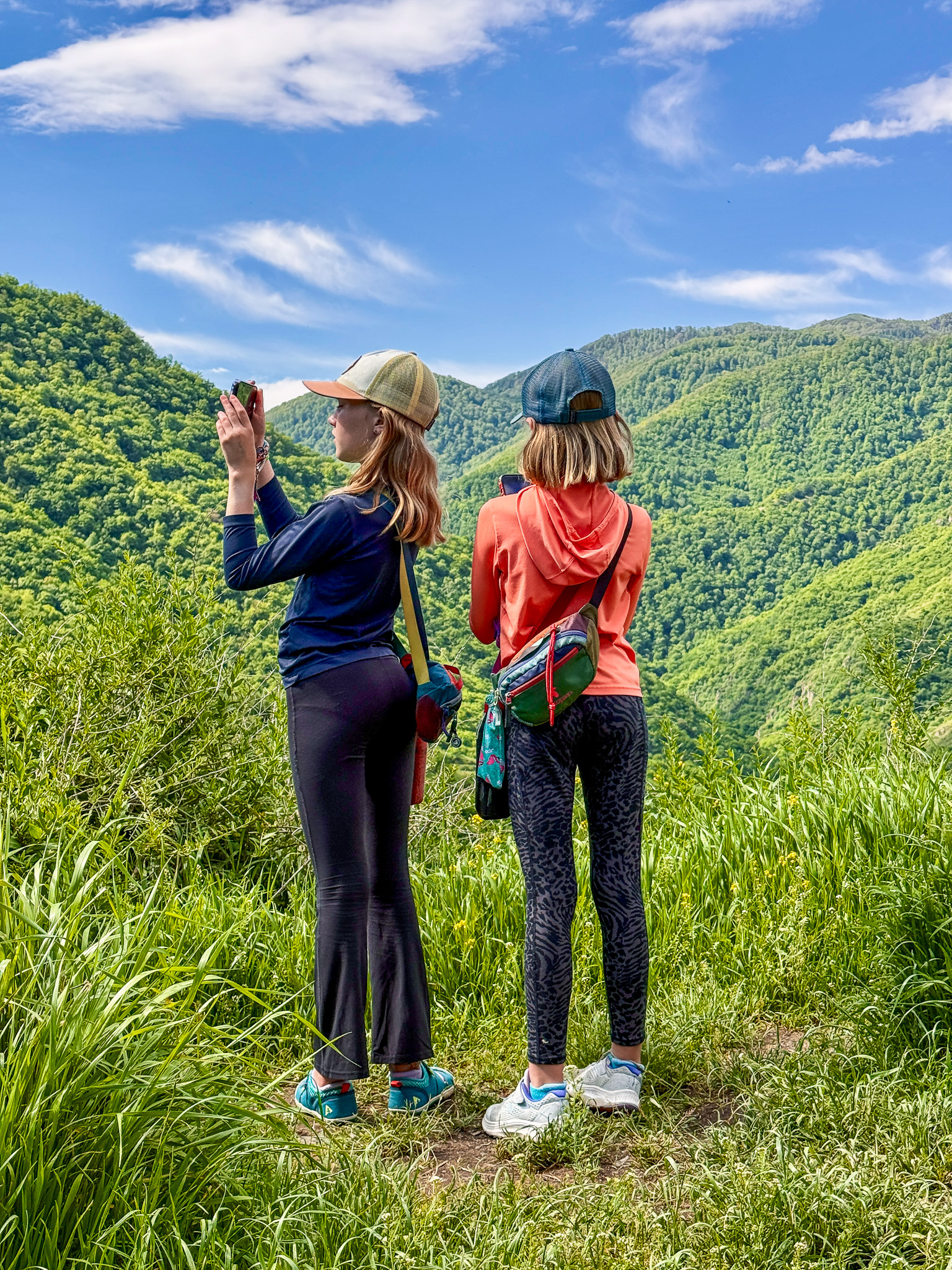
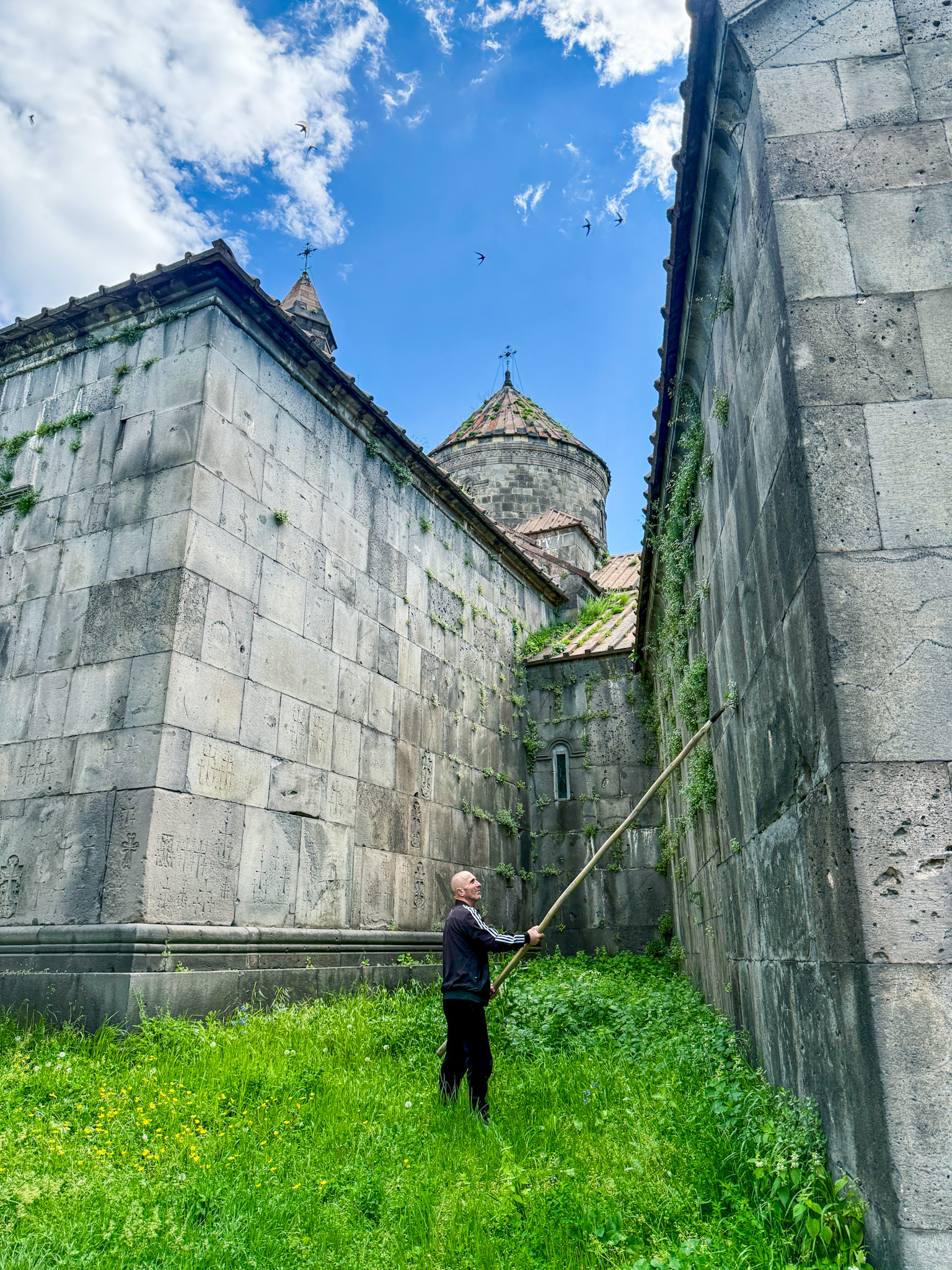
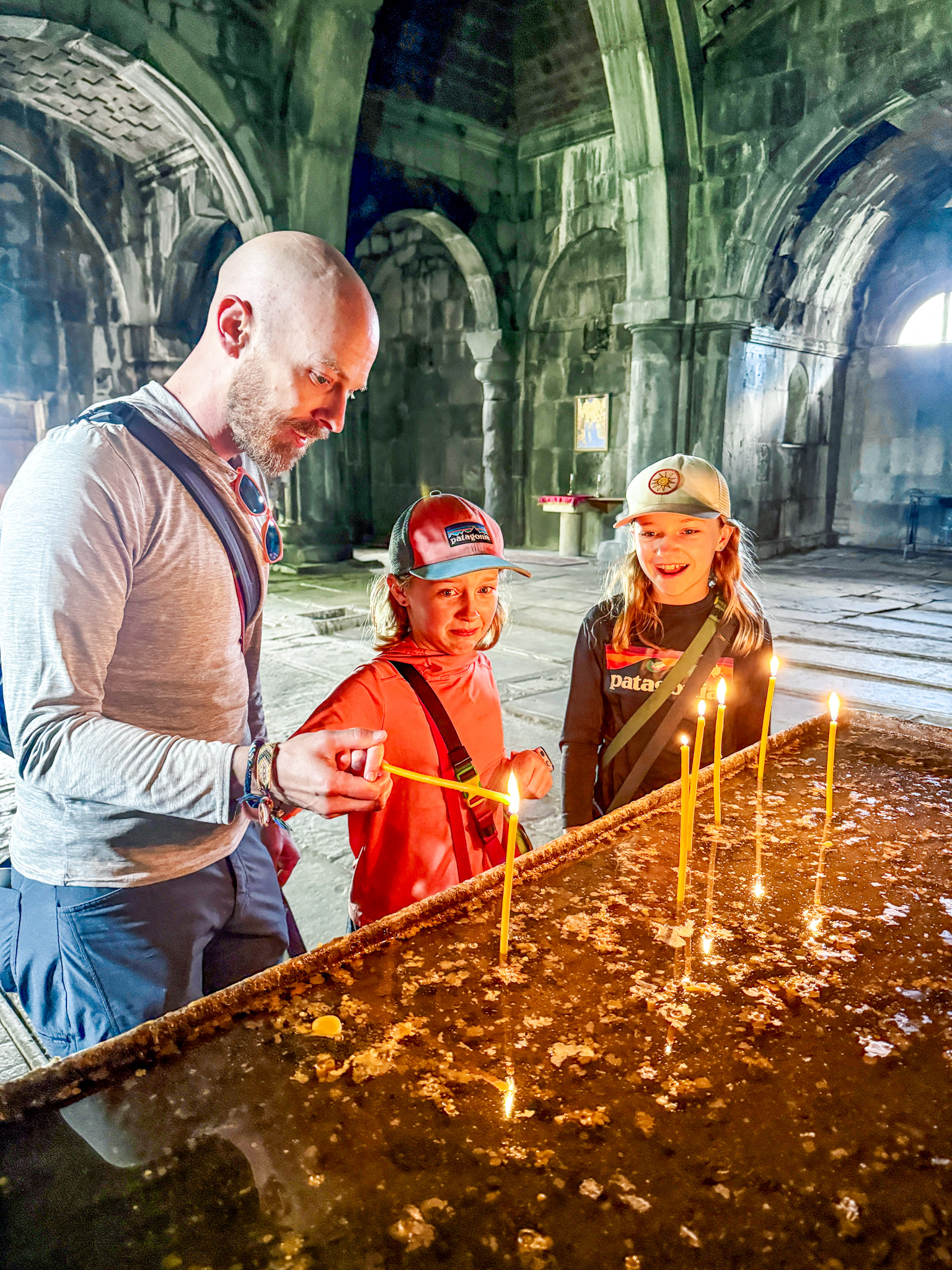
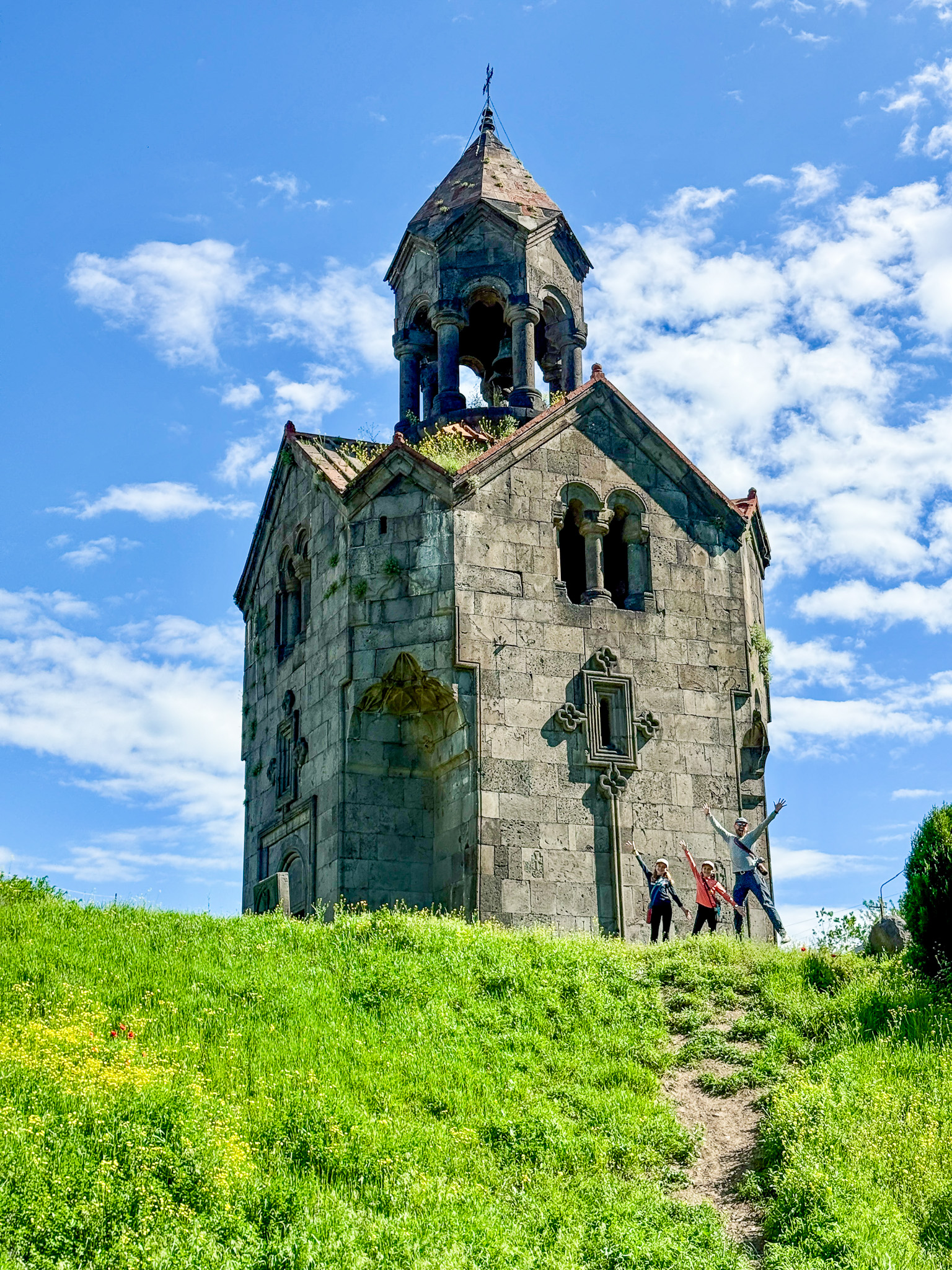
The trail to Sanahin runs downhill to the canyon bottom, through green hills and small villages strung above the canyon, past meadows and a creek with little waterfalls, with enough spring time mud to keep things interesting. Somewhere along the way we walked directly past the ruins of Kayan Fortress without noticing. There was, by all accounts, a sign. We followed the markers, kept our eyes open, and still managed to miss an entire medieval fortress. We have added it to the ever-growing list of things to catch next time. Sanahin, when we reached it, is Haghpat’s sister site and near-twin in style, and its name reportedly translates to “this one is older than that one,” an old bit of intermonastery rivalry about which of the two came first. The standout moment there was a small one. We sat in one of the dimly lit side chapels while a recording of monks chanting played softly from somewhere out of sight, and a pigeon cooed from a windowsill, the two sounds layering over each other in a way nobody could have arranged on purpose. Those accidental moments tend to be the ones that stick.
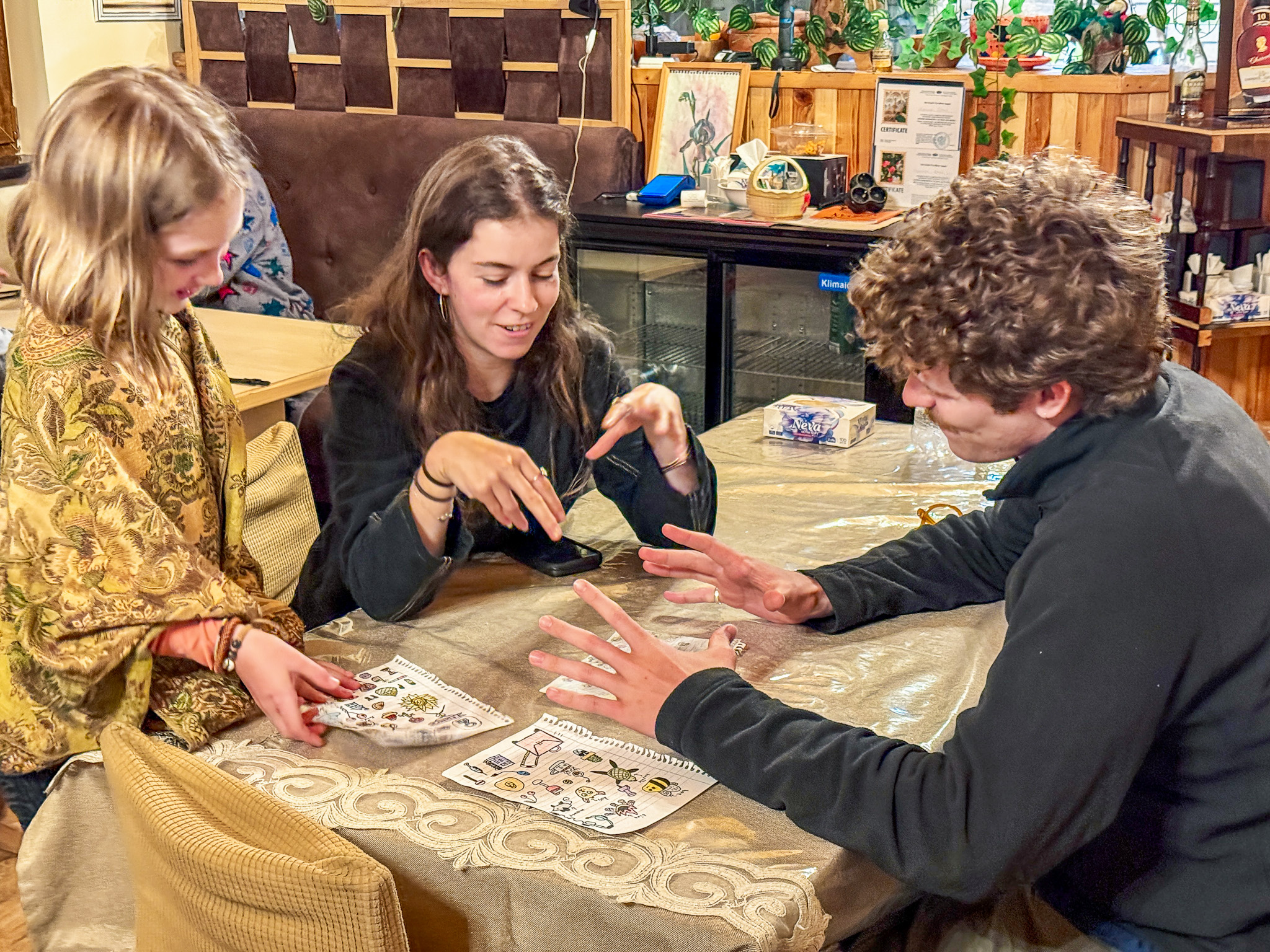
Dinner back at Iris brought another home-cooked meal and two more travelers, Oliver from England and Siena from New Zealand, both in their mid-twenties, and off on the kind of open-ended journey with no fixed end date that Shaina and Max would have leapt at back in their twenties. Finlee took to them immediately, and the three of them spent the evening drawing together in her notebook. It was very sweet, and it continued the trend for what Armenia kept delivering: a steady stream of interesting people, met by chance, and folded briefly into our days.
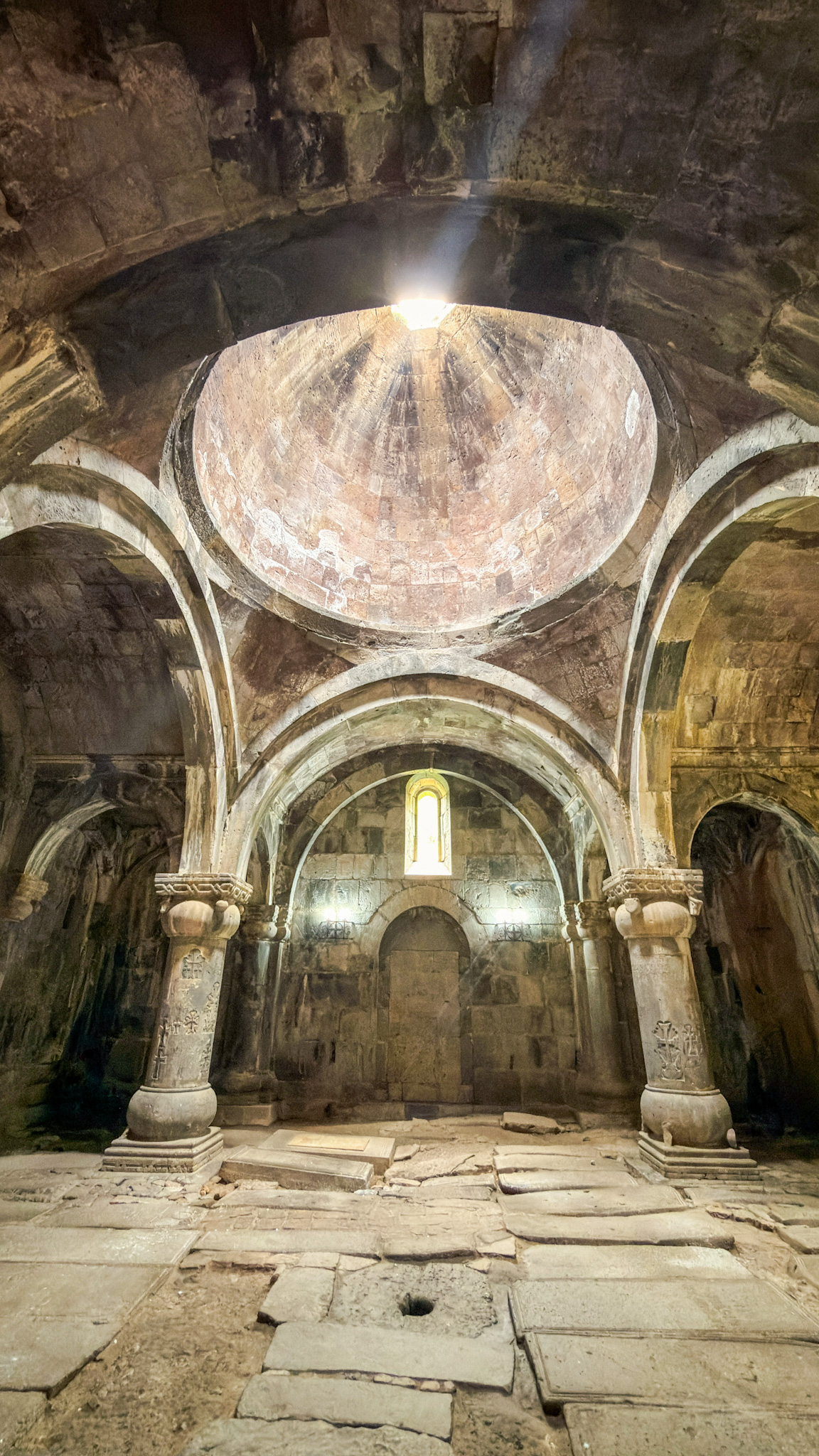
The drive south to Gosh the next morning carried us deeper through the Debed Canyon, the river running high and fast from recent rain, monasteries appearing every few kilometers half-swallowed in mist. There are something like eight medieval monasteries along this gorge, and driving through it you understand that you are passing through one of the oldest continuously Christian landscapes on Earth. Armenia was the first nation in the world to adopt Christianity as its state religion, in 301 AD, and the canyon is essentially a living museum of that history. We stopped in the leafy town of Dilijan to change money and to say goodbye to Felix, who was continuing on alone, and then carried on to the tiny village of Gosh, about a hundred households tucked into a forested valley, named for the medieval scholar and lawmaker Mkhitar Gosh and best known for the monastery that bears his name.
It was in Gosh that we found the heart of our Armenian stay, a guesthouse called DiliVita. It feels less like a business than a family compound that gradually decided to take in visitors. The owner met us at the gate, gave us and our grumpy taxi driver a full tour of the property, and then sat everyone down, the driver included, for a complimentary spread of tea, coffee, brandy, and wine. You do not get your taxi driver invited in for a drink at most places. We knew within ten minutes we had chosen well, and even the grumpy taxi driver eventually broke with a smile at the hospitality. Our suite had exactly one window, roughly the size of a postage stamp, but a room is just a place to sleep, and everything that mattered at DiliVita happened outside it.
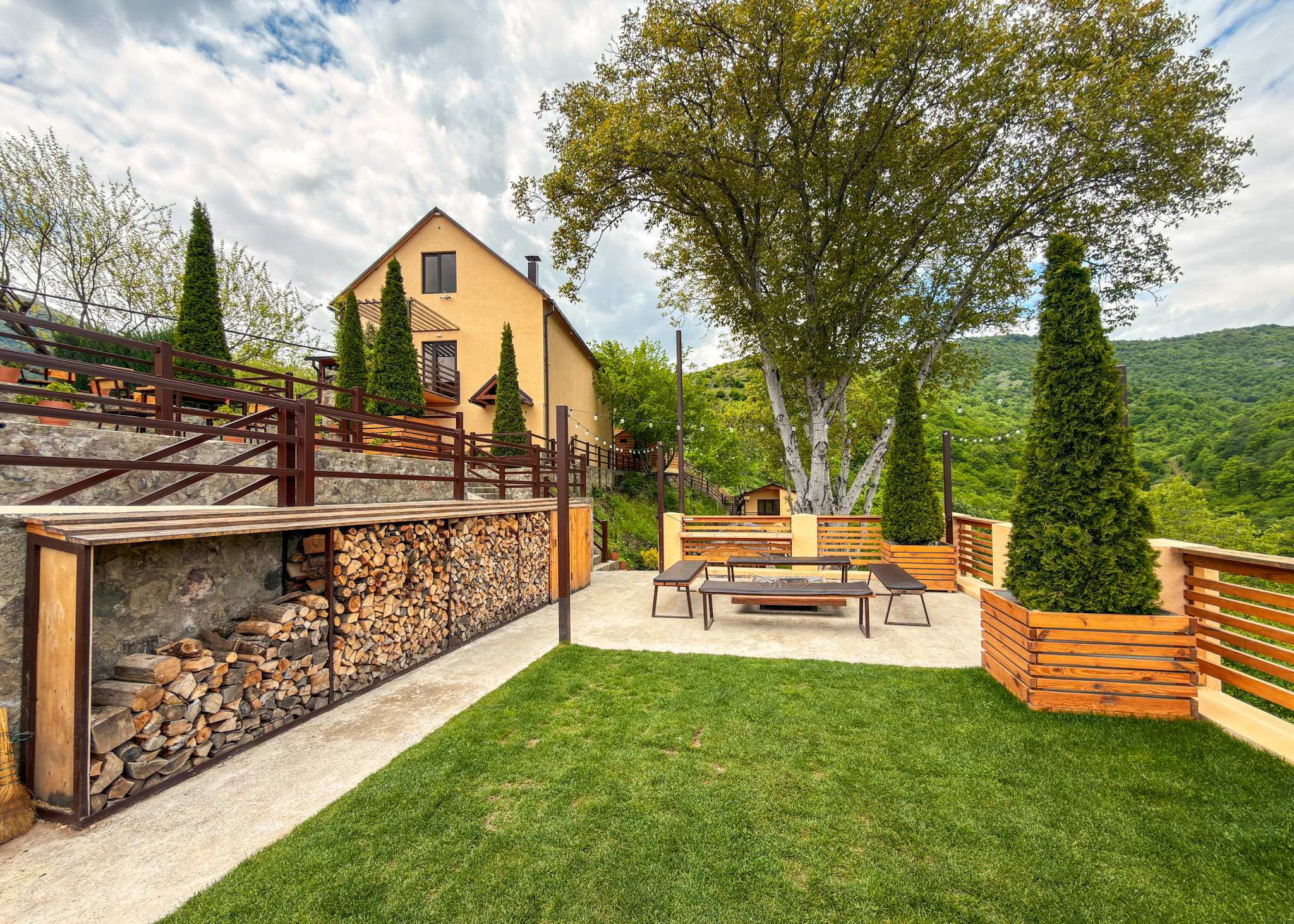
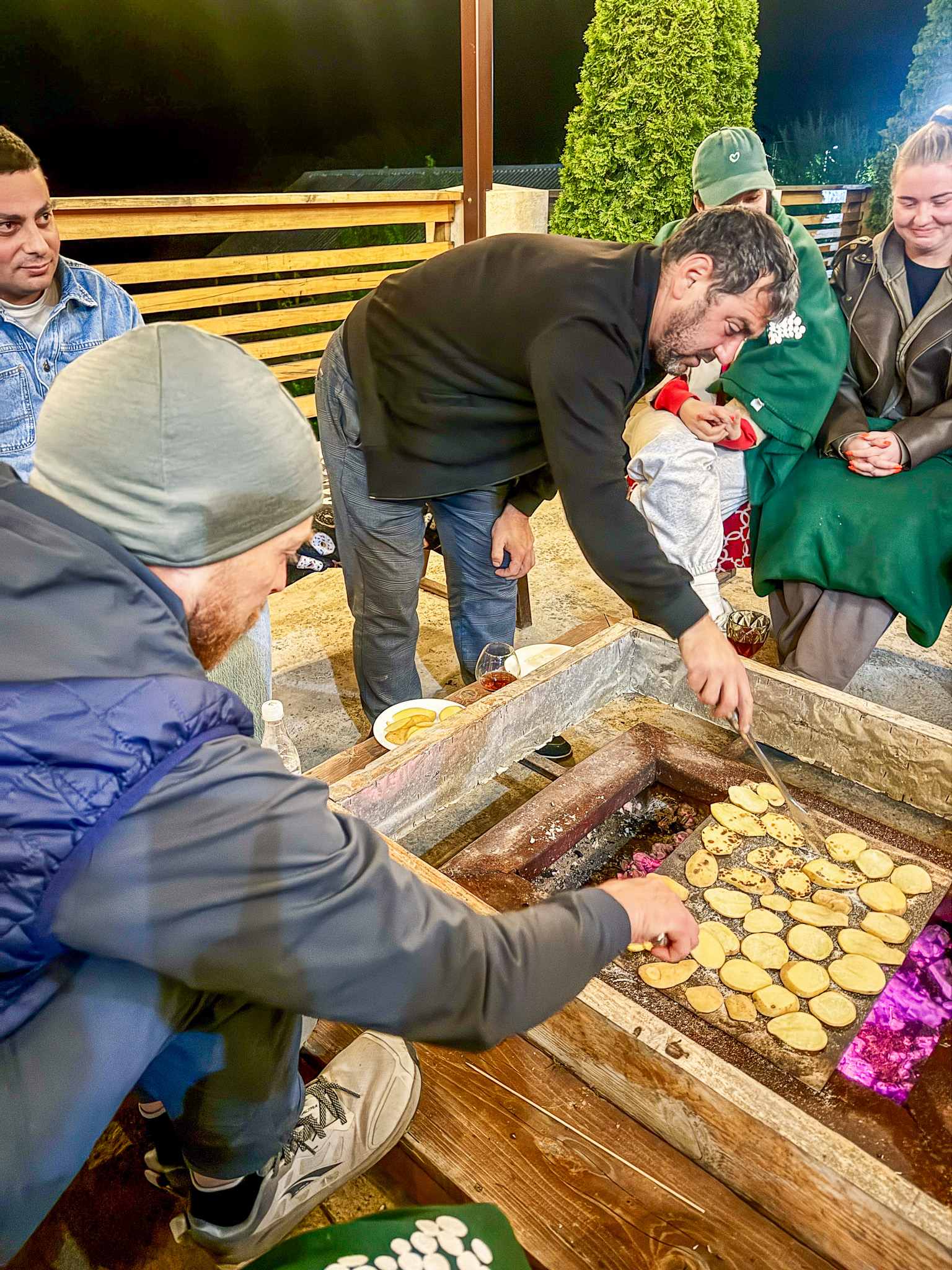
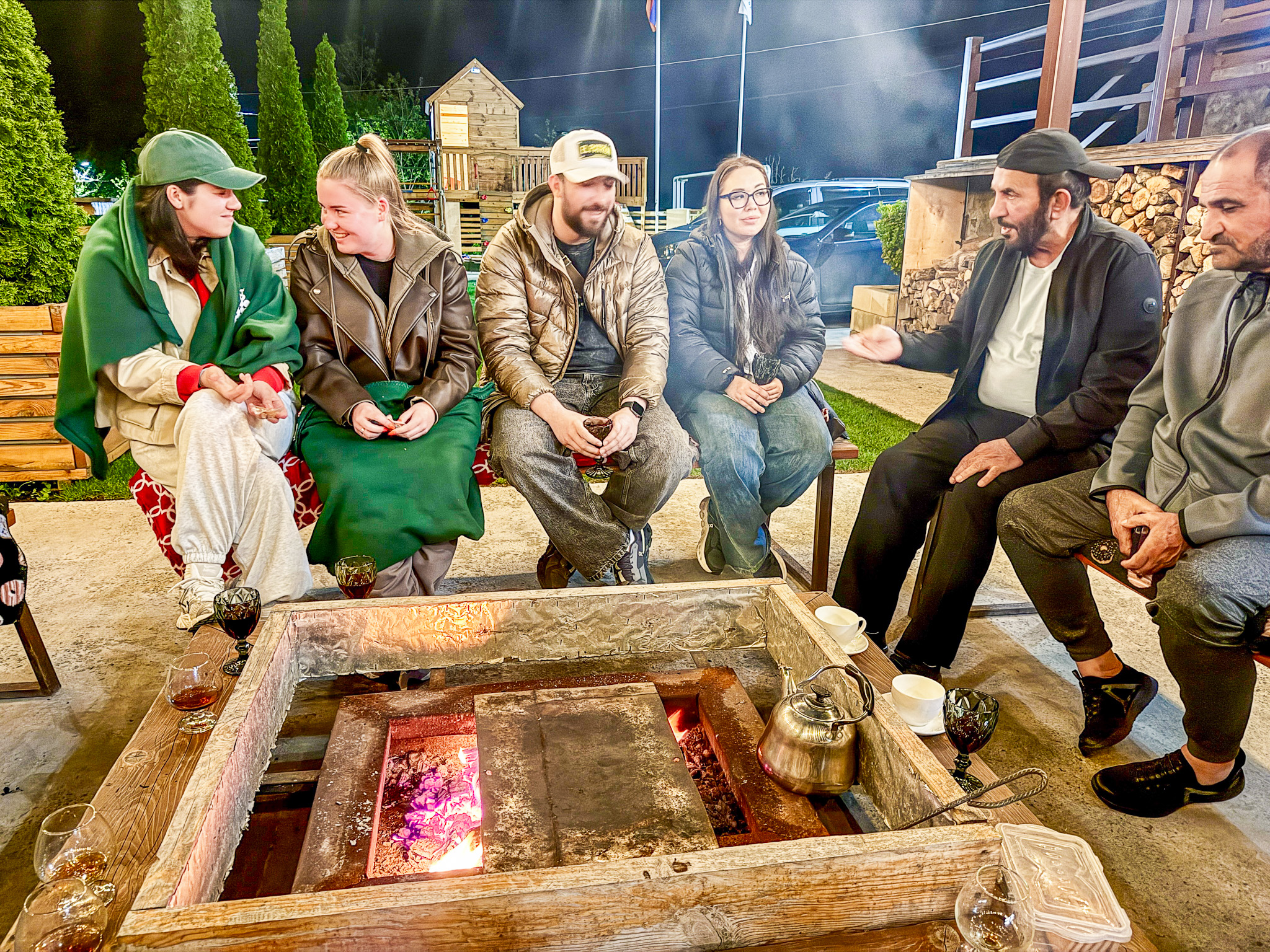
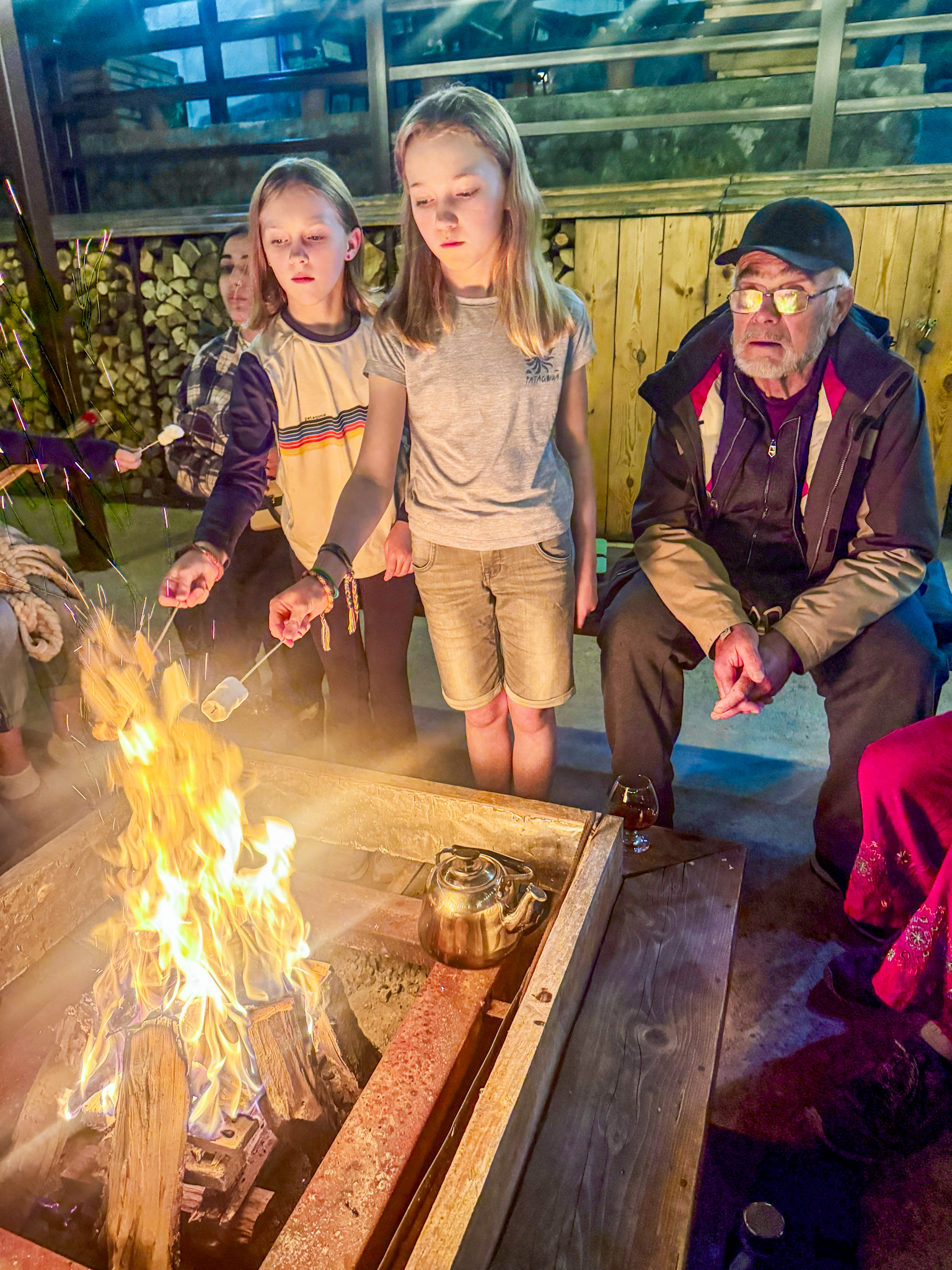
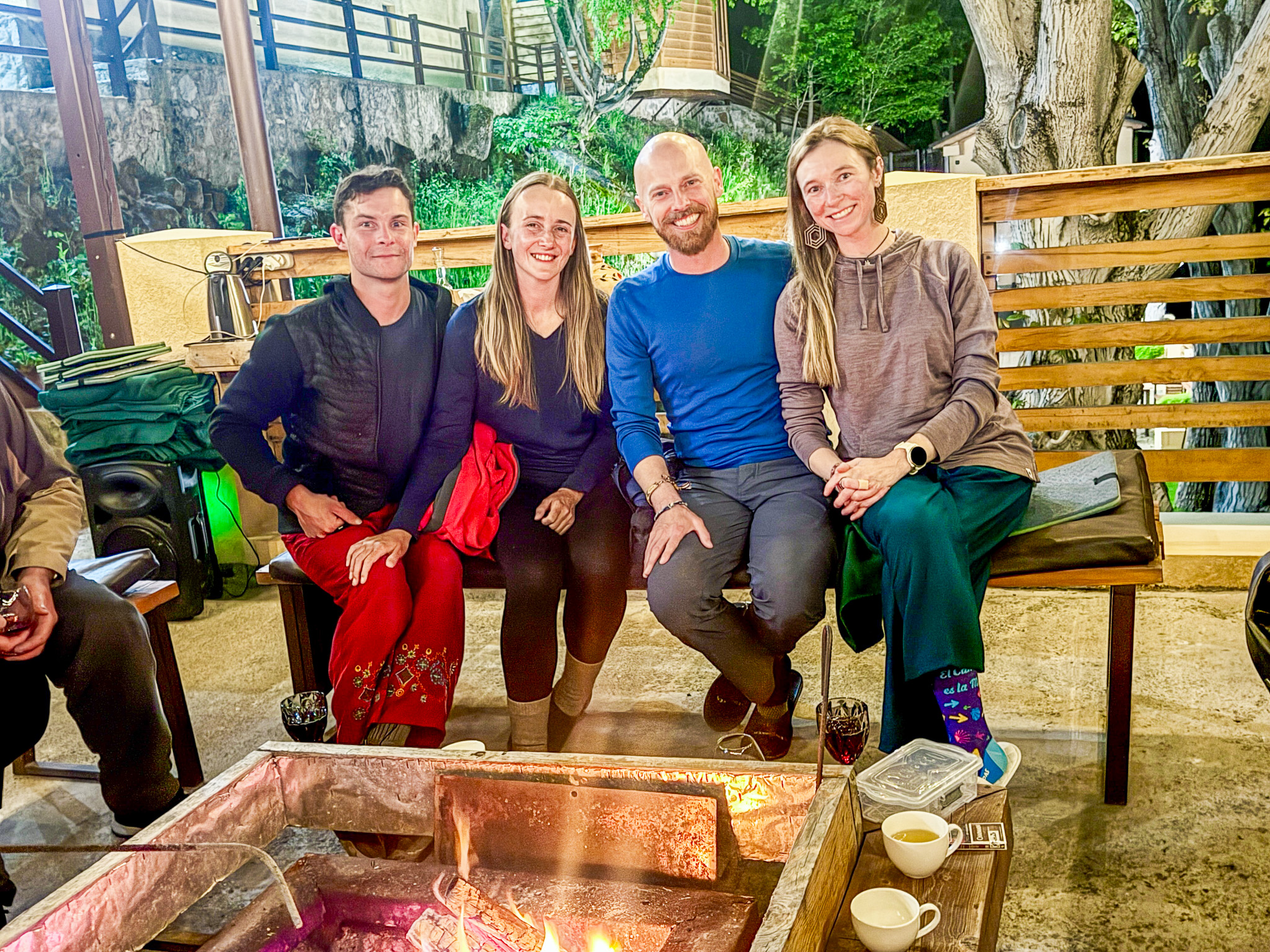
What mattered most happened at the fire pit. Every night at nine, the owner, a man in his seventies named Zerosh, gathered whoever was staying to roast marshmallows, to eat potatoes baked in the coals, and to drink tea, brandy and homemade wine. That first night we sat around the fire with people from Lebanon, the UAE, Armenia, Russia, and Germany, while Zerosh, who refers to his guests as his “beloved tourists,” led us in toasts to peace, to Armenia, and to the moment we were all in. We stayed up until midnight, later than we had in weeks. The ritual was, we would learn, more or less identical every evening, and somehow that did not diminish it at all.
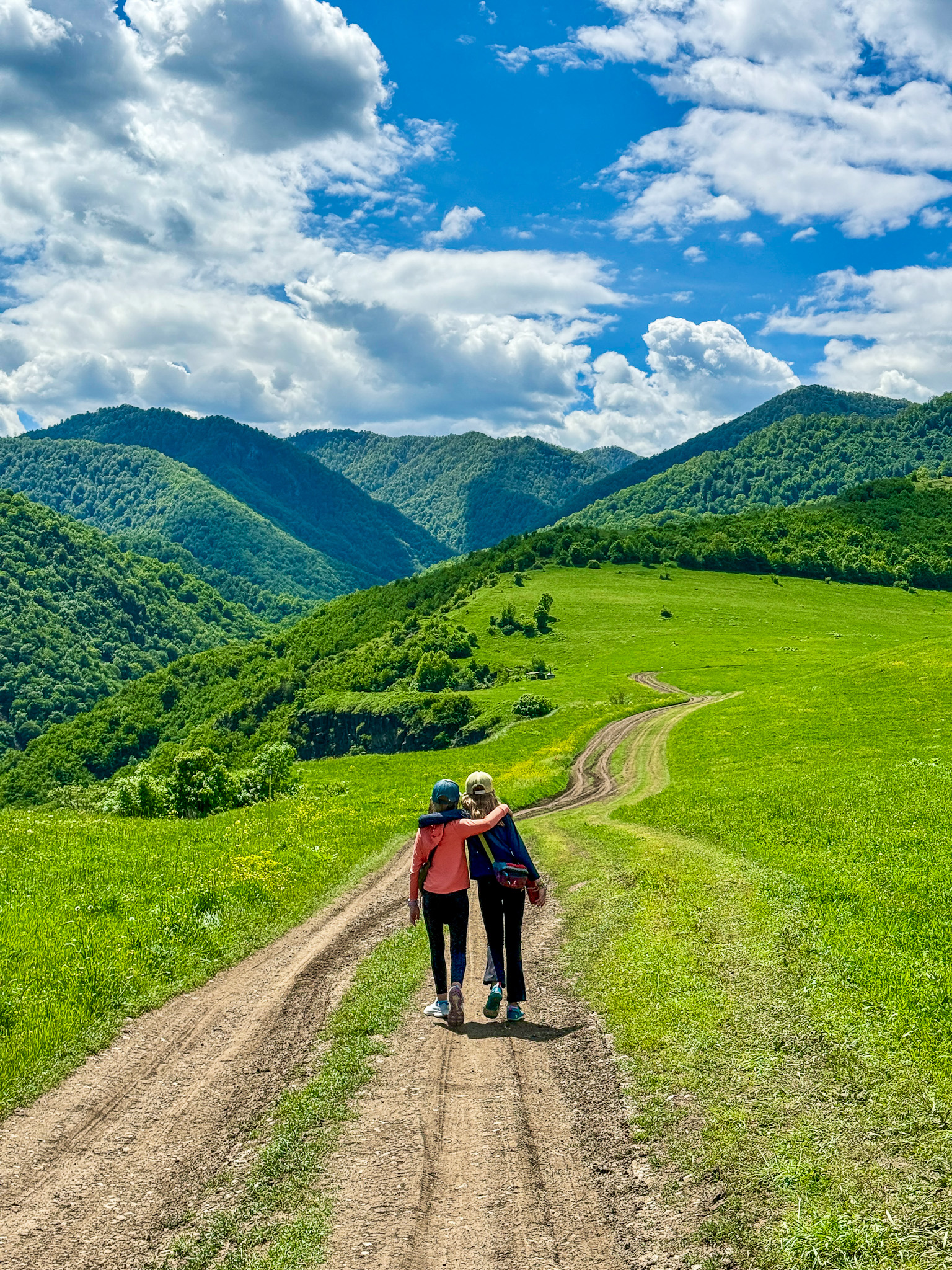
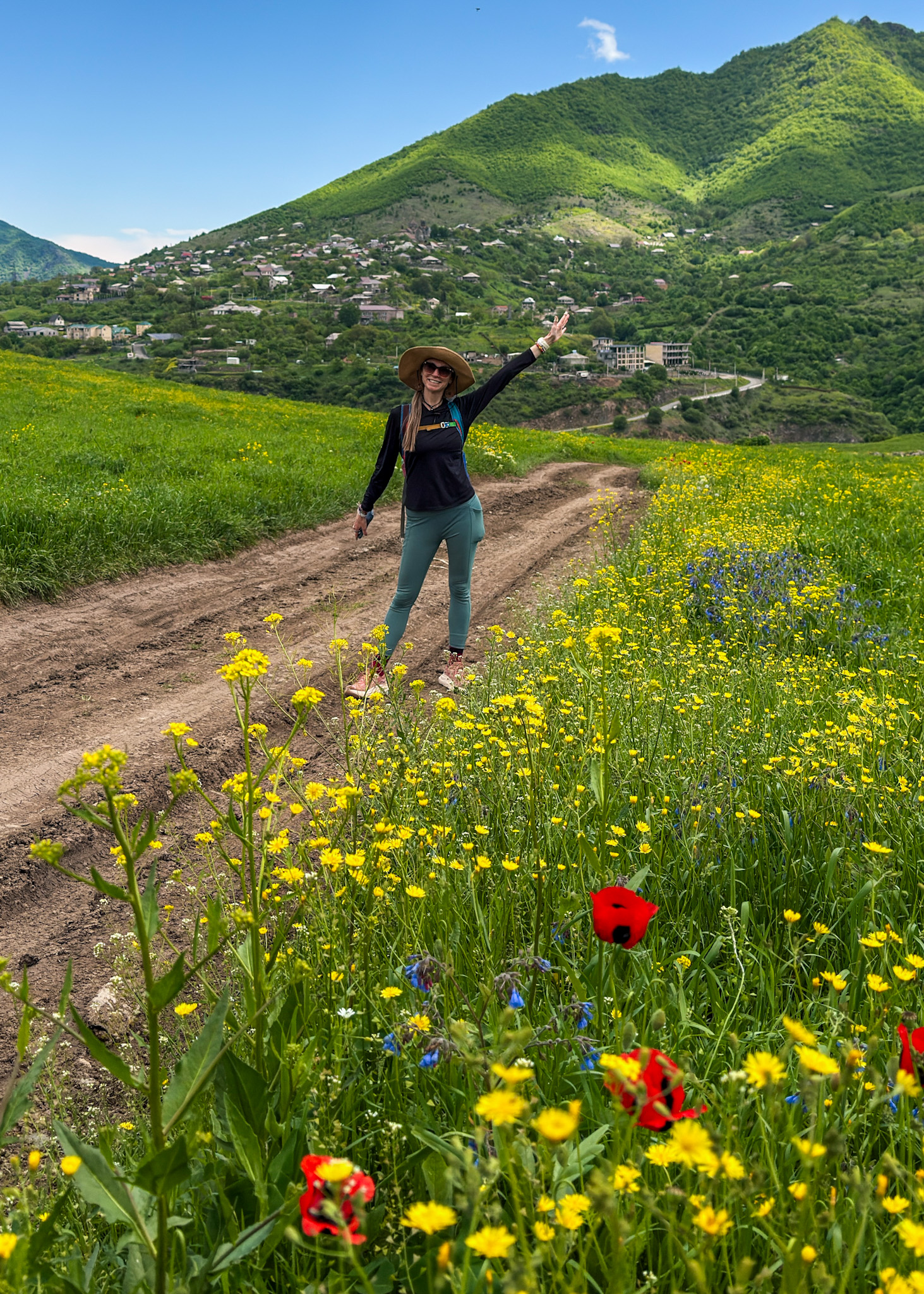
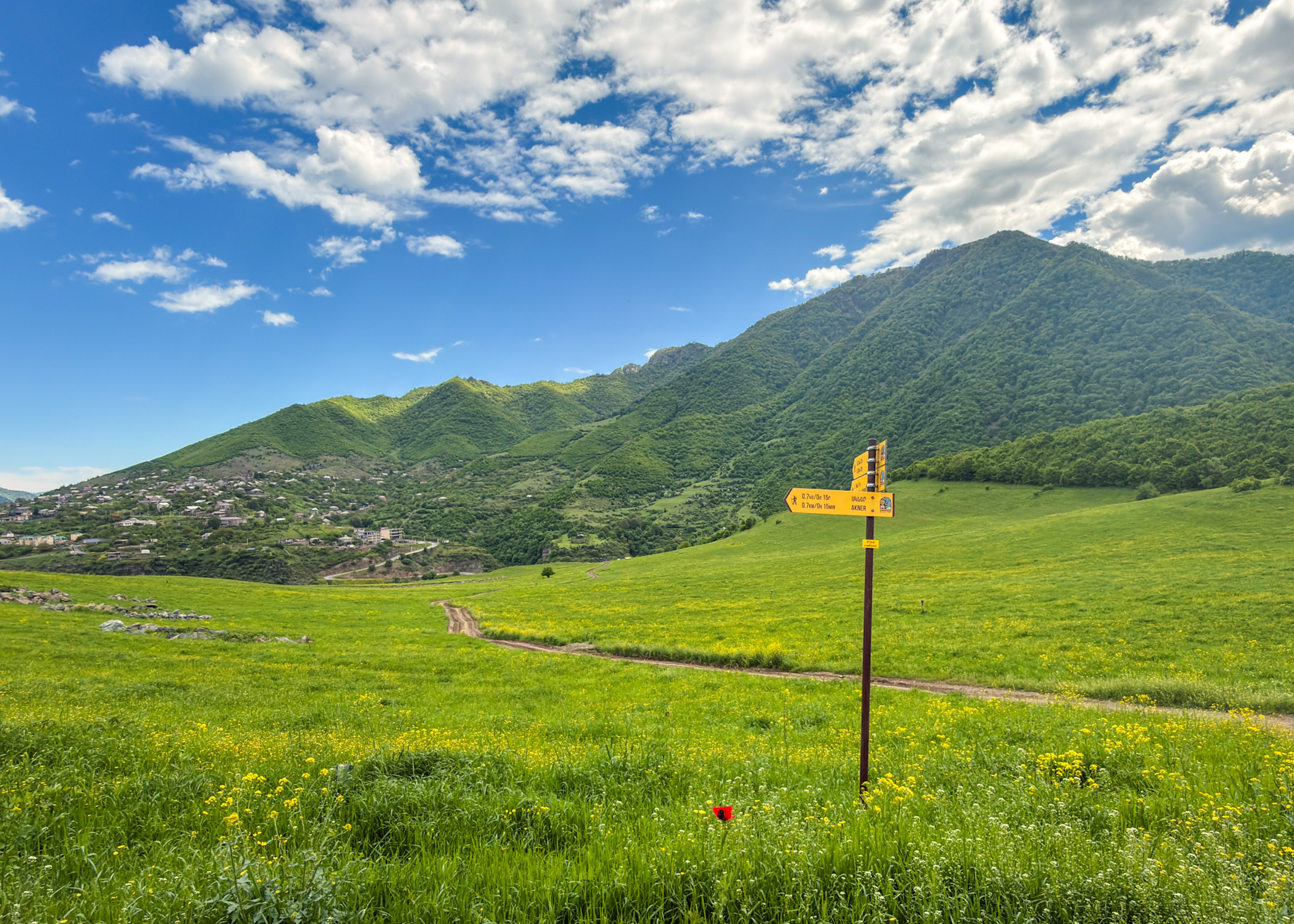
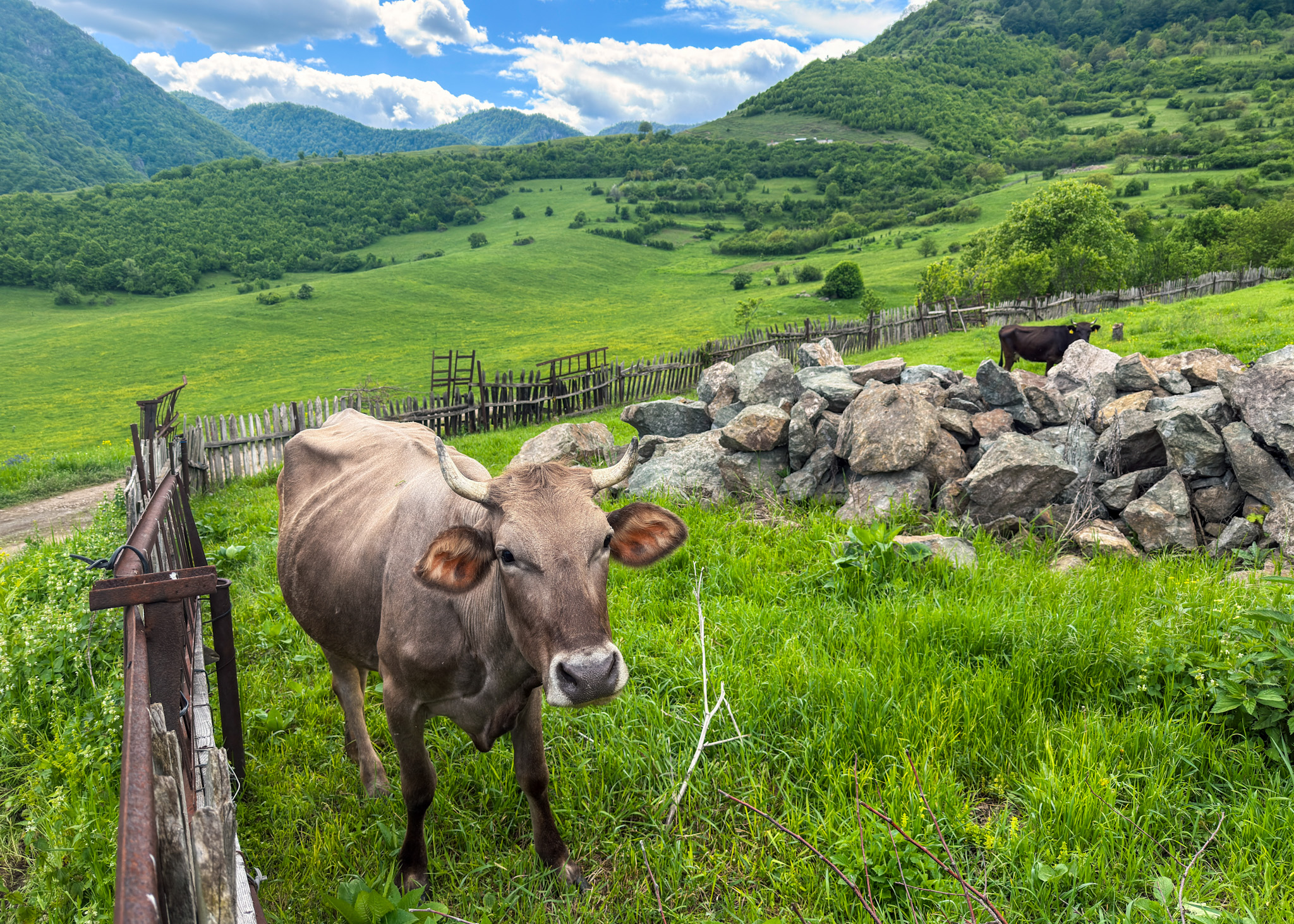
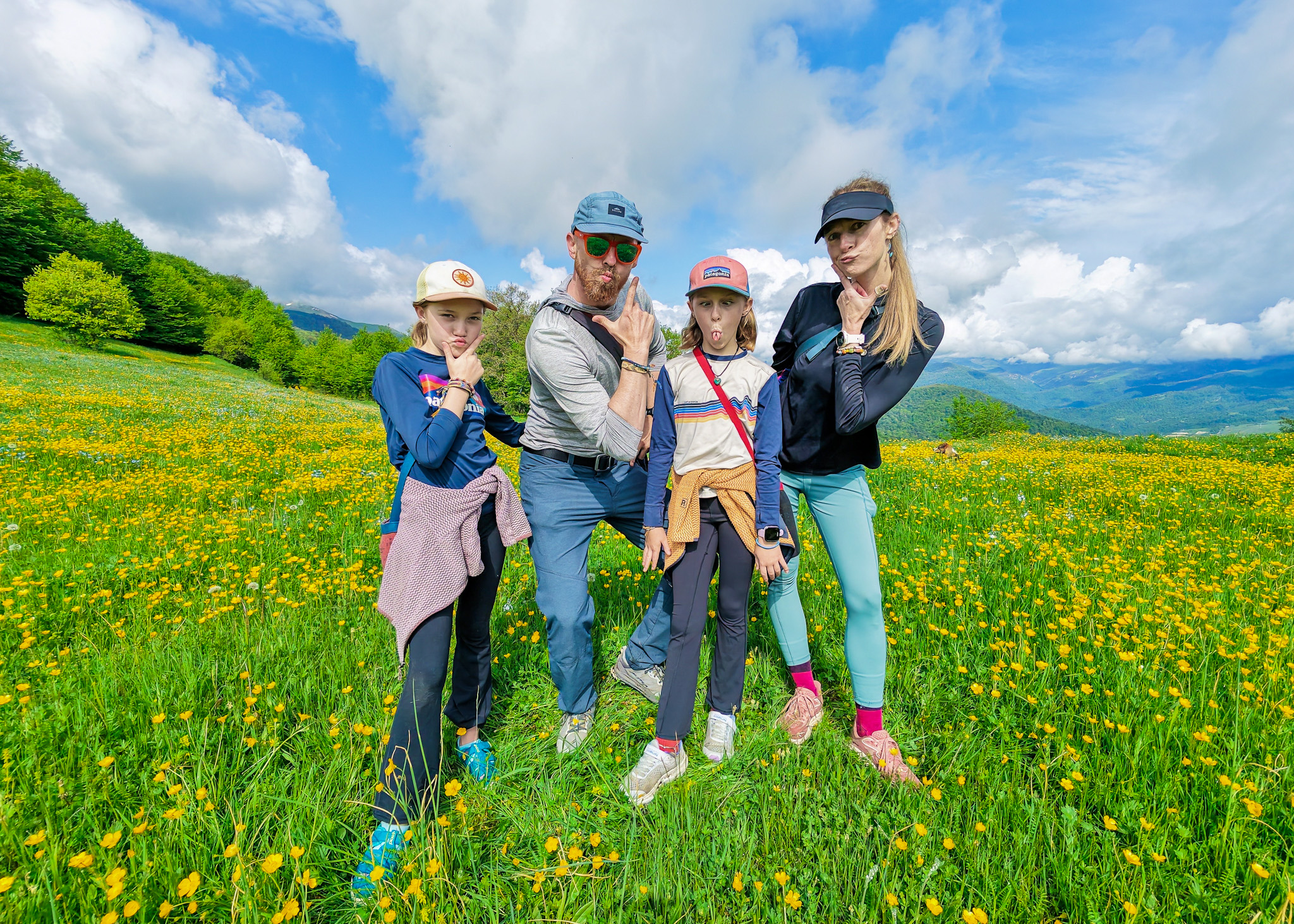
The days in Gosh fell into a rhythm of hikes through Dilijan National Park, a region of dense beech and oak forest sometimes called Armenia’s Switzerland. One morning we set out for the trail from Lake Parz to Dilijan, only to find no taxi would answer our calls. We were saved by the guide of two Emirati guests at DiliVita, who offered to fold us into his seven-seater van since they were headed roughly that way. It cost them a detour of twenty minutes or so, and it rescued our entire day. That thirteen-kilometer hike climbed through deep forest, past an enormous centuries-old beech tree, and broke out into the broad Gyolort meadow—surrounded by soft green hills absolutely blanketed by bright yellow wildflowers that demanded an embarrassing number of photos and drone shots.
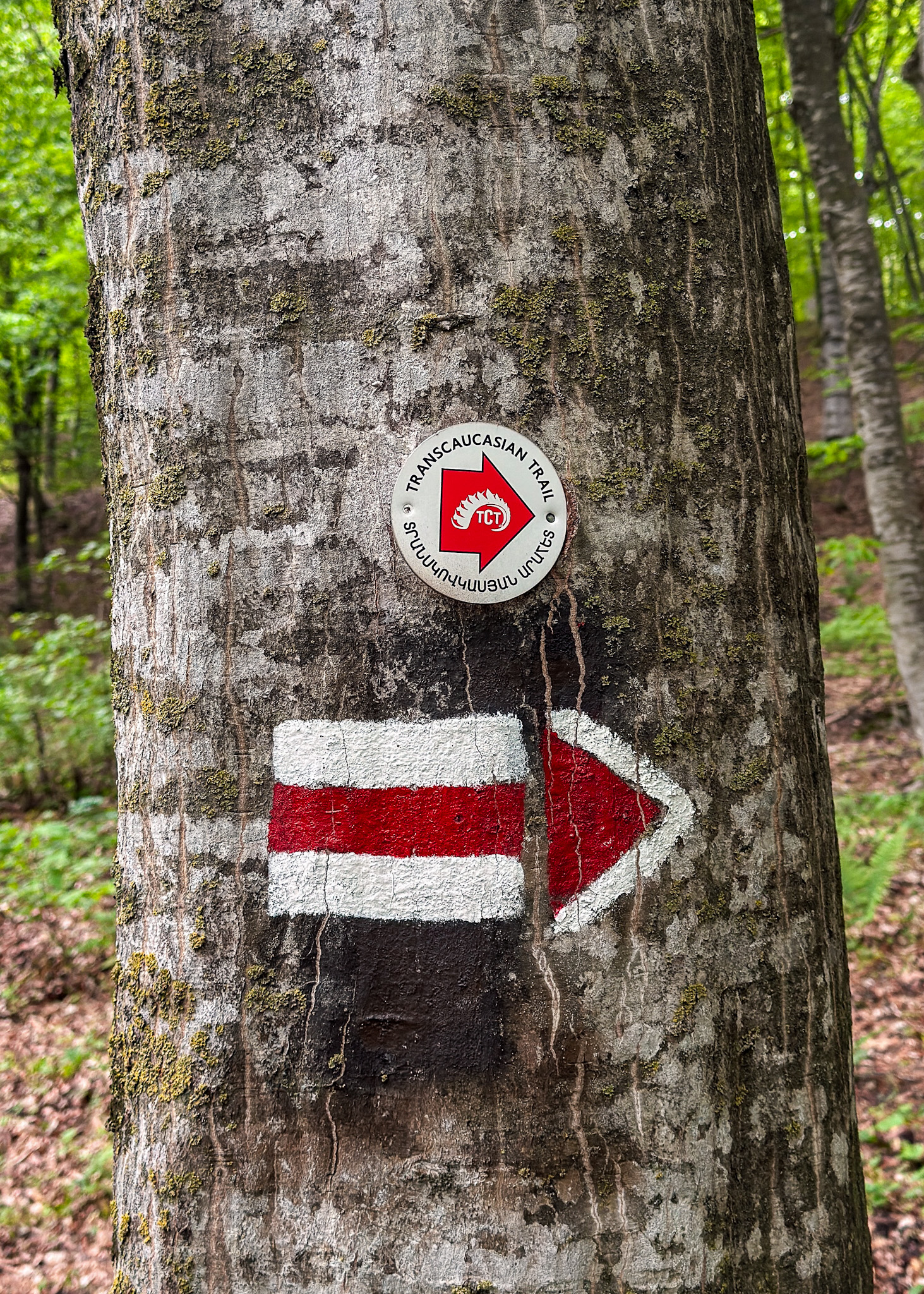
In that meadow we met the only other hikers we’d see all day, Sammie and Ben, a couple from New Zealand five weeks into backpacking the Transcaucasian Trail. The TCT is an ambitious long-distance route still being built across the Caucasus, eventually meant to run some three thousand kilometers through Georgia, Armenia, and Azerbaijan. The Armenian section alone, the first fully completed national stretch, runs about 860 kilometers and takes most thru-hikers a month or more, much of it requiring GPS and a willingness to bushwhack. Our girls took note of the canister of bear spray hanging off Ben’s strap, and with wide eyes asked if they ever had to use it—luckily not yet. The trail is so new and so lightly used that running into two people actually walking it felt like spotting rare wildlife. We told them that if they tired of pitching a tent, they could push on to our guesthouse for a soft bed and a hot shower. They were noncommittal until we mentioned the bonfire and the marshmallows, at which point they hinted they just might turn up.
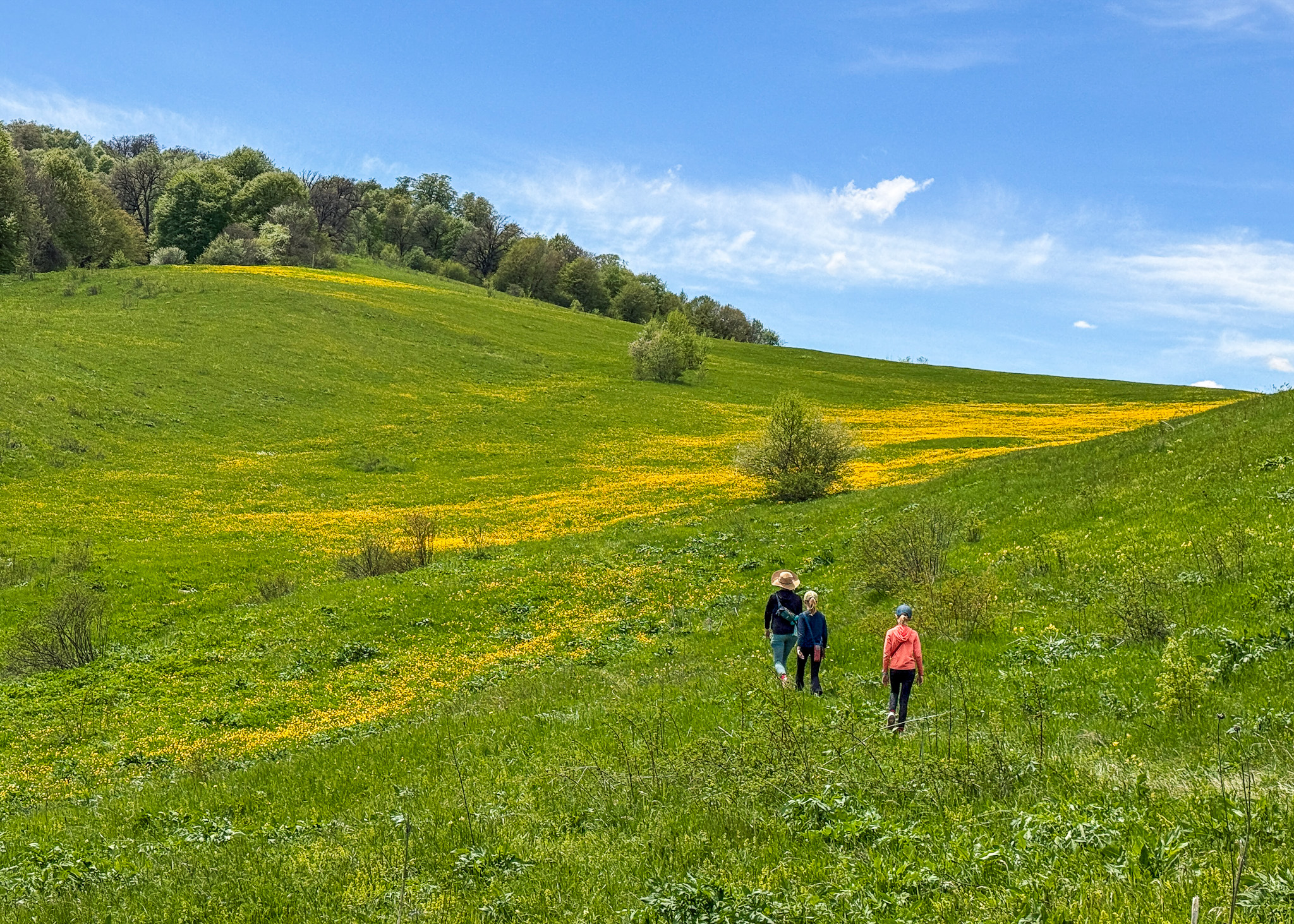
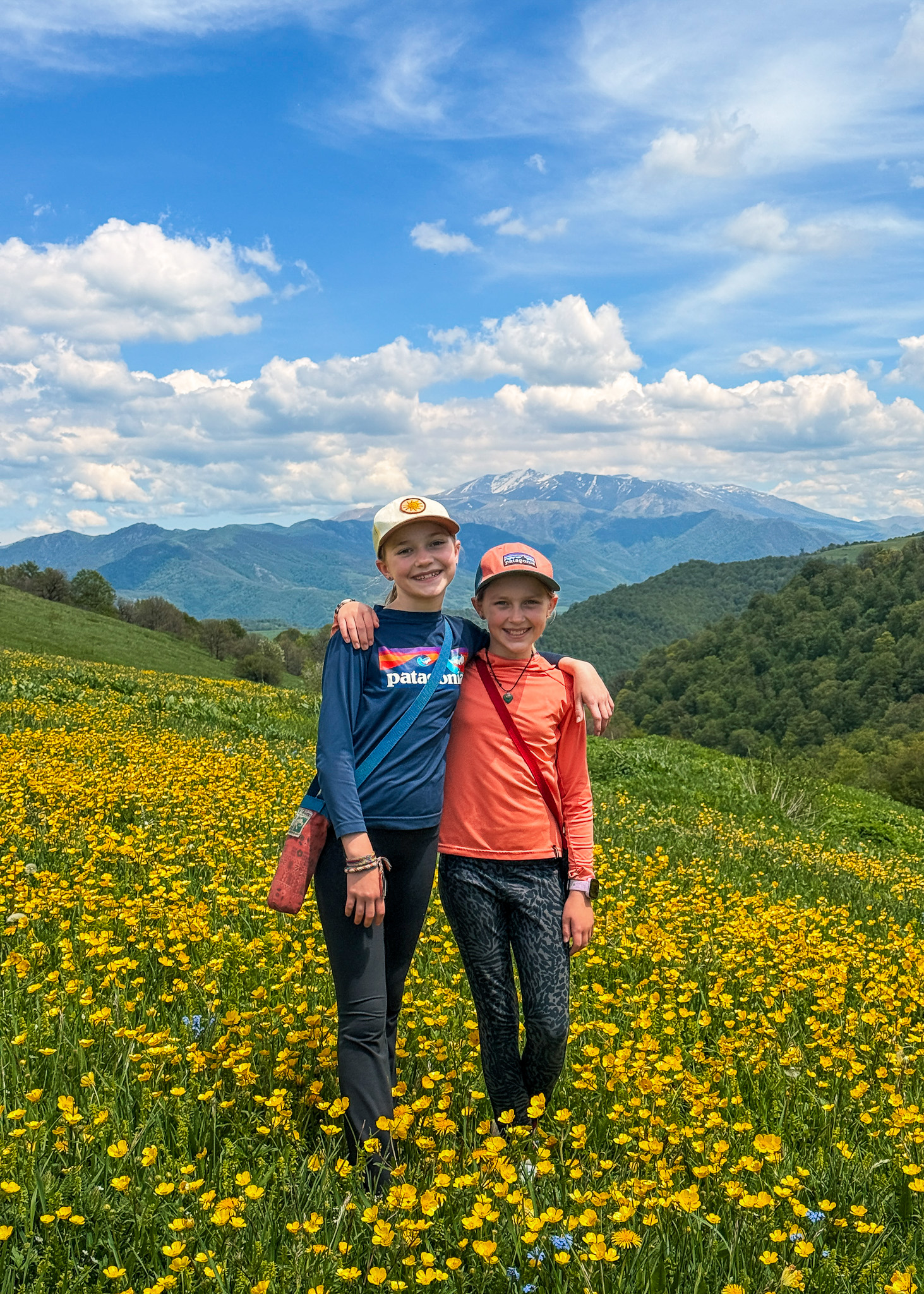
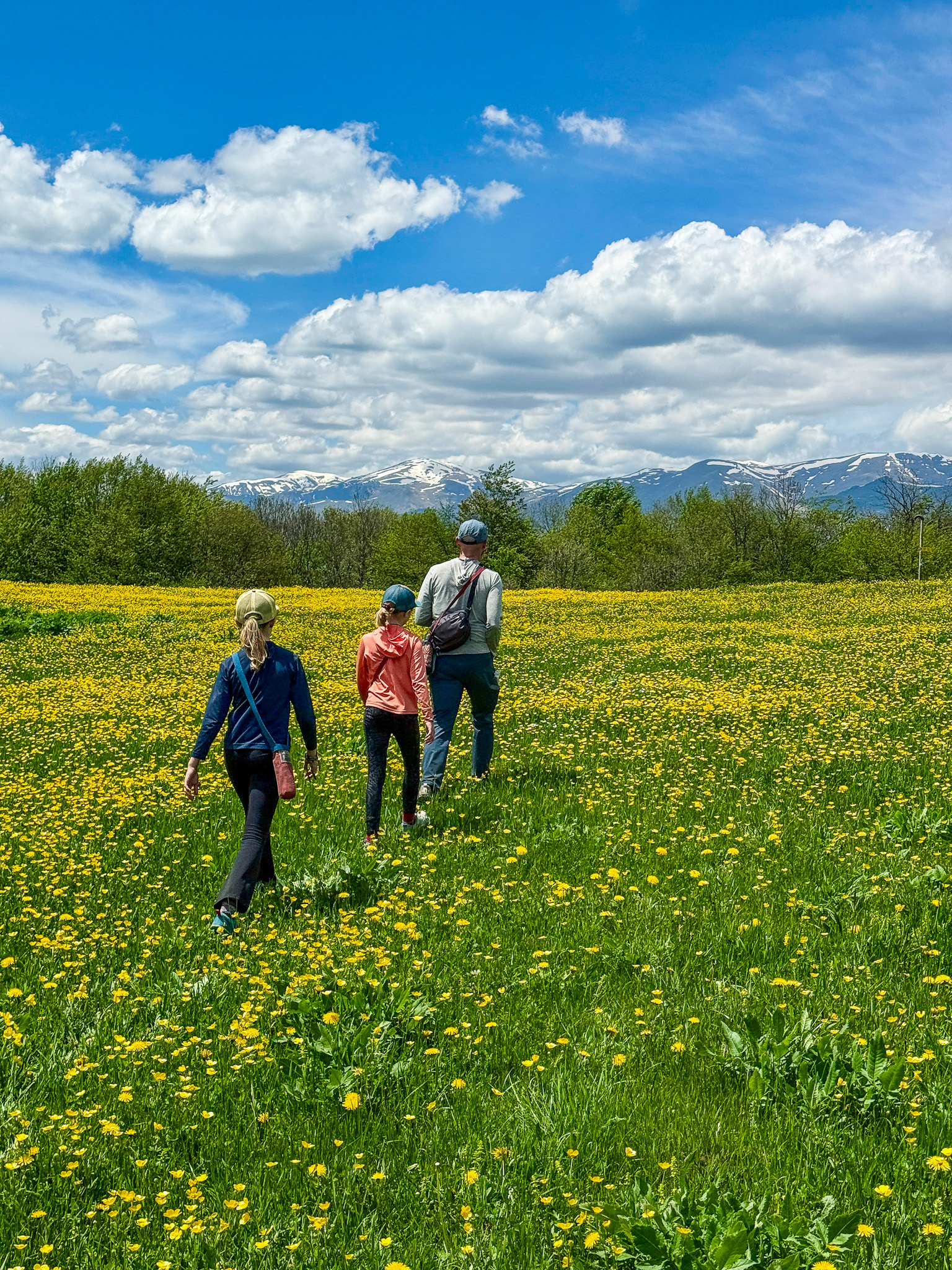
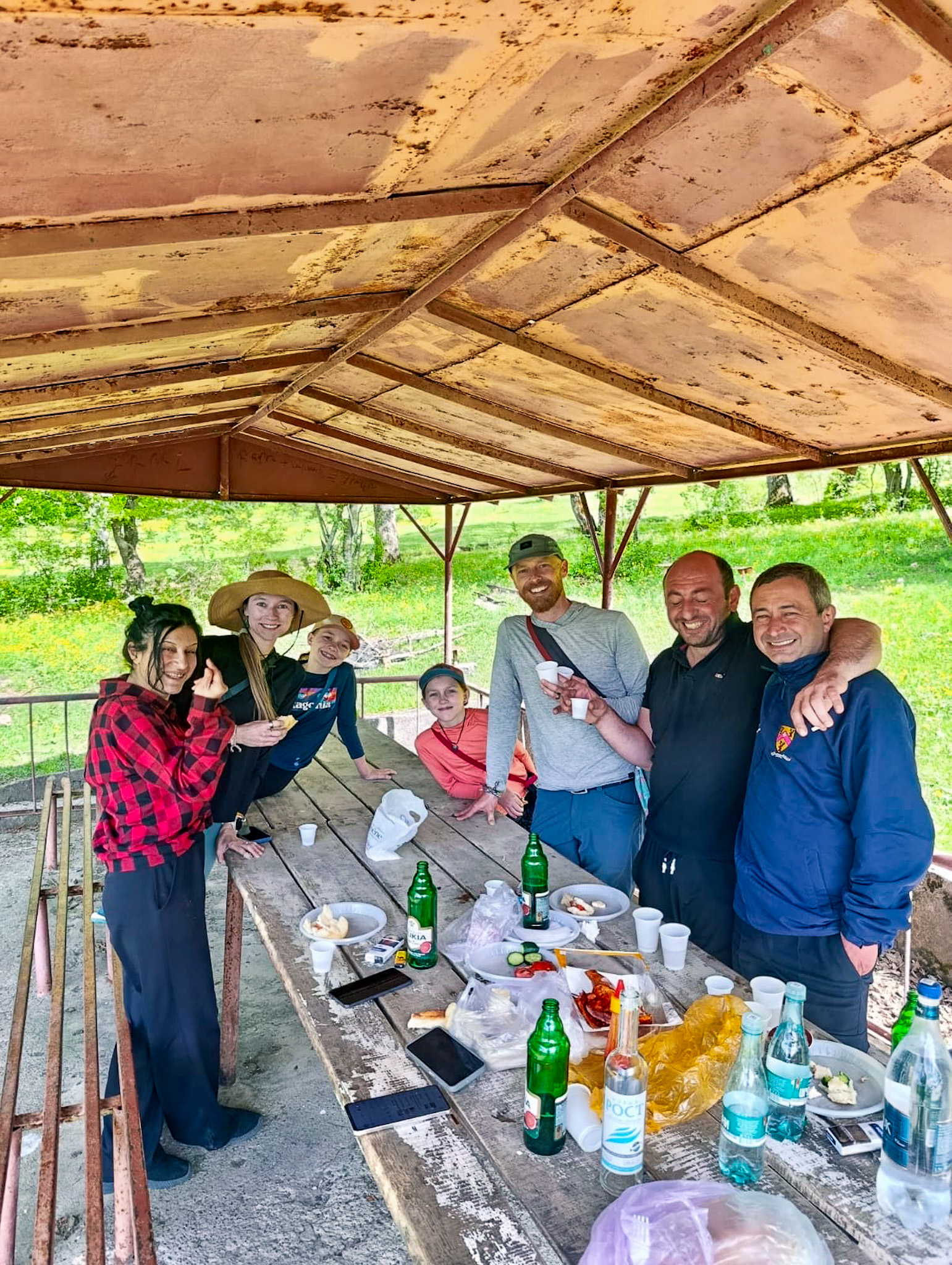
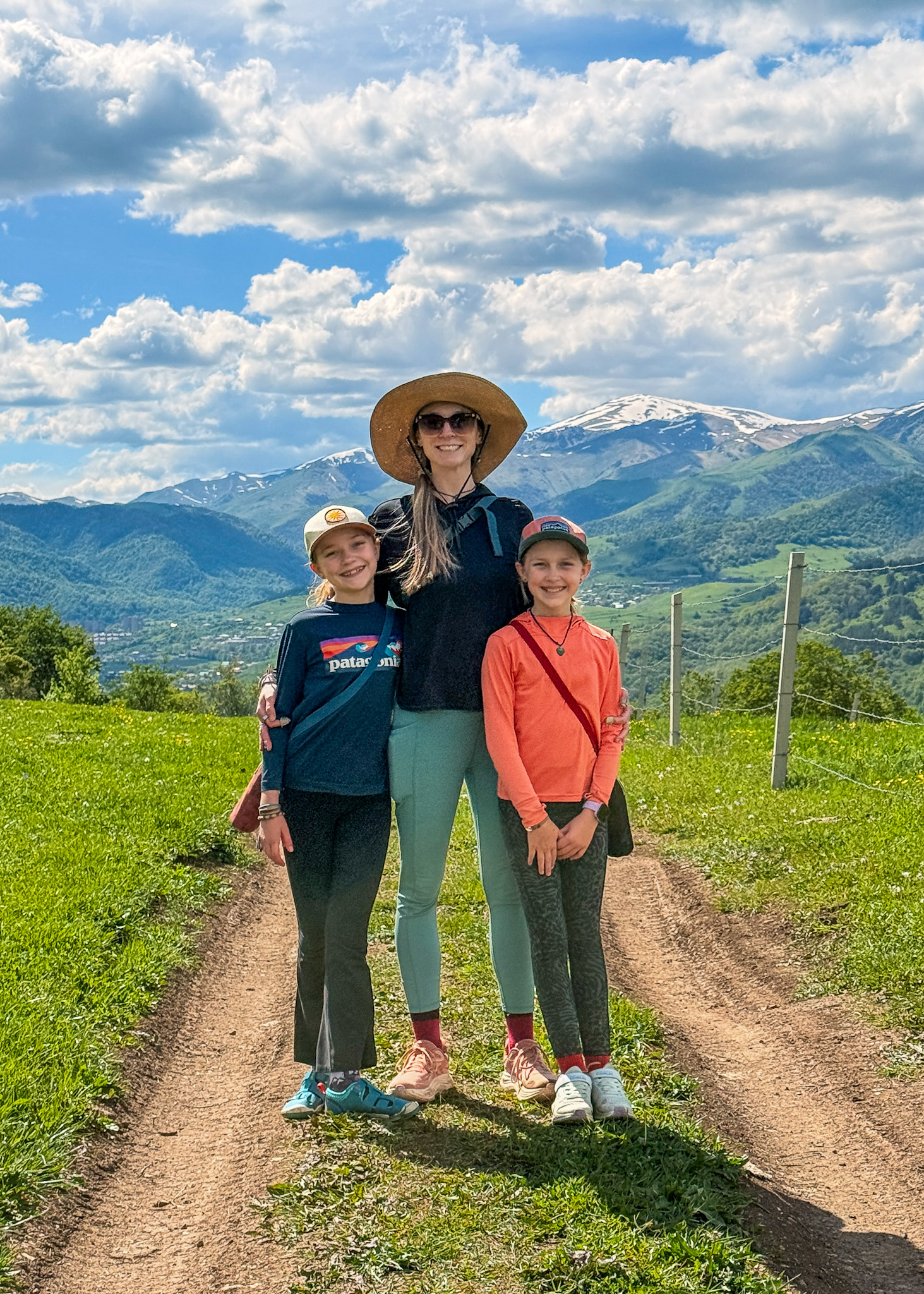
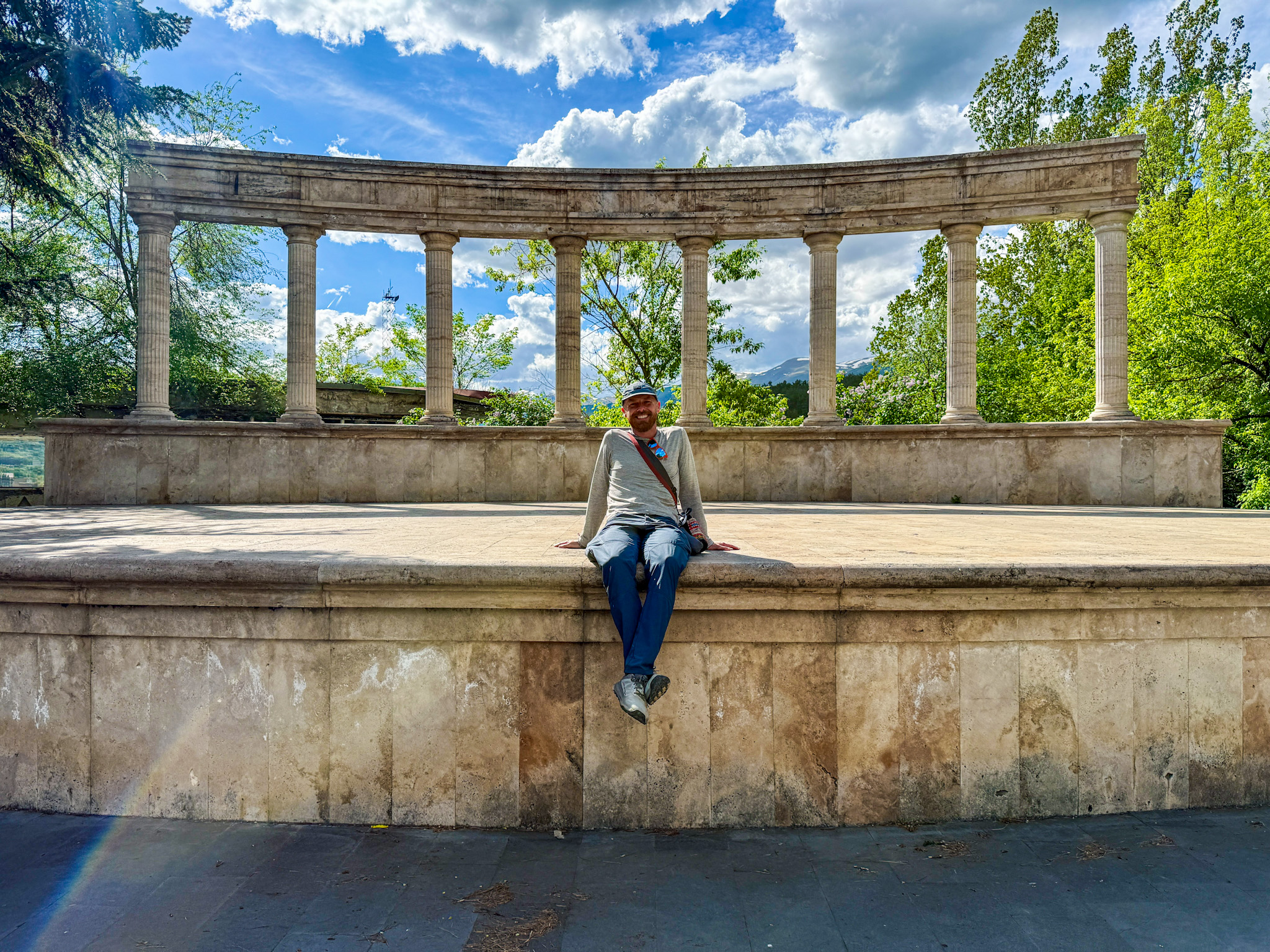
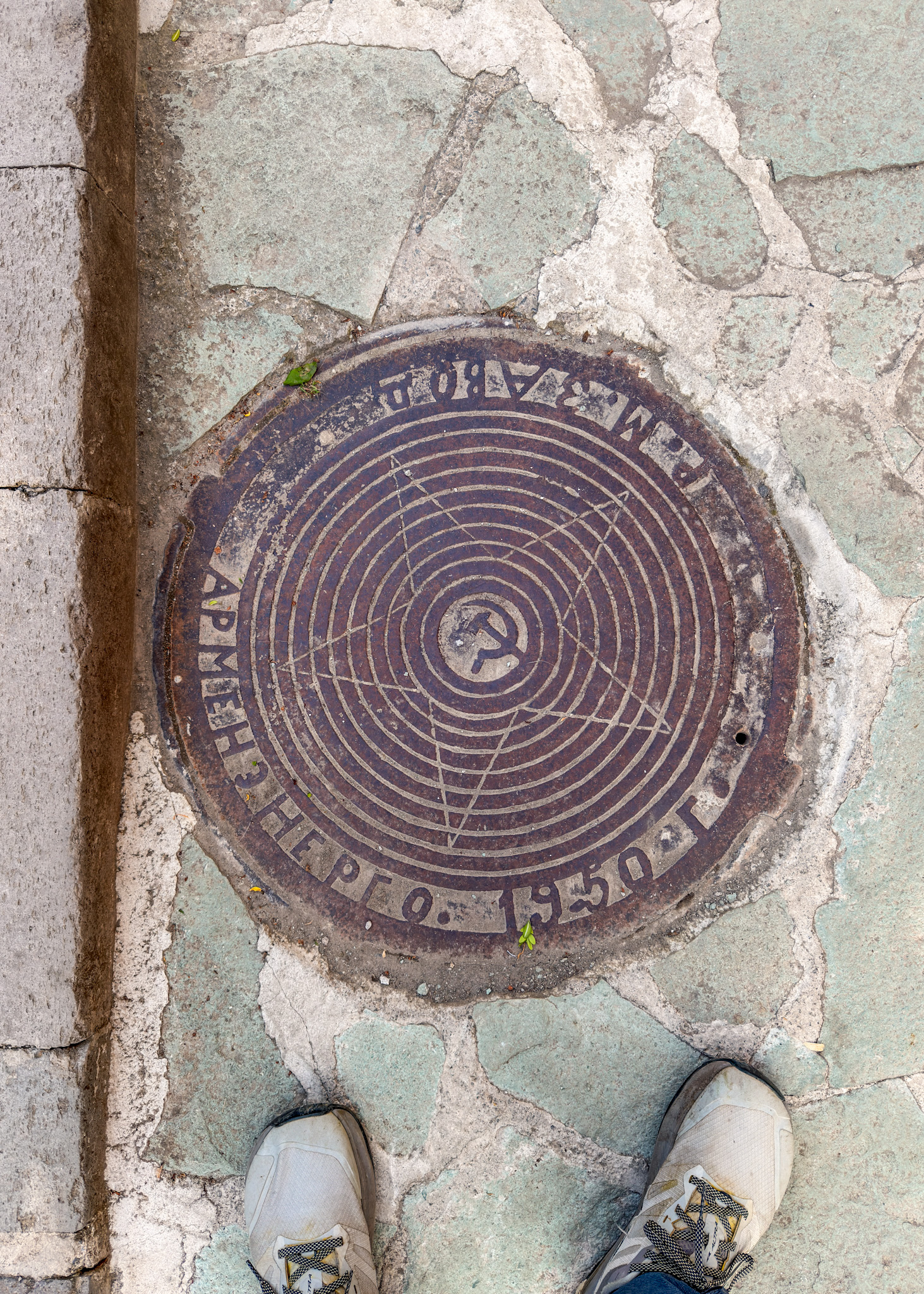
A little farther down the trail we came upon a group of four Armenians, three men and a woman, at a covered picnic table, who spotted us and immediately began waving us over with great enthusiasm. We nearly shrugged them off and kept hiking, but their persistence and big smiles drew us in. We shared no common language, which did nothing to slow them down. They were surrounded by an impressive spread of food and various bottles of alcohol—beer, wine, and some clear liquor in an unmarked water bottle. They insisted we eat: bread stuffed with chicken, cheese, and tomato, followed by shots of (probably) vodka. It was 2pm on a Wednesday afternoon, so naturally we obliged. We took a polite token of a sip (not being in the market for vodka with kilometers still to walk), posed for group photos with this delightful crew, and carried on, broad grins on our faces as we processed that bizarre but hilarious experience. The walk finished by spilling us out directly into Old Dilijan, where we browsed ceramic shops and woodworking studios and sneakily bought a pair of silver rose earrings for Finlee’s birthday in July, before grabbing shawarma and a taxi back to Gosh.
True to their word, Sammie and Ben were sitting in the DiliVita garden with a pot of tea when we returned, the lure of roasted marshmallows having proven too strong. At the fire that night, the girls demonstrated their marshmallow technique, which consists of plunging the marshmallow directly into open flame, letting it fully ignite, blowing it out, surveying the charred ruin, and eating it anyway. Our children are savages. Ben, meanwhile, quietly stole the show, not through any effort but simply by being one of the more interesting people we’ve crossed paths with. He mentioned, almost in passing, that he collects rocks, which sounds harmless until you learn he is five weeks into a backpacking trip and has accumulated nine kilograms of them, occasionally stashing caches along the trail to retrieve later. He also “likes to run,” and later revealed he actually does Ironman triathlons, with his second race coming in August. He mentioned a 2 a.m. “work meeting”, which eventually led into his being the co-founder of a fintech startup with his twin brother in Sweden. Each new detail arrived so casually that it took a follow-up question to grasp its full size. Before we could learn much about Sammie, the two of them sensibly decided their big hiking day tomorrow required actual sleep, and off they went.
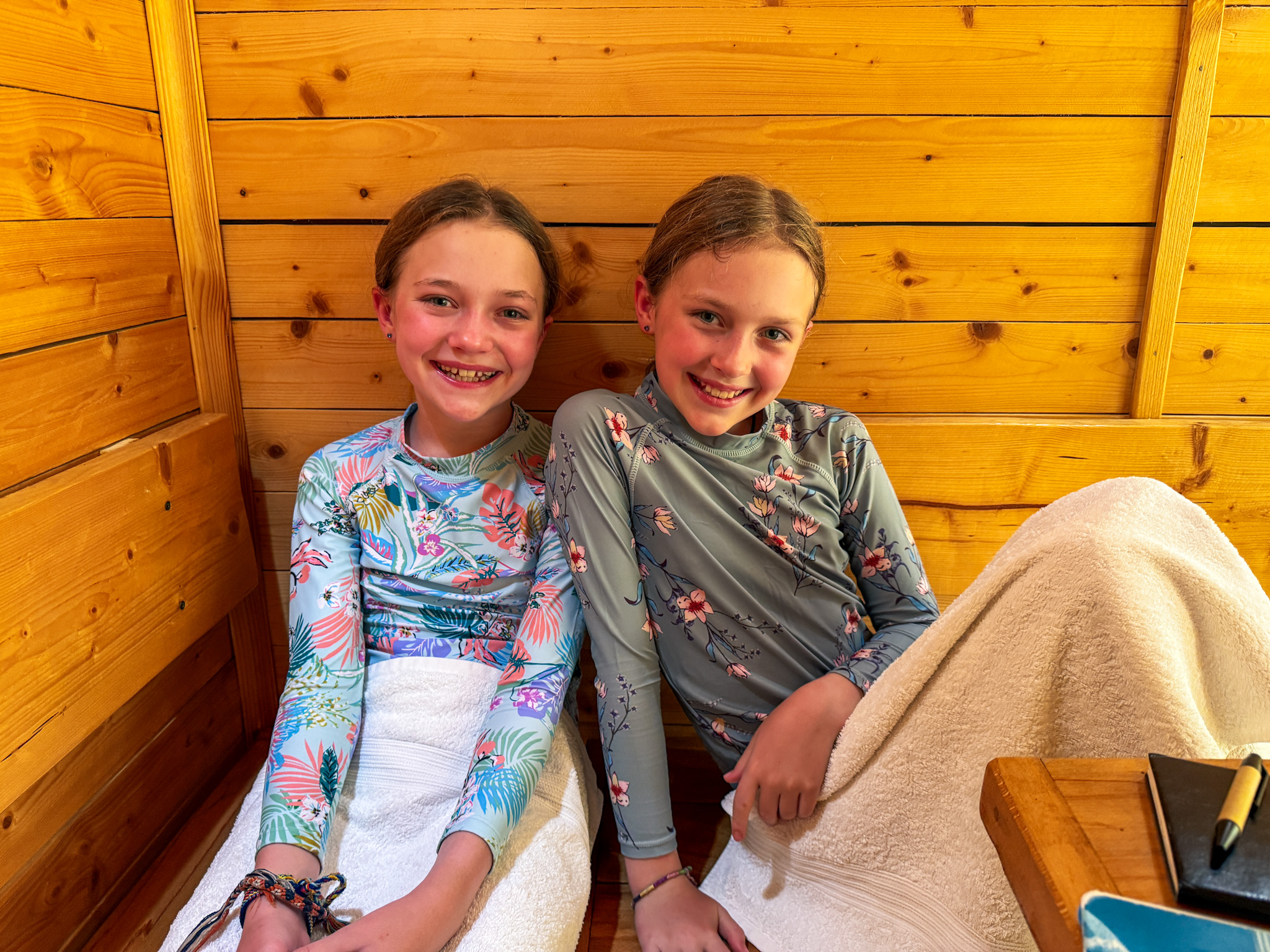
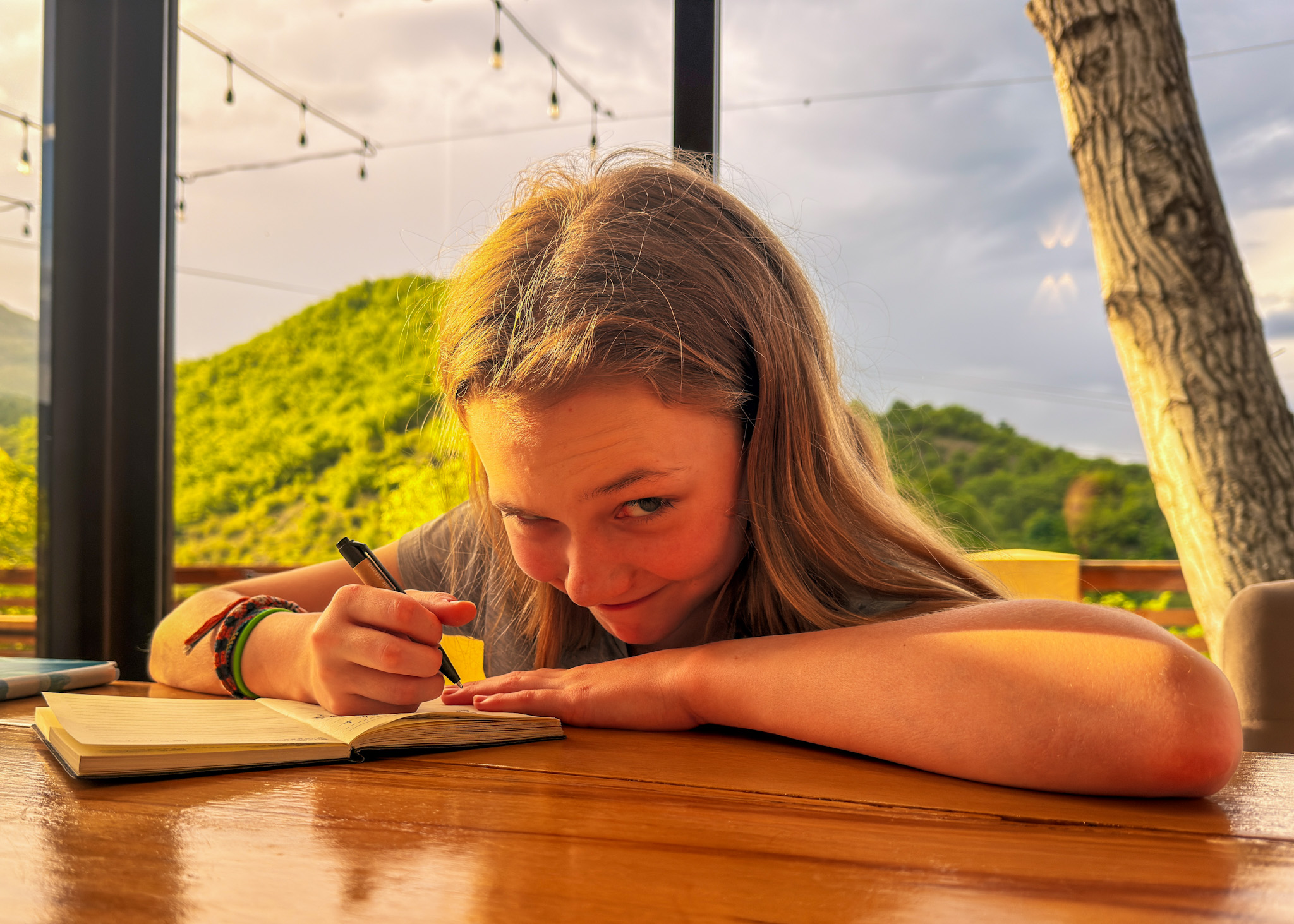
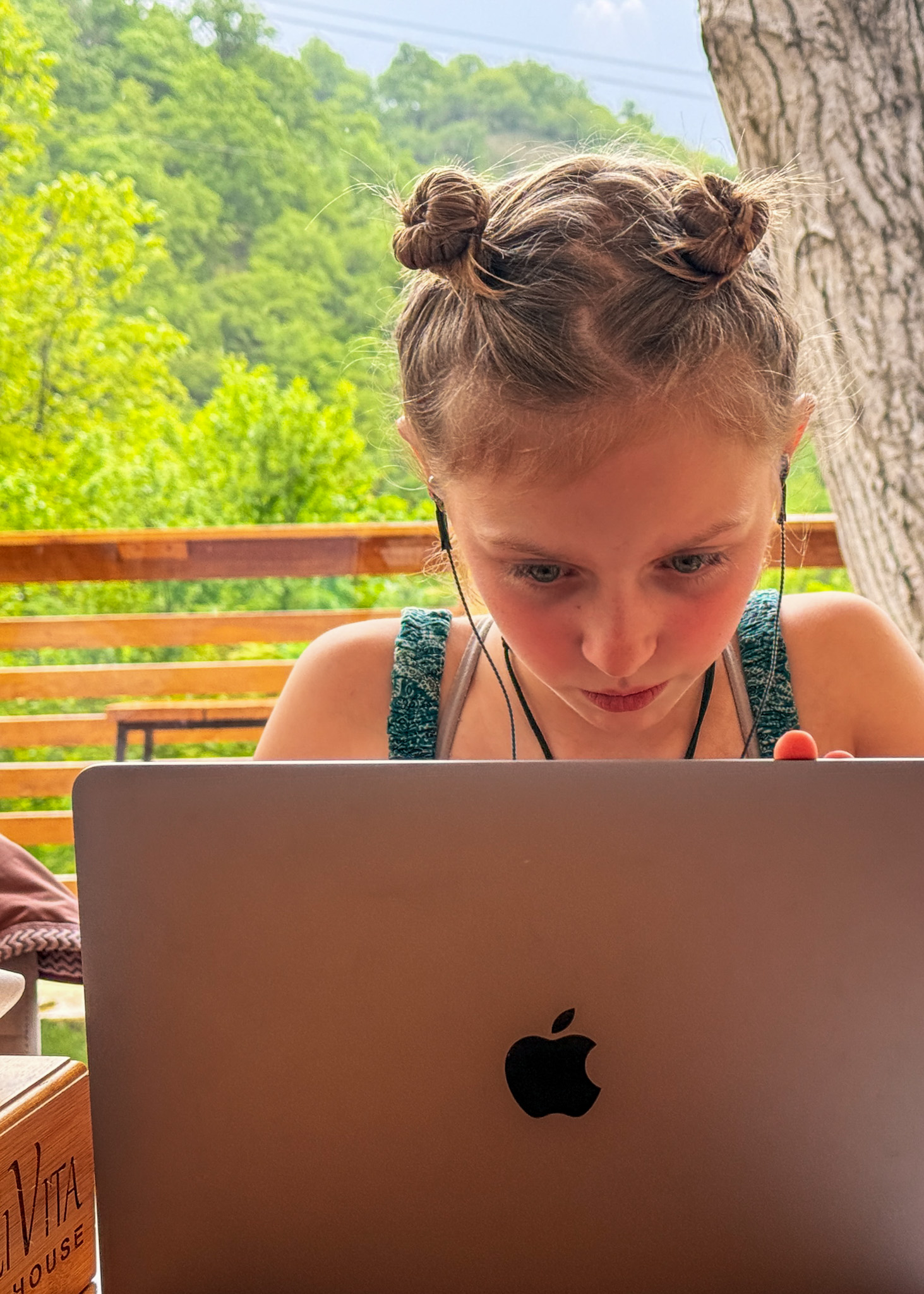
Not every day was a hike. One rainy day we spent in DiliVita’s sunroom, the girls grinding through homework while Max finally dragged the first half of our Central Asia 4×4 saga across the finish line on the blog. We broke the afternoon up with a session in the guesthouse’s wood-fired Russian sauna, the highlight of which was a bucket rigged to a chain overhead that, when pulled, dumped its entire load of cold water onto your head. After ten minutes in the heat, that jolt is something close to a religious experience, even for the irreligious. We have decided we need one of these at home and Max is already working out how to make that happen.
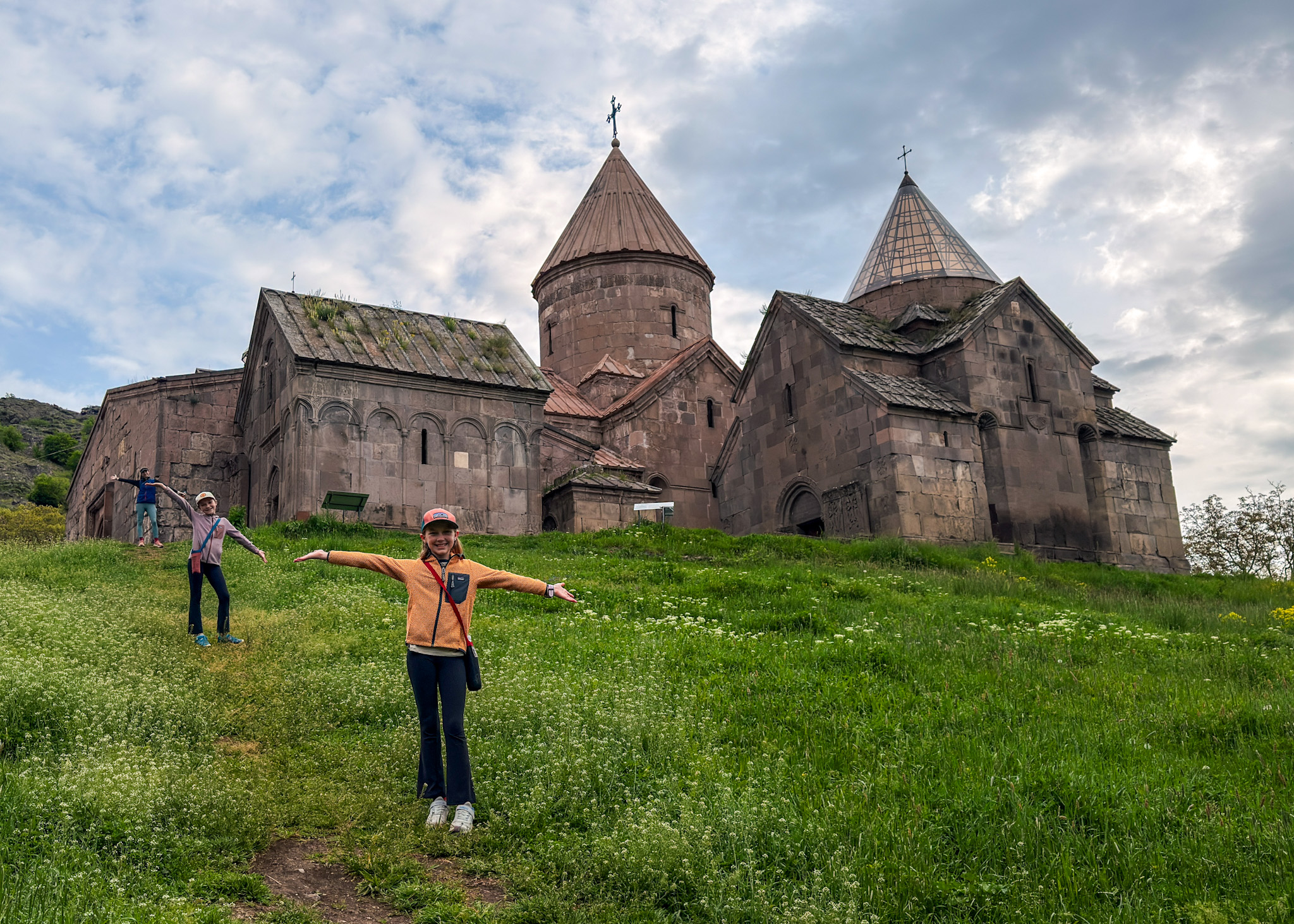
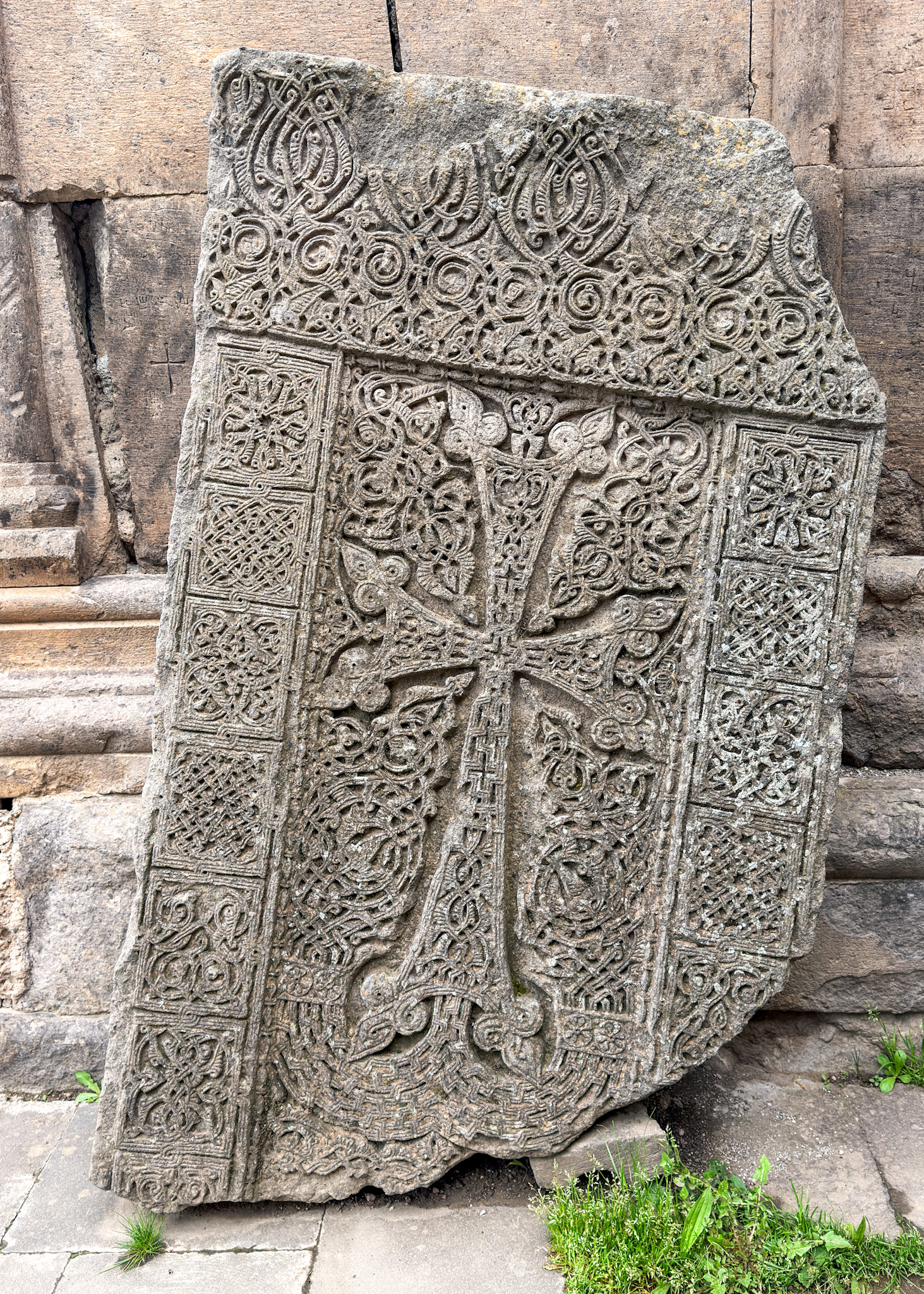
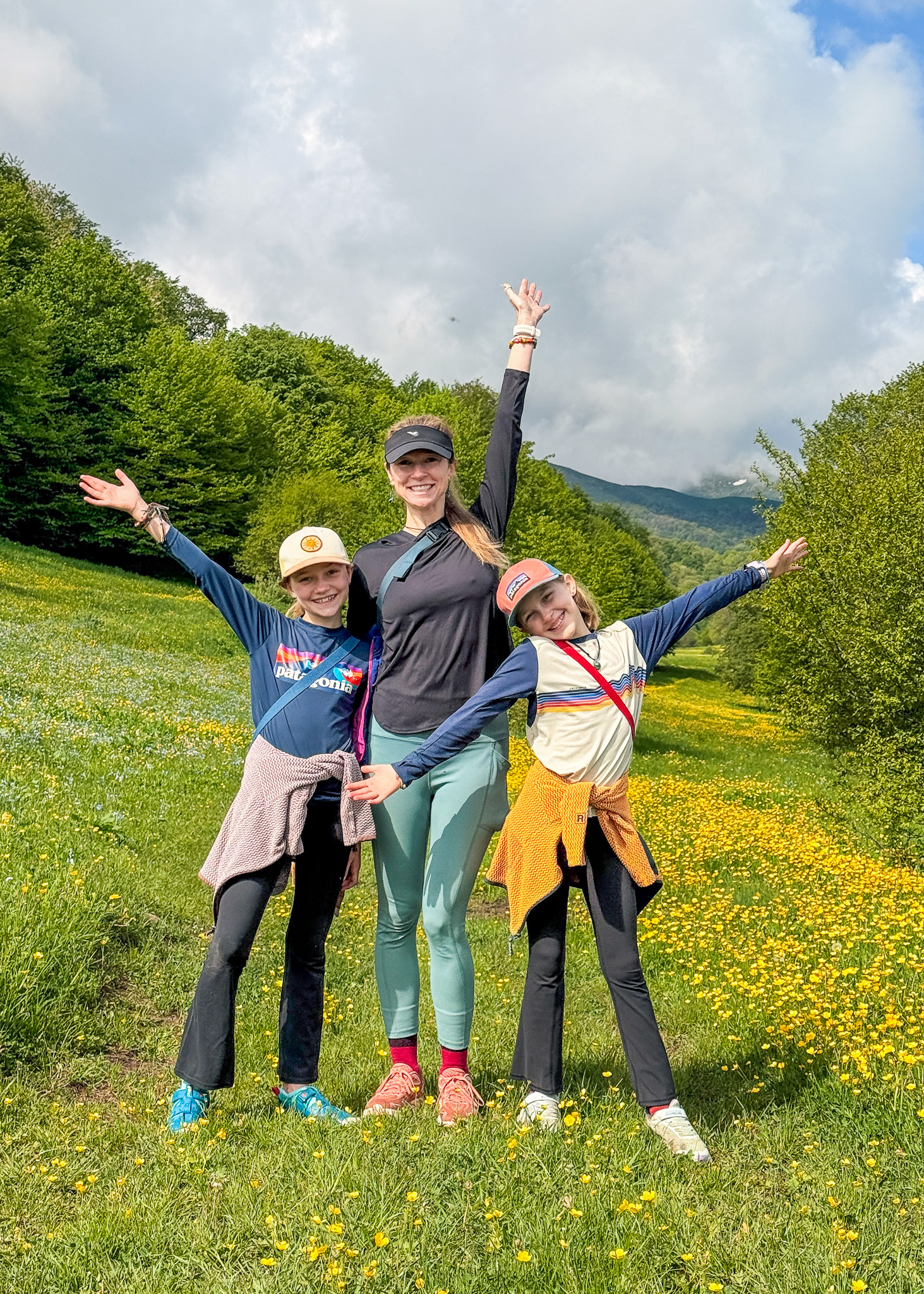
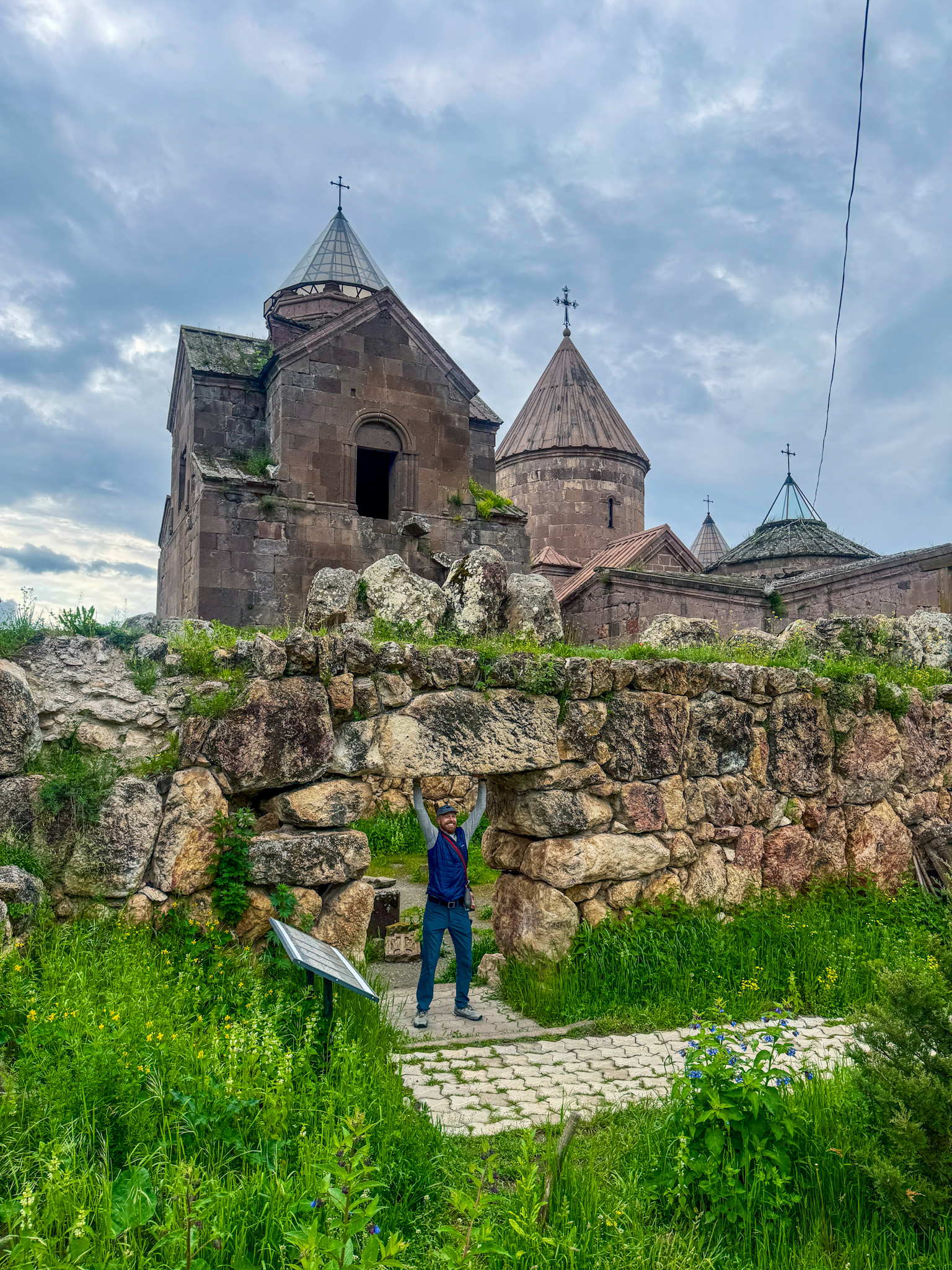
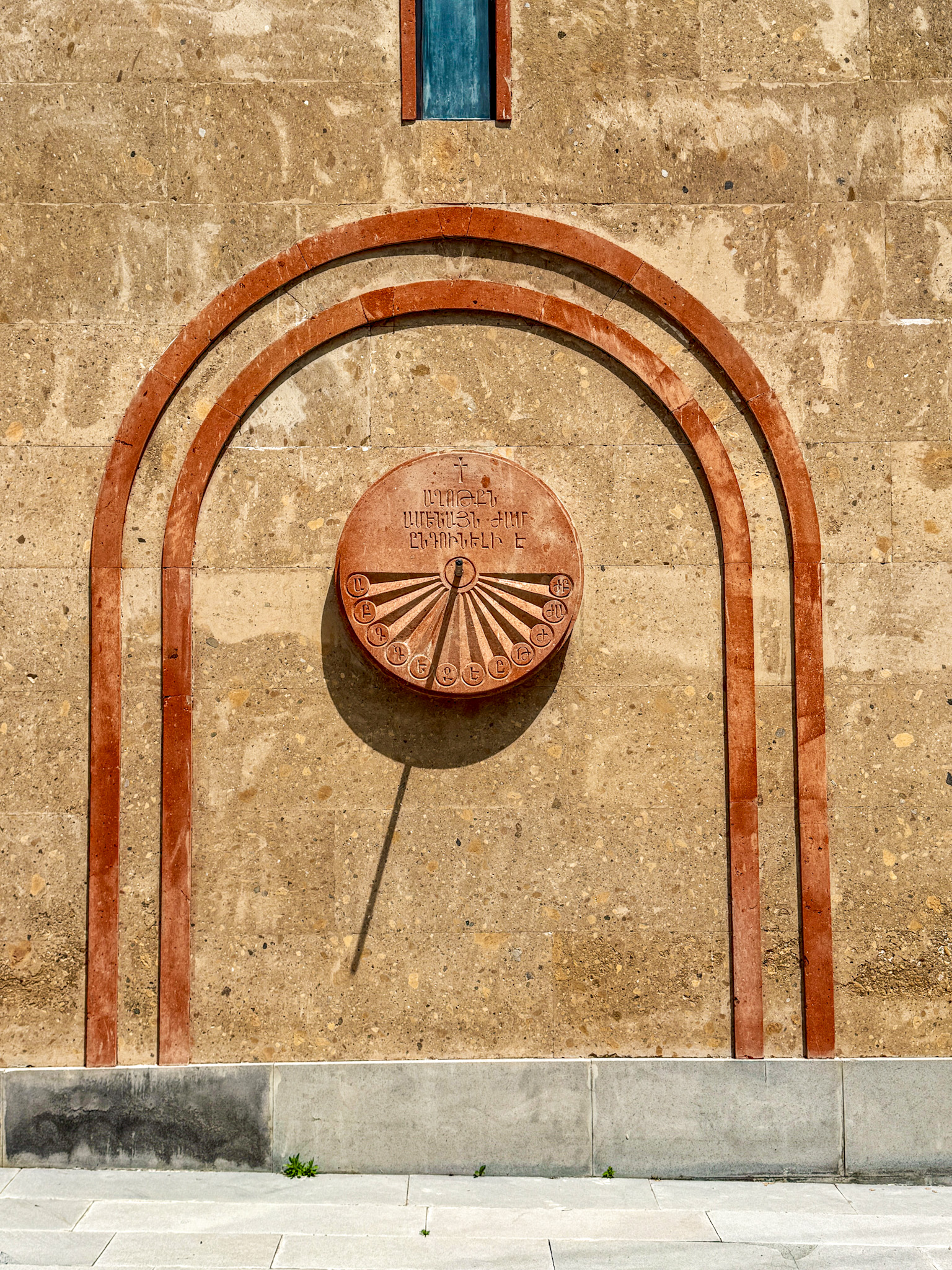
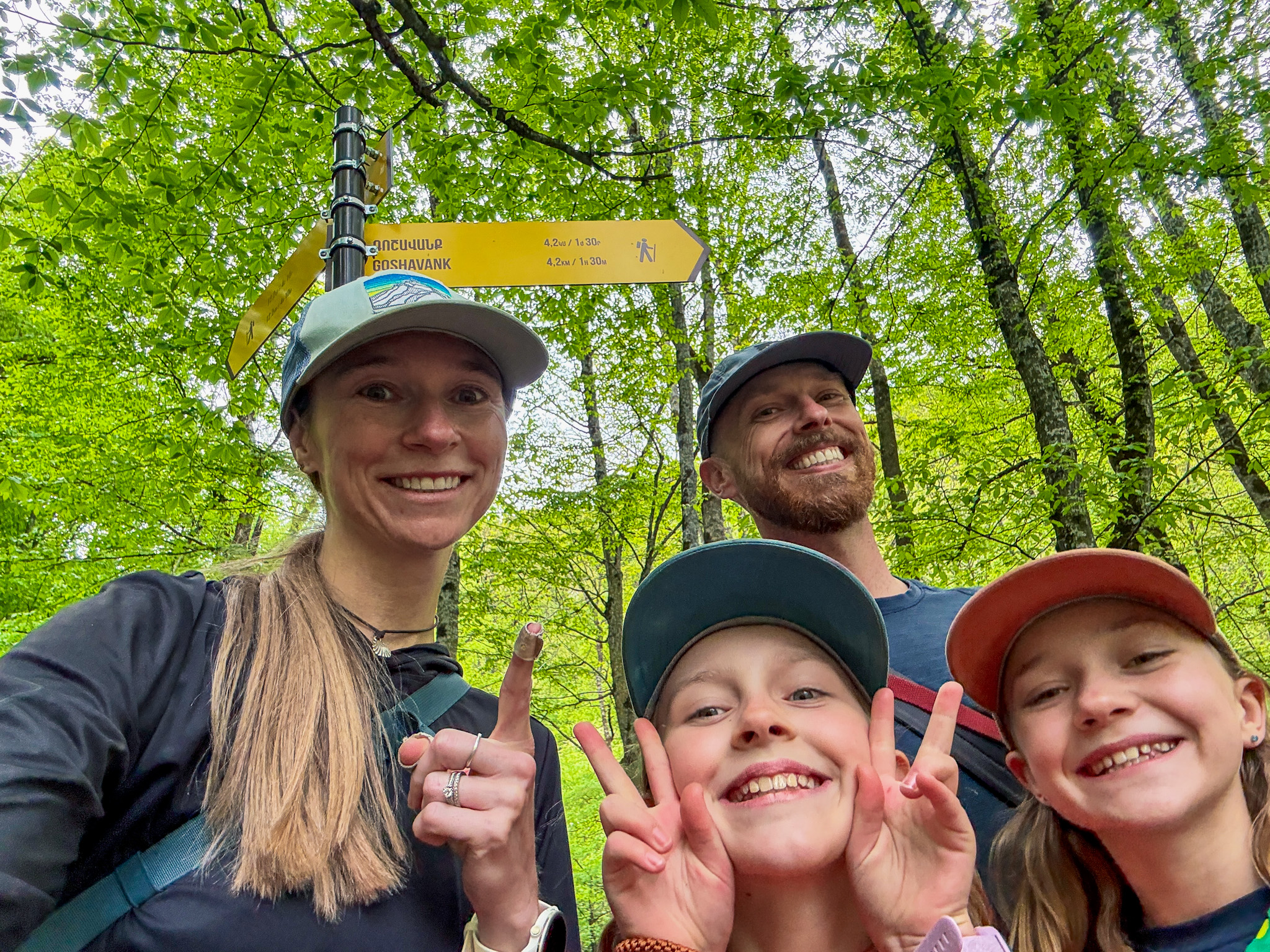
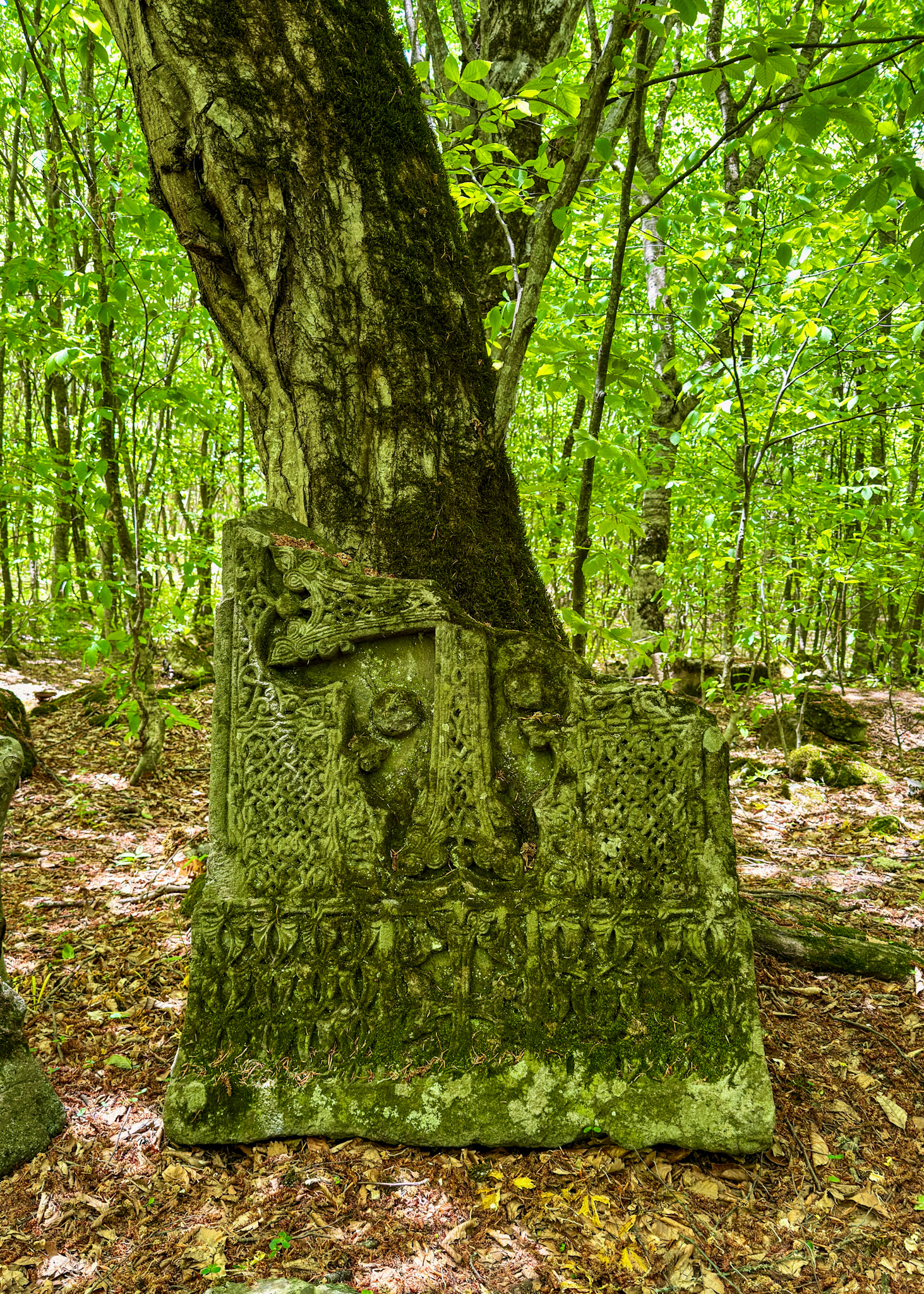
Our last morning in Gosh nearly went sideways before it began. We’d planned an early hike, which meant waking the girls early, which meant facing two of the grouchiest children in the Caucasus. Finlee especially wanted no part of it. We dragged them up the road to the Goshavank Monastery, founded in 1188 by Mkhitar Gosh, the scholar, theologian, and lawmaker who wrote the first Armenian legal code and built the monastery into a center of learning that reportedly housed the country’s first university to teach law as its own discipline. It is home to one of the finest khachkars in all of Armenia, a cross-stone carved in such delicate, lacelike detail that it is nicknamed “the embroidered khachkar.” None of this landed with the girls, who stood with arms crossed in the universal posture of children who have been made to be somewhere. Max was on the verge of scrapping the whole outing.
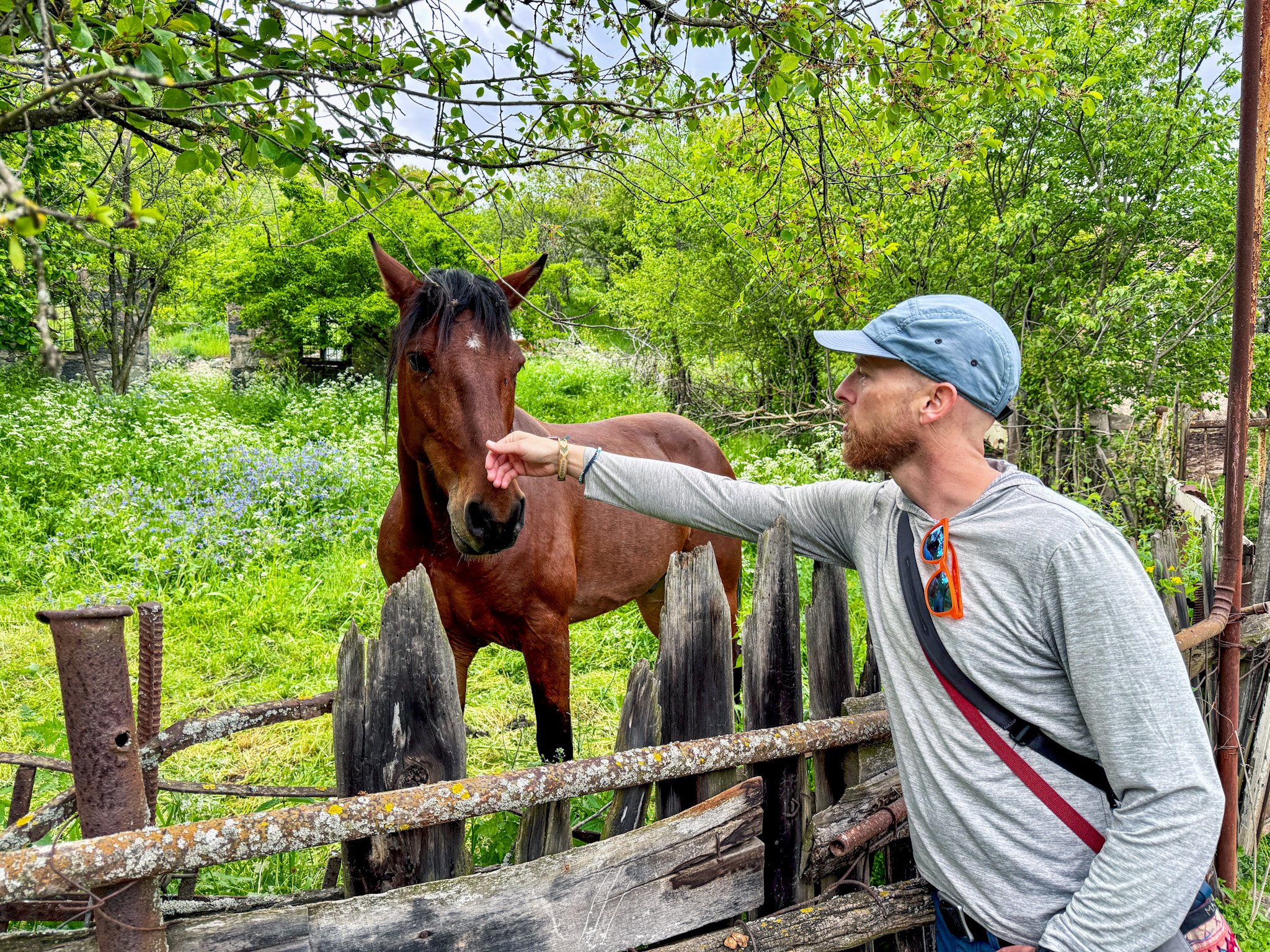
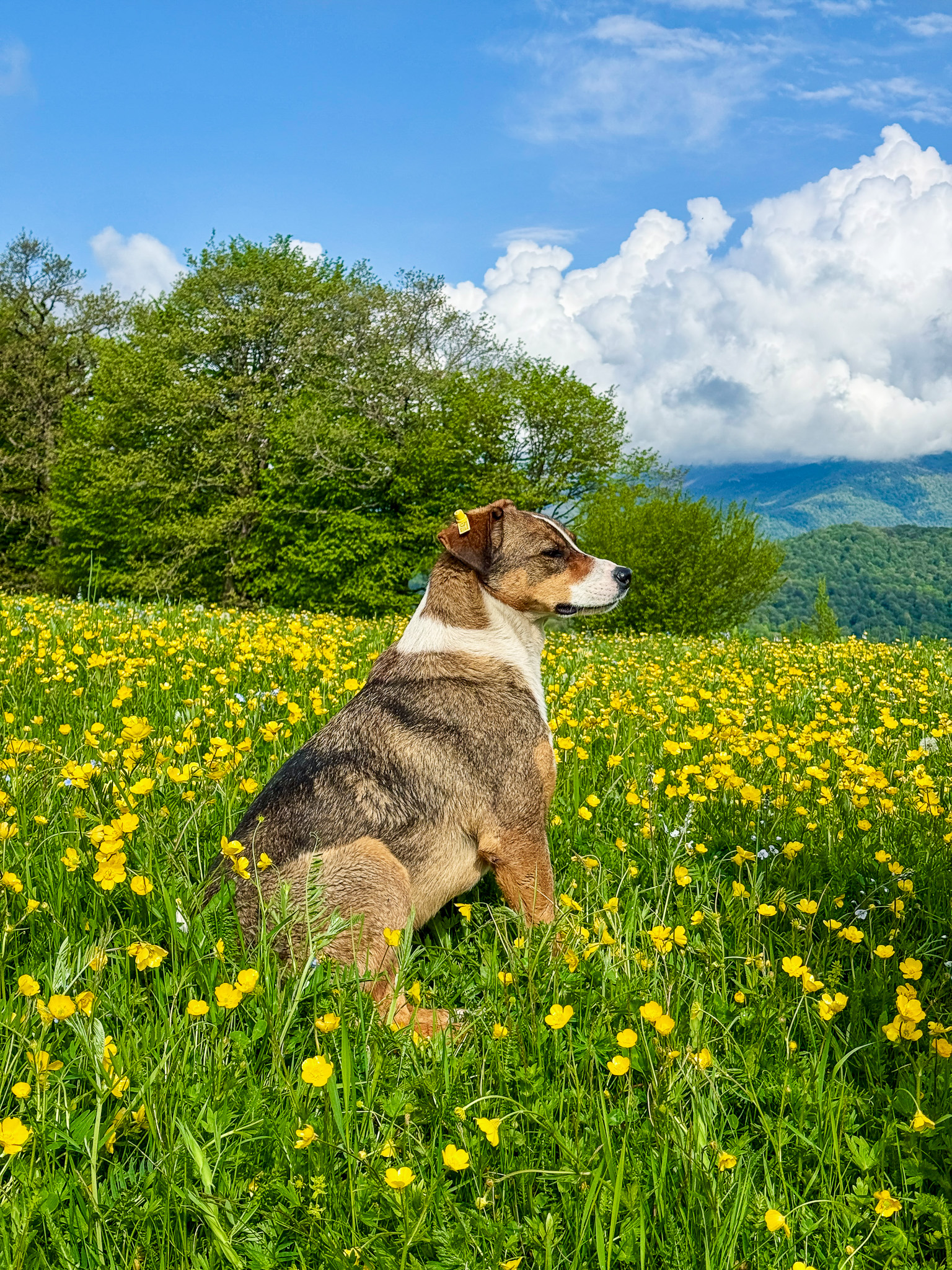
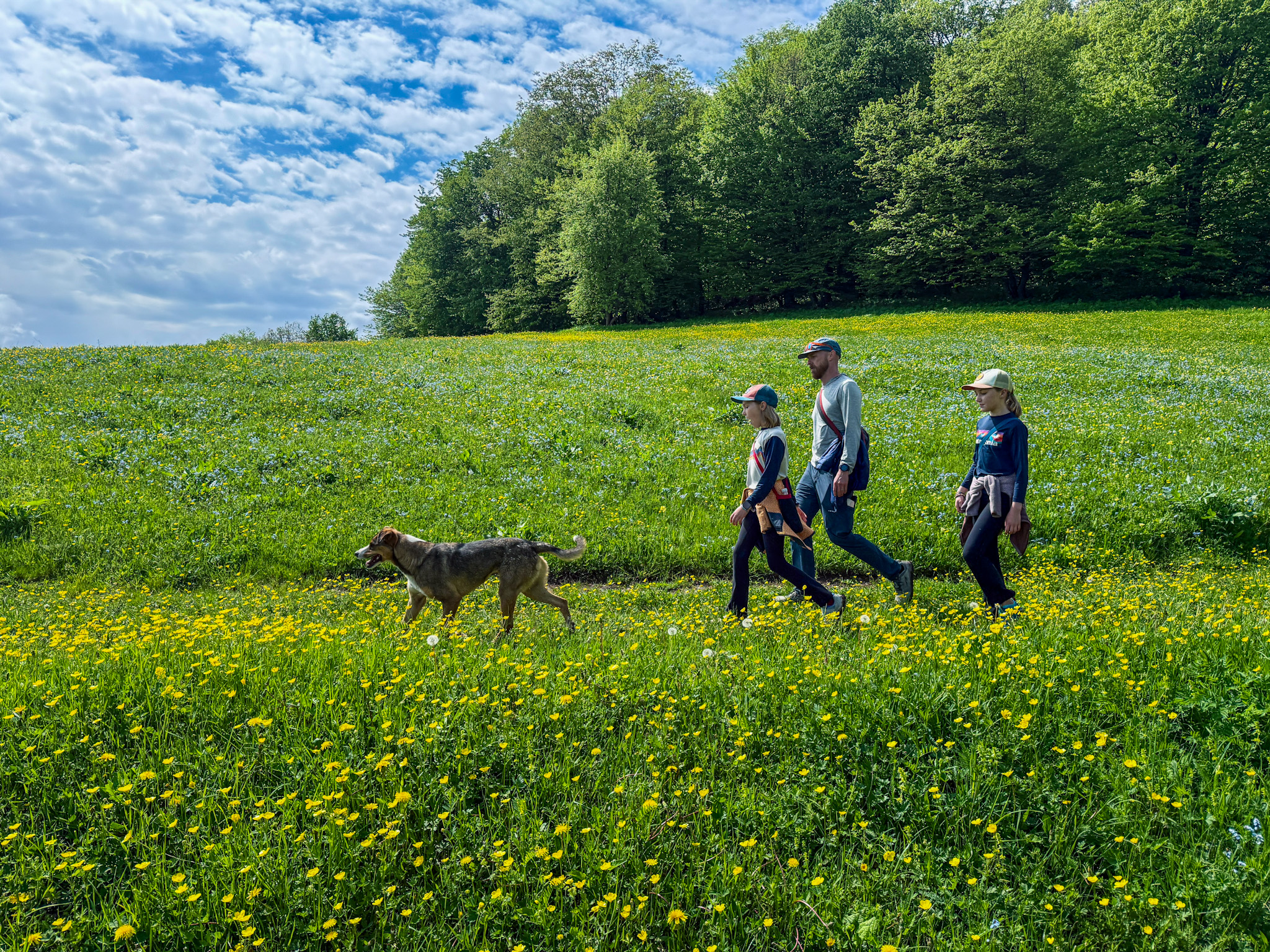
Then we met Mika. A dog appeared and decided to attach herself to us, bouncing with excitement, which initially made the girls nervous. After a little gentle settling she calmed right down and walked at our heels as we left the monastery and started up the trail. The shift in the girls was almost instant. They stopped mourning their warm beds and caught Mika’s enthusiasm, trotting up the hill alongside her, the entire morning’s mood reversed by a single happy dog. Arya named her Mika and the name stuck. She followed us five kilometers up the mountain to a wildflower meadow that rivaled the one we’d hiked a couple of days earlier, and then back down again. She was not a stray, as far as we could tell, with a tag on her ear and the easy confidence of a dog who knew exactly where home was. Sure enough, the moment we got back to Gosh, she peeled off without ceremony and we never saw her again. But for one morning, she was exactly the family member we needed.
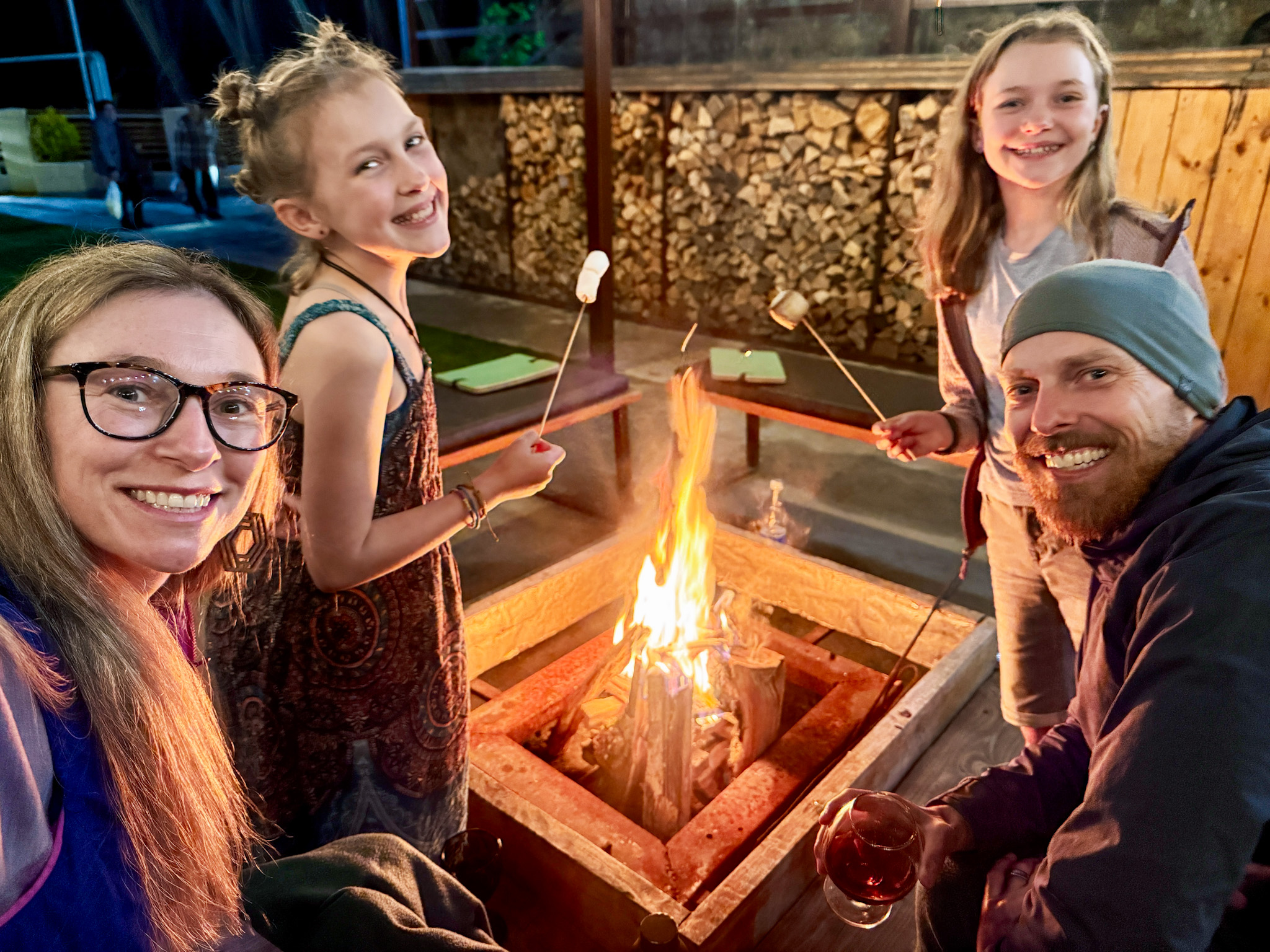
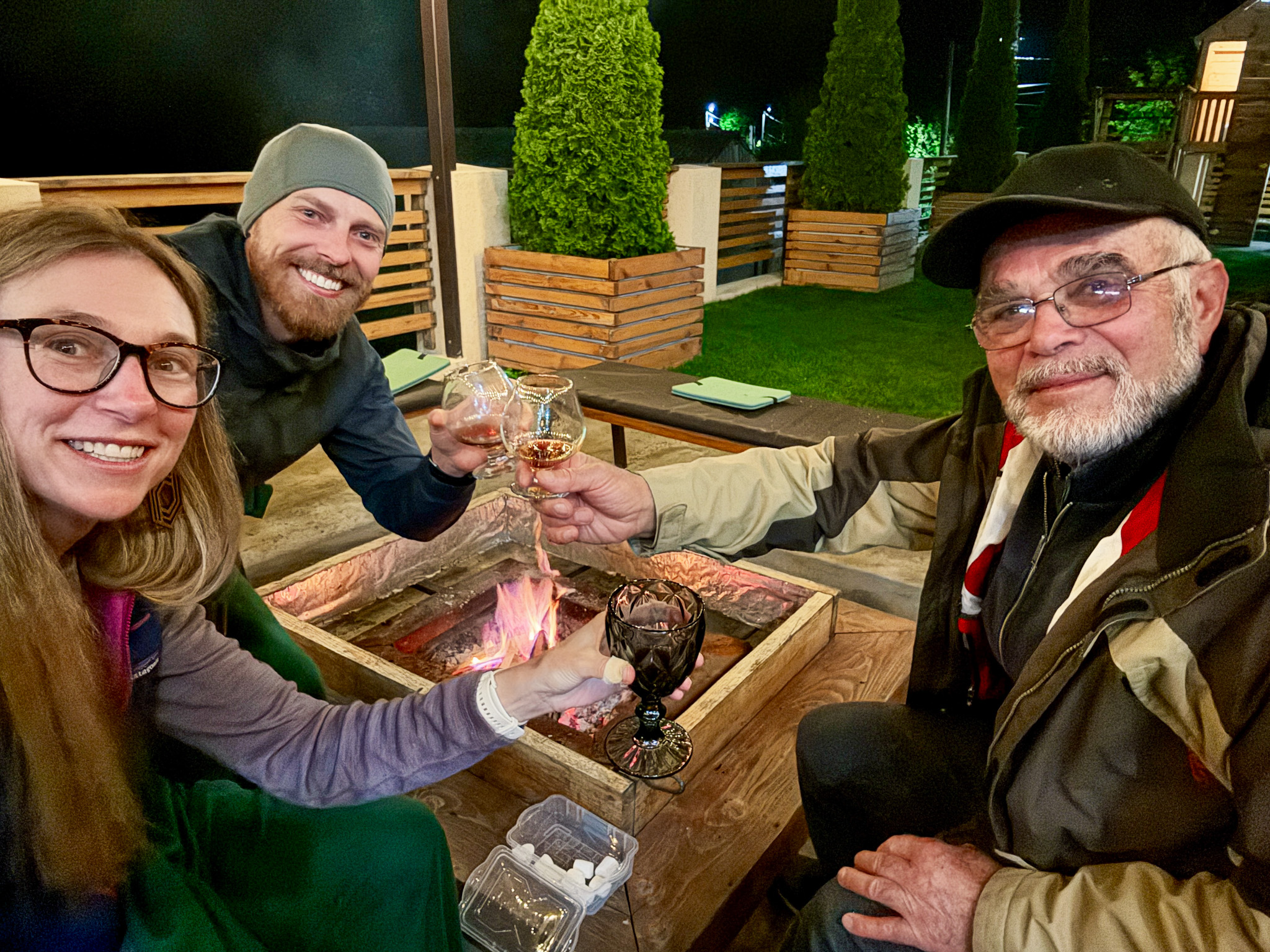
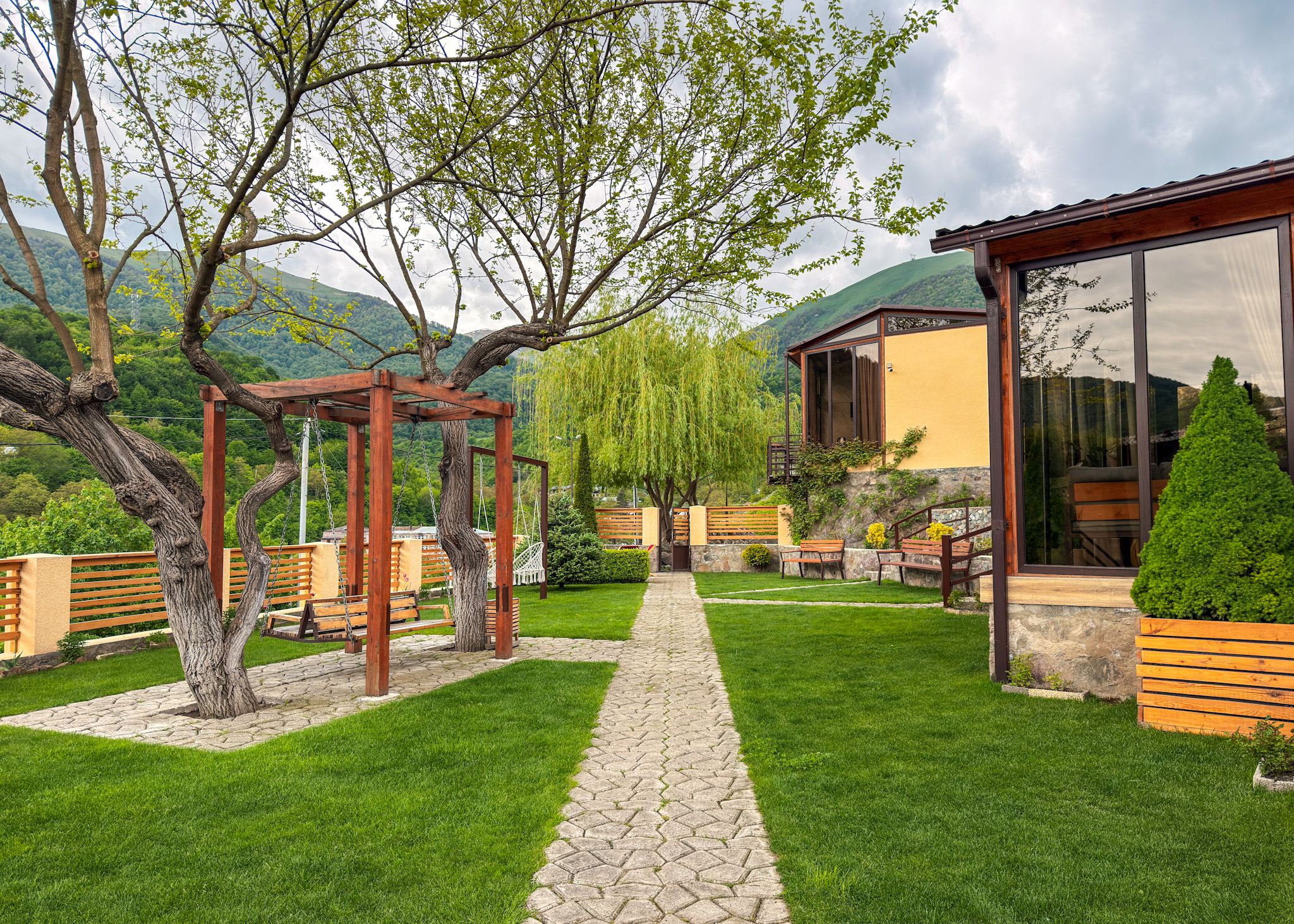
That last night, no one else was staying at DiliVita, and we nearly skipped the fire pit, since so much of its charm comes from the mix of strangers it pulls together. We went anyway, and it became the best evening of the lot. Without an audience, the usual ritual loosened into a real conversation between Zerosh, Shaina, and Max. He told us his story, as best we could follow it across the language gap. He’d run an agricultural business north of Yerevan until back trouble and spinal surgery led his doctor to tell him he needed to change his life. So eight years ago he and his family came to Gosh on vacation, spotted a half-acre plot with two old buildings and nothing else, and spent the next two years turning it into the gorgeous place we’d been lucky enough to land in. He showed us the “before photos”— transformation was astonishing. There are eight rooms now, seven for guests and one kept for his eldest son, while he and his wife live in the house next door. We helped him fold up the blankets and seat cushions at the end of the night, said our goodnights, and went to bed with that warm feeling of having just shared a special cultural experience with someone across the globe.
We came to Armenia for the hiking and the history, and both delivered well beyond what we’d expected—the green canyons and the thousand-year-old monasteries every bit as remarkable as promised. But the thing we will carry out of this northern stretch is not a building or a trail. It is the people. A host who calls strangers his beloved tourists and means it. A guide who rerouted his whole morning to get us to a trailhead. Four Armenians pressing vodka and stuffed bread on us at a picnic table for no reason other than that we’d happened by. A German ghostwriter, an English-and-Kiwi pair of wanderers, two thru-hikers with improbable lives, and a dog who fixed a bad morning and then went home for dinner. Armenia, it turns out, is a place that keeps handing you its hand. We have weeks left here, and we cannot wait to see who else it introduces to us.

 Pause and Wander
Leave a comment