
Dates: May 13th-17th, 2026
Place: Tblisi, Georgia
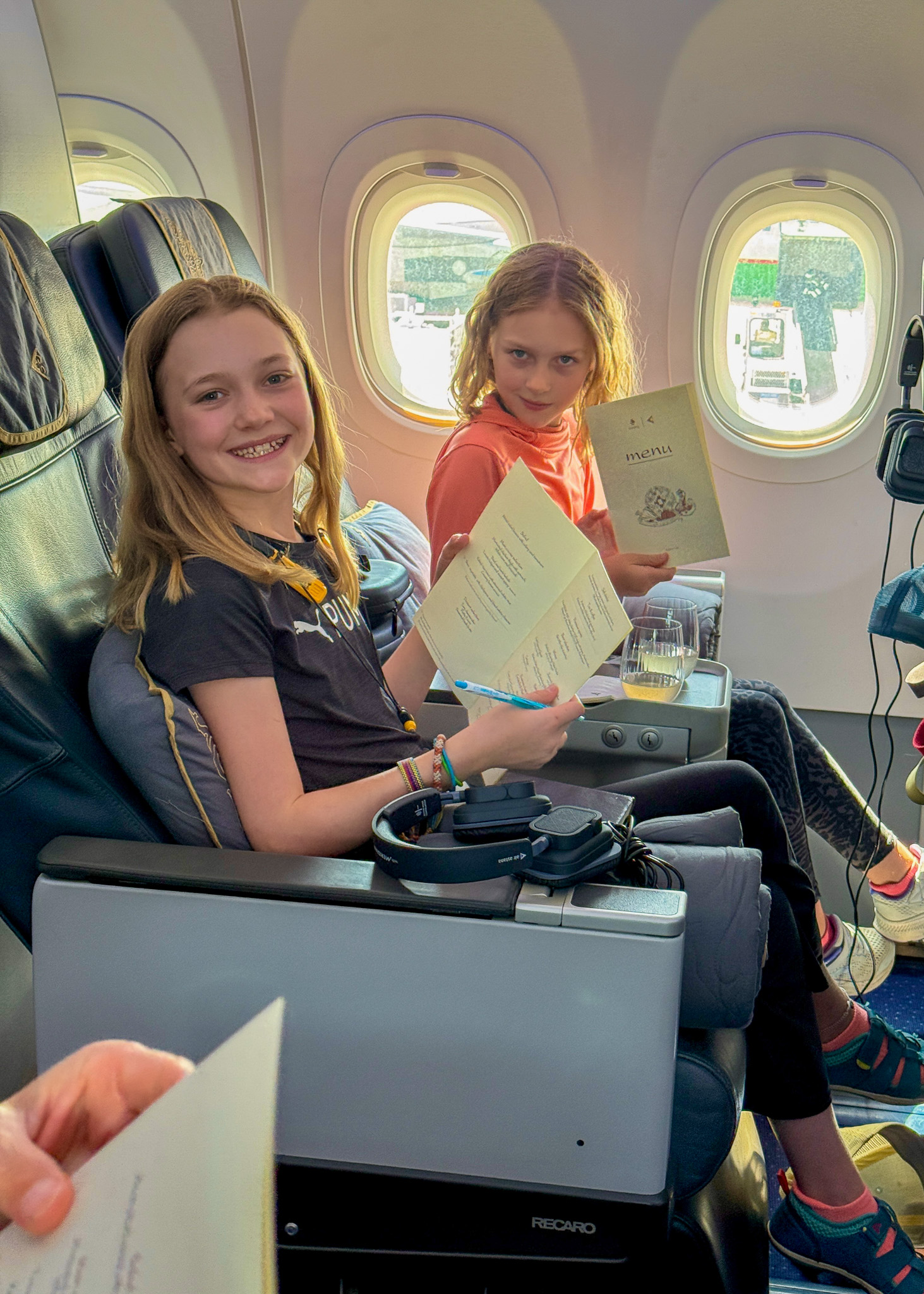
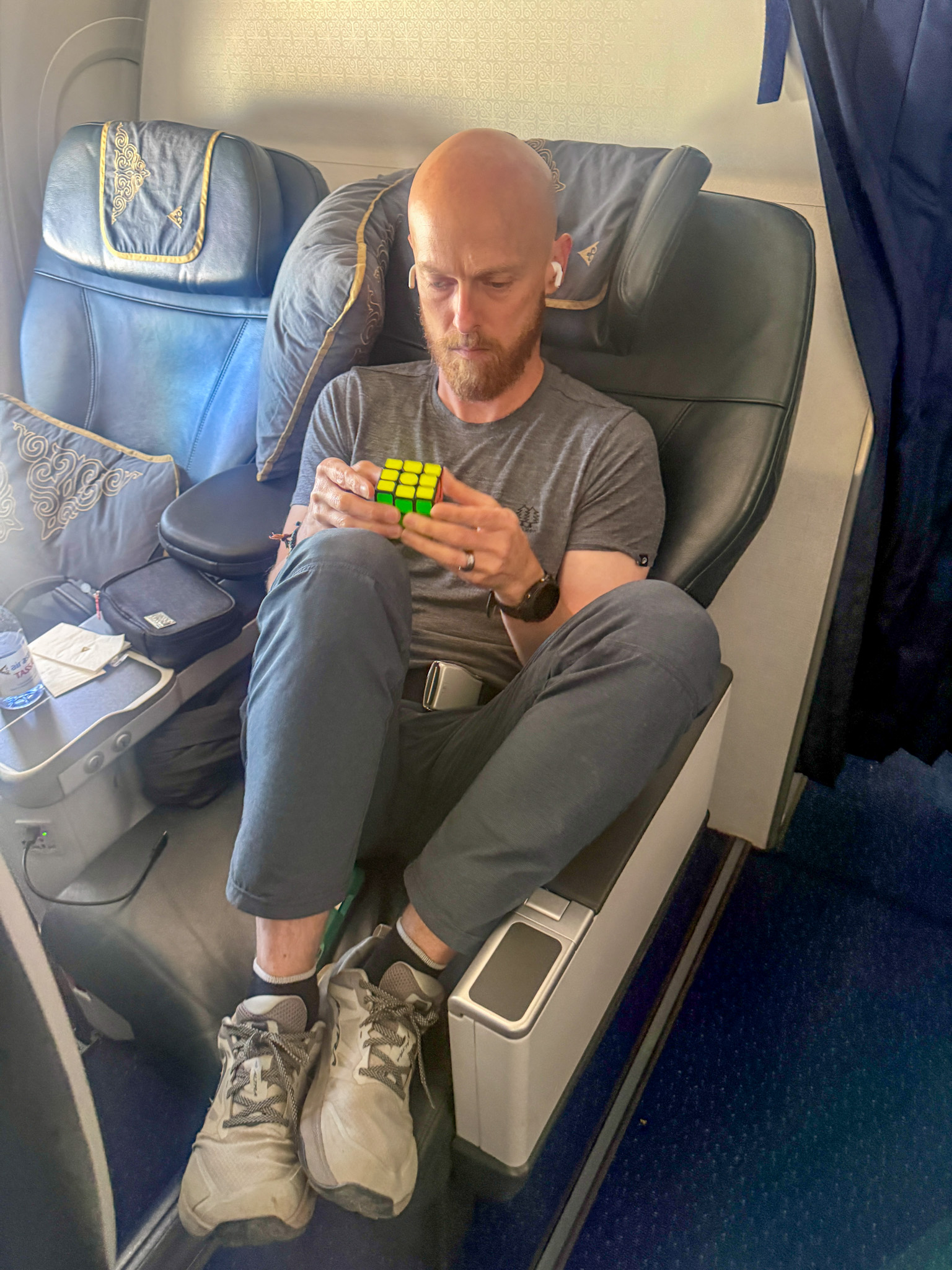
We arrived in Tbilisi as accidental aristocrats. A long-shot low-ball bid for a business class upgrade on the flight from Almaty had somehow paid off, and the girls spent the morning in a state of barely contained delight at being, in Arya’s words, “bougie business babies.” The girls received their literal white tablecloth service with joy as they watched as many movies as they could squeeze into four hours. Shaina lost herself in a locally famous historical fiction novel from the 1930s called Ali and Nino, while Max spent most of the flight working a Rubik’s cube and listening to a podcast about US tax system reform. If we were to analyze these activities we’d probably find a pretty interesting and niche Venn diagram. Max says he’s comfortable with that. We landed four hours later, sailed through customs with all our luggage intact, and called a taxi.
The drive into the city was a quiet shock. After two weeks of mud-brick fortresses, Soviet ghost towns, and yurts on the steppe, we were suddenly rolling through tree-lined boulevards, cobblestone streets, and church towers folded into a skyline that felt unmistakably European. Old churches next to glass-and-steel modern buildings. Centuries compressed into single city blocks. We had crossed a border and apparently a continent, all while still technically in Asia.
Our flat was on the fifth floor of a walk-up in the heart of the old town, three bedrooms and a balcony with views in every direction. We dropped our bags and went out to look around, because looking around is what Tbilisi rewards more than almost anything else.
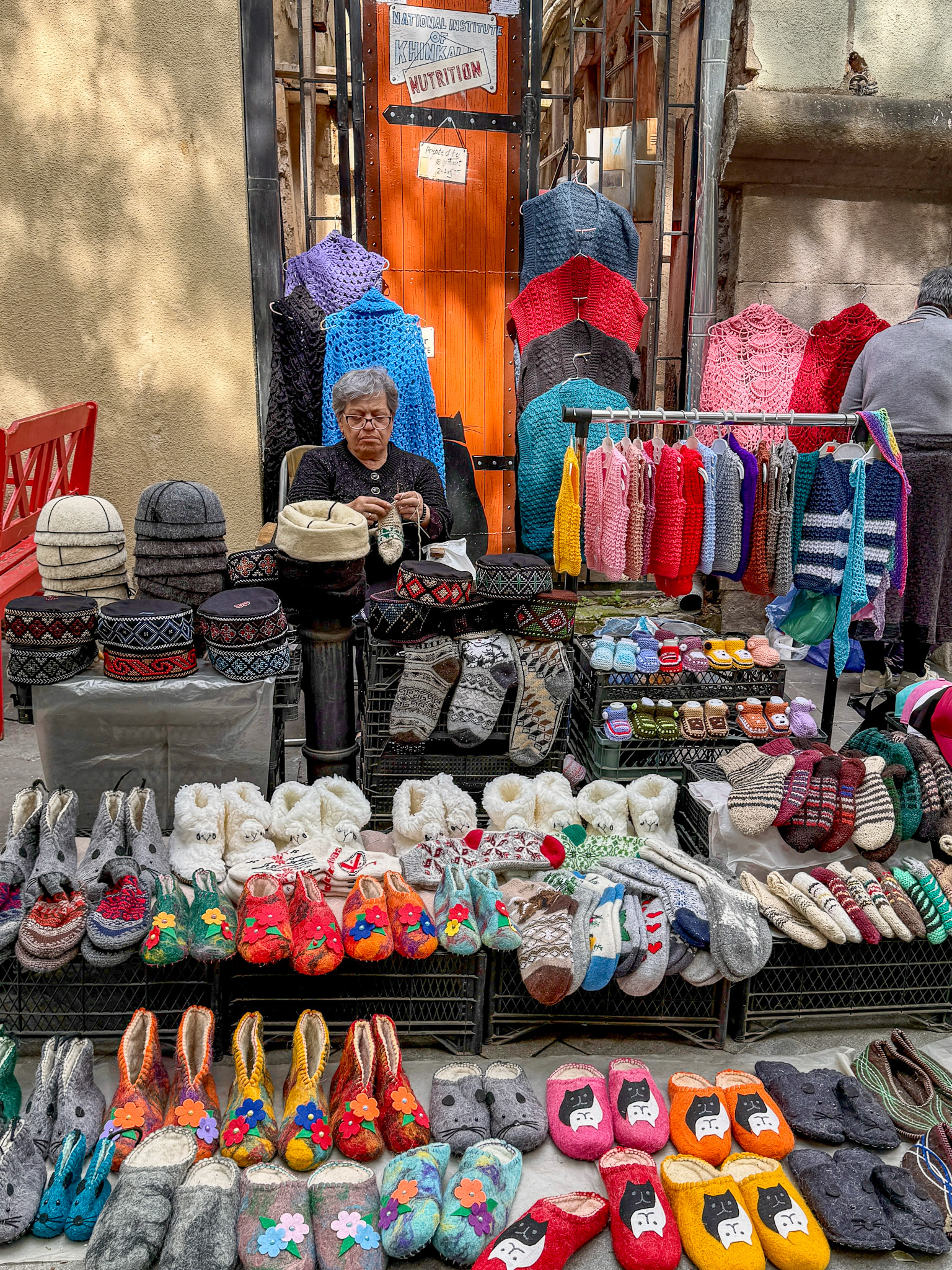
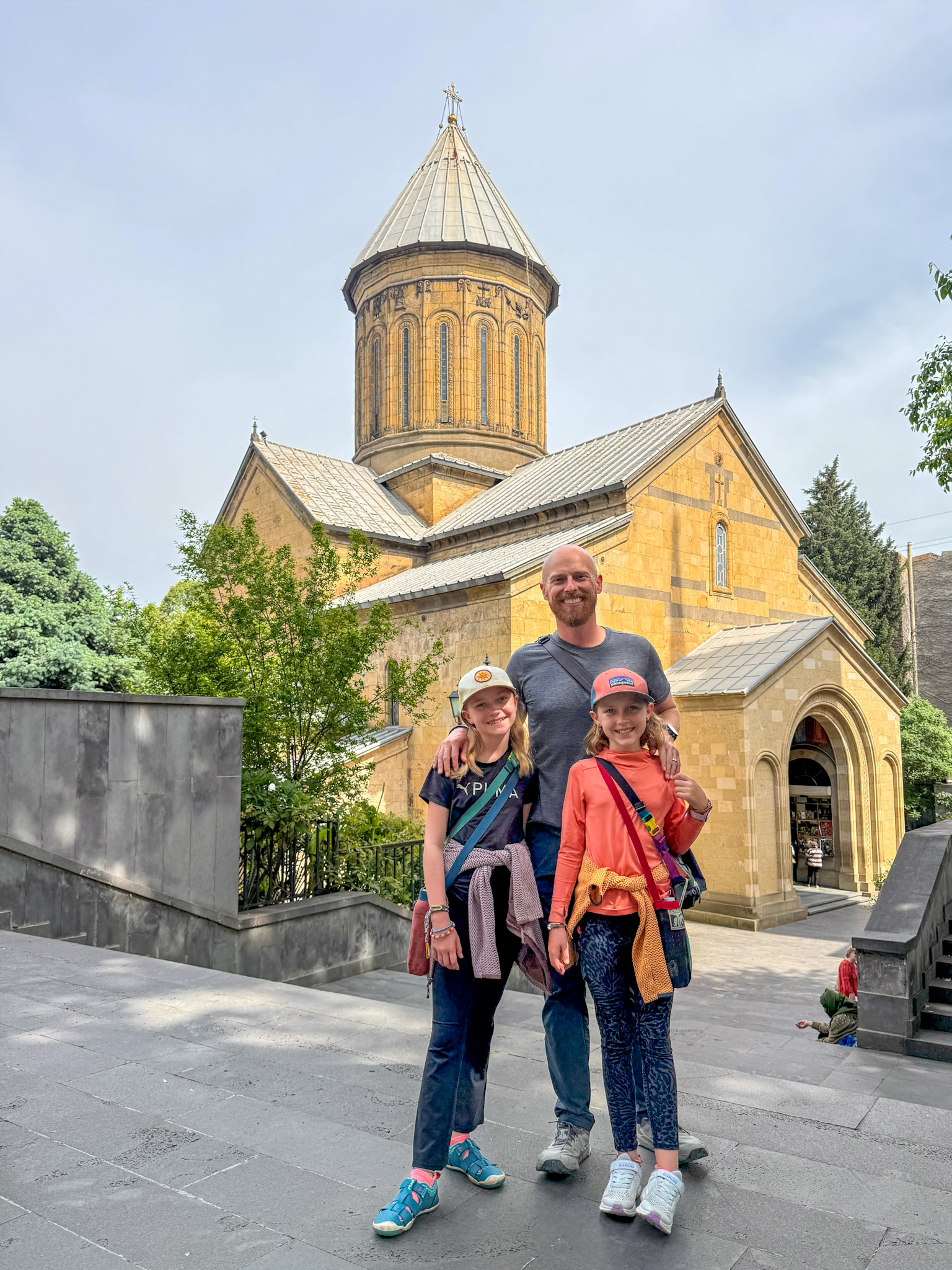
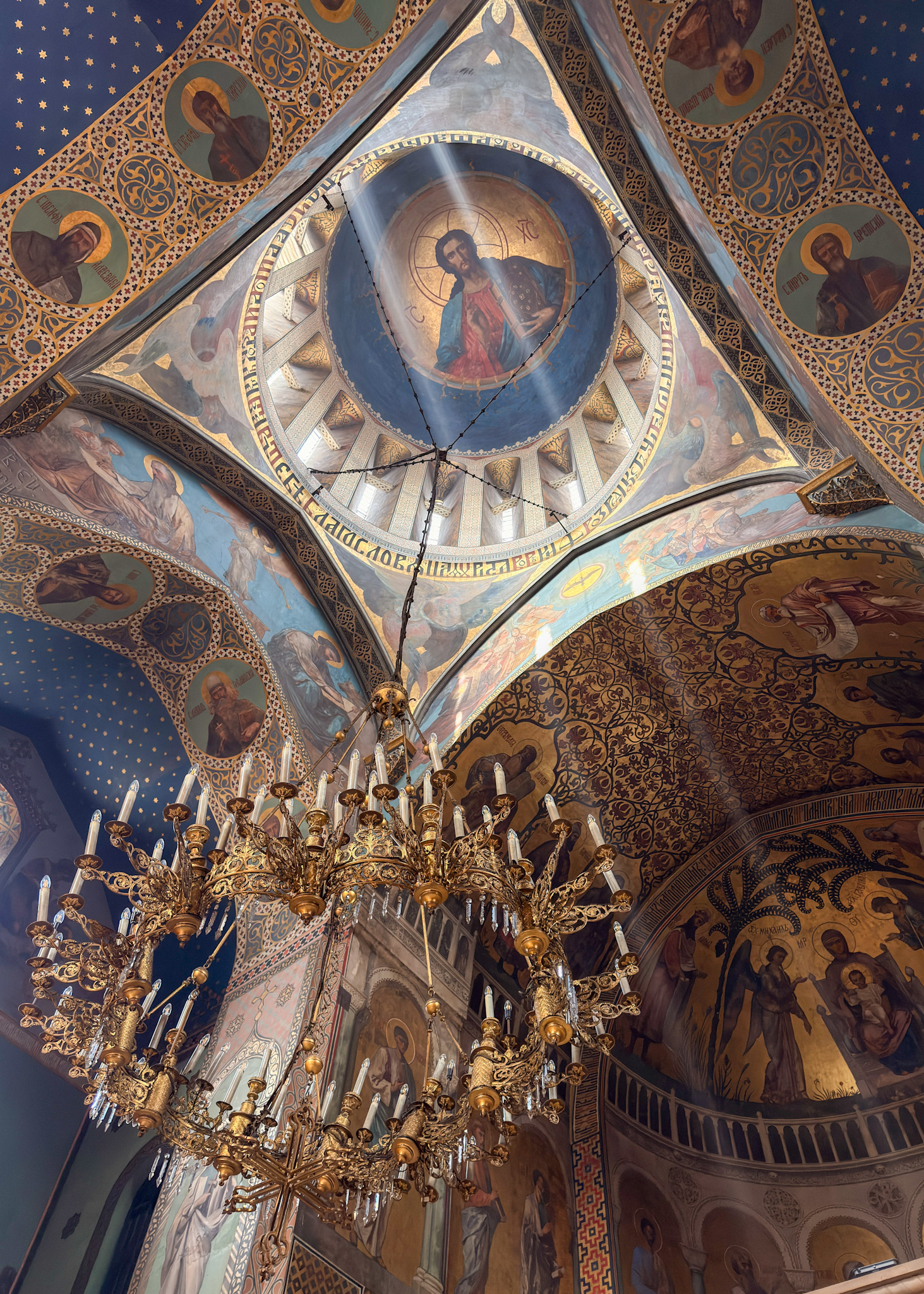
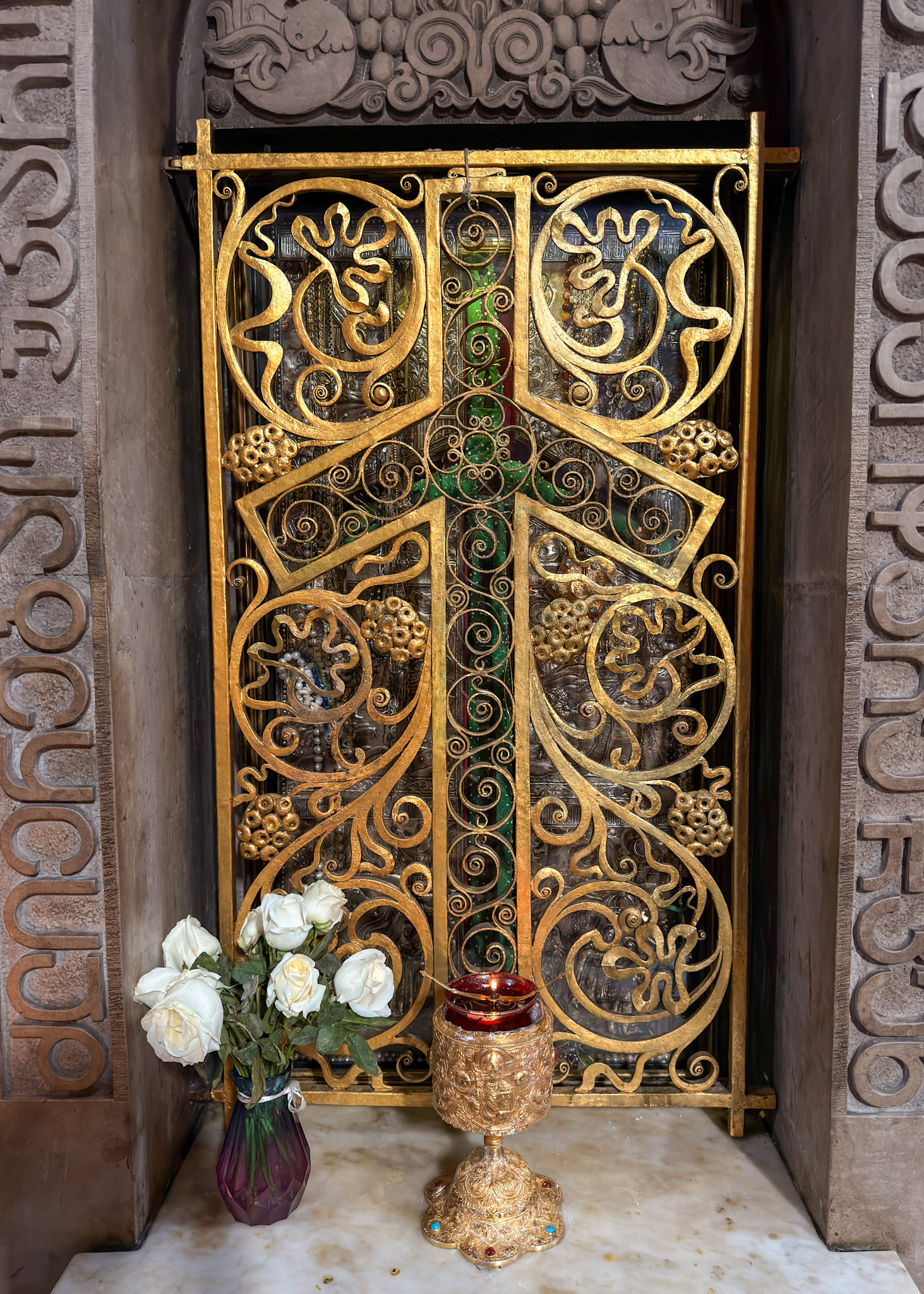
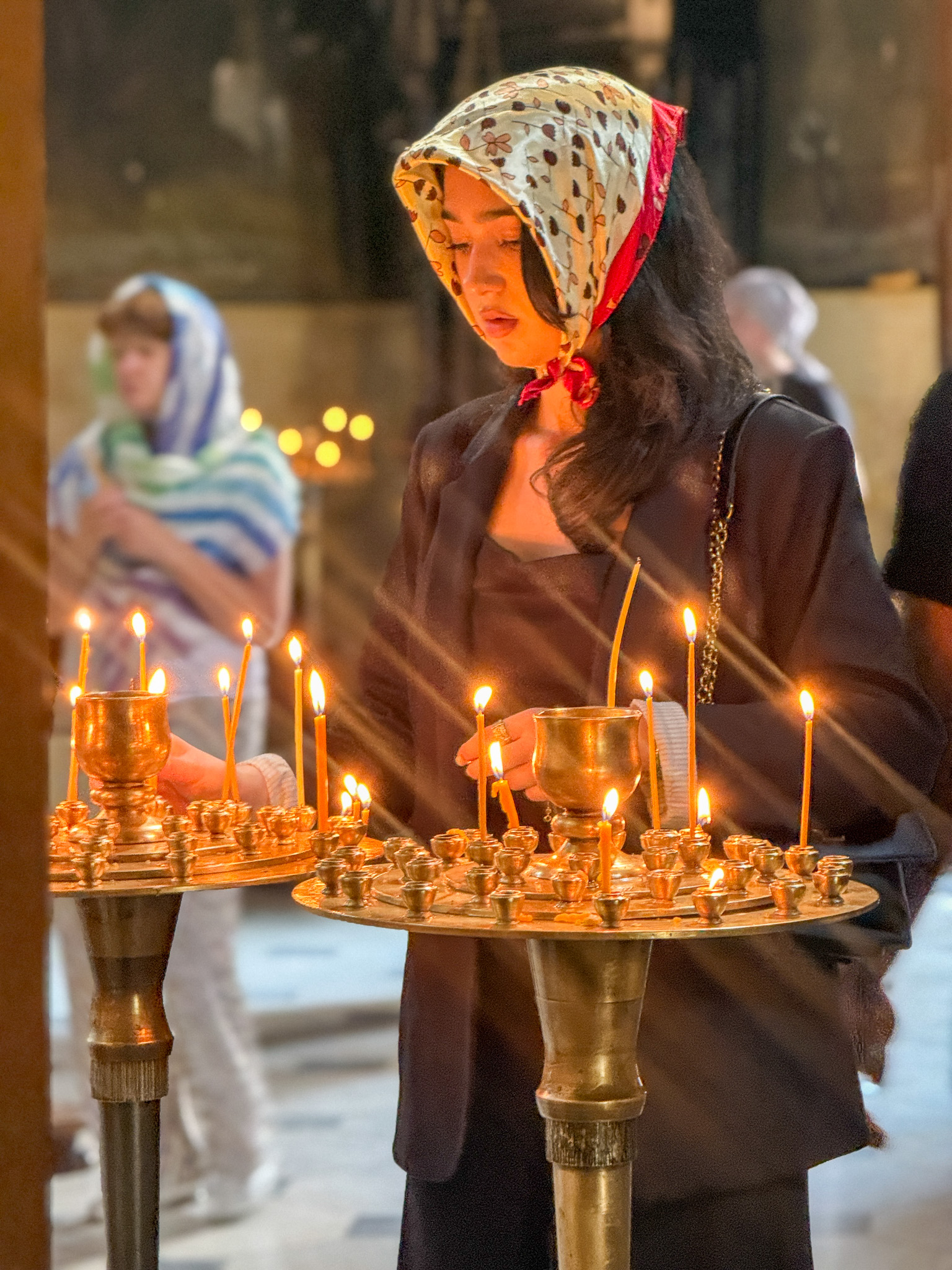
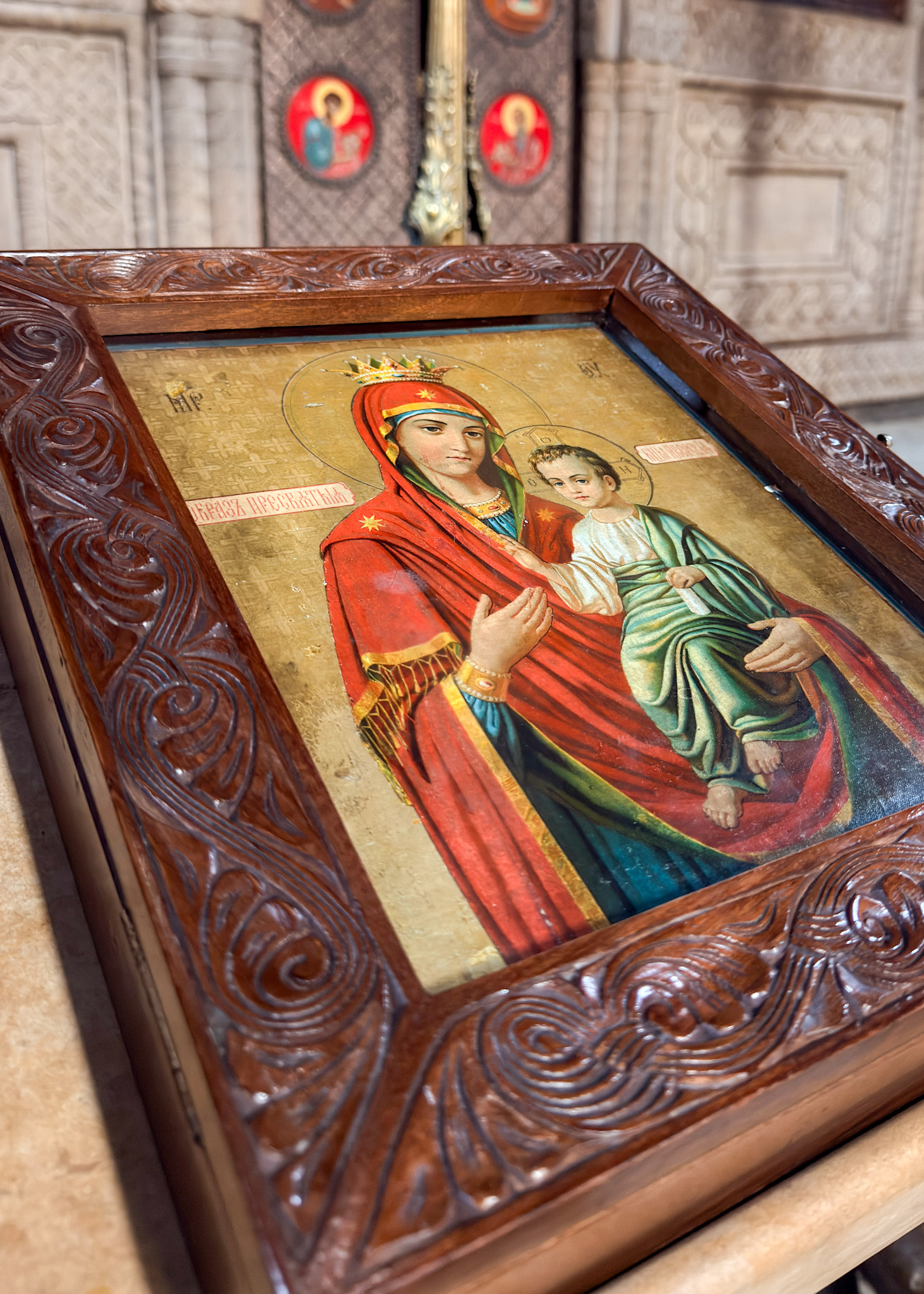
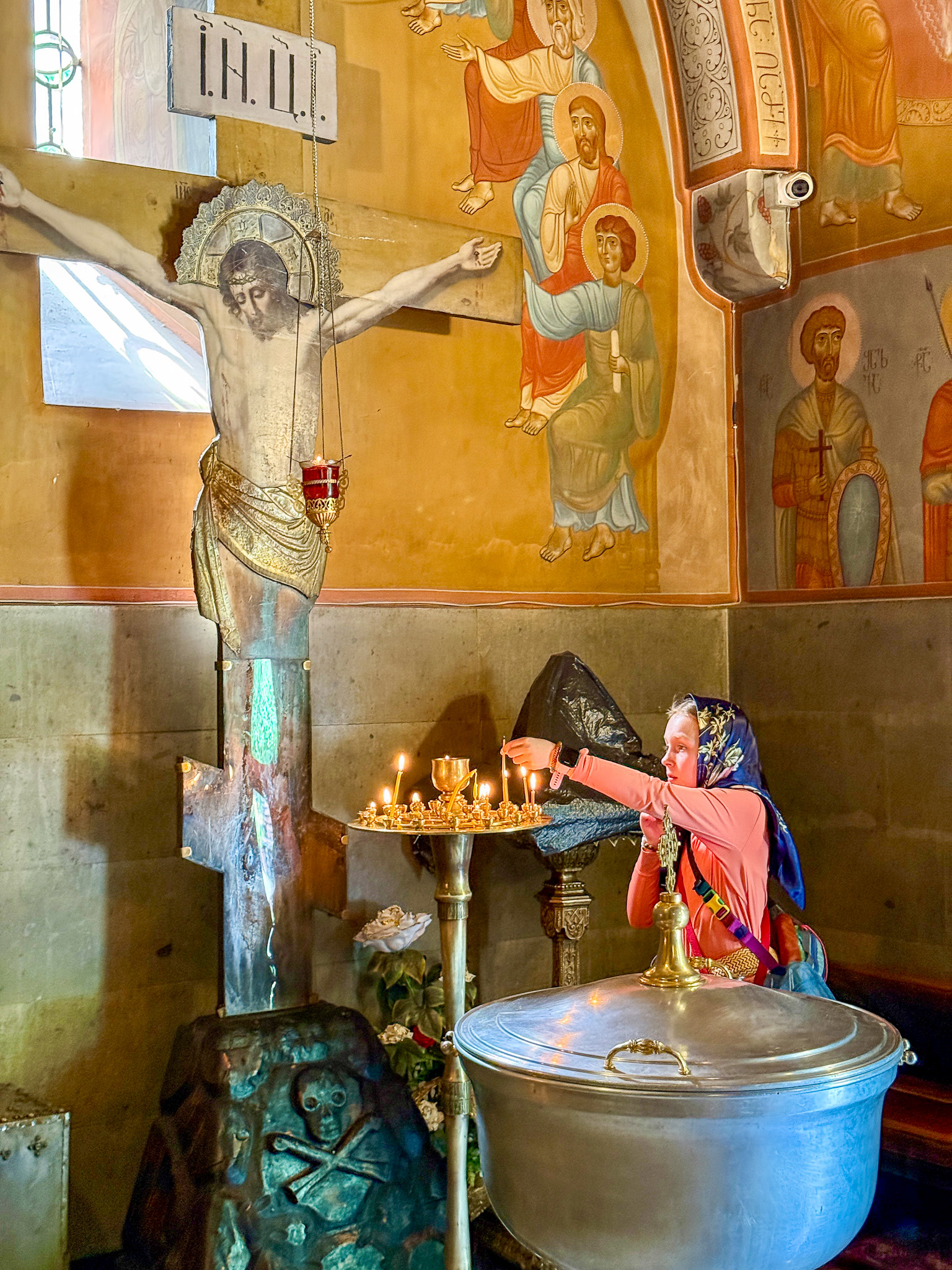
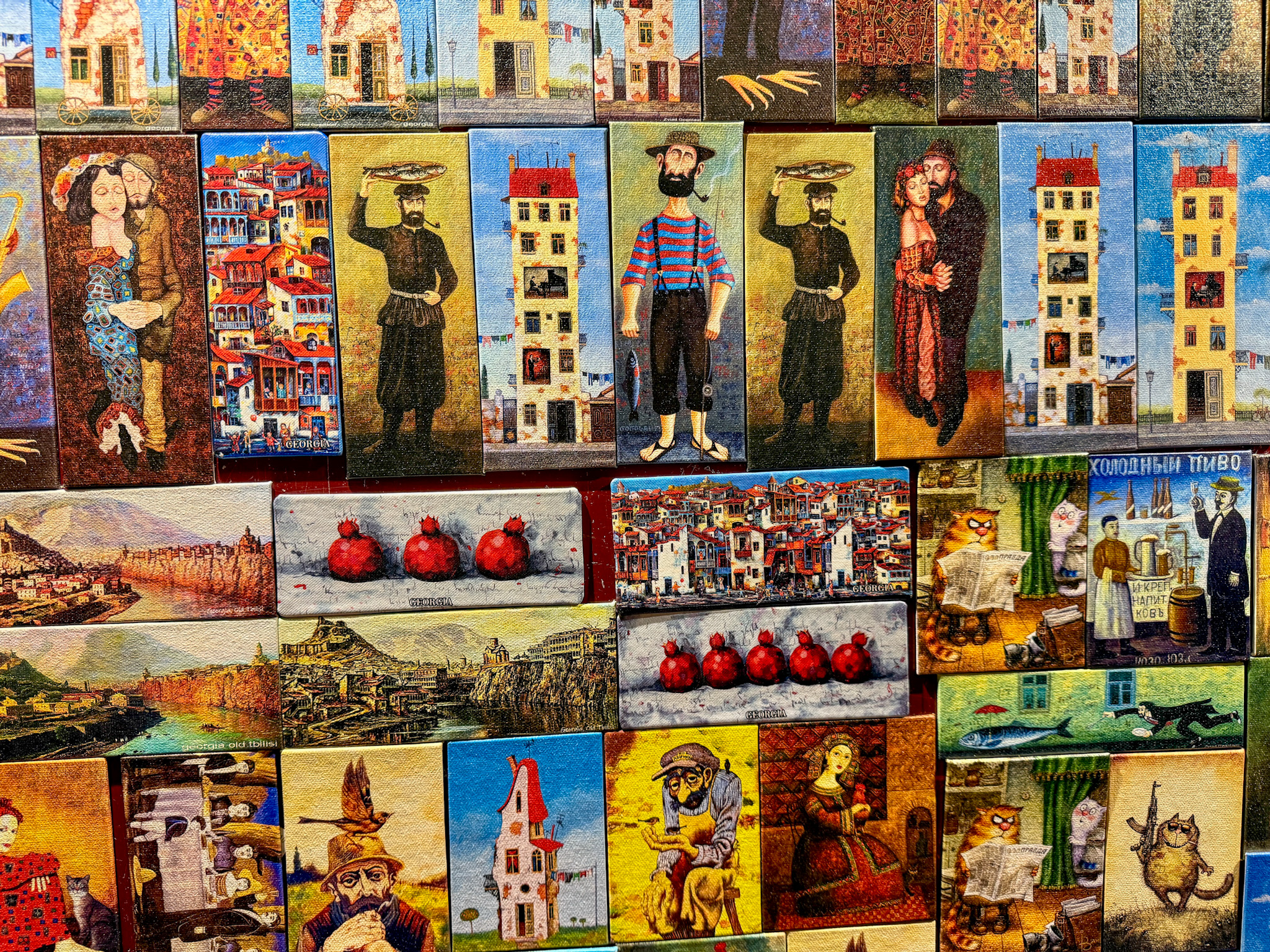
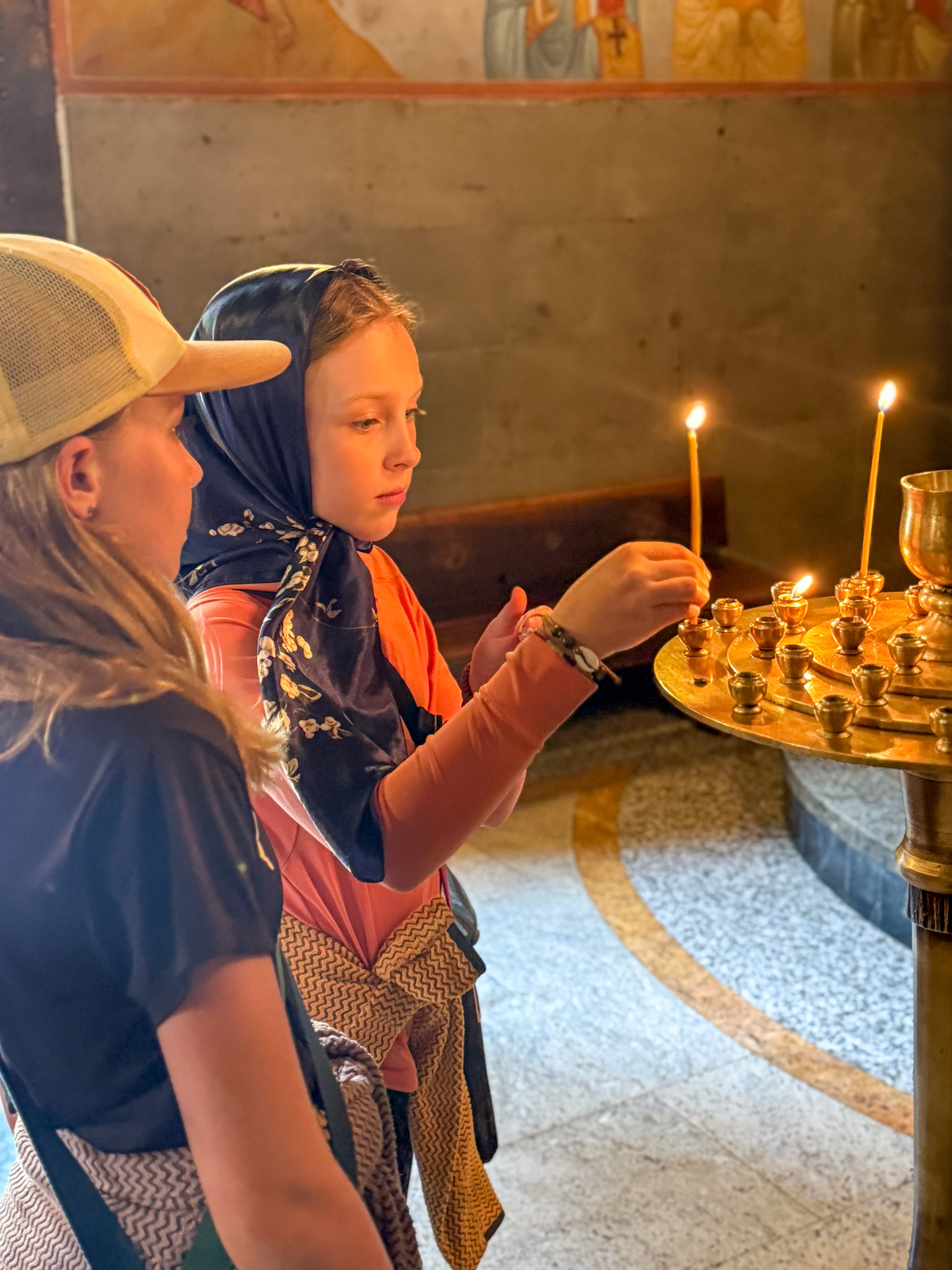
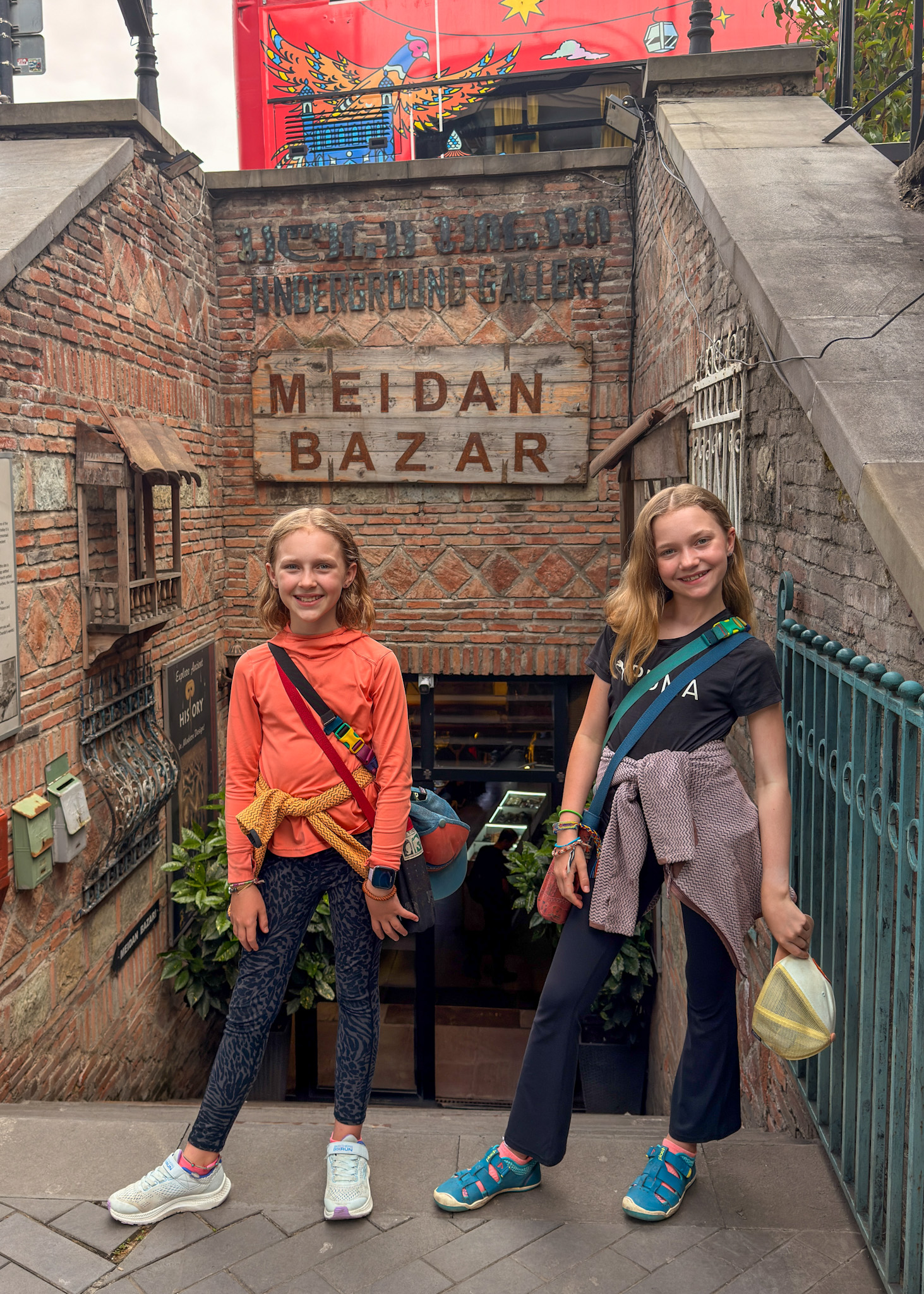
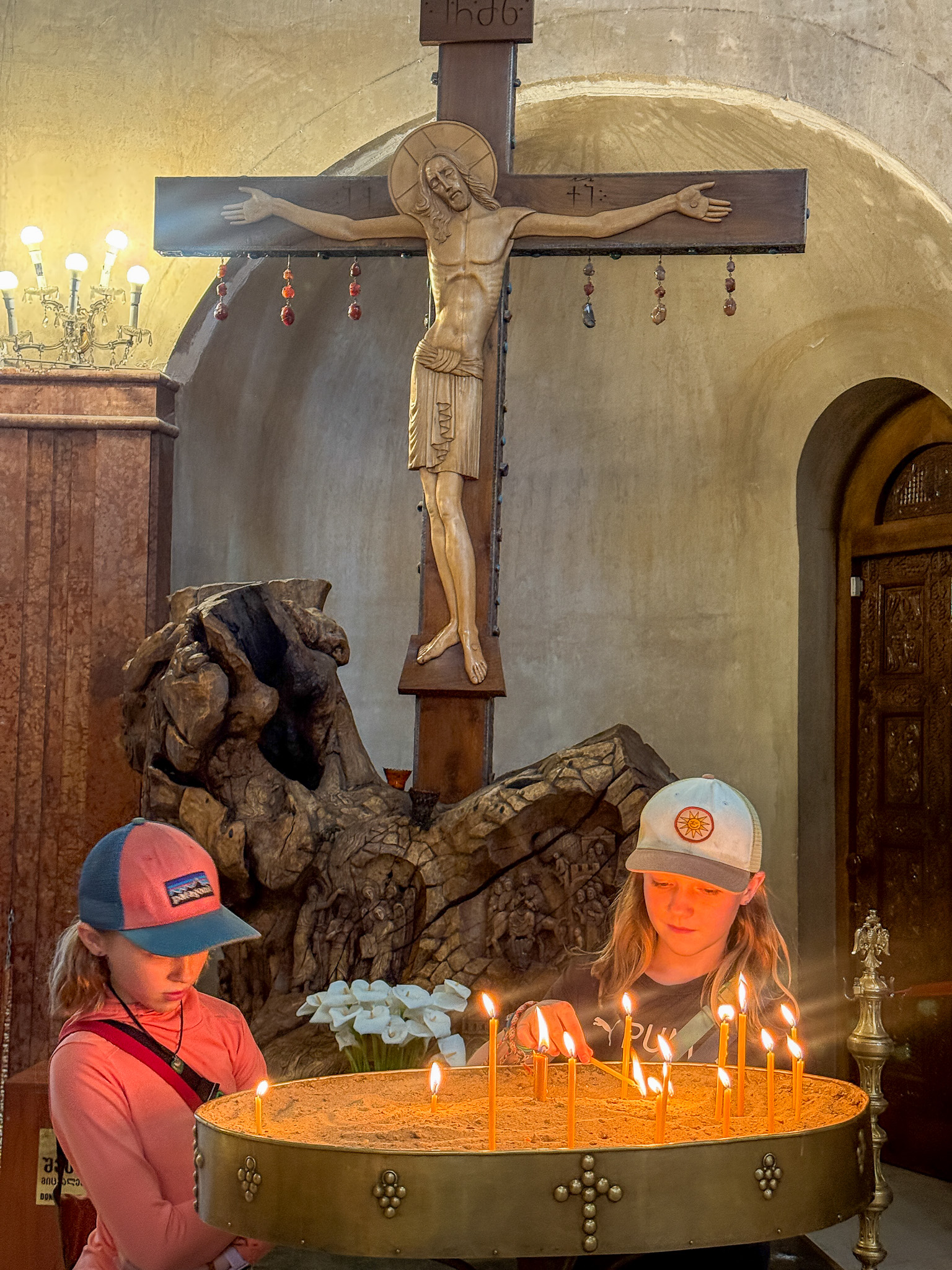
Tbilisi is a city built in layers, where almost nothing exists in isolation. Sioni Cathedral, our first stop, was originally built in the 6th and 7th centuries, destroyed and rebuilt repeatedly across the intervening millennium and a half, and served as the seat of the Georgian Orthodox Church until 2004. The interior felt older than the Russian Orthodox churches we’d seen in Almaty, not grander or more beautiful exactly, just deeper in time. More worn into itself. Lots of candles. Lots of small shrines tucked into corners. From there we descended into Meidan Bazaar, a market that runs underground from one side of a street to the other, partitioned into sections for wine, honey, ceramics, and jewelry. Touristy but not the mass-imported variety, which was a relief.
We passed through Abanotubani, the sulfur bath district, where natural hot springs have been drawing bathers for over 1,500 years. The name Tbilisi itself comes from the old Georgian word for “warm,” supposedly bestowed by a 5th-century king who discovered the springs while hunting. It looked like exactly the kind of place worth coming back to, which we plan to do later in June when we return to Tbilisi.
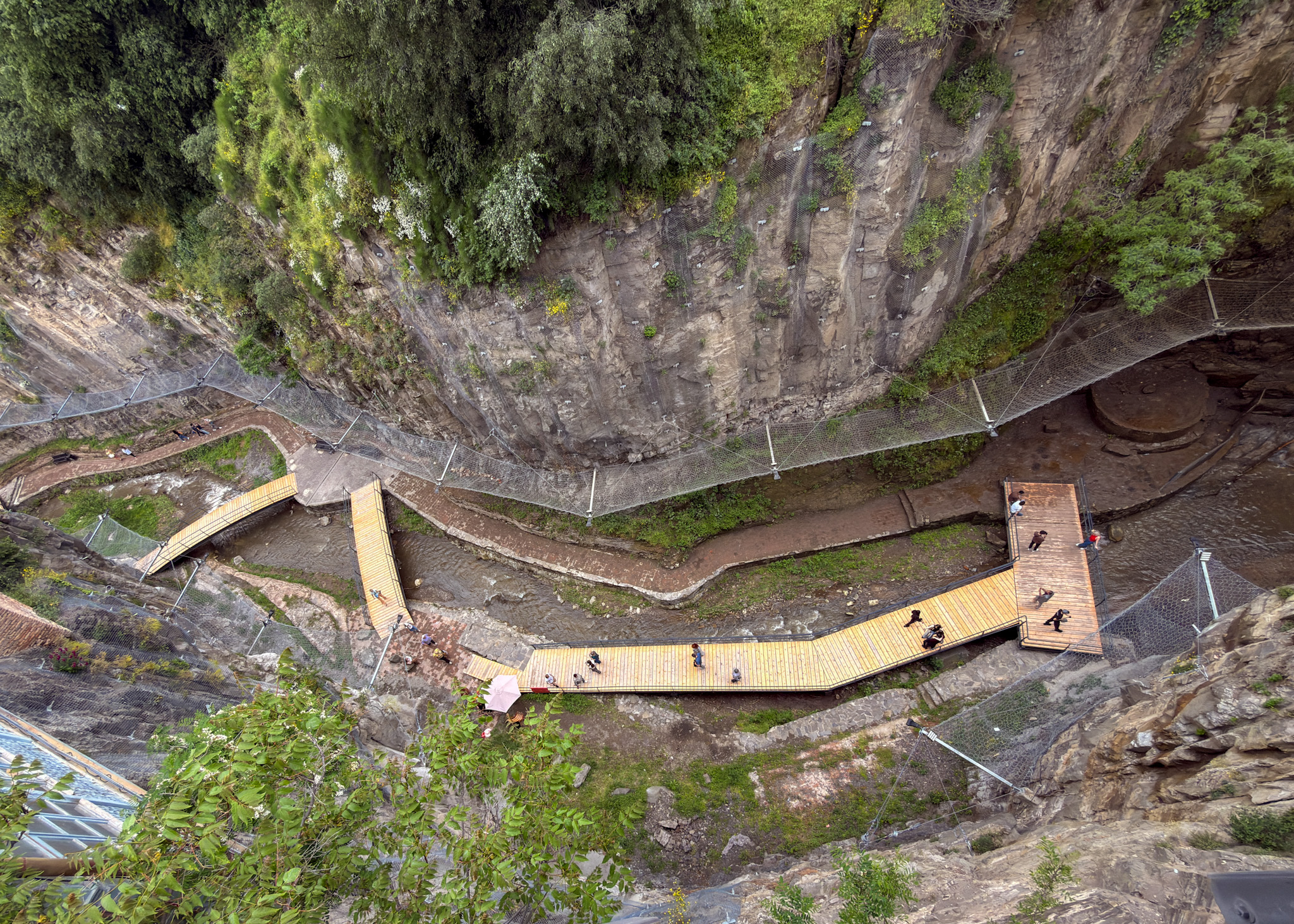
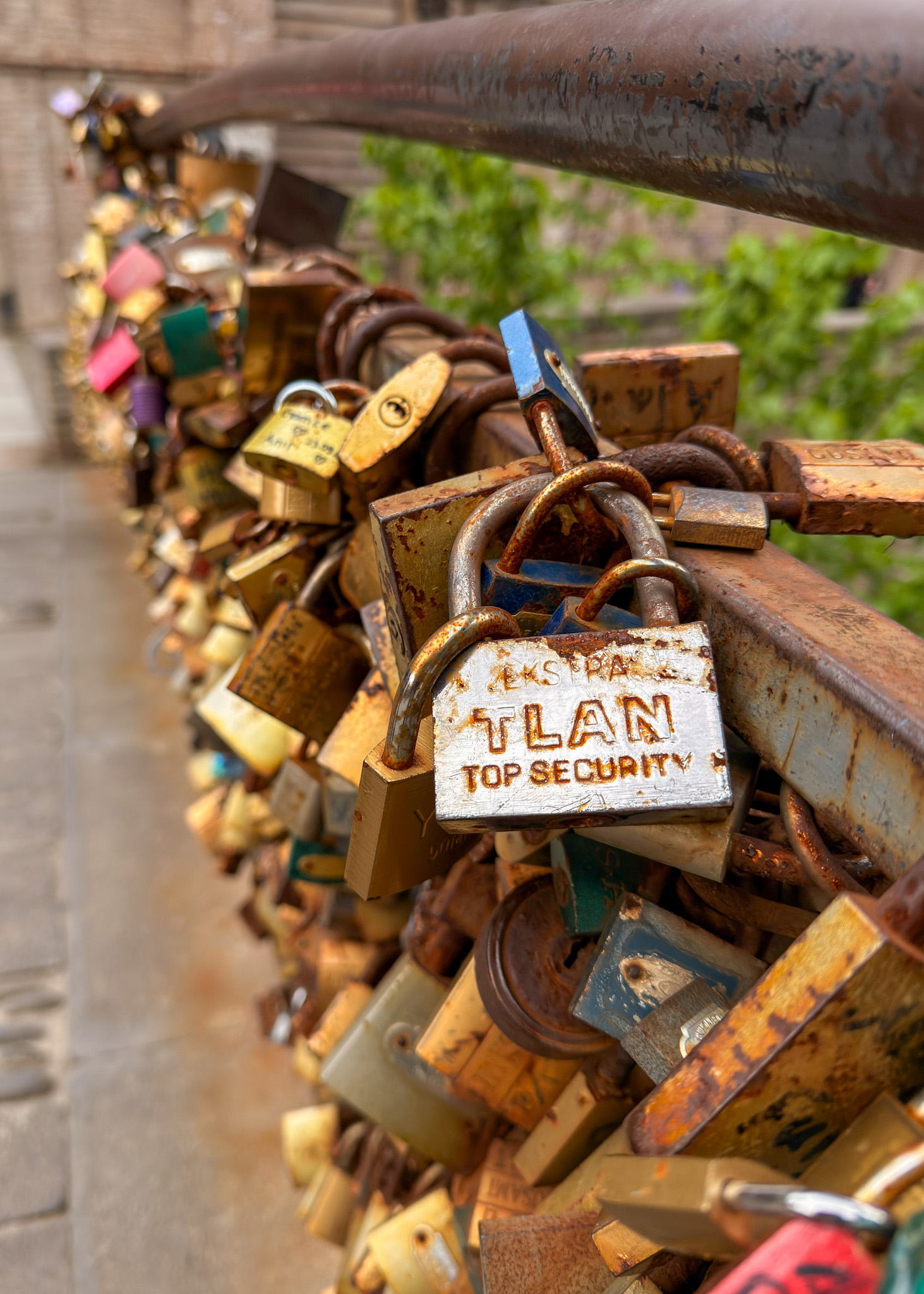
Then we nearly stumbled upon the Leghvtakhevi Waterfall, tucked into a small canyon at the heart of the old town. We initially heard the roar of the falls from a viewpoint above, but without an actual view of them. We wandered down through back alleys, descended a spiral staircase, and found ourselves on a walkway along the river leading toward the cascade. Diagonal bridges criss-cross the water as it approaches the falls, their railings covered with the love locks couples seem to leave on every photogenic bridge in the world. Max put the drone in chase mode behind Arya as she ran across three of the bridges in succession, dodging a few tourists who flinched and ducked as if a particularly aggressive pigeon had just decided to attack them.
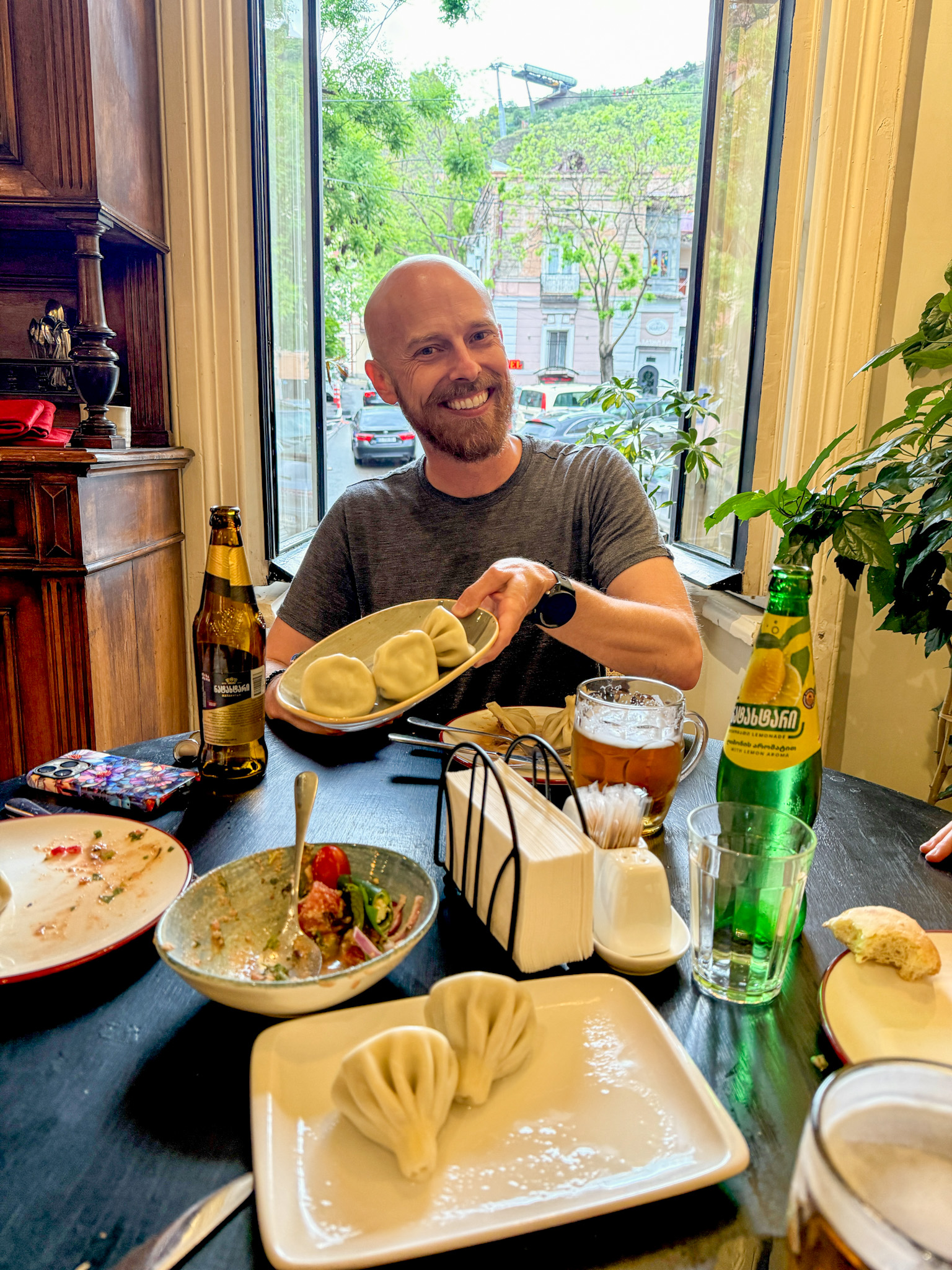
Dinner that night was at Asi Khinkali, a local spot serving the dish that defines Georgian cuisine more than any other. Khinkali are large, twisted, soup-filled dumplings, traditionally filled with spiced meat, broth, and herbs. The proper technique involves picking them up by the topknot, biting a small hole to sip the broth, then eating the rest, leaving the topknot on the plate so you can count your conquests. We ordered two varieties, one with coriander and one with tarragon. They were good but not transcendent, the dough a little thicker than ideal and both herbs a touch heavy-handed. What rescued the meal was Svanuri Marili, a Georgian seasoning salt from the high Svaneti mountains made by mixing salt with garlic, blue fenugreek, dill, coriander, marigold petals, and other dried herbs. The restaurant’s version was blended with smoked chili, and a sprinkle of it on a khinkali changed everything.
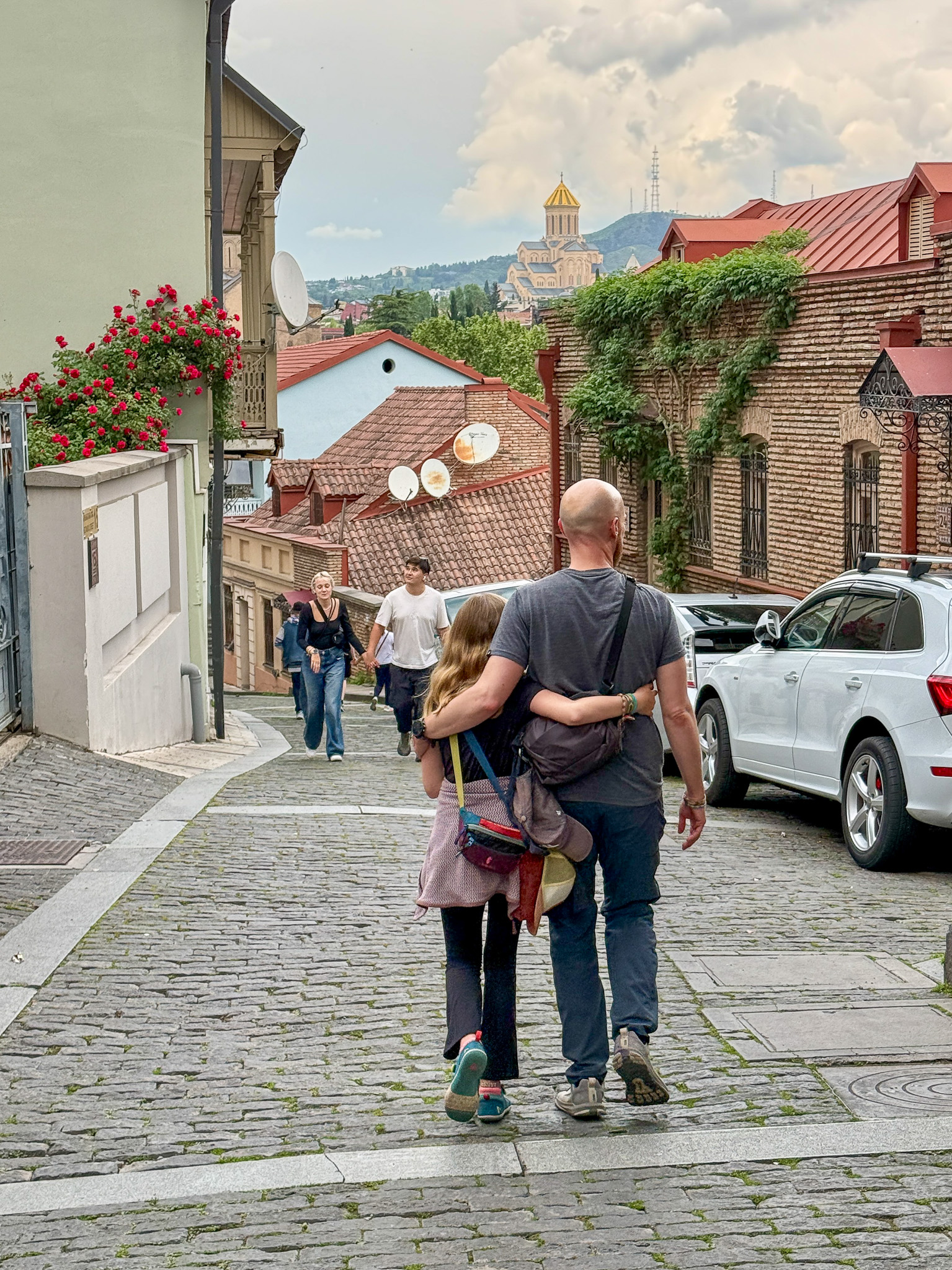
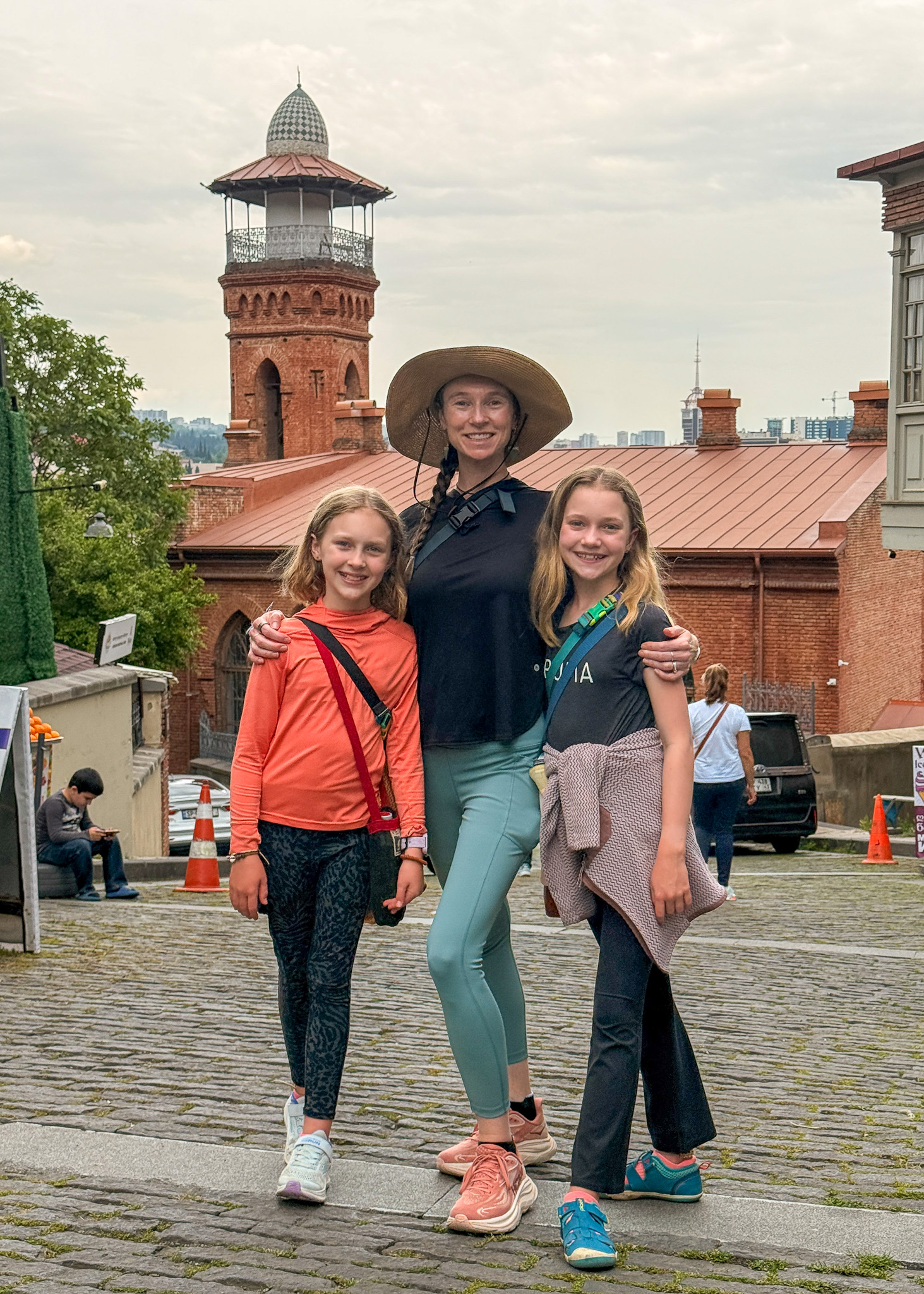
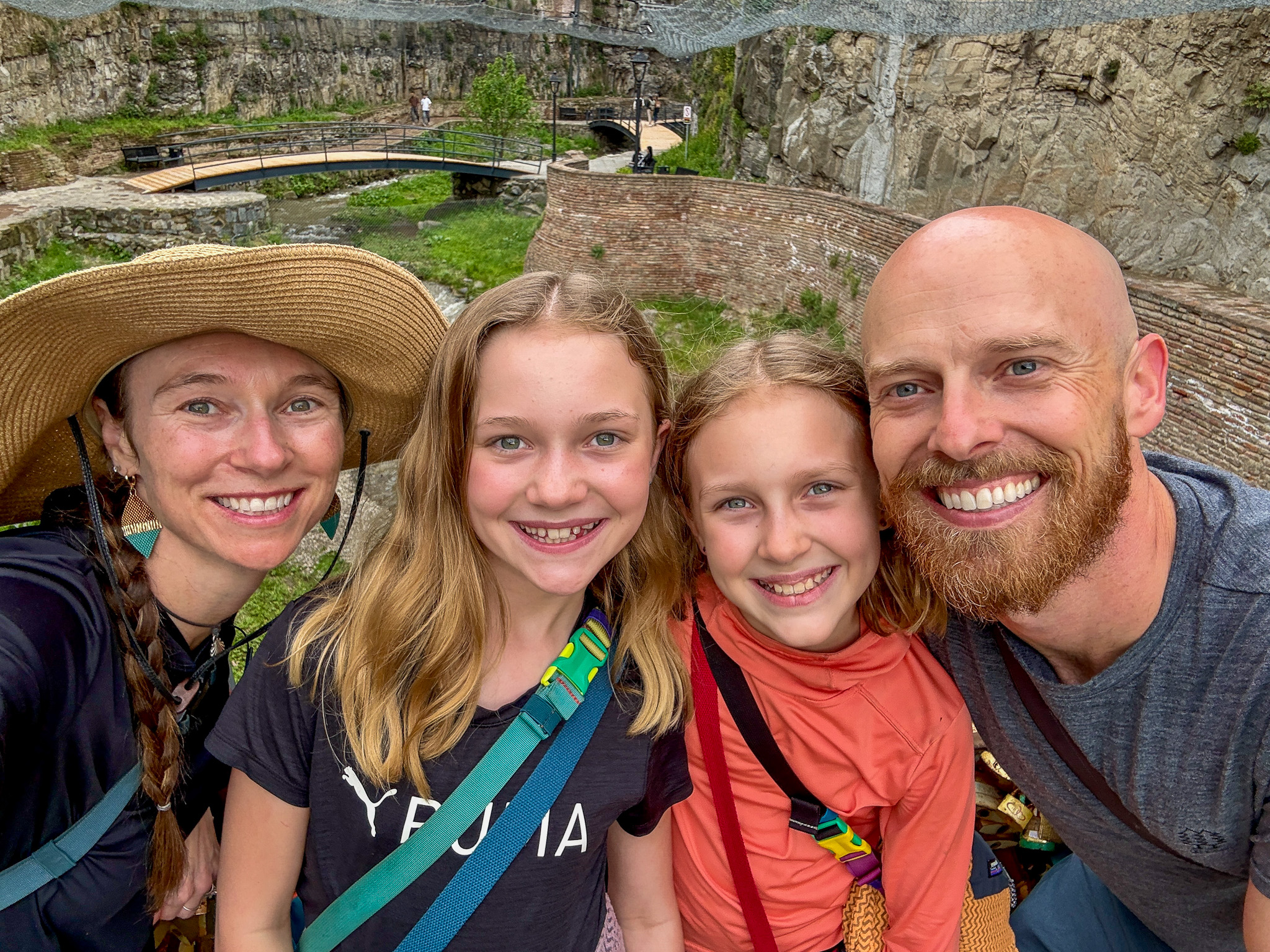
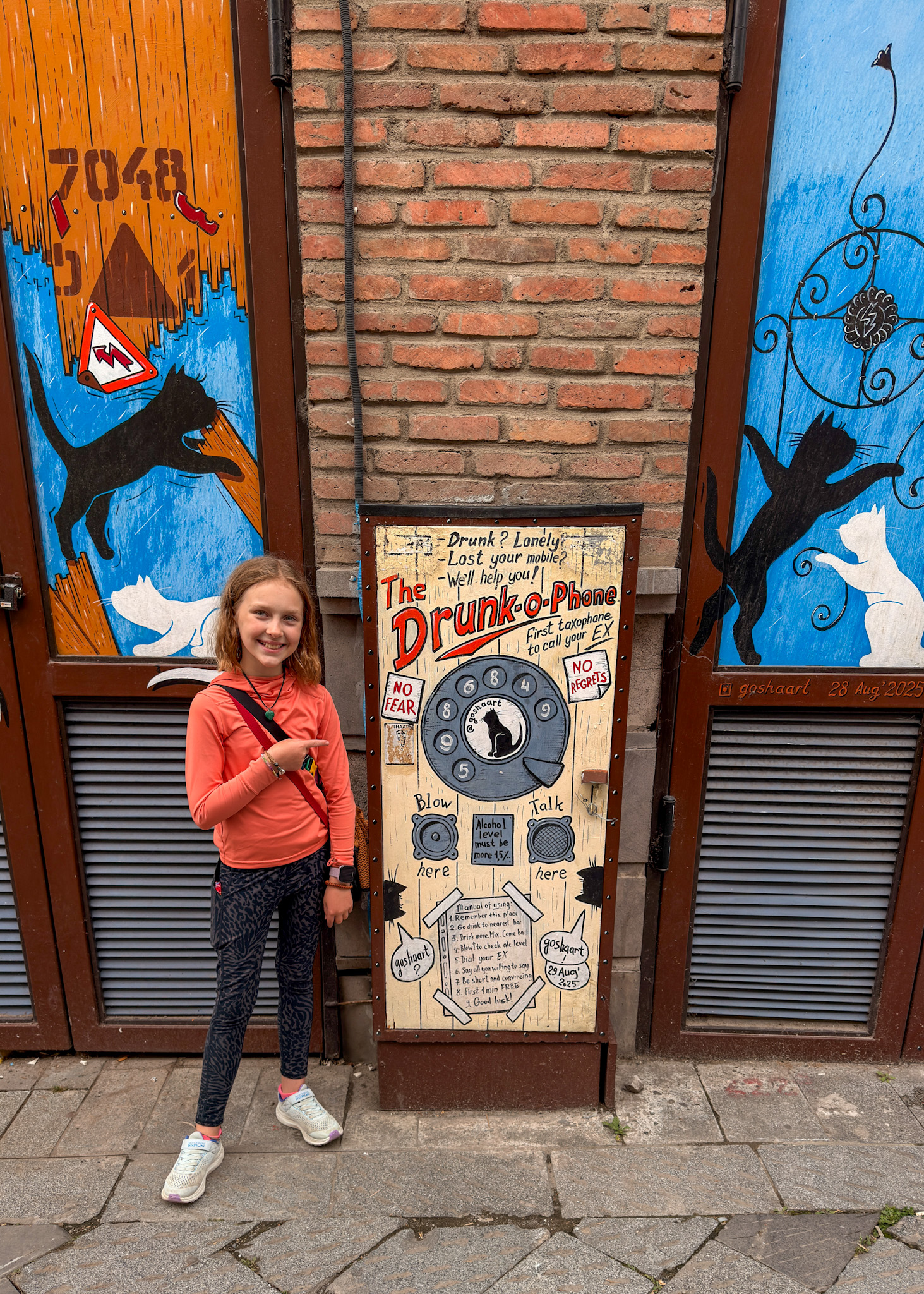
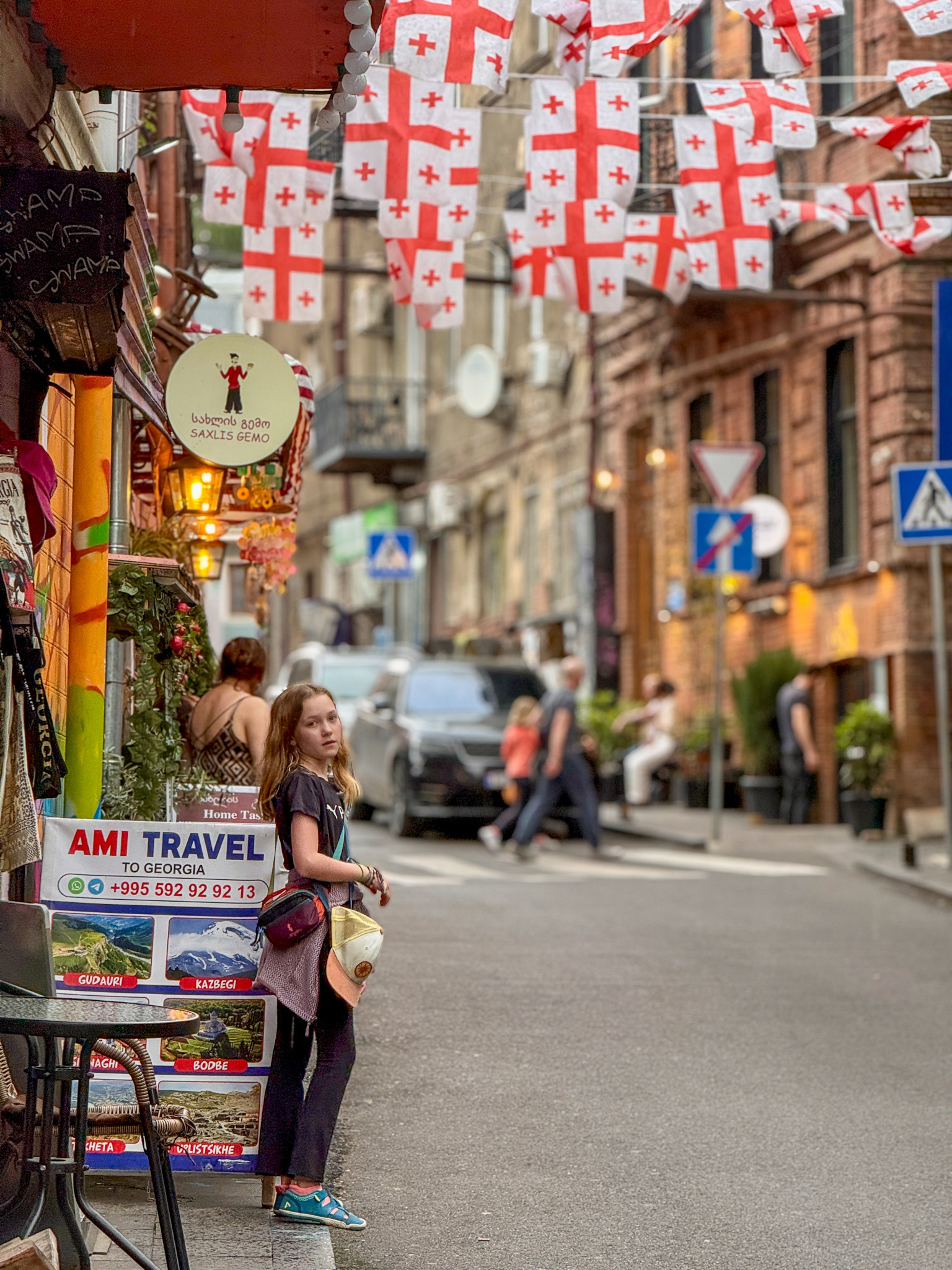
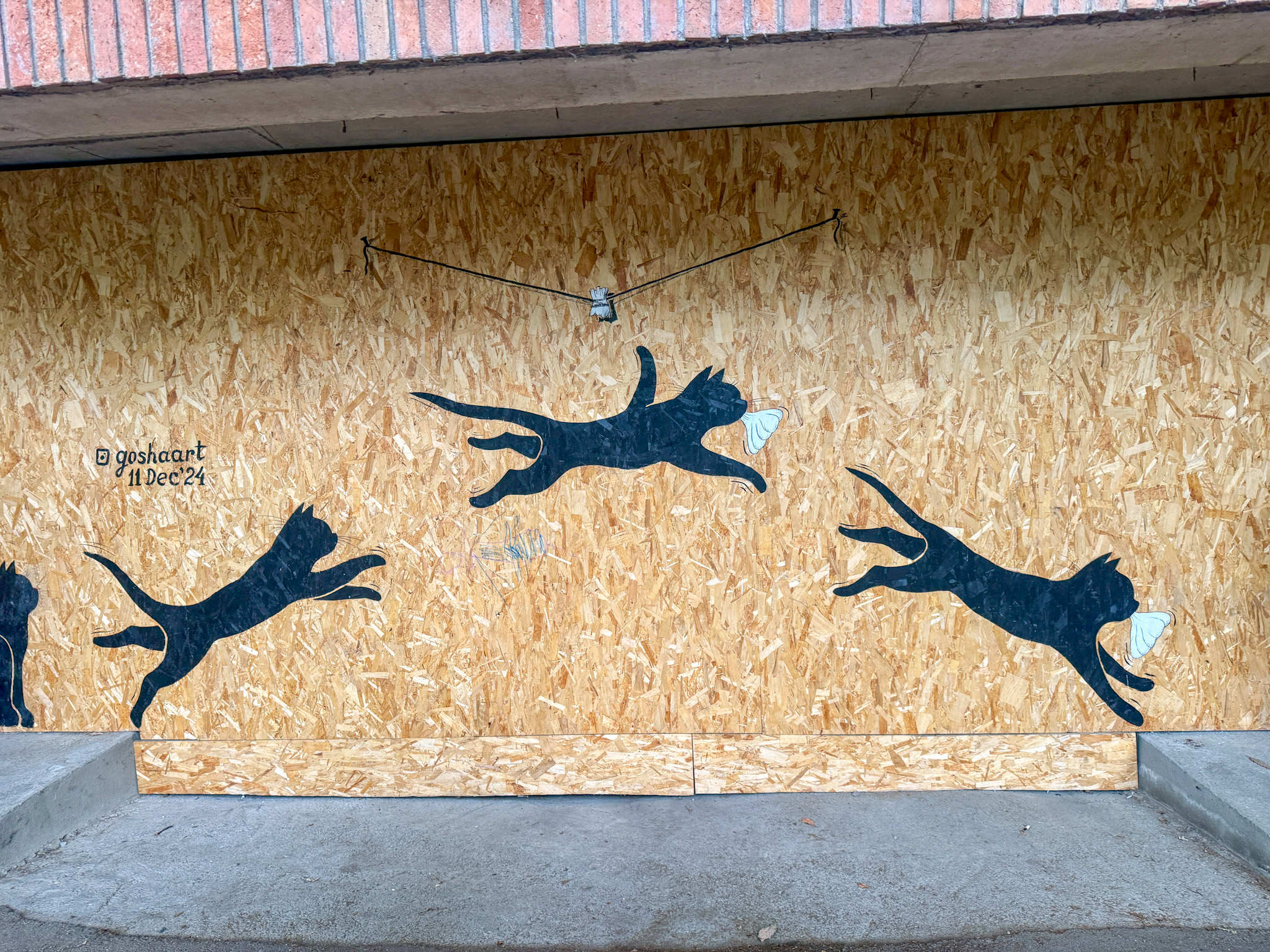
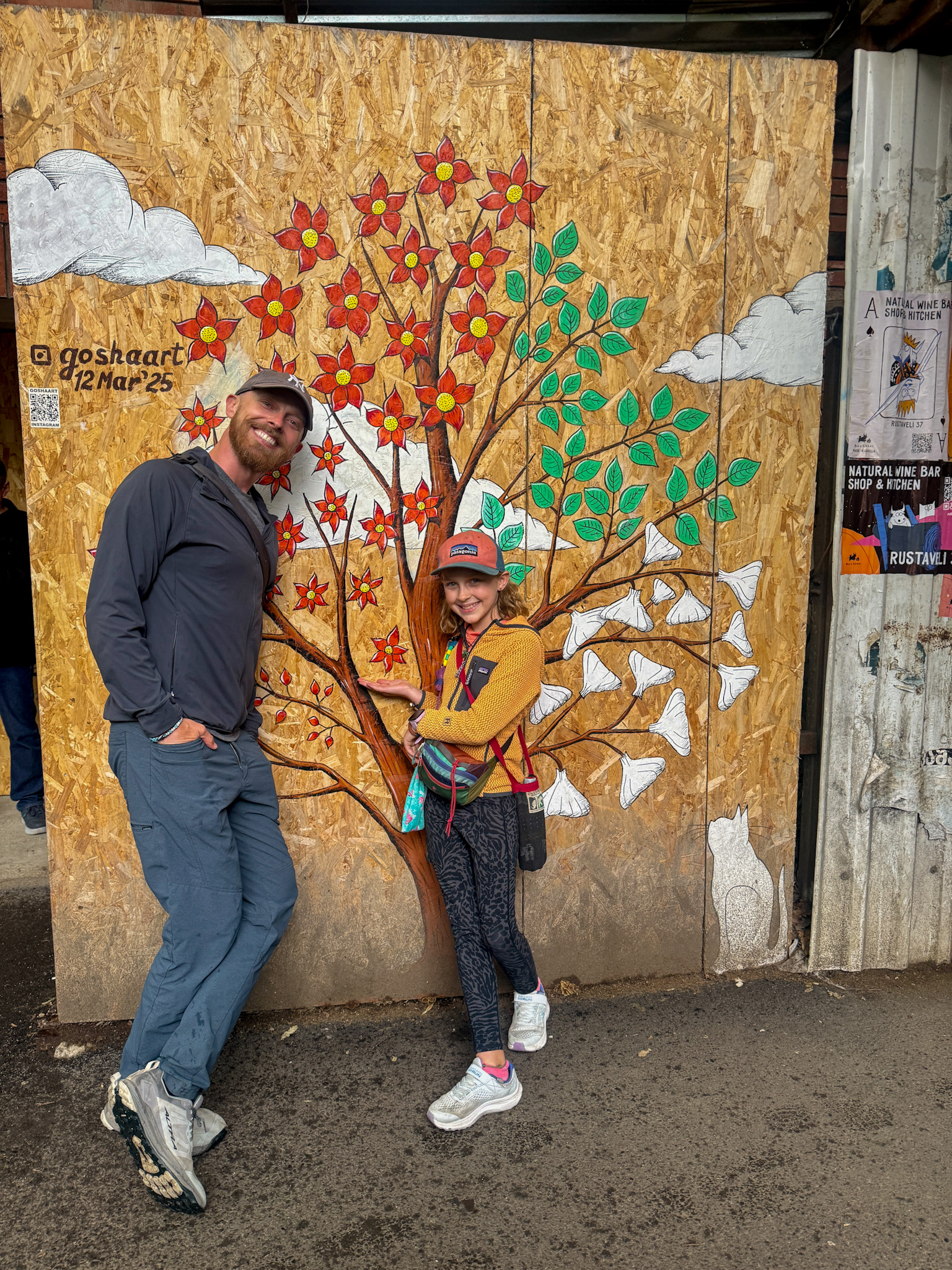
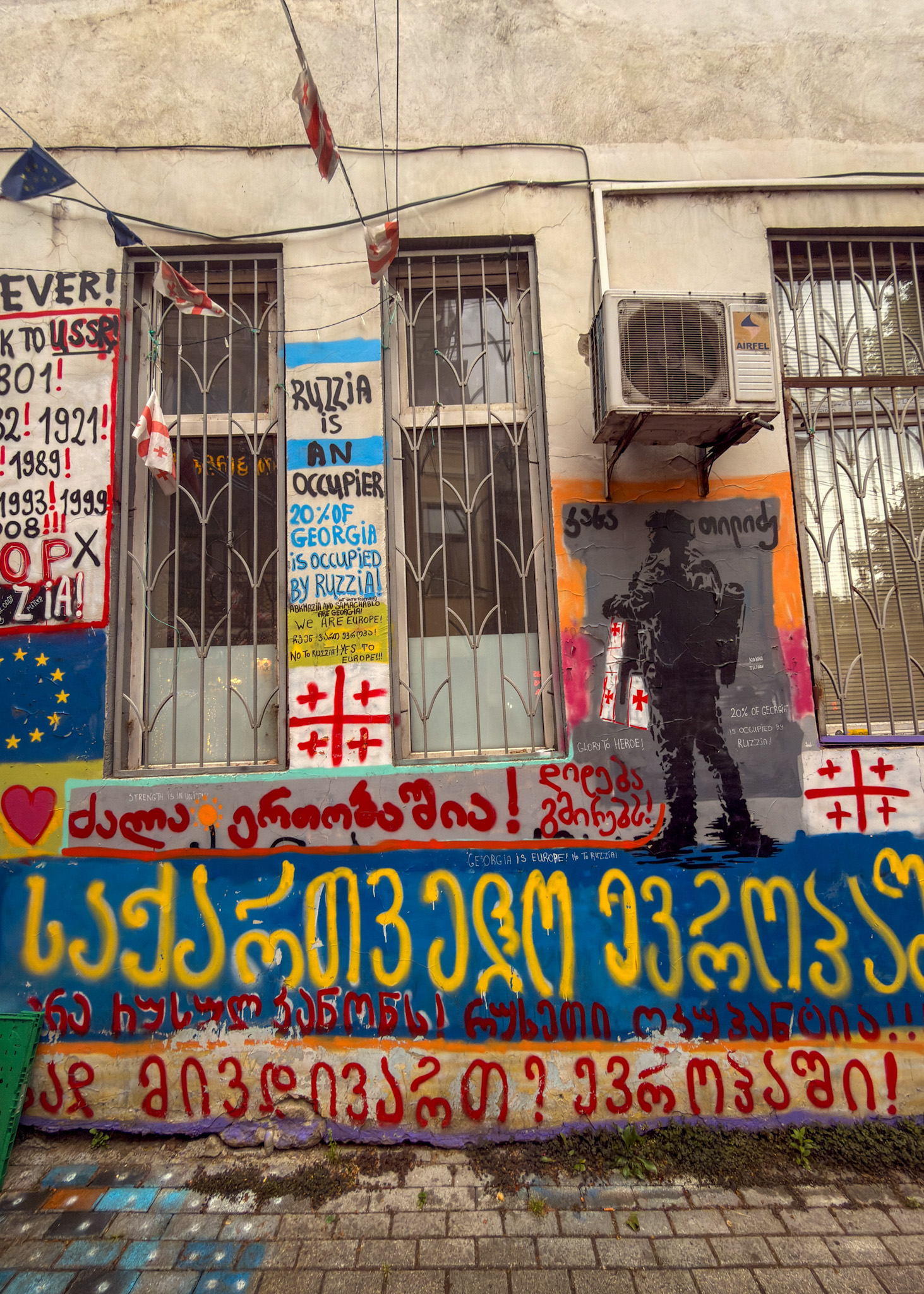
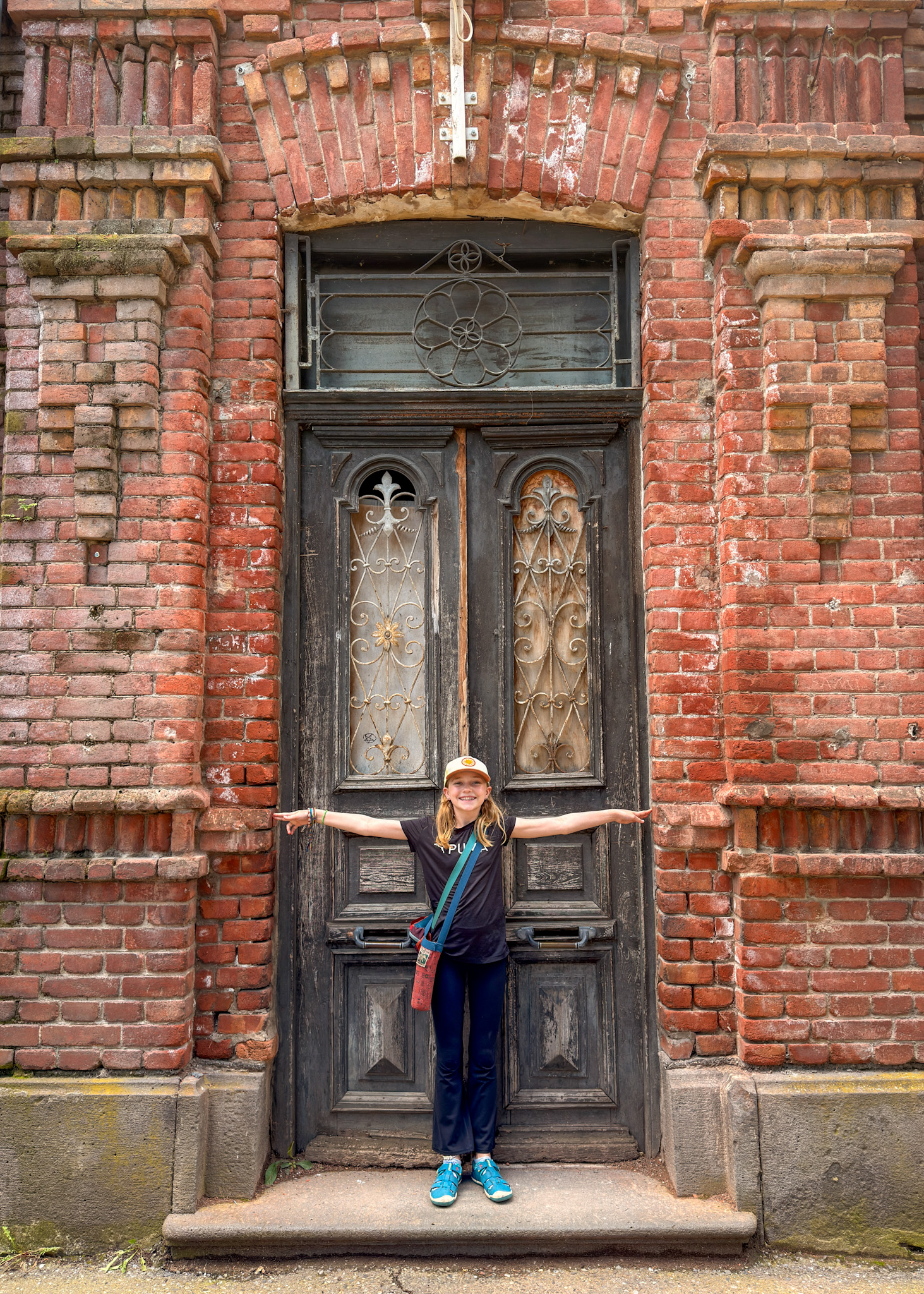
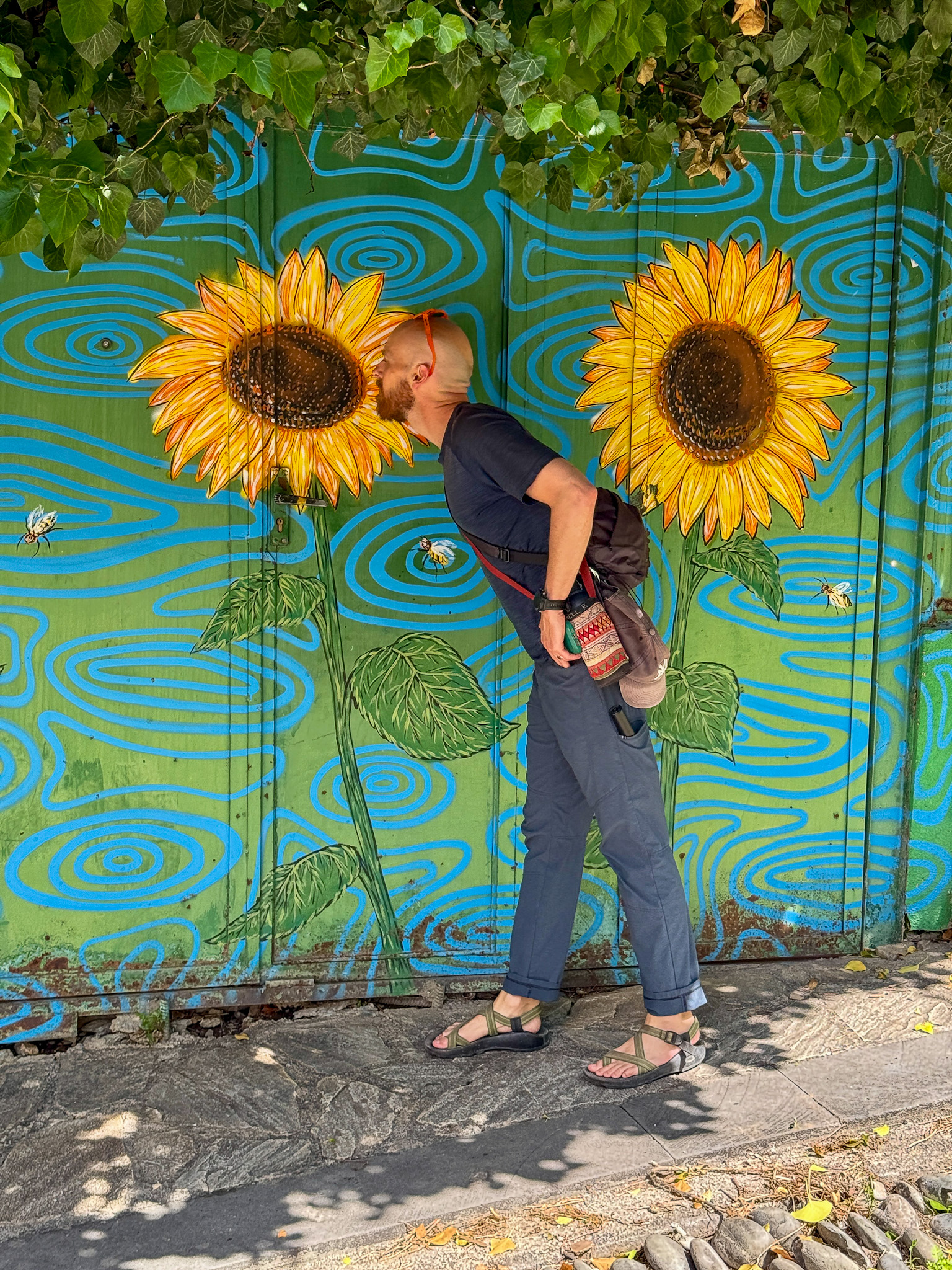
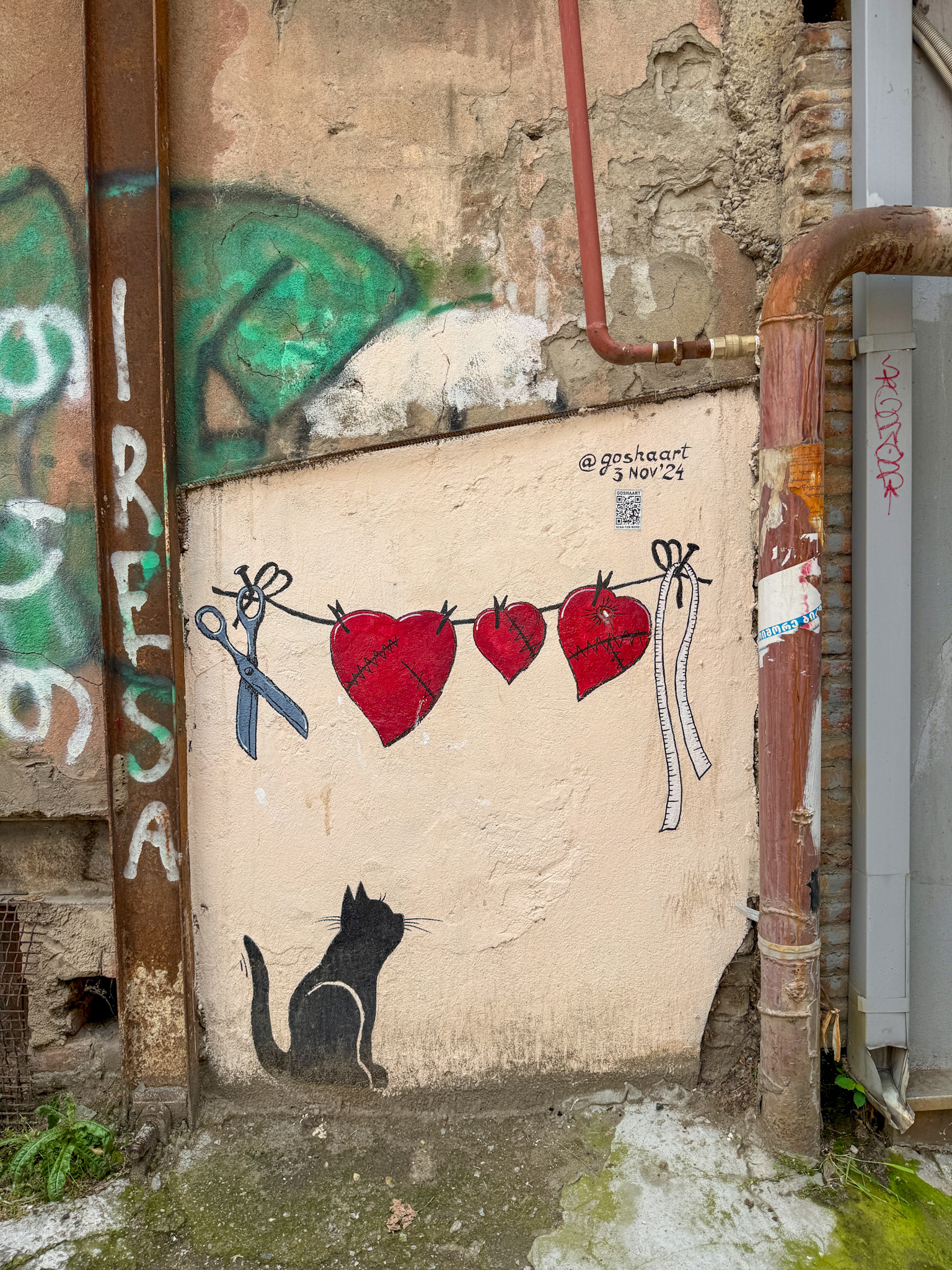
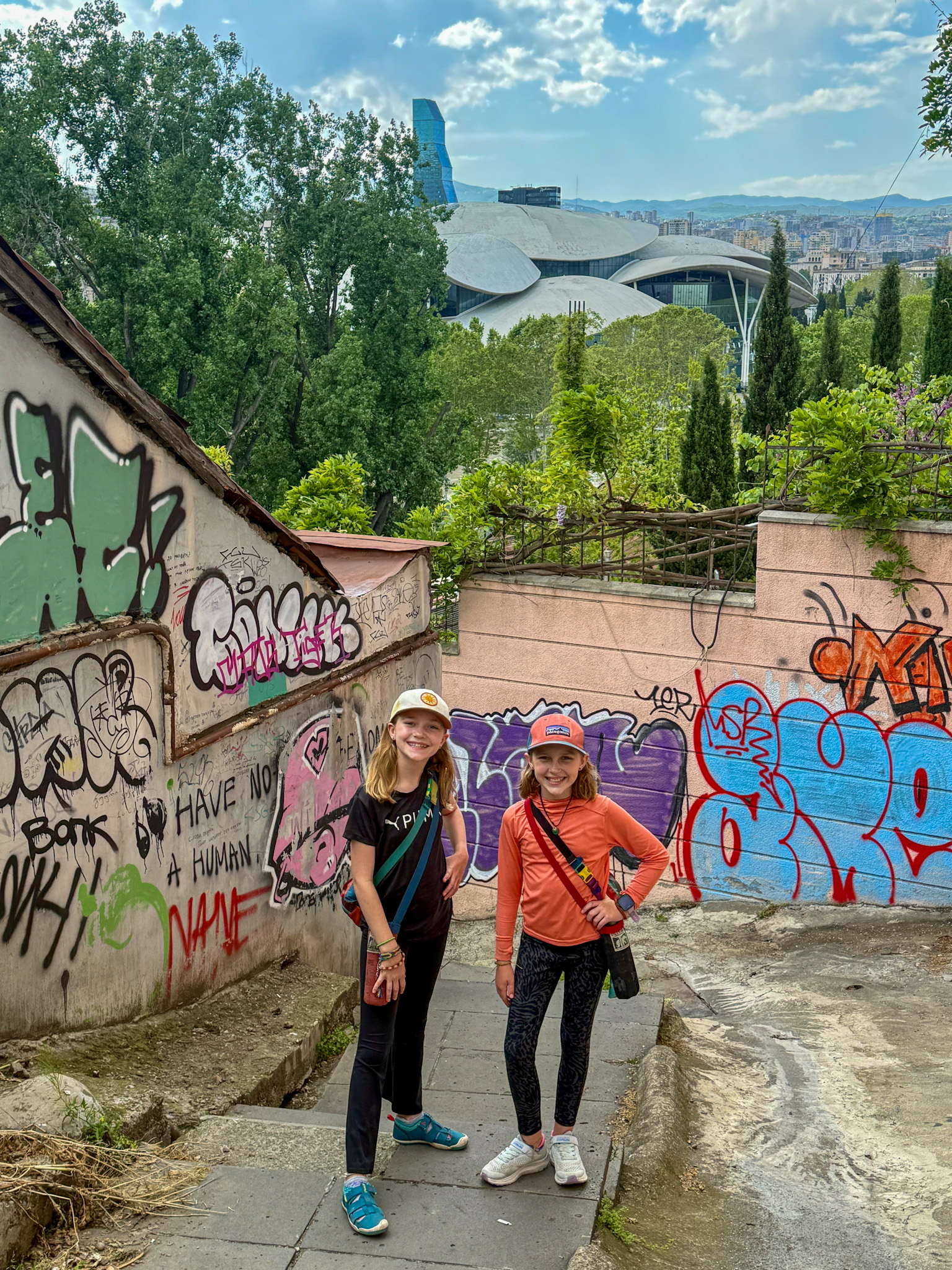
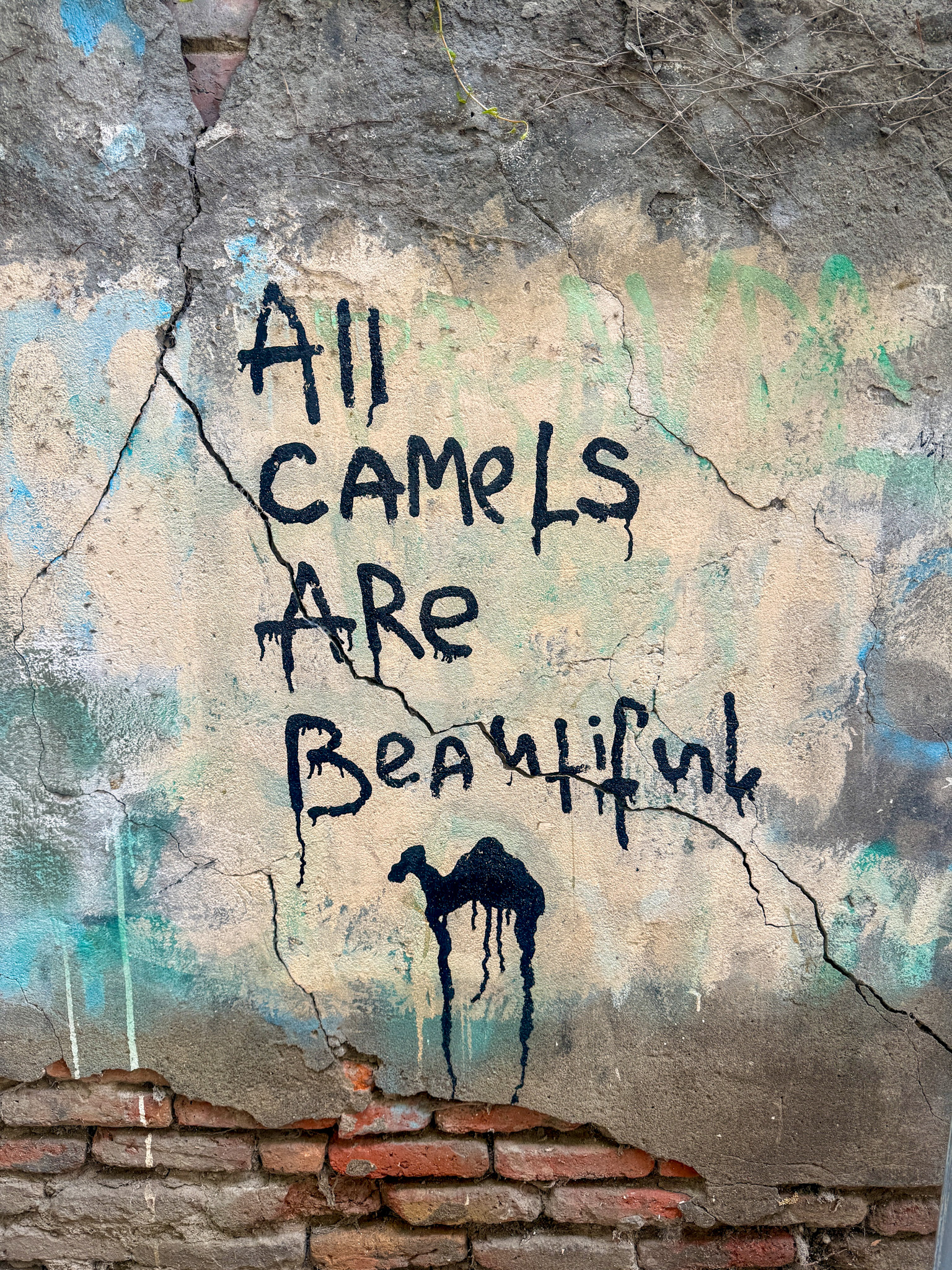
The next morning we set out on a proper walking tour of the city, and the juxtaposition theme began to assert itself in earnest—the thought-provoking street art outside churches and galleries containing traditional religious art, and modern remodeled architecture next door to crumbling buildings in disrepair—why we now endearingly describe Tbilisi as “delightfully decrepit.”
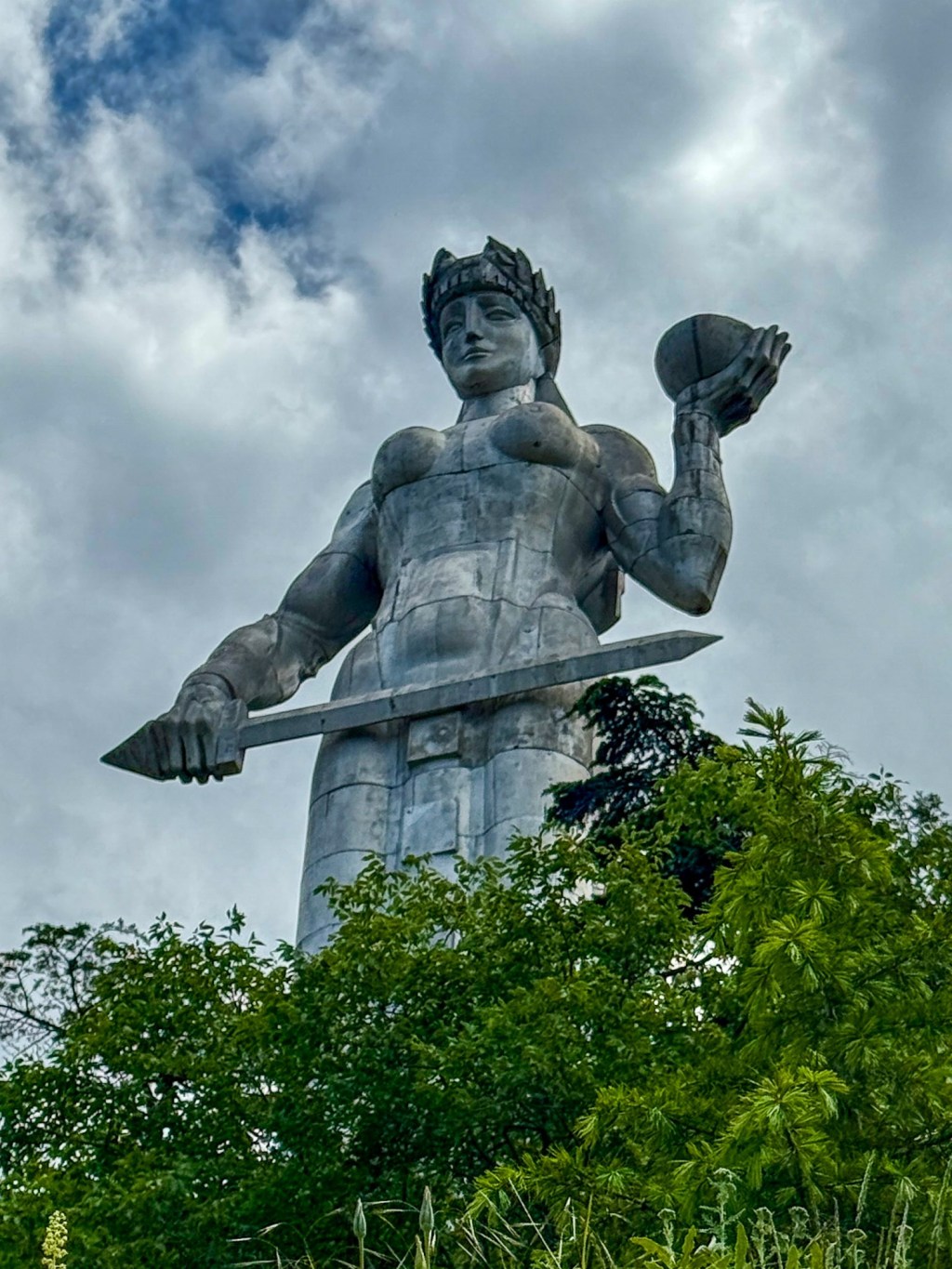
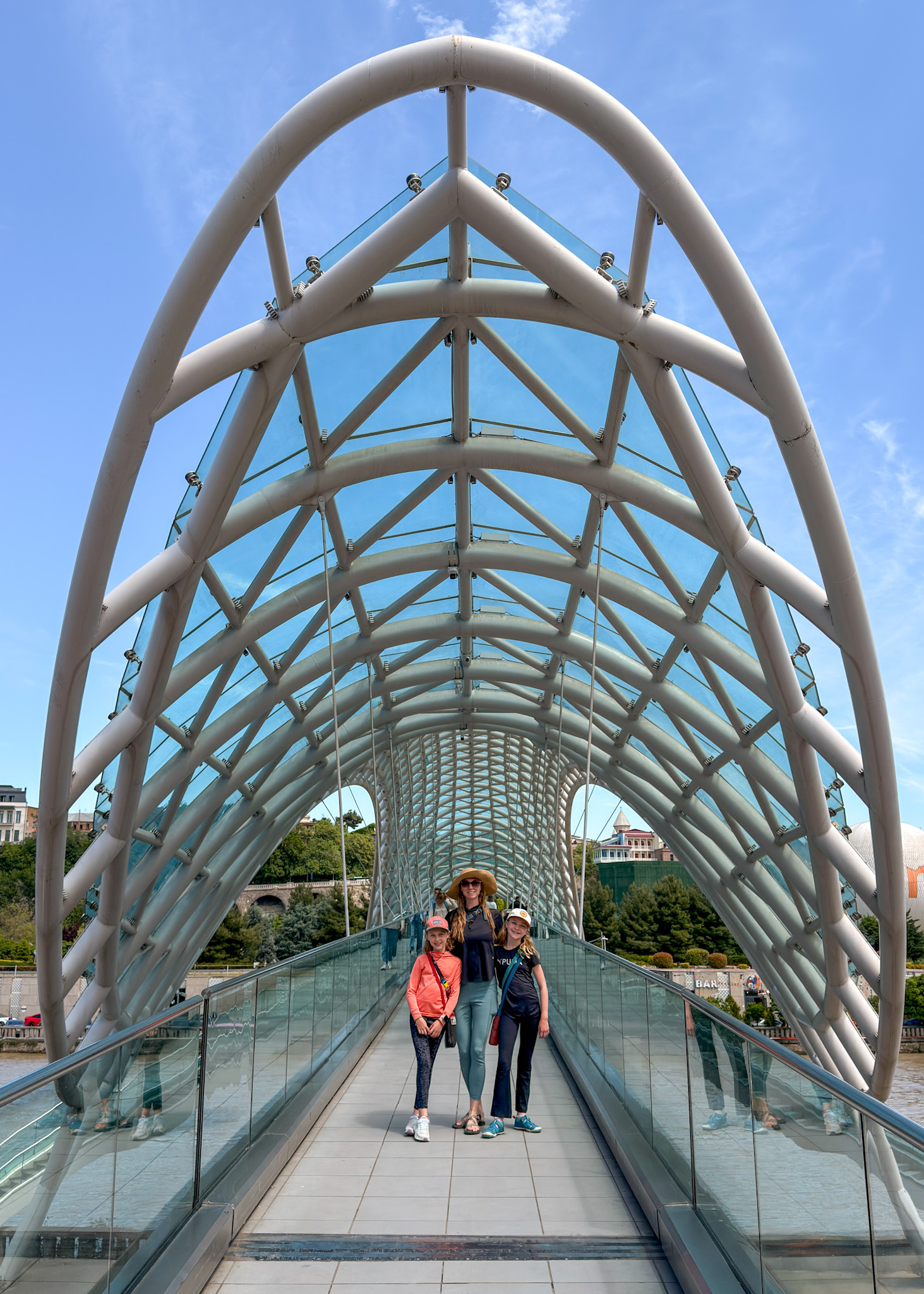
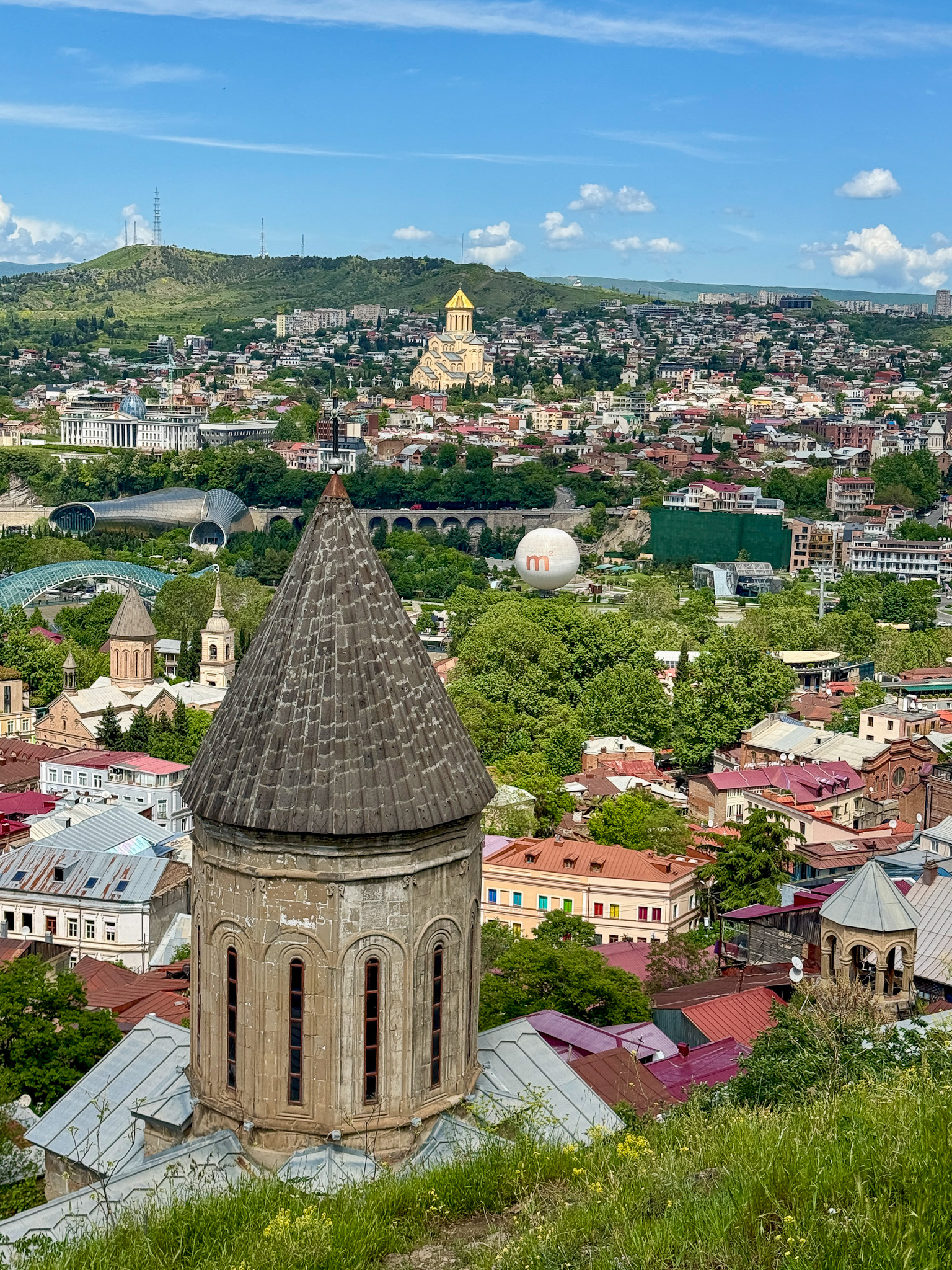
We started at the Bridge of Peace, the iconic glass and steel pedestrian bridge that arcs over the Kura River through the center of the city. Designed by the Italian architect Michele De Lucchi and opened in 2010, it is the kind of structure locals either love or hate, unapologetically modern in a city still deeply shaped by its medieval old town. From there we crossed into Rike Park, a riverside green space dotted with sculptures, fountains, and, somewhat unexpectedly, a huge tethered air balloon offering intrepid travelers a view over the city. We passed on the balloon and continued to the aerial tramway, which lifted us in 4 minutes to the cliff above the old town, with the view widening steadily as we climbed. At the top, it deposited us on a plaza beside the Mother of Georgia.
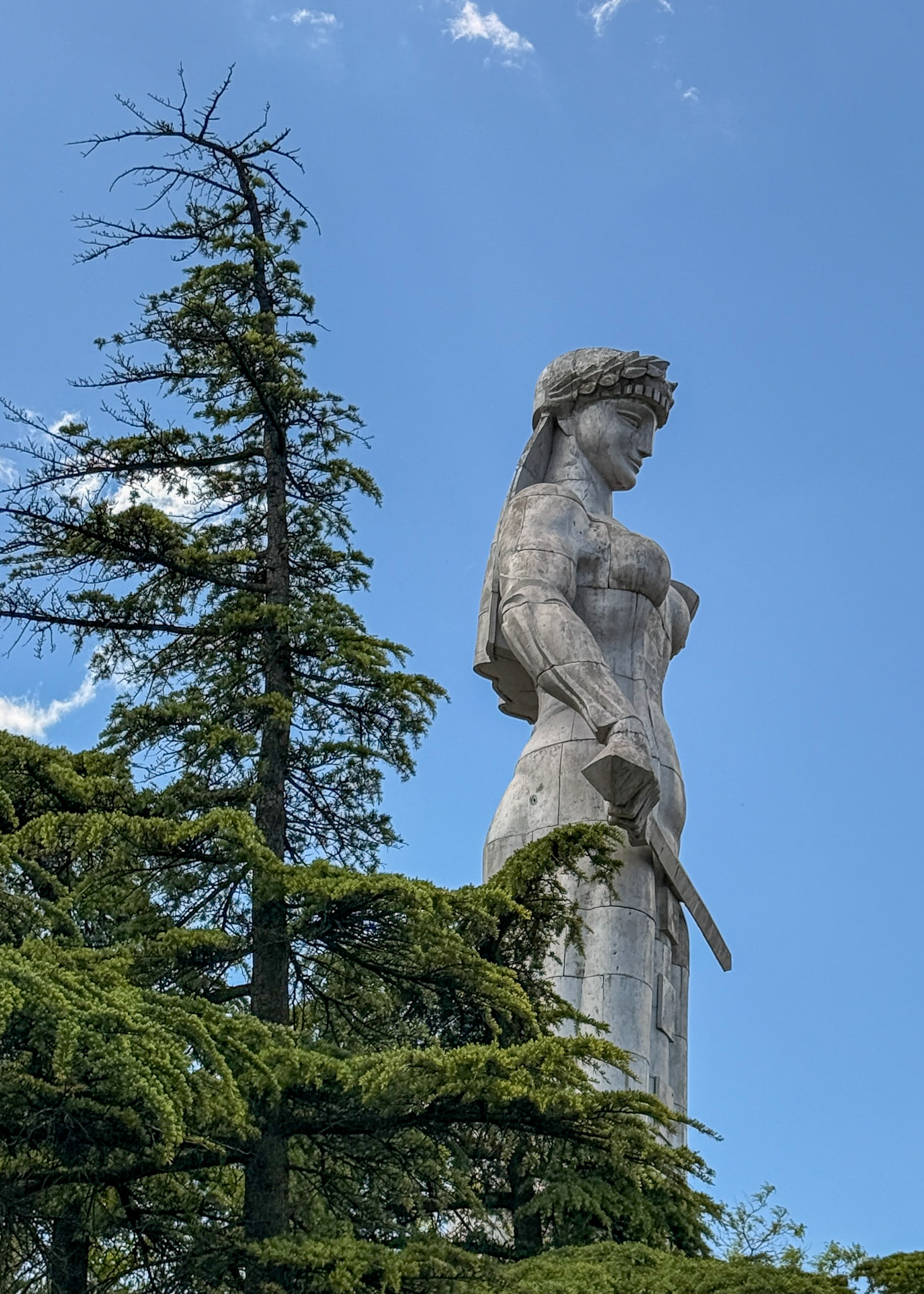
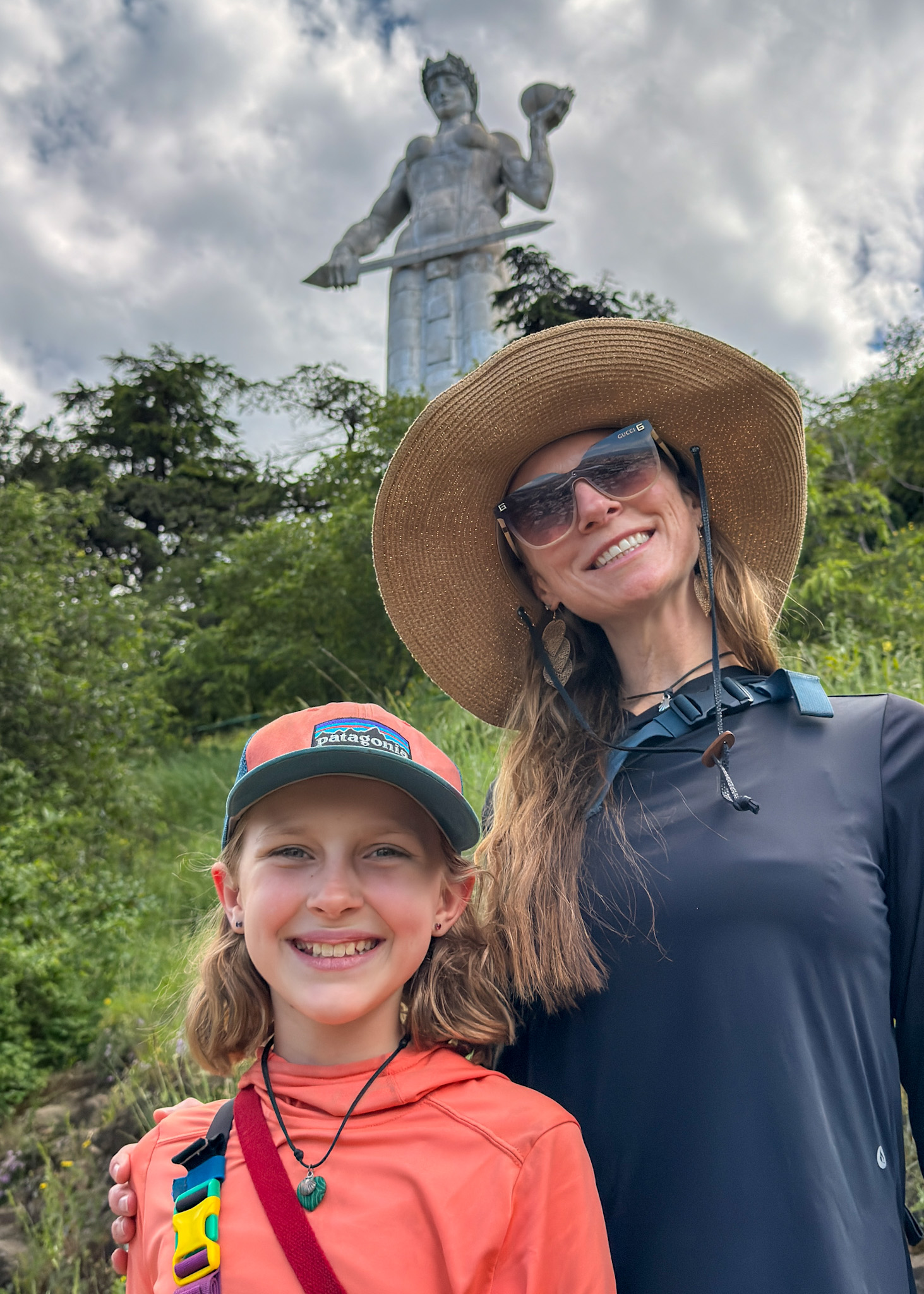
The Mother is a 20-meter aluminum statue who has watched over Tbilisi since 1958. She was erected for the city’s 1,500-year anniversary (an impressive celebration at baseline), and she holds a sword in one hand to fend off enemies and a bowl of wine in the other to welcome friends. That image, we kept thinking afterward, is about as compactly Georgian as anything could possibly be—the bowl and the sword, the welcome and the warning, the ancient and the present, all held in one figure.
From the statue we walked back down through a maze of stairways and narrow alleys until we ended up by the river, where we passed the Metekhi Church and the equestrian statue of King Vakhtang Gorgasali, the 5th-century king credited with founding the city, the one who discovered the hot springs while hunting. The church behind him has had a remarkable working life: built in the 13th century, then converted by successive empires into a fortress, an arsenal, a prison, and a theater, and now back to active service as a Georgian Orthodox church.
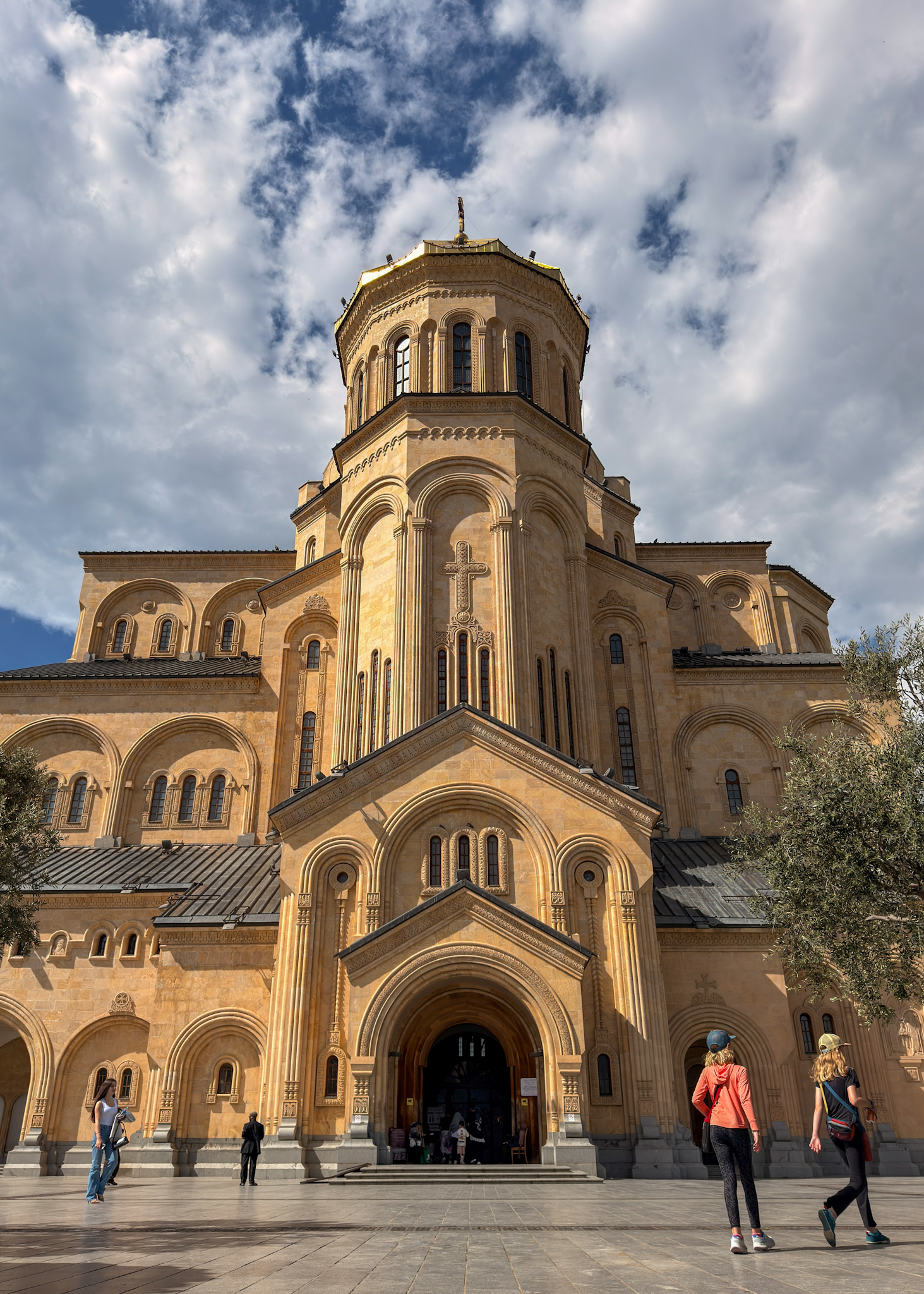
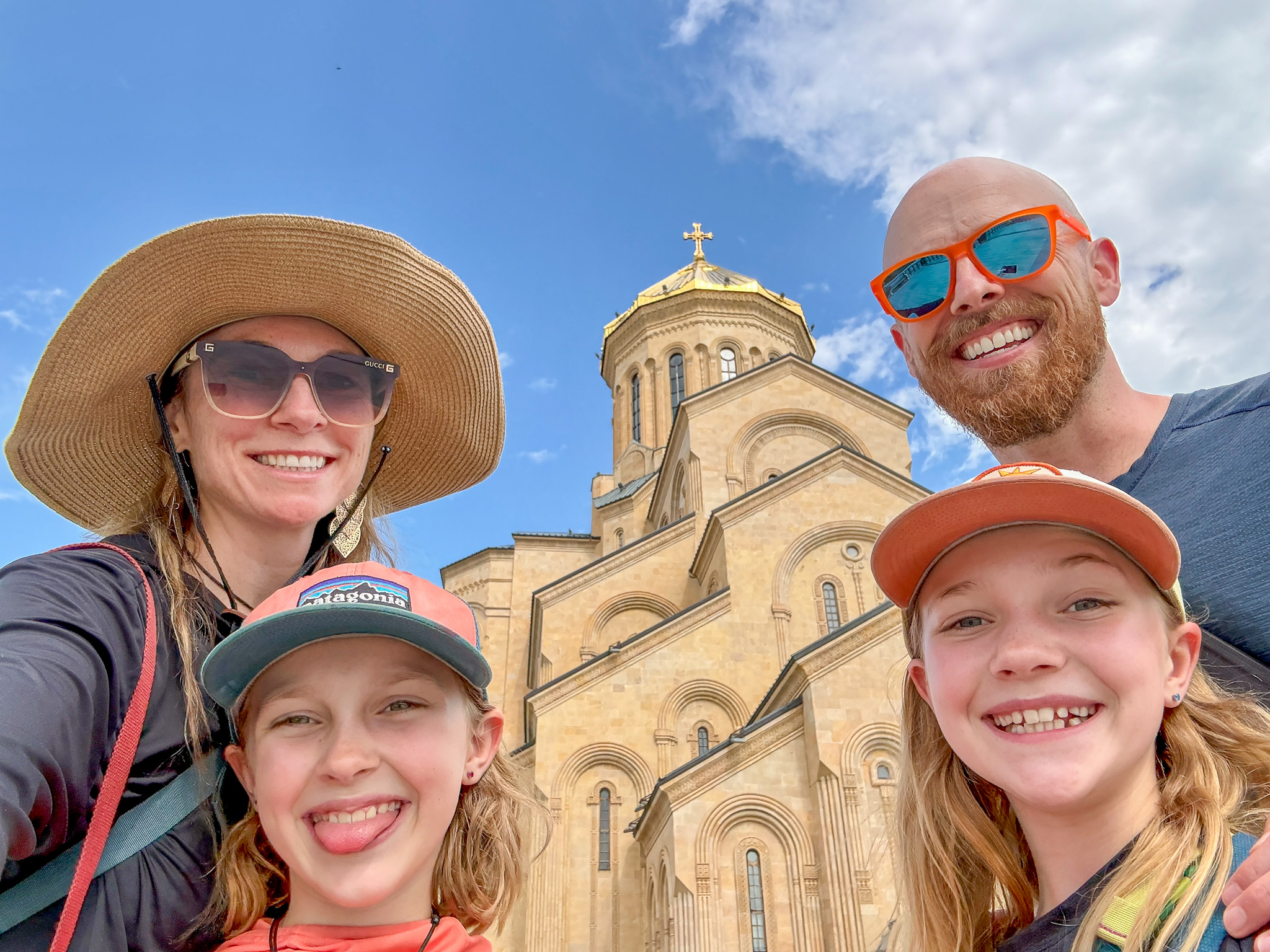
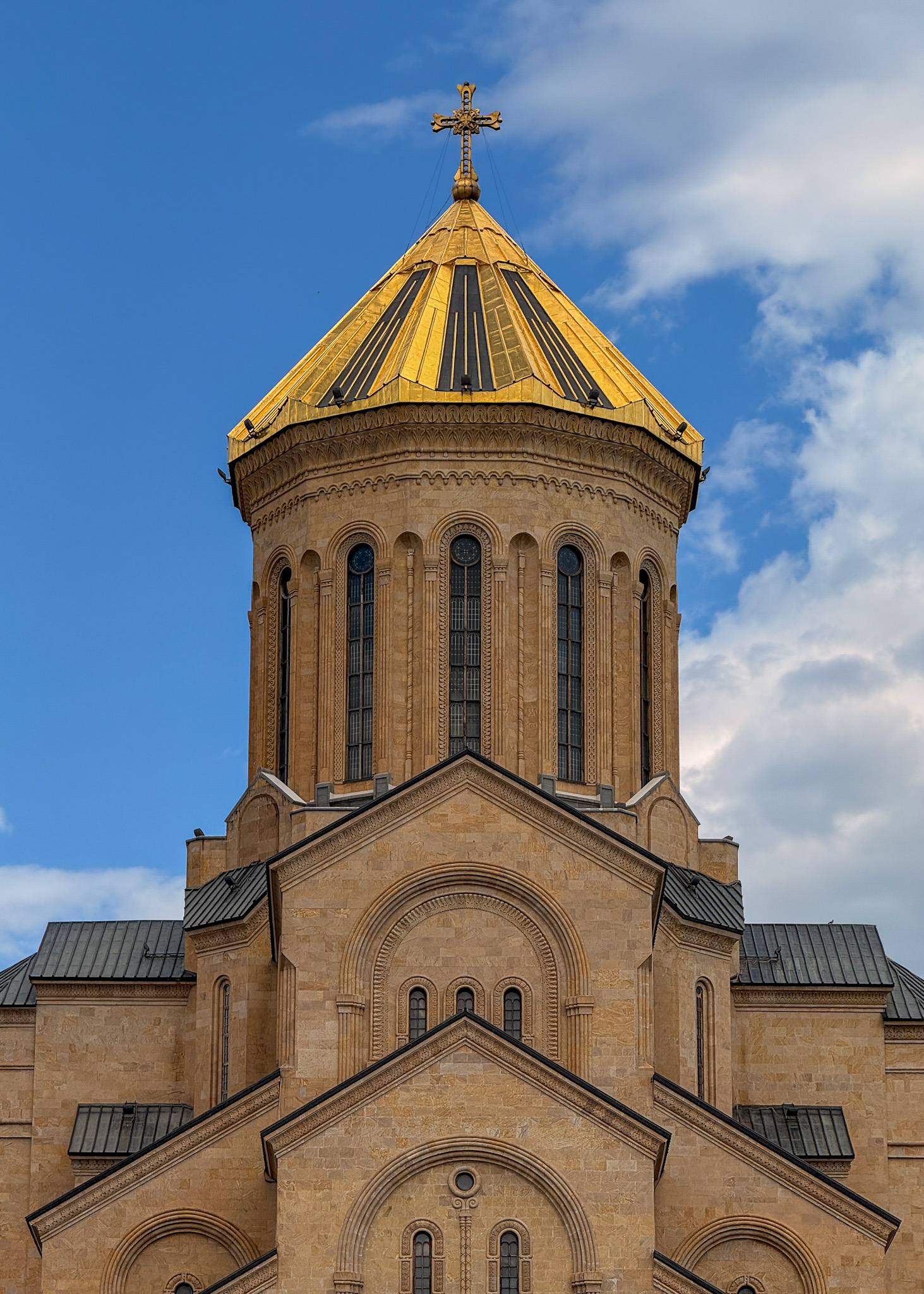
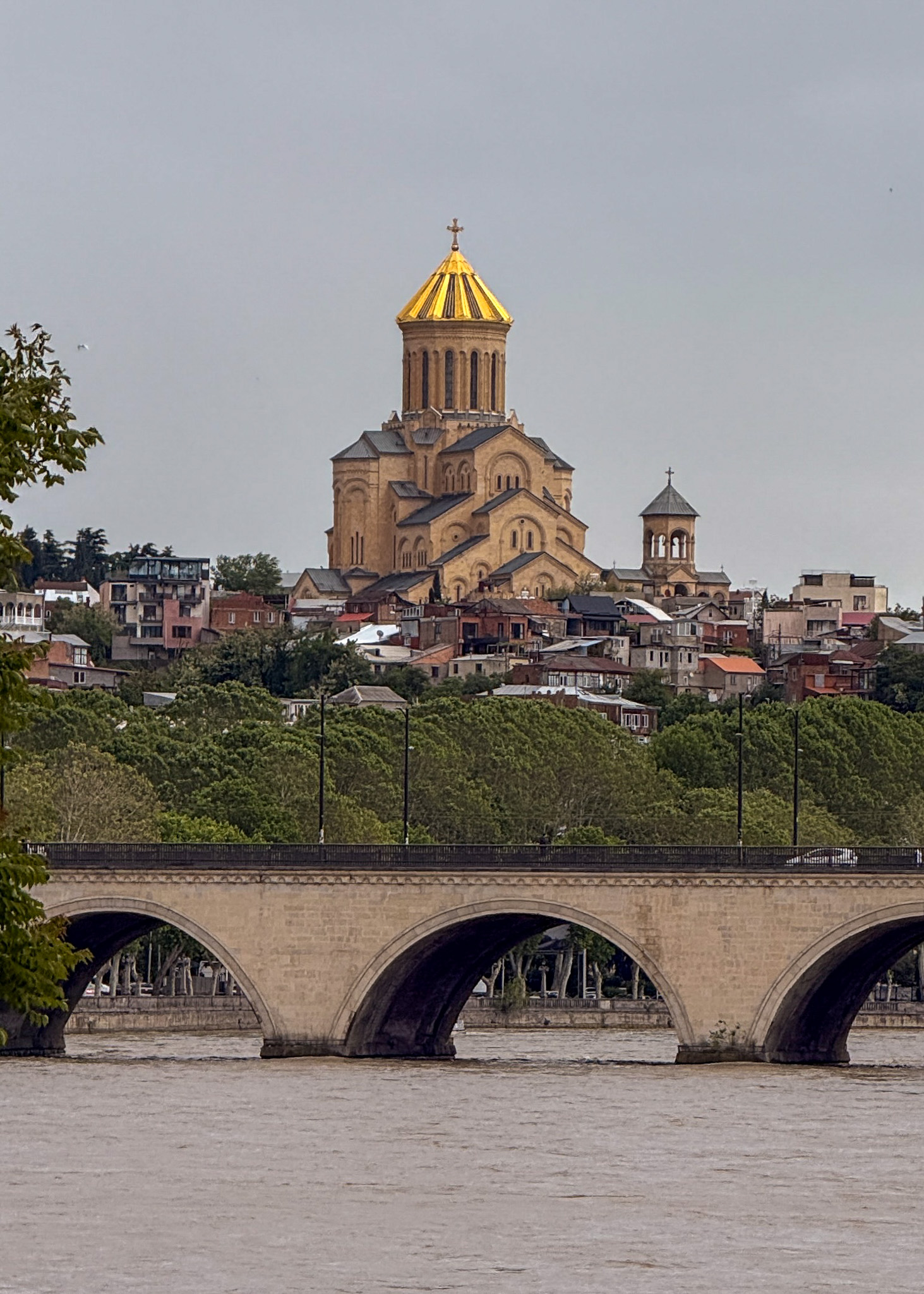
Then up the hill on the other side of the river to the Holy Trinity Cathedral, locally called Sameba. This is a really big, really old-looking, new church. Construction began in 1995 and finished in 2004, but it was designed to look like a thousand-year-old Georgian Orthodox cathedral, and on first glance you would swear it was. It is the third-tallest Eastern Orthodox cathedral in the world.
And it was here that we walked into a moment of unintentional historical timing.
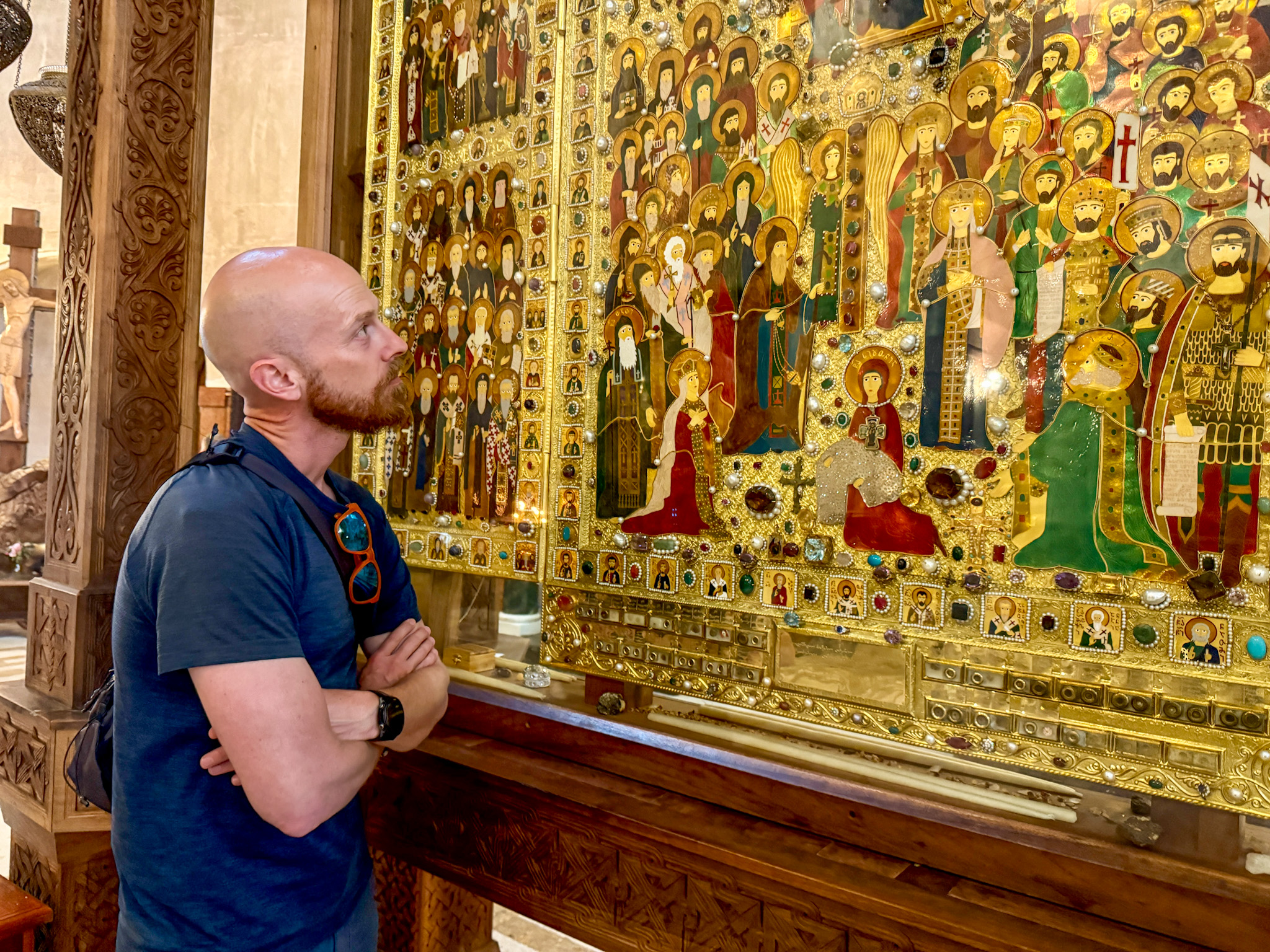
A portrait inside the cathedral caught our attention, and having just educated ourselves about the Eastern Orthodox Church, we all initially thought we were looking at the current Patriarch. We were not. The portrait was a memorial to Patriarch Ilia II, who had recently died on March 17, just two months before our visit, at the age of 93. Ilia II had led the Georgian Orthodox Church for 48 years, the longest-serving patriarch in the church’s 1,500-year history. He was so beloved that for decades he had offered to become the godfather of every third child born to any Georgian family, and at his death he reportedly had something like 50,000 godchildren, a number that almost reads like a typo until you remember the scale of the gesture. His successor, Shio III, had been elected just three days before our visit and enthroned only the day before, on May 12, at the historic Svetitskhoveli Cathedral in Mtskheta. We had walked into Tbilisi essentially in the seam between two patriarchates. The whole country was in a moment of transition, and we had been entirely unaware of it until that portrait stopped us in our tracks.
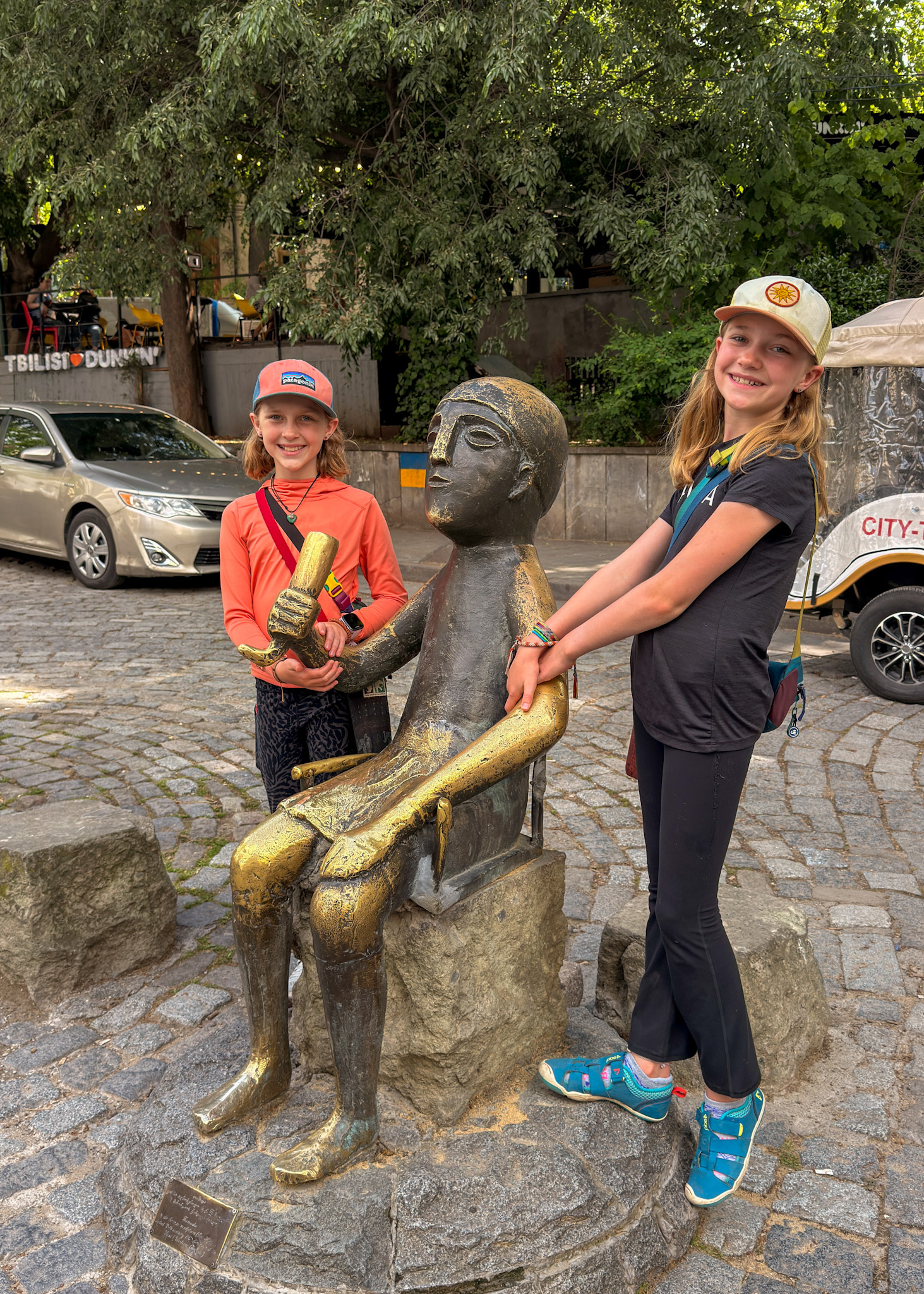
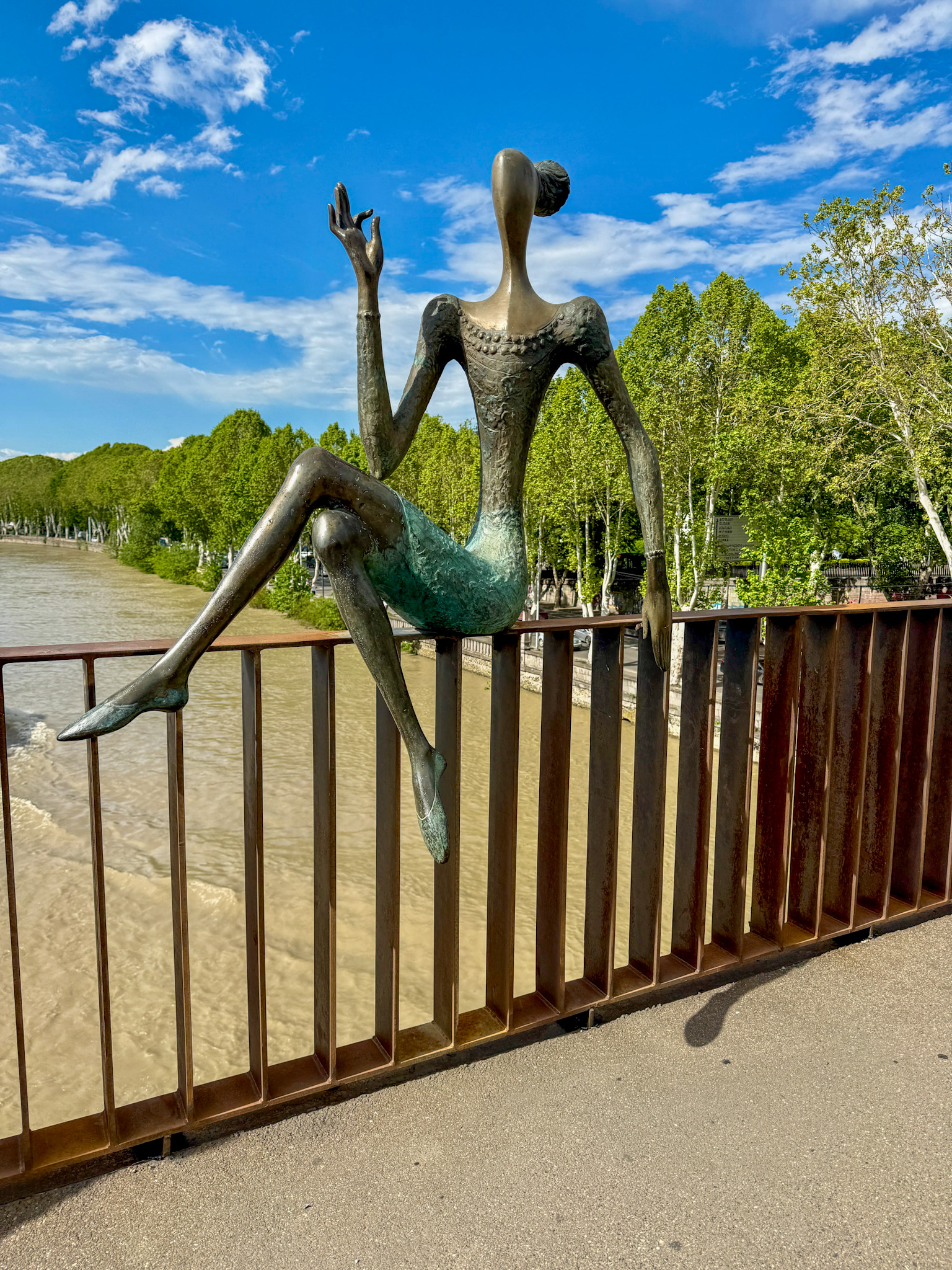
Back down to the river, where we crossed the Nikoloz Baratashvili Bridge, named for the 19th-century Romantic Georgian poet. The bridge has these absolutely wild bronze sculptures mounted along its railing, life-sized figures that look like they are either emerging from or being pulled into the metal. Floating heads, hands, twisted faces. Crossing it feels like walking through a sculpture park dreamed up by someone with a slightly unsettling imagination.
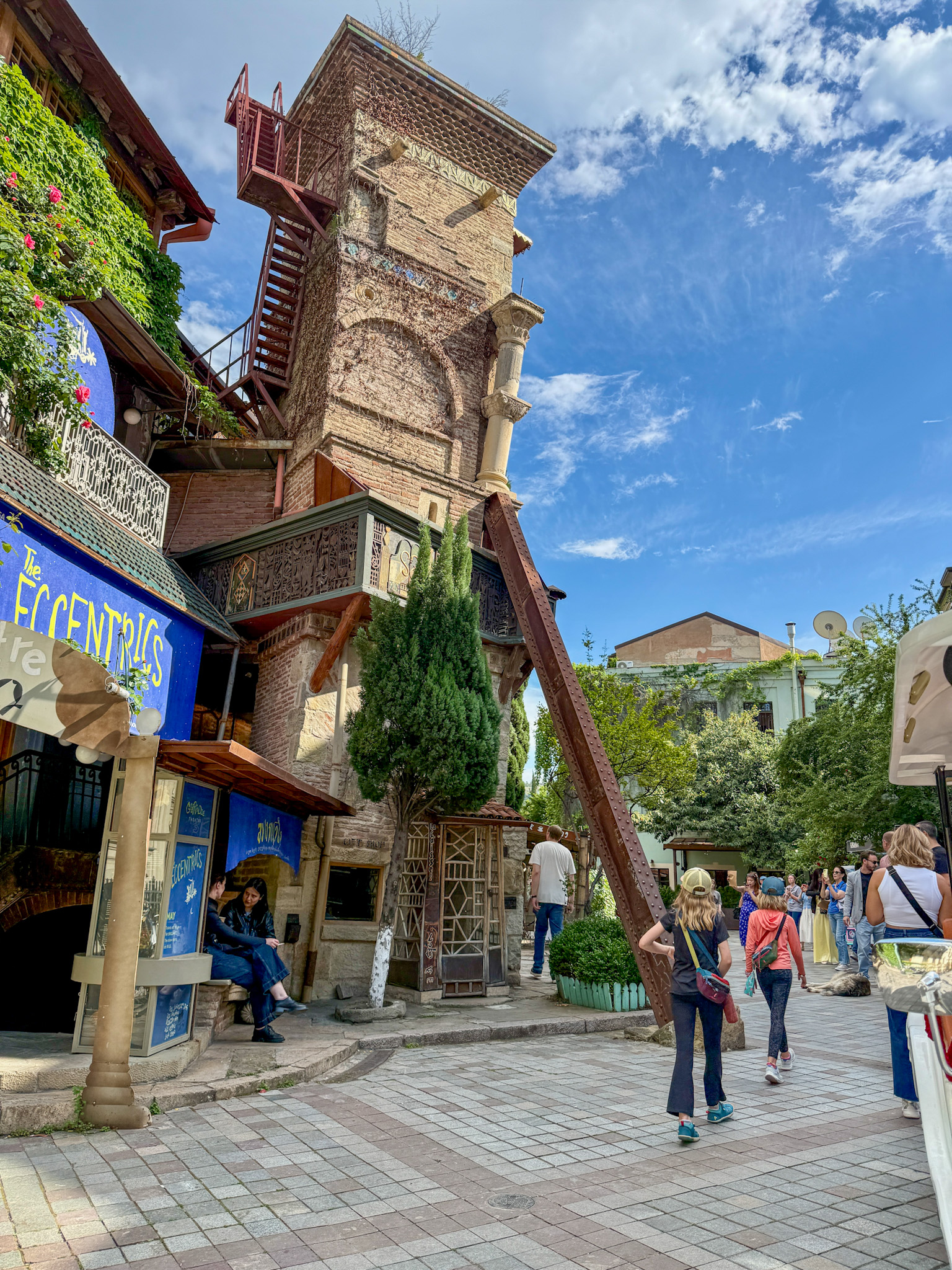
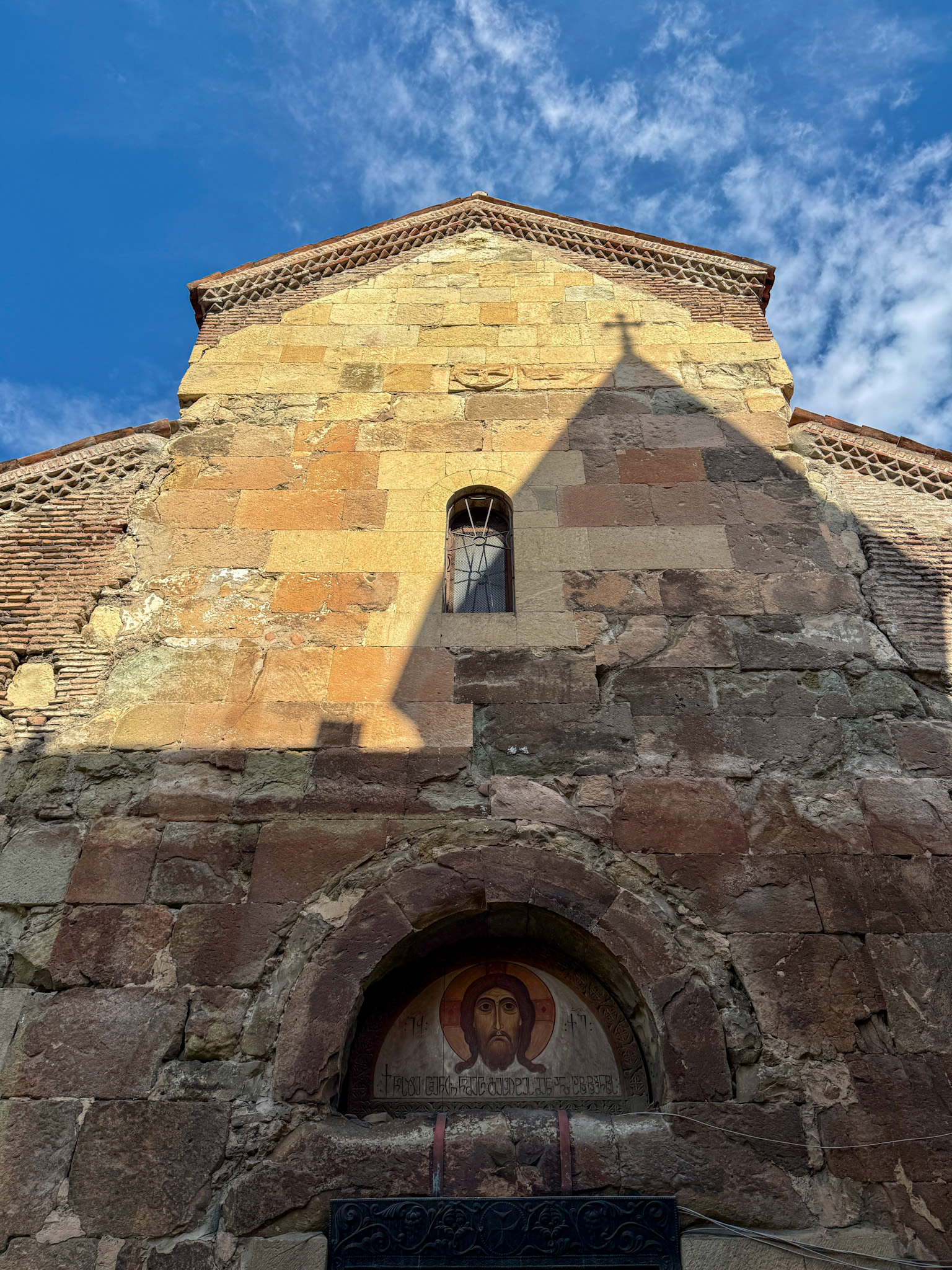
The juxtaposition theme reached peak absurdity a few minutes later, when we came across the Clock Tower at the Gabriadze Marionette Theater. The tower looks like it was deliberately designed to appear about to fall over, with a dramatic lean and tiles in every conceivable color stuck to its sides at chaotic angles. It is, in fact, exactly what it looks like, an architectural prank built in 2010 by the Georgian puppeteer Rezo Gabriadze as part of his marionette theater complex. On the hour, a small door opens and a tiny angel appears to ring a bell. And right next door, because of course it is, sits the Anchiskhati Basilica, the oldest surviving church in Tbilisi, built in the 6th century and in continuous use ever since. A cartoon tower from 2010 leaning toward a sixth-century basilica that has been standing for fifteen hundred years. This city does not pretend its eras agree with each other. It just puts them next to each other and lets you sort it out.
Our last day in Tbilisi was the one where the slower pace fully settled in, in a way the previous two weeks of go-go-go had not allowed for.
We started the morning with separate workouts, Shaina walking laps up the long staircase to the Mother of Georgia and Max doing a seven-kilometer loop along the river that started chilly and ended right as it began to rain, sliding back into the flat just before the sky opened. Then lunch at a Thai place a few minutes from the apartment, because somewhere between Central Asia and Georgia the food had become tasty but spice-poor, and the existence of three Thai restaurants within a five-minute walk of our apartment felt like a sign not to be ignored. The server warned us about the chili powder. Shaina and Max did not heed her warning, and finished the meal flushed and sweating through a genuinely punishing curry. Worth every drop.
We split up for the afternoon. Shaina and Arya went shopping, because Arya was in the middle of a growth spurt and her travel-worn pants needed replacing. Shaina had found a secondhand clothing store that turned out to have a treasure trove of tween attire, to which Arya gleefully spent the afternoon doing her own fashion show in the dressing room. In the end, for a whopping $7 USD she came out with several items, her favorite of which she enthusiastically called “jorts” or “jean shorts.” Shaina found it hilarious that the clothing trend had apparently gone full circle from the 1980s to now. But mostly, Shaina simply enjoyed the uninterrupted stream-of-consciousness conversation with her daughter, who was clearly entering the next stage of her childhood—the teenage years are nigh!
Finlee and Max went on a daddy-daughter date to the Giorgi Chitaia Open Air Museum of Ethnography. The museum is a 52-hectare hillside park where traditional houses, watchtowers, wineries, and mills from every region of Georgia have been relocated and reassembled, so you can essentially walk across the entire country in a couple of hours. Finlee and Max did not, in the end, engage much with the architecture. They peeked into a few buildings, then mostly just wandered hand in hand up the switchbacking hill to a Svan tower at the top, the kind of tall stone defensive tower built centuries ago in Svaneti as a refuge from invaders and the region’s notorious blood feuds. The plan had been to climb up inside for views over the city. There was no door. On any of the four sides. The original entrance had been filled in at some point and never restored. Foiled.
So they flew the drone for a while, took photos of each other and the tower and the surrounding city, and meandered back down. Three hours, no agenda, no other voices competing for attention. Just the two of them.
Shaina and Max have started doing more of this lately and plan to keep doing it, alternating which parent takes which kid, sometimes for proper outings and sometimes for utilitarian errands. Either way the one-on-one time is doing something good, and we are paying attention to it.
We all met back up at a movie theater for an evening showing as a family, which is where the day got entertainingly stupid.
The theater near our Airbnb on Google Maps is, it turns out, a different branch of the same chain located fifteen kilometers away. Even on the English-language site, this is not made clear. The showtimes at both locations are identical. So when we arrived and asked for the 5:00 showing, there was indeed a 5:00 showing. In Georgian. We sat through all of the trailers, the movie began, and Max’s stomach dropped as Hugh Jackman appeared on screen and immediately began speaking fluent Georgian.
We left. The ticket office could not offer a refund since the show had started, but they could let us pick another movie that was running in English. The only option that fit the schedule was a showing of The Devil Wears Prada 2 that had already started twenty minutes earlier. Luckily the plot of this movie is not difficult to catch up on, as we hadn’t seen the original since it was released 20 years ago. The simple story, the funny moments, the workplace drama, and a great soundtrack made it an entirely pleasant time, even if it was nowhere near our first choice.
On the walk home we passed a small Turkish restaurant and decided to get dinner. We ordered two “extra large” shawarmas, planning to split them between the four of us. But our eyes widened as they bought us two shawarmas, each roughly two feet long. The four of us did a respectable job working through them but conceded defeat with about a quarter of each remaining. No one left hungry. Not even close.
Four days in Tbilisi, and the city had done exactly what we needed it to do. The Central Asia adventure had been intense, expansive, occasionally exhausting. Tbilisi was the opposite of all of that: a place to wander, eat, accidentally witness a country transition between religious eras, and let the days take whatever shape they wanted. The pace was relaxed, the architecture was layered fifteen centuries deep in a single city block, the food was finding its spices again. The Mother of Georgia got it right—a city, a country, a culture that knows how to hold a sword in one hand and a bowl of wine in the other—ready for whatever shows up at the door, friend or foe.
And so are we.


Leave a Reply