
Date: May 4th-12th, 2026
Places: Kyrgyzstan and Kazakhstan
We woke up in Karakol to a problem. Shaina’s Oura ring was gone, and we knew exactly where it was: back in Enilchek, the abandoned Soviet mining town near the Chinese border, quite possibly the single least accessible place we had visited in ten months of travel. She had tried to squeeze in a few extra minutes of charging the morning before we left, the ring had been knocked off its charger at some point and rolled under the bed, and our usual sweep of the room had missed it. A tiny ring under a bed in a dark guesthouse is an easy thing to overlook.
This was the second item in a few days. Shaina’s sun hat had already gone missing back in Saty. After ten months of crossing the planet without losing anything of consequence, we had suddenly started leaving a trail of our belongings across Central Asia. We talked about it over breakfast and landed on the obvious culprit: pace. We had spent most of this trip moving slowly, settling into places for days or weeks at a time, building little routines that kept everything accounted for. This 4×4 adventure was the opposite. One location per night, early starts, late arrivals, constant packing and repacking. The tempo was thrilling, but it had quietly dismantled the systems that normally keep a family of four from hemorrhaging its possessions.
There is a thing we tell the girls, often enough that they can probably recite it back to us in their sleep: you can always make a situation worse by dwelling on the mistake instead of focusing on the solution. The mistake was made. The ring was in Enilchek. The only useful question was how to get it back. So while we waited to hear from Nelly, the host of our Enilchek guesthouse, on whether the ring had even turned up, we explored the town of Karakol.
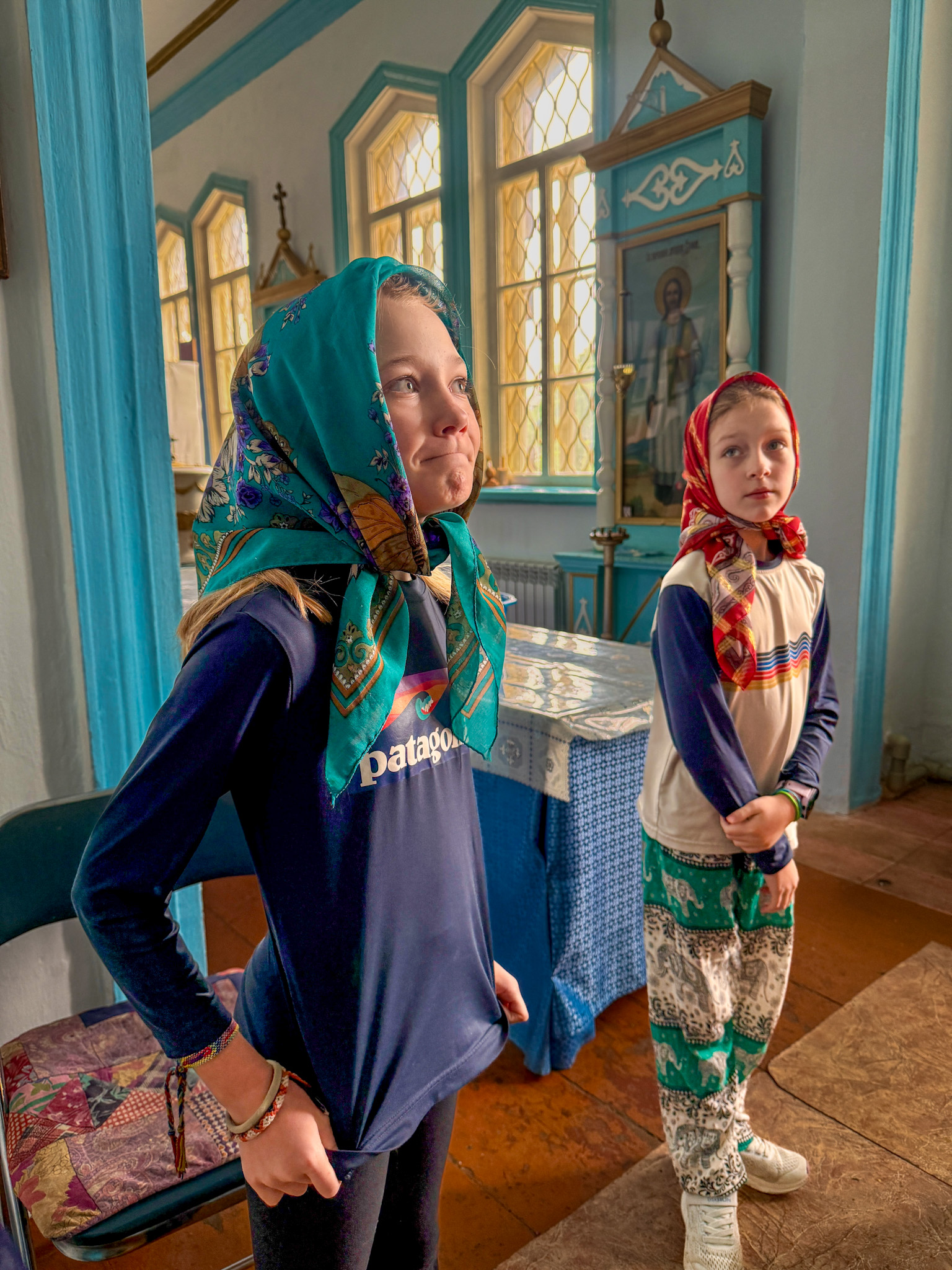
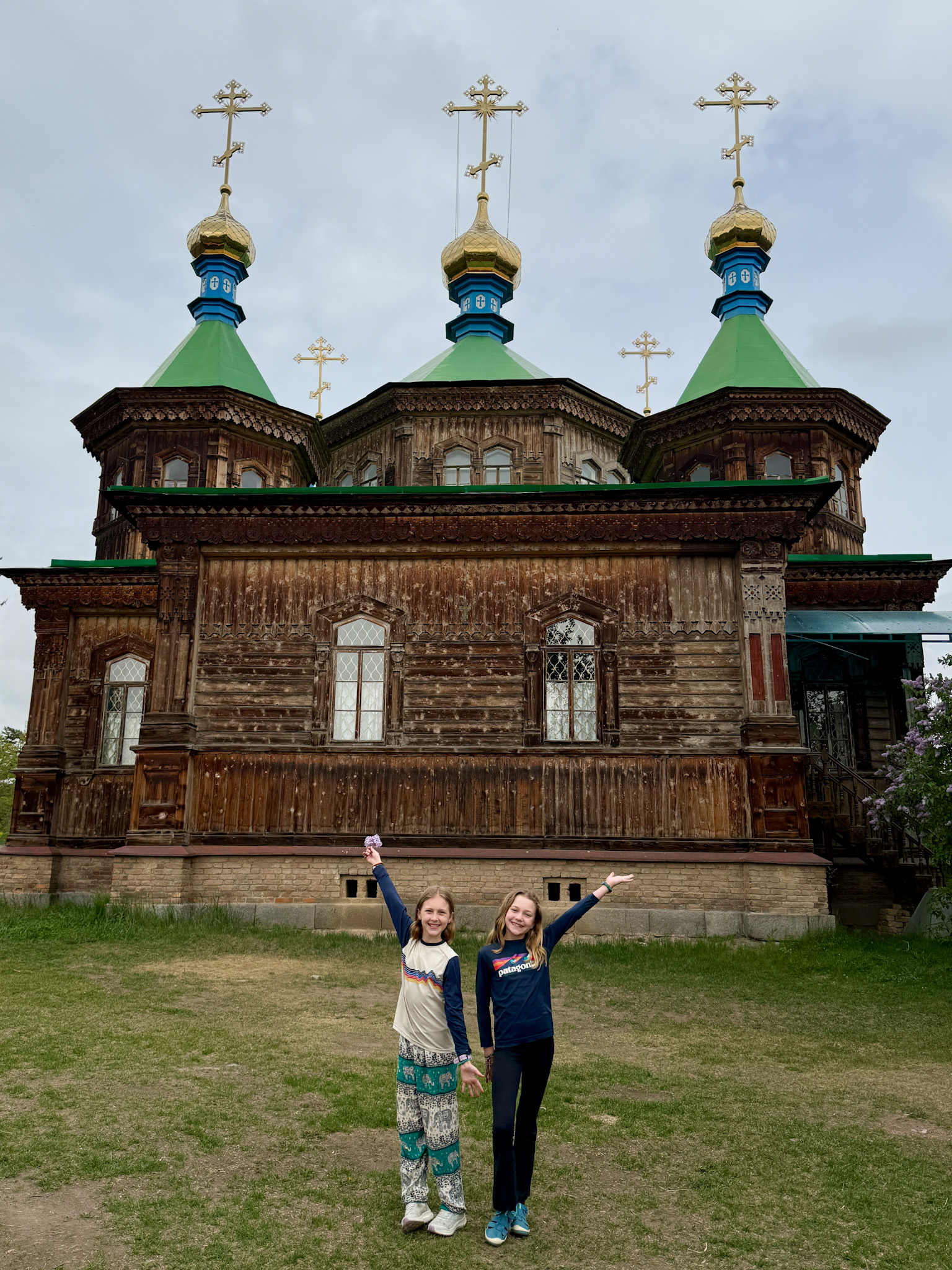
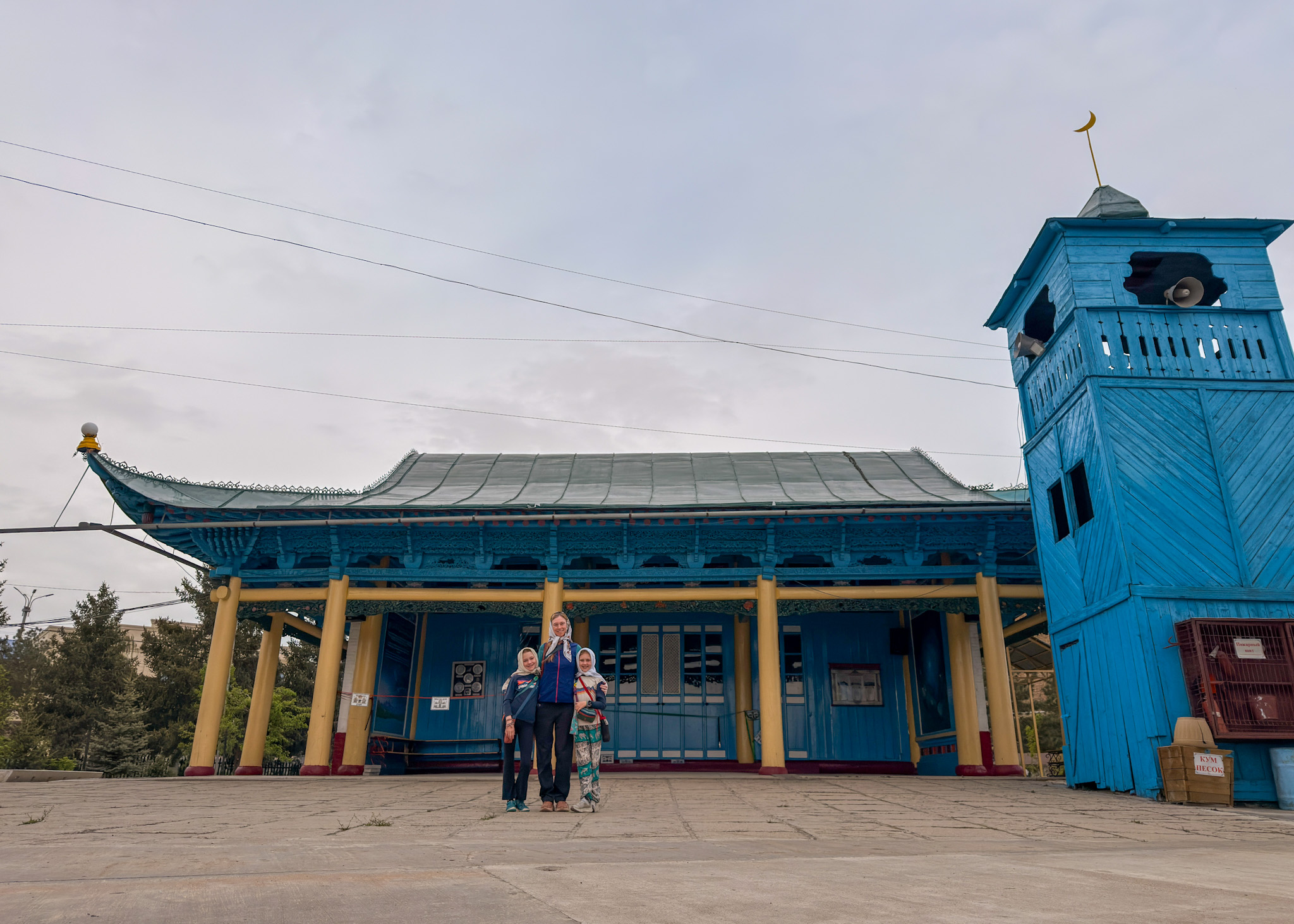
Karakol rewards looking. In the span of a fifteen-minute walk you can stand in front of two of the more unusual religious buildings in Central Asia. The first is the Dungan Mosque, built between 1907 and 1910 by the descendants of Chinese Muslims who fled across the Tien Shan in the 1870s after a failed revolt against the Qing dynasty. They hired an architect from Beijing and a team of master craftsmen who built the entire structure in the Chinese tradition, interlocking wooden joinery and not a single nail, painted in vivid reds, greens, blues, and yellows. From the outside it looks far more like a Buddhist temple than a mosque. A short walk away stands the Holy Trinity Cathedral, a Russian Orthodox church built almost entirely of wood, crowned with five green onion domes. It has been knocked down by earthquakes and repurposed by the Soviets as a sports hall and a coal store, and the version standing today was reconsecrated in 1995. A Chinese-styled mosque and a Russian-styled wooden cathedral within a few hundred meters of each other is about as good a snapshot of this region’s layered history as you could ask for.
By the time we got back to the guesthouse, the news had come in from Nelly: the ring had been found! Now we just had to figure out how to move it across the entire width of the country from one of its most remote corners to wherever we happened to be. We packed up and pushed on, trusting that a solution would present itself.
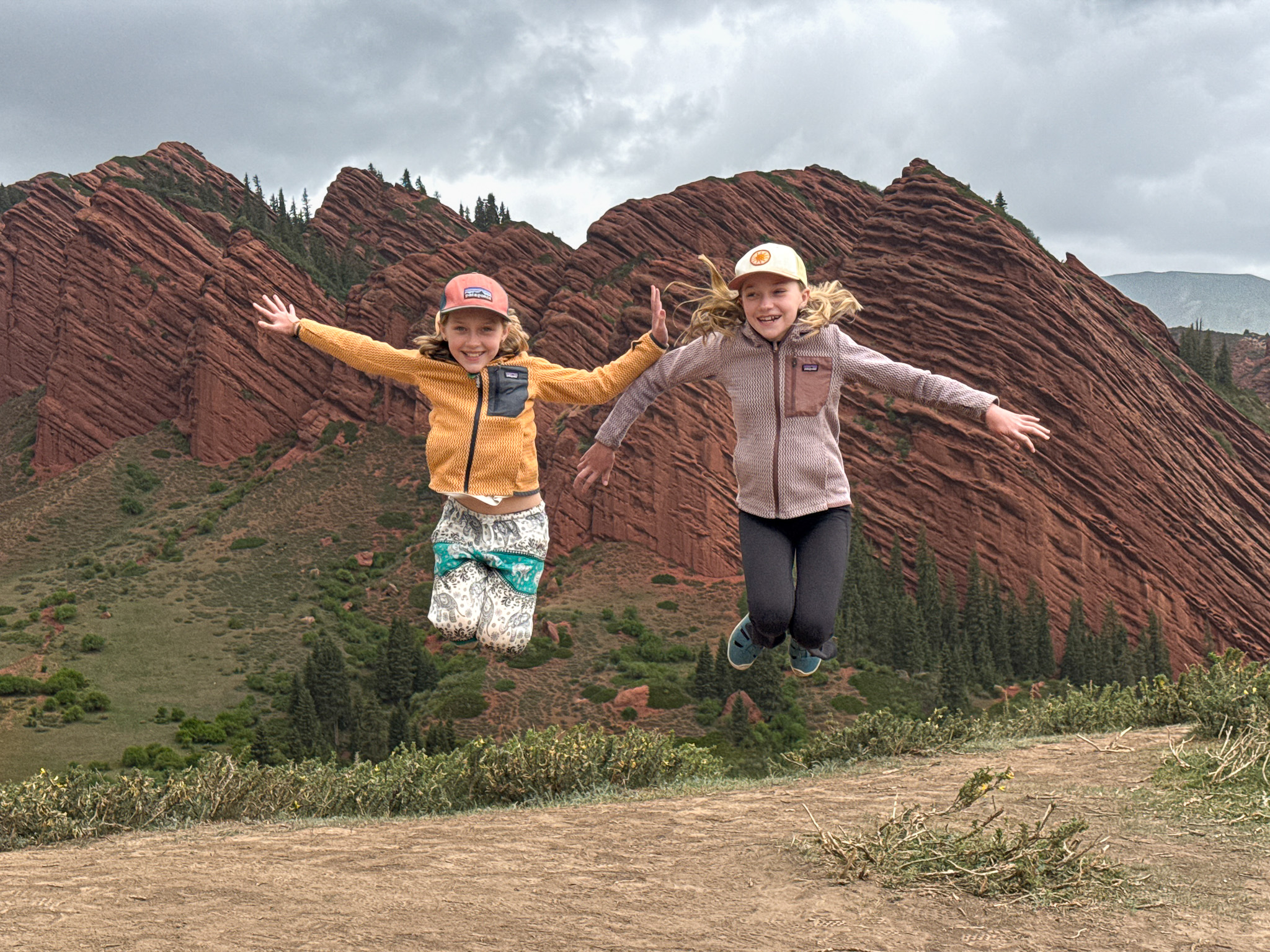
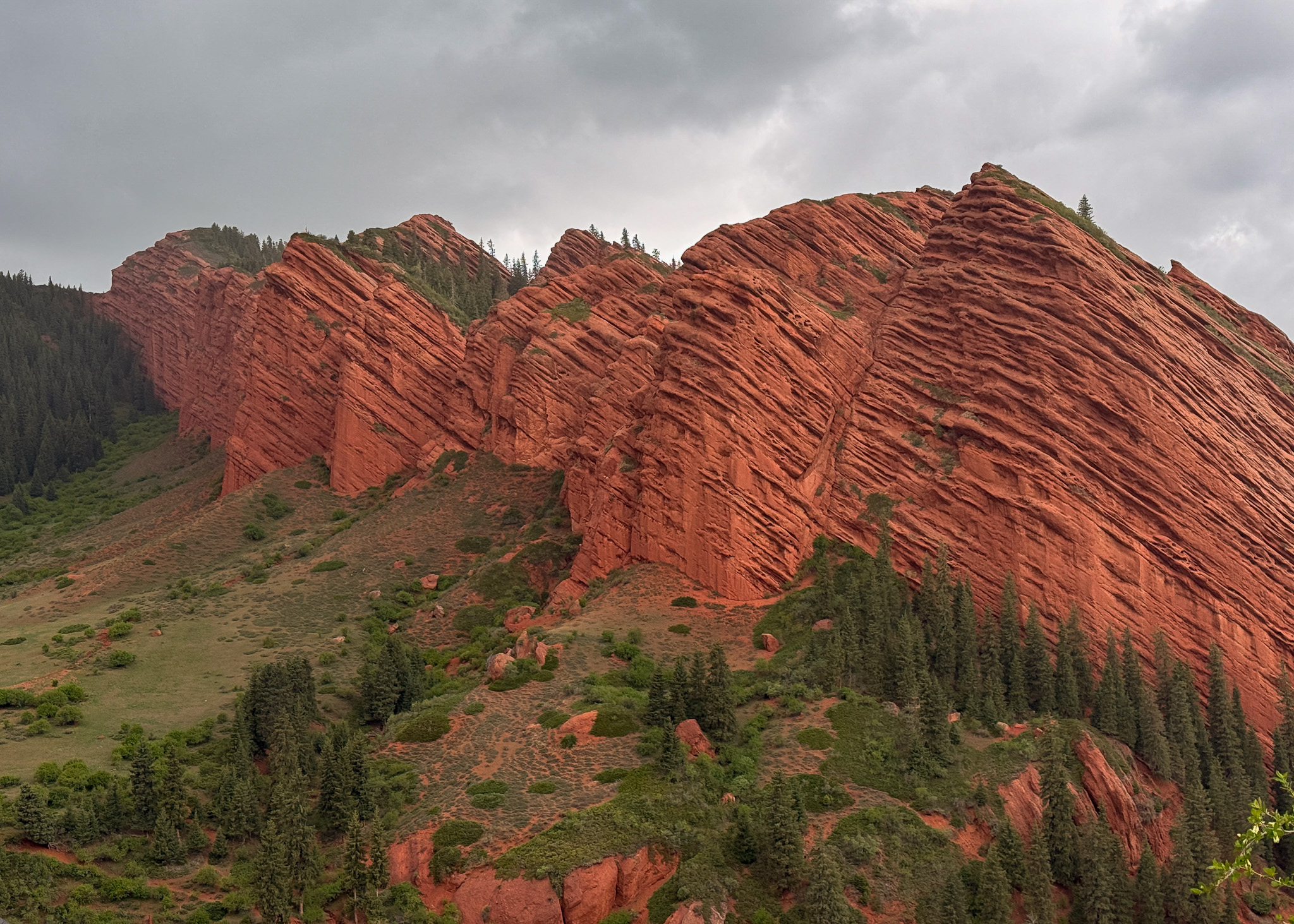
The day’s drive carried us west toward the south shore of Lake Issyk-Kul, with a stop at the Seven Bulls, a row of imposing red sandstone cliffs rising straight out of green meadows in the Jeti-Oguz Valley. The girls ran the little paths between the formations until the rain came down hard and cut the visit short. This would become a refrain in Kyrgyzstan. The country is so staggeringly beautiful, and so full of places to hike and explore, that you could spend a solid month here and only scratch the surface, and the weather will still find ways to chase you off before you are ready to leave.
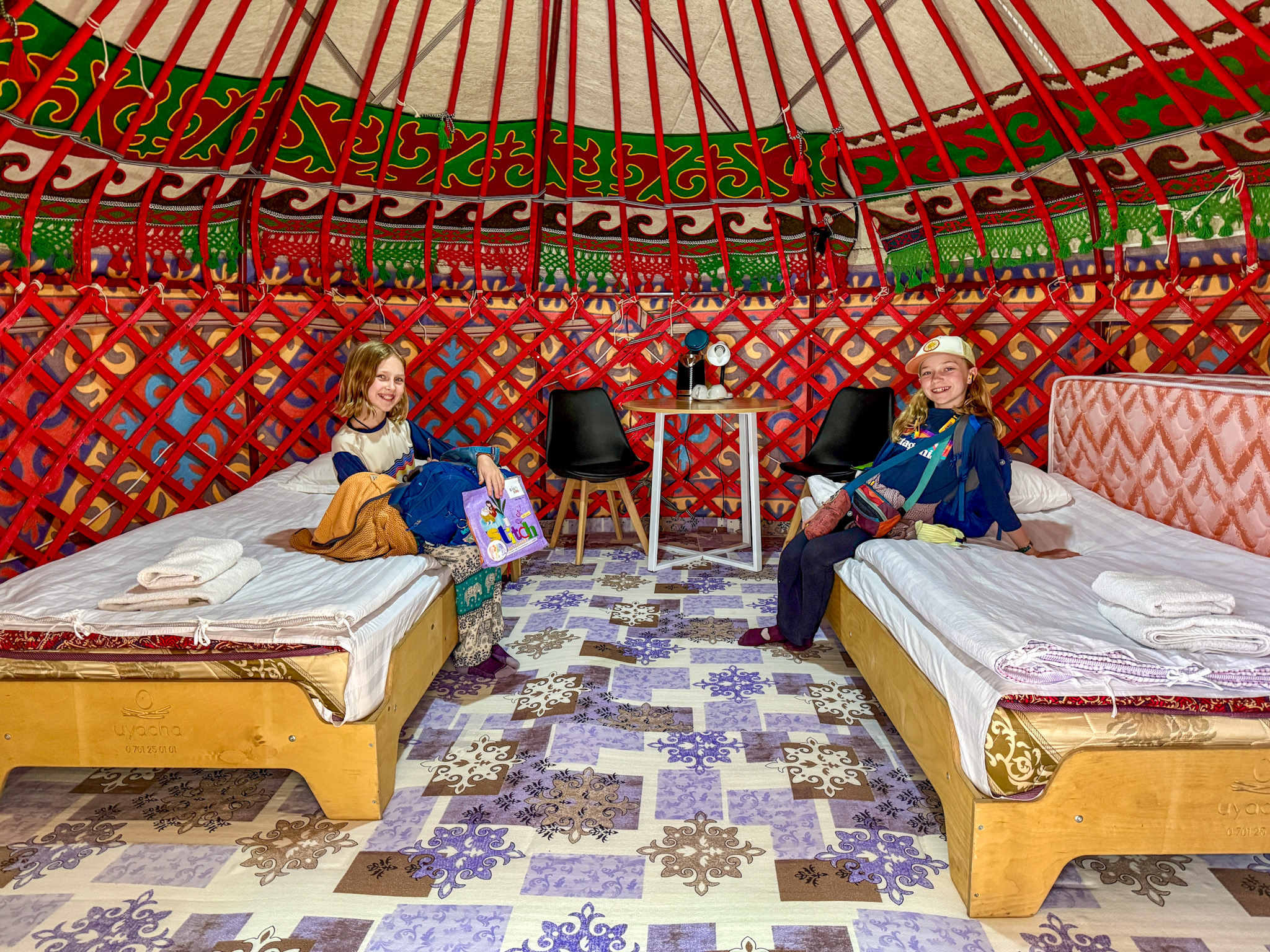
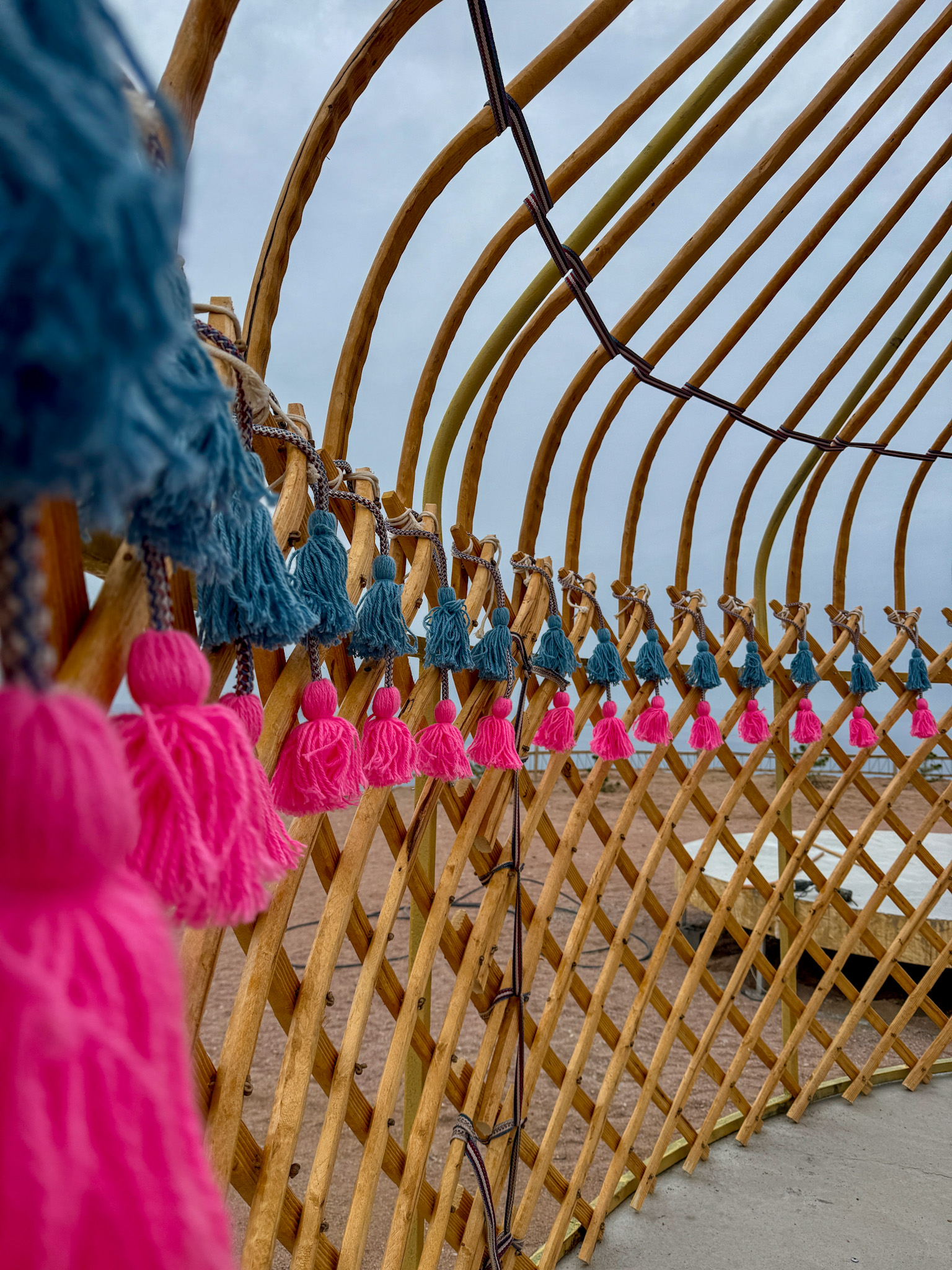
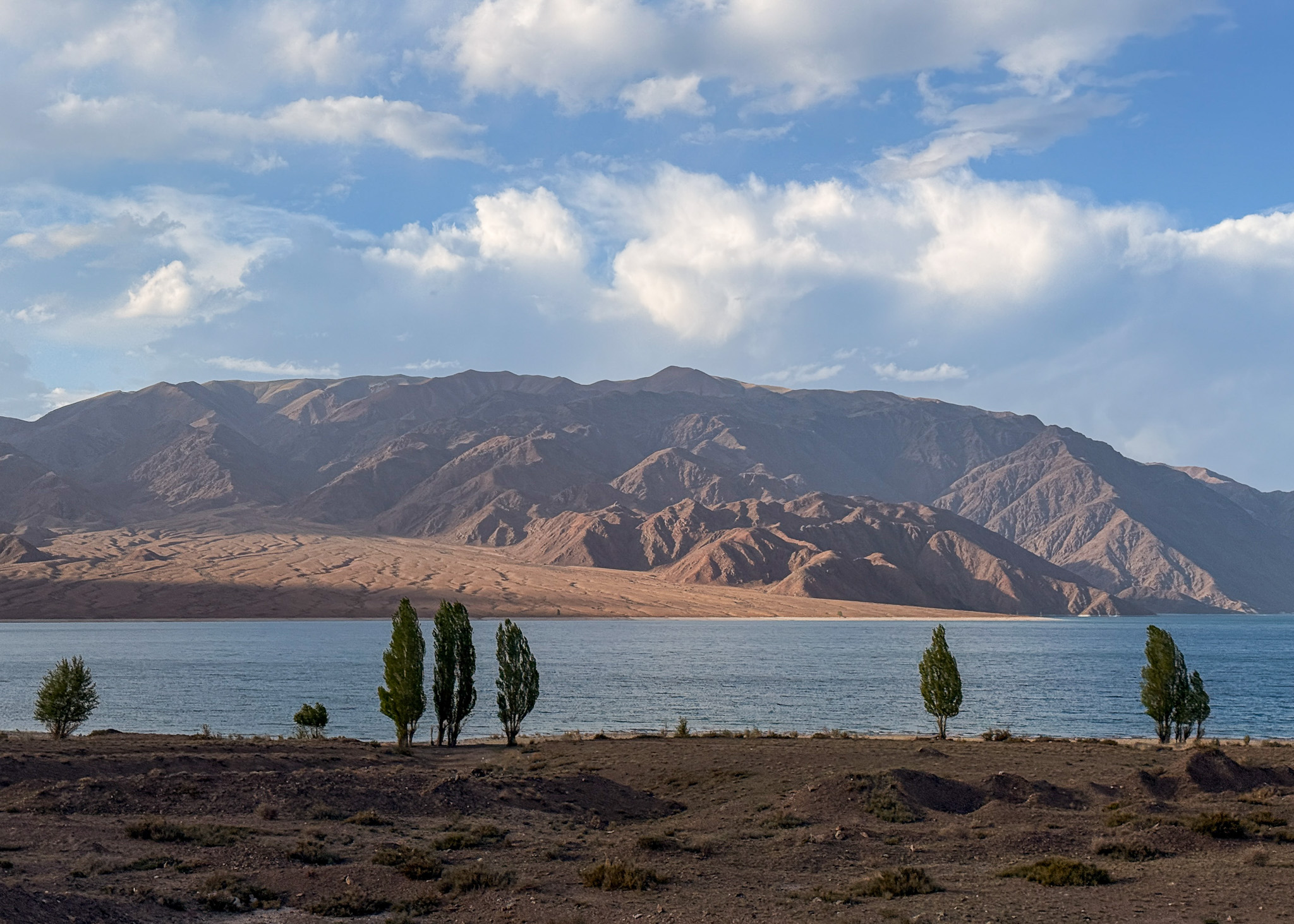
Issyk-Kul itself is hard to overstate. It is the second-largest saline lake in the world after the Caspian, the seventh-deepest lake on Earth, and the second-largest mountain lake on the planet after Titicaca. The name means “warm lake” in Kyrgyz, and despite sitting at over 1,600 meters, it never freezes. Think of Lake Tahoe—but several times larger, with a fraction of the development, no pine trees, and way more salt. Ok maybe Tahoe isn’t the best comparison… Moving on. We were staying at a yurt camp on the south shore, in yurts that split the difference between traditional and practical: metal frames for longevity, but otherwise built the old way, with bent willow ribs, felt walls, and a waterproof outer layer. The only light inside comes from the tunduk, the round wooden crown at the apex of the roof, which is so central to Kyrgyz identity that it sits at the center of the national flag.
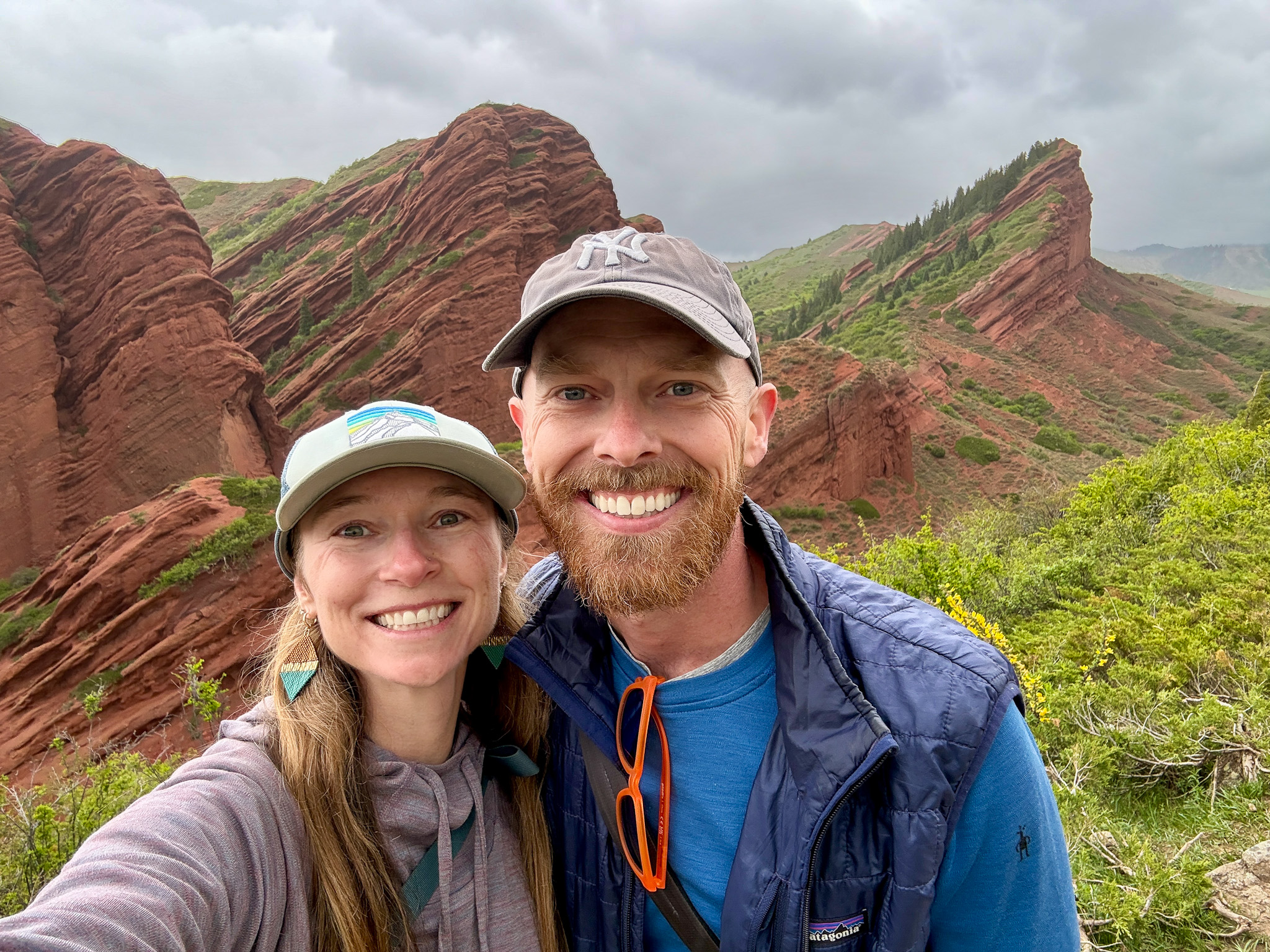
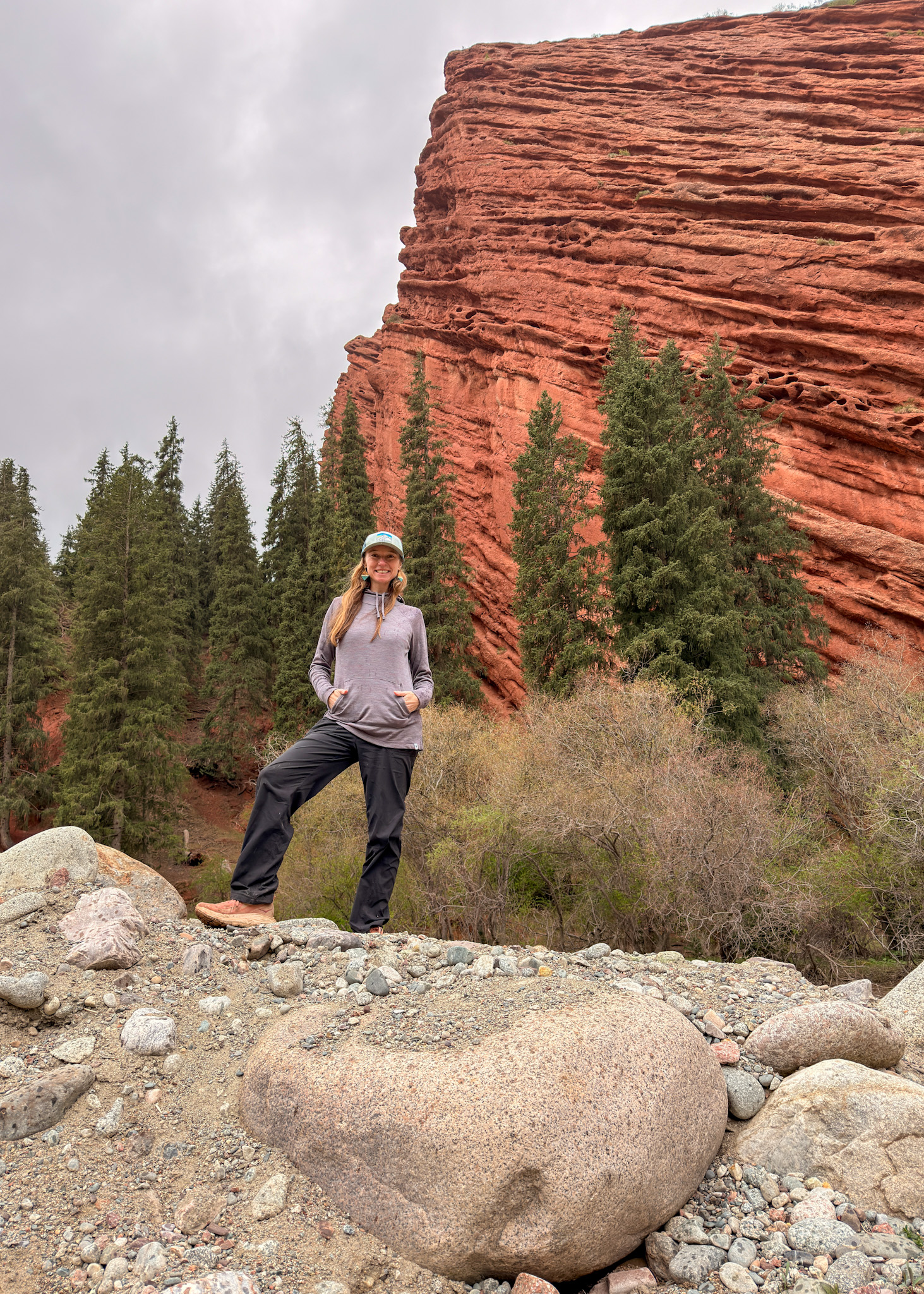
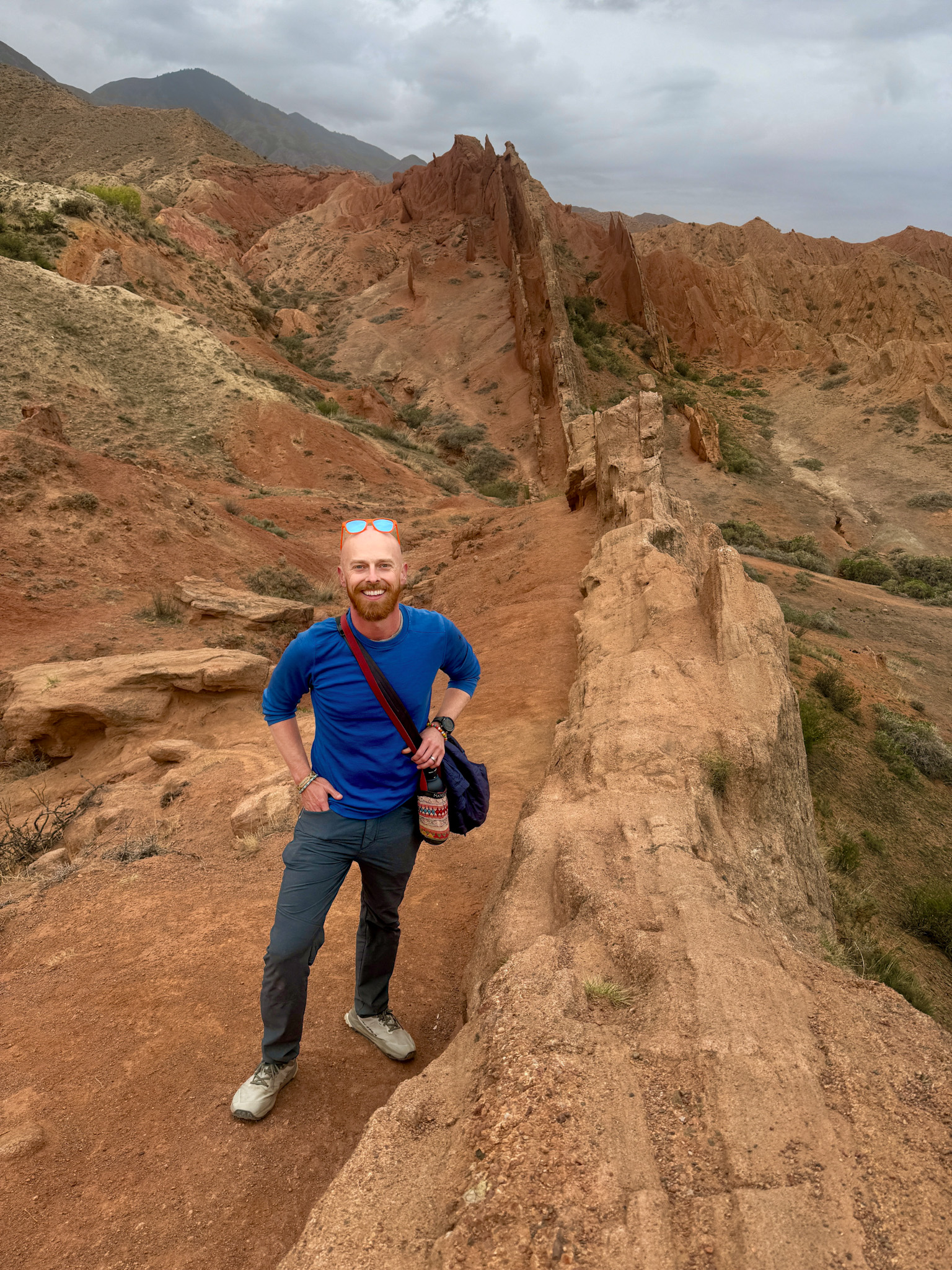
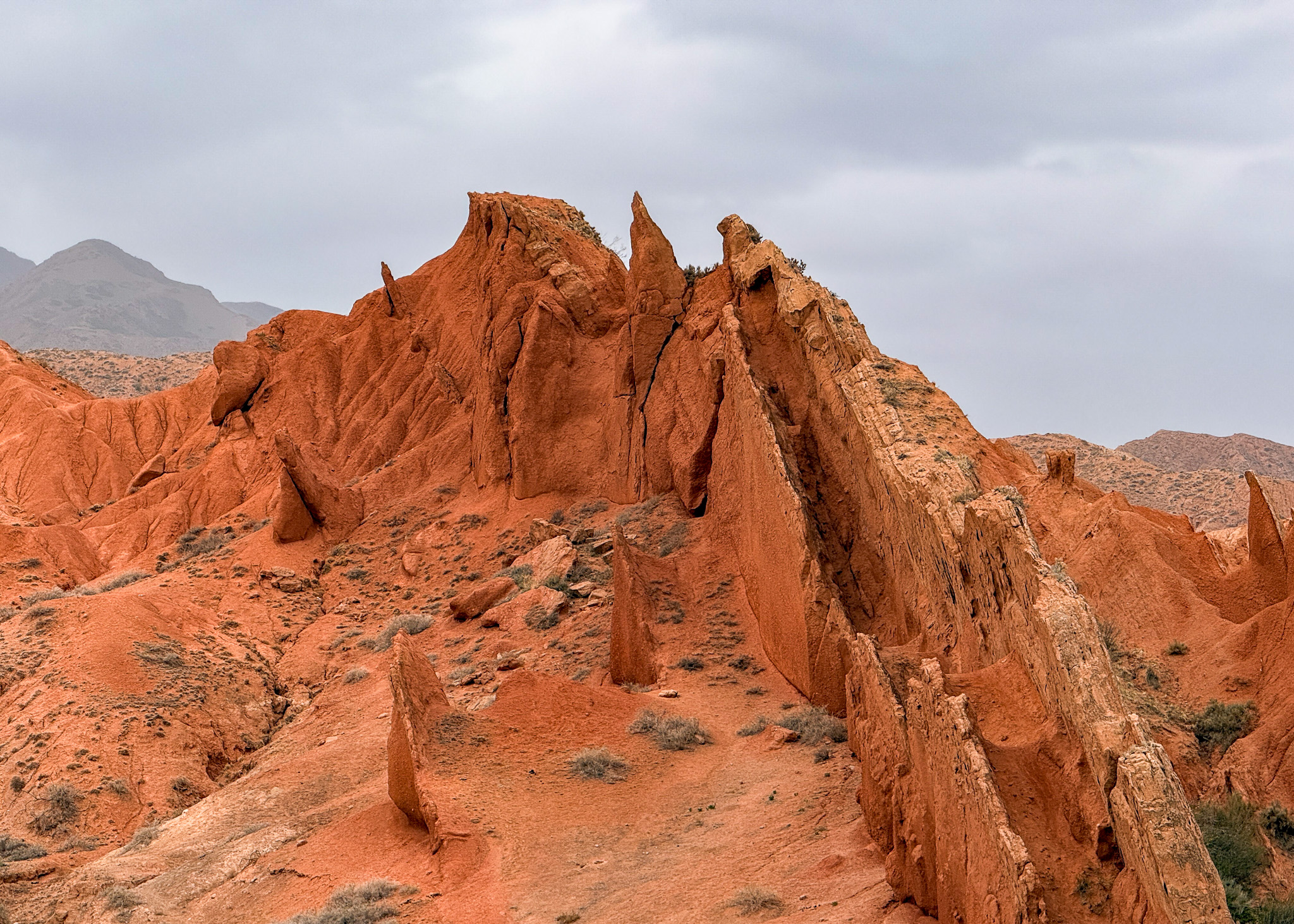
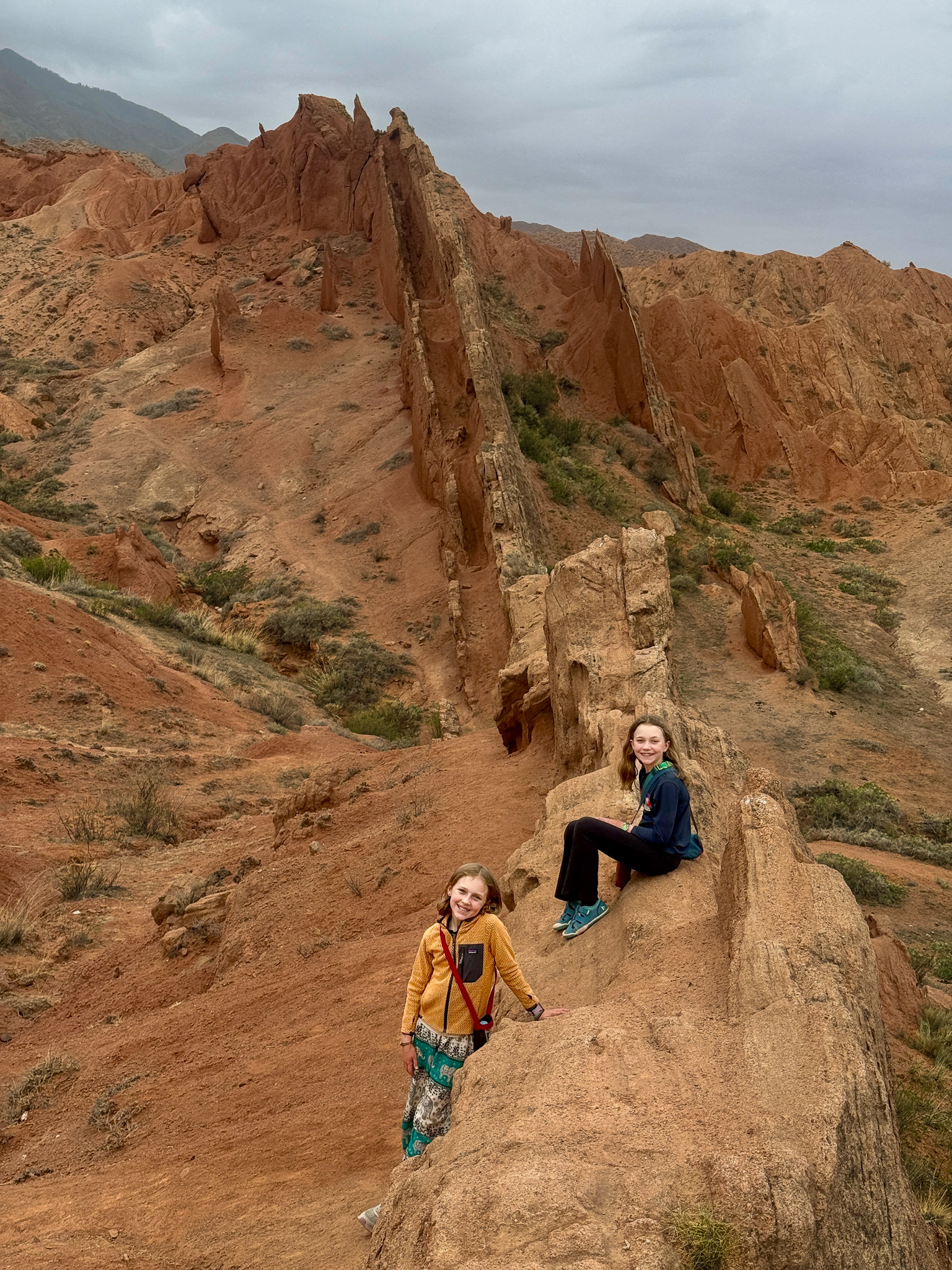
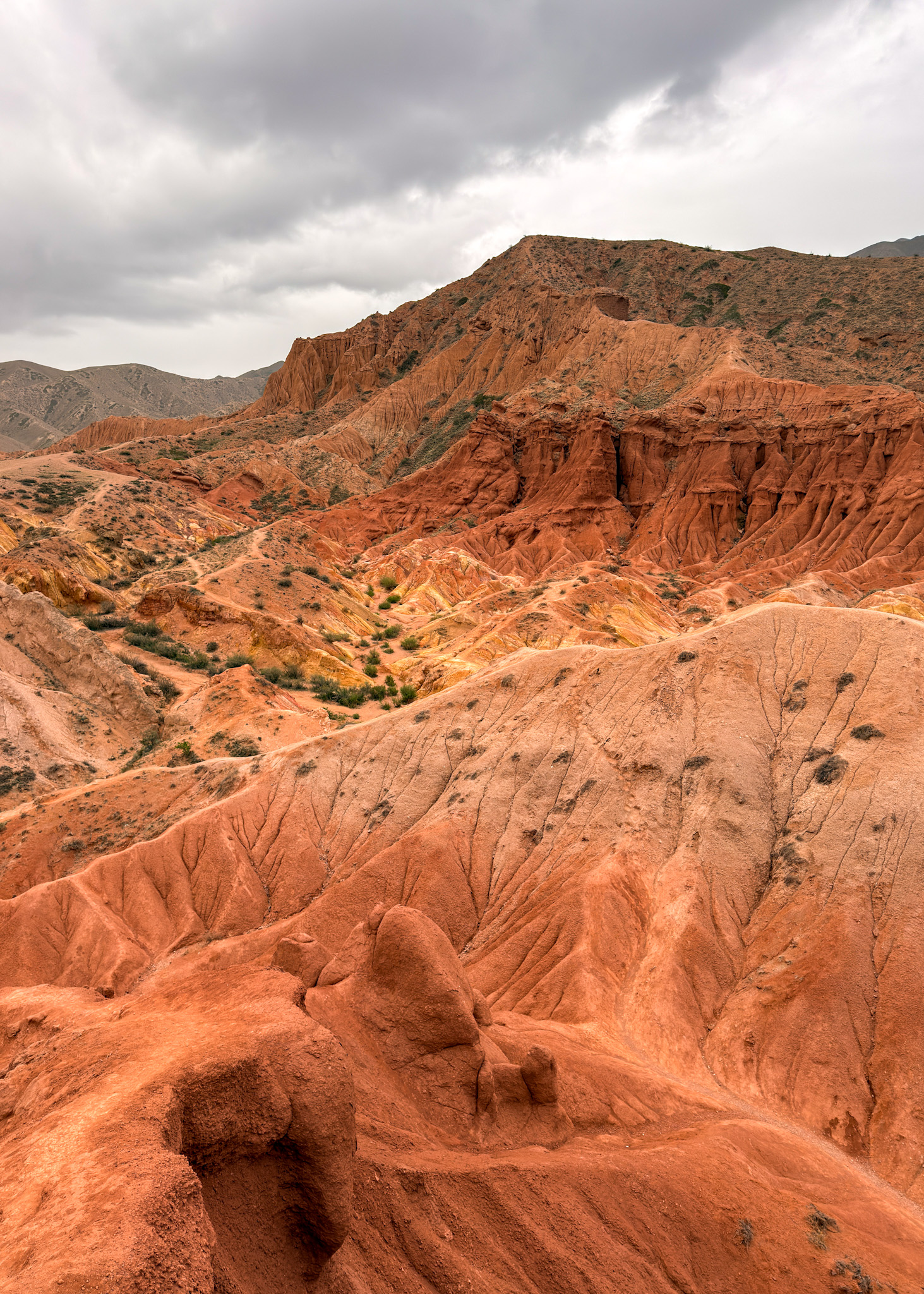
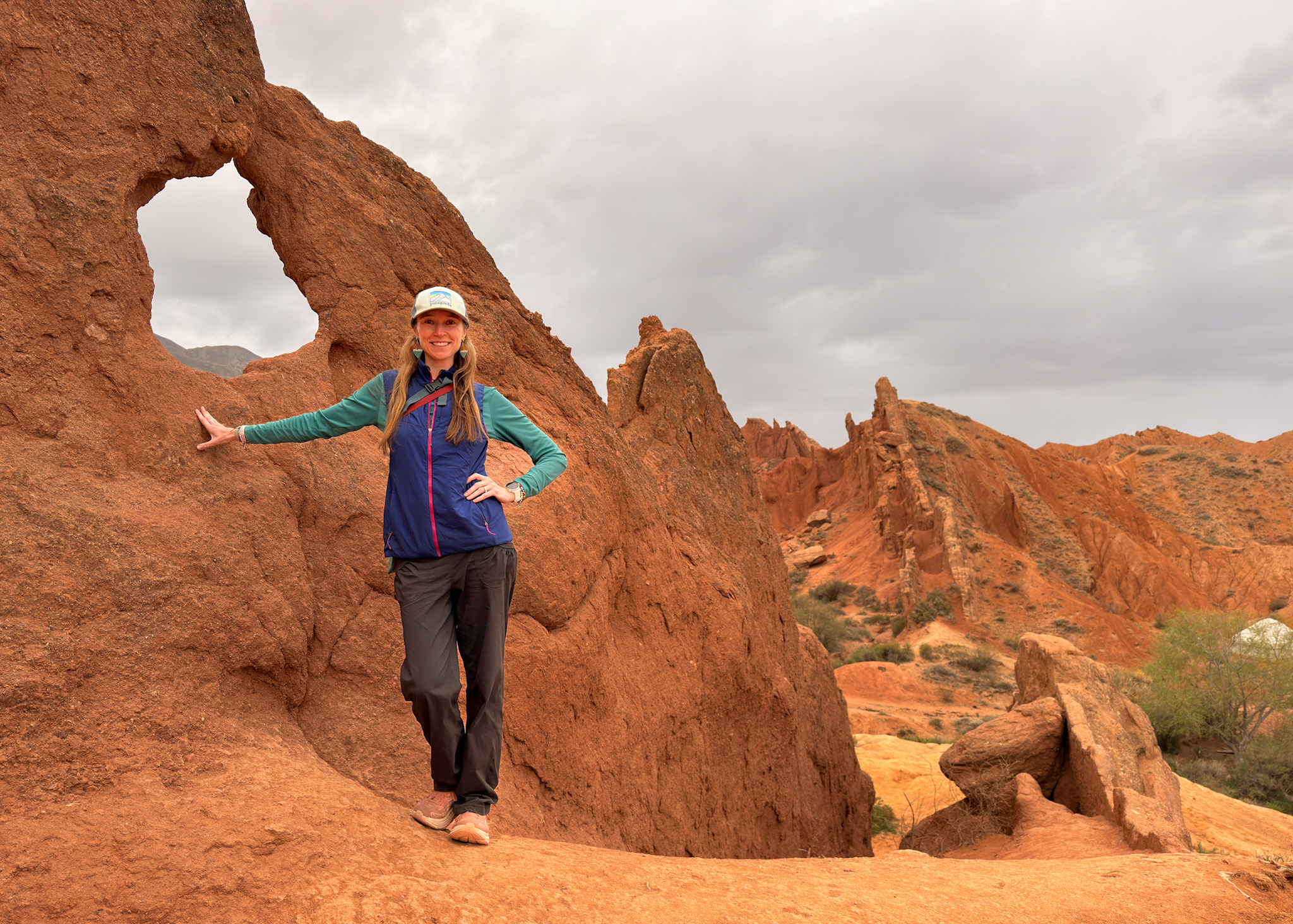
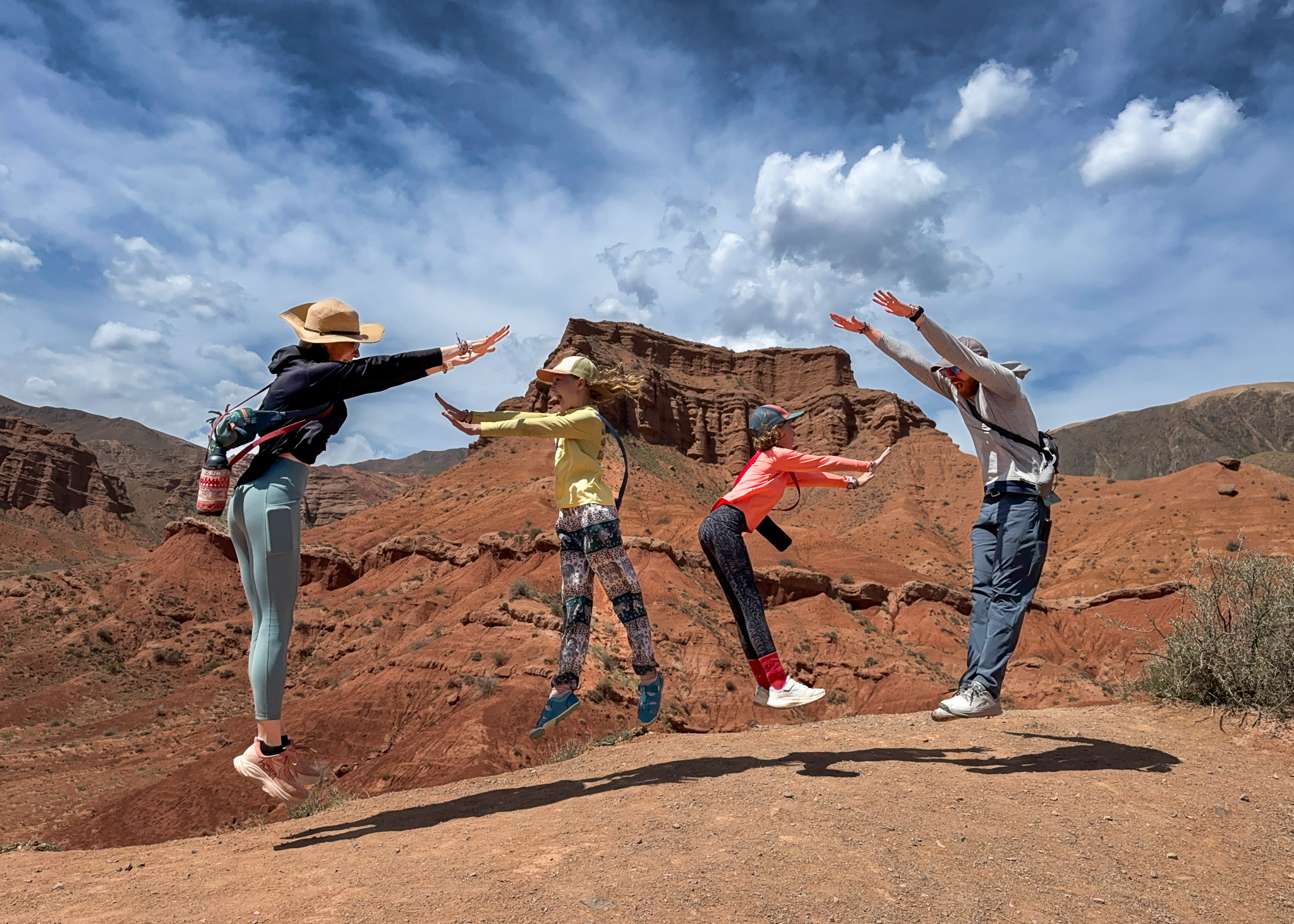
That afternoon we hiked into Skazka Canyon, which translates from Russian as Fairy Tale Canyon, and earns the name completely. Iron-rich red sandstone has been sculpted by wind and rain into spires and walls and formations that the imagination immediately turns into castles, dragons, and sleeping giants. There is a long ridge the locals simply call the Chinese Wall. We took an absurd number of photos and a lot of drone footage, and Shaina and Max used the walk to have a deeply ordinary conversation about home renovation projects waiting in Reno, which somehow felt exactly right against a Martian backdrop.
And then, walking back to camp as the rain picked up, Shaina realized she had dropped her packable Patagonia rain shell somewhere on the trail.
Another treasured item lost. Another fork in the road between dwelling and solving. So while Shaina and the girls set up shop journaling at the yurt camp, Max grabbed a water bottle, two headlamps, and a flashlight, and hiked back into the canyon in the dark and the rain to find it. Soon after he left, Shaina got her first gift: Erkin delivered her trusty sun hat that another guide had brought across a massive mountain range and an international border, and had just dropped off at our yurt camp as he passed by. A mini miracle that warranted a celebratory glass of wine, hot cocoas and chocolate cake. They eagerly awaited Maxell’s return as darkness fell, and Shaina kicked herself for not making more of a plan before sending her husband into a remote canyon that lacks cell service just as a thunderstorm hit. Luckily for him but as of yet unbeknownst to her, he found it after about forty-five minutes at their furthest point hiked into the narrow canyon, but then he had to hike back out. At the end, he had hiked over twelve kilometers, the last stretch of it alone in a rainy canyon at night looking for a piece of bright teal fabric. But the shell was recovered, delivered to Shaina as her second gift of the night, and Max got a hot shower afterward which made the whole thing feel almost reasonable.
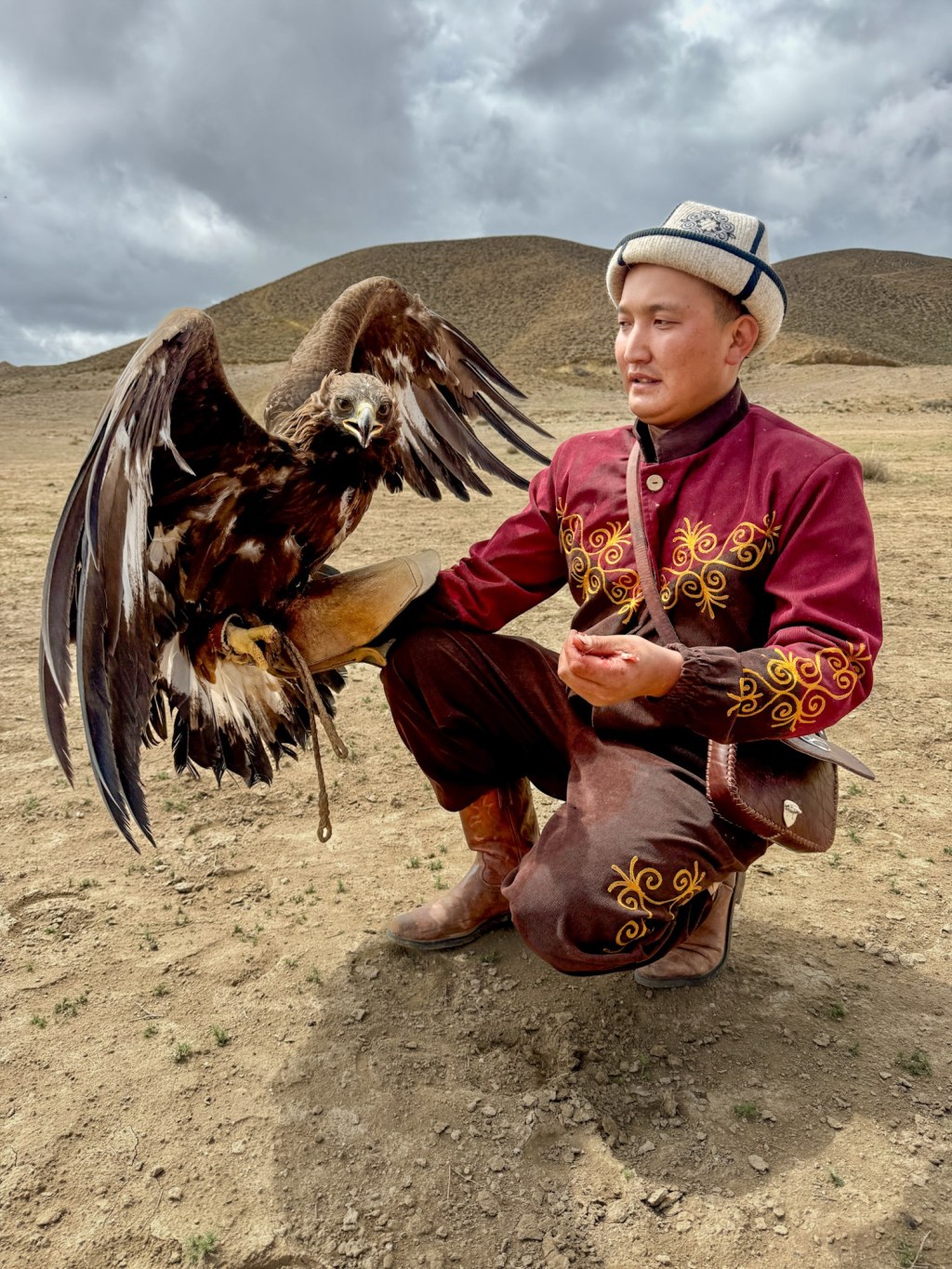
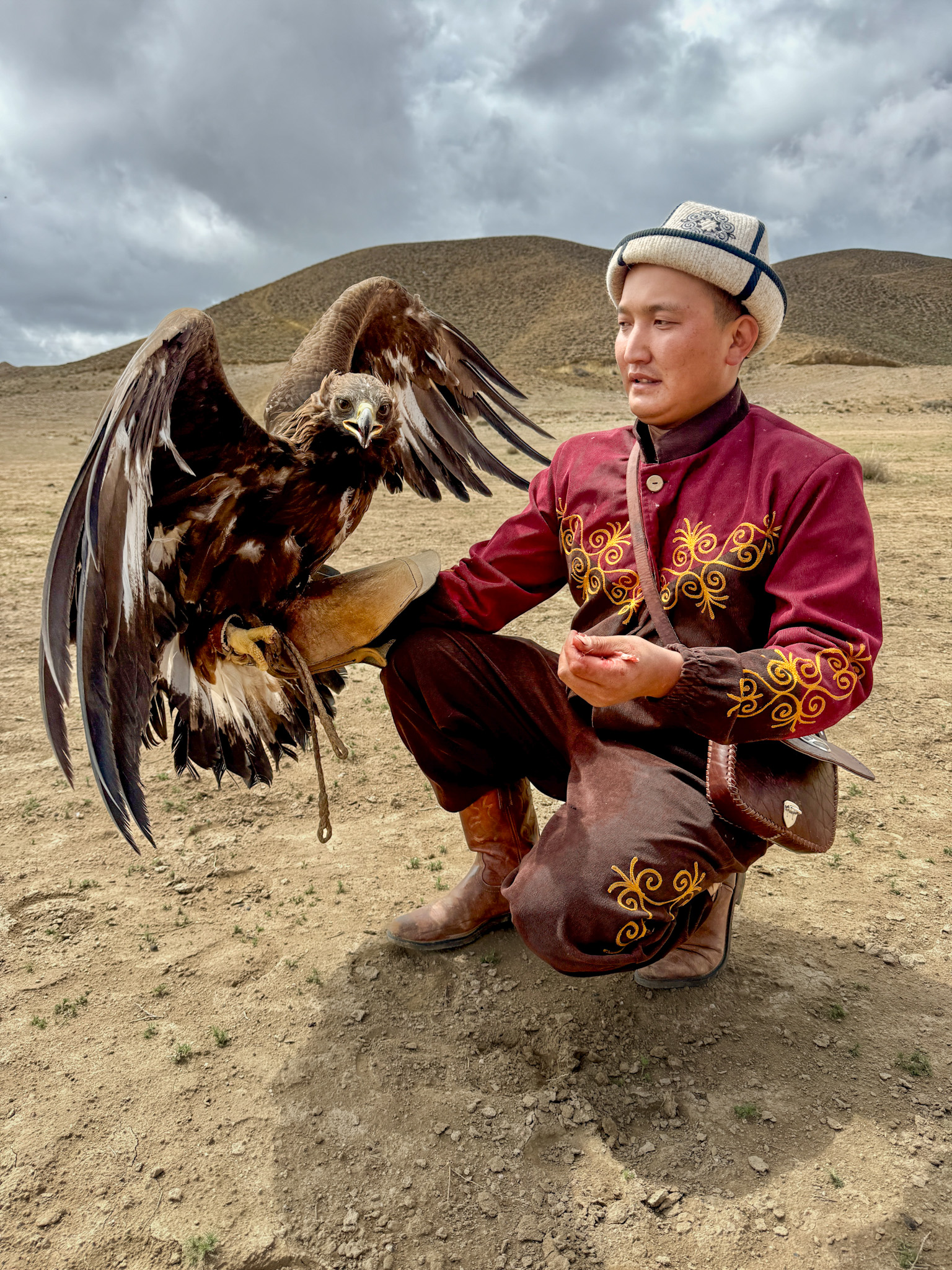
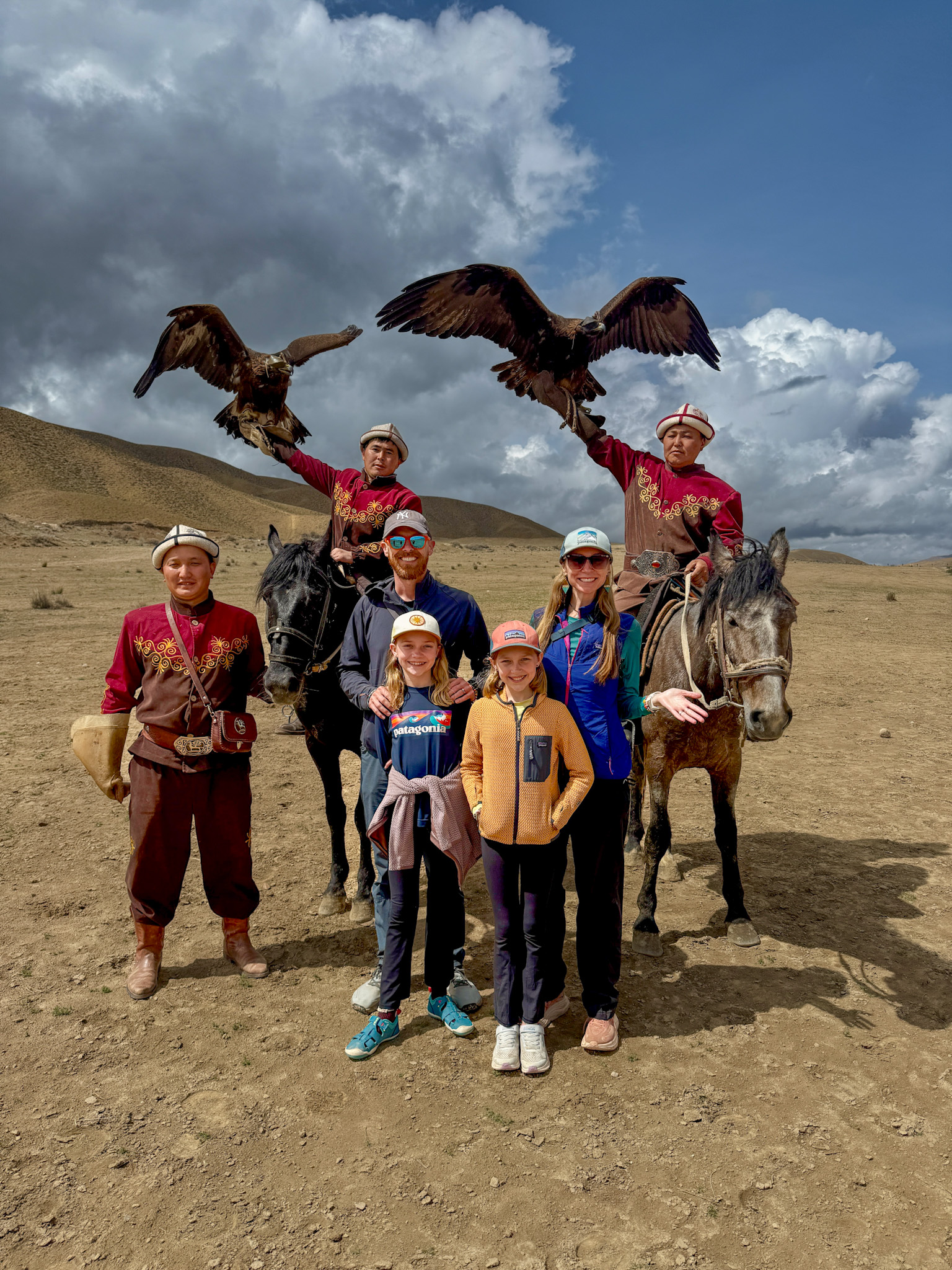
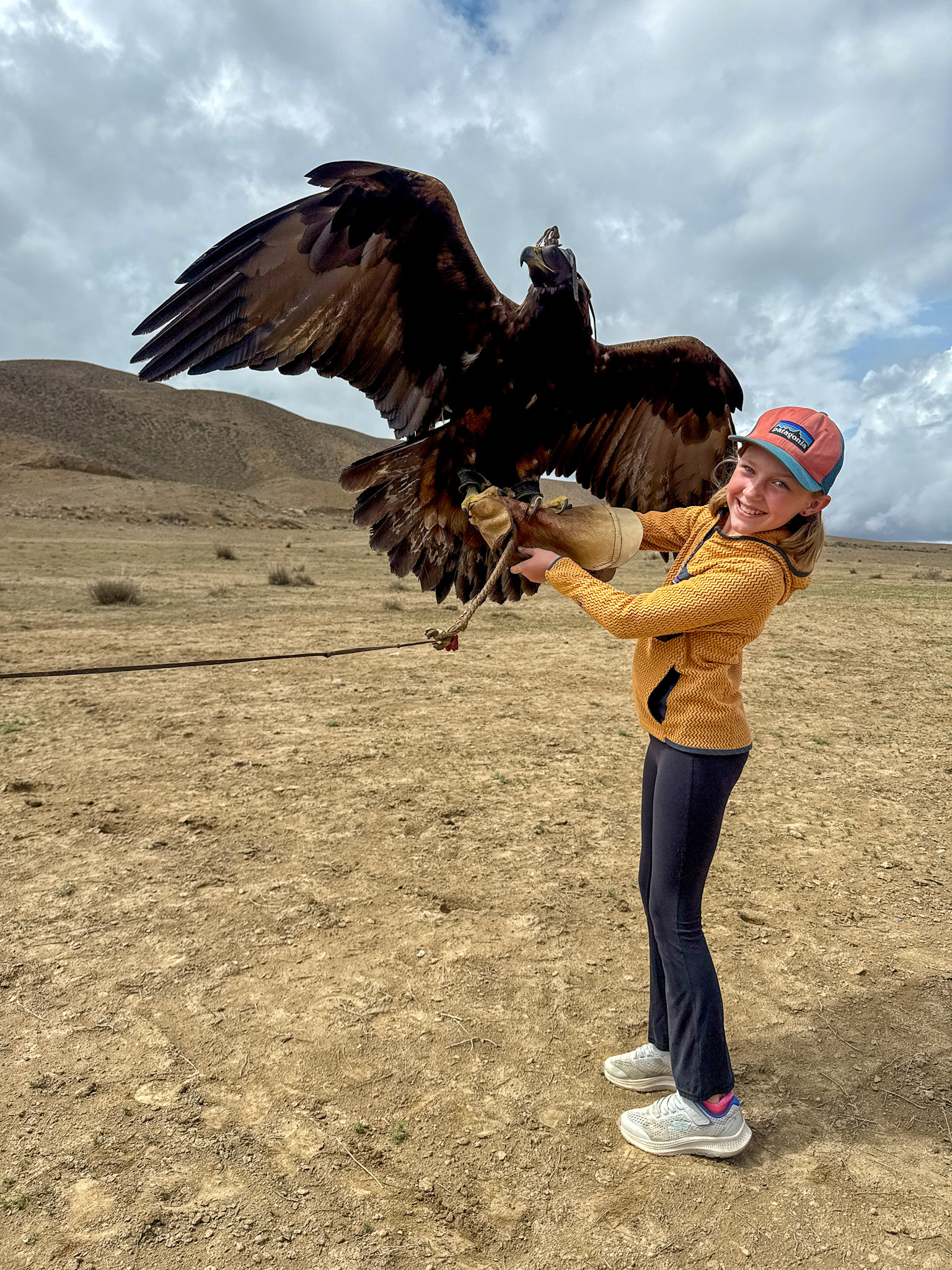
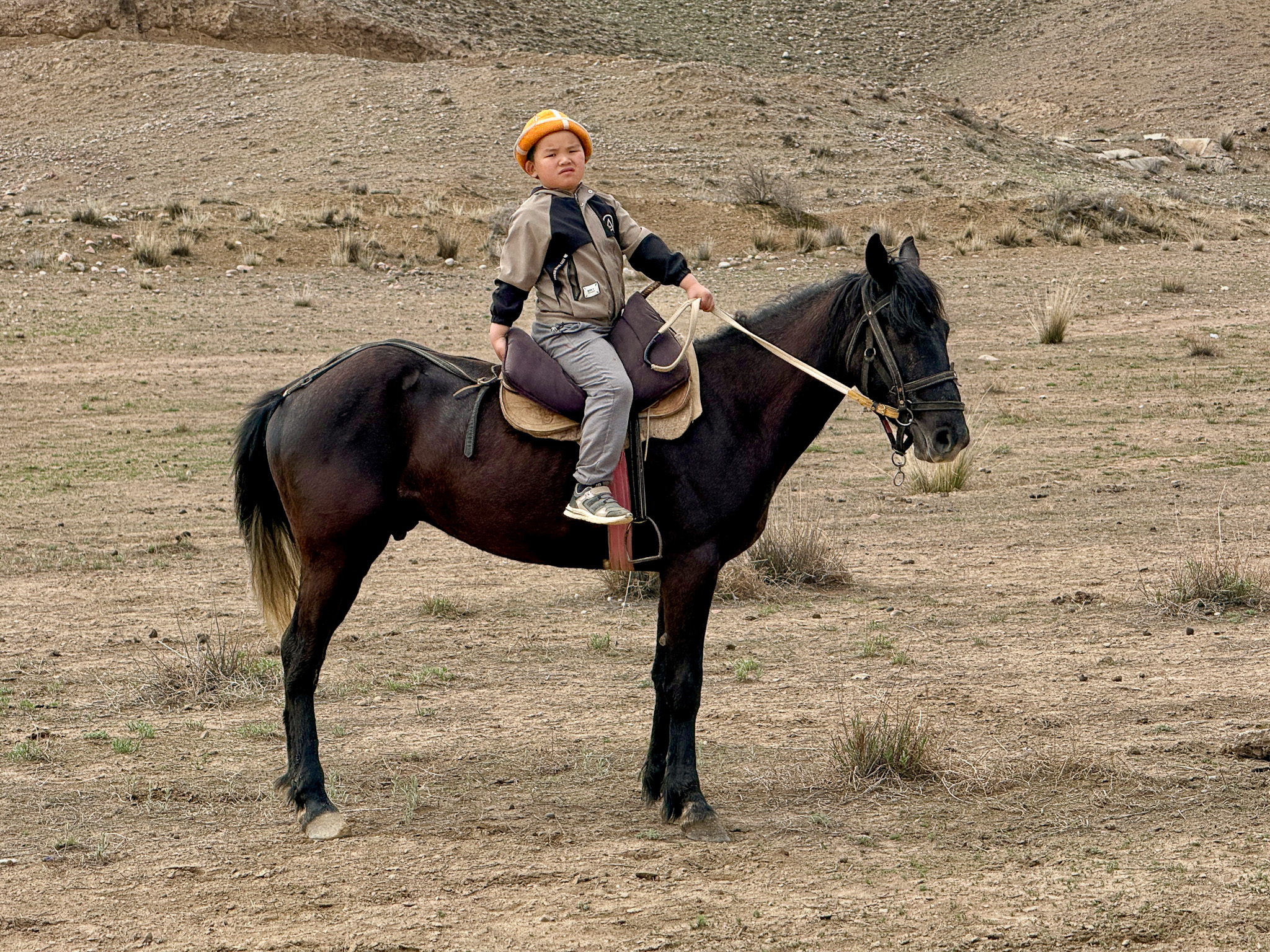
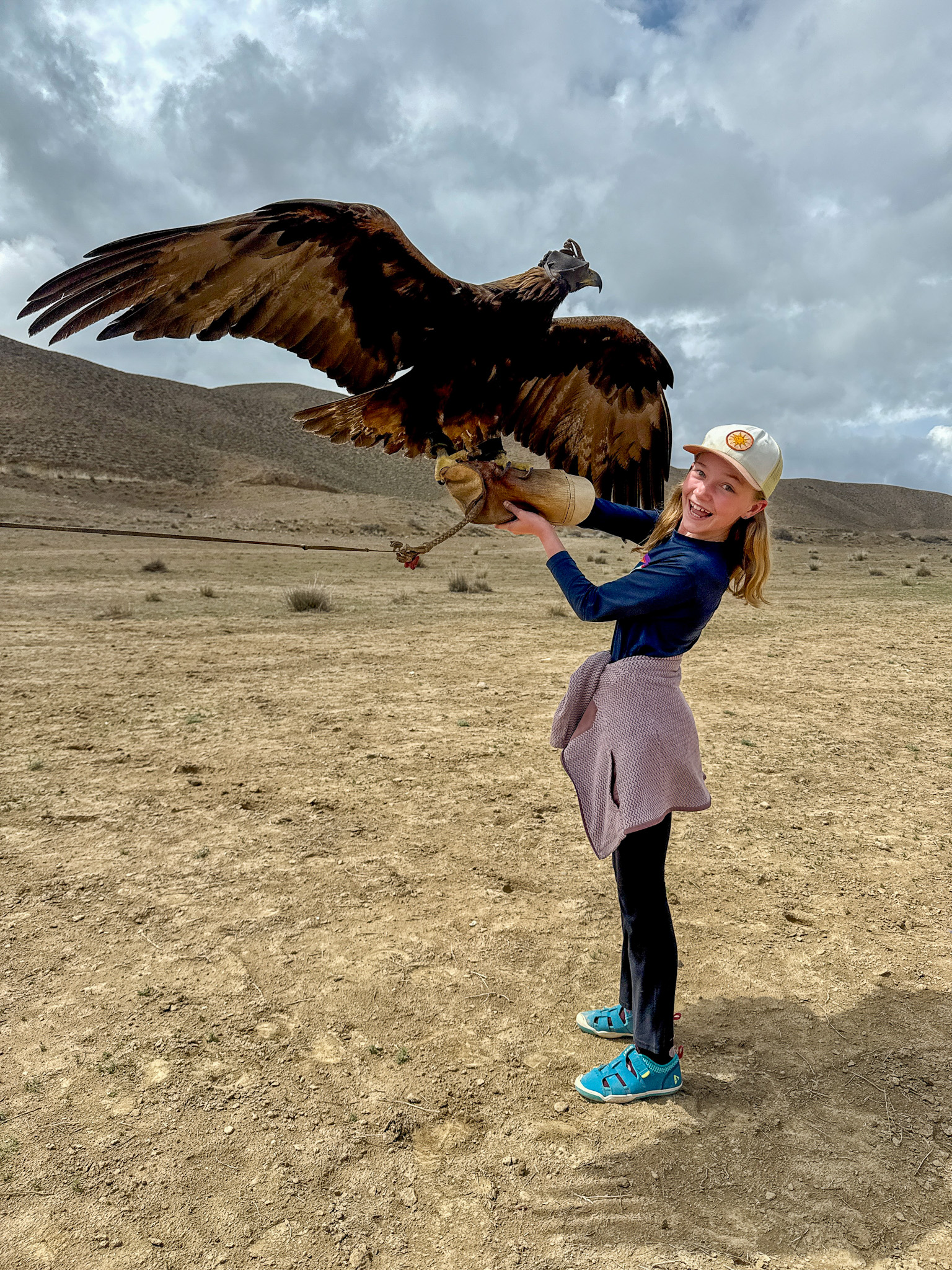
The next morning brought one of the cultural highlights of the entire two weeks. Just outside the town of Bokonbayevo, in a stretch of scrubland that looked uncannily like the high desert thirty minutes outside Reno, we watched an eagle hunting demonstration. Eagle hunting, berkutchi in Kyrgyz, is one of the oldest surviving traditions of Central Asian nomadic life. Hunters have been training golden eagles to take rabbits, foxes, and jackals from horseback for at least a thousand years. To this day, they are hired often by shepherds to assist in ridding their properties of the sneaky nocturnal creatures pestering their flocks. The practice nearly disappeared in the twentieth century and has been deliberately revived here on the south shore of Issyk-Kul in the small village of Bokonbayevo. Two thirds of the “career eagle hunters” of Kyrgyzstan come from this village. They put on these shows for tourists essentially as an offseason side gig, and while watching it, the thing that struck us was how alive it still felt. Antiquated, yes, but not a museum piece. A living skill, practiced by men and boys who clearly loved it.
The demonstration came in three parts. First, two riders carried eagles to the top of a nearby hill. A trainer down in the valley let out a sharp whistling cry, and the first eagle launched—it screamed down the hillside, across the open ground, and landed on his outstretched glove for a chunk of pigeon meat. The second eagle had a different job. A horse-mounted rider began dragging a stuffed fox across the ground at a full gallop—the call went up, and the eagle launched, locked on, and dove with its talons out, hitting the fox like a missile and pinning it to the ground. It happened so fast that we only confirmed the bird had nailed it on the first pass by slowing the video footage down afterward. We learned that all of these hunting eagles are female, since the females are larger and easier to train, and that a hunter and a bird can build a partnership spanning decades, with eagles living into their thirties and occasionally their forties.
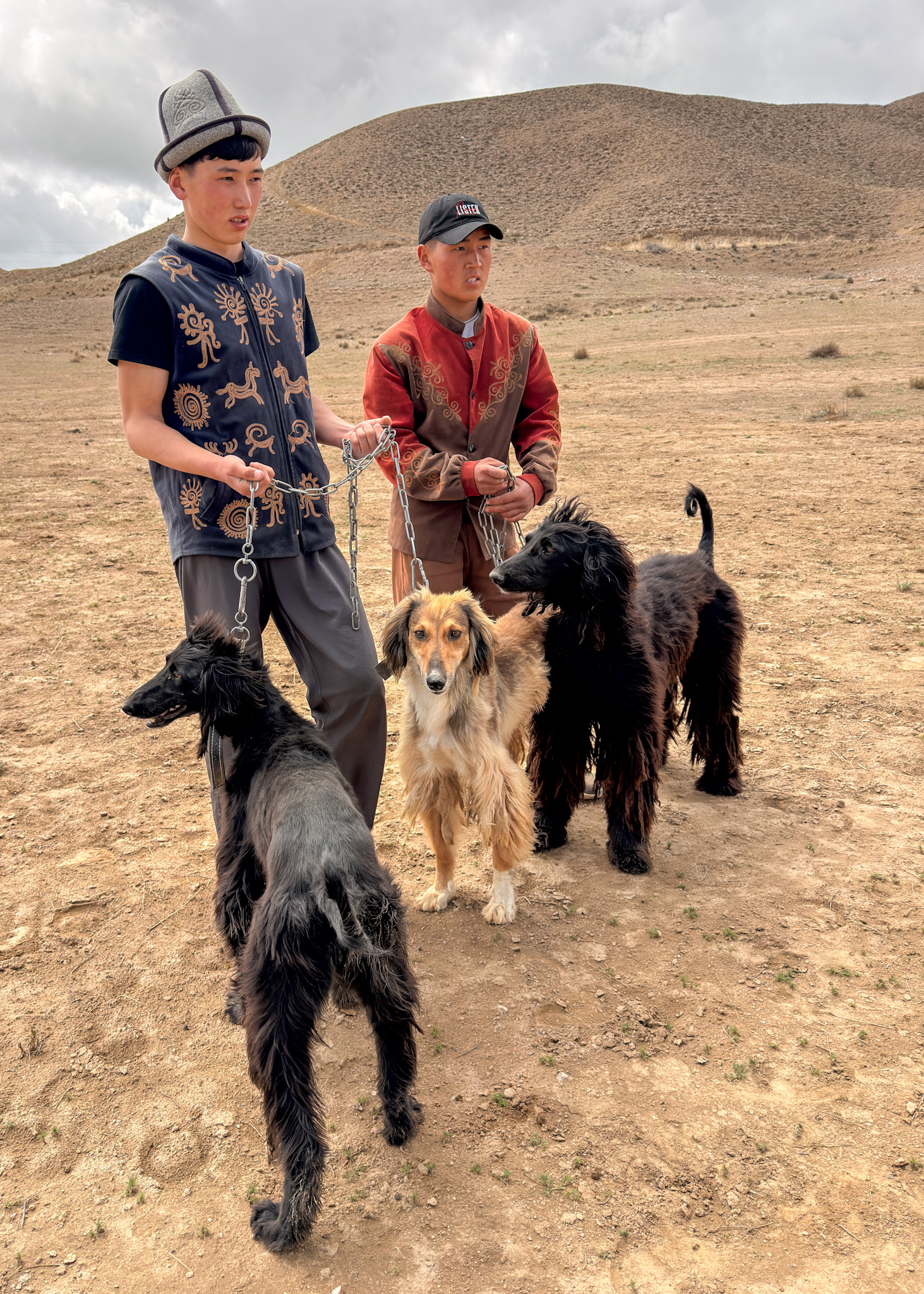
The second part belonged to the dogs. Kyrgyz eagle hunters work alongside the Taigan, an ancient sighthound native to the Tien Shan, bred to hunt at altitude across brutal terrain. They brought the stuffed fox back out, set the dogs loose, and the poor fox never stood a chance. Three Taigans tore into it within seconds and then sat panting, waiting for their sausage rewards for being such very good hunters.
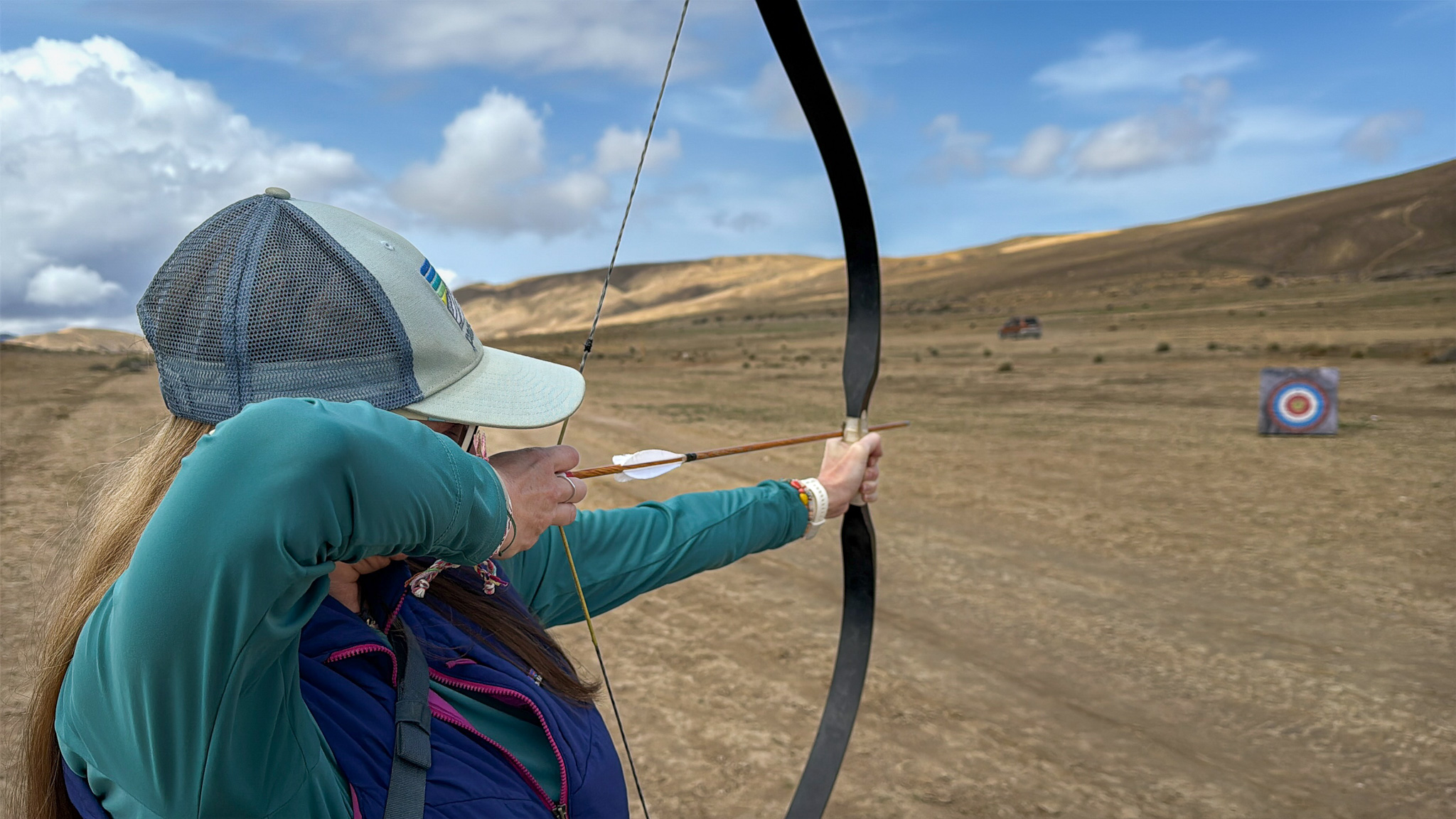
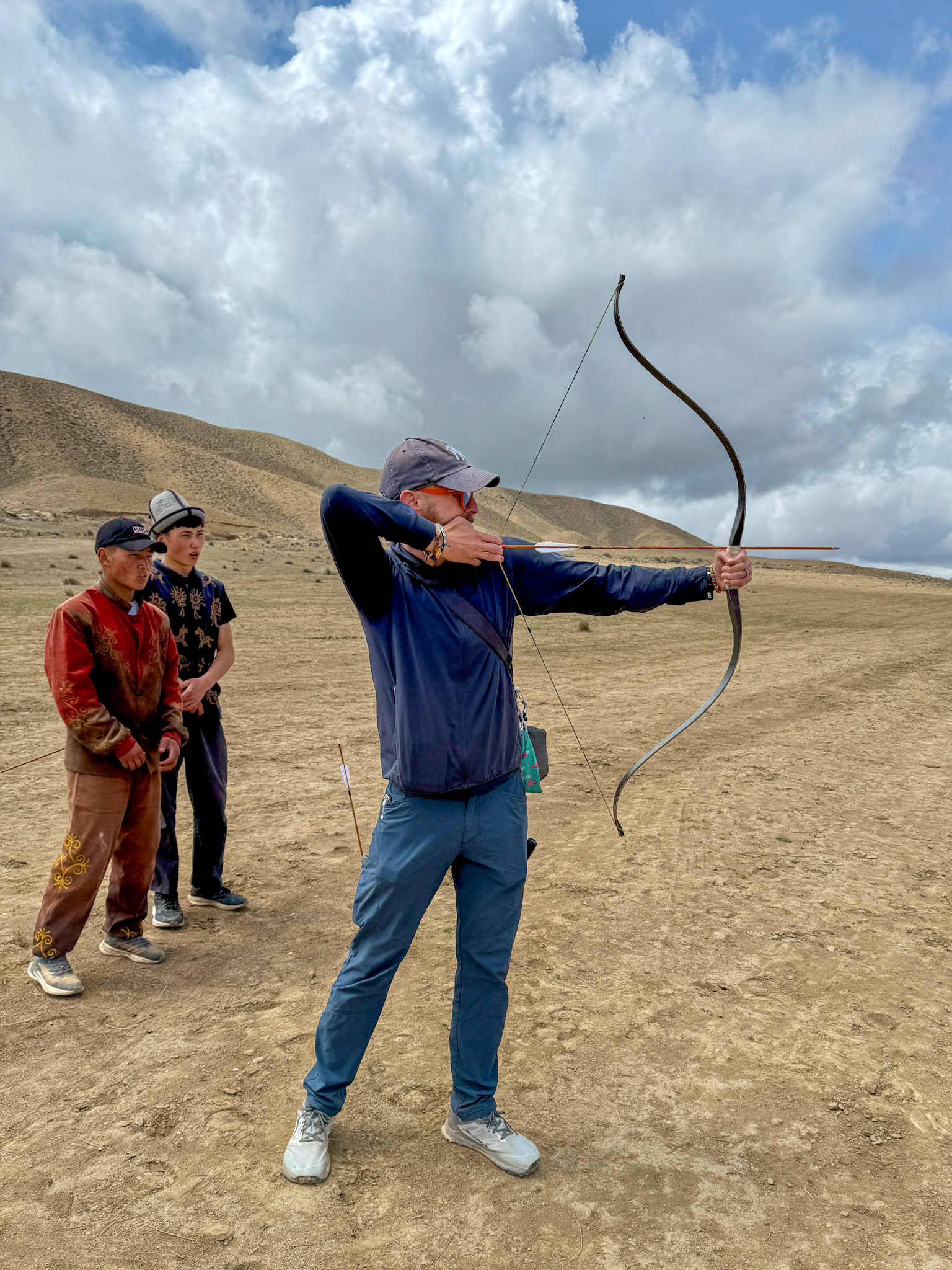
The third part was archery, the presenter went first and scored every time. Finlee stepped up and landed a few scoring shots to a big cheer. Arya drew the bow much farther back, generating impressive power and quite possibly the longest-flown arrow of the day, right over the target, though her score came out about even with her sister’s. Shaina, shooting from roughly double the distance, hit the board in the same upper quadrant nearly every time but never scoring—impressively precise but sadly lacking accuracy. Then Max stepped up, grabbed the bow like a man who knew what he was doing, drew, and put his very first arrow dead center in the bullseye. He should have set the bow down and walked away forever. Instead he kept shooting, and over the following arrows managed to hit the board maybe half the time. The bullseye stands as his high-water mark. He has chosen to remember the bullseye over everything else, and so will this blog.
The day ended with a hike up to Panorama Shatyly, a ridgeline lookout with one of the most expansive views over the entire Issyk-Kul basin: the lake stretching out impossibly blue and impossibly large, the Tien Shan rising on every side. It was breathtaking, and it was also around here that the fatigue started to catch up with us. Thirteen straight days of one-location-per-night, of jaw-dropping scenery delivered at a relentless clip, was beginning to drain something even as we enjoyed every individual stop. There is an honest tension worth naming here. This pace was a genuine privilege, and complaining about seeing too many beautiful places too quickly is the most first-world of first-world problems. But there is also a real lesson in it, which is that you should travel at whatever pace actually fits your family, your wants, and your limits. We had spent most of this year moving slowly, and the contrast was instructive. The go-go-go was exhilarating precisely because we knew the slow rhythm to measure it against. And the slow rhythm, when we returned to it, was going to feel like a gift precisely because we had just spent two weeks earning it.
The next morning we discovered that Arya had forgotten her hat at the yurt camp we’d left a couple of hours earlier. With that, the lost-item tally reached four in nine days, and our running record of misplaced belongings crossed fully into embarrassing territory.
The hat was retrieved by Marvin, and Marvin is a story in himself. He is a driver who had been following along behind us in his own vehicle for a couple of days, a piece of a plan Erkin has to expand his guiding business by adding a second vehicle and a hired driver. Max has private reservations about the economics of this, mostly that any driver good enough to guide independently will eventually buy his own truck and become a competitor rather than an employee, but those reservations are Erkin’s to worry about, not ours. What made it our problem was a request: Erkin wanted Marvin to ride inside our Land Cruiser for two or three days, in the back without a seatbelt, which would have meant putting all of our luggage on the roof, exposed to the dust and the famously unpredictable Central Asian weather. It had not been discussed in advance, and it was the kind of thing that should have been. Max said no. It was the right call, but it was also the first real cooling in what had been a warm and easy relationship with Erkin. He grew noticeably less chatty afterward, and the steady stream of history and geology and culture that had made the first half so rich, then subtly began to thin out.
Which made the hat situation that much more awkward. Having just told the man he couldn’t ride with us, we now had to ask him to double back to the yurt camp to recover yet another of our forgotten possessions. Marvin never uttered a word of complaint. He simply went, came back with the hat, and broke into a grin when Arya jumped up and down to thank him.
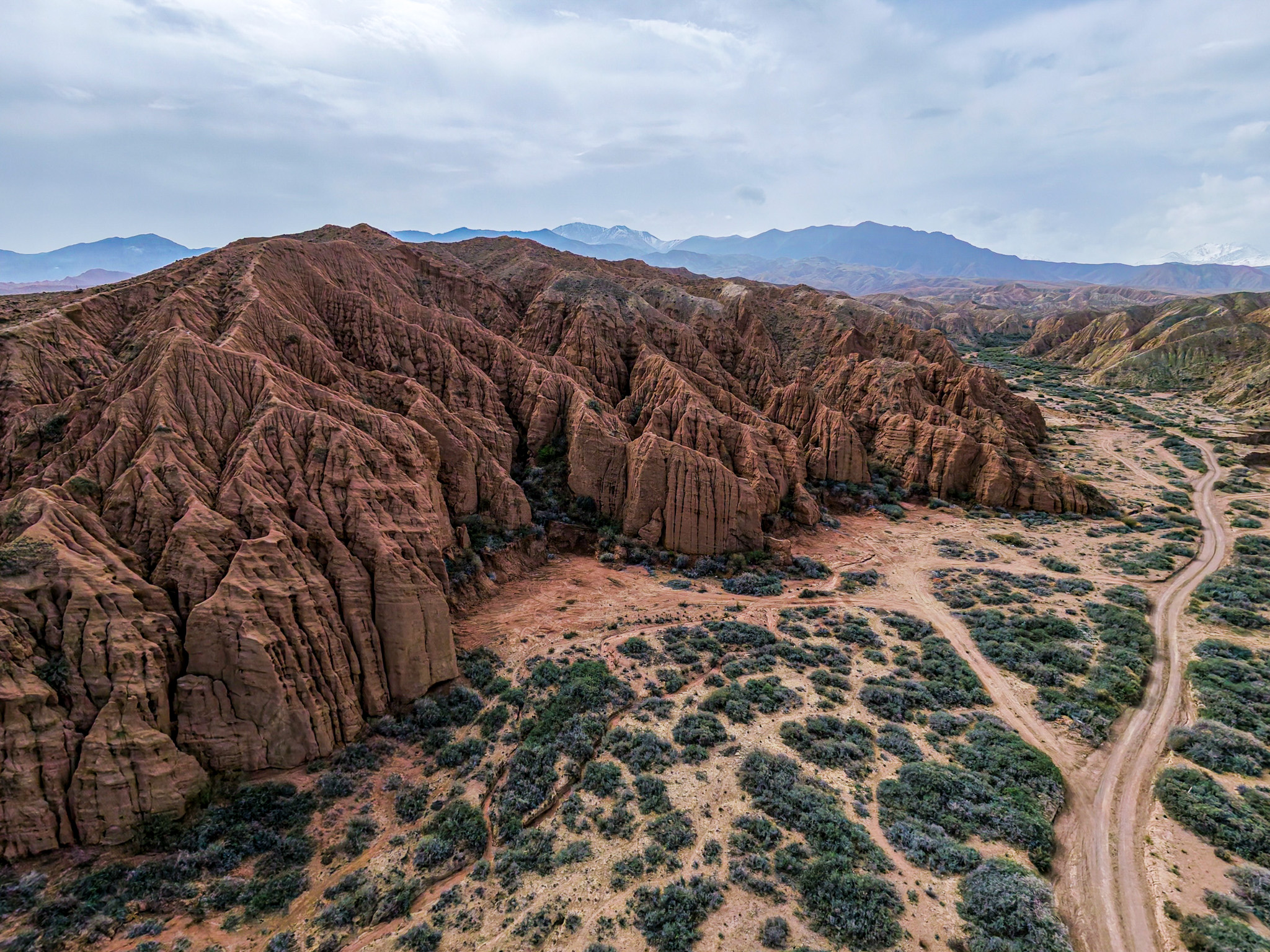
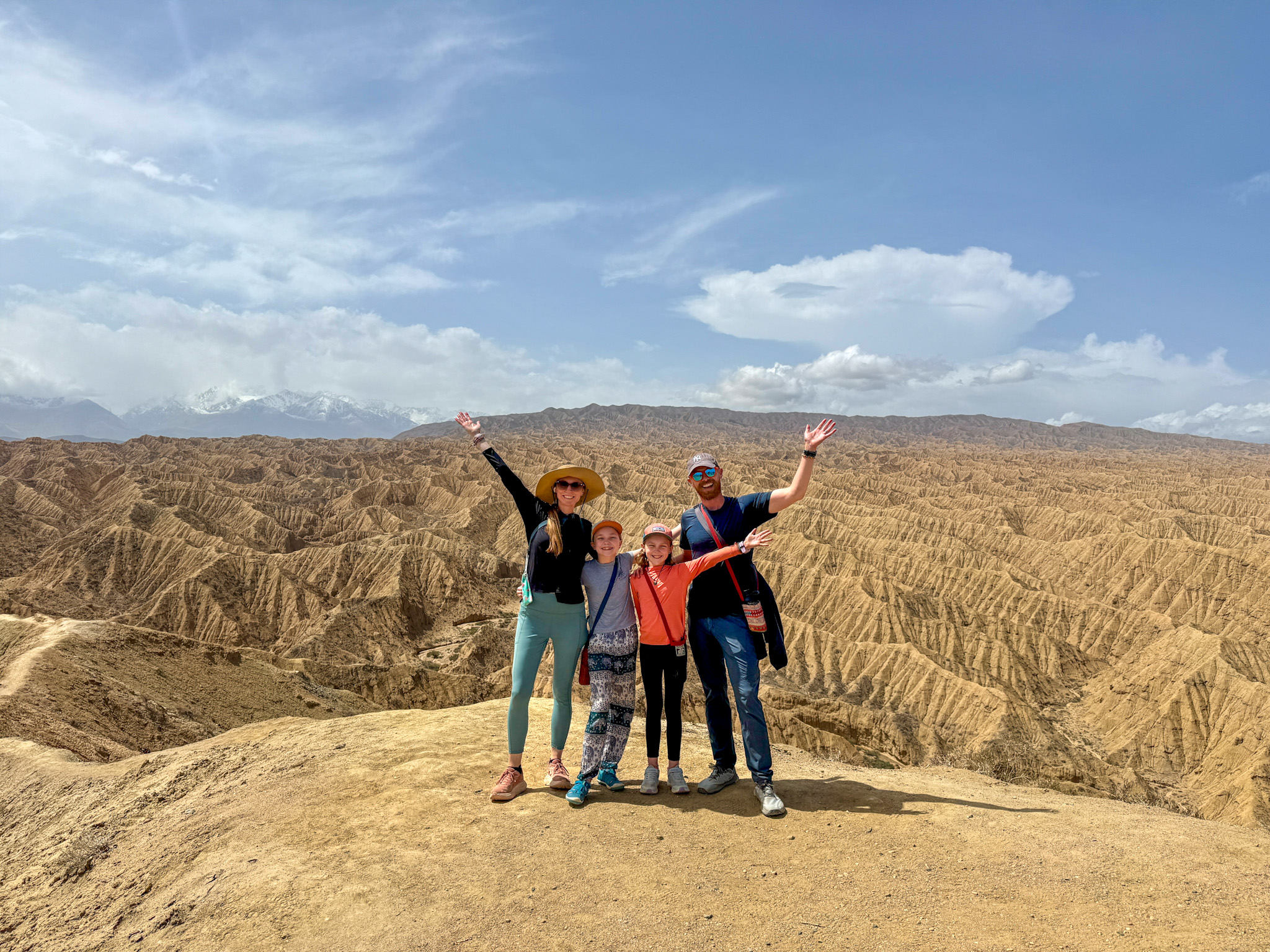
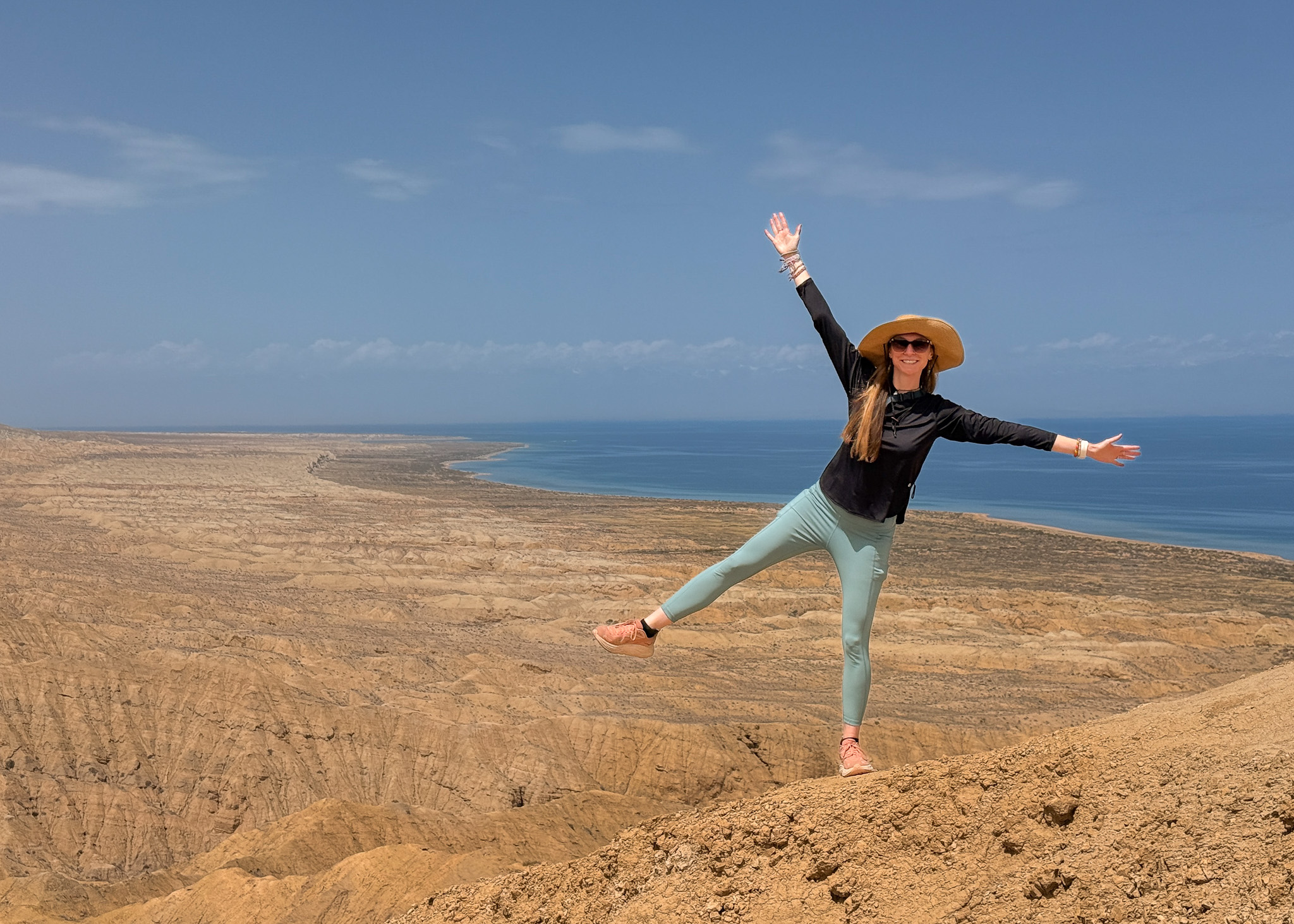
Then Kan’yon Aksay broke our brains a little. The geology in this part of the country is unlike almost anywhere else on Earth, with small exceptions in the American Southwest and apparently parts of Turkey in Cappadocia. The mountains here erode in a particular way, with water cutting hundreds of channels through rock that seems to be exactly the right softness, all of it eventually feeding into larger channels and then rivers, so that the canyon system simply keeps unfolding the farther you look. The drone was invaluable for trying to convey the scale, which the eye could barely hold.
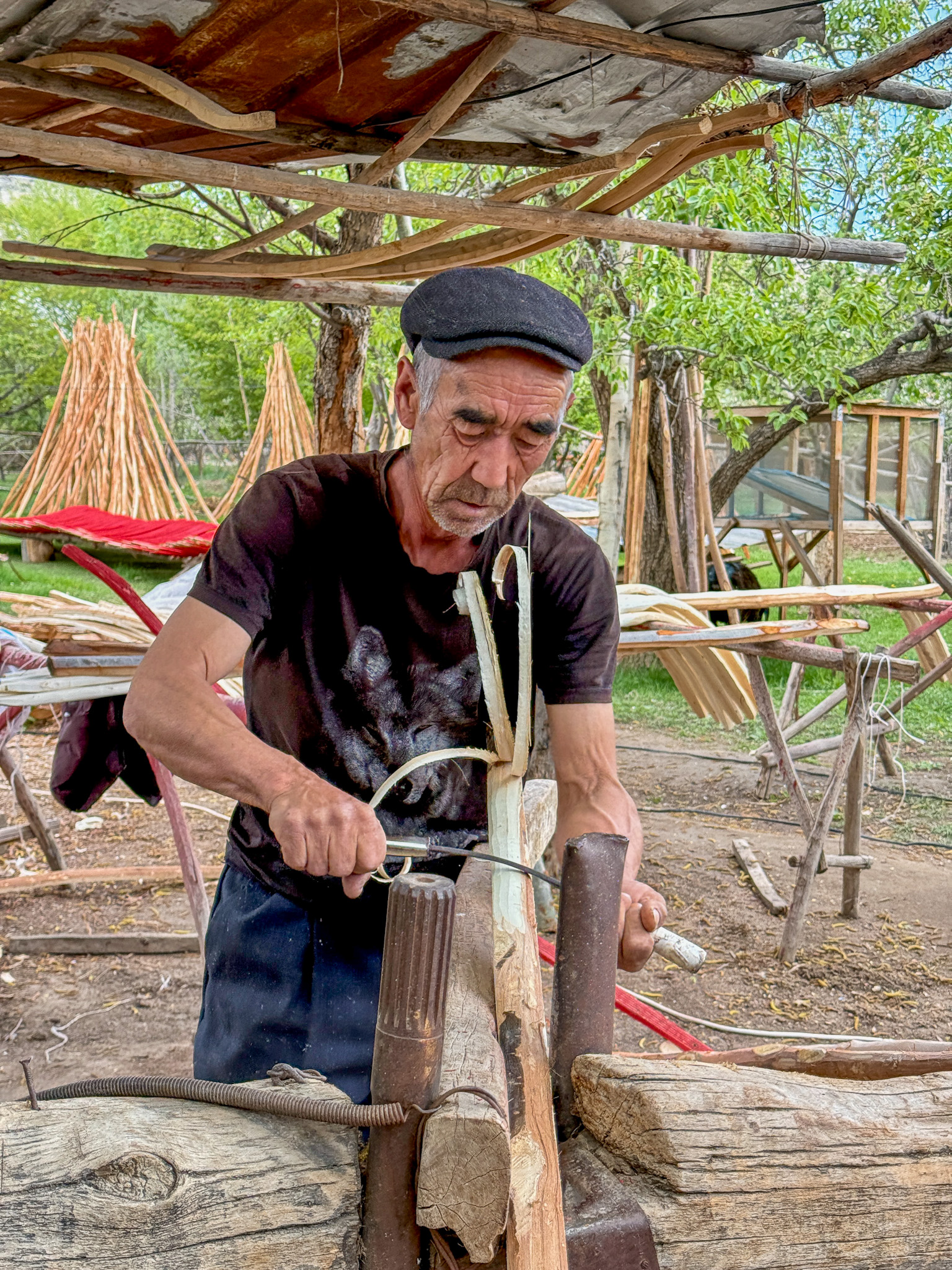
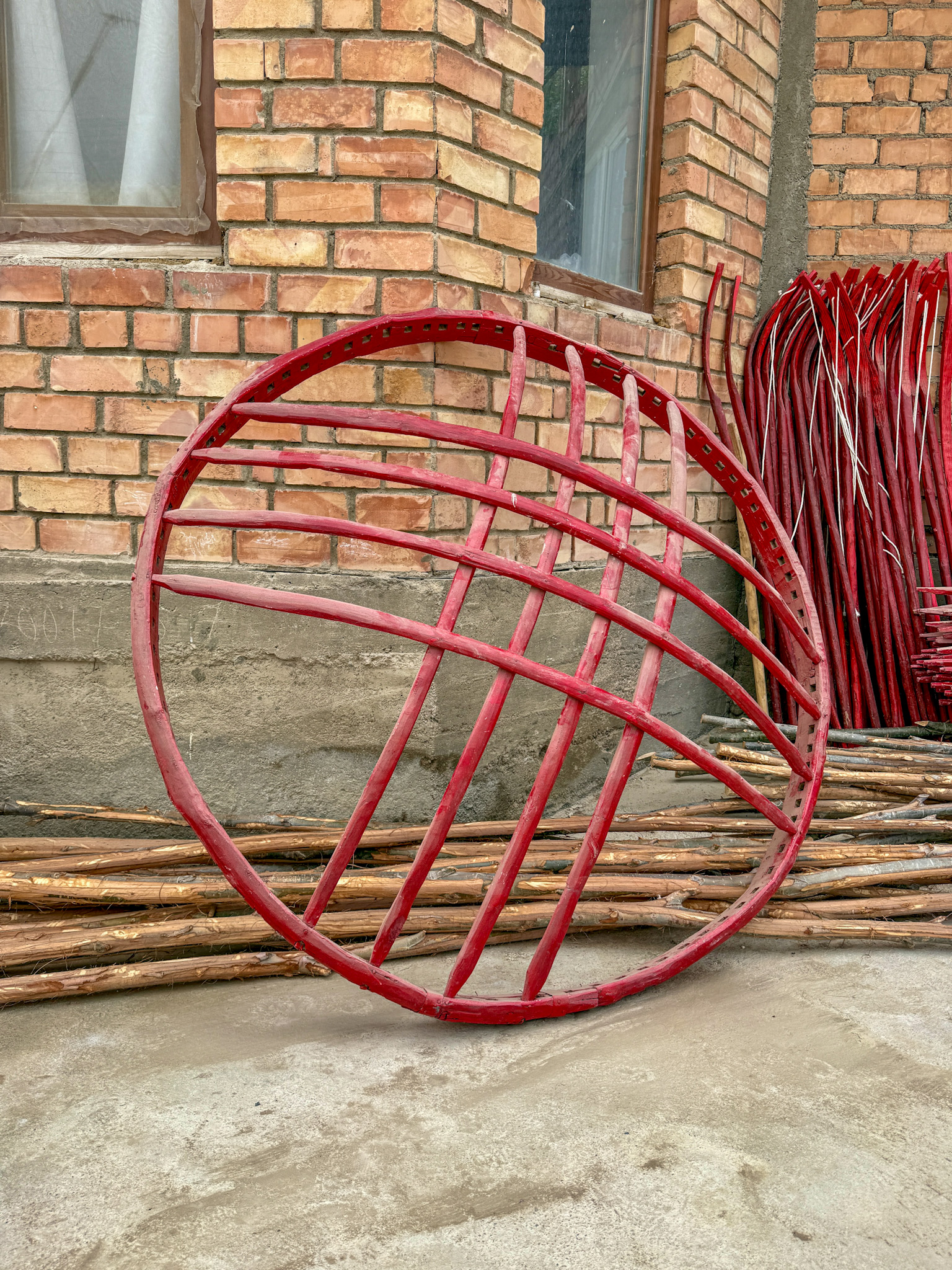
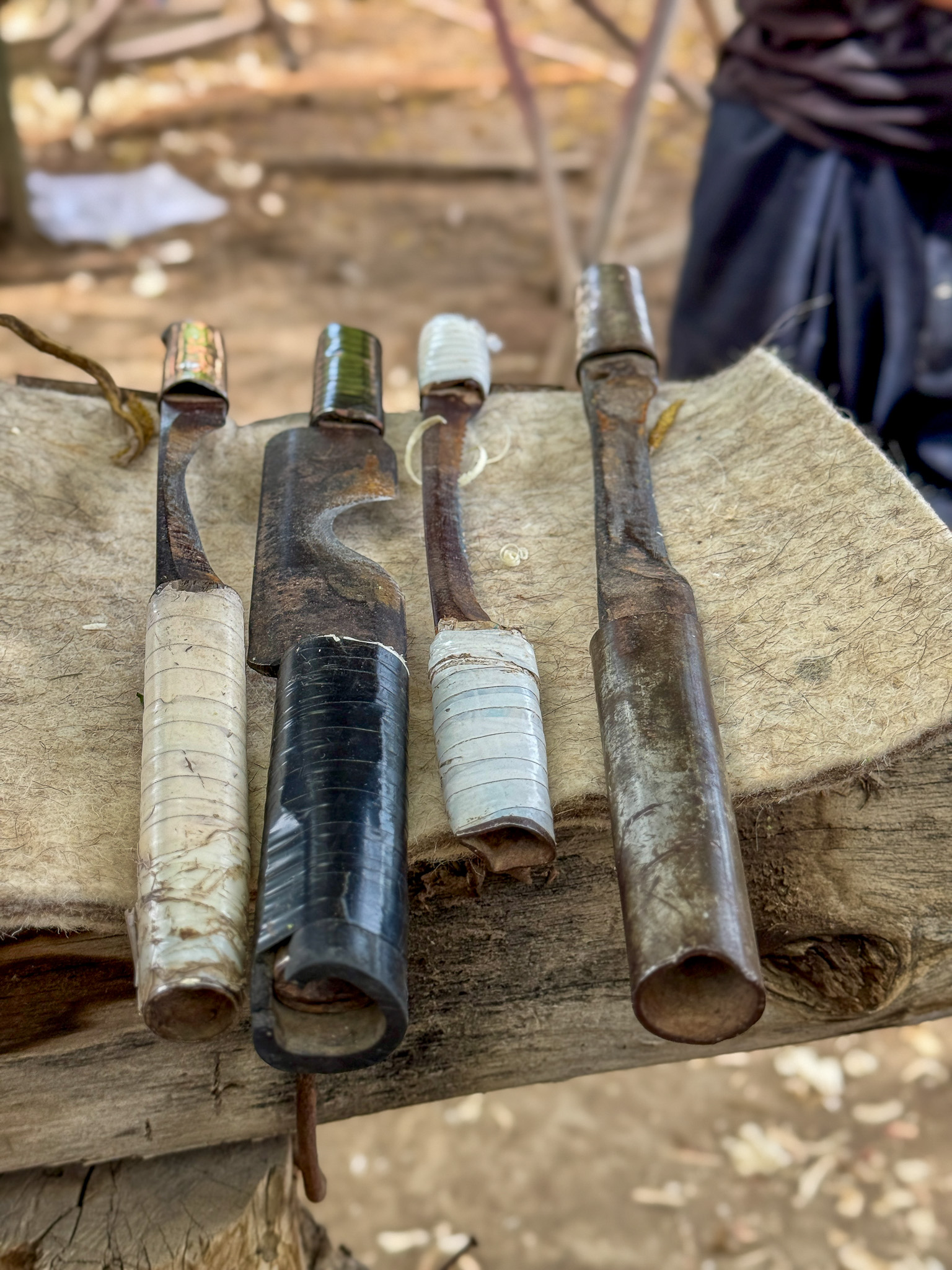
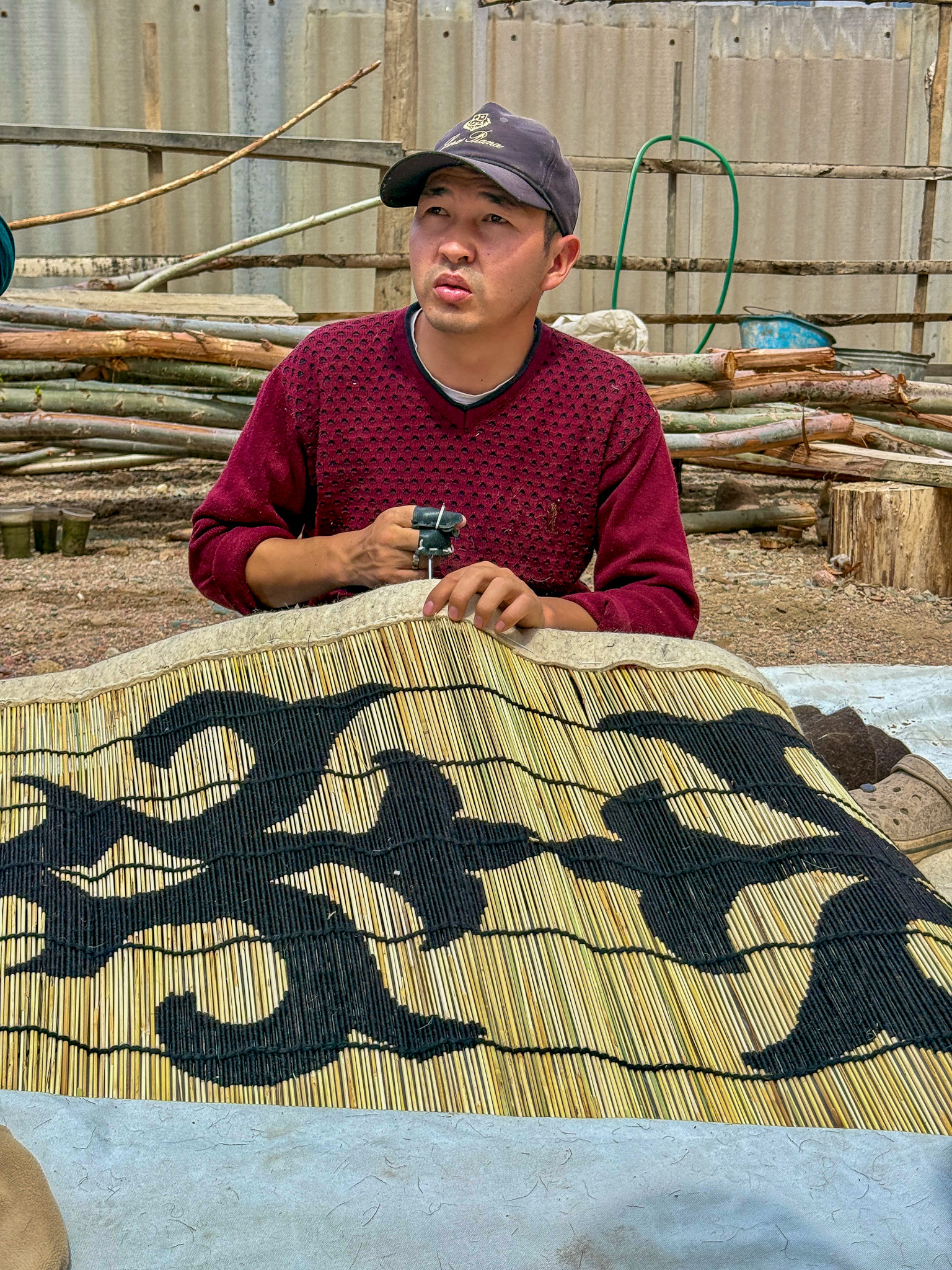
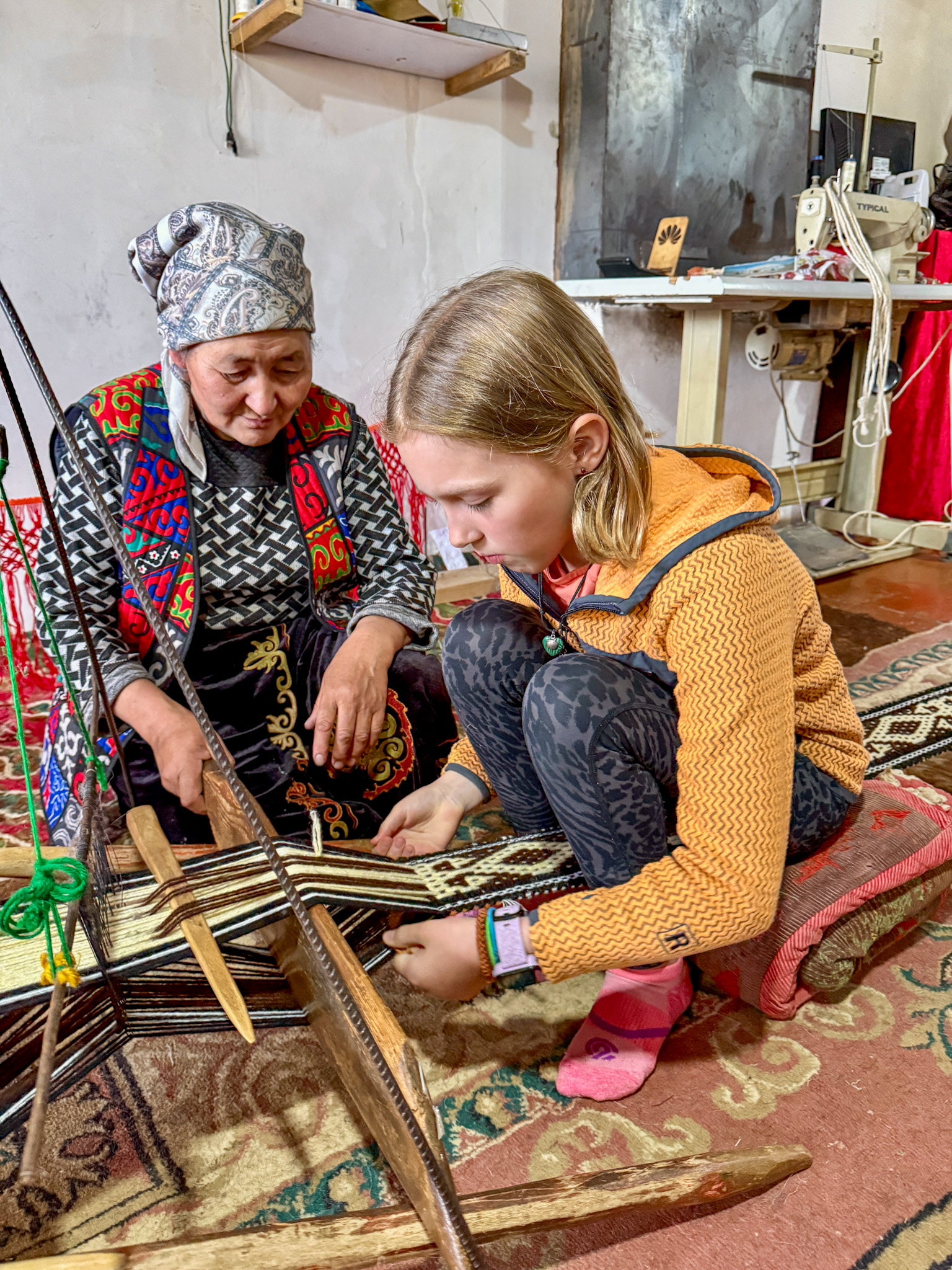
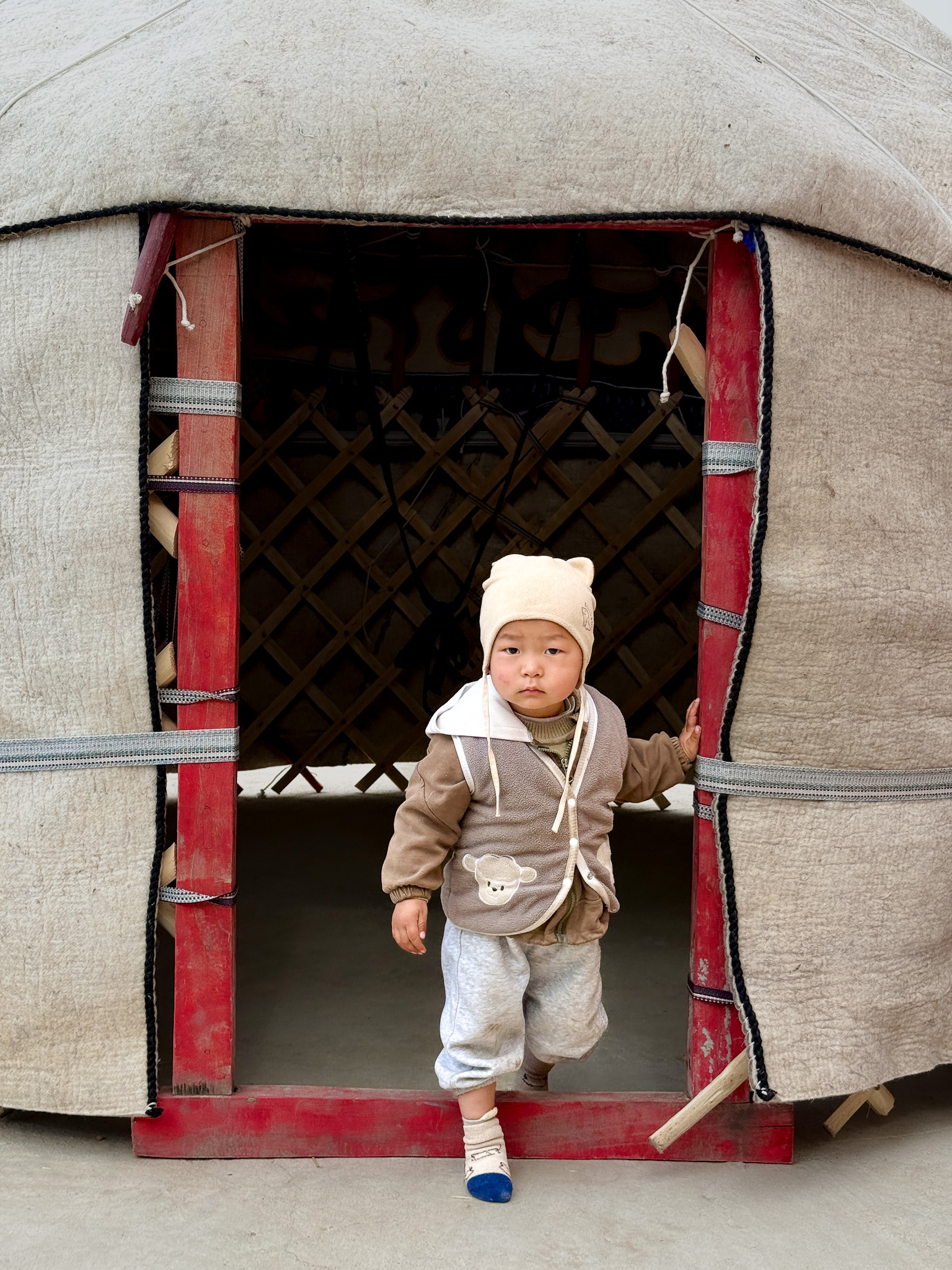
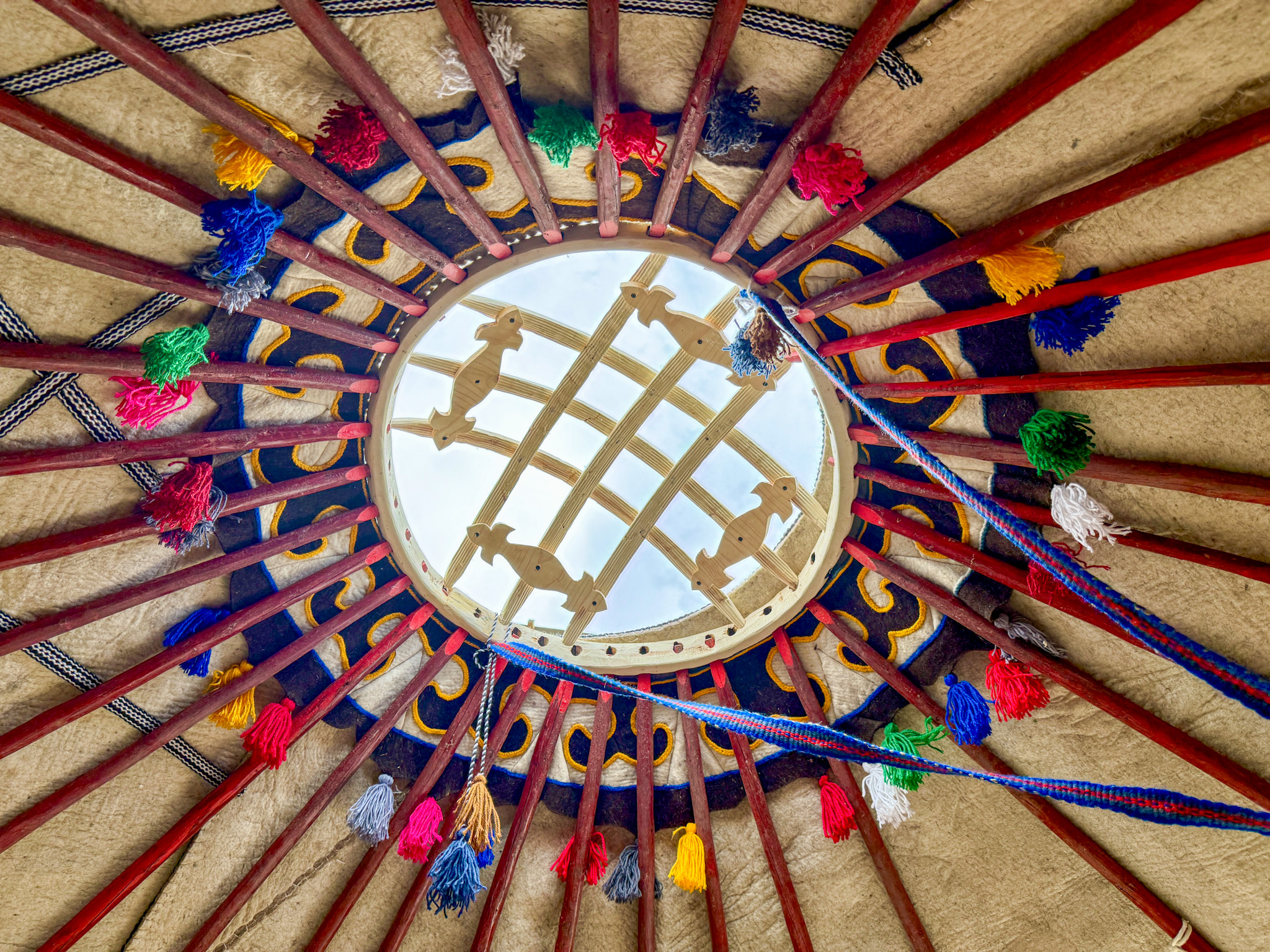
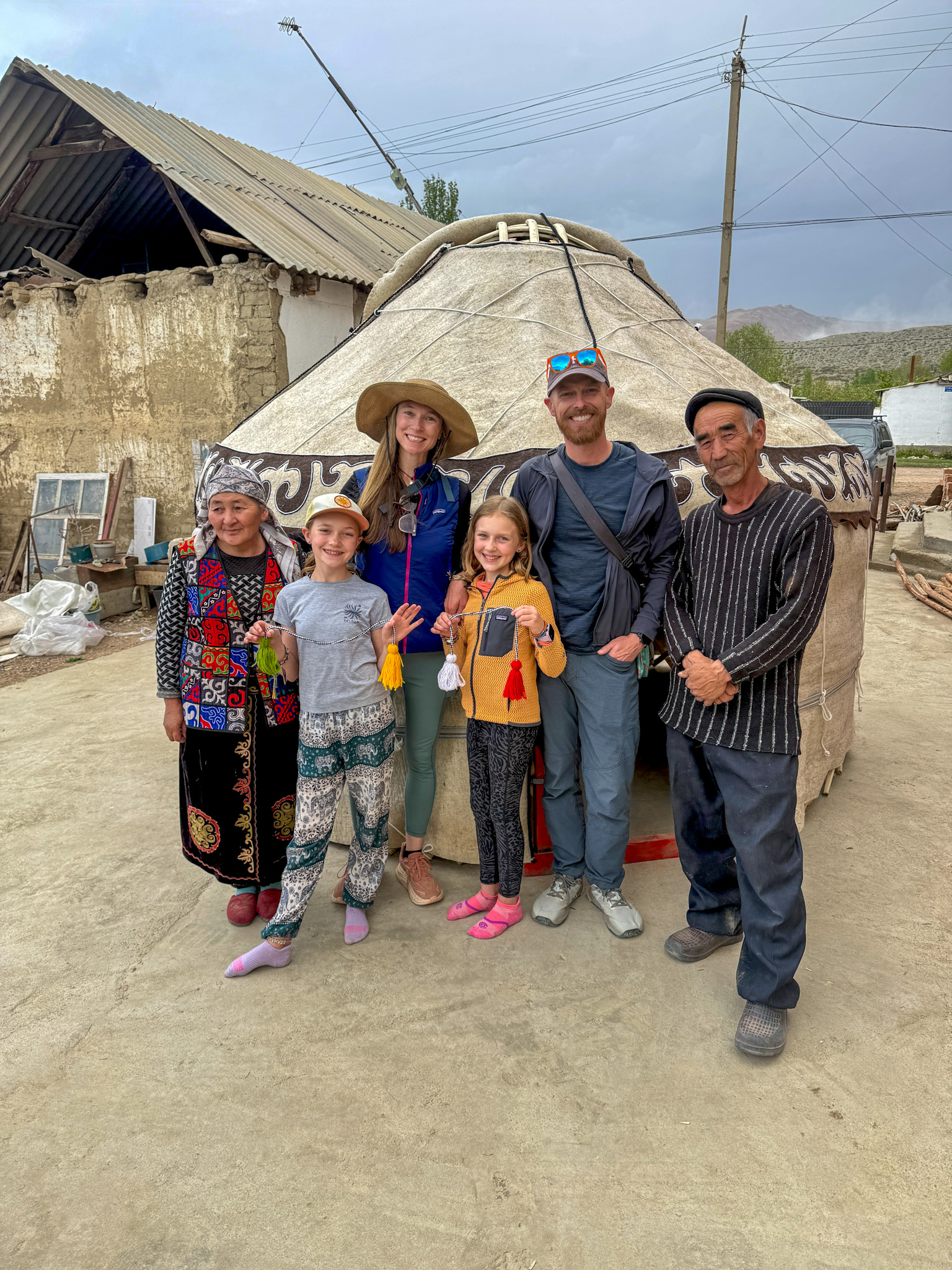
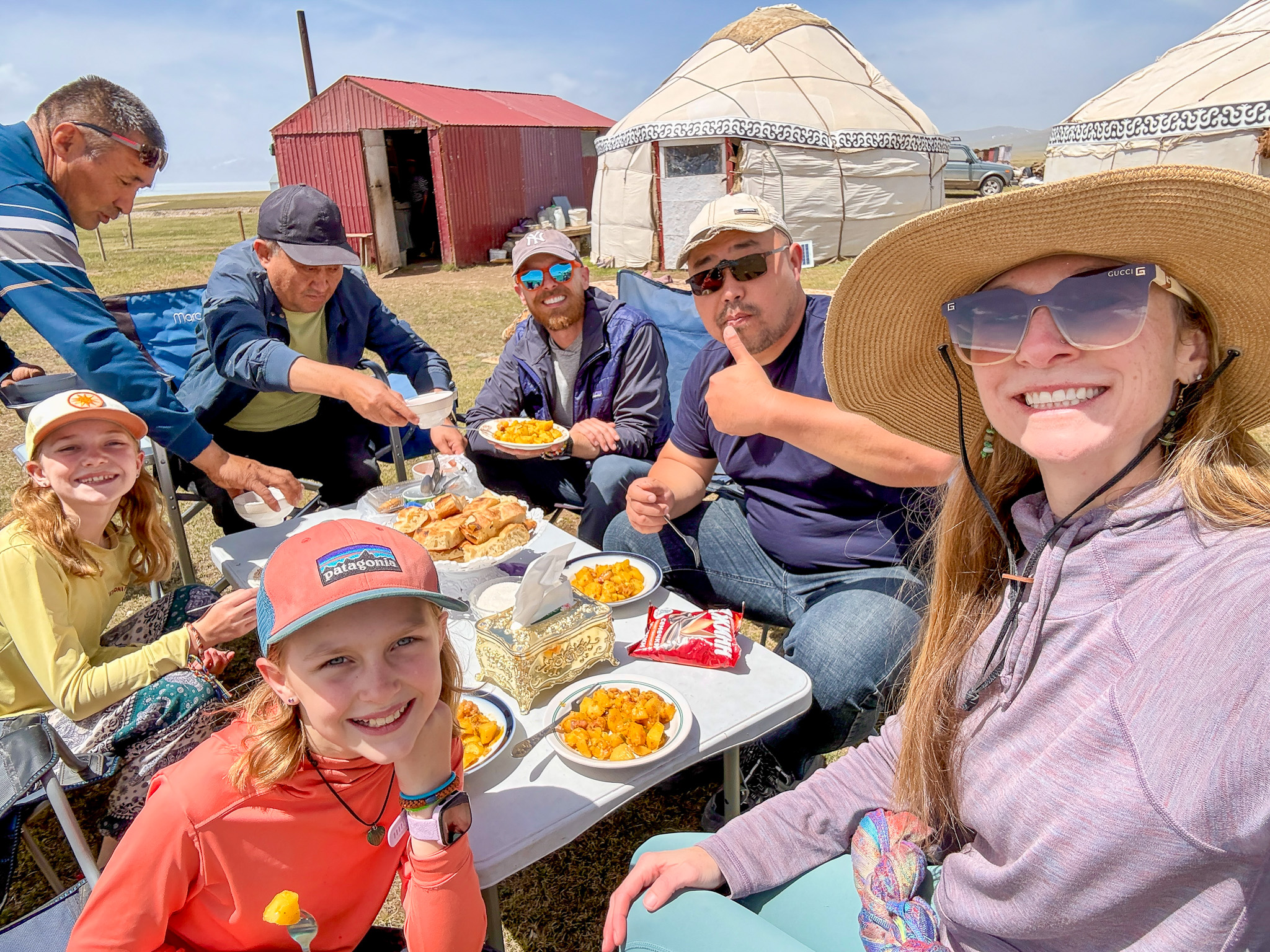
That afternoon we visited a master yurt-maker in the village of Kyzyl-Tuu, which has quietly become the yurt-building capital of Kyrgyzstan. Most of the country’s yurts come from this one village. Erkin had described the master in advance as “a willow stump of a man,” which turned out to be precisely accurate: a lithe old man with leathery skin and a handshake like an iron vise. He walked us through the entire process. He harvests willow from his property, dries it, scrapes off the bark, straightens it, steams it pliable, and bends it into the exact curves required for the roof poles and lattice walls. The whole thing takes about two months and uses no nails, screws, or metal of any kind, held together entirely by tension, rawhide, and the engineered geometry of the tunduk at the crown. His family fed us lunch afterward, and we learned one of the more endearing customs we have come across anywhere: Kyrgyz families often leave blankets and cushions in the dining room so guests can take a short nap after the meal. We did not take them up on it, but the offer alone said something good about the place.
Then came Song-Kul, and Song-Kul was a saga.
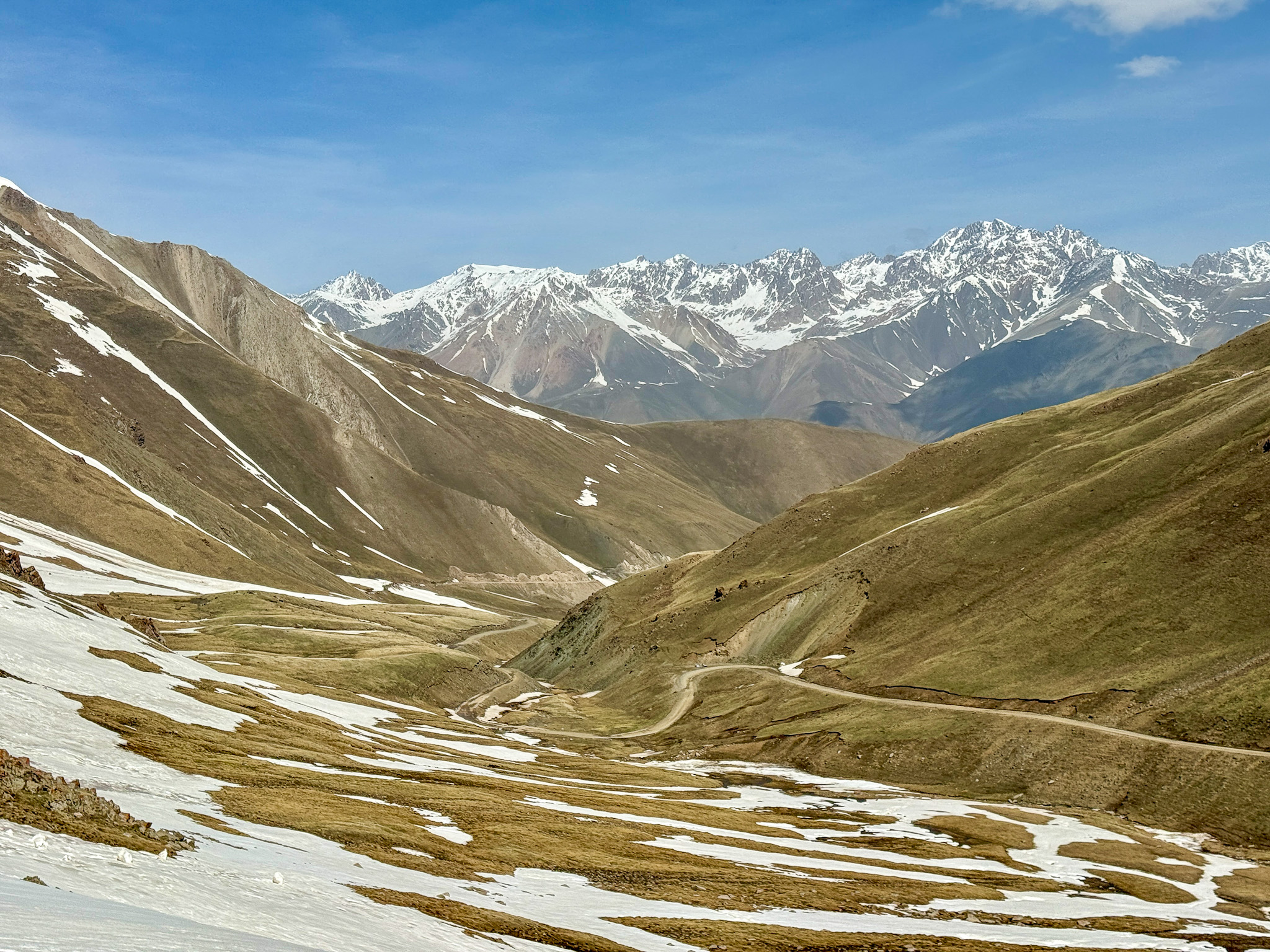
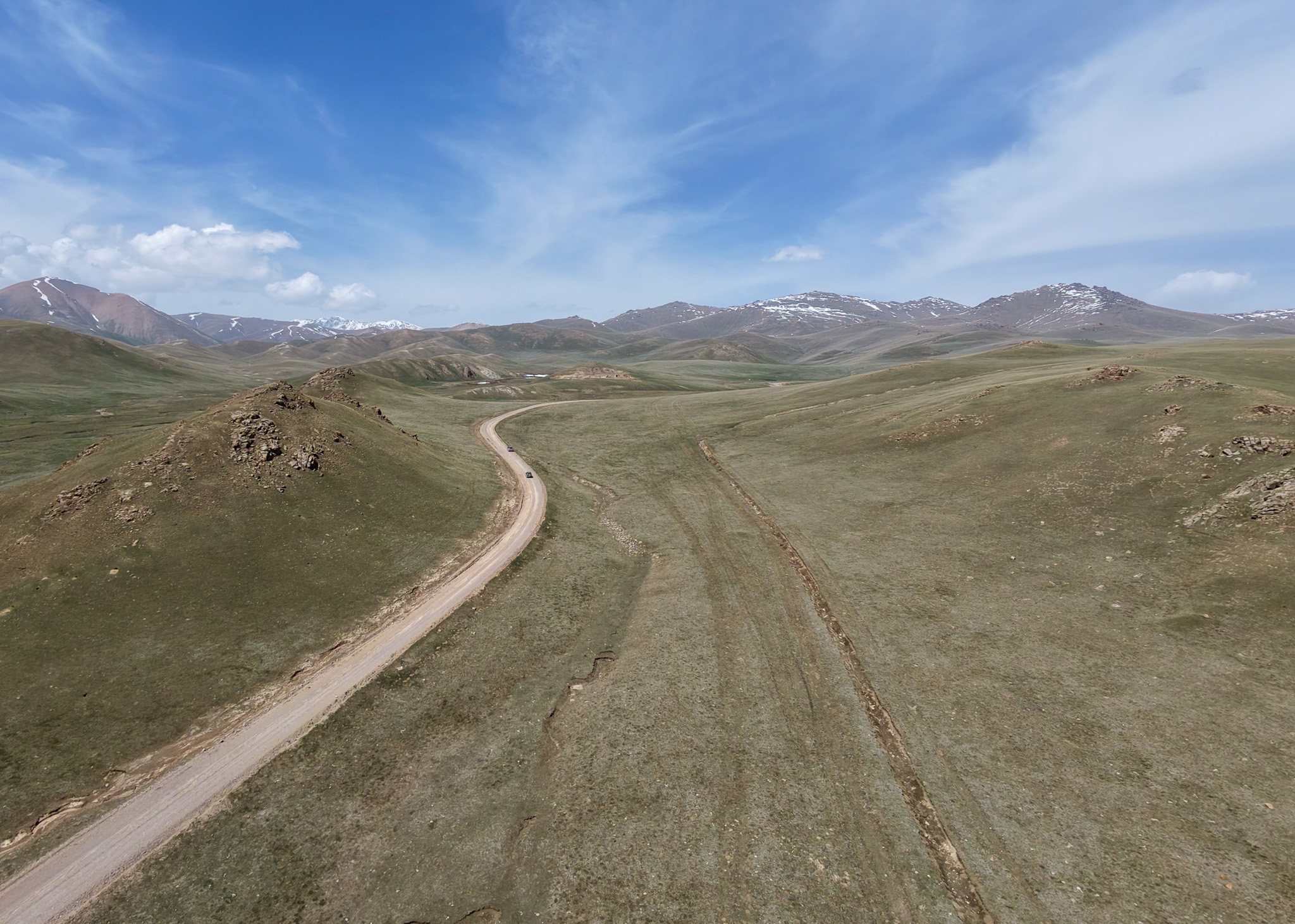
Song-Kul is a remote high-alpine lake sitting at just over 3,000 meters in a depression between two mountain ranges, the largest freshwater lake in Kyrgyzstan. We were attempting to reach it on May 7, which is early in the season, early enough that we had been warned the night before we might not be able to reach it at all because the access road was in such bad shape. We decided to go look anyway. The road climbed from a river valley up into the southern Tien Shan, fine at first, then progressively more rutted and chewed up by spring snowmelt the higher we got. By the time we hit snow, the track was muddy and badly broken in the spots where the runoff was doing the most damage, but someone had run a tractor over the worst of it earlier that day, and the pass was technically open.
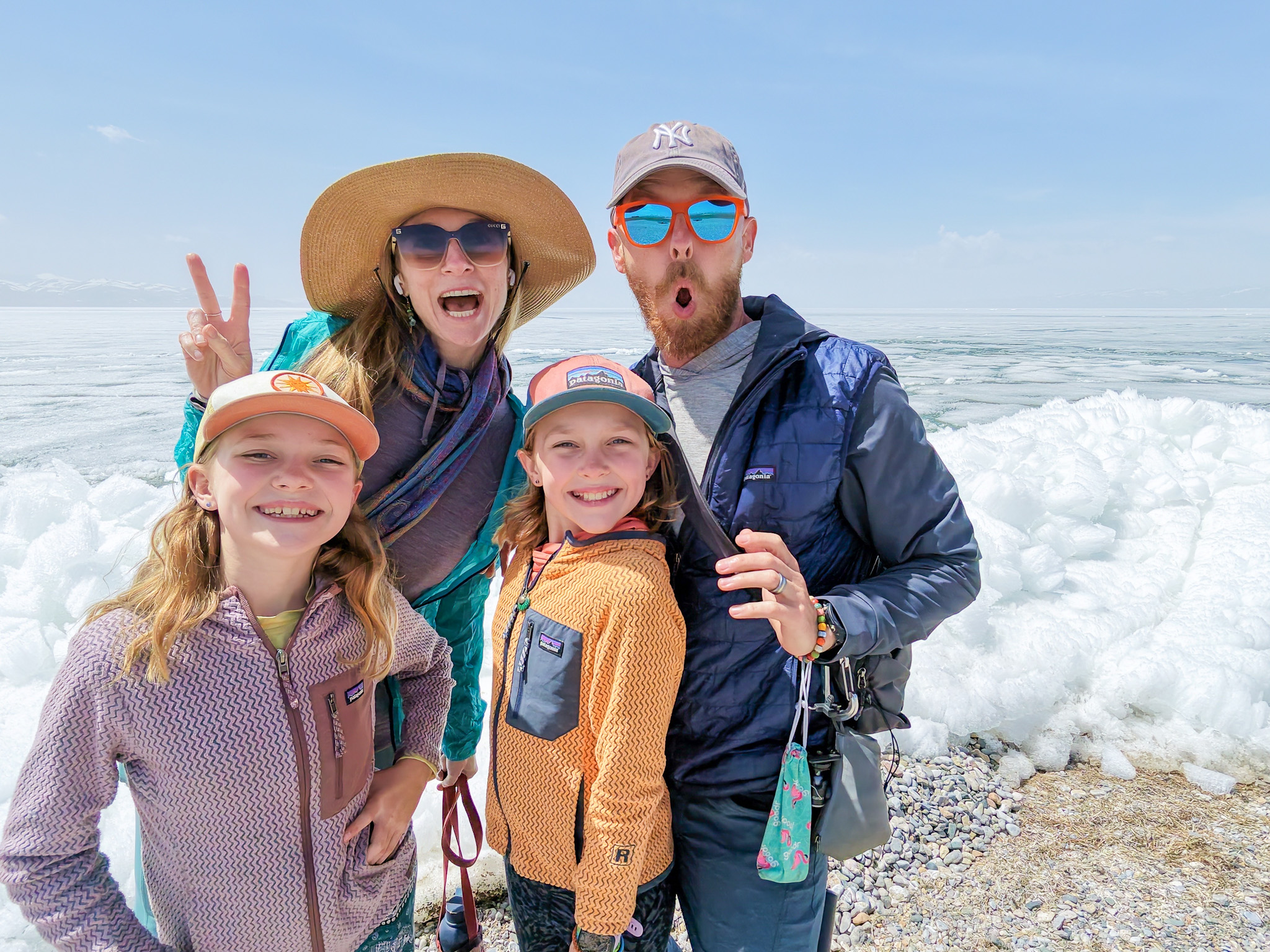
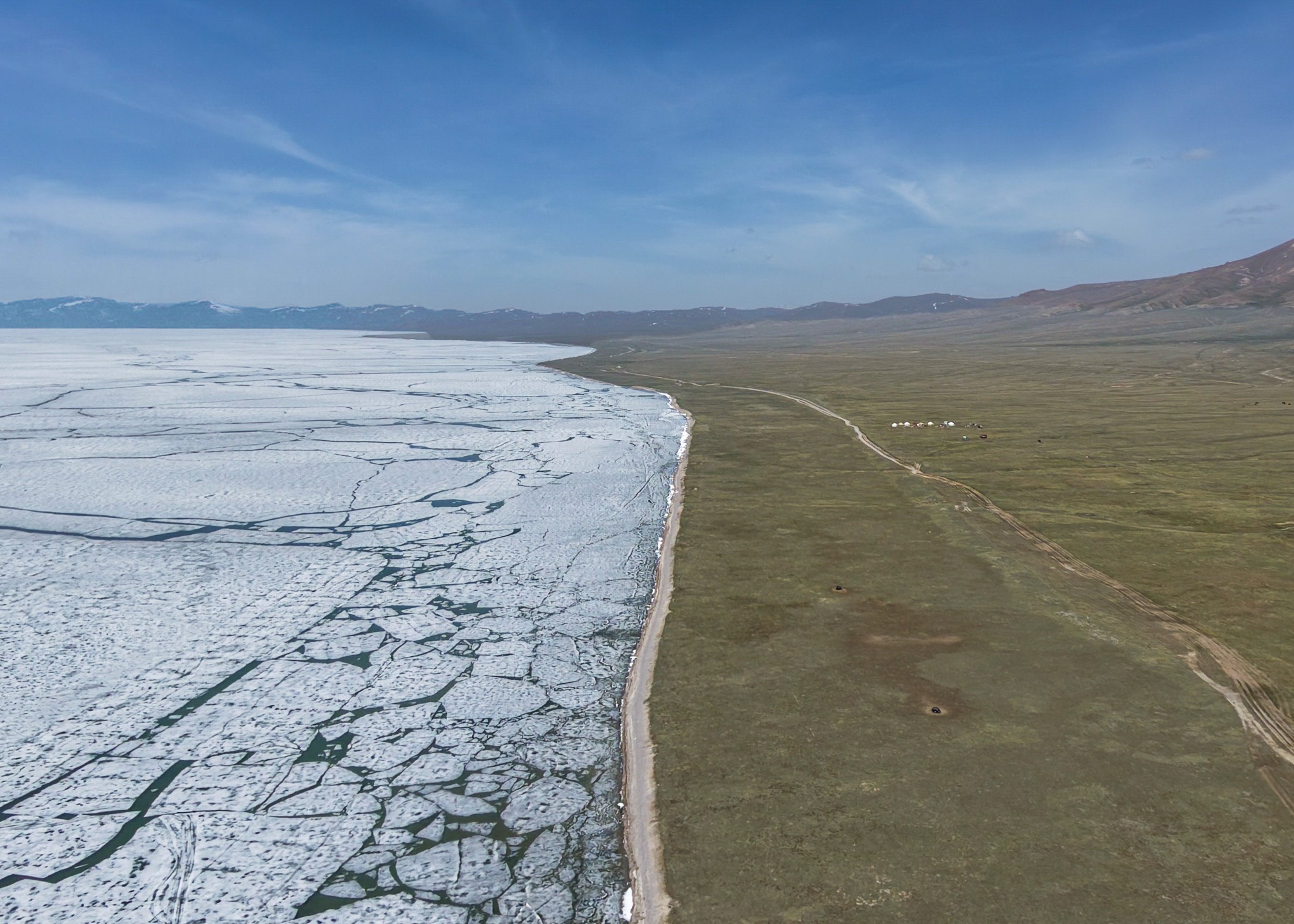
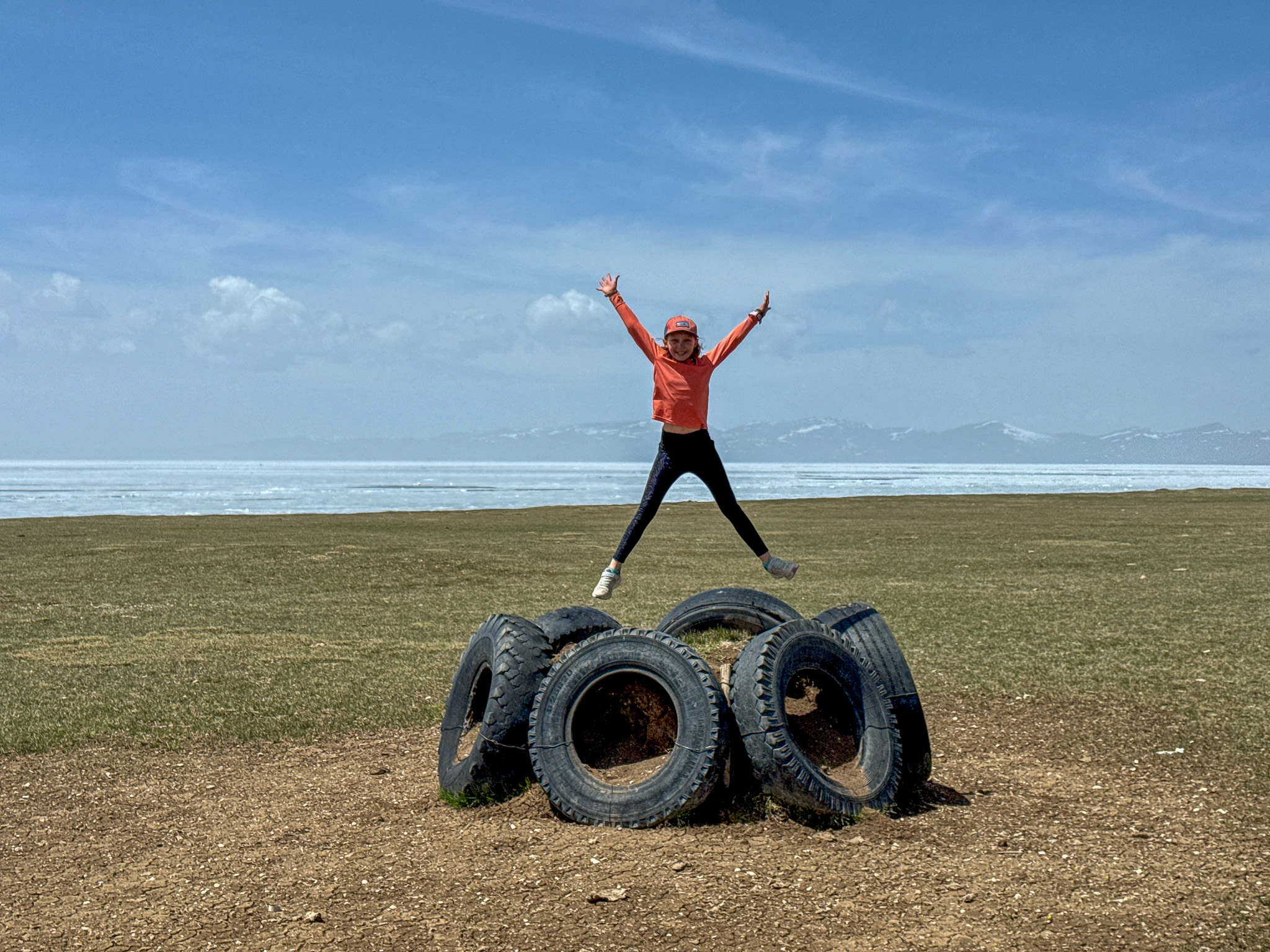
Cresting the pass, Max expected a view down onto the lake and instead found something stranger: a plateau at around 11,000 feet that sloped down so gently across rolling green hills that you almost couldn’t tell you were descending the 1,500 meters to the shore. And there, when we reached the truly massive expanse of water, we found the lake still mostly frozen. None of us had ever seen a frozen lake at that scale. The girls were hysterical with pure kid joy, hurling rocks at the ice to punch holes through it. It was desolate, peaceful, surreal, and a genuine pain to reach, all at once.
At the lake we met three young Belgian guys on a two-week holiday with essentially no plan at all. They had landed in Bishkek, found a taxi, taken it halfway, transferred to another taxi, gotten dropped at a village at the base of the mountain, spent a day finding someone willing to drive them up over the half-open pass, and were now going to spend three days at a frozen lake with nothing to do but stare at the sky and eat boiled potatoes. They were having the time of their lives. We chatted with them in a mix of French, Spanish and English, did our small part to dismantle their assumptions about Americans who can’t speak other languages and don’t leave home, and sent them off with our blessing for their gloriously unstructured adventure.
It was then that the drone met its match. As we were leaving, Max sent it up for one more vehicle-following sequence, and some combination of his own inexperience, the thin air at altitude, and a sudden technical hiccup sent the little Neo zooming off down the mountain entirely on its own before it crashed into the rocks and cartwheeled across them in what the footage later confirmed was a spectacularly undignified series of tumbles. Max braced for the worst, but the only casualty was the tip of one propeller. He happened to have exactly one spare propeller left. Nobody loves a drone, exactly. They are buzzy and intrusive and faintly annoying. But everybody loves the footage, and almost everybody, it turns out, loves watching one crash itself in such a thoroughly ridiculous fashion. Even Max, who cares about the thing deeply, couldn’t stifle a laugh.
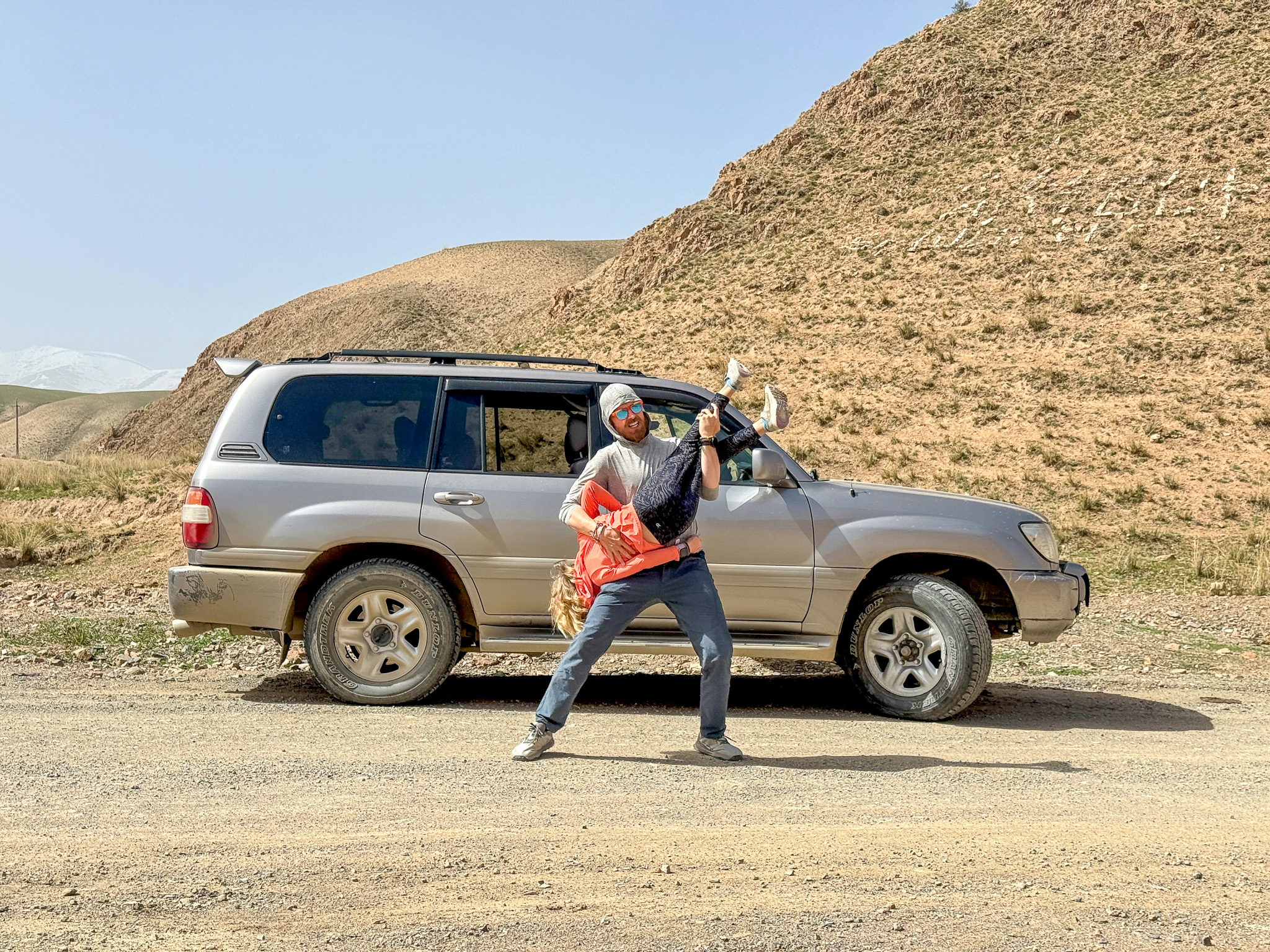
Then, the following day, another long-lost item made its return at a cafeteria-style roadside spot called Food Zone. Erkin had timed our route to intersect with a guide whose clients had just done a day trip to Enilchek: a couple living in the Netherlands, he Dutch and she Czech, on a whirlwind tour much like ours but at an even faster clip. And in their possession, carried across nearly the entire width of Kyrgyzstan from the least accessible corner of the country, was Shaina’s Oura ring. A short, lively, deeply grateful conversation in the parking lot, hugs and handshakes all around, and the ring was back on Shaina’s finger. Lost in a Soviet ghost town near the Chinese border, returned five days and several hundred kilometers later, entirely through the willingness of strangers to carry it along. The obstacle had a path through it. It just took other people’s kindness and a little patience to overcome.
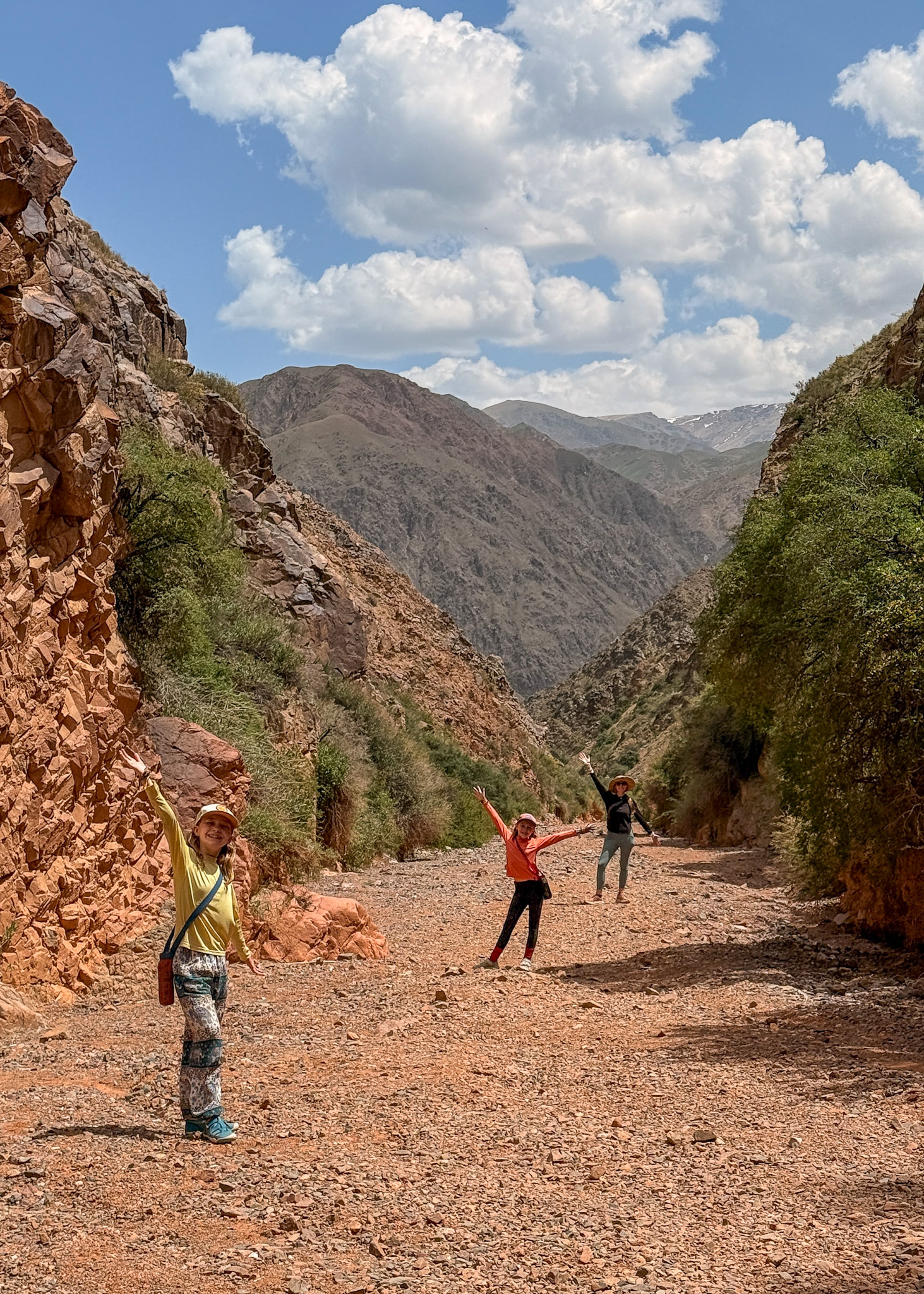
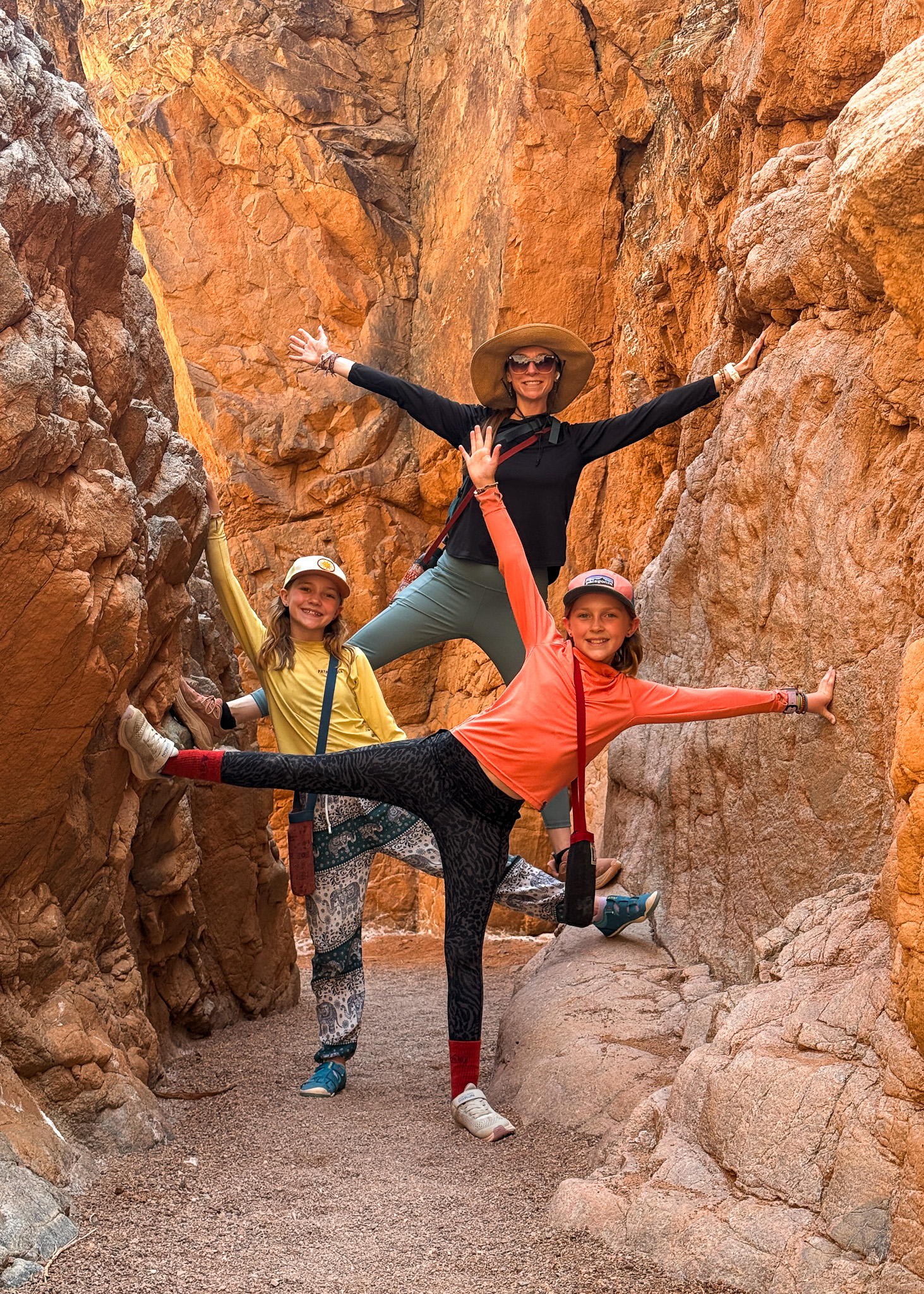
That day also delivered Konorchek Canyon, a red-rock slot canyon formed when an ancient seabed lifted into a plateau and water spent the next couple of million years carving it into a labyrinth. The 10km out-and-back trail starts open wash and the walls slowly close in until you are walking a proper slot canyon, close enough to touch both sides with your arms outstretched, before opening into a wide valley of multicolored sandstone in red and gold and pink and white. Yet another phenomenally otherworldly landscape added to our adventure through Kyrgyzstan. We snapped some photos and made the (easier) downhill trip back to the car to continue our drive into Chong-Kemin Valley. That evening at Guesthouse Jekshen, over a dinner served to what must have been a hundred guests all at once, we ate beside a French family, and Arya was in her perfect element, chatting away in French without a care in the world. The family was hugely impressed by her, and by the fact that Max could hold up his end too, but there was no question who the star was.
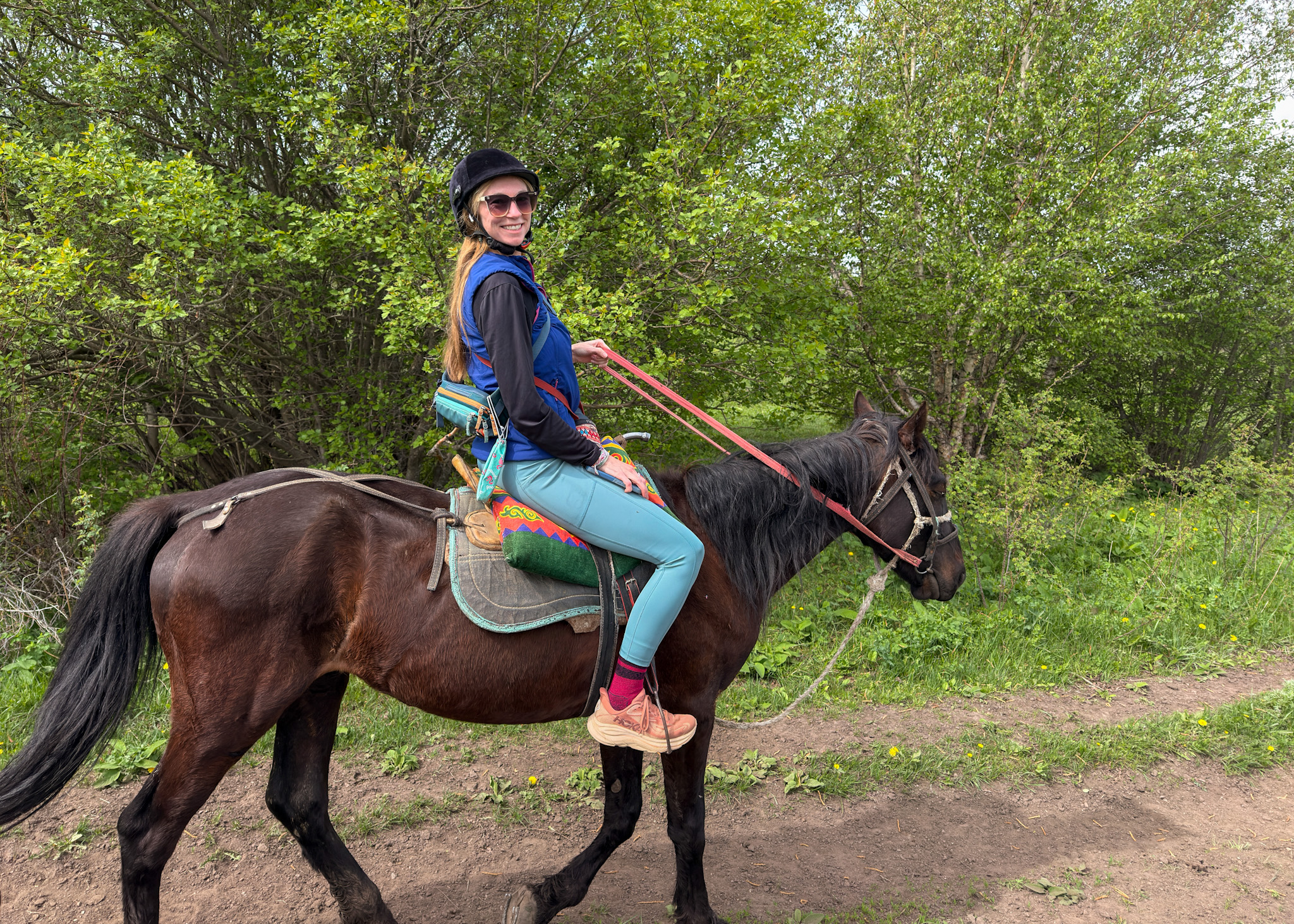
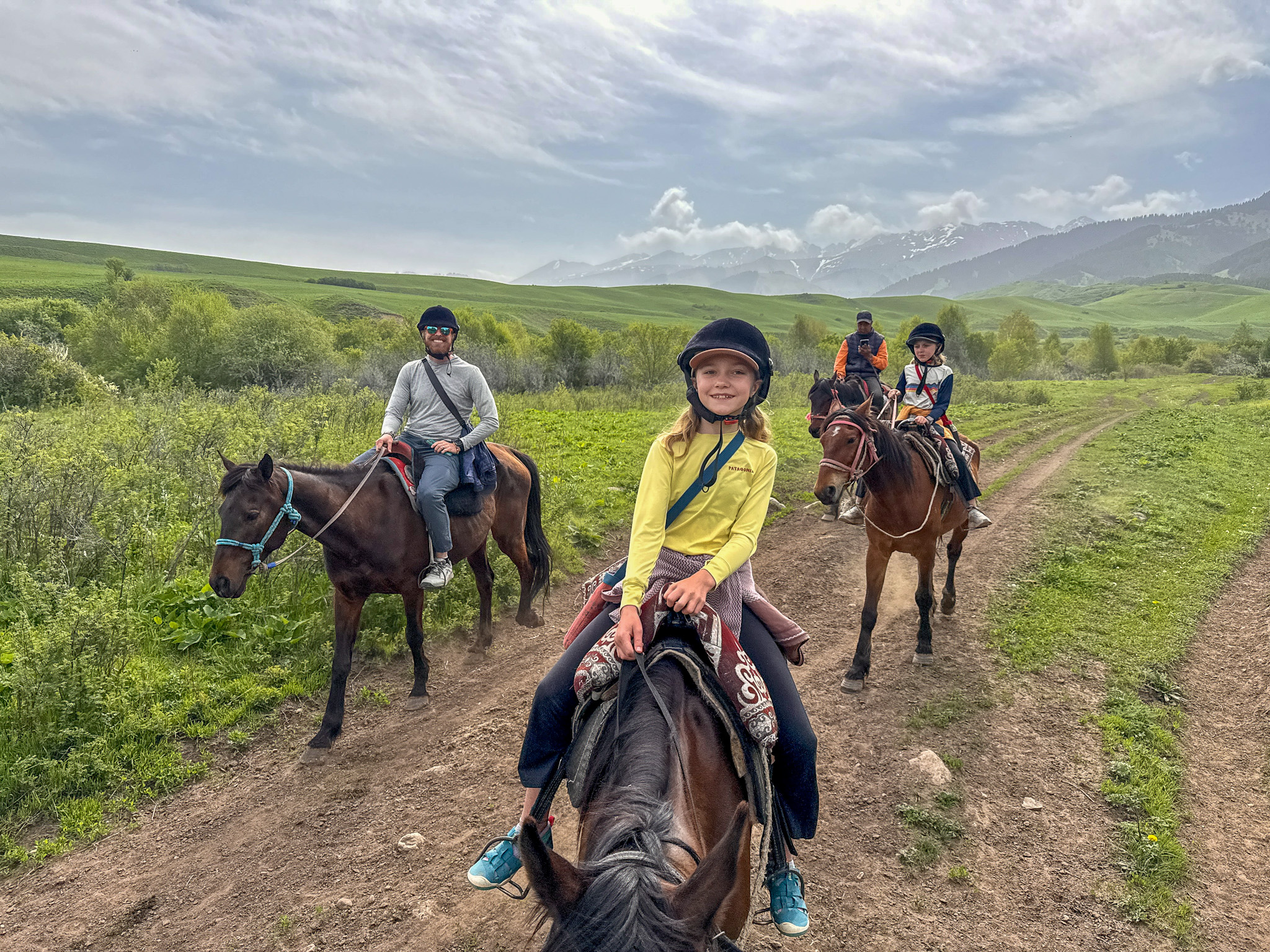
May 9 was Victory Day, the holiday across the former Soviet Union commemorating the defeat of Nazi Germany in 1945. It is an enormous day here, and Kyrgyzstan’s contribution to that war effort, including the famed Panfilov division, would echo through the rest of our route. The day began with a two-hour horse ride up a valley, which confirmed once again that Max and horses maintain a respectful disagreement about the entire enterprise. Most of us managed to coax our horses into brief trots, which for Max was equal parts exhilarating, uncomfortable, and mildly terrifying, and which showcased his horsemanship at its absolute outer limit. The ladies, on the other hand, loved every minute of it.
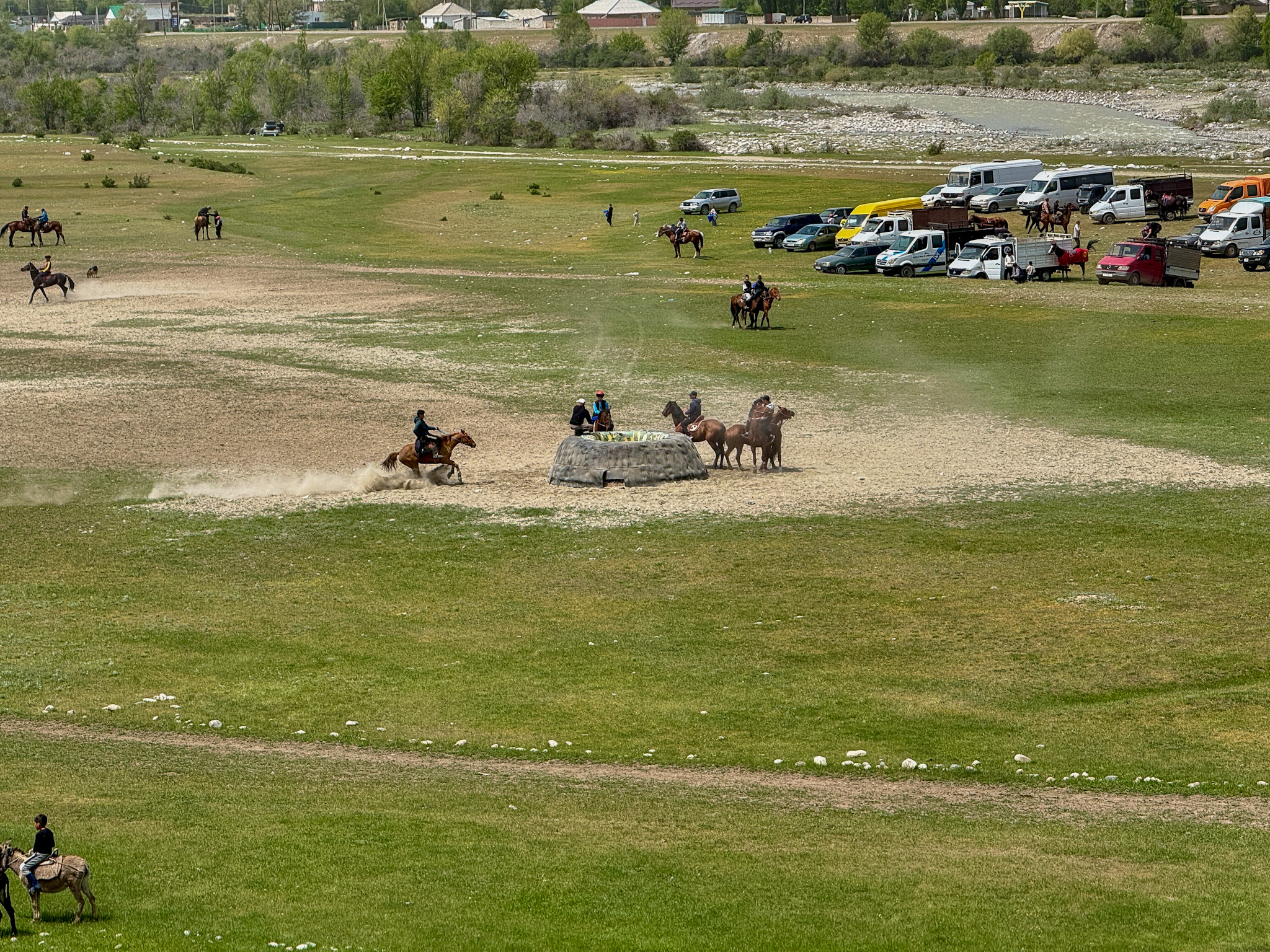
But the real Victory Day event was a stroke of pure luck. Driving out of the valley, we came on a crowd parked along the roadside and gathered on a hillside above a horse track surrounding a field with two strange elevated platforms. Erkin lit up. Horse games. What we were about to watch was kok-boru, the national sport of Kyrgyzstan and one of the wildest things any of us has ever seen. Two teams of five riders compete to grab a headless goat carcass, sprint across the field on horseback, and heave it into the raised goal of the opposing side while the other team does everything in its power to stop them. The result is grown men on galloping horses wrestling a goat carcass back and forth on the ground, getting it trampled, slamming into the platforms, the whole thing a glorious and total chaos. We only caught a single practice scrimmage before we had to move on, and we all wished we could have stayed for the real thing, but even that scrimmage left us with enormous respect for the horsemanship and the sheer inventive madness of the game.
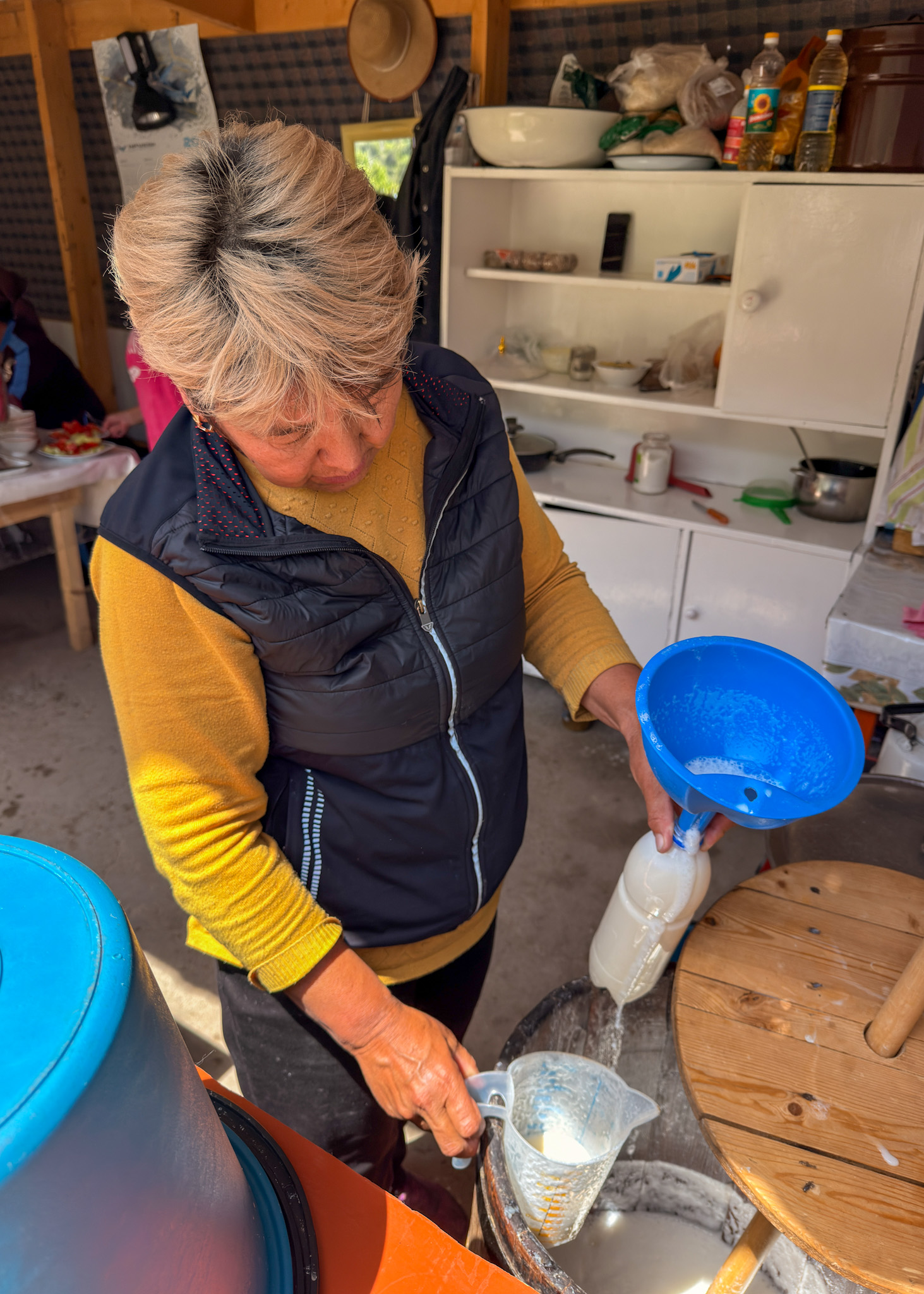
Because we could not leave the region without trying it, we stopped at a roadside stand for koumis, the fermented mare’s milk that has fueled the nomads of the steppe for thousands of years. Shaina and Max had just finished a historical novel called Silk Road in which the alcoholic drink features heavily, and tasting it had been a quiet goal of the trip. The stand was a large wooden barrel with a mallet-like plunger stuck into a frothy, milky mixture that has to be churned constantly to keep it primed for fermentation. It looked, frankly, terrifying. We filled a bottle to go and drank it at our next stop alongside kattama, a flaky layered fried bread disc, with kaymak, a rich clotted cream. Erkin told us how this tiny village had nearly vanished when a new main road bypassed it. But one woman with famously delicious kattama kept her shop open. If you serve it, they will come—drivers detoured just for a tasty snack. She kept the tradition alive and the village rebuilt itself around it, now with more than twenty stands selling the flaky bread. The bread and cream were superb. The koumis was, well, interesting. It tasted like sour cream cut with water and given a faint fizz. Not our thing. But sour, fizzy, and slightly thick turns out to be a flavor profile this whole region genuinely loves, since nearly every dairy drink here shares it. Glad we tried it. Not in a hurry to repeat it.
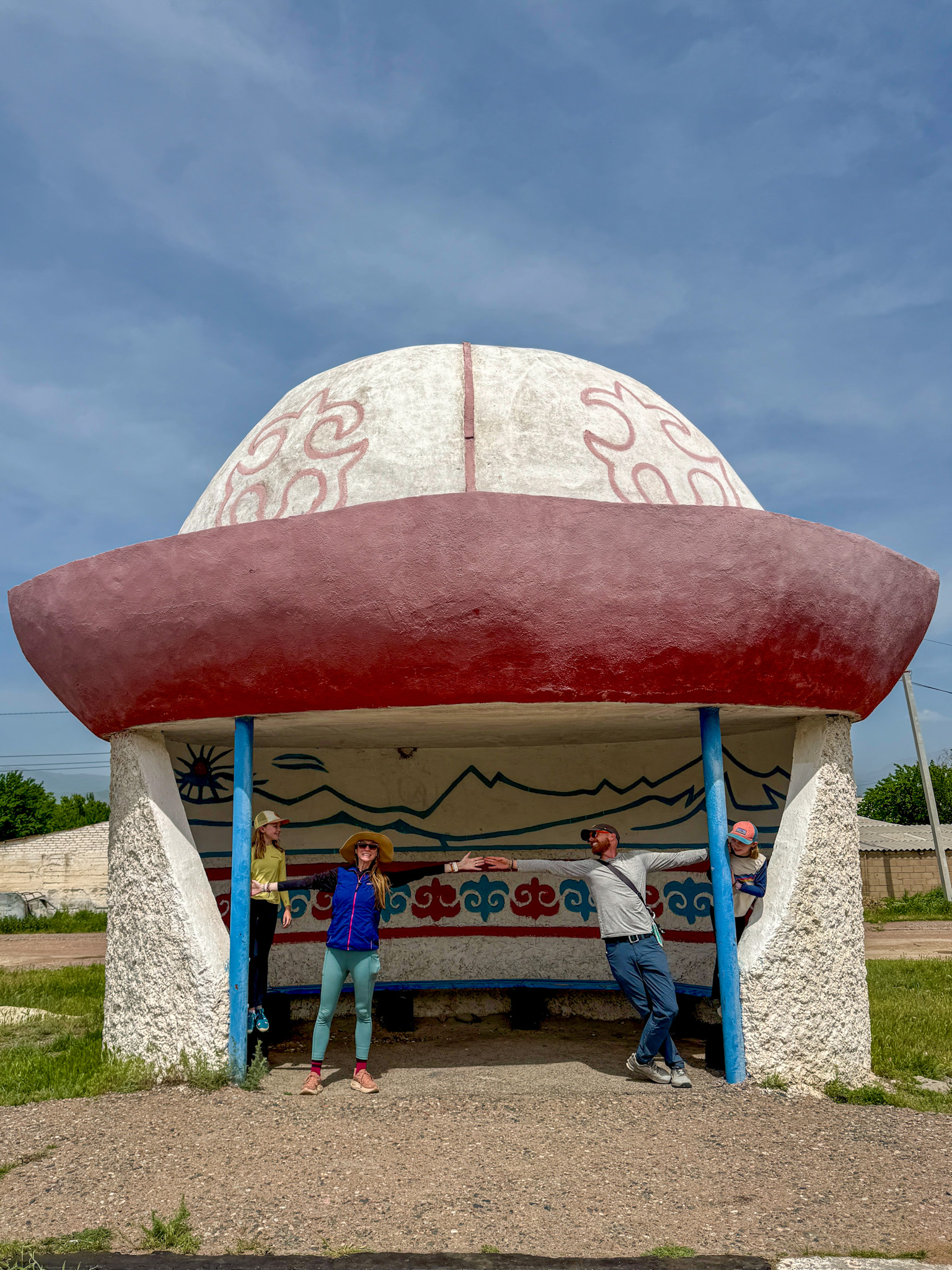
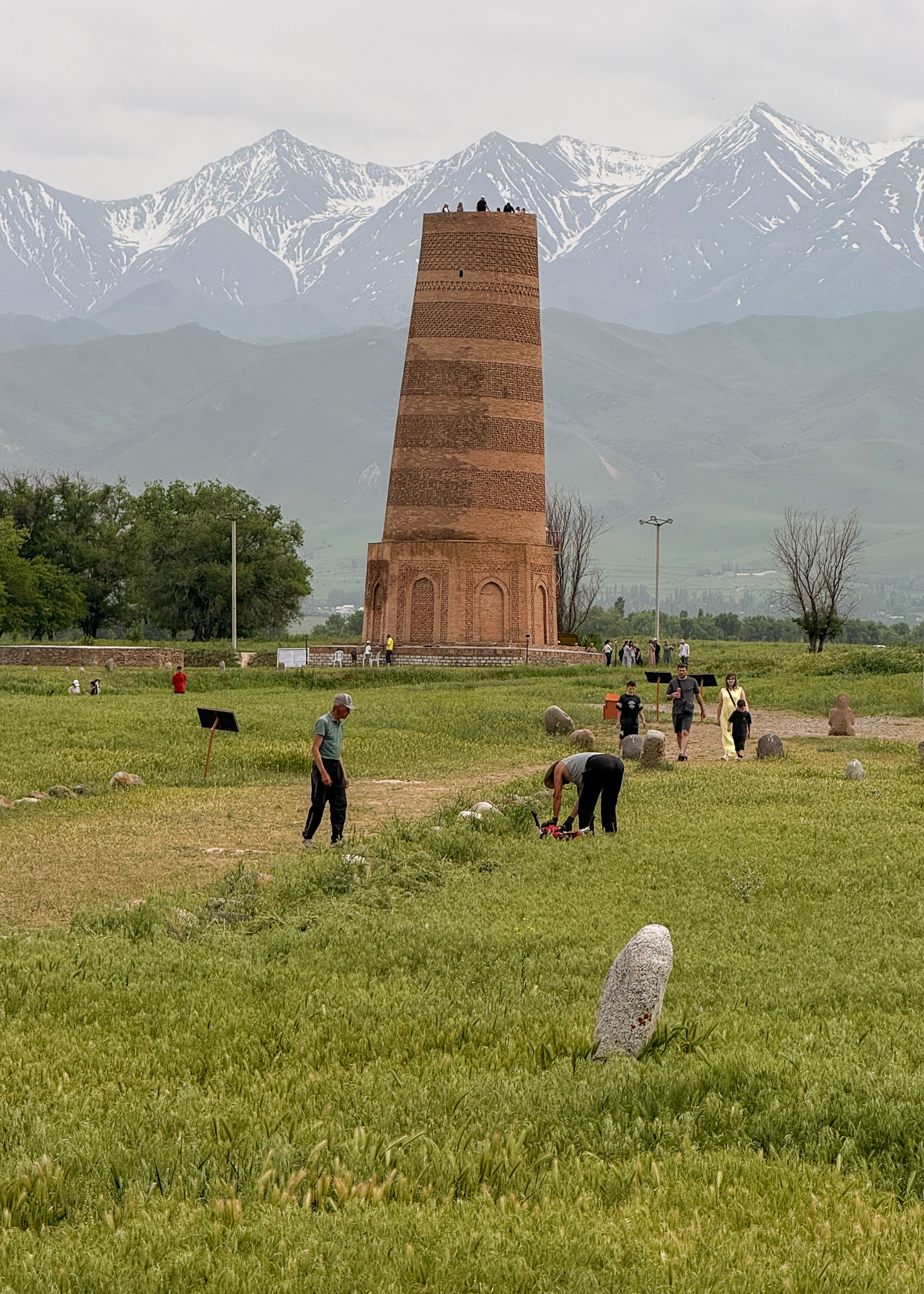
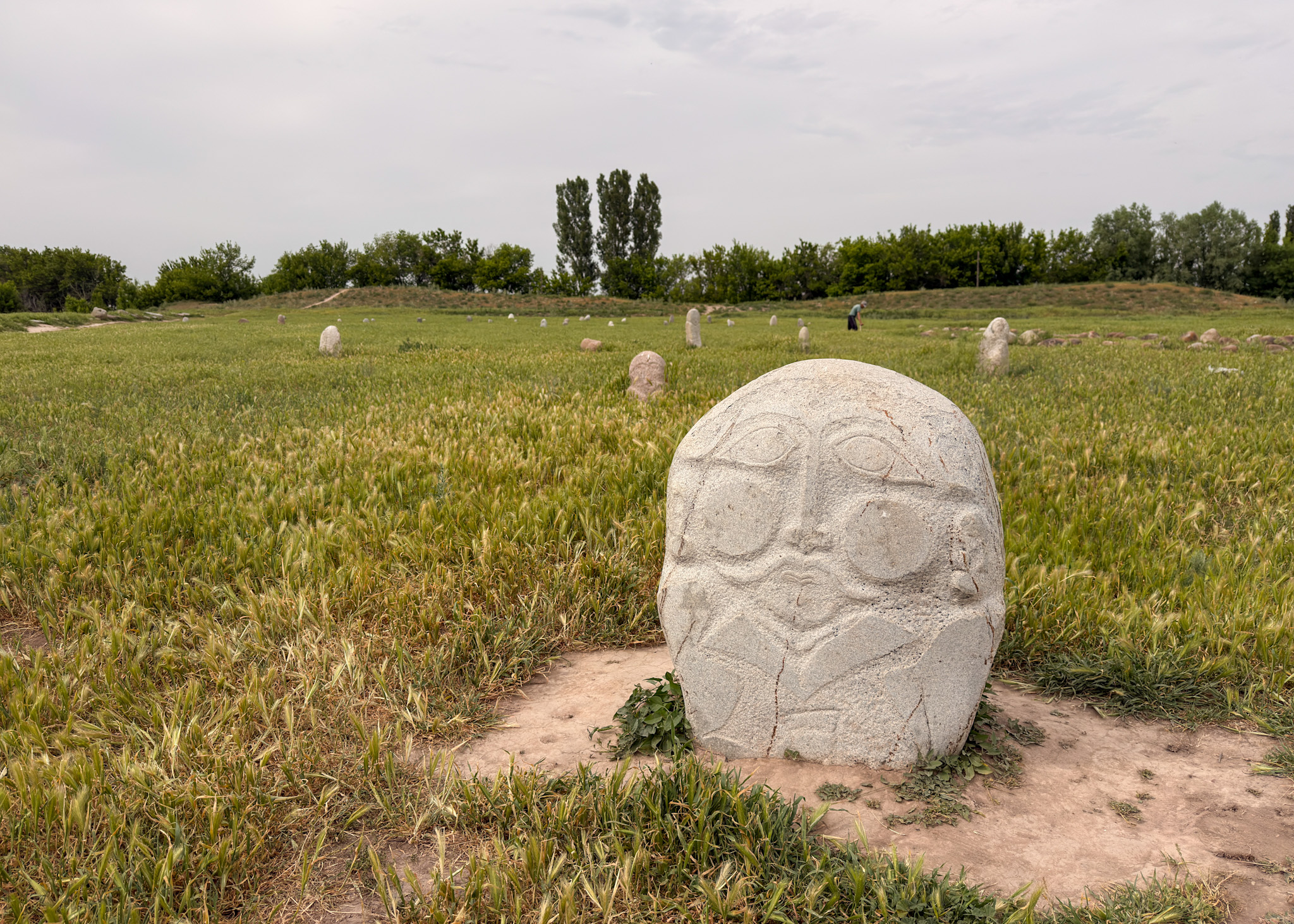
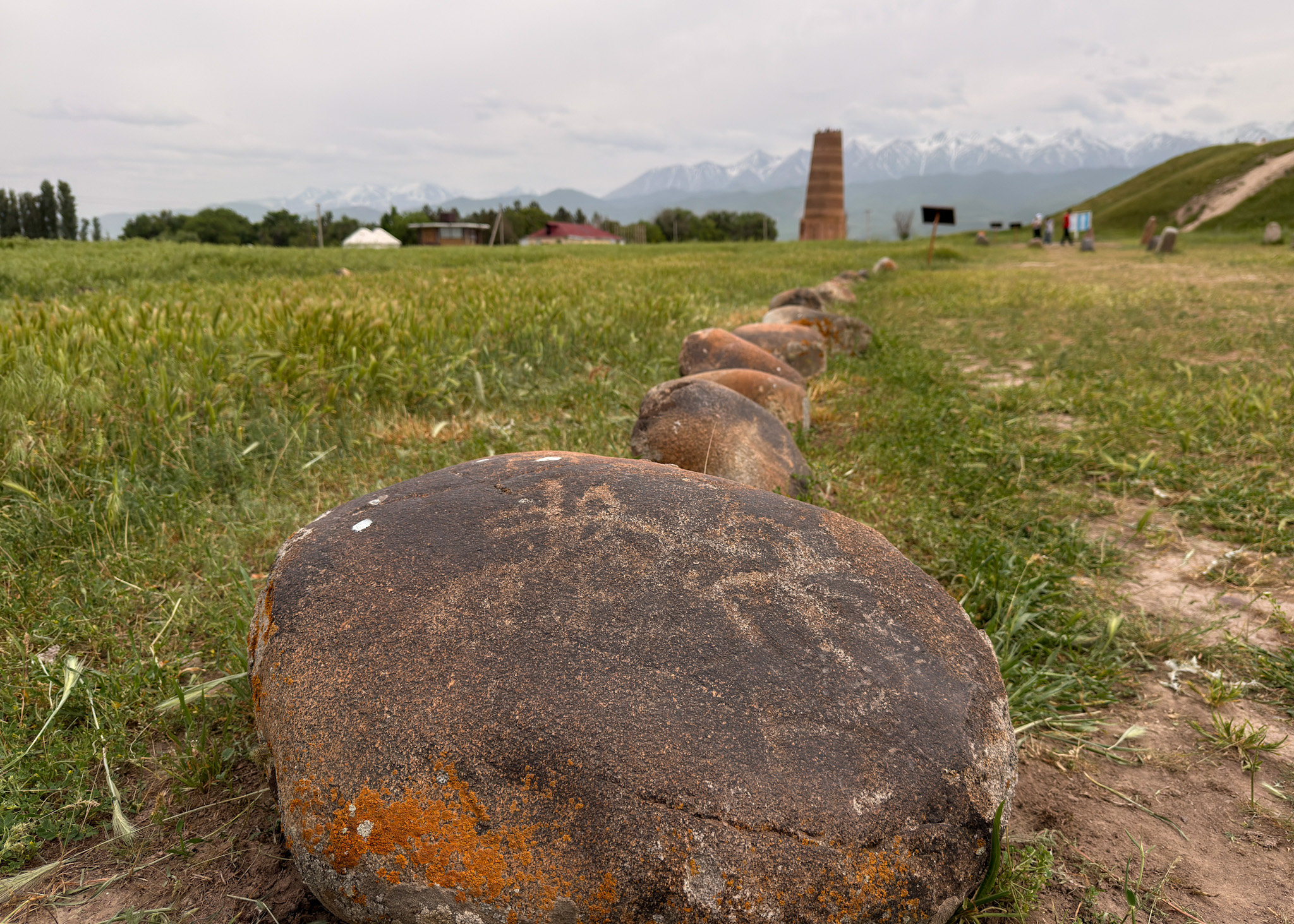
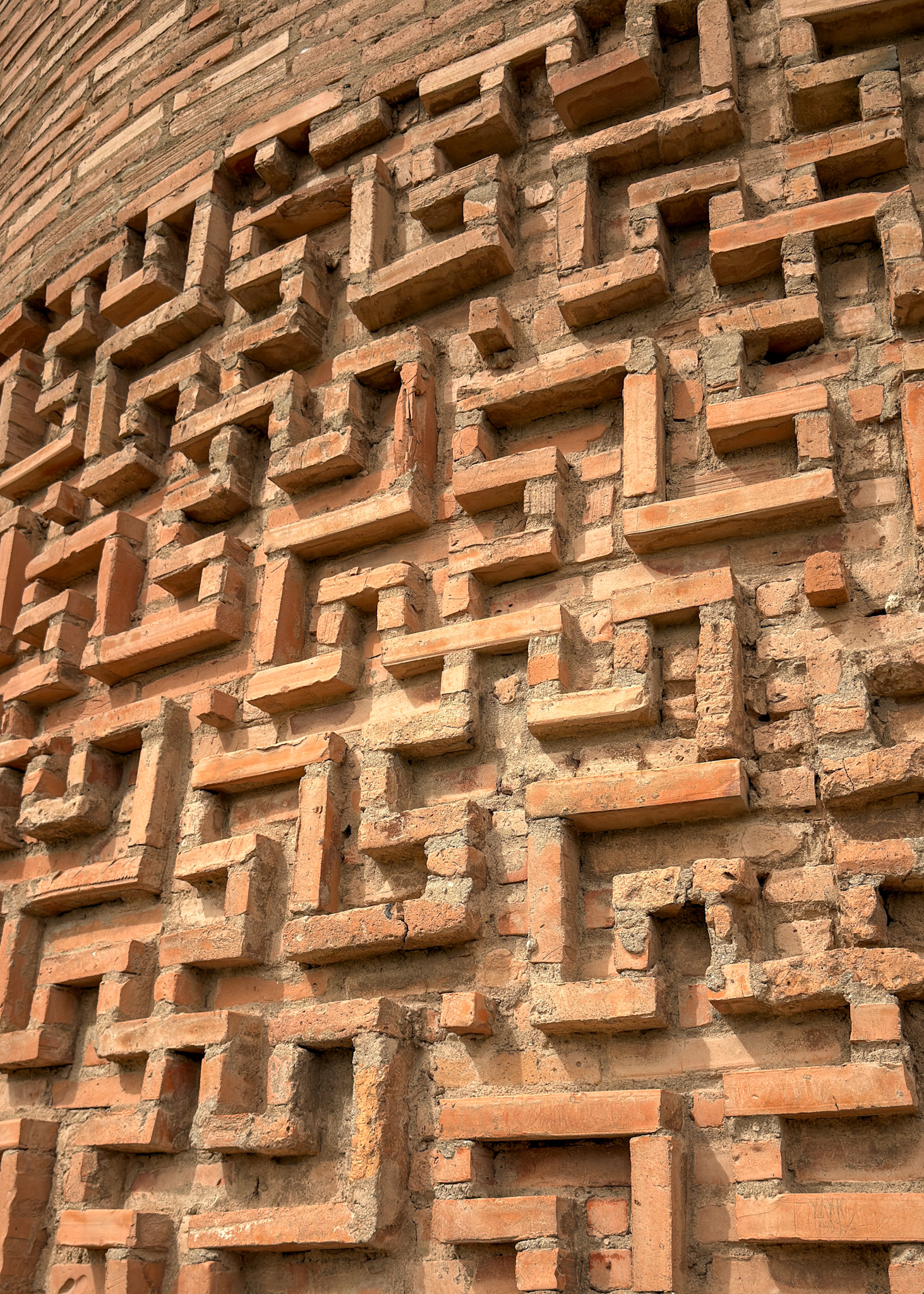
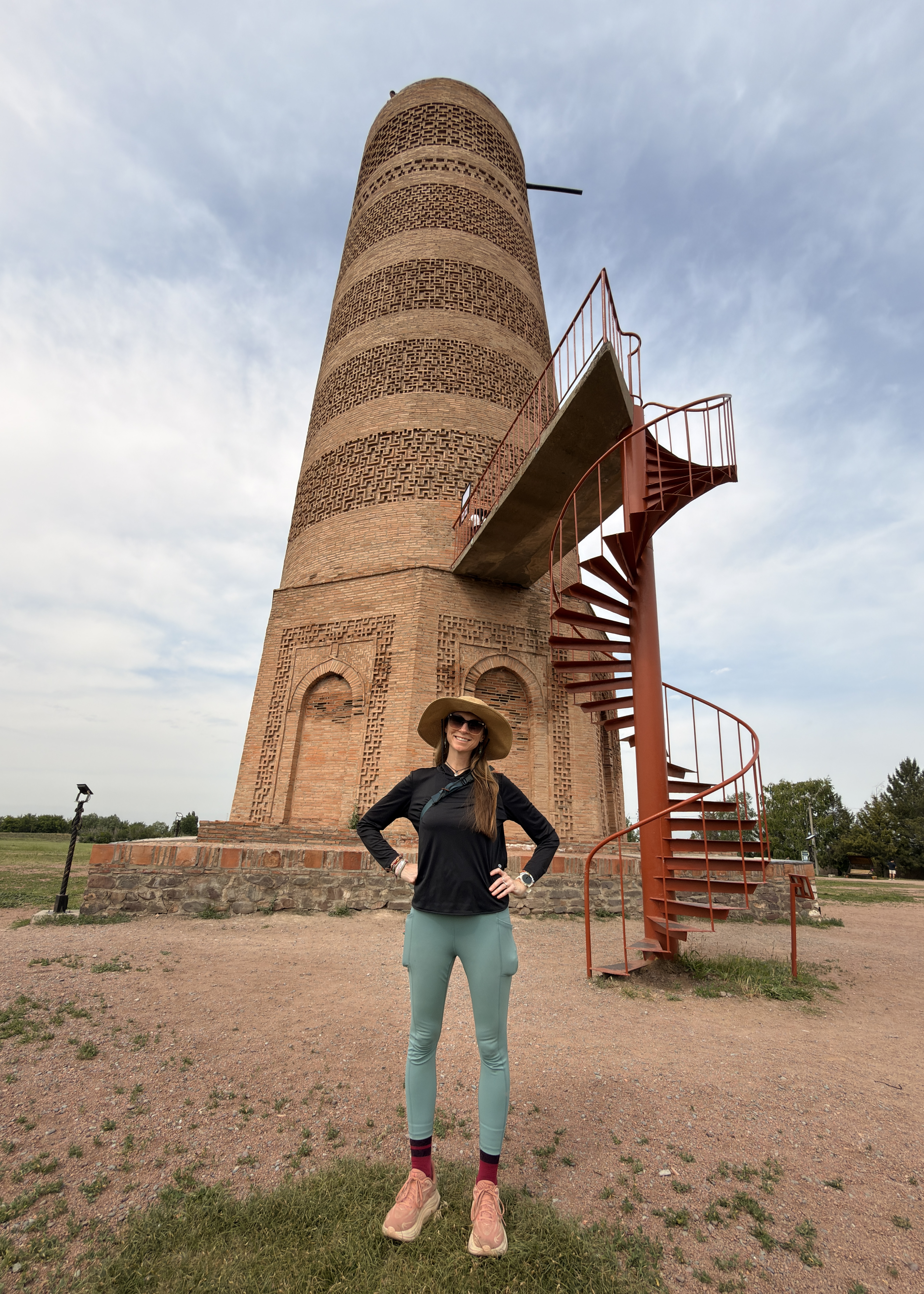
The Victory Day stretch had one more gift. On the way toward Bishkek, Erkin pointed out a Soviet-era bus stop. This sounds unremarkable until you understand that bus stops were one of the few places Soviet architects were allowed to cut loose. Everything else was rigid utilitarian function, but these small roadside shelters became strange, unique, wildly creative little sculptures scattered across the entire USSR. This one was shaped like a kalpak, the traditional Kyrgyz felt hat, and Erkin called it the most famous bus stop in the country. Then we stopped at the Burana Tower, an eleventh-century minaret that is nearly all that remains of the ancient city of Balasagun, once a Karakhanid capital. We climbed to the top through the tightest, darkest, most genuinely frightening little stairway any of us had ever squeezed through, and were rewarded with views over the grass-covered mounds that were once the city walls. Scattered around the base was a collection of balbals, ancient Turkic stone grave markers carved with human faces, standing in the grass like a silent, weathered crowd. That, plus a field of petroglyphs, made for a remarkable last stop before Bishkek.
And then the back half of the trip started asking harder questions.
It began with money. Somewhere in here Erkin asked to be paid early, before the tour was finished. Max dislikes this intensely, with anyone providing a service, because it is unprofessional and it sours the air. Against his better judgment, because the relationship had been good and he wanted to be accommodating, he paid most of the remaining balance when Erkin asked, holding back five hundred dollars for the final day. This was a mistake, and it set up the rupture.
The rupture came at the border. Crossing from Bishkek into Kazakhstan on foot, separated from Erkin while his vehicle went through its own channel, we stamped out and stamped in easily enough and then stood in a light drizzle under a small shelter, eating fresh tandoor somsas and drinking Red Bull, waiting. Erkin took a long time. When we sent him our location, he told us to come to him rather than coming to us, which seemed unreasonable in the rain with all our luggage, until we discovered what he had not communicated: his truck’s electrical system had failed, and he was standing there with the driver’s door partially dismantled, trying to work out why the taillights were dead, the locks were cycling on their own, and the windows would not move. This was, again, a place where a little proactive communication would have gone a long way, and a place where Max felt the friction tighten another notch.
And then, with the girls briefly out of the car at a rest stop, came the real bombshell. Erkin produced an envelope with two hundred-dollar bills, one of which Max is nearly certain was counterfeit and the other of which had a chunk torn out and taped back together, and said they had come from Max, rejected by the exchange house. Max knows they did not. Before this trip he spent years working at a bank, first as a teller and then as a manager. He knows what money feels like, he is meticulous about it, and as we exchanged money in Taiwan for USD, he had specifically asked every bank to give him only crisp, new, undamaged bills, returning anything with a defect. These two were not his. He does not believe Erkin set out to swindle him. It is entirely possible Erkin’s own money changer passed him the bad bills and Erkin was now, knowingly or not, passing the problem down the line. But when Erkin asked Max to swap the bills and pay the remaining five hundred on top, Max held firm. He would happily have exchanged the bills on the spot if they had been raised the moment the money changed hands. A day and a half later, with no way to verify anything, it was simply not possible to accept that they had come from him.
It was the first genuinely sour note in two otherwise wonderful weeks, and it cast a pall over the long, dull final stretch of driving that followed. There is no tidy resolution to offer. Travel is not a fairy tale, and it does not always end with everyone holding hands. What there is, instead, is a lesson, the kind worth writing down so a future version of Max actually remembers it: when money and services are involved on the road, communication has to be constant, frank, and direct, and the procedures around payment have to be clear and mutually understood. He should not have paid early. He knew better, but he did it anyway as a favor, and learned that no good deed goes entirely unpunished. He does not actually believe that, being a stubborn optimist by nature. But some days the evidence makes its case, and the honest thing is to let it.
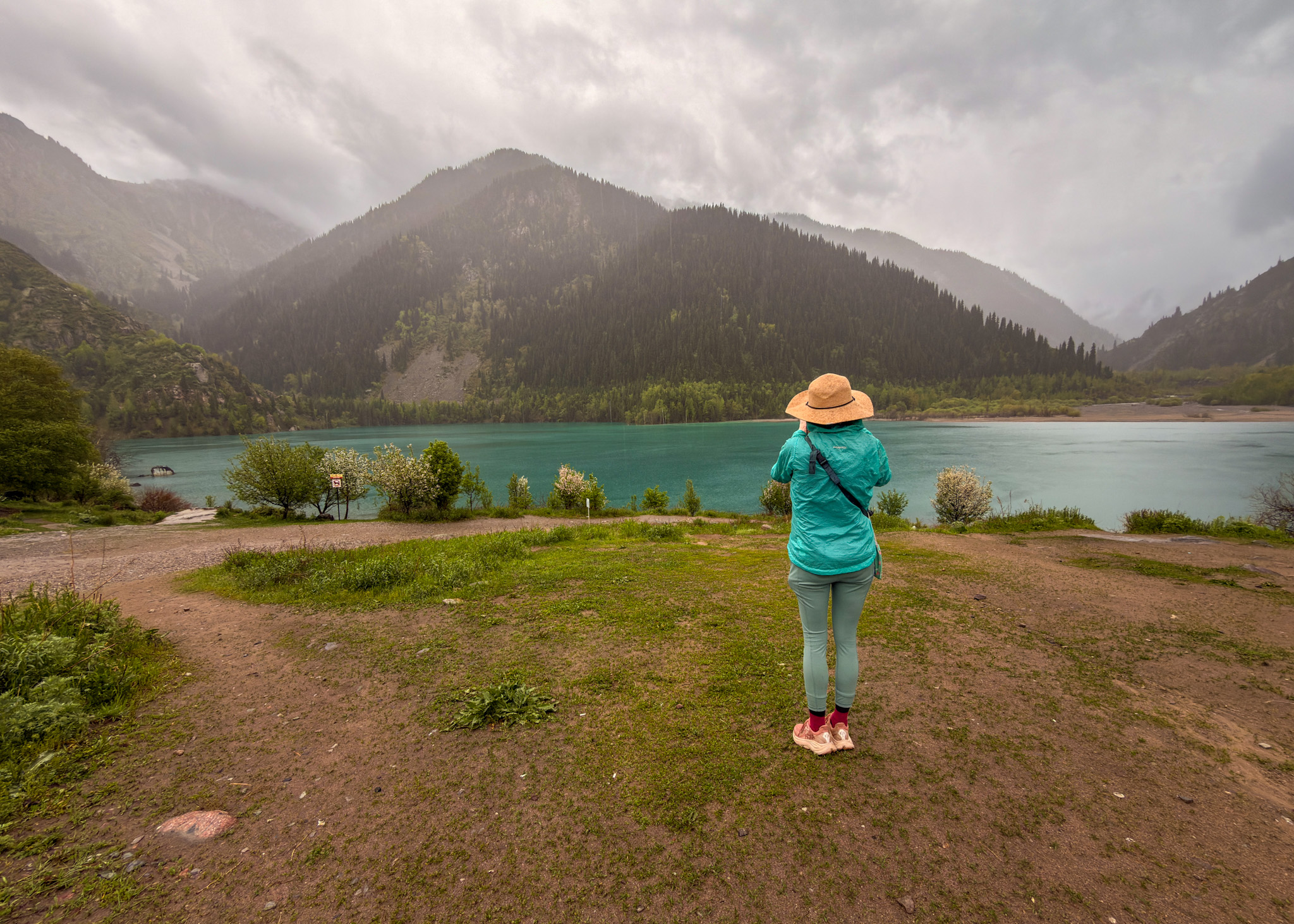
The last full day was an exercise in pushing through. We rose at 5 a.m. to catch a break in the rain at Esik Lake, a turquoise lake with a dramatic history. It was formed by an ancient earthquake-triggered landslide, became the “pearl” of the region in Soviet times, and was then largely destroyed in 1963 when a catastrophic mudflow tore through the natural dam in successive waves and emptied much of the lake down onto the town of Esik below, killing an unknown but horrifically large number of people. What sits there now is essentially the third or fourth version of the lake. Our visit was rainy and brief, the clouds closing in, a kind park ranger taking pity and driving us the last stretch so we could snatch a few photos before the weather won. An anticlimactic way to see a place with such a violent past, but sometimes that is simply the hand the weather deals you.
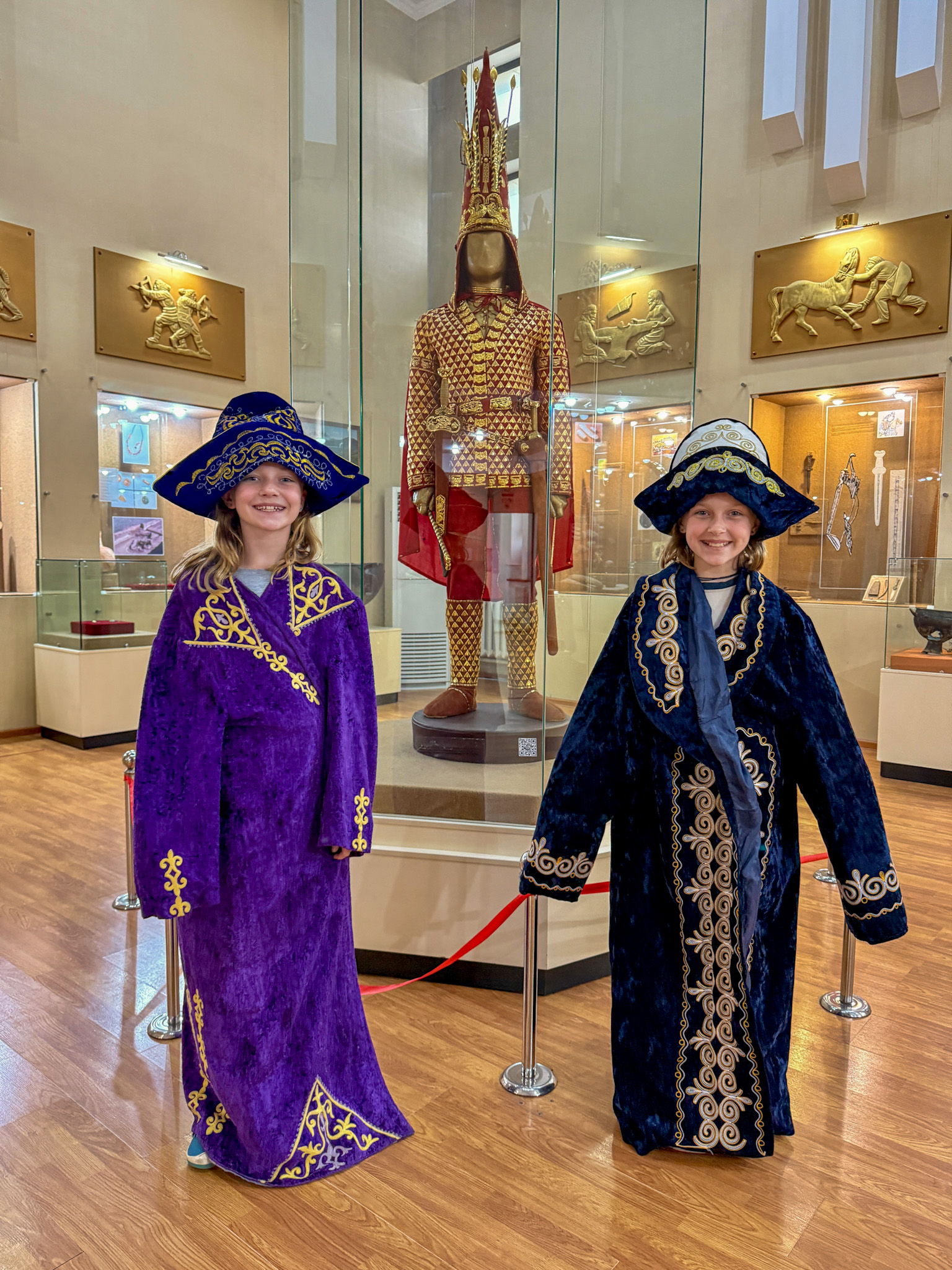
From there a museum in Esik gave us the Golden Man, a roughly 2,500-year-old Saka warrior discovered nearby in over four thousand individual pieces of gold, a tall conical headdress, gold-plated boots, the works. The Saka were an Iranian-speaking nomadic people who ruled this steppe before the Persian and Macedonian empires, and the Golden Man has become one of the great symbols of Kazakh identity. The artifact was impressive. The real treat was a passionate young archaeologist who walked us room to room, and watching how thoroughly the girls had come to love this kind of history, far more than their parents ever would have predicted at the start of this trip.
Almaty, at the end of our two-week circuit, gave us the war memorial in Panfilov Park, dedicated to the Kazakh-led guardsmen who made their famous stand against German tanks outside Moscow in 1941, a name we had been hearing all week finally attached to a monument. Then the Ascension Cathedral nearby, a famous Orthodox church that survived the devastating 1911 earthquake nearly unscathed and stands over 56 meters tall, all glittering gold and pastel yellow, pink and blue. None of that is quite to our earthy-toned taste, though the craftsmanship is undeniable and the steady stream of genuine worshippers made clear the building was not built, and is not maintained, for us heathens.
The goodbye with Erkin, when it came, was as anticlimactic as the day. We pulled up to our Almaty Airbnb, unloaded, double- and triple-checked the truck, and started to say our farewells, only to have the whole thing cut short by a furious security guard insisting we were blocking the gate. So the end of a formative two-week journey collapsed into a hurried handover of the last of the cash and the tip, a fast handshake, and that was it. Not the closing anyone wanted. We are all choosing, deliberately, to hold onto the other ninety percent: the geography that is second to none, the sites Erkin found that we never could have, the long comfortable silences watching the landscape change, the pull-up contest at the checkpoint, the willow-stump yurt master, the eagle and the fox. That was the trip. The bad ending was a footnote, even if it was a loud one.
And here is the thing about a footnote. You get to decide how much of the page it takes up.
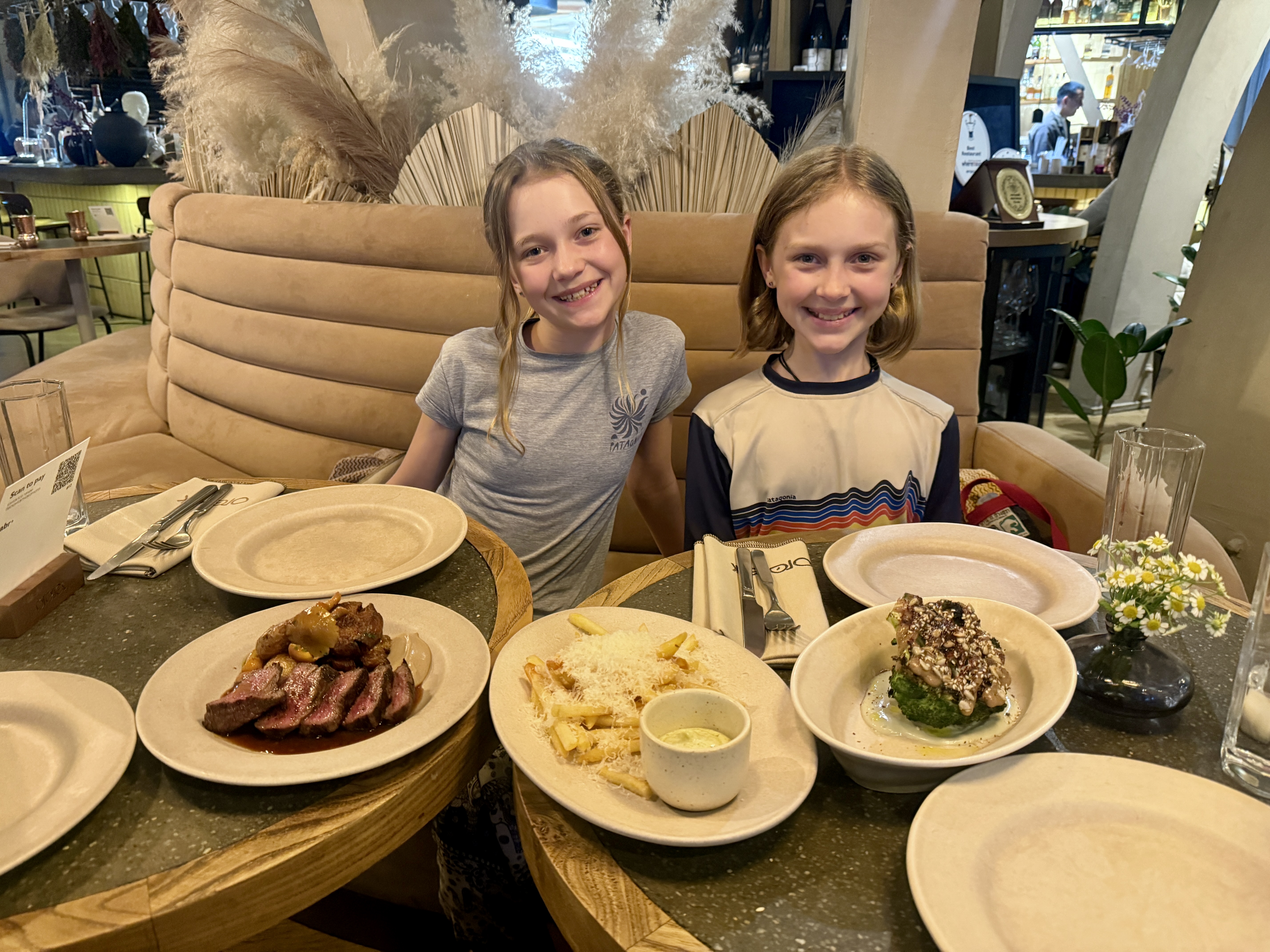
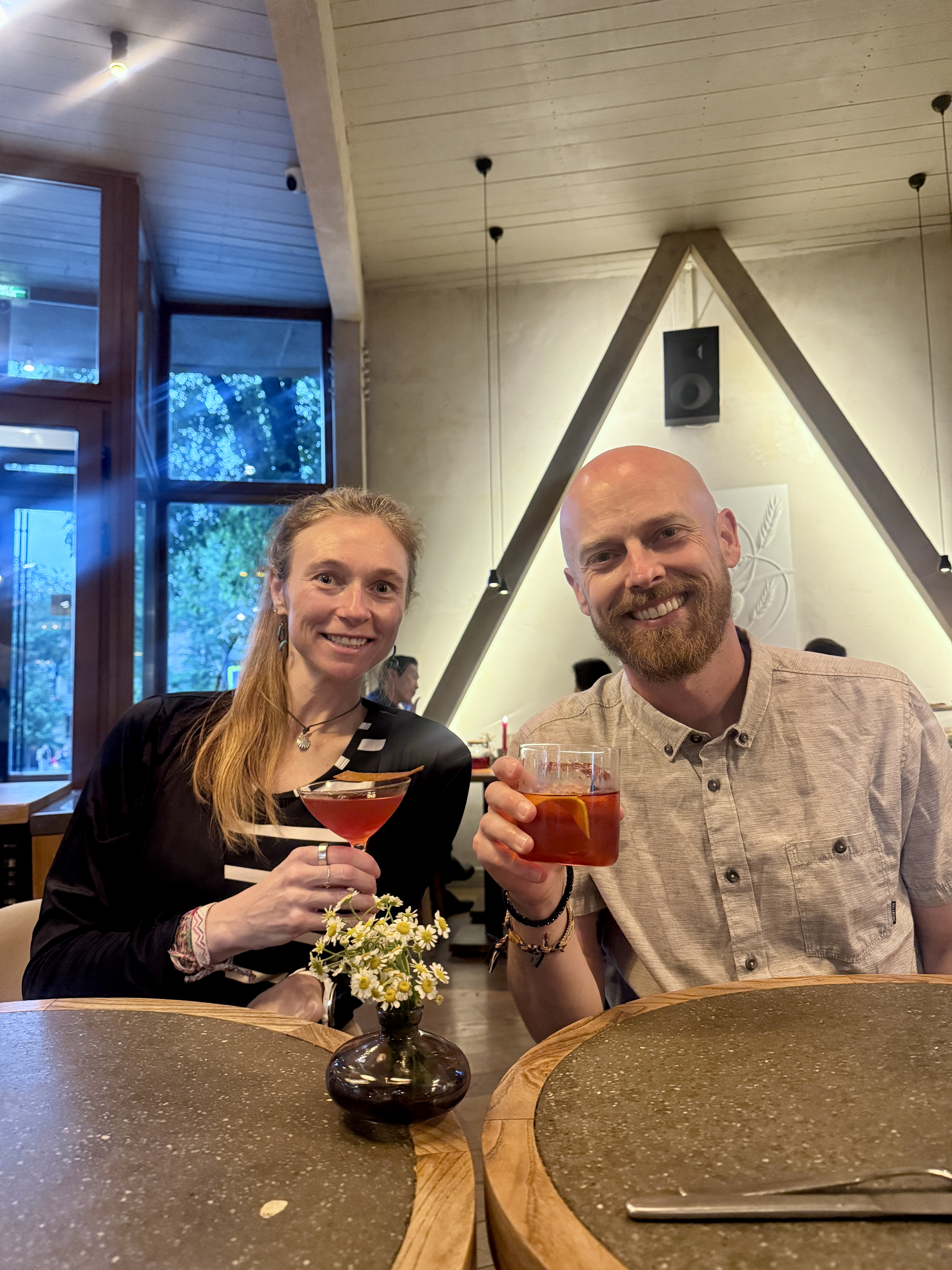
Because the truth is that the moment Erkin drove off, the four of us exhaled, and the next two days in Almaty were quietly magical. We had a bougie apartment on the eighth floor of a horseshoe-shaped complex wrapped around a courtyard full of gardens and playgrounds. We slept ten hours. We ate horse filet mignon at a restaurant called Ogonyok that the diplomat Laura had recommended back on day one with a single instruction: if you go to one place in Almaty, go here, and order the horse. We did. A medium-rare filet, fried potatoes, two demi-glace sauces, and it was sublime, a complete redemption of the bland, sad horse meat we had tried back in Karakol two weeks earlier.
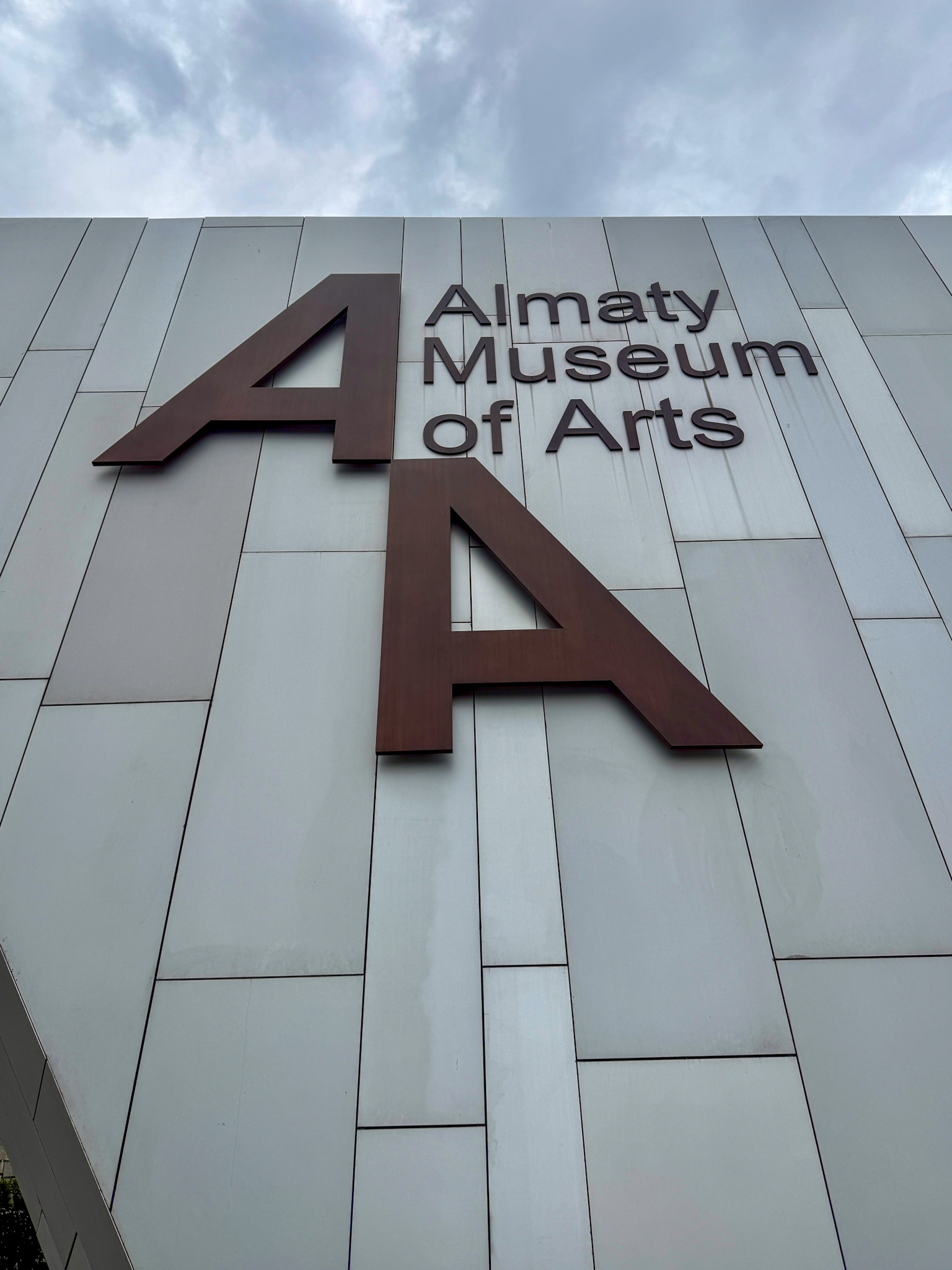
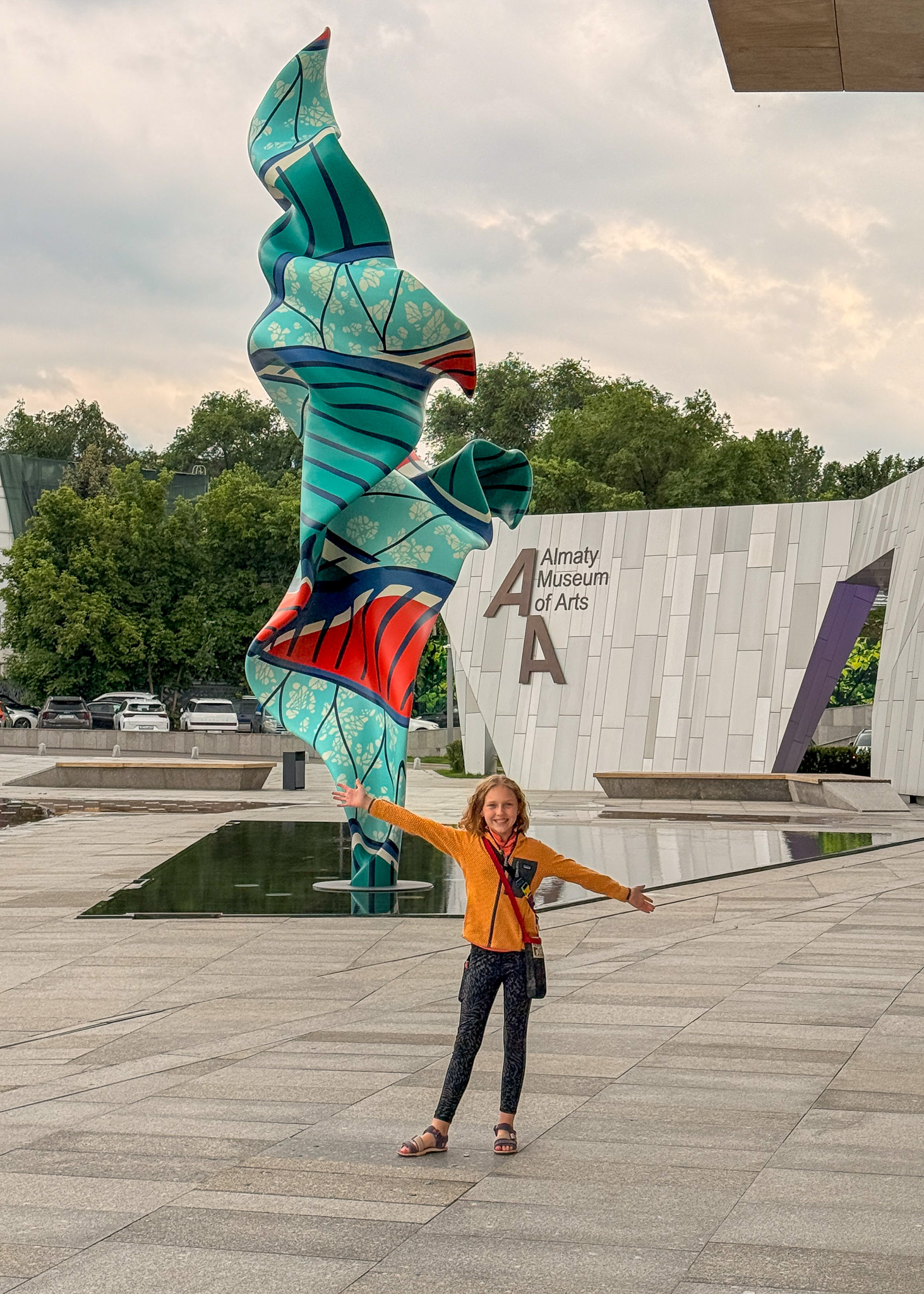
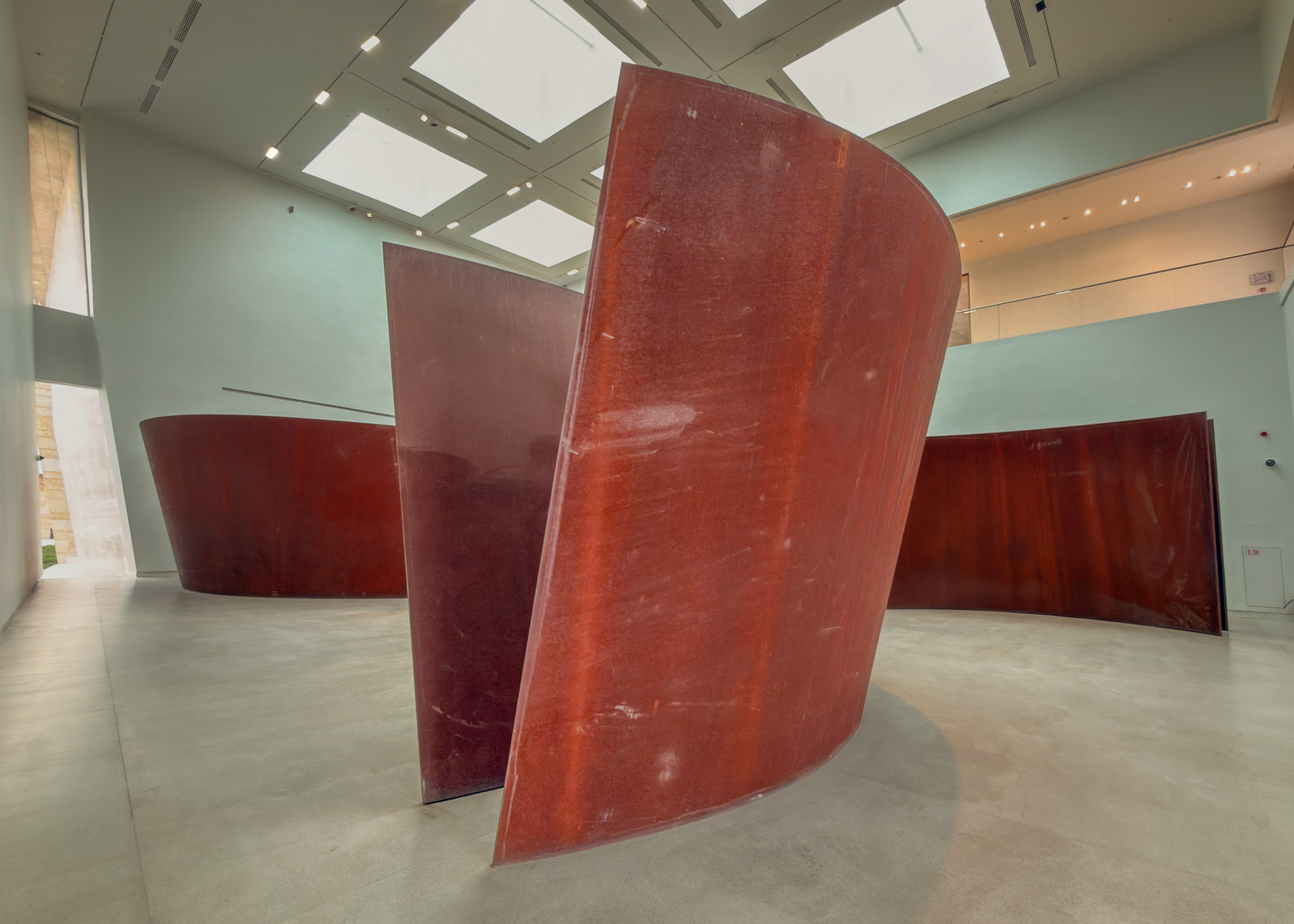
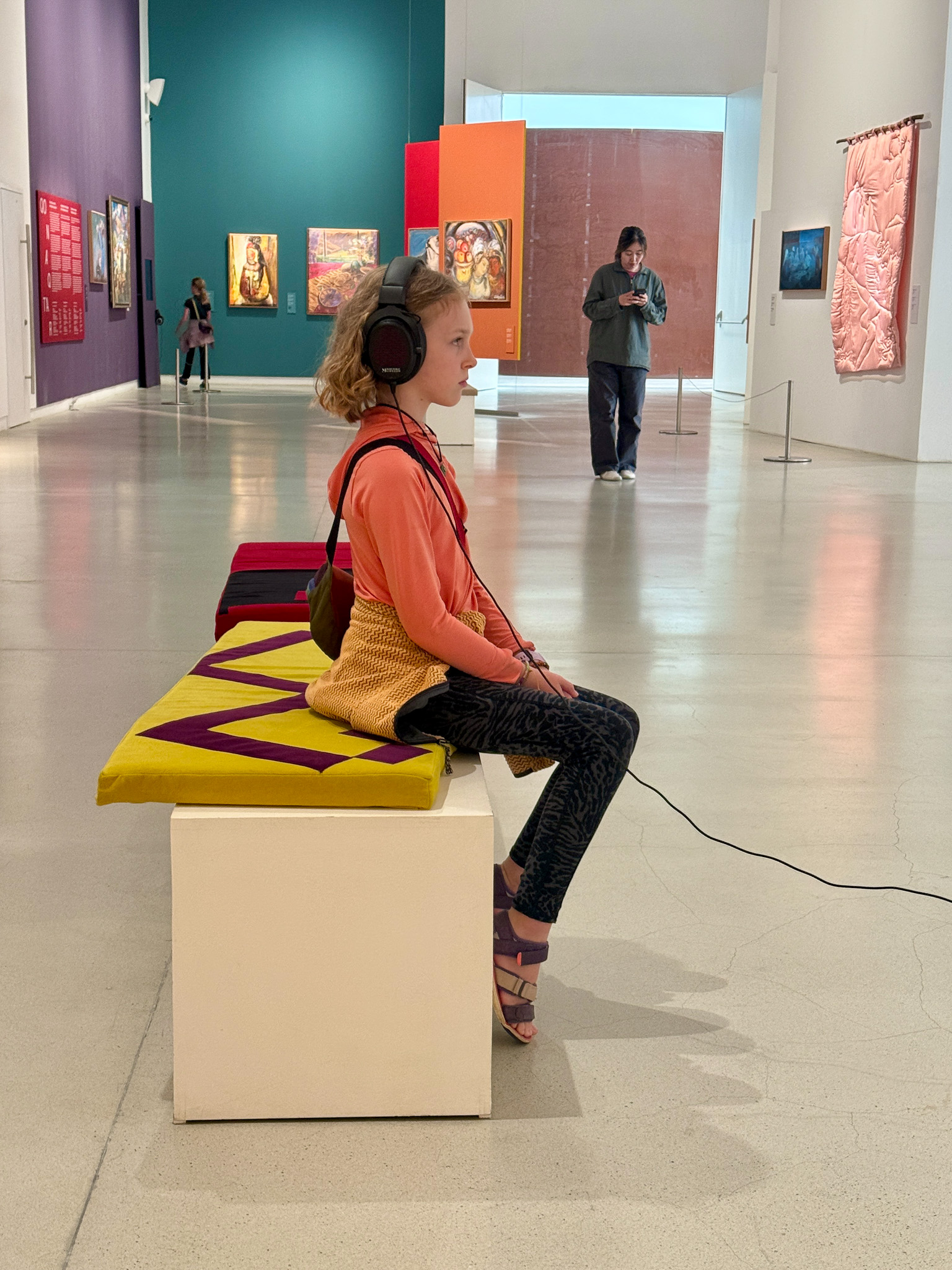
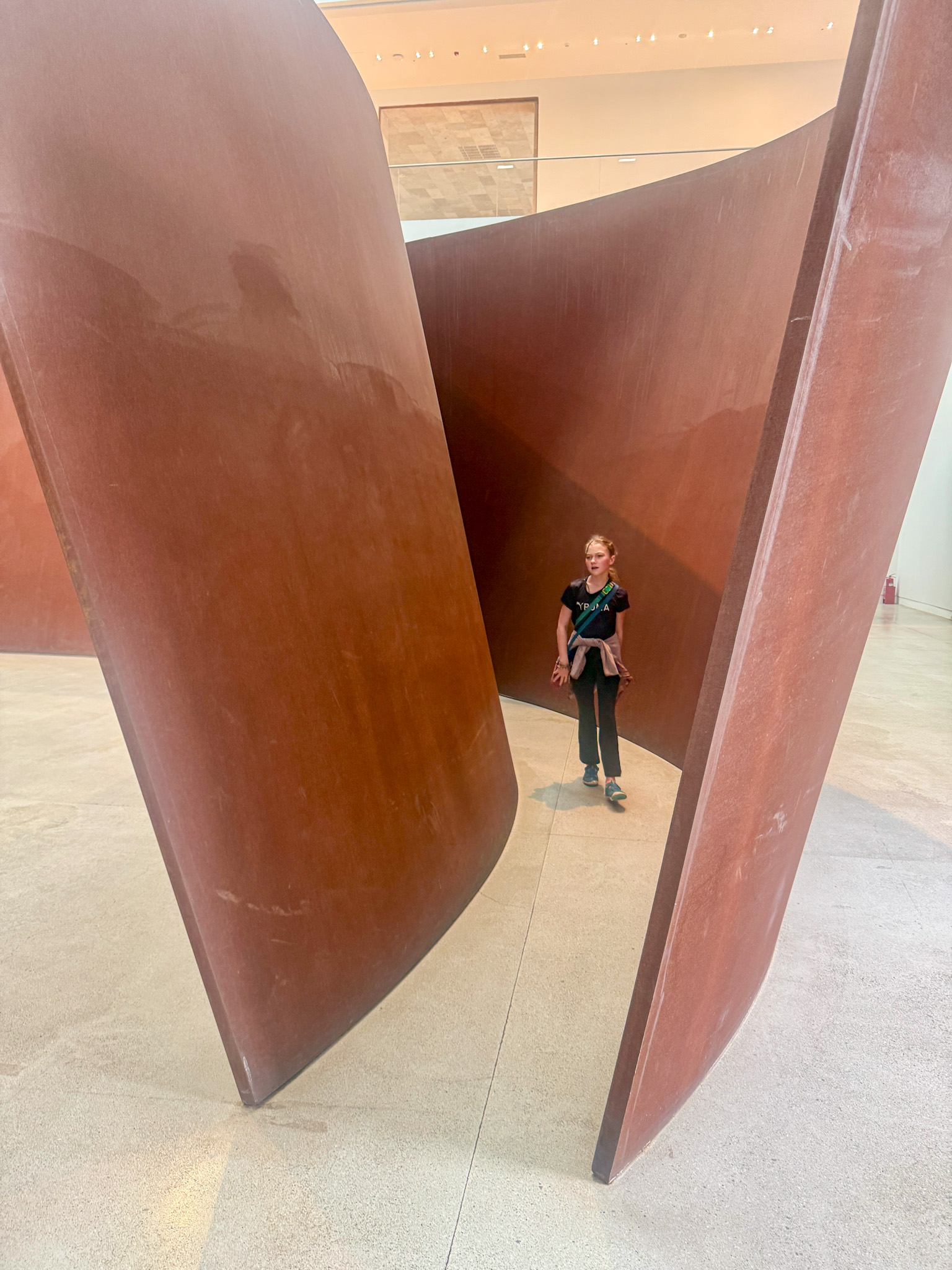
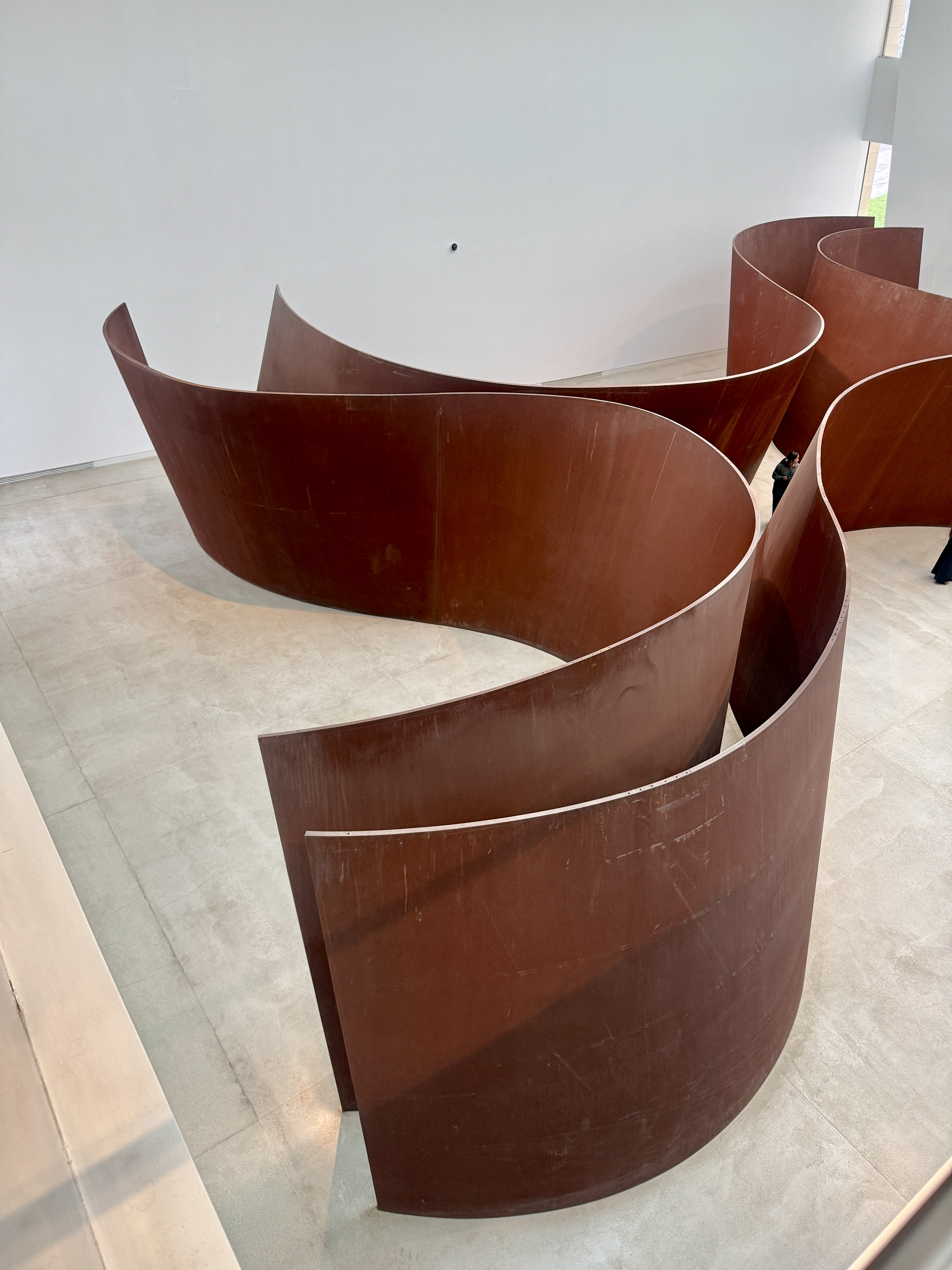
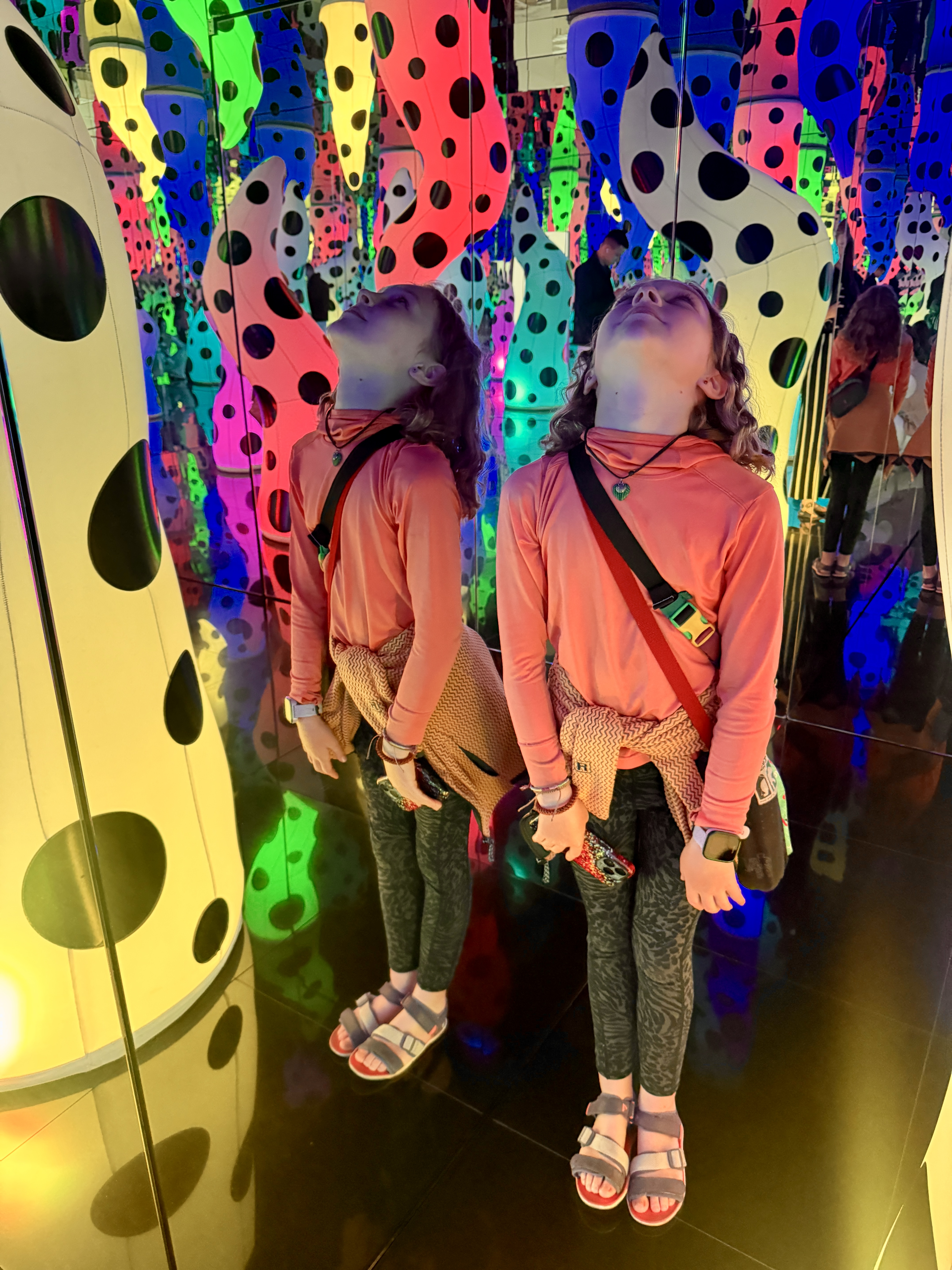
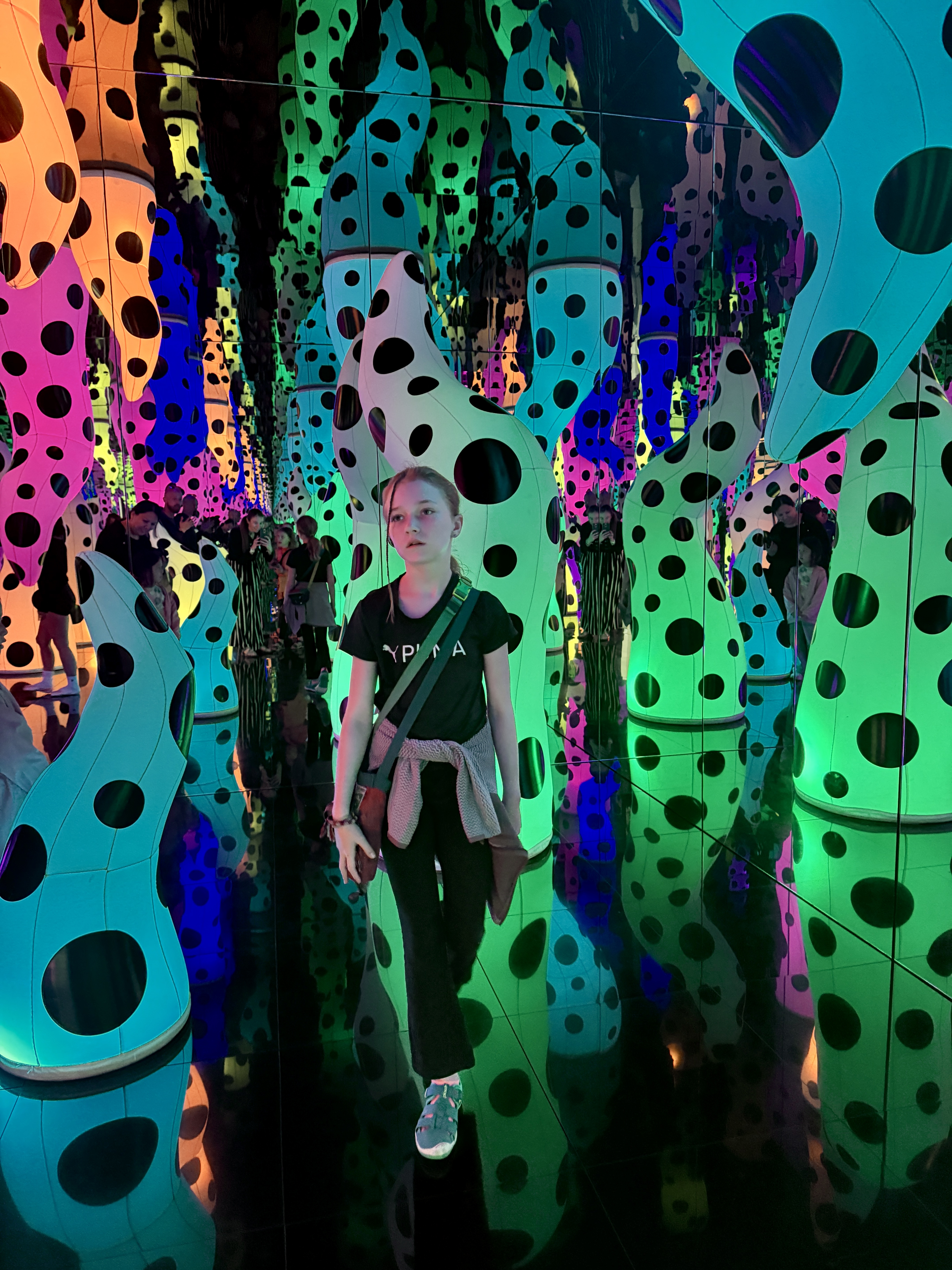
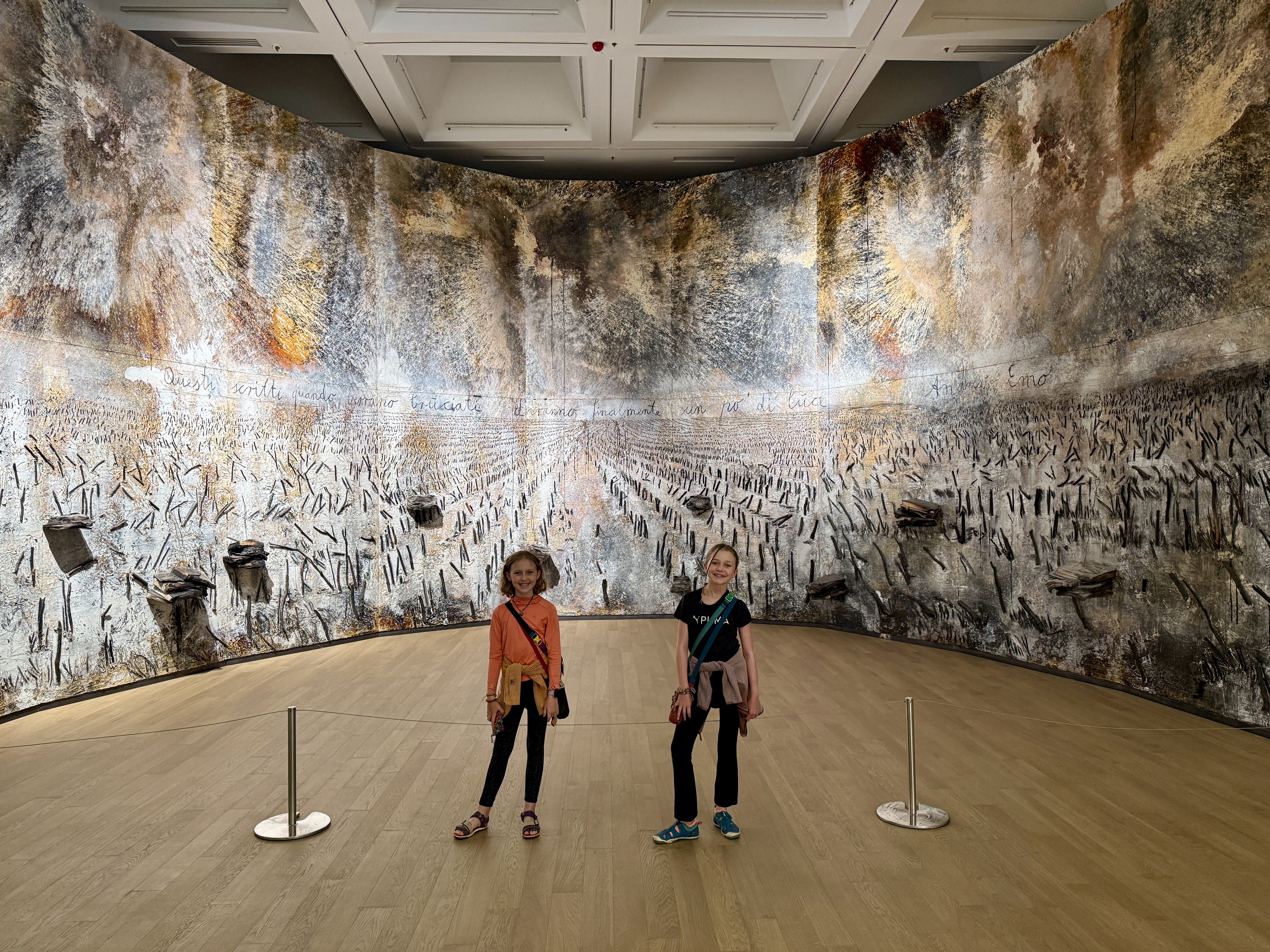
On our last day, we wandered through the Almaty Museum of Arts, a brand-new, privately funded museum of Central Asian modern and contemporary art housed in a building so beautifully designed, all limestone and aluminum and a Charyn-Canyon-inspired atrium, that the architecture nearly upstaged the art. We stood inside a massive walk-through Richard Serra steel sculpture. We giggled through a darkened mirrored room lit up with spotted neon air-filled blobs by Yayoi Kusama. We had long, rambling, unhurried conversations, the kind that only happen when the schedule finally lets go of you.
We added Central Asia to this trip almost as an afterthought. The reasoning was simple and a little dismissive: we are going to be in the region anyway, and we will almost certainly not have another “easy” opportunity to see this part of the world, so we might as well tack it on. That reasoning now embarrasses us a little. Because what we found was a landscape and a culture and a depth of history that we were almost completely ignorant of, and that turned out to be one of the richest stretches of the entire year. White mountains bleeding into red rock. A frozen lake at eleven thousand feet. Eagles diving out of the sky. A headless goat sailing toward a goal post on Victory Day. A ring carried back to us across an entire country by strangers. The kindness and the friction, the wonders and the obstacles, all of it.
We no longer think of Central Asia as the place we will never see again. We think of it as the place we have unfinished business with. We want to come back. We’ll be willing to jump through every hoop it takes to get here again from Reno, Nevada, and that, more than anything, is the measure of what these two weeks did to us.
It turns out the obstacle really is the way. Even when the way runs through a frozen lake, a torn hundred-dollar bill, and a goat.
We will be back.


Leave a Reply