
Dates: April 27th to May 3rd, 2026
Places: Khiva, Uzbekistan to Almaty, Kazakhstan to Karakol, Kyrgyzstan
Drones are very illegal in Uzbekistan. We had kept Max’s drone a secret for over two weeks. Through one airport, three train stations, and eleven x-ray machines, the drone had traveled in total silence: components separated and stowed in different corners of the bag, batteries in one pocket, remote in another, nothing assembled or powered on, nothing that would suggest to a customs officer anything other than a straightforward collection of electronics. Not a word had been said about it in any security line. Not a glance, not a gesture. The thing might as well not have existed.
Then we arrived at Urgench Airport for our flight out of Uzbekistan, and while a security officer was going through Max’s carry-on and pulling out batteries, Finlee looked over, processed the situation for approximately one second, and helpfully announced at full volume: “Oh, those are probably your drone batteries, Dad!”
Time stopped.
Max did not look at Shaina. Shaina did not look at Max. The girls did not look at anyone. The officer paused. The pause lasted less than three seconds and felt like the better part of a geological epoch. Then he held up the batteries in question, confirmed they were standard AAAs for a headlamp, satisfied himself that they weren’t lithium, and moved on. The drone components, scattered across three different compartments of the bag, remained undisturbed.
After clearing security Max had a quiet conversation with Finlee. Then Shaina had one. The general theme: yes, you should always follow the law, AND when your parents have spent two weeks being very careful about something (like not drawing any attention to the illicit drone we were carrying through a country that is 100% intolerant of such things), the moment a customs officer has your bag open is probably not the time to bring it up. We gave her a smooch, told her to go read her book and be a good little monkey, and boarded the plane to Tashkent.
A flight to Tashkent, another to Almaty, and a night in a guesthouse near the airport. The next morning, the adventure actually began.
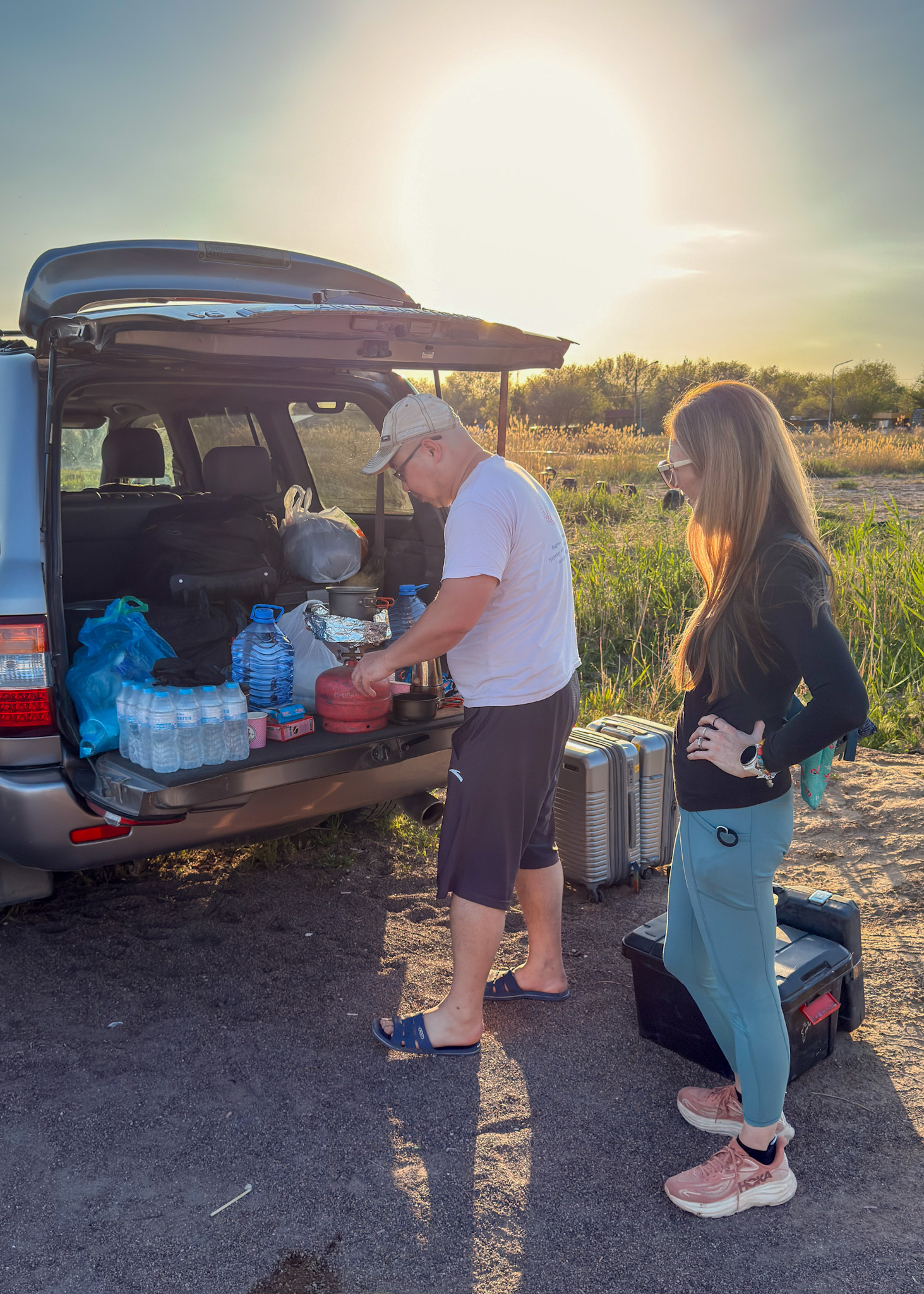
Erkin—a large, sturdy man with a calm, deliberate manner—arrived on time, a good sign for our guide and driver for the next two weeks. Over lunch, before we’d even left Almaty, we started getting to know him. He was forty-three and had a thirteen-year-old daughter back home. He hadn’t originally set out to be a 4×4 adventure guide. He’d earned a degree in telecommunications engineering, then spent a few years working and contemplating a lifetime of indoor work, and decided around 2018 that he would much rather be out in the Kyrgyz wilderness. Then a lightbulb clicked—why not take people along with him on these adventures, especially if they were willing to pay for this brand of fun? So that’s what he did. His English was pretty good, clear enough to carry a real conversation even when the subject got complicated.
We had found him through IndyGuide, a platform that connects travelers with local guides across Central Asia. Max had posted the trip we were hoping to take—a family of four looking to spend two weeks exploring some of the most beautiful, rugged, and remote corners of Kazakhstan and Kyrgyzstan—then we waited for the bids to come in. Erkin’s stood out. He was the most articulate of the bunch, the quickest to respond, and he came across as someone with genuine enthusiasm for adventure who could also be trusted to deliver it safely and sensibly for a family with two young kids. Over the next six days he would turn out to be exactly what a guide should be: knowledgeable about the history and geology of every place we passed through, friendly both with us and the girls, comfortable with long silences, and a competent enough driver in genuinely difficult terrain to make you forget how remote you actually were.
The complication was that we couldn’t ride with him yet. A recent crackdown on cross-border licensing has created real friction between Kazakh and Kyrgyz adventure guides. Kazakhstan now requires that any guide operating within its borders hold a local license, which effectively prevents Kyrgyz guides like Erkin from doing their jobs on the Kazakh portion of routes they’ve been running for years. The rule has sharpened tensions across the border, and the practical effect for us was a second driver named Tahir: half-Russian, half-Uzbek, almost zero English, and a habit of checking his phone while driving that required a certain active suppression of anxiety from the back seat. Erkin followed behind in his own vehicle. We couldn’t talk to our guide. He had to follow us around on his own tour.
It was less than ideal, and we won’t pretend otherwise. But it lasted only three days, and the landscapes that we passed through those three days were extraordinary enough to make almost anything forgivable.
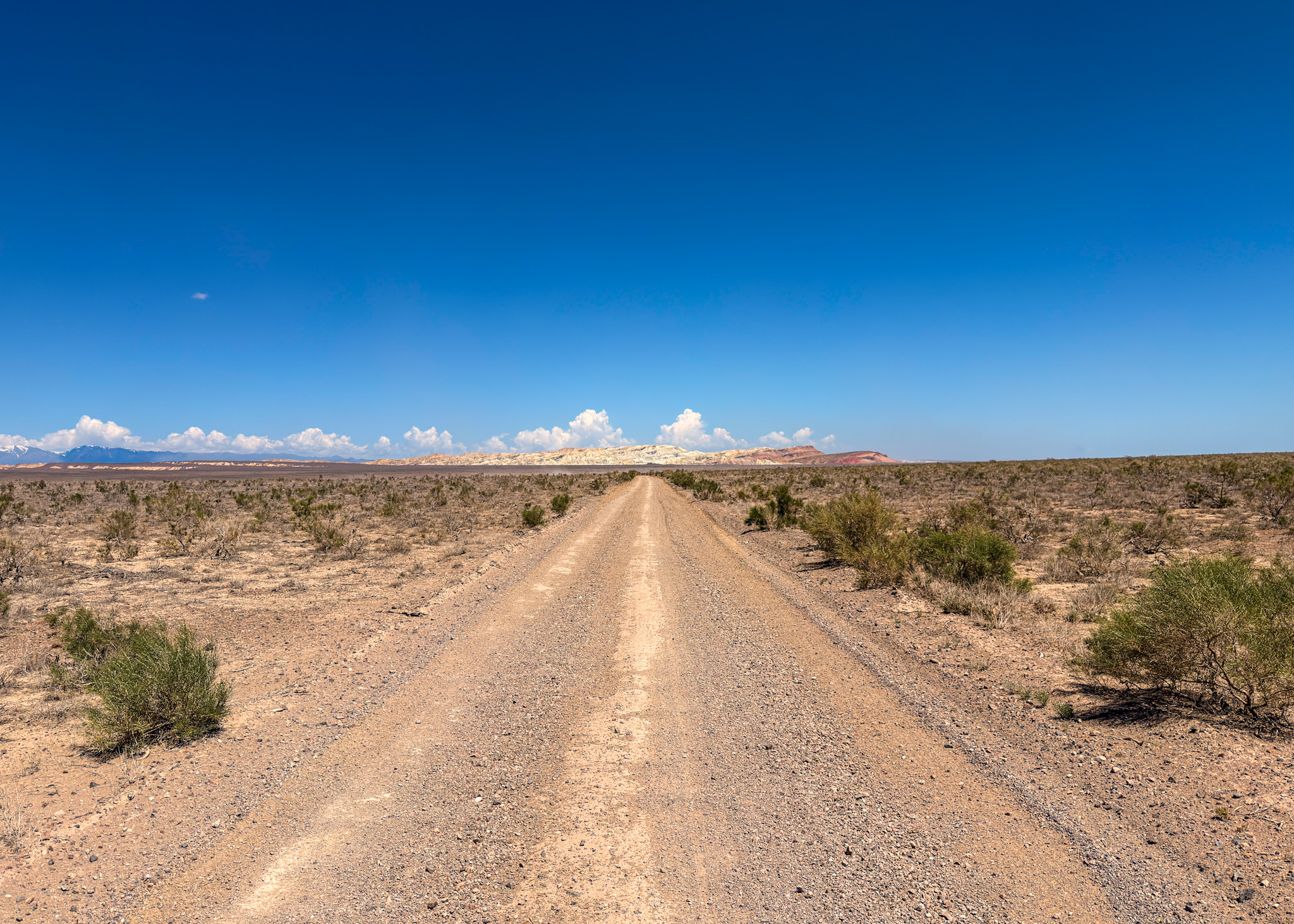
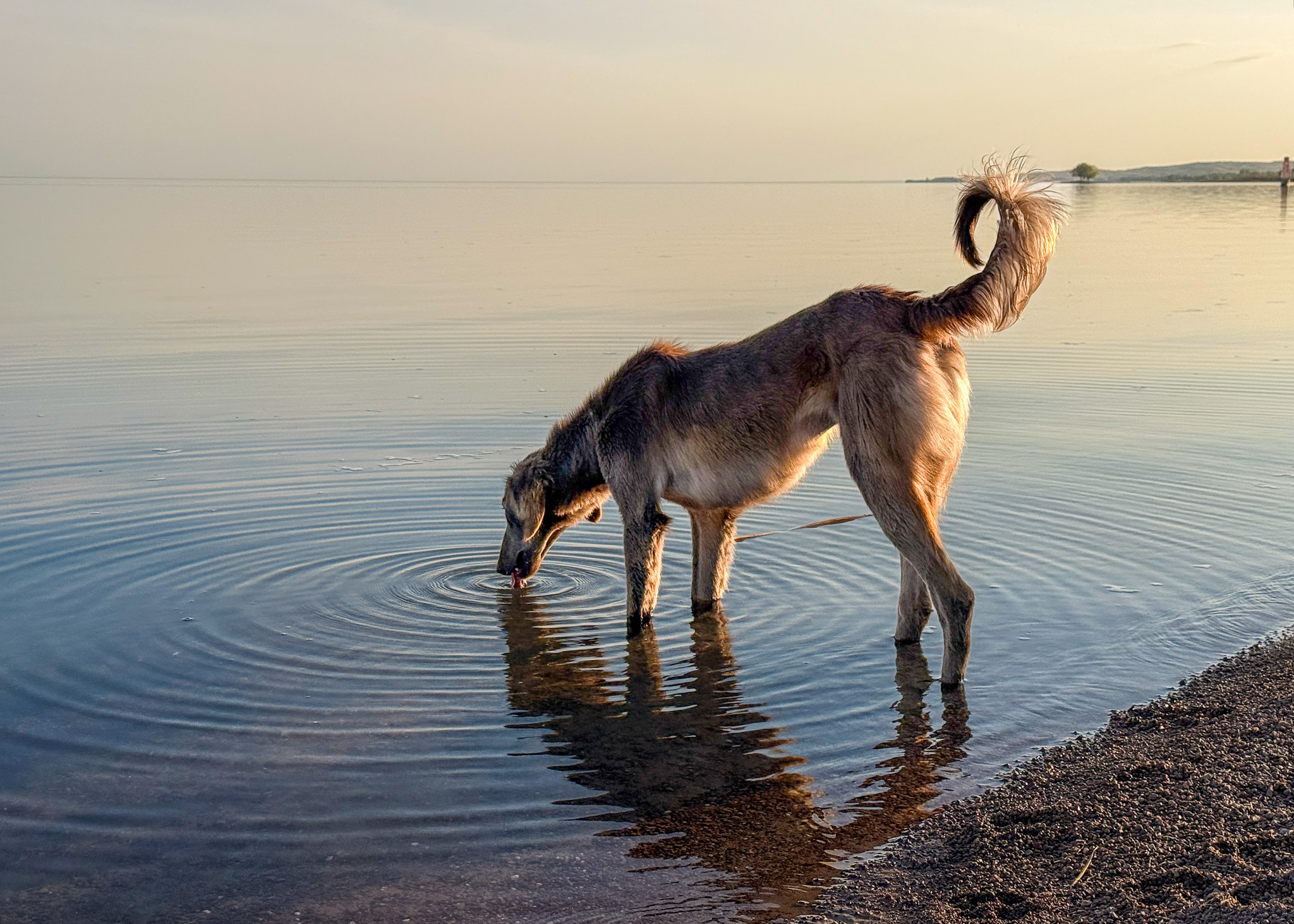
The road out of Almaty runs northeast through fields of tiny red poppies and then opens onto the Kapchagay Reservoir, a body of water so large that locals call it the Almaty Sea. Built between 1965 and 1980 by damming the Ili River, it stretches roughly 100 kilometers in length, and from the highway it simply looks endless: a pale blue line against the steppe that keeps not resolving into a far shore.
Altyn-Emel National Park filled the next two days. The name means “golden saddle” in Mongolian, reportedly given by Genghis Khan after he crossed through here and looked back at the grass-covered ridgeline glowing in the sunset. The park covers 4,600 square kilometers between the Ili River and the Aktau Mountains and contains scenery that feels like it’s from several completely different planets.
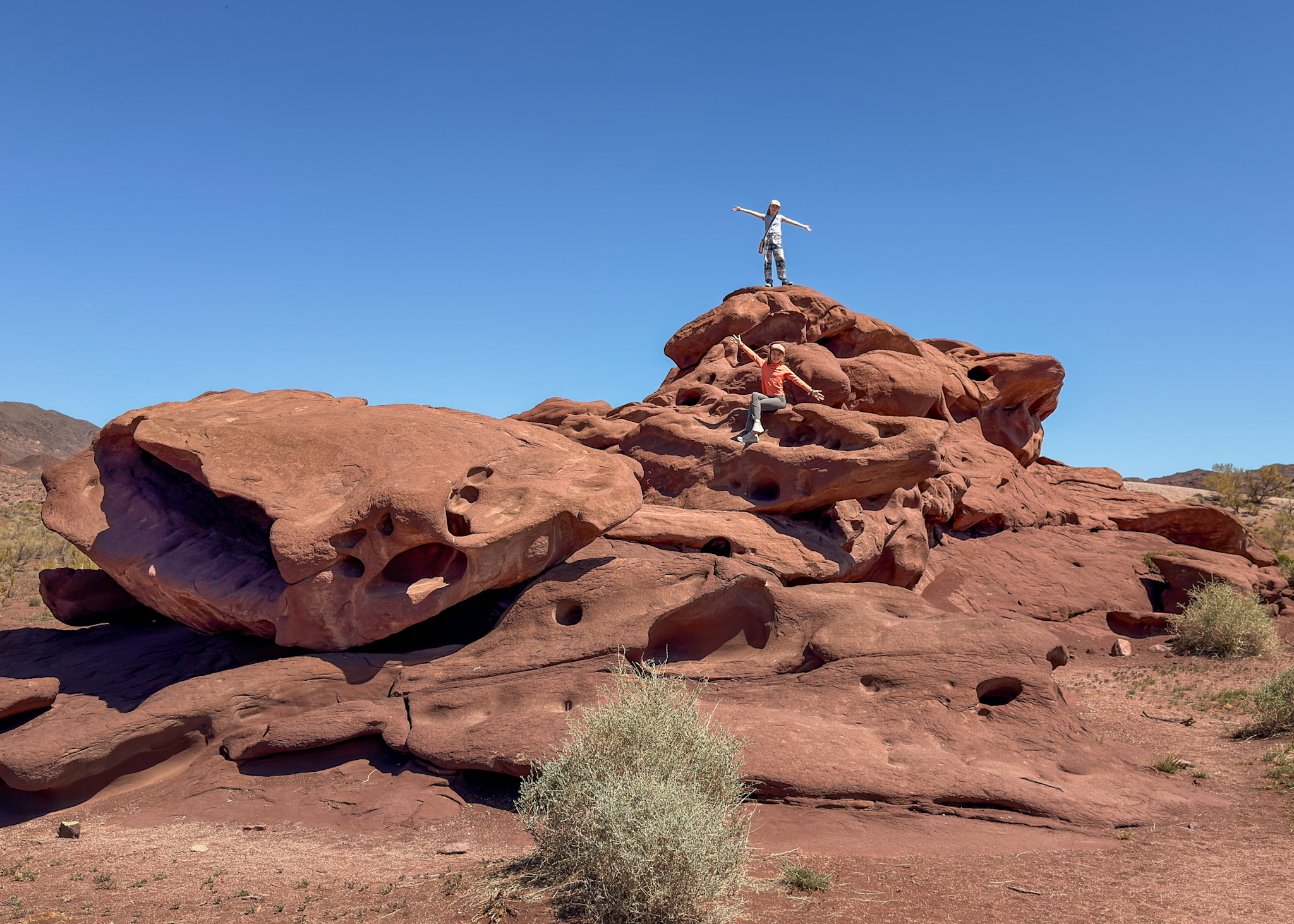
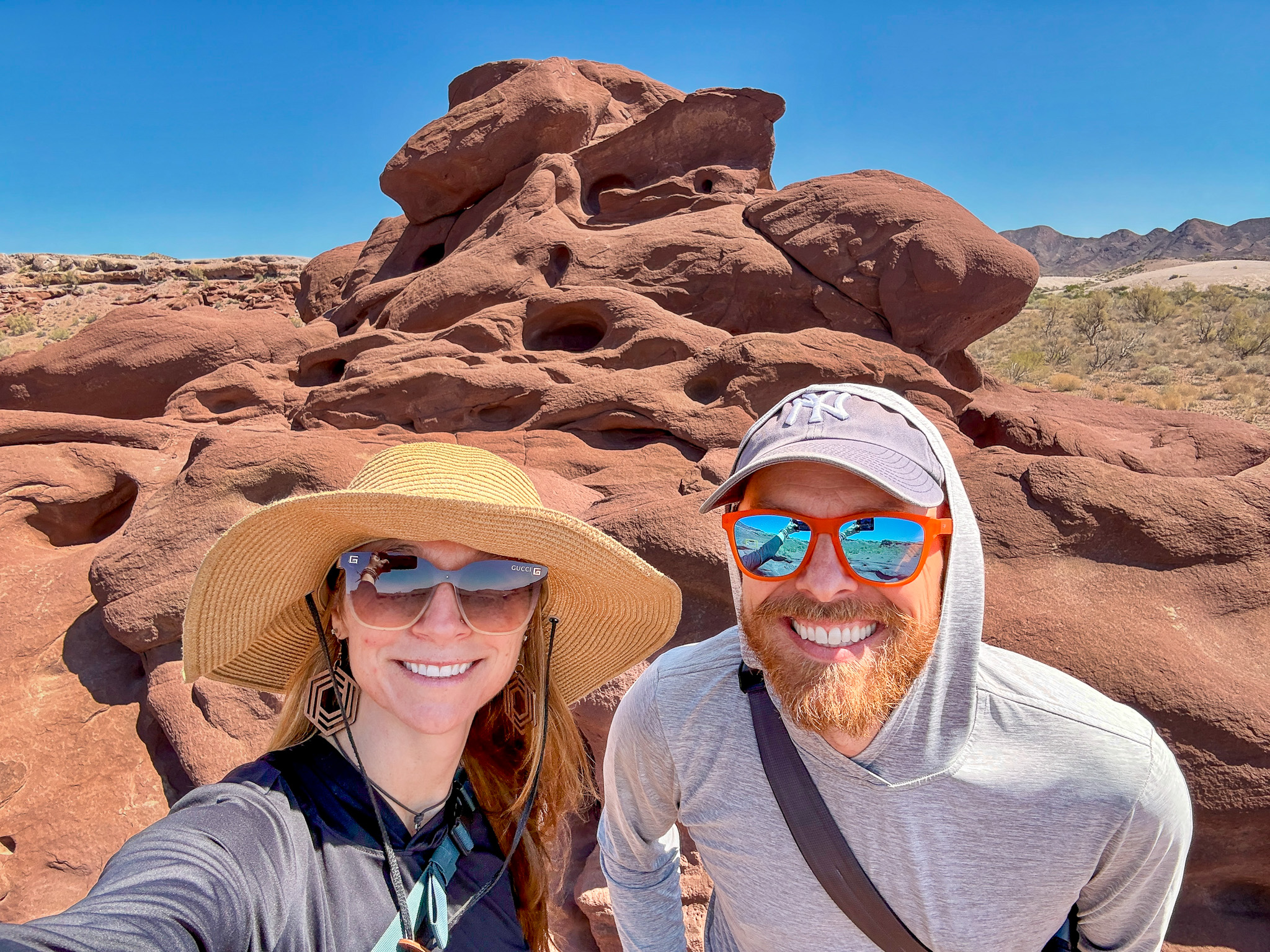
The Katutau range is the remnant of Permian-era volcanoes, and it looks exactly like that. The landscape is dominated by dark chocolate-red lava flows that cooled into gnarled alien formations: jagged spikes, hollowed-out rock bubbles that look flash-frozen mid-boil, a chaotic maze of shapes that seems less like a mountain range and more like the surface of something that is still in the process of cooling down. The girls treated it as a giant natural obstacle course and climbed everything available.
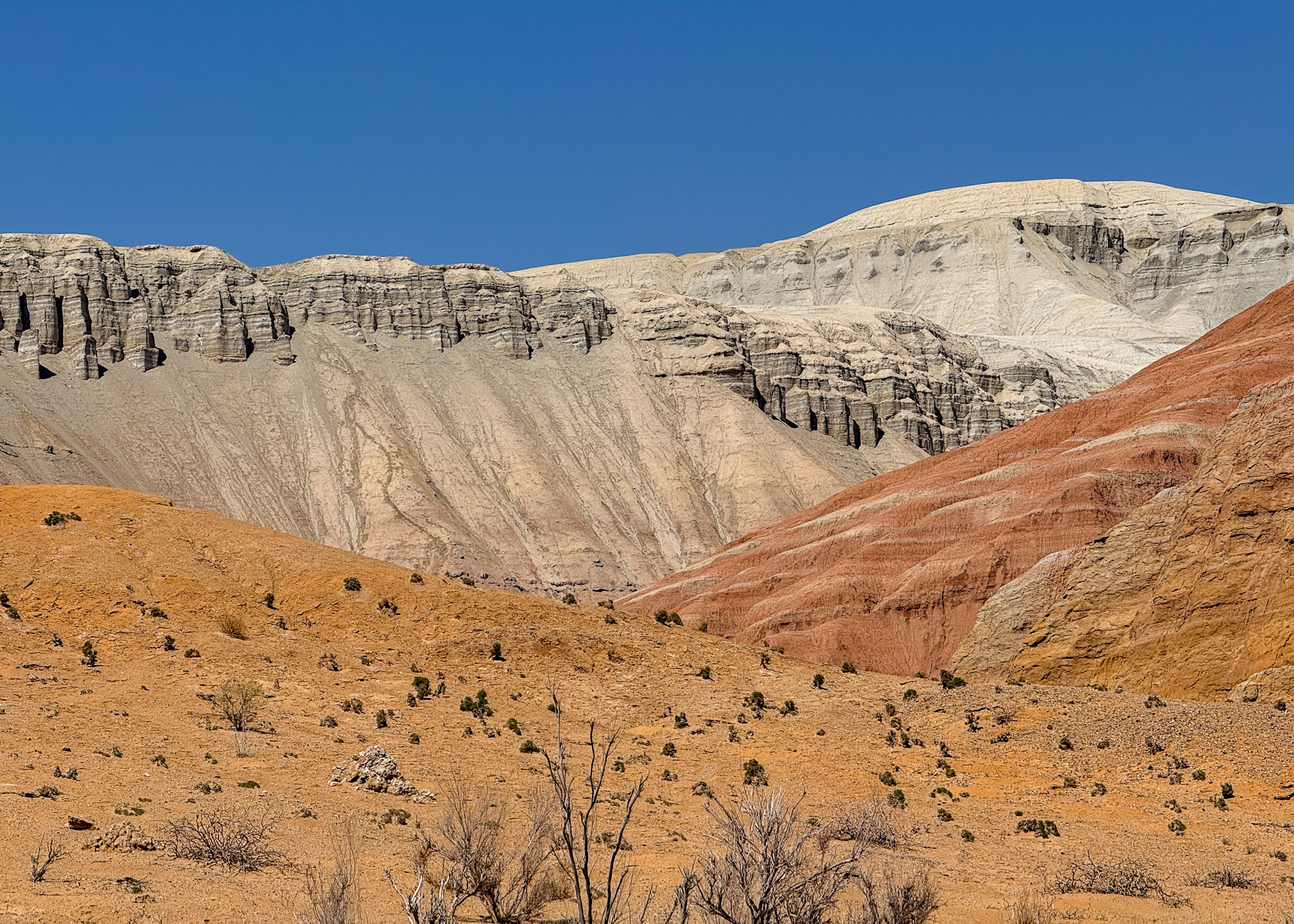
Then the road delivered us to the Aktau Mountains, and everything shifted. Aktau means “white mountains” in Kazakh, though white only begins to describe it. These are 30-million-year-old sediments, the floor of an ancient lake, pushed up and stripped bare: horizontal stripes of white, ochre, gold, crimson, and occasionally purple, so intensely bright in direct sun that they rival neon. The ground is brittle and crusty underfoot, like dried coral. The saturation of hues has weight. The colors shift from white to deep red within minutes of walking, each transition abrupt enough to make you stop and look back to confirm you’ve moved.
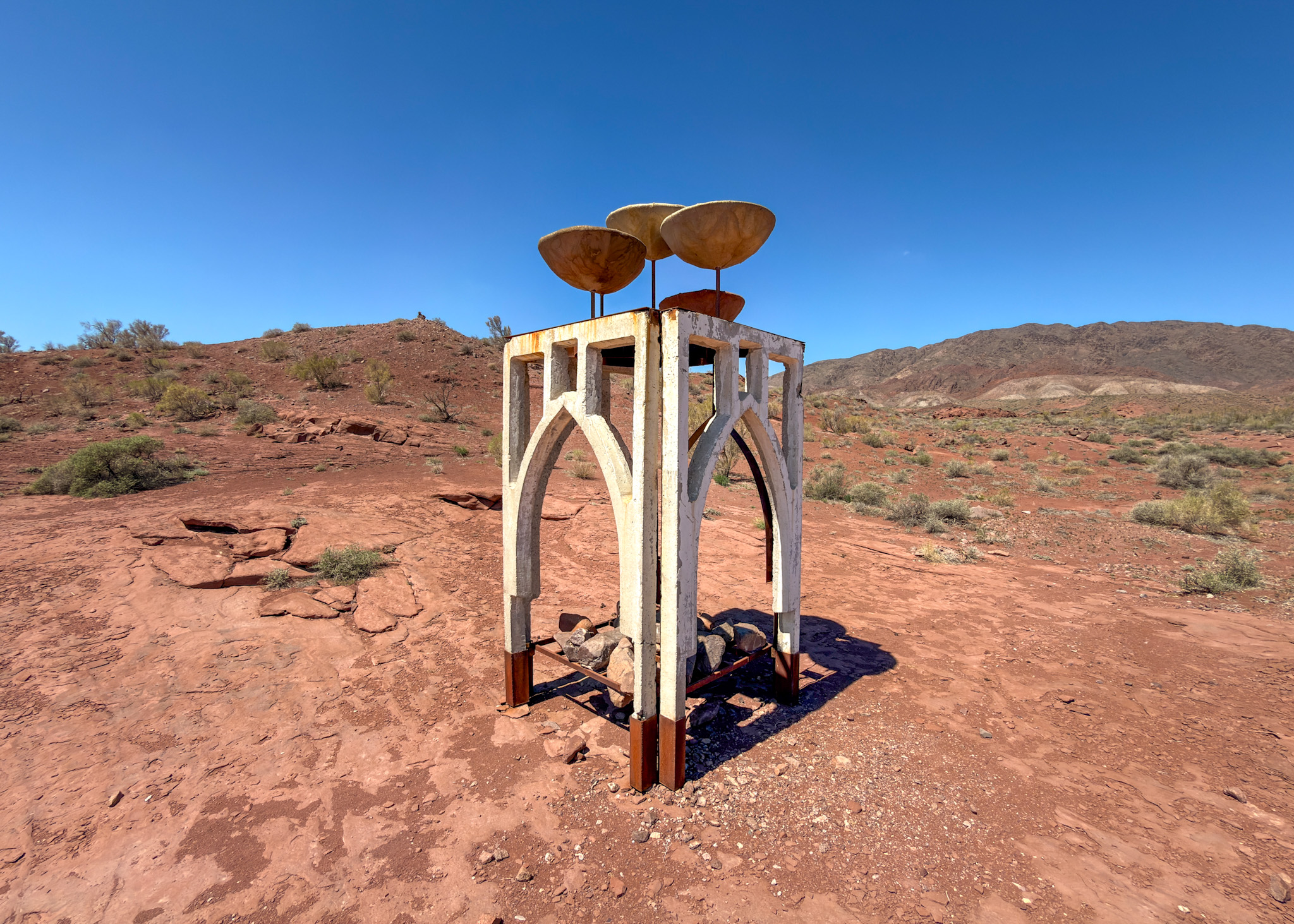
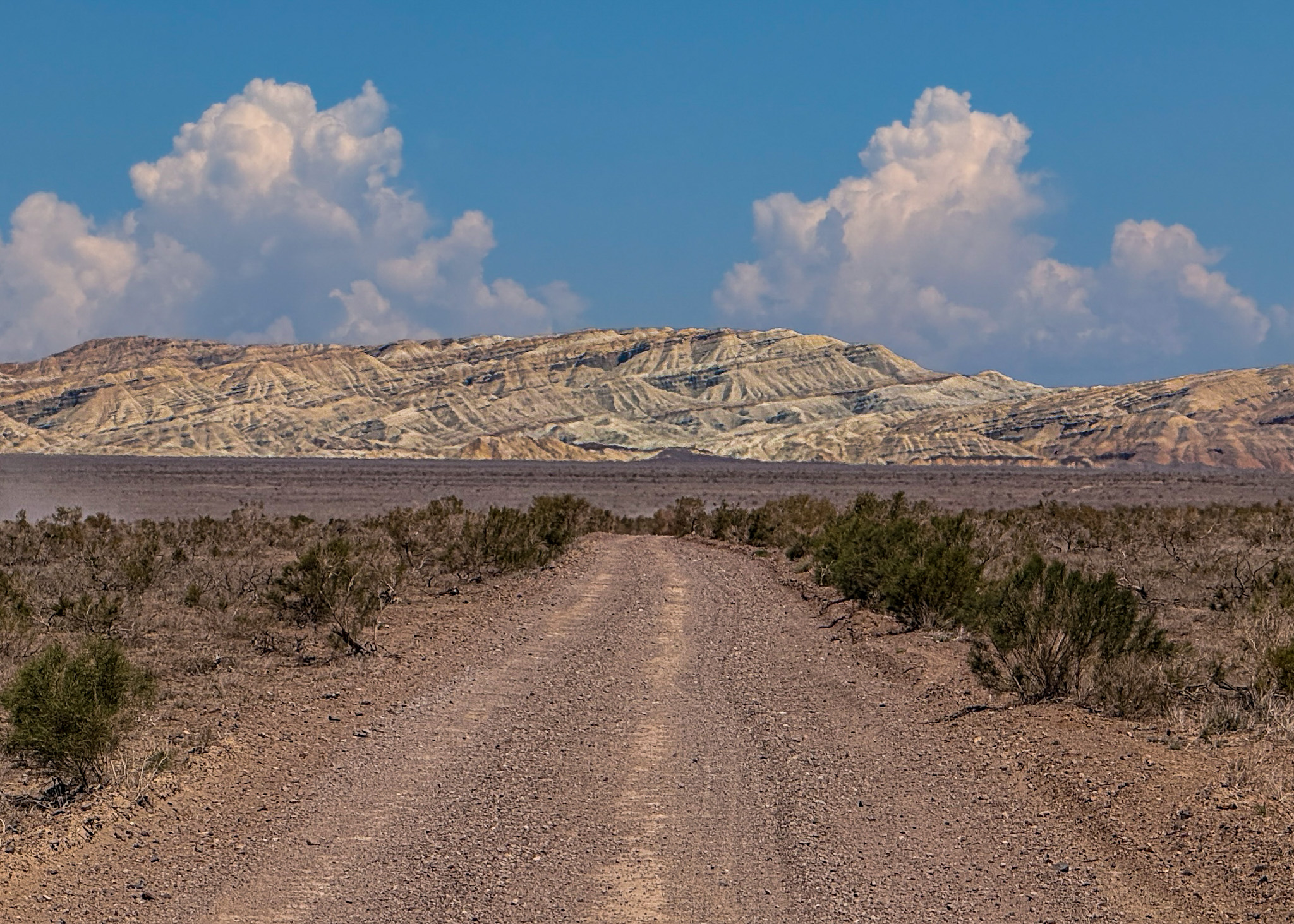
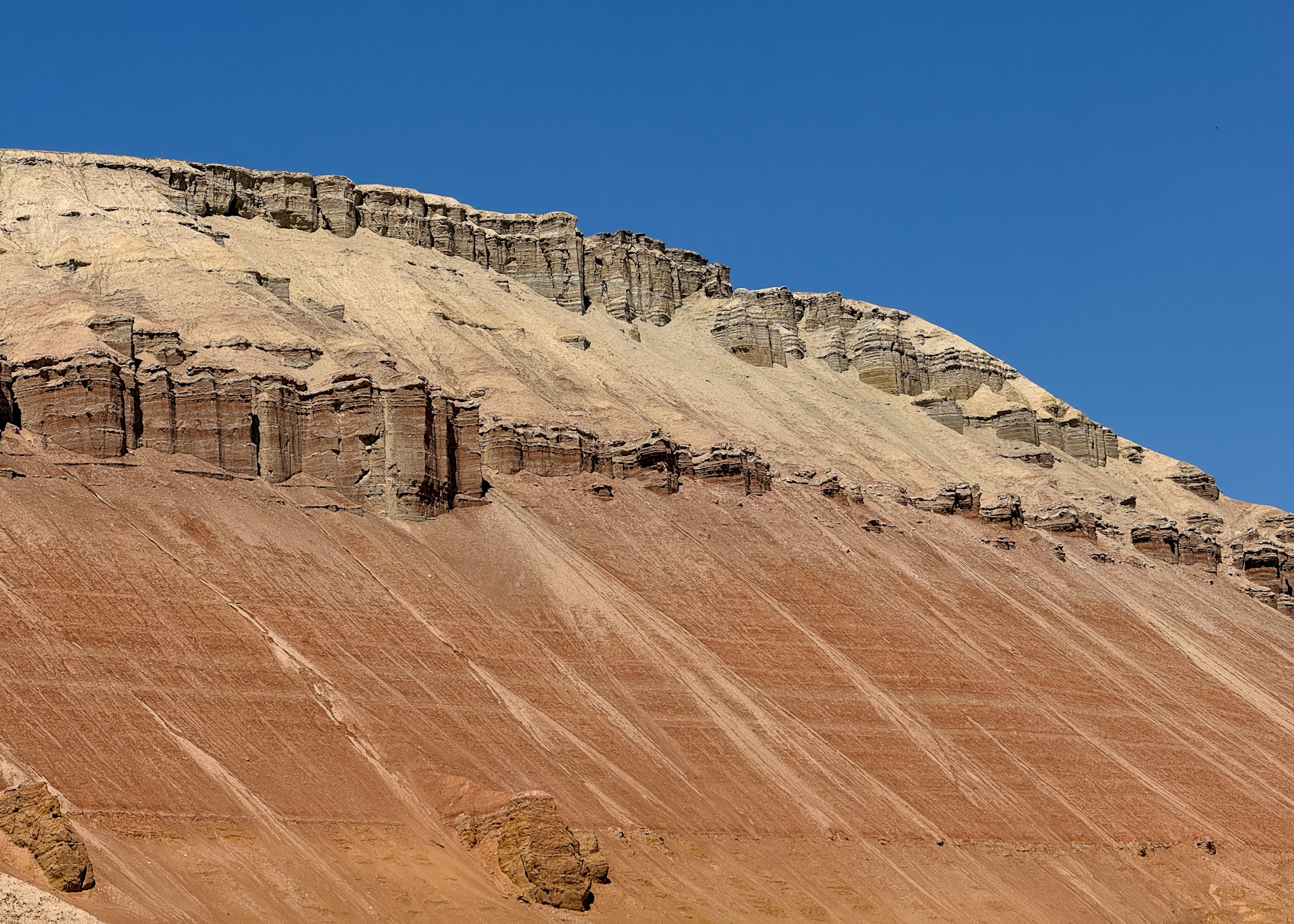
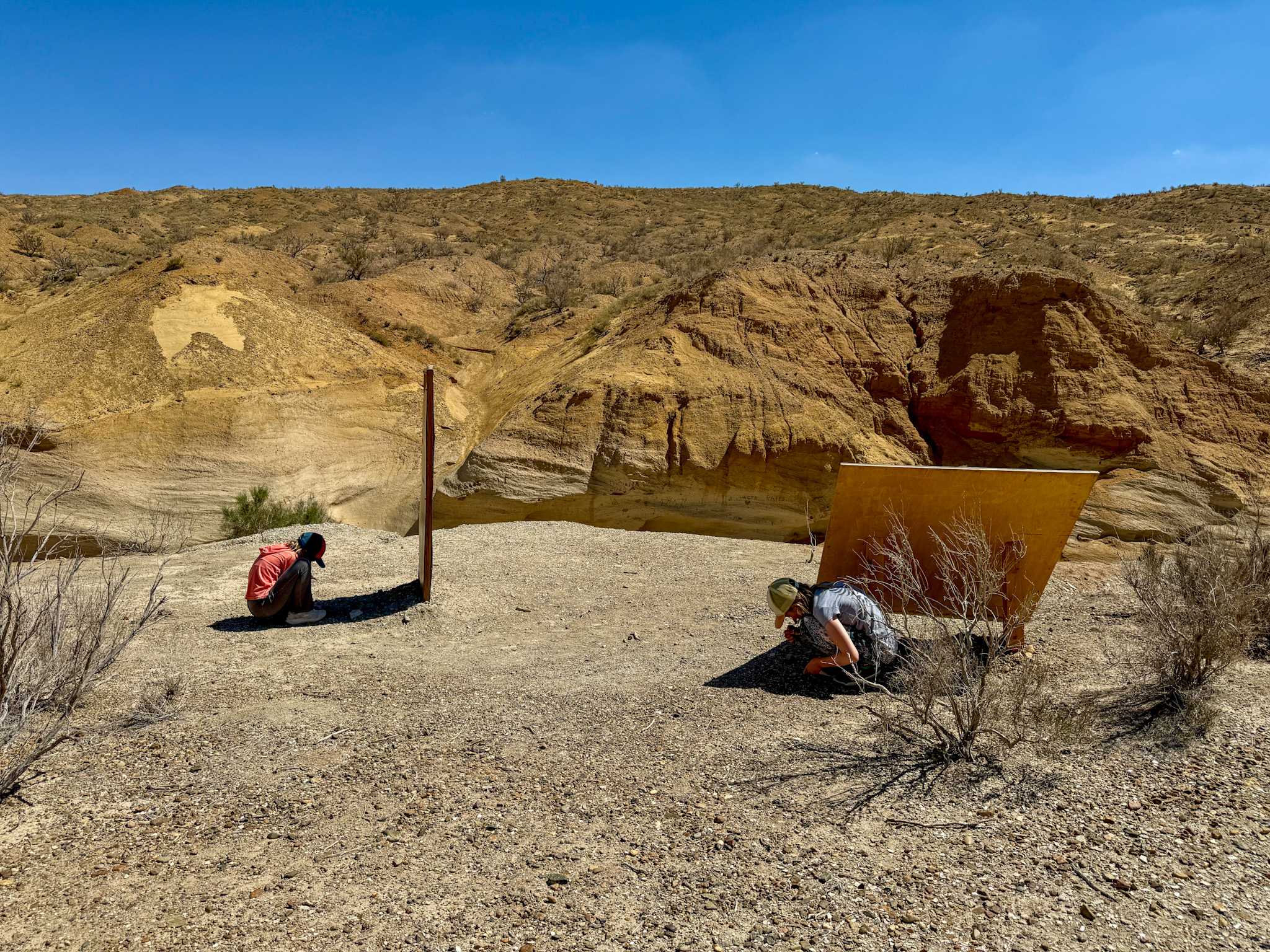
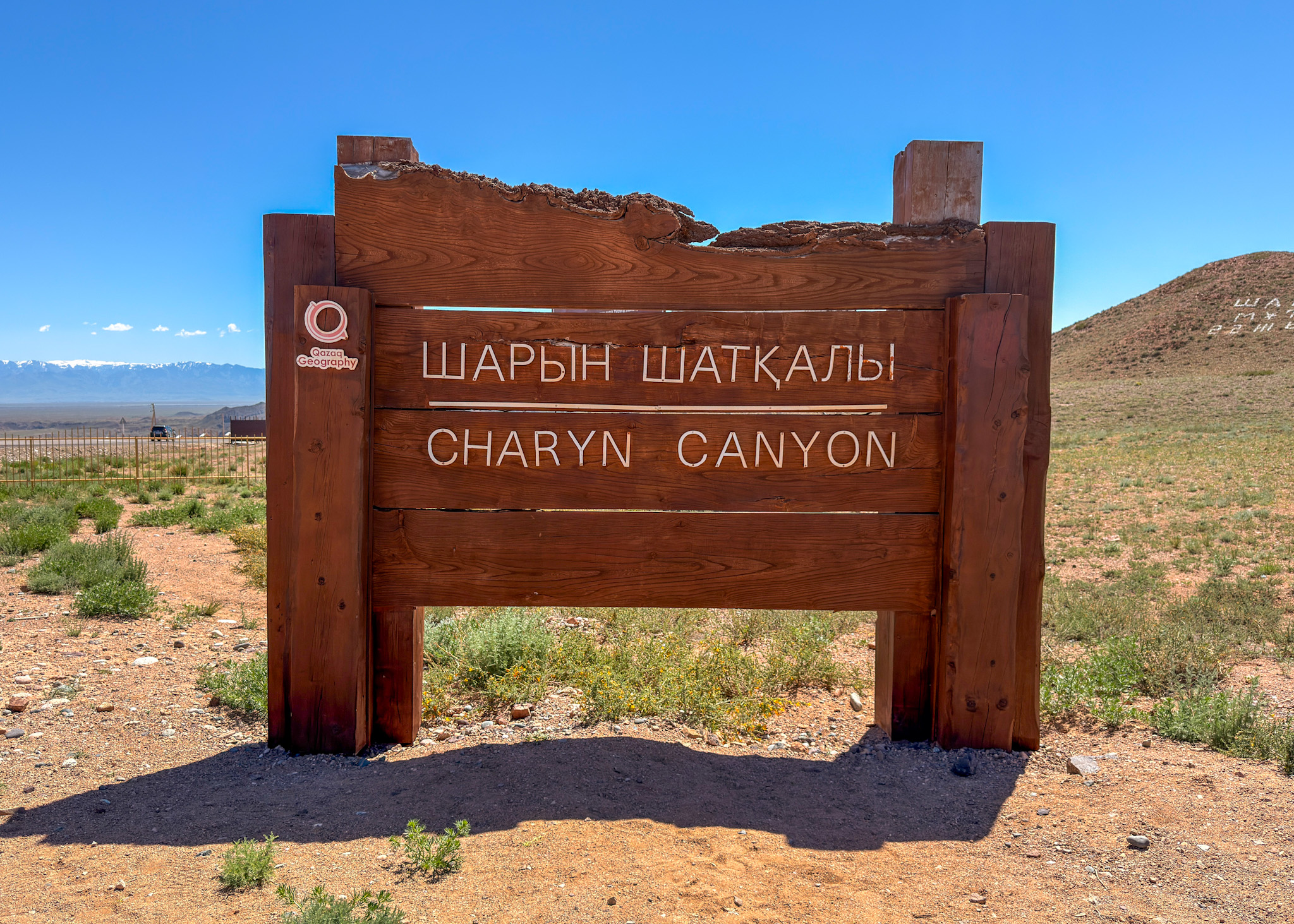
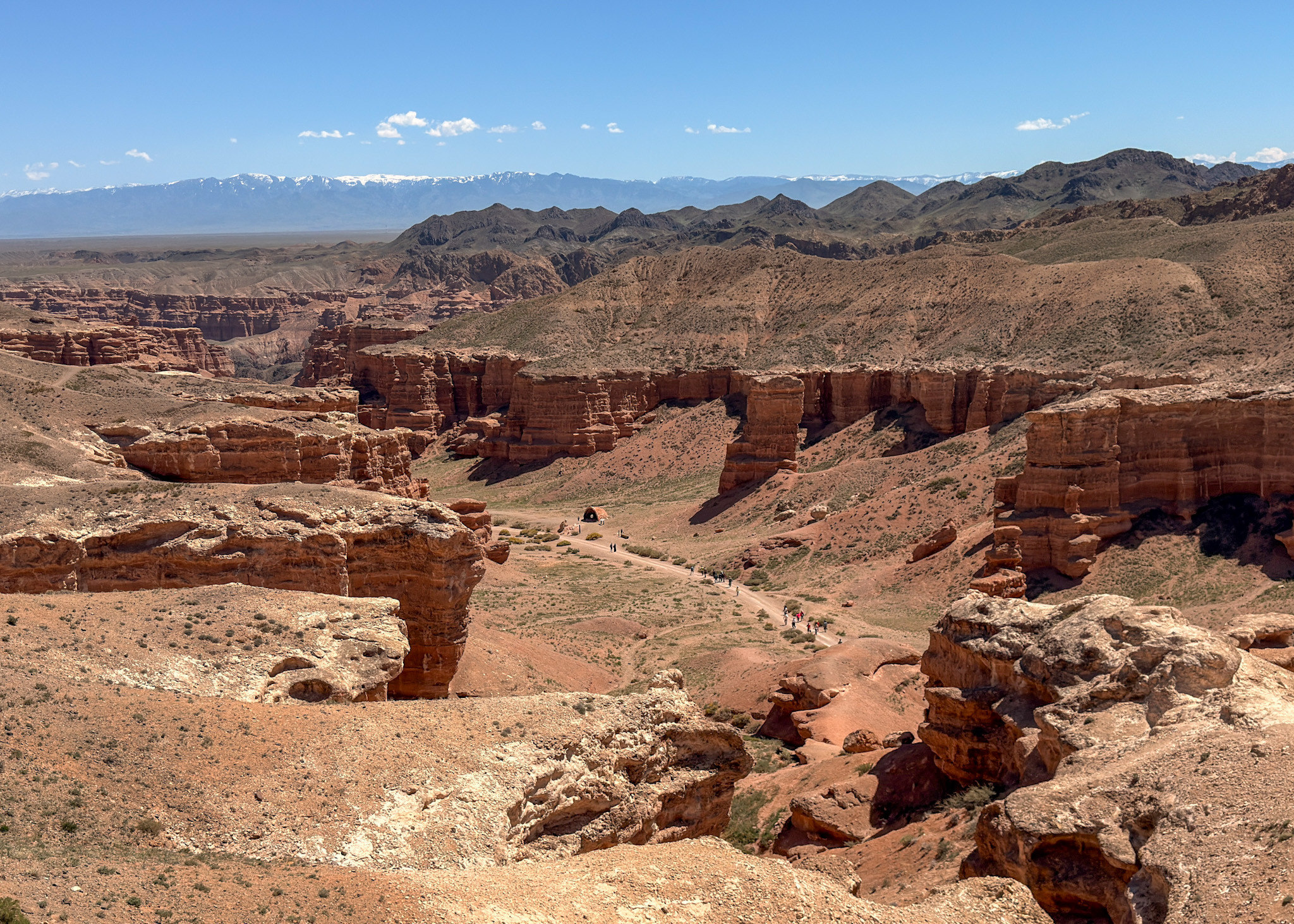
Charyn Canyon came on day three, and it earned its reputation.
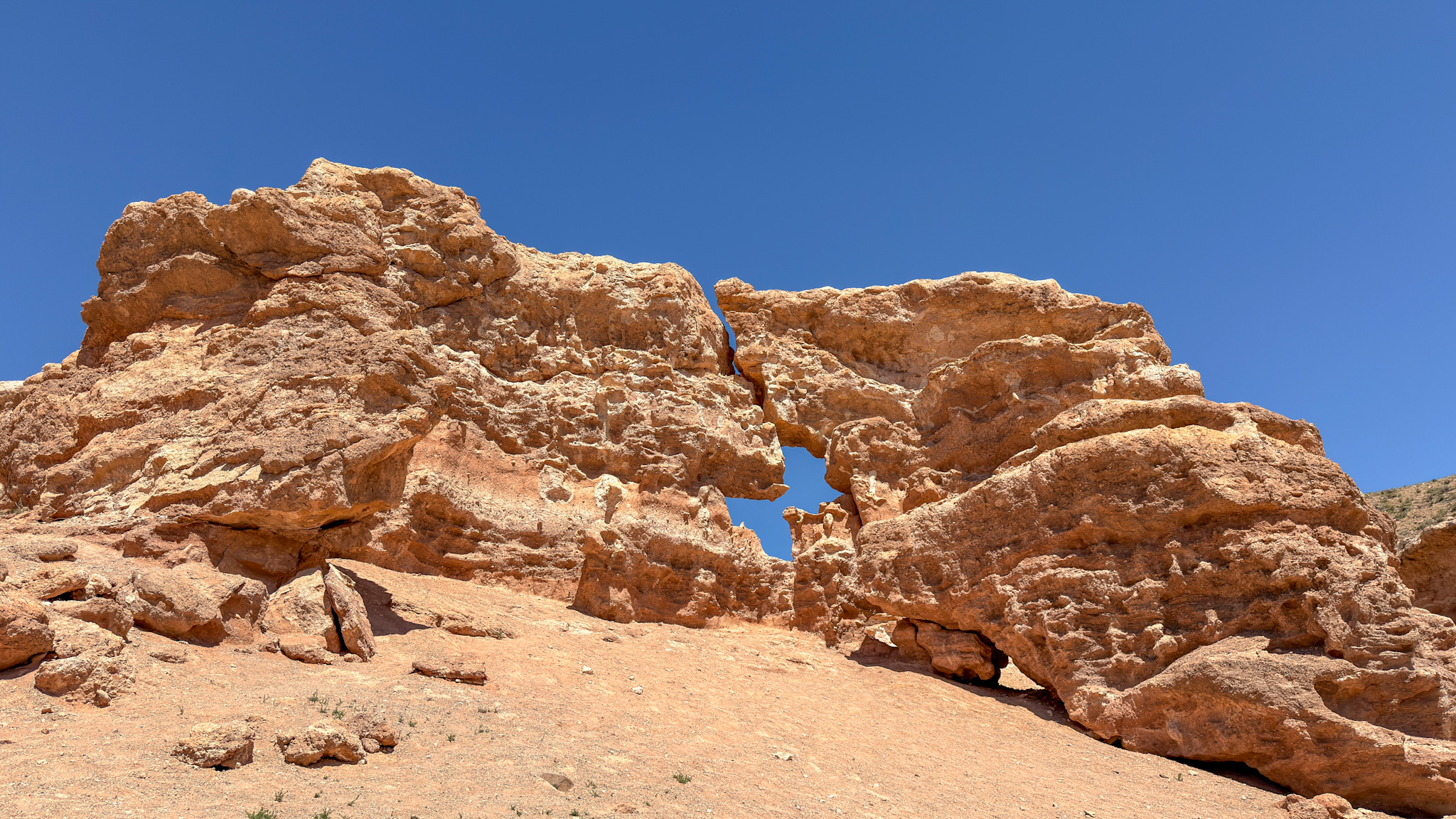
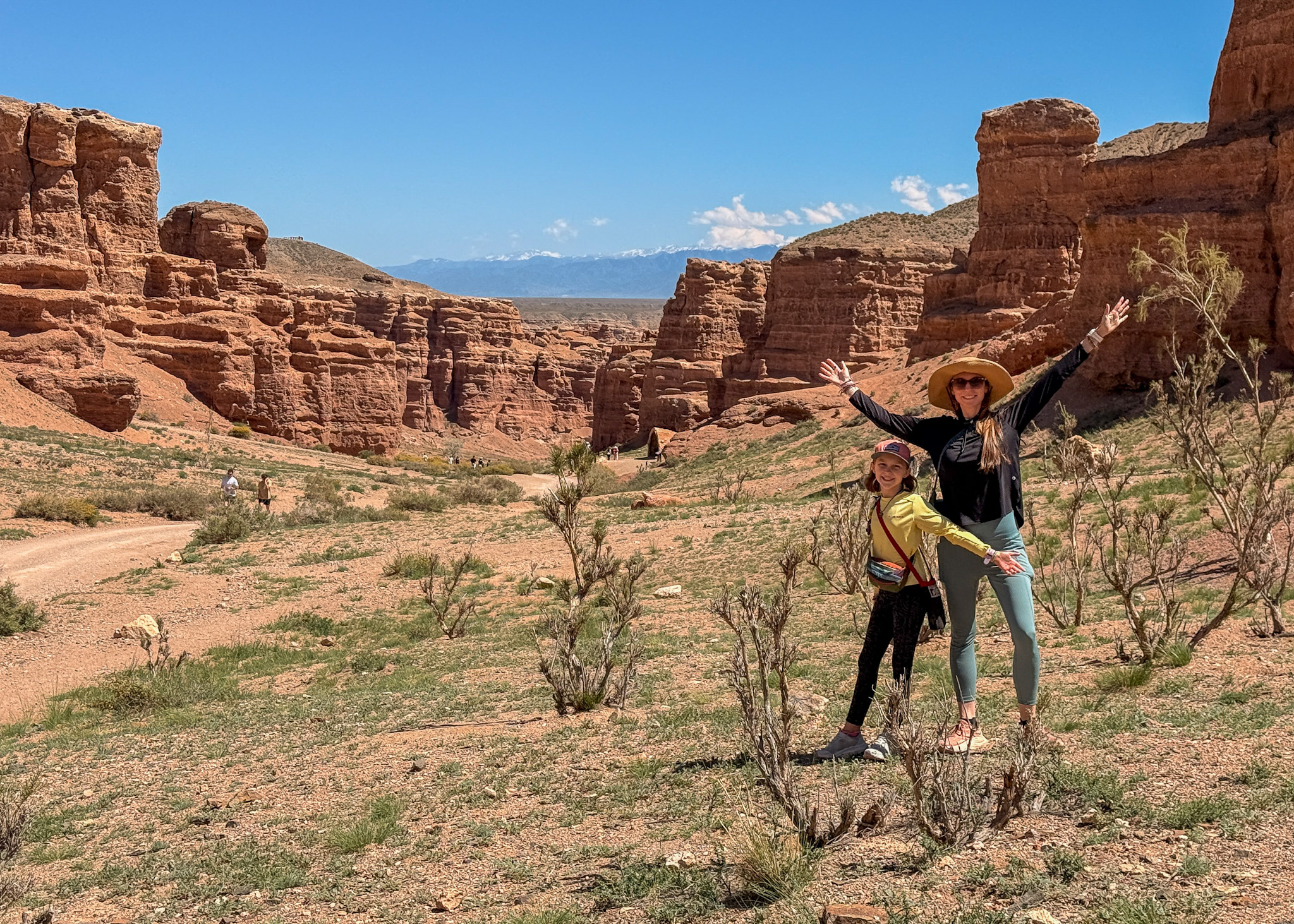
Charyn is often compared to the American Southwest, and the comparison isn’t wrong: the Charyn River has been carving through this landscape for millions of years, producing a canyon 150 to 300 meters deep with walls full of freestanding towers, arches, and pocked cliff faces eroded by wind, sand, and time. The colors run warmer than Aktau, terracotta and rust, and the vegetation clinging to the canyon floor is surprisingly lush against all that dry stone.
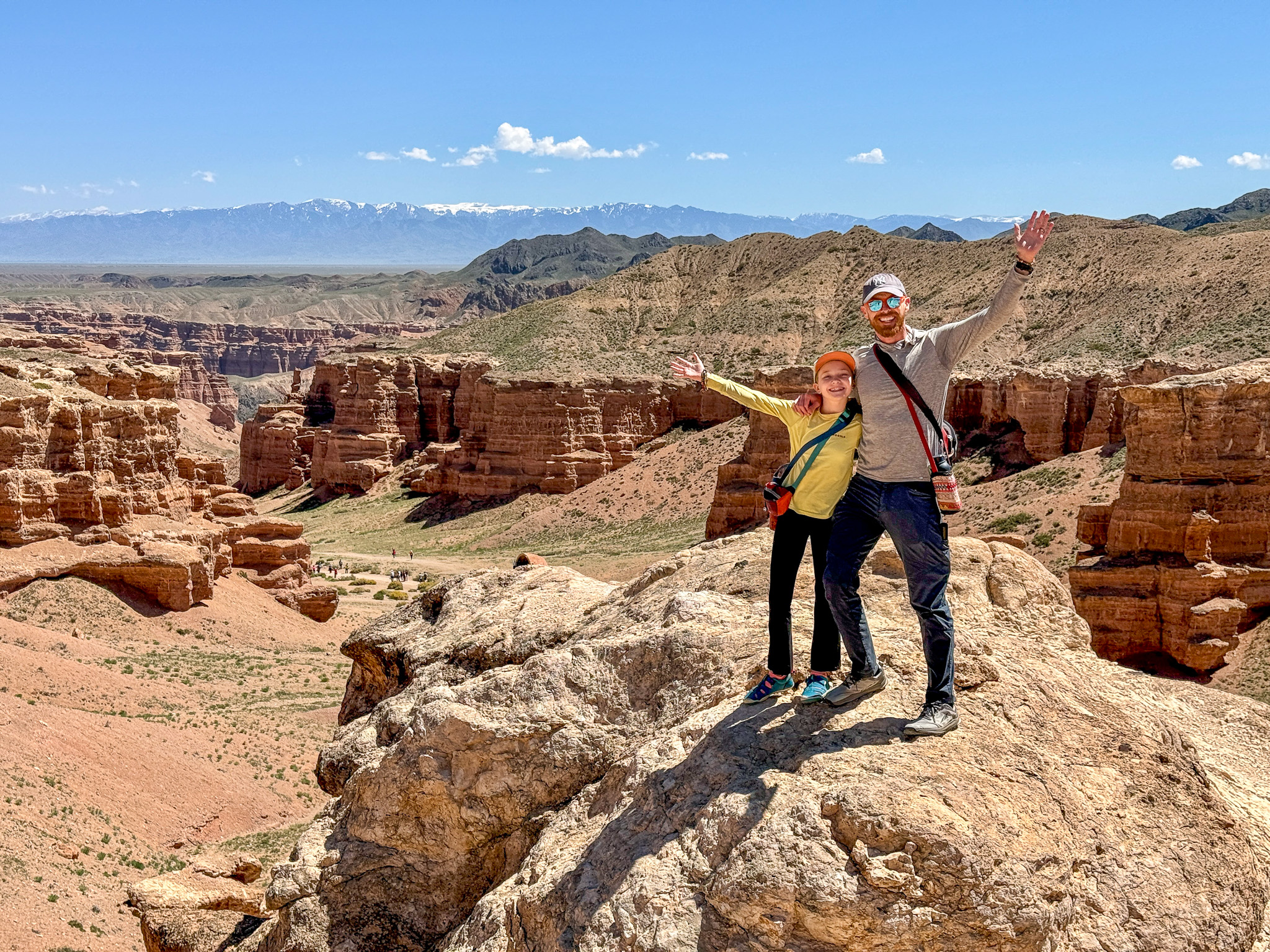
We started at the rim. A small unmarked path led out to an exposed outcropping with views in both directions, and Max led the way. The path narrowed. The drop-offs on either side got serious. The girls kept moving. By the time everyone was standing on the flat rock at the end, nobody was entirely relaxed, but the view demanded acknowledgment and got it. Getting back turned out to be harder than getting out, as canyon paths tend to be. Max gave Finlee a series of small boosts over the gnarlier sections. Everyone made it to the rim intact.
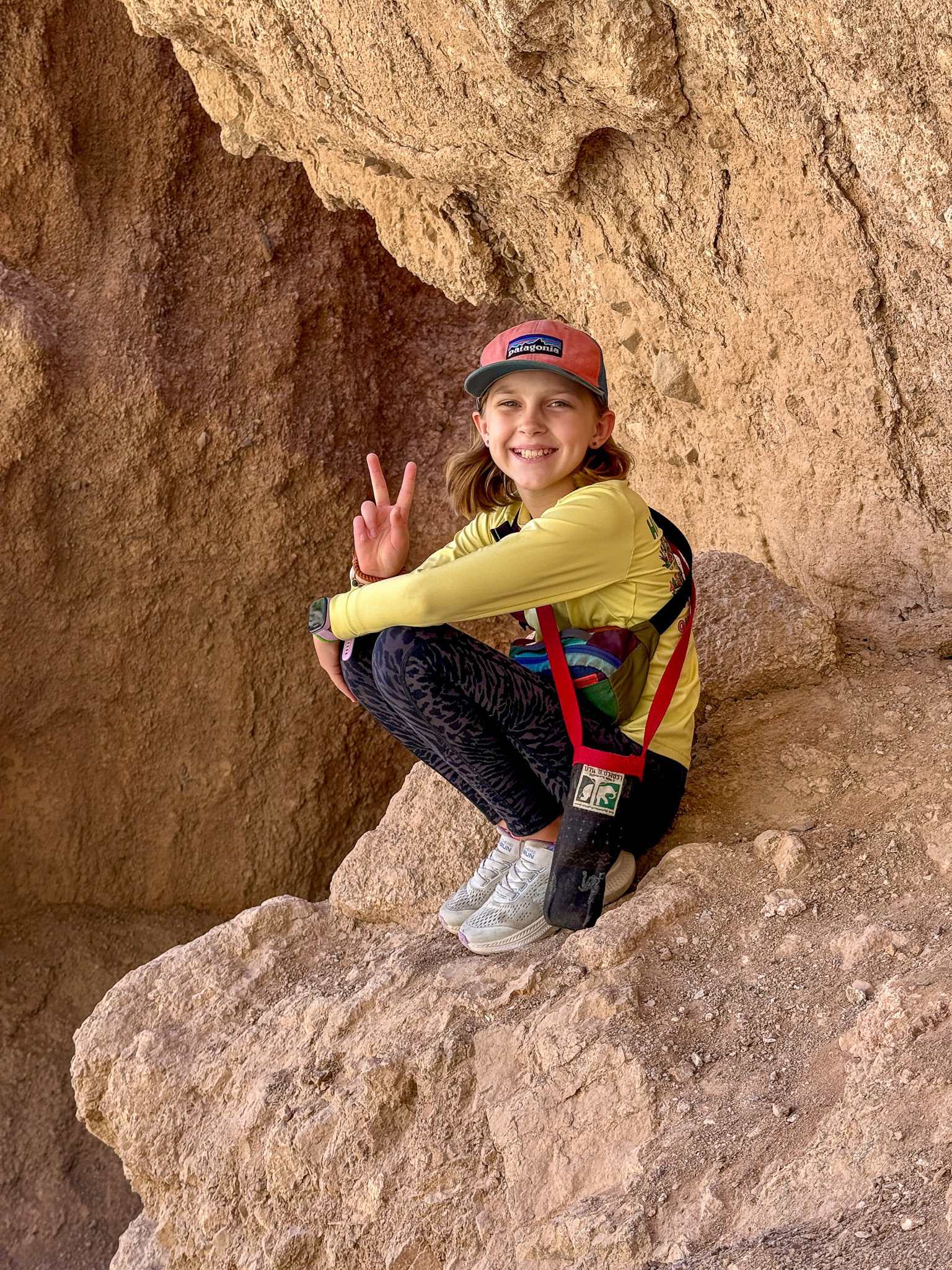
Then we walked down into the canyon itself, which took two hours and covered three-ish kilometers one way. The walls closed in, towers of separated rock rose on either side, Arya filmed a running compilation of the best sections in five-second clips, and the drone went up several times along the route. By the time we reached the bottom it was early afternoon, the sun was full and direct, and the water we’d carried was gone.
Signs throughout the canyon had promised water at the base. There was a water fountain, but apparently it had been out of service for what was likely a very long time. There was a shuttle back to the top, technically, in the form of a pickup truck with plywood bench seats. The queue had at least thirty-five people in it. The truck seated ten.
The guard in the shuttle shack took pity on us and gifted us a water bottle refill, so we decided to walk back, briskly. Thirty-five minutes up and out of the canyon, moving with purpose. When we reached the rim, everyone put their hands in a pile. Three, two, one—“Team SharXee!” A total of eight kilometers in the heat, low on water, no shuttle required. The ice cream reward that followed was the best ice cream of the trip.
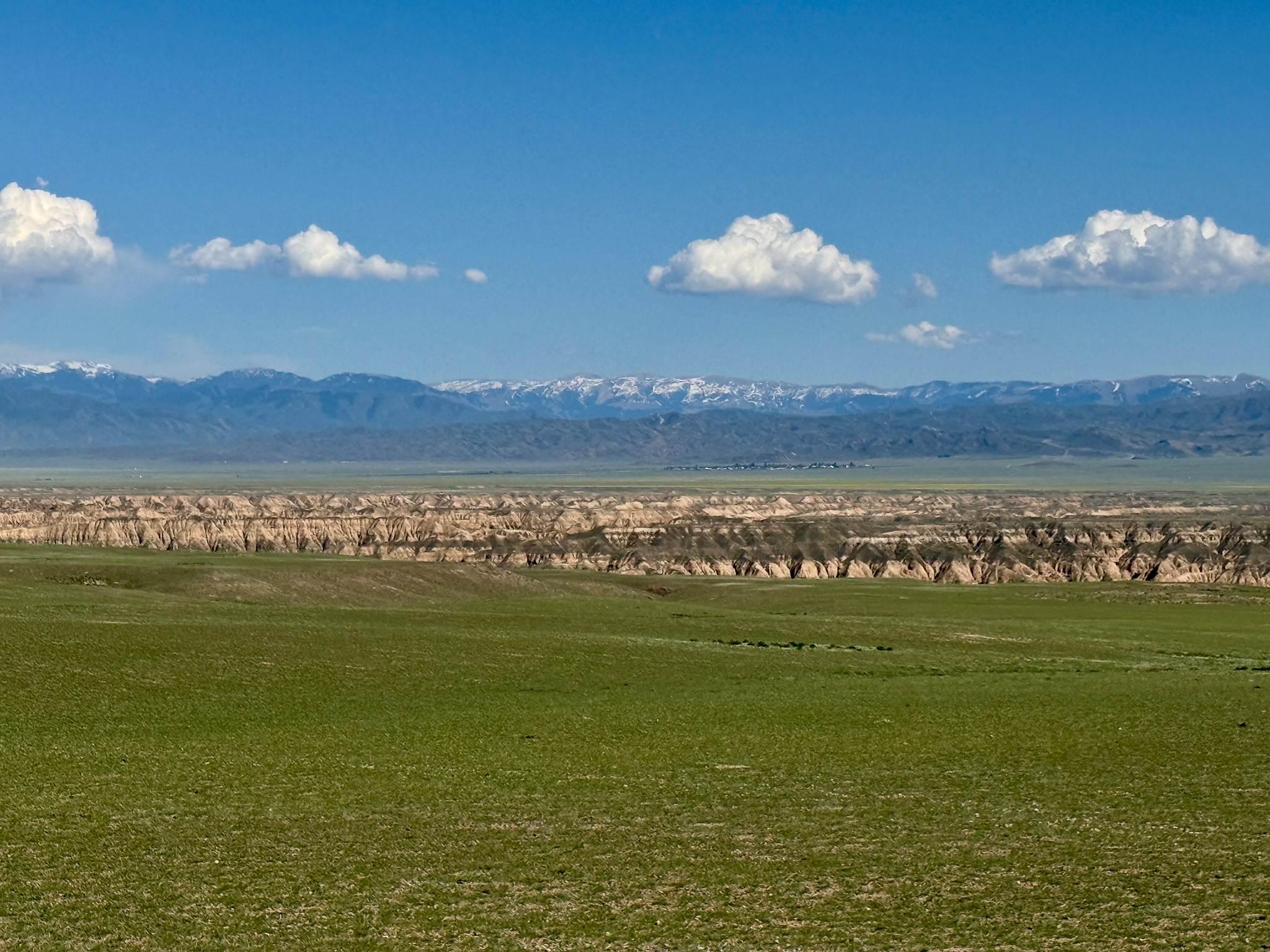
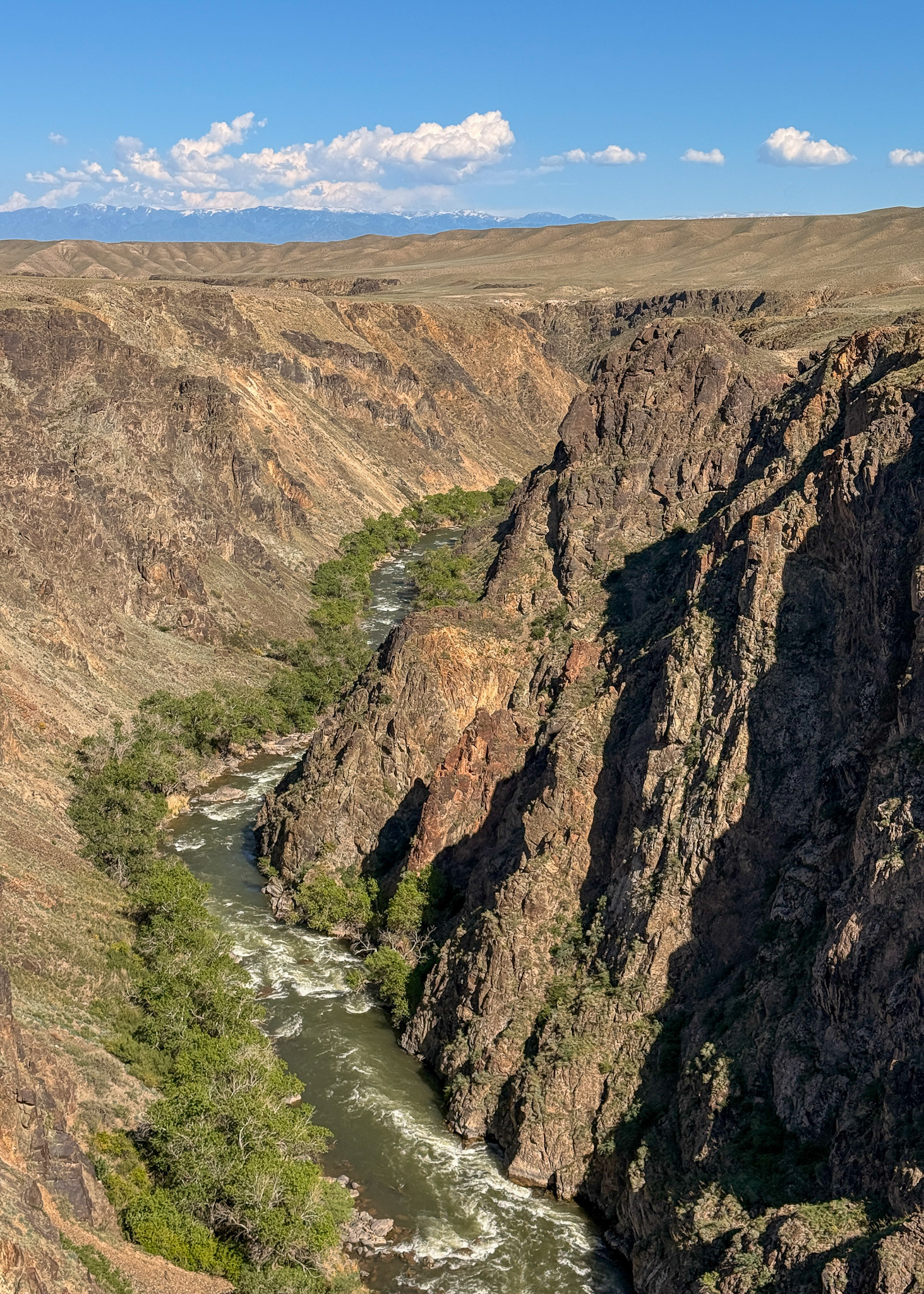
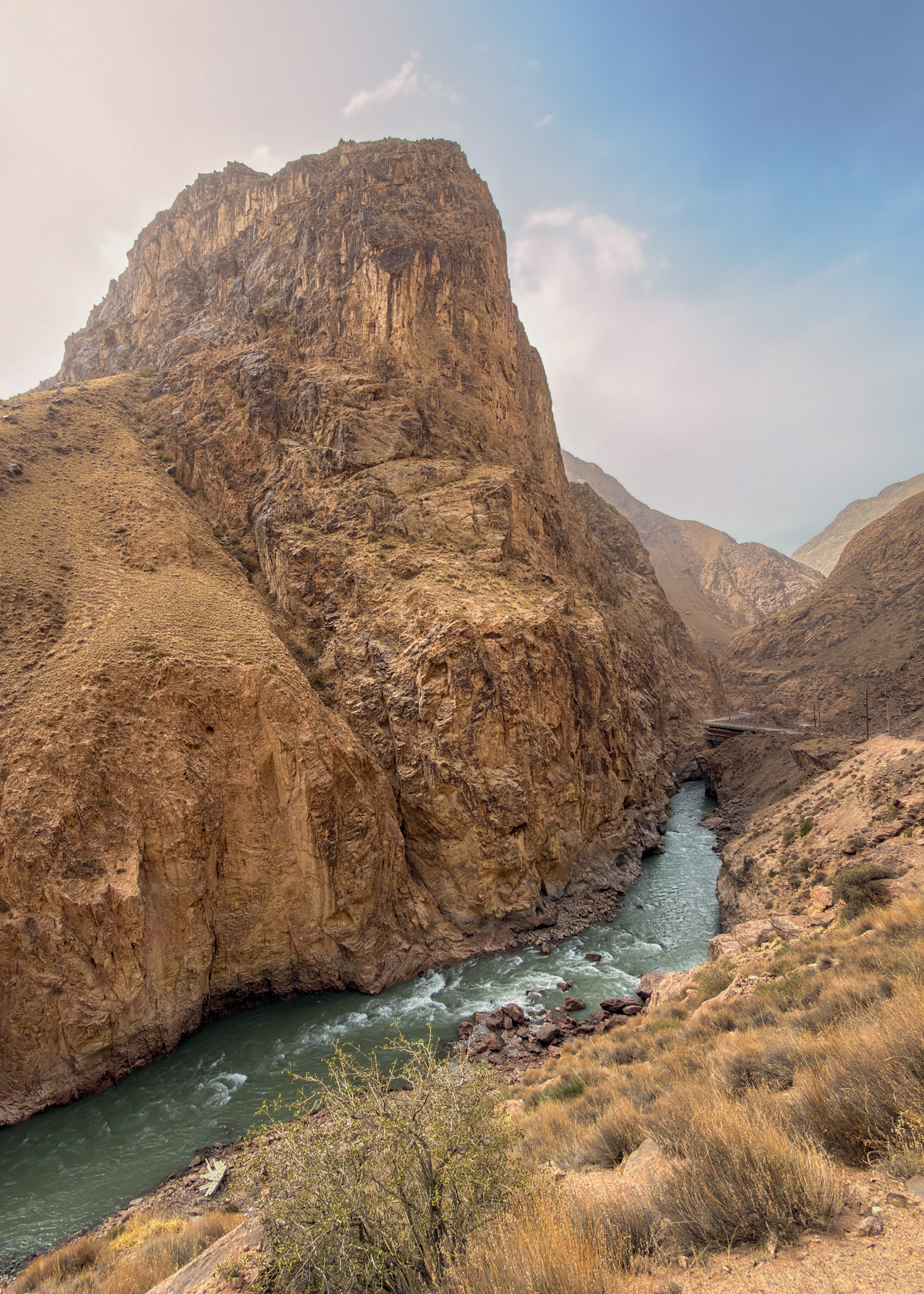
The Black Canyon that afternoon offered a different geometry: deeper, less sculptural, its drama coming from sheer vertical scale and a long satisfying bend as the river far below curves through it. Then the drive to Saty, which was something else entirely.
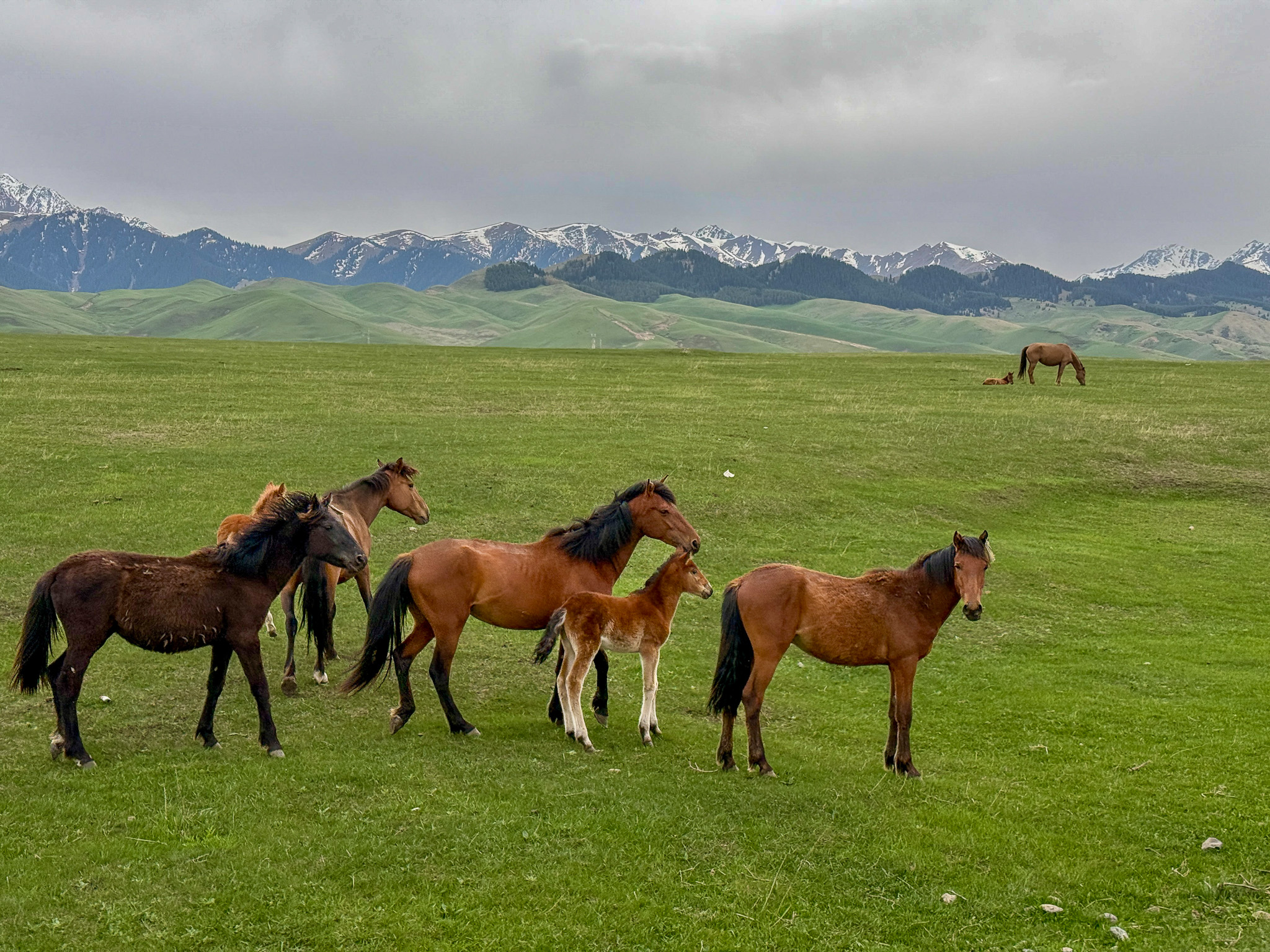
Kazakhstan puts up a strong challenge to Montana’s “Big Sky Country”, and with even bigger mountains. Vast green foothills sweeping up toward the Tien Shan, wild horses scattered across the grassland, flocks of sheep and goats moving along the hillsides in slow grazing arcs. We had arrived in the Spring, when every animal in Central Asia seemed to have given birth at once. Foals everywhere, still leggy and uncertain. Lambs barely dry, wobbling around on knees that hadn’t quite figured out their job yet. And baby goats, possibly the cutest we had ever seen, turning up around what felt like every bend in the road. The scale of the landscape makes conversation feel unnecessary in the best possible way, and the newborns scattered across all of it made it hard to stop smiling.
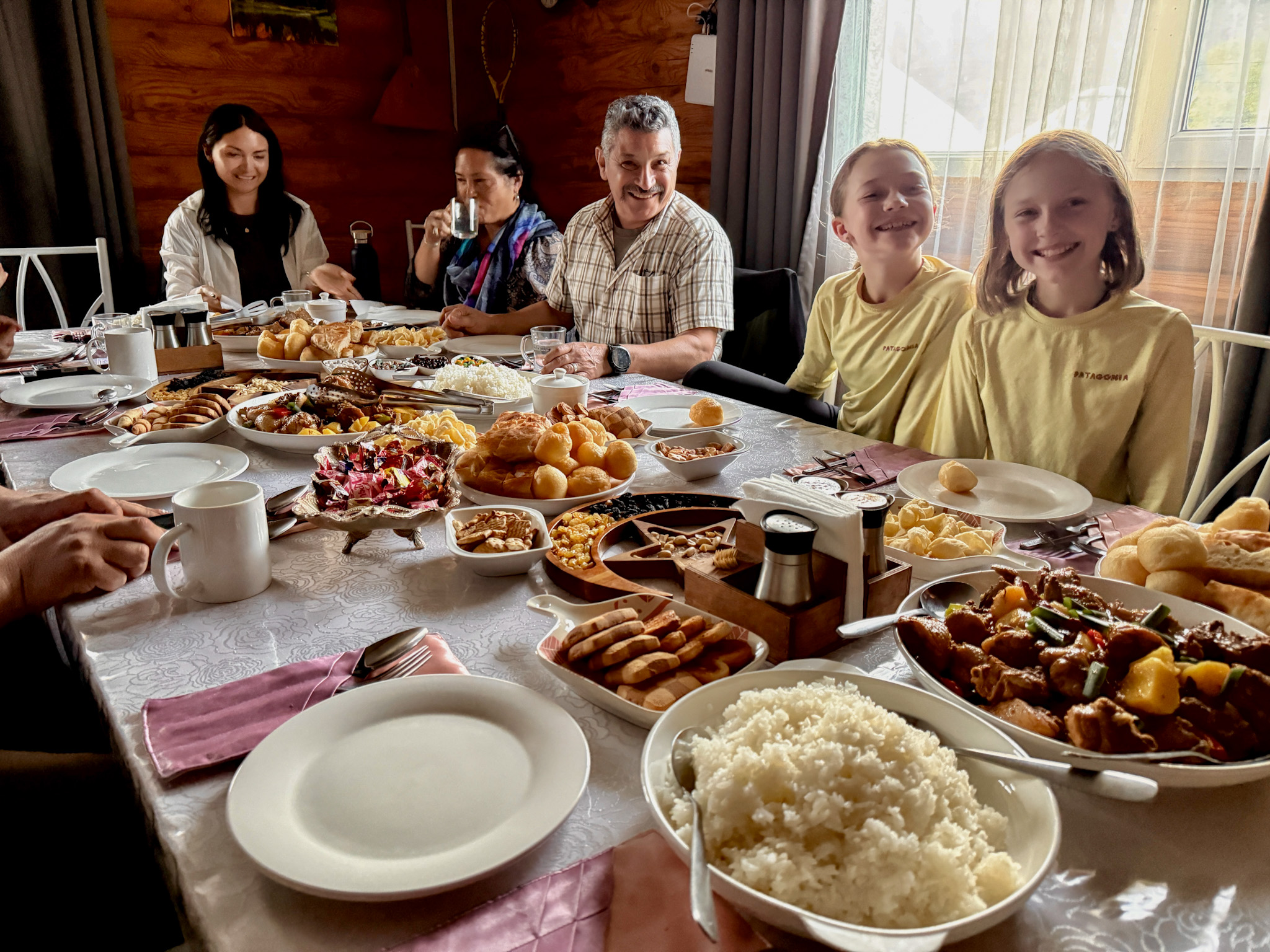
Dinner that night in Saty brought a welcome surprise: an American family from Santa Fe joined the communal table. Laura was a diplomat posted to Astana, her parents Daniel and Virginia visiting from home. Arya was in rare form, holding court across the table, covering our itinerary in impressive detail. At one point, having clocked their darker features and the fact that they’d understood something Shaina said to her in Spanish, she asked the table whether they were American or “also Mexican”. Shaina and Max felt the floor tilt slightly. It is the kind of question that lands differently coming from an adult, and for a half-second we braced. But there was nothing in it except genuine curiosity, and Daniel received it exactly that way. He explained, warmly, that he and Virginia both had family who had immigrated from Mexico and relatives there still. No stiffness, no correction, just a kind and generous answer to a kid who simply wanted to understand. Arya’s curiosity keeps finding its way into conversations, and the people on the other end of it are, more often than not, better for the encounter.
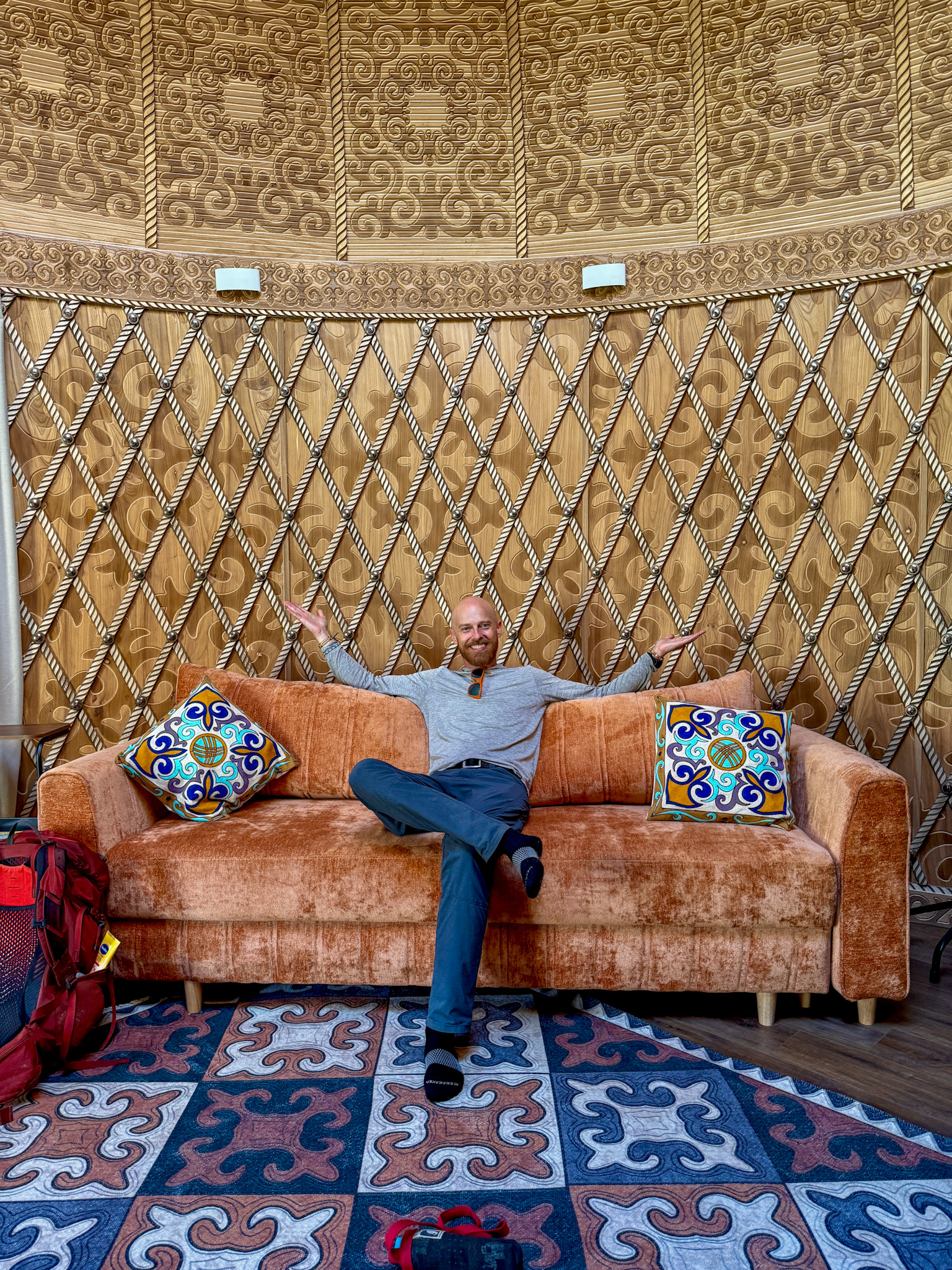
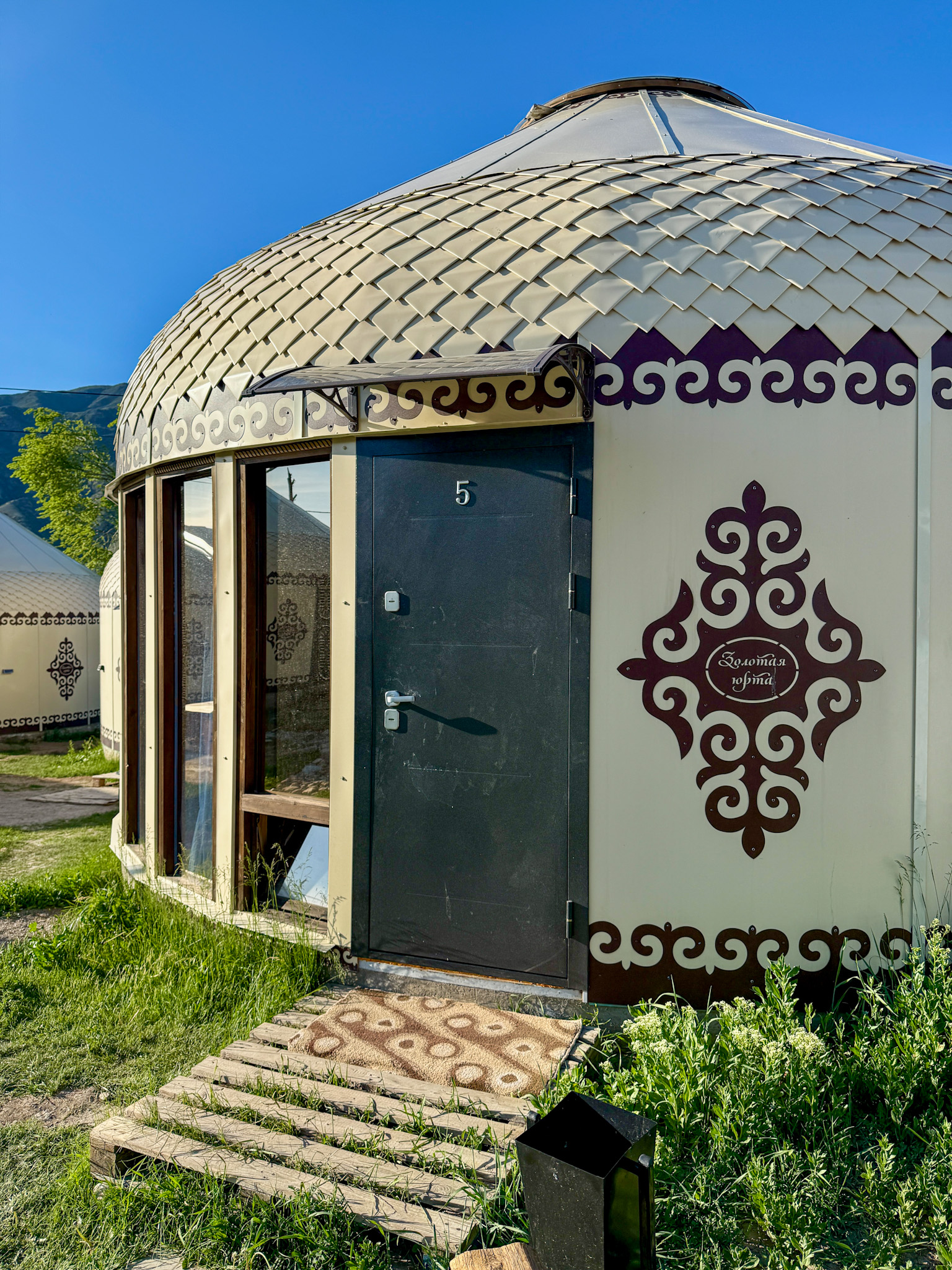
The yurt that night was the most well-appointed yurt any of us will probably ever sleep in: twenty-foot diameter, lofted sleeping area, full bathroom with a walk-in shower. Not the rustic felt-covered structure of our imaginations. Nobody complained.
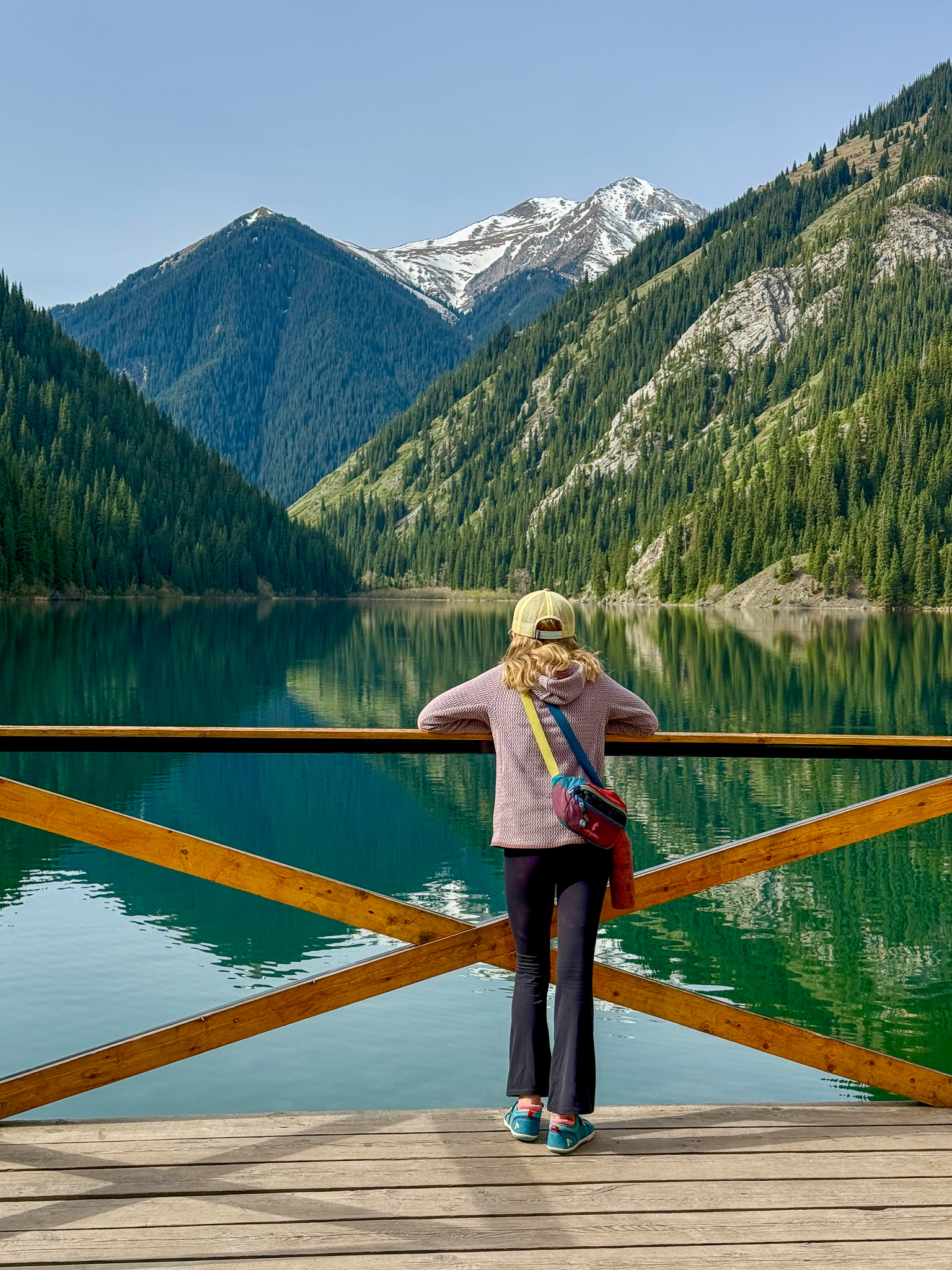
Kolsai Lake arrived early the next morning: the lowest of three glacial lakes the Kazakhs call the Pearls of the Tien Shan, set at 1,818 meters and ringed entirely by tall Tien Shan spruce, the water a deep clear blue that belongs to altitude and cold. The view from above, looking down through the pines at the bright oval of the lake, rewards the steep walk from the parking area before you’re even at the shore.
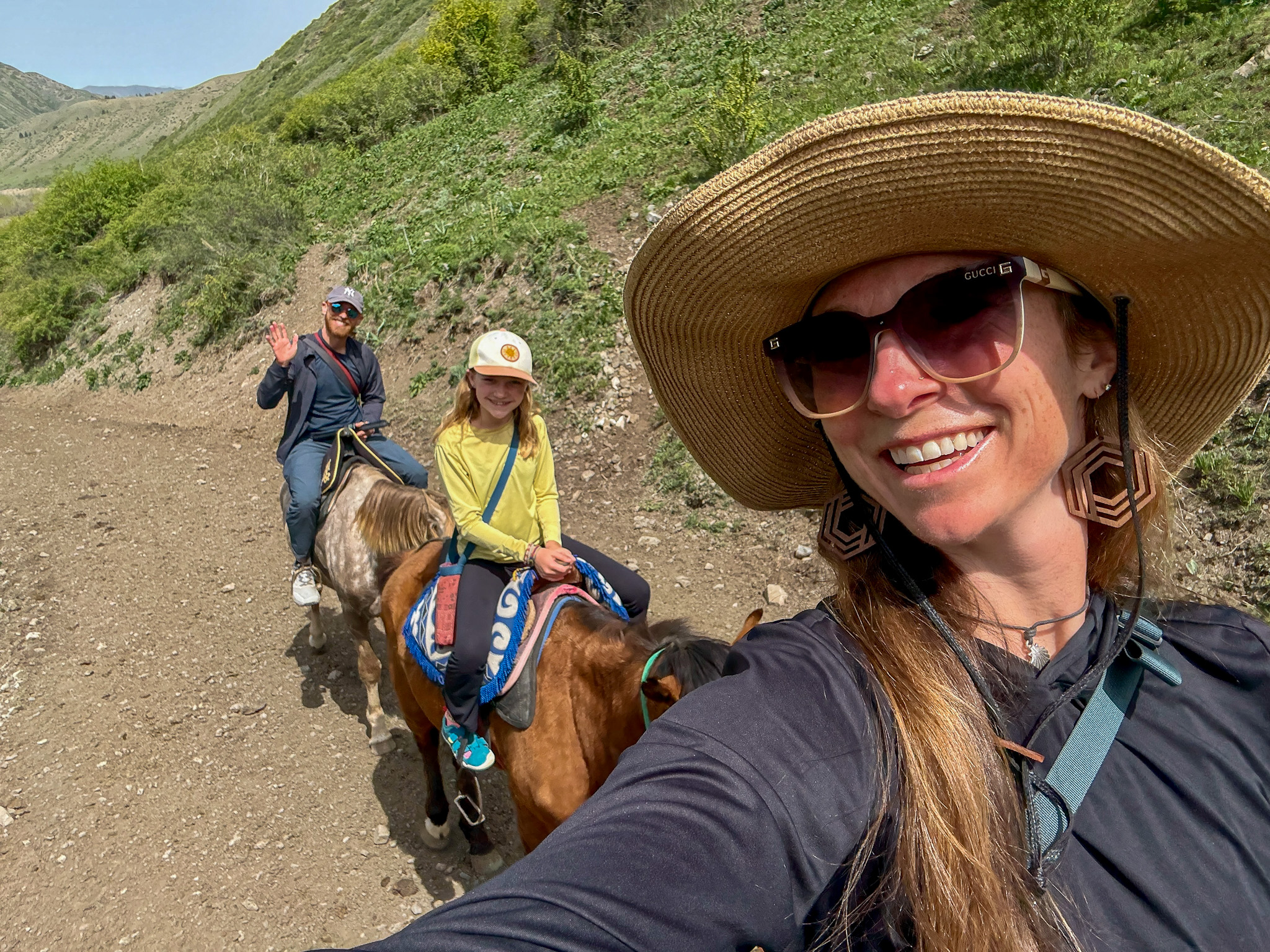
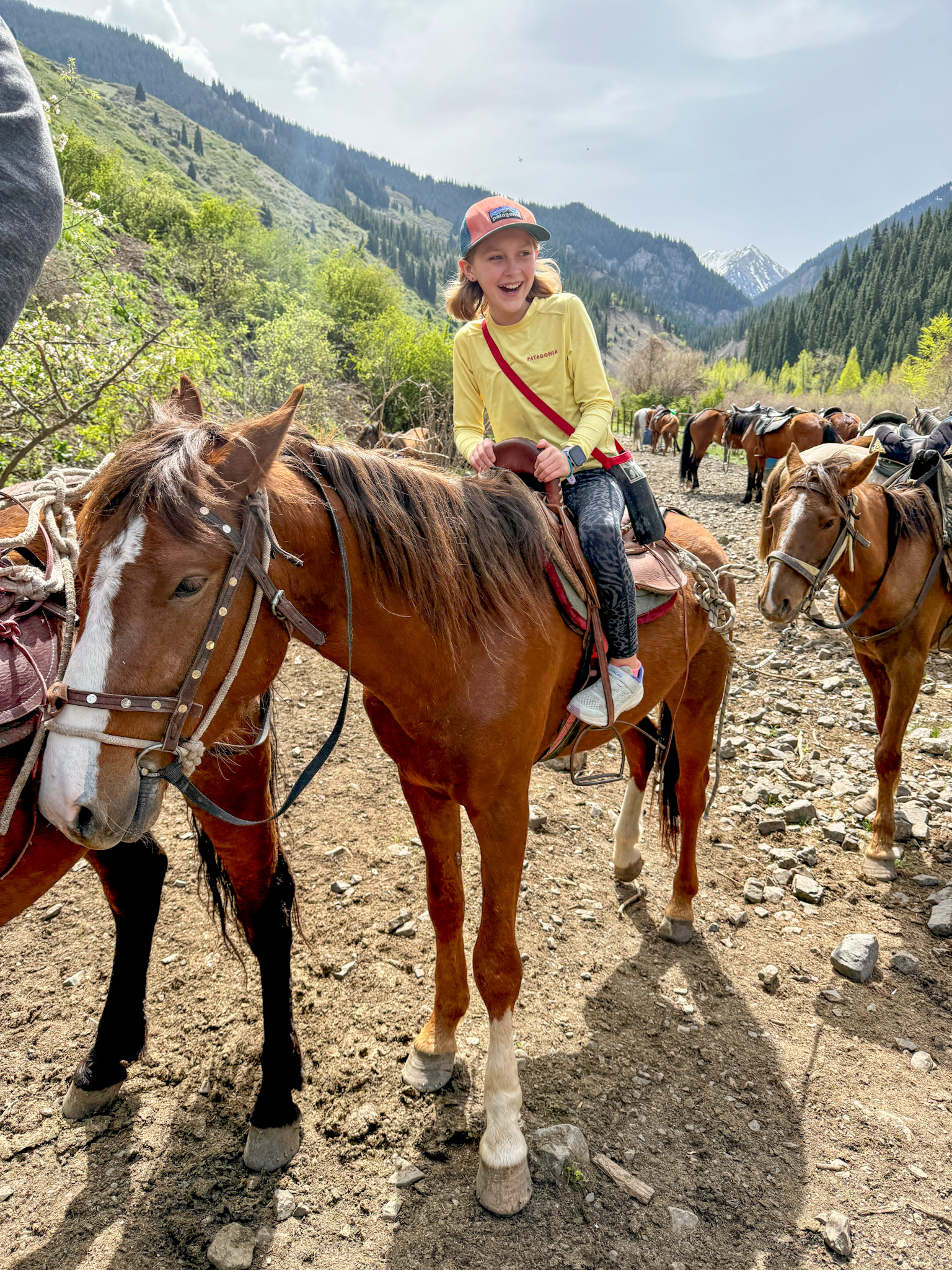
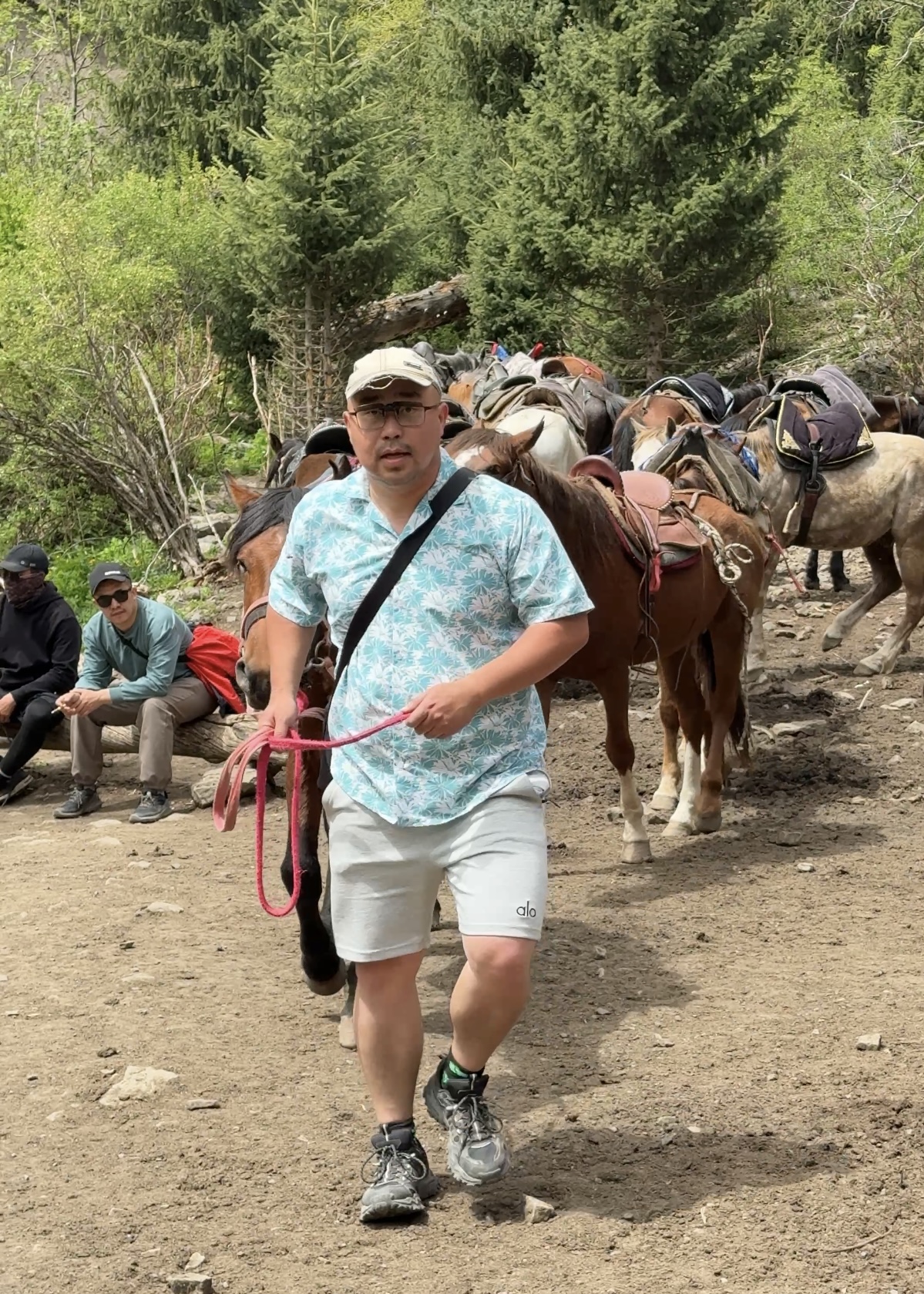
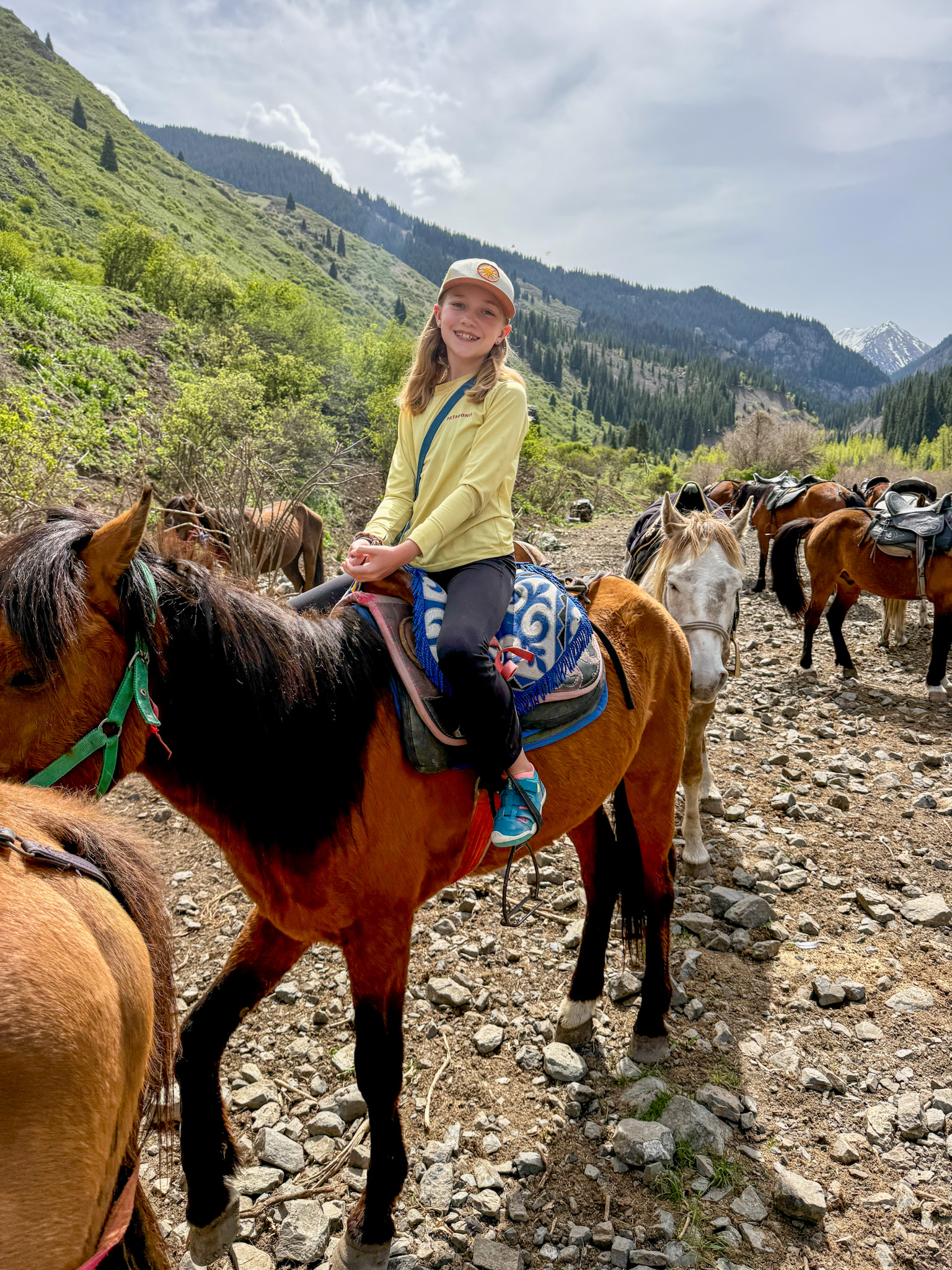
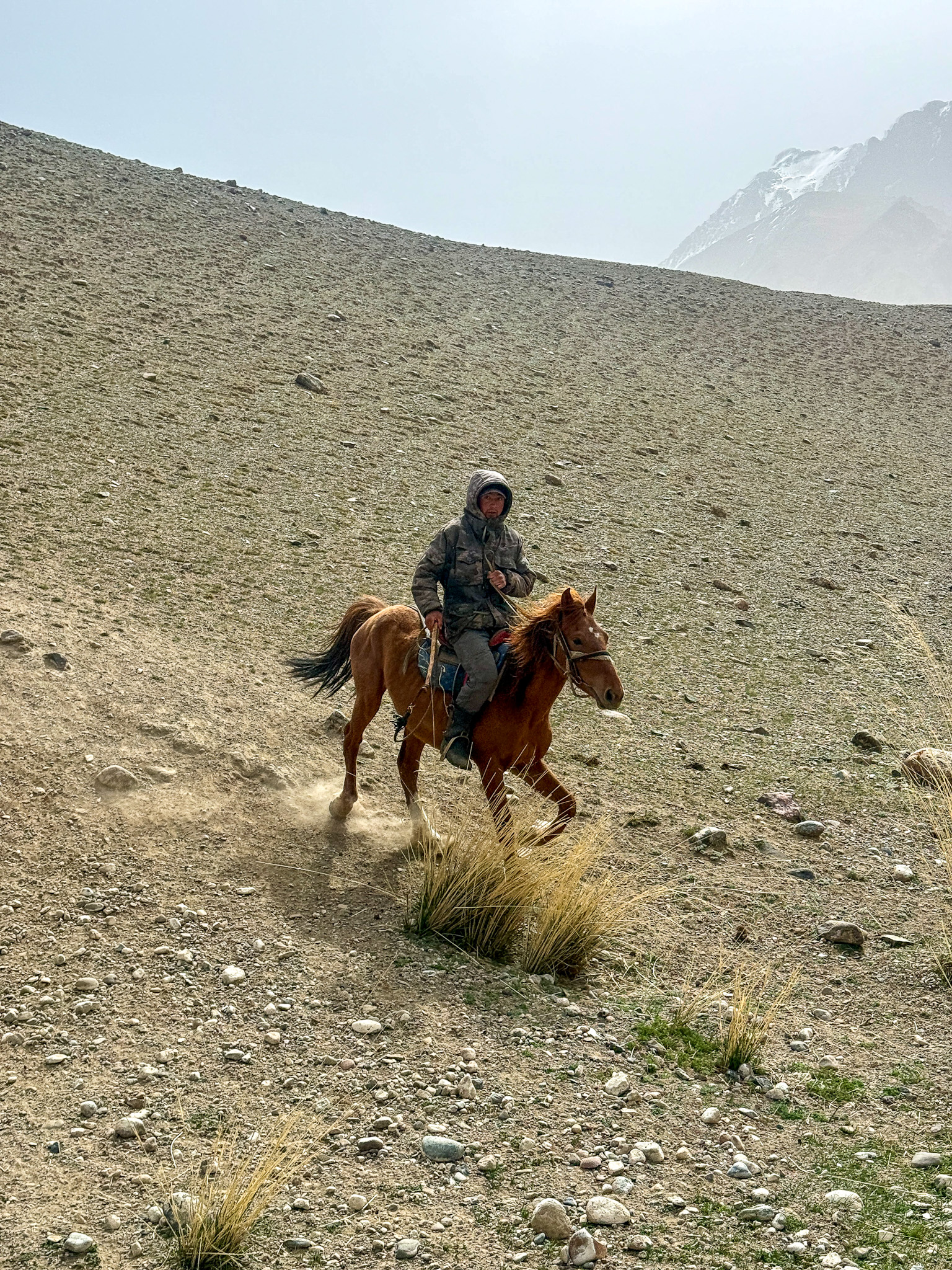
Next came Kaindy Lake, which required horses to reach and which the girls had been anticipating since before Kazakhstan. For Finlee and Arya, being handed the reins and pointed toward a mountain trail was possibly the best thing that had happened to them in weeks. Shaina took to the horse as if it hadn’t been 30 years since she rode one. Then there was Max—it was his first time on a horse, and he established within the first few minutes that he and horses have a fundamental disagreement about comfort. His stirrups were too short. He spent the entire descent either sitting in the saddle, which punished him, or standing in the stirrups a full foot above it, which also punished him. The horse went over the steep winding path as if the gradient were beside the point. The Richardson ladies appeared to feel no discomfort whatsoever.
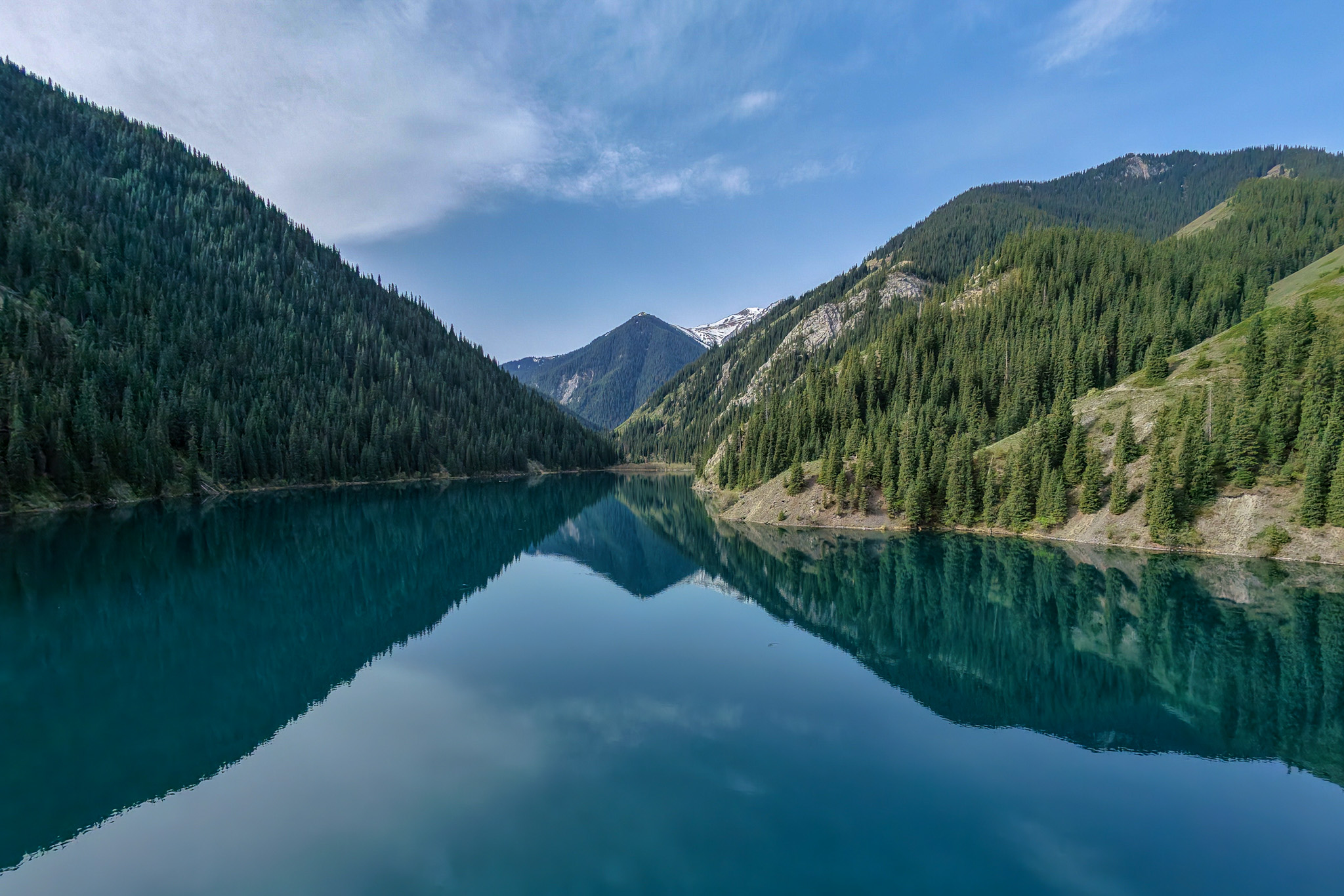
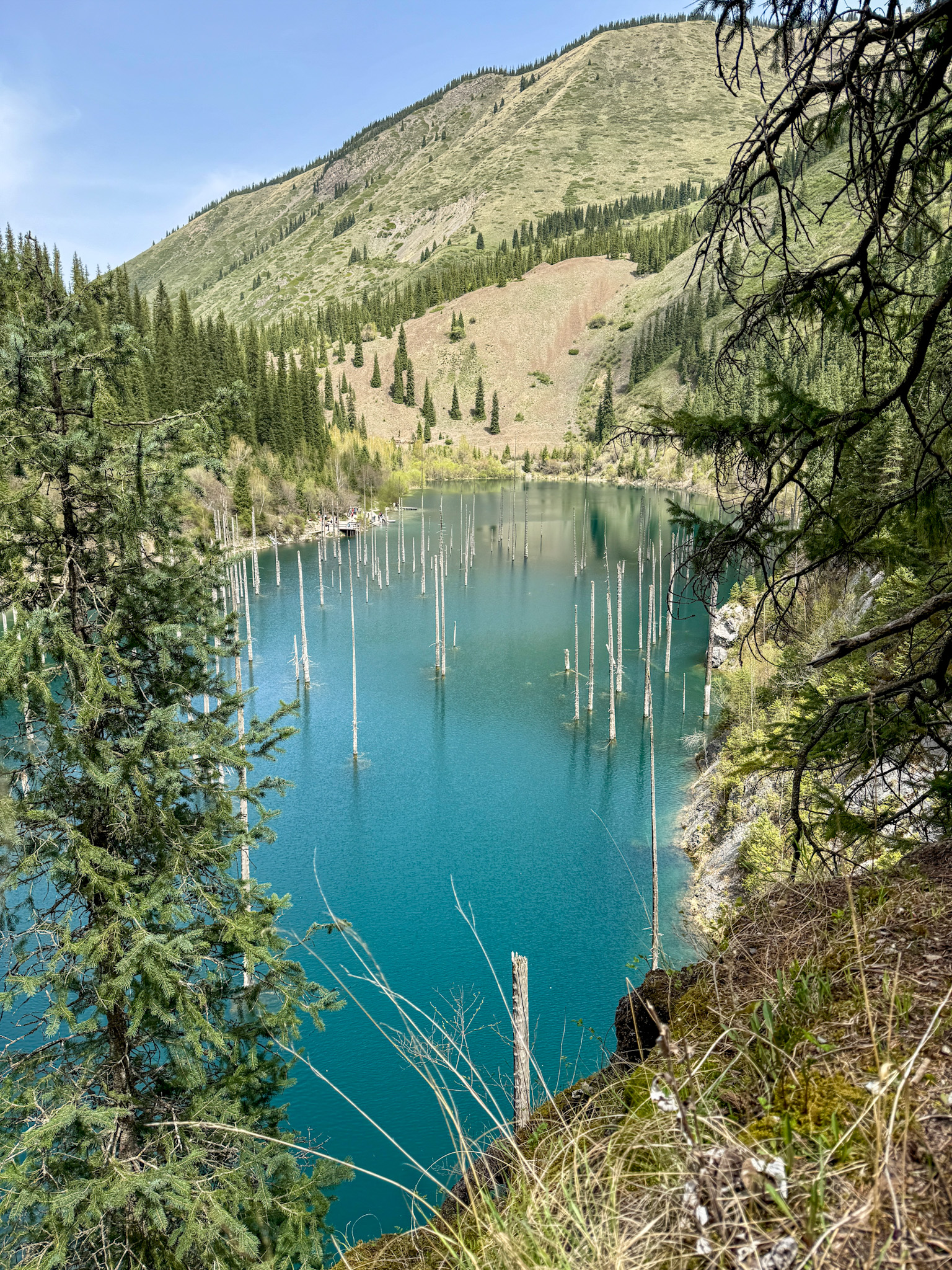
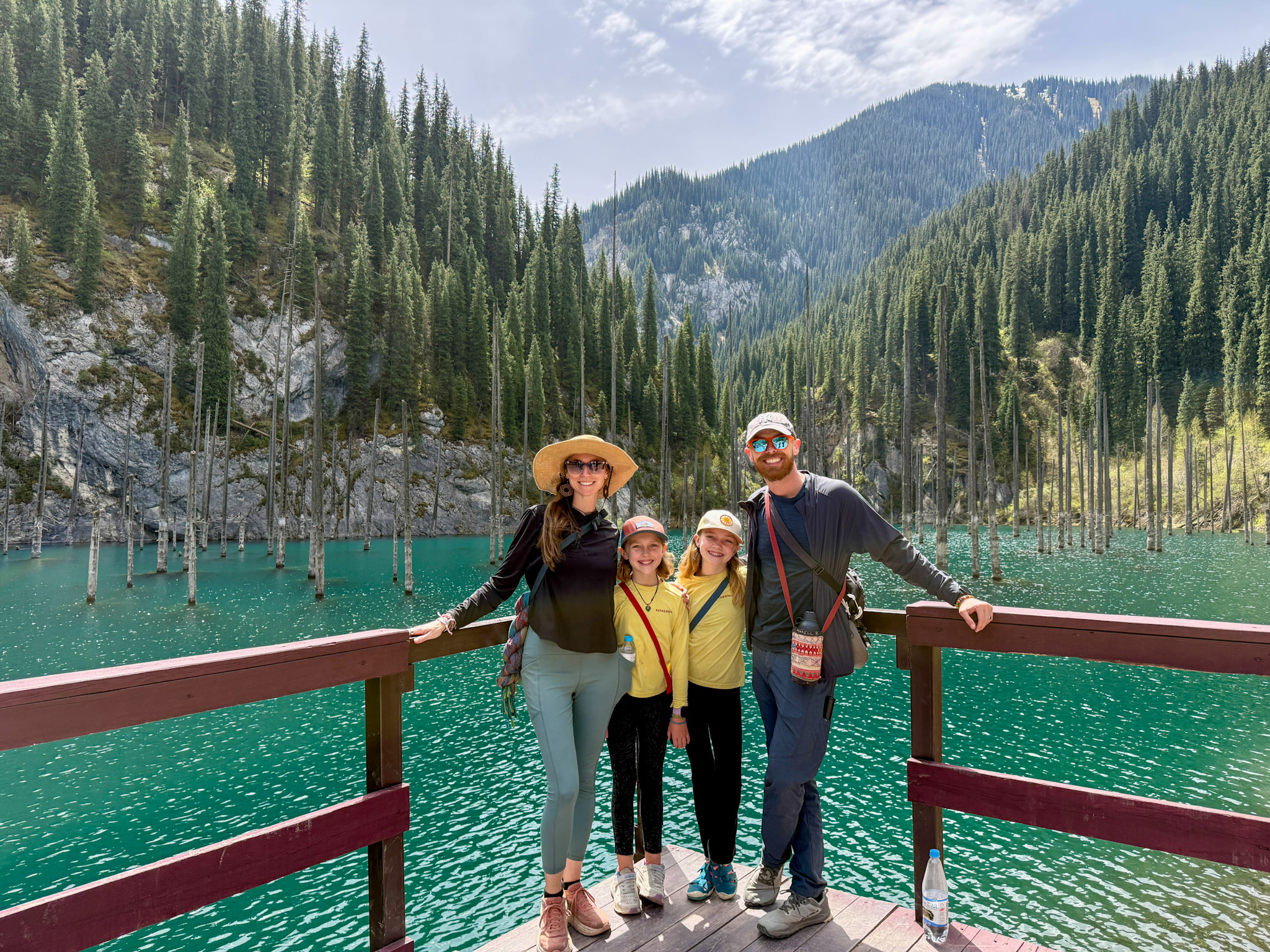
Kaindy Lake was created by the magnitude 8.0 Kebin earthquake of 1911, one of the strongest ever recorded in Central Asia. The landslide blocked the gorge, water filled in over the following years, and the spruce forest that had been growing there was slowly drowned in place. The trees refused to decompose in the mineral-rich cold water. They still stand upright beneath the water, with their bare bleached tops breaking the turquoise surface like the masts of a fleet that went down all at once. It looks like a forest that drowned and became a graveyard. The water is so clear you can see the branches still attached, covered in a fine green algae, reaching upward from a great stillness below. The girls found it unsettling in ways they couldn’t quite name, which seemed like exactly the right response.
Erkin knew a path to the far end of the lake that ninety-five percent of visitors never take. We went, and as promised, we were the only ones there. The sunken forest framed against the turquoise water, nothing else around.
About thirty minutes outside Saty we said our goodbyes to Tahir, climbed out of his car, and piled into Erkin’s. From that point on it would just be Erkin guiding and driving, the way it was always supposed to be. The trip became what it had been meant to be from the beginning.
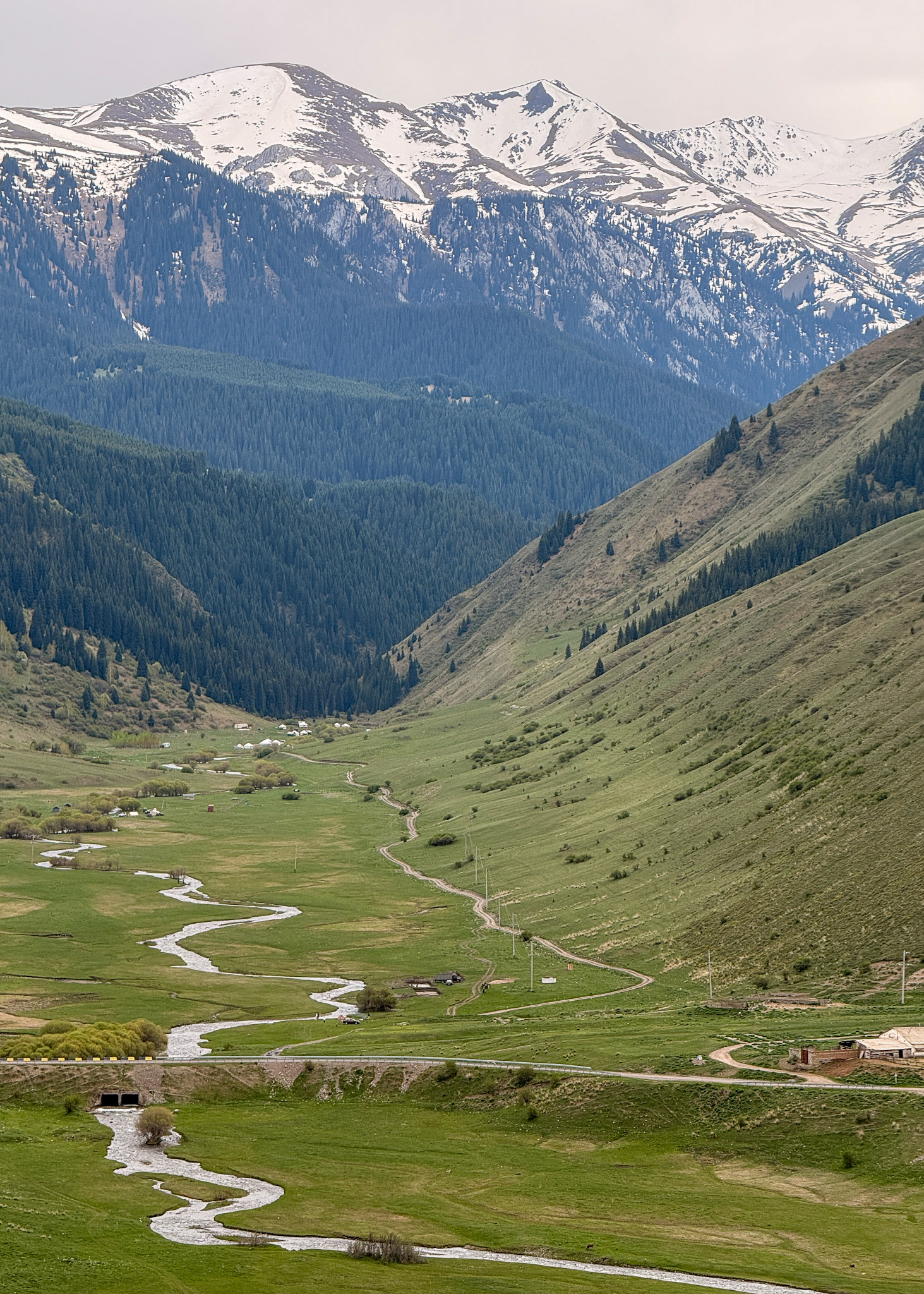
The border crossing into Kyrgyzstan that afternoon was smooth. The Karkara crossing sits in a wide, high-elevation valley historically shared by Kazakh and Kyrgyz herders, and within about twenty minutes the stamps were in our passports and we were officially across.
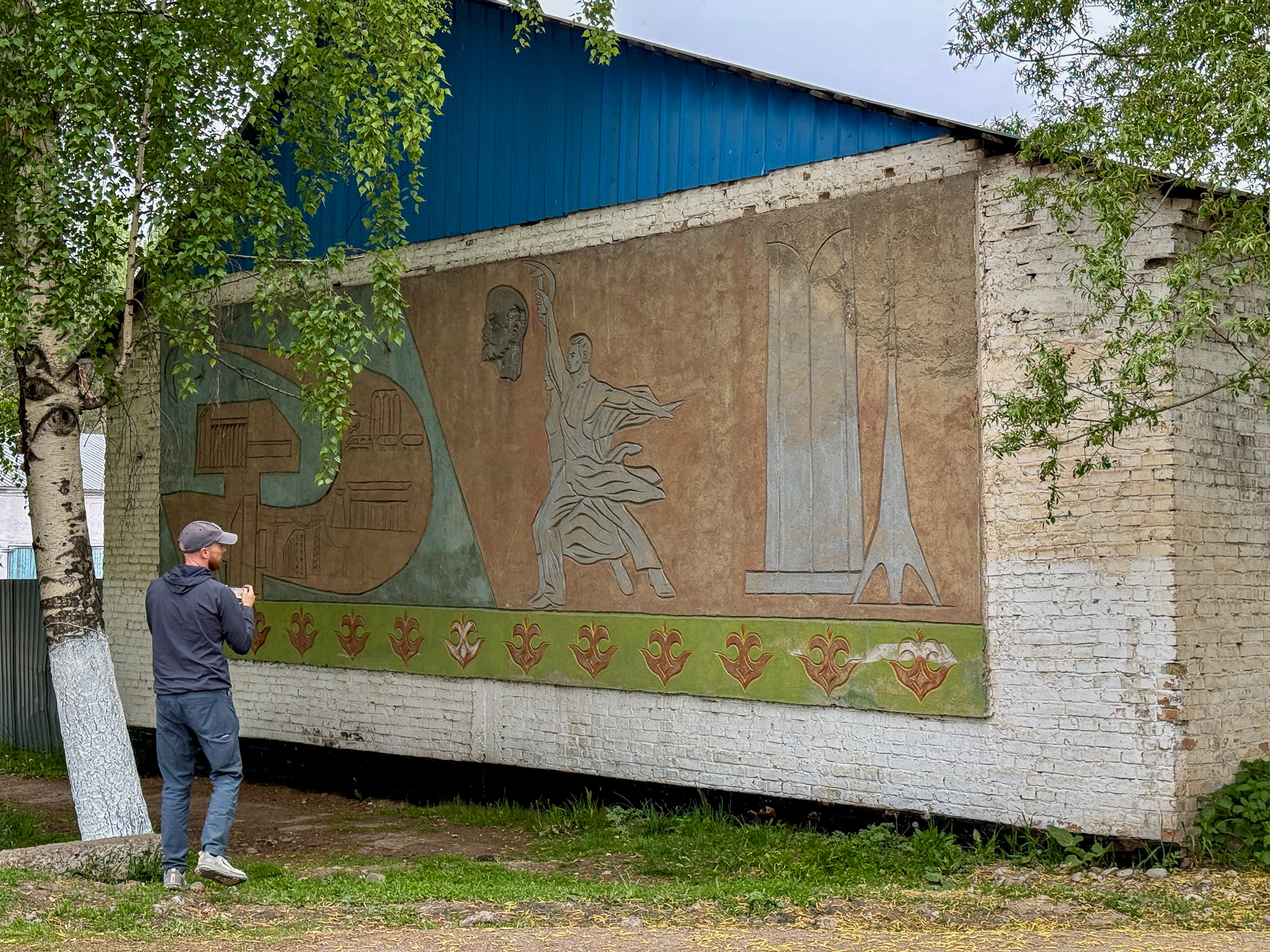
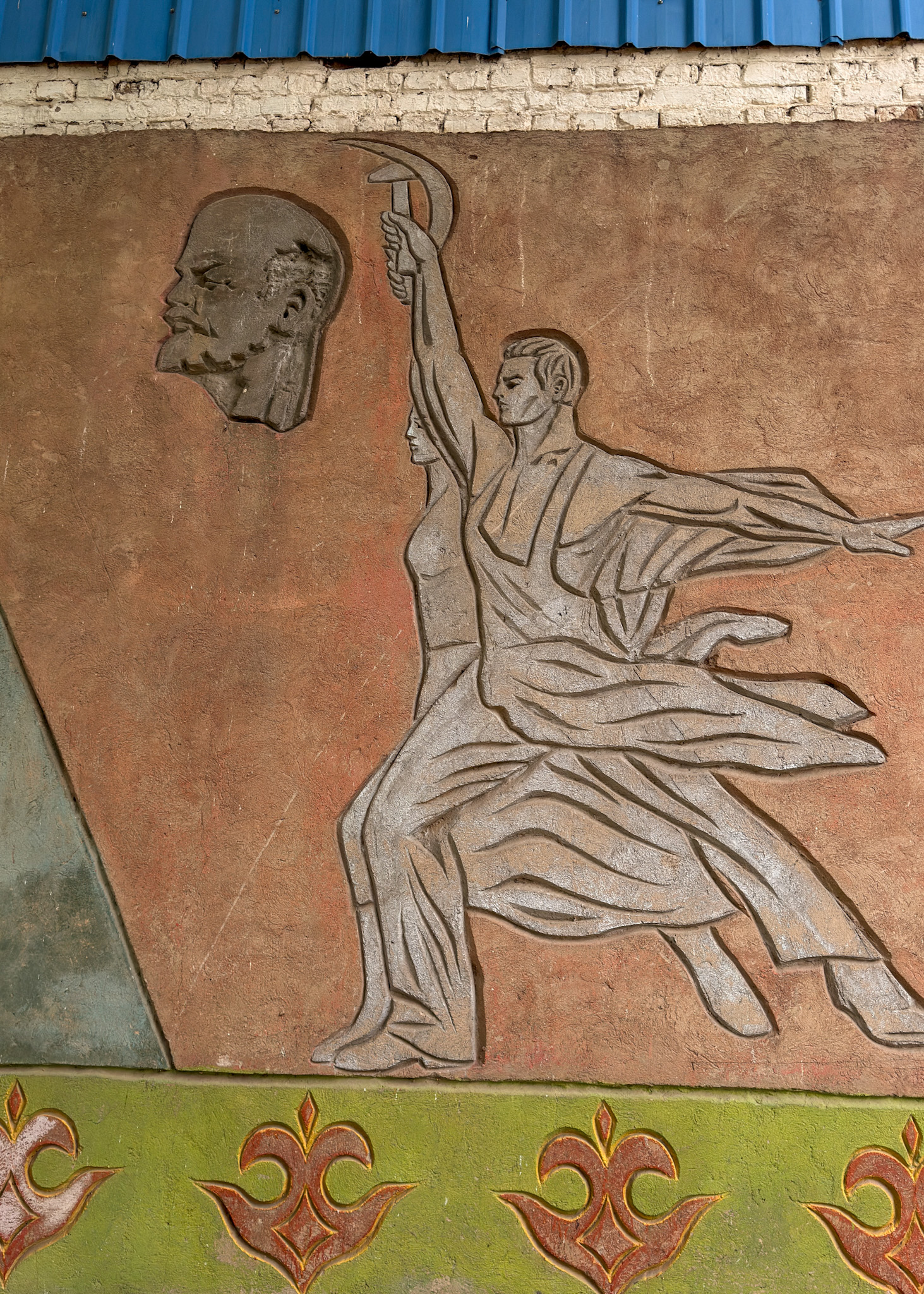
The road into Karakol passed Soviet-era bas-relief murals carved into roadside concrete: laborers, farmers, cosmonauts, soldiers, ethnic peoples, the idealized faces of a state trying to write its values permanently into the landscape. Many are crumbling. The survivors are striking pieces of mid-century public art going slowly back to the earth they were made from.
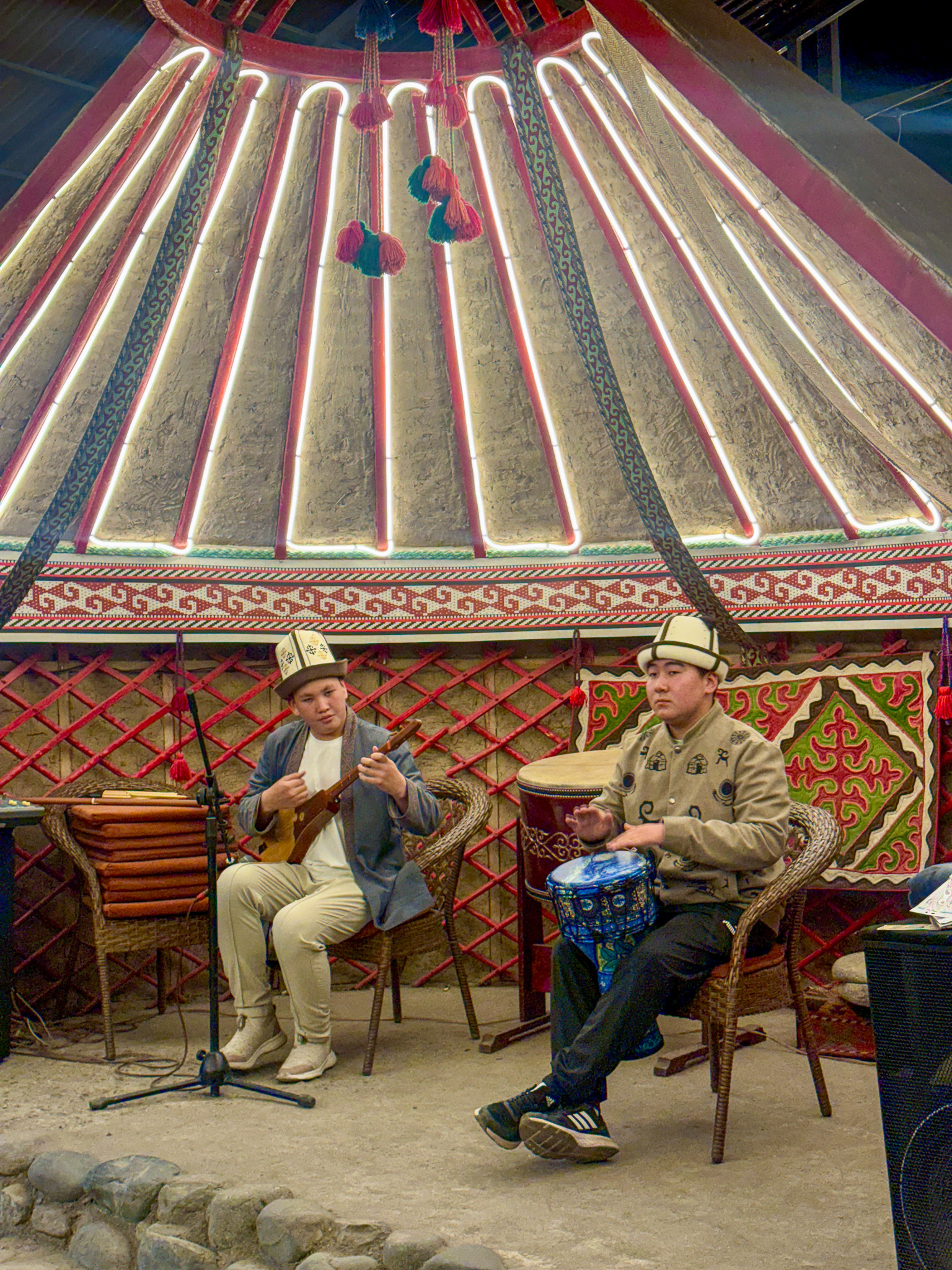
Karakol is a town of around 75,000 on the eastern edge of Lake Issyk-Kul, founded in 1869 as a Russian military outpost and now Kyrgyzstan’s main hub for mountain trekking and adventure travel. Our dinner at Dastorkon Restaurant introduced horse meat, which we tried once and found bland in a way that had nothing to do with its provenance and everything to do with the preparation. Plain noodles, not much seasoning, then sprinkled with finely chopped horse. If the same horse had shown up in a bold spiced stew, maybe we would have been more enthusiastic. Thankfully, that is when Erkin’s friends arrived: two teenage musicians who had been playing at this restaurant for three years. The komuz is the national instrument of Kyrgyzstan, a three-stringed fretless lute carved from a single piece of apricot or juniper wood, central to Kyrgyz musical tradition for over a thousand years. These two played it as both a melodic and a percussion instrument simultaneously, three or four songs back to back, shifting styles fluidly, the whole restaurant going quiet to watch. Erkin didn’t have to arrange this experience for us. He did it anyway. Thoughtful moments like these are what really made the trip so memorable.
The guesthouse in Karakol was the best of the trip: minimalism meets Central Asia with a quiet Zen sensibility, owned by a Kyrgyz gentleman and his Japanese wife, both of whom went out of their way to make sure we were comfortable. An extra pillow? No problem. A couple bags of herbal tea before bed? I’ll be right back with that. It felt like pure luxury compared to some of our more rugged accommodations, and it was the perfect base from which to push further into the mountains.
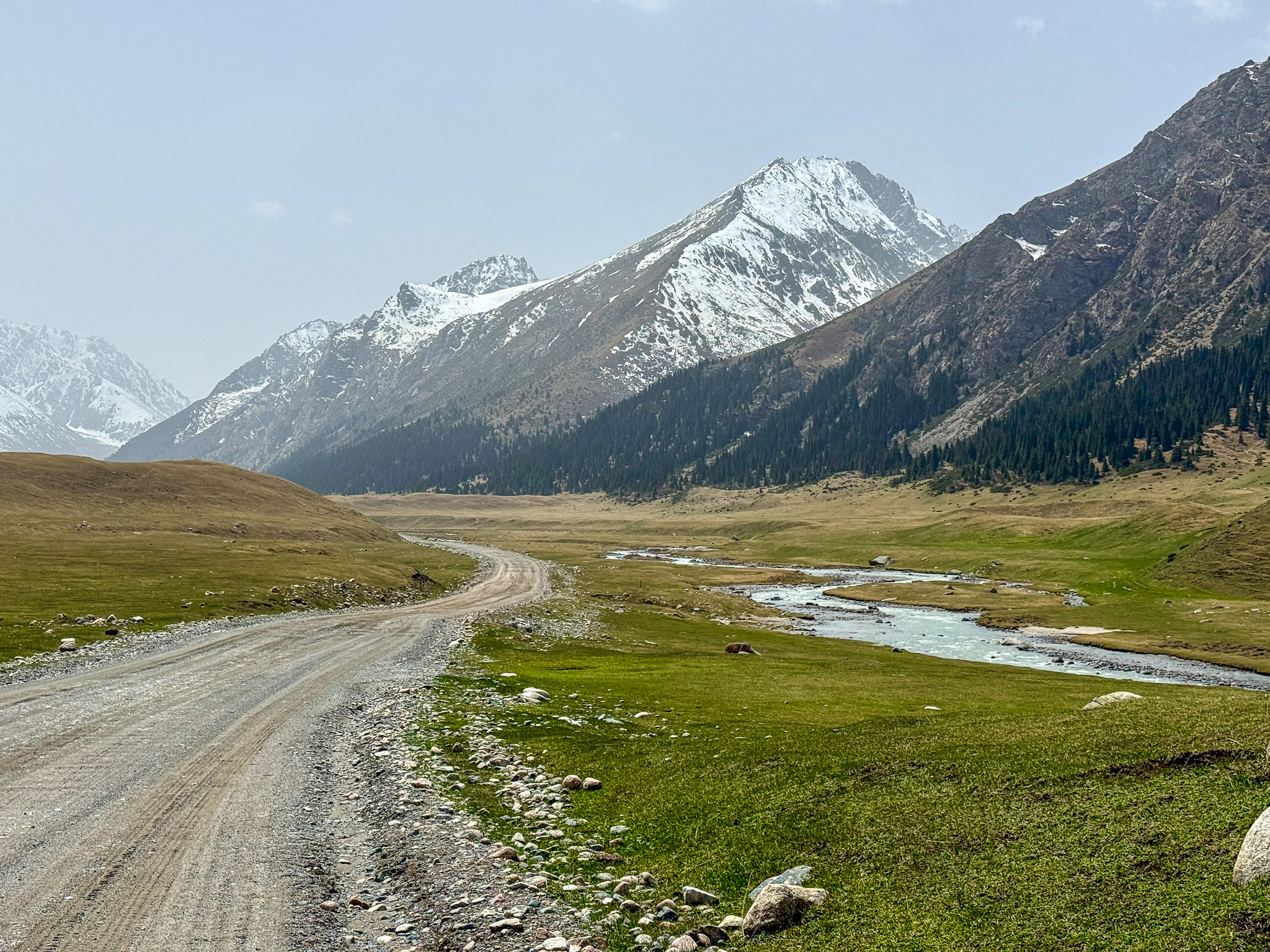
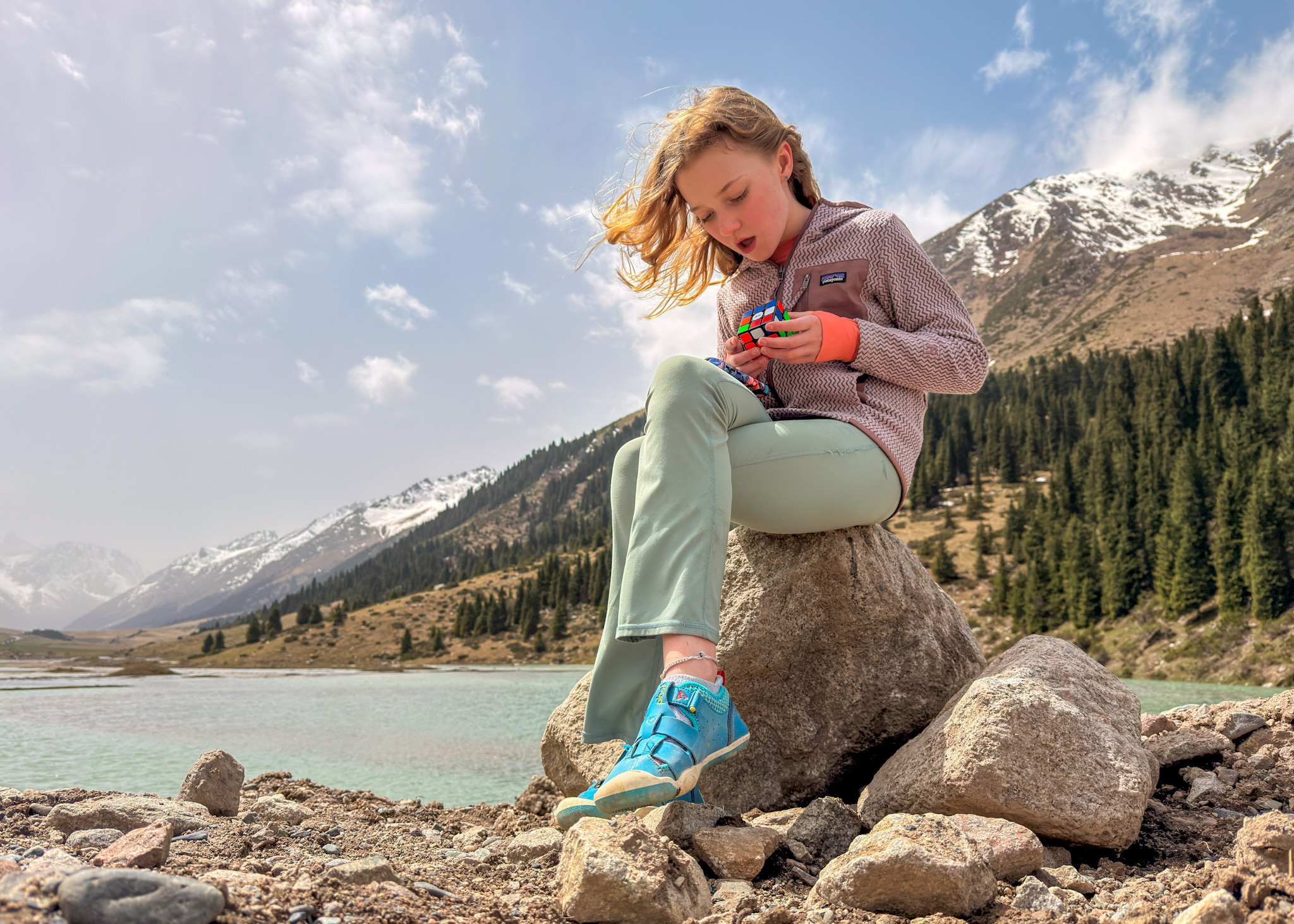
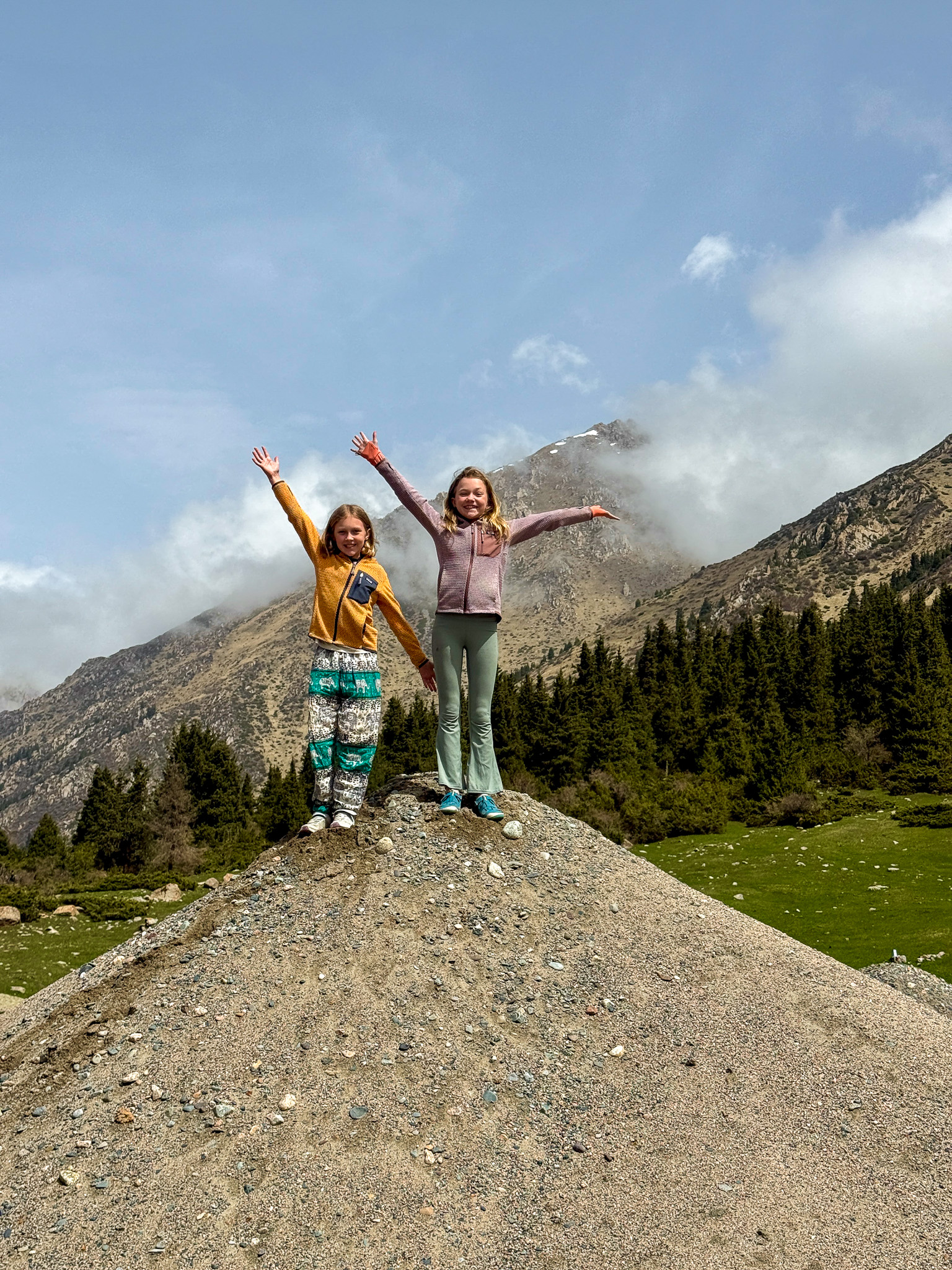
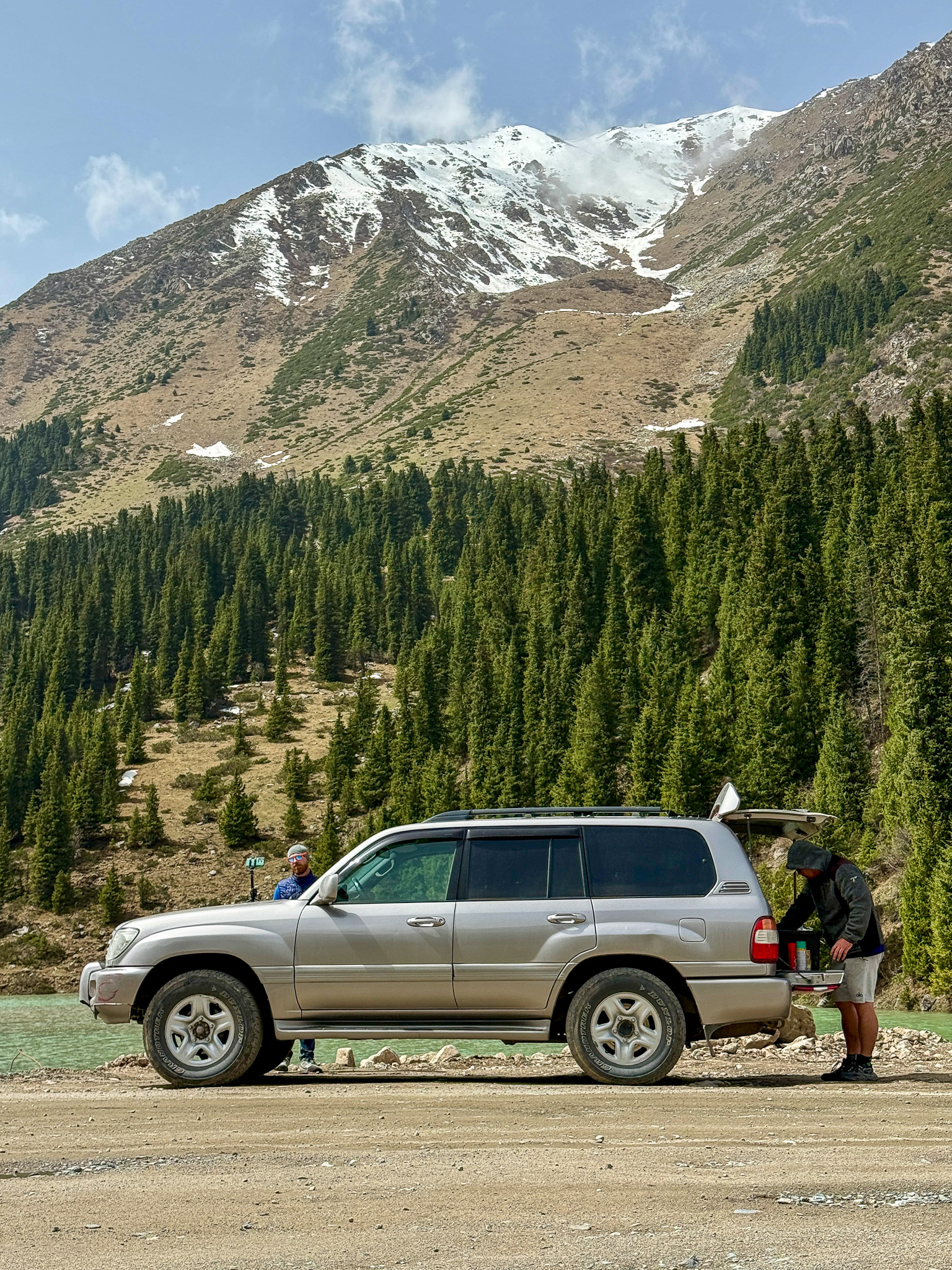
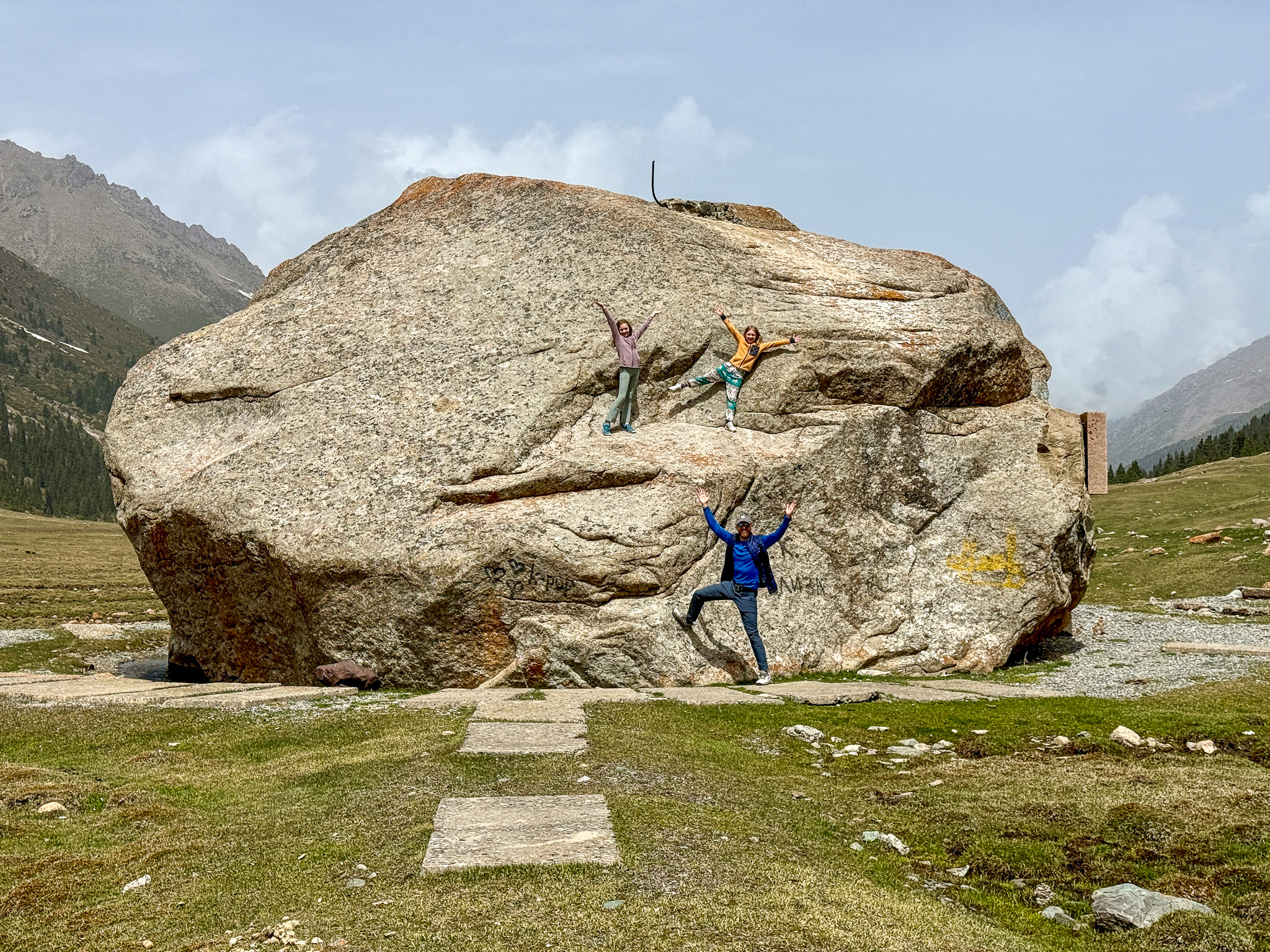
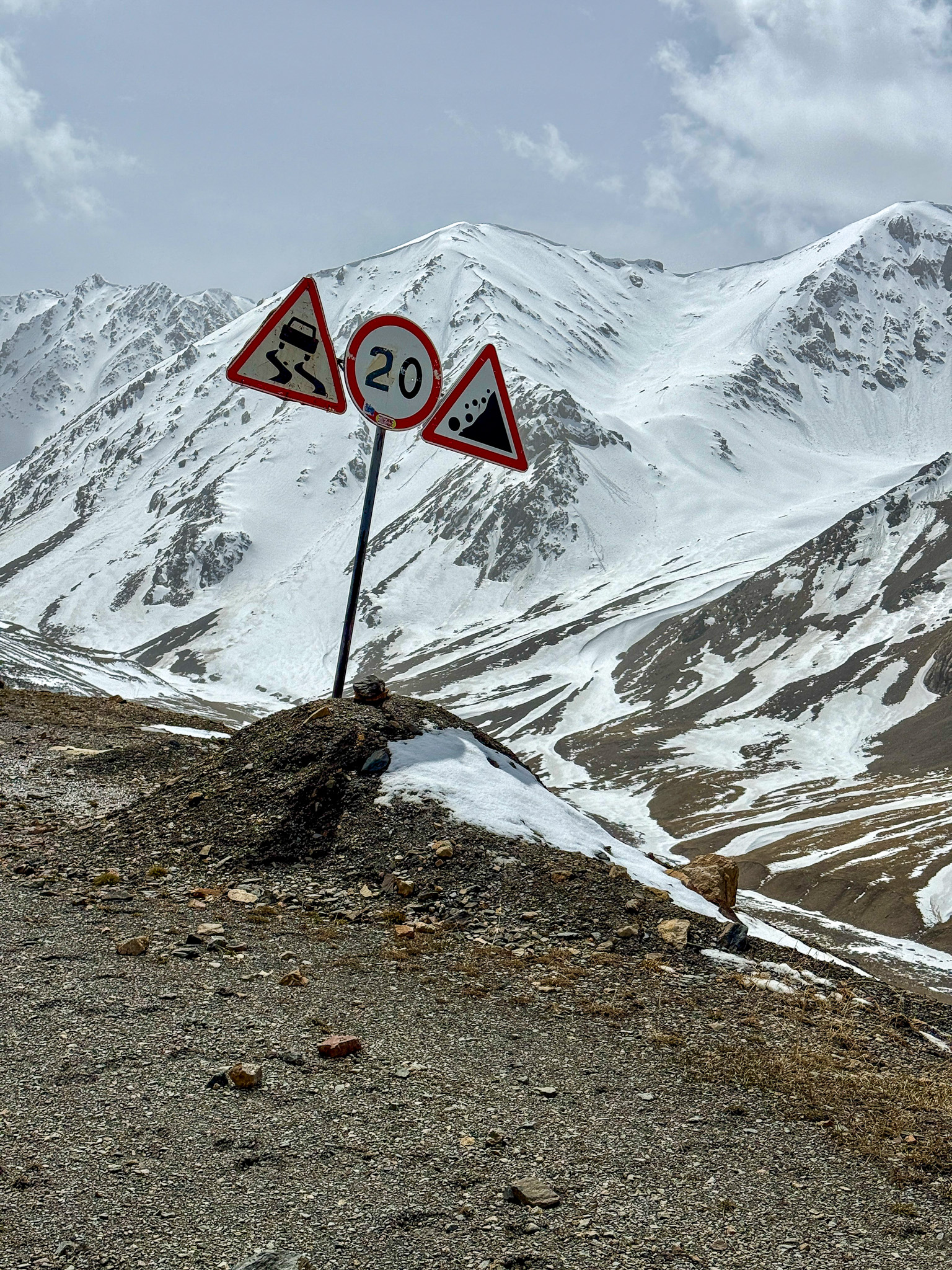
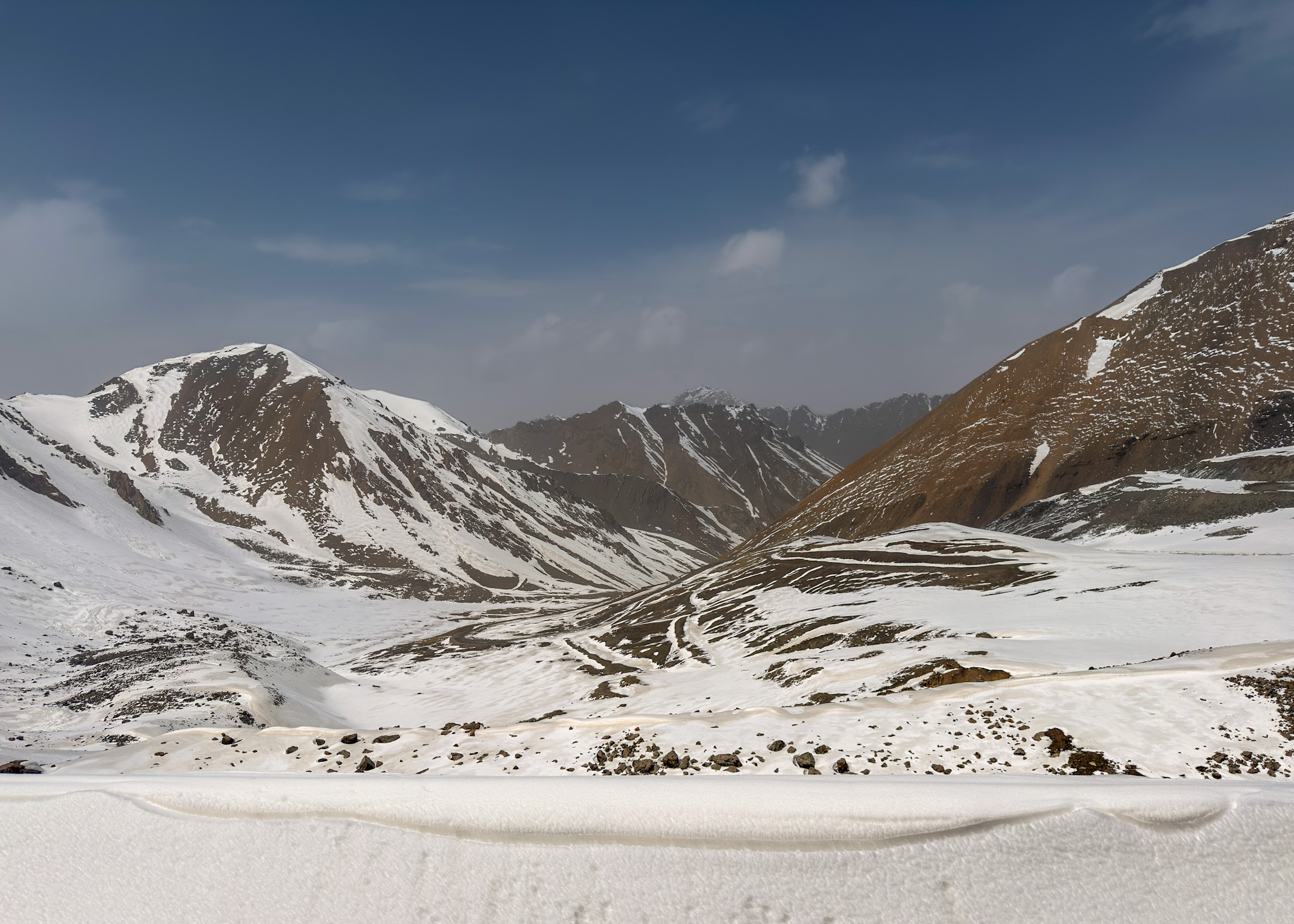
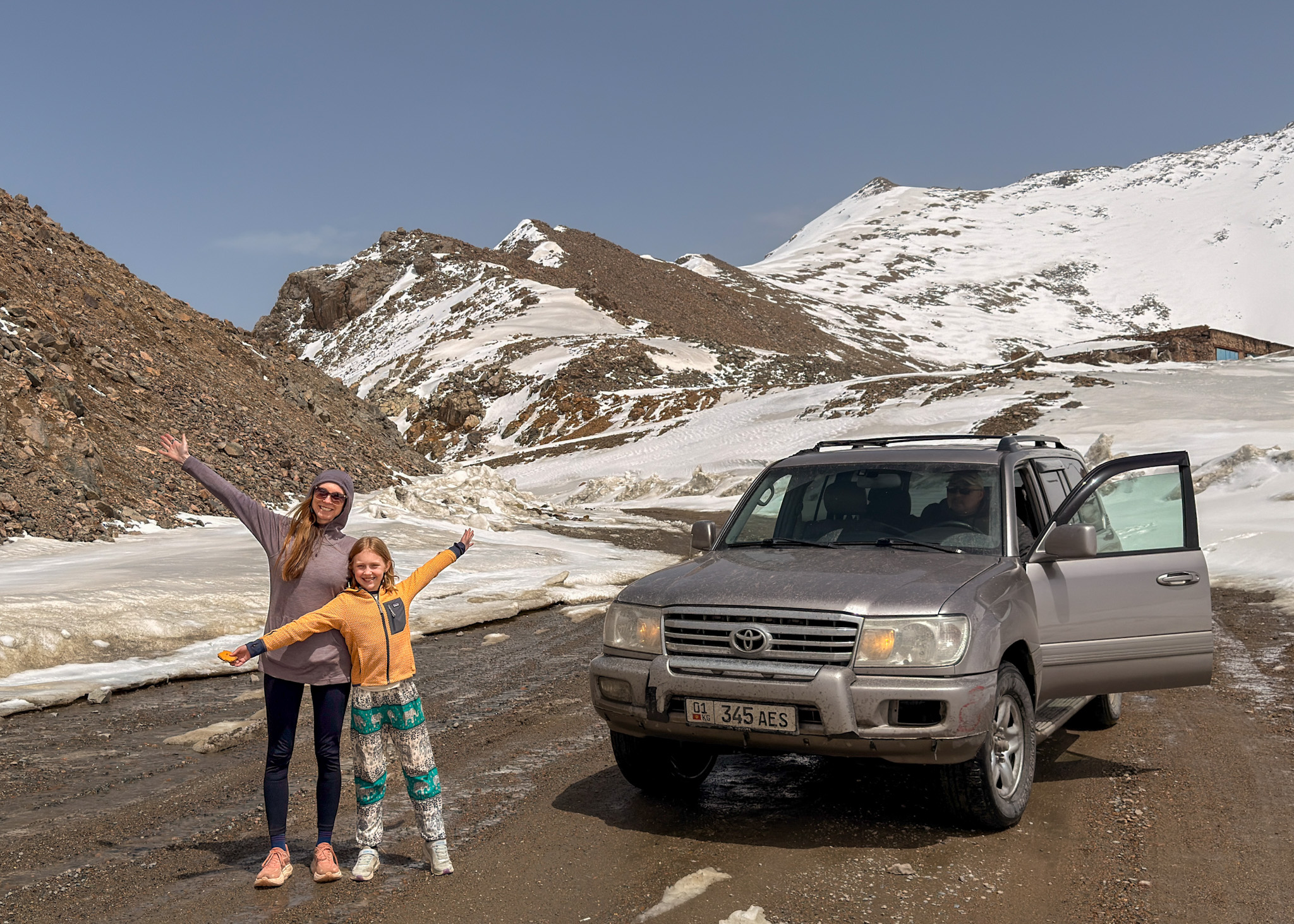
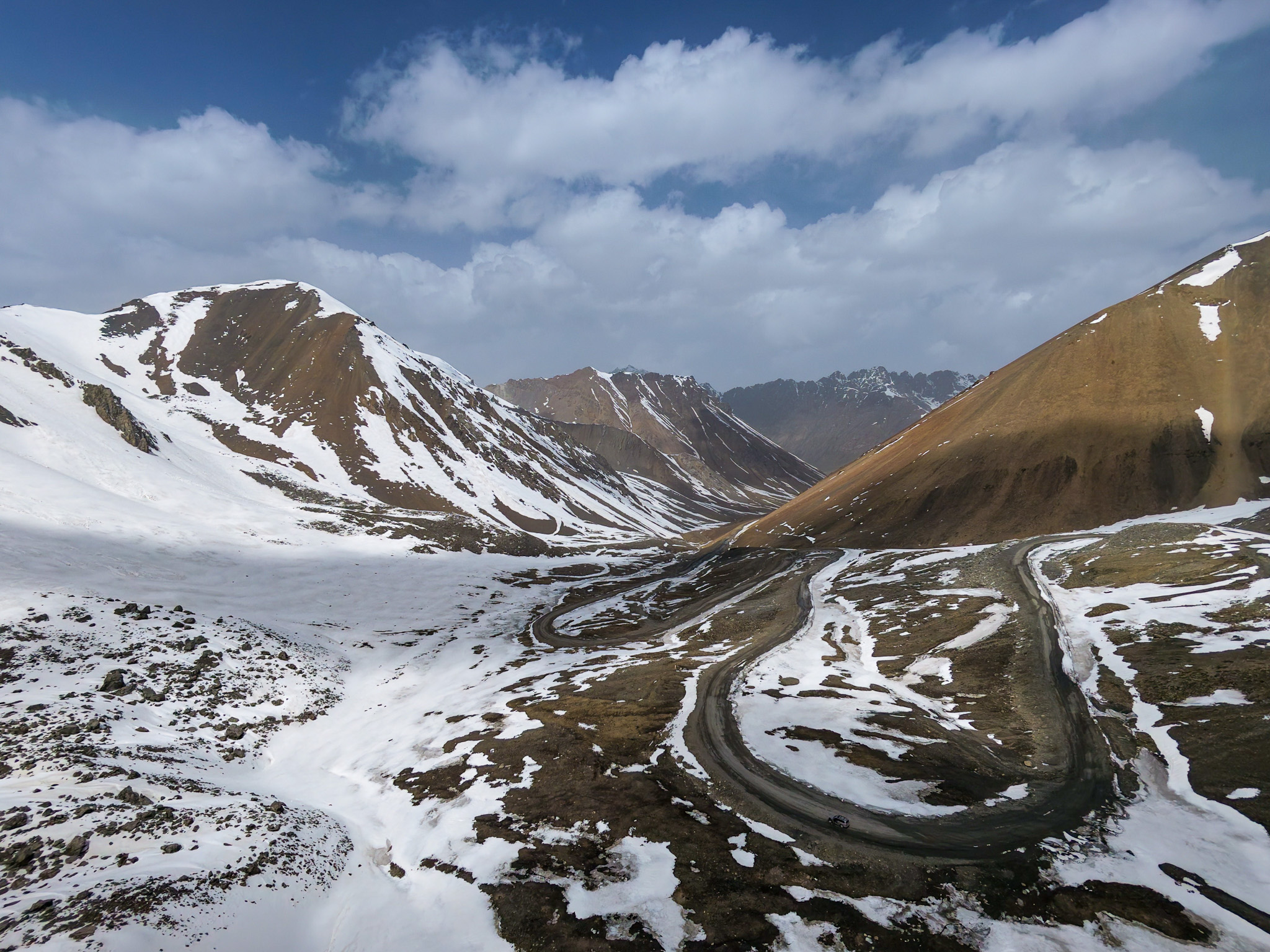
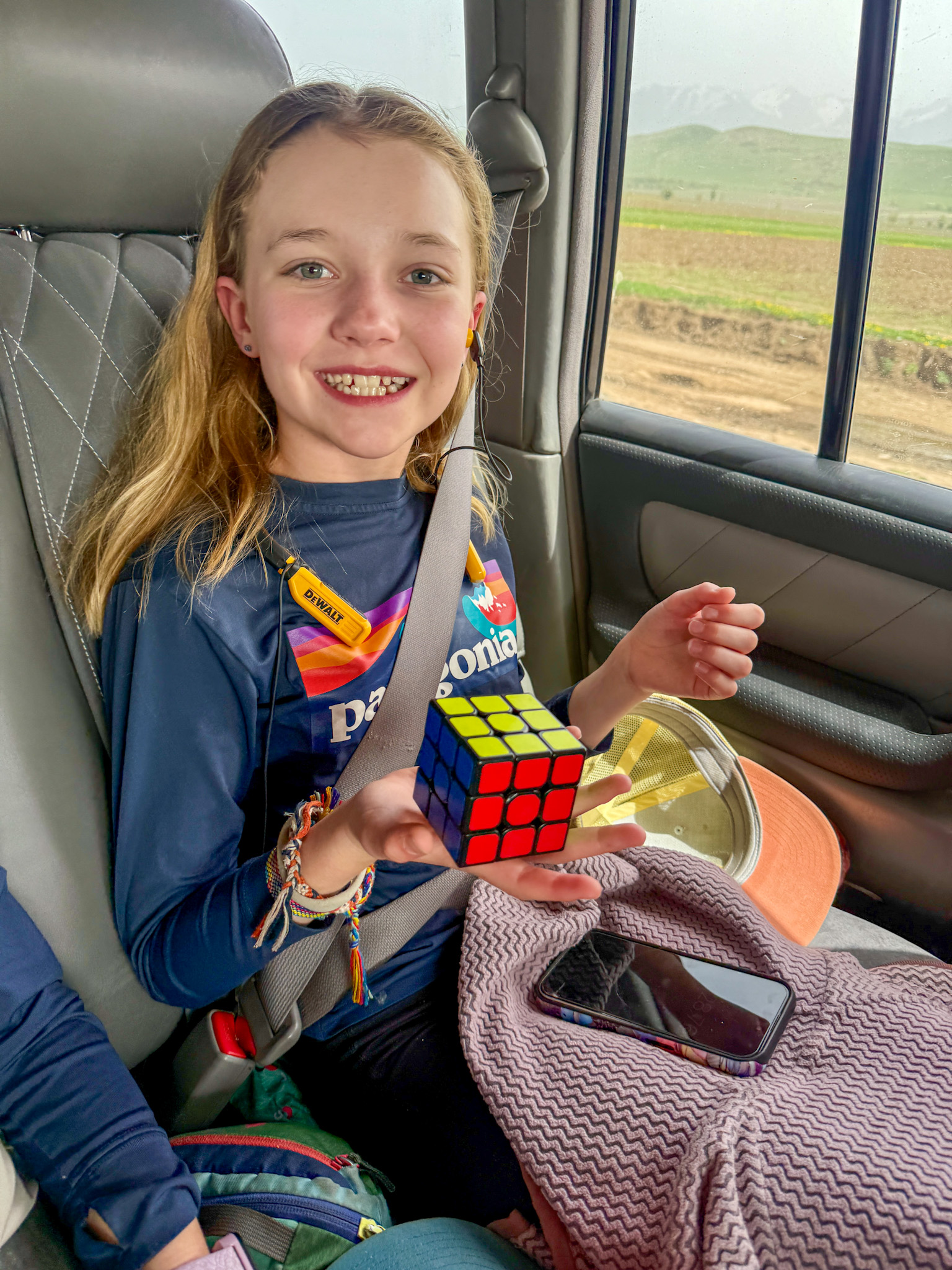
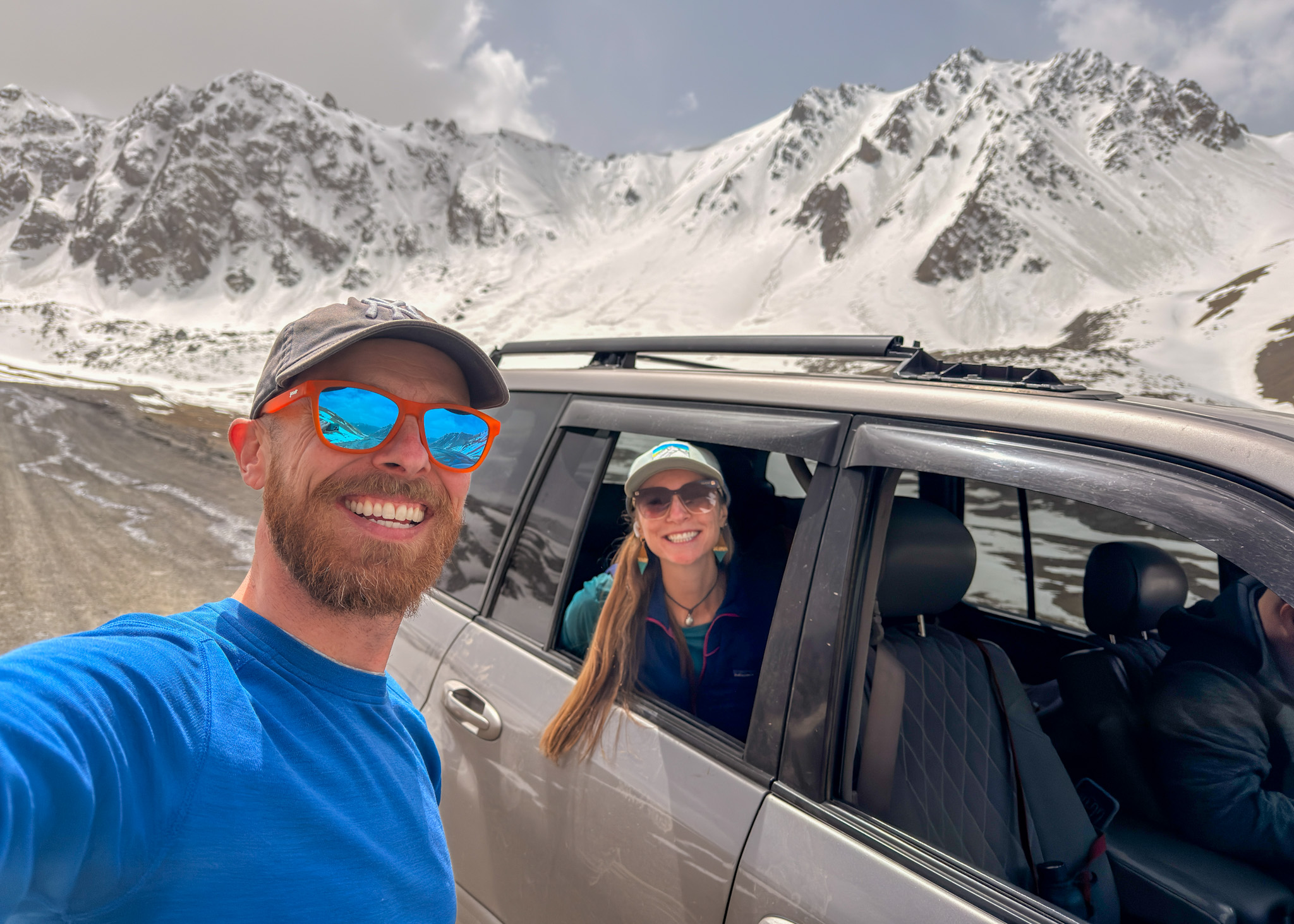
The road south from Karakol into the Tien Shan is a slow-motion exit from the civilized world. We mentally prepared for the six hour drive through the remote mountains, cameras ready and Rubik’s Cube in hand, yet another unexpected gift from Erkin that Arya took to immediately. To get to Enilchek, you have to claw your way over the Chon-Ashuu Pass, 3,799 meters up, where the air turns thin and metallic and the comfortable safety of a horizon is replaced by a thousand-foot drop into nothing. Snow appeared on the road as we climbed, then more of it, until it covered and obscured everything in every direction. The girls reported being a little freaked out, which was a reasonable thing to be. Erkin moved through the worst of it without drama, which is the entire point of having a driver who knows what he is doing.
On the far side of the pass, a security checkpoint marks the edge of the restricted border zone. Enilchek sits close enough to the Chinese border that access requires a permit arranged in advance, and the guards checked our documentation carefully. While they did, marmots ran between the rocks around the checkpoint at improbable speed, fat and round, diving headfirst into their holes at the first sign of attention and popping back up to reassess two seconds later. The girls were delighted.
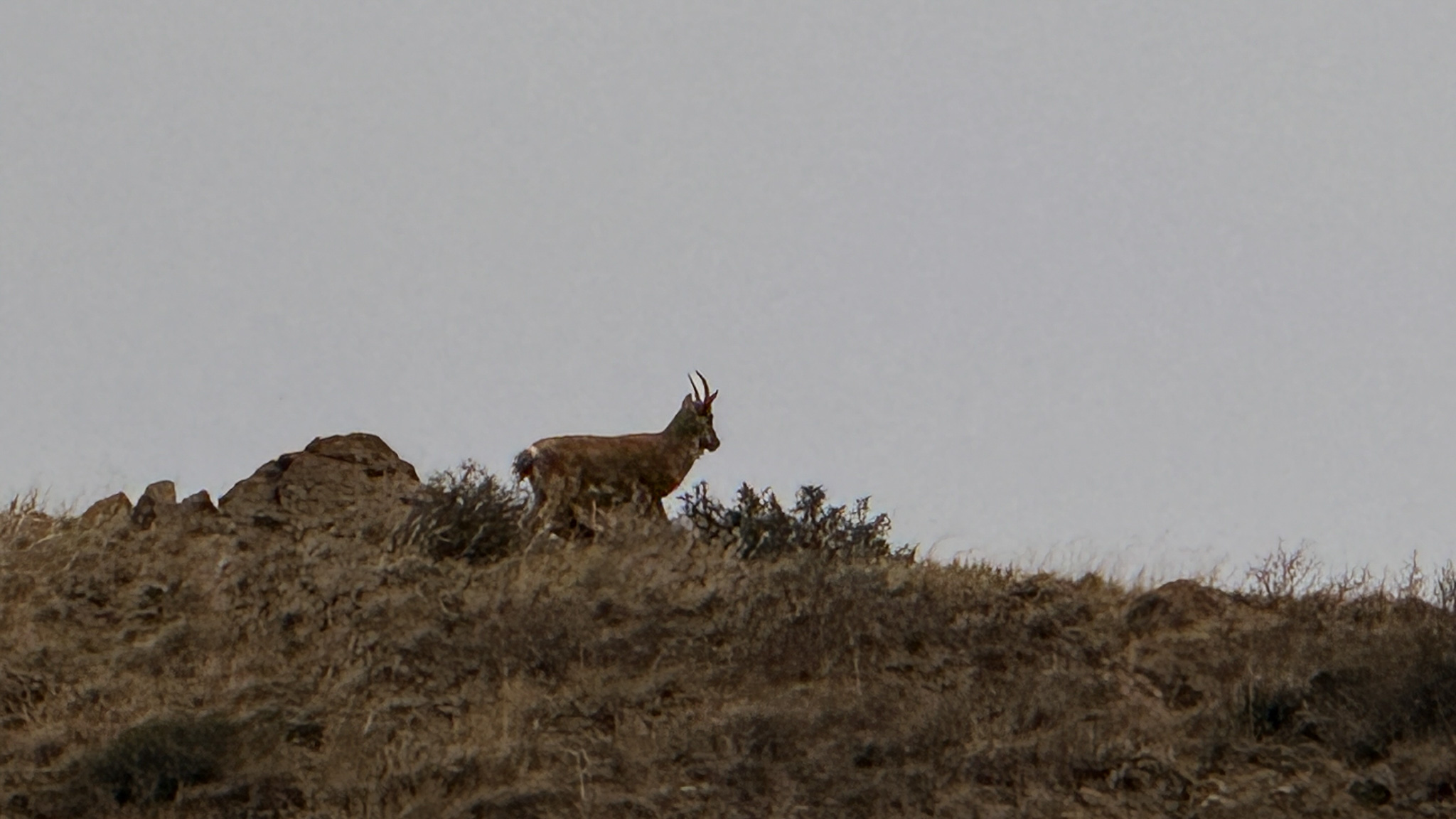
A few kilometers past the checkpoint, Max spotted a silhouette on the ridge above the road. He almost didn’t. He had been scanning the ridgelines because Erkin had mentioned ibex in the area, and if he hadn’t looked at exactly that moment he would have missed it completely. One shape against the sky, then two, then a third. He told Erkin to stop and we all climbed out of the car to get a better look. The full herd emerged from the brush as our eyes adjusted, thirty or more Central Asian ibex moving together across the slope. Something spooked them, and they went up a sheer rock face at a trot, with a casual ease that made the physics of it almost comic. The terrain would have demanded ropes and days of preparation for any human, whereas the ibex looked like they were on an afternoon stroll. When the last of them crested the ridge and vanished, nobody spoke for a moment. Then with smiles on every face, all we could say was “So Awesome!”
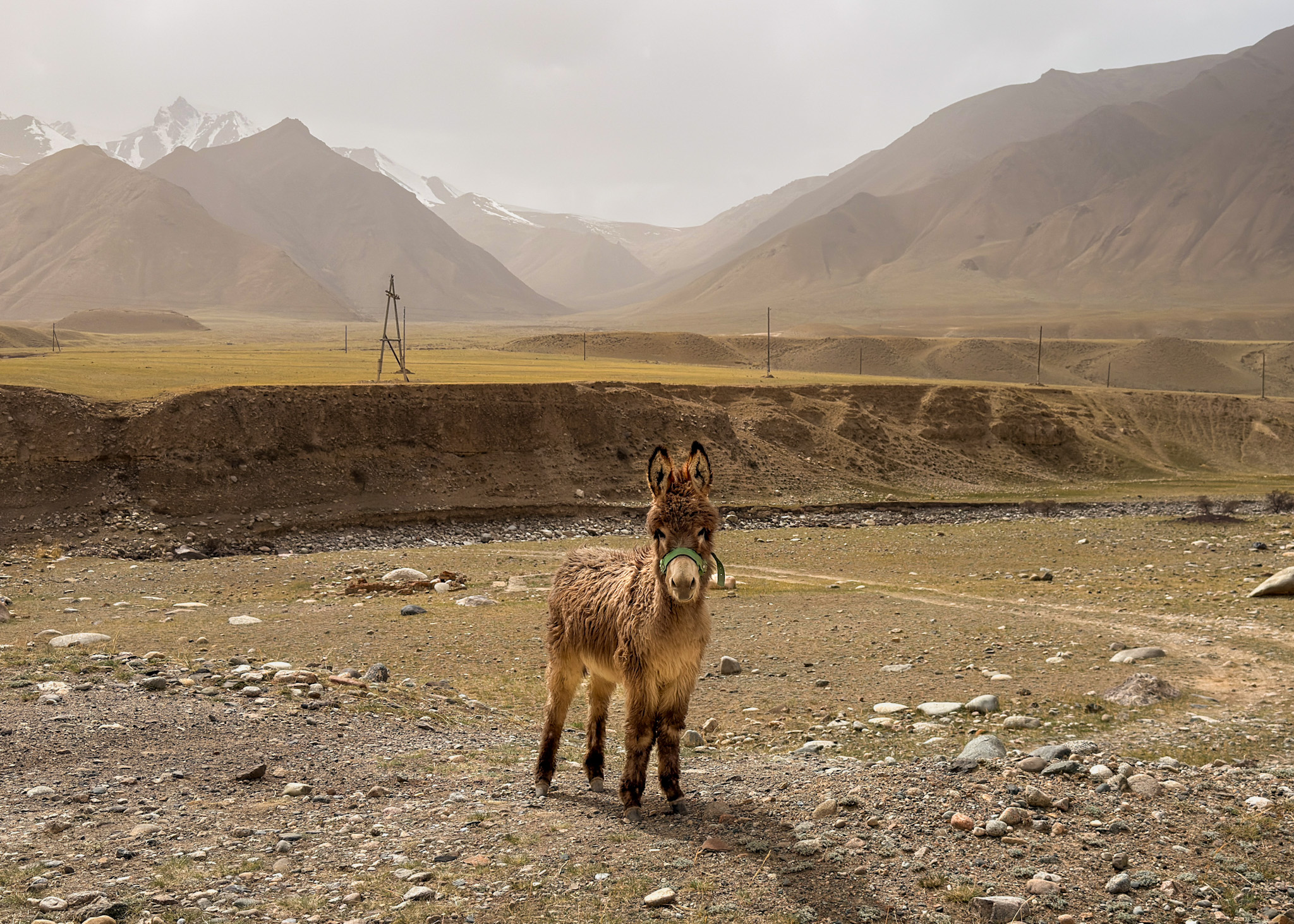
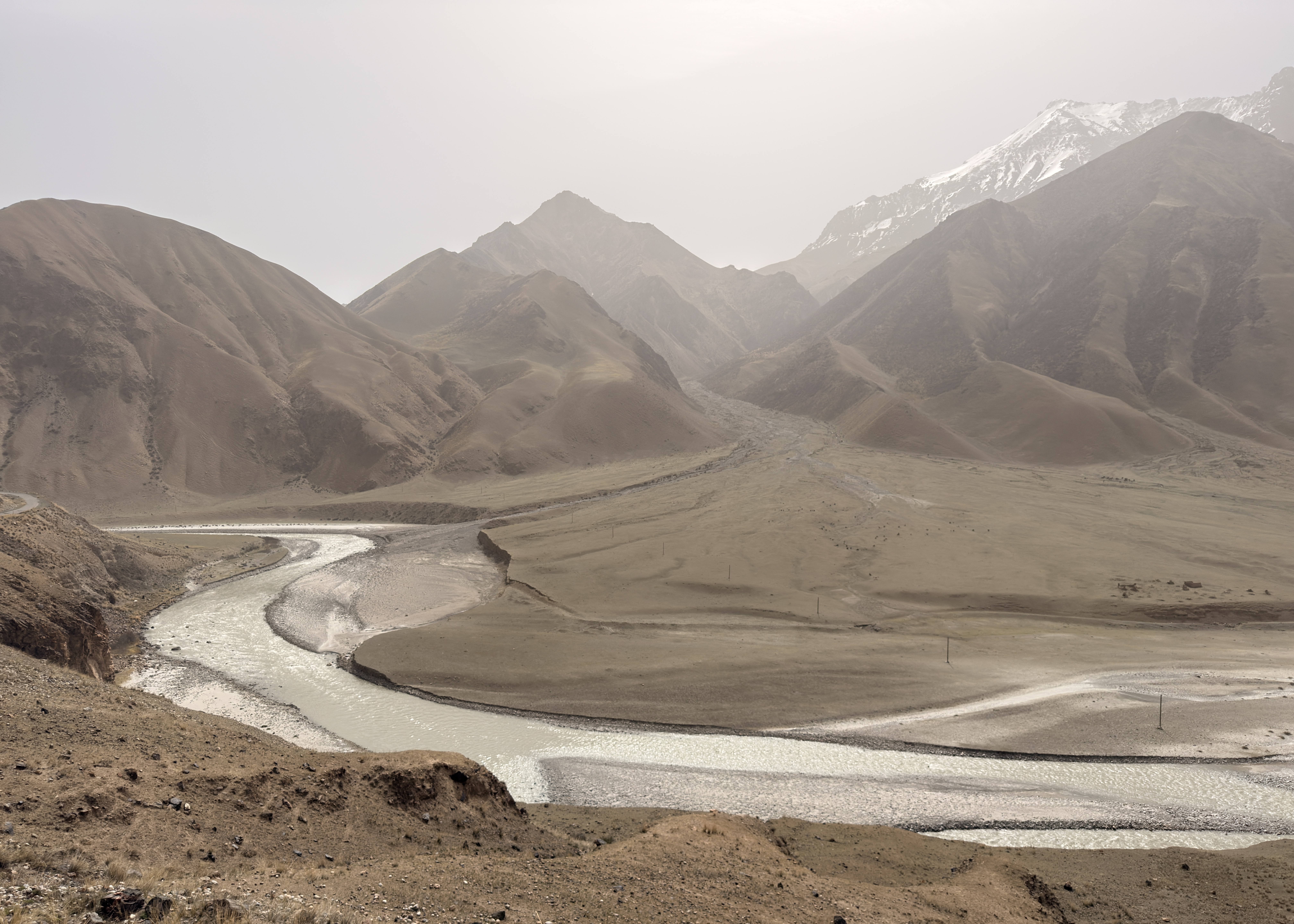
As we descended toward the valley floor, the lush greens were slowly erased by glacial flour, a fine gray silt that coats the rocks and the road alike and drains the color out of everything. It stopped feeling like driving toward a destination and started feeling like being ground down by the sheer indifferent mass of the mountains until you were just a speck in a nearly monochromatic void.
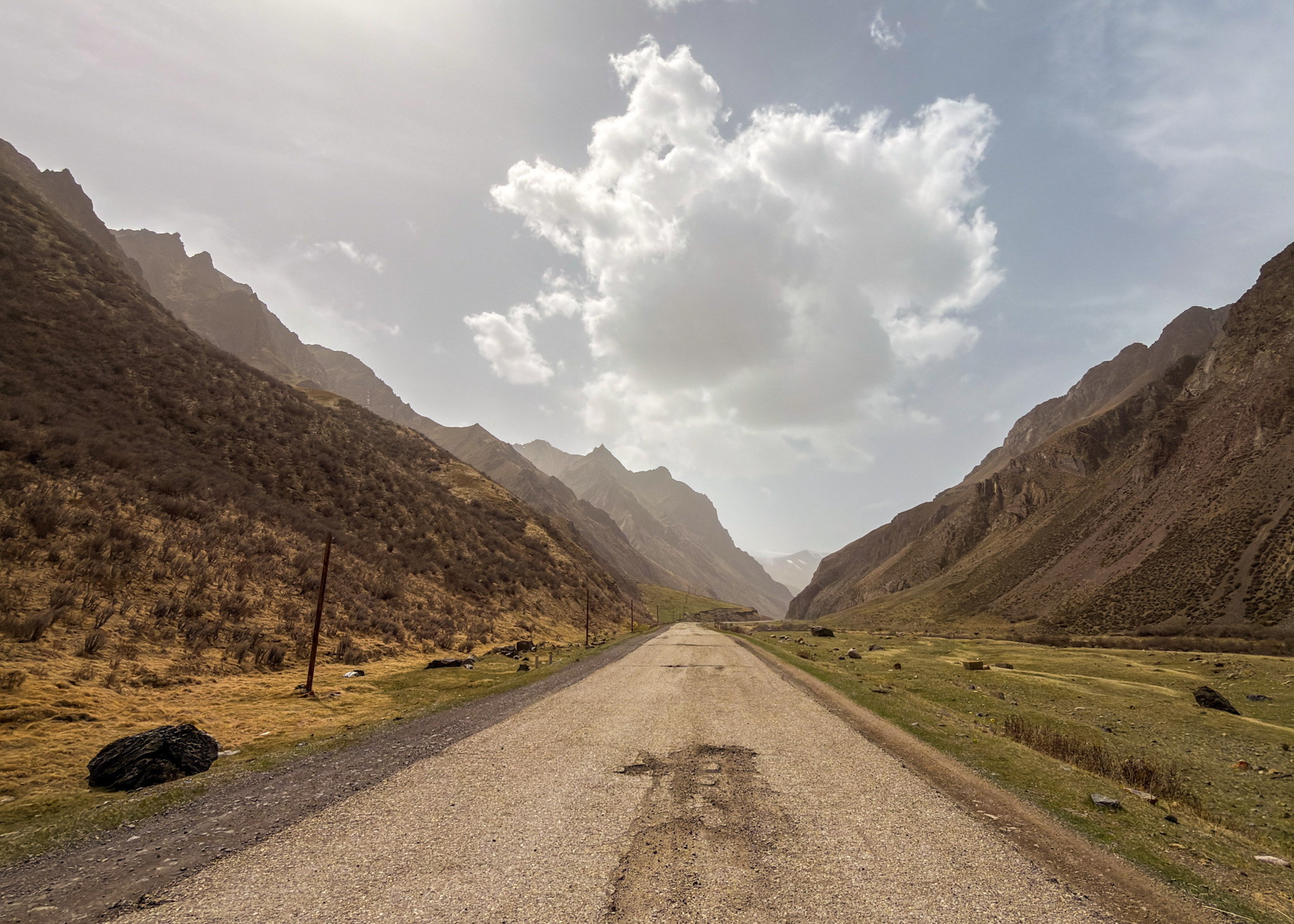
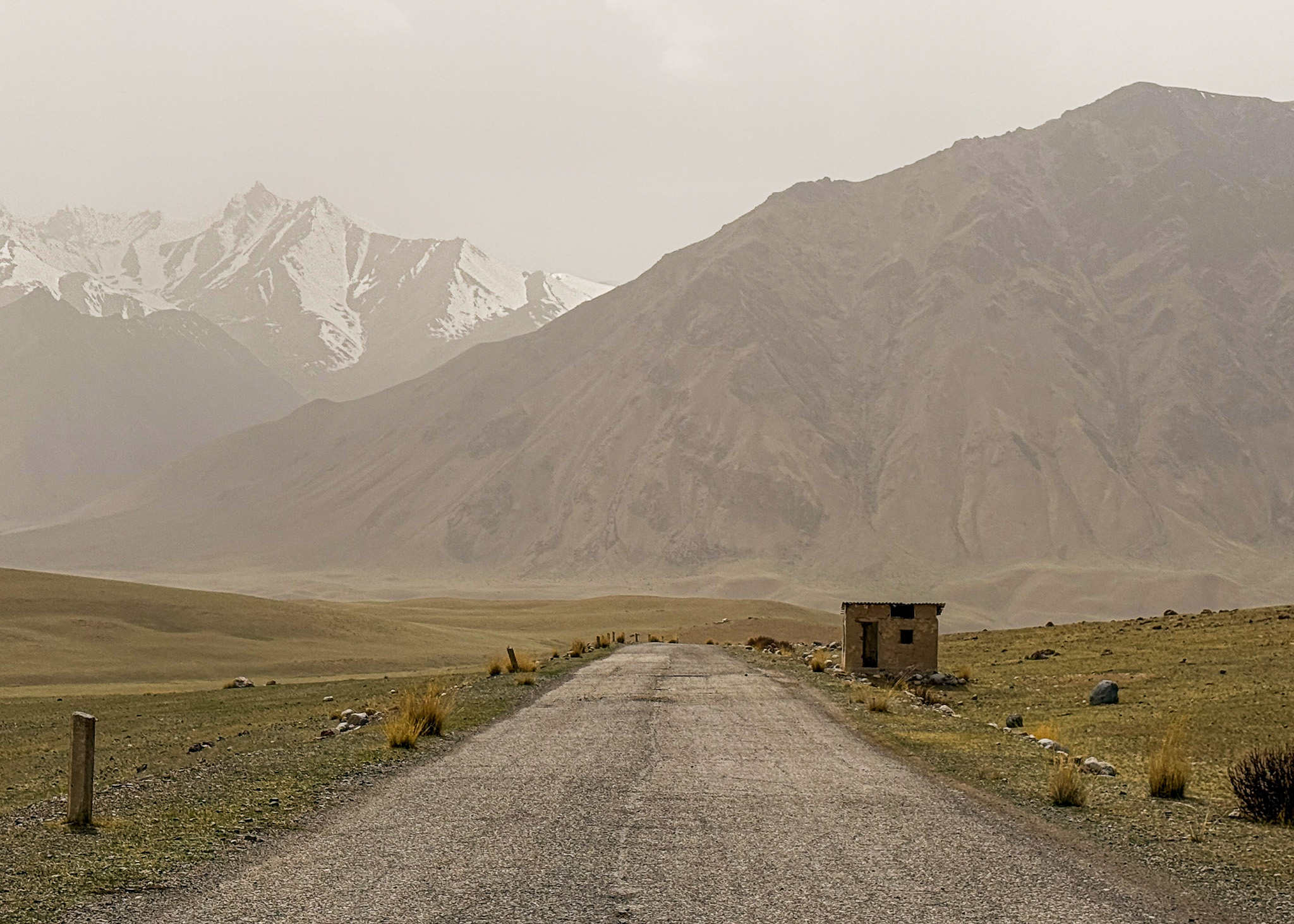
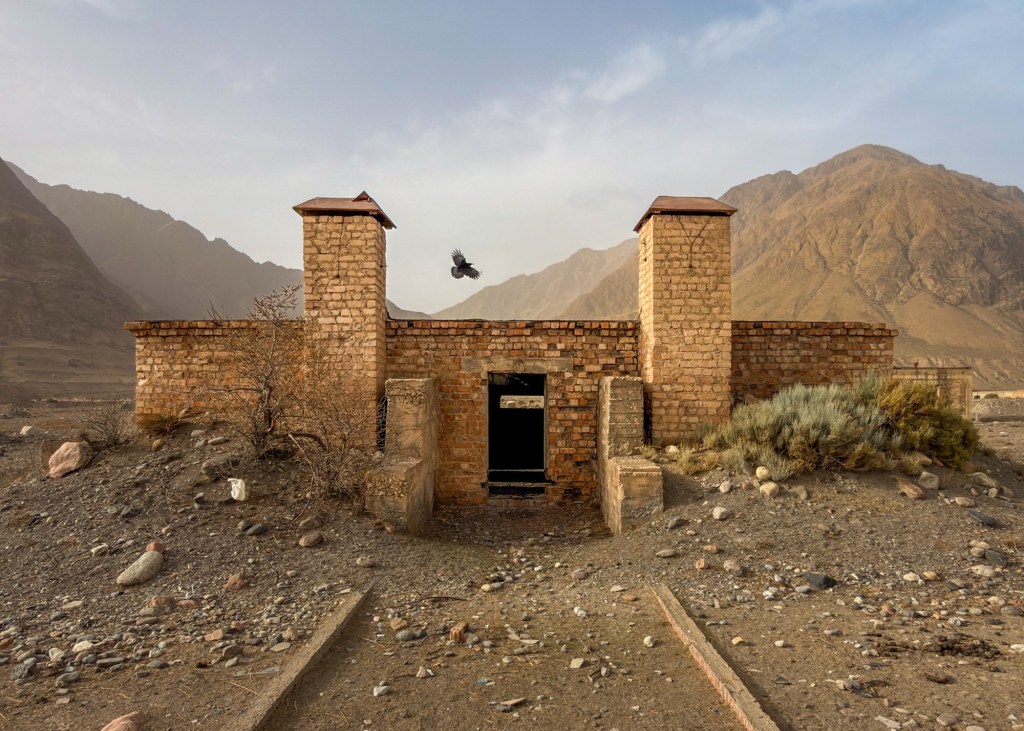
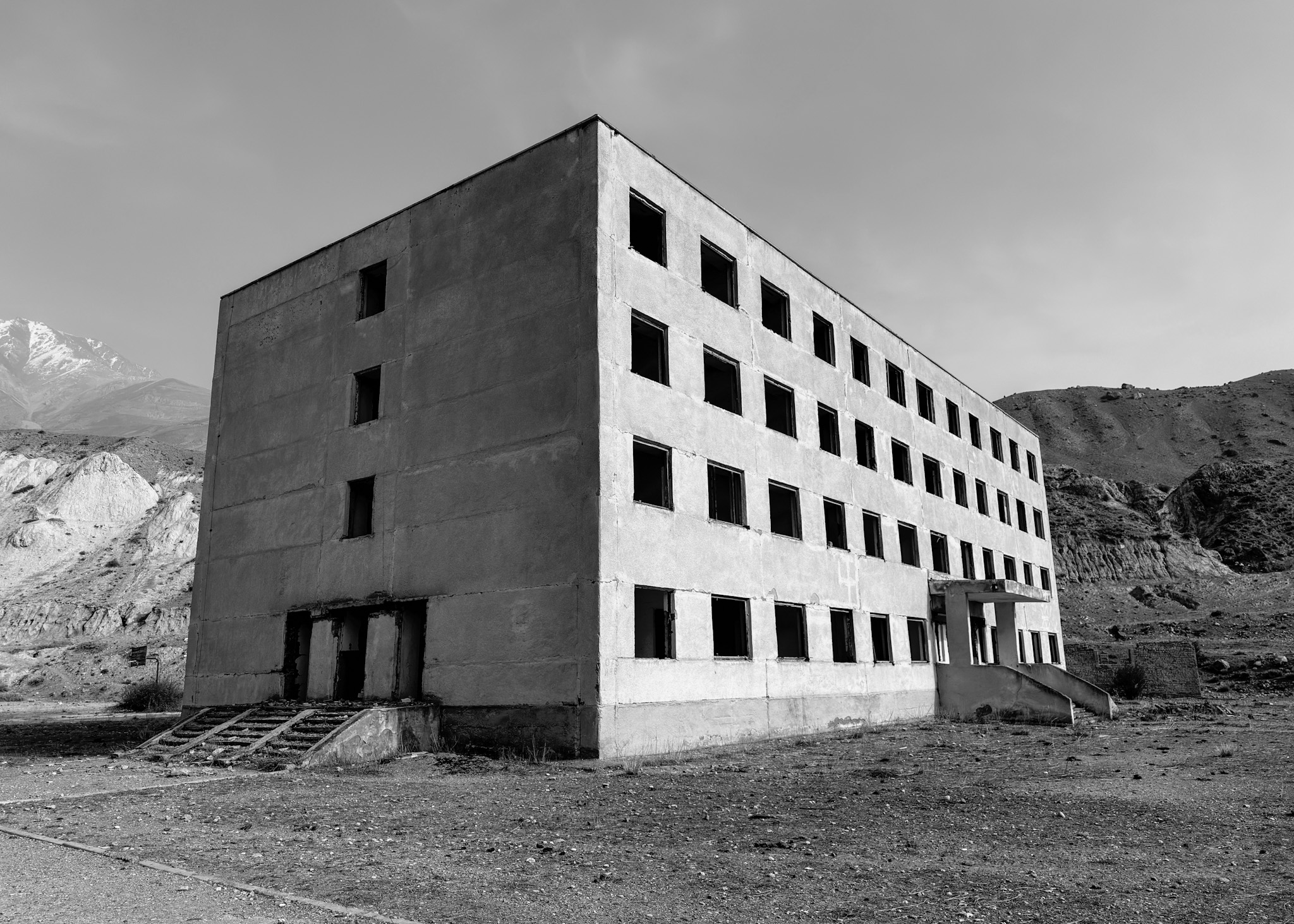
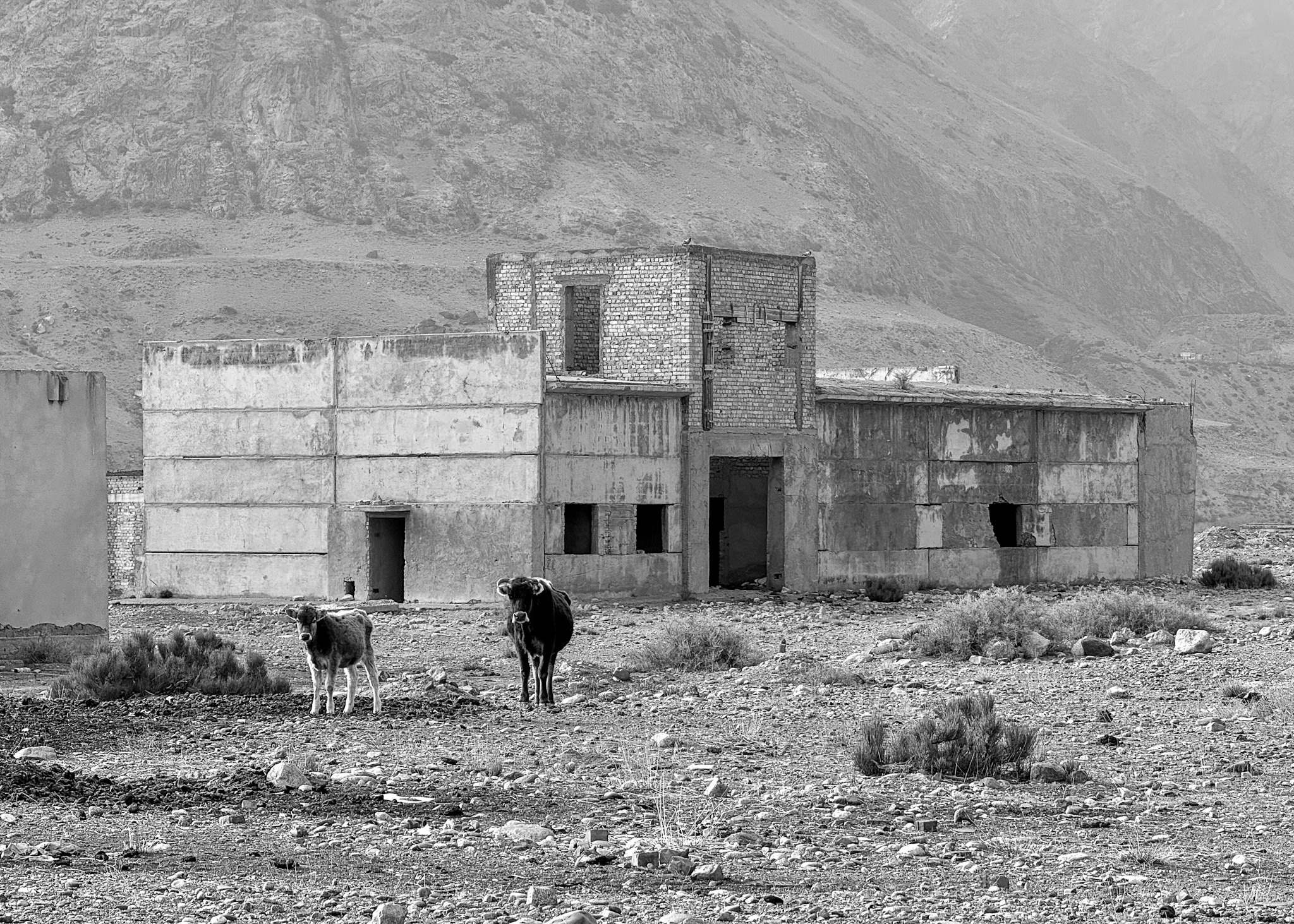
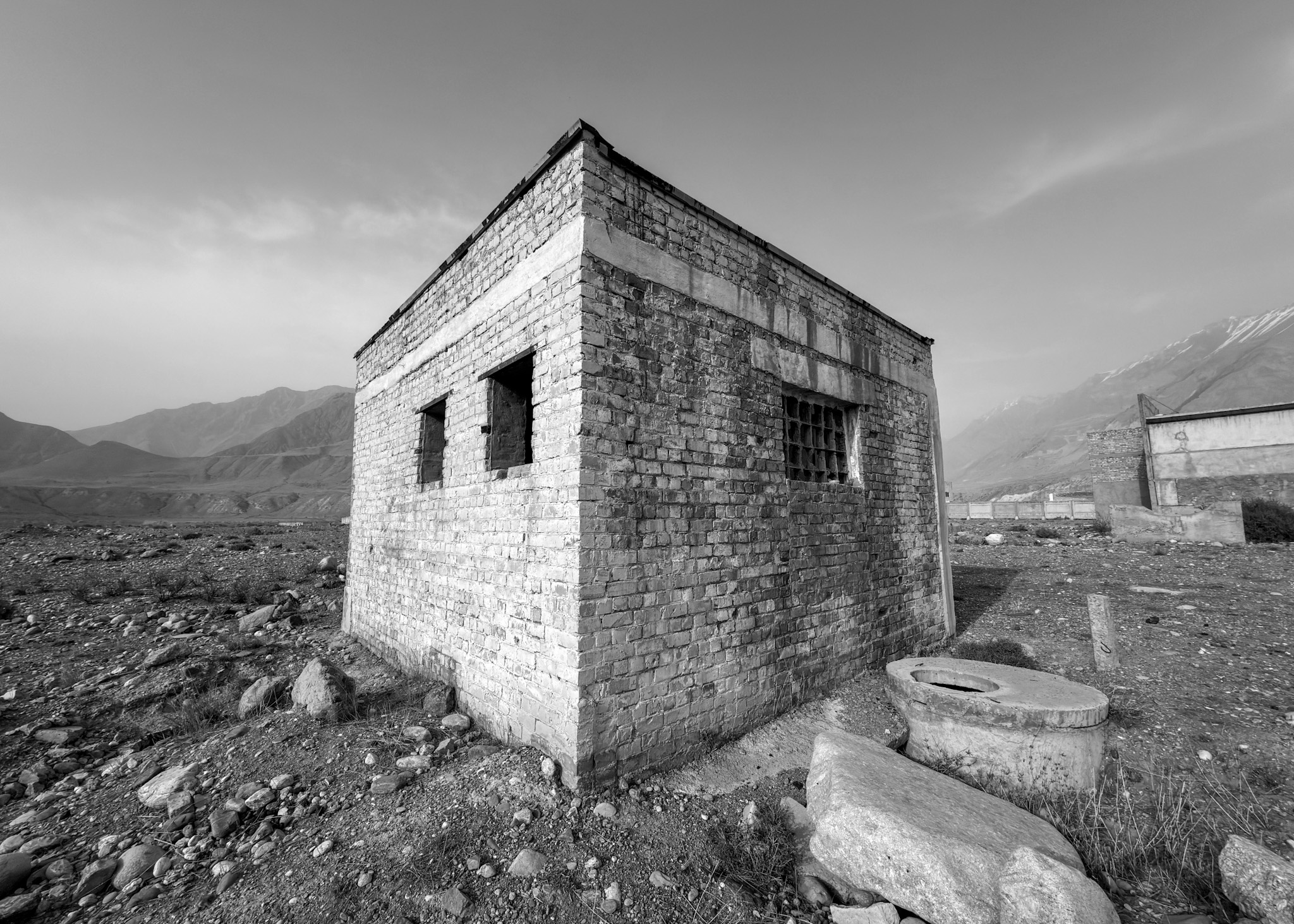
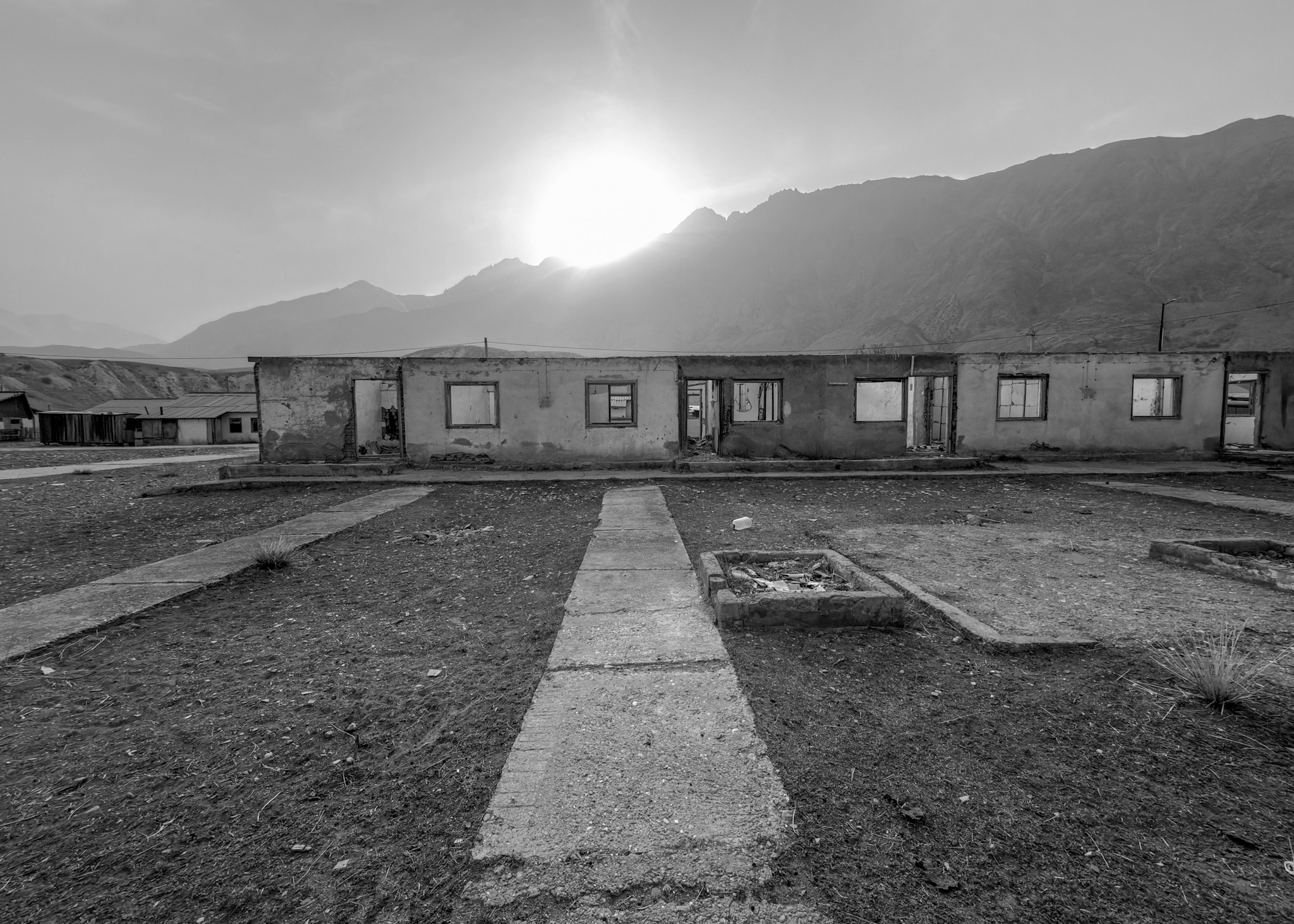
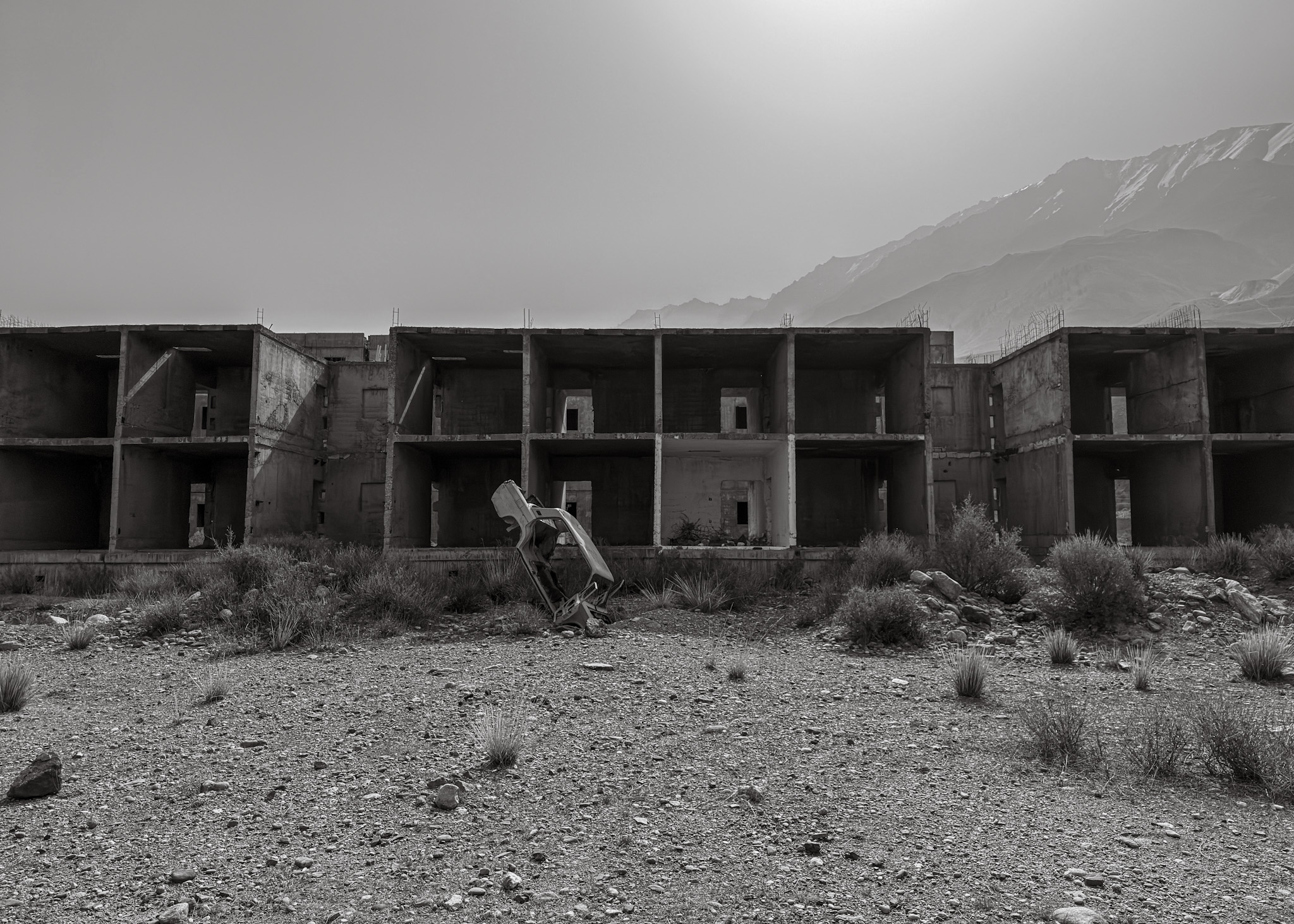
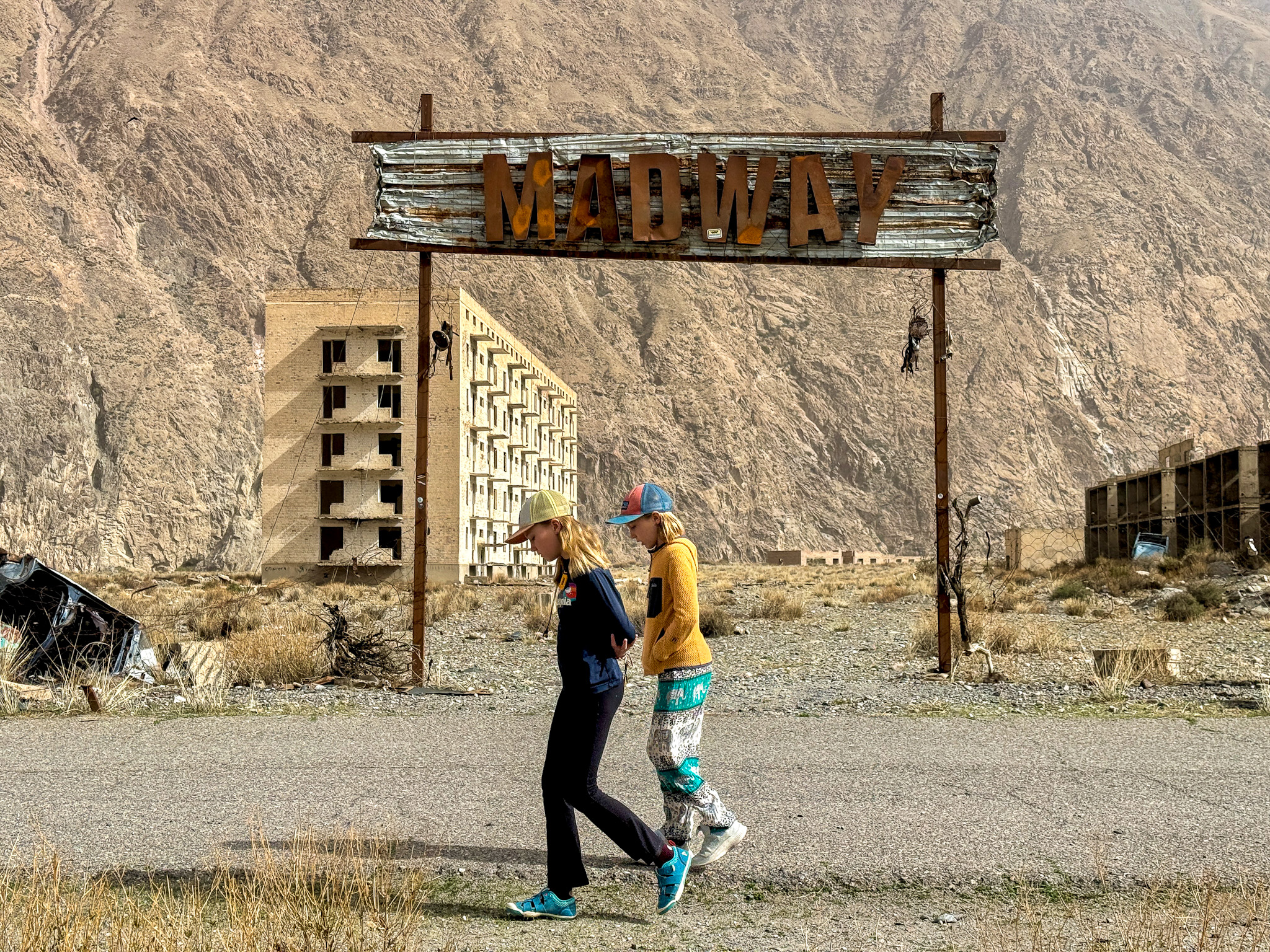
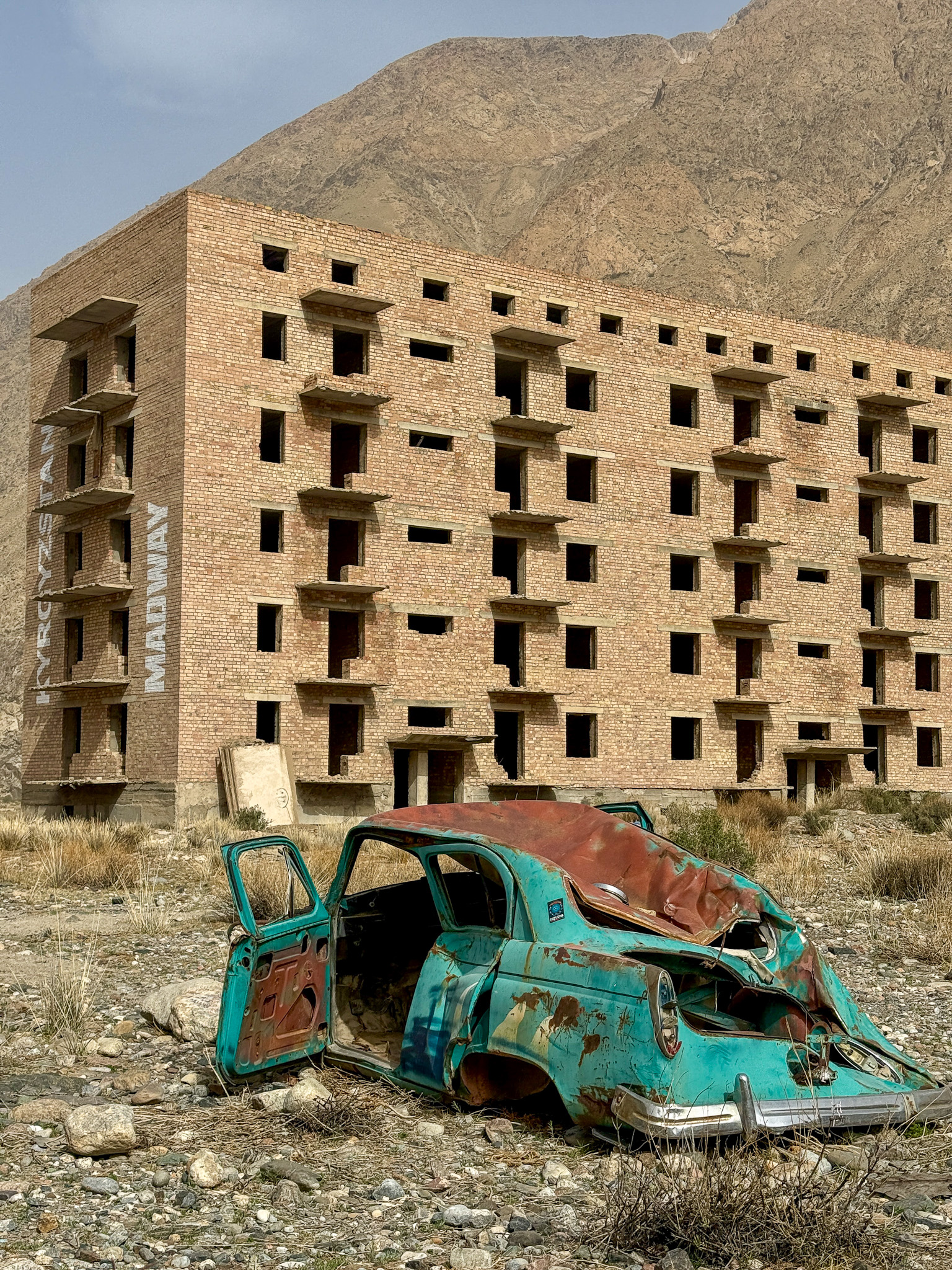
At the end of all that grit lies the ghost city. Enilchek was built by the Soviets as a mining town, established to pull tin and tungsten out of these mountains. It was meant to be a real community, with the concrete apartment blocks and administrative buildings of a place that expected to last. Before all the infrastructure was completed, the Soviet Union fell, the mining came to a screeching halt, and after the State withdrew, the town emptied. The buildings stayed. Most of them now look like concrete corpses, hollowed-out blocks standing open to the weather.
Finlee took one look and said, “This place creeps me out!” And without missing a beat Arya added, “I don’t wanna stay here!”
They were right about the creep factor. However, it was also spectacular. The misty fog that filled the valley never quite blocked the view, but it distorted and twisted the silhouettes of the ruins as the sun sank lower. The cool air took on an ethereal gloom, a strange internal glow that made the silence feel even heavier, thick enough that you could hear the pulse in your own temples. Standing in the shadow of the Tien Shan peaks, you feel the physical weight of all that ice and stone above you, a massive silent pressure that makes it clear this place was never really meant for people. A skeleton of human ambition being slowly, strangely reclaimed by the cold and the mist.
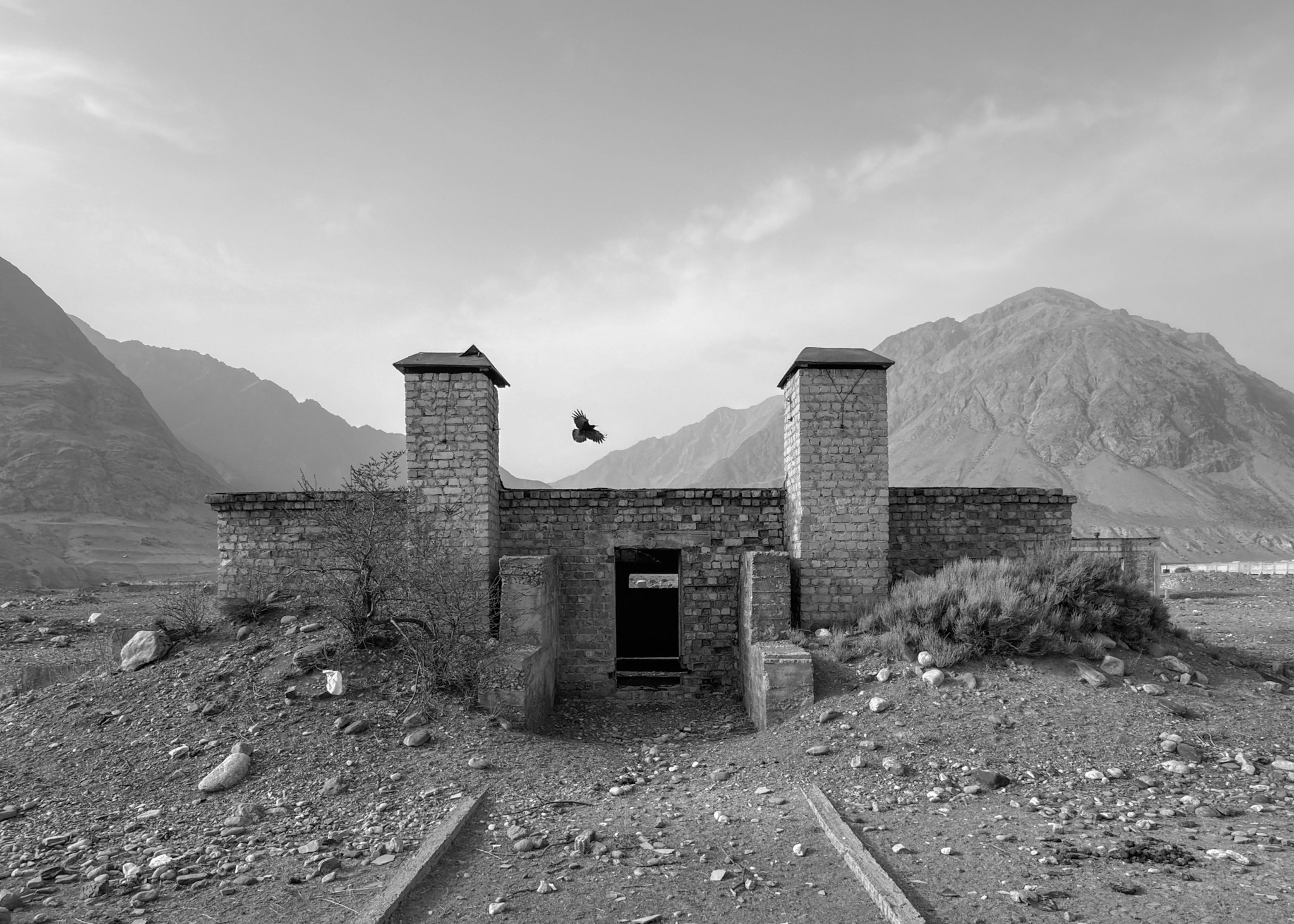
After dinner, Max went out alone with his camera while Shaina and the girls got laundry going and settled into the guesthouse. He meandered through a concentrated cluster of abandoned apartment blocks, photographing in the fading light. Empty doorframes. Peeling murals. Concrete stairwells that lead to nowhere. And then, framing the remains of a building against the mountains rising behind it, he found the shot: twin crumbling towers, the Tien Shan peaks on either side, everything balanced in light and shadow. He pressed the shutter. In the frame, without any warning, a single crow spread its wings between the two towers, facing the camera, every feather fully extended. He looked at the screen. He looked at it again. The building alone would have been a really good photograph. The crow made it something else. You can’t plan that. You can be in the right place with the camera already up, and sometimes the image completes itself.
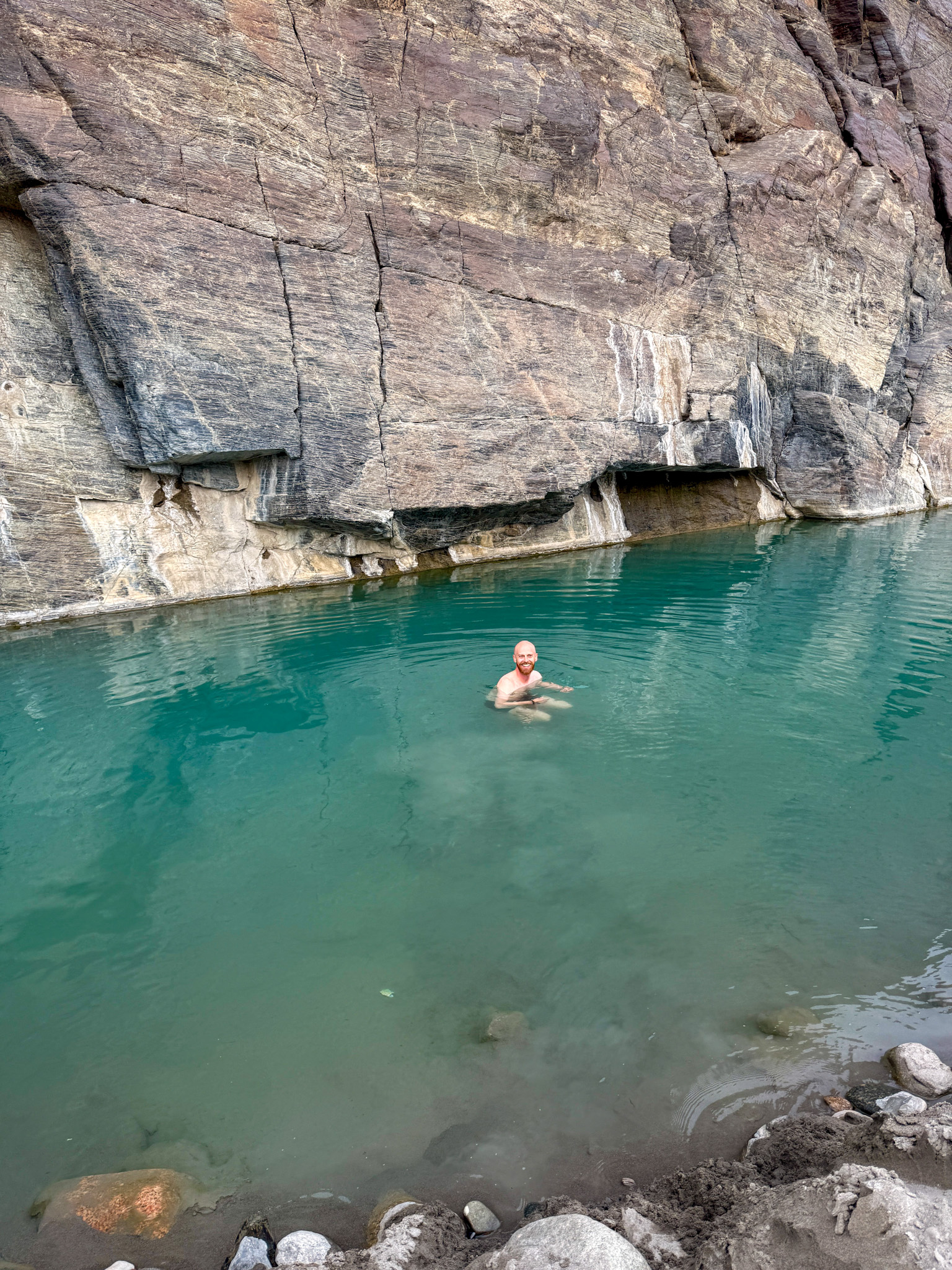
As the day was winding down, Erkin mentioned that we should make a visit to the natural hot springs at Kara-Tash. What he neglected to mention was that they required a road so steep and rough it barely qualified as a road. His Land Cruiser proved (barely) equal to the task and we made it down to the bank of the river. Then a short walk led us to pools fed by geothermal water pushing up through the valley floor. We soaked in the hot water with a small group of locals as the dark of evening descended and the mountains pressed in overhead. These were the most rustic and natural hot springs we had ever experienced and it was lovely. The drive back to the guesthouse went through the ghost town in the dark, which had a very specific quality to it. Nothing unsettling about navigating Soviet ruins near the Chinese border at night. Nothing at all.
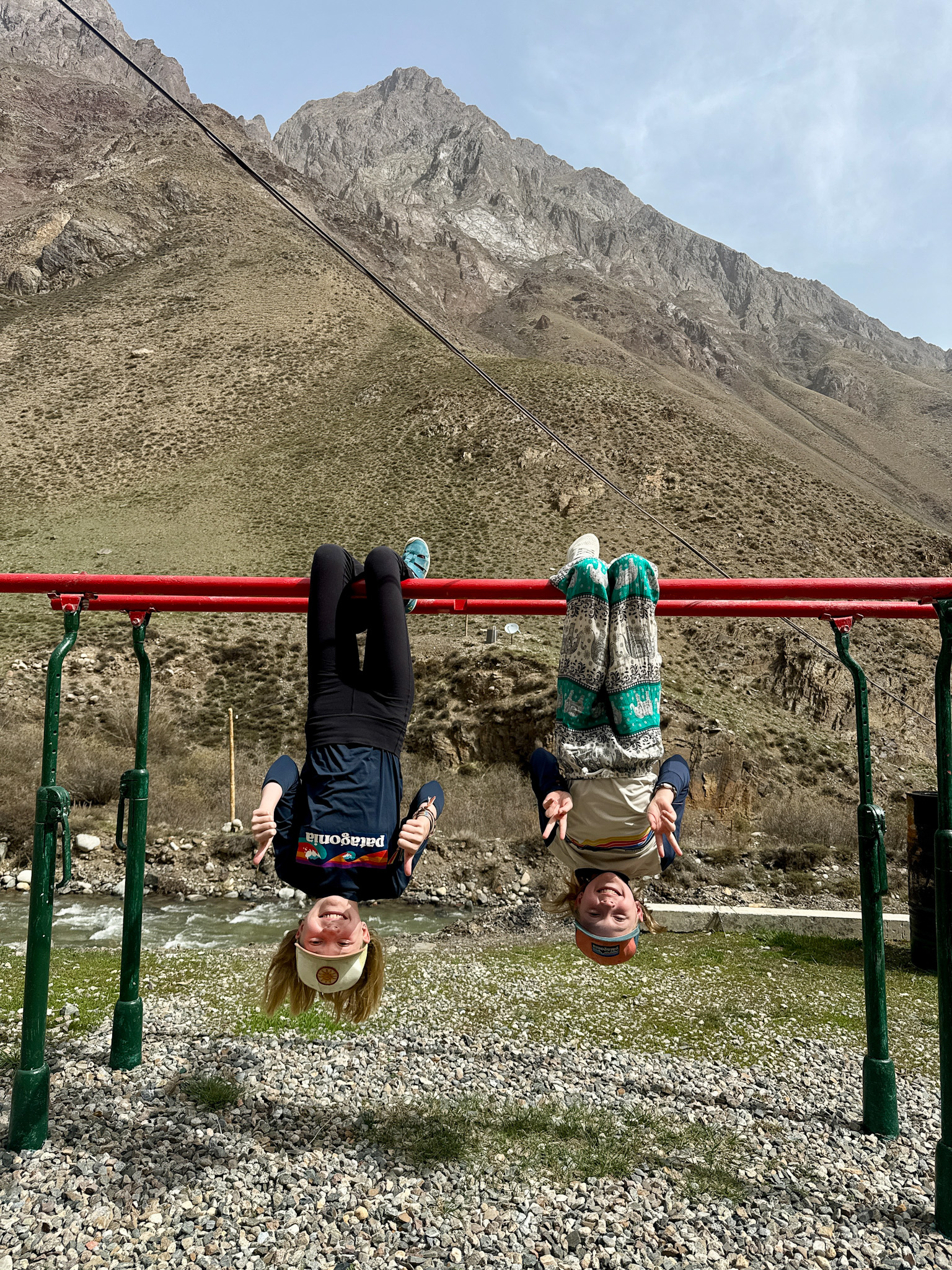
The return journey the next day retraced the route back over the pass, and at the security checkpoint Erkin got out of the car, nodded to the heavily armed guard, and challenged Max to a pull-up competition. Max chuckled, but Erkin was completely serious. There was a pull-up bar off to the side, evidently for the soldiers, and Erkin wanted a competition. Max won, eight to three, while a guard with a Kalashnikov observed the proceedings with patient bemusement. The girls raced out of the car, Arya barely squeezing in a pair of pull ups, before they started doing flips on the bar. Then Shaina got out of the car with her phone. Max was fairly certain they were about to be firmly told off. She smiled at the guard and asked if photographs were okay. He said sure, no problem. Guards carrying Kalashnikovs are generally in the business of projecting authority rather than warmth, and yet here was one of them, smiling while a group of American tourists used his pull-up bar, and a lady took pictures of the proceedings, despite the signage all around that said no cameras in easily understandable iconography! A smile and a little silliness go further than you’d expect, even in the most unlikely places.
From the checkpoint it was a climb back up to the pass then a long descent back down through the Turgen-Aksu Valley and on toward Karakol, the landscape softening from snow and rock to green pasture as we lost elevation. We had plenty of time to enjoy the scenery and learn about Kyrgyzstan’s complex history from Erkin, who held nothing back. And two days after first attempting the Rubik’s cube, Arya had memorized the algorithms and could do it by heart, now working on honing her speed and technique. By the time we rolled back into town, the high mountains and the ghost city already felt like something from a different trip, and we were ready for a proper meal that hadn’t been cooked in a guesthouse kitchen in an abandoned Soviet mining town.
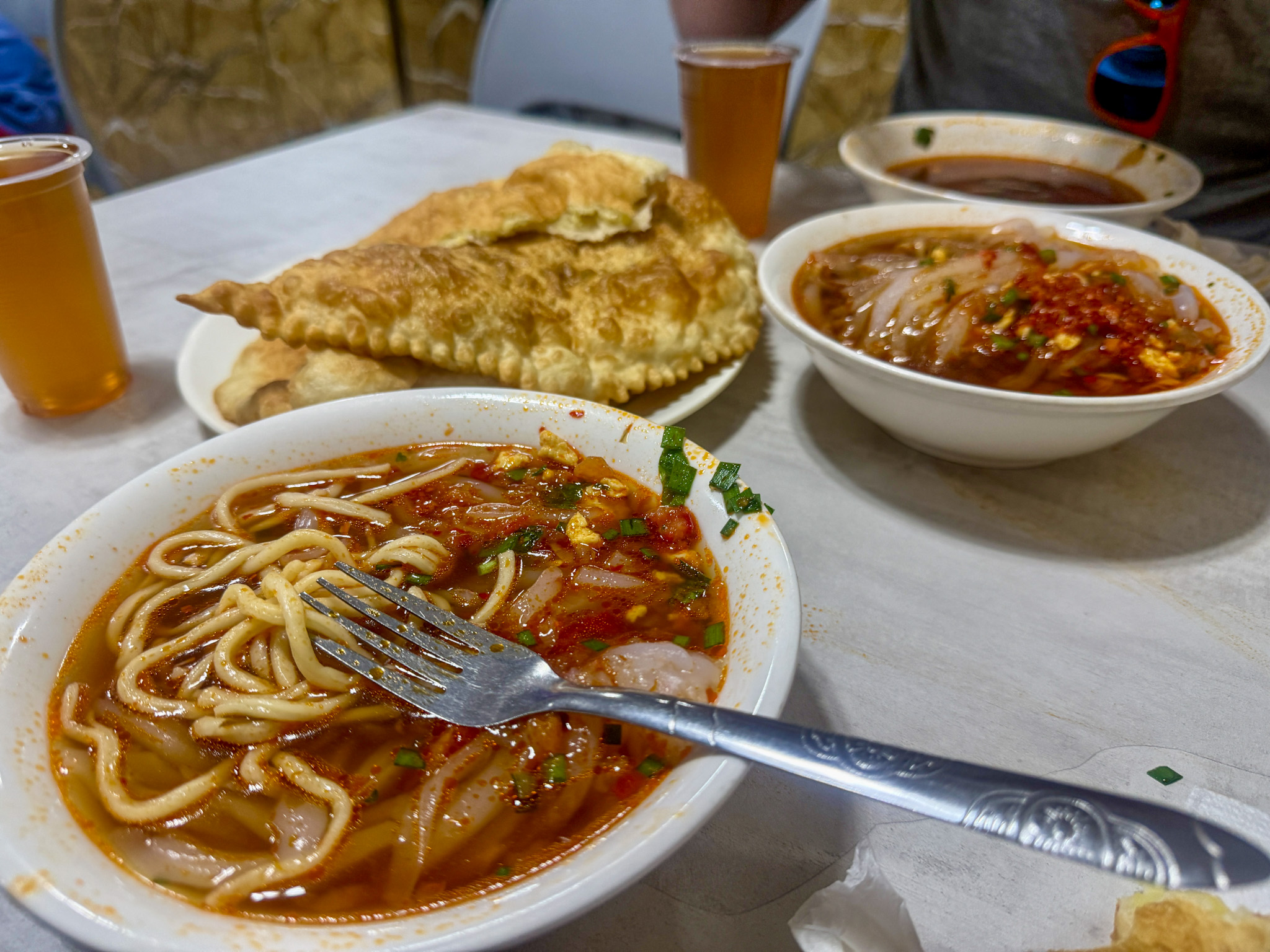
Karakol welcomed us back with ashlyan-fu, the signature dish of the Dungan people, a Chinese-Muslim minority who settled in this region after fleeing a failed rebellion against the Qing dynasty in the 1870s. Ashlyan-fu is a cold spicy noodle soup with two kinds of noodles, vinegar-and-chili broth, egg, and garlic, served from the vendors who line the alley dedicated entirely to it. Locals will tell you it’s the best hangover cure in Kyrgyzstan. We arrived without hangovers and found the cold soup a more confronting choice than we’d anticipated. The girls rejected the gelatinous starch noodles and ate only the wheat ones. The piroshki, Russian-style fried bread filled with potato and wild garlic, was excellent. Erkin then ordered chalap, salted fizzy fermented milk, and maksym, a fermented barley drink, from the barrel sellers on the street corner. Both are deeply traditional and widely loved. We all tried them but it was clear that none of us had acquired the taste. Erkin was a little sad about this. You could tell these drinks hold a real place in his heart.
We made our way back to the same guesthouse we’d stayed in before Enilchek, the Zen-minimalist-meets-Central-Asia place that had become our favorite of the trip. The owners welcomed us back, showed us to our rooms, and remembered without being asked which room needed the extra pillow.
There was, however, one piece of unfinished business hanging over us. Somehow over the last few days Shaina’s signature sun hat had gone missing back in Saty, and her Oura ring had vanished somewhere in Enilchek. After seven and a half months of moving across the planet without losing anything of note, we had managed to misplace two cherished items in the span of a few days, both of them now scattered across some of the most remote terrain in Central Asia. Shaina and Max felt the particular embarrassment of having to lean on a guide we were already completely dependent on to go chasing down our forgotten belongings. Erkin, for his part, never complained once. He simply started making calls. Whether any of it turned up is a story for Part Two.
It’s worth sitting for a moment with what these days actually held. Yes, the first stretch had its frustrations. Being shuffled into a second car with a driver we couldn’t talk to, while the guide we’d hired trailed behind us, was not how we drew it up, and the cross-border politics that forced the arrangement were a genuine annoyance. But weighed against everything else, that complaint barely registers. We had driven through a national park that contained a half-dozen separate worlds, watched white sediment mountains bleed into Mars-red rock, hiked a canyon to its floor and back out under a punishing sun, ridden horses to a drowned forest standing frozen beneath turquoise water, crossed a 3,799-meter pass through fresh snow, and watched a herd of wild ibex pour up a sheer cliff face like the laws of gravity were optional.
And then, the crown jewel of all of it, we had driven to the literal edge of the map: a post-Soviet ghost town wrapped in glacial mist, pressed up against the Chinese border, in a valley so remote and so strange that even Arya, who is not easily rattled, wanted no part of staying the night. We stayed anyway. We soaked in hot springs in the dark while the mountains loomed overhead, and Max walked out alone among the ruins and came back with what might be the best photograph he has ever taken. Some places you visit. A few you feel in your chest for a long time afterward. Enilchek was the second kind.
There is more adventure ahead, and one missing hat and ring still unaccounted for. Part Two soon.


Leave a Reply