
Dates: April 14th-17th, 2026
Place: Samarkand, Uzbekistan & Tajikistan day trip
A quick note before we dive in: this post is heavier on history than most of what we write, and that’s intentional. Uzbekistan is, at its core, a history trip. The food is great, the people are warm, the landscapes are occasionally breathtaking — but the thing that makes this country genuinely different from everywhere else we’ve been is what happened here, over and over again, for thousands of years. Samarkand is the beating heart of all of it. So bear with us. We think it’s worth it.
The train from Tashkent to Samarkand was the least comfortable of the trip. The interior ran warm at the best of times and actively hot every time we stopped, since the air conditioning only operates when the train is moving. A thermometer on the cabin wall read 95°F. The sleeping berth mattresses were hard and lumpy in a way that would have made sleeping impossible even if anyone had wanted to sleep. A rotating cast of aromas moved through the cabin: cigarette smoke, someone’s socks, and at intervals something suggestive of oranges that had been left too long in a warm place.
That said, the landscape between Tashkent and Samarkand was not what any of us had expected. This stretch is the agricultural heartland of Uzbekistan — well-watered, richly green, nothing like the arid steppe we’d vaguely pictured. At one point a herd of horses ran through a field at full gallop, close enough to the tracks that we could see them clearly. It was one of the more majestic things we’ve seen on this whole trip, and it almost made up for the sock smell.
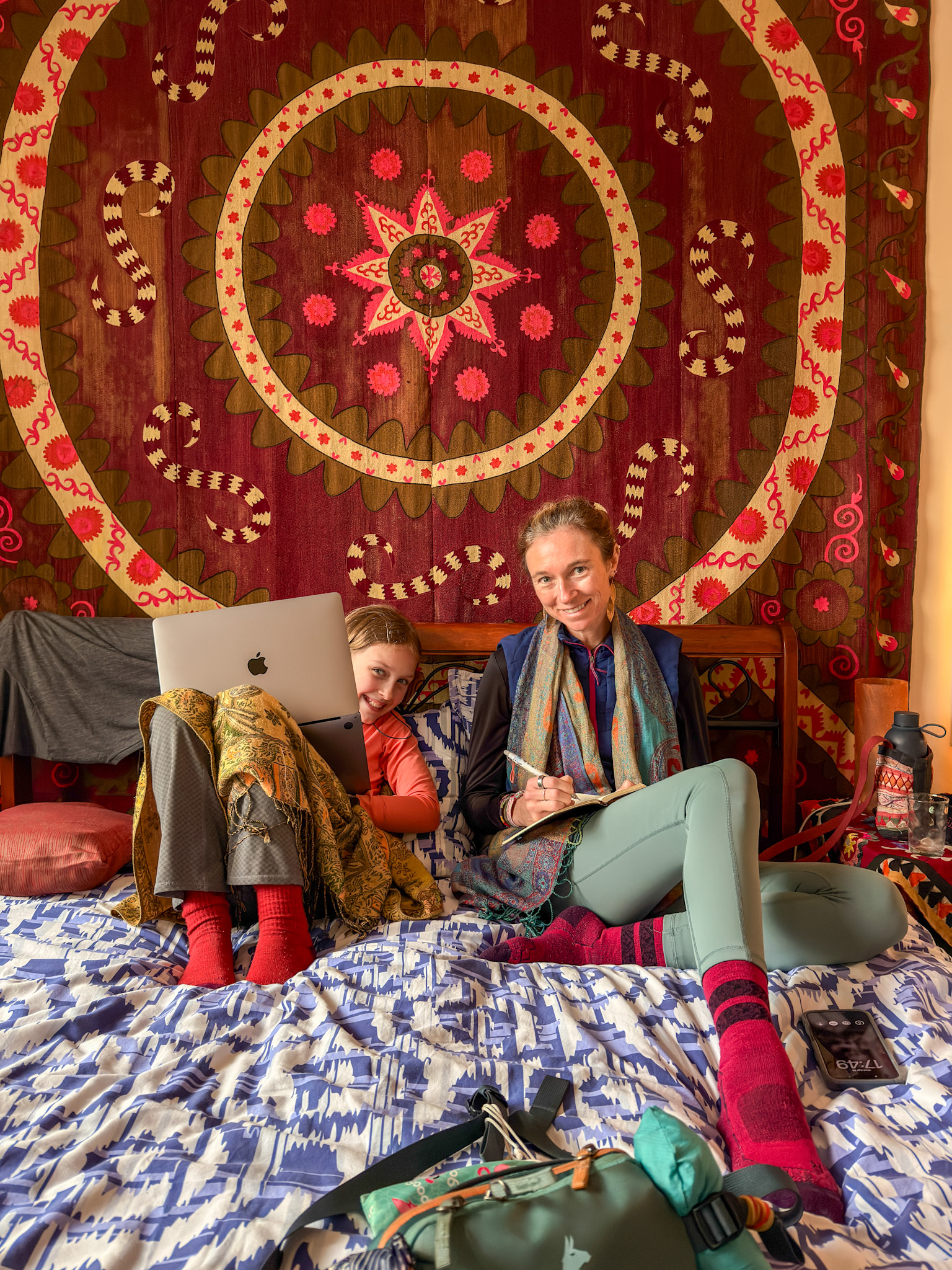
We pulled into Samarkand just before nine in the evening, found a cab, and were at Antica B&B twenty minutes later. The guesthouse sits in the heart of the old city, tucked into a maze of narrow lanes about 200 meters from the Gur-i Amir mausoleum and a short walk from the Registan. The host, Aziza, met us at the door — warm and immediately welcoming in the way that settles you before you’ve even seen your room. She showed us to an en suite family room with three beds that opens directly onto a courtyard garden just starting to leaf out in early spring. Then she invited us in for a welcome tea. She had bread and jam ready. We sat with her for a while and felt the day decompress.
The next morning, walking the 160 meters from our door to the tour meeting point in front of Gur-i Amir, Arya asked a question that had been circling since we’d arrived: why does this place feel different?
It’s a fair question and it has a long answer.
Samarkand is among the oldest continuously inhabited cities on earth, and it has spent most of those millennia at the center of everything. Alexander the Great arrived in 329 BC, called it Maracanda, and reportedly said it was more beautiful than he had imagined—given what he’d already seen on his way from Greece to Central Asia, that was saying something. For centuries it sat at the crossing point of the Silk Road routes linking China and India to the Mediterranean, which made it fabulously wealthy, endlessly contested, and repeatedly destroyed. The Arab armies who conquered it in 712 C.E. brought Islam. The Mongol armies led by Genghis Khan brought catastrophe in 1220 C.E.—they killed most of the population and left the city in rubble, the destruction so complete that it remained largely abandoned for decades.
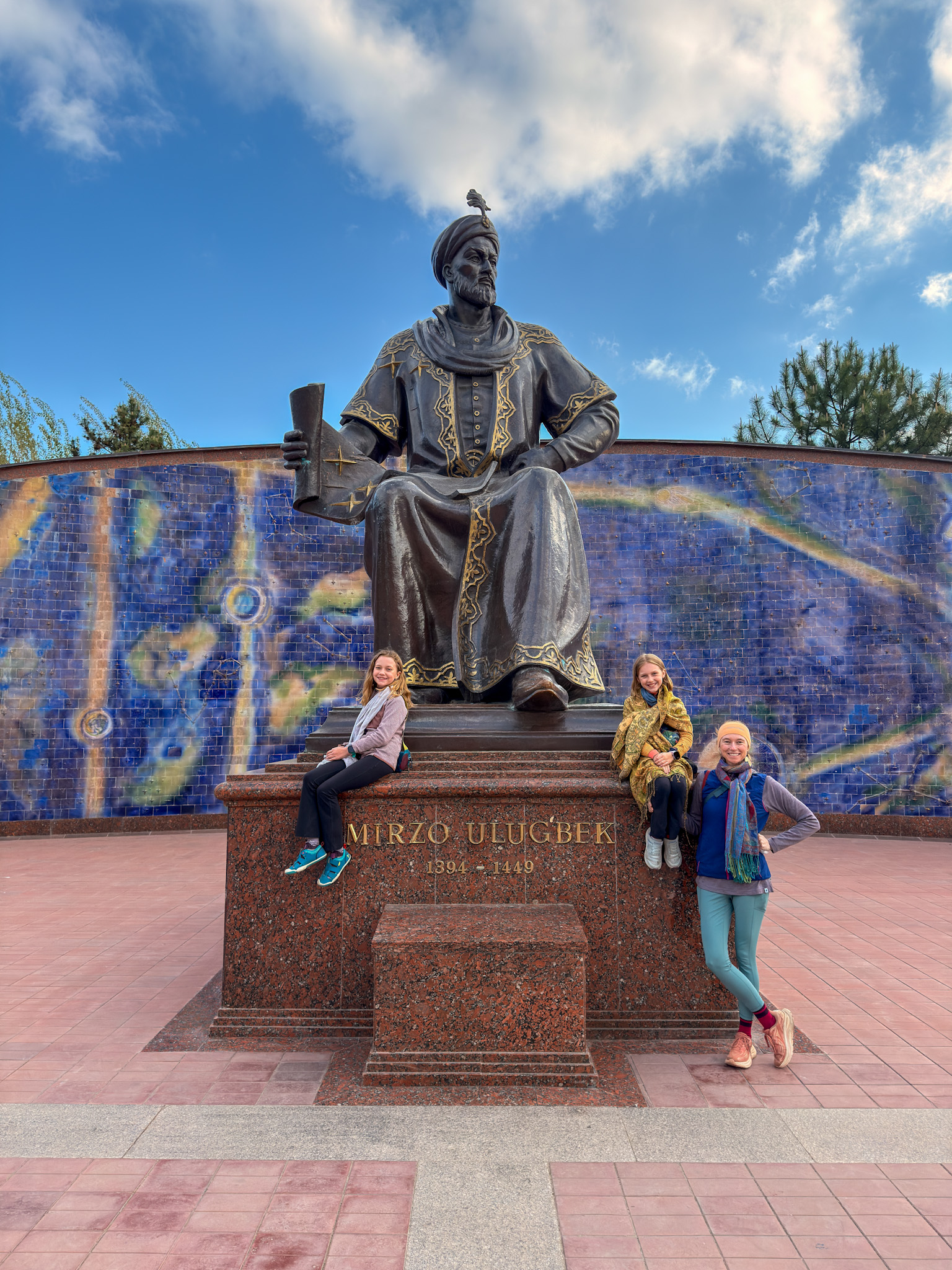
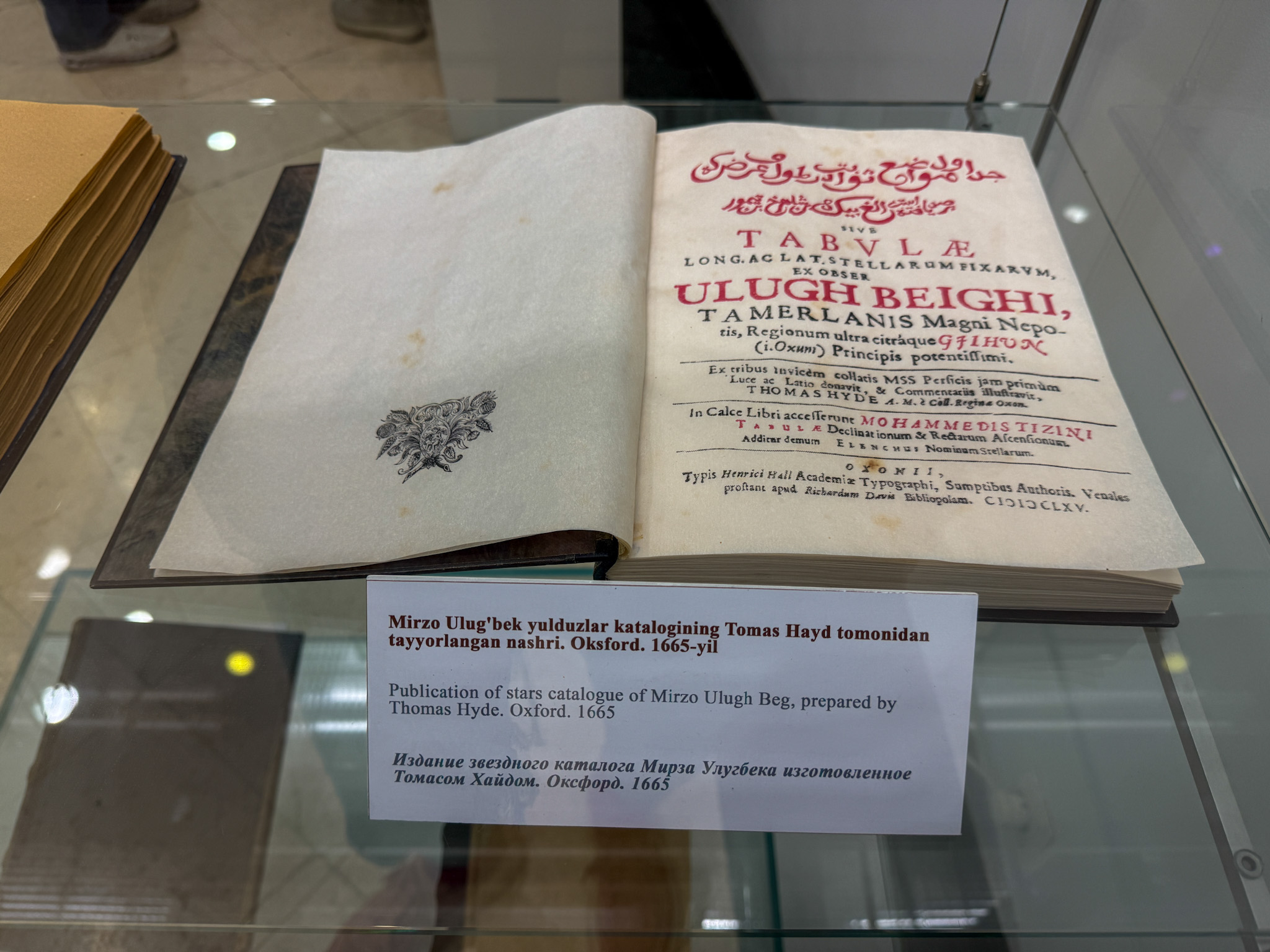
What came next is why Samarkand looks the way it does. In the late 14th century, Amir Timur—known in the West as Tamerlane—made it his capital and poured the wealth of his conquests into rebuilding it from the ground up. Architects and craftsmen were brought from Persia, India, China, and across the Islamic world. After Timur, his grandson Ulugh Beg built an observatory here and produced star maps and astronomical tables accurate enough that European scientists were still referencing them a century later. Everything we were about to spend two days walking through was either built or transformed during the Timurid golden age.
Alas, all “golden ages” tend to end at some point, and this one was no different. In the late 15th century the empire fractured, the Uzbek khans took over, the Silk Road quietly faded as maritime trade blossomed, and Samarkand faded from its peak. The Russian Empire later absorbed it in 1868. The Soviets made it briefly the capital of their new Uzbek republic before deciding Tashkent was more convenient.
Independence came in 1991. The monuments stayed.
That is roughly 2,300 years of being important, compressed into the few square kilometers we were about to walk through.
Our guide was excellent — knowledgeable, relaxed, and good at the kind of storytelling that makes history feel like a sequence of human decisions rather than a row of dates.
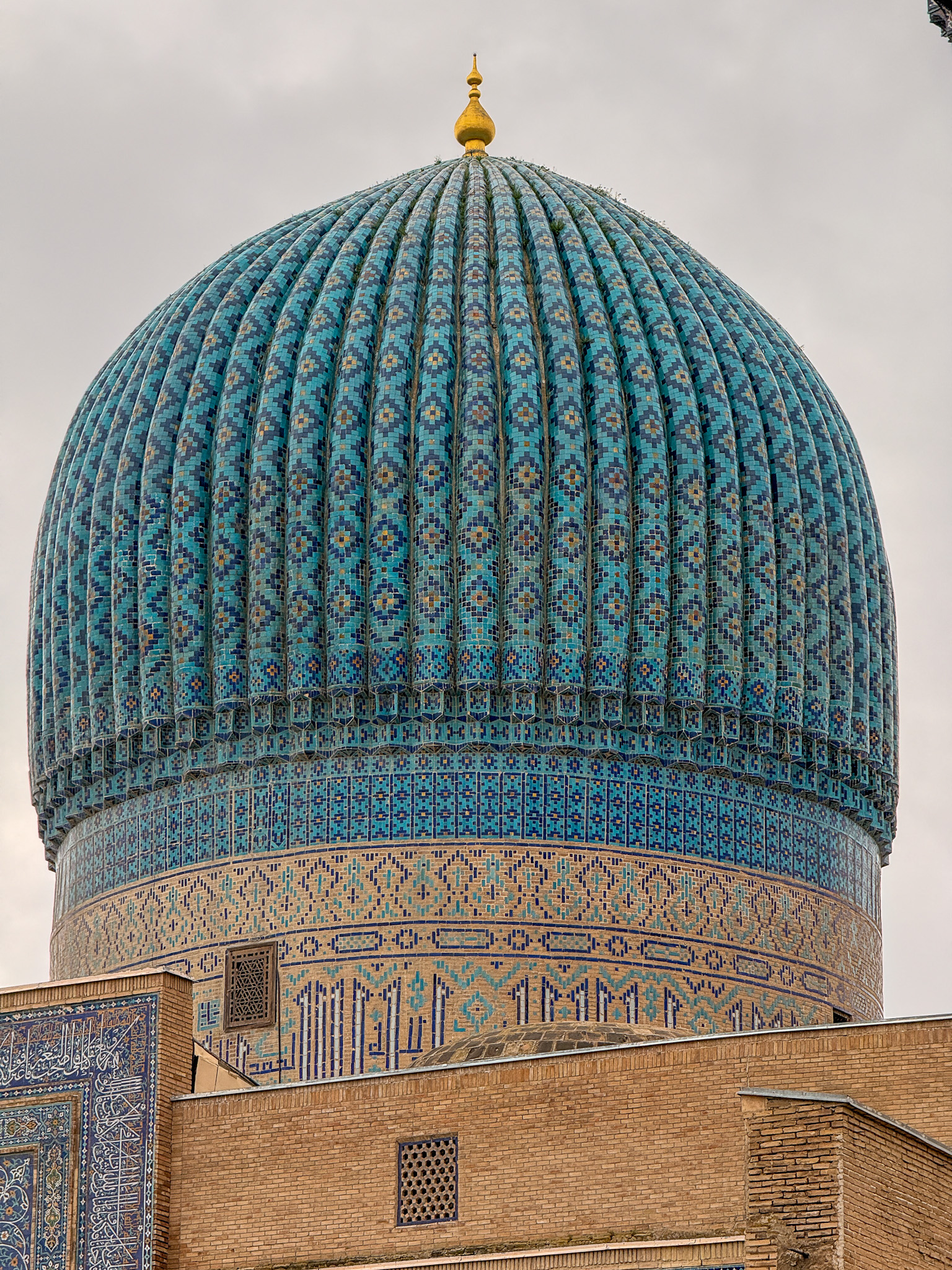
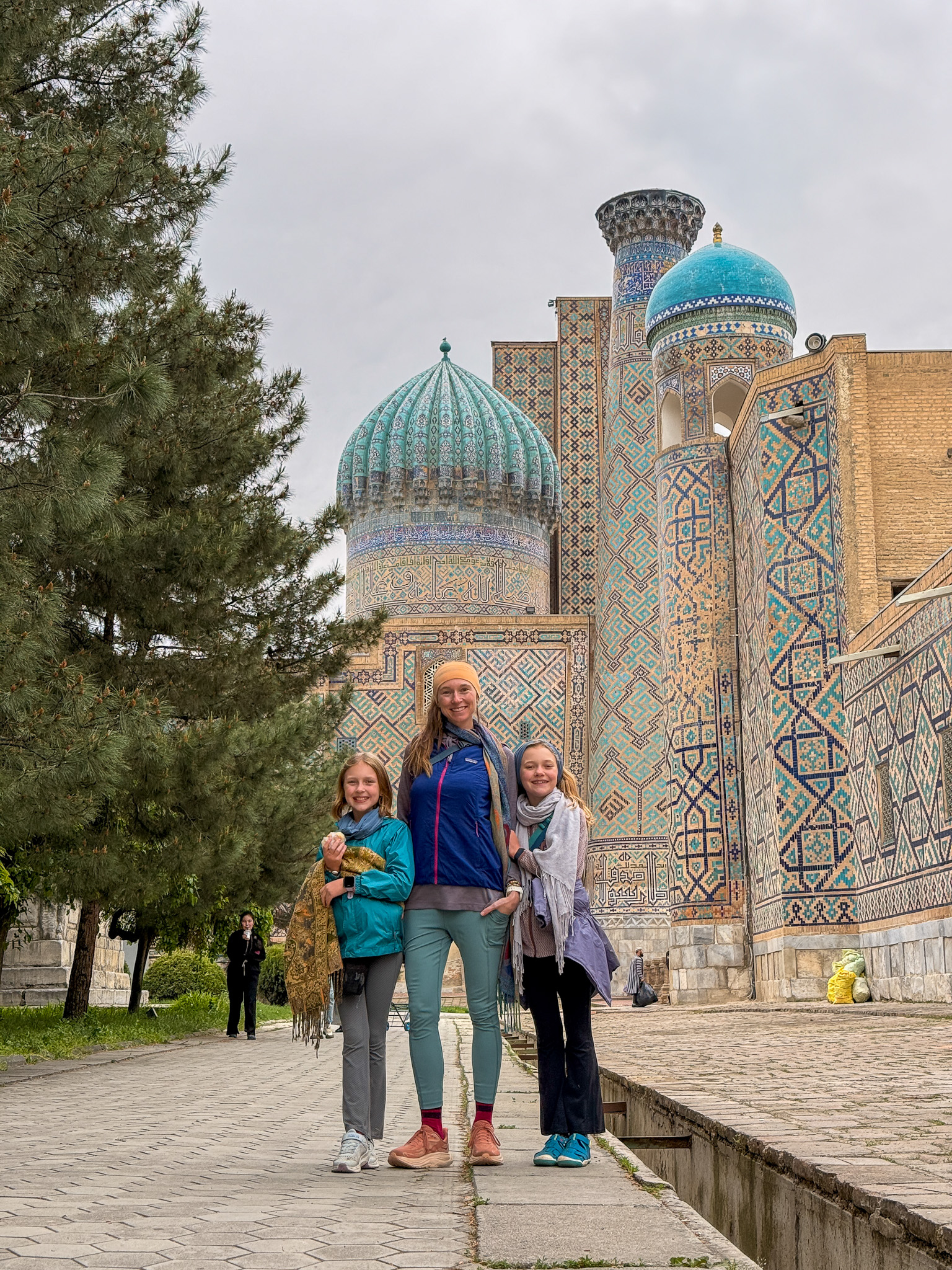
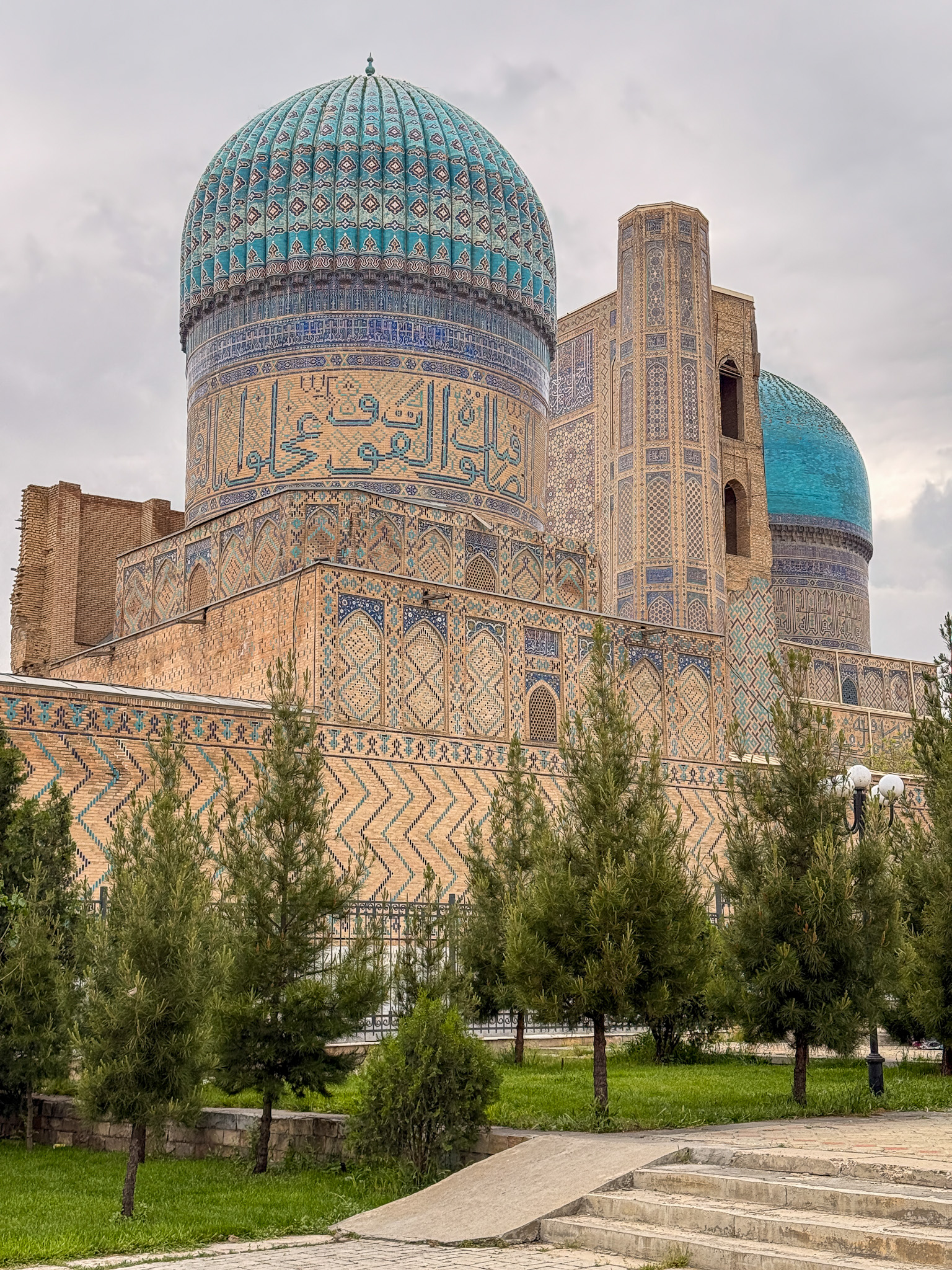
First stop was Gur-i Amir itself, the mausoleum of Timur and the family crypt of the Timurid dynasty. Timur died on campaign in 1405 and ended up buried here essentially by accident — the mountain passes back to his hometown were snowed in, and this was the closest finished tomb available. The fluted azure dome that resulted became an architectural model that eventually influenced the Taj Mahal. Not a bad legacy for an improvised funeral arrangement.
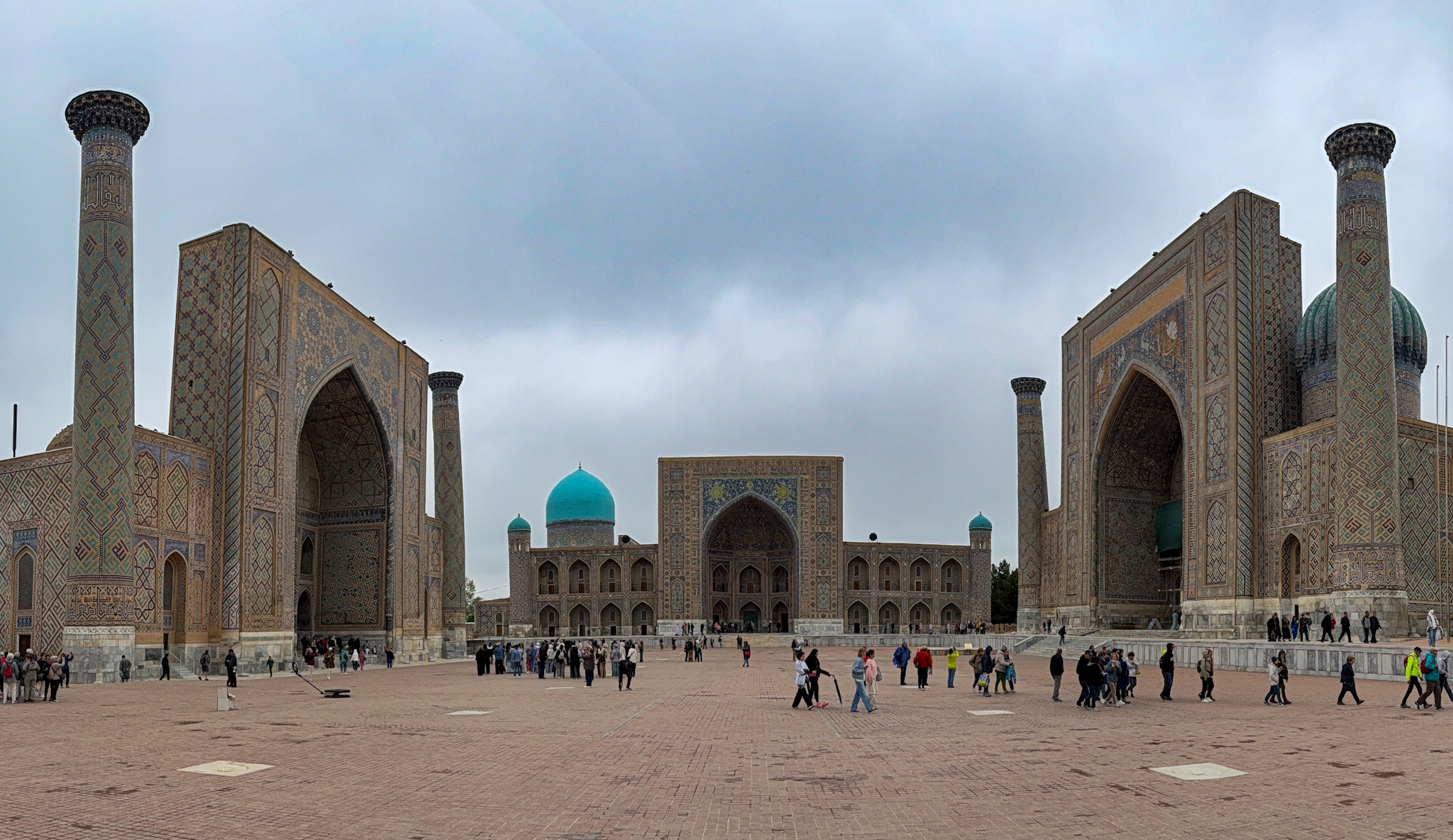
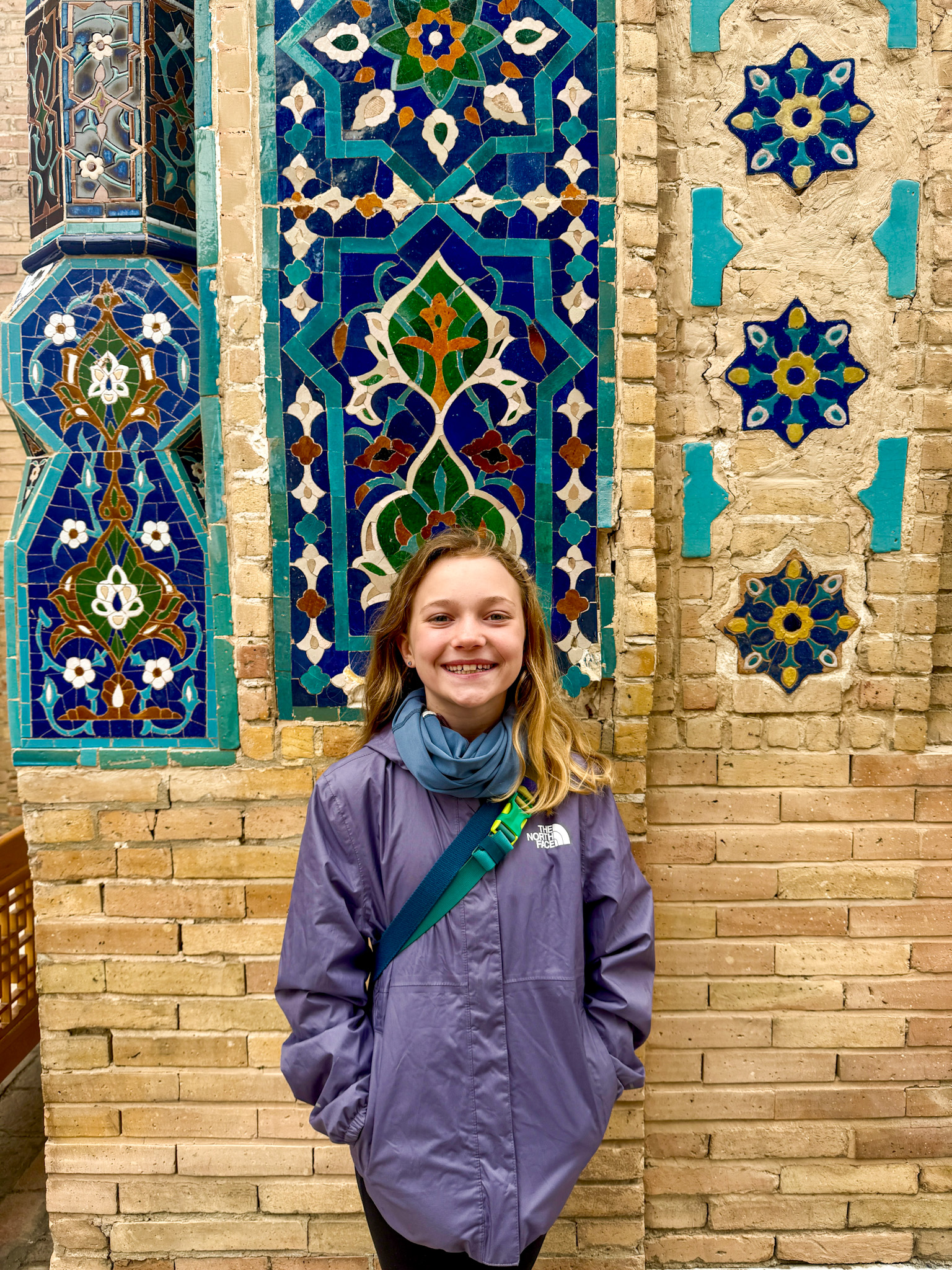
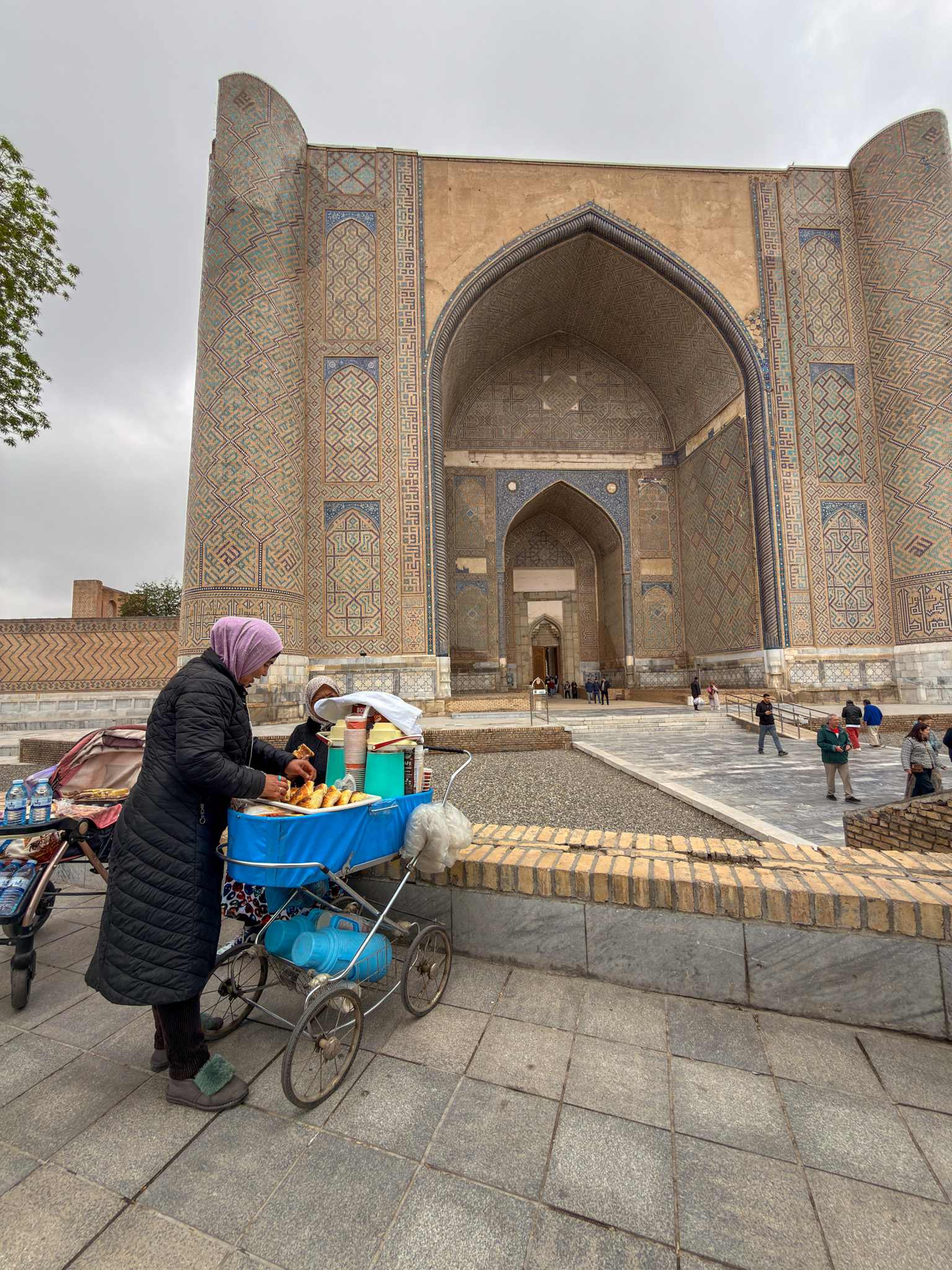
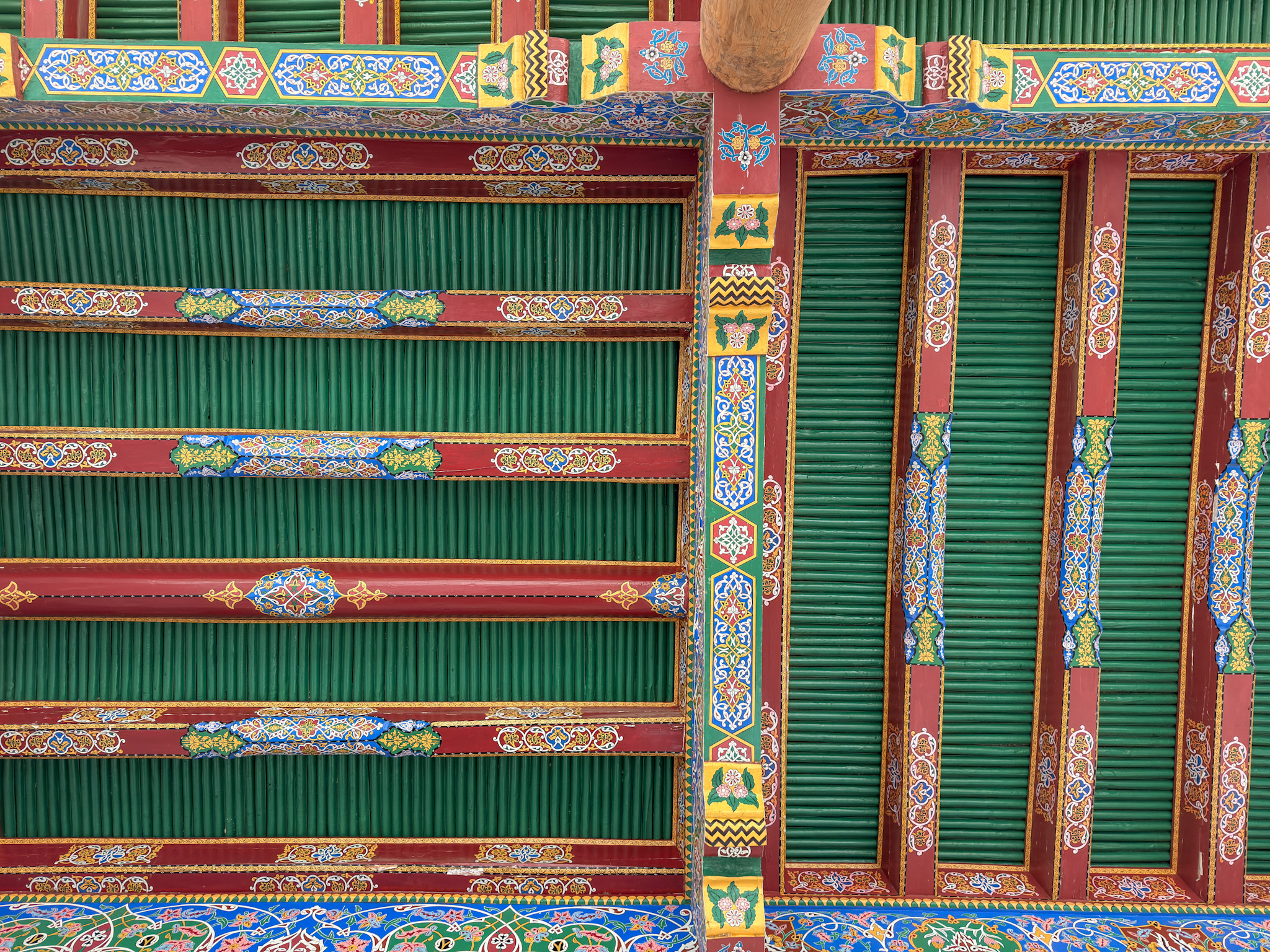
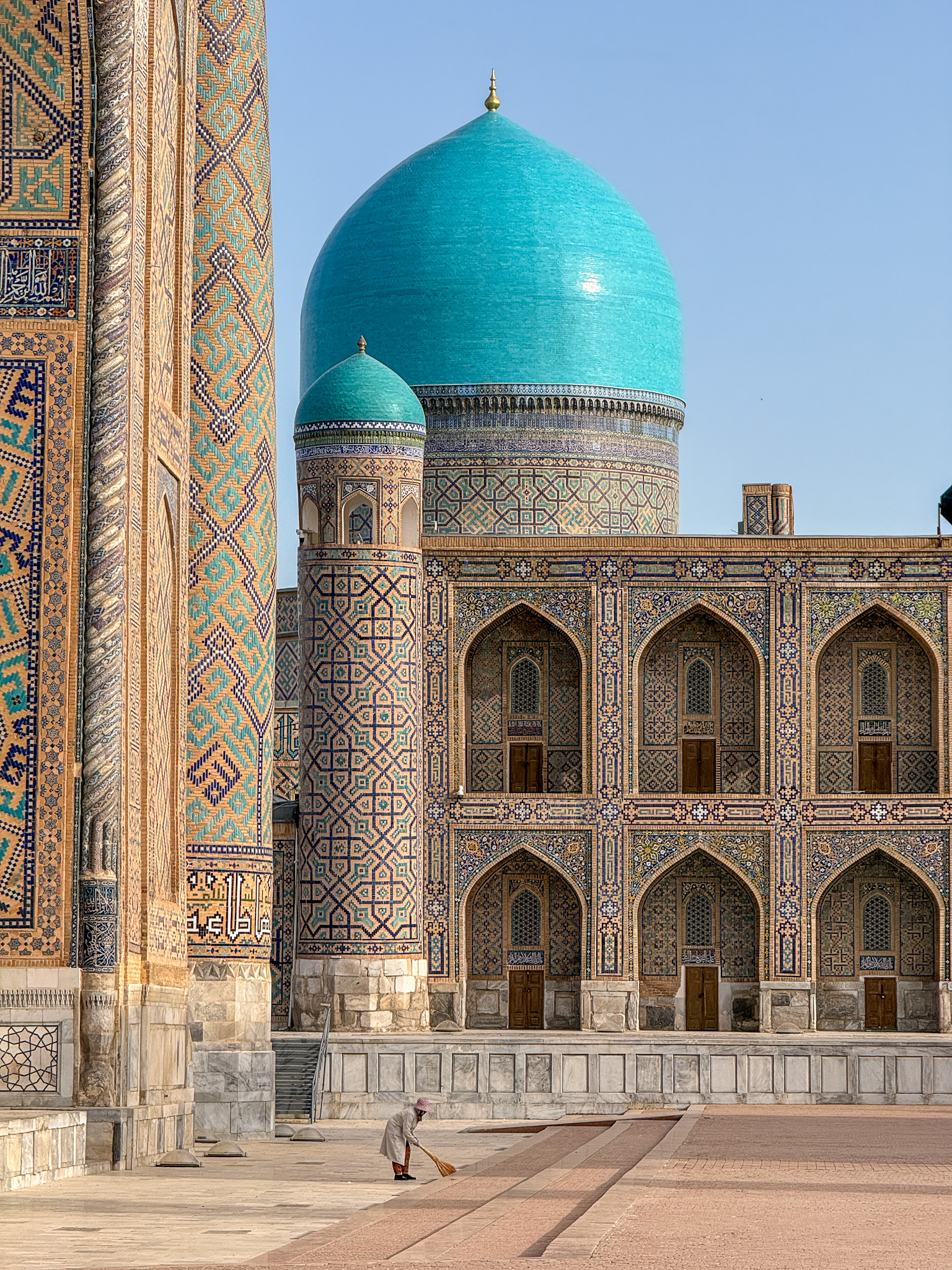
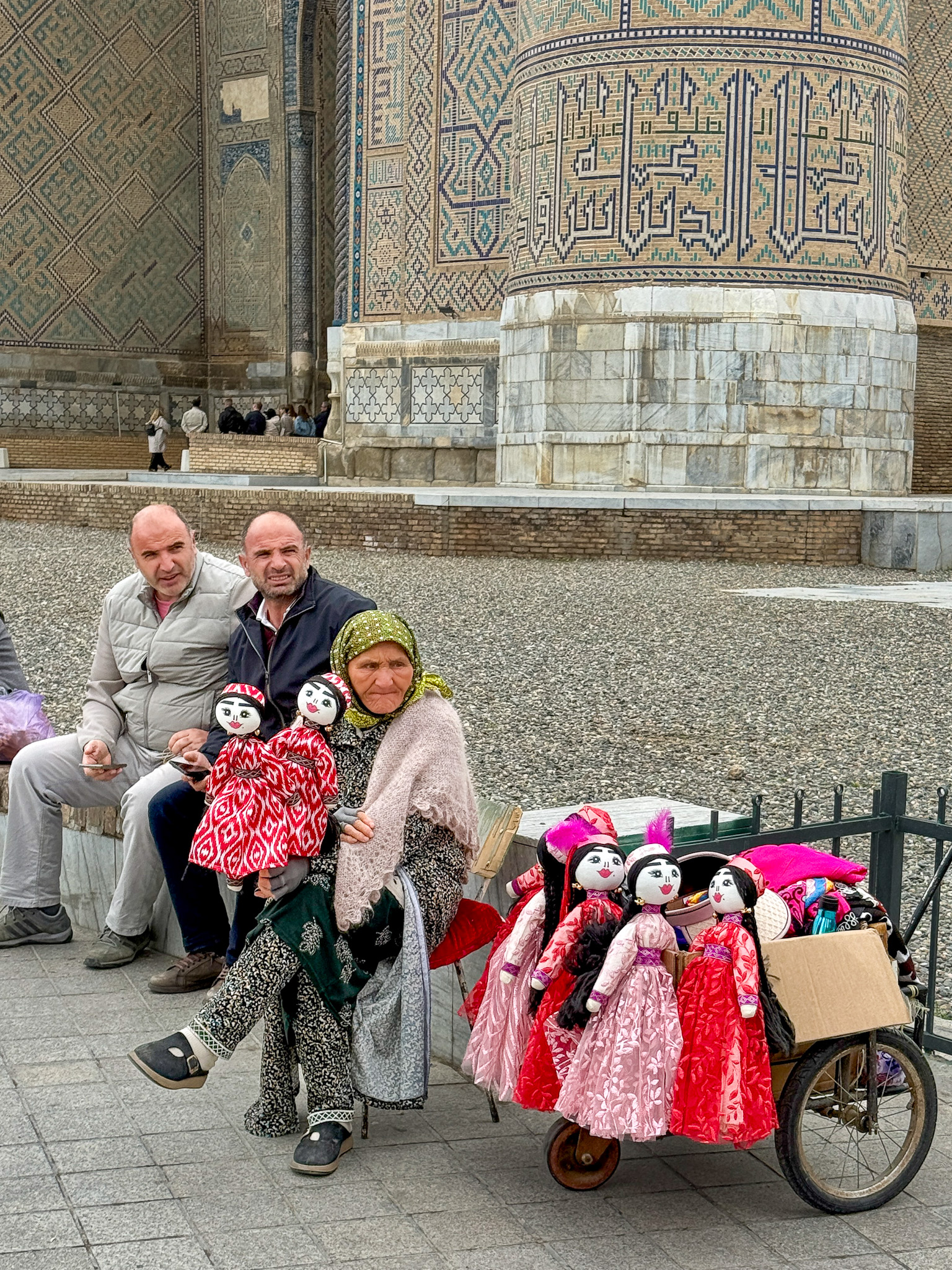
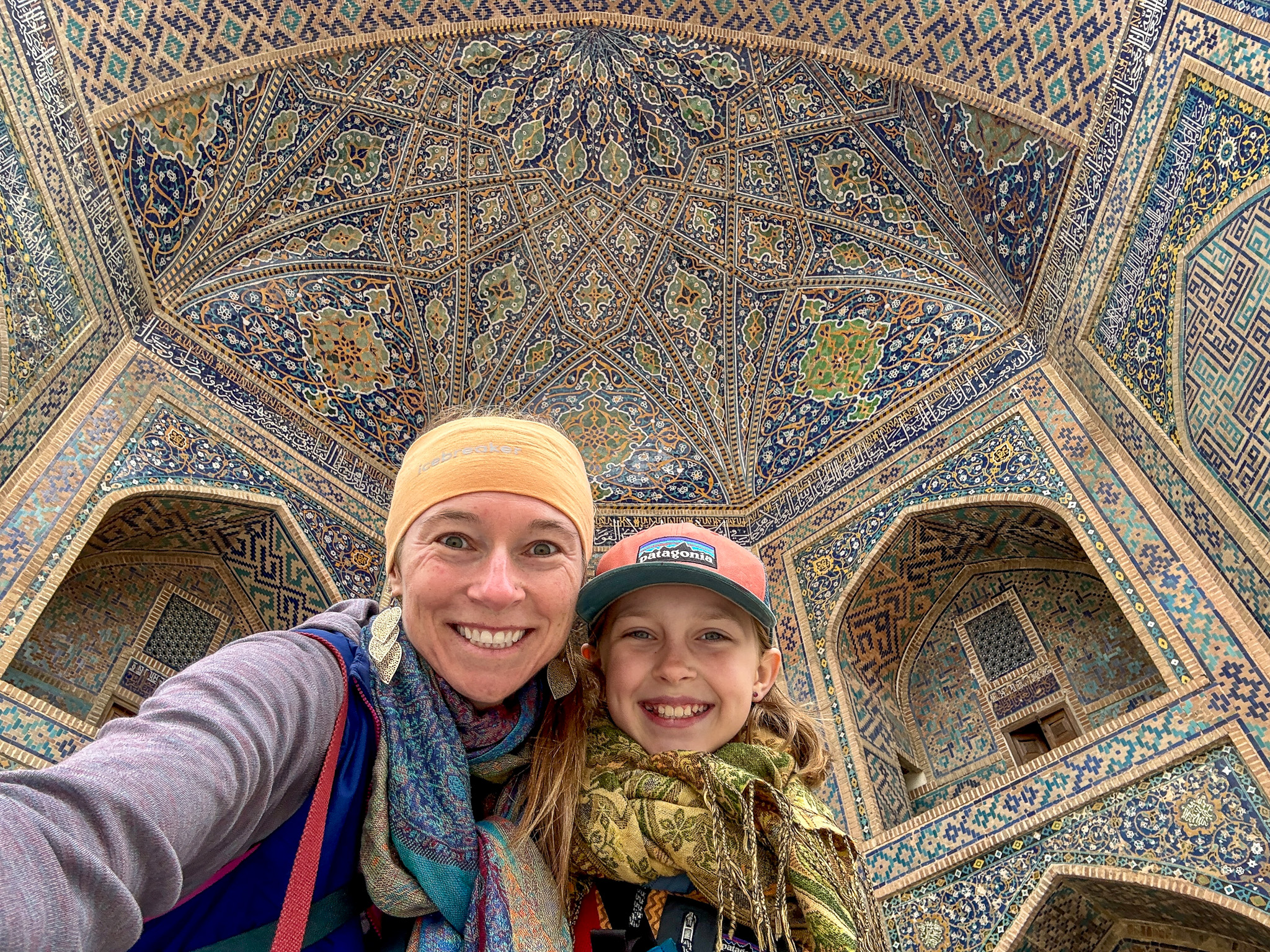
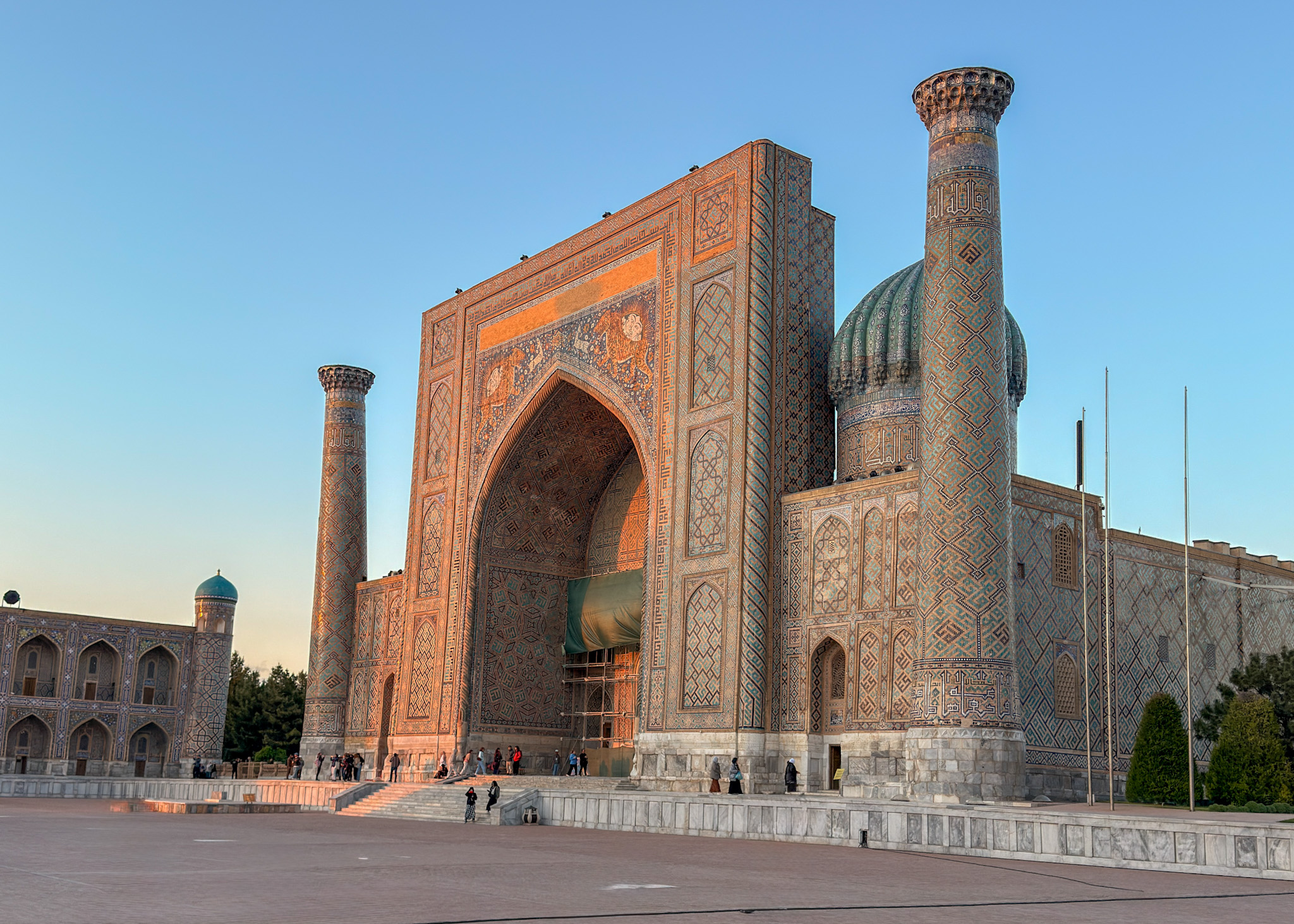
From there to the Registan — three enormous madrasas built across three centuries, framing a plaza that stops you in your tracks. We saved the interiors for the next morning but spent time in the square letting the scale of it register. Then Bibi-Khanym Mosque, which Timur built to be the largest mosque in the Islamic world and which promptly started falling apart before it was even finished — bricks dropping from the dome during construction, which probably was not the architectural outcome he was hoping for. Then Hazrat Khizr Mosque, sitting on a site so old it had already been a Zoroastrian fire temple and the first mosque in Samarkand before the current 19th-century building went up on top. Then Shah-i-Zinda necropolis, a narrow street climbing an ancient hill lined eight centuries deep with mausoleum facades so lavishly tiled it feels like something that shouldn’t quite exist.
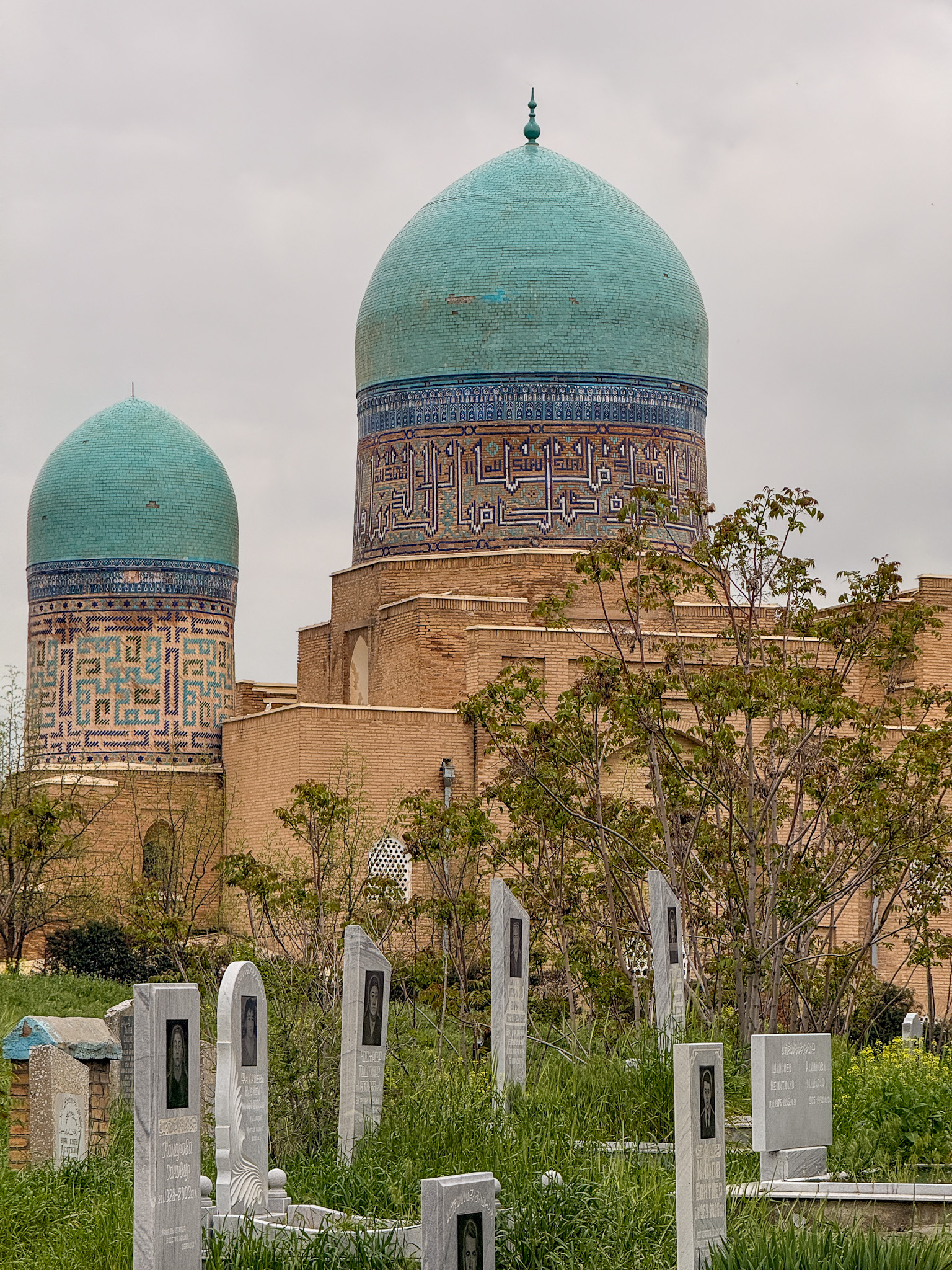
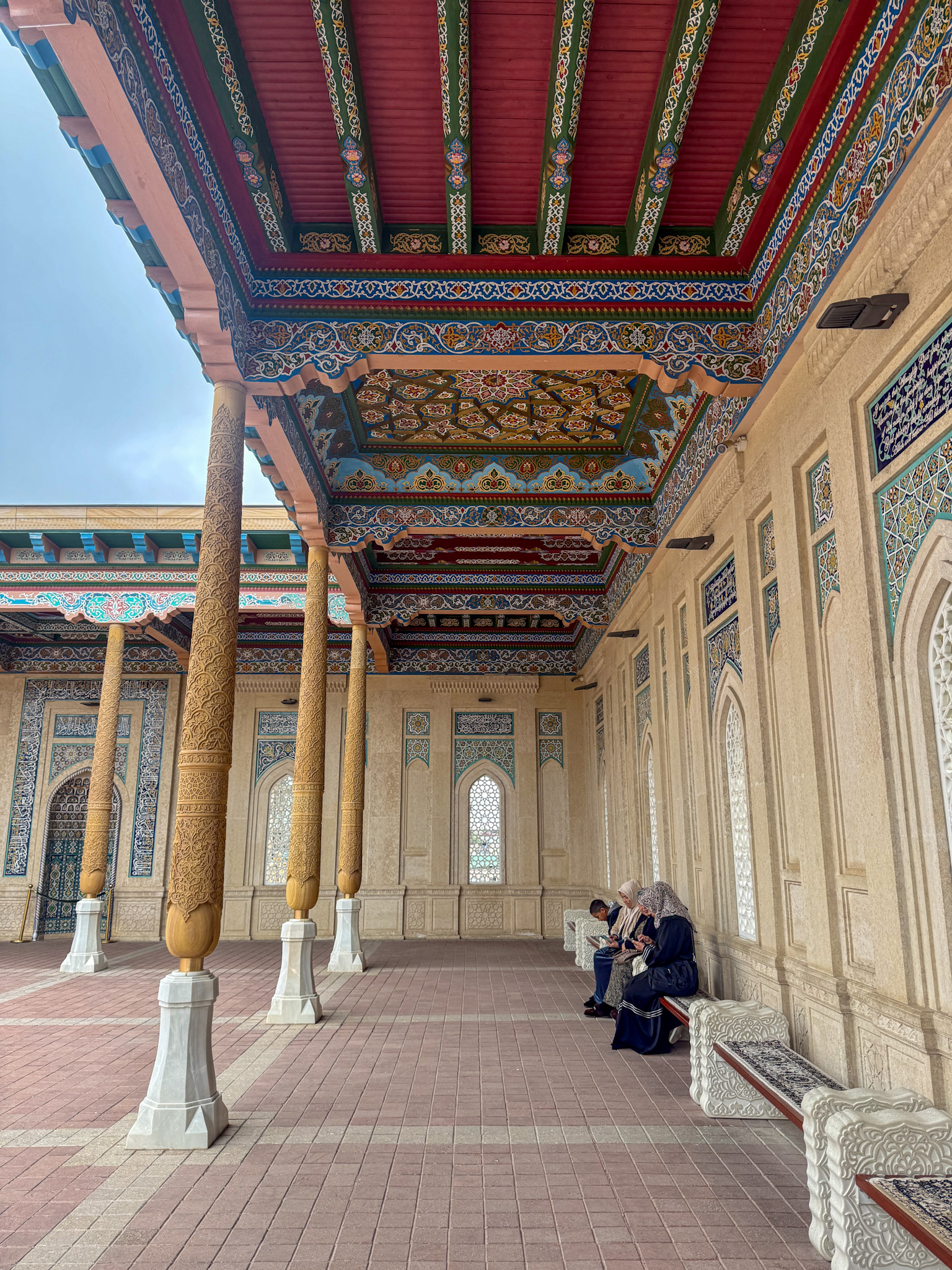
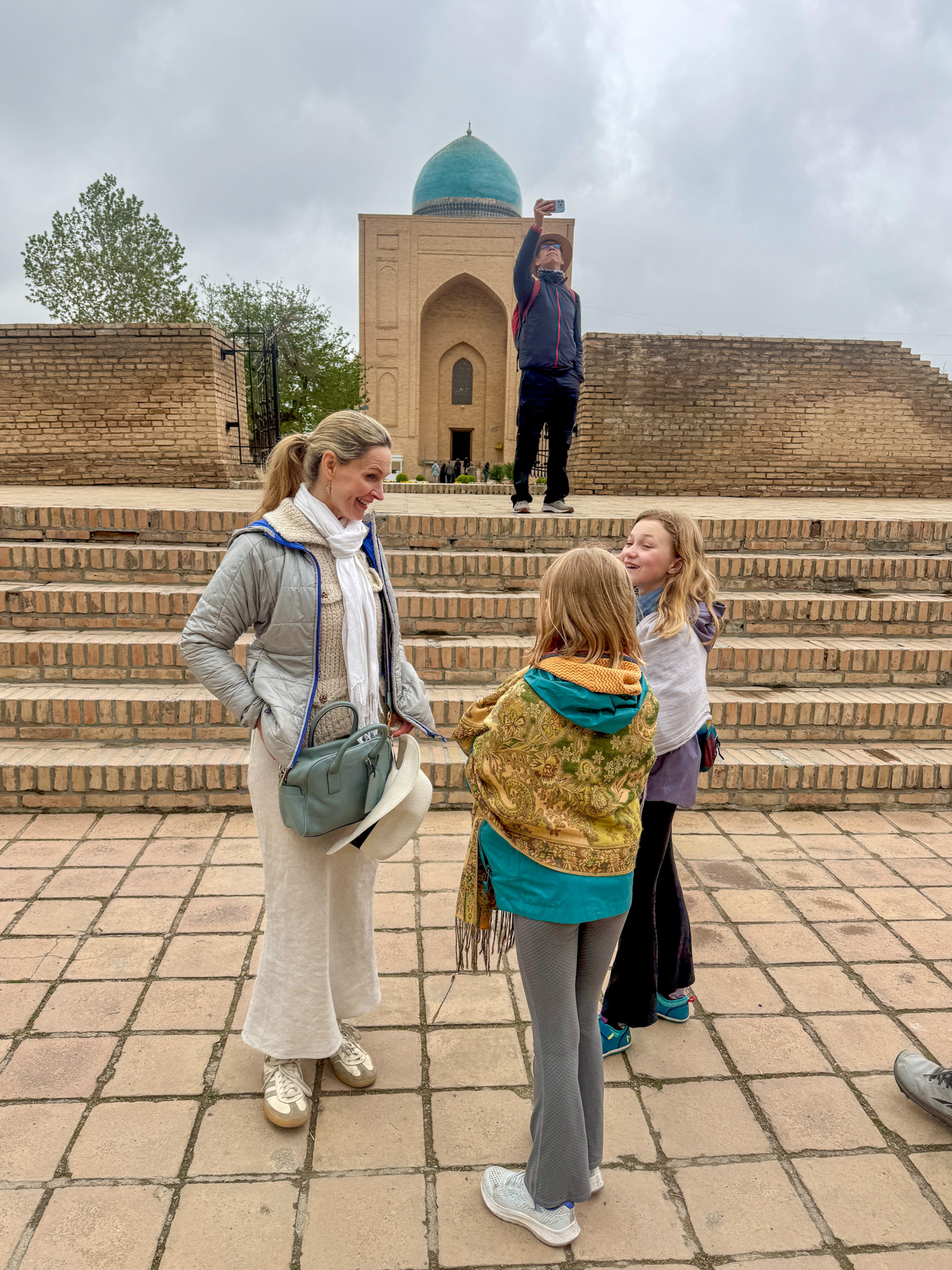
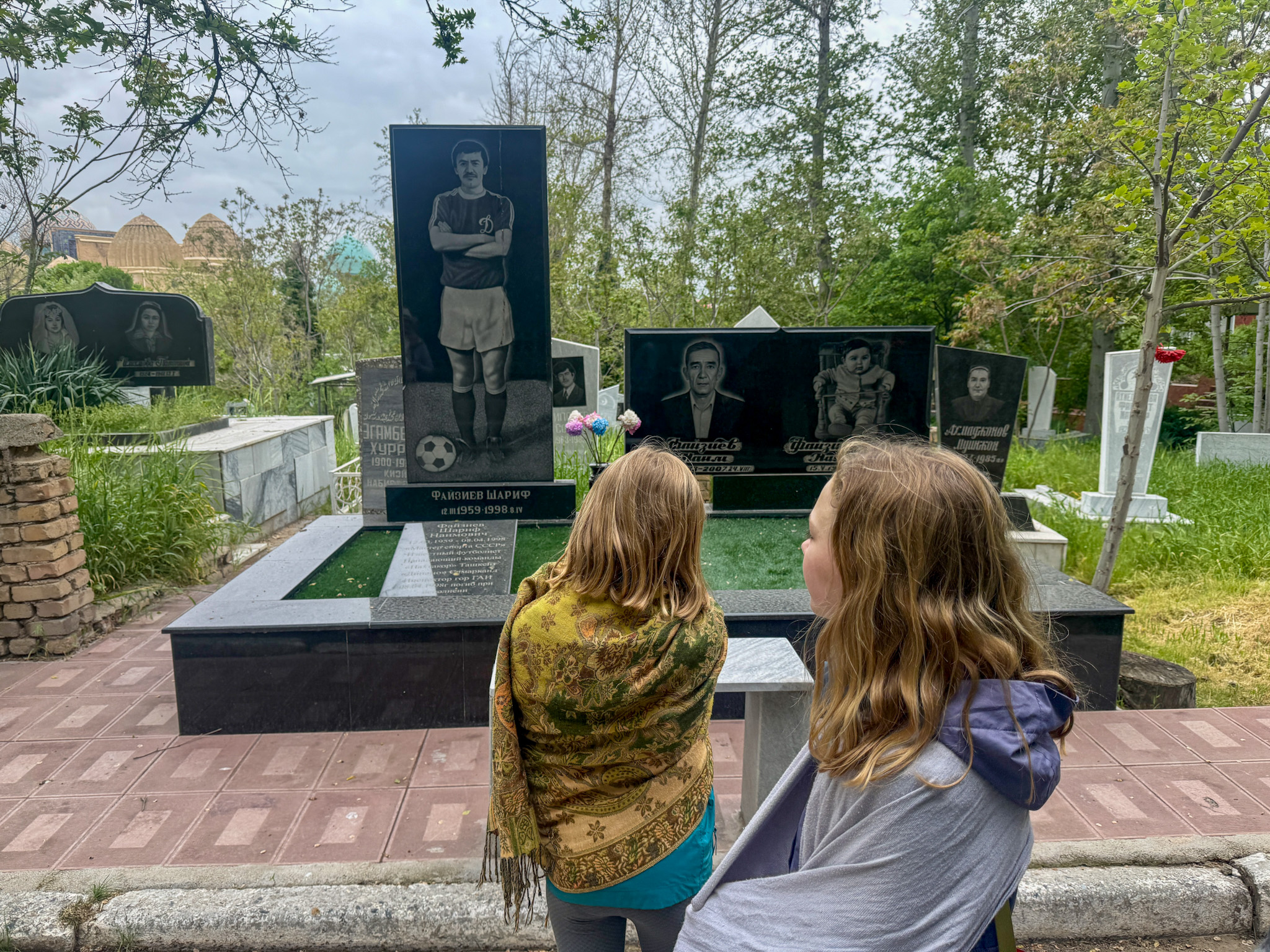
Along the way we fell in with a pair of Australians named Deborah and Simon. They share a fascination with cemeteries, and following our walking tour we extended the adventure across the road to the Muslim cemetery right next to Shah-i-Zinda. We had never explored a cemetery purely for the sake of exploring one before, but this one made a case for the practice. A widespread tradition here places sand-blasted granite plaques on tombstones with near-photographic portraits of the deceased etched into the stone — so you see the face that goes with each name and date. In person it is far more humanizing than it sounds. The layout was magnificently chaotic: hilly terrain, tall grasses and windflowers, no clear rows, tombstones tucked in at every angle, some skewed at 45 degrees and sending a ripple effect of equally skewed neighbors through the surrounding section. Kooky and somehow very memorable.
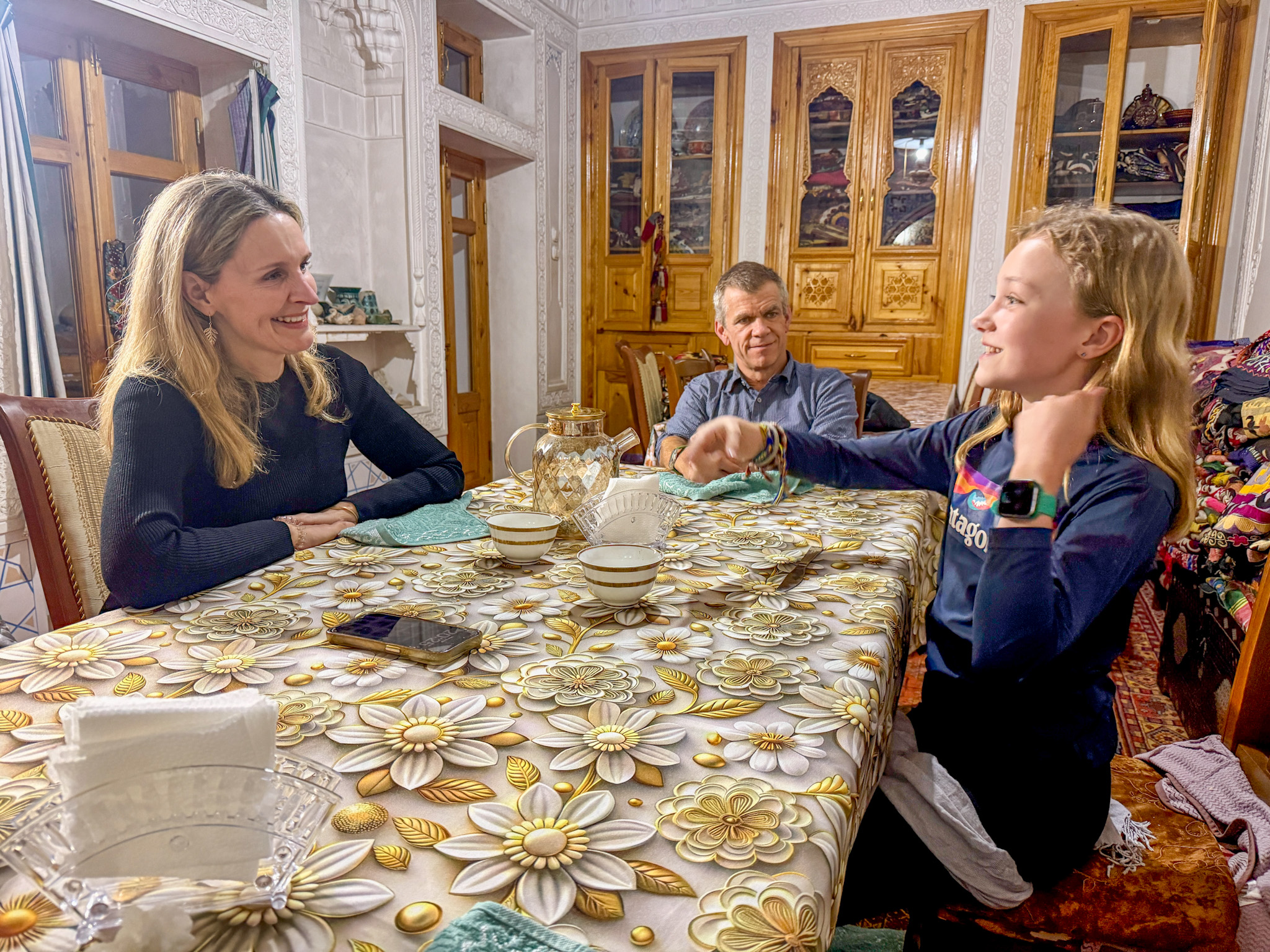
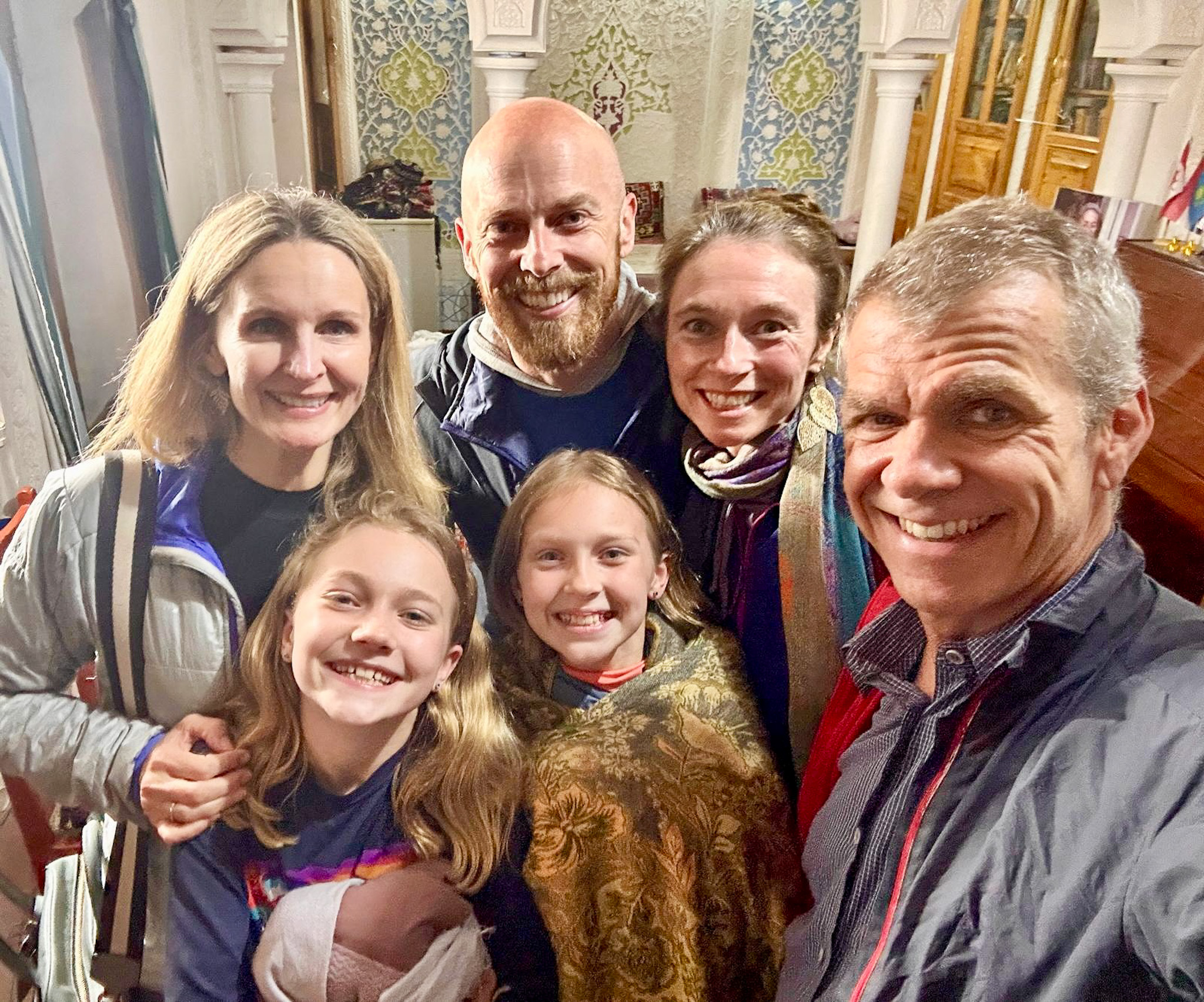
We invited Deborah and Simon to dinner that evening. Antica offers home-cooked meals in a riad-style house with a courtyard and a dining room decorated with intricate wood and plasterwork. The meal started with five different salads, then a vegetable and bean soup, then khanum — steamed rolls of thin dough filled with lamb and vegetables, the kind of quintessentially Uzbek dish that justifies the trip on its own. Uzbek red wine. Good conversation. Travel stories in both directions. We mentioned the total solar eclipse passing through Australia in July 2028, which neither of them had known about. They got immediately excited and invited us to come stay with them when it happens. We are almost certainly going to take them up on it.
The next morning Max was up early in search of coffee. Antica has no kettle in the rooms, so his usual routine was out. He tried four cafes on the way out of the neighborhood, each listed as open by Google and each firmly closed. He ended up at the tourist-facing coffee stand right on the Registan, ordered a flat white expecting mediocrity, and was immediately proven wrong. One of the best flat whites in months, from a stand whose entire business model is separating tourists from their money. He chose not to examine this too closely.
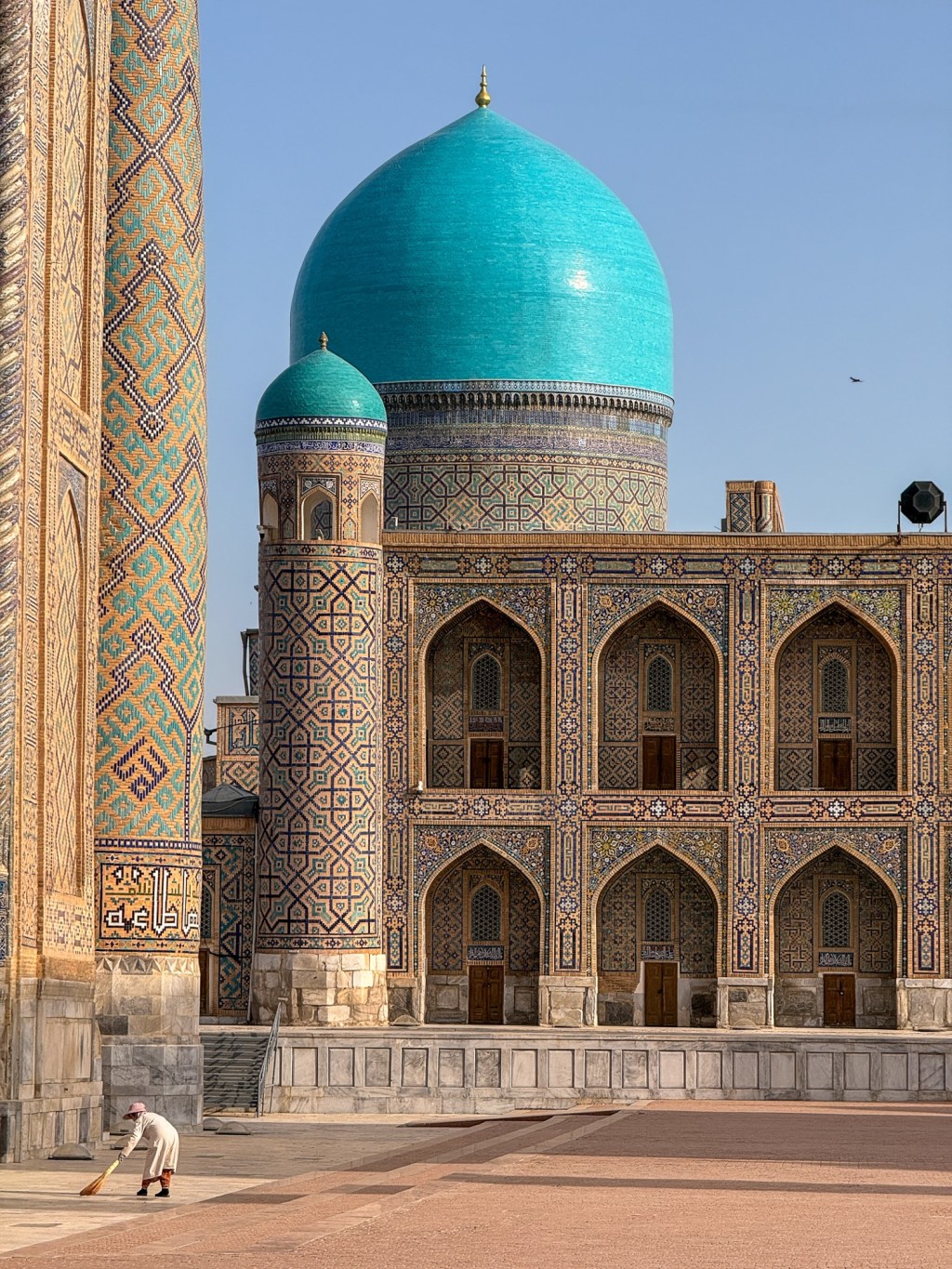
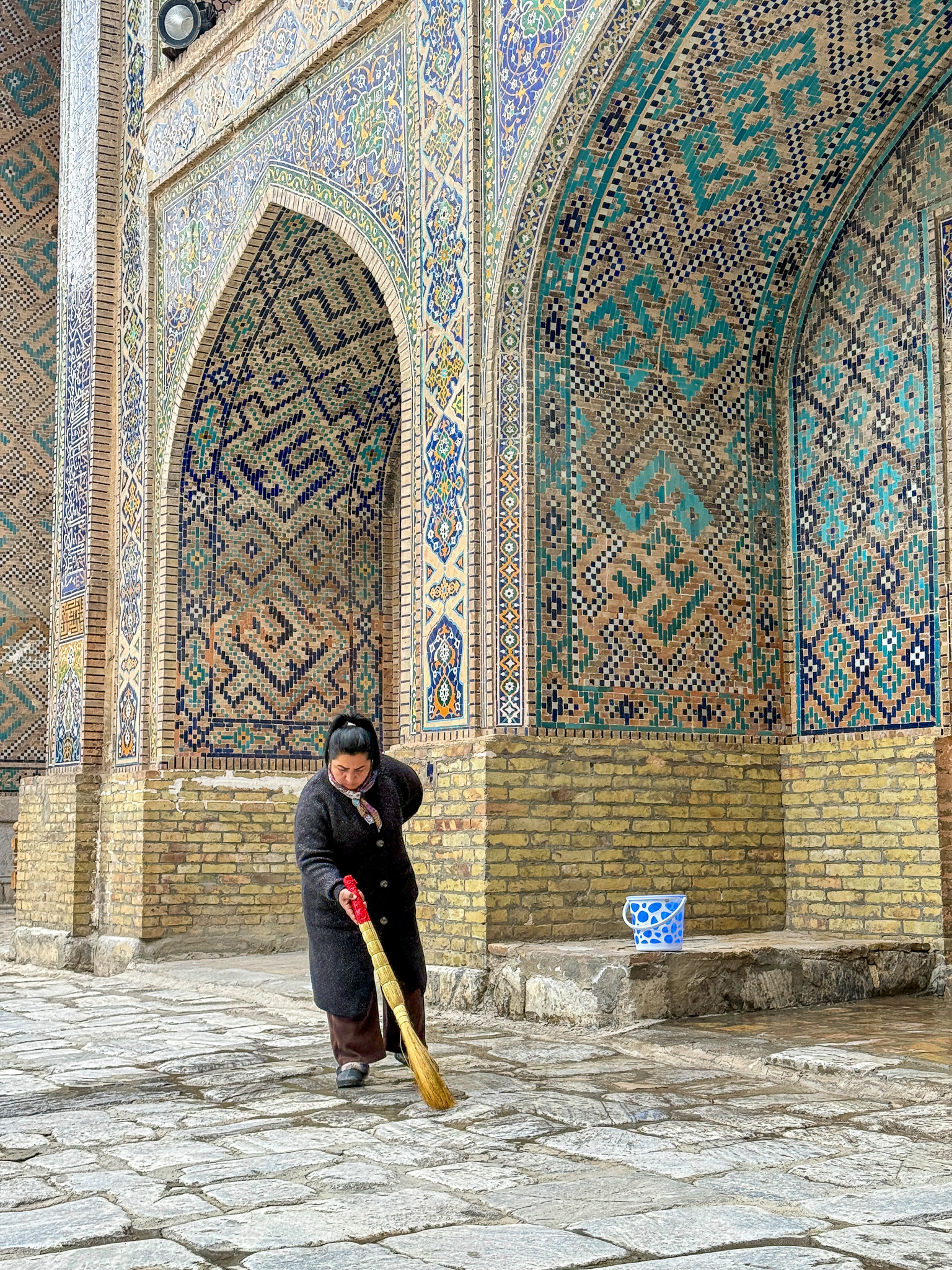
He was still catching the last of golden hour when he arrived, and the square wasn’t yet open to the public. He had it almost entirely to himself. A woman was sweeping it with a large broom made of bundled twigs, the light glinting off the madrasa domes behind her. He got the shot he’d come for.
Max gathered the rest of the crew and we all went back into the Registan with tickets for a proper look inside all three madrasas. In the Ulugh Beg Madrasa, the oldest of the three, we found a short video about Samarkand paper — a craft that arrived in the 8th century after local forces defeated a Chinese army and the captured craftsmen bought their lives by revealing the secret of paper-making. The process uses the inner bark of mulberry branches: boiled, beaten to pulp, pressed into sheets, burnished smooth with shells or stone. The craft nearly died in the 19th century and was revived in the 1990s. Good paper, it turns out, is just tree fiber and patience.
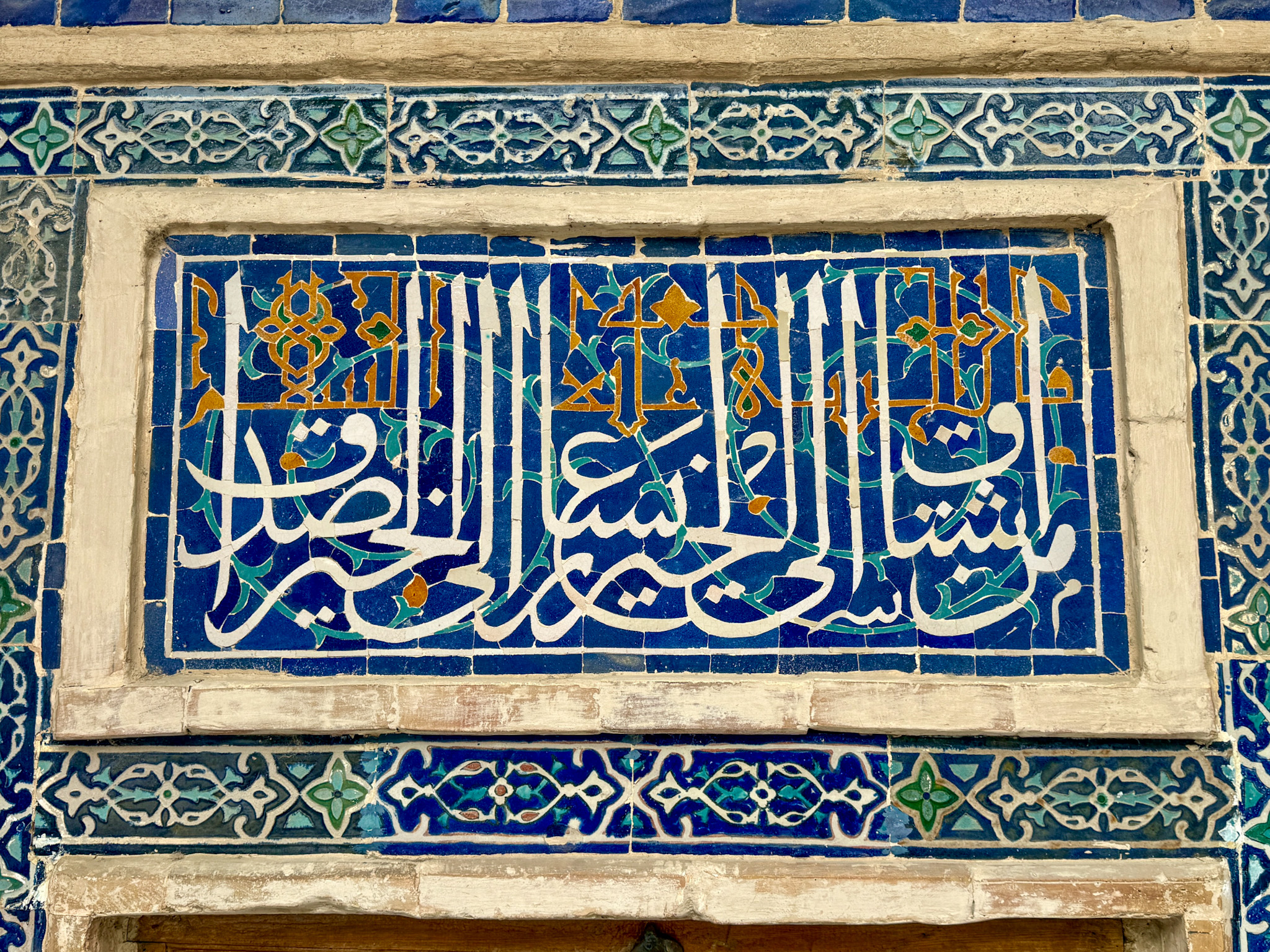
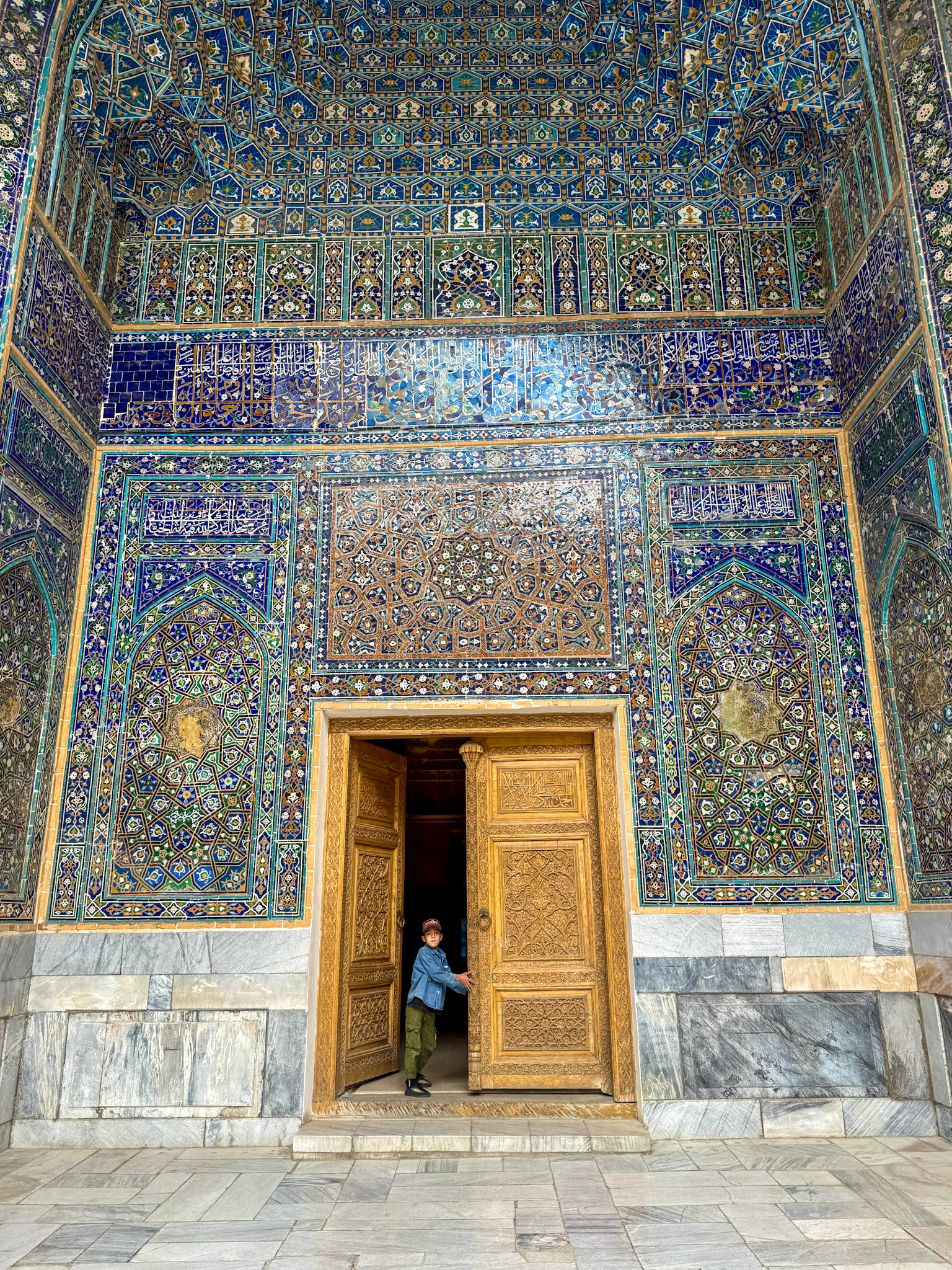
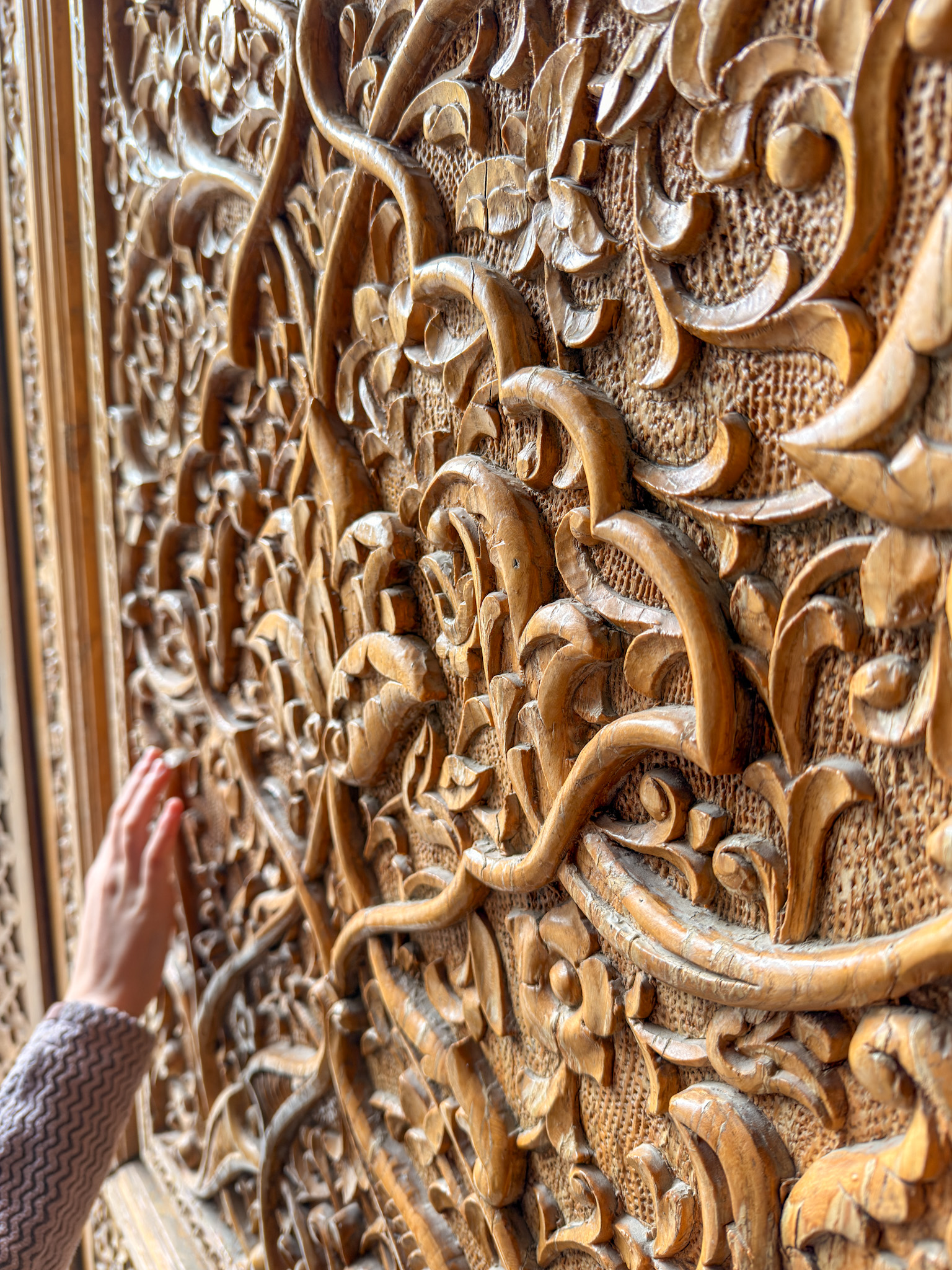
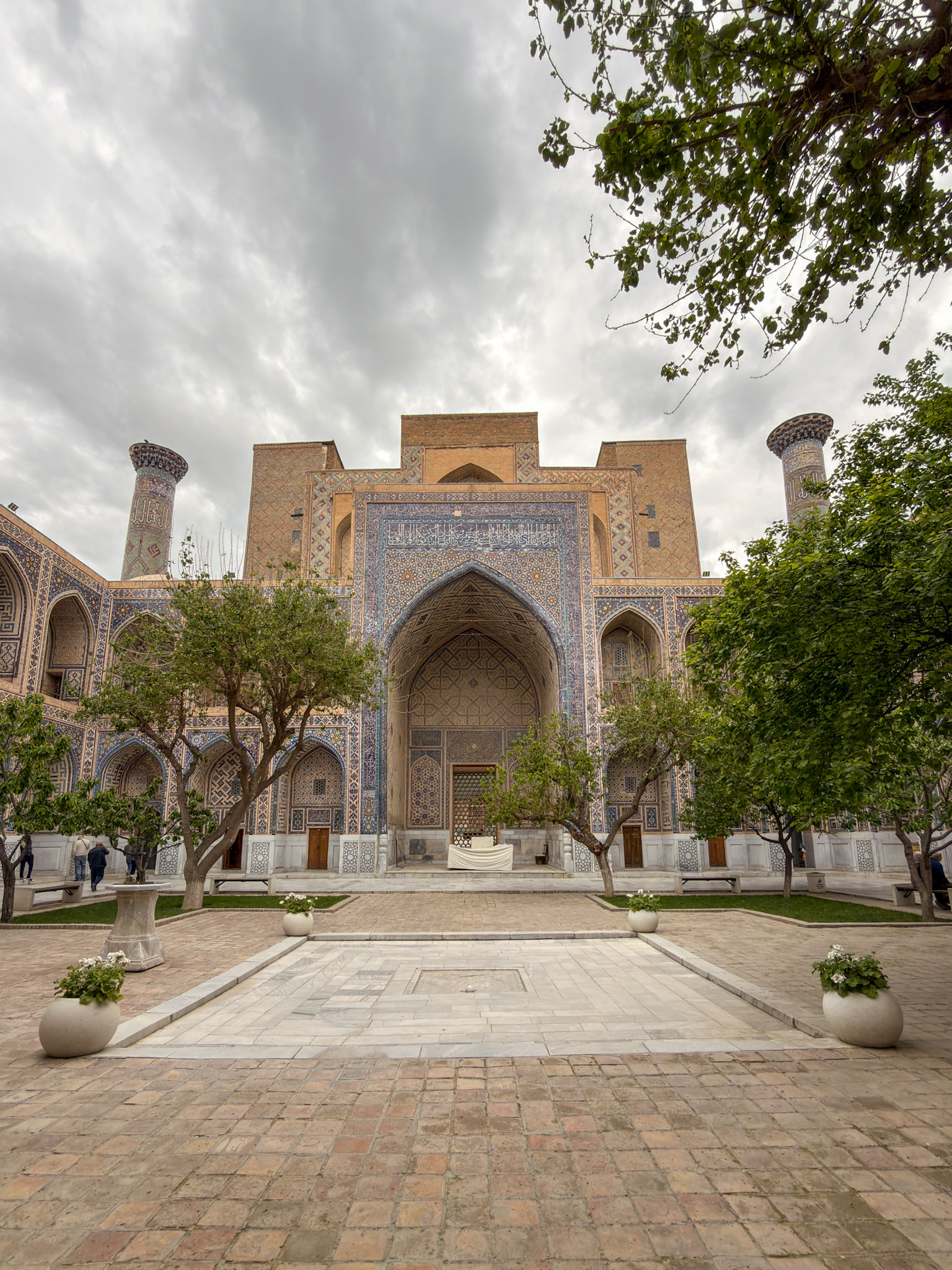
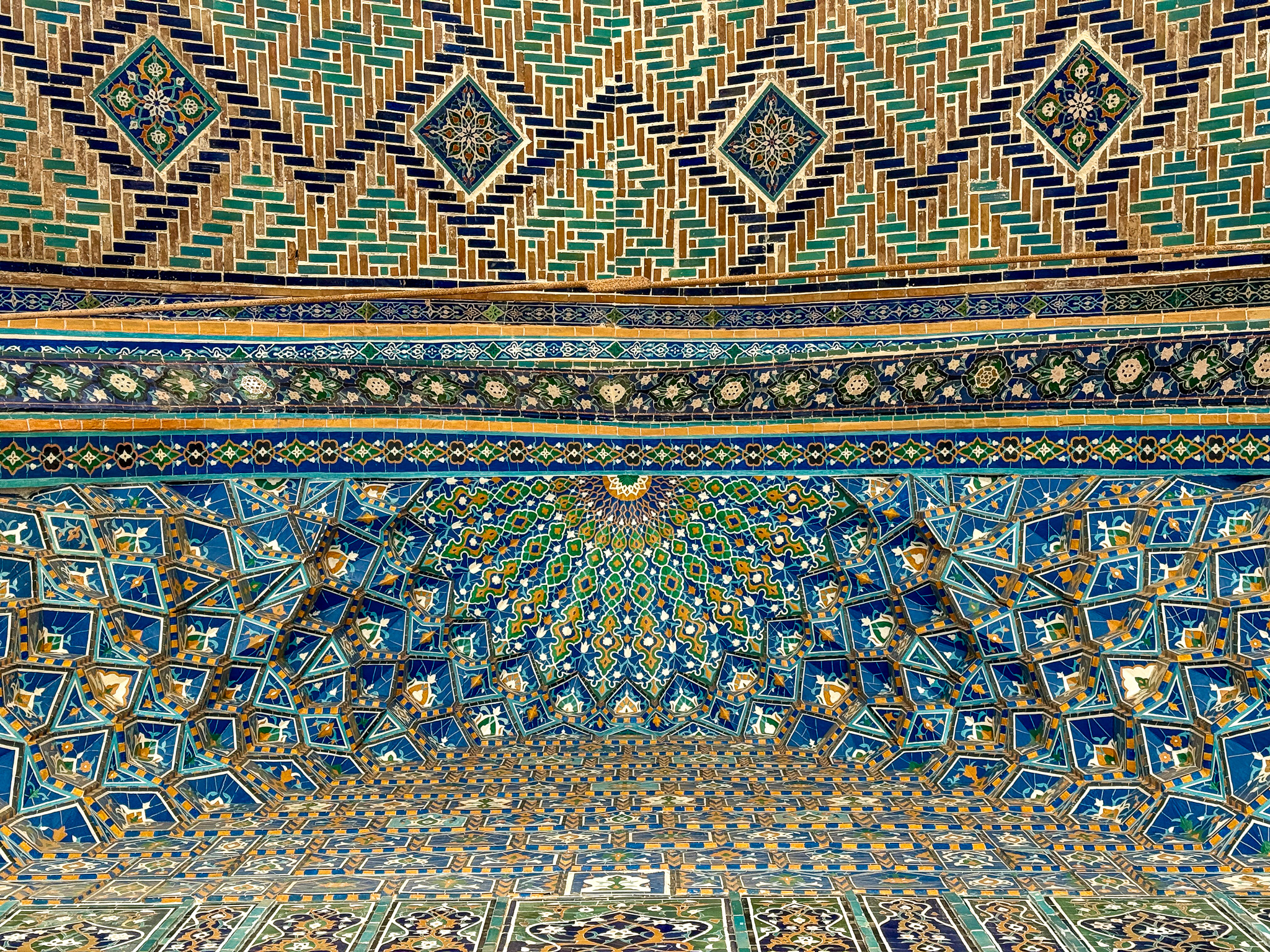
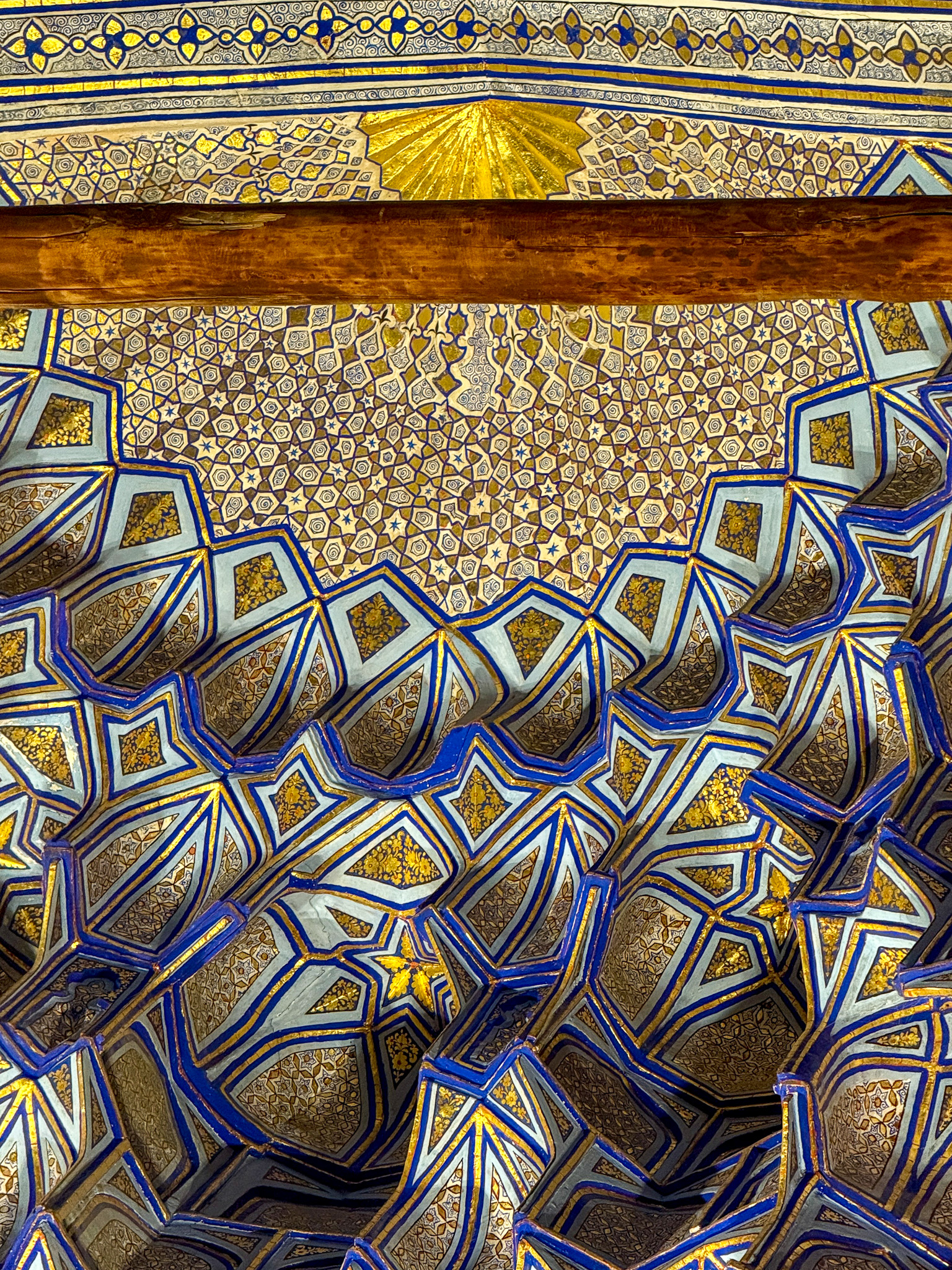
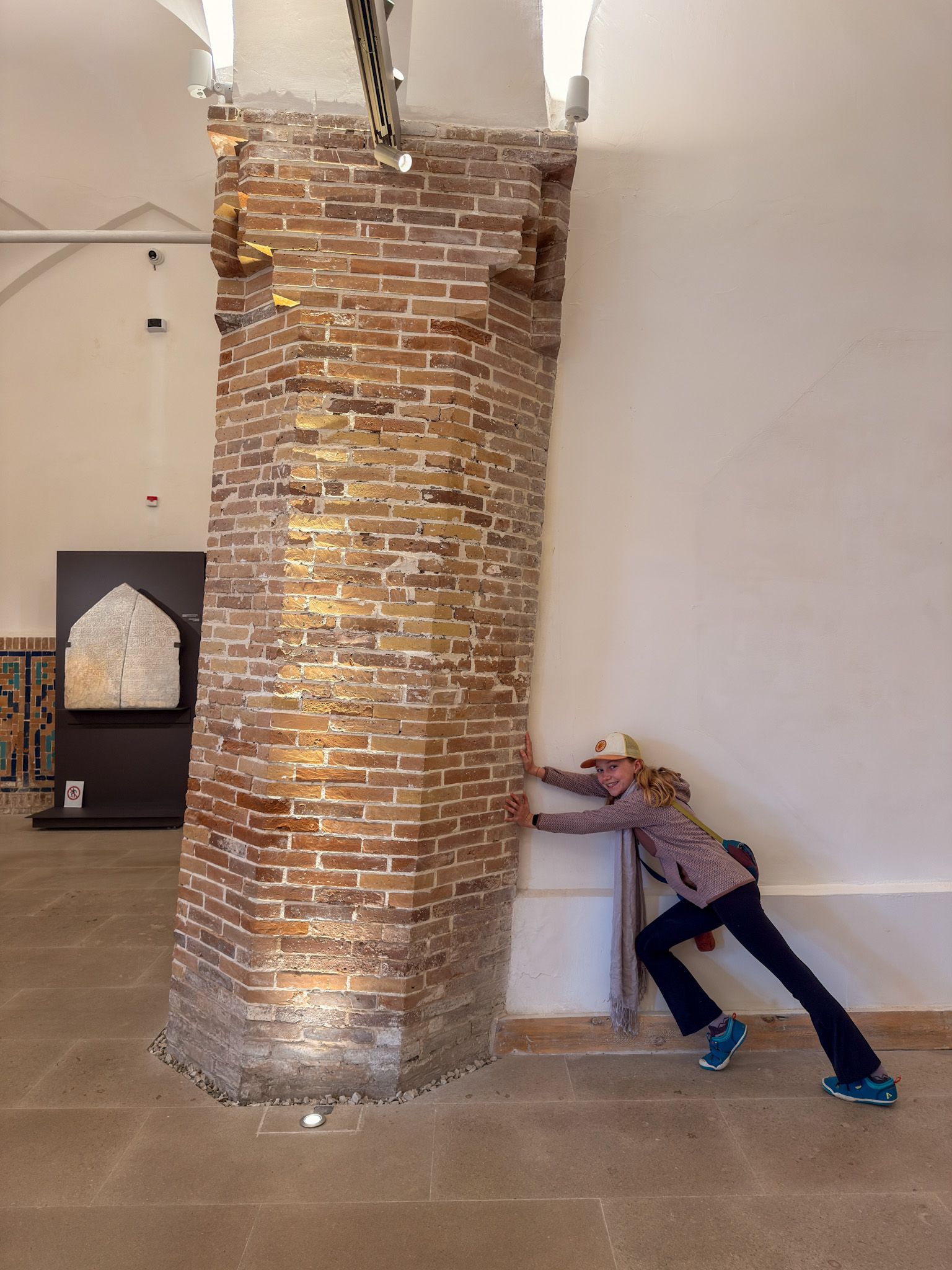
The Tilla-Kori Madrasa has a mosque ceiling swathed in gold leaf using a technique that reads from below as a dome even though the surface is completely flat — an optical illusion so good it almost feels like cheating. Our favorite detail was less reverent: two of the interior columns are leaning at such a dramatic angle that they look about ready to concede. Arya put her shoulder into the more alarming one and pushed back, providing what she considered essential structural support. The madrasa has stood for 360 years without her help, but she wasn’t taking any chances.
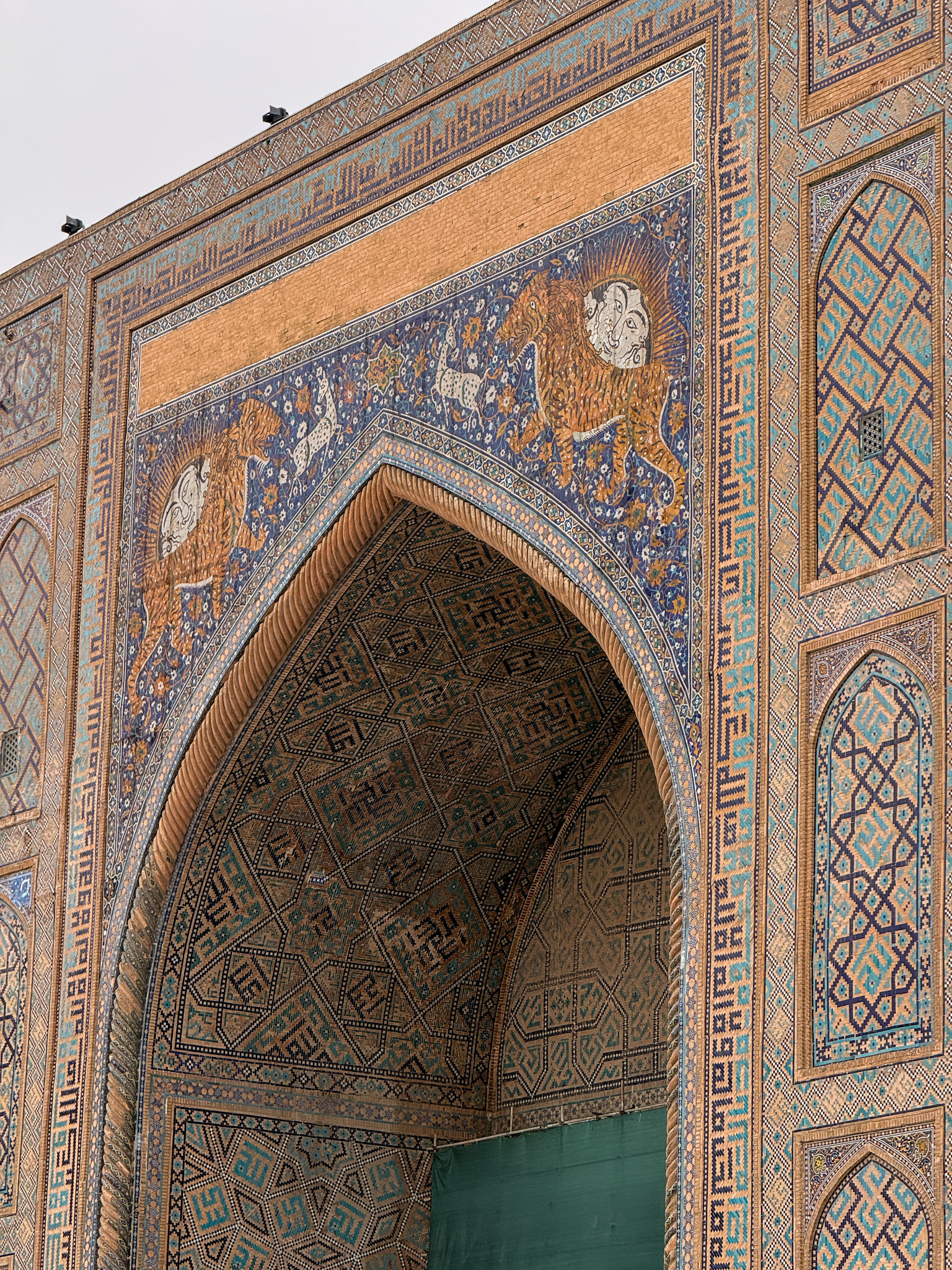
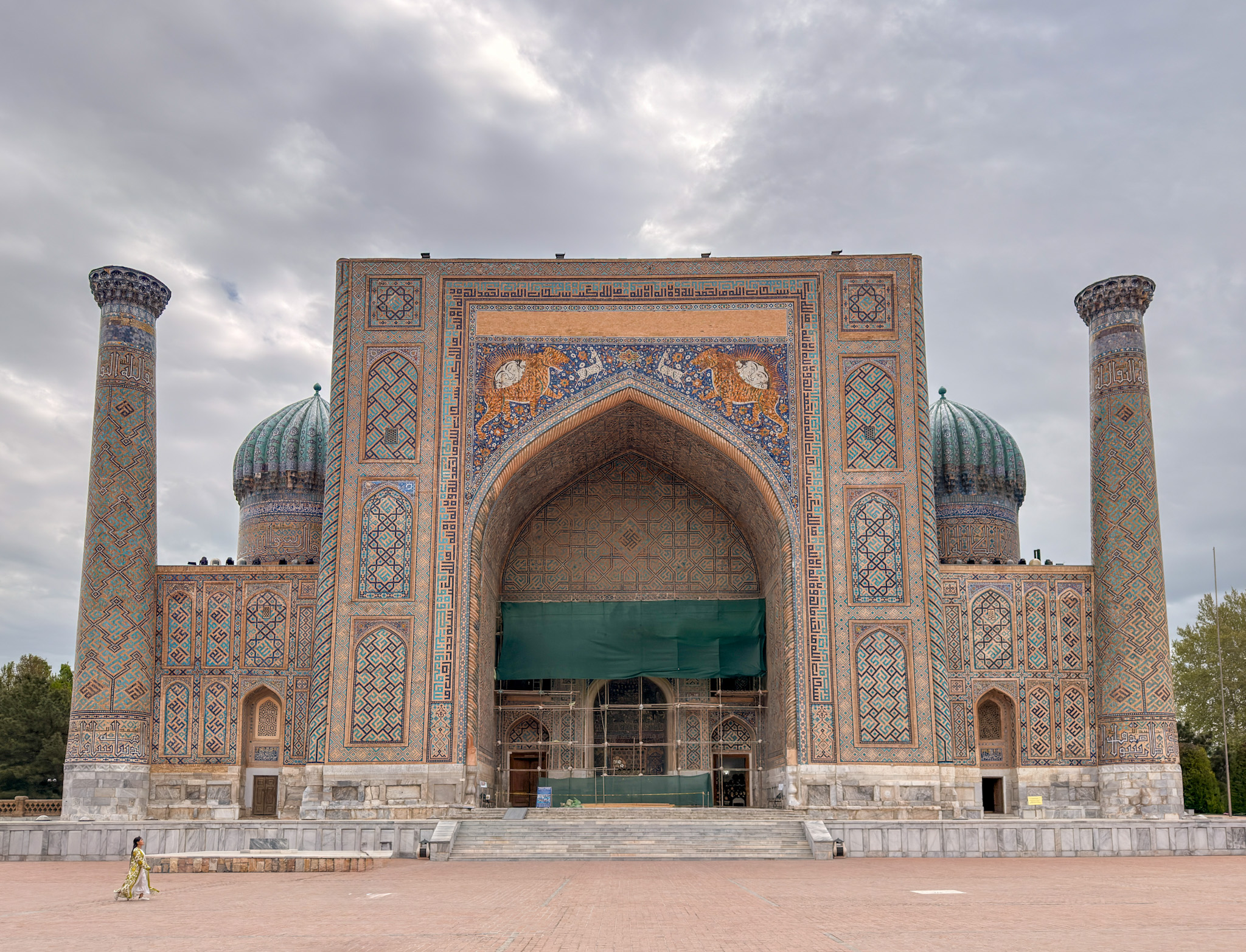
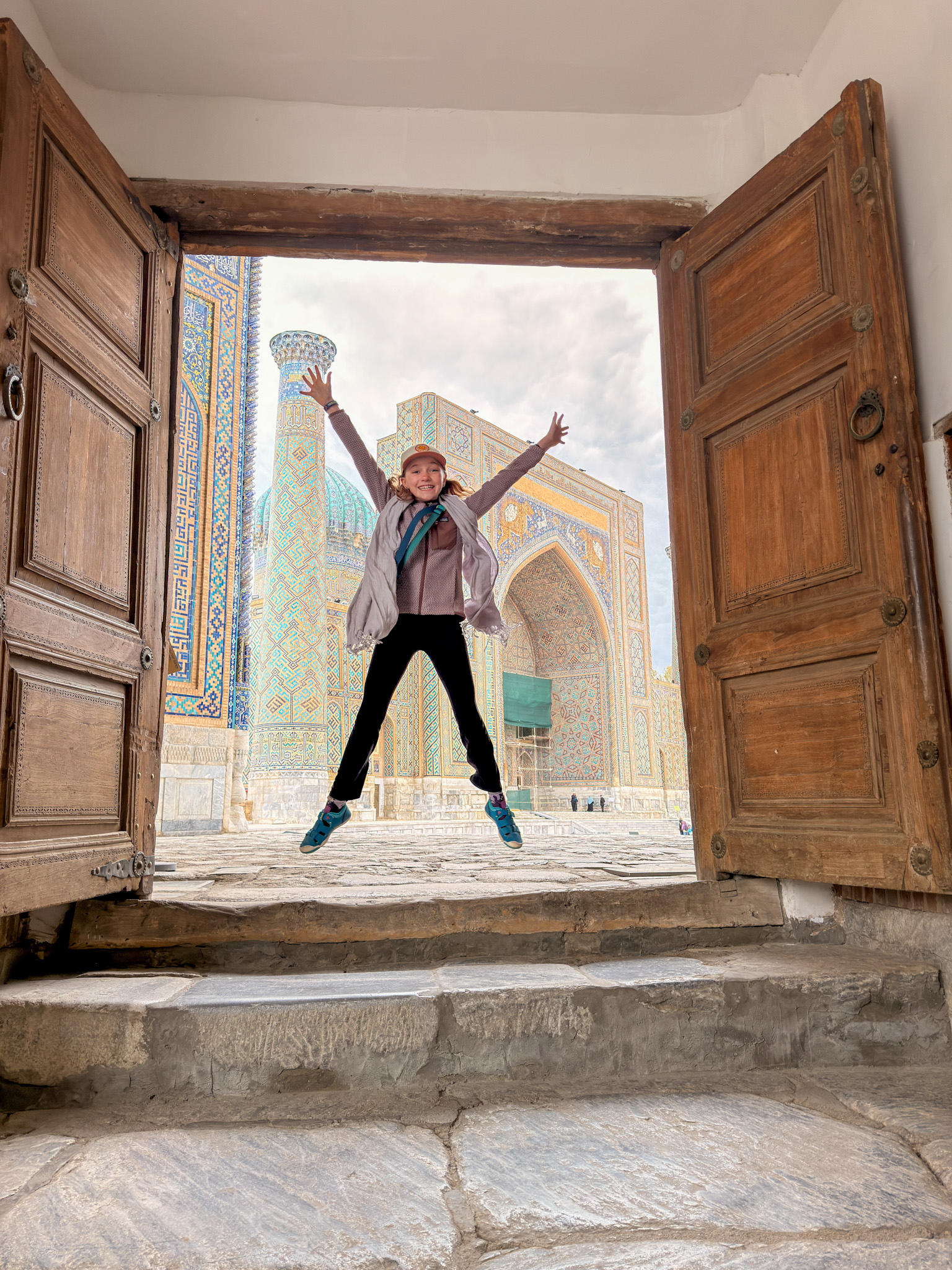
The Sher-Dor Madrasa was the last of the three, and its facade was by far the most interesting: it depicts two large animals, officially lions—though they look more like tigers—each chasing a white deer, and each with a sun rising from its back. Figurative imagery like this is generally forbidden in Islamic architecture, which makes these mosaics among the rarest things in Central Asia. You look up expecting geometric patterns and instead two glowering cats stare right back at you.
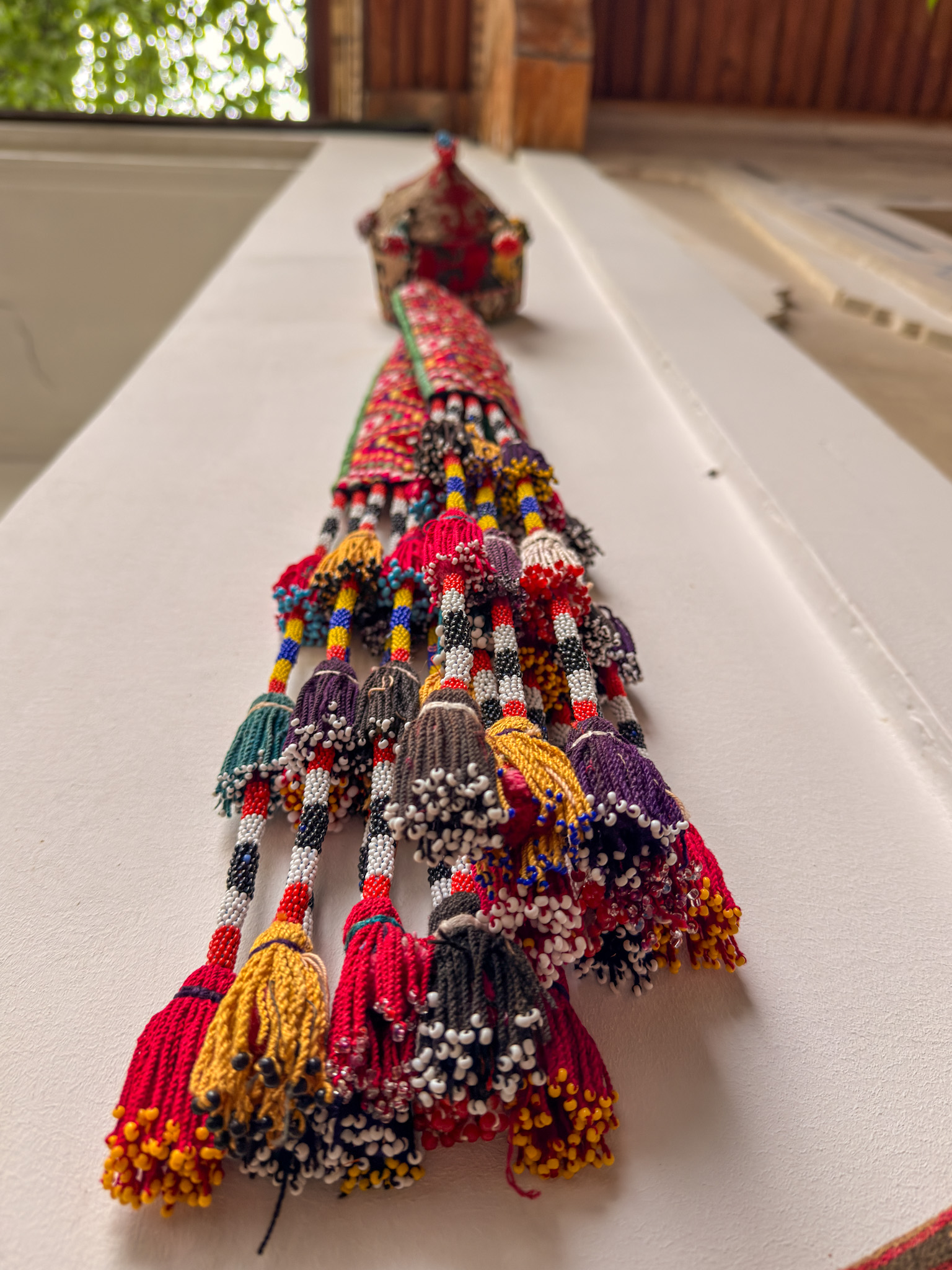
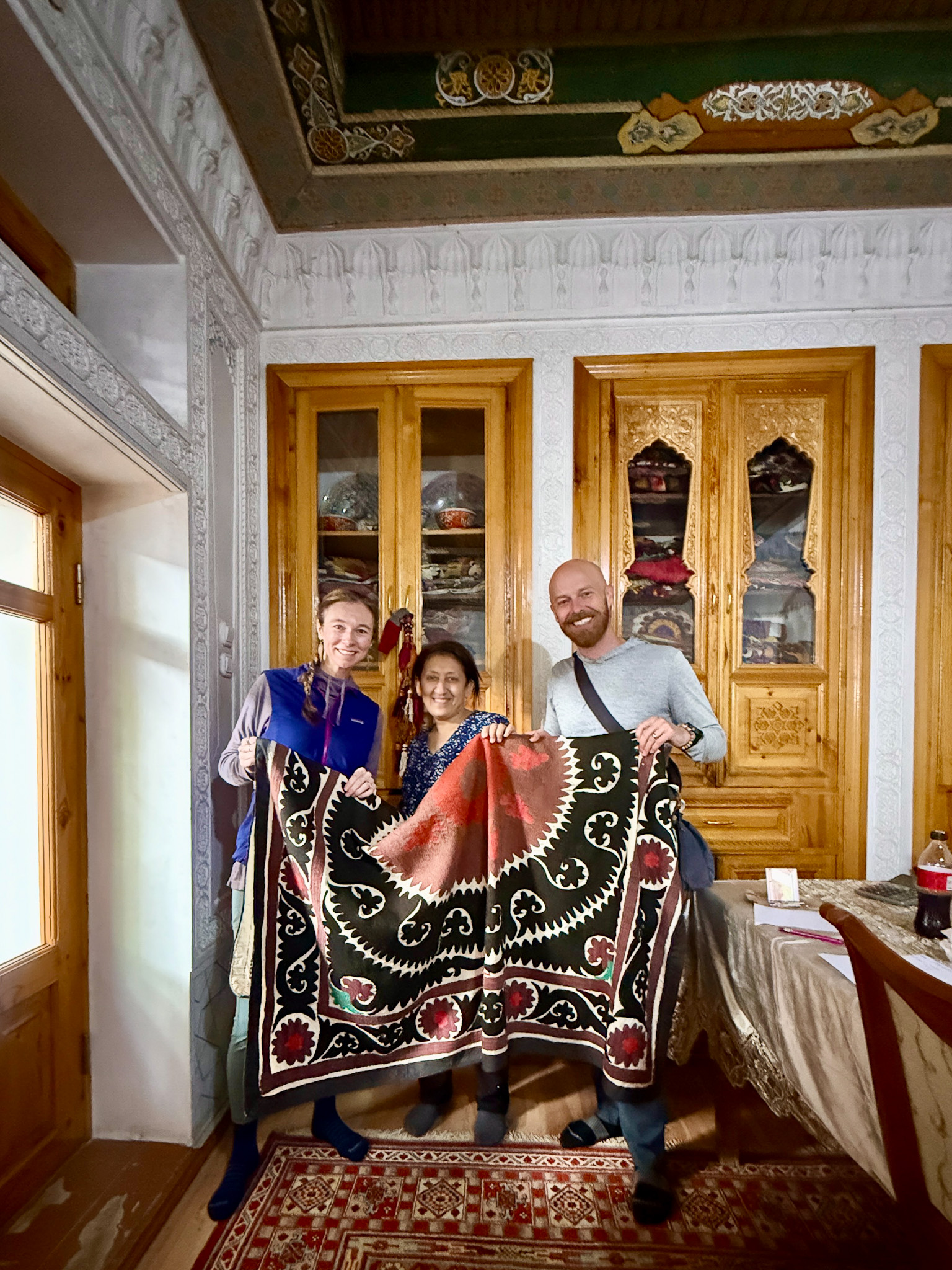
Back at Antica late that morning we fell into a long session looking at suzanis with Aziza. Suzanis are large hand-embroidered cloths traditionally made by Uzbek women as part of a bride’s dowry, and Aziza’s family has been collecting them for three decades. During Covid, when tourism stopped entirely, Antica kept buying directly from local artisans despite having no customers to sell them to. The result is a collection ranging from recent work all the way back to pieces from the mid-1800s. We kept coming back to one: a Soviet-era piece in traditional Samarkand style, roughly 1.5 by 1.5 meters, worked in black and deep red and white with touches of teal. Soviet policy had largely displaced traditional hand embroidery with industrial production, so the pieces from that period carry their own particular history — a craft holding on through a period when it was actively being replaced. We said we’d think about it.
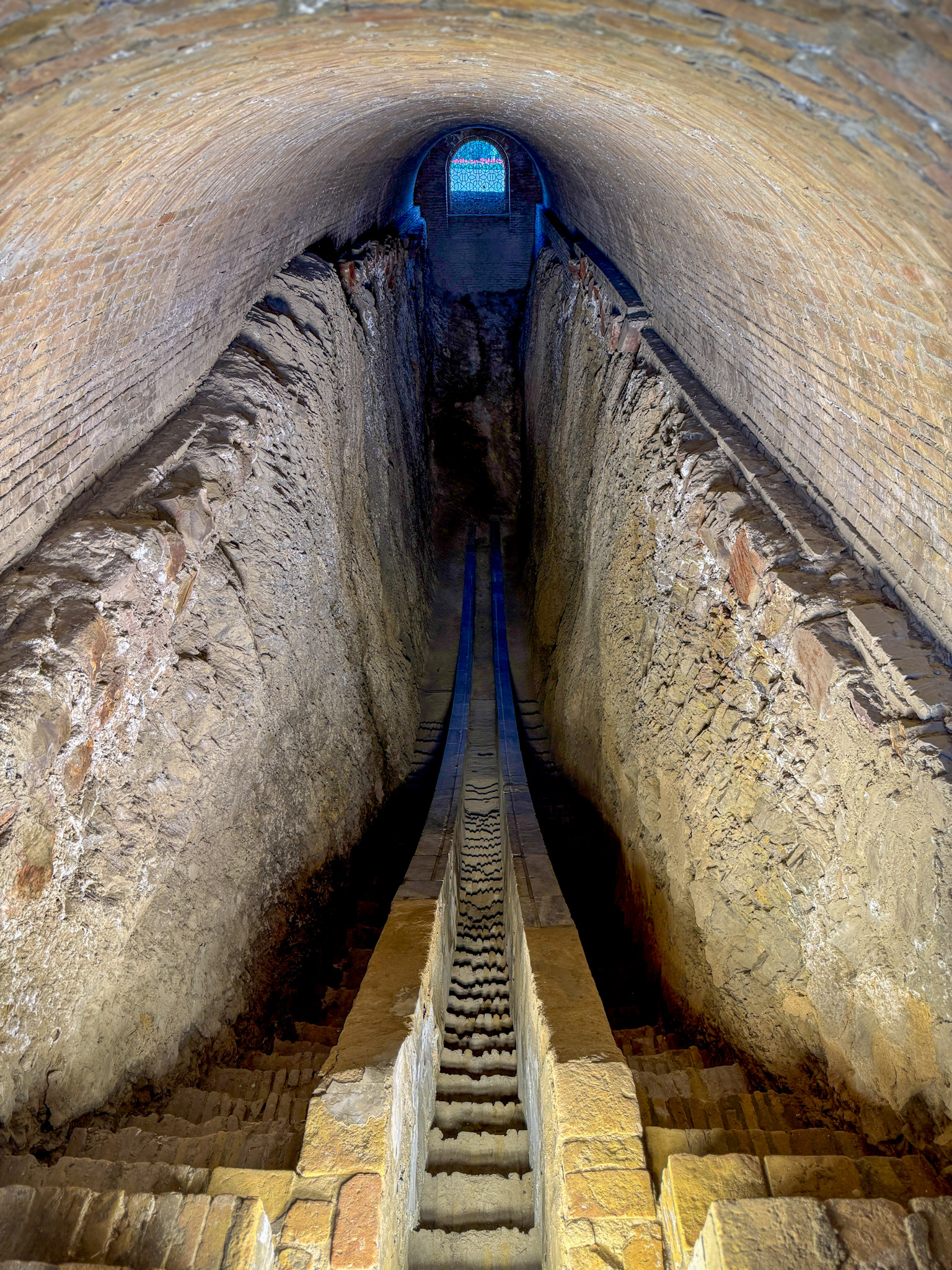
In the afternoon we taxied out to the Observatory of Ulugh Beg. The ruins aren’t grand—a large excavated trench with a sweeping marble arc built into it. But from this trench, using only the naked eye and the massive 40 meter diameter sextant, Ulugh Beg and his astronomers charted over a thousand stars and calculated the length of an Earth year to within 58 seconds of the actual value. In 1437. Without a telescope, because telescopes hadn’t been invented yet. Copernicus didn’t improve meaningfully on Ulugh Beg’s numbers until 1525. The foundational measurements of modern astronomy were made here with nothing but geometry, patience, and a very large hole in the ground.
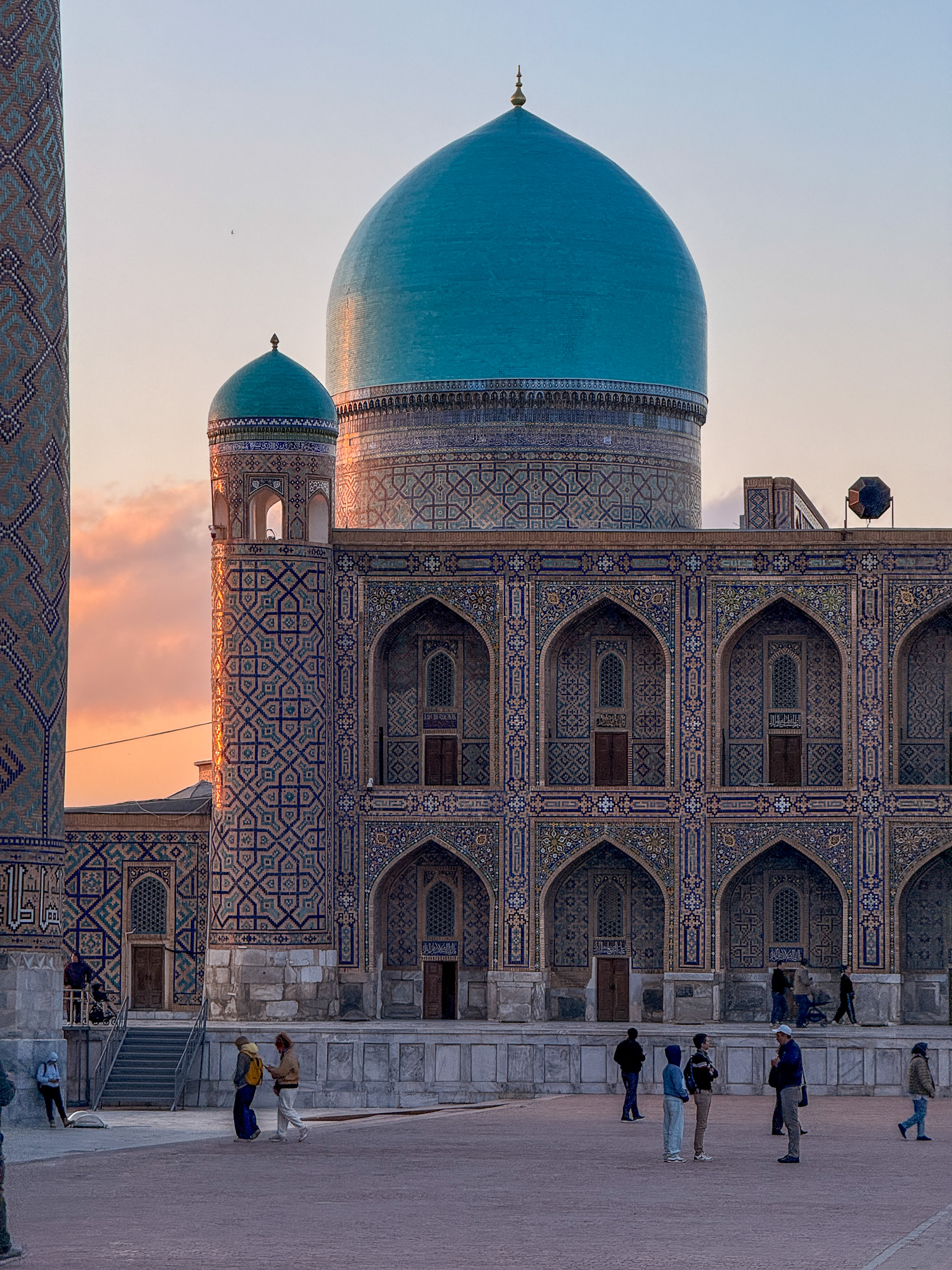
We walked the 5 km back into the city from the observatory, which gave the girls room to run wild after a morning of politely standing in madrasas, and gave Shaina and Max time to talk about the trip—how it’s been, what we’re each looking forward to in the three months remaining. We grabbed some of our new favorite street snacks on the way: fresh-pressed pomegranate juice and somsas, both ubiquitous in Samarkand. We approached the Registan from a distance, glowing gold in the dropping light.
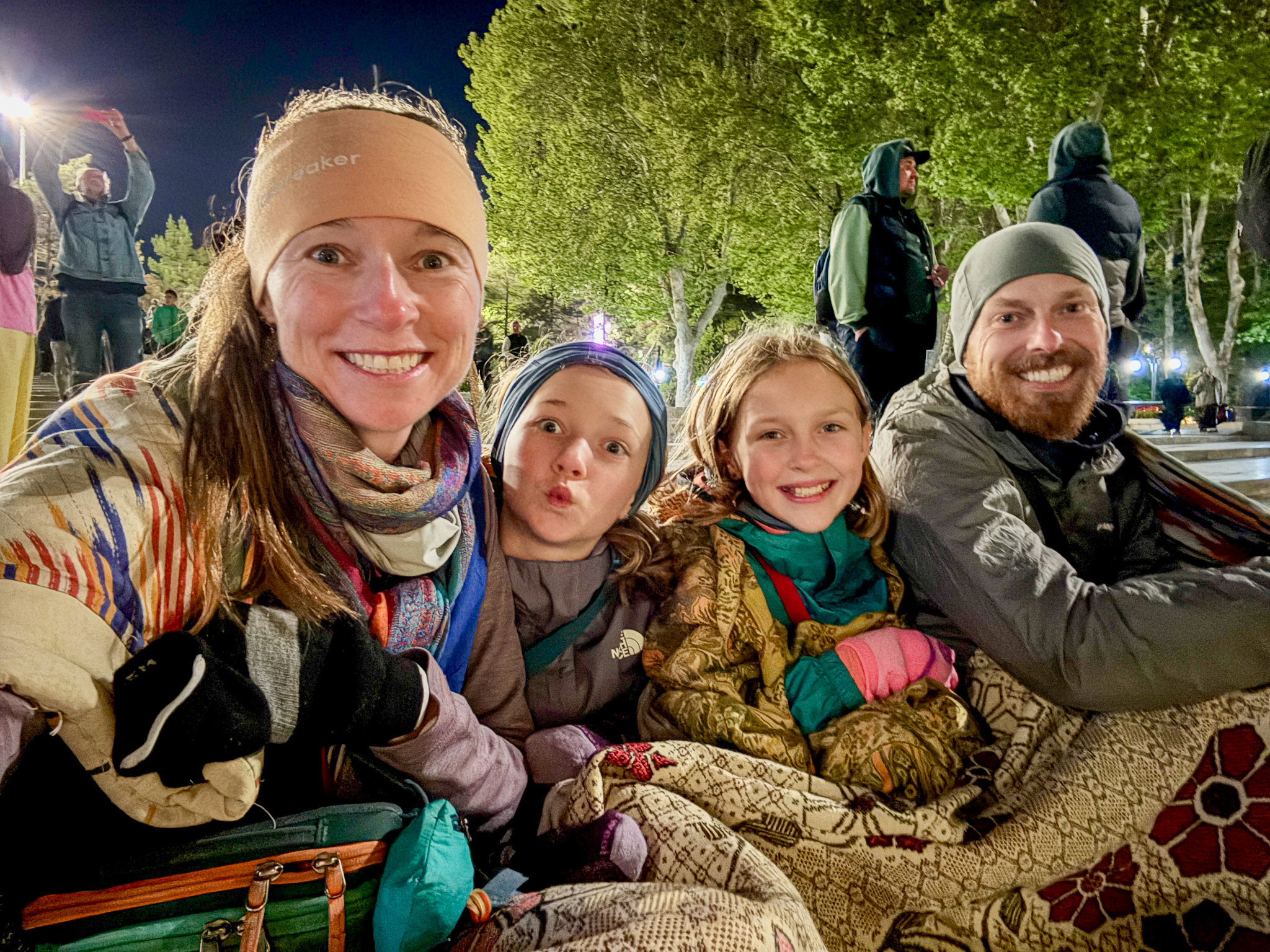
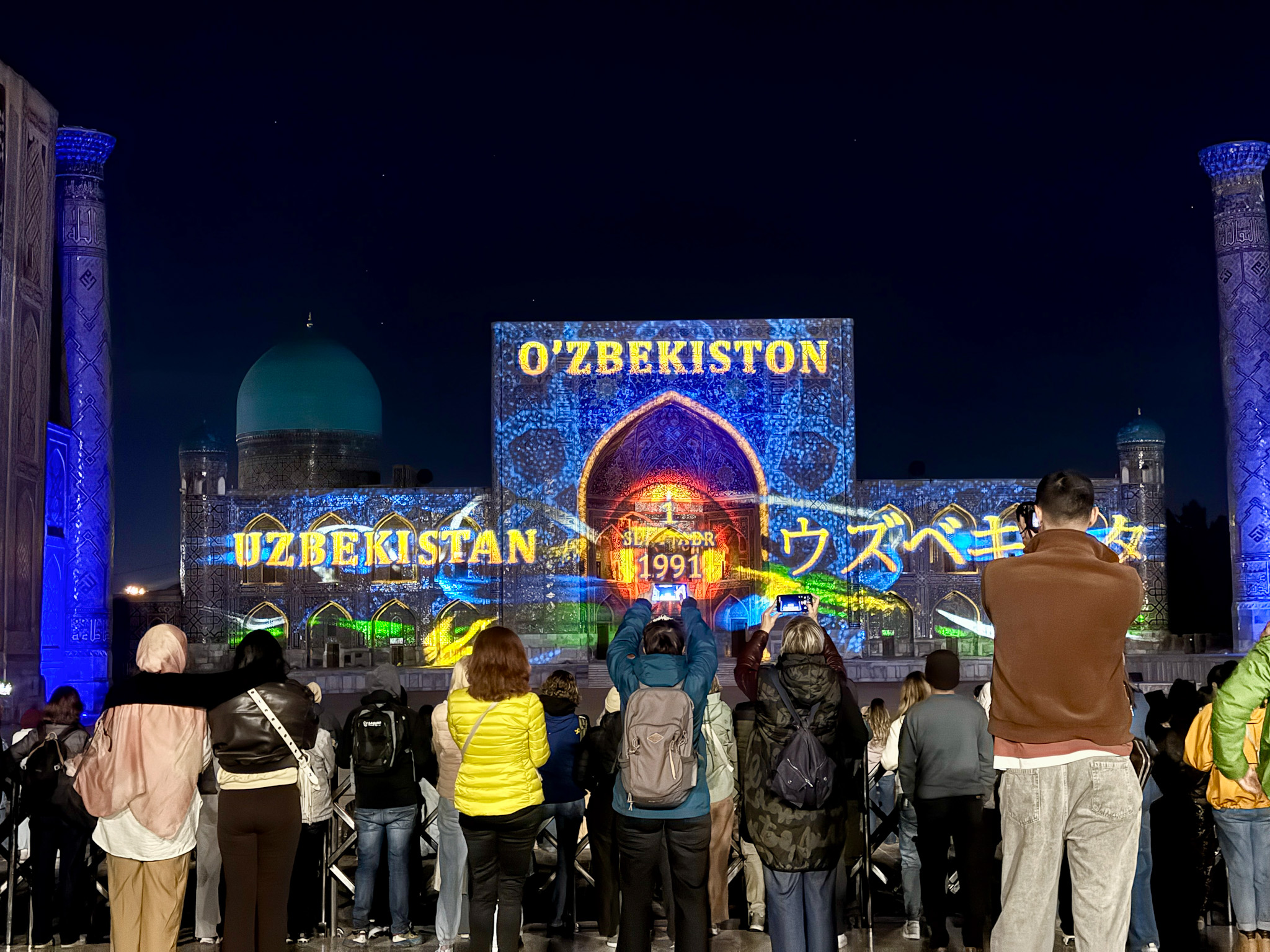
That night we bundled up and headed back out to the Registan for the light show. Yes, it was 48°F. Yes, we are fully aware that 48°F does not qualify as cold by any objective measure used back home. But we have been living in perpetual summer since August of last year, most of it the hot-and-humid Southeast Asian variety, and our thermostats have not recalibrated. We brought three blankets: one to sit on, one for laps, one for shoulders. We huddled together like penguins waiting out an Antarctic storm and we have no apologies whatsoever.
The show was legitimately great. High-end projectors threw the story of Uzbekistan across all three madrasa facades simultaneously, turning them into curved movie screens and running backward through history over about twenty minutes of animation. The narration was entirely in Uzbek, but the message didn’t require translation: this is a people with a long, proud, continuous cultural lineage, and they would very much like you to understand that. Twenty entertaining minutes, made even better with blankets and baklava.
Afterward Deborah and Simon had invited us to their hotel for a bottle of wine. They’d done the Tajikistan day trip that morning—our plan for the following day—and they said it was spectacular. We would take their word for it. Due to genuinely good conversation, we stayed later than we’d intended, our girls asleep in our laps—the best way to end an evening worth staying late for.
Alarms at 5:45. Out the door at 6:20.
The Tajikistan border crossing requires patience and a willingness to have your passport examined by a great many different people in sequence. Eight total passport checks: four on the Uzbek side, a 500-meter walk across the no-man’s land between the two countries, four more on the Tajik side. The crossing picked up some extra flavor when Shaina was pulled aside by an Uzbek army officer who asked her to take out her phone. She had been photographing the border control station, which is strictly forbidden. He went through her photos one by one as she deleted them. Then he took the phone, opened the Recently Deleted folder, and deleted them again. Then he communicated, in the universal language of a uniformed officer who has run out of patience, that there would be no further photography at the border. In retrospect, this is the kind of thing where common sense probably should have intervened earlier. We are filing it under lessons learned and moving on without shame.
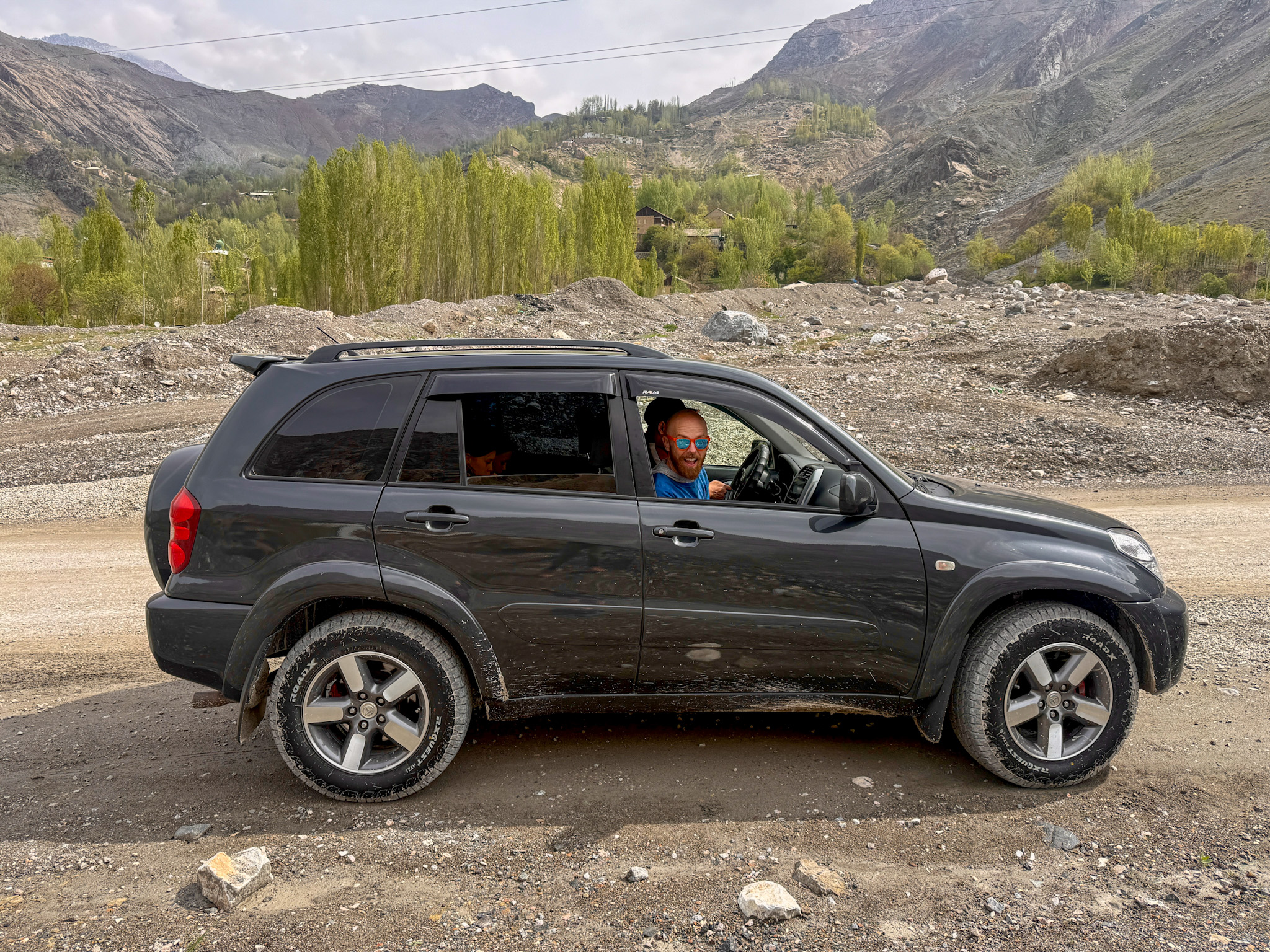
On the Tajik side we were met by a short, stocky man who introduced himself as Ferrari. Max asked if that was really his name. He said no, and provided his actual name, which was complex enough that it had vacated Max’s memory within seconds. Ferrari it remained. He had a clean Toyota RAV4 and we were grateful for it.
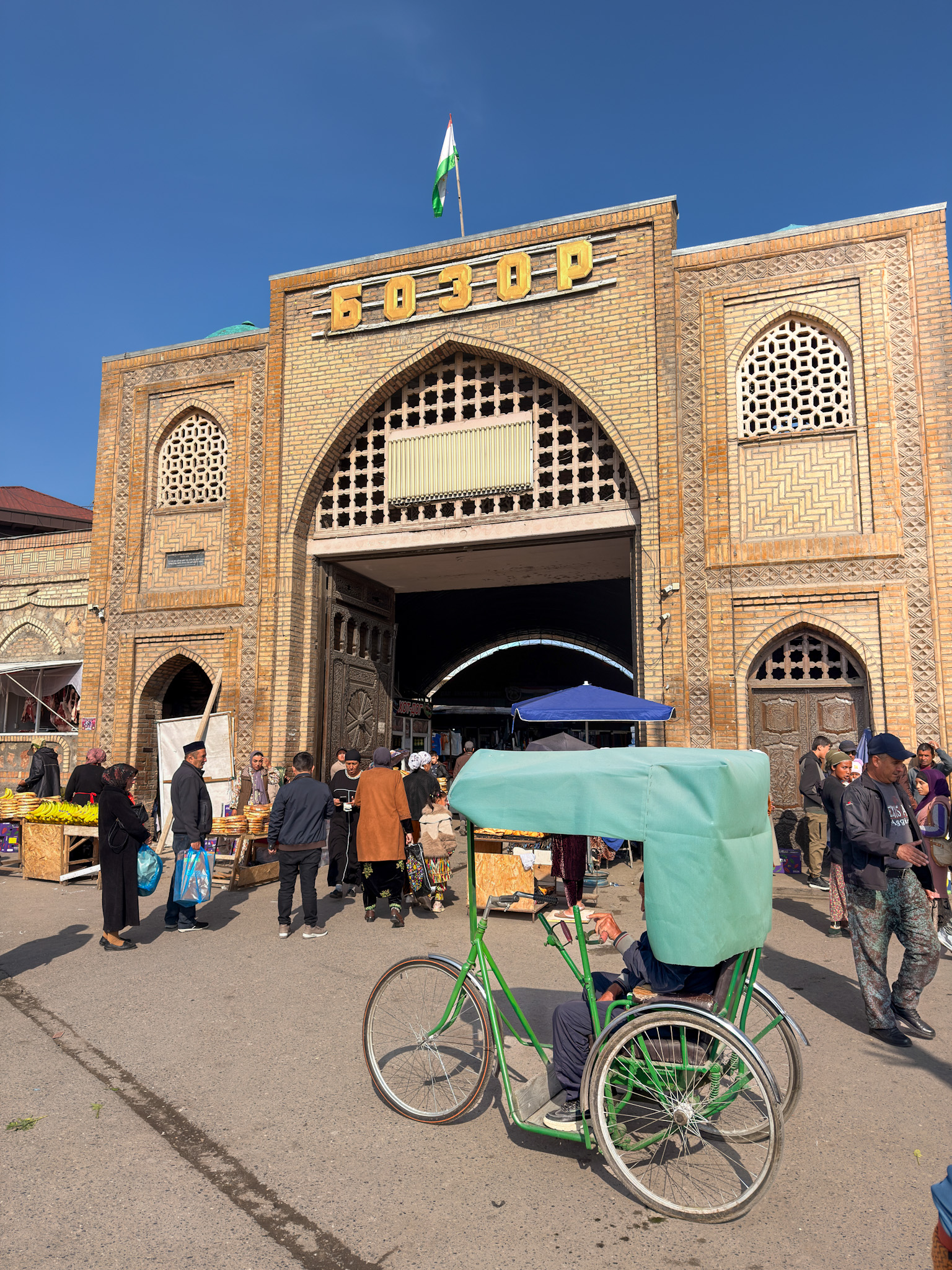
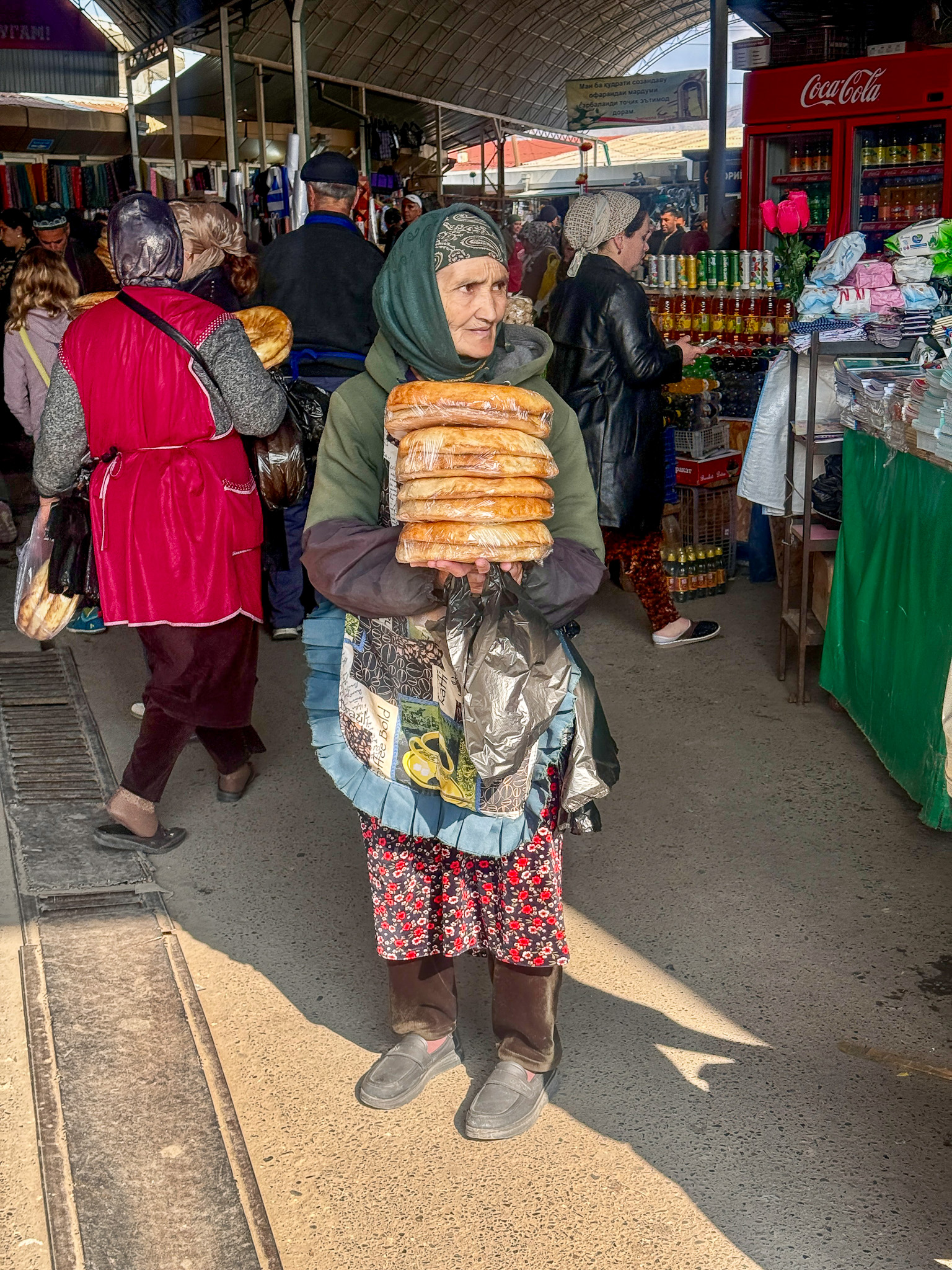
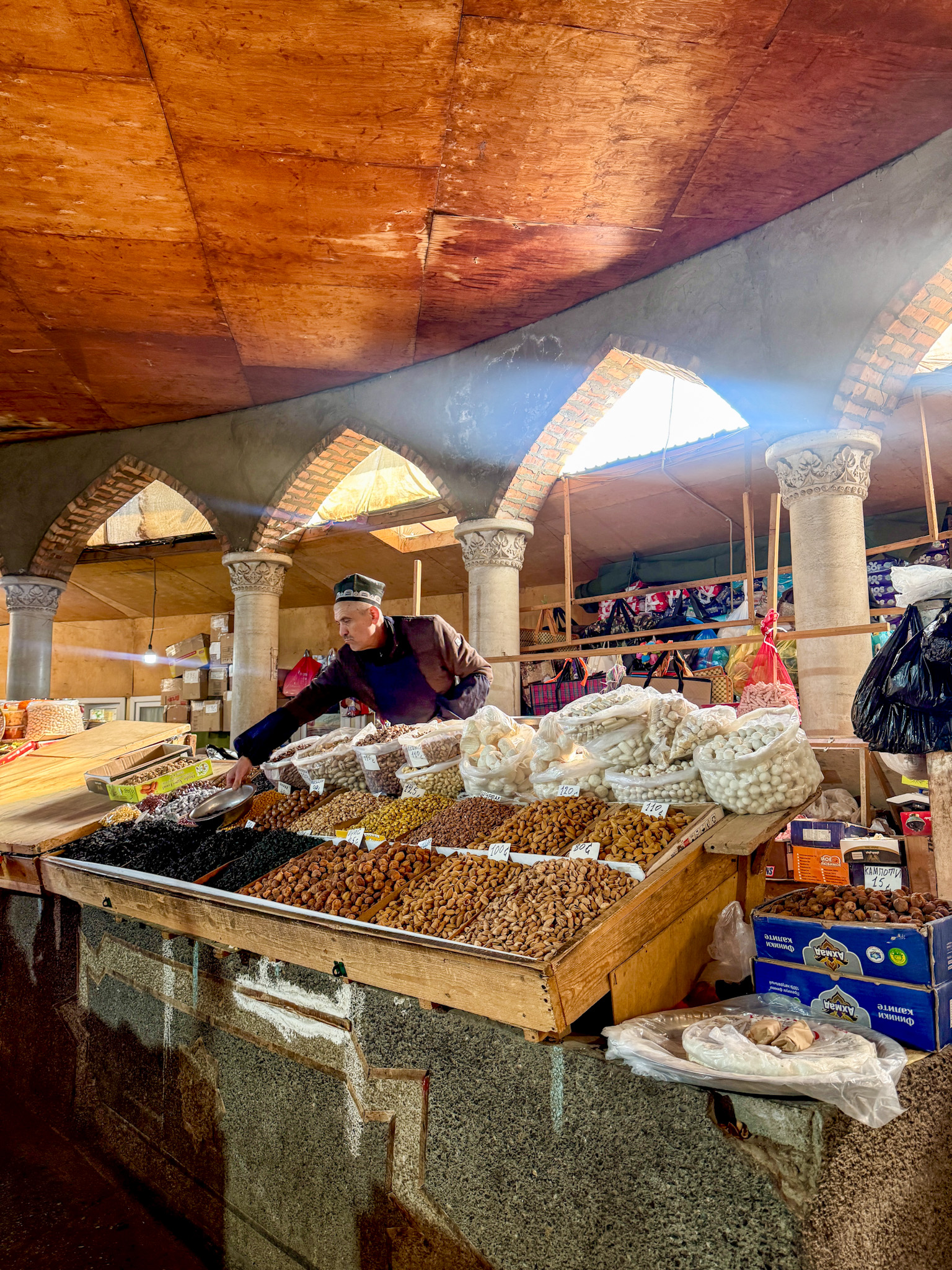
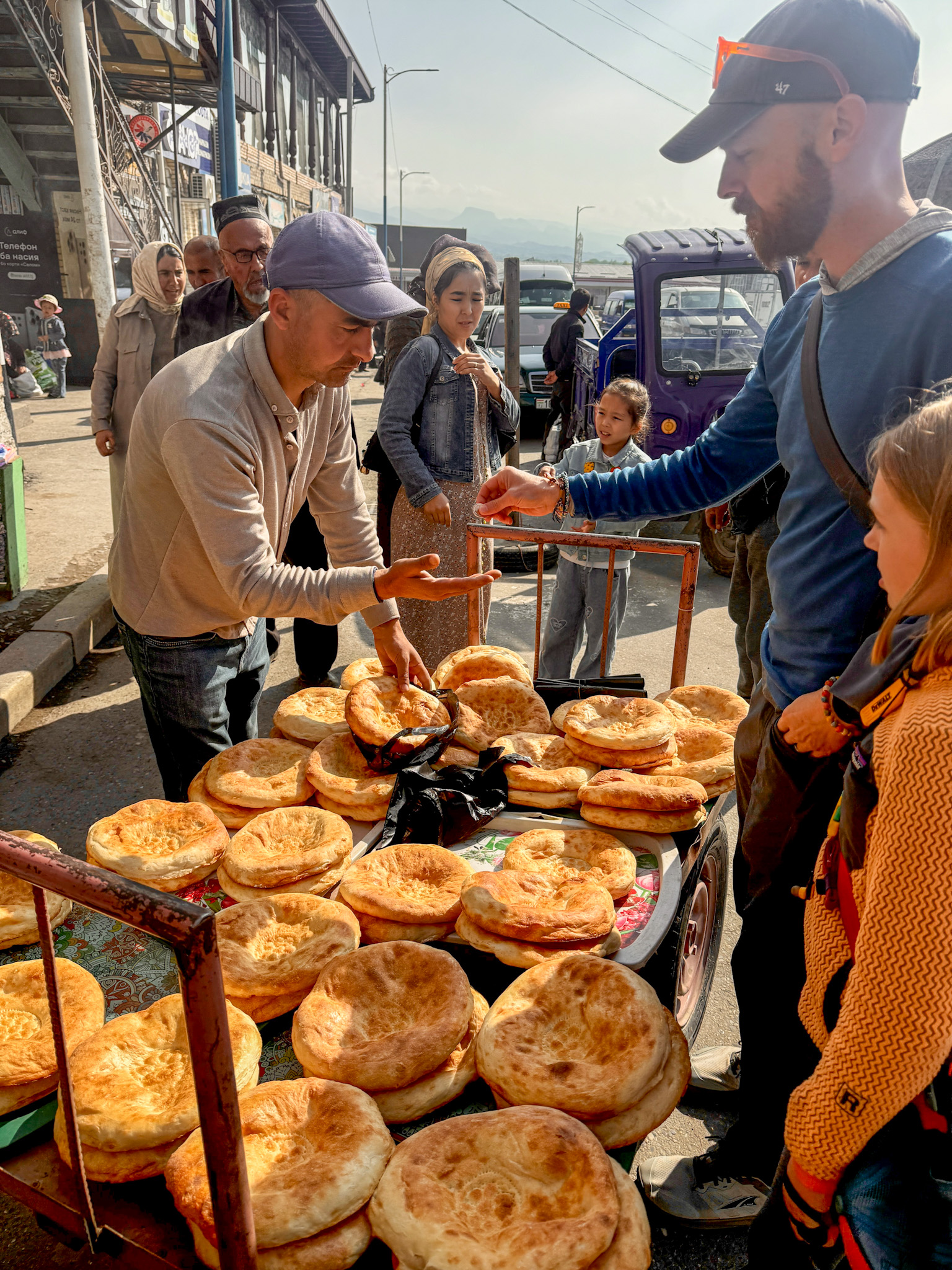
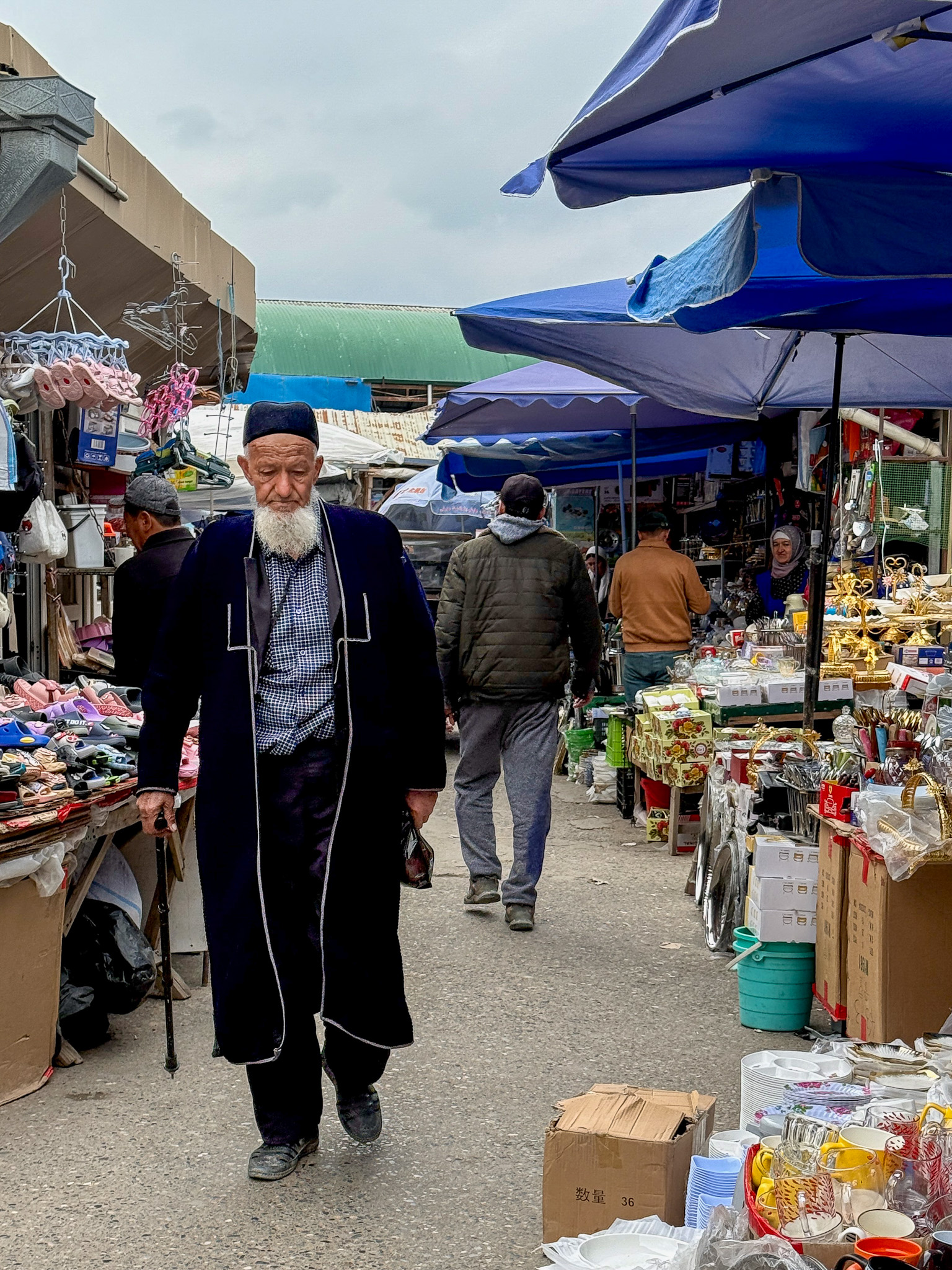
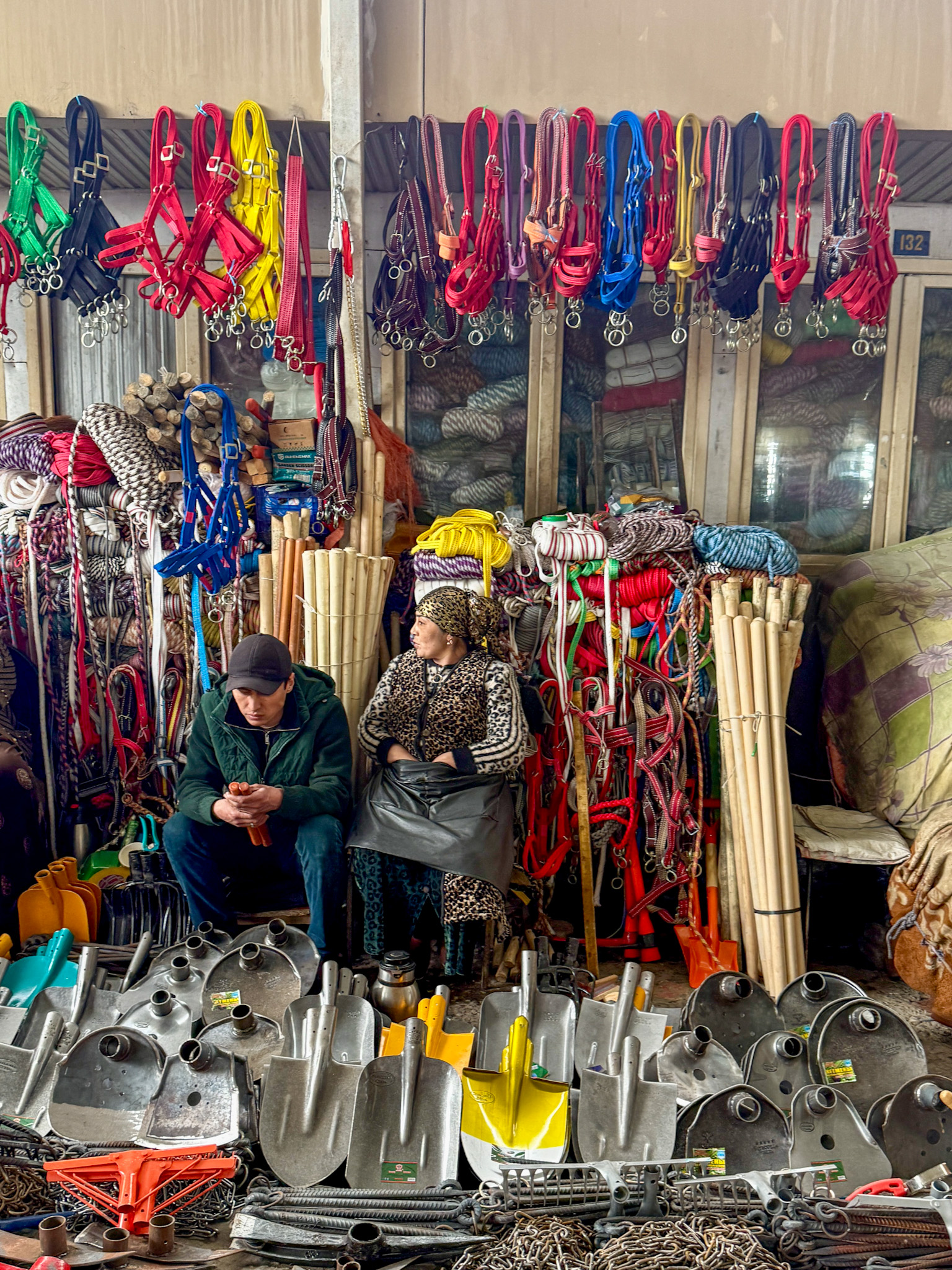
Ferrari drove us first to Panjakent, a town that looks quietly provincial today but was once a thriving Silk Road city—Zoroastrian temples, wealthy merchants, ancient trade routes running through it. Arab armies burned most of it in 722 C.E. and it was never rebuilt, which means the ruins on the edge of town have been sitting largely untouched for over a thousand years. We stopped at the bazaar, changed money into Tajik somoni, and bought half a rotisserie chicken and a few somsas stuffed with beef, potato, and bell pepper. All excellent. Then back into the RAV4 and up into the mountains toward Haft Kul — the Seven Lakes.
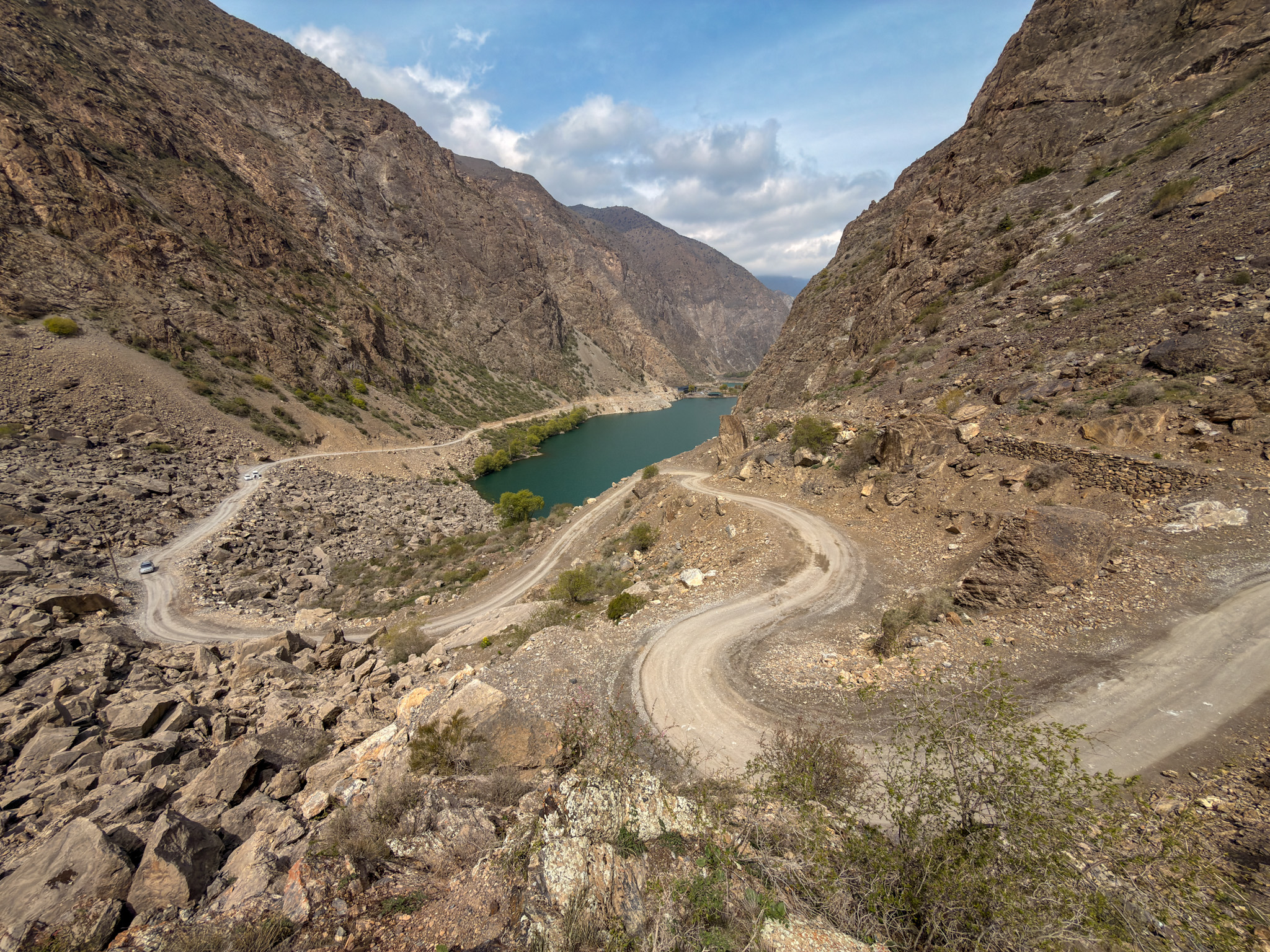
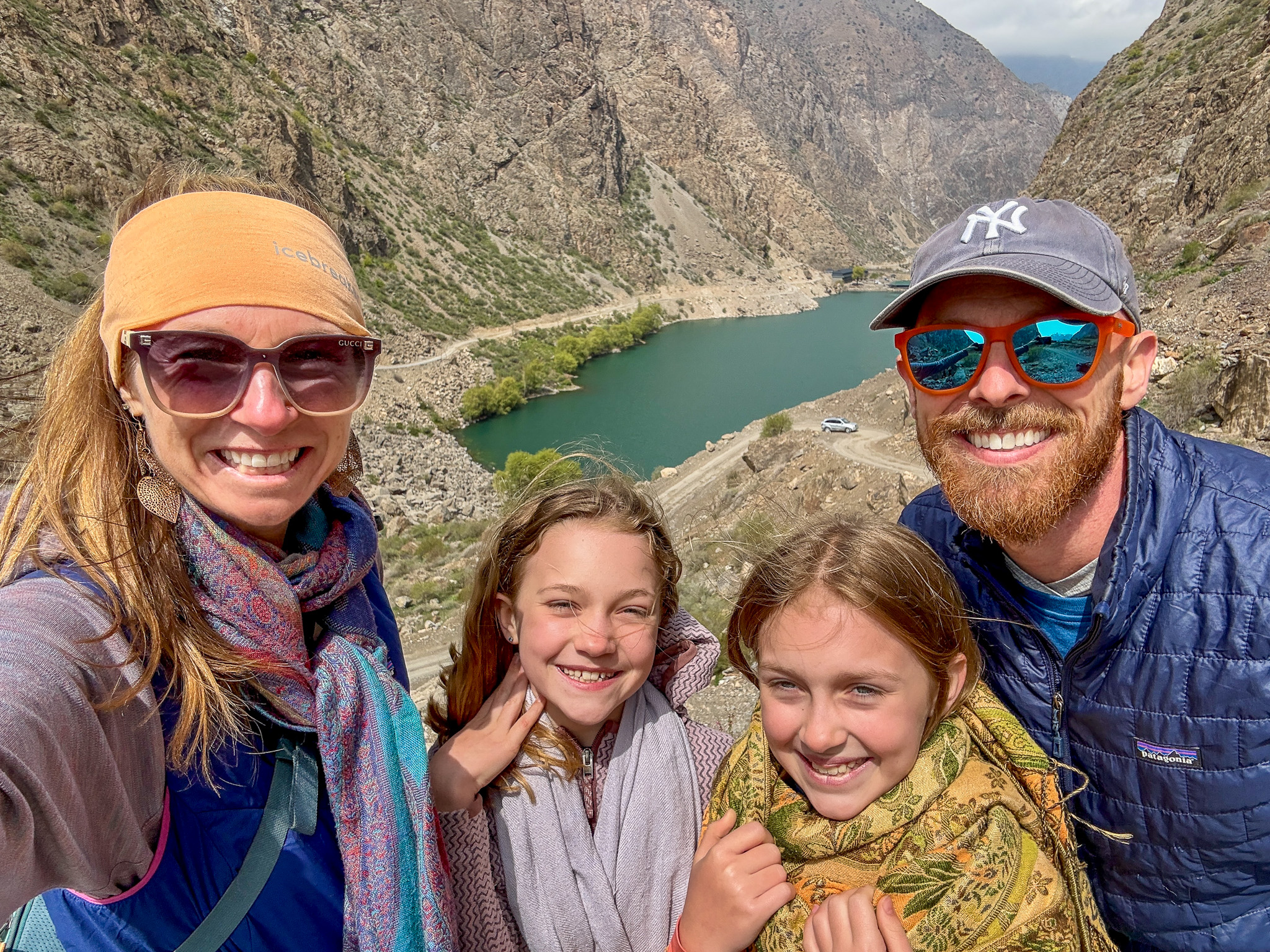
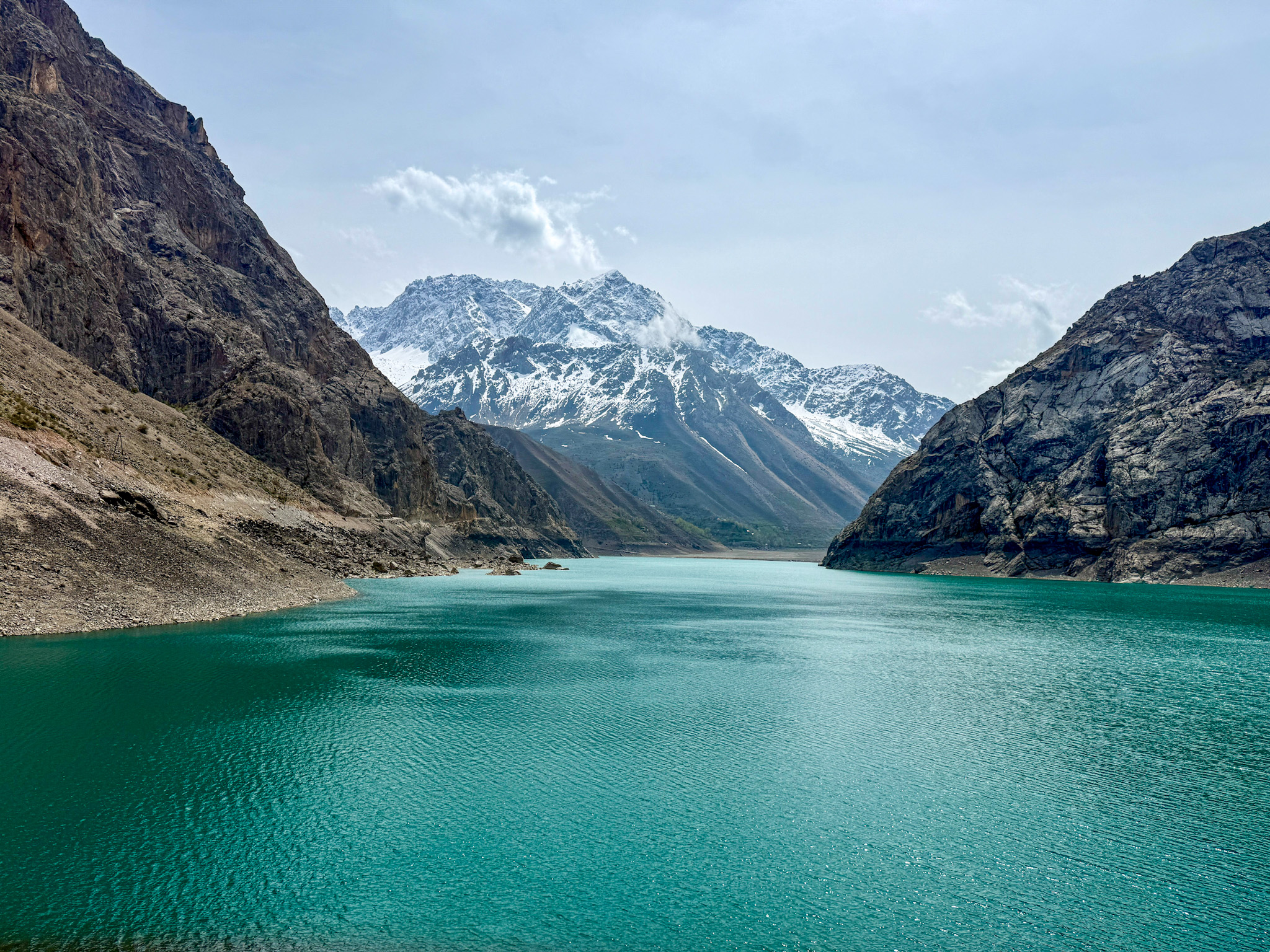
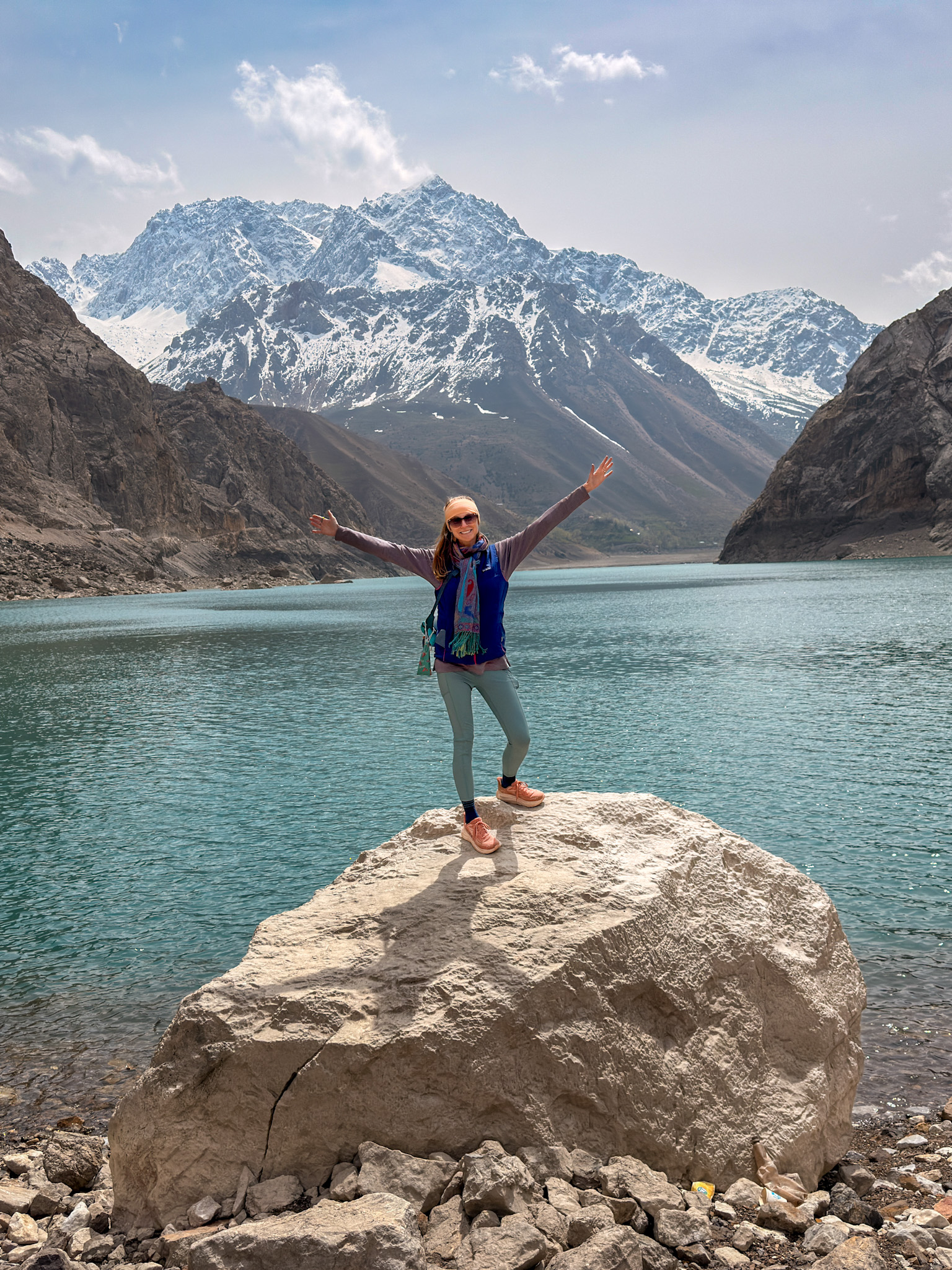
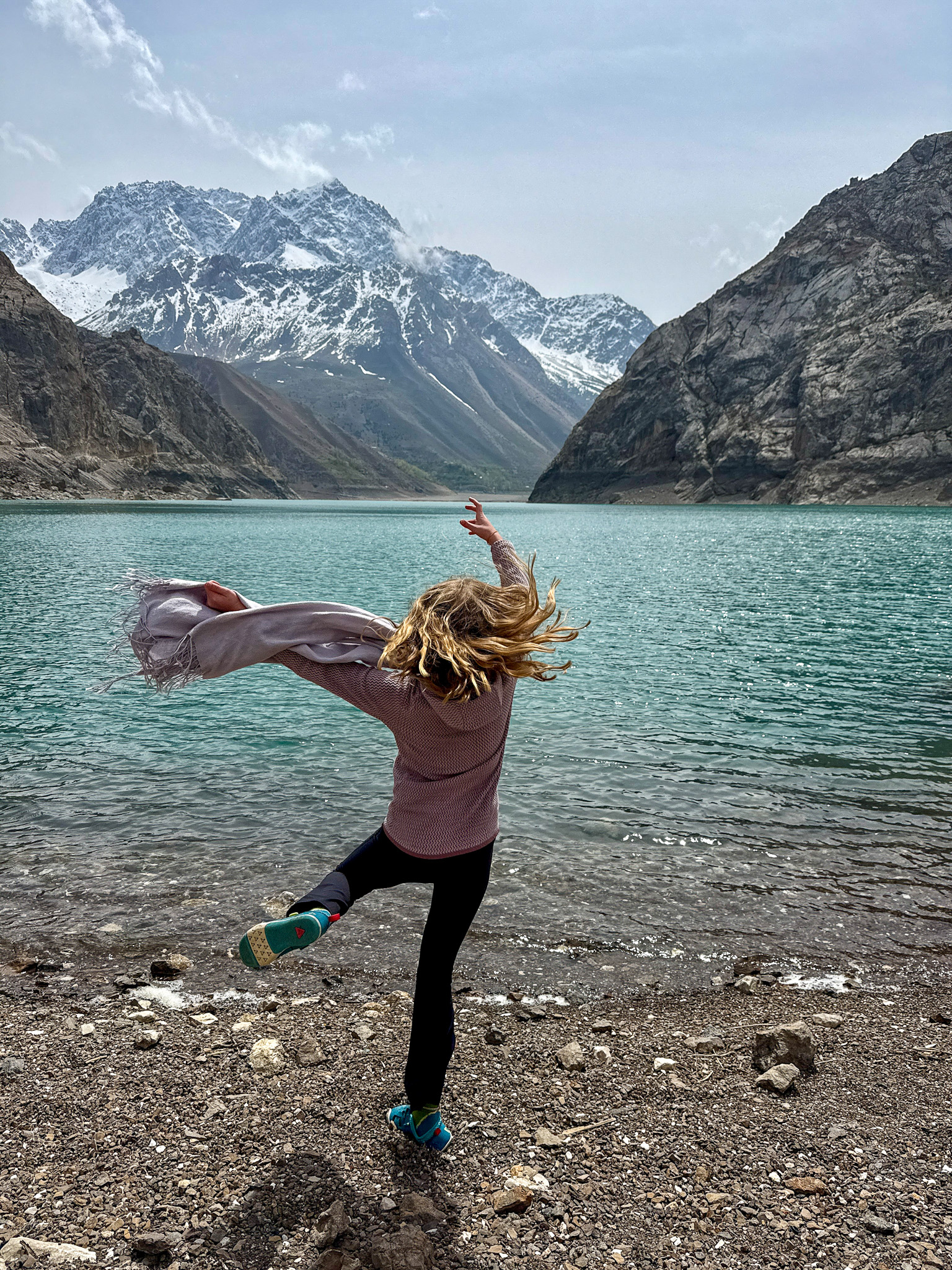
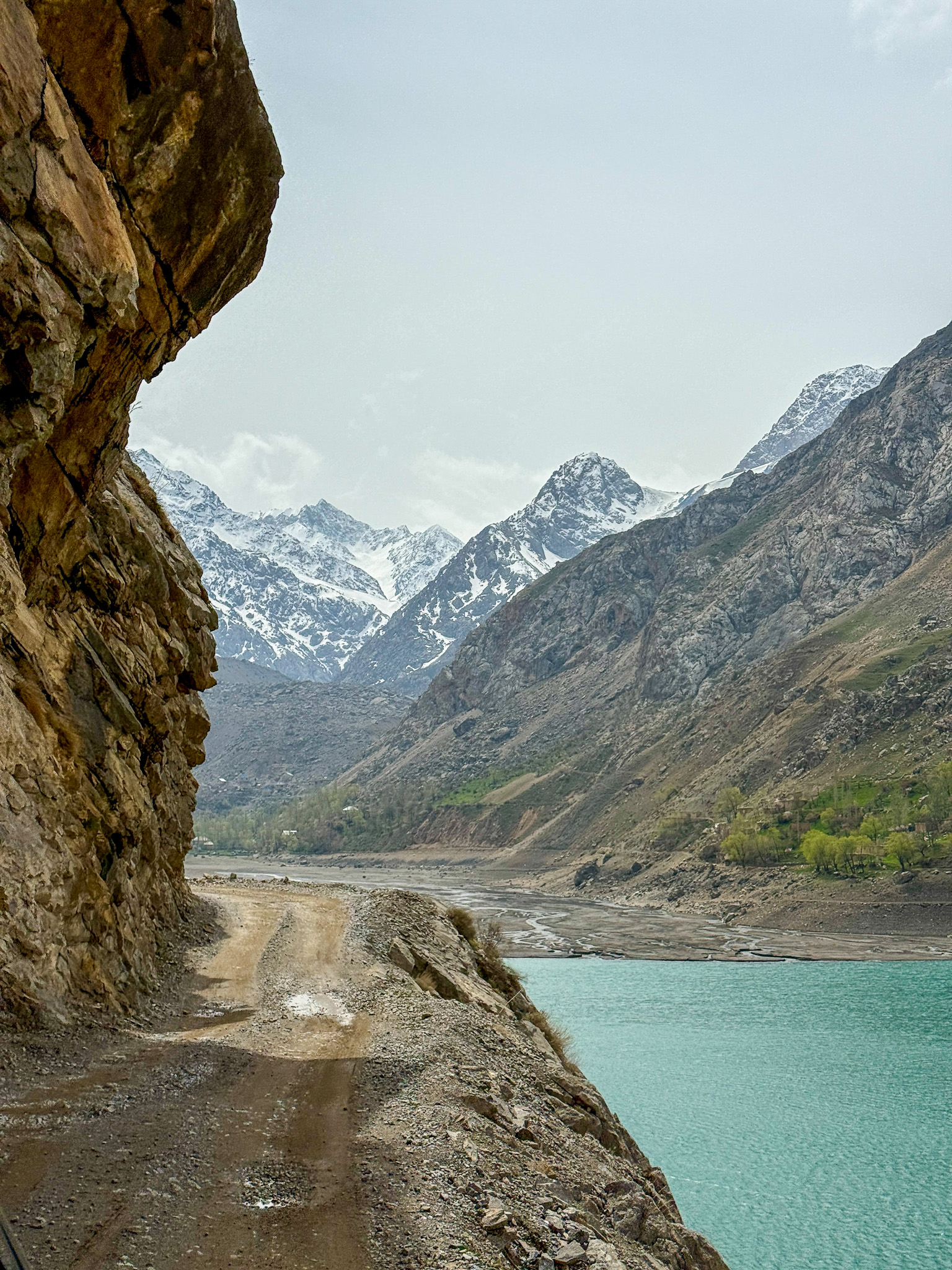
They are a chain of glacial-melt lakes at different elevations along a narrow mountain gorge, each one a different color depending on mineral content and light — deep sapphire, bright turquoise, a green so saturated it looks artificial. There is a local legend that they formed from the tears of seven daughters who searched for their lost father, never found him, and wept until the valley filled. It is a very Central Asian story to have attached to a very Central Asian landscape.
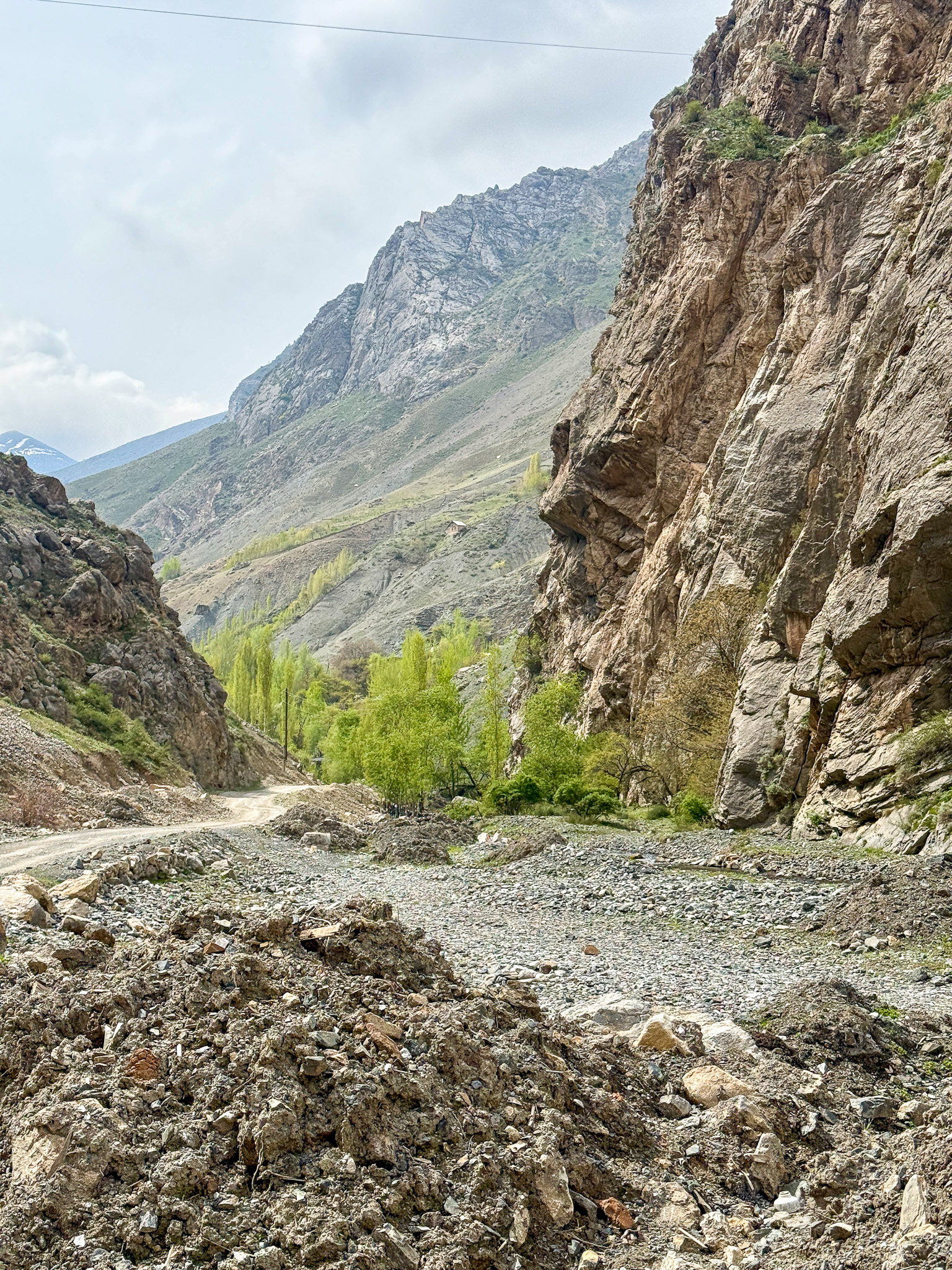
The road was good tarmac for the first half and decent dirt road for most of the second, with one rough stretch near the top that the RAV4 handled without complaint. The geography here is extraordinary. Mountains rise on either side at what feels like a nearly vertical plane, shifting from slate gray to rose to terracotta as the rock changes. Vegetation is sparse—small cultivated plots behind stacked stone walls—along with goats, feral children, and the occasional shaggy cow that looks like it evolved specifically for altitude and adversity.
We kept wondering who lives here and why. The economic logic is not obvious. The answer, as best we could piece together: Tajik mountain people have lived in these valleys for millennia, sustained by pastoralism, small-scale agriculture where the terrain allows, and a cultural attachment to the mountains that doesn’t require a tidy economic justification. The remoteness that makes it marginal today also made it a refuge from every invading force that swept through Central Asia over the centuries. Maybe it’s simply a way of life that has worked for long enough that it keeps working.
We stopped briefly at each lake on the way up, took photos and drone footage along the route, and made it to uppermost lake before turning back down.
We stopped at the Panjakent bazaar again on the return—we’d underestimated how much somoni we’d need—and found the afternoon energy completely different from the morning. It was still full of humans, but the hustle was absent, the pace had dropped, and people were winding down in a way that made the whole place feel more approachable. We wandered, took some photos, bought more snacks, and were glad we came back through.
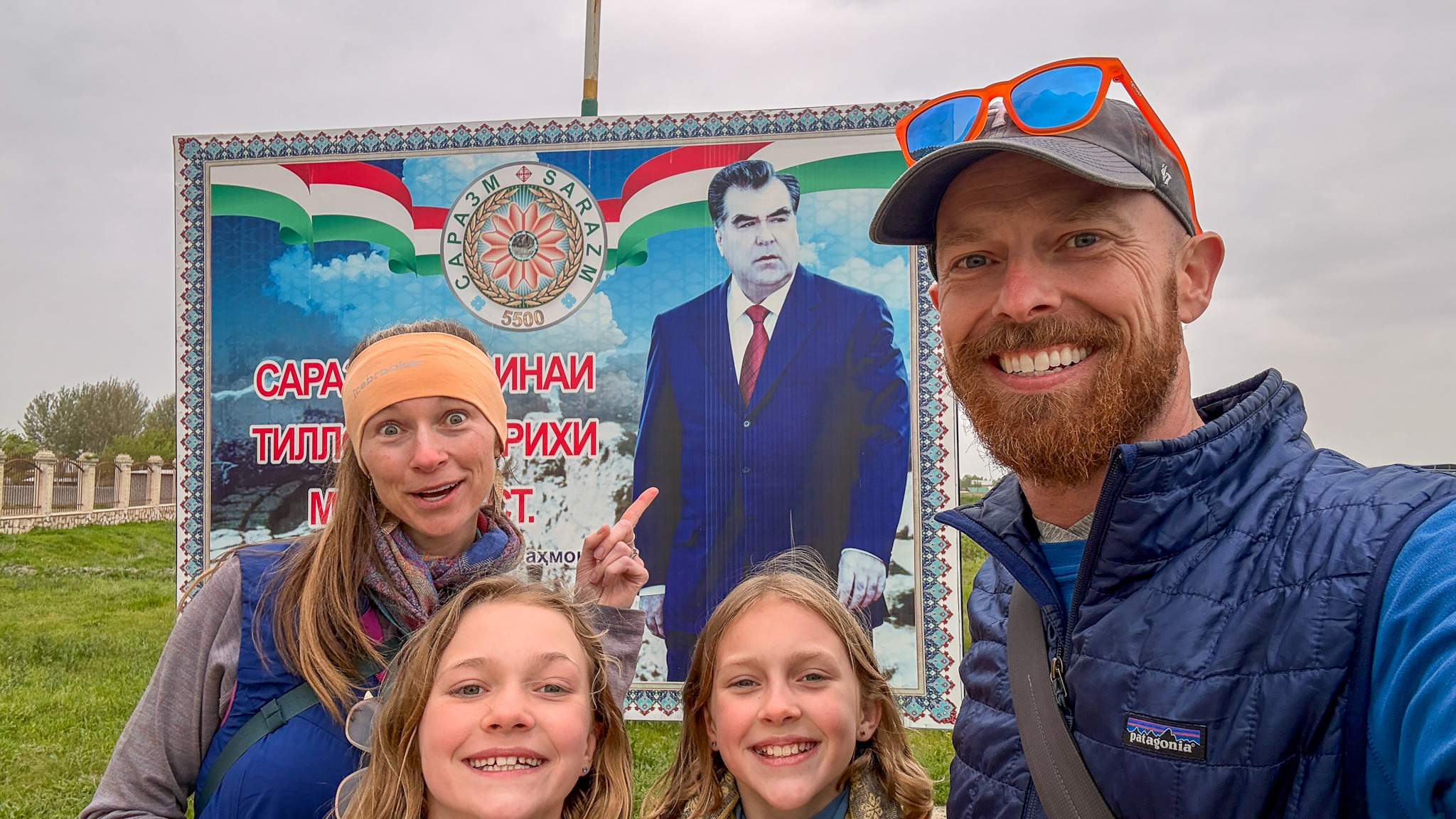
The final stop was the Sarazm Archaeological Site, a UNESCO World Heritage Site about fifteen kilometers outside Panjakent. By roughly 3000 B.C.E.—when Egypt was just starting on the pyramids—Sarazm was already a functioning settlement with metallurgy, agriculture, pottery, and trade connections reaching as far as Mesopotamia and the Indus Valley. The site was only discovered in 1976 when a local farmer turned up a bronze artifact in his field.
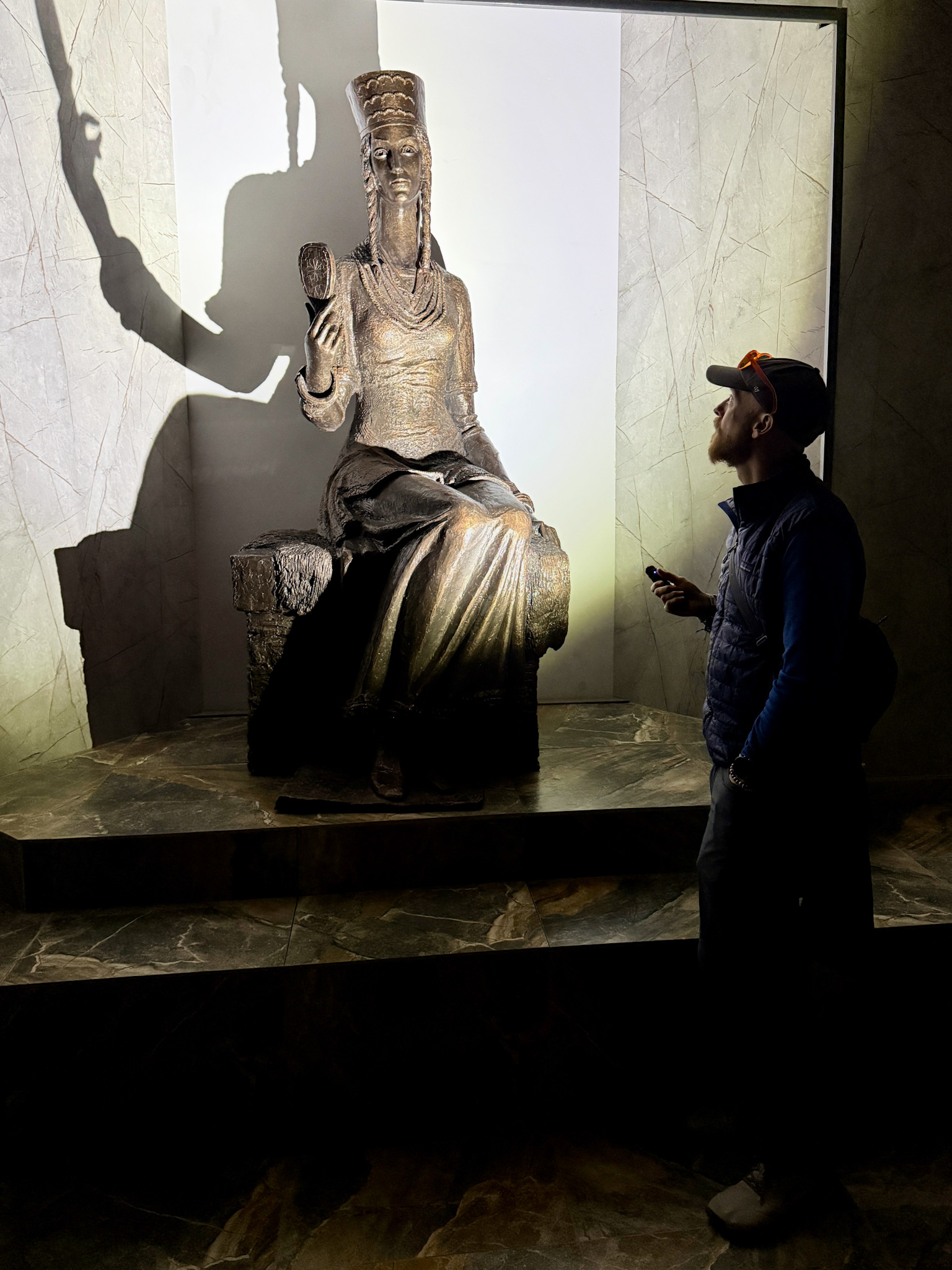
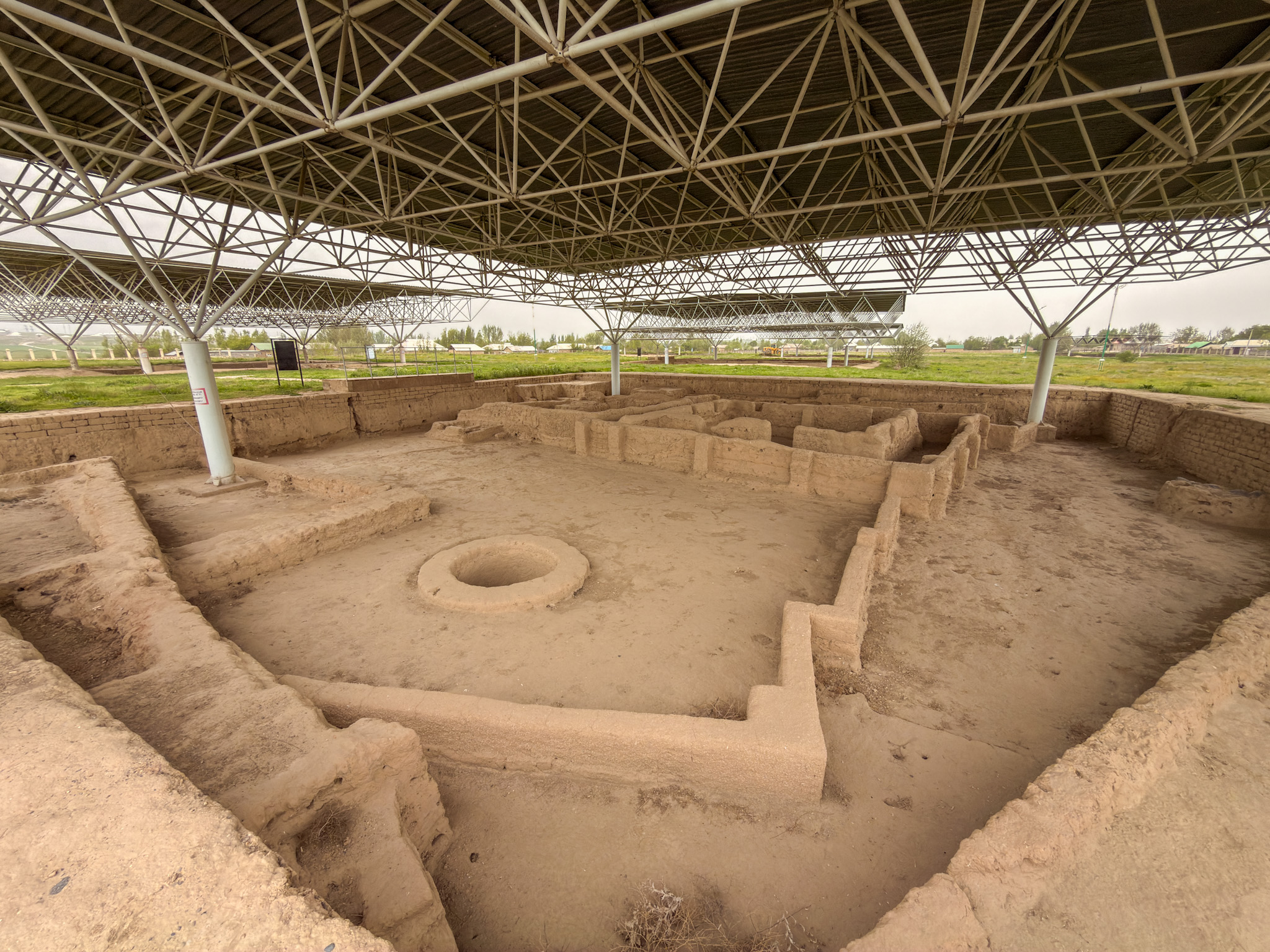
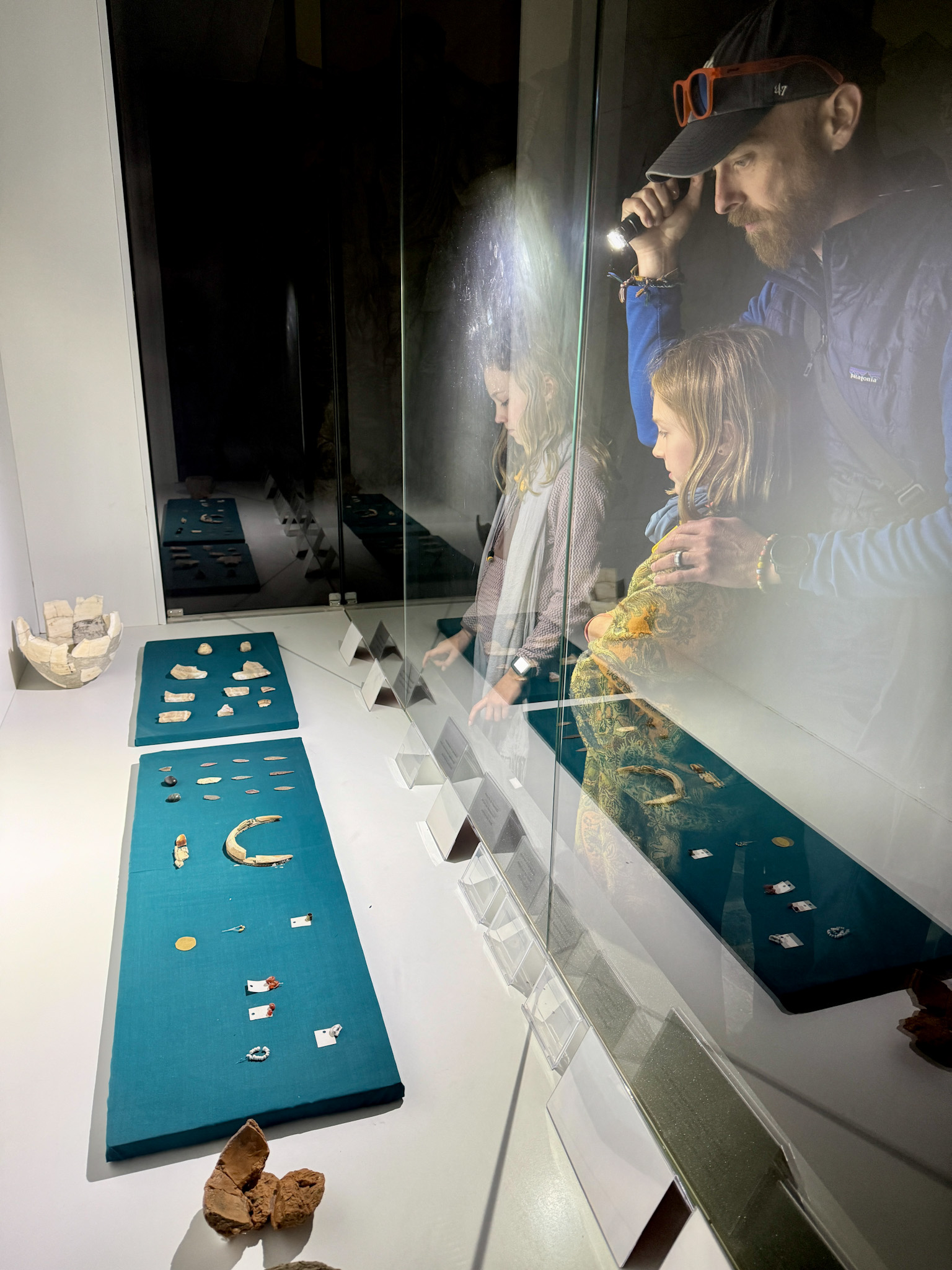
When we arrived, the museum had no power. Appreciating tiny prehistoric tools, beads, and arrowheads when the display cases aren’t lit by the lights designed specifically to illuminate them is a challenge. Max always had his flashlight in the day bag, a just-in-case tool for when things go sideways. Nothing had gone completely sideways today, but the flashlight earned its place going case by case through several thousand years of human history at the edge of the known ancient world.
The border crossing back took another eight passport checks. Land borders have a quality that airport crossings don’t. At airports the stress of entering a new country has been sanitized behind queues and signage. When you cross on foot you see the guards, the guns, the detention facilities, the barbed wire, the watchtowers, the dogs. It produces a vibe that is never comfortable, even when nothing goes wrong and you are clearly a goofy family with two little girls who just wanted to see some glacial lakes and a museum without electricity.
Our Uzbek driver was waiting exactly where he’d said he’d be. We were back in Samarkand in time for showers, and then Aziza served us the full Antica breakfast—the spread we’d missed by leaving at 6:20 that morning—as our dinner. She found this absolutely baffling. To our palates the breakfast menu isn’t far from dinner food, and a lighter meal at the end of a long day was exactly what we wanted.
The next morning we went back to Aziza and bought the suzani. The Soviet-era piece we’d kept returning to. The one that carries the quiet weight of a tradition holding on through a period when it was actively being replaced.
It is folded and packed now, traveling with us toward Bukhara.


Leave a Reply