
Dates: April 10th-14th, 2026
Place: Tashkent, Uzbekistan
We’d done it. We decided to ditch our plans to go to Oceania or South America, and instead we’re continuing the Family Gap Year in Central Asia, an area of the world we’d hardly ever thought about, let alone thought of visiting. When we bought our plane ticket, the plan was to fly to Kazakhstan from Taipei, via Beijing, transiting that airport in ninety minutes. A schedule change cut that to sixty. A delay notification waiting at the gate cut it to thirty. There wasn’t much to do about this except accept that Beijing Capital International Airport — one of the largest airport terminals on earth, a Guinness World Record, not a figure of speech — was either going to accommodate thirty minutes or it wasn’t, and the only way to find out was to run.
The moment the flight attendant gave the thumbs-up, we were moving. Off the jet bridge, onto an escalator full of first-class passengers who had no warning of what was about to happen to them. Max put on his full authority voice, the one that leaves no room for interpretation, and told everyone they needed to step aside. He said it several times, tapped a few shoulders, and with thoroughly flabbergasted looks of those who are rarely told to “step aside”, they moved. We sprinted up the escalator and kept sprinting through the terminal. A ground crew member slapped express-pass stickers on our shoulders as we blew past him, which got us through the expedited security lane. Chinese security, it turned out, has strong opinions about batteries. Max had a power bank and three drone batteries in his carry-on and they wanted to examine each one individually. He stayed calm and let them work. The moment he got the green light, he crammed everything back in and we were sprinting again.
The gate was four stops down the terminal. In most airports this is manageable. In this behemoth of a building, four gates covers a distance that would be notable in most small towns. The girls ran the whole way without complaint. We arrived at the gate as the crew announced final boarding.
We made it, albeit out of breath.
As we settled into our seats, Finlee looked around the cabin thoughtfully and said: “I hope our bags make it to Kazakhstan.”
This was a prescient observation.
The six-hour flight to Almaty ran warm and a little ripe. Max and Shaina read the book “Silk Road” by Colin Falconer, a historical adventure set in the 1200s following a Templar knight and a deeply insufferable Dominican friar on a papal mission from the Holy Land to the court of Kublai Khan, crossing Persia, passing through Bukhara and Samarkand, threading over the Pamir Mountains, and through the Taklamakan Desert. The fact that we were literally flying toward the region where most of the book takes place made every page feel like a preview. We landed, cleared border control, went to carousel one, and waited. Bags kept coming out. Ours did not. Eventually the carousel stopped and we were left empty-handed.
Apparently our two rolling cases were still in Beijing. In them: all the toiletries, Shaina’s contact lens solution, the girls’ hairbrushes, some of Shaina’s clothes. The lost baggage attendant offered our best hope: we’ll try to get it to Tashkent, three days from now.
Our Almaty Airbnb was literally across the street from the airport, which was the one logistical thing that went perfectly that day. The apartment had the aesthetic of a Soviet-era murder mystery set: thick concrete walls, minimal warmth, a certain heaviness in the air that comes from buildings built to express the permanence of the state rather than the comfort of whoever lives inside them. We showered off the airport feeling, stuffed in earplugs, dawned eye masks, and we were asleep in minutes.
The next morning we flew on to Tashkent, Uzbekistan, and that is where Central Asia started delivering.
The first gift was a Dorito.
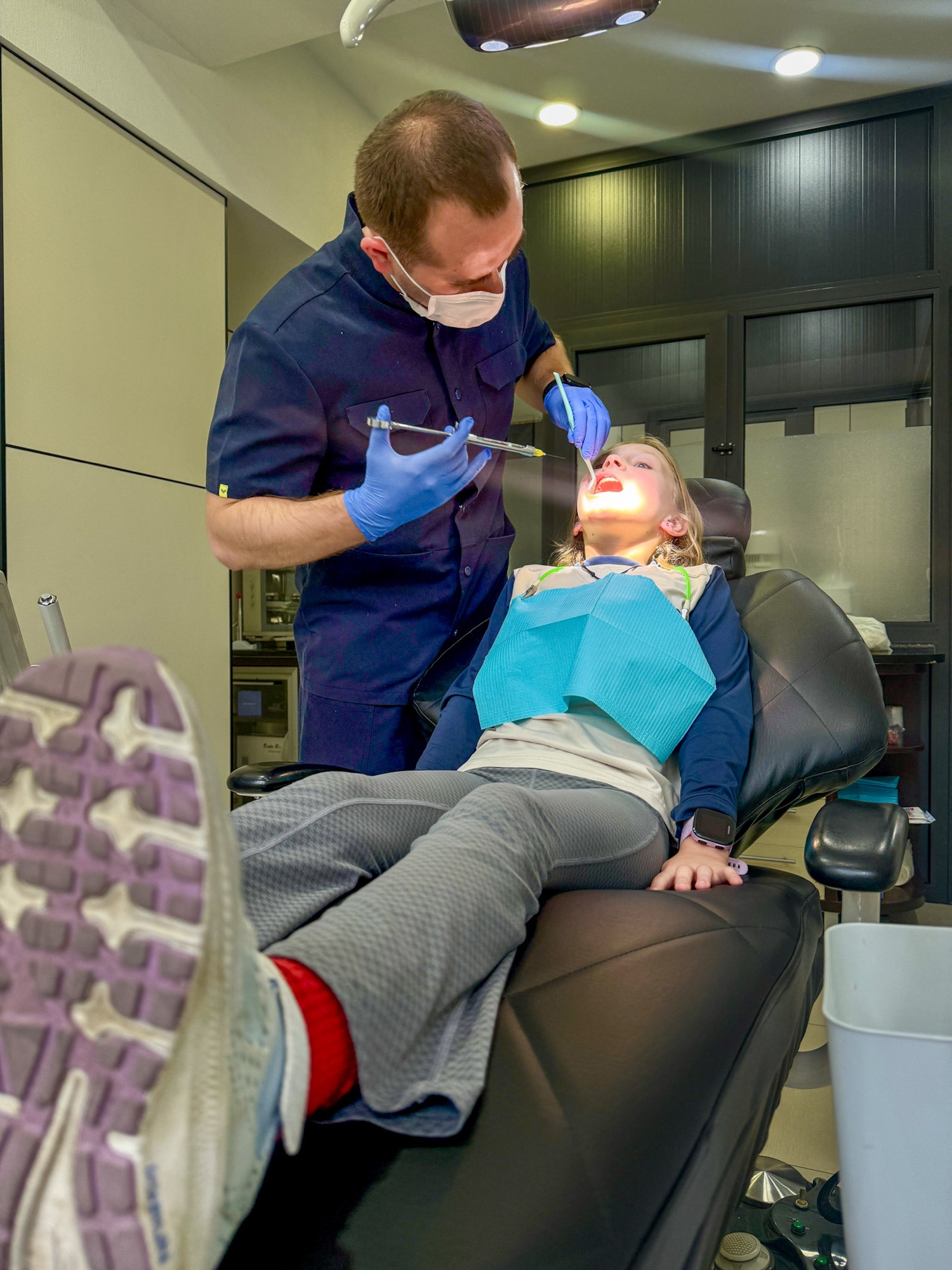
Finlee bit into a nacho cheese Dorito somewhere in the Tashkent airport and her upper molar cracked cleanly in half. Not a loose baby tooth in its final days — this one had barely been wiggling. High alert ensued. An x-ray was clearly needed, which meant a dentist, which meant finding one in a city we’d been in for approximately forty-five minutes. On a Saturday.
Shaina miraculously found one just around the corner from the Airbnb. What followed was remarkable, not for drama but for the complete absence of it. The office was clean, bright, and fully modern, the kind of space that would feel at home in any medical park back in Reno. No intake forms, no billing queue, no waiting room. Within five minutes of walking in, Finlee was in a dental chair being examined. An x-ray confirmed the tooth was ready to come out, the adult tooth right beneath it—a simple extraction was all she needed. The specialist did it in ten minutes. Finlee declared she hated the Novocaine shots, which is entirely reasonable, and was deeply unimpressed by the prospect of a numb mouth for the next ninety minutes. Total bill: $45 USD—on a Saturday, with same-day service, and done in under an hour. We were unreservedly impressed.
We went next door to a Turkish restaurant and ordered grilled lamb, pita with melted cheese and ground beef and fried egg, tomato and lentil soup, and of course some french fries. Simple and satisfying. Then midway through the meal, the entire building shook from a single enormous explosion of sound.
With everything going on in the world right now, minds went exactly where you’d expect. We looked at each other with expressions of genuine alarm. Some locals in the restaurant looked confused and frightened, which did not help. Then the gentleman at the table next to us clearly noticed our concern, laughed and said aloud, “This is Uzbekistan, not Afghanistan!” About five seconds later came a massive flash of lightning, then a near-instantaneous crack of thunder. Then the sky outside — which had been blue and warm twenty minutes earlier — opened completely. No transition, no buildup, no warning. Just full-scale deluge arriving from nowhere. Once it became clear we were not under attack from unseen forces, it became genuinely entertaining to sit there and watch it hammer down. As abruptly as it had arrived, it cleared. Blue skies returned. The wildest weather any of us had ever personally witnessed.
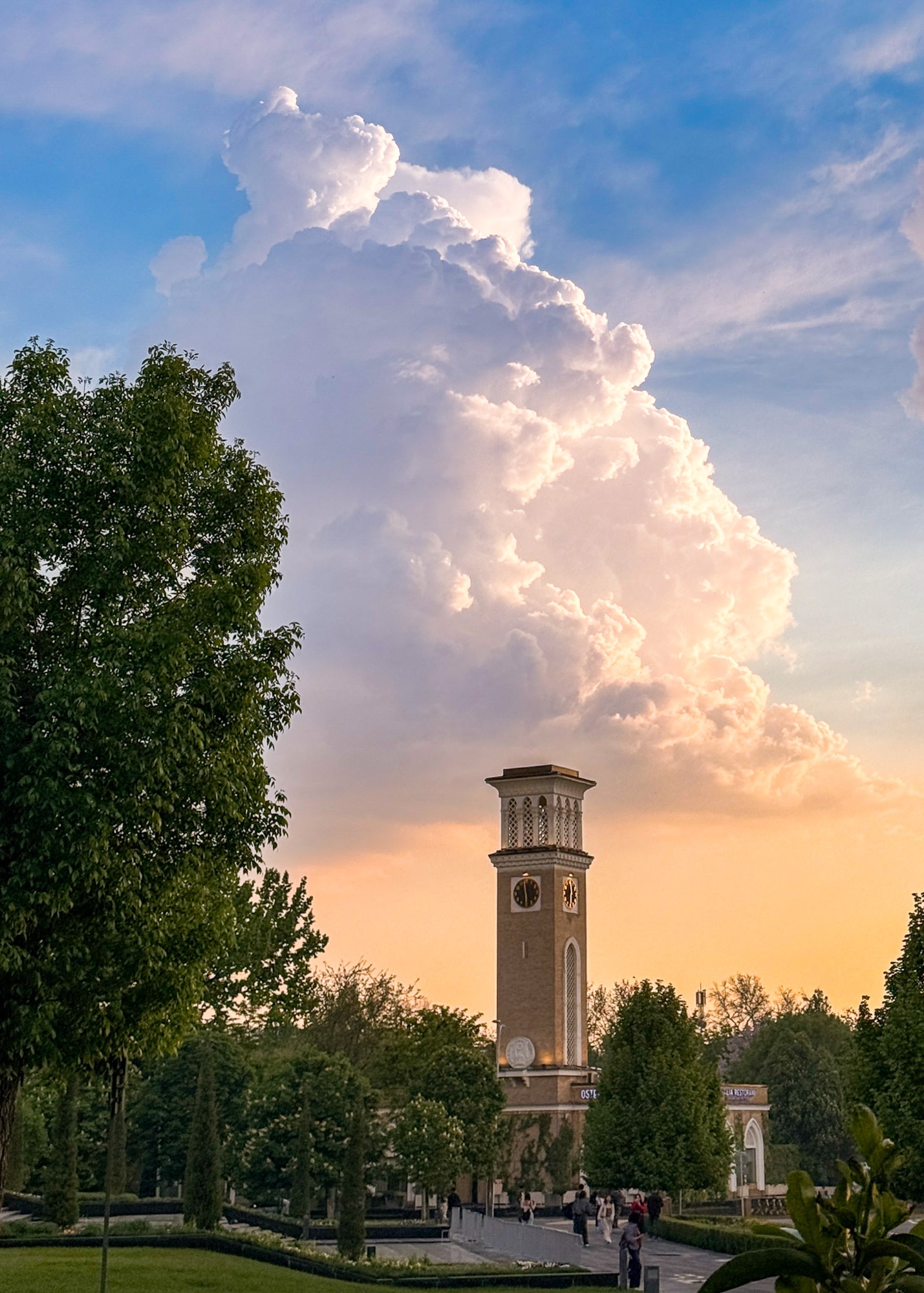
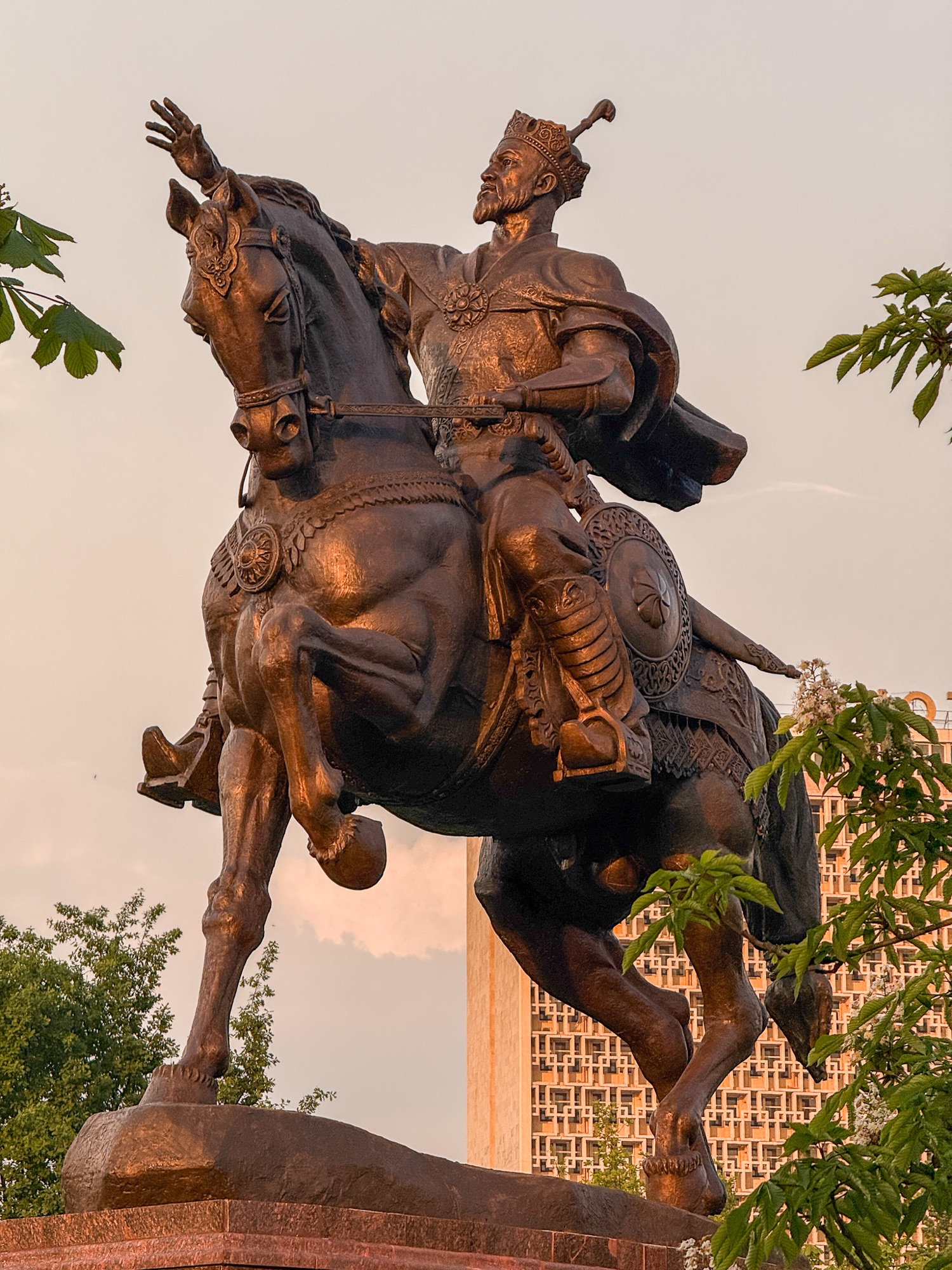
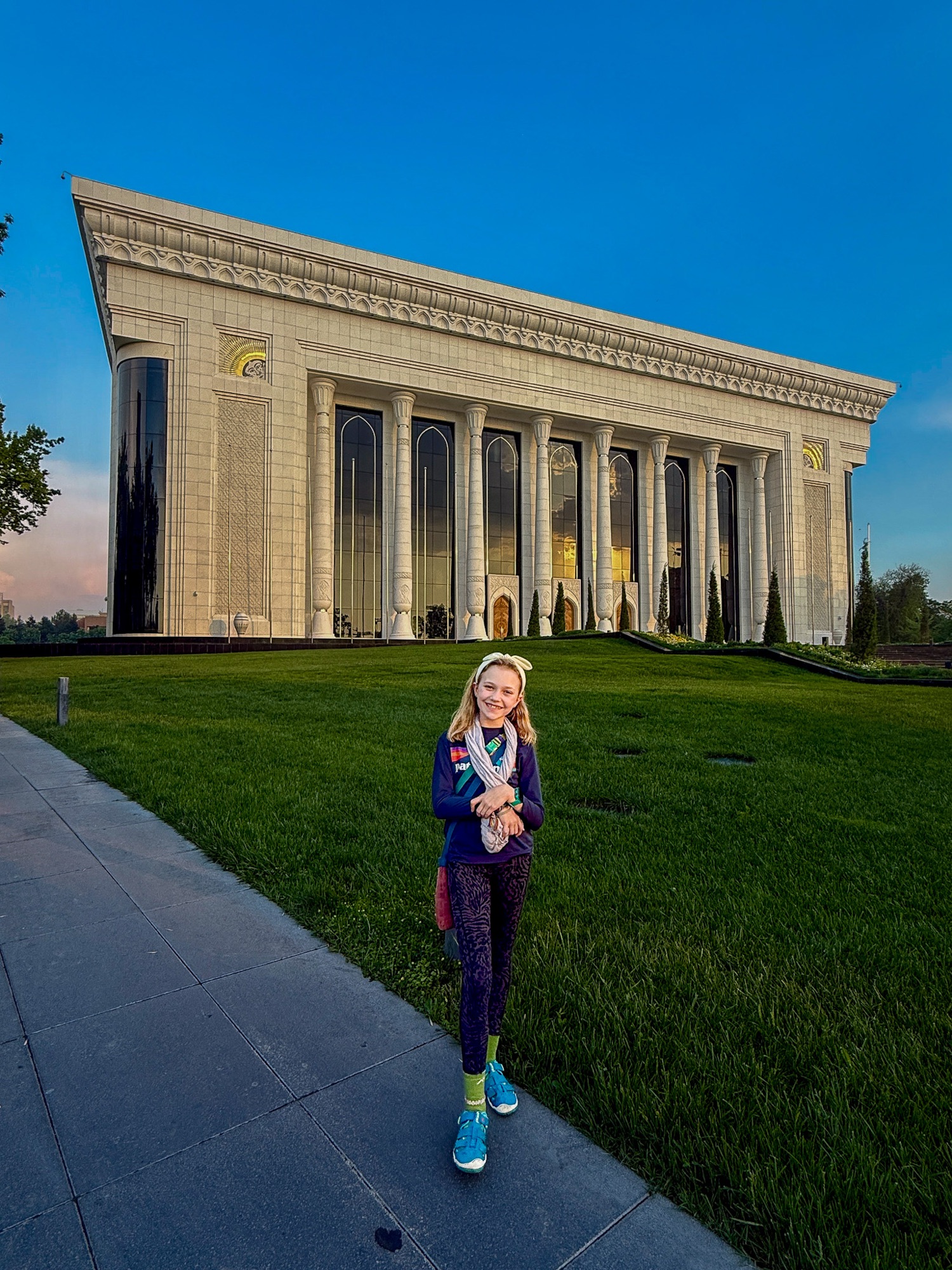
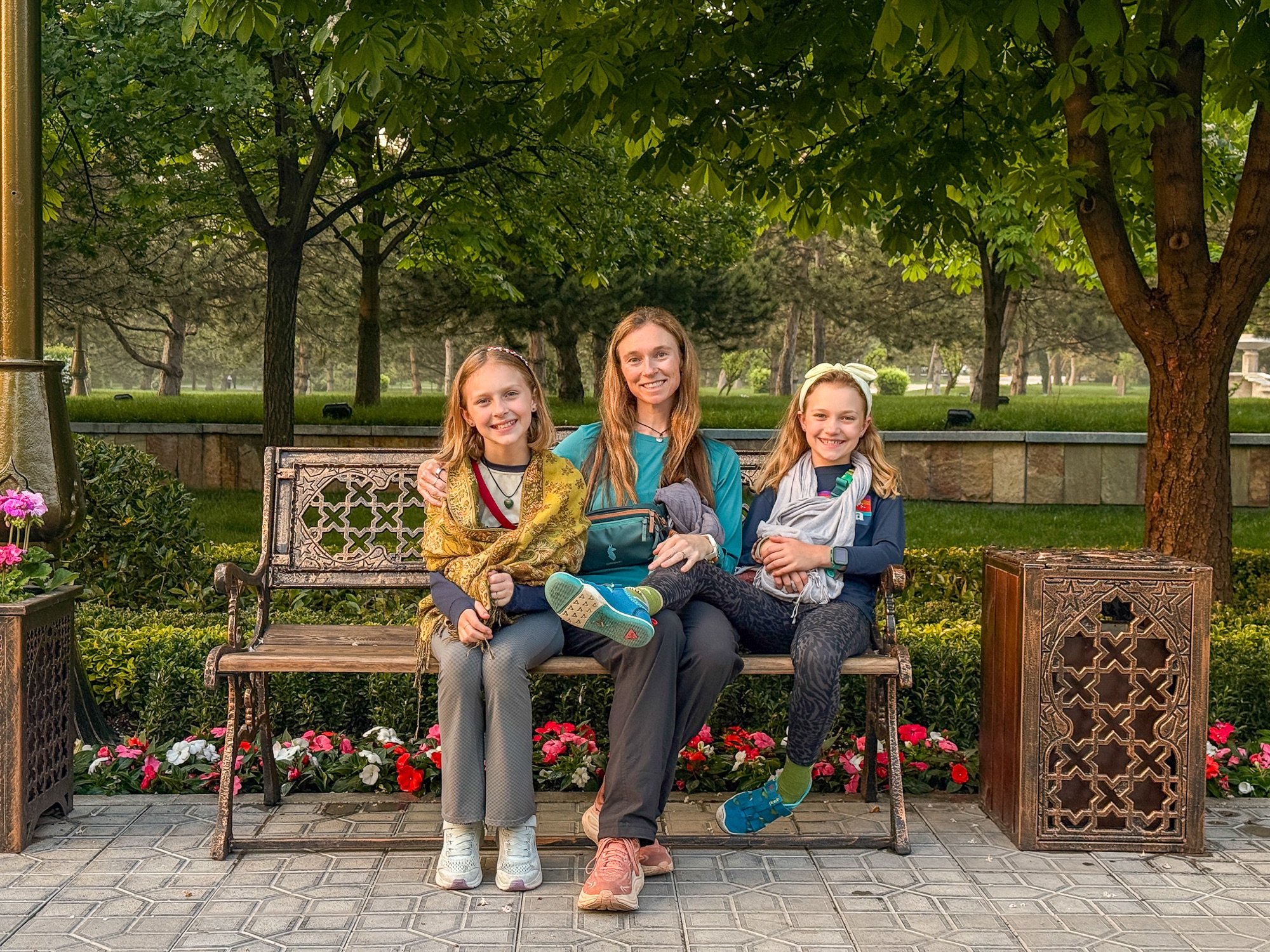
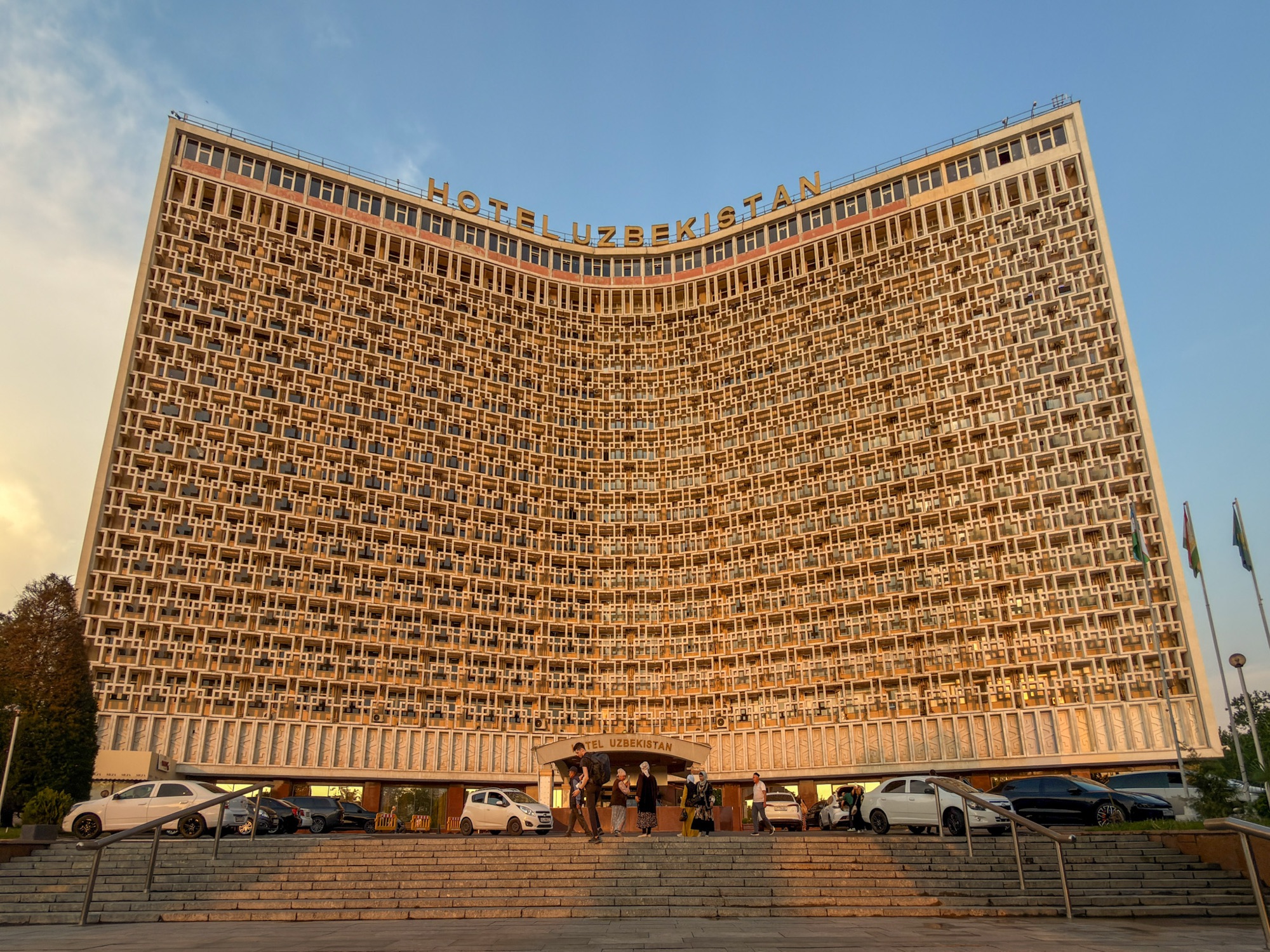
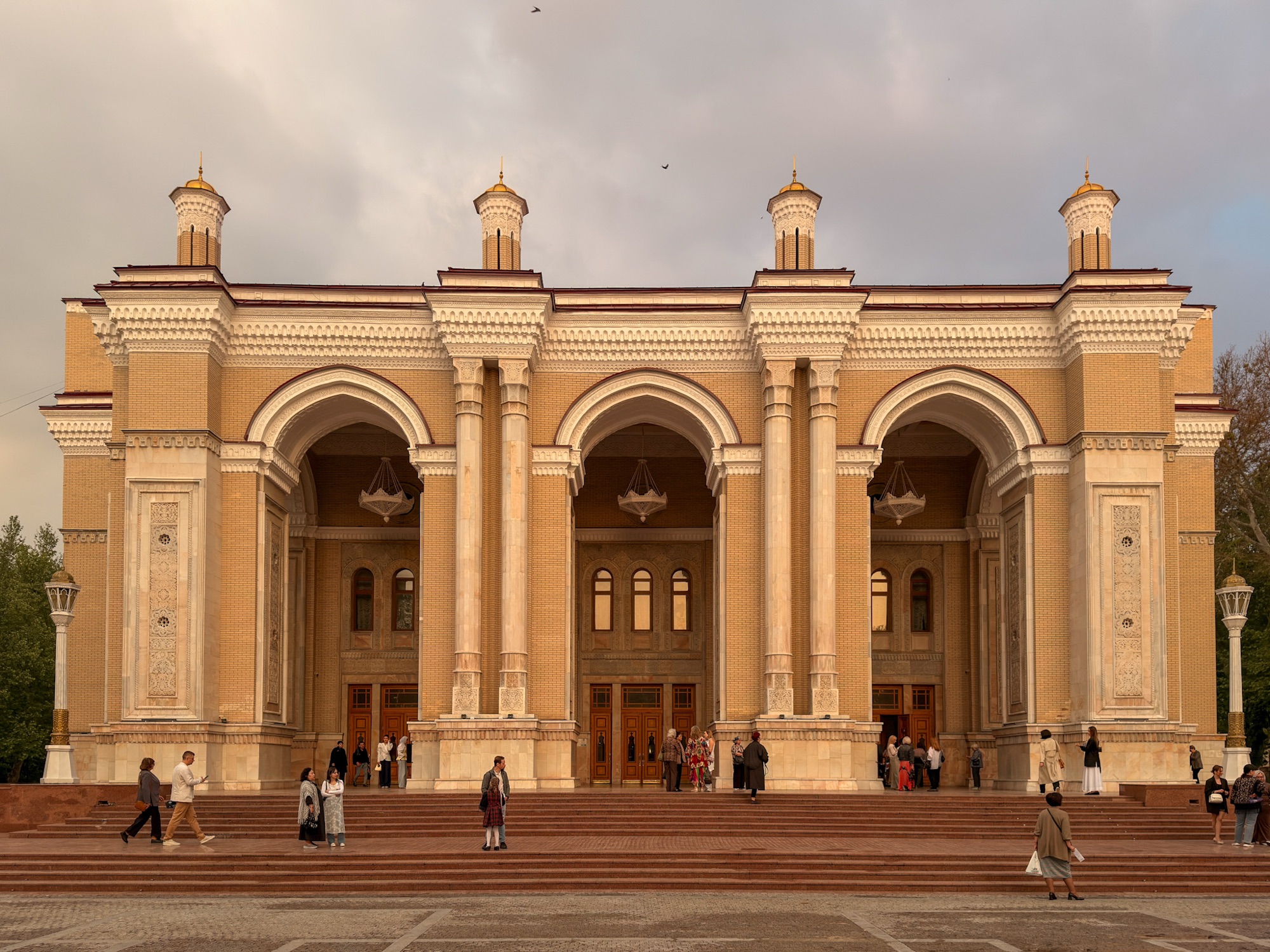
By early evening we were recovered and ready to walk. The route took us past the Hotel Uzbekistan, a Soviet modernist landmark built in 1974: a curved facade of concrete and aluminum latticework shaped vaguely like an open book. It was the leading luxury hotel in Central Asia during the Soviet era, built to accommodate the outsized ambitions of a city the Soviets had designated their showcase in the East. Then through Amir Temur Square, dedicated to the great 14th-century conqueror whose equestrian statue commands the center of modern Tashkent, and on through the Night Lights district, until we drifted toward the Alisher Navoi Opera and Ballet Theatre.
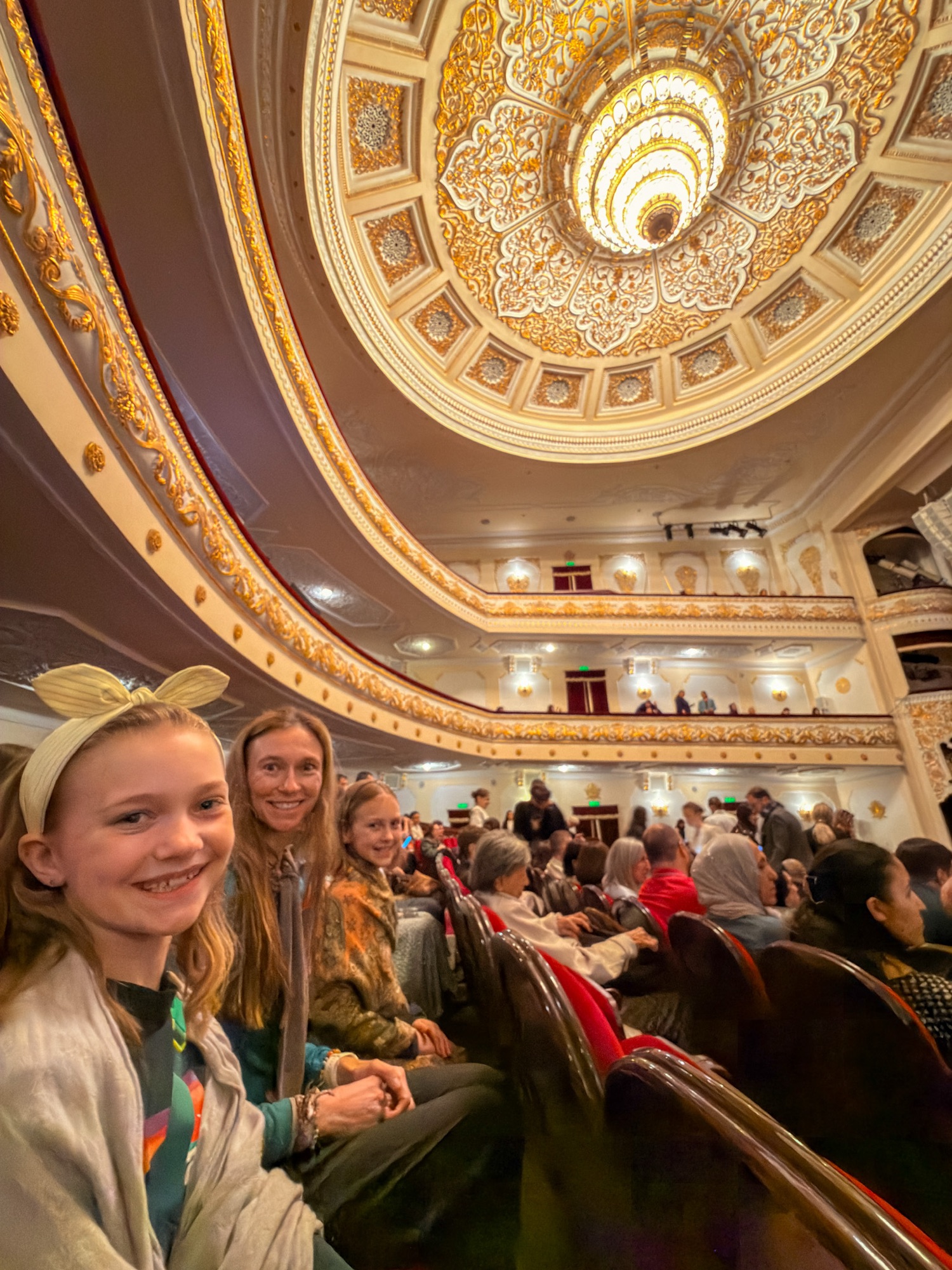
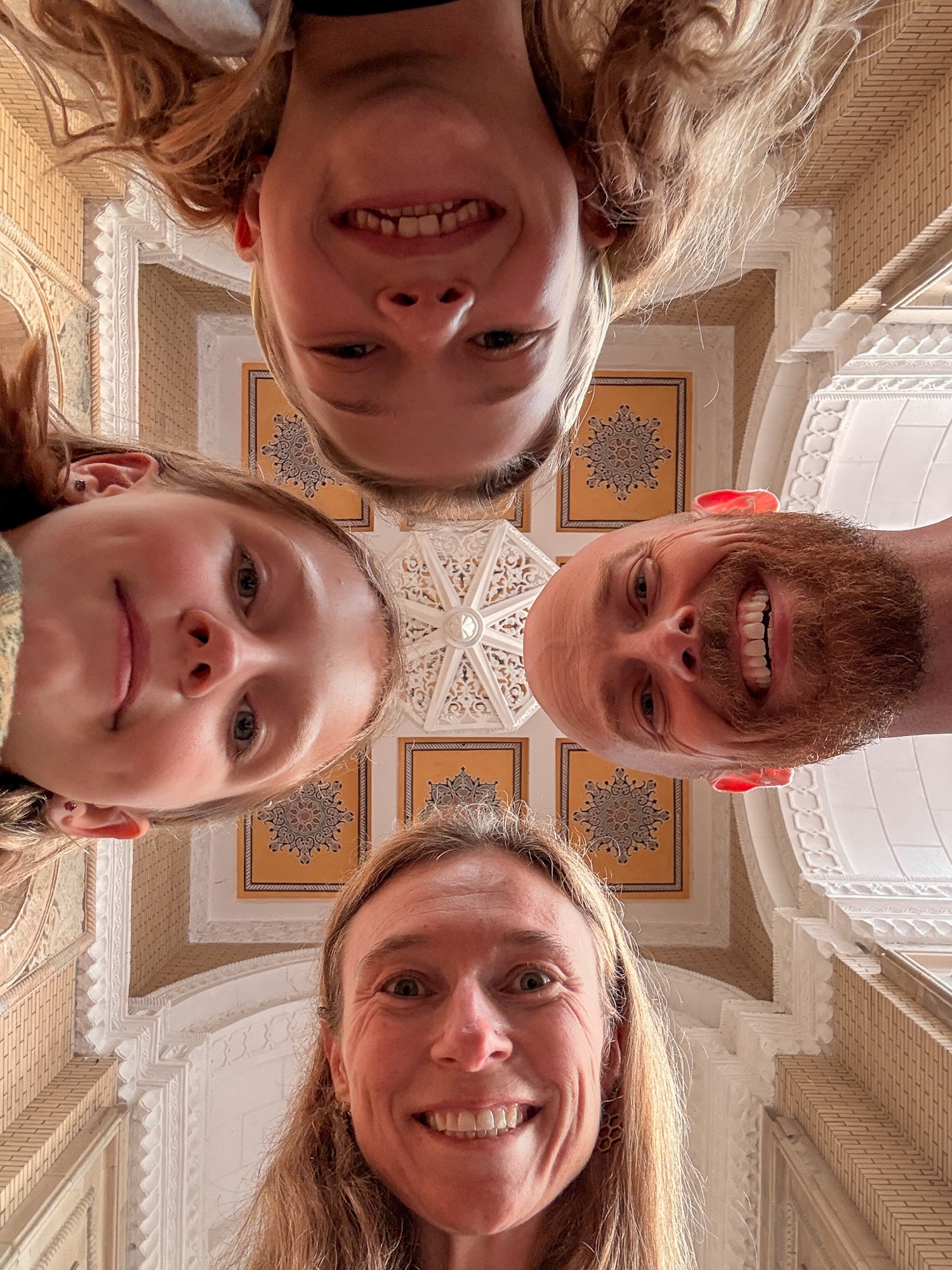
The Navoi is Tashkent’s cultural centerpiece — a grand building that opened in 1947, partially constructed by Japanese prisoners of war, each of its six foyers designed in the architectural style of a different region of Uzbekistan.
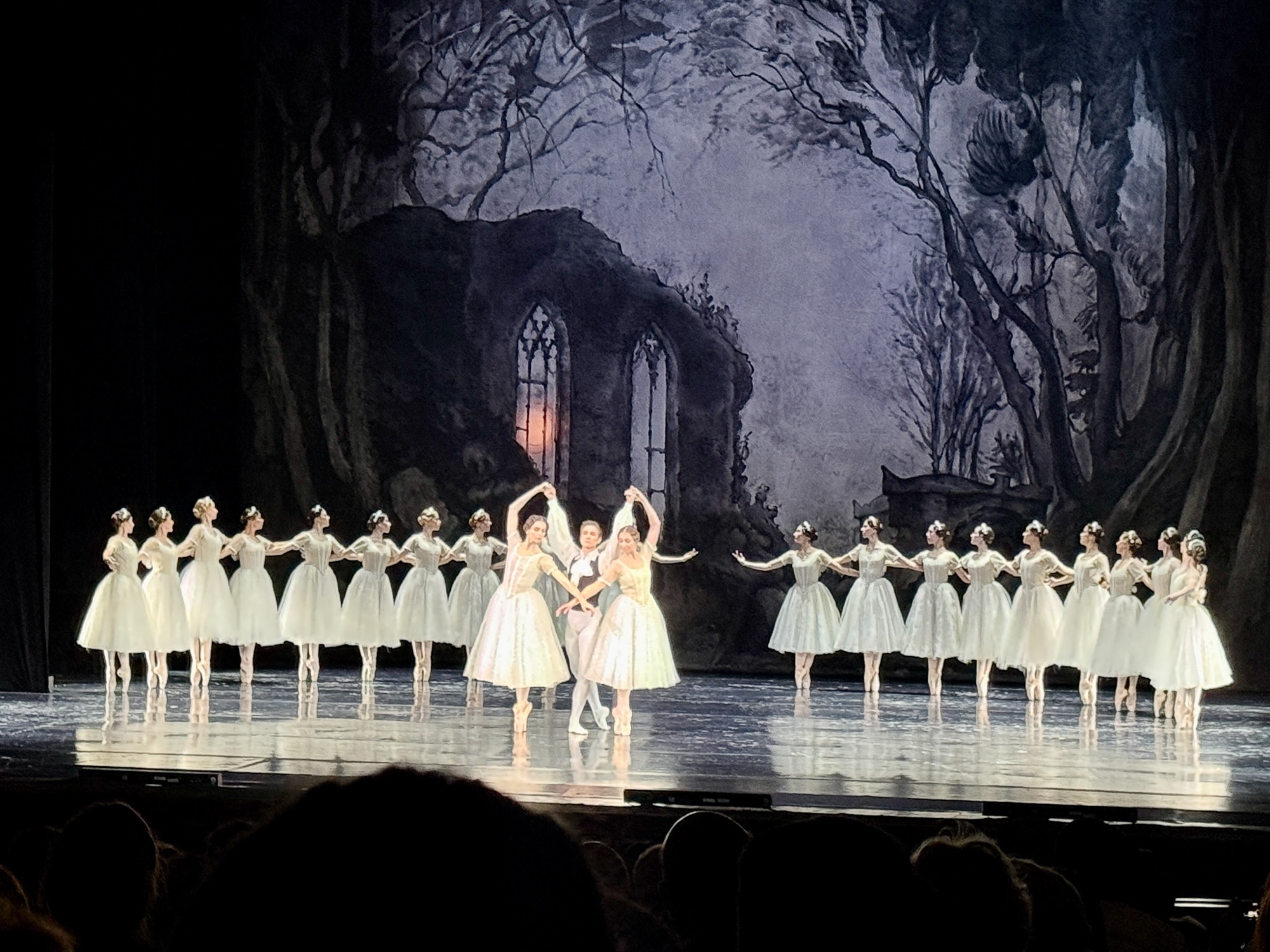
People in very nice clothes were streaming in from all directions. We found out the Ural Opera Ballet from Yekaterinburg was performing a touring program of ballets by Mikhail Fokine. We asked the girls if they wanted to go, but we never really expected this to work—we were definitely out of place amidst the finely dressed humans all around us.
The face-value tickets were roughly $83 each. Our clothes gave further pause: we were in T-shirts and tennis shoes, both clearly not allowed per the dress code. But the girls had their shawls, Shaina had draped her sweater in a way that looked decidedly intentional, Max had dark pants and a dark jacket, and nobody was going to mistake us for regulars at the Tashkent ballet. Shaina found a ticket hawker. He said $85 per ticket. We countered at $15 each. The hawker and his friends laughed, which was fair. We wished him luck, silently noted that the show started in five minutes and we had no strong attachment to being there, and we turned to walk away. After a few minutes, one of the hawkers ran after us—“How about you pay twenty per ticket?” Shaina and Max shared a glance, and nodded. He walked us to the entrance, the tickets scanned, and we handed over the money once we were through the door. We looked at each other with excited eyes, visibly shocked to find ourselves in this historic theater, on our very first night in Uzbekistan.
Our main reference point for ballet is the Nutcracker, which has always felt about forty minutes too long. The program here was structured differently: two short pieces, an intermission, a longer piece, another intermission, then the finale. Breaking it up that way kept everyone engaged through the full two and a half hours in a way none of us would have predicted going in.
The last piece was the best: Carnaval, a lively commedia dell’arte program set to Schumann, full of colorful characters — Harlequin, Columbine, Pierrot, Pantalon. The dancer playing Harlequin, wearing brightly colored geometric tights, was at least a head shorter than the company average and by a wide margin its most athletic, jumping as high or higher than anyone else on the stage, spinning and leaping with a joyful intensity that made it impossible to look anywhere else. When it ended the audience rose immediately and stayed on their feet for a full five minutes. A five-minute standing ovation is a specific, palpable thing. The girls looked around at all of it — the theater, the crowd, the stage — and then at each other. Eyes wide and grins even wider.
Twenty dollars well spent. We walked home through the warm evening air, marveling at how we just serendipitously watched a Russian ballet in a post Soviet country.
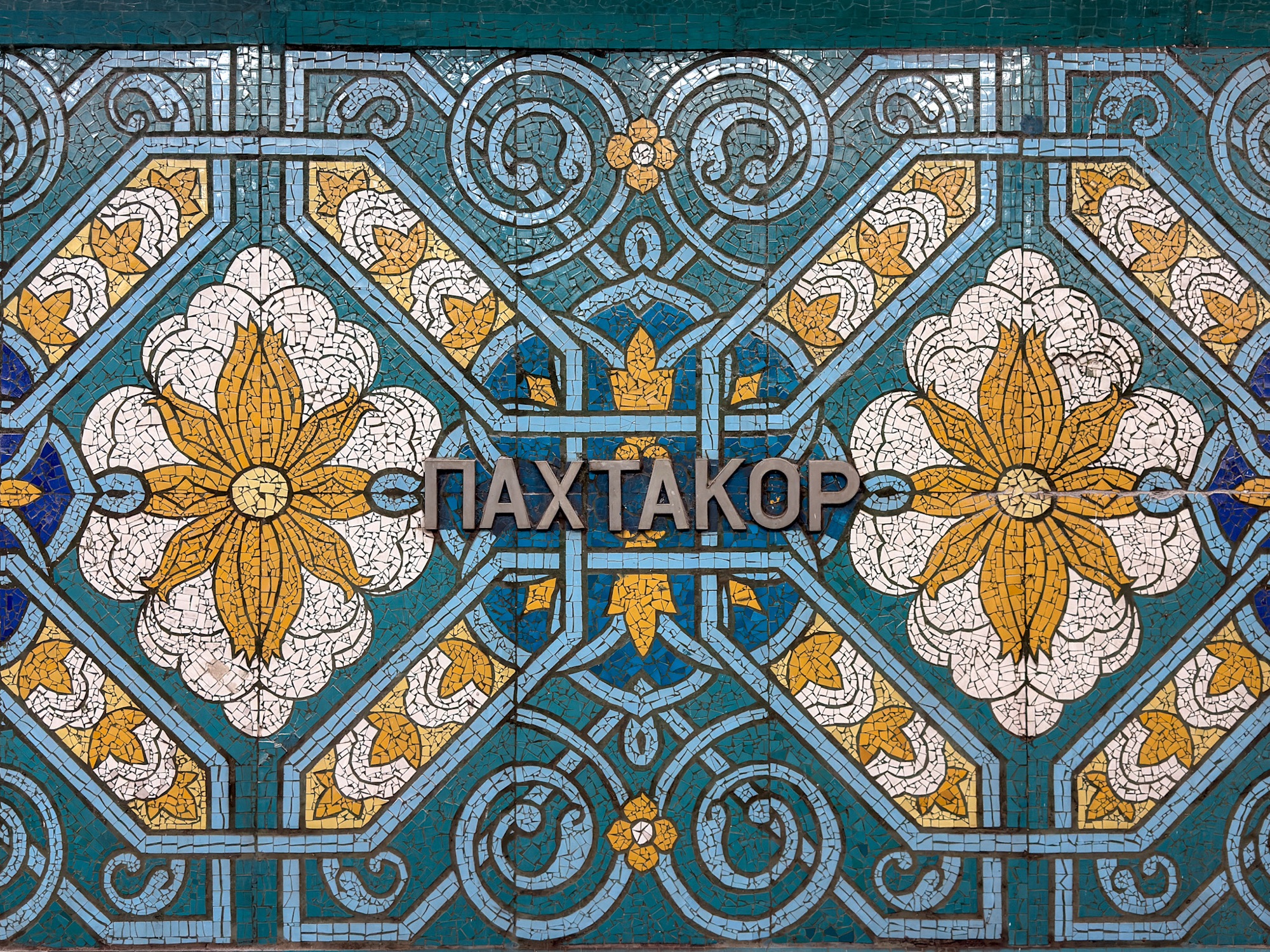
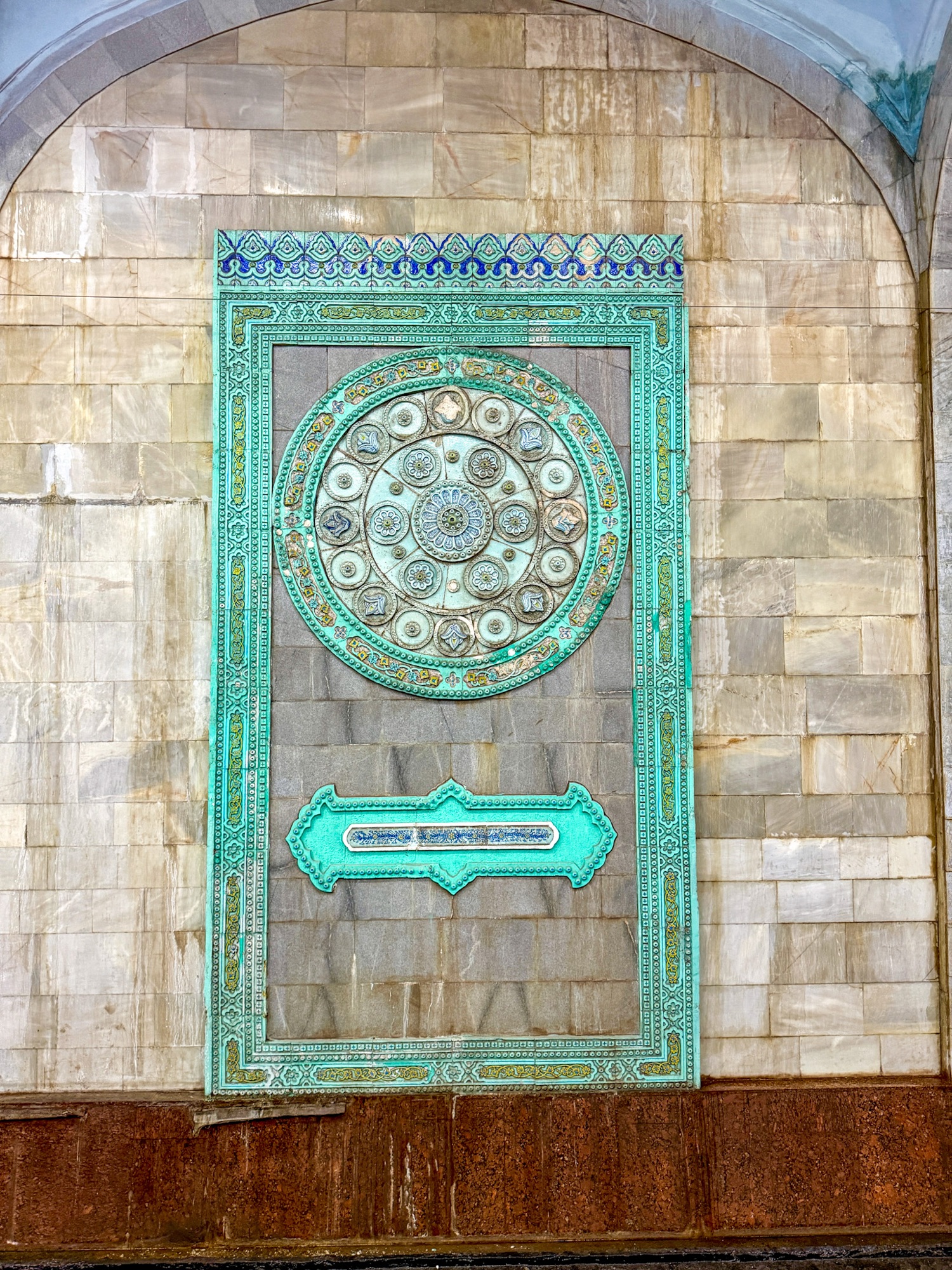
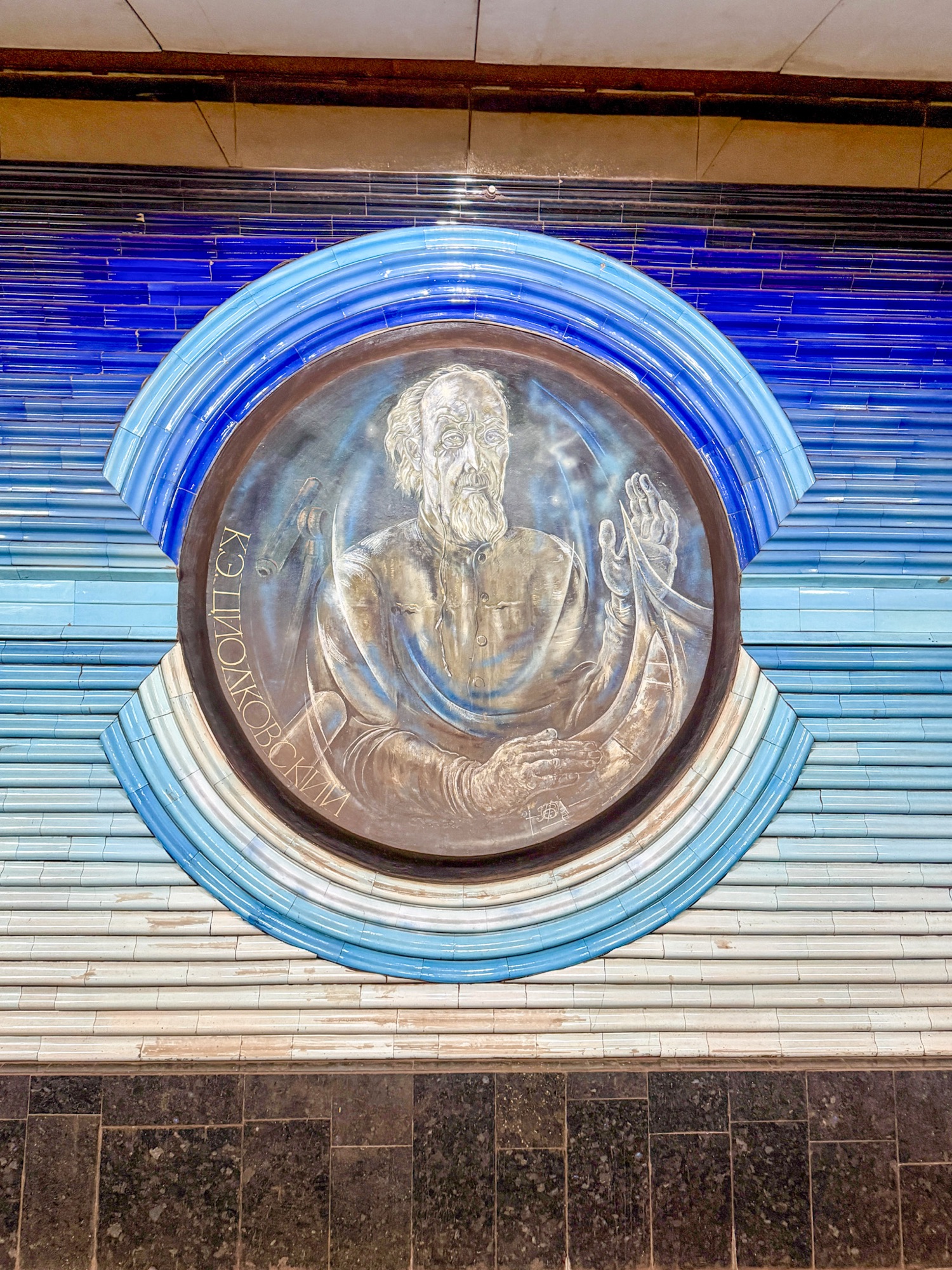
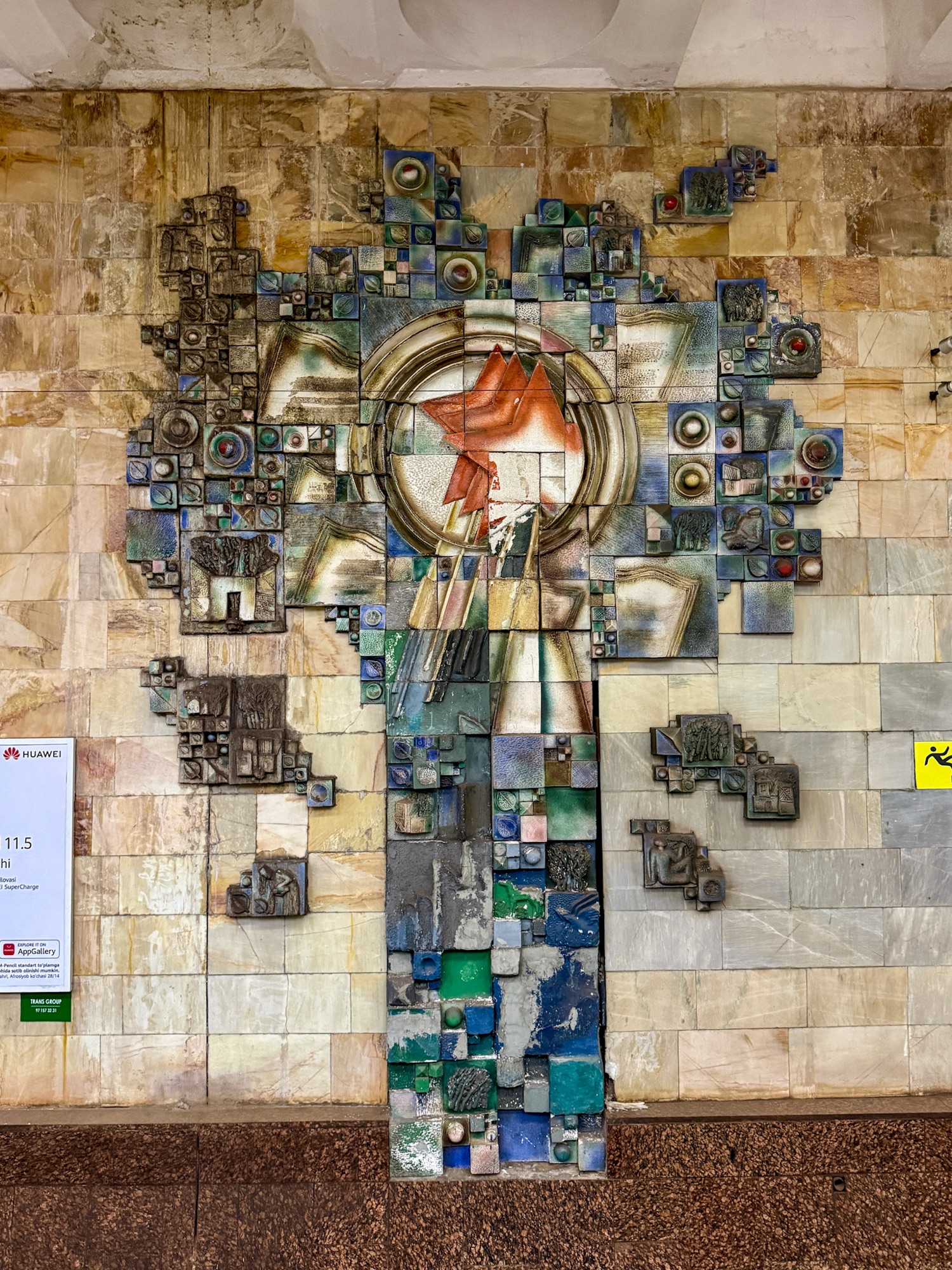
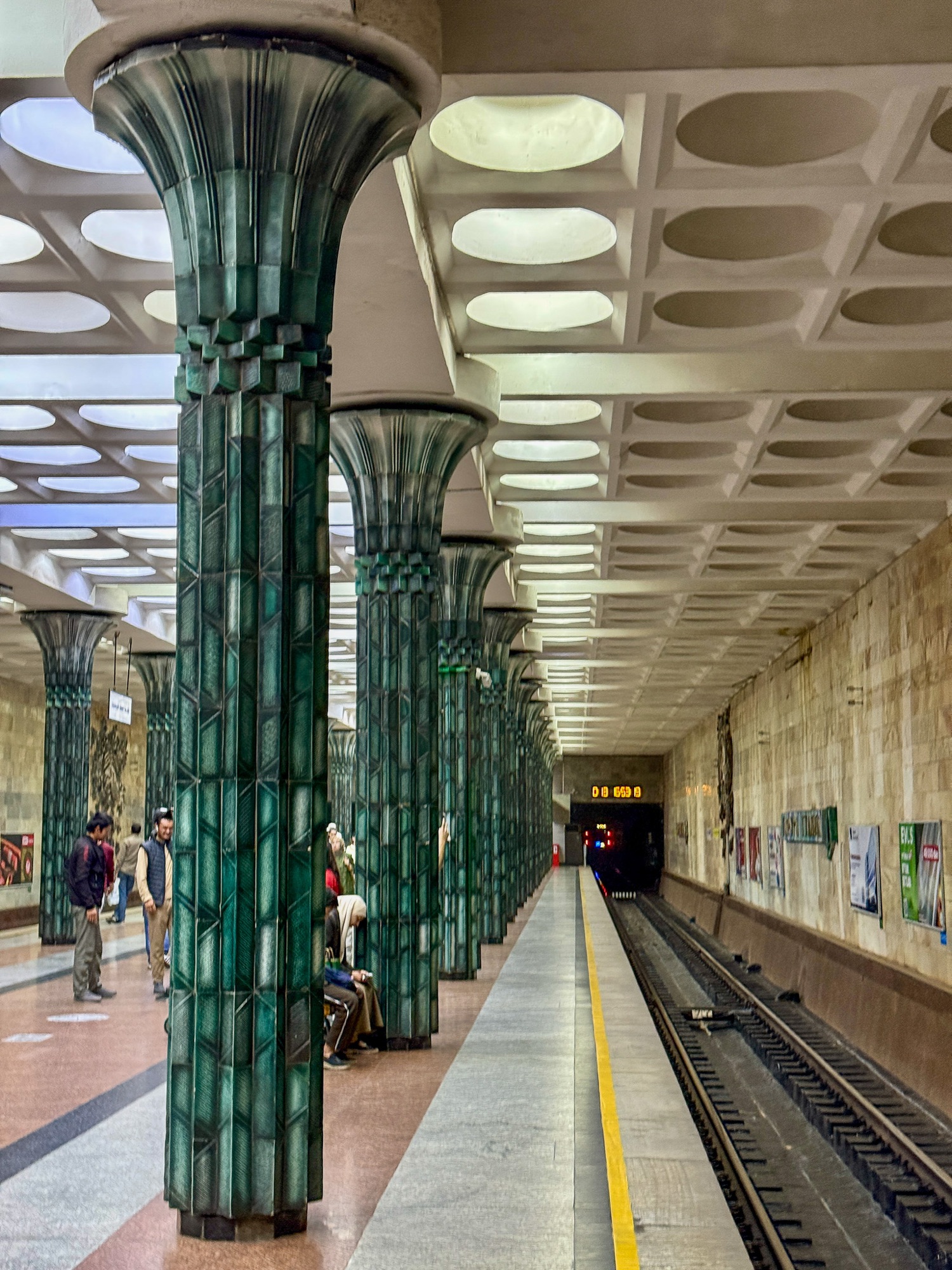
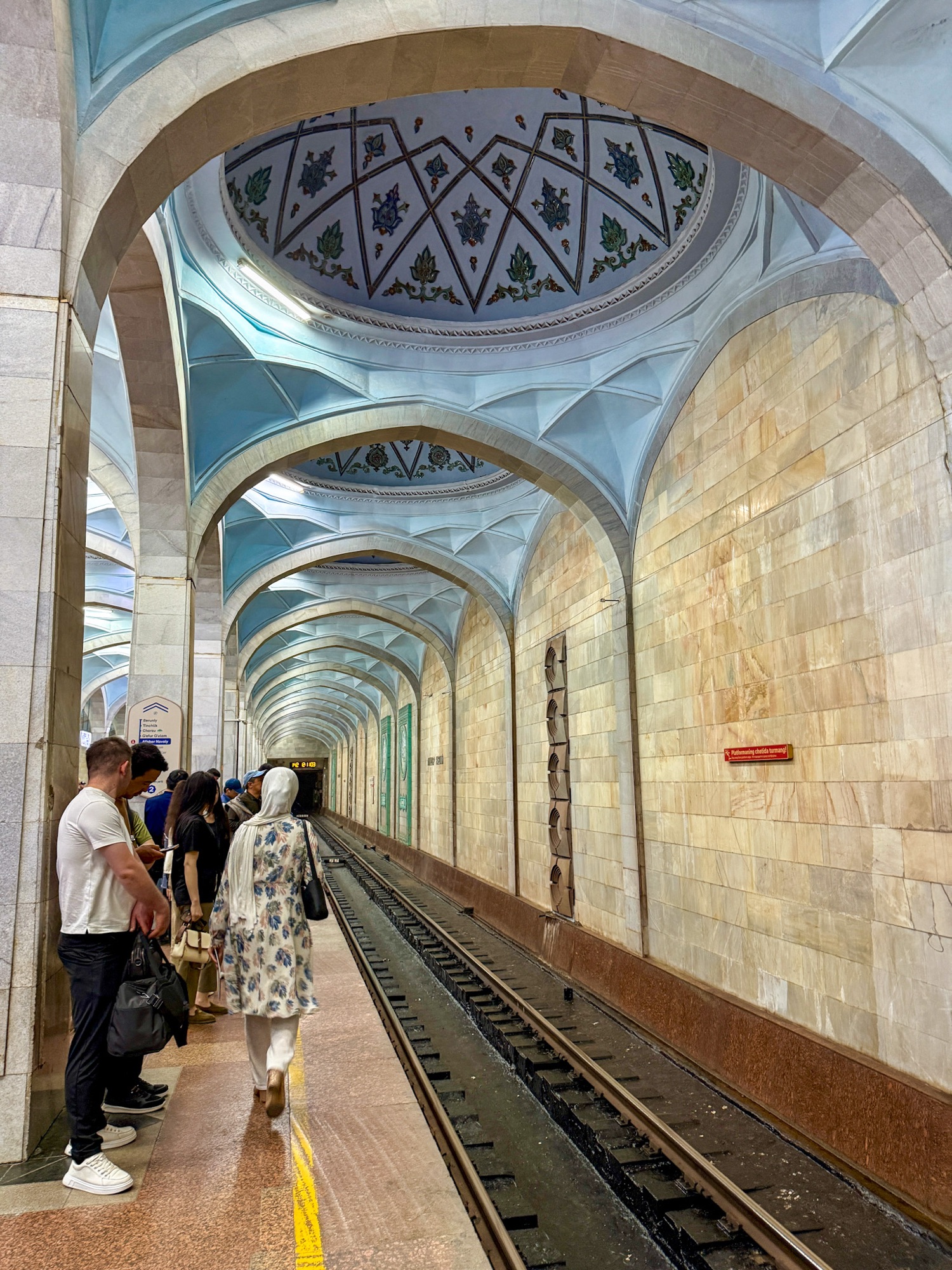
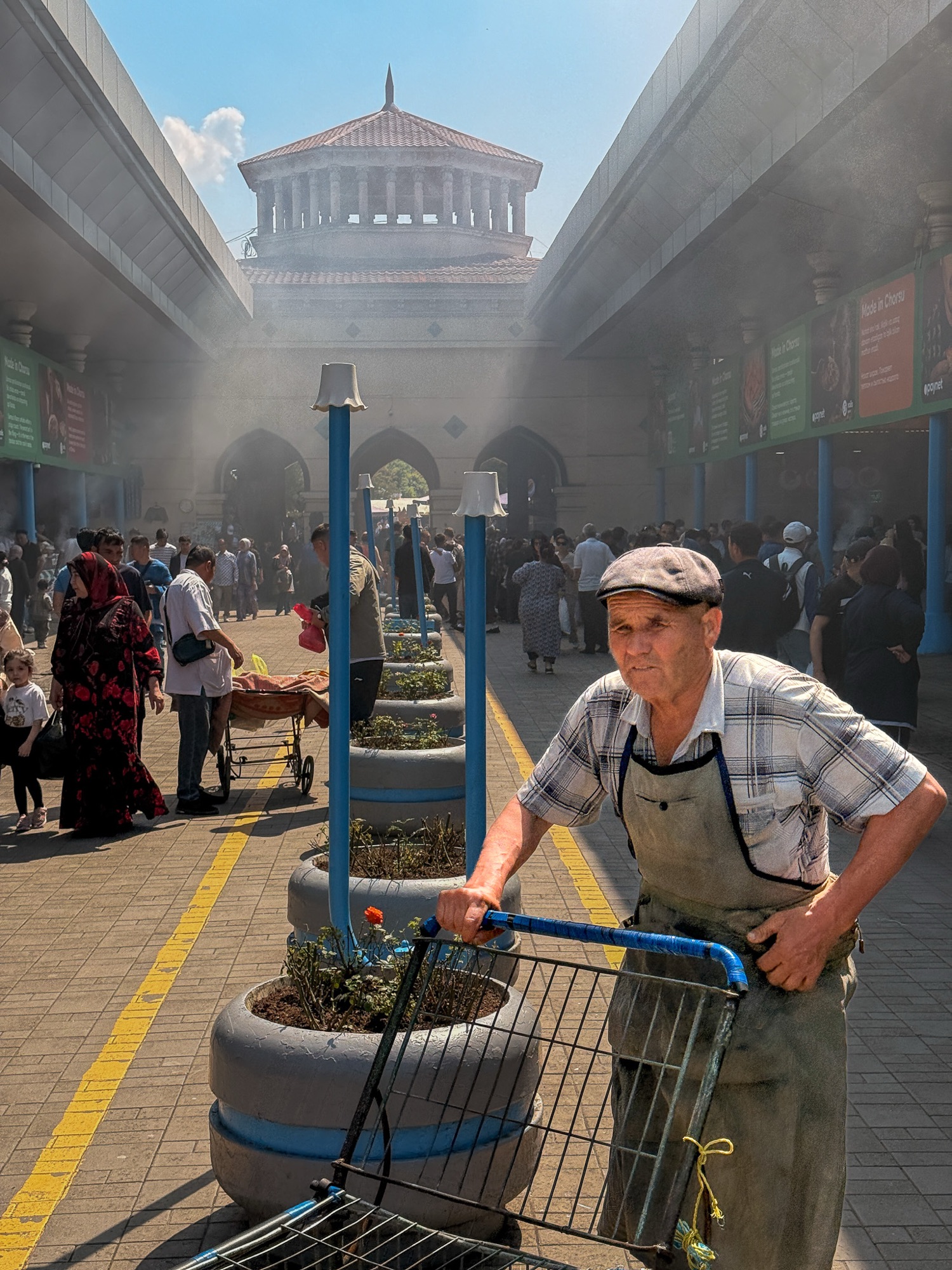
The next morning we took the metro across town, which is worth doing for its own sake. The Tashkent metro opened in 1977 as the first in Central Asia and was designed from the beginning to double as a nuclear shelter, which was why photography inside the stations was banned until 2018. Each of the fifty-odd stations is themed and decorated differently — marble, granite, carved alabaster, glass mosaics, ceramics — no two alike. It has an undeniably retro, funky vibe that is endearing precisely because it doesn’t seem to be trying. We rode through several stations arguing about which details we liked best and got off at Chorsu Bazaar.
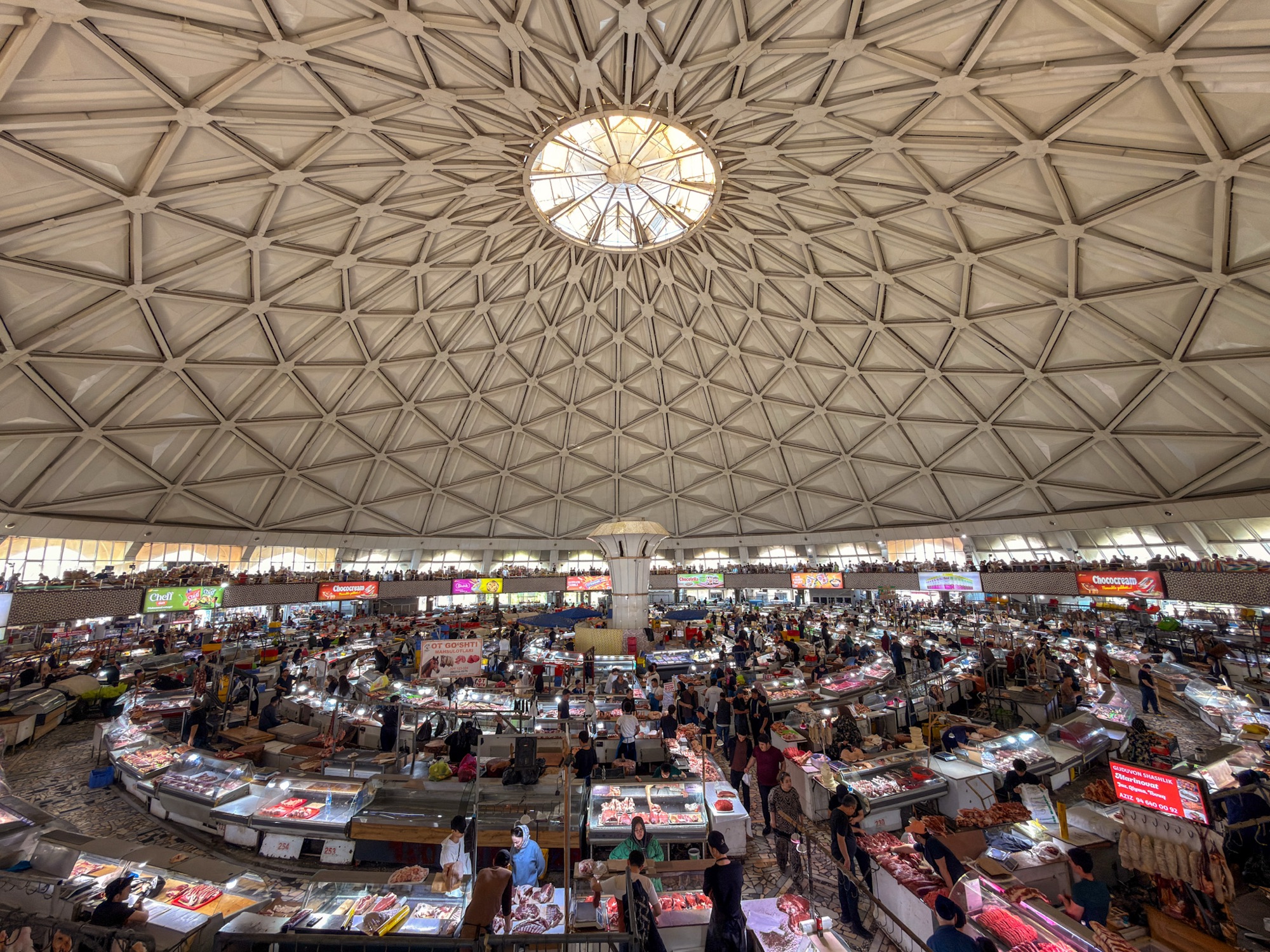
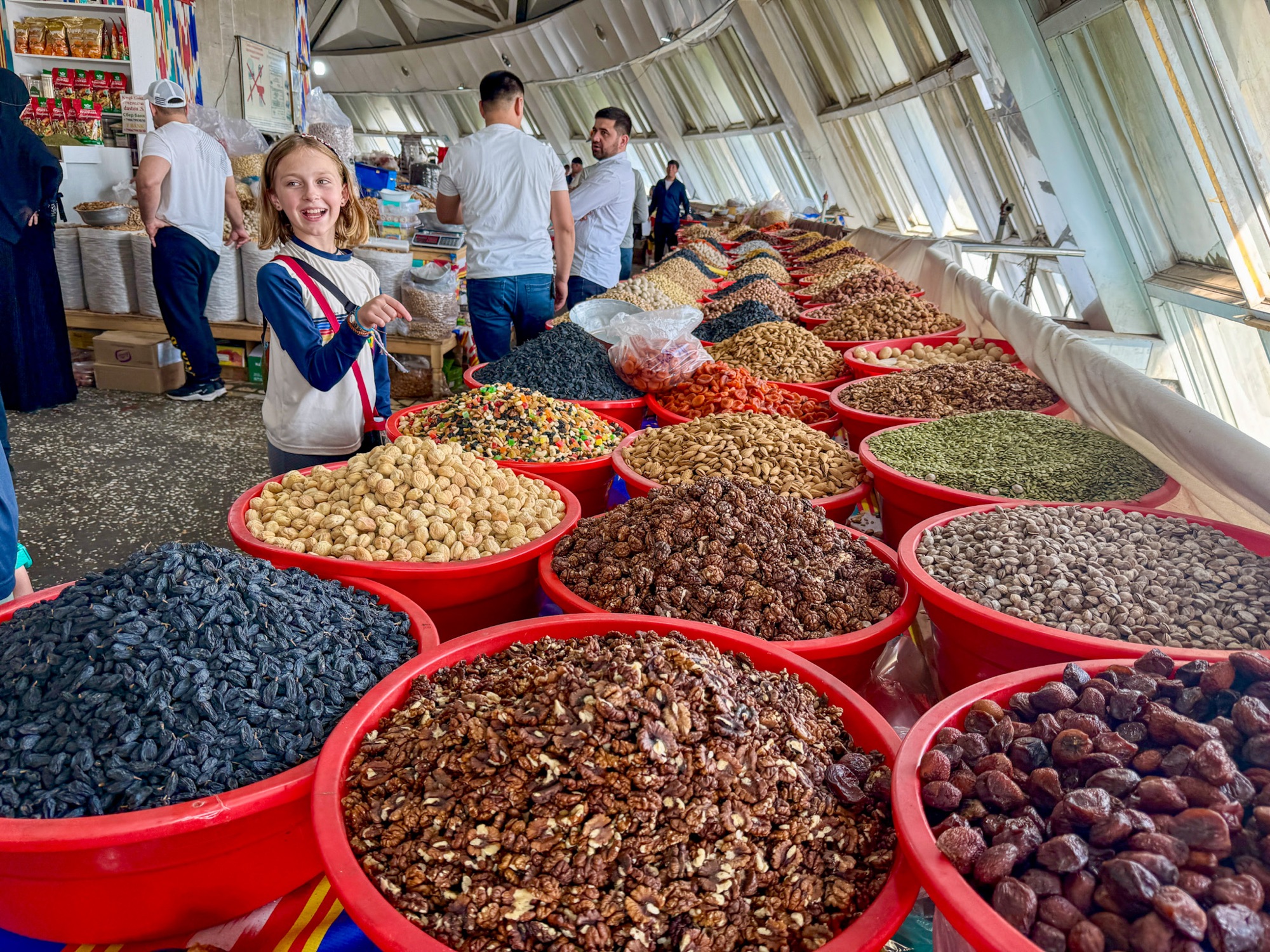
Chorsu is the oldest market in Central Asia, with a trading history on this site stretching back at least a thousand years. The name means “crossroads” in Persian, a nod to its historic role on the Silk Road as the meeting point of routes from every direction. The modern building with its enormous turquoise dome was designed in 1980 and somehow fits perfectly into the Central Asian tradition of covered trading domes. Under the main dome: meat, dairy, dried fruit, fermented vegetables, arranged in dense concentric rings. The girls were surprised to find horse meat displayed alongside the lamb and beef with the same matter-of-fact confidence as everything else.
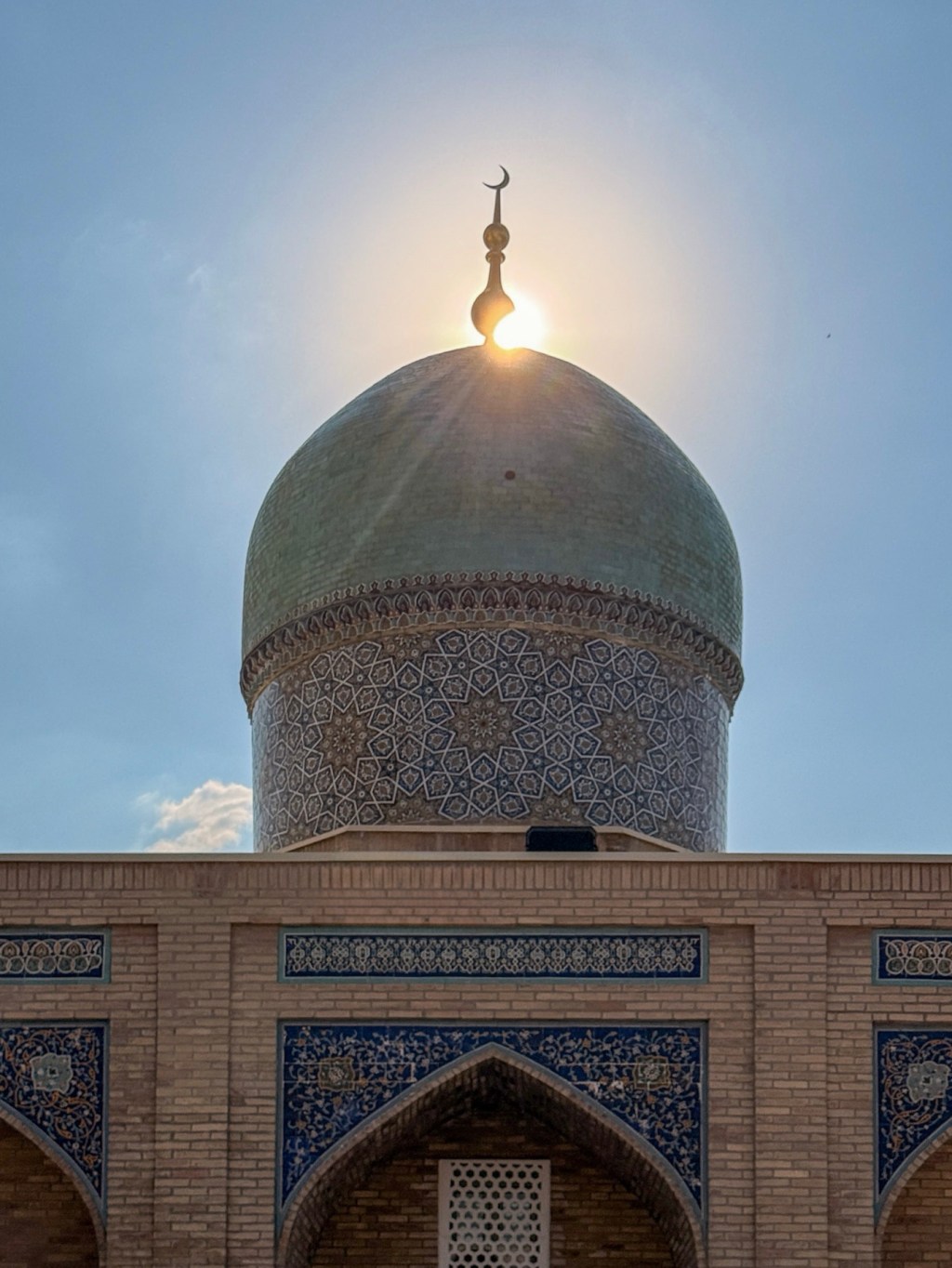
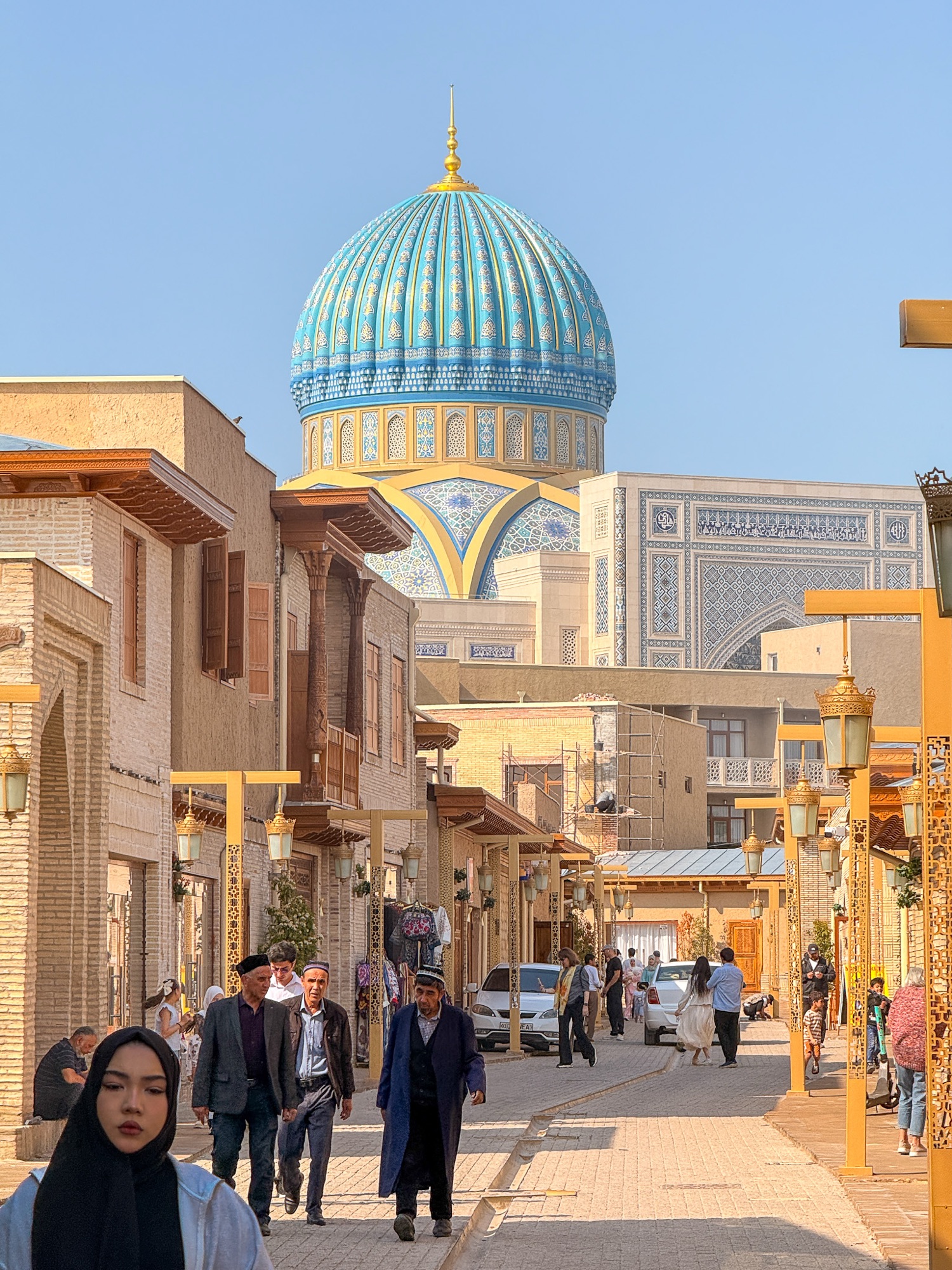
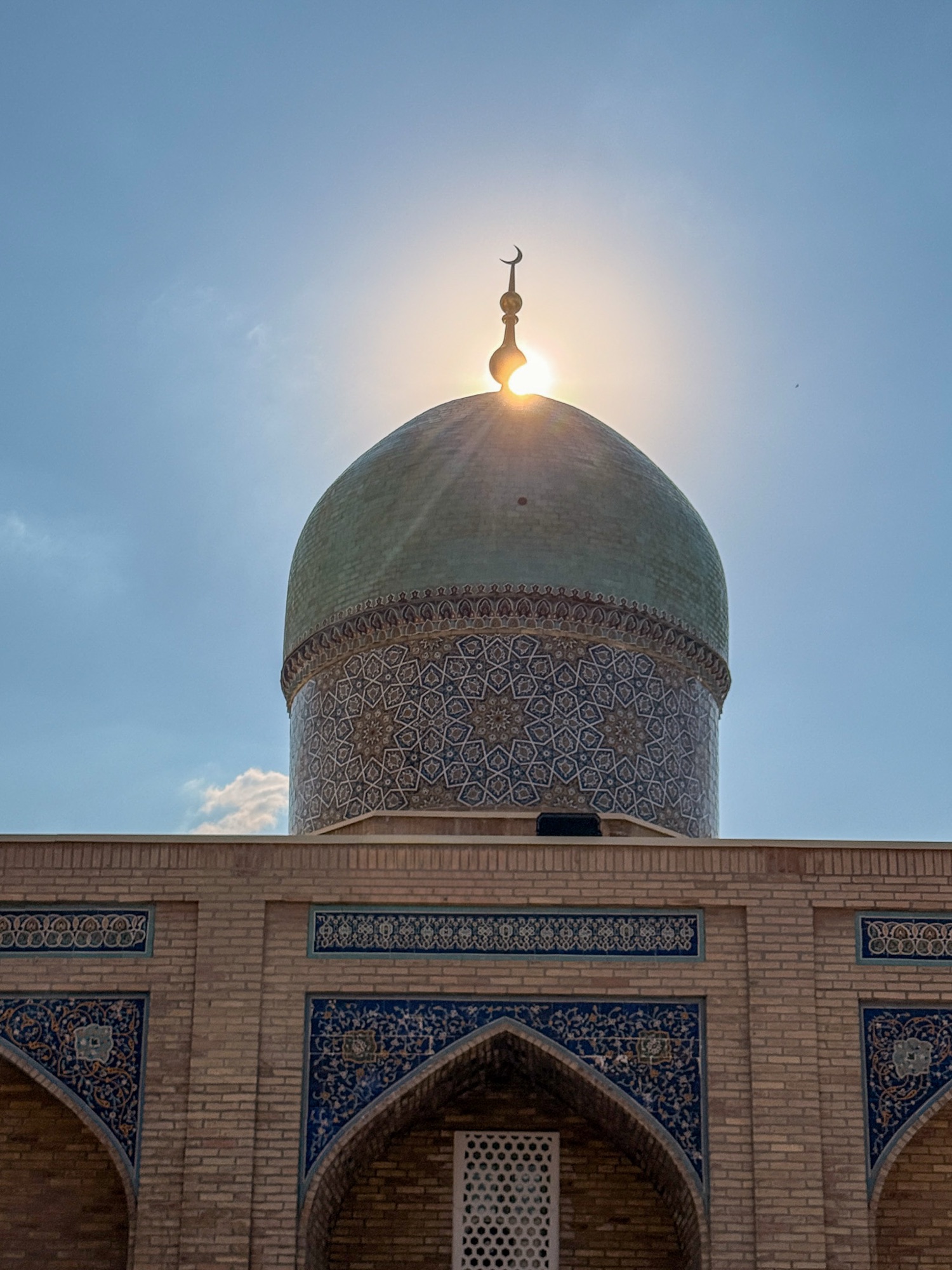
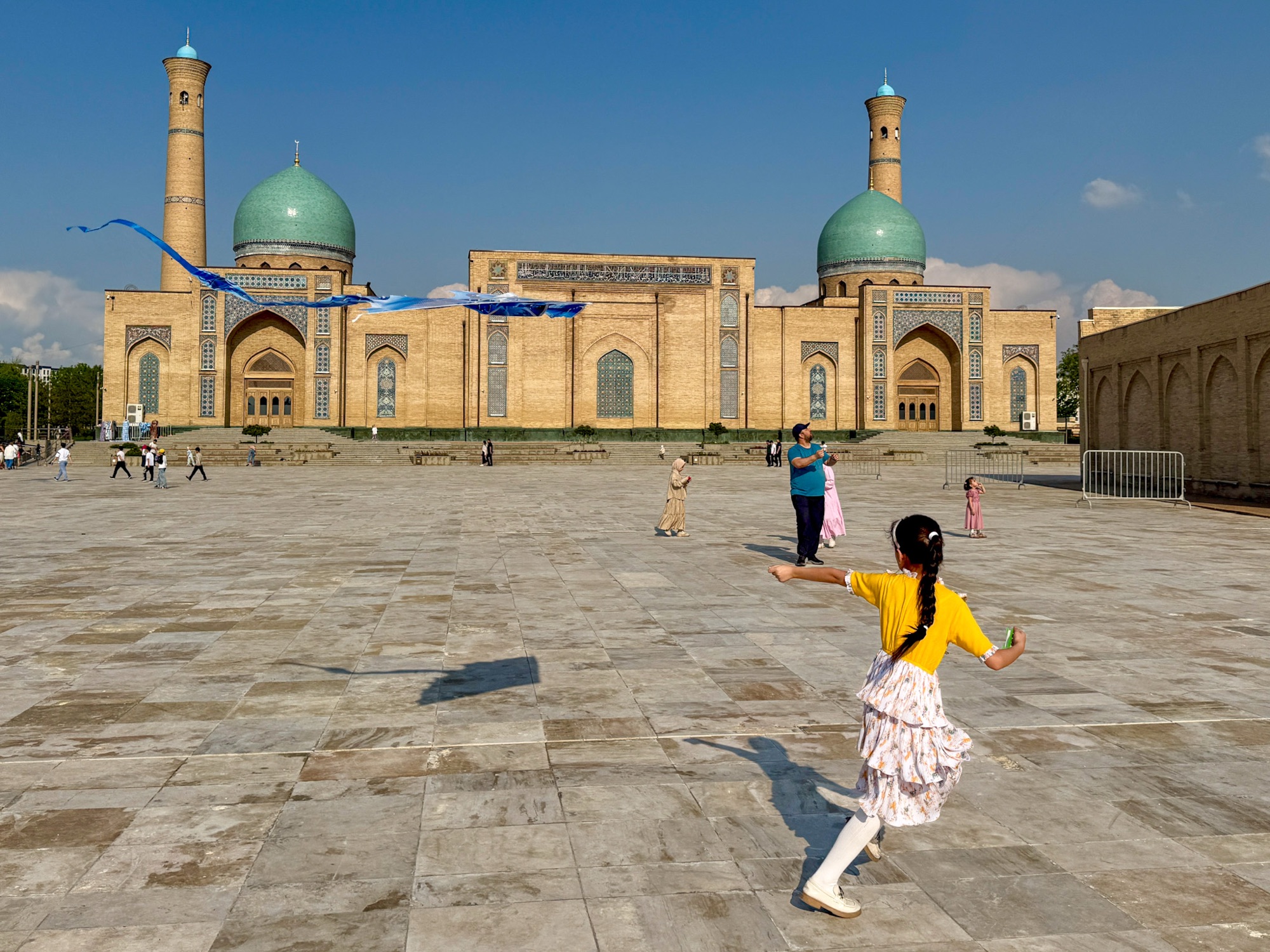
From the bazaar we walked to the Hazrati Imam complex, the spiritual heart of Tashkent — mosques, madrasas, and mausoleums built around the tomb of the city’s first and most revered Islamic imam. The architecture was worth seeing, but we stayed longer than planned due to all the kids.
In the enormous open square between the mosque and the madrasa, a dozen Uzbek children were flying kites. Simple ones — plastic, thin wood, string — straining high in the warm air. One small boy, maybe five years old, was holding his line with both hands and leaning back at an angle that suggested the kite had strong opinions about the direction of travel. It is remarkable what a kite in a blue sky can do to someone who came to look at architecture. We all watched for longer than we planned. A simple yet joyful moment.
The bags arrived the next morning. Max took a taxi to the airport, walked to the lost baggage desk, and the attendant who had processed our claim three days earlier looked up from her papers and immediately glanced over her shoulder. The two cases were sitting right there waiting. She had her assistant bring them out, said safe travels, and that was it. No paperwork, no ID check. Just a look of recognition and away he went. Small celebrations ensued.
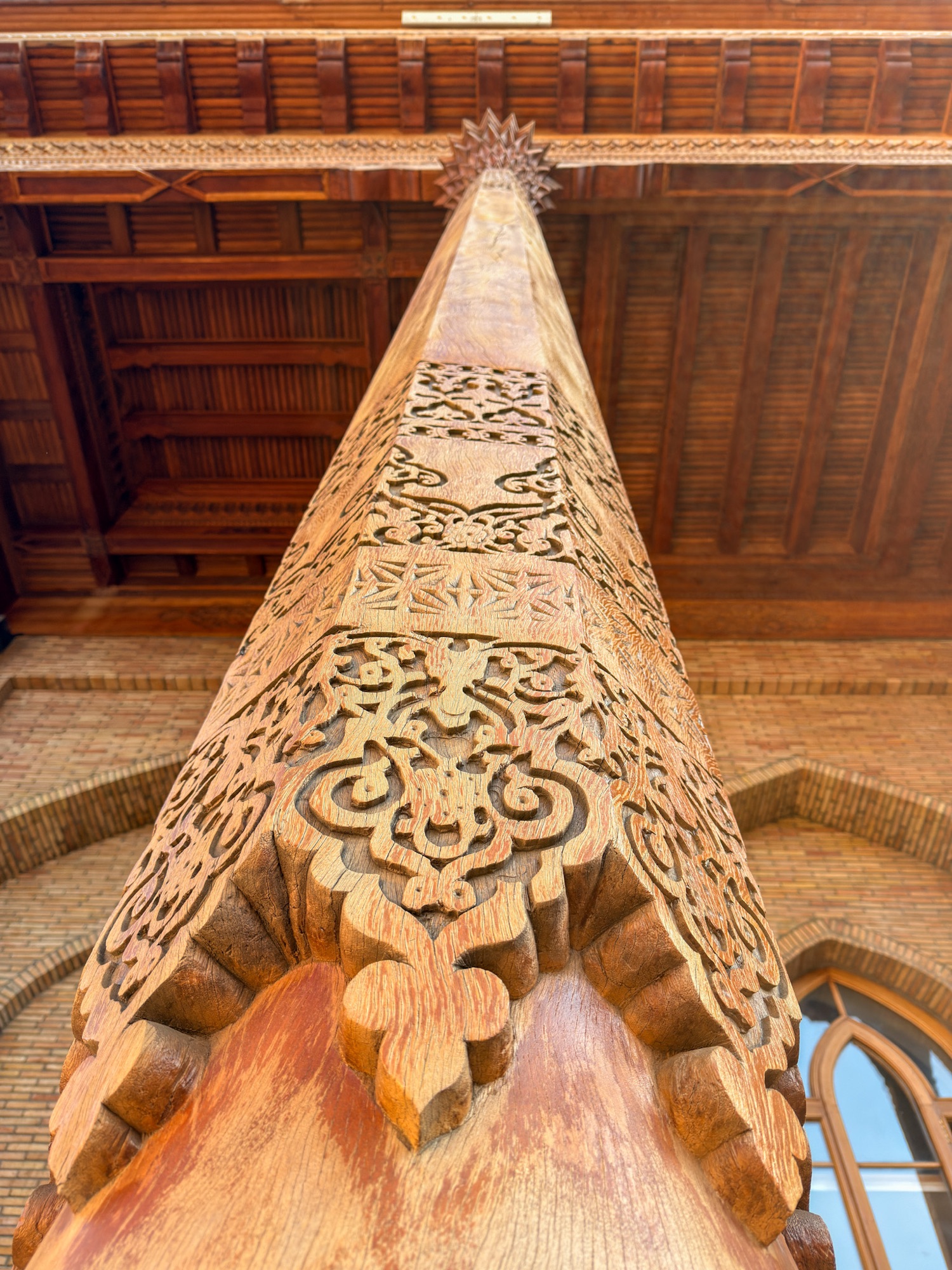
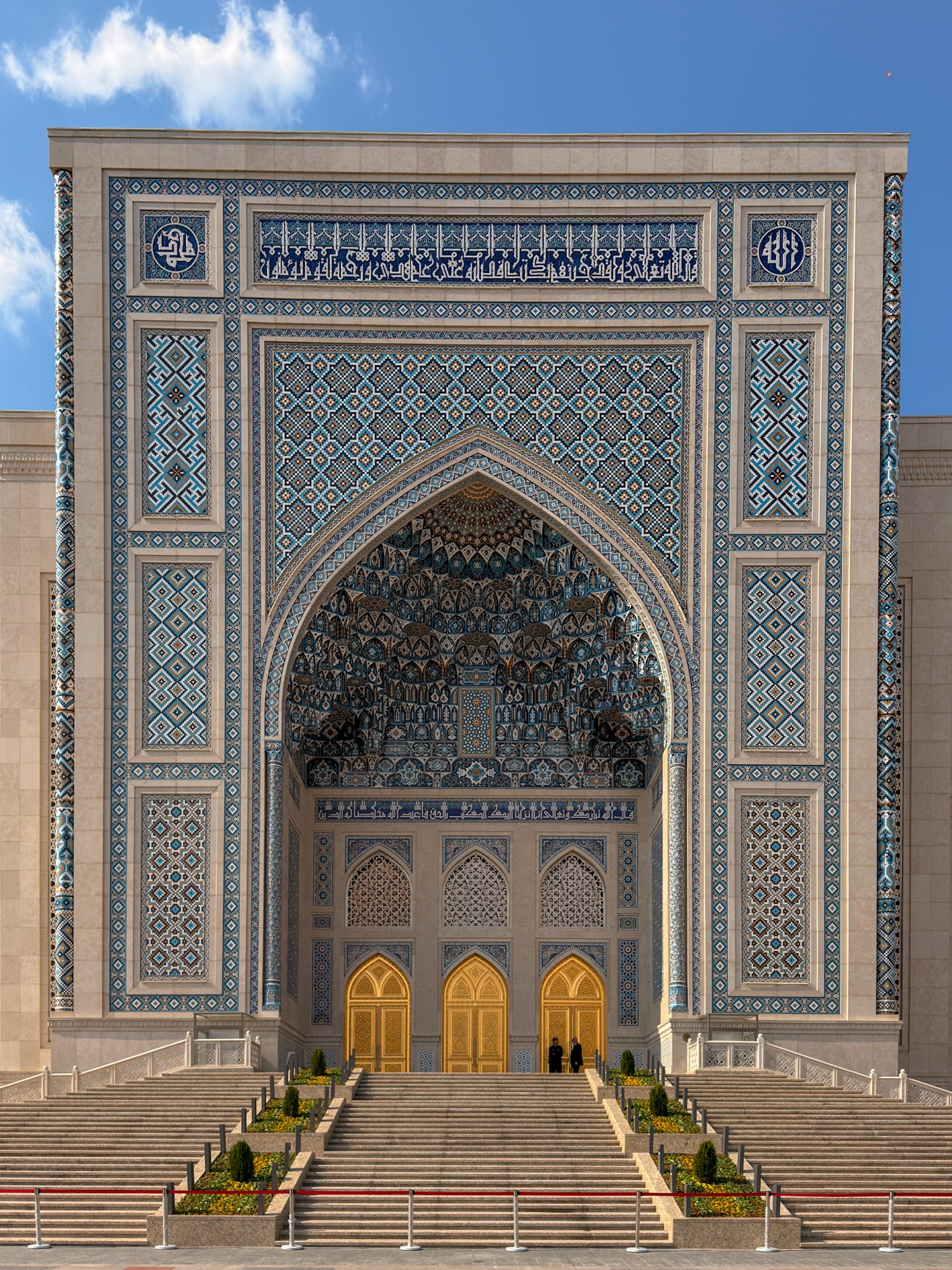
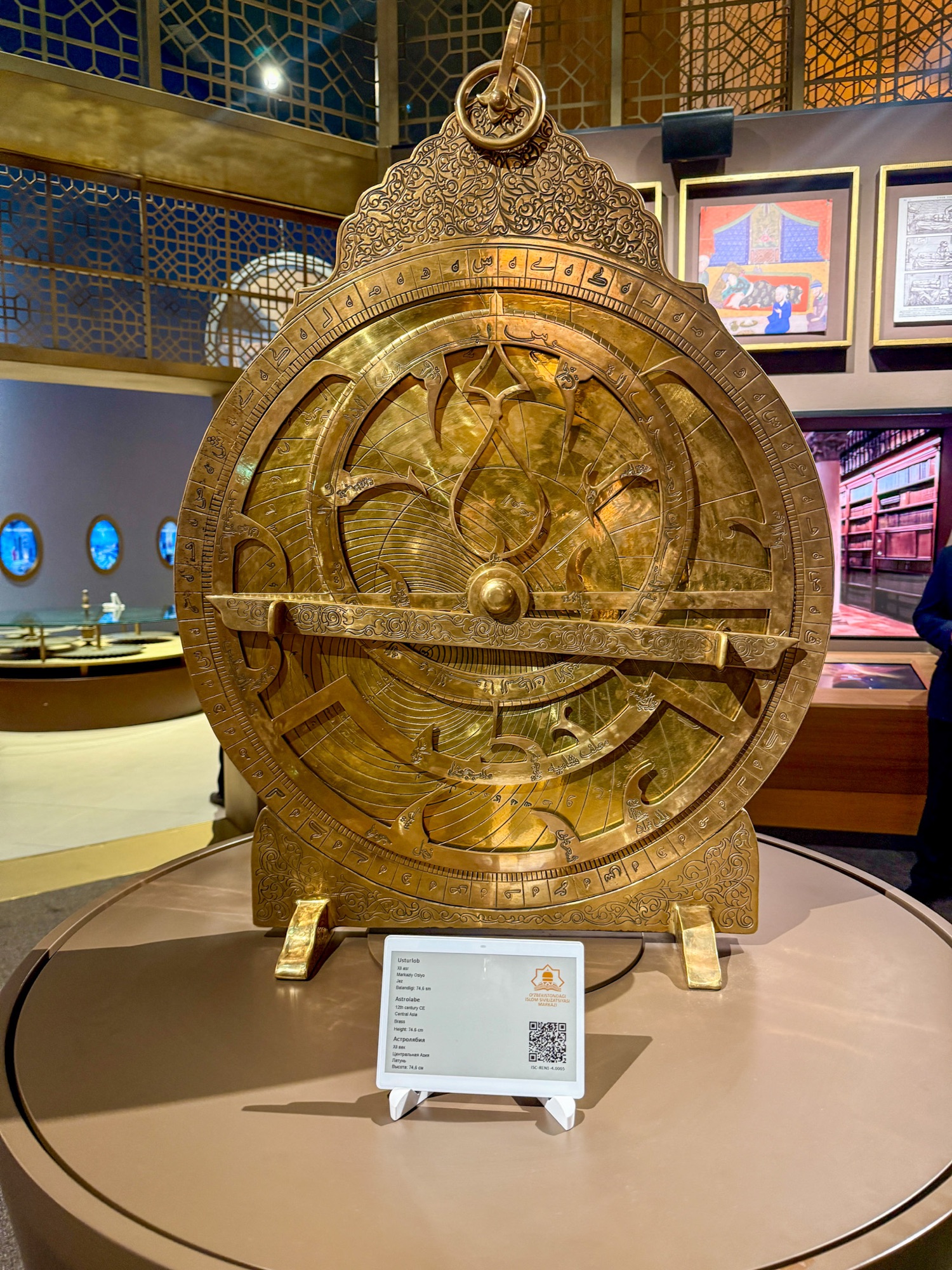
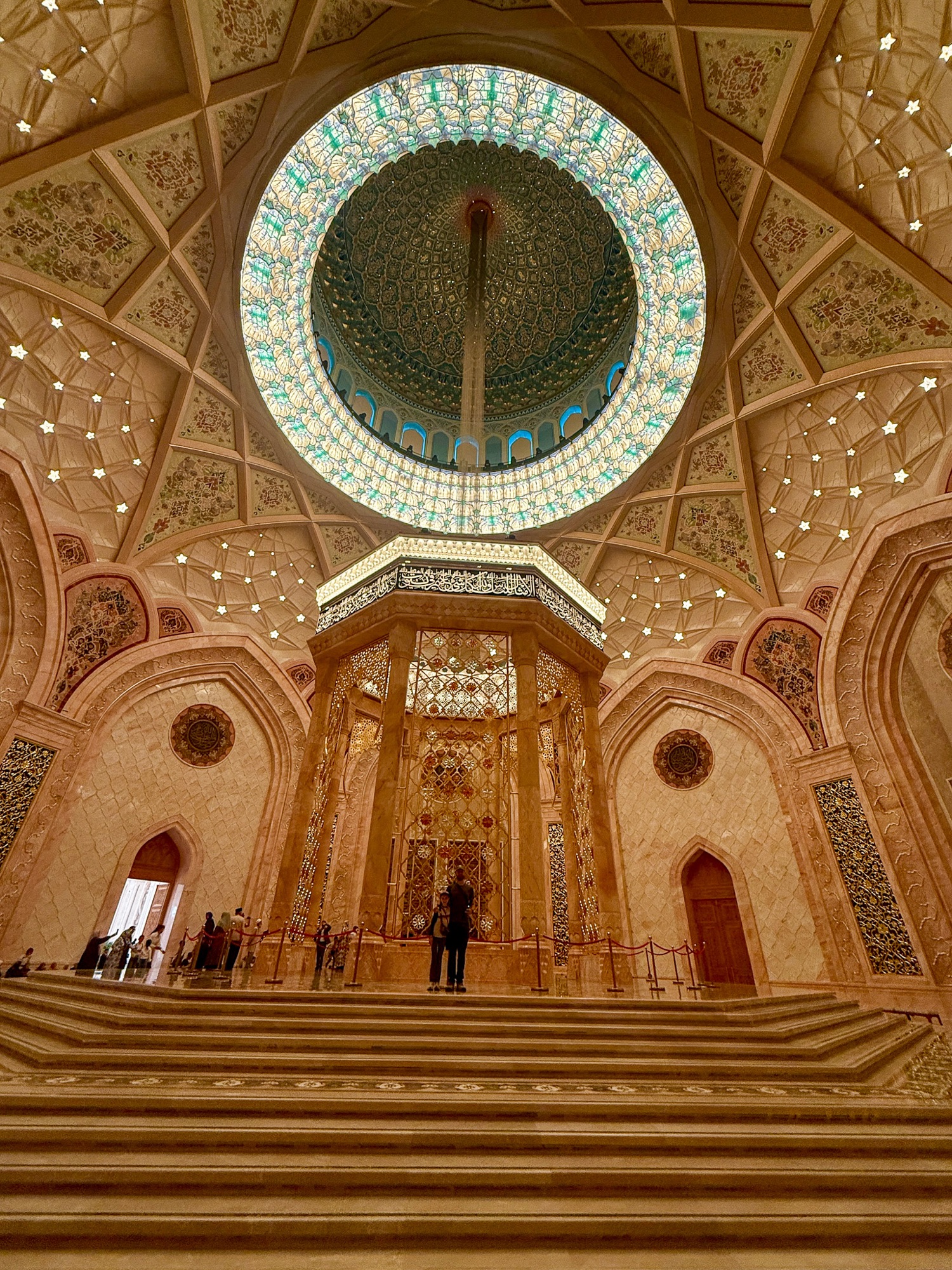
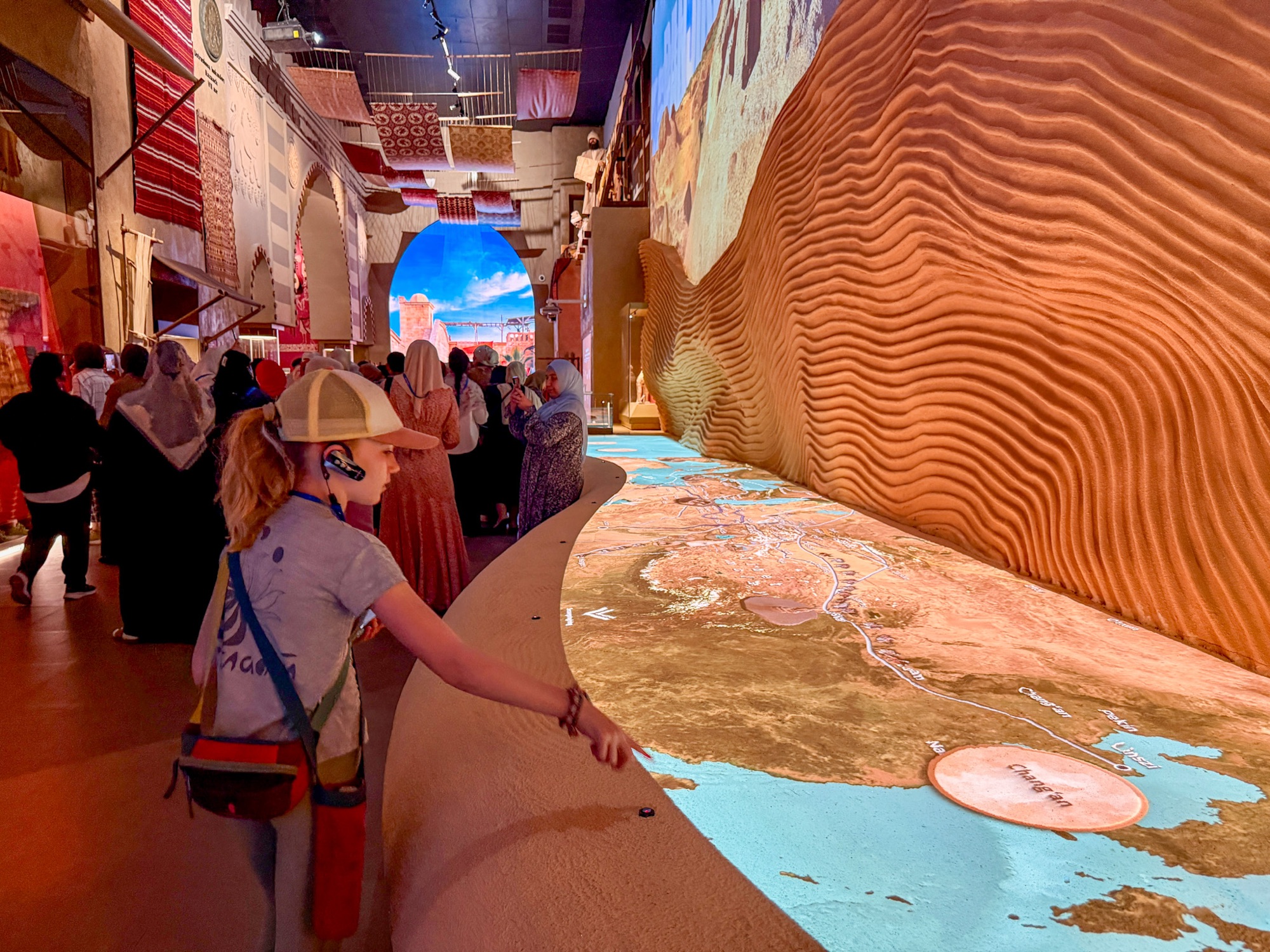
That afternoon we toured the Center for Islamic Civilization, one of the most ambitious cultural projects in Central Asia: eight years in the making, reportedly for $150 to $160 million, open for barely a month when we visited. The scale is staggering — a full museum, a research library with 200,000 volumes, restoration labs, a conference hall, all anchored by a central dome pushing 65 meters into the sky. Our (mandatory) assigned guide had memorized a script and appeared to have no information beyond it. We tuned him out and quietly explored on our own, which the museum rewarded handsomely with interactive stations, LED wall panels vivid enough to feel like windows into medieval medinas, and exhibits that actually invited you to spend time with them.
An honest word: this institution is part history museum, part celebration of Islamic civilization, and part unabashed Uzbekistan-is-AWESOME. You feel the latter part most in the moments where complexity gets smoothed over in favor of their preferred narrative. You don’t spend $160 million on a museum to air your dirty laundry, and that’s understood. Come with a critical filter and you’ll have a genuinely wonderful time. The design alone earns the visit.
That evening we went to dinner in the rotating restaurant at the Tashkent TV Tower — 375 meters tall, built between 1978 and 1985, the fourth tallest tower in the world when it opened. The restaurant sits at about 110 meters up and takes roughly an hour to complete a full revolution. Negronis, good food, and the whole city rotating slowly past the windows as the sun went down. The girls were giddy throughout, not for the food, but for the movement and the changing view—a testament to the genuine excitement a kid feels the first time they dine at a rotating restaurant.
Coming out of the tower, an older gentleman standing near the entrance offered to drive us. Max had planned to call a rideshare, but Shaina liked his manner and we went with him. He didn’t use navigation apps, so Max guided him on his phone and took the opportunity to ask a few questions. Where are you from? Tashkent. Have you lived here your whole life? Yes. What has changed most about the city during your lifetime?
He thought for a moment. Then said: civilization.
The word landed and stayed. Looking at him — somewhere between 65 and 75 — he has lived through all of it. Soviet-era Tashkent through the enforcement of the 1970s and 80s. The collapse of the USSR in 1991. The decades under Karimov, one of the most isolated and authoritarian leaders in the post-Soviet world. Karimov died in 2016 and his successor opened the country carefully to foreign investment and tourism. And here we are.
Civilization. One word. Fifty years of history compressed into it.
We arrived at the Airbnb before Max could pull that thread any further. We said goodbye and thought about it the rest of the evening.
Four days in Tashkent went by in a whirlwind. A cracked tooth resolved for $45. A thunderstorm that arrived without warning. A fancy ballet attended for $20 a ticket. Kites in a mosque square. A word from a taxi driver that is still turning over in our minds.
This is what new territory feels like.
Welcome to Central Asia.


Leave a Reply