
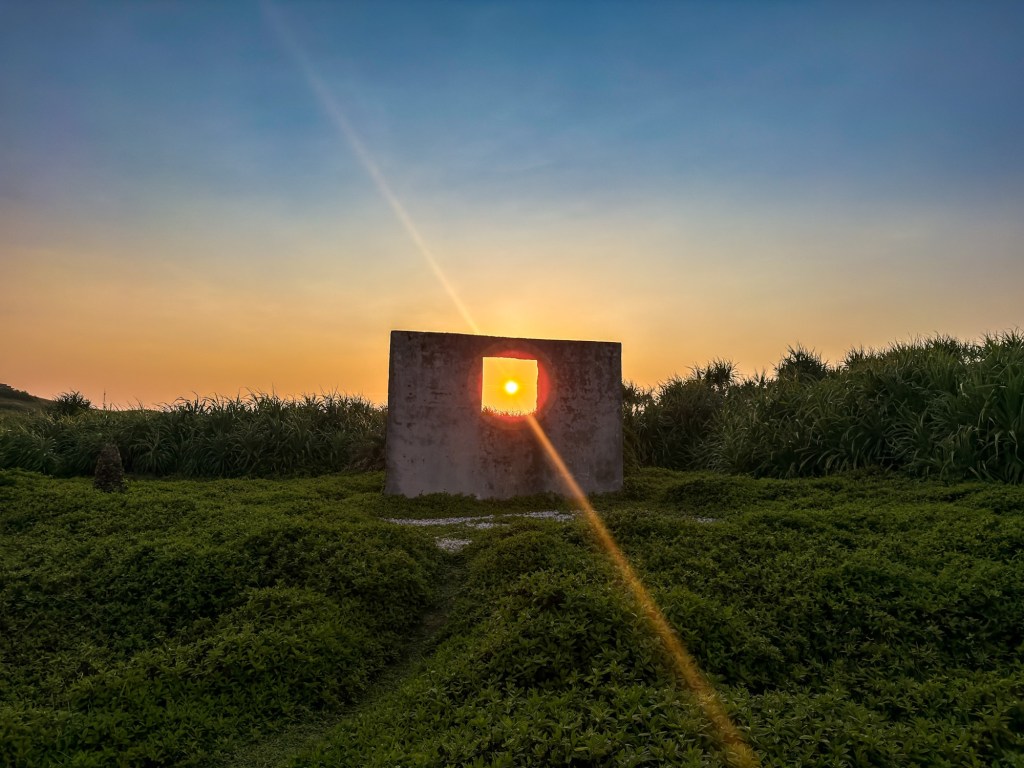
Dates: March 28th to April 3rd, 2026
Places: Taitung and Green Island, Taiwan
There is a ferry that runs between Taitung and Green Island, a small volcanic island about 33 kilometers off Taiwan’s east coast. The crossing takes roughly forty minutes. This sounds fine. It is, most certainly, not fine.
But we’re getting ahead of ourselves.
We’d spent a few days in Taitung as a landing pad after Tainan — long enough to eat the best miso pork pancake roll of the entire trip at a small dumpling house called Wu Wha Ma, catch the newly released Project Hail Mary film at the local cinema, and discover that the tuna sashimi at Yeh’s Fish counter inside the central market was the best raw tuna any of us had ever eaten. We consumed it standing in a scooter parking lot outside a fried chicken restaurant like the cultured travelers we are. Taitung was good to us. Then it was time to earn Green Island.


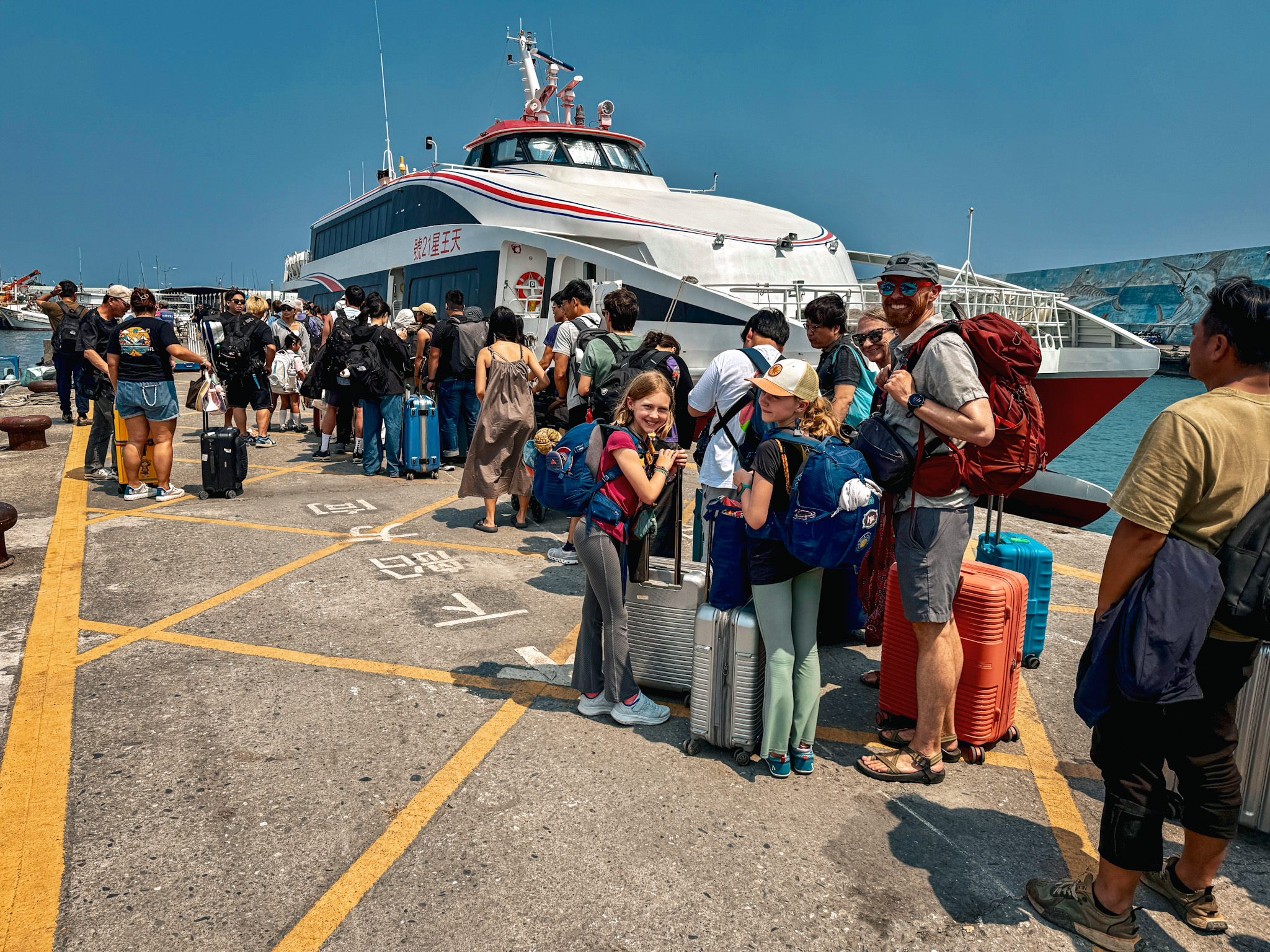
The morning of the crossing, Max noticed it was quite windy on the pier. Standing on solid ground this registered as a minor observation and nothing more. The moment the ferry cleared the marina it became considerably more relevant information.
Within about five seconds of hitting open water, the boat dropped off the back of a wave and his stomach went with it. Then back up. Then down again with a jarring thud. Then up. Then down. Imagine the sensation you get on a roller coaster — that brief, weightless lurch — that is wonderful when it happens two or three times. It is a completely different experience when it repeats every fifteen seconds for forty minutes without interruption.
By the fifteen-minute mark he was in real trouble, and Finlee wasn’t faring any better. Cold sweats, mouth flooding with saliva, dizzy, deeply nauseous—the full catastrophe. A look around the cabin revealed that the ferry operators had installed massive bunches of plastic vomit bags at strategic intervals every three seats throughout the seating area, which beforehand seemed like ridiculously frequent spacing. After we left, however, that spacing suggested they knew exactly what kind of ride this was. The grandmother in the adjacent section reached for one. A man across the cabin started using his. One by one, people around us began to fall. Finlee was a crumpled version of herself against the window. Even Arya had gone slightly green.
Shaina was reading her book.
Not skimming it. Not pretending to read it while actually monitoring everyone’s deteriorating condition. Reading it. Turning pages. Lost in some literary world of her choosing.
Max asked her, in the grey-lipped, barely-holding-it-together voice of a man approximately thirty seconds from the bag brigade, what he should do. She looked up from her book, assessed him briefly, and suggested slow deliberate breathing and moving with the boat rather than against it — absorbing the rise and fall instead of bracing for it. Then she went back to her chapter. Unsaid was the obvious—Max probably should have taken the scopolamine patch she had offered him the night before.
He took the advice this time. It helped. Barely. But just enough. The boat pulled into Green Island’s marina and both Finlee and Max walked off the gangway on their own two legs, which we all counted as a win. If the crossing had been five minutes longer, they both would have a plastic bag souvenir and no more miso pork pancake. Max looked over at Shaina on the pier. She had finished a chapter and moved on to the next.
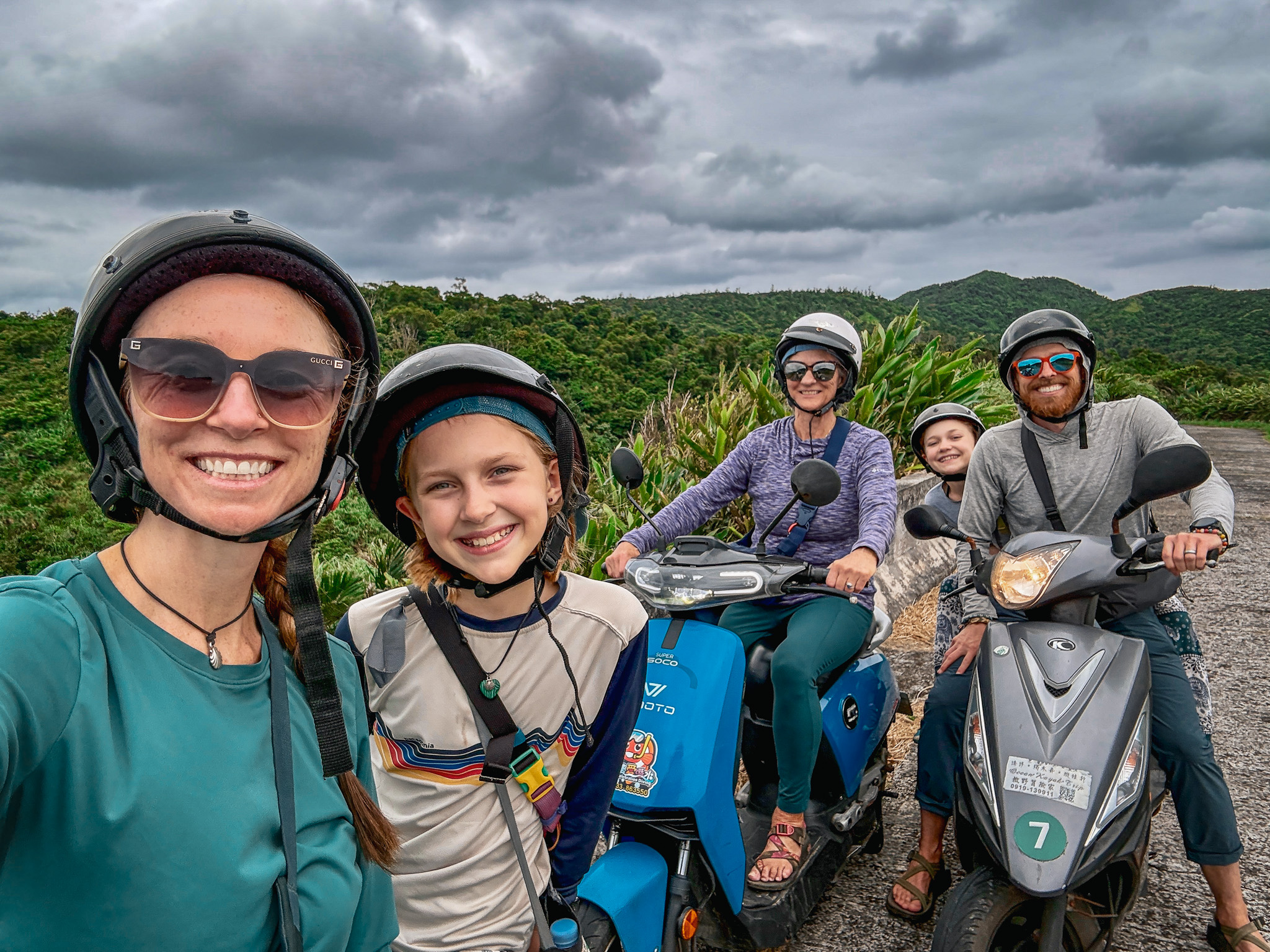
Our hotel host was waiting with an SUV. He packed up our luggage then walked us to our transportation for the next four days. Green Island has no real public transit and the standard way to get around is by scooter. Shaina and Max both have international permits and motorcycle endorsements, which covered them for two gas scooters. Missi has neither, which put her on an electric scooter limited to about fifteen miles per hour. This was not a problem. It was just slow. Midway through the stay something apparently corrected itself in the scooter’s settings and it unlocked to 45 km/h, which improved group morale considerably.
We did not explore the island that first afternoon. Max’s equilibrium was still doing slow rolling waves of its own, his body firmly convinced they were still at sea. He lay down, put his ear to the pillow, and was asleep in approximately three minutes while the ladies all settled into our accommodations and then got going on homework or journaling.
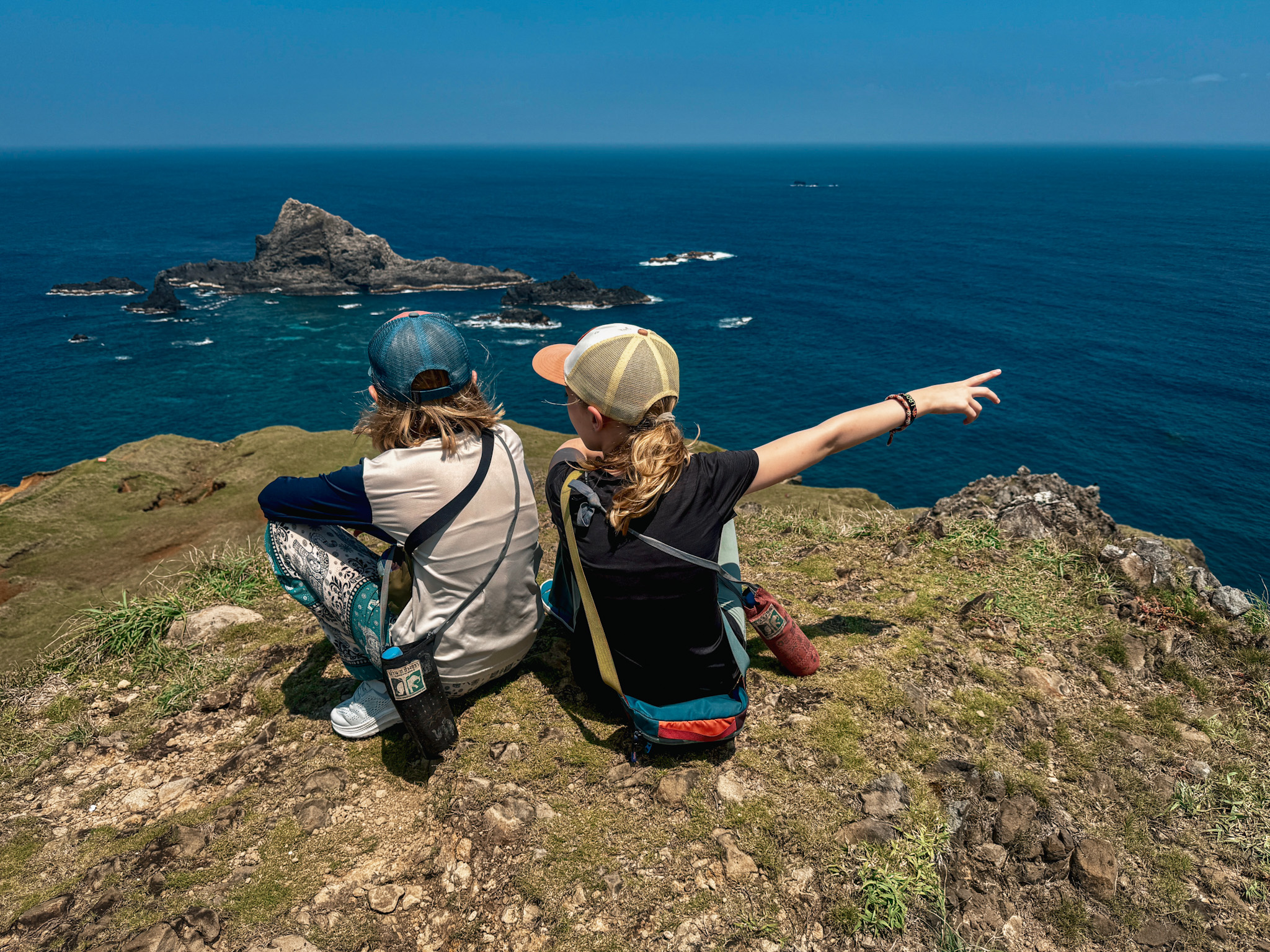
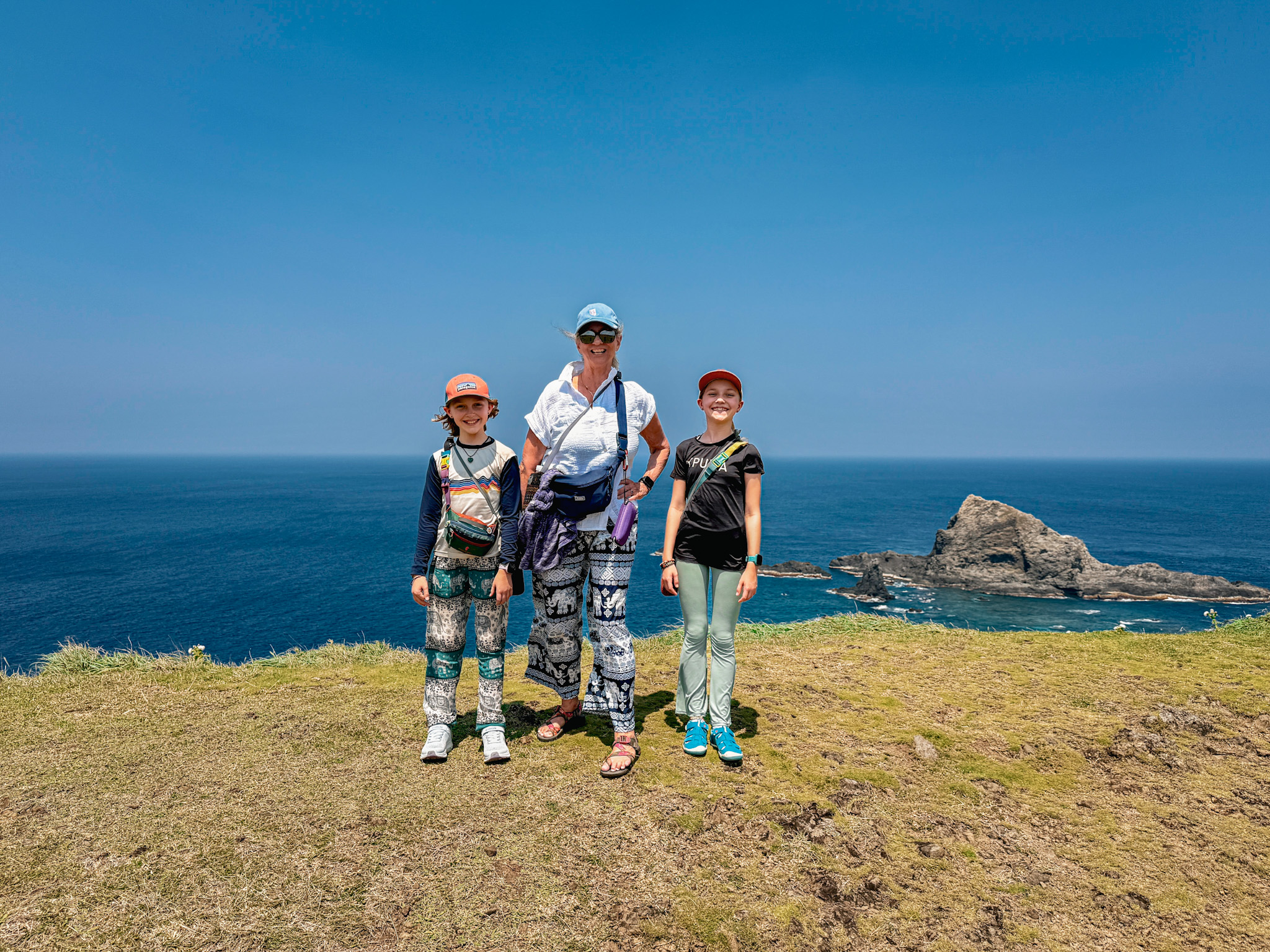
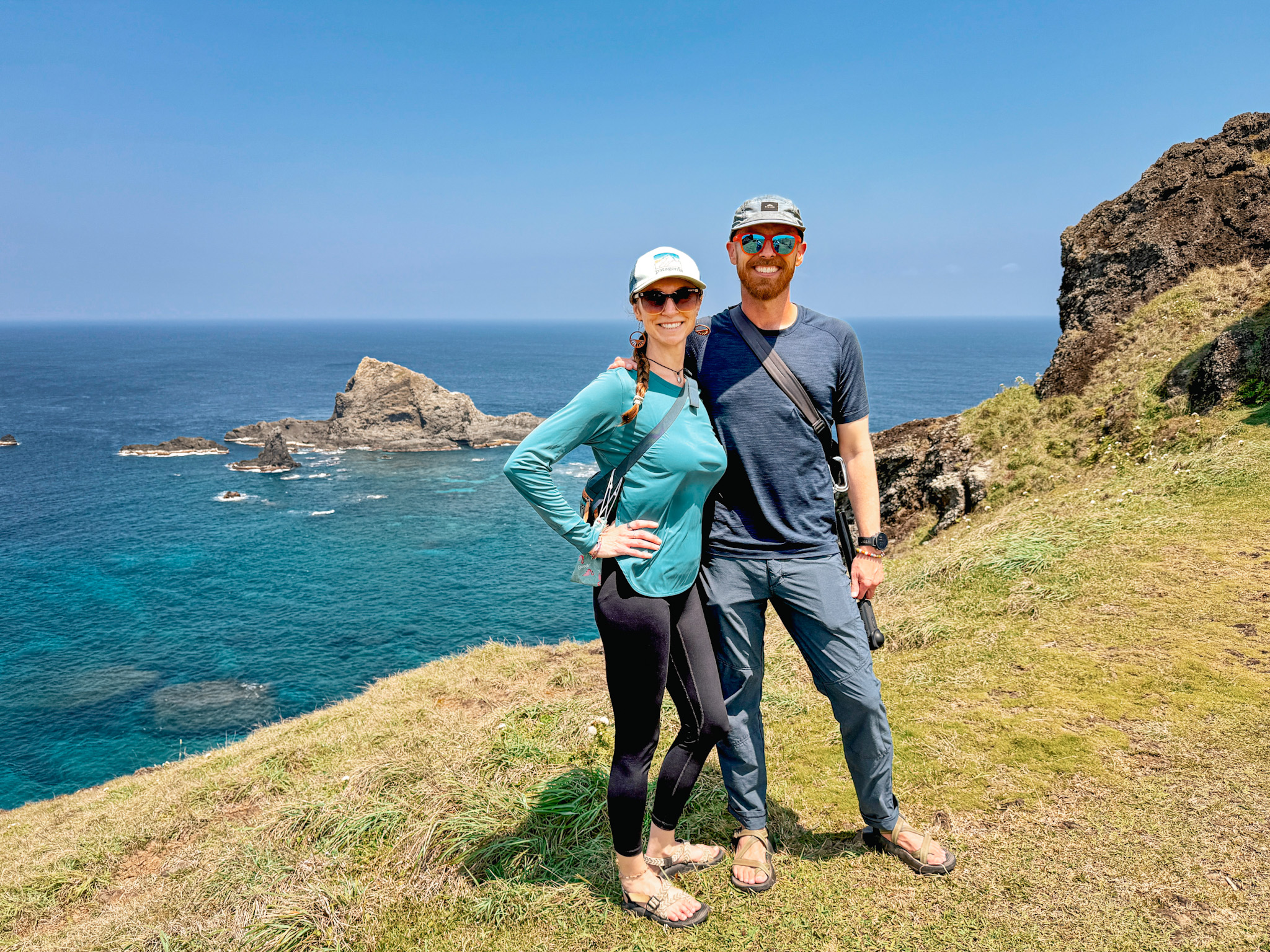
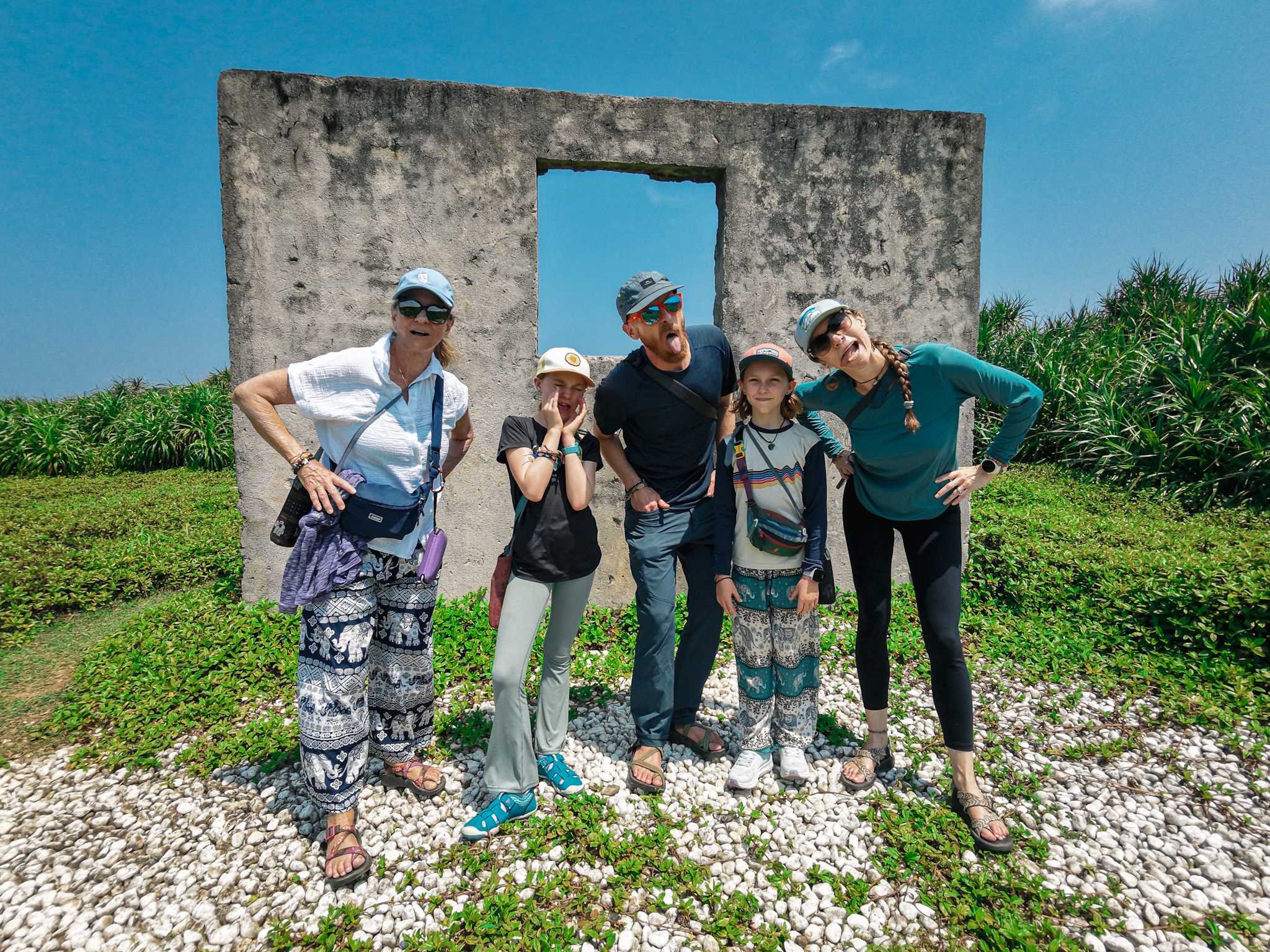
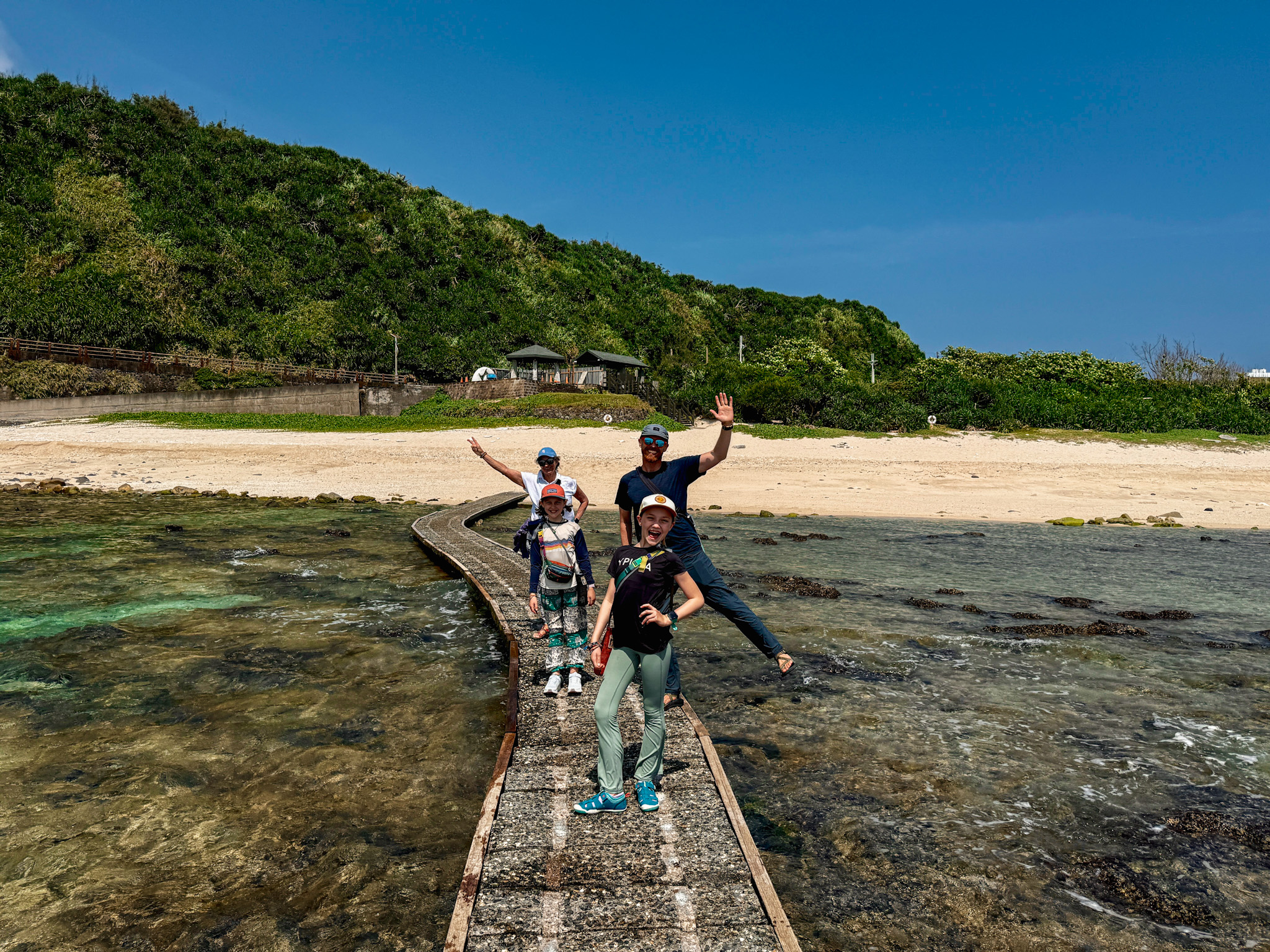
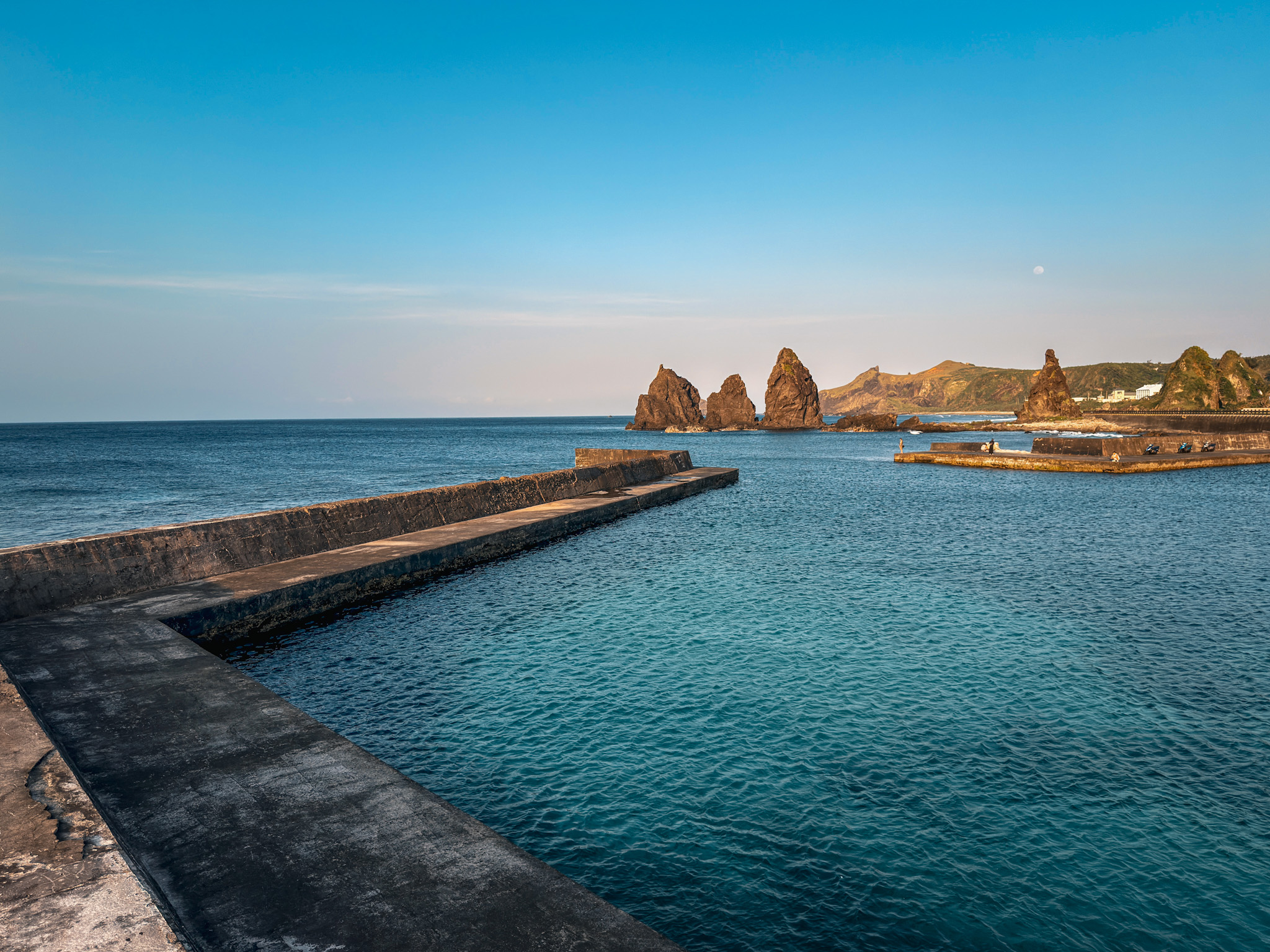
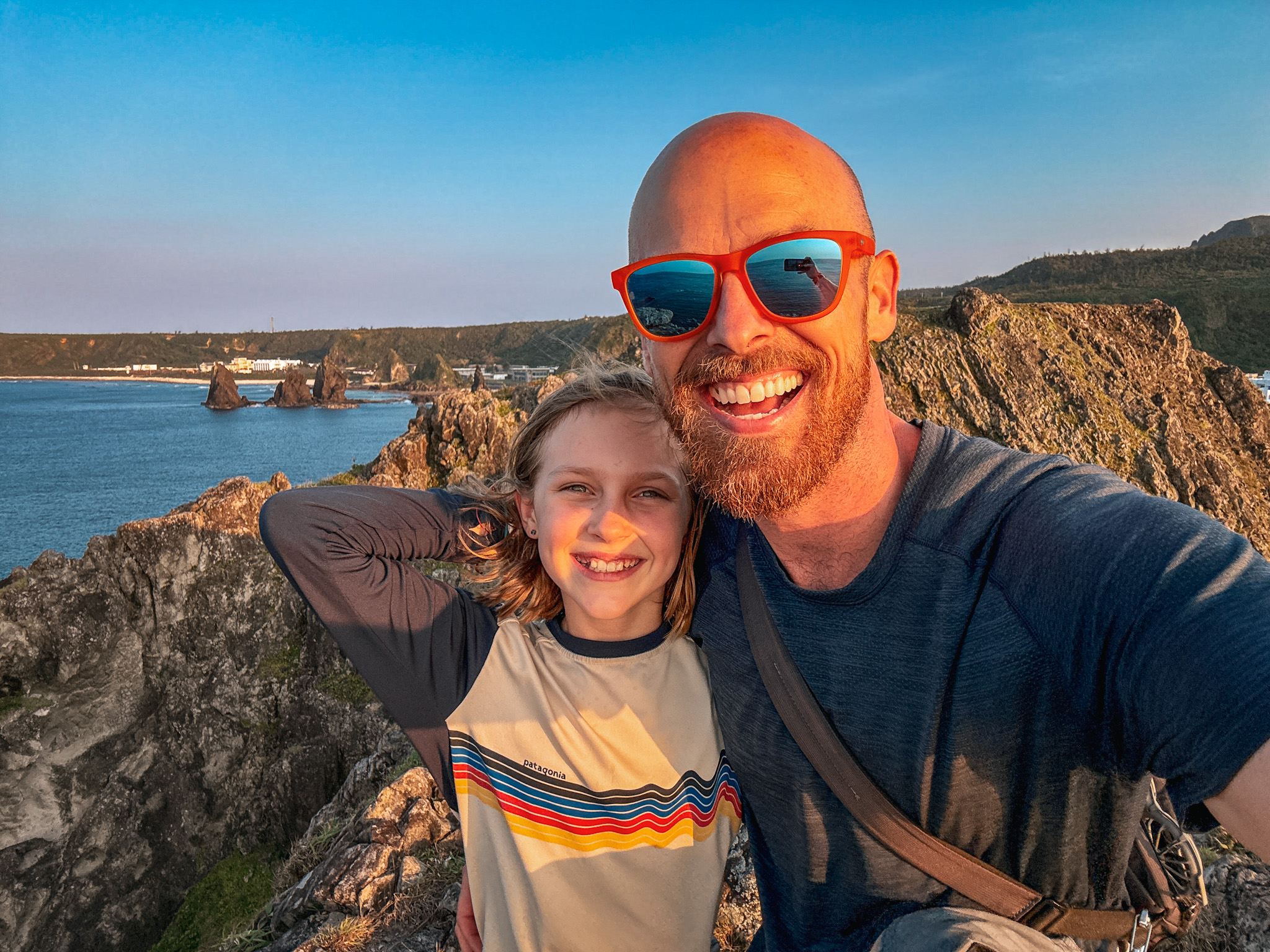
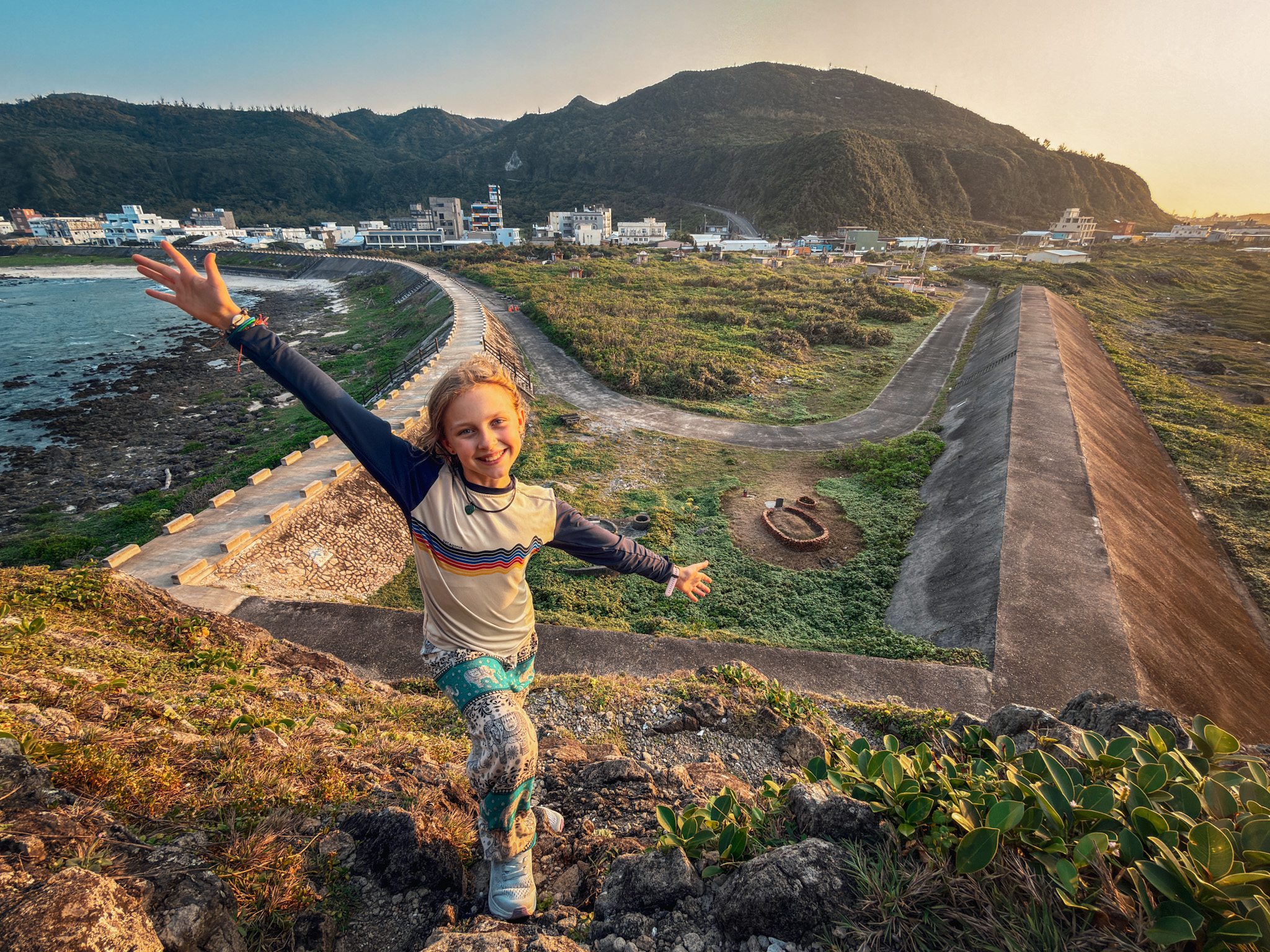
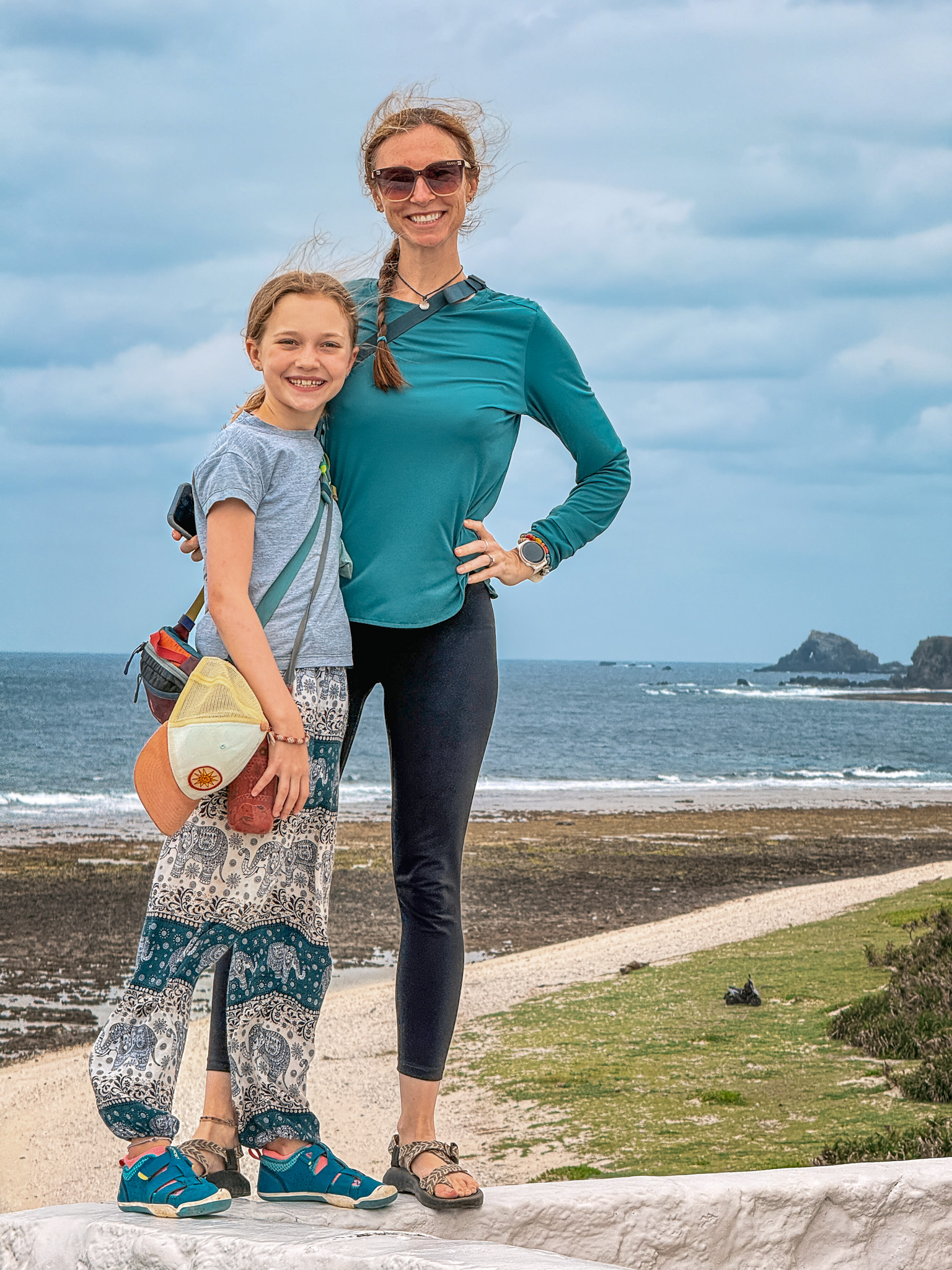
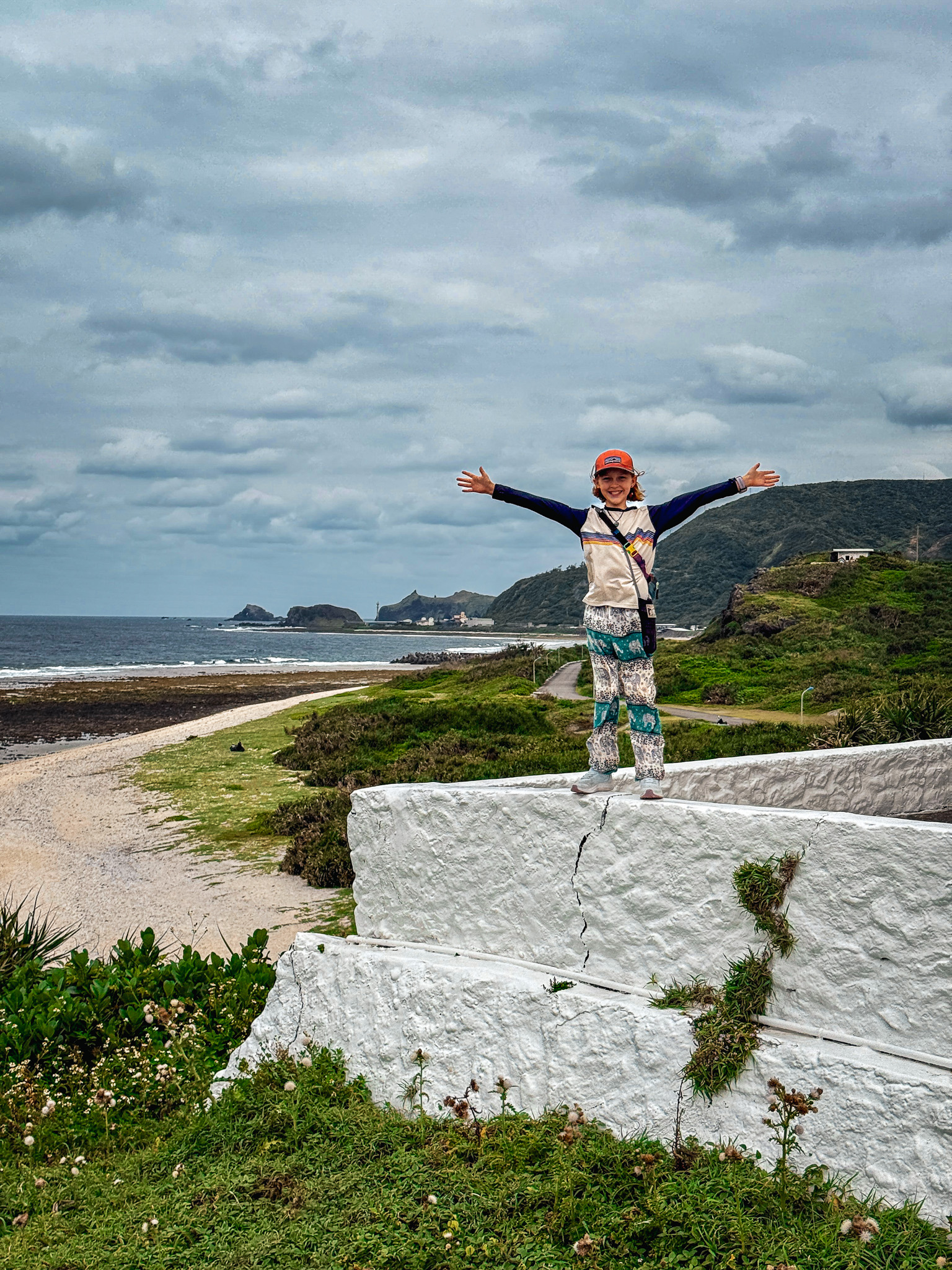
Green Island is small — about twenty kilometers around the entire coastline — and volcanic, and makes no attempt to hide either of those facts. The coastline is dark rock walls shooting almost vertically from the water, the interior rising steeply behind everything, the whole island raw and dramatic in a way that builds on you over four days. The scooter loop becomes familiar quickly. The breakfast spot, the burger place, the night market. The siesta hours, which we kept running afoul of with the confidence of people who had not already learned this lesson multiple times in Taiwan.
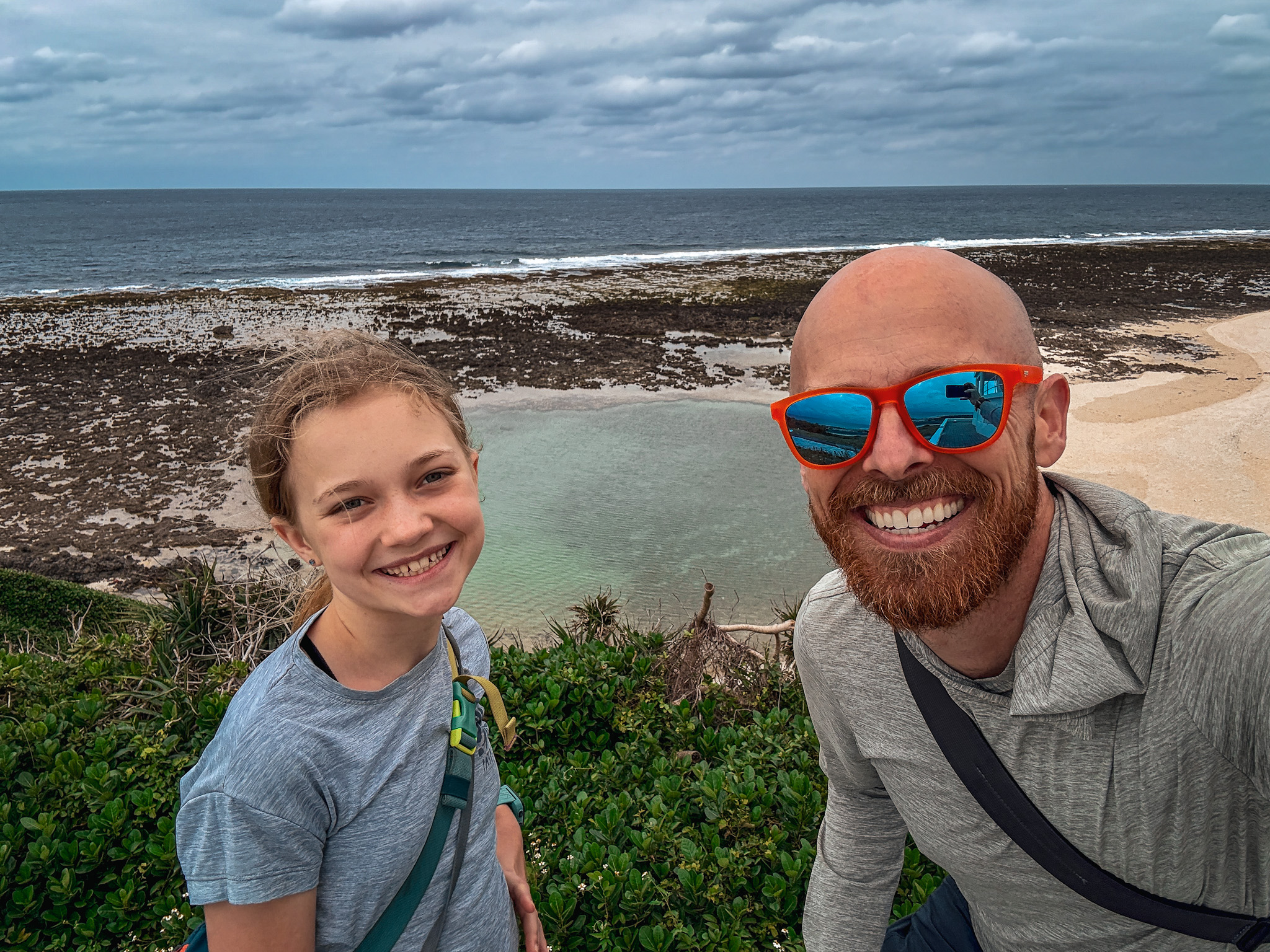
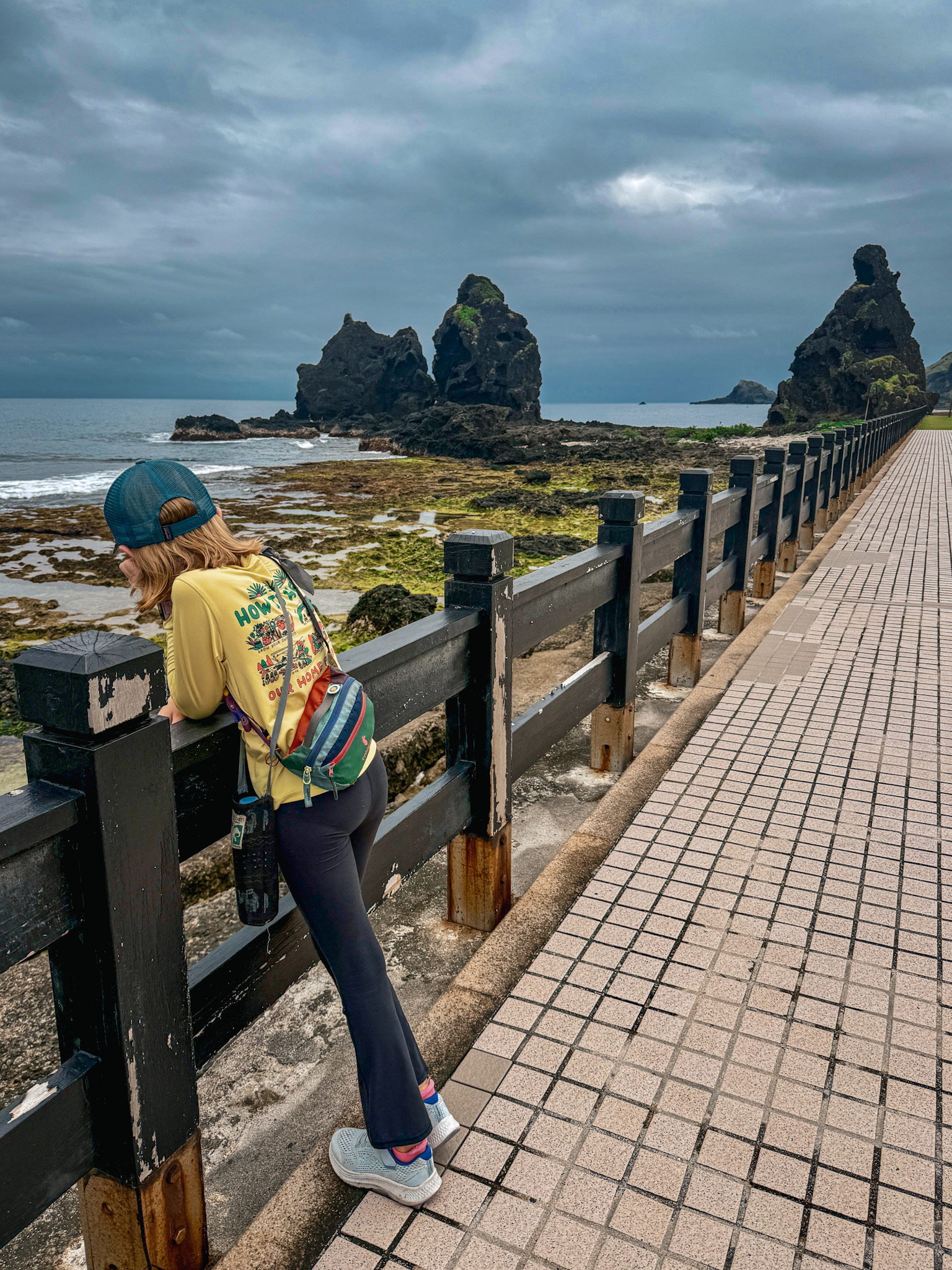
We explored in the way you do when a place is small enough to know and interesting enough to keep looking: Snoopy Rock, where a coastal formation does bear a passing resemblance to the famous beagle if you approach from the right angle and apply some goodwill, though the girls were too busy running wild up the bluff paths to spend much time confirming the resemblance. The Little Great Wall, a short ridge path named with considerably more ambition than the path itself warrants, but with a genuinely spectacular view down over Haishenping Bay — the remains of a volcanic crater, a crescent of turquoise water ringed by dark cliffs, with the Pekingese Dog Rock and the Sleeping Beauty formation visible below if you look long enough to let your eyes find them.
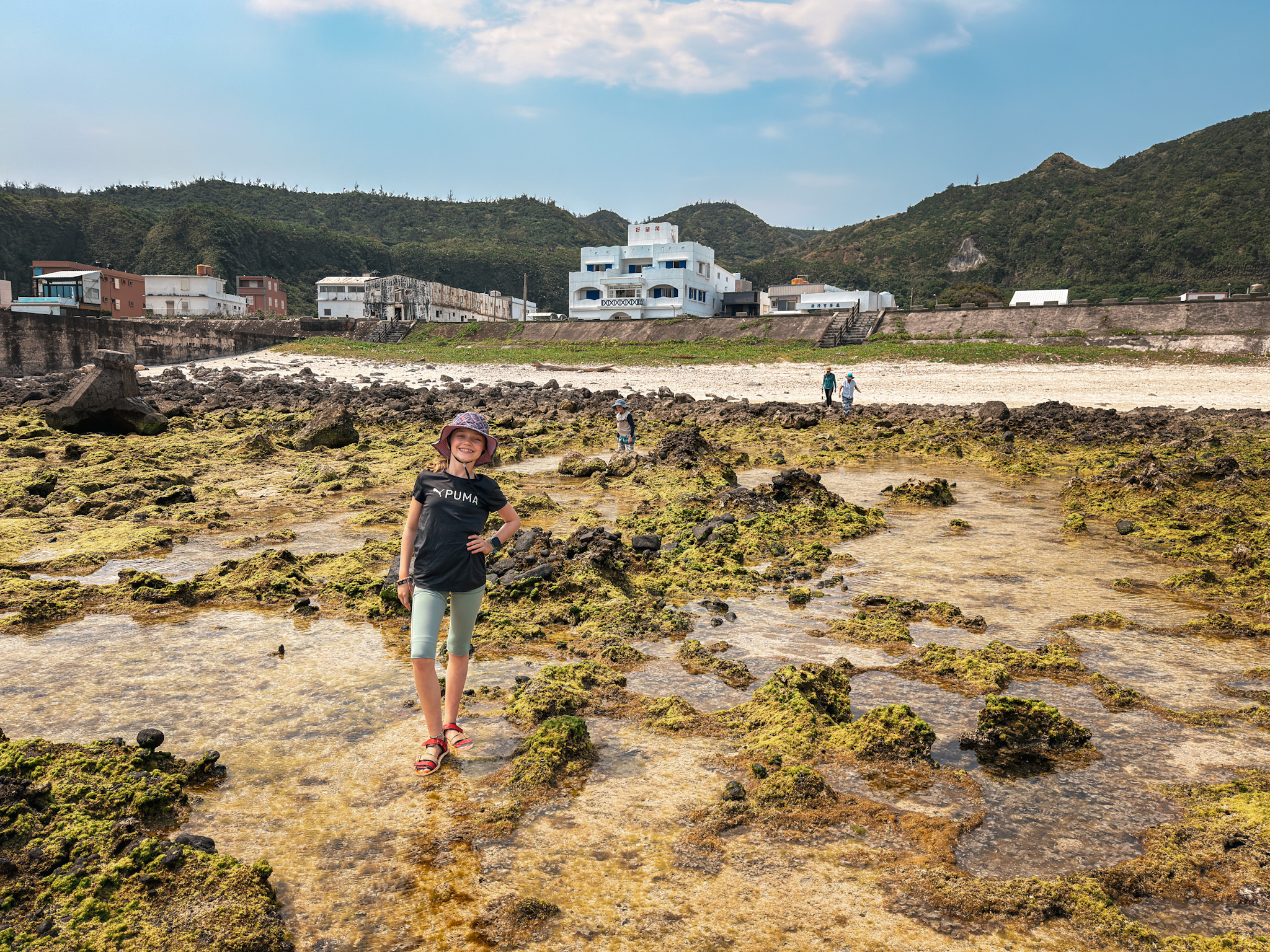
The tide pools were another discovery. One morning the tide went fully out and exposed a wide field of pools stretching along the coast below the hotel. The girls were already putting on sandals before anyone said anything. What followed was ninety minutes of systematic investigation: minnows, shrimp, sea stars in numbers that bordered on excessive, several fish species, and various small things nobody could identify but everyone appreciated. The terrain itself was as interesting as the creatures — a maze of lava beds and coral carved by tides over an enormous span of time, channels and elevated shelves in every direction. Shaina and Missi got their fill and left for a long walk along the marina. Finlee and Max eventually got hot and called it. Arya could have stayed out indefinitely.
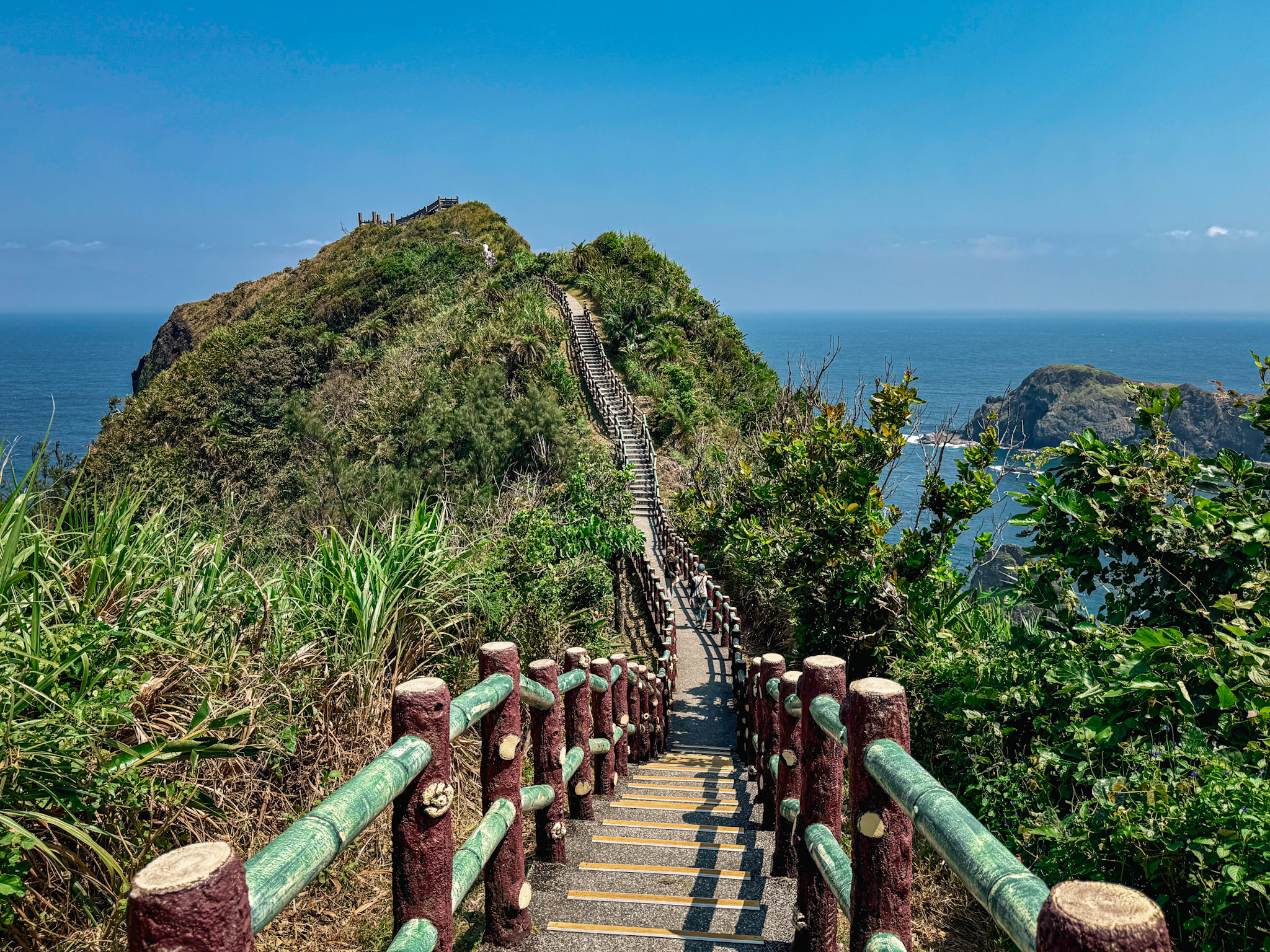
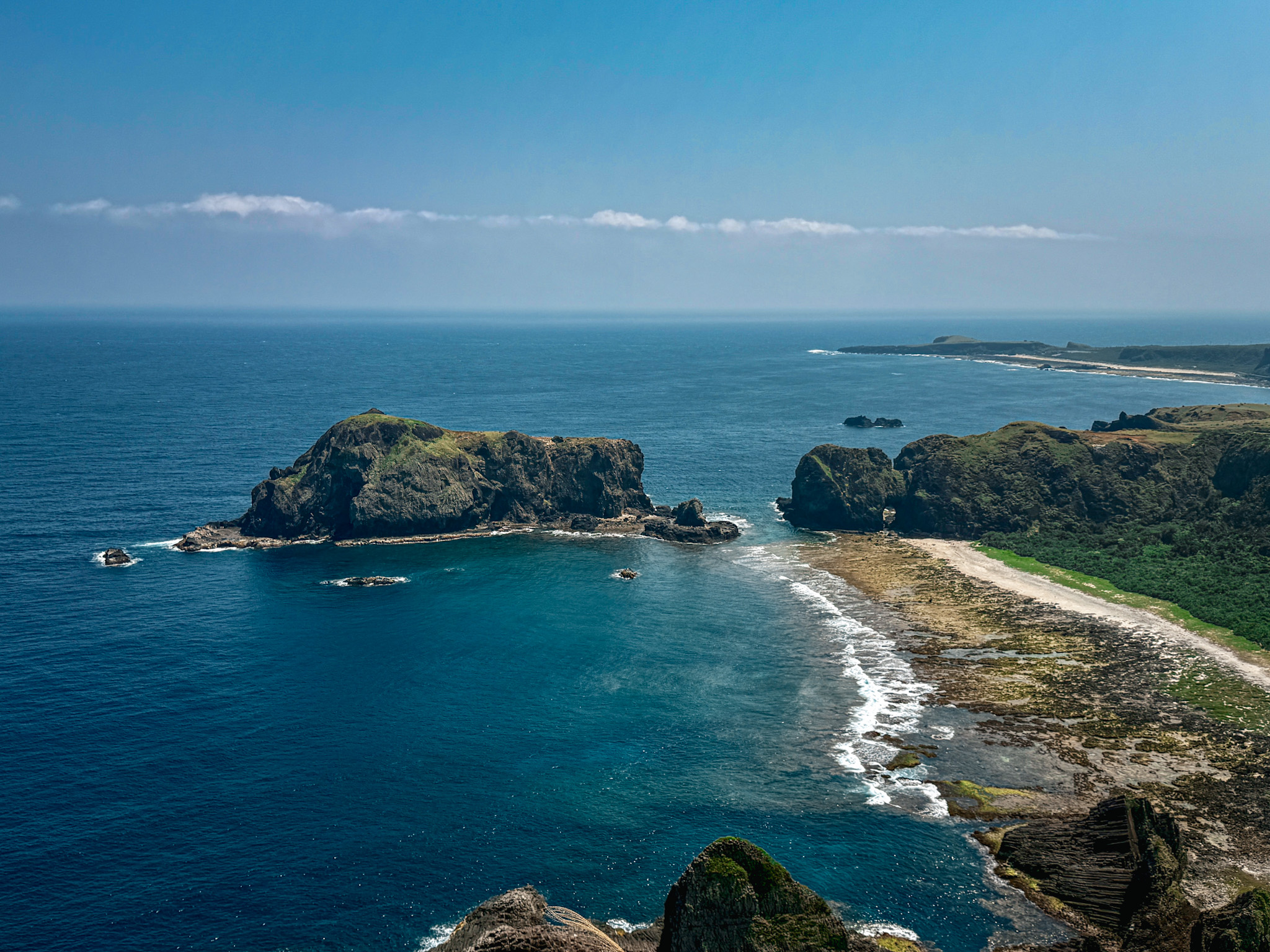
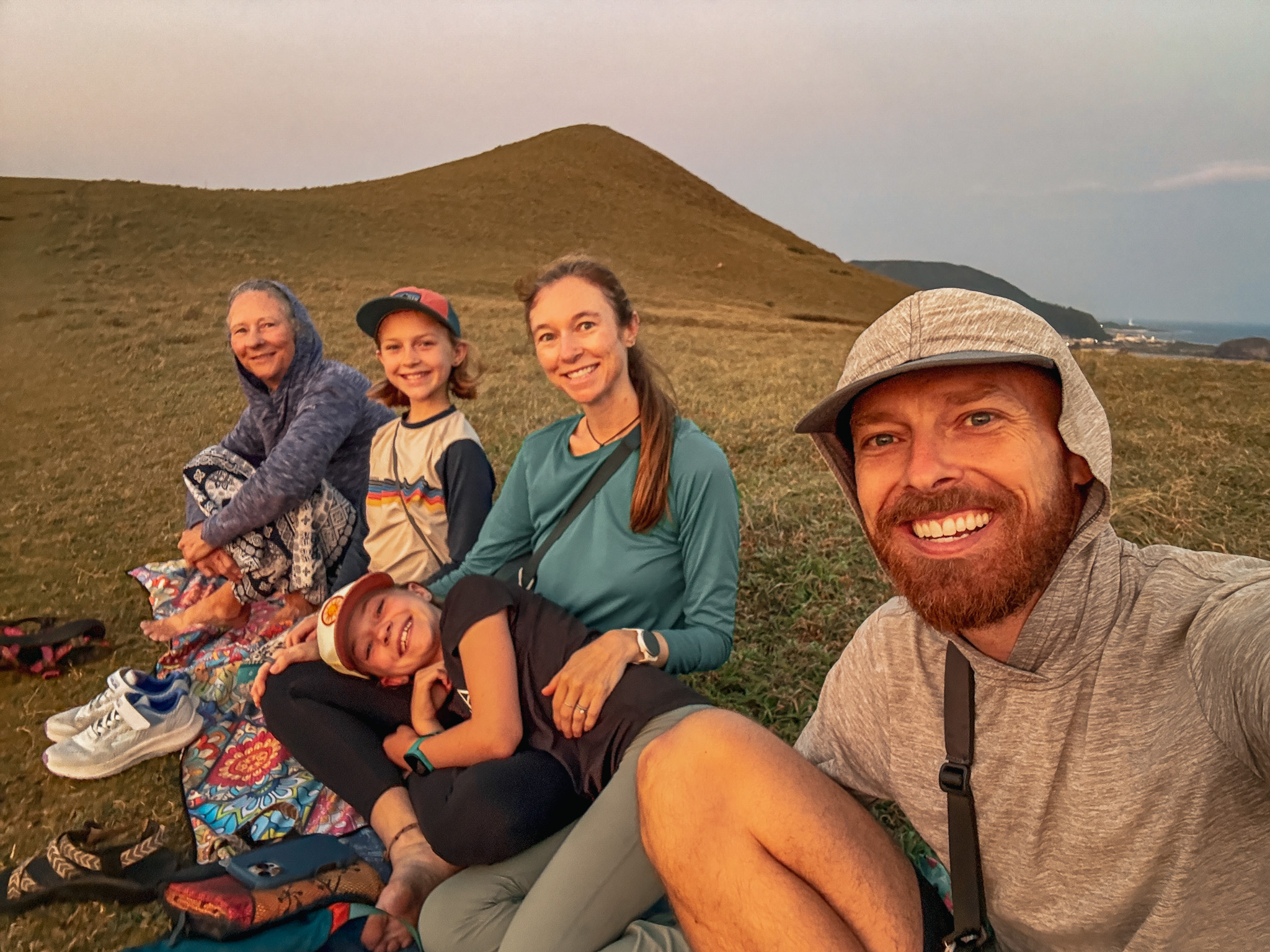
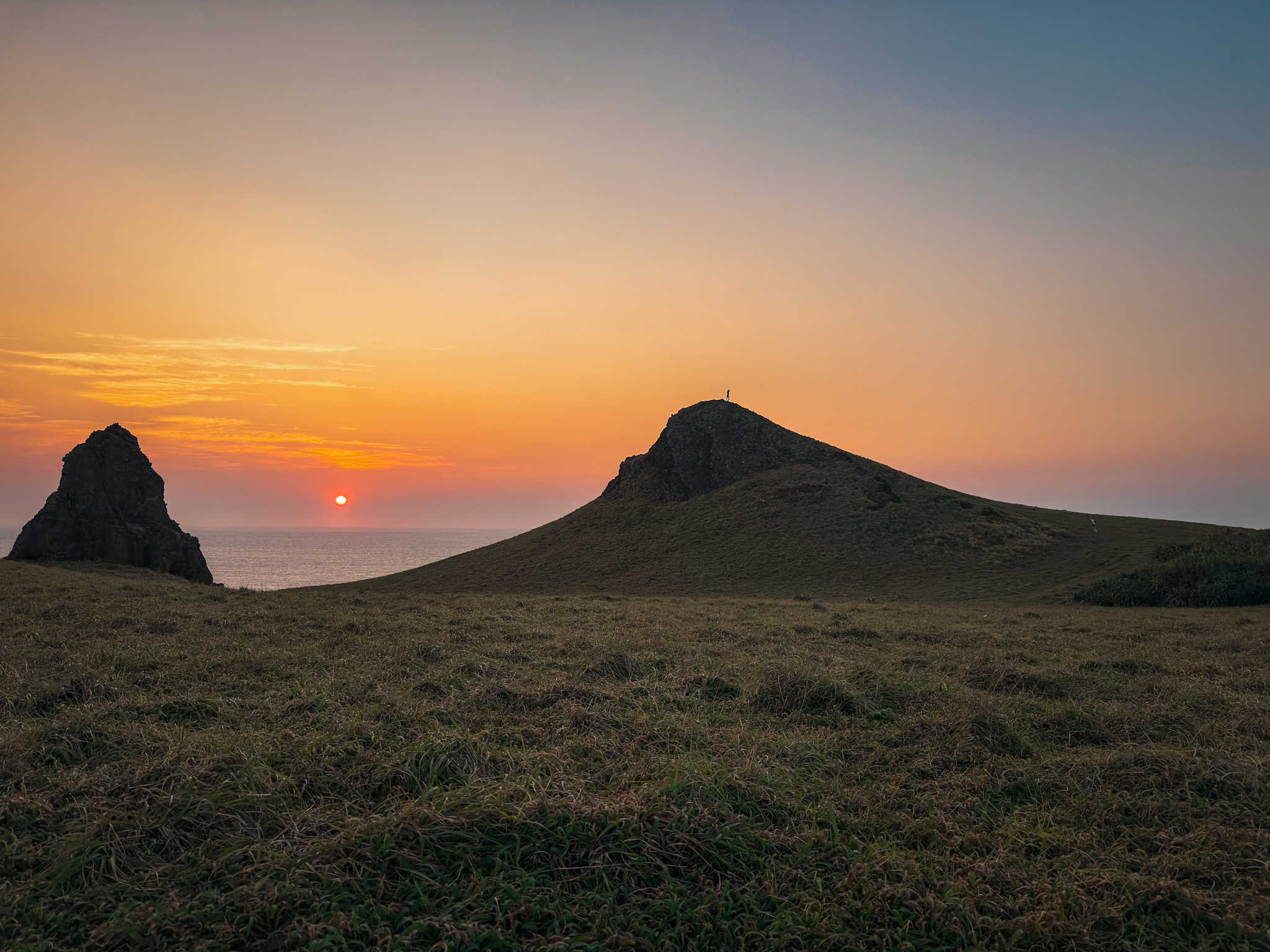
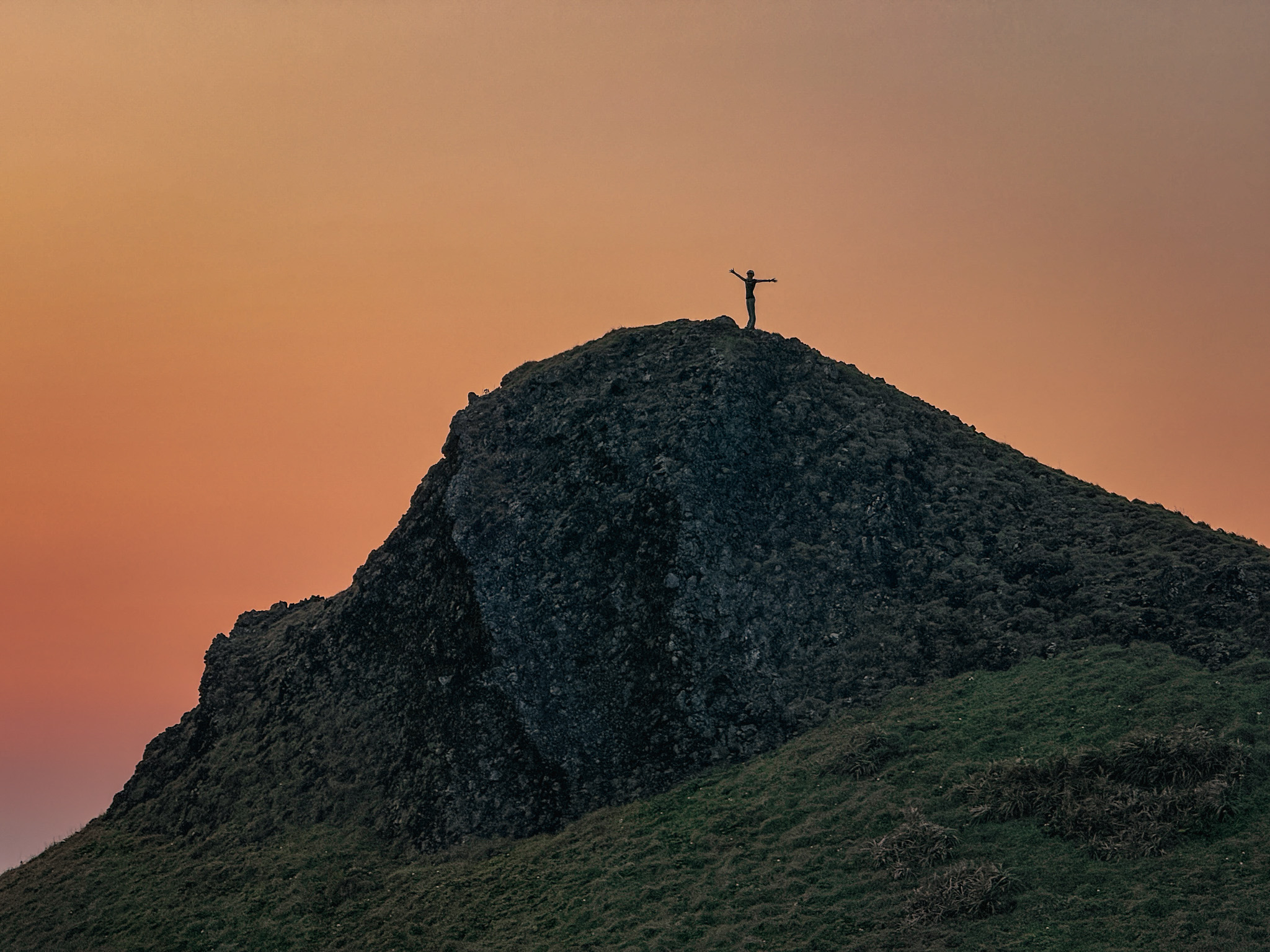
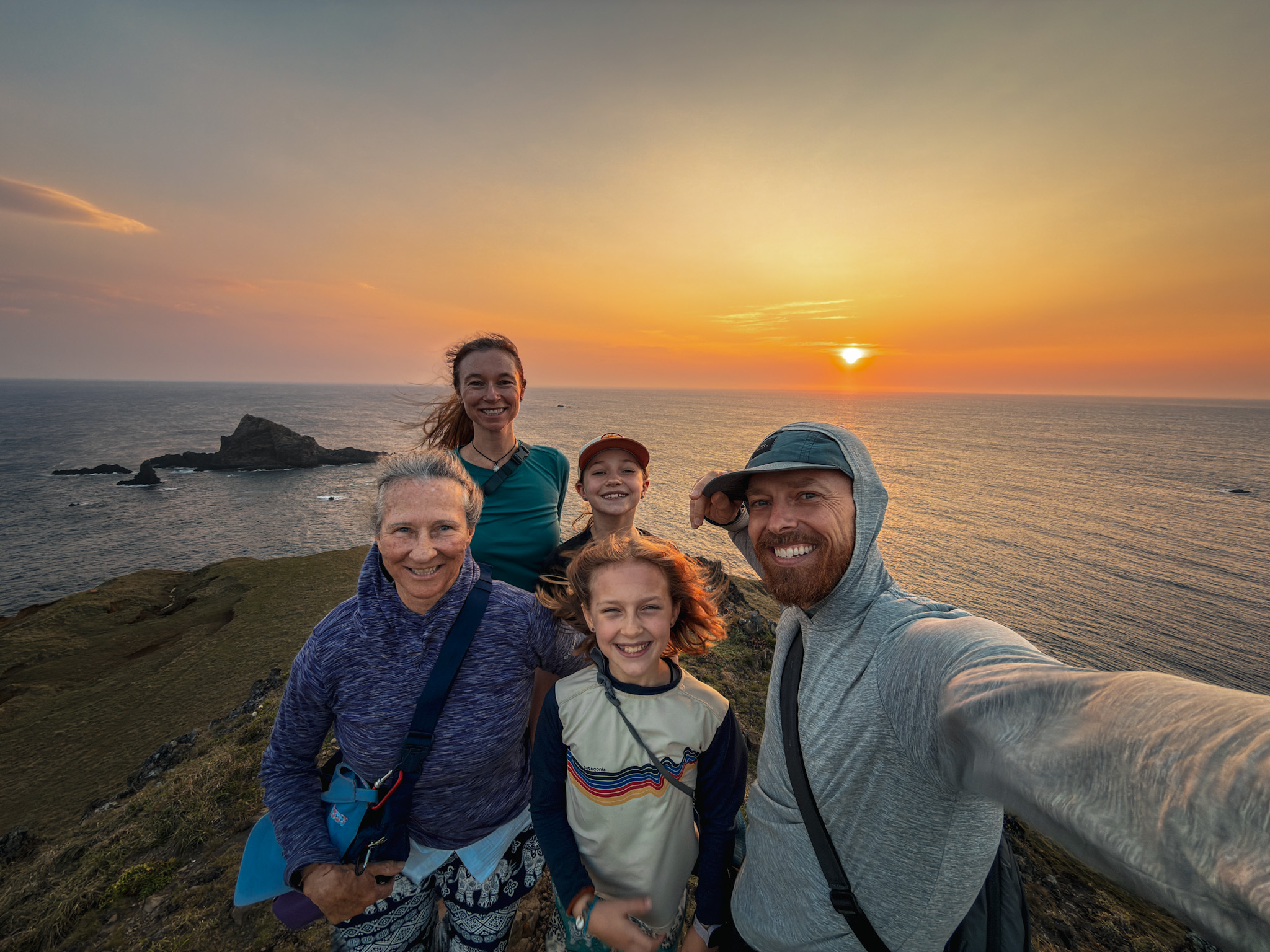
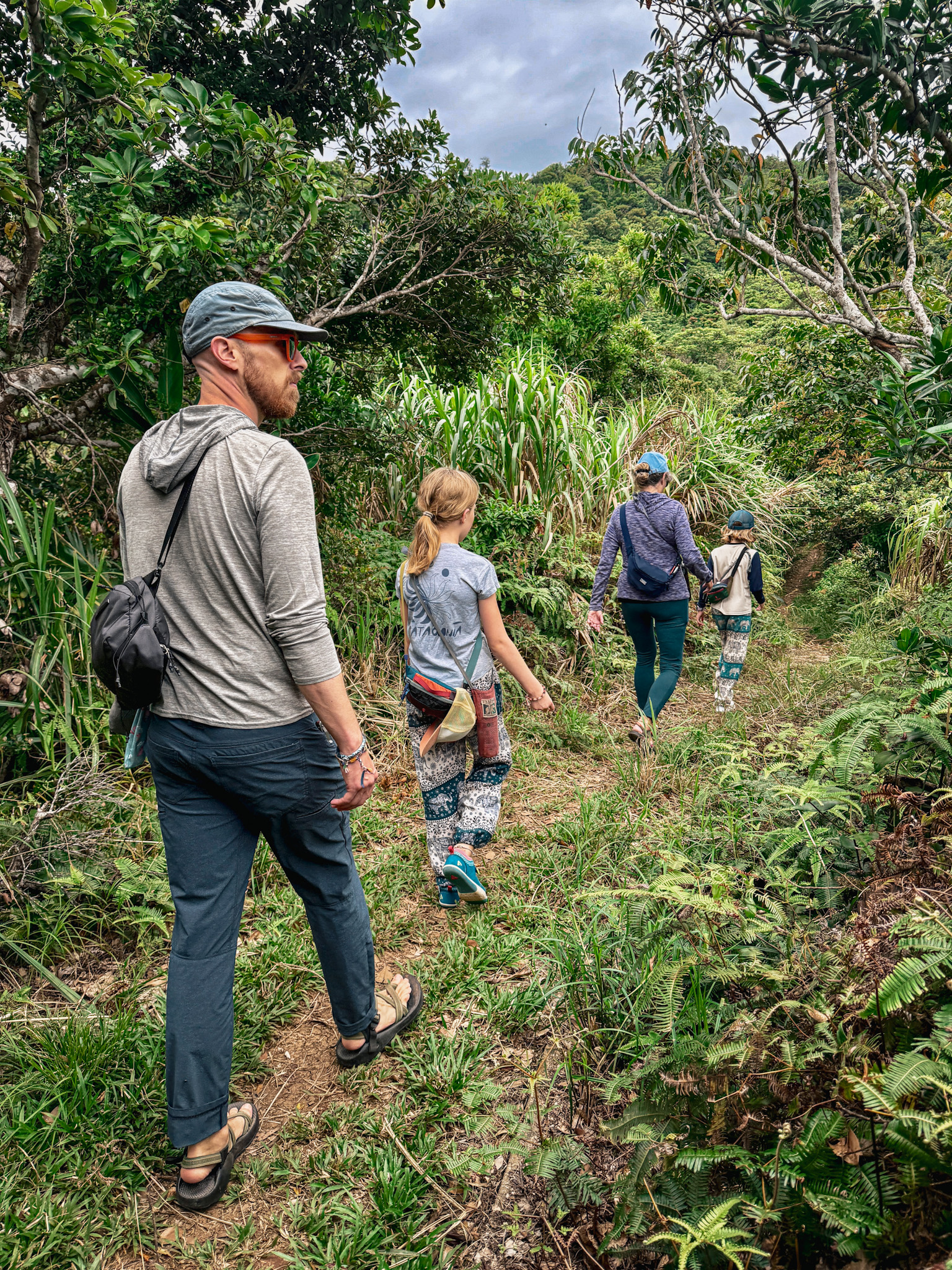
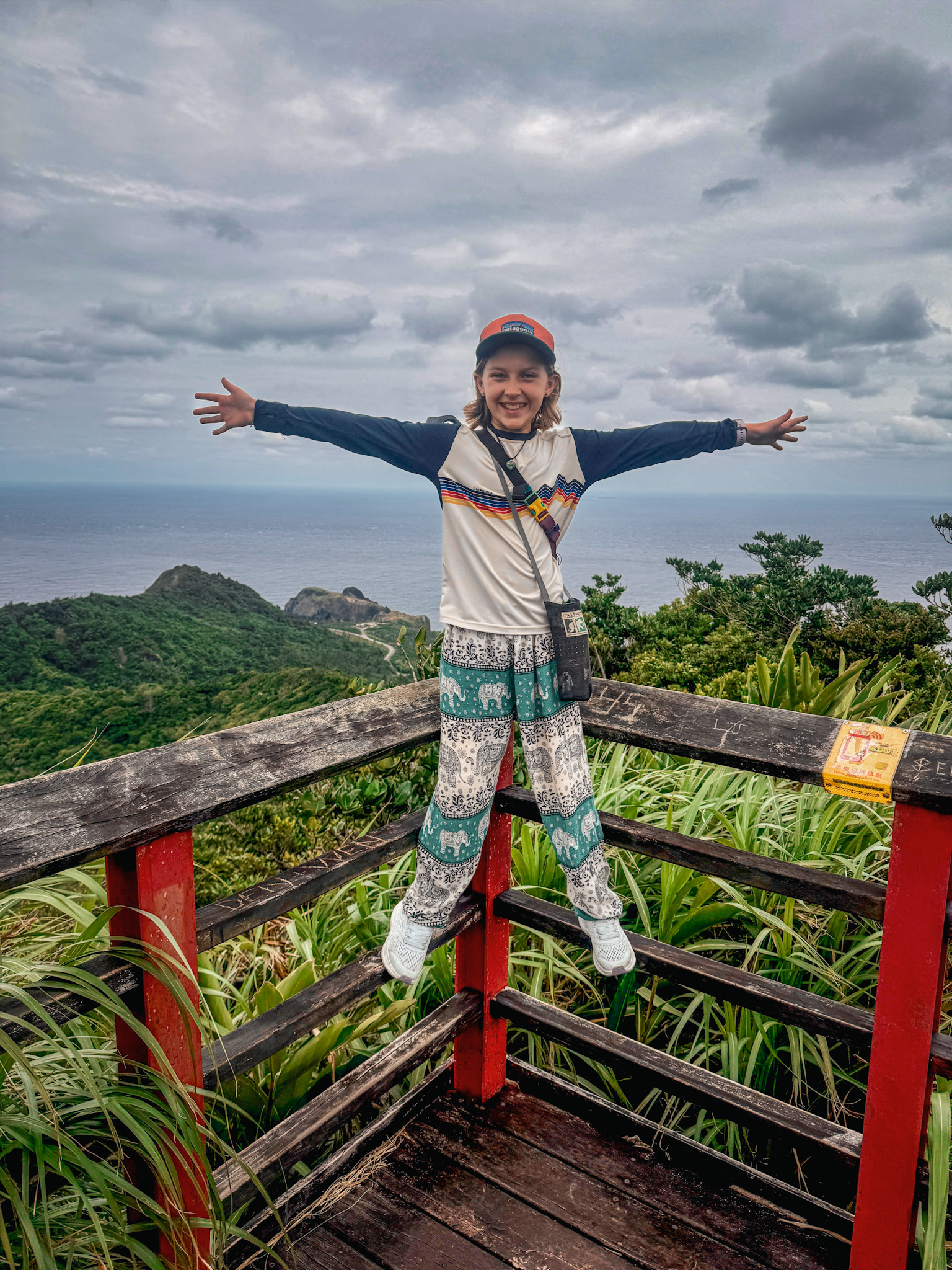
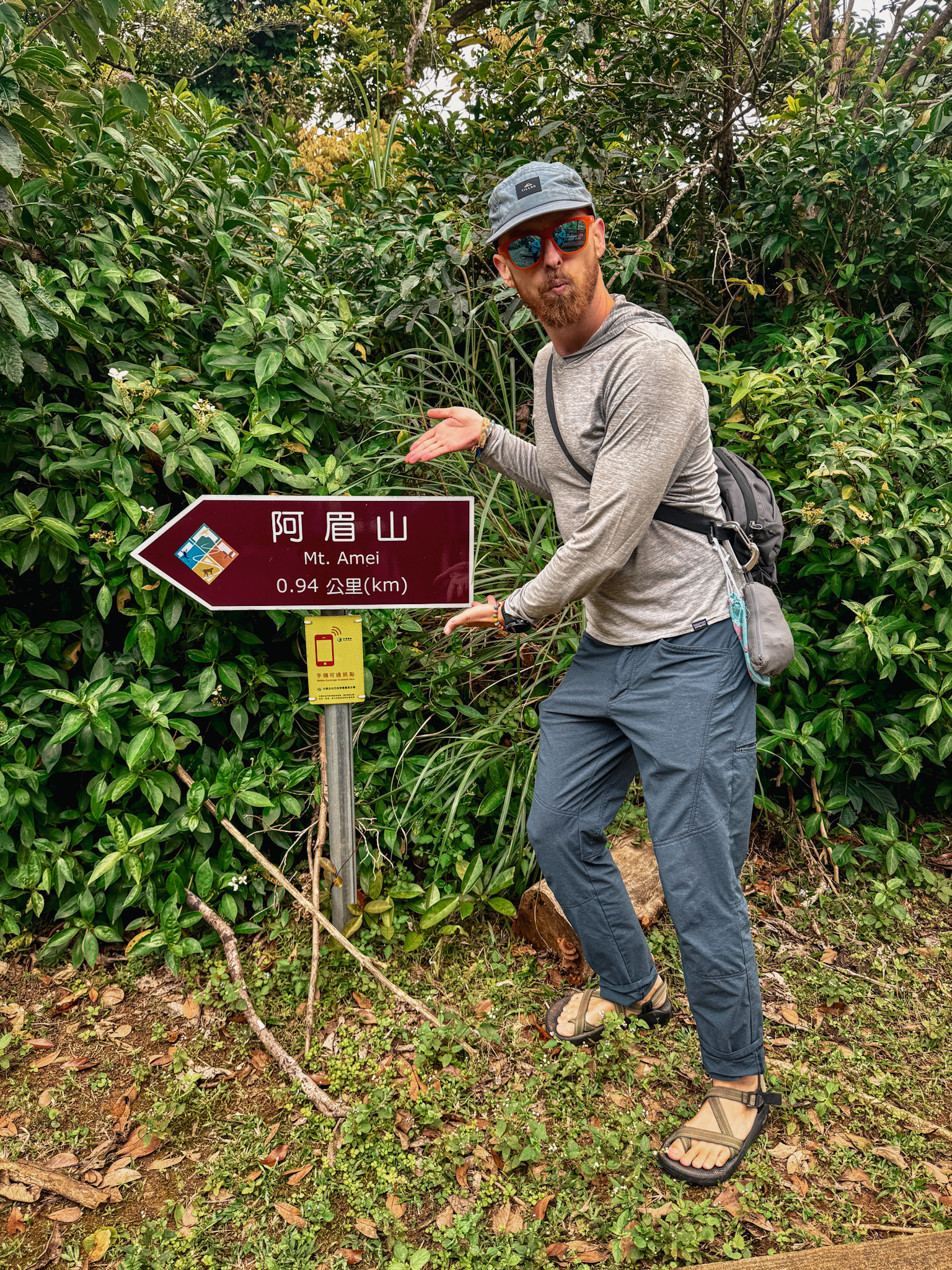
One day we rode the scooters to the trailhead for Ameishan, the highest point on the island. Short hike, moderate grade, subtropical forest the whole way up — ferns and grasses at ground level, pandanus at mid-height, a bintaro canopy keeping most of the sun off. About halfway up the trail we came across two women standing very still, staring up into the canopy with expressions of focused attention.
Finlee did not let this stand uninvestigated.
“What are you doing?”
Blunt, to the point, and exactly what the rest of us were thinking. The women smiled and pointed out a Paper Kite butterfly resting above them — one of the largest butterflies in the world, striking white and black with a hint of orange accenting the wingtips, the kind of thing that stops you mid-stride once you actually see it.
Shaina said something in Spanish to Finlee about how impressive it was. The two women looked up with visible surprise. “Why do you speak Spanish?”
Finlee, without missing a beat: “Aprendimos español en la escuela.”
The women’s eyebrows went up. Then Arya, not to be left out, added in French: “Oui, mais je peux parler français, mieux que l’espagnol.”
Ana and Laura apparently were from different parts of Spain, but they both lived in Madrid. They were on Green Island for twenty-four hours and their minds were now officially blown by the bilingual American children who had materialized on a hiking trail in Taiwan to lecture them about butterfly identification. We chatted for a few minutes — they thought what we were doing as a family was pretty special, we tend to agree but acknowledge the bias — and we sent them off with a strong recommendation to get to the hot springs for sunrise the next morning. We told them we’d be there.
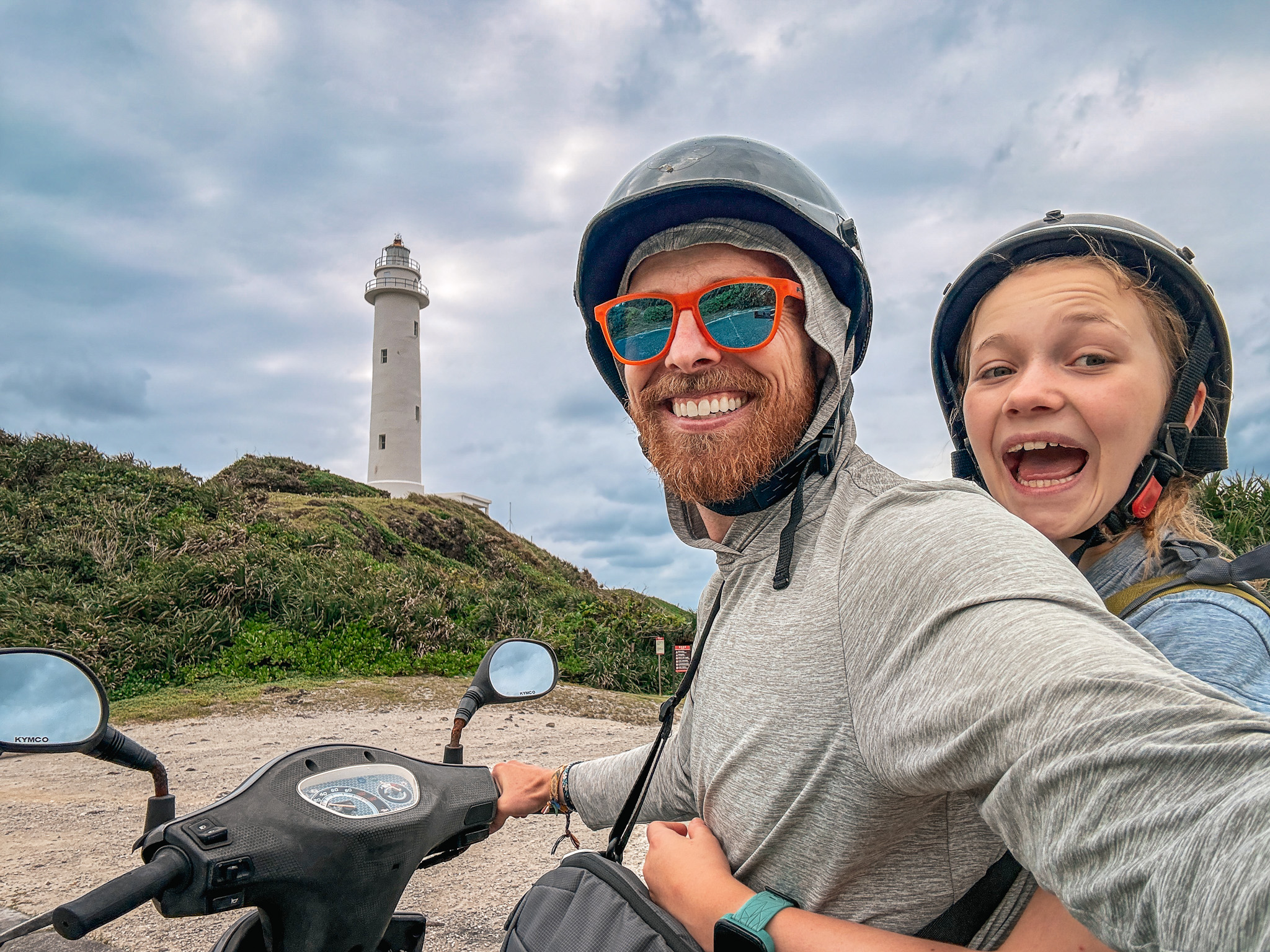
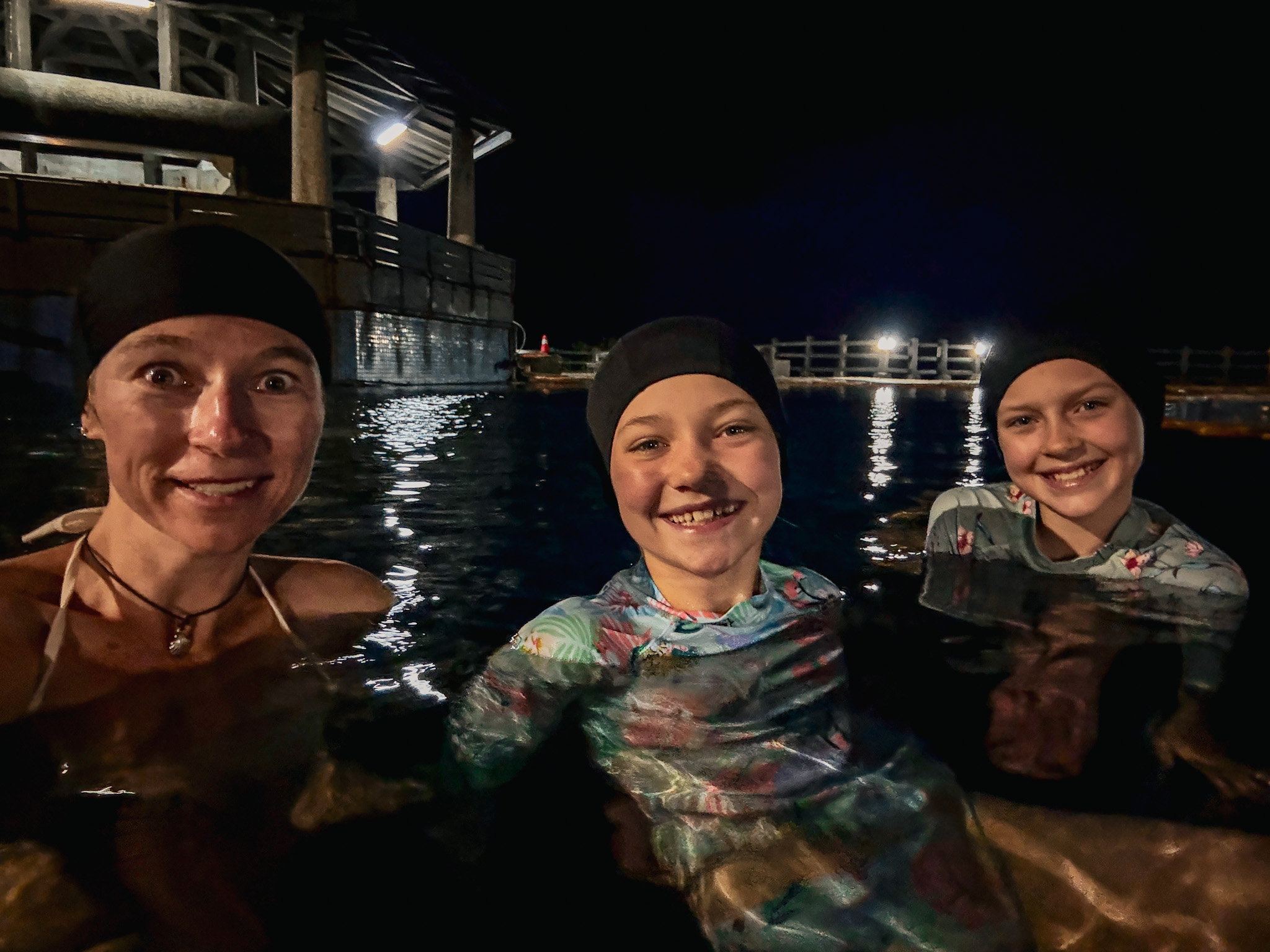
We meant it. We set an alarm for 4:30 AM, which required the kind of optimism that looks different at ten at night than it does when the alarm actually goes off. Max’s first conscious thought was: what were we thinking!? For about thirty seconds there was a quiet discussion about whether everyone should just go back to sleep. Then the second alarm went off and we accepted our fate. Apparently, we all spent the night barely sleeping which is always the case when an early alarm is coming, but we were not about to let seven hours of restless anticipation go to waste. Everyone agreed and we got moving. Scooters in the dark, rain shells on, winding along the coastal road to the northeastern tip of the island.
Ana and Laura were already there.
They’d taken our advice. What followed was one of those encounters that travel occasionally produces and you can’t plan for — the right people at the right moment, with enough time to actually become acquainted. They’re both engineers at Airbus’s satellite division in Madrid. Anna works in microwave telecommunications, Laura in aeronautical engineering. They’d met originally when they both won youth internship competitions at the European Space Agency. Laura was heading from Green Island directly to the Red Sea for a week-long live-aboard dive expedition. Ana had already been through Uzbekistan, Kazakhstan, Georgia and Armenia, and she had recommendations for all of them that went immediately into the notes app.
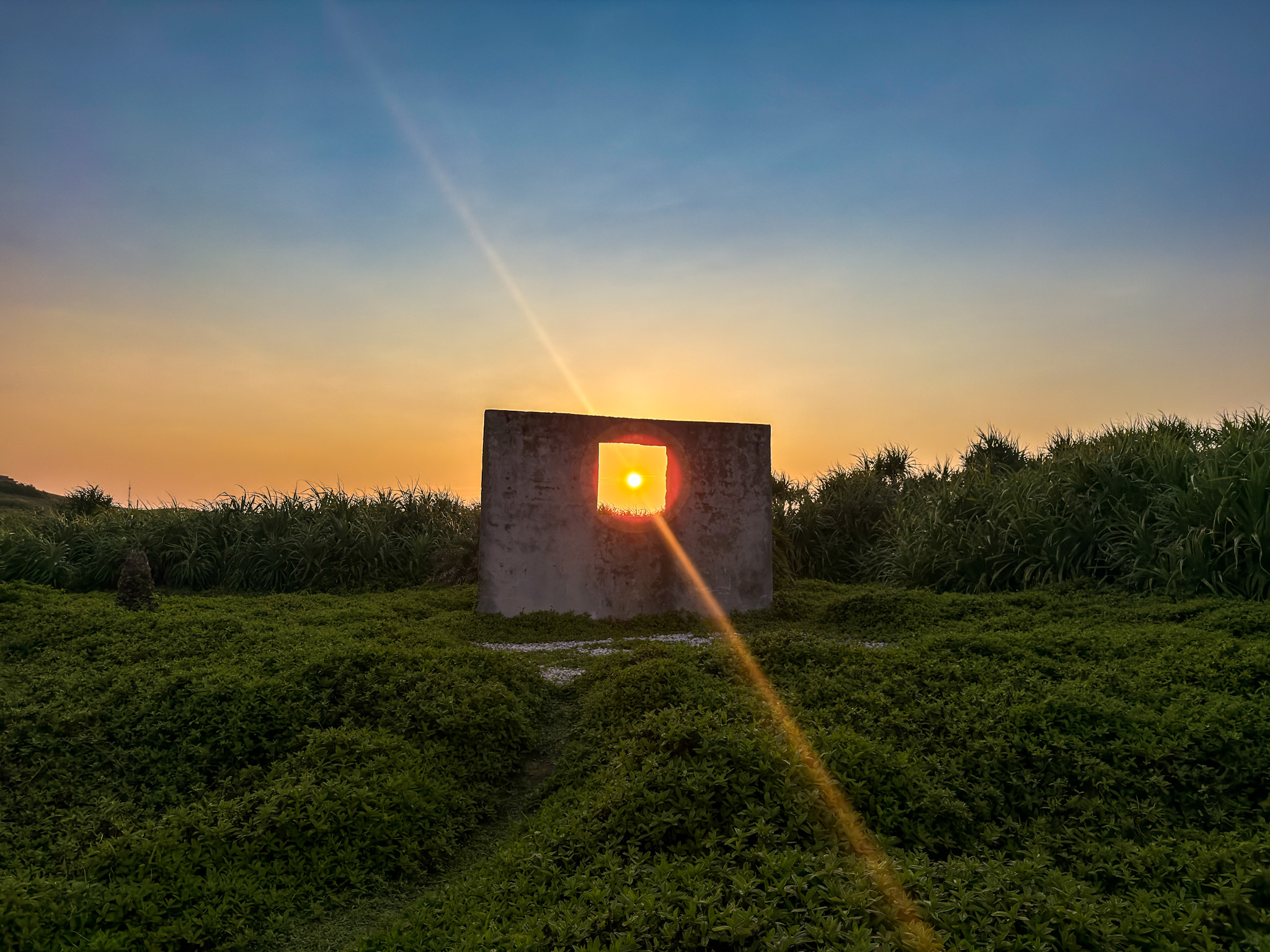
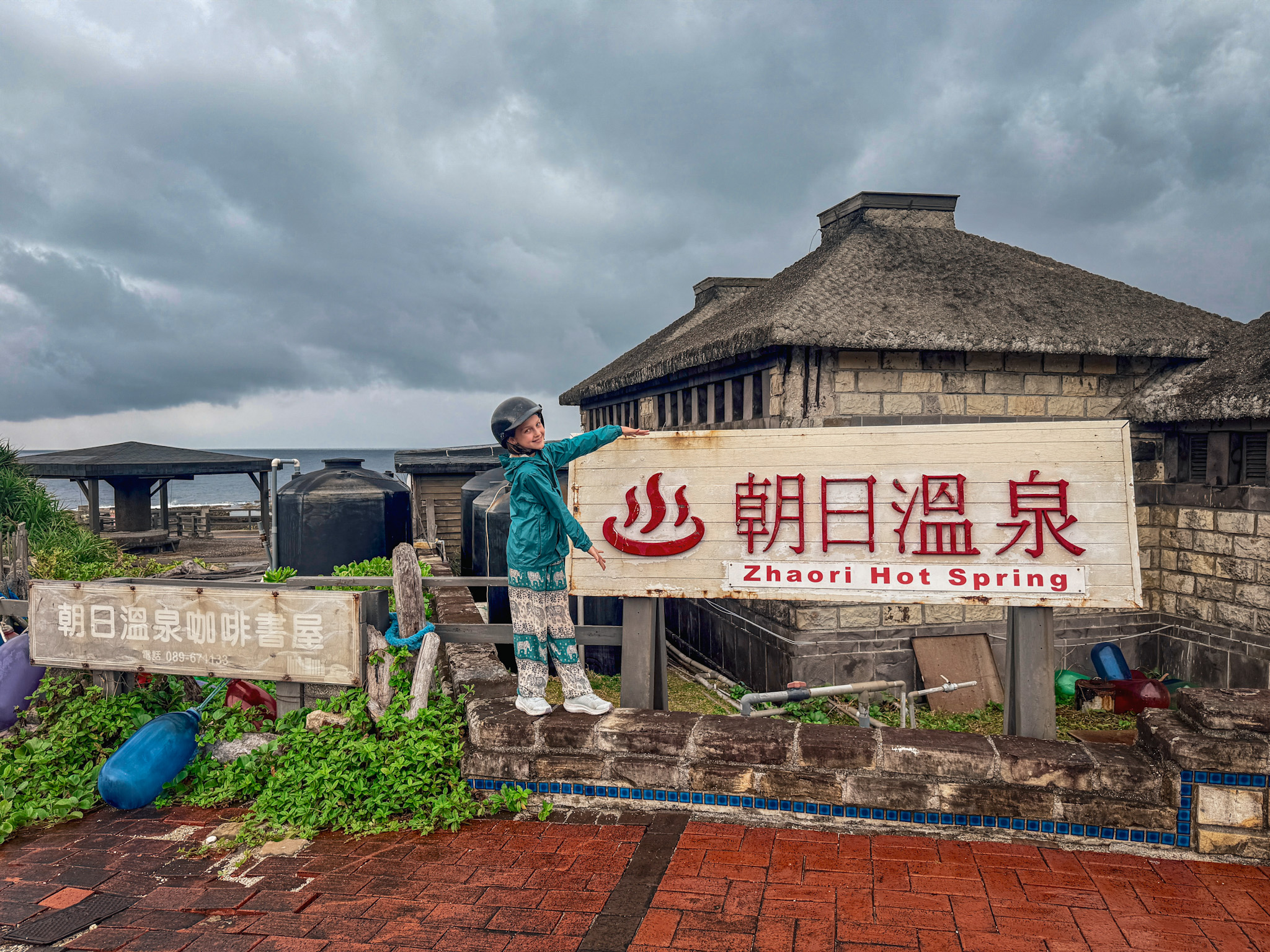
The sunrise, for its part, was a complete no-show. Solid cloud cover from horizon to horizon. Not a sliver of dramatic sky. This is exactly the kind of thing that would have been deflating if the point of getting up at 4:30 had actually been the sunrise. It turned out the point was sitting in a hot saltwater spring on a small volcanic island with the Pacific in front of us and new friends we’d met two days ago beside us, in the dark, in the rain, at five in the morning, bouncing between pools of varying temperatures while the sky quietly brightened into grey. It didn’t require a dramatic sky. It didn’t need to.
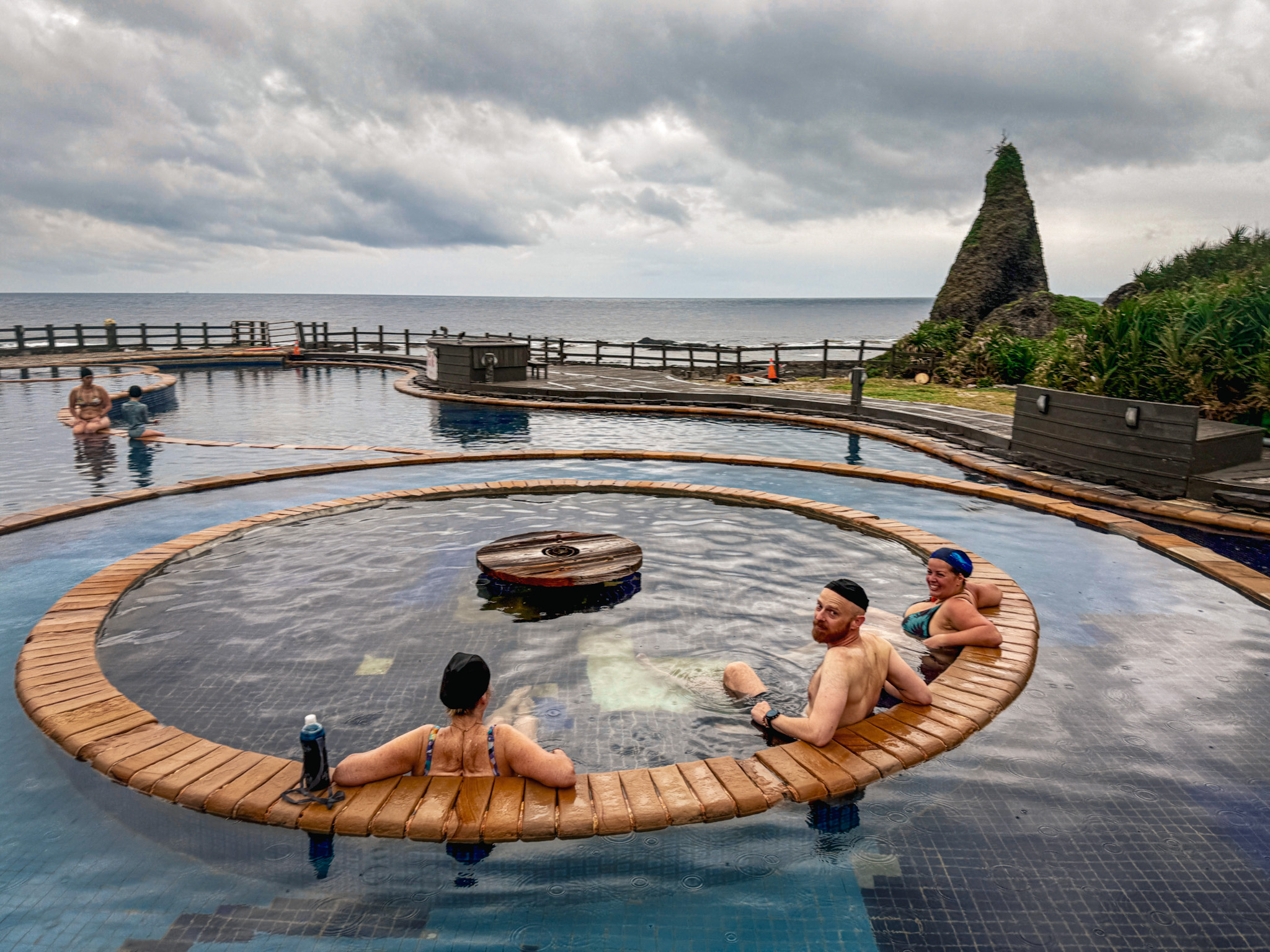
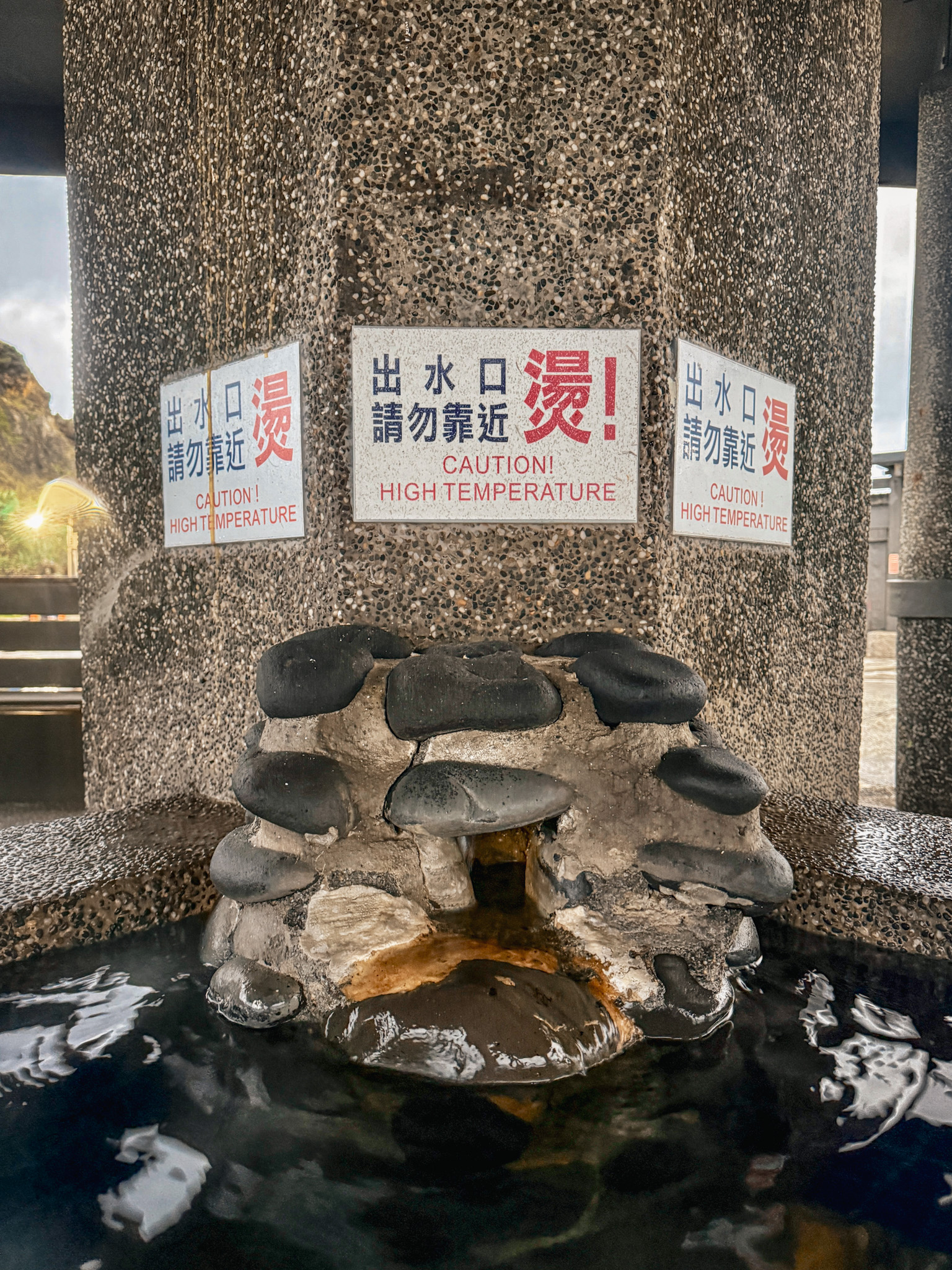
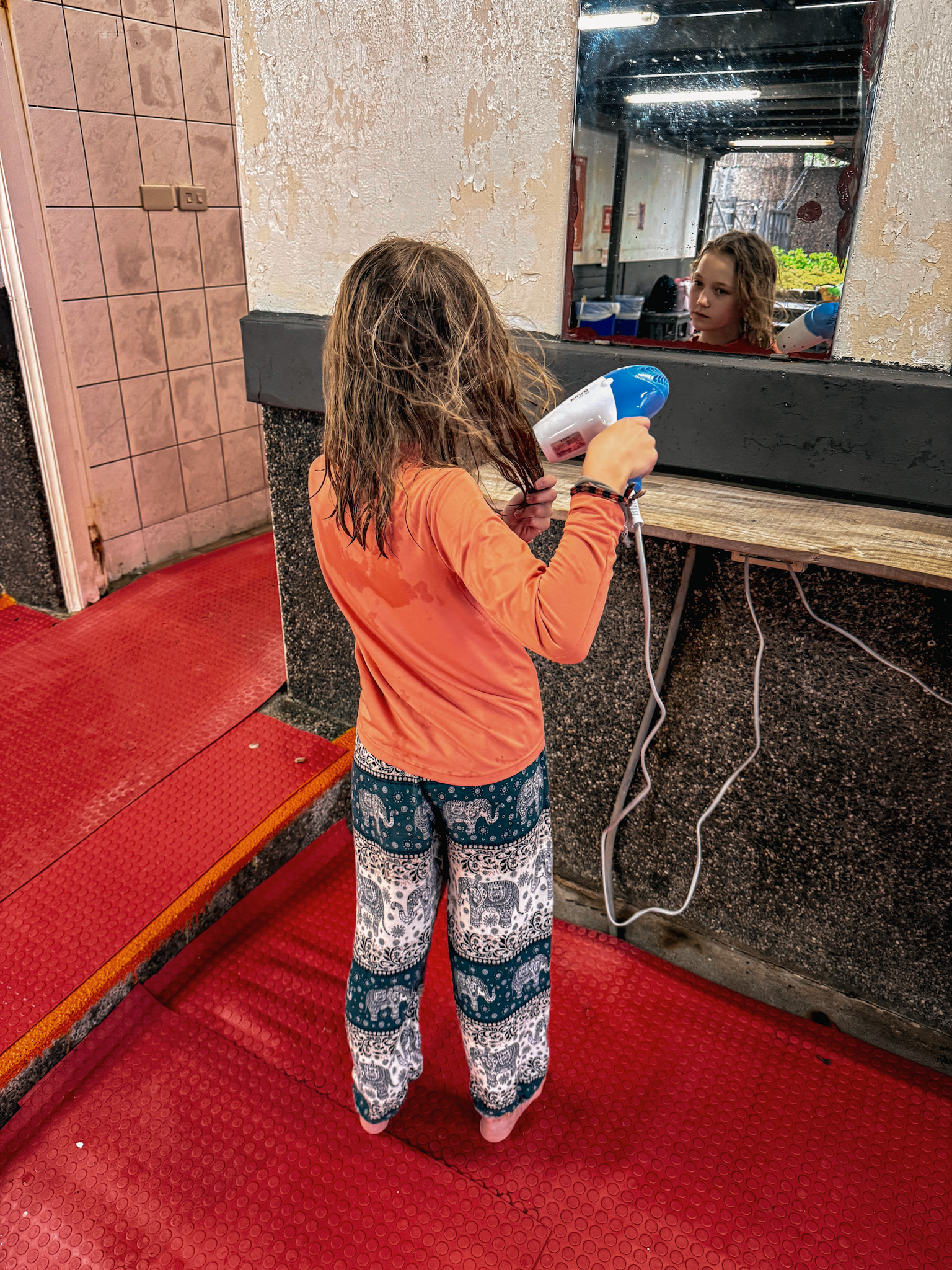
Zhaori Hot Spring is one of only a handful saltwater hot springs in the world. The water is seawater that seeps into the earth, gets heated passing through the island’s volcanic geology, and pushes back up through the intertidal zone warm and extremely salty. The facility has multiple pools running from quite cool to, at the extreme end, 115 degrees Fahrenheit. We mostly stayed around 105 to 106, where cold seawater and hot spring water entered from opposite directions and staff instructed us to stir the water with our arms to mix it. Max thought this was slightly absurd until everyone started doing it and it actually worked.
The ocean was directly in front of us. A tall cliff draped in tropical vegetation rose behind. Every wave broke hard against the rocks at the edge of the springs and sent spray flying. Fingers and toes achieved maximum prune status.
We exchanged contact info with Ana and Laura, said our goodbyes, and rode back through the rain with the particular satisfaction of people who had gotten up early and found that it was worth it.
The ferry back was the last remaining item of business. Max had spent meaningful mental energy strategizing his seating position, collected a precautionary vomit bag, and then, just before they pulled away from the dock, offered a sincere prayer to Poseidon, god of the sea, to please go easy on him this time.
Poseidon listened. The sea was glassy and calm. Max read his book for forty straight minutes without a single flutter of nausea. He is now a devoted follower and will not be taking questions about this.
Green Island is twenty kilometers of volcanic coastline, tide pools, scooters, a saltwater hot spring, and — if the timing works out — a pair of Spanish aerospace engineers who turn up on a hiking trail and then again in the dark at five in the morning to watch a sunrise that never comes. We were there for four days. We’d happily could have stayed longer.
The ferry, though—once was enough.
 Pause and Wander
Leave a comment