

Dates: November 27–30, 2025
Place: Bangkok
Every city has its own way of greeting newcomers. Some roll out a polite welcome. Some greet you with a punch of humidity to the face. Bangkok greets you with food—loud, bright, sizzling, dumpling-stacked, noodle-pulling, curry-perfumed food—and then tosses in just enough logistical chaos to keep you humble.
Our first days in Thailand became a kind of edible orientation session. Yes, there were markets, alleys, canals, and a few misadventures involving taxi drivers and unmarked doors. But the through-line, the thing tying all these early days together, was simple: we landed in Bangkok hungry, and the city answered in every direction we turned.
This is the story of how food became the compass we used to orient ourselves—one bowl, plate, skewer, dumpling, and curry at a time.
The journey from Istanbul to Bangkok was nine hours, two mediocre airplane meals, and one truly terrible attempt to watch Gladiator II. Still, everything went more smoothly than expected. Customs was quick, the airport was bright and organized, and—miraculously—our bags appeared on the carousel despite having originally been checked through to Hanoi. Turkish Airlines, we doubted you, but you came through.
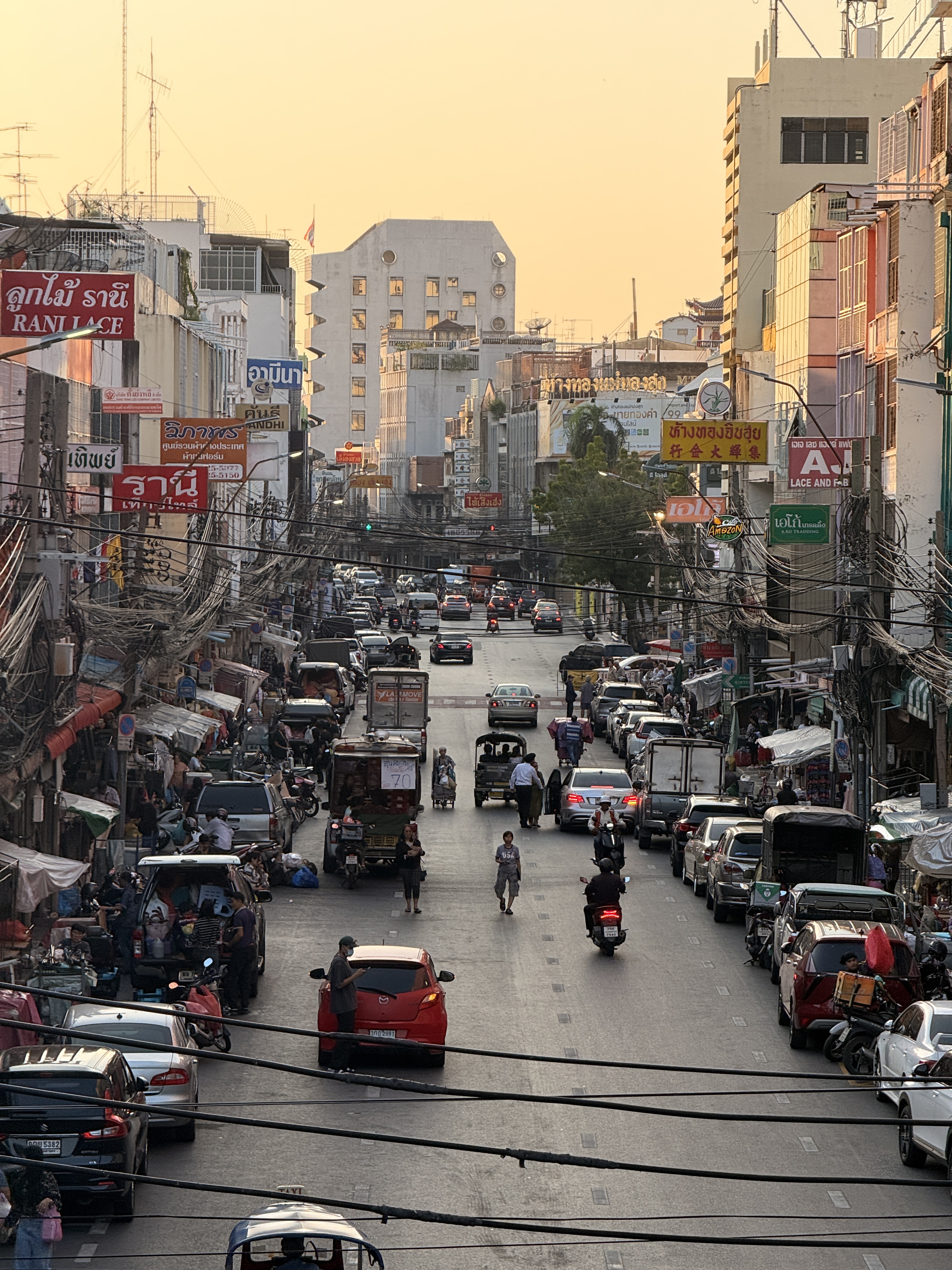
Our Airbnb-coordinated driver, on the other hand, required a level of coordination that felt like solving a cryptic crossword clue in real time. By the time we finally wedged ourselves into the van and crawled through morning rush hour traffic, Bangkok unfolded around us: a city where density is the default, where the skyline looks like it’s still under construction, and where the traffic lights feel more like loose suggestions.
We reached our Airbnb in Yaowarat, Bangkok’s historic Chinatown—one of the oldest Chinese districts outside China and still one of the most electric. Our place was one of hundreds of strip-mall stalls—a narrow, three-story home built mostly straight up, squeezed between cafes, wine bars, and souvenir shops. Some were shuttered, some seemed half-transformed into residences like ours, but it was weird in exactly the right way.
After collapsing into a 3-hour jet lag nap, we rallied for our first mission in Thailand: find food, quickly. The paradox of choice on Yaowarat Road is real—you can walk 20 feet and question every decision you’ve ever made about meals—but then we saw a restaurant called Shaxia. With a name so close to our long-running family nickname “Team SHAX,” we took it as a cosmic nudge. Noodles, dumplings, potstickers, cold beer. The kind of meal that resets the soul.
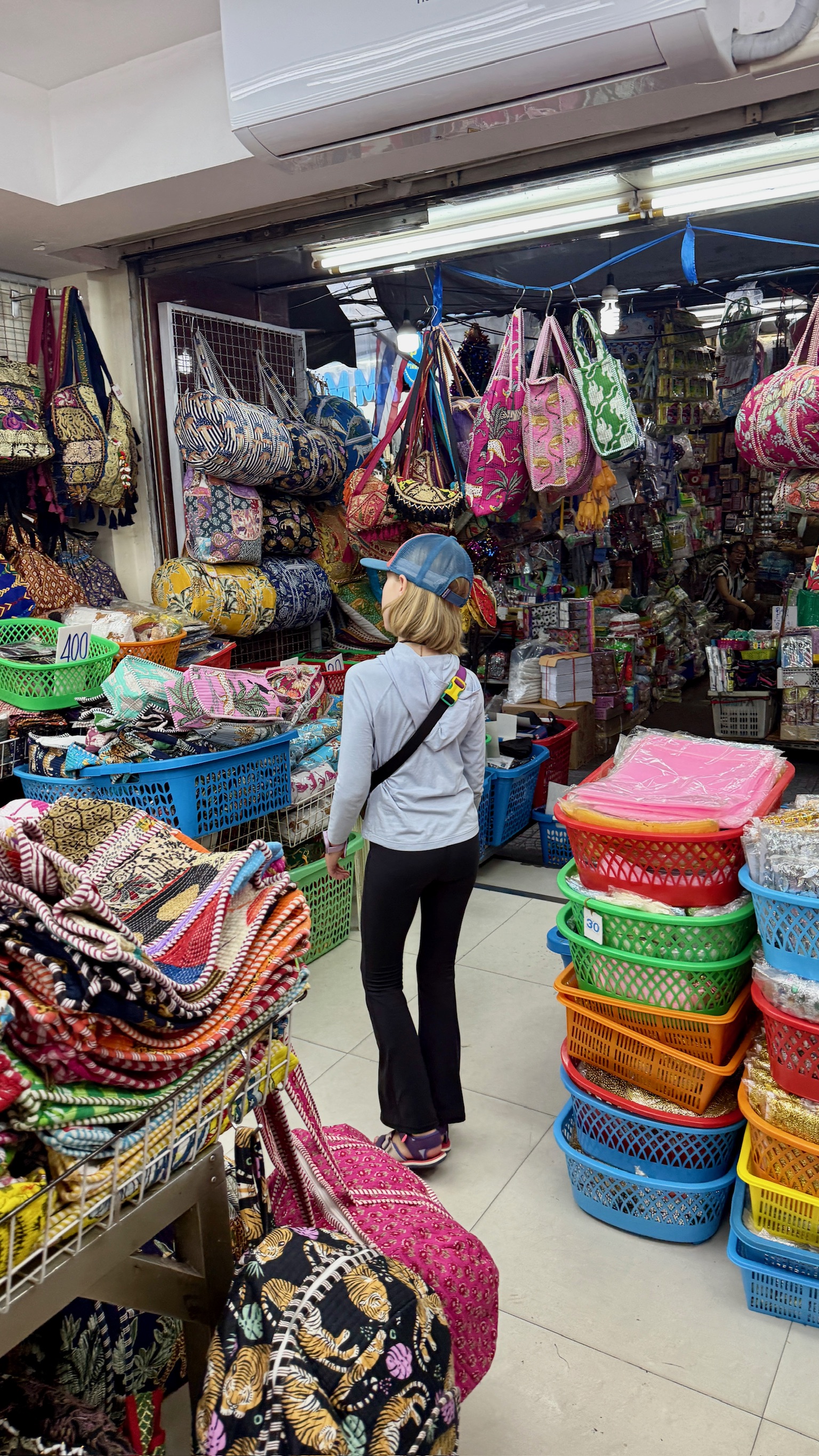
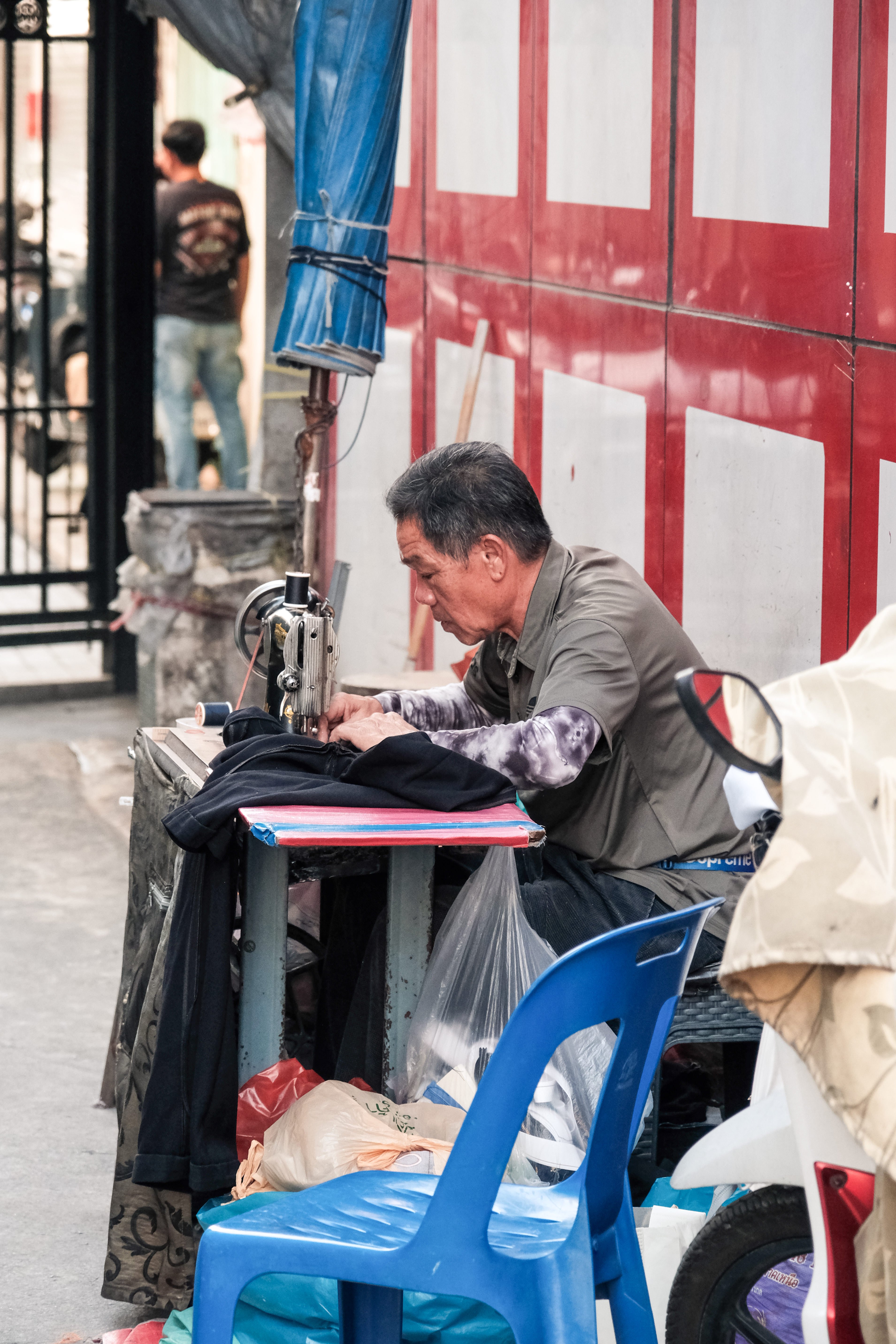
We wandered the surrounding narrow streets afterward, passing bead shops the girls adored, clothing stalls selling everything from Yankees caps to elephant pants, and wig shops displaying neon-colored hairpieces in rows. Scooters zigzagged through the tight spaces as though the packed crowds didn’t concern them in the slightest, weaving around pedestrians, carts, and piles of merchandise in a way that was equal parts impressive and terrifying.
Later that afternoon we walked to the river and crossed by public ferry, the slowly sinking sun casting light across Wat Arun, the Temple of Dawn. Its porcelain-and-shell mosaic exterior looked almost unreal up close, like a painting someone forgot to finish shading. From there we continued through quiet side streets to book a canal tour for the following night.
And then it hit us: it was Thanksgiving.
Naturally, we went for Peking duck at HAGOW Yaowarat. Maybe not the traditional turkey-and-stuffing spread, but delicious and festive in all the ways that count. By the time we made it back to our three-story stall of a home, we were delirious with exhaustion and fell asleep instantly.




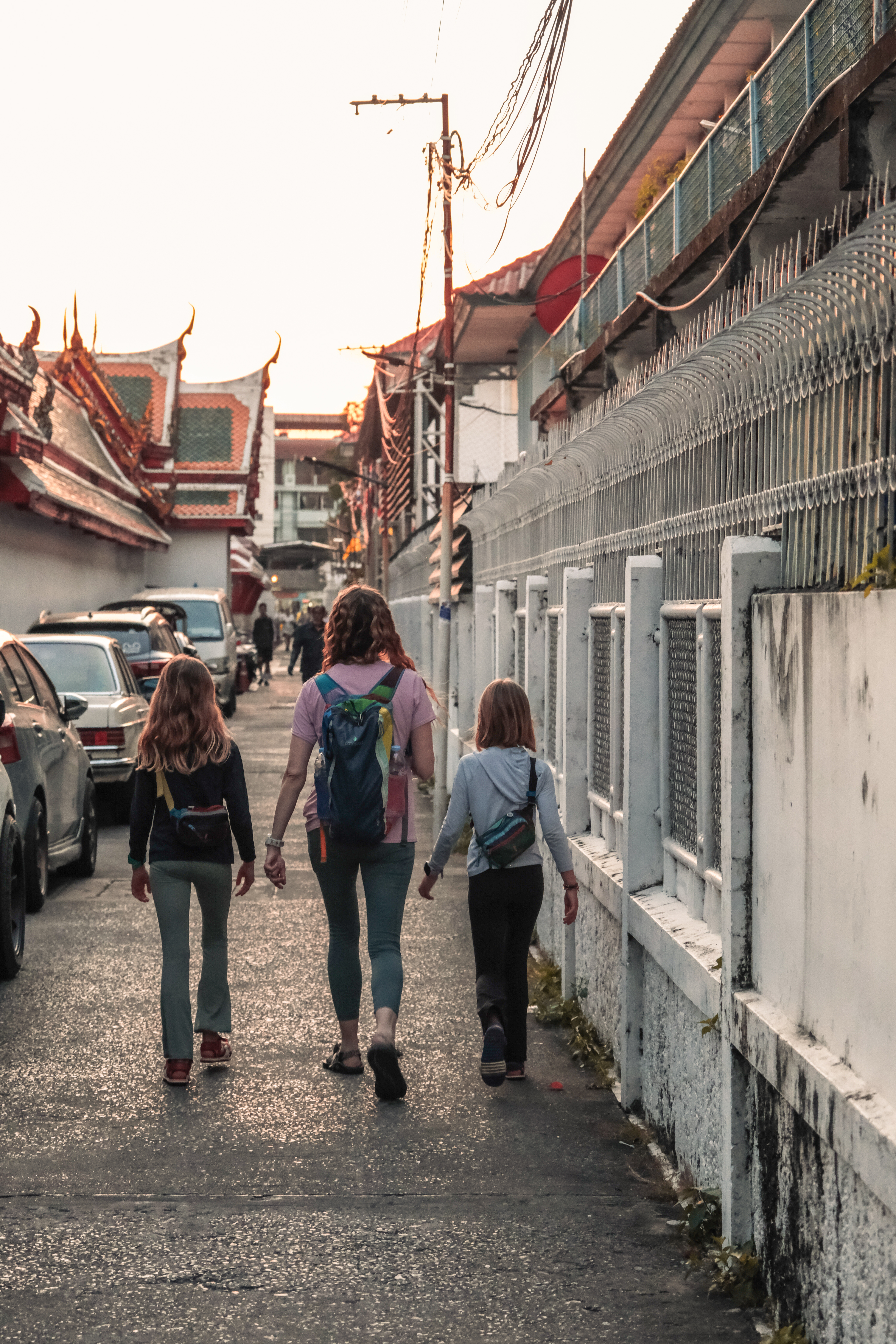


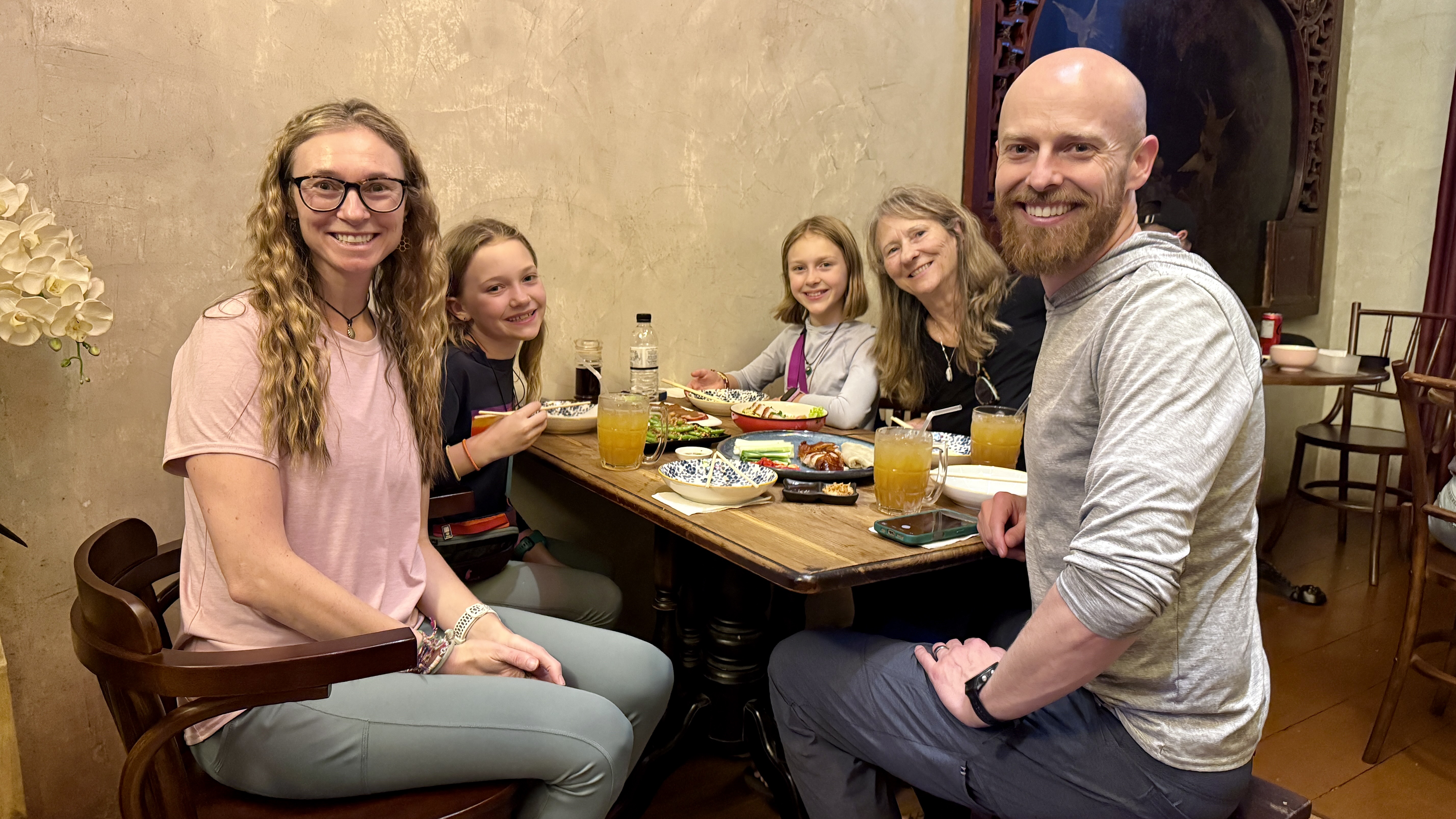

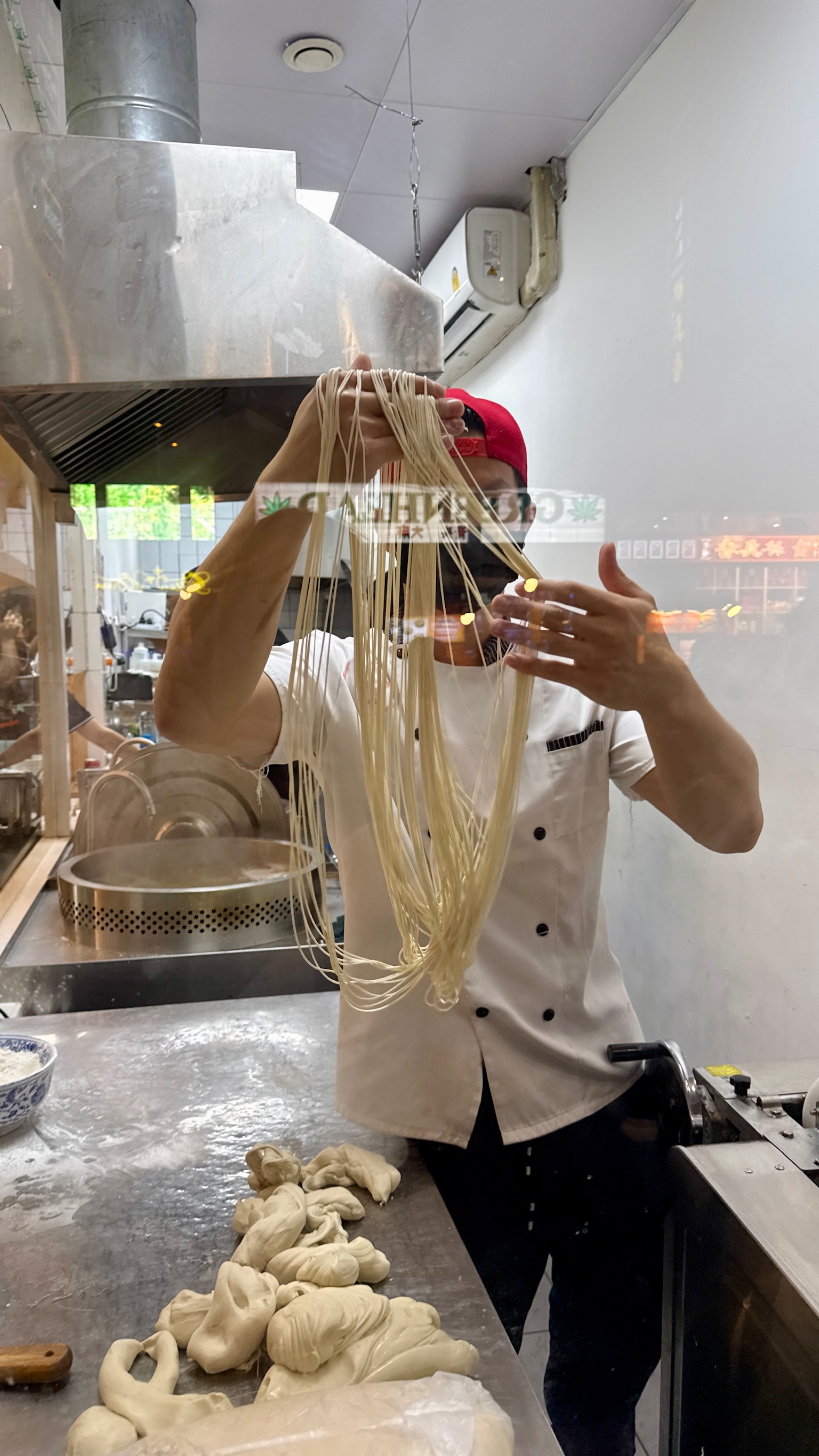
The next day started slow—we overslept again—then tackled visa applications and homeschooling before hunger pushed us back into the streets. We headed to the locally-famous Lanzhou Noodles, where the chef pulled noodles by hand with that rhythmic slap-thwack that never gets old. Watching dough become long, perfect strands in seconds felt like a magic trick.
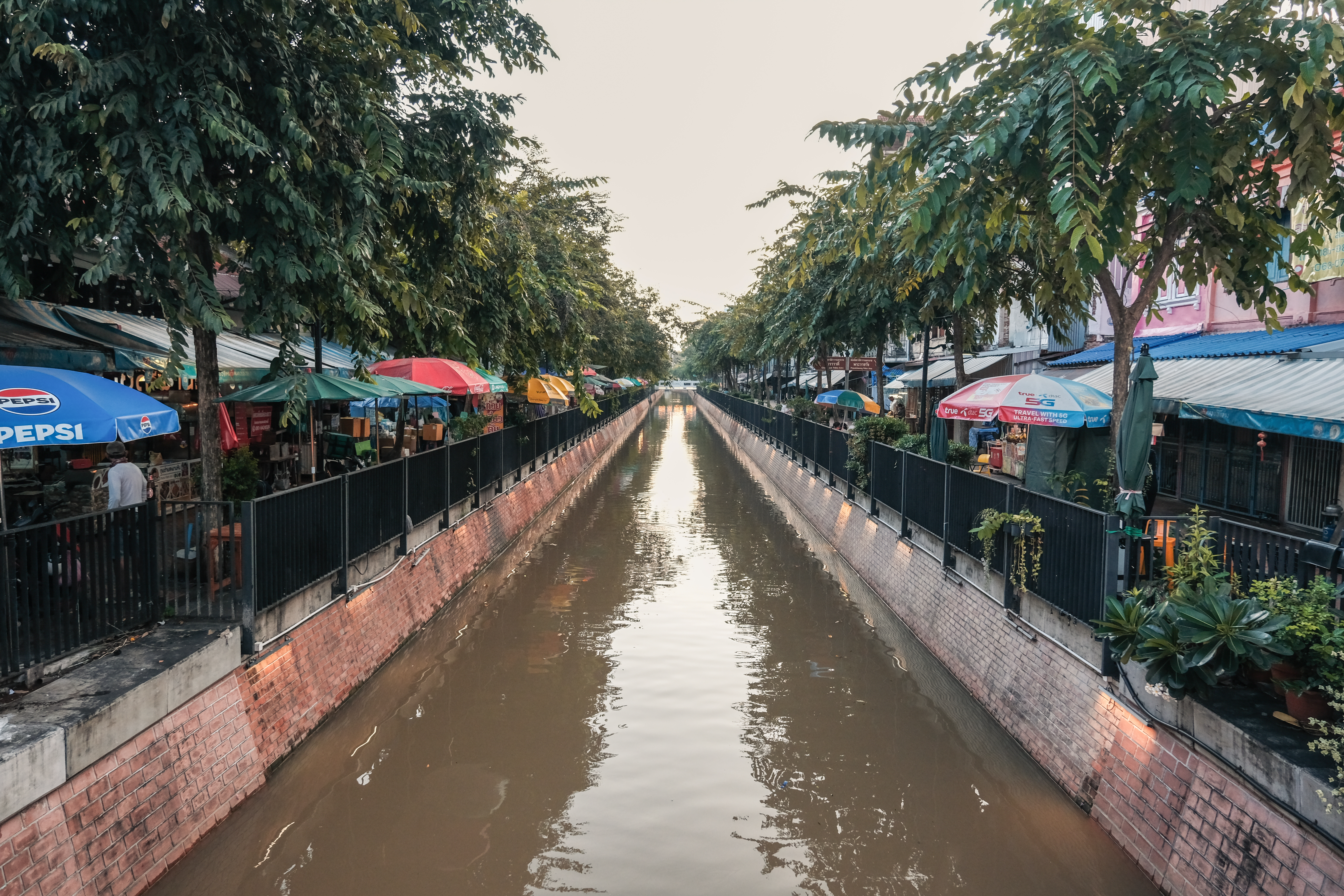
Homework and journaling filled the afternoon until it was time to head to our canal tour. We wound through Chinatown on foot, took the metro, then walked the last stretch along a quiet canal lined with small homes and neighborhood shops.
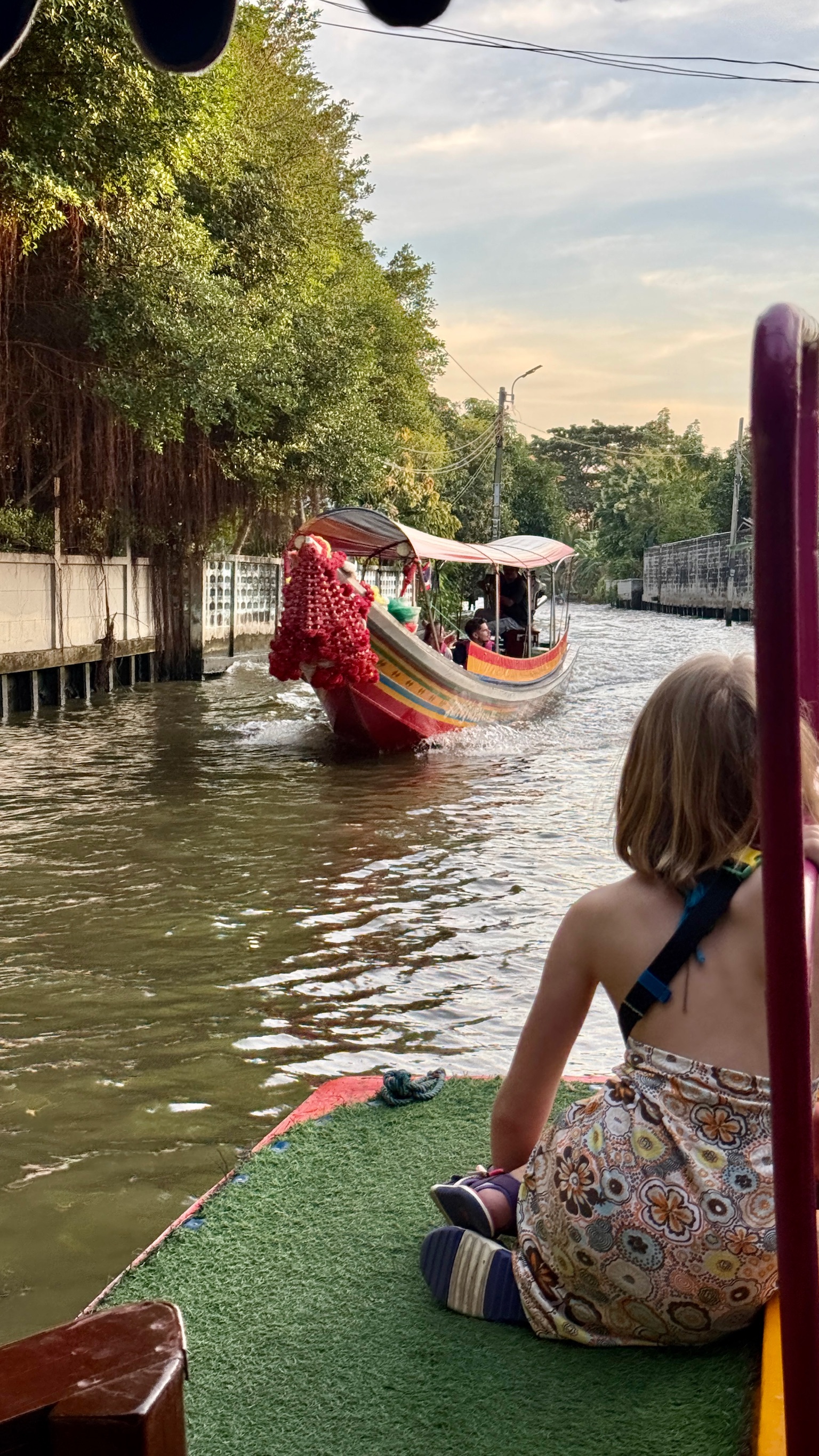
Our guide, Mei, met us at a modest canal-side restaurant and introduced us to the boat we’d be using—not a long-tail boat like many visitors assume, but one of only ten remaining older, wider, slower wooden boats still in operation. The captain explained that it had belonged to his grandfather, and suddenly it felt like our tour wasn’t just transportation but heritage.
Once underway, the noise of Bangkok receded. The klongs, once the backbone of Bangkok’s transportation network, slipped past in a mix of stilted homes, small gardens, and flood markers showing how high the water now rises. Climate change has forced many houses onto concrete piles; others sit half over the water like they’re waiting for the day they’ll have to move.
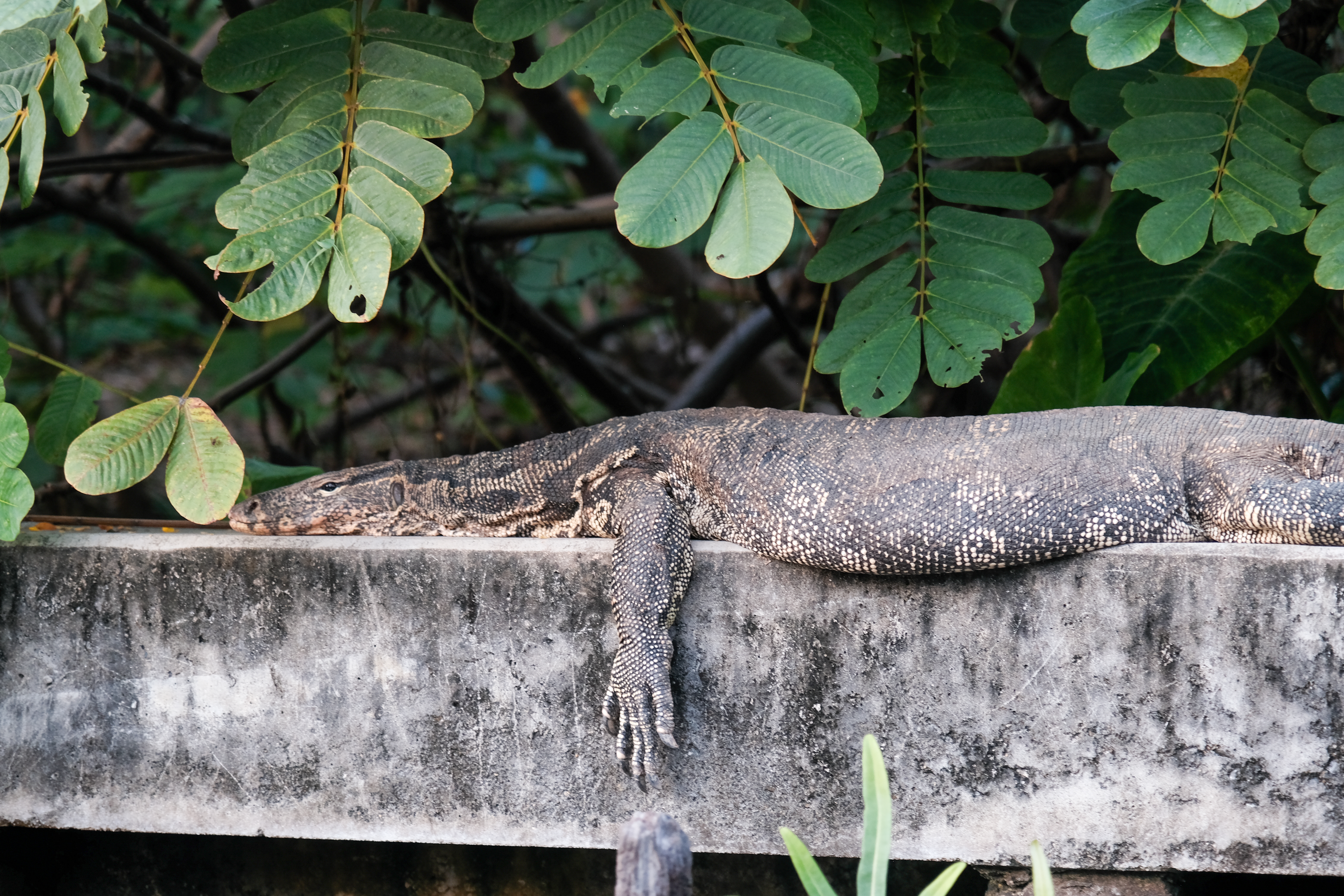
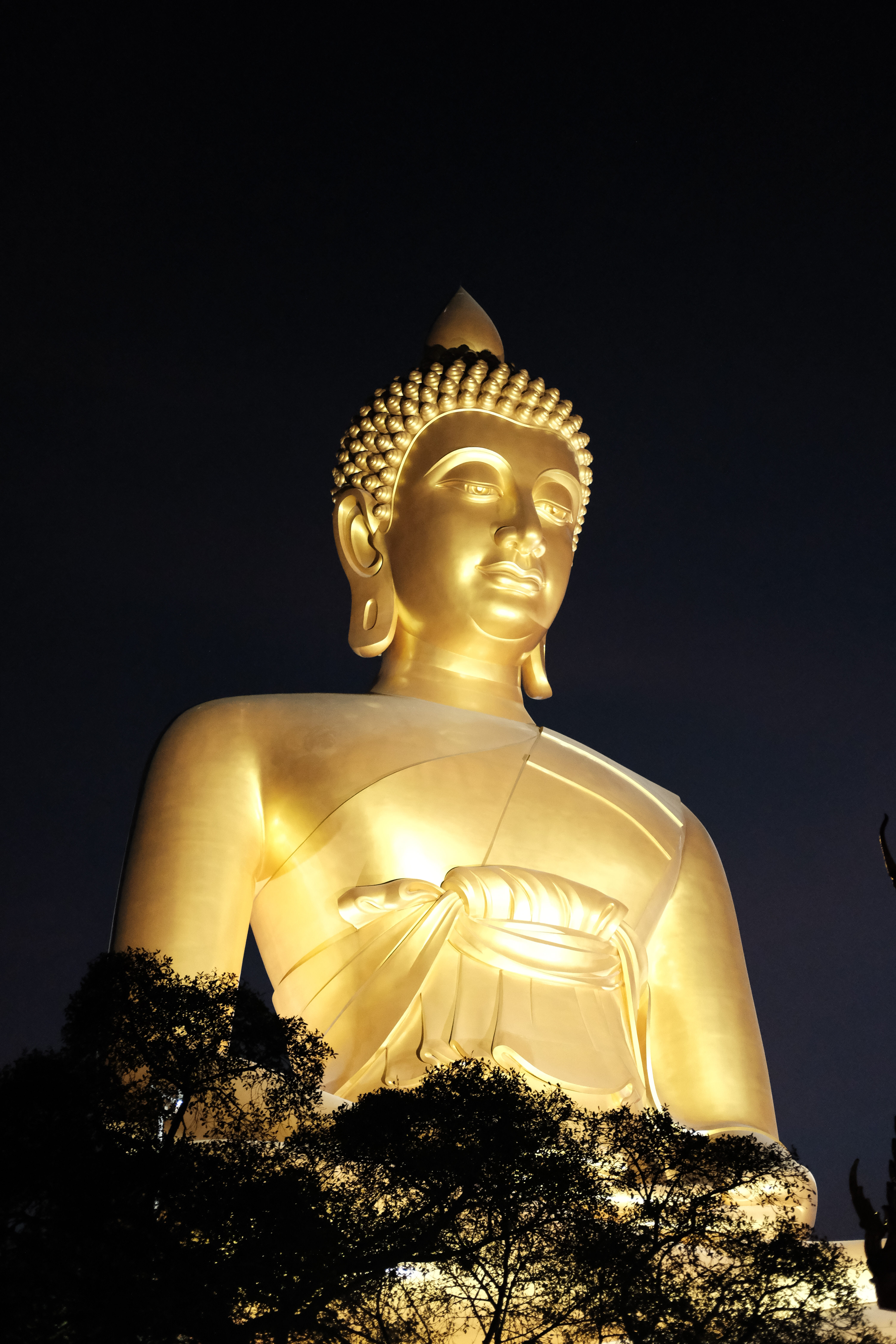
Fat monitor lizards basked on the banks. Markets perched on stilts held tight to the edges of the water. A giant golden Buddha came into view as the sky turned purple. The world slowed down.
The evening ended at Talat Phlu Night Market, where the surprise hit of the night was fried chives—crispy, salty, perfect. But the true pilgrimage came afterward when Mei directed us to the place she considered the single best Pad Thai in Thailand: a spot whose name translates loosely to “Pad Thai Hell Breaks Loose”.
It delivered.
The Pad Thai arrived wrapped in a delicate crepe with a sunny-side egg beneath it. Inside was a mound of noodles, bean sprouts, prawns, dried shrimp, lime wedges, and more. Breaking the yolk and mixing everything together felt ceremonial. It was spicy—very spicy—but worth every fiery bite. Finlee pushed through like a champ, grimacing but determined.
Still buzzing, we returned to Chinatown for one of the most chaotic, hilarious experiences of the trip: the girls (and Nana) sticking their feet into tanks of tiny transparent fish that nibble your toes clean. Their squeals echoed through the shop and out onto Yaowarat Road. We grabbed fresh gyoza from a street cart before making our way home through the neon glow.






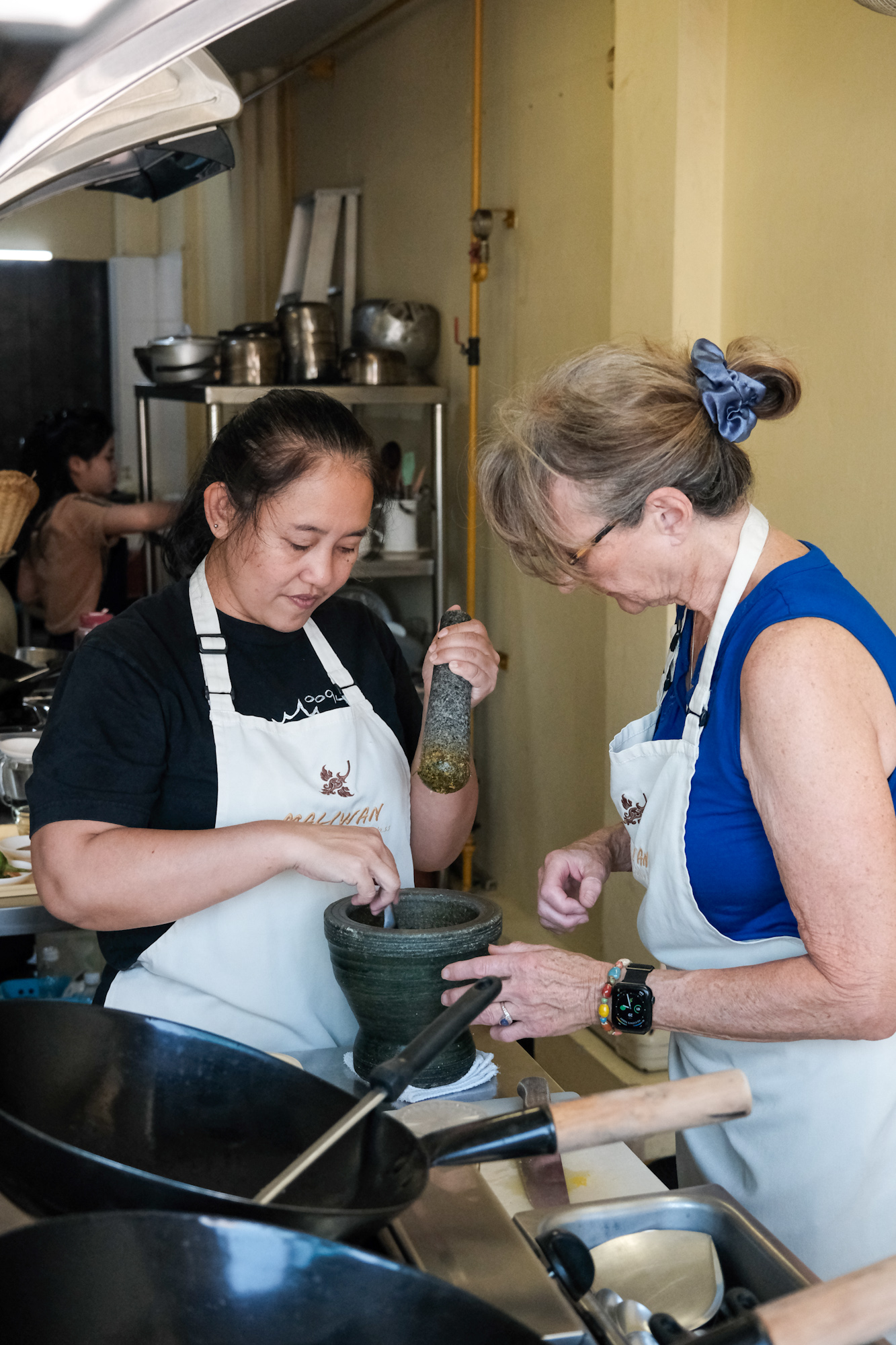
The following day revolved around a cooking class—The address led us to… nothing. A Domino’s Pizza. An alley. A second alley. A cream-colored door that looked like the entrance to someone’s storage closet. But then a friendly voice floated down from upstairs telling us to remove our shoes and come up. We exchanged a look somewhere between “We might be robbed” and “This might be great.”
Fortunately it was great.
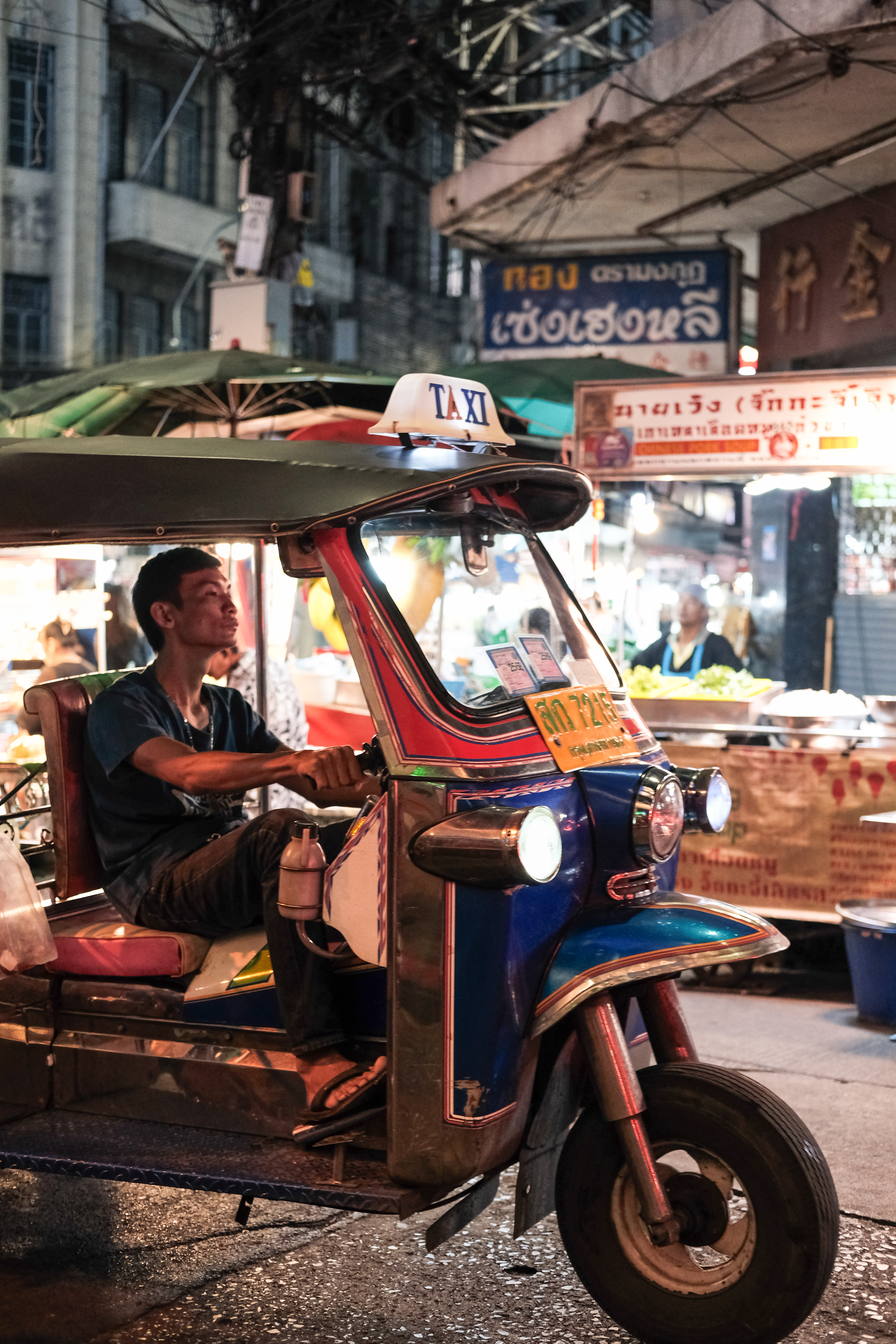
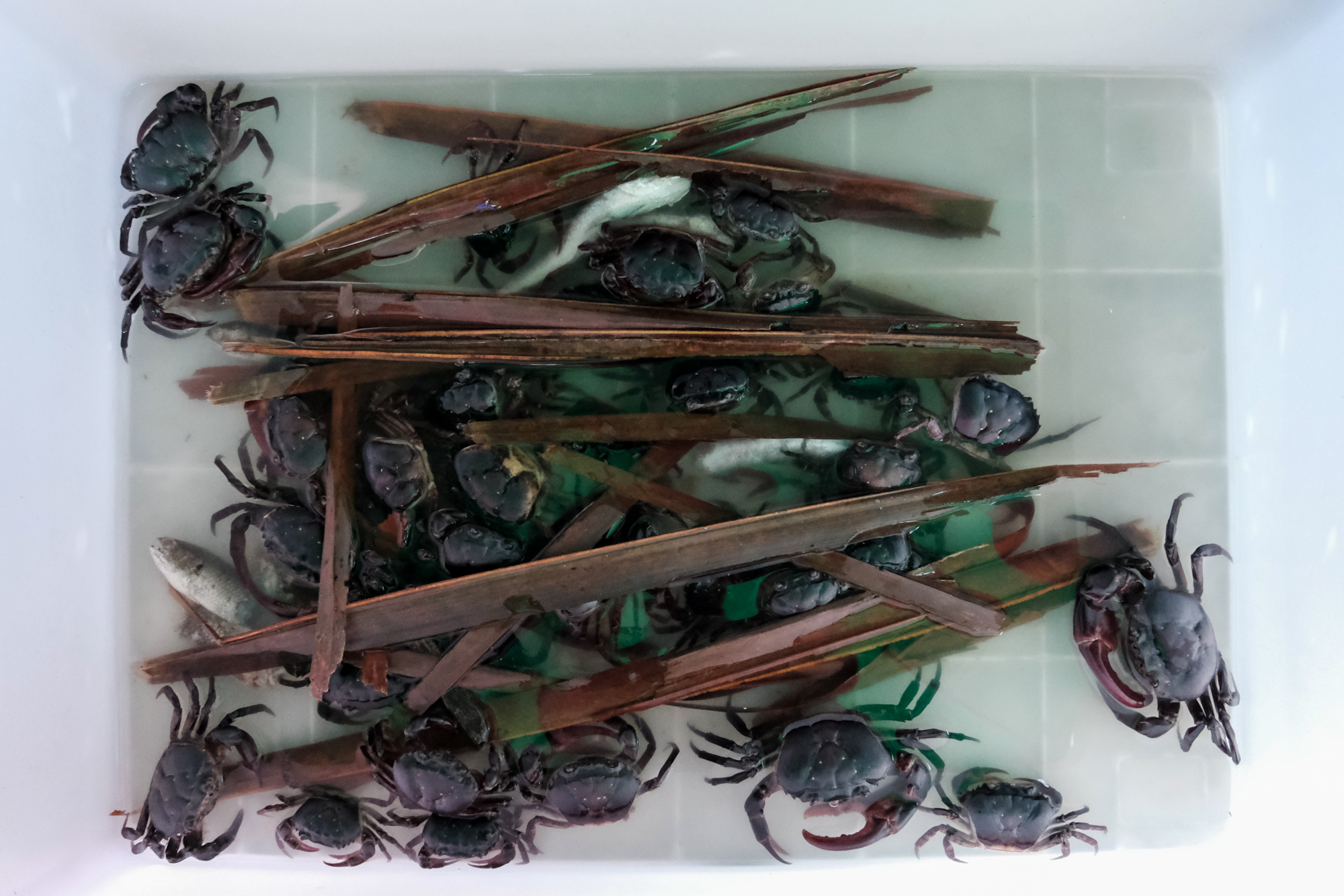
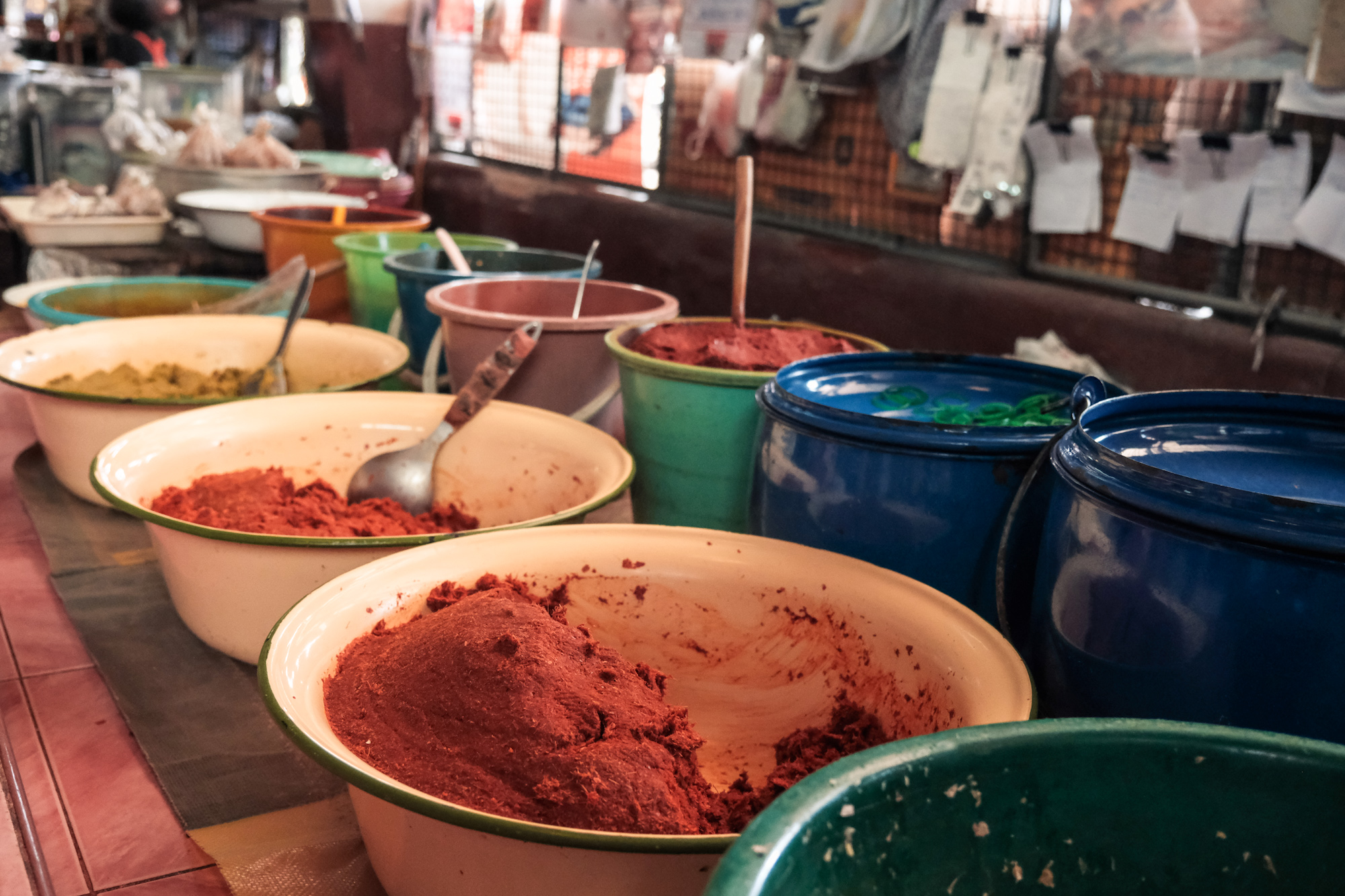
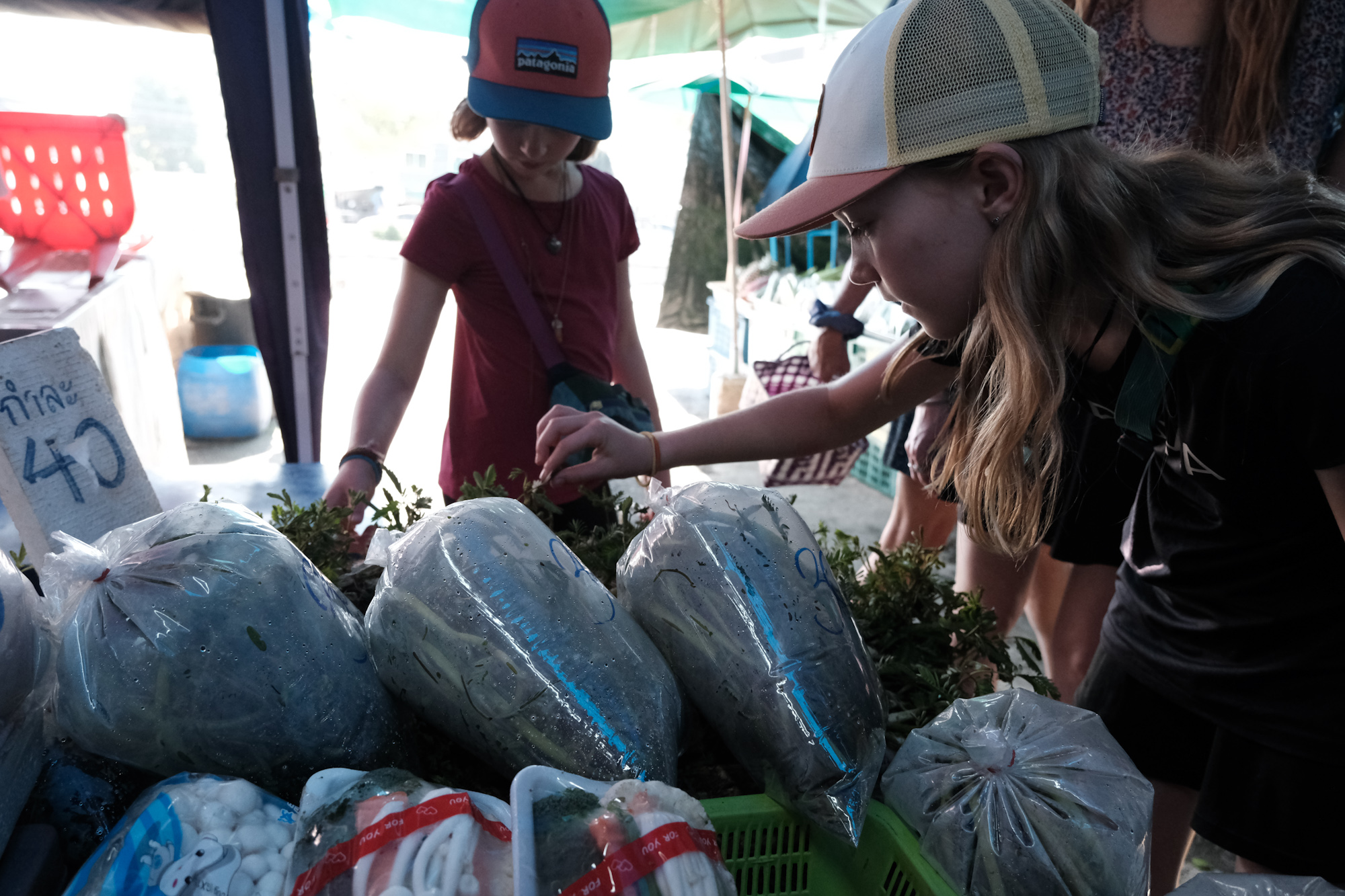
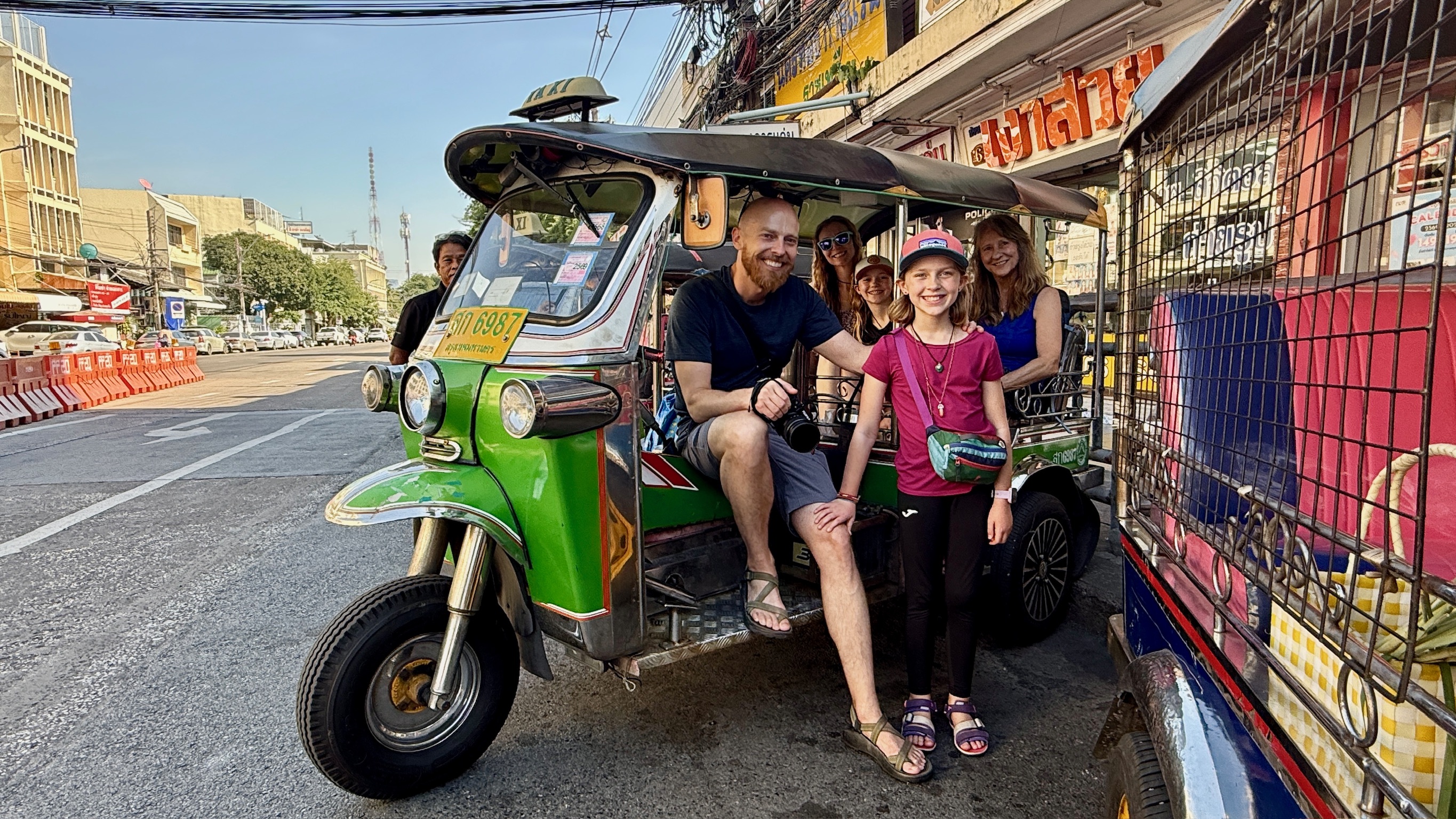
We joined a small group in a simple commercial kitchen with individual cooking stations, then immediately hopped into tuk tuks to visit a nearby wet market. This was not the sanitized, tourist-curated version. This was the real thing—live frogs, eels, fish, crabs, and piles of every type of meat you could imagine. Narrow aisles. Stainless steel counters. Buckets of curry paste. The girls released a couple of “lucky catfish” into the canal, which earned them a sweet moment of pride.
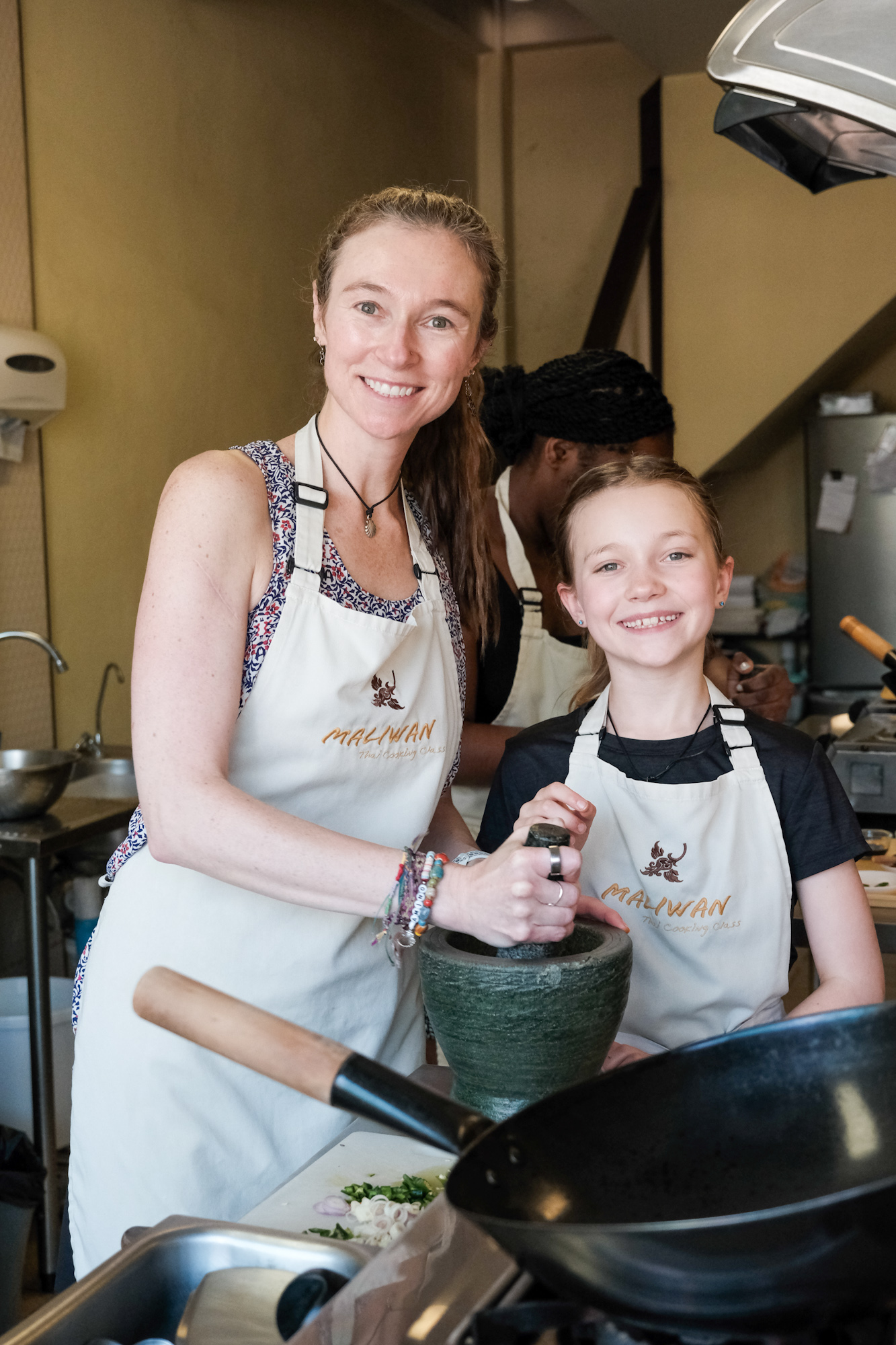
Back in the kitchen we made green curry, hot and sour soup, Pad Thai, and mango sticky rice. Finlee teamed up with Max and was laser-focused, handling knives and ingredients with a mix of seriousness and joy. Arya and Shaina shared lots of laughs struggling with the wok and only loosely sticking to the recipe. By the end we had so much food that we carried five boxes home, a mobile feast.
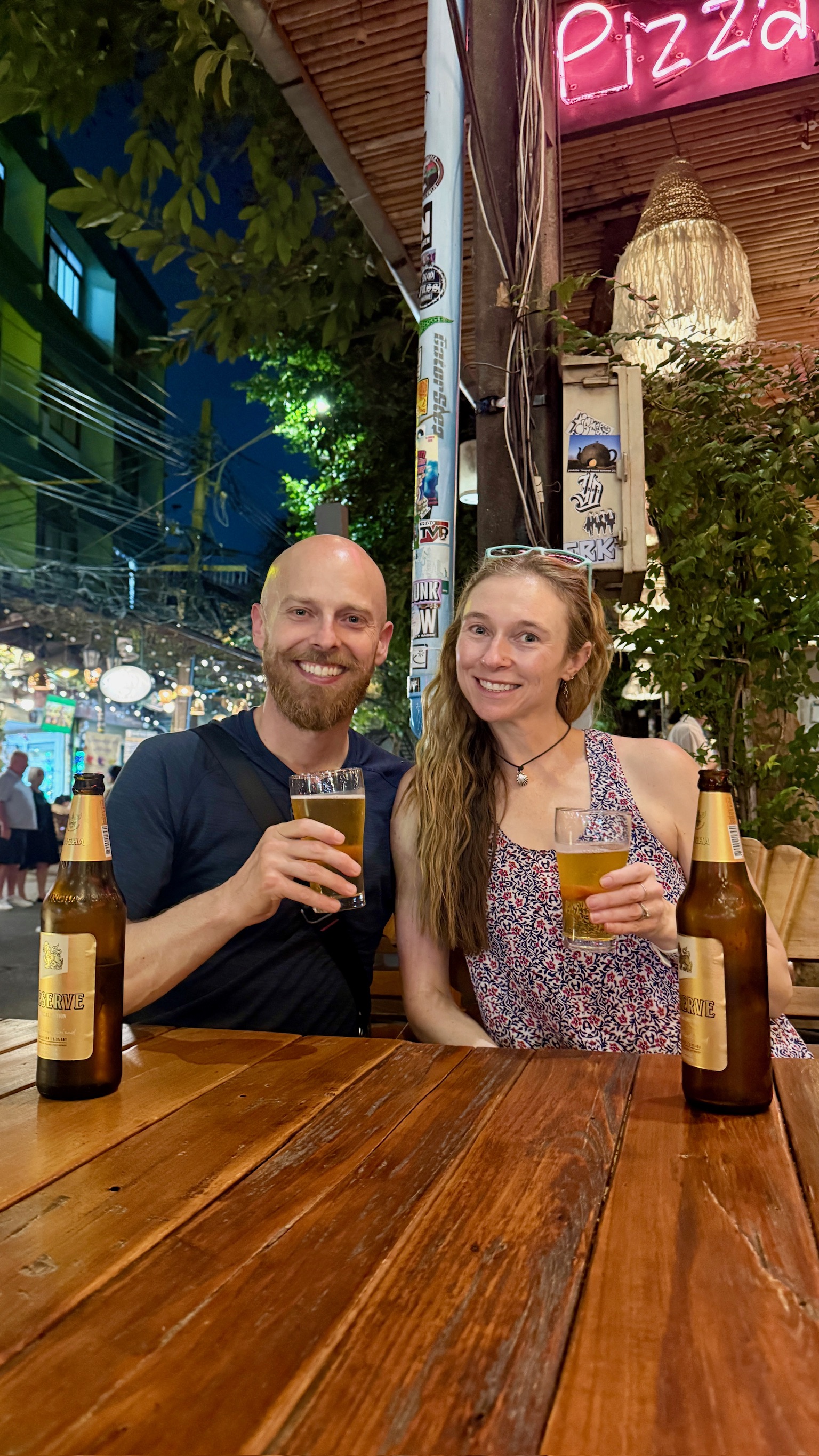
We capped the afternoon with a walk down Khao San Road, which was far more subdued at 6 pm in December than Max and Shaina remembered from 18 years earlier. The girls bought Thai-print clothes, we grabbed a couple beers and a smoothie, and called it a night.







The next day, we visited the Jim Thompson House Museum, the former home of the American entrepreneur who revived Thailand’s silk industry in the 1950s. The house—an elegant set of teak structures elevated above the ground—was beautiful even if the tour itself felt rushed. We admired the silk pieces in the shop, balked at the price tags, and kept moving.
From there we wandered into a small Muslim neighborhood tucked along the canal, narrow and quiet with laundry strung between balconies. Emerging onto a busier street, we stumbled across a northern Thai restaurant serving bowls of rich, fragrant curry. It was one of those travel moments where the least planned meal becomes one of the best.
We found soft-serve ice cream afterward and ate it slowly as we people-watched. The only challenge left was finding a taxi willing to take us far enough to reach our new Airbnb. After half an hour of searching, we finally succeeded and rode home ready to collapse.
If these first days in Bangkok had a plot, it wasn’t temples or markets or museums—it was food as the thread that led us forward, one bite at a time. No matter how jet-lagged we were, how confused by directions, how lost in Chinatown’s alleys, or how thrown off by rising canal water and hidden cooking school doors, each day offered moments where we gathered around a plate or bowl and thought:
Okay. This. This is where we are. This is how we root ourselves right now.
Bangkok can be overwhelming. It’s fast, loud, humid, spicy, neon, fragrant, disorienting, and everything happens at once. But in these early days, the city fed us—literally—and in feeding us, it oriented us.
And as we quickly learned: if you trust your stomach, Bangkok always leads you somewhere worth going.

 Pause and Wander
Leave a comment