
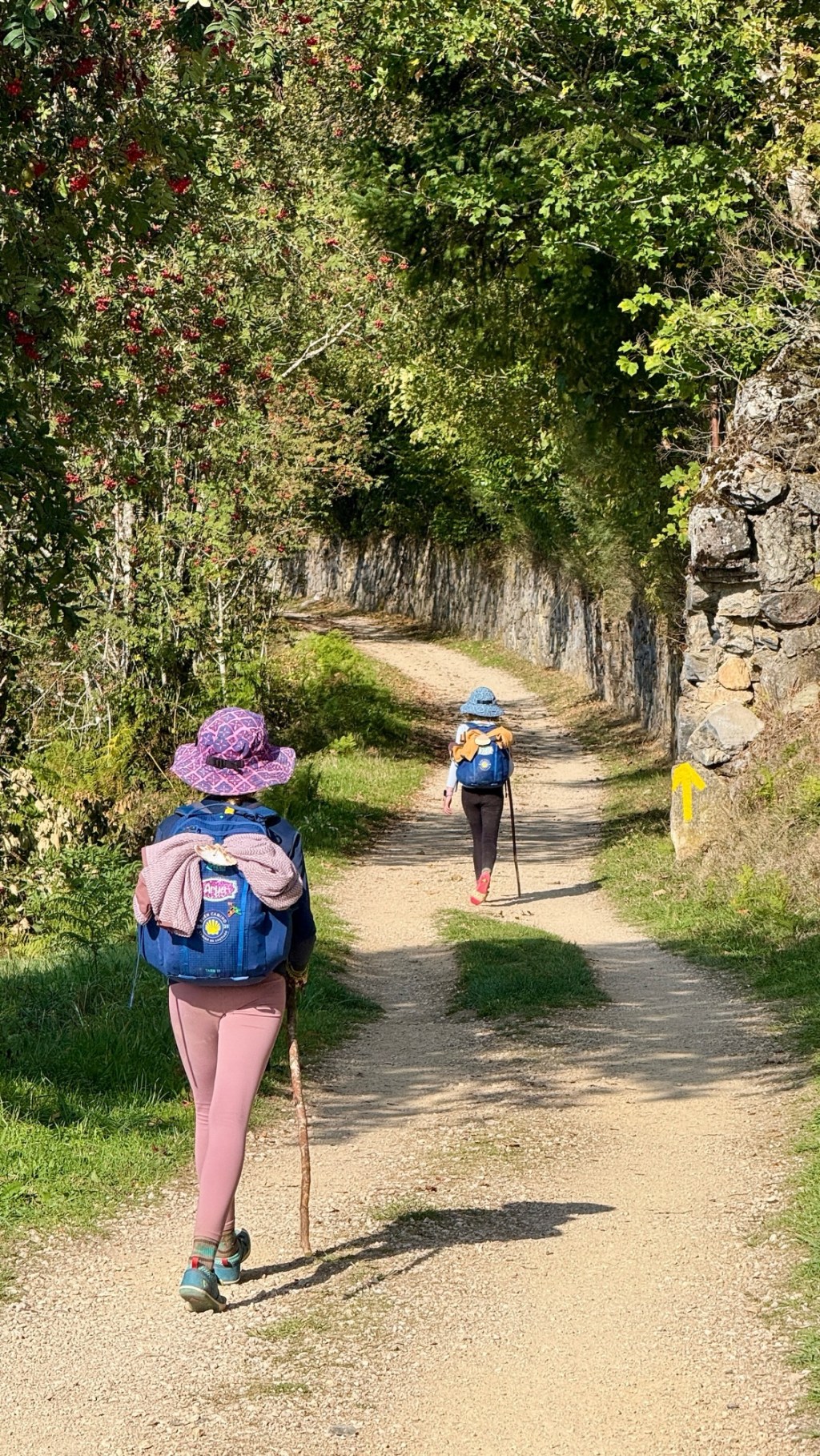
Dates: October 3-8, 2025
Places:
Rabanal del Camino → El Acebo — 16 km
El Acebo → Ponferrada — 18 km
Ponferrada → Cacabelos — 14.5 km
Cacabelos → Trabadelo — 19.5 km
Trabadelo → Las Herrerías — 10 km
Las Herrerías → Fonfría — 21.5 km
Total: 99.5 km
The Camino gives and the Camino takes. That’s the pattern of this old road — steady, unpredictable, and always honest. Some days the sun warms every turn and the walking feels effortless; others, it feels like the world is intent on testing every ounce of patience, strength, and persistence. But always, in the giving and the taking, there’s something to learn — about ourselves, about each other, and about the generous mix of people who share this path.
We left Rabanal in the quiet of a chilly morning, coffee cups still warm from a conversation with Rob, one of the hospitaleros at our albergue. Rob had walked the Camino several times, and when Max asked what draws someone back again and again, he smiled and said, “Just you wait. When you finally reach Santiago, you’ll step on that last shell and realize you’re no longer a pilgrim. You’ll feel a little lost.”
His words stuck. Even now, just past the halfway mark, we can sense what he meant. The Camino has a way of making you belong to it. The moment we drop our packs or step away from the familiar line of scallop shells, that belonging flickers. The walk gives us purpose and direction, and we know there’s a quiet shift waiting at its end — the loss of something we’ve grown into along the way.
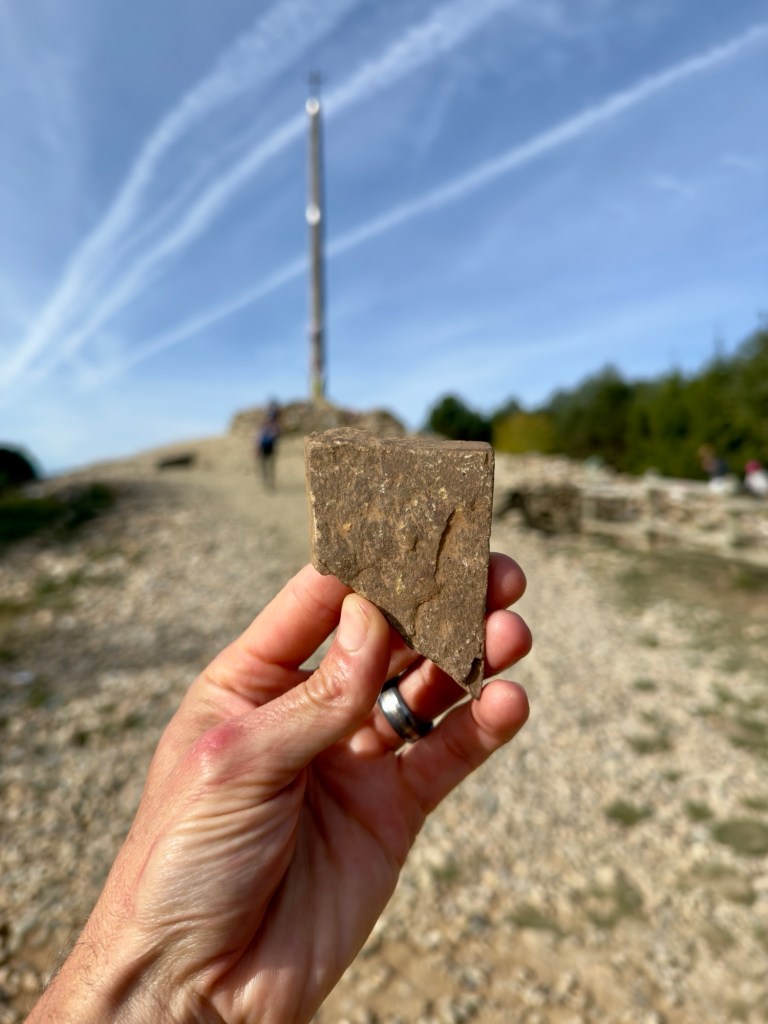
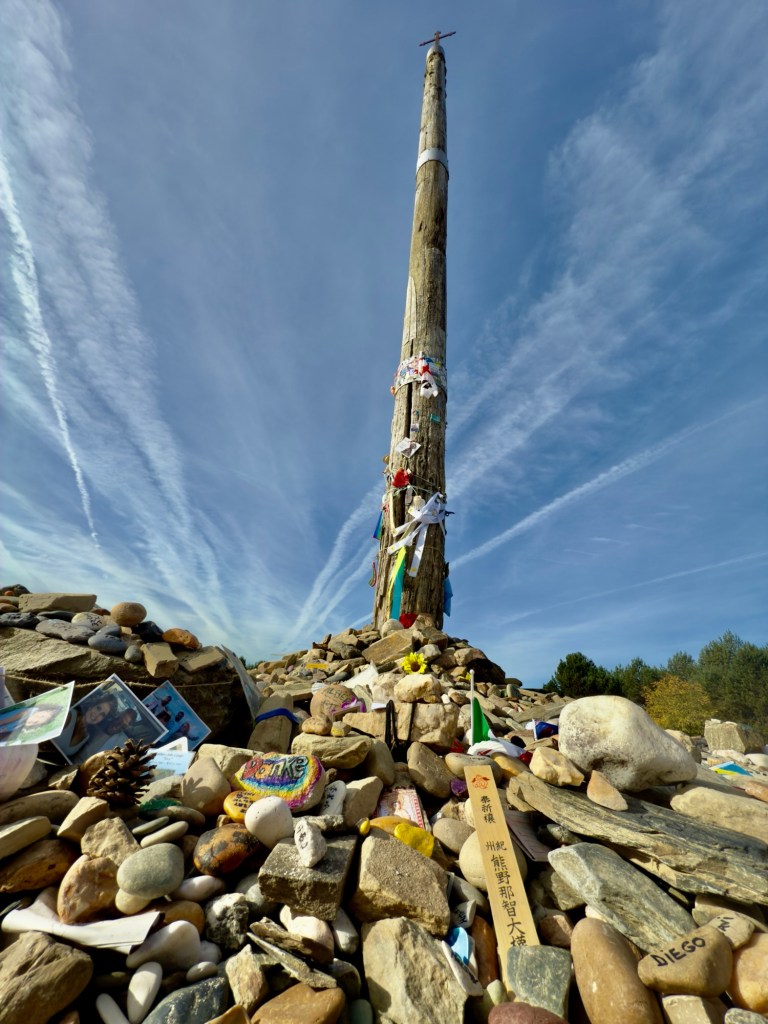
Not long after leaving Rabanal, the morning gave us its first small surprise. Max looked down to find a rock shaped exactly like Nevada lying in the dust. We’d just been talking about the Cruz de Ferro — the iron cross where pilgrims lay down a stone to symbolize a burden released — and here was a stone that looked like home. It felt almost planned, like a wink from the universe. We carried it to the cross and left it there, resting atop a mound built by generations before us. And yet, standing there, we realized we didn’t have much to release. The Camino’s daily effort — the small lessons in patience, humility, and perspective — has already been doing that work all along. The absence of a burden can feel like a gift too.
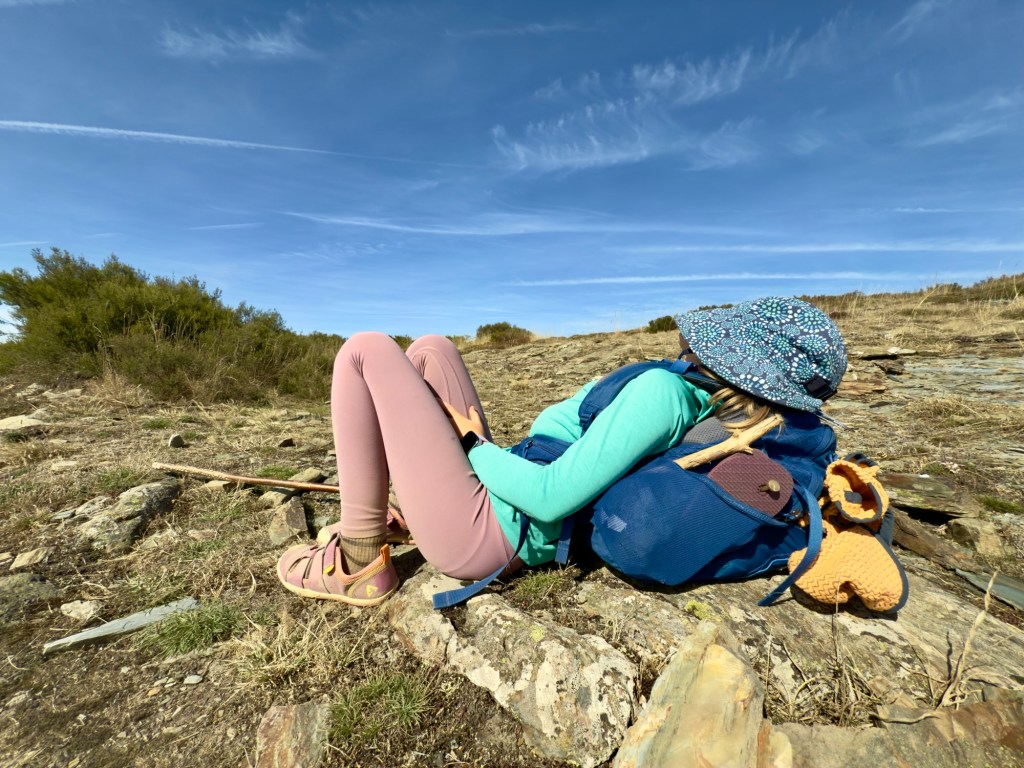
Of course, the Camino doesn’t let you linger in reflection for long. Within hours, Finlee’s face turned pale, her steps slowed, and by the time we were halfway down the mountain, she was doubled over, proving Arya’s unfiltered observation — “Oh man, she’s gonna puke!” — correct. Shoes were sacrificed, breaks were taken, and worry swelled. But in the strange way kids often bounce back, she soon straightened up and said, “I feel better now,” before walking the rest of the way to our stop. We thought we were in the clear, but the afternoon told another story — two more rounds of vomiting and a long evening of coaxing her to sip water. Then, just as suddenly, the storm passed. By morning, after nothing more than a night’s rest, she was her cheerful self again. The Camino takes, and the Camino gives back — sometimes overnight.
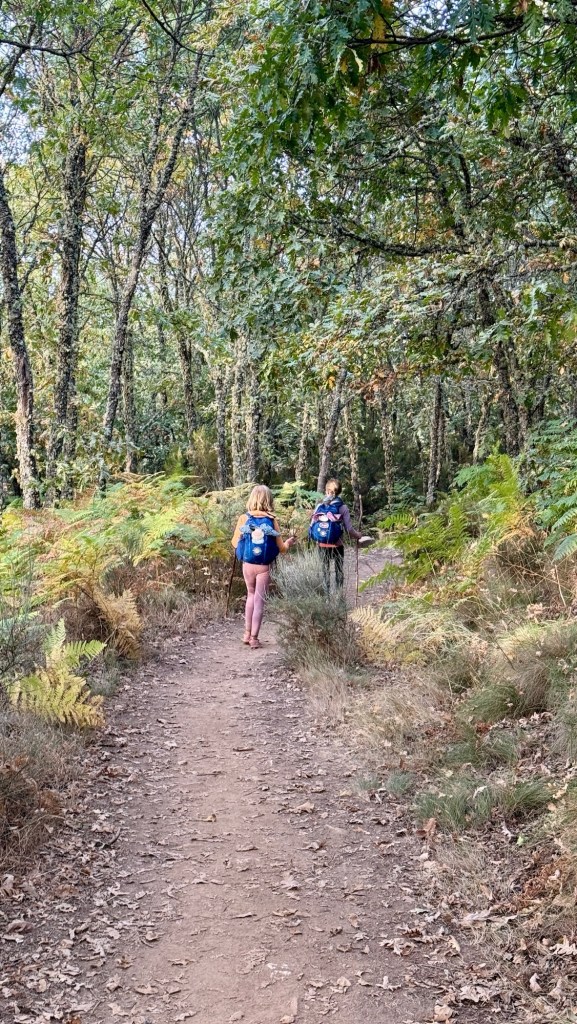
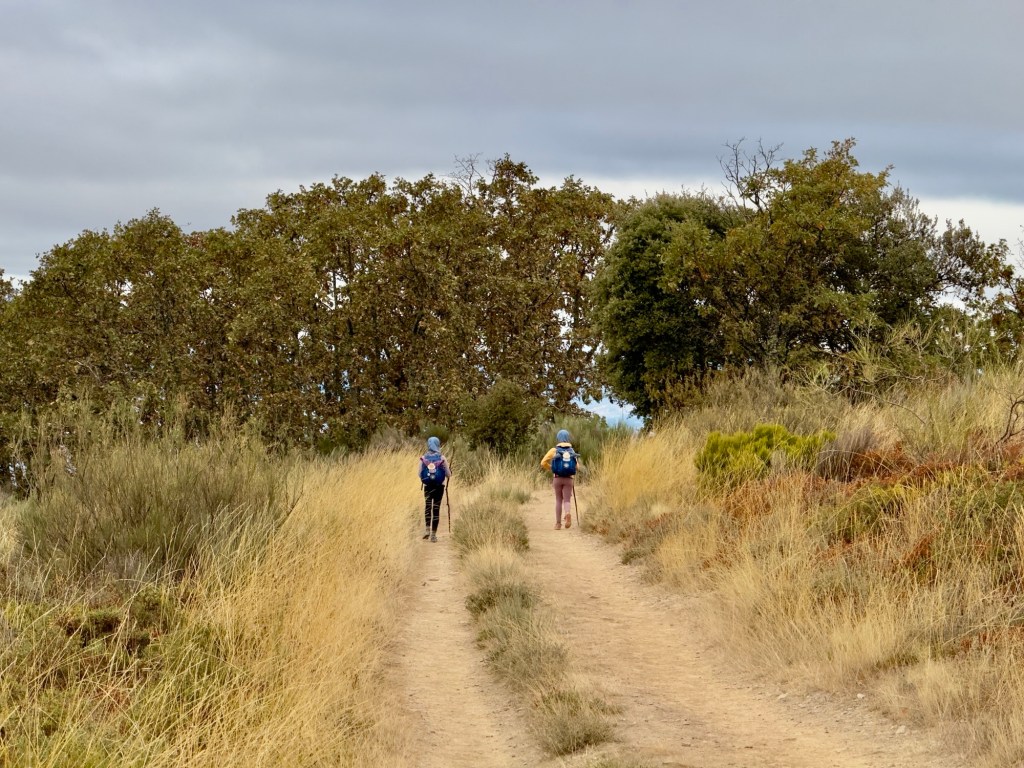
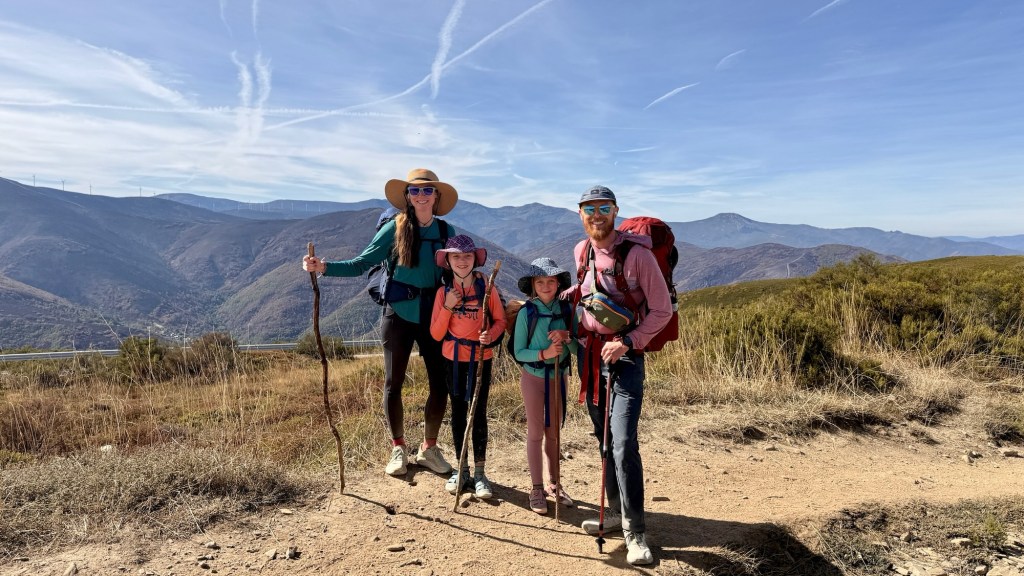

The next morning, our descent to Ponferrada demanded everything from our legs. Eight hundred meters down over nine kilometers, steep and rocky the entire way. Before we even left, the tightening mechanism on Max’s trekking pole failed, locking it at a uselessly short length. Rather than risk it collapsing mid-step, he decided to go without, inching down the mountain one careful “baby grandma” step at a time. The strategy worked — slow, steady, deliberate — and somehow his knees survived unscathed.
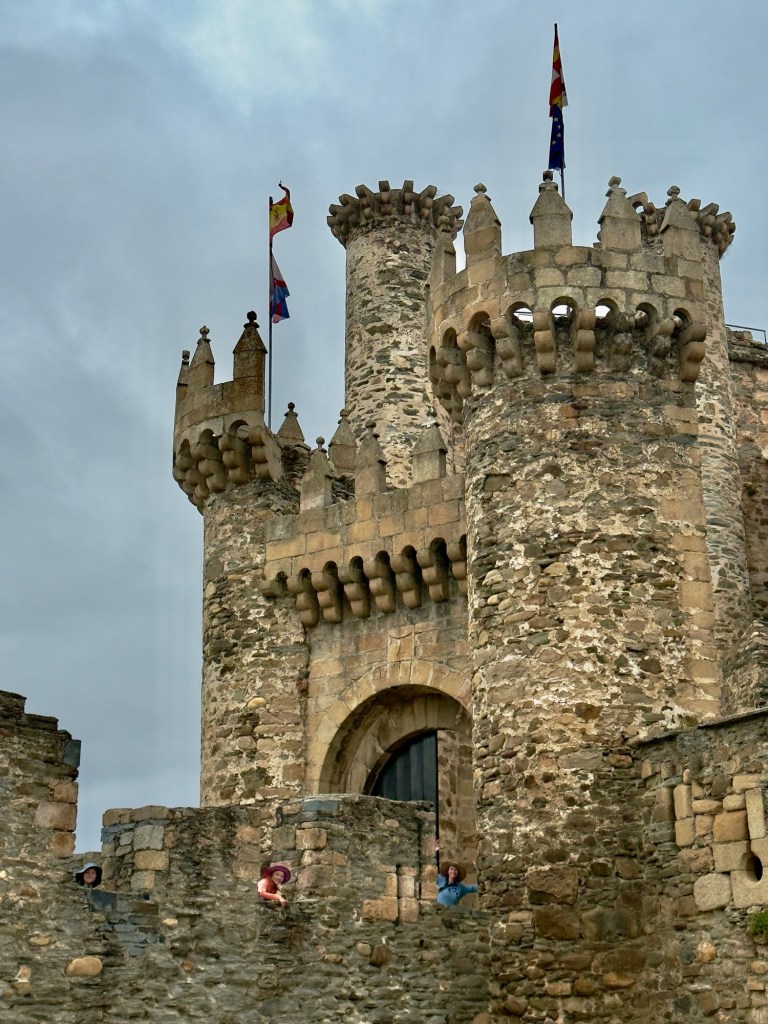
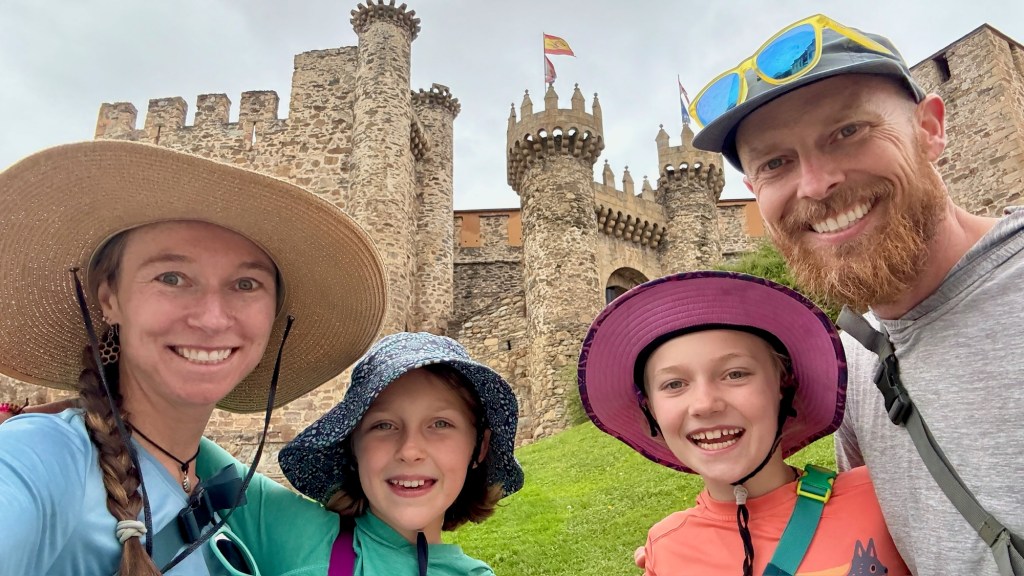
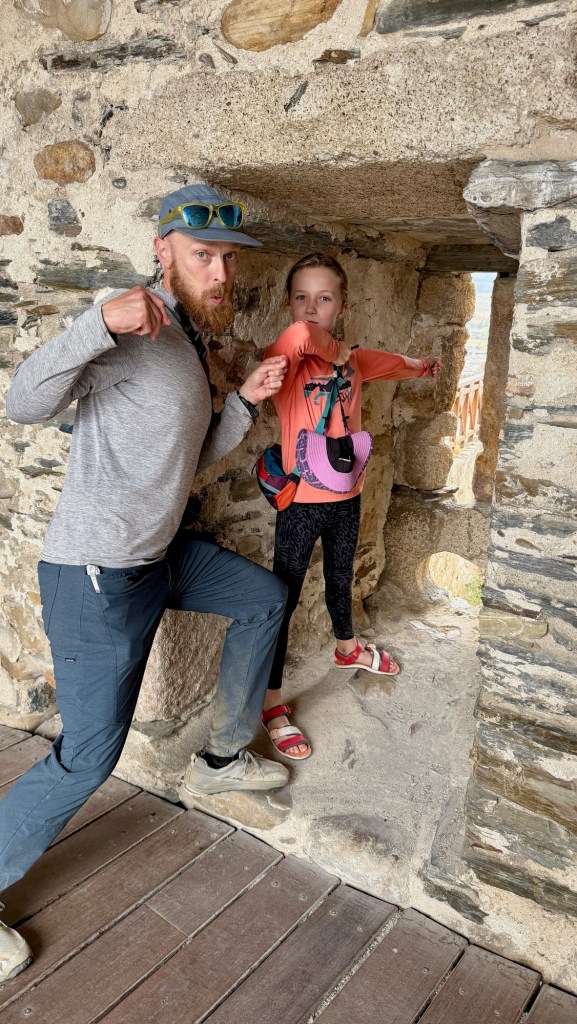
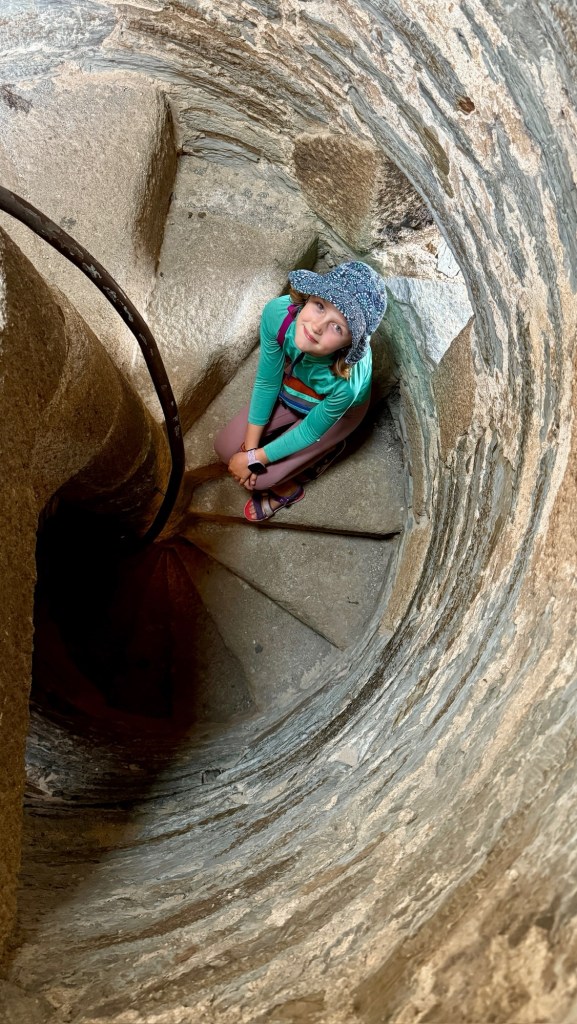
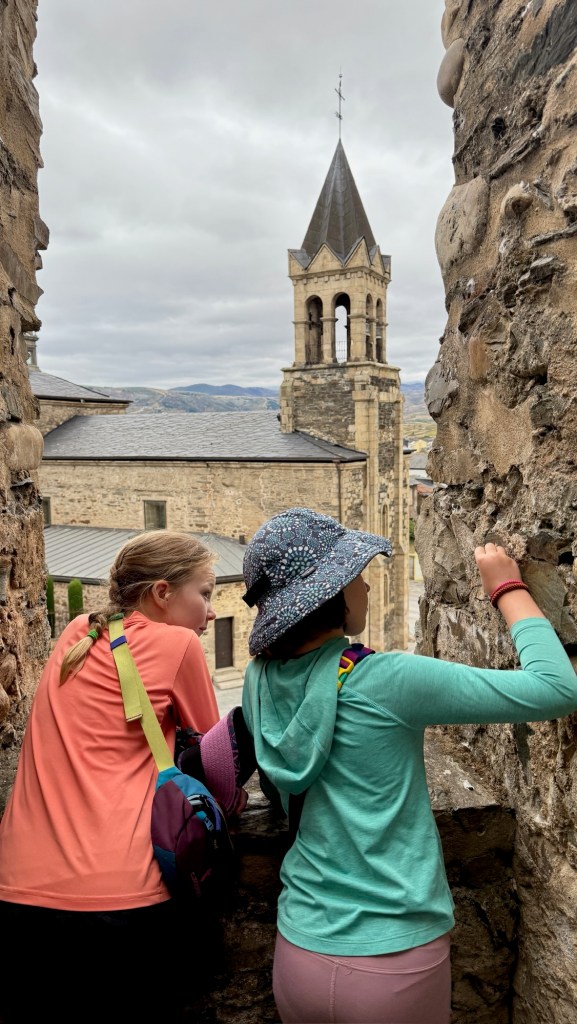
Finlee, on the other hand, was a completely different kid from the day before. It’s remarkable how children can rebound — how they can look so fragile one moment and unstoppable the next. She kept a running commentary the whole way down, chatting about castles, snacks, and the audiobook cliffhanger we’d left unfinished. By the time we reached town, the mood had shifted completely. We were laughing about yesterday’s chaos, devouring kebabs, and exploring the towers of the Knights Templar Castle like a family of wide-eyed explorers who’d earned their view.
It’s a funny thing about the Camino: the highs and lows never arrive on schedule. A terrible day can end with laughter, and a perfect morning can unravel before lunch. The only constant is motion.
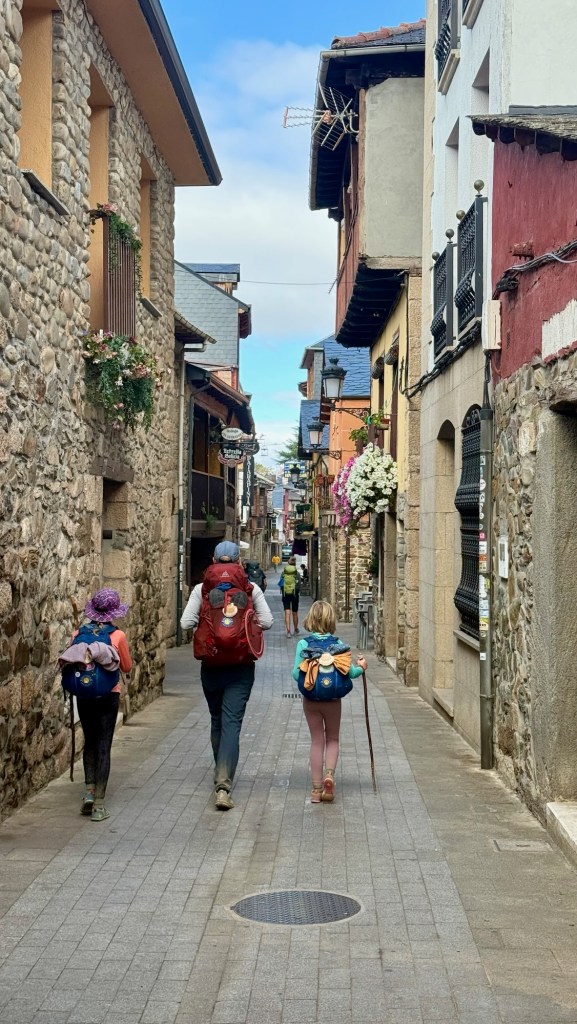
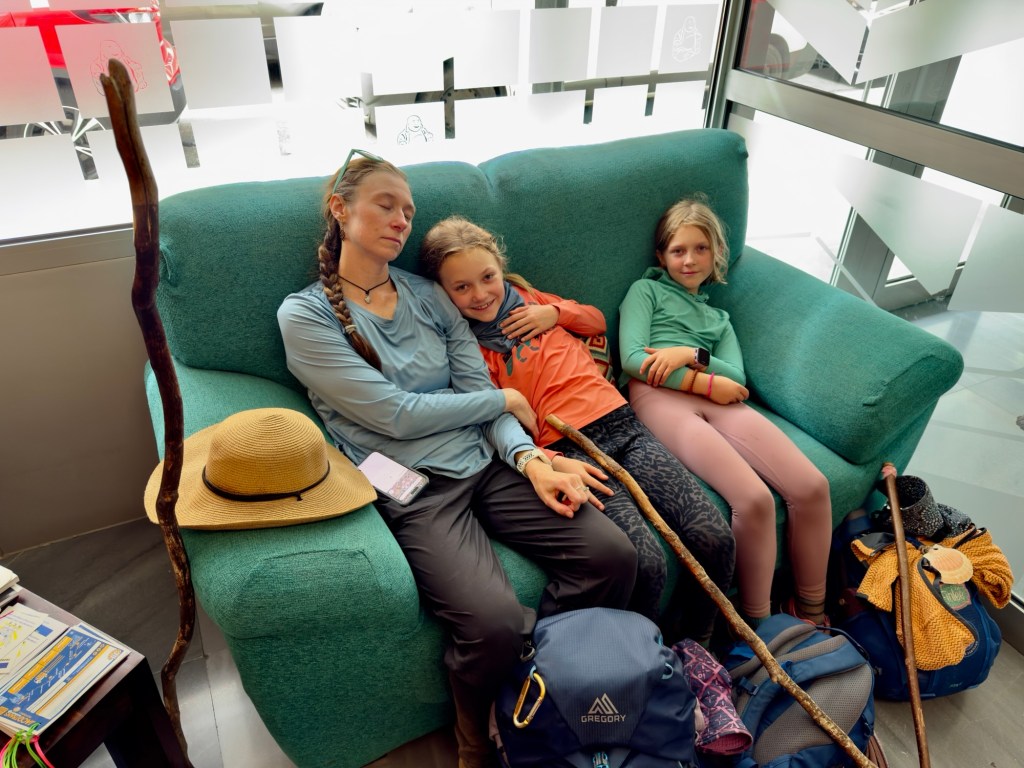
The day after Ponferrada began under a cloud of irritability. The girls were slow to pack, breakfast was bland, and Shaina’s cold was deepening. Then came a small navigational disagreement — the kind that happens on any family trip but somehow feels amplified when everyone’s tired and walking fifteen miles a day. Six minutes off course led to six minutes of silence. The Camino gives you all the space in the world to stew in your stubbornness, and then, if you’re lucky, it gives you a nudge out of it.
“Is this really worth fighting about?” Arya asked. “Are you ready to be friends again?” added Finlee.
Just like that, the tension broke. The girls had done what the Camino often does for us — reminded us that the important thing isn’t who’s right, but that we keep walking together.
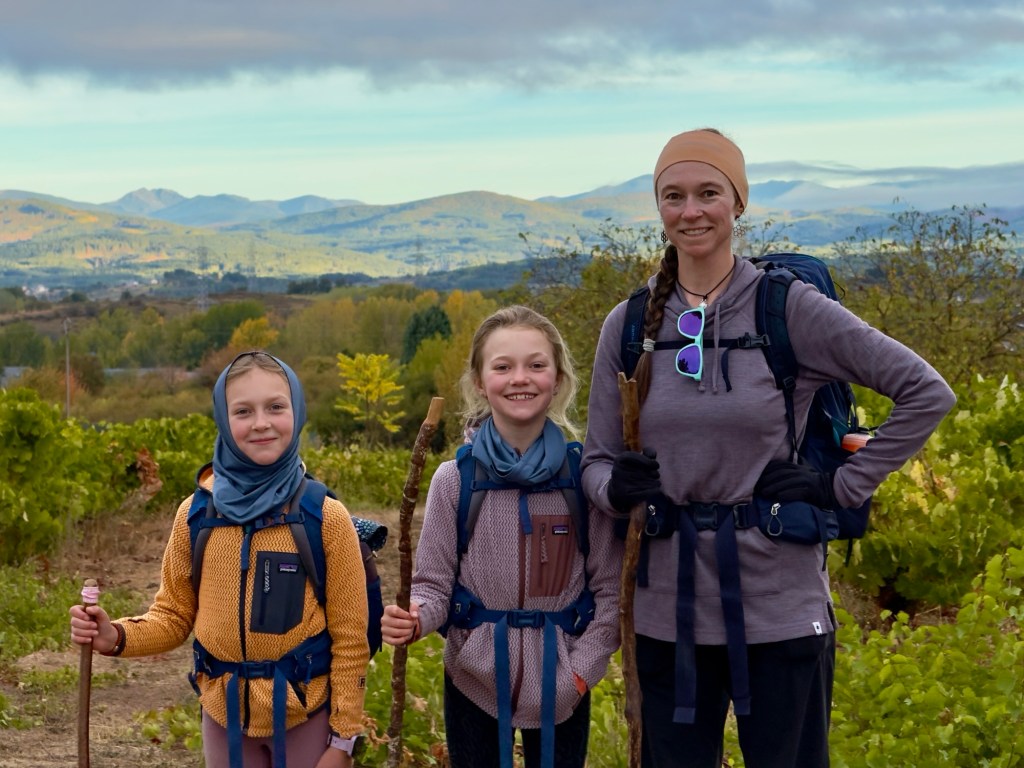
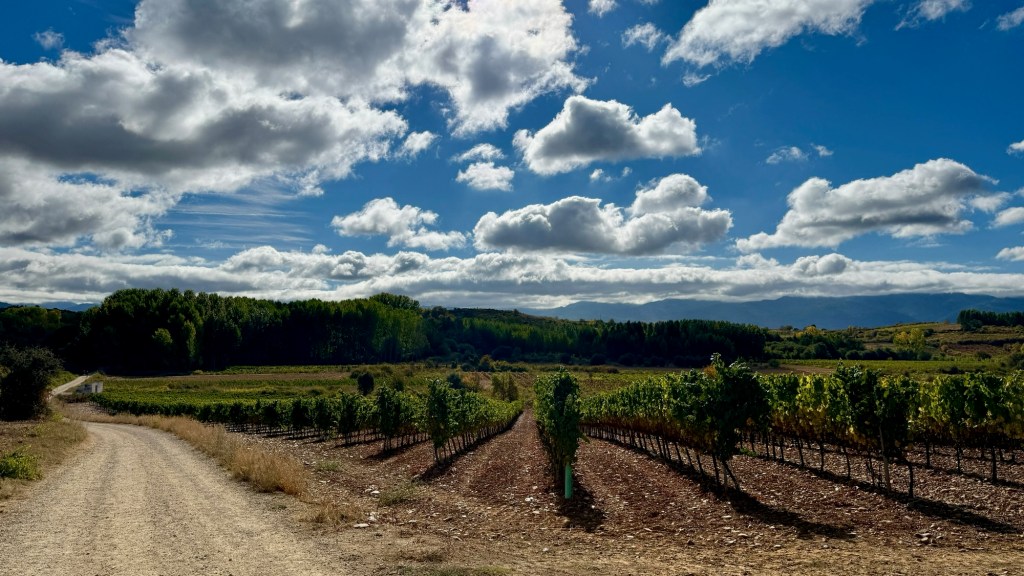
That day softened from frustration into calm. The trail wound through quiet villages and vineyards, the air warming into afternoon. We stopped for coffee and tortilla, and a waitress offered Max an orphaned walking stick that had been sitting by the door for a week. He took it as a sign that even the Camino’s losses sometimes circle back in disguise.
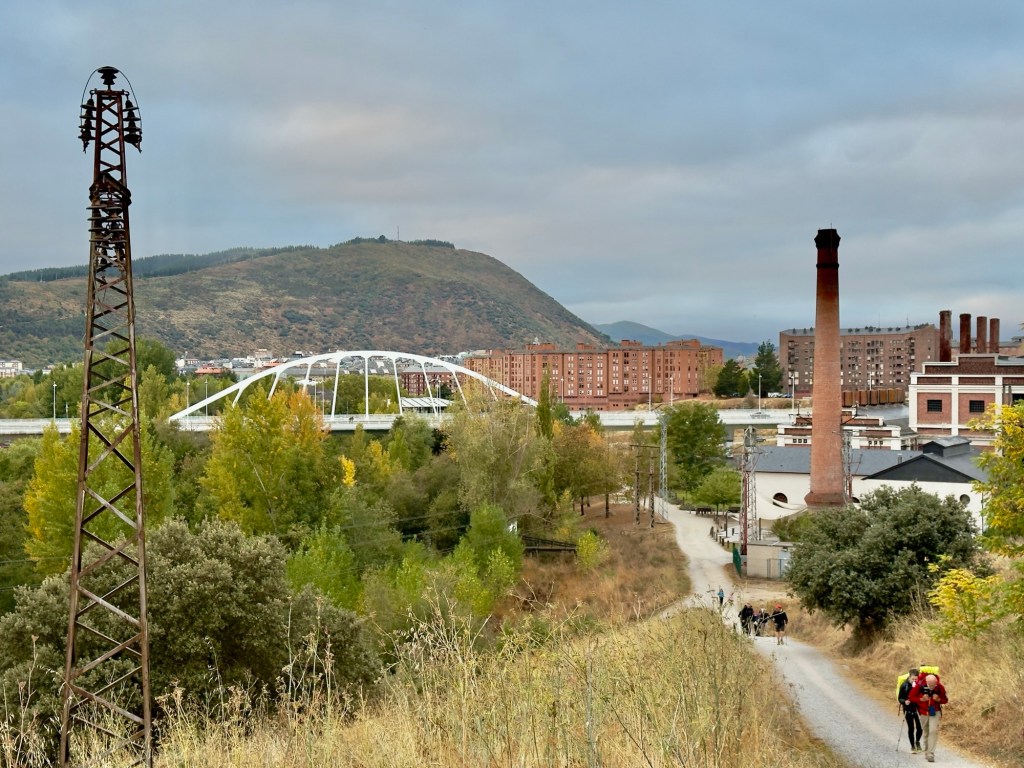
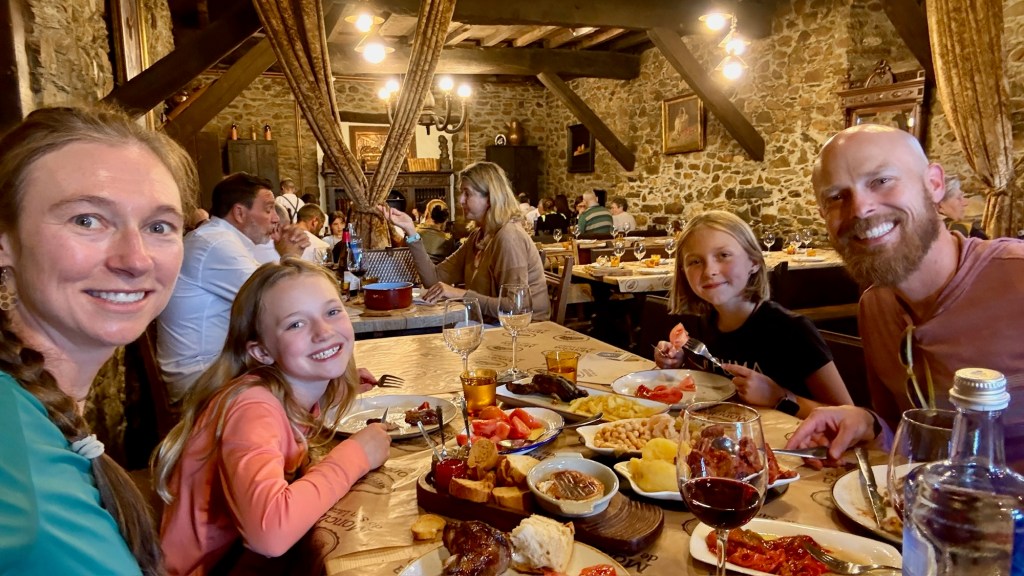
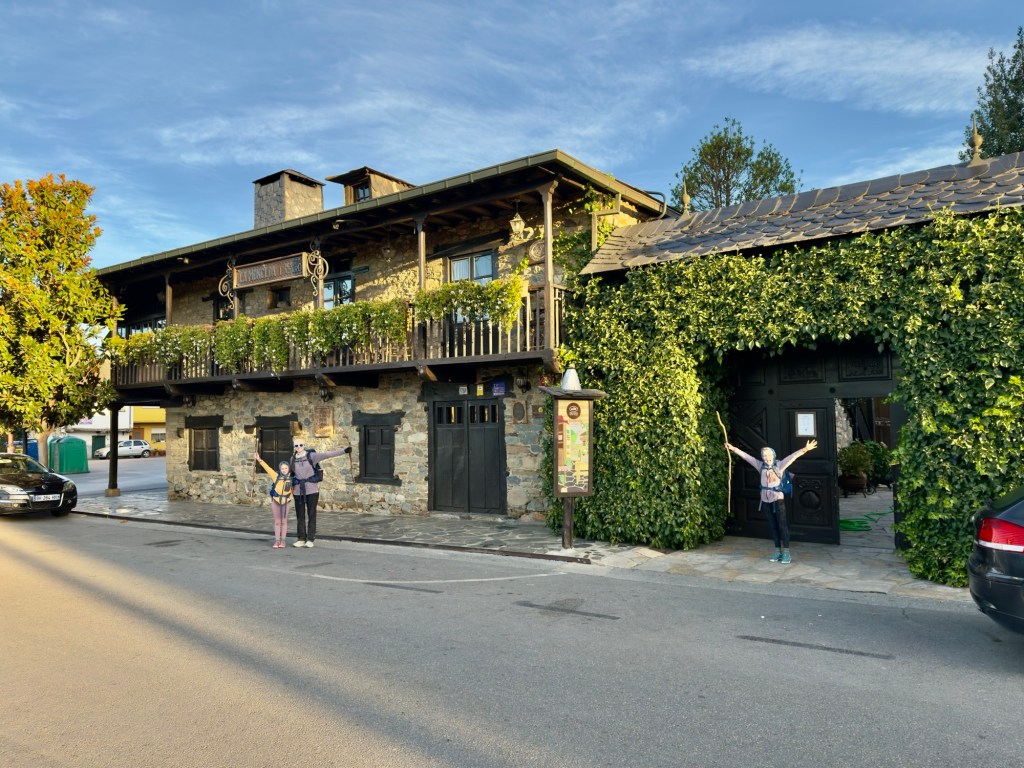
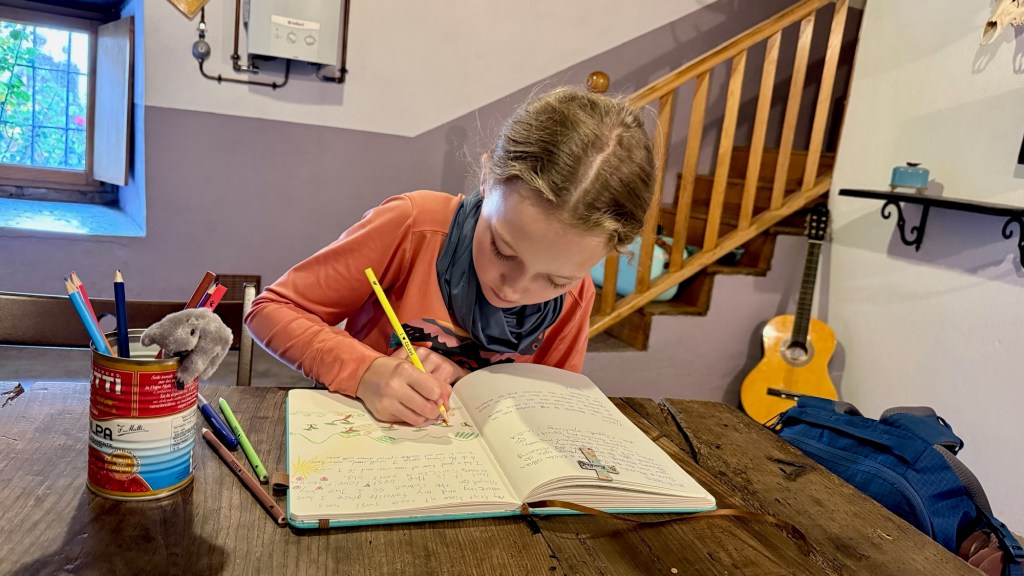
By late afternoon, we were in Cacabelos, smiling from ear to ear after the beautiful walk through rolling hills blanketed with vineyards of autumn colors. We had unintentionally stumbled across the local “place to be, and be seen” on a Sunday afternoon—Moncloa de San Lázaro, where it seemed every Spaniard within a ten mile radius congregated that afternoon. It was all at once a country store/hotel/restaurant/garden, providing a maze of plentiful spots to share food and laughter together. Soon we were sharing a meal of roasted lamb, goat cheese with chutneys, and a strange chorizo-and-cabbage stew that turned out to be delicious. In the garden afterward, Arya and Finlee shaped bits of slate into pretend spearheads while we journaled and sipped local vermouth over ice with lemon. For a moment, life was perfectly still and sweet.
And then the Camino took again — not cruelly, just as a reminder that stillness is temporary. The next morning, Shaina’s cold worsened even more, Arya started sniffling, and another long day loomed ahead. But first came one of the Camino’s most memorable gifts: Casa Susi in Trabadelo.
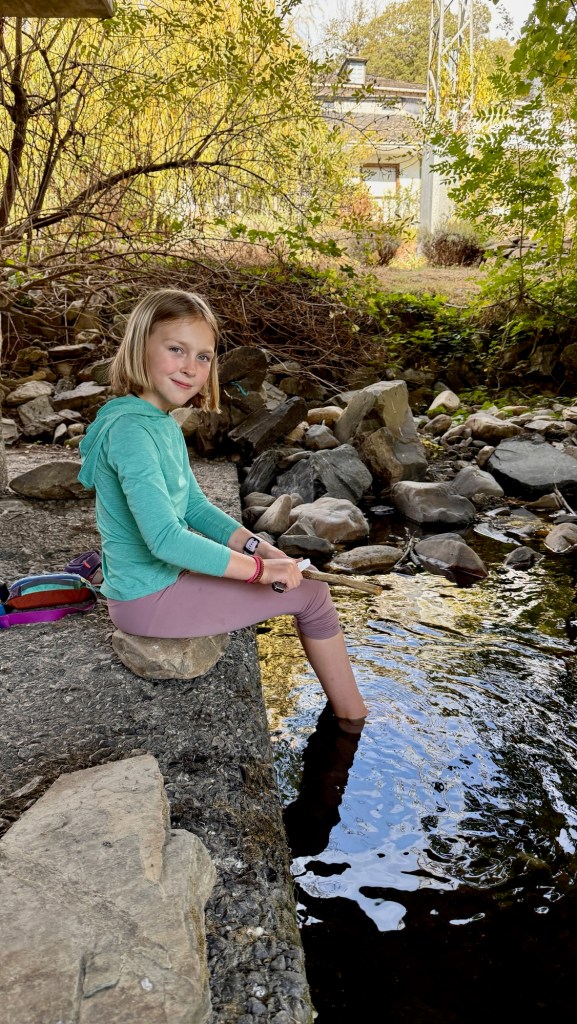
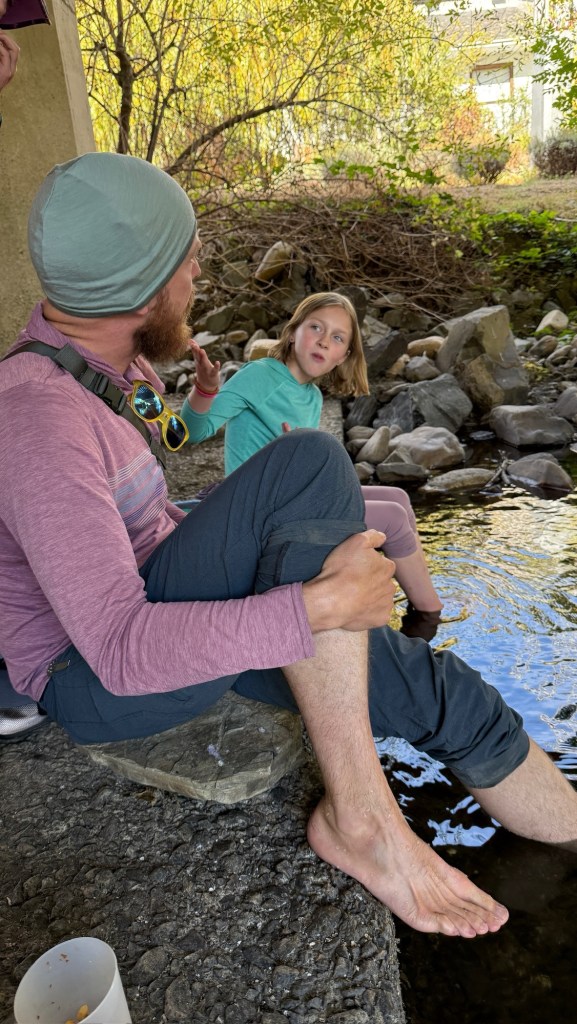
Casa Susi isn’t just an albergue; it’s a small act of kindness built into a 300-year-old farmhouse. We arrived hot and dusty to find Fermín waiting with glasses of homemade herbal iced tea, and the simple gesture nearly undid us. Inside, the air smelled faintly of wood and clean linen. The walls carried centuries of stories, and somehow, the place felt like a pause button. Down by the river, Shaina and Finlee plunged their feet into icy water and laughed through the shock. Max lasted all of sixty seconds before retreating to dry land in defeat — another quiet lesson in humility from his nine-year-old daughter.
Dinner at Casa Susi was one of those long Camino evenings that feel like they belong to another era. Eleven pilgrims sat around a single table with their courteous hosts, eating vegetarian dishes and sharing stories until late. There was laughter, a few tears, and that rare sense of connection that comes from knowing you might never see these people again, but in this moment you belong to each other. The Camino gives us strangers who feel like friends we were meant to meet.
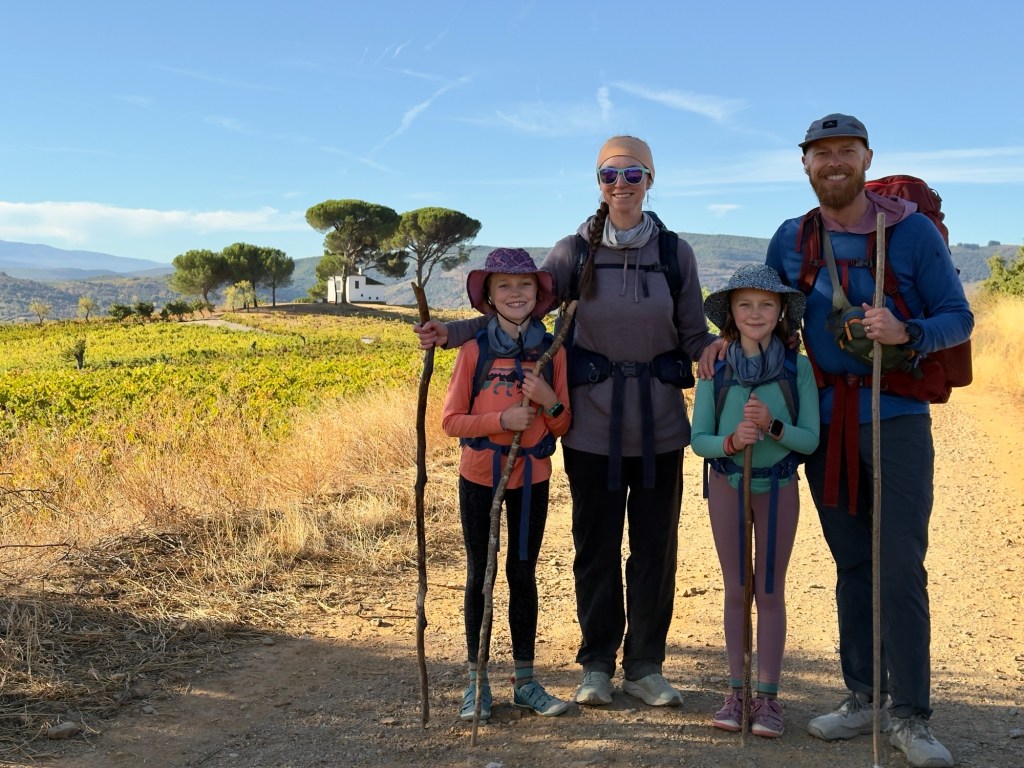
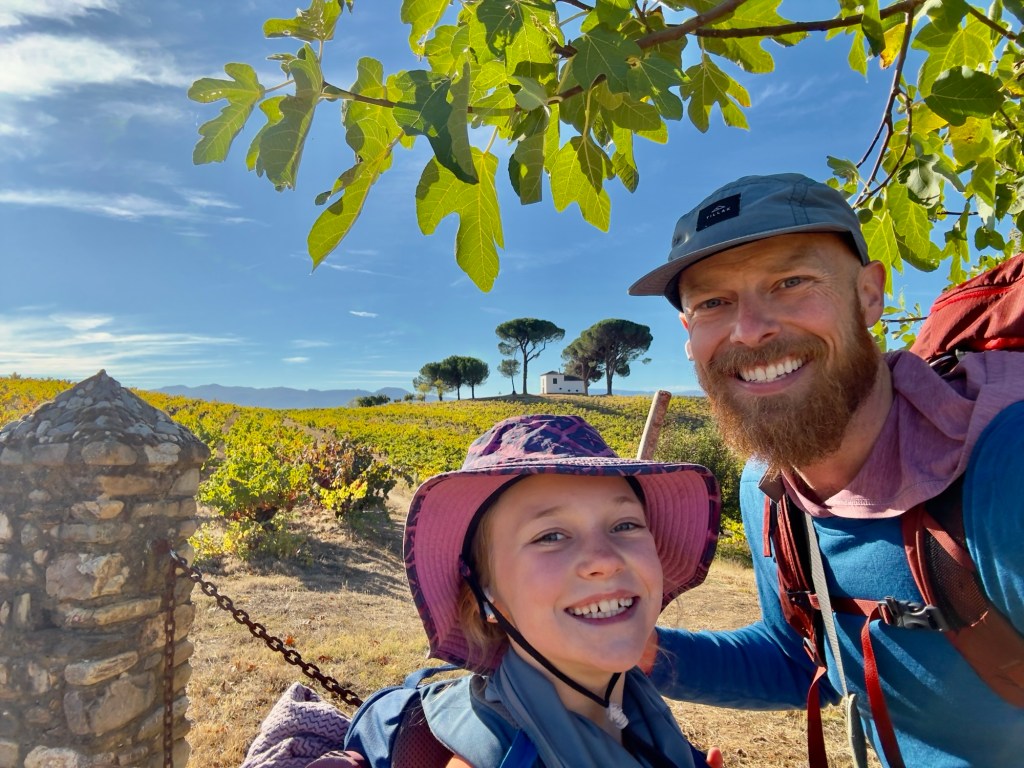
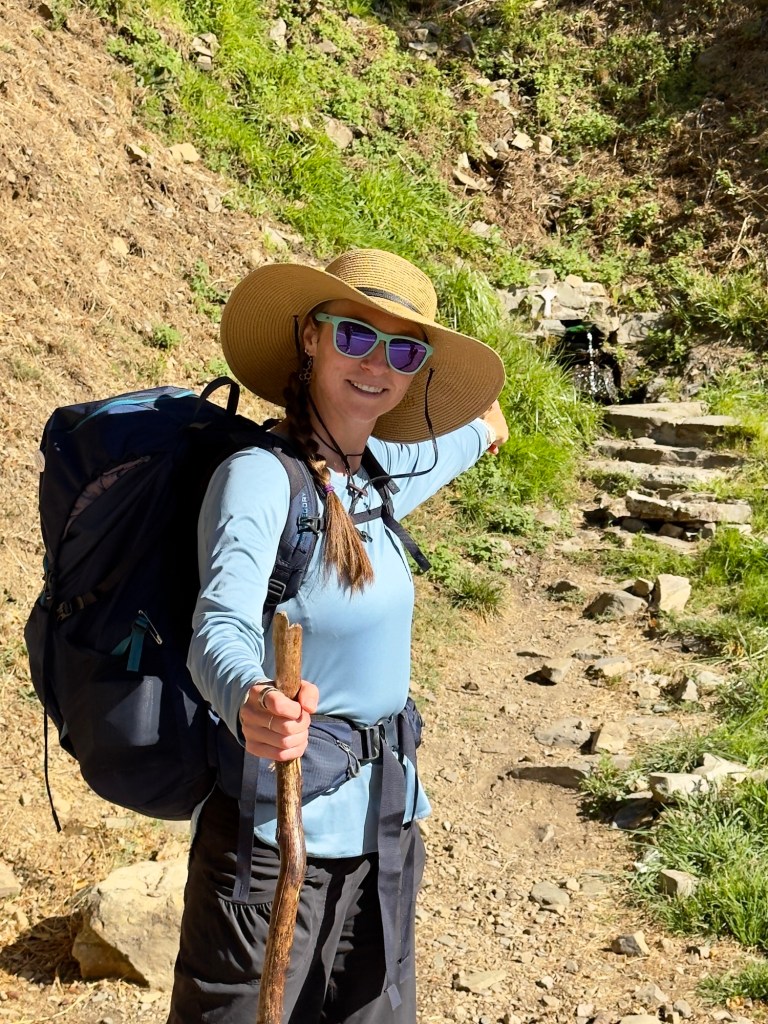
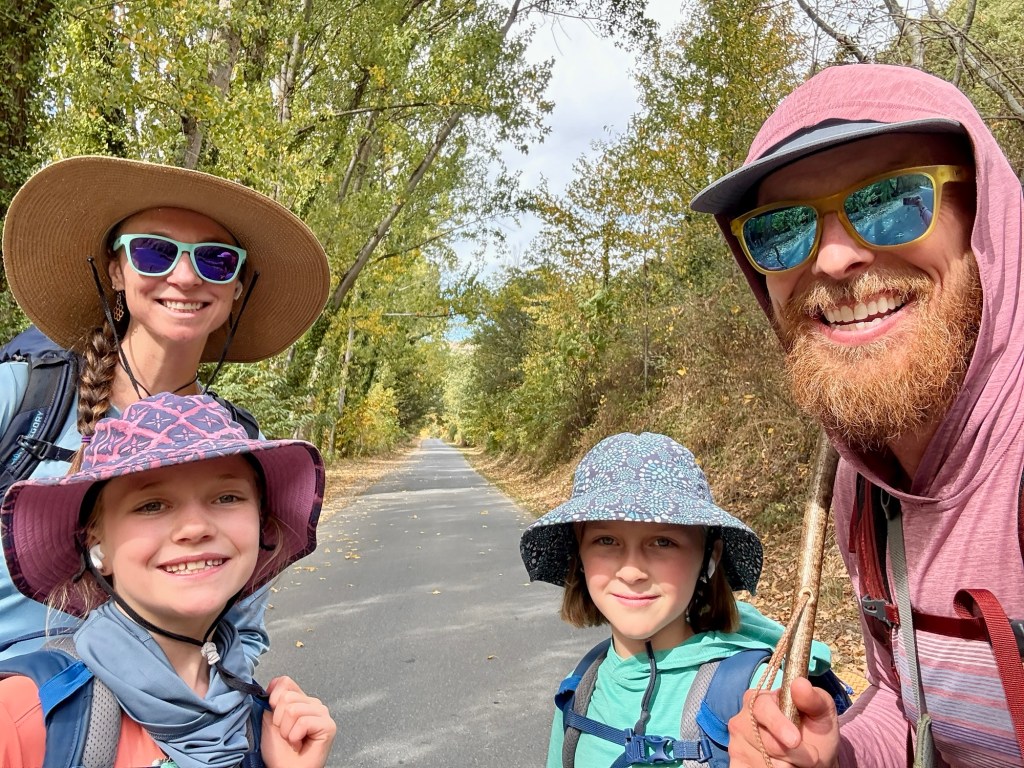
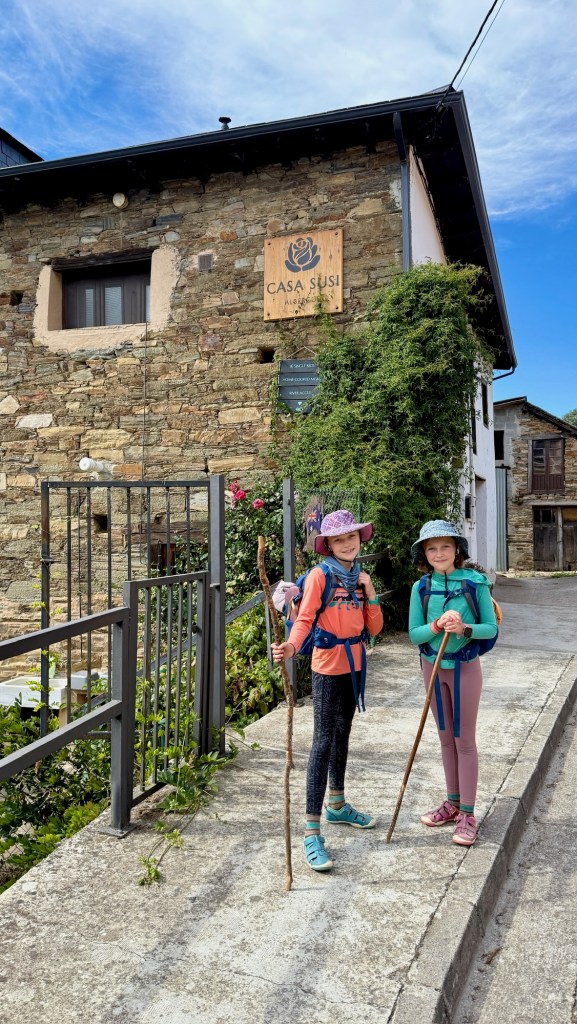
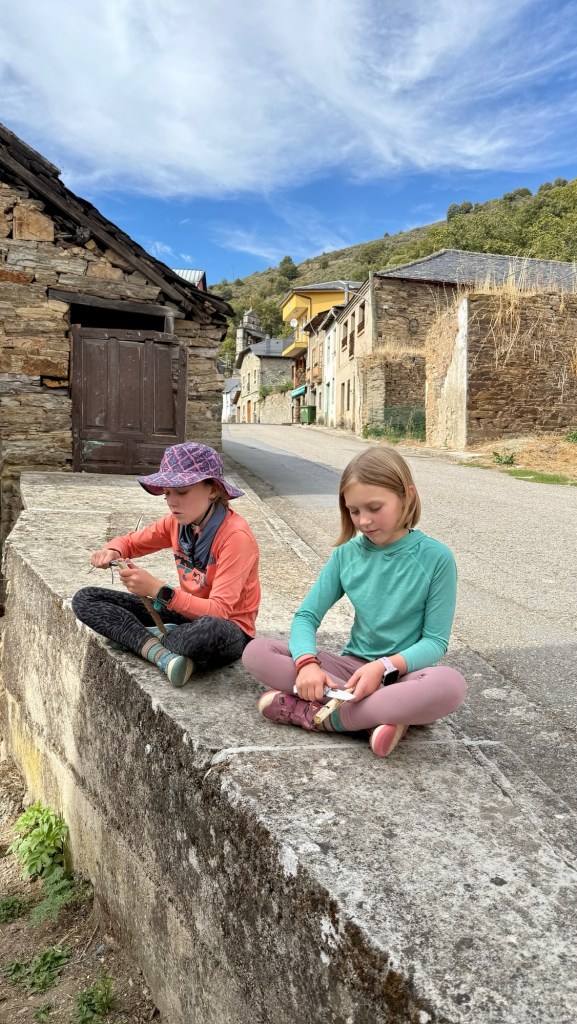
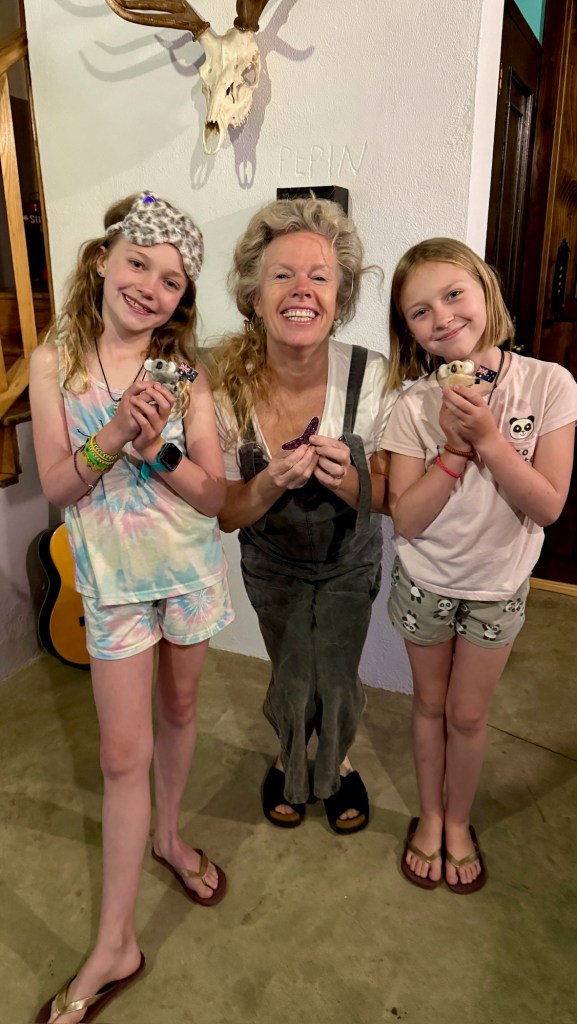
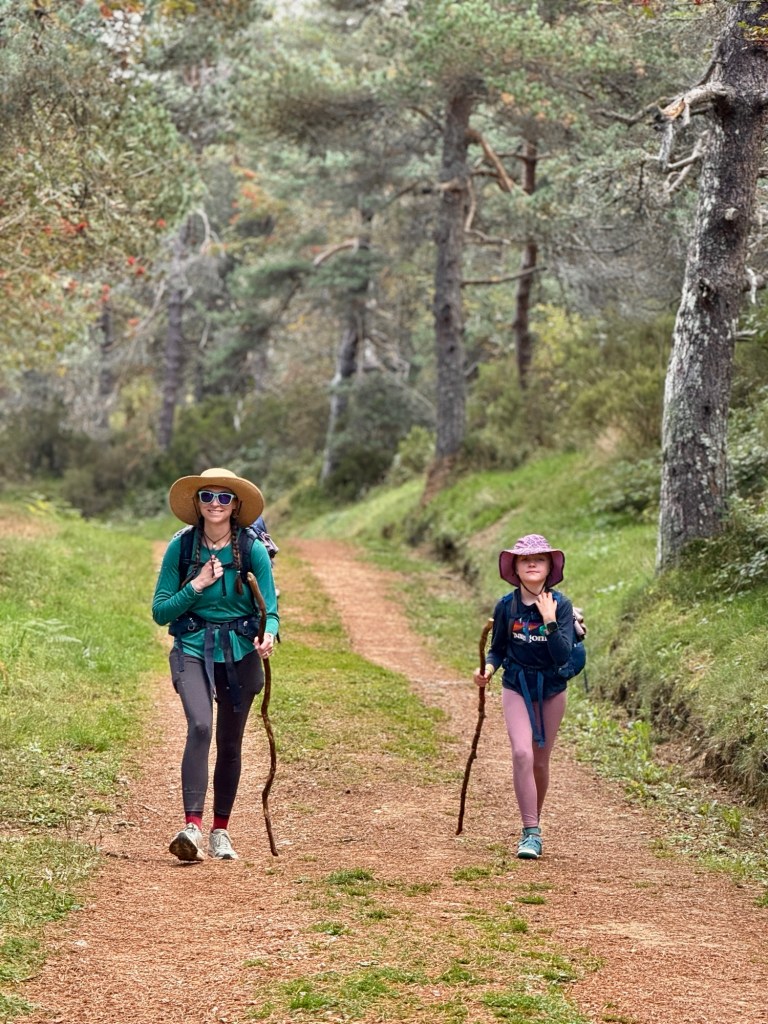
The following day was short — just ten kilometers — and easy on the legs. The trail followed the Río Valcarce, the water glinting through chestnut groves. Near Las Herrerías, a woman named Cynthia from Yosemite stopped us, pressed two €20 notes into Max’s hand, and said she wanted Arya and Finlee to have them for souvenirs in Santiago. “They remind me of my grandkids,” she said. It was a simple gesture, but it hit deep. Kindness on the Camino always does.
That night, though, the cycle turned once more. Shaina and Arya’s colds worsened, and tomorrow’s stage promised one of the biggest climbs of the entire journey. Still, we rested, because what else can you do?
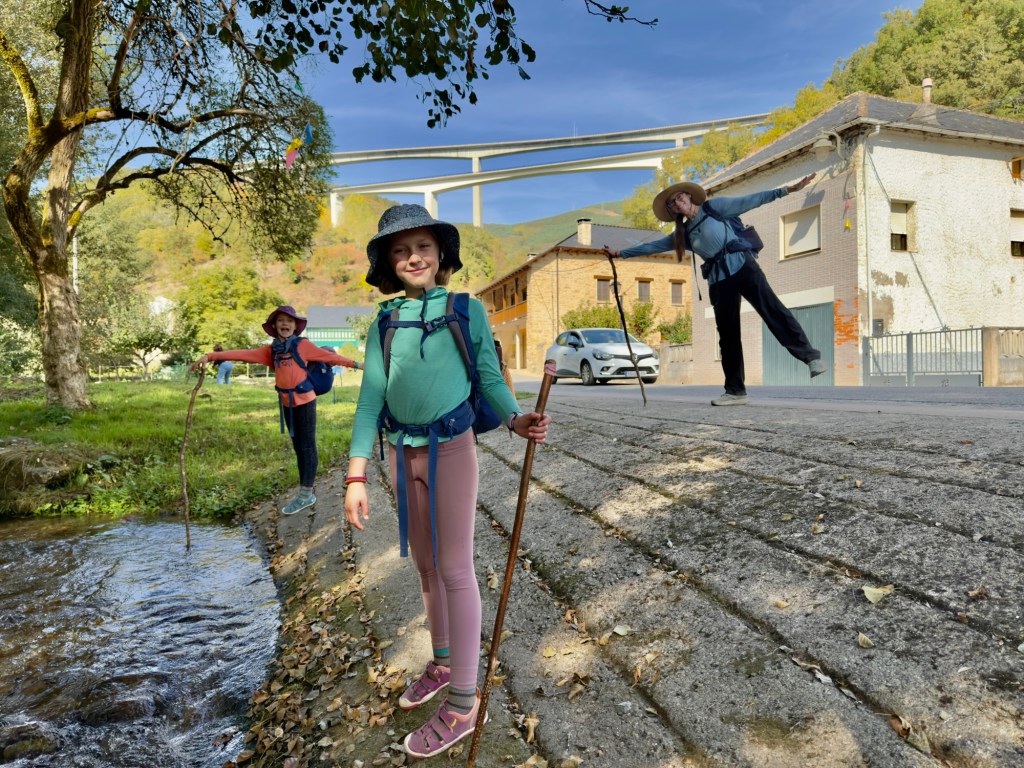
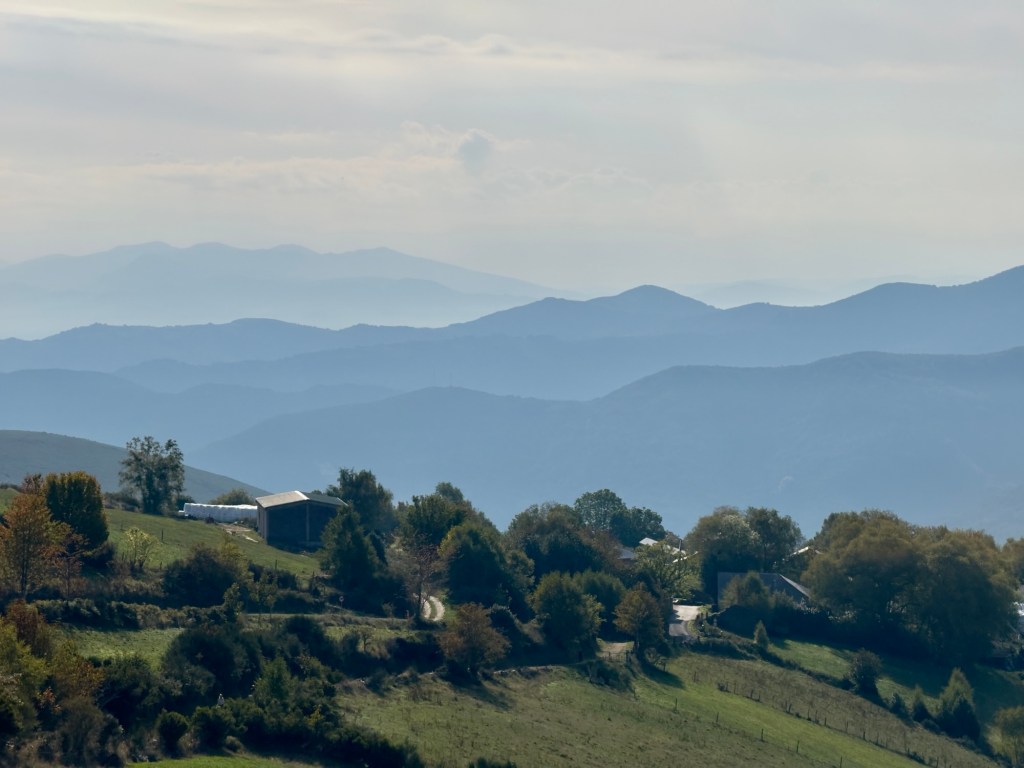
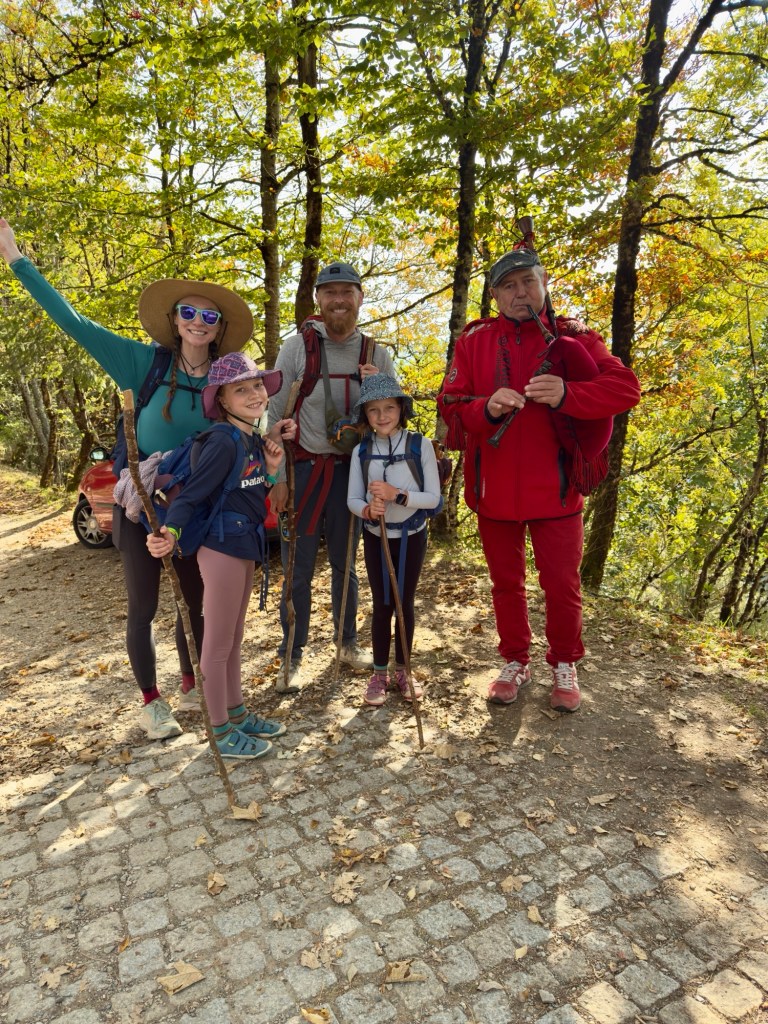
And then came the climb — 935 meters up, 21.5 kilometers across, and the hardest day of the Camino. The road from Las Herrerías to Fonfría is less a trail than a test. By mid-morning, both Shaina and Arya were drained, feverish, and moving on determination alone. But they never stopped. Every rest became a small victory. Every curve in the trail revealed new beauty — mist over the valleys, stone houses half-swallowed by fog, and the haunting sound of Galician bagpipes as we entered the ancient hilltop village of O Cebreiro. The melody alerted us to the long Celtic traditions held in these hills, and it carried through the mist like a memory from another world.
We thought the climb was done, but the Camino had one more test — the rise to Alto do Poio, “the high place.” The final stretch wound gently upward beneath a clear, cloudless sky. The air was warm and still, the kind that sticks to your skin and makes every step a small furnace of effort. Sweat beaded and rolled as we made our slow push toward the top. Ahead of us, the silhouettes of other walkers curved along the ridge, steady and small against the vast sweep of the mountains. We turned up our audiobook du jour, The Girl Who Drank the Moon, and kept moving.
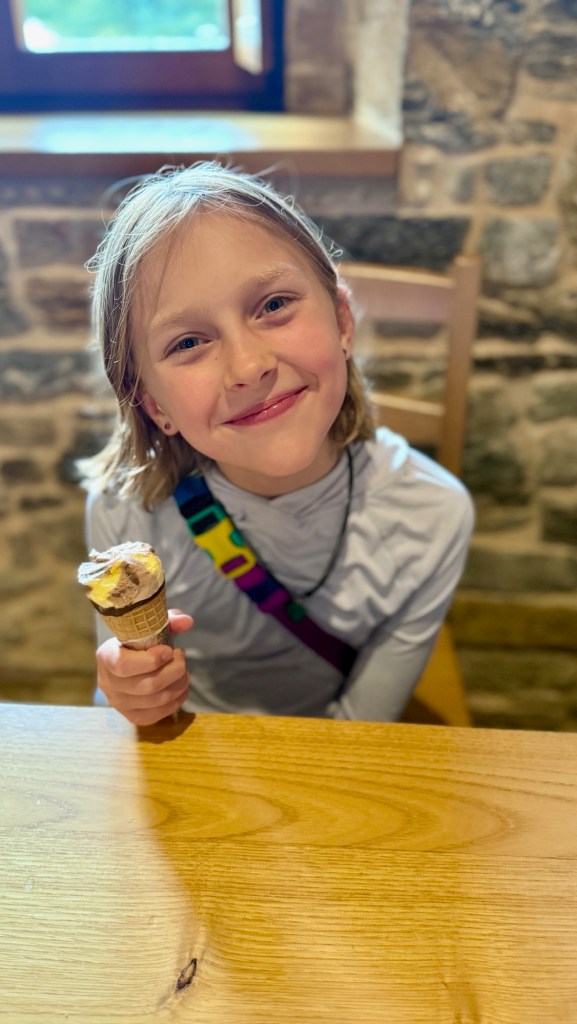
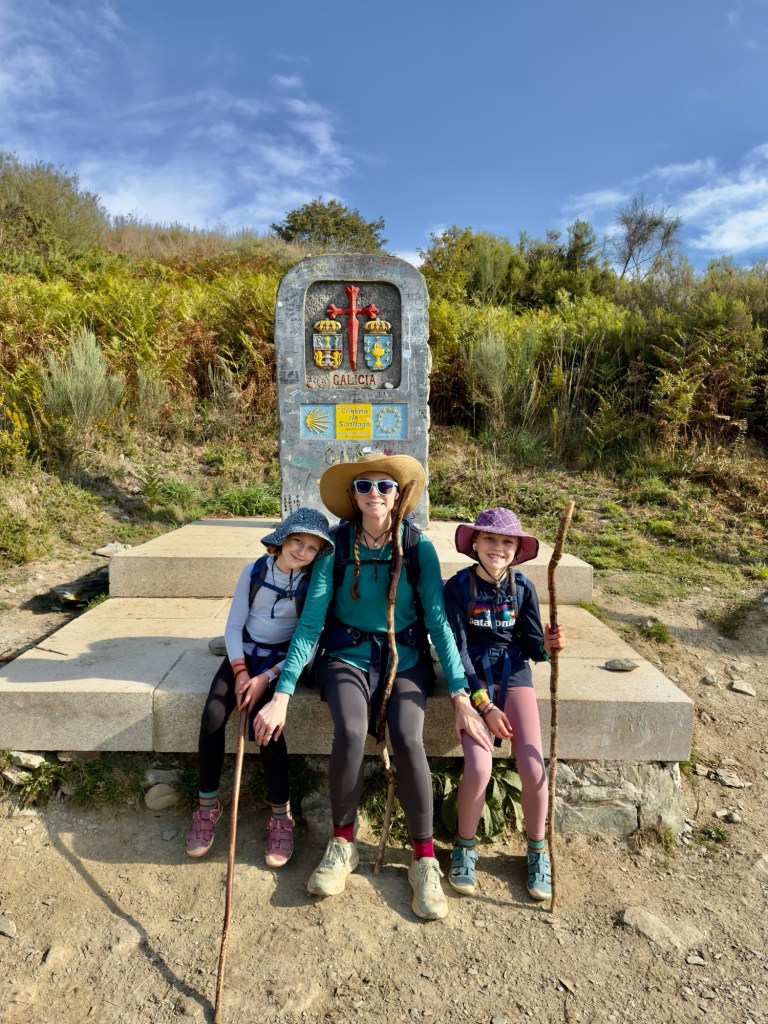
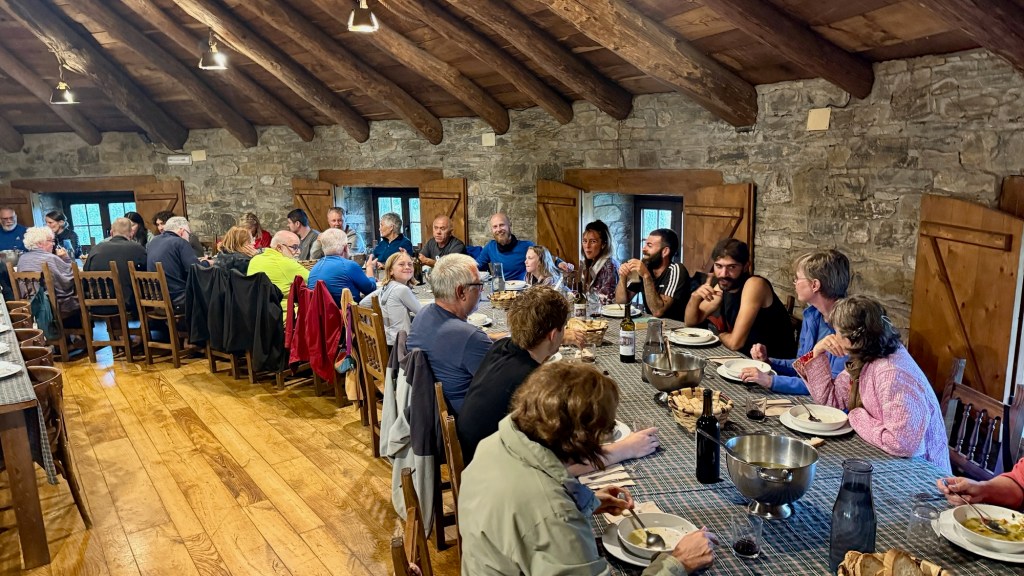
Eight hours and twenty minutes after setting out, we reached Fonfría — exhausted, proud, and grateful beyond words. Lula and Miguel, who run the albergue there, welcomed us with open arms and hearty food served inside a palloza, a traditional Galician roundhouse, its thick stone walls and thatched roof holding in the day’s warmth. We ate traditional Galician vegetable soup, slow-cooked meat, and the simplest dessert in the world — Tarta de Santiago, an almond cake dusted with sugar and marked with the cross of Saint James. Around us, Spaniards laughed, Italians chatted, and our little family of four joined right in — swapping stories, laughing at shared jokes, and keeping up as best we could in the lively mix of languages. Despite our exhaustion, the room buzzed with an easy joy, and we stayed until the plates were cleared and conversation finally gave way to yawns.
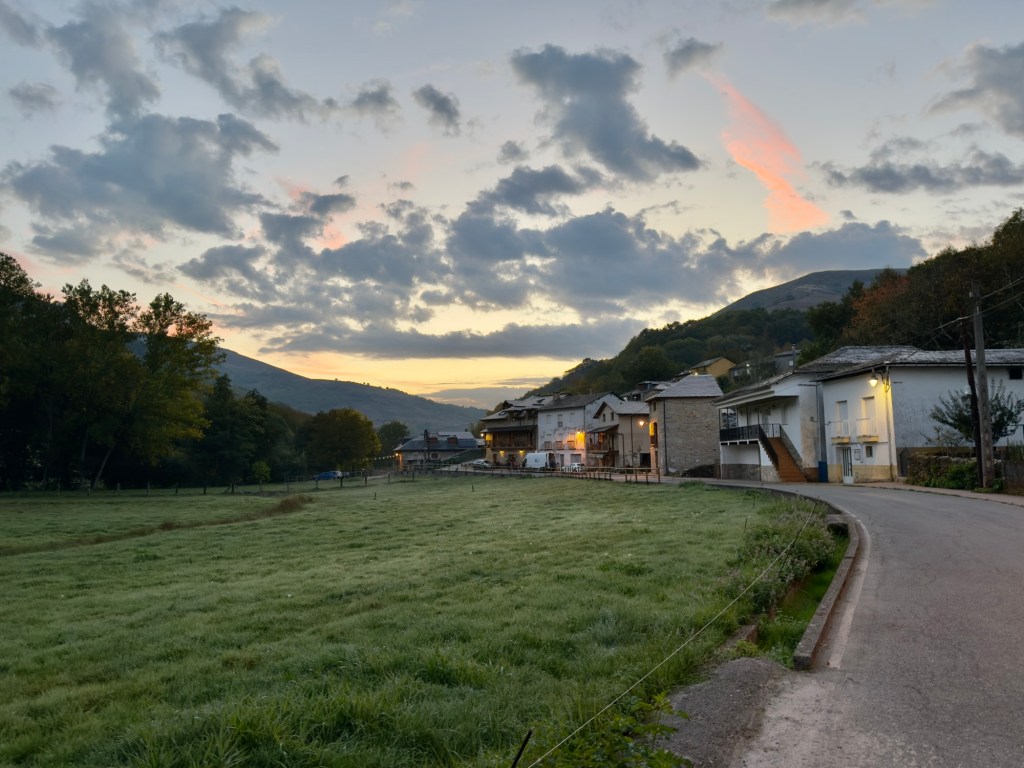
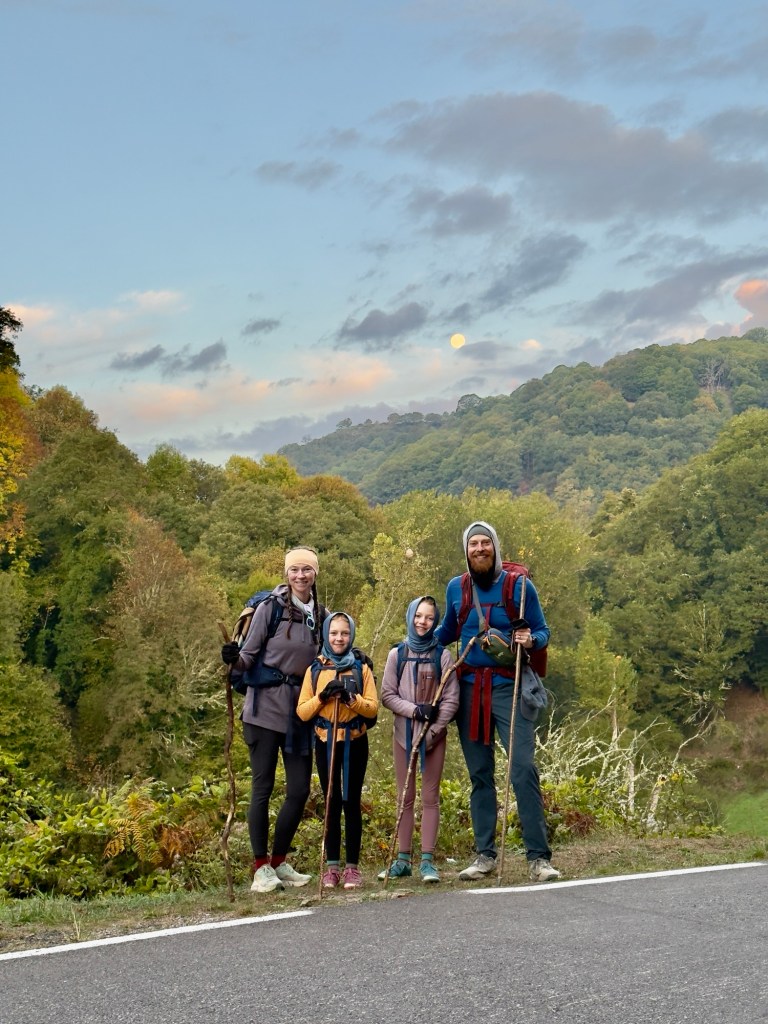
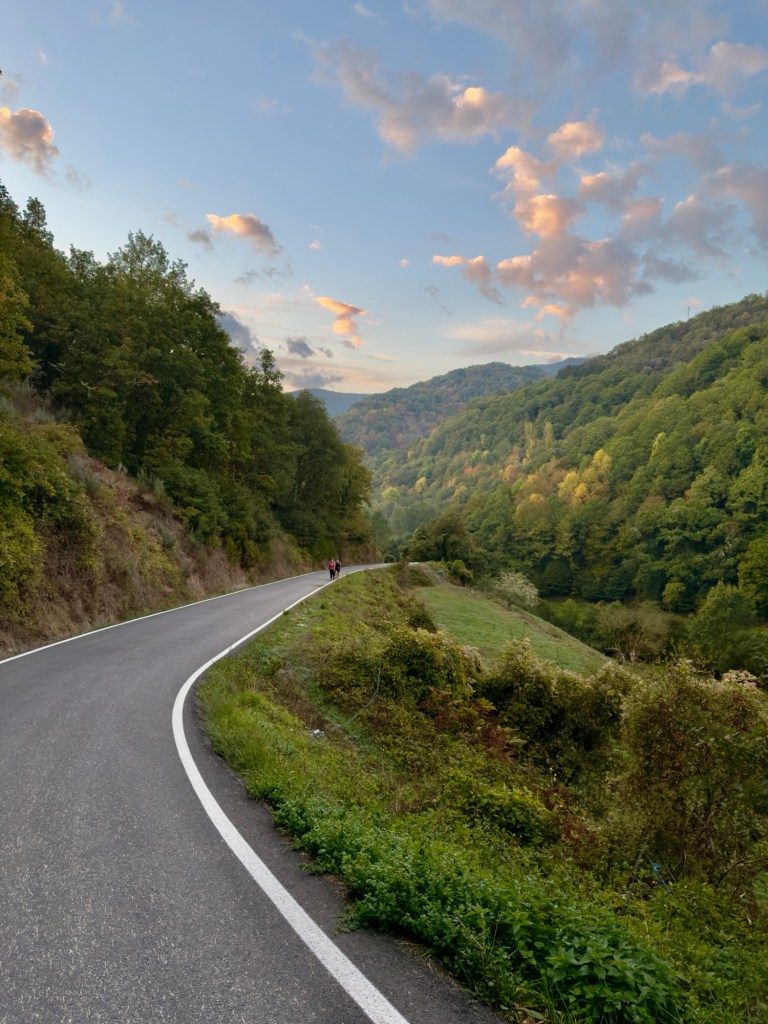

The Camino gives and takes. It tests and restores. It strips you down to your simplest self and then fills you back up with exactly what you didn’t know you needed — a stranger’s kindness, a shared meal, a reminder that rest is part of the journey too.
We’ve learned that walking this road isn’t about endurance alone. It’s about trust — in our own feet, in each other, and in the quiet line of people who have walked this same way before. The path asks only that we keep moving forward, together, one step at a time. And somehow, that feels like the truest metaphor for life there is.

 Pause and Wander
Leave a reply to typhooncoral7eb49615d6 Cancel reply