
Dates: March 16th-18th, 2026
Place: Taipei, Taiwan
The first lesson Taipei taught us came at a metro station one morning. We were all in the station but on the wrong side of the platform, which meant going up and over the tracks via a bridge connecting the two staircases. We’d made it to the top of the first set of stairs when a train pulled in on the correct side.
Shaina and Finlee took off across the bridge, flew down the far stairs, and leapt onto the train. Then Shaina started holding the doors open, as any good daughter/wife/mom would do.
A security guard rushed over, and in no uncertain terms, began yelling in Taiwanese, presumably telling her she absolutely could not do that. On the bridge above, Missi was sprinting—properly sprinting—across the overpass and trying to get down the stairs fast enough. One missed step from a trip-ending disaster. Possibly worse.
And for what? The zoo wasn’t even open yet.
Missi made it to the platform alongside Arya and Max just as the security guard made his position definitively clear—by pressing Shaina and Finlee into the train as the doors closed. The rest of the group were left standing on the platform watching them recede down the track with expressions of perplexed abashment.
Left behind, the stragglers found some seats, waited a few comfortable minutes for the next train, and made their way to the zoo. Shaina and Finlee were waiting at the entrance with the particular expression of people who know they were wrong but are trying to look casual about it.
We then had a quiet and loving conversation about how no destination is worth a 71-year-old sprinting across a metro bridge, particularly when the alternative costs a mere few minutes of patience and nothing else.
That became the operating principle for the rest of our time in Taipei.
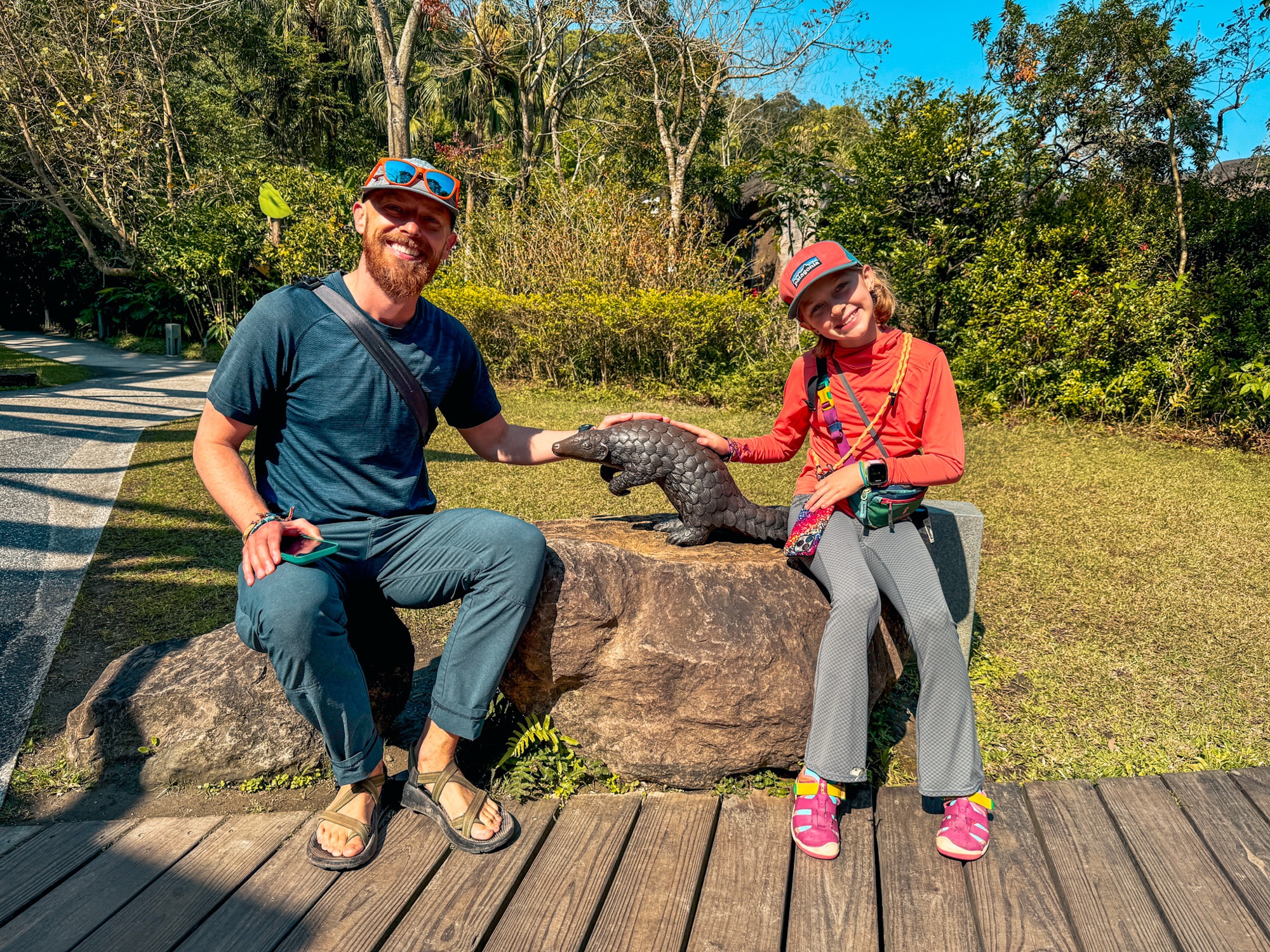
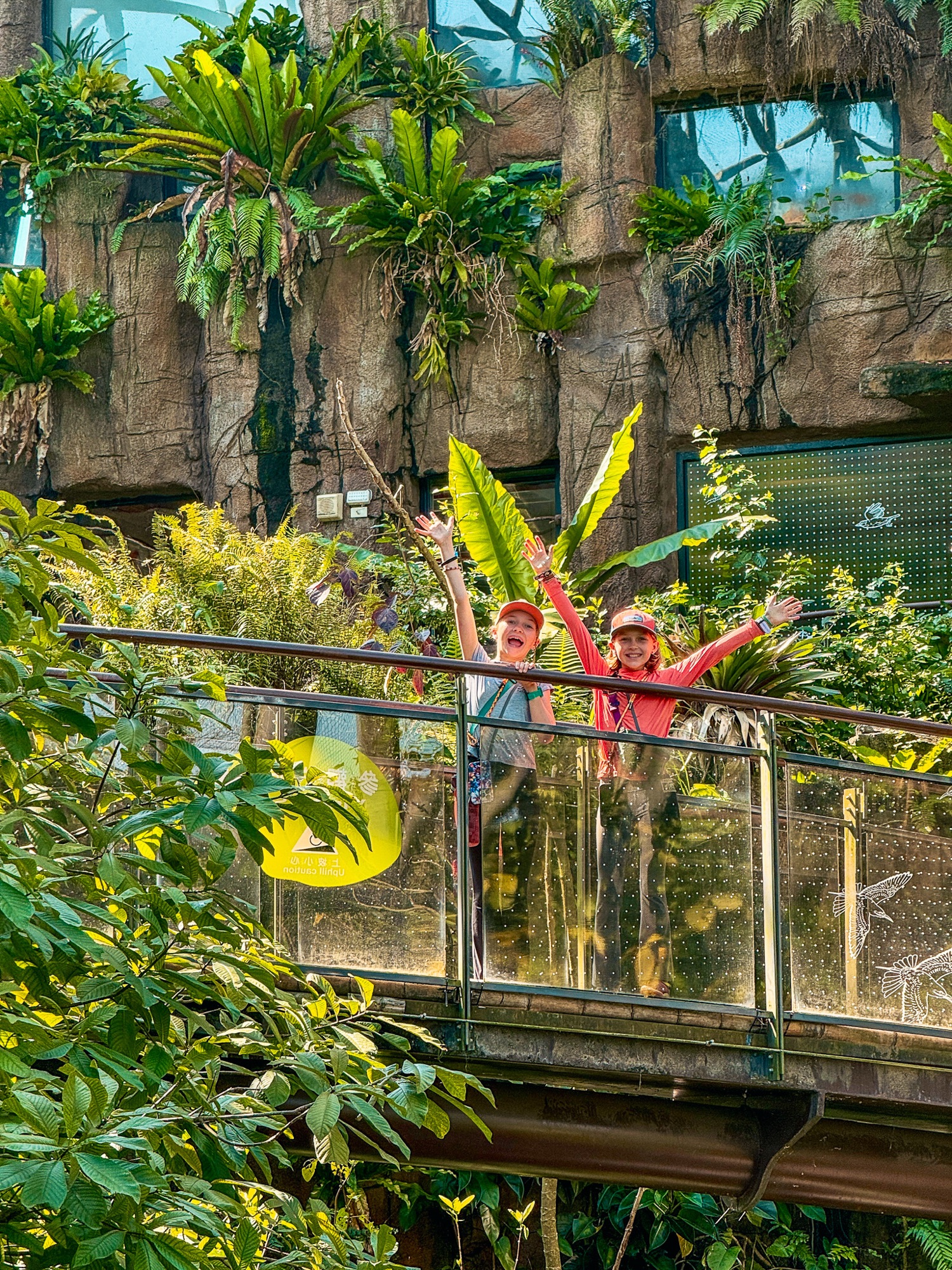
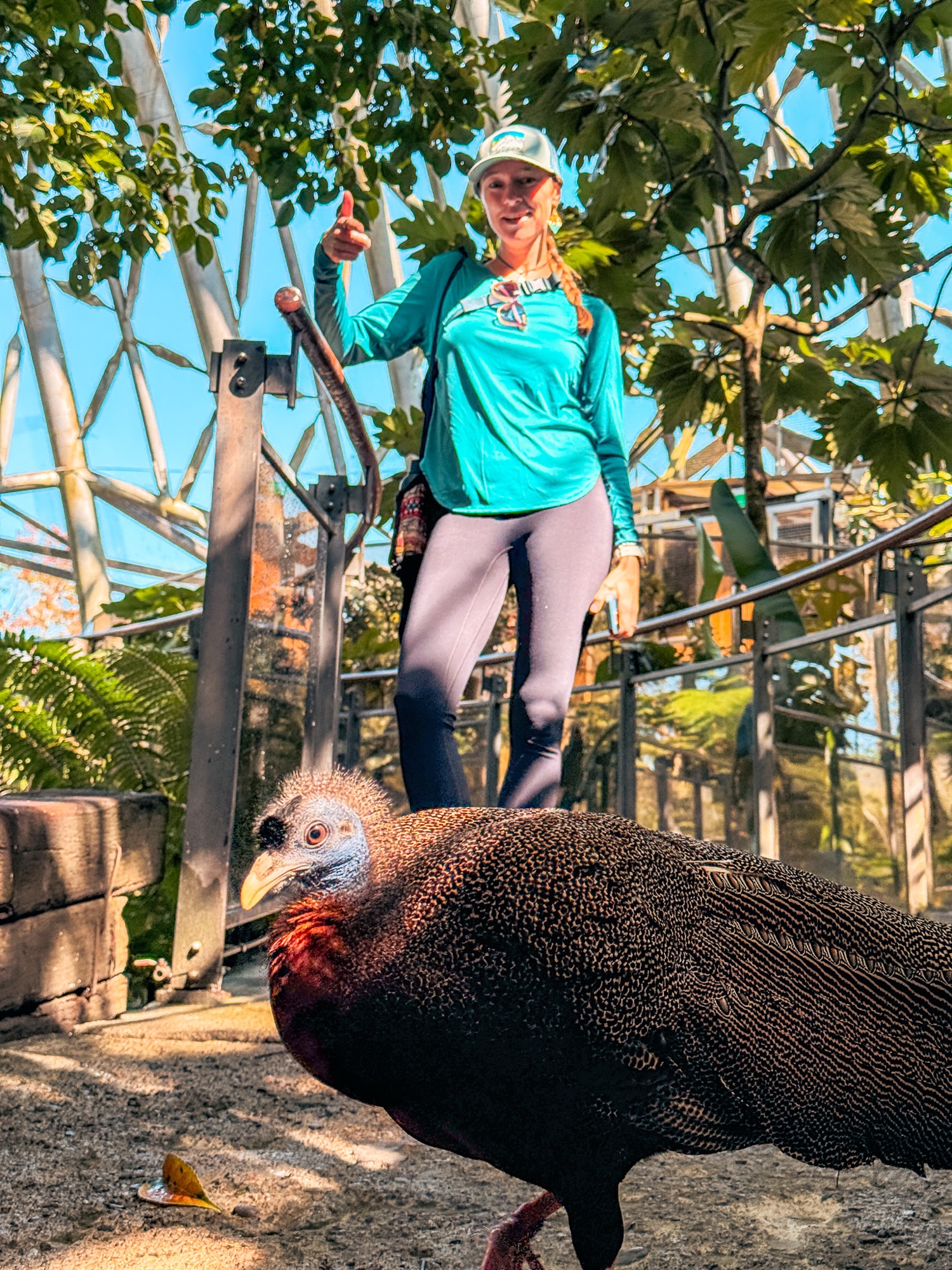
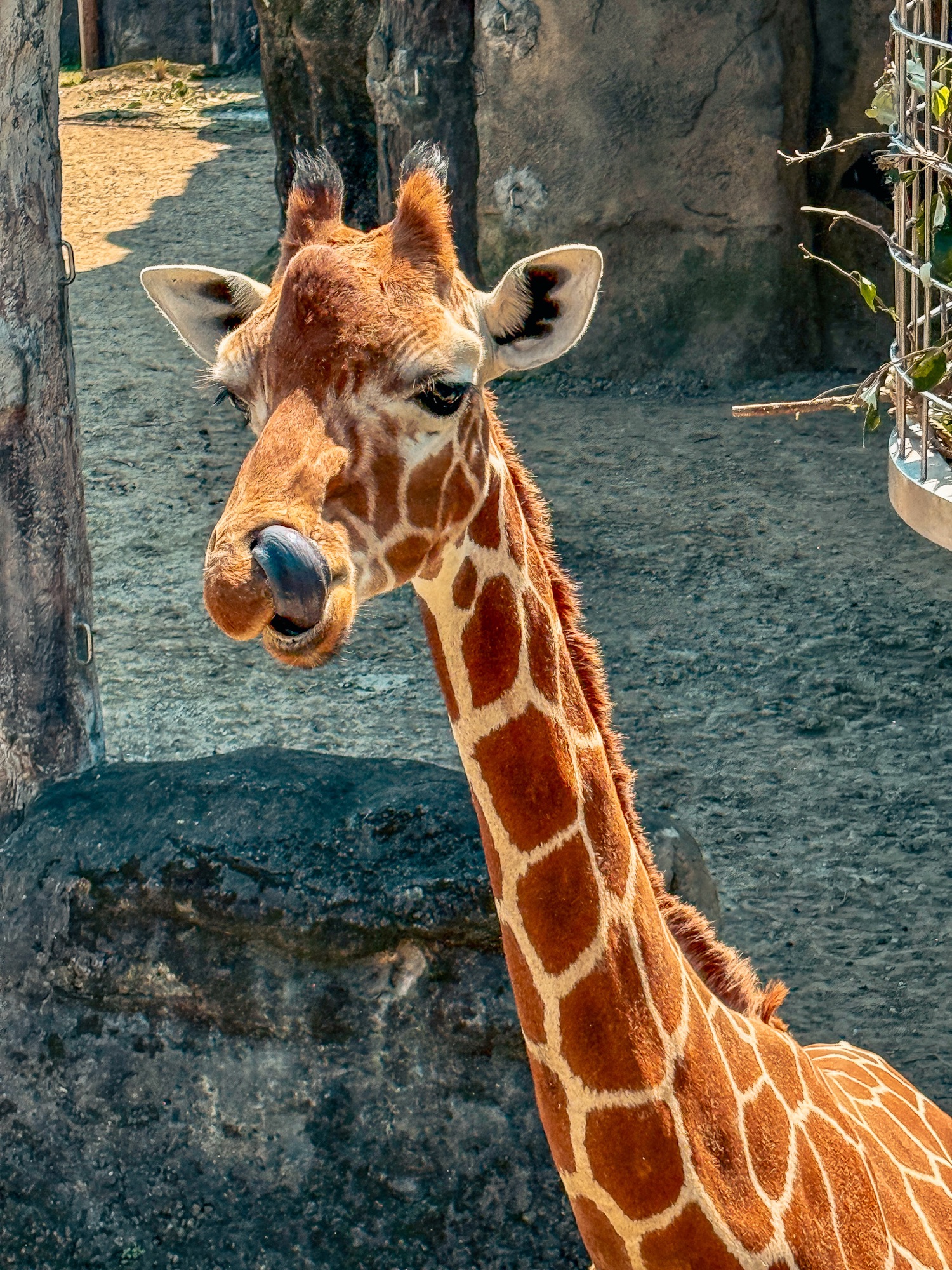
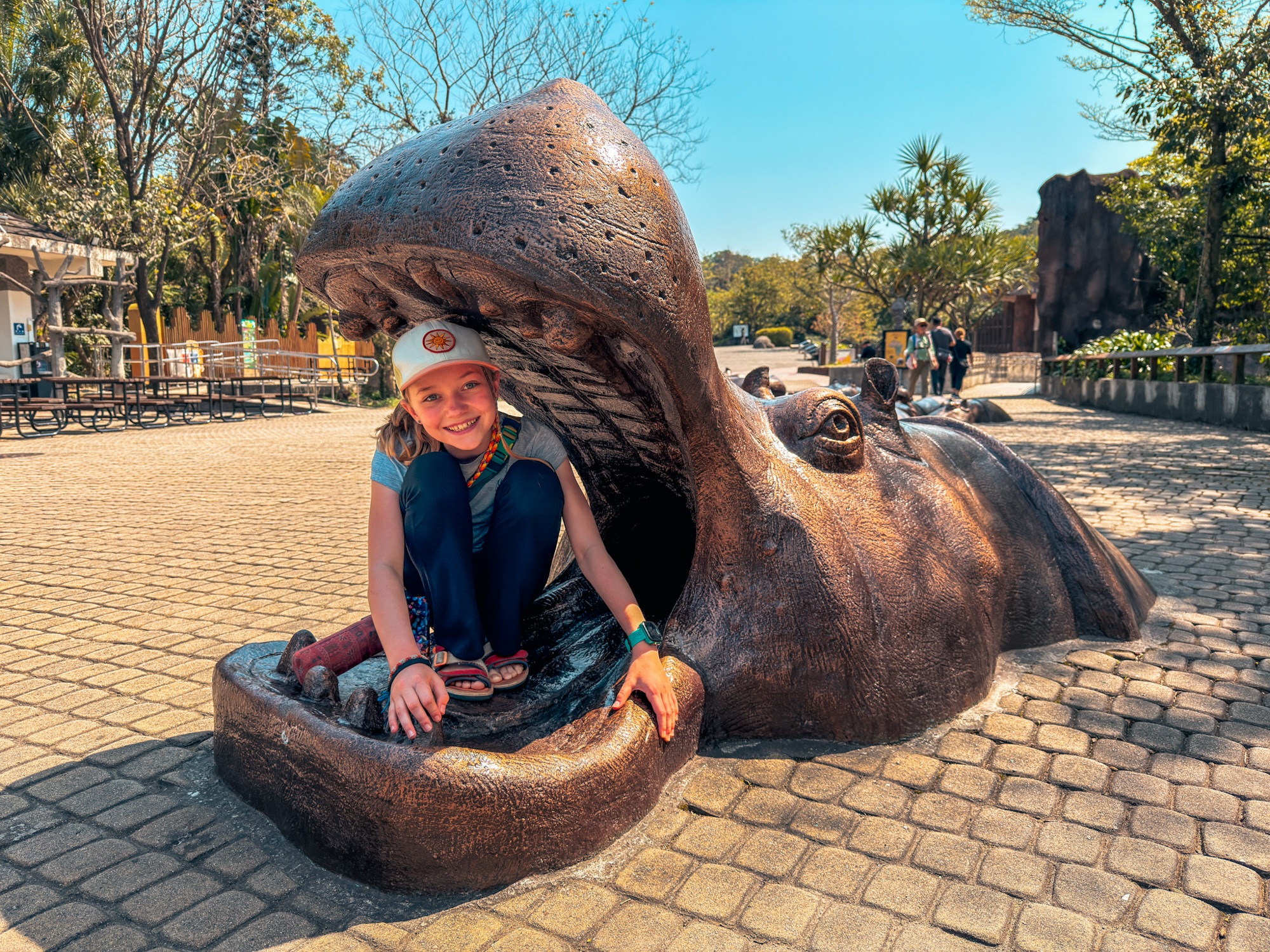
But what a way to start our trip to the lovely (and surprisingly inexpensive) Taipei Zoo! We had a fabulous day meandering the beautifully landscaped zoo grounds in the foothills of Taipei, the highlight of which was visiting the famous pandas that began renewed diplomacy between Taiwan and China in 2008.
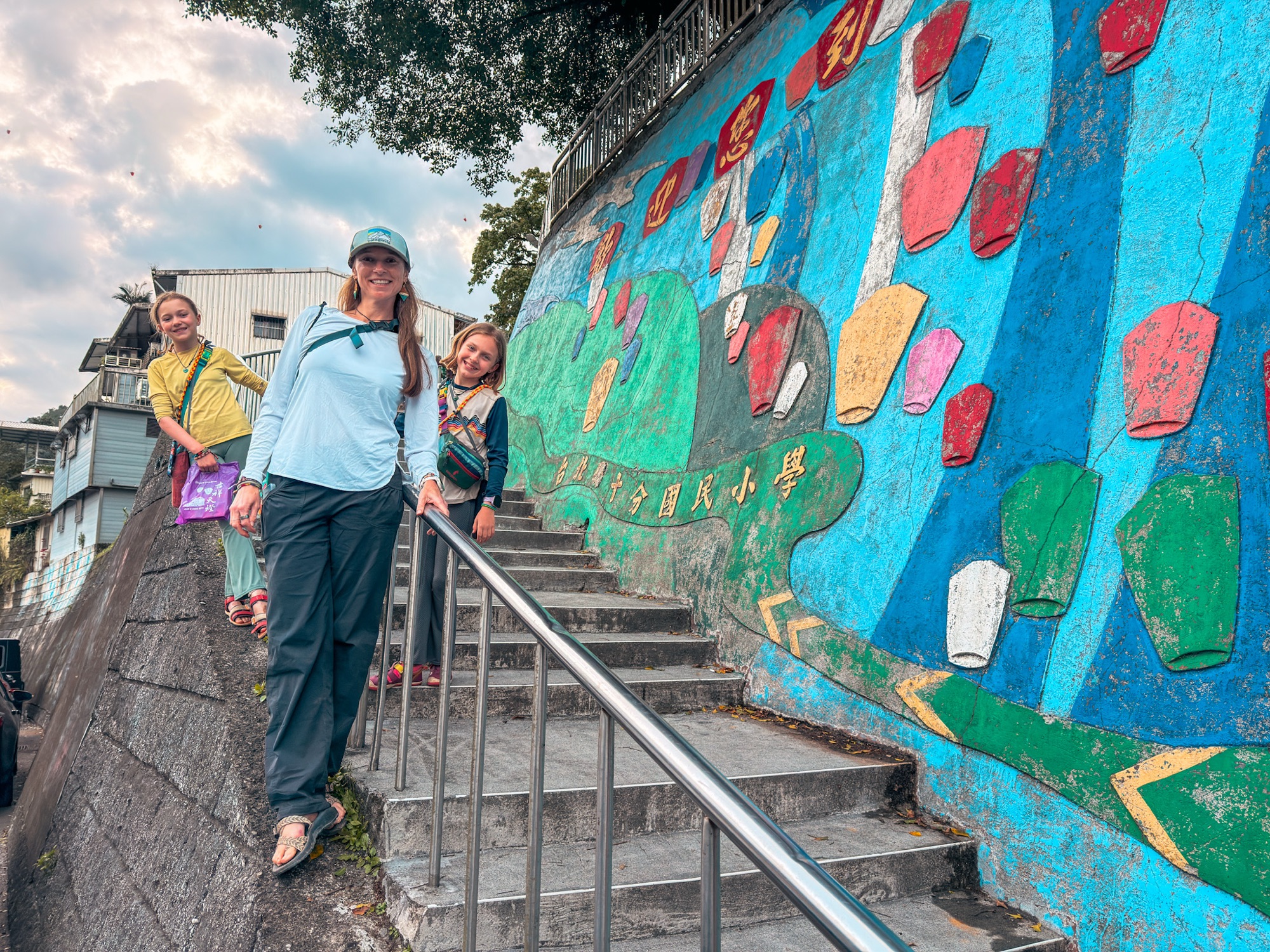
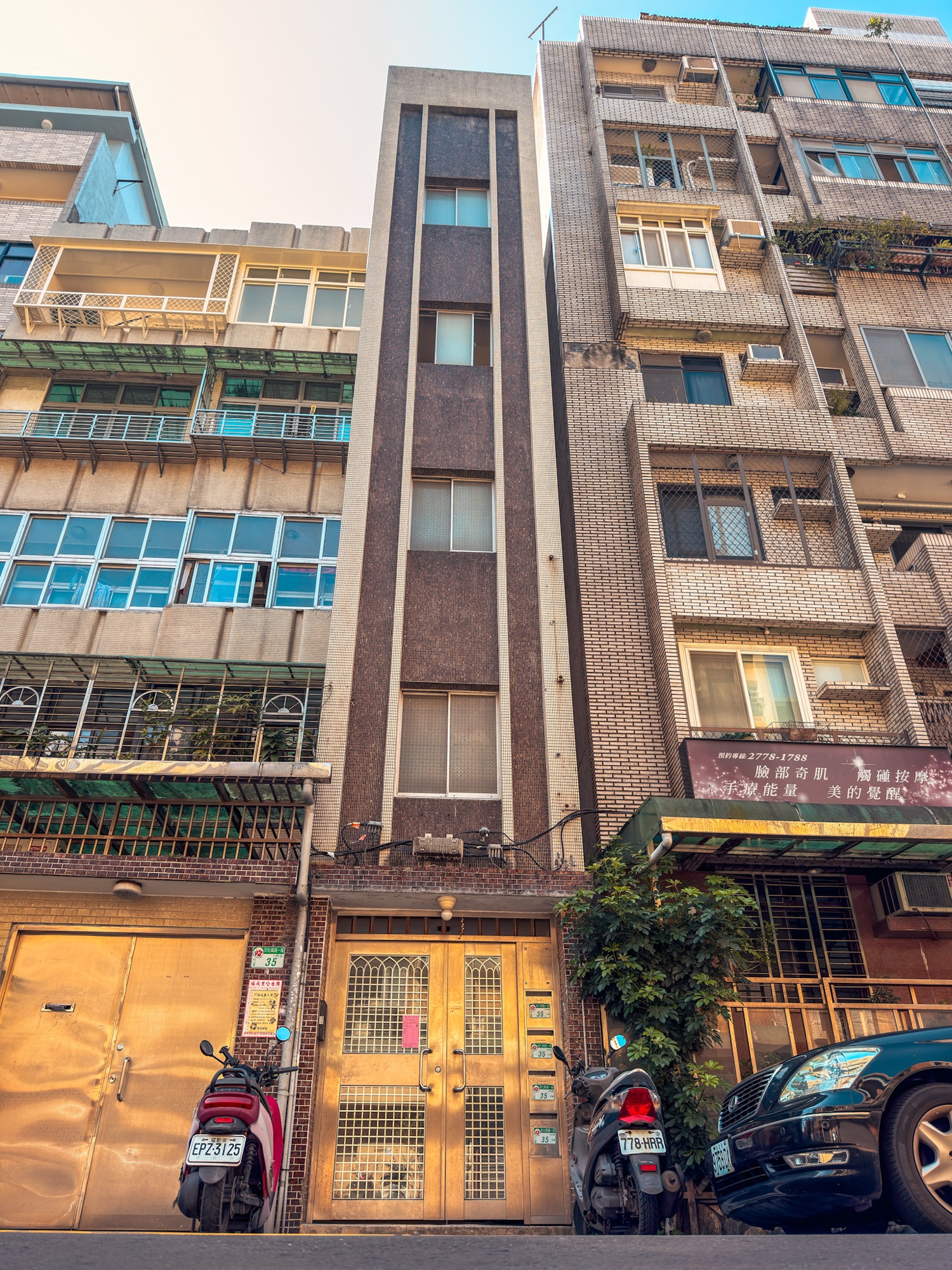
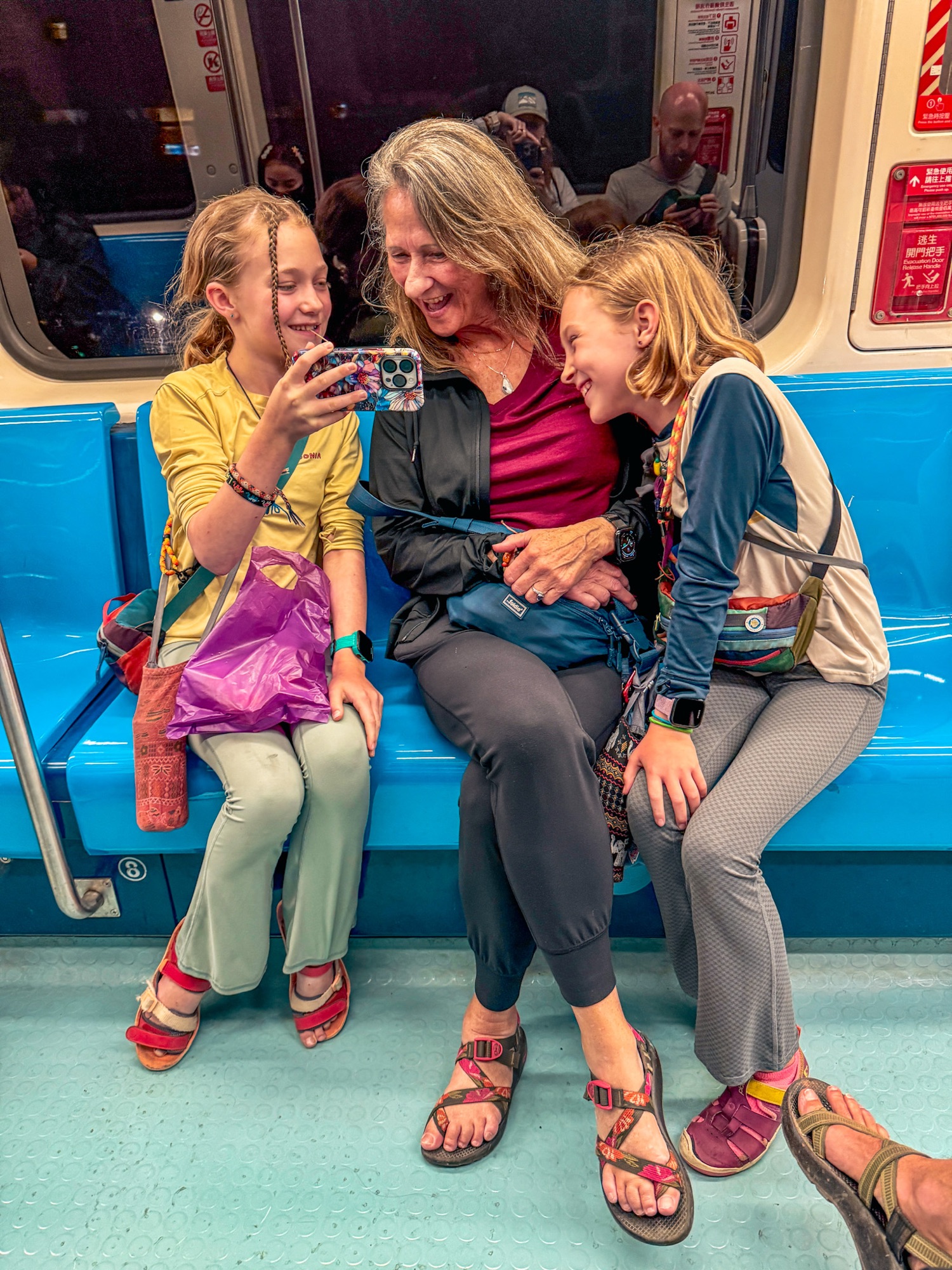
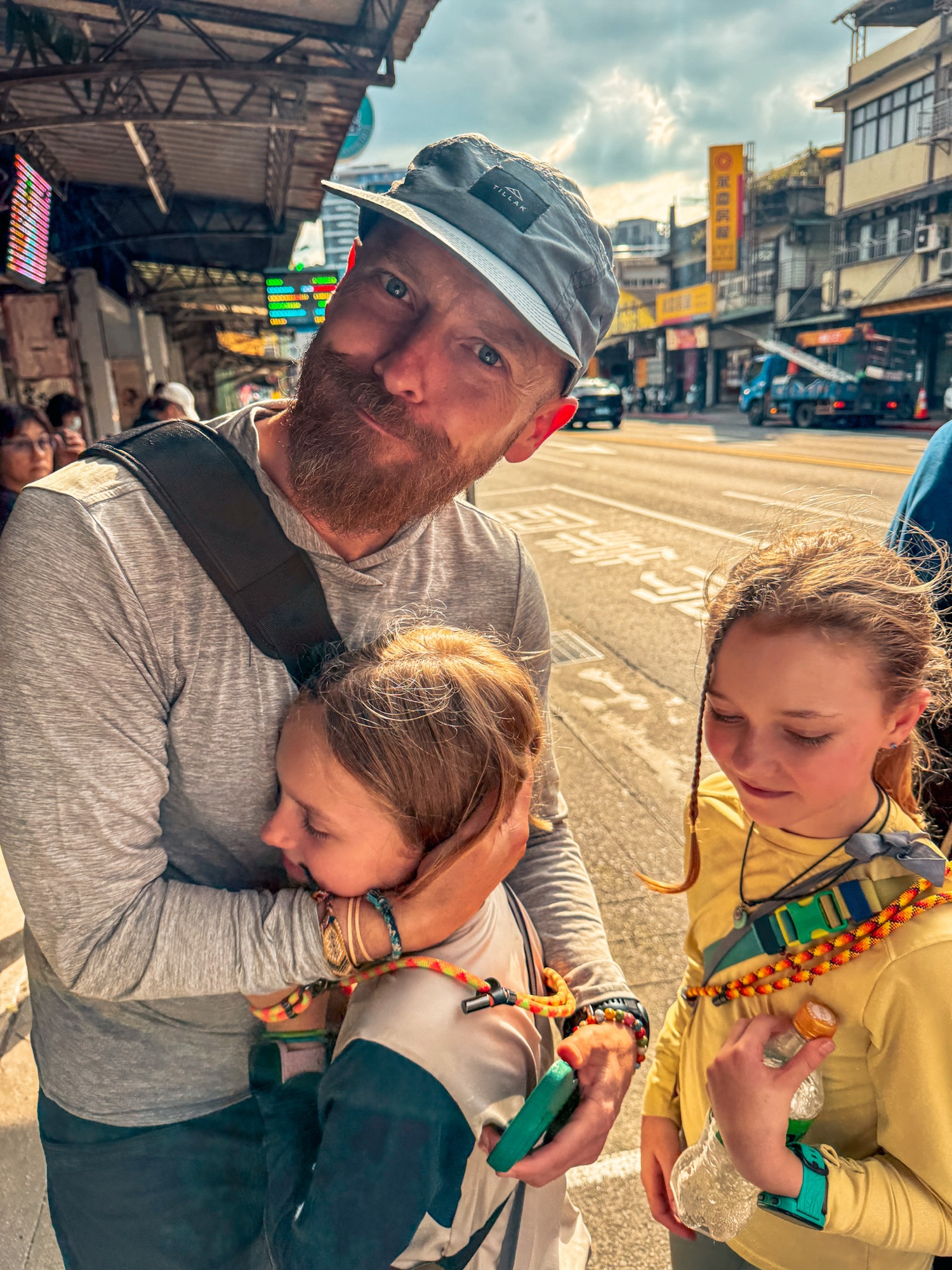
Looking Up
Our second day in the city started with something we needed to do and something we wanted to do, in that order.
First: the hospital. This was a planned visit—Shaina had a melanoma scare a couple of years ago, caught early, and since then we schedule skin checks every three months or so, no matter where we are in the world. The logistics of finding a medical dermatologist while on a family gap year, especially one who specializes in a cancer found primarily in those of Anglo-Saxon descent, are exactly as complicated as they sound, and exactly as necessary.
But of course, Shaina is anything if not resourceful, and a month ago she was already in contact with the head of the dermatology department of the university of Taiwan, preparing for her visit. All that preparation led to a wonderfully uneventful visit—the doctor looked everything over and found nothing concerning.
We walked out into the Taipei morning feeling lighter than when we’d walked in, which is the only feeling worth having after one of these appointments.
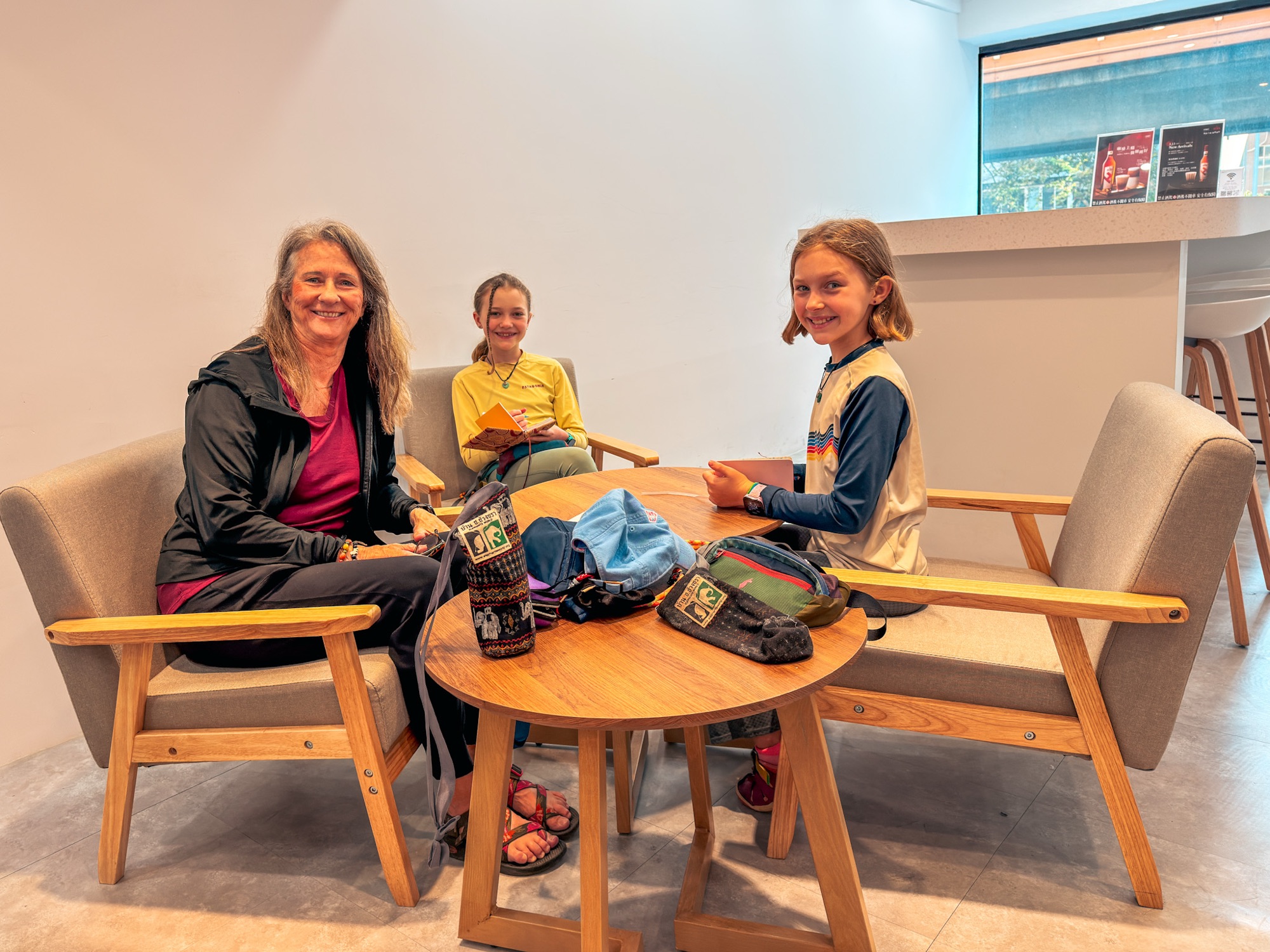
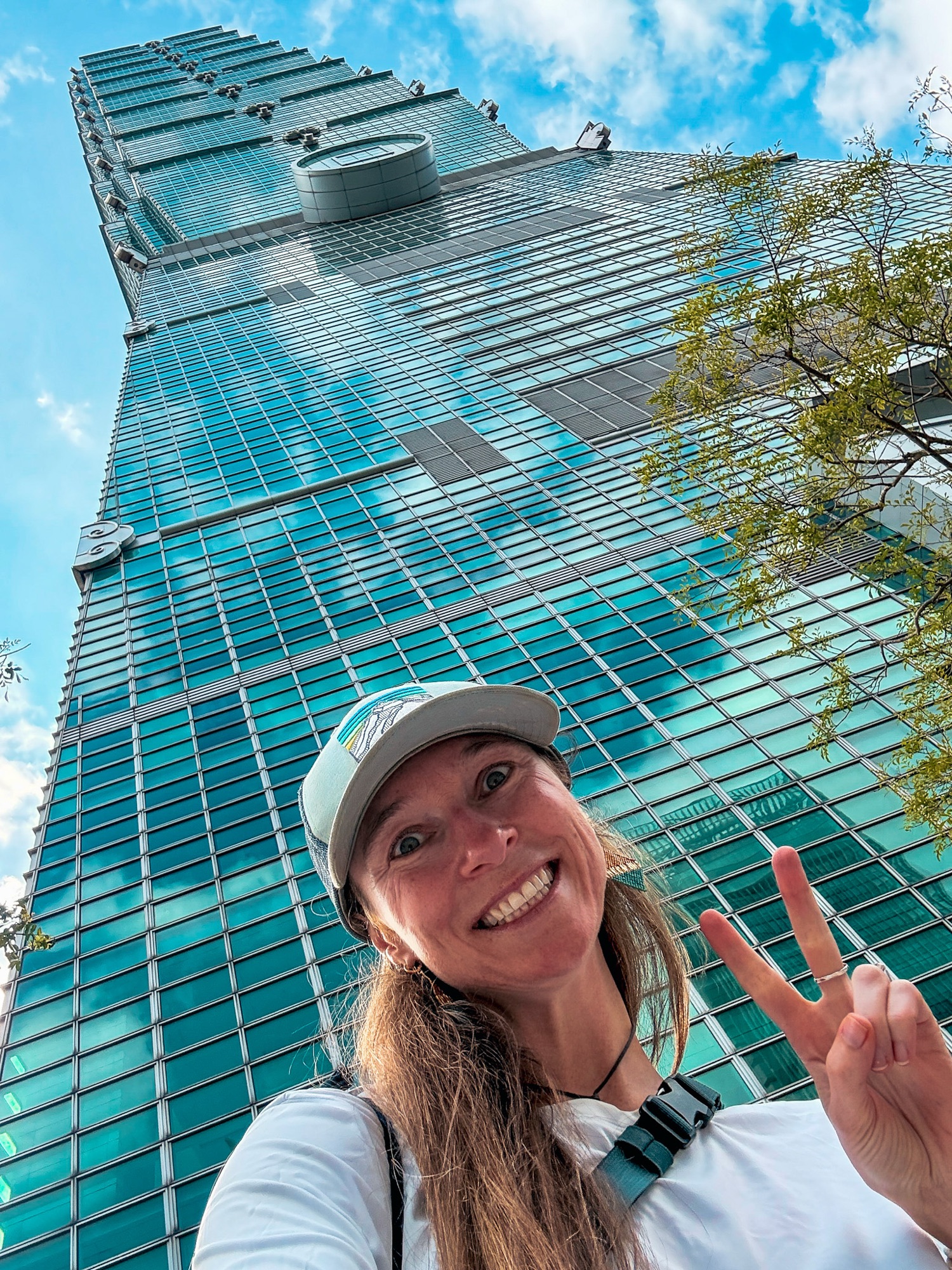
Then we collected Missi and the girls from a nearby café and headed to Taipei 101.
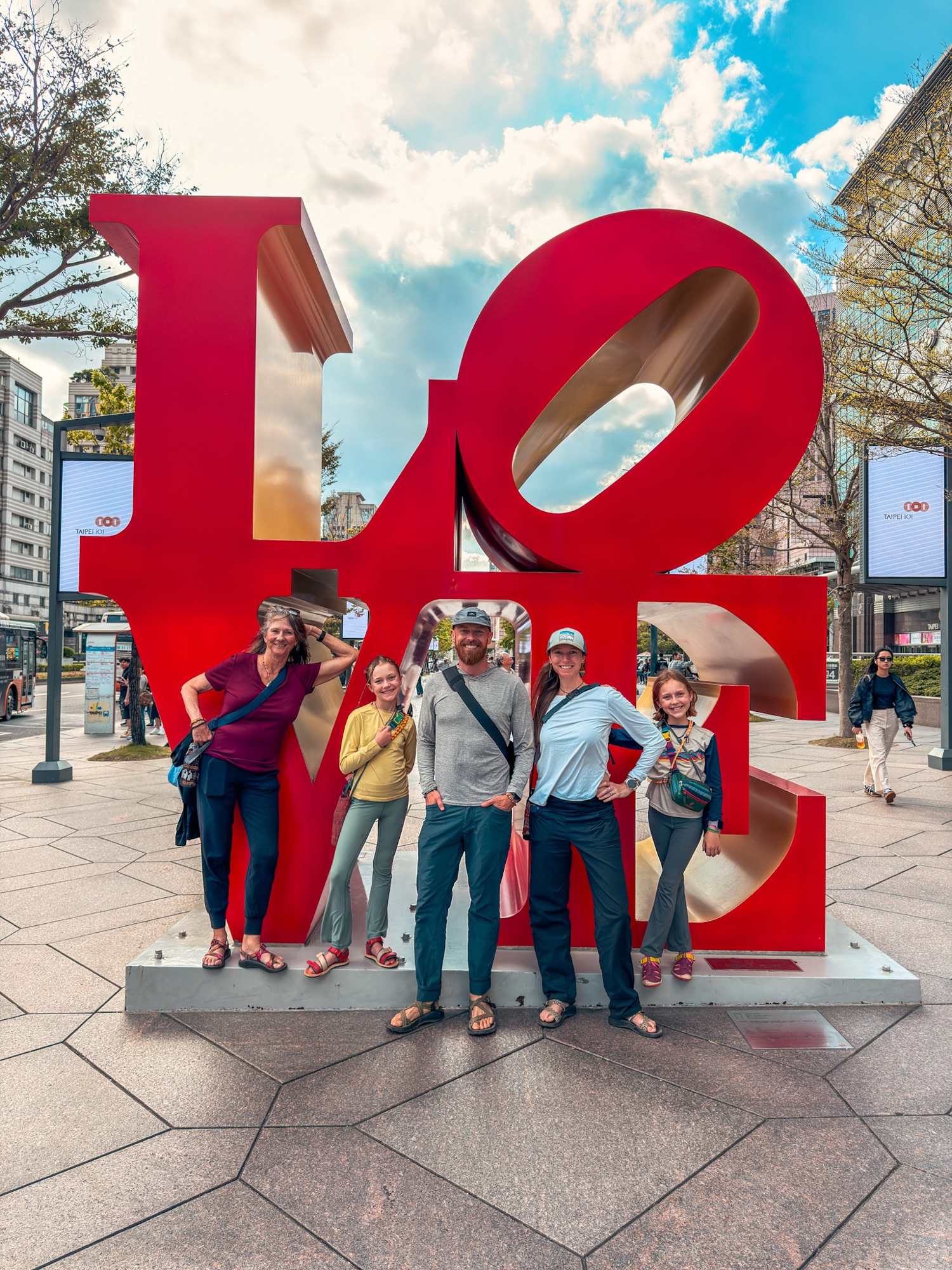
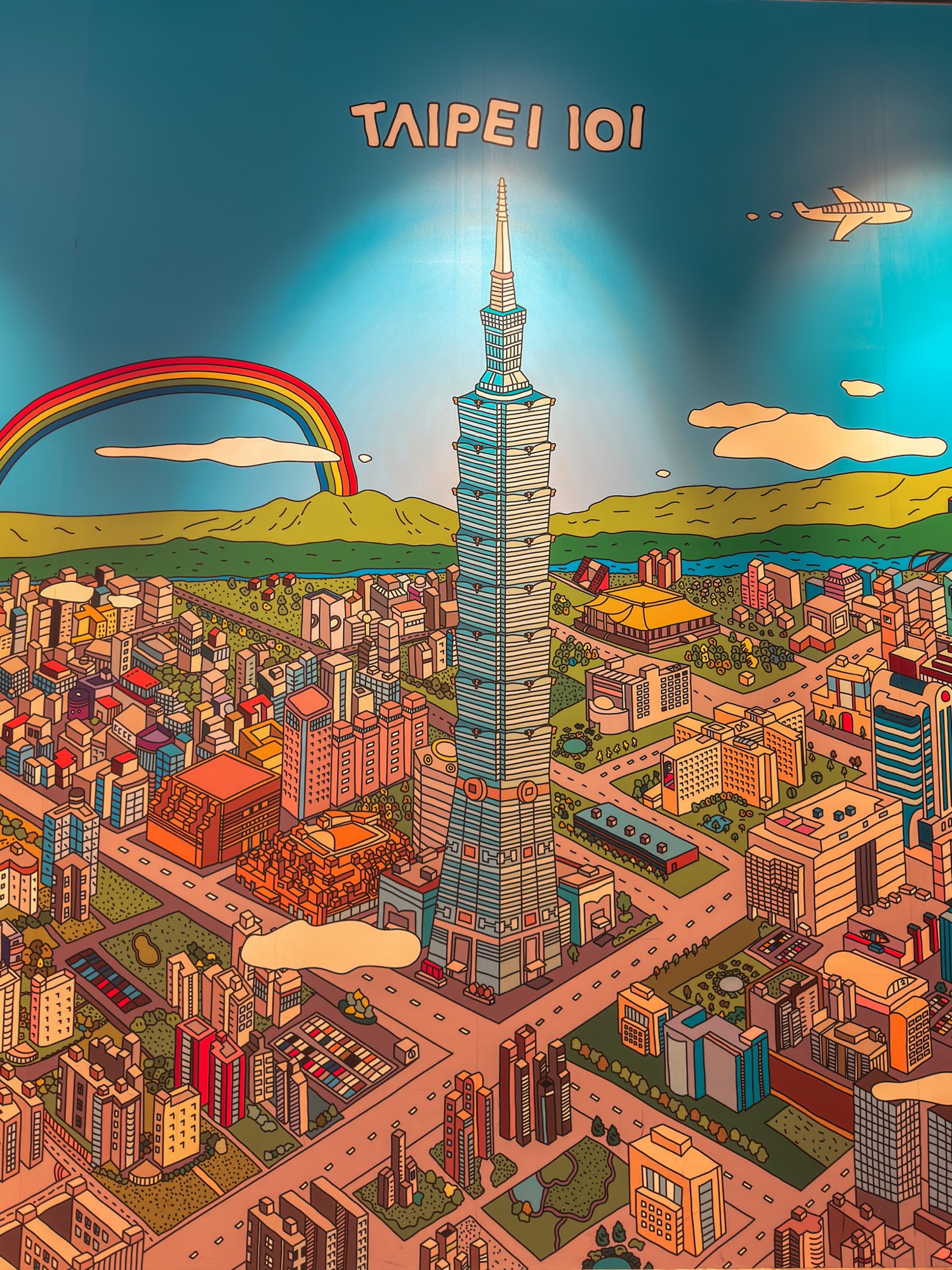
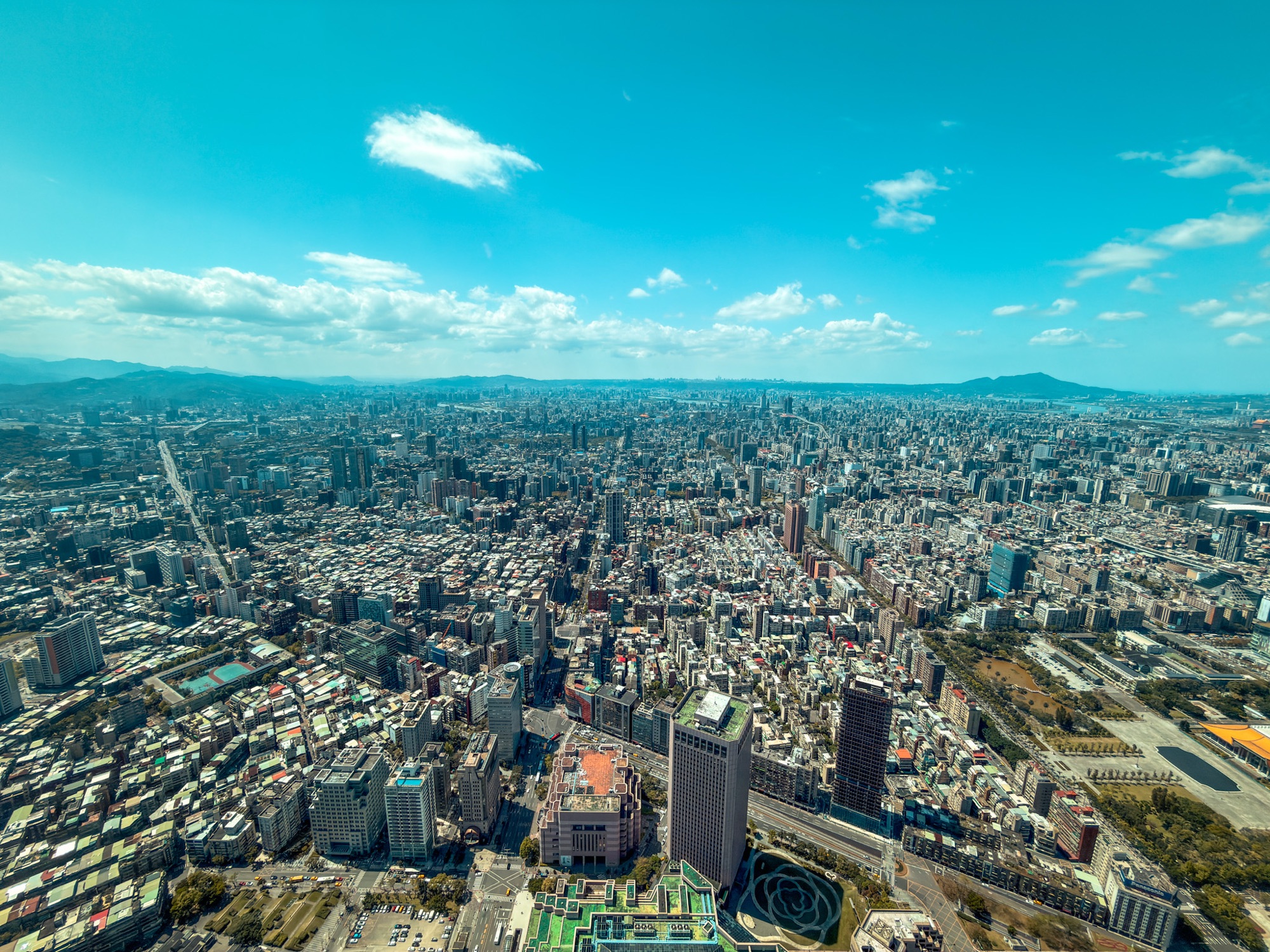
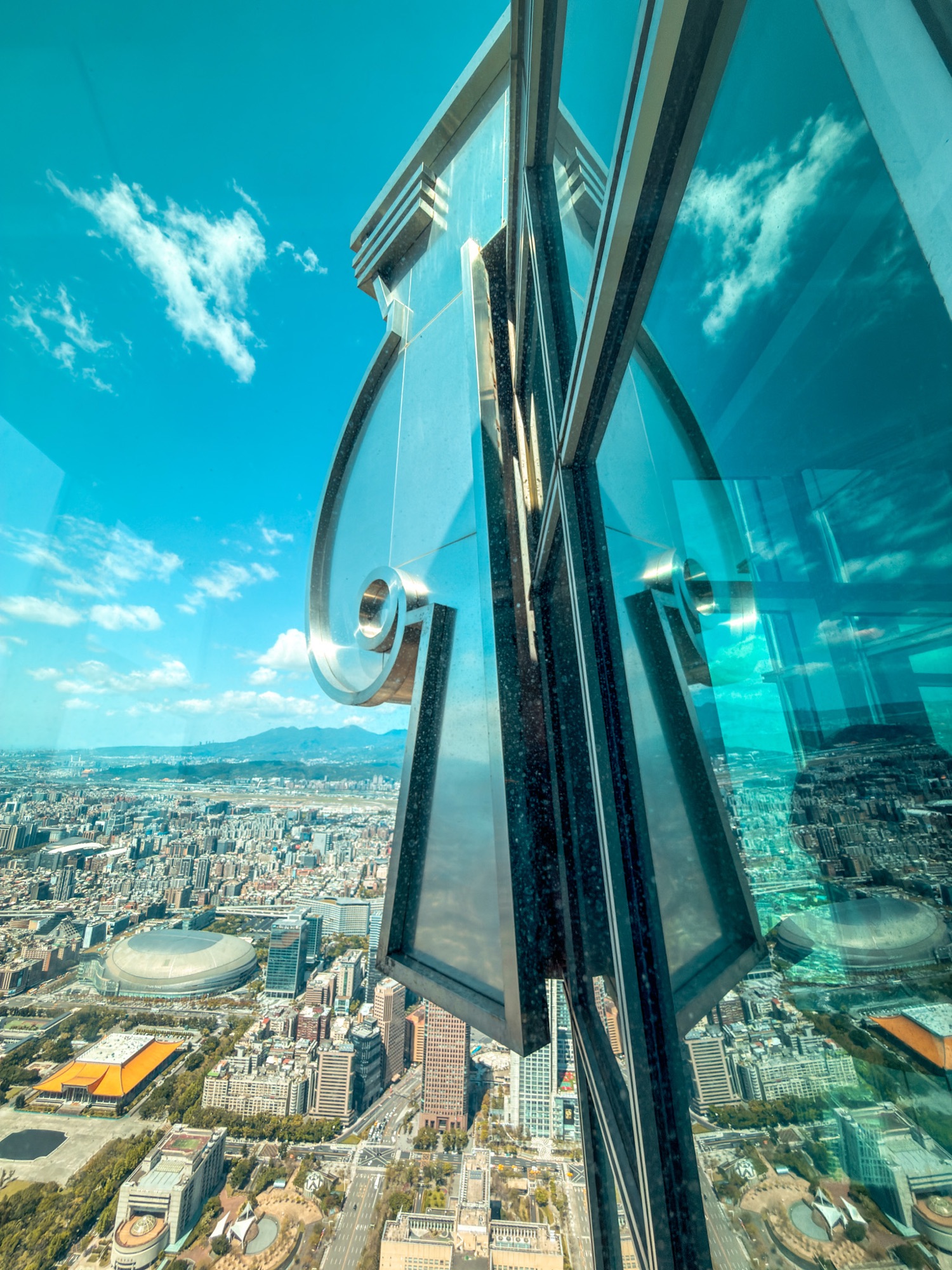
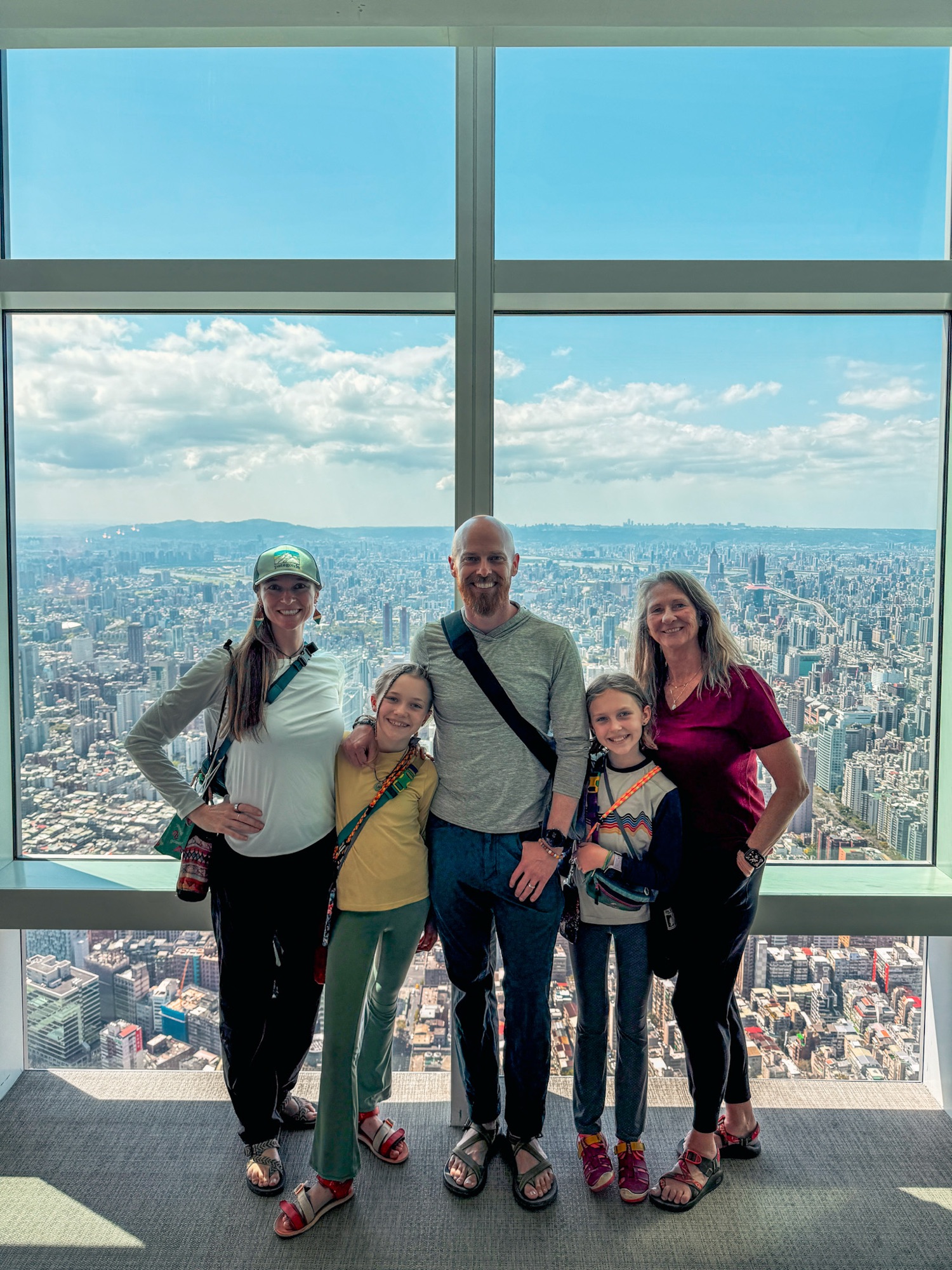
The observation deck sits on the 89th floor, with an outdoor platform two floors above it, and the elevators get you there from the fifth floor in 37 seconds flat. The views from the deck are breathtaking—360 degrees of Taipei laid out below—the low-rise neighborhoods spreading in every direction, hugging the mountains that surround and creep into the river basin, the city going about its business from a perspective that makes it look like a map of itself.
It’s spectacular in the way that all great observation decks are spectacular, with the added layer that we had watched someone climb the outside of this building with his bare hands two nights ago. Standing on the 89th floor looking out over the city, we found ourselves scanning the exterior glass and steel and thinking about where Alex Honnold would have placed his feet on the way up.
The inner rock climber inside Max (and increasingly inside Finlee), crept out, causing palms to sweat profusely, just as they did while watching the Netflix special.
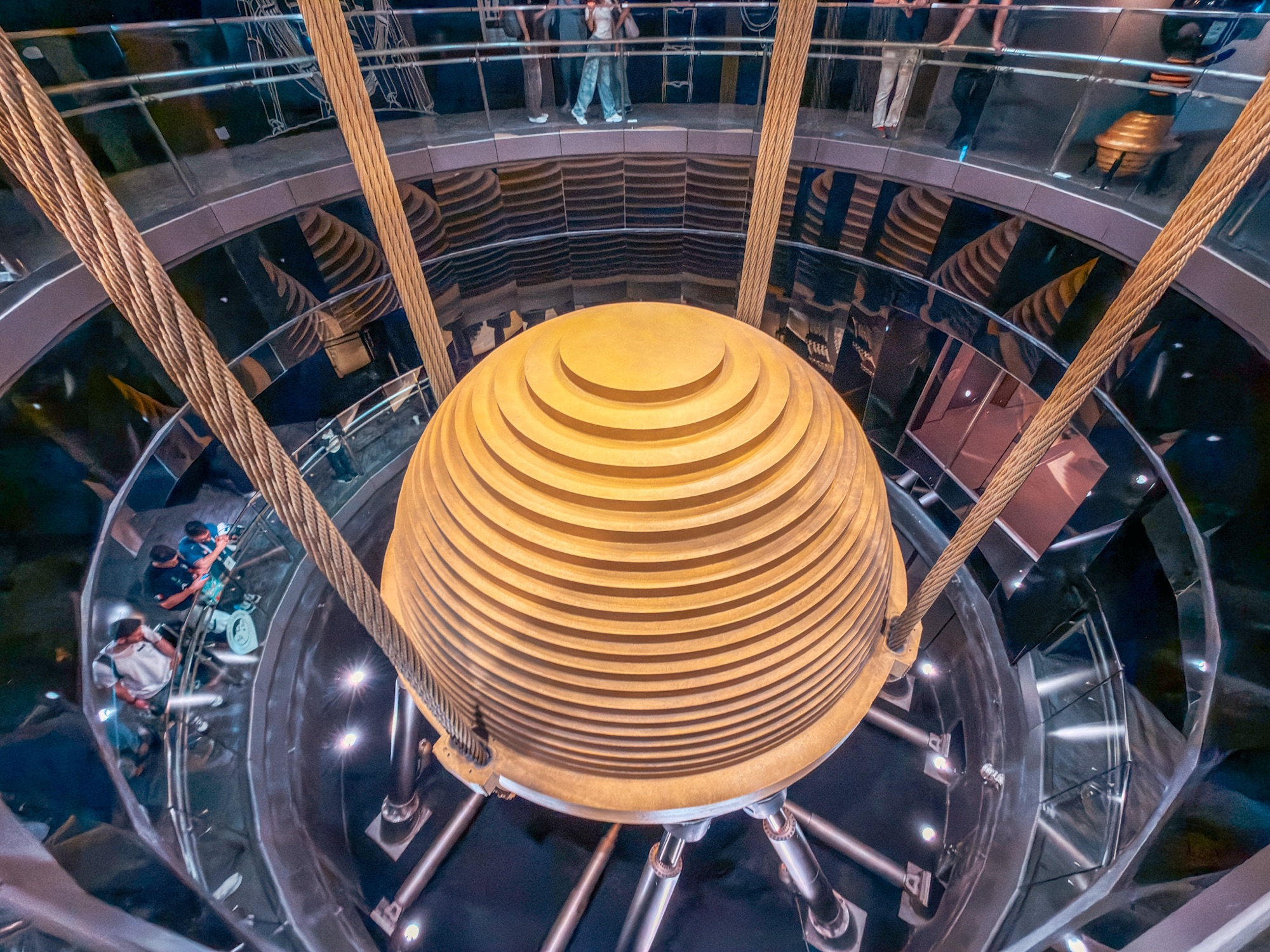
Inside the 88th floor you can see the building’s tuned mass damper—a 660-ton steel sphere suspended between floors 87 and 92 that swings to counteract the building’s sway during typhoons and earthquakes, the engineering equivalent of a very large and very expensive metronome keeping the whole thing honest. The girls were fascinated by it in the way kids are when something enormous is also doing something specific and explicable. Hands down—the highlight of the visit for all of us.
Our visit to Taipei 101 wasn’t complete however—we descended rapidly, cleared our ears, and went directly to Din Tai Fung.
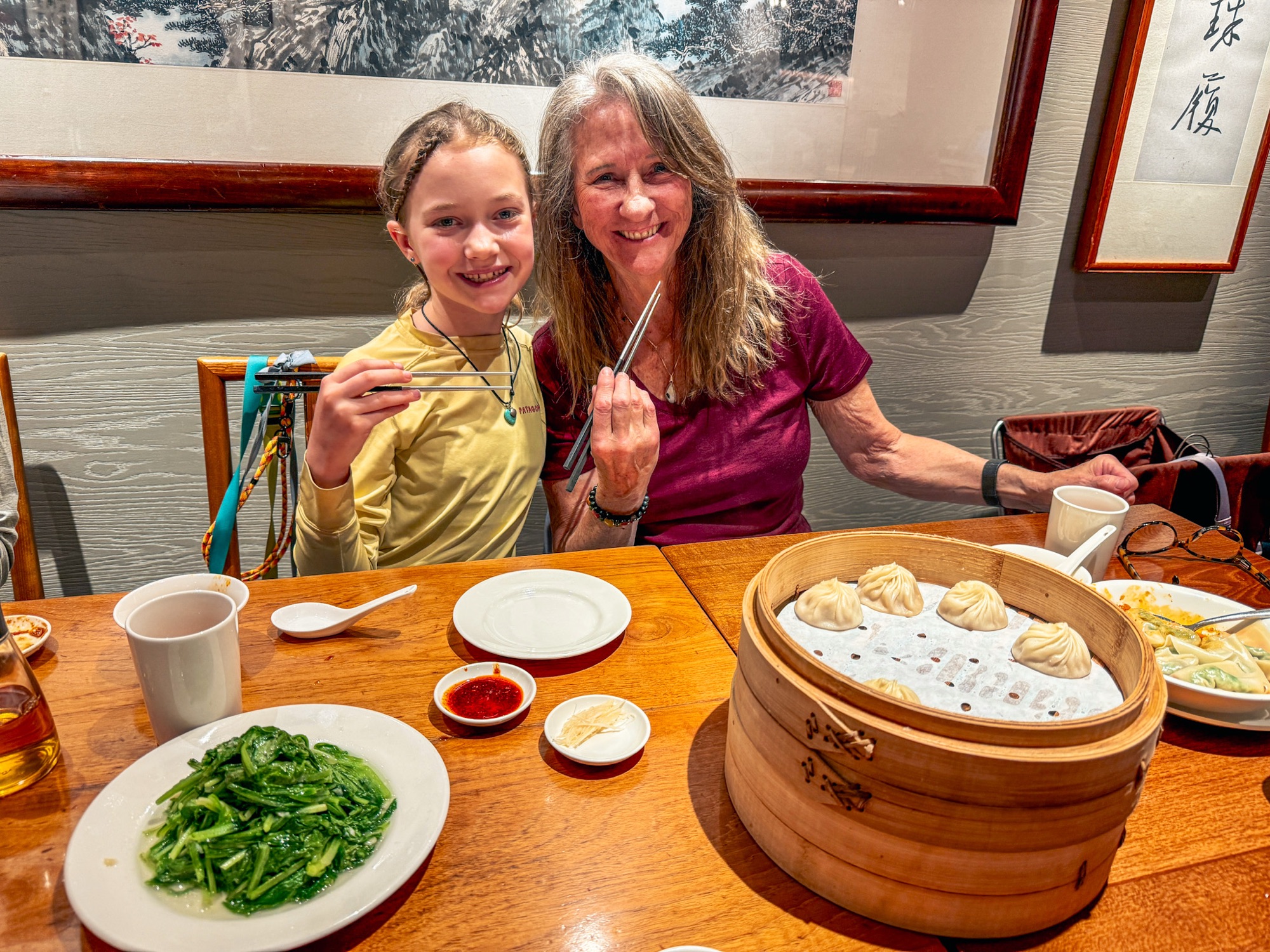
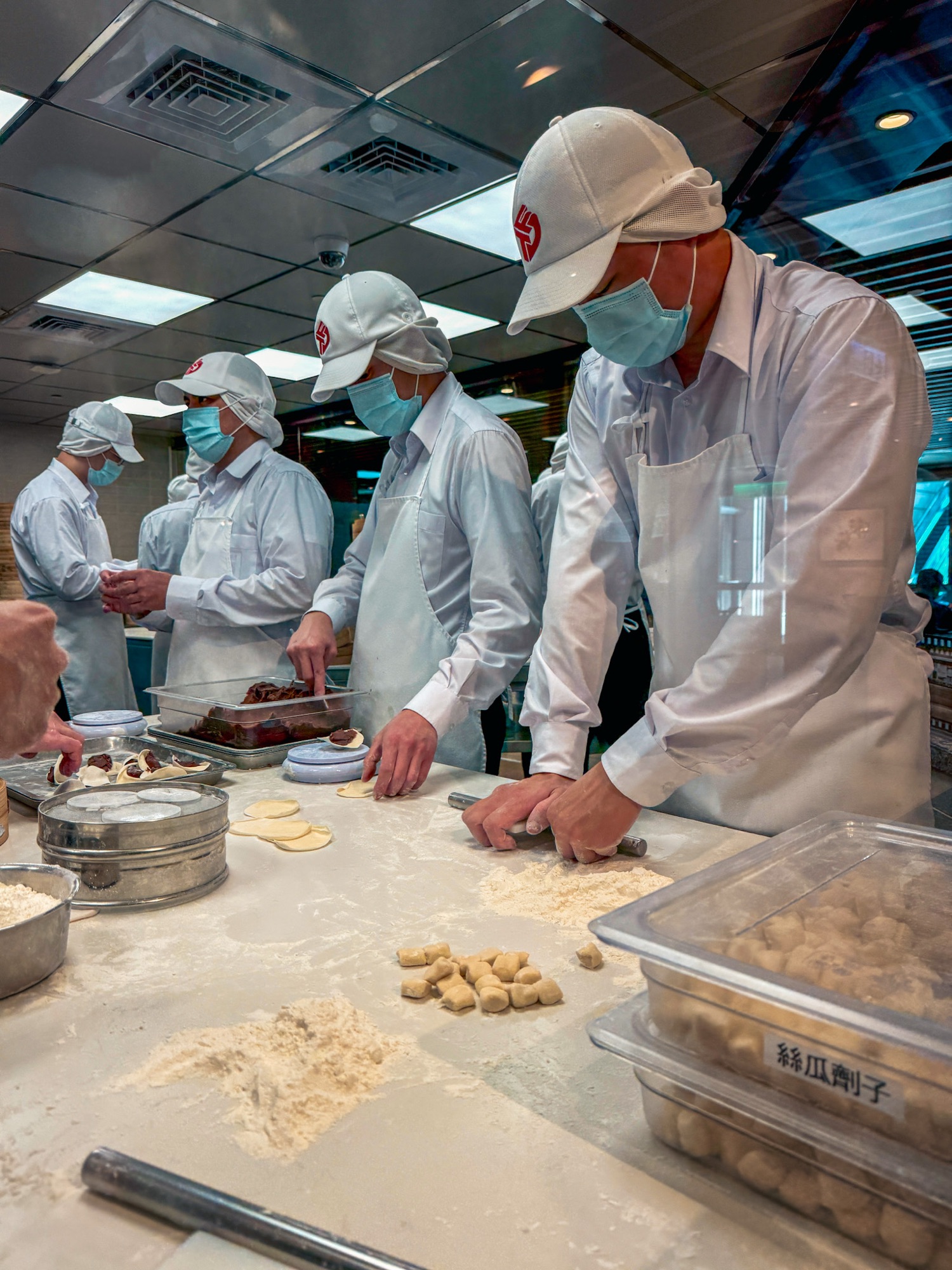
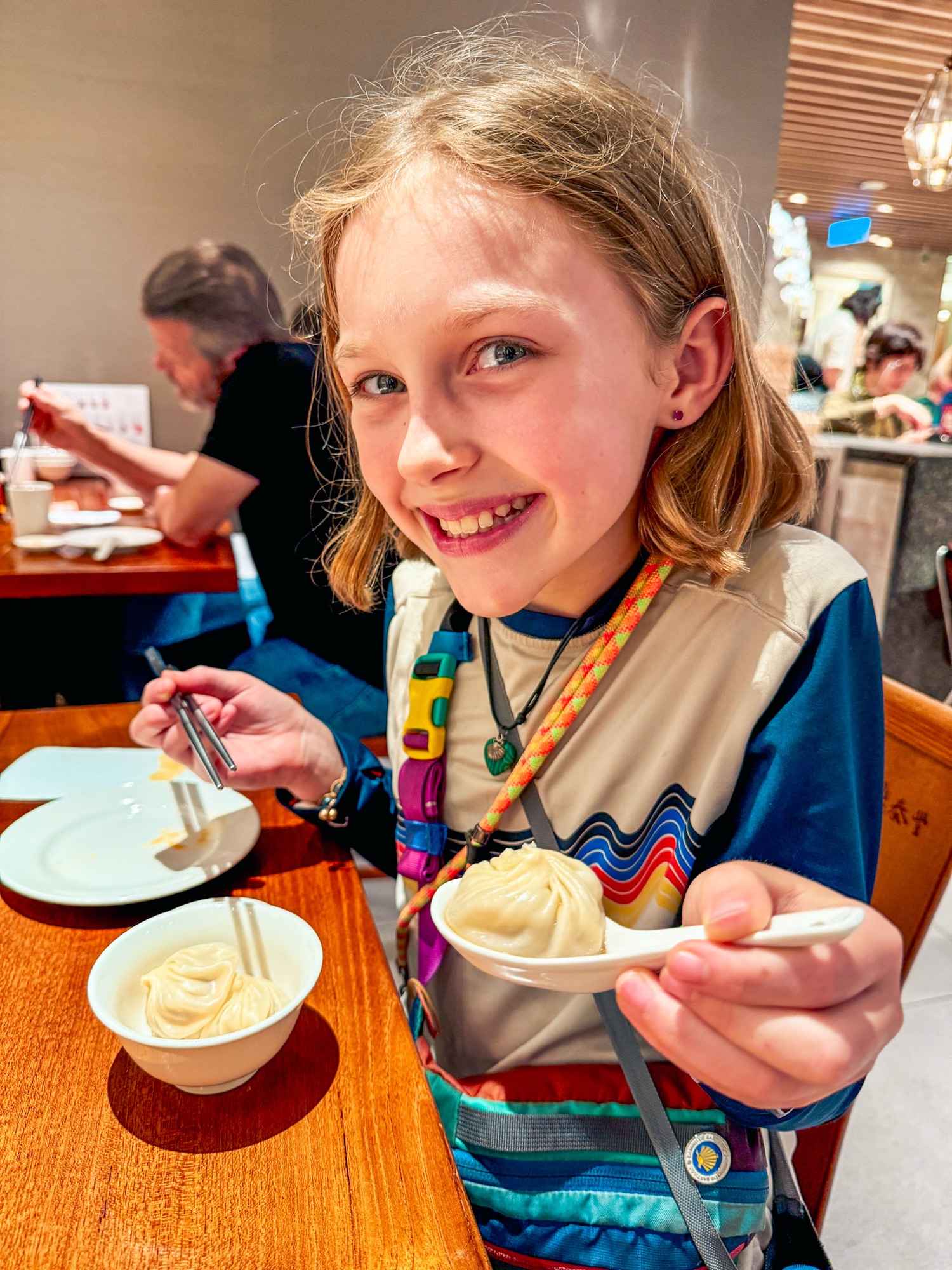
This was our third visit to DTF of the whole trip, and we expect it will not be our last. We have a problem. The problem is xiao long bao, and it started with us and has been successfully transmitted to Arya and Finlee, who approach these dumplings with the focused intensity of people who know exactly what they want from life.
We ordered five trays. We ate them quickly and with intention. We left before our neighbors even got their food. We feel no remorse about this whatsoever.
The Jade and the Duck
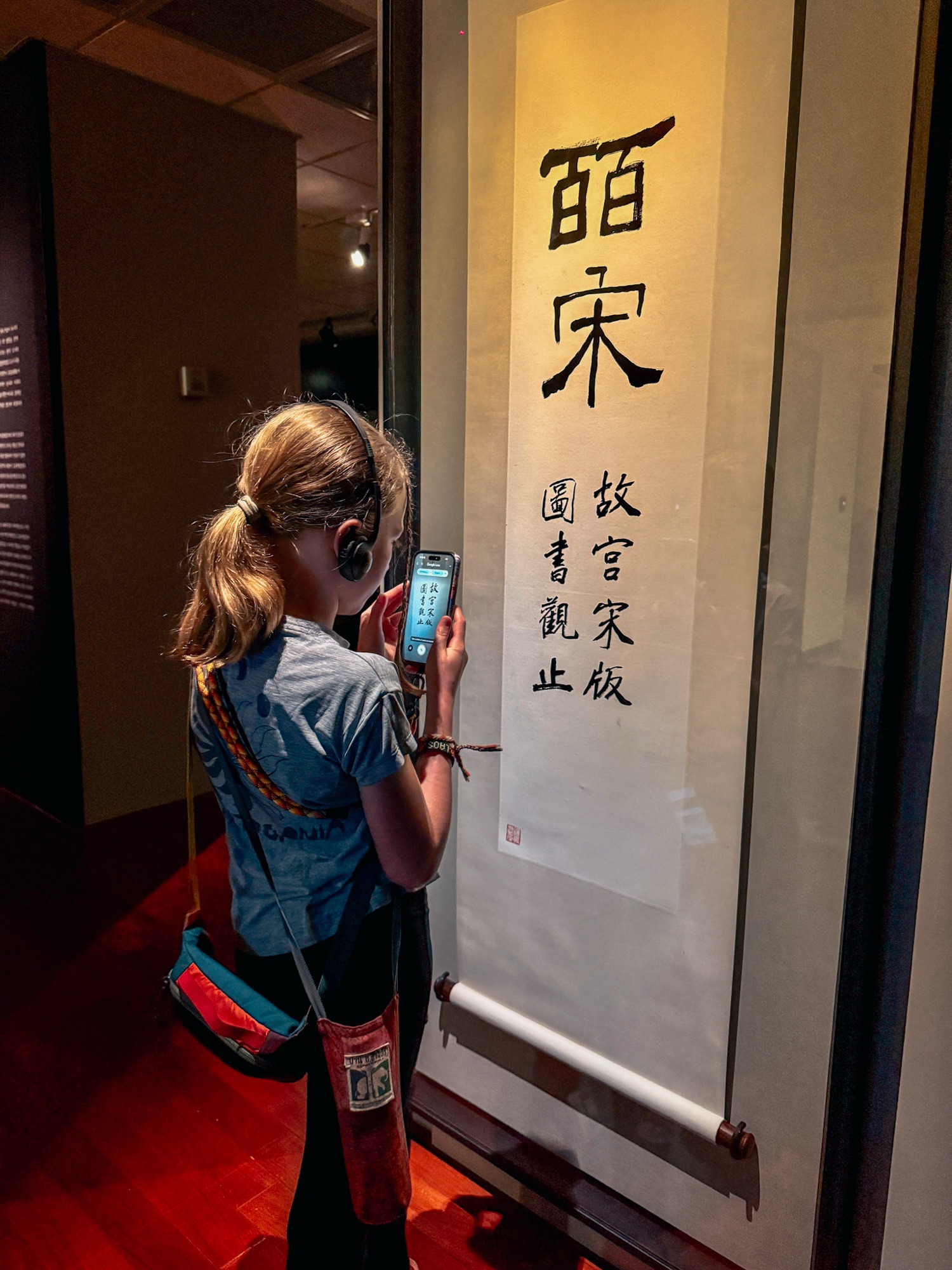
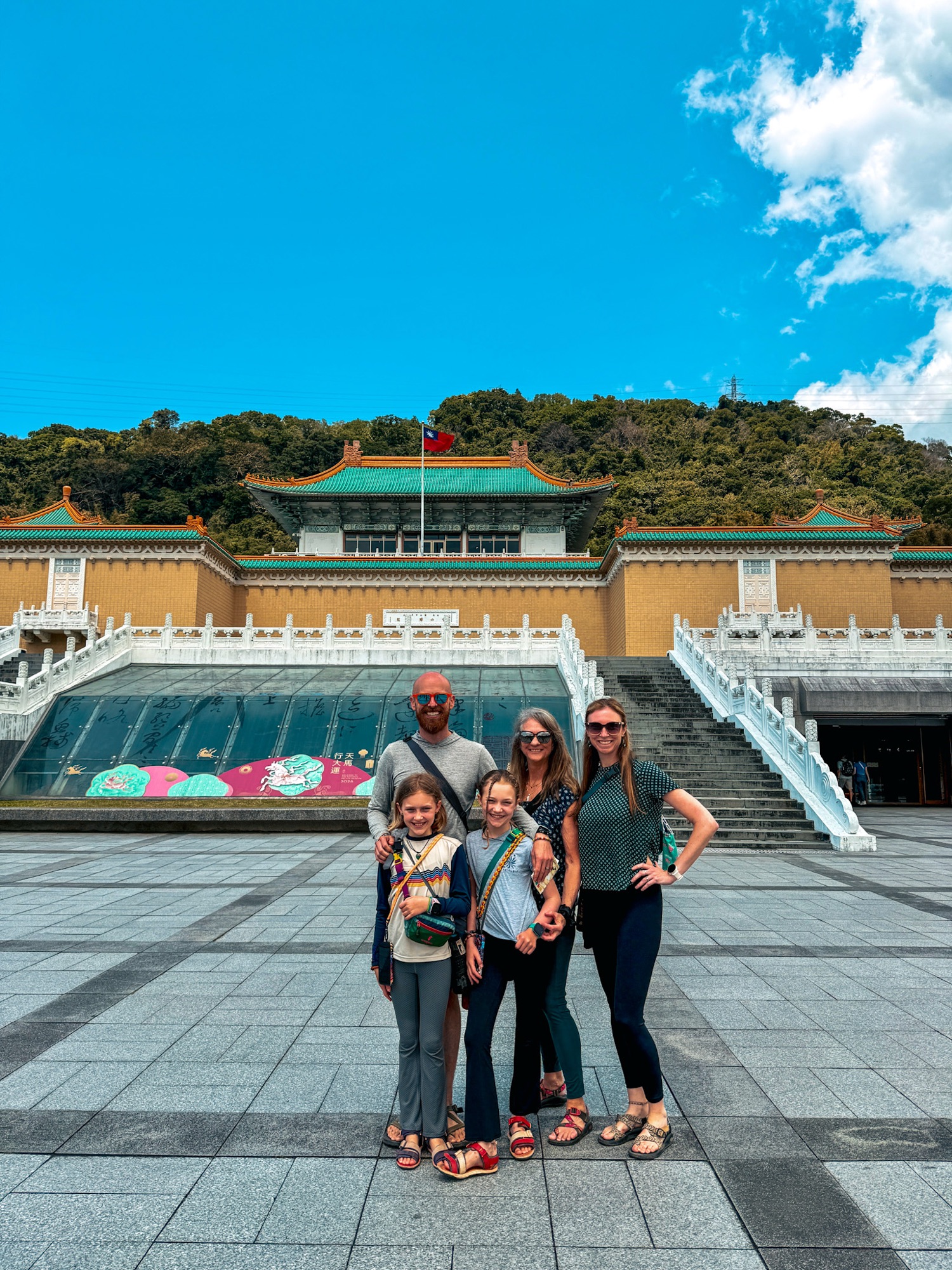
The next day we spent three hours at the National Palace Museum.
The last of those hours felt long in the way that museum hours always feel long when the experience isn’t quite delivering on its promise. And it isn’t that the collection isn’t extraordinary—it is.
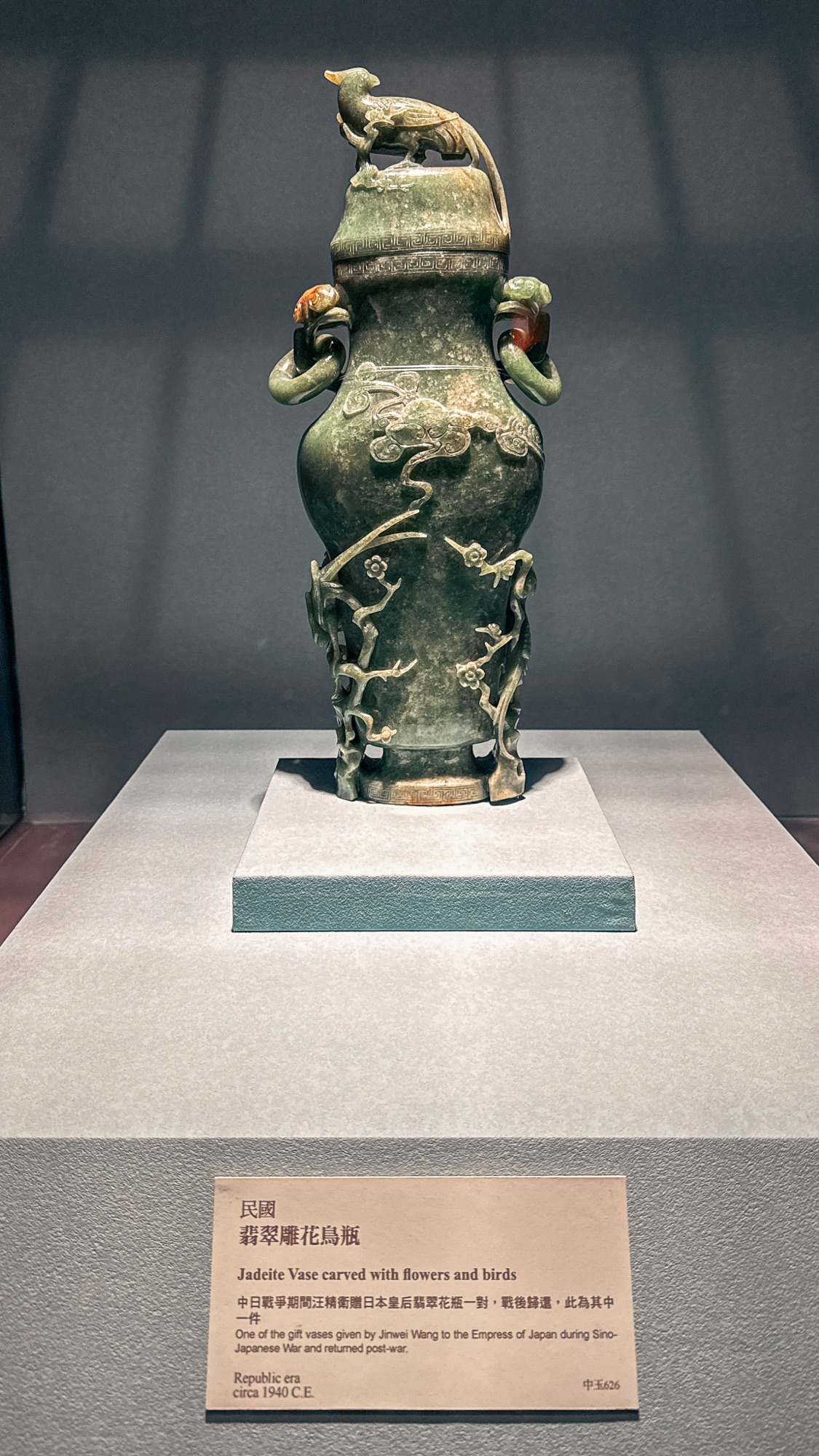
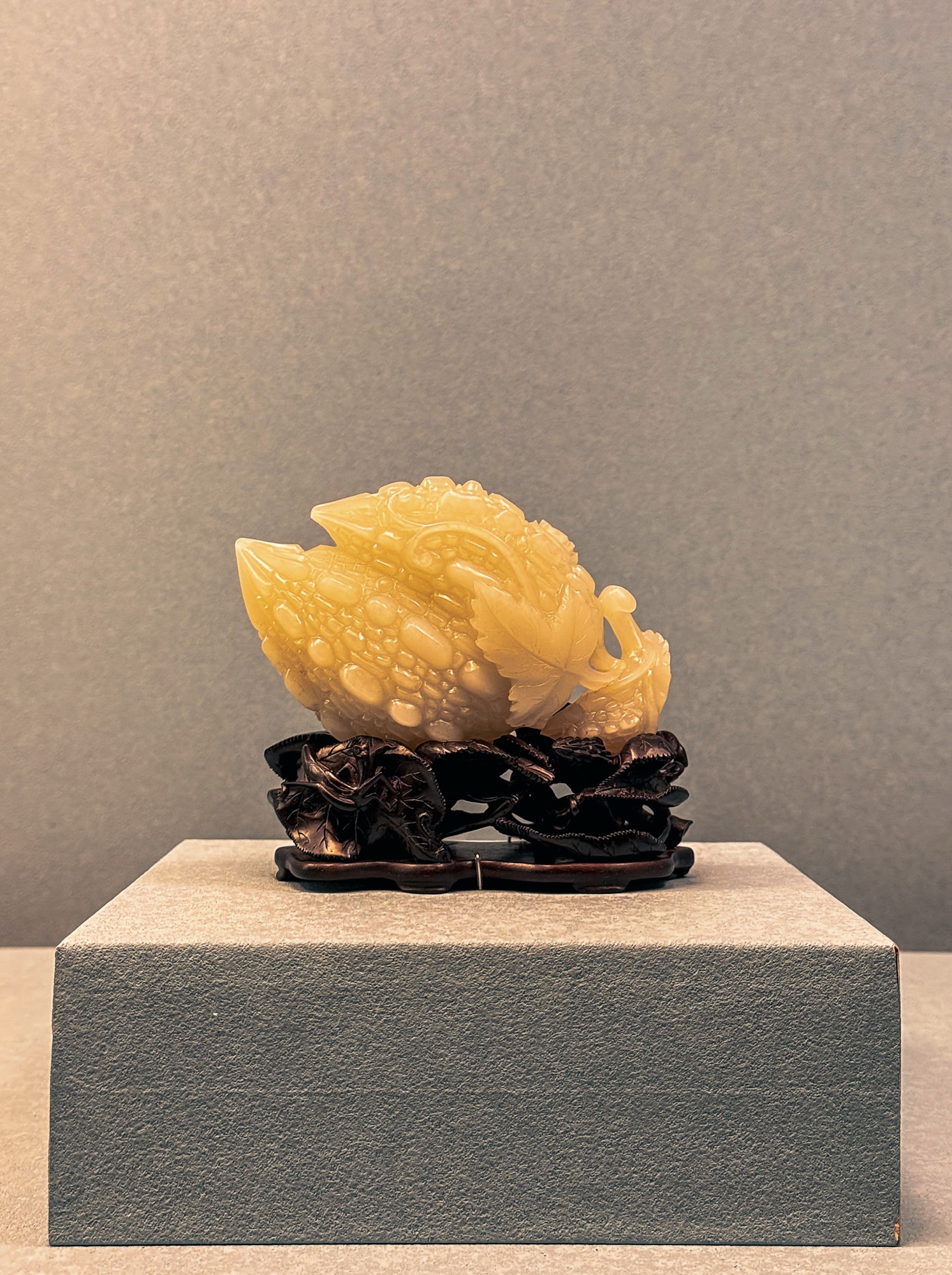
The jade work alone stopped us cold.
There was a teapot, carved from notoriously finicky jade sometime in the 1300s, so intricately detailed and fully functional that Max stood in front of it longer than he stood in front of anything else in the building, trying to reconcile what he was looking at with the tools that would have been available to make it.
And a series of jade discs, roughly hand-sized, covered in perfectly symmetrical raised dimples spaced with a precision that would challenge a CNC machine—reportedly achieved with sandpaper and a stick and what we can only imagine was an almost inhuman quantity of patience.
The craftsmanship throughout is genuinely humbling.
The problem was the audio guide, which delivered slightly more detailed versions of the description tags at the base of each object and called it context. History is not an index. History is the story of how people lived and struggled and loved and built things—and a collection this significant deserves a guide that strings its objects into a narrative.
We kept thinking about how different this museum could feel with a themed audio guide that chose a thread—a dynasty, a material, a conflict—and followed it from piece to piece through the galleries, letting the objects become evidence of something larger rather than just impressive things in a case.
By hour three everyone was ready to be somewhere else.
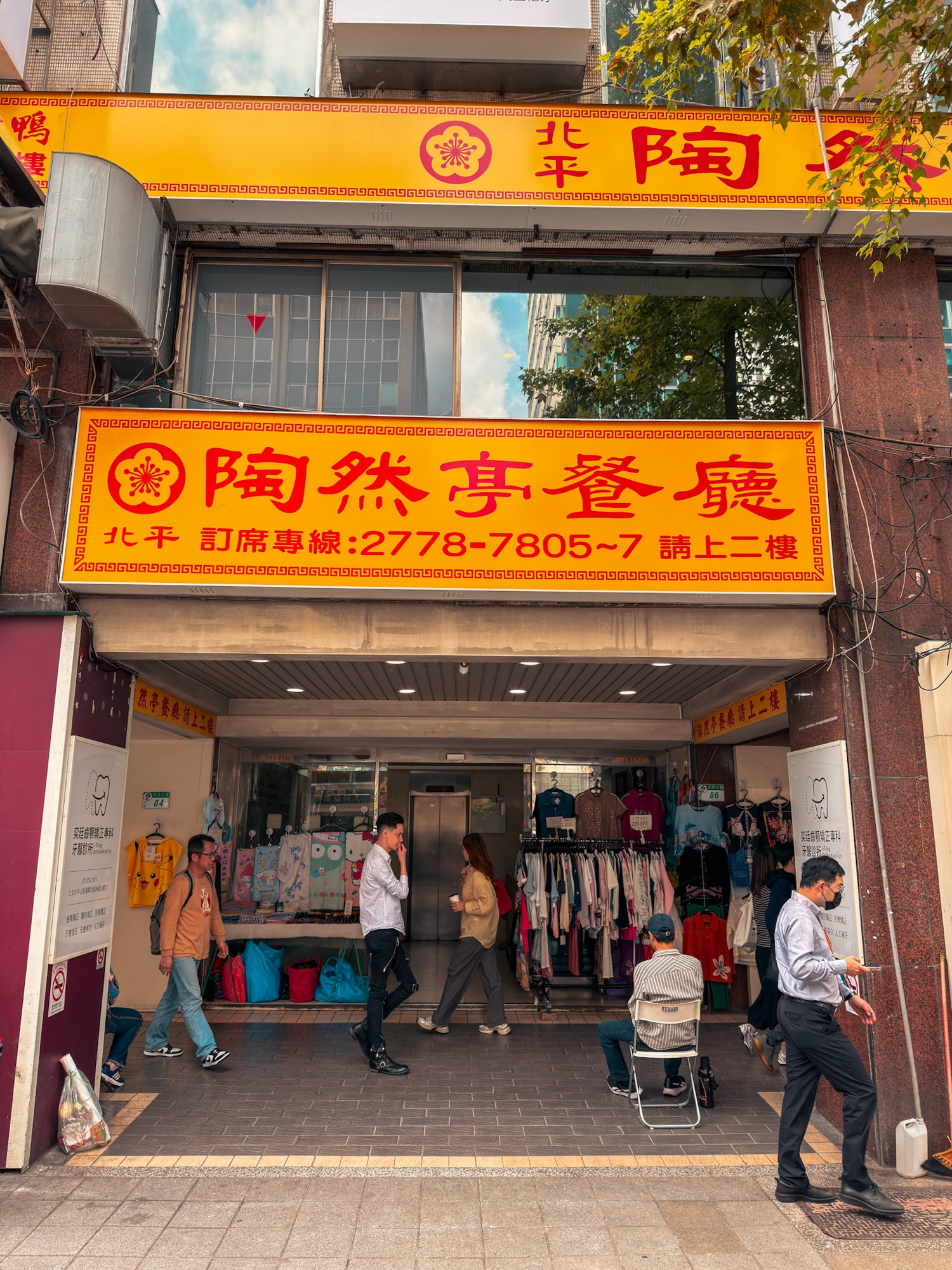
Somewhere else turned out to be Taoran Ting, a Peking duck restaurant that we would never have found without the combined forces of the Michelin food app, Google Lens, a kind woman running an unrelated kiosk out front, and a sign that was objectively enormous—bright yellow with large red characters—but communicated absolutely nothing to people who cannot read Chinese characters.
The kiosk woman saw us looking confused, made the universal hand-to-mouth gesture for food, and pointed upstairs. We took the hint. What followed was a meal that earned every one of its eighty-five US dollars for five people.
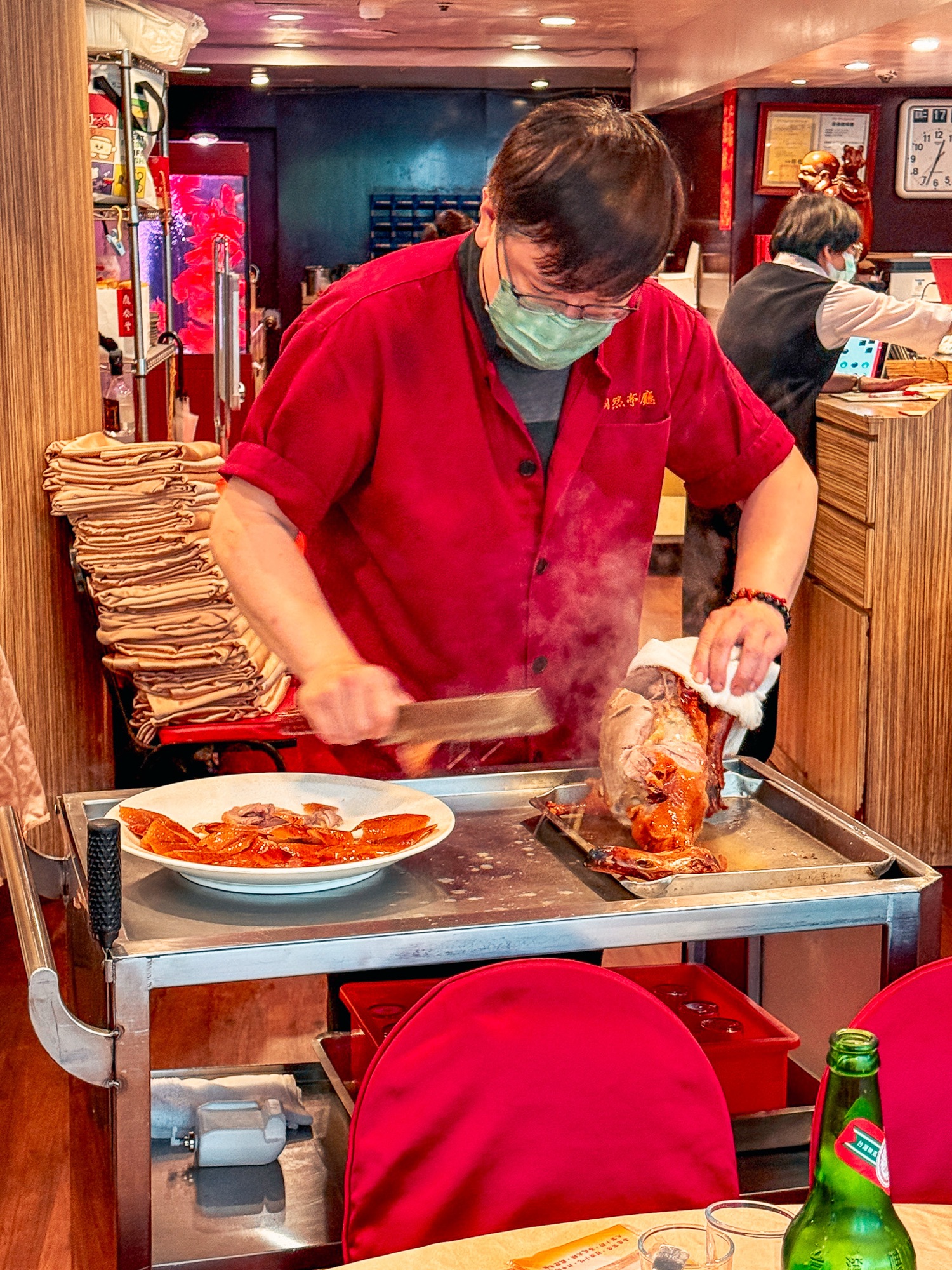
The server brought the whole duck to the table, twisted off its head in one efficient motion, laid the bird on its side, and proceeded to dismantle it with a large carving knife and the focused precision of someone who has done this thousands of times.
The skin came off in long careful slices and was arranged on a platter in something approaching a floral pattern. Then the breast meat, then the thighs, each portion nearly identical in size, laid out in the same manner. The whole duck, fully carved, displayed on a single platter—which we promptly forgot to photograph because we were too hungry to remember that cameras exist.
The duck was served with thin pancakes, spring onions, a cabbage salad, and a thick plum sauce. We each built a small Asian burrito out of it, and it was fantastic. We left full and happy and entirely convinced that we’d found one of Taipei’s best-kept secrets, despite the fact that it was hiding in plain sight behind a sign we couldn’t read.
The Scavenger Hunt
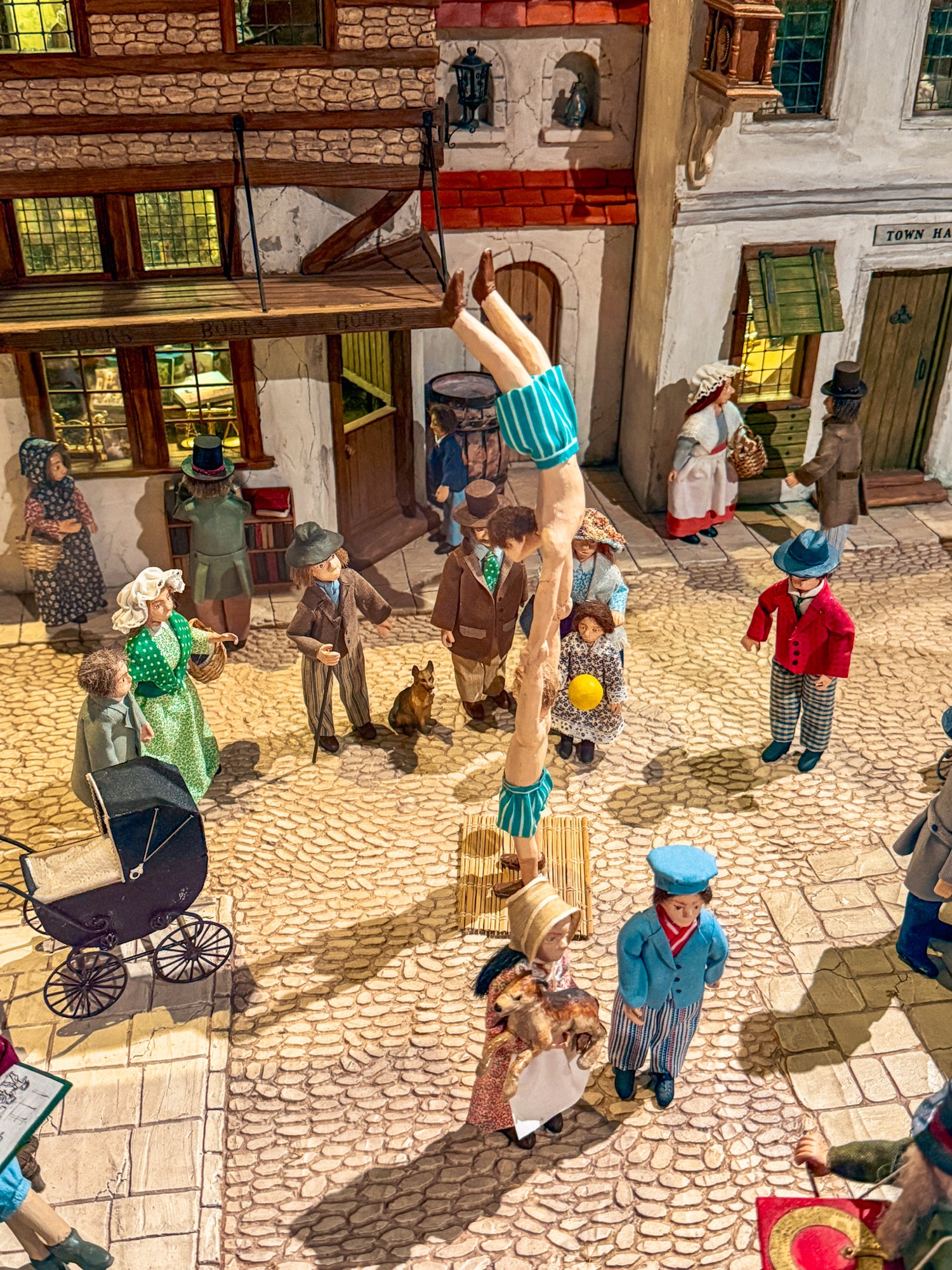
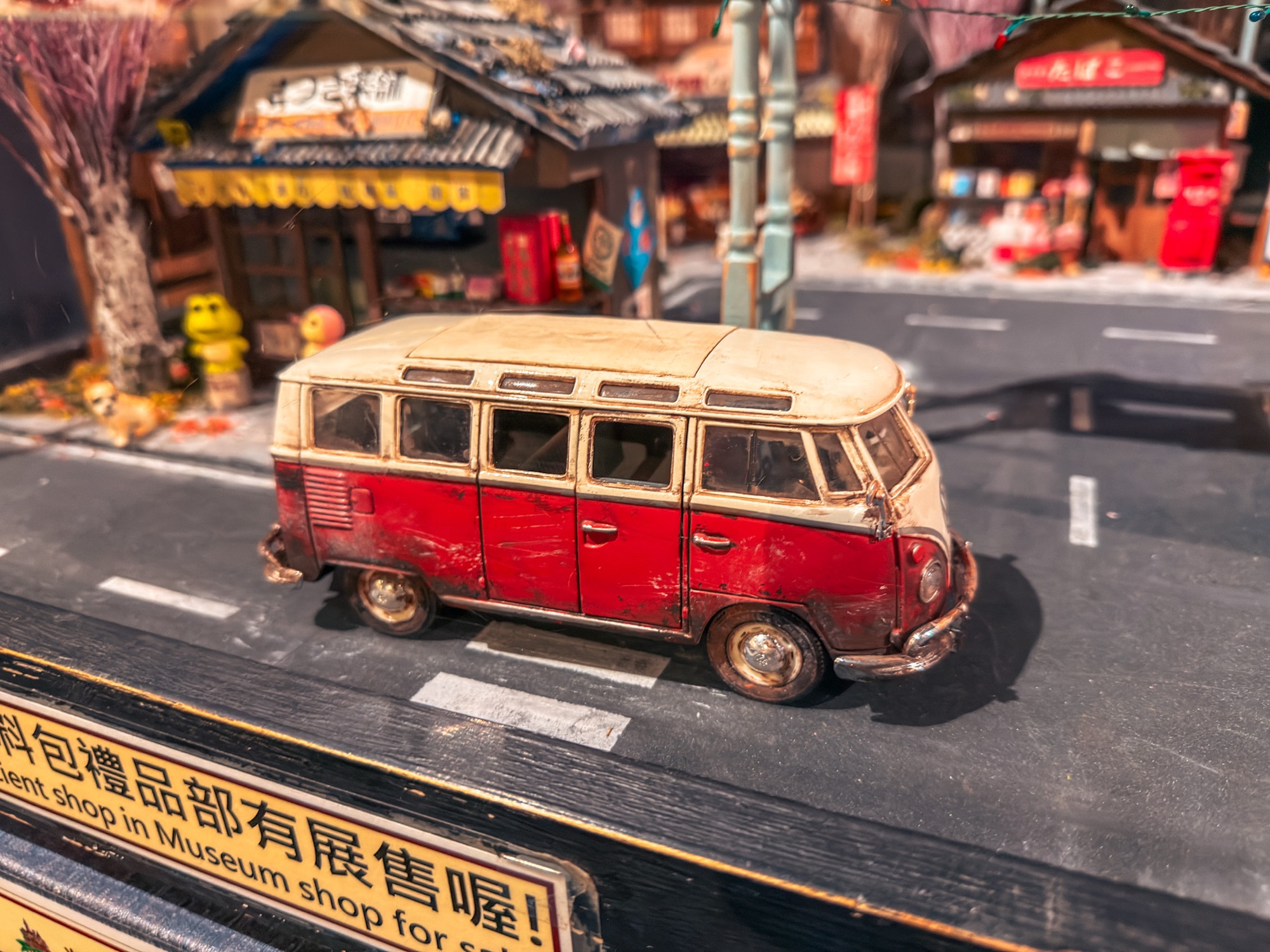
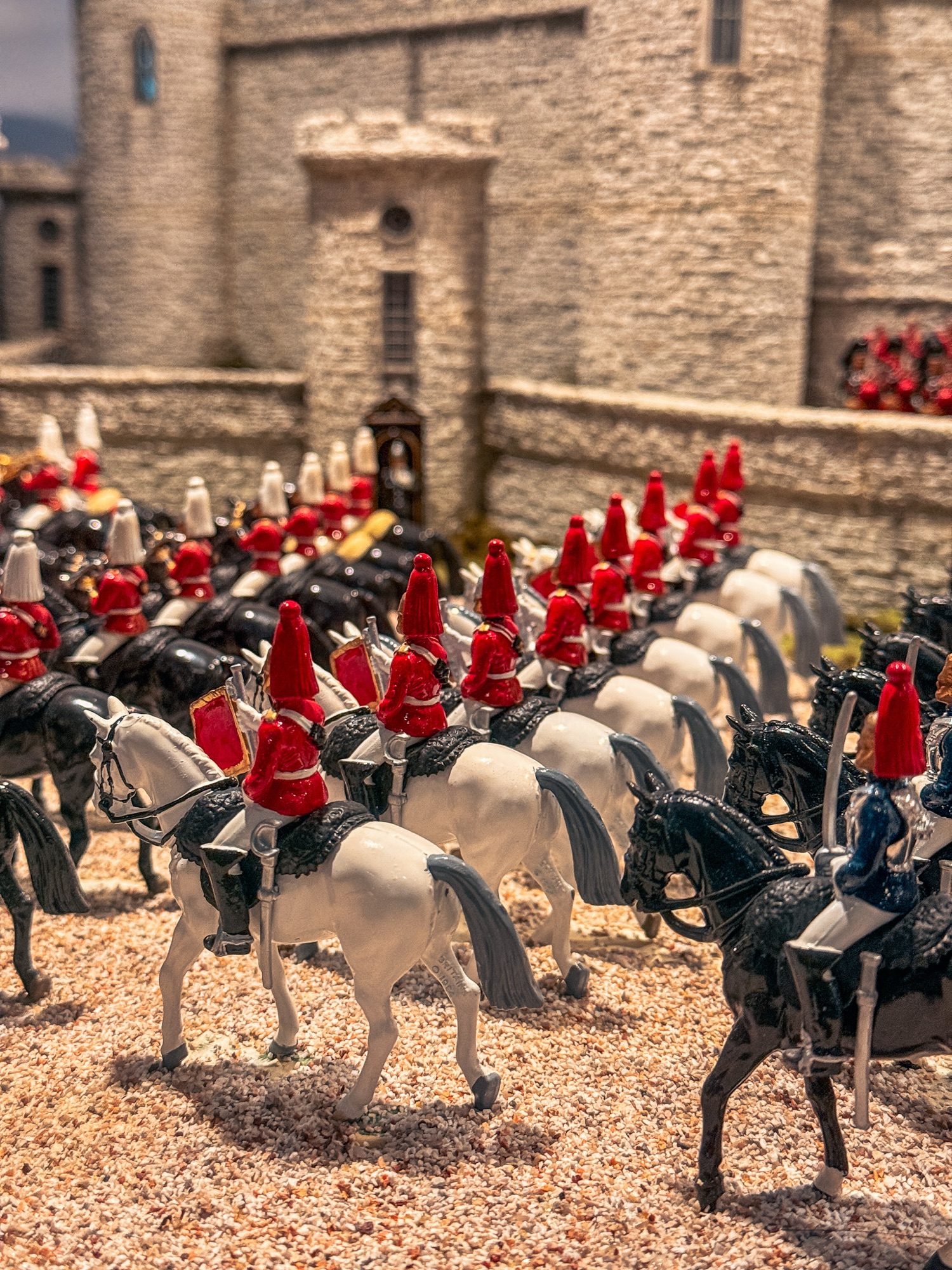
Later that afternoon we went to the Miniatures Museum of Taiwan—the first museum in Asia dedicated to collecting miniatures, founded in 1997 by a married couple whose passion for tiny things was sparked by a chance discovery in the Netherlands.
Every piece in the museum is built to a 1:12 or smaller scale, which means a six-foot man becomes six inches or less, and a kitchen becomes something you could cover with your palm—except that kitchen contains every utensil, pot, pan, painting, window, and piece of furniture of its full-sized counterpart, all rendered with a specificity that makes you feel slightly large and clumsy for existing at normal scale.
If we had simply walked through and looked, this would have been a mildly interesting afternoon.
What made it genuinely fun was Shaina, who had gone onto Google beforehand and pulled recent visitor photos to build a scavenger hunt out of specific objects hidden within the displays.
Twelve items. Some easy, some requiring careful examination of very intricate models from multiple angles:
A balcony with four maroon drapes. A man holding three women. An actively not-moving toy train. A row of eight white horses. A woman in a green dress pushing a blue baby carriage. A room with three hanging chandeliers and yellow fabric furniture. A Volkswagen van. Ancient Roman arches. A car full of cars. The White Rabbit dressed as a Queen of Hearts guard. A three-story grey house with white trim and an iron front gate. A collection of brown leather luggage and a guitar.
All twelve found. Ninety minutes, everyone engaged the entire time, Missi included—who it should be said keeps a pace through these days that puts the rest of us to mild shame.
This is what Taipei has been teaching us: slow down at the metro, and pay attention everywhere else. Take the time to look carefully. Let someone turn an obscure museum into a fun game. Don’t rush the duck carving. Stand in front of the jade teapot until you understand what you’re seeing.
The city rewards patience and attention in equal measure.
The Sealed Envelope
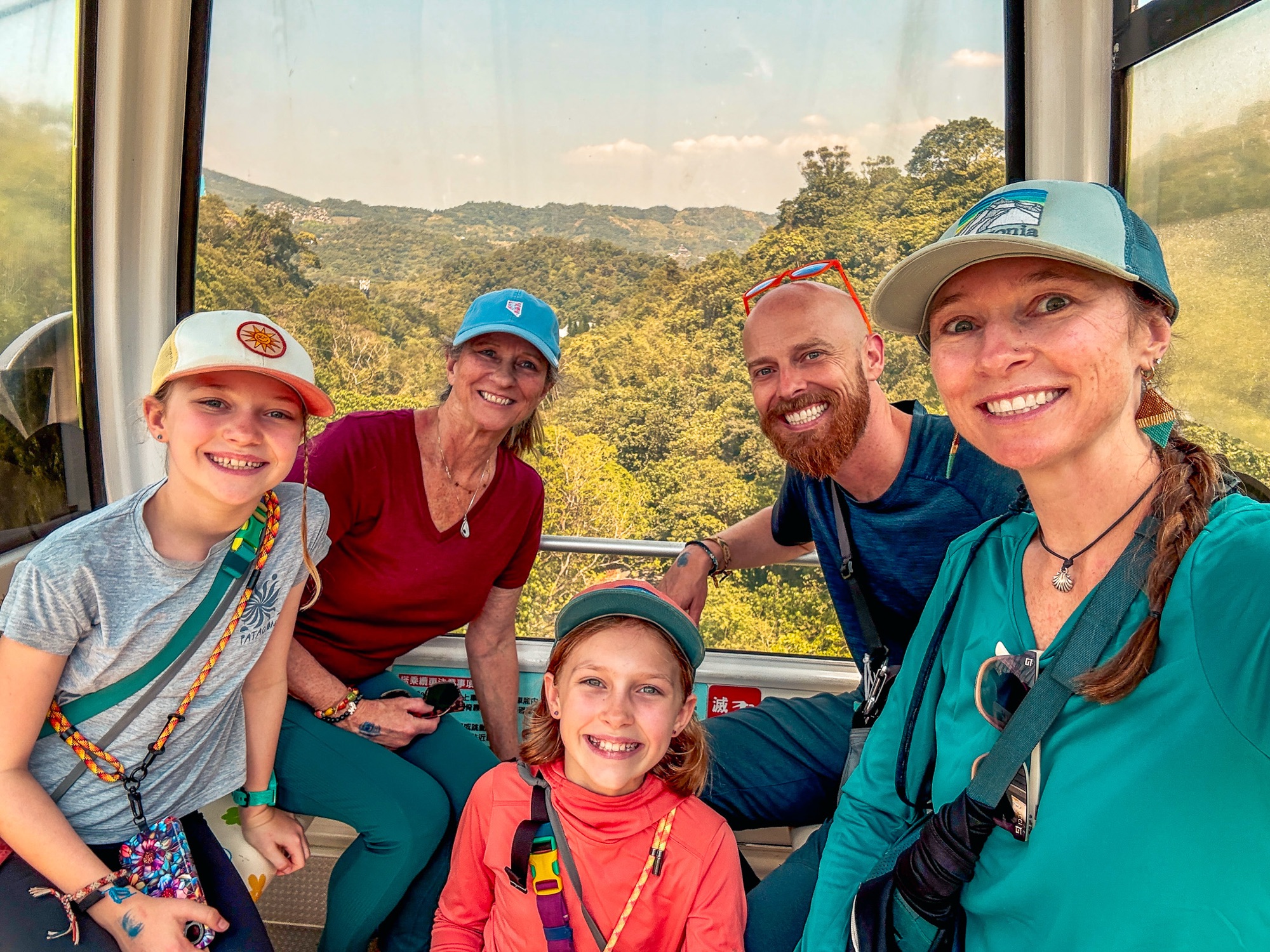
On our fourth day we took the gondola up into the tea-growing hills above the city.
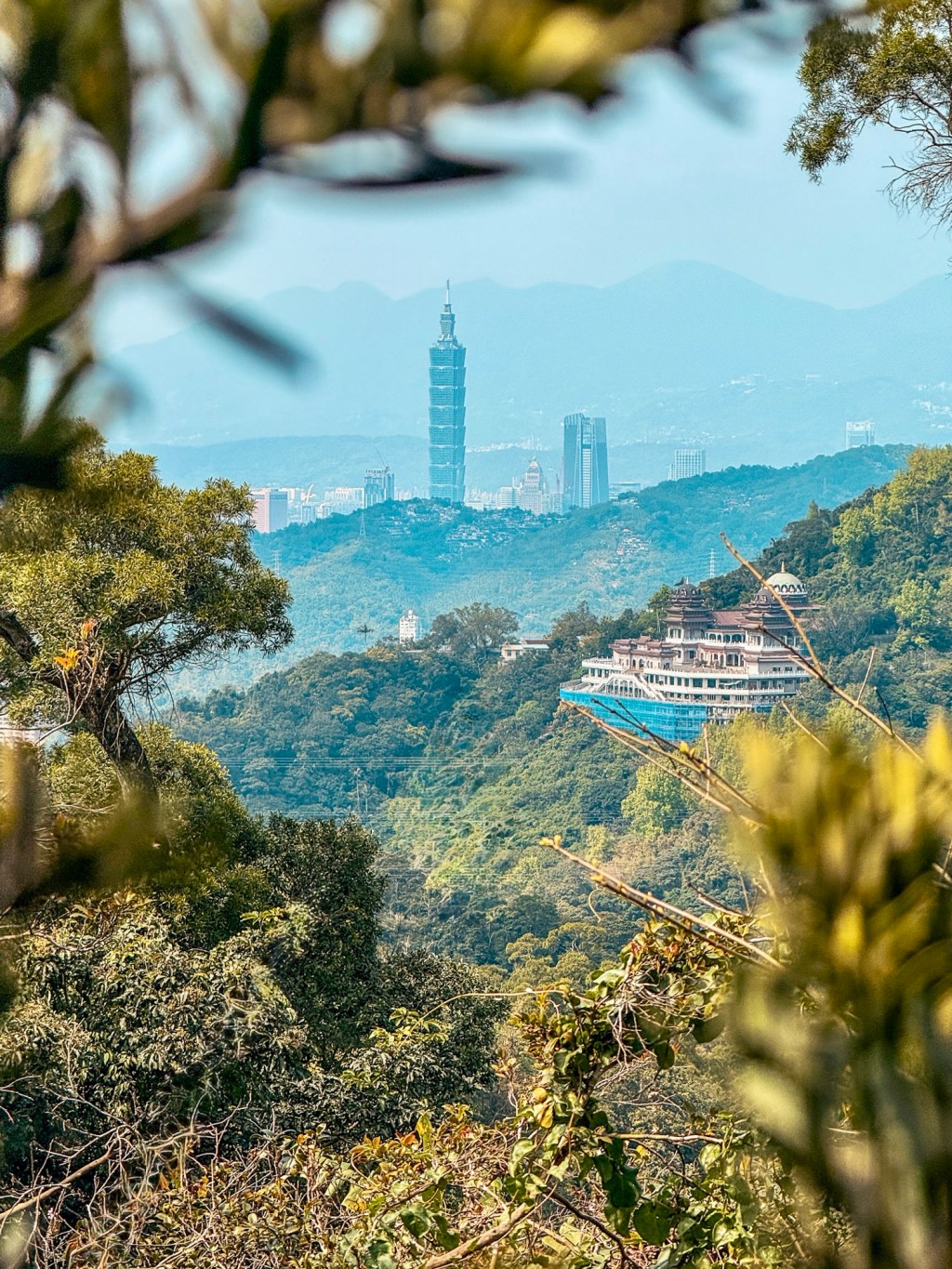
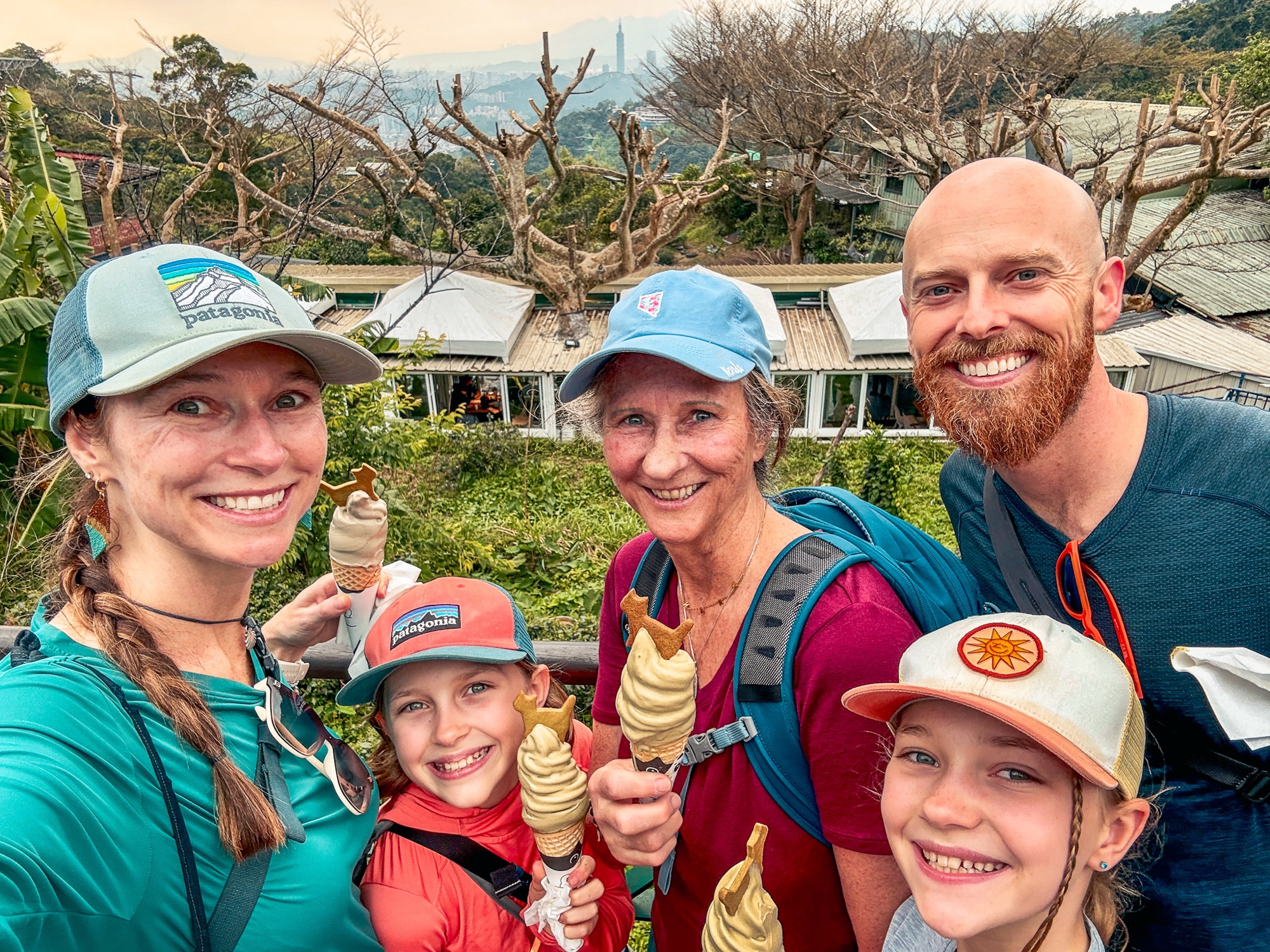
The Maokong Gondola lifts you out of the back of the zoo and carries you up into the mountains—Maokong, which apparently gets its name from the civets that used to live in the valley. The city falls away below you as the forest rises on all sides, the tip of Taipei 101 visible in the haze long after everything else has shrunk to abstraction.
It is a very pleasant way to ascend a mountain.
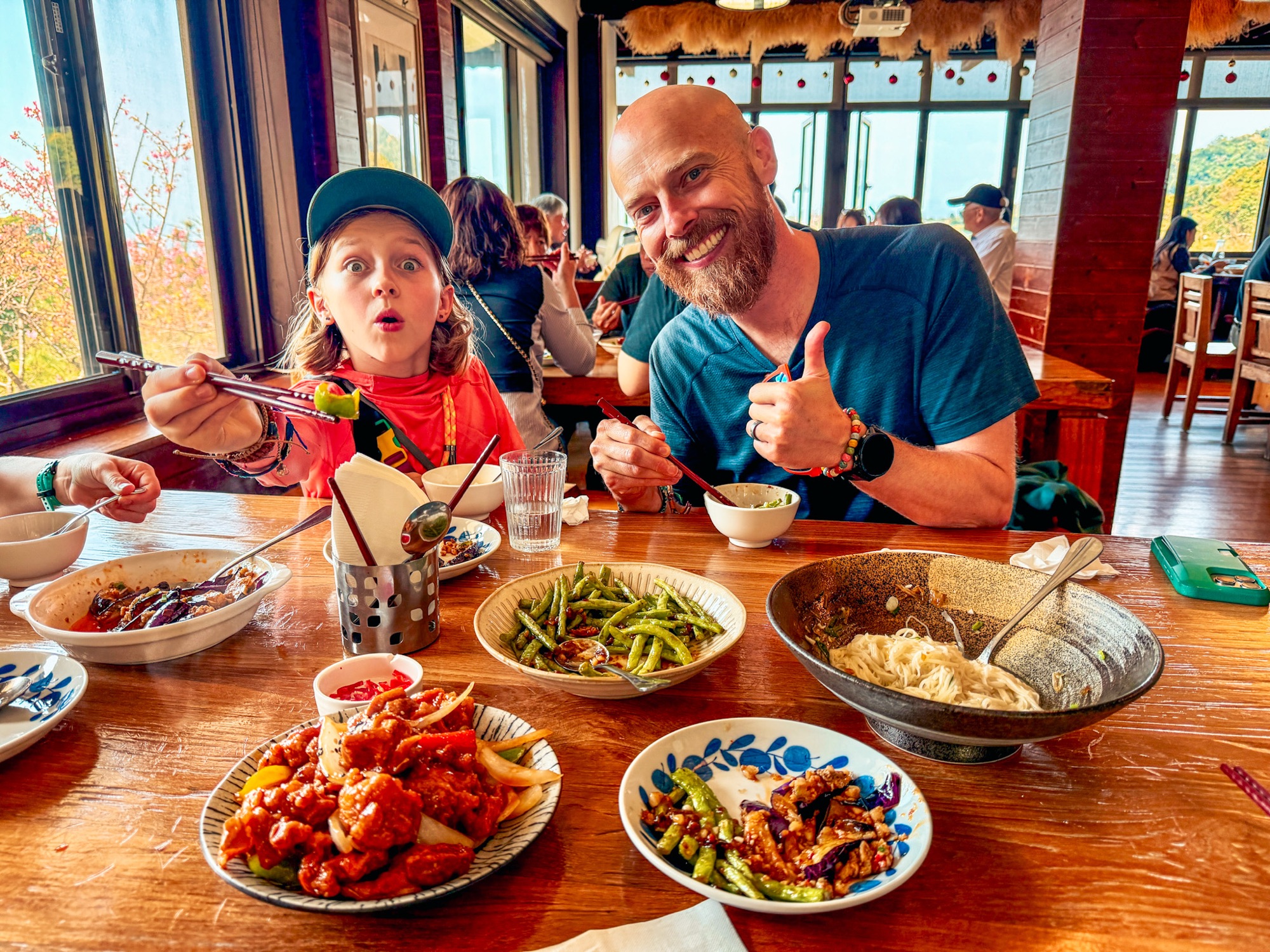
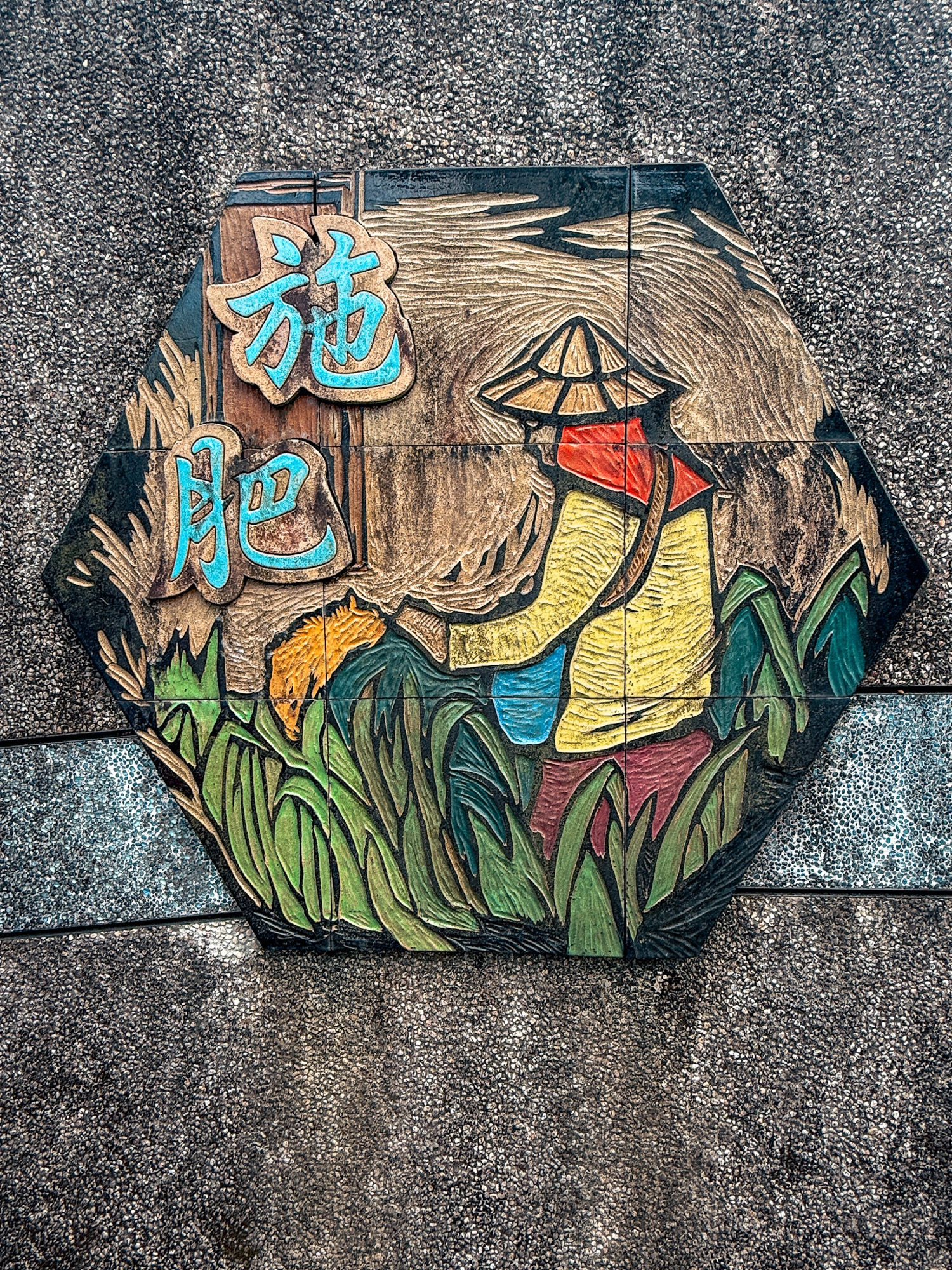
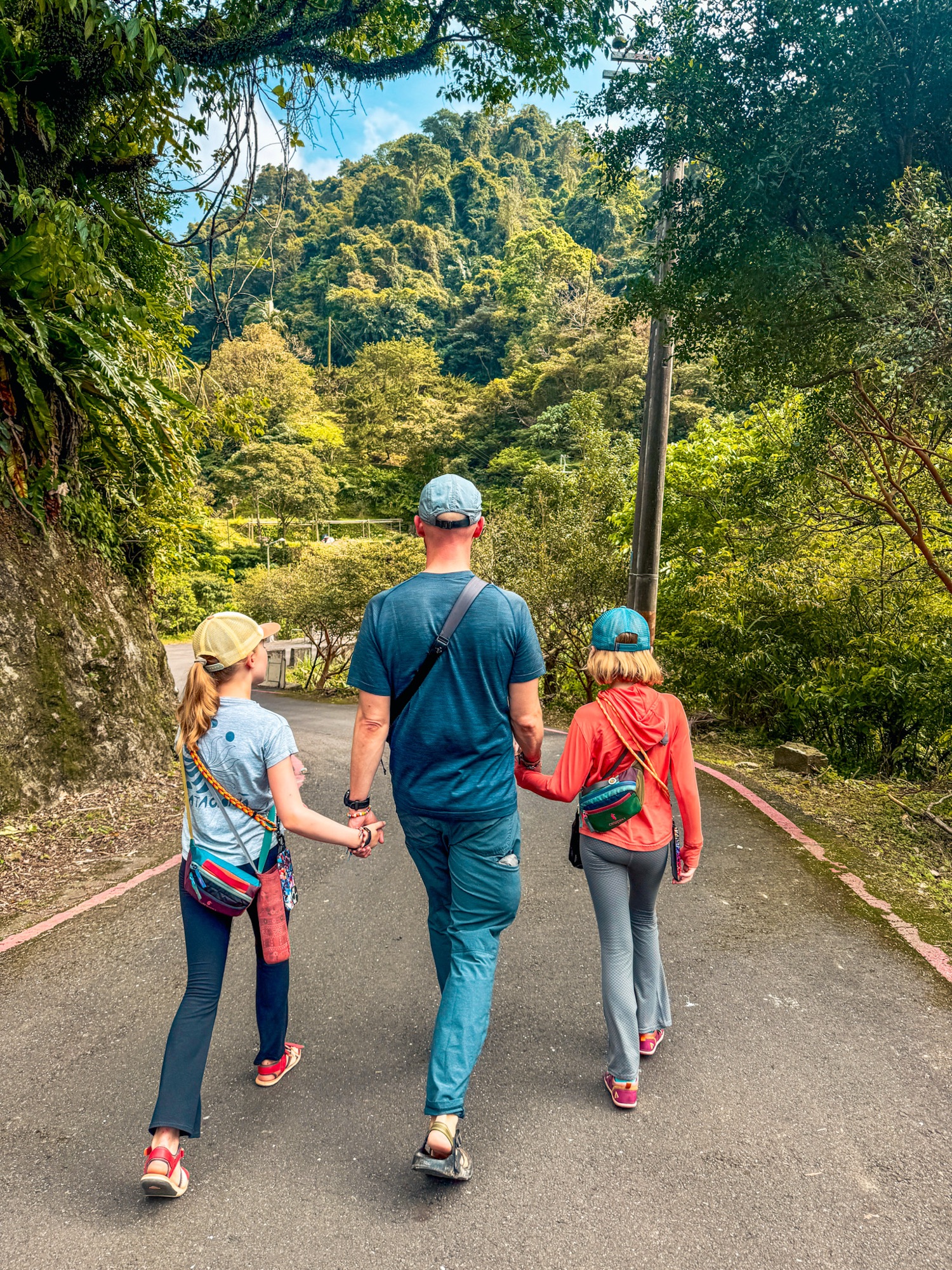
At the top we walked alongside the winding roads hugging the steep mountainsides, shopping at Redwood House for lunch—spicy eggplant, tea oil noodles, General Tso’s chicken, stir-fried green beans with XO sauce—and then kept walking.
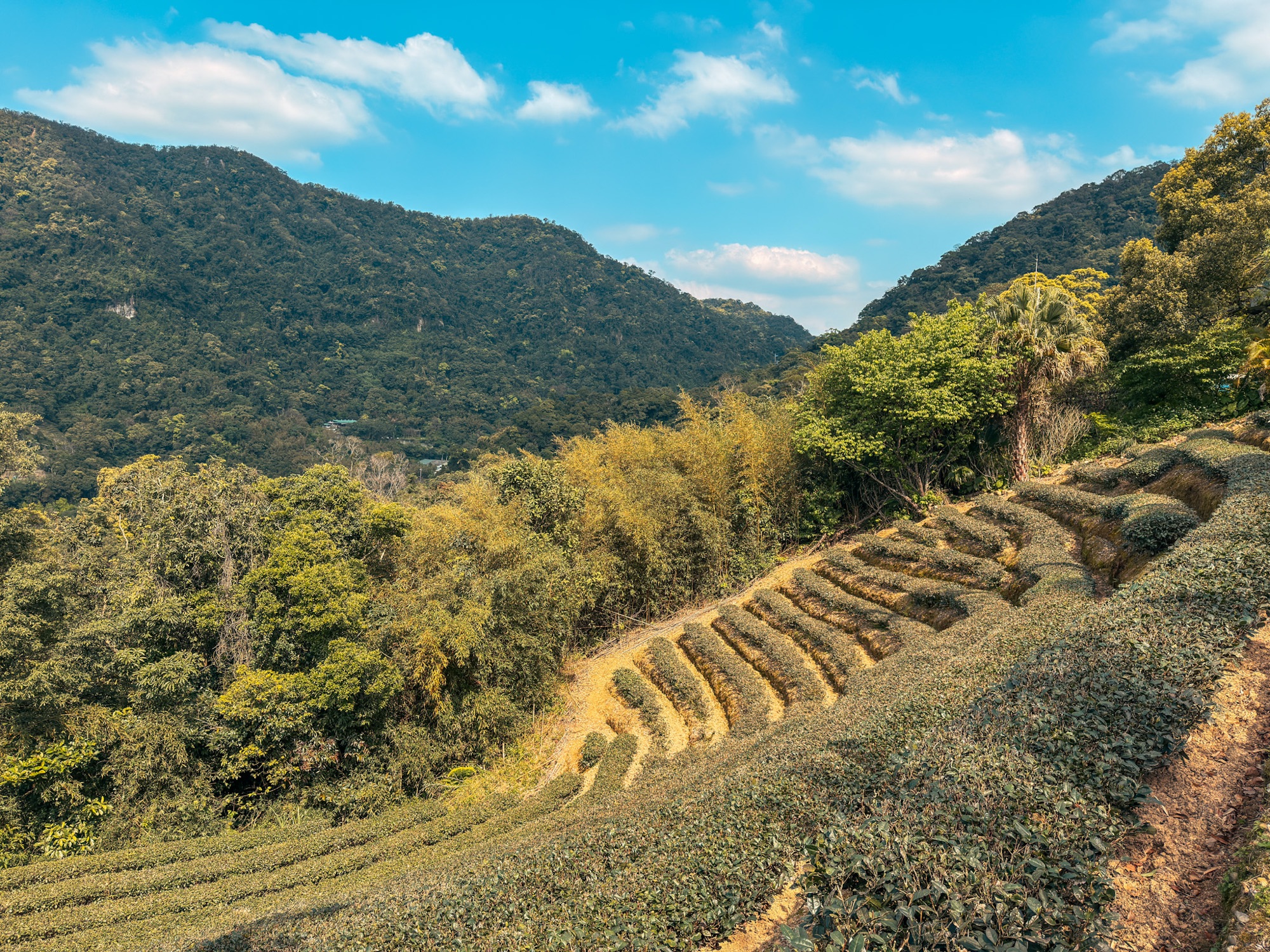
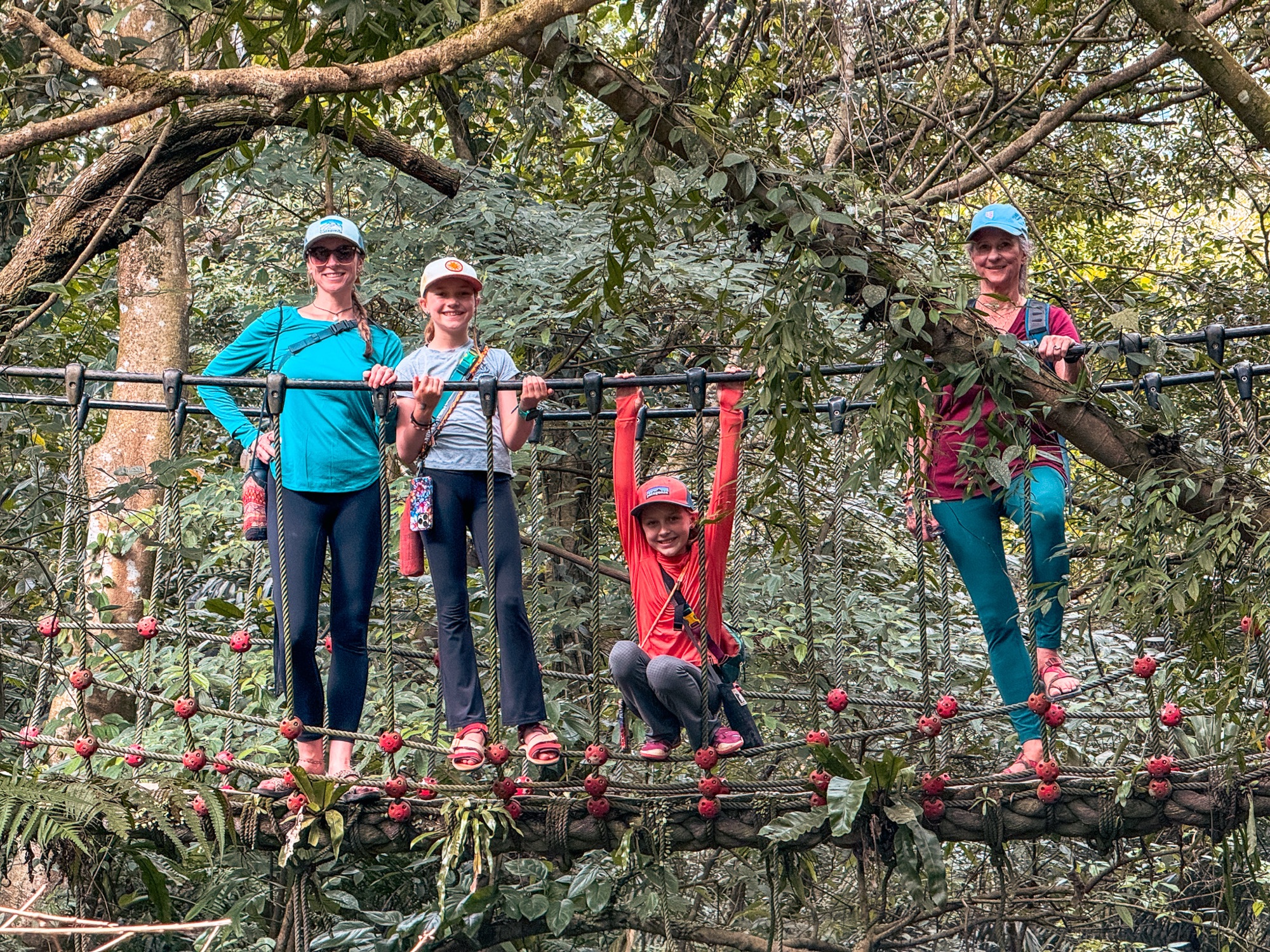
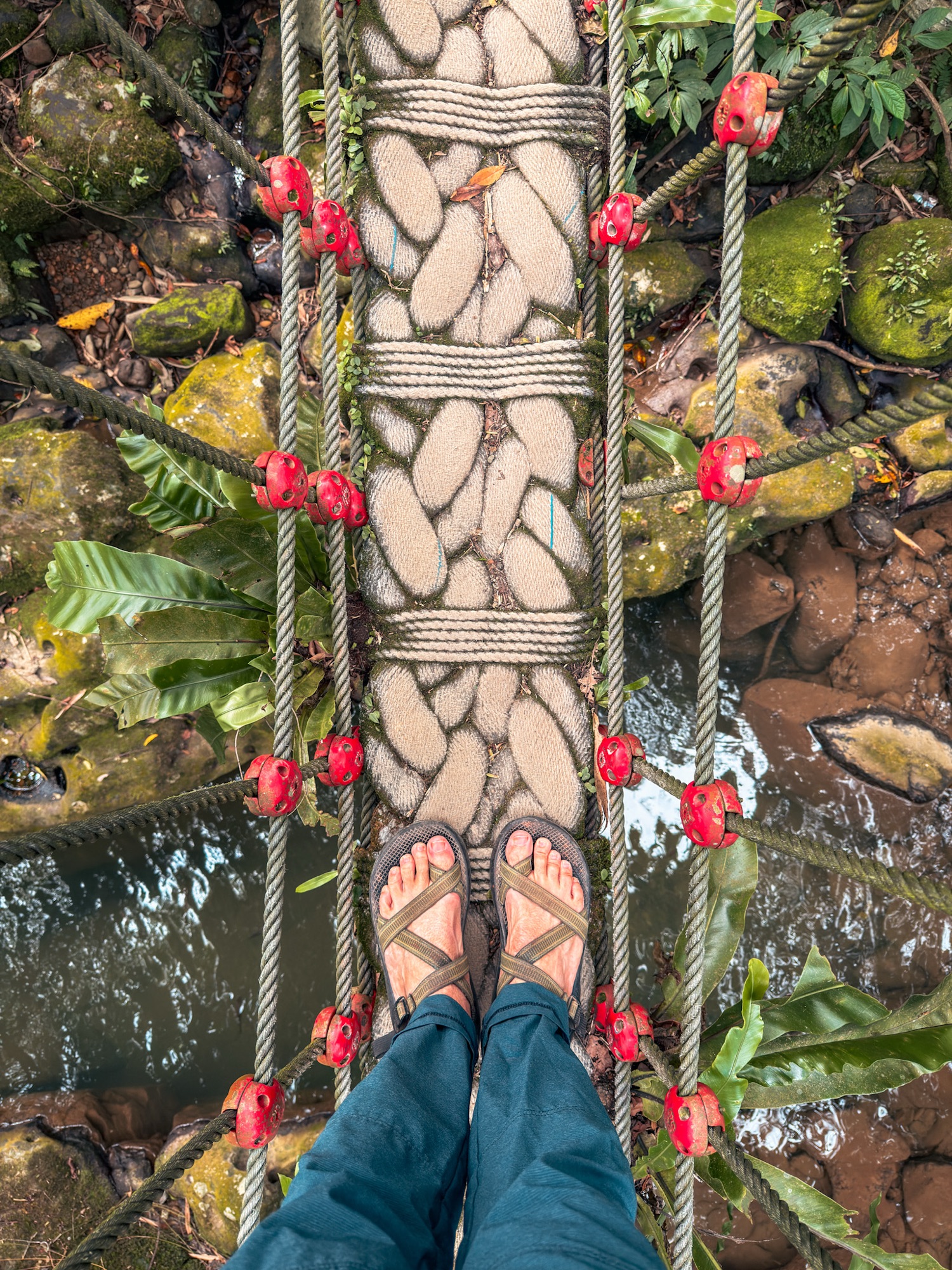
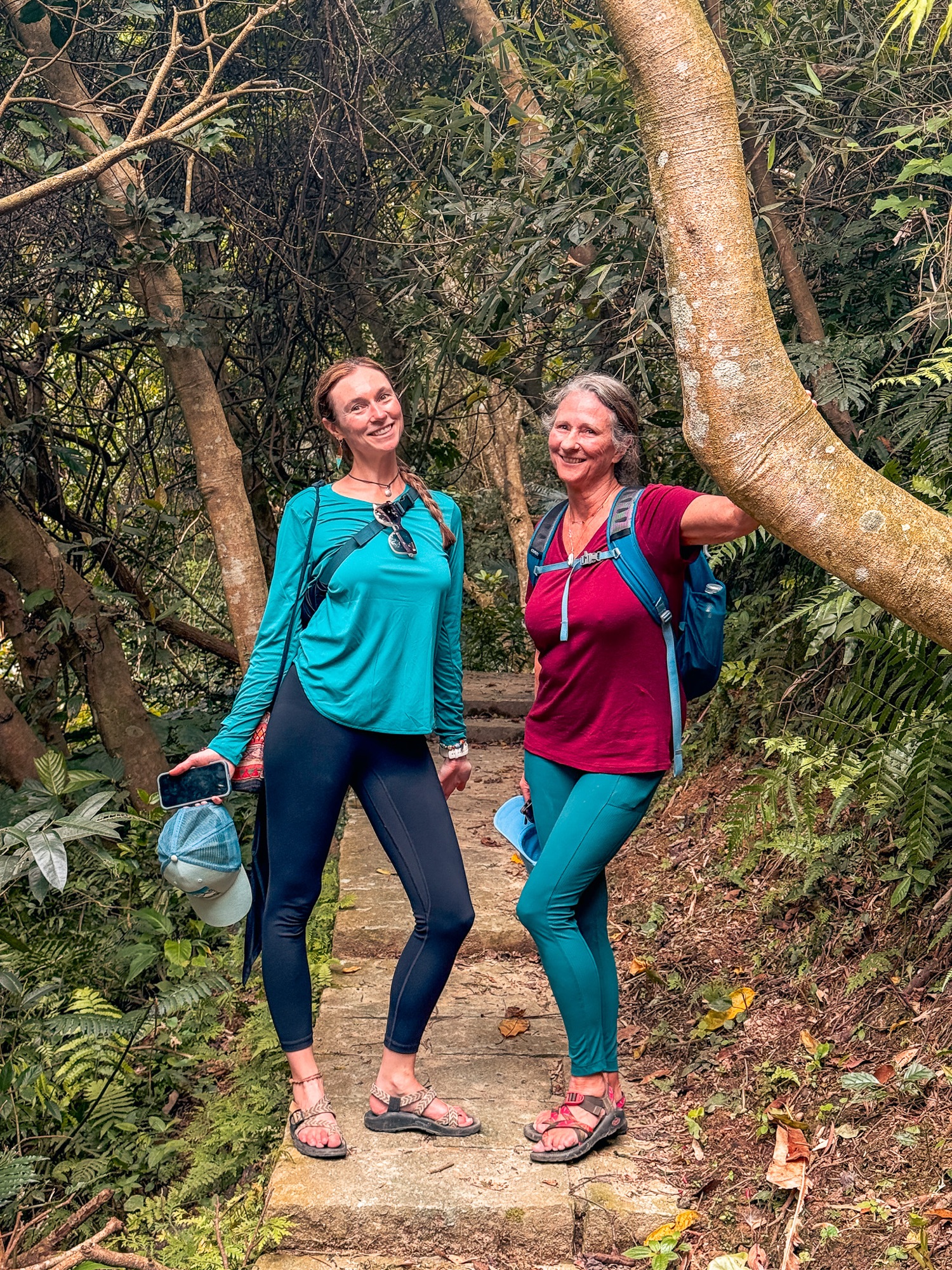
What followed was a proper ramble through the tea fields on a more-strenuous-than-expected hike, down to the river, across a rope suspension bridge decorated with small carved bear and cat figures, and then back up through the trees to the main road.
At the top we were breathless and pleased with ourselves, and we celebrated with a Teammmmm SharXee! Cheer—all hands in the middle, Nana included, count down and throw them up—before rewarding ourselves with green tea and oolong ice cream cones in the village. Cold and slightly grassy and exactly right.
Then back to Redwood House for something that had nothing to do with food.
The restaurant offers a small ceremony: each person receives a piece of homemade paper and a calligraphy pen, which was more old-fashioned paintbrush than modern-day pen. We collectively decided to write three things: your biggest current worry, what you’re most looking forward to, and three things you hope to accomplish in the next 365 days.
You fold the paper, seal it in an envelope alongside a local pouch of tea, then put it somewhere safe, not to be opened for a year.
It’s a simple idea and also not simple at all.
There is now a sealed record of exactly where each of us is standing at this moment in our lives—what we’re afraid of, what we’re reaching for, what we want to become.
The version of us that opens those Taiwanese time capsules next year will be different enough from the version that wrote them to make the reading interesting.
We’re genuinely curious what we will think then about we wrote today.
We will have to wait.

What We’re Learning
The gondola ride back down was soft and unhurried, the city lights beginning to surface in the dusk, the day settling into its last hour.
We stopped at a local grocery for fruit, walked home in weather that had been quietly perfect all day—mid-seventies, mostly overcast with intermittent sunshine—and missed our metro stop by two stations because we got deep into a conversation and simply forgot to look up.
A short backtrack, a short walk, and we were home.
Taipei is teaching us how to move through a city properly.
Not rushing for trains that come every four minutes.
Not racing through museums when the jade work deserves your full attention.
Not forgetting to photograph the duck because you’re too excited to eat it.
Taking the time to build a scavenger hunt that turns a miniature museum into an adventure.
Walking through tea fields just because they’re there.
Writing down your worries and hopes and sealing them away for a year.
We’ve been moving pretty fast for months. Southeast Asia was extraordinary and relentless and we loved every minute of it. But Taipei is asking us to slow down. To pay attention. To notice the small things. I think we’ve always tried to do this while on this trip, but it bares repeating.
With Missi here, and a full month ahead of us on the island of Taiwan, we have the time to do exactly that.
The next train will always come.
The city will still be here tomorrow.
And the sealed envelopes will wait.
 Pause and Wander
Leave a comment