
Dates: March 8-10, 2026
Places: Luang Prabang, The Mekong River, Pak Beng, Houayxay: Laos
The staff at our hotel in Luang Prabang surprised us with breakfast to go—fried noodles, fresh fruit, pastries packed in takeaway containers at 6:20 in the morning. Completely unexpected and deeply appreciated.
We felt like we were back on “Camino Time”— up at 5:30, packed by 6:00, and out the door with barely enough time to process the gesture before settling into the waiting taxi. We picked up one more group and headed for the slow boat pier.
Our guide, May, a Khmu man with bright eyes and a big smile, hauled our bags down a steep set of stairs to the Mekong and onto the boat.
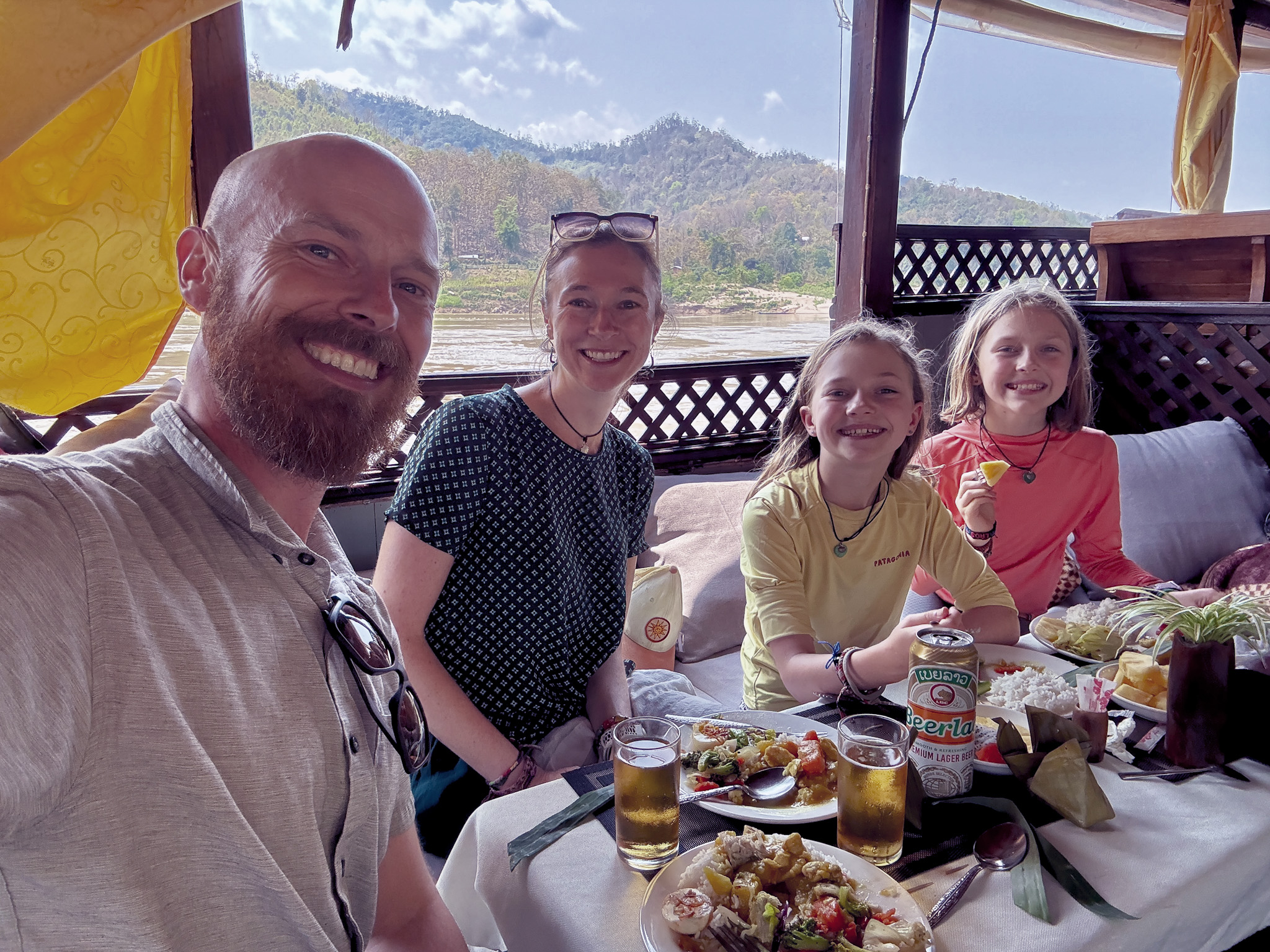
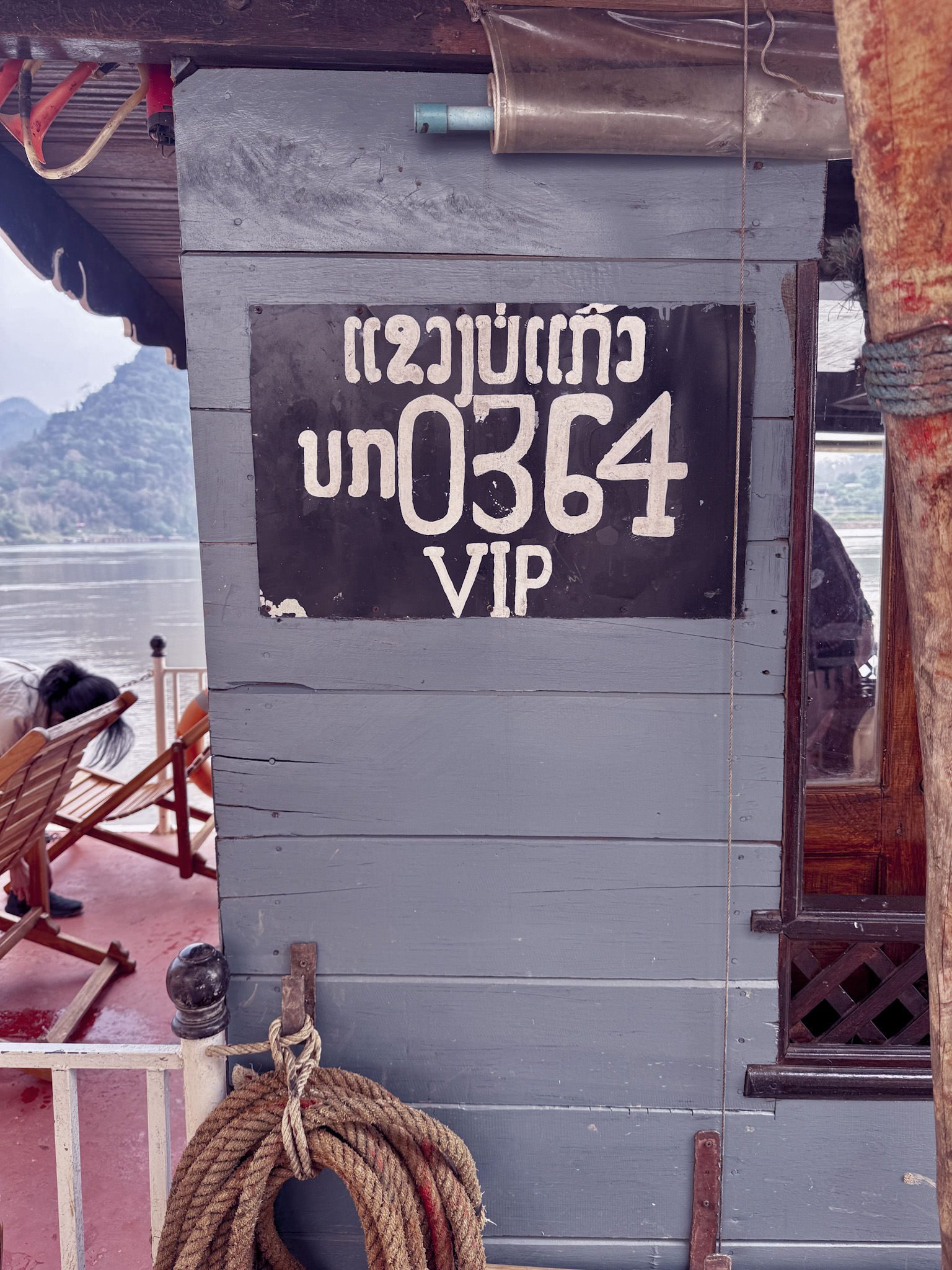
This boat ride holds significant sentimental value for Maxell and Shaina as well: on this boat ride in 2014 was when we first meet an American family “living abroad”, homeschooling their four kids while they saw the world and educated them in countless other ways. We told each other: “If we ever get married and have kids someday, we should do this.” Of course, the rest is history. This wasn’t the “water bus” version of a slow boat with rows of hard benches, which was how we remembered this same boat ride from nearly two decades ago. But here today, the boat we boarded was the comfortable kind—built for maybe 20 to 30 people—with cushioned seats, daybeds, and little booth setups. We found one that fit the four of us easily, with space to sprawl.
By 7:00, we were underway.
River Time
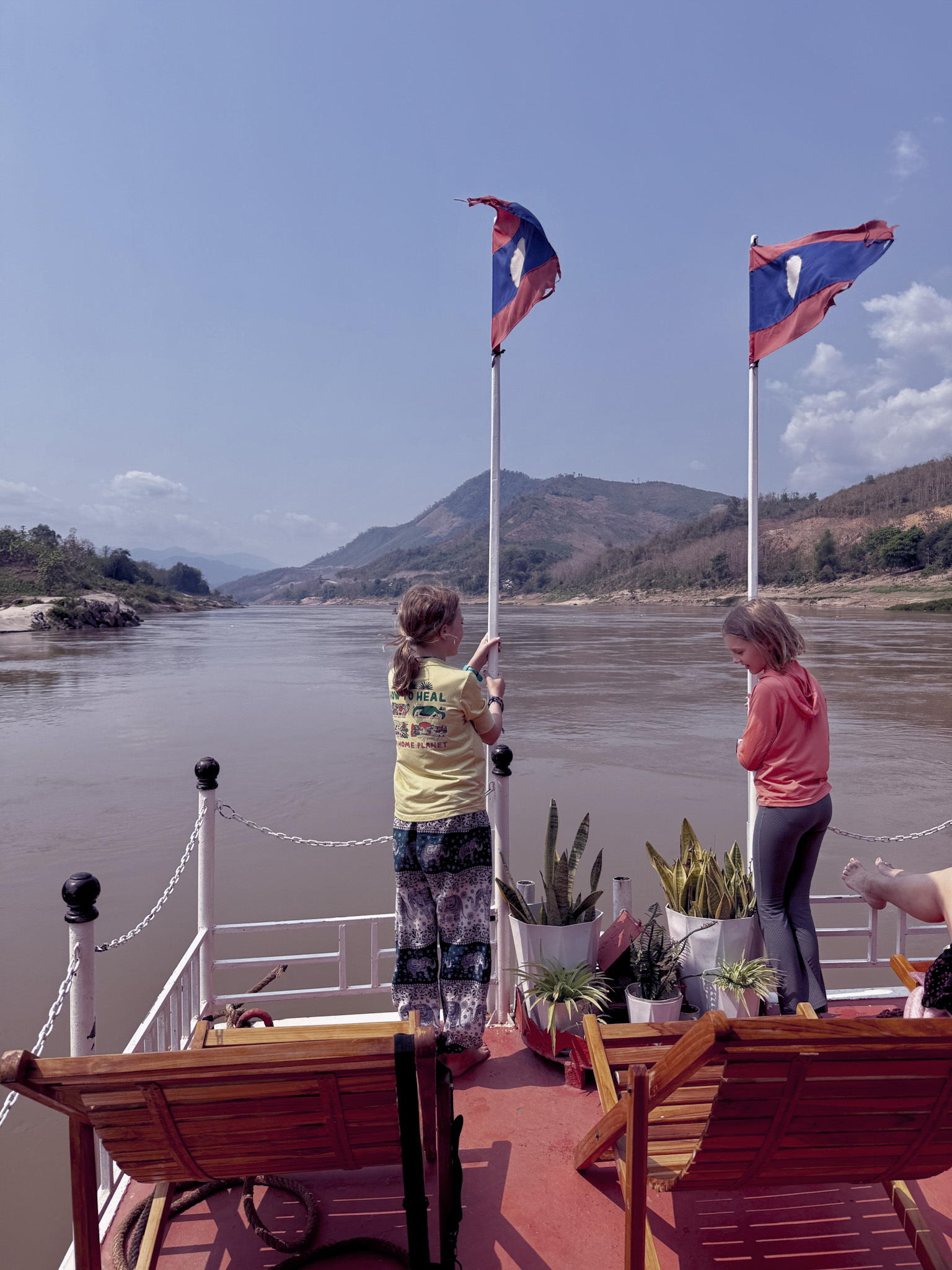
The Mekong moves at its own pace, and if you’re on it long enough, you start to move at that pace too.
Two days. Twenty-one hours total. Luang Prabang to Houayxay, with one night in Pak Beng at the halfway point.
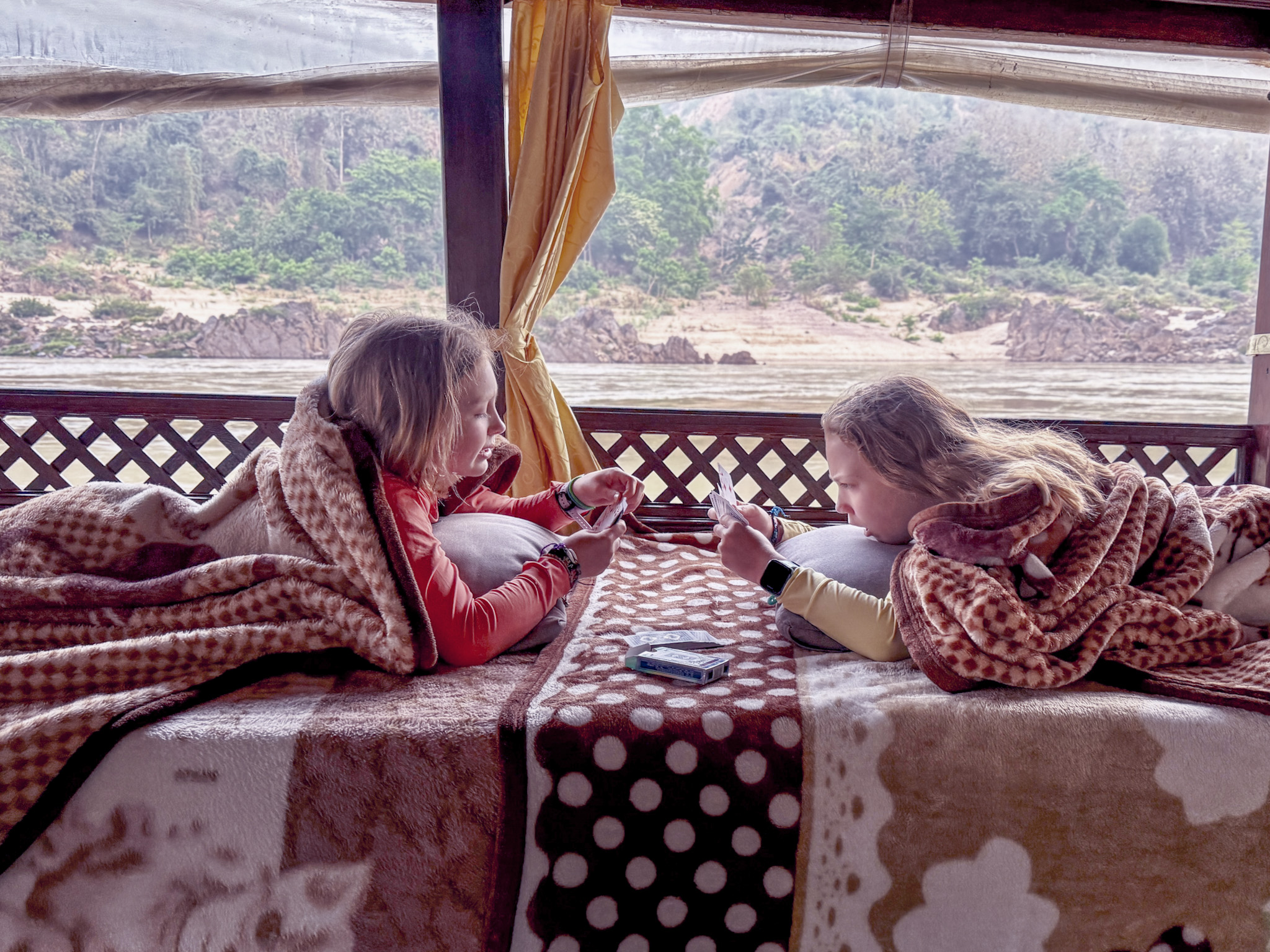
The air was cold at dawn, which caught us off guard. Southeast Asia, in our memory, does not do “cold.” The crew clearly knew better. Fleece blankets appeared just as we needed them, as if from thin air.
The boat itself was a family operation: father as captain, mother running the kitchen and everything else, their son handling the snack bar and filling in wherever needed. Watching them work was quietly impressive. Efficient, calm, seamless.
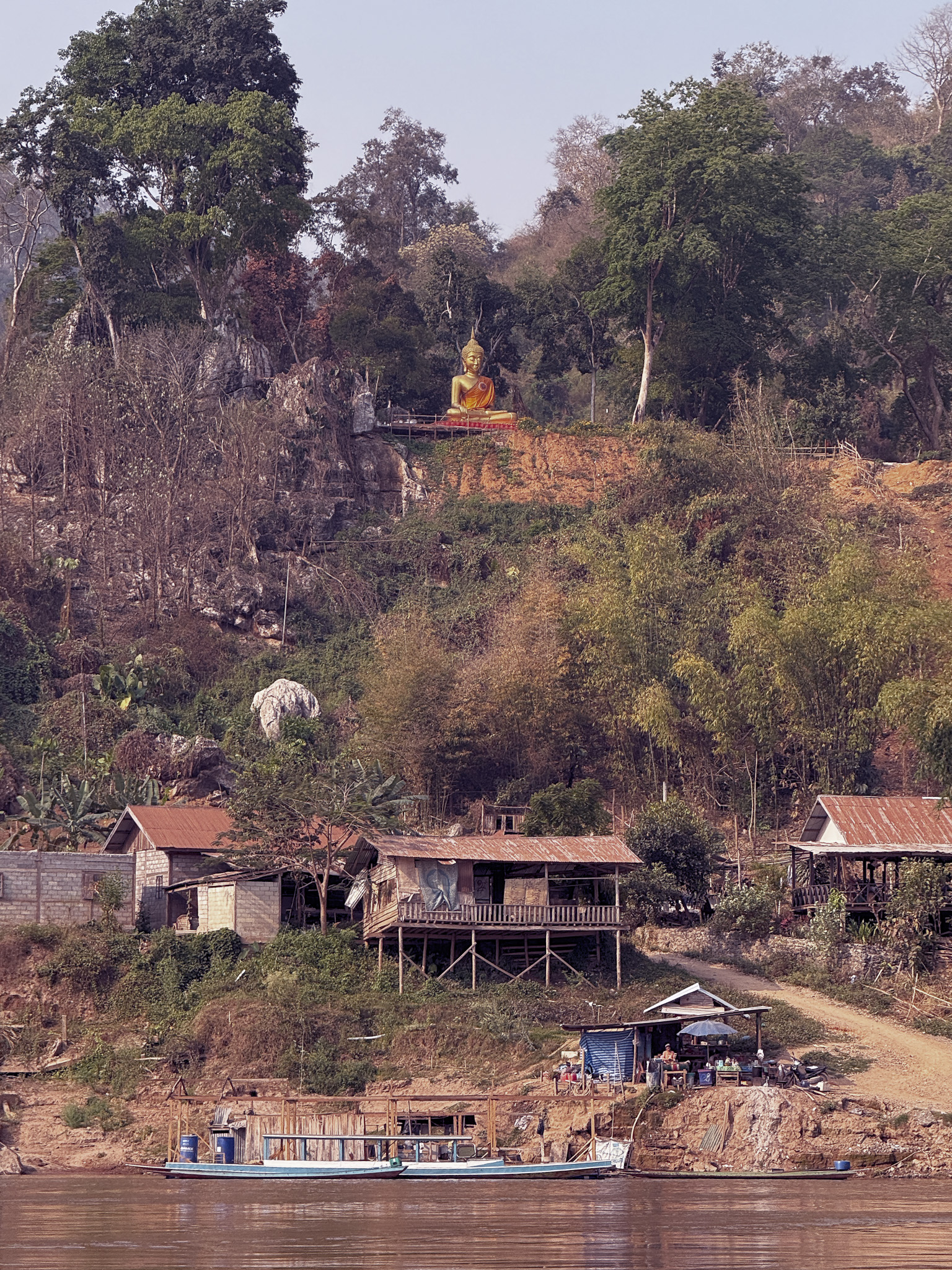
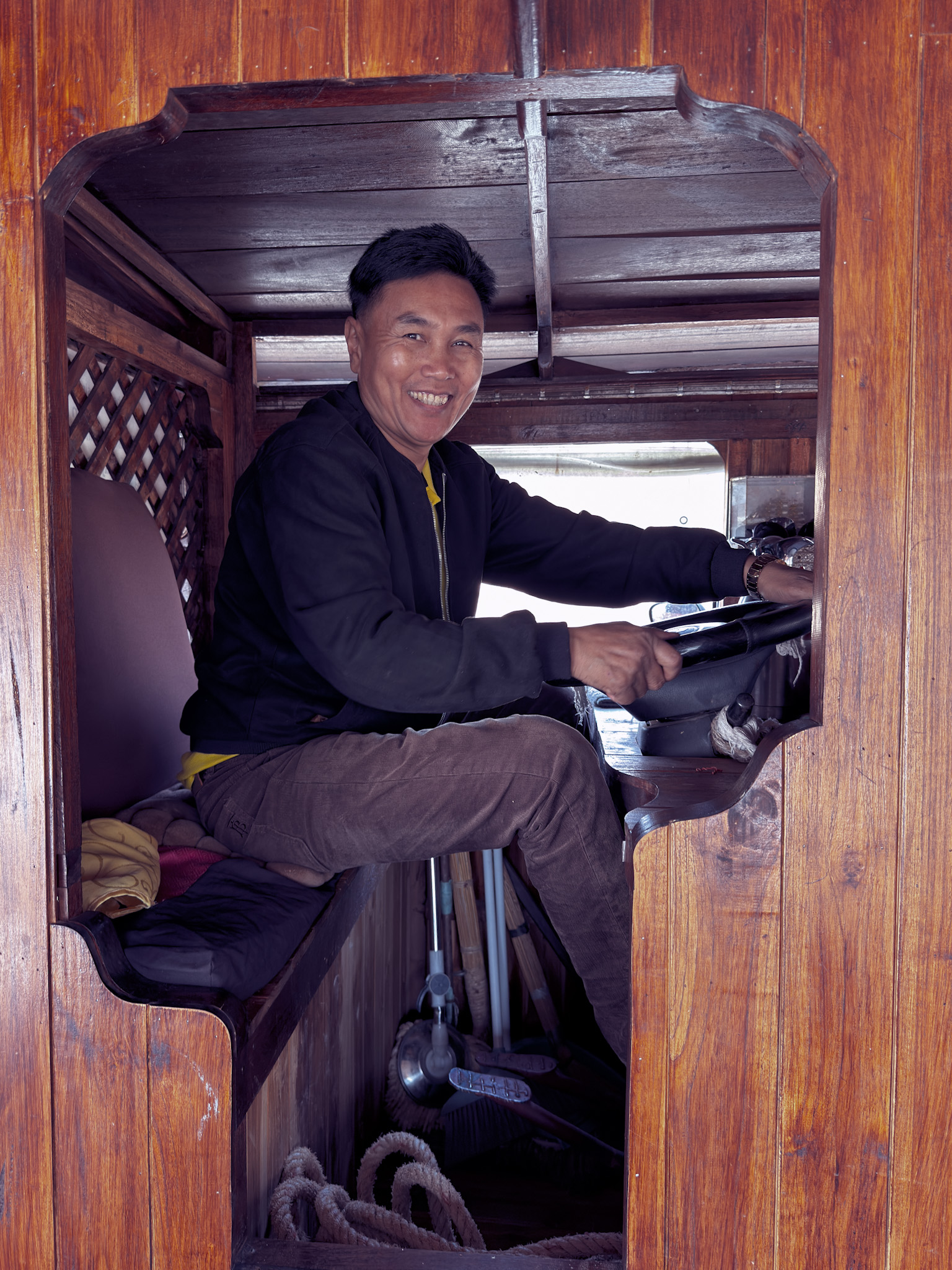
The captain, in particular, was something to watch. He sat at the helm for over ten hours each day, reading the river like a second language. This time of year the Mekong runs low, exposing sandbars and shifting channels that require real skill to navigate. From our completely unqualified perspective, he was flawless.
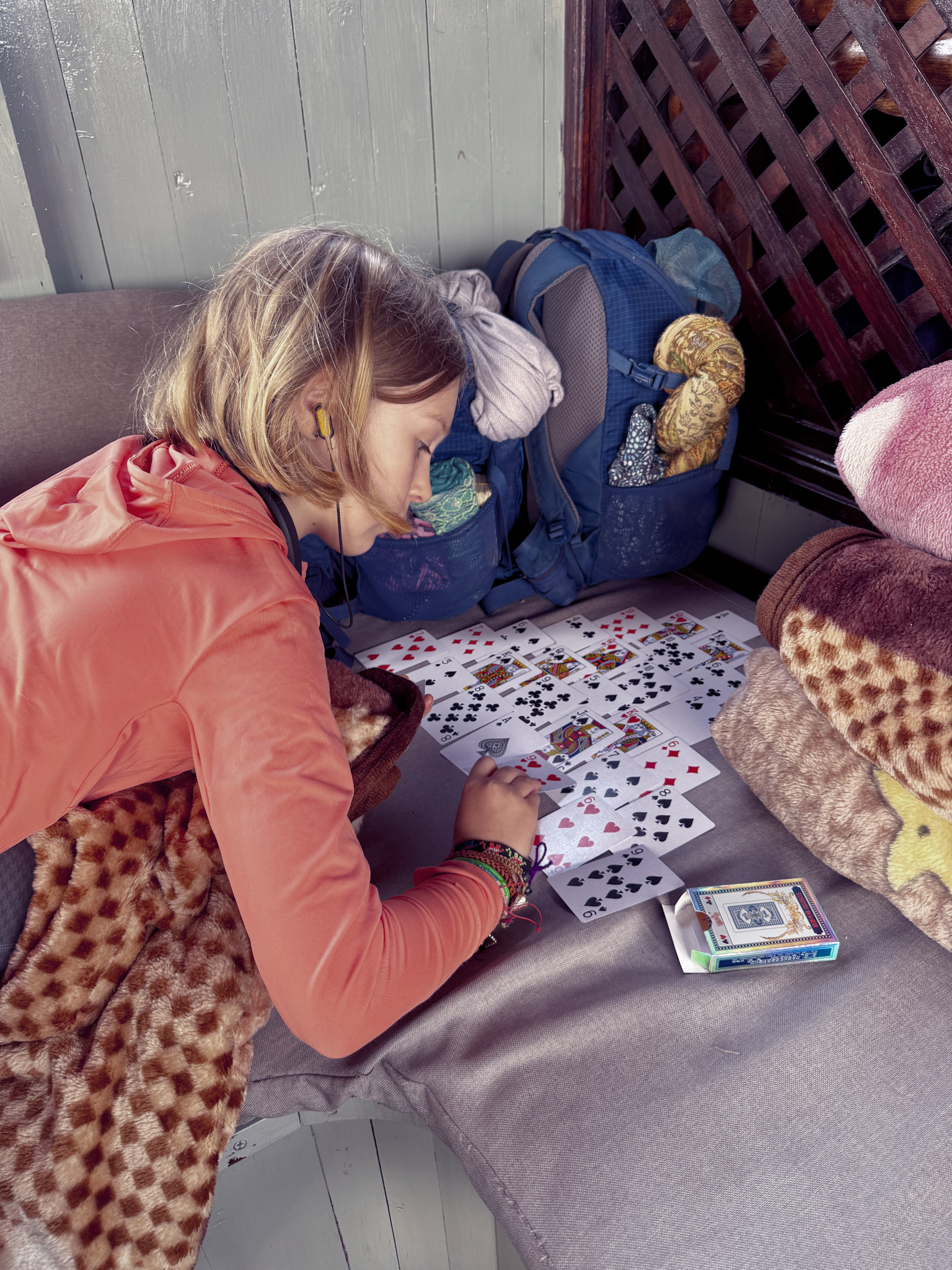
Time on the Mekong doesn’t move normally. The hours passed, but it never felt long. We played cards, read, talked, napped on the daybeds, caught up on journaling. Eventually connected with a group of Chinese Canadians who were warm and easy to talk to.
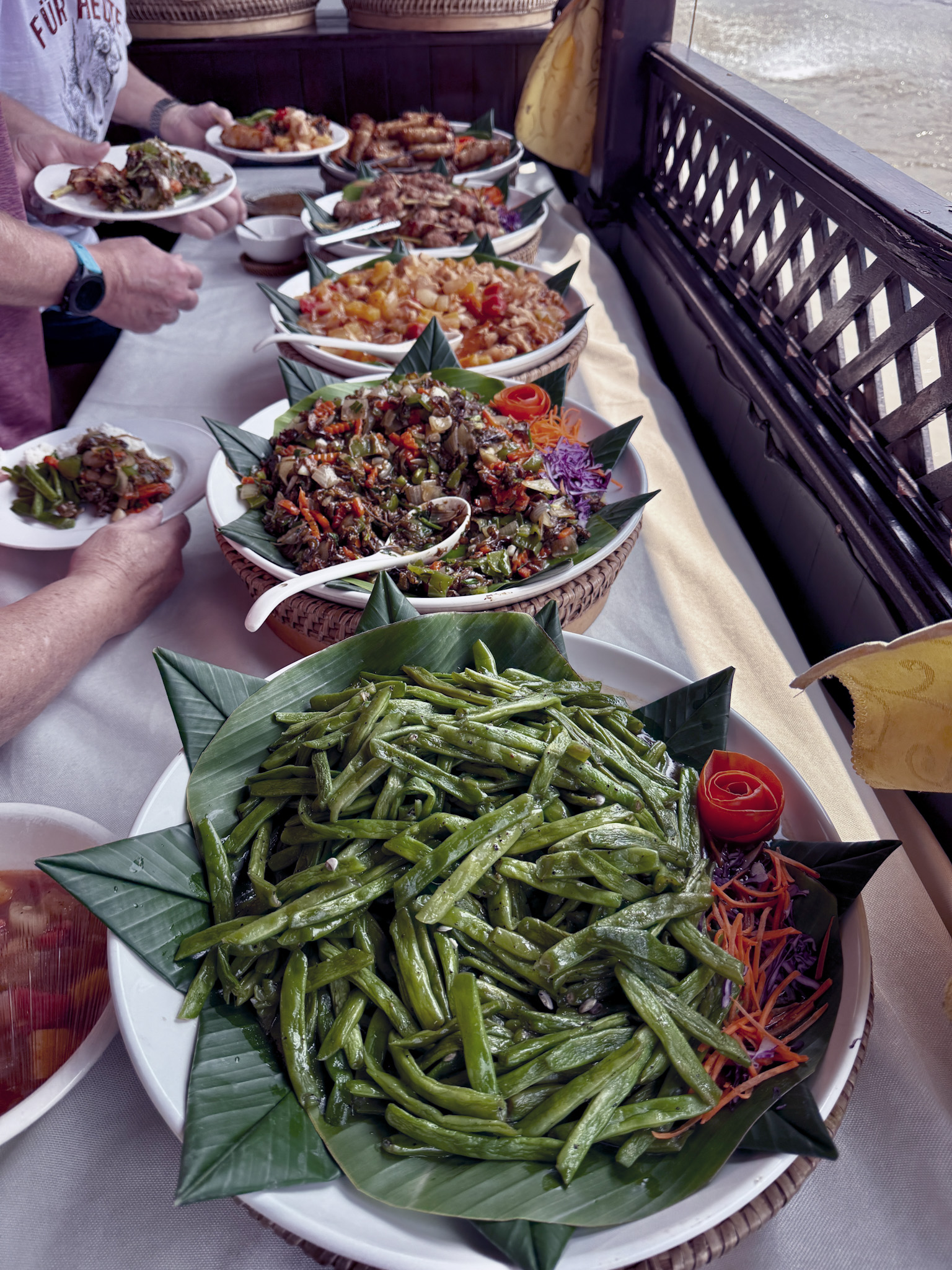
Lunch appeared mid-river both days and was one of those experiences where the context does as much work as the food itself. Spring rolls, sweet and sour chicken, pork and vegetables steamed in banana leaves, stir-fried vegetables, steamed rice, fresh fruit, hot tea—all of it elegantly arranged on banana leaves and bamboo trays, all of it produced by two women in a kitchen the size of a large closet, for twenty-four people, on a moving boat.
None of the individual dishes were the single best thing we’ve eaten on this trip. The whole thing together, in that setting, served that way, was still genuinely special.
Travel has a way of making context inseparable from the meal.
Pak Ou Caves (and the Gong Incident)
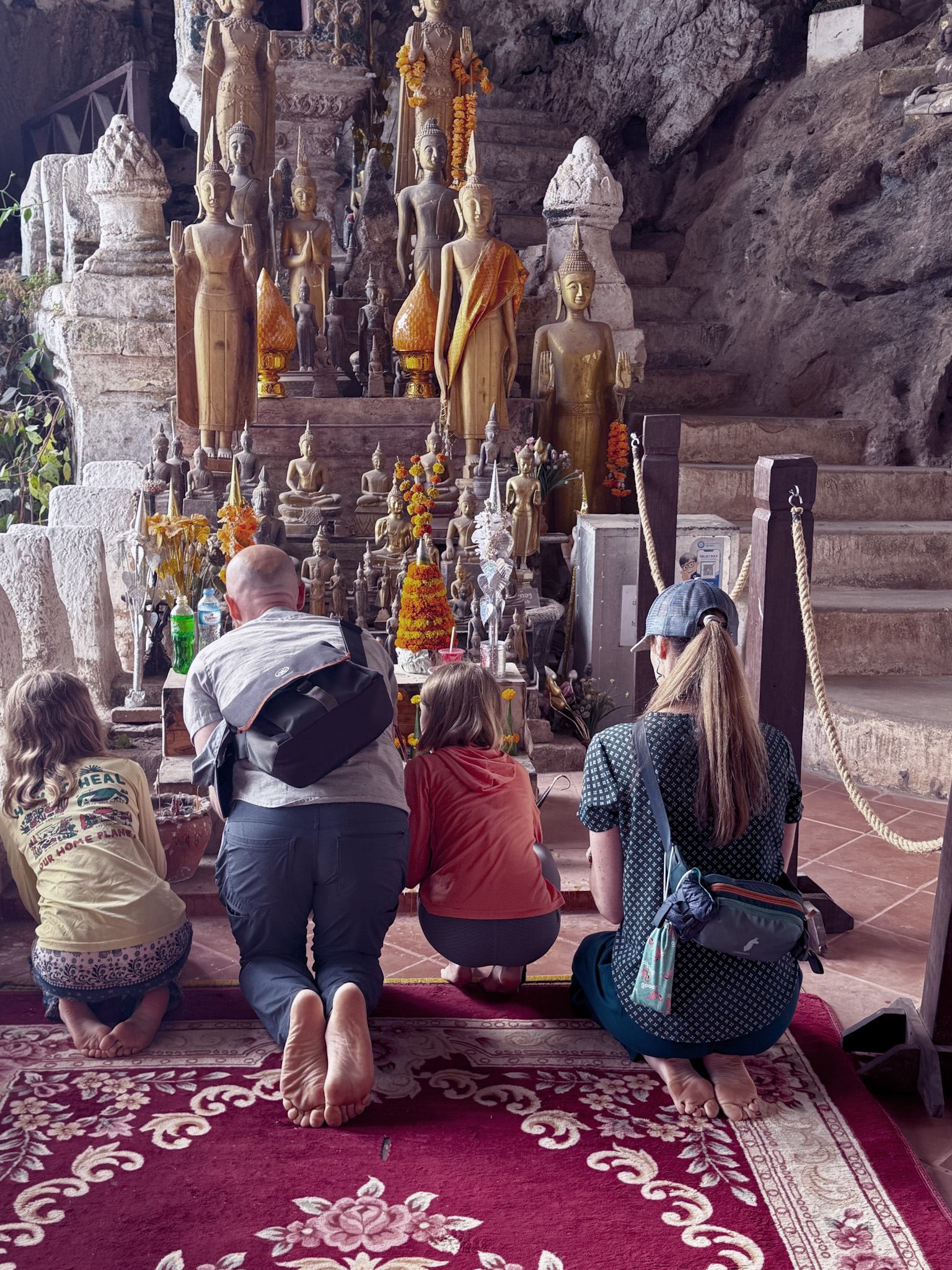
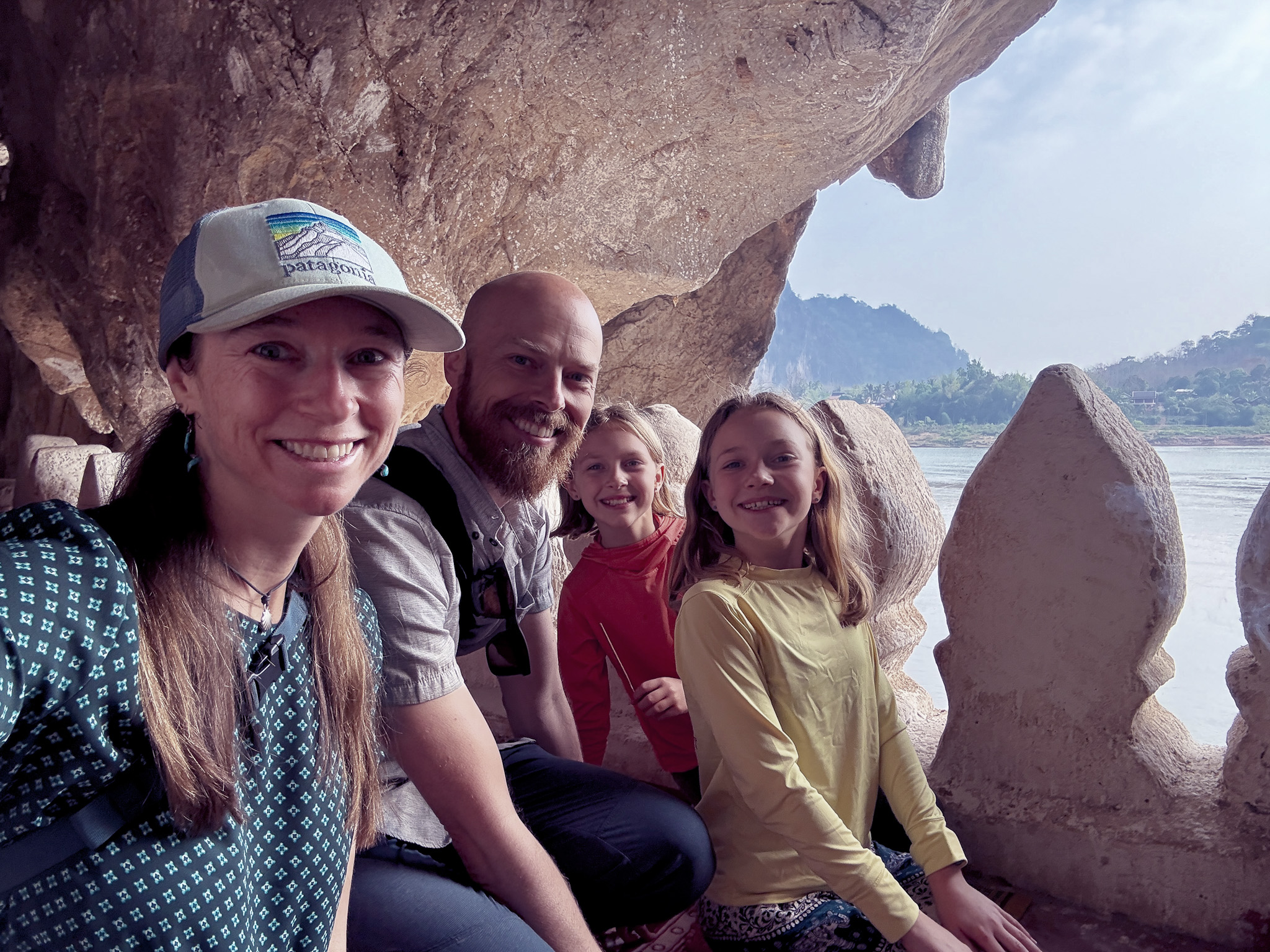
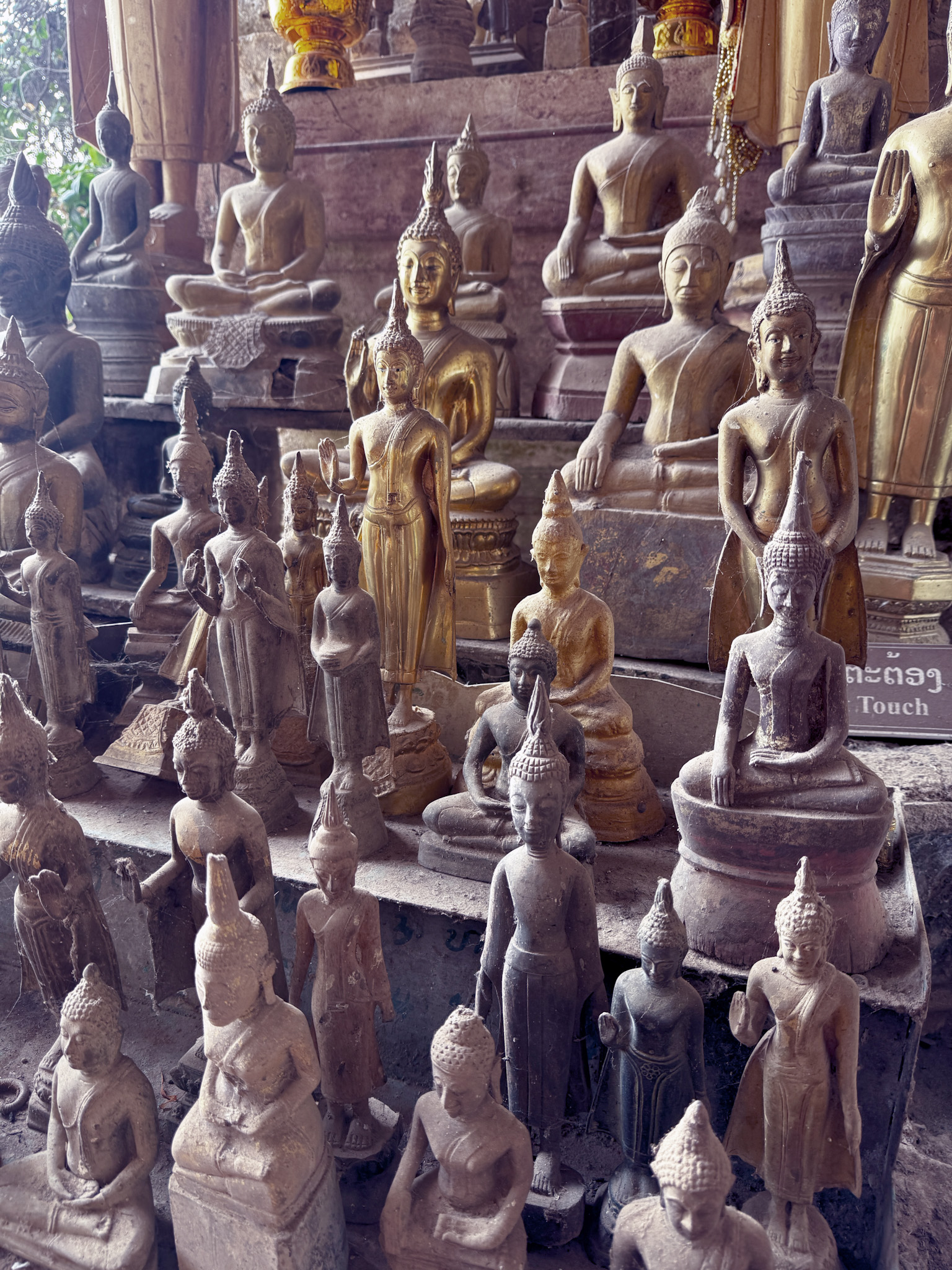
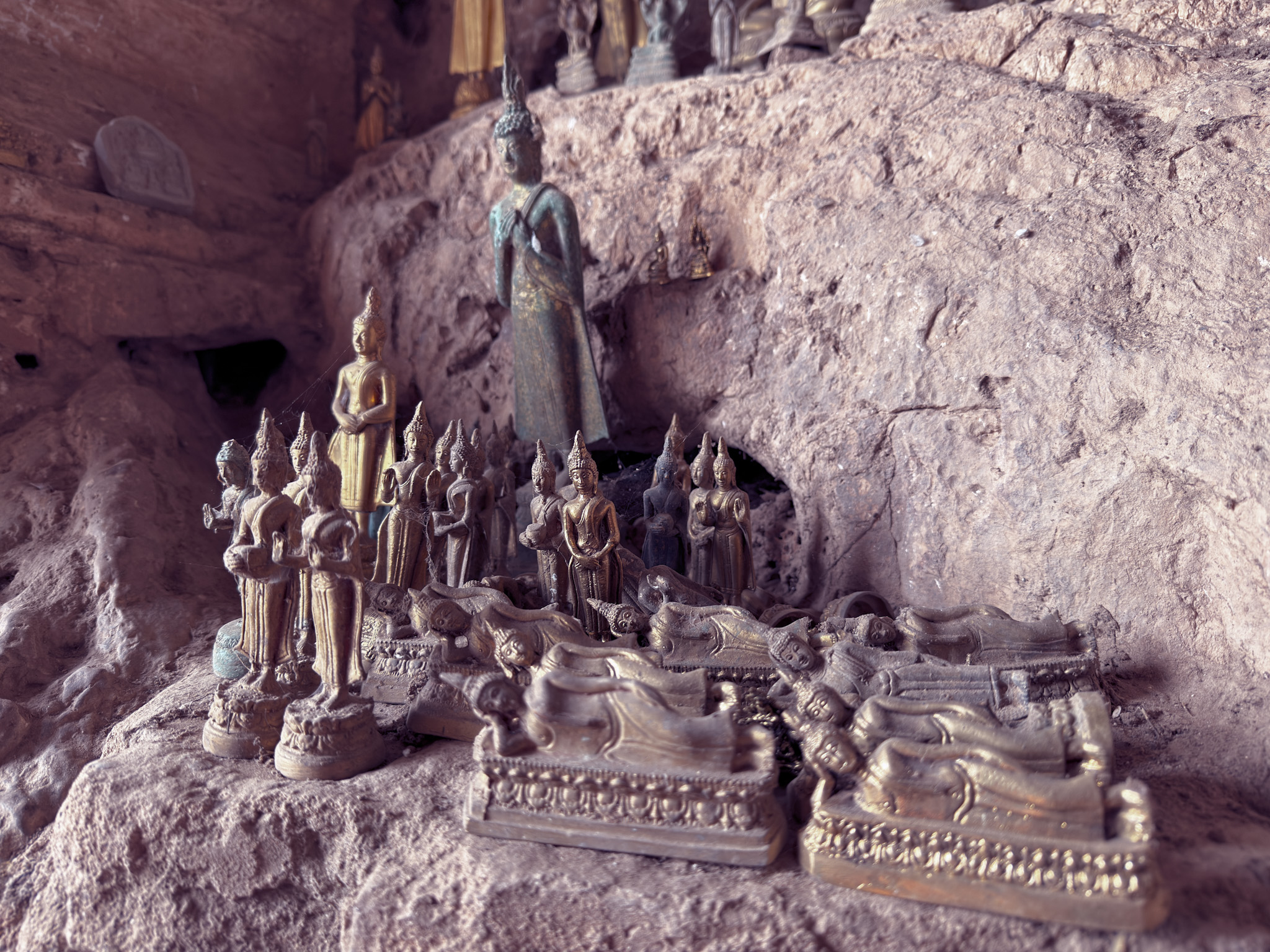
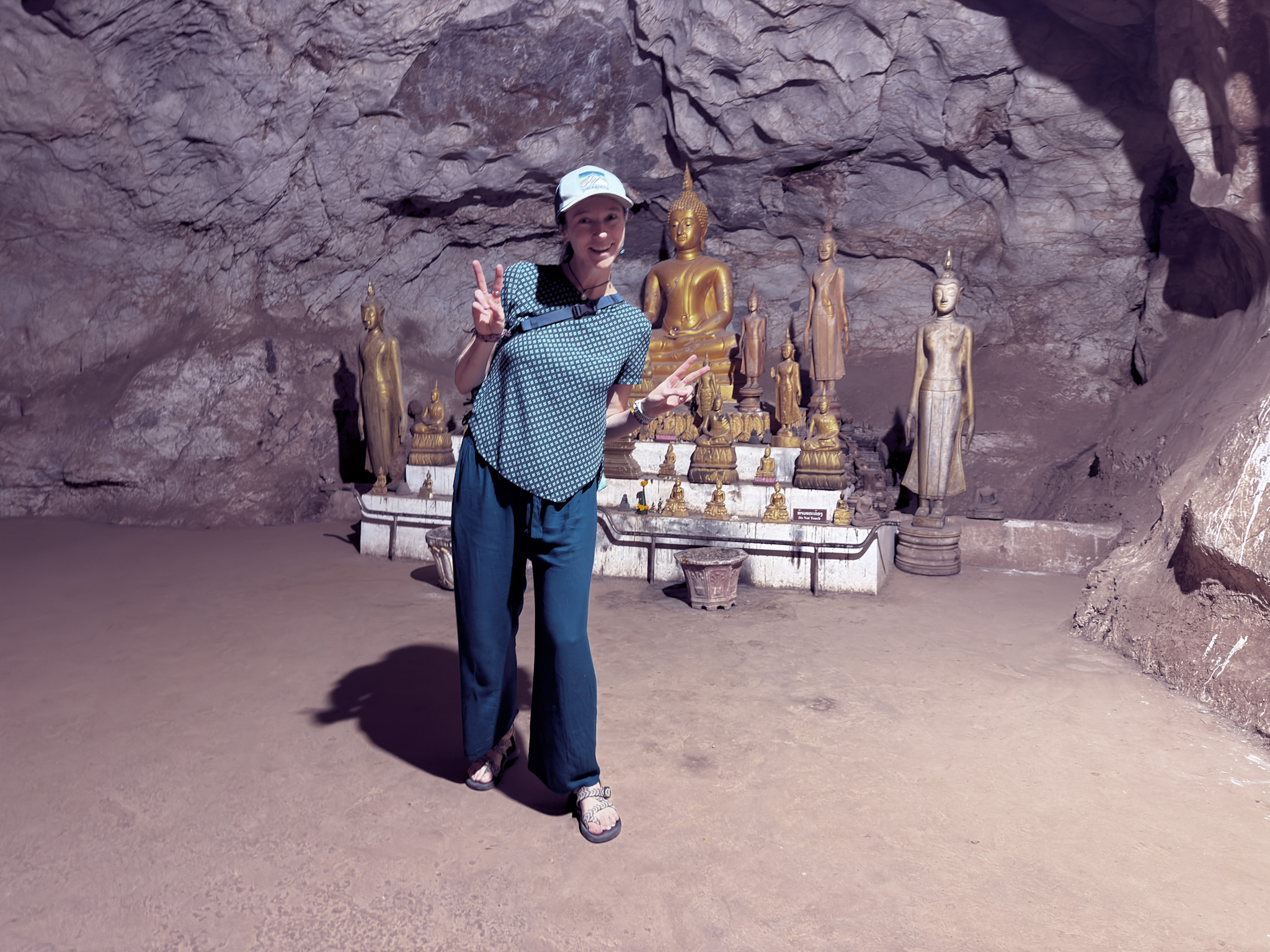
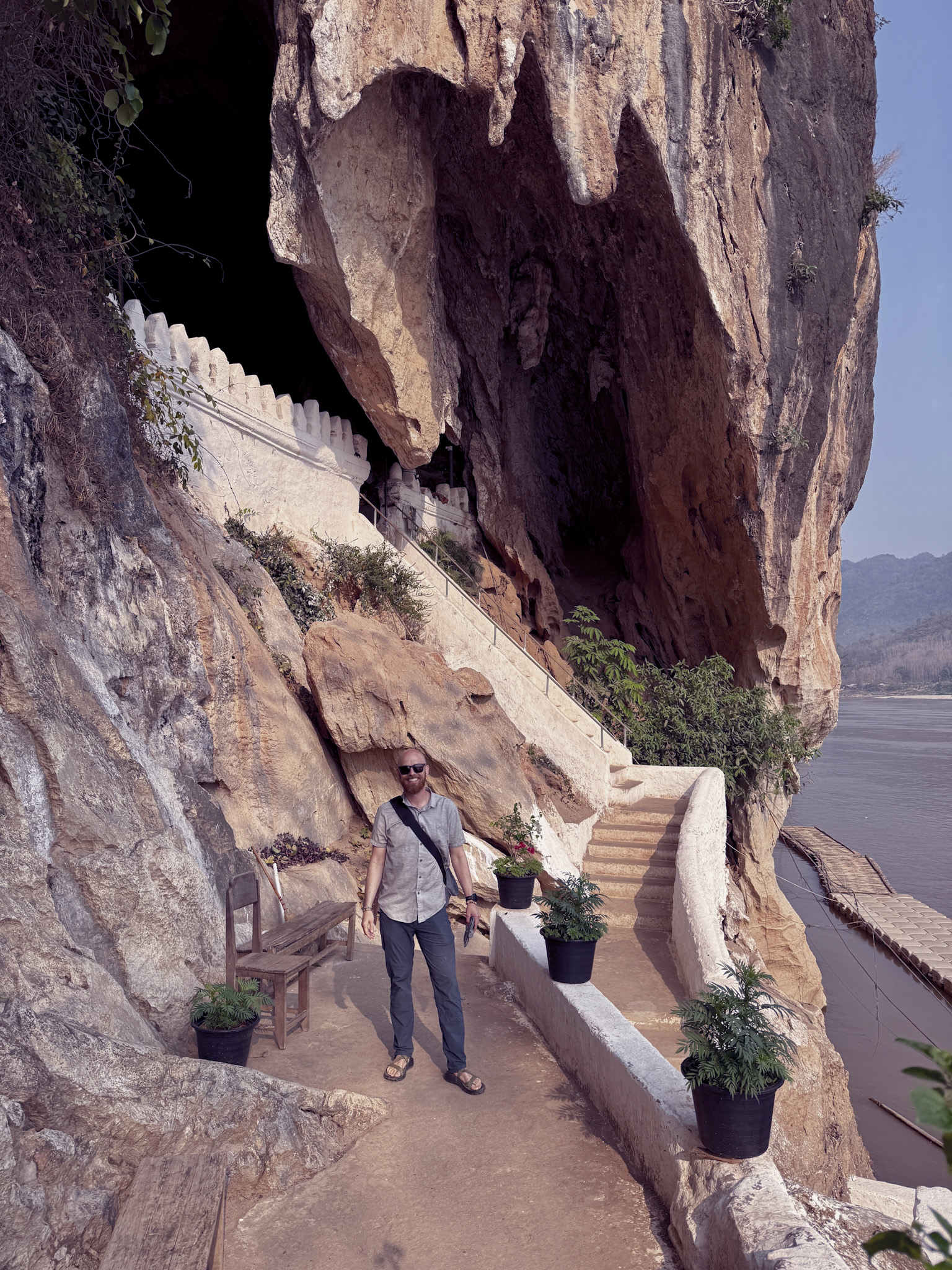
About ninety minutes into the first day, we pulled over for a stop at Pak Ou Caves, a sacred site carved into limestone cliffs where thousands of small Buddha statues have been placed over centuries by pilgrims.
We bought small offerings—candles and incense wrapped in banana leaves and topped with marigolds—and made our way into the cave. Lit the candles, used them to light the incense, placed them in the urn, and paused. Nothing formal. Just a moment to send a little good intention out into the world.
Then we climbed to the upper cave.
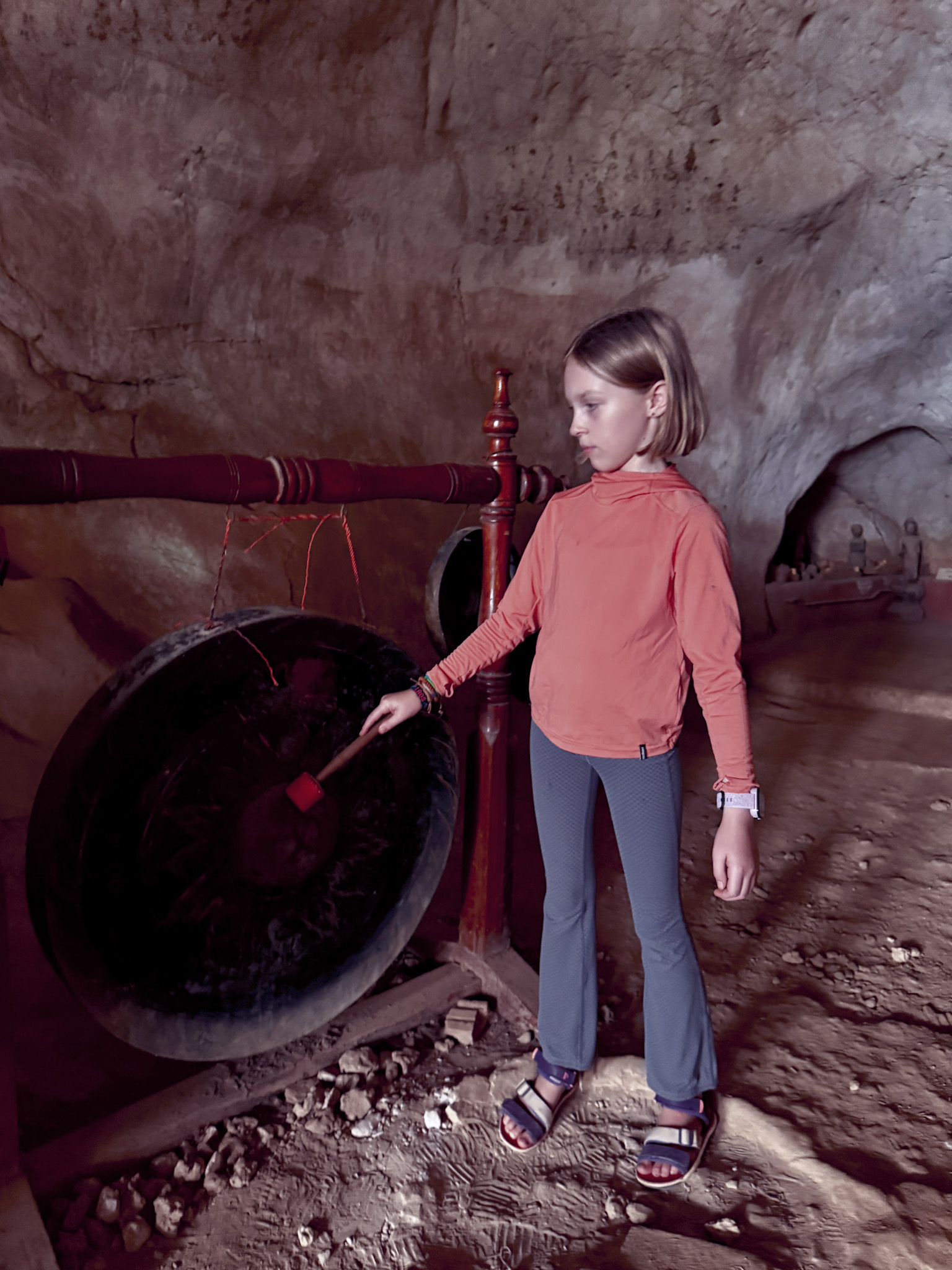
There was a giant gong.
Our girls showed restraint and respectfully observed the sacred atmosphere.
Just kidding.
Max walked in to find Arya absolutely hammering the gong like she’d been waiting her whole life for this moment—full 80s rock finale energy.
He laughed, then gently suggested maybe it was someone else’s turn and perhaps we dial it down a notch.
A bit of a face palm moment, but honestly, kind of perfect. The people around us seemed more amused than offended.
Back down, back on the boat, and just like that we were moving again.
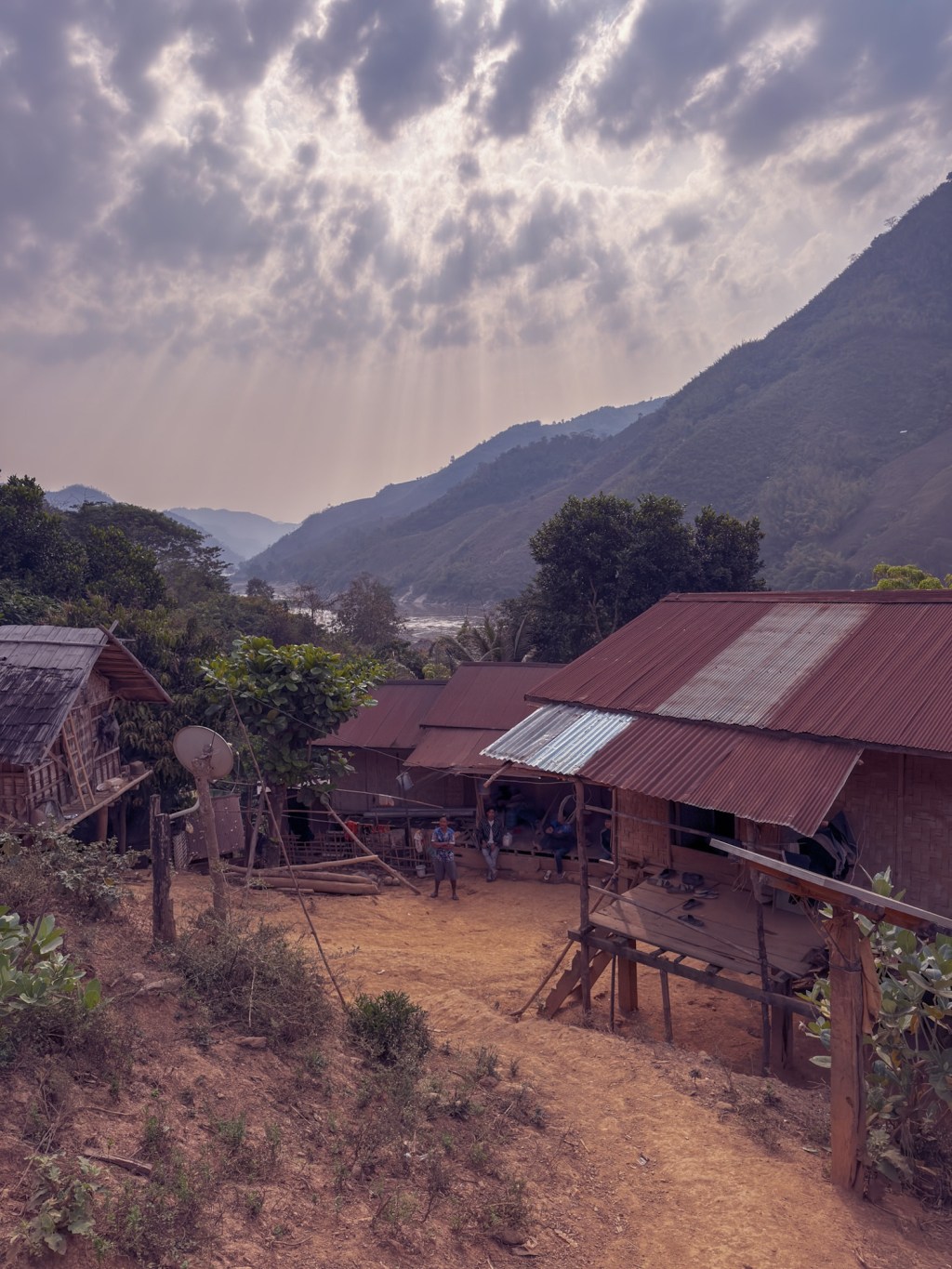
The Khmu Village
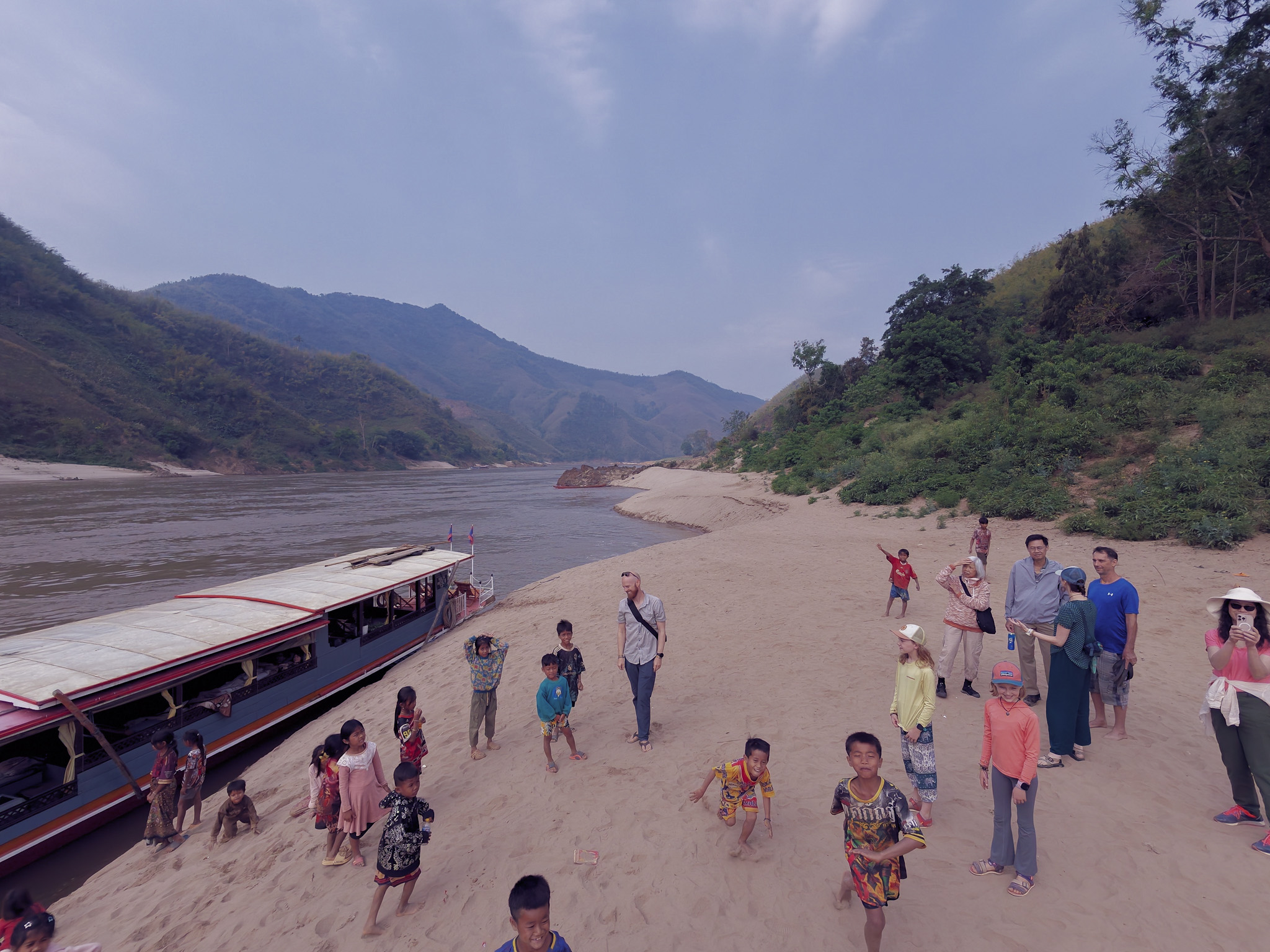
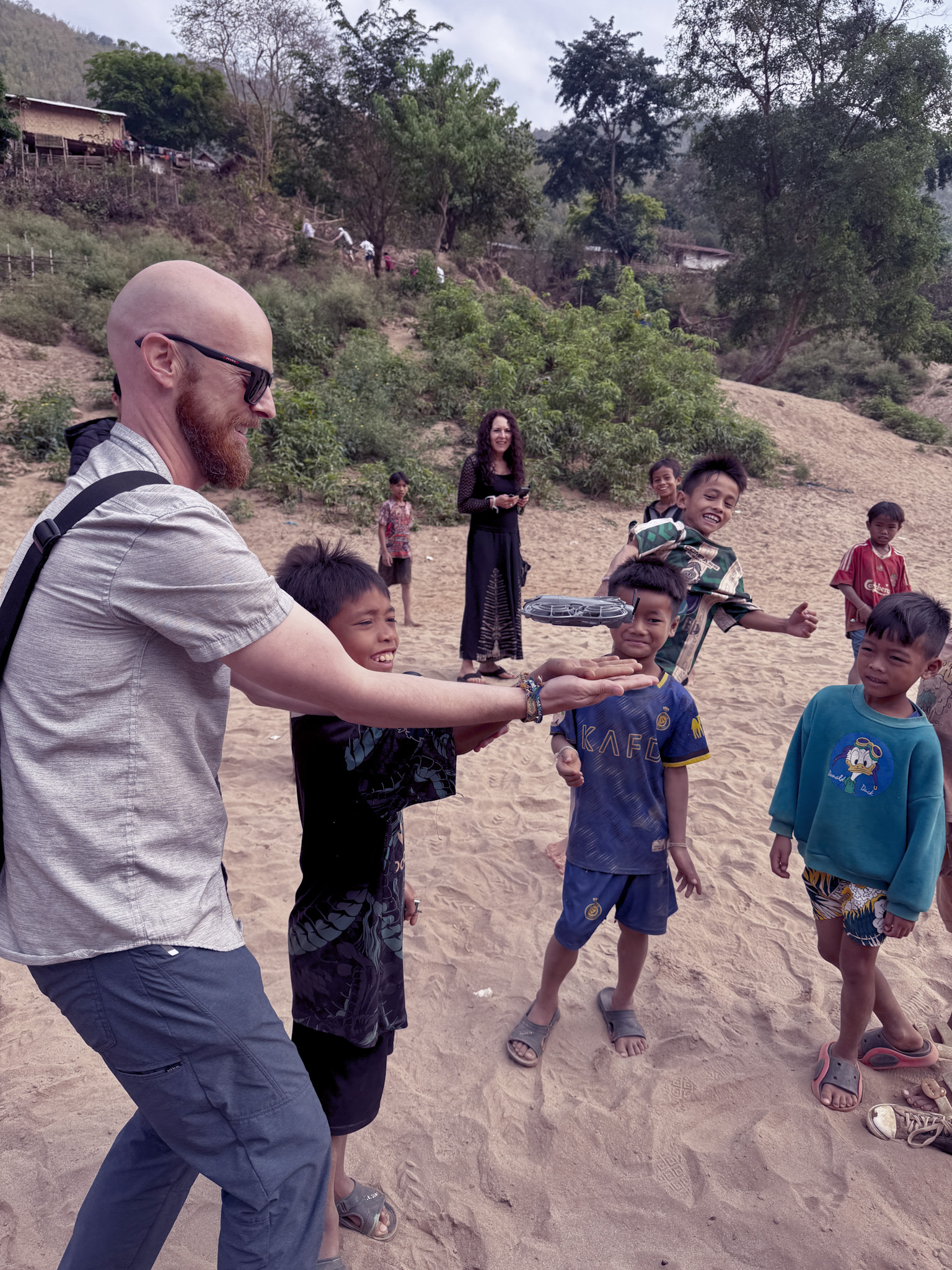
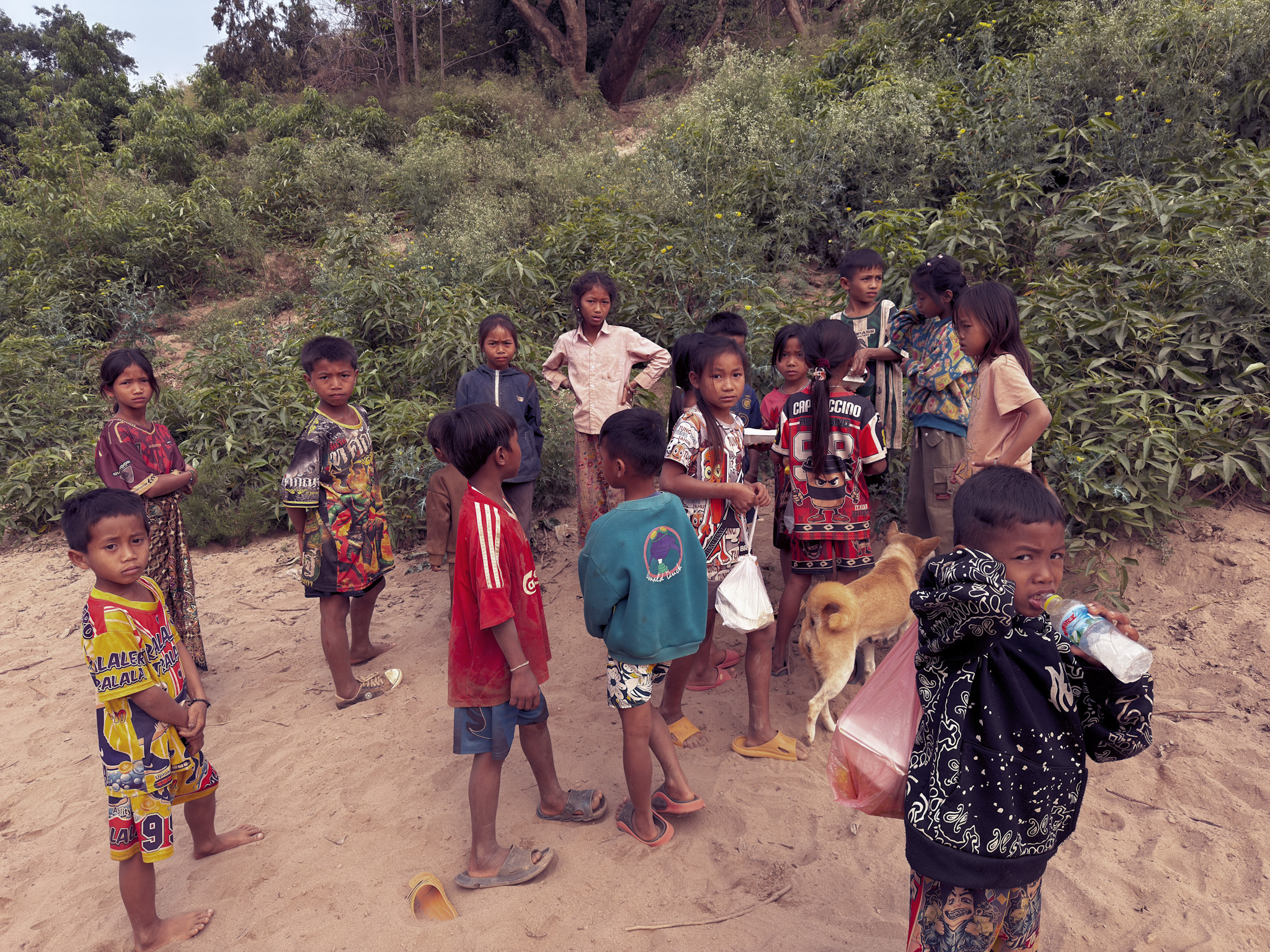
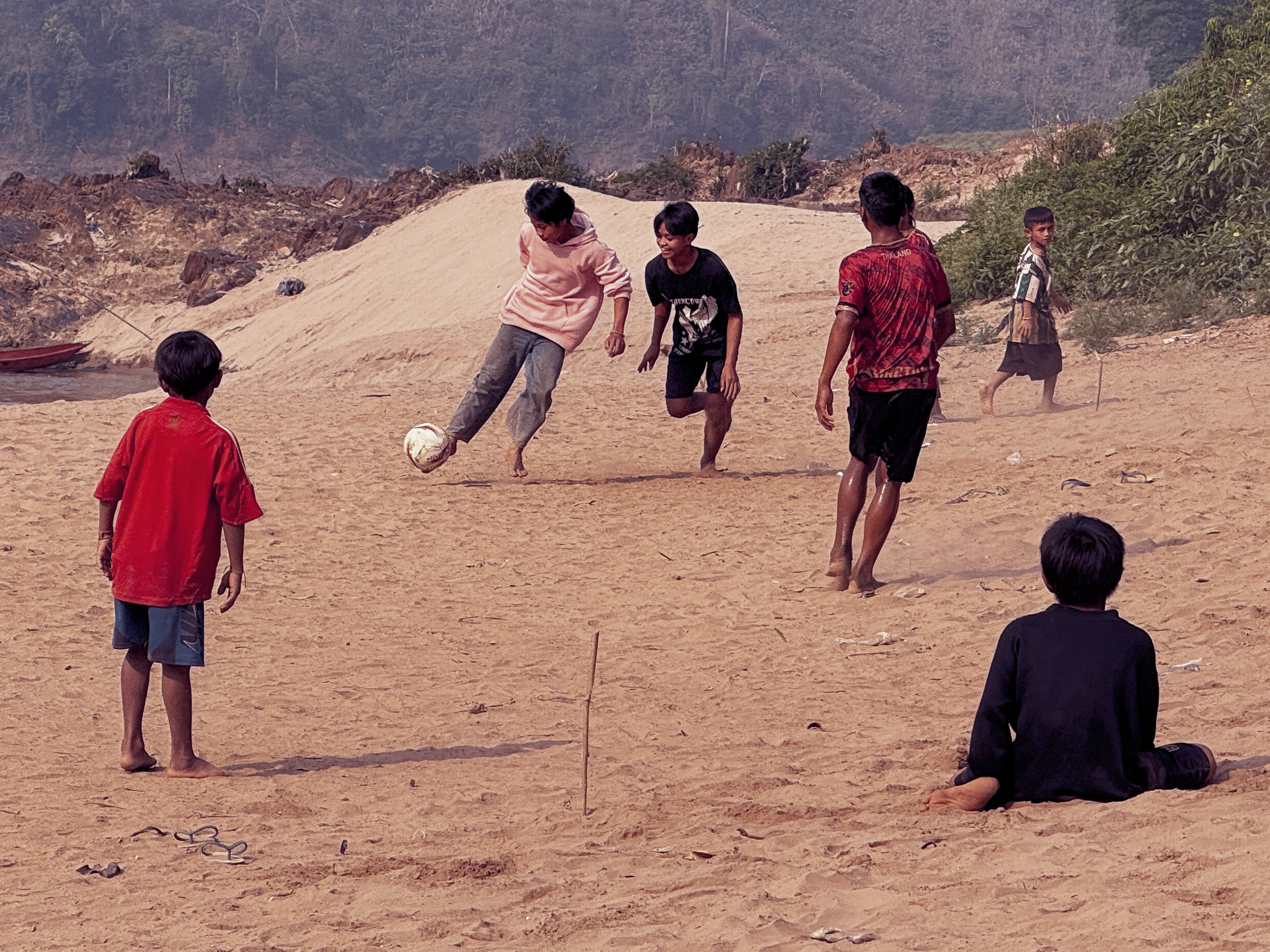
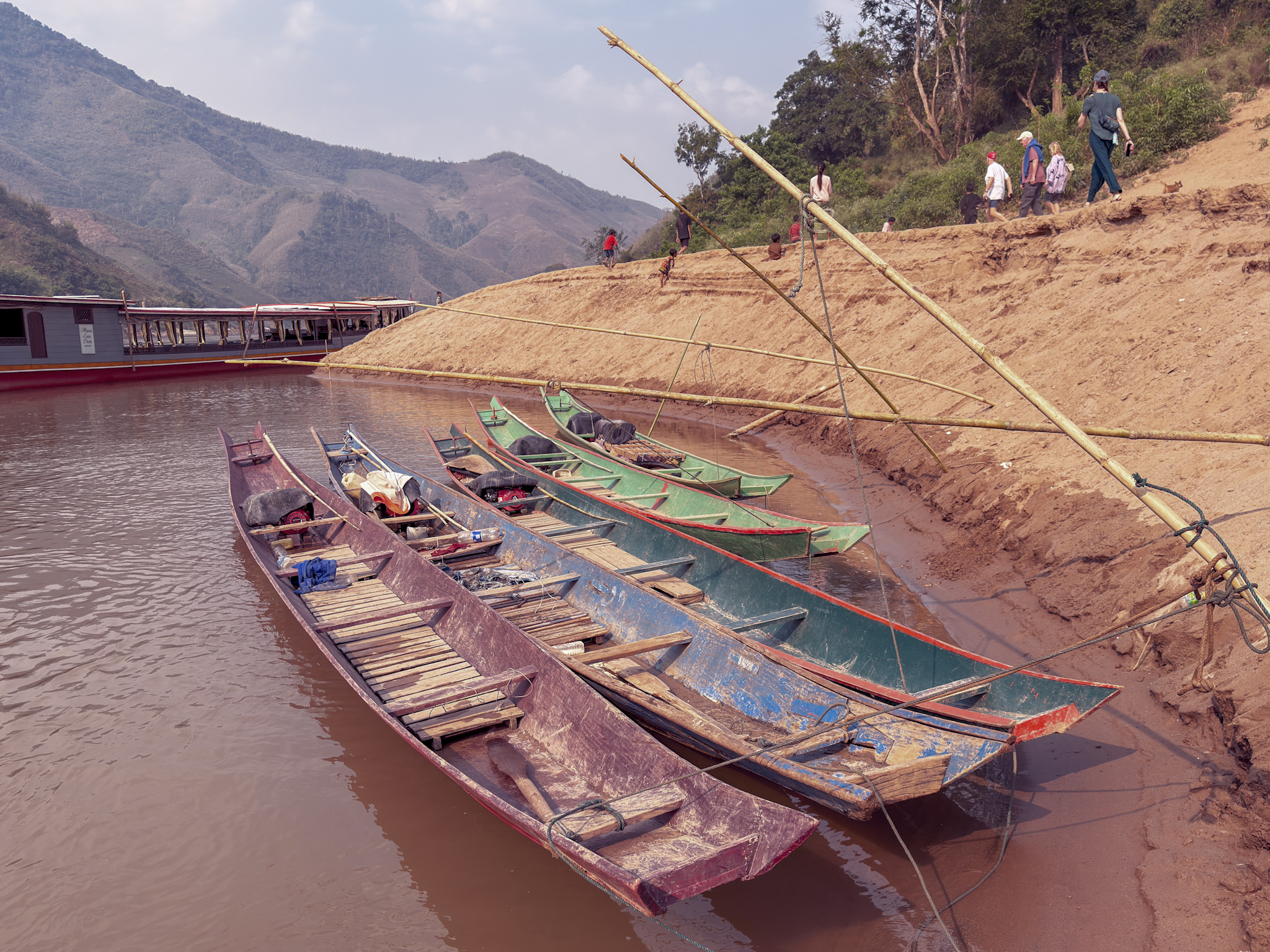
On the second day, the boat slowed and nosed toward a broad sandbank. About twenty children were waiting on the shore when we stepped off, ranging in age from maybe three to fifteen, most of them in the middle of a football match using two sticks pushed into the sand as goals. Max pulled out the drone and launched it off his hand, and the reaction was immediate and total—kids screaming, chasing it, laughing in that uninhibited way that requires no shared language whatsoever.
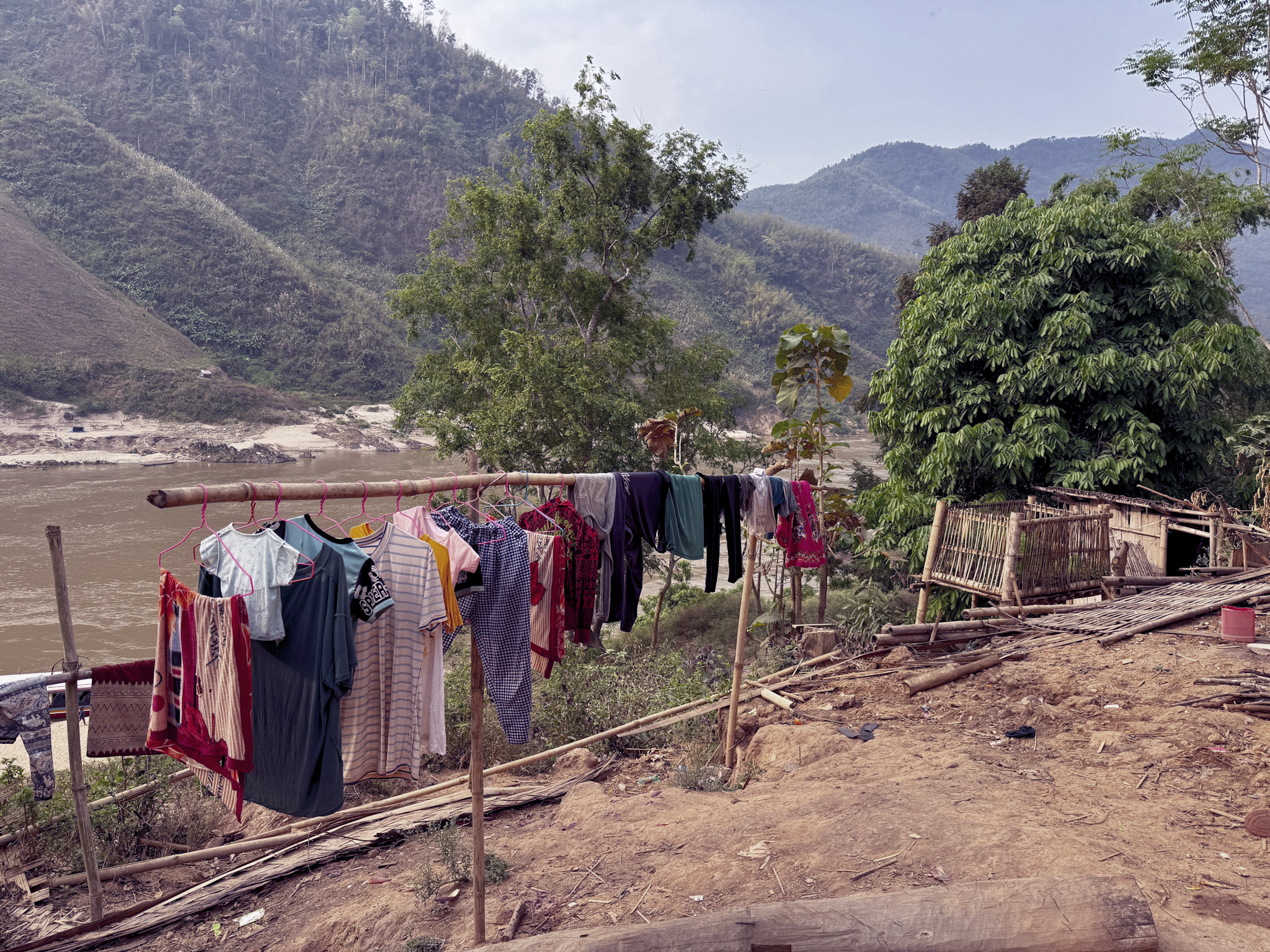
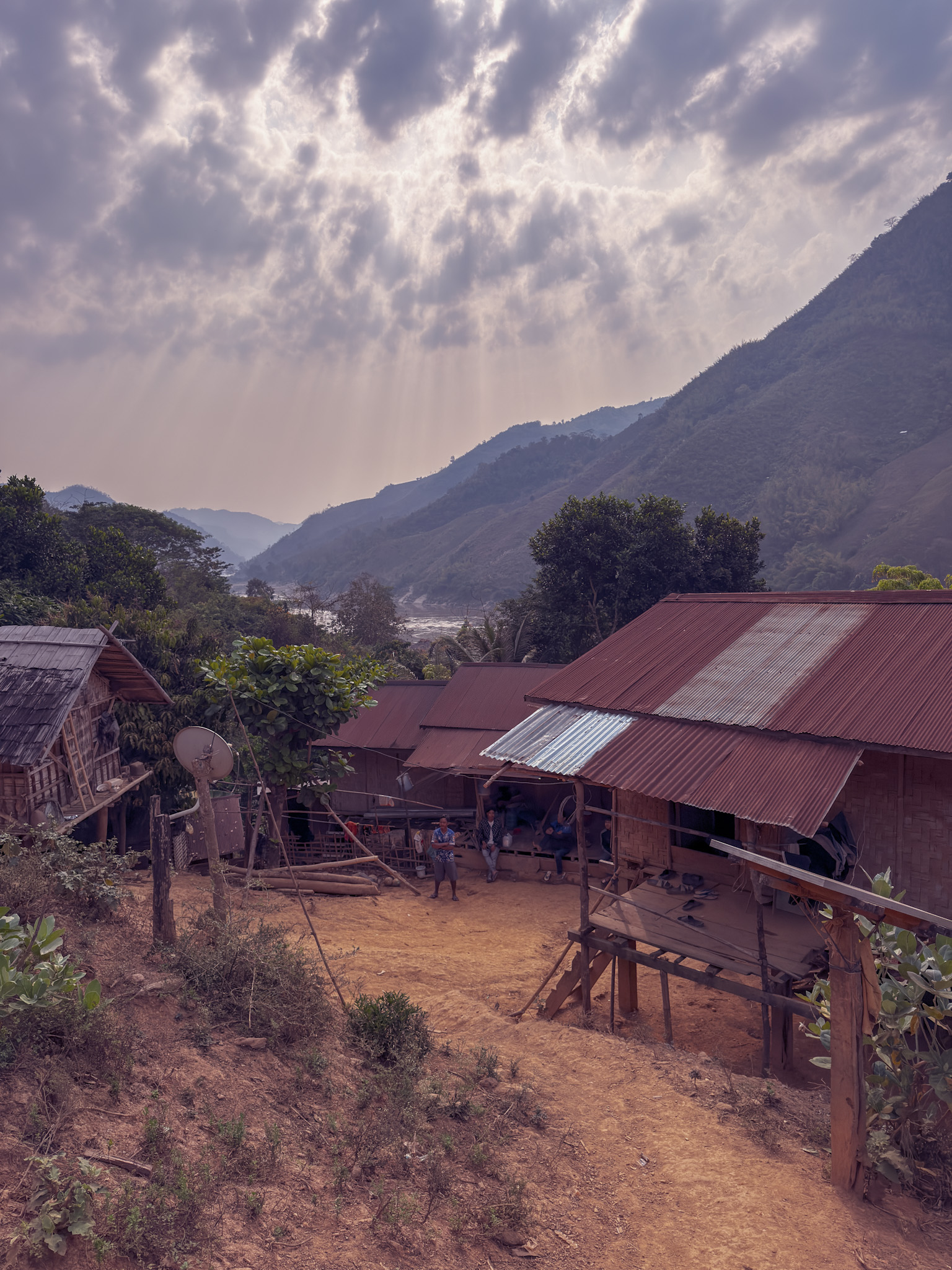
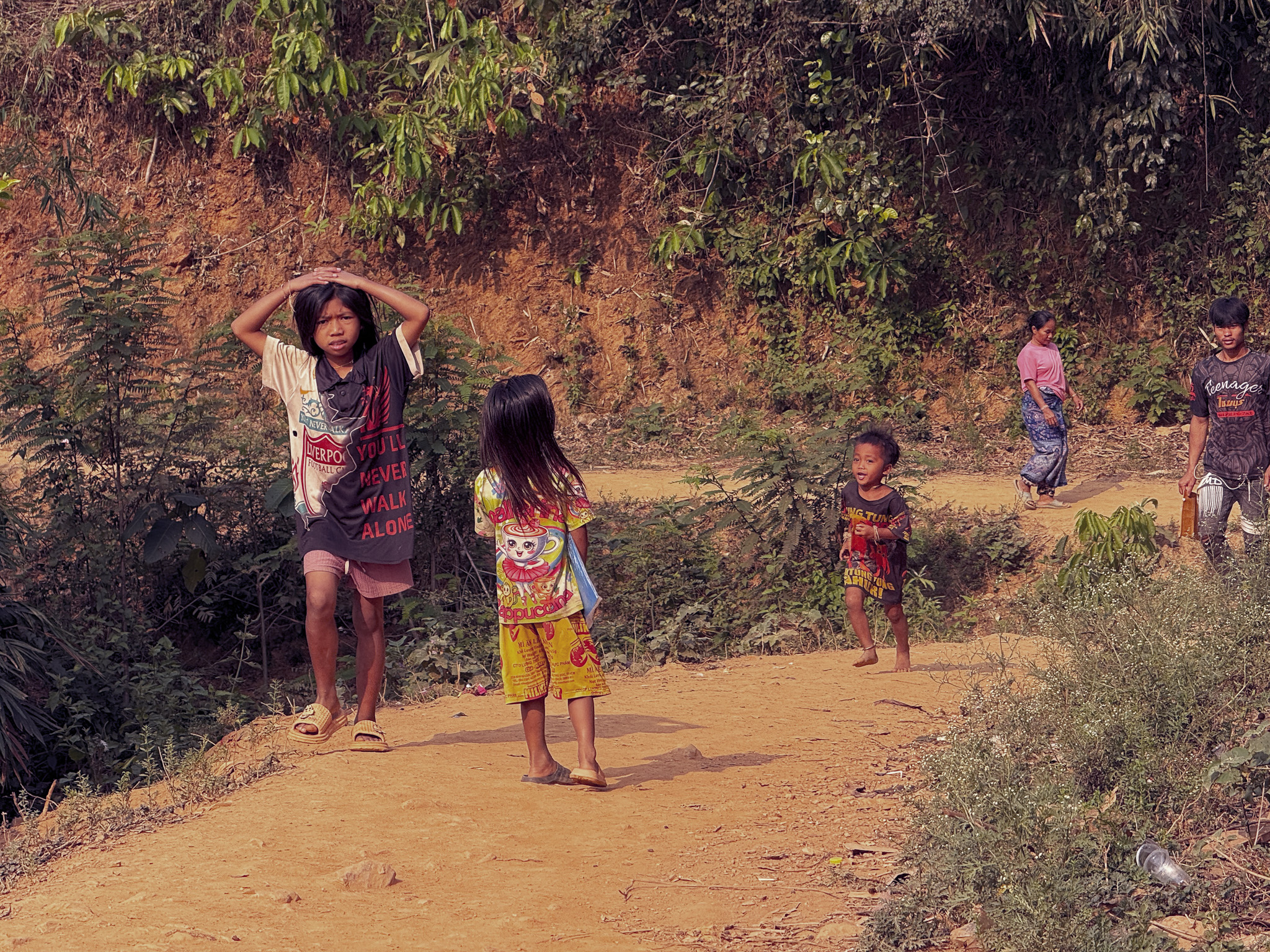
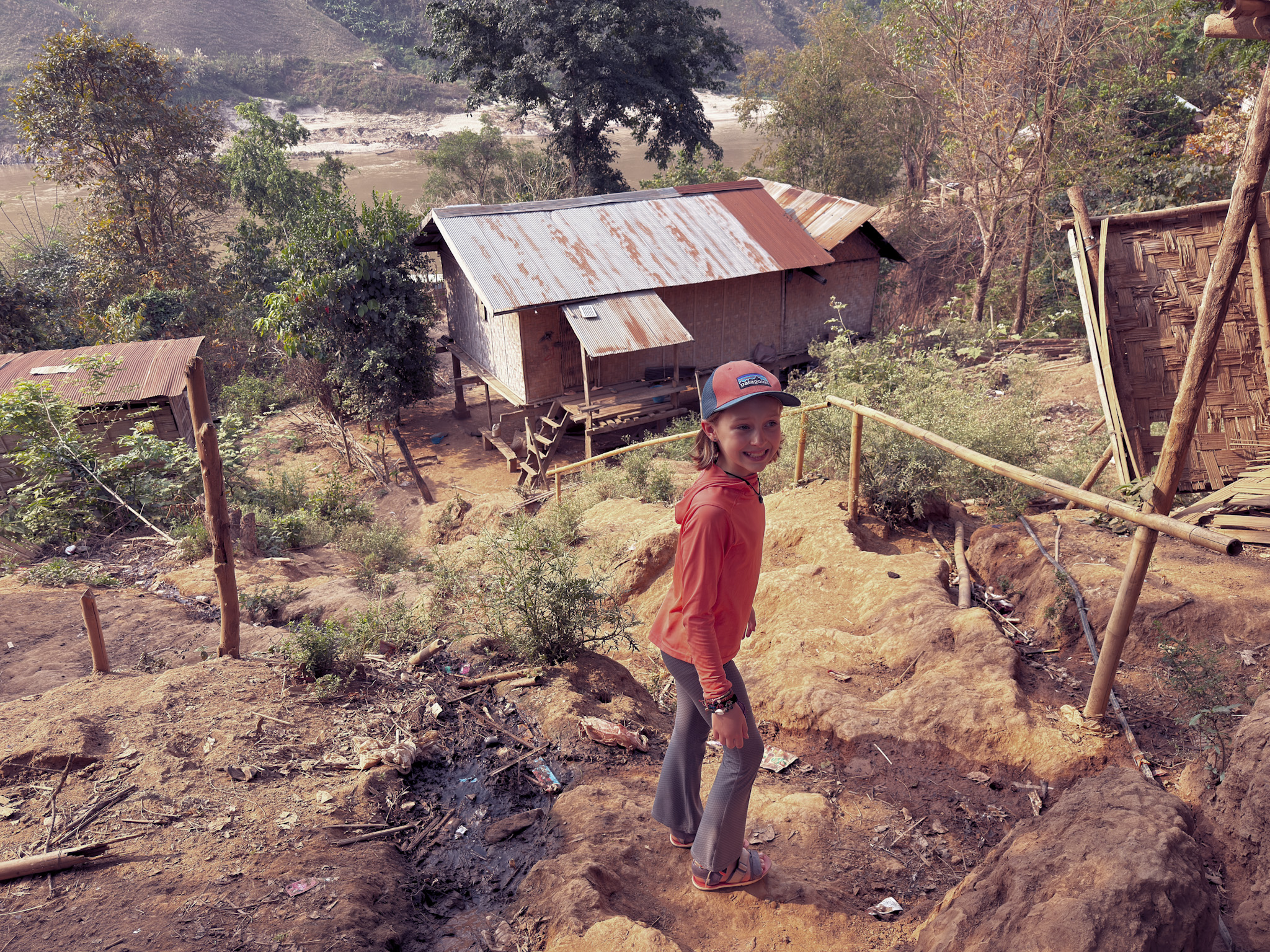
We climbed a steep dirt path with rough steps cut into the hillside and entered a Khmu village.
The Khmu are considered the indigenous inhabitants of northern Laos, present here long before the Khmer. When Lao and Thai peoples arrived from China in the 13th century, the Khmu were pushed out of the fertile lowlands and into the highlands, where most of them have remained ever since.
The village reflected a way of life that has changed slowly.
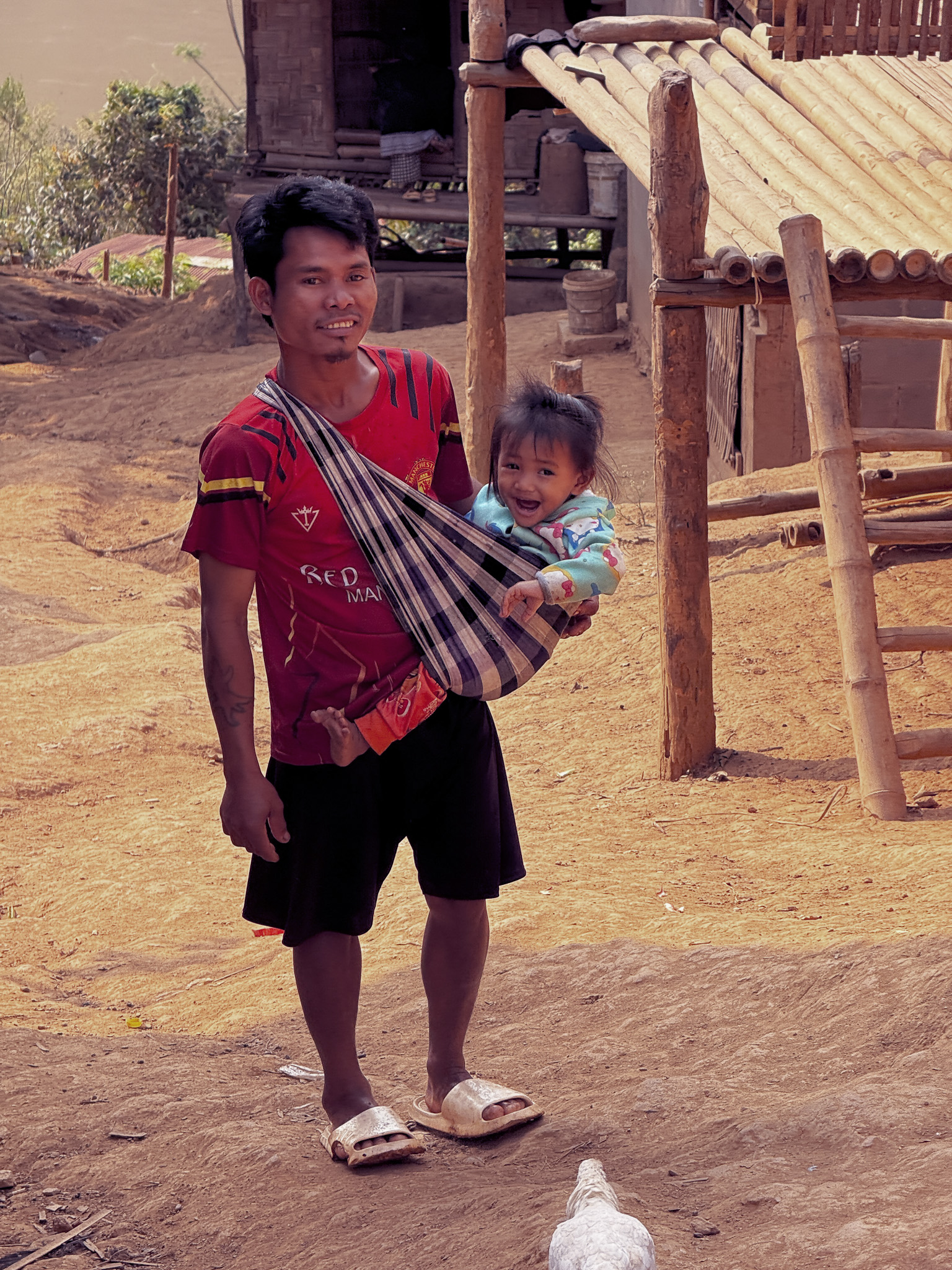
The houses were timber frames on stilts with bamboo walls, nearly all of them single rooms—roughly three by six meters—with no windows. This isn’t an oversight. Built at elevation to cope with strong highland winds, the windowless walls keep the structure aerodynamic and the interior protected from the elements, which over time evolved into a religious desire to prevent the entry of bad spirits.
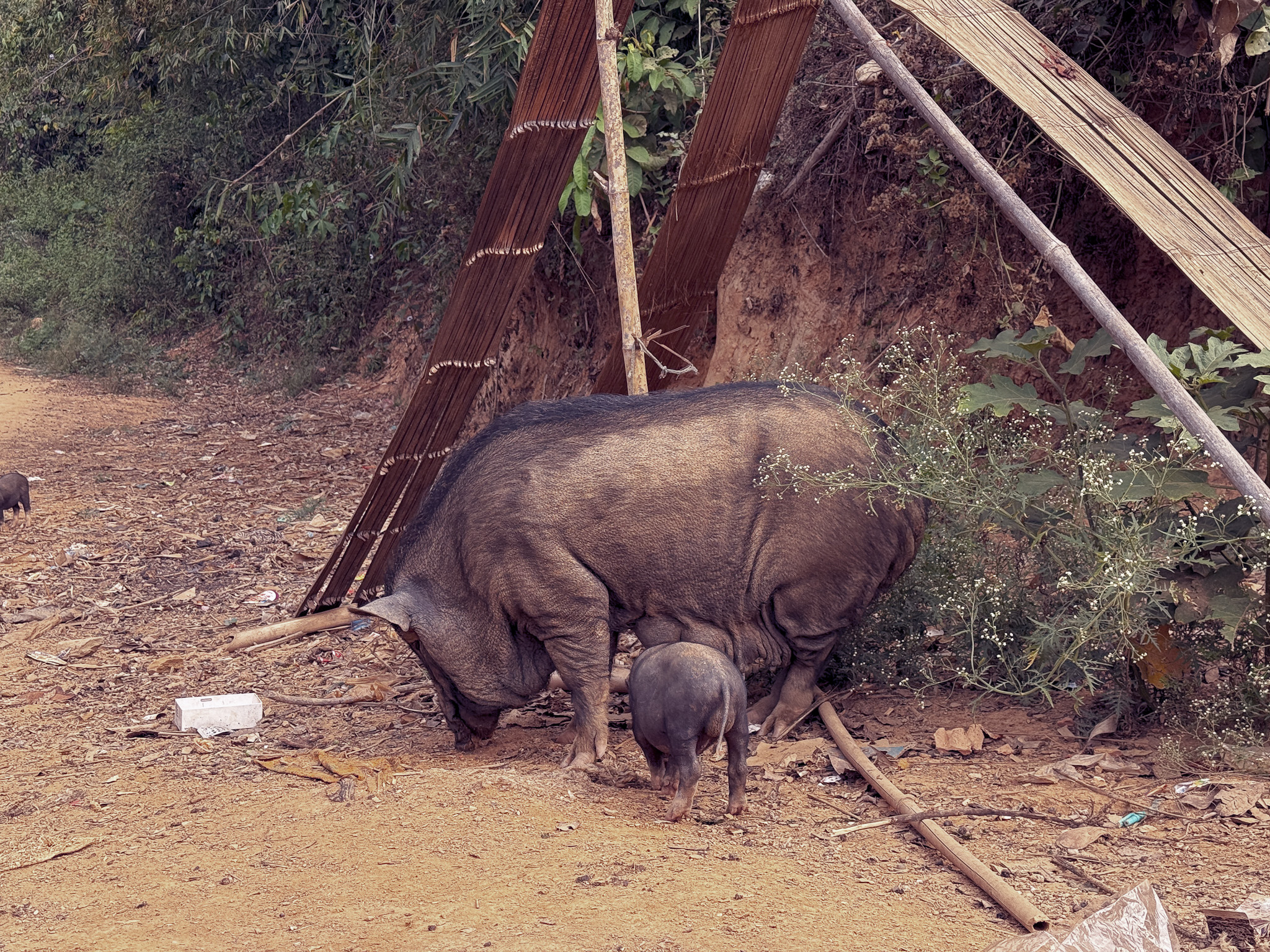
A few small solar panels and rudimentary battery systems were the only visible concessions to the modern electrical grid. Community spigots and shared toilets served the whole village. Pigs, chickens, goats, and dogs moved freely between the houses.
Our guide is Khmu himself—grew up in a village not unlike this one, not far from Houayxay. He walked through it with the ease of someone navigating familiar ground, which in a sense he was.
What struck us most, and what we’re still turning over, is how genuinely happy everyone seemed.
Not performed happiness for tourists—just people going about their day, watching us walk through with the mild curiosity of people who probably have better things to do.
Children everywhere. Very few people between the ages of, say, twenty and fifty. Lots of small kids and a handful of very old people, which tells its own story about what happens when young adults leave for work in the cities.
We stood there trying to hold two things at once: the obvious poverty, which was real and undeniable, and the equally real sense that a life is being lived here with dignity and coherence.
We couldn’t fully reconcile them and we’re not sure we’re supposed to.
The girls were shaken—both of them asked more than once if we could go back to the boat—and when we asked them what they thought about living in a place like this, they had difficulty verbalizing their experience, genuinely unable to imagine it.
Good.
That’s worth something.
This is what slow travel does. It doesn’t let you turn away from the uncomfortable questions. It puts you in a Khmu village on the side of a mountain and asks you to actually look at what’s in front of you.
Not to judge it. Not to fix it. Just to see it.
And to understand that your daughters, who sleep in comfortable beds and have never gone a day without clean water, need to see it too.
Back on the water, the river resumed its patient work. We moved forward at the pace the Mekong allows, which is to say: slowly, deliberately, with time to think about what we’d just witnessed.
Arrival
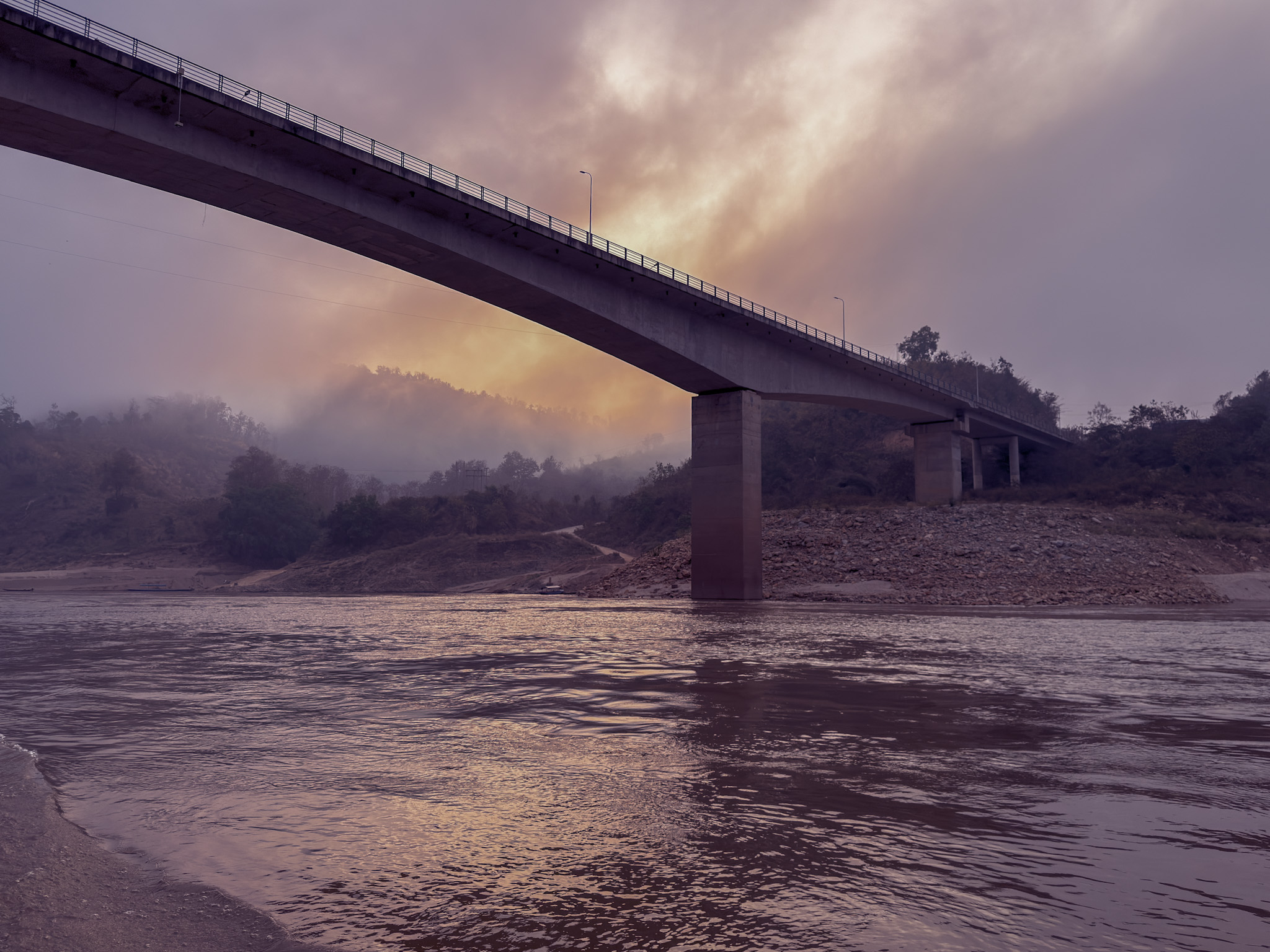
We pulled into Houayxay as the light was shifting toward golden.
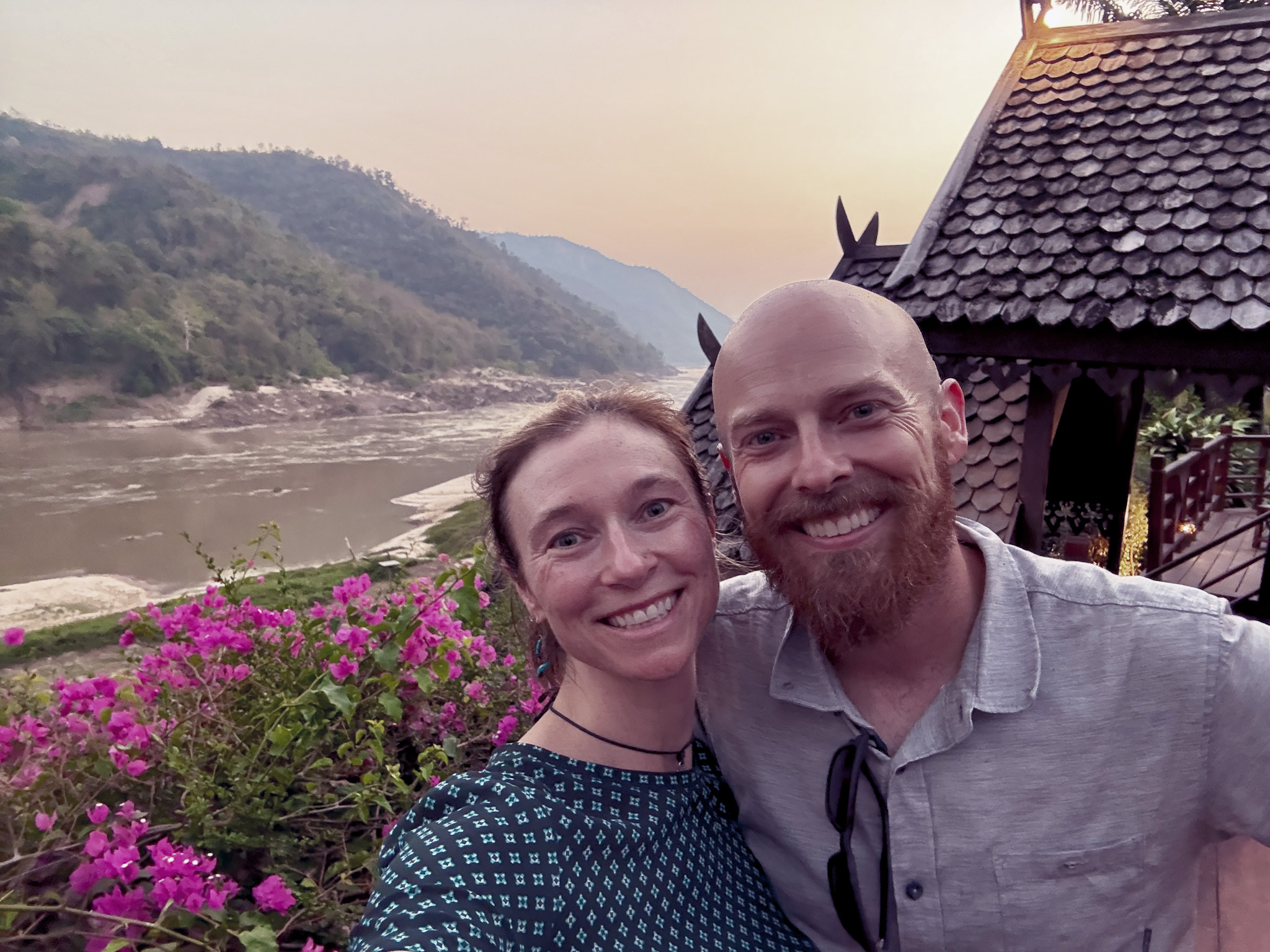
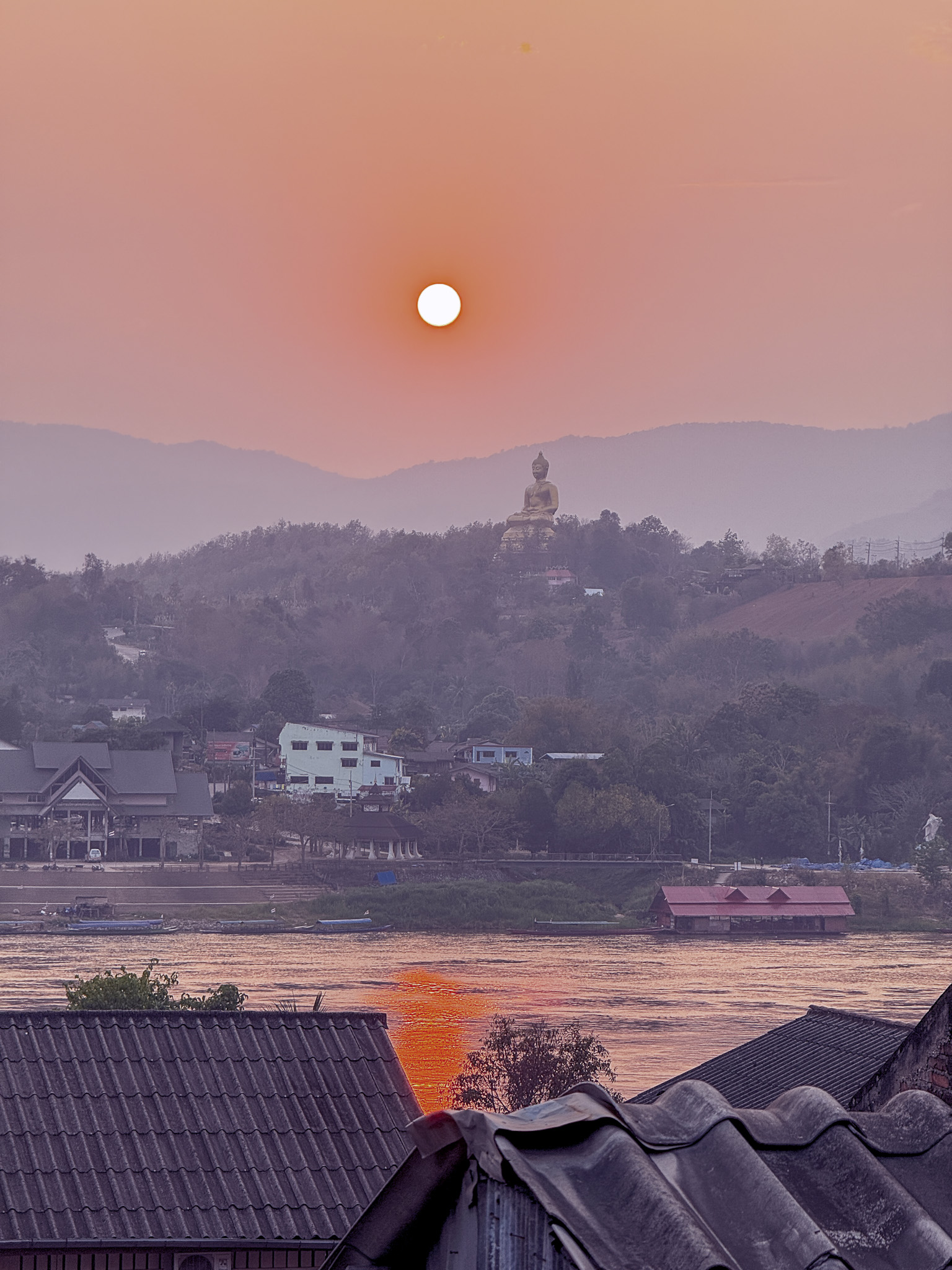
Houayxay sits on the Mekong directly across the river from the Thai town of Chiang Khong—a frontier town with a long history as a trading post. From the terrace of La Terasse restaurant, where we settled in for dinner, the view across the water was something we weren’t prepared for.
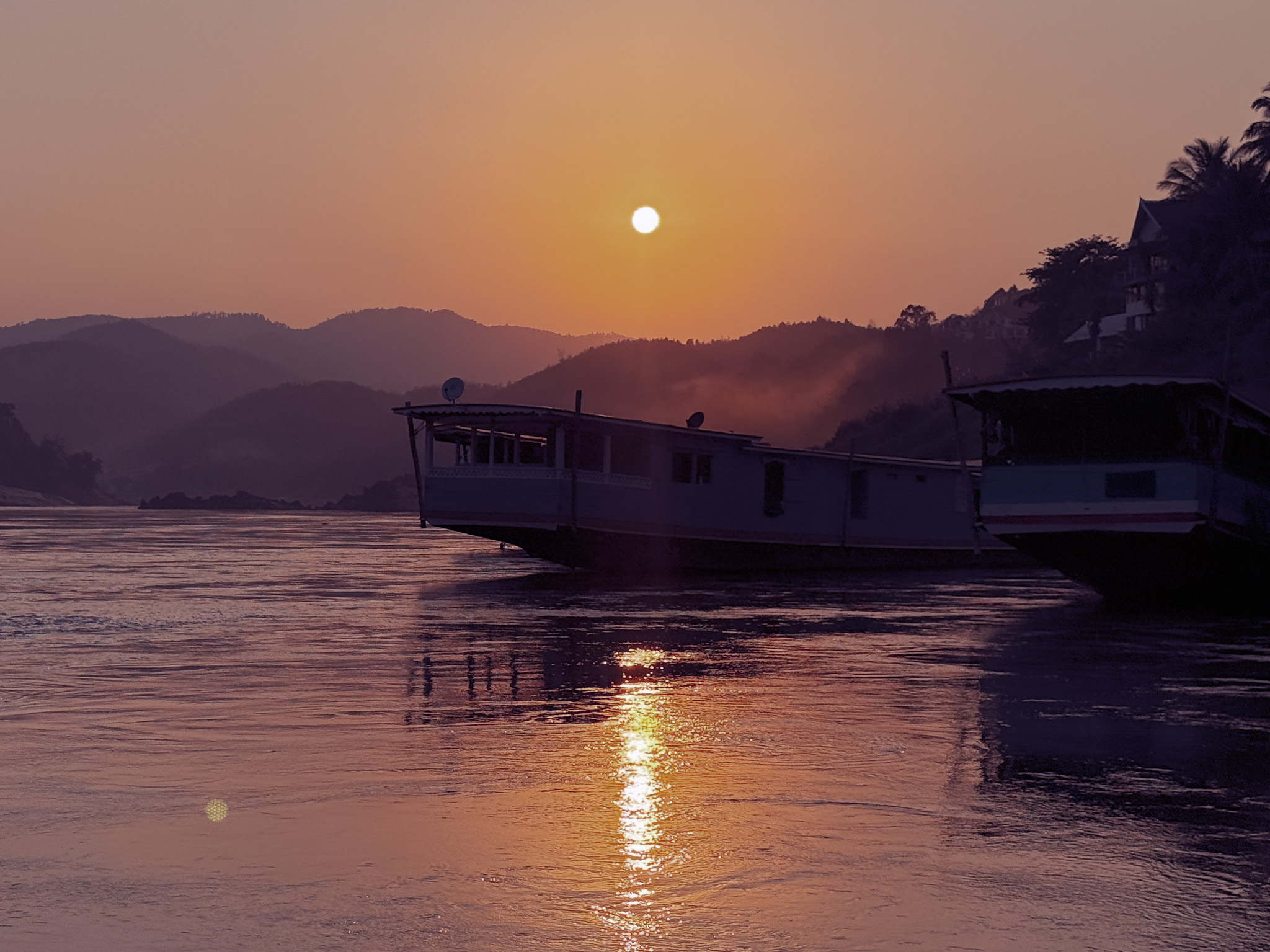
On the Thai hillside, a large golden Buddha presides over the river, part of the Golden Triangle region where Thailand, Laos, and Myanmar converge. As the sun dropped, it aligned almost perfectly over the Buddha’s shoulder and threw a long reflection straight down the center of the Mekong. The smoke from end-of-season crop burning hung in the air and turned the sky a deep reddish hue.
It was one of those sunsets that you don’t try to improve with words.
Dinner, since we were in a French restaurant in Laos, we indulged: pizza for the girls, who declared it their favorite pizza of the entire trip, and for Shaina and Max a New Zealand ribeye. Medium rare, potatoes au gratin, peppercorn demi-glace.
Absurd value. Absurdly good.
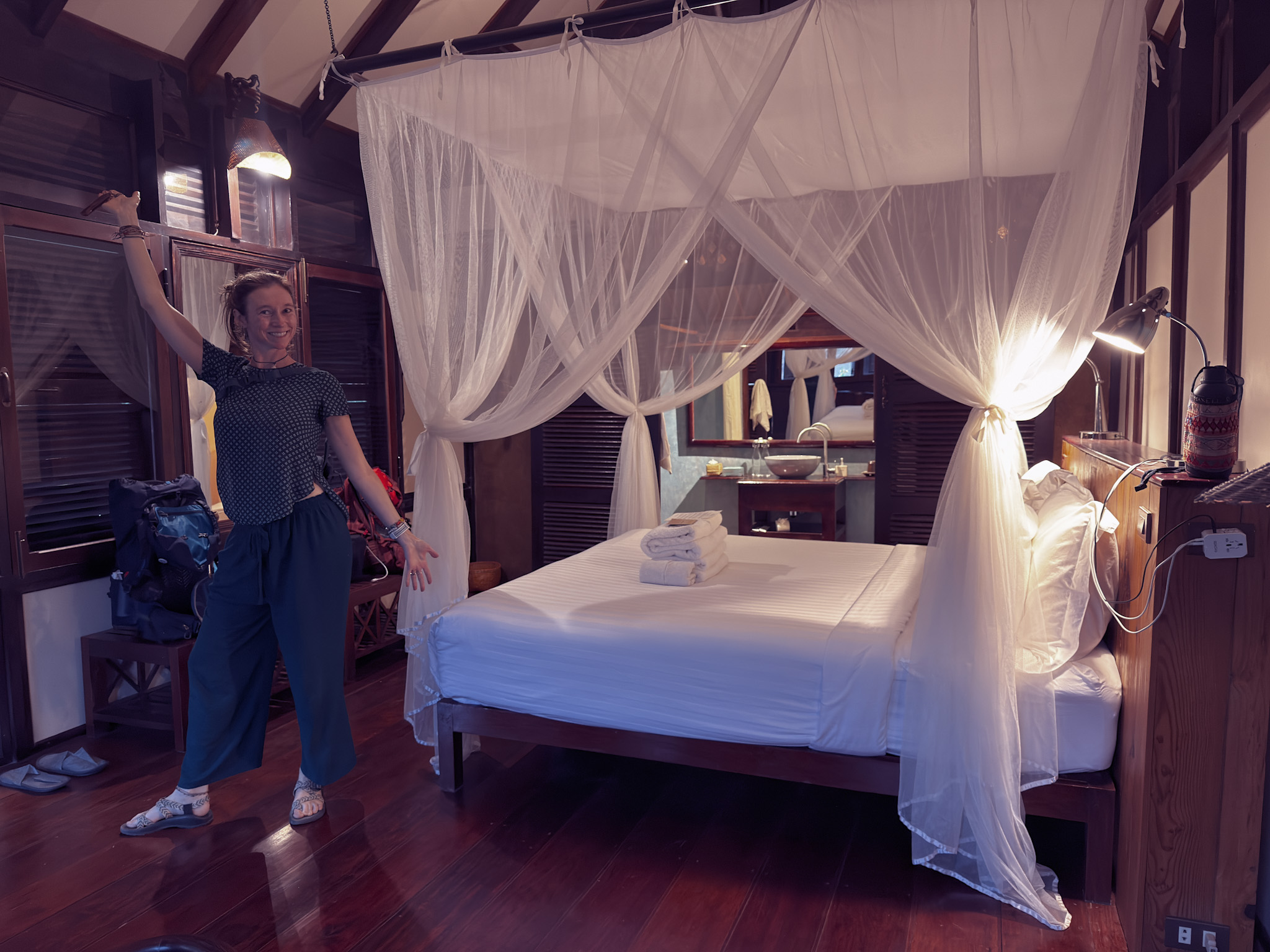
Then to the hotel—named, with perfect accuracy, “1 Minute to Slow Boat.” From the outside it looks like it may have lost an argument with time. Inside, everything is simple but deliberate and spotlessly clean. Someone made real decisions here with a real budget and put the money where it mattered.
One of those places is the mattresses.
After a string of sleeping surfaces that tested our will to live, we got into bed and experienced what can only be described as structural redemption.
A perfect mattress. Clean sheets. A quiet room. Travel teaches you to appreciate the little things in life.
The Day Between
The next day was a day in no man’s land—the slow boat behind us, the Gibbon Experience looming ahead, and nothing to do but fill the hours between two genuinely remarkable things.
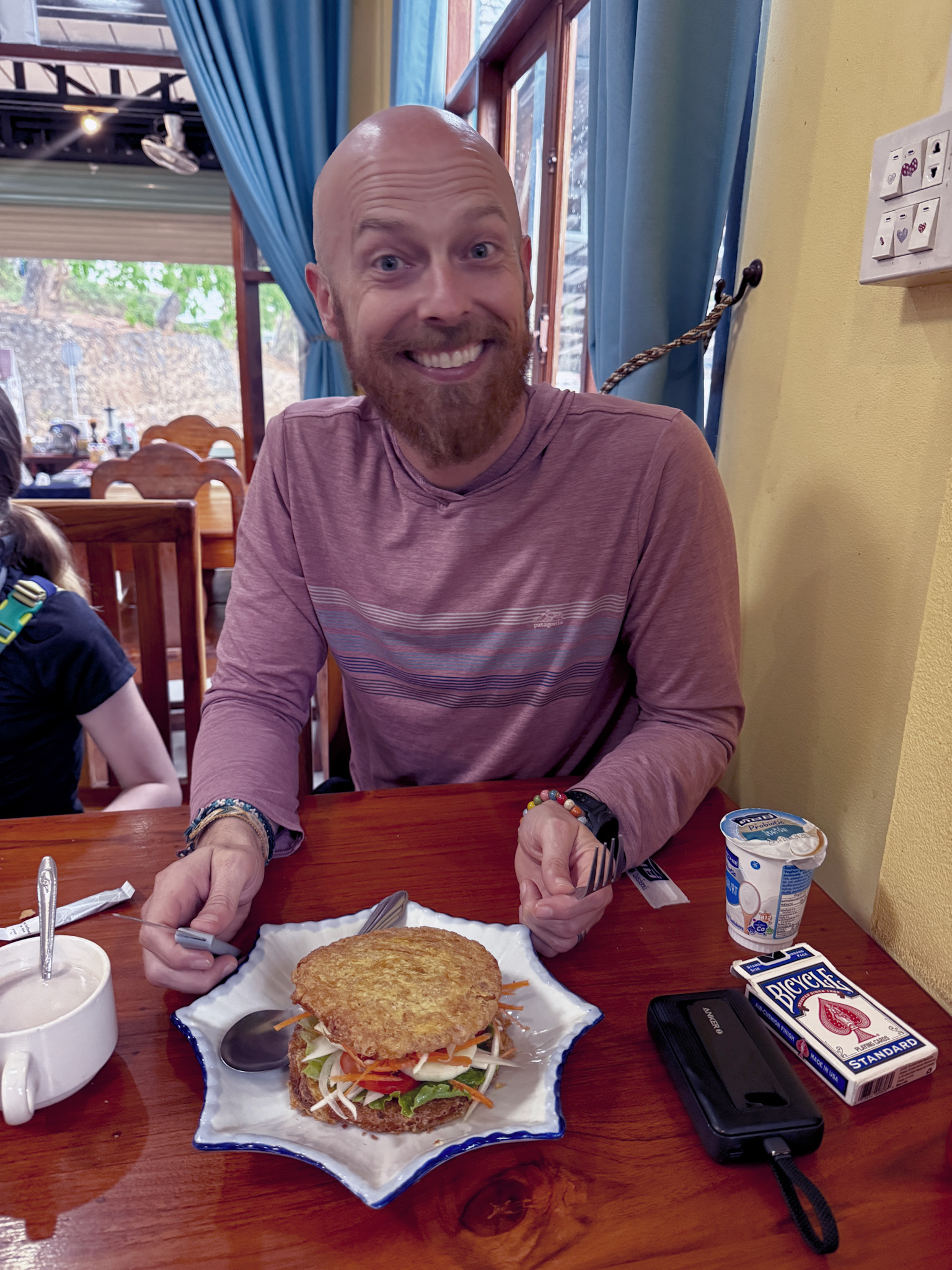
We started with the Lao Burger—rice patty “buns” dipped in egg and deep fried, chicken fillet breaded and deep fried, lettuce, tomato, onion, cucumber in between. Barely a burger by American standards, it should have been weird, but instead was insanely good.
We checked in with the Gibbon Experience office, which made tomorrow feel suddenly, concretely real. The Gibbon Experience operates inside Nam Kan National Protected Area, 136,000 hectares of protected forest that exists in large part because of the project itself—the ecotourism model was designed to give local communities a livelihood that didn’t require logging or poaching.
We signed up for the Classic route. Three days trekking and two nights sleeping in the canopy.
Shaina and Max did this on our second trip to Laos together, nearly fifteen years ago when it operated with considerably more improvisation and considerably less regard for what anyone might call safety protocol. We loved it then. We’re choosing to believe that the refinements made since are exactly the kind that protect small children traveling via zip-line between treehouses 150 feet off the ground, without removing any of the things that made it extraordinary.
The weather forecast shows a 75% chance of rain on day two. The rain jackets are packed.
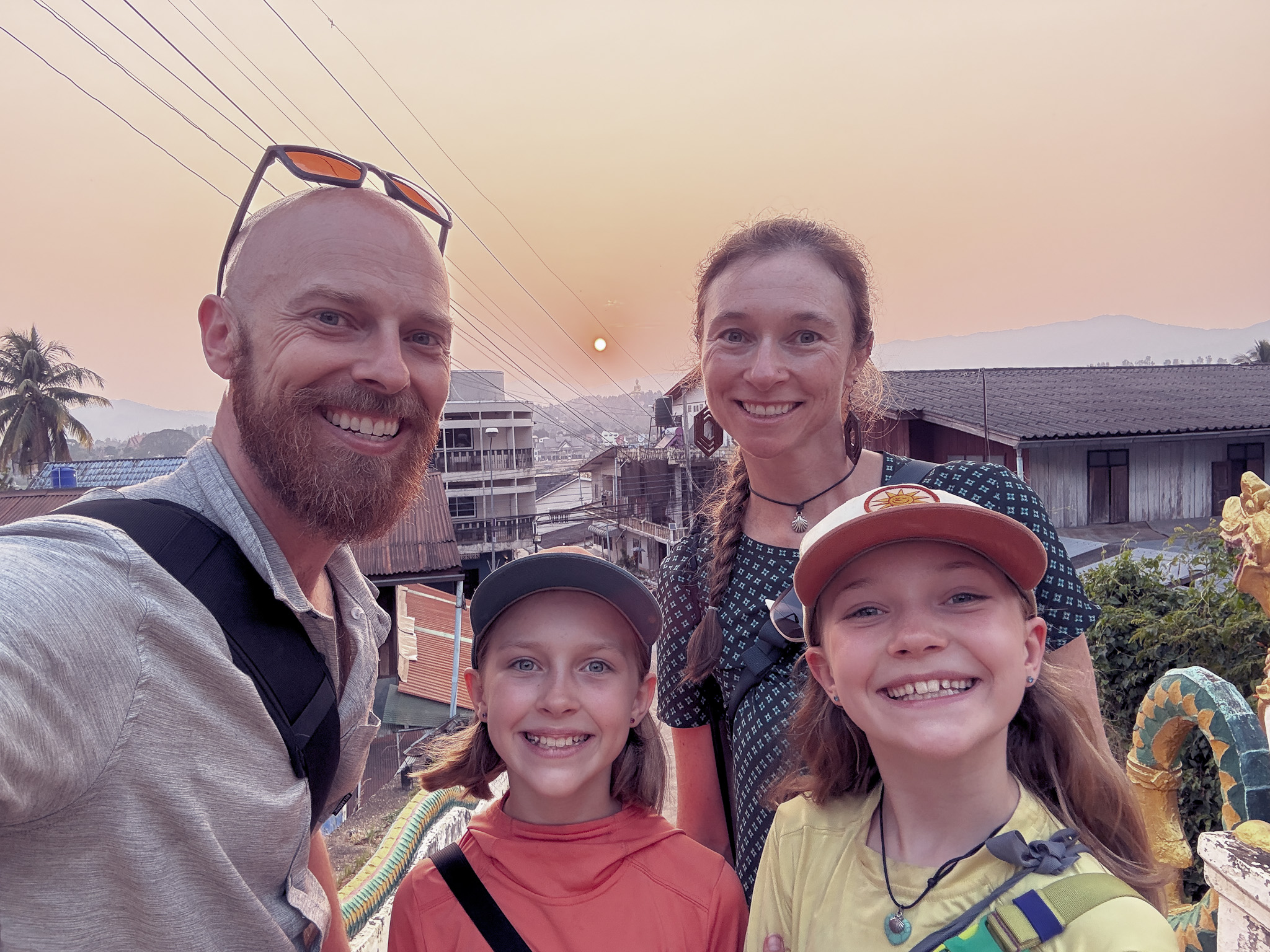
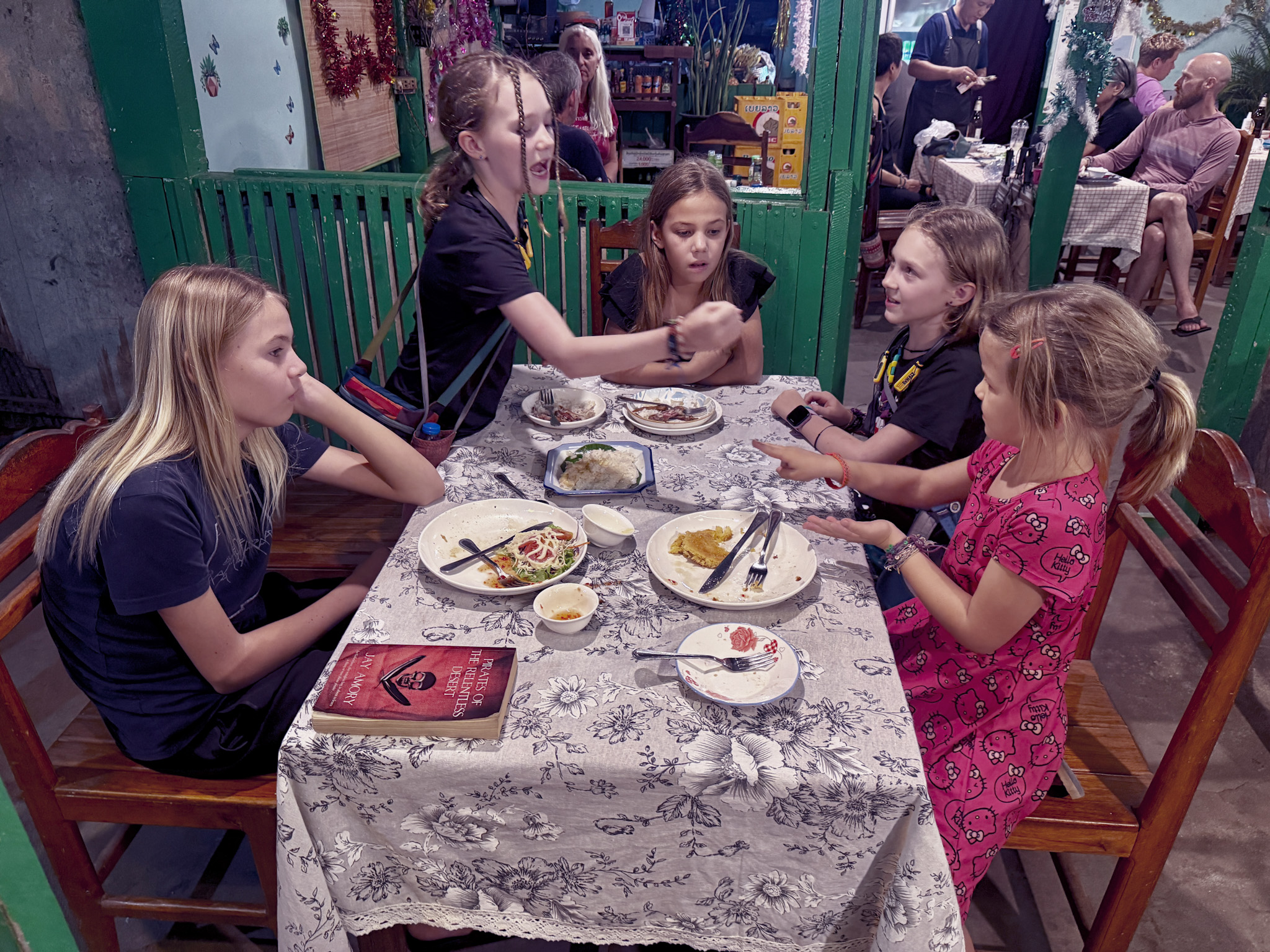
That evening we had dinner with Hannah and her family, the American family we met in Luang Prabang, reunited as planned. Good food, easy conversation, and our girls disappeared with Jade, Luz, and Tomu the moment they arrived.
Not a sabbatical family like us, they were something else entirely—people who’ve made a sailboat their home and occasionally venture ashore for adventures like this one.
Another reminder that we’re not alone in choosing an unconventional path.
What the River Gave Us
Two days on the Mekong taught us things we didn’t know we needed to learn.
It taught us that sometimes the best travel happens at the pace of a river current—slow enough to actually see what’s passing by.
It taught us that a family running a boat can create something extraordinary with limited resources and unlimited care.
It taught us that our daughters need to see how other people live, even when—maybe especially when—it makes them uncomfortable.
It taught us that poverty and dignity can coexist in ways that resist easy interpretation.
And it taught us that sometimes the journey between adventures is just as important as the adventures themselves.
Tomorrow we head into the jungle for three days in the canopy.
But tonight we’re still here, in Houayxay, with the Mekong flowing past our window and the memory of that Khmu village still working its way through our thoughts.
Some things take time to understand.
The river knows this.
And now, so do we.
 Pause and Wander
Leave a comment