
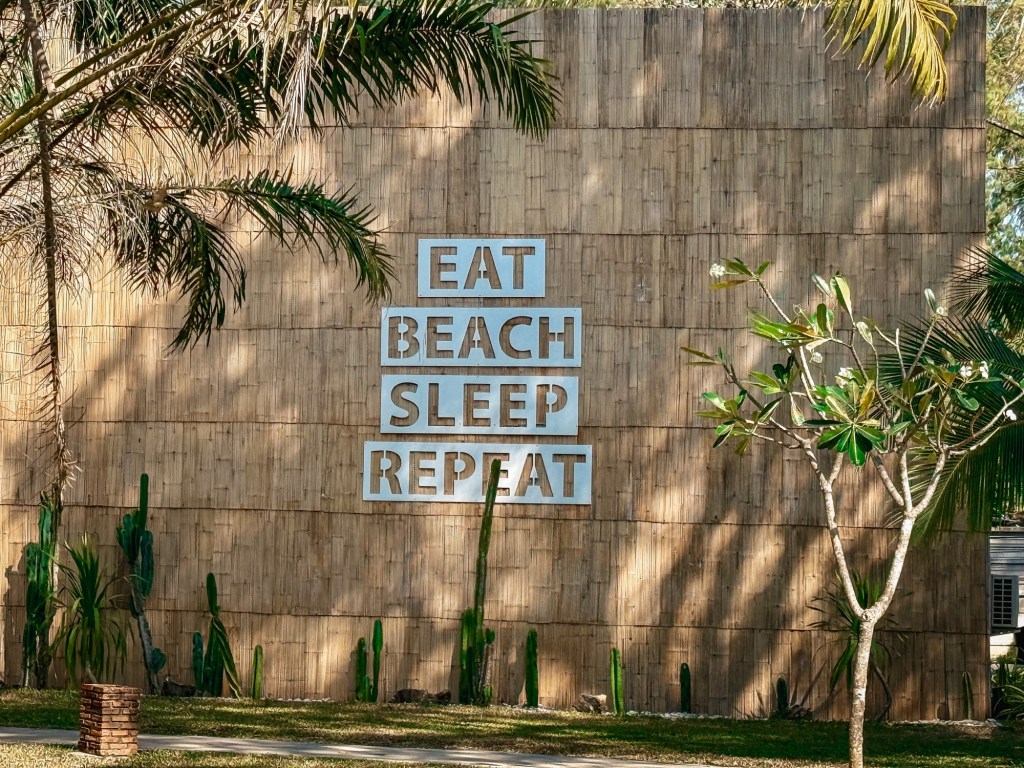
Dates: 01/27-02/03/26
Place: Koh Lanta
We arrived on Koh Lanta feeling untethered.
This wasn’t new. Six months into a year-long trip, untethered had become our baseline. No mortgage. No jobs. No fixed address beyond the next Airbnb confirmation. Most of the time this felt liberating. Sometimes it felt like floating in open water with no shore in sight.
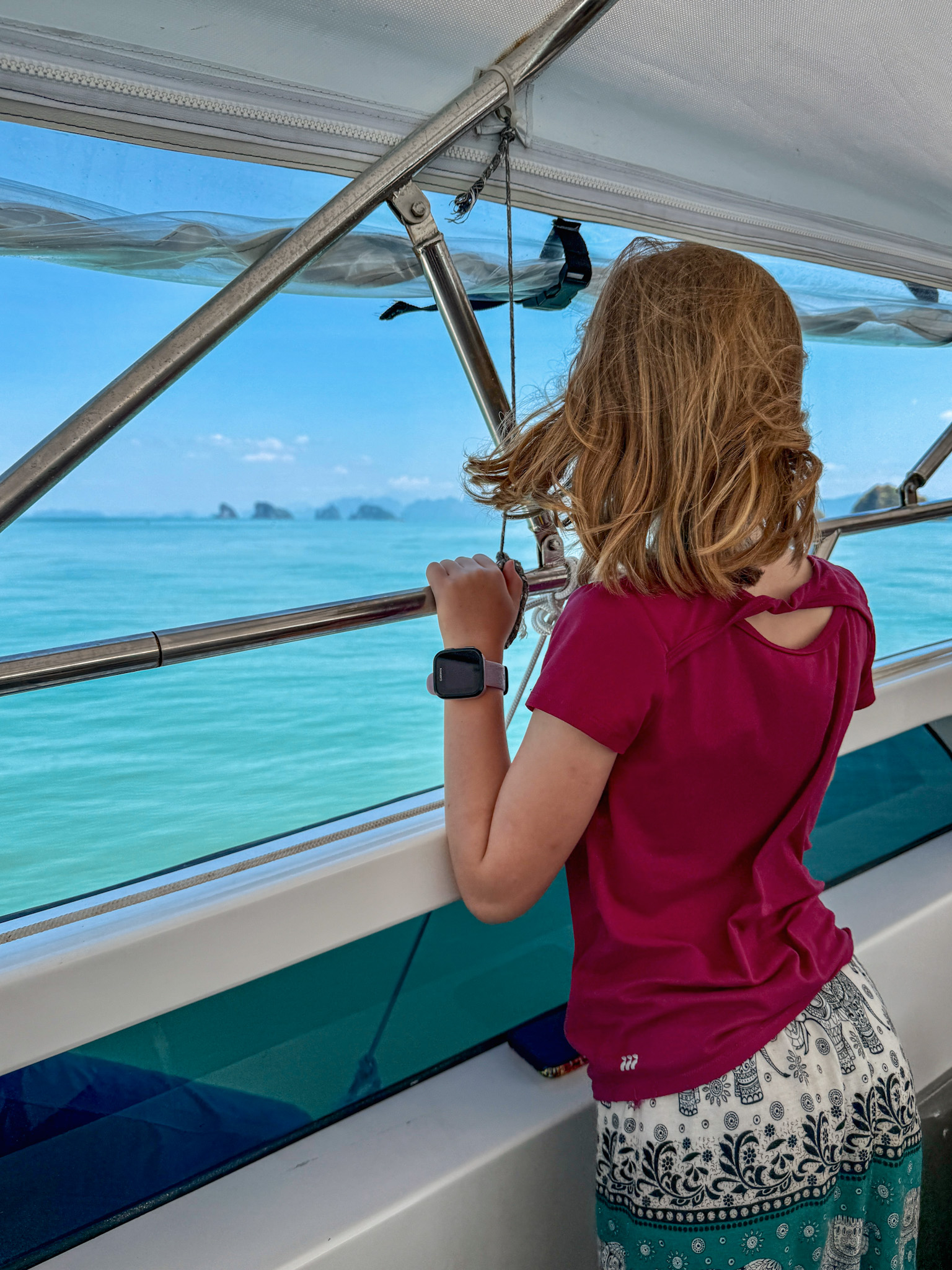
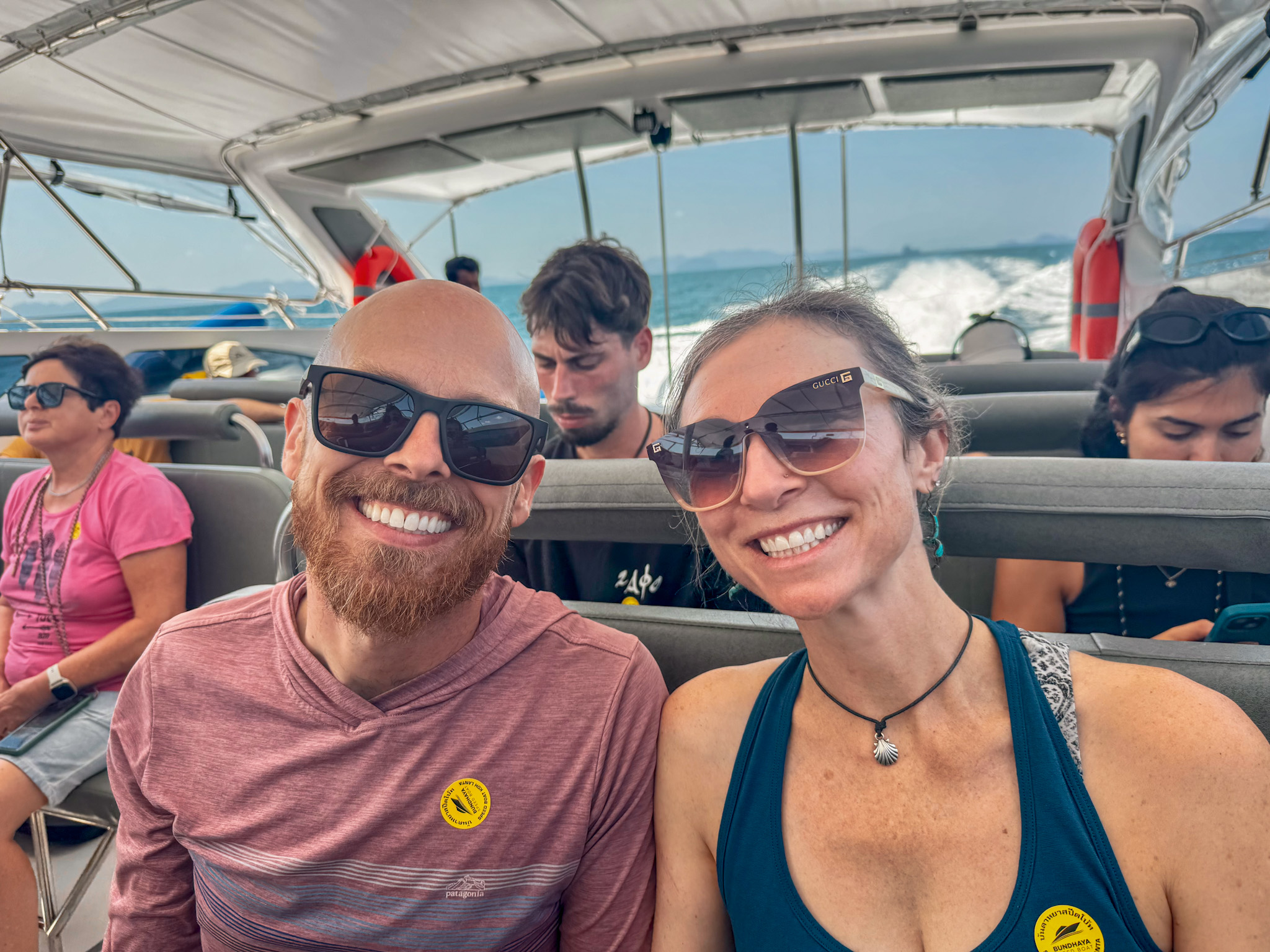
The speedboat from Koh Yao Noi took three hours, winding through the impossibly-teal Andaman Sea until we finally pulled up to Koh Lanta. As has become our custom, we had a driver waiting. If there’s one piece of advice worth taking from this entire trip, it’s this: always arrange transportation when you arrive somewhere new. The small premium is worth every penny in stress avoided.
Koh Lanta is a long, narrow island off Thailand’s eastern Andaman coast, known for being more spread out and slower-paced than places like Phuket or Ao Nang. It has a mix of local communities, mangrove forests, and long beaches rather than one dense tourist center. We were splitting our stay between the east and west sides—four nights facing the mainland, four nights facing open ocean.
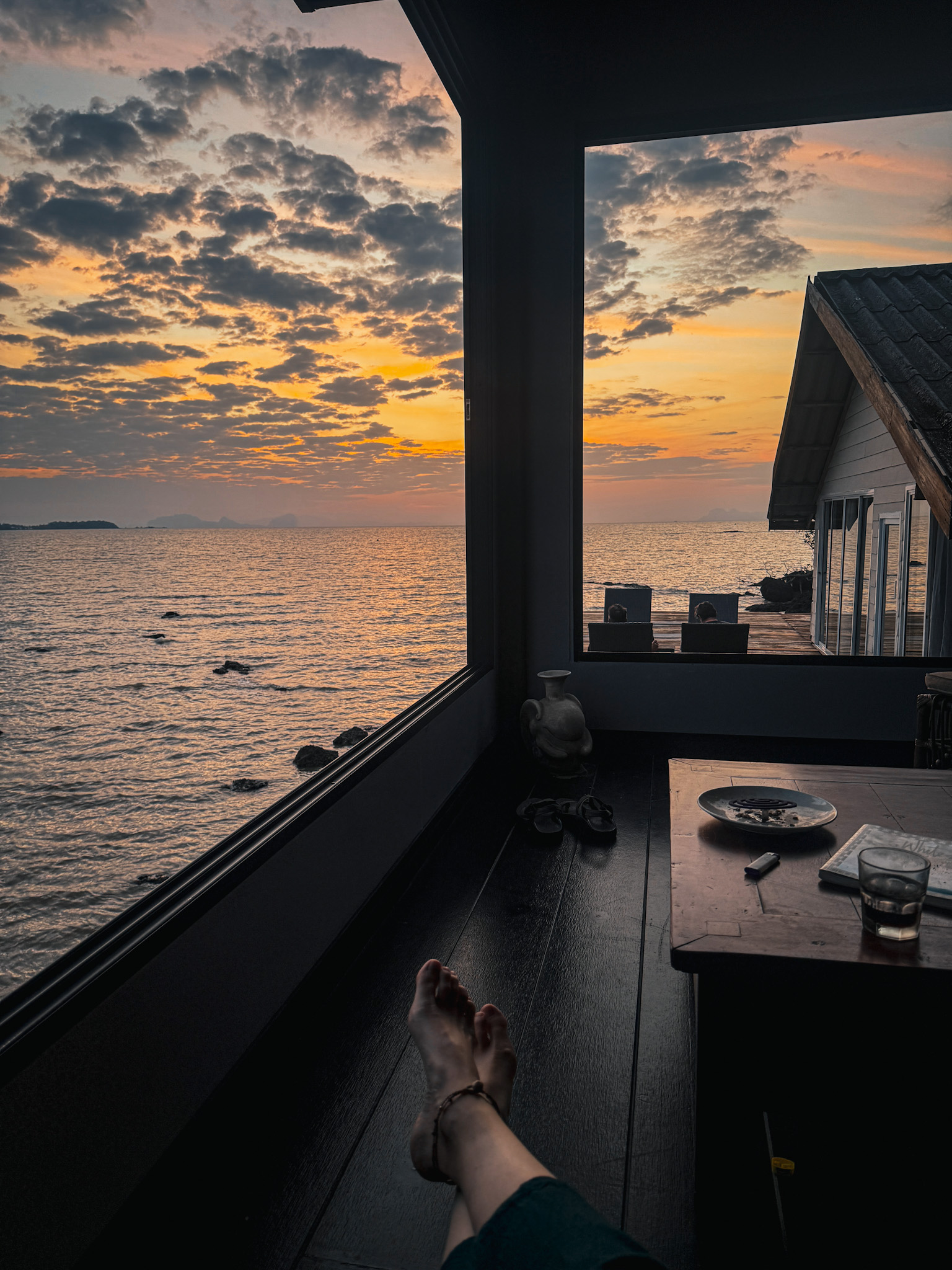
Our first accommodation was built on cement pylons, literally in the water, just south of Old Lanta Town. The photos hadn’t done it justice. The main floor was a big open-concept space with one entire glass wall that folded back to open directly over the water. It was an incredible place to just sit and exist.
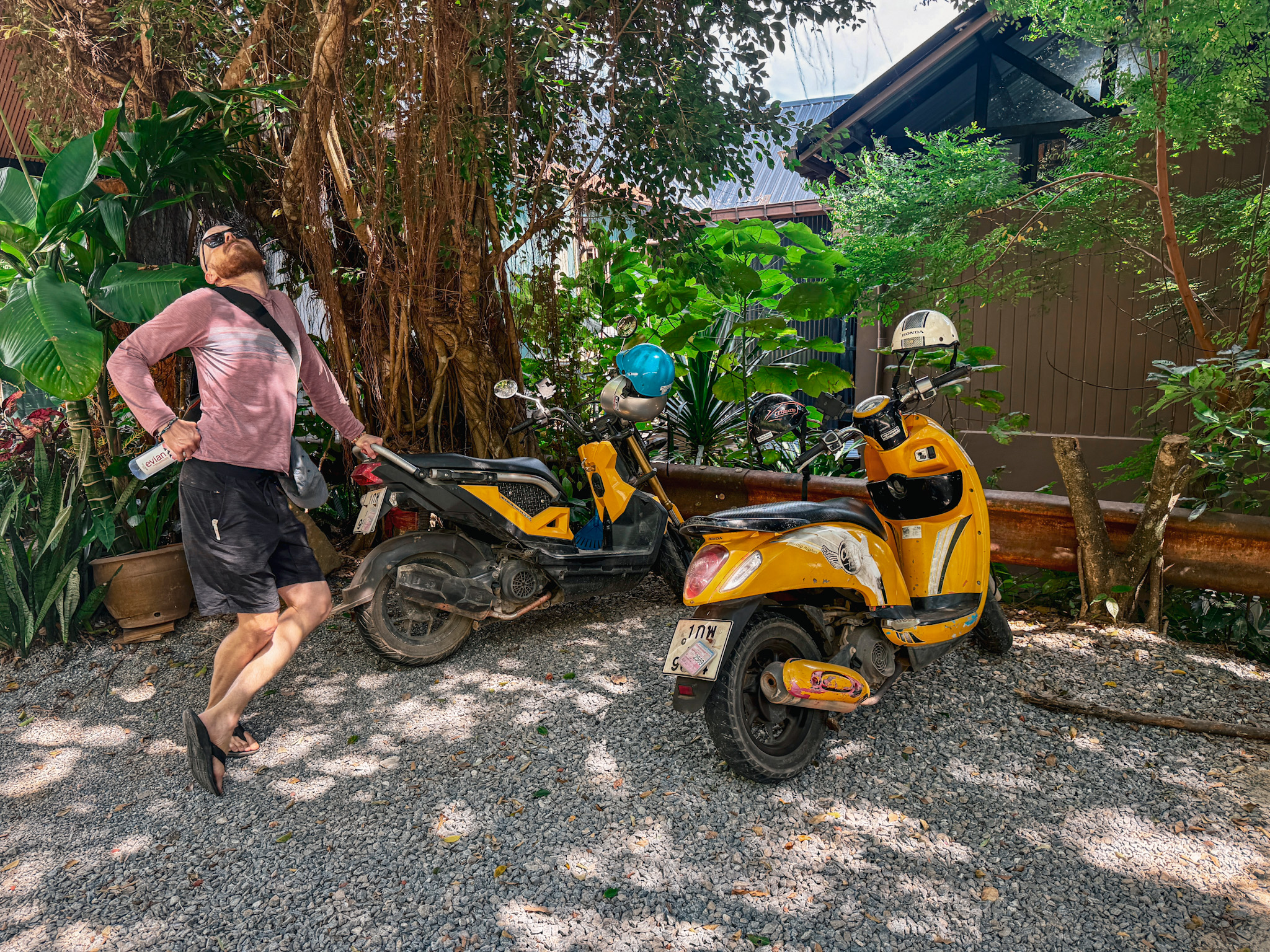
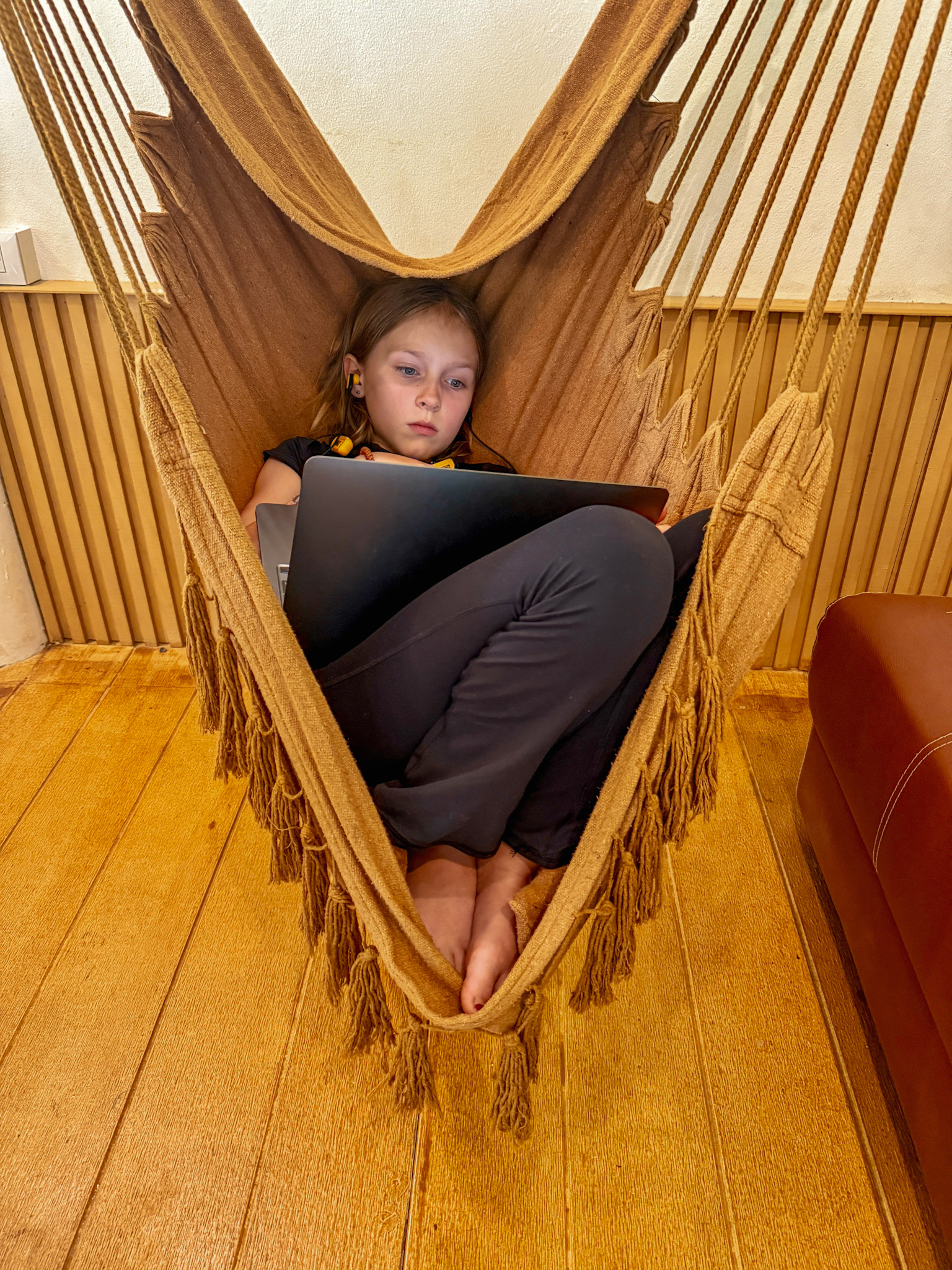
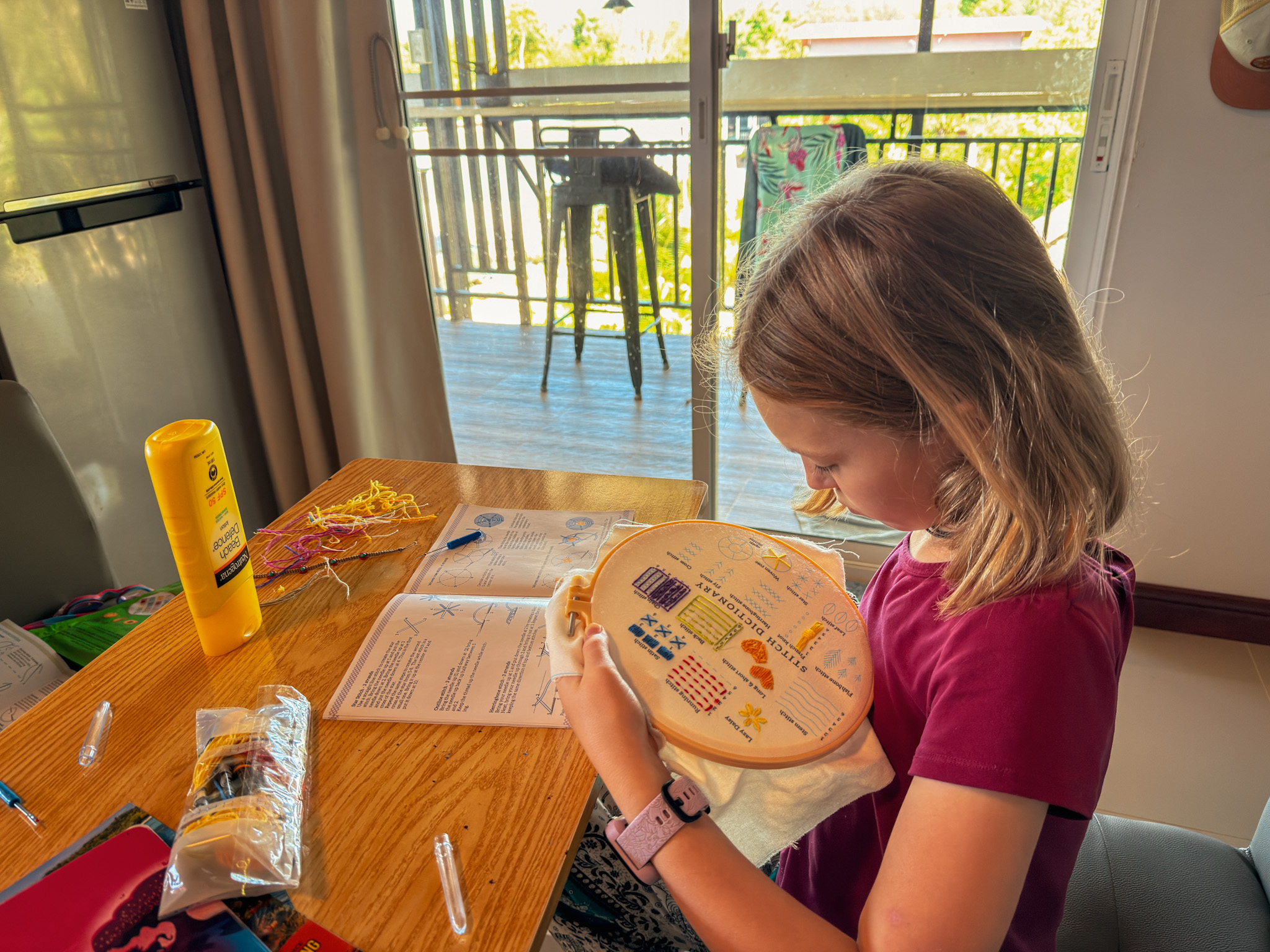
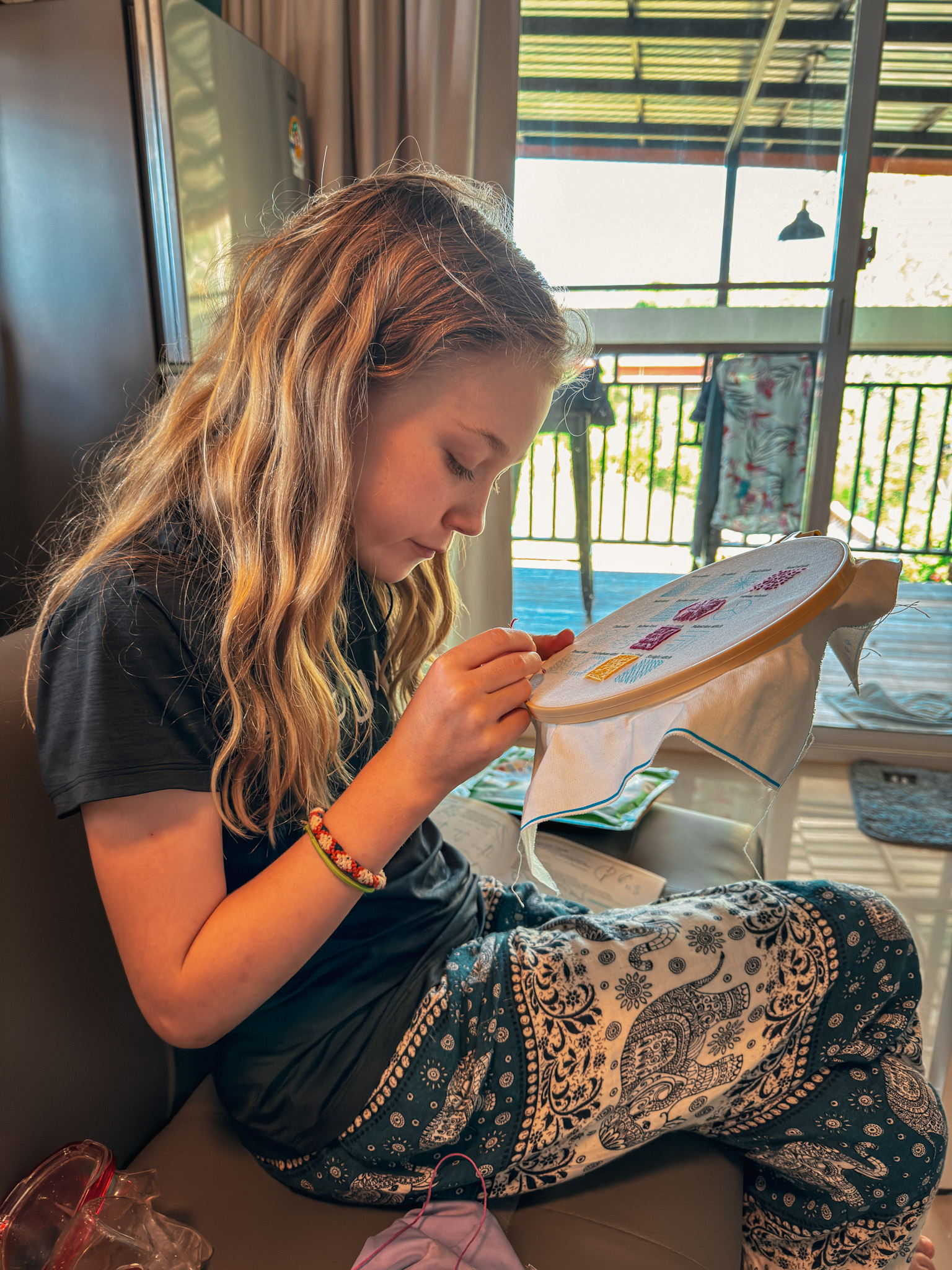
We settled into a daily rhythm almost immediately. Early mornings to watch sunrise over the water. Bowls full of fresh mango, passion fruit, and banana for breakfast. School work for the girls. Journaling and reading for the grown ups. A motorbike ride to explore the east side of the island.
The rhythm felt right. Koh Lanta is long and narrow, ringed by quiet coastal roads and pockets of jungle. It’s easy to move through at human speed. The heat is relentless, but there’s always shade or the ocean nearby. The girls dove into their schoolwork with surprising enthusiasm. Shaina handled logistics. Max flew his new drone, capturing aerial footage of the house and the surrounding water.
Everything should have been perfect.
The Rabbit Hole Opens
It started with a conversation about going home.
We’re on the back half of our trip now, and Reno is drawing closer. But returning to the US was looking less and less appealing. The immediate trigger was politics—we’re not fans of Trump, nor what he represents, and wrapping our heads around the fact that roughly half the country supports him has been genuinely difficult. But it wasn’t just that. It was the expanded role of ICE. Permissive gun laws. Consistently poor health and safety standards. High social media use in adolescents. America just feels like a mess.
If we didn’t have our amazing community of friends, family, and colleagues back in the States, we’re 95% sure we wouldn’t go back. But friends and family matter deeply. How do you place an objective value on them?
Then there’s Shaina’s job. In the six months before we left, she was averaging 65–70 hours per week in the hospital. The pay is good, but the pressure is constant. There’s always the temptation to pick up another shift because we “can’t afford not to.” The system is built that way.
Someone—probably Max, in a moment of caffeine-fueled inspiration—suggested moving to Australia.
What started as a loose musing became an obsession. Max loves digging deeply into various subjects and projects—it doesn’t really matter what it’s about. But if it is complicated, has lots of moving parts, and gives him the sense that he’s optimizing something, he’s in. And Australia offered endless variables to optimize.
The statistics were compelling. Shaina could work as a doctor in Australia. The pay would be about 25% less in absolute terms, but factor in the hourly rate, dramatically lower malpractice insurance, personal medical insurance, and disability insurance, and the picture shifts. She’d be looking at four 10-hour shifts per week instead of 65–70 hours. There are hard limits on how much you’re allowed to work.
Then there’s everything else Australia gets right. Pragmatic, stable, less polarized politics. A belief in independent, free-range childhood autonomy. A national policy limiting social media for kids under 16. Subsidized public education and healthcare. A secular, low-conflict public life with relatively high social cohesion.
On paper, it was almost too good to be true.
Max started using AI to break the question into smaller, more manageable pieces. What would it take to get established? What are the ongoing costs? What’s the long-term financial delta compared to staying in Reno? The information came fast. Before he knew it, he was deep in spreadsheets about ideal Airbnb property purchases in Canberra.
The problem with using AI to research rabbit holes like this is that it can selectively give you data that is technically true but incomplete. Max was briefly convinced that a move to Australia was the answer our family was looking for.
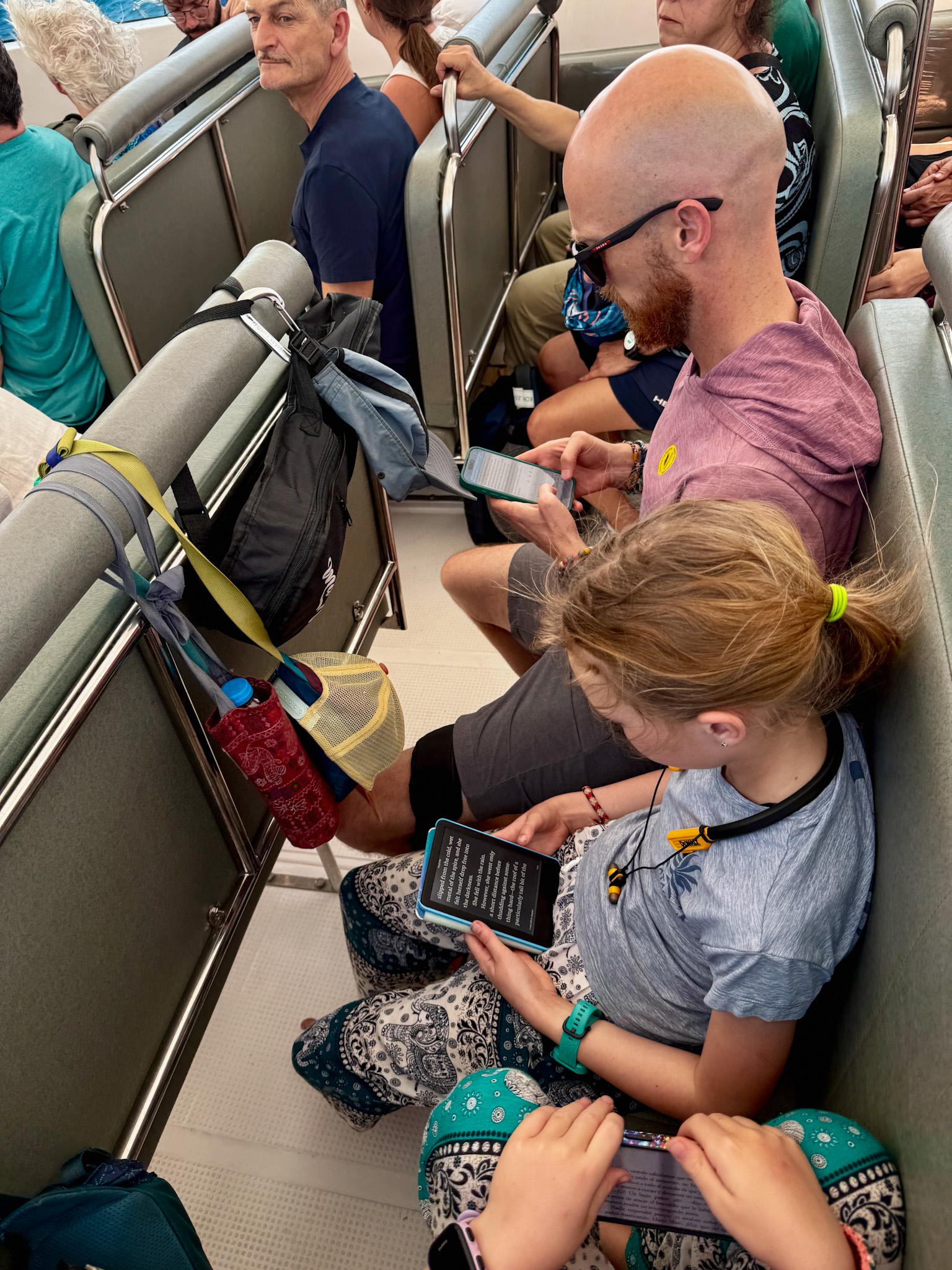
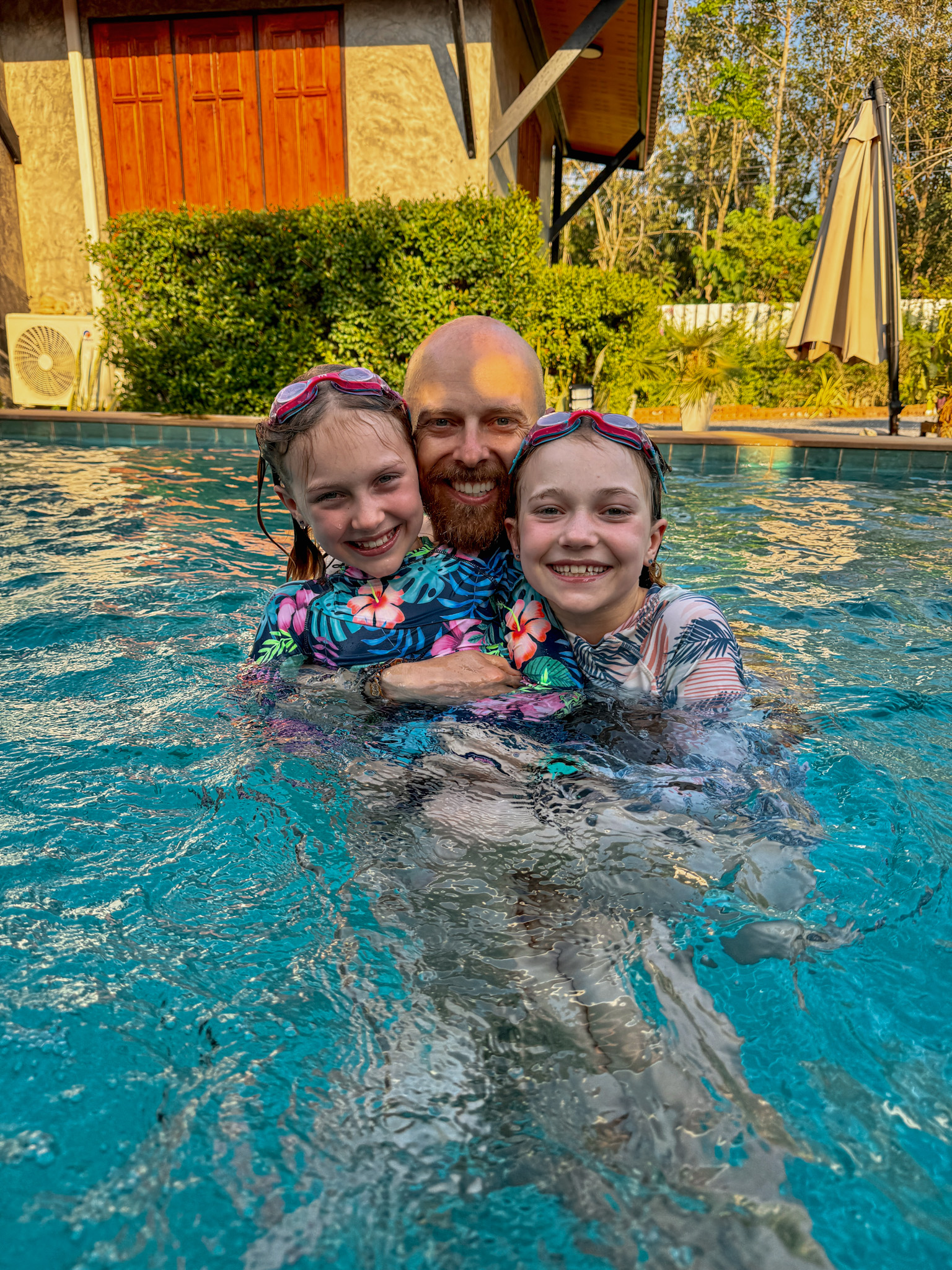
We spent days on this. Sitting by the pool while the girls swam. At cafes while they did homework. Late at night after they went to bed. Every conversation circled back to this potential life change. Visa requirements. Medical licensing pathways. Cost of living. School systems. We were planning a life we weren’t even sure we wanted, in a country we’d never visited, while sitting in paradise.
The irony wasn’t lost on us.
Moments of Presence
Occasionally, reality broke through.
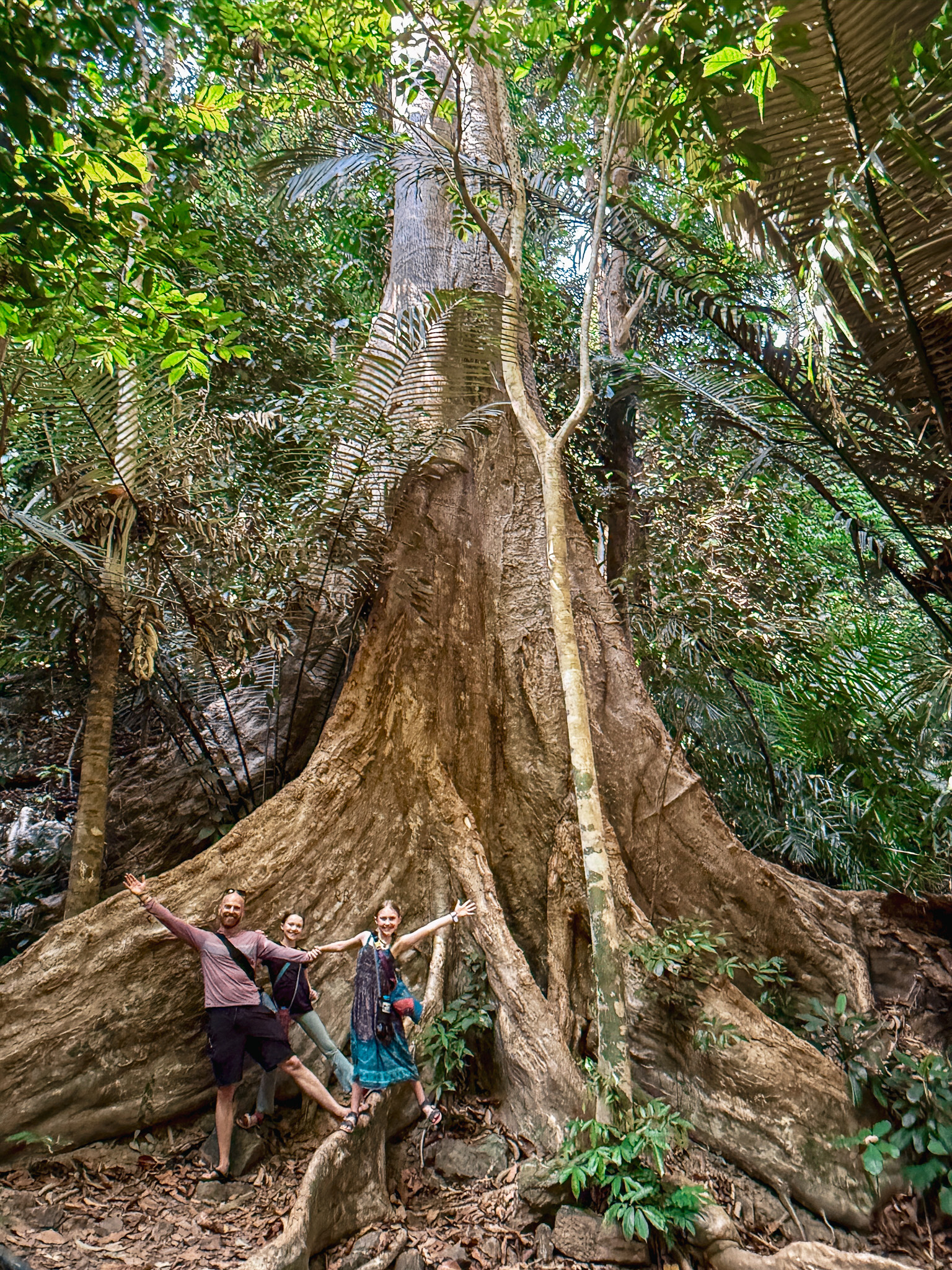
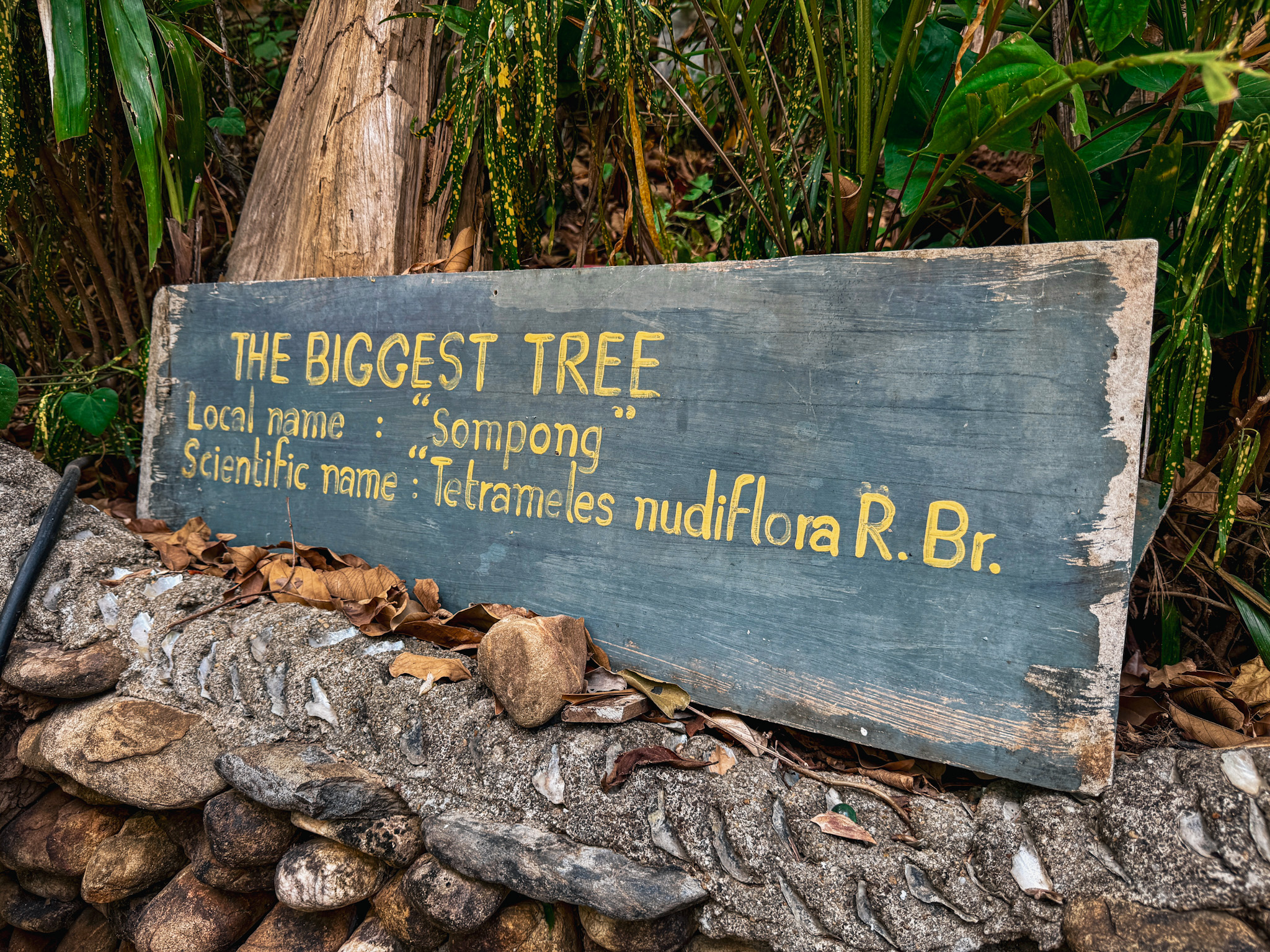
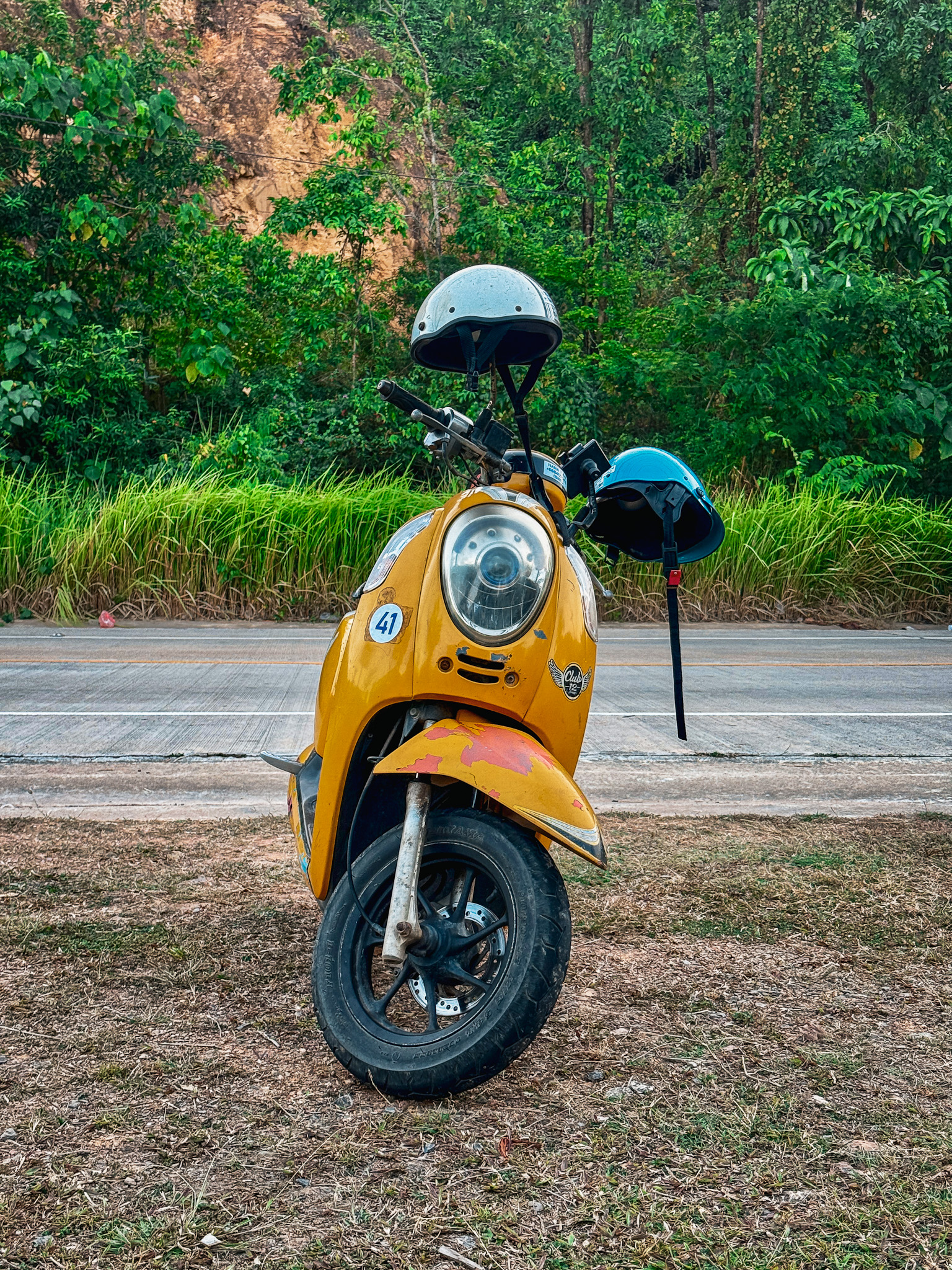
One afternoon we rode the motorbikes to the southern tip of the island to see a tree rumored to be the oldest in Thailand. A small sign pointed down a trail labeled “The Biggest Tree, Sompong.” Just a few steps in, a troop of long-tailed langur monkeys burst out of a nearby construction site and scared the hell out of us.
Once our heart rates came down, we kept going. The trail was indistinct and gave no real confidence that we were headed the right way. Just as we were about to give up, we rounded a bend and there it was.
There was no mistaking it. This was absolutely The Biggest Tree.
Maybe not the tallest we’ve ever seen—that honor still belongs to the redwoods in California—but the circumference, including its massive buttress roots, is said to be around 60 feet. Photos barely captured the scale. It wasn’t until we stood beneath it, between those enormous roots, that its size really registered.
On the way back we ran into the langurs again. They’re incredibly cute, especially as they leap overhead from tree to tree before settling in to calmly munch leaves one handful at a time. The girls practiced their best monkey impersonations before we climbed back onto the bikes.
For a few hours, Australia didn’t come up once.
The West Side
After four days on the east side, we moved to the west coast. The accommodation was more basic—a single room above a reception area—but it had a pool at the center of the compound, which in this heat was exactly what we needed.
The west side felt different. More beaches. More tourists. More restaurants catering to Western tastes. That’s where we discovered Jimmy’s Fried Chicken, a tiny Muslim-run restaurant with service that would make them a success anywhere in the world.
The first night we ordered stir-fried chicken in curry paste with morning glories, sweet and sour chicken, and rice. Everything was so good. The fried chicken was super crispy with light breading, and the curry left us full but still wanting to eat more. The bill was 380 Thai Baht—about $12.
We went back almost every night after that. Sometimes it was fried chicken and fries. Sometimes the staples of Pad Thai and pineapple fried rice. Then there was the massaman curry, which is one of those dishes that tells a story—a southern Thai curry with Persian and Muslim roots, warmer and richer than most Thai curries, built on spices like cinnamon, cardamom, and cloves, and mellowed with coconut milk and peanuts. Comfort food with history.
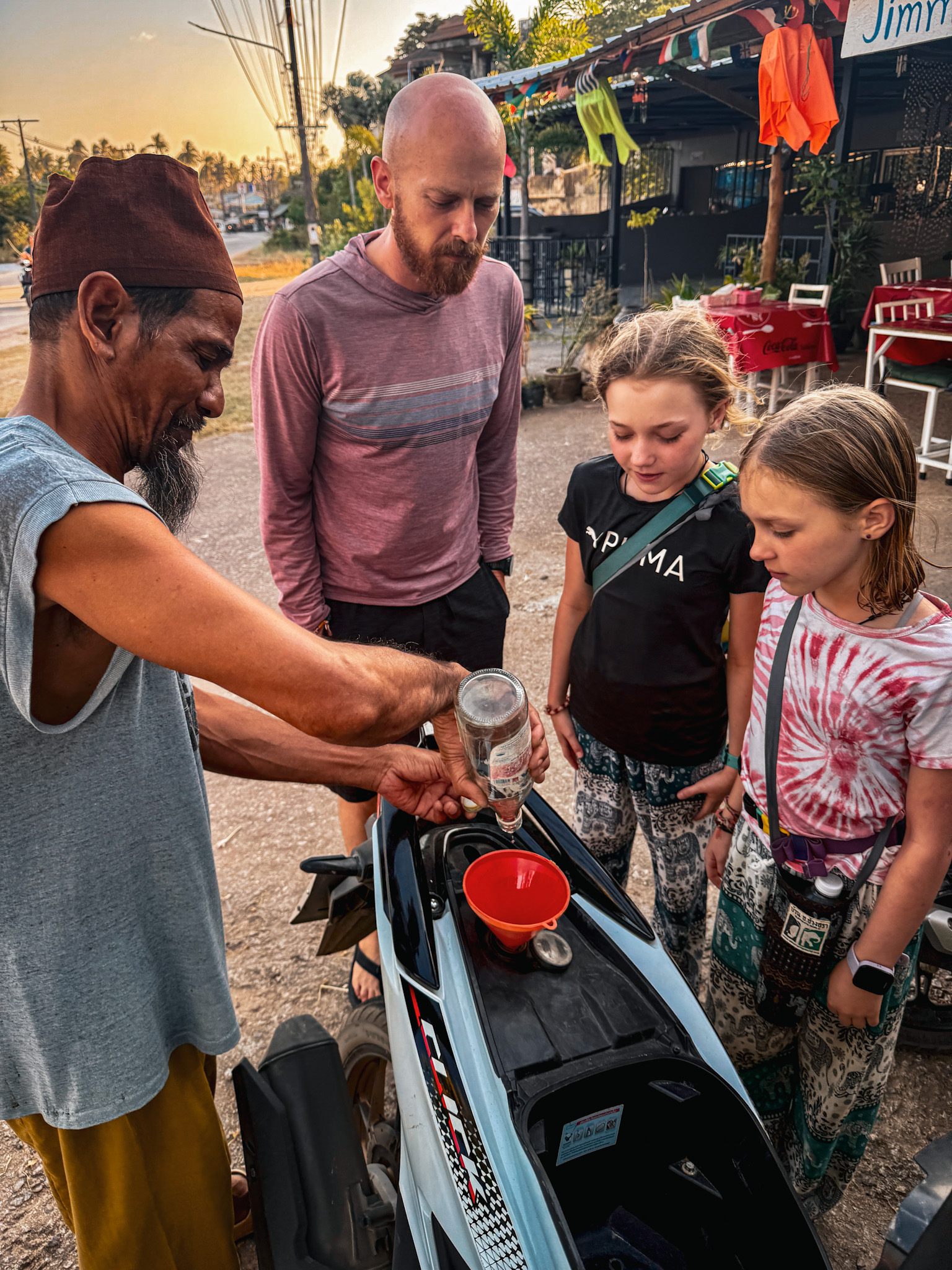
The family who ran it always greeted us with smiles and recognition as we pulled up on the motos. On one visit, the bill included a couple of bottles of gasoline for the bikes, because of course Jimmy is also in the petrol business. Roadside gasoline sold in repurposed glass bottles is still common here. It’s informal, practical, and somehow reassuring.
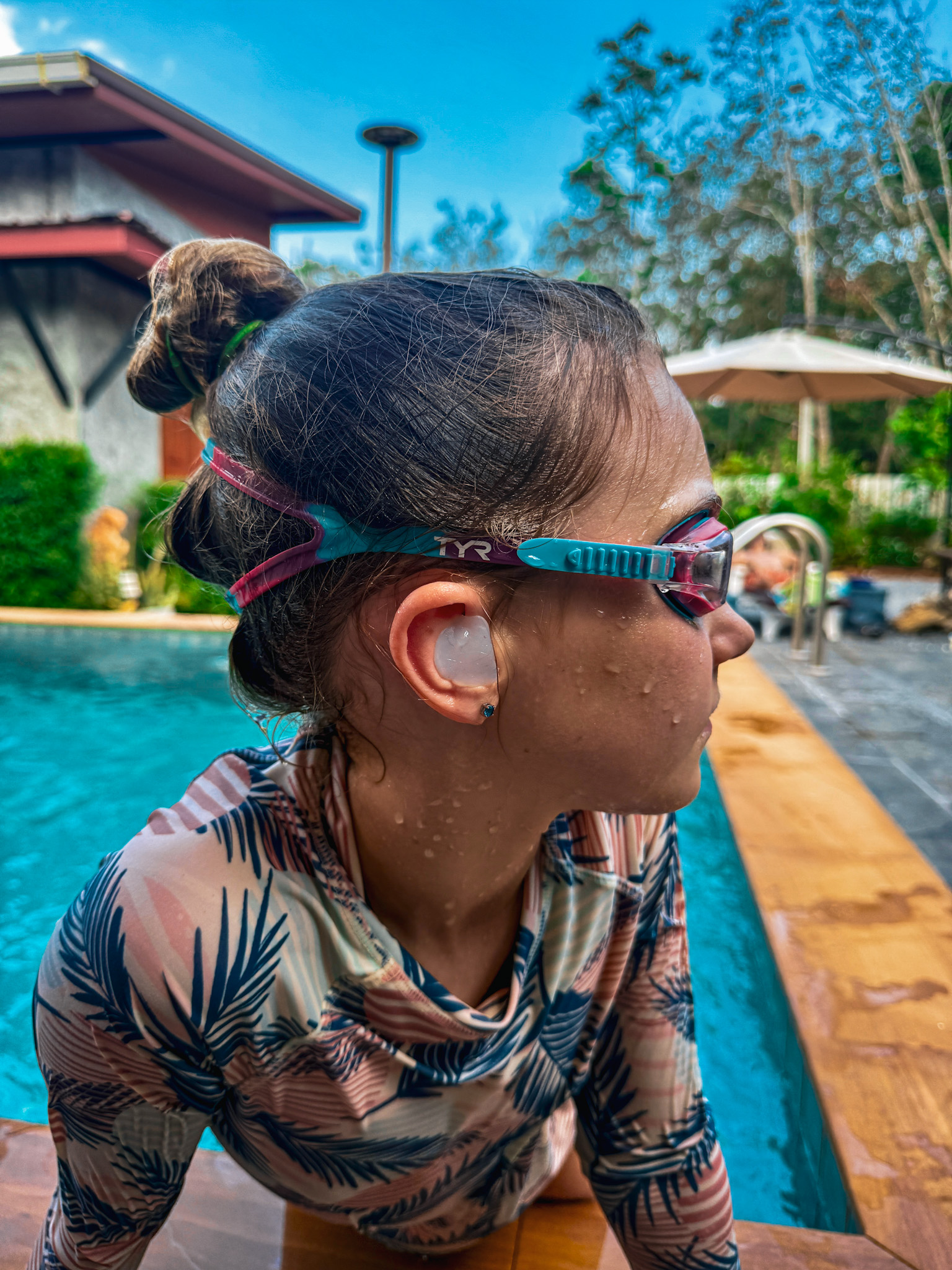
Between meals at Jimmy’s, we kept circling back to Australia. By the pool while the girls swam. At the beach while they built sandcastles. The planning had taken on a life of its own.
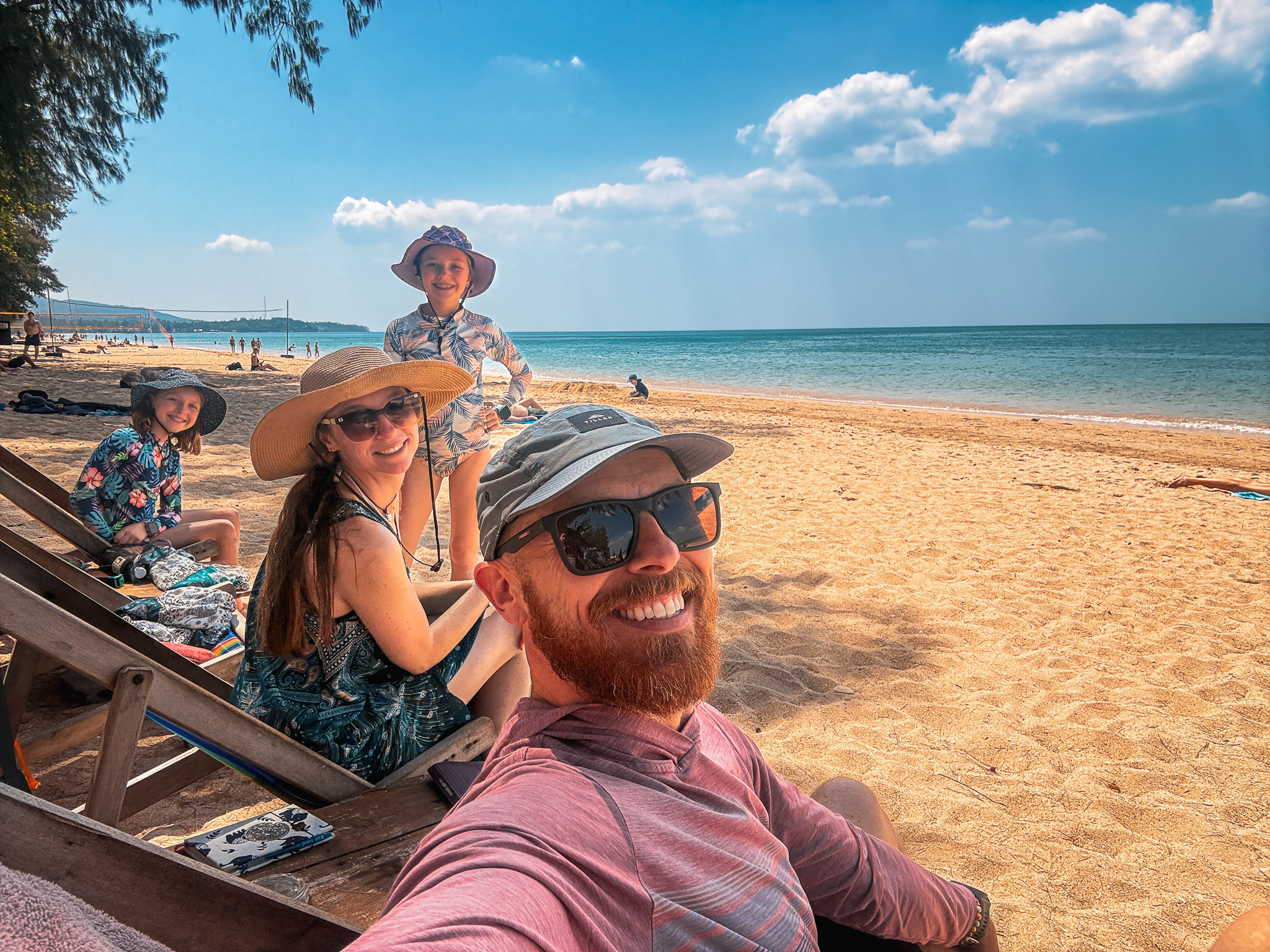
One afternoon at Funky Fish Beachfront Restaurant—ridiculous name, perfect spot—we had one of those days that should have snapped us out of it.
Max swam about 50 meters out into water so calm it felt almost staged. There were tiny pinprick stings from what were probably small jellyfish, but it was barely a nuisance. Totally worth it.
Then it was sandcastle time with Finlee. They went ambitious and executed it perfectly—a fortress with buttressed walls surrounding a deep pit designed to trap unsuspecting bad guys trying to steal their coral treasure.
Meanwhile, Arya and Shaina were deep in conversation. One of those rambling talks about life. Later Shaina said it was one of the best conversations they’d had in weeks. Those moments matter. It’s when nothing else is demanding our attention that these conversations find room to appear.
As the sun crept over the trees that had been shading us, we moved inside for a snack. Two orders of veggie spring rolls and a mango pancake. The spring rolls were perfect. Easy 9/10.
The mango pancake caught us completely off guard. What arrived was a thick pancake loaded with perfectly ripe mango pieces, served with a clear, lightly yellow sauce that he still can’t fully identify. Maxell’s best guess was simple syrup infused with cardamom, and as the de facto chef of our household, we were inclined to believe him. Either way it was pure magic. A good reminder that small surprises still show up if you’re open to them.
It was a nearly perfect day. And yet, by evening, we were back at it. Talking ourselves in circles about Australia.
The Breaking Point
Max finally asked his AI Chatbot to change tactics. Instead of building the case for Australia, he told the AI to ruthlessly attack the idea’s weak points.
That’s when things got real.
Moving to Australia would be enormously expensive. Not just the logistics of the move itself, but establishing residency, getting Shaina licensed, finding housing, enrolling the girls in school. And for what? A vague hope that culture and work-life balance might be better?
Had we exhausted all our options to reduce friction at home? The honest answer was no.
Max ran the numbers again. The long-term financial delta was staggering. Too many hard numbers pointing toward a massive cost in pursuit of something we couldn’t quite define.
He shared his thoughts with Shaina. She was already there.
So just like that, a move to Australia was off the table.
If we’re being honest, it definitely feels like good news. There’s something seductive about daydreaming your way into an international reset, but moving is a ton of work. Even down the street it’s painful. (We know.) Moving across the globe, to one of the most remote corners of the world, the upside has to be enormous to justify the toil and heartache.
With that decision made, we were done thinking about Australia. We could refocus on being present, enjoying each other, and soaking in the experience we were already living.
Right on cue, our taxi arrived for the main event of Ko Lanta island: a boat ride through the mangroves followed by nighttime kayaking with bioluminescent plankton.
Magic in the Dark
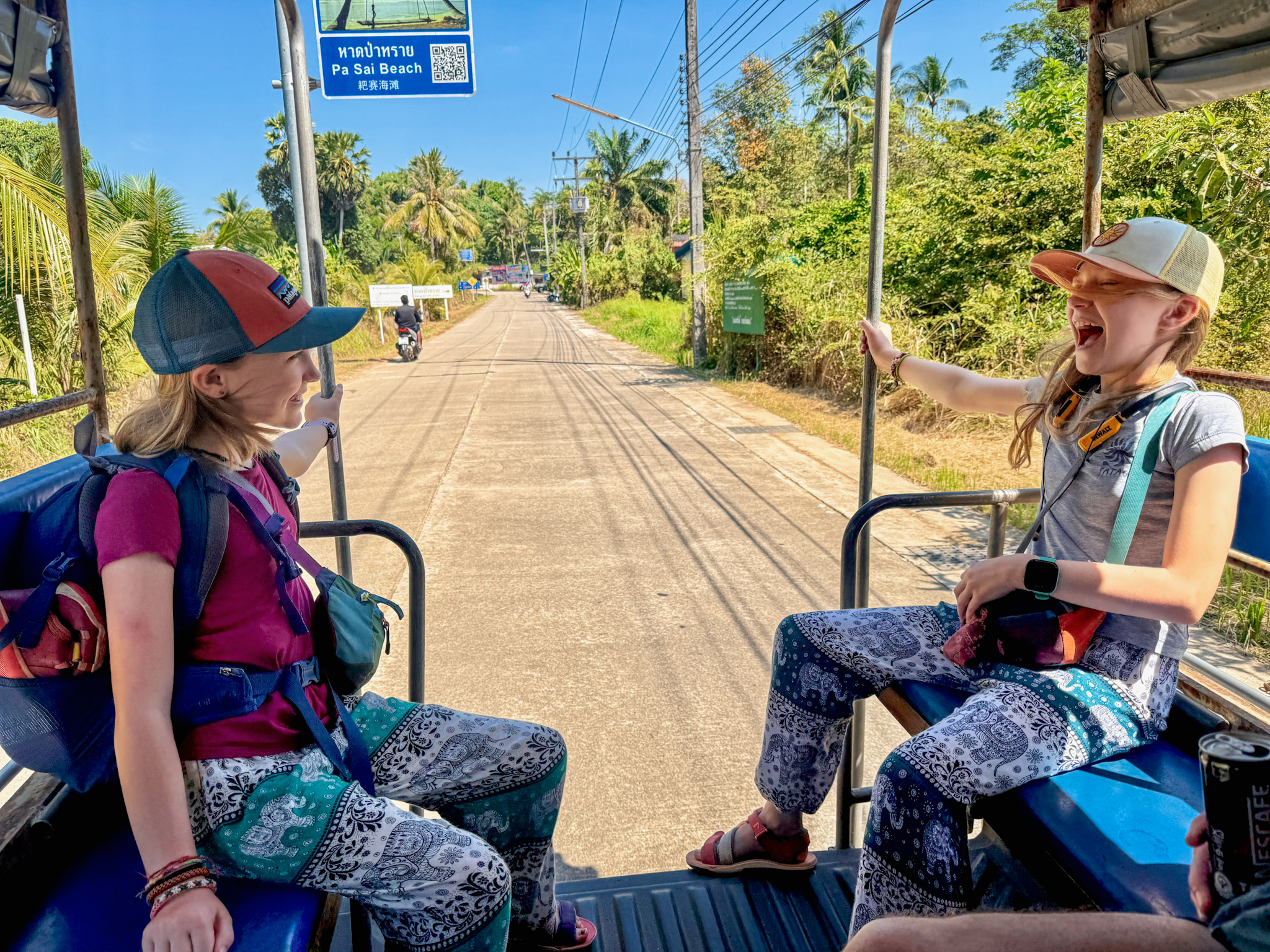
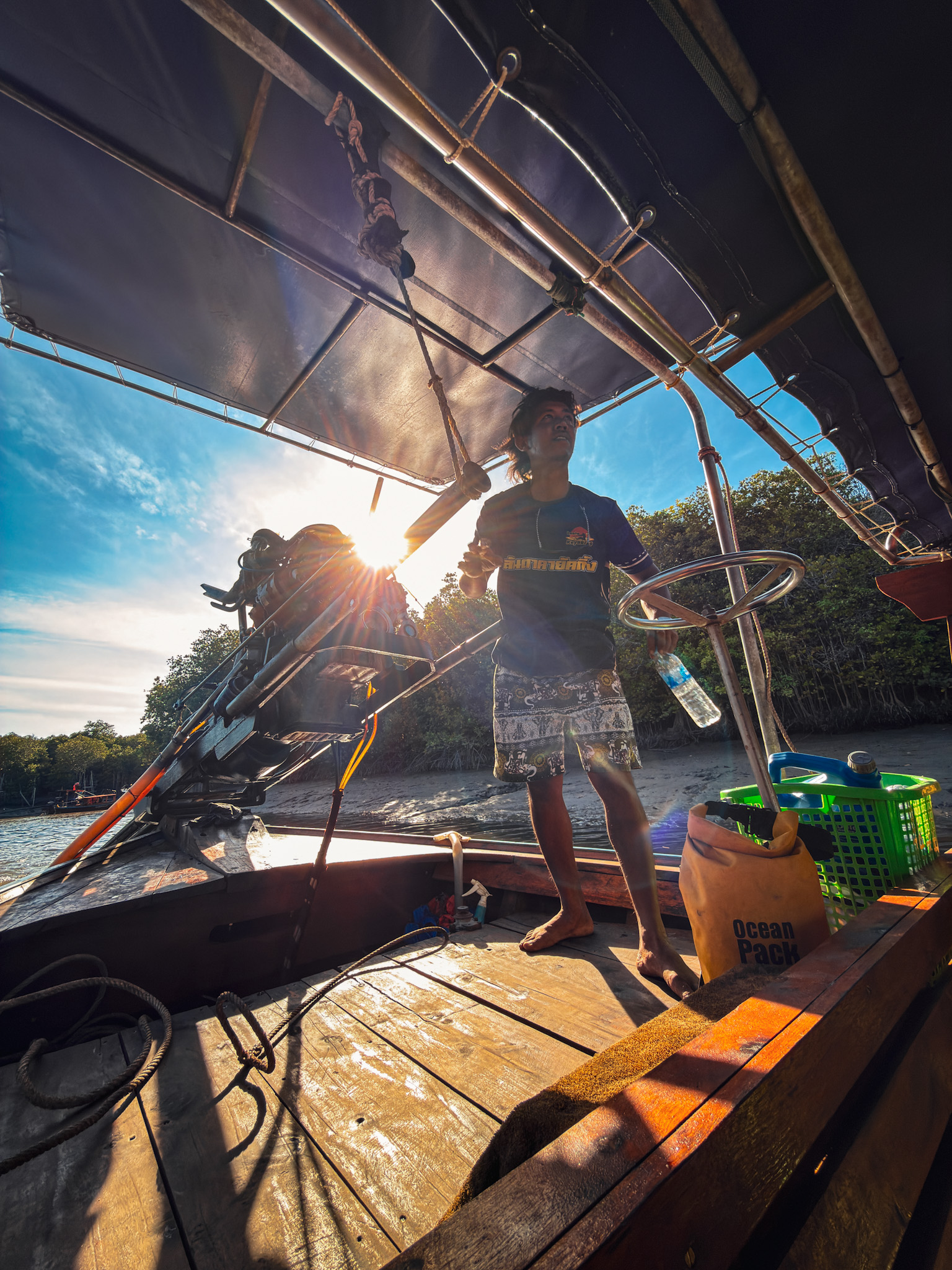
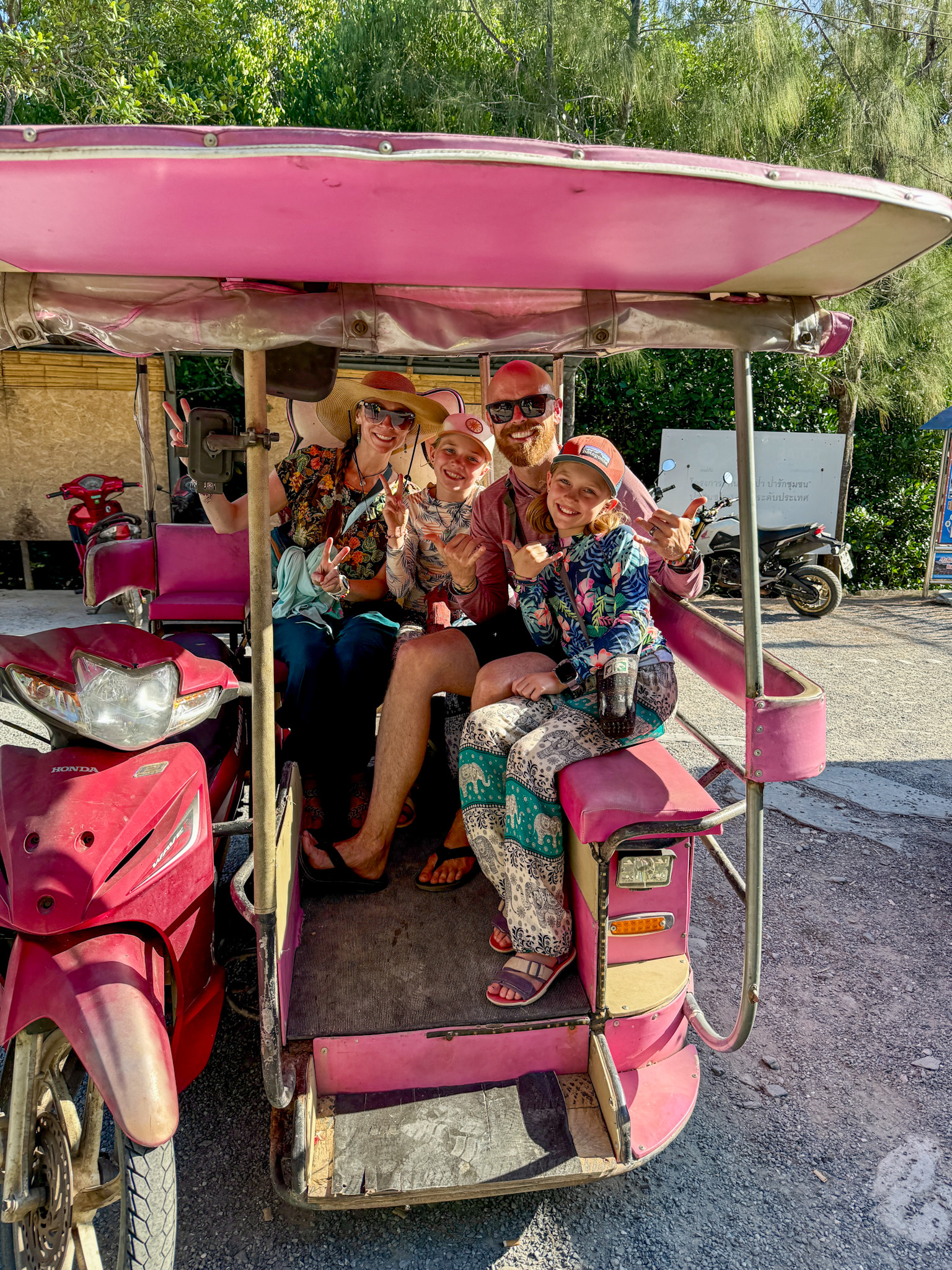
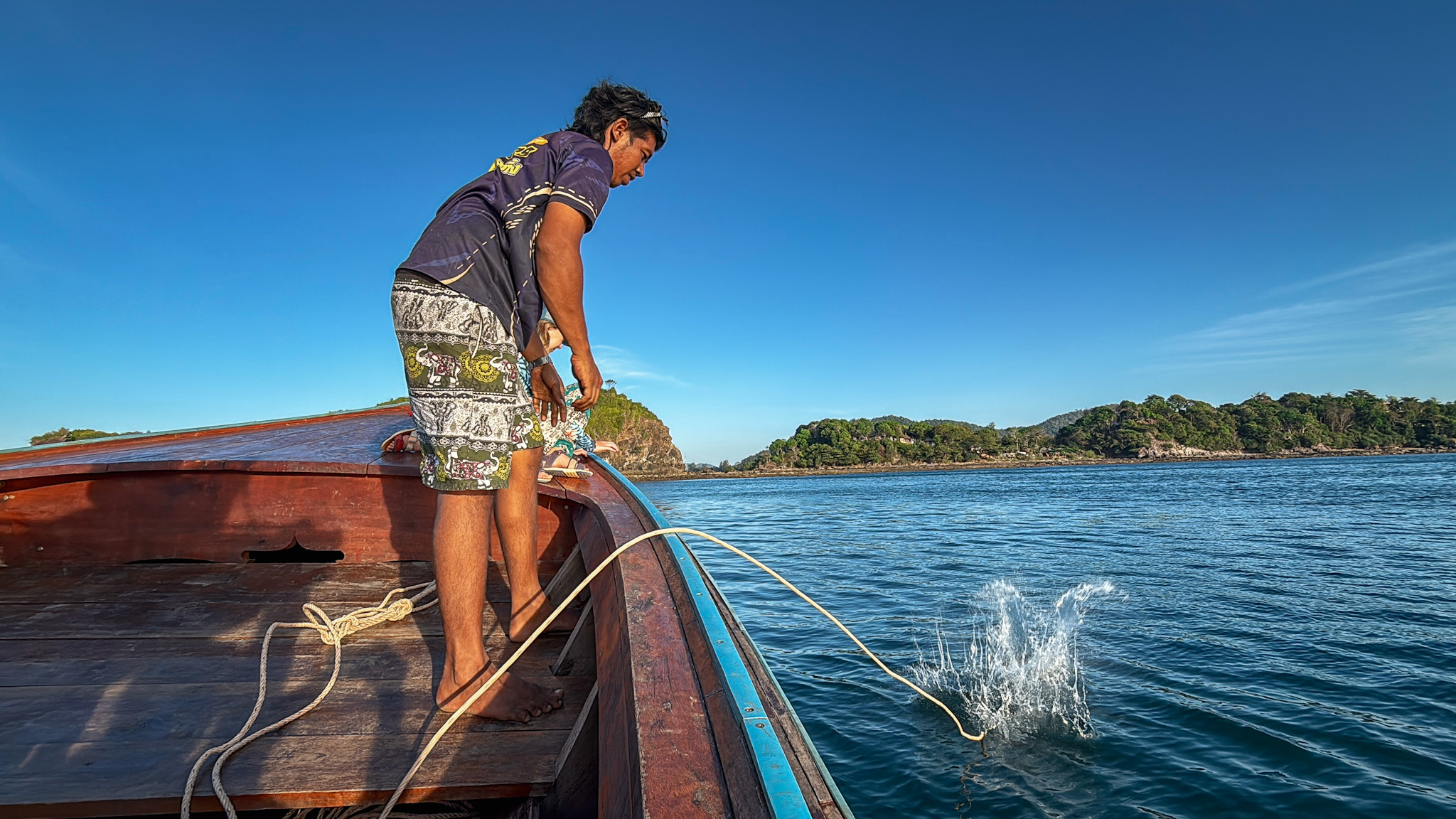
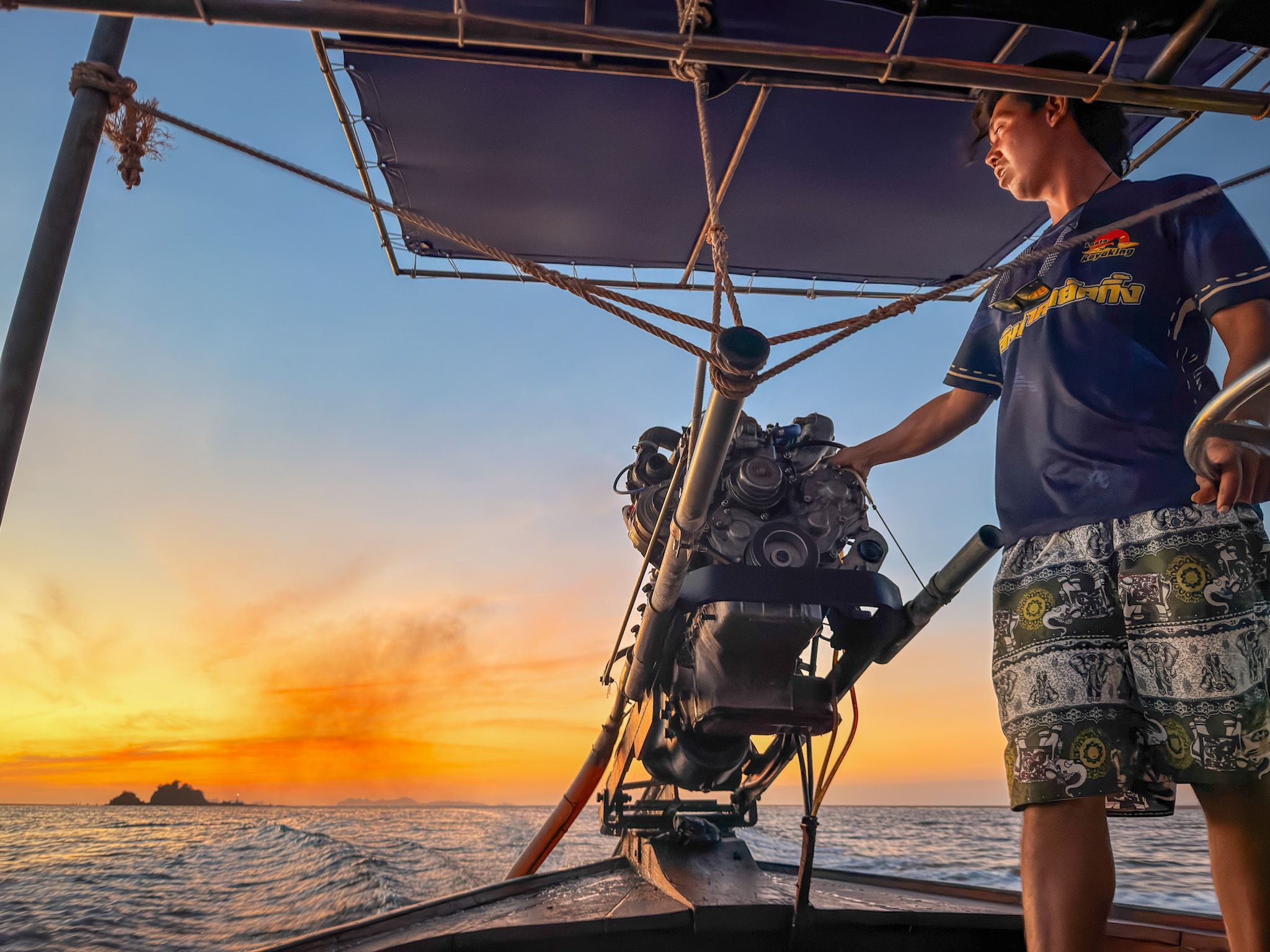
The operation felt a bit cobbled together. The taxi was a pickup truck with padded seats bolted into the bed. We rode 15 minutes to the northeast side of Koh Lanta, where we met our guide, Singh. He was friendly and enthusiastic, though his English was pretty rudimentary. Lots of smiles and nods.
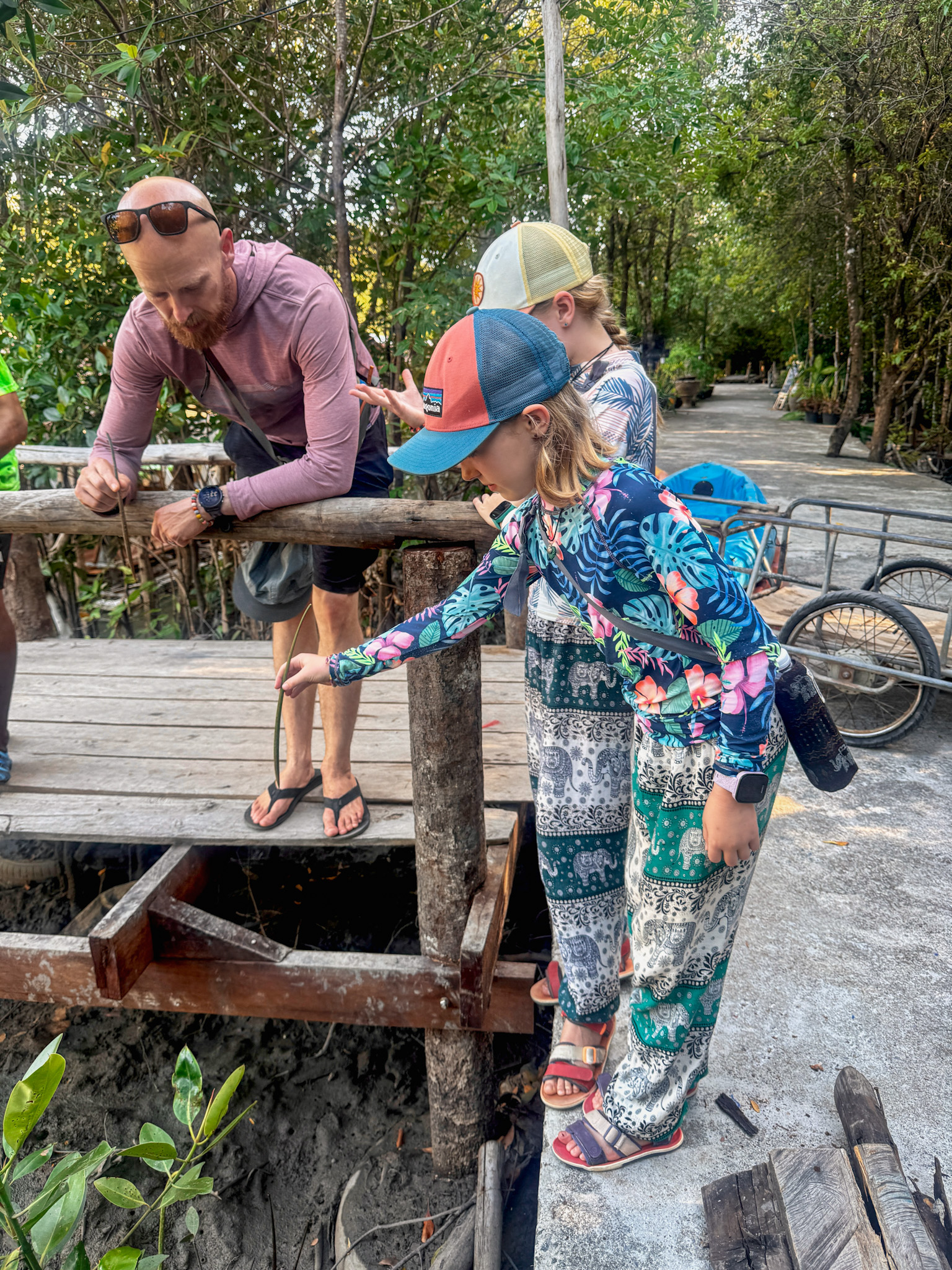
He gave us a quick introduction to the mangrove forest. Mangroves are salt-tolerant trees that grow right at the boundary between land and sea. Their tangled root systems stabilize coastlines, filter sediment, and act as nurseries for fish and crustaceans. They’re incredibly productive ecosystems, even though they often look muddy and chaotic at first glance.
We saw monkeys—long-tailed macaques foraging for crabs and other tasty treats along the muddy banks. Crabs were everywhere, especially fiddler crabs with their oversized and brightly-colored claws. And mudskippers, which stole the show. These bizarre fish can breathe through their skin and waddle awkwardly across the mud before diving headfirst into burrows. Watching them in person was endlessly entertaining.
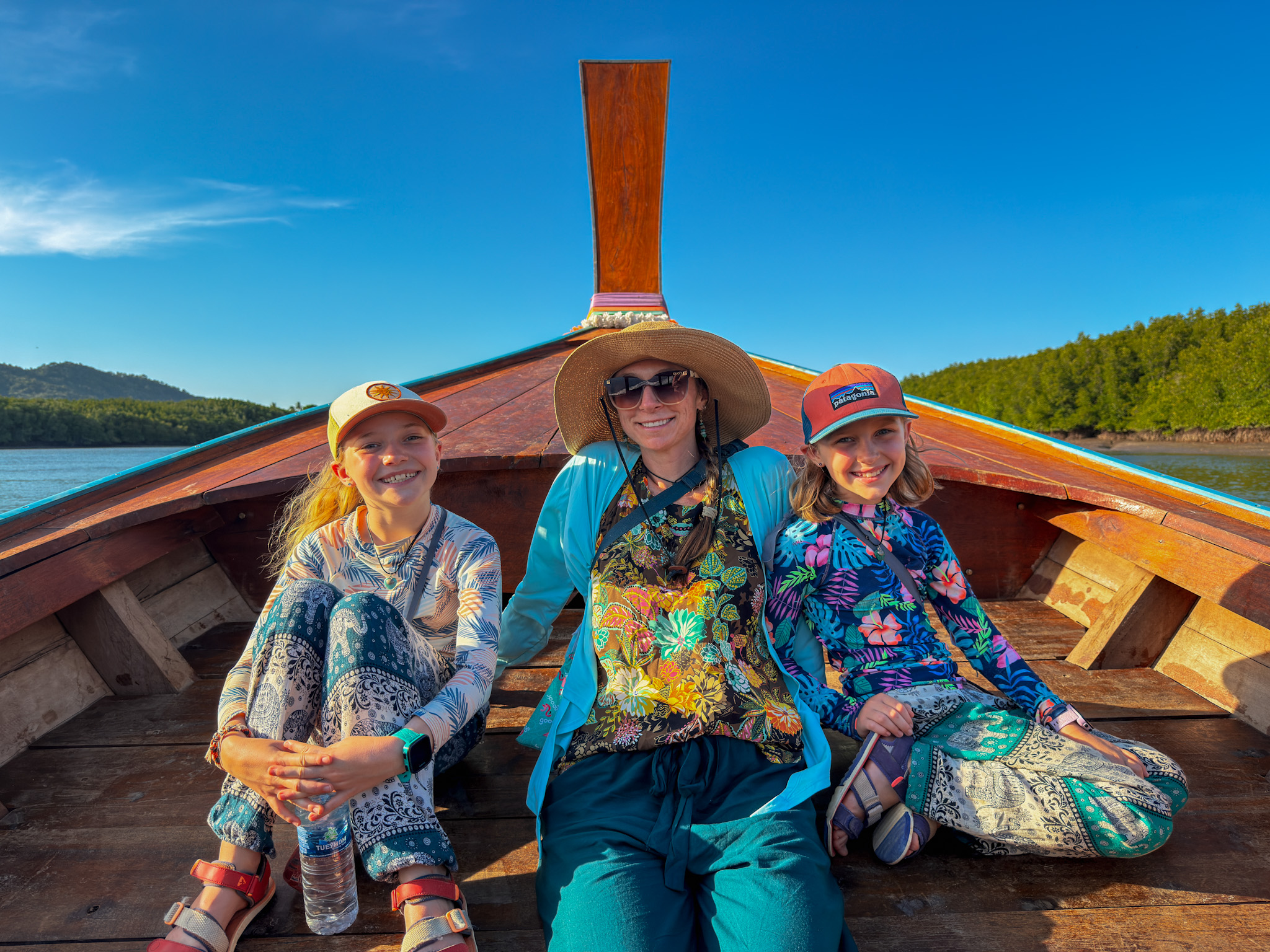
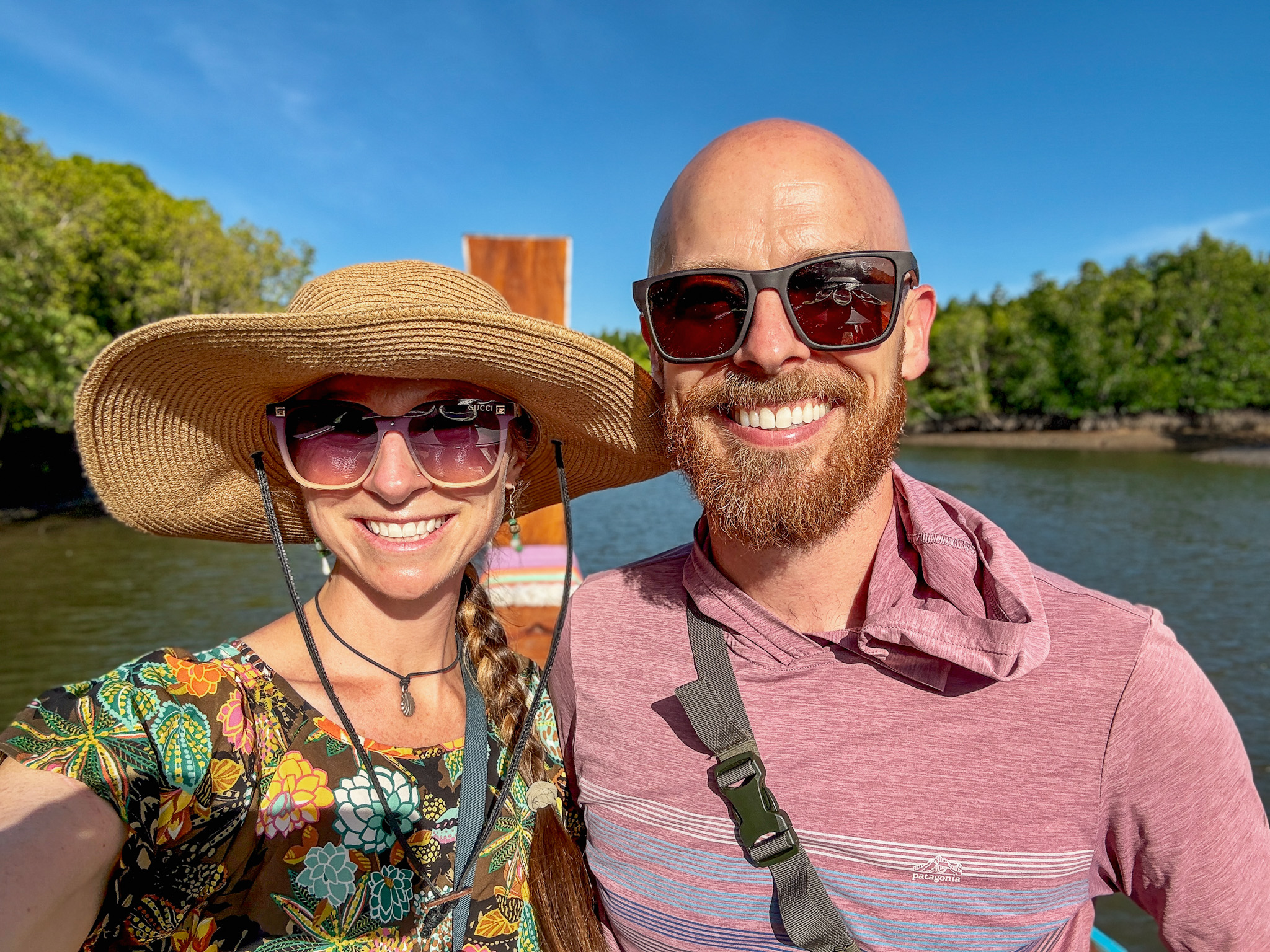
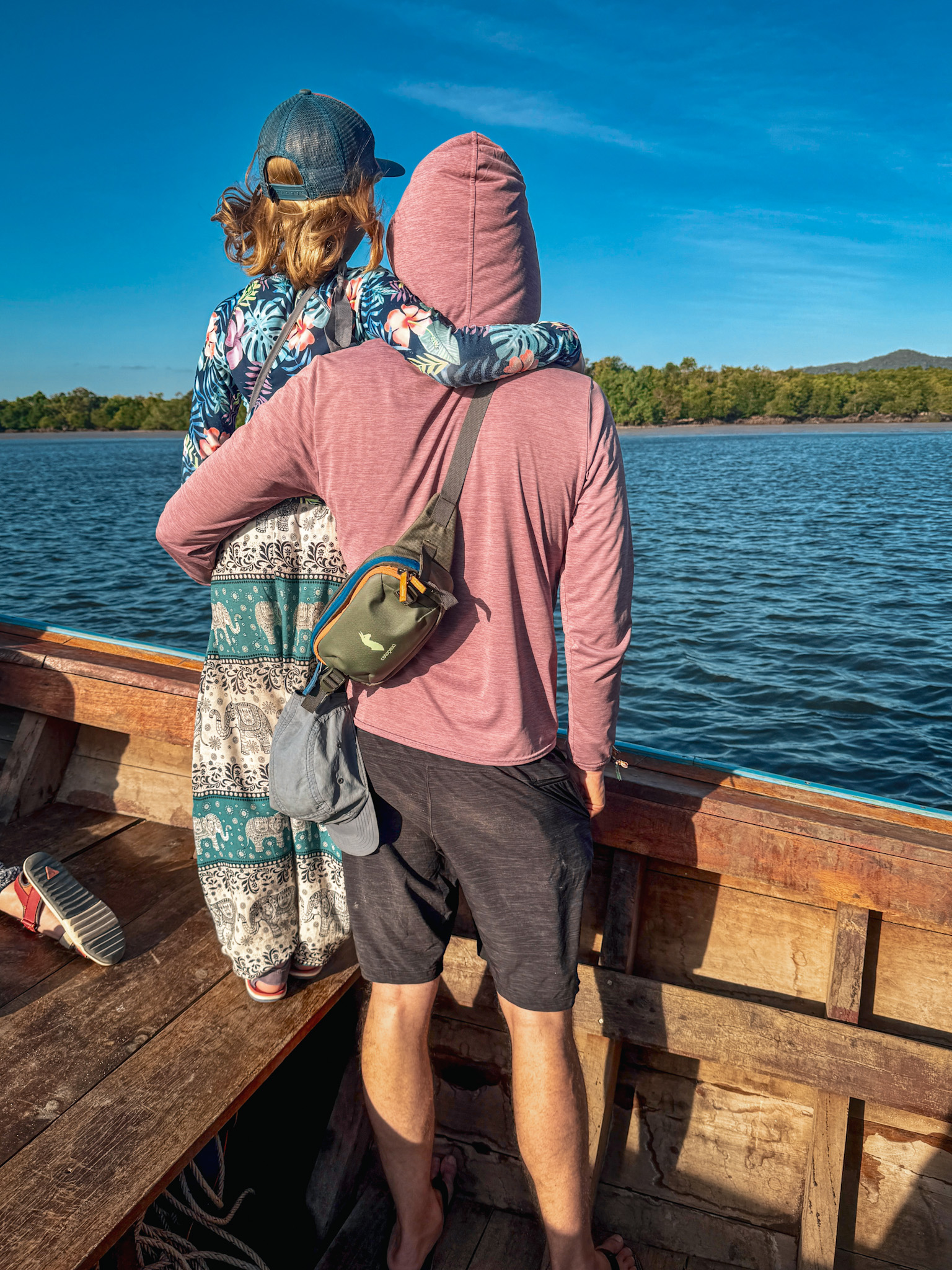
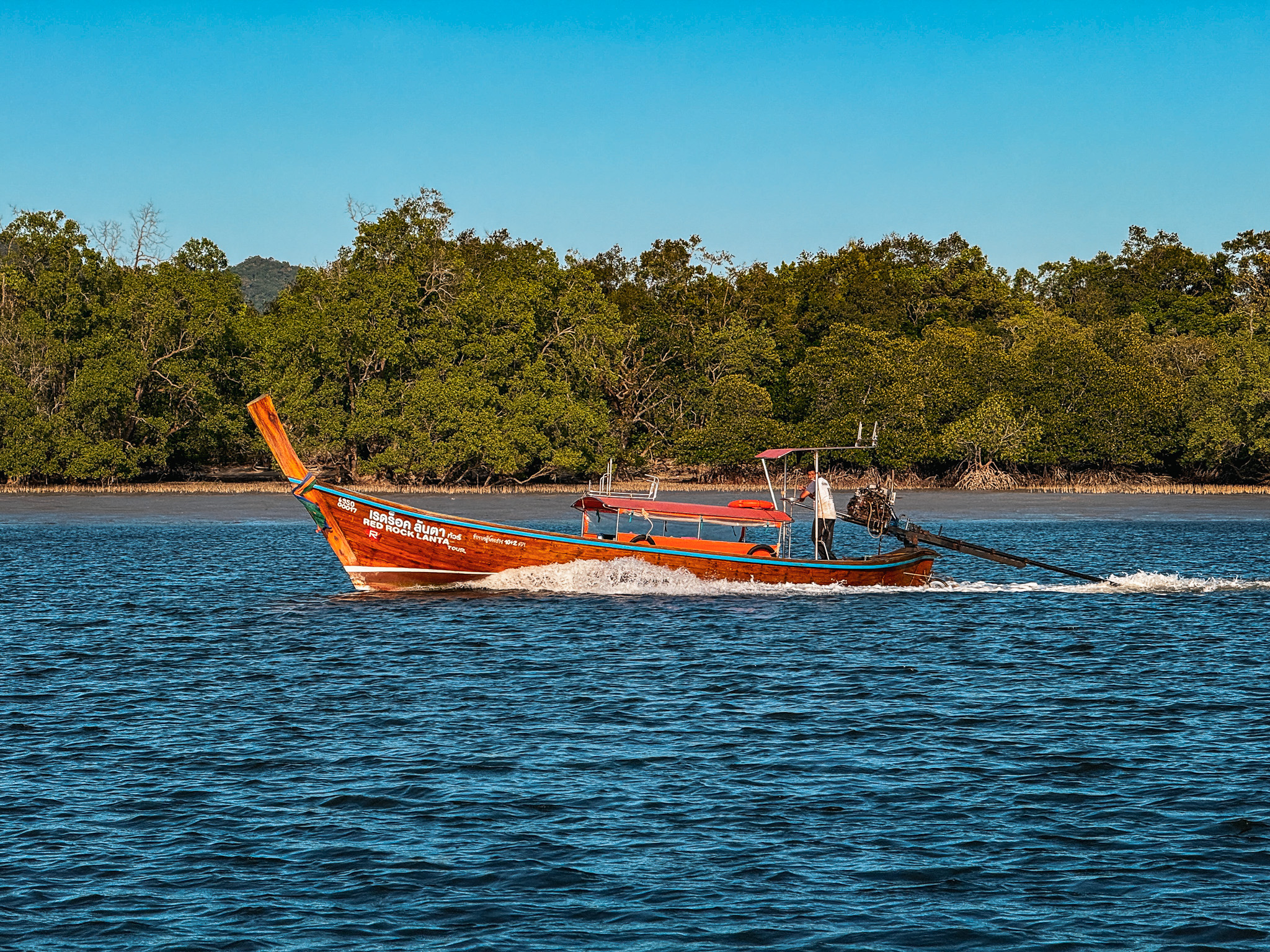
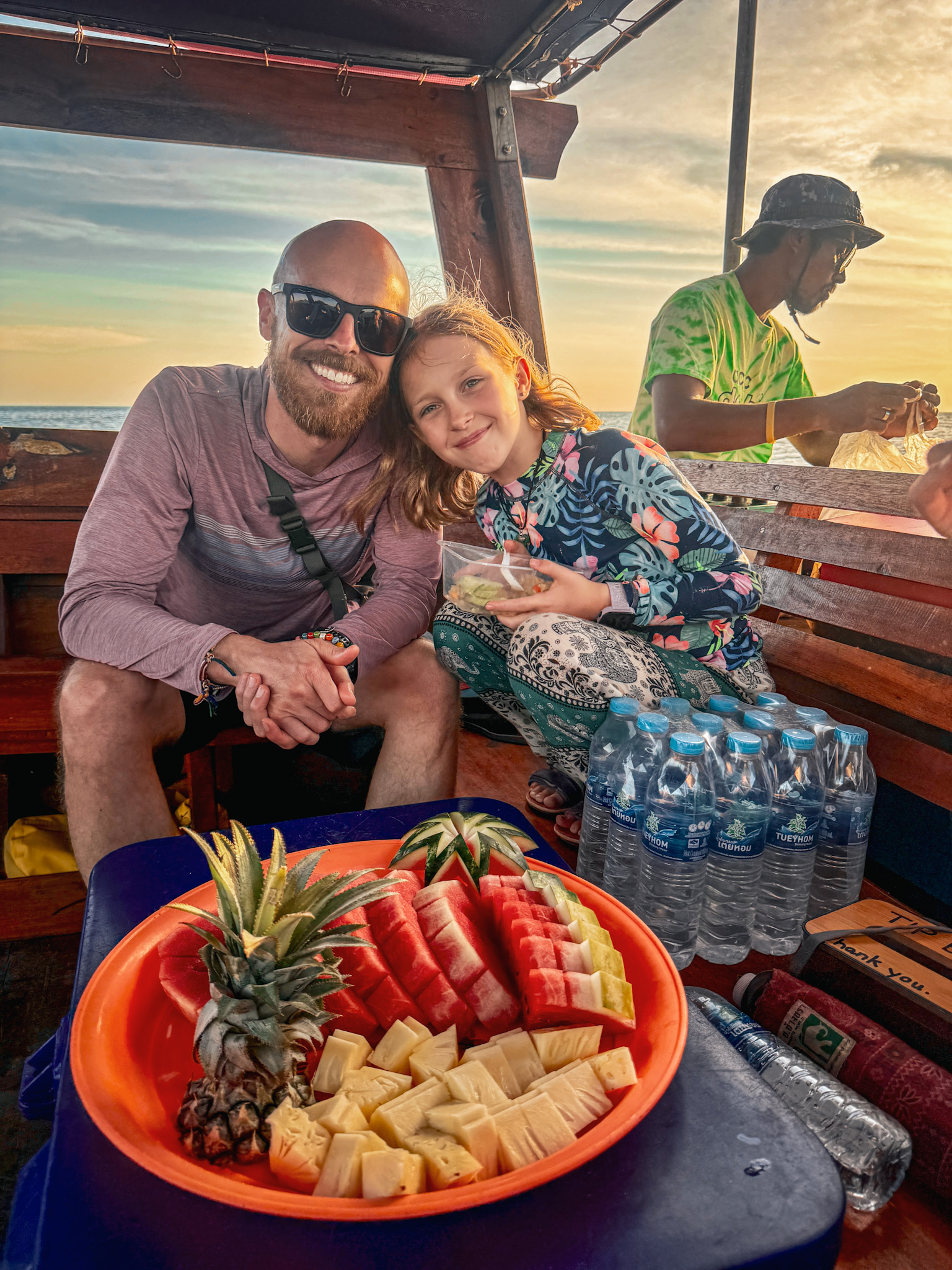
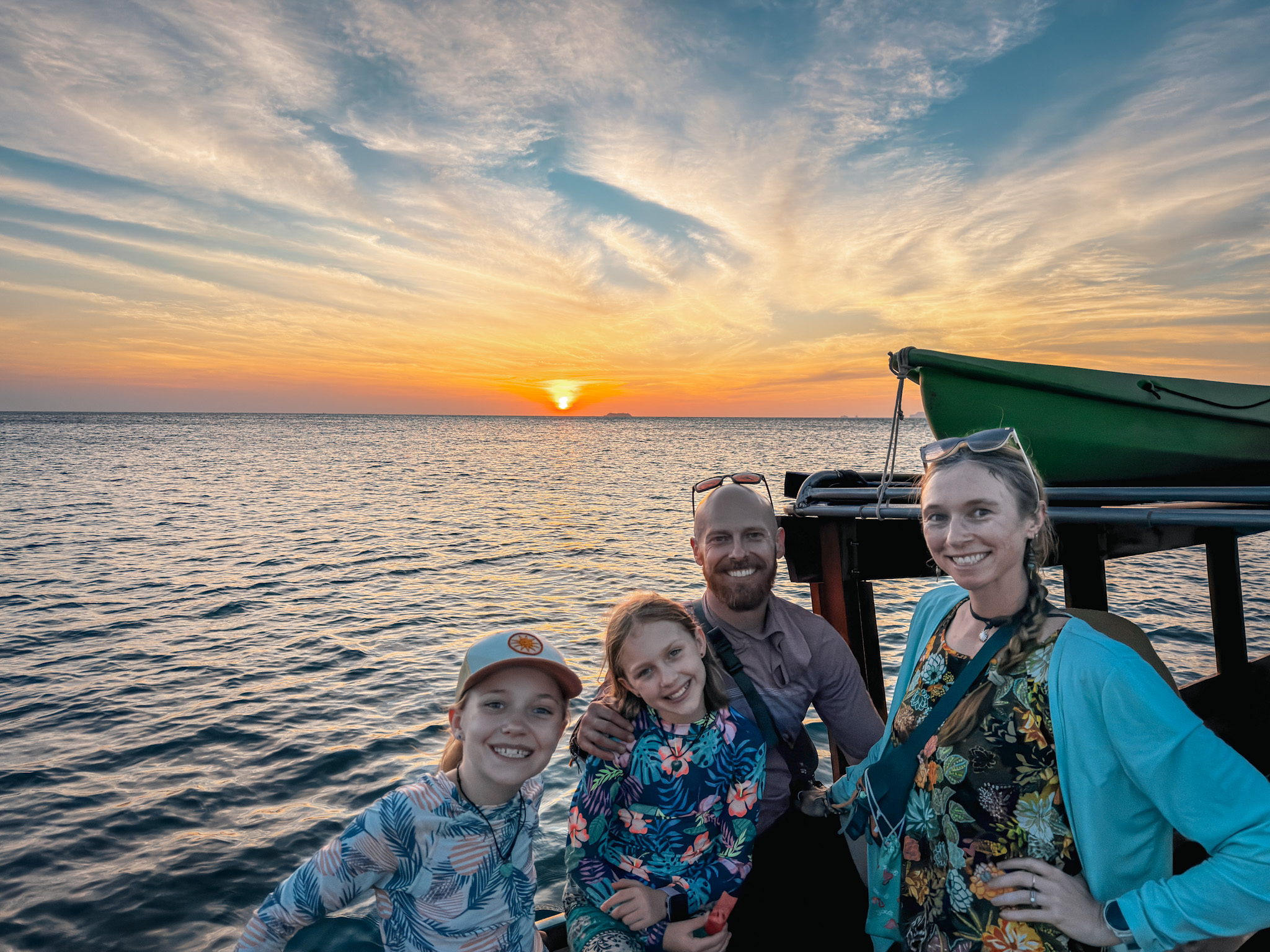
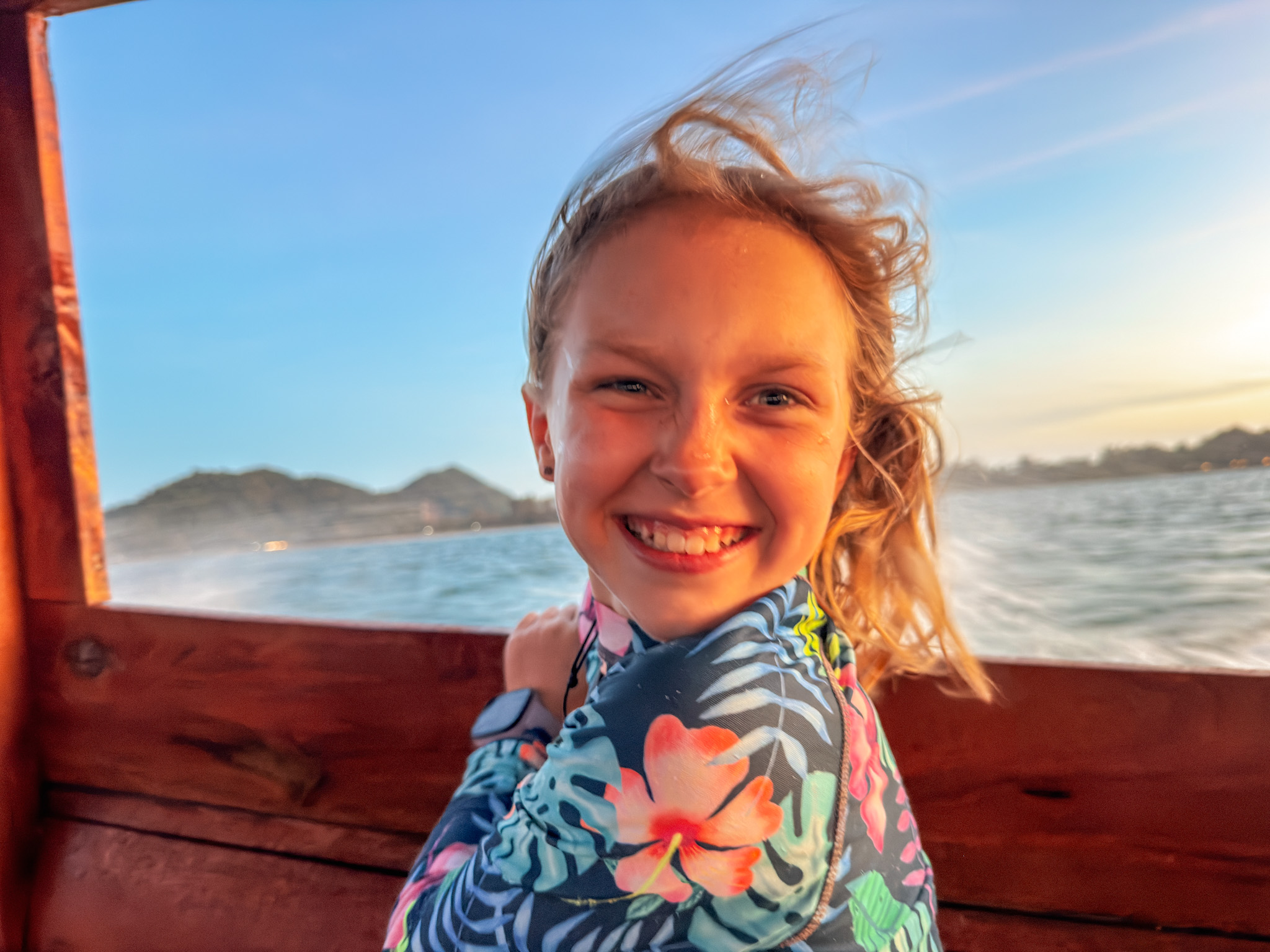
The tour began with a Thai-style long-tail boat ride through the mangroves and out into open water for sunset dinner. Simple but satisfying: chicken fried rice with vegetables, followed by pineapple and watermelon, freshly and artistically cut by our skipper.
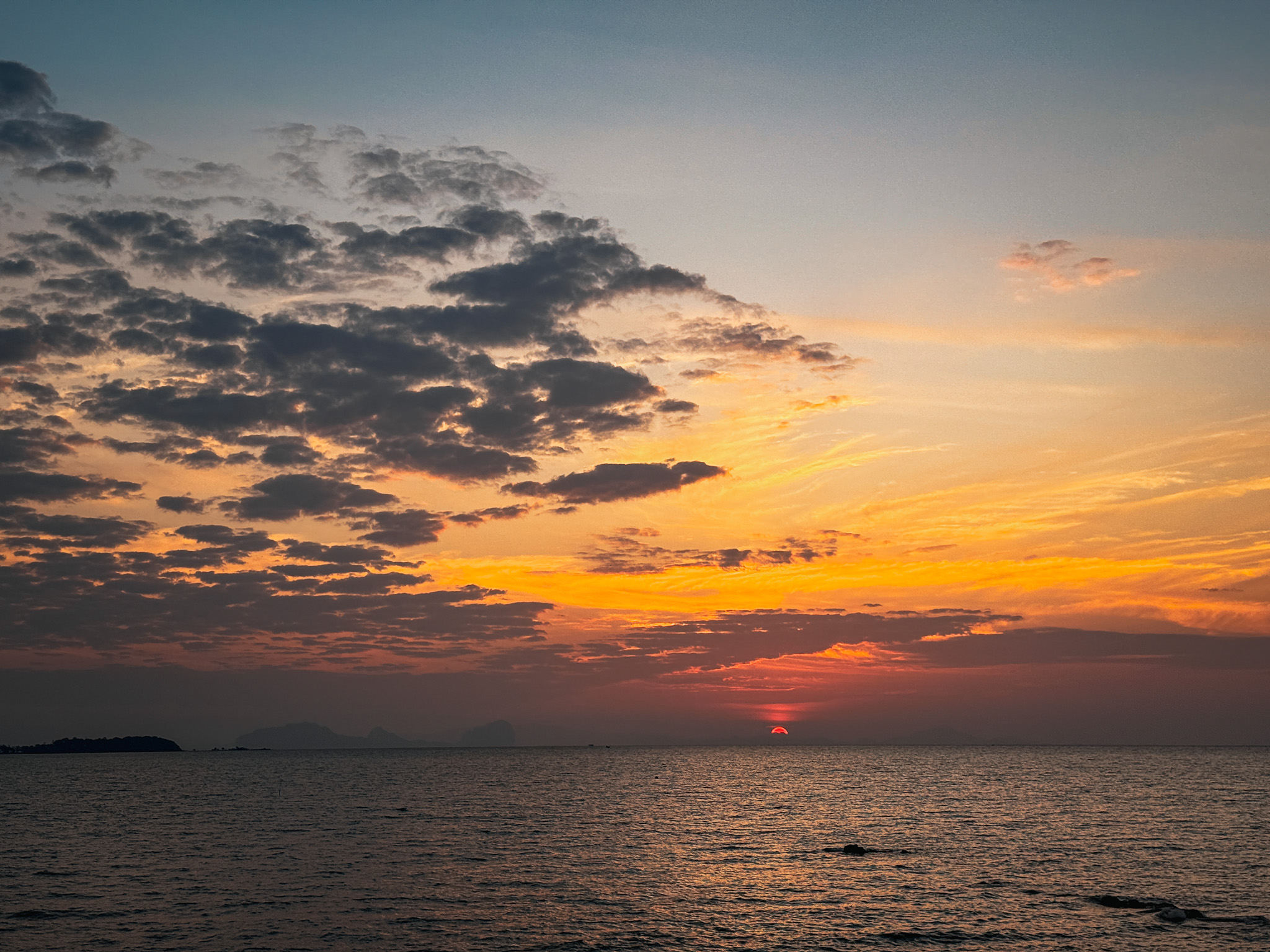
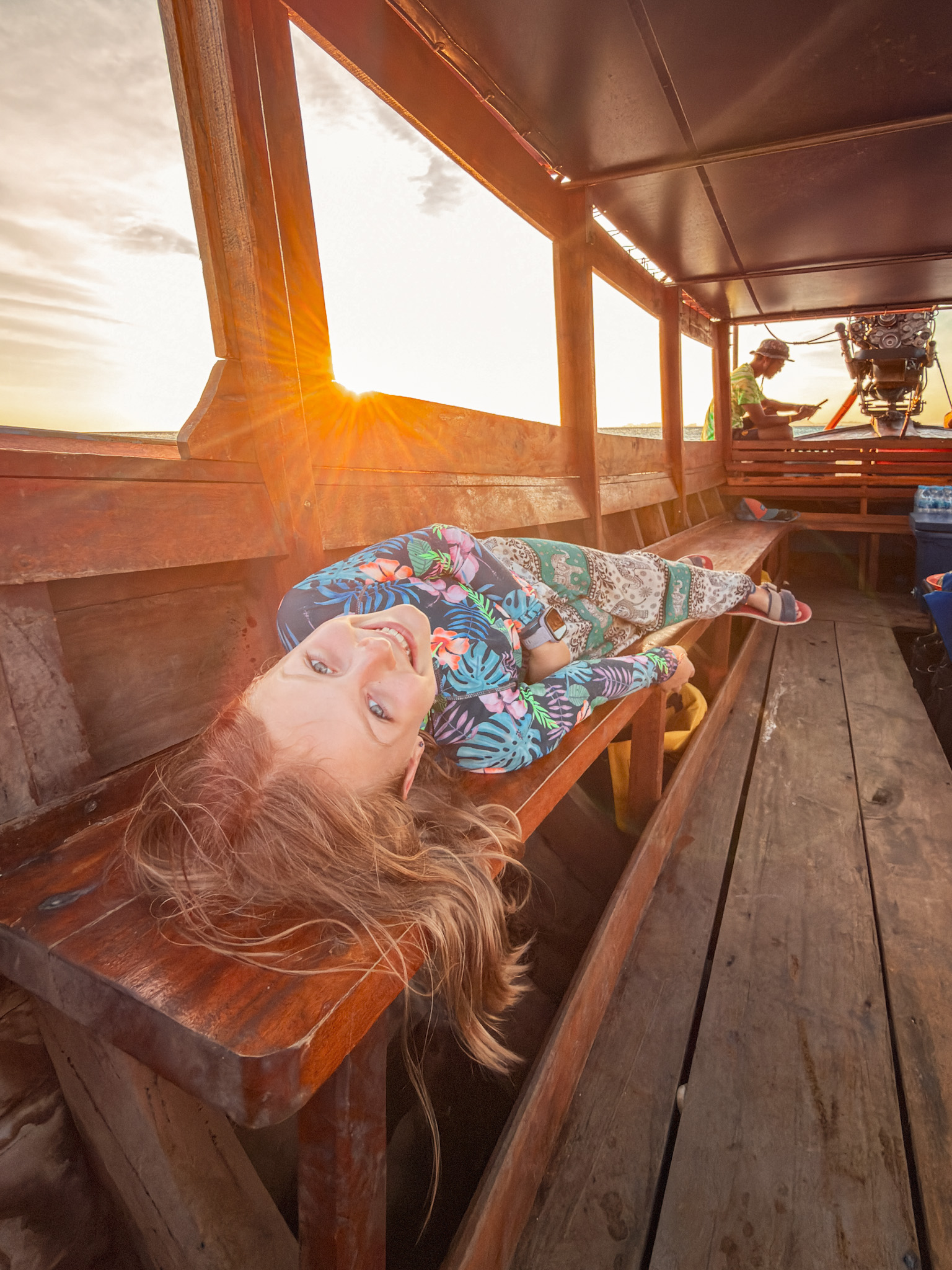
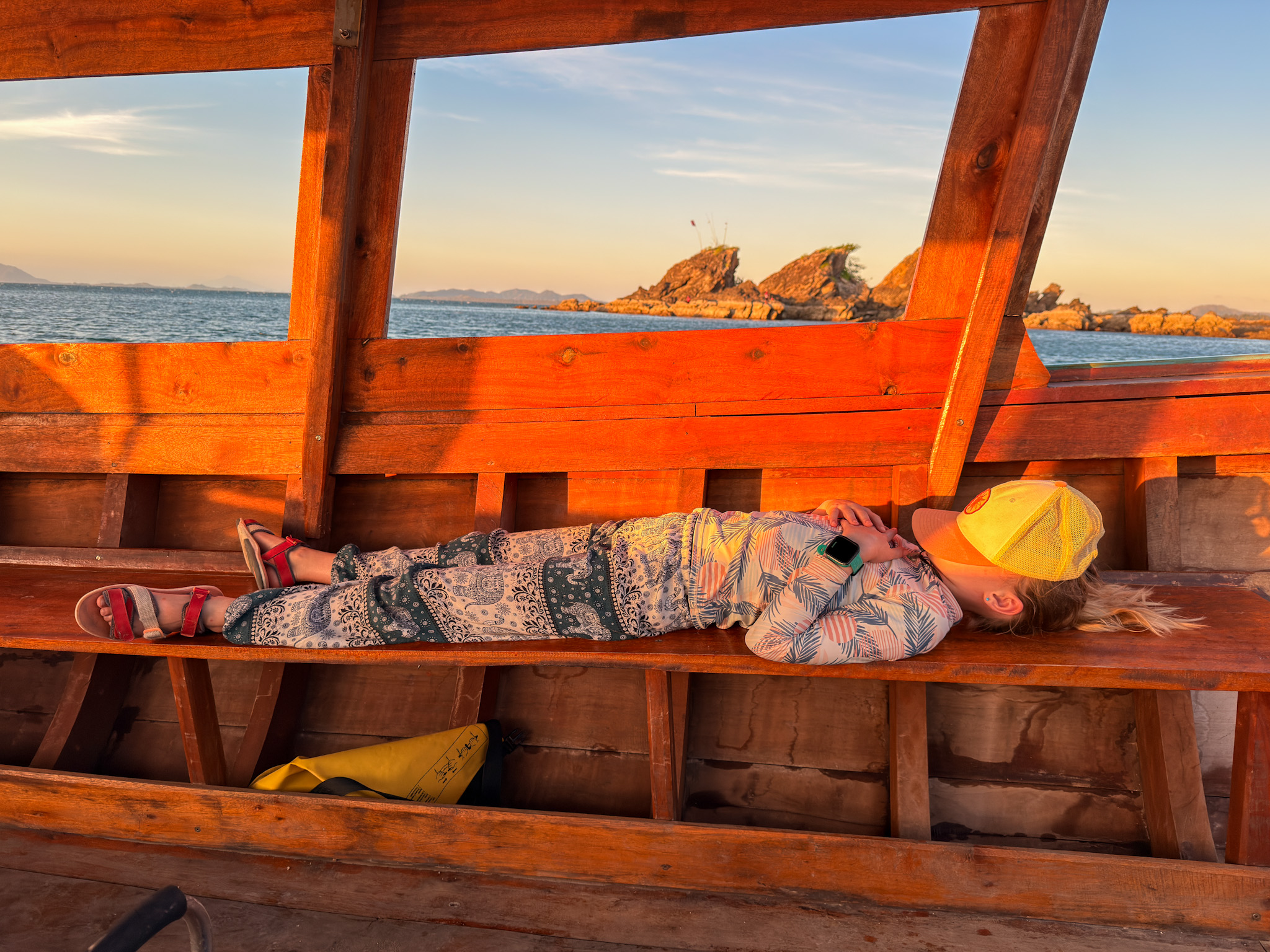
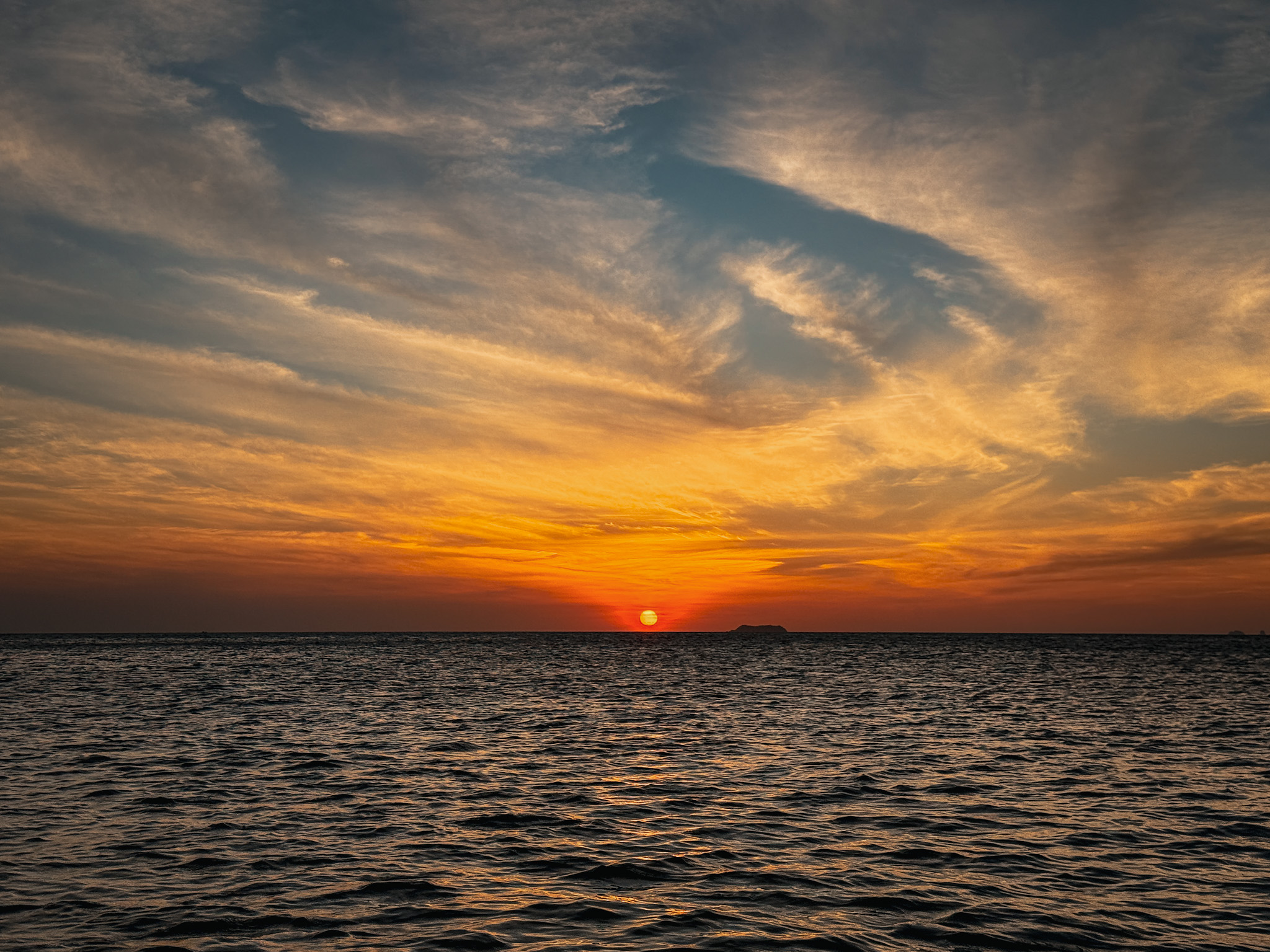
This was one of our favorite parts of the whole experience. A steady breeze kept us cool, and Singh positioned the boat inside a small cove so the water stayed calm while we ate and watched the sun slide down. The sunset earned a solid B- on our official and totally objective sunset scale, but being on what turned out to be a private boat, with great weather and good food, pushed the experience well into A territory.
After sunset we headed back into the mangroves until we reached what felt like an abandoned floating shack straight out of a horror movie. We were told to disembark. By then it was properly dark.
We untied the kayaks from the roof, slid them into the water, and paired up. Arya with Max, Finlee with Shaina, Singh solo.
As we pushed off, Singh called out, “Watch, watch!” He dragged his hand across the surface of the water, and it erupted into greenish sparks of light. As soon as the water settled, the light faded.
The glow comes from bioluminescent plankton—microscopic organisms that emit light when disturbed, a chemical reaction thought to deter predators or attract larger ones. Once the girls realized they could create magic with their fingertips, the water rarely stayed still.
Kayaking through the mangroves was equal parts creepy and awe-inspiring. Nearly total darkness. Looming tree shapes closing in around us. Then sudden openings where we could see stars and even hints of the Milky Way thanks to the lack of light pollution.
Every paddle stroke left trails of light. Every splash the girls made with their hands created explosions of green. It was like kayaking through a galaxy.
Eventually we rounded a bend and saw the dock lights marking the end of the tour. We paddled in, said our thanks, and climbed back onto dry land.
What We Learned
Here’s what we figured out on Koh Lanta: fever dream planning is a hell of a drug.
When you’re untethered—no job, no house, no fixed coordinates—it’s easy to reach for something concrete. Something you can optimize and control. A spreadsheet feels safer than sitting with uncertainty. A five-year plan feels more solid than being fully present in a moment that won’t last.
But here’s the thing. We were sitting in a house built over the water. Watching sunrise every morning. Eating incredible food for $12. Swimming in warm ocean water. Building sandcastles with our kids. Kayaking through bioluminescent plankton under the stars.
And we almost missed it because we were too busy planning what came next.
Australia might still be in our future. But it most likely isn’t. Either way, it’s not a decision we need to make from a pool lounger in Thailand while the girls are begging us to play Marco Polo.
The best part of Koh Lanta wasn’t the giant tree or the perfect beach day or even the magic of glowing water. It was learning—again, because apparently we’re slow learners—that the life we’re trying to plan is already happening.
We just have to stop long enough to notice.
And maybe put down the spreadsheet.
 Pause and Wander
Leave a comment