
Dates: January 17-20th, 2026
Places: HCMC, Vietnam -> Singapore
We left Vietnam feeling terrible.
After 45 days immersed in the country’s kinetic energy—its street food chaos, its layered history, its vibrant contradictions—Max and Arya were sick and Shaina and Finlee with caregiver exhaustion. Max was nauseated with body aches, Arya with a wicked ear infection that wouldn’t quit. The morning of our departure from Ho Chi Minh City was a mess of short tempers and frustrated packing. We all sensed the tense mood, made worse by the normal stressors of an international travel day. Either way, it wasn’t the goodbye Vietnam deserved.
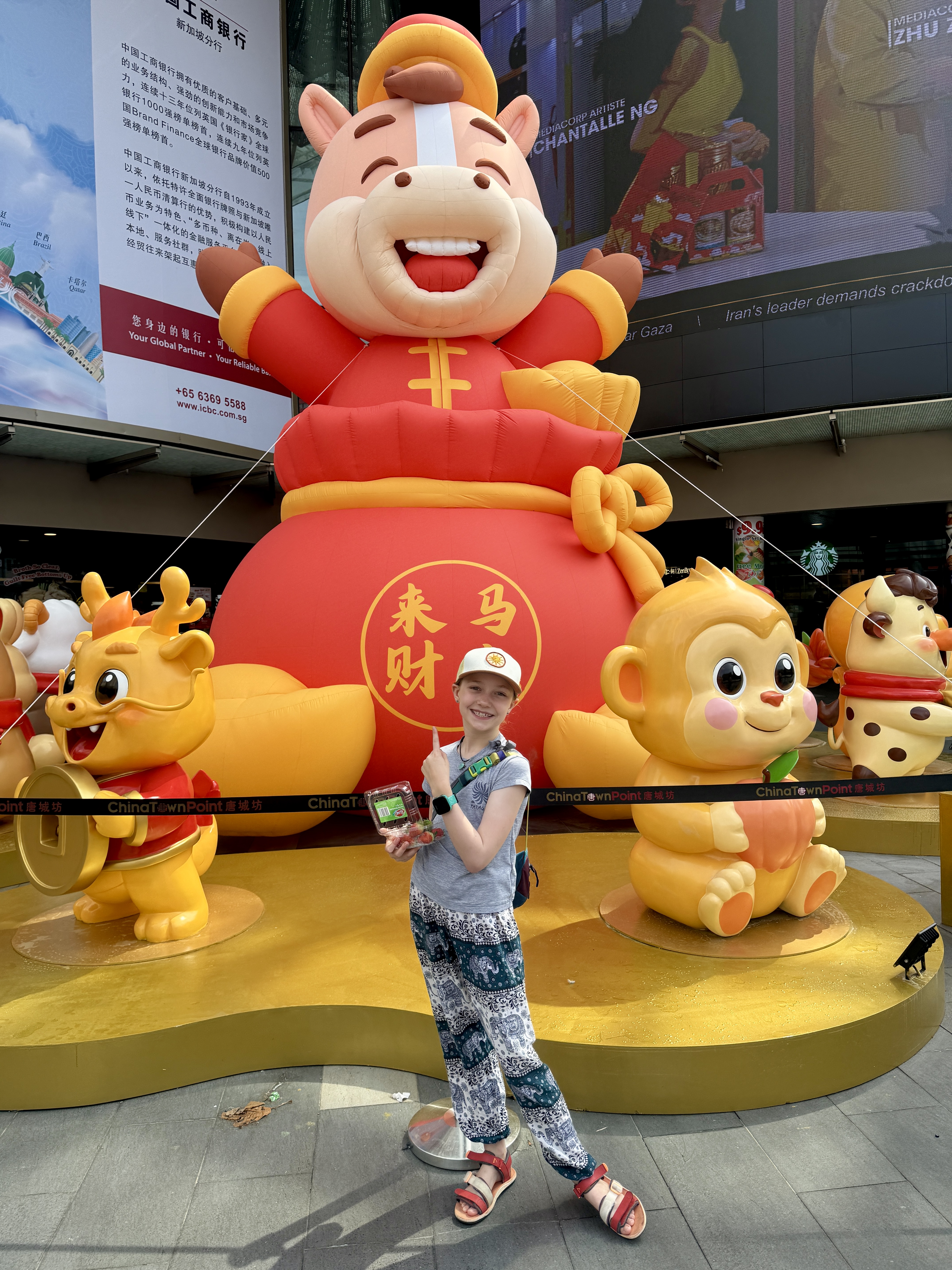
The irony wasn’t lost on us. We’d fallen completely in love with Vietnam—not just the highlights, but the rhythms. The way motorbikes swarm intersections like schools of fish, but predictably and slowly, moving in uncoordinated unison. The way we could cross a massive 10-spoked roundabout without lane lines more safely than we would inside a crosswalk in the US. The resilience embedded in every conversation about the complex history of this country. The food that stops you mid-bite because it’s that good. We’d gained what we call a “baseline feel for the vibe” of the country and its people. And yes, there were differences between us and the Vietnamese families we met, but the things we shared vastly outnumbered them.
Leaving under a cloud of stomach grumbles and short fuses did nothing to diminish that experience. But in the moment, as we hauled our bags into a Grab and headed to the airport, we just wanted the travel day to be over.
What we didn’t know yet was that Singapore—meticulously planned, almost intimidatingly perfect—was about to teach us something unexpected about the spaces between destinations, and about how quickly strangers can become the reason a place matters.
The Airport That Shouldn’t Work
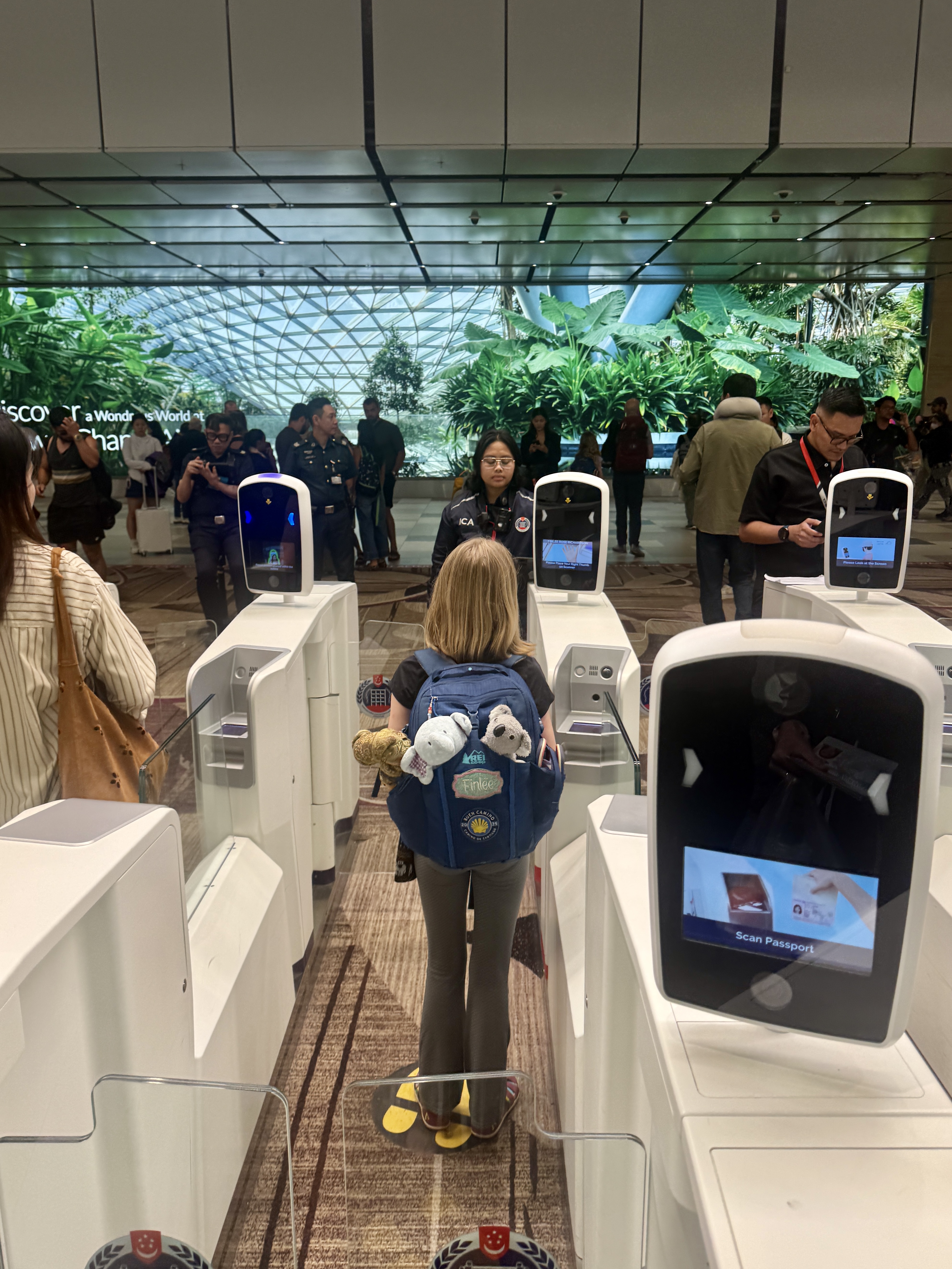
Our flight was delayed an hour, which turned out to be a gift. We’d been smart enough not to make plans with our Singapore friends until the following day, which meant we had nowhere to be. So when we finally landed at Changi Airport around 16:00, we made a decision that would sound miserable anywhere else in the world: we’d spend the entire afternoon and evening at the airport.
In Singapore, this is anything but miserable.
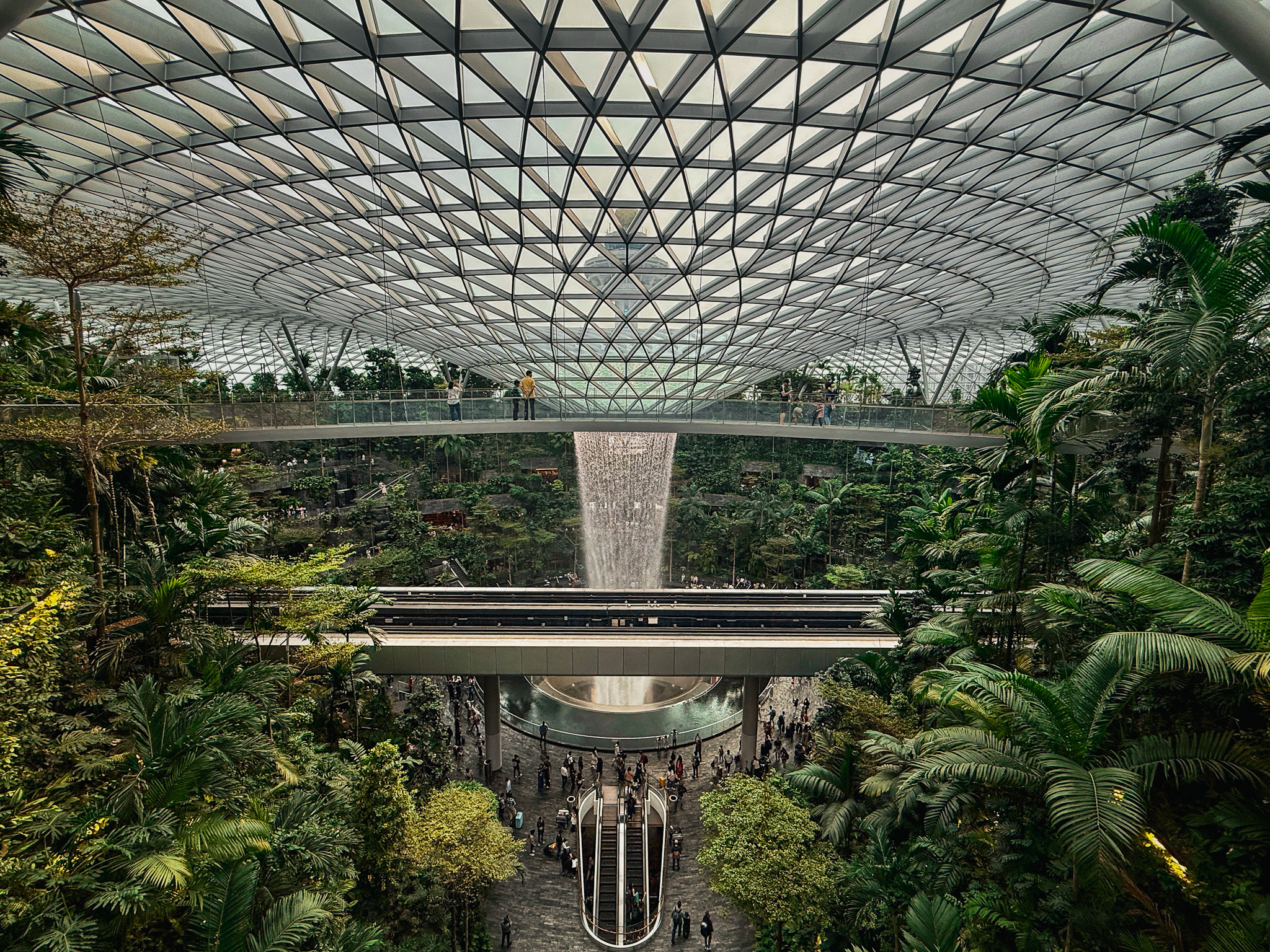
The Jewel at Changi Airport is a massive complex that defies categorization—part mall, part hotel, part restaurant hub, part full-blown tourist attraction. At its center, the HSBC Rain Vortex plunges 40 meters through a vast glass-and-steel atrium, creating the world’s tallest indoor waterfall. Standing beneath it feels surreal. Not just because it’s beautiful, but because your brain keeps asking: How do you engineer something like this inside an airport?
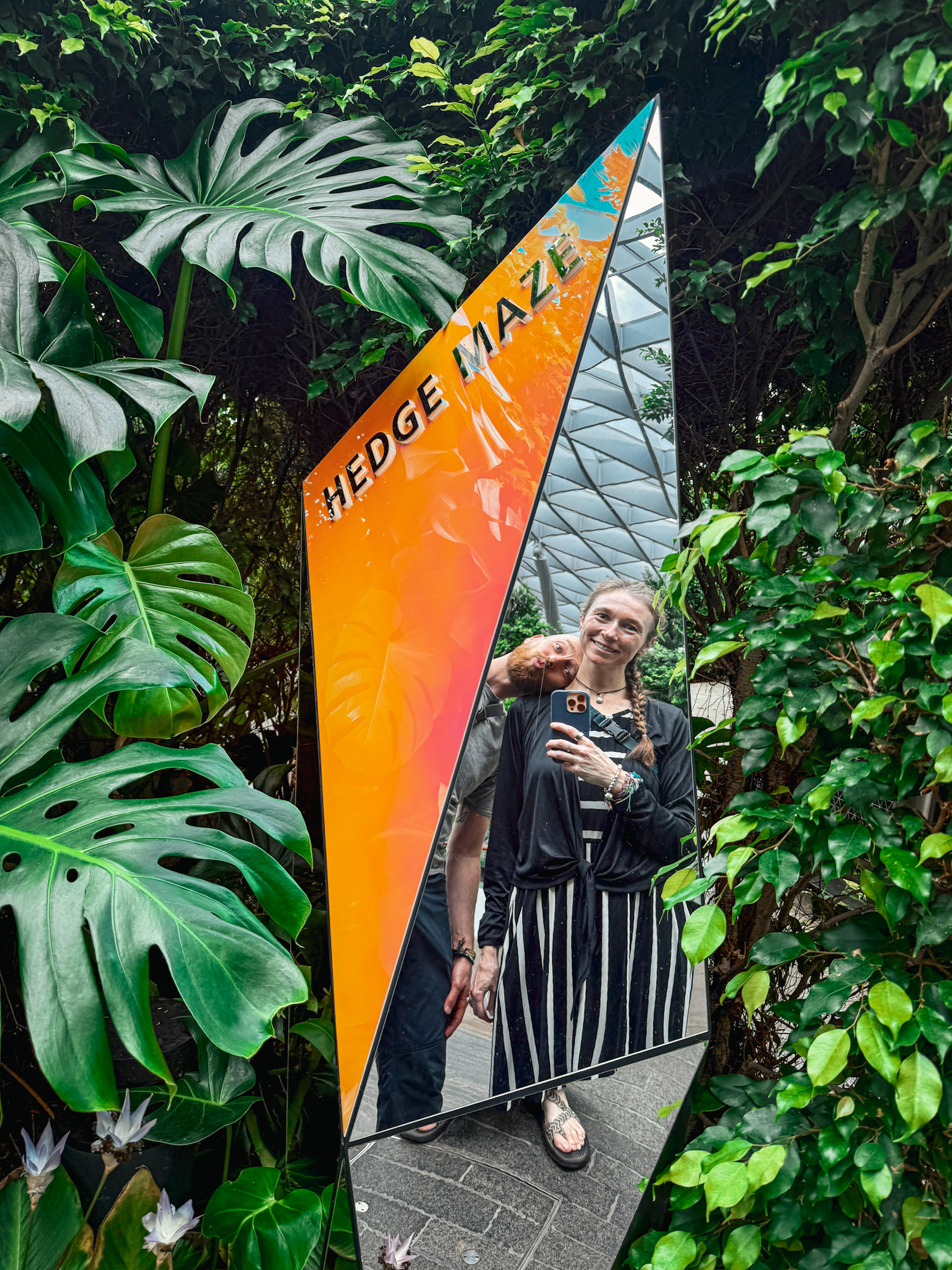
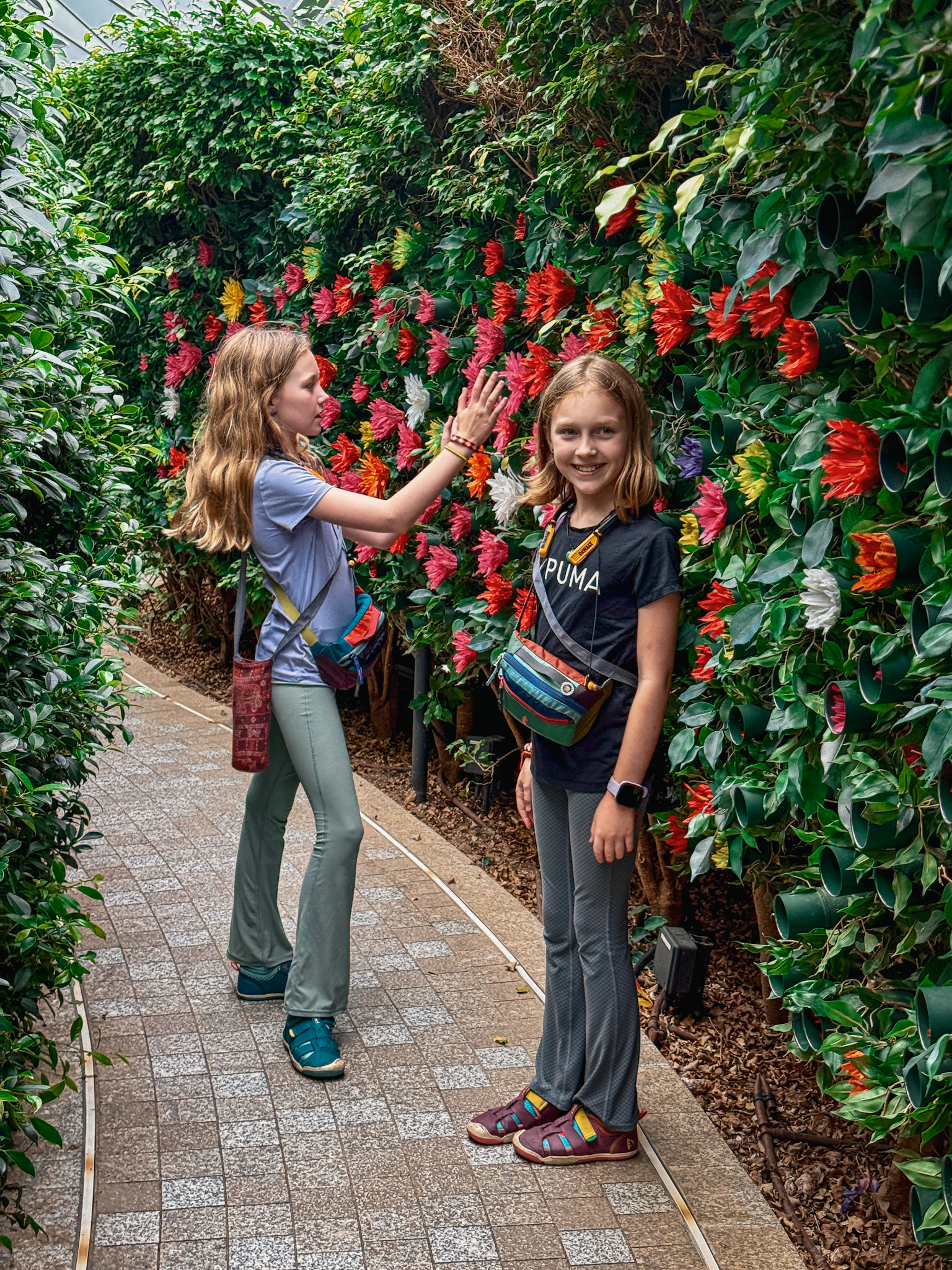
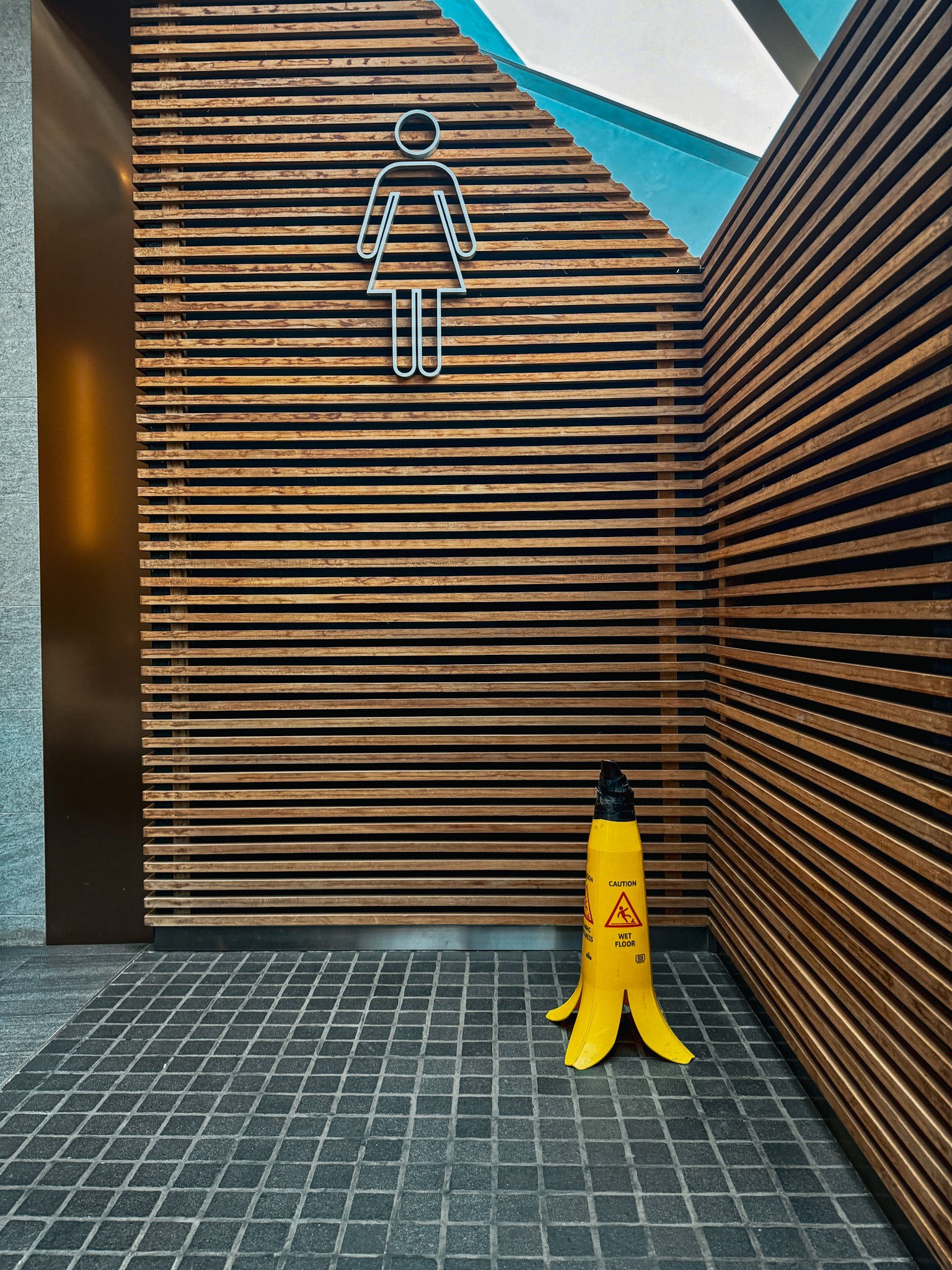
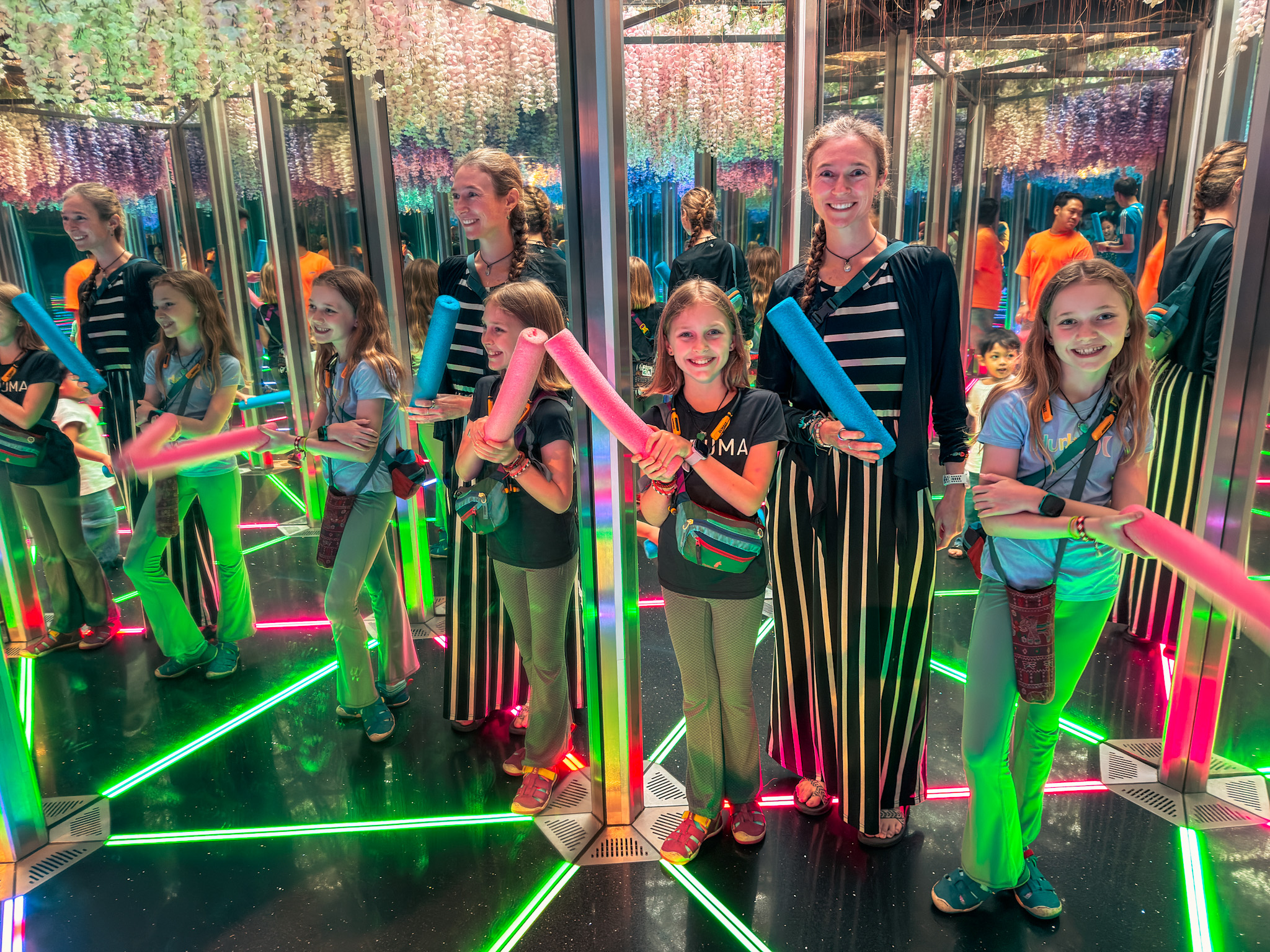
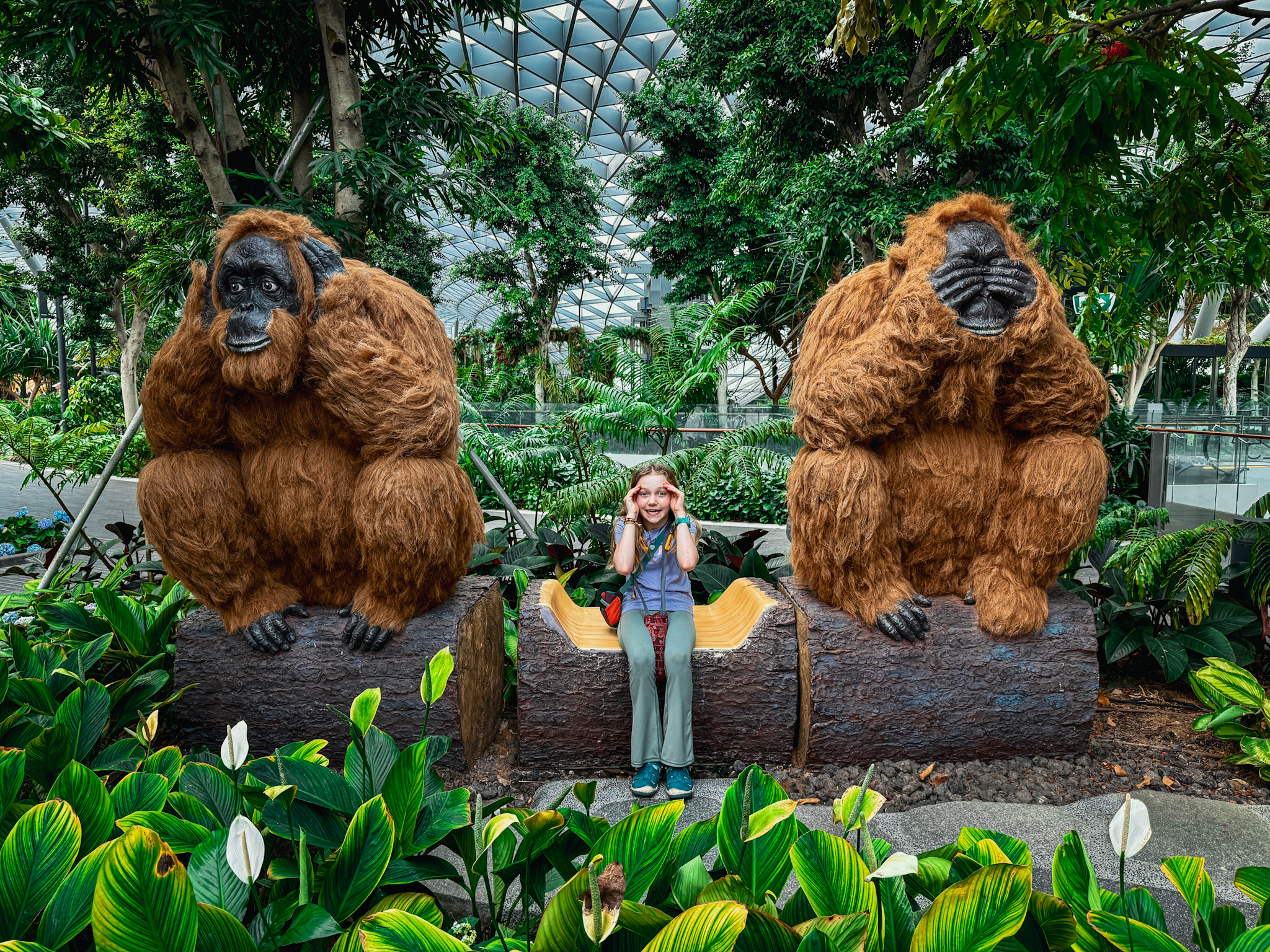
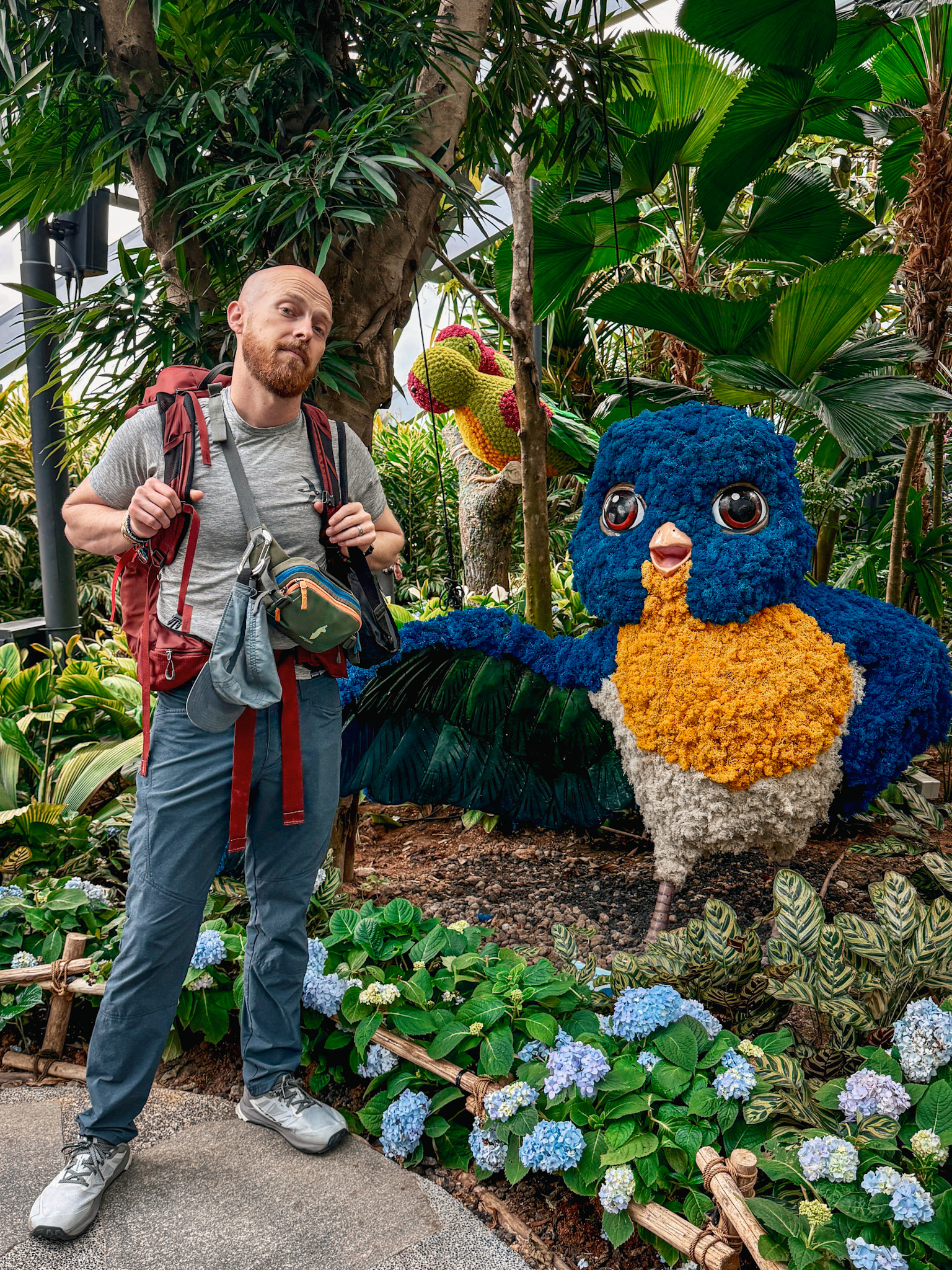
Surrounding the waterfall are several floors of high-end tech shops, glitzy clothing stores, countless restaurants, and bougie cedar-clad restrooms with bidets and full-time staff. Then there were the paid attractions—Mirror Maze, Hedge Maze, Bouncing Net, Walking Net—all beneath a massive glass dome and ringed by an open atrium, walled in meticulous hanging gardens that made the interior feel more like an indoor botanical gardens than anything else. The whole place is a demonstration of what happens when a country decides to build infrastructure without half measures.
About halfway through our time there, Max and Arya got a spring back in their steps— their medications had finally kicked in. The earaches and headaches dulled. The nausea eased. Suddenly they could enjoy where we were instead of just enduring it. None of us would have believed that spending nearly seven hours at an airport after a day of travel could be a good idea, but here we were—and it absolutely was.
Eventually, around 23:00, we finally needed to head into the city. We briefly considered public transportation: a bus, a metro ride with a transfer, then a final walk to our hostel. Total time: 1 hour 20 minutes. A Grab would take 25 minutes and cost about $4 more.
A very brief consideration.
We arrived by Grab at Wink Hostel in Chinatown far later than what conventional wisdom would dictate as prudent, settled into a clean if basic room, and called it a night. Despite the rough start, we went to sleep feeling quietly excited for what Singapore would have in store.
The Friendship That Started With Foosball
Back in Hoi An, Vietnam, weeks earlier, Finlee had struck up a conversation with two young girls named Ines and Cleo. They chatted about their travels in Vietnam, and Finlee—being Finlee—proceeded to tell them all about our gap year in elaborate detail. That conversation led to 90 minutes of Max talking with their parents, Jess and Mark, while the girls played foosball and billiards in the background.
Jess and Mark are Brits who have lived in Singapore for 16 years. They’re both teachers at a local British international school, and they’d clearly built a rich, full life there. The conversation flowed easily—the kind of immediate connection that sometimes happens when you meet people who understand the particular joys and challenges of raising kids while navigating an unconventional path.
After we decided to add Singapore to our itinerary, Max sent Jess a WhatsApp message. Within hours, we had plans for a full afternoon together.
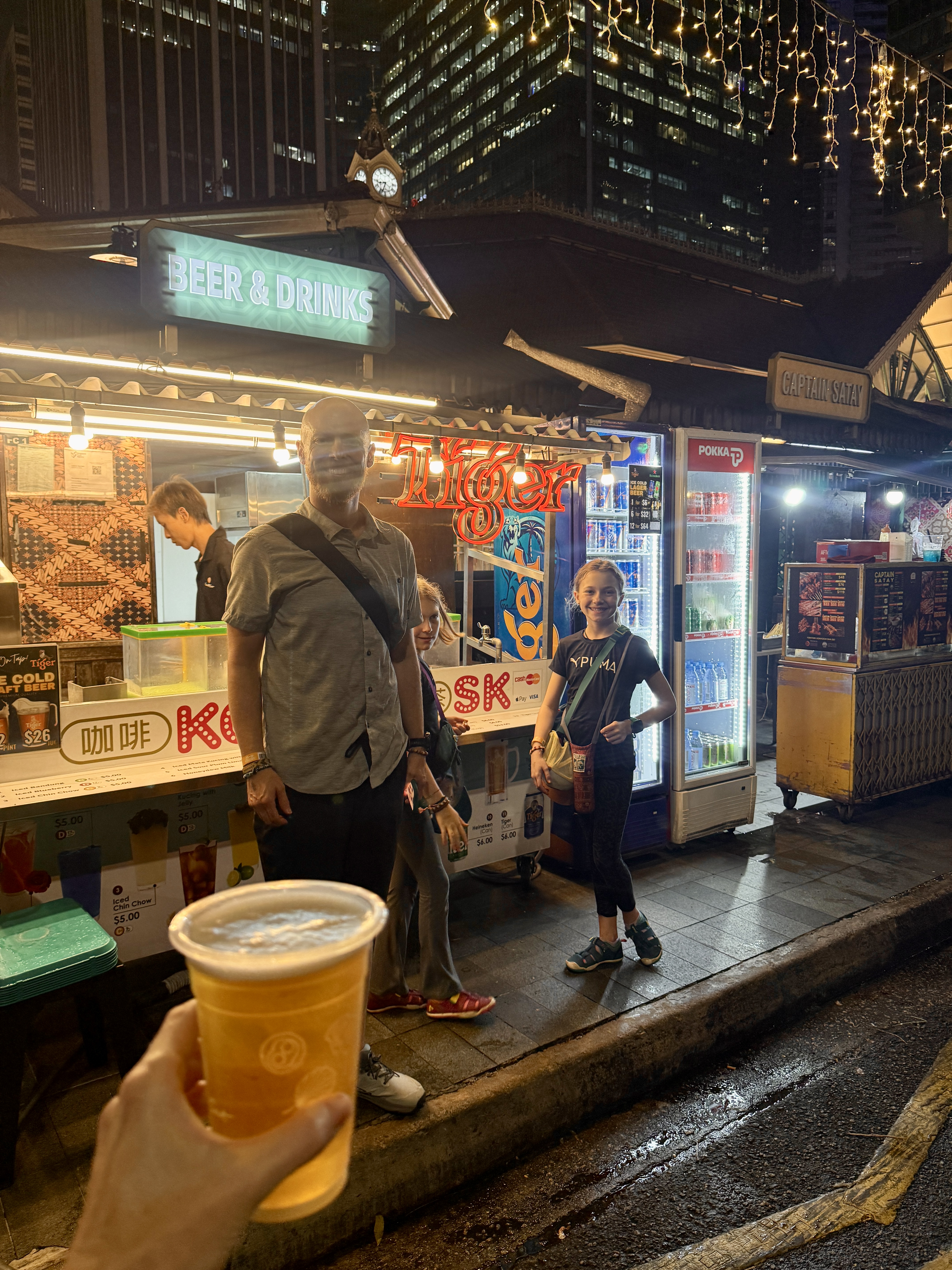
We started our first full day in Singapore lazily—understandable given how late the night before had run. By 10:30 we were dressed and eating toast at the hostel before heading out to knock off some boring errands. Then we started walking from Chinatown toward Marina Bay.
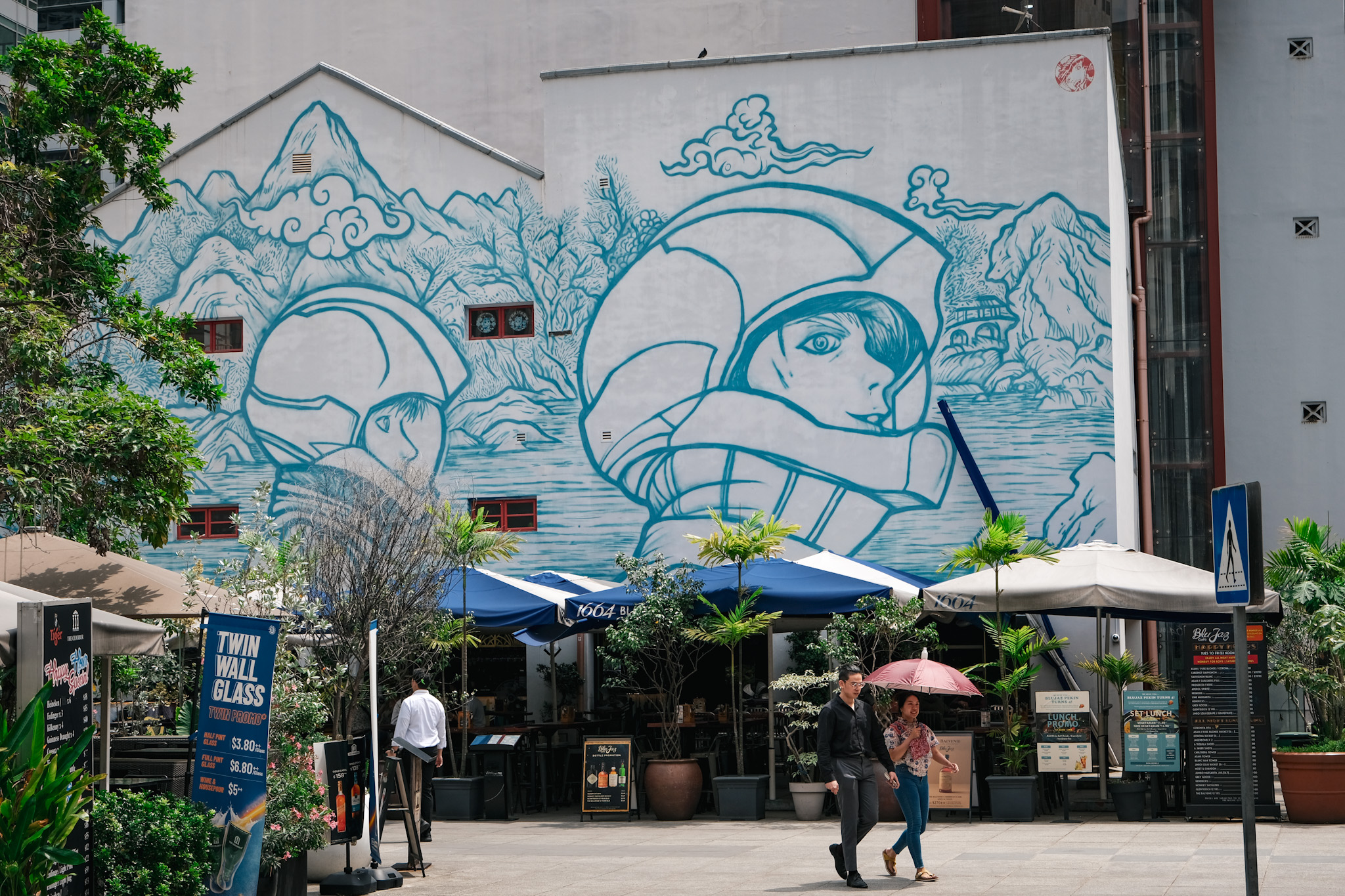
The contrast hit immediately. Where Vietnam feels rough, messy, exciting, and exotic, Singapore feels clean, orderly, easy, and expensive. No trash anywhere. No one smoking. Blue skies and fresh air even in the heart of the city. Crosswalks that people actually use. It was wild.
The city almost feels like another world. The skyscrapers of the finance district dominate the skyline with glass, metal, and concrete, yet there’s greenery everywhere—small pocket parks, planters overflowing with tropical plants, the enormous gardens along Marina Bay. Green really is the color of Singapore.
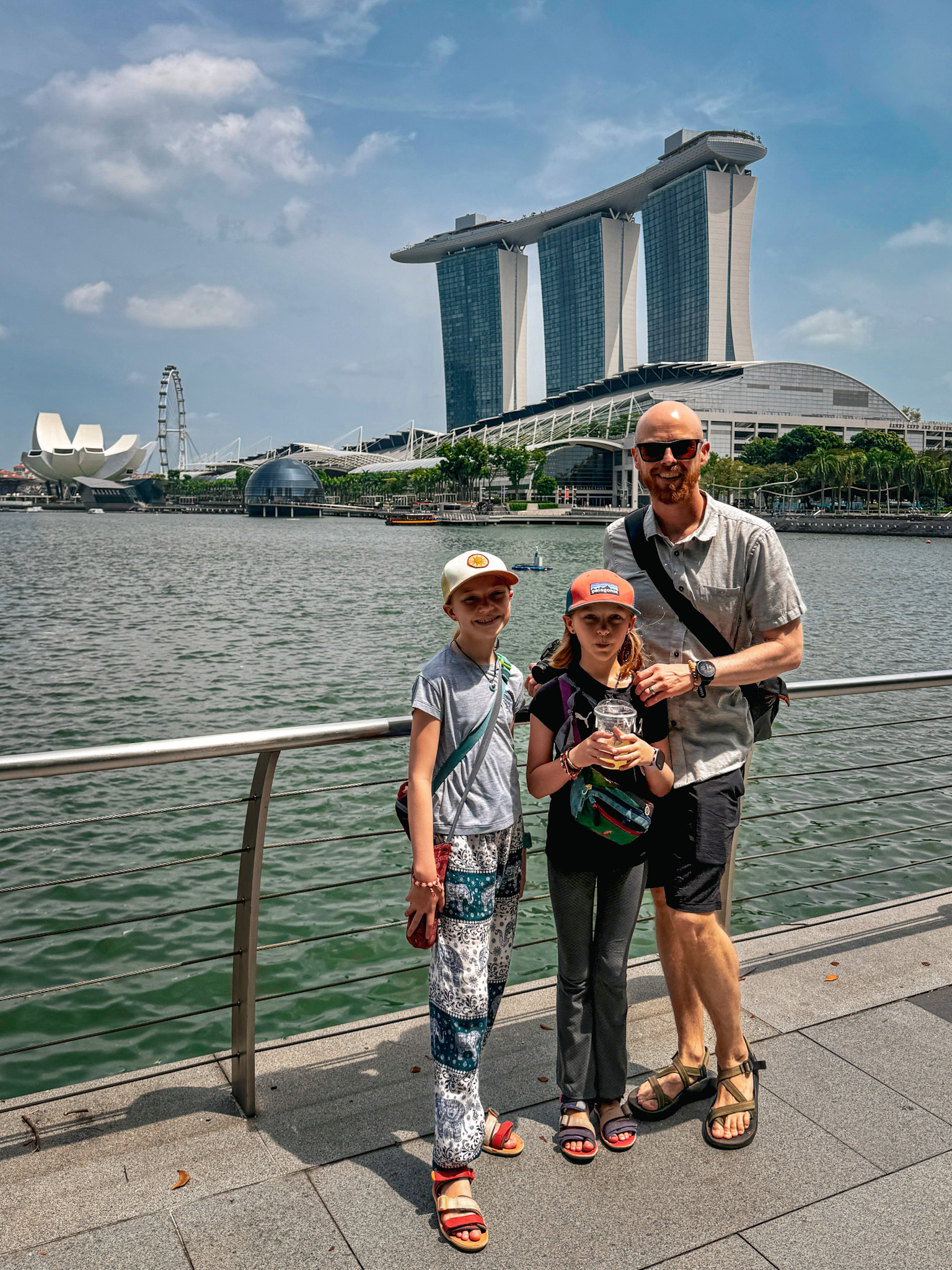
We walked all the way to Marina Bay Sands, the massive integrated resort where three hotel towers are topped by a sky park that looks like a ship balancing in midair. It’s one of the most recognizable buildings in the world. That’s where we met Jess, Mark, and their daughters for lunch at Din Tai Fung.
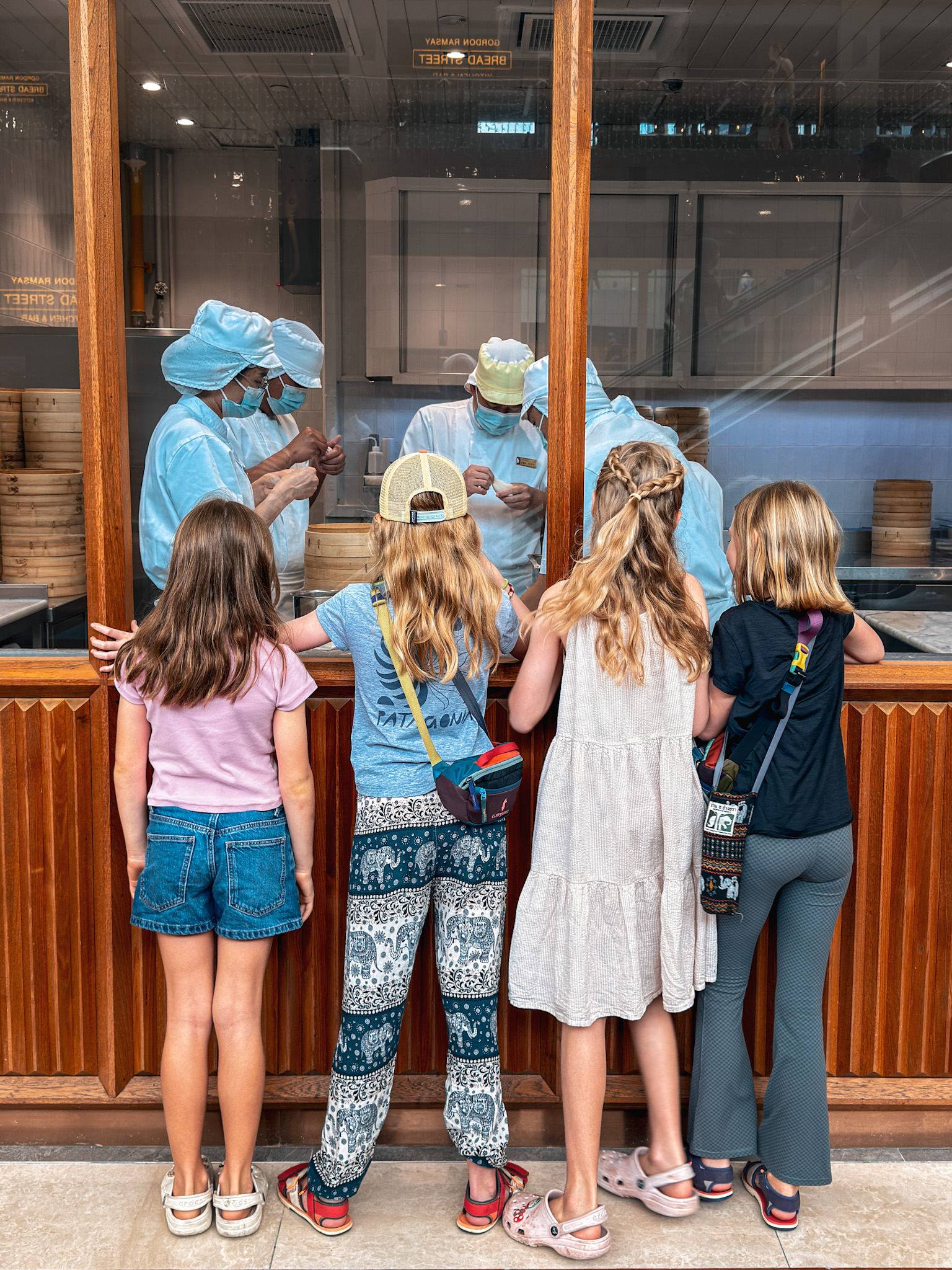
Anyone who knows us well knows we’re huge fans of xiao long bao—Chinese for “soup dumplings”. These delicate parcels are filled with minced pork and hot, savory broth, created by wrapping gelatinized soup that melts when steamed. Din Tai Fung started in Taiwan and became famous for obsessive consistency: the precise weight of each dumpling, the exact number of pleats in each wrapper.
Jess had sneakily added us to the waitlist 30 minutes before anyone arrived by saving the check-in QR code. At exactly 13:15, a table for eight was ready.
We seated the kids at one end and the adults at the other, ostensibly so we could talk. That was the plan, anyway. As the food arrived, all conversation suspended while we focused on stuffing our faces with dumplings. Once properly full, the talking resumed.
After lunch, we walked along the Marina Bay. The kids burned endless energy while the adults talked. Mark, in particular, was a wealth of knowledge about Singapore’s history, politics, and rapid development. We learned about the city-state’s journey from British colony to independent nation to one of the world’s wealthiest countries in just a few decades. About Lee Kuan Yew’s controversial but undeniably effective leadership. About the trade-offs Singapore made—strict laws, limited freedoms, meticulous social engineering—in exchange for prosperity and stability.

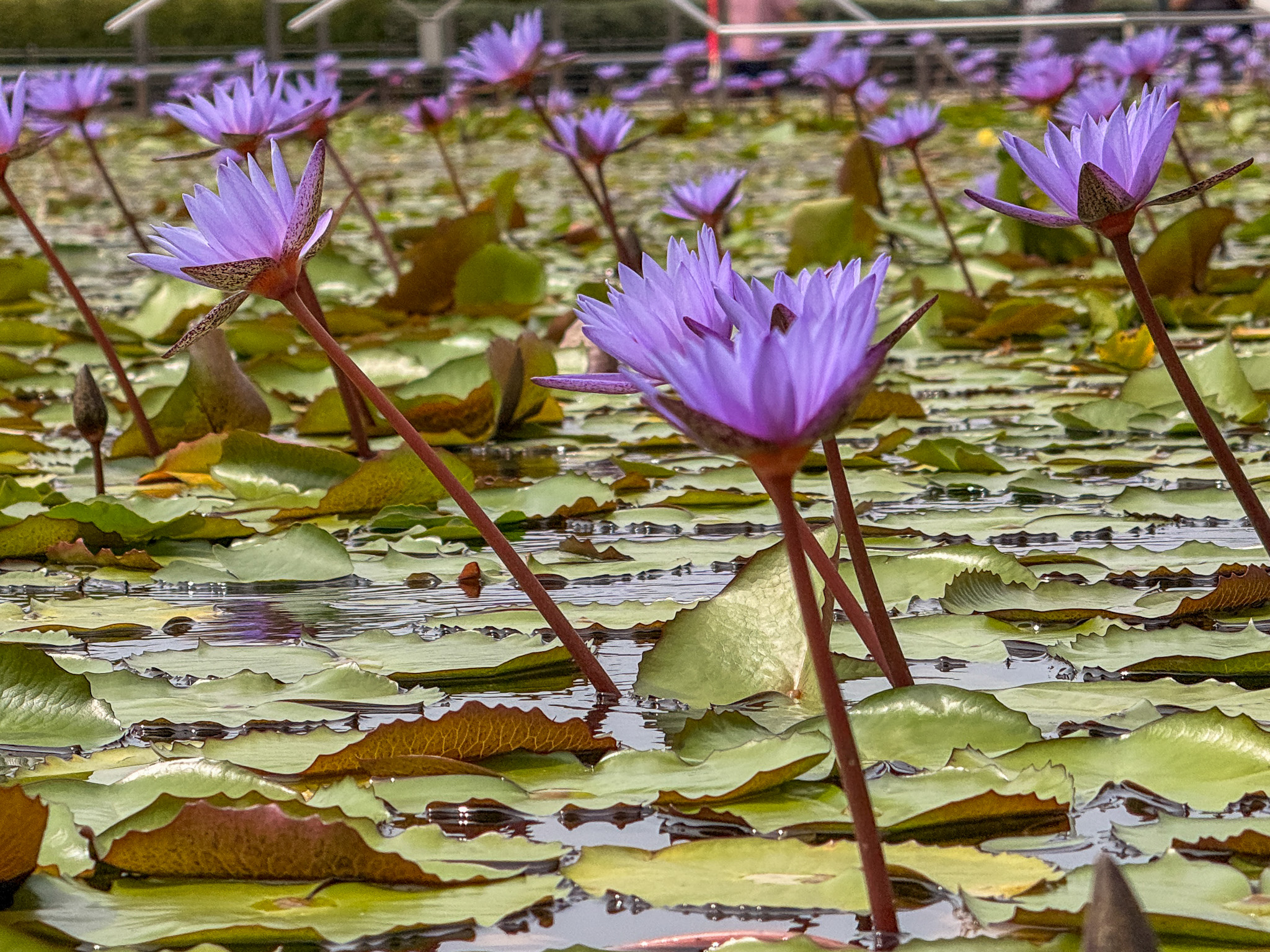
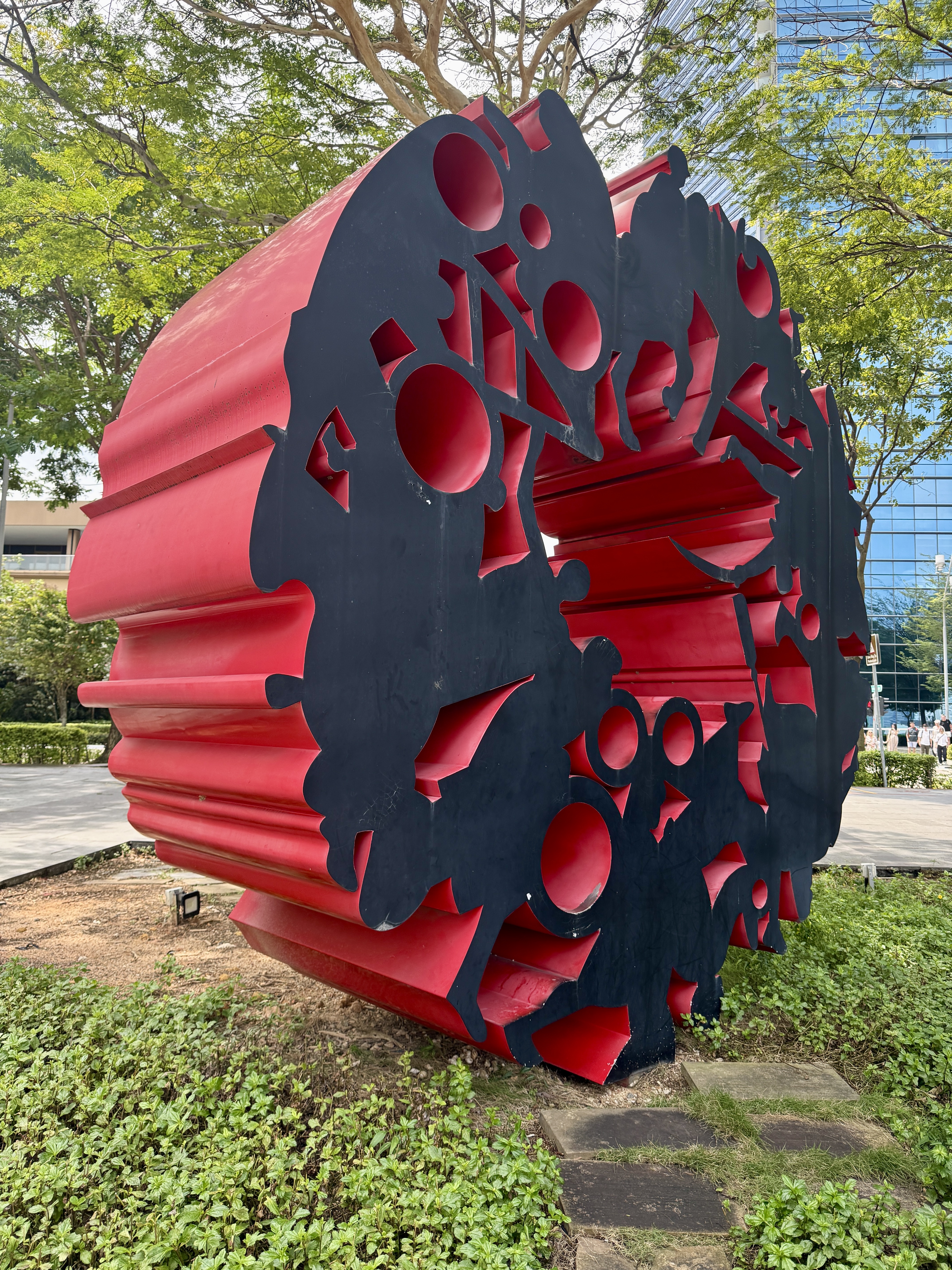
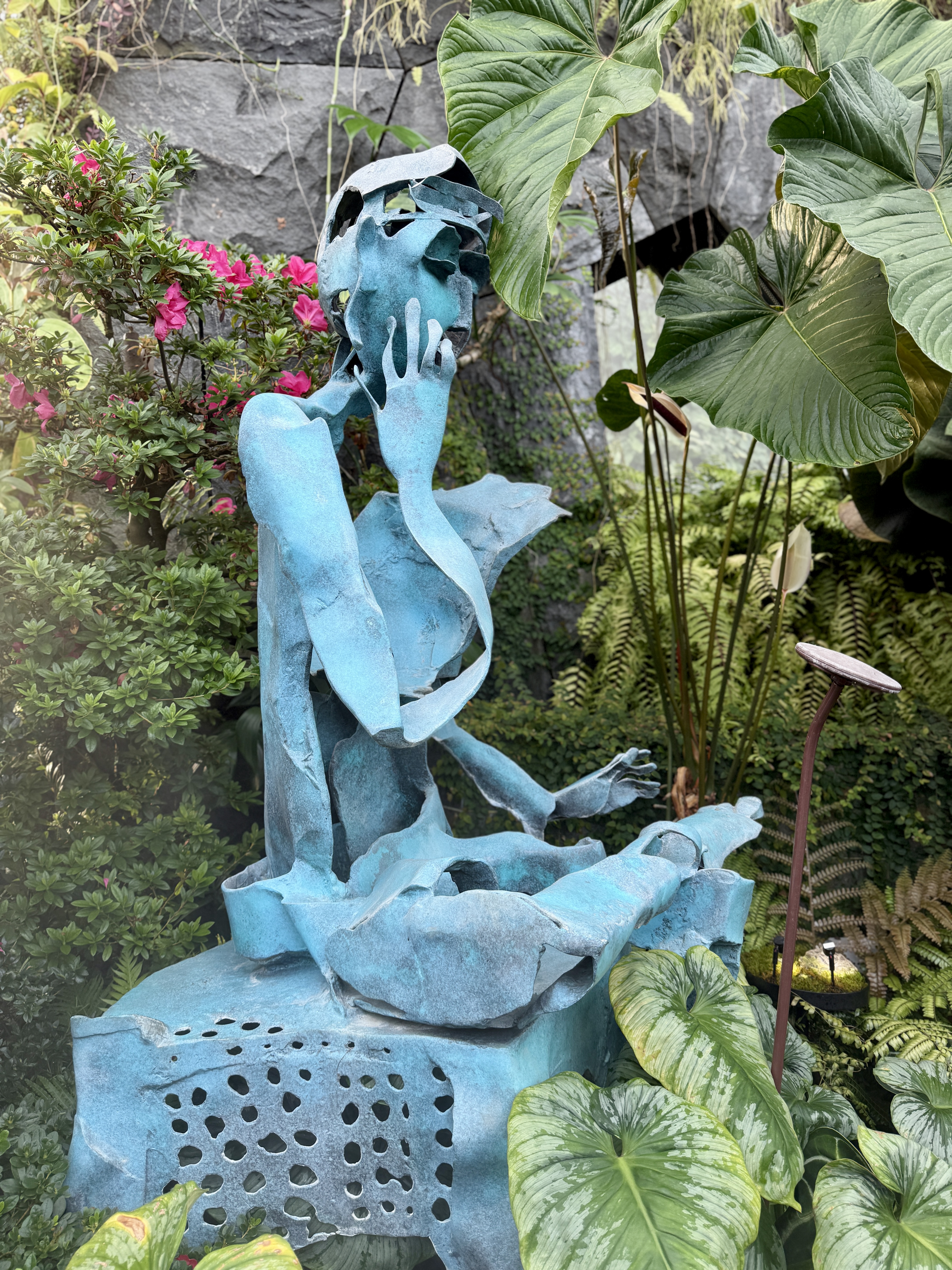
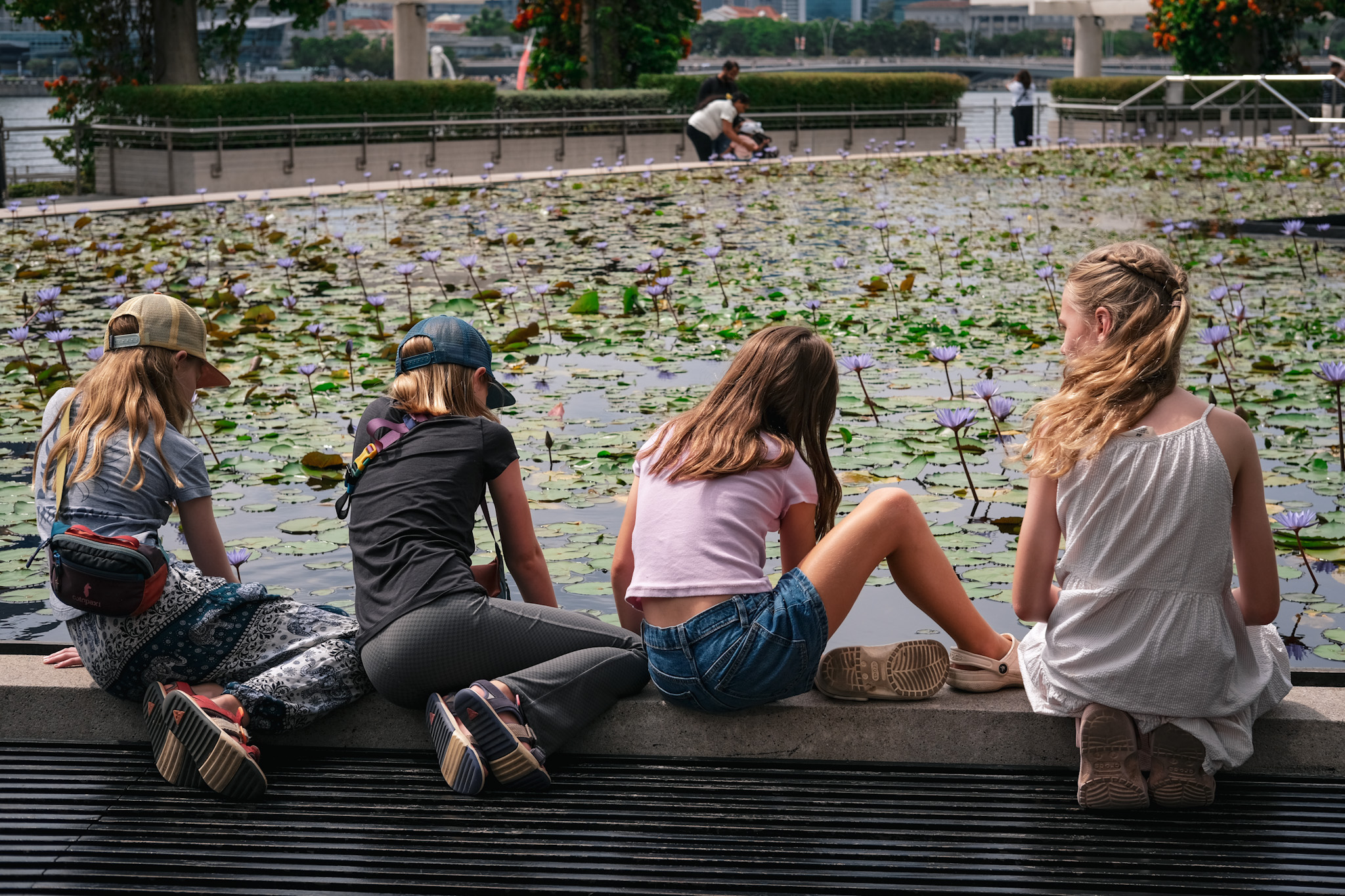
It’s moments like these when you meet people who live on the other side of the world, yet you find yourself counting far more ways you’re the same than different. We all want the best for our kids. We worry about similar trends occurring around the globe. There’s comfort in realizing you’re not alone, that everyone is trying to move forward as best they can, in their own way.
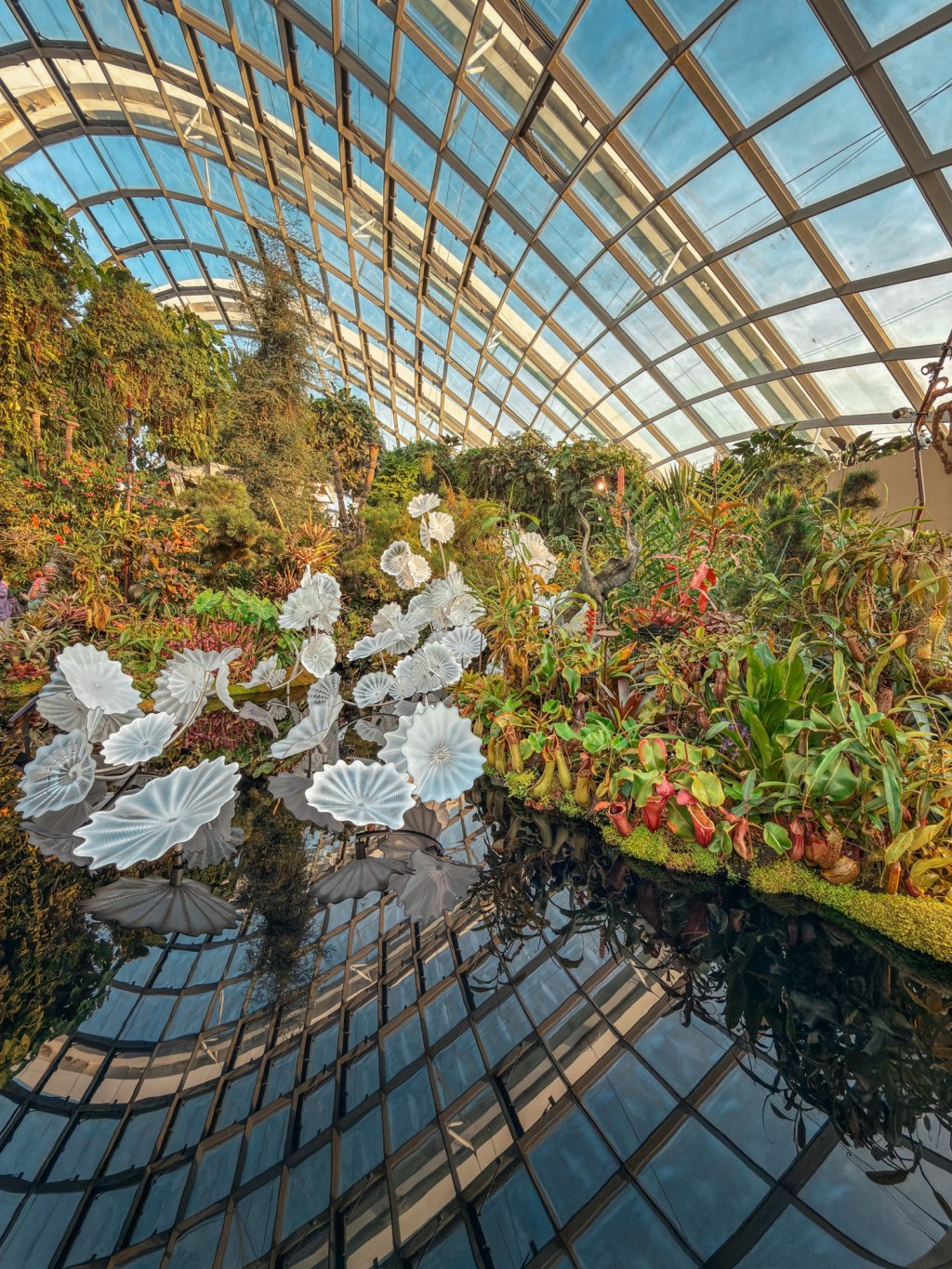
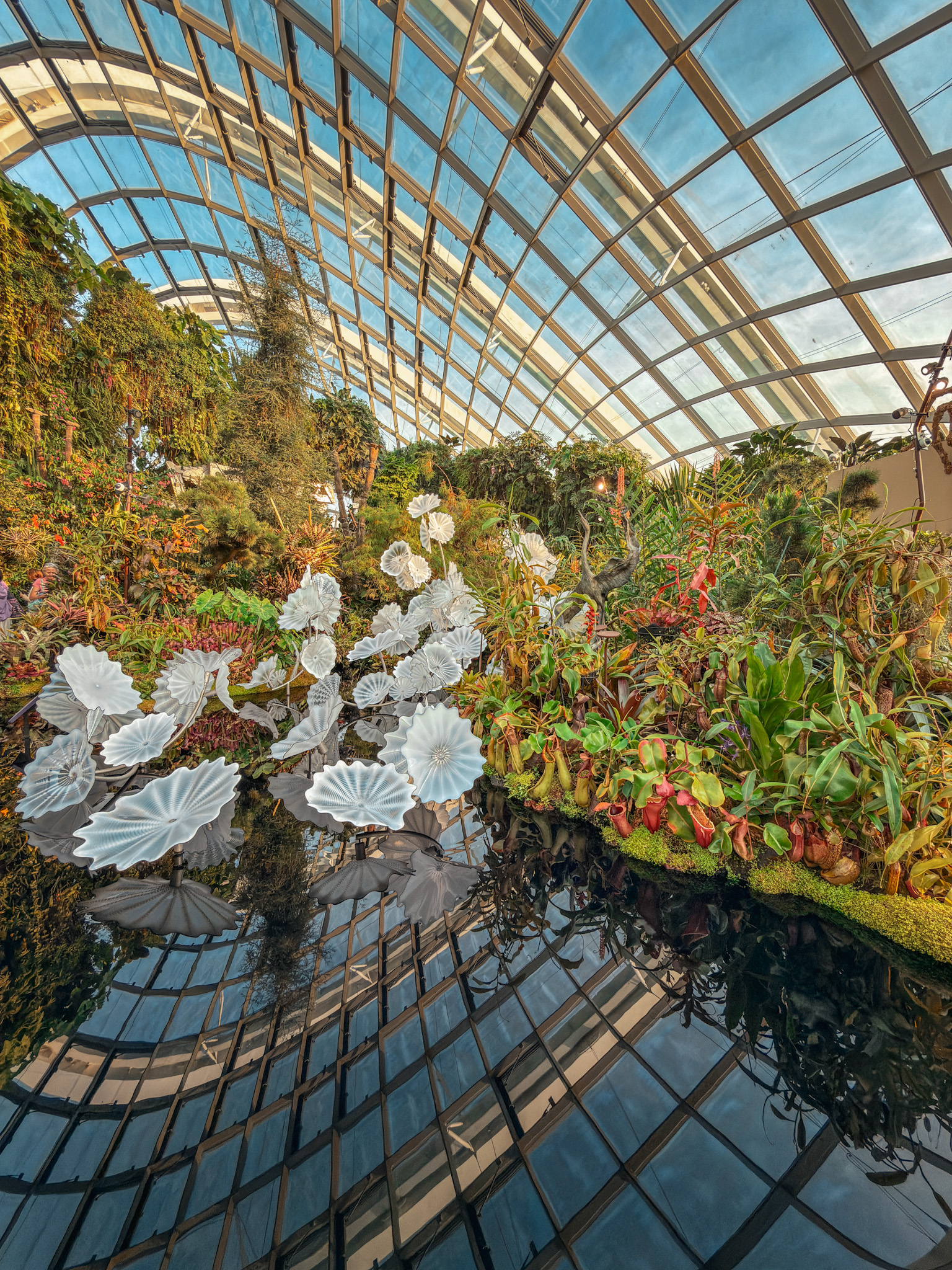
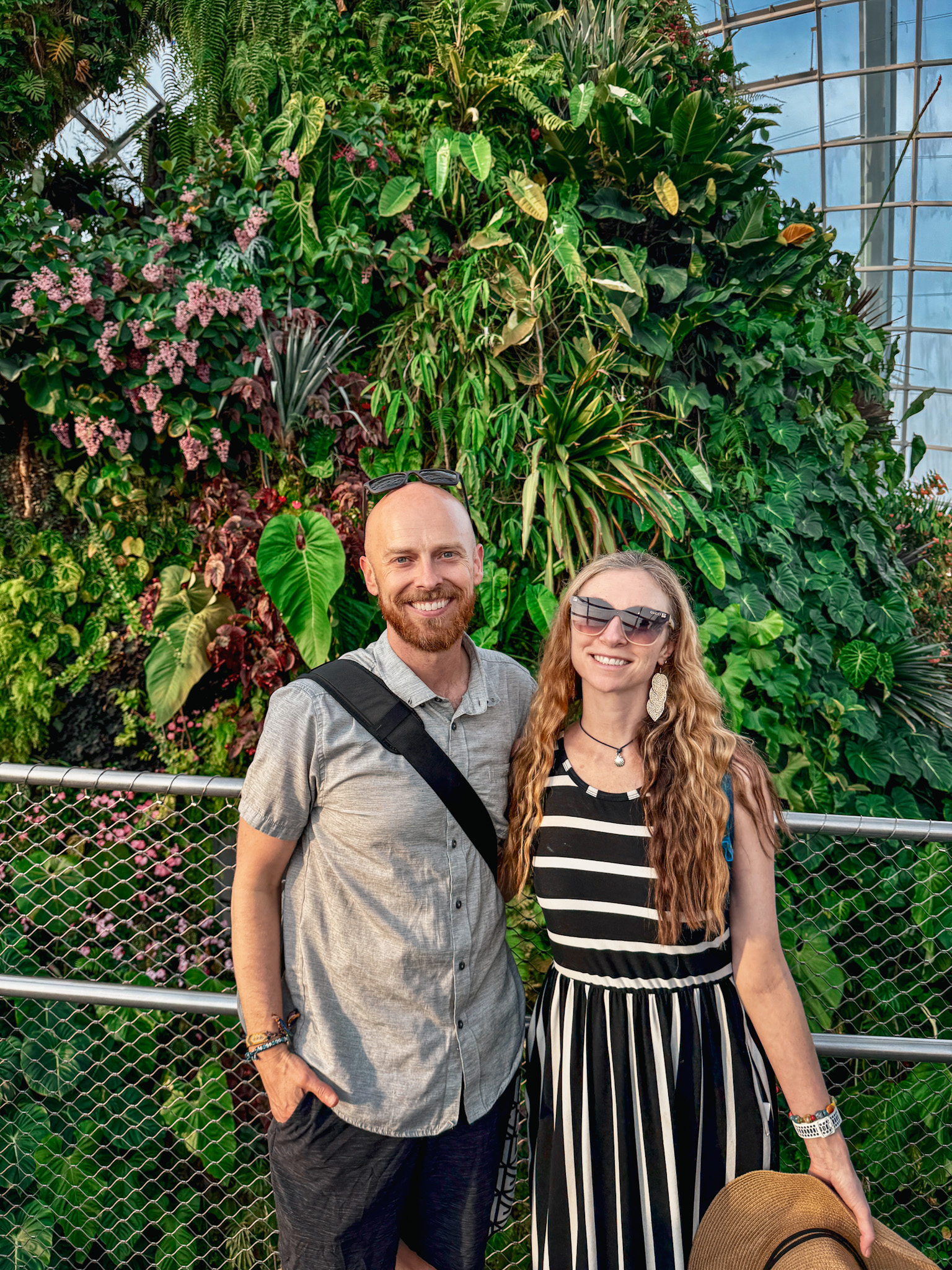
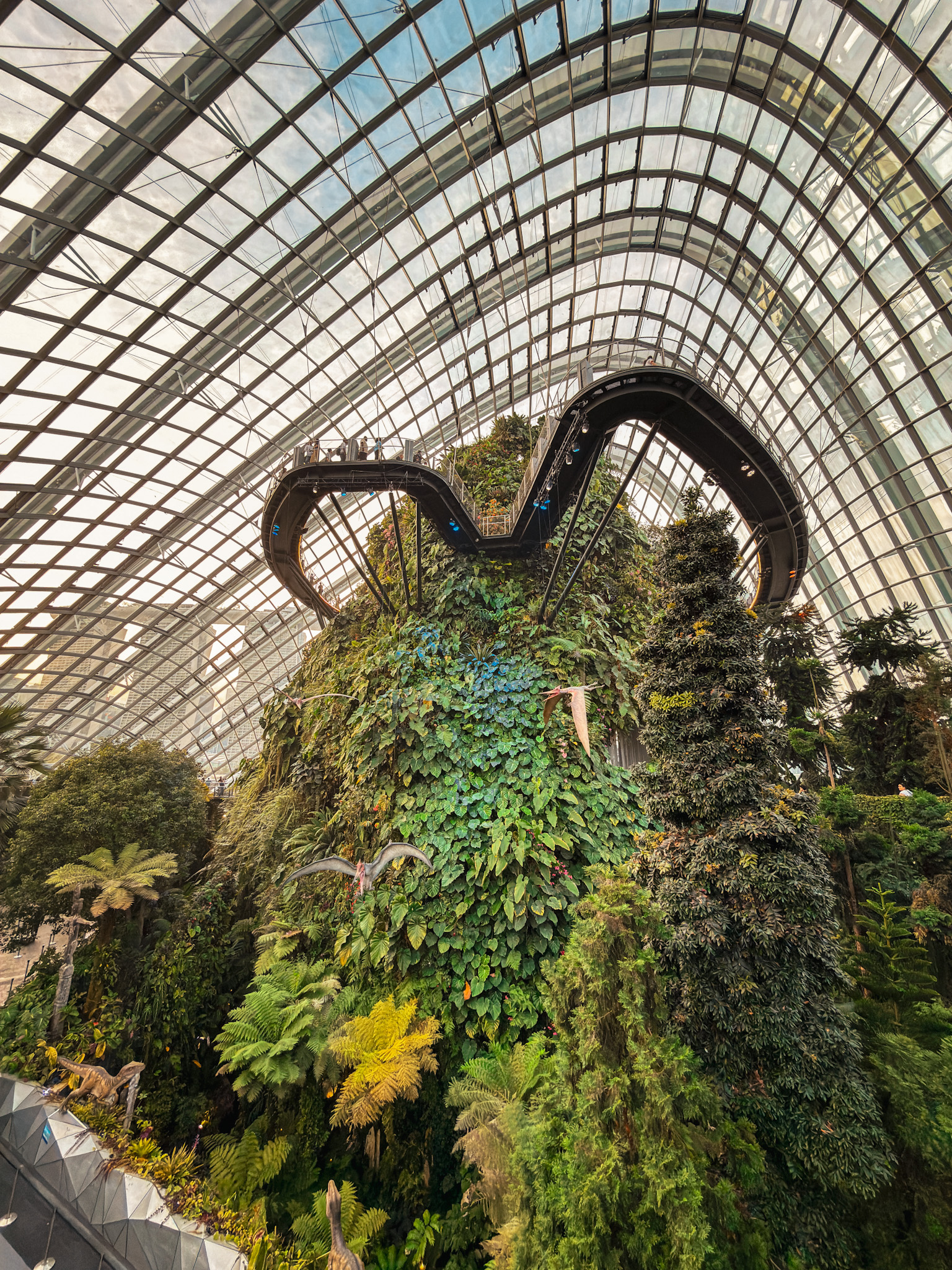
The kids would never have allowed these philosophical and historical conversations if they hadn’t been so well entertained. But this was Singapore. First, we took them to Gardens by the Bay, the sprawling waterfront park, built on reclaimed land that blends futuristic design with massive living displays. Then the Children’s Garden splash pad, a free play area designed for younger kids. Then the Cloud Forest, the only paid attraction we chose that afternoon, and it was completely worth it. The structure houses one of the world’s tallest indoor waterfalls and a massive indoor mountain covered in lush vegetation from high-altitude tropical regions—maybe we’ve found the theme of Singapore…? The architecture was stunning, the engineering mind-boggling, the landscaping beyond beautiful.
We arrived at exactly the right time. The sun was low in the sky, just before dusk, and light streamed through the glass panels, illuminating the mist inside the dome. We imagined aloud about what it takes to create something like this—the vision, the investment, the maintenance. Singapore doesn’t do anything halfway. Where Vietnam’s beauty is organic and emergent, often despite rather than because of planning, Singapore’s beauty is meticulously engineered. Neither approach is better or worse. They’re just different expressions of what’s possible.
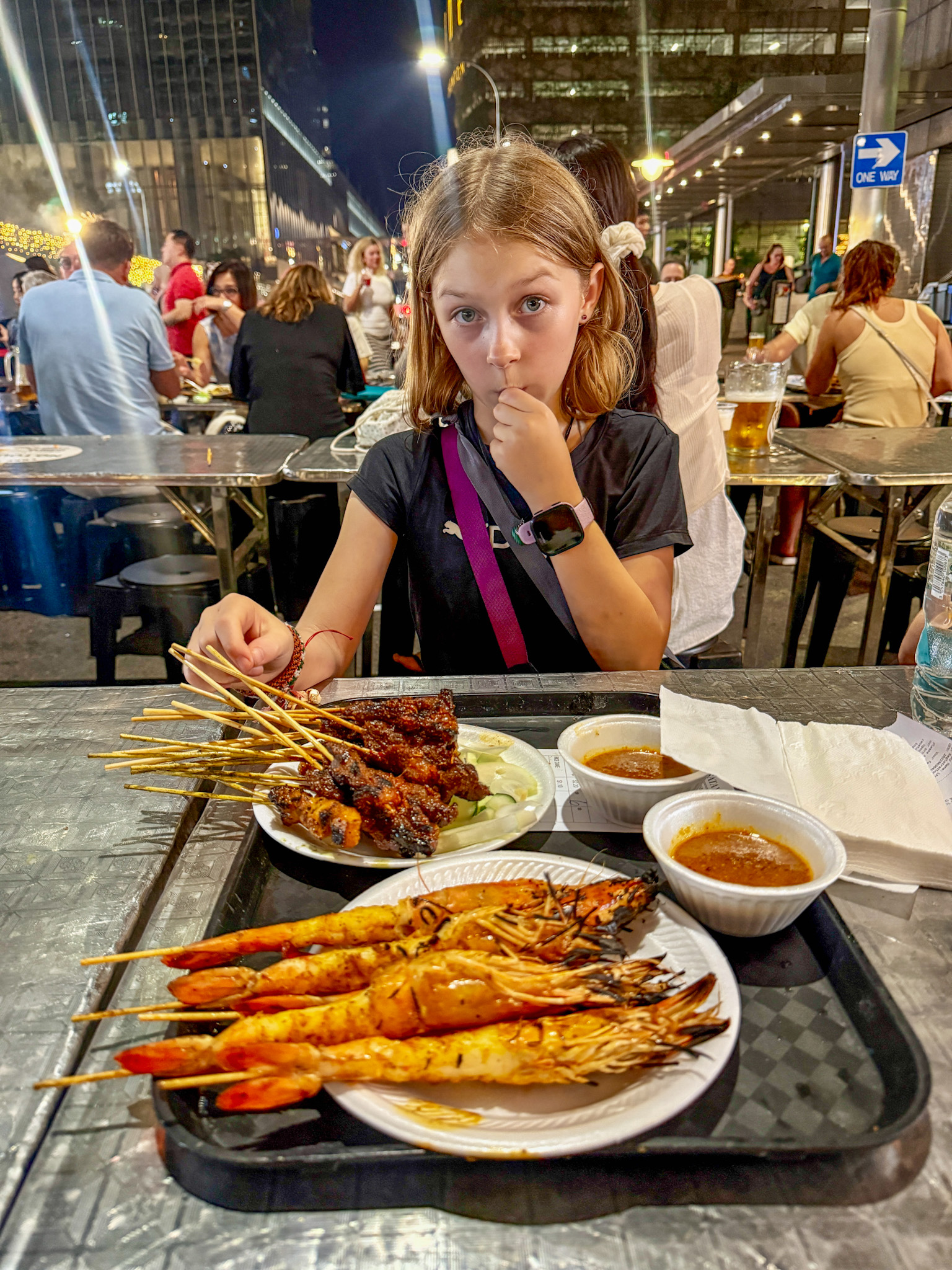
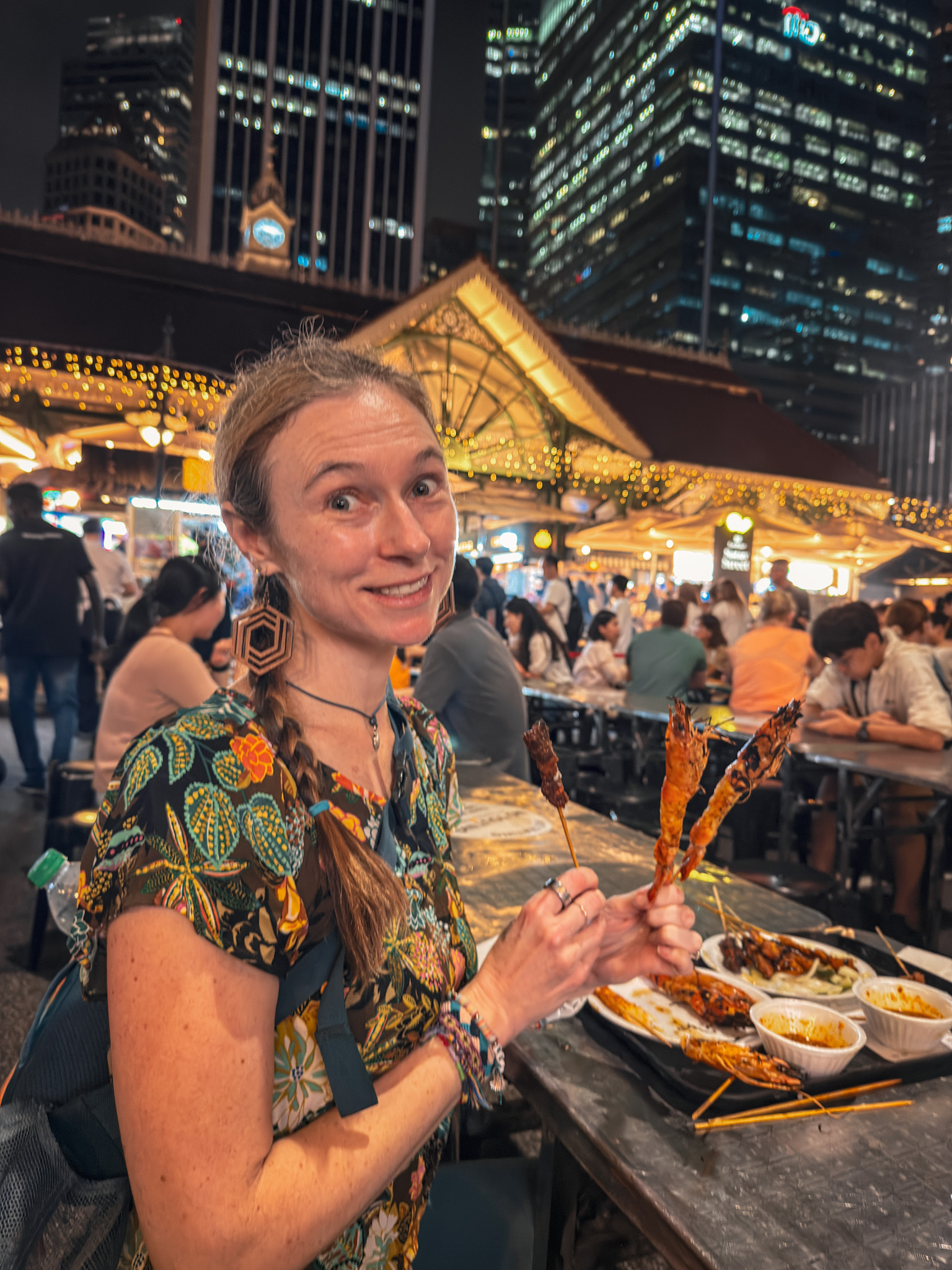
By then we’d worked up another appetite, so we stopped at a nearby food court for nasi lemak (Singapore’s unofficial national dish: coconut rice with sambal, peanuts, egg, and anchovies) and roasted duck served alongside a century egg. It was the perfect casual meal to end the day.
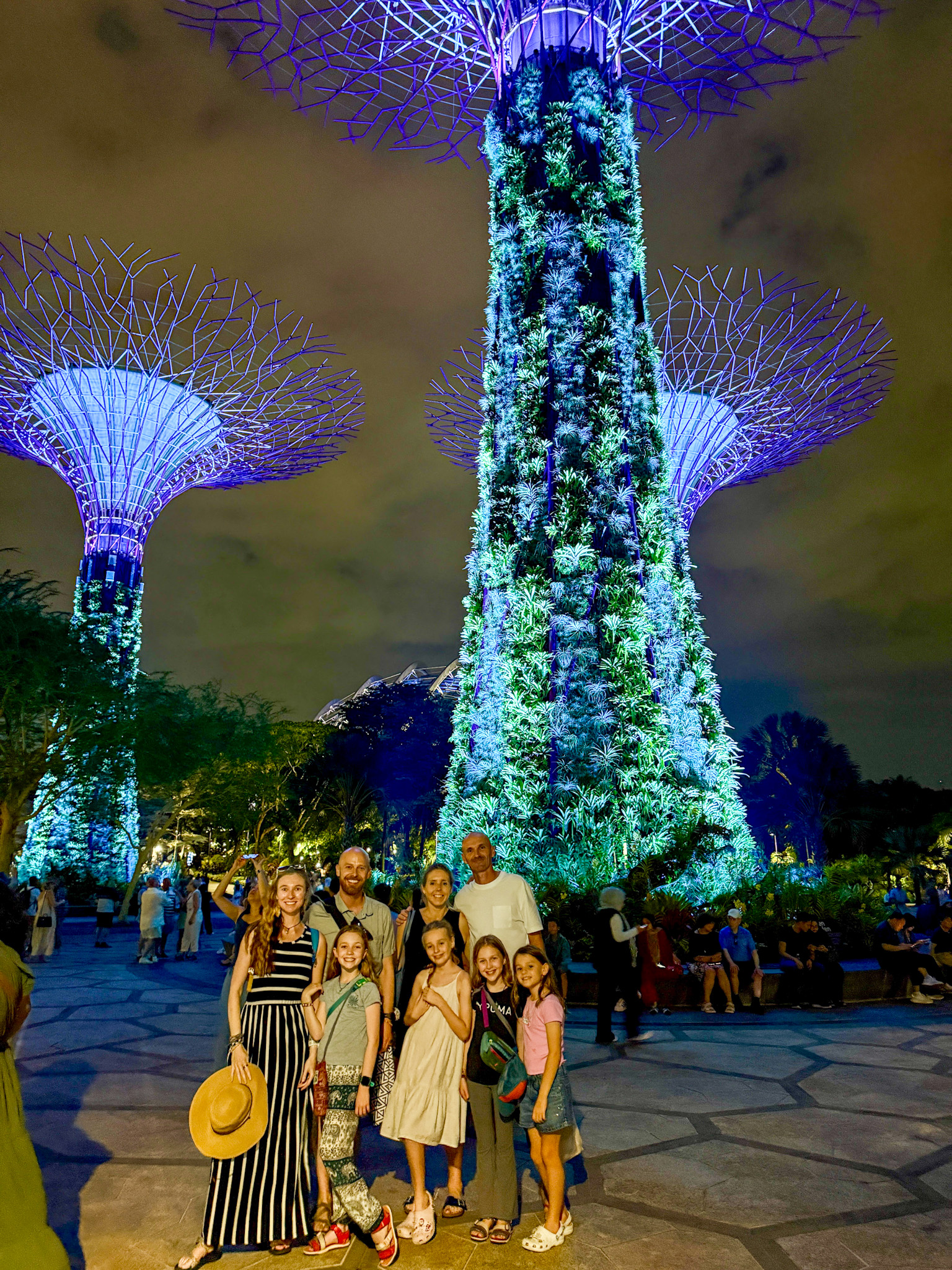
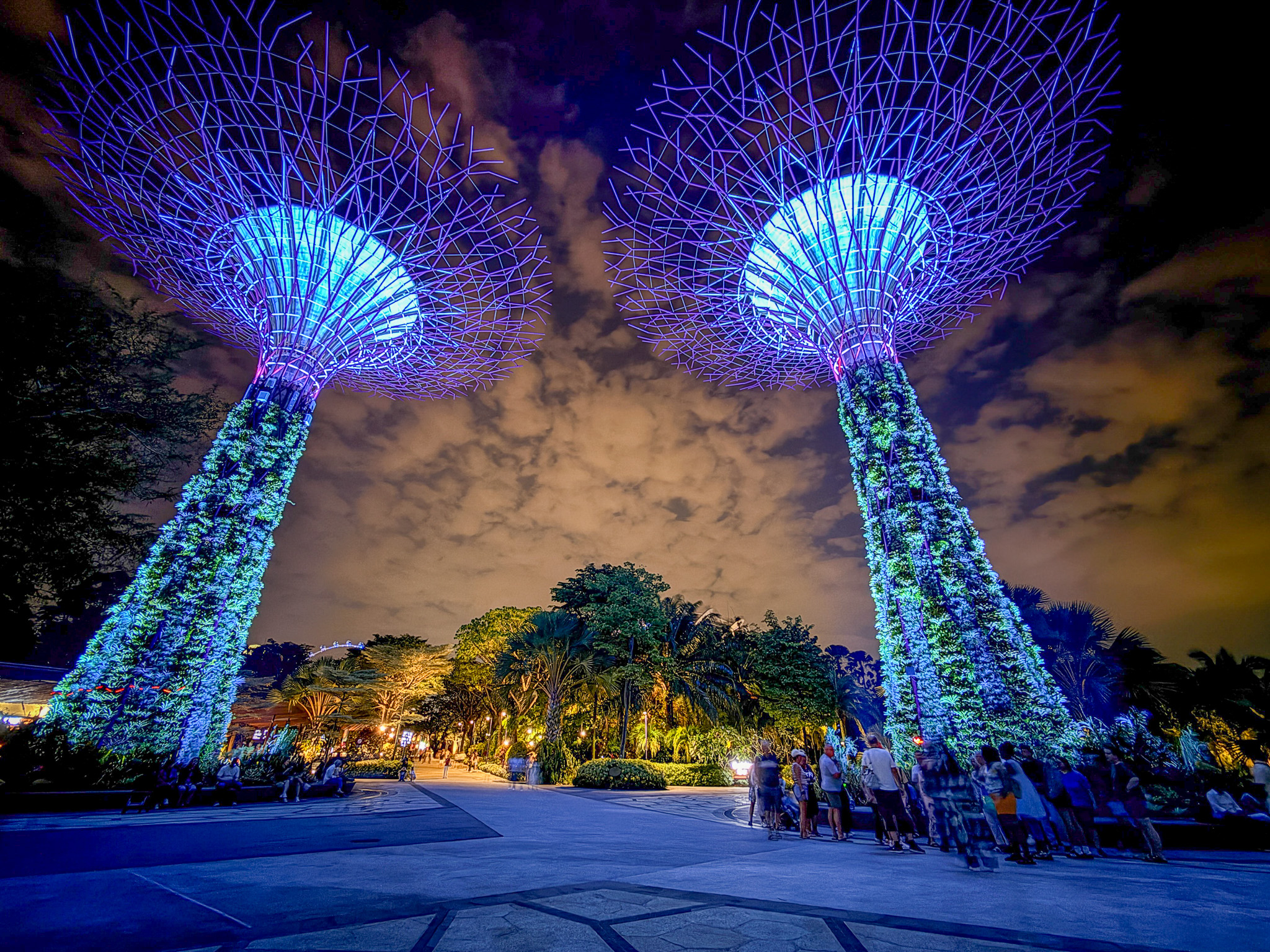
We took goodbye photos in front of the Supertrees—the towering vertical gardens that light up at night and serve as both sculpture and environmental infrastructure. By this point they were fully illuminated, glowing against the night sky.
The girls had done such a good job playing together that real friendships had clearly formed. The hugs goodbye were long and heartfelt. Goodbyes are never easy, but it was beautiful to see Arya and Finlee get much-needed kid time with such a warm, fun family.
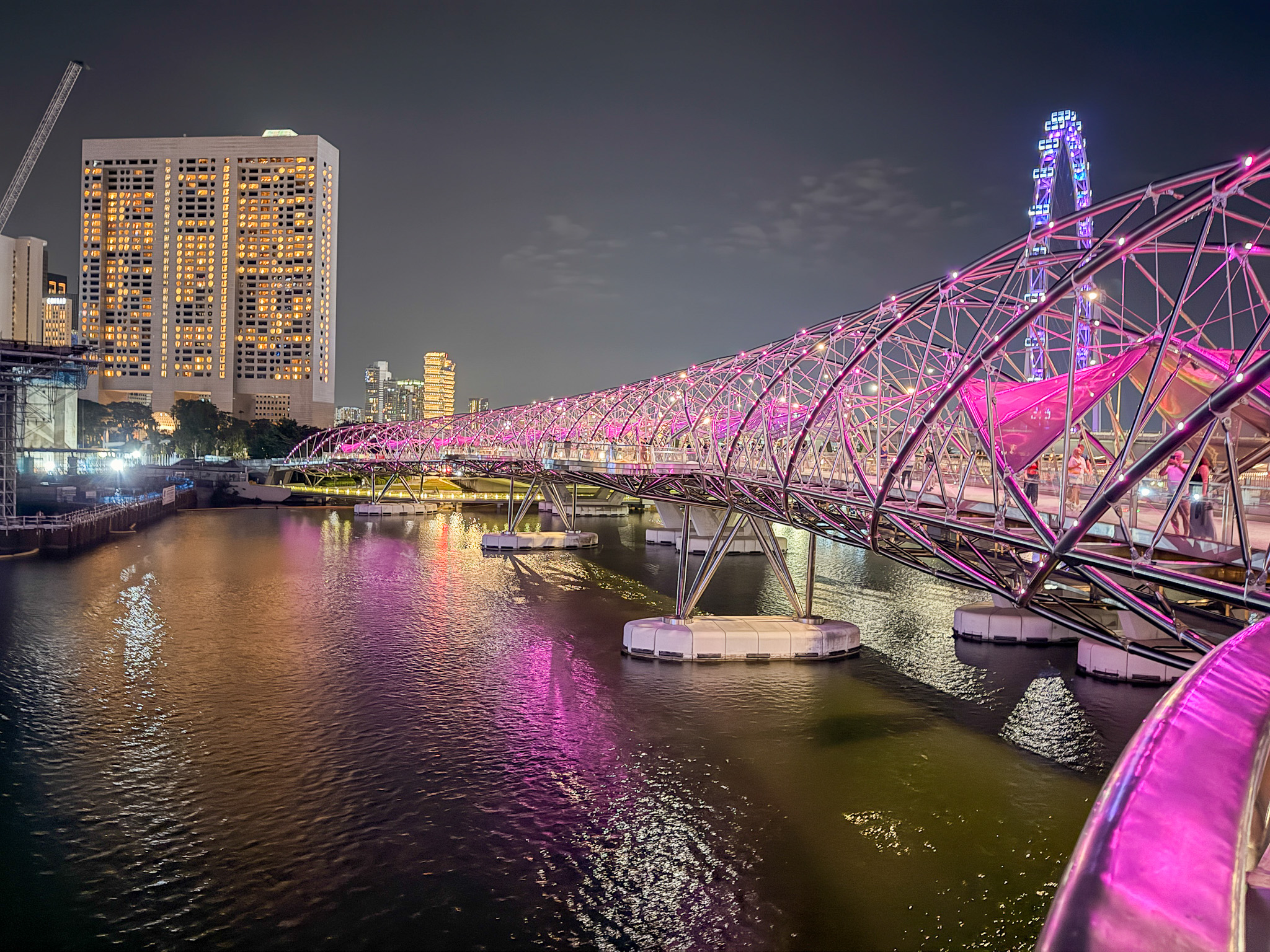
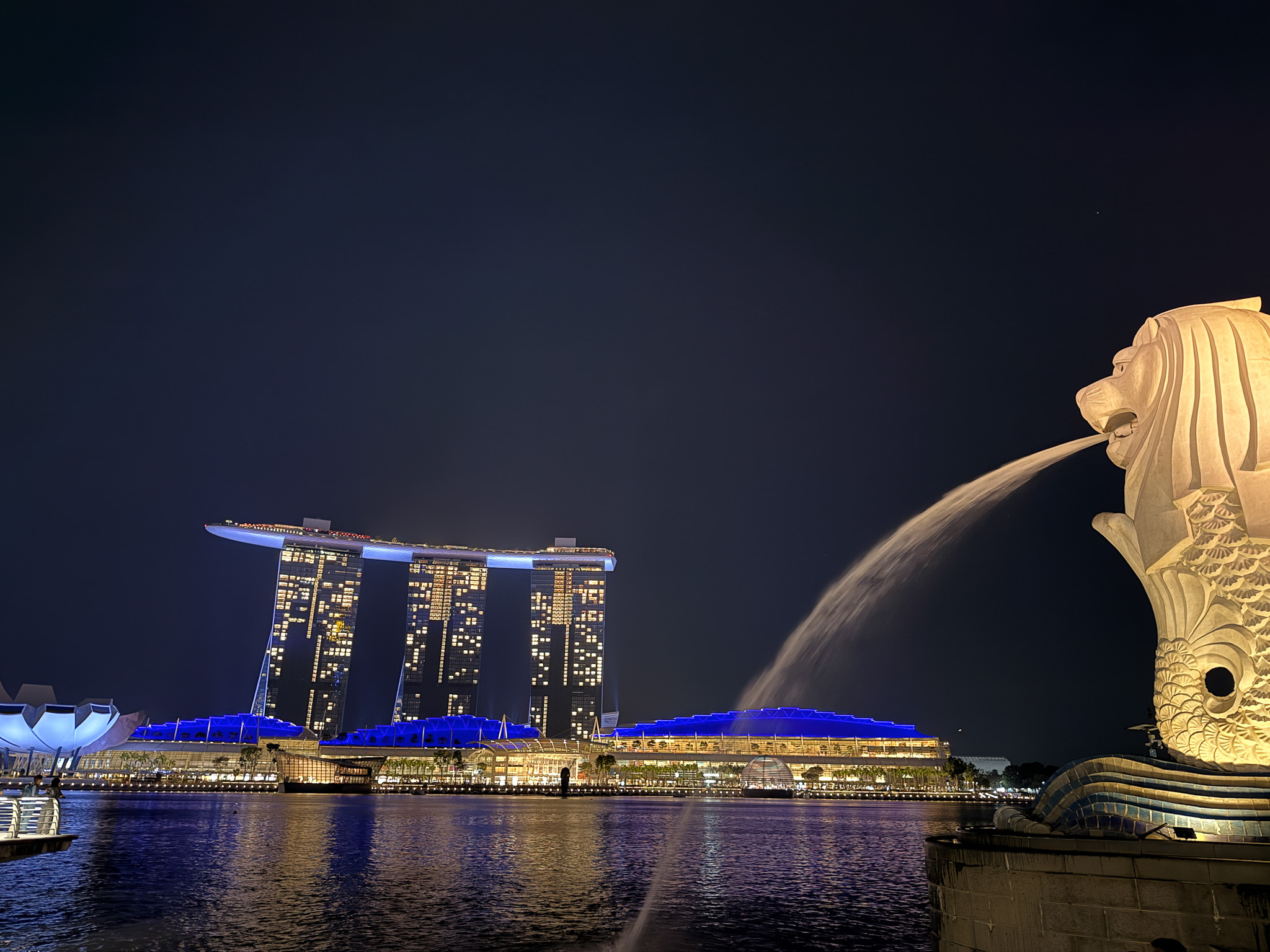
After we parted ways, we stayed to watch the Supertree light and music show, then walked across the Helix Bridge, having a nice educational moment to teach about the structure of DNA. We then walked over to see the Merlion, the iconic fountain sculpture spitting water into the Marina Bay. By then Max’s feet were getting rubbed raw in his sandals, so he made the executive decision to call a Grab back to the hostel—walking 15 km that day felt like enough. After another long, full, fun day, we made it back to pillows, and it was lights out.
Wonder at Scale
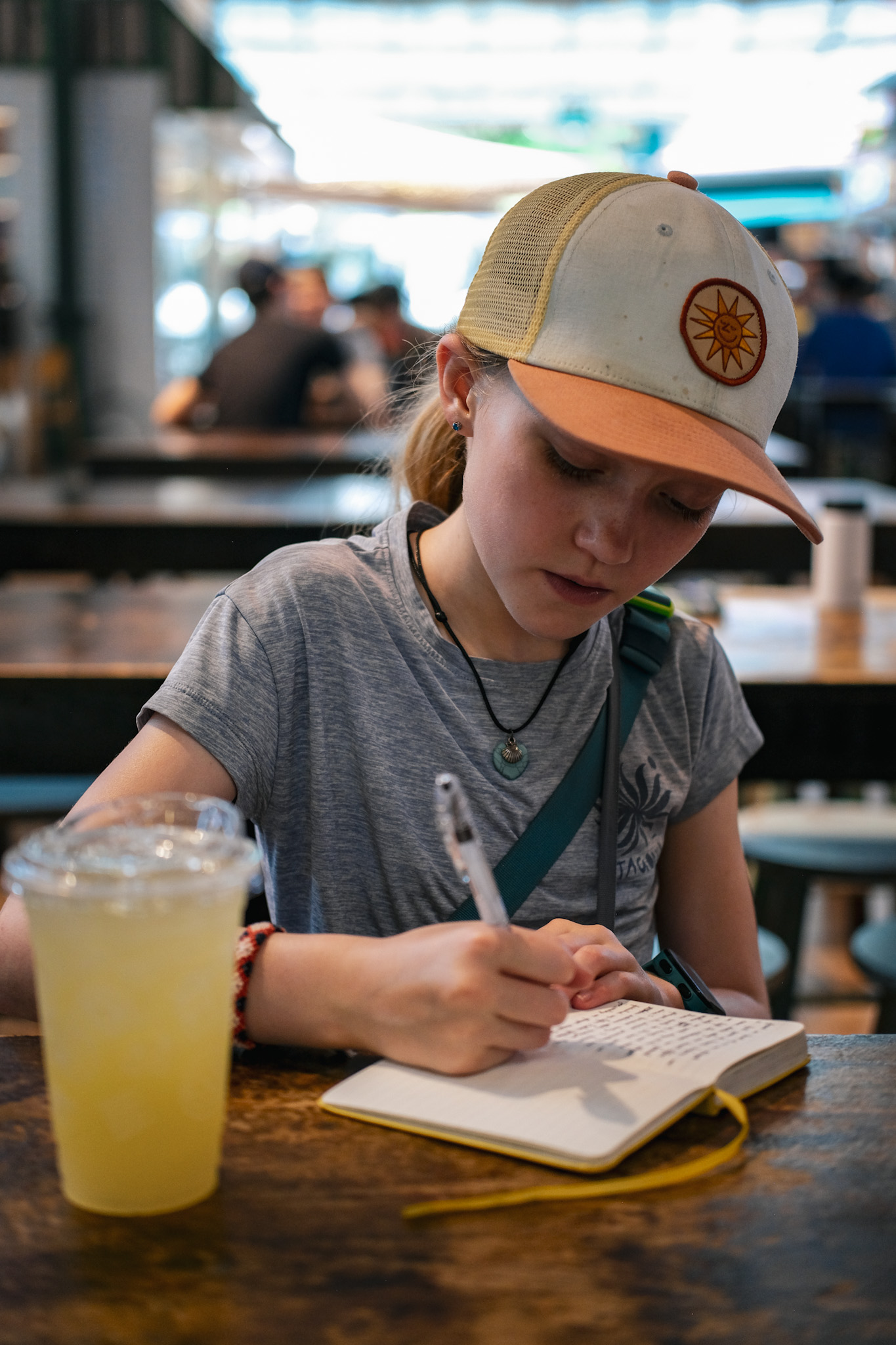
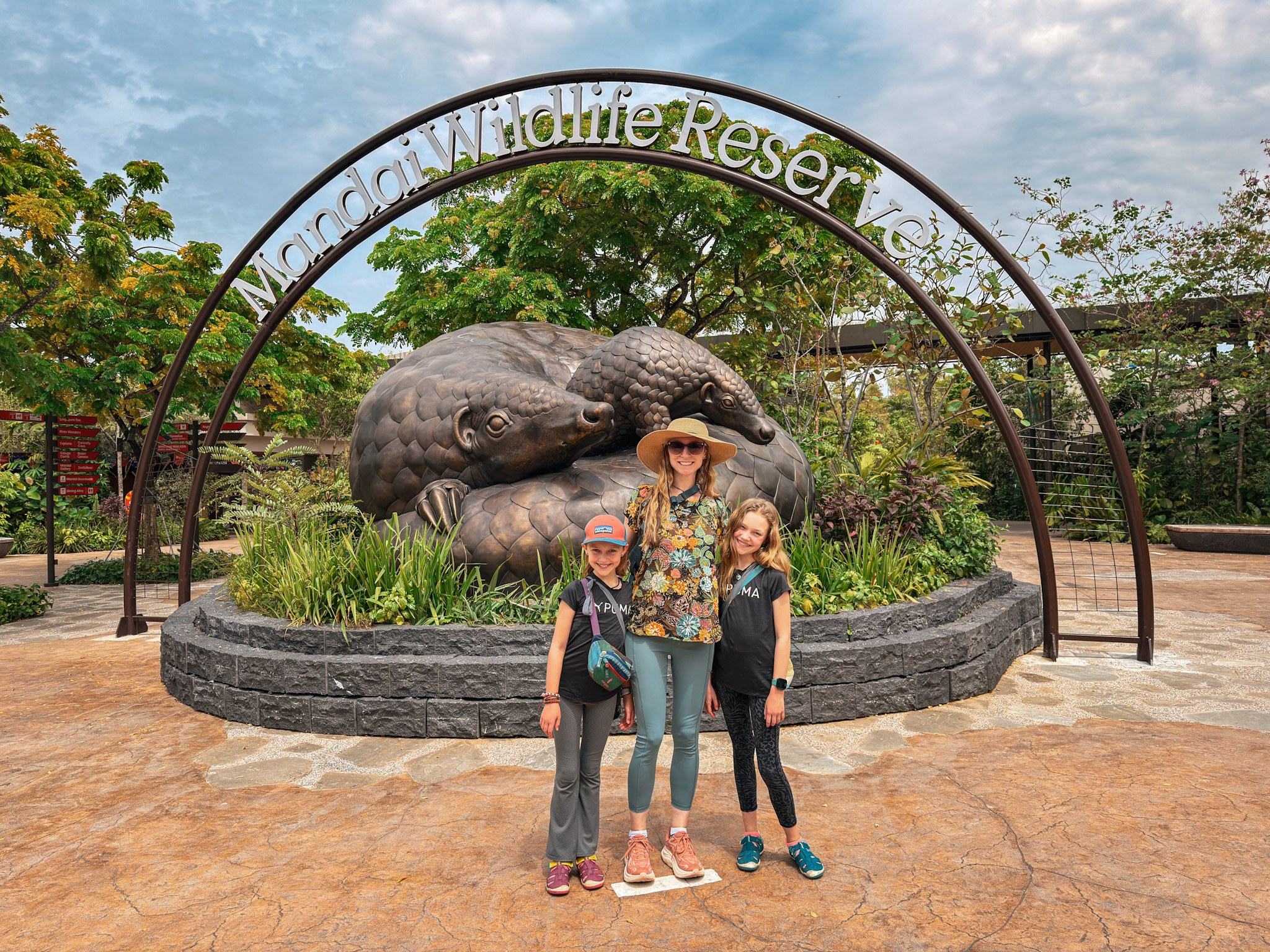
The next morning, while Max worked on getting his new drone registered and set up, Shaina and the girls settled into journaling time. Once wrapped up, we grabbed real breakfast at a nearby coffee shop—the toast situation at the hostel wasn’t going to cut it—then hired a Grab and headed north to the Mandai Wlidlife Reserve, a massive complex of five parks, including the famous Singapore Zoo.
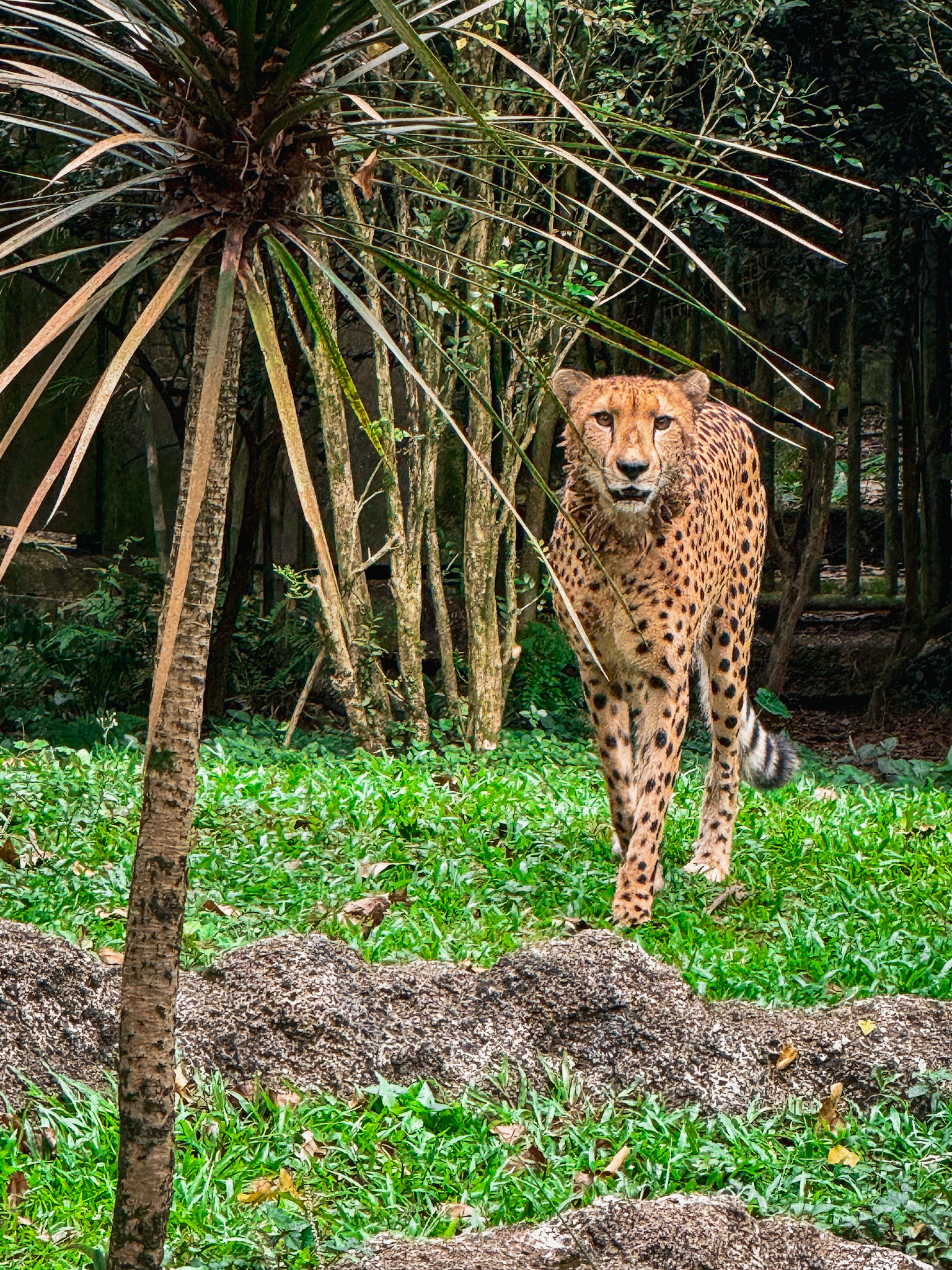
Opened in 1973 and spread across roughly 70 acres of rainforest, this zoo built its reputation around open, naturalistic habitats rather than cages. It shows immediately. This is one of the best-designed zoos we’ve ever visited.
There are almost no straight pathways running enclosure to enclosure. Instead, the paths curve and wind, and the dense tropical foliage blocks your line of sight so completely that each new area feels like a discovery. You genuinely get the sensation that you’re walking through jungle and stumbling across animals rather than touring a zoo.
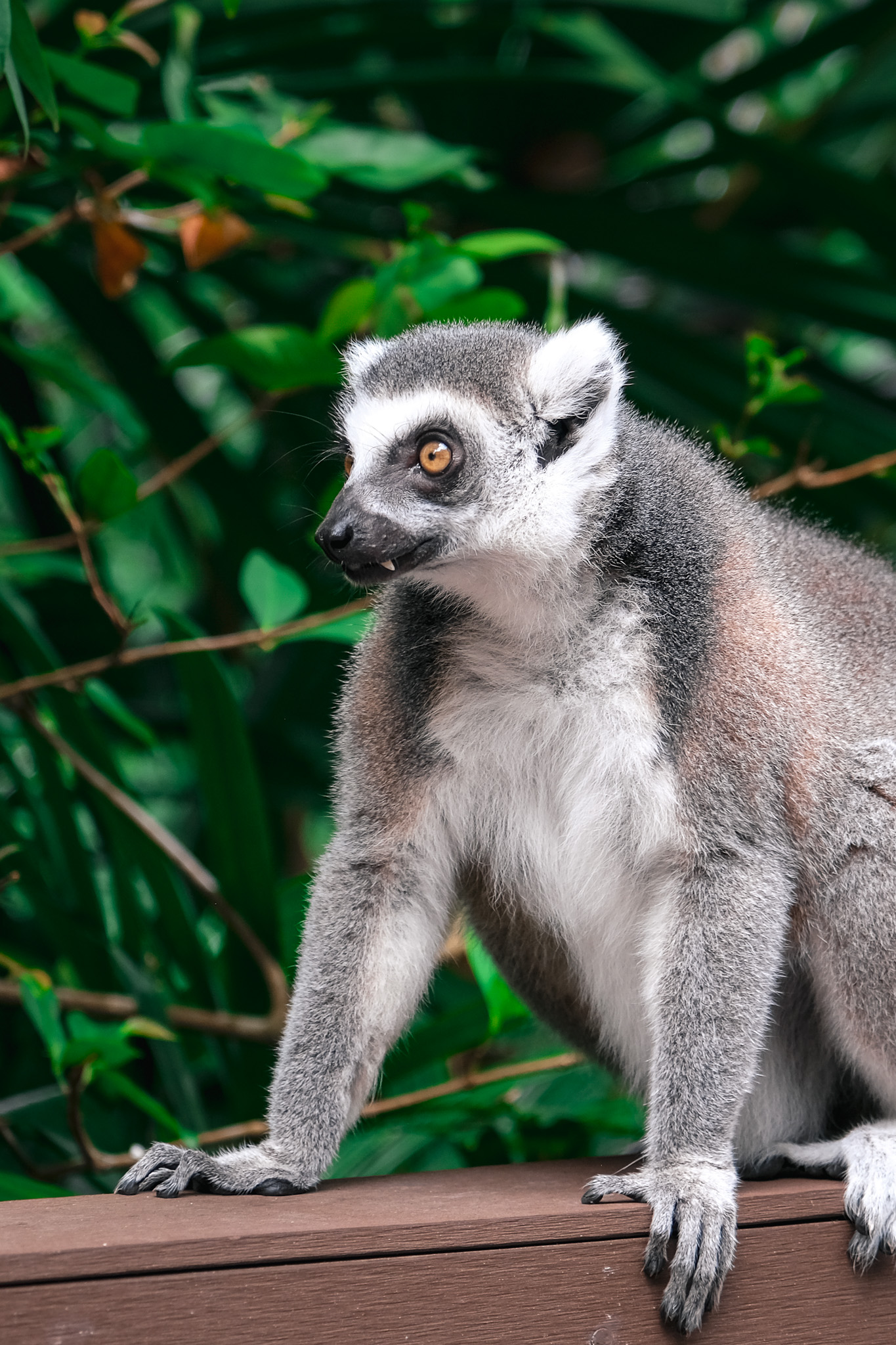
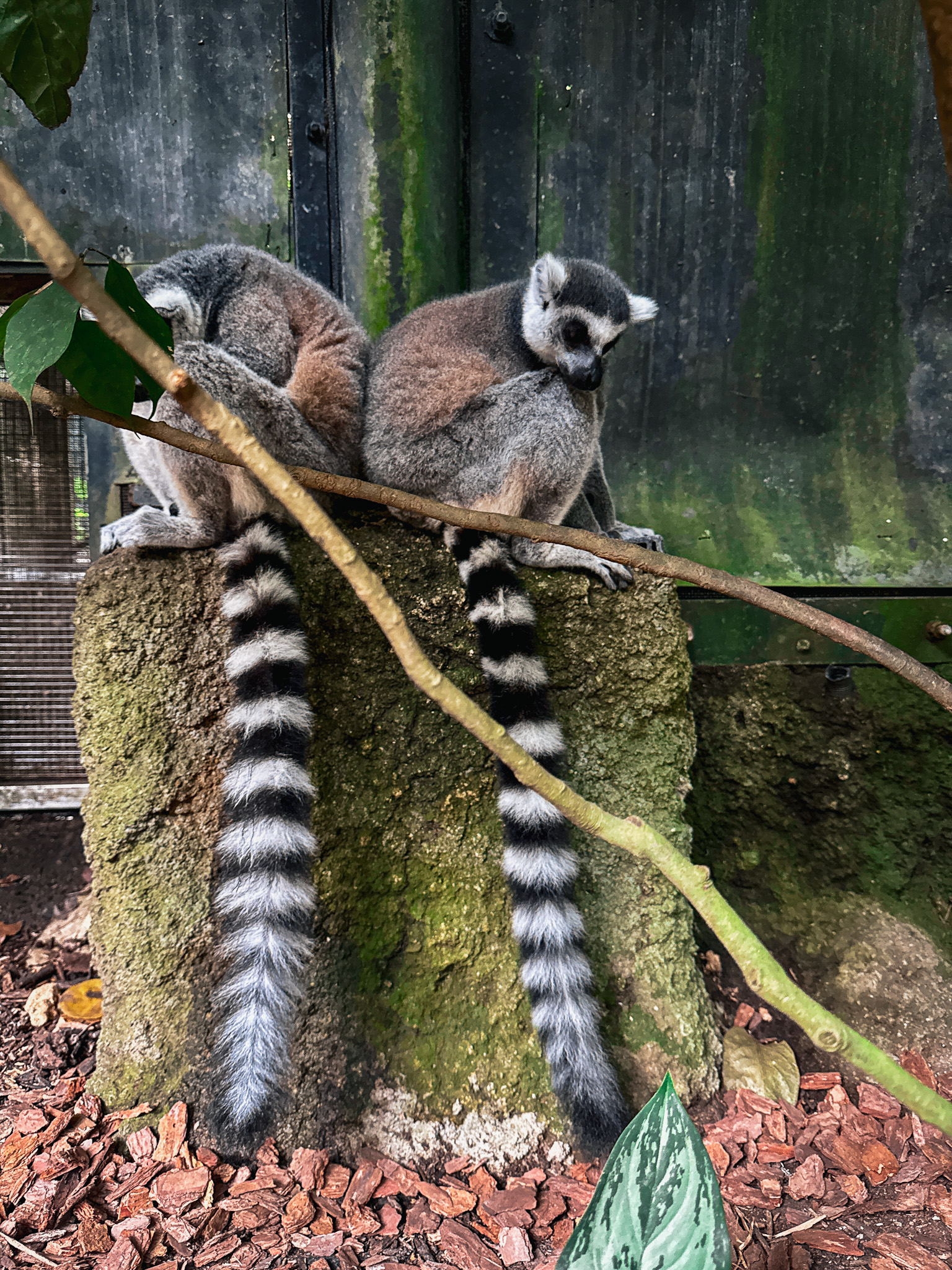
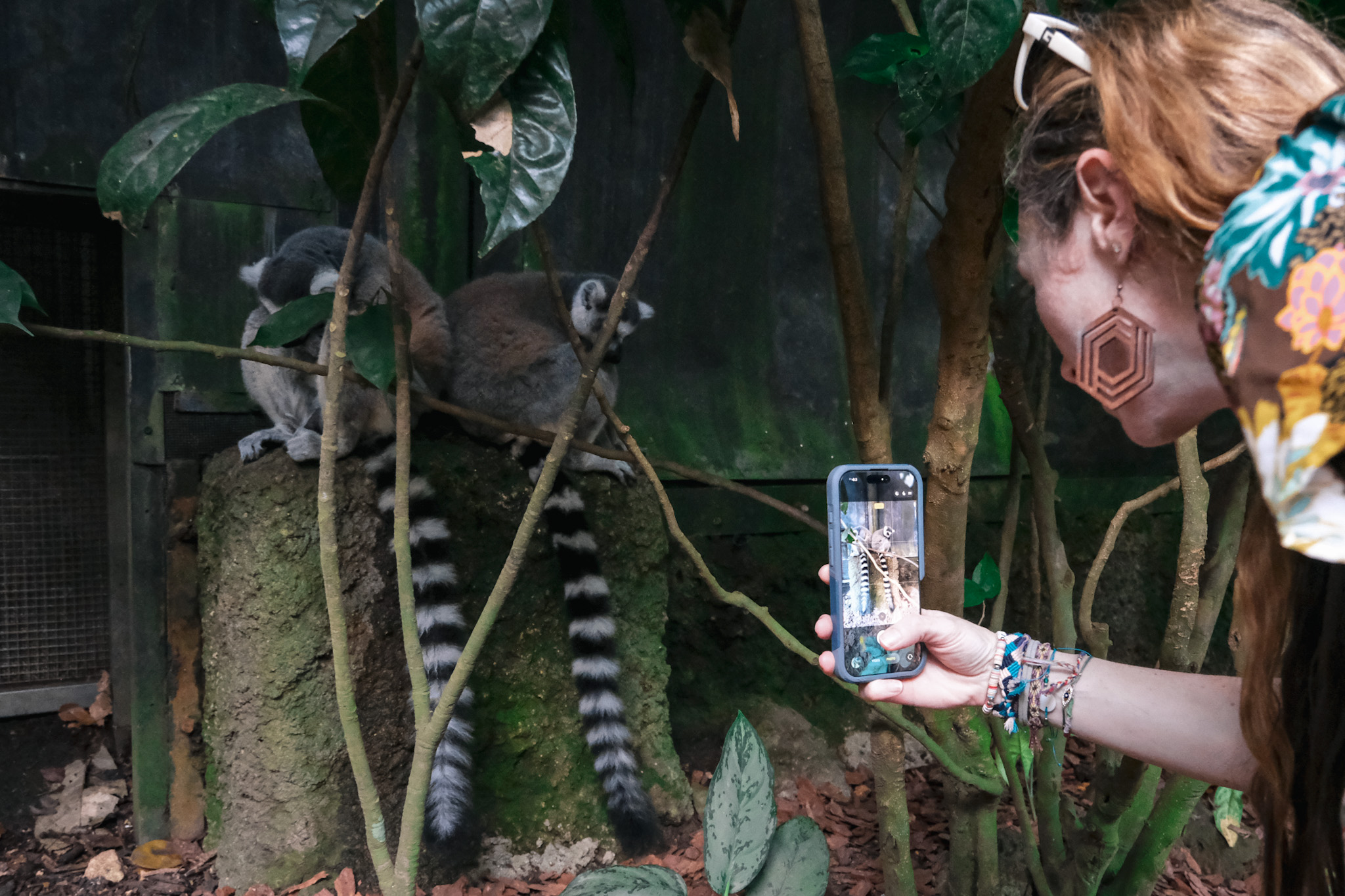
Right at the entrance we were greeted by a conspiracy of lemurs freely roaming the pathways and trees around us. No barriers. No separation. Just lemurs doing lemur things. Their ridiculous cuteness set off immediate squeals of delight from the girls and, honestly, from us too.
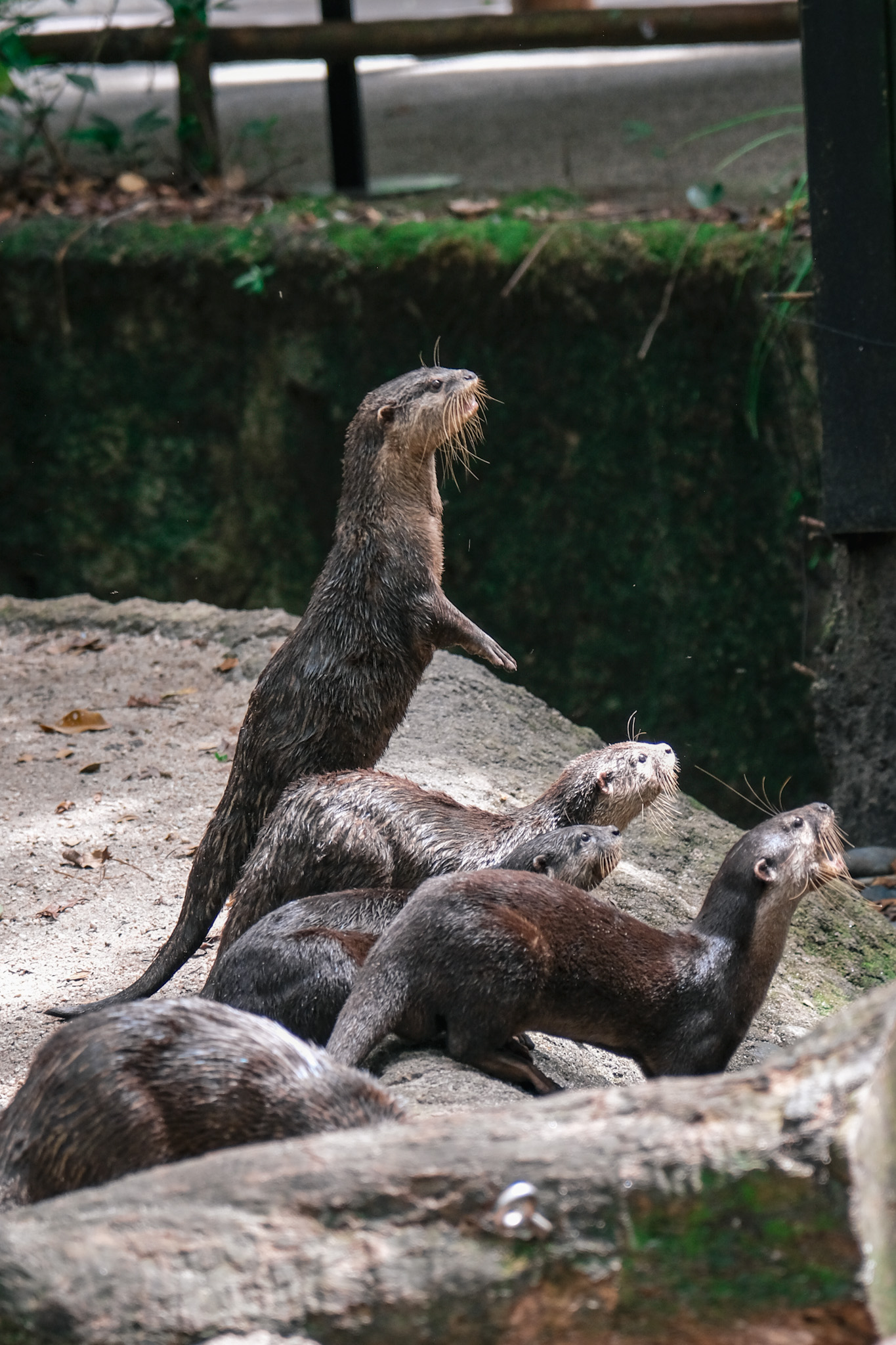
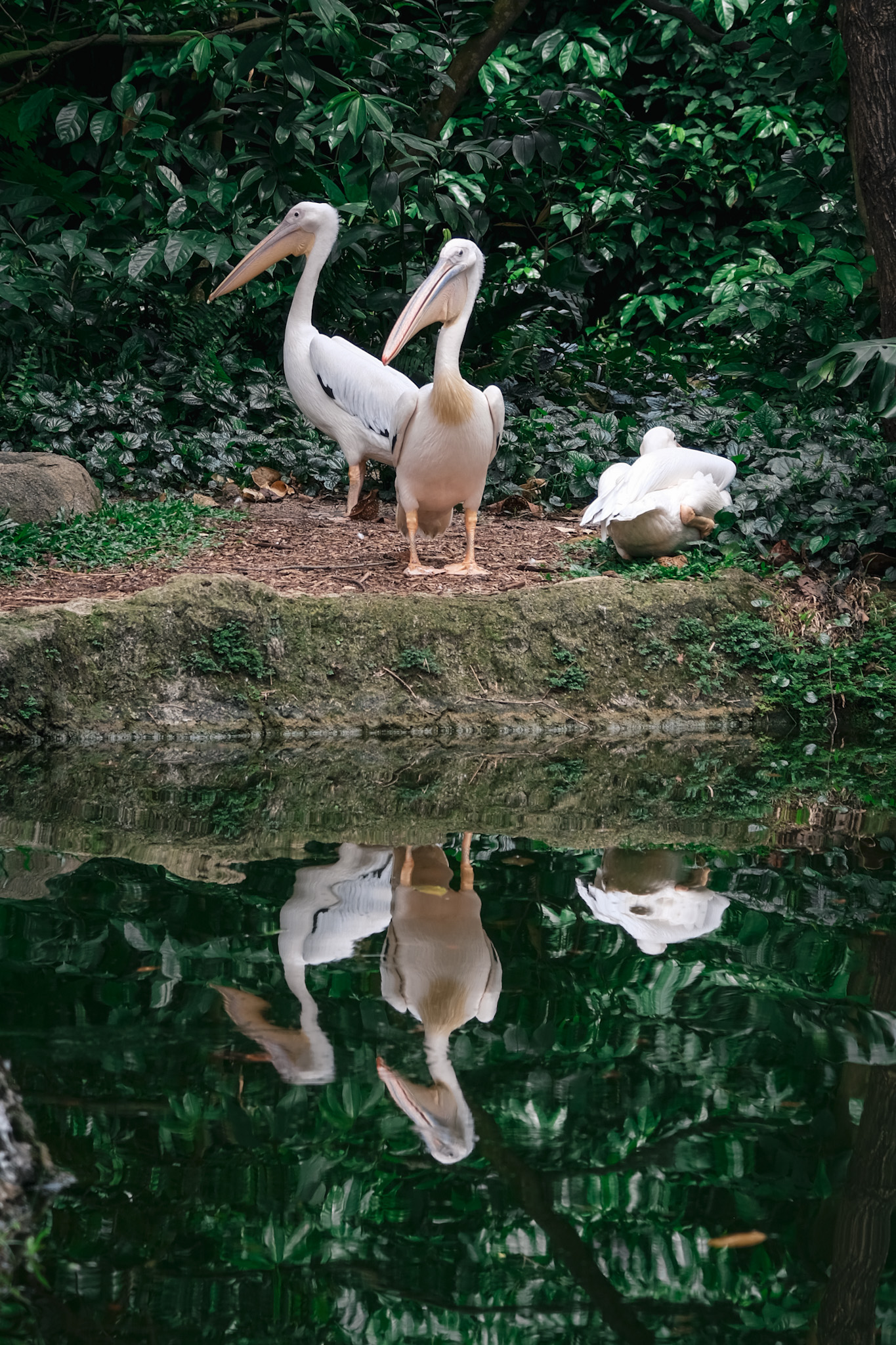
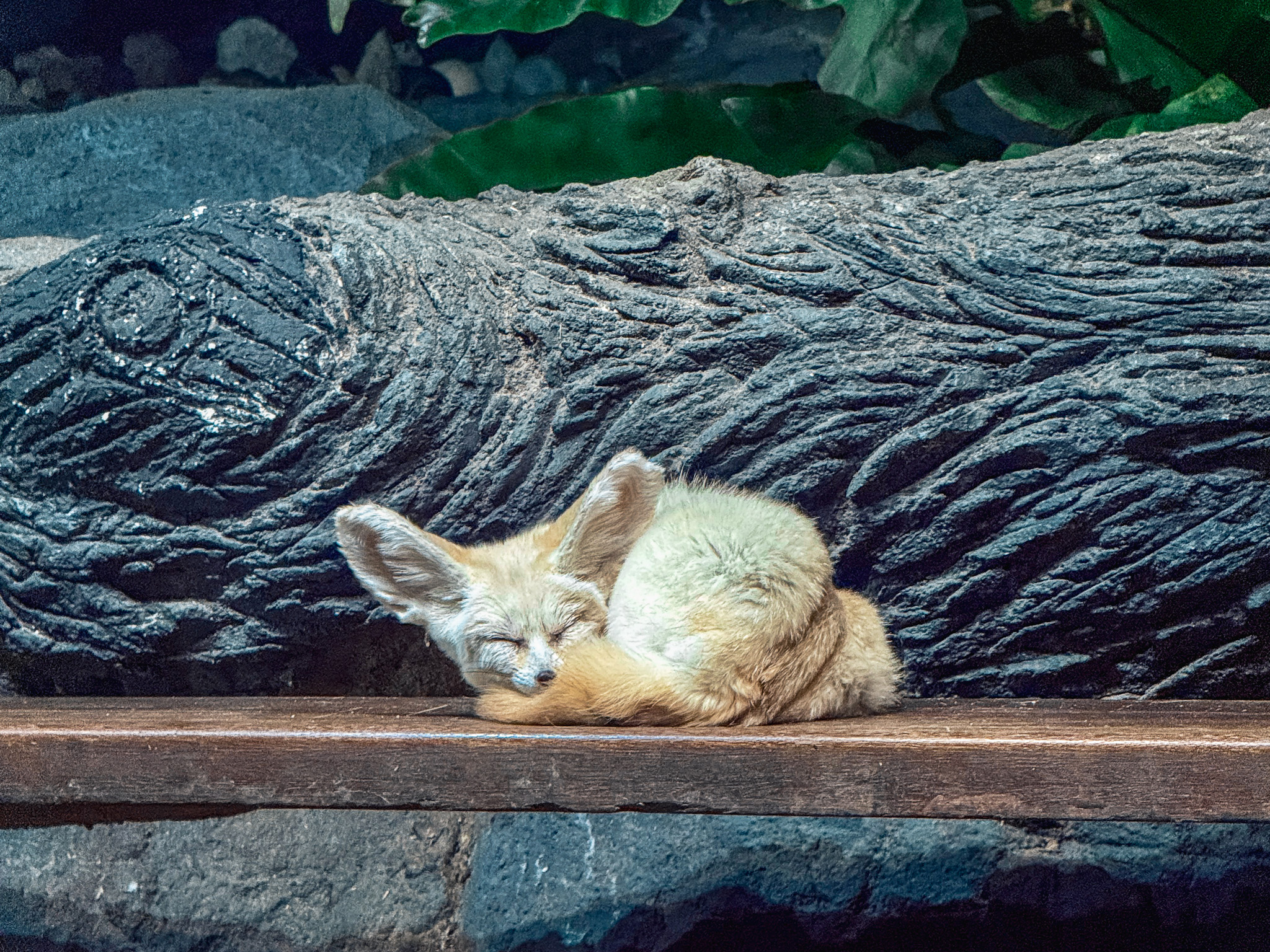
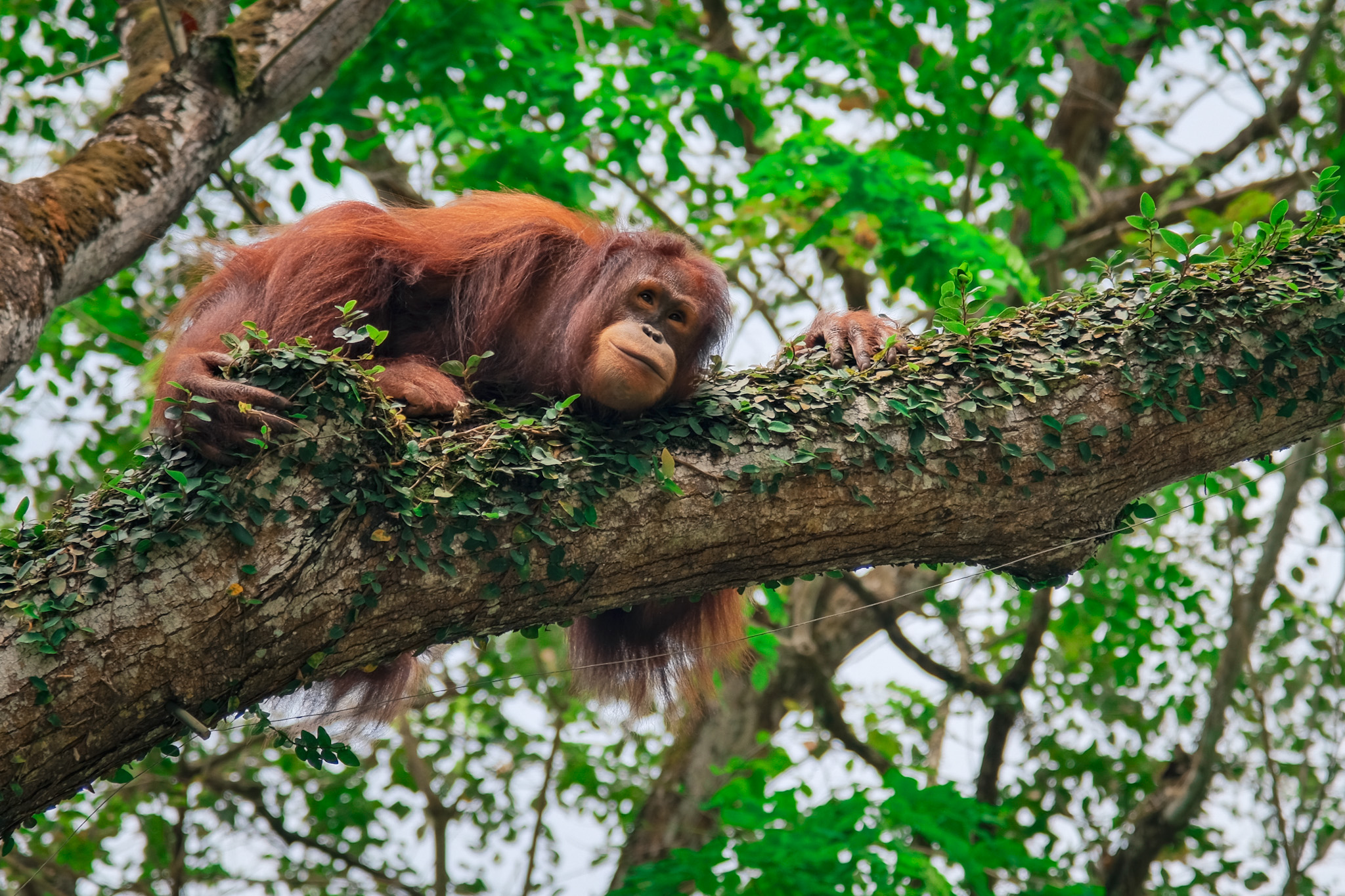
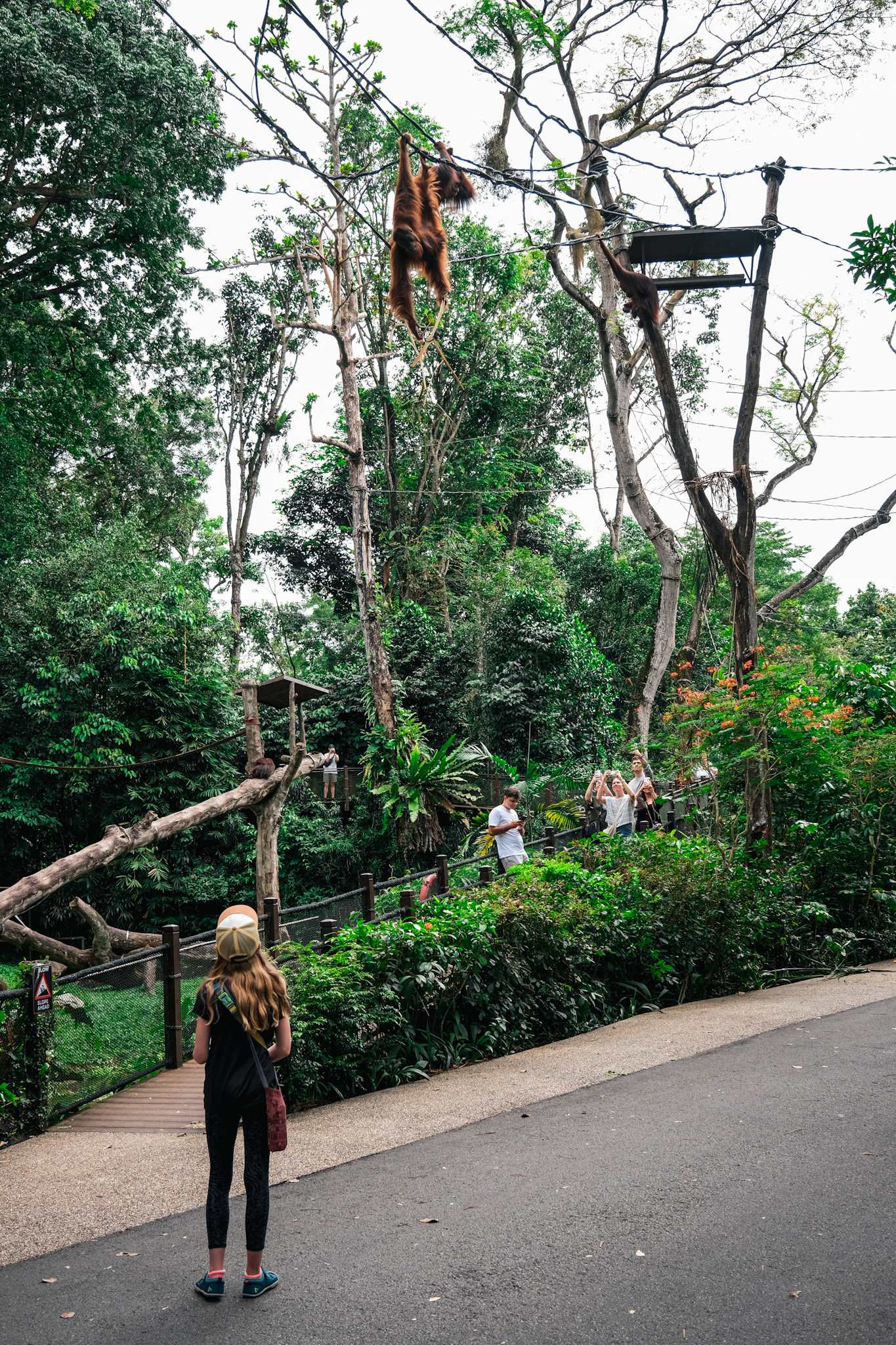
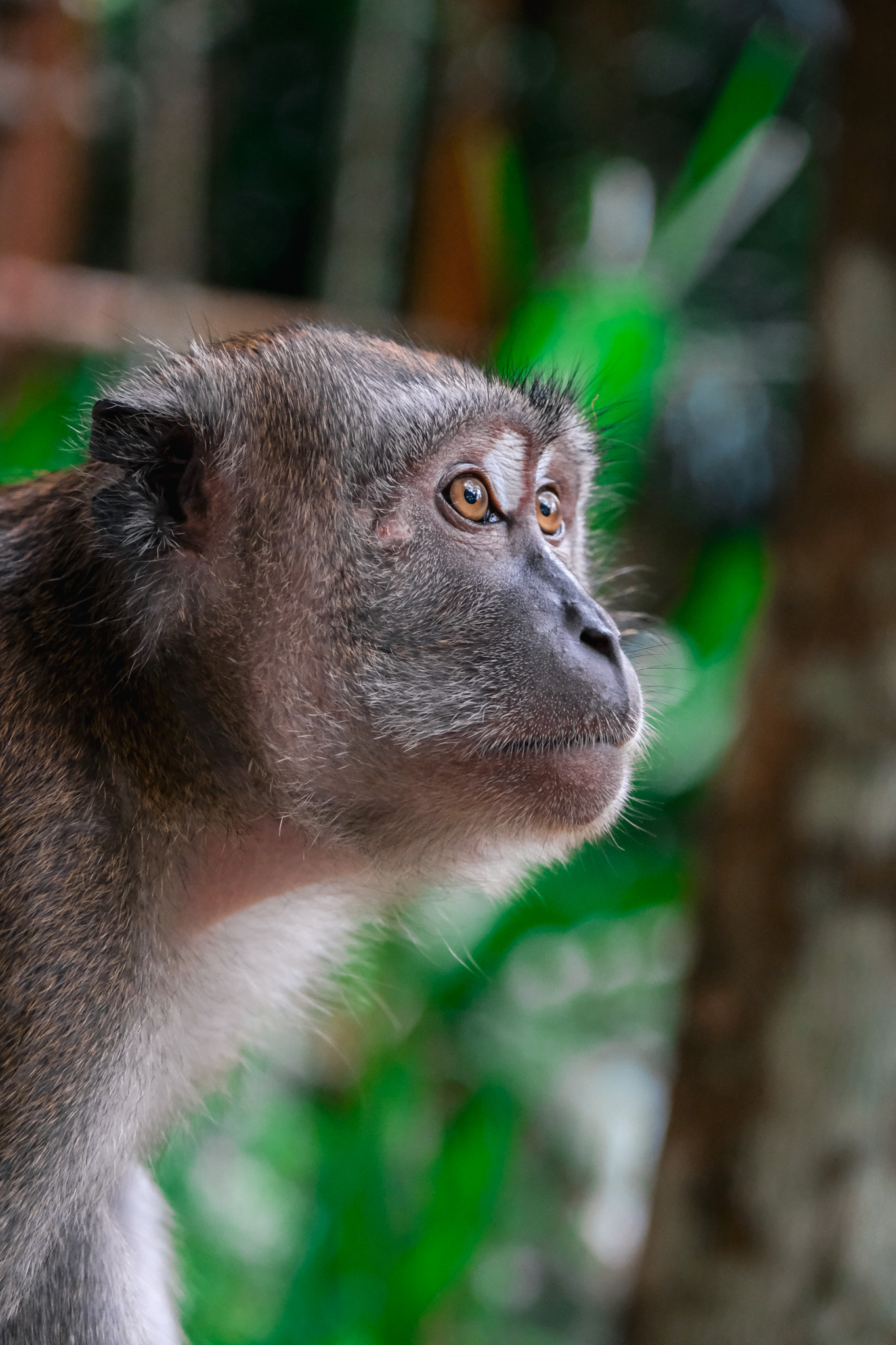
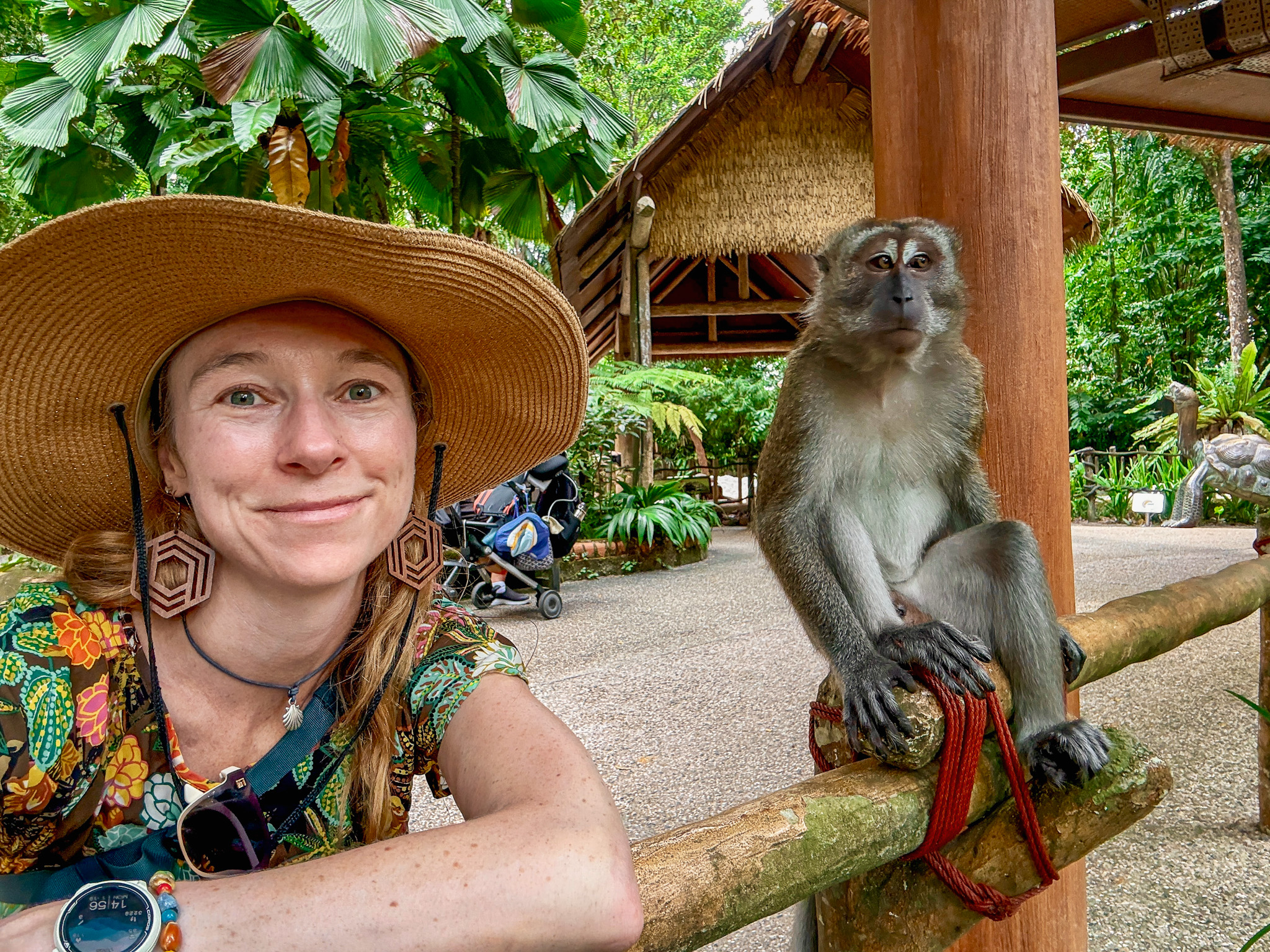
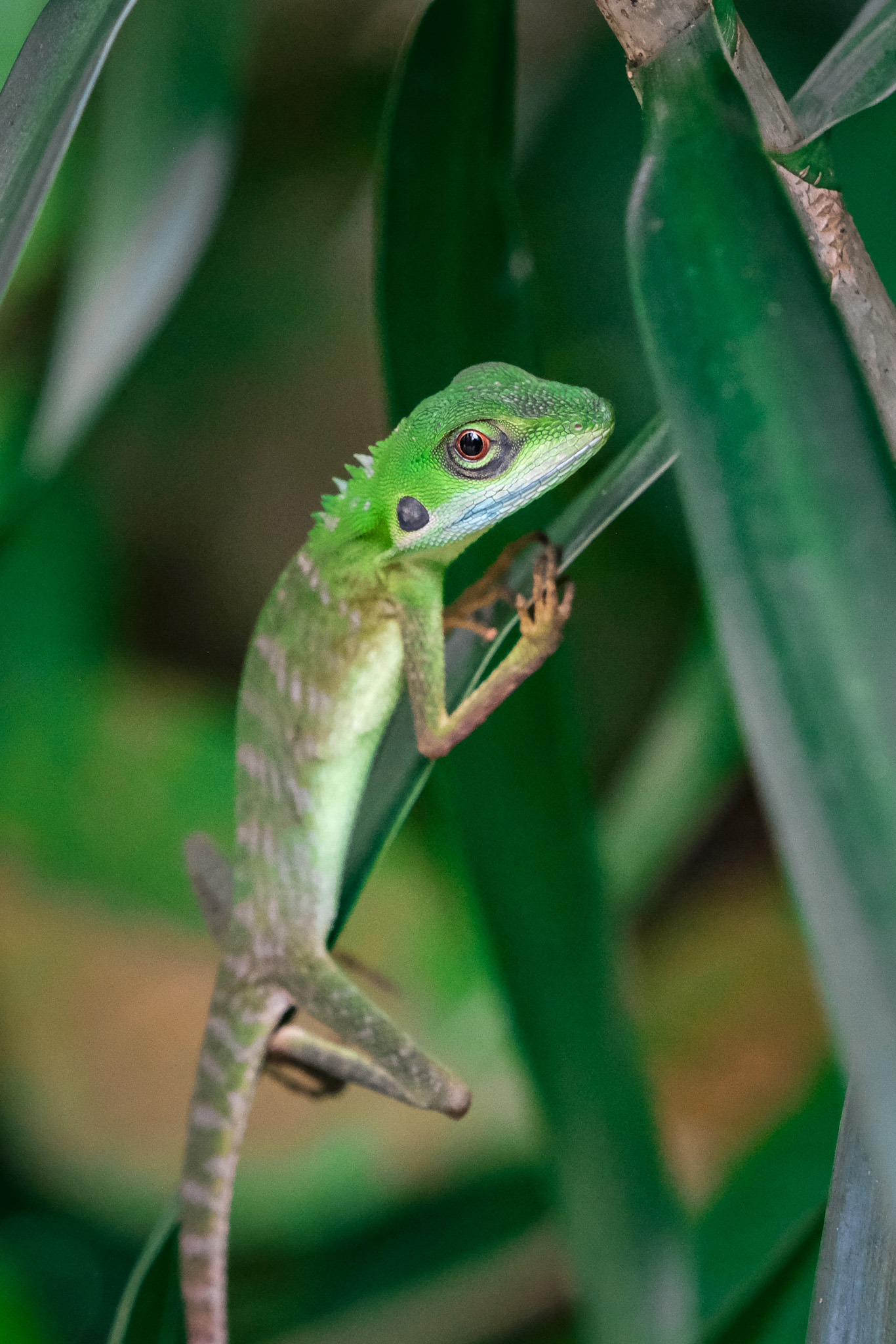
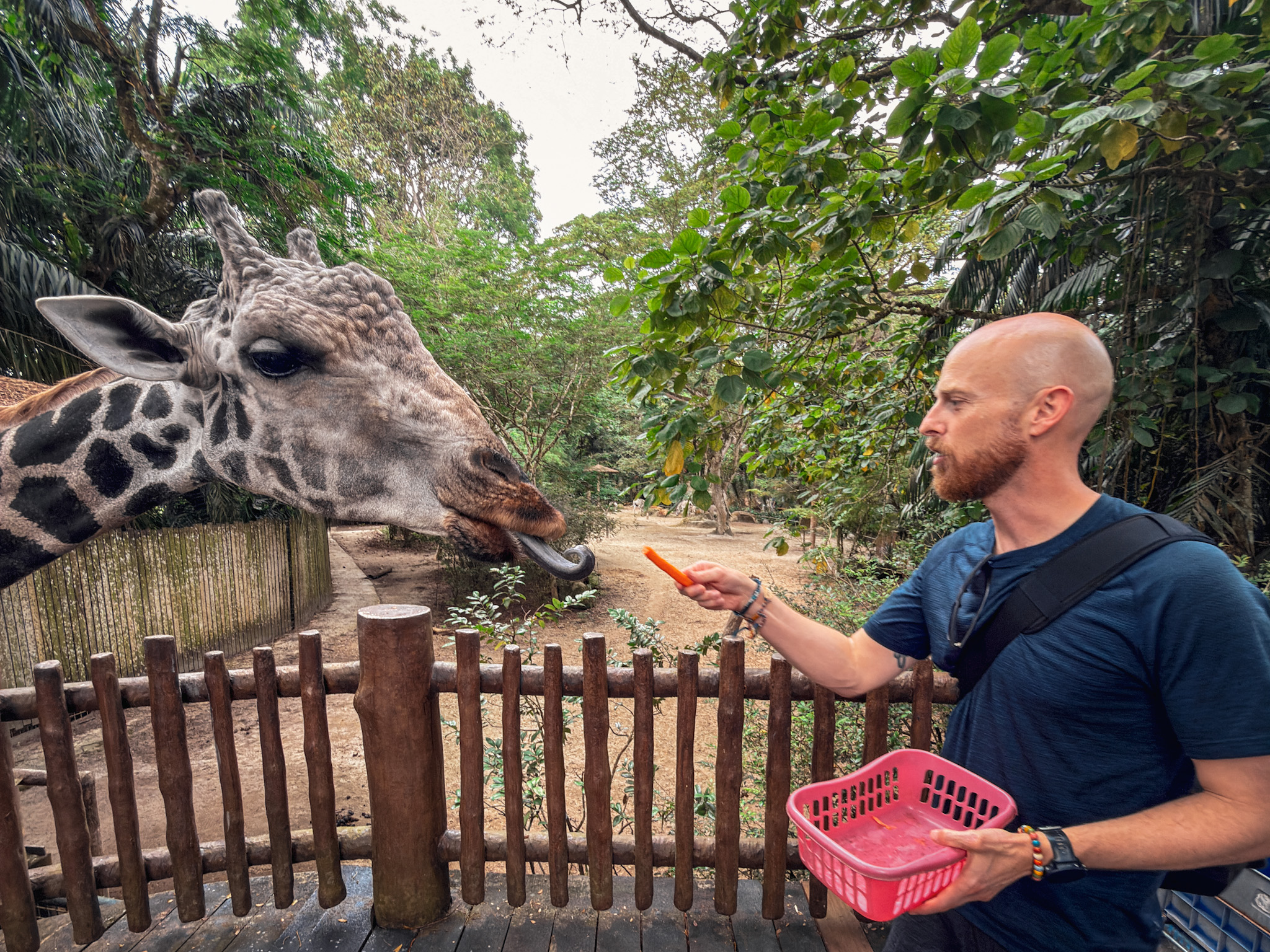
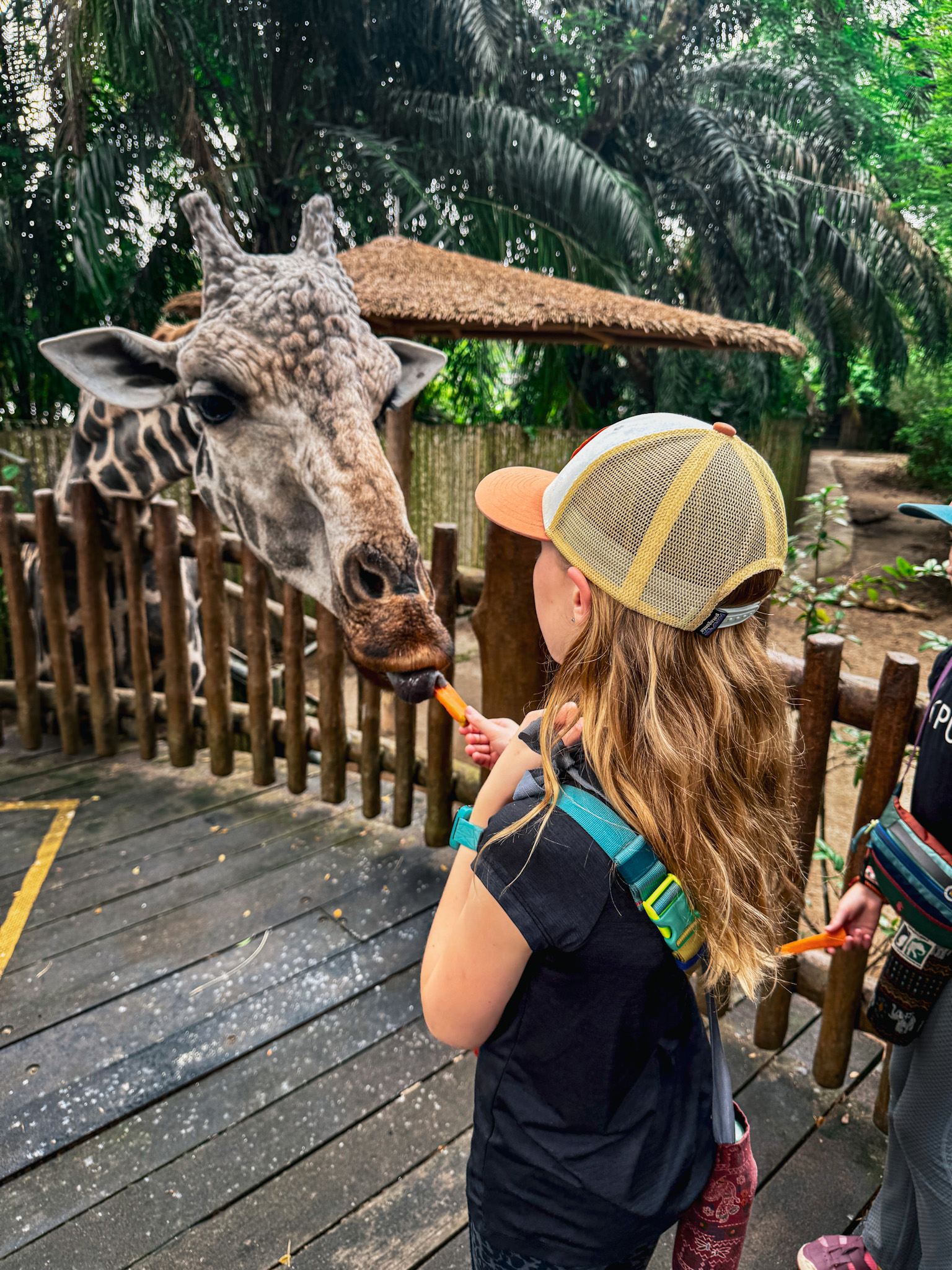
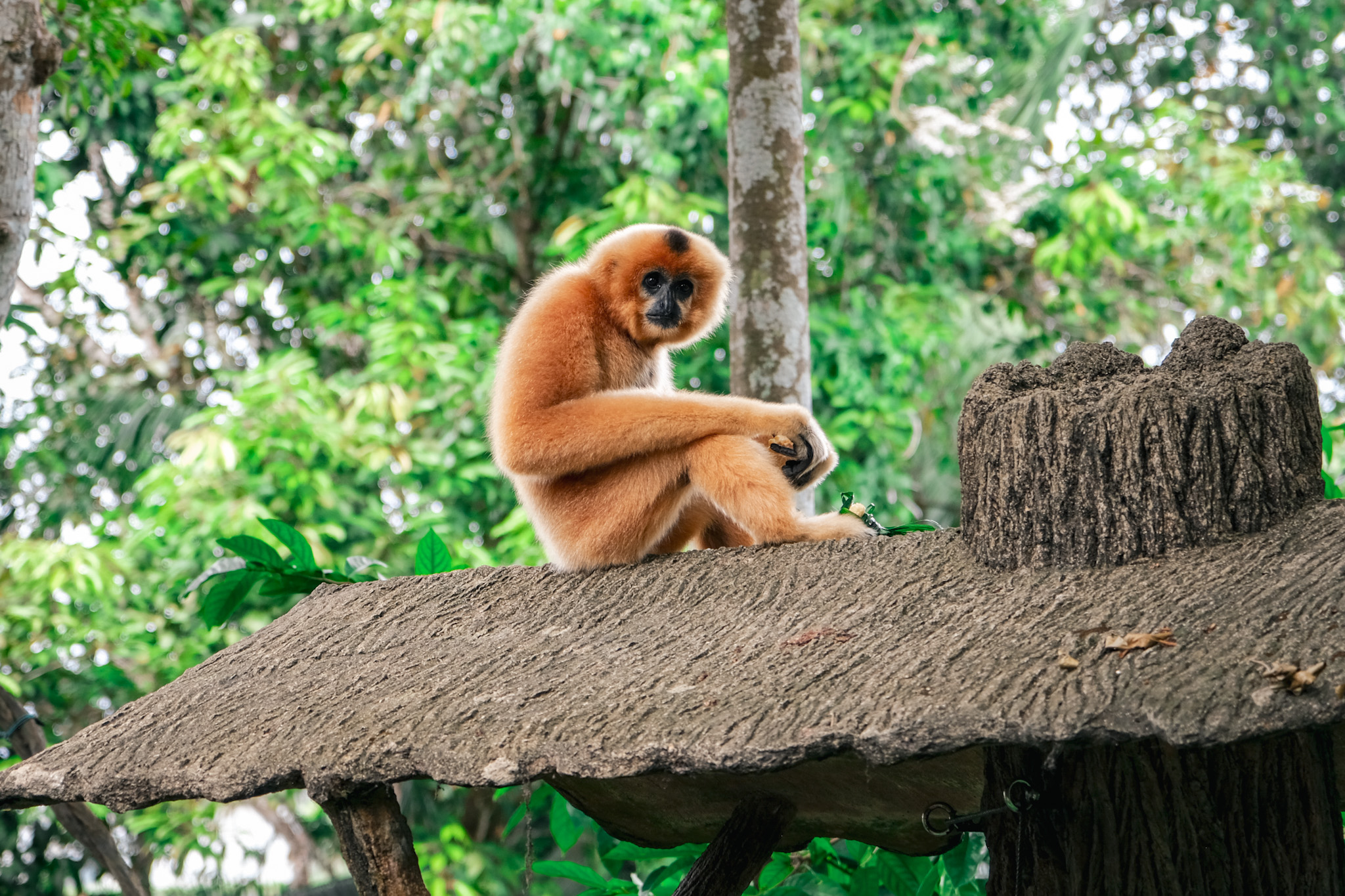
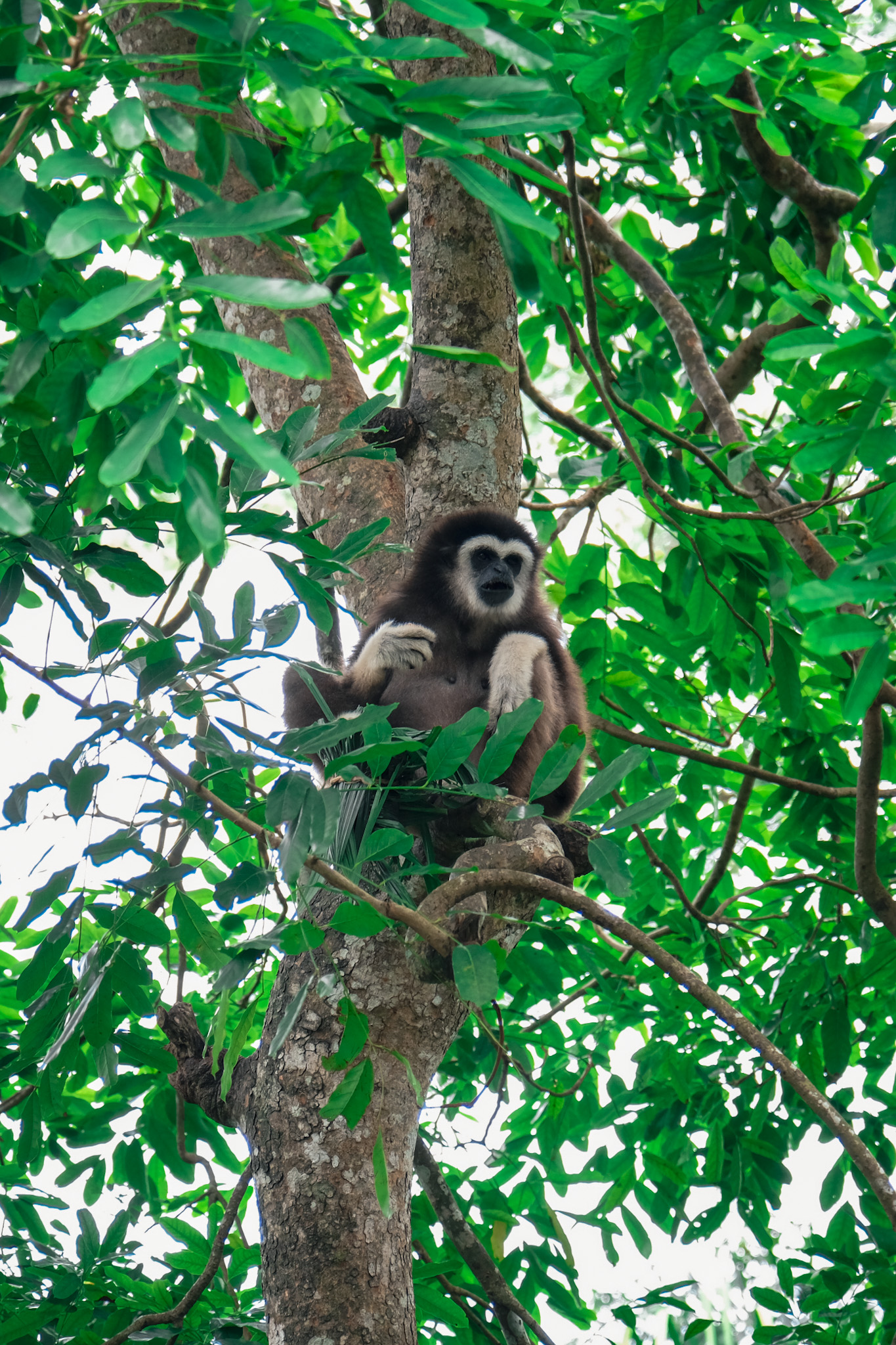
Then came a rapid-fire string of animals: crocodiles, gibbons, river otters, pelicans, fennec foxes, Komodo dragons, and one of our favorites—orangutans swinging around over the heads of public walking paths, totally ignorant, or indifferent, to the meandering tourists below. Threaded through all of this were the local interlopers who aren’t part of the zoo’s collection at all: long-tailed macaques. These monkeys are native to Singapore and Malaysia and famously intelligent, opportunistic, and mischievous. They’ve learned that zoos are excellent places to steal unattended snacks, and they moved through the space with the confidence of creatures who know exactly where they rank in the hierarchy.
We arrived around 15:00, and time completely evaporated. By 18:00 we’d covered nearly every inch of the zoo, but we weren’t done yet. Next door sits one of the other parks, River Wonders, and we still had just enough energy to take a look.
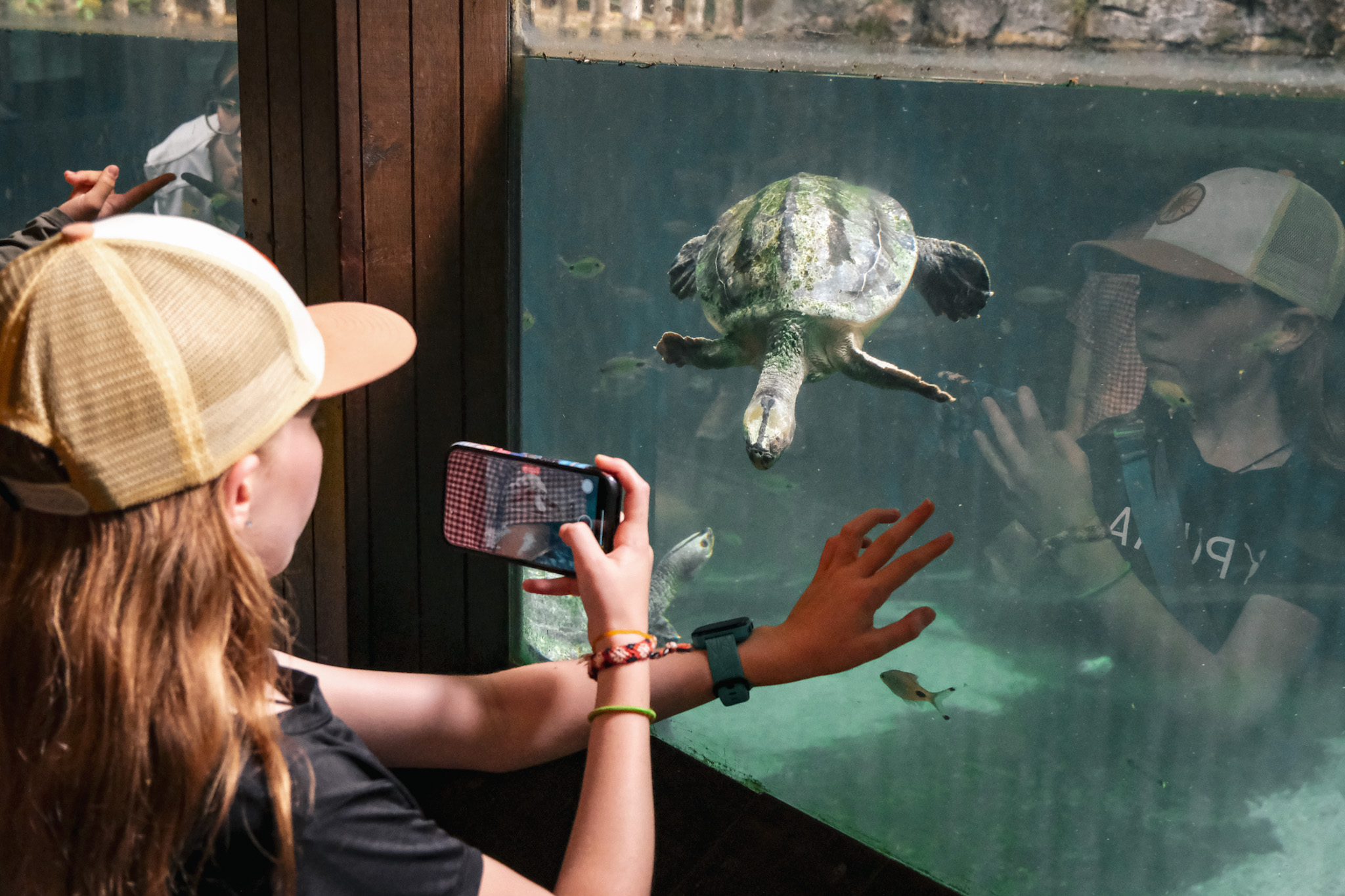
River Wonders focuses on freshwater ecosystems—the Amazon, the Mekong, the Nile, the Yangtze, and even the Mississippi. The layout combines large aquarium-style enclosures with oversized infographics that explain how these rivers function as lifelines for entire ecosystems.
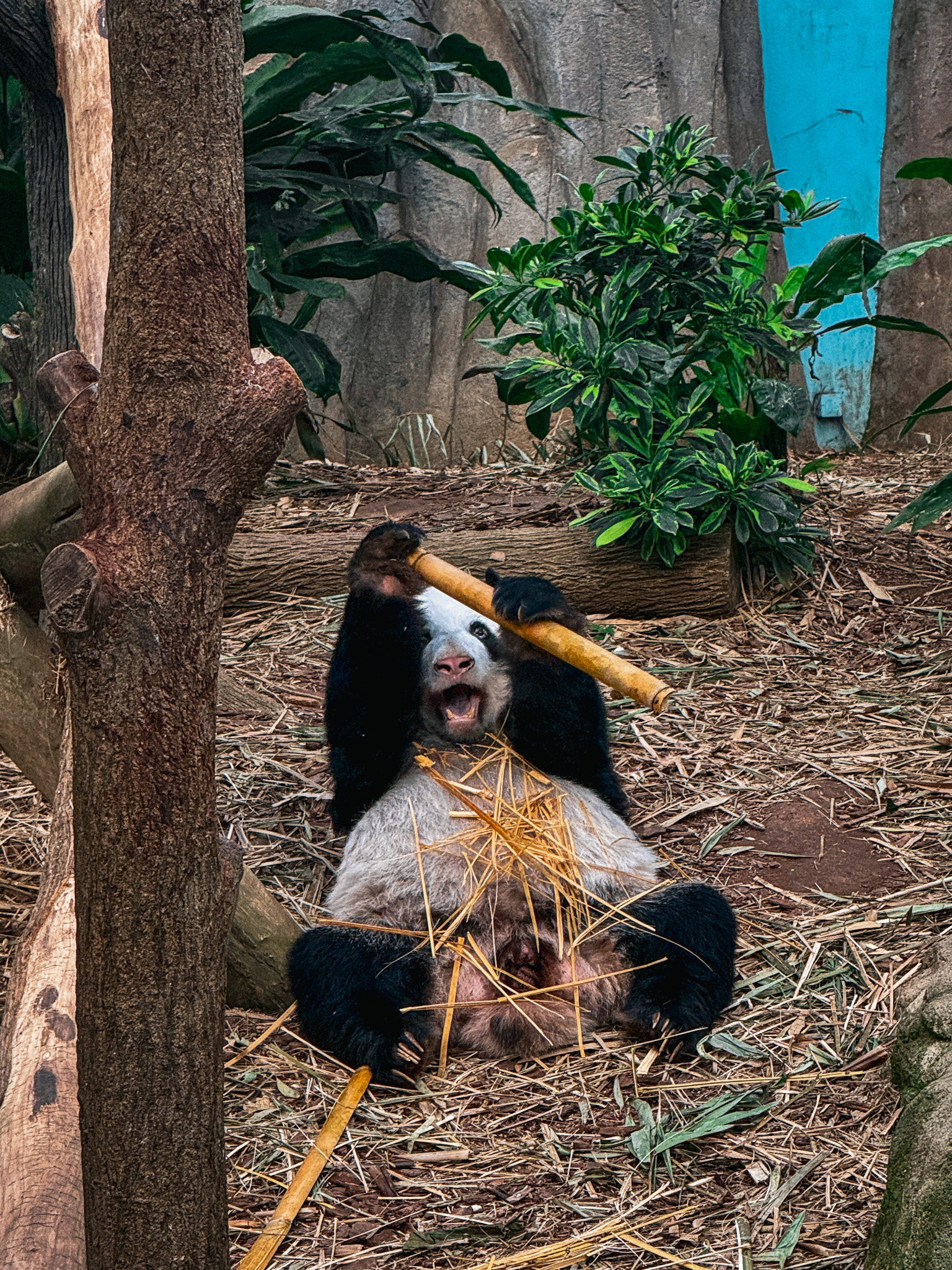
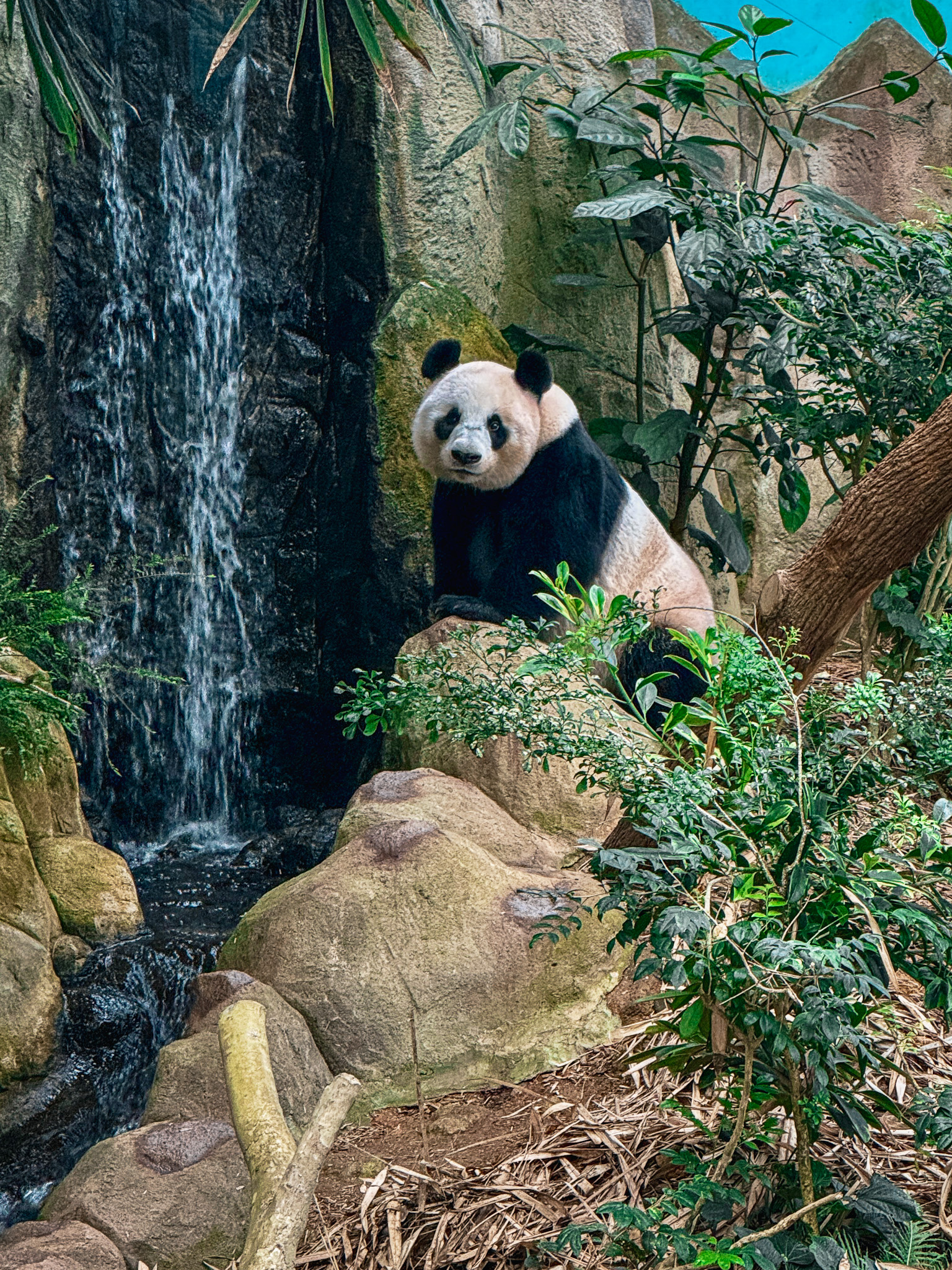
But the true draw has almost nothing to do with rivers: the giant pandas. One panda sat on its backside methodically chewing bamboo without a single concern in the world—exactly what we’ve seen pandas do 99 percent of the time. The second panda was a revelation. He wandered the enclosure, stopped to stare at us strange hairless apes, ambled over to his artificial river, plunged his mouth into the flowing water and drank deeply, then wandered some more. We’d never seen a panda this active. We stayed to watch his antics for what seemed like an hour, not least for the highly air conditioned room in which he wandered.
What to do after a long afternoon at two different zoo parks? Well, another zoo of course! Our final stop was the main event, the Singapore Night Safari, which sits alongside the other two parks and completes what is essentially a trio of world-class wildlife experiences in one place. Opened in 1994, it was the world’s first nocturnal zoo.
You can’t enter until after sunset at 19:00. The question is: how do you see anything? The answer is deceptively clever. Carefully placed LED lighting mimics moonlight so effectively that the enclosures are illuminated without obvious light sources. Unless you’re actively searching for the fixtures, it feels like you’re walking through jungle under a bright full moon. The effect is eerie and immersive in the best way.
The animals clearly loved it. Nearly all of them were active: eating, climbing, playing, digging. Low light made photography challenging, and eventually we just put the cameras away and let the experience take over.
At one point a zookeeper pointed out a fishing cat—a medium-sized wild cat built for water, with partially webbed feet. We watched as it teased the water surface to lure fish close, then swiped in and hooked one in a single smooth motion. It was incredible.
Over the next few hours we saw white tigers, wild dogs, hyenas, bears, civets, binturongs, and owls. We explored for nearly three hours before Finlee and Max both hit their absolute limit, the former nearly falling asleep on Shaina’s shoulder on our tram ride through the park.
The entire day was extraordinary. We owe a huge thank you to Jess and Mark, who gifted us the entrance passes to all three parks—saving us nearly $400 USD. It made a real and meaningful contribution to our ability to experience Singapore the way we did.
When Control Slips
Our last full day started with simple breakfast at the hostel—apples, whole wheat toast, instant coffee. From there we grabbed lunch at Din Tai Fung (yes, again—when something’s that good, you don’t overthink it), then headed to Sentosa Island.
Once a military base, Sentosa has been deliberately transformed into Singapore’s playground—an island packed with beaches, resorts, thrill rides, and meticulously curated attractions. It’s immaculately planned and aggressively fun, and almost everything costs a small fortune. We had to pick and choose.
First on the docket: Sky Luge. It’s a clever hybrid—a ski chair lift paired with a smooth concrete gravity track and a four-wheeled cart you steer and brake yourself. It’s high-speed, thrilling, but fully under your control. Which makes it both exhilarating and slightly dangerous if confidence outpaces judgment.
We bought four rides each. The first two went smoothly, with a learning curve—figuring out how fast you can push through corners, when and how to overtake, exactly how far you can test the envelope. By the third run, we were all feeling confident.
Possibly a little too confident.
Shaina jumped out to an early lead with Max giving chase and Arya close behind. Shaina and Max reached the bottom laughing, buzzing from the speed. A few moments later, Finlee and Arya arrived together.
That immediately felt off. Finlee usually rides conservatively and enjoys her own pace. Seeing them finish at the same time set off alarm bells. One look at Arya’s face confirmed something was wrong.
She’d been racing to overtake a woman who kept blocking her line. During one of these blocking maneuvers, Arya was forced into a bad position on a curve and flipped her luge cart. Out she tumbled. She hit hard.
Thank goodness for helmets. She came away with a solid bruise on her hip, nasty road rash on her triceps, and a helmet covered in deep scratches and scuffs. The helmet had done its job—it took the impact that could have been her skull against concrete.
We made a quick stop at the restroom to clean her wounds and apply Neosporin. She was shaken but composed, and we could see her working through what had just happened. Part of her wanted to be done. Part of her didn’t want the crash to define the experience.
We encouraged her to keep going if she felt up to it, but more carefully this time. For the final run, we suggested she take the lead and finish strong.
She did exactly that. Despite the rain that needled our faces as we descended, Arya chose the hardest course and absolutely flew, taking corners with precision and finishing with a grin that said more than words could. It was good to see her not let the crash completely derail things—to find a way to reclaim the experience on her own terms.
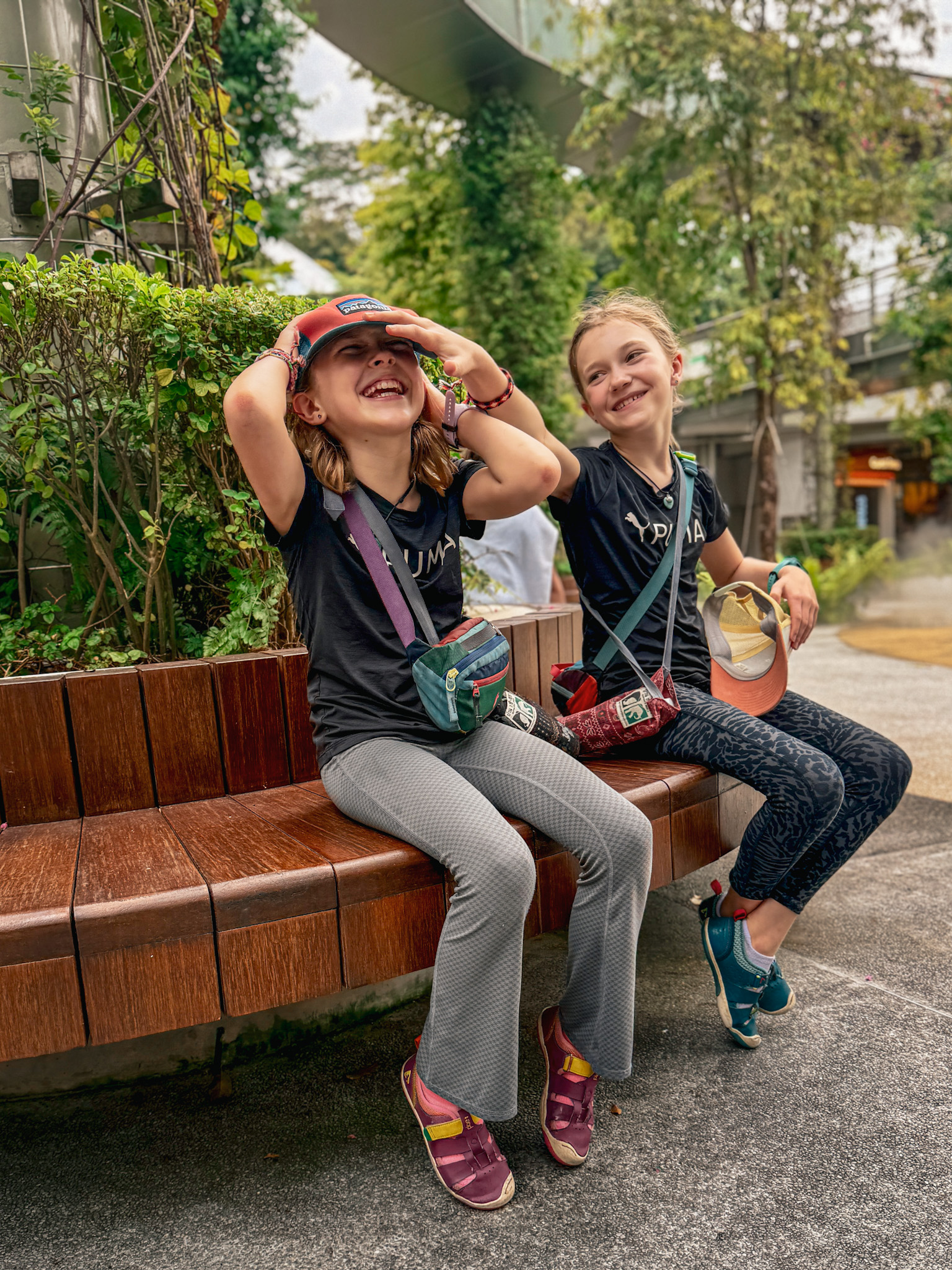
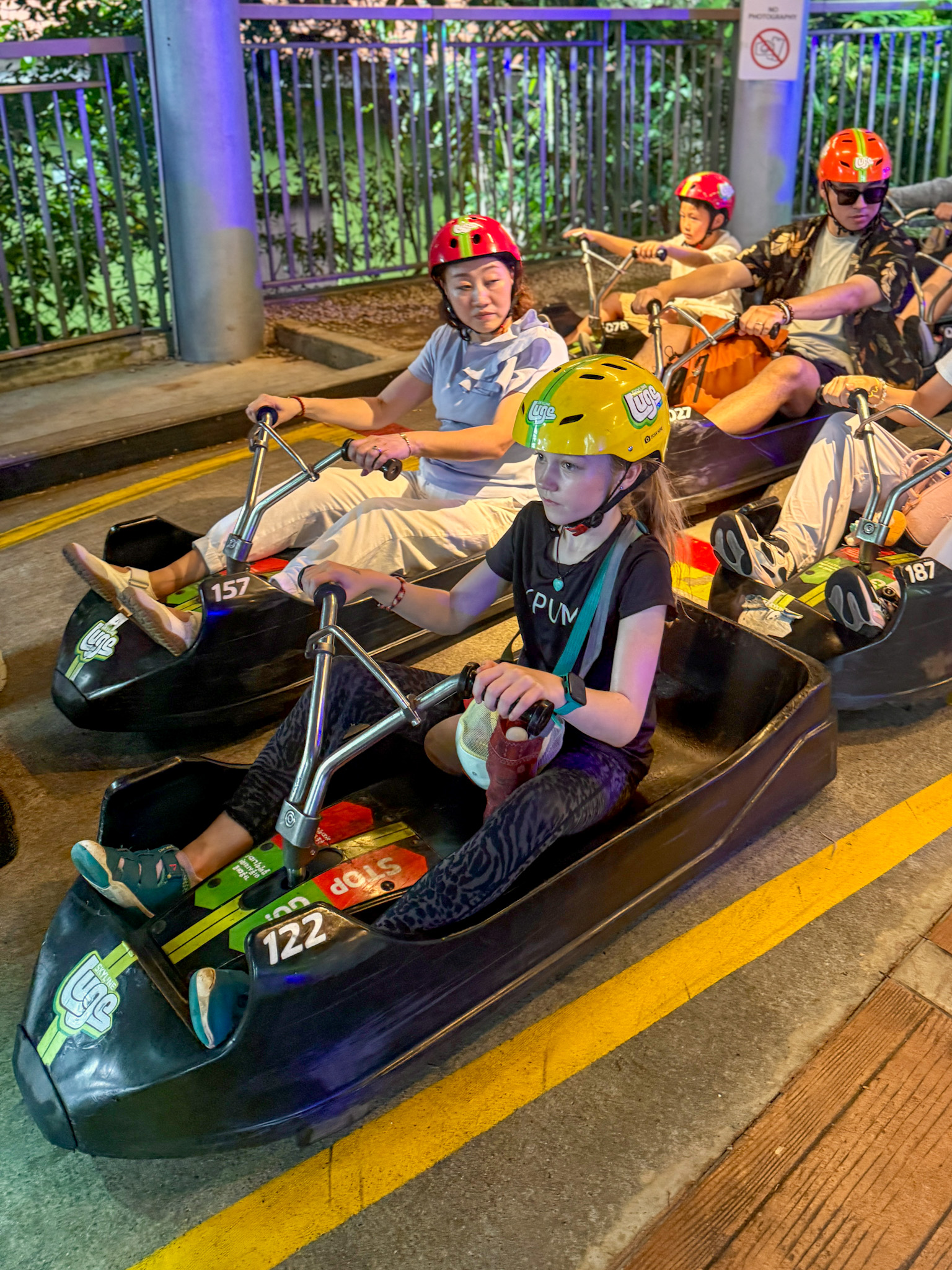
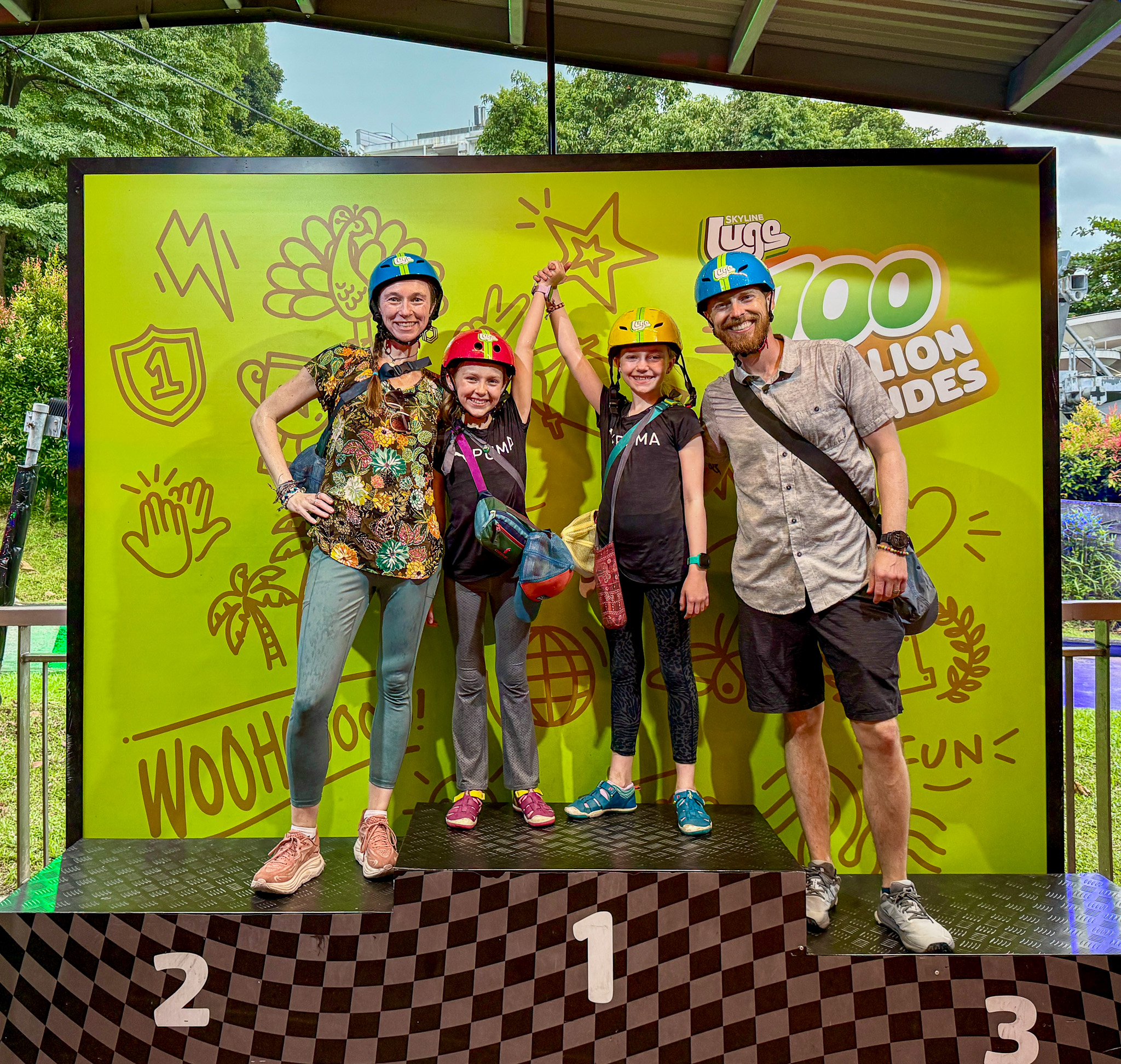
In a way, that moment captured something essential about this entire trip. Singapore is engineered for safety and control. The paths are smooth. The rules are clear. The systems work exactly as designed. But even in the most carefully curated environment, things can go sideways. And when they do, you clean the wounds, take a breath, and decide how you want to finish.
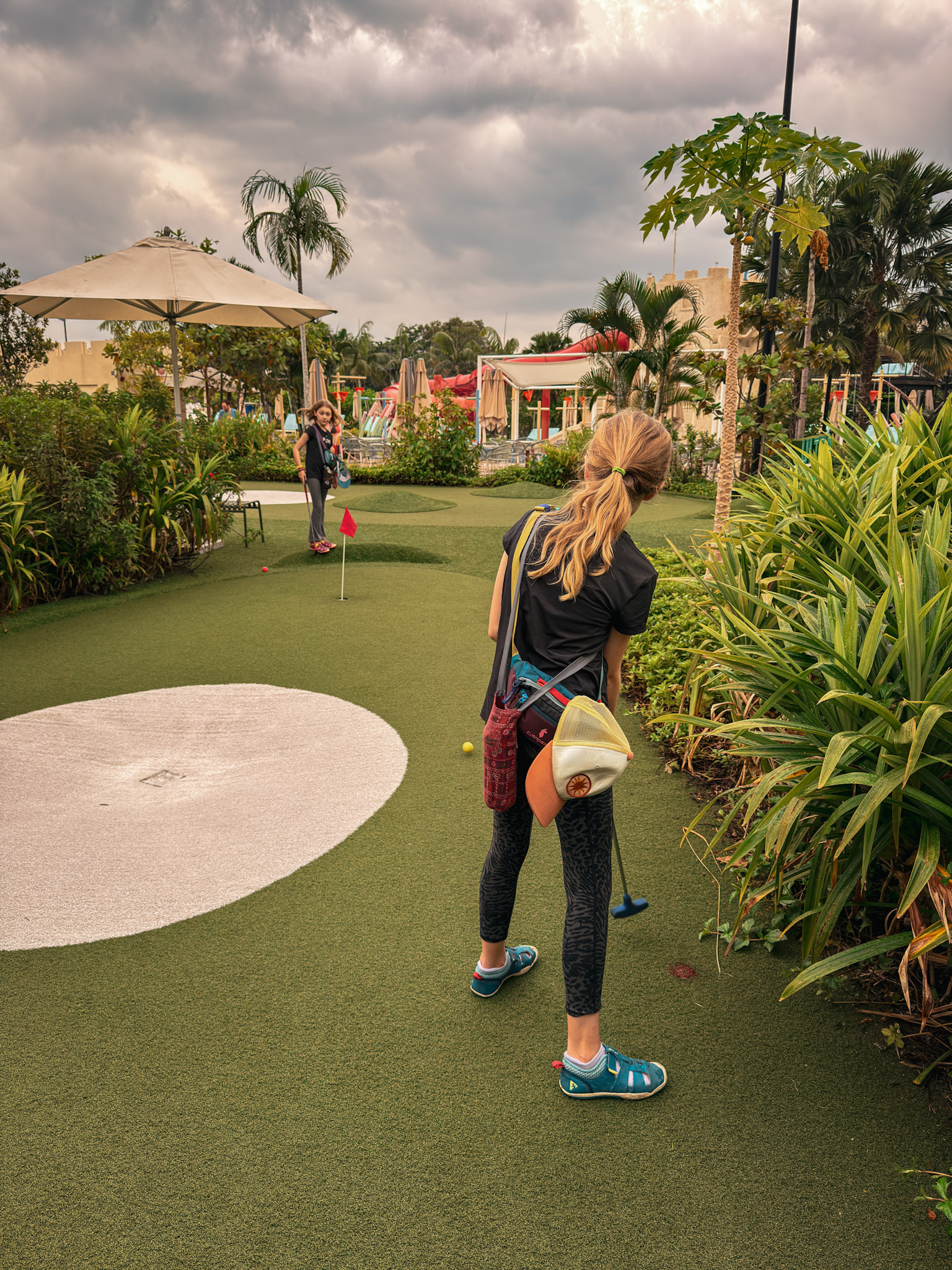
After luge, we shifted gears with a round of mini golf on a surprisingly well-designed and realistic tropical course. It was exactly the lower-key adventure we needed. Arya and Max tied for individual first, but Shaina and Max barely won overall by two strokes playing as a team against the kids. (And no we aren’t horrible parents: we shot from the blues while the girls had the red tee advantage).
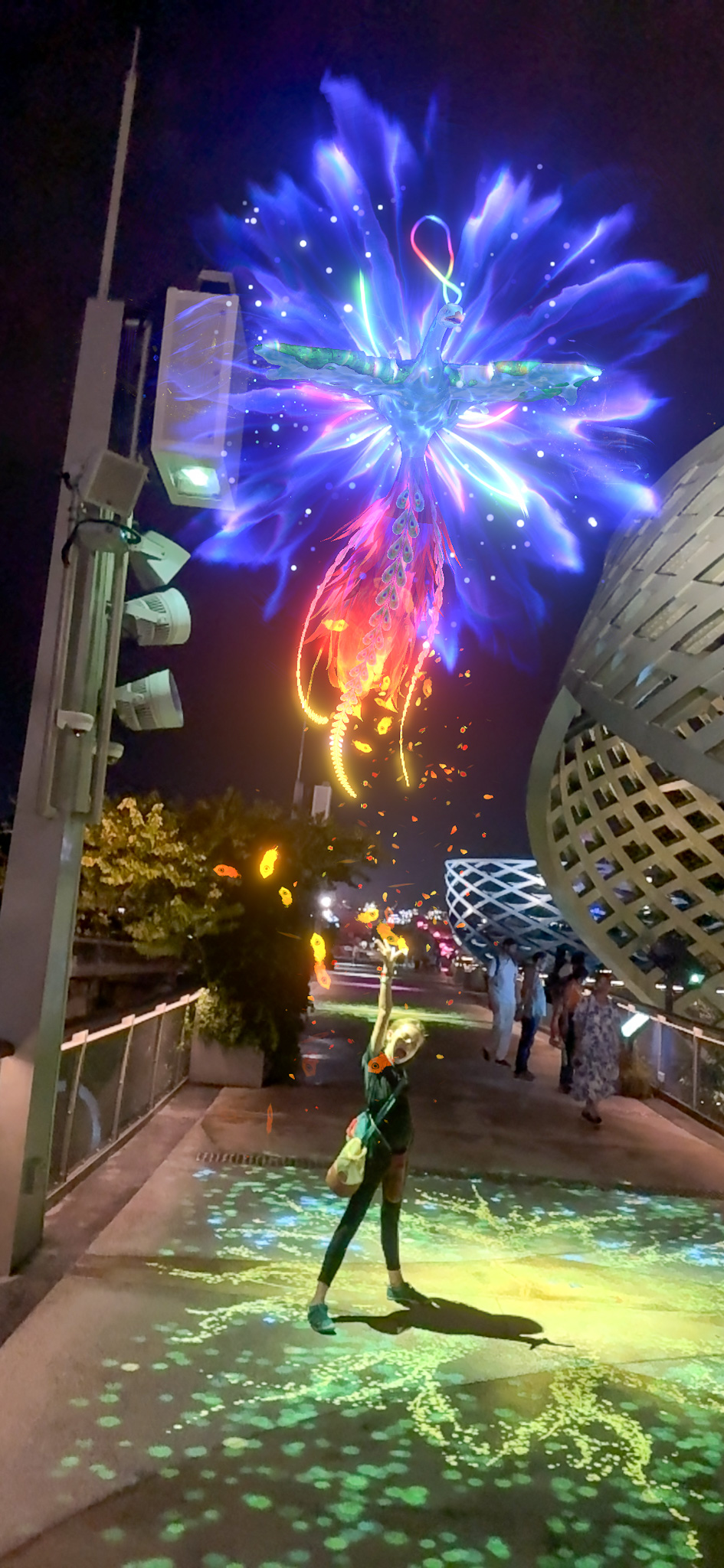
Our final stop was the Sensorium exhibits—installations designed to engage multiple senses at once, blending light, sound, and movement. At night they added an augmented reality layer that felt almost excessive in its ambition. As we finished, a massive cosmic rainbow phoenix materialized above us and soared through the space.
Because of course Singapore would insist on something that outlandish as a finale.
What We’ll Remember
Singapore only got four days out of our year-long sabbatical, but it punched far above its weight.
We’ve changed up the structure of our gap year multiple times to keep to a sustainable budget. Singapore was a stretch—everything costs more here. But between the generosity of Jess and Mark, some conscientious choices about which paid attractions really mattered, and keeping our stay short, we made it work.
What we didn’t expect was how much the people would matter. Jess and Mark didn’t just save us money. They gave us context. Mark’s explanations of Singapore’s history and development helped us see past the surface-level perfection to understand the choices and trade-offs that created it. Their companionship turned what could have been just sightseeing into something deeper—a chance to see how other families navigate their own versions of an unconventional path.
The contrast between Vietnam and Singapore could not have been starker. Vietnam is rough around the edges, chaotic in the best way, full of organic beauty that emerges despite rather than because of planning. Singapore is the opposite—meticulously designed, relentlessly optimized, beautiful in a way that requires extraordinary resources and vision.
Neither is better. They’re just different answers to the same questions: What do we value? What are we willing to trade for it? How do we want to live?
Vietnam taught us to embrace the mess. Singapore taught us what’s possible when you refuse to accept limitations. And the families we’ve met along the way—especially Vu and Do in Vietnam and Jess and Mark in Singapore—reminded us that no matter how different the environments we come from, the things that matter most are remarkably similar.
To Jess and Mark: thank you. Your generosity made our time in Singapore possible, but your friendship made it unforgettable. We’re incredibly grateful.
 Pause and Wander
Leave a comment