
Dates: December 29th to January 1st
Place: Huê, Vietnam
We arrived in Huê knowing we would be here for a handful of days, but without much sense yet of how those days would stack up. On the first day, that uncertainty felt fine.
We were up early enough to get moving without rushing. The girls slid into homework easily, and that alone felt like a good sign. Finlee surprised us by being awake before anyone else and already set up at the table, working through her Khan Academy math. When that happens, the day tends to start on steadier footing.
Max headed out to find coffee and breakfast. The first café looked promising but delivered coffee that was barely warm and no food at all. Breakfast ended up coming from a tiny sidewalk setup near a shop about the size of a backyard shed. A woman and her husband were selling bún chả from a massive pot of dark broth. Chicken, meatballs, pork bones, and plenty of unidentifiable bits floated together. Next to the pot were bundles of herbs, lime wedges, bean sprouts, and bags of bún noodles.
She filled plastic bags with broth and meat, twisted them shut with rubber bands, and handed over chopsticks to borrow just in case. Back at the hotel, everything went into bowls. It was excellent, and all four were finished quickly.
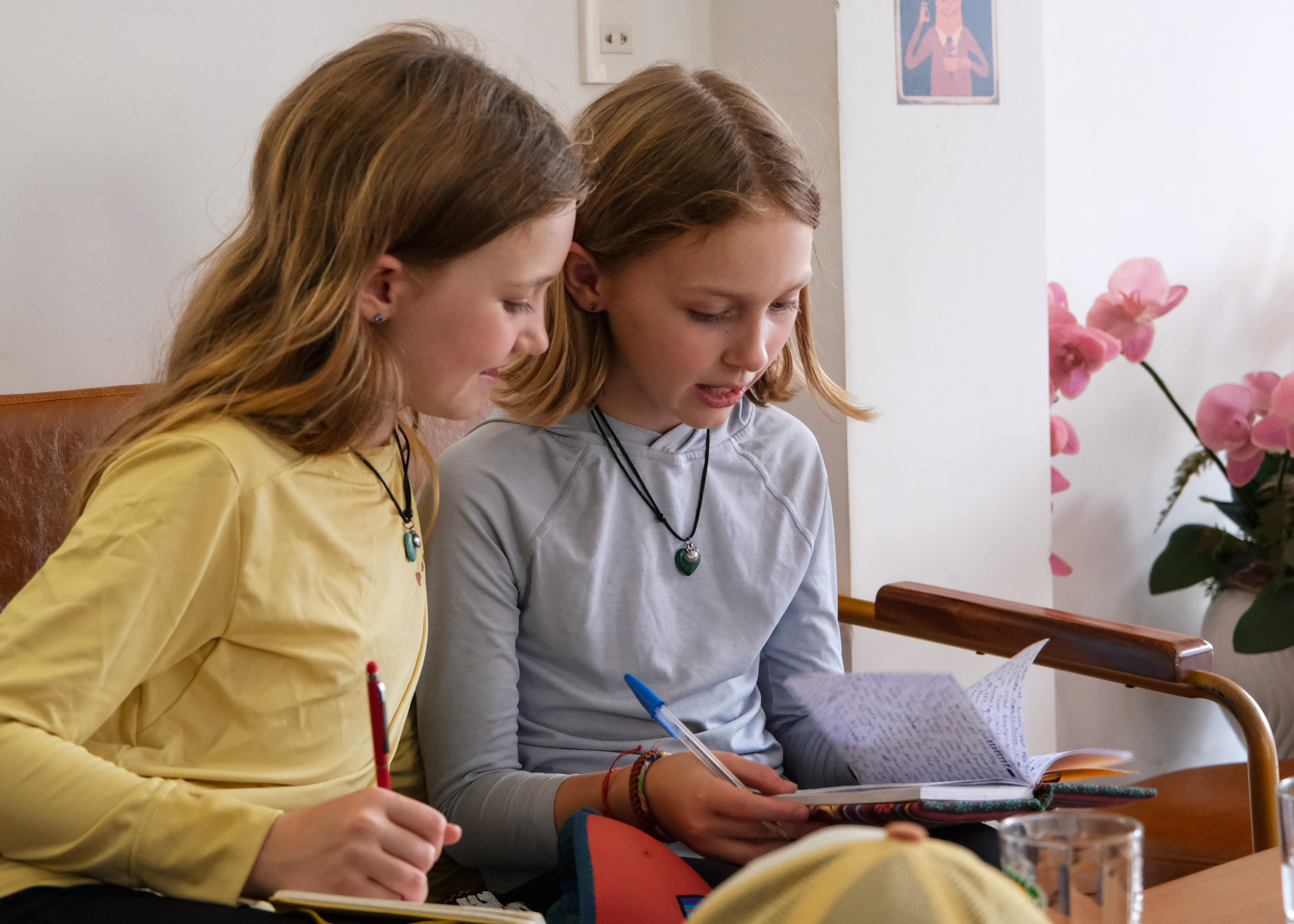
With breakfast handled, we settled into journaling and homework. About 90 minutes later, everything on the girls’ lists was checked off. Sunscreen on, we headed out into the city.
Huê is large, and the canals and the Perfume River make navigation feel indirect at first. You cannot cross wherever you want, so routes bend in ways that are not intuitive. We walked north toward the city center, getting a feel for the scale of the place and the way movement here requires a bit of patience.
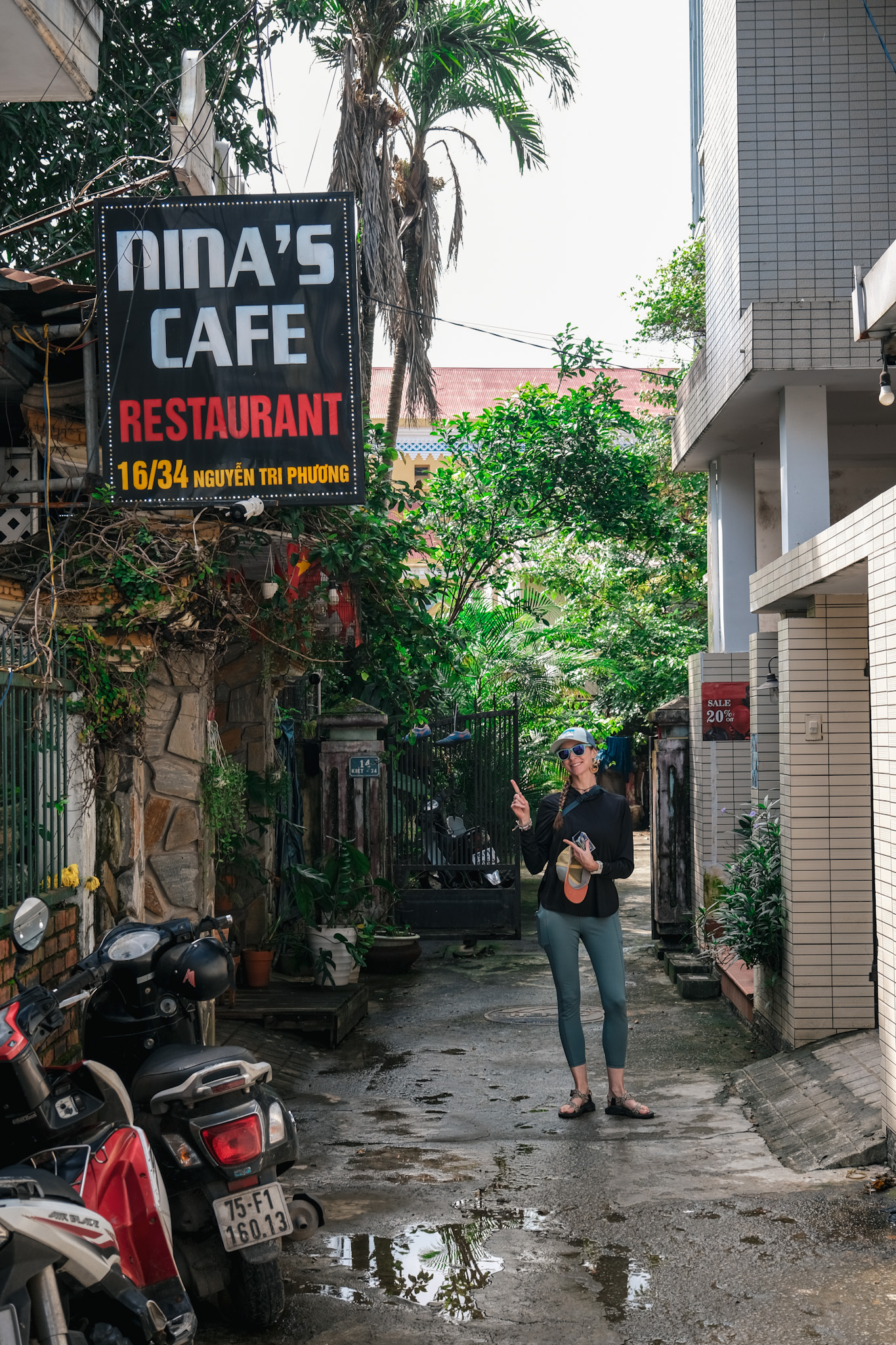
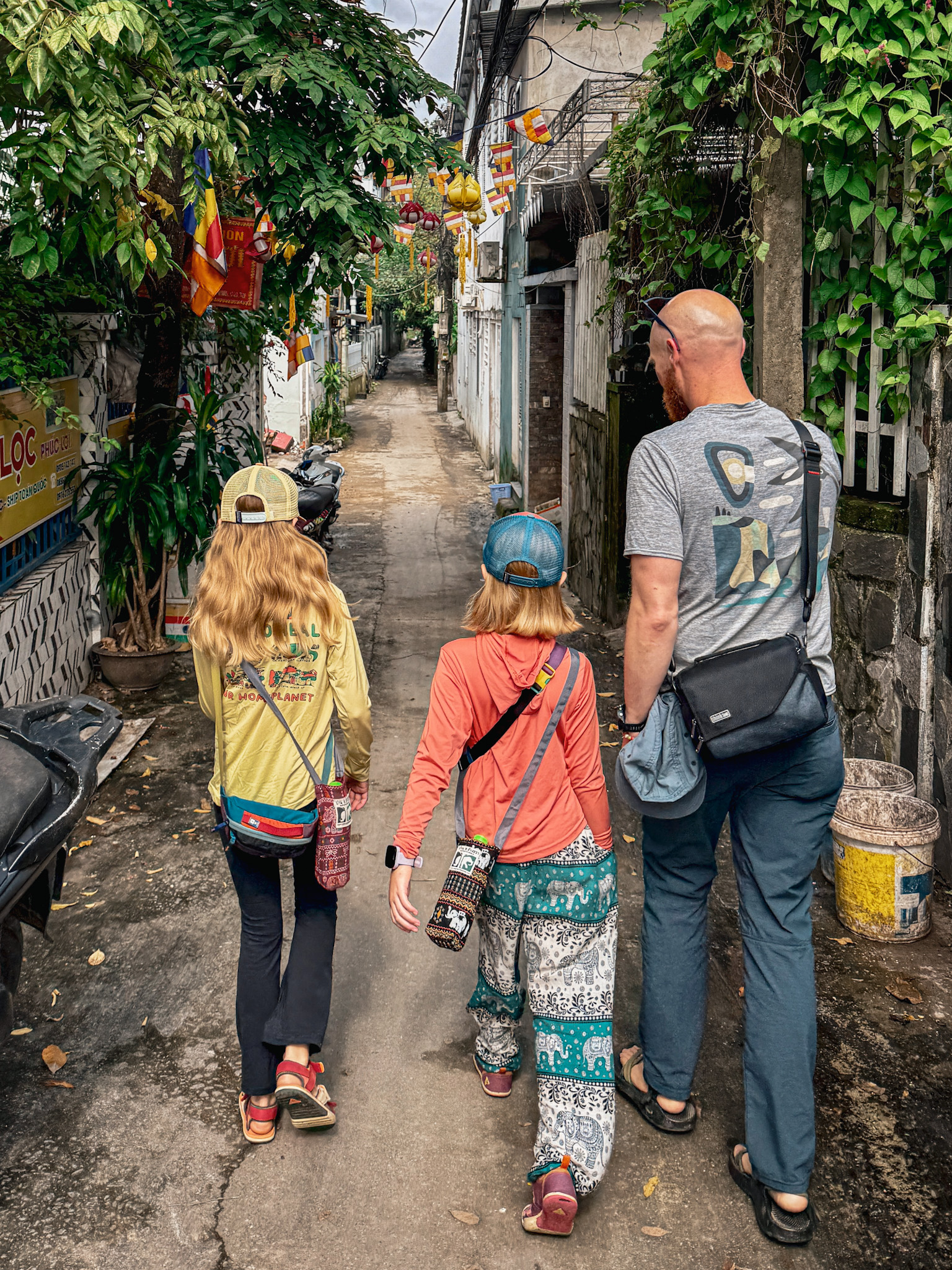
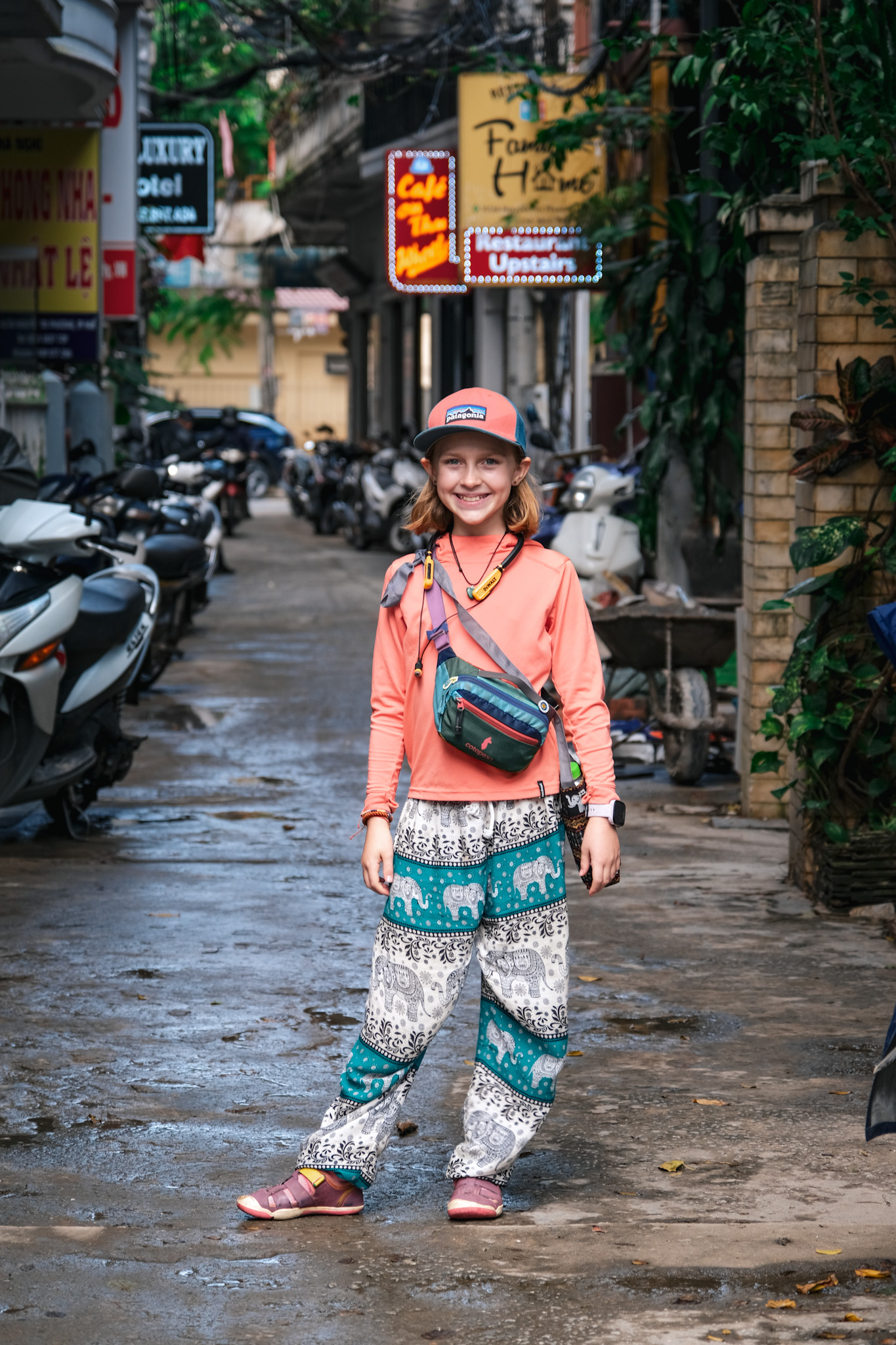
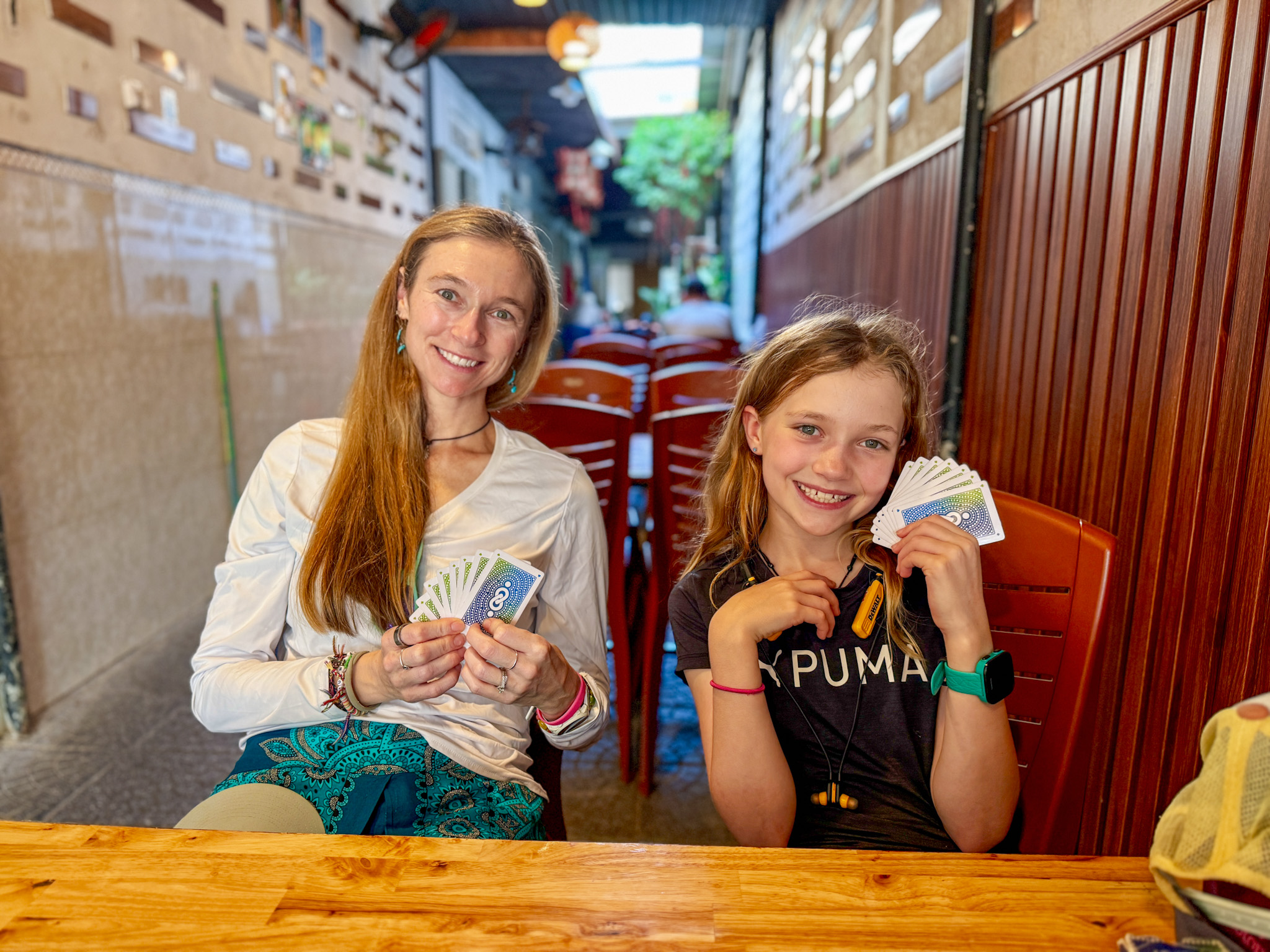
Lunch at Nina’s Cafe helped anchor that first day. Nem lụi, a local specialty of grilled pork on a stick of lemongrass, then wrapped in rice paper with herbs and dipped into thick peanut sauce. Nina’s special with kimchi fried rice, beef with bell peppers, and piles of greens meant for rolling. A beer for us, passionfruit smoothies for the girls, and several rounds of one of our favorite card game, Kings and Cabbages—it felt familiar in the best way.
After lunch we crossed the Perfume River, stopping to take in Truong Tien Bridge stretching across the water. Built during French colonial rule in the style-du-jour of Monsieur Eiffel, it still functions as a visual center of gravity for the city.
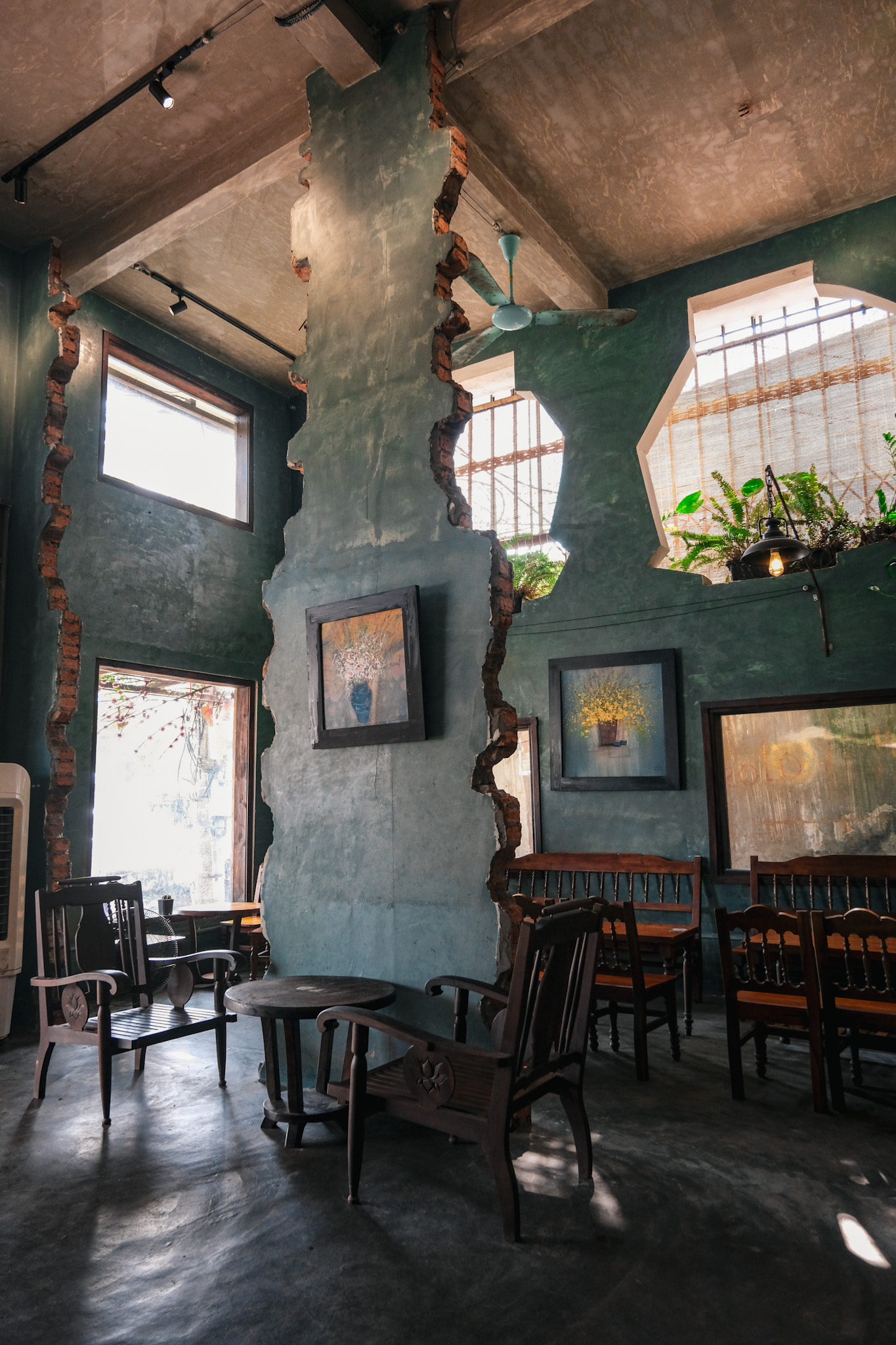
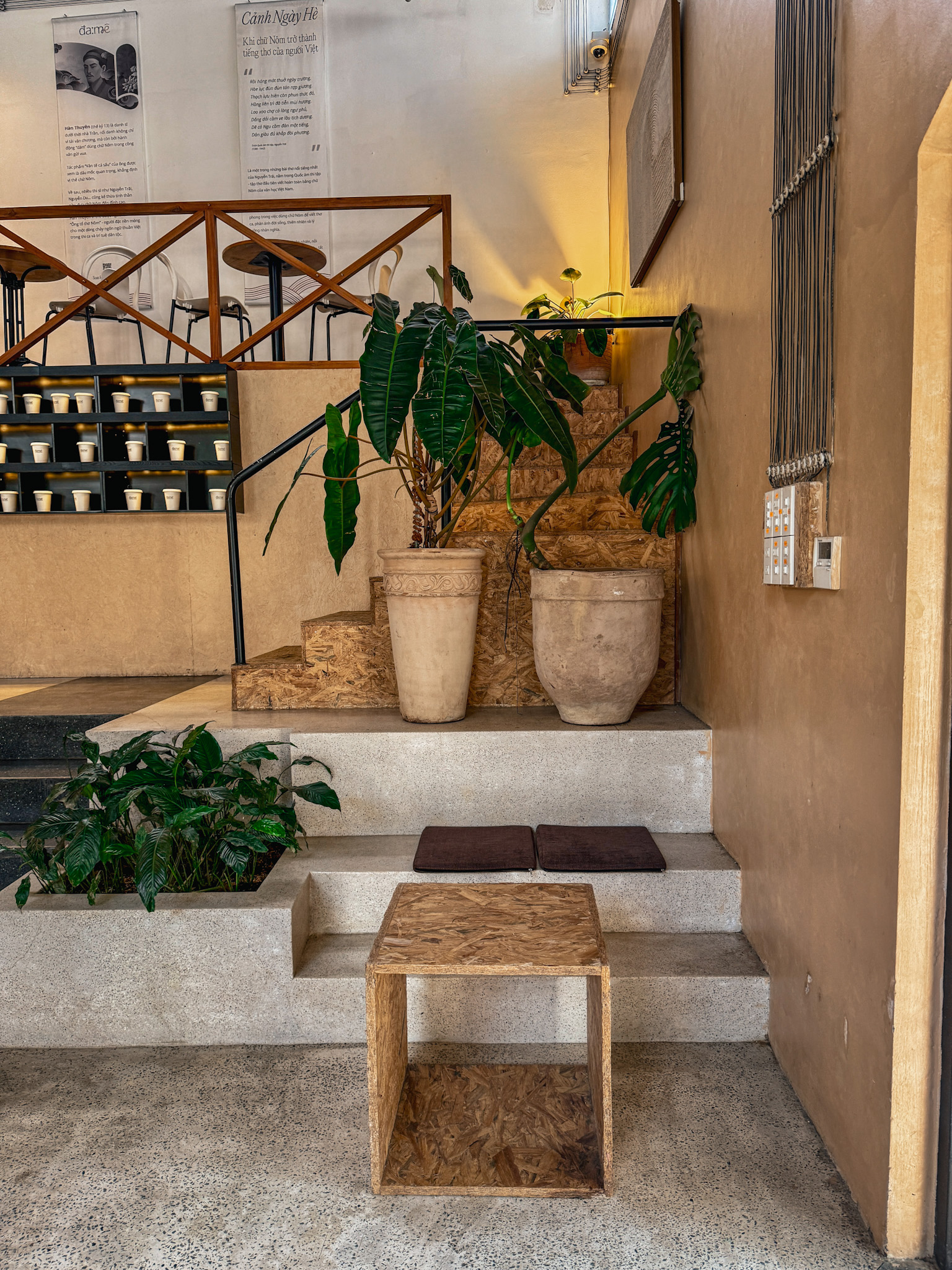
Before our afternoon tour, we paused at Tram Cafe. It was our first real chance to sit and notice something that would repeat itself throughout Huê. Many spaces here feel intentionally unfinished but well cared for. Concrete, wear, and age are left visible rather than hidden. Nothing is precious, but everything works. It creates a calm, honest atmosphere that feels lived in rather than staged.
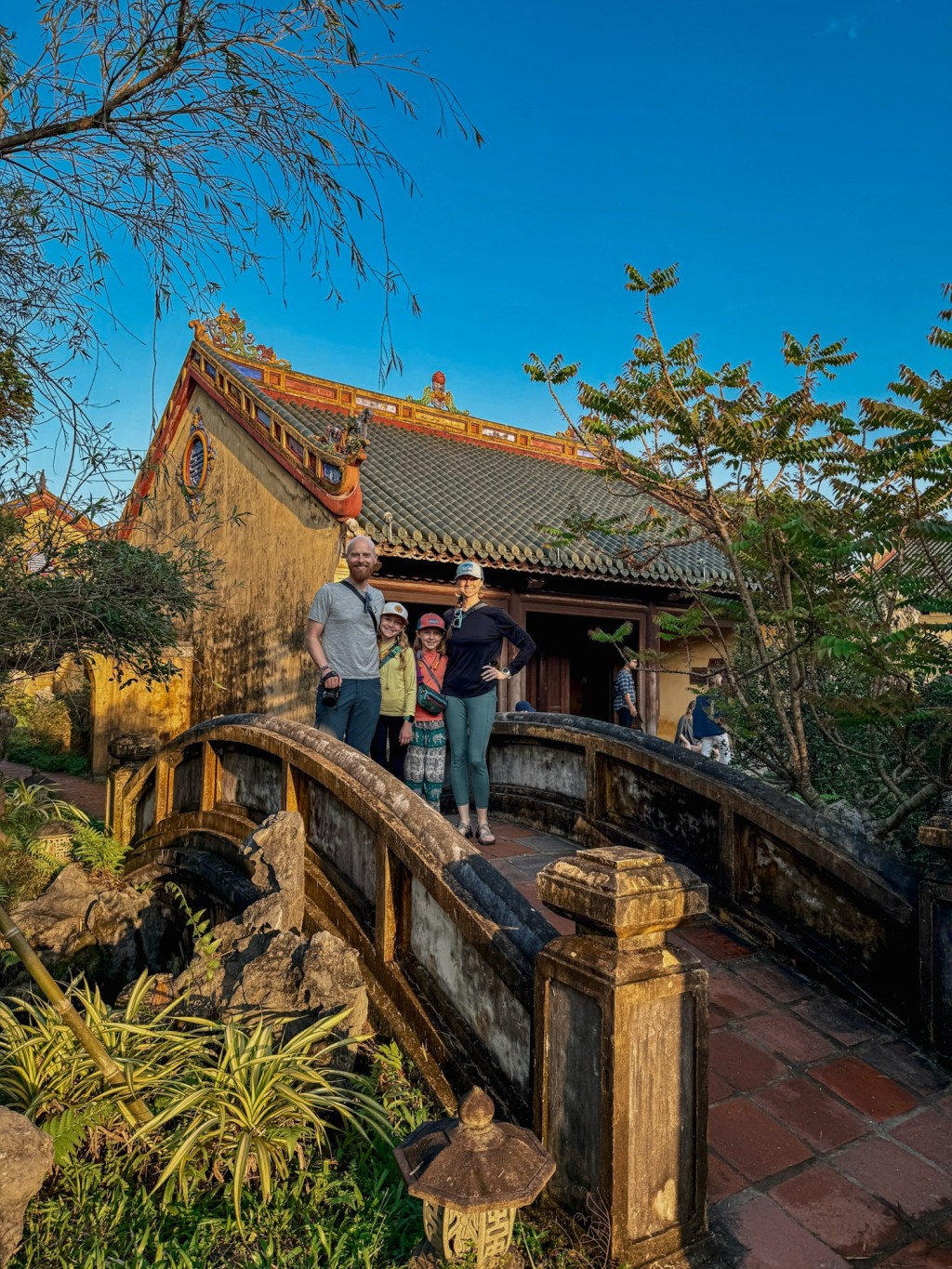
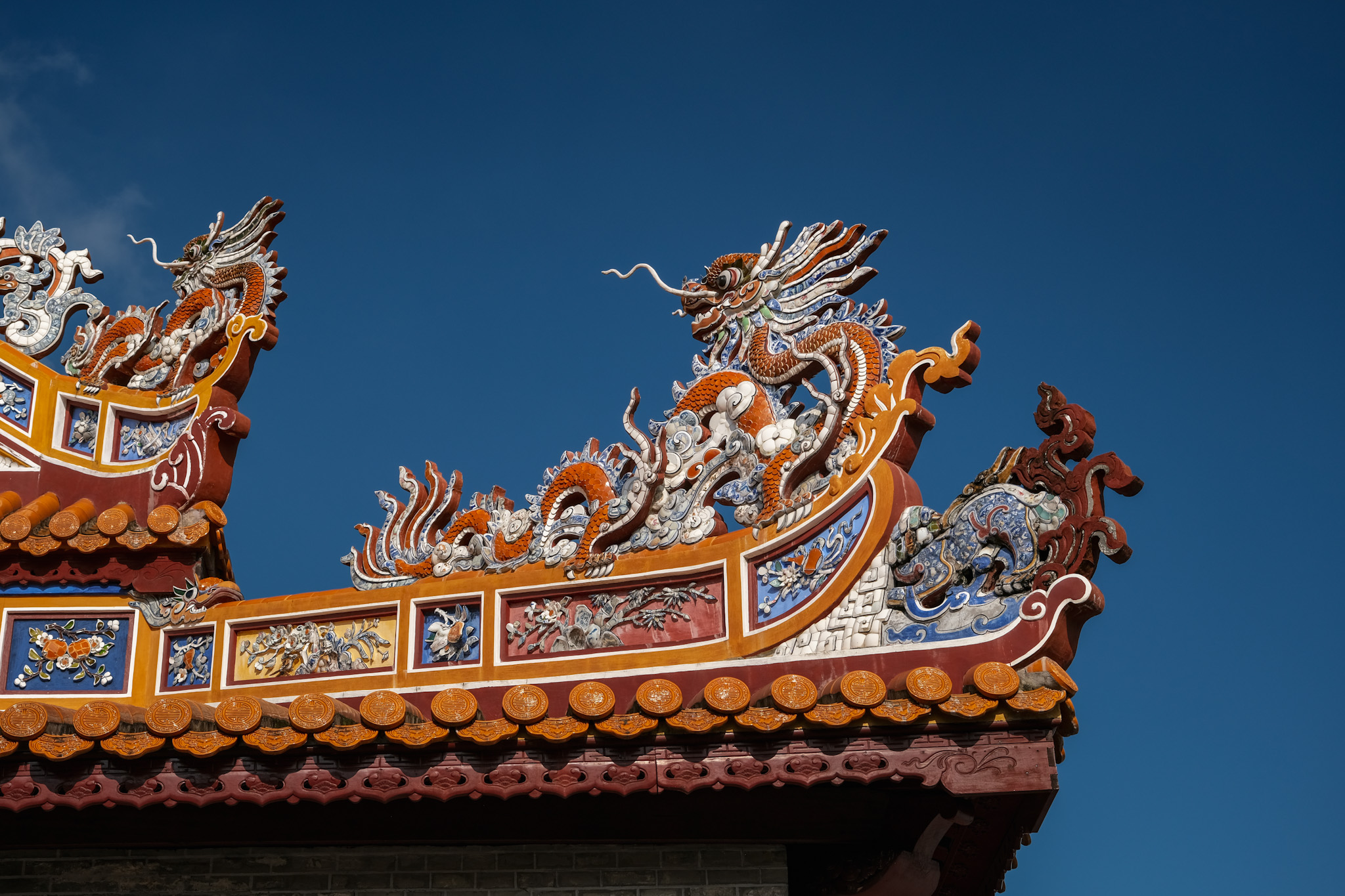
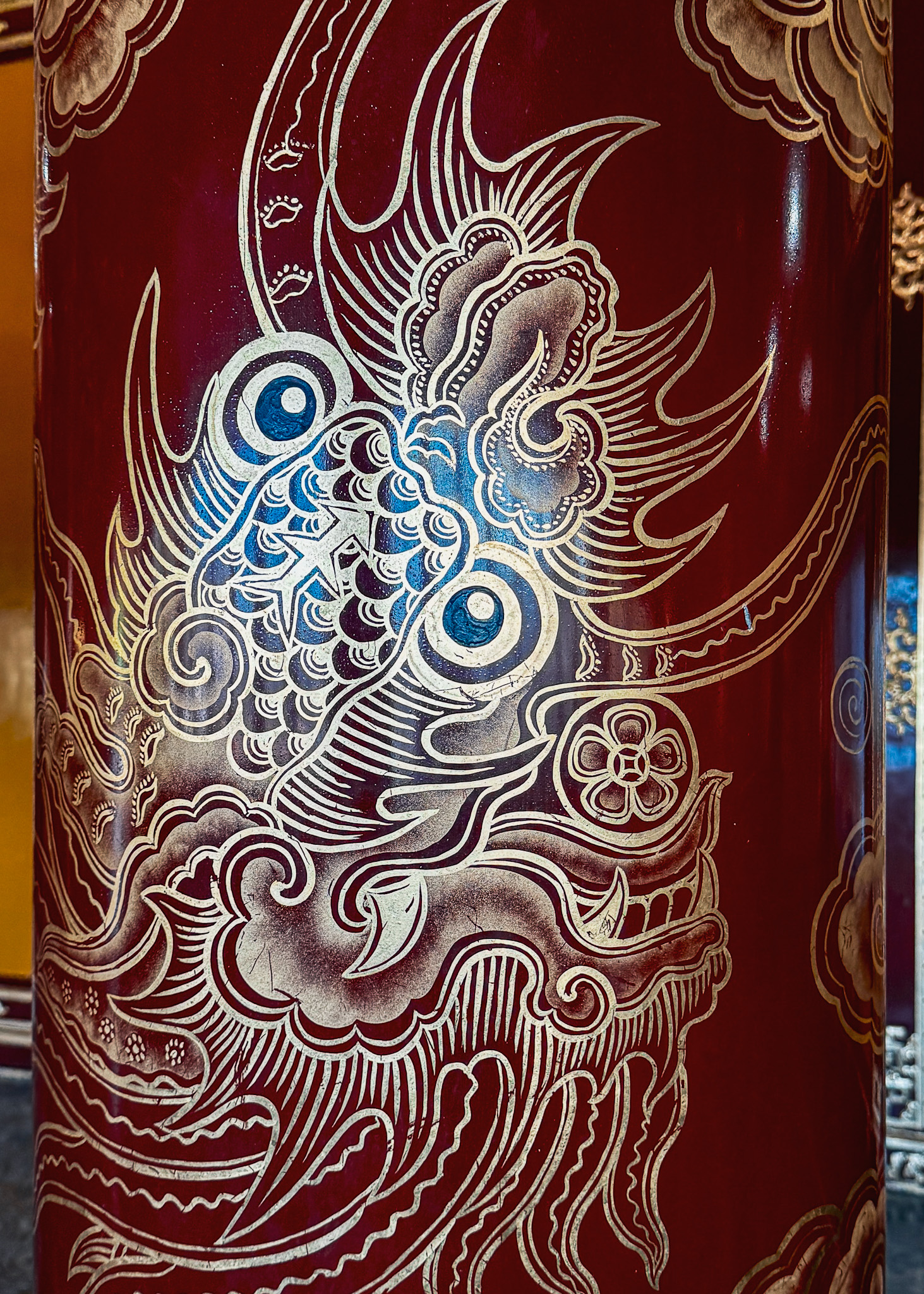
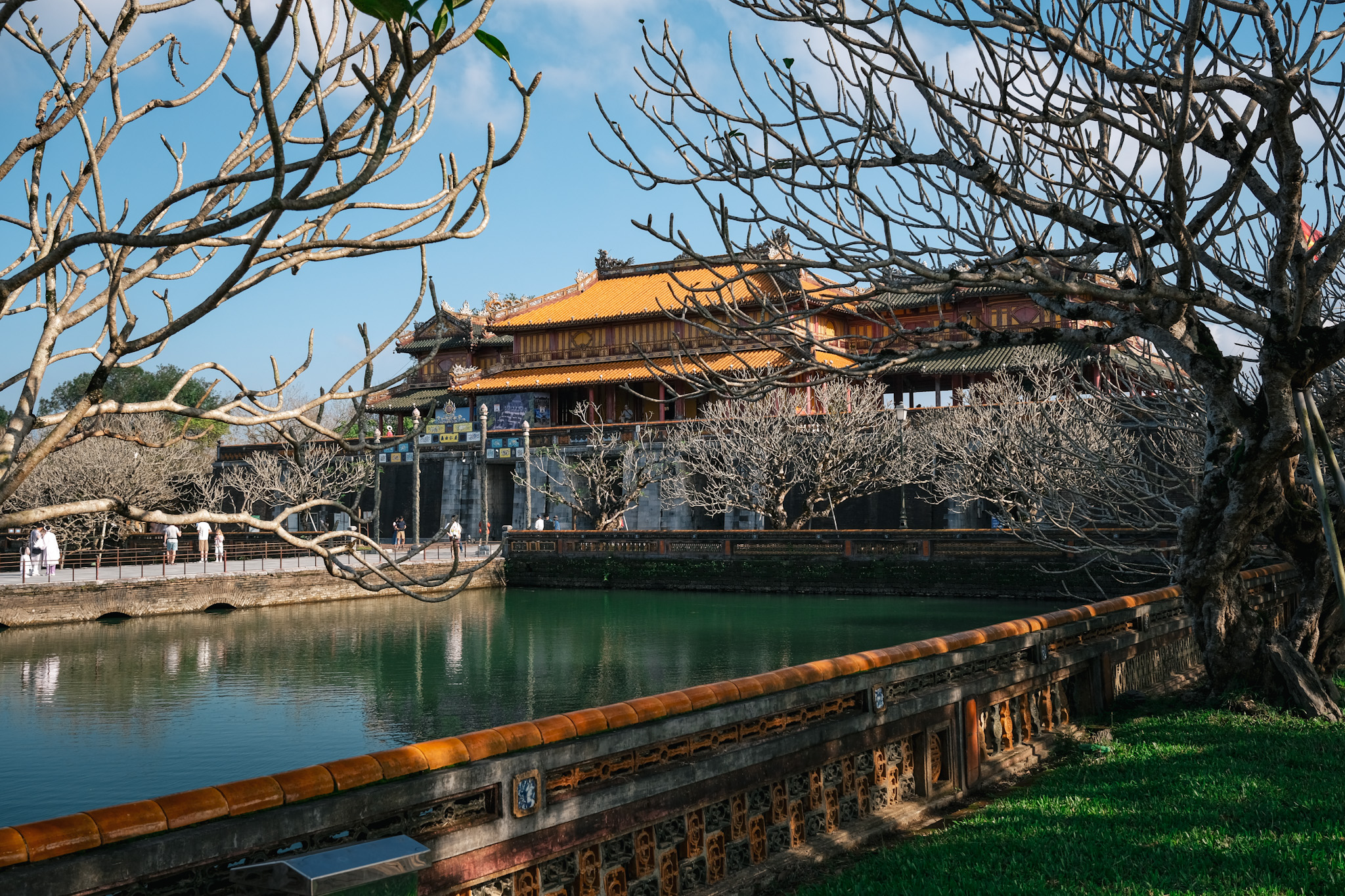
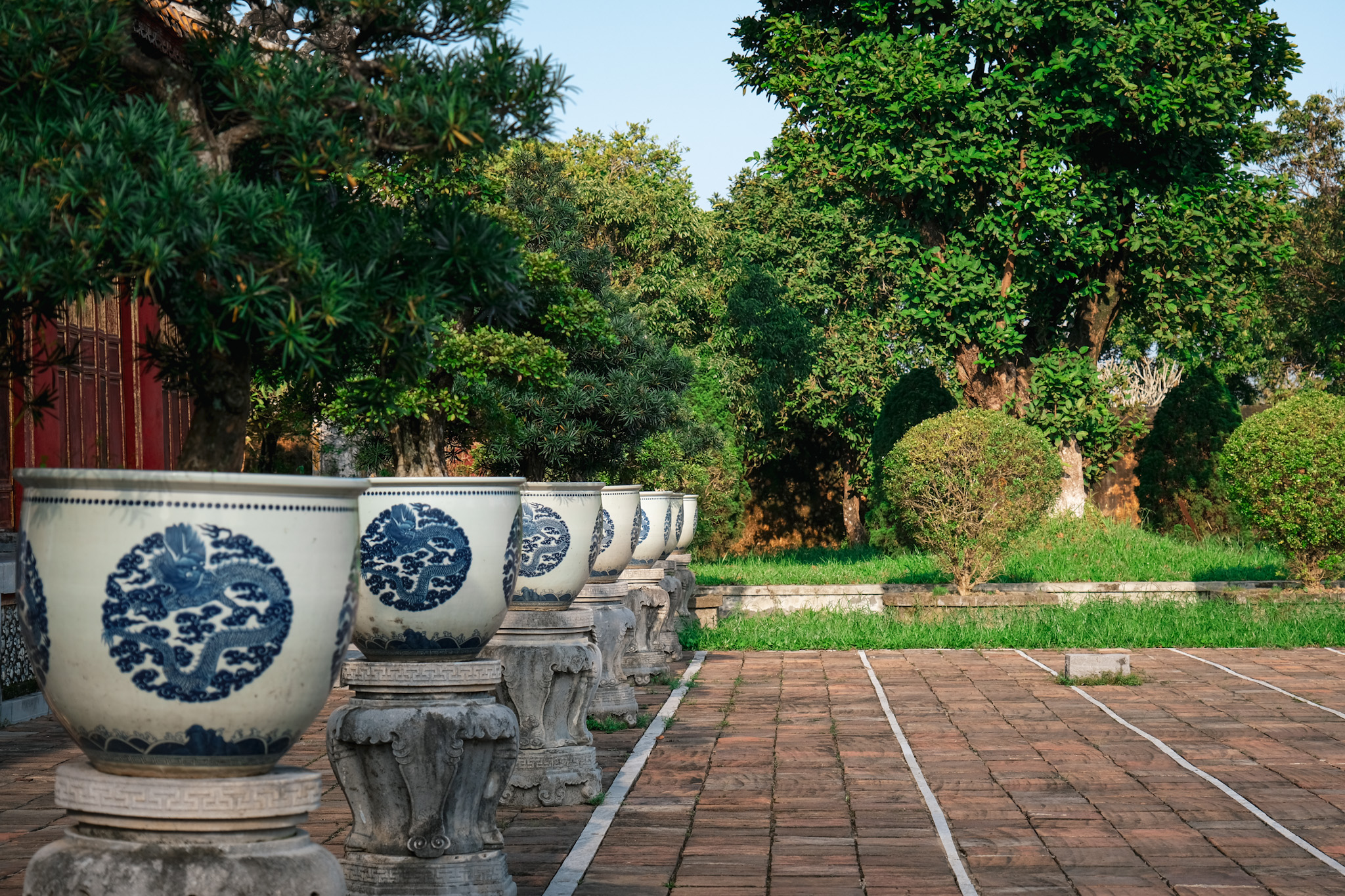
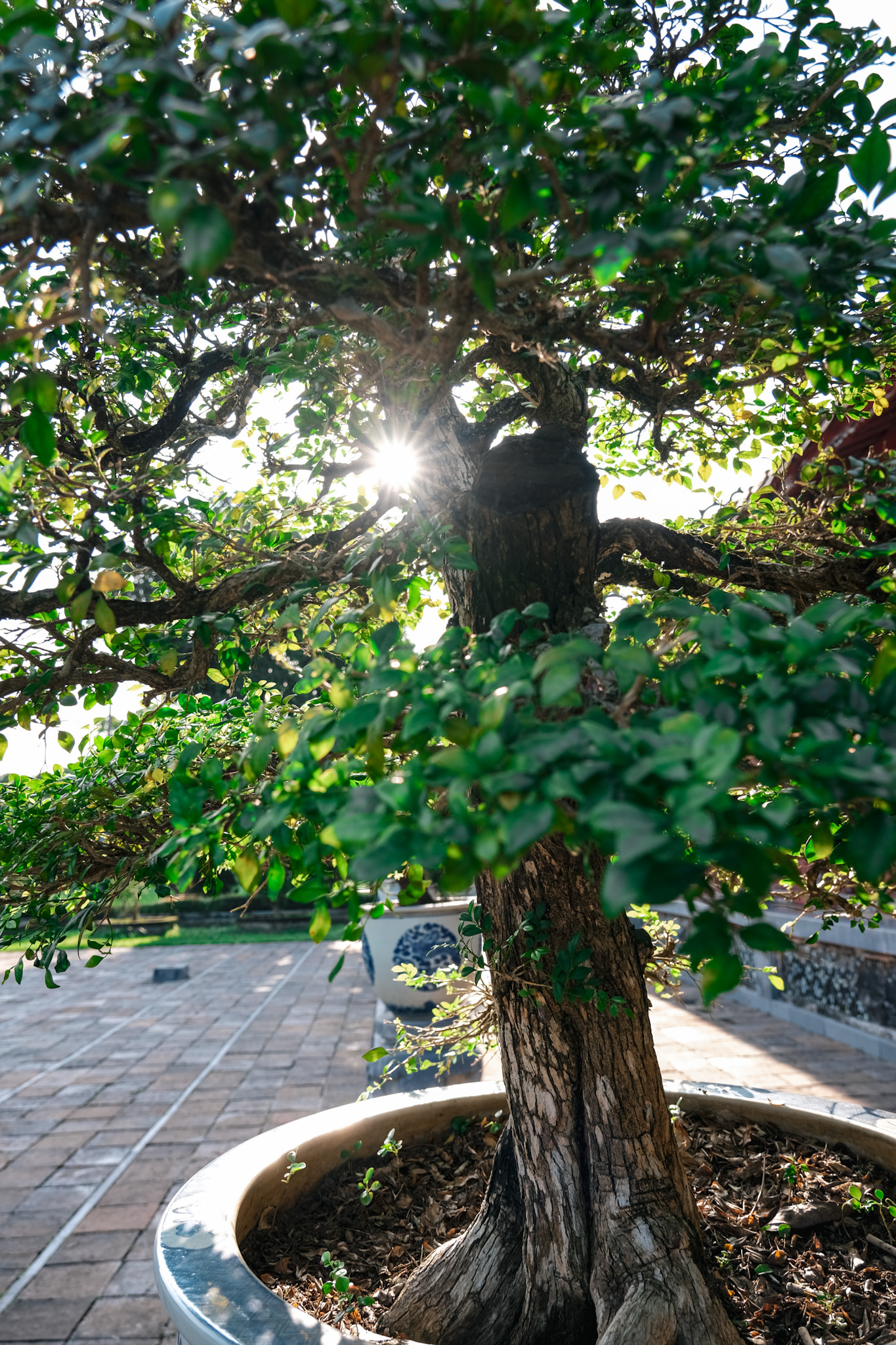
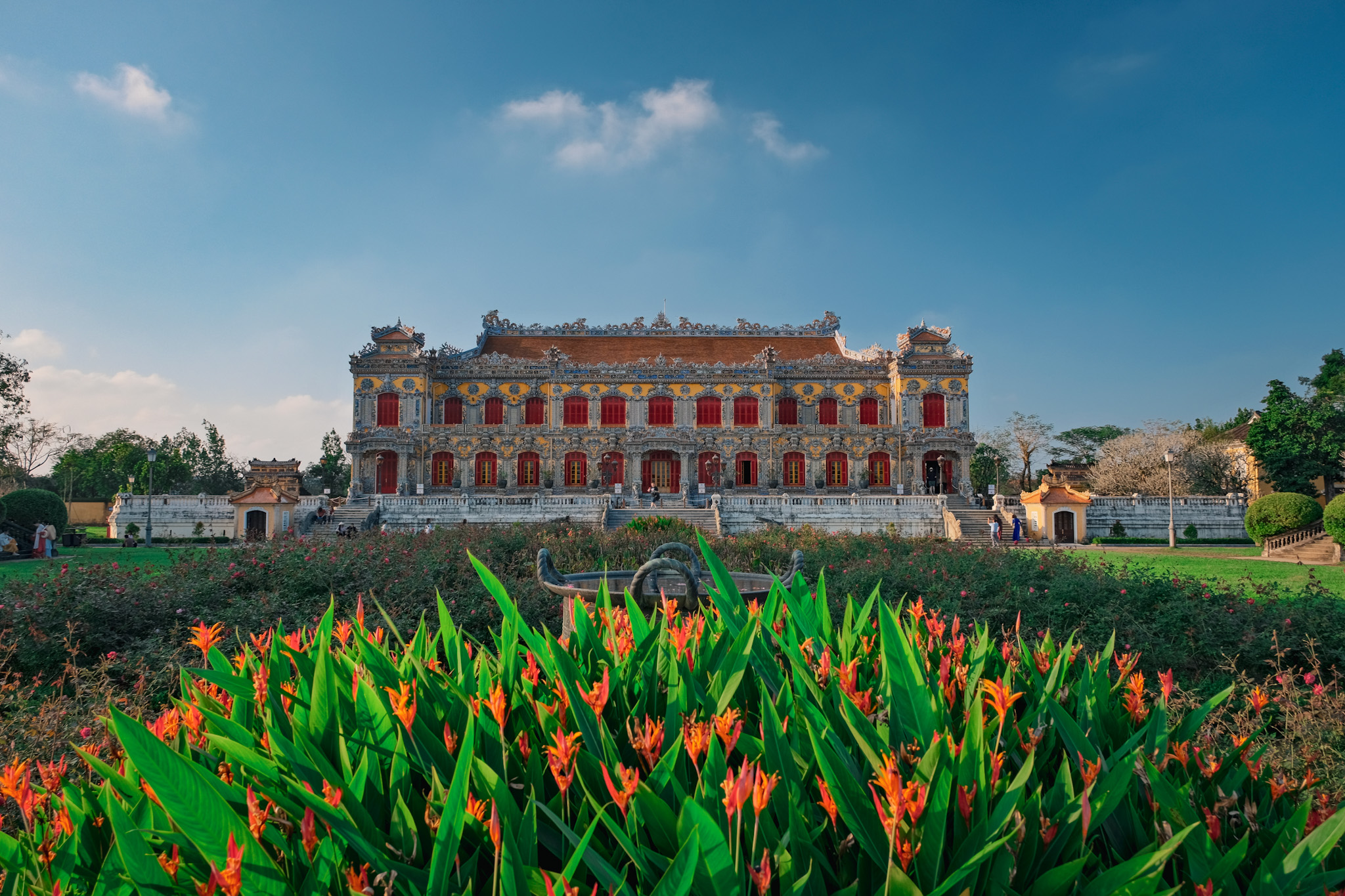
The main tourist attraction of Huê is the Imperial City, the seat of the Nguyen Dynasty that ruled throughout the 19th century until the mid 1900s. We had booked a guided walking tour, and it quickly proved to be the right call. Rather than feeling like a single landmark, the complex unfolded as a sequence of spaces as we moved through it with our guide. Cannons, wide gates, courtyards, ceremonial halls, and partial ruins appeared one after another. Some structures remained formal and intact. Others had been damaged through the myriad conflicts this country has endured, so much so that imagination had to fill in the gaps. The context provided along the way made the constant shift between order and decay feel grounded and immediate, rather than abstract. By the time the tour wrapped up, the light had softened and the crowds had thinned, and it felt like we had walked through a dense stretch of Vietnamese history rather than simply toured a site.
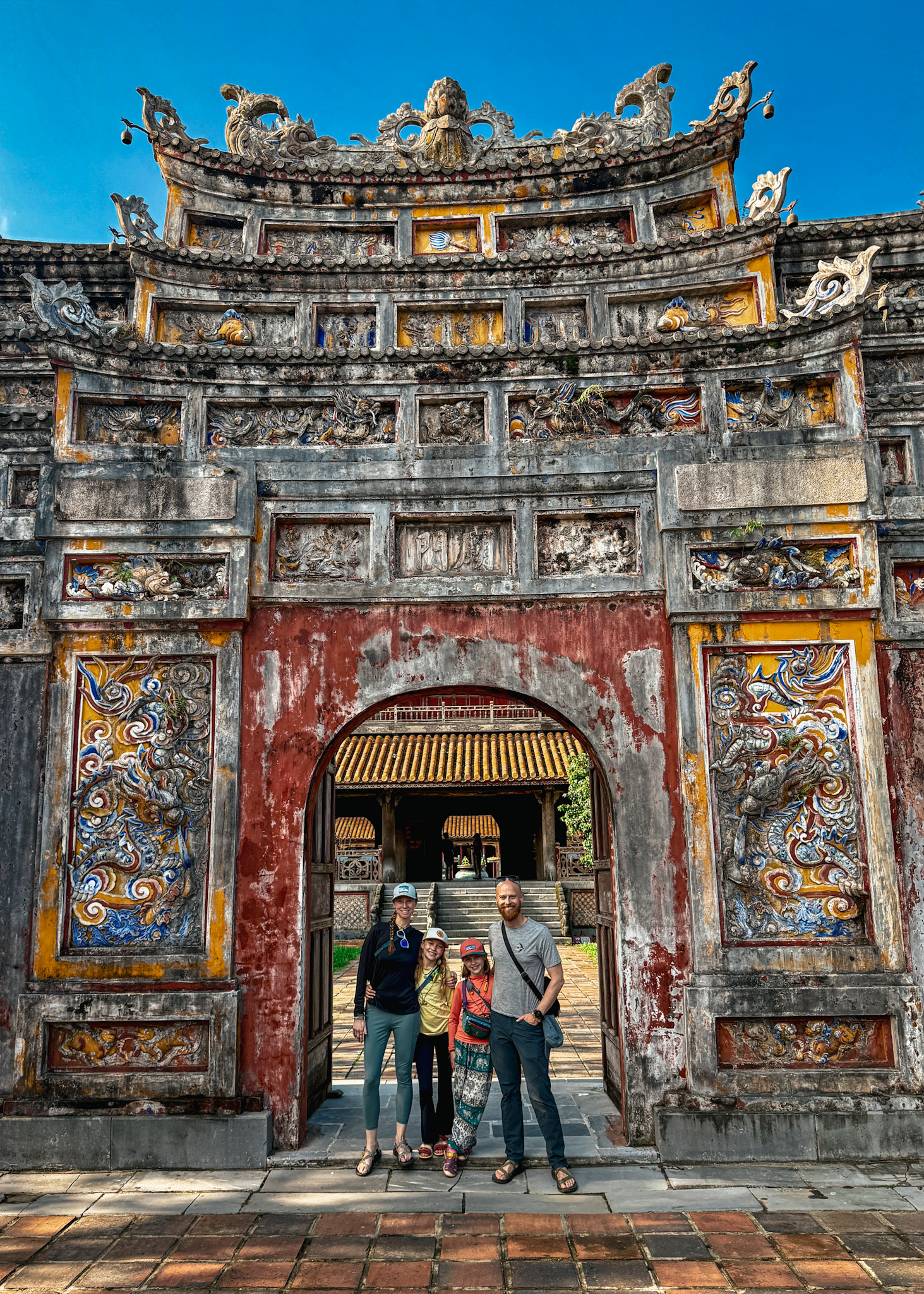
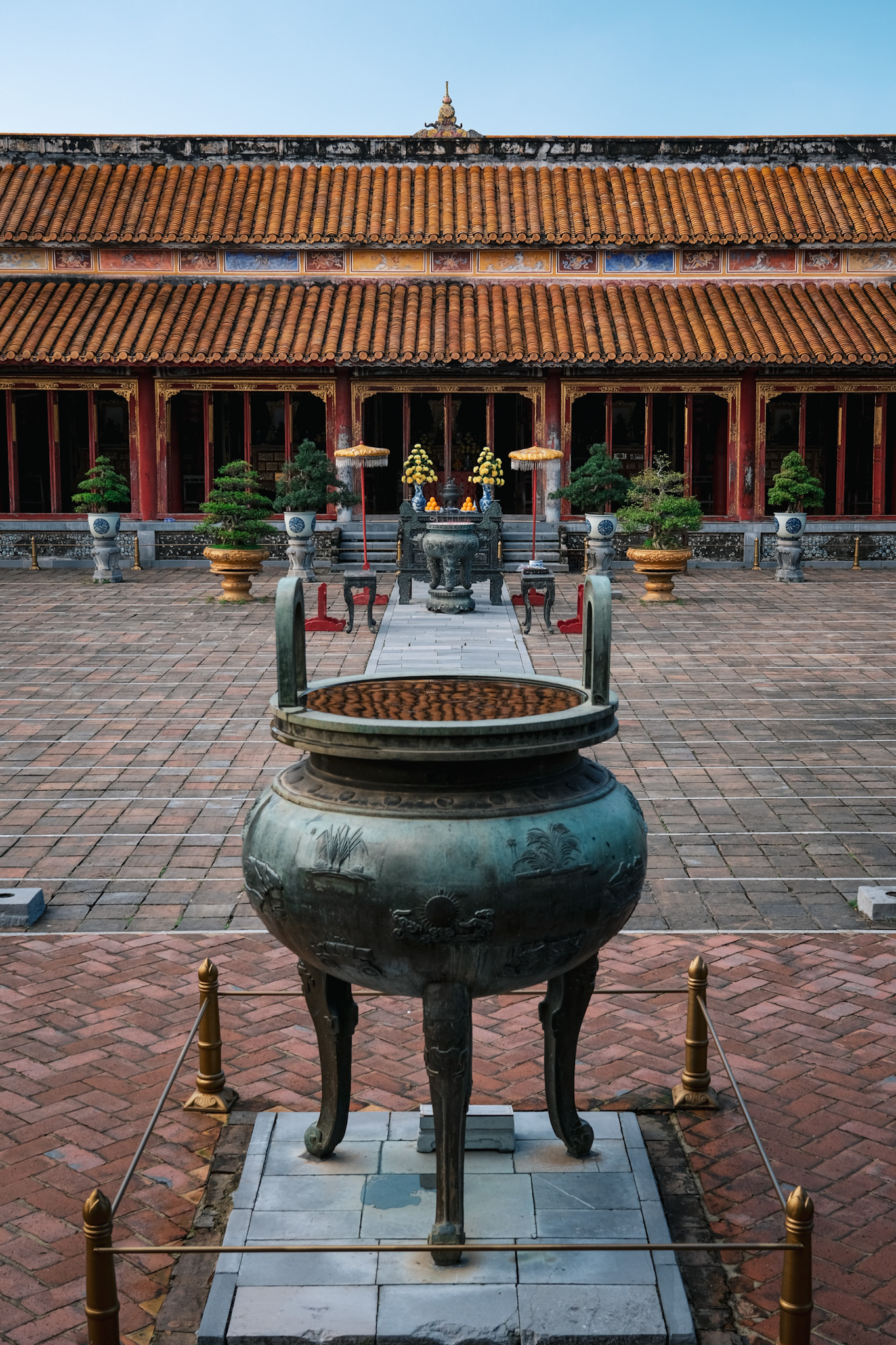
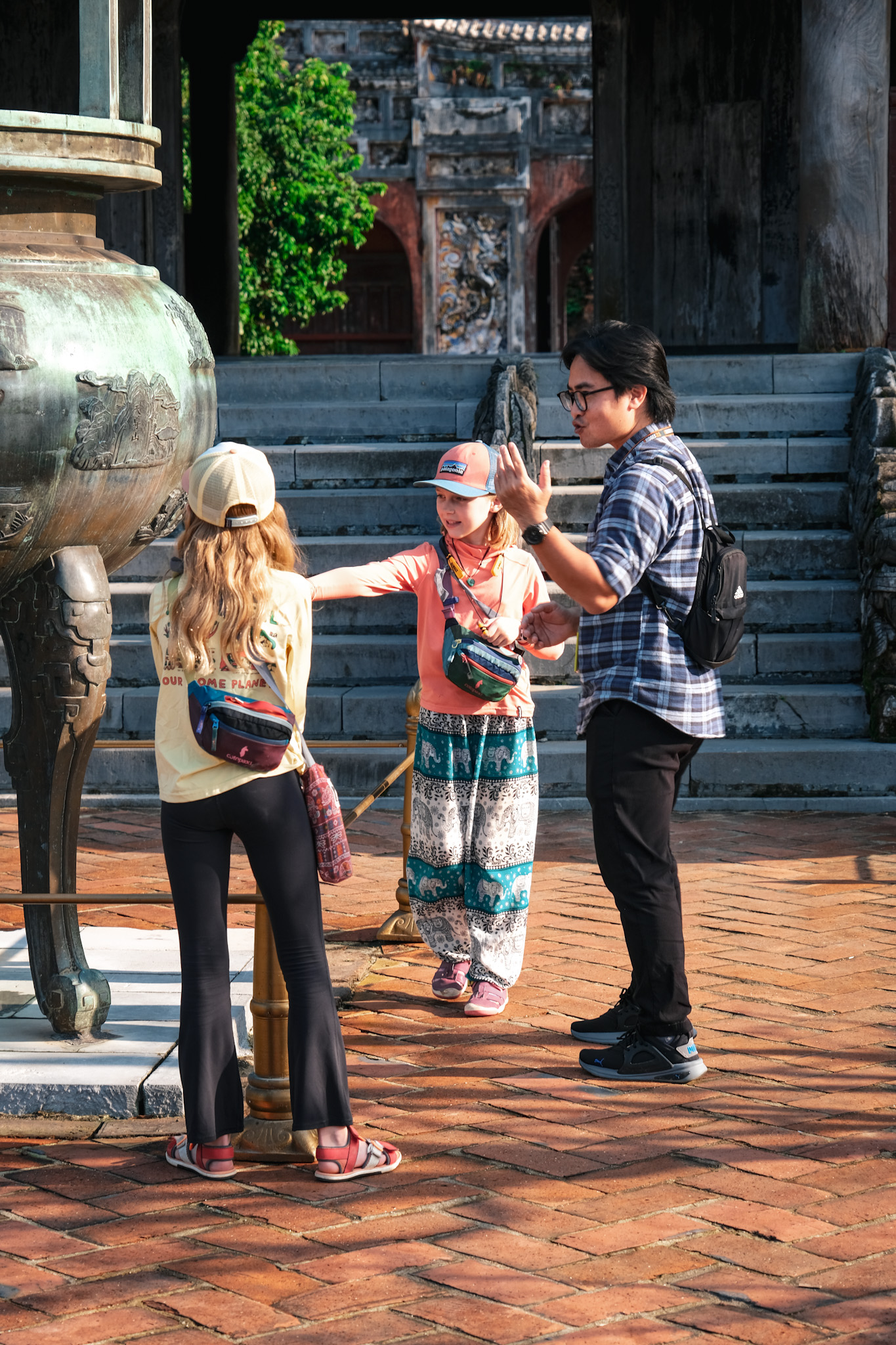
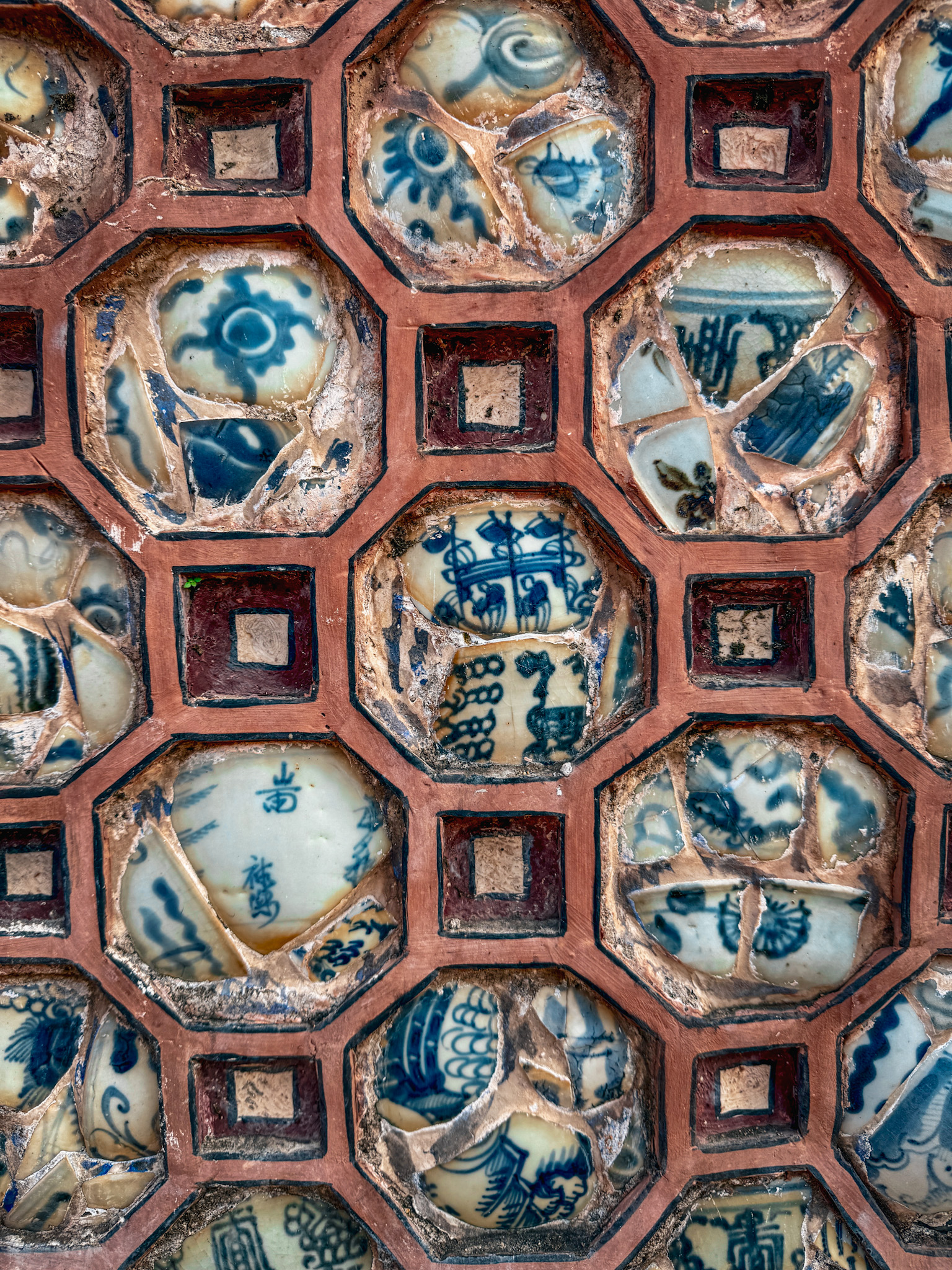
That evening, we met up with our new Israeli friend Uri and his kids for dinner at a small spot with a very short menu. Crisp bánh khoái meant to be wrapped with herbs and dipped. Smoky nem lụi. A couple of Huda beers. It was exactly what we wanted and even the kids enjoyed the highly interactive meal. We crossed Truong Tien Bridge again later that night, now brightly lit with shifting rainbow LEDs, and walked back to the hotel in cool evening air. Journaling, reading, and sleep followed easily.
The next morning began with another short homework session, just enough to get momentum going. We grabbed a taxi and headed to Tan Cafe, our soon-to-be favorite local spot, with its soaring cement walls, metal accents, and copious greenery. Finally, Max found some excellent coffee. The girls split mocktails—peach tea with cinnamon and hibiscus tea—both of which exceeded expectations. The space felt distinctly Vietnamese and very much of this moment, layered with tropical brutalism and something close to wabi-sabi.
We stayed for a long stretch, journaling, planning, and letting the day open slowly. When Uri texted that they were ready, we packed up and wandered down the street to a banh mi shop advertising 10k sandwiches. Suspiciously cheap. Smaller than usual. But by unanimous vote, they were declared the best banh mi in Vietnam by Team SharXee. Everything hit just right for all four of us, which almost never happens.
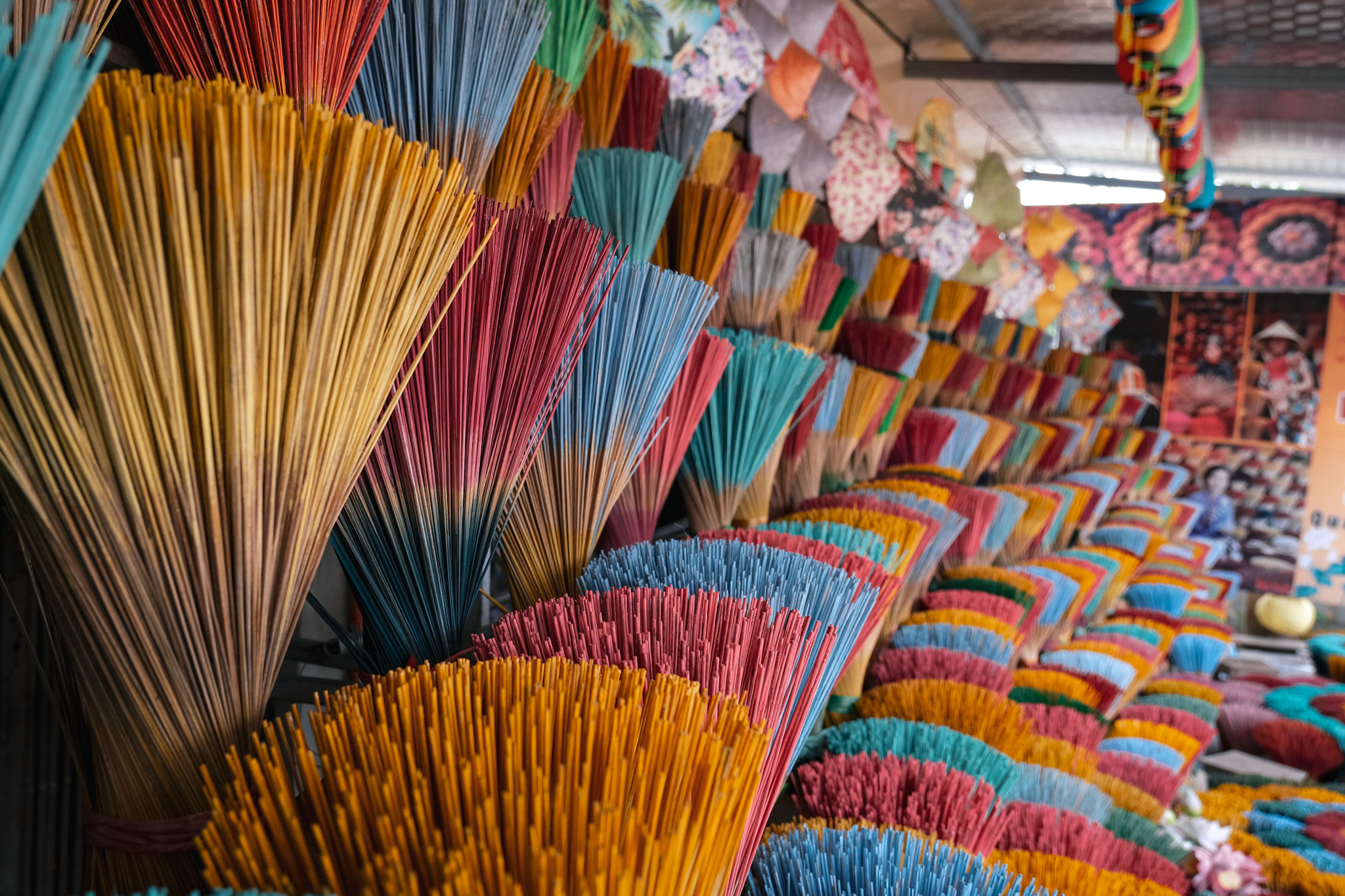
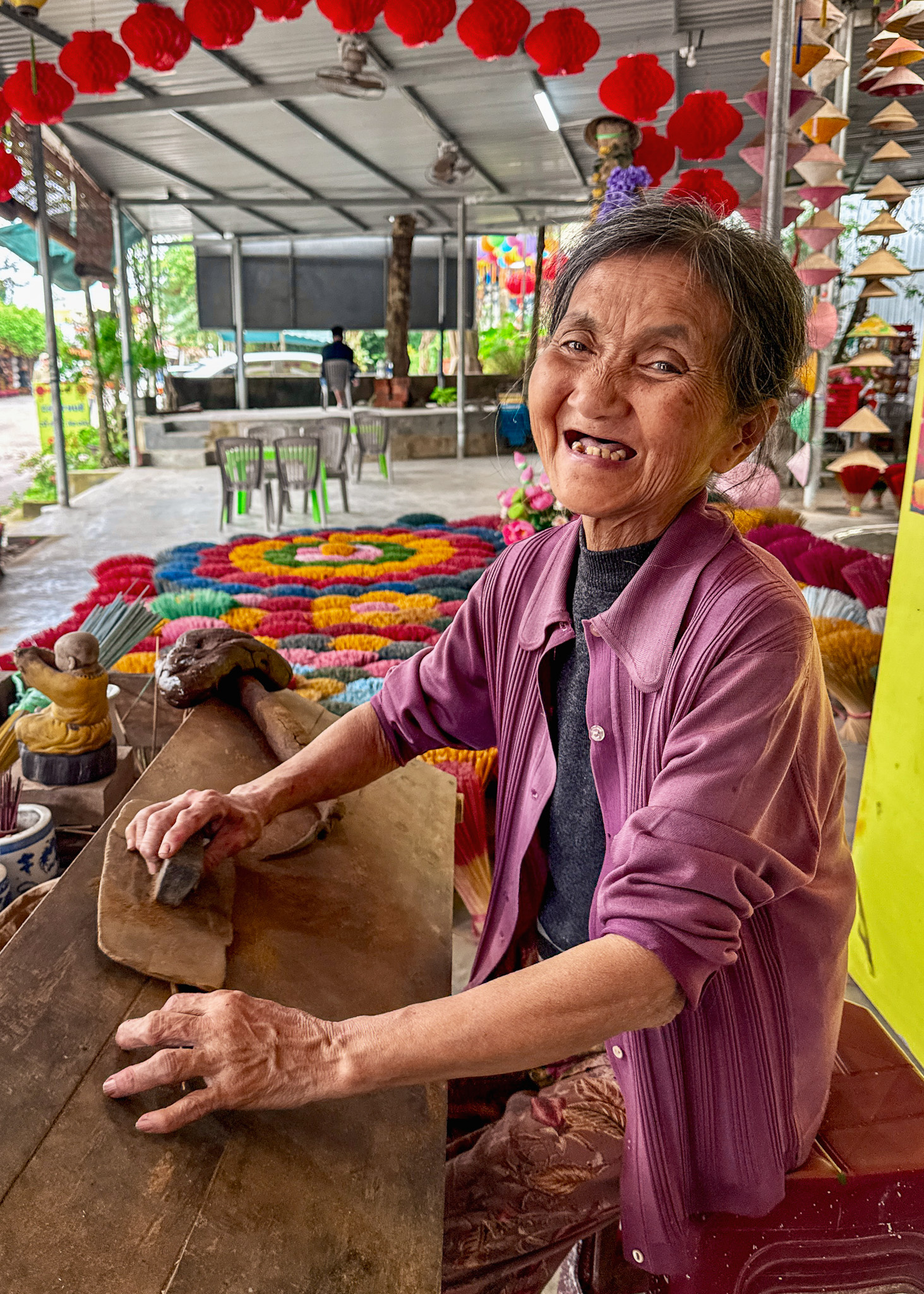
From there, we headed to Thuy Xuan Incense Village. Brightly dyed bamboo sticks were arranged into sunburst patterns along the roadside, drying in the open air. Incense has been made here for centuries, traditionally used for ancestor worship and temples throughout Vietnam.
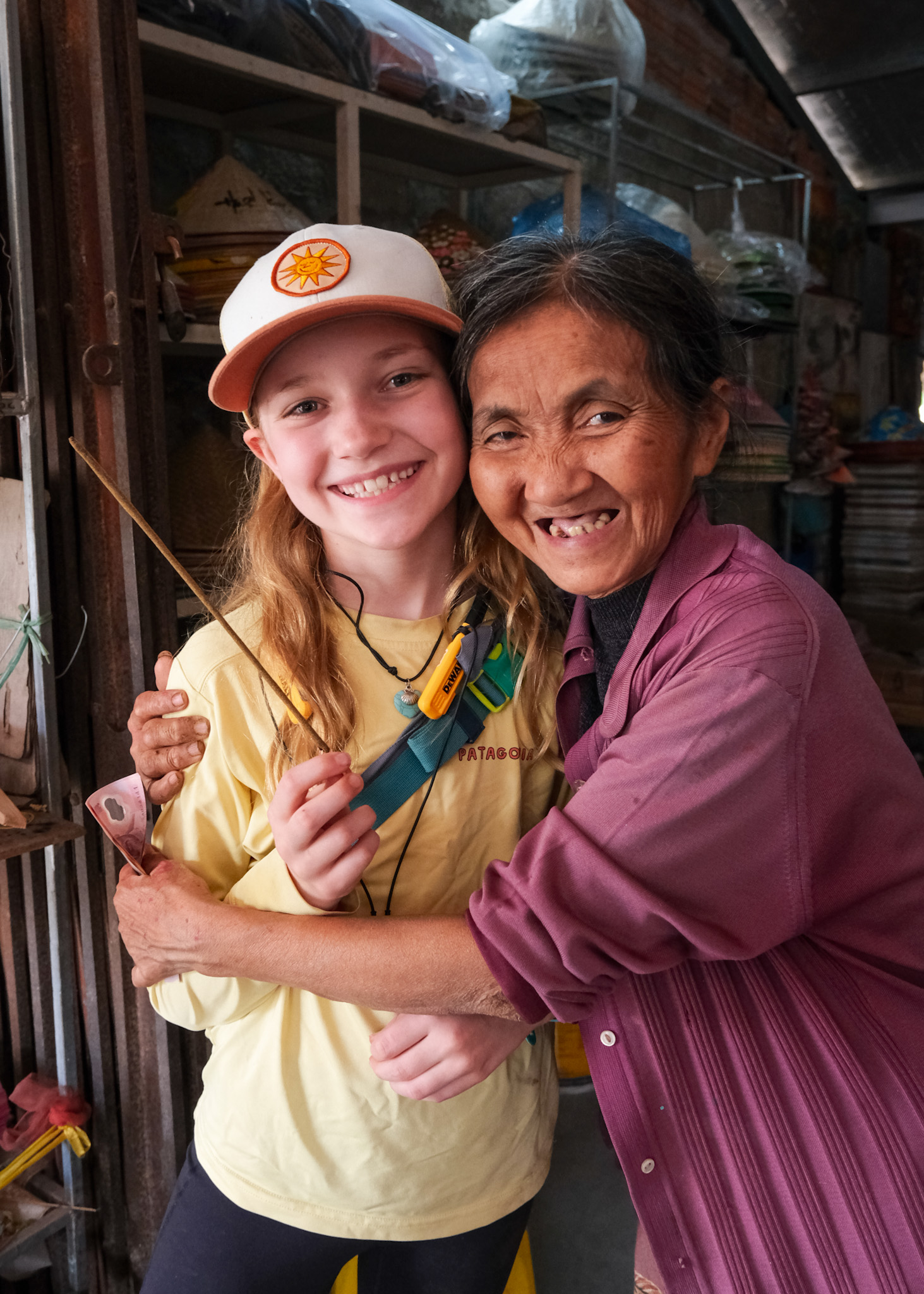
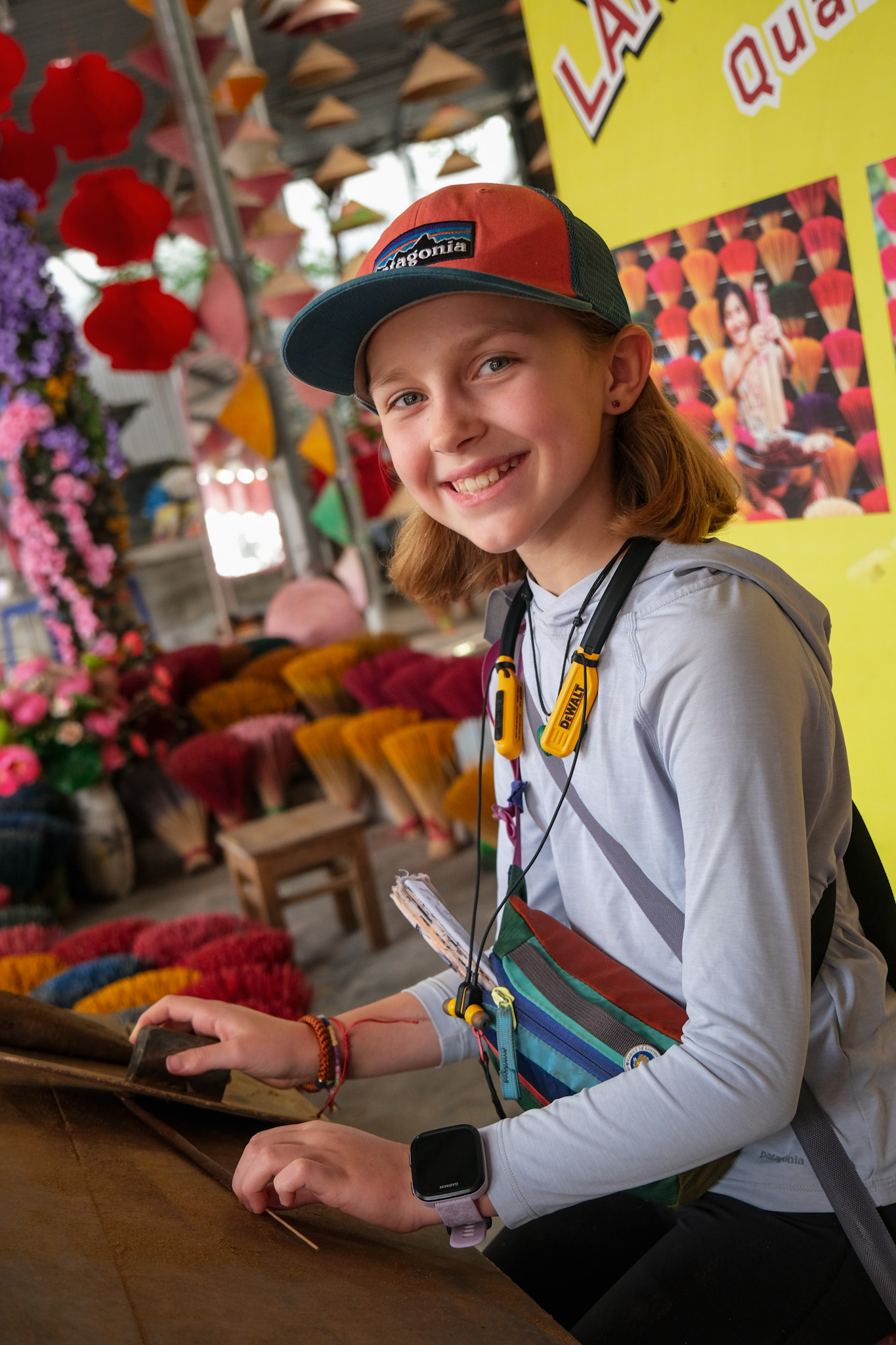
We were waved down repeatedly by shopkeepers but had to walk past in search of our friends. We spotted Uri and Hadas standing in front of a shop that turned out to be something special. Inside sat Tuy at a rickety table, rolling incense by hand. Using a wooden paddle, she formed long ropes of paste, centered bamboo skewers inside, and dusted them with cinnamon powder. One stick at a time. Hundreds of thousands surrounded us.
Tuy has been making incense for over 50 years and donates part of her earnings to help fund cancer treatment for children. Awards and newspaper clippings filled a back room. The kids immediately wanted to try. The first attempts failed completely. The second barely improved. By the third, most produced something that vaguely resembled incense if you were generous. We bought several packs and left feeling like we had stumbled into something quietly meaningful.
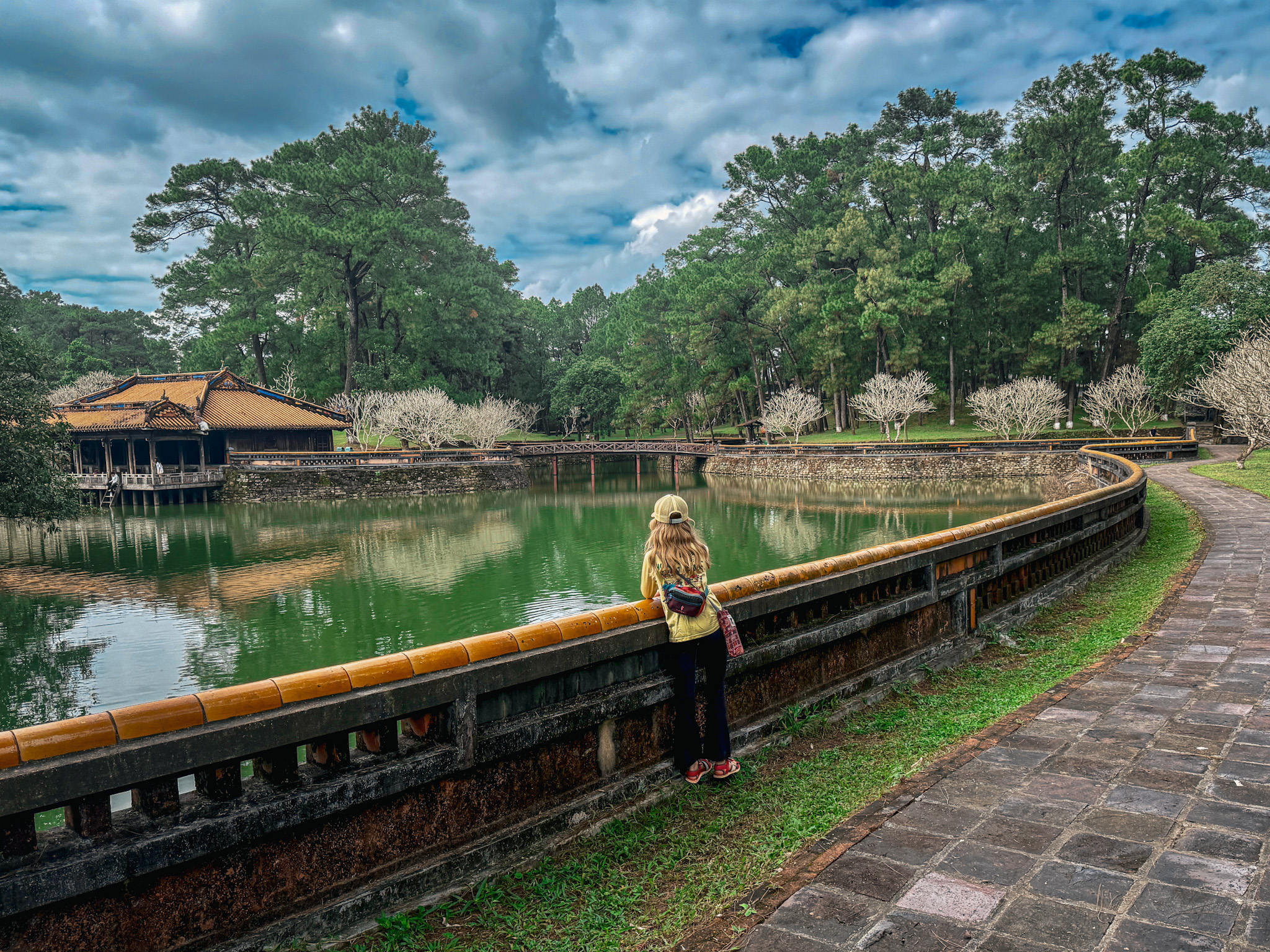
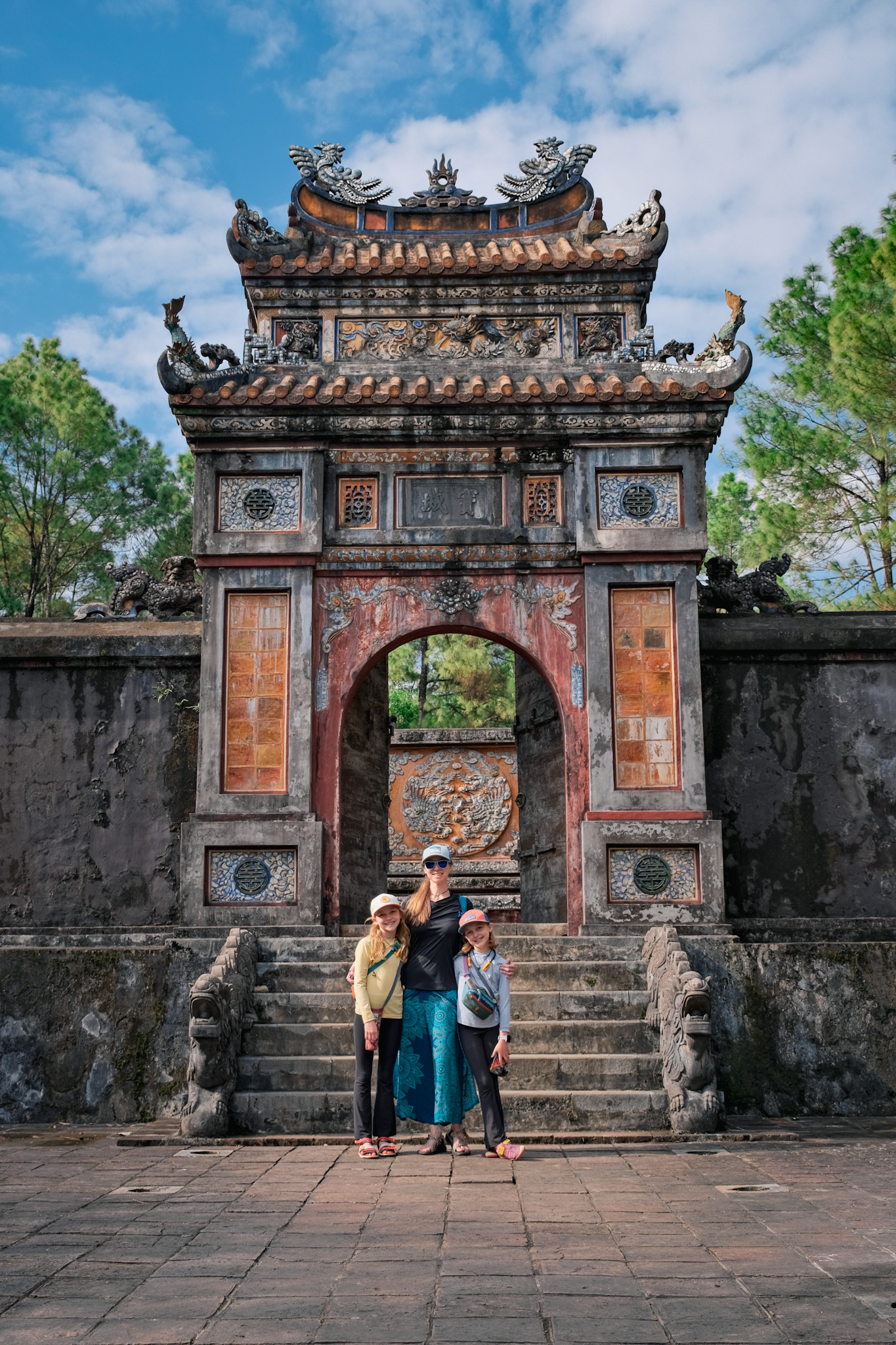
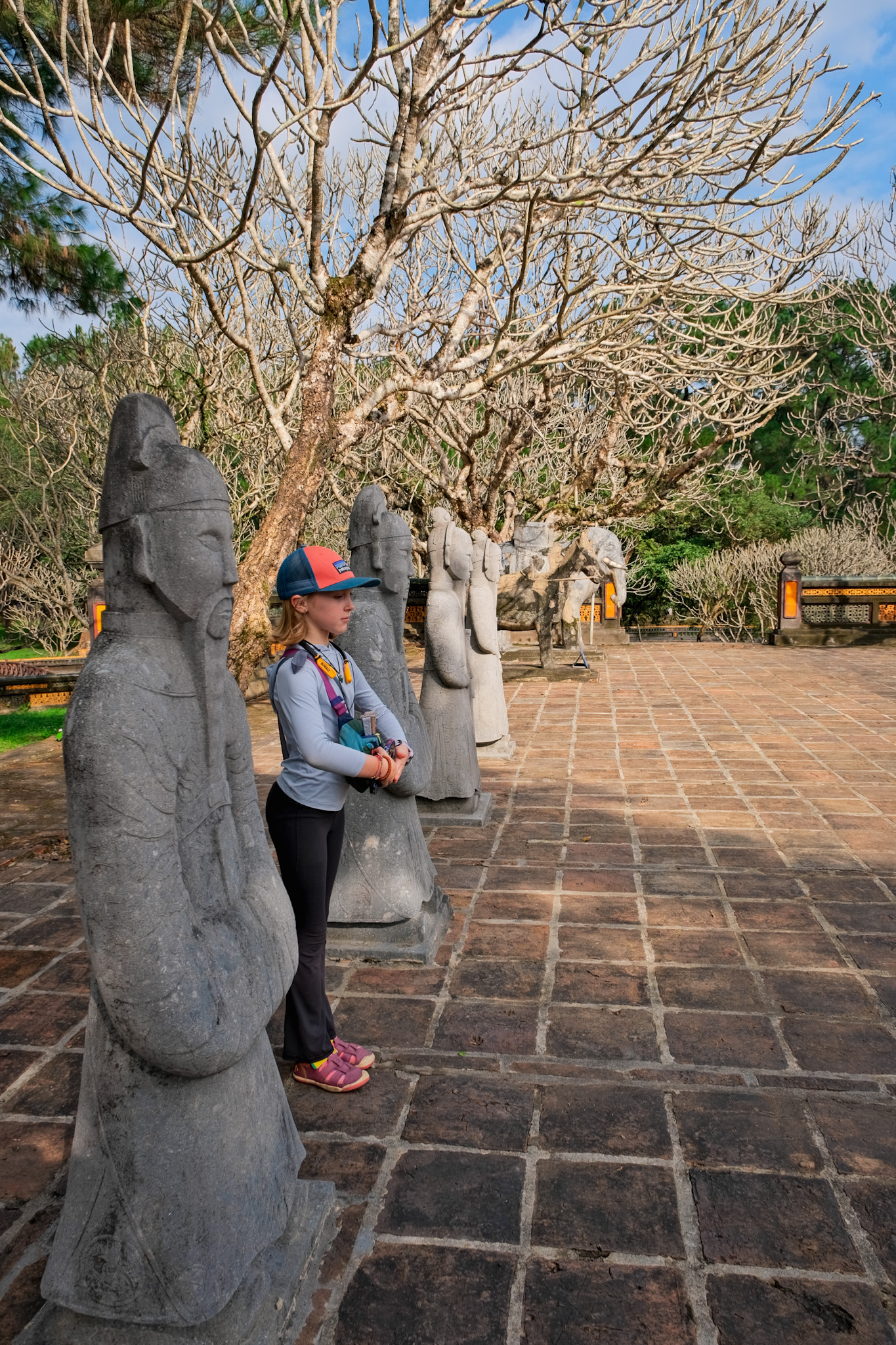
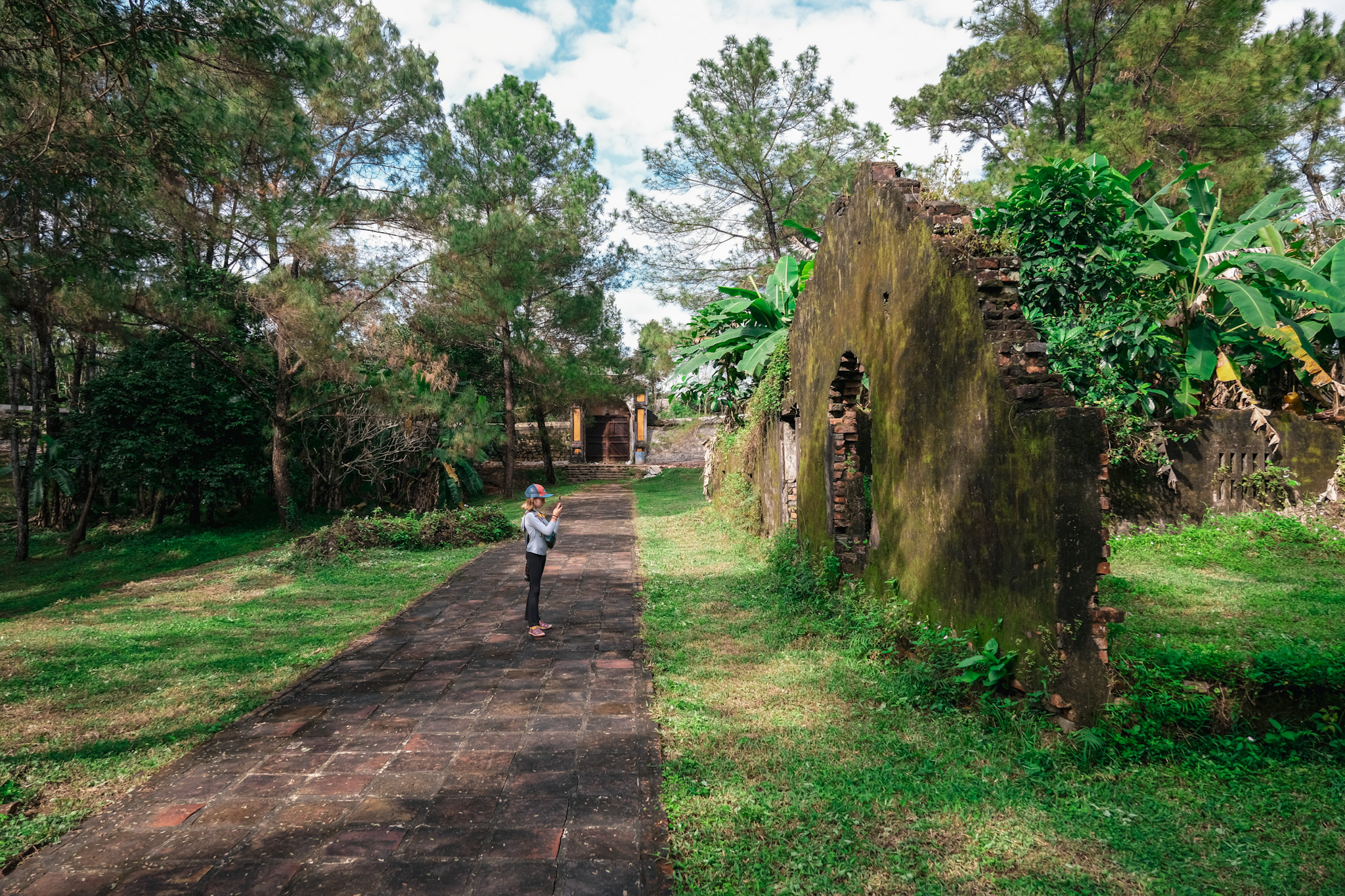
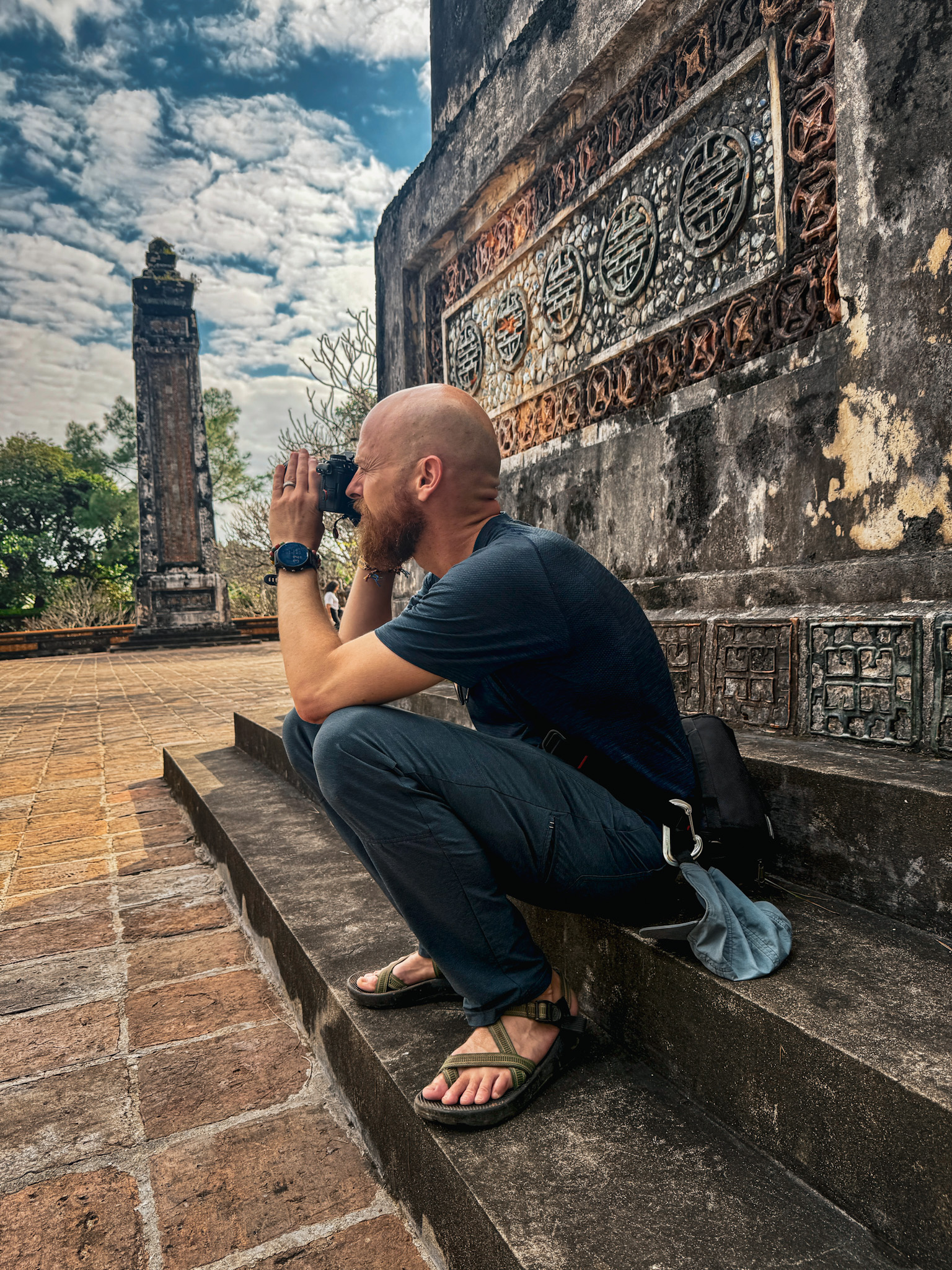
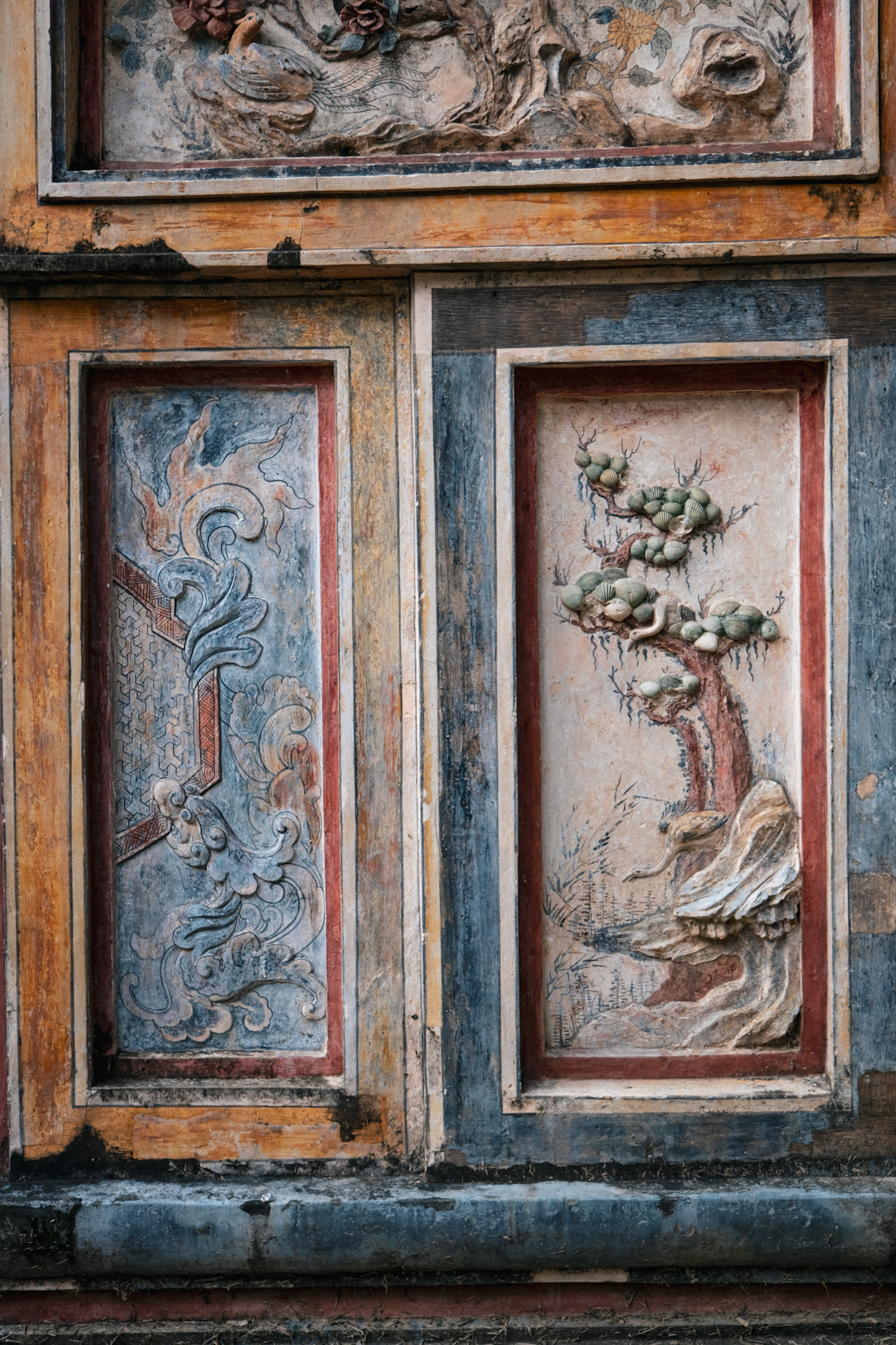
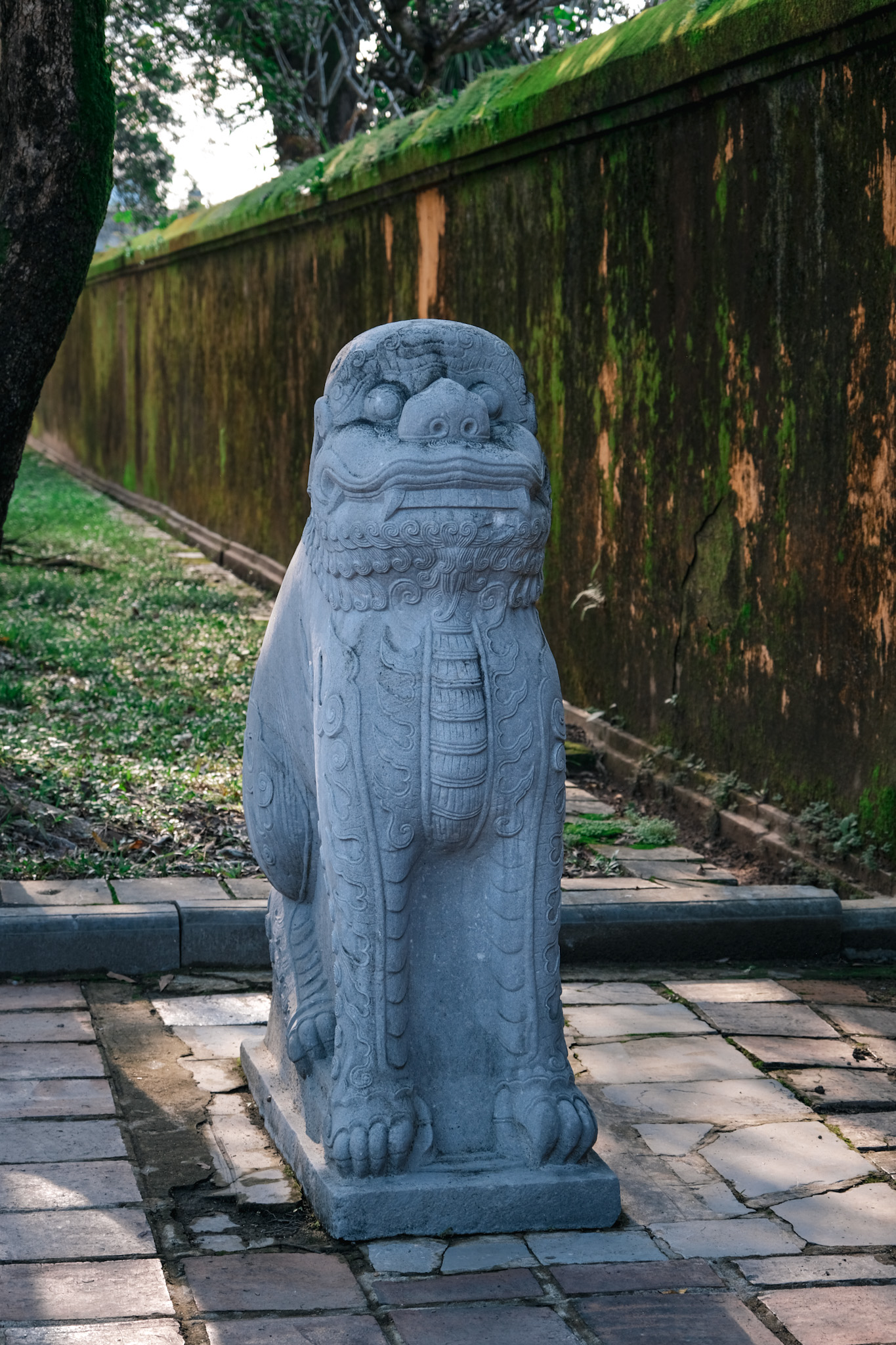
By midafternoon, the heat was catching up with us. We ducked into a shaded cafe for cold drinks and conversation, then parted ways with Uri and his family. Our next stop was the Tomb of Tu Duc, the fourth and longest-reigning Emperor of the Nguyen Dynasty. Despite the name, it felt less like a mausoleum and more like a personal refuge built for escape. Tu Duc constructed the complex while he was still alive, using it as a place to write poetry, hunt, and retreat from the pressures of ruling a country facing internal unrest and increasing French colonial control.
The grounds unfolded slowly. Winding paths led over gentle hills and across elegant bridges, through groves of towering pines and elegant frangipani trees. The space was carefully designed, peaceful, and beautiful, but it carried a quiet heaviness. Tu Duc ruled for decades yet died without an heir, and much of his reign was marked by frustration, illness, and a sense of failure that he openly acknowledged in his writing. Walking through the retreat he designed for himself, it was easy to imagine the relief he must have felt here, and just as easy to sense the melancholy that lingered beneath it. The calm felt earned, but never fully settled.
On the walk back toward the hotel, fatigue finally caught up with us. A sore throat and body aches crept in, and we ducked into another cafe for tea and fresh juice. The owners brought us a green tea blend with pineapple and ginseng that felt restorative. Journaling and homework happened again in a quieter key. Maxell and Shaina daydreamed aloud where this Family Gap Year might take us, drifting far enough that it briefly landed us in Azerbaijan, which may or may not ever matter.
We resumed walking and were pulled into another attempt at bún bò Huế. Good, but not the bowl we were still chasing. The hunt continued.
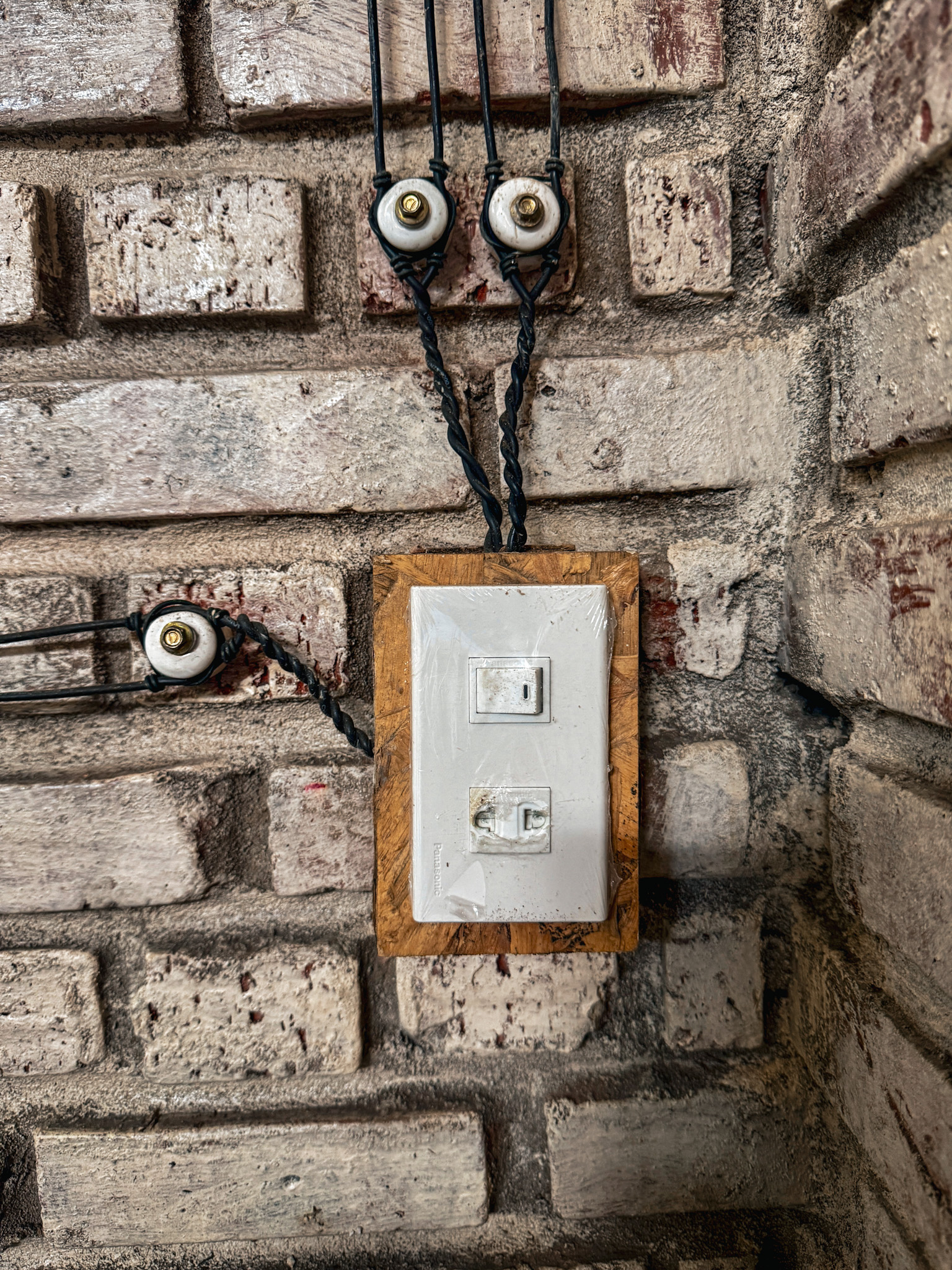
The following day, we started again with homework and headed to another hipster café. The coffee was fine, but the French toast stood out. Lemon and strawberry versions topped with frothy cream and bright compotes. Small details in the space caught Max’s attention, including exposed wiring designed to look like old knob-and-tube. Quiet craftsmanship showed up in unexpected places throughout Huế.
Lunch plans briefly collapsed when our beloved 10k banh mi shop was shuttered. We pivoted to a narrow hole-in-the-wall across the street instead. Fried noodles, spring rolls, nem lụi, and finally a bowl of bún bò Huế that delivered everything we had been hoping for. Rich, spicy broth built on lemongrass and fermented shrimp paste. Thick noodles. Tender beef. By the time we left, a line had formed outside. Apparently a lucky, and timely, find on our behalf.
By then, Tan Cafe had become our reliable workspace. Homework finished there. Journals closed there. One afternoon, we locked in a major anchor for the months ahead by booking the Gibbon Experience in northern Laos—a conservation-focused project with treetop huts and zip lines deep in the jungle. Booking the next available dates, in mid-March, made a substantial Laos chapter feel suddenly real. The details between now and then were still open, but that felt manageable.
Not every stop in Huế impressed. One cafe disappointed on food and cleanliness but delivered the main thing we needed: a large table, padded chairs, and enough comfort to finish homework and journaling without friction.

On one of our last afternoons, the girls declared it was officially pool time. The water at our oddly-deserted hotel was so clear we all assumed it was shallow, until we realized it was nearly six feet deep. They raced, played tag, and dove for broken tiles on the pool floor while we watched from the balcony with cold beers. Nothing to manage. Nothing to optimize. Just laughter and good weather.
Our final evening unfolded slowly, which felt fitting for New Year’s Eve. We settled into a mostly empty brewpub, ordered an oversized BBQ sampler, and let the night stretch out in front of us. Cards came out and Kings and Cabbages turned into a full marathon, with Shaina firmly in control for most of it.
At some point, the couple seated next to us struck up a conversation. They turned out to be an American and Turkish couple living in Kazakhstan, a detail that immediately caught our attention. As we talked, Max mentioned an idea that had been resurfacing more often lately—that our trip may in fact reverse course and head in the direction of the Central Asian highlands. What had started as a joke was beginning to feel more persistent: instead of hopping back across the Pacific to end our gap year, we might make a U-turn, head back the way we’d come, and go home the long way without ever crossing the Pacific at all.
Their reaction was immediate. Central Asia, they said, would be incredible. The Caucasus too. Georgia. Armenia. They spoke with familiarity and enthusiasm, not as dreamers but as people actually living that reality. We laughed about it at first, but the conversation landed differently than similar ones before. Between earlier late-night search rabbit holes, stray algorithmic suggestions, and now another unexpected nudge from real people, the idea stopped feeling hypothetical. It still wasn’t a plan, but it was no longer a throwaway thought either.
We marked the end of 2025 quietly but intentionally by heading to the movie theater to see the latest installment of the Avatar series, Fire and Ash. It felt like the right kind of marker for the night. Familiar, immersive, and just cinematic enough to signal the turn of the calendar without demanding celebration. Afterward, we wandered until we landed at a small Japanese izakaya for a late bite. We walked home in perfect weather and went to bed early—no ball drop for us. Gregorian New Year barely registers here, and that felt appropriate. Lunar New Year would come later.
Huế did not overwhelm us. It did not demand constant motion. It gave us enough structure to stay oriented and enough softness to absorb the small missteps without consequence. We stayed long enough for repetition to feel familiar and for familiarity to feel useful.
As we closed this chapter, we left with our systems intact, our patience mostly in good shape, and a clearer sense of what might come next. Laos is coming. And maybe, if the signs keep pointing the same way, the long way home will too.
 Pause and Wander
Leave a comment