
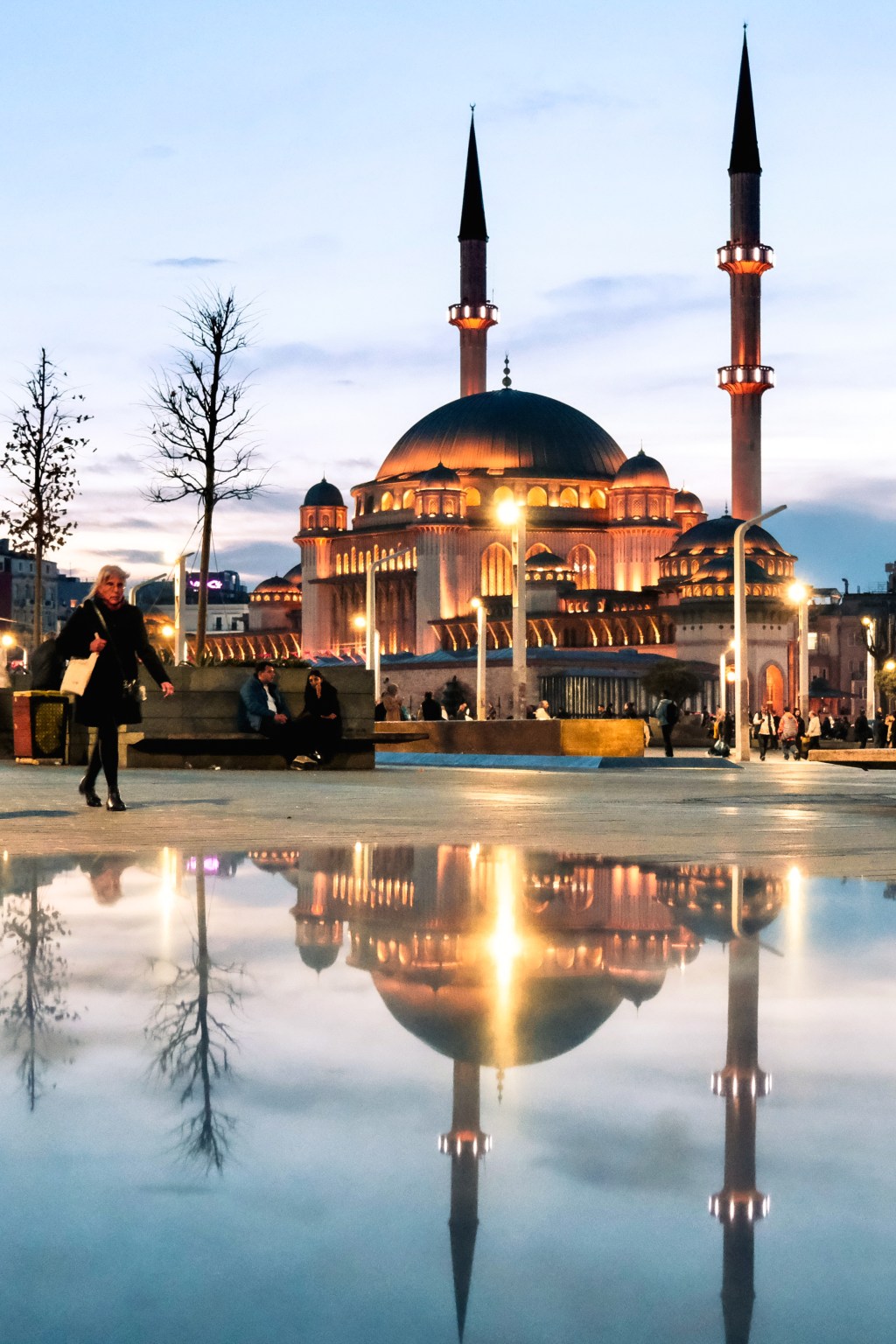
There are cities you pass through, and then there are cities that insist you adjust your rhythm to theirs. Istanbul is squarely in the second category. Every day seems to ask the same unspoken question:
Can you shift gears quickly enough to keep up, slow down, and look closely—all at the same time?
We arrived expecting a few days of good food and big sights. What we found instead was a city that kept nudging us—sometimes gently, sometimes not—into new modes of paying attention. Istanbul demanded flexibility, curiosity, and the ability to reset without warning. It asked us to move between worlds: between continents, centuries, faiths, political realities, and our own internal reactions. And more often than not, it asked us to do all this while climbing very steep hills.
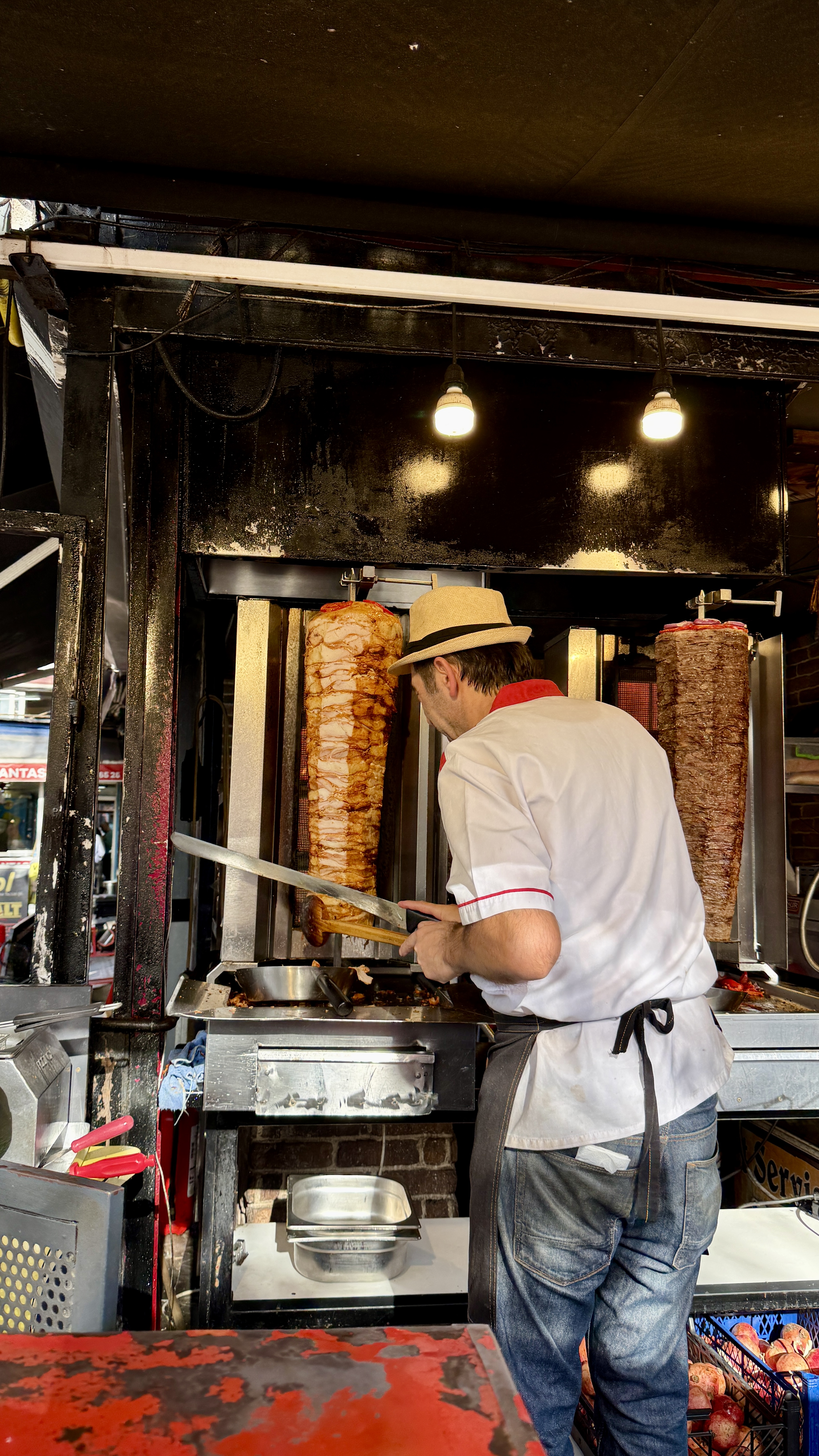
Our introduction began before we even reached the Airbnb. An Uber from the airport cost eighty dollars, so we chose public transit—the frugal traveler’s initiation ritual. By the time we reached Taksim Square, every escalator had decided to unionize and go off-duty. We lugged bags up staircases that felt like architectural pranks, the city whirling around us with fast, layered energy. Missi, carrying the heaviest pack, pushed through like the seasoned traveler she is. The Airbnb was “fine”—clean enough where it mattered, slightly dubious in the corners, and instantly overshadowed by kebabs waiting nearby.
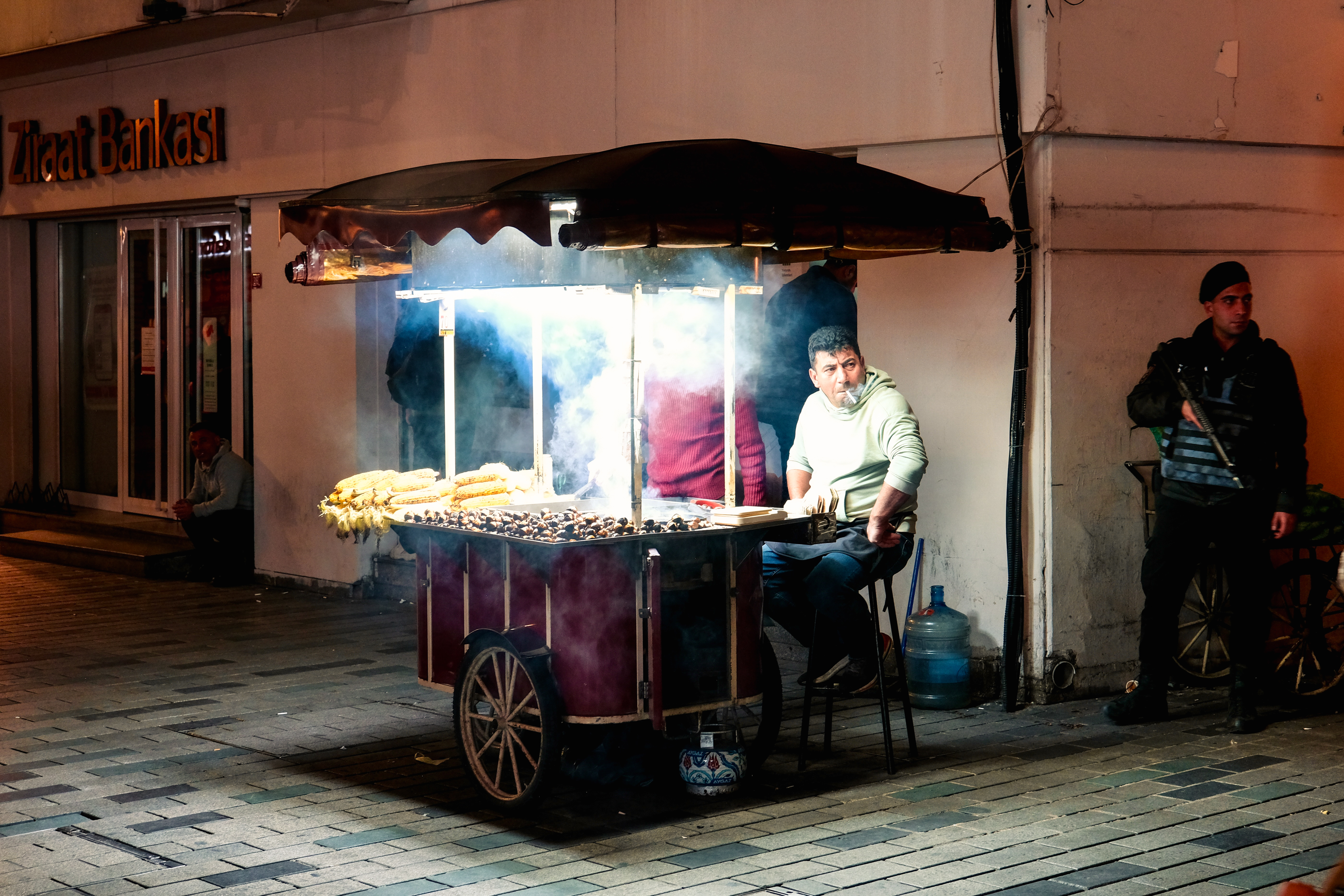



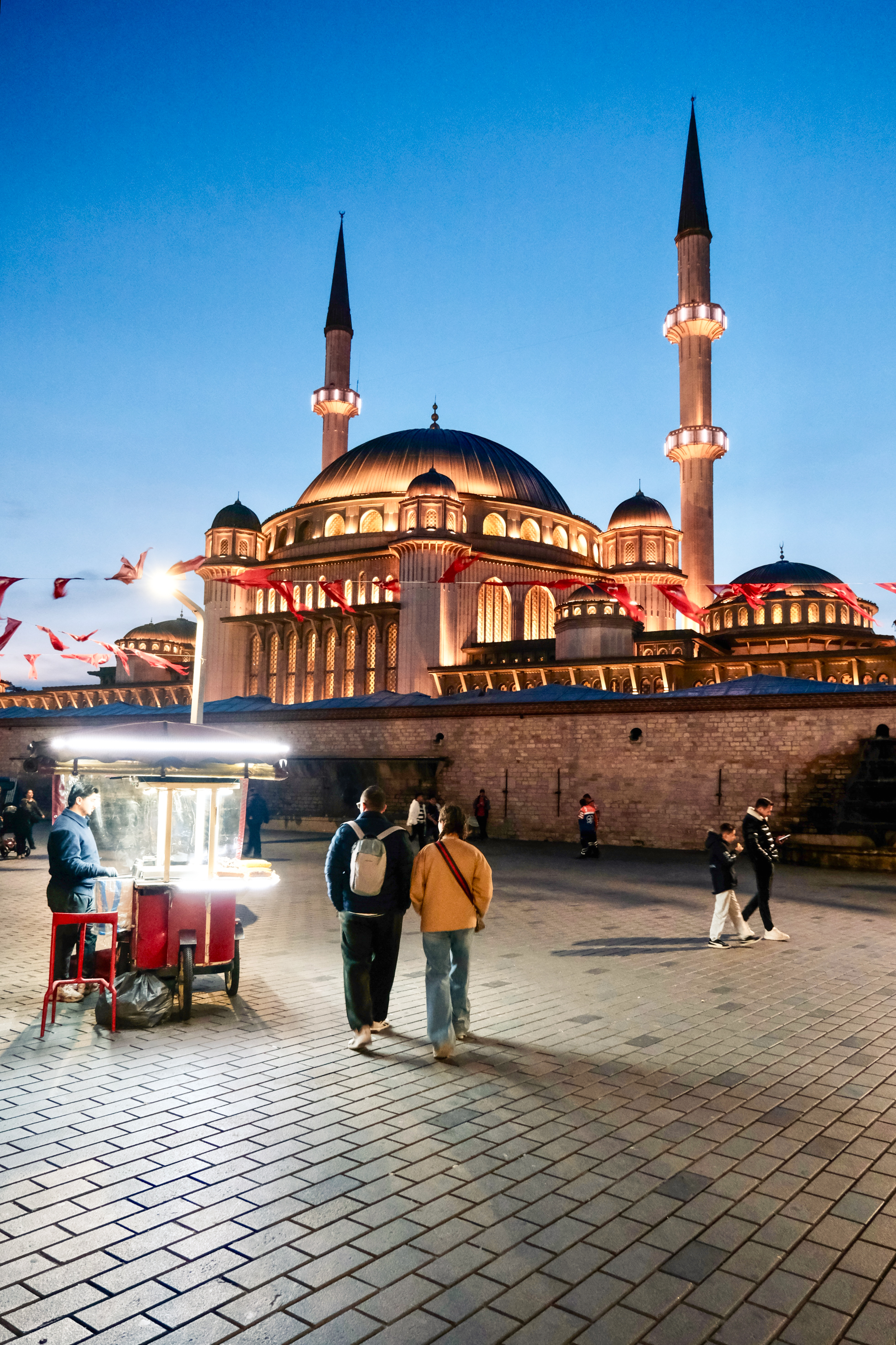
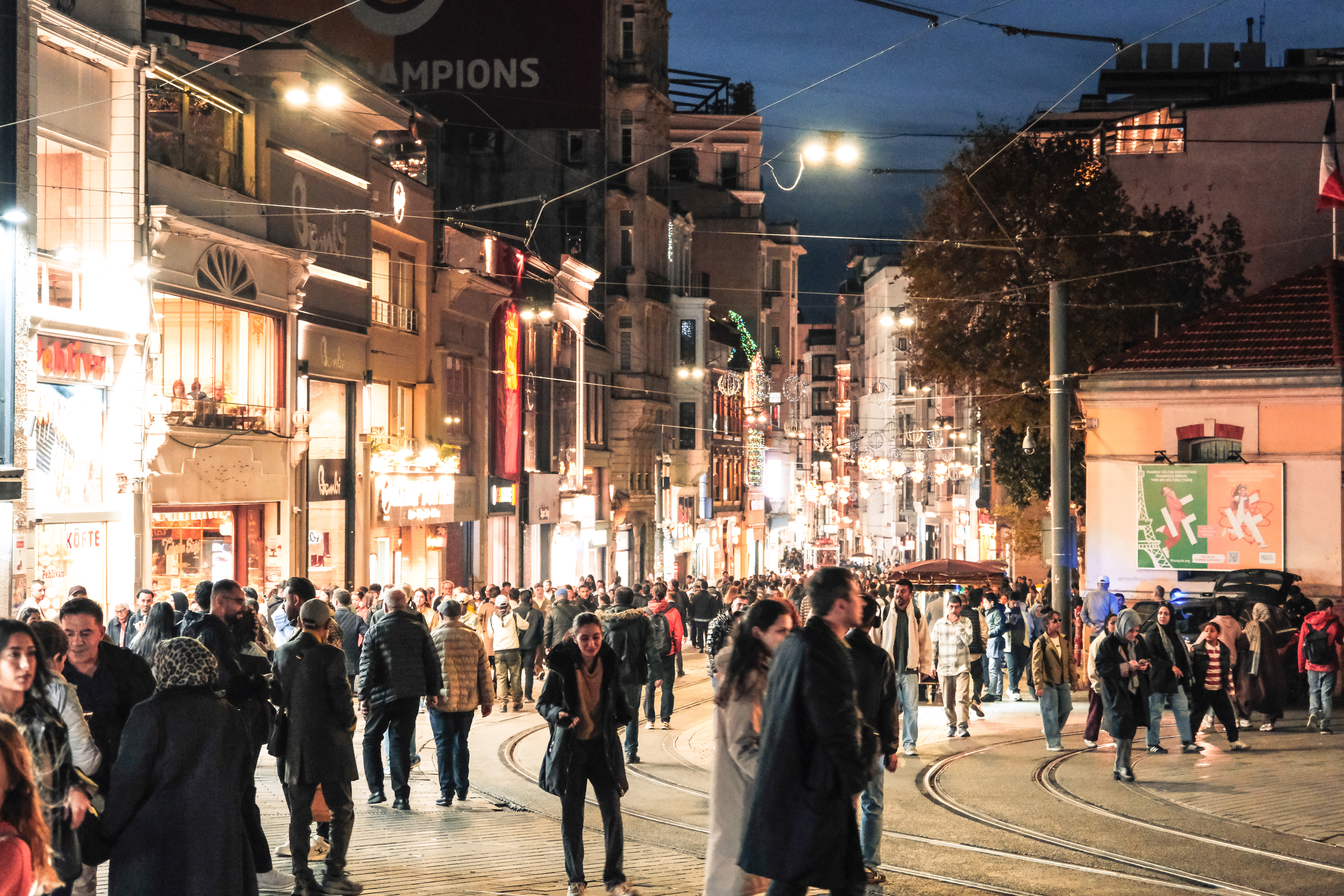
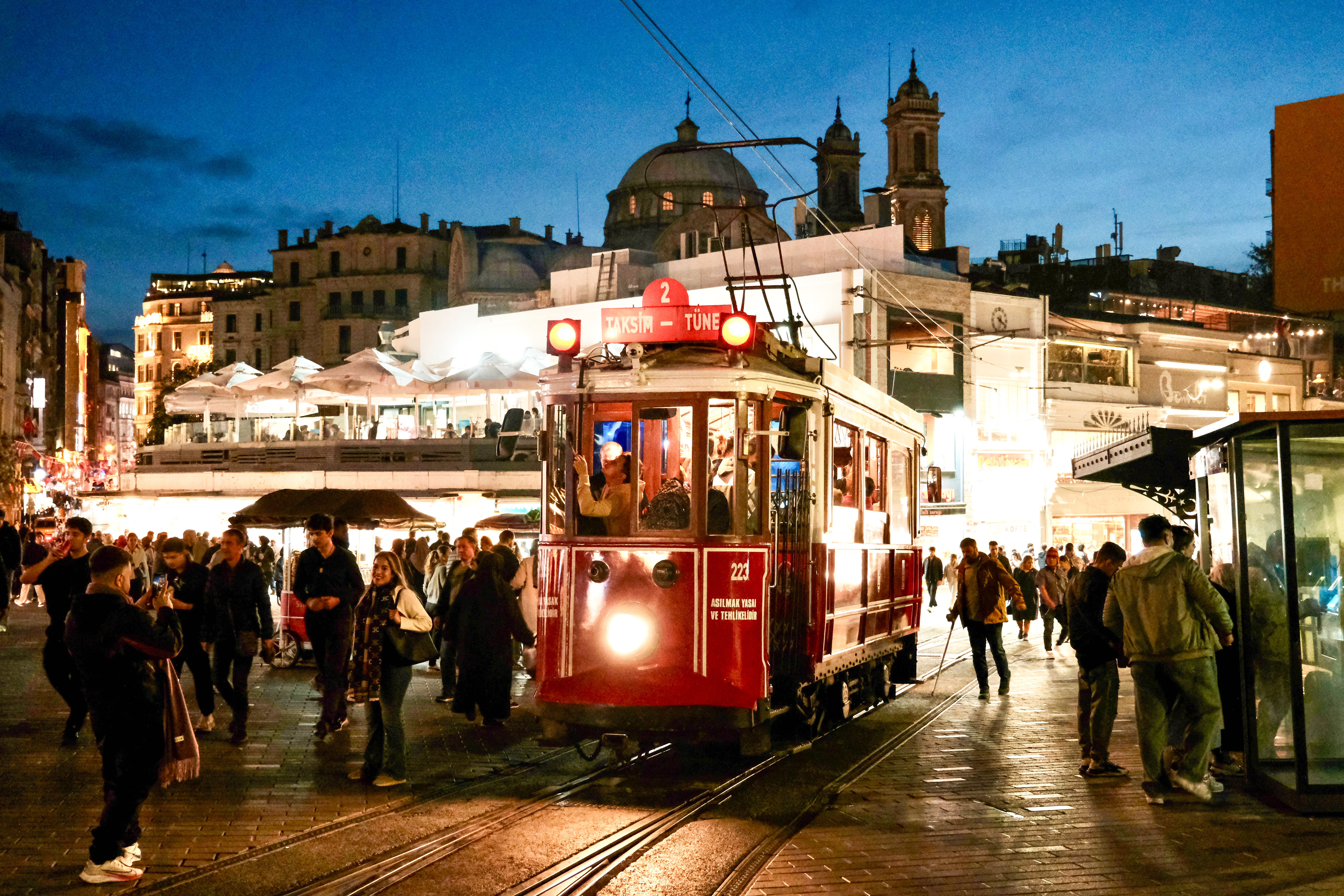
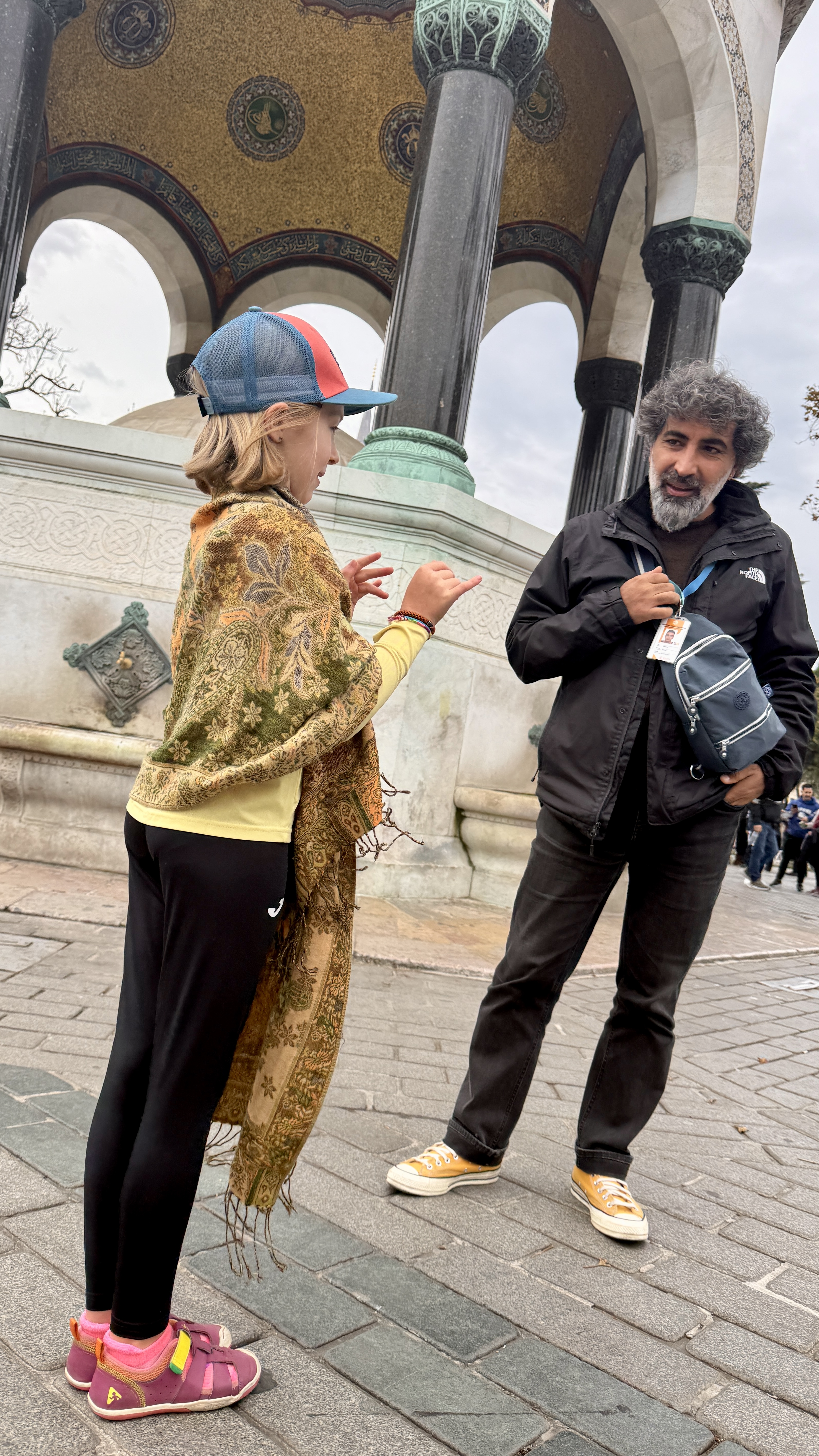
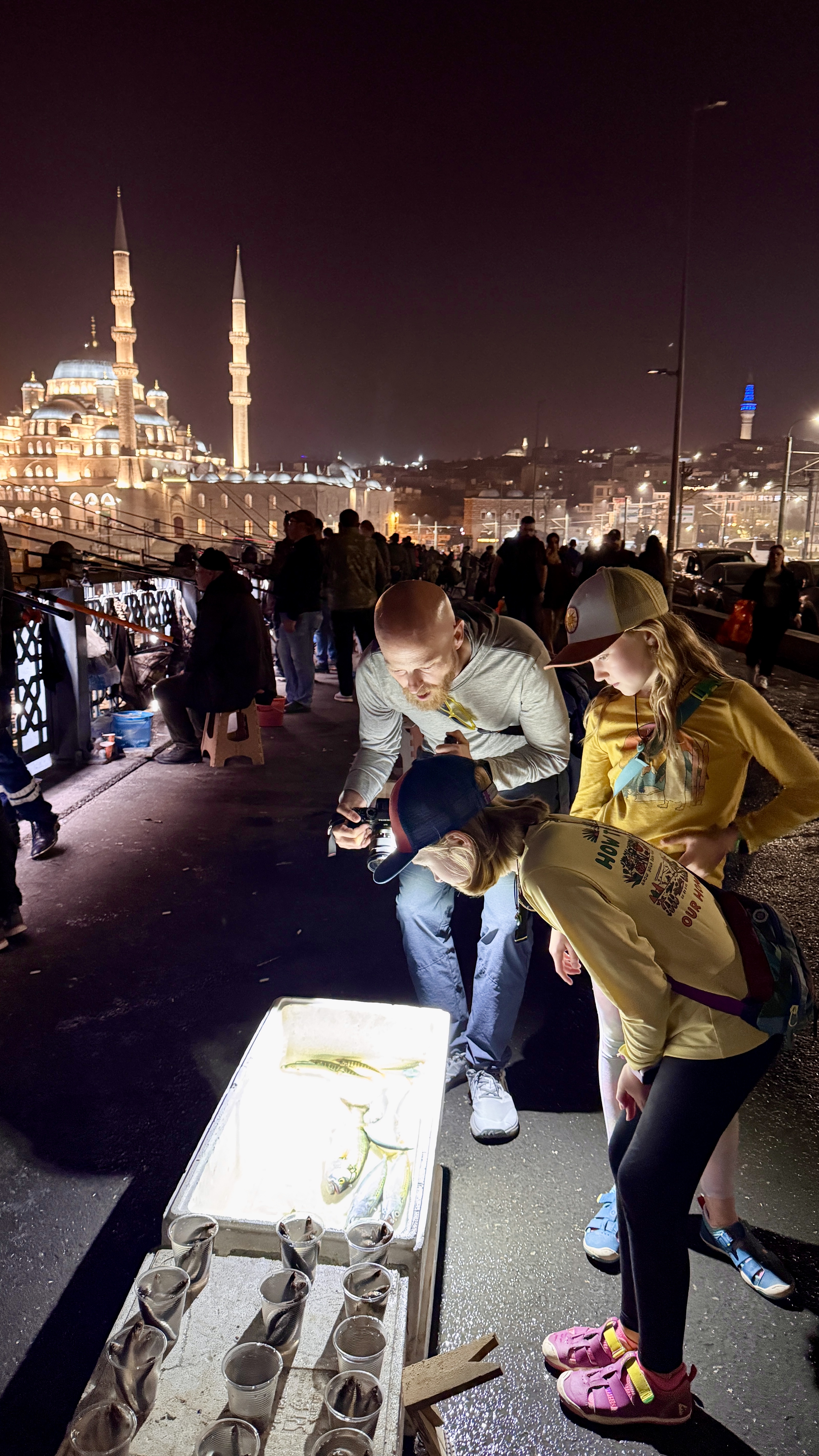
The next morning we stepped into Cihangir’s steep streets, the kind that make your legs wake up before your head. A tram carried us across the Golden Horn into the old city, where the feeling of shifting between eras is immediate and constant. One moment we were under the German Fountain—a domed, green-tiled gift from Kaiser Wilhelm II—the next we were standing in Sultanahmet Square, realizing we were actually in the middle of the ancient Roman Hippodrome, once home to thunderous chariot races.
Istanbul loves to stack its timelines like this.
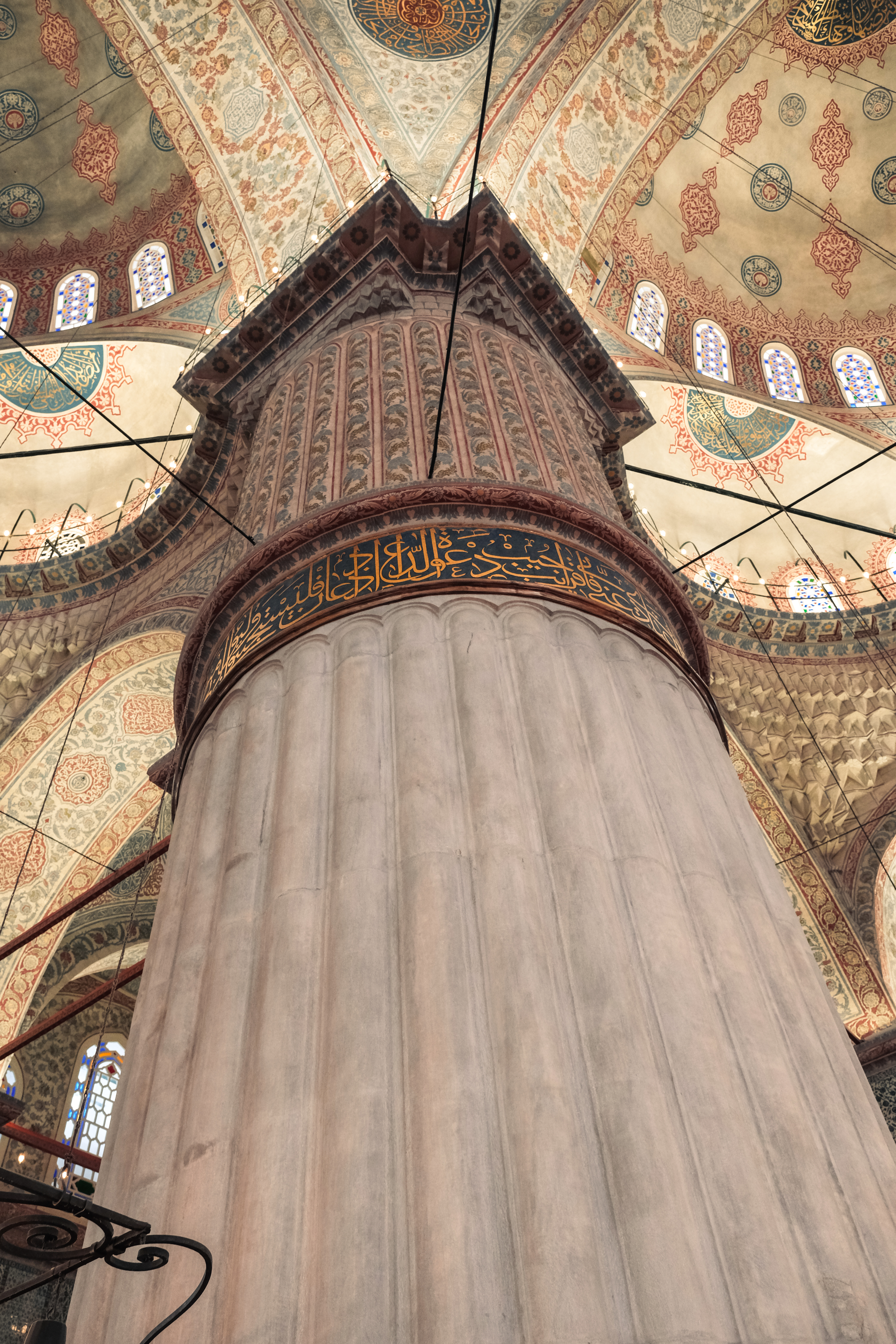
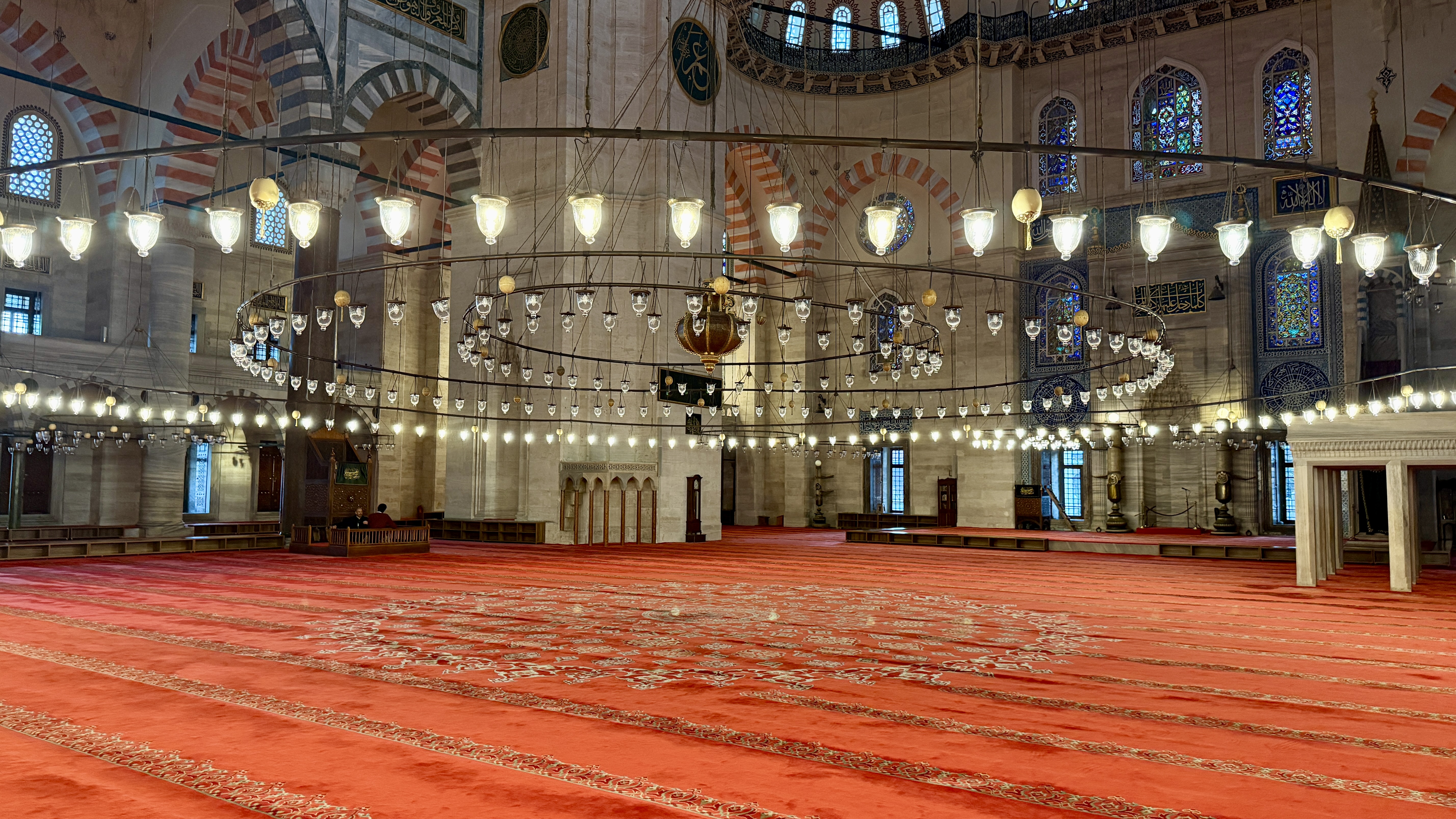
The monuments told their own story: the knotted bronze of the Serpent Column, the rough stone of the Walled Obelisk, and the 3,000-year-old Egyptian obelisk that Theodosius hauled here like a man rearranging his living room. From there we entered the Blue Mosque, moving quietly under chandeliers and Iznik tiles glowing like underwater mosaics. The space was beautiful but unfamiliar in a way that reminded us how little we understand about the rhythms of Islamic practice. The girls asked questions—big, honest, unfiltered—and we tried to answer tactfully, knowing that traveling often throws you into cultural tension before you’ve rehearsed what to say.
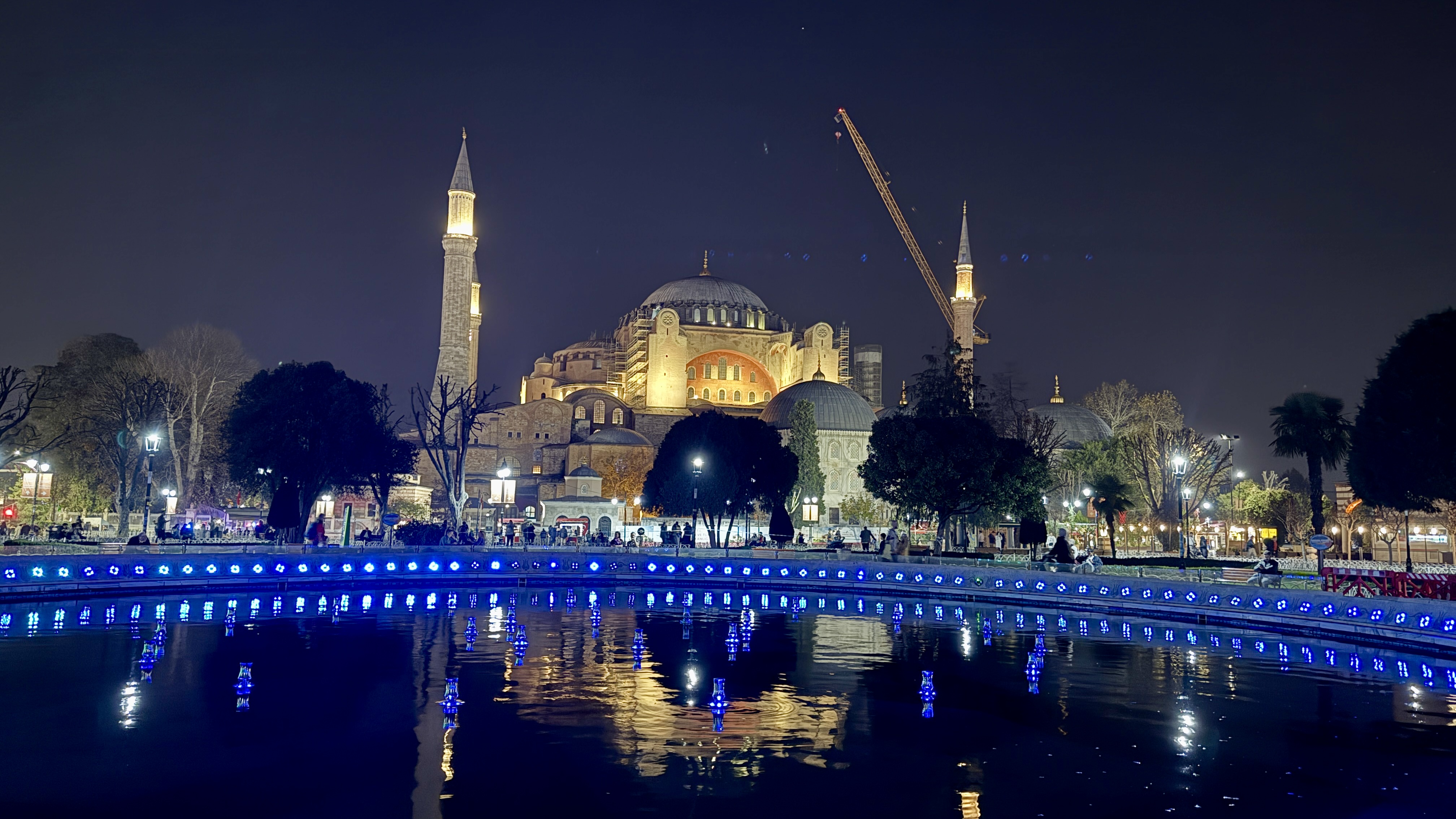
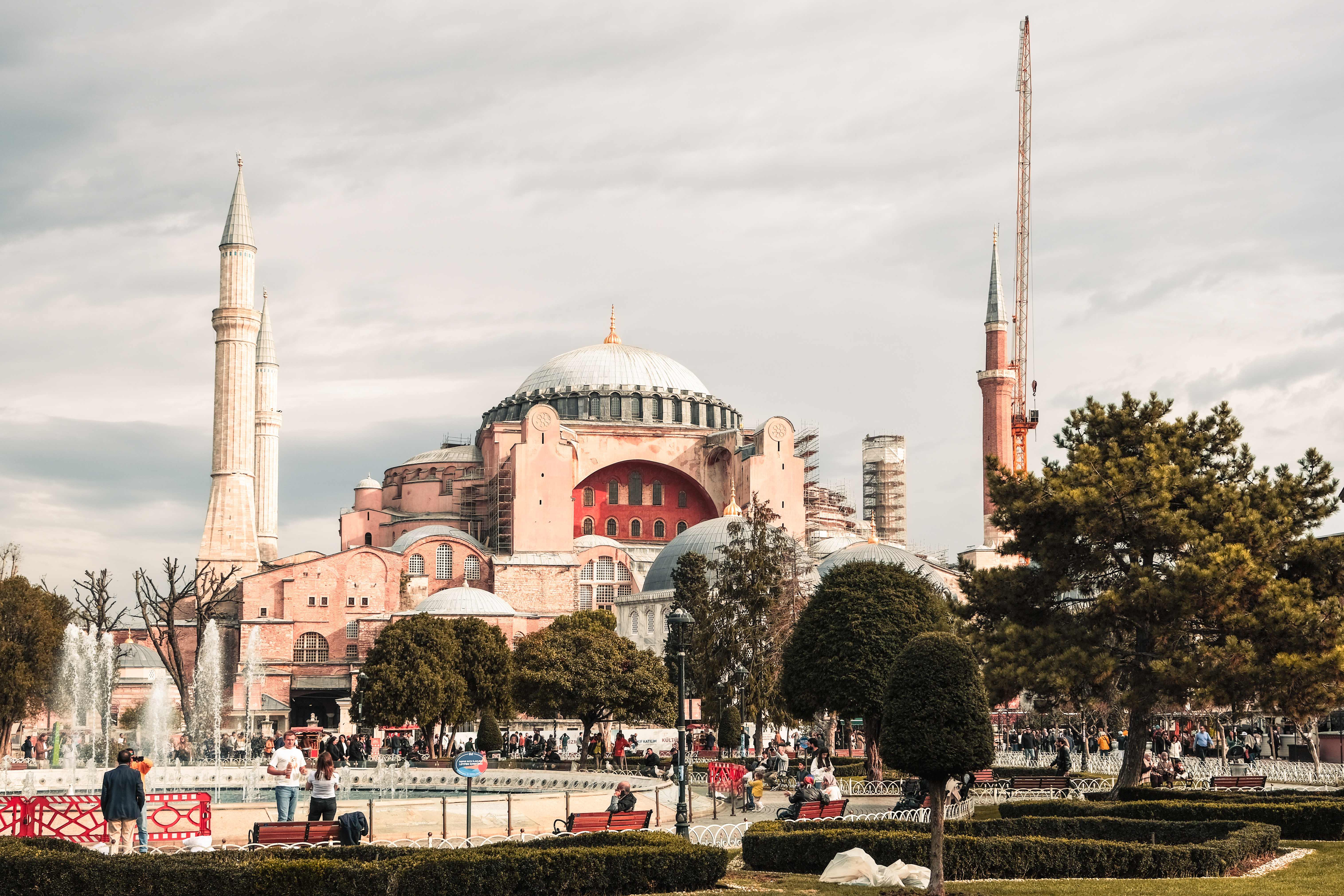
Outside, the 1,500 year old Hagia Sophia rose like a pink, brooding planet. Its current state reflects political tides: stricter access, nationalist overtones, and restricted views that left even our guide—who once led tours inside—discouraged. Once nearly the largest Christian church in the world, later converted to a mosque after Constantinople fell in 1453, and finally into a “museum for all” after the Ottoman empire crumbled and became the Republic of Turkey. The current Erdogan regime changed it back into a mosque once again in 2020. We circled it slowly, feeling the weight of centuries stitched into the dome and thinking about how history here is never erased, only rearranged.
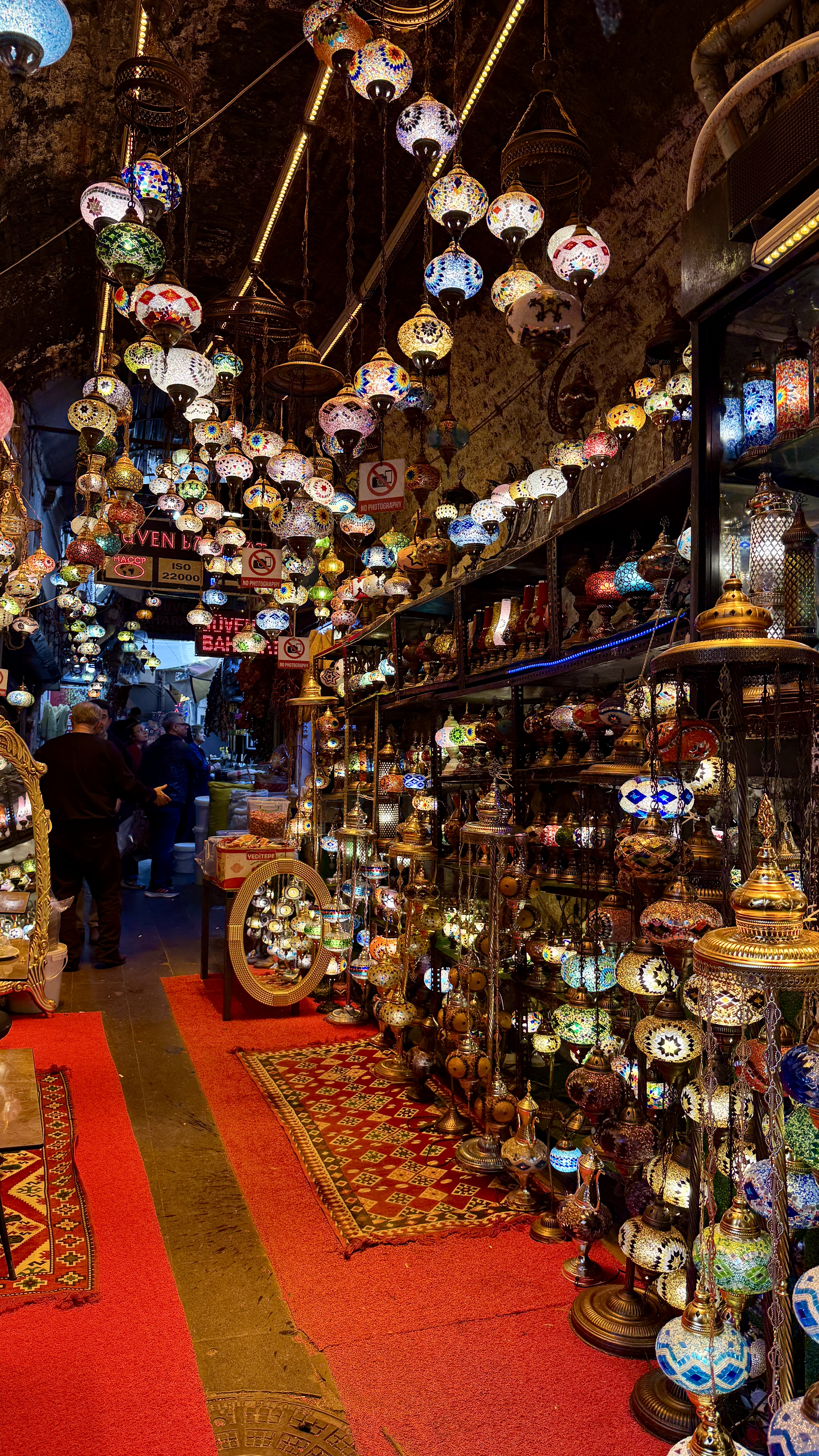
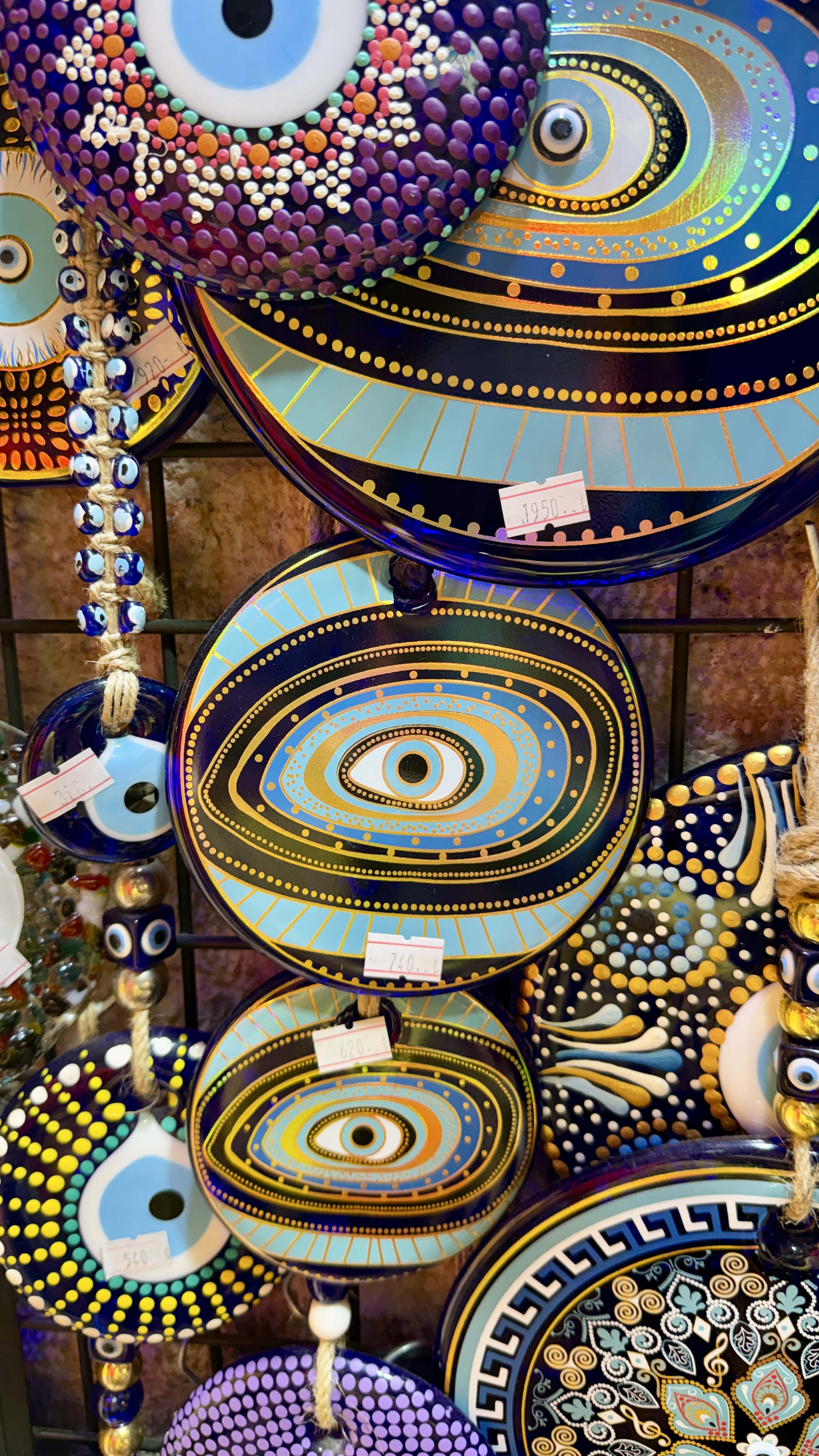
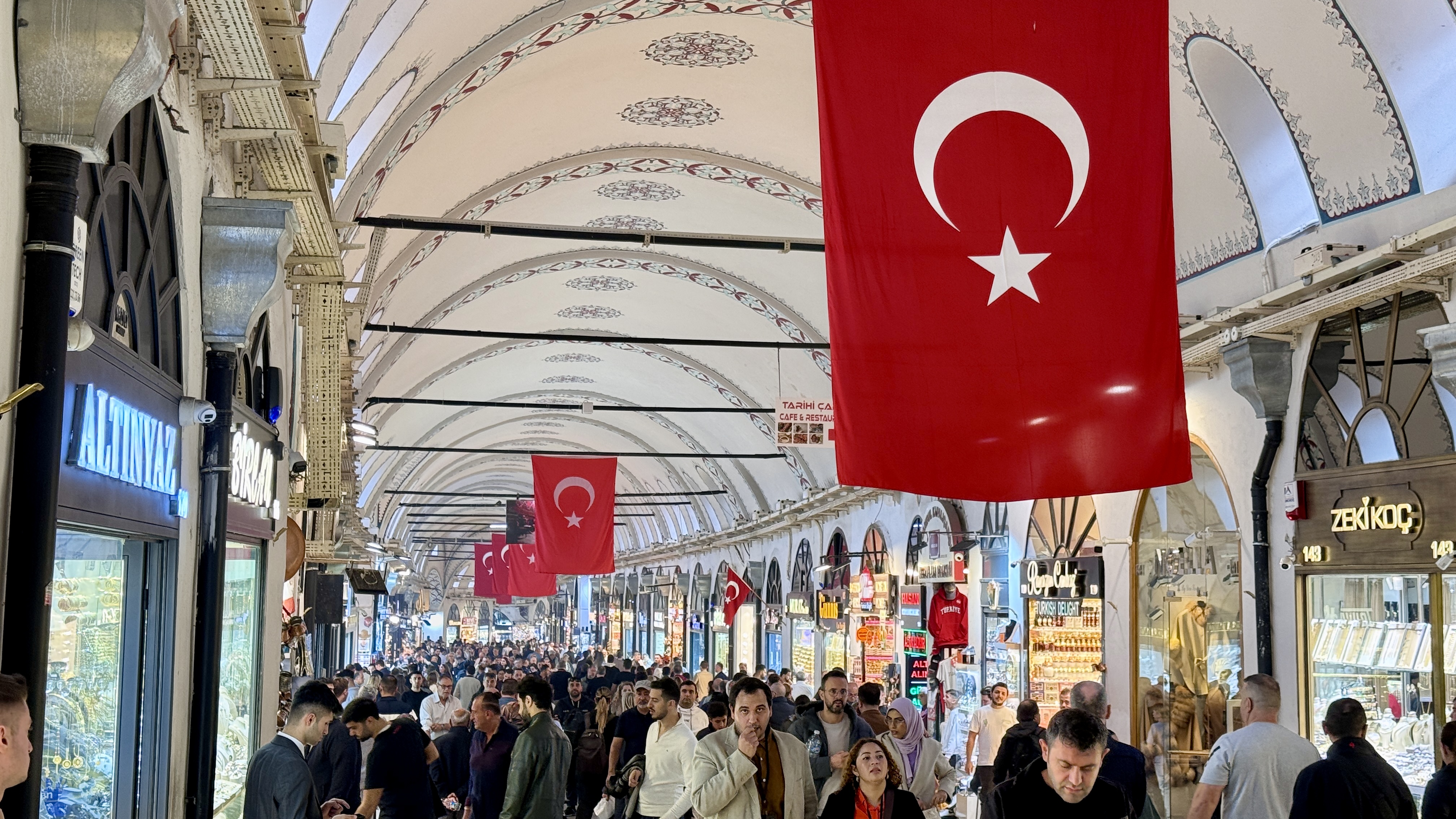
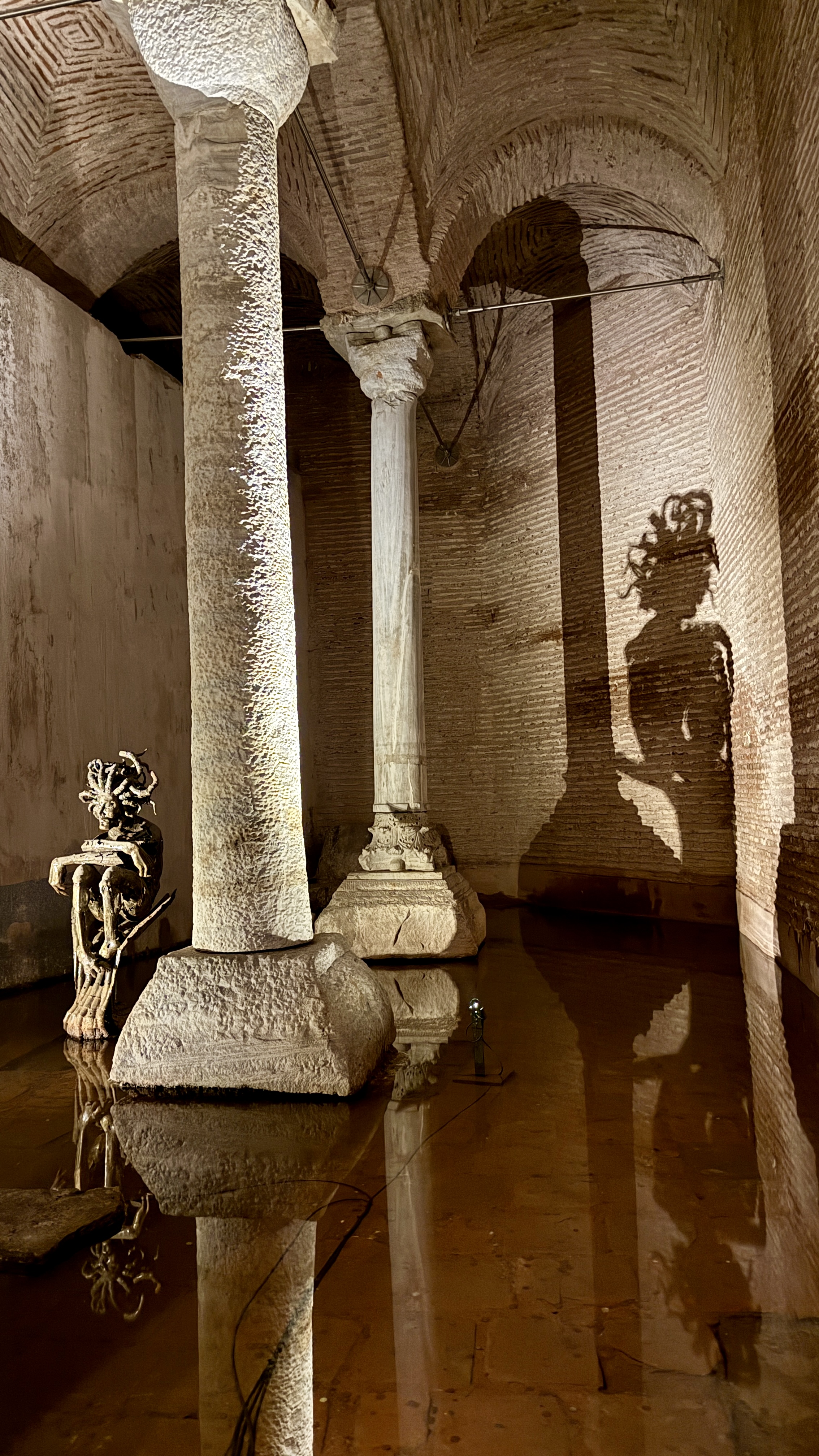
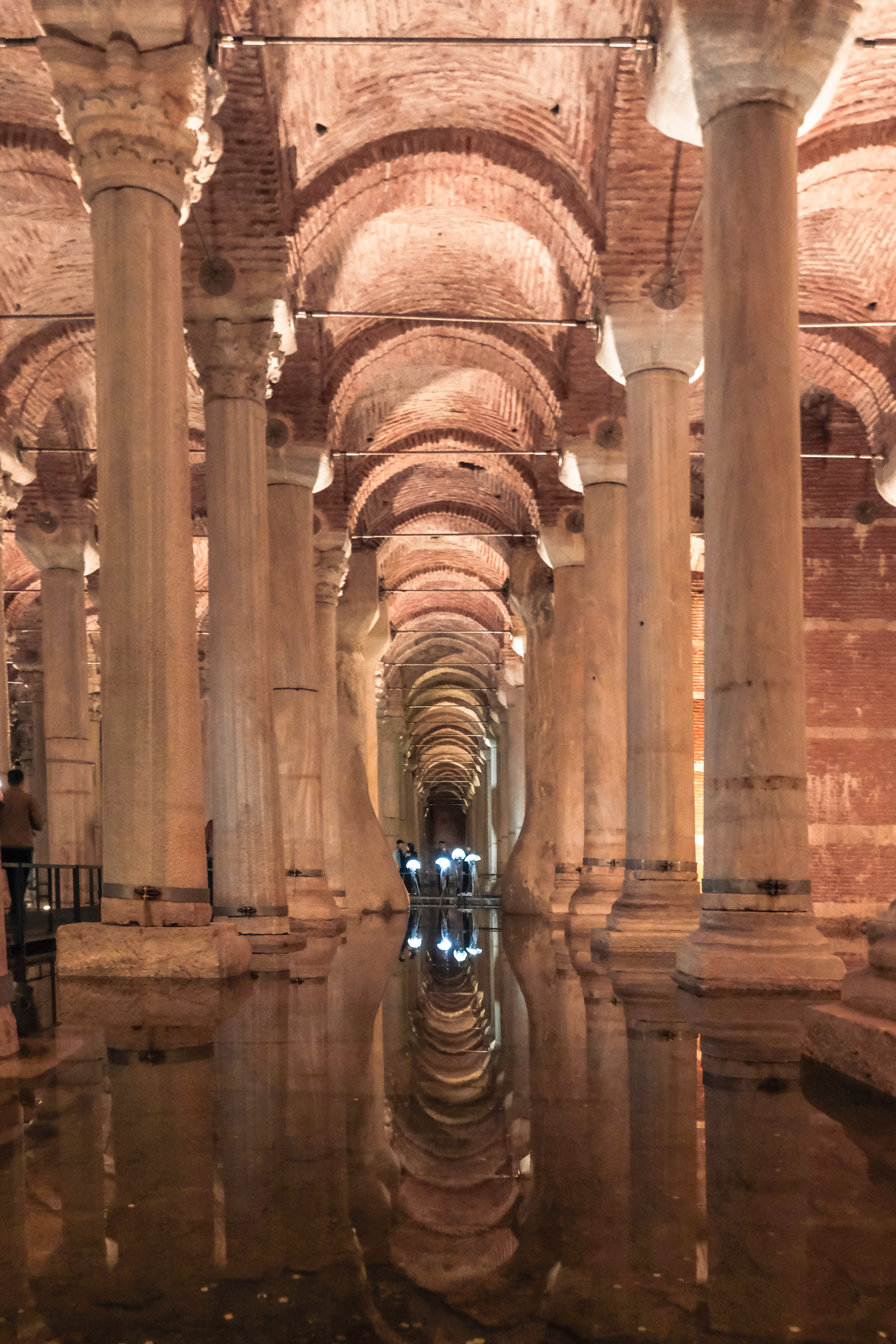
Below ground, the Basilica Cistern swept us into yet another world—cool, columned, and echoing—it was magical. Then back up into the sunlight, past steam drifting from the rooftops of old hamams, and finally into the Grand Bazaar, where curated stalls glowed with color and repetition. Even when the wares felt repetitive, the atmosphere buzzed. The girls lingered over trays of antique keys as though they might unlock the doors of Constantinople itself.





In the days that followed, Istanbul began to feel like a series of portals.
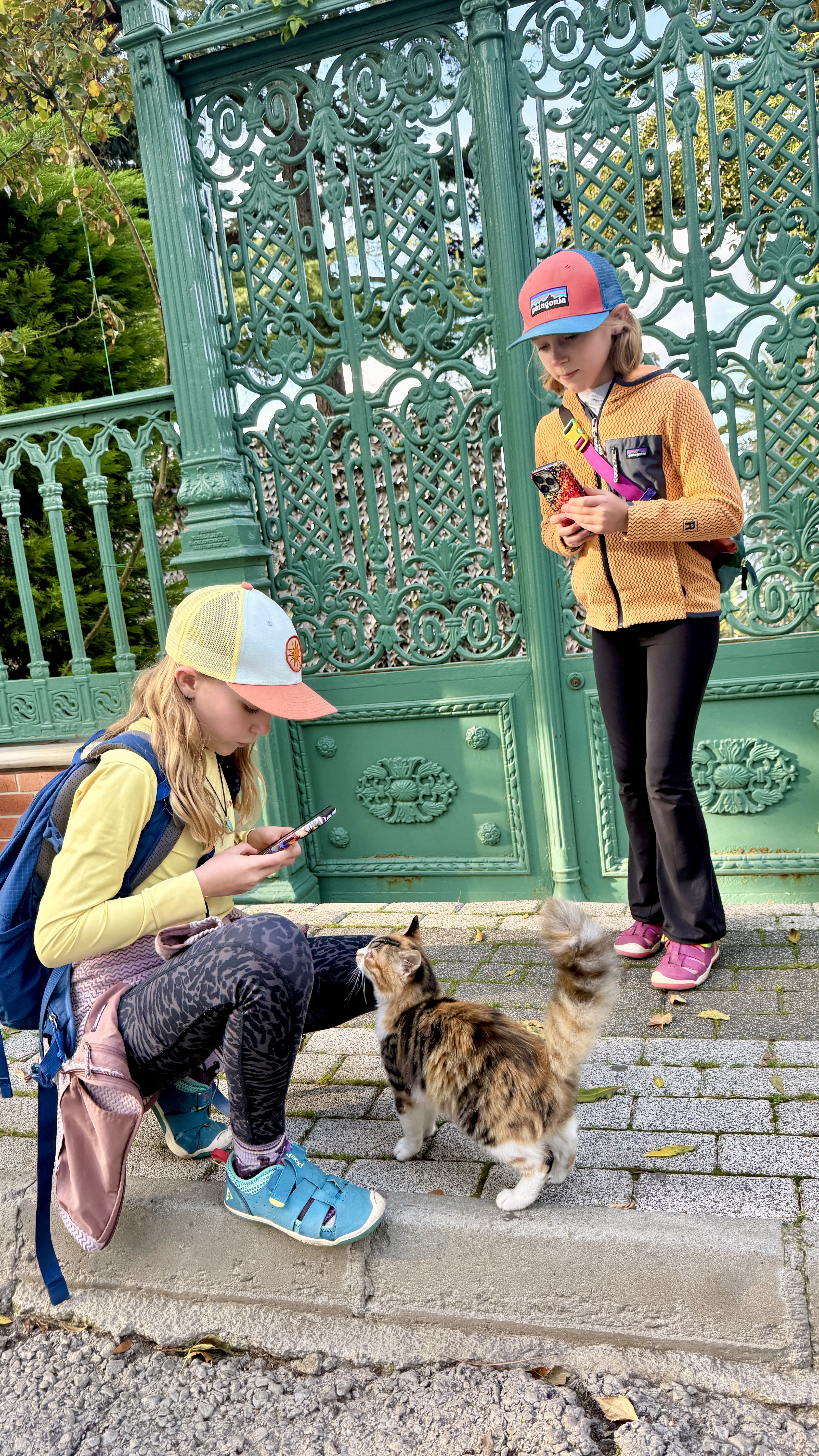
We crossed to the Asian side on a tiny ferry that looked like it belonged in a Wes Anderson daydream. Kadıköy welcomed us with murals, street cats, and coffee shops that made slowing down feel like a civic requirement. We wandered without a plan—a novelty after so many structured days—and ate döner from tidy boxes while the girls sorted their food into suspiciously neat piles. The waterfront at sunset glowed molten gold, and the Bosphorus shimmered as if showing off.
On the ferry back, a Turkish journalist named Efe struck up a conversation that shifted the day into deeper territory. He spoke about inflation spiraling, political freedoms narrowing, and the complicated dance of power in Türkiye today. Hearing it from someone living inside the story added a weight that stayed with us. It reminded us that travel isn’t just about what you see—it’s also about what people trust you enough to tell.
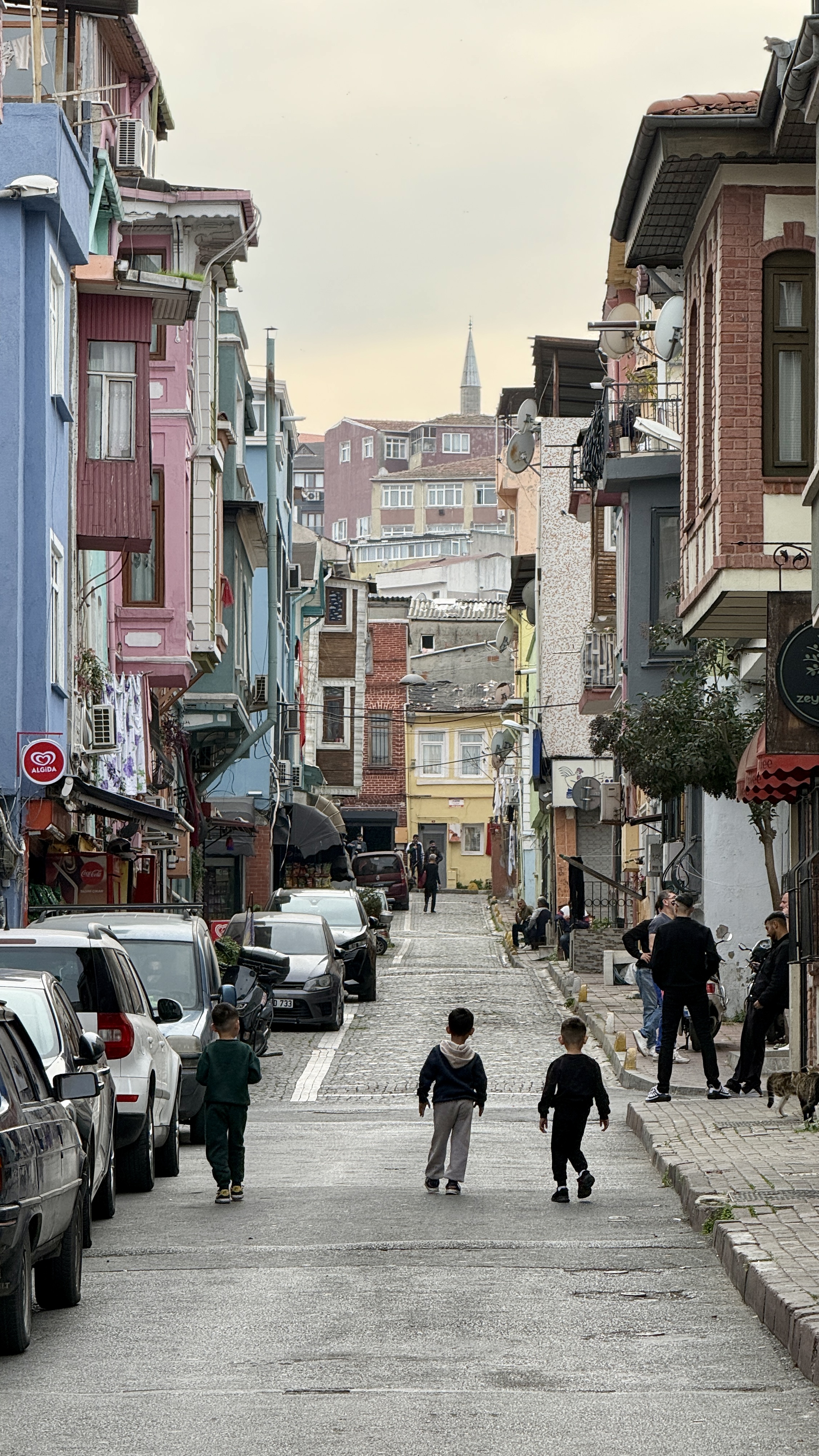
Other wanderings took us through Fener and Balat, where wooden houses leaned with age and bright splashes of color. We climbed to the tomb of Sultan Selim I and then continued to Fatih Mosque, where the shift in cultural atmosphere was immediate. The neighborhood was deeply conservative. Many women wore full burkas. Men carried prayer marks on their foreheads. Children played in courtyards while families gathered for Sunday prayer.
Inside the mosque courtyard, Arya resisted putting on her headscarf—less out of rebellion and more out of principle. Suddenly we were balancing respect, belief, discomfort, and parenting all at once. We talked about courtesy inside sacred spaces, about choosing to enter a place that holds meaning for others, and about the difference between participating in a ritual and going along politely. She didn’t love the conversation, but it was honest, and it was exactly the kind of moment travel delivers whether you’re ready or not.
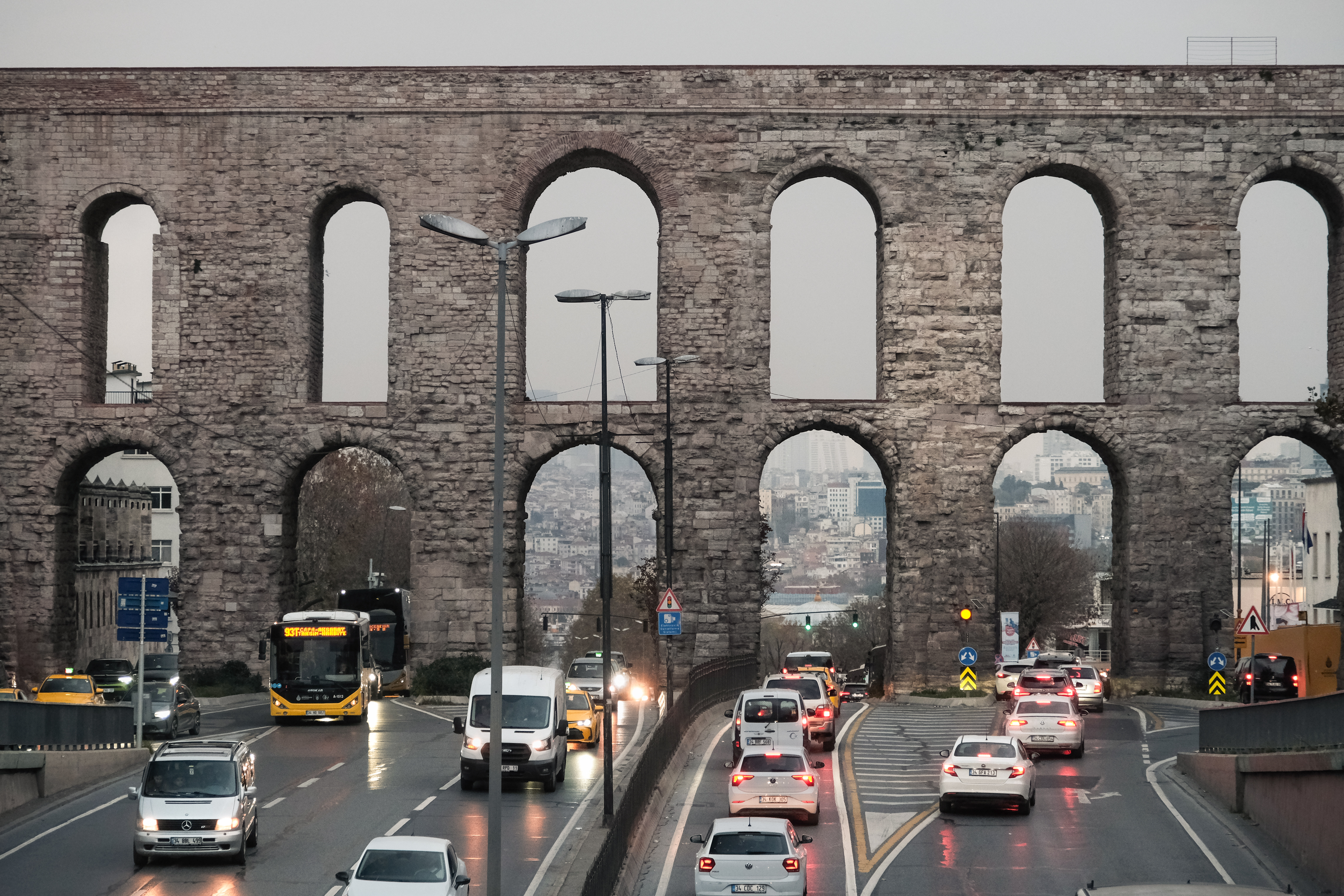
And then, as kids do, she shed the seriousness like a coat when we reached a nearby park. The girls invented obstacle courses while the fourth-century Valens Aqueduct stretched over a modern roadway behind them, one more reminder that Istanbul never stops mixing eras.
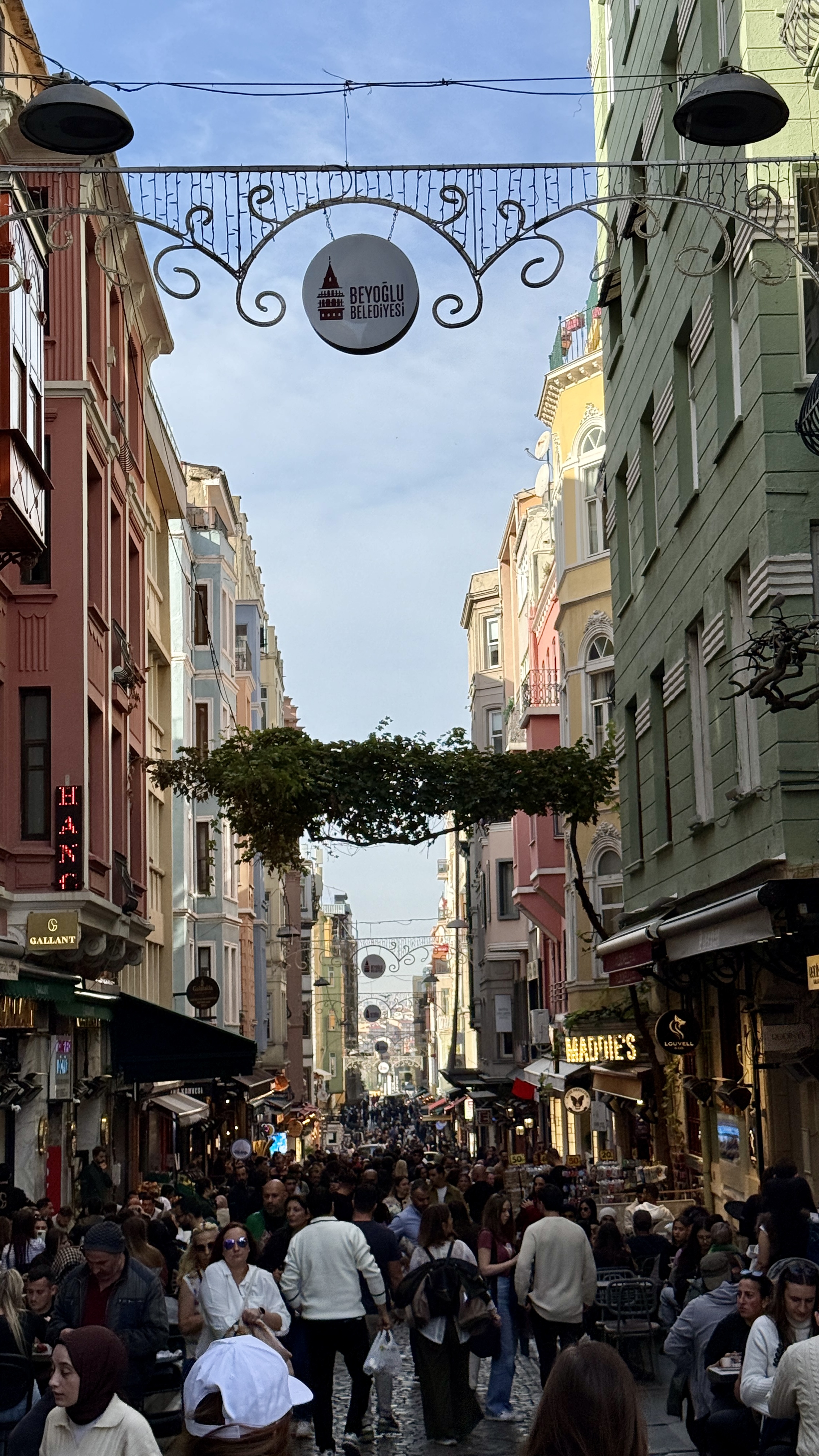
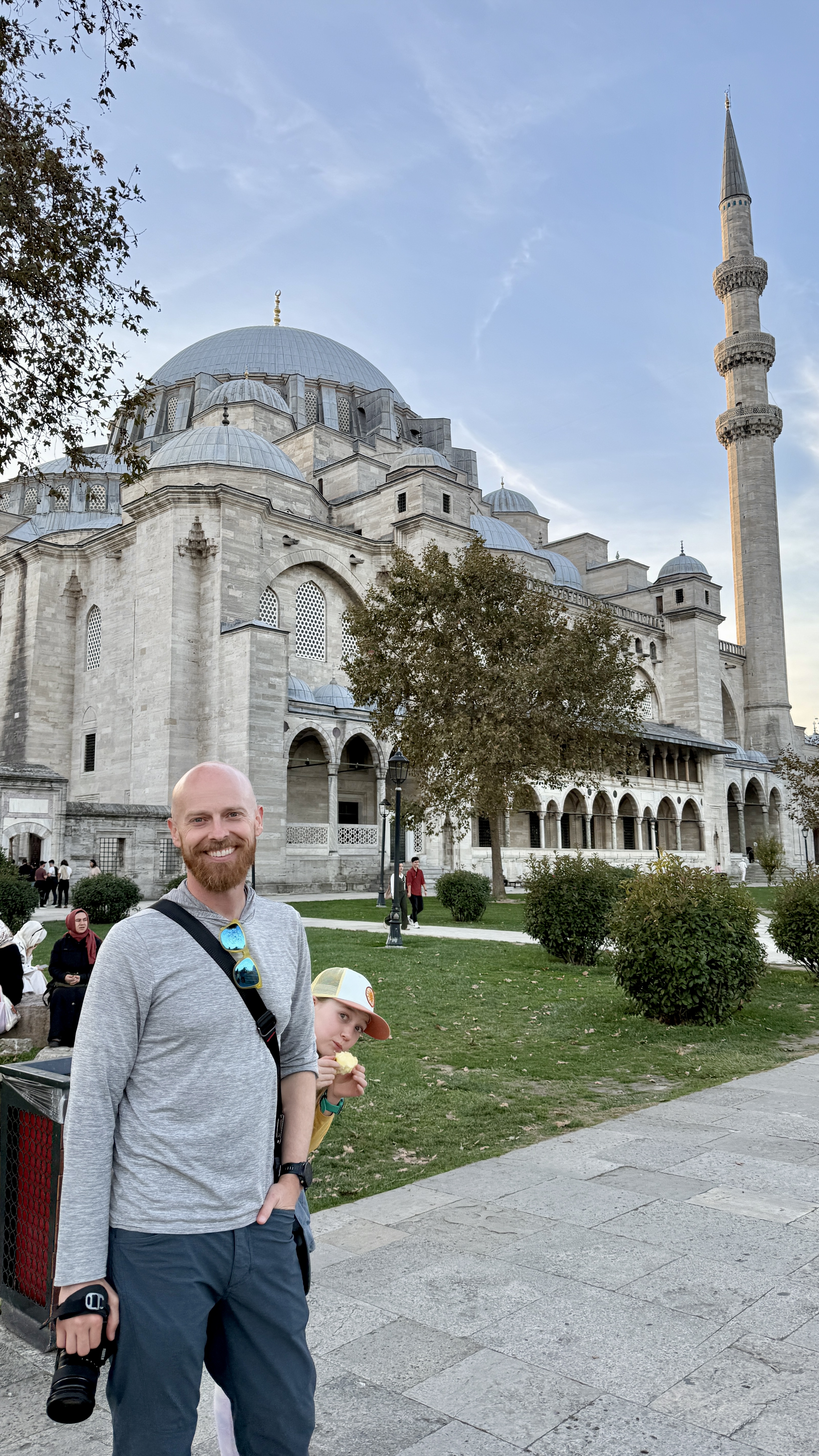
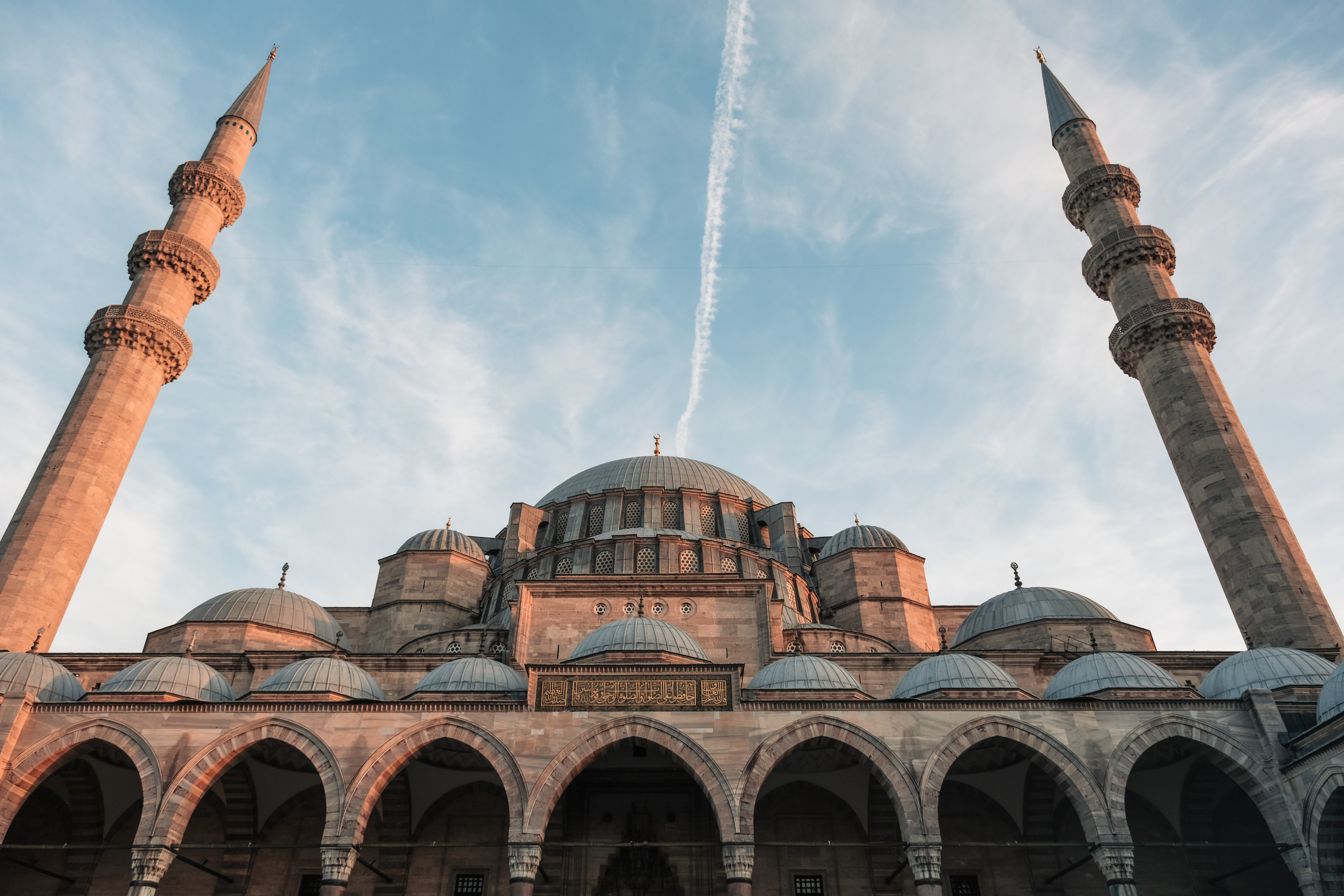
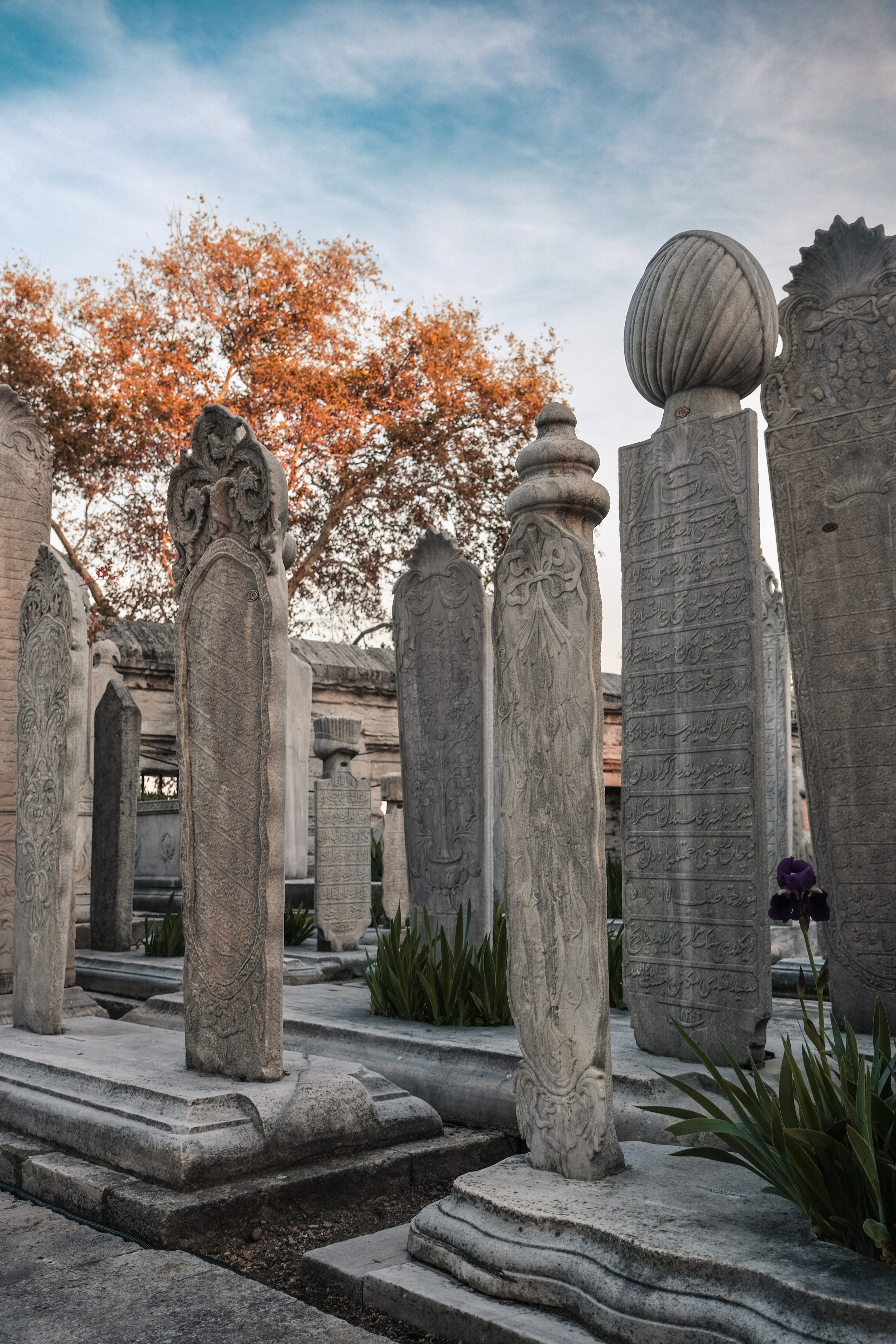
Another day carried us past the “Instagrammable Wall” (pleasant but aggressively overnamed), through the bustle around Galata Tower, into the Spice Market’s kaleidoscope of saffron and teas, and up into a breezy rooftop terrace where ferries crossed and recrossed the water like threads stitching the city together. Süleymaniye Mosque at sunset was a highlight: its courtyard warm with golden light, its domes balanced and serene. Dinner, after a long bout of indecision, came on a simple rooftop terrace that made the wandering worthwhile.
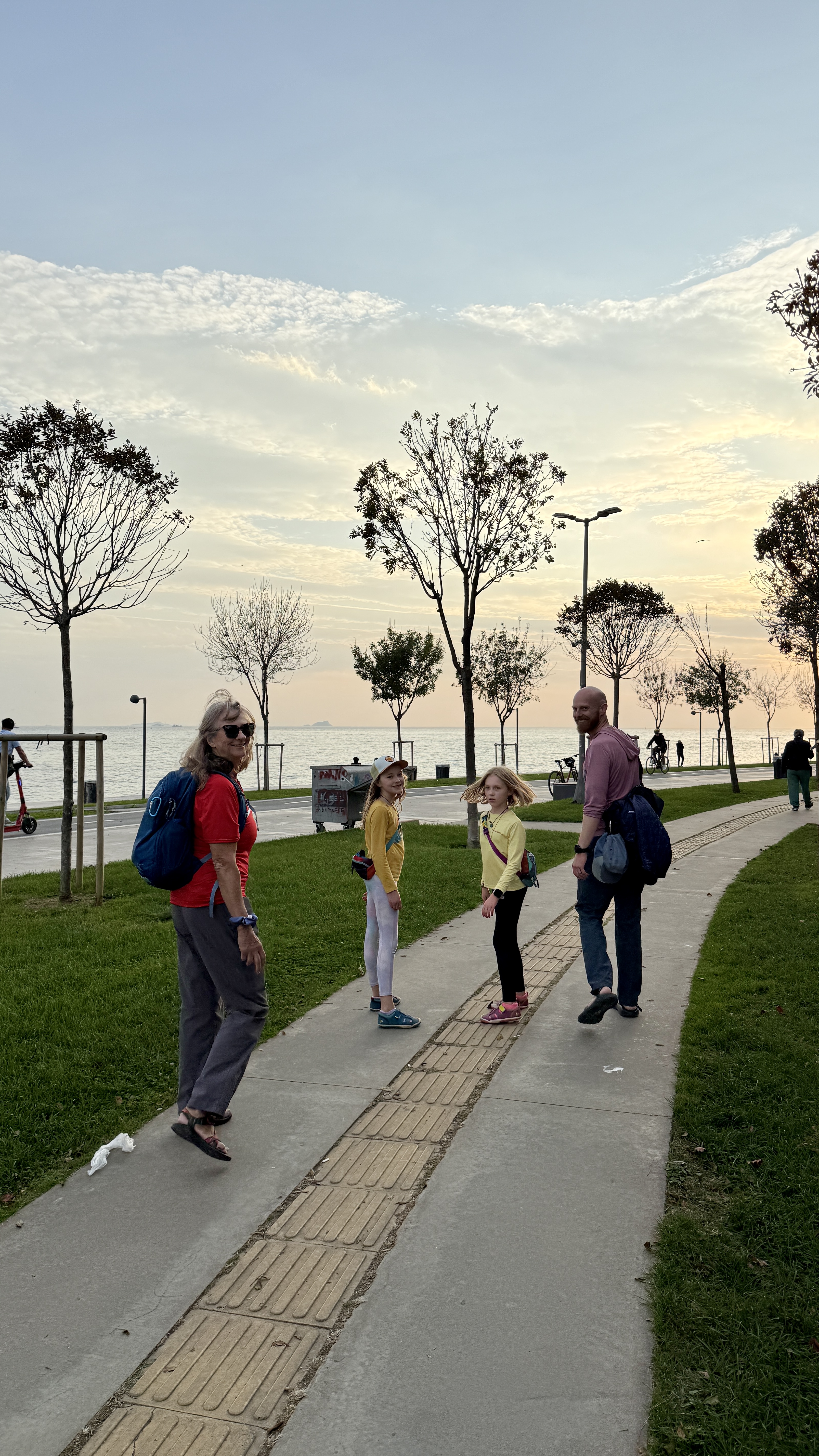
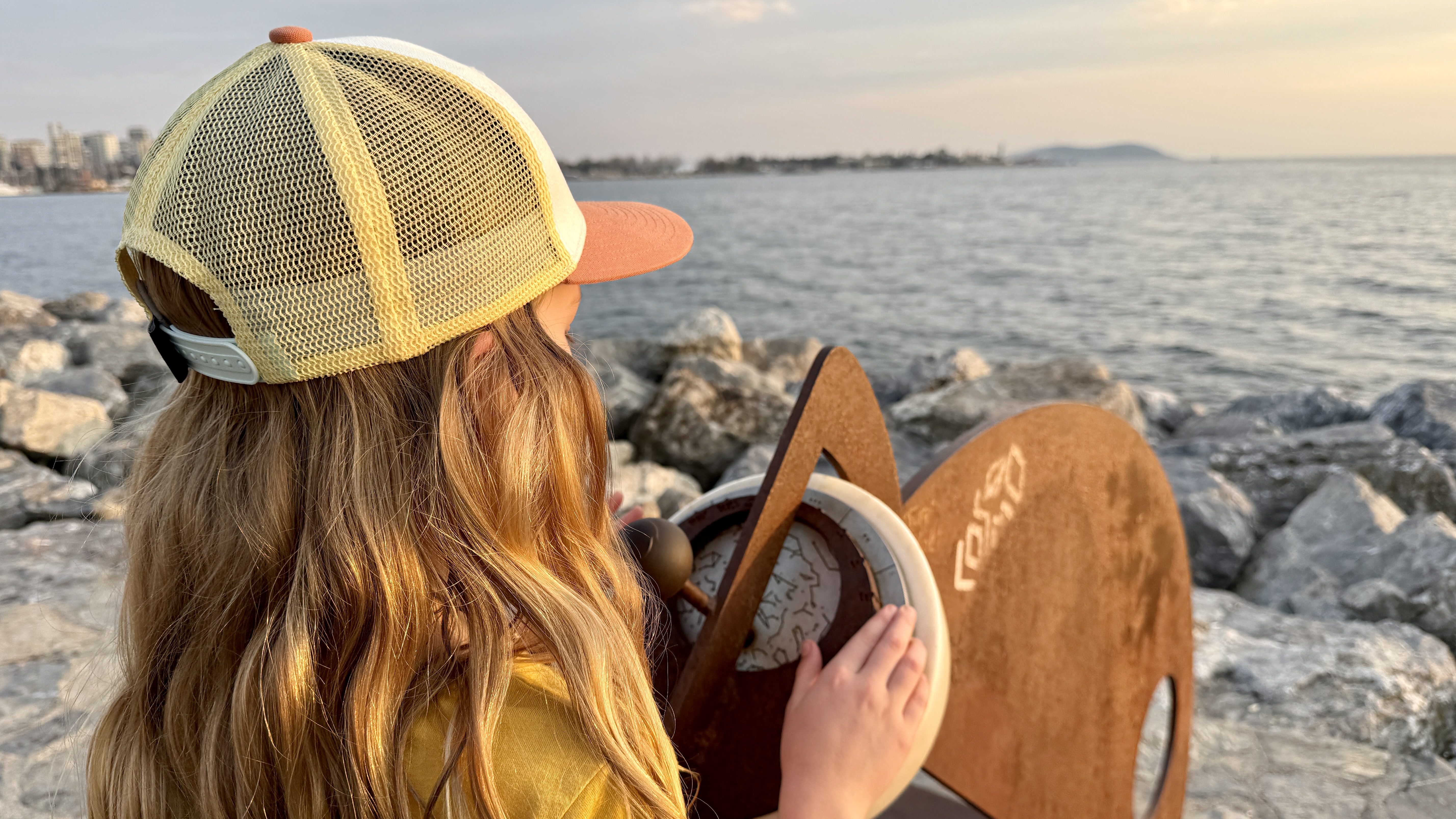









Our most peaceful day came after the stormiest start. We intended to catch the 8:00 ferry to the Prince’s Islands, but woke to a downpour so heavy it sounded like the sky was emptying buckets onto the roof. By 9:30 the rain softened, and in classic family fashion, we found ourselves sprinting to the port with seconds to spare. The moment the ferry left shore, the sky cracked open again—hail, then sun, then more hail—before finally settling into a crisp, clear morning.
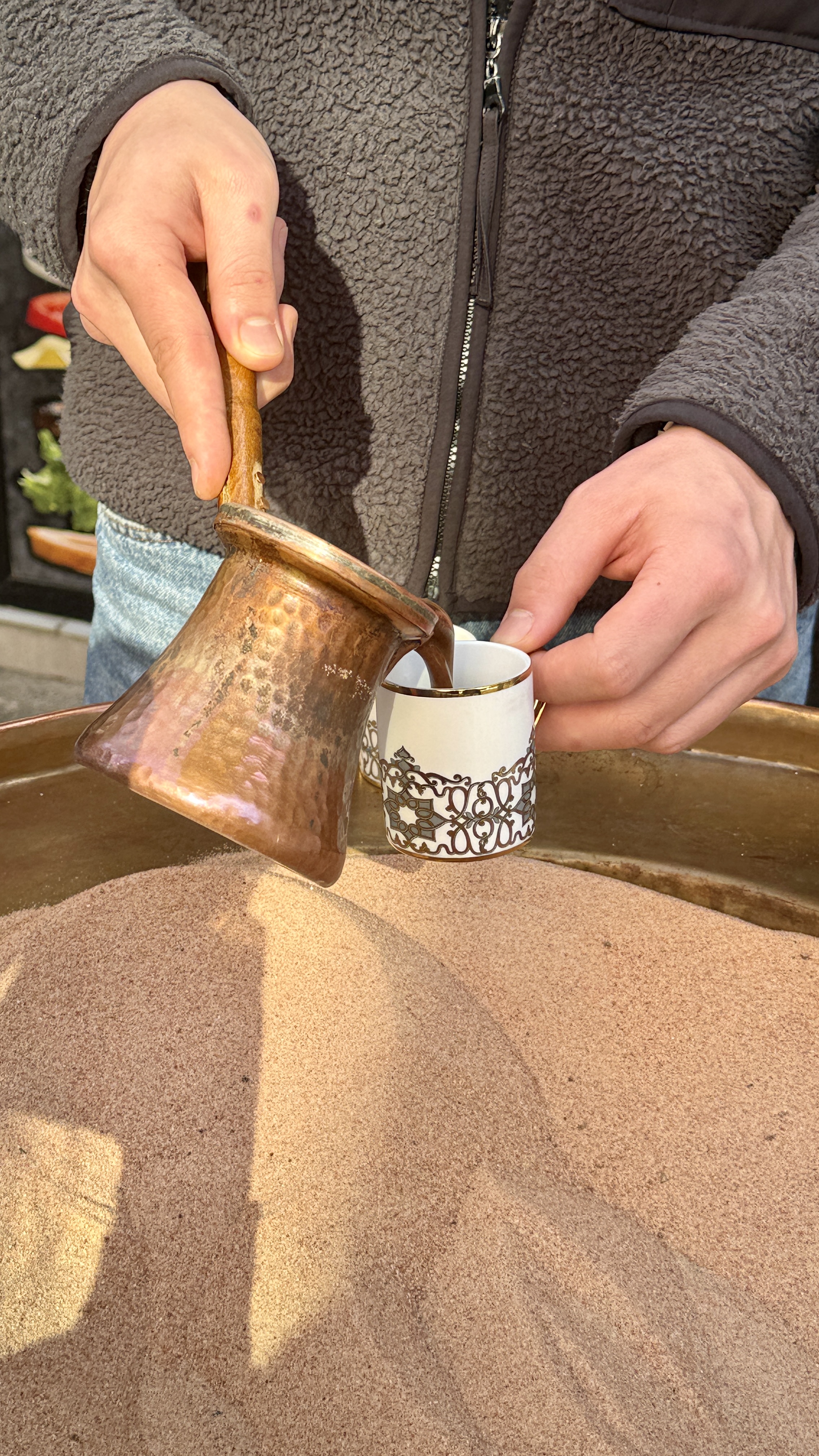
Büyükada felt like stepping out of Istanbul entirely. Car-free streets, old wooden mansions, and the soft quiet of an island preparing for winter. We shared simple rotisserie chicken at a local cafeteria, then found the sand-heated Turkish coffee Missi and Maxell had been searching for all trip. The barista nestled a copper cezve into hot sand, slowly and carefully churning it in circles, until the coffee bloomed up in a dramatic foam. It tasted deep and smooth, and felt like a little ceremony of its own.
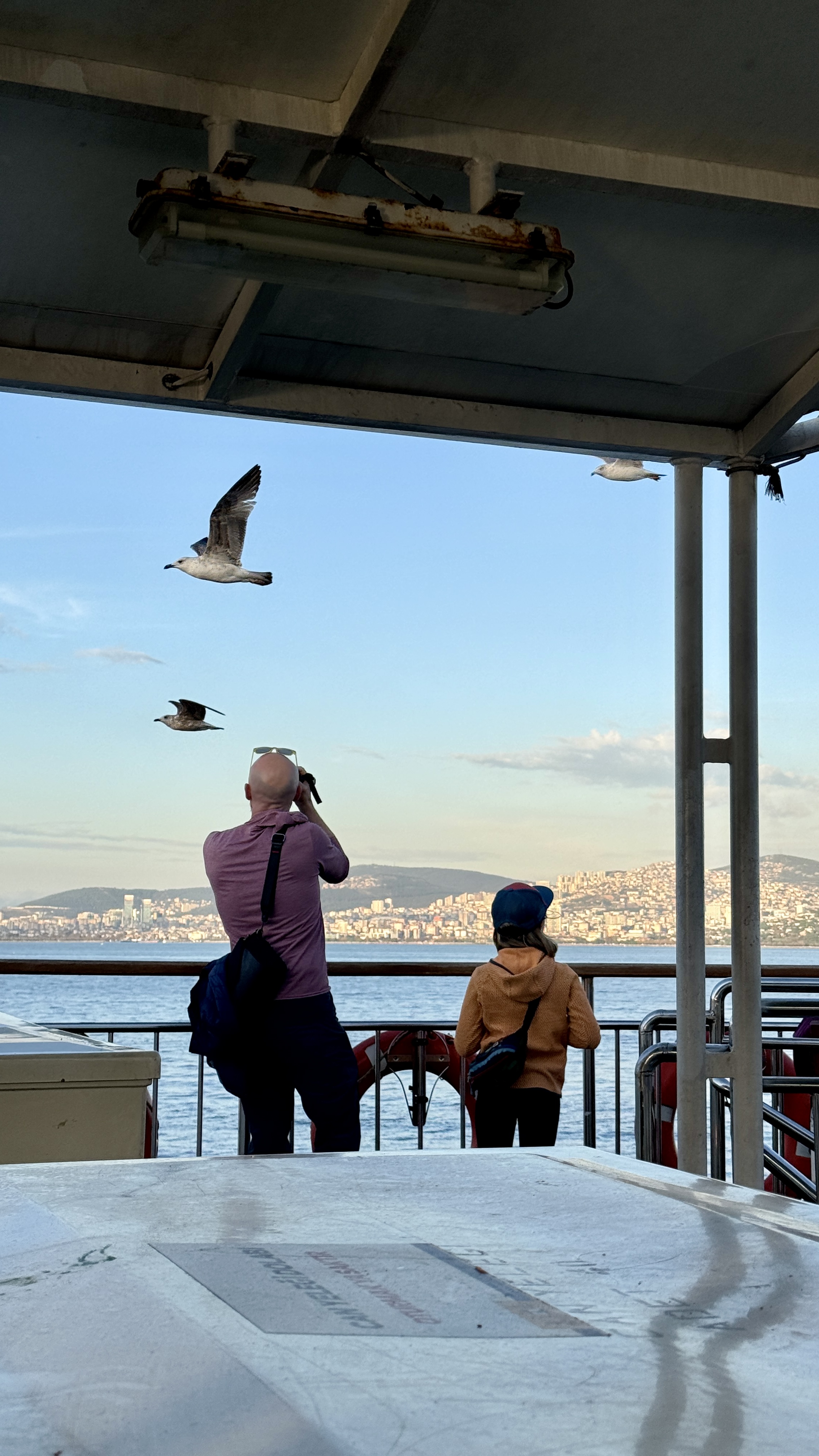
We wandered half the island, bought warm donut holes dusted with cinnamon, then returned to the ferry where seabirds hovered close, waiting for crumbs of simit. Max took hundreds of bird photos and kept maybe three. Practice makes progress.
Most nights ended the same way: climbing the steep hill into Cihangir, collapsing into the Airbnb, and settling in with an episode of Bake Off. That gentle ritual became our grounding point—our little homeworld inside a city built on crossroads.
Now, as we prepare for a 2 a.m. flight out of the country, we realize Istanbul has shaped us in ways we didn’t anticipate. Not through any single monument or dish or ferry ride, but through the sheer act of shifting—again and again—between worlds:
Between Europe and Asia.
Between faiths and secular instincts.
Between ancient empires and modern politics.
Between discomfort and curiosity.
Between being outsiders and trying to be respectful guests.
Between our family’s pace and Istanbul’s much faster, much older one.
This city doesn’t ask you to understand it.
It asks you to adjust.
To pay attention.
To move with humility and humor.
And to accept that sometimes the only way to experience a place built at the literal crossroads of the world is simply to walk between its worlds—and let the city change you in small, steady ways.






 Pause and Wander
Leave a comment