
Dates: October 14–18, 2025
Places: Ligonde → O Coto → Arzúa → O Pedrouzo → Monte do Gozo → Santiago de Compostela
Distances: 17 km → 20 km → 22.8 km → 16 km → 4 km
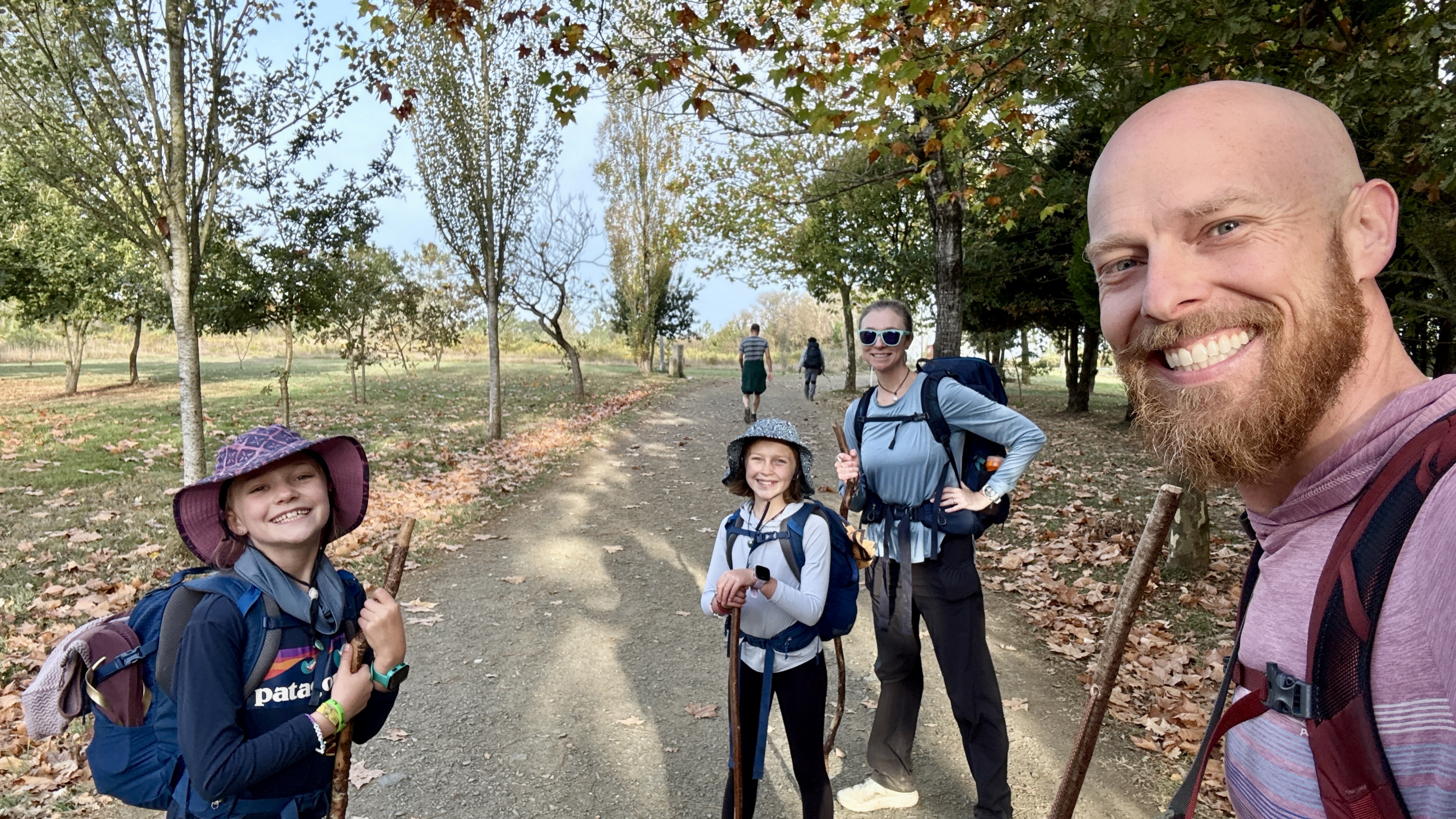
We started this stretch of the Camino with legs that knew what 700 kilometers felt like. The fatigue was there—quiet but ever-present—but so was something deeper: a hidden reservoir that kept refilling itself no matter how much we drew from it. After weeks of walking across northern Spain, the act of moving forward had become second nature, like breathing. Every morning, we laced our shoes, adjusted our packs, and simply began again. What had once felt monumental was now ordinary, even meditative. That shift—the quiet redefinition of endurance—became the invisible thread running through these final five days toward Santiago de Compostela.
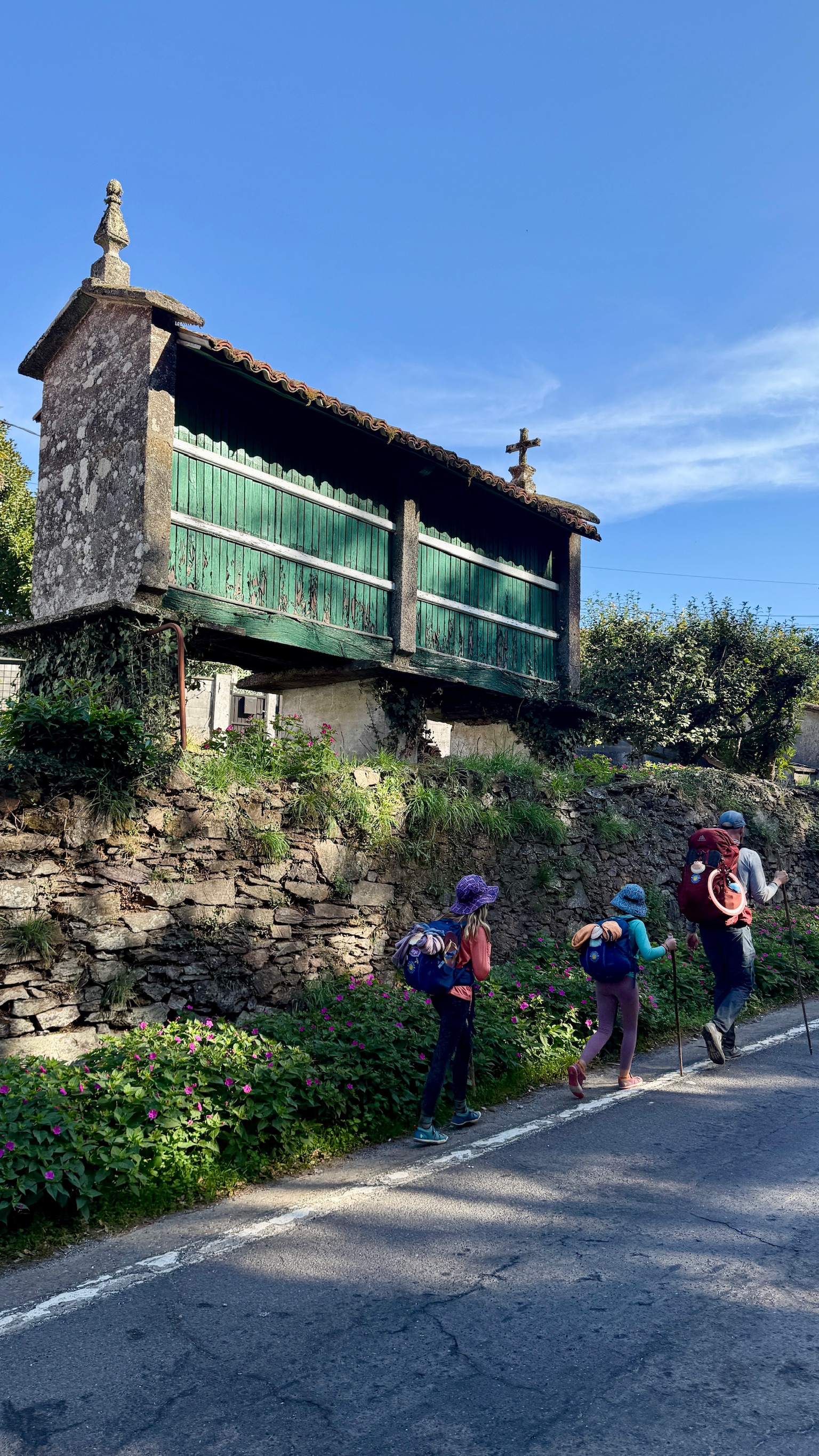
By the time we left Ligonde for O Coto, the Camino had taught us to expect the unexpected: hot one day, cold the next; sometimes windy, sometimes still; dusty plains giving way to fog and morning mist. But this day carried a special kind of rightness from the start. The breakfast was hearty, the energy good, and when our shuttle driver from our off-Camino casa rural offered to drop us off at the top of the first hill, we laughed and said no. The hills are the point. We didn’t come all this way to skip the hard parts. Each climb, each stretch of sweat and breath, is part of what makes the arrival matter. If we started cutting corners now, even in small ways, the journey would start to lose its shape. We’d promised ourselves from the beginning to walk every step of this thing—to earn every view, every descent, every ache that followed us into the next morning. The hills test you, but they also remind you that the reward isn’t just reaching the top; it’s knowing you didn’t take the easy way there.
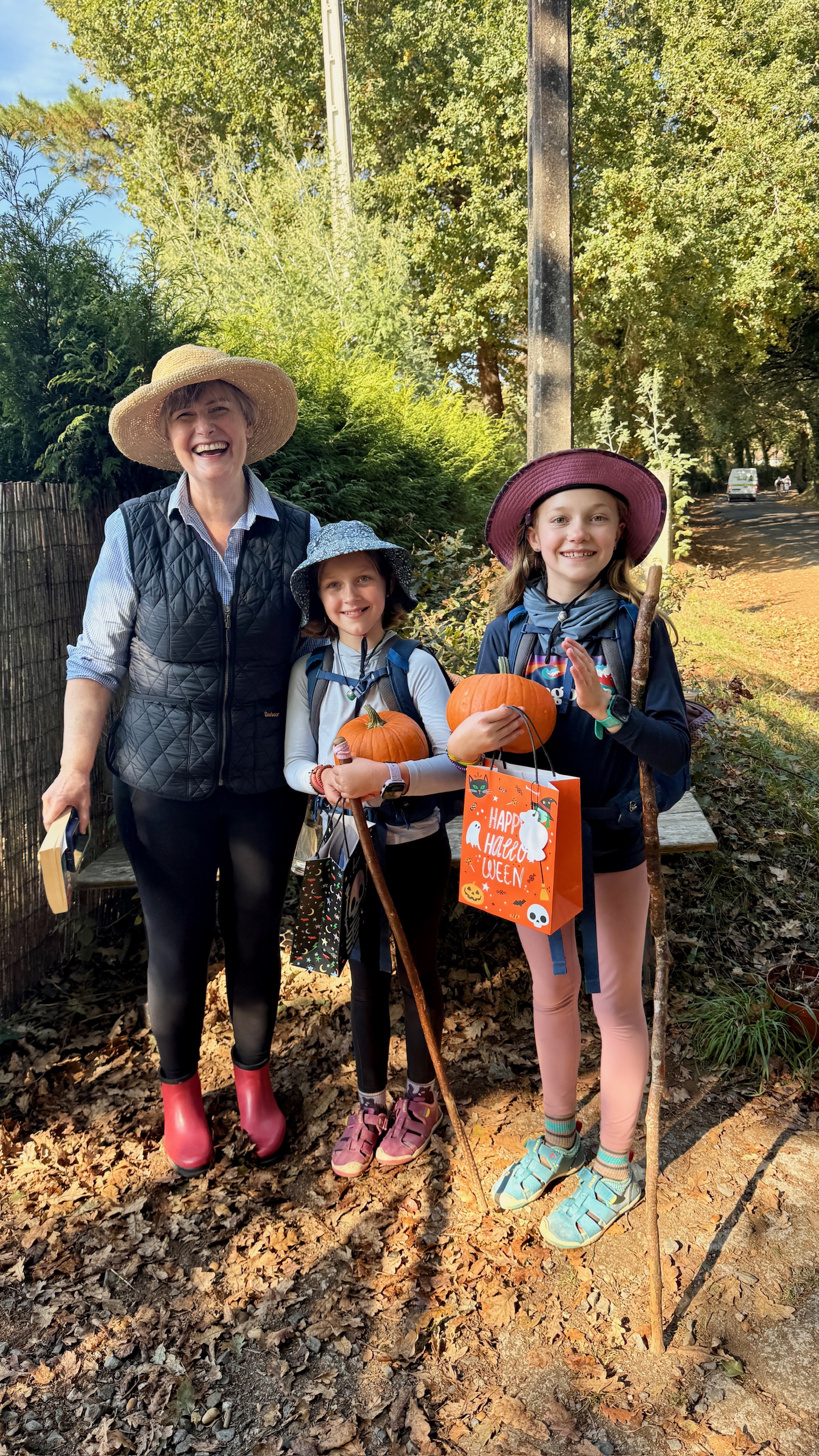
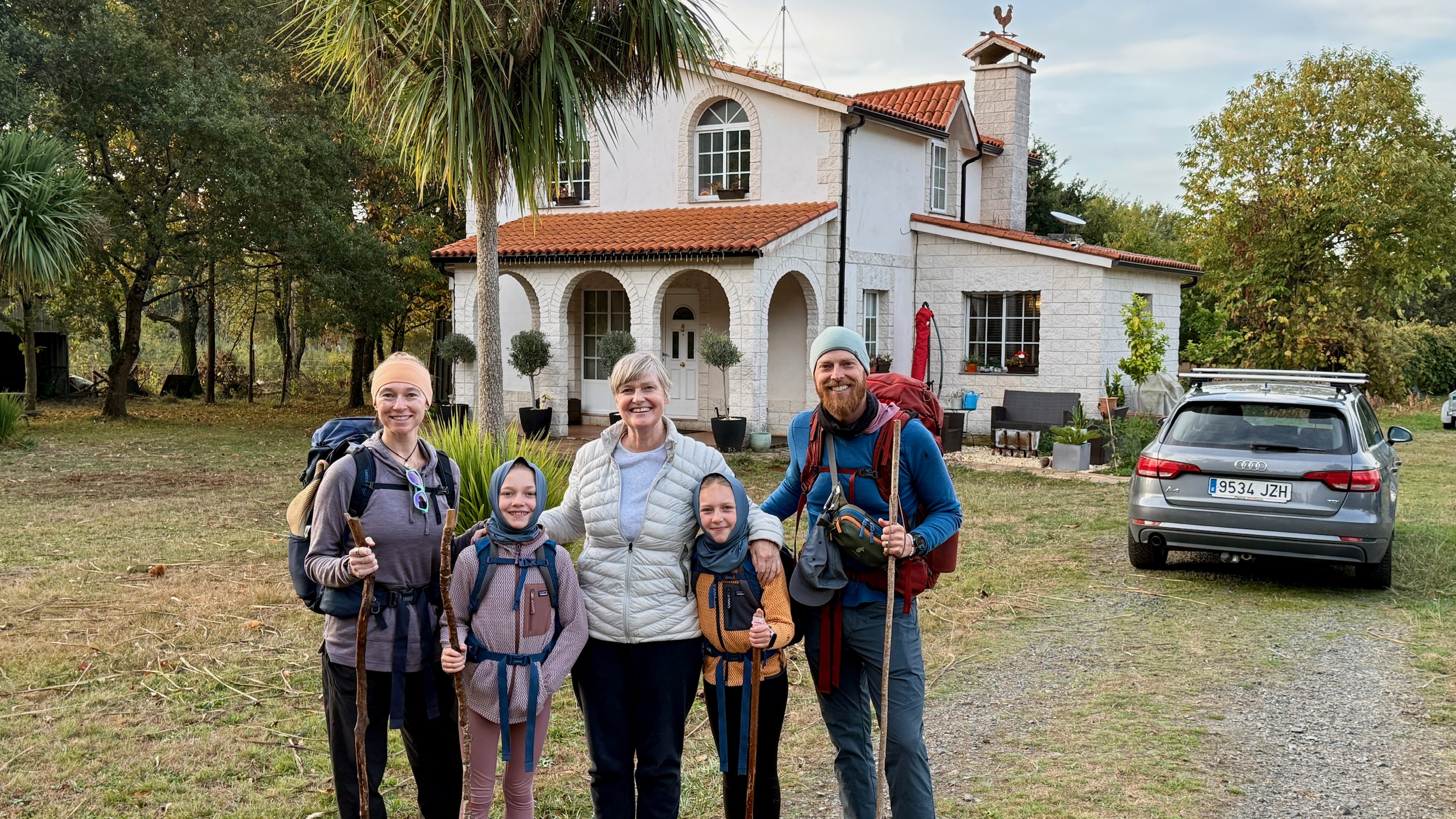
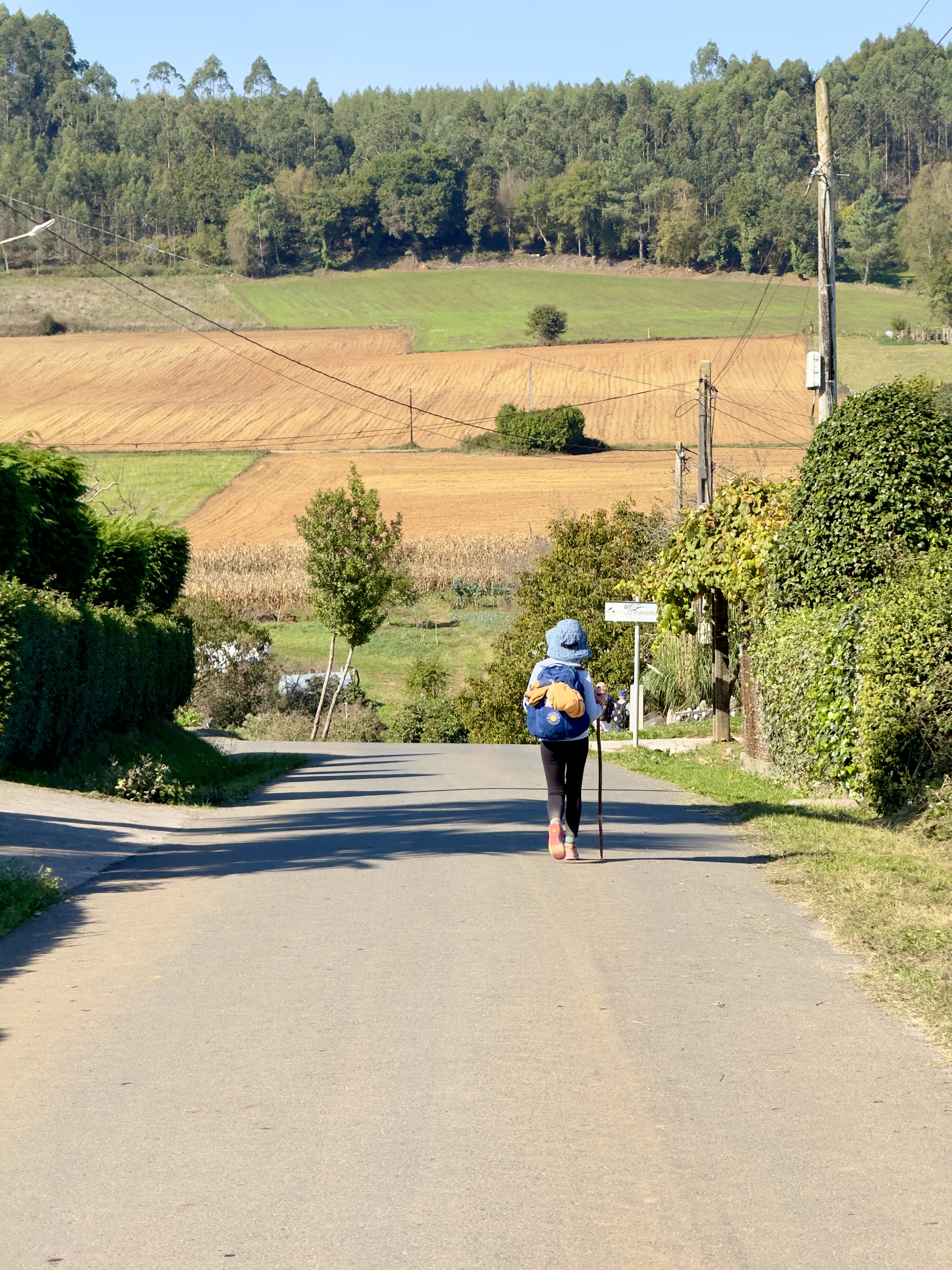
We found our footing quickly, moving through soft descents and brief climbs under a forgiving sky. Midday brought a surprise that Shaina had quietly planned—a visit with Kelli, an American expat we’d met weeks earlier while soaking our feet in Azofra. She’d been injured and grounded since then, recovering at her home on the Camino itself, just before the town of O Coto, where she and her husband, Jeff, had settled after walking this same route years earlier. Their house sits right on the trail, tucked in a tunnel of moss-draped trees.
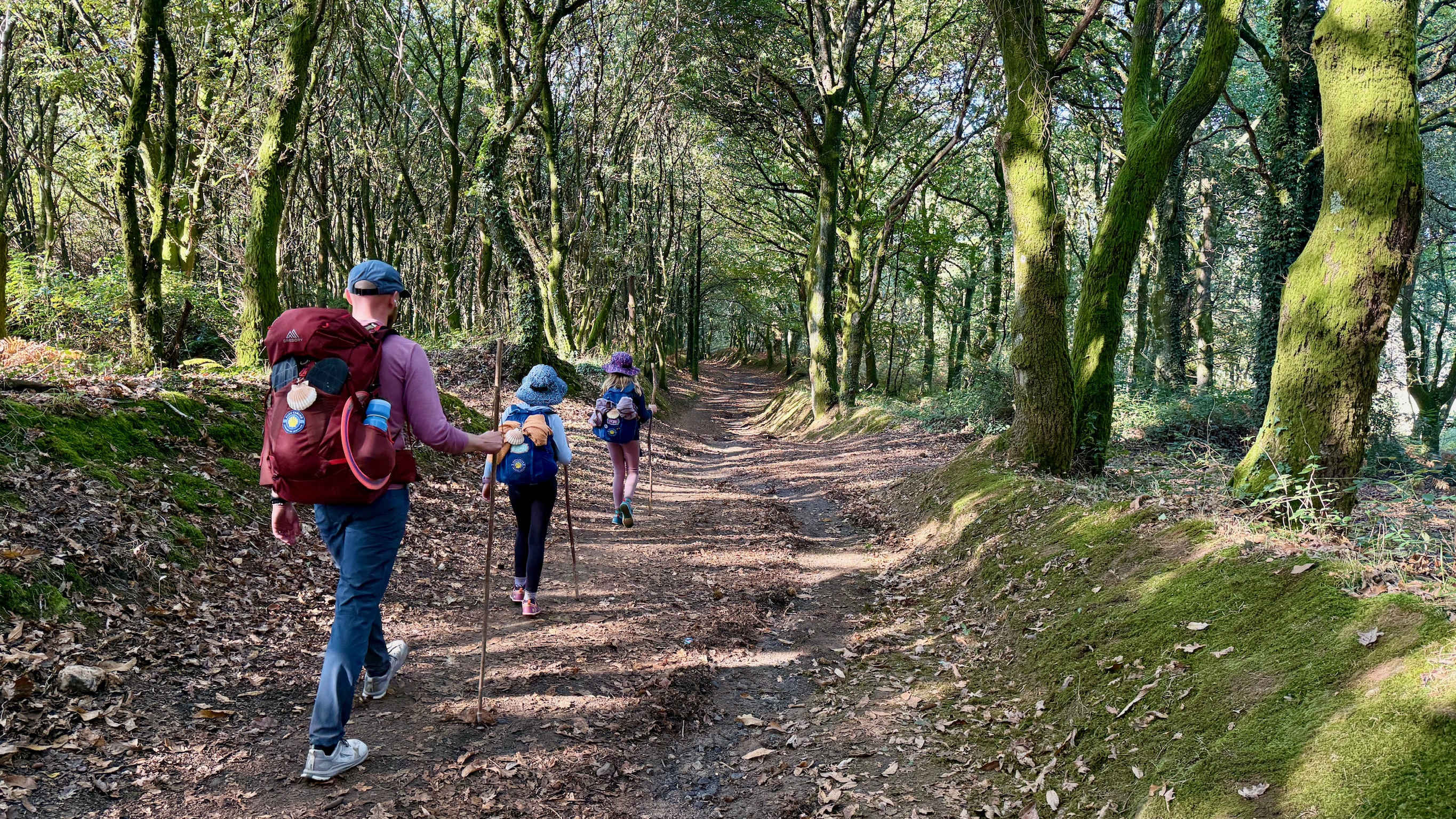
The girls belted out songs from K-Pop Demon Hunters to keep spirits high as we wound through the shaded forest. Their voices echoed through the trees, an almost comic contrast to the ancient stones beneath our feet. When Kelli came into view, sitting on a bench outside her house, she laughed—not at the surprise of seeing us, but at the sheer incongruity of two young girls belting K-pop on an eleven-hundred-year-old pilgrimage path. The reunion that followed was pure joy—hugs, chatter, and easy warmth under that green canopy.
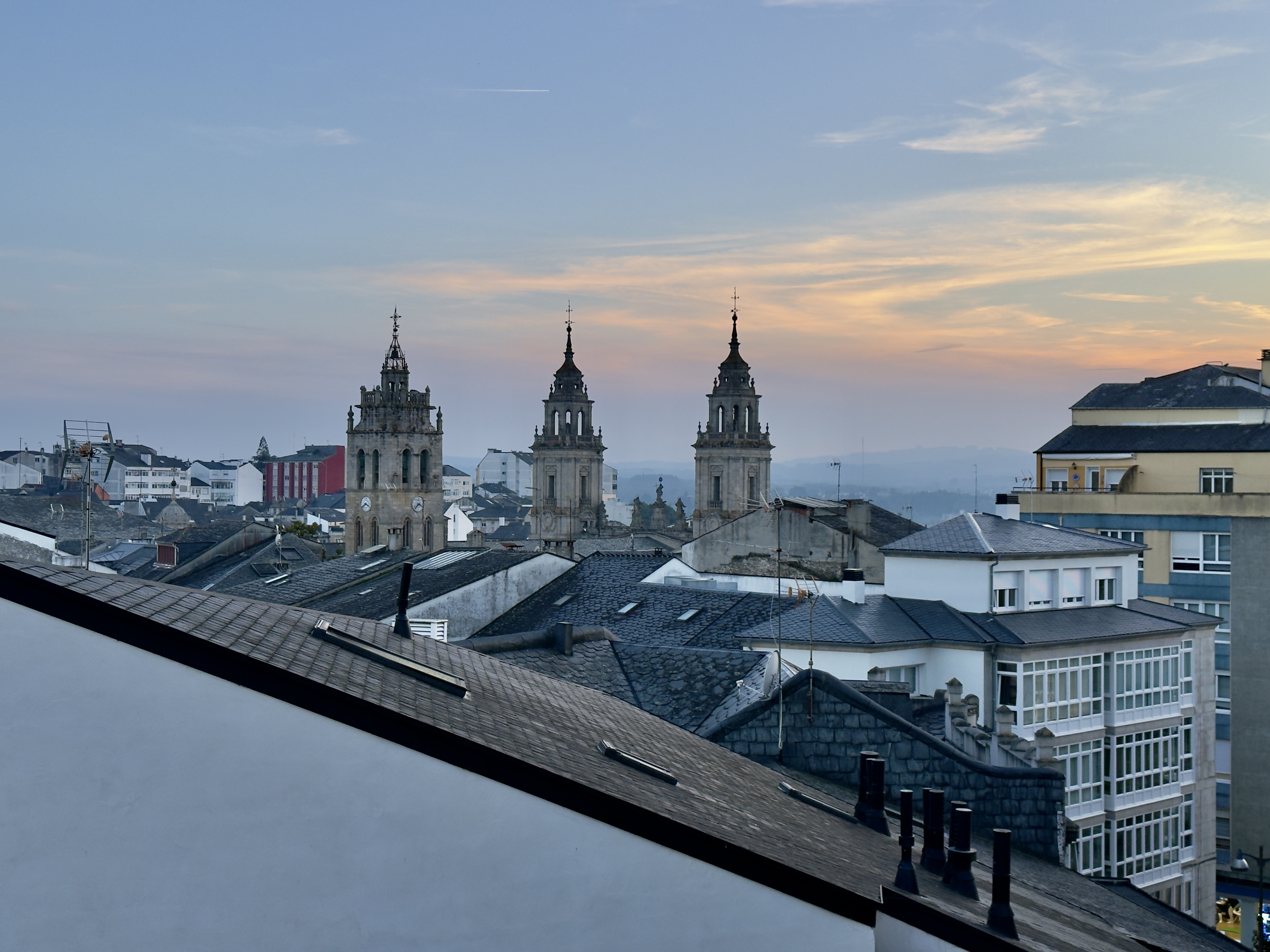
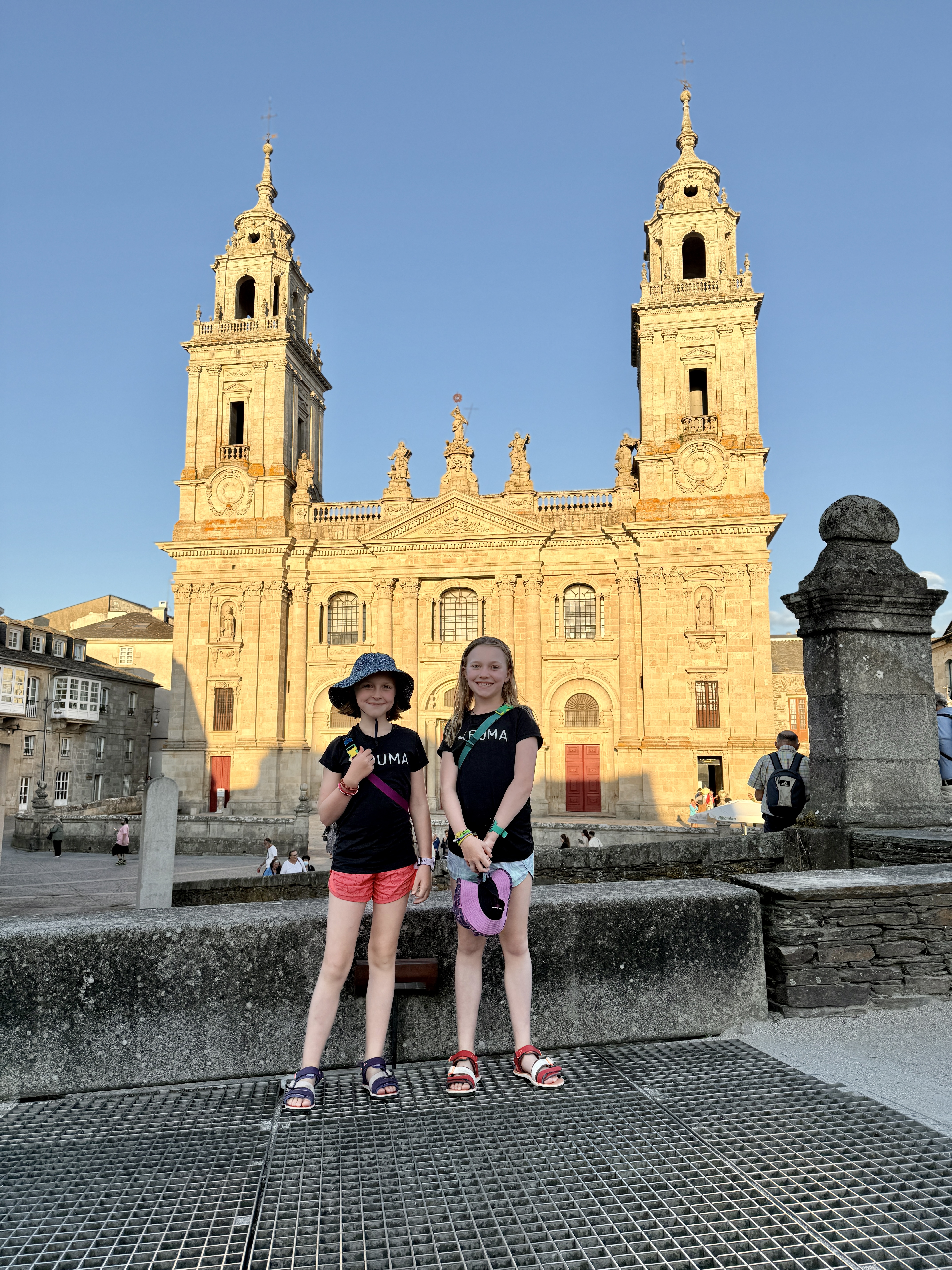
That evening, we joined Kelli and Jeff in Lugo for AYCE sushi—a novelty after so many traditional pilgrim menus, and at a level that rivaled our AYCE sushi Mecca back home in Reno—and afterward wandered atop the Roman walls that surrounded the old city. The light turned honeyed as we walked, the air cooling, the promise of fog hovering just beyond the horizon. Everything glowed gold and long-shadowed. Standing above the rooftops, we could almost feel the centuries stacked beneath our feet.
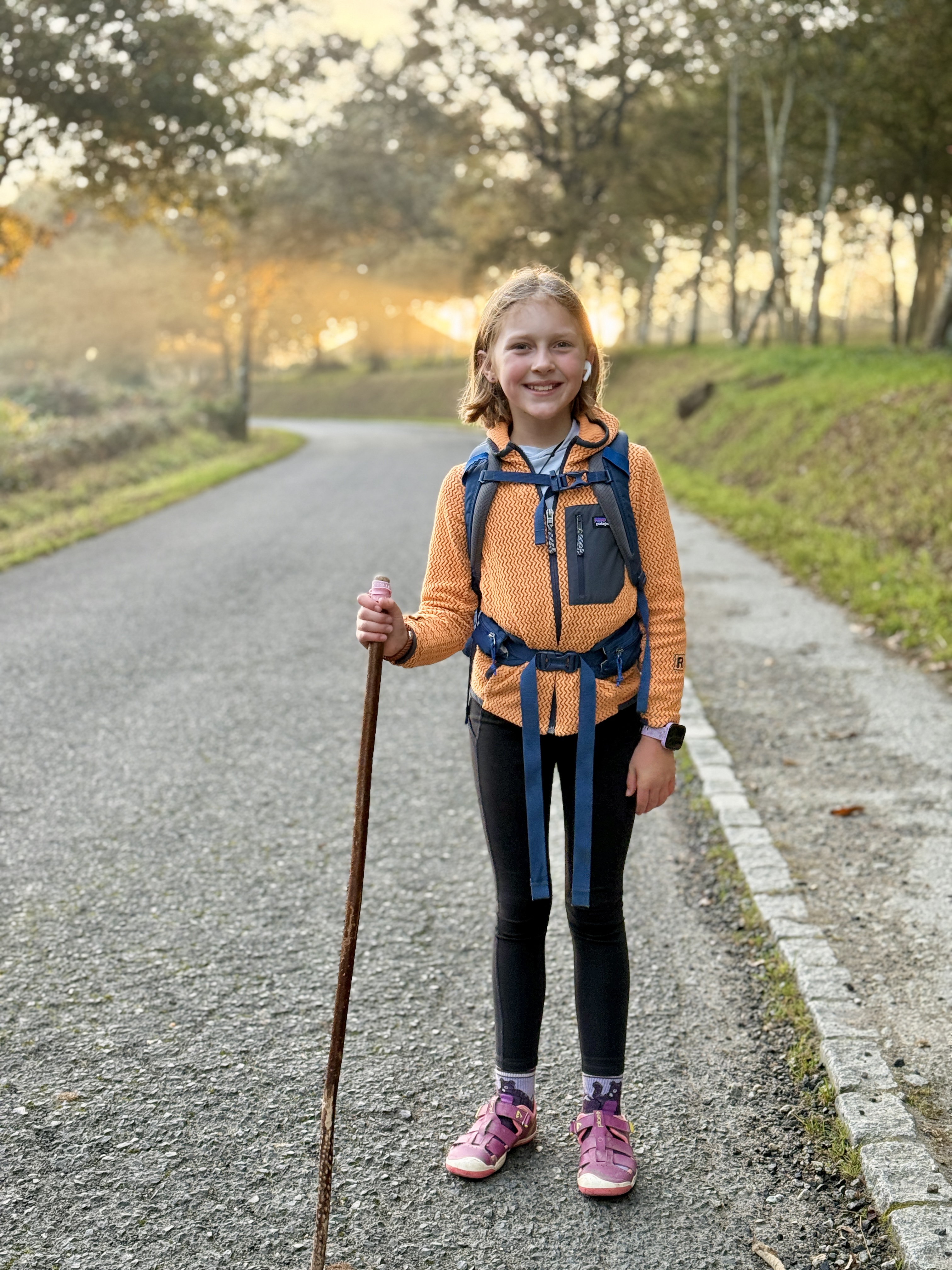

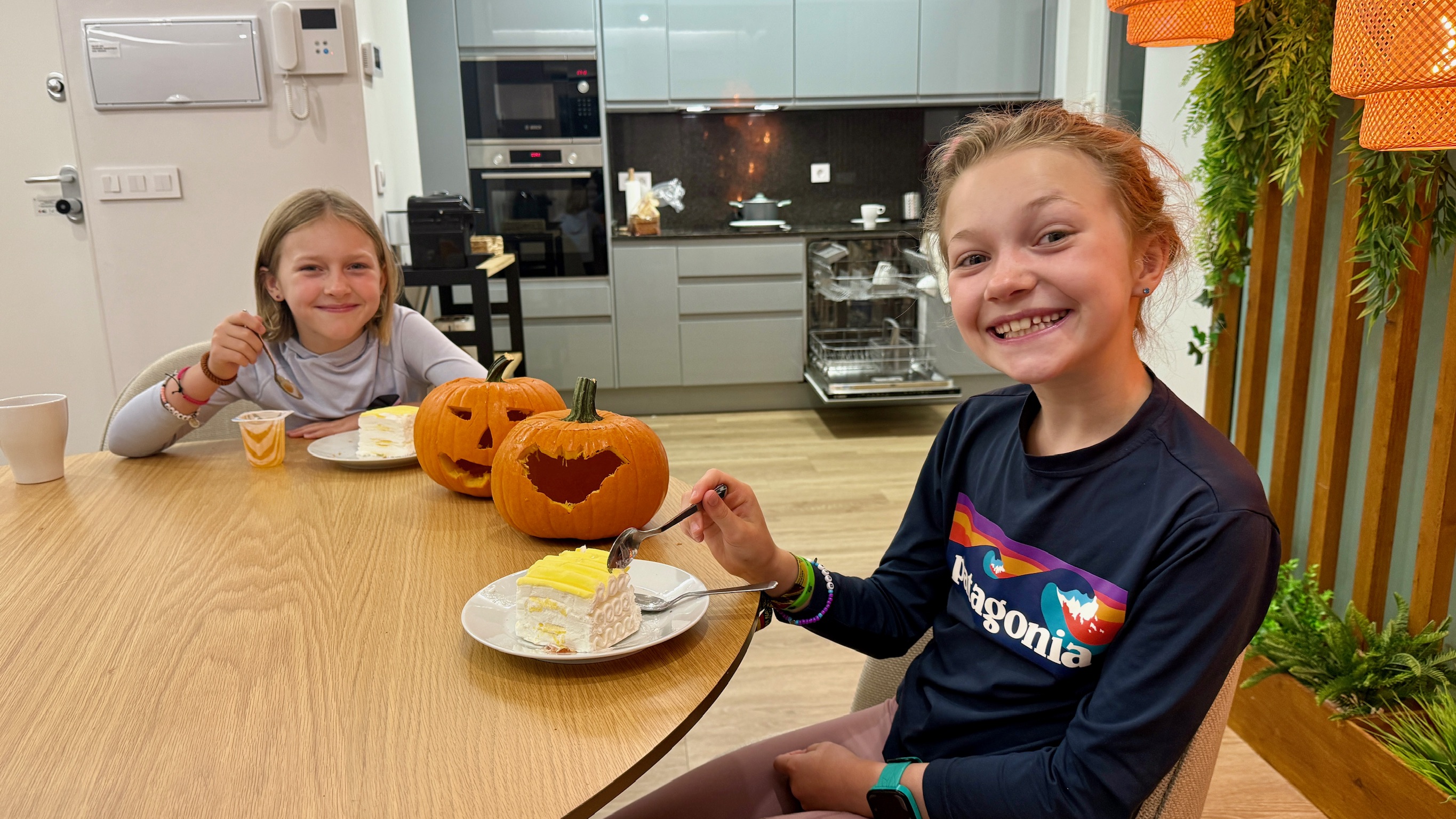
The next day began with gratitude. Kelli offered us one last ride to the precise end point from the prior day in O Coto before we said goodbye for real. What followed was a long, sun-soaked day—20 kilometers of climbs and descents through open country. The temperature pressed near 79°F, our coughs lingered, and the miles felt heavier than they should have. Maybe we were still stuffed from our salty sushi meal the previous day!
By the time we reached Arzúa, we were spent. The sprawling camp-style complex we’d booked was nearly deserted, its summer energy gone with the season. The pool was still full but layered with leaves and debris, the cabins showed the wear of long use, and the quiet restaurant echoed with emptiness—it felt like the Camino itself was exhaling after a long year.
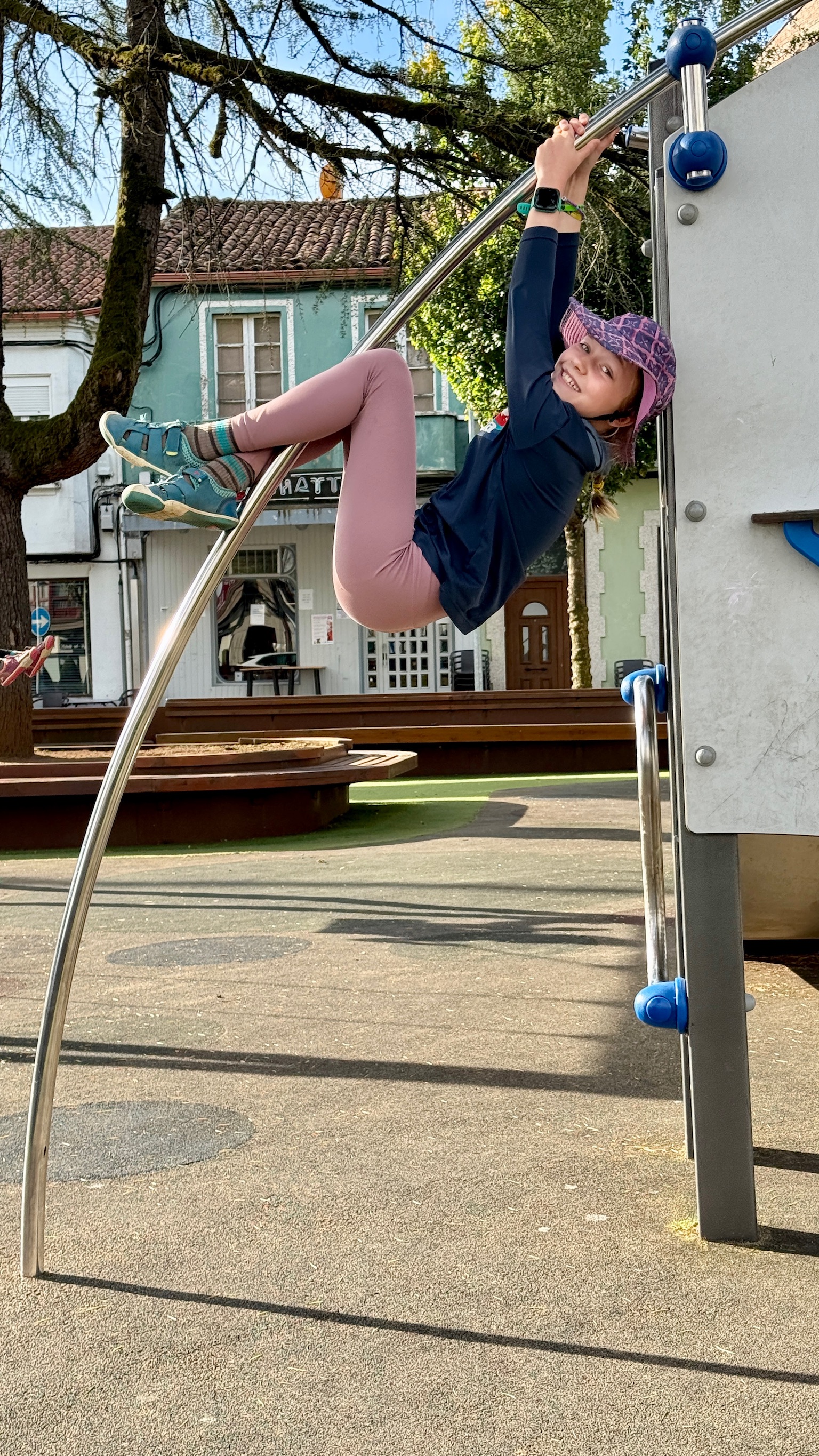
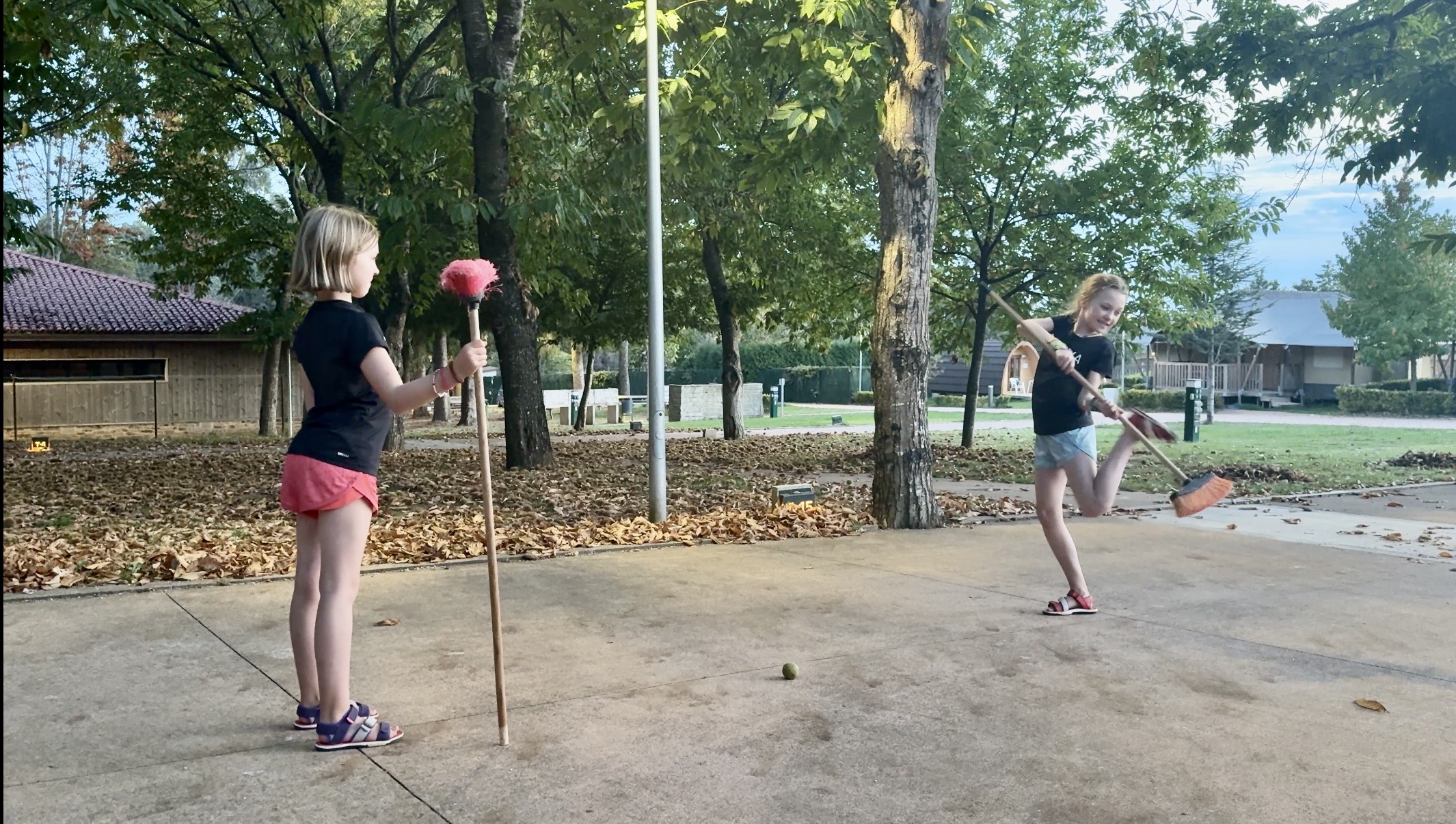
Still, small joys have a way of finding us. Dinner brought proper burgers—real buns, melted cheese, crisp lettuce—and that alone was reason to smile. Then, just before dusk, Arya and Finlee discovered two brooms and a pile of fallen chestnut husks. Within minutes, they had invented an entirely new sport—part hockey, part tag—and were tearing across the leaf-covered ground. Before each round, they performed their “battle dance,” a mix of stomps, spins, and fierce faces in the golden light filtering through the chestnut trees. The crunch of leaves was their drumbeat. Their laughter cut through the quiet, and we sat back, sore but smiling, sipping boxed Spanish wine, watching them turn a tired evening into something worth remembering.
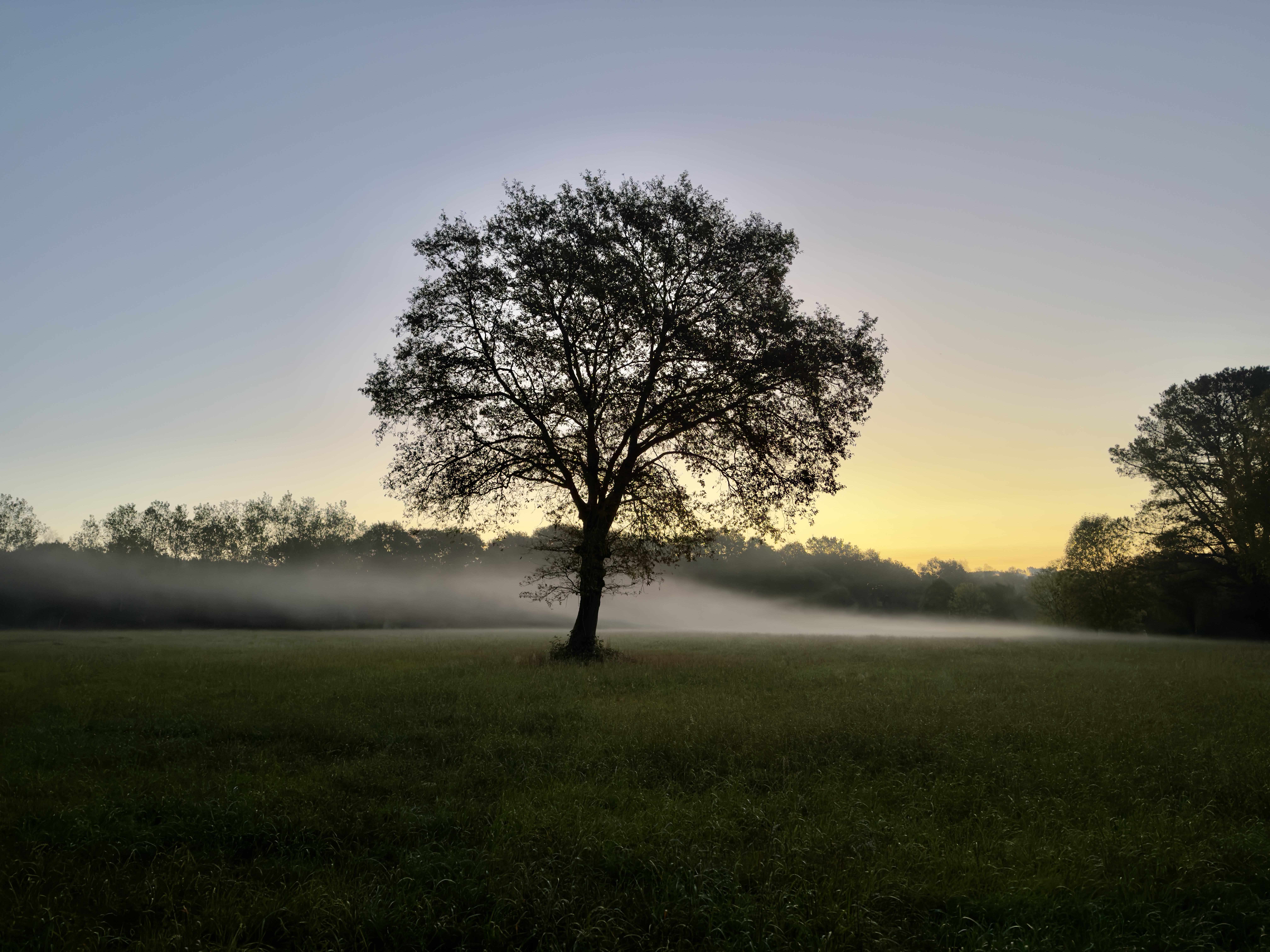
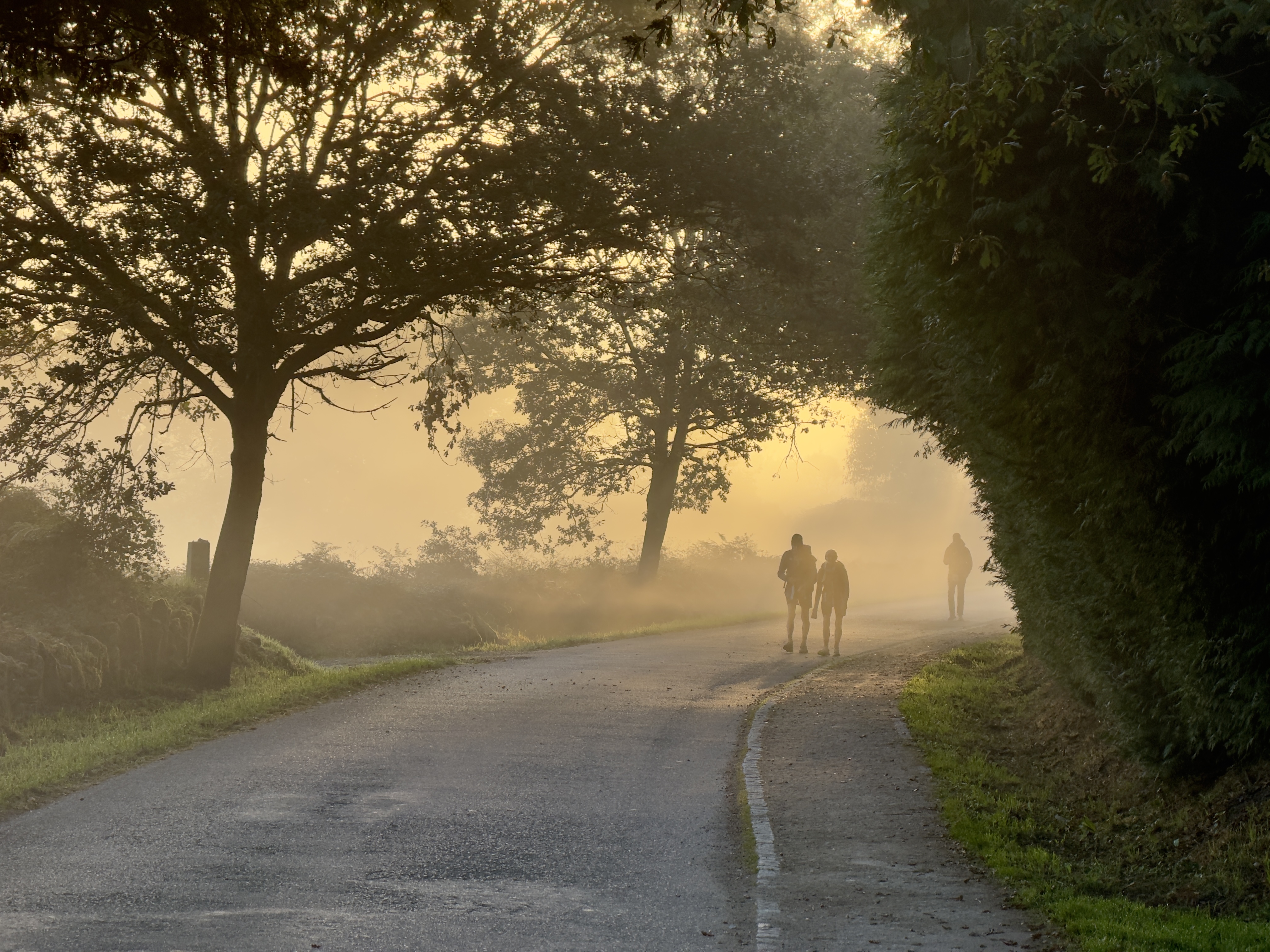
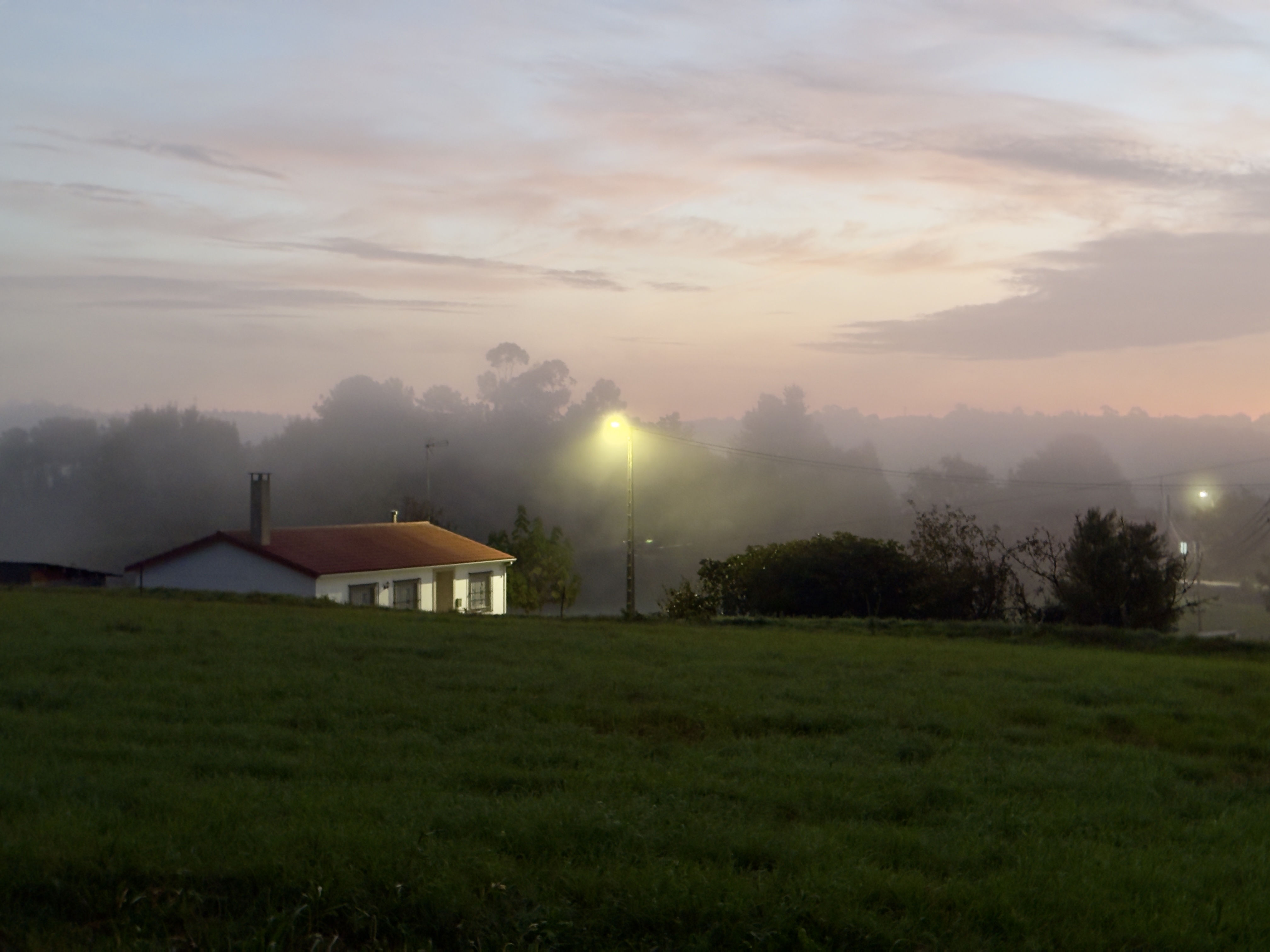
After the long hot day into Arzúa, we chased a cool, misty start out of town. Our plan was simple: get an early jump, earn a few quiet kilometers before the crowds and sun returned. The fog hung low, softening every edge, turning even familiar landscapes into something cinematic. Fields, forests, and farmyards all blurred into gentle watercolor shades.
By midday, we rolled into O Pedrouzo, tired but content, and rewarded ourselves with Mexican food that was unexpectedly perfect—nachos, tacos, and a chipotle salsa with real heat. From there, a black Mercedes van whisked us to a walled estate called HolaCamp, our home for the night.
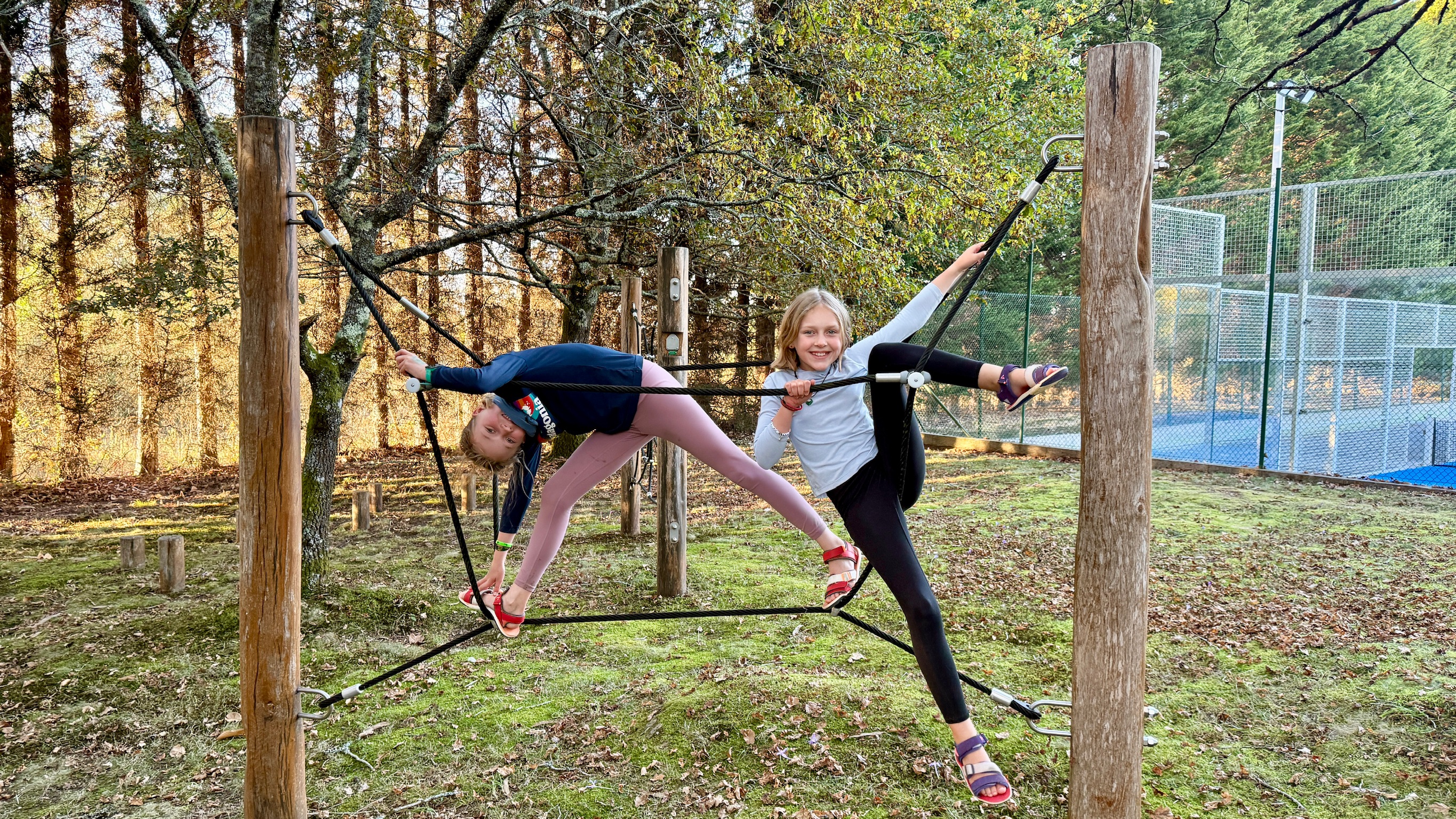
It felt decadent after weeks of hostels: bungalows with gardens, wood stoves, and beds that seemed to hug back. The girls disappeared the moment we set boundaries, reappearing two hours later red-cheeked and sweaty after inventing a tennis-like game on a hidden court. We laughed at their unstoppable energy—twenty-two kilometers on foot and still they played like it was recess back at Mount Rose.
Dinner was simple pasta, but dessert was laughter. We let them climb into the private hot tub and watched the bubbles foam high as they poured in sandalwood-scented bath gel. Soon, laughter spilled louder than the water itself, echoing through the courtyard into the night air. We watched them through the steam, two little faces still lit with wonder, and knew again that this trip was changing all of us in ways that would linger.
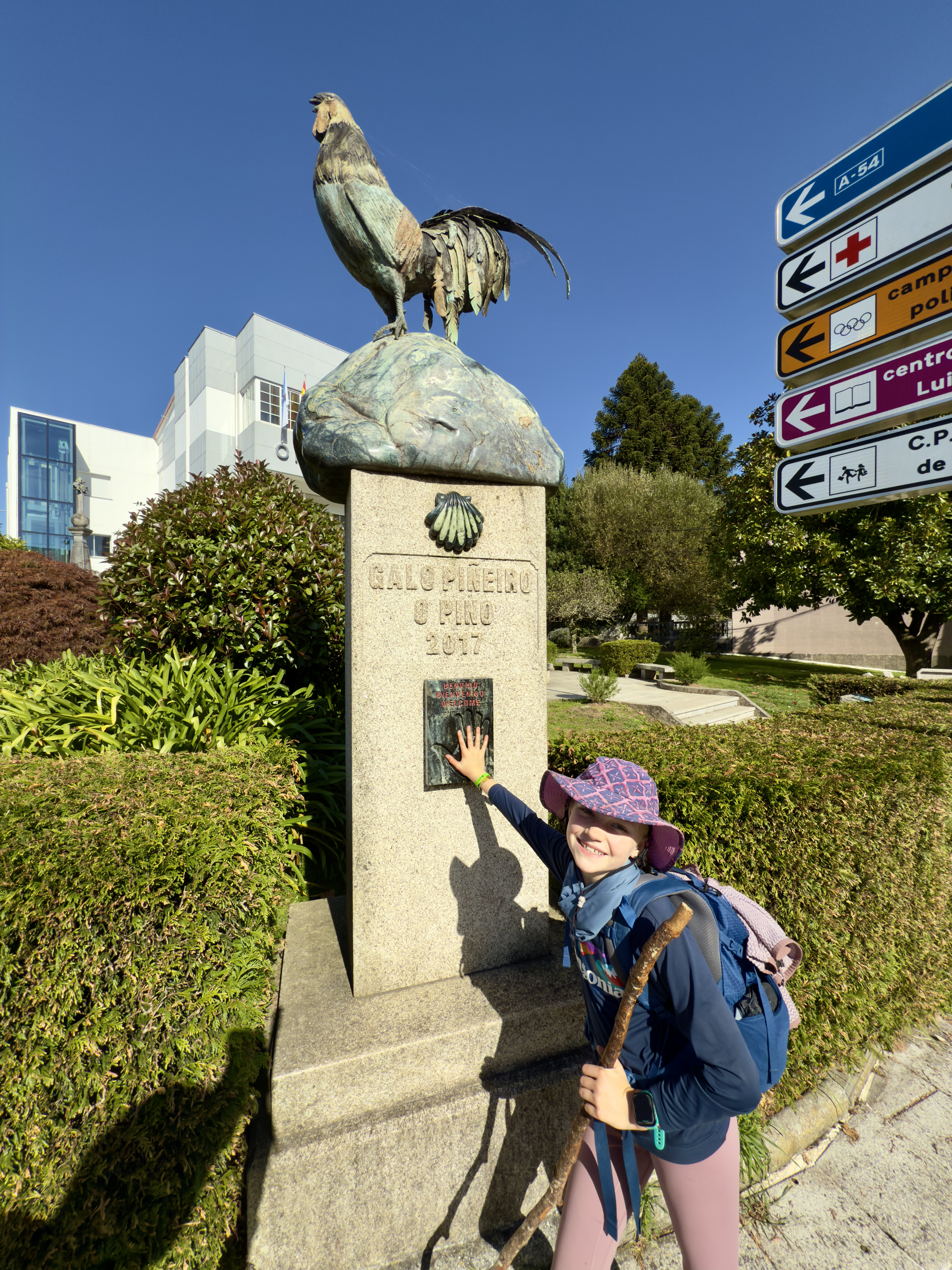
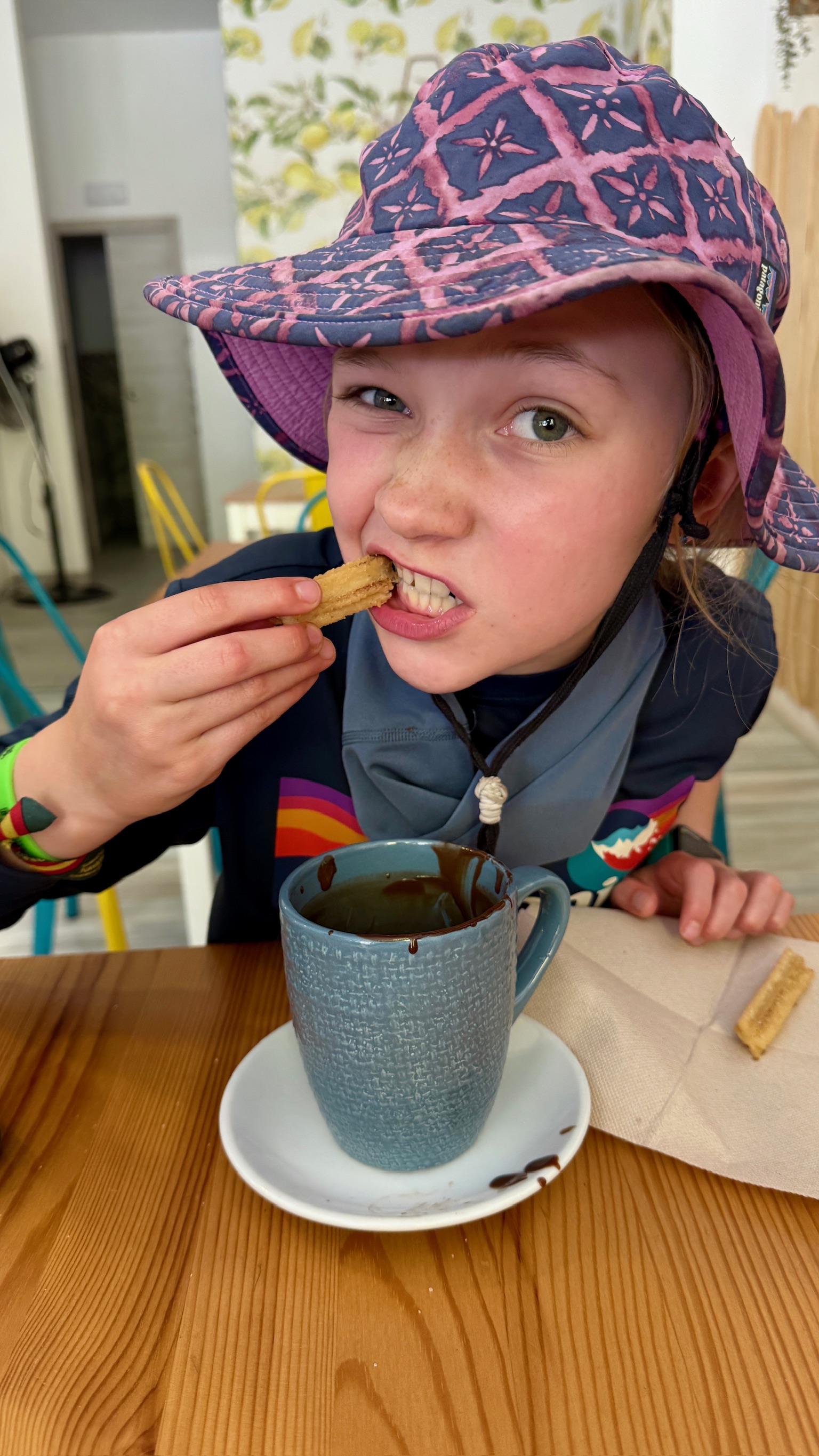
We began the next morning with eggs, toast, and the rare luxury of time. None of us wanted to leave HolaCamp’s quiet comfort, but the path to Monte do Gozo waited.
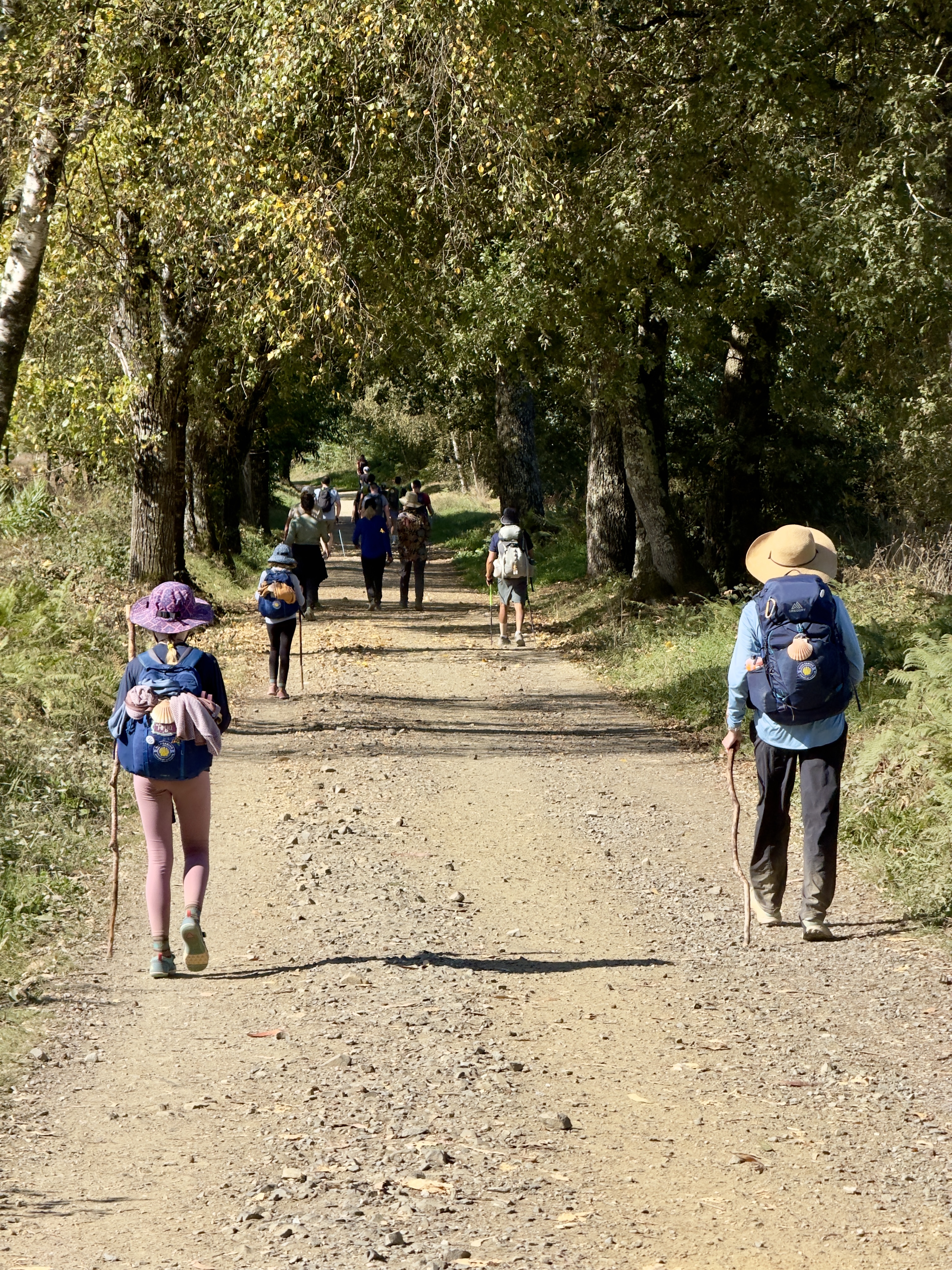
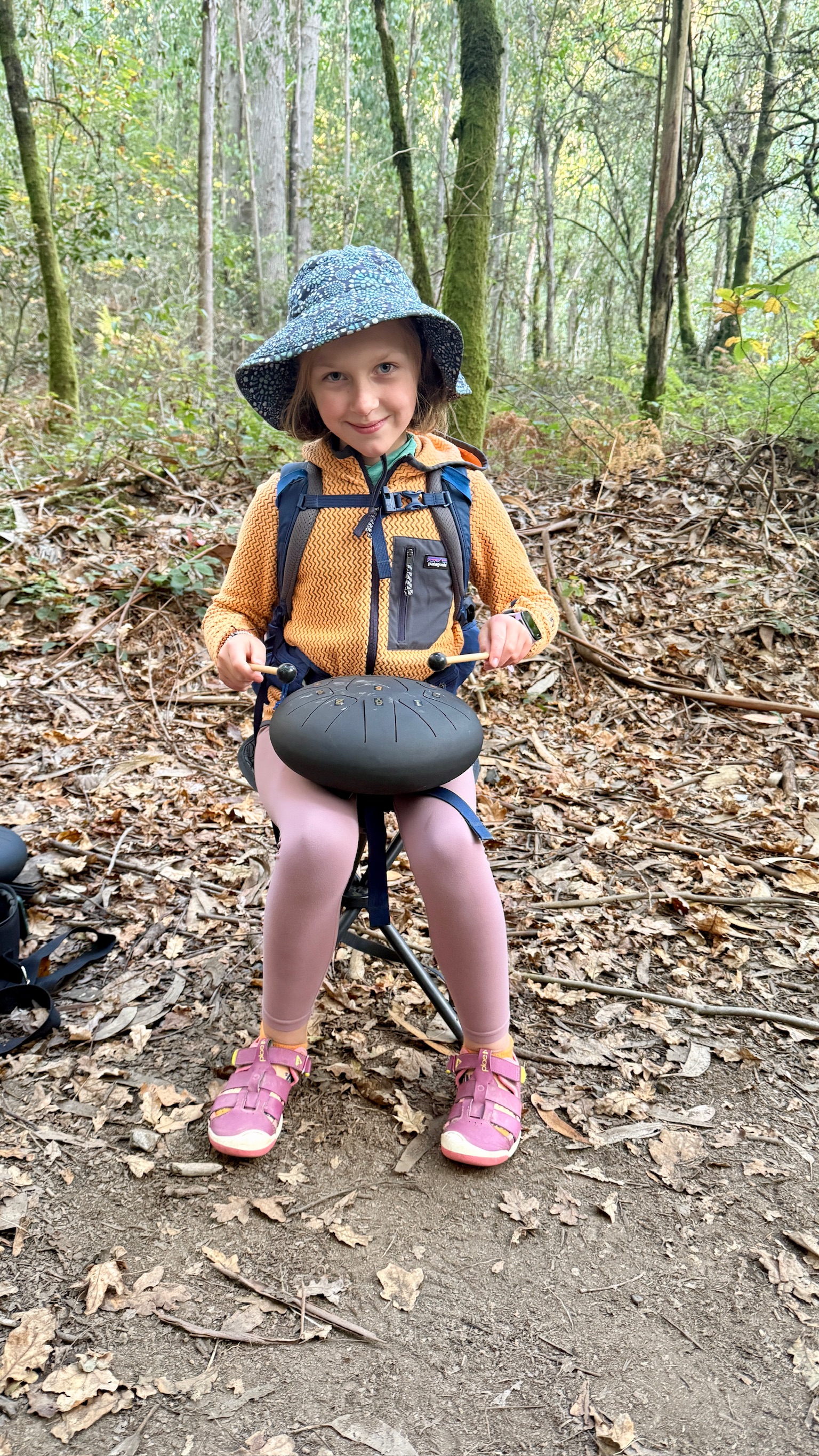
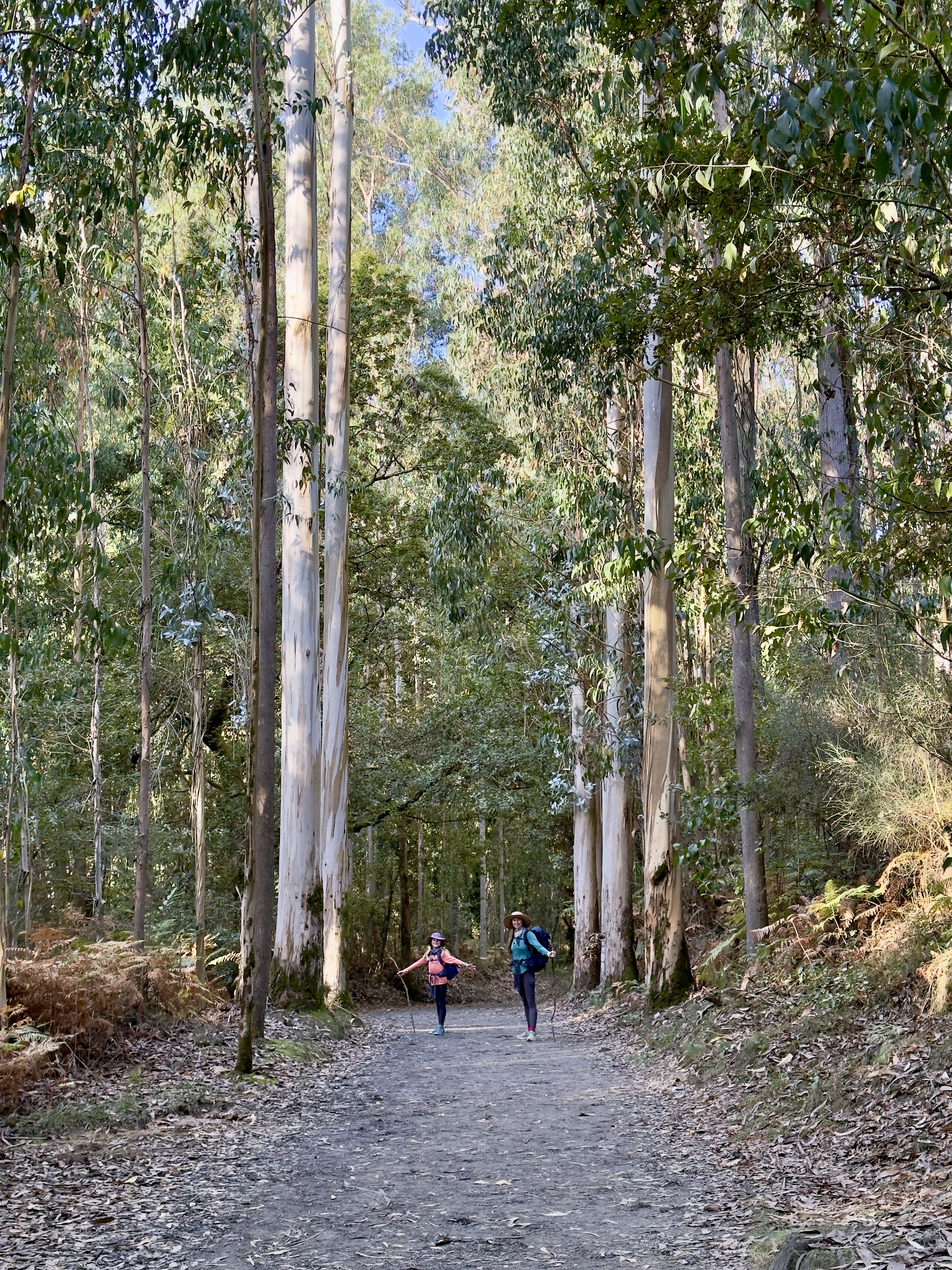
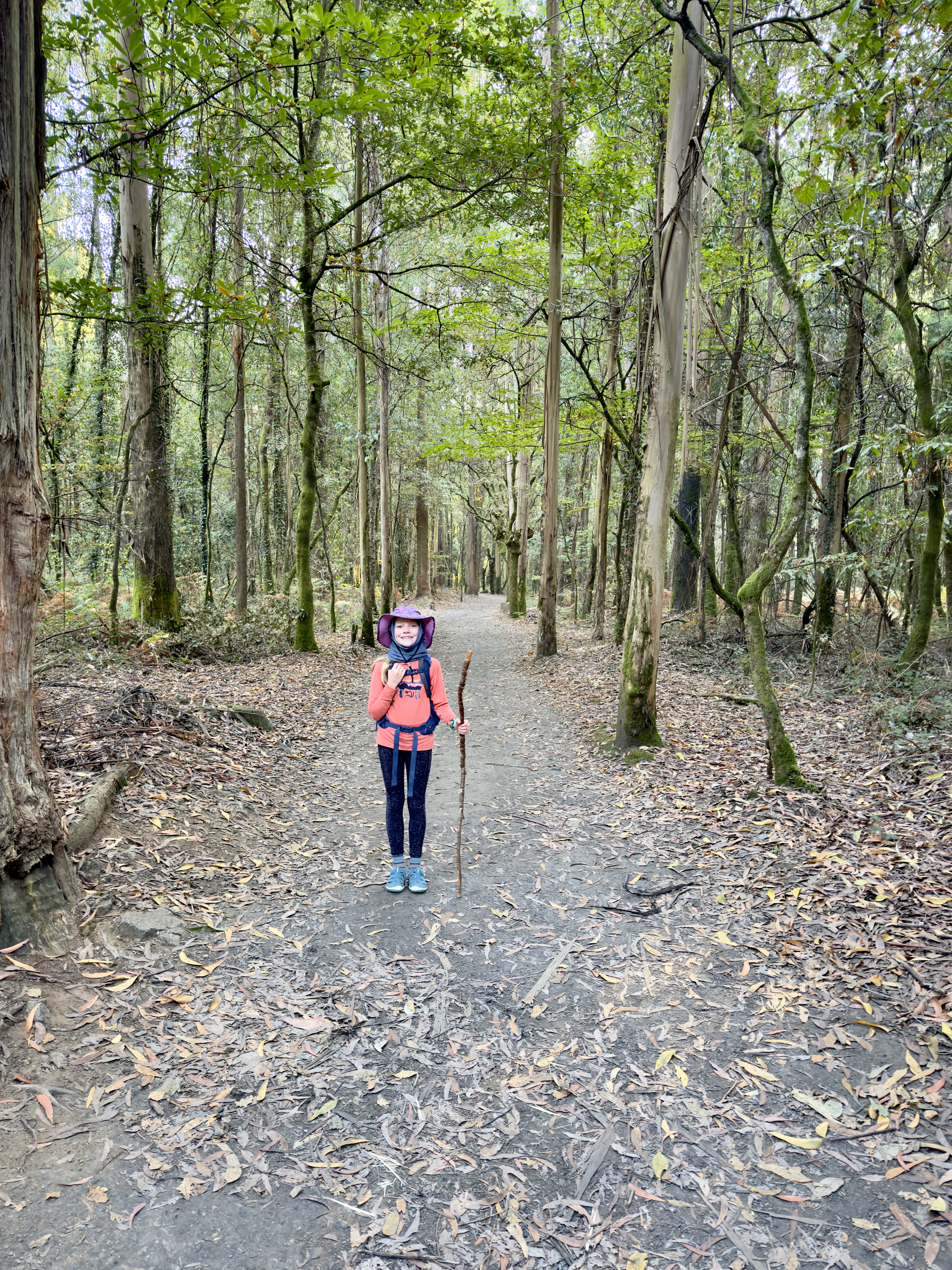
The forest that day was alive. Eucalyptus and oak trees towered above us, their scent sharp and clean in the air. Somewhere up ahead, a tongue drum echoed through the canopy—soft, metallic, melodic. We followed the sound until we found the musician seated by the trail, coaxing gentle tones from the steel. When Finlee asked to try, he handed her the mallets. Her shy taps joined the rhythm of the woods, blending perfectly with the hum of wind and distant footsteps.
But peace never stays long on the Camino. Soon we heard what sounded like thunder—the synchronized footsteps of a school group. Seventy-five local kids in matching packs came storming up the trail, on their own Camino, truncated compared to ours into a long field trip. The serenity vanished. Arya, determined to reclaim our quiet, quickened her pace. Within half an hour, we’d left the noise behind.
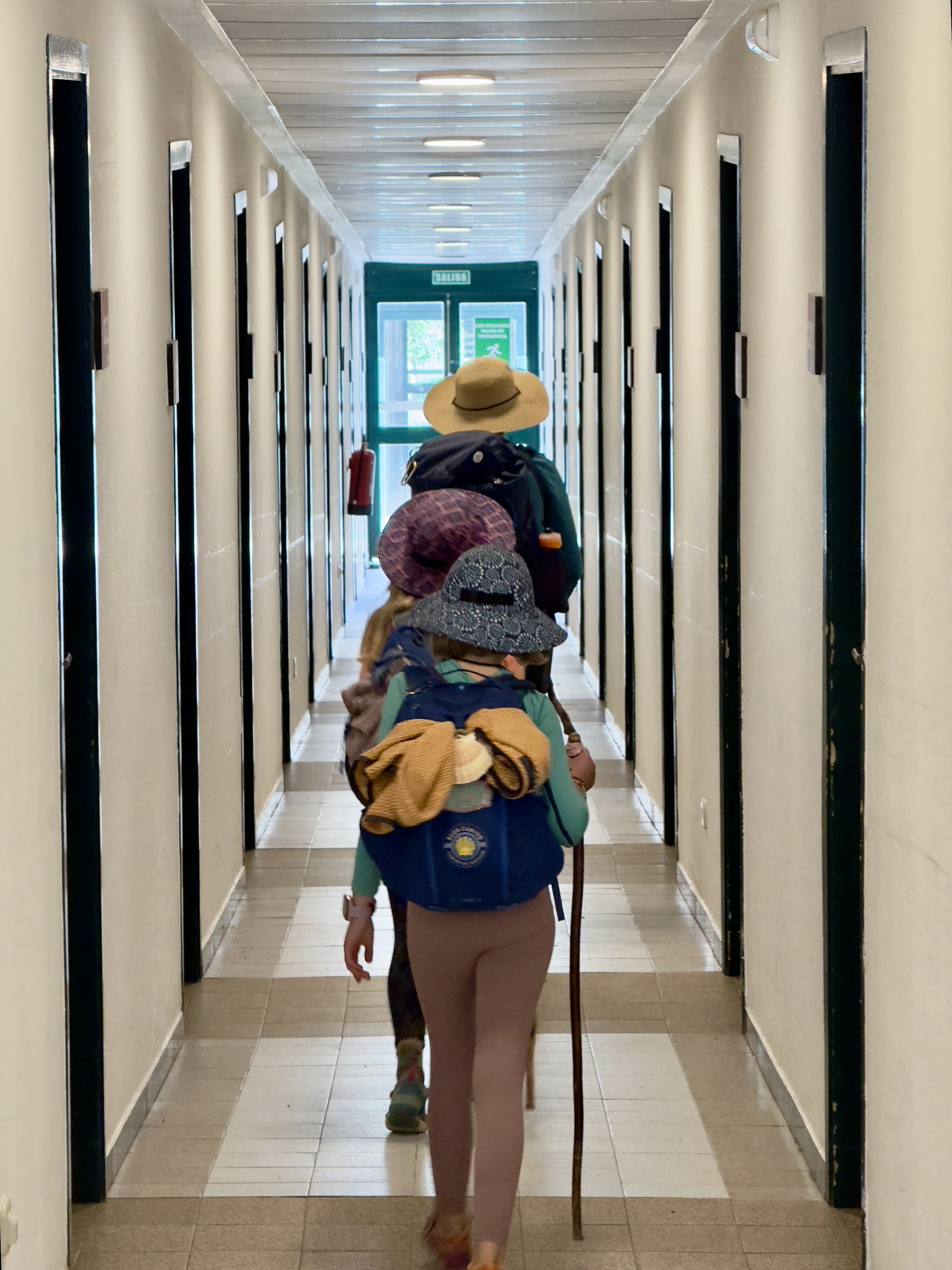
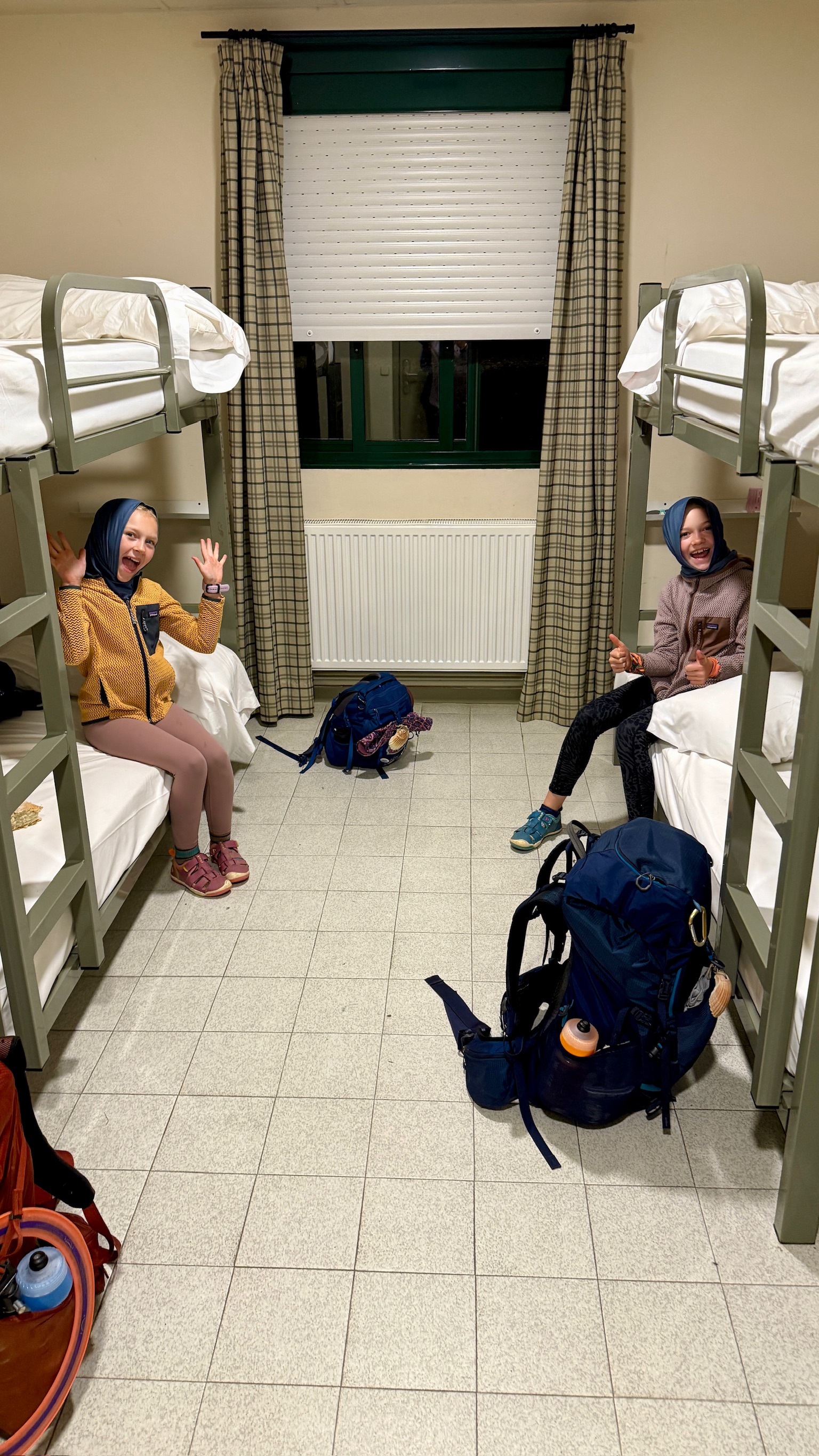
The day’s climbs surprised us—two steep ascents, two pounding descents—and by the time we reached Monte do Gozo, our legs quivered with exhaustion. The hill is named the “Mount of Joy,” the first spot where pilgrims can see the spires of Santiago in the distance. With the vibe of abandoned military-style barracks, but originally built just to house hoards of pilgrims, it now felt eerily hollow—an enormous, mostly empty complex that boasted 1000 beds. Long tiled halls, fluorescent lights, echoes of what once was.
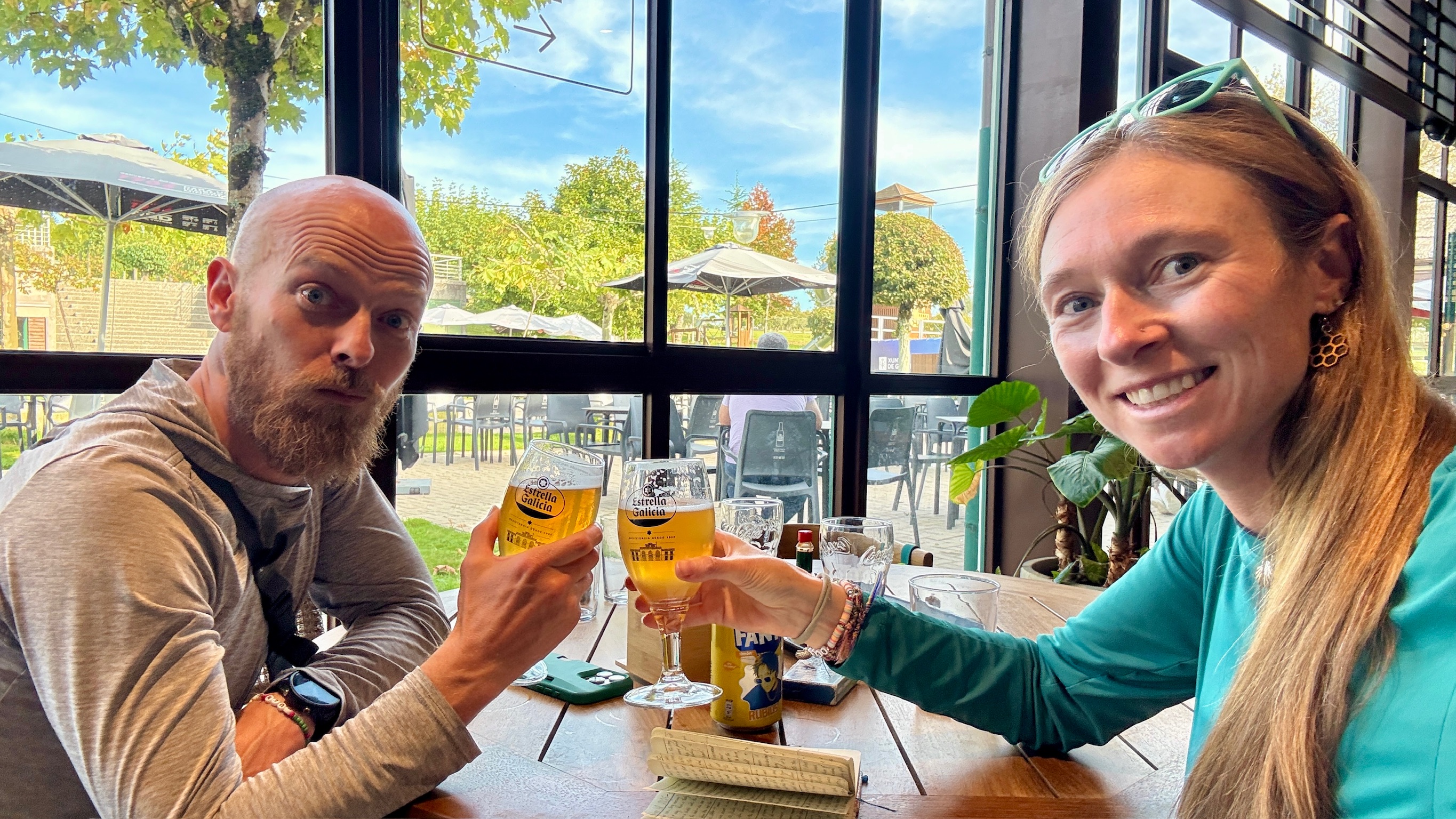
We found refuge in its renovated restaurant, all warm wood, steel beams, and hanging live greenery. And, wonderfully, it was a brewery. We ordered beers and watched the girls discover the playground next door—two massive slides, a climbing tower, and best of all, loads of local kids from nearby neighborhoods. After nearly seven weeks of adult company, the girls hesitated at first, then threw themselves into the games. By late afternoon, the courtyard rang with laughter.
We stayed for hours—through bright afternoon light, into golden evening. We watched the sun drop, felt the air cool, and smiled at our dusty, sweaty kids who’d found new friends and new energy. For all the miles behind us, this was the purest expression of endurance yet: joy.
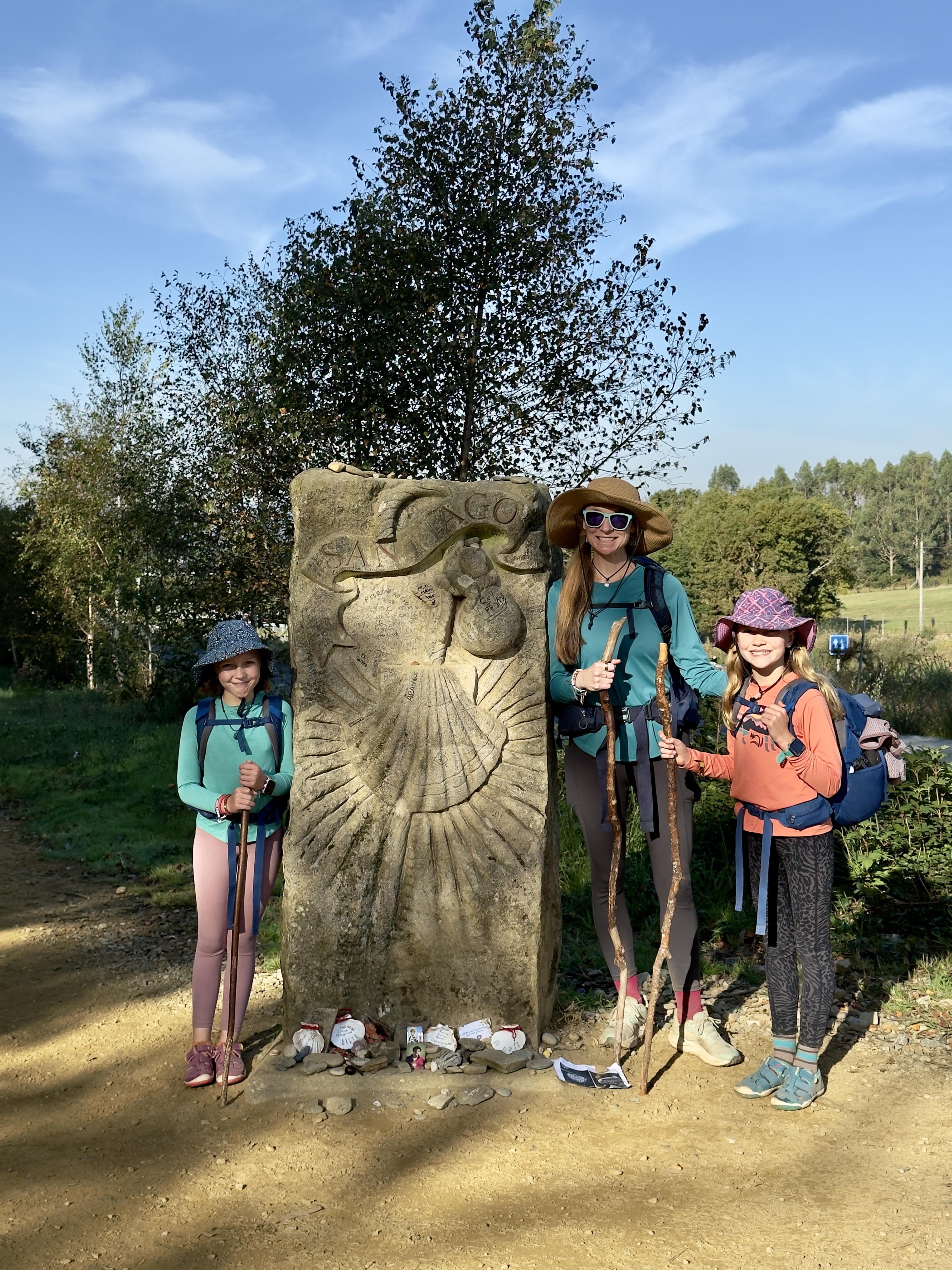
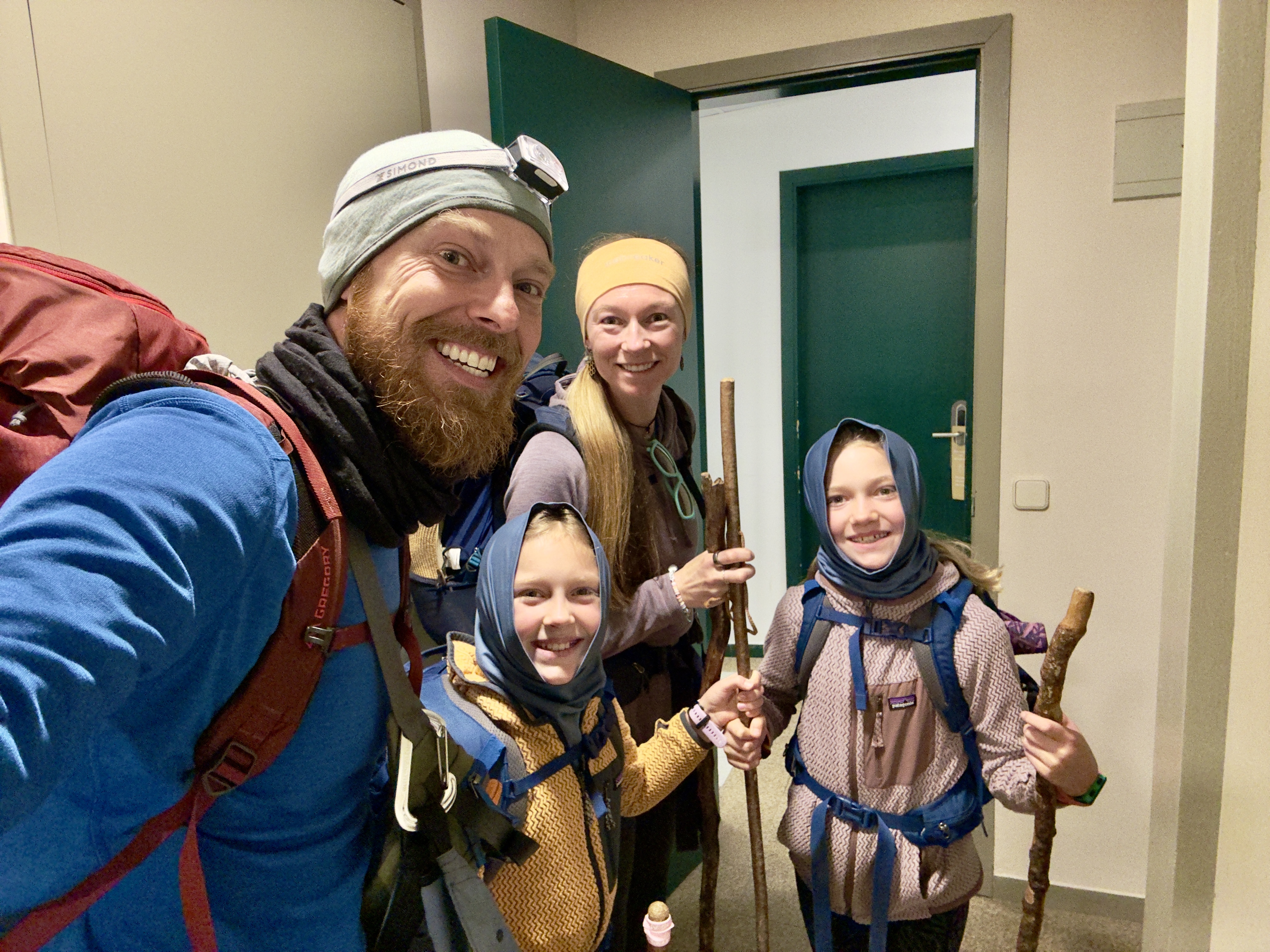
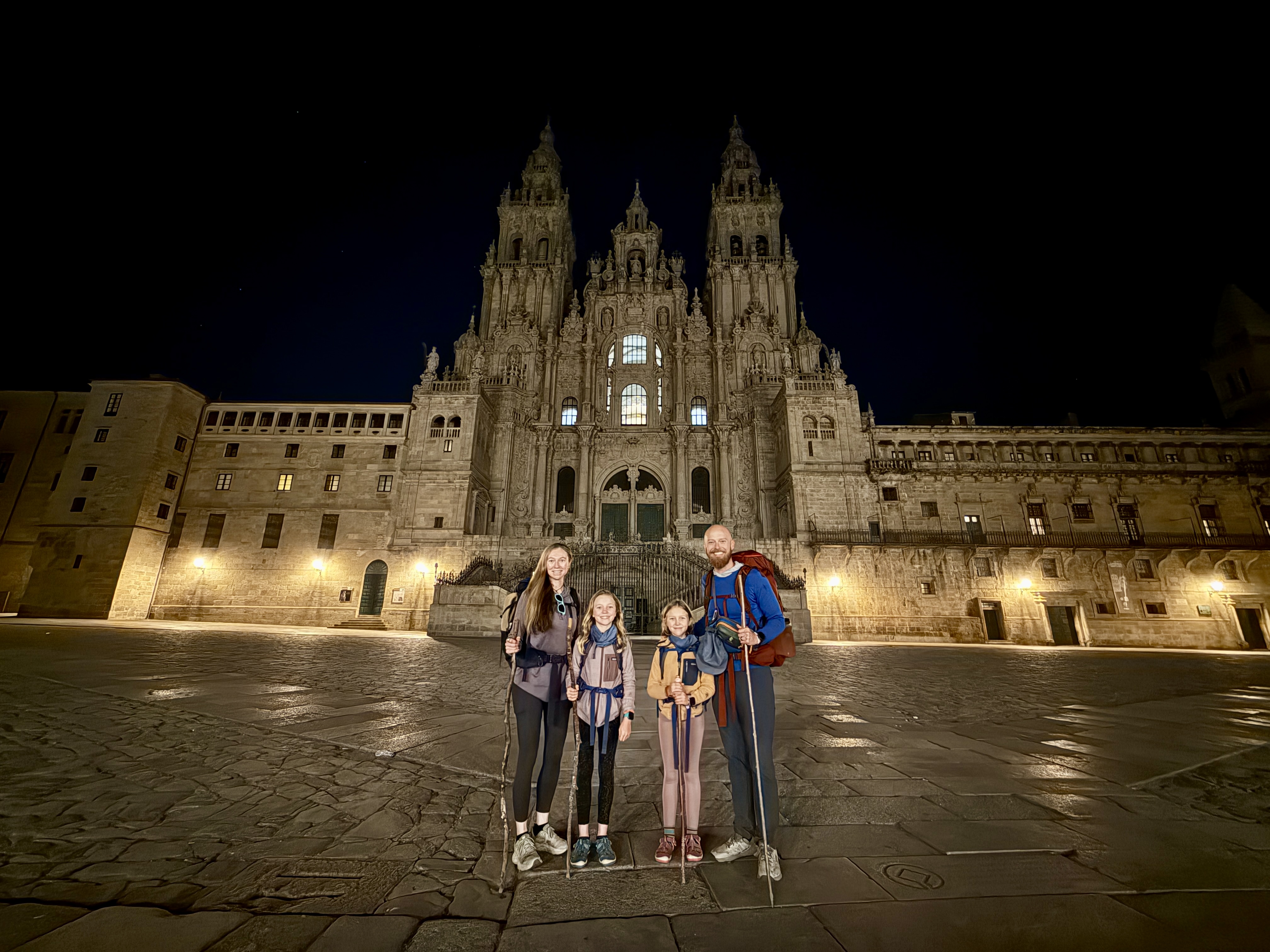
Our final morning came early—5:00 a.m., our earliest departure yet—and we set out with a mix of nerves, stiffness, and quiet anticipation. We left before dawn, our headlamps off, trusting the faint glow of the city ahead. The air was still, the streets washed clean. Our footsteps echoed against stone, the world around us eerily hushed except for the occasional laughter of late-night revelers fading into the distance.
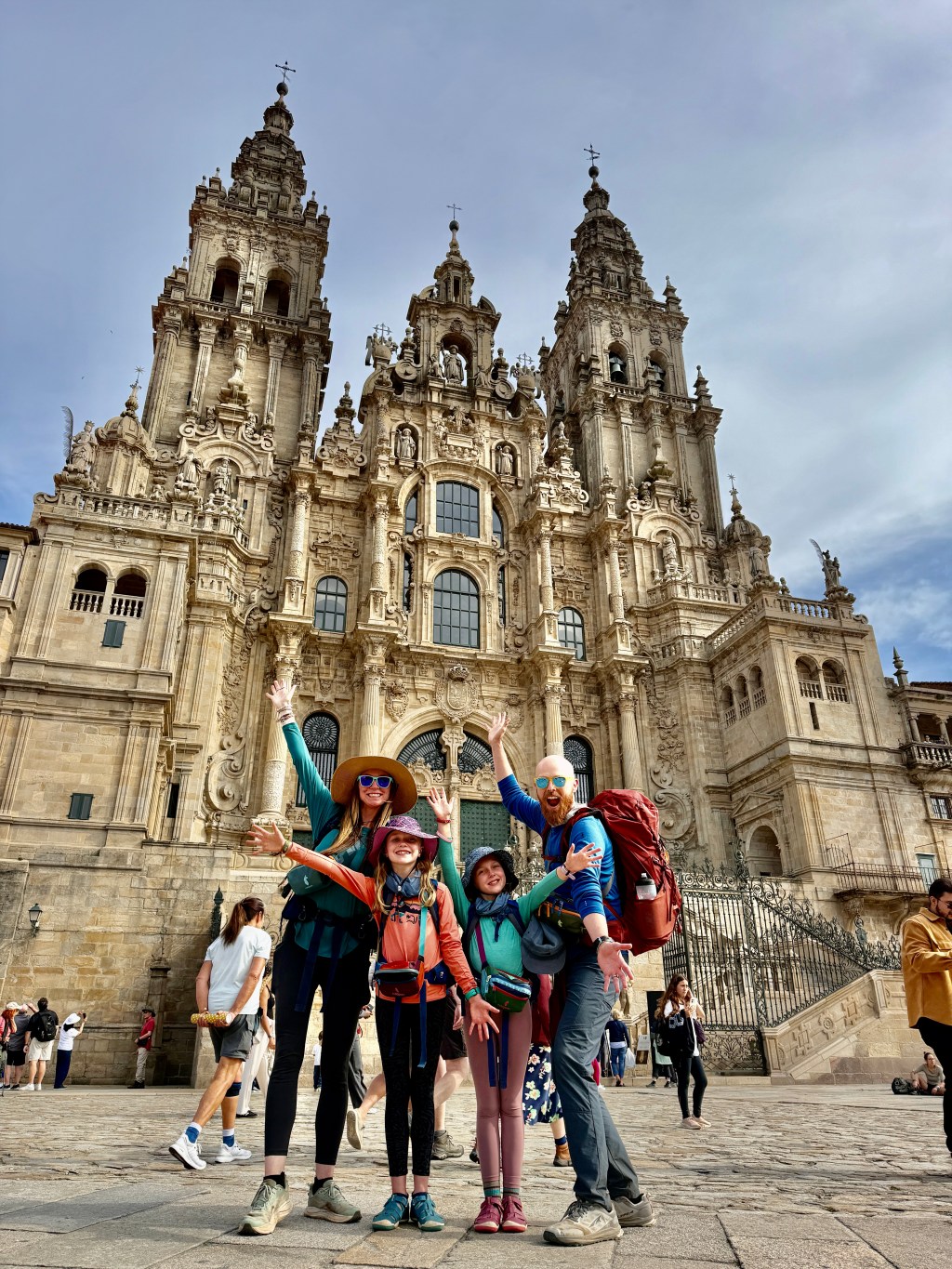
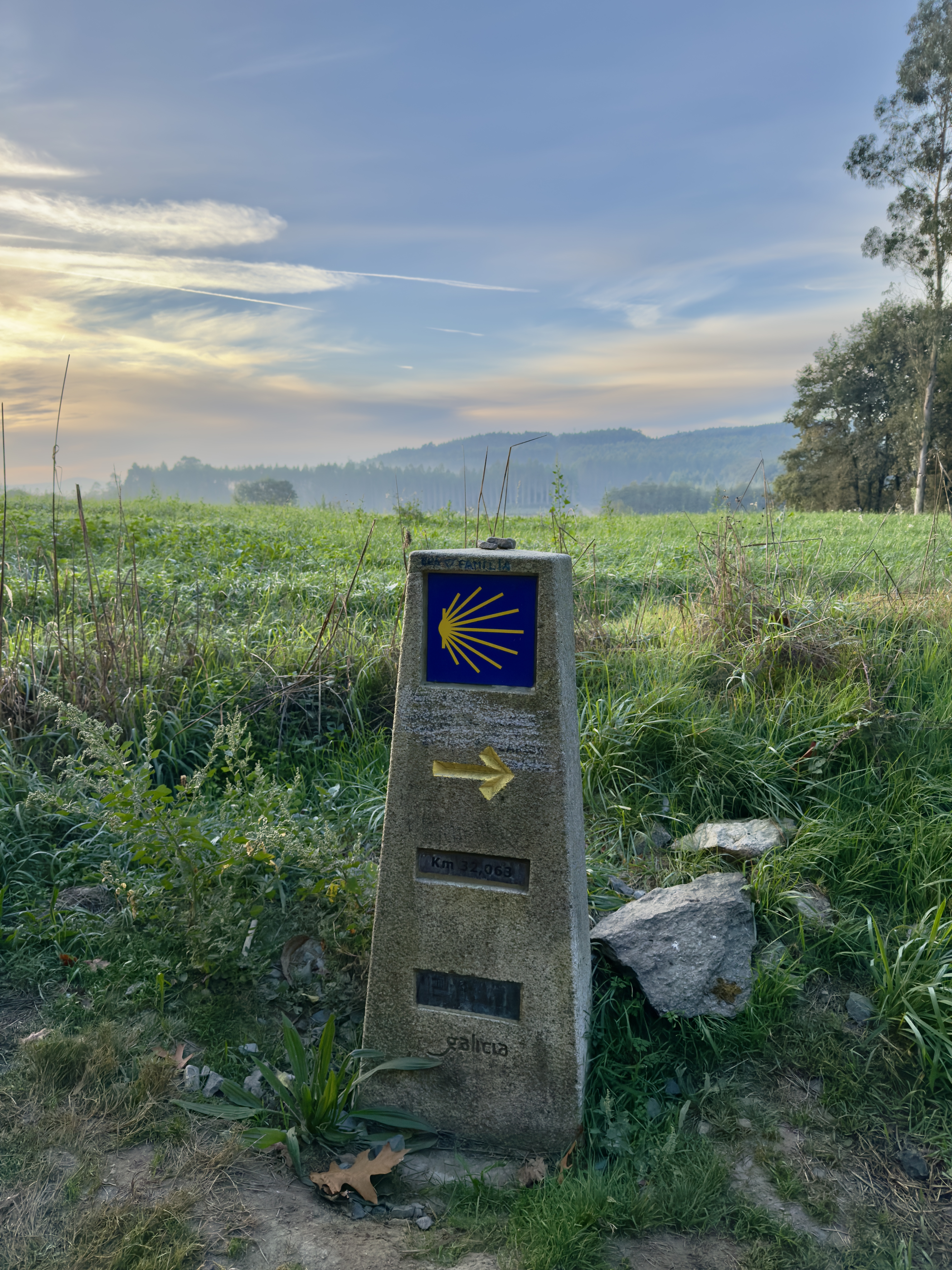
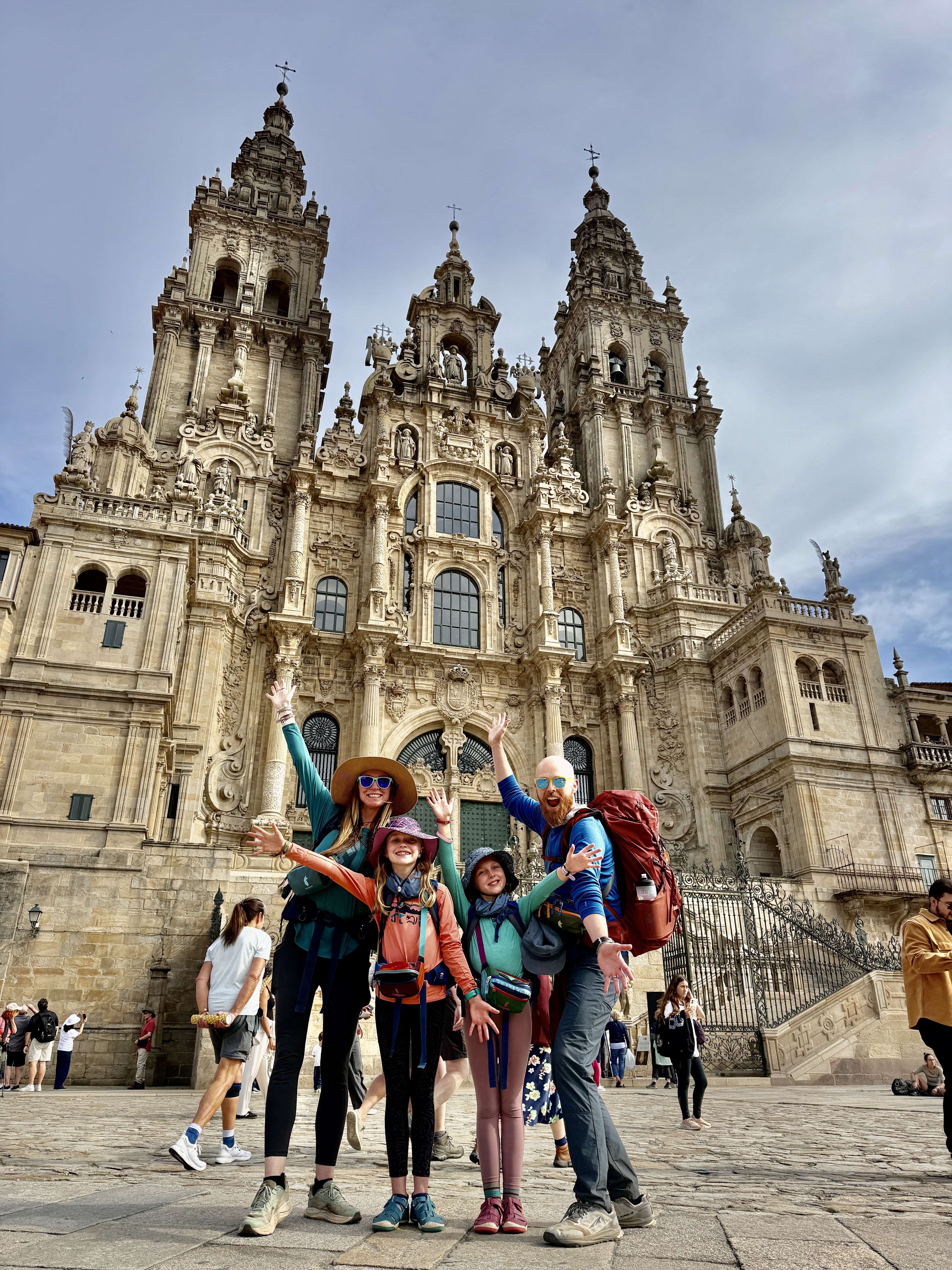
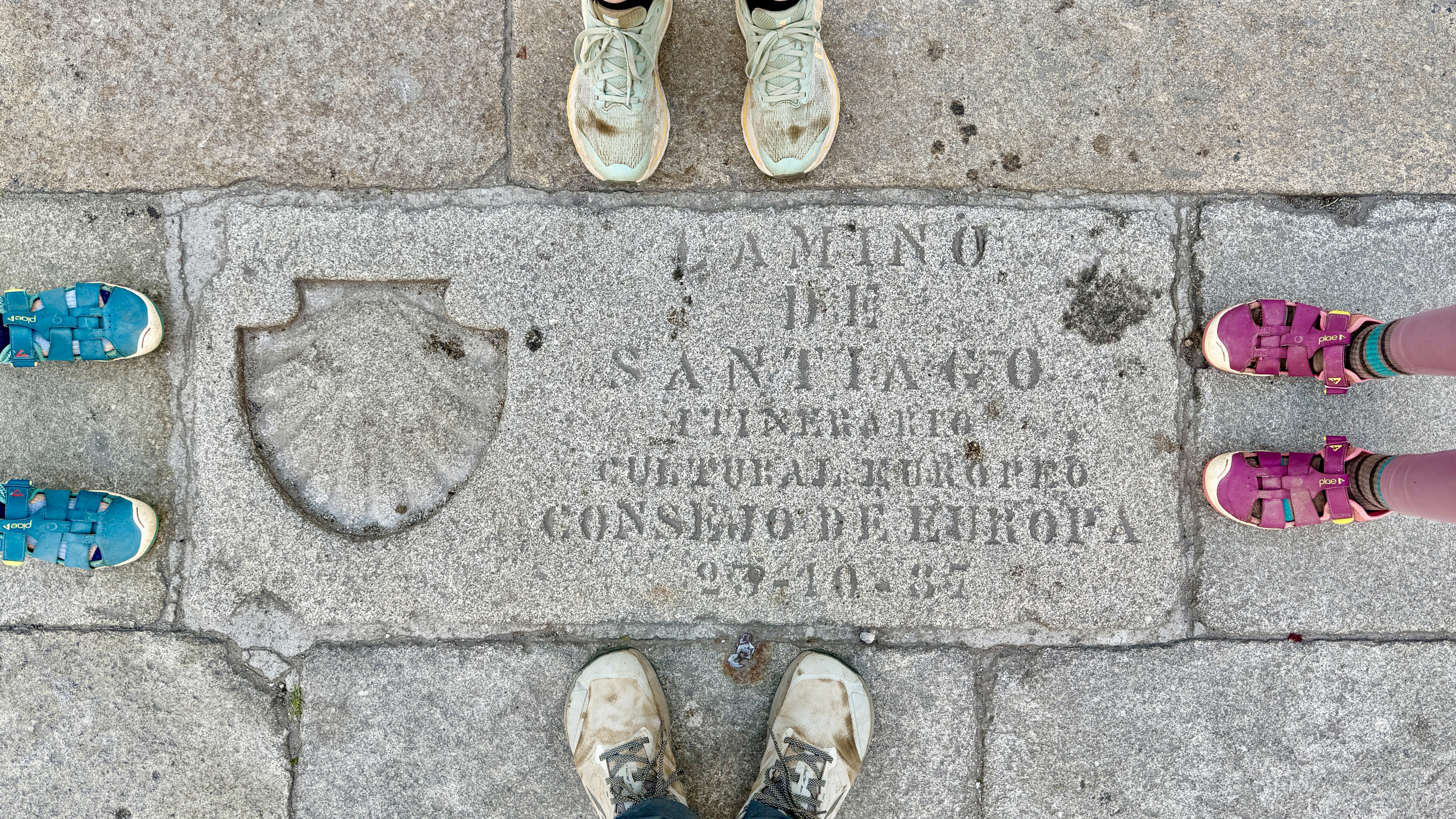
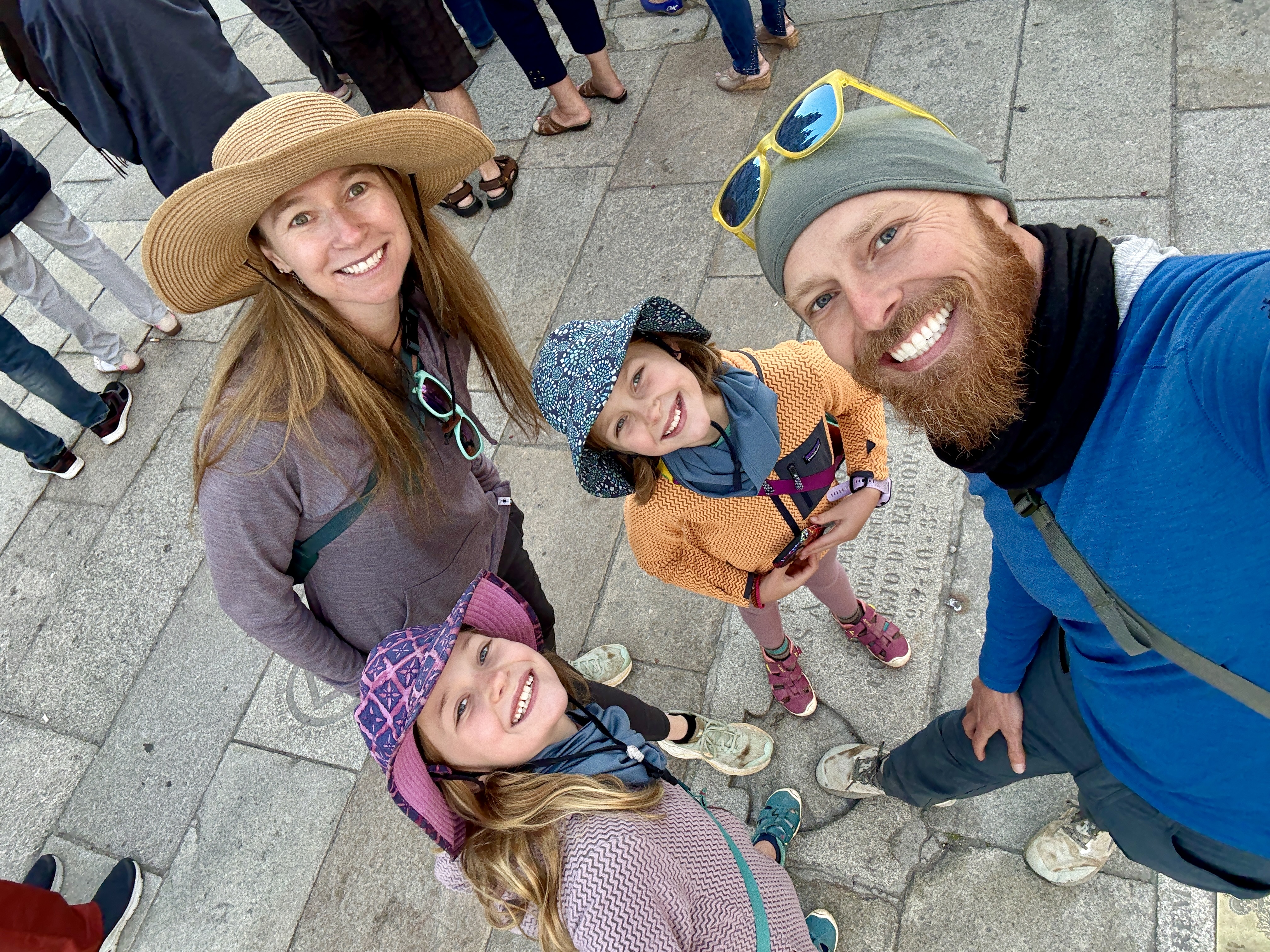
Fog wrapped the city’s edges as we followed one scallop shell after another through empty narrow alleys. Then, without fanfare, the street opened into the grand Praza do Obrodoiro before the Cathedral of Santiago. The spires loomed above, ghostlike in the pre-dawn mist. The only souls in sight or earshot, we stepped together onto the KM-0 scallop shell, set in granite at the square’s center, marking the end of the Camino from all directions.
48 days. 840 kilometers. France to Spain, mountains to plains, sun to mist. We had done it.
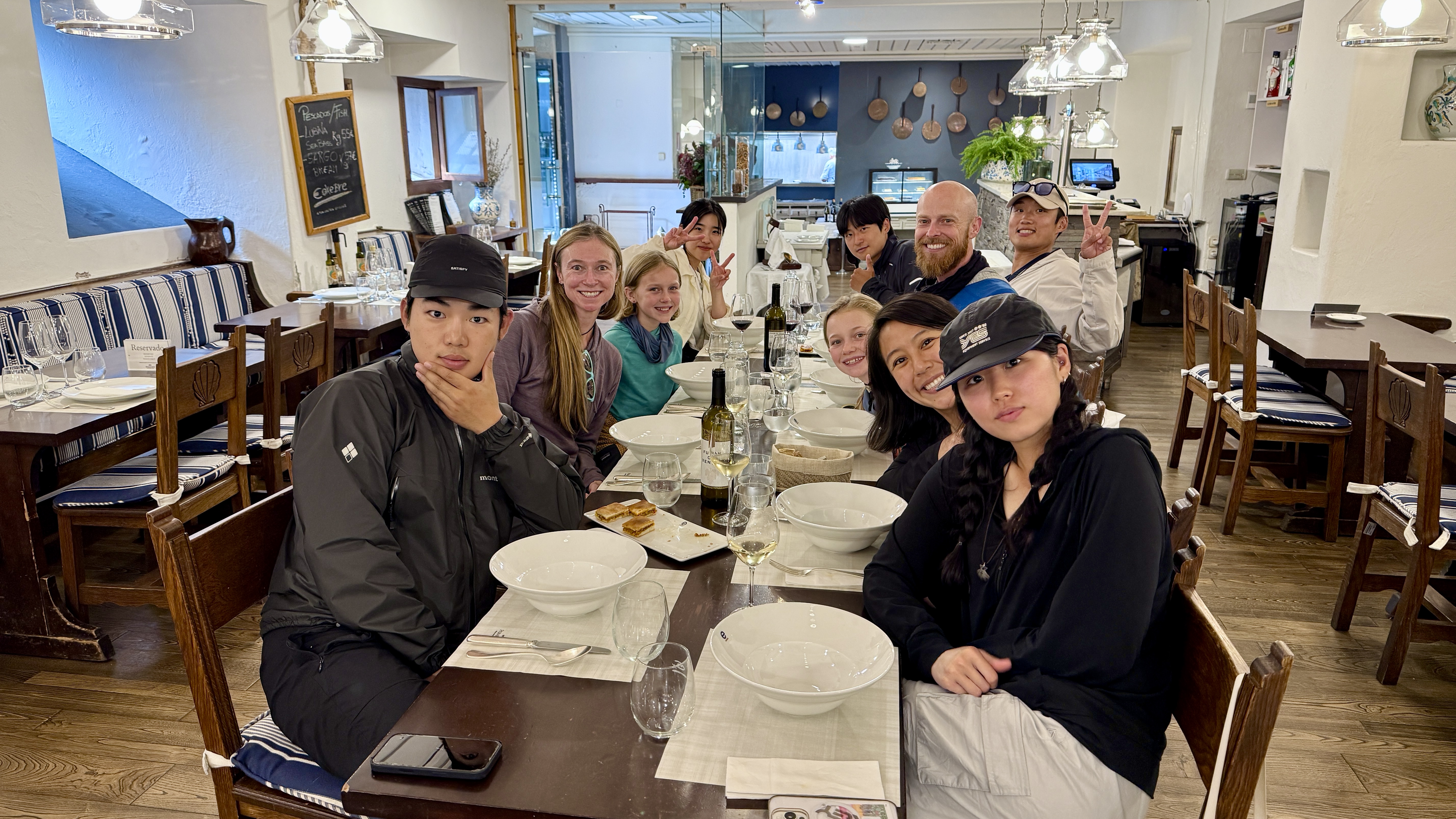
We left the dimly lit plaza for our second destination of the morning: the Pilgrim’s Reception Office. Set around the corner from the square, we eagerly approached, meeting another small group of pilgrims at nearly the exact same moment. We had secured our spot as four of the first 10 pilgrims of the day (of what would be a total of 2,589 that day), ensuring we would receive the final special prize of the Camino—a Pilgrim lunch at Enxebre restaurant in the historic Hostal Real de Santiago, originally a hospital built in 1499, that’s been a lifeline for pilgrims arriving in Santiago for five centuries. One last time we shared a table and meal, not with strangers per se but with fellow pilgrims who had also just achieved an incredible goal.
The feeling wasn’t triumph so much as release—a deep, collective exhale. Pride, relief, gratitude. Each emotion arrived quietly, without ceremony. We had set an audacious goal as a family, and we had carried it through, one step at a time. We had taken turns leading, carrying, encouraging. When one faltered, another steadied the rhythm. We shouted a final “Team SharXee” into the night that echoed off the historic buildings circling the square, no one there to hear it but our proud little family unit.
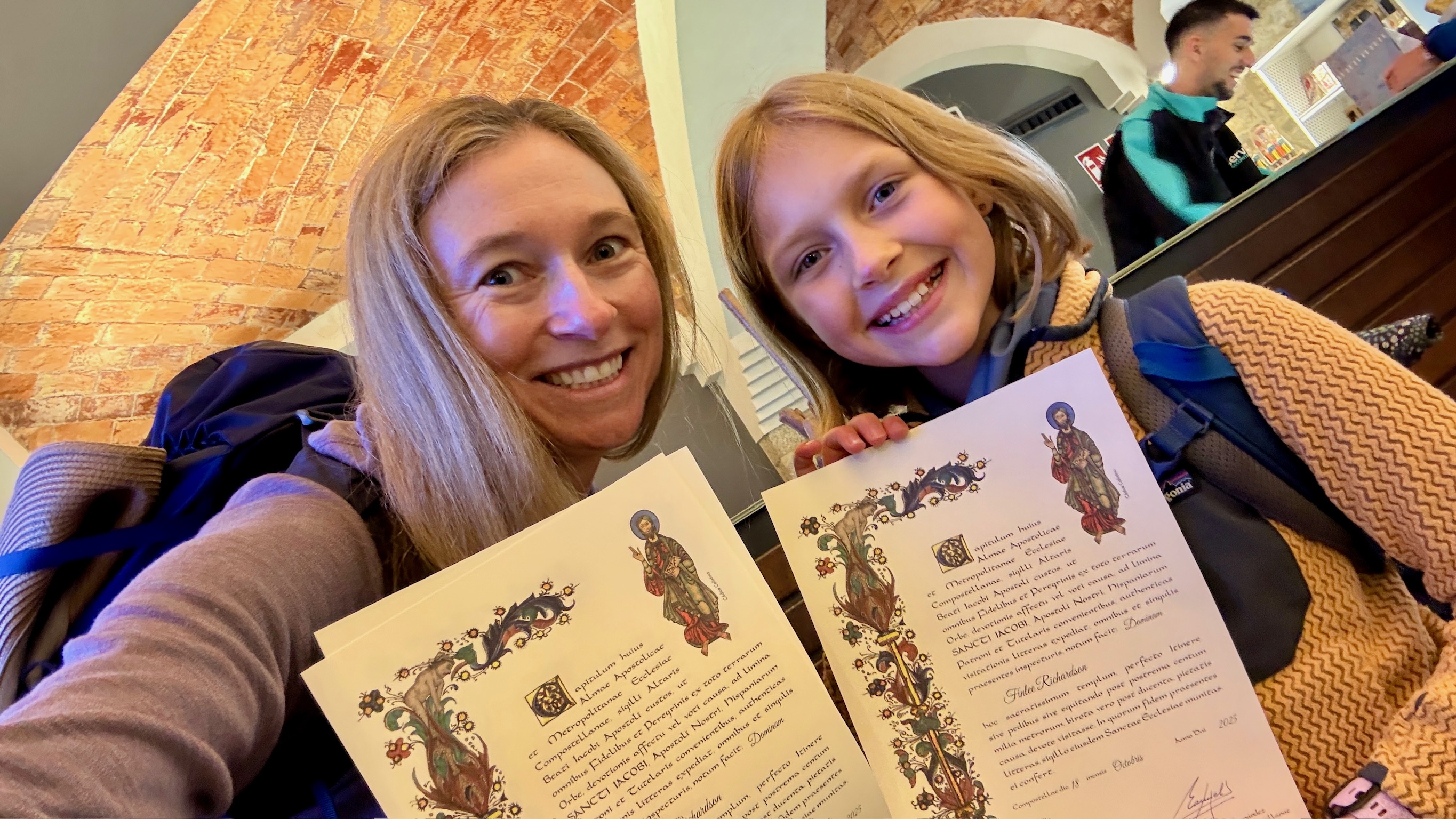
Later, as we sat with our Compostelas in hand, the official certificates of completion, we knew the Latin words on the fancy parchment itself didn’t matter. The proof was already written in us—in sore legs, sun-marked faces, and the quiet confidence that comes only from seeing something all the way through.
In the golden hours of these last days—the shimmer on Lugo’s walls, the crunch beneath the chestnut trees, the bubbles spilling from a hot tub, the hum of a forest drum, the misted light of Santiago—we found a new kind of endurance. It isn’t about how far you can go, but how deeply you can stay present while you’re going.
The Camino gave us closure, but it also gave us a foundation—a reminder that we’re more capable than we imagined, together and individually. Every step rewrote what endurance means. And though we don’t yet know what the rest of this family gap year will bring, we’re ready to meet it—one step, one place, one day at a time.
 Pause and Wander
Leave a comment