

Dates: October 9-13, 2025
Fonfría → Triacastela – 11 km
Triacastela → Samos – 13 km
Samos → Barbadelo – 19.5 km
Barbadelo → A Tellada – 16 km
A Tellada → Ligonde – 21.5 km
Total: 81 km
If the Camino de Santiago has a personality, it’s the kind that delights in undoing your plans. Every day begins with an idea of how things might go — the weather, the views, the food, the distance — and by midmorning the Camino has re-written the script. Sometimes the surprises are funny, sometimes inconvenient, and sometimes quietly wonderful.
This stretch from Fonfría to Ligonde — five days through fog, cow barns, forests, and crowded trails — became a crash course in that lesson. The Camino kept throwing us mismatched expectations: the magical morning that smelled like manure, the “boring” route that turned out to be some of our favorite kilometers of all, a riverbed that turned out to be nothing but cracked mud, and the crowded trails that made us rethink our pride. Somewhere between what we pictured and what we found, we kept learning how to adjust, laugh, and keep walking.
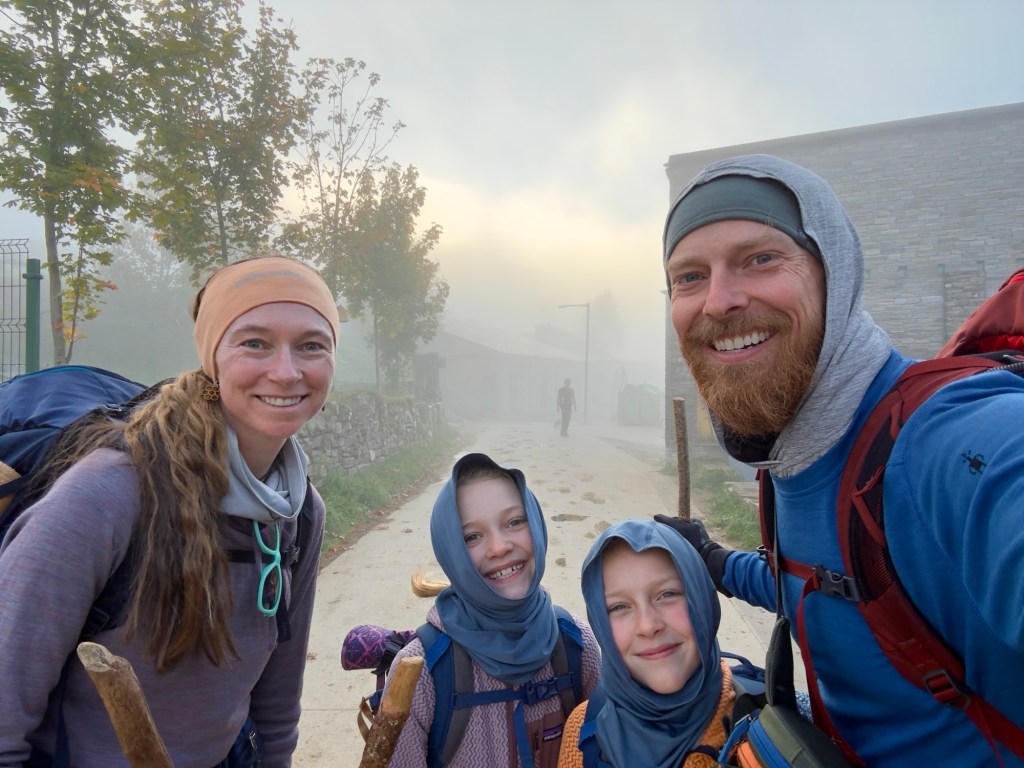
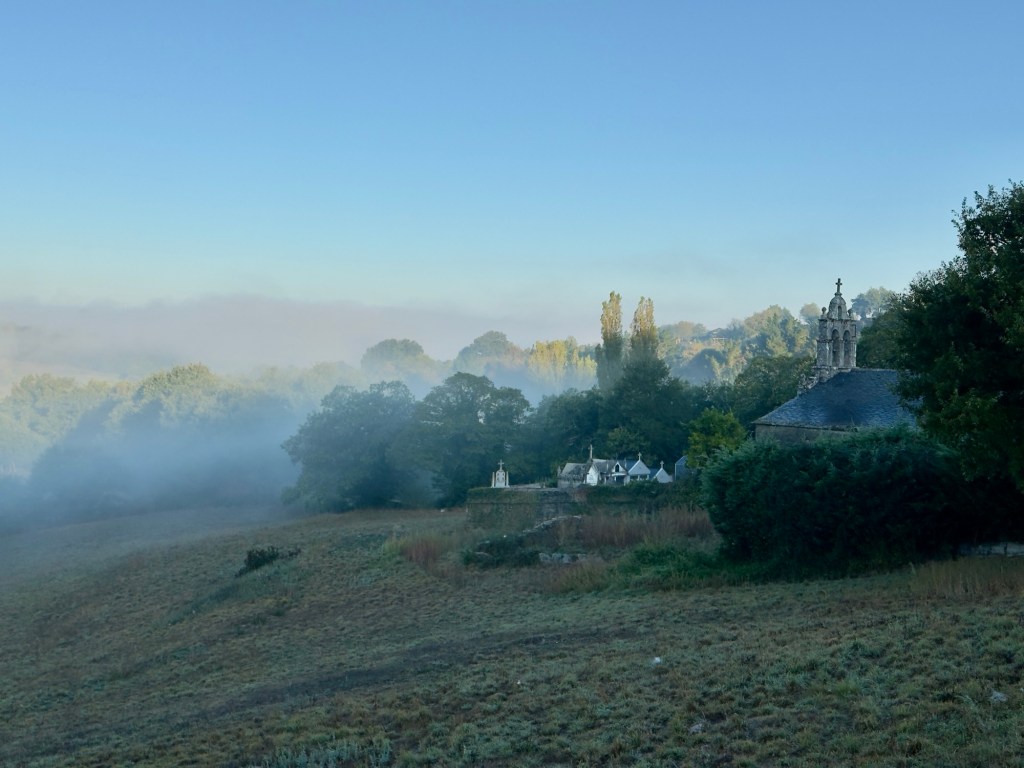
We started in Fonfría, waking through air so thick with mist that even the nearest house blurred away. The world felt half-made. Breakfast was simple but memorable: eggs and a wedge of Queixo do Cebreiro, a cheese made just a few villages away. It’s soft, tangy, and strangely addictive — somewhere between ricotta and cream cheese. We spread it thick on toast and watched the fog creep past the window, feeling like we were floating.
The descent out of Fonfría led through a string of tiny hamlets where the houses sit directly above the barns. In this part of Galicia, people started keeping their cows below them so the animals’ warmth would rise through the floors in winter. It’s efficient, but the smell takes some getting used to. Cow manure lined the narrow stone streets, and the air hung heavy with it. It’s the sort of thing that would be miserable if you let it — or funny if you don’t. We chose to laugh and call it “local flavor.”
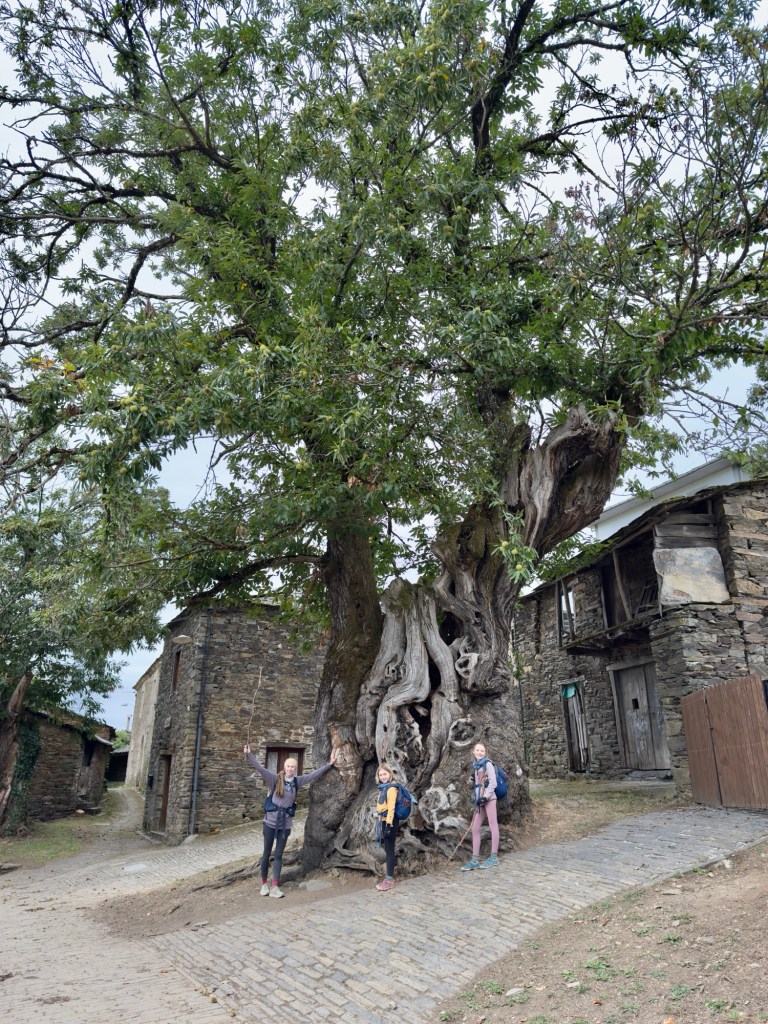
Not long after, we reached Ramil, home to an enormous chestnut tree said to be around eight centuries old. Its trunk was wide enough for three of us to stand inside if it were hollow. The girls circled it reverently, tracing their hands along the grooves. They decided it was “the best tree of the Camino so far,” and honestly, they were right.
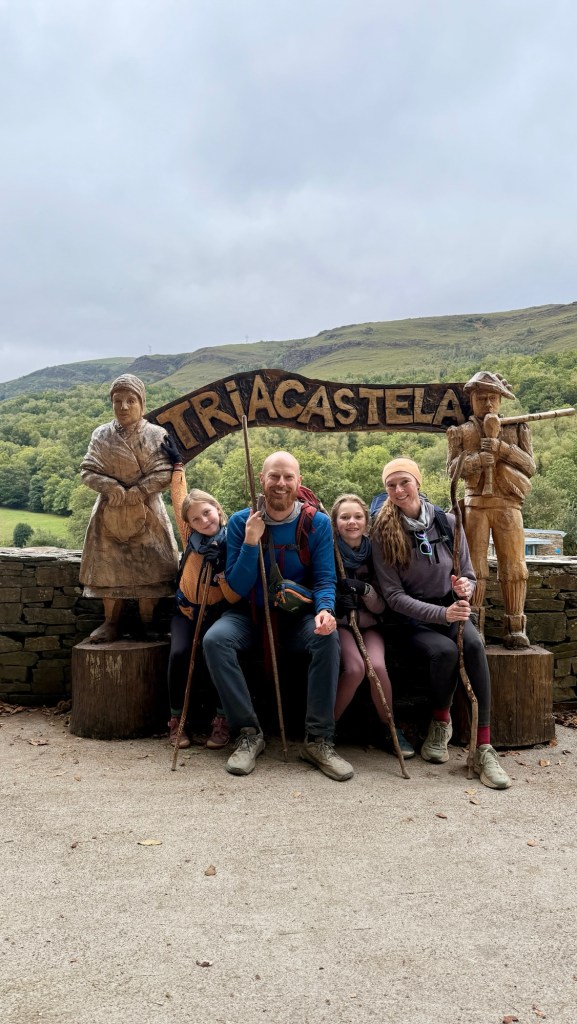
By noon, Triacastela came into view, and we ducked into a small café for tacos — an unexpected sight in northern Spain but too tempting to pass up. The food was fine; the company was better. The owner/cook, a woman from Mexico named Viry, was warm and talkative, and happy to let Arya and Finlee practice their Spanish. Listening to them try out new words and laugh through mistakes felt like a quiet victory.
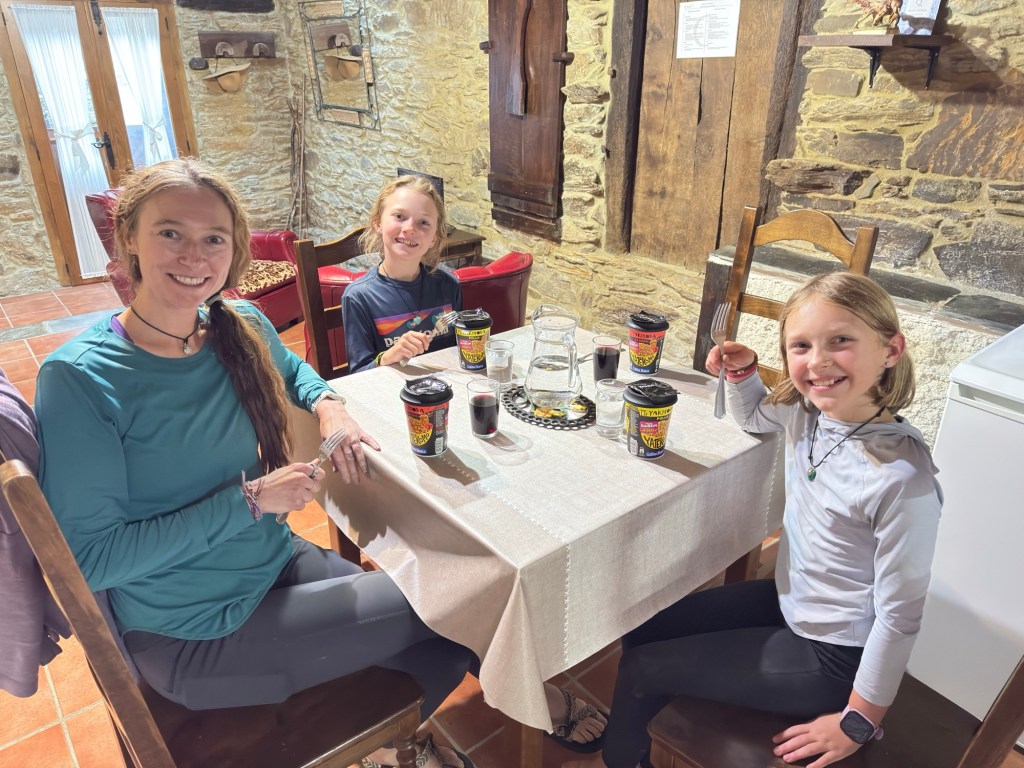
Our lodging that night — a monastery turned farmhouse and Casa Rural just outside town — looked postcard-perfect online. In person, it leaned more toward haunted. Half the lights didn’t work, dense cobwebs framed every corner, and the kitchen felt like no one had entered since spring. Still, the beds were soft, the shower hot, and the bottle of five-euro wine we paired with instant ramen noodles tasted suspiciously excellent. That’s the Camino in a nutshell: lower your expectations, raise your humor, and everything gets easier.

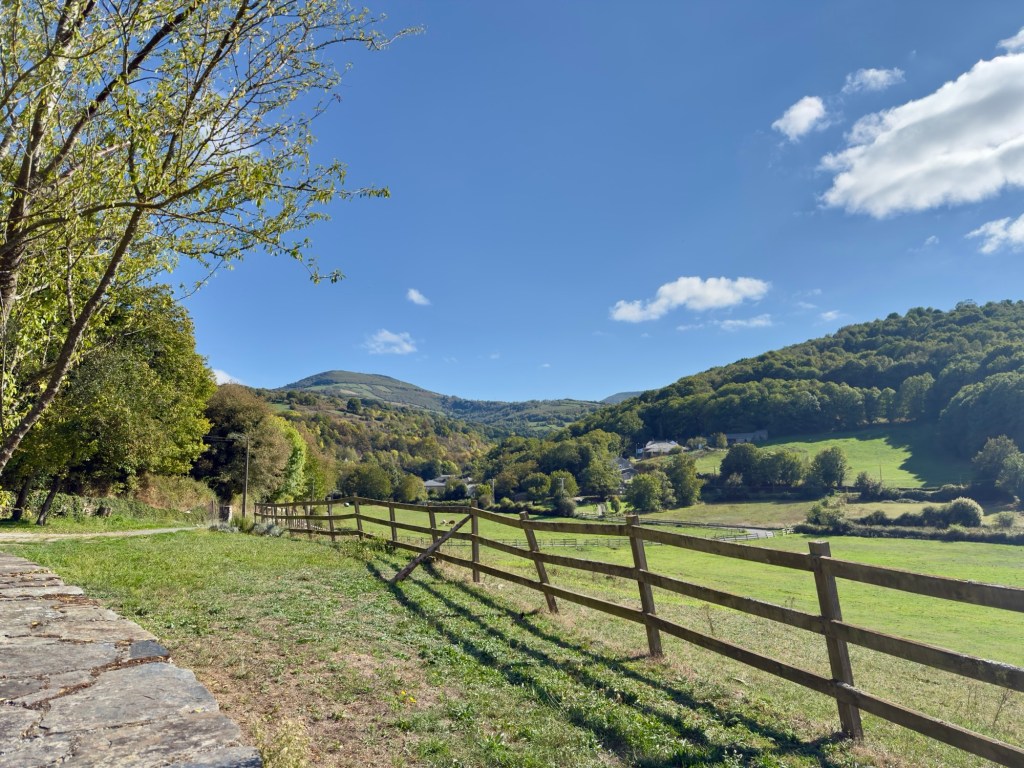

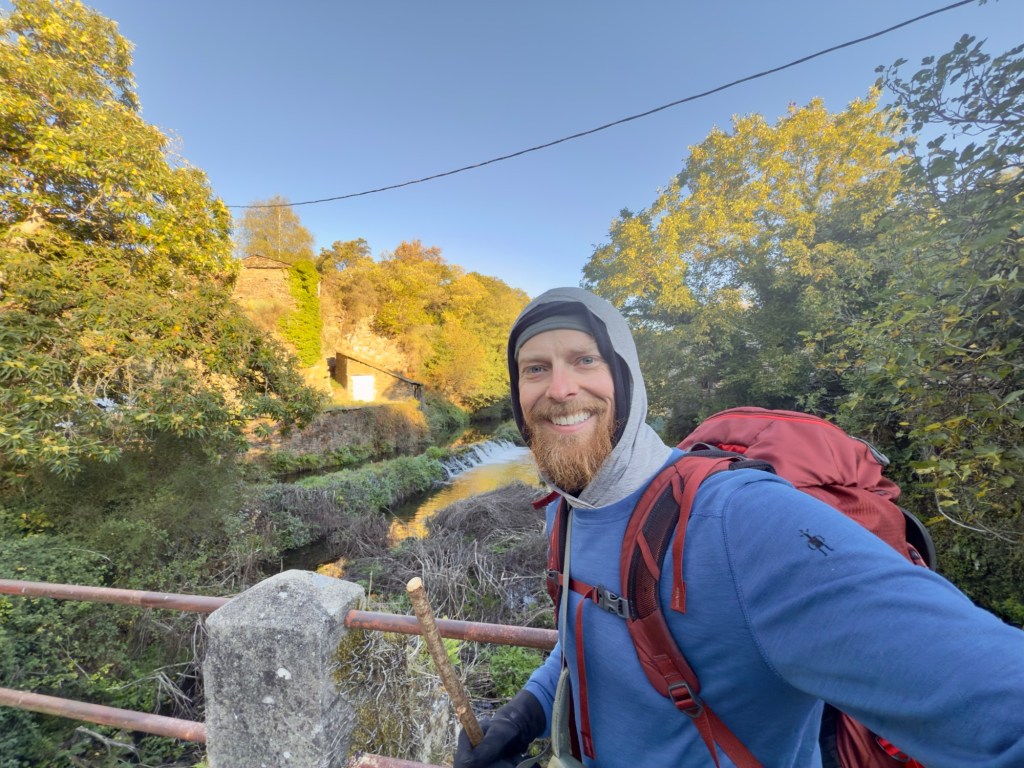
The next morning we ignored everyone’s advice and took the Samos route, which some pilgrims and a few locals had called dull, dangerous, and “not the real Camino.” They were wrong. The path wound alongside the Río Sarria through quiet forest, the river catching light between mossy trunks. When it finally pulled away from the road, it turned into a narrow footpath under arching oaks and chestnuts. Everything glistened with dew. It felt alive in a way that made conversation unnecessary.
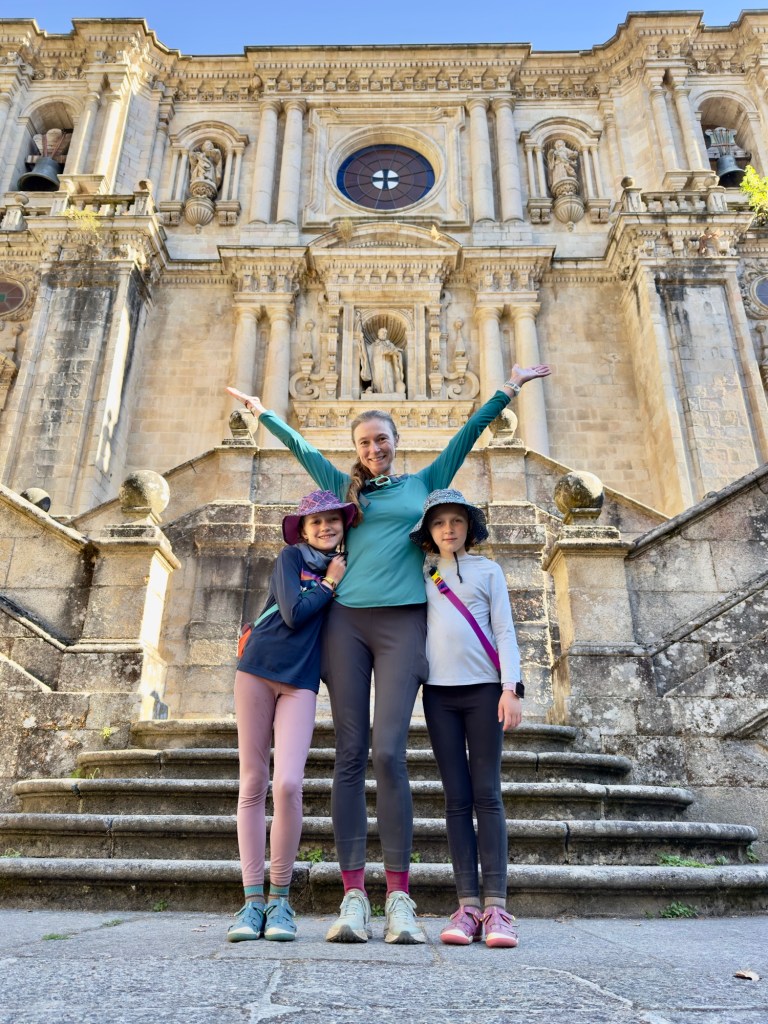
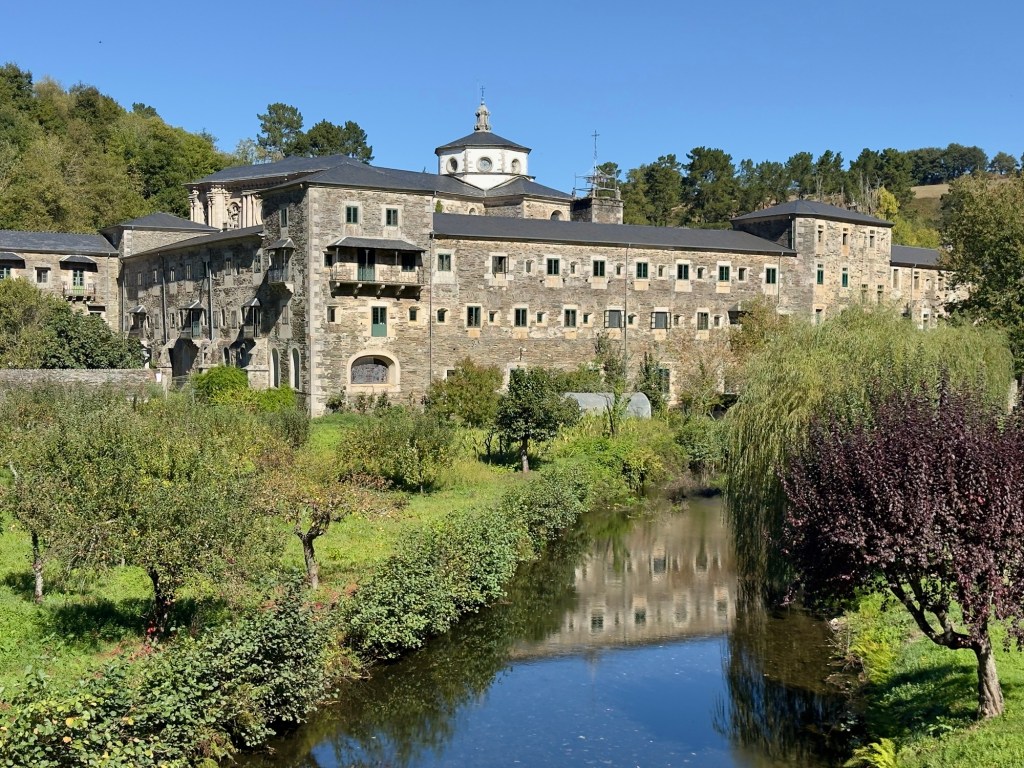
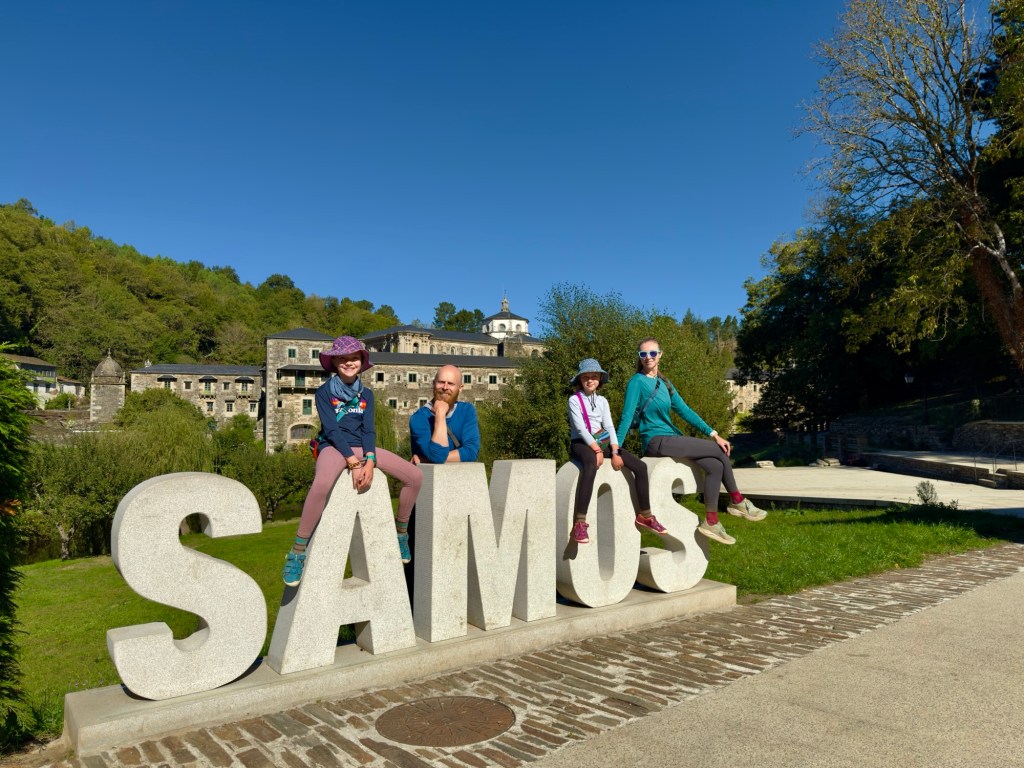
The monastery at Samos appeared like a trick of the mist — massive and gray, dominating the valley. We’d planned to stay there for the novelty of sleeping under its roof, but the cold inside gave us misgivings as we imagined what it would feel like at 2am if it felt like the inside of an ice box at 1pm. When the hospitalero explained that they had no blankets or sheets because of a bug issue, our decision came quickly enough to give whiplash as we bolted, laughing the whole way to the next option.
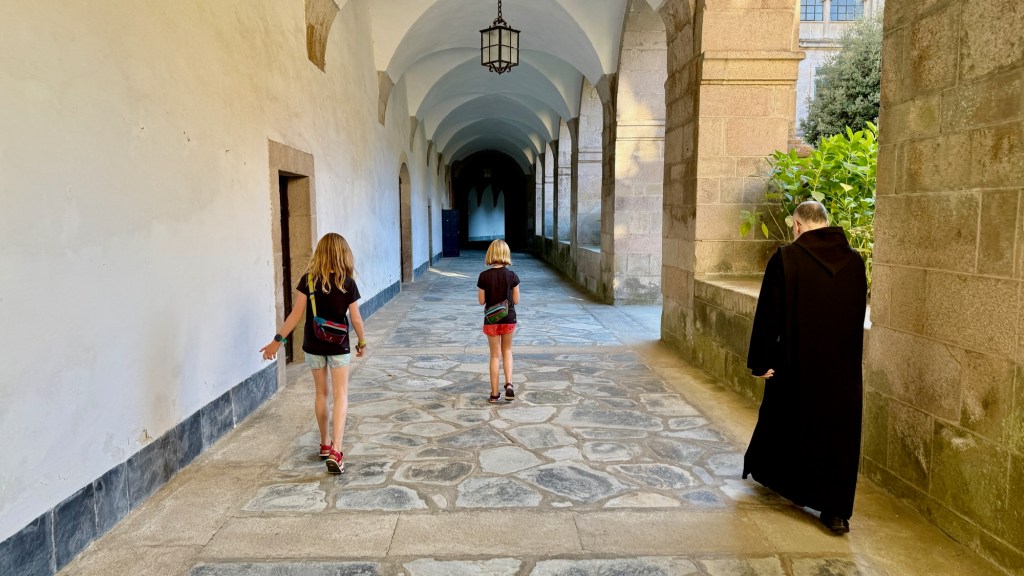
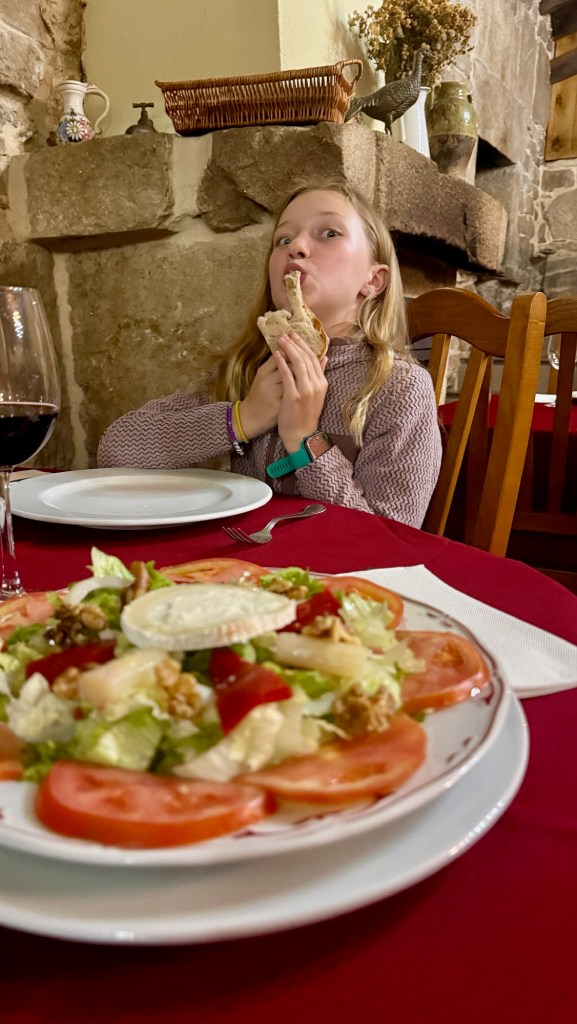
Lunch that day was something special: simple food, perfectly done, eaten slowly with the kind of appetite only walking creates. The true star of the meal was tomato carpaccio on top of a toasted seasoned bread. I will be attempting to replicate this in the near future. Later, during a monastery tour, Max managed one of his more memorable language mistakes. Trying to ask the monk how many monks lived there (monjes), he instead asked, “¿Cuántos gnomos viven aquí?” The gentleman looked utterly baffled until Max doubled down and clarified helpfully, “Tú eres gnomo. ¿Cuántos gnomos viven aquí?” – “You are a gnome. How many gnomes live here?” The poor man gently explained that gnomos are tiny fantasy creatures, while he is, in fact, a faithful monk of the Benedictine order. Max’s face turned as red as a Rioja, and when he told Shaina and the girls, they nearly fell over laughing. “How many gnomes live here?” became an instant family catchphrase — proof that on the Camino, humility is alive and well.


Breakfast at the hotel was absurdly generous — the kind of buffet that makes you confident and then sorry. We lingered longer than planned, overindulged, and didn’t hit the trail until late morning. The first hour was slow payback for our enthusiasm, every uphill step a reminder that chocolate croissants aren’t necessarily the best fuel. Once we found our rhythm, the day unfolded easily — nearly twenty kilometers from Samos to Barbadelo through rolling forest and green tunnels.
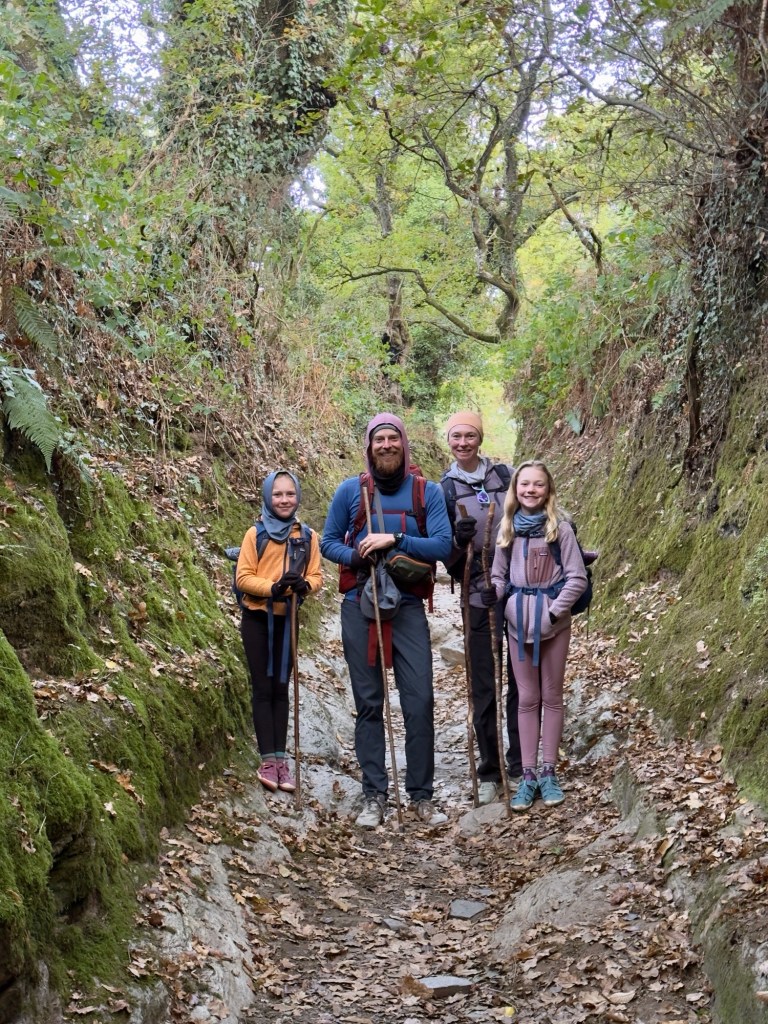
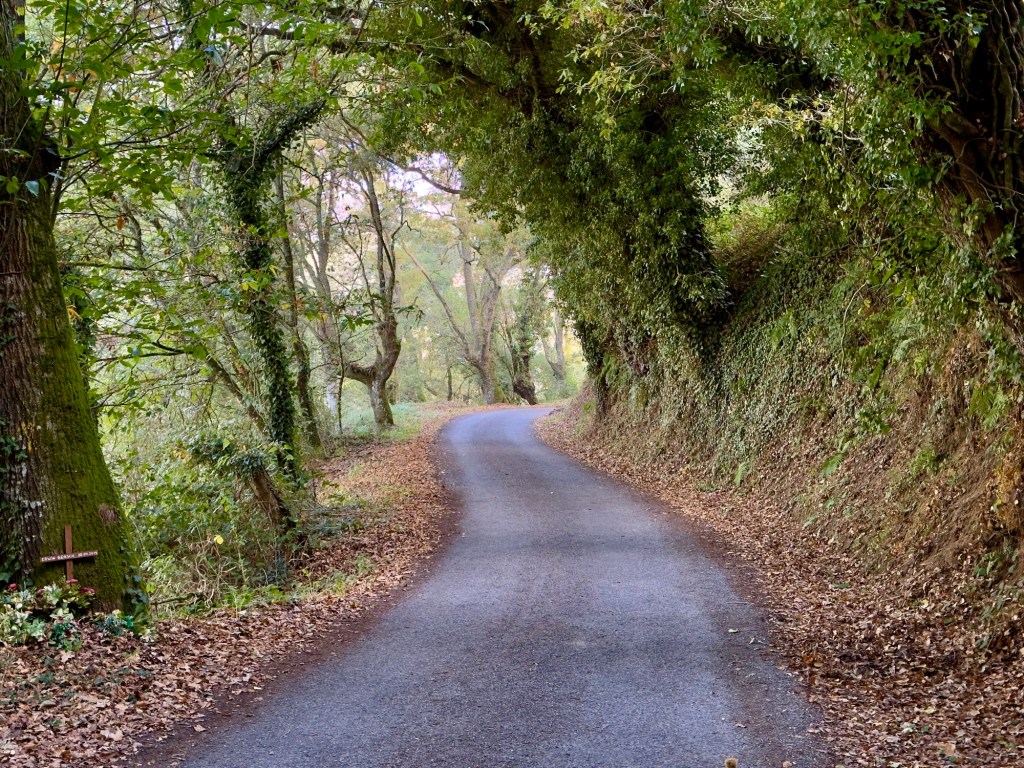
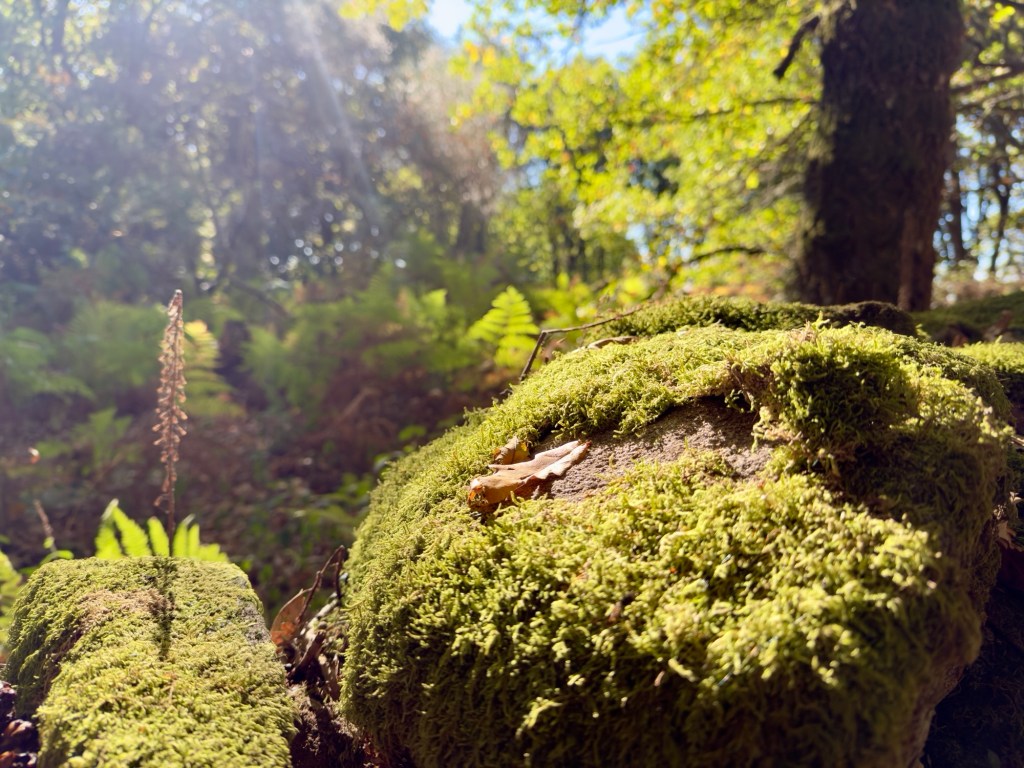
The walk itself was beautiful: moss climbing stone walls, ivy covering the trunks of oak and chestnut trees, ferns carpeting the ground. Coming from Nevada’s desert, we’re still floored by how wet and alive Galicia feels. Everything grows on everything else here. The path feels older than the road itself.
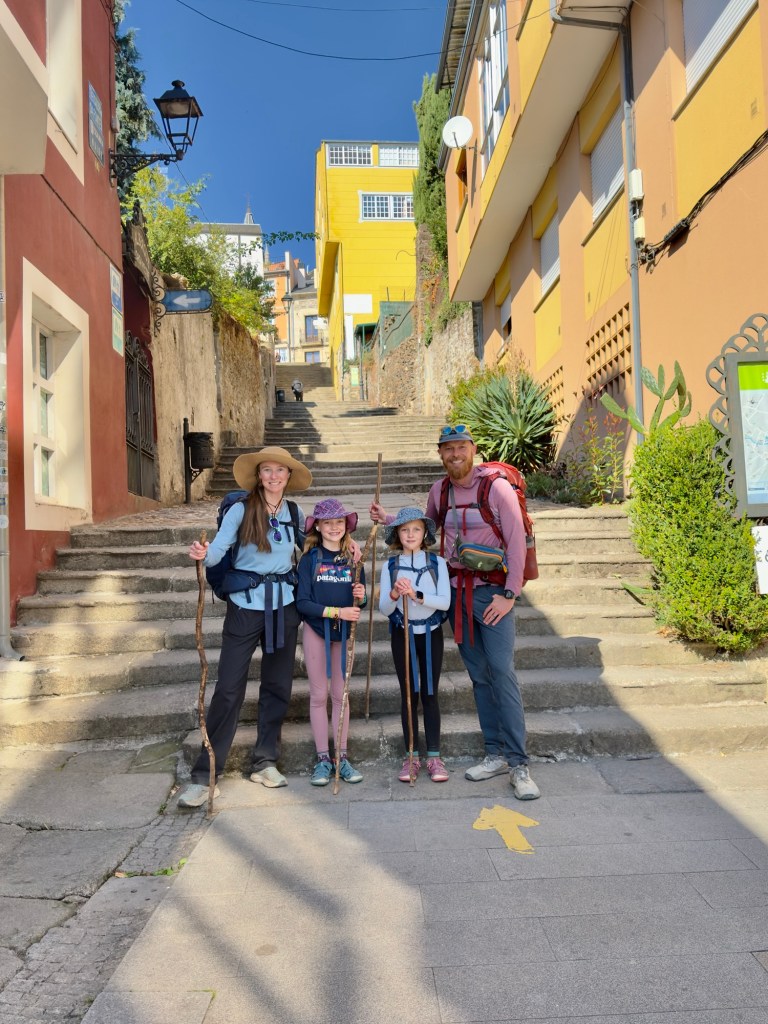
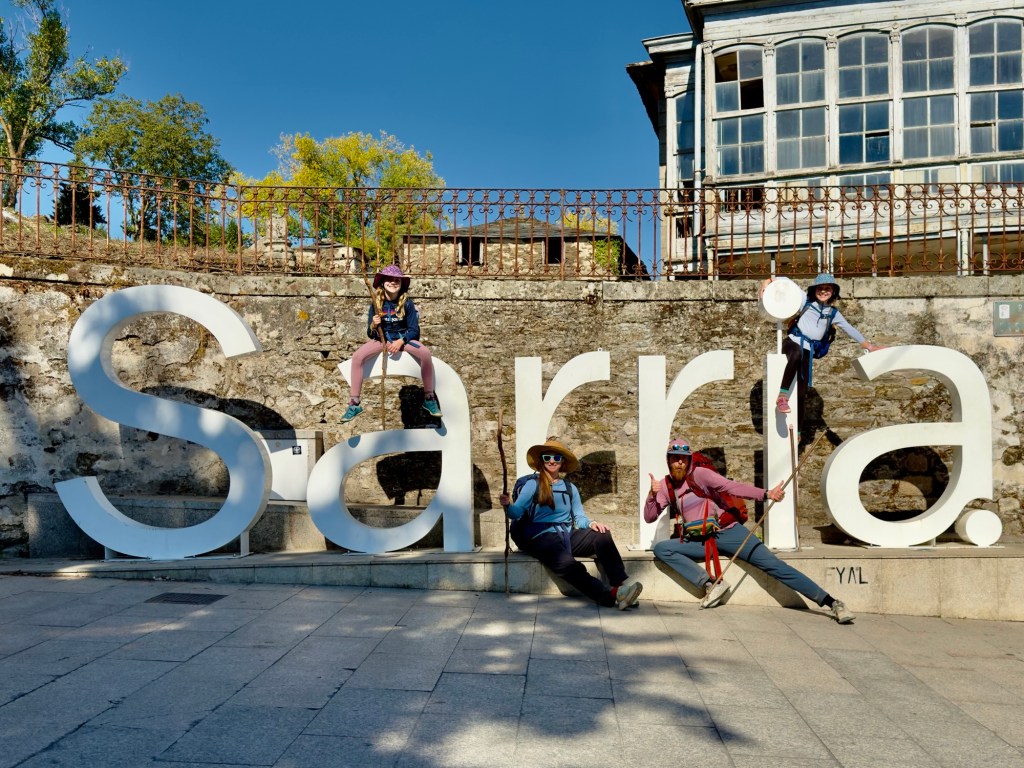
When we reached Sarria, we passed quickly through its tired outskirts before slipping into the narrow lanes of the old town. Then came a hill so steep we named it “the Sisyphean Hill.” We’d just started listening to Percy Jackson, which made it the perfect comparison — a steady, laughing climb that somehow felt less like punishment and more like proof that our legs still worked.
Our albergue that night overlooked quiet countryside. The pool was too cold for swimming but just right for soaking sore feet. Dinner was simple and filling — pasta for the girls, chicken with mushroom sauce for us — and we finished the evening with a few rounds of cards. Nothing grand, just a calm, satisfying day that asked nothing more of us than to keep walking.
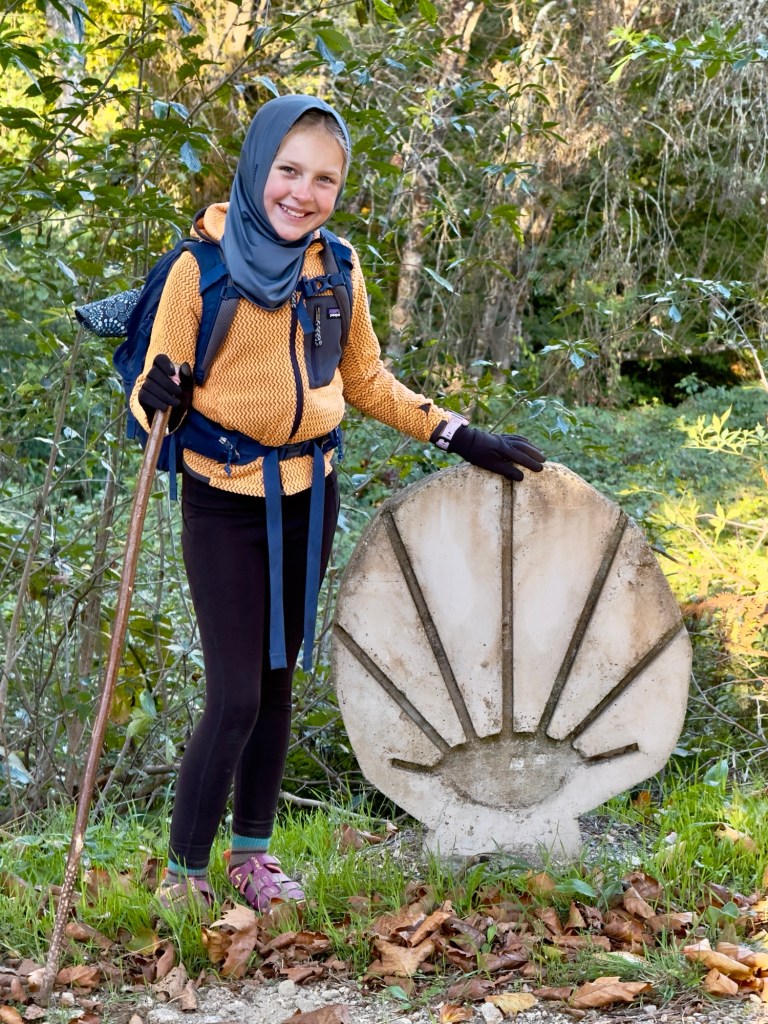
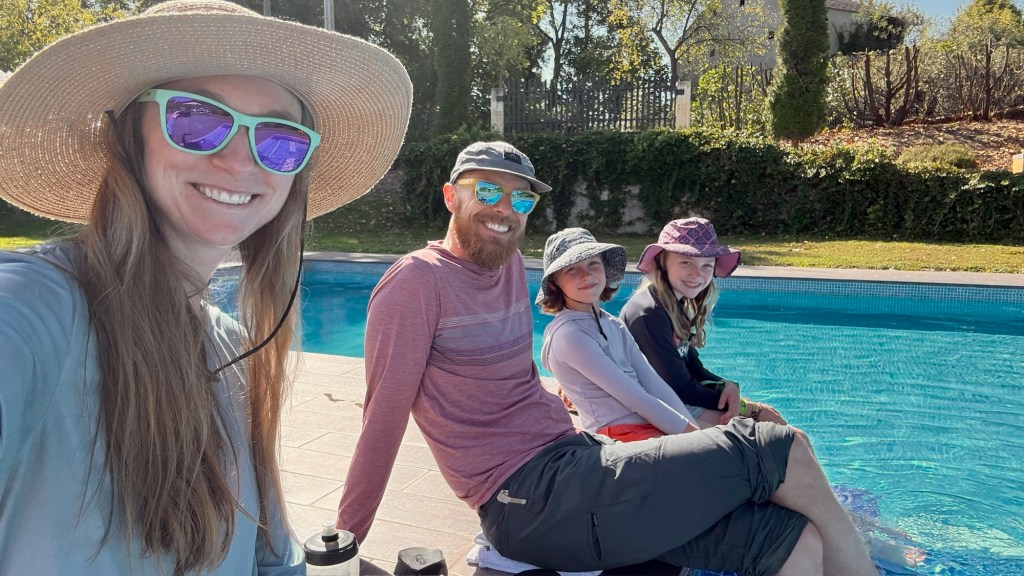
The next morning we took our time. With only sixteen kilometers ahead, there was no reason to rush. Spain’s breakfast miracle, the automated orange juice machine, made another appearance. There’s something mesmerizing about watching a machine slice an orange in half and press it into fresh juice right in front of you. We agreed we’d miss that more than we’d miss certain stretches of trail.
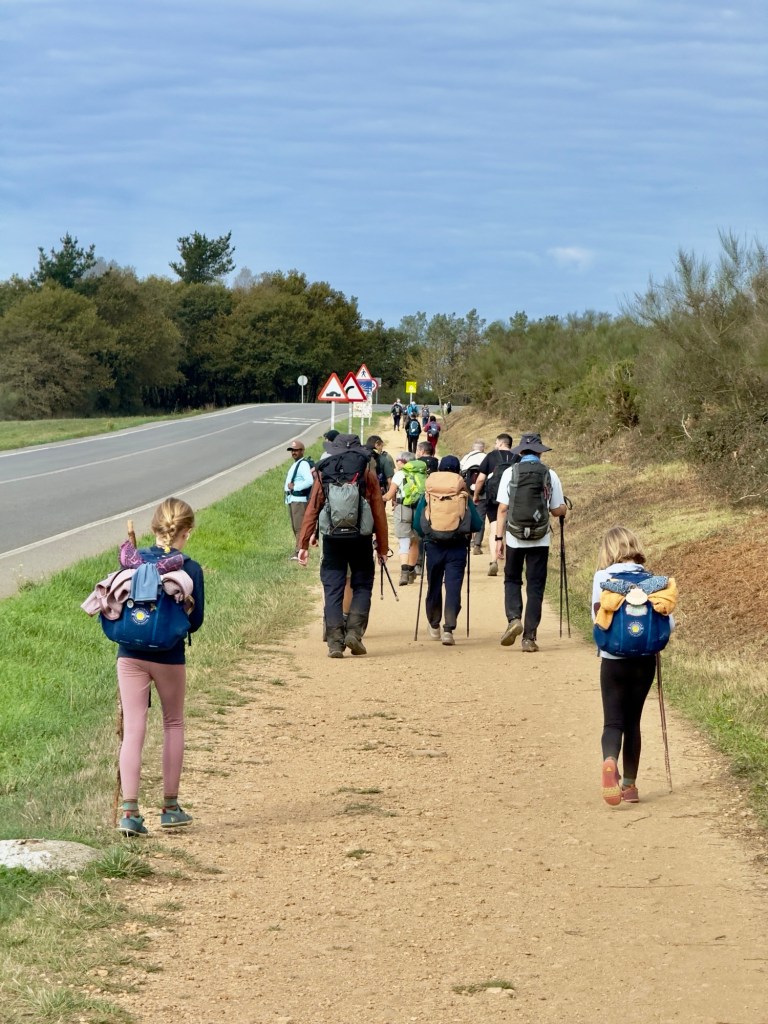
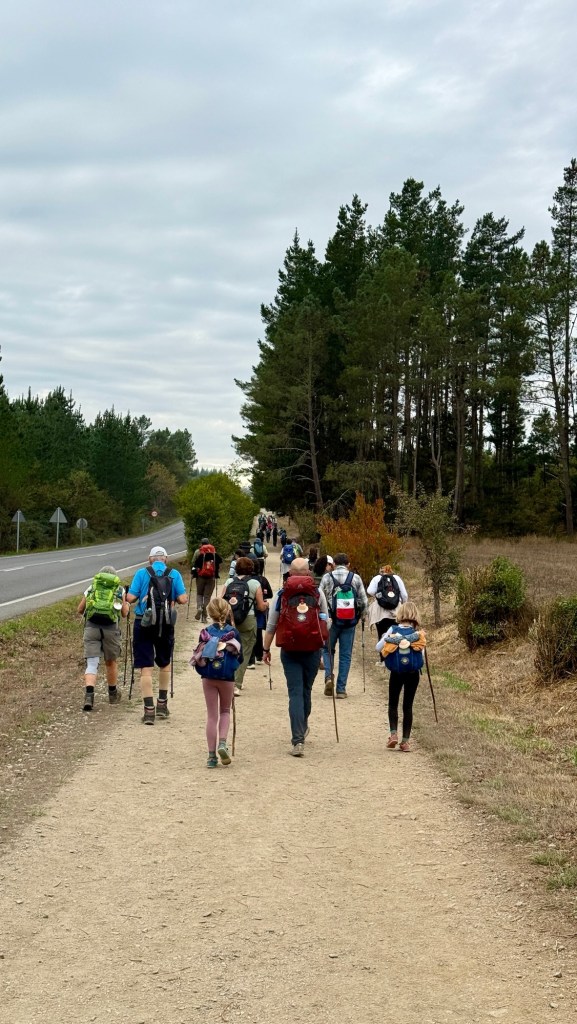
Then came the shock: people. So many people. After Sarria, the Camino transforms from a trickle into a river of pilgrims. We’d heard about this transition, but seeing it was something else entirely. The path became a steady procession of new faces, clean boots, and boundless optimism. For weeks, we’d walked in near solitude. Overnight, we were part of a parade.
It all traces back to a rule set decades ago: anyone who walks at least 100 kilometers earns the Compostela certificate. Sarria sits just over that mark, so it’s become the logical starting point for most modern pilgrims. We understood it, but that didn’t stop the mix of irritation and pride from bubbling up. After six weeks of blisters, bed bugs, and occasional chaos, we couldn’t help but feel a little possessive of “our” Camino.
By afternoon, the crowd stopped bothering us. After so many weeks on foot, we could feel the difference between starting a journey and being shaped by one. The new faces were fresh and excited, their packs still tidy, their energy untested. Ours was slower, steadier, worn in the way only time and effort can make it. Everyone walks for their own reasons, but there’s a quiet satisfaction in knowing we’ve earned our rhythm the long way.
Our house in A Tellada, half a kilometer off the trail, felt like a retreat, and was easily one of Shaina’s best accommodation finds. The owner had stocked the kitchen with groceries, fresh veggies and fruits, and a homemade tortilla española as a welcome. We cooked dinner together, opened the windows to the quiet hills, and ended the day with coconut cookies and tea. Max had picked up the family cold by then and we all went to bed early, in hopes to kick this lingering illness.
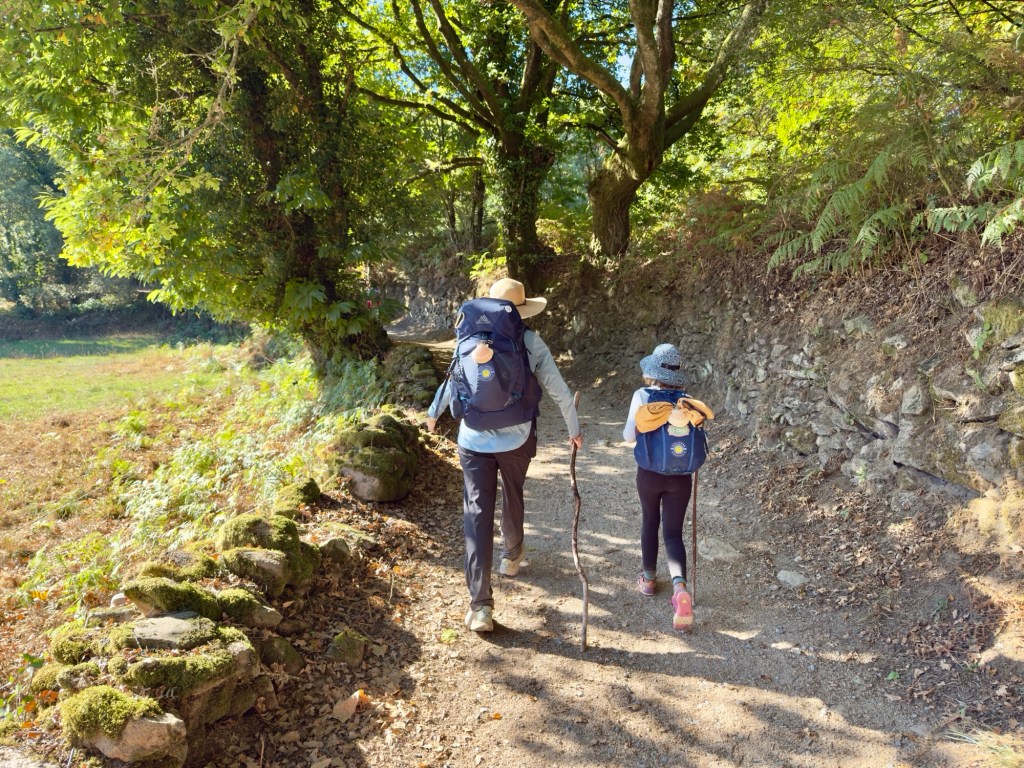
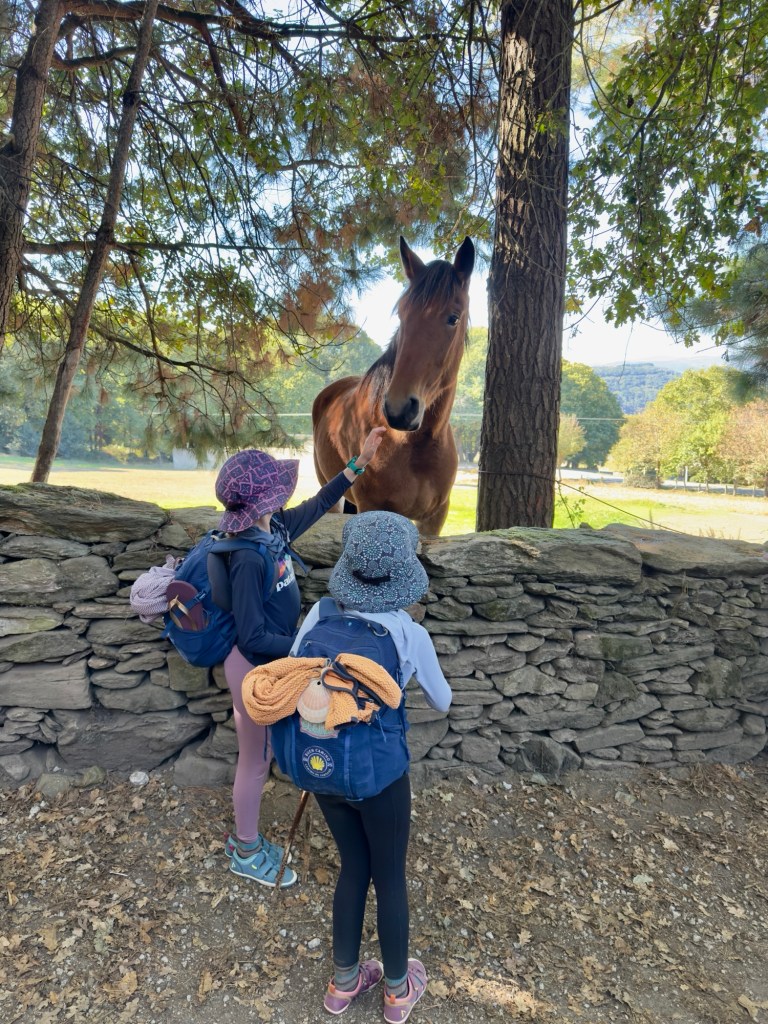
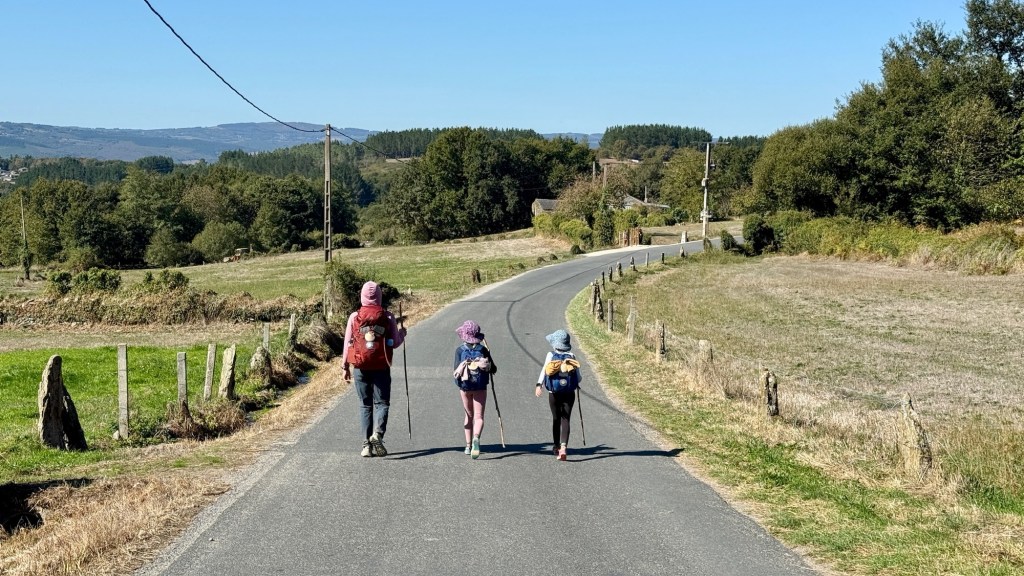
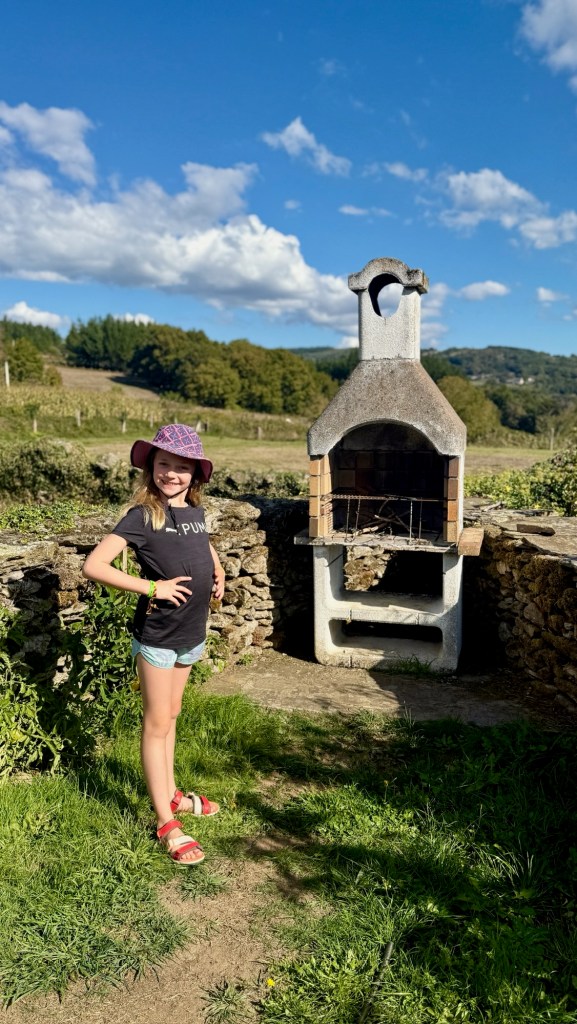
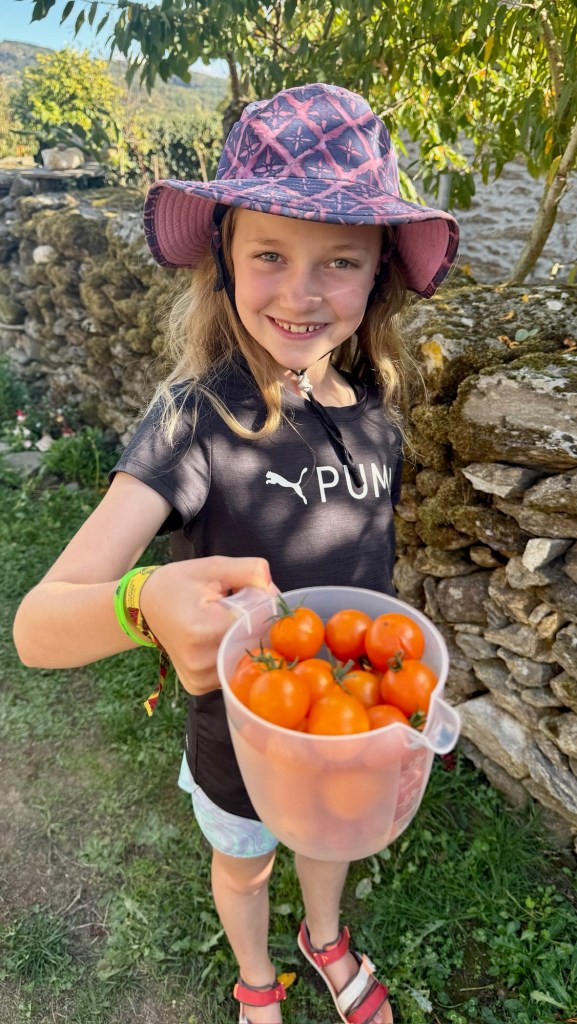
The next morning started in the complete darkness. We scrambled eggs, toasted bread, and headed out before sunrise. The joke in our family is that any kilometers walked before dawn don’t count toward fatigue. It’s nonsense, but it makes us laugh, and laughter always helps.
As the light grew, we reached Portomarín, expecting to see the wide Río Miño flowing below the bridge. Instead, we looked down on a muddy, post-apocalyptic basin. The river had been dammed decades ago to form a reservoir that flooded the old town. When water levels drop, the remains of the original city — stone arches, stairways, and fragments of walls — rise from the mud like the outline of a memory. It was haunting to look at: not beautiful exactly, but unforgettable.
From there, the trail climbed relentlessly. More than five hundred meters of elevation gain stretched ahead, a slow and steady test of will. Finlee took the lead, head down, taking quick, sure steps that never slowed. She moved like she was built for climbing — steady, determined, almost mechanical in her rhythm. Not even Arya, our usual front-runner, could match her pace for long. Watching her pull ahead, small and strong against the slope, was quietly moving. No cheering crowd, no medal waiting at the top — just effort, grit, and a glimpse of who she’s becoming.
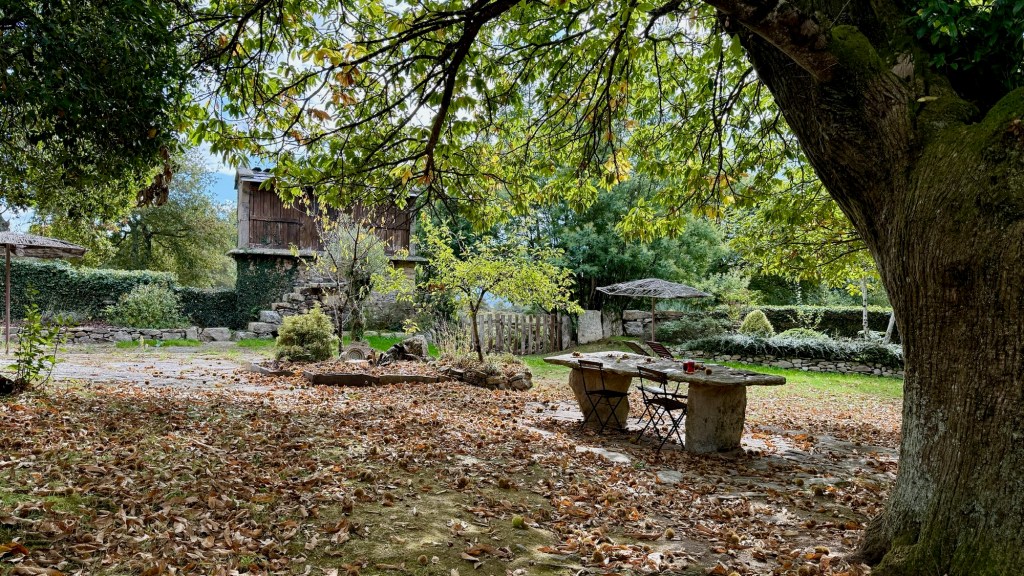
By late afternoon, the hills opened up to Ligonde, a tiny village scattered across rolling green. Our inn sat off the Camino on land that had been in the same family for six generations. The owner’s son told us the story as he checked us in — how his great-great-great-grandfather bought the property 270 years ago, how the house has stood through wars, droughts, and the slow migration of pilgrims like us. We spent the afternoon in the beautiful gardens watching a storm roll in, as we sat at some tables and journaled while our tiny adventurers explored the property.
Dinner was a simple but delicious beef stew with salad, bread and wine. Nothing fancy, nothing plated for effect, just food that fit the day. The girls ate with us, quiet and glassy-eyed from the long climb, finishing every bite without a word. As soon as we made it back to our room, everyone was out cold — asleep before our heads even hit the pillows. The night settled around us, still and complete.
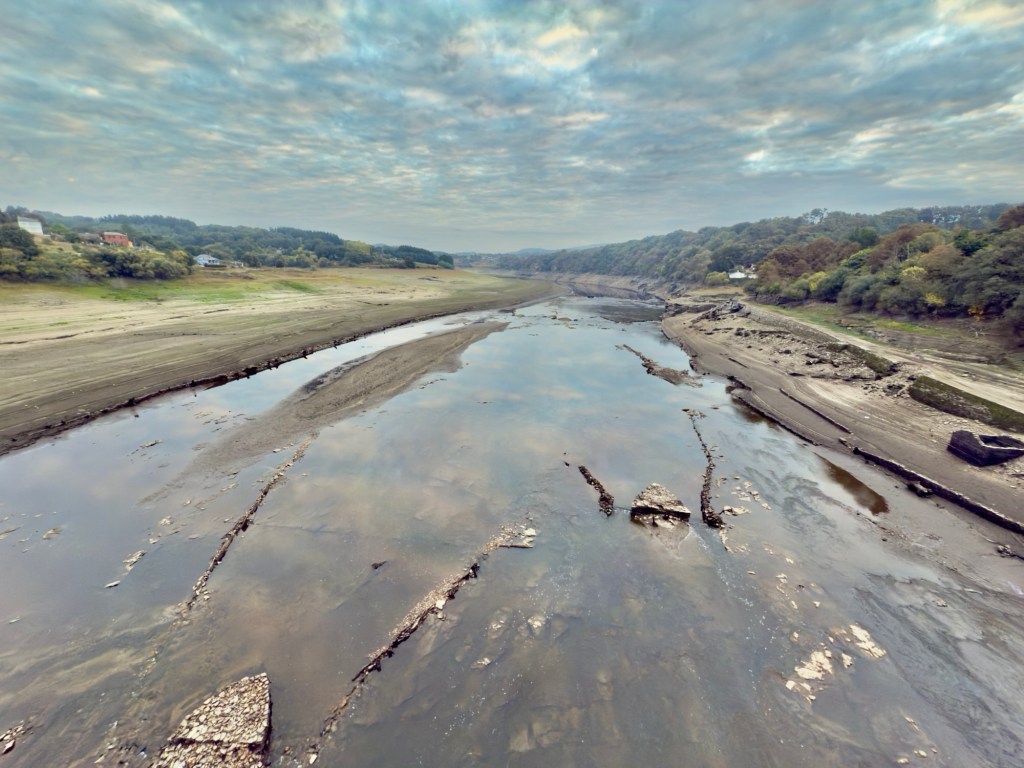


Looking back, those five days are a near-perfect example of what the Camino does best. It takes your expectations and rearranges them. The “ugly” route becomes the most beautiful. The picture-perfect farmhouse turns out to be a cobwebbed mess that still gives you a great night of sleep. The quiet trail becomes a conga line, and you realize you’re not the only one looking for something out here. Even the moments that feel wrong — the cold rooms, the bad food, the dried-up rivers — end up shaping the story more than the things that go right.
The Camino keeps reminding us that expectations are just sketches. Reality fills in the colors, often messily, but always with more texture.
We came here thinking we were chasing simplicity, but what we’re actually learning is flexibility — how to stay open when things don’t line up, how to laugh when you want to cry, how to notice the details that don’t make the guidebooks. A cheese that tastes like home, a monk who’s not a gnome, a river that turned into muddy earth, a daughter who climbs like she’s made of momentum.
That’s the real pilgrimage. Not the plan, not the path we thought we were on, but the one that unfolds in front of us — unfiltered, unpredictable, and exactly enough.
 Pause and Wander
Leave a comment