
Dates: September 20–23, 2025
Places & Distances:
Day 20: Hornillos → Castrojeríz · 21 km
Day 21: Castrojeríz → Boadilla · 20 km
Day 22: Boadilla → Villalcázar · 21 km
Day 23: Villalcázar → Ledigos · 30 km
Caminante, no hay camino, se hace camino al andar—Antonio Machado
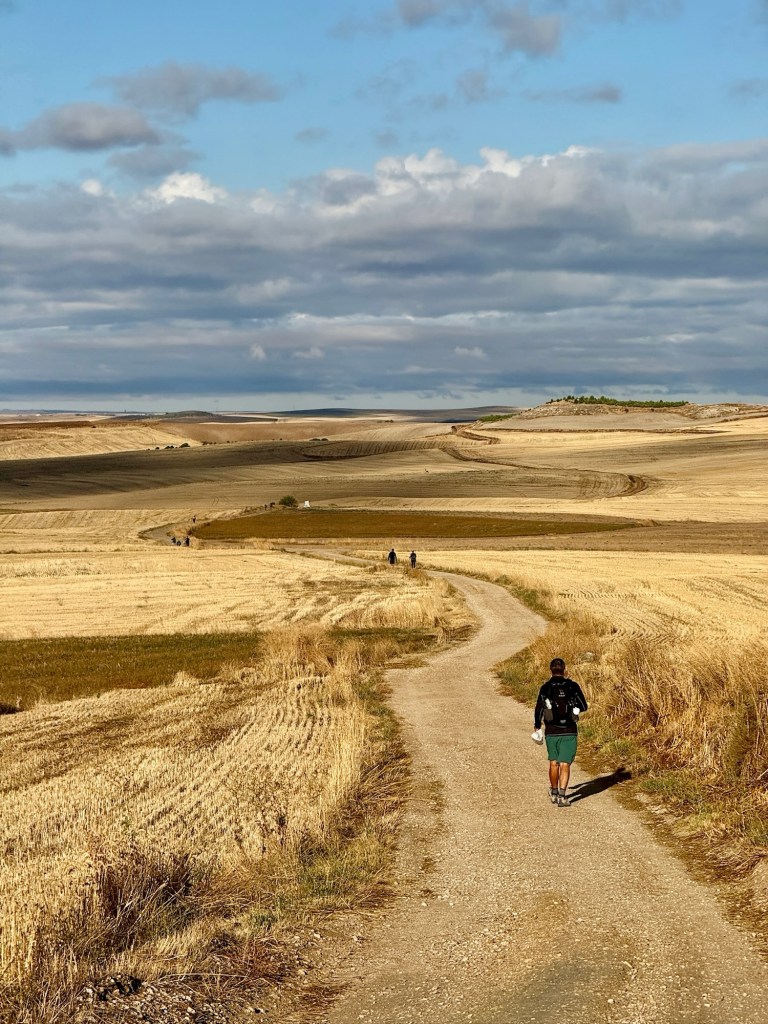
The meseta was more than a plateau of flat land in the middle of Spain. It was a crucible. A long, wind-swept stretch that stripped the Camino down to its bones and tested everyone who crossed it. There were no towering mountains or bustling towns to break it up — only fields, wind, sun, and the quiet grind of walking forward.
Over four days, this section became our proving ground. We faced eerie ruins, bed bugs, detours, locked doors, and a punishing 30-kilometer march. Each challenge asked something new of us as a family. Each day demanded patience, grit, or simply the stubborn act of putting one foot in front of the other. And through it all, we found a way to keep moving.
Ruins and Reflections
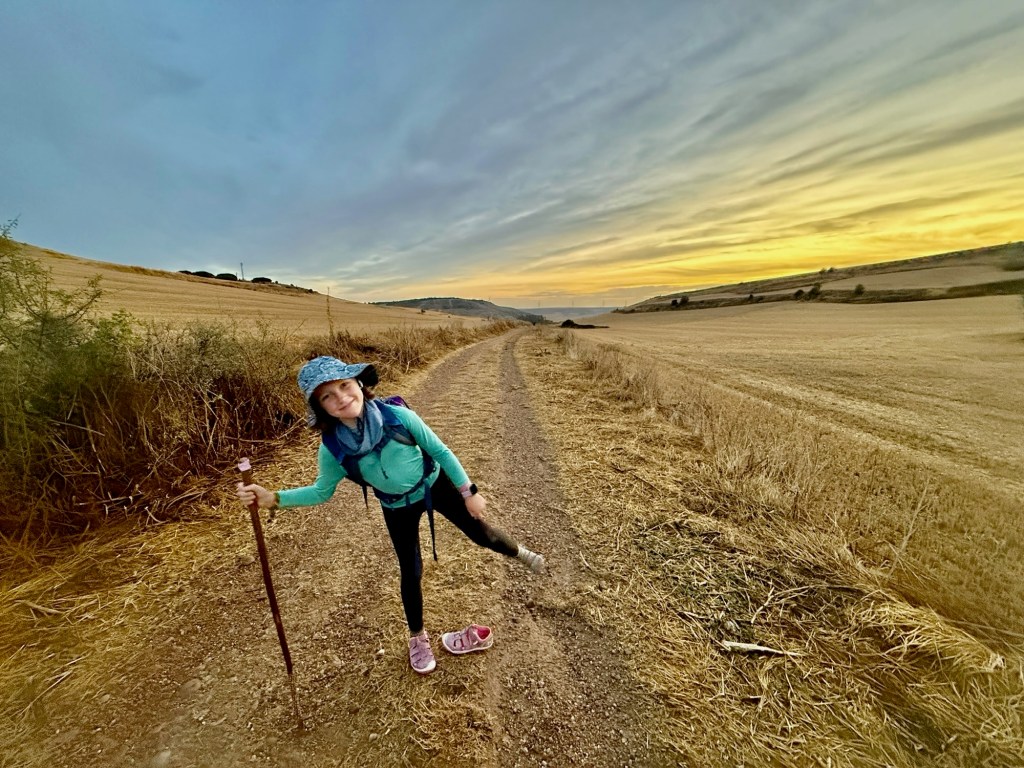
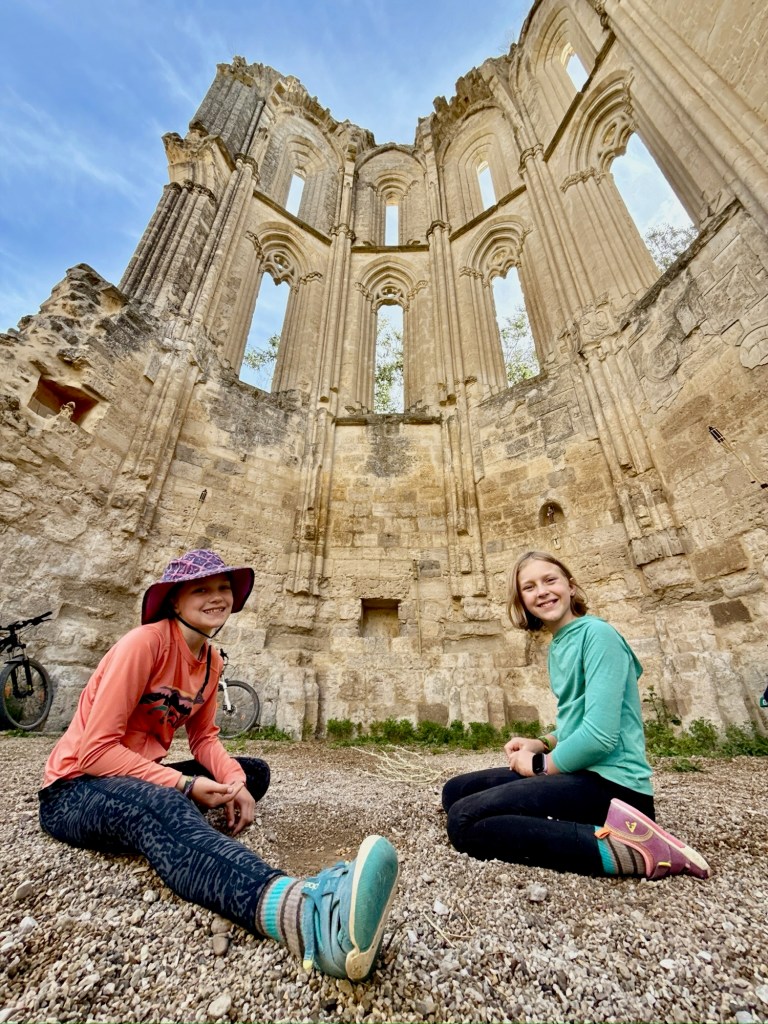
The mornings were finally starting to cool when we climbed out of Hornillos and onto a mesa where fields of wheat, hay, and sunflowers stretched out forever. The day’s highlight arrived late, when towering remnants of stone walls appeared ahead of us: the ruins of the San Antón Convent.
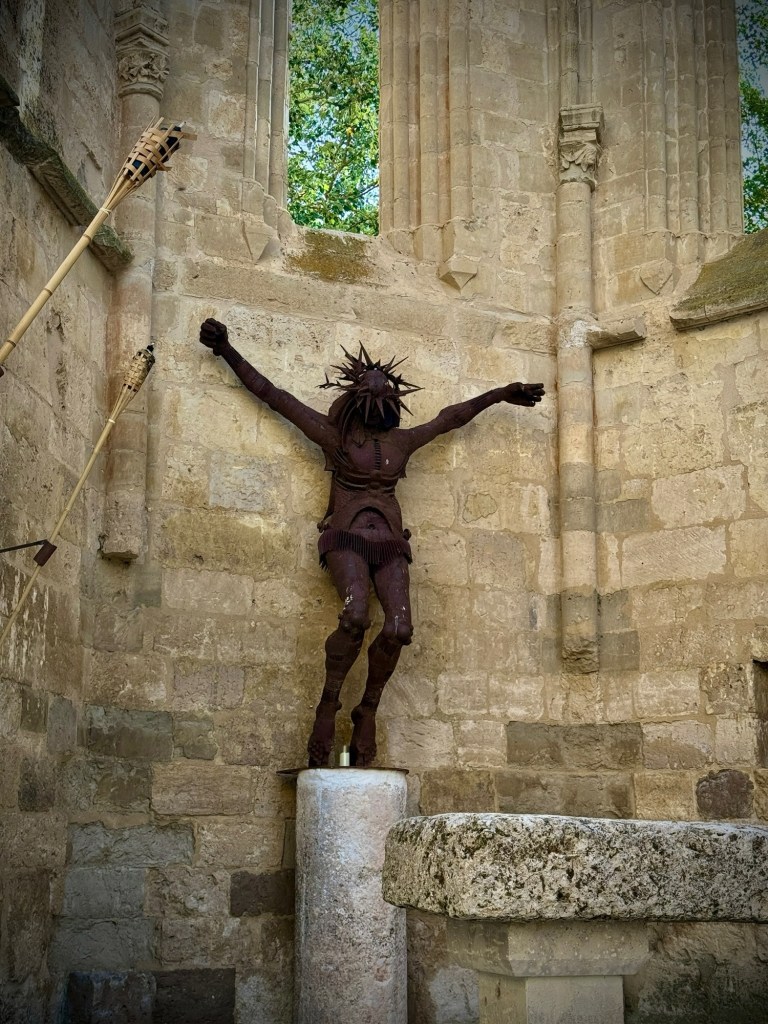
The girls immediately dropped to the ground, sifting through gravel for bits of stone streaked with pink or green. We stood nearby with our Camino friend Kelli, catching up, until our eyes landed on a steampunk-looking crucified Jesus mounted inside. The mix of sacred and surreal made us shiver.
In Castrojeríz, our hostel loft was nothing special, but burgers in a leafy courtyard hit the spot. We bumped into fellow pilgrims who mentioned a meditation session in town, and curiosity got the better of us. The space belonged to a Spanish woman with wild curls and a presence that made her art-gallery-studio feel alive with good energy. Somehow, even the girls sat still for 25 minutes as the guide walked us through body and breath.
When it came time to share reflections, the surprises kept coming. Finlee spoke about the Camino bringing people together in community. Arya admitted it might help her slow down from her usual fast pace. And we all acknowledged how the Camino made every ache and pain impossible to ignore but also taught gratitude for the body’s strength. Their words felt like gifts, profound in their simplicity.
We hurried out afterwards to meet Kelli for dinner at a Korean restaurant, where bibimbap bowls piled high with vegetables provided one of the rare culinary highlights of the meseta. The day had been full of variety — ruins, reflection, creepy statues, and steaming bowls of rice — but it worked.
Bed Bugs and Communal Tables
The Way took a darker turn that night. At two in the morning Shaina sat up in a full freak out, covered in fresh bites along her arms, neck, and ear. It didn’t take long to piece it together: the extra blankets we had asked for must have been crawling with bed bugs. We found only one, which popped with blood when squished, but that was enough. The rest of the night was restless, tossing until dawn pushed us back out onto the trail.
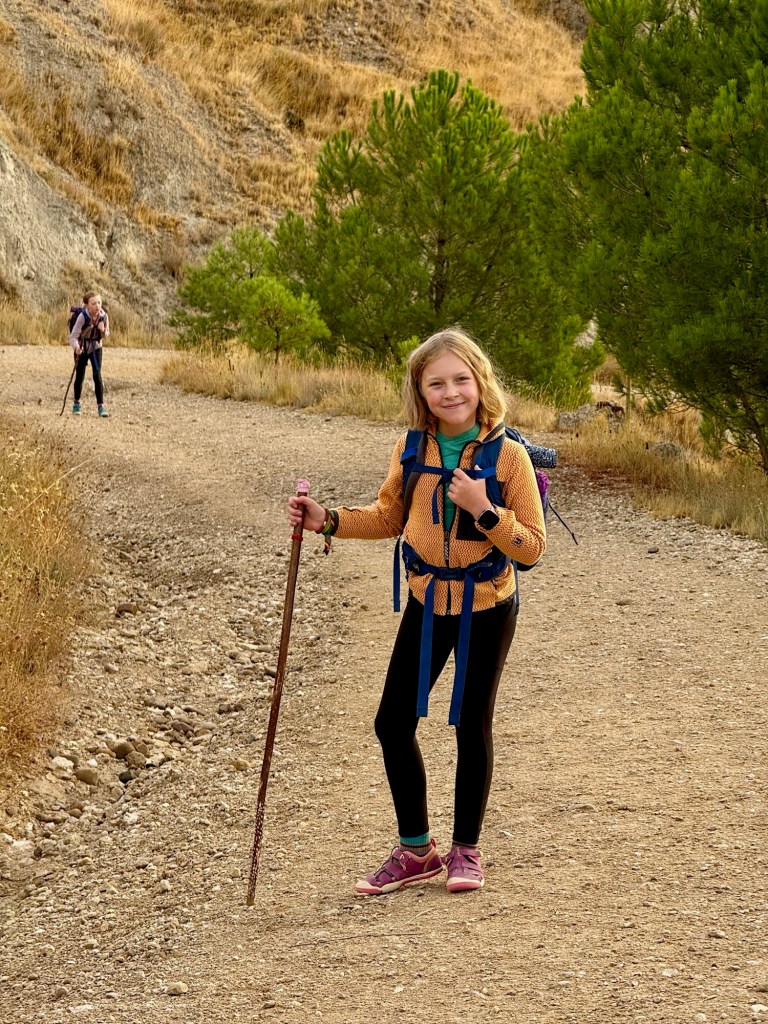
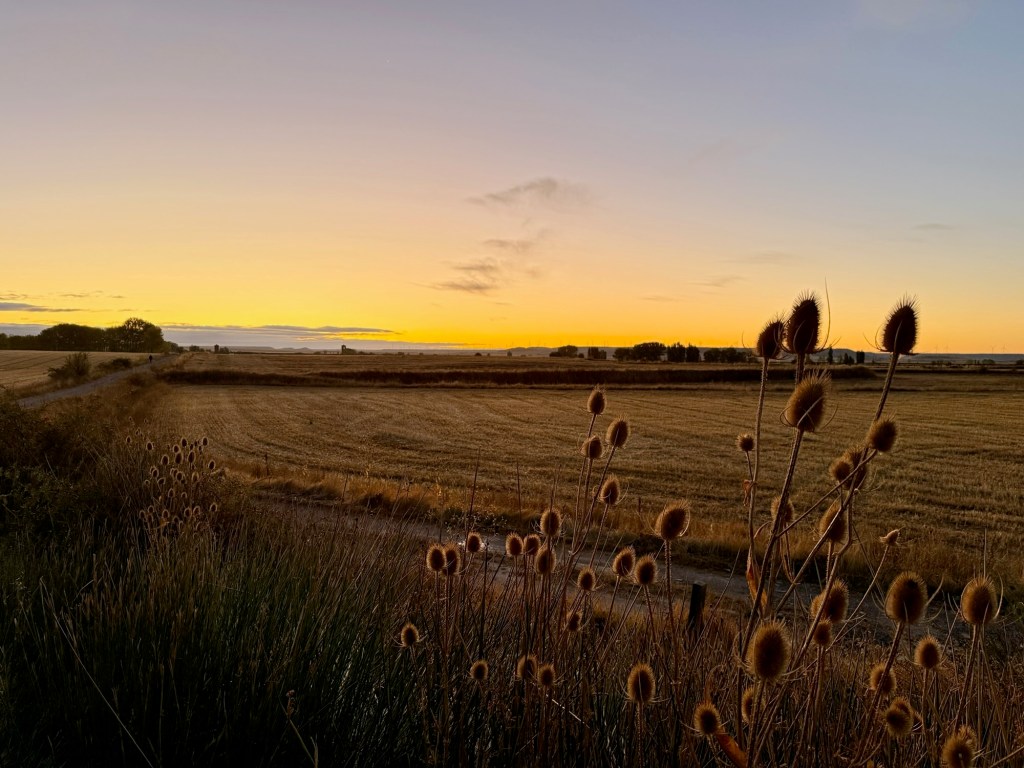
The day’s walk wasn’t bad — a steep climb, a gorgeous sunrise, then familiar tree-lined meseta tracks. But the shadow of the night lingered until evening brought redemption.
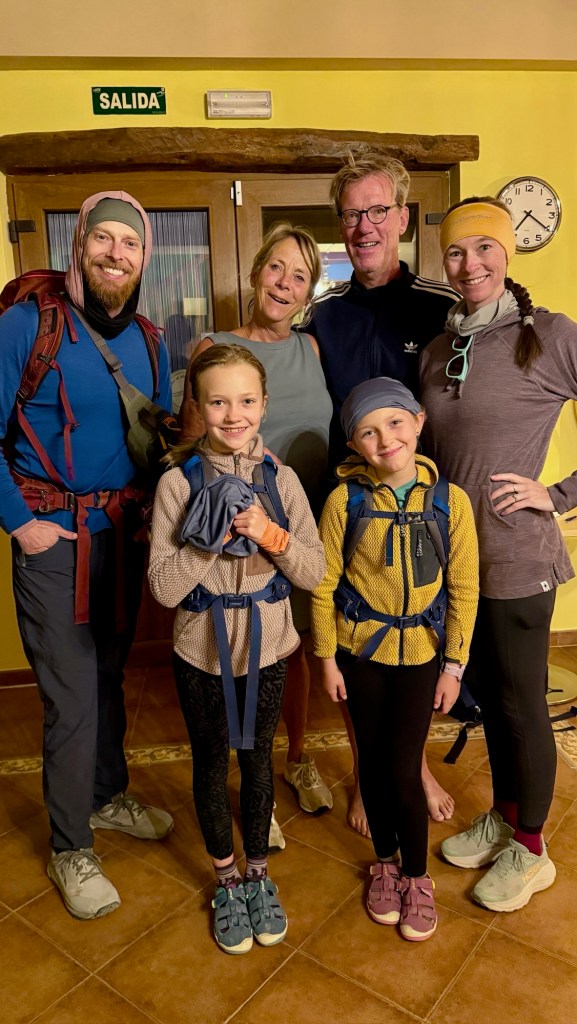
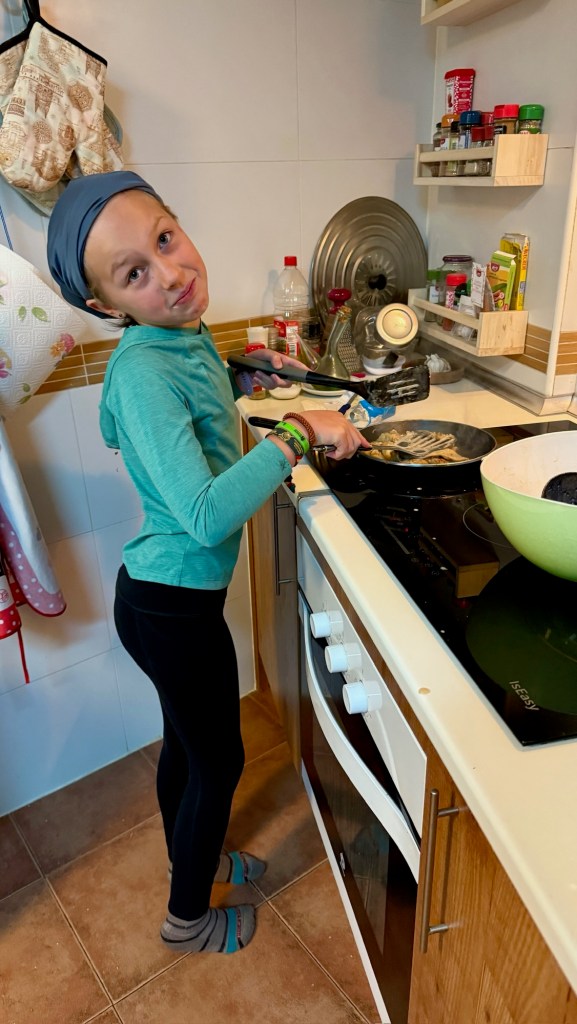
Our albergue, Juntos, was run by a kind Dutch couple. Finlee invited herself into the kitchen to chop, mix, and deliver plates, proudly sharing her homemade cucumber-tomato salad recipe with the hosts. Dinner was communal, a long table filled with pilgrims swapping stories. Arya dazzled two French women with her language skills (“but she has no accent!”), and we felt a small glow of pride for how resilient the girls had been, not just that day but on the Camino as a whole.
What had begun with bed bugs ended with hot showers, shared laughter, and enough comfort to sleep — even if snores from across the dorm filled the night air.



Detours and Lessons
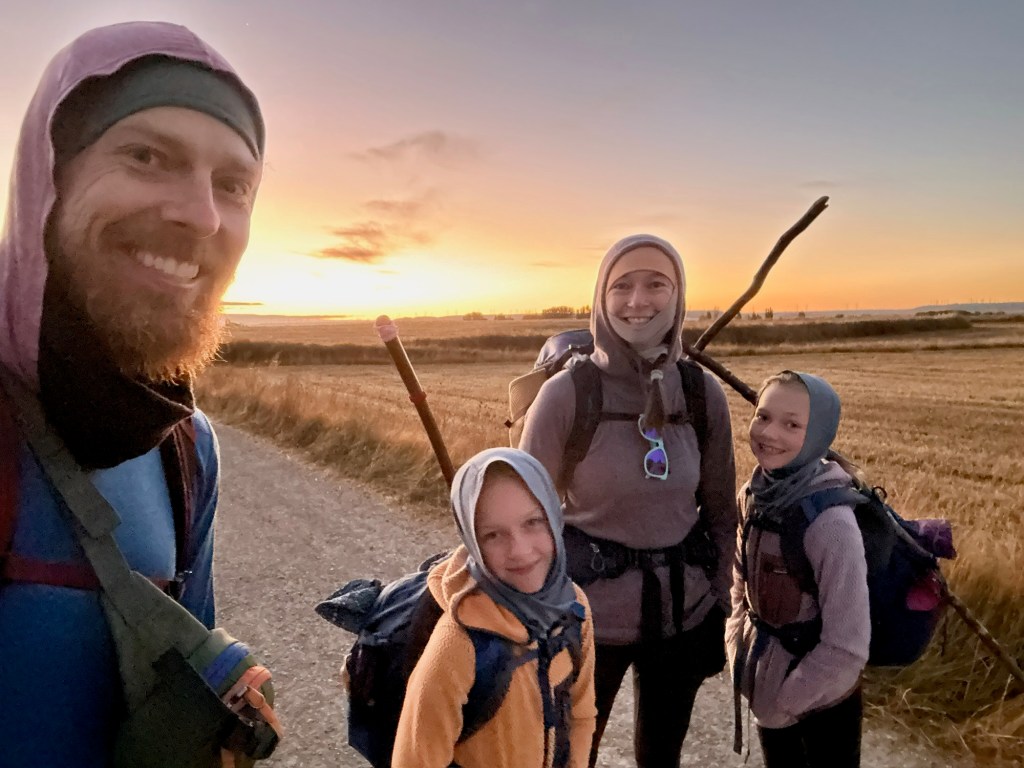
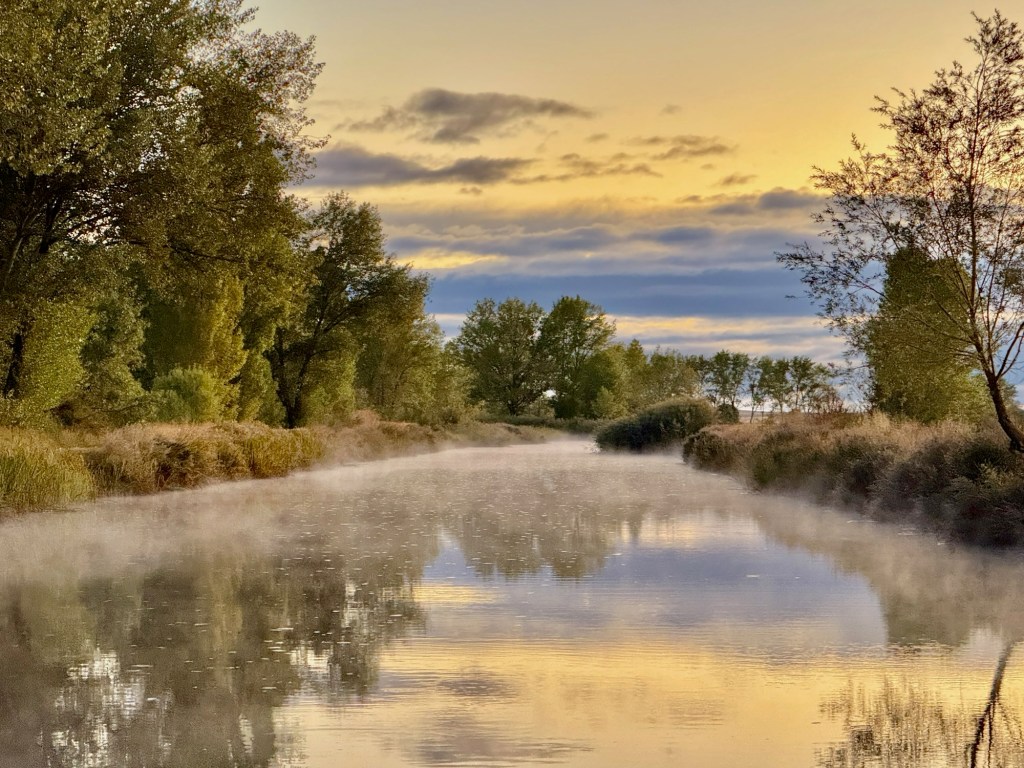
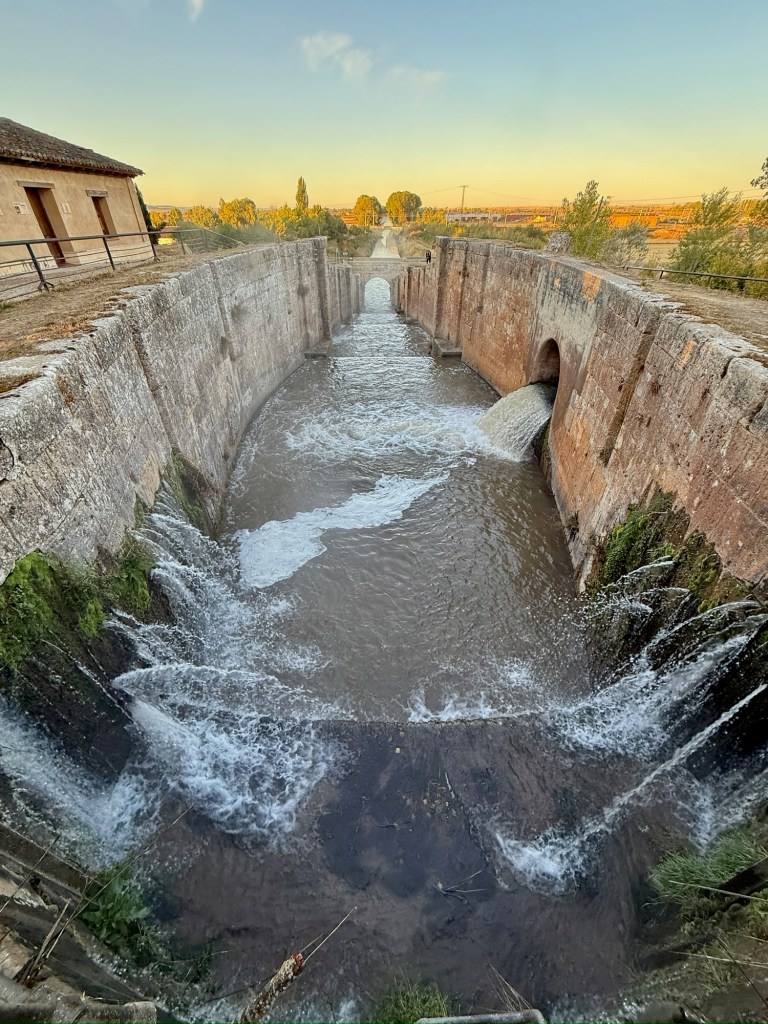
The next day reminded us that the Camino tested patience as much as it tested endurance. The morning cold bit into our fingers as we followed the Canal de Castilla, a man-made artery from the 1700s originally meant to carry grain to northern ports. Its stone locks and calm water gave the sunrise walk a gentle cadence, and watching the pinks and oranges dance across the still surface felt like a gift.
Later, though, an alternate path we chose promised an extra half kilometer but delivered more than two. It didn’t sound like much, but when expectations shifted, every added step felt heavier. Gravel paths gave way to asphalt and buzzing cars, and the pretty morning dissolved into a dull trudge. A lone green apple atop a grey stone marker came at just the right moment: a gift from the Camino for hungry tiny pilgrims.
The hostel that night was fine — clean beds despite the cobwebs — but the day left us tired. Dinner was “curry” chicken (really just baked chicken with a dusting of curry powder) while the girls slurped spaghetti. Kelli joined us, and her presence turned an ordinary meal into something warmer. No alarms were set, and we slept in the comfort of a reset.
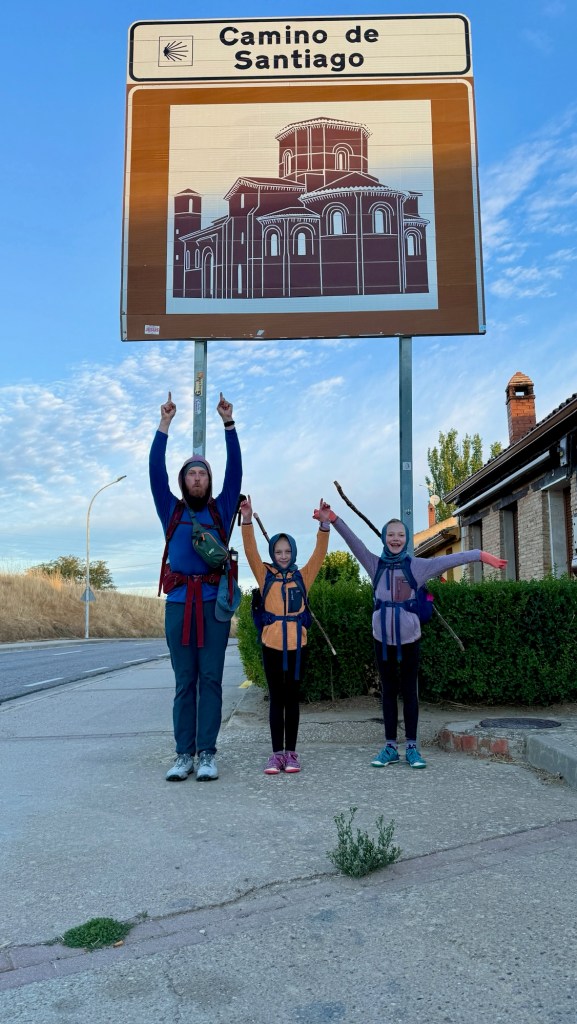


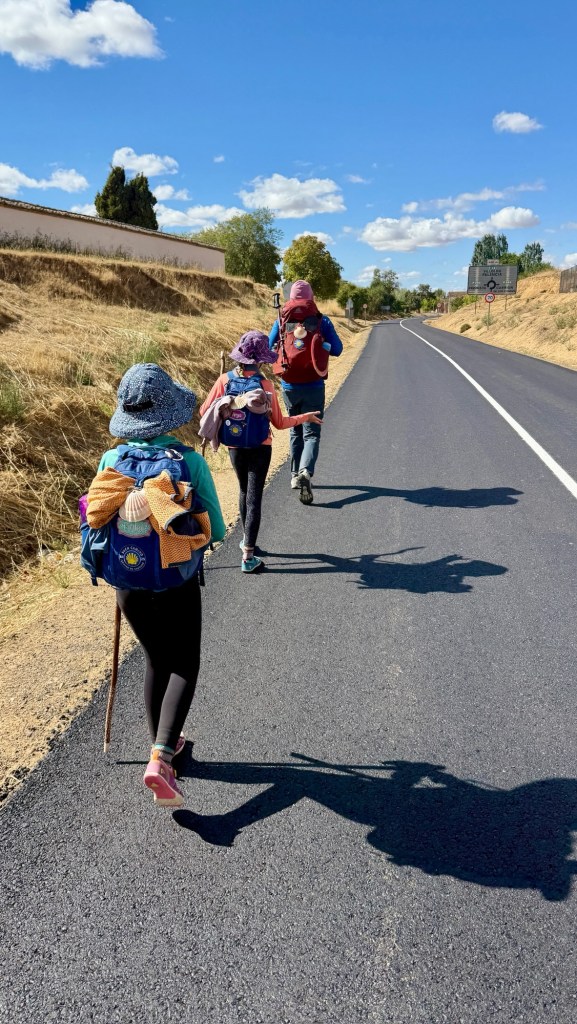
Thirty Kilometers to Ledigos
We thought the worst was behind us — the bed bugs, the detours, the cobwebbed hostels — but the Camino had bigger plans. The next stage came loaded with its own surprises. We set out from Villalcázar bundled against the cold in nearly every piece of clothing we had, breath puffing in the early morning air. The first steps were just above freezing.
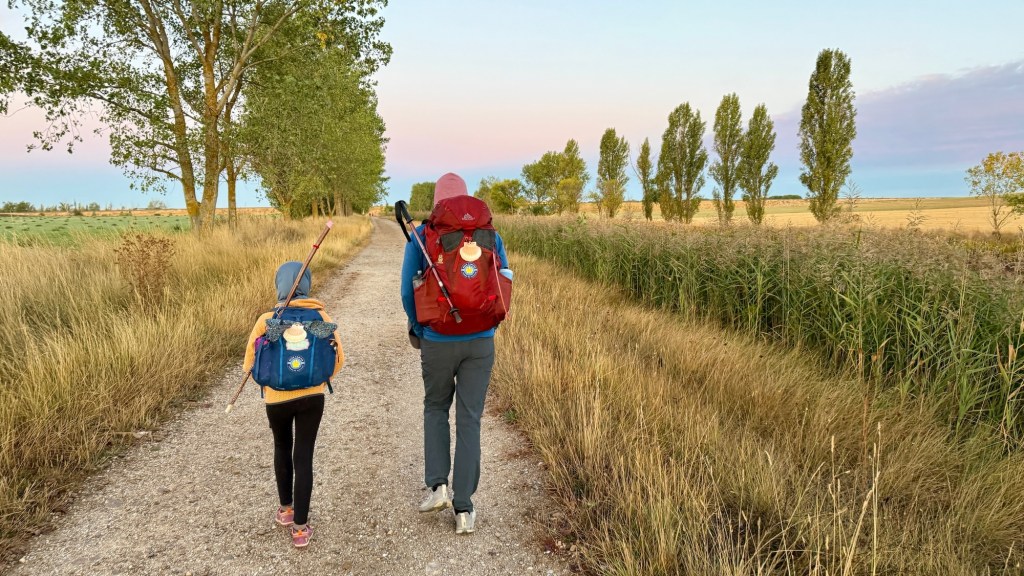
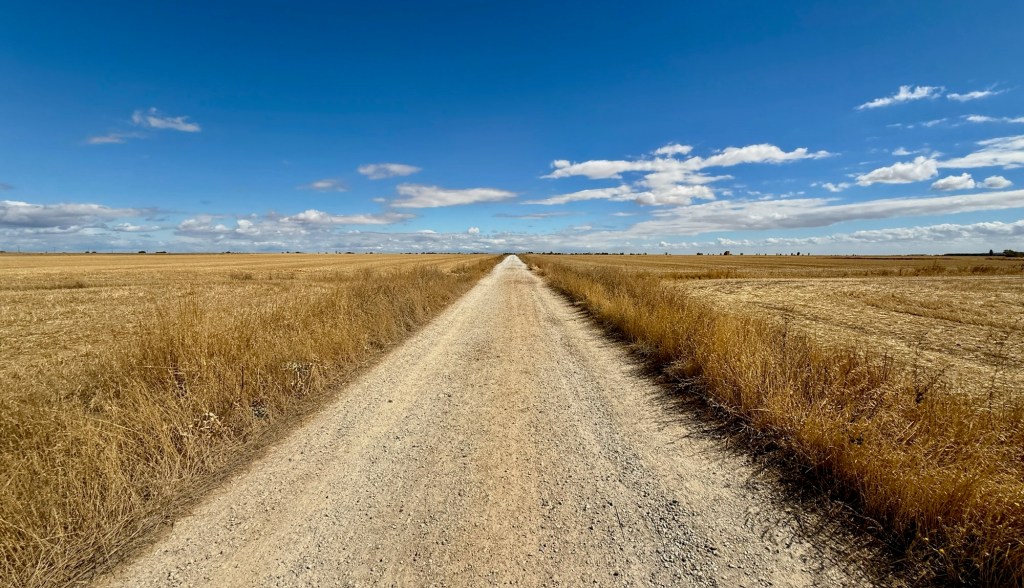
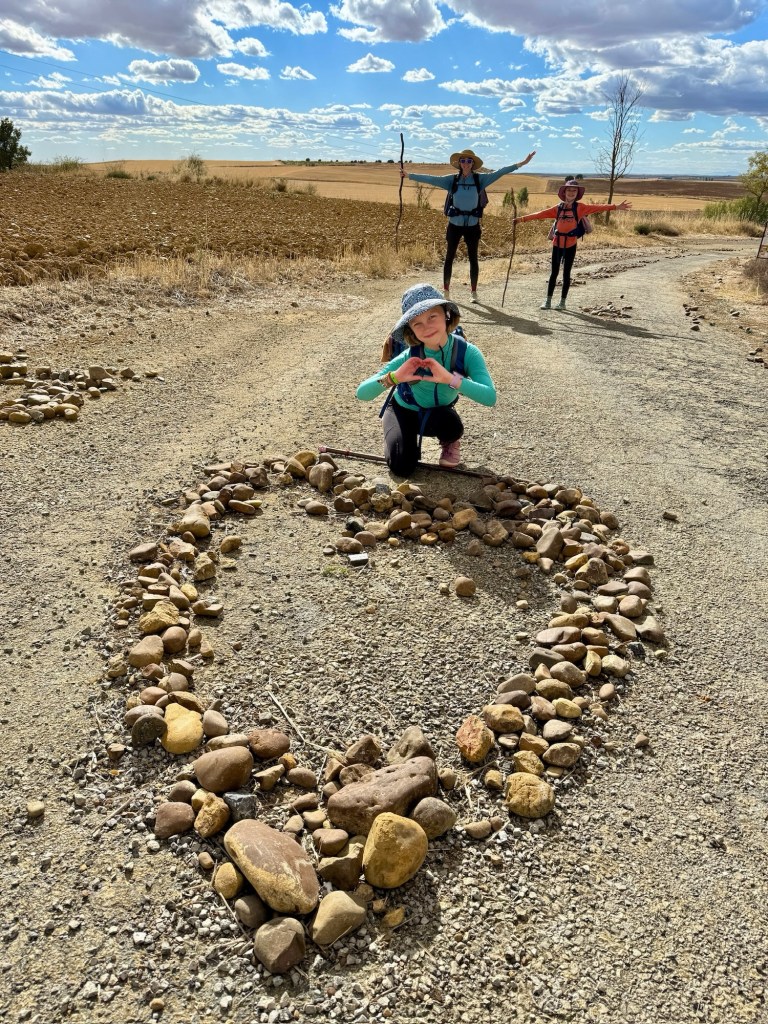
The Camino extended out in front of us, flat and featureless, with a particularly brutal bit in the middle: 17 uninterrupted kilometers of cut wheat fields, intense sun, and chilly wind. It was the kind of landscape that tested our patience as much as our feet, while also greatly appreciating the steady line of trees along the path far into the distance. The miles blurred together in the company of music and a new audiobook, interspersed with moments of levity and kindness from fellow peregrinos generously doling out jelly beans.
By the time the sun climbed higher, the cold had been replaced with a stubborn warmth, the kind that made us question every extra layer we had on. This infamous stretch of the Camino was testing our resolve, with monotony and wind that rattled across the empty fields. Finally we caught sight of Calzadilla de la Cueza over the edge of the meseta. We had a reservation waiting at a hostel, and the thought of dropping our packs and collapsing was the carrot that kept us moving.
Except when we arrived, the carrot vanished. The hostel door was locked, windows shuttered, “Cerrado” sign on the door. The owner had left town — quietly, without notifying anyone — as he apparently did sometimes, according to the locals. A small crowd of baffled pilgrims gathered at the doorstep, staring at one another with the same disbelief.
We tried the other two albergues in town. Both were full. One offered us three beds with the possibility of someone sleeping on the floor, but the idea of sacrificing rest after 23 kilometers was too bleak to entertain. That left only one option: walk on. Six more kilometers to Ledigos.
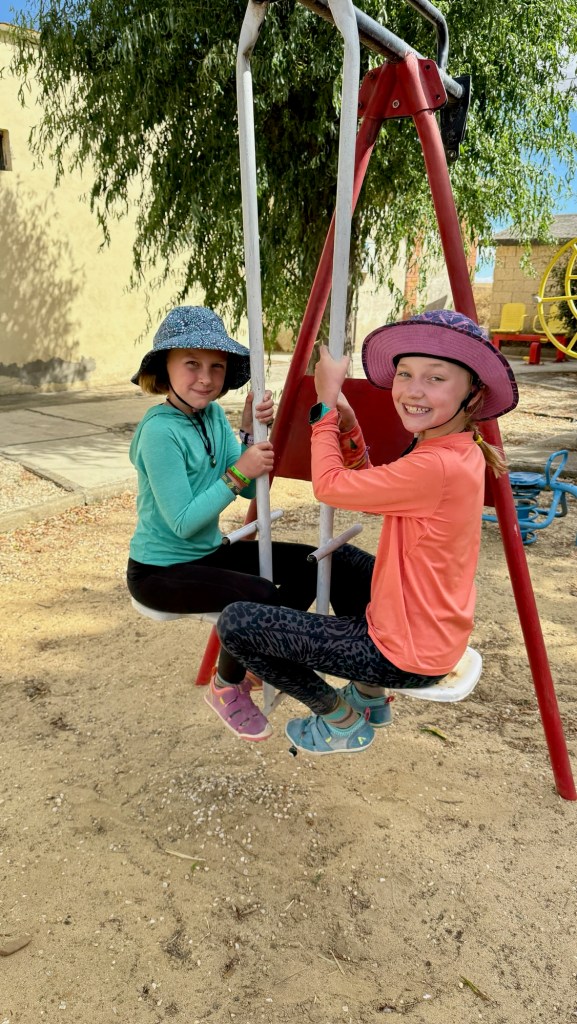
For Arya and Finlee, the news landed like a stone. Finlee groaned loudly that her feet were “totally destroyed,” and Arya looked ready to stage a revolt. The mood shifted fast. That was when we turned to the oldest parenting trick in the book: bribery. Dessert first (ice cream to the rescue!), followed by a quick meal of chicken, fries, and Fanta, were enough to lure them forward. Fueled and slightly restored, we shouldered our packs again. Of course, 50 meters in they saw a playground — “sure kids, of course we have time for a quick play sesh!”
Those last six kilometers were a battle of willpower. We parceled out gum, jelly beans, water breaks, and one precious chocolate croissant like rations on a battlefield. We traded encouragements while the girls listened to the audiobook. It was a grind — hot, windy, seemingly endless — but somehow, step by step, we made it.
The relief upon seeing Ledigos was indescribable. Our final stop, La Morena Hostel, welcomed us with open arms — literally. Our Kiwi friend Patricia, whom we had met earlier on the Camino, happened to be there and enveloped us in a giant hug. After 30 kilometers, the embrace of a familiar face was nearly as restorative as a shower and a meal.
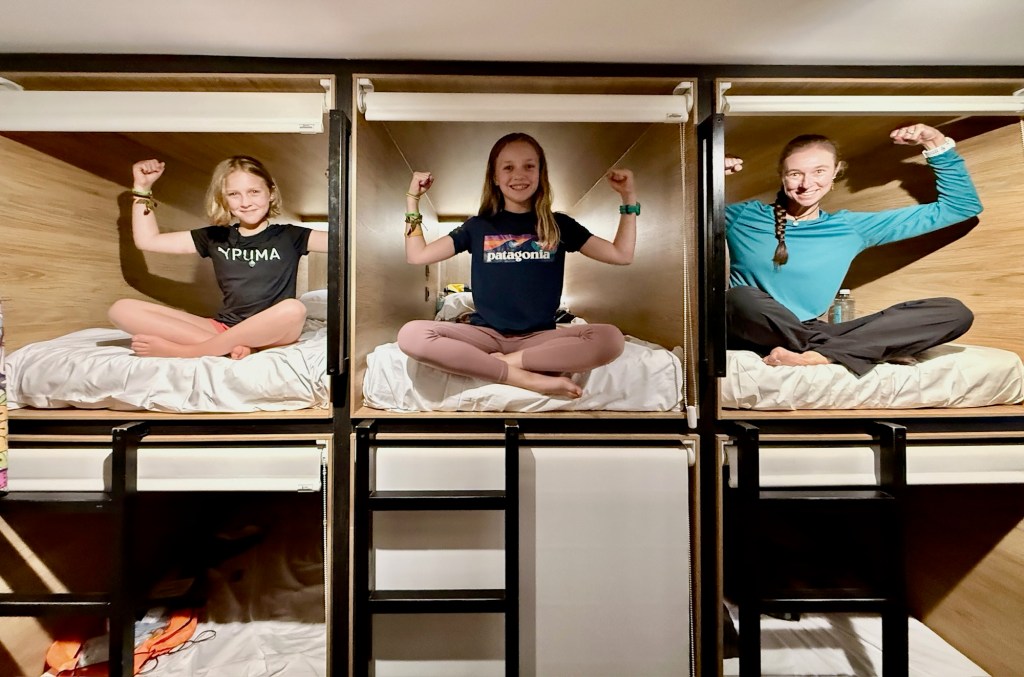
La Morena was no palace, but that night it felt like one. The 19-bed dorm was cleverly designed, custom-built bunks arranged in cubbies like sardines in a can. Far from dreary, it was comfortable, modern, and surprisingly cozy. Best of all, Patricia was bunking right below us. The restaurant attached to the hostel served hearty fare, and we attacked it like pilgrims possessed: spaghetti carbonara, paella, a mountain of French fries, and what must have been the world’s largest platter of chicken wings.



What the Meseta Taught
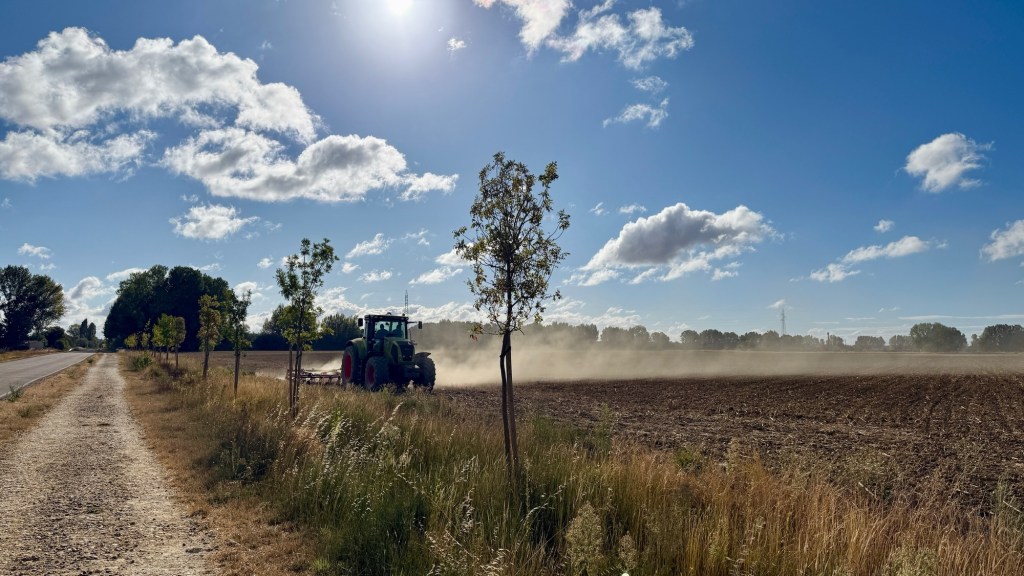
Looking back across these days, the meseta revealed itself less as a barren plain and more as a proving ground. We faced bed bugs, detours, eerie ruins, locked doors, and punishing distances. But we also sat still in meditation long enough to hear our daughters’ thoughtful words, shared tables with strangers who became friends, and found small oases of joy in bibimbap, laughter, and unexpected feasts. Instead of dreading the infamous vistas of golden fields, we took joy in the well-maintained road side trail lined with broad-leafed sycamore trees nearly the whole way. This stretch of the Camino has changed greatly, and for the better, since Shaina slogged along in the brutal heat of summer without a tree in sight 20 years ago.
The girls grumbled at times — of course they did — but their resilience carried us forward. They saw that the Camino was not about everything going smoothly, but about what happened when it didn’t. Together, we found ways through, and kept putting that next foot forward.
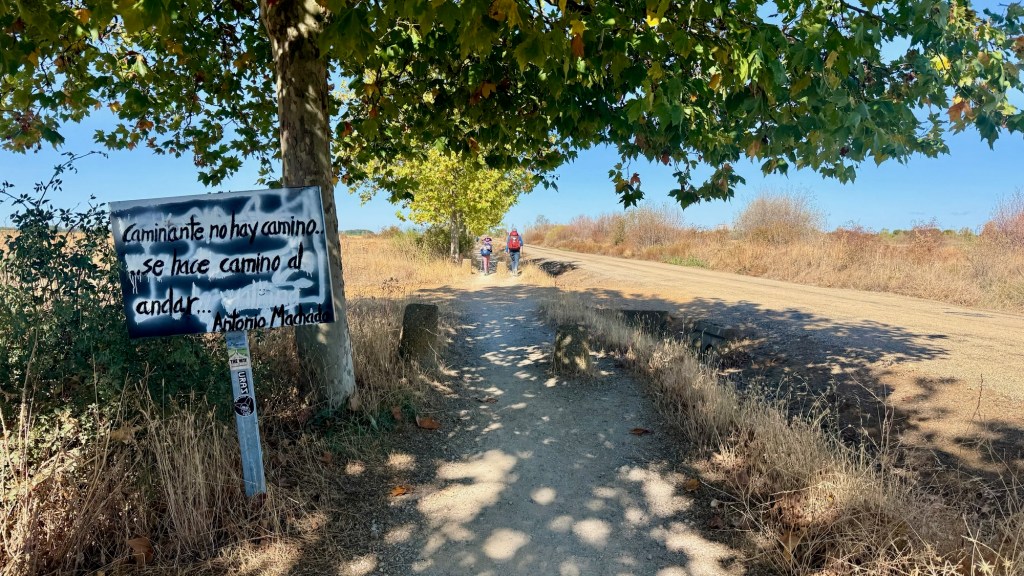
There’s a Spanish poem that’s famous on the Camino, an excerpt of which we’ve seen carved in stone, graffitied on underpasses, and embedded in street art all along the Camino. Caminante, no hay camino, se hace camino al andar. Loosely translated it means “there is no road, just the one you make by walking”.
The meseta stripped things bare. It showed us that progress was not measured in perfect days but in steps taken, one after another, even when feet felt destroyed and spirits ran low. And sometimes, those steps ended not in defeat but in triumph, with hugs from friends, laughter over dinner, and the quiet pride of knowing we did it together.
 Pause and Wander
Leave a comment